

Submitted:
20 August 2024
Posted:
21 August 2024
You are already at the latest version
Abstract
The study examines the survival status of Scapharca broughtonii and Scallop Chlamys farreri under diverse seasons, sizes, and mixed breeding ratios. The objective is to explore the feasibility and economic benefits of the mixed breeding patterns of different shellfish varieties. The findings demonstrate that the overwintering mortality rate of mixed-cultured S.broughtonii ranges from 12.04% to 16.85%, which is conspicuously lower than that of individually cultured S.broughtonii. The summer mortality rate of mixed-cultured S.broughtonii with a size of 2.5 - 4.0 cm is significantly lower than that of individually cultured S.broughtonii (P < 0.05). There is no notable difference in the mortality between monoculture and polyculture of C.farreri. There is no significant disparity in the growth of C.farreri and S.broughtonii in monoculture and polyculture. The optimal polyculture size of the two scallops is 2.5 cm, and the ideal polyculture ratio is 1:1. The co-culture model of S.broughtonii and C.farreri in suspension cages has a high input-output ratio (1:1.9). It can effectively lower the winter and summer mortality rates of ark clams, representing an efficacious new methodology for marine shellfish farming.
Keywords:
Scapharca broughtonii
; Chlamys farreri
; polyculture
1. Introduction
The Scapharca broughtonii is colloquially known as the red shell and blood shell. It is a bivalve mollusk of significant economic value that is widely distributed along the coasts of the Northwestern Pacific Ocean [1]. In recent years, due to its promising market prospects, delicious taste, and high nutritional value, it has become a universally recognized aquaculture species in the coastal areas of Northern China [2,3]. However, with the continuous advancement of artificial breeding technology and the subsequent development of shellfish aquaculture, the issue of disease in shellfish seedlings has become increasingly severe. Consequently, experts and scholars have conducted a series of studies on the causes of shellfish diseases and preventive measures [4,5,6,7,8]. The death of shellfish is influenced by various factors, with numerous studies conducted in areas such as environmental stressors [9,10,11,12,13], quantifiable traits [14], and bacterial diseases [15,16,17,18,19]. However, there is less research on its farming methods, the main ones being raft cultivation and bottom-seeding propagation. Studies have shown that Japan often selects seedlings of 2.0-3.0cm or even 5.0-6.0cm in size to reduce mortality rates during the shellfish propagation process [20], but larger sizes can extend the intermediate cultivation time and increase costs. Therefore, research on low-cost, high-survival rate farming methods for shellfish is essential for enhancing their propagation efficiency and improving their economic benefits from cultivation.
In recent years, the resources and production of S.broughtonii have decreased significantly, and the germplasm resources are threatened. The natural resource recovery and cultivation of S.broughtonii are particularly important [21]. Hanging cage culture, as a typical model of marine shellfish farming, is easily swayed by the influence of sea waves and sea breeze, and cultured varieties bump and bite each other, which is easy to cause coat damage and affect the growth of S.broughtonii and Chlamys farreri have the same feeding habit. Using the mixed culture of S.broughtonii and C.farreri to achieve normal growth can reduce the phenomenon of collision and occlusion to a certain extent.
To improve the survival rate of bottom-sown S.broughtonii and reduce the cost of cultivation, this study investigates the monoculture and polyculture experiments of S.broughtonii and C.farreri. By measuring and statistically analyzing the growth and survival of shellfish under various cultivation modes, we compare the differences in shellfish survival and growth under these modes. We also compare the input-output ratio of shellfish cultivation in monoculture and polyculture modes, assessing the feasibility of a mixed cultivation mode for S.broughtonii and C.farreri in hanging cages. This aims to achieve low-cost mixed cultivation of S.broughtonii in hanging cages and relay cultivation of high-standard S.broughtonii broadcast, providing a new healthy cultivation model for S.broughtonii and C.farreri seedlings.
2. Materials and Methods
2.1. The Conditions of The Marine Area
The experimental site was chosen in the marine area of leyuan, Changdao. The natural conditions of this marine area are suitable with a smooth water flow, minimal waves, and an abundance of unpolluted bait. The area has fewer miscellaneous shellfish and algae, which prevents the excessive attachment of organisms like mussels, thereby not affecting the water flow exchange and consequently the growth of S.broughtonii.
2.2. The Arrangement of Rafts
Three rafts are set up per acre of sea surface, each farming unit is composed of 30-40 rafts, and the distance between farming units is not less than 60m. The effective length of the raft is 100m, the distance between the rafts is not less than 5.5m, and the direction of the raft frame should be consistent with the flow direction of the seawater. The hanging cages used for scallop farming consist of 10 layers each, with an interlayer spacing of about 15cm. The round plastic dividers have a diameter of 34cm. Floats are installed on the raft frame, and are connected to the raft frame with floating ropes.
2.3. Seed Selection And Hanging Water Layer
When selecting seed individuals, it is required that they are of uniform size, have bright body color, and are free of deformities. In water, they should actively open and close their shells, which should be smooth and uniform on the surface with strong occlusal force. The surface of the razor clam shells should have neat setae without significant loss. The experimental suspended culture depth references the results of previous studies on the monoculture of hanging-cage razor clams [22], with the overwintering culture depth set at 3.5 m and the summer culture depth ranging from 2.5 to 3.0 m.
2.4. Comparative Test of Polyculture Specifications
The mixed breeding of S.broughtonii and C.farreri is set with six different gradients: 1.5cm, 2.0cm, 2.5cm, 3.0cm, 3.5cm, 4.0cm. The numbers of seedlings placed in each layer are 500/layer, 400/layer, 300/layer, 200/layer, 100/layer, and 50/layer for S.broughtonii and C.farreri respectively. The comparison experiment is a single breeding of S.broughtonii in hanging cages: the breeding specifications are 1.5cm, 2.0cm, 2.5cm, 3.0cm, 3.5cm, 4.0cm, and the numbers of seedlings placed in each layer are 1000/layer, 800/layer, 600/layer, 400/layer, 200/layer, 100/layer respectively. The survival and growth conditions during the overwintering and summer stages are recorded separately.
2.5. Comparative Experiment of Polyculture Ratio
Choose 4.0cm S.broughtonii and C.farreri to conduct different ratio experiments. The pairing ratios of S.broughtonii and C.farreri are set in five gradient groups: 3:1, 2:1, 1:1, 1:2, 1:3, with a total of 100 seedlings per layer. The survival and growth conditions during the overwintering and summer stages are recorded separately.
2.6. Data Collection and Processing
A sample is taken on the 15th day after entering the cage, and another sample is taken at the end of winter or summer. When sampling, 3 cages are randomly selected, with samples taken from the top, middle, and bottom layers of each cage to calculate the mortality rate. Thirty individual specimens are randomly selected to measure shell length and wet weight. The experimental data obtained is analyzed using SPSS19.0. A one-way analysis of variance and Duncan’s multiple range test are used to examine the differences in shell length, wet weight, and survival rate of the farmed shellfish under different farming methods and experimental conditions. The level of significance for the data is set at P<0.05.
3. Results
3.1. Different Specifications S. broughtonii Analysis
The statistics show the mortality rate over half a month and the overwintering mortality rate of ark clams of 1.5-4.0cm size. There is no significant difference in the half-month mortality rate of S.broughtonii of different sizes in both single and mixed farming modes, with the lowest half-month mortality rate at the 4.0cm size (9.05%, 9.52%) (Figure 1). There is a significant difference in the overwintering mortality rate of different sizes in single and mixed farming modes. In the single farming mode, the overwintering mortality rate is the lowest at the 1.5cm size (17.33%), while in the mixed farming mode, the overwintering mortality rate is the lowest at the 4.0cm size (12.04%). There is a significant difference between the half-month mortality rate and the overwintering mortality rate under both single and mixed farming modes, with the overwintering mortality rate significantly higher than the half-month mortality rate.
The statistics illustrate the correlation between the mortality rate during the summer period and the size of the S.broughtonii ranging from 1.5 to 4.0 cm. With the increase in the size, the semi-monthly mortality rate during the summer period gradually decreases for both single and mixed culture methods (Figure 2). The lowest semi-monthly mortality rate (4.81%, 4.68%) is observed when the size reaches 4.0 cm. The mortality rate during the summer period varies between single and mixed culture methods. For S.broughtonii larger than 2.0 cm, the mortality rate during the summer period in the mixed culture method is significantly lower than that in the single culture method. At the size of 4.0 cm, the mortality rate during the summer period in the single culture method is 18.33%, while the lowest mortality rate in the mixed culture method is only 9.90%. There is a significant difference between the semi-monthly mortality rate and the mortality rate during the summer period under both single and mixed culture methods, with the mortality rate during the summer period significantly higher than the semi-monthly mortality rate.
The growth rate of shell length and wet weight of overwintering and summer clams is statistically analyzed. The shell length and wet weight growth rates of summer clams are relatively high, showing a declining trend, and tend to stabilize when the size is between 3.0-4.0cm (Figure 3 and Figure 4). The shell length growth rate stabilizes between 0.58-0.79, and the wet weight growth rate stabilizes between 2.22-3.06. The overwintering growth rate does not change significantly, basically maintaining at 0.05-0.08. The overall performance of shell length and wet weight growth rates of clams under the two farming modes of monoculture and polyculture is consistent. There is no significant difference in growth rate between the two modes, and the growth rate in summer is significantly higher than that in the overwintering period.
3.2. Different Proportions S. broughtsnii Analysis
In the mixed culture of 4cm-sized S.broughtonii and C.farreri in varying ratios, there was no significant difference in the mortality rate over half a month, but there was a significant difference in the overall mortality rate. As the proportion of S.broughtonii gradually decreased, there was no significant trend in the mortality rate over winter and summer (Figure 5). The winter mortality rate ranged from 11.63% to 19.11%, and the summer mortality rate ranged from 10.67% to 16.15%. The summer mortality rate was relatively lower than that in winter. In all mixed culture ratios, the mortality rate was higher than the half-month mortality rate. Overall, there was a significant trend of first decreasing, then increasing, and then stabilizing. In the mixed culture ratio of 1:1 to 1:3, the winter and summer mortality rates were lower (11.63% - 12.79%, 10.67% - 10.77%). It can be seen that when ark clams and scallops are co-cultured in different proportions, as the proportion of scallops increases, the chances of collision and interlocking between ark clams decrease. When the ratio of co-culture of ark clams and scallops reaches 1:1, a higher survival rate of ark clams can be achieved.
To measure the specific growth rates of ark clams at different proportions, statistical analysis was carried out on the shell length and wet weight growth rates of mixed-cultured ark clams. During the overwintering and summer periods, there were no significant differences in the shell length growth rates and wet weight growth rates at different proportions with scallops (Figure 6). The overwintering shell length growth rate and the summer wet weight growth rate of ark clams were relatively higher, indicating that the shell length of ark clams grew faster in the overwintering period, and the wet weight grew faster in the summer period.
3.3. Analysis of The Growth And Survival of Chlamys farreri
There is no significant difference in the winter and summer mortality rates of C.farreri under single and mixed farming modes (Figure 7). The winter mortality rate of different sizes is significantly higher than the summer mortality rate. As the size increases, the winter mortality rate significantly decreases, but the difference in the summer mortality rate is not significant. Therefore, it can be seen that the mixed farming mode does not have a significant impact on the survival of C.farreri. The larger the size in mixed farming, the lower the mortality rate.
The results (Figure 8 and Figure 9) indicate that as the size of C.farreri increases from 2.0cm to 4.0cm, there is no significant difference in the shell length and wet weight growth rate in both single and mixed culture modes during summer and winter. During the summer, as the size increases from 2.0cm to 4.0cm, the shell length and wet weight growth rate show a significant decreasing trend. The 2.0cm scallops have the highest shell length and wet weight growth rate, with single and mixed culture shell length growth rates of 47.99% and 53.55% respectively, and single and mixed culture wet weight growth rates of 267.03% and 267.91% respectively. During the winter, the shell length growth rate trends to be stable, while the wet weight growth rate shows a significant trend of first increasing and then decreasing. The 3.0cm scallops have the highest wet weight growth rate during the winter (single culture, 141.05%; mixed culture, 141.45%).
3.4. Comparison of Breeding Efficiency
Based on the actual conditions of the aquaculture experiment, statistics were gathered on the shell length, wet weight characteristics, input per unit, market price of mature shellfish, output value per unit, and the input-output ratio for various farming models of S.broughtonii and C.farreri (Table 1). The results show that the market price of mature shellfish remains consistent across all farming models. The input-output ratio for bottom-seeded S.broughtonii is the lowest. Both the single farming of C.farreri and the suspended cage farming of S.broughtonii have lower input-output ratios compared to the mixed farming. In the mixed farming model, the input-output ratio reaches 1:1.9, which is significantly higher than the other single-species farming models.
4. Discussion
There was no significant difference in the mortality rate of S.broughtonii within half a month between the monoculture and polyculture models, suggesting that the elimination of seedlings was a normal death and excluding the influence of death caused by artificial damage such as cage-reversal operations. However, the difference in the completed mortality rate was significant, indicating that during the breeding process, the polyculture of S.broughtonii and C.farreri effectively reduced the mortality rate of S.broughtonii. The completed mortality rate of polycultured S.broughtonii within the range of 2.5cm - 4.0cm was significantly lower than that of monocultured S.broughtonii, and the polyculture model had a remarkable impact on its survival. With the increase in the proportion of C.farreri, the probability of collision and interlocking among S.broughtonii decreased. After the polyculture proportion of S.broughtonii and C.farreri reached 1:1, the completed mortality rate of S.broughtonii during overwintering and summering was relatively low (12.22%, 10.67%), achieving a higher survival rate.
During the overwintering and summering of A S.broughtonii, as the breeding size increased, the growth rates of shell length and wet weight of S.broughtonii in both the monoculture and polyculture models demonstrated a downward trend and tended to stabilize at the size range of 3.0 - 4.0 cm. When S.broughtonii and C.farreri were polycultured in different proportions, there was no significant difference in the completed shell length and wet weight of A S.broughtonii in both the monoculture and polyculture models during overwintering and summering. Based on the diverse influences of the initial shell length and wet weight, the growth rate was further evaluated by analyzing the growth rates of shell length and wet weight. The findings revealed that during overwintering and summering, although the growth rates of C.farreri in both the monoculture and polyculture models did not exhibit significant differences, the growth rates of shell length and wet weight during summering were relatively high.
The primary modes of marine shellfish farming in our country originated from traditional tidal flat cultivation. Pond farming began to emerge in the 1970s, and indoor factory farming and shallow sea farming were realized in the 1990s. In recent years, advanced models such as deep-water rafting, wind-resistant deep-water net cages, and ecologically efficient multi-trophic level integrated farming have been progressively explored [23,24].
Mixed cultivation of different shellfish species demonstrates multiple advantages. As filter-feeding shellfish, the co-cultivation of Sinonovacula constricta with Musculus seilhousei and Cyclina sinensis has shown that, compared to monoculture, the total yield and value of mixed cultivation of these two types of shellfish have increased. Notably, the co-cultivation of S.constricta and M.seilhousei has increased profits by 62.7% compared to the monoculture of M.seilhousei, indicating a significant economic benefit [25]. In terms of the cultivation environment, studies have found that compared to monoculture oysters, the mixed cultivation of Ostrea gigas tnunb and Mytilus edulis in hanging cages shows a better potential for nitrogen removal [26]. This study indicates that S.broughtonii and C.farreri suitable for shallow water cultivation can effectively be co-cultivated and significantly influence the survival rate of S.broughtonii, demonstrating certain advantages in seedling survival rates.
5. Conclusions
The co-cultivation model does not have a significant impact on the growth of S.broughtonii and C.farreri, but it can significantly reduce the winter and summer mortality of S.broughtonii. As the size of the seedlings increases, the mortality rate gradually rises, and the effect of co-cultivation gradually strengthens. The most suitable co-cultivation size for S.broughtonii and C.farreri is 2.5cm, and the appropriate co-cultivation ratio is 1:1. Co-cultivation of S.broughtonii and C.farreri can achieve a better input-output ratio, and cage co-cultivation can effectively increase the benefits of marine aquaculture and improve the efficiency of marine utilization. Therefore, the cage polyculture model of S.broughtonii and C.farreri is a feasible new method of seawater shellfish cultivation.
Author Contributions
Data curation, Chunnuan Zhao, Liqun Ren and Shuai Xu; Funding acquisition, Bo Li and Yanxin Zheng; Investigation, Yuping Wu and Haiying Han; Resources, Yang Chen, Xiwen Wang and Shuai Cai; Writing – review & editing, Tao Yu.
Funding
This work was supported by the Central Public-interest Scientific Institution Basal Research Fund, CAFS (NO.2020YJ05, 2020TD66) and the China Agriculture Research System(CARS-49) Project.
Institutional Review Board Statement
The animal study was reviewed and approved by the animal care and use committee of Changdao Enhancement and Experiment Station, Chinese Academy of Fishery Science. All animal treatment protocols were performed in accordance with Chinese laws, regulations, and ethics.
Informed Consent Statement
Not applicable.
Data Availability Statement
Relevant information has been added in the article.
Acknowledgments
We appreciate the help from Yongle Song from Nanhuangcheng country for the sample collection. We would also like to thank the reviewers for their constructive coments and helpful suggestions that improved the manuscript.
Conflicts of Interest
The authors declare no conflict of interest.
References
- Zhao Q, Wu B, Liu Z, et al. Molecular cloning, expression and biochemical characterization of hemoglobin gene from ark shell Scapharca broughtonii. Fish Shellfish Immun, 2018, 78: 60–68. [CrossRef]
- Tanaka T, Aranishi F. Comparative genetic characterization of ark shell Scapharca broughtonii in Northeast Asia. J Shellfish Res, 2016, 35(2): 421–427. [CrossRef]
- Wang W J, Wu B, Liu Z L, et al. Comprehensive analysis on the regulation of differentially expressed of mRNA and ncRNA in different ovarian stages of ark shell Scapharca broughtonii. BMC genomics, 2023, 24(1): 563. [CrossRef]
- Xin L, Li C, Bai C, et al. Ostreid Herpesvirus1 infects specific hemocytes in ark clam Scapharca broughtonii. Viruses, 2018, 10(10): 529. [CrossRef]
- Xin L, Huang B, Bai C, et al. Validation of housekeeping genes for quantitative mRNA expression analysis in OsHV-1 infected ark clam, Scapharca broughtonii. Journal of Invertebrate Pathology, 2018, 155: 44-51. [CrossRef]
- Xin L S, Wei Z X, Bai C M, et al. Influence of temperature on the pathogenicity of Ostreid herpesvirus-1 in ark clam, Scapharca broughtonii. Journal of Invertebrate Pathology, 2020, 169: 107299. [CrossRef]
- Wang Q C, Bai C M, Zhang T W, et al. Pathogenicity of Ostreid herpesvirus-1 to Scapharca broughtonii. Journal of Fisheries of China, 2016, 40(3): 468-474. [CrossRef]
- Bai C, Rosani U, Xin L, et al. Dual transcriptomic analysis of Ostreid herpesvirus 1 infected Scapharca broughtonii with an emphasis on viral anti-apoptosis activities and host oxidative bursts. Fish and Shellfish Immunology, 2018, 82: 554-564. [CrossRef]
- Li Y, Xue S Y, Li J Q. Effect of Cu2+ stress on physiology biochemistry and histopathological structure of Scapharca broughtonii. Journal of Fisheries of China, 2018, 42(10): 1531-1540. [CrossRef]
- Li Y. Scapharca broughtonii to Cu2+ and ocean acidification stress. Shanghai Ocean University, 2018.
- Wang W M, Zhang T W, Liu G X, et al. Effects of Elevated Seawater pCO2 on the Burrowing Ability and Three Enzymes of Scapharca broughtonii (Bivalvia:Arcidae) Juvenile. Periodical of Ocean University of China, 2018, 48(5): 19-24.
- Nishida K, Hayashi M, Yamoto Y, et al. Effects of elevated CO2 on shell 13C and 18O content and growth rates in the clam Scapharca broughtonii. Geochimica et Cosmochimica Acta, 2018, 235: 246-261. [CrossRef]
- Wu L N, Wu B, Liu Z H, et al. Effects of hypoxic preconditioning on the physiological and biochemical characteristics of Scapharca broughtonii under hypoxia stress. Progress in Fishery Sciences, 2023, 44(2): 98-106.
- Xin B L, Wu B, Zhou L Q, et al. Characters of main measurable traits of Scapharca broughtonii in 4 different geographical populations. Marine Fisheries, 2021, 43(6): 652-660.
- Zhao D, Zhou L Q, Wu B, et al. Response of lysozyme activity to Vibrio anguillarum infection in different tissues of Scapharca broughtonii. Journal of Fisheries of China, 2020, 44(3): 480-486. [CrossRef]
- Huang B W. Studies on the influence of OsHV-1 infection on the iron metabolism of Scapharca broughtonii. Tianjin Agricultural University, 2018.
- Xin L, Wei Z, Bai C, et al. Influence of temperature on the pathogenicity of Ostreid herpesvirus-1 in ark clam, Scapharca broughtonii. Journal of Invertebrate Pathology, 2020, 169(C): 107299. [CrossRef]
- Bai C M, Wang Q C, Benjamin Morga, et al. Experimental infection of adult Scapharca broughtonii with Ostreid herpesvirus SB strain. Journal of Invertebrate Pathology, 2017, 143: 79-82. [CrossRef]
- Zhou L Q, Zhao D, Wu B, et al. Ark shell Scapharca broughtonii hemocyte response against Vibrio anguillarum challenge. Fish and Shellfish Immunology, 2019, 84: 304-311. [CrossRef]
- Xie X, Teng W M, Li H L, et al. Advances in biology and breeding technology of ark shell Scapharca broughtonii: a review. Journal of Dalian Ocean University, 2020, 35(6): 930-938.
- Xie X, Teng W, Sun X, et al. Transcriptomic analysis of the ark shell Scapharca kagoshimensis: De novo assembly and identification of genes and pathways involved growth. Aquaculture Reports, 2020, 18: 100522. [CrossRef]
- Zhao C N, Cai Z Q, Zheng Y X, et al. Experiment research of the cage culture and bottom sowing culture of Scapharca broughtonii in Bohai Gulf[J]. Marine Sciences, 2017, 41 (11): 15-24.
- Wang B, Han L M. A Study on the Basic Situation and Pattern of Shellfish Breeding in China. Journal of Ocean University of China (Social Sciences), 2017, (3): 5-12.
- Chen X Z. Multi-trophic level integrated culture technology model. China Fisheries, 2020, (10): 76-78.
- Wang M Z, Chen X L. Preliminary research on several polyculture models of shellfishes. Fisheries Science, 2006, (10): 520-523.
- Clements C J, Comeau A L. Nitrogen removal potential of shellfish aquaculture harvests in eastern Canada: A comparison of culture methods. Aquaculture Reports, 2019, 13: 100183. [CrossRef]
Figure 1.
Comparison of overwintering mortality of Scapharca broughtonii.
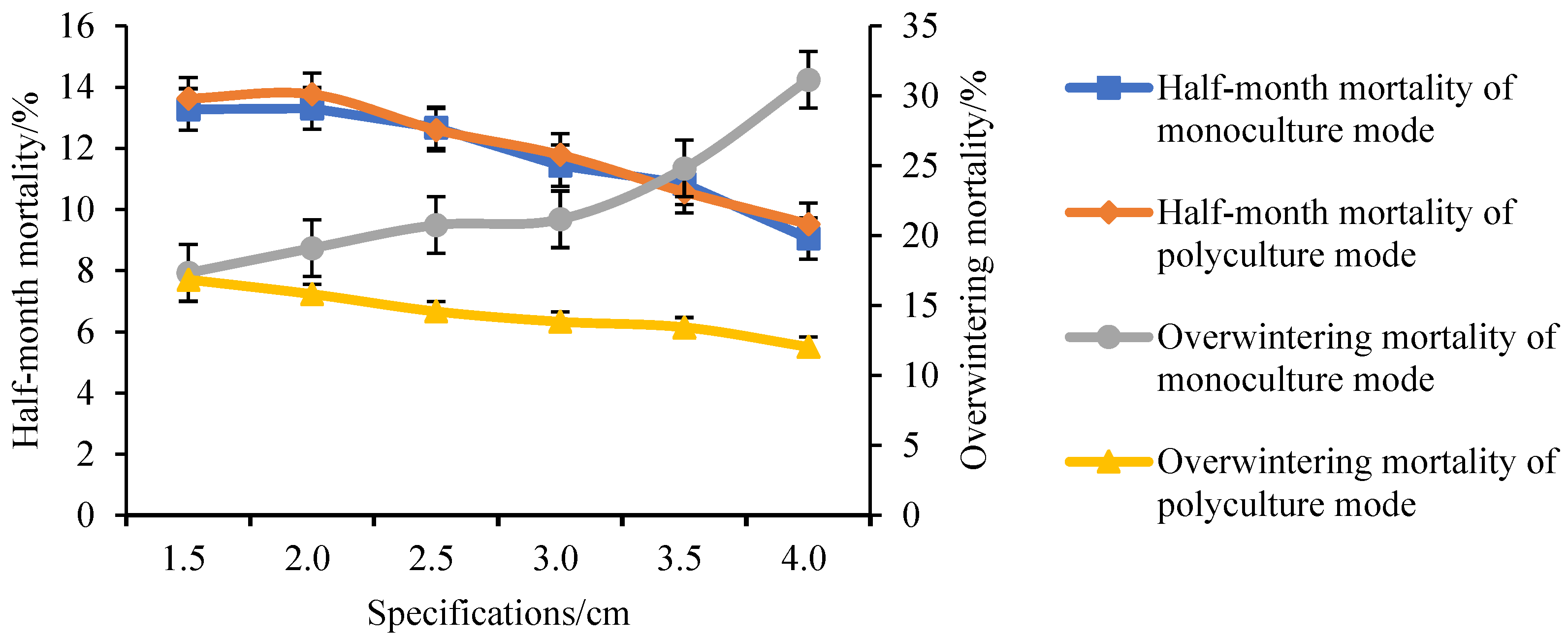
Figure 2.
Comparison of over-summer mortality of Scapharca broughtonii.
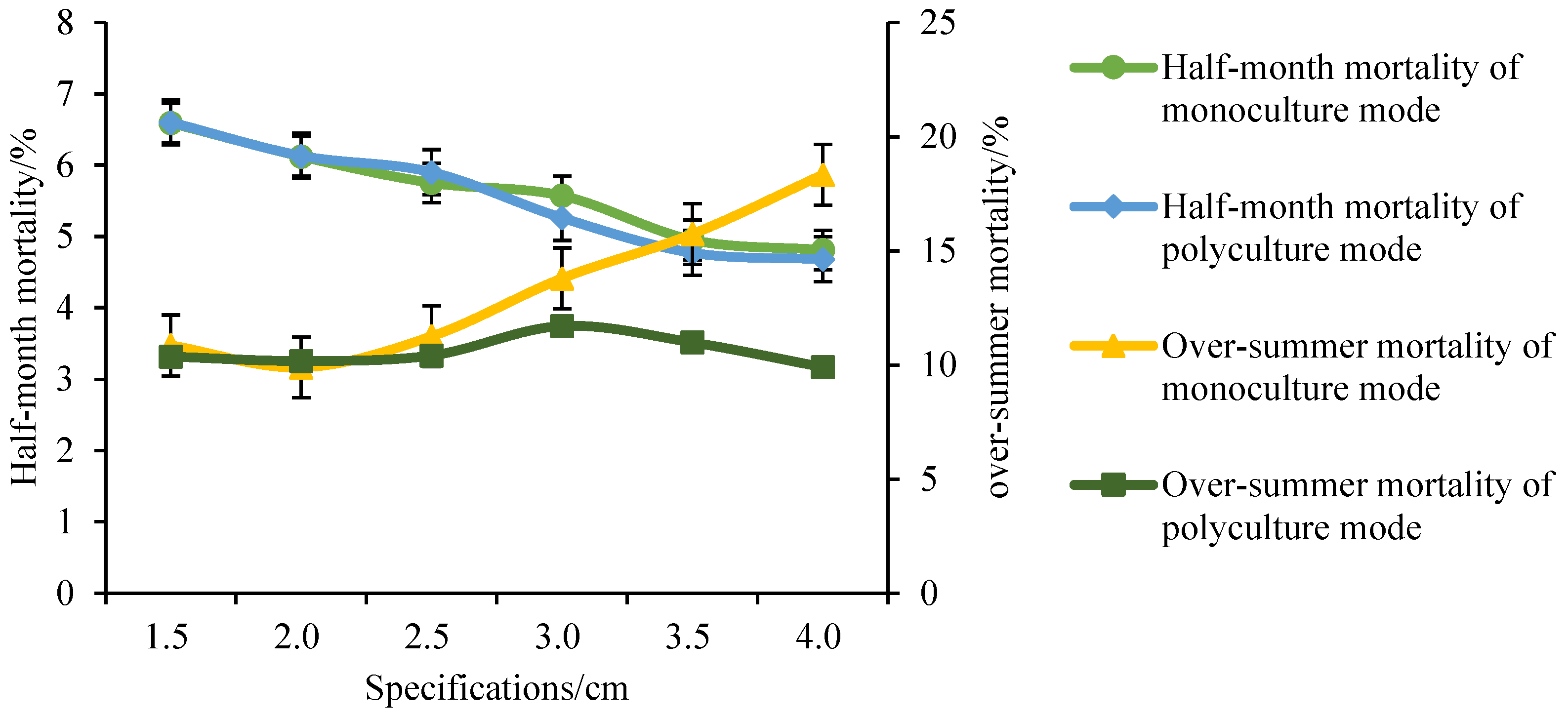
Figure 3.
Growth rate of shell length of Scapharca broughtonii.
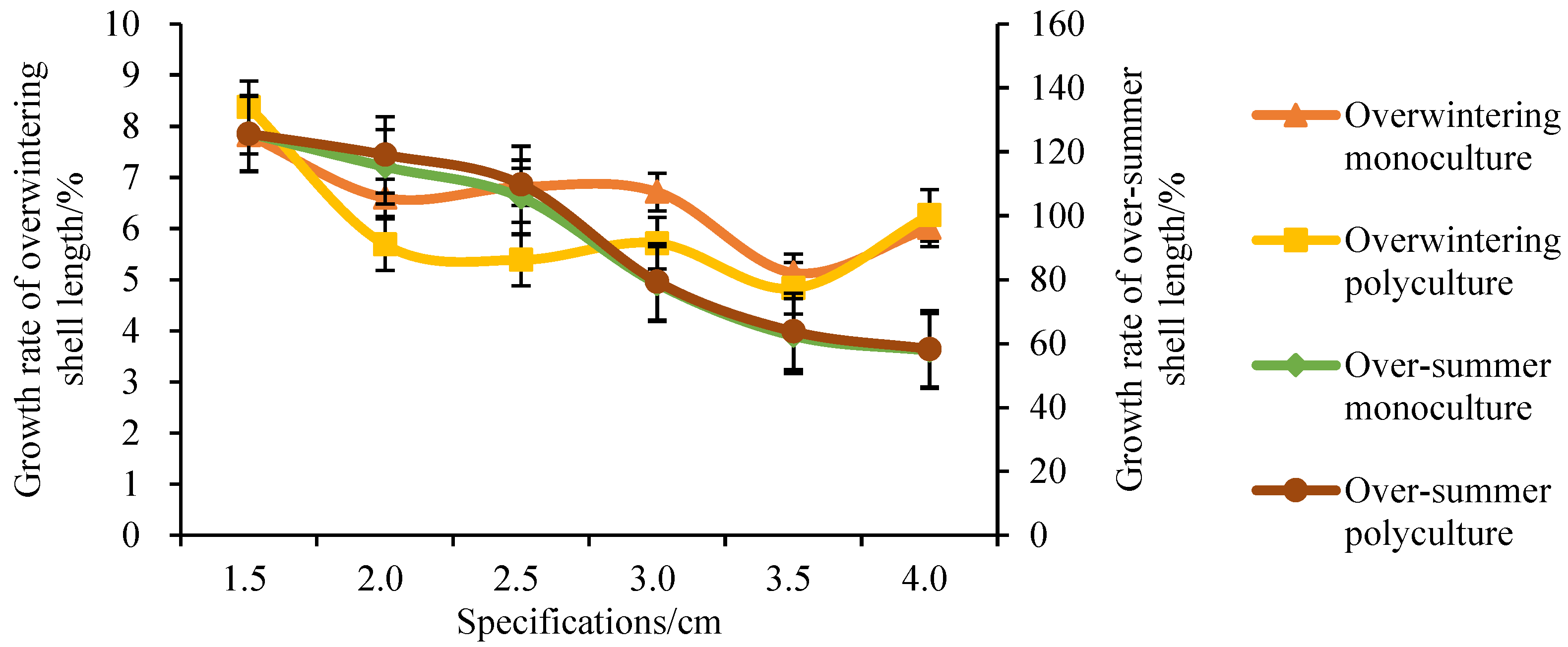
Figure 4.
Growth rate of wet weight of Scapharca broughtonii.
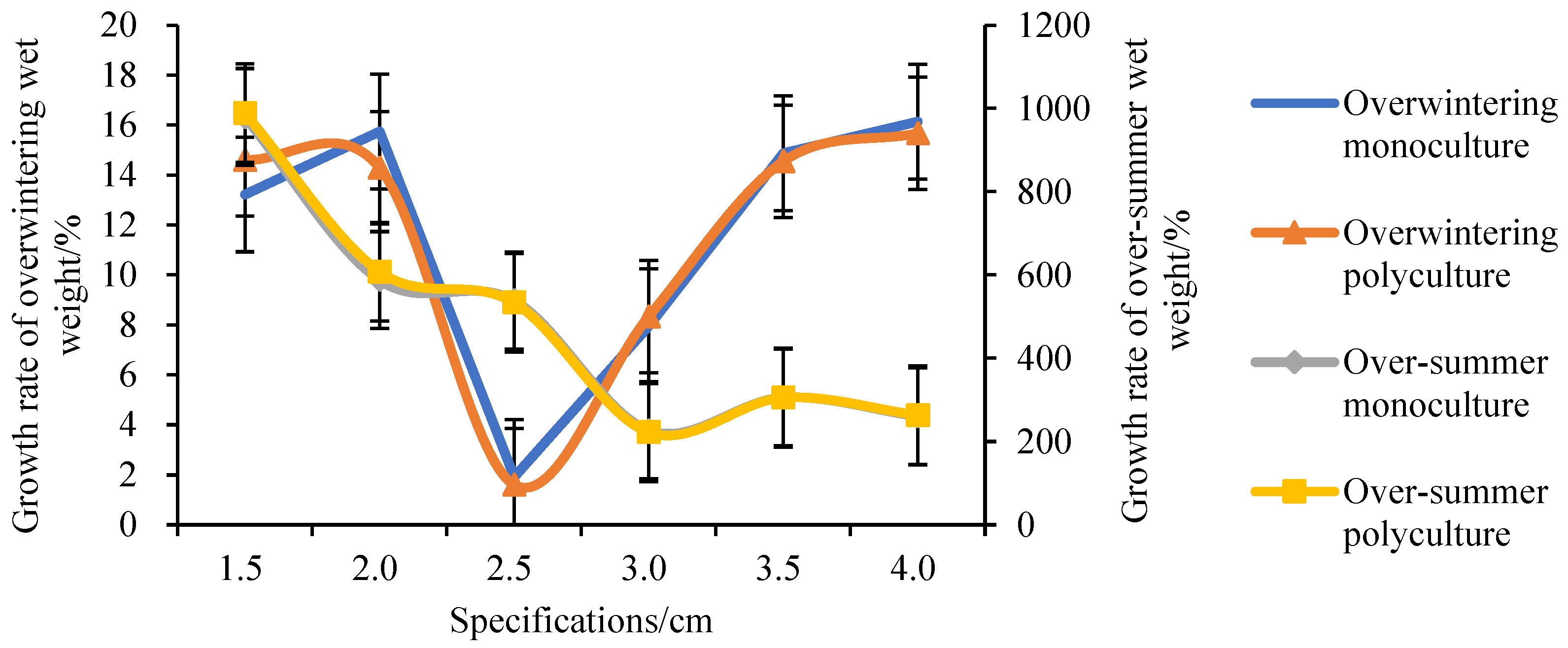
Figure 5.
Mortality comparison of Scapharca broughtonii.
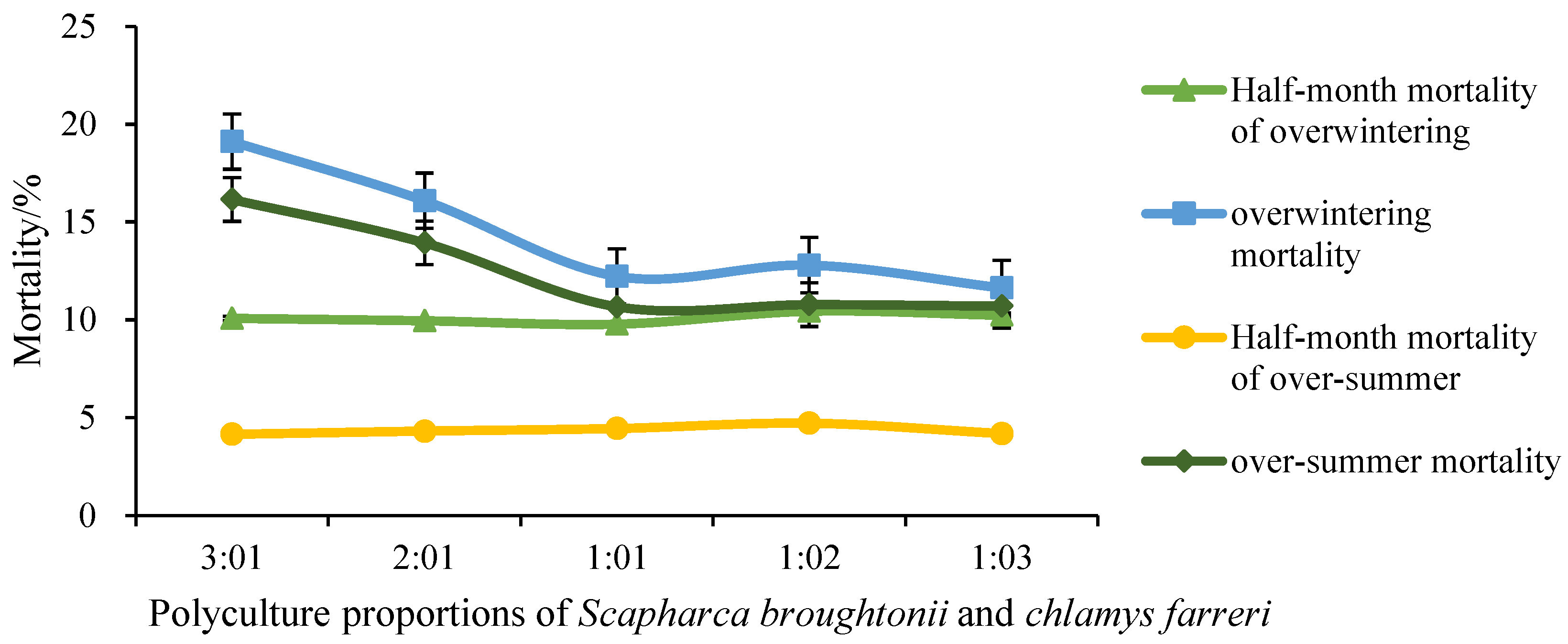
Figure 6.
Growth rate of Scapharca broughtonii in different polyculture proportions.
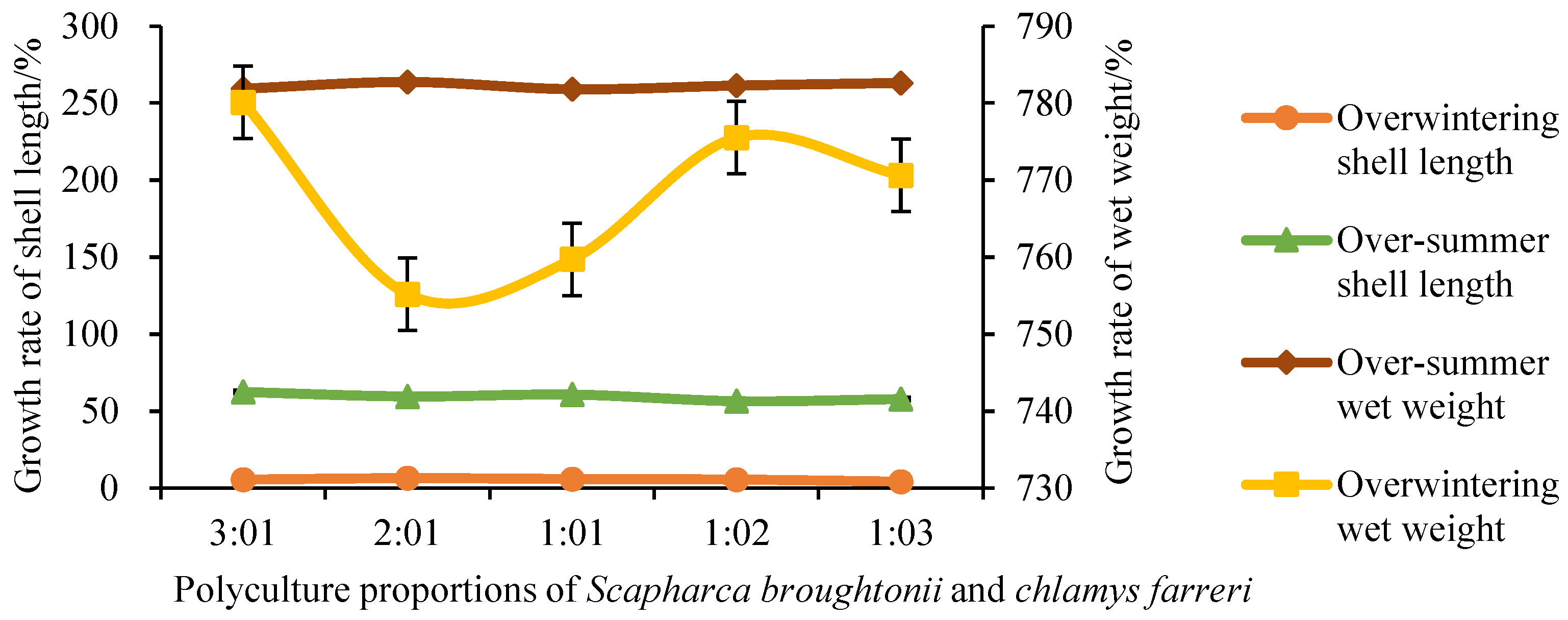
Figure 7.
Mortality comparison of Chlamys farreri.
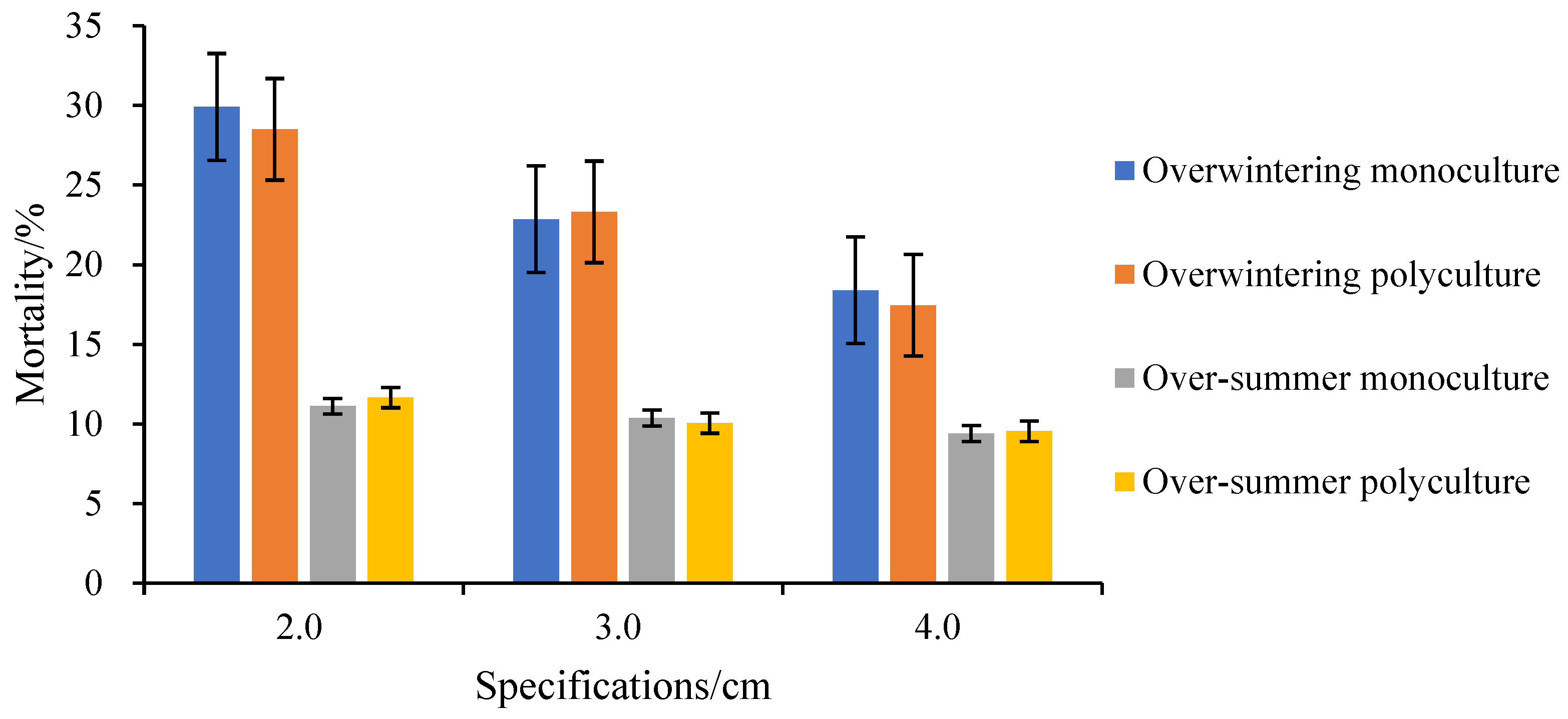
Figure 8.
Overwintering growth condition of Chlamys farreri.
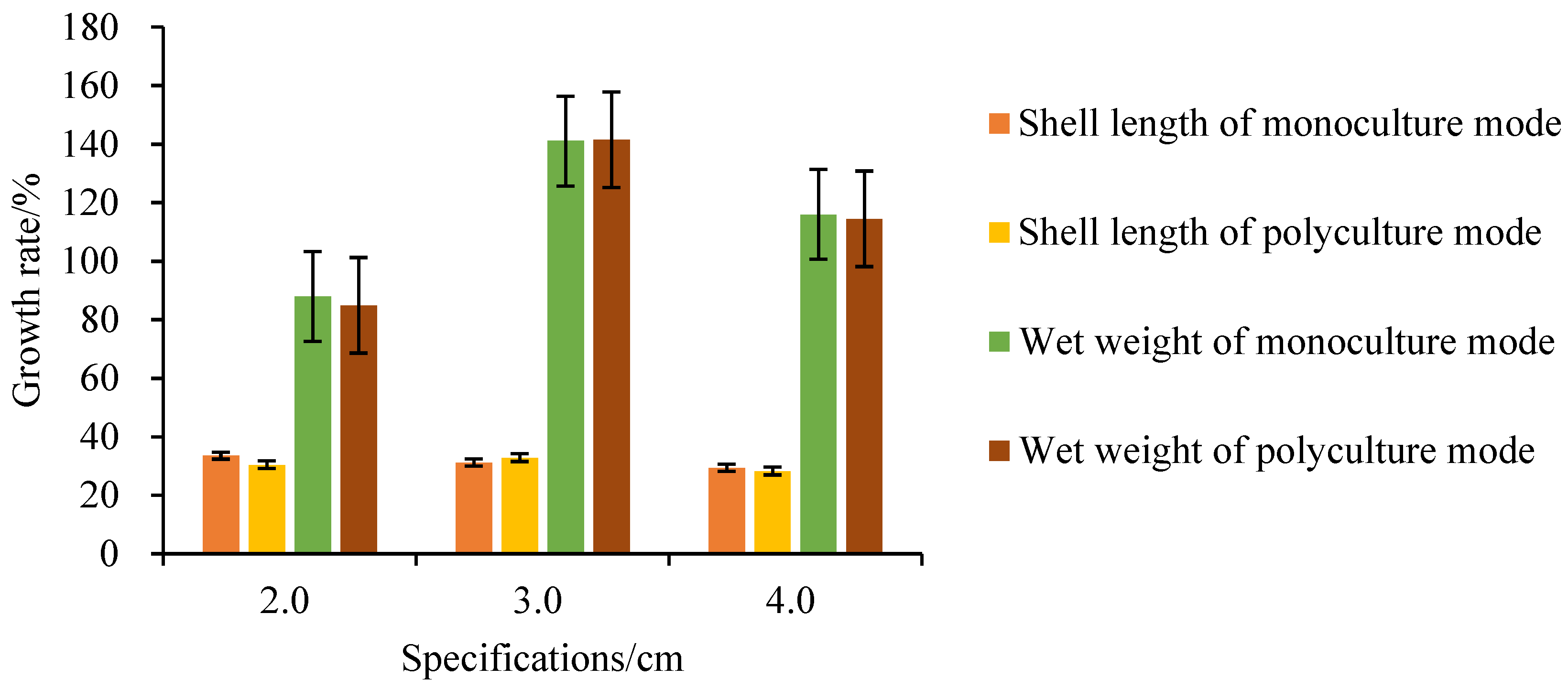
Figure 9.
Over-summer growth condition of Chlamys farreri.
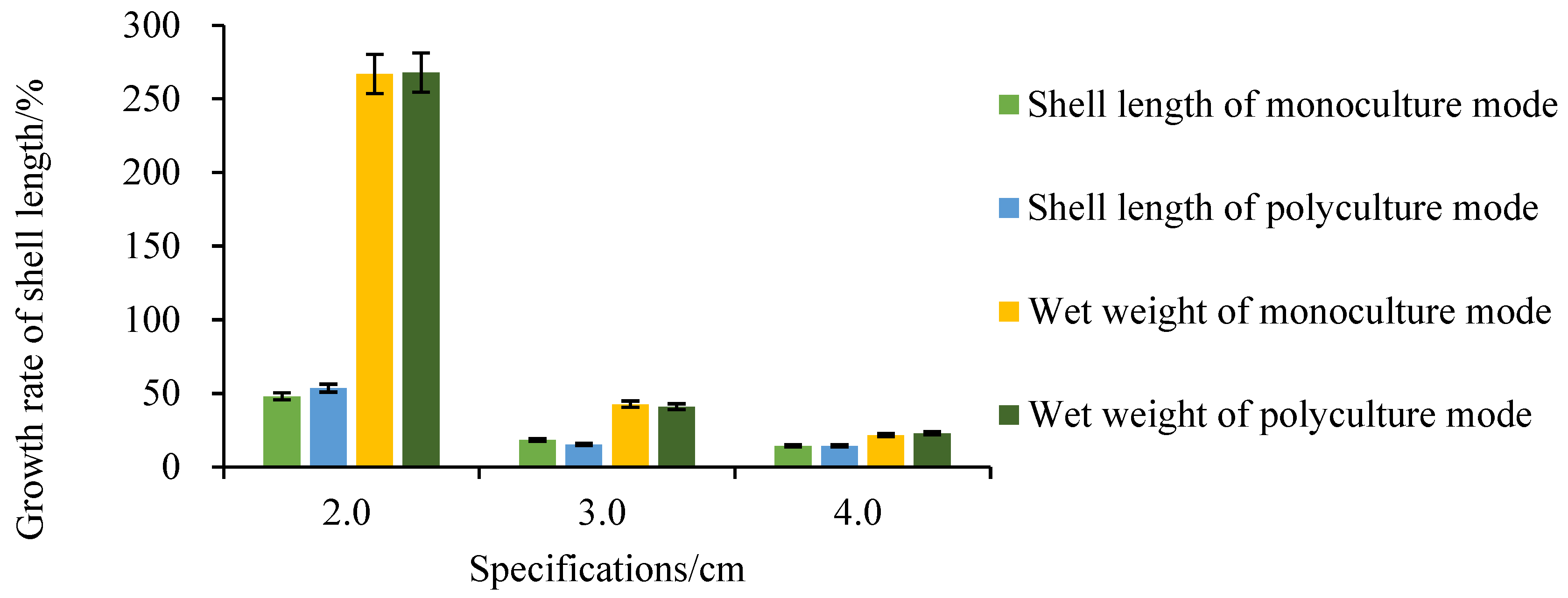

Table 1.
The benefit of shellfish culture under different patterns.
| Indicators | The bottom sowing culture of S.broughtonii |
The cage culture of S.broughtonii |
The cage culture of C.farreri | The polyculture of S.broughtonii and C.farreri | |
|---|---|---|---|---|---|
| S.broughtonii | C.farreri | ||||
| Shell length(cm) | 4.6 | 5.4 | 7.3 | 5.38 | 7.4 |
| Wet weight(g) | 39.3 | 47.8 | 52.4 | 48.6 | 52.9 |
| Price of adult shellfish (yuan/kilograms) |
12 | 15 | 7 | 15 | 7 |
| Unit input (yuan/acreage) |
4500 | 9000 | 11000 | 10000 | |
| Unit output value (yuan/acreage) |
6500 | 16000 | 18000 | 19000 | |
| Input-output ratio | 1:1.38 | 1:1.78 | 1:1.64 | 1:1.9 | |
Disclaimer/Publisher’s Note: The statements, opinions and data contained in all publications are solely those of the individual author(s) and contributor(s) and not of MDPI and/or the editor(s). MDPI and/or the editor(s) disclaim responsibility for any injury to people or property resulting from any ideas, methods, instructions or products referred to in the content. |
© 2024 by the authors. Licensee MDPI, Basel, Switzerland. This article is an open access article distributed under the terms and conditions of the Creative Commons Attribution (CC BY) license (http://creativecommons.org/licenses/by/4.0/).
Copyright: This open access article is published under a Creative Commons CC BY 4.0 license, which permit the free download, distribution, and reuse, provided that the author and preprint are cited in any reuse.


