

Submitted:
14 August 2024
Posted:
14 August 2024
Read the latest preprint version here
Abstract
Histomorphological studies were conducted to evaluate the effects of NS-Oil (NS) on ovarian toxicity induced by cyclophosphamide in female rats. The research aimed to assess the histological changes in ovarian tissue and correlate these findings with alterations in serum gonadotropin levels. The experimental design involved three (3) experimental groups treated with cyclophosphamide, NS-Oil oil, or a combination, with control group for comparison. Histological assessments of ovarian sections were performed to analyze structural integrity, follicular development, and toxicity signs, while serum samples were analyzed for estradiol, progestin levels.Cyclophosphamide administration significantly disrupted ovarian architecture, reducing follicle count and causing follicular degeneration. Conversely, NS-Oil oil treatment exhibited protective effects, restoring normal histological features and improving gonadotropin levels. Image J software, calibrated with a table micrometer, was used to measure diameters of follicles, follicular cells, and oocytes. Primary, secondary, and tertiary follicles were classified according to Oktay et al. (2017). Body weight showed no significant difference across groups, but ovarian weight decreased in cyclophosphamide-treated groups compared to controls (p < 0.05). However, ovarian weight increased dose-dependently in NS-Oil-treated groups (p < 0.05).Cyclophosphamide reduced ovarian cortex and medulla volumes (p < 0.05), while NS-Oil treatment increased these volumes (p < 0.05). Pre-antral and antral follicle counts decreased with cyclophosphamide but increased following NS-Oil treatment (p < 0.05). Atretic follicle counts decreased in both cyclophosphamide and NS-Oil-treated groups (p < 0.05). The diameters of pre-antral and antral follicles, as well as follicular cells, decreased with cyclophosphamide but increased post NS-Oil treatment (p < 0.05).These results suggest that NS-Oil may offer a therapeutic strategy to mitigate ovarian damage associated with cyclophosphamide treatment, highlighting its potential role in preserving reproductive health in patients undergoing chemotherapy. Further investigations are warranted to elucidate the underlying mechanisms of action and the efficacy of NS-Oil in clinical settings.
Keywords:
Nigella sativa
; Reproduction
; Histomorphology
; Ovaries
; toxicity
I. Introduction
A new study according to the WHO 2023, stated that large numbers of people are affected by infertility in their lifetime, making around 17.5% of the adult population. This is roughly estimated to be 1 in 6 couples worldwide experience infertility, highlighting the burden of infertility, and the need to sought for more studies to provide alternative approaches that is accessible and affordable fertility care for those in need (WHO 2023).
Infertility, defined as the failure to conceive a recognized pregnancy after 12 months of unprotected intercourse, carries significant personal, societal and financial consequences (WHO, 2023). Infertility remains a highly prevalent condition worldwide, occurring in 8-12% of couples (Marcia et. al., 2015). However, the incidence varies from one region of the world to the other, being highest in the so-called infertility belt of Africa that including south Asia, sub-Saharan Africa, the Middle East and North Africa, Central and Eastern Europe and Central Asia (Mascarenhas et al., 2012). In contrast to an average prevalence rate of 10-15% in the developed countries (Alvarez, 2006), the prevalence of infertility has been notably highly variable in sub-Saharan Africa ranging from 20-46%. This has been attributed to high rate of sexually transmitted diseases, complications of unsafe abortions, and puerperal pelvic infections (Idrisa, 2005). About 30% of infertility is due to female problems, 30% to male problems, and 30% to combined male/female problems, while in 10%, there is no recognizable cause (Inhorn, 2015).
Nigella sativa, commonly known as black cumin, is an annual flowering plant belonging to the Ranunculaceae family. It is native to the Mediterranean Basin but has naturalized in various regions, including Southern Europe, Southeast Asia, Northern Africa, Eastern Africa, and North America (The Angiosperm Phylogeny Group et al. 2016). The plant is characterized by a slender stem (20-30 cm), linear leaves, delicate white or purplish flowers with 5-10 petals, and large capsules containing numerous small, sharp black seeds (Mozaffarian 2016). These seeds have been extensively studied for their phytochemical properties, which include essential oils (Burits and Bucar 2000), alkaloids (The Angiosperm Phylogeny Group et al. 2016), fatty acids (Nergiz and Otles 1993), sterols (Salama 1973), saponins (Taşkin et al. 2005), tannins (Nergiz and Otles 1993), flavonoids (Wray et al. 1997), natural organic acids (Bourgou et al. 2008), vitamins and minerals (Nergiz and Otles 1993).
Nigella sativa has a long history of traditional medicinal use in Asia for treating various ailments, such as headaches, infertility, fever, migraines, diabetes, hypertension, inflammation, and cancer (The Angiosperm Phylogeny Group et al. 2016; Mozaffarian 2016). The seeds are known for their antimicrobial, analgesic, diuretic, hepatoprotective, cardioprotective, and neuroprotective properties. From the pharmacological stand point, the whole plant is employed in Asia to treat several diseases including headache, infertility, fever, migraine, diabetes, hypertension, inflammations and cancer (Gholamnezhad et al. 2016). Indeed, the seeds are used in Asia to exert many properties including the antimicrobial, analgesic, diuretic, antioxytocic, antinociceptive, hepatoprotective, cardioprotective and neuroprotective ones (Gholamnezhad et al. 2016).
Fertility study of Nigella sativa seeds has shown to increase the weight of reproductive organs, sperm motility and count in cauda epidydimides and testicular ducts in the male rats, while there was an increase in the number of female pregnant rats (Al-Savaii et al, 2009). Nigella sativa oil increased the secretion of sexual hormones, which improved hepatic enzyme protein synthesis, white blood cell count, and blood cholesterol concentration (Farooq T. et. al., 2011).
Problem Statement/Justification
Despite advancements in healthcare services, medical interventions, and assisted reproductive technologies in gametes and embryo manipulations, such as Invitro fertilization (IVF), Infertility still remains a major problem that affects most couples all over the world. In Africa, impaired fertility is a well-known public health issue (WHO 2020). It is a common source of marital problem and disharmony, and is more aggravated in the African society. Several studies indicate that infertility is the most frequent reason for gynecological consultation in Nigeria (Okonofua, 2003). More than 50% of gynecological caseloads are as a result of infertility (Otuba, 2017), and over 80% of laparoscopic investigations are as a result of infertility (Okoye, 2020). The International Family planning perspectives in 2017 declared that about 33% of women aged 20-44years suffer from one form of infertility in Nigeria. A substantial proportion of all those affected in developing countries, live in extreme poverty and cannot afford established medical institutions, equipped to address cases of infertility. They resort to the use of traditional folklore medicine, which employs the use of plants and its phytochemical compounds, and is readily available, accessible and very much affordable.
This study was aimed at investigating the cyclical changes and histomorphological effects of Nigella sativa oil on the ovaries, reproductive tract, hypothalamo-pituitary-ovarian axis, plasma gonadotropins and folliculogenesis in adult female wistar rats.
II. METHODS
Experimental Design:
The research protocols were approved by the Institutional Animal Care and Use (IACU) protocol, University of Jos, issued by the ethical committee animal experimental unit with approval number: UJ/FPS/F17-00379.
Experimental Animals:
Twenty-four adults female Wistar rats weighing 120-140g were obtained from the Livestock section of the School of Veterinary and Medical Laboratory Sciences at the National Veterinary Research Institute (NVRI) in Vom. All experiments were conducted in the Vivarium of the same institution. The rats were housed in plastic cages under standard laboratory conditions, including room temperature, humidity, and a 12-hour light/dark cycle. The animals' cages were cleaned daily, and they were fed a standard laboratory diet (Grand Cereal Animal Feeds, Vom) and provided drinking water ad libitum. The rats were acclimated to this environment for two weeks before the study began. All animal care and procedures complied with the guidelines of the institute's ethical committee for medical research. The rats were then randomly divided into four groups of six animals each. Nigella sativa oil was administered orally using a gastric tube.
Plant Acquisition and Preparation:
Nigella sativa seeds were purchased from a commercial shop (Makkah and Madina shop) in Jos metropolis Plateau State, Nigeria. The plant seeds were identified by Mr. Bulus, a taxonomist, Department of Plant Sciences University of Jos, and authenticated by Mr. J.J. Azilla a Botanist from the Federal School of Forestry, Jos. It was given an herbarium voucher number of 0768. The seeds were prepared for phytochemical and elemental analysis, and also oil extraction using Soxhlet method was carried out at the Pharmacognosy Laboratory, Department of Pharmacognosy and Traditional Medicine, Faculty of Pharmaceutical Sciences, University of Jos, Nigeria. Cyclophosphamide (Cycloxan 500mg), manufactured by Zydus Celexa (Cedila Healthcare Ltd No. 2 ALEAP Industrial Estate, Medical District-500 090 Telengana State, India) was obtained from Le Med Pharmacy, Bauchi Road Jos, Plateau State, Nigeria.
The group and doses to be administrated are summarized below;

Table 1.
Experimental groups (Female adult Rats, N = 6 per group).
| Experimental Groups | Treatment/Rats (Induced infertility) |
|---|---|
| Group 1 | Distilled water |
| Group 2 | 200mg/kg NS oil + Cyclophosphamide |
| Group 3 | 400mg/kg NS oil + Cyclophosphamide |
| Group 4 | 800mg/kg NS oil + Cyclophosphamide |
Induction of Gonadal-toxicity:
Cyclophosphamide is an alkylating agent which has been used to treat the different malignant and nonmalignant diseases, it may have some adverse effects including gastro-intestinal disorder, mutagenesis, pulmonary fibrosis, kidney infection, impaired fertility and could induce premature ovarian failure (Meirow et.al., 2014; Jiang et. al., 2013). In this study, Cyclophosphamide is selected to induce ovarian failure as animal infertile models. Therefore, the aim of this study is evaluation of the effect of Nigella sativa oil on ovarian structures in Cy-induced ovarian failure in female rats.
Histomorphological Studies of Ovaries and Reproductive Tract:
Tissues were fixed in Bouin’s solution and dehydrated using graded alcohol concentrations. This method involved dehydration of tissue in 70% alcohol, 90% alcohol, 95% alcohol, and absolute alcohol, each stage lasting for 30minutes. The use of ascending concentration of alcohol is to prevent the rapid dehydration of tissue thereby causing structural damage to the tissue. The dehydrated tissue is the cleared in two changes of chloroform for 120minutes each. The clearing is to remove the opacity caused by the dehydrating agent, and make the tissue transparent. The tissue is then infiltrated by immersion into molten paraffin for a period of 30minutes. The tissue was then embedded into molten paraffin wax and allowed to solidify. The embedded tissue were blocked in a rectangular block and sectioned using the rotary microtome at 5µm per section. The tissue sections were allowed to float in water bath at 30oC to help the spreading of the tissue ribbons. Clean slides were used to pick the tissues from the warm water bath. The slides were left to dry and later stained using H&E, and PAS stains
RESULTS
Histomorphological Studies:
The estimation of the diameter of follicles, follicular cells and oocytes and the exact calculation of the diameters were ensured by the measuring tools integrated in the Image J software after calibration with a table micrometer (MT12, Heidenhain) (Mandarim-de-Lacerda 2003; Bordbar et al. , 2014). Ovarian follicles at different developmental stages were transplanted according to the methods described by Oktay et al. (2017). In summary, the primary follicles are just below the bark and contain a single layer of scaly grains. Primary follicles consist of a single layer of cuboid granule cells. Secondary follicles contain multiple layers of granule cells, and tertiary follicles are characterized by a granule layer and a fluid-filled antral space.
Table 2.
Percentage of rats at different estrus phases from different dose levels of Nigella sativa oil. Mean ± S.E.M.
Table 2.
Percentage of rats at different estrus phases from different dose levels of Nigella sativa oil. Mean ± S.E.M.
| Doses (mg/kg body weight) | Percentage (Mean ± S.E.M) of rats at different phases of the Estrous cycle | |||
|---|---|---|---|---|
| Proestrus | Estrous | Metestrus | Diestrus | |
| Group I (Positive control) | 27.06 ± 4.3 | 25.67 ± 4.2 | 18.53 ± 2.3 | 31.23 ± 2.8 |
| Group II (Negative control) | 37.03 ± 4.7 | 27.30 ± 4.7 | 24.23 ± 2.7 | 17.36 ± 3.1 |
| Group III (200mg/kg) | 47.35 ± 5.3 | 31. 34 ± 5.3 | 18.53 ± 7.3 | 7.52 ± 3.2 |
| Group IV (400mg/kg) | 52.07 ± 2.3 | 36.07 ± 3.2 | 15.63 ± 2.3 | 7.20 ± 5.6 |
| Group V (800mg/kg) | 50.07 ± 3.2 | 37.42 ± 4.3 | 17.73 ± 3.6 | 9.03 ± 1.8 |
Mean with different superscript in a row are significantly different when compared with the control group at p < 0.05.
Table 3.
Weight of the Uterus, fallopian tubes, and Ovaries of Cyclophosphamide induced gonadotoxic rats administrated with Nigella sativa oil for 21days across the groups.
Table 3.
Weight of the Uterus, fallopian tubes, and Ovaries of Cyclophosphamide induced gonadotoxic rats administrated with Nigella sativa oil for 21days across the groups.
| Group | Weight of Uterus, fallopian tubes, and Ovaries Mean weight (g) ± SEM | Body weight/Organ ratio Mean weight (g) ± SEM | P- value |
|---|---|---|---|
| Group I (Positive control) | 0.58 ± 0.04 | 231 ± 5.3 | 0.043 |
| Group II (Negative control) | 0.54 ± 0.04 | 219 ± 4.7ab | 0.042 |
| Group III (200mg/kg) | 0.56 ± 0.04 | 227 ± 5.1 | 0.047 |
| Group IV (400mg/kg) | 0.56 ± 0.04 | 232 ± 4.9 | 0.046 |
| Group V (800mg/kg) | 0.57 ± 0.06 | 233 ± 4.0ab | 0.057 |
SEM = Standard Error in Mean ab = Statistically significant Mean with different superscript in a row are significantly different when compared with the control group at p < 0.05.
Table 4.
Mean serum level of Estradiol and Progesterone cyclophosphamide induced gonadotoxic rats administered with Nigella sativa oil for 21 days.
Table 4.
Mean serum level of Estradiol and Progesterone cyclophosphamide induced gonadotoxic rats administered with Nigella sativa oil for 21 days.
| Groups | Estradiol Mean(pg/ml) ± SEM |
Progesterone Mean(pg/ml) ± SEM |
|---|---|---|
| Group I (positive control) | 7.91± 0.13ab | 6.31 ± 0.13b |
| Group II (negative control) | 6.03 ± 0.17 | 5.87 ± 0.14 |
| Group III (200mg/kg) | 7.41 ± 0.14 | 5.61 ± 0.09 |
| Group IV (400mg/kg) | 7.70 ± 0.13 | 6.20 ± 0.10 |
| Group V (800mg/kg) | 6.76 ± 0.14a | 7.46 ± 0.14ab |
P<0.05 S.E.M = standard error in mean ab = level of significant.
Table 5.
Effects of Nigella sativa oil on the total volume of ovary, cortex and medulla of Cyclophosphamide induced gonadotoxicity rats.
Table 5.
Effects of Nigella sativa oil on the total volume of ovary, cortex and medulla of Cyclophosphamide induced gonadotoxicity rats.
| Groups | Cortex volume (µm3) | Medulla volume (µm3) | Total ovary volume (µm3) |
|---|---|---|---|
| Group I (Positive control) | 12.9 ± 2.33 | 8.01 ± 1.23 | 20.93 ± 2.1 |
| Group II (Negative control) | 10.4 ± 2.11a | 6.44 ± 0.50a | 16.79 ± 2.32a |
| Group III (200mg/kg) | 12.48 ± 1.46b | 6.74 ± 1.11b | 19.22 ± 1.86b |
| Group IV (400mg/kg) | 12.77 ± 1.99 | 8.02 ± 0.89 | 20.80 ± 1.72a |
| Group V (800mg/kg) | 12.53 ± 1.37 | 8.41± 1.72 | 19.72 ± 1.62 |
The data are expressed as the Mean ± Standard Error in Mean (S.E.M) p <0.05.
Table 6.
Mean volume of oocyte (μm3) in different types of follicles in different groups of rats 21 days after treatment with Nigella sativa oil on induced Cyclophosphamide gonadotoxic rats. Groups (n=6).
Table 6.
Mean volume of oocyte (μm3) in different types of follicles in different groups of rats 21 days after treatment with Nigella sativa oil on induced Cyclophosphamide gonadotoxic rats. Groups (n=6).
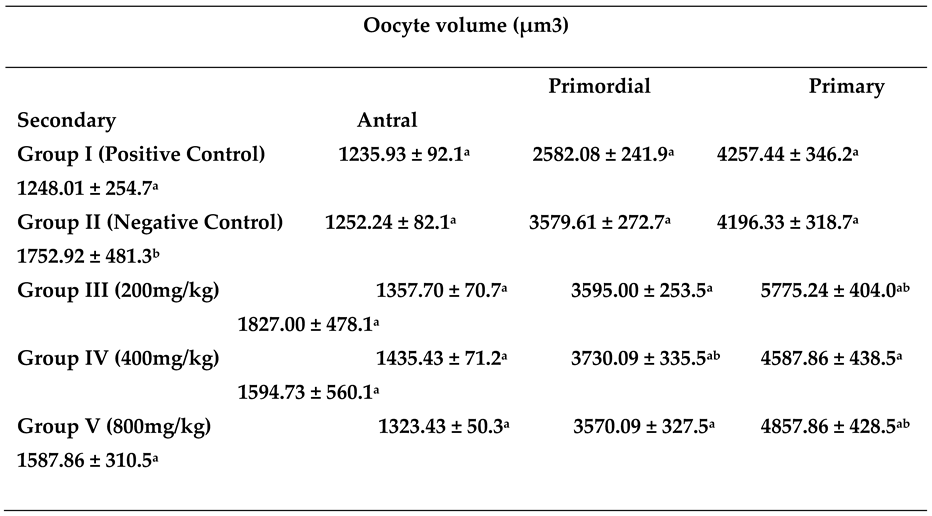 |
Means with different code letters in each column differ significantly from each other (p < 0.001).
Figure 1.
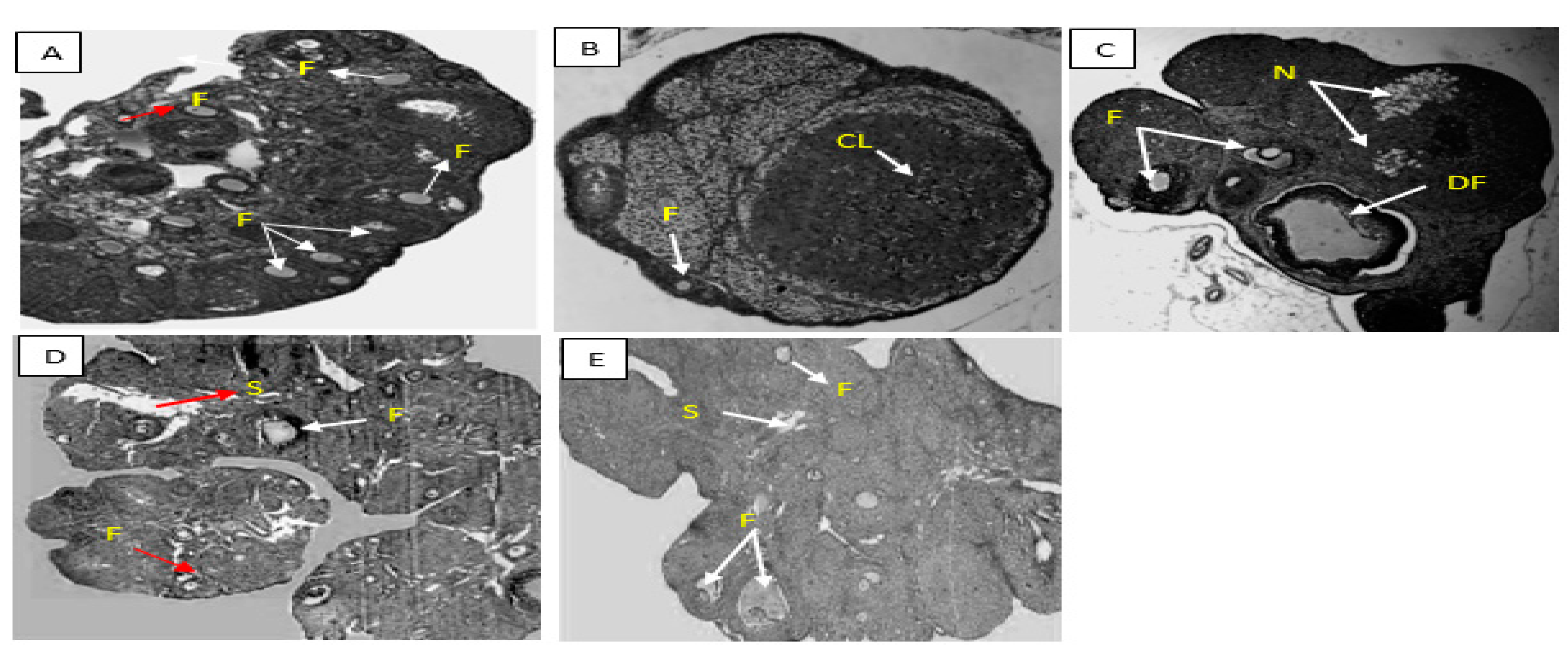
Photomicrograph of Cyclophosphamide induced Ovaries in all experimental groups, after treatment with different concentrations of NS-oil for 21 days. Magnification x 40.
Figure 1.
Photomicrograph of Cyclophosphamide induced Ovaries in all experimental groups, after treatment with different concentrations of NS-oil for 21 days. Magnification x 40.
- A.
- Group 1 (Positive Control): Ovaries at different developmental stages, with normal histological architecture
- B.
- Group 2. (Negative Control): Shows diminished number of developing follicles and increased number of atretic follicles
- C.
- Group 3. (200mg/kg NS-oil + 0.5 mg/kg Cy): Shows distribution of developing follicles, degenerating follicle and a balloon tissue necrosis on the ovarian surface
- D.
- Group 4 (400mg/kg NS-oil + 0.5 mg/kg Cy): Presence of developing primary follicles and distorted ovarian stroma
- E.
- Group 5 (800mg/kg NS-oil + 0.5 mg/kg Cy): Shows ovary with follicles at different stage of development, and mild necrosis on the surface
Figure 2.
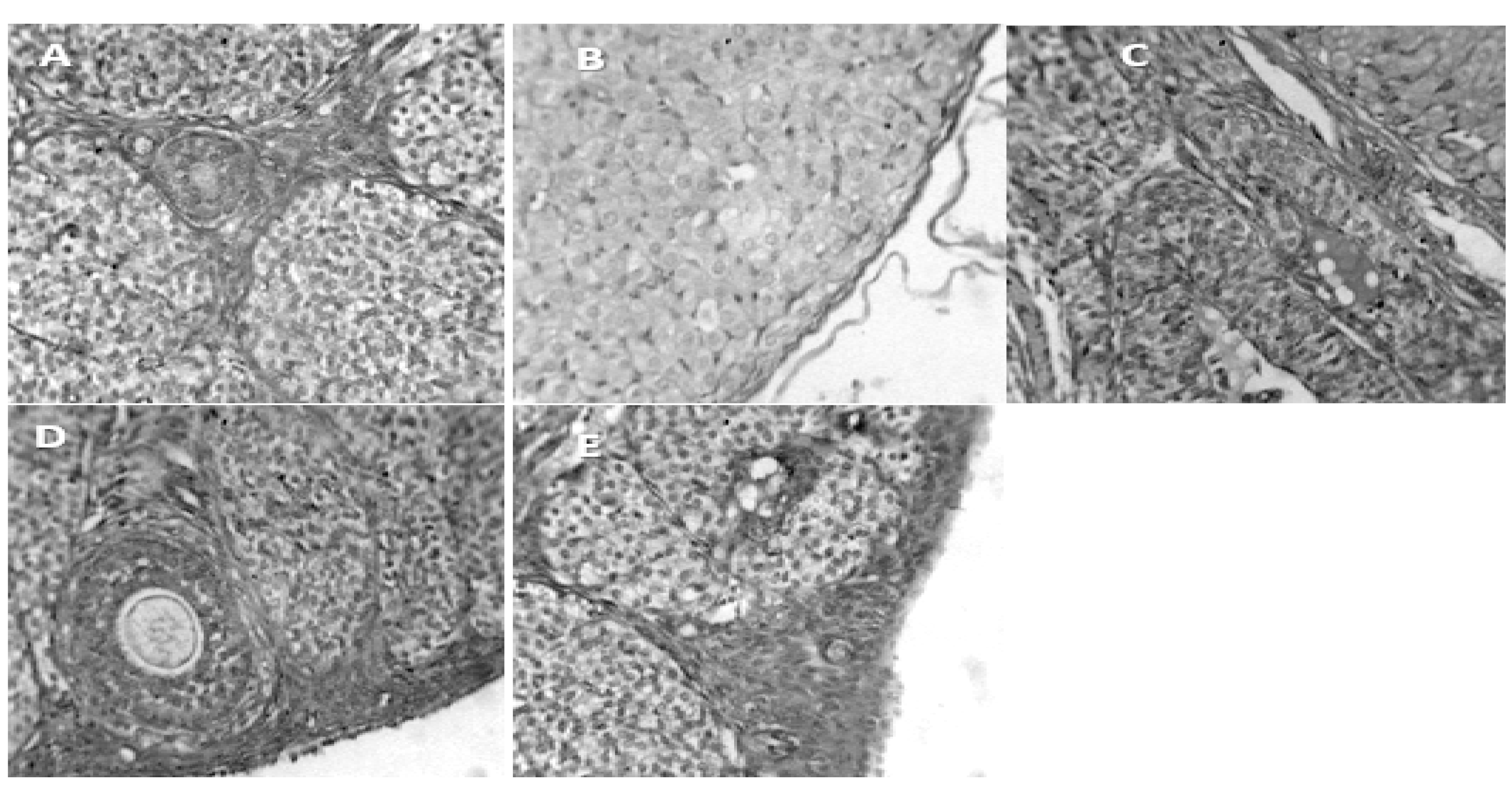
PMicrographs showing cross sections of Ovarian Stroma in all treatment groups and the
controls. Magnification x100.
Figure 2.
PMicrographs showing cross sections of Ovarian Stroma in all treatment groups and the
controls. Magnification x100.
- A.
- Group 1. (Positive Control)
- B.
- Group 2. (Negative Control)
- C.
- Group 3. (200mg/kg NS-oil + 0.5mg/kg Cy)
- D.
- Group 4. (400mg/kg NS-oil + 0.5mg/kg Cy)
- E.
- Group 5. (800mg/kg NS-oil + 0.5mg/kg Cy)
Figure 3.
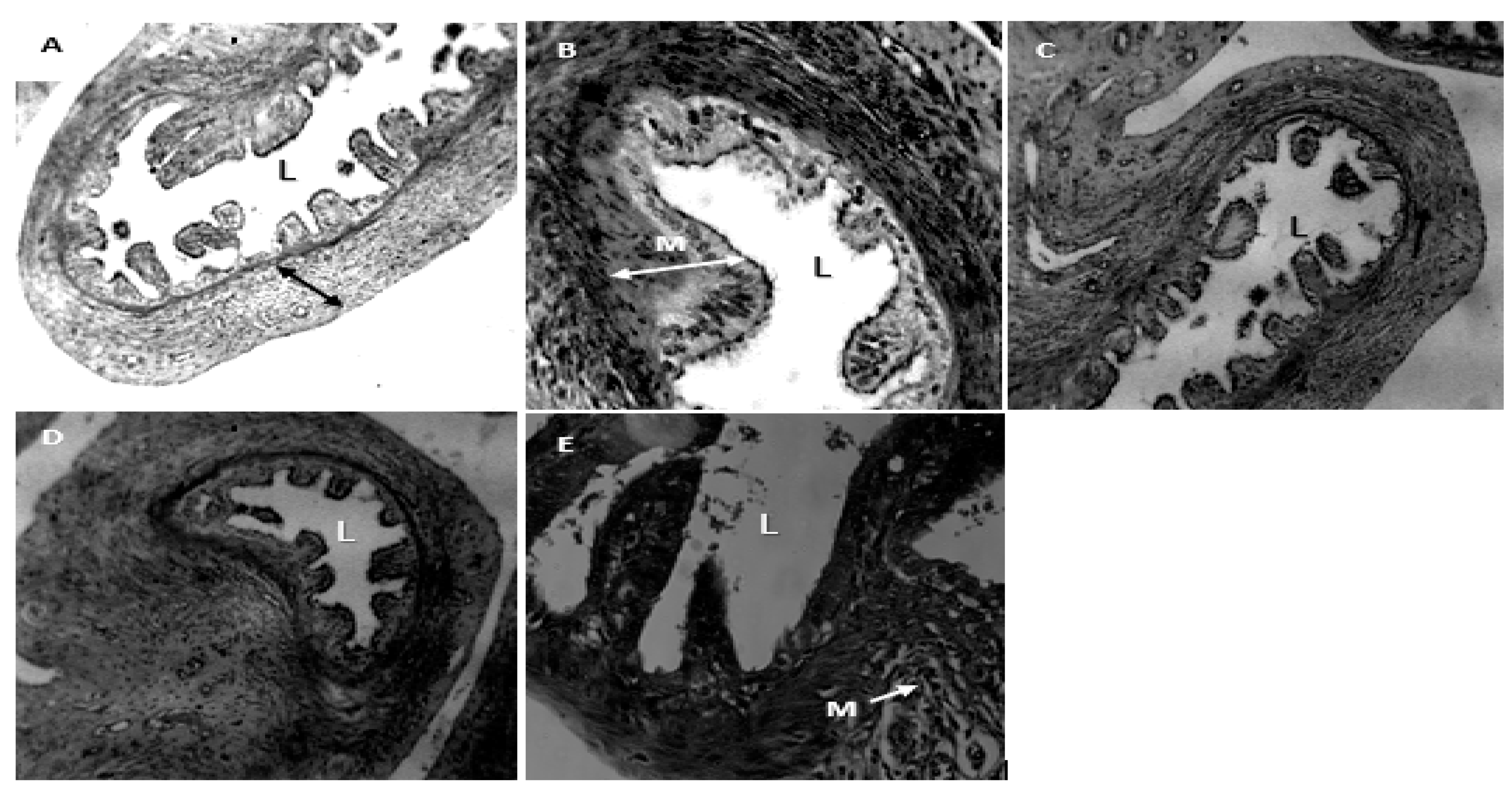
Photomicrographs showing Uterine tubes of experimental rats exposed to 0.5mg/kg Cyclophosphamide and treated with NS-oil of different concentrations for 21days. Magnification x 40.
Figure 3.
Photomicrographs showing Uterine tubes of experimental rats exposed to 0.5mg/kg Cyclophosphamide and treated with NS-oil of different concentrations for 21days. Magnification x 40.
- A.
- Group 1 (Positive Control): Normal appearance of uterine mucous membrane with branching folds, and central lumen (L).
- B.
- Group 2. (Negative Control): Shows increased activity of the mucous membrane of the uterine tube
- C.
- Group 3. (200mg/kg NS-oil + 0.5mg/kg Cy), also shows decrease mucous activity, the muscularis mucosa also shows decrease in diameter
- D.
- Group 4. (400mg/kg NS-oil + 0.5mg/kg Cy), Narrowing of the luminal diameter can be seem in this group
- E.
- Group 5. (800mg/kg NS-oil + 0.5mg/kg Cy). The uterine tube is less intact and numerous distortions can be seen. There is also and increased proliferation of the mucous membrane
Body and ovarian weight (Table X). shows that the mean body weight of the animals in all groups had no significant difference. Ovarian weight reduced in the Cyclophosphamide induced experimental groups compared with the control group (p < 0.05), but ovarian weight increased after treatment in the Nigella sativa group compared with the control in dose dependent manner (p < 0.05).
There was no significant difference in these parameters between the experimental and control groups (Table x). Volume of the cortex, medulla and total volume of the ovary, and also cortex and medulla volume were reduced in the Cy experimental groups compared with the control group (p < 0.05). However, the total volume of the ovary and its cortex were increased after treatment with NS-oil compared with the control experimental groups (p < 0.05). There was no significant difference in these parameters between the NS-oil experimental and control groups (Table x). Number of pre-antral, antral, and atretic follicles Number of pre-antral and antral follicles were reduced in the Cy experimental groups compared with the vehicle group (p < 0.05), but pre-antral and antral follicles increased after treatment with NS-oil compared with the Cy experimental groups (p < 0.05).
The number of atretic follicles decreased in Cy and NS-oil treated rats compared with the vehicle group (p < 0.05). There was no significant difference in these parameters between the NS-oil experimental and vehicle groups (TableX). Diameter of pre-antral and antral follicles reduced in the Cy experimental groups compared with the vehicle group (p < 0.001). The diameter of pre-antral and antral follicle increased after treatment with NS-oil compared with the Cy experimental groups (p < 0.05).
There was no significant difference in these parameters between the NS-oil experimental and vehicle groups (Table x). Diameter of follicular cells in pre-antral and antral follicles Diameter of follicular cells in pre-antral and antral follicle were reduced in the Cy experimental groups compared with the vehicle group (p < 0.01) and diameter of follicular cells in pre-antral and antral follicle were increased after treatment with NS-oil related to the Cy experimental groups (p < 0.05) and decreased compared with the vehicle.
Diameter of oocyte in pre-antral and antral follicles Diameter of oocyte in pre-antral follicle was reduced in Cy and NS-oil experimental groups compared with the vehicle group (p < 0.05). Diameter of oocyte in antral follicle was reduced in the Cy and NS-oil experimental groups compared with the vehicle group (p < 0.05). There was no significant difference in this parameter between the other experimental groups (Table X)
Discussion
The rat has a brief reproductive cycle of 4 to 5 days in phases, which makes it excellent for reproductive investigations (Campinas & Campinas, 2002; Caligioni, 2009). The release of gonadotropin-releasing hormone from the brain, gonadotropins from the pituitary, and sex hormones from the gonads all impact the estrous cycle in sexually developed female animals (Choi et al., 2016; Nie et al., 2021). Plant extracts inhibited the estrous cycle in rats during the diestrus phase, preventing the production of both follicle-stimulating hormone (FSH) and luteinizing hormone (LH) (Ojah & Borthakur, 2021; Oluwasola et al., 2019).
The loss of regular cyclicity implies that the ovarian progestin and estrogen equilibrium has been disrupted. Studies reported that many extracts resulted to lengthened the diestrus stage of the cycle (Hubscher et al., 2005; Regulation, 2021), and sometimes complete abolition of proestrus, with prolonged estrus, and shortened diestrus phases of the cycle following the administration of Nigella sativa oil (Bridgewater et al., 2020; Uzochukwu, 2020). The results of the current study (Table 17) confirm these previous claims of the ability of some plant extracts to lengthen the diestrus phase of the cycle. Distinct plants have different ways for altering the reproductive cycle, as evidenced by the submissions.
The result in this studies shows that there was an increase in estradiol hormone and progestin in the rats that were treated with 800mg/kg Nigella sativa oil, this is in line with several studies of Nigella sativa oil on reproduction, showed that it stimulated the secretion of sexual hormones that led to improve synthesis of hepatic enzymes (Elkareem et al., 2021; Hannan, Zahan, et al., 2021), it increases the thickness of germinal layer of seminiferous tubules significantly (Al-zuhairy, 2014; Al Taee, 2018), also reverse toxicity effect in rats treated with Lead acetate (100mg/kg), and causes significant enhancement in reproductive function, increases ovarian weight to body ratio, gonadotrophins, and diameter of graafian follicles (Bala, et. al., 2020; Hannan, Rahman, et al., 2021)
Ovarian failure is distinguished by ovarian atrophy, follicles reduction, and sex hormonal diminution (Ebrahimi and Asbagh 2011). Cyclophosphamide is an alkylating agent which induce ovarian failure in animal models (Budel et al. 1988; Comish et al. 2014). This quantitative study showed that Cy decreased weight and volume of ovary, reduced different follicles number and sex hormones levels and increased atretic follicles compared to vehicle group. Reduction of the medulla volume may be attributed to the rate of blood circulation. suggesting that, reduction of the rate of medulla blood circulation caused to medulla volume diminution. Reduction of cortex volume can be related to follicular number decrement. This result indicates that Cy had the most important effect on the number of pre-antral follicles relative to antral follicle and increase atretic follicle. Comish et al. (2014) showed that Cy causes degeneration of ovarian follicle number in mice. Other studies have demonstrated that Cy significantly reduces primordial and primary follicles and increases the numbers of atretic follicles (Budel et al. 1988; Comish et al. 2014).
This result also shows that Cyclophosphamide adversely affect follicular development at all stages of development. This is in line with Epstein (1990), who believed that Cy has negative effect on both resting and dividing cells. Lopez and Luderer (2014) show that Cy leads to misdirection of the diakinesis stage in first meiosis of oogonia. Other researches have demonstrated that Cy inhibits follicular cell division through DNA strand break and inhibit mitotic divisions (Mills et.al, 2018; Sun et. al., 2021). Based on this information, the other parameters should be measured to confirm this data. In this research, cyclophosphamide reduced the diameters of different follicles, oocyte and follicular cells relative to vehicle group. Lopez and Luderer (2004) demonstrated that Cy-induced follicular cell apoptosis in rats. Other studies showed that ovarian failure had the most side effect on follicular cells compared with resting follicle (Jankwoska 2017; Huang et. al., 2022). Researches show that, any factor which induces follicle syncope in the primary follicle stage, inhibit follicular cell mitosis, consequently, follicular cell remain only one layer and formation of any new layers of follicular cells are uncommon (de Castro et al. 2016; Yang et. al., 2017). It seems reduction of follicular cell in pre-antral follicle prevent germ cell development and decrease the number of pre-antral and antral follicles. In addition, reduction of follicular cells has direct influence on the size of oocyte in growing follicle.
This study also demonstrated that Cy decreased the level of estradiol and progesterone. Follicular cells are the main source of estradiol and progesterone. Destruction of antral and pre-antral follicles have a direct effect on estradiol level (Holesh, 2022). Therefore, it seems that change in the number of the growing follicles influences the level of hormones. Studies show that growth factors have an important role in improving the structure and function of ovaries. Different growth factors such as CTGF, EGF, and TGF-b have protective effects on ovarian damage (Yan et al. 2001; Su et al. 2008; Uhm et al. 2010; Nagashima et al. 2011; Mendes et al. 2015). In this study, it was found that NS oil had a positive effect on the volume of the ovarian cortex, the number of preantral follicles, and the diameter of the antral follicles. These results also show that NS oil increases the volume of the ovarian cortex, the number of preantral follicles, and the diameter of the antral follicle and its ovule.
Based on these results, it can be proposed that NS-oil accelerates antral folliculogenesis by stimulating follicular cell proliferation and thereby increasing antral follicle diameter. An increase in oocyte diameter in the antral follicles under the influence of growth factors is a common phenomenon, while a decrease in oocyte diameter in the preantral follicles under this condition is an unusual phenomenon. The mechanism of cell size is not fully understood but is determined by external and internal factors (Marshal et. al., 2012; Lloyd 2013). Zetterberg et al. (1984) believe that macromolecular factors such as EGF have a stimulatory effect on DNA synthesis but do not affect cell size. In addition, GDF9 stimulates meiotic division in metaphase I and II and regulates follicle and ovarian size (Comish et al. 2014; Da Broi et. al., 2018). In this study, the extract oil of NS-oil had no effect on estradiol and progesterone levels. The follicular cells do not appear to have reached their full development; Therefore, the levels of these hormones have not changed significantly. In this study, we also found that NS-oil administration had no effect on various ovarian structures and functions in normal rats. It appears that the beneficial effects of NS-oil apply only to damaged ovaries and do not affect normal structure. Conclusively, Cyclophosphamide had a more damaging effect on follicular cells than on oocytes in different ovarian follicles. NS-oil had a positive effect on follicle growth and improved ovarian tissue repair.
Conclusion:
The results of this investigation provide light on the intricate interactions that occur between plant extracts of NS oil, in particular and reproductive physiology in rat models, especially when cyclophosphamide (Cy) is present. The study demonstrated that exogenous chemicals and innate physiological processes have a substantial impact on the short estrous cycle in female rats.
Cy treatment caused significant ovarian dysfunction, which included ovarian shrinkage, a drop in the number of follicles, and low sex hormone levels, especially progesterone and estradiol. This is consistent with other research showing that Cy causes ovarian failure by means of follicular cell death and DNA damage, which ultimately results in abnormal folliculogenesis and hormonal abnormalities. These results are supported by the study's quantitative analysis, which shows a notable rise in atretic follicles and a decrease in the volume of the ovarian cortex and medulla, both of which are essential for healthy reproductive function.
On the other hand, NS oil administration showed ovarian structures to be protected, increasing the number of preantral follicles and the diameter of antral follicles, indicating that it may have a role in folliculogenesis and ovarian tissue healing. The fact that NS oil treatment raised estradiol and progesterone levels added to the evidence supporting its effectiveness in promoting ovarian function, especially in impaired situations brought on by Cy.
These findings highlight the significance of comprehending the processes by which NS oil extracts can alter hormone levels and reproductive cycles, laying the groundwork for future therapeutic uses in the treatment of reproductive dysfunctions. Future studies should concentrate on clarifying the precise mechanisms by which Nigella sativa oil works to cure ovarian-related diseases and investigating the oil's potential use in clinical settings. All things considered, this research offers insightful information about the dynamics of reproductive health and the possibility that natural substances can lessen the negative effects of synthetic medications like cyclophosphamide.
References
- WHO 2023.
- | US EPA. (2022). ACUTE ORAL TOXICITY UP-AND-DOWN-PROCEDURE, https://www.epa.gov/pesticide-science-and-assessing-pesticide-risks/acute-oral-toxicity-and-down-procedure.%0A%0A.
- Abbaspour, N. , Hurrell, R., & Kelishadi, R. Review on iron and its importance for human health. Journal of Research in Medical Sciences : The Official Journal of Isfahan University of Medical Sciences 2014, 19, 164–174, https://pubmed.ncbi.nlm.nih.gov/24778671. [Google Scholar] [PubMed]
- Abd El Aziz, A. E. , el Sayed, N. S., & Mahran, L. G. Anti-asthmatic and anti-allergic effects of thymoquinone on airway-induced hypersensitivity in experimental animals. Journal of Applied Pharmaceutical Science 2011, 1, 109–117. [Google Scholar]
- Abd Rani, N. Z. , Husain, K., & Kumolosasi, E. (2018). Moringa Genus: A Review of Phytochemistry and Pharmacology. In Frontiers in Pharmacology (Vol. 9). https://www.frontiersin.org/article/10.3389/fphar.2018. 0010. [Google Scholar]
- Abdelsalam, S. A. E. and E. B. (2018). Some Biological and Pharmacological Effects of the Black Cumin (Nigella sativa): A Concise Review. American Journal of Research Communication, 6(3). www.usa-journals.com.
- Abdulrahman, F. T. J. H. M. A. (20 C.E.). The effects of Nigella sativa oil administration on some physiological and histological values of reproductive aspects of rats: The Iraqi Journal of Veterinary Medicine, 35, 50–60. [CrossRef]
- Abeysinghe, D. T. , Kumara, K. A. H., Kaushalya, K. A. D., Chandrika, U. G., & Alwis, D. D. D. H. Phytochemical screening, total polyphenol, flavonoid content, in vitro antioxidant and antibacterial activities of Sri Lankan varieties of Murraya koenigii and Micromelum minutum leaves. Heliyon 2021, 7, e07449–e07449. [Google Scholar] [CrossRef] [PubMed]
- Adaku, A. Essential Oil from Nigella Sativa Seed Differentially Ameliorates Steroid Genesis, Cellular ATP and Prostate Functions in Anti-Psychotic Drug- Induced Testicular Damage of Rats. 2018, 8, 1–9. 8. [CrossRef]
- Adewoyin, M. , Ibrahim, M., Roszaman, R., Isa, M., Alewi, N., Rafa, A., & Anuar, M. Male Infertility: The Effect of Natural Antioxidants and Phytocompounds on Seminal Oxidative Stress. Diseases 2017, 5, 9. [Google Scholar] [CrossRef]
- Aglave, H. Physiochemical characteristics of sesame seeds. Journal of Medicinal Plants Studies 2018, 6, 64–66. [Google Scholar] [CrossRef]
- Ahmad, A. , Husain, A., Mujeeb, M., Siddiqui, N. A., & Damanhouri, Z. A. (2012). Physicochemical and phytochemical standardization with HPTLC fingerprinting of Nigella sativa L. seeds, 1175–1182.
- Ahmad, A. , Mishra, R. K., Vyawahare, A., Kumar, A., Rehman, M. U., Qamar, W., Khan, A. Q., & Khan, R. Thymoquinone (2-Isoprpyl-5-methyl-1, 4-benzoquinone) as a chemopreventive/anticancer agent: Chemistry and biological effects. Saudi Pharmaceutical Journal 2019, 27, 1113–1126. [Google Scholar] [CrossRef]
- Ahmad, F. , Ali, F., Amir, S., Saad, H. H., Wahab, S., Idreesh, M., Ali, M., & Mohan, S. (2020). Since January 2020 Elsevier has created a COVID-19 resource centre with free information in English and Mandarin on the novel coronavirus COVID- 19. The COVID-19 resource centre is hosted on Elsevier Connect, the company ’ s public news and information . January, 20 January.
- Ahmad, W. , Zeenat, F., & Shaiqua, A. (2017). Therapeutics, Phytochemistry and Pharmacology of an Important Unani Drug Kalonji ( Nigella sativa Linn ): A Review THERAPEUTICS, PHYTOCHEMISTRY AND PHARMACOLOGY OF AN IMPORTANT. July.
- Ajayi, A. F. , & Akhigbe, R. E. Staging of the estrous cycle and induction of estrus in experimental rodents: an update. Fertility Research and Practice 2020, 6, 1–15. [Google Scholar] [CrossRef]
- al Disi, S. S. , Anwar, M. A., & Eid, A. H. Anti-hypertensive herbs and their mechanisms of action: Part I. Frontiers in Pharmacology 2016, 6, 1–24. [Google Scholar] [CrossRef]
- Alanazi, I. O. , Benabdelkamel, H., Alfadda, A. A., AlYahya, S. A., Alghamdi, W. M., Aljohi, H. A., Almalik, A., & Masood, A. Proteomic Analysis of the Protein Expression Profile in the Mature Nigella sativa (Black Seed). Applied Biochemistry and Biotechnology 2016, 179, 1184–1201. [Google Scholar] [CrossRef]
- Alberts B, Johnson A, Lewis J, et al. (2002). Molecular Biology of the Cell. Garland Science. https://www.ncbi.nlm.nih.gov/books/NBK26940/%0A.
- Algandaby, M. M. Quercetin attenuates cisplatin-induced ovarian toxicity in rats: Emphasis on anti-oxidant, anti-inflammatory and anti-apoptotic activities. Arabian Journal of Chemistry 2021, 14, 103191. [Google Scholar] [CrossRef]
- Ali, B. A. (2001). on Blood Glucose in Albino Rats, 242–244.
- Al-Johar, D. , Shinwari, N., Arif, J., Al-Sanea, N., Jabbar, A. A., El-Sayed, R., Mashhour, A., Billedo, G., El-Doush, I., & Al-Saleh, I. Role of Nigella sativa and a number of its antioxidant constituents towards azoxymethane-induced genotoxic effects and colon cancer in rats. Phytotherapy Research 2008, 22, 1311–1323. [Google Scholar] [CrossRef] [PubMed]
- Al-Mamun, M. , & Absar, N. Major nutritional compositions of black cumin seeds-cultivated in Bangladesh and the physicochemical characteristics of its oil. International Food Research Journal 2019, 25, 2634–2639. [Google Scholar]
- Alomar, M. Y. Physiological and histopathological study on the influence of Ocimum basilicum leaves extract on thioacetamide-induced nephrotoxicity in male rats. Saudi Journal of Biological Sciences 2020, 27, 1843–1849. [Google Scholar] [CrossRef] [PubMed]
- Amin, B. , & Hosseinzadeh, H. Black Cumin (Nigella sativa) and Its Active Constituent, Thymoquinone: An Overview on the Analgesic and Anti-inflammatory Effects. Planta Medica 2016, 82, 8–16. [Google Scholar] [CrossRef] [PubMed]
- Amin, B. , & Hosseinzadeh, H. Black Cumin (Nigella sativa) and Its Active Constituent, Thymoquinone: An Overview on the Analgesic and Anti-inflammatory Effects. Planta Medica 2016, 82, 8–16. [Google Scholar] [CrossRef] [PubMed]
- Andrade, G. M. , Collado, M. del, Meirelles, F. V., da Silveira, J. C., & Perecin, F. Intrafollicular barriers and cellular interactions during ovarian follicle development. Animal Reproduction 2019, 16, 485–496. [Google Scholar] [CrossRef]
- Angad, G. , Veterinary, D. E. v, & Sciences, A. (2015). HISTOMORPHOCHEMICAL AND ULTRASTRUCTURAL CHARACTERIZATION OF HYPOTHALAMO-HYPOPHYSEAL-OVARIAN AXIS IN INDIAN BUFFALO ( Bubalus bubalis ) ( Minor Subject : Veterinary Physiology ) By Department of Veterinary Anatomy College of Veterinary Science GURU ANGAD D.
- Antoniadis, V. , Shaheen, S. M., Levizou, E., Shahid, M., Niazi, N. K., Vithanage, M., Ok, Y. S., Bolan, N., & Rinklebe, J. A critical prospective analysis of the potential toxicity of trace element regulation limits in soils worldwide: Are they protective concerning health risk assessment? - A review. Environment International 2019, 127, 819–847. [Google Scholar] [CrossRef] [PubMed]
- Arnal, J. , Lenfant, F., Metivier, R., Flouriot, G., Henrion, D., Adlanmerini, M., Fontaine, C., Gourdy, P., Chambon, P., Katzenellenbogen, B., & Katzenellenbogen, J. MEMBRANE AND NUCLEAR ESTROGEN RECEPTOR ALPHA ACTIONS : FROM TISSUE SPECIFICITY TO MEDICAL IMPLICATIONS Figure 2, 2022, 1045–1087. 2022. [Google Scholar] [CrossRef]
- ARN.eBook. (n.d.).
- Arroyo, A. , Kim, B., & Yeh, J. Luteinizing Hormone Action in Human Oocyte Maturation and Quality: Signaling Pathways, Regulation, and Clinical Impact. Reproductive Sciences 2020, 27, 1223–1252. [Google Scholar] [CrossRef] [PubMed]
- Article, O. The enhancing effects of alcoholic extract of Nigella sativa seed on fertility potential, plasma gonadotropins and testosterone in male rats. 2012, 10, 355–362. 10.
- Assi, M. A. , Hezmee, M., Noor, M., Farhana Bachek, N., Ahmad, H., Haron, A. W., Sabri, M., Yusoff, M., & Rajion, M. A. The Various Effects of Nigella Sativa on Multiple Body Systems in Human and Animals. PJSRR Pertanika Journal of Scholarly Research Reviews 2016, 2, 1–19. [Google Scholar]
- Atanasov, A. G. , Zotchev, S. B., Dirsch, V. M., Orhan, I. E., Banach, M., Rollinger, J. M., Barreca, D., Weckwerth, W., Bauer, R., Bayer, E. A., Majeed, M., Bishayee, A., Bochkov, V., Bonn, G. K., Braidy, N., Bucar, F., Cifuentes, A., D’Onofrio, G., Bodkin, M., … Taskforce, the I. N. P. S. Natural products in drug discovery: advances and opportunities. Nature Reviews Drug Discovery 2021, 20, 200–216. [Google Scholar] [CrossRef]
- Atata, J. A. , Esievo, K. A. N., Adamu, S., Abdulsalam, H., Avazi, D. O., & Ajadi, A. A. Haemato-biochemical studies of dogs with haemorrhage-induced dehydration. Comparative Clinical Pathology 2019, 28, 129–135. [Google Scholar] [CrossRef]
- Atiku, I. A. Cephalic index in relation to academic performance among students of basic medical sciences, bayero university kano, nigeria. 2018, 4, 404–415. 4.
- Badar, A. , Kaatabi, H., Bamosa, A., Al-Elq, A., Abou-Hozaifa, B., Lebda, F., Alkhadra, A., & Al-Almaie, S. Effect of Nigella sativa supplementation over a one-year period on lipid levels, blood pressure and heart rate in type-2 diabetic patients receiving oral hypoglycemic agents: Nonrandomized clinical trial. Annals of Saudi Medicine 2017, 37, 56–63. [Google Scholar] [CrossRef] [PubMed]
- Bagnjuk, K. , & Mayerhofer, A. Human luteinized granulosa cells—a cellular model for the human corpus luteum. Frontiers in Endocrinology 2019, 10, 1–7. [Google Scholar] [CrossRef]
- Bailey, E. J. , Chang, A. B., & Thomson, D. In children with prolonged cough, does treatment with antibiotics have a better effect on cough resolution than no treatment? Part B: Clinical commentary. Paediatrics and Child Health 2008, 13, 514. [Google Scholar] [CrossRef] [PubMed]
- Bakathir, H. A. , & Abbas, N. A. Detection of the antibacterial effect of nigella sativa ground seedswith water. African Journal of Traditional, Complementary and Alternative Medicines 2011, 8, 159–164. [Google Scholar] [CrossRef]
- Balali-Mood, M. , Naseri, K., Tahergorabi, Z., Khazdair, M. R., & Sadeghi, M. (2021). Toxic Mechanisms of Five Heavy Metals: Mercury, Lead, Chromium, Cadmium, and Arsenic. In Frontiers in Pharmacology (Vol. 12). https://www.frontiersin.org/article/10.3389/fphar.2021. 6439. [Google Scholar]
- Bashir, M. U. , & Qureshi, H. J. No Title Analgesic effect of Nigella sativa seeds extract on experimentally induced pain in albino mice. Journal of the College of Physicians and Surgeons--Pakistan, JCPSP 2010, 20, 464–467. [Google Scholar] [PubMed]
- Benefits, H. , Pharmacology, M., Dash, R., Sikder, M. H., Rahman, S., Timalsina, B., & Munni, Y. A. (2021). Black Cumin (Nigella sativa L.): A Comprehensive Review on Phytochemistry, Health Benefits, Molecular Pharmacology, and Safety. Nutrients.
- Bieberich, E. Synthesis, Processing, and Function of N-glycans in N-glycoproteins. Advances in Neurobiology 2014, 9, 47–70. [Google Scholar] [CrossRef]
- Blaik, P. No 主観的健康感を中心とした在宅高齢者における 健康関連指標に関する共分散構造分析Title. Gospodarka Materiałowa i Logistyka, 2013, 26, 185–197. [Google Scholar]
- Blanc, L. , & Wolfe, L. C. (2016). Chapter 9 - General Considerations of Hemolytic Diseases, Red Cell Membrane, and Enzyme Defects. In P. Lanzkowsky, J. M. Lipton, & J. D. Fish (Eds.), Lanzkowsky’s Manual of Pediatric Hematology and Oncology (Sixth Edition) (Sixth Edit, pp. 134–158). Academic Press. [CrossRef]
- Boskabady, M. H. , Keyhanmanesh, R., Khamneh, S., & Ebrahimi, M. A. The effect of Nigella sativa extract on tracheal responsiveness and lung inflammation in valbuminsensitized guinea pigs. Clinics 2011, 66, 879–887. [Google Scholar] [CrossRef]
- Bridgewater, P. , Upadhaya, S., Poudyal, B., Kunwar, R. M., Bussmann, R. W., & Paniagua-Zambrana, N. Y. (2020) Nigella sativa L. Ranunculaceae BT - Ethnobotany of the Himalayas( R. Kunwar, H. Sher, & R. W. Bussmann, Eds.; pp. 1–10). Springer International Publishing. [CrossRef]
- Brunt, V. E. , Miner, J. A., Meendering, J. R., Kaplan, P. F., & Minson, C. T. Cutaneous Thermal Hyperemia But Not Reactive Hyperemia. 2012, 18, 347–355. [Google Scholar] [CrossRef]
- Bruyn, G. W. Human central nervous system. Journal of the Neurological Sciences 1989, 92, 117. [Google Scholar] [CrossRef]
- BUREAU OF PUBLIC PROCUREMENT BIDDERS ’ CORRESPONDENCE DETAILS TEMPLATE Ministry : Name of Procuring Entity : Title of Procurement : (n.d.).
- Butt, M. S. , & Sultan, M. T. (2010). Nigella sativa : Reduces the Risk of Various Maladies Nigella sativa : Reduces the Risk. 8398. [CrossRef]
- Caligioni, C. S. Assessing Reproductive Status/Stages in Mice. Current Protocols in Neuroscience 2009, 48, A.4I.1–A4I8. [Google Scholar] [CrossRef]
- Campinas, U. E. de, & Campinas, U. E. de. (2002). DETERMINATION OF THE ESTROUS CYCLE PHASES OF RATS : SOME HELPFUL CONSIDERATIONS. 62, 609–614.
- Casarini, L. , & Crépieux, P. (2019). Molecular Mechanisms of Action of FSH (2019). Molecular Mechanisms of Action of FSH. Frontiers in Endocrinology. 10. [CrossRef]
- Castellini, C. , Mattioli, S., Signorini, C., Cotozzolo, E., Noto, D., Moretti, E., Brecchia, G., Dal Bosco, A., Belmonte, G., Durand, T., De Felice, C., & Collodel, G. (2019). Effect of Dietary n-3 Source on Rabbit Male Reproduction. Oxidative Medicine and Cellular Longevity, 3279670. [CrossRef]
- Chaklader, M. R. , Fotedar, R., Howieson, J., Siddik, M. A. B., & Foysal, M. J. (2020). The ameliorative effects of various fish protein hydrolysates in poultry by-product meal based diets on muscle quality, serum biochemistry and immunity in juvenile barramundi, Lates calcarifer. Fish & Shellfish Immunology, 104, 567–578. [CrossRef]
- Chassagne, F. , Samarakoon, T., Porras, G., Lyles, J. T., Dettweiler, M., Marquez, L., Salam, A. M., Shabih, S., Farrokhi, D. R., & Quave, C. L. (2021). A Systematic Review of Plants With Antibacterial Activities: A Taxonomic and Phylogenetic Perspective. Frontiers in Pharmacology, 11. [CrossRef]
- Chauvin, S. , Cohen-Tannoudji, J., & Guigon, C. J. (2022). Estradiol Signaling at the Heart of Folliculogenesis: Its Potential Deregulation in Human Ovarian Pathologies. International Journal of Molecular Sciences, 23. [CrossRef]
- ChiauMingj, Md. S. A. A. HingGohefZannatUrbigMd. M. R. (2021). A review of ethnobotany, phytochemistry, antimicrobial pharmacology and toxicology of Nigella sativa L. Biomedicine & Pharmacotherapy, Volume 143(November 2021, 112182).
- Choi, Y. J. , Kim, N. N., Habibi, H. R., & Choi, C. Y. (2016). Effects of gonadotropin inhibitory hormone or gonadotropin-releasing hormone on reproduction-related genes in the protandrous cinnamon clownfish, Amphiprion melanopus. General and Comparative Endocrinology, 235, 89–99. [CrossRef]
- Choudhury, H. , Pandey, M., Hua, C. K., Mun, C. S., Jing, J. K., Kong, L., Ern, L. Y., Ashraf, N. A., Kit, S. W., Yee, T. S., Pichika, M. R., Gorain, B., & Kesharwani, P. An update on natural compounds in the remedy of diabetes mellitus: A systematic review. Journal of Traditional and Complementary Medicine 2018, 8, 361–376. [Google Scholar] [CrossRef] [PubMed]
- Chu, Y. L. , Xu, Y. R., Yang, W. X., & Sun, Y. Aging-V10I3-101391 2018, 10, 305–321. [Google Scholar]
- Clark, A. R. , & Stokes, Y. M. (2011). Follicle structure influences the availability of oxygen to the oocyte in antral follicles M. (2011). Computational and Mathematical Methods in Medicine. 2011. [CrossRef]
- Clarke, H. J. Regulation of germ cell development by intercellular signaling in the mammalian ovarian follicle. Wiley Interdisciplinary Reviews: Developmental Biology 2018, 7, 1–33. [Google Scholar] [CrossRef]
- Comish, P. B. , Drumond, A. L., Kinnell, H. L., Anderson, R. A., Matin, A., Meistrich, M. L., & Shetty, G. Fetal cyclophosphamide exposure induces testicular cancer and reduced spermatogenesis and ovarian follicle numbers in mice. PLoS ONE, 2014, 9. [CrossRef]
- Contreras-Zentella, M. L. , & Hernández-Muñoz, R. Is Liver Enzyme Release Really Associated with Cell Necrosis Induced by Oxidant Stress? Oxidative Medicine and Cellular Longevity 2016, 2016, 3529149. [Google Scholar] [CrossRef] [PubMed]
- Coskun, D. , Britto, D. T., Shi, W., & Kronzucker, H. J. How Plant Root Exudates Shape the Nitrogen Cycle. Trends in Plant Science 2017, 22, 661–673. [Google Scholar] [CrossRef]
- Cruz, G. , Fernandois, D., & Paredes, A. H. Ovarian function and reproductive senescence in the rat: Role of ovarian sympathetic innervation. Reproduction 2017, 153, R59–R68. [Google Scholar] [CrossRef]
- da Broi, M. G. , Giorgi, V. S. I., Wang, F., Keefe, D. L., Albertini, D., & Navarro, P. A. Influence of follicular fluid and cumulus cells on oocyte quality: clinical implications. Journal of Assisted Reproduction and Genetics 2018, 35, 735–751. [Google Scholar] [CrossRef] [PubMed]
- da Broi, M. G. , Giorgi, V. S. I., Wang, F., Keefe, D. L., Albertini, D., & Navarro, P. A. Influence of follicular fluid and cumulus cells on oocyte quality: Clinical implications. Journal of Assisted Reproduction and Genetics 2018, 35, 735–751. [Google Scholar] [CrossRef]
- Darkwah, W. K. , Kadri, A., Adormaa, B. B., & Aidoo, G. Cephalometric study of the relationship between facial morphology and ethnicity: Review article. Translational Research in Anatomy 2018, 12, 20–24. [Google Scholar] [CrossRef]
- David Lazer, Ryan Kennedy, Gary King, & Vespignani Alessandro. (2014). The Parable of Google Flu: Traps in Big Data Analysis. Science, 343(March), 1203–1205. www.sciencemag.orgSCIENCEVOL34314MARCH2014.
- Department Of General Histology General Embriology Introduction. (n.d.).
- Dey, S. , Samanta, P., Pal, S., Mukherjee, A. K., Kole, D., & Ghosh, A. R. Integrative assessment of biomarker responses in teleostean fishes exposed to glyphosate-based herbicide (Excel Mera 71). Emerging Contaminants 2016, 2, 191–203. [Google Scholar] [CrossRef]
- Dharmalingam, K. , Birdi, A., Tomo, S., Sreenivasulu, K., Charan, J., Yadav, D., Purohit, P., & Sharma, P. Trace Elements as Immunoregulators in SARS-CoV-2 and Other Viral Infections. Indian Journal of Clinical Biochemistry : IJCB 2021, 36, 416–426. [Google Scholar] [CrossRef]
- Diederich, L. , Iv, T. C. S. K., Kuhn, V., & Kramer, C. M. Red Blood Cell Function and Dysfunction 2017, 26, 718–742. [Google Scholar] [CrossRef]
- Dollah, M. A. , Parhizkar, S., Latiff, L. A., & bin Hassan, M. H. Toxicity effect of nigella sativa on the liver function of rats. Advanced Pharmaceutical Bulletin 2013, 3, 97–102. [Google Scholar] [CrossRef]
- Dubey, P. N. , Singh, B., Mishra, B. K., Kant, K., & Solanki, R. K. Nigella (Nigella sativa): A high value seed spice with immense medicinal potential. Indian Journal of Agricultural Sciences 2016, 86, 967–979. [Google Scholar]
- Ebrahimi, M. , & Akbari Asbagh, F. Pathogenesis and causes of premature ovarian failure: an update. International Journal of Fertility & Sterility 2011, 5, 54–65. [Google Scholar]
- EFFECT ON REPRODUCTIVE SYSTEM. (n.d.).
- Effenberger, K. , Breyer, S., & Schobert, R. Terpene Conjugates of the Nigella sativa Seed-Oil Constituent Thymoquinone with Enhanced Efficacy in Cancer Cells 2010, 7, 129–139. [Google Scholar]
- Eid, A. M. , Elmarzugi, N. A., Ayyash, L. M. A., Sawafta, M. N., & Daana, H. I. A Review on the Cosmeceutical and External Applications of Nigella sativa 2017, 2017. [Google Scholar]
- Eleawa, S. M. , Alkhateeb, M. A., Alhashem, F. H., Bin-Jaliah, I., Sakr, H. F., Elrefaey, H. M., Elkarib, A. O., Alessa, R. M., Haidara, M. A., Shatoor, A. S., & Khalil, M. A. Resveratrol reverses cadmium chloride-induced testicular damage and subfertility by downregulating p53 and Bax and upregulating gonadotropins and Bcl-2 gene expression. Journal of Reproduction and Development 2014, 60, 115–127. [Google Scholar] [CrossRef] [PubMed]
- Elements, T. B. , Rodríguez-Álvarez, M., Paz, S., Hardisson, A., González-Weller, D., Rubio, C., & Gutiérrez, Á. J. (2011). Assessment of Toxic Metals (Al, Cd, Pb) and Trace Elements (B, Ba, Co, Cr, Cu, Fe, Mn, Mo, Li, Zn, Ni, Sr, V) in the Common Kestrel (. Biological Trace Element Research. [CrossRef]
- El-hack, M. E. A. , & Alagawany, M. Review Article Nutritional, Healthical and Therapeutic Efficacy of Black Cumin ( Nigella sativa ) in Animals, Poultry and Humans. International Journal of Pharmacology 2016, 12, 232–248. [Google Scholar] [CrossRef]
- Elkareem, M. A. , Abd, M. A. M., Rahman, E., Khalil, N. S. A., & Amer, A. S. Antioxidant and cytoprotective effects of Nigella sativa L. seeds on the testis of monosodium glutamate challenged rats. Scientific Reports 2021, 1–16. [Google Scholar] [CrossRef]
- El-kholy, A. , Eraky, M., & Omar, G. (2018). Print ISSN : 1110 - 208X Online ISSN : 2357 - 0016. January. [CrossRef]
- Elliott, S. (2010a). E c e i p t. Training.
- Elliott, S. (2010b). N v o i c e. Science.
- Elmasry, T. A. , Al-Shaalan, N. H., Tousson, E., El-Morshedy, K., & Al-Ghadeer, A. Star anise extracts modulation of reproductive parameters, fertility potential and DNA fragmentation induced by growth promoter equigan in rat testes. Brazilian Journal of Pharmaceutical Sciences 2018, 54, 1–10. [Google Scholar] [CrossRef]
- El-tohamy, M. M. , Ws, E., & Ri, E. (2015). The Beneficial Effects of Nigella sativa, Raphanus sativus and Eruca sativa Seed Cakes to Improve Male Rabbit Fertility, Immunity and Production The Beneficial Effects of Nigella sativa, Raphanus sativus and Eruca sativa Seed Cakes to Improve Male Rabb. October.
- Erhirhie, E. O. , Ihekwereme, C. P., & Ilodigwe, E. E. Advances in acute toxicity testing: strengths, weaknesses and regulatory acceptance. Interdisciplinary Toxicology 2018, 11, 5–12. [Google Scholar] [CrossRef] [PubMed]
- Evaluation of Cep. (n.d.).
- FACULTY OF MEDICINE Course Code : ANA4315. 2019, 2019.
- Farooqui, Z. , Ahmed, F., Rizwan, S., Shahid, F., Khan, A. A., & Khan, F. No TitleProtective effect of Nigella sativa oil on cisplatin induced nephrotoxicity and oxidative damage in rat kidney. Biomedicine & Pharmacotherapy = Biomedecine & Pharmacotherapie 2017, 85, 7–15. [Google Scholar] [CrossRef]
- Farooqui, Z. , Ahmed, F., Rizwan, S., Shahid, F., Khan, A. A., & Khan, F. Protective effect of Nigella sativa oil on cisplatin induced nephrotoxicity and oxidative damage in rat kidney. Biomedicine & Pharmacotherapy = Biomedecine & Pharmacotherapie 2017, 85, 7–15. [Google Scholar] [CrossRef]
- Feng, W. , Li, M., Hao, Z., & Zhang, J. (2019). Analytical Methods of Isolation and Identification. In V. Rao, D. Mans, & L. Rao (Eds.), Phytochemicals in Human Health. IntechOpen. [CrossRef]
- Fiorentini, D. , Cappadone, C., Farruggia, G., & Prata, C. Magnesium: Biochemistry, Nutrition, Detection, and Social Impact of Diseases Linked to Its Deficiency. Nutrients 2021, 13, 1136. [Google Scholar] [CrossRef]
- Food, I. (2018). Major nutritional compositions of black cumin seeds – cultivated in Bangladesh and the physicochemical characteristics of its oil. 25(December), 2634–2639.
- Forouzanfar, F. , Sedigheh, B., Bazzaz, F., & Hosseinzadeh, H. (n.d.). Black cumin ( Nigella sativa ) and its constituent ( thymoquinone ): a review on antimicrobial effects. 7.
- Frezza, C. , Sciubba, F., Vincenti, F., Montesano, C., Venditti, A., Enrica, M., Cocco, D., & Bianco, A. (2020). Ac ce pt us. Plant Biosystems - An International Journal Dealing with All Aspects of Plant Biology. [CrossRef]
- Gany, Z. S. A. , & Mahdi, M. F. Cytotoxic Assay of Nigella sativa Leaf Callus Extract (Thymol) on Hep-2 Cell Line Using ELISA Assay. Iraqi J Pharm Sci 2008, 17, 63–66. [Google Scholar]
- Gharby, S. , Harhar, H., Guillaume, D., Roudani, A., Boulbaroud, S., Ibrahimi, M., Ahmad, M., & Sultana, S. Chemical investigation of Nigella sativa L. seed oil produced in Morocco. Journal of the Saudi Society of Agricultural Sciences 2015, 14, 172–177. [Google Scholar] [CrossRef]
- Gholamnezhad, Z. , Havakhah, S., & Hossein, M. Preclinical and clinical effects of Nigella sativa and its constituent, thymoquinone : A review. Journal of Ethnopharmacology 2016, 190, 372–386. [Google Scholar] [CrossRef]
- Gholamnezhad, Z. , Shakeri, F., Saadat, S., Ghorani, V., & Boskabady, M. H. Clinical and experimental effects of Nigella sativa and its constituents on respiratory and allergic disorders. Avicenna Journal of Phytomedicine 2019, 9, 195–212. [Google Scholar] [CrossRef] [PubMed]
- Goff, J. P. Invited review: Mineral absorption mechanisms, mineral interactions that affect acid–base and antioxidant status, and diet considerations to improve mineral status. Journal of Dairy Science 2018, 101, 2763–2813. [Google Scholar] [CrossRef] [PubMed]
- Griffin, J. , Emery, B. R., Huang, I., Peterson, C. M., & Carrell, D. T. (2006a). Comparative analysis of follicle morphology and oocyte diameter in four mammalian species (mouse, hamster, pig, and human). Journal of Experimental & Clinical Assisted Reproduction, 3, 2. [CrossRef]
- Griffin, J. , Emery, B. R., Huang, I., Peterson, C. M., & Carrell, D. T. (2006b). Comparative analysis of follicle morphology and oocyte diameter in four mammalian species (mouse, hamster, pig, and human). Journal of Experimental and Clinical Assisted Reproduction, 3(February 2006). [CrossRef]
- Hadi, M. Y. , Mohammed, G. J., & Hameed, I. H. (2016). Analysis of bioactive chemical compounds of Nigella sativa using gas chromatography-mass spectrometry. 8(February), 8–24. [CrossRef]
- Hanafy, M. S. , & Hatem, M. E. (1991). (1991). No TStudies on the antimicrobial activity of Nigella sativa seed (black cumin).itle. Journal of Ethnopharmacology, 34(2-3)(275–278). [CrossRef]
- Hannan, M. A. , Zahan, M. S., Sarker, P. P., Moni, A., Ha, H., & Uddin, M. J. (2021). Protective effects of black cumin (Nigella sativa) and its bioactive constituent, thymoquinone against kidney injury: An aspect on pharmacological insights. International Journal of Molecular Sciences, 22(16). [CrossRef]
- Hannan, Md. A. , Rahman, Md. A., Sohag, A. A. M., Uddin, Md. J., Dash, R., Sikder, M. H., Rahman, Md. S., Timalsina, B., Munni, Y. A., Sarker, P. P., Alam, M., Mohibbullah, Md., Haque, Md. N., Jahan, I., Hossain, Md. T., Afrin, T., Rahman, Md. M., Tahjib-Ul-Arif, Md., Mitra, S., … Kim, B. (2021). Black Cumin (Nigella sativa L.): A Comprehensive Review on Phytochemistry, Health Benefits, Molecular Pharmacology, and Safety. Nutrients, 13(6). [CrossRef]
- Harakeh, S. , Almuhayawi, M. S., Akefe, I. O., Saber, S. H., al Jaouni, S. K., Alzughaibi, T., Almehmadi, Y., Ali, S. S., Bharali, D. J., & Mousa, S. (2022). Novel Pomegranate-Nanoparticles Ameliorate Cisplatin-Induced Nephrotoxicity and Improves Cisplatin Anti-Cancer Efficacy in Ehrlich Carcinoma Mice Model. Molecules, 27(5). [CrossRef]
- Haseena, S. , Aithal, M., Das, K. K., & Saheb, S. H. (2015). 7(8), 2015.
- Hassan, E. , El-Neweshy, M., Hassan, M., & Noreldin, A. (2019). Thymoquinone attenuates testicular and spermotoxicity following subchronic lead exposure in male rats: Possible mechanisms are involved. Life Sciences, 230, 132–140. [CrossRef]
- Hassan, S. T. S. , & Šudomová, M. (2020). Comment on: Effects of nigella sativa on type-2 diabetes mellitus: A systematic review. International Journal of Environmental Research and Public Health, 17(5). [CrossRef]
- Hatzirodos, N. , Hummitzsch, K., Irving-Rodgers, H. F., & Rodgers, R. J. (2014). Transcriptome profiling of the theca interna in transition from small to large antral ovarian Follicles. PLoS ONE, 9(5). [CrossRef]
- Holesh JE, Bass AN, L. M. (n.d.). Physiology, Ovulation. Treasure Island (FL): StatPearls Publishing; 2023. https://www.ncbi.nlm.nih.gov/books/NBK441996/.
- Hongyan Yang, Yan Xie, Dongyu Yang, & Decheng Ren. Oxidative stress-induced apoptosis in granulosa cells involves. Oncotarget 2017, 8, 25310–25322. [Google Scholar] [CrossRef]
- Huang, Q. , Chen, S., Chen, J., Shi, Q., & Lin, S. (2022). Therapeutic options for premature ovarian insufficiency : an updated review. Reproductive Biology and Endocrinology, 1–16. [CrossRef]
- Hubscher, C. H. , Brooks, D. L., & Johnson, J. R. A quantitative method for assessing stages of the rat estrous cycle. Biotechnic \& Histochemistry 2005, 80, 79–87. [Google Scholar] [CrossRef]
- Hulisz, D. Efficacy of Zinc Against Common Cold Viruses: An Overview. Journal of the American Pharmacists Association 2004, 44, 594–603. [Google Scholar] [CrossRef] [PubMed]
- Hummitzsch, K. , Irving-Rodgers, H. F., Hatzirodos, N., Bonner, W., Sabatier, L., Reinhardt, D. P., Sado, Y., Ninomiya, Y., Wilhelm, D., & Rodgers, R. J. A New Model of Development of the Mammalian Ovary and Follicles. PLoS ONE, 2013, 8. [CrossRef]
- Ijaz, M. U. , Shahzadi, S., Samad, A., Ehsan, N., Ahmed, H., Tahir, A., Rehman, H., & Anwar, H. Dose-Dependent Effect of Polystyrene Microplastics on the Testicular Tissues of the Male Sprague Dawley Rats. Dose-Response 2021, 19, 1–11. [Google Scholar] [CrossRef]
- Internal organs 2.pdf. (2019). . 2062.
- International, A. , Reviewed, P., & Journal, S. (n.d.). of Biological S ciences.
- Intervention, Y. O. F. (n.d.). Staff Development and Training Intervention Project Staff Development and Training Intervention Project, 1–8.
- Ishtiaq, S. , Ashraf, M., Hayat, M. Q., & Asrar, M. (2013). Phytochemical Analysis of Nigella sativa and its Antibacterial Activity against Clinical Isolates Identified by Ribotyping Pakistan Council for Phytochemical Analysis of Nigella sativa and its Antibacterial Activity against Clinical Isolates Identified by. November.
- Ishunina, T. A. , Kruijver, F. P. M., Balesar, R., & Swaab, D. F. Differential expression of estrogen receptor α and β immunoreactivity in the human supraoptic nucleus in relation to sex and aging. Journal of Clinical Endocrinology and Metabolism 2000, 85, 3283–3291. [Google Scholar] [CrossRef] [PubMed]
- It, E. H. A. T. I. S. (n.d.). Human factors & ergonomics.
- Jaarin, K. , Foong, W. D., Yeoh, M. H., Kamarul, Z. Y. N., Qodriyah, H. M. S., Azman, A., Zuhair, J. S. F., Juliana, A. H., & Kamisah, Y. Mechanisms of the antihypertensive effects of Nigella sativa oil in L-NAME-induced hypertensive rats. Clinics 2015, 70, 751–757. [Google Scholar] [CrossRef] [PubMed]
- Jankowska, K. Premature ovarian failure. Przeglad Menopauzalny = Menopause Review 2017, 16, 51–56. [Google Scholar] [CrossRef] [PubMed]
- Jasim, W. K. , Hassan, M. S., & Keam, G. G. Study the effect of Nigella Sativa on thyroid function and reproductive hormone of female rat. J Contemp Med Sci | 2016, 2, 67–69. [Google Scholar]
- Jian, Z. , Liu, R., Zhu, X., Smerin, D., Zhong, Y., Gu, L., Fang, W., & Xiong, X. (2019). The Involvement and Therapy Target of Immune Cells After Ischemic Stroke. Frontiers in Immunology 10. [CrossRef]
- Jiang, Y. , Shen, M., Chen, Y., Wei, Y., Tao, J., & Liu, H. Melatonin represses mitophagy to protect mouse granulosa cells from oxidative damage. Biomolecules 2021, 11. [Google Scholar] [CrossRef]
- Jones, A. S. K. , & Shikanov, A. Follicle development as an orchestrated signaling network in a 3D organoid. Journal of Biological Engineering 2019, 13, 2. [Google Scholar] [CrossRef]
- Jones, A. S. K. , & Shikanov, A. Follicle development as an orchestrated signaling network in a 3D organoid. Journal of Biological Engineering 2019, 13, 1–12. [Google Scholar] [CrossRef]
- Jurban, S. Using Multi Sensory Approach for Teaching English Skills and Its Effect on Students ’. European Scientific Journal 2011, 8, 50–61. [Google Scholar]
- Kadry, H. , Noorani, B., & Cucullo, L. A blood–brain barrier overview on structure, function, impairment, and biomarkers of integrity. Fluids and Barriers of the CNS 2020, 17, 69. [Google Scholar] [CrossRef] [PubMed]
- Kamal, A. , Arif, J. M., & Ahmad, I. Z. Potential of Nigella sativa L. seed during different phases of germination on inhibition of bacterial growth. E3 Journal of Biotechnology and Pharmaceutical Research 2010, 1, 9–13. [Google Scholar]
- Kamil, Z. H. (2013). Spectacular Black Seeds ( Nigella sativa ) : Medical Importance Review. 10.
- Karbalay-Doust, S. , & Noorafshan, A. Stereological estimation of ovarian oocyte volume, surface area and number: Application on mice treated with nandrolone decanoate. Folia Histochemica et Cytobiologica 2012, 50, 275–279. [Google Scholar] [CrossRef] [PubMed]
- Kenealy, B. P. , & Terasawa, E. (2012). Rapid direct action of estradiol in GnRH neurons: Findings and implications. Frontiers in Endocrinology, 3(JAN), 1–8. [CrossRef]
- Khalid, O. M. , Eltayeb, M., Ali, I. A., & Musa, O. A. (2019). Effect of Oral Nigella Sativa on Fasting Blood Glucose in Adults. International Journal of Diabetes & Metabolic Disorders, 4. [CrossRef]
- Kim, E. , Cai, L., & Hyun, S. H. (2021). Effects of Stem Cell Factor/c-Kit Signaling on In Vitro Maturation of Porcine Oocytes and Subsequent Developmental Competence After Fertilization. Frontiers in Veterinary Science, 8(October). [CrossRef]
- Kim, J. , & You, S. Extended adverse effects of cyclophosphamide on mouse ovarian function. BMC Pharmacology & Toxicology 2021, 22, 3. [Google Scholar] [CrossRef]
- Kolahdooz, M. , Nasri, S., Modarres, S. Z., Kianbakht, S., & Huseini, H. F. (2014). Effects of Nigella sativa L. seed oil on abnormal semen quality in infertile men: A randomized, double-blind, placebo-controlled clinical trial. European Journal of Integrative Medicine. [CrossRef]
- Kooti, W. , Hasanzadeh-noohi, Z., Sharafi-ahvazi, N., Asadi-samani, M., & Ashtary-larky, D. Phytochemistry, pharmacology, and therapeutic uses of black seed ( Nigella sativa ). Chinese Journal of Natural Medicines 2016, 14, 732–745. [Google Scholar] [CrossRef] [PubMed]
- Kordowitzki, P. , Sokołowska, G., Wasielak-Politowska, M., Skowronska, A., & Skowronski, M. T. (2021). Pannexins and connexins: Their relevance for oocyte developmental competence. International Journal of Molecular Sciences, 22(11). [CrossRef]
- Koshak, A. , Koshak, E., & Heinrich, M. (2017). Medicinal benefits of Nigella sativa in bronchial asthma: A literature review. Saudi Pharmaceutical Journal : SPJ : The Official Publication of the Saudi Pharmaceutical Society, 25(8)(1130–1136). [CrossRef]
- Kozat, S. (2017). Methods of Diagnosing in Liver Diseases for Dog and Cats. 10(2), 36–46.
- Kumar, A. , Siddiqi, N. J., Alrashood, S. T., Khan, H. A., Dubey, A., & Sharma, B. (2021). Protective effect of eugenol on hepatic inflammation and oxidative stress induced by cadmium in male rats. Biomedicine & Pharmacotherapy, 139, 111588. [CrossRef]
- Kumar, R. , Zakharov, M. N., Khan, S. H., Miki, R., Jang, H., Toraldo, G., Singh, R., Bhasin, S., & Jasuja, R. (2011). The Dynamic Structure of the Estrogen Receptor. 2011. [CrossRef]
- Kumar, S. , Metz, D. C., Ellenberg, S., Kaplan, D. E., & Goldberg, D. S. Risk Factors and Incidence of Gastric Cancer After Detection of Helicobacter pylori Infection: A Large Cohort Study. Gastroenterology 2020, 158, 527–536.e7. [Google Scholar] [CrossRef] [PubMed]
- Kumar, S. , VK, J., George, J., & Mukkadan, J. Bleeding time and Clotting Time in Healthy Male and Female College Students of Karukutty Village, Kerala. Health Prospect 2013, 12, 7–9. [Google Scholar] [CrossRef]
- Lala V, Goyal A, M. da. (2022). Liver Function Tests. StatPearls Publishing; 2022. https://www.ncbi.nlm.nih.gov/books/NBK482489/.
- LaPlante, C. D. , Bansal, R., Dunphy, K. A., Jerry, D. J., & Vandenberg, L. N. Oxybenzone alters mammary gland morphology in mice exposed during pregnancy and lactation. Journal of the Endocrine Society 2018, 2, 903–921. [Google Scholar] [CrossRef]
- Lazic, S. E. , Semenova, E., & Williams, D. P. Determining organ weight toxicity with Bayesian causal models: Improving on the analysis of relative organ weights. Scientific Reports 2020, 10, 6625. [Google Scholar] [CrossRef]
- Lee, S. , Nambi, R. W., Won, S., Katya, K., & Bai, S. C. (2016). Dietary selenium requirement and toxicity levels in juvenile Nile tilapia, Oreochromis niloticus. Aquaculture 464, 153–158. [CrossRef]
- Leong, X. F. , Rais Mustafa, M., & Jaarin, K. (2013). Erratum: Nigella sativa and Its Protective Role in Oxidative Stress and Hypertension (Evidence-based Complementary and Alternative Medicine). Evidence-Based Complementary and Alternative Medicine. [CrossRef]
- Leong, X.-F. , Choy, K. W., & Alias, A. Anti-Inflammatory Effects of Thymoquinone in Atherosclerosis: A Mini Review. Frontiers in Pharmacology 2021, 12, 1–8. [Google Scholar] [CrossRef]
- Liu, M. , Li, M., Liu, J., Wang, H., Zhong, D., Zhou, H., & Yang, B. Elevated urinary urea by high-protein diet could be one of the inducements of bladder disorders. Journal of Translational Medicine 2016, 14, 53. [Google Scholar] [CrossRef]
- Livezey, M. , Kim, J. E., & Shapiro, D. J. A New Role for Estrogen Receptor α in Cell Proliferation and Cancer : Activating the Anticipatory Unfolded Protein Response, 2018, 9. [CrossRef]
- Lorke, D. A new approach to practical acute toxicity testing. Archives of Toxicology 1983, 54, 275–287. [Google Scholar] [CrossRef] [PubMed]
- Mahboubi, M. Natural therapeutic approach of Nigella sativa (Black seed) fixed oil in management of Sinusitis. Integrative Medicine Research 2018, 7, 27–32. [Google Scholar] [CrossRef] [PubMed]
- Mahdavi, R. , Heshmati, J., & Namazi, N. (2015). Ac ce p te d t. Perspectives in Medicine. [CrossRef]
- Mahdy, A. K. H. , Pavani, K. C., Baron, E., & da Silva, F. M. (2017). Studies on Gene Expression and Developmental Competence of Bovine Embryos Produced Under Different Conditions of Heat Stress. In M. Abubakar (Ed.), Trends and Advances in Veterinary Genetics. IntechOpen. [CrossRef]
- Majeed, A. , Minhas, W. A., Mehboob, N., Farooq, S., Hussain, M., Alam, S., & Rizwan, M. S. Iron application improves yield, economic returns and grain-Fe concentration of mungbean. PLOS ONE 2020, 15, e0230720. [Google Scholar] [CrossRef]
- Malgorzata, D. , Malgorzata, G., Malgorzata, K.-S., & Tabarowski, Z. (2016). The Primordial to Primary Follicle Transition — A Reliable Marker of Ovarian Function. In R. P. Carreira (Ed.), Insights from Animal Reproduction. IntechOpen. [CrossRef]
- Mansour, S. W. , Sangi, S., Harsha, S., Khaleel, M. A., & Ibrahim, A. R. N. Sensibility of male rats fertility against olive oil, Nigella sativa oil and pomegranate extract. Asian Pacific Journal of Tropical Biomedicine 2013, 3, 563–568. [Google Scholar] [CrossRef] [PubMed]
- Mar, O. , El-naggar, T., Pilar, G., Arce, C., & Carretero, E. (2010). Nigella sativa L. Seed Extract Modulates the Neurotransmitter Amino Acids Release in Cultured Neurons In Vitro. 2010. [CrossRef]
- Marshall, W. F. , Young, K. D., Swaffer, M., Wood, E., Nurse, P., Kimura, A., Frankel, J., Wallingford, J., Walbot, V., Qu, X., & Roeder, A. H. K. What determines cell size? BMC Biology 2012, 10, 101. [Google Scholar] [CrossRef]
- Mascarenhas, M. N. , Flaxman, S. R., Boerma, T., Vanderpoel, S., & Stevens, G. A. National, Regional, and Global Trends in Infertility Prevalence Since 1990: A Systematic Analysis of 277 Health Surveys. PLoS Medicine 2012, 9, 1–12. [Google Scholar] [CrossRef]
- Mathur, M. , Gaur, J., Sharma, R., & Haldiya, K. Antidiabetic Properties of a Spice Plant Nigella sativa. Journal Of Endocrinology And Metabolism 2011, 1, (1–8). [Google Scholar]
- Mathur, V. , & Sharma, M. (2021). Therapeutic use of nigella sativa on metabolic disorders: A review. May.
- Maulidiani, M. , Sheikh, B. Y., Mediani, A., Sze, L., Sa, I., Abas, F., & Lajis, N. H. (2015). Phytochemistry Letters Differentiation of Nigella sativa seeds from four different origins and their bioactivity correlations based on NMR-metabolomics approach. 13, 308–318. [CrossRef]
- Medical, R. (n.d.). a l e s e c e i p t, 3–5.
- Medicine, F. O. F. (2008). Faculty of Medicine. Encyclopedia of Public Health, 427–427. [CrossRef]
- MedlinePlus Medical Encyclopedia. (2022). Medline. Medlineplus.gov. https://medlineplus.gov/ency/article/002062.htm.
- Mehranjani, M. S. , Noorafshan, A., Hamta, A., Momeni, H. R., Abnosi, M. H., Mahmoodi, M., Anvari, M., & Hazaveh, M. Effects of vitamin E on ovarian tissue of rats following treatment with p-nonylphenol: A stereological study. Iranian Journal of Reproductive Medicine 2010, 8, 1–9. [Google Scholar]
- Michel, J. , Abd Rani, N. Z., & Husain, K. (2020). A Review on the Potential Use of Medicinal Plants From Asteraceae and Lamiaceae Plant Family in Cardiovascular Diseases. Frontiers in Pharmacology 11. [CrossRef]
- Mills, C. C. , Kolb, E. A., & Sampson, V. B. Development of Chemotherapy with Cell-Cycle Inhibitors for Adult and Pediatric Cancer Therapy. Cancer Research 2018, 78, 320–325. [Google Scholar] [CrossRef] [PubMed]
- Mohammed, N. K. , Yazid, M., Manap, A., Tan, C. P., Muhialdin, B. J., Alhelli, A. M., Shobirin, A., & Hussin, M. (2016). The Effects of Different Extraction Methods on Antioxidant Properties, Chemical Composition, and Thermal Behavior of Black Seed ( Nigella sativa L.) Oil. 2016.
- Morris AL, M. SS. (2022). Biochemistry, Nutrients. (Updated 20). Treasure Island (FL): StatPearls Publishing. https://www.ncbi.nlm.nih.gov/books/NBK554545/.
- Mosaed, M. M. (n.d.-a). Anatomy of jejunum, ileum and large intestine Jejunum and Ileum.
- Mosaed, M. M. (n.d.-b). Anatomy of the liver and biliary system.
- Mosbah, R. , Yousef, M. I., Maranghi, F., & Mantovani, A. (2014). and Industrial Health. [CrossRef]
- Motta, P. M. , Makabe, S., & Nottola, S. A. The ultrastructure of human reproduction. 1. The natural history of the female germ cell: Origin, migration and differentiation inside the developing ovary. Human Reproduction Update 1997, 3, 281–295. [Google Scholar] [CrossRef] [PubMed]
- Munday, A. J. , & Hunt, J. B. University of Southampton. Tribology 1970, 3, 106–107. [Google Scholar] [CrossRef]
- Muthai, K. U. , Karori, M. S., Muchugi, A., Indieka, A. S., Dembele, C., Mng’omba, S., & Jamnadass, R. Nutritional variation in baobab (Adansonia digitata L.) fruit pulp and seeds based on Africa geographical regions. Food Science & Nutrition 2017, 5, 1116–1129. [Google Scholar] [CrossRef]
- Muthai, K. U. , Mbuthia, |, Karori, S., Muchugi, A., Indieka, A. S., Dembele, | Catherine, Mng’omba, S., & Jamnadass, | Ramni. Nutritional variation in baobab (Adansonia digitata L.) fruit pulp and seeds based on Africa geographical regions. Food Sci Nutr 2017, 5, 1116–1129. [Google Scholar] [CrossRef]
- National, G. , & Pillars, H. (n.d.). No 主観的健康感を中心とした在宅高齢者における 健康関連指標に関する共 分散構造分析 Title.
- Nelson, K. S. , Bwala, D. A. A., & Nuhu, E. J. Nigerian veterinary journal. Nigerian Veterinary Journal 2015, 36, 1299–1317. [Google Scholar]
- Nie, H. , Zhang, R., Yu, X., Zhang, Y., Yan, P., Li, E., Wang, R., & Wu, X. (2021). Molecular cloning, immunological characterization, and expression analysis of gonadotropin-releasing hormone (GnRH) in the brain of the Chinese alligator during different stages of reproductive cycle. Gene, 789, 145672. [CrossRef]
- Nigella sativa, L. (n.d.).
- Nuclear, I. (2009). Determination of essential elements in milk and urine of camel and in nigella sativa Seeds. 42.
- OCDE OECD GUIDELINE FOR THE TESTING OF CHEMICALS. (1997). TG 471: Bacterial Reverse Mutation Test. OECD Guideline for Testing of Chemicals, July, 1–13.
- Ojah, A. , & Borthakur, M. K. (2021). UTTAR PRADESH JOURNAL OF ZOOLOGY : EFFECT OF METHANOLIC EXTRACT OF Persicaria hydropiper ROOT ON ESTROUS CYCLE AND REPRODUCTIVE EFFECT OF METHANOLIC EXTRACT OF Persicaria hydropiper ROOT ON ESTROUS CYCLE AND REPRODUCTIVE HORMONES IN FEMALE ALBINO MICE. June.
- Oluwasola, A. , Olayaki, L. A., & Ayinde, T. O. Effects of Melatonin on Estrous Cycle Changes Induced by Ethanolic Extract of Cannabis-sativa in Female Wistar Rats 2019, 19, 76–81. [Google Scholar]
- Orisaka, M. , Tajima, K., Tsang, B. K., & Kotsuji, F. Oocyte-granulosa-theca cell interactions during preantral follicular development. Journal of Ovarian Research 2009, 2, 1–7. [Google Scholar] [CrossRef]
- Palacios, O. A. , Bashan, Y., & de-Bashan, L. E. Proven and potential involvement of vitamins in interactions of plants with plant growth-promoting bacteria—an overview. Biology and Fertility of Soils 2014, 50, 415–432. [Google Scholar] [CrossRef]
- Parhizkar, S. , Latiff, L. A., & Parsa, A. (2016). Effect of Nigella sativa on reproductive system in experimental menopause rat model. 6(1), 95–103. [PubMed]
- Paterni, I. , Granchi, C., Katzenellenbogen, J. A., & Minutolo, F. (2014). Estrogen receptors alpha (ERα) and beta (ERβ): Subtype-selective ligands and clinical potential. Steroids, 90(June), 13–29. [CrossRef]
- Patrizio, M. C. I. and P. (2015). new thinking on gender, reproductive technologies and global movements in the 21st century. Human Reproduction Update Advance Access Published, Vol.0.
- Perše, M. , & Večerić-Haler, Ž. (2018). Cisplatin-induced rodent model of kidney injury: Characteristics and challenges. BioMed Research International, 2018. [CrossRef]
- Physiology, R. , & Section, B. (2008). organs of female rats ch Ar of ive. 6(1), 7–11.
- Ping, N. C. , Hashim, N. H., & Hasan Adli, D. S. (2014). Effects of Nigella sativa (Habbatus sauda) oil and nicotine chronic treatments on sperm parameters and testis histological features of rats. Evidence-Based Complementary and Alternative Medicine, 2014. [CrossRef]
- Porwal, M. , Khan, N. A., & Maheshwari, K. K. (2017). Evaluation of Acute and Subacute Oral Toxicity Induced by Ethanolic Extract of Marsdenia tenacissima Leaves in Experimental Rats. Scientia Pharmaceutica, 85. [CrossRef]
- Potential, P. , & Nigella, O. F. (2018). THERAPEUTIC & PHARMACOLOGICAL POTENTIAL OF NIGELLA. 7(12), 153–158. [CrossRef]
- Protective, M. L. S. (2016). thymoquinone against toxicity induced by the Protective effects of Nigella sativa oil and thymoquinone against toxicity induced by the anticancer drug cyclophosphamide. 4845. [CrossRef]
- Rachid, M. , Zouhir, D., & Alberto, M. toxicity in male rats Protective effect of Nigella sativa oil against acetamiprid induced reproductive toxicity in male rats. Drug and Chemical Toxicology 2017, 0, 1–7. [Google Scholar] [CrossRef]
- Radusheva, P. , Pashev, A., Uzunova, G., Nikolova, K., Gentscheva, G., Perifanova, M., & Marudova, M. Comparative Physicochemical Analysis of Oils Derived From Nigella Sativa and Coriandrum Sativum L. Journal of Chemical Technology and Metallurgy 2021, 56, 1175–1180. [Google Scholar]
- Rai, S. , Singh, P. K., Mankotia, S., Swain, J., & Satbhai, S. B. (2021). Iron homeostasis in plants and its crosstalk with copper, zinc, and manganese. Plant Stress 1, 100008. [CrossRef]
- Rakowska, P. D. , Tiddia, M., Faruqui, N., Bankier, C., Pei, Y., Pollard, A. J., Zhang, J., & Gilmore, I. S. (2021). Antiviral surfaces and coatings and their mechanisms of action. Communications Materials, 2. [CrossRef]
- Ramadori, P. , Klag, T., Malek, N. P., & Heikenwalder, M. Platelets in chronic liver disease, from bench to bedside. JHEP Reports 2019, 1, 448–459. [Google Scholar] [CrossRef] [PubMed]
- Reference2. (n.d.).
- References442. (n.d.).
- Regulation, C. (2021). Whole Transcriptome Analysis : Implication to Estrous.
- Review, A. A. , Dalli, M., Bekkouch, O., Azizi, S., Azghar, A., Gseyra, N., & Kim, B. (2022). Nigella sativa L. Phytochemistry and Pharmacological.
- Review, P. (2013). review on therapeutic potential of N igella sativa : A miracle herb. 3(5), 337–352. [CrossRef]
- Robles, H. (2014). Phosphorus. Encyclopedia of Toxicology: Third Edition, 920–921. [CrossRef]
- Röllin, H. B. , & Nogueira, C. M. C. A. (2011). Manganese: Environmental Pollution and Health Effects, (J. O. B. T.-E. of E. H. Nriagu, Ed.; pp. 617–629). Elsevier. [CrossRef]
- Rondanelli, M. , Miccono, A., Lamburghini, S., Avanzato, I., Riva, A., Allegrini, P., Faliva, M. A., Peroni, G., Nichetti, M., & Perna, S. (2018). Self-Care for Common Colds: The Pivotal Role of Vitamin D, Vitamin C, Zinc, and Echinacea in Three Main Immune Interactive Clusters (Physical Barriers, Innate and Adaptive Immunity) Involved during an Episode of Common Colds-Practical Advice on Dosages an. Evidence-Based Complementary and Alternative Medicine : ECAM, 2018, 5813095. [CrossRef]
- Rose Khavari Nicholas Dias, Y. P. 乳鼠心肌提取 HHS Public Access. Physiology & Behavior 2017, 176, 139–148. [Google Scholar] [CrossRef]
- Rosenfield, R. L. , & Ehrmann, D. A. The Pathogenesis of Polycystic Ovary Syndrome (PCOS): The Hypothesis of PCOS as Functional Ovarian Hyperandrogenism Revisited. Endocrine Reviews 2016, 37, 467–520. [Google Scholar] [CrossRef]
- Safa Mohammed El Mobasher Omar Saleh, B. , & Khadiga Abbas Abdelatti, S. (2004). ﺍﻟﺮﺣﻴﻢ ﺍﻟﺮﺣﻤﻦ ﺍﷲ ﺑﺴﻢ Effect of Black Seed (Nigella Sativa) Supplementation on Rabbits Performance and Some Blood Parameters. January.
- Samarakoon, S. R. , Thabrew, I., Galhena, P. B., Silva, D. de, & Tennekoon, K. H. (2011). A comparison of the cytotoxic potential of standardized aqueous and ethanolic extracts of a polyherbal mixture comprised of Nigella sativa ( seeds ), Hemidesmus indicus ( roots ) and Smilax glabra ( rhizome ). 2. [CrossRef]
- Sanfins, A. , Rodrigues, P., & Albertini, D. F. (2018). GDF-9 and BMP-15 direct the follicle symphony The oocyte-a key player in ovarian function, 20–29. [CrossRef]
- Sativa, N. , Ranunculaceae, L., & Muhammad, B. (2016). CHEMICAL CONTENTS AND CHARACTERIZATION OF THE BIOLOGICALLY ACTIVE COMPOUNDS OF.
- Schiffer, L. , Barnard, L., Baranowski, E. S., Gilligan, L. C., Taylor, A. E., Arlt, W., Shackleton, C. H. L., & Storbeck, K. H. (2019). Human steroid biosynthesis, metabolism and excretion are differentially reflected by serum and urine steroid metabolomes: A comprehensive review. Journal of Steroid Biochemistry and Molecular Biology, 194(July), 105439. [CrossRef]
- Sciences, V. (2016). Review Article. 4.
- Scudiero, R. , & Verderame, M. Gene expression profile of estrogen receptors alpha and beta in rat brain during aging and following high fat diet. Comptes Rendus - Biologies 2017, 340, 372–378. [Google Scholar] [CrossRef]
- Seeds, L. , Standardization, I. T. S. P., Nehar, S., & Rani, P. (2011). HPTLC STUDIES ON ETHANOLIC EXTRACT OF NIGELLA SATIVA. 1, 105–108.
- Selvaraju, A. , Kaviya, S., & Dhanraj, K. M. (2019). Phytochemical analysis and anthelmintic potential of Nigella sativa against the trematode , Cotylophoron cotylophorum. 8(3), 3161–3166.
- Series, P. I. (2012). Abnormal Uterine Bleeding A Guide for Patients PATIENT INFORMATION SERIES.
- Shahin, Y. R. , Elguindy, N. M., Abdel Bary, A., & Balbaa, M. The protective mechanism of Nigella sativa against diethylnitrosamine-induced hepatocellular carcinoma through its antioxidant effect and EGFR/ERK1/2 signaling. Environmental Toxicology 2018, 33, 885–898. [Google Scholar] [CrossRef]
- Shomar, B. (2012). Major and trace elements in Nigella sativa provide a potential mechanism for its healing effects. 6(34), 4836–4843. [CrossRef]
- Silveira, D. , Prieto-Garcia, J. M., Boylan, F., Estrada, O., Fonseca-Bazzo, Y. M., Jamal, C. M., Magalhães, P. O., Pereira, E. O., Tomczyk, M., & Heinrich, M. (2020). COVID-19: Is There Evidence for the Use of Herbal Medicines as Adjuvant Symptomatic Therapy? Frontiers in Pharmacology, 11(September), 1–44. [CrossRef]
- Søndergaard, C. R. , Olsson, M. H. M., Rostkowski, M., & Jensen, J. H. Improved Treatment of Ligands and Coupling Effects in Empirical Calculation and Rationalization of pKa Values. Journal of Chemical Theory and Computation 2011, 7, 2284–2295. [Google Scholar] [CrossRef]
- Stowasser, M. , & Gordon, R. D. Primary aldosteronism: Changing definitions and new concepts of physiology and pathophysiology both inside and outside the kidney. Physiological Reviews 2016, 96, 1327–1384. [Google Scholar] [CrossRef] [PubMed]
- Sun, M. (2012). Cash Receipt. September 2012.
- Sun, Y. , Liu, Y., Ma, X., & Hu, H. (2021). The Influence of Cell Cycle Regulation on Chemotherapy. International Journal of Molecular Sciences, 22. [CrossRef]
- System, M. R. (n.d.). Male Reproductive System Male Reproductive System - side, 1-23.
- Tansaz, M. Tansaz, M. (2018). 2 , 4 , 5 ,. 9(11), 4716–4722. [CrossRef]
- Tavakkoli, A. , Mahdian, V., Razavi, B. M., & Hosseinzadeh, H. Review on clinical trials of black seed (Nigella sativa ) and its active constituent, thymoquinone. Journal of Pharmacopuncture 2017, 20, 179–193. [Google Scholar] [CrossRef]
- Tokmakov, A. A. , Stefanov, V. E., & Sato, K. I. (2020). Dissection of the Ovulatory Process Using ex vivo Approaches. Frontiers in Cell and Developmental Biology, 8(December). [CrossRef]
- Toma, C. , & Simu, G. M. (2010). Chemical composition of the Tunisian Nigella sativa. note II. Profile on fatty oil CHEMICAL COMPOSITION OF THE TUNISIAN NIGELLA SATIVA. NOTE II. PROFILE ON FATTY OIL. October 2015.
- Udu, R. , Oyweri, J., & Gathirwa, J. (2021). Antimalarial Activity of Nigella sativa L. Seed Extracts and Selection of Resistance in Plasmodium berghei ANKA in a Mouse Model. Journal of Pathogens, 2021, 6165950. [CrossRef] [PubMed]
- Unconfirmed 125575.crdownload. (n.d.).
- USMAN BALA, ISAH M. DAZAR, M. M. J. A. F., & YAKUBU. (2020). Ameliorative effect of Nigella sativa oil on lead acetate induced hepatotoxicity on adult wistar rats. Bima Journal of Science and Technology, vol 4(2).
- Uzochukwu, C. (2020). theRepository at St. Cloud State NIGELLA SATIVA SUPPLEMENTATION EFFECTS ON GROWTH, ORGAN DEVELOPMENT AND REPRODUCTION IN SPRAGUE-.
- Valadabadi, S. A. , & Farahani, H. A. (2011). Investigation of biofertilizers influence on quantity and quality characteristics in Nigella sativa L. 3(March). 88–92.
- van Tran, L. , Malla, B. A., Kumar, S., & Tyagi, A. K. Polyunsaturated Fatty Acids in Male Ruminant Reproduction - A Review. Asian-Australasian Journal of Animal Sciences 2017, 30, 622–637. [Google Scholar] [CrossRef]
- Verghese. 基因的改变NIH Public Access. Bone 2011, 23, 1–7. [Google Scholar] [CrossRef]
- Vision, O. (2017). Chapter One. Commentary on Genesis, 25–77. [CrossRef]
- Wang, N. , Zhao, F., Lin, P., Zhang, G., Tang, K., Wang, A., & Jin, Y. Knockdown of XBP1 by RNAi in mouse granulosa cells promotes apoptosis, inhibits cell cycle, and decreases estradiol synthesis. International Journal of Molecular Sciences 2017, 18, 1–13. [Google Scholar] [CrossRef]
- Wang, W. , Mai, K., Zhang, W., Xu, W., Ai, Q., Liufu, Z., & Li, H. (2012). Dietary selenium requirement and its toxicity in juvenile abalone Haliotis discus hannai Ino. Aquaculture, 330–333, 42–46. [CrossRef]
- Weiss, G. , & Carver, P. L. Role of divalent metals in infectious disease susceptibility and outcome. Clinical Microbiology and Infection 2018, 24, 16–23. [Google Scholar] [CrossRef]
- WHO. (2020). No Title. In wikepedia. https://www.who.int/news-room/fact-sheets/detail/infertility.
- Williams, C. J. , & Erickson, G. F. (2000). Morphology and Physiology of the Ovary, /: Inc., South Dartmouth (MA). http, 2789. [Google Scholar]
- Winterhager, E. , & Kidder, G. M. Gap junction connexins in female reproductive organs: Implications for women’s reproductive health. Human Reproduction Update 2015, 21, 340–352. [Google Scholar] [CrossRef]
- World Health Organization. (2019). WHO global report on traditional and complementary medicine 2019. In World Health Organization. https://apps.who.int/iris/bitstream/handle/10665/312342/9789241515436-eng.pdf?ua=1.
- Xu, X. , Du, X., Wang, F., Sha, J., Chen, Q., Tian, G., Zhu, Z., Ge, S., & Jiang, Y. (2020). Effects of Potassium Levels on Plant Growth, Accumulation and Distribution of Carbon, and Nitrate Metabolism in Apple Dwarf Rootstock Seedlings. In Frontiers in Plant Science (Vol. 11). https://www.frontiersin.org/article/10.3389/fpls.2020. 0090. [Google Scholar]
- Yang, X. , Guo, Y., He, J., Zhang, F., Sun, X., & Yang, S. (2017). Estrogen and estrogen receptors gastrointestinal epithelial secretion in the modulation of. 8(57), 97683–97692.
- Yao, J. , Chen, P., Apraku, A., Zhang, G., Huang, Z., & Hua, X. (2019). Hydrolysable Tannin Supplementation Alters Digestibility and Utilization of Dietary Protein, Lipid, and Carbohydrate in Grass Carp (Ctenopharyngodon idellus). Frontiers in Nutrition 6, 183. [CrossRef]
- Yaşar, P. , Ayaz, G., Damla, S., Gizem, U., & Mesut, G. (2017). Molecular mechanism of estrogen – estrogen receptor signaling. March 2016, 4–20. [CrossRef]
- Yaseen, D. , Sabbah, M., Al-Asmar, A., Altamimi, M., Famiglietti, M., Giosafatto, C. V. L., & Mariniello, L. (2021). Functionality of Films from Nigella sativa Defatted Seed Cake Proteins Plasticized with Grape Juice: Use in Wrapping Sweet Cherries. In Coatings (Vol. 11, Issue 11). [CrossRef]
- Yee, C. , Dickson, K., Muntasir, M. N., & Ma, Y. (2022). Three-Dimensional Modelling of Ovarian Cancer : From Cell Lines to Organoids for Discovery and Personalized Medicine. 10(February), 1–26. [CrossRef]
- Yimer, E. M. , Tuem, K. B., Karim, A., Ur-rehman, N., & Anwar, F. (2019). Nigella sativa L. ( Black Cumin ): A Promising Natural Remedy for Wide Range of Illnesses. 2019.
- Zhang, Q.-W. , Lin, L.-G., & Ye, W.-C. Techniques for extraction and isolation of natural products: a comprehensive review. Chinese Medicine 2018, 13, 20. [Google Scholar] [CrossRef]
- Zhou, J. , Peng, X., & Mei, S. Autophagy in ovarian follicular development and Atresia. International Journal of Biological Sciences 2019, 15, 726–737. [Google Scholar] [CrossRef] [PubMed]
- Zubaida A. Hawsawi, MBBS; Basil A. Ali, PhD; Abdullah, O. Bamosa, P. (2001). EFFECT OF NIGELLA SATIVA (BLACK SEED) AND THYMOQUINONE ON BLOOD GLUCOSE IN ALBINO RATS. Annals o f Saudi Medicine, 21.
Disclaimer/Publisher’s Note: The statements, opinions and data contained in all publications are solely those of the individual author(s) and contributor(s) and not of MDPI and/or the editor(s). MDPI and/or the editor(s) disclaim responsibility for any injury to people or property resulting from any ideas, methods, instructions or products referred to in the content. |
© 2024 by the authors. Licensee MDPI, Basel, Switzerland. This article is an open access article distributed under the terms and conditions of the Creative Commons Attribution (CC BY) license (https://creativecommons.org/licenses/by/4.0/).
Copyright: This open access article is published under a Creative Commons CC BY 4.0 license, which permit the free download, distribution, and reuse, provided that the author and preprint are cited in any reuse.


