

Submitted:
09 August 2024
Posted:
12 August 2024
You are already at the latest version
Abstract
The objective of this study was to determine the chemical composition of sugarcane spirits and commercial cachaças, comparing them with the limits established by national legislation and with studies conducted in previous periods. Previous studies have shown that 50% of the samples of this distillate were above the contaminant limits allowed by national legislation, which was one of the main factors responsible for the low volume of exports. Volatile compounds and contaminants established by current Brazilian legislation were evaluated in 531 samples of commercial sugarcane brandy and cachaça. Among the samples analyzed, approximately 90% met the Brazilian standards of identity and quality. These results suggest that Brazilian producers have faced fewer difficulties related to the use of Good Manufacturing Practices, ensuring good quality during the production process and standardization of these beverages compared to previous studies.
Keywords:
Chemical analysis
; Quality
; Contaminants
; Food Security
; Cachaça
1. Introduction
The definition of the nomenclature cachaça is exclusive to the sugarcane distillate produced in Brazil, obtained from fermented sugarcane must and with a minimum alcohol content of 38% and a maximum of 48% v/v at 20 ºC. The maximum limit of added sugars is 6 g/L [1].
During the end of the twentieth century, the Brazilian Government created incentive programs to allow and enable cachaça producers to invest on a large scale in this sector, such as "Pró-Cachaça", in 1992 [2]. Also, in 2002, Decree No. 4.072 that reserved the term 'Cachaça' for sugarcane brandy made in Brazilian territory [3] and, in 2005, the technical regulation that defines the Standards of Identity and Quality of Cachaça was approved [4]. Finally, in 2013, cachaça was recognized as the distillate typically produced in the Brazilian territory [5].
The production of cachaça includes field processes, such as planting sugarcane, harvesting and transport, and also industrial practices such as receiving, sanitizing sugarcane, milling, fermentation, distillation, aging (optional), standardization and packaging [6].
The chemical and sensory quality of cachaça is closely related to all stages of its manufacturing process. Most chemical hazards originate during fermentation and/or distillation, making it difficult or impossible to remove them from the final product after these steps [7]. The use of Good Manufacturing Practices in national distilleries is a crucial tool for achieving safety levels compliant to the legislation.
Identity and Quality Standards for brazilian distilled spirit are established by the Ministry of Agriculture, Livestock and Food Supply (MAPA), with the aim of ensuring that cachaça does not present risks to the health of consumers when consumed in moderation [1]. The quality standards cover, for example, low concentrations of acetic acid and volatile contaminants, which are responsible for the decline in the chemical and sensory quality of cachaça [8].
The most common contaminants in cachaça are methanol, sec-butanol, copper, n-butanol and ethyl carbamate. Ethyl carbamate (NH₂COOCH₂CH₃) is formed mainly by the reaction of cyanogenic precursors with ethanol during fermentation and can be controlled through correct distillation practices [9].
Copper, also mentioned above, is used to make stills due to its malleability, good thermal conduction, corrosion resistance and because it improves the sensory aspects of cachaça through reactions of wine compounds catalyzed by this material [10]. Thus, copper concentration is regulated by Brazilian legislation, with a maximum limit of 5 mg/L [1].
The final quality of cachaça, both chemical and sensory, is closely associated with all stages of production, particularly fermentation and distillation, stages that present the greatest chemical contamination risks.
The purpose of this research was to determine the chemical composition of sugarcane spirits and commercial cachaças, comparing them with the limits established by national legislation and with studies conducted in previous periods.
Highlights
- 90% of the cachaças analyzed in the period are in accordance with Brazilian identity and quality standards;
- These results suggest that Brazilian producers have faced fewer difficulties related to the use of Good Manufacturing Practices;
- The improvement of the quality of cachaça may be one of the factors that increase the export of the distillate.
2. Materials and Methods
2.1. Sample Collection
This research analyzed 531 samples of commercial cachaça produced between 2021 and 2023. The number of samples of each brand varied between two and three units, depending on viability and availability.
2.2. Analytical Methods
2.2.1. Gas Chromatography with Flame Ionization Detection (FID)
The Shimadzu GC 2010 Plus equipment (Shimadzu Co., Kyoto, Japan) with automatic injection (1.0 μL) was used for Gas Chromatography with Flame Ionization Detection (FID), together with the Stabilwax-DA column (polyethylene glycol carbowax crossbond, film thickness of 30 m × 0.18 mm × 0.18 μm). The carrier gas implemented was N₂ at 31.8 cm/s. Regarding the temperatures used, the injector was set at 220 ºC and the column temperature at 35 ºC (5 minutes), followed by an increase to 220 ºC (4 ºC/minute) and maintained for 10 minutes. In turn, the detector temperature was 220 ºC (FID). The compounds analyzed through this methodology were methanol, acetic acid, ethyl acetate, higher alcohols (iso-butanol, n-propanol and isoamyl), acetic aldehyde, n-butanol and 2-butanol. All analyses were performed in triplicate in a ratio of 1:25 [11].
2.2.2. Gas Chromatography with Mass Spectrophotometer (GC-MS)
The analysis of the ethyl carbamate compound was performed using the methodology developed by Alcarde et al. [12] in a gas chromatograph coupled to a mass spectrophotometer, model GCMS-QP2010 Plus from Shimadzu (Shimadzu, Kyoto, Japan), using monitoring acquisition of selected ions (m/z = 62) and equipped with a capillary chromatographic column with polar phase (esterified polyethylene glycol - HP - FFAP; stationary phase film thickness of 49m x 0.2 mm x 0.33 μm). The detector and injector interface temperatures were 240 ºC and 230 ºC, respectively.
The temperature program used in the oven of the equipment is defined in Table 1.
Helium gas at 30.0 cm/s was used as carrier gas, and through a splitless injection a 2.0 μL aliquot was injected [12]. Based on external analytical curves constructed from six standard concentration points, the quantification of the compounds analyzed in GC-MS and FID was performed. Both the Detection Limit and the Quantification Limit were calculated from Currie [13], based on the signal-to-noise ratio of the chromatograms (Table 2).
2.2.3. Copper
The copper concentration of the samples was determined using a Pocket Colorimeter™ II, Copper (Hach Lange GmbH, Dusseldorf, Germany).
2.2.4. Alcohol Content
To determine the ethanol concentration, the samples underwent steam distillation in laboratory microdistillation equipment and then a digital hydrometer (DMA-4500, Anton-Paar GmbH, Graz, Austria) was used [1].
3. Results and Discussion
The chemical and sensory quality of cachaça and sugarcane brandy is closely related to all stages of their manufacturing process. Most chemical hazards originate during fermentation and/or distillation, making it difficult or impossible to remove them from the final product after these steps [8]. However, it is possible to avoid the formation of these compounds with the implementation of Good Manufacturing Practices (GMP) and Hazard Analysis and Critical Control Points (HACCP) [8]. The use of Good Manufacturing Practices in national distilleries is a fundamental tool for achieving safety levels appropriate to the legislation.
Fermentation can be considered the main critical point in the production chain of sugarcane cachaça and brandy, since the composition of the must is vulnerable to microbiological contamination that directly affects the quality of the final product [15]. Thus, good practices that ensure proper hygiene and asepsis are essential to avoid contamination.
Fermentation is any process that decomposes and transforms the substrate through the action of living metabolisms, such as yeasts, bacteria, or fungi. In the case of alcoholic fermentation, yeasts are responsible for converting the sugar in the broth into ethanol, CO₂, and secondary compounds (congeners) [16].
The yeasts are inoculated after grinding and adjusting the ºBrix of the sugarcane juice [17] and tolerate fermentation and microbial growth through their sugars (glucose, fructose and sucrose), nitrogenous material (peptides, amino acids, proteins, nucleic acids and nitrogenous ions), as well as vitamins, organic acids, lipids and inorganic elements (magnesium, phosphorus, potassium, magnesium, copper, manganese, zinc and iron) [18].
Despite the predominance of the yeast Saccharomyces cerevisiae, bacteria and other yeast species naturally present in the environment and broth can also develop in the prepared yeast. Thus, due to the diversity of these microorganisms, this type of fermentation can be inconstant and impair the quality of cachaça, due to its difficult control [19].
Such microorganisms do not have good fermentative development for ethanol production and, in turn, can produce compounds such as acetic acid, esters, acetaldehyde, sec-butanol, n-butanol, and higher alcohols. High concentrations of these compounds can negatively influence the sensory characteristics of cachaça and affect the safety of the final product, failing to meet the Brazilian Standards of Identity and Quality [1].
Commercial yeasts are the most suitable option when it comes to better controlling fermentation [20,21] although some cachaça producers prefer to use yeasts from the microbiota of sugarcane juice [6]. The commercial yeast strains for distillate production are isolated according to particular characteristics such as: fermentation rate, sugar consumption, flocculation, low acetic acid content, stress tolerance, high production of ethanol and desired aromatic compounds [21,22,23].
However, some studies show that the mixture of commercial yeasts and native yeasts can positively influence the sensory quality of cachaça. Mixtures of Saccharomyces cerevisiae and non-Saccharomyces yeasts were used in order to evaluate the fermentation performance, as well as its influence on the flavor and aroma of cachaça. It was found that the mixture between Pichia caribbica and Saccharomyces cerevisiae improved fermentation and sensory profile, in addition to increasing ethanol production [15,24]. In turn, Saccharomyces cerevisiae and Meyerozyma caribbica have been shown to increase the content of esters and higher alcohols [25].
The fermentation of cachaça is carried out over several fermentation cycles, in a process called "batches". The yeast Saccharomyces cerevisiae is predominant during the fermentation process, however, such fermentations are easily contaminated by natural organisms in the environment. The very composition of sugarcane juice is also reflected in the different types of environmental yeast cells that play a key role in fermentation. The main environmental yeasts are Saccharomyces, Schizosaccharomyces, Pichia, Debaryomyces, Kloeckera, Zygosaccharomyces and Candida [20].
The presence of bacteria in sugarcane juice is also responsible for the conversion of sugar and ethanol into acetic acid and lactic acid [15]. These acids may be associated with the formation of volatile compounds, although there is still no concrete evidence for this [20].
After fermentation is complete, wine is produced and immediately sent for distillation to prevent contamination by bacteria and secondary fermentations that consume the ethanol and form undesirable by-products. The purpose of this stage is to separate, concentrate and select compounds from the previous stages through different boiling and solubility temperatures.
Distillation is based on heating the liquid until it vaporizes, followed by the selective collection of its condensed vapors by cooling. This process results in the separation of volatile components, increasing the alcoholic concentration and allowing purification through the reduction of congeners and contaminating components of the distillate [10,26].
Quality cachaça can be produced in both stills and distillation columns. However, considering the inherent characteristics of the process, the chemical composition of each distillate will vary according to the process used. Usually, distillates from distillation in copper stills have a higher congener content compared to those produced through continuous distillation [19].
In distillation carried out in copper stills, the distillate is separated into three different fractions: at the beginning of distillation, the “head” fraction is obtained, which corresponds to 1 to 2% of the useful volume of the boiler and where the most volatile and most soluble compounds in ethanol are located, with a low boiling point, such as methanol, ethyl acetate and acetaldehydes. The heart fraction, which will produce cachaça, is collected after the separation of the “head” fraction and until the alcohol content of the liquid at the condenser outlet reaches 38 to 40% v/v, which will result in a final alcohol content of the heart fraction between 42 and 48%. The tail corresponds to the remainder of the volume to be distilled until the distillate at the condenser outlet is free of ethanol. In this fraction, the least volatile and most water-soluble compounds are concentrated, such as acetic acid and 5-hydroxymethylfurfural [15,19,27,28].
Column distillation is the most common type of distillation in medium and large distilleries. In this case, there is no separation of distillate fractions and is therefore called continuous. The column is fed with wine and the distillate is released simultaneously throughout the process [29].
In order to chemically differentiate cachaças produced in stills and in columns and contribute to the classification of the national distillate, the authors [30] arried out a study with samples collected at the time of distillation and which were analyzed using chemometric techniques. In this study, it was found that the cachaça samples distilled in columns presented higher concentrations of ethyl carbamate (EC) and benzaldehyde (BenzH). In turn, the samples distilled in stills presented mainly higher median values of copper (Cu) and acetic acid (HOAc).
According to the literature, one of the factors that can influence the low concentration of ethyl carbamate in still cachaças is the result of its geometry, together with the temperature control and reflux rate, since the equipment is operated with high reflux rates, low distillation temperatures (<80 ºC) and low yields, with a tendency to reduce this contaminant [31].
In turn, the higher levels of benzaldehyde in cachaças distilled in columns are directly related to the fact that the distillate is not separated into the head, heart and tail fractions, as occurs in still production. Studies show that benzaldehyde is found in higher concentrations in the tail fraction, suggesting that it should be transported by steam distillation in column distillation [30].
Consistent with the material used to produce stills, the samples with the highest concentration of copper came from distillation in this equipment [30].
The volatile components of wine (ethanol, higher alcohols, acetic acid, aldehydes, esters and methanol) have different boiling temperatures and can be totally or partially separated during distillation. Intuitively, the lower the boiling temperature of the compound, the greater the tendency for it to be distilled at the beginning of the process [19]. Another factor responsible for influencing wine distillation, in addition to the boiling temperature of the components in their pure state, is the preferential solubility of the substance in ethanol in alcoholic vapor [19].
After the publication of Ordinance No. 539 of December 26, 2022, which refers to the Standard of Identity and Quality of Sugarcane Spirit and Cachaça by the Ministry of Agriculture, Livestock and Supply (MAPA), the Government recognizes and classifies the production of still cachaça as a traditional practice and culture and, consequently, its chemical and sensory differentiation from column cachaça. Thus, the rule establishes that cachaça must be produced exclusively in a copper still and obtained from the distillation of the fermented must of raw sugarcane juice [1].
Based on the data collected from the 531 samples analyzed between January 2021 and October 2023, it is possible to observe the percentage of each sample that is within or outside the limits established by the legislation.
Figure 1 shows that 100% of the samples analyzed met the Standards of Identity and Quality of Cachaça and Sugarcane Brandy regarding esters and n-butyl alcohol. Regarding furfural, aldehydes in acetic acid, and ethyl alcohol, 99% of the samples were compliant.
It is also possible to observe (Figure 1) that the other compounds analyzed were within the limits established in the vast majority, namely: volatile acidity (97%), copper (96%), higher alcohols (96%), ethyl carbamate (95%), alcohol grade (94%), sec-butanol (91%), and congeners coefficient (91%).
The volatile congeners (acetic acid, esters, acetaldehyde, sec-butanol, n-butanol, and higher alcohols) produced during fermentation can only be measured in the final product. Therefore, preventive measures must be implemented during this process, and if necessary, corrective measures during the distillation process.
Methanol is also produced during the fermentation process, making it a highly toxic and undesirable substance. According to Moreira et al. [32], this compound is generated from the action of pectic yeasts, present in the juice due to sugarcane bagasse particles.
The "head" fraction of cachaça has the highest concentration of this highly volatile compound and can be controlled with the correct "cutting" and separation of this fraction from the final product or by using double distillation (bidistilled cachaça) [7].
The volatile acidity of cachaça is measured by the concentration of acetic acid in the final product and comes from the presence of acetic bacteria competing with fermentative yeasts, increasing the sensory acidity of the product [7]. High levels of acidity are one of the main reasons for consumers' rejection of the sensory quality of the distillate.
The main preventive measures for the containment of acetic bacteria during fermentation consist of the correct cleaning of the grinding and fermentation utensils before and after use, in addition to the correct cutting of the "tail" fraction. As a remedial measure for excessive acidity, bidistillation is also a good alternative to remove the excess of acetic acid from cachaça.
The higher alcohols n-propyl, isobutyl, and isoamyl are also produced by yeasts during fermentation. They are responsible for the sensory characterization of cachaça and can also result in negative characteristics when in excess. Control measures include maintaining the fermentation temperature within appropriate parameters, using suitable yeasts, maintaining a pH ≥ 4.0, avoiding excessive oxygenation in the fermentation vats, and reducing the wait time between the end of fermentation and the beginning of distillation. These compounds are impossible to remove, and in extreme cases, batch disposal is highly recommended [7].
Regarding the distillation process, when distilled in stainless steel, cachaças can present sensory defects due to the absence of copper in the distiller. These defects are related to the presence of sulfur compounds in the beverage, particularly dimethylsulfide (DMS), which is often responsible for the unpleasant sulfide odor in food and beverages. The Cu2;⁺ ion acts to catalyze the conversion of sulfides to sulfates, reducing the unpleasant odor [19].
However, if good manufacturing practices are not adopted, copper contamination in distilled spirits can occur during distillation. The dissolution of holm oak, formed in the internal parts of the equipment, its subsequent loading by alcohol and acid vapor, and contamination of the final drink. High levels of copper are harmful to human health, and therefore, the limit of this compound is established by law at a maximum of 5 mg/L-1 [1,33].
As mentioned, sugarcane has 0.06 mg of copper/L in its juice, used by the yeast during the fermentation process. This cation acts as an essential cofactor for enzymes, being fundamental for the metabolism of yeasts during iron homeostasis [34]. However, this copper does not interfere with the copper content of cachaça, since it remains in the "tail" fraction after distillation [6].
As a preventive measure, it is recommended that, when the equipment is not in use, it should be kept with the coils full of water, as the water reduces the oxidation of copper, the formation of holm oak, and the consequent contamination of cachaça. The first distillation, after the interval that occurs in the dry season, should be carried out with a solution of 2% acetic acid, as the acidity promotes the removal of the holm oak formed. As an option for producers who do not have access to commercial solutions, the use of a solution with vinegar or citric acid can also be used for the first distillation.
Thus, there was a significant increase in the number of samples within the limits established by the legislation, based on previous studies [14,35,36], as can be observed in Table 3.
Specifically in relation to the contaminant ethyl carbamate, it is also possible to observe advances regarding legal compliance over the years (Figure 2). In 2002, about 80% of the cachaças and spirits analyzed did not meet the Standards of Identity and Quality of the beverage. Halfway through the period, in 2016, 27.8% of the samples analyzed were above the permitted limits. In the present study, another significant reduction was observed, with only 5% of the samples analyzed having ethyl carbamate concentrations above 210 μg/L.
The authors Ohe et al. [37] observed a strong correlation between the presence of urea in the fermentation juice and the concentrations of ethyl carbamate in the sugarcane brandy. Possibly, the supplementation of sugarcane juice with urea increases the concentration of this contaminant in cachaça [8,38,39,40,41].
The formation of Ethyl Carbamate is also associated with the raw material and the fermentation and distillation processes [39,42,43].
Brazilian legislation establishes a limit of 210 μg for the ethyl carbamate content in cachaça [1]. At the international level, several countries do not have this threshold parameter in their respective food and distilled beverage legislations [44]. The European Union, in 2007, carried out a risk assessment of the limit concentration of ethyl carbamate in distilled beverages and subsequently approved the limit of up to 1000 μg in distilled stone fruit beverages, which are more susceptible to high concentrations of this compound, being redistillation recommended in case of higher levels [45,46].
Ethyl carbamate (H₂NCOOC₂H₅) belongs to the group of organic compounds classified as ethyl esters of carbamic acid (H₂NCOOCH) and has been the subject of constant research aimed at its quantification, characterization, and application due to its toxicity [28,54].
This contaminant can be found in fermented foods and beverages, such as yogurts, cherries in syrup, bread, tequila, beer, whiskey, rum, brandy, and also in Cachaça. The presence of ethyl carbamate in cachaça can happen due to several factors or processes, from the raw material of the distillate to the form of storage.
4. Conclusion
The quality of cachaça and sugarcane brandy involves two main factors: sensory quality, with characteristics that please the consumer, and chemical quality, so that it does not pose risks to health. Of the 531 samples of commercial cachaça and brandy analyzed between 2021 and 2023, more than 90% met the legal parameters of identity and quality.
Among the compounds analyzed, esters, n-butyl alcohol, furfural, and aldehydes presented 99% of the samples within the limits established by Brazilian legislation. Volatile acidity, higher alcohols, copper, ethyl carbamate, sec-butanol, congener coefficient, and alcohol content showed 91 to 97% of the analyzed samples within the allowed limits.
The results obtained demonstrate that Brazilian producers have understood the importance and satisfactorily implemented Good Manufacturing Practices during the production process, ensuring high standardization of the beverage, when compared to previously conducted studies. The increase in consumption of Brazilian distillates and the increase in exports in the coming years depend closely on the quality and compliance with legislation, which is a positive scenario for the coming years.
Author Contributions
Conceptualization: PEREIRA, A. A. M.¹; Data curation: PEREIRA, A. A. M.¹; ACEVEDO, M. S. M. S. F2;; Formal analysis: PEREIRA, A. A. M.¹ ; Funding acquisition: ALCARDE, A. R3;; Investigation: ACEVEDO, M. S. M. S. F2;; ALCARDE, A. R3;; Methodology: ALCARDE, A. R3;; Project administration: PEREIRA, A. A. M.¹; Resources: ALCARDE, A. R3;; Software: PEREIRA, A. A. M.¹; ACEVEDO, M. S. M. S. F2;; Supervision: ALCARDE, A. R3;; Validation: ALCARDE, A. R3;; Visualization: PEREIRA, A. A. M.¹; Writing - original draft: PEREIRA, A. A. M.¹; Writing - review & editing: PEREIRA, A. A. M.¹; ACEVEDO, M. S. M. S. F2;; ALCARDE, A. R3;.
Acknowledgments
The authors are grateful to Coordenação de Aperfeiçoamento de Pessoal de Nível Superior (CAPES) - Finance Code 88887.916645/2023-00. This research was partly financed by the Fundação de Amparo à Pesquisa do Estado de São Paulo (FAPESP) - 2022/08674-0, 2022/15790-6.
References
- BRASIL. Ministério da Agricultura, P. e A. do M. Portaria no 539. https://www.in.gov.br/en/web/dou/-/portaria-mapa-n-539-de-26-de-dezembro-de-2022-453828778 (accessed 2023-04-06).
- Lima, C. M. G.; Benoso, P.; Pierezan, M. D.; Santana, R. F.; Hassemer, G. de S.; da Rocha, R. A.; Dalla Nora, F. M.; Verruck, S.; Caetano, D.; Simal-Gandara, J. A State-of-the-Art Review of the Chemical Composition of Sugarcane Spirits and Current Advances in Quality Control. J. Food Compos. Anal. 2022, 106, 104338. [Google Scholar] [CrossRef]
- Diário Oficial da União - Seção 1 - 4/1/2002, P. 1. DECRETO No 4.072, DE 3 DE JANEIRO DE 2002. 2002. https://www2.camara.leg.br/legin/fed/decret/2002/decreto-4072-3-janeiro-2002-430418-norma-pe.html#:~:text=DECRETO No 4.072%2C DE 3 DE JANEIRO DE,inspeção%2C a produção e a fiscalização de bebidas.
- Ministry of Agriculture, L. and S. B. Approves the Technical Regulation for Establishing Identity and Quality Standards for Sugarcane Spirit and Cachaça. Official Gazette of the Union: Section 1, Edition: 124:3-4.
- Medeiros, A. B. P.; de Matos, M. E.; de Pinho Monteiro, A.; de Carvalho, J. C.; Soccol, C. R. Cachaça and Rum. In Current Developments in Biotechnology and Bioengineering; Elsevier, 2017; pp 451–468. [CrossRef]
- Da Silva, V. P.; De Souza, J. B.; De Queiroz, A. L. M.; Ribeiro-Filho, N.; Bezerra, T. K. A. Cachaça Production: From Sugar Cane to Spirit. J. Inst. Brew. 2023, 129. [Google Scholar] [CrossRef]
- Bortoletto, A. M.; Silvello, G. C.; Alcarde, A. R. Good Manufacturing Practices, Hazard Analysis and Critical Control Point Plan Proposal for Distilleries of Cachaça. Sci. Agric. 2018. [Google Scholar] [CrossRef]
- Bortoletto, A. M.; Silvello, G. C.; Alcarde, A. R. Chemical and Microbiological Quality of Sugar Cane Juice Influences the Concentration of Ethyl Carbamate and Volatile Congeners in Cachaça. J. Inst. Brew. 2015, 121, 251–256. [Google Scholar] [CrossRef]
- Duarte, F.; Cardoso, M.; Santiago, W.; Machado, A. M.; Nelson, D. Brazilian Organic Sugarcane Spirits: Physicochemical and Chromatographic Profile. Rev. Ciência Agronômica 2017, 48. [Google Scholar] [CrossRef]
- Cardoso, M. das G. Produção de Aguardente de Cana, 3rd ed.; UFLA, 2013.
- Bortoletto, A. M.; Alcarde, A. R. Congeners in Sugar Cane Spirits Aged in Casks of Different Woods. Food Chem. 2013, 139, 695–701. [Google Scholar] [CrossRef] [PubMed]
- Alcarde, A. R.; Souza, L. M.; Bortoletto, A. M. Ethyl Carbamate Kinetics in Double Distillation of Sugar Cane Spirit. Part 2: Influence of Type of Pot Still. J. Inst. Brew. 2012, 118, 352–355. [Google Scholar] [CrossRef]
- lloyd Currie. International Recommendations Offered on Analytical Detection and Quantification Concepts and Nomenclature: Preamble, in Validation of Analytical Methods. Anal. Chim. Acta 1999, 391. [Google Scholar]
- Bortoletto, A. M.; Alcarde, A. R. Assessment of Chemical Quality of Brazilian Sugar Cane Spirits and Cachaças. Food Control 2015, 54, 1–6. [Google Scholar] [CrossRef]
- Borges, G. B. V.; de Cássia Oliveira Gomes, F.; Badotti, F.; Silva, A. L. D.; de Resende Machado, A. M. Selected Saccharomyces Cerevisiae Yeast Strains and Accurate Separation of Distillate Fractions Reduce the Ethyl Carbamate Levels in Alembic Cachaças. Food Control 2014, 37, 380–384. [Google Scholar] [CrossRef]
- Peixoto, C.; Rosa, G.; Silva, C.; Santos, B.; Engelmann, T. Mini-Project on Fermentation of Sugarcane Juice for Practical General Chemistry Courses. Quim. Nova 2011, 35, 1686–1691. [Google Scholar] [CrossRef]
- Martini, C.; Margarido, L. A. C.; Ceccato-Antonini, S. R. Microbiological and Physicochemical Evaluations of Juice Extracted from Different Parts of Sugar Cane Stalks from Three Varieties Cultivated under Organic Management. Ciência e Tecnol. Aliment. 2010, 30, 808–813. [Google Scholar] [CrossRef]
- Briggs DE, Boulton CA, Brookes PA, S. R. Brewing: Science and Practice.; Woodhead Publishing: Cambridge, UK, 2004. [Google Scholar]
- Alcarde, A. R. Cachaça: CIência, Tecnologia e Arte.; Edgar Blucher: São Paulo, 2017. [Google Scholar]
- Rosa CA, Soares AM, F. J. Chapter 34: Cachaça Production. In The Alcohol Textbook.; Nottingham University press., Ed.; 2009; pp 481-490.
- Paredes, R. de S.; Vieira, I. P. V.; Mello, V. M. de; Vilela, L. de F.; Schwan, R. F.; Eleutherio, E. C. A. Identification of Three Robust and Efficient Saccharomyces Cerevisiae Strains Isolated from Brazilian’s Cachaça Distilleries. Biotechnol. Res. Innov. 2018, 2, 22–29. [Google Scholar] [CrossRef]
- de Araújo Vicente, M.; Fietto, L. G.; de Miranda Castro, I.; Gonçalves dos Santos, A. N.; Coutrim, M. X.; Brandão, R. L. Isolation of Saccharomyces Cerevisiae Strains Producing Higher Levels of Flavoring Compounds for Production of “Cachaça” the Brazilian Sugarcane Spirit. Int. J. Food Microbiol. 2006, 108, 51–59. [Google Scholar] [CrossRef] [PubMed]
- Nova, M. X. V.; Schuler, A. R. P.; Brasileiro, B. T. R. V.; Morais, M. A. Yeast Species Involved in Artisanal Cachaça Fermentation in Three Stills with Different Technological Levels in Pernambuco, Brazil. Food Microbiol. 2009, 26, 460–466. [Google Scholar] [CrossRef] [PubMed]
- Duarte, W. F.; Amorim, J. C.; Schwan, R. F. The Effects of Co-Culturing Non-Saccharomyces Yeasts with S. Cerevisiae on the Sugar Cane Spirit (Cachaça) Fermentation Process. Antonie Van Leeuwenhoek 2013, 103, 175–194. [Google Scholar] [CrossRef] [PubMed]
- Amorim, J. C.; Schwan, R. F.; Duarte, W. F. Sugar Cane Spirit (Cachaça): Effects of Mixed Inoculum of Yeasts on the Sensory and Chemical Characteristics. Food Res. Int. 2016, 85, 76–83. [Google Scholar] [CrossRef] [PubMed]
- Melo, T. dos S.; Magalhães, A. E. de M.; Da Silva, A. P. G.; Da Silva, E. L.; Lins, H. T. S.; Ferreira, M. C.; Melo, T. dos S.; De Oliveira, M. M. B. Processo de Produção Da Aguardente e Cachaça: Uma Revisão / Process of Production of the Brandy and Cachaça: A Review. Brazilian J. Dev. 2021, 7, 95981–96001. [Google Scholar] [CrossRef]
- Granato, D.; de Oliveira, C. C.; Caruso, M. S. F.; Nagato, L. A. F.; Alaburda, J. Feasibility of Different Chemometric Techniques to Differentiate Commercial Brazilian Sugarcane Spirits Based on Chemical Markers. Food Res. Int. 2014, 60, 212–217. [Google Scholar] [CrossRef]
- Silva, J.; Regina Verruma-Bernardi, M.; Oliveira, A. Cachaça Production in Brazil and Its Main Contaminant (Ethyl Carbamate). Sci. Agric. 2020, 77. [Google Scholar] [CrossRef]
- Rodrigues, L. M. A. Uma Dose de História: A Cachaça de Alambique e Aguardente de Coluna. Perspect. e Diálogos Rev. História Soc. e Práticas Ensino 2019, 2. [Google Scholar]
- Reche, R. V.; Franco, D. W. Distinção Entre Cachaças Destiladas Em Alambiques e Em Colunas Usando Quimiometria. Quim. Nova 2009, 32, 332–336. [Google Scholar] [CrossRef]
- Bruno, S.; Vaitsman, D.; Kunigami, C.; Brasil, M. Influence of the Distillation Processes from Rio de Janeiro in the Ethyl Carbamate Formation in Brazilian Sugar Cane Spirits. Food Chem. 2007, pp 1345–1352. [CrossRef]
- Moreira, R.; Netto, C.; Maria, C. A. B. The Volatile Fraction of Sugar Cane Spirits Produced in Brazil. Quim. Nova 2012, 35, 1819–1826. [Google Scholar] [CrossRef]
- Böck, F. C.; Helfer, G. A.; da Costa, A. B.; Dessuy, M. B.; Ferrão, M. F. Low Cost Method for Copper Determination in Sugarcane Spirits Using Photometrix UVC® Embedded in Smartphone. Food Chem. 2022, 367, 130669. [Google Scholar] [CrossRef] [PubMed]
- De Freitas, J.; Wintz, H.; Hyoun Kim, J.; Poynton, H.; Fox, T.; Vulpe, C. Yeast, a Model Organism for Iron and Copper Metabolism Studies. Biometals 2003, 16, 185–197. [Google Scholar] [CrossRef] [PubMed]
- Bortoletto, A. M.; Silvello, G. C.; Alcarde, A. R. Aromatic Profiling of Flavor Active Compounds in Sugarcane Spirits Aged in Tropical Wooden Barrels. Brazilian J. Food Technol. 2021, 24. [Google Scholar] [CrossRef]
- Labanca, R.; Gloria, M. B. A.; Pinto, G.; Afonso, R. Determinação Dos Teores de Cobre e Grau Alcoólico Em Aguardentes de Cana Produzidas No Estado de Minas Gerais. Quim. Nova 2006, 29. [Google Scholar] [CrossRef]
- Ohe, T.; Da Silva, A.; Rocha, T.; Godoy, F.; Franco, D. A Fluorescence-Based Method for Cyanate Analysis in Ethanol/Water Media: Correlation between Cyanate Presence and Ethyl Carbamate Formation in Sugar Cane Spirit. J. Food Sci. 2014, 79. [Google Scholar] [CrossRef] [PubMed]
- Resende Machado, A. M.; Cardoso, M. das G.; Saczk, A. A.; dos Anjos, J. P.; Zacaroni, L. M.; Dórea, H. S.; Nelson, D. L. Determination of Ethyl Carbamate in Cachaça Produced from Copper Stills by HPLC. Food Chem. 2013, 138, (2–3). [Google Scholar] [CrossRef]
- Mendonça, J. G. P.; Cardoso, M. D. G.; Santiago, W. D.; Rodrigues, L. M. A.; Nelson, D. L.; Brandão, R. M.; da Silva, B. L. Determination of Ethyl Carbamate in Cachaças Produced by Selected Yeast and Spontaneous Fermentation. J. Inst. Brew. 2016, 122, 63–68. [Google Scholar] [CrossRef]
- Santiago, W. D.; Cardoso, M. das G.; Nelson, D. L. Cachaça Stored in Casks Newly Constructed of Oak (Quercus Sp.), Amburana (Amburana Cearensis), Jatoba (Hymenaeae Carbouril), Balsam (Myroxylon Peruiferum) and Peroba (Paratecoma Peroba): Alcohol Content, Phenol Composition, Colour Intensity and Dry Extrac. J. Inst. Brew. 2017, 123, 232–241. [Google Scholar] [CrossRef]
- Ljungdahl, P. O.; Daignan-Fornier, B. Regulation of Amino Acid, Nucleotide, and Phosphate Metabolism in Saccharomyces Cerevisiae. Genetics 2012, 190, 885–929. [Google Scholar] [CrossRef] [PubMed]
- Lachenmeier, D. W.; Lima, M. C.; Nóbrega, I. C.; Pereira, J. A.; Kerr-Corrêa, F.; Kanteres, F.; Rehm, J. Cancer Risk Assessment of Ethyl Carbamate in Alcoholic Beverages from Brazil with Special Consideration to the Spirits Cachaça and Tiquira. BMC Cancer 2010, 10, 266. [Google Scholar] [CrossRef] [PubMed]
- Santiago, W. D.; Das Graças Cardoso, M.; Duarte, F. C.; Saczk, A. A.; Nelson, D. L. Ethyl Carbamate in the Production and Aging of Cachaça in Oak ( Quercus Sp.) and Amburana (Amburana Cearensis) Barrels. J. Inst. Brew.2014, n/a-n/a. [CrossRef]
- Ryu, D.; Choi, B.; Kim, E.; Park, S.; Paeng, H.; Kim, C.; Lee, J.-Y.; Yoon, H.; Koh, E. Determination of Ethyl Carbamate in Alcoholic Beverages and Fermented Foods Sold in Korea. Toxicol. Res. 2015, 31, 289–297. [Google Scholar] [CrossRef] [PubMed]
- (EFSA), E. F. S. A. Ethyl Carbamate and Hydrocyanic Acid in Food and Beverages - Scientific Opinion of the Panel on Contaminants. EFSA J. 2007, 5, 551. [Google Scholar] [CrossRef]
- Commission Recommendation of 2 March 2010 on the prevention and reduction of ethyl carbamate contamination in stone fruit spirits and stone fruit marc spirits and on the monitoring of ethyl carbamate levels in these beverages (Text with EEA relevance). http://data.europa.eu/eli/reco/2010/133/oj.
- Andrade Sobrinho, L.; Boscolo, M.; Lima-Neto, B.; Franco, D. Ethyl Carbamate in Alcoholic Beverages (Cachaça, Tiquira, Whisky and Grape). Quim. Nova 2002, 25, 1074–1077. [Google Scholar] [CrossRef]
- Baffa Júnior, J.; SOARES, N.; PEREIRA, J.; Melo, N. Ocorrência de Carbamato de Etila Em Cachaças Comerciais Da Região Da Zona Da Mata Mineira – MG. Aliment. e Nutr. 2008, 18. [Google Scholar]
- Labanca, R.; Gloria, M. B. A.; Afonso, R. Determinação de Carbamato de Etila Em Aguardentes de Cana Por CG-EM. Quim. Nov. - QUIM Nov. 2008, 31. [Google Scholar] [CrossRef]
- Nóbrega, I. C. C.; Pereira, J. A. P.; Paiva, J. E.; Lachenmeier, D. W. Ethyl Carbamate in Pot Still Cachaças (Brazilian Sugar Cane Spirits): Influence of Distillation and Storage Conditions. Food Chem. 2009, 117, 693–697. [Google Scholar] [CrossRef]
- Nóbrega, I. C. C.; Pereira, J. A. P.; Paiva, J. E.; Lachenmeier, D. W. Ethyl Carbamate in Cachaça (Brazilian Sugarcane Spirit): Extended Survey Confirms Simple Mitigation Approaches in Pot Still Distillation. Food Chem. 2011, 127, 1243–1247. [Google Scholar] [CrossRef]
- Masson, J.; Cardoso, M.; Zacaroni, L.; Anjos, J.; Santiago, W.; Machado, A. M.; Saczk, A.; Nelson, D. GC-MS Analysis of Ethyl Carbamate in Distilled Sugar Cane Spirits from the Northern and Southern Regions of Minas Gerais. J. Inst. Brew. 2014, 120. [Google Scholar] [CrossRef]
- Bortoletto, A.; Alcarde, A. Assessment of Ethyl Carbamate Contamination in Cachaça (Brazilian Sugar Cane Spirit). Beverages 2016, 2, 28. [Google Scholar] [CrossRef]
- Baffa Júnior, J. C.; Mendonça, R. C. S.; de Assis Teixeira Kluge Pereira, J. M.; Marques Pereira, J. A.; de Fátima Ferreira Soares, N. Ethyl-Carbamate Determination by Gas Chromatography–Mass Spectrometry at Different Stages of Production of a Traditional Brazilian Spirit. Food Chem. 2011, 129, 1383–1387. [Google Scholar] [CrossRef]
Figure 1.
Graph of data proportion according to the limits established by the legislation. Source: Developed by the author.
Figure 1.
Graph of data proportion according to the limits established by the legislation. Source: Developed by the author.
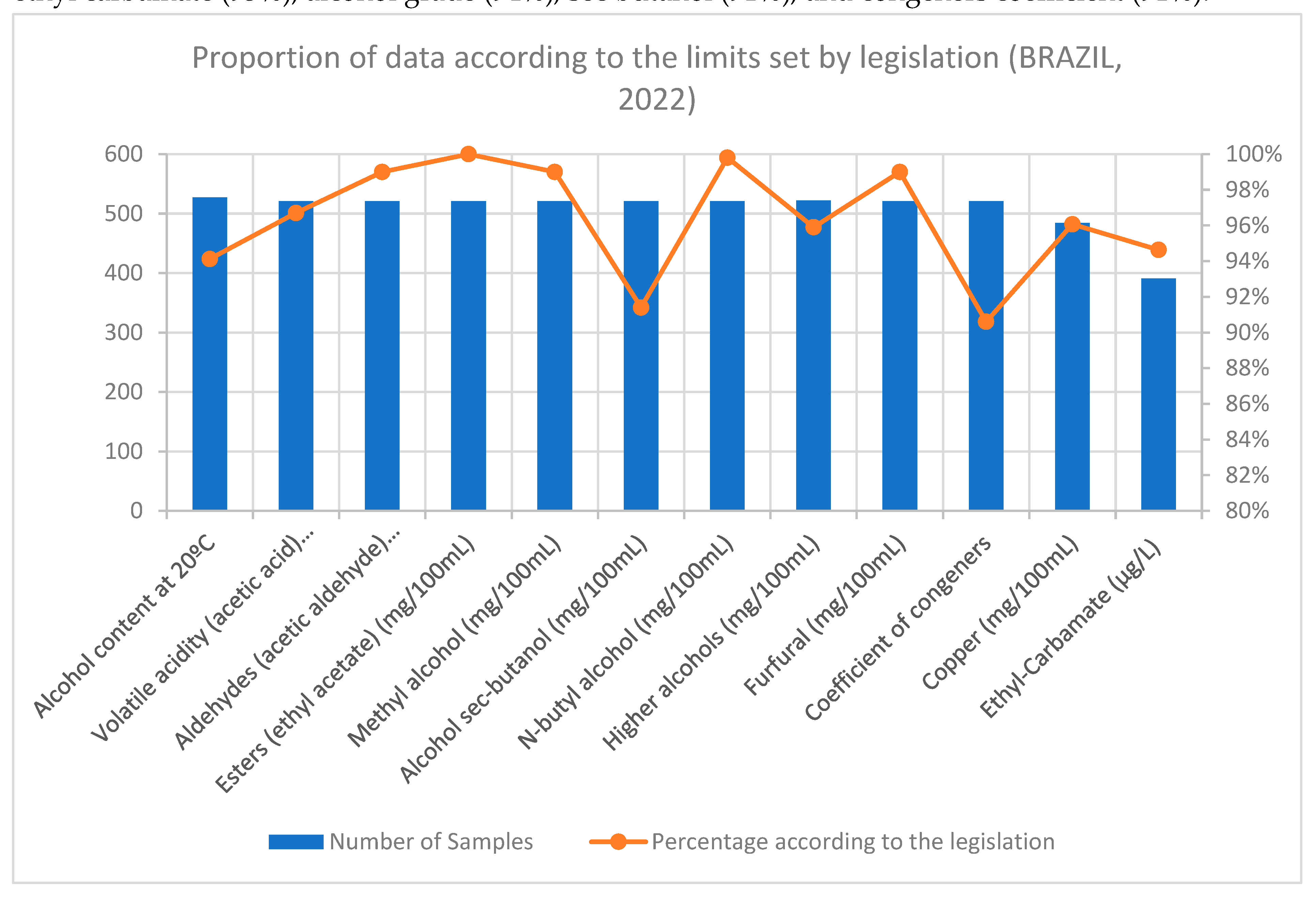
Figure 2.
Evolution of the percentage of cachaças and sugarcane spirits in disagreement with the Brazilian legislation in relation to ethyl carbamate over the years. Source: Prepared by the author based on Andrade-Sobrinho et al. [47], Baffa Júnior et al. [48], Labanca et al. [49], Nóbrega et al. [50], Nóbrega et al. [51], Masson et al. [52] and Bortoletto and Alcarde [53].
Figure 2.
Evolution of the percentage of cachaças and sugarcane spirits in disagreement with the Brazilian legislation in relation to ethyl carbamate over the years. Source: Prepared by the author based on Andrade-Sobrinho et al. [47], Baffa Júnior et al. [48], Labanca et al. [49], Nóbrega et al. [50], Nóbrega et al. [51], Masson et al. [52] and Bortoletto and Alcarde [53].
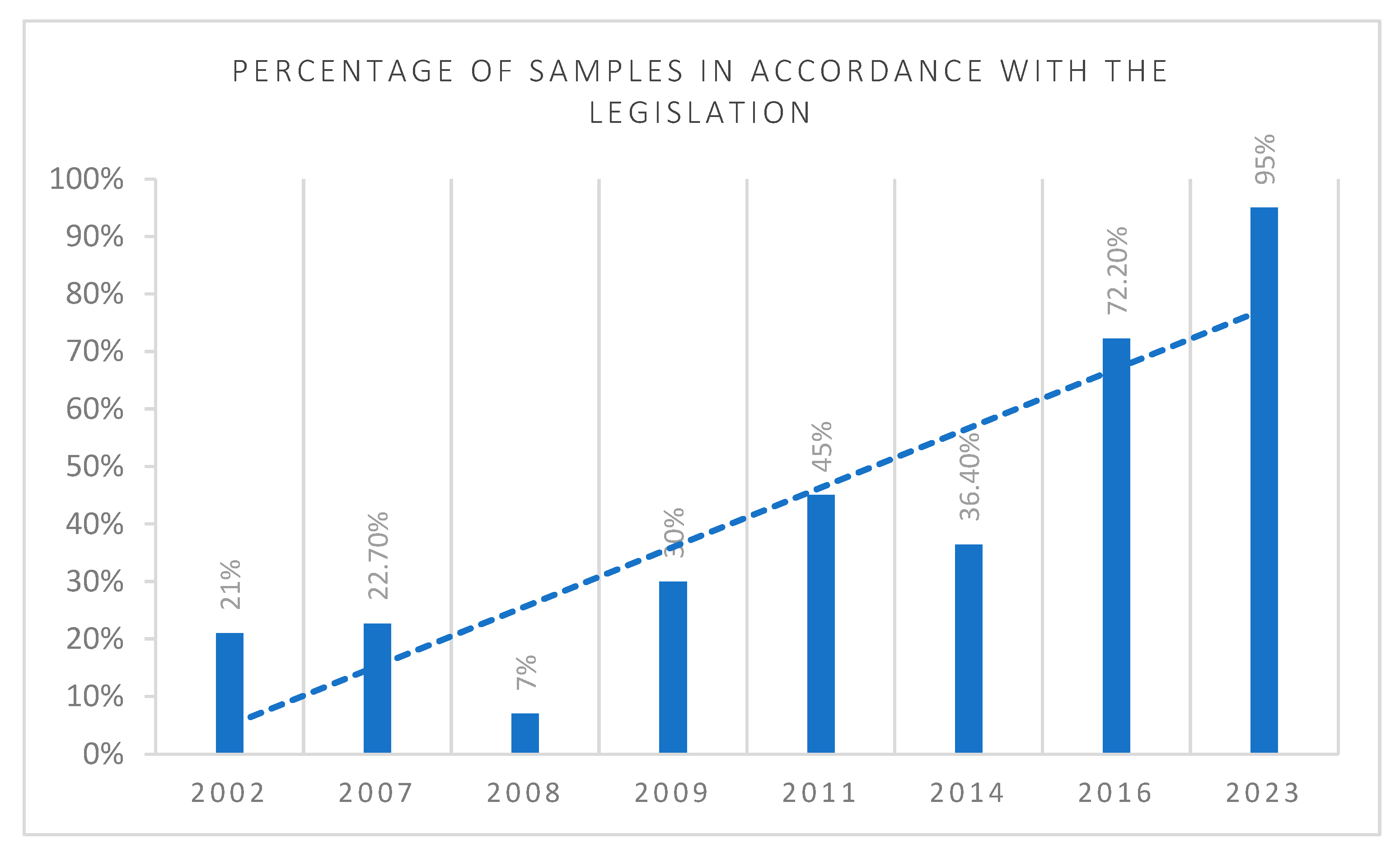

Table 1.
Temperature program proposed by the methodology and used in GC-MS.
| Temperature | Length of stay or gradual increase |
|---|---|
| 90 ºC | Permanence time for the first 2 minutes |
| 150 ºC | Increase at a rate of 10ºC/min until it reaches 150ºC |
| 220 ºC | Increase at a rate of 40ºC/min until it reaches 220ºC |
| 220 ºC | Permanence time during 2 minutes |
Source: Prepared by the author based on Alcarde et al. [12].
Table 2.
Mean retention indices (RI), limit of detection (LD), limit of quantification (LQ) of volatile compounds and contaminant congeners and concentration range and correlation coefficients (a, b, r2;) of the analytical curves in alcoholic solutions (40% alcohol by volume) for quantification of the compounds.
Table 2.
Mean retention indices (RI), limit of detection (LD), limit of quantification (LQ) of volatile compounds and contaminant congeners and concentration range and correlation coefficients (a, b, r2;) of the analytical curves in alcoholic solutions (40% alcohol by volume) for quantification of the compounds.
| Compound | RI (min) | LD* | QL* | Concentration range* | a | b | r2; |
|---|---|---|---|---|---|---|---|
|
Volatile Congeners |
|||||||
| Acetic aldehyde | 0.29 | 0.070 | 0.220 | 7.5 – 37.5 | 5.5900 | -1.0200 | 0.9957 |
| Ethyl acetate | 1.41 | 0.057 | 0.171 | 12.5 – 62.5 | 2.8792 | 0.9075 | 0.9996 |
| n-Propanol | 4.43 | 0.038 | 0.114 | 37.5 – 187.5 | 2.0471 | -0.2444 | 0.9999 |
| Isobutanol | 5.22 | 0.014 | 0.042 | 12.5 – 62.5 | 1.7260 | -0.1724 | 0.9998 |
| Isoamyl alcohol | 6.72 | 0.016 | 0.048 | 50 – 250 | 1.6748 | 9.1053 | 0.9999 |
| Acetic acid | 19.15 | 0.530 | 1.590 | 37.5 – 187.5 | 5.4259 | 4.1160 | 0.9997 |
| Contaminant congeners | |||||||
| Metanol | 1.62 | 0.092 | 0.276 | 5 – 25 | 4.1394 | -0.1620 | 0.9997 |
| sec-Butanol | 4.02 | 0.049 | 0.180 | 2.5 – 12.5 | 1.9168 | -5.1082 | 0.9998 |
| n-Butanol | 5.99 | 0.072 | 0.216 | 0.75 – 3.75 | 1.1168 | -1.8596 | 0.9997 |
| Ethyl carbamate | 10.15 | 0.180 | 0.550 | 50 – 500 | 64.714 | 1241.67 | 0.9984 |
*Milligrams per 100 mL of anhydrous ethanol. Source: Adapted by the author based on Bortoletto et al. [14].
Table 3.
Comparison between samples that do not comply with current legislation [1].
Table 3.
Comparison between samples that do not comply with current legislation [1].
|
Compounds |
Non-conforming samples Present Study |
Non-conforming samples |
Non-conforming samples |
Non-conforming simples |
|---|---|---|---|---|
| Esters | 0% | 1,5% | 6,4% | - |
| N-Butil Alcohol | 0,2% | 7,7% | - | - |
| Furfural | 1% | 2,1% | - | - |
| Aldehydes | 1% | 6,3% | 17% | - |
| Volatile acidity | 3,3% | 16,4% | 8,5% | - |
| Higher Alcohols | 4,1% | 25,7% | 4,3% | - |
| Copper | 3,9% | 26,2% | 14,9% | 7% |
| Ethyl carbamate | 5,4% | 39,1% | - | - |
| Sec-butanol alcohol | 8,6% | 12,5% | - | - |
| Coefficient of congeners | 9,4% | 6,1% | 8,5% | - |
| Alcohol Content | 5,8% | 4,9% | 9,6% | 21% |
Disclaimer/Publisher’s Note: The statements, opinions and data contained in all publications are solely those of the individual author(s) and contributor(s) and not of MDPI and/or the editor(s). MDPI and/or the editor(s) disclaim responsibility for any injury to people or property resulting from any ideas, methods, instructions or products referred to in the content. |
© 2024 by the authors. Licensee MDPI, Basel, Switzerland. This article is an open access article distributed under the terms and conditions of the Creative Commons Attribution (CC BY) license (http://creativecommons.org/licenses/by/4.0/).
Copyright: This open access article is published under a Creative Commons CC BY 4.0 license, which permit the free download, distribution, and reuse, provided that the author and preprint are cited in any reuse.


