

Submitted:
08 August 2024
Posted:
09 August 2024
You are already at the latest version
Abstract
Artificial Intelligence (AI) is revolutionizing head and neck cancer (HNC) care by providing innovative tools that enhance diagnostic accuracy and personalize treatment strategies. This review highlights the advancements in AI technologies, including deep learning and natural language processing, and their applications in HNC. The integration of AI with imaging techniques, genomics, and electronic health records is explored, emphasizing its role in early detection, biomarker discovery, and treatment planning. Despite noticeable progress, challenges such as data quality, algorithmic bias, and the need for interdisciplinary collaboration remain. Emerging innovations like explainable AI, AI-powered robotics, and real-time monitoring systems are poised to further advance the field. Addressing these challenges and fostering collaboration among AI experts, clinicians, and researchers is crucial for developing equitable and effective AI applications. The future of AI in HNC holds significant promise, offering potential breakthroughs in diagnostics, personalized therapies, and improved patient outcomes.
Keywords:
artificial intelligence
; head and neck cancer
; oral cancer
; imaging techniques
; deep learning
; natural language processing
; early detection
; personalized treatment
; biomarker discovery
; explainable machine intelligence
1. Introduction
1.1. Background on Head and Neck Cancer
Head and neck cancer (HNC) can develop in over 30 distinct regions within the head and neck [1,2]. These areas include the mouth and lips, where the oral cavity encompasses the lips, gums, and the inside of the cheeks. The voice box, or larynx, plays a crucial role in breathing, speaking, and swallowing, and it can also be affected by cancer. The throat, or pharynx, is divided into three sections: the nasopharynx (upper part of the throat behind the nose), the oropharynx (middle part of the throat), and the hypopharynx (bottom part of the throat), each of which can develop cancer. Salivary glands, which produce saliva to aid in digestion and keep the mouth moist, include the parotid, sublingual, and submandibular glands and can also be sites for cancer. The nasal cavity and paranasal sinuses, which are air-filled spaces around the nose and within the cheekbones and forehead, are potential sites for cancer development. Additionally, the area at the back of the nose and mouth, known as the nasopharynx, located behind the nose and above the back of the throat, is another region where cancer can occur. These cancers can vary in symptoms, treatment approaches, and prognosis, highlighting the importance of specialized care for each specific location within the head and neck.
In particular, mouth cancer, which is also called oral cancer or oral cavity cancer, is the most common type of HNC [1,3]. The most prevalent type of oral cancer is squamous cell carcinoma (SCC), which originates from the squamous cells lining the oral cavity [4,5,6,7]. Although SCC is the most common, other less frequent forms include verrucous carcinoma [5], spindle cell squamous cell carcinoma [5], basaloid squamous cell carcinoma [5], and cancers of the salivary glands [8].
Globally, oral cancer poses a significant health challenge [9]. The World Health Organization’s 2013 report ranks oral diseases as the 13th most common cancer worldwide [10], while HNC types are among the top ten most prevalent cancers globally [11]. The high prevalence of oral cancer is particularly attributed to practices such as chewing tobacco and drinking alcohol [9]. Incidence rates vary across regions and demographics, with higher rates observed in males and older adults [12,13].
Several risk factors contribute to the development of oral cancer. Tobacco use, whether through smoking or smokeless products, is a major risk factor. Excessive alcohol consumption further increases the risk, especially when combined with tobacco use. Additionally, chewing betel quid and areca nut [15,16], common in parts of Asia, is strongly associated with oral cancer. Dietary factors [17], such as a low intake of fruits and vegetables, and genetic predisposition due to family history of oral cancer can also play a role [18].
Oral cancer symptoms can be diverse, often leading to a delayed diagnosis as they may be mistaken for less serious conditions [19]. Common symptoms include persistent sores or ulcers in the mouth that do not heal, unexplained bleeding or pain, white or red patches on mucosal surfaces, and difficulty swallowing or speaking [20]. Additional signs, which are very common in non-malignant disease, include dental abscesses or a socket that fails to heal after a tooth extraction [21]. Other signs can be progressive limitation of mouth opening, pathological anesthesia due to sensory nerve involvement, fixation of tongue, and neuropathic tongue pain [22].
Diagnosis typically involves a thorough clinical examination, including inspection and palpation of the oral cavity and surrounding areas, mobility of teeth, mouth opening, sensory and motor disturbance, and tongue mobility. A biopsy is crucial for histopathological examination of suspicious lesions. Imaging studies such as X-rays, computed tomography (CT), magnetic resonance imaging (MRI), and positron emission tomography (PET) scans are used to assess the extent of disease and aid in staging [20]. Staging of oral cancer is based on the TNM system, which evaluates tumor size, lymph node involvement, and metastasis to guide both prognosis and treatment options [23,24].
Treatment options for oral cancer depend on the stage and location of the disease. They may include surgery to remove the tumor and affected tissues, which can involve the removal of lymph nodes in the surrounding area. Radiotherapy is often used after surgery or as the primary treatment for localized tumors. Chemotherapy is typically reserved for advanced or metastatic cases and may be used in combination with radiation in a treatment approach known as chemoradiotherapy [20,25]. Emerging treatments such as targeted therapy and immunotherapy are also becoming increasingly important, focusing on specific cancer cell pathways or enhancing the body’s immune response to fight cancer [26,27].
The prognosis for oral cancer varies based on several factors including tumor stage, location, the patient’s overall health, and their response to treatment [23]. The most critical prognostic factors are lymph node involvement, tumor size, and the presence of distant metastases [23,28]. Generally, early-stage oral cancers have a better prognosis, but advanced stages and poorly differentiated tumors can lead to lower survival rates and increased morbidity.
Despite advances in treatment, challenges persist in the early detection, accurate diagnosis, and effective management of oral cancer [29]. Early diagnosis and recurrence prediction of oral cancer remain particularly problematic due to various factors [9,29,30], such as
- Heterogeneity: Oral cancer is not a single disease; it includes various subtypes with distinct genetic and clinical characteristics. This heterogeneity complicates diagnosis.
- Tissue sampling: Accurate diagnosis often requires a biopsy of the affected tissue. However, obtaining a representative sample can be challenging, and false negatives may occur if the biopsy misses the cancerous area.
- Recurrence prediction: Predicting the recurrence of oral cancer after treatment is challenging due to factors like tumor heterogeneity, incomplete removal of cancer cells during surgery, and resistance to therapy.
- Imaging limitations: While medical imaging, such as CT scans, is valuable for cancer diagnosis and staging, it may not always detect small or early-stage lesions accurately. This can lead to underdiagnosis.
- Patient variability: Patient-related factors, such as lifestyle choices, overall health, and genetic predisposition, can influence both the initial diagnosis and the likelihood of recurrence.
- Post-treatment changes: Treatments for oral cancer, such as surgery and radiation therapy, can result in changes to the oral cavity, affecting speech, swallowing, and quality of life. Distinguishing between post-treatment changes and cancer recurrence can be difficult.
- Limited biomarkers: Currently, there are limited specific biomarkers for oral cancer, making it challenging to identify individuals at high risk.
- Patient awareness and access: Some patients may lack awareness of oral cancer risk factors and symptoms, and others may face barriers to accessing healthcare, delaying diagnosis.
Figure 1, accompanied with Table 1, shows CT images of a cross-sectional view of the upper chest and lower neck region from four patients diagnosed with oropharynx cancer (OPC). These images were sourced from a publicly available database [31], which supports the development of artificial intelligence (AI) methods aimed at identifying OPC patients with varying risks of disease recurrence post-definitive radiotherapy. Specifically, the database aids in distinguishing patients with the lowest likelihood of recurrence from those at risk of local recurrence in the primary tumor site.
Figure 2, accompanied with Table 2, shows histopathological images of oral squamous cell carcinoma (OSCC) and leukoplakia sourced from the publicly accessible NDB-UFES database [32]. This database is intended to support AI researchers in their efforts to develop advanced diagnostic tools that can assist clinicians and pathologists in the automated and accurate diagnosis of oral potentially malignant disorders and OSCC.
Ongoing research aims to address challenges in HNC by developing more precise diagnostic tools, innovative treatment modalities, and preventive strategies. The integration of AI holds promise for improving early detection and personalizing treatment approaches, potentially transforming the landscape of HNC care [33,34,35,36].
1.2. Review Objectives
The primary objective of this review is to explore and elucidate the role of AI in the field of HNC, focusing on its applications, advancements, and impact on clinical practice. HNC presents significant challenges in early detection, accurate diagnosis, and effective treatment. Integrating AI into these areas offers potential solutions that could significantly enhance current approaches. This review aims to provide a comprehensive overview of how various AI technologies are being utilized to improve the management of HNC.
Another key goal is to evaluate the current state of AI applications in diagnosing and predicting outcomes for HNC. By examining recent advancements in AI-driven diagnostic tools, such as automated image analysis and predictive modeling, the review seeks to highlight the ways in which AI can enhance early detection rates and the accuracy of diagnoses. Additionally, the review will assess how AI models contribute to the development of prognostic tools that better predict patient outcomes and support personalized treatment strategies.
The review also aims to identify and address the challenges and limitations associated with integrating AI into HNC care. This includes exploring issues related to data quality, algorithmic bias, and the practical implementation of AI technologies in clinical settings. By shedding light on these challenges, the review seeks to provide insights into the barriers that need to be overcome to fully leverage the benefits of AI in this field.
Furthermore, the review will explore future directions for AI in HNC research and clinical practice. This involves discussing emerging trends, potential innovations, and the interdisciplinary collaborations required to advance AI technologies. By considering these future prospects, the review seeks to outline a roadmap for how AI can continue to evolve and contribute to improved outcomes in the management of HNC.
2. AI Technologies and Methodologies
2.1. Machine Learning Techniques
Machine learning represents a pivotal branch of AI that enables systems to learn from and make predictions based on data. This capability is central to many applications in healthcare, including the management of HNC. The fundamental techniques within machine learning include supervised learning, unsupervised learning, and reinforcement learning, each of which offers unique approaches to data analysis and decision-making.
Supervised learning is a technique where algorithms are trained on labeled datasets, meaning that each training example is paired with an outcome or target value. The primary goal of supervised learning is to build a model that can predict the outcome for new, unseen data based on the patterns learned from the training set. In the context of HNC, supervised learning algorithms can be employed to analyze medical images, such as histopathological slides or radiographs, to identify features indicative of malignancy [38,39,109]. By learning from examples of both benign and malignant cases, these models can assist in diagnosing HNC with increased accuracy. Common algorithms used in supervised learning include decision trees, support vector machines, and neural networks.
Unsupervised learning, in contrast, involves training algorithms on datasets without predefined labels or outcomes. Instead of predicting a specific result, unsupervised learning aims to uncover hidden patterns or structures within the data. This technique is particularly useful for exploratory data analysis and feature extraction. For HNC research, unsupervised learning can be applied to cluster patient data based on similarities in genetic profiles or imaging features, potentially revealing new subtypes of the disease or novel biomarkers [39,40,41]. Techniques such as clustering algorithms and principal component analysis are commonly used in unsupervised learning to organize and interpret complex datasets.
Reinforcement learning represents a different approach, focusing on training algorithms to make sequences of decisions by interacting with an environment. In this paradigm, the algorithm learns to achieve a goal through trial and error, receiving rewards or penalties based on its actions. Reinforcement learning is well-suited for dynamic and complex decision-making scenarios, such as optimizing treatment plans for HNC patients [42,43]. By simulating various treatment strategies and their outcomes, reinforcement learning algorithms can help identify the most effective approaches for individual patients [44]. This technique can also be used to refine surgical procedures or enhance patient monitoring strategies [45,46].
Each of these machine learning techniques offers distinct advantages and can be applied to various aspects of HNC research and treatment. Supervised learning excels in predictive modeling with labeled data, unsupervised learning provides insights into complex and unlabeled datasets, and reinforcement learning supports adaptive decision-making in dynamic environments. Together, these techniques contribute to the development of advanced tools and strategies for improving the management of HNC.
2.2. Deep Learning Approaches
Deep learning [47] is a specialized branch of machine learning that utilizes neural networks with multiple layers, known as deep neural networks, to model and analyze complex patterns in data. This approach has gained prominence due to its remarkable ability to process large volumes of data and uncover intricate relationships, making it particularly useful in the field of healthcare and, specifically, in HNC management.
One of the most widely used deep learning techniques is the convolutional neural network (CNN), which is especially effective in image analysis tasks. CNNs are designed to automatically and adaptively learn spatial hierarchies of features from input images through convolutional layers. In the context of HNC, CNNs can be employed to analyze medical images, such as histopathological slides, radiographs, and intraoral photographs [48,49,50,51,52]. By training on large datasets of labeled images, CNNs can learn to identify and classify features indicative of cancerous lesions with high accuracy. This capability enhances the precision of diagnostics and aids in the early detection of HNC, potentially improving patient outcomes.
Recurrent neural networks (RNNs) are another deep learning technique that is particularly suited for sequential data analysis. RNNs possess the ability to retain information from previous inputs in the sequence, making them ideal for tasks that involve temporal dependencies. In HNC research, RNNs can be used to analyze time-series data, such as patient health records or treatment response patterns over time [50,53,54]. This allows for the modeling of disease progression and the prediction of future health events, facilitating personalized treatment planning and monitoring.
Autoencoders represent a different type of deep learning architecture used for unsupervised learning [50,55]. These neural networks are designed to encode input data into a reduced-dimensional representation and then decode it back to the original data. The process of learning efficient data representations can be leveraged in HNC research for tasks such as anomaly detection, where the goal is to identify unusual patterns or outliers in medical images or genetic data [56]. Autoencoders can help in discovering subtle features and subtypes that may be indicative of early-stage cancer or other significant abnormalities [57].
Generative adversarial networks (GANs) have also emerged as a powerful deep learning technique. GANs consist of two neural networks, a generator and a discriminator, that compete against each other. The generator creates synthetic data samples, while the discriminator evaluates their authenticity. This adversarial process leads to the generation of highly realistic data, which can be useful in augmenting training datasets for HNC diagnostics. For example, GANs can generate synthetic medical images to train other deep learning models, improving their robustness and performance even when limited real-world data are available [50,58].
Another recent advancement in deep learning for medical image classification is the vision transformer (ViT) network. Vision transformers have revolutionized image processing by leveraging the transformer architecture, initially developed for natural language processing. ViTs break down an image into a sequence of patches, treating each patch similarly to a word in a sentence. This approach allows the model to capture long-range dependencies and relationships across the entire image. In the context of HNC, ViTs can be employed to classify medical images with a high degree of accuracy. They excel in identifying subtle patterns and variations in medical imagery, potentially leading to more precise diagnostics. ViTs have demonstrated state-of-the-art performance in various image classification tasks, offering a powerful tool for enhancing the analysis of complex medical images in HNC research [50,59].
2.3. Natural Language Processing
Natural language processing (NLP) is a crucial area within AI that focuses on the interaction between computers and human language. NLP enables machines to understand, interpret, and generate human language in a way that is both meaningful and contextually relevant. This technology has significant applications in healthcare, particularly in literature mining and patient data analysis [60,61,62,63], which are essential for advancing research and improving clinical outcomes in HNC.
In literature mining, NLP techniques are used to extract valuable information from vast amounts of unstructured textual data found in scientific publications, research articles, clinical reports, and other medical literature. The exponential growth of scientific knowledge makes it challenging for researchers and clinicians to stay up-to-date with the latest developments. NLP can automate the process of identifying relevant studies, summarizing findings, and extracting critical information about HNC, such as risk factors, genetic markers, treatment outcomes, and emerging therapies. By employing NLP algorithms, researchers can efficiently sift through large datasets, uncovering insights that might be missed through manual review. This capability enhances the ability to conduct comprehensive literature reviews and meta-analyses, facilitating evidence-based decision-making and guiding future research directions.
In patient data analysis, NLP plays a vital role in extracting and analyzing information from electronic health records (EHRs), clinical notes, pathology reports, and other healthcare documentation [64,65,66]. These records often contain rich, detailed narratives about a patient’s medical history, symptoms, diagnoses, treatments, and outcomes. NLP can transform this unstructured text into structured data, making it easier to analyze and integrate with other clinical information. For example, NLP algorithms can identify mentions of specific symptoms, track disease progression, and correlate treatment responses with patient outcomes. In the context of HNC, this can lead to more accurate diagnoses, better monitoring of disease recurrence, and the identification of patterns that inform personalized treatment plans [33,67].
Furthermore, NLP can facilitate the development of clinical decision support systems (CDSS) by providing real-time analysis of patient data and generating recommendations based on the latest clinical guidelines and research findings [68,69,70]. These systems can alert clinicians to potential issues, suggest diagnostic tests, and recommend treatment options, all of which contribute to improved patient care. For HNC patients, NLP-driven CDSS can assist in identifying high-risk individuals, suggesting early interventions, and optimizing treatment strategies based on individual patient profiles, and attaining fairness in dental care [71].
3. Diagnostic Applications
3.1. Early Detection
Early detection and screening are critical components in the management of HNC, significantly improving the chances of successful treatment and survival. AI plays a transformative role in these areas by enhancing the analysis of medical images and automating the detection and classification of lesions, leading to more accurate and timely diagnoses [72,73].
In the analysis of images such as histopathological slides and oral cavity photographs, AI leverages advanced techniques like deep learning to identify patterns and abnormalities with high precision [34]. Deep learning models, particularly CNNs, have the capability to process and interpret complex visual data, detecting minute changes that might indicate the presence of cancerous cells. By training on vast datasets of labeled images, these AI systems learn to recognize the distinguishing features of malignant versus benign tissues. This ability is crucial in histopathology, where early signs of cancer can be subtle and easily missed by the human eye [74]. AI not only enhances the accuracy of diagnoses but also reduces the time required to analyze slides, enabling pathologists to focus on cases that require more detailed examination.
The use of AI in analyzing images of the oral cavity also holds significant promise for early detection [75]. High-resolution photographs taken during routine dental check-ups or specialized imaging sessions can be examined by AI algorithms to identify potential lesions. These systems can detect abnormalities such as leukoplakia, erythroplakia, and other precancerous conditions with a high degree of sensitivity [75,76]. Early identification of such lesions allows for timely intervention, potentially preventing the progression to invasive cancer. AI-powered tools can be integrated into standard dental equipment, providing real-time analysis and alerts during examinations, thereby supporting dentists in making informed clinical decisions.
Automated detection and classification of lesions are other critical applications of AI in early detection of HNC. AI systems can be designed to automatically scan images for lesions, classify them based on their characteristics, and assess their likelihood of being malignant [73,75]. This automation is particularly valuable in high-throughput screening scenarios, where large numbers of images need to be evaluated quickly. AI algorithms can sort through these images, highlighting those that require further review by a specialist. This not only streamlines the workflow in medical and dental practices but also ensures that no potential cases are overlooked due to human error or fatigue.
Moreover, AI can integrate data from multiple sources to improve the accuracy of lesion detection and classification. For instance, combining image analysis with patient history, genetic information, and other diagnostic data can enhance the overall assessment and provide a more comprehensive understanding of the patient’s condition [73,77]. This multi-modal approach enables more precise risk stratification and personalized screening strategies, tailoring interventions to individual patient profiles.
The role of AI in early detection of HNC represents a significant advancement in the field. By enhancing image analysis and automating the detection and classification of lesions, AI contributes to more accurate, efficient, and timely diagnoses. These capabilities not only improve clinical outcomes by catching cancer at an earlier, more treatable stage but also support healthcare providers in delivering high-quality care. As AI technology continues to evolve, its integration into routine clinical practice promises to further advance the early detection and management of HNC.
3.2. Biomarker Discovery
AI is playing an increasingly important role in the discovery of biomarkers for HNC. Biomarkers are biological molecules that can be used to detect the presence of disease, predict disease progression, and monitor treatment response. The identification of reliable biomarkers is essential for developing diagnostic tools, prognostic models, and personalized treatment plans.
The ability of AI to handle and analyze vast amounts of biological data makes it particularly well-suited for biomarker discovery [78,79]. Machine learning algorithms can sift through complex datasets to identify patterns and correlations that may indicate the presence of biomarkers [80,81]. Datasets often include radiomic, genomic, proteomic, and metabolomic information, each containing millions of data points that are beyond the capacity of traditional analytical methods [38,82].
Salivary biomarkers have the potential to enhance the accuracy, speed, and effectiveness of diagnosing and monitoring oral and maxillofacial diseases. These biomarkers have been applied to conditions such as periodontal diseases, dental caries, oral cancer, temporomandibular joint dysfunction, and salivary gland diseases. However, due to the variable accuracy of salivary biomarkers during validation, employing modern analytical methods for selecting and implementing biomarkers from the extensive multi-omics data available could improve their performance. Artificial intelligence is one such advanced technique that could optimize the use of salivary biomarkers for the diagnosis and management of oral and maxillofacial diseases [83].
In genomics, AI can analyze DNA sequences to identify mutations, gene expression profiles, and epigenetic changes associated with HNC [84]. Machine learning models can be trained to distinguish between normal and cancerous tissues based on their genetic signatures. By integrating data from various genomic studies, AI can identify potential genetic biomarkers that could serve as targets for early detection or therapeutic intervention.
Proteomics, the large-scale study of proteins, is another area where AI contributes to biomarker discovery. AI algorithms can analyze protein patterns of alteration, expression levels, and modifications to identify those that are uniquely associated with HNC [85,86]. This involves processing complex mass spectrometry data to detect subtle changes in protein profiles. Identifying such protein biomarkers can lead to the development of blood tests or other assays that detect HNC at an early stage.
4. Prognostic and Predictive Models
4.1. Risk Assessment Tools
AI has emerged as a powerful tool in the development of risk assessment models for predicting disease progression and patient outcomes in HNC [33,87,88,89]. These AI-driven models utilize vast amounts of clinical, demographic, and molecular data to provide more accurate and individualized risk predictions. This capability is transforming how clinicians assess patient prognosis and make treatment decisions.
AI models for predicting disease progression in HNC typically incorporate machine learning algorithms trained on historical patient data. These datasets include a wide array of variables such as patient age, tumor characteristics, genetic information, treatment history, and lifestyle factors like smoking and alcohol use. By analyzing these factors, AI models can identify patterns and risk factors associated with more aggressive disease behavior and poorer outcomes. For example, machine learning algorithms can detect subtle interactions between genetic mutations and clinical features that may indicate a higher likelihood of metastasis or recurrence [41,90,91].
One of the significant advantages of AI in risk assessment is its ability to handle and integrate diverse data types, leading to more comprehensive risk profiles. Traditional statistical methods often struggle with the complexity and high dimensionality of such data, whereas AI and advanced data-science algorithms excel in extracting meaningful insights [80,92]. This allows for the creation of multi-factorial risk models that consider the interplay between various predictors, resulting in more robust and personalized risk assessments.
AI models also improve the accuracy of survival predictions for HNC patients [33,77,93,94,95,96,97,98]. By analyzing large datasets, these models can generate survival curves and estimate individual patient survival probabilities based on their specific characteristics. This information is invaluable for clinicians and patients when discussing prognosis and planning treatment strategies. For instance, an AI model might predict that a patient with certain genetic markers and tumor features has a higher risk of recurrence, prompting more aggressive monitoring and follow-up care [99,100,101].
Furthermore, AI-driven risk assessment tools can be continuously updated and refined as new data becomes available. This dynamic nature ensures that the models remain current and reflect the latest understanding of disease biology and treatment outcomes. As more data is collected, the predictive accuracy of these models can improve, providing increasingly precise risk estimates. In addition to predicting disease progression, AI models can also forecast patient responses to various treatments. By analyzing historical treatment data and outcomes, AI can help identify which patients are most likely to benefit from specific therapies. This predictive capability supports the development of personalized treatment plans, optimizing therapeutic efficacy while minimizing unnecessary side effects. For example, an AI model might indicate that a patient with a particular genetic profile is more likely to respond to a targeted therapy, guiding clinicians toward more effective treatment choices.
AI models are revolutionizing risk assessment in oral and other cancer types by providing more accurate, individualized predictions of disease progression and patient outcomes [33,102]. These tools enhance clinical decision-making, support personalized treatment strategies, and improve patient-clinician communication. As AI technology continues to evolve and integrate new data sources, its impact on risk assessment and overall patient care in HNC is expected to grow, leading to better outcomes and more efficient healthcare delivery.
4.2. Personalized Treatment Planning
AI is playing a transformative role in personalized treatment planning for HNC by tailoring treatment regimens based on individual patient data [103,104]. This approach leverages the ability of AI to analyze complex datasets and identify patterns that can inform more precise and effective treatment strategies, thereby improving patient outcomes and minimizing adverse effects.
One of the primary advantages of AI in personalized treatment planning is its capacity to integrate and analyze diverse types of data. Patient information such as genetic profiles, tumor characteristics, medical history, lifestyle factors, and treatment responses can be comprehensively evaluated by AI algorithms. This holistic analysis enables the identification of unique patient subgroups and the prediction of how different individuals will respond to various treatments. For instance, genetic data can reveal specific mutations or biomarkers that indicate susceptibility to certain drugs, allowing for the selection of targeted therapies that are more likely to be effective for a particular patient [105,106,107].
AI algorithms, particularly machine learning models, can process this vast amount of data to develop predictive models that guide treatment decisions. These models can analyze historical treatment outcomes to determine which therapies have been most successful for patients with similar profiles. For example, AI has been utilized to forecast immunotherapy responses by analyzing immune signatures, medical imaging, and histological data. These characteristics could also be extremely beneficial in managing cancer immunotherapy due to their continually improving ability to enhance diagnostic precision, optimize treatment planning, predict care outcomes, and lower human resource expenses [108].
Moreover, AI facilitates the real-time adaptation of treatment plans based on ongoing patient responses. Continuous monitoring of patient data, such as changes in tumor size, biomarkers, and side effects, allows AI systems to adjust treatment regimens dynamically. If a patient’s tumor is not responding to the initial treatment, AI can analyze the data and suggest alternative therapies that might be more effective [109,110]. This adaptive approach ensures that patients receive the most appropriate care at each stage of their treatment journey, improving the likelihood of successful outcomes.
In radiation therapy, AI can optimize treatment planning by precisely targeting cancerous tissues while sparing healthy surrounding tissues. Advanced AI techniques can analyze imaging data to delineate tumor boundaries accurately and calculate the optimal radiation dose distribution [111,112]. This precision reduces the risk of radiation-induced side effects and enhances the overall effectiveness of the treatment. Additionally, AI can predict potential complications based on patient-specific factors and suggest adjustments to the radiation plan to mitigate these risks.
The integration of AI in personalized treatment planning also extends to HNC surgical interventions [113,114]. AI-driven analysis of preoperative imaging and patient data can assist surgeons in planning the most effective surgical approach, ensuring complete removal of cancerous tissues while preserving vital structures. Postoperative outcomes and potential complications can also be predicted using AI, guiding postoperative care and monitoring to enhance recovery and reduce the risk of recurrence [115,116].
The role of AI in personalized treatment planning is not limited to the selection and optimization of therapeutic interventions. It also encompasses patient education and community engagement [48,117,118]. AI-driven platforms can provide patients with tailored information about their treatment options, potential outcomes, and side effects, helping them make informed decisions about their care. This personalized communication enhances patient satisfaction and adherence to treatment plans, contributing to better overall outcomes.
The application of AI in personalized treatment planning for cancer represents a significant advancement in oncology care [119,120]. By integrating and analyzing individual patient data, AI enables the development of tailored treatment regimens that maximize efficacy and minimize adverse effects. This personalized approach enhances the precision of HNC care, supports dynamic adaptation of treatment plans, and improves patient engagement and satisfaction. As AI technologies continue to evolve and become more integrated into clinical practice, their impact on personalized treatment planning and patient outcomes in HNC is expected to grow, leading to more effective and efficient healthcare delivery.
4.3. Monitoring and Surveillance
AI is significantly enhancing the monitoring and surveillance of HNC by improving the tracking of disease recurrence [121,122,123]. These AI-driven advancements facilitate timely interventions and more effective management of patient health, ultimately improving outcomes and quality of life.
Capabilities of AI in data analysis and pattern recognition make it an invaluable tool for tracking disease recurrence in HNC patients. By continuously analyzing patient data from various sources, such as electronic health records, imaging studies, and laboratory results, AI can identify early signs of recurrence that might be missed during routine follow-ups. Machine learning models can be trained to recognize specific patterns and markers associated with cancer relapse, enabling clinicians to detect and address these issues promptly. For example, changes in imaging data [38,90], subtle shifts in biomarker levels [124], or new symptoms reported in patient records [125,126] can all signal a potential recurrence, prompting further investigation and early intervention.
Furthermore, AI-powered surveillance systems can integrate data from wearable devices [127] and mobile health applications [128] to provide continuous monitoring of patients’ health status. These technologies can track vital signs, physical activity, and other health metrics in real-time, alerting healthcare providers to any abnormalities that may indicate a recurrence or other health issues. This continuous monitoring allows for a proactive approach to patient care, ensuring that any signs of recurrence are detected early, when they are most treatable.
In addition to tracking disease recurrence, AI plays a crucial role in monitoring patient compliance with treatment regimens [129,130,131]. Non-compliance with prescribed treatments can significantly impact the effectiveness of cancer therapy and increase the risk of recurrence. AI systems can analyze data from various sources, such as pharmacy records, appointment attendance, and self-reported information from patients, to assess adherence to treatment protocols. Machine learning algorithms can identify patterns of non-compliance and predict which patients are at higher risk of deviating from their treatment plans.
To address issues of non-compliance, AI can provide personalized interventions and support [75,132]. For example, the use of a mobile app allows for detailed, real-time tracking of patients receiving treatment with oral antineoplastic agents [133]. The algorithm’s automatic suggestions enhanced the efficiency of healthcare resources, aided in the early identification of adverse events, empowering patients to enhance the safety of their treatment. These applications can also offer educational resources and motivational support to encourage patients to stay on track with their treatment plans. Additionally, AI can facilitate virtual check-ins and telehealth consultations [134,135], making it easier for patients to access care and communicate with their healthcare providers, thereby improving adherence and overall engagement with their treatment.
The use of AI in tracking disease recurrence and patient compliance represents a significant advancement in the management of HNC. AI-driven monitoring systems provide continuous, real-time surveillance of patient health, enabling early detection of recurrence and proactive interventions. By improving patient compliance with treatment regimens through personalized support and predictive analytics, AI enhances the overall effectiveness of cancer therapy. As these technologies continue to evolve, their integration into routine clinical practice will further strengthen the monitoring and surveillance capabilities in HNC care, leading to better patient outcomes and a higher quality of life for survivors.
5. Therapeutic Applications
5.1. Drug Discovery
AI is revolutionizing drug discovery, particularly in the field of cancer, by identifying new therapeutic targets and drug compounds with remarkable efficiency and precision [136,138,139,160]. Traditional drug discovery processes are often time-consuming and costly, involving extensive trial-and-error experimentation. In contrast, AI accelerates this process by leveraging vast amounts of biomedical data and sophisticated algorithms to uncover novel insights and promising leads.
One of the primary ways AI contributes to drug discovery is through the identification of new therapeutic targets. AI algorithms can analyze large datasets from genomics, proteomics, and other omics fields to identify molecular pathways and genetic mutations associated with HNC. By recognizing patterns and relationships within these datasets, AI can pinpoint specific proteins, genes, or pathways that play critical roles in cancer development and progression. For example, machine learning models can sift through genomic data to identify mutations or variants that drive tumor growth, offering potential targets for new drugs [140,141]. This capability allows researchers to focus their efforts on the most promising targets, streamlining the initial stages of drug discovery.
In addition to target identification, AI significantly enhances the process of discovering new drug compounds. Traditional methods of drug screening involve testing thousands of compounds against biological targets, a process that is both labor-intensive and expensive. AI transforms this approach by using computational models to predict the interaction between drug candidates and their targets [142]. Machine learning algorithms can analyze the chemical structures of millions of compounds and predict their binding affinity to specific targets, effectively prioritizing candidates that are more likely to be effective [143,144]. This in silico screening drastically reduces the number of compounds that need to be physically tested, saving time and resources.
AI also facilitates the repurposing of existing drugs for new therapeutic uses [140,145,146]. By analyzing patterns in clinical data and understanding the molecular mechanisms of existing drugs, AI can identify new applications for these compounds. For instance, drugs initially developed for other cancers or diseases may exhibit potential efficacy against HNC, offering a faster and more cost-effective route to developing new treatments [147,148].
Moreover, AI-driven drug discovery is enhanced by its ability to integrate diverse datasets, providing a more comprehensive understanding of drug interactions and disease mechanisms [149,151,182]. This integrative approach combines data from clinical trials, electronic health records, scientific literature, and real-world evidence to uncover hidden connections and insights. By leveraging this wealth of information, AI can generate hypotheses and guide experimental design, further accelerating the discovery process.
AI is transforming drug discovery for HNC by identifying new therapeutic targets and drug compounds with unprecedented speed and accuracy [86,152,153]. Through sophisticated data analysis and predictive modeling, AI streamlines the discovery process, reduces costs, and enhances the likelihood of finding effective treatments. As AI technologies continue to evolve and integrate with other scientific advancements, their impact on drug discovery will undoubtedly expand, offering new hope for improved therapies and outcomes for HNC patients.
5.2. Precision Medicine
Precision medicine aims to tailor medical treatments to individual patients based on their genetic, molecular, and clinical profiles [154,155,156,157,158,159,160]. Integrating AI with genetic and molecular data is at the forefront of this approach, especially in the treatment of HNC [74,77,161]. Capabilities of AI in analyzing vast datasets and identifying complex patterns enable the customization of therapies to improve efficacy and minimize adverse effects [159].
The role of AI in precision medicine begins with the comprehensive analysis of genetic data [86,162,163]. By sequencing the genomes of cancer patients, researchers can identify specific mutations and alterations that drive the disease. AI algorithms, particularly machine learning models, can process this genomic data to detect mutations that are associated with cancer progression and treatment resistance. This analysis allows for the identification of genetic biomarkers that can guide the selection of targeted therapies. For example, if a patient’s tumor exhibits a particular mutation that is known to respond well to a specific drug, AI can help ensure that this drug is included in the treatment plan.
Beyond genetic data, AI integrates other molecular information, such as proteomics and metabolomics, to provide a more holistic view of the patient’s disease [164,165]. Proteomics involves studying the entire set of proteins expressed by the genome, while metabolomics focuses on the chemical processes and metabolites within cells. AI can analyze proteomic data to identify protein expression patterns that are unique to cancer cells, revealing potential targets for therapy [86,136,166]. Similarly, by examining metabolic alterations in cancer cells, AI can uncover vulnerabilities that can be exploited with specific drugs. Integrating these diverse data types enhances the precision of treatment customization, as it accounts for multiple aspects of the tumor’s biology.
AI also excels in predicting treatment responses based on genetic and molecular profiles. Machine learning models can be trained on historical patient data, including treatment outcomes and genetic information, to predict how new patients will respond to various therapies. These predictions help oncologists select the most effective treatments for each patient. For instance, if AI analysis indicates that a patient’s molecular profile is similar to that of others who responded well to immunotherapy, this treatment can be prioritized [108]. Conversely, if the profile suggests a high likelihood of resistance to a particular chemotherapy, alternative options can be considered [38,167].
The integration of AI with genetic and molecular data also supports the development of combination therapies [131,144]. AI can analyze data to identify synergistic effects between different drugs, suggesting combinations that might be more effective than single-agent therapies. This approach is particularly valuable in treating cancers that are resistant to conventional treatments. By customizing combination therapies based on a patient’s unique molecular profile, AI helps maximize therapeutic efficacy and minimize the likelihood of resistance.
Furthermore, AI-driven precision medicine extends to monitoring and adjusting treatments in real-time [168,169]. Continuous analysis of patient data, such as changes in tumor size, biomarker levels, and side effects, enables AI systems to adapt treatment plans dynamically. For example, if a tumor starts to grow despite ongoing therapy, AI can analyze the new data to recommend adjustments or alternative treatments [97,119]. This real-time adaptability ensures that treatments remain effective throughout the course of the disease.
5.3. Surgery
AI is significantly enhancing the field of robotic surgery [170,171], including the treatment of HNC [115,172]. AI-assisted surgical techniques offer increased precision, improved outcomes, and reduced recovery times, marking a substantial advancement over traditional surgical methods.
AI plays a crucial role in preoperative planning by analyzing patient data to create detailed, individualized surgical plans [173,174,175]. Advanced imaging technologies can generate comprehensive images of the oral cavity and surrounding structures. AI algorithms can process these images to identify the precise location and extent of the tumor, as well as critical anatomical features that must be preserved. This detailed mapping allows surgeons to plan the most effective approach, minimizing damage to healthy tissues and critical structures such as nerves and blood vessels.
During surgery, AI-assisted robotic systems can provide surgeons with enhanced capabilities [176,177]. These systems can offer superior dexterity and stability compared to human hands, allowing for more precise movements in the confined and complex spaces of the oral cavity. AI algorithms can assist by providing real-time feedback. For instance, the system can alert the surgeon if they are approaching critical structures or if there are any deviations from the planned path. This real-time assistance helps to reduce the risk of complications and ensures that the tumor is removed with greater accuracy.
Robotic systems equipped with AI can also facilitate minimally invasive surgical techniques [171,177,178], which are associated with several benefits over traditional open surgeries. Minimally invasive procedures typically result in smaller incisions, less blood loss, reduced pain, and faster recovery times. AI enhances these procedures by enabling precise control over the surgical instruments, allowing for delicate and complex maneuvers that would be challenging with conventional techniques. For patients with HNC, this can mean shorter hospital stays and quicker return to normal activities.
The impact of AI on surgical training and education is also impressive [179,180,181,182,183,184]. AI-based robotic systems can be used to simulate various surgical scenarios, allowing surgeons to practice and refine their skills in a controlled environment. AI can provide immediate feedback and assess performance, highlighting areas for improvement. This enhances the training experience and helps to ensure that surgeons are well-prepared for real-life operations.
6. Challenges and Limitations
6.1. Data Quality and Accessibility
AI holds great promise in advancing the diagnosis and treatment of HNC [34,72,88,185], but its efficacy is heavily dependent on the quality, standardization, and accessibility of data. Several issues, particularly regarding data privacy, standardization, and availability, need to be addressed to harness the full potential of AI in this field [33,52,103,186].
Data privacy is a major concern when it comes to using patient information for AI applications. Healthcare data is highly sensitive, containing personal, genetic, and medical details that, if mishandled, can lead to serious breaches of patient confidentiality and trust. The integration of AI requires robust data security measures to protect this information from unauthorized access, cyber-attacks, and other forms of misuse. Compliance with regulations such as the Health Insurance Portability and Accountability Act (HIPAA) in the United States [187] and the General Data Protection Regulation (GDPR) in Europe (https://gdpr-info.eu/) is essential. These regulations mandate strict guidelines on how patient data should be collected, stored, and shared, ensuring that privacy is maintained. Anonymization and encryption techniques are commonly employed to protect patient identities while allowing data to be used for research and AI training.
Standardization of data is crucial for the successful application of AI in cancer care and treatment [188]. Data collected from different sources, such as hospitals, research institutions, and clinics, often vary in format, quality, and content. This lack of uniformity can hinder the effective analysis and integration of data. Standardized protocols for data collection and reporting ensure that information is consistent and comparable across different datasets. For instance, imaging data must follow specific formats like DICOM (Digital Imaging and Communications in Medicine) to be universally interpretable. Similarly, clinical data should adhere to standardized coding systems such as ICD (International Classification of Diseases) and SNOMED CT (Systematized Nomenclature of Medicine–Clinical Terms). Ensuring that data adheres to these standards facilitates interoperability and enhances the accuracy and reliability of AI models.
Availability of data is another critical issue [48,73,88,189]. AI algorithms require large, diverse datasets to train effectively and make accurate predictions. However, accessing sufficient data can be challenging due to various factors. Many institutions are reluctant to share data due to privacy concerns, proprietary interests, or logistical barriers. Additionally, there might be disparities in data availability, with well-resourced institutions possessing extensive datasets while smaller or less-funded institutions struggle to collect comprehensive data. Collaborative efforts and data-sharing initiatives are essential to overcome these barriers. Establishing centralized databases or data repositories, where institutions can contribute and access pooled data, can significantly enhance data availability. These repositories must ensure compliance with privacy laws and ethical standards while promoting open data sharing.
The quality of data is paramount for the effectiveness of AI models [48,73,88,190]. Poor-quality data, such as incomplete records, errors in data entry, or inconsistent measurements, can lead to inaccurate predictions and unreliable outcomes. Ensuring high data quality involves rigorous data cleaning and validation processes. This includes verifying the accuracy of data entries, correcting errors, filling in missing values, and ensuring that the data is up-to-date. Regular audits and quality control checks can help maintain data integrity. Additionally, training healthcare personnel on proper data collection and management practices is essential to prevent errors and ensure the reliability of the data.
6.2. Algorithm Bias and Fairness
Addressing biases in AI models and ensuring equity in healthcare are critical issues in the application of artificial intelligence, particularly in the treatment of HNC and care [191,192]. Algorithmic bias can lead to disparities in healthcare outcomes, affecting the accuracy and fairness of AI-driven interventions. Ensuring that AI models are fair and unbiased is essential for providing equitable healthcare to all patients.
Algorithmic bias occurs when AI models produce systematically unfair outcomes for certain groups of people. This bias can arise from various sources, including biased training data, biased algorithms, and the subjective decisions made during model development. In the context of HNC treatment, biases in AI models can result in unequal access to accurate diagnoses, effective treatments, and overall healthcare services. For example, if the training data predominantly includes patients from a particular demographic group, the AI model might perform well for that group but poorly for others, leading to disparities in treatment outcomes.
One primary source of bias is the data used to train AI models. If the training data is not representative of the entire patient population, the resulting model may not generalize well to underrepresented groups. This issue is particularly relevant in healthcare, where data can be skewed due to various factors such as socioeconomic status, geographic location, and racial or ethnic background. For instance, if a dataset used to train an AI model for HNC diagnosis predominantly consists of data from affluent urban areas, the model may not perform well for patients from rural or low-income areas.
Bias can also stem from the algorithms themselves. Certain algorithms may inadvertently prioritize features that are more prevalent in certain groups, leading to biased outcomes. Additionally, the subjective decisions made during the model development process, such as feature selection and parameter tuning, can introduce biases if not carefully managed.
Mitigating algorithmic bias involves several strategies. First, it is essential to ensure that the training data is diverse and representative of the entire patient population. This can be achieved by including data from a wide range of sources and demographic groups. Collaborating with various healthcare institutions to pool data can help create a more comprehensive and balanced dataset. Additionally, techniques such as data augmentation and synthetic data generation can be used to enhance the diversity of the training data.
Second, bias detection and correction methods should be implemented during the model development process. This includes using metrics to evaluate the model performance across different demographic groups and identifying any disparities. If biases are detected, techniques such as re-weighting, re-sampling, and adversarial debiasing can be employed to mitigate them. These methods can adjust the training process to ensure that the model treats all groups fairly.
Third, transparency and accountability are crucial in addressing algorithmic bias. AI developers should document the entire development process, including the sources of training data, the methods used to address bias, and the model performance across different groups. This transparency allows for external review and validation, ensuring that the model is robust and unbiased. Additionally, involving diverse teams in the development process can help identify and address potential biases from different perspectives.
Ensuring equity in healthcare goes beyond mitigating algorithmic bias. It involves creating AI models that actively promote fair and equitable treatment for all patients. This includes considering social determinants of health, such as socioeconomic status, education, and access to care, when developing AI models. By integrating these factors into the models, AI can help identify and address disparities in healthcare access and outcomes.
Moreover, patient engagement and education are crucial for ensuring equity. Patients should be informed about how AI is being used in their care and the steps taken to ensure fairness and accuracy. This transparency builds trust and encourages patient participation in AI-driven healthcare initiatives.
Policies and regulations also play a vital role in promoting equity. Regulatory bodies should establish guidelines and standards for AI development and deployment in healthcare, ensuring that models are thoroughly tested for fairness and bias before being implemented. Regular audits and reviews of AI systems can help maintain accountability and address any emerging biases.
Addressing biases in AI models and ensuring equity in healthcare are essential for the successful integration of AI in HNC treatment. By employing diverse and representative data, implementing bias detection and correction methods, promoting transparency and accountability, and considering social determinants of health, AI models can be developed to provide fair and equitable healthcare to all patients. These efforts are crucial for harnessing the full potential of AI to improve health outcomes and reduce disparities in HNC care.
6.3. Integration into Clinical Practice
Implementing AI tools in real-world clinical settings, particularly for HNC treatment, presents several challenges [33,48,75,109,193,194,195,196,197]. While AI has the potential to revolutionize healthcare by enhancing diagnostic accuracy, personalizing treatments, and improving patient outcomes, the transition from theoretical models to practical applications involves navigating complex issues. These challenges include technological integration, data management, clinical validation, regulatory compliance, and acceptance by healthcare professionals and patients.
One of the primary challenges in integrating AI tools into clinical practice is the technological infrastructure required. Many healthcare facilities may lack the necessary hardware and software to support advanced AI applications. Implementing AI systems often requires significant investments in computational power, secure data storage solutions, and interoperability with existing EHR systems. Ensuring seamless integration with EHRs is particularly crucial, as it allows AI tools to access and analyze patient data effectively. Overcoming these technological barriers involves upgrading current systems and ensuring that new technologies are compatible with a wide range of healthcare platforms.
Before AI tools can be widely adopted in clinical practice, they must undergo rigorous clinical validation to ensure their safety, efficacy, and reliability [198,199,200,201]. This process involves extensive testing in real-world settings to confirm that AI models perform accurately and consistently across diverse patient populations. Clinical validation requires collaboration between AI developers, healthcare providers, and regulatory bodies to design and conduct trials that adequately assess the performance of developed AI tools. The time and resources required for such validation can be substantial, and the process must address potential biases and variations in data to ensure the generalizability of AI solutions.
Regulatory compliance is another significant hurdle in the integration of AI into clinical practice [200,202]. AI tools used in healthcare are subject to regulatory scrutiny to ensure they meet standards for safety and effectiveness. In the United States, the Food and Drug Administration (FDA) oversees the approval of medical devices and software, including AI applications. Navigating the regulatory landscape involves understanding and meeting the requirements for clinical trials, documentation, and reporting. Regulatory agencies are still developing frameworks specific to AI, which adds an element of uncertainty for developers and healthcare providers. Ensuring compliance with evolving regulations is essential for the successful and sustainable implementation of AI tools.
The acceptance of AI tools by healthcare professionals is crucial for their successful integration into clinical practice [203,204]. Healthcare providers may be skeptical of AI’s reliability or concerned about its impact on their clinical autonomy. Building trust in AI systems requires demonstrating their value through evidence-based results and providing training to ensure that professionals can effectively use these tools. Additionally, clear communication about the benefits and limitations of AI is essential to address any concerns and promote adoption.
Patients’ acceptance is equally important [204,205,206,207]. Educating patients about how AI tools can enhance their care, ensuring transparency in how their data is used, and addressing privacy concerns can help build confidence in AI applications. Engaging patients in the implementation process and incorporating their feedback can also improve the design and functionality of AI tools, making them more user-friendly and effective.
Integrating AI tools into the existing clinical workflow without causing significant disruptions is another challenge [208,209,210,211]. AI systems must be designed to complement the work of healthcare providers, enhancing their capabilities rather than adding to their workload. This involves creating intuitive interfaces, minimizing the time required to input and analyze data, and providing actionable insights that seamlessly fit into clinical decision-making processes. Workflow integration requires collaboration between AI developers and healthcare practitioners to ensure that the tools are practical and aligned with the realities of clinical practice.
7. Future Directions
Table 3 presents an overview of the diverse applications of AI in HNC, detailing specific examples and the advantages each application offers. Similarly, Table 4 summarizes various AI techniques utilized in HNC research, outlining their specific applications and the benefits they provide. This comparative analysis aids readers in grasping the array of AI tools available and their contributions to advancements in HNC detection, diagnosis, and treatment.
Looking ahead, several promising avenues for research and clinical applications of AI in HNC warrant exploration, including the following.
7.1. Innovations on the Horizon
Emerging AI technologies hold immense potential to further transform the field of HNC diagnosis, treatment, and patient care. These advancements promise to enhance the precision, efficiency, and personalization of healthcare delivery, ultimately improving patient outcomes. Key innovations include advanced machine learning algorithms, explainable AI, AI-powered robotics, and the integration of multimodal data.
7.1.1. Advanced Machine Learning Algorithms
New machine learning algorithms are being developed to improve the accuracy and robustness of AI models used in HNC detection and treatment. Deep learning techniques, such as CNNs, RNNs, and vision transformers, are becoming more sophisticated, enabling them to analyze complex medical images and patient data with higher precision. These algorithms can identify subtle patterns and anomalies that may be missed by human observers, leading to earlier and more accurate diagnoses. Additionally, ensemble learning, which combines multiple models to improve prediction accuracy, is gaining traction. These advanced algorithms can provide more reliable prognostic assessments, aiding in the development of personalized treatment plans.
7.1.2. Explainable Machine Intelligence
Explainable AI (XAI) is an emerging field focused on making AI models more transparent and interpretable (https://cloud.google.com/explainable-ai). In healthcare, the ability to understand and trust AI decisions is crucial for both practitioners and patients. XAI techniques aim to provide clear explanations of how AI models arrive at their conclusions, enabling clinicians to validate and trust the recommendations. For instance, in HNC diagnosis, XAI can help elucidate why a particular lesion was classified as malignant, highlighting the specific features and patterns that influenced the decision. This transparency fosters trust and facilitates the integration of AI into clinical practice, as healthcare professionals can confidently rely on AI insights while maintaining control over patient care decisions.
7.1.3. Integration of Multimodal Data
The integration of multimodal data is an emerging trend that leverages AI to combine various types of data for a comprehensive understanding of HNC [39,77,212]. This approach involves integrating data from medical imaging, genomics, proteomics, and clinical records to create a holistic view of the patient’s condition. AI algorithms can analyze this diverse data to uncover correlations and insights that may not be evident when considering each data type in isolation. For example, combining imaging data with genetic information can improve the accuracy of cancer staging and identify specific mutations that may influence treatment response. This multimodal analysis enables more precise and personalized treatment plans, leading to better patient outcomes.
7.1.4. AI in Drug Discovery
AI is revolutionizing the field of drug discovery for HNC treatment. Advanced algorithms can analyze vast datasets of chemical compounds and biological interactions to identify potential new drugs and therapeutic targets. Machine learning models can predict the efficacy and safety of these compounds, significantly accelerating the drug development process. AI-driven drug discovery holds the promise of identifying novel treatments that are more effective and have fewer side effects, offering new hope for patients with HNC. Additionally, AI can optimize existing treatment regimens by identifying the best combinations and dosages based on individual patient profiles.
7.1.5. Real-Time Monitoring and Decision Support
Emerging AI technologies are enhancing real-time monitoring and decision support systems in HNC care [130]. Wearable devices and sensors can continuously collect data on patients’ vital signs, activity levels, and other health metrics. AI algorithms can analyze these datasets in real-time to detect early signs of complications, monitor treatment response, and provide timely alerts to healthcare providers. These systems will enable proactive and personalized care, allowing clinicians to intervene promptly when necessary. Furthermore, AI-powered decision support tools can assist healthcare professionals by providing evidence-based recommendations and predicting the likely outcomes of different treatment options, thereby enhancing clinical decision-making.
7.1.6. Telemedicine and Remote Care
The integration of AI with telemedicine platforms is another promising innovation for early diagnosis of HNC and care, proving most advantageous to underserved populations [75,213,214]. AI-powered tools can enhance remote consultations by analyzing patient data and providing diagnostic support to clinicians. For patients with HNC, telemedicine can facilitate regular follow-ups, remote monitoring, and timely interventions, reducing the need for frequent hospital visits. AI can also assist in triaging patients, identifying those who require urgent in-person care versus those who can be managed remotely. This approach can improve access to care, especially for patients in underserved or rural areas, and ensures continuous and comprehensive management of HNC.
7.2. Interdisciplinary Collaboration
The integration of AI into HNC treatment and research highlights the critical importance of interdisciplinary collaboration [215,216] . Effective implementation of AI technologies in healthcare requires the combined expertise of AI experts, clinicians, and researchers. This collaborative approach is essential for developing AI tools that are both clinically relevant and scientifically robust, ensuring that these innovations translate into meaningful improvements in patient care.
Clinicians play a pivotal role in ensuring that AI tools address real-world challenges and are tailored to the practical needs of patient care. Their insights into the day-to-day complexities of diagnosing and treating HNC are invaluable for guiding the development of AI applications. By working closely with AI experts, clinicians can provide feedback on the specific clinical problems that need to be addressed, such as the complexity of interpreting imaging data or the challenges of integrating AI recommendations into existing workflows. This collaboration helps ensure that AI models are designed to solve pressing clinical issues and are aligned with the realities of patient care.
Interdisciplinary collaboration is also crucial for addressing ethical and practical concerns associated with AI in healthcare. Clinicians can help identify potential ethical issues related to patient consent, data privacy, and the equitable use of AI technologies. They ensure that AI tools are implemented in ways that respect patient autonomy and comply with regulatory requirements. Researchers and AI experts can contribute by developing methods to mitigate biases, ensure data security, and maintain transparency in AI decision-making processes. Together, these professionals work to create AI systems that are ethical, secure, and aligned with the principles of patient-centered care.
Effective collaboration among AI experts, clinicians, and researchers is essential for education and training in the use of AI tools. Clinicians need to be trained in how to use AI systems effectively and understand their limitations and strengths. Researchers and AI experts can develop educational programs and training modules that bridge the gap between technological innovations and clinical practice. This training ensures that healthcare professionals are well-prepared to integrate AI tools into their practice, enhancing their ability to provide high-quality care and make informed decisions.
The dynamic nature of both AI technology and clinical practice necessitates ongoing collaboration for continuous improvement. As AI tools evolve and new research findings emerge, clinicians, researchers, and AI experts must work together to update and refine these tools. Feedback from clinical practice informs further development, while advancements in research and technology drive innovations that can be incorporated into clinical workflows. This iterative process ensures that AI tools remain relevant, effective, and aligned with the latest developments in HNC treatment.
Fostering a culture of collaboration is essential for maximizing the benefits of AI in HNC care. This involves creating platforms for regular communication and interaction among AI experts, clinicians, and researchers. Collaborative projects, joint research initiatives, and multidisciplinary conferences can facilitate knowledge sharing and problem-solving. Building strong partnerships across disciplines helps to overcome challenges, leverage diverse expertise, and drive innovation in HNC treatment.
8. Conclusions
The integration of AI into the domain of HNC presents transformative opportunities that promise to significantly advance the field. This review has highlighted several key findings, including the diverse AI techniques currently in use, the challenges and opportunities associated with their implementation, and potential innovations.
The ability of AI to enhance early detection and screening of HNC through advanced imaging techniques and automated lesion detection has already shown promising results. Deep learning approaches, such as CNNs, RNNs, and vision transformers, are pushing the boundaries of accuracy and efficiency in diagnostic processes. Furthermore, NLP and integration with EHRs and genomics are paving the way for more personalized treatment plans and comprehensive patient management strategies.
However, the successful integration of AI into clinical practice is not without challenges. Issues related to data quality and accessibility, algorithmic bias, and the need for interdisciplinary collaboration are critical to address. Ensuring that AI tools are developed and implemented in a manner that is ethical, transparent, and equitable is essential for gaining trust from both clinicians and patients. Moreover, the continuous need for validation and compliance with regulatory standards underscores the importance of robust and well-documented development processes.
The implications for clinical practice and research are profound. Clinicians can expect more accurate diagnostic tools and personalized treatment options, leading to improved patient outcomes and more efficient healthcare delivery. Researchers will benefit from enhanced capabilities in data analysis, biomarker discovery, and drug development, contributing to more targeted and effective therapies. The collaborative efforts between AI experts, clinicians, and researchers will be pivotal in refining AI applications and ensuring they meet the practical needs of patient care.
Looking to the future, AI holds immense potential to further revolutionize the field of HNC. Emerging technologies, such as advanced machine learning algorithms, XAI, and AI-powered robotics, promise to drive significant advancements. The integration of multimodal data and real-time monitoring systems will provide deeper insights and more tailored approaches to treatment. As these innovations continue to evolve, the synergy between technological advancements and clinical expertise will be crucial in shaping the future landscape of HNC care.
In summary, the future of AI in HNC is one of exciting possibilities. By addressing current challenges and fostering interdisciplinary collaboration, the full potential of AI can be harnessed to enhance diagnostic accuracy, personalize treatments, and ultimately improve patient outcomes. The journey toward integrating AI into HNC care is ongoing, but with continued research, innovation, and collaboration, the promise of AI to transform HNC treatment and management is within reach.
Author Contributions
TDP conceptualized the study, conducted the literature review, and wrote the manuscript. MTT, DC, SH and PC provided critical clinical expertise, including insight into current practices, emerging trends, and relevant clinical information. All authors reviewed and approved the final version of the paper.
Funding
This research received no funding.
Conflicts of Interest
The authors declare there are no competing interests.
References
- Head and neck cancer. NHS. https://www.nhs.uk/conditions/head-and-neck-cancer/. Date of access: 5 August 2024.
- Head and neck cancers. NIH. https://www.cancer.gov/types/head-and-neck/head-neck-fact-sheet. Date of access: 5 August 2024.
- Johnson DE, Burtness B, Leemans CR, Lui VWY, Bauman JE, Grandis JR. Head and neck squamous cell carcinoma. Nat Rev Dis Primers 2020; 6(1):92. [CrossRef]
- Montero PH, Patel SG. Cancer of the oral cavity. Surg Oncol Clin N Am. 2015; 24(3):491-508. [CrossRef]
- Wenig, BM. Squamous cell carcinoma of the upper aerodigestive tract: dysplasia and select variants. Mod Pathol. 2017; 30(s1):S112-S118. [CrossRef]
- Tan Y, Wang Z, Xu M, Li B, Huang Z, Qin S, Nice EC, Tang J, Huang C. Oral squamous cell carcinomas: state of the field and emerging directions. Int J Oral Sci. 2023; 15(1):44. [CrossRef]
- Tarle M, Luksic I. Pathogenesis and therapy of oral carcinogenesis. Int J Mol Sci. 2024; 25(12):6343. [CrossRef]
- Young A, Okuyemi OT. Malignant Salivary Gland Tumors. Updated 2 Jan 12 2023. In: StatPearls. Treasure Island (FL): StatPearls Publishing, 2024. Available from: https://www.ncbi.nlm.nih.gov/books/NBK563022/.
- Coletta RD, Yeudall WA, Salo T. Grand challenges in oral cancers. Front Oral Health. 2020; 1:3. [CrossRef]
- Oral health. World Health Organization. https://www.who.int/news-room/fact-sheets/detail/oral-health. Date of access: 01 May 2024.
- Badwelan M, Muaddi H, Ahmed A, Lee KT, Tran SD. Oral squamous cell carcinoma and concomitant primary tumors, what do we know? A review of the literature. Curr Oncol. 2023; 30(4):3721-3734. [CrossRef]
- Tranby EP, Heaton LJ, Tomar SL, Kelly AL, Fager GL, Backley M, Frantsve-Hawley J. Oral cancer prevalence, mortality, and costs in medicaid and commercial insurance claims data. Cancer Epidemiol Biomarkers Prev. 2022; 31(9):1849-1857. [CrossRef]
- Sun R, Dou W, Liu W, Li J, Han X, Li S, Wu X, Wang F, Xu X, Li J. Global, regional, and national burden of oral cancer and its attributable risk factors from 1990 to 2019. Cancer Med. 2023 ; 12(12):13811-13820. [CrossRef]
- Sathish N, Wang X, Yuan Y. Human papillomavirus (HPV)-associated oral cancers and treatment strategies. J Dent Res. 2014; 93(7 Suppl):29S-36S. [CrossRef]
- Hernandez BY, Zhu X, Goodman MT, Gatewood R, Mendiola P, Quinata K, Paulino YC. Betel nut chewing, oral premalignant lesions, and the oral microbiome. PLoS One. 2017; 12(2):e0172196. [CrossRef]
- Warnakulasuriya S, Chen THH. Areca Nut and oral cancer: evidence from studies conducted in humans. J Dent Res. 2022; 101(10):1139-1146. [CrossRef]
- Rodriguez-Molinero J, Miguelanez-Medran BDC, Puente-Gutierrez C, Delgado-Somolinos E, Martin Carreras-Presas C, Fernandez-Farhall J, Lopez-Sanchez AF. Association between oral cancer and diet: an update. Nutrients. 2021; 13(4):1299. [CrossRef]
- Huang Y, Zhao J, Mao G, Lee GS, Zhang J, Bi L, Gu L, Chang Z, Valentino J, Li GM. Identification of novel genetic variants predisposing to familial oral squamous cell carcinomas. Cell Discov. 2019; 5:57. [CrossRef]
- Lima AM, Meira IA, Soares MS, Bonan PR, Mélo CB, Piagge CS. Delay in diagnosis of oral cancer: a systematic review. Med Oral Patol Oral Cir Bucal. 2021 Nov 1;26(6):e815-e824. [CrossRef]
- Watters C, Brar S, Pepper T. Cancer of the oral mucosa. Updated 15 Mar 2024. In: StatPearls. Treasure Island (FL): StatPearls Publishing, 2024. Available from: https://www.ncbi.nlm.nih.gov/books/NBK565867/.
- Daniel M, Rogers SN. Professional delays in referral of patients with mouth cancer: six case histories. Br Dent J. 2022; 233(12):1003-1008. [CrossRef]
- Homer JJ, Winter SC, Abbey EC, et al. Head and neck cancer: United Kingdom national multidisciplinary guidelines, sixth edition. The Journal of Laryngology & Otology. 2024;138(S1):S1-S224. [CrossRef]
- Sankaranarayanan R, Ramadas K, Amarasinghe H, Subramanian S, Johnson N. Oral cancer: prevention, early detection, and treatment. In: Gelband H, Jha P, Sankaranarayanan R, et al., editors. Cancer: Disease Control Priorities, Third Edition (Volume 3). Washington (DC): The International Bank for Reconstruction and Development. The World Bank, 2015. Chapter 5. Available from: https://www.ncbi.nlm.nih.gov/books/NBK343649/. [CrossRef]
- Ghantous Y, Nashef A, Sidransky D, Abdelraziq M, Alkeesh K, Araidy S, Koch W, Brait M, Abu El-Naaj I. Clinical and prognostic significance of the eighth edition oral cancer staging system. Cancers (Basel) 2022; 14(19):4632. [CrossRef]
- Huang SH, O’Sullivan B. Oral cancer: Current role of radiotherapy and chemotherapy. Med Oral Patol Oral Cir Bucal. 2013; 18(2):e233-40. [CrossRef]
- Vanneman M, Dranoff G. Combining immunotherapy and targeted therapies in cancer treatment. Nat Rev Cancer 2012; 12(4):237-51. [CrossRef]
- Gupta SL, Basu S, Soni V, Jaiswal RK. Immunotherapy: an alternative promising therapeutic approach against cancers. Mol Biol Rep. 2022; 49(10):9903-9913. [CrossRef]
- Voss JO, Freund L, Neumann F, Mrosk F, Rubarth K, Kreutzer K, Doll C, Heiland M, Koerdt S. Prognostic value of lymph node involvement in oral squamous cell carcinoma. Clin Oral Investig. 2022; 26(11):6711-6720. [CrossRef]
- Gonzalez-Moles MA, Aguilar-Ruiz M, Ramos-Garcia P. Challenges in the early diagnosis of oral cancer, evidence gaps and strategies for improvement: a scoping review of systematic reviews. Cancers (Basel) 2022 Oct 10;14(19):4967. [CrossRef]
- Carter, N. Mouth cancer: the challenges ahead. BDJ In Pract 2021; 34:20–21. [CrossRef]
- Fuller C, Mohamed A, Elhalawani H. Predict from CT data the HPV phenotype of oropharynx tumors; compared to ground-truth results previously obtained by p16 or HPV testing. April 2017. Date of Access 07 October 2023. [CrossRef]
- Ribeiro-de-Assis MCF, Soares JP, de Lima LM, de Barros LAP, Grao-Velloso TR, Krohling RA, Camisasca DR. NDB-UFES: An oral cancer and leukoplakia dataset composed of histopathological images and patient data. Data Brief 2023; 48:109128. [CrossRef]
- Veeraraghavan VP, Daniel S, Dasari AK, Aileni KR, Patil C, Patil SR, Harnessing artificial intelligence for predictive modelling in oral oncology: opportunities, challenges, and clinical perspectives. Oral Oncology Reports 2024; 11:100591. [CrossRef]
- de Chauveron J, Unger M, Lescaille G, Wendling L, Kurtz C, Rochefort J. Artificial intelligence for oral squamous cell carcinoma detection based on oral photographs: a comprehensive literature review. Cancer Med. 2024; 13(1):e6822. [CrossRef]
- Sarker, IH. AI-based modeling: techniques, applications and research issues towards automation, intelligent and smart systems. SN Comput Sci. 2022;3(2):158. [CrossRef]
- Rawas, S. AI: the future of humanity. Discov Artif Intell 2014; 4:25. [CrossRef]
- Chen ZH, Lin L, Wu CF, Li CF, Xu RH, Sun Y. Artificial intelligence for assisting cancer diagnosis and treatment in the era of precision medicine. Cancer Commun (Lond) 2021; 41(11):1100-1115. [CrossRef]
- Koh DM, Papanikolaou N, Bick U, Illing R, Kahn CE Jr, Kalpathi-Cramer J, Matos C, Marti-Bonmatí L, Miles A, Mun SK, Napel S, Rockall A, Sala E, Strickland N, Prior F. Artificial intelligence and machine learning in cancer imaging. Commun Med (Lond) 2022; 2:133. [CrossRef]
- Lipkova J, Chen RJ, Chen B, Lu MY, Barbieri M, Shao D, Vaidya AJ, Chen C, Zhuang L, Williamson DFK, Shaban M, Chen TY, Mahmood F. Artificial intelligence for multimodal data integration in oncology. Cancer Cell 2022; 40(10):1095-1110. [CrossRef]
- Ke J, Shen Y, Lu Y, Guo Y, Shen D. Mine local homogeneous representation by interaction information clustering with unsupervised learning in histopathology images. Comput Methods Programs Biomed. 2023; 235:107520. [CrossRef]
- Yaqoob A, Aziz RM, Verma NK. Applications and techniques of machine learning in cancer classification: a systematic review. Hum-Cent Intell Syst 2013; 3:588–615. [CrossRef]
- Eckardt JN, Wendt K, Bornhäuser M, Middeke JM. Reinforcement learning for precision oncology. Cancers (Basel) 2021; 13(18):4624. [CrossRef]
- Liu M, Shen X, Pan W. Deep reinforcement learning for personalized treatment recommendation. Stat Med. 2022; 41(20):4034-4056. [CrossRef]
- Liu S, See KC, Ngiam KY, Celi LA, Sun X, Feng M. Reinforcement learning for clinical decision support in critical care: comprehensive review. J Med Internet Res. 2020; 22(7):e18477. [CrossRef]
- Datta S, Li Y, Ruppert MM, Ren Y, Shickel B, Ozrazgat-Baslanti T, Rashidi P, Bihorac A. Reinforcement learning in surgery. Surgery 2021; 170(1):329-332. [CrossRef]
- Lee H, Yoon HK, Kim J, Park JS, Koo CH, Won D, Lee HC. Development and validation of a reinforcement learning model for ventilation control during emergence from general anesthesia. NPJ Digit Med. 2023; 6(1):145. [CrossRef]
- LeCun Y, Bengio Y, Hinton G. Deep learning. Nature 2015; 521:436-444. [CrossRef]
- Dixit S, Kumar A, Srinivasan K. A Current review of machine learning and deep learning models in oral cancer diagnosis: recent technologies, open challenges, and future research directions. Diagnostics 2023; 13(7):1353. [CrossRef]
- Albalawi E, Thakur A, Ramakrishna MT, Bhatia Khan S, SankaraNarayanan S, Almarri B, Hadi TH. Oral squamous cell carcinoma detection using EfficientNet on histopathological images. Front Med (Lausanne) 2024; 10:1349336. [CrossRef]
- Illimoottil M, Ginat D. Recent advances in deep learning and medical imaging for head and neck cancer treatment: MRI, CT, and PET scans. Cancers (Basel). 2023; 15(13):3267. [CrossRef]
- Warin K, Suebnukarn S. Deep learning in oral cancer–a systematic review. BMC Oral Health 2024; 24(1):212. [CrossRef]
- Varalakshmi D, Tharaheswari M, Anand T, Saravanan KM. Transforming oral cancer care: the promise of deep learning in diagnosis. Oral Oncology Reports 2024; 10: 100482. [CrossRef]
- Sheng JQ, Hu PJ, Liu X, Huang TS, Chen YH. Predictive analytics for care and management of patients with acute diseases: deep learning-based method to predict crucial complication phenotypes. J Med Internet Res. 2021; 23(2):e18372. [CrossRef]
- Maleki Varnosfaderani S, Forouzanfar M. The role of AI in hospitals and clinics: transforming healthcare in the 21st century. Bioengineering (Basel) 2024; 11(4):337. [CrossRef]
- Berahmand K, Daneshfar F, Salehi ES, Li Y, Xu Y. Autoencoders and their applications in machine learning: a survey. Artif Intell Rev 2024; 57:28. [CrossRef]
- Janoudi G, Uzun Rada M, Fell DB, Ray JG, Foster AM, Giffen R, Clifford T, Walker MC. Outlier analysis for accelerating clinical discovery: an augmented intelligence framework and a systematic review. PLOS Digit Health 2024; 3(5):e0000515. [CrossRef]
- Franco EF, Rana P, Cruz A, Calderon VV, Azevedo V, Ramos RTJ, Ghosh P. Performance comparison of deep learning autoencoders for cancer subtype detection using multi-omics data. Cancers (Basel) 2021; 13(9):2013. [CrossRef]
- Chen RJ, Lu MY, Chen TY, Williamson DKF, Mahmood F. Synthetic data in machine learning for medicine and healthcare. Nat Biomed Eng 2021; 5:493-497. [CrossRef]
- Song B, KC DR, Yang RY, Li S, Zhang C, Liang R. Classification of mobile-based oral cancer images using the vision transformer and the Swin transformer. Cancers (Basel) 2024; 16(5):987. [CrossRef]
- Friedman C, Rindflesch TC, Corn M. Natural language processing: state of the art and prospects for significant progress, a workshop sponsored by the National Library of Medicine. J Biomed Inform. 2013; 46(5):765-73. [CrossRef]
- Velupillai S, Suominen H, Liakata M, Roberts A, Shah AD, Morley K, Osborn D, Hayes J, Stewart R, Downs J, Chapman W, Dutta R. Using clinical natural language processing for health outcomes research: overview and actionable suggestions for future advances. J Biomed Inform. 2018; 88:11-19. [CrossRef]
- Wu H, Wang M, Wu J, Francis F, Chang YH, Shavick A, Dong H, Poon MTC, Fitzpatrick N, Levine AP, Slater LT, Handy A, Karwath A, Gkoutos GV, Chelala C, Shah AD, Stewart R, Collier N, Alex B, Whiteley W, Sudlow C, Roberts A, Dobson RJB. A survey on clinical natural language processing in the United Kingdom from 2007 to 2022. NPJ Digit Med. 2022; 5(1):186. [CrossRef]
- Clusmann J, Kolbinger FR, Muti HS, Carrero ZI, Eckardt JN, Laleh NG, Löffler CML, Schwarzkopf SC, Unger M, Veldhuizen GP, Wagner SJ, Kather JN. The future landscape of large language models in medicine. Commun Med (Lond). 2023; 3(1):141. [CrossRef]
- Aramaki E, Wakamiya S, Yada S, Nakamura Y. Natural language processing: from bedside to everywhere. Yearb Med Inform. 2022 ; 31(1):243-253. [CrossRef]
- Yang X, Chen A, PourNejatian N, Shin HC, Smith KE, Parisien C, Compas C, Martin C, Costa AB, Flores MG, Zhang Y, Magoc T, Harle CA, Lipori G, Mitchell DA, Hogan WR, Shenkman EA, Bian J, Wu Y. A large language model for electronic health records. NPJ Digit Med. 2022; 5(1):194. [CrossRef]
- Hossain E, Rana R, Higgins N, Soar J, Barua PD, Pisani AR, Turner K. Natural Language processing in electronic health records in relation to healthcare decision-making: a systematic review. Comput Biol Med. 2023; 155:106649. [CrossRef]
- Aggarwal, Dipanshu, Pallavi, Kriti. Advancements and challenges in natural language processing in oral cancer research: A narrative review. Cancer Research, Statistics and Treatment 2024; 7(2):228-233. [CrossRef]
- Demner-Fushman D, Chapman WW, McDonald CJ. What can natural language processing do for clinical decision support? J Biomed Inform. 2009; 42(5):760-72. [CrossRef]
- Wang L, Chen X, Zhang L, Li L, Huang Y, Sun Y, Yuan X. Artificial intelligence in clinical decision support systems for oncology. Int J Med Sci. 2023; 20(1):79-86. [CrossRef]
- Berge GT, Granmo OC, Tveit TO, Munkvold BE, Ruthjersen AL, Sharma J. Machine learning-driven clinical decision support system for concept-based searching: a field trial in a Norwegian hospital. BMC Med Inform Decis Mak. 2023; 23(1):5. [CrossRef]
- Elani HW, Giannobile WV. Harnessing Artificial intelligence to address oral health disparities. JAMA Health Forum. 2024; 5(4):e240642. [CrossRef]
- Tobias MAS, Nogueira BP, Santana MCS, Pires RG, Papa JP, Santos PSS. Artificial intelligence for oral cancer diagnosis: what are the possibilities? Oral Oncol. 2022; 134:106117. [CrossRef]
- Kavyashree C, Vimala HS, Shreyas J. A systematic review of artificial intelligence techniques for oral cancer detection. Healthcare Analytics 2024; 5:100304. [CrossRef]
- Pereira-Prado V, Martins-Silveira F, Sicco E, Hochmann J, Isiordia-Espinoza MA, Gonzalez RG, Pandiar D, Bologna-Molina R. Artificial intelligence for image analysis in oral squamous cell carcinoma: a review. Diagnostics (Basel) 2023; 13(14):2416. [CrossRef]
- Garcia-Pola M, Pons-Fuster E, Suarez-Fernandez C, Seoane-Romero J, Romero-Mendez A, Lopez-Jornet P. Role of Artificial intelligence in the early diagnosis of oral cancer. a scoping review. Cancers (Basel). 2021; 13(18):4600. [CrossRef]
- Talwar V, Singh P, Mukhia N, Shetty A, Birur P, Desai KM, Sunkavalli C, Varma KS, Sethuraman R, Jawahar CV, Vinod PK. AI-assisted screening of oral potentially malignant disorders using smartphone-based photographic images. Cancers (Basel) 2023; 15(16):4120. [CrossRef]
- Vollmer A, Hartmann S, Vollmer M, Shavlokhova V, Brands RC, Kübler A, Wollborn J, Hassel F, Couillard-Despres S, Lang G, Saravi B. Multimodal artificial intelligence-based pathogenomics improves survival prediction in oral squamous cell carcinoma. Sci Rep. 2024; 14(1):5687. [CrossRef]
- Mann M, Kumar C, Zeng WF, Strauss MT. Artificial intelligence for proteomics and biomarker discovery. Cell Syst. 2021; 12(8):759-770. [CrossRef]
- Ng S, Masarone S, Watson D, Barnes MR. The benefits and pitfalls of machine learning for biomarker discovery. Cell Tissue Res. 2023; 394(1):17-31. [CrossRef]
- Pham TD, Ravi V, Fan C, Luo B, Sun XF. Tensor decomposition of largest convolutional eigenvalues reveals pathologic predictive power of RhoB in rectal cancer biopsy. Am J Pathol. 2023; 193(5):579-590. [CrossRef]
- Pham TD, Sun XF. Wavelet scattering networks in deep learning for discovering protein markers in a cohort of Swedish rectal cancer patients. Cancer Med. 2023; 12(23):21502-21518. [CrossRef]
- Chen C, Wang J, Pan D, Wang X, Xu Y, Yan J, Wang L, Yang X, Yang M, Liu GP. Applications of multi-omics analysis in human diseases. MedComm 2023; 4(4):e315. [CrossRef]
- Adeoye J, Su YX. Artificial intelligence in salivary biomarker discovery and validation for oral diseases. Oral Dis. 2024; 30(1):23-37. [CrossRef]
- Viet CT, Asam KR, Yu G, Dyer EC, Kochanny S, Thomas CM, Callahan NF, Morlandt AB, Cheng AC, Patel AA, Roden DF, Young S, Melville J, Shum J, Walker PC, Nguyen KK, Kidd SN, Lee SC, Folk GS, Viet DT, Grandhi A, Deisch J, Ye Y, Momen-Heravi F, Pearson AT, Aouizerat BE. Artificial intelligence-based epigenomic, transcriptomic and histologic signatures of tobacco use in oral squamous cell carcinoma. NPJ Precis Oncol. 2024; 8(1):130. [CrossRef]
- Gu X, Salehi A, Wang L, Coates PJ, Sgaramella N, Nylander K. Early detection of squamous cell carcinoma of the oral tongue using multidimensional plasma protein analysis and interpretable machine learning. J Oral Pathol Med. 2023; 52(7):637-643. [CrossRef]
- Perumal MKK, Srinivasan GP, Thangavelu L, Renuka RR. Theragnostic applications of artificial intelligence (AI) in the field of oral cancer care. Oral Oncology Reports 2024; 10:100278. [CrossRef]
- Mahmood, H., Shaban, M., Rajpoot, N, Syed A. Khurram . Artificial Intelligence-based methods in head and neck cancer diagnosis: an overview. Br J Cancer 2021; 124:1934–1940. [CrossRef]
- Hegde S, Ajila V, Zhu W, Zeng C. Artificial intelligence in early diagnosis and prevention of oral cancer. Asia Pac J Oncol Nurs. 2022; 9(12):100133. [CrossRef]
- Uppal S, Kumar Shrivastava P, Khan A, Sharma A, Kumar Shrivastav A. Machine learning methods in predicting the risk of malignant transformation of oral potentially malignant disorders: a systematic review. Int J Med Inform. 2024; 186:105421. [CrossRef]
- Bi WL, Hosny A, Schabath MB, Giger ML, Birkbak NJ, Mehrtash A, Allison T, Arnaout O, Abbosh C, Dunn IF, Mak RH, Tamimi RM, Tempany CM, Swanton C, Hoffmann U, Schwartz LH, Gillies RJ, Huang RY, Aerts HJWL. Artificial intelligence in cancer imaging: clinical challenges and applications. CA Cancer J Clin. 2019; 69(2):127-157. [CrossRef]
- Habibi M, Taheri G. A new machine learning method for cancer mutation analysis. PLoS Comput Biol. 2022; 18(10):e1010332. [CrossRef]
- Rajula HSR, Verlato G, Manchia M, Antonucci N, Fanos V. Comparison of conventional statistical methods with machine learning in medicine: diagnosis, drug development, and treatment. Medicina (Kaunas). 2020; 56(9):455. [CrossRef]
- Howard FM, Kochanny S, Koshy M, Spiotto M, Pearson AT. Machine Learning-Guided Adjuvant Treatment of Head and Neck Cancer. JAMA Netw Open. 2020; 3(11):e2025881. [CrossRef]
- Al-Rawi N, Sultan A, Rajai B, Shuaeeb H, Alnajjar M, Alketbi M, Mohammad Y, Shetty SR, Mashrah MA. The effectiveness of artificial intelligence in detection of oral cancer. Int Dent J. 2022; 72(4):436-447. [CrossRef]
- Li Z, Ding S, Zhong Q, Fang J, Huang J, Huang Z, Zhang Y. A machine learning model for predicting the three-year survival status of patients with hypopharyngeal squamous cell carcinoma using multiple parameters. J Laryngol Otol. 2023; 137(9):1041-1047. [CrossRef]
- Choi N, Kim J, Yi H, Kim H, Kim TH, Chung MJ, Ji M, Kim Z, Son YI. The use of artificial intelligence models to predict survival in patients with laryngeal squamous cell carcinoma. Sci Rep. 2023; 13(1):9734. [CrossRef]
- Zhang YF, Shen YJ, Huang Q, Wu CP, Zhou L, Ren HL. Predicting survival of advanced laryngeal squamous cell carcinoma: comparison of machine learning models and Cox regression models. Sci Rep. 2023; 13(1):18498. [CrossRef]
- Wang Y, Zhou C, Li T, Luo J. Prognostic value of CDKN2A in head and neck squamous cell carcinoma via pathomics and machine learning. J Cell Mol Med. 2024; 28(9):e18394. [CrossRef]
- Bera K, Braman N, Gupta A, Velcheti V, Madabhushi A. Predicting cancer outcomes with radiomics and artificial intelligence in radiology. Nat Rev Clin Oncol. 2022; 19(2):132-146. [CrossRef]
- Muthupandian S, Arockiaraj J, Belete MA. A commentary on `The use of multilayer perceptron and radial basis function: an artificial intelligence model to predict progression of oral cancer’: correspondence. Int J Surg. 2024; 110(4):2438-2439. [CrossRef]
- Chakrabarty N, Mahajan A. Imaging analytics using artificial intelligence in oncology: a comprehensive review. Clin Oncol (R Coll Radiol). 2024; 36(8):498-513. [CrossRef]
- Zhang B, Shi H, Wang H. Machine learning and ai in cancer prognosis, prediction, and treatment selection: a critical approach. J Multidiscip Healthc. 2023; 16:1779-1791. [CrossRef]
- Batra AM, Reche A. A new era of dental care: harnessing artificial intelligence for better diagnosis and treatment. Cureus 2023; 15(11):e49319. [CrossRef]
- Dhopte A, Bagde H. Smart smile: revolutionizing dentistry with artificial intelligence. Cureus. 2023 Jun 30;15(6):e41227. [CrossRef]
- Berger MF, Mardis ER. The emerging clinical relevance of genomics in cancer medicine. Nat Rev Clin Oncol. 2018; 15(6):353-365. [CrossRef]
- Krzyszczyk P, Acevedo A, Davidoff EJ, Timmins LM, Marrero-Berrios I, Patel M, White C, Lowe C, Sherba JJ, Hartmanshenn C, O’Neill KM, Balter ML, Fritz ZR, Androulakis IP, Schloss RS, Yarmush ML. The growing role of precision and personalized medicine for cancer treatment. Technology (Singap World Sci). 2018; 6(3-4):79-100. [CrossRef]
- Duan, XP., Qin, BD., Jiao, XD. Liu K, Wang Z, Zang YS.. New clinical trial design in precision medicine: discovery, development and direction. Sig Transduct Target Ther . 2024; 9: 57. [CrossRef]
- Xu Z, Wang X, Zeng S, Ren X, Yan Y, Gong Z. Applying artificial intelligence for cancer immunotherapy. Acta Pharm Sin B. 2021 Nov;11(11):3393-3405. [CrossRef]
- Chen ZH, Lin L, Wu CF, Li CF, Xu RH, Sun Y. Artificial intelligence for assisting cancer diagnosis and treatment in the era of precision medicine. Cancer Commun (Lond). 2021; 41(11):1100-1115. [CrossRef]
- Liao J, Li X, Gan Y, Han S, Rong P, Wang W, Li W, Zhou L. Artificial intelligence assists precision medicine in cancer treatment. Front Oncol. 2023; 12:998222. [CrossRef]
- Fionda B, Boldrini L, D’Aviero A, Lancellotta V, Gambacorta MA, Kovács G, Patarnello S, Valentini V, Tagliaferri L. Artificial intelligence (AI) and interventional radiotherapy (brachytherapy): state of art and future perspectives. J Contemp Brachytherapy. 2020; 12(5):497-500. [CrossRef]
- Ahervo H, Korhonen J, Lim Wei Ming S, Guan Yunqing F, Soini M, Lian Pei Ling C, Metsälä E. Artificial intelligence-supported applications in head and neck cancer radiotherapy treatment planning and dose optimisation. Radiography (Lond). 2023; 29(3):496-502. [CrossRef]
- Crowson MG, Ranisau J, Eskander A, Babier A, Xu B, Kahmke RR, Chen JM, Chan TCY. A contemporary review of machine learning in otolaryngology-head and neck surgery. Laryngoscope. 2020; 130(1):45-51. [CrossRef]
- Loperfido A, Celebrini A, Marzetti A, Bellocchi G. Current role of artificial intelligence in head and neck cancer surgery: a systematic review of literature. Explor Target Antitumor Ther. 2023;4(5):933-940. [CrossRef]
- Miragall MF, Knoedler S, Kauke-Navarro M, Saadoun R, Grabenhorst A, Grill FD, Ritschl LM, Fichter AM, Safi AF, Knoedler L. Face the future-artificial intelligence in oral and maxillofacial surgery. J Clin Med. 2023 Oct 30;12(21):6843. [CrossRef]
- Cai Y, Xie Y, Zhang S, Wang Y, Wang Y, Chen J, Huang Z. Prediction of postoperative recurrence of oral cancer by artificial intelligence model: multilayer perceptron. Head Neck 2023; 45(12):3053-3066. [CrossRef]
- Kar A, Wreesmann VB, Shwetha V, Thakur S, Rao VUS, Arakeri G, Brennan PA. Improvement of oral cancer screening quality and reach: The promise of artificial intelligence. J Oral Pathol Med. 2020; 49(8):727-730. [CrossRef]
- Talwar V, Singh P, Mukhia N, Shetty A, Birur P, Desai KM, Sunkavalli C, Varma KS, Sethuraman R, Jawahar CV, Vinod PK. AI-assisted screening of oral potentially malignant disorders using smartphone-based photographic images. Cancers (Basel). 2023; 15(16):4120. [CrossRef]
- Farina E, Nabhen JJ, Dacoregio MI, Batalini F, Moraes FY. An overview of artificial intelligence in oncology. Future Sci OA. 2022 Feb 10;8(4):FSO787. [CrossRef]
- Kurian M, Adashek JJ, West HJ. Cancer care in the era of artificial intelligence. JAMA Oncol. 2024; 10(5):683. [CrossRef]
- Lopez-Cortes XA, Matamala F, Venegas B, Rivera C. Machine-learning applications in oral cancer: a systematic review. Applied Sciences 2022; 12(11):5715. [CrossRef]
- Fatapour Y, Abiri A, Kuan EC, Brody JP. Development of a Machine Learning Model to Predict Recurrence of Oral Tongue Squamous Cell Carcinoma. Cancers (Basel). 2023; 15(10):2769. [CrossRef]
- OuYang PY, He Y, Guo JG, Liu JN, Wang ZL, Li A, Li J, Yang SS, Zhang X, Fan W, Wu YS, Liu ZQ, Zhang BY, Zhao YN, Gao MY, Zhang WJ, Xie CM, Xie FY. Artificial intelligence aided precise detection of local recurrence on MRI for nasopharyngeal carcinoma: a multicenter cohort study. EClinicalMedicine. 2023; 63:102202. [CrossRef]
- Califf RM. Biomarker definitions and their applications. Exp Biol Med (Maywood) 2018; 243(3):213-221. [CrossRef]
- Albutt A, O’Hara J, Conner M, Lawton R. Involving patients in recognising clinical deterioration in hospital using the Patient Wellness Questionnaire: a mixed-methods study. J Res Nurs. 2020; 25(1):68-86. [CrossRef]
- Brands MR, Gouw SC, Beestrum M, Cronin RM, Fijnvandraat K, Badawy SM. Patient-centered digital health records and their effects on health outcomes: systematic review. J Med Internet Res 2022; 24(12):e43086. [CrossRef]
- Li Y, Tang H, Liu Y, Qiao Y, Xia H, Zhou J. Oral wearable sensors: health management based on the oral cavity. Biosensors and Bioelectronics: X 2022; 10:100135. [CrossRef]
- Dailah HG. Mobile health (mHealth) technology in early detection and diagnosis of oral cancer–a scoping review of the current scenario and feasibility. J Healthc Eng. 2022; 2022:4383303. [CrossRef]
- Babel A, Taneja R, Mondello Malvestiti F, Monaco A, Donde S. Artificial intelligence solutions to increase medication adherence in patients with non-communicable diseases. Front Digit Health. 2021; 3:669869. [CrossRef]
- Saber AF, Ahmed SK, Hussein S, Qurbani K. Artificial intelligence-assisted nursing interventions in psychiatry for oral cancer patients: a concise narrative review. Oral Oncology Reports 2024; 10:100343. doi.org/10.1016/j.oor.2024.100343.
- Derraz B, Breda G, Kaempf C, Baenke F, Cotte F, Reiche K, Köhl U, Kather JN, Eskenazy D, Gilbert S. New regulatory thinking is needed for AI-based personalised drug and cell therapies in precision oncology. NPJ Precis Oncol. 2024; 8(1):23. [CrossRef]
- Wu YP, Linder LA, Kanokvimankul P, Fowler B, Parsons BG, Macpherson CF, Johnson RH. Use of a smartphone application for prompting oral medication adherence among adolescents and young adults with cancer. Oncol Nurs Forum. 2018; 45(1):69-76. [CrossRef]
- Villanueva-Bueno C, Collado-Borrell R, Escudero-Vilaplana V, Revuelta-Herrero JL, Marzal-Alfaro MB, Gonzalez-Haba E, Arranz-Arija JÁ, Osorio S, Herranz-Alonso A, Sanjurjo-Saez M. A smartphone app to improve the safety of patients undergoing treatment with oral antineoplastic agents: 4 years of experience in a university hospital. Front Public Health. 2022; 10:978783. [CrossRef]
- Shaffer KM, Turner KL, Siwik C, Gonzalez BD, Upasani R, Glazer JV, Ferguson RJ, Joshua C, Low CA. Digital health and telehealth in cancer care: a scoping review of reviews. Lancet Digit Health. 2023; 5(5):e316-e327. [CrossRef]
- Batra P, Tagra H, Katyal S. Artificial intelligence in teledentistry. Discoveries (Craiova). 2022; 10(3):153. [CrossRef]
- You Y, Lai X, Pan Y, Zheng H, Vera J, Liu S, Deng S, Zhang L. Artificial intelligence in cancer target identification and drug discovery. Signal Transduct Target Ther. 2022; 7(1):156. [CrossRef]
- Wang L, Song Y, Wang H, Zhang X, Wang M, He J, Li S, Zhang L, Li K, Cao L. Advances of Artificial intelligence in anti-cancer drug design: a review of the past decade. Pharmaceuticals (Basel) 2023; 16(2):253. [CrossRef]
- Tran NL, Kim H, Shin CH, Ko E, Oh SJ. Artificial intelligence-driven new drug discovery targeting serine/threonine kinase 33 for cancer treatment. Cancer Cell Int. 2023; 23(1):321. [CrossRef]
- Sharma V, Singh A, Chauhan S, Sharma PK, Chaudhary S, Sharma A, Porwal O, Fuloria NK. Role of artificial intelligence in drug discovery and target identification in cancer. Curr Drug Deliv. 2024;21(6):870-886. [CrossRef]
- Issa NT, Stathias V, Schürer S, Dakshanamurthy S. Machine and deep learning approaches for cancer drug repurposing. Semin Cancer Biol. 2021; 68:132-142. [CrossRef]
- Rogers MF, Gaunt TR, Campbell C. Prediction of driver variants in the cancer genome via machine learning methodologies. Brief Bioinform. 2021; 22(4):bbaa250. [CrossRef]
- Paul D, Sanap G, Shenoy S, Kalyane D, Kalia K, Tekade RK. Artificial intelligence in drug discovery and development. Drug Discov Today. 2021; 26(1):80-93. [CrossRef]
- Dara S, Dhamercherla S, Jadav SS, Babu CM, Ahsan MJ. Machine learning in drug discovery: a review. Artif Intell Rev. 2022;55(3):1947-1999. [CrossRef]
- Visan AI, Negut I. Integrating artificial intelligence for drug discovery in the context of revolutionizing drug delivery. Life 2024; 14(2):233. [CrossRef]
- Tanoli Z, Vähä-Koskela M, Aittokallio T. Artificial intelligence, machine learning, and drug repurposing in cancer. Expert Opin Drug Discov. 2021; 16(9):977-989. [CrossRef]
- Vora LK, Gholap AD, Jetha K, Thakur RRS, Solanki HK, Chavda VP. Artificial intelligence in pharmaceutical technology and drug delivery design. Pharmaceutics. 2023; 15(7):1916. [CrossRef]
- Anand U, Dey A, Chandel AKS, Sanyal R, Mishra A, Pandey DK, De Falco V, Upadhyay A, Kandimalla R, Chaudhary A, Dhanjal JK, Dewanjee S, Vallamkondu J, Pérez de la Lastra JM. Cancer chemotherapy and beyond: current status, drug candidates, associated risks and progress in targeted therapeutics. Genes Dis. 2022; 10(4):1367-1401. [CrossRef]
- Xia Y, Sun M, Huang H, Jin WL. Drug repurposing for cancer therapy. Signal Transduct Target Ther. 2024; 9(1):92. [CrossRef]
- Qureshi R, Irfan M, Gondal TM, Khan S, Wu J, Hadi MU, Heymach J, Le X, Yan H, Alam T. AI in drug discovery and its clinical relevance. Heliyon. 2023 Jul;9(7):e17575. [CrossRef]
- Singh S, Kumar R, Payra S, Singh SK. Artificial intelligence and machine learning in pharmacological research: bridging the gap between data and drug discovery. Cureus 2023; 15(8):e44359. [CrossRef]
- Yadav S, Singh A, Singhal R, Yadav JP. Revolutionizing drug discovery: the impact of artificial intelligence on advancements in pharmacology and the pharmaceutical industry. Intelligent Pharmacy 2024; 2(3): 367-380. [CrossRef]
- Pawar AM, Desai R, Thakur B. From tedious to targeted: optimizing oral cancer research with Consensus AI. Oral Oncology Reports 2024; 10:100383. [CrossRef]
- Sobhani N, Tardiel-Cyril DR, Chai D, Generali D, Li JR, Vazquez-Perez J, Lim JM, Morris R, Bullock ZN, Davtyan A, Cheng C, Decker WK, Li Y. Artificial intelligence-powered discovery of small molecules inhibiting CTLA-4 in cancer. BJC Rep. 2024; 2:4. [CrossRef]
- Reardon, S. Precision-medicine plan raises hopes. Nature 2015; 517(7536):540. [CrossRef]
- Olson, MV. Precision medicine at the crossroads. Hum Genomics 2017; 11(1):23. [CrossRef]
- Vinks AA. Precision medicine–nobody is average. Clin Pharmacol Ther. 2017; 101(3):304-307. [CrossRef]
- Rosen A, Zeger SL. Precision medicine: discovering clinically relevant and mechanistically anchored disease subgroups at scale. J Clin Invest. 2019; 129(3):944-945. [CrossRef]
- Cutler DM. Early returns from the era of precision medicine. JAMA. 2020; 323(2):109–110. [CrossRef]
- Sahu M, Gupta R, Ambasta RK, Kumar P. Artificial intelligence and machine learning in precision medicine: A paradigm shift in big data analysis. Prog Mol Biol Transl Sci. 2022; 190(1):57-100. [CrossRef]
- Wang RC, Wang Z. Precision medicine: disease subtyping and tailored treatment. Cancers (Basel). 2023; 15(15):3837. [CrossRef]
- Alabi RO, Almangush A, Elmusrati M, Makitie AA. Deep machine learning for oral cancer: from precise diagnosis to precision medicine. Front Oral Health 2022; 2:794248. [CrossRef]
- Mesko B. The role of artificial intelligence in precision medicine. Expert Review of Precision Medicine and Drug Development 2017; 2(5), 239–241. [CrossRef]
- Johnson KB, Wei WQ, Weeraratne D, Frisse ME, Misulis K, Rhee K, Zhao J, Snowdon JL. Precision medicine, AI, and the future of personalized health care. Clin Transl Sci. 2021; 14(1):86-93. [CrossRef]
- Babu M, Snyder M. Multi-omics profiling for health. Mol Cell Proteomics 2023; 22(6):100561. [CrossRef]
- Sharma A, Lysenko A, Jia S, Boroevich KA, Tsunoda T. Advances in AI and machine learning for predictive medicine. J Hum Genet. 2024 Feb 29. [CrossRef]
- Kwon YW, Jo HS, Bae S, Seo Y, Song P, Song M, Yoon JH. Application of proteomics in cancer: recent trends and approaches for biomarkers discovery. Front Med (Lausanne). 2021; 8:747333. [CrossRef]
- Sinha S, Vegesna R, Mukherjee S, Kammula AV, Dhruba SR, Wu W, Kerr DL, Nair NU, Jones MG, Yosef N, Stroganov OV, Grishagin I, Aldape KD, Blakely CM, Jiang P, Thomas CJ, Benes CH, Bivona TG, Schäffer AA, Ruppin E. PERCEPTION predicts patient response and resistance to treatment using single-cell transcriptomics of their tumors. Nat Cancer. 2024; 5(6):938-952. [CrossRef]
- Krishnan G, Singh S, Pathania M, Gosavi S, Abhishek S, Parchani A, Dhar M. Artificial intelligence in clinical medicine: catalyzing a sustainable global healthcare paradigm. Front Artif Intell. 2023; 6:1227091. [CrossRef]
- Alowais SA, Alghamdi SS, Alsuhebany N, Alqahtani T, Alshaya AI, Almohareb SN, Aldairem A, Alrashed M, Bin Saleh K, Badreldin HA, Al Yami MS, Al Harbi S, Albekairy AM. Revolutionizing healthcare: the role of artificial intelligence in clinical practice. BMC Med Educ. 2023; 23(1):689. [CrossRef]
- Knudsen JE, Ghaffar U, Ma R, Hung AJ. Clinical applications of artificial intelligence in robotic surgery. J Robot Surg. 2024 Mar 1;18(1):102. [CrossRef]
- Liu, Y., Wu, X., Sang, Y., Zhao, C., Wang, Y., Shi, B. and Fan, Y. Evolution of surgical robot systems enhanced by artificial intelligence: a review. Adv. Intell. Syst. 2024; 6: 2300268. [CrossRef]
- Marsden M, Weyers BW, Bec J, Sun T, Gandour-Edwards RF, Birkeland AC, Abouyared M, Bewley AF, Farwell DG, Marcu L. Intraoperative margin assessment in oral and oropharyngeal cancer using label-free fluorescence lifetime imaging and machine learning. IEEE Trans Biomed Eng. 2021; 68(3):857-868. [CrossRef]
- Zhou XY, Guo Y, Shen M, Yang GZ. Application of artificial intelligence in surgery. Front Med. 2020; 14(4):417-430. [CrossRef]
- Xu J, Zeng B, Egger J, Wang C, Smedby Ö, Jiang X, Chen X. A review on AI-based medical image computing in head and neck surgery. Phys Med Biol. 2022; 67(17). [CrossRef]
- Mithany RH, Aslam S, Abdallah S, Abdelmaseeh M, Gerges F, Mohamed MS, Manasseh M, Wanees A, Shahid MH, Khalil MS, Daniel N. Advancements and challenges in the application of artificial intelligence in surgical arena: a literature review. Cureus 2023; 15(10):e47924. [CrossRef]
- Reddy K, Gharde P, Tayade H, Patil M, Reddy LS, Surya D. Advancements in robotic surgery: a comprehensive overview of current utilizations and upcoming frontiers. Cureus 2023; 15(12):e50415. [CrossRef]
- Fairag M, Almahdi RH, Siddiqi AA, Alharthi FK, Alqurashi BS, Alzahrani NG, Alsulami A, Alshehri R. Robotic revolution in surgery: diverse applications across specialties and future prospects review article. Cureus 2024; 16(1):e52148. [CrossRef]
- Wu Y, Wang F, Fan S, Chow JK. Robotics in dental implantology. Oral Maxillofac Surg Clin North Am. 2019; 31(3):513-518. [CrossRef]
- Satapathy P, Hermis AH, Rustagi S, Pradhan KB, Padhi BK, Sah R. Artificial intelligence in surgical education and training: opportunities, challenges, and ethical considerations - correspondence. Int J Surg. 2023; 109(5):1543-1544. [CrossRef]
- Guerrero DT, Asaad M, Rajesh A, Hassan A, Butler CE. Advancing surgical education: the use of artificial intelligence in surgical training. Am Surg. 2023; 89(1):49-54. [CrossRef]
- Varas J, Coronel BV, Villagrán I, Escalona G, Hernandez R, Schuit G, Durán V, Lagos-Villaseca A, Jarry C, Neyem A, Achurra P. Innovations in surgical training: exploring the role of artificial intelligence and large language models (LLM). Rev Col Bras Cir. 2023; 50:e20233605. [CrossRef]
- Sinha A, West A, Vasdev N, Sooriakumaran P, Rane A, Dasgupta P, McKirdy M. Current practises and the future of robotic surgical training. Surgeon 2023; 21(5):314-322. [CrossRef]
- Brian R, Murillo A, Gomes C, Alseidi A. Artificial intelligence and robotic surgical education. Global Surg Educ. 2024; 3:60. [CrossRef]
- Chen G, Jin S, Xia Q, Wang Z, Shi Z, Chen G, Hong Y, Fan X, Lin H. Insight into the history and trends of surgical simulation training in education: a bibliometric analysis. Int J Surg. 2023; 109(8):2204-2213. [CrossRef]
- Khanagar SB, Alkadi L, Alghilan MA, Kalagi S, Awawdeh M, Bijai LK, Vishwanathaiah S, Aldhebaib A, Singh OG. Application and performance of artificial intelligence (AI) in oral cancer diagnosis and prediction using histopathological images: a systematic review. Biomedicines. 2023; 11(6):1612. [CrossRef]
- Behera A, Babu NA, Renuka RR, Jothinathan MKD, Harnessing artificial intelligence role in oral cancer diagnosis and prediction: a comprehensive exploration. Oral Oncology Reports 2024; 10:100314. [CrossRef]
- Edemekong PF, Annamaraju P, Haydel MJ. Health Insurance Portability and Accountability Act. Updated 2024 Feb 12. In: StatPearls [Internet]. Treasure Island (FL): StatPearls Publishing; 2024. Available from: https://www.ncbi.nlm.nih.gov/books/NBK500019/.
- Cabral BP, Braga LAM, Syed-Abdul S, Mota FB. Future of Artificial intelligence applications in cancer care: a global cross-sectional survey of researchers. Curr Oncol. 2023; 30(3):3432-3446. [CrossRef]
- S Alshuhri M, Al-Musawi SG, Al-Alwany AA, Uinarni H, Rasulova I, Rodrigues P, Alkhafaji AT, Alshanberi AM, Alawadi AH, Abbas AH. Artificial intelligence in cancer diagnosis: opportunities and challenges. Pathol Res Pract. 2024; 253:154996. [CrossRef]
- Adeoye J, Hui L, Su YX. Data-centric artificial intelligence in oncology: a systematic review assessing data quality in machine learning models for head and neck cancer. J Big Data 2023; 10: 28. [CrossRef]
- Istasy P, Lee WS, Iansavichene A, Upshur R, Gyawali B, Burkell J, Sadikovic B, Lazo-Langner A, Chin-Yee B. The impact of artificial intelligence on health equity in oncology: scoping review. J Med Internet Res. 2022; 24(11):e39748. [CrossRef]
- Khoury ZH, Ferguson A, Price JB, Sultan AS, Wang R (2024) Responsible artificial intelligence for addressing equity in oral healthcare. Front. Oral. Health 2024; 5: 1408867. [CrossRef]
- Makitie AA, Alabi RO, Ng SP, Takes RP, Robbins KT, Ronen O, Shaha AR, Bradley PJ, Saba NF, Nuyts S, Triantafyllou A, Piazza C, Rinaldo A, Ferlito A. Artificial Intelligence in head and neck cancer: a systematic review of systematic reviews. Adv Ther. 2023; 40(8):3360-3380. [CrossRef]
- Kelly CJ, Karthikesalingam A, Suleyman M, Corrado G, King D. Key challenges for delivering clinical impact with artificial intelligence. BMC Med. 2019; 17(1):195. [CrossRef]
- Wachter RM, Brynjolfsson E. Will generative artificial intelligence deliver on its promise in health care? JAMA. 2024; 331(1):65-69. [CrossRef]
- Liu X, Faes L, Kale AU, Wagner SK, Fu DJ, Bruynseels A, Mahendiran T, Moraes G, Shamdas M, Kern C, Ledsam JR, Schmid MK, Balaskas K, Topol EJ, Bachmann LM, Keane PA, Denniston AK. A comparison of deep learning performance against health-care professionals in detecting diseases from medical imaging: a systematic review and meta-analysis. Lancet Digit Health 2019; 1(6):e271-e297. [CrossRef]
- Karalis VD. The integration of artificial intelligence into clinical practice. Applied Biosciences. 2024; 3(1):14-44. [CrossRef]
- Park SH, Choi J, Byeon JS. Key Principles of clinical validation, device approval, and insurance coverage decisions of artificial intelligence. Korean J Radiol. 2021 Mar;22(3):442-453. [CrossRef]
- Tsopra R, Fernandez X, Luchinat C, Alberghina L, Lehrach H, Vanoni M, Dreher F, Sezerman OU, Cuggia M, de Tayrac M, Miklasevics E, Itu LM, Geanta M, Ogilvie L, Godey F, Boldisor CN, Campillo-Gimenez B, Cioroboiu C, Ciusdel CF, Coman S, Hijano Cubelos O, Itu A, Lange B, Le Gallo M, Lespagnol A, Mauri G, Soykam HO, Rance B, Turano P, Tenori L, Vignoli A, Wierling C, Benhabiles N, Burgun A. A framework for validating AI in precision medicine: considerations from the European ITFoC consortium. BMC Med Inform Decis Mak. 2021; 21(1):274. [CrossRef]
- Mennella C, Maniscalco U, De Pietro G, Esposito M. Ethical and regulatory challenges of AI technologies in healthcare: a narrative review. Heliyon. 2024; 10(4):e26297. [CrossRef]
- Siontis GCM, Sweda R, Noseworthy PA, Friedman PA, Siontis KC, Patel CJ. Development and validation pathways of artificial intelligence tools evaluated in randomised clinical trials. BMJ Health Care Inform. 2021; 28(1):e100466. [CrossRef]
- McKee M, Wouters OJ. The challenges of regulating artificial intelligence in healthcare. Int J Health Policy Manag. 2023;12:7261. [CrossRef]
- Lambert SI, Madi M, Sopka S, Lenes A, Stange H, Buszello CP, Stephan A. An integrative review on the acceptance of artificial intelligence among healthcare professionals in hospitals. NPJ Digit Med. 2023; 6(1):111. [CrossRef]
- Mucci A, Green WM, Hill LH. Incorporation of artificial intelligence in healthcare professions and patient education for fostering effective patient care. New Directions for Adult and Continuing Education 2024; 2024: 51-62. [CrossRef]
- Shevtsova D, Ahmed A, Boot IWA, Sanges C, Hudecek M, Jacobs JJL, Hort S, Vrijhoef HJM trust in and acceptance of artificial intelligence applications in medicine: mixed methods study. JMIR Hum Factors 2024;11:e47031. [CrossRef]
- Richardson JP, Smith C, Curtis S, Watson S, Zhu X, Barry B, Sharp RR. Patient apprehensions about the use of artificial intelligence in healthcare. NPJ Digit Med. 2021; 4(1):140. [CrossRef]
- Wu C, Xu H, Bai D, Chen X, Gao J, Jiang X. Public perceptions on the application of artificial intelligence in healthcare: a qualitative meta-synthesis. BMJ Open 2023; 13(1):e066322. [CrossRef]
- Kotter E, Ranschaert E. Challenges and solutions for introducing artificial intelligence (AI) in daily clinical workflow. Eur Radiol. 2021; 31(1):5-7. [CrossRef]
- Bajwa J, Munir U, Nori A, Williams B. Artificial intelligence in healthcare: transforming the practice of medicine. Future Healthc J. 2021; 8(2):e188-e194. [CrossRef]
- Wenderott K, Krups J, Luetkens JA, Weigl M. Radiologists’ perspectives on the workflow integration of an artificial intelligence-based computer-aided detection system: A qualitative study. Appl Ergon. 2024 May;117:104243. [CrossRef]
- Brady AP, Allen B, Chong J, Kotter E, Kottler N, Mongan J, Oakden-Rayner L, Dos Santos DP, Tang A, Wald C, Slavotinek J. Developing, purchasing, implementing and monitoring ai tools in radiology: practical considerations. A multi-society statement from the ACR, CAR, ESR, RANZCR & RSNA. Can Assoc Radiol J. 2024; 75(2):226-244. [CrossRef]
- Waqas A , Tripathi A, Ramachandran R., Stewart PA, Rasool G. Multimodal data integration for oncology in the era of deep neural networks: a review. Frontiers in Artificial Intelligence 2024; 7:1408843. [CrossRef]
- Ilhan B, Guneri P, Wilder-Smith P. The contribution of artificial intelligence to reducing the diagnostic delay in oral cancer. Oral Oncol. 2021; 116:105254. [CrossRef]
- Khoury ZH, Sultan AS. Tele-oral oncology: reinvigorating telemedicine in oral cancer care. Journal of Cancer & Allied Specialties 2020; 6(1):e335. [CrossRef]
- Kutuk T, Atak E, Villa A, Kalman NS, Kaiser A. Interdisciplinary collaboration in head and neck cancer care: optimizing oral health management for patients undergoing radiation therapy. Current Oncology 2024; 31(4):2092-2108. [CrossRef]
- Giansanti D. Joint expedition: exploring the intersection of digital health and AI in precision medicine with team integration. J Pers Med. 2024; 14(4):388. [CrossRef]
Figure 1.
CT images obtained from oropharynx cancer patients whose demographic and clinical data are detailed in Table 1
Figure 1.
CT images obtained from oropharynx cancer patients whose demographic and clinical data are detailed in Table 1
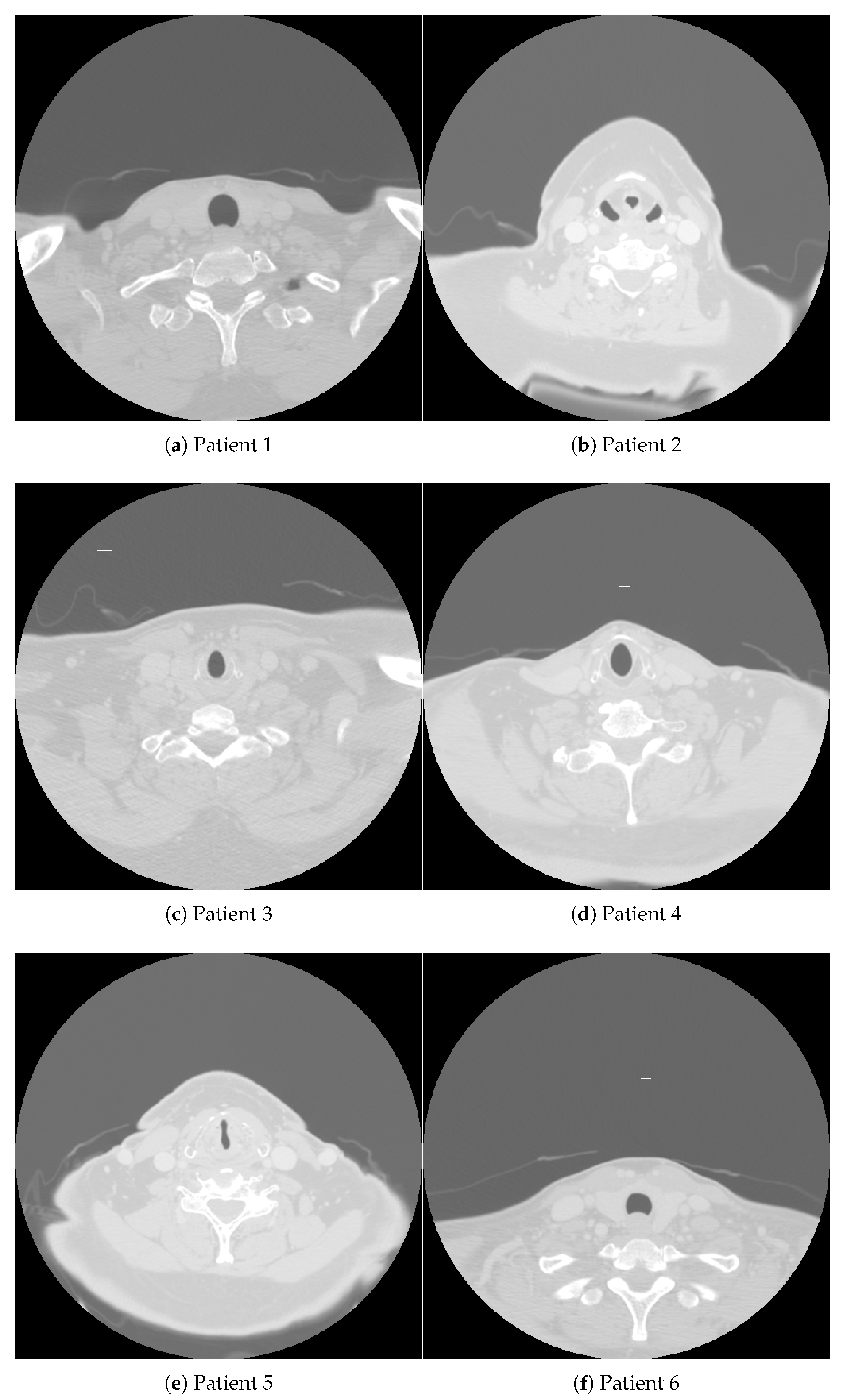
Figure 2.
Histopathological images, resized to 0.3 × original images, obtained from patients with oral squamous cell carcinoma and leukoplakia whose demographic and clinical data are detailed in Table 2.
Figure 2.
Histopathological images, resized to 0.3 × original images, obtained from patients with oral squamous cell carcinoma and leukoplakia whose demographic and clinical data are detailed in Table 2.
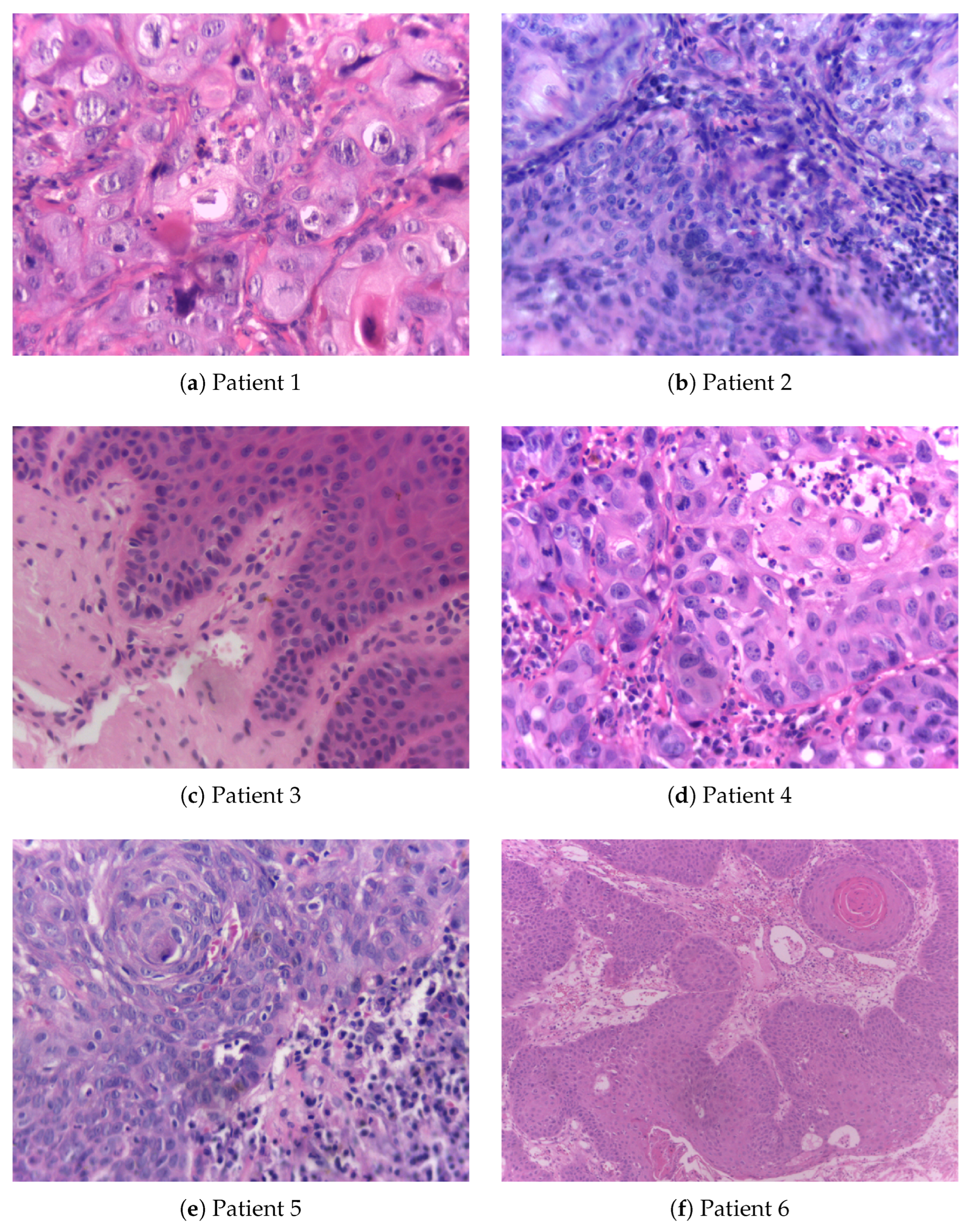

Table 1.
Demographic and clinical data of patients with oropharynx cancer [31]. Explanation notes: HPV denotes human papillomavirus, BOT denotes base of tongue, T category refers to the description of the original (primary) tumor based on the American Joint Committee on Cancer (AJCC) and Union for International Cancer Control (UICC) cancer staging system. N category describes whether or not the cancer has reached nearby lymph nodes, based on the AJCC and UICC cancer staging system. Pathological grade indicates the grade of tumor differentiation, where NA = not assessable. Smoking pack-years provide an equivalent numerical value of lifetime tobacco exposure, where one pack-year equals twenty cigarettes smoked every day for one year.
Table 1.
Demographic and clinical data of patients with oropharynx cancer [31]. Explanation notes: HPV denotes human papillomavirus, BOT denotes base of tongue, T category refers to the description of the original (primary) tumor based on the American Joint Committee on Cancer (AJCC) and Union for International Cancer Control (UICC) cancer staging system. N category describes whether or not the cancer has reached nearby lymph nodes, based on the AJCC and UICC cancer staging system. Pathological grade indicates the grade of tumor differentiation, where NA = not assessable. Smoking pack-years provide an equivalent numerical value of lifetime tobacco exposure, where one pack-year equals twenty cigarettes smoked every day for one year.
| Patient 1 | Patient 2 | Patient 3 | Patient 4 | Patient 5 | Patient 6 | |
| HPV/p16 status | positive | negative | positive | negative | positive | positive |
| Gender | male | female | female | male | male | female |
| Age | 58 | 78 | 56 | 59 | 55 | 47 |
| Race | white | white | white | black | hispanic | asian |
| Tumor side | left | right | right | right | right | left |
| Tumor subsite | tonsil | BOT | BOT | BOT | BOT | BOT |
| T category | 2 | 3 | 2 | 4 | 2 | 1 |
| N category | 0 | 0 | 2b | 1 | 2a | 2a |
| AJCC cancer stage | II | III | IV | III | IV | IV |
| Pathological grade | III | II | III | NA | III | II-III |
| Smoking status | former | former | never | current | never | never |
| Smoking pack-years | 5 | 70 | 0 | 66 | 0 | 0 |
Table 2.
Demographic and clinical data of patients with oral squamous cell carcinoma (OSCC) and leukoplakia (LP) [32]. Explanation notes: age group (years of age): 1 = 41-60 and 2 = over 60, Y = yes, N = no, NI = not informed, FOM = floor of mouth, BM = buccal mucosa.
Table 2.
Demographic and clinical data of patients with oral squamous cell carcinoma (OSCC) and leukoplakia (LP) [32]. Explanation notes: age group (years of age): 1 = 41-60 and 2 = over 60, Y = yes, N = no, NI = not informed, FOM = floor of mouth, BM = buccal mucosa.
| Patient 1 | Patient 2 | Patient 3 | Patient 4 | Patient 5 | Patient 6 | |
| Gender | male | male | male | male | male | male |
| Age group | 1 | 1 | 2 | 2 | 1 | 1 |
| Race | white | white | black | white | NI | white |
| Tobacco use | Y | N | N | former | NI | Y |
| Alcohol consumption | former | Y | Y | former | NI | Y |
| Localization | tongue | FOM | BM | gingiva | palate | tongue |
| Diagnosis | OSCC | OSCC | LP (mild) | OSCC | LP (severe) | OSCC |
Table 3.
Applications of AI in head and neck cancer.
| Application | Examples | Benefits |
|---|---|---|
| Early Detection | Histopathological analysis, Imaging techniques (e.g., MRI, CT scans) | Improved accuracy in detecting early-stage lesions, Enhanced visualization of suspicious areas |
| Diagnosis | Automated lesion detection, Classification algorithms | Standardized diagnostic criteria, Reduction in diagnostic variability |
| Treatment Planning | Personalized medicine, Genomics integration | Tailored treatment regimens, Better patient outcomes based on individual profiles |
| Monitoring and Surveillance | Real-time monitoring, Recurrence detection, Patient compliance tracking | Early identification of recurrence, Improved patient follow-up, Enhanced compliance with treatment protocols |
| Drug Discovery | Identification of therapeutic targets, Drug screening and repurposing | Accelerated drug development, Identification of novel therapeutic compounds |
| Robotics and Surgery | AI-assisted surgery, Precision surgery techniques | Increased surgical precision, Reduced intraoperative risks, Faster recovery times |
Table 4.
AI techniques and their applications in head and neck cancer.
| AI Technique | Applications | Description and Benefits |
|---|---|---|
| Supervised Learning | Image classification, Predictive modeling | Utilizes labeled data to train models for accurate diagnosis and prognosis prediction, improving early detection and personalized treatment plans |
| Unsupervised Learning | Biomarker discovery, Patient clustering | Analyzes unlabeled data to identify patterns and correlations, aiding in the discovery of novel biomarkers and understanding patient subgroups |
| Reinforcement Learning | Treatment optimization, Robotic surgery | Uses feedback loops to optimize treatment strategies and enhance precision in surgical procedures, resulting in better patient outcomes and reduced errors |
| Deep Learning | Histopathological image analysis, Radiographic image enhancement | Employs neural networks to analyze complex medical images, leading to improved detection and diagnosis accuracy |
| Natural Language Processing (NLP) | Literature mining, Patient data analysis | Extracts and analyzes information from medical literature and patient records, facilitating better decision-making and research insights |
| Explainable AI | Diagnostic decision support, Treatment planning transparency | Enhances the interpretability of AI models, providing clinicians with understandable insights and supporting transparent decision-making processes |
| Vision Transformer Networks | Medical image classification, Lesion detection | Utilizes advanced transformer models for image analysis, offering superior accuracy in detecting and classifying lesions |
Disclaimer/Publisher’s Note: The statements, opinions and data contained in all publications are solely those of the individual author(s) and contributor(s) and not of MDPI and/or the editor(s). MDPI and/or the editor(s) disclaim responsibility for any injury to people or property resulting from any ideas, methods, instructions or products referred to in the content. |
© 2024 by the authors. Licensee MDPI, Basel, Switzerland. This article is an open access article distributed under the terms and conditions of the Creative Commons Attribution (CC BY) license (http://creativecommons.org/licenses/by/4.0/).
Copyright: This open access article is published under a Creative Commons CC BY 4.0 license, which permit the free download, distribution, and reuse, provided that the author and preprint are cited in any reuse.


