

Submitted:
06 August 2024
Posted:
07 August 2024
You are already at the latest version
Abstract
Asbestos, also known by its commercial name of amianthus, has been a widely used material in various industries due to its unique properties. However, its extensive use has led to serious consequences for human health, most notably asbestosis, an irreversible chronic lung disease. Asbestosis increases the risk of lung cancer and malignant meso-thelioma both fatal diseases. To understand the role of asbestos in human health, applied sciences such as microscopy (optical and scanning electron microscopy) and geochemistry are fundamental to characterize the mineral fibers. In previous work we used these technics to characterize the fibers and, in this paper, we explore their issues associated with asbestos and asbestosis, as well as the challenges of science communication strategies to effectively inform society and workers about these risks. The lack of scientific culture, in general, leads to the lack of public awareness of risks, and to address these challenges, it is essential to implement effective communication and outreach plans and strategies, including the visualization of the fibers to understand why there may be a problem if inhaled. Educational campaigns, guidelines and plans that are informative and action-able, targeting workers, communities and the public about asbestos risks are very im-portant. General knowledge of mineralogy and geochemistry is needed and providing proper scientific communication and dissemination may help to cover the knowledge gap. We use examples and experience in Spain and Italy to illustrate this subject.
Keywords:
asbestos
; mineralogy
; geochemistry
; occupational health
; scientific outreach
; risk prevention
1. Introduction
Asbestos and asbestosis is an increasing health issue and research subject to debate. Asbestosis produces an alteration in the living beings’ health and can affect the environment in those regions where asbestos is, or was, extracted. Asbestosis is a chronic illness affecting the lungs, provoked by the inhalation, or ingestion, of fibrous minerals, that needs to be explained in detail to the society, using communication tools that reach the workers and the public. Having the information, prevention measures can be implemented easily. Asbestosis can derive into lung cancer and malignant mesothelioma, both fatal diseases. The aim is to communicate without causing alert but helping to implement prevention measures, because asbestos, very well known for its carcinogenic consequences, has historically been predominantly assessed in air, neglecting its possible presence in water resources. Recently, growing attention is being paid on asbestos fibers into groundwater, recognizing this environmental matrix as an unconventional source of exposure to asbestos fibers. Use of polluted waters for household, agricultural and industrial purposes pose a risk of fiber migration from water to air into domestic, public and working spaces. Studies indicate that polluted waters can lead to airborne fiber concentrations surpassing legal limits through evaporation or mobilization processes [1]. Indeed, water acts as a carrier for fibers, facilitating their transport and accumulation in distant areas. Thus, hydro-dispersed asbestos represents an emerging pollutant, as its presence hasn't been systematically assessed. Furthermore, the risk of ingesting asbestos fibers via drinking water has been hardly discussed and conclusive evidence is still lacking. The correlation between consuming water contaminated with asbestos and the development of gastrointestinal diseases emphasizes the importance of considering the water matrix when studying asbestos pollution. Some epidemiological studies conducted in the USA and Canada have suggested an increased incidence of stomach cancer in populations exposed to contaminated water [2], although there is no conclusive evidence of the danger of this route of exposure. It has to be taken into account that asbestos is not only dangerous due to its fiber shape, but also to the heavy metals content [3]. The presence of potentially toxic elements (PTEs), such as Fe, Mn, Co, Ni, Cr, Ba, Pb, V, within the structure of asbestos fibres, along with other parameters related to shape, results as an additional concern in the context of asbestos toxicity. The release of PTEs hosted by asbestos fibres can increase the risk of lung diseases. For this reason, for many authors asbestos can be considered a carrier of PTEs [3,4,5,6,7]. When inhaled asbestos fibres, they can dissolve within the lungs, releasing their toxic cargo and potentially causing cellular disorders. Indeed, ample evidence has demonstrated that toxic elements, even in low concentrations in humans and animals, induce significant oxidative stress within cells [8]. This results in an increase in the presence of reactive oxygen species (ROS) and, in some cases, leads to disruptions within the DNA, where these elements can bind [9,10]. All the applied sciences involved in the study (e.g., geochemistry, mineralogy, medical sciences) should be channelized in the appropriate language, images and tools to get to the society, so prevention measures can be implemented with the involvement of the public and workers. Asbestos have become a big environmental and health issue [11,12], but also an economic issue, because extraction of asbestos was a very important economic activity in several regions around the world [13]. Because the extraordinary characteristics of asbestos, it was a much-appreciated resource for construction during last century. But soon became clear that the use of asbestos-built materials were causing health problems to workers and their family in the shape of lung illnesses.
2. Materials and Methods
We have reviewed publications on the target matter, both scientific and law reviews, to set the state of the art of the subject and to be able to reflect on what is needed in a risk society to avoid health issues related to asbestos, but also to avoid creating panic and alarm. Spain and Italy are the countries that have been used for the evaluation, as both are very concerned about the health issues related to asbestos and can represent Europe in a legal frame. To illustrate the example cases, we used a Leica DM2500P petrographic microscope (PM) under transmitted light to describe the mineralogy and textures of asbestos-containing rocks.
3. Asbestos and Asbestosis
3.1. The Minerals
The National Institute for Occupational Safety and Health (NIOSH) defines asbestos as any elongated particle, including fibrous minerals such as serpentine (mainly chrysotile) and fibrous amphiboles (e.g., actinolite, tremolite). In the European Union, asbestos is defined as fibres with a length of more than five micrometres, a width of less than three micrometres and a length/width ratio greater than 3:1 (Directive 2003/18/EU). All the mentioned minerals are chemically inert and heat resistant, which in the past led to the use of asbestos for a wide variety of important industrial applications.
But the mentioned minerals have notable differences among them. Amphiboles normally appear as prismatic phases, while serpentine (mainly chrysotile) appears as fibers (Figure 1 a,b)
Asbestos is a common mineral in metamorphic ultramafic rocks. Serpentinites are the most frequent host. Serpentinites are formed through the metamorphism of ultramafic igneous rocks, involving fluids of different origins ([14] and references therein). These rocks are characterized by a very low silica content and high quantities of Fe and Mg minerals, giving a very dark color to the rock. Original mineralogy in the igneous rocks are olivine and pyroxene that transform into amphiboles and serpentine during the metamorphism.
In some countries, the synonym used to refer to asbestos is amianthus, although this term is more used in industrial contexts. Amianthus is a very silky variety that can be knitted even to produce textiles [15]. But asbestos refers to a whole mineral family (i.e., fibrous minerals) and differences in shape is a first issue that should be clarified when explaining the problems derived from asbestos to the society.
The problems that arise from the use and manipulation of these minerals are determined by the lack of knowledge of the nature of them. As explained before, the danger is not only related to the shape of the mineral [16], but also to the chemical composition, as many times the real formula (e.g., for the serpentine: Mg3[Si2O5](OH)4) deviates from the theoretical one and includes potentially toxic elements, among which different minor and trace elements (heavy metals (e.g., Fe, Cr, Mn, Co, Ni, Cu, Zn, Be, Ad, Rb, Sb, Ba, Pb, Sr) are found [3]. Asbestos can be a main phase in rocks and when these are disturbed (e.g., quarry extraction, production of construction materials, restoration of monuments through laser cleaning [17]) , and from the 19th century and through most years of the 20th century, asbestos was frequently used in different industry sectors (Table 1).
From the 70s, the use of asbestos diminished and ended up being banned in many countries. But it must be considered that asbestos may contaminate the atmosphere through natural processes. Erosion and weathering of asbestos-containing rocks may disperse these fibers in the atmosphere, causing health issues to the population living in the extraction surrounding areas. Knowing the different scenarios, prevention measures may reduce the health problems and the mortality linked to inhaling asbestos. Some work on this context has been done in several places in Spain and in Italy, mapping and characterizing the rocks (e.g., Cabo Ortegal ultramafic complex in Galicia, Spain [18]; [14,17], Ronda mountains in the south of Spain [19]; Calabria, in the south of Italy [3,12]. Remobilization of these particles may produce the increase of natural contamination, entering the human and animal bodies through the respiratory system [20]. The danger depends on the dimension and shape of the particles, the biopersistence, the chemical composition of the particles and their capacity to react with oxygen, generating multiple reactive molecules ( ROS, [21]). The evolution of fibers in the lungs after inhalation has largely been documented; however, the potential toxicity derived from the heavy metal content of the minerals is a relatively recent subject [3], although several authors have started to describe the generation of tumors leading to lung cancer, mesothelioma and/or bronchogenic cancer due to this toxicity [9,22,23,24].
Anthropogenic asbestos contamination is mainly linked to the work in quarries, extracting asbestos-containing rocks (e.g., serpentinites), mainly for construction nowadays. The beauty of these rocks has been used since centuries to build the heritage built on stone in many countries (e.g., Spain, Italy, India, Pakistan, USA). Extraction of asbestos to produce amianthus products was also a productive business, but it was banned in many countries as soon as research showed the direct link between asbestos and respiratory diseases. Many countries developed specific laws to forbid the extraction of these materials to protect the workers (e.g., Germany, Austria, Bulgaria, Belgium, Croatia, Cyprus, Denmark, Slovakia, Spain, Estonia, Finland, France, Italy, Portugal, Norway, Holland, United Kingdom, Japan, USA), but there are still places, with a more relaxed labor safety laws, that still permit the extraction and use of asbestos (e.g., China, India, Russia) [25]. The powder generated in these quarries affect the workers, but also the population living in nearby areas. The most common pathologies derived from the asbestos exposure are asbestosis, lung cancer and mesothelioma (Figure 2) [7,22,26,27].
3.2. Clinical Features
Asbestosis is produced by the alteration of lung tissue when asbestos is inhaled, and fibers are in direct contact with the lung cells. The fibers are stored in the lung tissue, transforming them into rigid matter, reducing also its size. The pleural area is also affected [20]. Symptoms are not immediate (sometimes it takes up to 10-20 years of exposure before symptoms appear) and that is a big burden because treatment may be postponed until damage is irreversible. Symptoms are sustained respiratory difficulties, dry coughing, and finally pain and pressure on the thorax if the illness is well advanced. In acute cases, fibrosis in the lung tissues may develop heart disease affecting the right part of the thorax derived from the lung hypertension. This may derive into cyanosis and jugular engorgement [28]. Suspicious sudden change of physical aspect of a person, such as loss of weigh and/or appetite, should rise an alarm.
First stages may derive into other complications like respiratory insufficiency, cor pulmonale [29], and cancer. Maldonado De Sasia [30] noticed that the latter is increased in individuals that are also exposed to tabaco smoking.
Experiments with animals have demonstrated that when asbestos is in contact with the internal parts of the lung (e.g., bronchia, alveolus), an inflammation is produced, reducing the respiratory capacity. Figures of how lungs are affected by the inflammation and by the body defenses can be found at Burgos Díez [31] and López [32].
3.3. Incidence in Population
Up to 1 million deaths around the world have been registered until 2020, as due to asbestos inhaling consequences. Data from OMS indicate that 107.000 workers exposed to asbestos die each year. The most affected working collectives are related to the construction sector and the mineral exploration. In Spain, this number was estimated in 2.300 per year [33].
Risk of asbestosis can manifest through different paths: 1) people directly exposed to the mineral (e.g., shipyards, non-metallic minerals workers, fibre-cement industry, production of certain parts of vehicles) counting for 98% of affected population; 2) workers in sectors such as electricity, construction and painting; 3) the rest of the population that can be exposed through any contact with relatively common contexts such as highway construction, or dumps and waste lands [34].
In 1963, the first case of asbestosis was diagnosed in Spain. In 2001, asbestos was banned in Spain, but until 2020, due to the disease latency [35] cases have been increasing, mainly in Galicia, Cataluña, Madrid and Valencia, the most industrial areas in Spain (Figure 3) [30,36]. The Spanish government acknowledges around 700 cases of mesothelioma per year, but in 2018 the national security health only recognized 20 cases as derived from occupational safety [37]. This is probably due to the overlapping of asbestosis related illnesses with those derived from tabaquism. Washington university estimated that only in Spain, 96.804 deaths were due to occupational exposition to the fibers between 2001 and 2019, and probably increasing because the latency of related illnesses. In Figure 3 it is possible to correlate the areas where asbestos was used for the different economic activities (e.g., construction, transport, naval industry) with the asbestos incidence in Spain in the frame of occupational safety. Lope et al. [38] also studied the distribution of ovarian cancer in Spain and the map they plot can also correlate with Figure 3. However, the source of risk may not be related to same activities. Textile and leather industries, before they were mechanized, were a female-dominated sector during the 20th century and asbestos (chrysotile) was used for the needed raw materials and the maintenance of machinery [38]. Trends from 1990 to 2021 can be visualized at the web site of the Global Burden of Disease (GBD) that assesses mortality and disability from hundreds of diseases, injuries, and risk factors around the world [39].
The National Institute for Occupational Security (INSHT are the initials in Spanish) has proved that asbestos may have a mean life between 30 and 50 years. After that time, the mineral starts to decompose in thinner fibers and powder that keep contaminating the different ecosystems [40]. The prohibition of asbestos in Europe was triggered when the European parliament detected in 1978 that mineral fibers were affecting human health, and declared asbestos as carcinogenic material [33]. In 1999 asbestos was declared banned in a European directive 1999/777UE and the European Union forbid the use and marketing of asbestos in 2005 [41]. The Spanish Decree of 31st of March 396/2006 stablished the minimum security and health working conditions for workers that had been exposed to asbestos, who should be checked periodically after finishing the working contract, and the national health insurance should cover the expenses. Also a guide for evaluation and prevention of risks related to asbestos was published [40], but very little scientific evidence was included, which is a burden for the progress in the evaluation of the evolution of illnesses related to asbestos. After banning the use of asbestos, the elimination of remaining asbestos in, for example, constructions, was also promoted to fully and secure elimination of asbestos in the European Union (2015/C 251/03), with the obligation of developing programs and actions, starting with public buildings and at a local level, protecting also the workers in this context [42,43]. A very important step was to implement information and professional programs for technician to inform on the risk of exposure and the importance of a periodic supervision. At least in Spain, the complete removal of asbestos is scheduled for 2028, although this date looks unreasonable due to the huge amount that is still remaining in constructions in the country.
3.4. Treatments
As in any risk analysis, the most important step is prevention. If the risk has been converted into danger already, treatment of the space and of the affected individuals must be implemented.
It is capital to determine the level of exposure of the population and to get the quantitative and qualitative analysis for fibers dispersed in air; to isolate the area; to maintain and make available individual protection equipment (IPE); to discharge materials using only special and specific transportation; to clean the area and to revise to verify that there is no asbestos risk left behind.
Measures on the affected individuals must also be implemented. Technology has not stablished yet the specific measures that should be applied to these individuals, but prevention is again the most important step to reduce the damage of population. Here we should include early detection when there is a suspicion of respiratory difficulty, make oxygen supplements available and vaccinate against illnesses that could worsen the stage (e.g., influenza). Once diagnosed, specific therapies should be implemented: drugs therapy (corticoids, steroids, antibiotics), oxygenation, surgery, lung transplant).
3.5. Prevention Measures: Communication and Education as the Best Way of Prevention
National and regional governments in Spain designed a health vigilante program for workers that had been exposed to asbestos. The first step was to create a database with those workers, with the help of companies that were registered as under risk of asbestos (RERA, the initials for the Spanish Registro de Empresas con Riesgo de Amianto (RERA)) [44]. Protocols were stablished by the Ministry of Health and are now within the Specific Sanitary Watching Protocols (in Spanish). They are available for the public in general, so the society have the information on all the matters related to handling asbestos and to reduce individual risks. However, this is not a scientific document. The protocols include procedures for post-exposition medical checking. This step is very important because with these checking a legal recognition is included, so they are considered occupational illnesses, assigning the economic resources to the program and to the workers. Cataluña created an association for asbestos victims (AVAAC: Asociación de Víctimas Afectadas por el Amianto) and in 2017 published an informative guide for the public in general, with indications and information about the mineral, related risks, health complications, control and prevention measures to reduce damages [40]. The information includes the mean life of asbestos effect after manipulation, sites where asbestos may reside in the working infrastructures, but also in domestic artifacts (e.g., roofs, water deposits, fumes conduct), and economic activities that may have implied the use of asbestos (Table 1). These guides are supposed to help workers and public in general, but there are other effective communication actions, including pictures, videos, etc., to get the attention with better efficiency.
Asbestos is not only a health problem. It is also an environmental problem if waste is abandoned in an uncontrolled site [40]. AVAAC proposes several urgent measures to decrease the problem in the future: 1) to catalogue all the asbestos installed, with priorities: schools, hospitals… 2) to define schedules to apply measures for the complete elimination of asbestos, covered with public funding and taxes. This will help to locate specific sites for asbestos, also coming from domestic uses. This association is concerned about the set date to finalize the cleaning work as Cataluña has many constructions, including public buildings (e.g., schools) that used asbestos for the construction last century.
Risk analysis should always start with prevention measures, as stated above, and communication is the most affordable tool. Specific guides should be available for the public in general, but accompanying measures such as round tables and seminars, leaded by experts, could help to understand better the danger of the fibers. Workers should be the main target, but other collectives may attend, asking questions to experts that will see that the real problem, derived from the scientific characterization of asbestos (e.g., shape of fibers, heavy metals) is understood and unwanted alarm is also avoided. A general guide could provide information on concepts and good practices (e.g., what is asbestosis, symptoms, diagnosis, treatments, prevention measures, social impact, recommendations). However, we think that the exchange of information with the public and workers, showing the physical reason for which asbestos is dangerous (e.g., texture of the different minerals, chemical composition of the fibers) may help to understand the importance of wearing prevention tools. Here we have a direct application of science, by exchanging scientific information with the public, using appropriate language and communication tools. Posters with clear information and catching images should be available for the workers and people that may be exposed; they should be displayed in all affected areas and open access surroundings (Figure 4, Figure 5). A replacement for asbestos should also be considered, and research should also be focused on the alternatives: fiberglass, polyethylene plates, steel, PVC plates… The replacement can be considered as preventive measures as well.
Education is another way of controlling asbestosis, as other occupational illnesses related to natural resources (e.g., silicosis related to the extraction and manufacturing of ornamental stones, natural radioactivity related to construction materials). All these health problems are enlarged when linked to smoking, and the dangers associated to earth materials and living habits should be discussed at schools and universities. Specific seminars, webinars on mineralogy and geochemistry related to human health (i.e., Medical Geology) should be included as mandatory activities, both at grade and post-grade levels. Graduates working in the stone sector may transfer the knowledge to the peers, the responsible of companies and the society. Asbestos gathers a very specific group of minerals that sometimes are not covered during the mineralogy courses, either because the lack of time during the academic year or because there are no experts among the university staff. The universities should make sure that those subjects, as socially important like these, are covered in the programs and supply the contents in any possible academic way. Dissemination and science communication should be included as a very important part of the university curricula, and the methodology to apply should be scientific, starting with the literature review that is already available and increasing this with the new findings. Dissemination through social media and media in general should be used to demonstrate that scientists are very concerned about health, and the nature of materials used in industry and any economic activity should be of public knowledge, so population is aware of potential dangers. A practice with students could be to search on the available databases (e.g., PubMed, Scopus, Web of Science) terms and keywords such as “asbestos” "asbestosis", "amianthus", "dissemination", "risk communication", "public health", “prevention”, “education”, etc. An interesting activity could also be to separate the bulk of literature available on the subject until and after 1980, to show that the interest on the subject has awake since scientists and medical doctors know about the health problem related to asbestos. Preparing graphics and diagrams will help to visualize all the findings, and preparing specific tasks and presentations could be used, not only at the academic level, but also open to the public. This material should be adapted and made available as open access to share with emergent countries that may not have all the information easily available.
4. Discussion e Conclusions
In the United States, strict regulations have been imposed on the use of asbestos due to its relationship with serious health hazards. However, its regulated use is still permitted under federal law with some exceptions. Every year, there are about 3,000 new cases of mesothelioma and 2,500 related deaths recorded in the country [48].
To understand the evolution of asbestos in the life and health of population, it has to be understood that factories were the only opportunity for communities that otherwise had to emigrate, leaving their families behind.
In the 20th century, Italy was Europe's largest producer and one of the largest consumer of asbestos until the 1992 asbestos ban. Between 2003 and 2014, there were 16,086 deaths from malignant mesothelioma in Italy, leading to an average of 1,340 deaths per year [49]. For example, a study has shown that workers in the port of Genoa (Italy) have a higher risk of dying from tumours of the pleura, lungs, larynx and bladder, as well as a higher incidence of respiratory diseases. This is surely due to the use of asbestos as insulation in compartments, air conditioning systems and as a component of steam and hot water pipes [50]. Specific exposure to asbestos resulted in a rise in mortality rates for pleural (+475%), lung (+54%), and laryngeal (+83%) cancers, as well as an increase in respiratory (+27%), asbestosis (+2177%), and gastrointestinal tract diseases (+15%) [50]. In Casale Monferrato, in the province of Alessandria (Italy), the hazardous effects of dust exposure were recognised early on. In the early 1900s, the region's main economic activity was linked to the Eternit factory, first producers of artificial stone. The company was founded between 1907 and 1912 and continued to operate until 1986. It was only in the 1980s that the University of Turin's Cancer Epidemiological Unit and the Piedmontese Cancer Register carried out official studies on the health effects of asbestos exposure, with the aim of determining the incidence of pleural cancer among the inhabitants of Casale Monferrato. The first cohort study of Eternit workers was published in January 1987. It clearly showed a significant excess of deaths from asbestos-related diseases, mainly pleural and peritoneal cancer, lung cancer and asbestosis. 107 deaths were caused by lung tumours, 57 by tumours in the pleural or peritoneal cavity, and 89 by asbestosis-related illness [51]. The Casal Monferrato region was found to have a high prevalence of mesothelioma, even among people without occupational exposure to asbestos [52]. On 12th March 1992, Italy passed law number 257, prohibiting the extraction, importation, exportation, and production of manufactured goods containing asbestos. Even today, past exposure and residual asbestos remain a public health problem. Between 1934 and 1989, an asbestos cement pipe plant operated in Bari (Italy), utilizing an asbestos blend comprising 15% crocidolite, 5% amosite, and 80% chrysotile fibres. In 1974, a case-control study was carried out on 48 mesothelioma deaths and 273 control subjects who were not occupationally exposed residents, which showed an increased odds ratio for mesothelioma in people who lived within a 500 metre radius of the factory [53].
Parallel to the asbestos problem, a related one has raised, relating talk powder with ovarian cancer in women and other cancers in persons that have used this product. Recently, the company Johnson & Johnson had to retire a baby powder product because clients had sued the company for the lack of information on the potential content of asbestos in the talc baby powder. Cancer of the uterus and ovary cancer were declared from various women and the baby powder was suggested as potential cause, although there are no final conclusions on this subject [54]. Talc is a mineral produced from the metamorphism of ultramaphic rocks (Figure 6). The reaction to generate talc is:
2Mg3Si2O5(OH)4 (serpentine) + 3CO2 = Mg3Si4O10(OH)2 (talc) + 3MgCO3 (magnesite) + 3H2O.
In this transformation, some serpentine (e.g., chrysotile) may remain as accessory mineral.
Although these asbestos inclusions may not cause any health issue, and in fact no conclusive reports have been derived from the investigations, clients and users should know the true composition of products to be able to decide on whether to use that product or not. And the company Johnson & Johnson, supposedly, did not communicate the complete composition in the appropriate way. This is a case of bad practice in communication, because implementing a transparent communication strategy would have been less damaging for the company, both in reputation and in budget. The research on the effects of baby powder in human body started in USA and Canada after receiving several demands [55], and it is continuing today.
Knowledge of the nature of asbestos derives from the application of science. Mineralogy and Geochemistry are the most important scientific areas that can give complete information on this mineral group, but also the differences among the species. This knowledge should be transferred to the society in a transparent way. Asbestos has been an important natural resource to develop some economies, but as soon as it was determined that it could be the cause of serious illnesses, the extraction and use was banned in many countries. Although this is not reversible, there is still a lot of asbestos in many infrastructures that should be removed. Removal of this asbestos could be harmful if it is not done by experts. These experts should know where the danger is and how can affect their health if precaution is not taken. The best way of prevention is to give appropriate information to the society, maintaining the alert but avoiding alarmism.
We suggest a protocol for public communication (Figure 7).
Communicating science is an important part of Science Transfer of Knowledge. Geochemistry and Mineralogy are the most important scientific area to characterize asbestos and asbestos-bearing rocks, but the scientific language does not get to the society in a proper way if appropriate communication tools are not used. We have proposed steps and protocols to communicate the danger associated to asbestos, both for workers and for population living in the surroundings of ultramafic massifs. Natural contamination could be as harmful as anthropogenic contamination. Having the information can save life, but also industry.
Author Contributions
Conceptualization, D.P. and A.B.; methodology, D.P, M.H., formal analysis, D.P., A.B.; investigation, D.P, M.H. and A.B; resources, D.P..; writing—original draft preparation, D.P, and A.B.; writing—review and editing, D.P, M.H., and A.B.; funding acquisition, D.P. All authors have read and agreed to the published version of the manuscript.
Funding
Funding from the university of Salamanca to the Research Group CHARROCK is acknowledged.
Institutional Review Board Statement
Not applicable.
Informed Consent Statement
Not applicable.
Data Availability Statement
Mineralogy and Geochemistry data used to elaborate this review can be found in the literature, included as references, but also upon request to the correspondent author.
Conflicts of Interest
The authors declare no conflicts of interest.
References
- Avataneo, C.; Petriglieri, J.R.; Capella, S.; Tomatis, M.; Luiso, M.; Marangoni, G.; Lazzari, E.; Tinazzi, S.; Lasagna, M.; De Luca, D.A.; et al. Chrysotile Asbestos Migration in Air from Contaminated Water: An Experimental Simulation. Journal of Hazardous Materials 2022, 424, 127528. [CrossRef]
- Kjærheim, K.; Ulvestad, B.; Martinsen, J.I.; Andersen, A. Cancer of the Gastrointestinal Tract and Exposure to Asbestos in Drinking Water among Lighthouse Keepers (Norway). Cancer Causes Control 2005, 16, 593–598. [CrossRef]
- Bloise, A.; Ricchiuti, C.; Punturo, R.; Pereira, D. Potentially Toxic Elements (PTEs) Associated with Asbestos Chrysotile, Tremolite and Actinolite in the Calabria Region (Italy). Chemical Geology 2020, 558, 119896. [CrossRef]
- Bloise, A.; Barca, D.; Gualtieri, A.F.; Pollastri, S.; Belluso, E. Trace Elements in Hazardous Mineral Fibres. Environmental Pollution 2016, 216, 314–323. [CrossRef]
- Gualtieri, A.F. Naturally Occurring Asbestos: A Global Health Concern? State of the Art and Open Issues. Environmental and Engineering Geoscience 2020, 26, 3–8. [CrossRef]
- Cralley, L.J.; Keenan, R.G.; Kupel, R.E.; Kinser, R.E.; Lynch, J.R. Characterization and Solubility of Metals Associated with Asbestos Fibers. American Industrial Hygiene Association Journal 1968, 29, 569–573. [CrossRef]
- Dixon, J.R.; Lowe, D.B.; Richards, D.E.; Cralley, L.J.; Stokinger, H.E. The Role of Trace Metals in Chemical Carcinogenesis: Asbestos Cancers. Cancer Res 1970, 30, 1068–1074.
- IARC Chemical Agents and Related Occupations; IARC Monographs on the Evaluation of Carcinogenic Risks to Humans / World Health Organization, International Agency for Research on Cancer, 2012; ISBN 978-92-832-1323-9.
- Nemery, B. Metal Toxicity and the Respiratory Tract. European Respiratory Journal 1990, 3, 202–219. [CrossRef]
- Caicedo, A.L.; Williamson, S.H.; Hernandez, R.D.; Boyko, A.; Fledel-Alon, A.; York, T.L.; Polato, N.R.; Olsen, K.M.; Nielsen, R.; McCouch, S.R.; et al. Genome-Wide Patterns of Nucleotide Polymorphism in Domesticated Rice. PLoS Genet 2007, 3, 1745–1756. [CrossRef]
- Bloise, A.; Catalano, M.; Gualtieri, A. Effect of Grinding on Chrysotile, Amosite and Crocidolite and Implications for Thermal Treatment. Minerals 2018, 8, 135. [CrossRef]
- Bloise, A.; Belluso, E.; Critelli, T.; Catalano, M.; Apollaro, C.; Miriello, D.; Barrese, E. Amphibole Asbestos and Other Fibrous Minerals in the Meta-Basalt of the Gimigliano-Mount Reventino Unit (Calabria, South-Italy). Rendiconti Online della Società Geologica Italiana 2012, 847–848.
- Gualtieri, A.F. Mineral Fibres: Crystal Chemistry, Chemical-Physical Properties, Biological Interaction and Toxicity; European Mineralogical Union, 2017; ISBN 978-0-903056-65-6.
- Pereira, D.; Peinado, M.; Blanco, J.A.; Yenes, M. Geochemical Characterization of Serpentinites at Cabo Ortegal, Northwestern Spain. The Canadian Mineralogist 2008, 46, 317–327. [CrossRef]
- Feininger, T. Landmark Papers – Metamorphic Petrology.: Bernard W. Evans, Editor. Mineralogical Society of Great Britain and Ireland, 12 Baylis Mews, Amyand Park Road, Twickenham TW1 3HQ, United Kingdom. 2007, Viii + 332 Pages. £32. ISBN 978–0–903056–24–3. The Canadian Mineralogist 2009, 47, 980–981.
- Rivero Crespo, M.A.; Pereira Gómez, D.; Villa García, M.V.; Gallardo Amores, J.M.; Sánchez Escribano, V. Characterization of Serpentines from Different Regions by Transmission Electron Microscopy, X-Ray Diffraction, BET Specific Surface Area and Vibrational and Electronic Spectroscopy. Fibers 2019, 7, 47. [CrossRef]
- Pereira, D.; López, A.J.; Ramil, A.; Bloise, A. The Importance of Prevention When Working with Hazardous Materials in the Case of Serpentinite and Asbestos When Cleaning Monuments for Restoration. Applied Sciences 2023, 13, 43. [CrossRef]
- IGME (Geological Survey of Spain) Available online: https://www.igme.es/.
- Navarro, R.; Pereira, D.; Gimeno, A.; Del Barrio, S. Caracterización mineralógica y físico-mecánica de las serpentinitas de la comarca de Macael (Almería, S de España) para su uso como roca ornamental. Geogaceta 2013, 54, 47–50.
- World Health Organization World Health Statistics “Monitoring Health for the SDGs Sustainable Development Goal”; 2018; ISBN 978-92-4-156558-5.
- Benedetti, S.; Nuvoli, B.; Catalani, S.; Galati, R. Reactive Oxygen Species a Double-Edged Sword for Mesothelioma. Oncotarget 2015, 6, 16848–16865. [CrossRef]
- Wei, B.; Yang, L.; Zhu, O.; Yu, J.; Jia, X.; Dong, T.; Lu, R. Multivariate Analysis of Trace Elements Distribution in Hair of Pleural Plaques Patients and Health Group in a Rural Area from China. Hair Therap Transplantat 2014, 04. [CrossRef]
- Pérez-Sosa, M.; Guarnizo-Herreño, C.; Buitrago, G.; Triana, I.; Pino, L. Asbesto como carcinógeno ocupacional en Colombia: desde la biología molecular hasta la salud pública. Revista Colombiana de Cancerología 2022, 26, 127–136. [CrossRef]
- Schreier, H.; Northcote, T.G.; Hall, K. Trace Metals in Fish Exposed to Asbestos Rich Sediments. Water Air Soil Pollut 1987, 35, 279–291. [CrossRef]
- Velandia, M.H.P.; Peñuela, J.M.V. Análisis de la normatividad en salud entorno al uso de asbesto a nivel mundial. Universidad ECCI 2019.
- Mossman, B.T.; Marsh, J.P. Evidence Supporting a Role for Active Oxygen Species in Asbestos-Induced Toxicity and Lung Disease. Environmental Health Perspectives 1989, 81, 91–94. [CrossRef]
- Pavlisko, E.N.; Sporn, T.A. MesotheliomaIn. in: Oury, T., Sporn, T., Roggli, V. (Eds). In Pathology of Asbestos-Associated Diseases; Oury, T.D., Sporn, T.A., Roggli, V.L., Eds.; 2014; pp. 81–140.
- Peralta-Amaro, A.L.; Vázquez-Hernández, A.; Morales-Osorio, G.; Pecero-García, E.; Triana-González, S.; Manzo-Carballo, F.; Acosta-Jiménez, E. A Survivor Woman after Three Years of a Cardiac Tamponade. J Cardiol Cases 2021, 25, 259–261. [CrossRef]
- Geller, S.A.; Campos, F.P.F. Asbestos-Related Pleural Disease. ACR 2013, 3. [CrossRef]
- Maldonado De Sasia, A. Asbestosis. Estudio retrospectivo de una serie de casos de Guipúzcoa y revisión bibliográfica. 2019.
- Burgos Díez, P.; Pozuelo León, R. Prevención de riesgos laborales derivados de la exposición a amianto, Universidas de Valladoid, Campus de Palencia, 2017.
- López, V.G. Análisis mineralógico y Registros laborales de amianto, un ejemplo más de su valor. Archivos de Prevención de Riesgos Laborales 2020, 23, 357–362. [CrossRef]
- Secretaría de Salud Laboral El Amianto Hoy Retos Tras La Prohibición; Segunda edición.; IV Plan director en Prevención de Riesgos Laborales de la Comunidad de Madrid: CCOO de Madrid, 2016;
- Bhandari, J.; Thada, P.K.; Sedhai, Y.R. Asbestosis. In StatPearls; StatPearls Publishing: Treasure Island (FL), 2022.
- Huh, D.-A.; Chae, W.-R.; Choi, Y.-H.; Kang, M.-S.; Lee, Y.-J.; Moon, K.-W. Disease Latency According to Asbestos Exposure Characteristics among Malignant Mesothelioma and Asbestos-Related Lung Cancer Cases in South Korea. Int J Environ Res Public Health 2022, 19, 15934. [CrossRef]
- García Gómez, M.; Menéndez-Navarro, A.; Castañeda López, R. Incidencia En España de La Asbestosis y Otras Enfermedades Pulmonares Benignas Debidas al Amianto Durante El Período 1962-2010. Revista Española de Salud Pública 2012, 86, 613–625.
- Barjola, J.M. Las víctimas del amianto sufren un calvario judicial: “Muchos fallecen durante el proceso y tenemos que sustituirlos por sus herederos” 2024.
- Lope, V.; Pollán, M.; Pérez-Gómez, B.; Aragonés, N.; Vidal, E.; Gómez-Barroso, D.; Ramis, R.; García-Pérez, J.; Cabanes, A.; López-Abente, G. Municipal Distribution of Ovarian Cancer Mortality in Spain. BMC Cancer 2008, 8, 258. [CrossRef]
- GBD Results Available online: https://vizhub.healthdata.org/gbd-results (accessed on 23 July 2024).
- Luis Gómez, J.; Benedicto, M.; Tisminetzky, A.; Barrera, M.; Costa, E.; Pérez, E.; Lafuente, R.; Lasmarias, A.; Arenas, M.; Valldeoriola, M. Guía Informativa A Toda La Población Sobre Los Riesgos Del Amianto; Asociación de Víctimas Afectadas por el Amianto en Cataluña, 2017;
- Marín Martínez, B.; Clavera, I. Asbestosis. Anales del Sistema Sanitario de Navarra 2005, 28, 37–44.
- García López, V. Programas de eliminación del Amianto. Lecciones desde Polonia. Arch Prev Riesgos Labor 2021, 24, 62–73. [CrossRef]
- 2009; 43. European Directive 2009/148/EU Revision of Directive 2009/148/EC on the Protection of Workers from Risks Related to the Exposure of Asbestos at Work; 2009;
- García Gómez, M.; Artieda Pellejero, L.; Esteban Buedo, V.; Guzmán Fernández, A.; Camino Durán, F.; Martínez Castillo, A.; Lezáun Goñi, M.; Gallo Fernández, M.; González García, I.; Martínez Arguisuelas, N.; et al. La Vigilancia de La Salud de Los Trabajadores Expuestos al Amianto: Ejemplo de Colaboración Entre El Sistema de Prevención de Riesgos Laborales y El Sistema Nacional de Salud. Revista Española de Salud Pública 2006, 80, 27–39.
- Aragón Bombín, R. Guía Para La Protección de Las Víctimas Del Amianto; Secretaría de Salud Laboral y Medio ambiente UGt-CEC, 2013;
- Instituto Nacional de Seguridad y Salud en el Trabajo, O.A., M.P. Guía Técnica para la evaluación y prevención de riesgos con la explosión al amianto; Madrid.; INSST, 2022;
- National Institute for Occupational Safety and Health. NIOSH Total Worker Health National Institute for Occupational Safety and Health, 2023 Available online: https://www.cdc.gov/niosh/twh/index.html (accessed on 5 February 2023).
- The Lancet Oncology Asbestos Exposure: The Dust Cloud Lingers. 2019, 20, 1035. [CrossRef]
- Fazzo, L.; Minelli, G.; De Santis, M.; Bruno, C.; Zona, A.; Conti, S.; Comba, P. Epidemiological Surveillance of Mesothelioma Mortality in Italy. Cancer Epidemiology 2018, 55, 184–191. [CrossRef]
- Merlo, D.F.; Bruzzone, M.; Bruzzi, P.; Garrone, E.; Puntoni, R.; Maiorana, L.; Ceppi, M. Mortality among Workers Exposed to Asbestos at the Shipyard of Genoa, Italy: A 55 Years Follow-Up. Environmental Health: A Global Access Science Source 2018, 17, 1–11. [CrossRef]
- Marsili, D.; Magnani, C.; Canepa, A.; Bruno, C.; Luberto, F.; Caputo, A.; Fazzo, L.; Zona, A.; Comba, P. Communication and Health Education in Communities Experiencing Asbestos Risk and Health Impacts in Italy. Annali dell’Istituto Superiore di Sanita 2019, 55, 70–79. [CrossRef]
- Magnani, C.; Terracini, B.; Ivaldi, C.; Botta, M.; Mancini, A.; Andrion, A. Pleural Malignant Mesothelioma and Non-Occupational Exposure to Asbestos in Casale Monferrato, Italy. Occupational and Environmental Medicine 1995, 52, 362–367. [CrossRef]
- Musti, M.; Pollice, A.; Cavone, D.; Dragonieri, S.; Bilancia, M. The Relationship between Malignant Mesothelioma and an Asbestos Cement Plant Environmental Risk: A Spatial Case-Control Study in the City of Bari (Italy). International Archives of Occupational and Environmental Health 2009, 82, 489–497. [CrossRef]
- O’Brien, K.M.; Tworoger, S.S.; Harris, H.R.; Anderson, G.L.; Weinberg, C.R.; Trabert, B.; Kaunitz, A.M.; D’Aloisio, A.A.; Sandler, D.P.; Wentzensen, N. Association of Powder Use in the Genital Area With Risk of Ovarian Cancer. JAMA 2020, 323, 49–59. [CrossRef]
- Rapal–Uruguay ¿Cuál Es El Problema Con El Talco y Cómo Se Relaciona Con El Asbesto?; Ipen, 2020; pp. 4–5;.
Figure 1.
Microscopic view of a serpentinized ultramafic rock from Cabo Ortegal (Galicia, Spain) where original minerals are being transformed into serpentine (and carbonate). In the figures it is possible to distinguish the rigid character of amphiboles against the flexible character of the fibers of serpentine. (a) Cross Nichols, (b) Parallel Nichols.
Figure 1.
Microscopic view of a serpentinized ultramafic rock from Cabo Ortegal (Galicia, Spain) where original minerals are being transformed into serpentine (and carbonate). In the figures it is possible to distinguish the rigid character of amphiboles against the flexible character of the fibers of serpentine. (a) Cross Nichols, (b) Parallel Nichols.
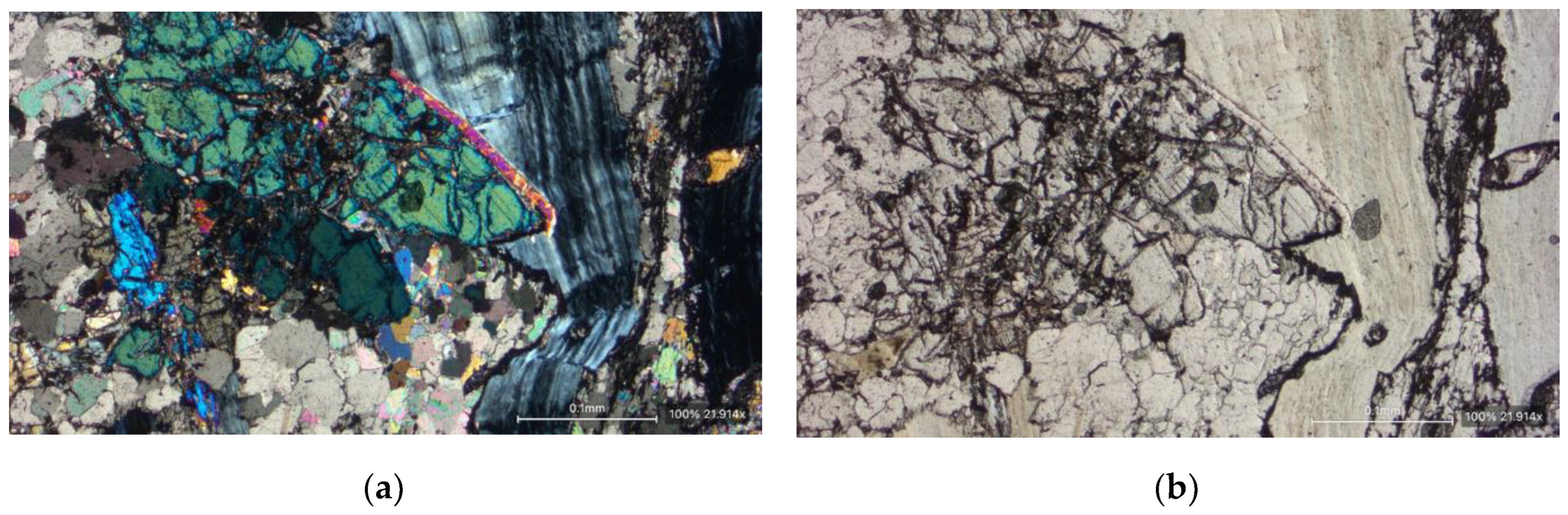
Figure 2.
Evolution of asbestos fibers from inhalation to affection of lungs by the fibers, modified from [23].
Figure 2.
Evolution of asbestos fibers from inhalation to affection of lungs by the fibers, modified from [23].
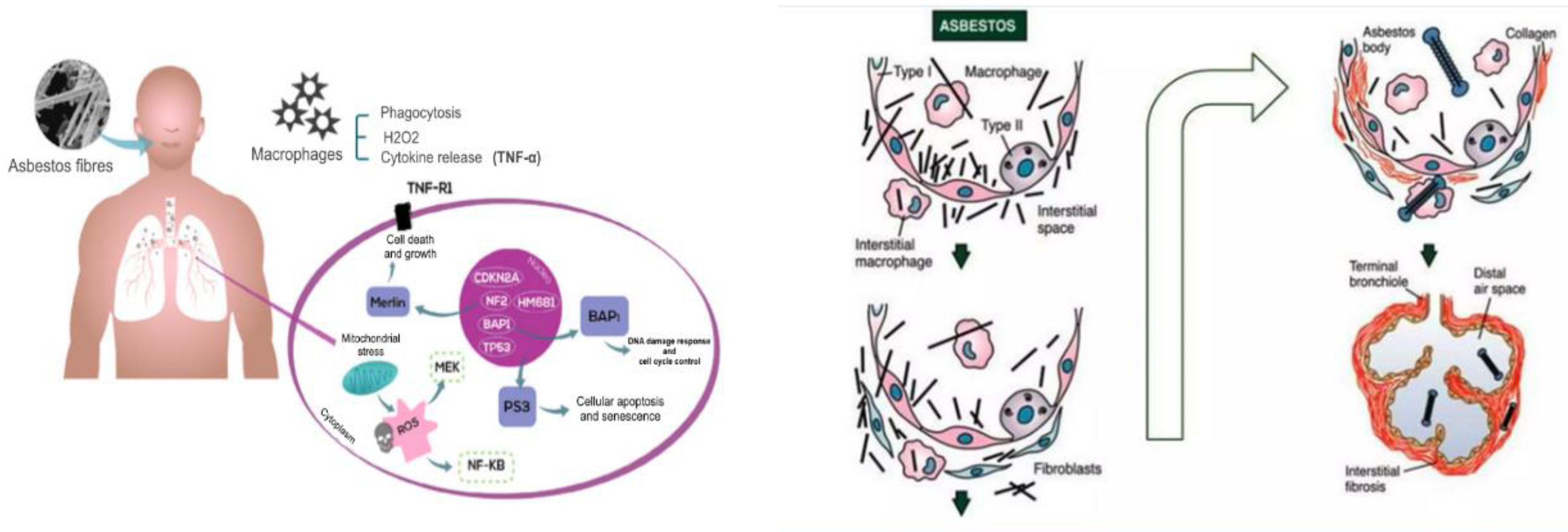
Figure 3.
(a) Distribution of the Spanish workers exposed to asbestos between the years 1968-2013. (Modified from [23]). (b) Distribution of the Spanish incidence of asbestosis between the years 1990-2010 [30]. The legend shows number of cases.
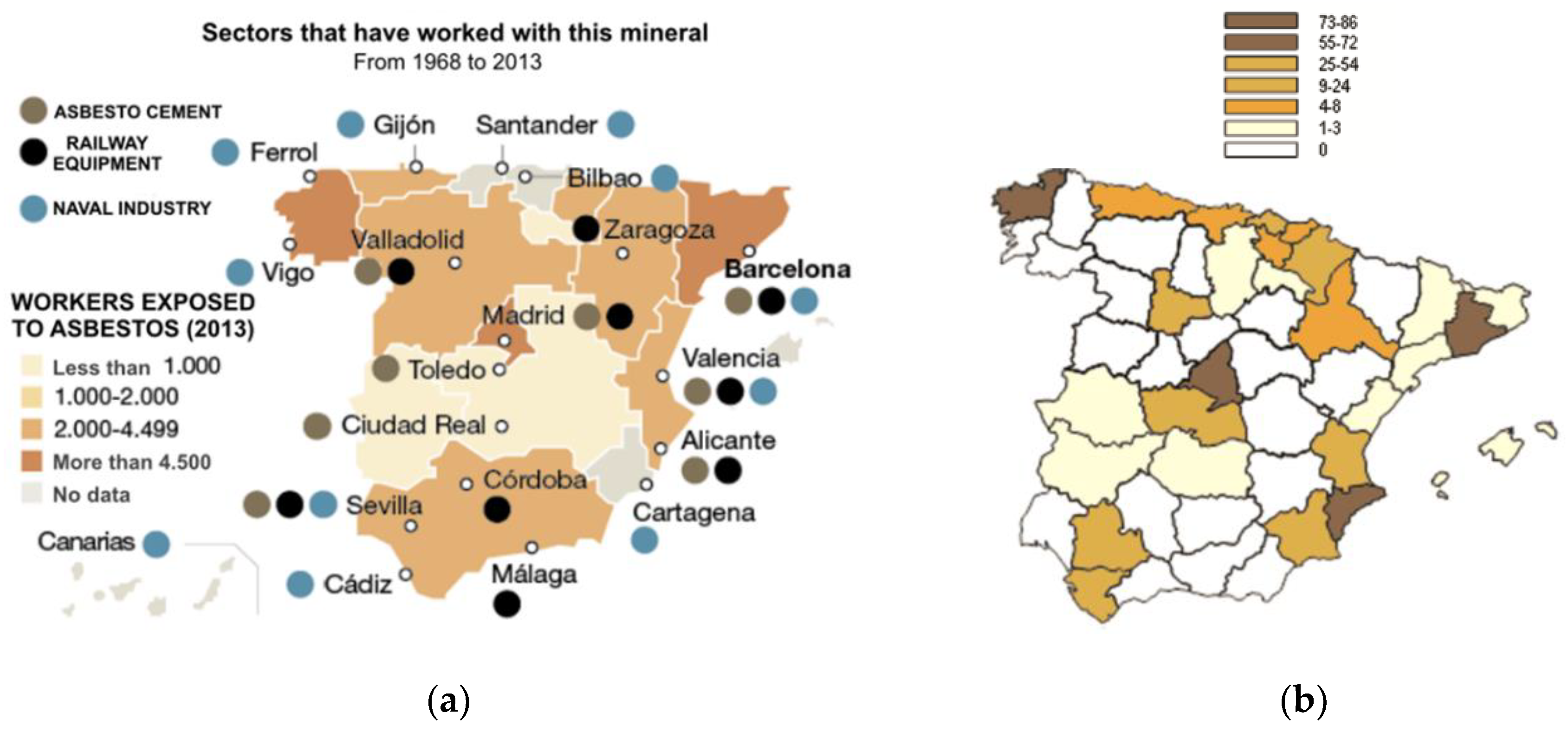
Figure 4.
Examples of panels with representative warning signs used in asbestos-risk environments, modified from [46].
Figure 4.
Examples of panels with representative warning signs used in asbestos-risk environments, modified from [46].
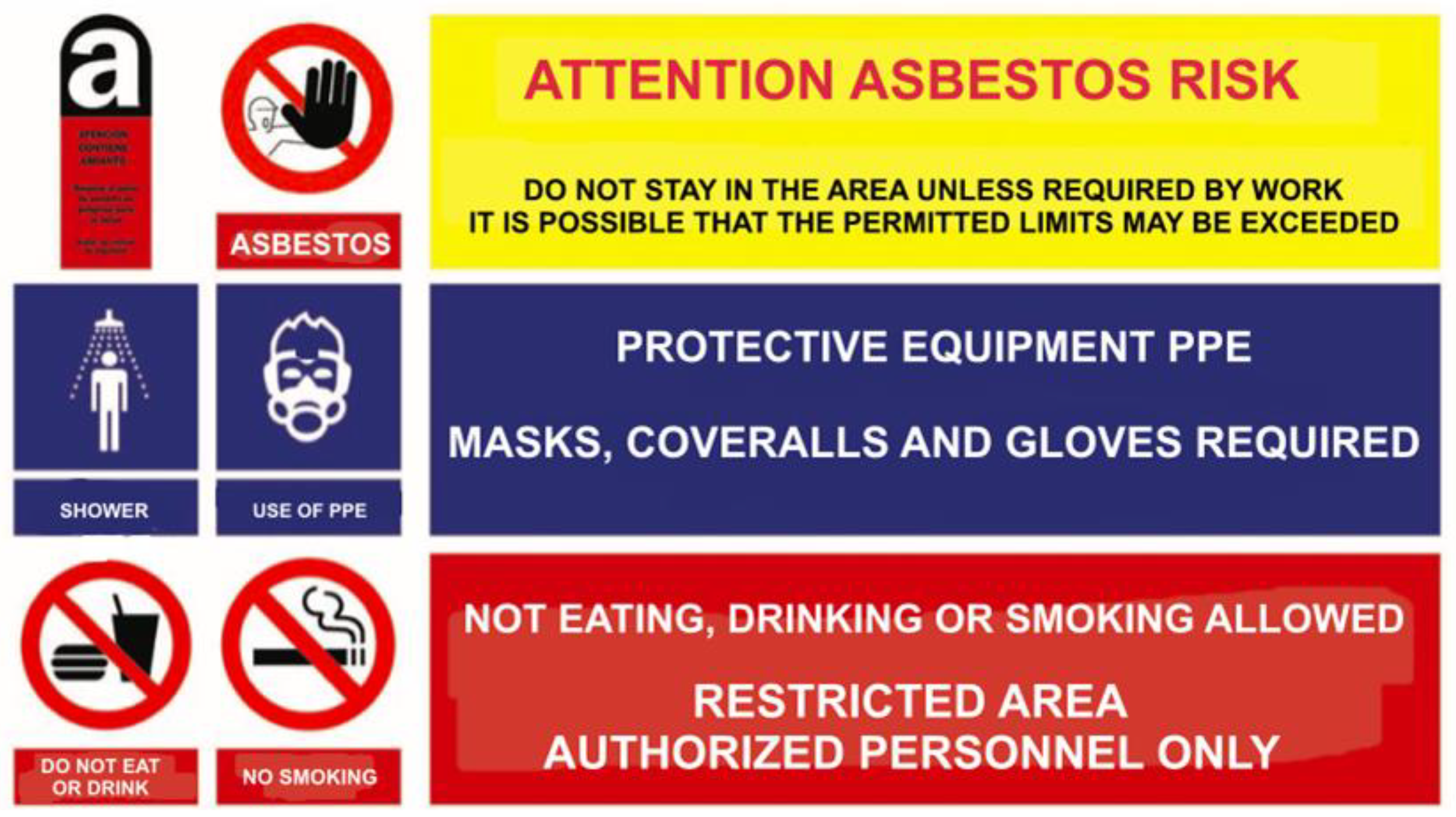
Figure 5.
Icons showing individual safety measures, including masks and filters, modified from [47].
Figure 5.
Icons showing individual safety measures, including masks and filters, modified from [47].
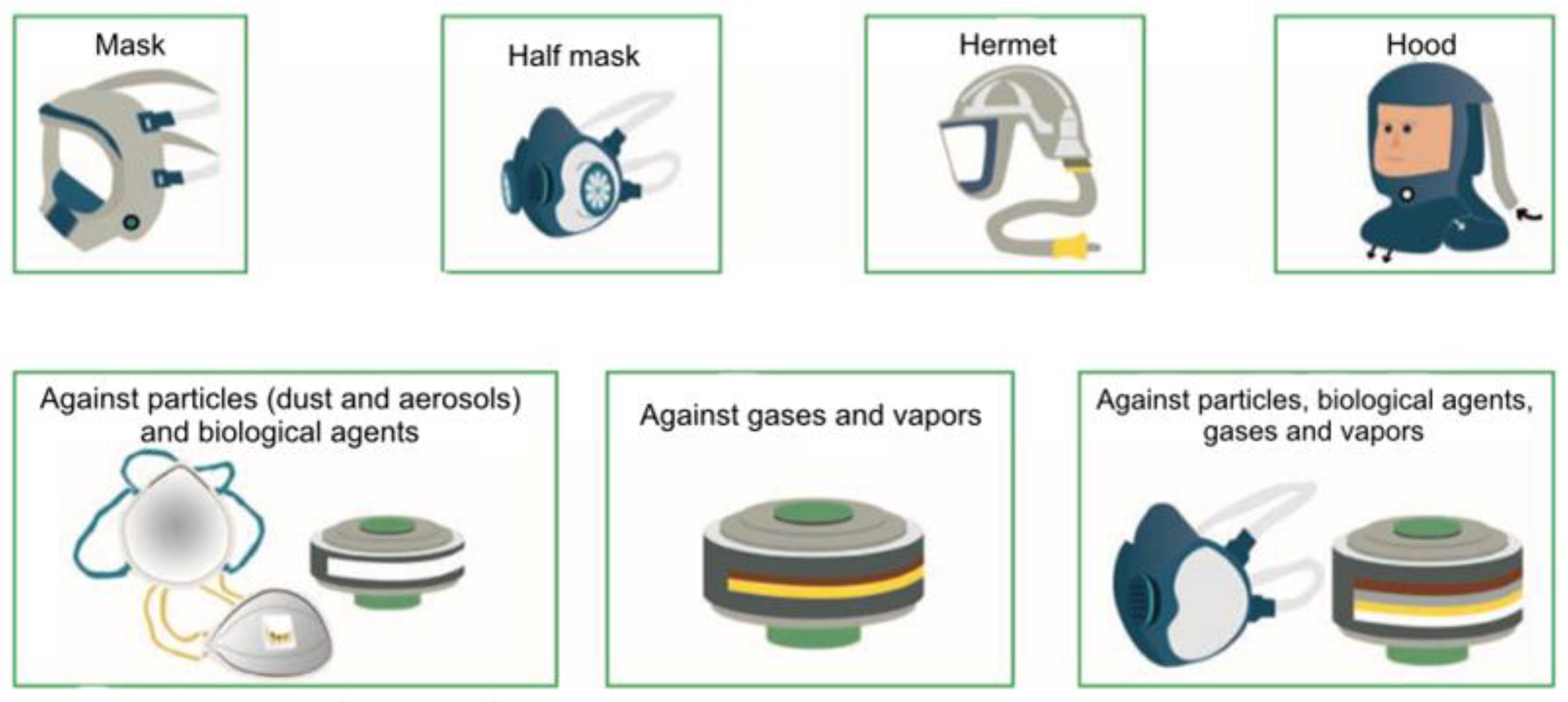
Figure 6.
Transformation of an ultramafic rock into talcocite. Most rock has been converted into talc. However, remnants of serpentine fibers are found, both in veins-like positions and in rock voids. The sample comes from the ultramafic complex of Cabo Ortegal (Spain). Cross Nichols.
Figure 6.
Transformation of an ultramafic rock into talcocite. Most rock has been converted into talc. However, remnants of serpentine fibers are found, both in veins-like positions and in rock voids. The sample comes from the ultramafic complex of Cabo Ortegal (Spain). Cross Nichols.
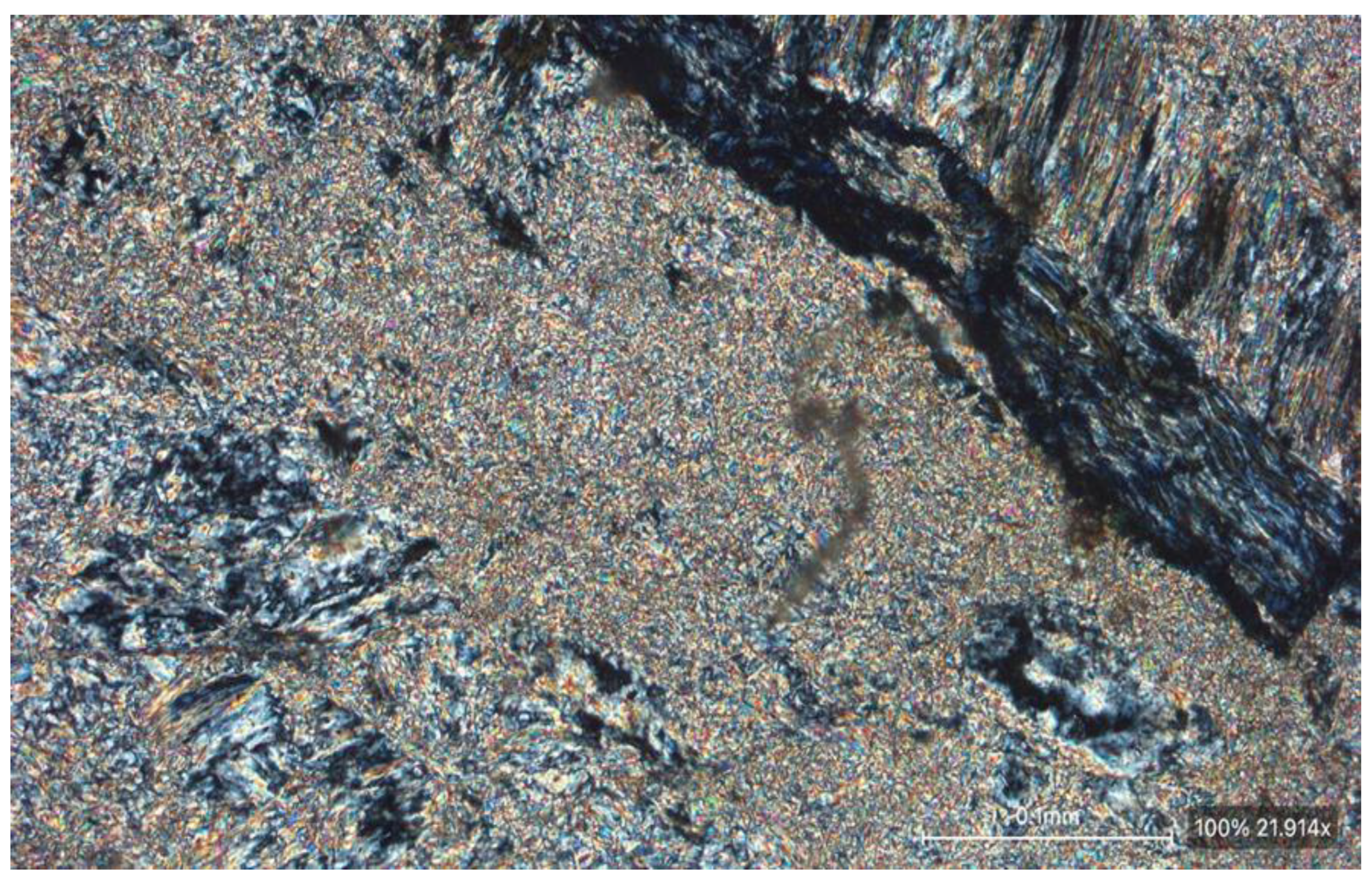
Figure 7.
Diagram of communication and dissemination protocol.
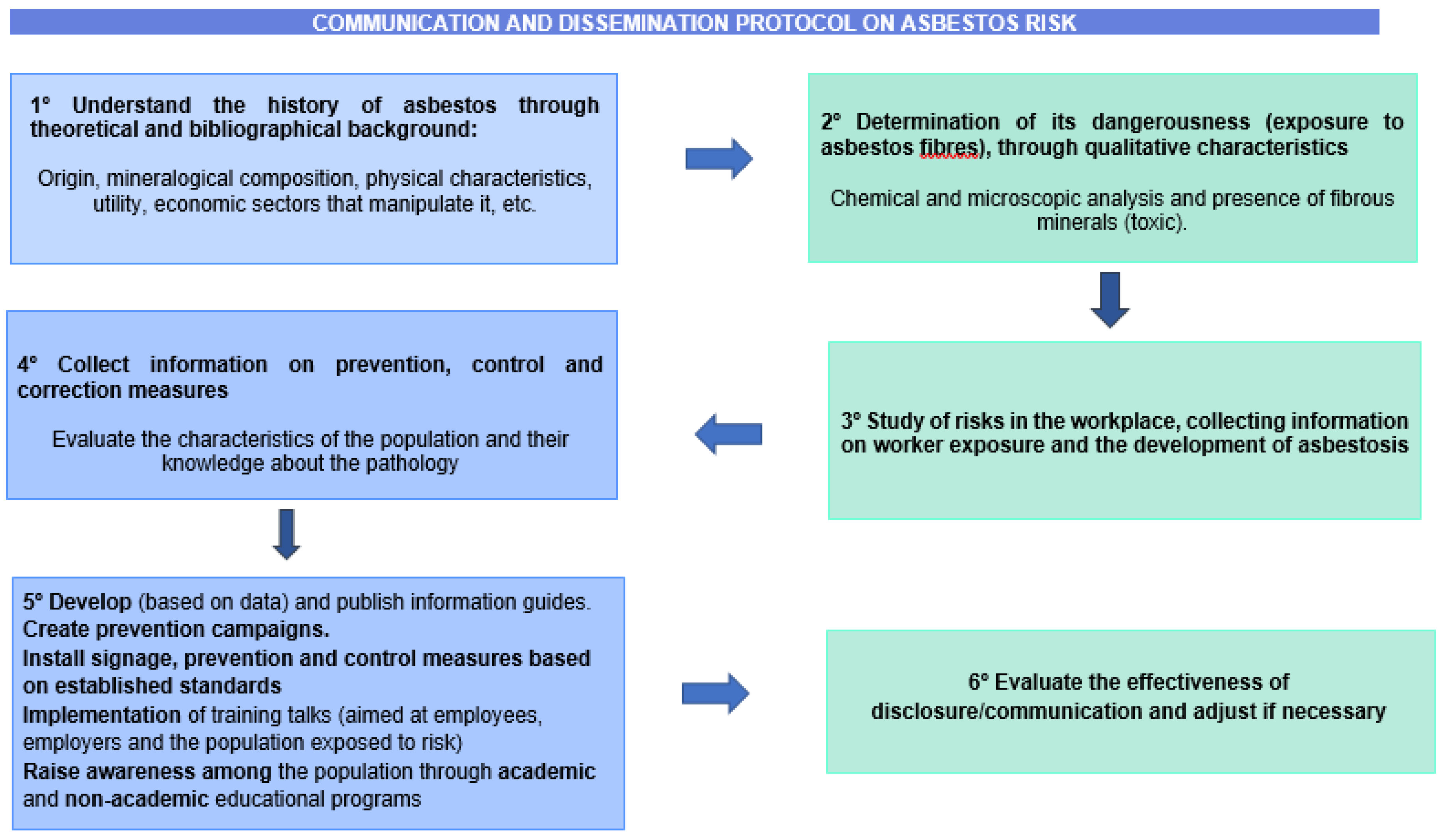

Table 1.
Activities and economic sectors related to exposure to asbestos. (Modified from [45]).
Table 1.
Activities and economic sectors related to exposure to asbestos. (Modified from [45]).
| Activities | Economic sectors |
|---|---|
| Brickwork | Shipyards and ship breaking yards |
| Firefighters | Boilermaking |
| Loading and unloading of asbestos | Carpentry |
| Installation of insulation | Construction |
| Excavation of oil wells | Oil and gas extraction and refining |
| Asbestos extraction, preparation and trasport | Asbestos miners and millers |
| Manufacture of asbestos paper | Manufacture of paints and plastics |
| Manufacturing of fibre cement boards | Wanufacturing of posts and uprights |
| Manufacturing and repair of brake shoes | Manufacturing of asbestos shingles and cardboard |
| Railway workers | Asbestos fragmentation |
| Fireproofing | Asbestos insulation industries |
| Asbestos-free cardboard and paper industries | Fiber cement product industries |
| Asbestos textile industries | Transport and treatment of waste |
| Chemical rubber industry | Acoustic product installers |
| Installation of pipes and ovens | Manufacturing of asbestos products |
| Turbine manufacturing | Car mechanics |
| Asphalt mixers | Iron gangue miners |
| Talc miners | Construction demolition operations |
| Peons | Plastic chemicals (aeronautical) |
| Machinery manufactures | Chemicals |
| Asbestos coating of boilers | Clutch and brake repair |
| Fiber cement canyon lining | Air filtration systems |
Disclaimer/Publisher’s Note: The statements, opinions and data contained in all publications are solely those of the individual author(s) and contributor(s) and not of MDPI and/or the editor(s). MDPI and/or the editor(s) disclaim responsibility for any injury to people or property resulting from any ideas, methods, instructions or products referred to in the content. |
© 2024 by the authors. Licensee MDPI, Basel, Switzerland. This article is an open access article distributed under the terms and conditions of the Creative Commons Attribution (CC BY) license (http://creativecommons.org/licenses/by/4.0/).
Copyright: This open access article is published under a Creative Commons CC BY 4.0 license, which permit the free download, distribution, and reuse, provided that the author and preprint are cited in any reuse.


