

Submitted:
26 July 2024
Posted:
29 July 2024
You are already at the latest version
Abstract
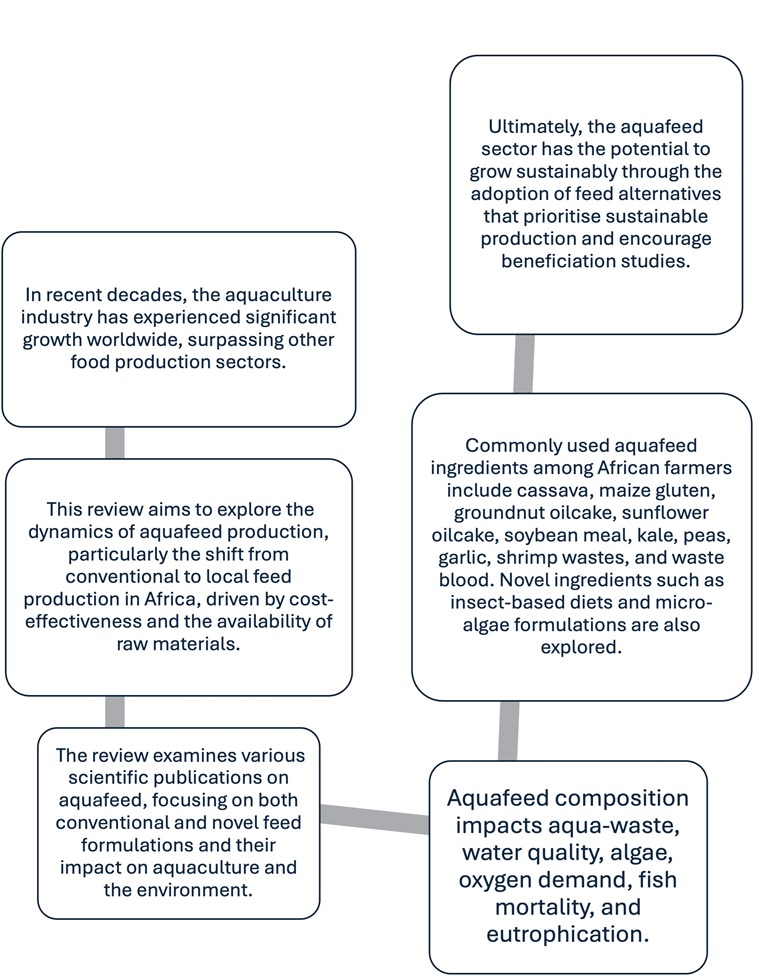
In recent decades, the aquaculture industry has experienced significant growth worldwide, surpassing other food production sectors. This review aims to explore the dynamics of aquafeed production, particularly the shift from conventional to local feed production in Africa, driven by cost-effectiveness and the availability of raw materials. The review examines various scientific publications on aquafeed, focusing on both conventional and novel feed formulations and their impact on aquaculture and the environment. Commonly used aquafeed ingredients among African farmers include cassava, maize gluten, groundnut oilcake, sunflower oilcake, soybean meal, kale, peas, garlic, shrimp wastes, and waste blood. Novel ingredients such as insect-based diets and micro-algae formulations are also explored. Aquafeed composition impacts aqua-waste, water quality, algae, oxygen demand, fish mortality, and eutrophication. The findings highlight the need to reorient feed formulation methods and ingredients to achieve a circular economy in Africa, promoting increased fish production at minimal costs, creating employment while supporting climate adaptation and mitigation efforts. Ultimately, the aquafeed sector has the potential to grow sustainably through the adoption of feed alternatives that prioritise sustainable production and encourage beneficiation studies.
Keywords:
fish
; aquaculture
; aquafeed
; sustainable
; environment
; circular economy
1. Introduction
For the past 20 years, aquaculture has experienced the fastest rate of growth among all food production sectors[1]. Aquaculture is the practice of cultivating marine and freshwater organisms in a controlled environment, where production is influenced by economic, technological, biological, and environmental factors [2,3]. Of the expected 179 million tons of worldwide production, aquaculture accounts for 82.1 million tons (46%) of fish production[4]. Additionally, current production is expected to grow to 53% by 2030 while present worldwide human per capita fish consumption is predicted to be 20.5 kg per year[4]. Several nations in Sub-Saharan Africa (SSA) have seen an increase in aquaculture production of 12-23% each year over the last two decades [5].
Fish production in Kenya alone for example has expanded over the past ten years, rising from over 5,000 metric tonnes (MT) in 2009 to almost 19,000 MT in 2019 [6]. Nigeria and Uganda are the leading countries in SSA in terms of aquaculture production, accounting for 34% of national fisheries output and contributing 4.5% and 3% of national GDPs, respectively [5]. Even though South Africa has one of the largest economies in SSA, aquaculture production has performed poorly, accounting for less than 1% of Gross Domestic Product (GDP) and 4% of agricultural GDP [7,8]. The most pressing question is whether the industry is expanding quickly and responsibly enough to satisfy the expected demand, a situation that is being worsened by a changing climate and a growing population [9]. Such rapid growth is not without challenges and consequences inclined with environmental stress. Focus is therefore needed is assessing the sustainability and circularity of the aquaculture industry.
This paper provides a comprehensive literature review of aquafeeds, specifically fish feed in Africa as a premise for sustainable food production. Much ado about improving our food systems in order to make them sustainable has been advocated for. In this regard, aquaculture plays a significant role as it augments human nutrition, provides jobs, improves livelihoods along value chains, and lessens strain on wild aquatic resources[10,11]. Furthermore, demand for aquaculture goods is increasing due to declining wildlife returns. The current food production system is stated to be wasteful, environmentally destructive, and inefficient[12] due to its contribution to environmental degradation, greenhouse gases, and other pollutants. On the other hand, limited resources, and energy costs, particularly from fossil fuels, continue to grow putting a further burden on attaining sustainability.
Challenges such as food safety, trade and markets, and governance[13], diseases, climate change, the use of wild fish for feed production[14], and increasing population[15], impede current aquaculture fish production from meeting demand. The expansion of the aquaculture industry is currently confined to a few countries and is hampered by a variety of problems, including high feed prices, which make up for 60-80% of tilapia production expenses[3,5,16]. The exorbitant cost of imported feed in African countries has led fish farmers to adopt suboptimal alternatives like termites, rice bran, and household wastes, resulting in underperformance in the aquaculture sector, highlighting the importance of high-quality fish feed for achieving growth, development, and profitability[17].
While imported feeds are becoming more widely available in Sub-Saharan Africa, certain countries are boosting investments in local feed production to benefit from less expensive and more readily available raw materials[5]. Fish flour consumption is decreasing annually, with the amount consumed in 2017 being nearly 141,000 tons, 69% of which were used for aquaculture, which poses a threat to food security[18]. As a result, innovative methods of generating sustainable and ecologically friendly aquafeed at a lower cost are required. Aquaculture feed can be categorized as either artisanal or commercial, where artisanal feed is produced on a small scale using local raw materials and basic processing methods, while commercial feed manufacturers utilize bulk raw materials and advanced machinery for processing[19].
2. Aquafeed Alternatives
In 2018, the number of aqua-farmers in Africa reached approximately 1.2 million, showing growth from 920,000 in 2014 [20]. However, the expansion of aquaculture in the continent is hindered by the heavy reliance on tilapia farming, which depends on a limited number of genetically improved strains resistant to diseases and costly imported feed[21]. As an alternative to conventional production processes and unsustainable sources of ingredients currently in practice, bluefish feeds can be the answer to inclusive, sustainable, and resilient (including climate-smart, carbon-neutral, or reduced-emission) aquaculture fish production. Replacing fishmeal with alternative protein sources is inevitable in ensuring sustainable, cost-effective, and quality aquaculture fish production. Whether fish feed ingredients in use are plant- or animal-based has important consequences for how they are grown, produced, sourced, transported, and stored for use in fish feeds[8,22,23,24]. Today, the need to replace fishmeal and fish oils with alternative ingredients in feed formulations has become an important developmental agenda aimed at sustaining the aquaculture sector. This calls for the need for an exposition of fish feed and ingredients across the continent and recommends ways to enhance local fish feed where possible. However, several factors should be considered when selecting content for usage in aquaculture, including ingredient accessibility, availability, and nutrient content[25].
Recently, plant proteins, mainly oil seeds from agriculture have attracted considerable attention for use in aquaculture protein sources. Agriculture alone produces 998 million tons of waste annually[26]. These include animal waste, food manufacturing waste, crop residue including maize stalks, sugarcane bagasse, abandoned vegetables, and fruit, and pruning, among others. Fish feed can be made from food scraps that are safe for human consumption. Protein is a fundamental nutrient that cannot be compromised in the selection of ingredients for food formulation and production[27]. Fish on food waste diets are generally safer for consumers than fish-fed commercial diets, owing to greater pollutant concentrations in commercial diet fishmeal[28,29]. Conventional land-based foods have been recommended for some applications as alternatives for a portion of the fishmeal, but they can alter the nutritional content of the fish produced[30].
Wastes composed of cassava leaf flour, gliricidia (a nitrogen-fixing legume) leaves, and rice husk, enhanced with Spirulina sp powder are a protein source[25]. Cassava farming is spread throughout several tropical countries and is widely grown across Africa, with an estimated yearly output of 291.9 million tons[31]. Cassavas leaves contribute to the supply of proteins, micronutrients, and minerals and are a significant source of carbohydrates, but they must be detoxified before being used in animal or human nutrition because they contain cyanogenic components, the concentration of which depends on the variety, genetics, and growth stage[32].
Soybean and groundnuts are popular legumes in Africa but tend to be expensive compared to other legumes and tubers such as sweet potato and cassava[5]. The choice and the combination of local ingredients depend on availability and affordability. A study conducted in Ghana showed that 43% of farmers use either yellow or white maize in the formulation of feed[5]. Nigerian raw commodities such as yam, plantain, banana, cowpeas, mucuna, maize, cassava, millet, sorghum, groundnut, sun hemp seed, and brewery wastes are being examined as viable fish feed materials[33,34]). In Kenya, farmers use omena, spinach, shrimp, cassava, vitamin mix, waste blood, peas, carrots, garlic, rumen contents, kales, groundnuts, soybeans, and maize[34,35]). However, some of the substances utilised in fish feed manufacturing, such as maize gluten, groundnut oilcake, sunflower oilcake, and soybean meal, act as fungal growth sites[35].
Insect-Based Feed
Insects have been proposed as potential alternative animal protein sources to replace fishmeal, which is expensive and has limited availability for fish feed formulation. Several studies have been conducted to investigate the environmental impact of insect meal and insect meal-based diets, including global warming potential, energy use, land use, water use, acidification, eutrophication, economic fish-in-fish-out ratio, and solid waste output production. Manufacturing insect meal has environmental consequences that are measured using several indicators, including aquatic acidification potential (kgSO2e), agricultural land occupation (m² org.arable), cumulative energy demand (MJ), global warming potential (kgCO2e), aquatic eutrophication potential (kgPO4e), water depletion (L deprived), and toxicity potential (ton TEG water/soil)[36]. These indicators reflect aspects such as acidification of aquatic ecosystems, land use, energy consumption, greenhouse gas emissions, eutrophication, water scarcity, and potential toxicity to water and soil. Findings also show that the production of insect meals had a favorable impact on land usage but was associated with higher energy use and a larger carbon footprint than conventional protein sources[37] (see Figure 1).
Studies have demonstrated that utilizing the Black Soldier Fly (BSF), also known as Hermetia illucens L., can effectively transform various organic materials like food waste and manure into valuable nutrient sources for livestock and aquaculture feed helping minimize waste in landfills and contributing to environmental protection through nutrient recycling[38,39,40]. Insect-based feed formulations have the potential to greatly benefit the livestock industry in African communities, which serves as a critical economic and social asset. This growth in the livestock industry not only supports the livelihoods of many individuals but also presents numerous synergistic opportunities for African economies. The treatment of bio-wastes originating from insect rearing presents an opportunity for the production of fertilizer critical for crop production[36]. In contrast, the inclusion of BSF, housefly (Musca domestica), mealworm (Tenebrio molitor), and grasshopper (Zonocerus variegatus) is said to have resulted in more solid nitrogen waste as compared to an insect-free diet[41].
Using insect protein as a cost-effective alternative to fishmeal in tilapia aquafeed is viable. Feeding Nile tilapia fingerlings a diet with 33% black soldier fly larvae resulted in a larger gross profit margin compared to a diet with 100% black soldier fly larvae [42]. Additionally, the study found that fish on the insect diet experienced a 15% weight increase compared to those on controlled diets[42]. While Nile tilapia constitutes the majority of aquaculture production in Sub-Saharan Africa, production costs and limited research on feed formulations have hindered its expansion[39,41]. Effective communication and farmer education is also lacking but key in enhancing farmers' awareness and understanding of the BSF diet and other novel fish feed ingredients among African smallholder farmers[43]. Although termites are most popular, their use is relatively low across Africa[43,44].
Insect meal in aquaculture feed reduces energy requirements for synthesizing amino acids and proteins, enhancing metabolic activity and bolstering the immune system[45]. Its high protein content and superior lipid profile make it an excellent alternative to fishmeal for promoting the development of fry and juveniles[46]. Despite its potential growth, the current use of insect meal in aquafeed represents less than 1% of the global market[46]. However, certain difficult concerns remain, such as expenses and scaling up insect production[37].
The promotion of the use of insect protein instead of plant-based protein potentially has multiple benefits as it is not only environmentally friendly with high nutritional value and potential mitigation effects but it can also free up arable land for food production, thereby improving food security and sustainable land use in Africa. In general, insect farming uses 50 to 90% less land per kg of protein produced and 40- 80% less feed per kg of edible weight; produces 1.2 to 2.7kg less greenhouse gas (GHG) emissions per kg of live weight gain; and 1,000L less water per kg of live weight gain compared to conventional livestock production systems[47,48].
In East Africa, multiple edible insect species such as acheta domesticus, scapsipedus icipe, gryllus bimaculatus, schistocerca gregaria, ruspolia differens, hermetia illucens, tenebrio molitor, and rhynchophorus phoenicis have the potential for farming[49,50,51], yet the rapidly expanding industry lacks sufficient research attention, despite the considerable benefits of insect farming outweighing those of most livestock and crop production. According to Incorporating insects into fish feed holds promise for augmenting per capita fish consumption, thereby bolstering food security; however, certain obstacles, including fostering consumer acceptance, addressing food safety apprehensions, and enacting suitable regulations, must be effectively addressed through collaborative endeavors involving the government, industry, and academia[52]. From a South African standpoint, ensuring health and safety standards and implementing regulations for the farming and trade of edible insects and insect products are paramount considerations[53,54,55].
Algae-Based Feed
Microalgae can be used as sustainable blue fish feed or food supplement, which could reduce the strain on aquaculture based on fish flour and close the supply-demand gap for fish[56]. Microalgae biomasses are prospective feed source ingredients because their cell metabolites provide a combination of vital amino acids, healthy triglycerides as fat, vitamins, and pigments[57]. Microalgae production has minimal water and arable land footprint, making microalgae-based feed environmentally sustainable. Microalgae are particularly well-suited to large-scale sustainable production due to their high biomass yields per unit area and capacity to thrive in saltwater or non-potable water on non-arable terrain[58]. Microalgae are aquatic unicellular microbes with approximately 50,000 species and have a quick rate of growth and are a renewable resource[59]. However, heavy metal bioaccumulation, poor algal biomass digestion, and anti-nutrient effects must all be addressed before microalgae biomass and bio-products can be employed as fish diets[60]. Biochemical composition knowledge is scarce and diverse, and nutritional value information is scattered or inconsistent despite microalgae potential for huge economic benefits due to lower input costs, low carbon footprint and wastewater treatment ability[60].
A study on coastal aquaculture in Zanzibar found that seaweed farming has achieved commercial-scale production although challenges such as seaweed die-offs and economic constraints hinder its expansion[20]. Seaweed has rapid growth, high biomass production, and potential as a carbon sink and is seen as an alternative to fish for both food and feed, though consumer demand needs to be increased[61]. Seaweed cultivation in Africa has significant potential for job creation, value chain development, and export growth. Algae cultivation, predominantly red algae, has witnessed significant development in Tanzania, while other African nations such as Namibia, Mozambique, Madagascar, Kenya, and South Africa have also acknowledged the potential of cultivating seaweeds and have been actively developing their seaweed industries in recent decades[20]. The South African seaweed industry is a huge sector, and one of its crucial aquaculture products is the green seaweed Ulva, which plays a vital role as a feed source in South Africa and serves as a template for other coastal countries[62]. With affordable investment costs and increasing demand, seaweed farming offers an opportunity to improve living conditions across the continent. Unlike traditional agriculture and fish farming, seaweed cultivation currently dominated by women requires minimal land, water, and external inputs, while contributing to social equity, coastal ecosystem restoration, carbon sequestration and nutrient recycling[63].
3. Feed Management in Aquaculture
Several studies have shown the importance of effective feed management approaches in reducing feed waste, lowering costs, promoting fast fish growth, and increasing profitability[64,65]. By eliminating waste, proper feeding management can lower feed costs by 15-20%[64]. Underfeeding and overfeeding are both prevalent in many farming systems and nations[65]. Underfeeding wastes feed, resulting in poor growth and low production, while overfeeding is equally harmful to water quality[64,65]. A study conducted in Ghana indicated a few incidences of overfeeding and many cases of underfeeding[5]. A low percentage of aquatic animal survival is caused by the ammonification of extra feed and waste that is dumped at the bottom of the pond.
Species- and fish-size-specific possible efficacy of any diet must be known in order to necessitate labeling feed with the required data on feed digestibility and waste output, including the amount of solids, phosphorus, and nitrogen[66]. The researchers also proposed that the biomass of the fish in the system be known, as well as appropriate information on the fish's health and physiological status[65]. Uniformity in fish size is critical in order for them to ingest the same size of pellet; the feed should be sieved to eliminate dust and broken pellets before feeding; and the feed must be fed successfully to ensure little or no waste from uneaten feed[67,68].
3.1. Aquafeed Formulation Methods
Feed composition and chemical composition are critical for the development of sustainable aquaculture[69]. Proper feed ingredient grinding, pelleting, and steam flaking increase nutritional availability, minimize undigested feed and faecal loss, and promote good water quality[70]. Production methods like extruded diets where aquafeed dry ingredients are moistened and heated through steaming ensure higher stability and digestibility which significantly reduces the amount of nutrients excreted into the water[71]. Extruded free-floating feeds should be used instead of sinking feeds to reduce lake pollution[72].
Highly digested feedstuff, for example, reduces solid waste outflow while improving water quality. Determining material for feed ingredients requires a study of digestibility. Feed with highly digestible components is connected with improved growth performance and lower feed waste, which may contaminate the environment[73]. As a result, it is advised to choose adequate feed ingredients with sufficient digestible phosphorus and nitrogen levels to reduce phosphorus and nitrogen excretion while maintaining growth performance[74]. The number of necessary amino acids and their balance are important elements in defining the quality of fish feed. Excessive amino acid feeding causes ammonia excretion and energy loss[75]. The balance of protein intake and energy use reduces dissolved nitrogen waste. Dietary planning based on adequate phosphorus availability reduces phosphorus excretion and enhances water quality[76]. Nitrogen excretion can be decreased by including crystalline amino acids and other synthetic amino acids in fish diets to accurately match amino acid needs[77].
4. Sustainability of Aquafeed
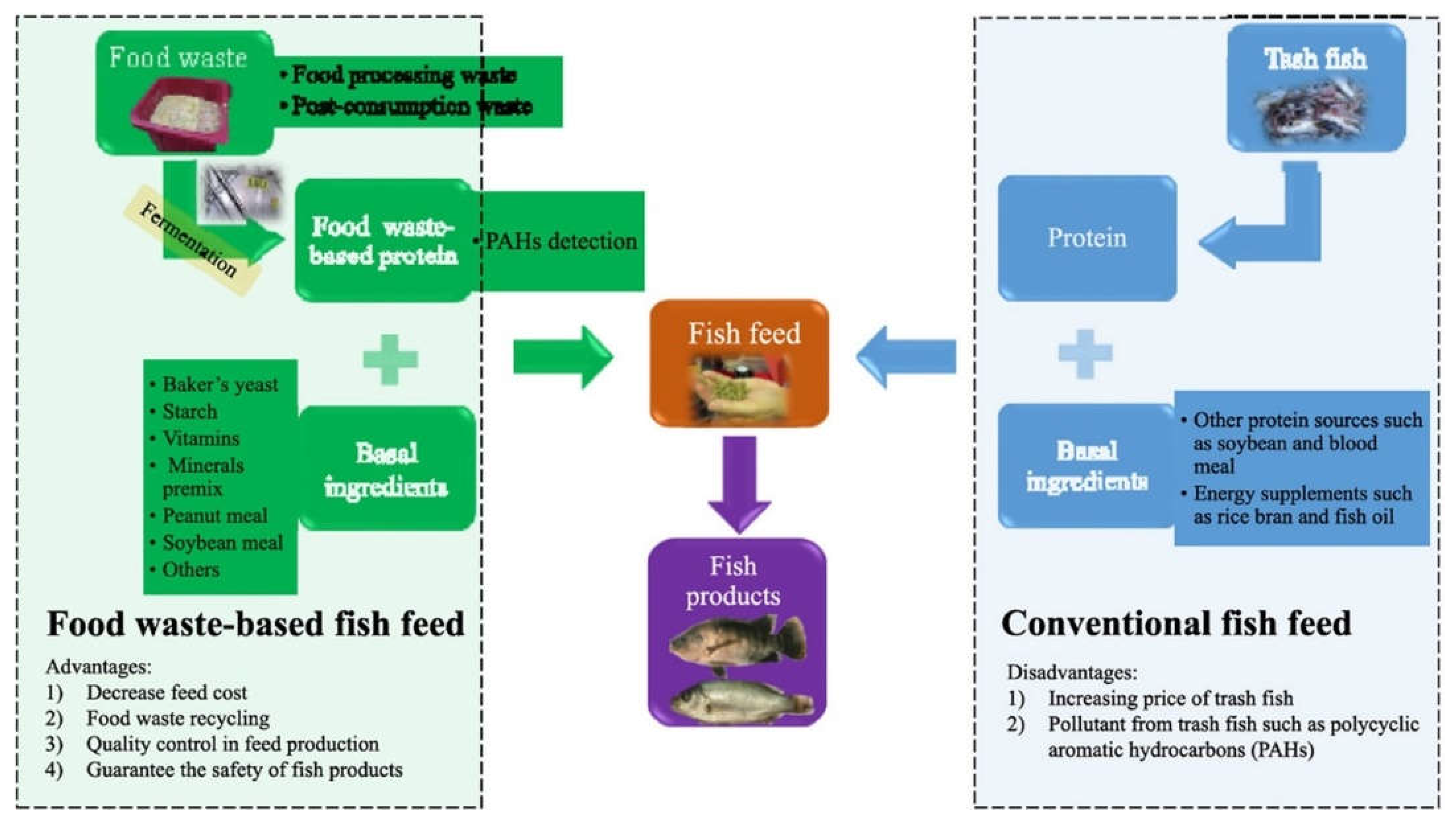
Aquaculture is impacted by a number of factors, including increasing temperatures, sea level rise, diseases, hazardous algal blooms, altered rainfall patterns, the unpredictability of external input supplies, changing sea surface salinity, and extreme weather events[78]. Approximately 71% of fishmeal and 74% of fish oil are derived from wild catches and particularly pelagic fish, with the remainder derived from aquatic animal processing waste[79]. The aquaculture sector consumed approximately 69% of global fishmeal production in 2016 [80]. Given this high demand, the continued supply of fishmeal for increased future aquaculture fish production is unsustainable. This is because sustainably caught small pelagic fish cannot meet this demand, as an increase in their availability has not been observed since 1995 when wild fisheries production reached a peak, which has been followed by a constant decline[81]. Additionally, the productivity of small pelagic fish is highly affected by climate conditions[82]. As a result, aquaculture must reduce its reliance on fishmeal and oil from small wild fish, which are critical to the integrity of aquatic food chains and food security for the poor on many coastlines. The adoption of innovative fish feeds in aquaculture has the potential to assist in meeting the nutritional demands of fish and eventually, humans while having little effect on the climate and environment[26] (see Figure 2).
4.1. Socio-Economic Impact
Aquaculture possesses the potential for climate change adaptation beyond its existing benefits in poverty reduction and food security though it is most affected by climate change[84]. Around 200 million individuals in Africa obtain affordable and nutritious proteins from fish, yet the utilisation of fish as a means to address the "triple burden" of malnutrition—which encompasses obesity, undernutrition, and micronutrient deficiencies and significantly contributes to health issues in the area—is not maximised[85]. Demonstrating beneficiation is crucial in attaining sustainability in aquaculture, particularly in SSA where the fish farmers are mostly small-scale. If properly produced, improved feeds result in improved production which can end malnutrition and can help build healthy, eco-friendly, and resilient food systems[86]. The utilisation of processing wastes and byproducts, including non-edible fish and surplus catches, in the production of aquafeed has the potential to increase local food supply and address food security challenges[63].
Moreover, it has the potential for higher revenues due to faster growth, increased fish size and productivity, lower feed costs, reduced mortality, and enhanced management practices[5,87]. Affordably priced quality feed will make fish farming more appealing to private investors and enhance fish productivity, inspiring other people to begin or resume fish farming, or to take fish farming seriously again[5]. Improving aquaculture livelihoods is made possible by creating nutritious, affordable, and easily accessible feed[88].
Fish-feed industry has the potential to create employment for both men and women in most African countries. However, the study conducted in nine African countries [63] revealed that the fish-based feed industry, particularly in Guinea has widespread issues of poor payment while the discharge of wastewater from factories has also been observed to cause environmental pollution, leading to an increased risk of respiratory and skin diseases, particularly among vulnerable individuals. This also negatively impacts on the health bill of households resulting in increased poverty. Overall, the adoption of creating own feeds using cheaper and locally accessible raw materials remains low in some African countries and only a few do so when finances are tight which may compromise beneficiation[5].
The biggest barriers to aquaculture development in developing nations are feeding costs and quality, and this can make the venture unsustainable in terms of return on investments. Aquaculture in SSA developed about twice as quickly as the rest of the globe, owing mostly to strong expansion in tilapia and catfish production, which account for roughly 70% of the subcontinent's aquaculture output[5]. Fish flour, the principal ingredient in commercial food composition, is expensive, contributing to the high cost of food[27]. Experimentation is strongly suggested and will be critical in determining the best and most cost-effective combinations of locally accessible raw materials and optimal combinations of self-formulated and commercial feeds. Aquaculture development and sustainability are strongly reliant on the production of fish feed from low-cost, locally available components.
Several research initiatives are currently underway to evaluate various local components for commercial feed production, including insects and other new components[3,16,27,89]. Modern innovations, such as the nutritious pond concept, which makes use of underutilized local ingredients, hold the possibility of increasing pond productivity while creating environmental advantages and adding to a circular economy through the effective utilization of feed waste[90]. Advancing research and development to examine locally accessible ingredients and increase low-cost local manufacturing of fish feed is critical to the growth and sustainability of aquaculture in Sub Saharan Africa. Managing alternatives and optimizing fish nutrition and growth are however complex undertakings. A highly digestible feed lowers production costs, feed waste, and eutrophication danger. Despite continuous and expanding research on novel and low-cost ingredients for commercial feeds, the study and evaluation of farming practices, feed performance, and experimentation remain limited[5].
More than 60% of fish and shellfish by-products, including bones, trimmings, head, fins, skin, scales, and intestines, are discarded, whereas less than 40% of fish products are consumed by humans[91]. Collagen and gelatin can be found in fish skin offal. Fishbone is primarily cartilage that has been cemented with calcium phosphate. Fish spine waste is another good source of protein and minerals. Furthermore, fish scales contain both inorganic and organic components, principally hydroxyapatite and collagen[92]. Fishbone and fish spine waste can be utilised as ingredients in fish feed, organic fertilizers, biogas production, extraction of bioactive compounds, and industrial applications such as the production of biomaterials and dental products cutting production costs while increasing income[93,94,95]. The use of fishery discards as a secondary raw material is a resource-efficient approach that lowers production costs, mitigates potential environmental impacts, and contributes to maintaining fisheries sustainability[94]. There is therefore need for in-depth studies on valorization of fish discard particularly in African contexts.
4.2. Environmental Impact
Aquaculture production must prioritize environmentally sustainable practices[8,96]. Indirect and direct impacts of climate change on aquaculture include implications on targeted populations' range and productivity, habitats, and food webs, as well as impacts on fishery and aquaculture costs and productivity, as well as fishing community livelihoods and safety[97,98]. The promotion of aquaculture production has resulted in adverse consequences, such as increased GHG emissions from the production of fishmeal sourced from animal products and the loss of carbon sinks due to mangrove clearing, thereby amplifying atmospheric GHG persistence[84]. Sustainable aquaculture production can contribute to triple wins for increased production, climate mitigation, and climate adaptation. Mitigation and adaptation efforts can include innovations in feed formulation, feed management, and system design. The nutritional makeup of aquafeed is critical as it affects the quality of waste products which have an impact on both the water quality in culture systems and the surrounding environment. The waste generated by fish has the capability to accumulate in the surrounding environment, leading to oxygen depletion in the water and the formation of algal blooms and dead zones[99].
Aqua wastes can affect the pH of the water, the number of algae in it, the biological oxygen demand (BOD), and even the fish mortality rate, depending on the culture systems and management techniques used. Aquafeed wastes promote eutrophication, which results in blooms of toxic algae[100]. Additionally, because fish cannot retain all the food they eat; a sizeable portion of the feed is left uneaten, resulting in massive amounts of aqua waste being expelled[100]. Solid waste and dissolved wastes from aquaculture result largely from feed uneaten, decomposed feed, fish droppings, dead fish carcasses, chemicals, pathogens, and other components[65]. Fish waste and feeding residue generate carbon dioxide (CO2)-rich organic matter, while protein-rich residual feed and fish excretions release nitrous oxide (N2O) and methane (CH4) into the atmosphere through gas bubbling[8,101,102].
Insufficient implementation of environmentally sustainable practices, which minimize the impact on the environment, emerges as a contributing factor hindering both economic growth and the intensification of aquaculture in SSA[103]. Effective management of feed and feeding systems in aquaculture can significantly reduce waste and minimise the environmental impact. Implementing strategies such as optimising feed conversion ratios, providing feed digestibility and waste production information, sieving feed to remove dust and broken pellets, ensuring proper feeding practices, incorporating low-phytate grains, increasing phytase levels in fish feed formulation, and developing high-energy extruded feed can reduce waste, improve overall feed utilisation, minimize phosphorus release into the water, and minimise nutrient leaching[66]. The dual benefits of economic growth and environmental preservation can be realized through investments in cleaner technologies and the promotion of sustainable production practices[8].
4.3. Circularity of Aquafeed
Over the last 50 years, agricultural production has increased more than threefold due to: soil expansion for agricultural use; the technological contribution of the green revolution, which influenced productivity; and the accelerated growth of population[104]. The international regulatory framework for sustainable development has transformed agriculture's role, particularly policies and plans for the circular economy and bio-economy. Novel and enhanced techniques for agricultural waste recovery have been created, based on industrial innovation and high technology, which has resulted in resource efficiency, sustainable production and consumption, and a lowering of adverse ecological effects[105].
World leaders' priority is not just to ameliorate the effects that have already occurred, but also to tackle the demand to generate more food and energy for a global population that is projected to exceed 10 billion people by 2050 through fewer fossil fuels, lower harmful gas emissions, and zero solid waste[105,106]. Over the last decade, more than 40 countries have developed and implemented national policies, policy instruments, and strategies related to this new economic model[107,108,109,110], which is primarily based on an efficient resource management system with the priority of extending the useful life of materials and products and preventing their loss of value by incorporating their waste into production processes[107,111]. One of the primary approaches to preventing climate change is to ensure resource efficiency.
The cost, quality, and nutritional value of feed are concerns for small-scale fish farmers, leading them to produce their own feed from agricultural by-products. However, the resulting feed powder from most African small-scale fish farmers presents several physical and nutritional disadvantages for fish, impacting aquaculture production, nutritional quality, and growth time, necessitating the improvement of feed quality to enhance aquaculture production and contribute to food security in Africa through training programs, cooperative formation, and involvement of African research centers and universities in evaluating local agricultural by-products[112]. The highest recurring cost in aquaculture is from feed. Feed is thus the most limiting factor in productivity because good nutrition in aquaculture systems is essential to the economical production of a healthy and high-quality product.
In addition, ingredients are often imported, and the distance that they need to cover in transportation for milling, feed production, distribution, wholesale, and retail means that costs become high. As such, production easily becomes unsustainable. A circular economy plays a transcendental role by becoming the primary alternative to traditional linear production practices such as reuse, recycling, and remanufacturing, which contribute to the development of more sustainable production and consumption processes while reducing negative externalities[113,114]. The circular economy and bioeconomy make substantial contributions to the attainment of four sustainable development goals (SDGs), i.e., SDG 2: "Ending hunger, achieving food security, improving nutrition, and promoting sustainable agriculture"; SDG 11: "Making cities and human settlements inclusive, safe, resilient, and sustainable"; SDG 12: "Ensuring sustainable consumption and production patterns," with the main goal of "doing more and better with fewer resources" (UN, 2016); and SDG 13: "Taking urgent action to combat climate change and its impacts"[105].
The increase in global agricultural production puts more strain on the environment, harming soil, air, and water resources[115]. The aquaculture industry requires direction to shift toward the adoption of an alternative business model, such as Circular economic (CE), because the traditional, linear economic paradigm of 'take-make-dispose' is no longer appropriate in this setting. Using waste could therefore help society, the environment, and the economy. In the case of high-demand aquaculture commodities, efforts must be made to speed up production and fulfill rising demand, but there is concern about the rate of change and calls for the prudent use of natural resources. A life-cycle study comparing the environmental effects of standard mix feed with feed made from cruise ship food waste[116] was seen as a forerunner of the CE technique in aquaculture. Another study that backs up the CE concept is the replacement of fish oil with alternative sustainable resources generated not only from vegetable fats but also from animal fats[117].
5. Conclusion
Understanding the dynamics of the aquaculture industry through aquafeeds is critical in ensuring the sustainability of the livelihood as feed constitutes the highest expense incurred during aquaculture fish production. Novel feed formulations promise multiple socio-economic and environmental benefits albeit adoption is minimal in most African countries. Nutritional composition of aquafeed influences aqua-waste which has spiraling effects on the environment and fish production hence reorienting feed formulation methods and ingredients is crucial for achieving triple wins for fish farmers which is essential in achieving a circular economy.
Author Contributions
Conceptualization, Mzime Murisa, Chipo Mubaya, and Chipo Dekesa.; methodology, Mzime Murisa, and Chipo Mubaya; validation, writing—original draft preparation, Mzime Murisa, Chipo Mubaya, and Chipo Dekesa.; writing—review and editing, Mzime Murisa, Chipo Mubaya, Angela Samundengo, and Chipo Dekesa; project administration, Rodrigue Yossa; funding acquisition, Rodrigue Yossa. All authors have read and agreed to the published version of the manuscript.
Funding
This research was funded by the Norwegian Agency for Development Cooperation, NORAD (Agreement SAF-21/0004) under the Development and Scaling of Sustainable Feeds for Resilient Aquatic Food Systems in Sub-Saharan Africa (FASA). This fieldwork work was undertaken as part of the CGIAR Research Initiative on Resilient Aquatic Food Systems for Healthy People and Planet and funded by CGIAR Trust Fund donors.
Institutional Review Board Statement
The study protocol was approved by the Nigeria Health Research Ethics Committee, the Kenya National Commission for Science, Technology, and Innovation (NACOSTI), and the University of Zambia Humanities and Social Sciences Research Ethics Committee.
Informed Consent Statement
Informed consent was obtained from all subjects involved in the study.
Data Availability Statement
The raw data supporting the conclusions of this article will be made available by the authors on request.
Conflicts of Interest
The authors declare no conflicts of interest. The funders had no role in the design of the study; in the collection, analyses, or interpretation of data; in the writing of the manuscript; or in the decision to publish the results.
References
- Food and Agriculture Organization of the United Nations. Fisheries and Aquaculture Department, The state of world fisheries and aquaculture 2018 : meeting the sustainable development goals.
- Jang, H.G.; Yamazaki, S. Community-level analysis of correlated fish production in fisheries and aquaculture: The case of Japan. Mar. Policy 2020, 122, 104240. [Google Scholar] [CrossRef]
- O. Kaleem and A. F. B. S. Sabi, ‘Overview of aquaculture systems in Egypt and Nigeria, prospects, potentials, and constraints’, Aquac. Fish., vol. 6, no. 6, pp. 535–547, 2021.
- FAO. The State of World Fisheries and Aquaculture 2020. In Sustainability in Action; FAO: Rome, Italy, 2021; Volume 32, p. 244. [Google Scholar] [CrossRef]
- Ragasa, C.; Osei-Mensah, Y.O.; Amewu, S. Impact of fish feed formulation training on feed use and farmers' income: Evidence from Ghana. Aquaculture 2022, 558. [Google Scholar] [CrossRef]
- K.N.B.S., ‘Kenya Population and Housing Census Reports. Kenya National Bureau of Statistics (KNBS’, ISO, vol. 9001, no. 2015, 2019.
- E. P. A. SADC-EU, ‘South African fisheries and the SADC-EU economic partnership agreement’. 2017. [Online]. Available: https://sadc-epa-outreach.com/images/files/sadc-eu-epa-fisheries-july-2017.pdf.
- S. Ngarava, L. S. Ngarava, L. Zhou, P. Nyambo, M. M. Chari, and O. Bhungeni, ‘Aquaculture production, GHG emission and economic growth in Sub-Sahara Africa’, Environ. Chall., vol. 100737, 2023.
- Muala, W.C.B.; Desobgo, Z.S.C.; Jong, N.E. Optimization of extraction conditions of phenolic compounds from Cymbopogon citratus and evaluation of phenolics and aroma profiles of extract. Heliyon 2021, 7, e06744. [Google Scholar] [CrossRef] [PubMed]
- Little, D.C.; Newton, R.W.; Beveridge, M.C.M. Aquaculture: a rapidly growing and significant source of sustainable food? Status, transitions and potential. Proc. Nutr. Soc. 2016, 75, 274–286. [Google Scholar] [CrossRef] [PubMed]
- Nasr-Allah, A.; Gasparatos, A.; Karanja, A.; Dompreh, E.B.; Murphy, S.; Rossignoli, C.M.; Phillips, M.; Charo-Karisa, H. Employment generation in the Egyptian aquaculture value chain: implications for meeting the Sustainable Development Goals (SDGs). Aquaculture 2020, 520, 734940. [Google Scholar] [CrossRef]
- E. M. Foundation, Cities in the Circular economy: an Initial Exploration. Cowes: Ellen Macarthur Foundation, 2017.
- Subasinghe, R.; Soto, D.; Jia, J. Global aquaculture and its role in sustainable development. Rev. Aquac. 2009, 1, 2–9. [Google Scholar] [CrossRef]
- Naylor, R.L.; Hardy, R.W.; Buschmann, A.H.; Bush, S.R.; Cao, L.; Klinger, D.H.; Little, D.C.; Lubchenco, J.; Shumway, S.E.; Troell, M. A 20-year retrospective review of global aquaculture. Nature 2021, 591, 551–563. [Google Scholar] [CrossRef] [PubMed]
- Belghit, I.; Liland, N.S.; Waagbø, R.; Biancarosa, I.; Pelusio, N.; Li, Y.; Krogdahl. ; Lock, E.-J. Potential of insect-based diets for Atlantic salmon ( Salmo salar ). Aquaculture 2018, 491, 72–81. [Google Scholar] [CrossRef]
- B. Obwanga, E. B. Obwanga, E. Rurangwa, A. Duijn, and K. Soma, ‘A Comparative Study of Aquaculture Sector Development in Egypt, Ghana and Nigeria: Insights for Kenya’s Sustainable Domestic Sector Development’, 3R Res., 2018.
- Olapade, O.J.; Saboleh, P. Development of fish feeds for African catfish (Clarias gariepinus Burchell 1822) farming in Sierra Leone, West Africa. Int. J. Fish. Aquac. 2022, 14, 15–21. [Google Scholar] [CrossRef]
- V. T. Rosas, L. H. V. T. Rosas, L. H. Poersch, L. A. Romano, and M. B. Tesser, ‘Feasibility of the use of Spirulina in aquaculture diets’, Rev Aquac., vol. 11, pp. 1367–1378, 2019.
- Avadí, A.; Bolaños, C.; Sandoval, I.; Ycaza, C. Life cycle assessment of Ecuadorian processed tuna. Int. J. Life Cycle Assess. 2015, 20, 1415–1428. [Google Scholar] [CrossRef]
- M. M. Mbaka, J. H. M. M. Mbaka, J. H. Cox, and S. Ronan, ‘Aquaculture in Africa: Aquatic Animal Welfare, Impact on the Environment and the Sustainability of the Sector’, 2022.
- A.U.-I.B.A.R., ‘Africa Blue Economy Programme’. 2019. [Online]. Available: https://www.au-ibar.org/sites/default/files/2020-10/sd_20200313_africa_blue_economy_strategy_en.pdf.
- Barange et al., ‘Impacts of climate change on fisheries and aquaculture: synthesis of current knowledge, adaptation and mitigation options’, 2018.
- Gephart, J.A.; Henriksson, P.J.G.; Parker, R.W.R.; Shepon, A.; Gorospe, K.D.; Bergman, K.; Eshel, G.; Golden, C.D.; Halpern, B.S.; Hornborg, S.; et al. Environmental performance of blue foods. Nature 2021, 597, 360–365. [Google Scholar] [CrossRef] [PubMed]
- Goyal, S.; Ott, D.; Liebscher, J.; Höfling, D.; Müller, A.; Dautz, J.; Gutzeit, H.O.; Schmidt, D.; Reuss, R. Sustainability Analysis of Fish Feed Derived from Aquatic Plant and Insect. Sustainability 2021, 13, 7371. [Google Scholar] [CrossRef]
- Ramírez-Carmona, M.; Rendón-Castrillón, L.; Ocampo-López, C.; Sánchez-Osorno, D. Fish Food Production Using Agro-Industrial Waste Enhanced with Spirulina sp. Sustainability 2022, 14, 6059. [Google Scholar] [CrossRef]
- F. O. Obi, B. O. F. O. Obi, B. O. Ugwuishiwu, and J. N. Nwakaire, ‘Agricultural waste concept, generation, utilization and management’, Niger J Technol, vol. 35, pp. 957–964, 2016.
- A. D. Adeyemi, A. P. P. A. D. Adeyemi, A. P. P. Kayodé, I. B. Chabi, O. B. O. Odouaro, M. J. Nout, and A. R. Linnemann, ‘Screening local feed ingredients of Benin, West Africa, for fish feed formulation’, Aquac. Rep., vol. 17, p. 100386, 2020.
- A. O. Sotolu, ‘Comparative utilizations of fish waste meal with imported fishmeal by African catfish (Clarias gariepinus’, Am.-Eurasian J. Sustain. Agric., vol. 4, pp. 285–289, 2009.
- Wong, M.-H.; Mo, W.-Y.; Choi, W.-M.; Cheng, Z.; Man, Y.-B. Recycle food wastes into high quality fish feeds for safe and quality fish production. Environ. Pollut. 2016, 219, 631–638. [Google Scholar] [CrossRef]
- Shah, M.R.; Lutzu, G.A.; Alam, A.; Sarker, P.; Chowdhury, M.A.K.; Parsaeimehr, A.; Liang, Y.; Daroch, M. Microalgae in aquafeeds for a sustainable aquaculture industry. J. Appl. Phycol. 2018, 30, 197–213. [Google Scholar] [CrossRef]
- Shackelford, G.E.; Haddaway, N.R.; Usieta, H.O.; Pypers, P.; Petrovan, S.O.; Sutherland, W.J. Cassava farming practices and their agricultural and environmental impacts: a systematic map protocol. Environ. Évid. 2018, 7, 30. [Google Scholar] [CrossRef]
- Lansche, J.; Awiszus, S.; Latif, S.; Müller, J. Potential of Biogas Production from Processing Residues to Reduce Environmental Impacts from Cassava Starch and Crisp Production—A Case Study from Malaysia. Appl. Sci. 2020, 10, 2975. [Google Scholar] [CrossRef]
- Ndebele-Murisa, M.R. , Mubaya C., Kapute K., Samundengo A. and Yossa R. 2023. Development and Scaling of Sustainable Feeds for Resilient Aquatic Food Systems in Sub-Saharan Africa: Life Cycle Assessment for Kenya, Nigeria and Zambia. Penang, Malaysia: WorldFish. Program Report: 2023-40.
- Audu, R.; Yola, I. Contemporary issues in fisheries and aquaculture: a review on non – conventional feed ingredients for fish feed in Nigeria. Bayero J. Pure Appl. Sci. 2021, 13, 22–28. [Google Scholar] [CrossRef]
- Nyamwaka, I.S.; Monda, E.; Ombori, R.O.; Kwach, J. Prevalence and Characterization of Moulds Associated with Fish Feeds Sold in Kisii County, Kenya. J. Adv. Microbiol. 2020, 31–41. [Google Scholar] [CrossRef]
- Smetana, S.; Schmitt, E.; Mathys, A. Sustainable use of Hermetia illucens insect biomass for feed and food: Attributional and consequential life cycle assessment. Resour. Conserv. Recycl. 2019, 144, 285–296. [Google Scholar] [CrossRef]
- Alfiko, Y.; Xie, D.; Astuti, R.T.; Wong, J.; Wang, L. Insects as a feed ingredient for fish culture: Status and trends. Aquac. Fish. 2022, 7, 166–178. [Google Scholar] [CrossRef]
- Chia, S.Y.; Tanga, C.M.; van Loon, J.J.; Dicke, M. Insects for sustainable animal feed: inclusive business models involving smallholder farmers. Curr. Opin. Environ. Sustain. 2019, 41, 23–30. [Google Scholar] [CrossRef]
- Pechal, J.L.; Benbow, M.E.; Kamng’ona, A.W.; Safalaoh, A.; Masamba, K.; Kang’ombe, J. The Need for Alternative Insect Protein in Africa. Ann. Èntomol. Soc. Am. 2019, 112, 566–575. [Google Scholar] [CrossRef]
- Limbu, S.M.; Shoko, A.P.; Ulotu, E.E.; Luvanga, S.A.; Munyi, F.M.; John, J.O.; Opiyo, M.A. Black soldier fly (Hermetia illucens, L.) larvae meal improves growth performance, feed efficiency and economic returns of Nile tilapia (Oreochromis niloticus, L.) fry. Aquac. Fish Fish. 2022, 2, 167–178. [Google Scholar] [CrossRef]
- Tran, H.Q.; Van Doan, H.; Stejskal, V. Environmental consequences of using insect meal as an ingredient in aquafeeds: A systematic view. Rev. Aquac. 2022, 14, 237–251. [Google Scholar] [CrossRef]
- Wachira, M.N.; Osuga, I.M.; Munguti, J.M.; Ambula, M.K.; Subramanian, S.; Tanga, C.M. Efficiency and Improved Profitability of Insect-Based Aquafeeds for Farming Nile Tilapia Fish (Oreochromis niloticus L.). Animals 2021, 11, 2599. [Google Scholar] [CrossRef]
- Ouko, K.O.; Mboya, J.B.; Obiero, K.O.; Ogello, E.O.; Mukhebi, A.W.; Muthoka, M.; Munguti, J.M. Determinants of fish farmers’ awareness of insect-based aquafeeds in Kenya; the case of black soldier fly larvae meal. Cogent Food Agric. 2023, 9. [Google Scholar] [CrossRef]
- A. A. Adeoye, S. A. A. Adeoye, S. Akegbejo, F. Y., F. J., and S. J. Davies, ‘Preliminary assessment of black soldier fly (Hermetia illucens) larval meal in the diet of African catfish (Clarias gariepinus): Impact on growth, body index, and hematological parameters’, J. World Aquac. Soc., vol. 51, no. 4, pp. 1024–1033, 2020.
- Nelloolichalil, ‘Don’t overlook protein digestibility kinetics in animals’, Milling Grain, 2022, [Online]. Available: https://millingandgrain.com/protein-digestibility-kinetics-in-animals/.
- R. Fletcher, ‘Why insect production may have minimal impact on aquaculture sustainability’, in The Fish Site Limited, 2021. [Online]. Available: https://thefishsite.com/articles/why-insect-production-may-have-minimal-impact-on-aquaculture-sustainability.
- Payne, C.L.R.; Scarborough, P.; Rayner, M.; Nonaka, K. Are edible insects more or less ‘healthy’ than commonly consumed meats? A comparison using two nutrient profiling models developed to combat over- and undernutrition. Eur. J. Clin. Nutr. 2016, 70, 285–291. [Google Scholar] [CrossRef] [PubMed]
- Buitrago, P.A.E.; Hernández, L.M.; Burkart, S.; Palmer, N.; Arango, J.A.C. Forage-Fed Insects as Food and Feed Source: Opportunities and Constraints of Edible Insects in the Tropics. Front. Sustain. Food Syst. 2021, 5. [Google Scholar] [CrossRef]
- Mlcek, J.; Rop, O.; Borkovcova, M.; Bednarova, M. A Comprehensive Look at the Possibilities of Edible Insects as Food in Europe – A Review. Pol. J. Food Nutr. Sci. 2014, 64, 147–157. [Google Scholar] [CrossRef]
- Govorushko, S. Global status of insects as food and feed source: A review. Trends Food Sci. Technol. 2019, 91, 436–445. [Google Scholar] [CrossRef]
- C. M. Tanga et al., ‘Organic waste substrates induce important shifts in gut microbiota of black soldier fly (Hermetia illucens L.): coexistence of conserved, variable, and potential pathogenic microbes’, Front. Microbiol., vol. 12, p. 635881, 2021.
- Mulumpwa, M. The potential of insect meal in improving food security in Malawi: an alternative of soybean and fishmeal in livestock feed. J. Insects Food Feed. 2018, 4, 301–312. [Google Scholar] [CrossRef]
- E. Kleyn, ‘The environmental impact of Fishmeal and Hermetia illucens (Black Soldier Fly) larvae meal in aquaculture feed, utilising Life Cycle Assessment under South African conditions’. 2023.
- S. Niassy, S. S. Niassy, S. Ekesi, S. L. Hendriks, and A. Haller-Barker, ‘Legislation for the use of insects as food and feed in the South African context’, in Edible insects in sustainable food systems, Cham: Springer, 2018, pp. 457–470.
- Nakimbugwe, D.; Ssepuuya, G.; Male, D.; Lutwama, V.; Mukisa, I.M.; Fiaboe, K.K.M. Status of the regulatory environment for utilization of insects as food and feed in Sub-Saharan Africa-a review. Crit. Rev. Food Sci. Nutr. 2021, 61, 1269–1278. [Google Scholar] [CrossRef] [PubMed]
- G. Dineshbabu, G. G. Dineshbabu, G. Goswami, R. Kumar, A. Sinha, and D. Das, ‘Microalgae–nutritious, sustainable aqua- and animal feed source’, J. Funct. Foods, vol. 62, p. 103545, 2019.
- Nagappan, S.; Das, P.; AbdulQuadir, M.; Thaher, M.; Khan, S.; Mahata, C.; Al-Jabri, H.; Vatland, A.K.; Kumar, G. Potential of microalgae as a sustainable feed ingredient for aquaculture. J. Biotechnol. 2021, 341, 1–20. [Google Scholar] [CrossRef] [PubMed]
- Torres-Tiji, Y.; Fields, F.J.; Mayfield, S.P. Microalgae as a future food source. Biotechnol. Adv. 2020, 41, 107536. [Google Scholar] [CrossRef] [PubMed]
- Ampofo, J.; Abbey, L. Microalgae: Bioactive Composition, Health Benefits, Safety and Prospects as Potential High-Value Ingredients for the Functional Food Industry. Foods 2022, 11, 1744. [Google Scholar] [CrossRef] [PubMed]
- Ahmad, A.; Hassan, S.W.; Banat, F. An overview of microalgae biomass as a sustainable aquaculture feed ingredient: food security and circular economy. Bioengineered 2022, 13, 9521–9547. [Google Scholar] [CrossRef] [PubMed]
- Charisiadou, S.; Halling, C.; Jiddawi, N.; von Schreeb, K.; Gullström, M.; Larsson, T.; Nordlund, L.M. Coastal aquaculture in Zanzibar, Tanzania. Aquaculture 2022, 546, 737331. [Google Scholar] [CrossRef]
- A. O. Amosu, D. V. A. O. Amosu, D. V. Robertson-Andersson, G. W. Maneveldt, R. J. Anderson, and J. J. Bolton, ‘African Journal of Agricultural Research Review South African seaweed aquaculture: A sustainable development example for other African coastal countries’, vol. 8, no. 43, pp. 5268–5279, 2013. [CrossRef]
- Thiao, D.; Bunting, S.W. Socio-economic and biological impacts of the fish-based feed industry for sub-Saharan Africa; FAO Fish. Aquac. Circ., no. 1236, 2022. [Google Scholar] [CrossRef]
- J. M. Munguti et al., ‘An overview of current status of Kenyan fish feed industry and feed management practices, challenges and opportunities’, 128 Int. J. Fish. Aquat. Stud., vol. 1, no. 6, pp. 128–137, 2014.
- Gule, T.T.; Geremew, A. Dietary Strategies for Better Utilization of Aquafeeds in Tilapia Farming. Aquac. Nutr. 2022, 2022, 1–11. [Google Scholar] [CrossRef]
- Dauda, A.B.; Ajadi, A.; Tola-Fabunmi, A.S.; Akinwole, A.O. Waste production in aquaculture: Sources, components and managements in different culture systems. Aquac. Fish. 2018, 4, 81–88. [Google Scholar] [CrossRef]
- U. U. Gabriel, O. A. U. U. Gabriel, O. A. Akinrotimi, D. O. Bekibele, D. N. Onunkwo, and P. E. Anyanwu, ‘Locally produced fish feed: potentials for aquaculture development in sub-Saharan Africa’, Afr. J. Agric. Res., vol. 2, no. 7, pp. 287–295, 2007.
- Tumwesigye, Z.; Tumwesigye, W.; Opio, F.; Kemigabo, C.; Mujuni, B. The Effect of Water Quality on Aquaculture Productivity in Ibanda District, Uganda. Aquac. J. 2022, 2, 23–36. [Google Scholar] [CrossRef]
- Idenyi, J.N.; Eya, J.C.; Nwankwegu, A.S.; Nwoba, E.G. Aquaculture sustainability through alternative dietary ingredients: Microalgal value-added products. Eng. Microbiol. 2022, 2. [Google Scholar] [CrossRef]
- Hlaváč, D.; Adámek, Z.; Hartman, P.; Másílko, J. Effects of supplementary feeding in carp ponds on discharge water quality: a review. Aquac. Int. 2014, 22, 299–320. [Google Scholar] [CrossRef]
- Bogevik, A.S.; Samuelsen, T.A.; Aspevik, T.; Romarheim, O.H.; Aas, T.S.; Kalananthan, T.; Rønnestad, I. Disintegration stability of extruded fish feed affects gastric functions in Atlantic salmon (Salmo salar). Aquaculture 2021, 543. [Google Scholar] [CrossRef]
- Njiru, J.M.; Aura, C.M.; Okechi, J.K. Cage fish culture in Lake Victoria: A boon or a disaster in waiting? Fish. Manag. Ecol. 2018, 26, 426–434. [Google Scholar] [CrossRef]
- L. Suryaningrum, D. L. Suryaningrum, D. Jusadi, M. Setiawati, and M. Sunarno, ‘Nutrient composition and apparent digestibility coefficient of Ulva lactuca meal in the Nile tilapia (Oreochromis niloticus’, J. Aquac. Res. Dev., vol. 10, pp. 77–86, 2017.
- Pomar, C.; Andretta, I.; Remus, A. Feeding Strategies to Reduce Nutrient Losses and Improve the Sustainability of Growing Pigs. Front. Veter- Sci. 2021, 8. [Google Scholar] [CrossRef]
- Gao, N.; Zhu, L.; Guo, Z.; Yi, M.; Zhang, L. Effects of chronic ammonia exposure on ammonia metabolism and excretion in marine medaka Oryzias melastigma. Fish Shellfish. Immunol. 2017, 65, 226–234. [Google Scholar] [CrossRef] [PubMed]
- Dalsgaard, J.; Ekmann, K.S.; Jensen, M.D.; Pedersen, P.B. Reducing phosphorus emissions from net cage fish farming by diet manipulation. J. Environ. Manag. 2023, 334, 117445. [Google Scholar] [CrossRef]
- Furuya, W.M.; da Cruz, T.P.; Gatlin, D.M. Amino Acid Requirements for Nile Tilapia: An Update. Animals 2023, 13, 900. [Google Scholar] [CrossRef]
- S. Maulu et al., ‘Climate change effects on aquaculture production: sustainability implications, mitigation, and adaptations’, Front. Sustain. Food Syst., vol. 5, p. 609097, 2021.
- Boyd, C.E.; McNevin, A.A.; Davis, R.P. The contribution of fisheries and aquaculture to the global protein supply. Food Secur. 2022, 14, 805–827. [Google Scholar] [CrossRef] [PubMed]
- FAO, ‘THE STATE OF WORLD FISHERIES AND AQUACULTURE 2016 I N B R I E F’, 2016.
- FAO, ‘The State of World Fisheries and Aquaculture 1998.’, 1999.
- Pennino, M.G.; Coll, M.; Albo-Puigserver, M.; Fernández-Corredor, E.; Steenbeek, J.; Giráldez, A.; González, M.; Esteban, A.; Bellido, J.M. Current and Future Influence of Environmental Factors on Small Pelagic Fish Distributions in the Northwestern Mediterranean Sea. Front. Mar. Sci. 2020, 7. [Google Scholar] [CrossRef]
- Man, Y.B.; Mo, W.Y.; Zhang, F.; Wong, M.H. Health risk assessments based on polycyclic aromatic hydrocarbons in freshwater fish cultured using food waste-based diets. Environ. Pollut. 2020, 256, 113380. [Google Scholar] [CrossRef] [PubMed]
- O. O. Oyebola and O. M. Olatunde, ‘Climate change adaptation through aquaculture: ecological considerations and regulatory requirements for tropical Africa’, in Agriculture and Ecosystem Resilience in Sub Saharan Africa: Livelihood Pathways Under Changing Climate, 2019, pp. 435–472.
- Obiero, K.; Meulenbroek, P.; Drexler, S.; Dagne, A.; Akoll, P.; Odong, R.; Kaunda-Arara, B.; Waidbacher, H. The Contribution of Fish to Food and Nutrition Security in Eastern Africa: Emerging Trends and Future Outlooks. Sustainability 2019, 11, 1636. [Google Scholar] [CrossRef]
- S. Azam-Ali et al., ‘Marginal areas and indigenous people: priorities for research and action’. 2021.
- Munguti, J.M.; Nairuti, R.; Iteba, J.O.; Obiero, K.O.; Kyule, D.; Opiyo, M.A.; Abwao, J.; Kirimi, J.G.; Outa, N.; Muthoka, M.; et al. Nile tilapia (Oreochromis niloticus Linnaeus, 1758) culture in Kenya: Emerging production technologies and socio-economic impacts on local livelihoods. Aquac. Fish Fish. 2022, 2, 265–276. [Google Scholar] [CrossRef]
- Crona, B.I.; Wassénius, E.; Jonell, M.; Koehn, J.Z.; Short, R.; Tigchelaar, M.; Daw, T.M.; Golden, C.D.; Gephart, J.A.; Allison, E.H.; et al. Four ways blue foods can help achieve food system ambitions across nations. Nature 2023, 616, 104–112. [Google Scholar] [CrossRef]
- Ssepuuya, G.; Mukisa, I.M.; Nakimbugwe, D. Nutritional composition, quality, and shelf stability of processed Ruspolia nitidula (edible grasshoppers). Food Sci. Nutr. 2017, 5, 103–112. [Google Scholar] [CrossRef] [PubMed]
- M. Verdegem, R. M. Verdegem, R. Yossa, K. Chary, J. W. Schrama, M. C. M. Beveridge, and N. Marwaha, ‘Sustainable and accessible fish feeds for small-scale fish farmers’. CGIAR Research Program on Fish Agri-Food Systems, Penang, Malaysia, 2021.
- Coppola, D.; Lauritano, C.; Esposito, F.P.; Riccio, G.; Rizzo, C.; de Pascale, D. Fish Waste: From Problem to Valuable Resource. Mar. Drugs 2021, 19, 116. [Google Scholar] [CrossRef]
- Iskakov, R.; Sugirbay, A. Technologies for the Rational Use of Animal Waste: A Review. Sustainability 2023, 15, 2278. [Google Scholar] [CrossRef]
- Afreen, M.; Ucak, I. Fish processing wastes used as feed ingredient for animal feed and aquaculture feed. Surv. Fish. Sci. 2020, 6, 55–64. [Google Scholar] [CrossRef]
- Caruso, G.; Floris, R.; Serangeli, C.; Di Paola, L. Fishery Wastes as a Yet Undiscovered Treasure from the Sea: Biomolecules Sources, Extraction Methods and Valorization. Mar. Drugs 2020, 18, 622. [Google Scholar] [CrossRef] [PubMed]
- Kébé, N.N.; Rieker, C.; Fall, P.A.; Diouf, D.; Ndiaye, D.; Mockenhaupt, T.; Beuel, P.; Bursche, J. Anaerobic Co-Digestion of Fish Processing Waste with Cow Manure and Waste of Market (Rests of Fruits and Vegetables): A Lab Scale Batch Test. J. Sustain. Bioenergy Syst. 2021, 11, 45–59. [Google Scholar] [CrossRef]
- Adegbeye, M.J.; Elghandour, M.M.; Monroy, J.C.; Abegunde, T.O.; Salem, A.Z.; Barbabosa-Pliego, A.; Faniyi, T.O. Potential influence of Yucca extract as feed additive on greenhouse gases emission for a cleaner livestock and aquaculture farming - A review. J. Clean. Prod. 2019, 239, 118074. [Google Scholar] [CrossRef]
- T. Daw, W. N. T. Daw, W. N. Adger, K. Brown, and M.-C. Badjeck, ‘Climate change and capture fisheries: Potential impacts, adaptation and mitigation’, Clim. Change Implic. Fish. Aquac. Overv. Curr. Sci. Knowl., no. 530, pp. 107–150, 2009.
- Badjeck, M.-C.; Allison, E.H.; Halls, A.S.; Dulvy, N.K. Impacts of climate variability and change on fishery-based livelihoods. Mar. Policy 2010, 34, 375–383. [Google Scholar] [CrossRef]
- Global Seafood Alliance, ‘What Is the Impact of Aquaculture on the Environment?’ 2019. [Online]. Available: https://www.globalseafood.org/blog/what-is-the-environmental-impact-of-aquaculture/.
- Munguti, J.M.; Kirimi, J.G.; Obiero, K.O.; Ogello, E.O.; Kyule, D.N.; Liti, D.M.; Musalia, L.M. Aqua-Feed Wastes: Impact on Natural Systems and Practical Mitigations—A Review. J. Agric. Sci. 2020, 13, p111. [Google Scholar] [CrossRef]
- C. Raul, S. S. C. Raul, S. S. Pattanaik, S. Prakash, K. Sreedharan, and S. Bharti, ‘Greenhouse gas emissions from aquaculture systems’, World Aquac, vol. 57, pp. 57–61, 2020.
- Yang, Z.; Zhu, D.; Zhu, Q.; Hu, L.; Wan, C.; Zhao, N.; Liu, H.; Chen, X. Development of new fish-based indices of biotic integrity for estimating the effects of cascade reservoirs on fish assemblages in the upper Yangtze River, China. Ecol. Indic. 2020, 119, 106860. [Google Scholar] [CrossRef]
- Bohnes, F.A.; Laurent, A. LCA of aquaculture systems: methodological issues and potential improvements. Int. J. Life Cycle Assess. 2019, 24, 324–337. [Google Scholar] [CrossRef]
- OECD/FAO. OECD-FAO Agricultural Outlook 2019–2028; OECD Publishing: Paris, France, Ed.; Food and Agriculture Organization of the United Nations: Rome, Italy, 2019. [Google Scholar] [CrossRef]
- Duque-Acevedo, M.; Belmonte-Ureña, L.J.; Cortés-García, F.J.; Camacho-Ferre, F. Agricultural waste: Review of the evolution, approaches and perspectives on alternative uses. Glob. Ecol. Conserv. 2020, 22, e00902. [Google Scholar] [CrossRef]
- United Nations, The Sustainable Development Goals Report 2019. New York: United Nations Publications, 2019. [Online]. Available: https://unstats.un.org/sdgs/report/2019/The-Sustainable-Development-Goals-Report-.
- Molina-Moreno, V.; Leyva-Díaz, J.C.; Llorens-Montes, F.J.; Cortés-García, F.J. Design of Indicators of Circular Economy as Instruments for the Evaluation of Sustainability and Efficiency in Wastewater from Pig Farming Industry. Water 2017, 9, 653. [Google Scholar] [CrossRef]
- Molina-Sánchez, E.; Leyva-Díaz, J.C.; Cortés-García, F.J.; Molina-Moreno, V. Proposal of Sustainability Indicators for the Waste Management from the Paper Industry within the Circular Economy Model. Water 2018, 10, 1014. [Google Scholar] [CrossRef]
- Dietz, T.; Börner, J.; Förster, J.J.; Von Braun, J. Governance of the Bioeconomy: A Global Comparative Study of National Bioeconomy Strategies. Sustainability 2018, 10, 3190. [Google Scholar] [CrossRef]
- W. C. Valenti, H. P. W. C. Valenti, H. P. Barros, P. Moraes-Valenti, G. W. Bueno, and R. O. Cavalli, ‘Aquaculture in Brazil: past, present and future’, Aquac. Rep., vol. 19, p. 100611, 2021.
- Blomsma, F.; Brennan, G. The Emergence of Circular Economy: A New Framing Around Prolonging Resource Productivity. J. Ind. Ecol. 2017, 21, 603–614. [Google Scholar] [CrossRef]
- Mustapha, A. Improving the quality of aquafeed for an effective food security in small scale African aquaculture. World J. Adv. Res. Rev. 2020, 7, 274–282. [Google Scholar] [CrossRef]
- Górecki, J.; Núñez-Cacho, P.; Corpas-Iglesias, F.A.; Molina, V. How to convince players in construction market? Strategies for effective implementation of circular economy in construction sector. Cogent Eng. 2019, 6. [Google Scholar] [CrossRef]
- Molina-Moreno, V.; Utrilla, P.N.-C.; Cortés-García, F.J.; Peña-García, A. The Use of Led Technology and Biomass to Power Public Lighting in a Local Context: The Case of Baeza (Spain). Energies 2018, 11, 1783. [Google Scholar] [CrossRef]
- Bedekar, P.A.; Bhalkar, B.N.; Patil, S.M.; Govindwar, S.P. Moringa oleifera-mediated coagulation of textile wastewater and its biodegradation using novel consortium-BBA grown on agricultural waste substratum. Environ. Sci. Pollut. Res. 2016, 23, 20963–20976. [Google Scholar] [CrossRef] [PubMed]
- Strazza, C.; Magrassi, F.; Gallo, M.; Del Borghi, A. Life Cycle Assessment from food to food: A case study of circular economy from cruise ships to aquaculture. Sustain. Prod. Consum. 2015, 2, 40–51. [Google Scholar] [CrossRef]
- Monteiro, M.; Matos, E.; Ramos, R.; Campos, I.; Valente, L.M. A blend of land animal fats can replace up to 75% fish oil without affecting growth and nutrient utilization of European seabass. Aquaculture 2017, 487, 22–31. [Google Scholar] [CrossRef]
Figure 1.
Turning wastes into proteins using insects to produce insect meals to replace fishmeal in aquafeed for fish culture[36].
Figure 1.
Turning wastes into proteins using insects to produce insect meals to replace fishmeal in aquafeed for fish culture[36].
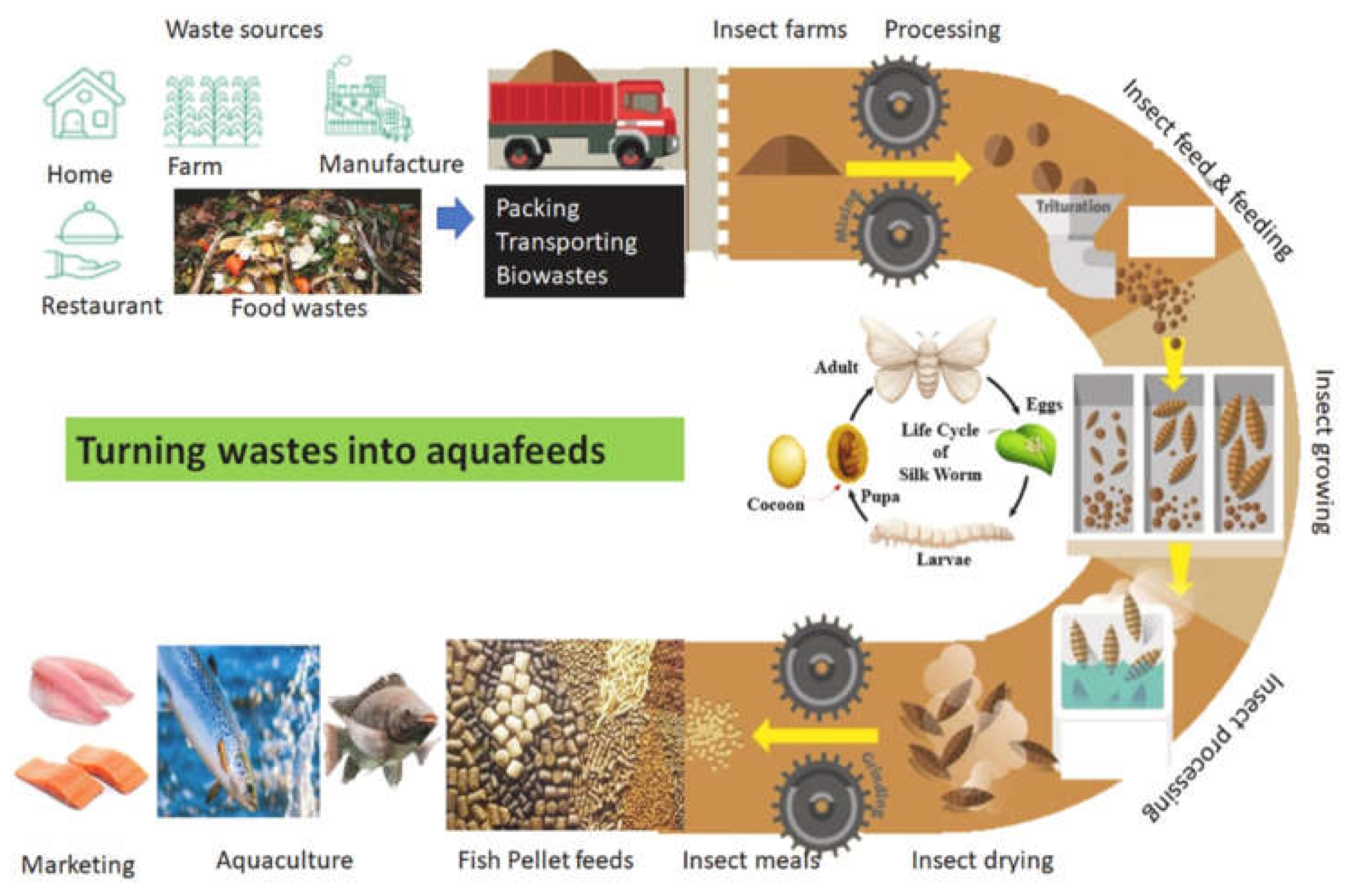
Figure 2.
Upcycled aquafeed versus conventional aquafeed[83].
Figure 2.
Upcycled aquafeed versus conventional aquafeed[83].
Disclaimer/Publisher’s Note: The statements, opinions and data contained in all publications are solely those of the individual author(s) and contributor(s) and not of MDPI and/or the editor(s). MDPI and/or the editor(s) disclaim responsibility for any injury to people or property resulting from any ideas, methods, instructions or products referred to in the content. |
© 2024 by the authors. Licensee MDPI, Basel, Switzerland. This article is an open access article distributed under the terms and conditions of the Creative Commons Attribution (CC BY) license (http://creativecommons.org/licenses/by/4.0/).
Copyright: This open access article is published under a Creative Commons CC BY 4.0 license, which permit the free download, distribution, and reuse, provided that the author and preprint are cited in any reuse.