

Submitted:
25 July 2024
Posted:
26 July 2024
You are already at the latest version
Abstract
This case study examines the impact of Machico City Airport expansion on sus-tainable tourism. It aims to identify the key effects on the environment, local economy, and community, and provides recommendations for mitigating negative impacts while promoting sustainable development. The study emphasizes adopting sustainable tourism practices to protect Machico's biodiversity and natural resources, drawing from the ECOS MACHICO project. It highlights the importance of environmental education for tourists, residents, and tour operators. Community engagement emerges as pivotal, advocating for inclusive plan-ning that incorporates local perspectives. The multifaceted implications of airport expansion on Machico's socio-economic fabric are explored, balancing positive and negative effects on residents and local businesses. Diversifying tourism offerings beyond mass tourism is advocated, with a focus on preserving local traditions and promoting authentic cultural experiences. In summary, the research provides a foundation for sustainable tourism devel-opment, offering strategies applicable to similar destinations. The study's implications extend to understanding broader impacts of airport expansions, presenting avenues for further research. The proposed strategies serve as a blueprint for destinations fac-ing analogous challenges, promoting enduring socio-economic and environmental well-being.
Keywords:
environmental conservation
; madeira airport expansion
; machico
; sustainable development
; tourism
; urban planning
1. Introduction
Sustainable tourism has emerged as a pivotal concept in the global tourism industry, aiming to minimize the negative impacts of tourism while enhancing its positive contributions to local communities, economies, and environments. Globally, the tourism sector is a major economic driver, but it often comes with significant environmental and social costs. Sustainable tourism seeks to balance economic growth with environmental stewardship and social equity, ensuring that tourism development meets the needs of present generations without compromising the ability of future generations to meet their own needs.
In the context of Madeira, an island renowned for its natural beauty and cultural heritage, sustainable tourism is particularly significant. The city of Machico, located on the southeastern coast of Madeira, exemplifies a community that has thrived on its tourism sector. Known for its picturesque landscapes, historical sites, and vibrant cultural festivals, Machico attracts numerous tourists each year. However, the expansion of the Madeira Airport, serving as the island’s main gateway, poses both opportunities and challenges for sustainable tourism in the region.
A comprehensive review of existing literature reveals a rich body of work on sustainable tourism, highlighting its principles, benefits, and implementation strategies. Sustainable tourism emphasizes the importance of conserving natural resources, respecting local cultures, and ensuring that tourism development is inclusive and equitable. Studies have shown that sustainable tourism can lead to long-term economic benefits, improved environmental quality, and enhanced quality of life for residents.
The impact of airport expansions on local communities and environments has been a subject of significant research. Airports are critical infrastructure for tourism, providing accessibility and convenience for travelers. However, expansions often lead to increased land use, noise pollution, and environmental degradation. Research from regions like Madeira, such as the Azores and Seychelles, illustrates these dual impacts. For example, airport expansions in these island regions have facilitated tourism growth and economic development but have also raised concerns about environmental sustainability and social disruption.
Case studies from these regions provide valuable insights into managing the balance between airport expansion and sustainable tourism. In the Azores, the expansion of Ponta Delgada Airport has supported a surge in tourist arrivals, contributing to economic growth while also prompting efforts to protect the islands’ unique ecosystems through rigorous environmental regulations and community engagement initiatives. Similarly, in the Seychelles, airport development has been accompanied by stringent measures to mitigate environmental impacts and promote eco-friendly tourism practices.
In Madeira, the expansion of Madeira Airport presents a critical juncture for Machico’s sustainable tourism development. This case study aims to explore the socio-economic and environmental impacts of the airport expansion on Machico, drawing lessons from similar regions and providing recommendations for fostering sustainable tourism in the face of infrastructural growth.
By examining the evolution of Machico and its airport, this study contributes to the broader discourse on sustainable tourism and infrastructure development, offering practical insights for policymakers, planners, and community stakeholders committed to achieving a balanced and sustainable future for tourism in Madeira.
This study investigates the expansion of the airport in Machico, focusing on its implications for sustainable tourism, and suggests strategies to reduce negative impacts while maximizing the economic and social benefits for the local community.
2. Study Objectives
Evaluate the environmental impacts of the airport expansion in Machico. This goal is to figure out and measure the effects that the airport expansion has had on the local ecosystems, air and water quality, wildlife, and vegetation. Looking into these impacts is crucial to make sure appropriate measures are taken to reduce environmental harm and preserve the region's biodiversity.
Analyse the economic and social effects on the local community. This analysis aims to understand how the expansion has impacted the local economy, such as job creation, GDP growth, and other economic benefits. It also assesses the social impacts like changes in quality of life, health effects due to increased noise and air pollution, and the community's perception of the project.
Propose mitigation strategies and recommendations for sustainable development. Building upon the identified impacts, this objective is to come up with practical recommendations to minimize negative effects and enhance the benefits of the expansion. Strategies may involve creating green areas, environmental and social monitoring programs, and initiatives to support sustainable tourism.
3. Materials and Methods
This study used a mixed approach, combining qualitative and quantitative methods. Data was collected through:
- Semi-structured interviews with residents and representatives of the tourism sector.
- Document analysis of government reports and environmental impact studies.
- Field research for direct observation of areas affected by the expansion.
This segment outlines the methodology employed to investigate the implications of Madeira Airport's expansion on tourism in the Machico region and to devise sustainable tourism strategies. The study integrates diverse research methods and approaches to comprehensively understand the intricate relationship between airport expansion, tourism, and sustainability.
A comprehensive review of scholarly literature, official government reports, and relevant case studies was conducted to gather insights into sustainable tourism practices, the impacts of airport expansions on local communities, and successful practices from similar island destinations such as the Azores and Seychelles.
Official documents, local government reports, and archival records were analyzed to trace the historical trajectory of airport expansions, changes in land use patterns, and the effects of these expansions on Machico's tourism sector.
Geographic Information System (GIS) tools were utilized to assess the spatial aspects of land use, including alterations in land allocation, proximity to protected areas, and the distribution of tourist accommodations.
Based on insights from the literature review, interviews, and GIS analysis, a set of sustainable tourism strategies was formulated. These strategies aim to address the challenges posed by airport expansion and promote sustainable tourism development in Machico.
A framework for ongoing monitoring and evaluation was established to track the impact of tourism development in Machico. Key indicators, such as tourist arrivals, accommodation occupancy rates, and environmental assessments, are continuously monitored to assess the effectiveness of the sustainable tourism strategies.
It is important to note certain limitations in this study. The reliance on historical data and stakeholder perspectives may be susceptible to recall bias and subjectivity. Additionally, while the research provides valuable insights, the proposed strategies are based on existing knowledge and require further examination and validation.
3.1. The Evolution of Machico Airport
For this purpose, we employed a qualitative approach, primarily relying on semi-structured interviews conducted with members of the local community. This method facilitated a deep dive into past experiences related to tourism development in Machico. Each interview was conducted openly and flexibly, encouraging participants to share their perspectives authentically.
Additionally, archival sources such as municipal records and historical accounts were utilized to complement interviews and validate the collected information. This multimodal approach enabled data triangulation, enhancing the reliability of the findings. However, it is crucial to acknowledge that gathering historical data based on memory recollections may entail certain levels of subjectivity and recall bias. This consideration is pivotal when interpreting the results, highlighting the inherent complexity in analyzing historical data and emphasizing the need for a critical approach in interpreting the findings.
Madeira International Airport, popularly recognized as Cristiano Ronaldo Airport, operates as a vital air hub located in the municipality of Santa Cruz on Madeira Island, Portugal [3]. As the fourth busiest airport in Portugal, having processed over 3 million passengers in 2017, it stands as the principal air gateway in the Autonomous Region of Madeira (Figure 1). The airport has continuously evolved over the years to meet the escalating demands of tourism and air travel.
Inaugurated on July 8, 1964 (Figure 2), Madeira Airport replaced conventional boat trips to the island, marking a significant shift in transportation. The initial runway spanned 1600 meters in length, catering to the growing interest in visiting Madeira.
Notably, the first aircraft landed in Madeira in 1957 on an experimental runway in Santa Catarina (Figure 3). Earlier in 1921, Sacadura Cabral, Gago Coutinho, Bettencourt, and Soubiran executed a seaplane landing in Funchal, originating from Lisbon [5].
During its early operational years, Madeira Airport managed a modest number of flights, recording 80 arrivals and 66 departures in its inaugural year. However, the existing infrastructure proved insufficient to accommodate the surging influx of tourists, necessitating expansion. In 1972, a new terminal capable of hosting 500 thousand passengers per year was unveiled [5].
The period between 1982 and 1986 witnessed significant expansions, extending the runway to 1800 meters, and enlarging the aircraft parking area. Engineer António Segadães Tavares, building upon the studies of engineer Edgar Cardoso, orchestrated a subsequent runway extension. This expansion, completed on September 15, 2000, lengthened the runway to 2781 meters, partially constructed over the sea and supported by 180 pillars (Figure 4).
This engineering marvel garnered national and international acclaim, receiving the Secil Prize in 2001 and the World Prize for Structural Engineering in 2004 [5].
In 2002, the inauguration of a new passenger terminal marked another milestone for Madeira Airport, introducing modern amenities and improved facilities for travelers [5]. The structure of the runway expansion, meticulously designed by Segadães Tavares & Associados, encompasses a rectangular shape with detailed elements like transverse portals, solid cylindrical pillars, slabs, and beams (Figure 5).
The slabs, 1.0 meter thick and increasing to 1.7 meters near the beams, demonstrate a parabolic variation along 10 contiguous meters to each beam's underside. The prestressed reinforced concrete beams, designed with an approximate I-shaped form, vary in height following a circular guideline (Figure 6).
The pillars, circular in section with a 3-meter diameter, soar approximately 50 meters above sea level and possess either direct foundations through footings or indirect foundations employing piles, contingent upon the soil characteristics (Figure 7).
The expansion of Madeira Airport revolutionized tourism in the region, enhancing accessibility and connectivity while stimulating economic growth. The significant investment in infrastructure facilitated increased flight capacities, air connectivity with various destinations, and the development of tourism-related infrastructure, contributing to the region's economic prosperity and diversification of the tourism market.
3.2. The Evolution of Machico
Machico, situated on the western edge of Madeira Island (Figure 8), spans an area of 68.31 km², encompassing a diverse landscape stretching from the sea to the northern mountains. This municipality is divided into five parishes - Porto da Cruz, Caniçal, Machico, Santo António da Serra, and Água de Pena - each with its unique characteristics and communities.
Over the years, the population of Machico has seen a decline of 10.2% from 2011 to 2021 (Table 1), totaling approximately 19,593 inhabitants in 2021, with a population density of around 287 individuals per km².
Despite this decrease, Machico remains the fourth most densely populated area in the Autonomous Region of Madeira (Figure 9).
Tourism in Machico displays promising potential. In 2022, the municipality observed an increase in tourist accommodations, with a count of 18 tourism accommodation establishments operating in 2022, representing a small number compared to other municipalities in the region (Table 2). These establishments provided a total of 354 rooms available for tourists, which, in comparison to some other areas in the region, is relatively lower [8].
In 2022 the Local Accommodation (AL) sector has notably expanded, with approximately 220 AL registrations spread across the municipality's five parishes, predominantly hosted in the Machico parish, accounting for 57% of the total registrations. These AL accommodations comprise 476 rooms and 672 beds, representing 57% of the available rooms and 48% of the total beds in Machico [9].
In 2022, there was a noteworthy surge in overnight stays in tourist accommodations across Portugal, with Machico recording 18 tourist accommodation establishments, providing 354 rooms, and accommodating 735 guests [10].
Additionally, in 2022, Machico experienced a substantial growth in overnight stays, marking a 204.4% increase (Table 3), slightly below the regional average of 235.0%. This upswing indicates significant expansion not only in Machico but across the region in terms of overnight stays in tourist accommodations.
Data analysis by the Regional Directorate of Statistics of Madeira - DREM [10] indicates a substantial increase in tourist visits to Machico in January 2023 compared to the same period in the previous year. This growth is evident in the number of guests, overnight stays, and the average length of stay, highlighting the rising interest in Machico as a tourist hotspot.
These favorable trends owe their success to sustainable development initiatives, conservation projects, and a focus on promoting local ecosystems. Efforts to preserve and showcase the region's natural and cultural heritage, historical landmarks, traditional festivities, and local gastronomy have significantly contributed to Machico's appeal as an authentic tourist destination.
Moreover, during February 2023 (Table 4), several municipalities, including Machico, observed substantial increases ranging from 90.5% to 295.2%, reflecting sustained demand for these destinations. Machico, during this period, registered 18,085 overnight stays in tourist accommodations, welcoming visitors from various countries, contributing to a net bed occupancy rate of 61.4% and a net room occupancy rate of 55.6%.
While these statistics underscore the thriving tourism industry and its economic benefits, they also shed light on the challenges faced by the region. For instance, the loss of the Matur Tourist Complex resulted in a decline in available lodging capacity within the Machico municipality, impacting the region's ability to attract visitors and promote tourism development.
The closure and demolition of Hotel Atlantis in the Matur Tourist Complex (Figure 10), a prominent regional establishment boasting approximately 301 rooms and 21 suites, significantly affected the local economy. The closure, particularly of the Hotel Atlantis, marked a shift in the regional tourism landscape. However, due to constraints imposed by tourism planning programs, the lost beds have not been replaced.
Efforts to counterbalance this loss include the Quinta do Lorde project in Caniçal (Figure 11). This resort development, despite facing legal and environmental hurdles, represents a substantial investment and encompasses various amenities, including tourist housing units, a luxury hotel, and a spa. However, its location within a protected area has posed challenges regarding prior authorizations and environmental considerations.
The expansion of Madeira Airport, while bolstering tourism and Machico's development, also had notable environmental repercussions. This expansion emphasized the need for sustainable practices in tourism infrastructure to mitigate environmental impacts and promote environmental sustainability in the region.
The dynamics of tourism development in Machico underscore its complexity, intertwining economic, social, and environmental aspects. It is crucial to adopt appropriate strategies and measures to foster sustainable development in the region, considering the delicate balance between tourism growth and environmental conservation.
3.3. Sustainability Tourism Practices for Machico
In the quest to establish sustainable tourism in Machico, leveraging open data becomes pivotal. Literature [12,13] has illuminated several pathways for building sustainable tourism solutions grounded in open data repositories. For instance, studies [12,13,14] have illustrated how existing open data repositories can be harnessed to construct linked-open-data-based applications and services for the tourism sector, a focal point of this research endeavor.
These studies emphasized the creation of services utilizing openly accessible information such as geolocations (Figure 12). Extending this approach, contemporary mobile-based applications can be envisioned. These applications could offer comprehensive tourism information and experiences, available not just during but also before and after visits, enhancing the overall tourism experience. Potential applications span collaborative e-learning for tourism [15], mobile augmented reality for tourism [16], digital travel experiences through web-based and AR platforms [17], and crowdsourcing on Intangible Cultural Heritage [18], among others. Additionally, research examining emerging challenges in the tourism industry, as discussed in [19], provides innovative avenues, especially in managing tourism in island contexts [20].
Among these examples, substantial interest lies in leveraging open data to address the challenge of over-tourism [22]. To achieve this, the development of tourism-specific service-based APIs is imperative. These APIs aim to facilitate the seamless utilization of tourism data, fostering innovation, and expanding access to third parties [23].
The drive towards sustainability in Machico's tourism sector involves harnessing open data to innovate and create services that not only enhance tourist experiences but also manage the challenges posed by increased tourism sustainably.
4. Results
The recent expansion of Madeira's airport has sparked considerable changes in Machico, influencing its tourism landscape and urban development. To navigate this transformation, it's crucial to implement strategic measures that not only foster growth but prioritize sustainability in the region.
Tourism experiences are a kaleidoscope of influences, weaving together tangible and intangible facets. While often meticulously curated within carefully designed environments, exceptions arise, particularly when tourists delve into underwater adventures, immersing themselves in unique and dynamic realms.
Preserving Machico's natural beauty and preventing urban sprawl necessitates thoughtful land use planning. This includes demarcating zones for tourism, safeguarding fragile areas, and imposing construction restrictions.
A comprehensive evaluation of Machico's natural milieu was imperative, identifying vital areas like biodiversity conservation zones, aquifer recharge sites, and protected habitats. Prioritizing these areas is integral to Machico's land use planning.
4.1. Machico's Biodiversity and Environmental Preservation
Machico, nestled in Madeira, shines for its rich biodiversity and staunch commitment to environmental preservation. Hosting eight designations within the Natura 2000 Network (Figure 13), it boasts the highest count of protected areas among Madeira's municipalities. This network, dedicated to safeguarding Europe's vulnerable habitats and rare species, underscores Machico's dedication to ecological conservation.
Among these designations are three Special Areas of Conservation, such as the renowned SAC of Ponta de São Lourenço and the UNESCO World Heritage Site of Laurissilva da Madeira, which celebrate the diverse range of natural habitats.
Further contributing to biodiversity, Machico hosts three Special Protection Areas under the Birds Directive, crucial for avian species' protection and breeding. Sites of community importance like SIC Pico do Facho (Figure 14) and SIC Machico (Figure 15) also play pivotal roles in biodiversity conservation.
These designated areas within the Natura 2000 Network highlight Machico's unwavering commitment to preserving its diverse biodiversity. The municipality encourages visitors to explore Ponta de São Lourenço's natural beauty through the Vereda da Ponta de São Lourenço, fostering interaction with its scenic elements.
4.2. Strategic Tourism Planning: Touristic Vocational Areas (AVTs)
Identifying suitable areas for tourism development demands meticulous planning, considering carrying capacity, environmental sustainability, and local community needs. The establishment of Touristic Vocational Areas (AVTs) within the Municipal Master Plan aims to enhance tourism resources while controlling the proliferation of Local Lodging (AL), promoting diversification and affordable rental options. In Figure 16 it is possible to observe one of the 5 AVTs, Porto da Cruz AVT (one of the five parish of Machico).
4.3. Preserving Machico's Heritage: Municipal Master Plan and Historical Constraints
To strike a balance between tourism development and preserving Machico's natural and cultural resources, establishing protection zones for sensitive areas like reserves, water protection zones, and archaeological sites is imperative. Enforcing construction limitations is vital to maintain the city's unique character and harmony between urban and natural spaces (Figure 17).
The architectural landscape of Machico stands as a testament to its historical roots, offering a narrative deeply interwoven with the region's past. Reflecting on the city's development, preservation, and sustainable tourism, this exploration aims to underscore the significance of historical heritage while aligning with the journal's focus on sustainable tourism practices.
The city's Municipal Master Plan (PDM) and urban regulations serve as custodians, delineating construction limitations intended to preserve Machico's character. These constraints encompass several key aspects:
- Land Use Density: PDM sets indices dictating the maximum built area relative to land size, aiming to control population density and safeguard open spaces across urban and rural zones (Figure 18).
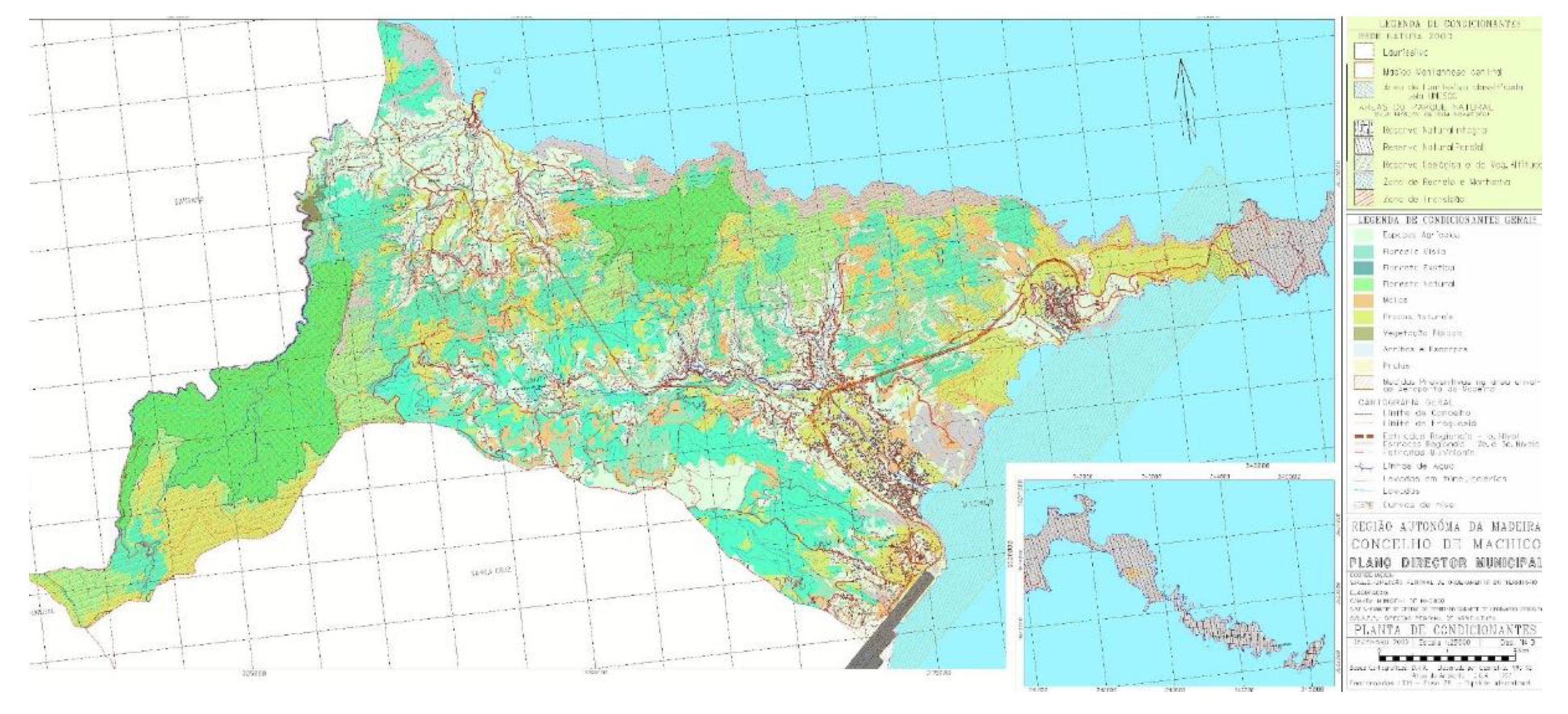
- Maximum Building Height: Height restrictions, contingent upon building typology and surroundings, are in place to maintain visual harmony and protect the city's urban landscape.
- Setbacks and Separations: Enforced requirements ensure privacy, lighting, and ventilation for buildings, contributing to the preservation of panoramic views and green spaces.
- Historical Heritage Preservation: Machico's Historical Center, the genesis of the city post-Madeira Island's discovery, holds immense historical value. Remarkable landmarks like the Church of Nossa Senhora da Conceição, Chapels of Nosso Senhor dos Milagres and São Roque, among others, exude architectural diversity and historical significance (Figure 19).
4.4. ECOS MACHICO Initiative: Holistic Sustainability and Community Engagement
Efforts to commemorate and preserve these landmarks include guided tours and informative plaques with QR codes, enriching visitor experiences and fostering an appreciation for the municipality's rich heritage.
Drawing parallels with successful sustainable tourism models from island destinations like the Azores and Seychelles, insights emerge. The Azores' commitment to ecotourism and community engagement, evidenced through initiatives like the "Clean and Safe Azores" program, showcases effective strategies to preserve biodiversity while prioritizing safety. Similarly, Seychelles' emphasis on marine conservation via protected areas and stringent regulations aligns with global conservation efforts.
In the context of Machico, investing in initiatives aimed at environmental preservation, community engagement, and the establishment of protected zones is crucial. Engaging local communities through open forums and decision-making processes ensures that sustainable tourism practices align with local aspirations, fostering a sense of ownership and belonging.
This holistic approach amalgamates the preservation of historical heritage with sustainable tourism practices, enriching visitor experiences while safeguarding Machico's cultural identity for generations to come.
Within Machico, the ECOS MACHICO initiative epitomizes a convergence of knowledge and innovation, steering the town toward holistic sustainability across environmental, social, and economic domains. This endeavor is geared towards several pivotal objectives:
- Sustainable Resources and Services: ECOS MACHICO endeavors to introduce innovative resources and services aligned with sustainability principles. This encompasses eco-friendly practices, renewable energy adoption, sustainable resource management, and the promotion of eco-conscious lifestyles (Figure 20).
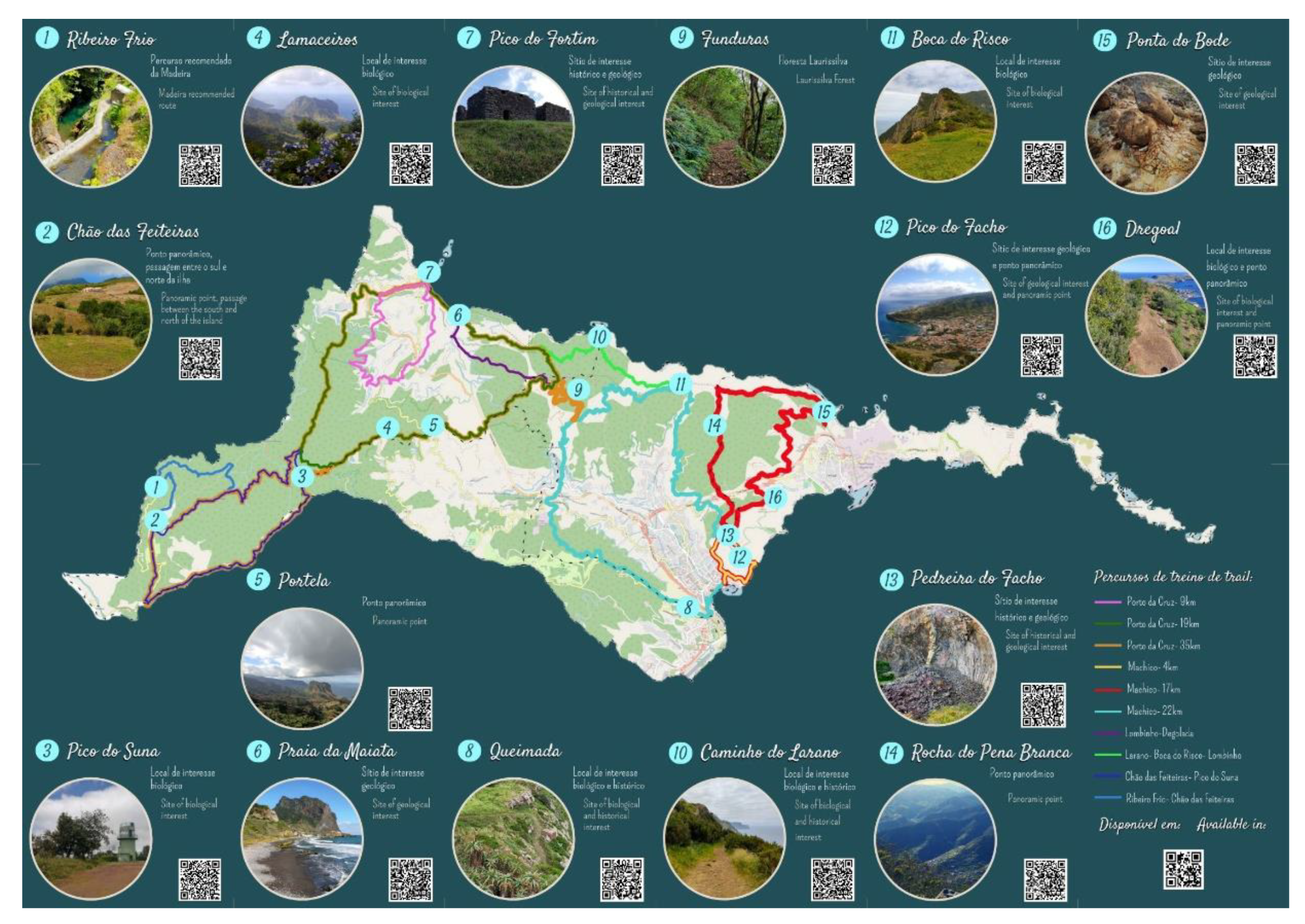
- Territorial Marketing Emphasis: The initiative aims to craft a marketing strategy accentuating Machico's natural and cultural heritage (Figure 21). Emphasizing nature-related attractions, cultural events, and distinctive local features, the initiative seeks to spotlight Machico's unique identity.
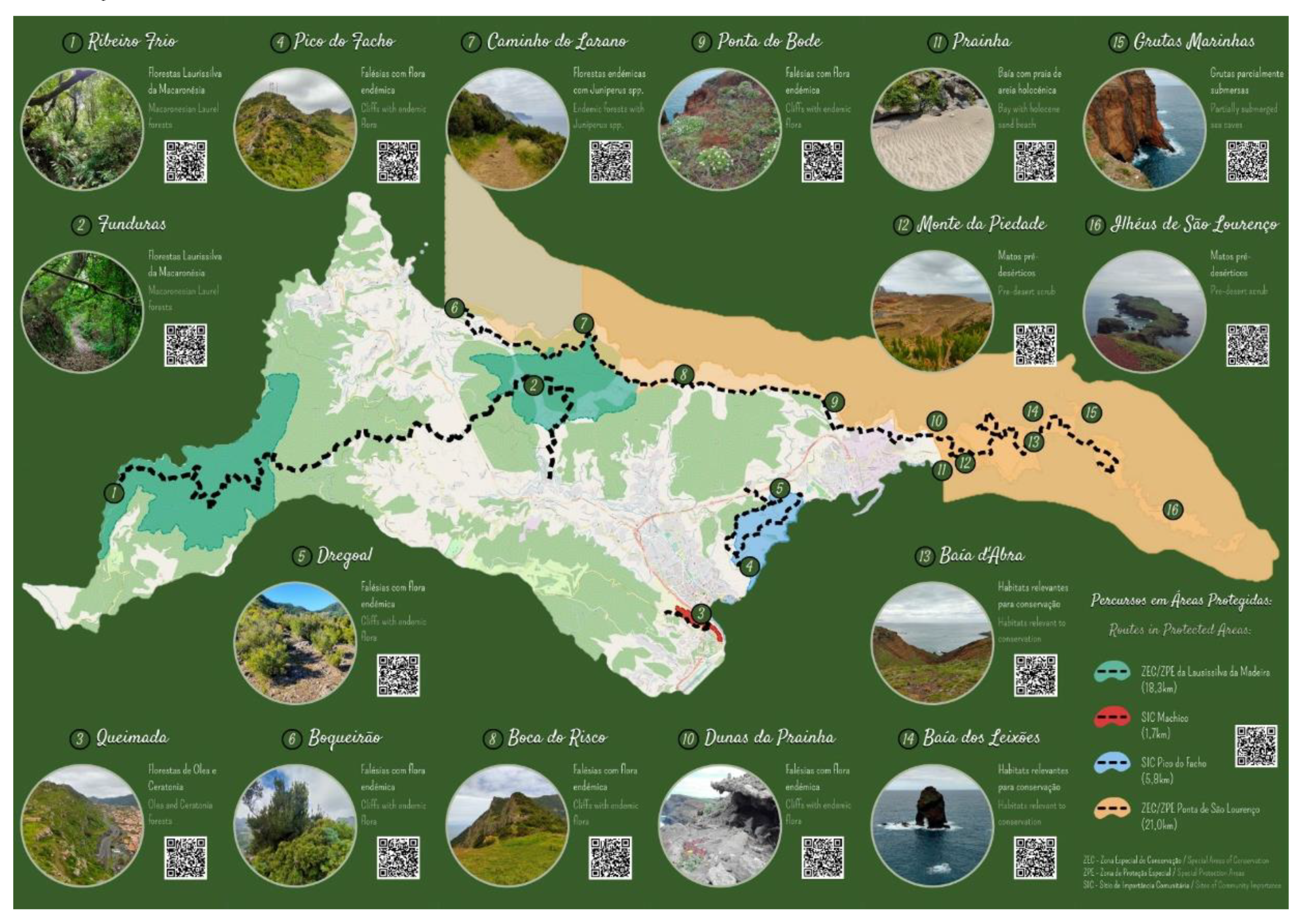
Figure 22.
Ecosites Map [1]
Figure 22.
Ecosites Map [1]
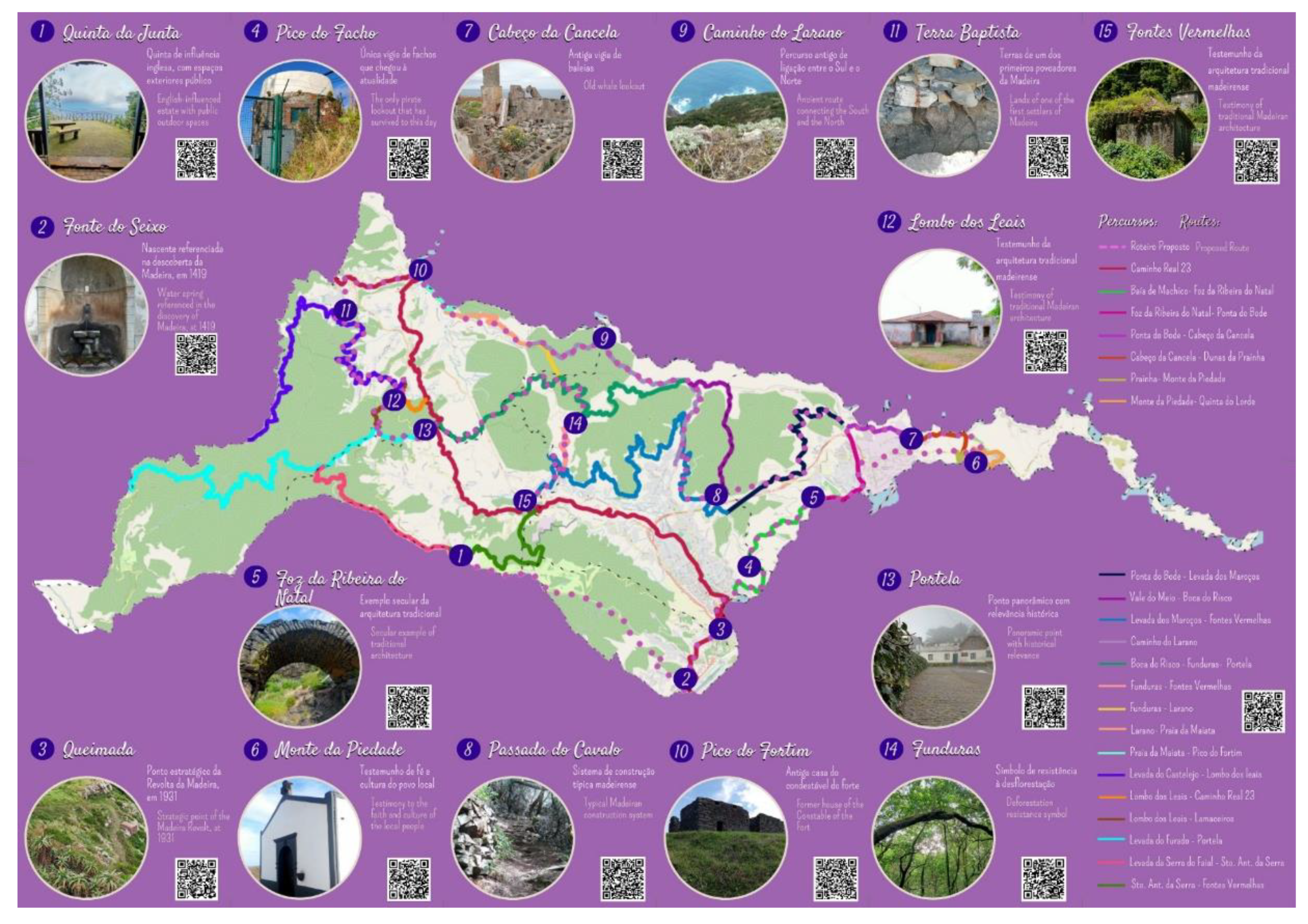
Figure 23.
Geodiversity Map [1]
Figure 23.
Geodiversity Map [1]
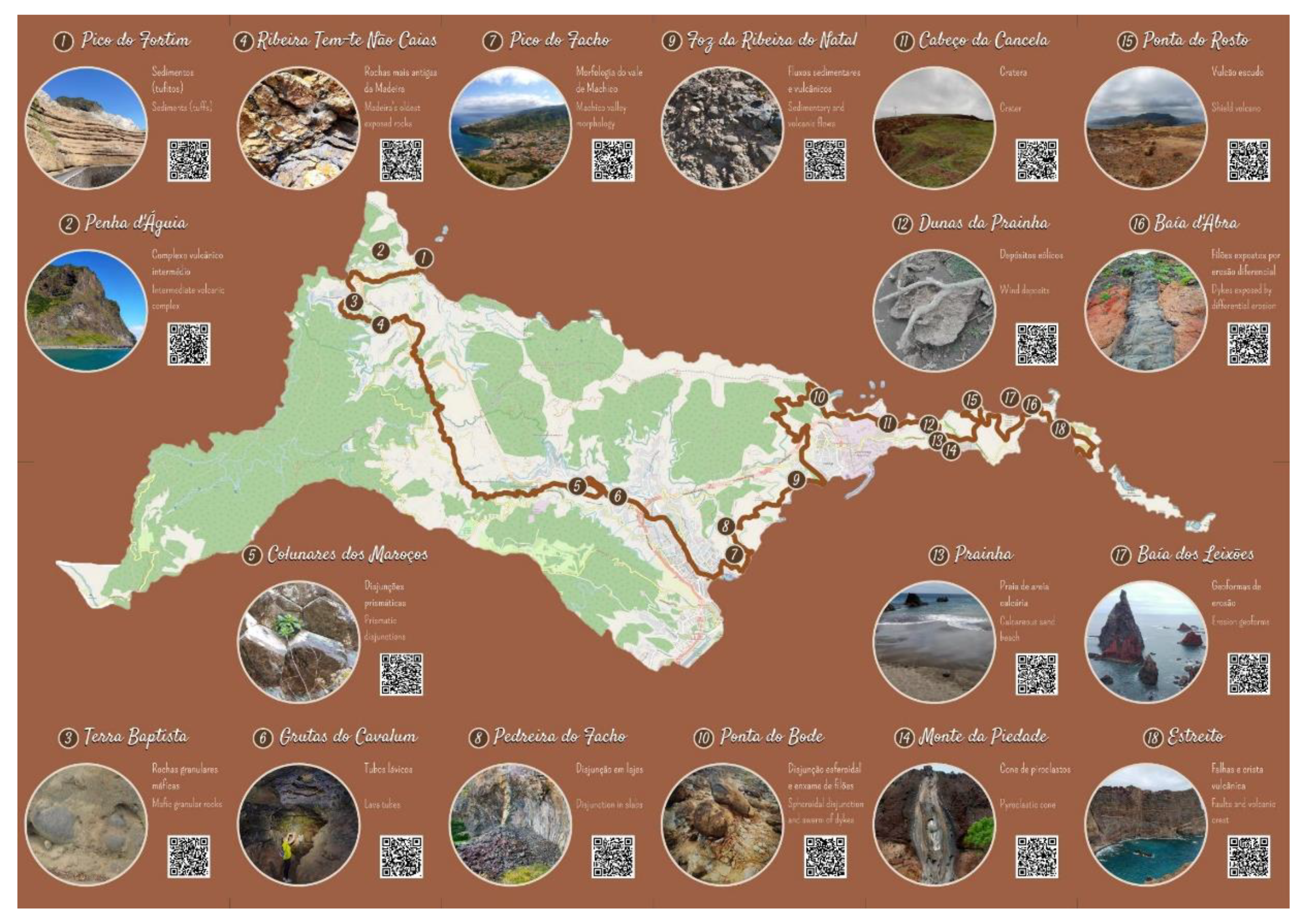
- Community Engaged Responsibility: A key aim is fostering a participatory culture of responsibility within the community. This involves engaging residents actively in sustainability initiatives, environmental education, and preserving cultural heritage.
4.5. Cultural Heritage and Historical Roots
The contemporary shift in human consciousness, acknowledging the intricate interplay between human actions and the environment, has underpinned the burgeoning concept of ecotourism. However, while ecotourism is celebrated for promoting sustainable practices, it faces challenges. There are debates regarding its alignment with sustainable principles, with concerns over potential risks to delicate environments.
Guidelines and policies promoting sustainable tourism practices are essential, considering destination capacities. These encompass visitor regulation, monitoring tourist activities, and advocating responsible behaviors like resource efficiency and waste management.
Integral to sustainable development is the preservation and celebration of local customs and traditions. By fostering cultural events, supporting indigenous craftsmanship, encouraging local artists, and crafting travel itineraries that showcase Machico's cultural legacy, the town preserves its unique identity.
The historical roots of Machico trace back to the era of Portuguese exploration in 1419, marked by João Gonçalves Zarco and Tristão "das ilhas." This significant discovery initiated the town's history, where the first mass in Madeira was held by Franciscan priests in gratitude for the discovery. The origin of the town's name, "Machico," remains debated, with various theories attributing it to the romantic legend of Robert Machim and Anne d'Arfet encountering a shipwreck in the town.
Machico's historical significance dates to the 15th century when it flourished economically due to burgeoning trade, notably in sugarcane production (Figure 24). The construction of the Machico Matriz Church by the influential Captains-Donatários family stands as a testament to this era, symbolizing Machico's initial role as the seat of the captaincy in the Madeira archipelago.
The region's allure extends beyond its rich history, encompassing a vibrant culture and diverse traditions. Machico's tourism offerings blend tradition, heritage, nature, adventure, gastronomy, and commerce. Events like the "Mercado Quinhentista," the largest ethnographic festival in Madeira, and various religious traditions keep the rich Madeiran cultural heritage alive.
Machico's heritage also includes the Whale Museum, offering insight into the bygone era of whaling, a practice integral to the region's socio-economic advancement. The municipality's historical ties to fishing, particularly in pursuit of tuna, contribute to Madeira's culinary legacy. Sugarcane, known as the "White Gold," forms the foundation of Madeira Rum and Poncha, emblematic beverages of the region.
4.6. Diversified Tourism Activities
Expanding tourism activities beyond conventional mass tourism aligns with Machico's pursuit of more harmonious and sustainable development. Rural getaways, eco-conscious explorations, thrilling adventures, and immersive cultural (Figure 25) experiences celebrate the region's unique assets while fostering sustainability.
Environmental education campaigns targeting tourists, residents, and tour operators are essential. These initiatives disseminate knowledge about sustainable practices, nurture environmental reverence, and promote social responsibility.
Machico, nestled on Madeira Island, not only caters to mass tourism but also diversifies its offerings by promoting rural retreats, adventure sports, eco-tourism, and cultural explorations. Adventure sports enthusiasts can indulge in trail running, surfing, diving, paragliding, trekking, canyoning, geocaching, and more amid the region's splendid outdoors.
The Água de Pena Sports Park offers diverse sports and recreational facilities, ranging from squash, padel, and climbing to beach volleyball, skating, and gym amenities. Additionally, the Santo da Serra Golf Course with its breathtaking vistas and birdwatching spots enhances the region's appeal.
For enthusiasts of geocaching, over 500 hidden caches scattered across Machico provide an immersive experience in nature. Mountain biking and trail running enthusiasts can explore trails of varying difficulty levels, enjoying Machico's ideal topography and mild climate.
In summary, Machico emerges as a multifaceted tourist destination offering a spectrum of activities. From adventure sports to golfing, birdwatching, geocaching, trail running (Figure 26) and more, these pursuits not only provide a unique experience but also showcase the region's rich natural and cultural resources, underlining the advocacy for sustainable and comprehensive development.
4.7. Environmental, Social and Economic Impact
Previous studies indicate that airport expansion can generate significant environmental, social, and economic impacts. For example, the expansion of Austin-Bergstrom International Airport was environmentally evaluated, resulting in a 'Finding of No Significant Impact', which is an official document indicating that the proposed expansion will not cause significant environmental impacts [25]. We found that the main impacts include increased noise pollution and greenhouse gas emissions. Furthermore, research on sustainable tourism highlights the importance of mitigation strategies, such as the creation of ecological corridors and continuous air quality monitoring programs [26]. This study aims to fill the gap by focusing on the city of Machico, which has not been extensively studied yet.
The expansion of the airport in Machico significantly impacted local ecosystems. Previous studies, such as the one conducted at Washington Dulles International Airport, indicate that such expansions can interfere with critical habitats and local biodiversity can be affected by construction and expanded operations [26]. Data collected shows that the construction area directly interfered with critical habitats. The implementation of ecological corridors is recommended to mitigate these impacts.
Interviews with residents revealed concerns about increased traffic and noise pollution. However, most believe that the expansion has brought economic benefits. A study conducted in Austin revealed that despite initial concerns, most residents supported the expansion due to the projected economic benefits [25]. Qualitative data indicate that public perception is mostly positive, but highlights the need for compensatory measures, such as noise buffer zones.
The economic analysis predicts an increase in local GDP, with the creation of new jobs. Projections based on similar case studies, such as the one conducted in Washington Dulles, indicate that expansion could result in significant job increases and local economic growth (mwaa.com) [26]. To maximize benefits, promoting ecological tourism and investing in sustainable infrastructure is recommended.
Airport expansion in other cities, such as Austin and Washington Dulles, has shown that sustainability strategies can be successfully implemented to mitigate negative impacts. In Austin, sustainability measures such as the creation of green zones and continuous air quality monitoring have been successfully implemented, resulting in lower environmental impacts and greater public acceptance [25]. These examples can serve as a model for Machico, suggesting the adoption of similar strategies.
The expansion of Madeira Airport, while crucial for boosting tourism, has triggered a series of complex socioeconomic impacts on the local community of Machico. A deeper analysis of these impacts unveils nuances and challenges that require attention.
In the social realm, there's been a noticeable strain on public services such as healthcare and education due to the population increase fuelled by airport expansion and the subsequent tourism growth. The demand for housing has also risen, impacting the local real estate market and potentially affecting housing affordability for residents. The social dynamics of the community have also been altered, with changes in daily routines, customs, and interpersonal relationships due to the influx of tourists and the intensification of commercial and tourism activities. These changes can lead to cultural erosion, loss of identity, and increased social tensions between residents and tourists [27].
Economically, the airport expansion has led to an increase in the Gross Value Added (GVA) and per capita income in Machico, driven by the creation of direct and indirect jobs in the tourism sector and related activities. However, a more detailed analysis reveals that income distribution has not been even, with some sectors and individuals benefiting more than others. This can lead to increased income inequality and social disparities within the community [28]. Additionally, the local economy's dependence on tourism has intensified, making it more vulnerable to seasonal fluctuations and external crises, such as the COVID-19 pandemic, which severely impacted the sector worldwide. It is also important to consider that while the airport expansion has led to increased employment opportunities, the quality and types of jobs created (e.g., part-time, seasonal) should also be assessed to understand the true impact on the local workforce and economy [28].
The airport expansion has also resulted in a significant increase in air traffic, leading to a rise in greenhouse gas emissions and noise pollution, affecting the quality of life and well-being of the local population. The intensification of road traffic and the need for new transport infrastructure have also generated environmental impacts, such as the loss of green areas and changes to the local landscape. These environmental impacts can have long-term consequences for the region's natural resources and ecosystems, potentially affecting the sustainability of tourism activities in the future [29].
It is important to highlight that these impacts are not uniform across the community. Areas closer to the airport and main access roads are most affected by noise and air pollution as evidenced by studies on noise pollution and its effects on communities near airports [30]. While areas farther away may not experience these effects as intensely. Additionally, the perception of impacts varies among different social groups, with some benefiting more from economic development and others suffering more from the negative impacts on their quality of life. This highlights the importance of considering the distributional effects of airport expansion and ensuring that the benefits are shared equitably among all members of the community.
This in-depth analysis underscores the importance of adopting a holistic approach to airport expansion projects, considering not only the economic benefits but also the social and environmental consequences. By understanding the nuanced impacts on the local community, policymakers and stakeholders can develop more effective strategies to mitigate negative effects and ensure a more sustainable and equitable development for Machico.
To gain a comprehensive understanding of these impacts, it is crucial to consider the perspectives of various stakeholders involved. Interviews with residents living near the airport have revealed concerns about the increased noise pollution and traffic congestion resulting from the expansion. Many residents, particularly those residing in areas directly affected by flight paths, report experiencing sleep disturbances, stress, and a decline in their overall quality of life due to the noise generated by aircraft operations [30]. These negative externalities, as highlighted by [31], are often not fully accounted for in traditional cost-benefit analyses, emphasizing the need for a more holistic assessment of airport expansions.
However, interviews with local business owners, especially those in the tourism and hospitality sector, have generally expressed a positive outlook regarding the airport expansion. They have noted an increase in customer traffic and revenue, attributed to the improved accessibility and increased number of flights brought about by the expansion. This aligns with the findings of [28], which indicate that airport expansions can stimulate economic activity and create jobs in the region. Nevertheless, it is important to acknowledge that not all businesses have experienced the same level of benefits, with some smaller, locally owned establishments facing challenges in competing with larger, international chains that have been attracted to the area due to the expansion.
Tourism operators have also reported mixed impacts. While the expansion has led to an increase in tourist arrivals, some operators have raised concerns about the changing nature of tourism in Machico. They have observed a shift towards mass tourism, with a focus on large resorts and standardized experiences, which can undermine the authenticity and uniqueness of the local culture and environment [27]. This highlights the need for careful planning and management of tourism development to ensure that it is sustainable and benefits both the local community and the environment.
Government officials involved in the planning and implementation of the airport expansion have emphasized the economic benefits for the region, citing increased tax revenues, job creation, and overall economic growth. They acknowledge the environmental and social challenges but believe that these can be mitigated through appropriate measures and policies. However, some community members have expressed concerns about the lack of transparency and public participation in the decision-making process, highlighting the need for greater stakeholder engagement and collaboration in future development projects [30].
To assess the economic impacts of the Madeira Airport expansion on Machico, a cost-benefit analysis (CBA) was conducted, following the methodology proposed by Costa [28]. This analysis aimed to quantify the social return on investment by comparing the social benefits and costs associated with the expansion. The assessment period spanned from the start of the expansion in 2000 to 2023, with 2000 as the base year.
The CBA considered various factors, including the increase in demand induced by the expansion, changes in producer surplus (airport services and airlines), changes in consumer surplus (existing and generated traffic), and changes in surplus for the rest of society. The investment costs, operational costs, and revenues were meticulously calculated and adjusted for inflation to ensure accurate comparisons.
The results of the CBA indicated a positive net present value (NPV), suggesting that the airport expansion project is economically viable from a socio-economic perspective. The increase in passenger traffic and economic activity generated by the expansion resulted in positive changes in consumer and producer surplus (Table 5).
4.8. Monitoring and Evaluation for Sustainable Tourism
The expansion of the Madeira Airport necessitates an ongoing commitment to monitoring and evaluating sustainable tourism strategies to ensure their long-term effectiveness. Implementing a comprehensive monitoring system is crucial for assessing progress and identifying areas that require adjustments [30].
Key Performance Indicators (KPIs): To measure the sustainability of tourism in Machico, the following KPIs are proposed:
- Consumption of natural resources: Water, energy, and other resources.
- Environmental quality: Monitoring of air and water quality, as well as noise levels.
- Socioeconomic impacts: Tracking of GVA, per capita income, income distribution, and job creation.
- Satisfaction and well-being: Conducting regular surveys with residents and tourists to assess their perceptions of quality of life and well-being.
Monitoring Plan:
- Data collection: Regular collection of data on the KPIs, using sources such as the airport, government agencies, surveys, and other relevant sources.
- Analysis and evaluation: Analysis of the collected data to identify trends, patterns, and potential deviations from sustainability goals.
- Reporting and disclosure: Preparation of periodic reports on the performance of sustainable tourism in Machico, with transparent disclosure of results to the community and stakeholders.
- Adaptation and continuous improvement: Use of monitoring and evaluation results to adjust and enhance sustainable tourism strategies, ensuring their effectiveness and relevance over time.
The expansion of Madeira Airport represents a unique opportunity for Machico to develop a sustainable and resilient tourism model. Through continuous monitoring and evaluation of implemented strategies, it is possible to ensure that tourism growth is balanced and benefits both the local community and the environment. Transparency in disclosing results and community engagement in this process are crucial for building a sustainable future for Machico.
It is important to emphasize that monitoring and evaluation are not just one-time activities but an ongoing process that should accompany the development of tourism in Machico. Adapting and improving strategies based on monitoring results will ensure that tourism in Machico is truly sustainable in the long term.
5. Discussions
The "Discussions" chapter serves as a compass, charting a course towards sustainable tourism excellence in the Machico region amidst the transformative expansion of Madeira Airport. By weaving together insights gleaned from preceding chapters, this discussion not only scrutinizes the challenges and opportunities presented by the airport expansion but also provides strategic recommendations crucial for steering policymakers and stakeholders towards the region's long-term sustainability and inclusive development.
In its thorough analysis, the chapter delves into the intricate socio-economic fabric of Machico, acknowledging the catalysation of tourism brought about by the airport expansion. Balancing economic advancements with the preservation of local communities and heritage emerges as a central theme, recognizing the need for a nuanced approach that safeguards Machico's unique identity.
The discourse places a spotlight on the imperative adoption of sustainable tourism practices, echoing the findings from the ECOS MACHICO project. It goes beyond mere rhetoric, emphasizing the practical implementation of eco-friendly initiatives and environmental education. The call for comprehensive awareness among tourists, residents, and tour operators underscores the commitment to fostering environmental consciousness and conservation values.
Community engagement stands tall as a linchpin in shaping sustainable tourism. The chapter advocates for inclusive planning, recognizing the invaluable contributions of local stakeholders. By incorporating residents' perspectives, local businesses, and authorities into the decision-making processes, the discourse champions sustainable development that benefits the entire population.
Diversification emerges as a cornerstone strategy, urging Machico to move beyond conventional mass tourism. Preservation of local traditions and the promotion of authentic cultural experiences are championed as key attractions for a discerning and sustainable tourist base. The discussion contemplates strategies for developing niche tourism segments while ensuring the conservation of natural and cultural resources.
In a forward-looking move, the chapter suggests the development of a mobile app to enhance tourism and digital services sustainably. This innovative approach aligns with contemporary trends, offering an immersive and personalized experience for visitors while supporting the contributions of the local community.
Concluding with a robust set of actionable recommendations, this chapter calls upon policymakers, local authorities, and tourism stakeholders in Machico to adopt strategic land use planning, community involvement, monitoring systems, and sustainable tourism practices. It not only leverages the findings for future research but also positions Machico as a beacon of sustainable tourism development globally.
The analysis of the socioeconomic impacts of the Madeira Airport expansion on Machico reveals a complex picture of both opportunities and challenges. The expansion has undoubtedly stimulated economic growth, created jobs and increased income levels. However, the uneven distribution of these benefits and the increased dependence on tourism raise concerns about the long-term sustainability and resilience of the local economy.
To ensure a more equitable and sustainable development, it is crucial to implement policies that address the negative social impacts of the expansion, such as the strain on public services and the rising income inequality. Investing in affordable housing, improving public transportation, and supporting local businesses can help mitigate these negative effects and promote a more inclusive tourism model.
Furthermore, the environmental consequences of the expansion, such as increased noise and air pollution, cannot be overlooked. Implementing mitigation measures, such as noise barriers and air quality monitoring programs, is essential to protect the environment and the well-being of the local community.
The results of this study highlight the importance of adopting a holistic approach to airport development, considering not only the economic benefits but also the social and environmental impacts. By engaging with all stakeholders and implementing sustainable practices, it is possible to achieve a more balanced and equitable development that benefits both the local community and the environment.
The expansion of Madeira Airport (Cristiano Ronaldo) fits within a global context of increasing investment in airport infrastructure, driven by the demand for air travel and the recognition of airports as engines of economic development (Graham, 2019). However, this expansion also raises crucial questions about the sustainability of tourism, especially in island destinations like Machico, with fragile ecosystems and traditional communities (Hall, 2021).
The concept of sustainable tourism, defined by the World Tourism Organization (UNWTO) as tourism that "meets the needs of present tourists and host regions while protecting and enhancing opportunities for the future" (UNWTO, 2017), provides a fundamental theoretical framework for analyzing the impacts of airport expansion in Machico. Sustainable tourism involves a holistic approach, considering the economic, social, and environmental aspects of development (Sharpley, 2020).
In Machico's case, the airport expansion brought evident economic benefits, such as increased tourist numbers, job creation, and local GDP growth. However, these benefits were not equitably distributed, and reliance on mass tourism has made the local economy vulnerable to external shocks, such as the COVID-19 pandemic (Bramwell, 2021). Additionally, the airport expansion has caused negative environmental impacts, such as increased noise pollution and air traffic, affecting residents' quality of life (Hall et al., 2018).
Literature on airport development highlights the importance of integrating infrastructure expansion with sustainable territorial development strategies (Sekhar, 2022). These strategies must consider the destination's particularities, such as environmental carrying capacity, local culture, and community needs (Mason, 2015). For Machico, diversifying the tourism offer, focusing on low-impact activities like ecotourism and cultural tourism, can be an alternative to reduce dependency on mass tourism and promote more balanced and sustainable development (Font & Buckley, 2018).
6. Conclusions
The concluding chapter encapsulates the key findings unearthed through an in-depth exploration of the repercussions of Madeira Airport's expansion on tourism in the Machico region. It emphatically underscores the critical necessity for sustainable development in this dynamic and evolving area.
Cristiano Ronaldo Airport, also known as Madeira International Airport, has played a pivotal role in propelling the growth of Madeira Island. Serving as a crucial link connecting the region to the mainland, it has been a driving force behind the surge in tourism. The successive expansions of the airport have wielded a profound influence on regional tourism, particularly within the Machico municipality. This impact is palpable in the requisition of specific areas, leading to the displacement of families and consequential effects on the local economy and accommodation capacity, notably observed in the abandonment of the Matur Tourist Complex.
The examination of Machico's resident population decline, as detailed in Chapter 3, brings to light the intricate interplay between tourism development and local communities. While tourism growth can stimulate economic opportunities, it also poses challenges, affecting living costs and cultural integrity. This chapter delves into the broader socio-economic and cultural dimensions linked to tourism development in Machico, scrutinizing both positive and negative effects on residents and local businesses.
Addressing the challenges posed, such as the loss of tourist accommodations and constraints on redevelopment, necessitates the formulation of strategies for sustainable tourism development in Machico. Land use planning emerges as a fundamental approach to preserve the city's character, conserve natural areas, and allocate specific zones for tourism. This involves a comprehensive evaluation of the natural environment, identifying ecologically significant areas, biodiversity conservation zones, and protected habitats.
Machico's commitment to biodiversity conservation, evident through designations within the Natura 2000 Network, underscores the municipality's dedication to safeguarding vulnerable habitats and species. The strategic creation of Tourism Development Areas (AVTs) and active community engagement are crucial steps toward achieving balanced tourism development, fostering equitable solutions and community ownership.
Advocating for a shift beyond traditional sun and beach tourism, the conclusion stresses the importance of diversifying towards cultural, nature, adventure, and gastronomic tourism. By placing emphasis on local culture, promoting festivals, and offering authentic experiences, Machico can attract visitors seeking immersive cultural encounters.
The ECOS MACHICO project is highlighted as a commendable initiative aligning tourism development with environmental preservation. Encouraging sustainable practices among local stakeholders, it underscores the importance of establishing continuous monitoring and evaluation systems to track tourism impact and resource consumption, facilitating informed policy adjustments for sustainable practices.
The study not only provides theoretical insights into the intricate relationships between airport expansions, tourism, and their socio-economic implications but also offers practical considerations for policymakers, local authorities, and tourism stakeholders in Machico. These include the significance of strategic planning, community engagement, diversification of tourism, and the establishment of effective monitoring mechanisms for sustainable practices.
This research serves as a foundational stepping stone for future investigations into sustainable tourism development in Machico and analogous destinations. Its implications extend to comprehending broader impacts of airport expansions, presenting avenues for further in-depth research. The proposed strategies provide a blueprint for destinations facing analogous challenges, advocating for sustainable and inclusive tourism practices to ensure enduring socio-economic and environmental well-being.
In conclusion, the expansion of the airport in Machico presents both opportunities and challenges. This study has shown that with proper mitigation strategies, environmental impacts can be managed, and economic and social benefits can be maximized. It is recommended to implement sustainable tourism practices and compensatory measures to ensure balanced development.
7. Practical Recommendations
- Implement eco-friendly corridors and conservation areas to protect local biodiversity. Create ecological corridors to protect local biodiversity, inspired by successful practices from other airports.
- Create noise buffering zones and continuously monitor air quality. Implement noise buffer zones to reduce impacts on the local community and set up a continuous air quality monitoring system.
- Promote ecotourism through marketing campaigns and partnerships with local companies. Through marketing campaigns and partnerships with local companies, promote eco-tourism that values and preserves the natural environment of Machico.
- Invest in sustainable infrastructure, such as green public transportation and renewable energy. Develop sustainable infrastructure, like green public transportation and renewable energy sources, to support economic growth in an environmentally responsible way.
Author Contributions
Conceptualization: A.R.; Data curation: A.R.; Formal analysis: A.R..; Funding acquisition: L.S.; Investigation: A.R.; Methodology: A.R.; Project administration: A.R.; Resources: A.R.; Software: A.R.; Supervision: L.S.; Validation: L.S., C.J, & G.J.; Visualization: A.R.; Writing – original draft: A.R.; Writing – review & editing: A.R., L.S., C.J, & G.J.
Funding
Funded by national funds through FCT—Portuguese Science and Technology Foundation, within the project reference UIDB/04470/2020
Institutional Review Board Statement
Not applicable.
Informed Consent Statement
Informed consent was obtained from all subjects involved in the study.
Data Availability Statement
The data presented in this study are openly available. Additionally, it is possible to contact one of the study authors.
Acknowledgments
We want to thank the “FCT—Portuguese Science and Technology Foundation” (project reference UIDB/04470/2020) for providing the essential financial and logistical support for the completion of this research. Without the funding and resources made available by this project, this study would not have been possible.
Conflicts of Interest
The authors declare no conflict of interest.
References
- Alves, R., Lousada, S., Cabezas, J., & Gómez, J. (2023). Local Housing Strategy: Analysis of Importance and Implementation in Machico Municipality, Madeira. Land, 12, 1778.
- UNWTO. (2019). Global Guidelines to Design Sustainable Tourism Experiences. World Tourism Organization.
- Airport, M. (10 de outubro de 2023). madeiraairport.net. Obtido de Madeira Airport: https://madeiraairport.net/statistics/.
- Perestrellos Photographos (10 de novembro de 2023). Obtido de Perestrellos Photographos: https://arquivoabm.madeira.gov.pt/details?id=72115.
- Infopédia. (2020). Aeroporto da Madeira. Obtido de https://www.infopedia.pt/apoio/artigos/$aeroportoda-madeira.
- Segadães Tavares & Associados, L. (2007). Ampliação da Pista do Aeroporto da Maderia.
- Alves, R., Silva, A., & Lousada, S. (2022). The impact of local accommodation in the sustainable development of Machico. Nuevas estrategias para un turismo sostenible, 249-265.
- DREM. (2023). Direção Regional de Estatistica da Madeira.
- RNAL. (2023). Registo Nacional de Alojamento Local.
- DREM. (2023). Direção Regional de Estatistica da Madeira.
- VisitMachico. (11 de novembro de 2023). Visit Machico. Obtido de https://www.visitmachico.com/pt/.
- Cabezuelo, A. S. (2020). Exploitation of open data repositories for the creation of value-added services. In F. Herrera, K. Matsui, & S. Rodríguez-González (Eds.), Distributed Computing and Artificial Intelligence, 16th International Conference. DCAI 2019. Advances in Intelligent Systems and Computing (pp. 134–141). Springer, Cham. [CrossRef]
- Papapanos, G. , Karampela, G. S., Kopsachilis, G. V., Vaitis, G. M., Kizos, T., & Spilanis, G. I. (2013). A Digital Repository for Managing Tourism on Islands. In I Foro Internacional de Turismo Maspalomas Costa Canaria (FITMCC 2013) - Congreso internacional de destinos turísticos: competitividad y emprendimiento en tiempos de crisis. Servicio de Publicaciones y Difusión Científica de la Universidad de Las Palmas de Gran Canaria (ULPGC).
- Pesonen, J., & Lampi, M. (2016). Utilizing open data in tourism. Information and Communication Technologies in Tourism, 1–5.
- Fermoso, A. M., Mateos, M., Beato, M. E., & Berjón, R. (2015). Open linked data and mobile devices as e-tourism tools. A practical approach to collaborative e-learning. Computers in Human Behavior, 51(Part B), 618–626. [CrossRef]
- Vert, S., & Vasiu, R. (2014). Relevant aspects for the integration of linked data in mobile augmented reality applications for tourism. In G. Dregvaite & R. Damasevicius (Eds.), Information and Software Technologies. ICIST 2014. Communications in Computer and Information Science (pp. 334–345). Springer, Cham. [CrossRef]
- Mathioudakis, G., Klironomos, I., Partarakis, N., Papadaki, E., Anifantis, N., Antona, M., et al. (2021). Supporting Online and On-Site Digital Diverse Travels. Heritage, 4(4), 4558–4577. [CrossRef]
- Mathioudakis, G., Klironomos, I., Partarakis, N., Papadaki, E., Volakakis, K., Anifantis, N., et al. (2022). InCulture: A Collaborative Platform for Intangible Cultural Heritage Narratives. Heritage, 5(4), 2881–2903. [CrossRef]
- Longhi, C., Titz, J.-B., & Viallis, L. (2014). Open data: Challenges and opportunities for the tourism industry. In M.M. Mariani, R. Baggio, D. Buhalis, & C. Longhi (Eds.), Tourism Management, Marketing, and Development (Vol. I, pp. 57–76). Palgrave Macmillan. [CrossRef]
- Papapanos, G., Karampela, G. S., Kopsachilis, G. V., Vaitis, G. M., Kizos, T., & Spilanis, G. I. (2013). A Digital Repository for Managing Tourism on Islands. In I Foro Internacional de Turismo Maspalomas Costa Canaria (FITMCC 2013) - Congreso internacional de destinos turísticos: competitividad y emprendimiento en tiempos de crisis. Servicio de Publicaciones y Difusión Científica de la Universidad de Las Palmas de Gran Canaria (ULPGC).
- Ecos Machico (8 de novembro de 2023). Ecos Machico. Obtido de https://www.ecosmachico.pt/conhecer/planear/rotas-e-roteiros.
- Kalaitzakis, M., Sykianaki, E., Michalakis, N., Stivaktakis, N., Balafa, K., Ntoa, S., et al. (2022). People-Flows: An innovative flow monitoring and management system in urban environments. In C. Stephanidis, M. Antona, S. Ntoa, & G. Salvendy (Eds.), HCI International 2022 – Late Breaking Posters. HCII 2022. Communications in Computer and Information Science (pp. 507–516). Springer, Cham. [CrossRef]
- Pereira, R. L., Sousa, P. C., Barata, R., Oliveira, A., & Monsieur, G. (2015). CitySDK Tourism API - building value around open data. Journal of Internet Services and Applications, 6, 24. [CrossRef]
- P.D.M. (5 de novembro de 2023). Plano Diretor Municipal. Obtido de https://www.cm-machico.pt/municipal/machico-atua/urbanismo/pdm-plano-diretor-municipal.
- Metropolitan Washington Airports Autjority. (30 de novembro de 2023). MWAA. Obtido de https://www.mwaa.com/dulles-environmental-studies.
- Austin-Bergstrom International Airport. (30 de novembro de 2023). AustinTexas. Obtido de https://www.austintexas.gov/page/airport-expansion-environmental-assessment.
- Boquet, Y. (2018). From airports to airport territories: Expansions, potentials, conflicts. Human Geographies, 12(2), 138-156.
- Costa, V. N. G. (2020). Tourism and air transport - an economic evaluation of the Oporto Airport expansion project. Tourism & Management Studies, 16(2), 35-42.
- Greer, F., Rakas, J., & Horvath, A. (2020). Airports and environmental sustainability: A comprehensive review. Environmental Research Letters, 15(10), 103007.
- Toscano, P. M. M. (2020). Impacts of Airports on the Quality of Life of Surrounding Communities (Master's thesis, Massachusetts Institute of Technology).
- Cohen, J. P., & Coughlin, C. C. (2003). Congestion at airports: The economics of airport expansions. Federal Reserve Bank of St. Louis Review, 85(3), 9-26.
- Graham, A. (2019). Managing Airports: An International Perspective. Routledge.
- Hall, C. M. (2021). Tourism and Social Marketing. Routledge.
- UNWTO. (2017). Tourism for Sustainable Development. World Tourism Organization.
- Sharpley, R. (2020). Tourism, Tourists and Society. Routledge.
- Bramwell, B. (2021). Tourism governance and COVID-19 recovery. Journal of Sustainable Tourism, 29(8), 1295-1313.
- Hall, C. M., Gössling, S., & Scott, D. (2018). The Routledge Handbook of Tourism and Sustainability. Routledge.
- Sekhar, A. (2022). Sustainable Airport Development: Framework and Best Practices. Journal of Air Transport Management, 102, 102121.
- Mason, P (2015). Tourism Impacts, Planning and Management. Routledge.
- Font, X., & Buckley, R. (2018). Tourism and conservation. CABI.
Figure 1.
Orthophoto map of Madeira Airport
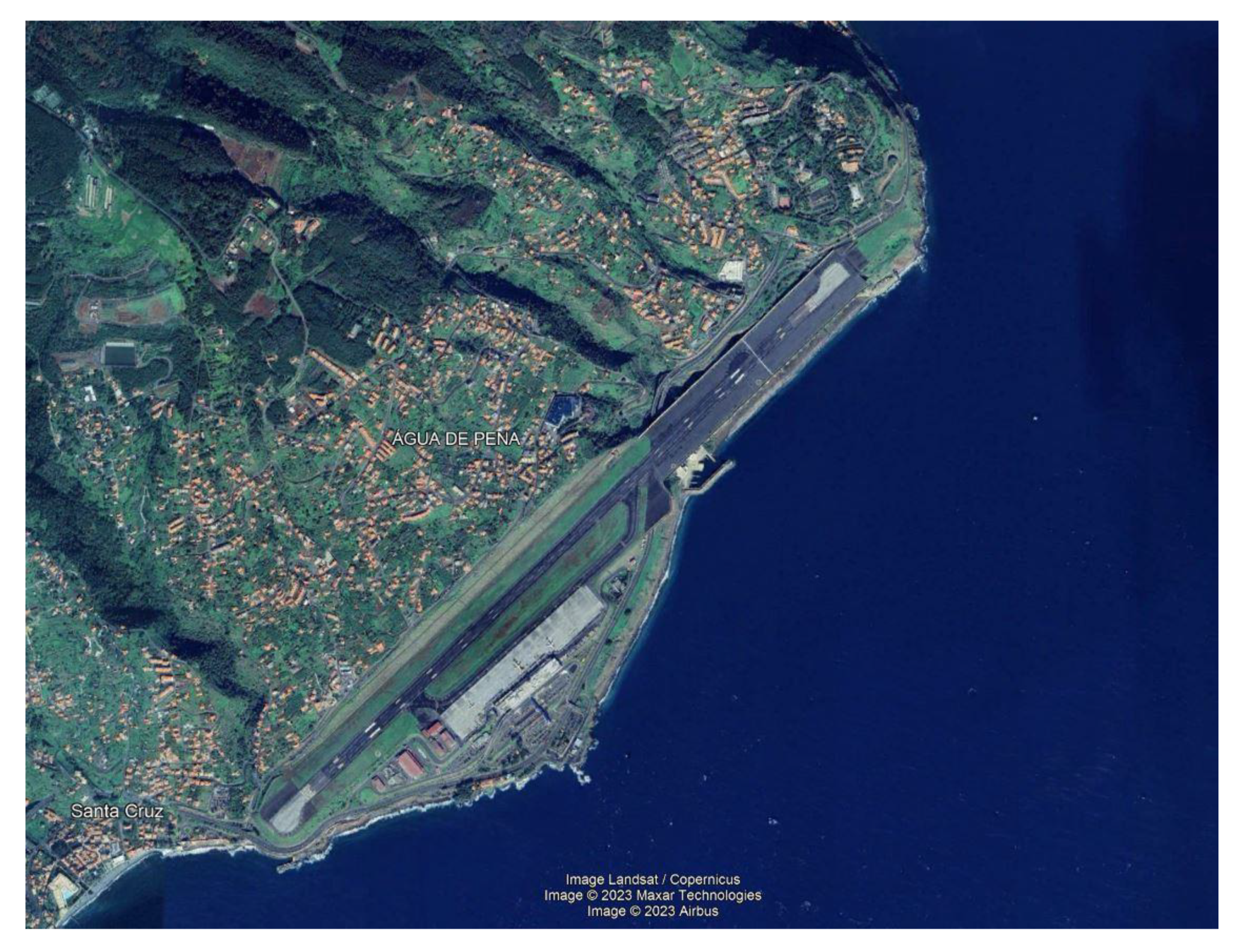
Figure 2.
Arrival of the "Super-constellation G" airplane at Madeira Airport in 1964 [4]
Figure 2.
Arrival of the "Super-constellation G" airplane at Madeira Airport in 1964 [4]
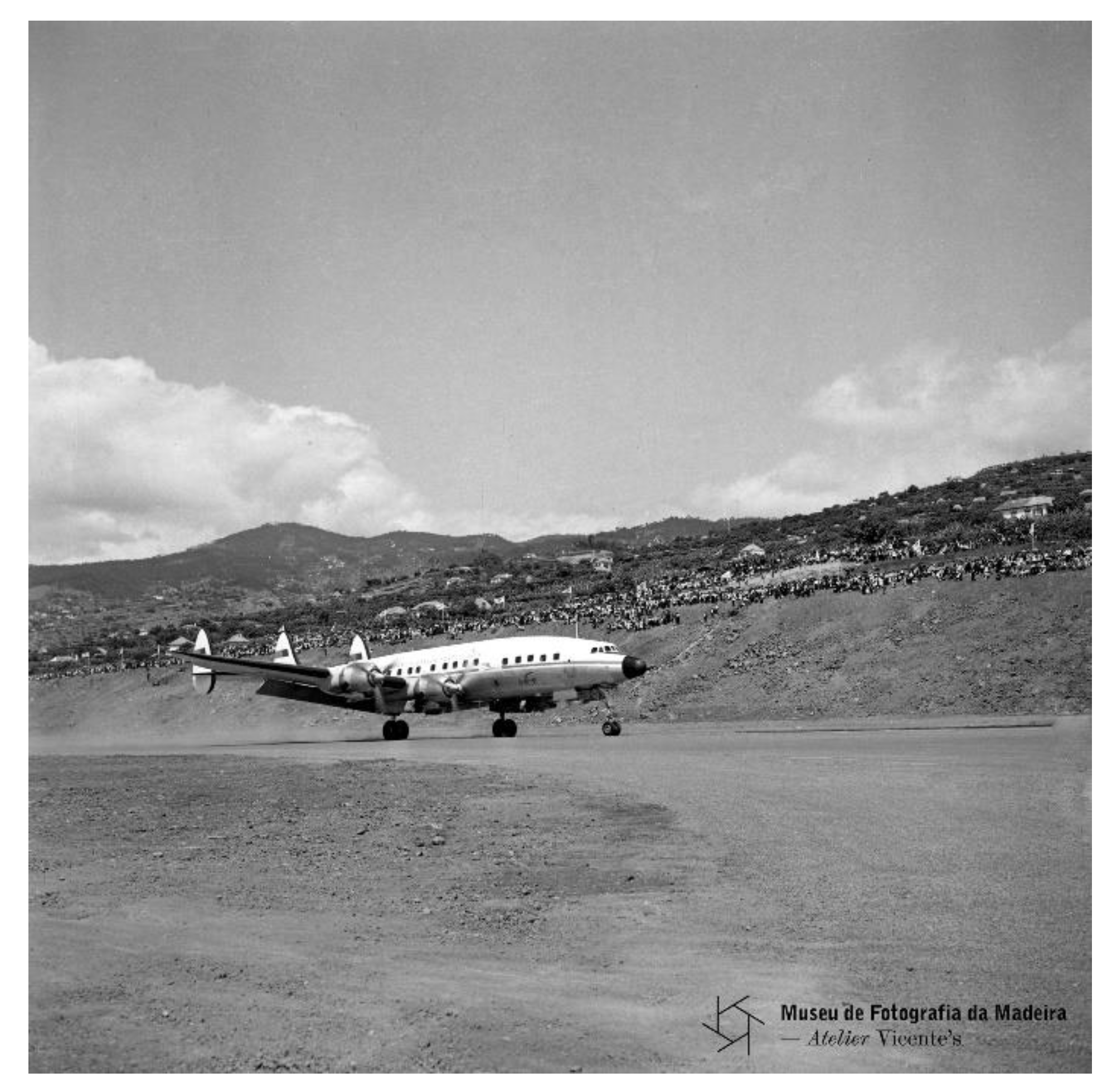
Figure 3.
Test flight on an experimental runway at Madeira Airport in 1957 [4]
Figure 3.
Test flight on an experimental runway at Madeira Airport in 1957 [4]
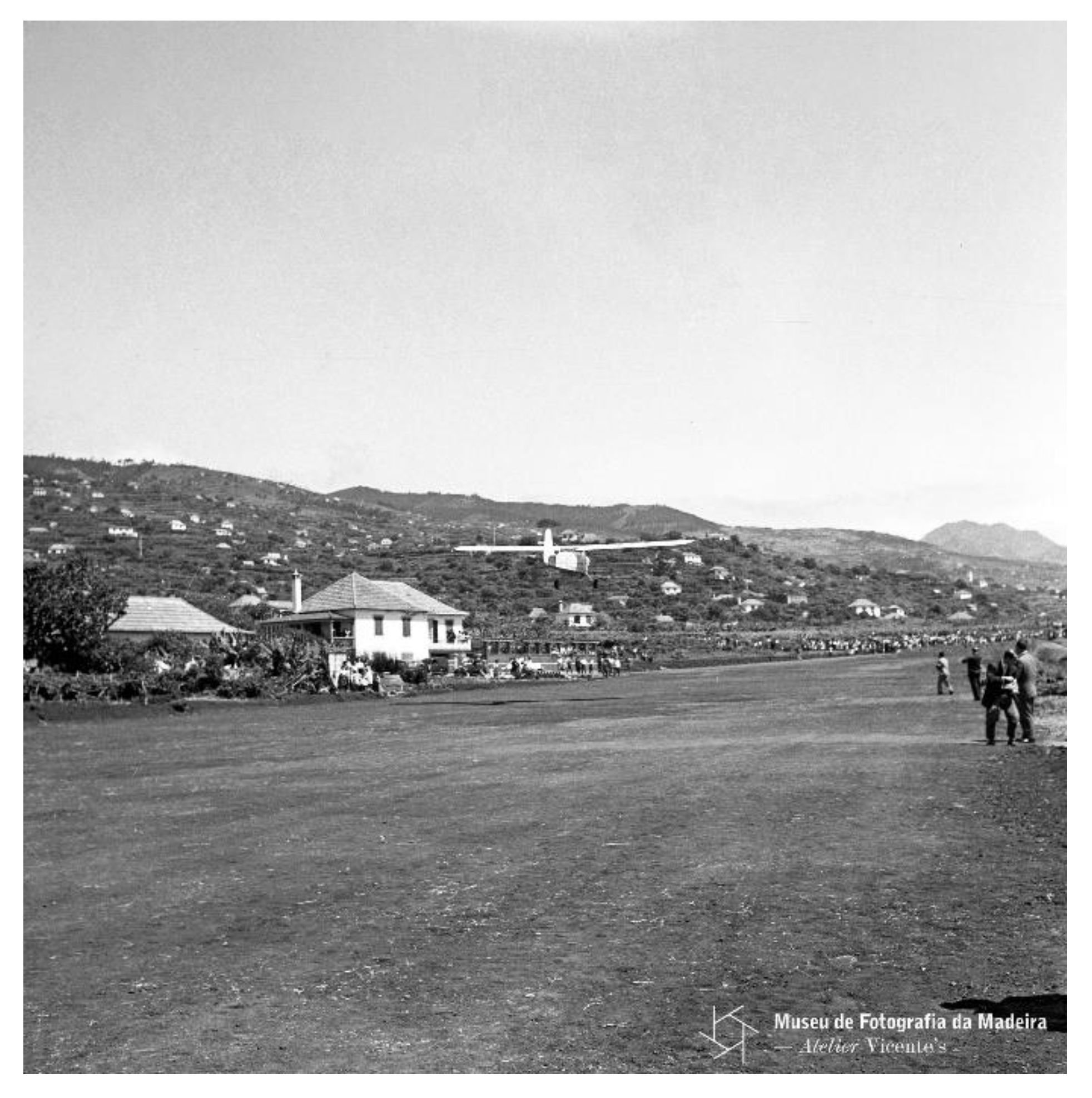
Figure 4.
Pillar with Circular Section
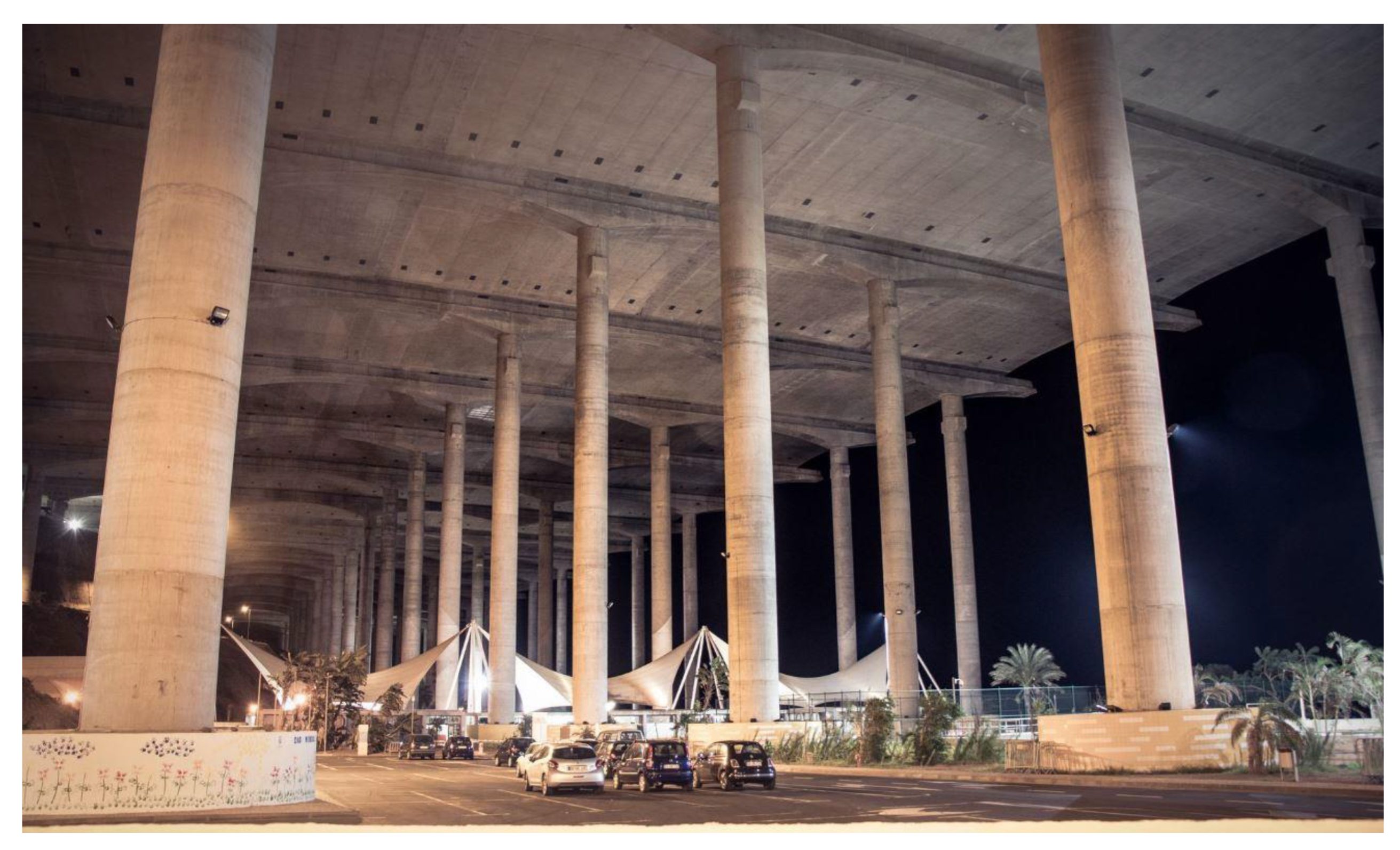
Figure 5.
Typical Cross-Section Cut of the Runway Structure [6]
Figure 5.
Typical Cross-Section Cut of the Runway Structure [6]
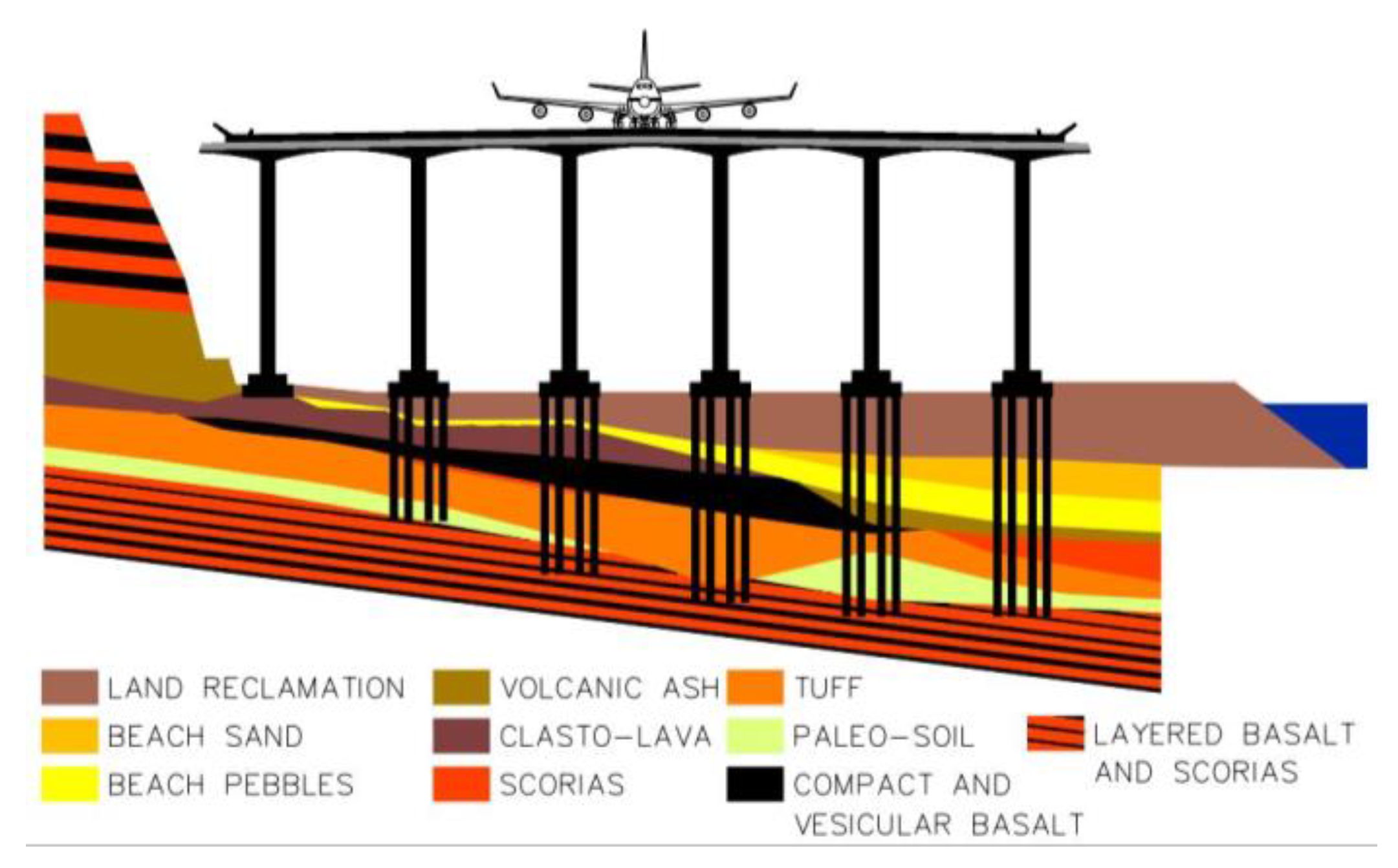
Figure 6.
Pre-stressing in Beams of the Portals [6]
Figure 6.
Pre-stressing in Beams of the Portals [6]
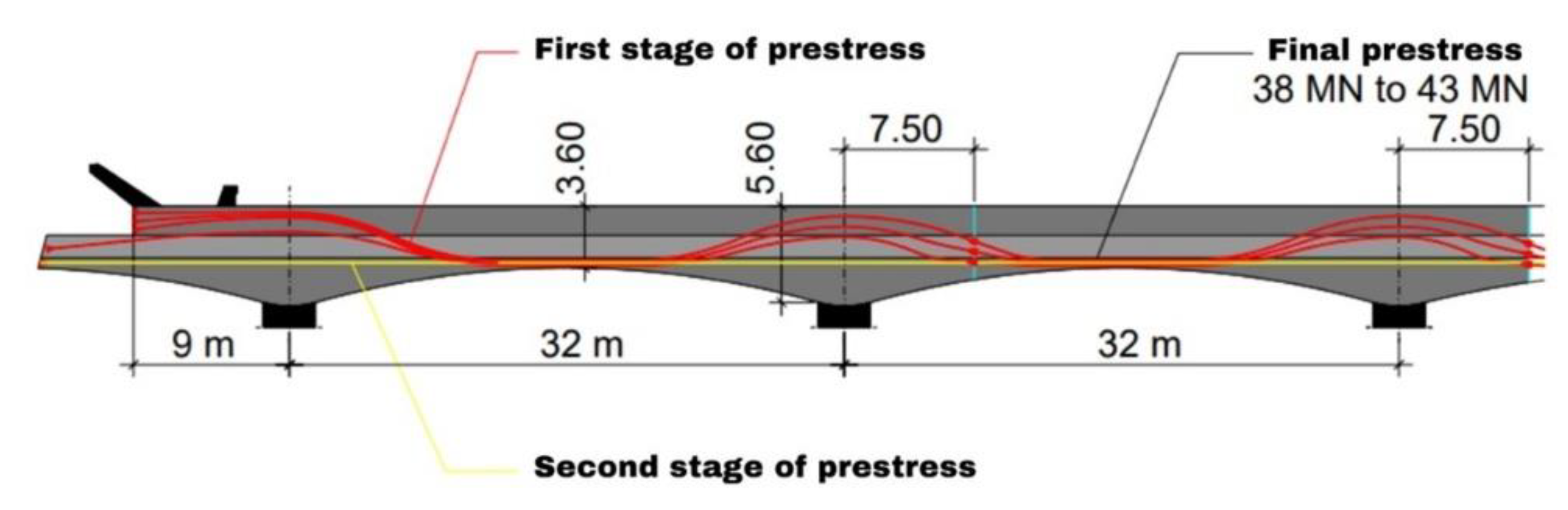
Figure 7.
Madeira Airport Pre-stressing in Beams of the Portals
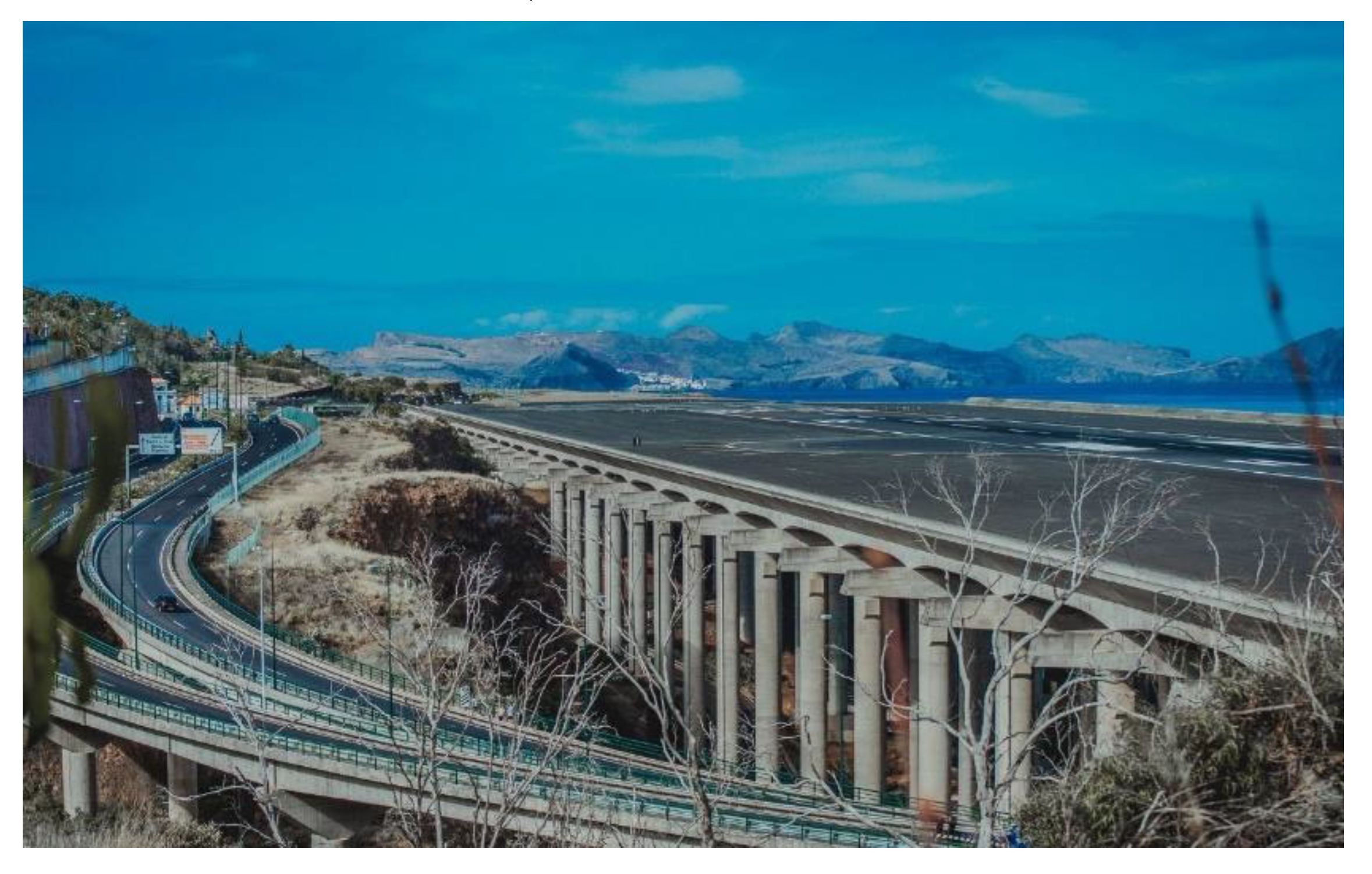
Figure 8.
Municipality of Machico and its respective parishes [7]
Figure 8.
Municipality of Machico and its respective parishes [7]
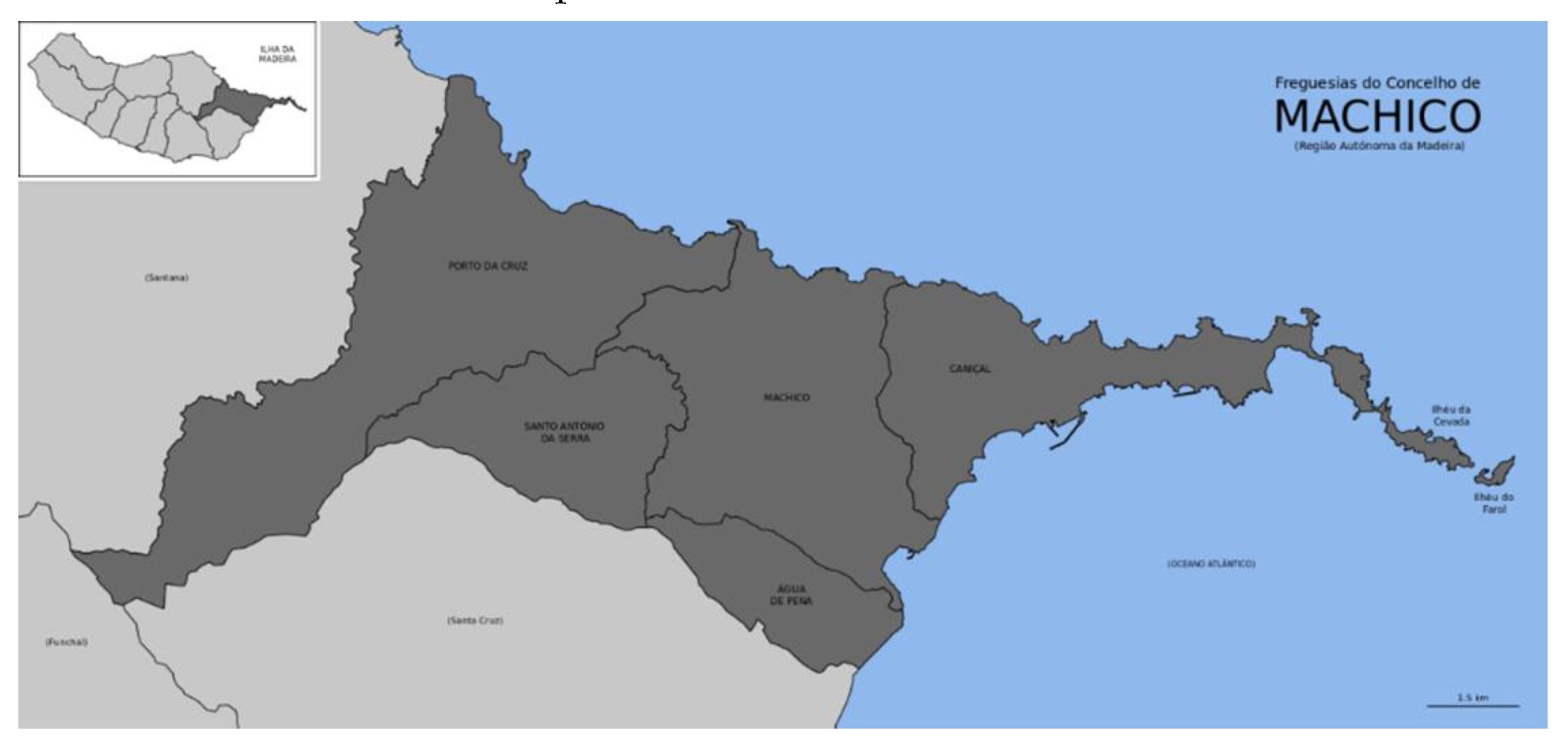
Figure 9.
Population Density and its respective parishes [7]
Figure 9.
Population Density and its respective parishes [7]
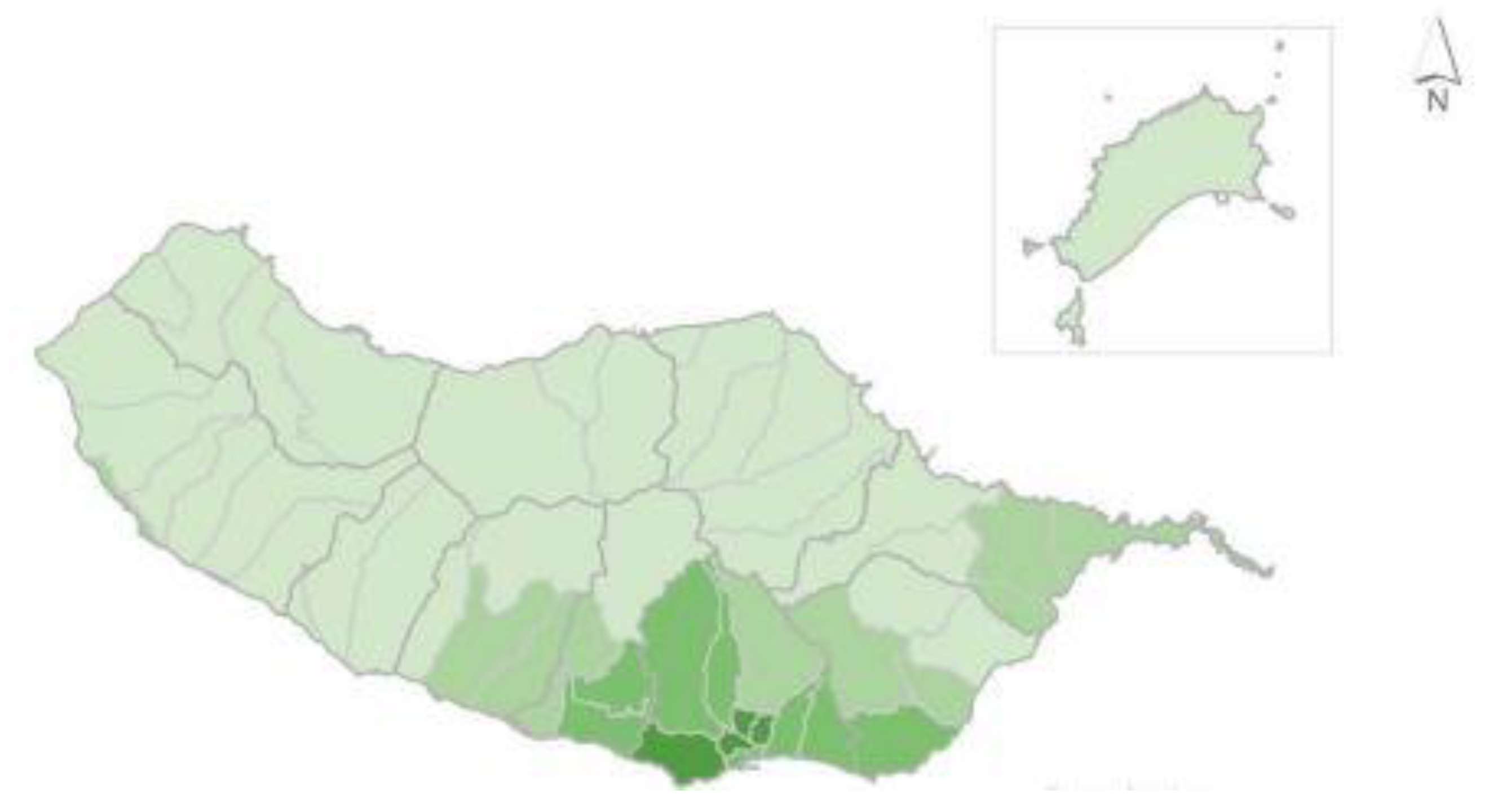
Figure 10.
Implosion of Hotel Atlantis [11].
Figure 10.
Implosion of Hotel Atlantis [11].
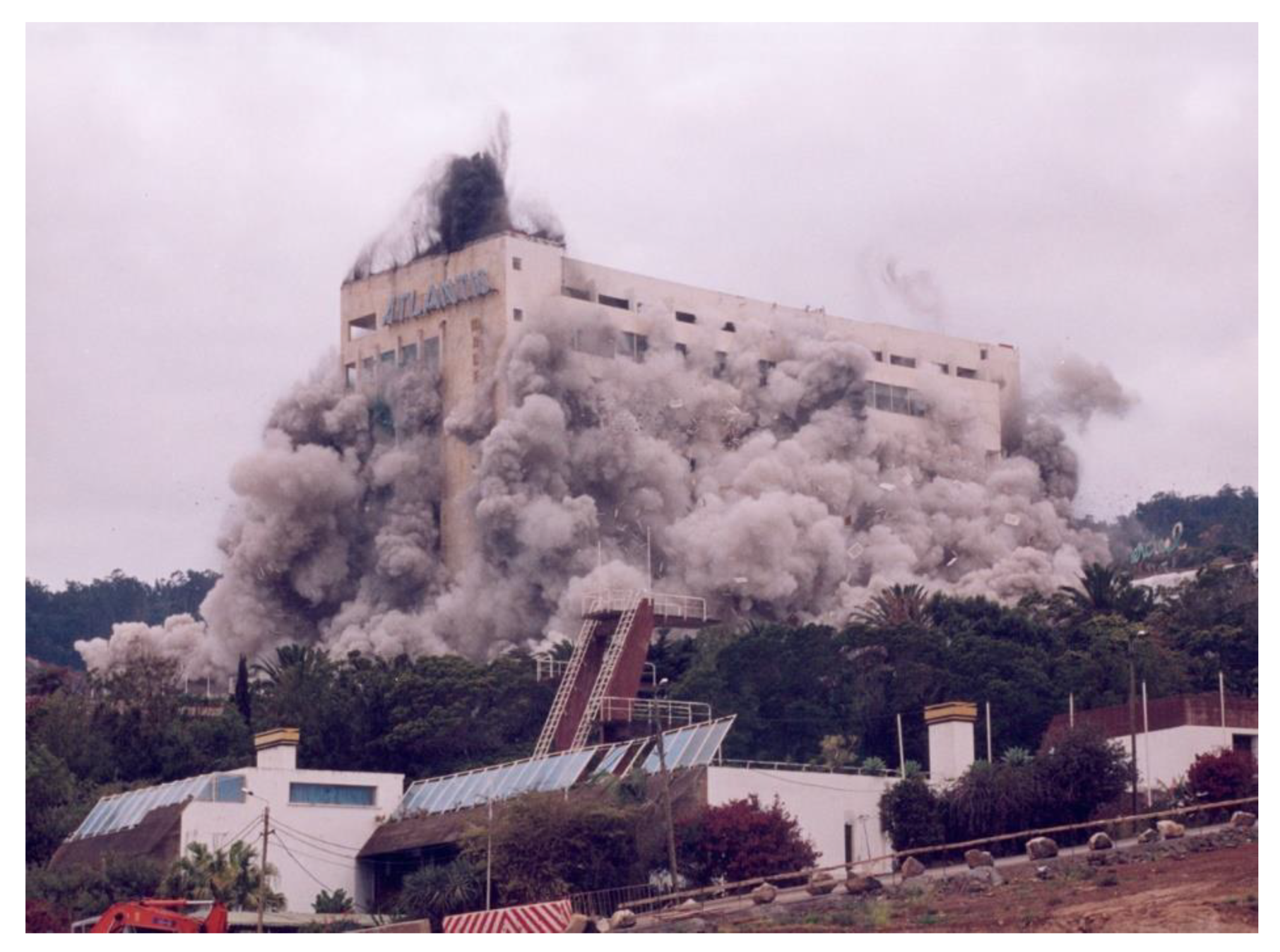
Figure 11.
Quinta do Lorde Resort.
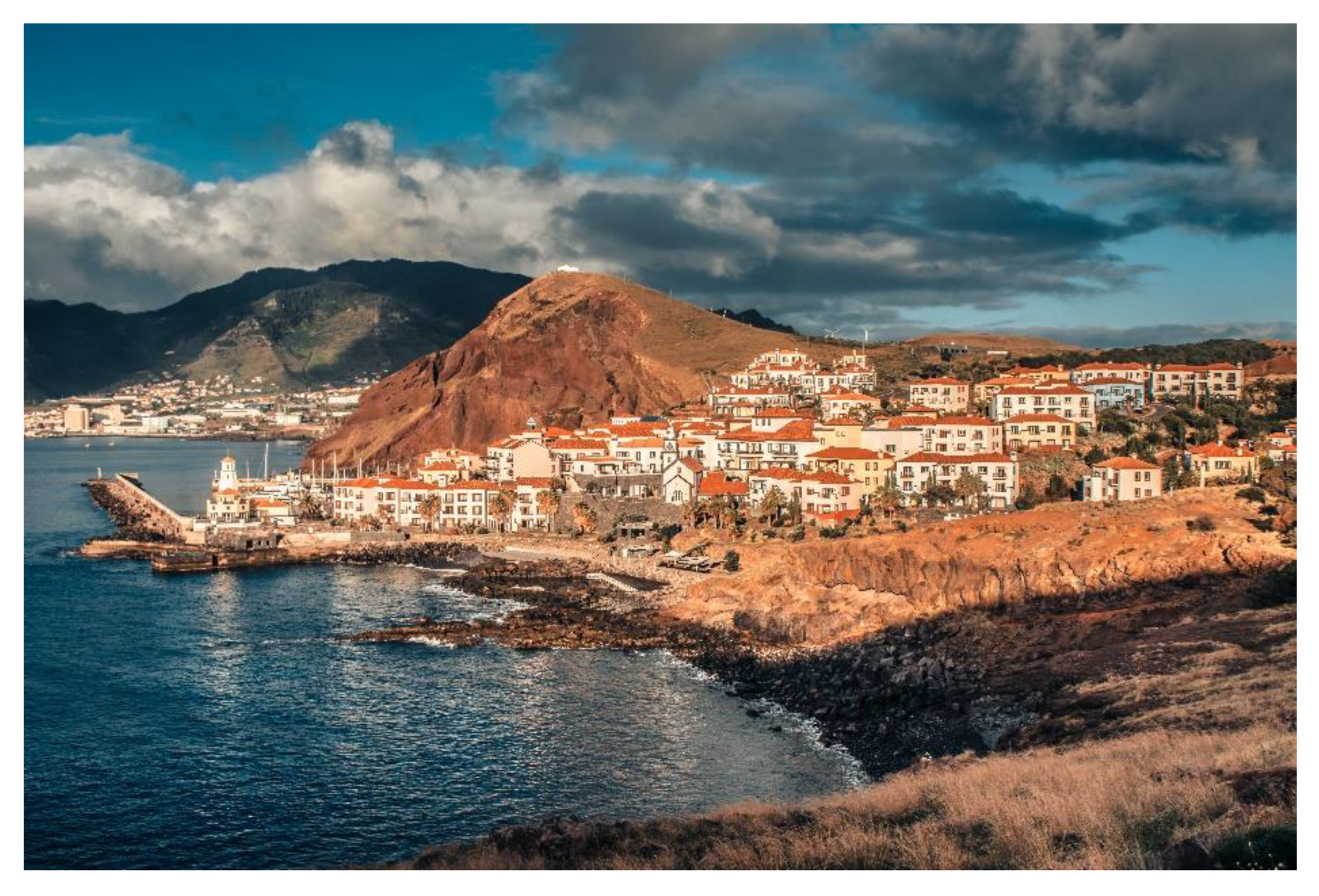
Figure 12.
Ecositios on the trail [21]
Figure 12.
Ecositios on the trail [21]
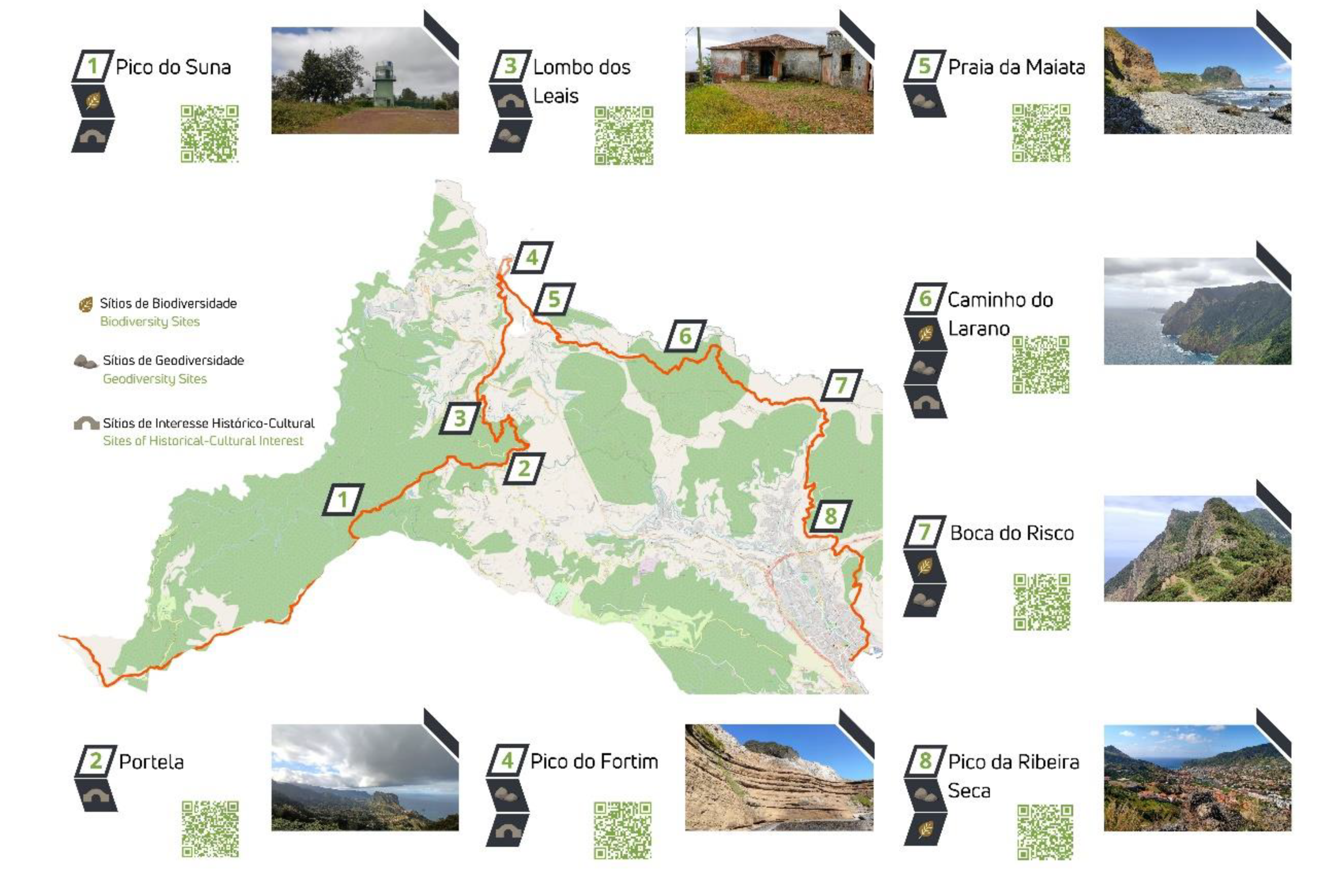
Figure 13.
Natura 2000 Network in Machico [11]
Figure 13.
Natura 2000 Network in Machico [11]
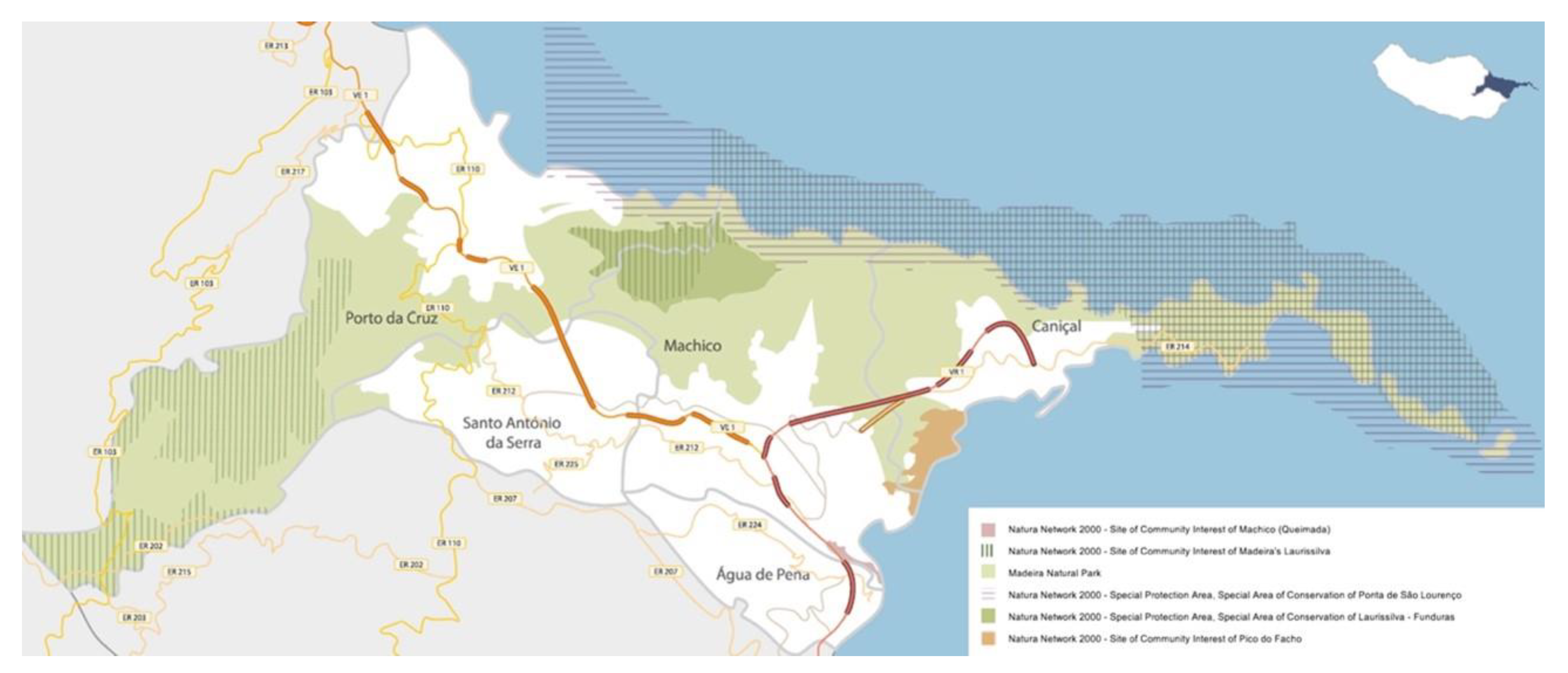
Figure 14.
SIC of Pico do Facho.
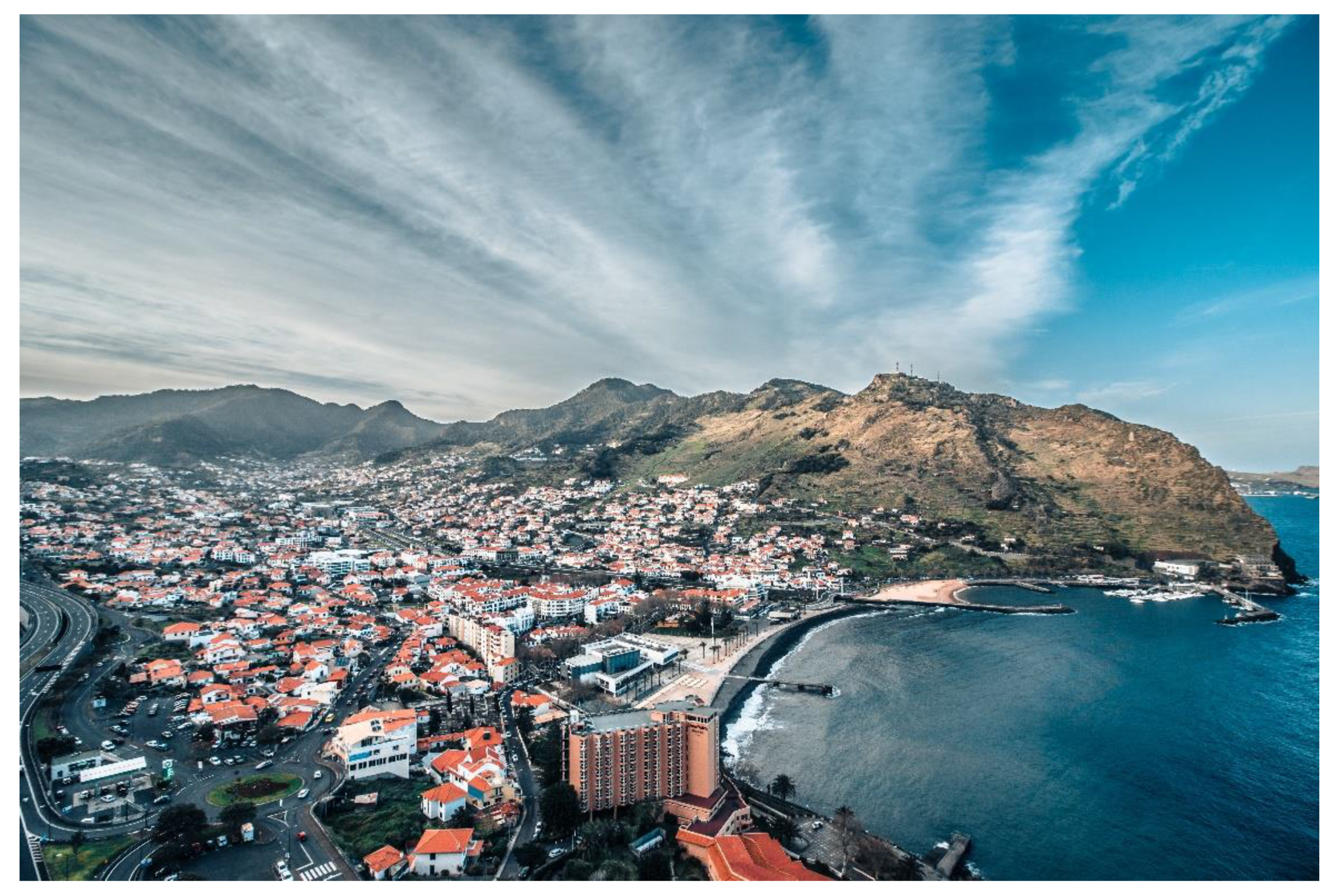
Figure 15.
SIC of Machico
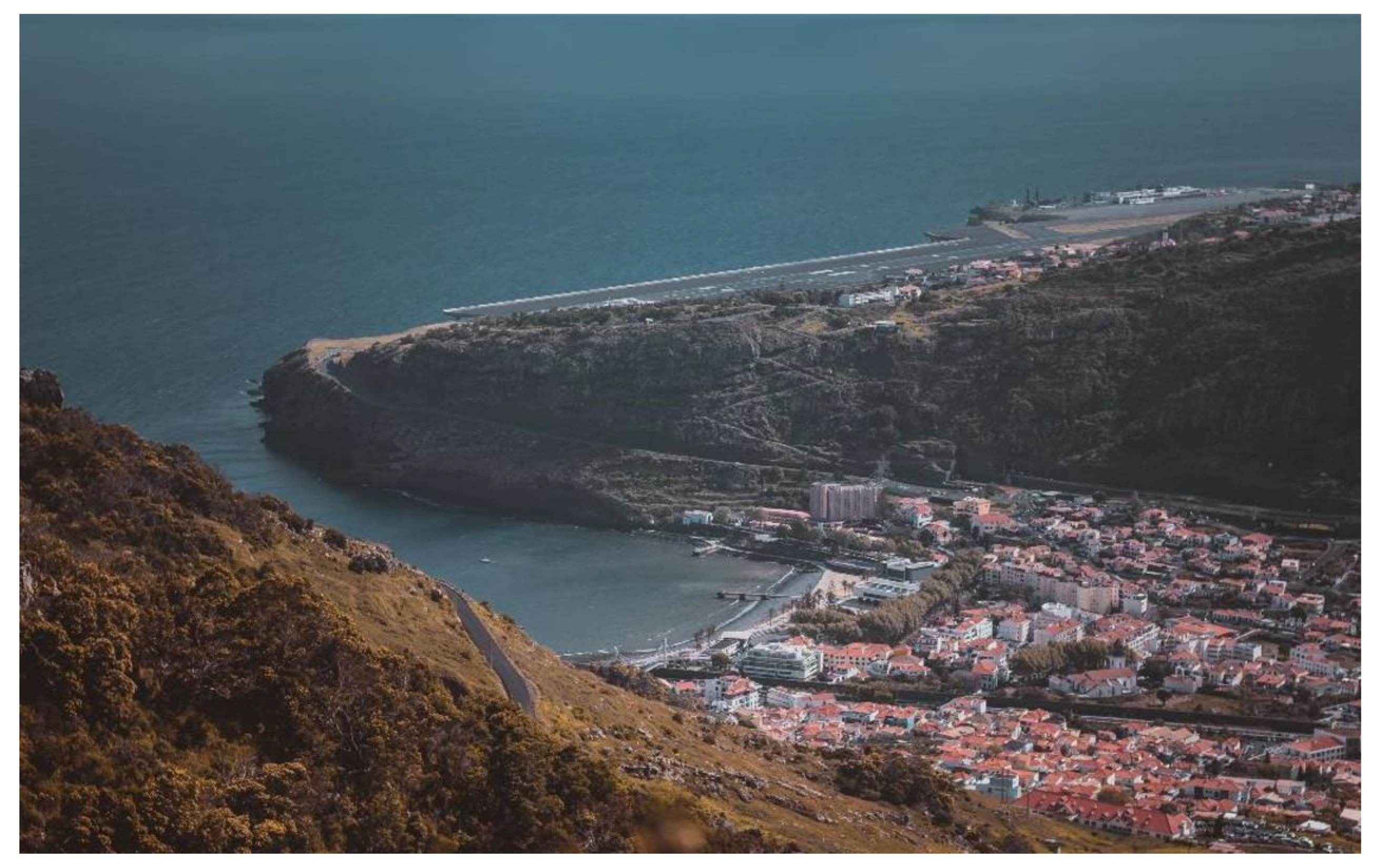
Figure 16.
AVT Terra Batista in Porto da Cruz [7].
Figure 16.
AVT Terra Batista in Porto da Cruz [7].
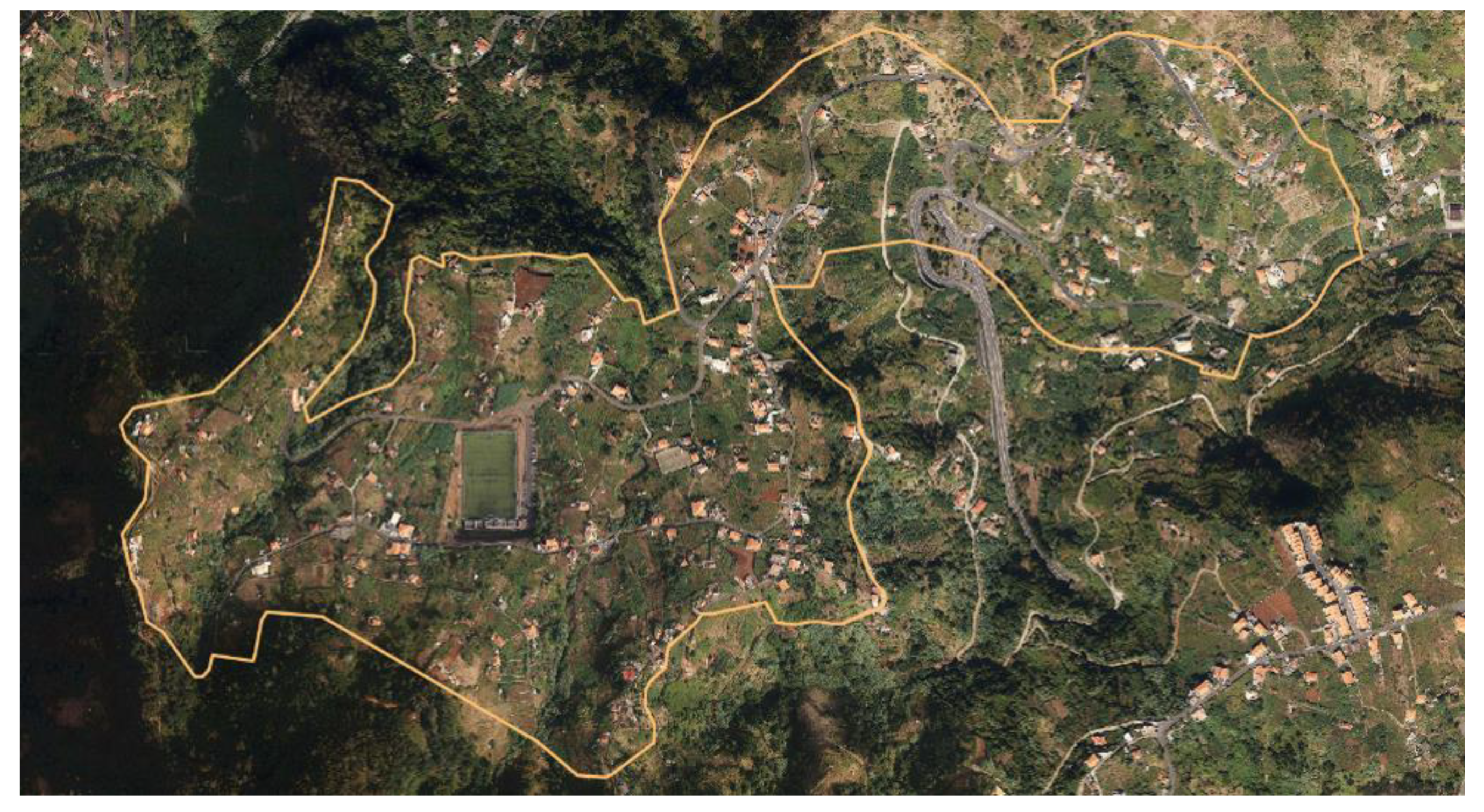
Figure 17.
Machico landscape.
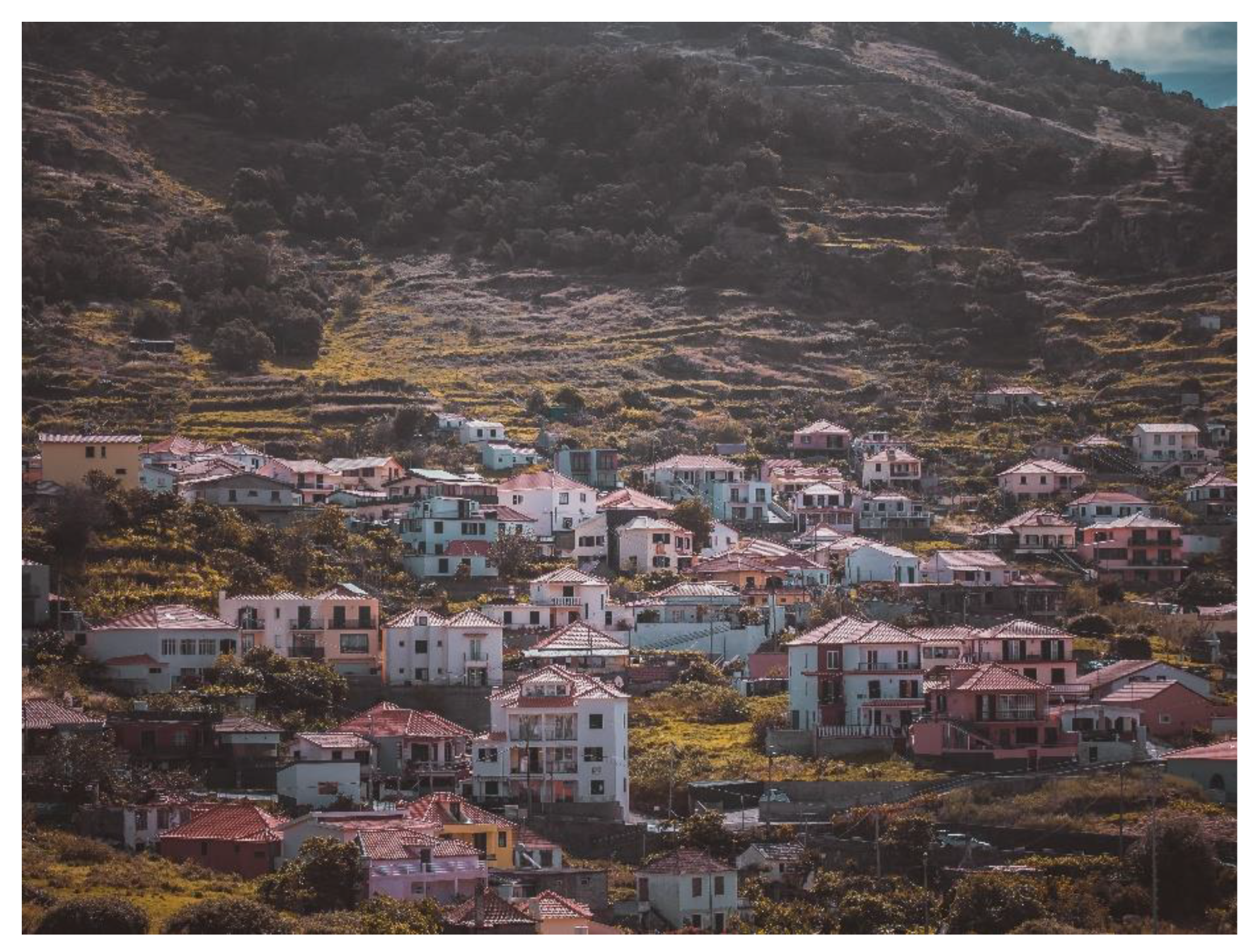
Figure 19.
Historical Heritage [11]
Figure 19.
Historical Heritage [11]
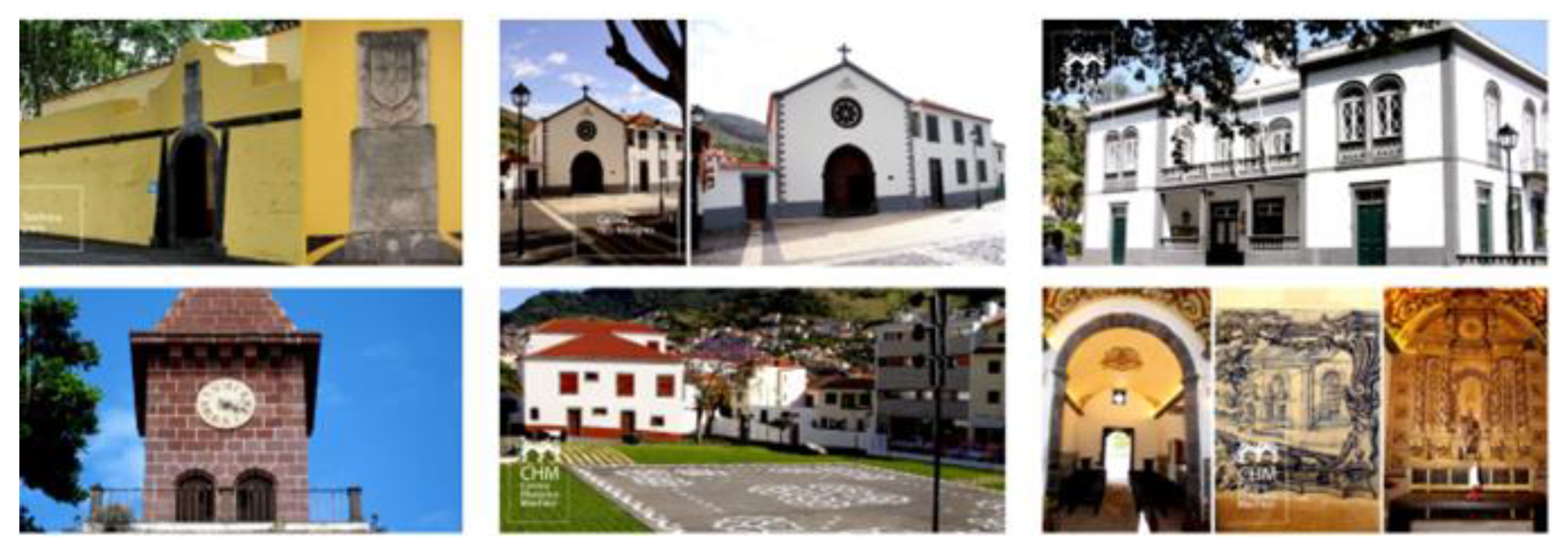
Figure 24.
Porto da Cruz, sugar cane parish [4].
Figure 24.
Porto da Cruz, sugar cane parish [4].
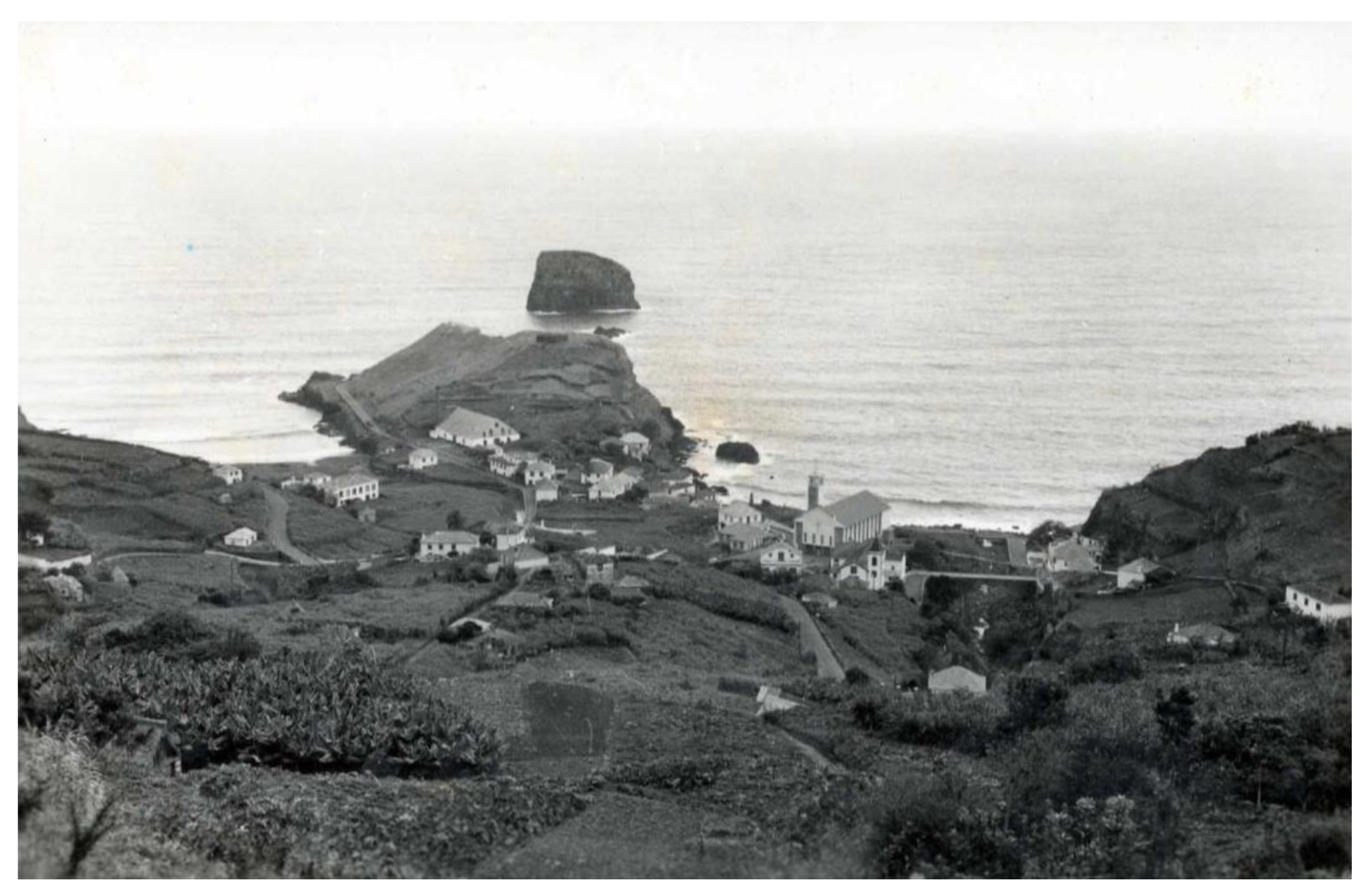
Figure 25.
Fifteenth Century Market
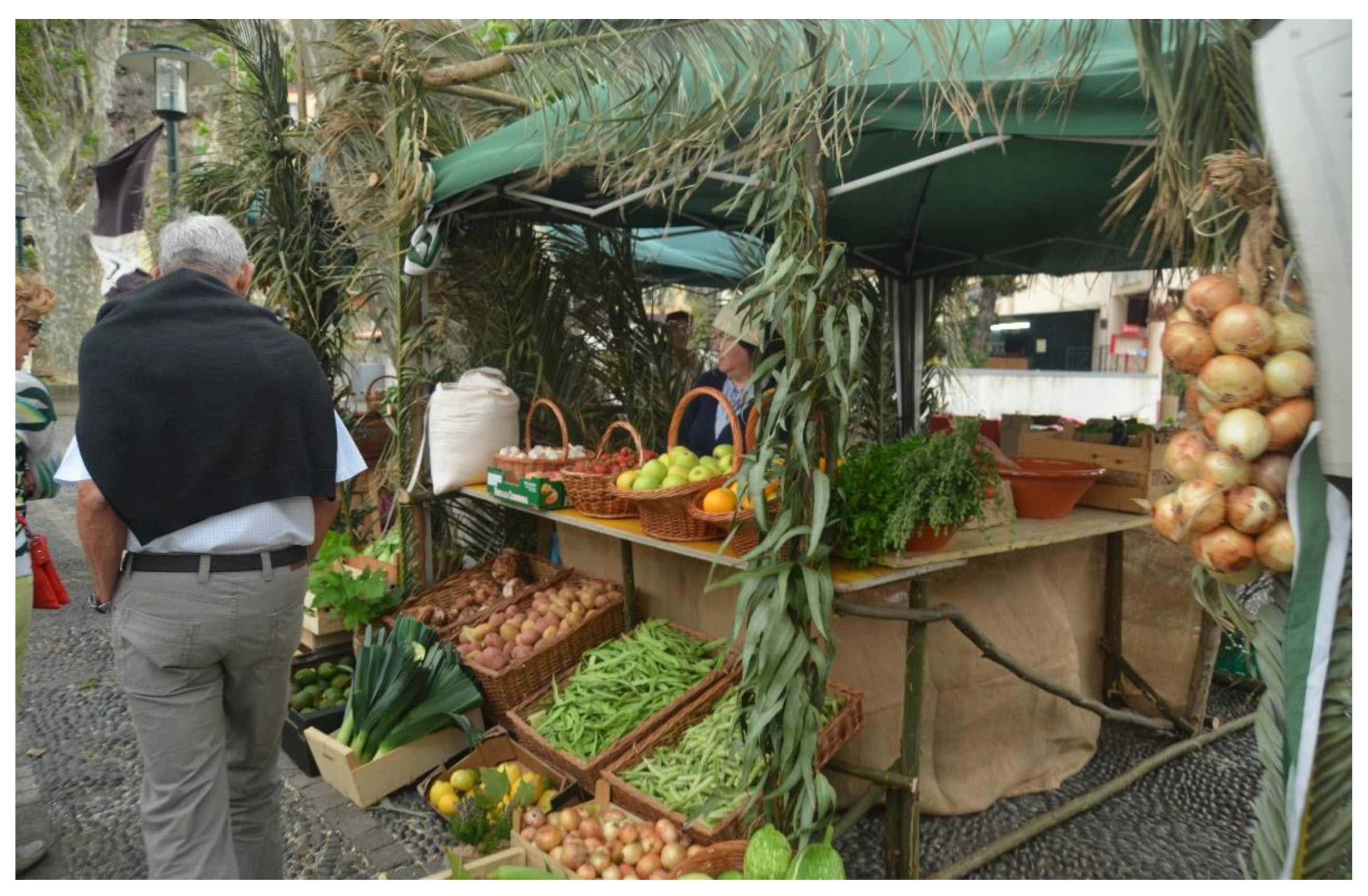
Figure 26.
Trail Running at Caniçal parish.


Table 1.
Resident Population in Machico
| Population (N. º) | Variantion (%) | |||||||
|---|---|---|---|---|---|---|---|---|
| 1981 | 1991 | 2001 | 2011 | 2021 | 1981-1991 | 1991-2001 | 2001-2011 | 2011-2021 |
| 22 126 | 22 016 | 21 747 | 21 828 | 19 593 | -0.5 | -1.2 | 0.4 | -10.2 |
Table 2.
Comparison of Tourism Accommodation Establishments in Various Municipalities.
| Municipality | Accommodation Establishments |
|---|---|
| Calheta | 58 |
| Câmara de Lobos | 11 |
| Funchal | 175 |
| Machico (Your Data) | 18 |
| Ponta do Sol | 11 |
| Porto Moniz | 13 |
| Ribeira Brava | 15 |
| Santa Cruz | 41 |
| Santana | 19 |
| São Vicente | 21 |
| Porto Santo | 19 |
Table 3.
Average Stay in Tourism Accommodation in Machico by Month (2022).
| Month | Number of Overnight Stays | % Variation from Previous Month |
|---|---|---|
| January | 5,779 | +123.9% |
| February | 5,000 | +222.8% |
| March | 10,499 | +534.8% |
| April | 17,863 | +778.7% |
| May | 20,607 | +444.6% |
| June | 20,058 | +171.3% |
| July | 21,171 | +65.7% |
| August | 22,327 | +19.0% |
| September | 19,876 | +16.6% |
| October | 19,339 | +40.4% |
| November | 14,691 | +27.6% |
| December | 14,559 | +73.5% |
Table 4.
Overnight Stays in Tourist Accommodations in Machico in February (2023).
| Rooms | Beds | Net Bed Occupancy | Net Room Occupancy Rate |
|---|---|---|---|
| 354 | 735 | 61.4% | 55.6% |
Table 5.
Key Economic Indicators Before and After Airport Expansion
| Indicator | Before Expansion | After Expansion | Change (%) |
|---|---|---|---|
| Direct Economic Impact | |||
| Passenger Traffic (Annual) | 200.000 - 400.000 | 3.000.000 - 4.000.000 | 650% - 1900% |
| Airport Revenue (Annual) | 5.000.000 - 10.000.000 | 100.000.000 - 150.000.000 | 1900% - 2900% |
| Employment (Direct) | 200 - 500 | 1.500 - 3.000 | 200% - 1400% |
| Indirect Economic Impact | |||
| Tourism Spending (Annual) | 10.000.000 - 20.000.000 | 200.000.000 - 300.000.000 | 900% - 1400% |
| Employment (Indirect) | 1.500 | 10.000 | 566.67% |
| Wider Economic Impact | |||
| Gross Regional Product (GRP) | 10% do PIB | 30% do PIB | 200% |
| Business Activity | Index: 4 | Index: 8 | 100% |
Disclaimer/Publisher’s Note: The statements, opinions and data contained in all publications are solely those of the individual author(s) and contributor(s) and not of MDPI and/or the editor(s). MDPI and/or the editor(s) disclaim responsibility for any injury to people or property resulting from any ideas, methods, instructions or products referred to in the content. |
© 2024 by the authors. Licensee MDPI, Basel, Switzerland. This article is an open access article distributed under the terms and conditions of the Creative Commons Attribution (CC BY) license (http://creativecommons.org/licenses/by/4.0/).
Copyright: This open access article is published under a Creative Commons CC BY 4.0 license, which permit the free download, distribution, and reuse, provided that the author and preprint are cited in any reuse.