

Submitted:
17 July 2024
Posted:
18 July 2024
You are already at the latest version
Abstract
Objectives. The aim of this study was to demonstrate the ability to visualize the results of the Scilit platform's bibliometric data analysis on the topic "AI & Machine Learning" to identify publications reflecting specific issues of the topic. Data source. Bibliometric records exported from the Scilit platform on the topic "AI & Machine Learning" for the years 2021–2023 were used. For each year, 6,000 records were downloaded in CSV and RIS format. Programs and utilities used. VOSviewer, Scimago Graphica, Inkscape, FP-growth utility, GSDMM algorithm. Used services: Elicit, QuillBot, Litmaps. Results. It has been shown that bibliometric data from the open access abstract database Scilit can serve as a quality alternative to subscription-only databases. Data exported from the Scilit platform require preprocessing to make them available in a format that can be processed by programs such as VOSviewer and Scimago Graphica. The use of GSDMM and FP-growth algorithms is effective for structuring bibliometric data for further visualization. The Scimago Graphica software provides wide possibilities for building compound diagrams, in particular, for representing the network of keywords in such important coordinates for bibliometric analysis as average year of publication and average normalized citation, as well as for building an alluvial diagram of co-occurrence of more than two keywords. The possibility of using such services as elicit.com, quillbot.com and app.litmaps.com to accelerate the selection of publications on the topic under study is shown.
Keywords:
bibliometric data visualization
; AI & machine learning
; Scilit
; VOSviewer
; Scimago Graphica
; GSDMM
; FP-growth
1. Introduction
Visualization of bibliometric data enhances research analysis by mapping concepts, identifying trends, showcasing novelty, and providing insights for future studies.
Objectives
The purpose of this study was to demonstrate the ability to visualize the results of the Scilit platform bibliometric data analysis on the subject ‘AI & Machine Learning’ in order to identify publications reflecting selected issues of the topic.
In particular, to show the capabilities of the Scimago Graphica software to create compound diagrams reflecting the co-occurrence of keywords.
Note: Throughout this article, double quotes have been used either to quote text directly or to match directly in a query. Single quotes have been used to emphasize a substring in text, such as a keyword or the name of a field in a table.
1.1. Publications Explore the Topic of Visualization of Bibliometric Data
The paper [1] analyzes journal articles and conference proceedings on data visualization to understand the current and future development trends. The study aims to improve the intellectual evaluation of data visualization to promote its popularization and fully realize the significant benefits of big data.
In the article [2] the authors argue that academic analysis of bibliometric data often fails to take into account the needs and expectations of users. It is very important to simplify, make transparent and understandable quantitative estimates, and not to fixate on the accuracy or purity of research.
The paper [3] uses bibliometrics and information visualization to quantitatively analyze metallurgy papers over 20 years, revealing research hot spots, domestic and foreign technical development trends.
The study [4] explores the status of medical big data (MBD) through visualization analysis of 988 journal papers. It provides insights into annual trends, top players, citations, keywords distribution, highly cited papers, co-authorship status, and influential journals and authors.
The paper [5] explores the use of bibliometrics and information visualization in decision-making processes, highlighting their potential to structure processes and organize results, particularly in the context of student retention studies in higher education.
1.2. Relevance of the Scilit Abstract Database for Bibliometric Analysis
Scilit is an open-access abstract database, managed by MDPI, that can be used to analyze research trends and patterns [6]. Some key advantages of using Scilit for bibliometric analysis:
- Scilit aggregates data from over 40,000 publishers.
- Scilit covers 166 million scholarly publications.
- Scilit provides citation score.
- Scilit Rankings: ranking of top publishers, journals and countries by number of journal articles published.
- Related articles widget: engine to recommend papers from Scilit based on keywords.
- Provides export of bibliometric data in a convenient form for analysis.
Examples of articles on the analysis of bibliometric data from the Scilit platform for different fields of research.
The authors [7] compares metadata and completeness of research publications in new academic databases. A random CrossRef sample of over 115k records was searched in seven databases. Results showed academic search engines gather less information and have low completeness, while third-party databases have more metadata quality and higher completeness rates. The main problem with third-party databases is the loss of information from integrating different sources.
Biological databases are crucial for research, but manual curation is time-consuming. To improve data integration and link literature to underlying data, Europe PMC has developed SciLite, a platform overlaying text-mined annotations on research articles. This aims to aid users in finding key concepts and providing links to related resources [8].
The study [9] aims to prepare bibliometric data from the Scilit platform on energy efficiency and conservation for further analysis to identify relevant research topics. The data was exported from the platform and analyzed using lemmatization dictionaries, VOSviewer, Scimago Graphica, GSDMM algorithm, Carrot2 demo version, and NMF algorithm.
1.3. The Topic of Visualization in Bibliometric Analysis According Scilit Abstract Database Data
The query ‘Content Type: JOURNAL-ARTICLE; Year: 2023; Common Fields [Title, Abstract, Keyword]: Visualization AND Common Fields [Title, Abstract, Keyword]: bibliometric AND Common Fields [Title, Abstract, Keyword]: analysis’ to the abstract database Scilit got 2165 results, which indicates the topicality of this issue. The data are current as of July 07, 2024.
The main areas of research can be assessed by the occurrence of keywords. The top 30 keywords are shown in Table 1.

Table 1.
The 30 most frequent keywords from the ‘Publication Keywords’ field in 2165 records.
| Term | Count | Term | Count |
|---|---|---|---|
| bibliometric analysis | 797 | literature review | 36 |
| bibliometric | 657 | citation analysis | 35 |
| citespace | 430 | data visualization | 34 |
| vosviewer | 421 | biblioshiny | 33 |
| visualization | 163 | sustainability | 33 |
| web of science | 99 | cancer | 28 |
| visual analysis | 84 | knowledge graph | 27 |
| visualization analysis | 78 | knowledge map | 25 |
| research trends | 67 | machine learning | 25 |
| covid-19 | 52 | bibliometrix | 24 |
| scopus | 52 | inflammation | 24 |
| research hotspots | 51 | bibliometric study | 23 |
| artificial intelligence | 42 | knowledge mapping | 23 |
| trends | 40 | gut microbiota | 22 |
| hotspots | 38 | deep learning | 21 |
The terms ‘bibliometric analysis, bibliometric, bibliometric study’ reflect the major research focus, that fits the task at hand. The key words ‘visualization, visual analysis, visualization analysis, data visualization’ refer to visualization issues. The name of the most frequently used programs in bibliometric analysis: ‘CiteSpace, VOSviewer, biblioshiny/bibliometrix’. The most common sources of bibliometric data: Web of Science, Scopus’ are high-quality abstract databases available only by subscription. It should be noted that the above programs work well with data from these databases.
Keywords: ‘research trends, research hotspots, trends, hotspots, literature review, citation analysis, knowledge graph, knowledge map’ reflect the main objectives of the conducted bibliometric studies. ‘Artificial intelligence, machine learning, deep learning’ reflect current analytical challenges, and the terms ‘Covid-19, cancer, inflammation, gut microbiota’ indicate the widespread use of bibliometric methods in medicine. The reason for the latter is understandable, since the life sciences are very relevant today and a lot of papers are published about them. In addition, there is the concept of evidence-based medicine, where systematic reviews and meta-analyses are widely used.
It is worth noting that although medical publications are the most common in the context of bibliometric research, highly cited papers are often from the topics ‘Cybersecurity, Nuclear Technology & Instrumentation, Applied Physics, Computer Vision & Graphics’ which may indicate that visualization of bibliometric research publications on engineering topics may be in demand but underrepresented compared to medical research. These claims can be verified by referring to the ‘Analytics view’ section of the Scilit platform and the results obtained from the above query.
1.4. Justification of the Novelty of the Ongoing Research
In the 2165 bibliometric records obtained by us, the term ‘web of science’ appears in the fields ‘Publication Title, Publication Keywords’ 151 times in different spellings, and ‘Scopus’ - 90 times, the term ‘Scilit’ does not meet once. The Scilit platform provides open access to its data and currently provides access to 166 million scholarly publications while Scopus only provides access to 91+ million records (https://blog.scopus.com/about#:~:text=Scopus%20puts%20powerful%20discovery%20and,profiles%20and%2017%2B%20million%20authors.) and this is despite the fact that Scilit has only been indexing publications since 2015.
This result indicates the relevance and novelty of research on the analysis of Scilit capabilities for bibliometric studies and visualization of the obtained data.
The novelty of using the Scimago Graphica program is determined by the fact that the term ‘vosviewer’ appears in the fields ‘Publication Title, Publication Keywords’ 491 times, ‘citespace’ - 578, and ‘scimago graphica’ only 3 times.
The FP-growth/fpgrowth and GSDMM algorithms are not mentioned even once in 2165 records. However, in a general context these algorithms are widely used, e.g., query to Scilit — ‘Common Fields [Title, Abstract, Keyword]: FP-growth OR Common Fields [Title, Abstract, Keyword]: fpgrowth’ gave 5438 results.
Modern services using AI (Elicit, Litmaps, QuillBot) in text processing greatly facilitate the work on analytical reviews and reports, but their mention was not found in the 2165 records used in this paper.
1.5. Some Advantages of Scimago Graphica for Bibliometric Analysis
- Scimago Graphica provides users with the possibility to create a wide variety of complex and interactive data visualizations without coding knowledge.
- Scimago Graphica is an efficient tool for data analysis on bibliometric datasets, in addition to its capabilities in visualization.
- Scimago Graphica is an application that democratizes data visualization, enabling researchers and institutions with limited resources to create professional-quality bibliometric data visualizations.
Publication by the authors and developers of SCImago Graphica, a no-code tool that enables the creation of complex visualizations through simple drag-and-drop interactions, making it suitable for visual communication and exploratory data analysis. [10].
The research [11] aims to analyze scholarly articles on food safety in 15 RCEP countries from 2022 to 2023 using advanced tools like VOSviewer and Scimago Graphica, identifying research hotspots and contributing to existing knowledge.
The article [12] showcases the Lens platform’s ability to identify bibliometric/scientometric issues through key term co-occurrence and clustering. It uses VOSviewer, Scimago Graphica, and Sifaka text mining tools, revealing its predominant use in political, social, and medical research fields.
2. Materials and Methods
2.1. Data Source
The data used in this paper were bibliometric records exported from the Scilit platform, which meet the following requirements:
Content Type: JOURNAL-ARTICLE
- Subject: AI & Machine Learning
- Year: 2021–2023
- Language: English
- Sort by Times cited
The data is current as of June 16, 2024.
For each year, 6,000 records were downloaded in CSV and RIS format. CSV files have no ‘Abstract’ field, so the values were taken from RIS files. Records were compared by ‘DOI’ and ‘Title’ fields.
Quality of records: two records out of 18,000 were missing a “DOI” and 349 records did not have the “Publication Keywords” field filled in, and three records in this field contained records not in English.
In the RIS formatted data, 21 records did not have the ‘Abstract’ field filled in. Taking this into account, only 17979 records were used as short texts in the ‘Title’ and ‘Abstract’ fields in the clustering process. All of these records contained a populated ‘DOI’ field so that they could be compared to records from CSV files.
2.2. Text Preprocessing
The following ‘Text Preprocessing’ was carried out at different stages of the study:
- removing of unused substrings, e.g., abbreviations in brackets, hieroglyphs, Cyrillic characters, mathematical formulas (usually in Latex), markup tags including SVG markup, substrings such as “Published by Elsevier B.V.. All rights reserved” and so on
- lemmatization, a dictionary lemmatization collected mostly on github and augmented with new entries such as blockchains → blockchain was used. The dictionary included 260530 substitutions
- removal of stop words, stop words taken from GATE (General Architecture for Text Engineering) and spaCy programs were used
- the text was converted to lower case, in some cases spaces within compound keywords were replaced with underscores in order to perceive it as a whole
Text Preprocessing was performed using sed, grep utilities and text editor. Much of this could have been implemented using, for example, spaCy, but semi-manual processing allows to better identify possible errors and problems of Text Preprocessing and add, for example, new entries to the lemmatizer dictionary.
2.3. Programs and Utilities
VOSviewer [13] - was used to build a keyword co-occurrence network and prepare a data file in JSON format for further use in data visualization on the app.vosviewer.com service. Files in JSON format are included in the archive attached to this article and can be uploaded to this service for independent use.
Scimago Graphica [10] is the main tool for visualization of bibliometric data used in this paper. In the attached archive there are files of charts obtained using Scimago Graphica in SVG and HTML formats (interactive display of data using java script).
Inkscape - https://inkscape.org/ was used to edit SVG files, for example, to correct the placement of the labels. In our case it was more appropriate to use this program rather than Adobe Illustrator because of the difference in the ‘stroke’ display for text.
To reduce the file size of the images, the service iloveimg.com/compress-image was used.
FP-growth utility by Christian Borgelt [14] — was used to estimate the co-occurrence of keywords. FP-Growth or Frequent Pattern Growth algorithm is an improvement of Apriori algorithm. In FP-Growth algorithm, it is not necessary to scan the transaction dataset multiple times, it is enough to scan the dataset twice.
Algorithm GSDMM [https://github.com/rwalk/gsdmm-rust] has been used in the clustering of short texts from the data of title and annotation fields. This utility implements the Gibbs sampling algorithm for a Dirichlet Mixture Model [15].
Elicit — AI literature review research assistant, used to select publications suggested for three keywords and a brief summary of the content of the publication.
QuillBot.com/summarize — Summarize content by reducing articles, documents, and more to the most relevant highlights.
Using artificial intelligence to summarize text can significantly decrease the amount of content, which reduces the time required to select the appropriate paper from a large list of publications.
Important note! Direct quoting of such texts may cause a reaction of anti-plagiarism programs, but editing them will not be able to show how AI works in these services.
Litmaps — service was used to search for articles relevant to the three keywords. In addition, we showed how this service formulates the title of the query (notebook) and Summary. Both of these lines are given as citations, they were not edited. The goal was to show the current capabilities of AI for formulating such texts.
The records were selected using SQL and joined by the ‘DOI’ field.
About Scilit.
Definition: “Scilit is a comprehensive content aggregator platform for scholarly publications. It is developed and maintained by the open access publisher MDPI AG.” — https://www.scilit.net/about/about-us.
Main info: “Scilit covers 166 million scholarly publications, including over 36 million open access articles and 4 million preprints”.
Scilit Subject Scheme: “Scilit tries to automatically classify each publication into up to three distinct subjects based on a trained machine learning model. If a subject is predicted with a high confidence score, the publication will be assigned to a single subject.” — https://www.scilit.net/about/knowledge/publications-classification.
3. Results and Discussions
3.1. Visualization of Title and Annotation Text Clustering Performed by GSDMM Algorithm
Data visualization was done using Scimago Graphica software.
Data from the ‘Publication Title’ and ‘Abstract’ fields served as texts. The ‘Abstract’ field data was generated from the ‘AB’ (Abstract) records of RIS files and merged with the ‘Publication Title’ by the ‘DOI’ field. ‘DOI’ has been used as a universal identifier for bibliometric records. The resulting texts were converted to lower case, stopwords were removed and lemmatization was performed. Next, a dictionary of compound keywords (several terms separated by a space) was compiled and subjected to analogical preprocessing. In compound keywords, the space was replaced with an underscore to treat them as a single substring. This dictionary served as the basis for the dictionary used by the GSDMM algorithm. The motivation for choosing composite keywords is that they more clearly reflect the topics of publications, while reducing the size of the dictionary itself. For visualization it is important to select the data to be displayed on the chart, there cannot be a lot of them.
The GSDMM algorithm was used with the following parameters ‘-a 0.1 -b 0.1 -m 100 -k 10’.
The data obtained by text clustering using GSDMM algorithm was filtered by INNER JOIN with the 40 most frequent compound keywords which are presented in Table 1, the visualization results themselves are shown in Figure 1.
Table 1.
Top 40 compound keywords most frequently occurring in all 10 clusters.
| Term name | Term name |
|---|---|
| machine_learn | convolutional_neural_network |
| deep_learn | computational_model |
| feature_selection | cluster_algorithm |
| anoma_detection | multi-criterion_decision-make |
| feature_extraction | rough_sett |
| intrusion_detection | big_datum |
| decision_make | intuitionistic_fuzzy_sett |
| datum_model | multi-criterion_decision_make |
| internet_of_thing | particle_swarm_optimization |
| support_vector_machine | fuzzy_logic |
| neural_network | analytic_hierarchy_process |
| intrusion_detection_system | genetic_algorithm |
| datum_mine | classification_algorithm |
| artificial_intelligence | three-way_decision |
| fuzzy_sett | decision_tree |
| predictive_model | time_series_analysis |
| task_analysis | aggregation_operator |
| ensemble_learn | time_series |
| artificial_neural_network | machine_learn_algorithm |
| random_forest | recurrent_neural_network |
Figure 1. compared data in individual clusters according to overall, most frequently occurring keywords for all clusters. i.e., determining what is common between clusters, machine_learning, neural_network, feature_selection are frequently occurring terms in a number of clusters, intrusion_detection, intrusion_detection_system dominate in cluster 8.
Increasing the number of keywords for which the comparison of their occurrence in clusters is made, for example, up to 400, does not allow you to display them in the text of the publication, but they are well viewed in separate files presented in the attached archive, cl-0-9-top400.htm and cl-0-9-top400-v-3.htm, the latter is perhaps less visual than the first, but allows you to immediately see which dominant words belong to a given cluster.
While in Figure 1 the comparison was based on common keywords for all clusters, the difference between clusters can be most clearly visualized by selecting the 40 most frequent keywords for each cluster.
Due to their size, it is not possible to present a full graphical representation of such files in the text of the article, so in Figure 2 and 3 we will present only fragments of the figure from the file cl-0-9-top40-by-cluster-Gill.htm, which together with the file cl-0-9-top40-by-cluster-Gill.svg are placed in the archive.
In this example, the terms: evidence_theory, information_fusion, basic_probable_assignment, combination_rule, uncertain_information reflect the topic of this particular cluster. They can be used to find publications of interest, e.g., [16,17].
The terms decision_making and case_study are terms that link this cluster to other clusters, for example, a fragment of such cluster 1 is shown in Figure 3.
Example of a publication corresponding to the keywords ‘decision_making and case_study’ [18].
3.2. Scientific Landscape Visualization with VOSviewer
The visualization of scientific landscapes is very informative in bibliometric analysis. The most widely used free program is VOSviewer, which allows, for example, to create graphs of the clustering of keywords based on their co-occurrence. For 10 clusters of bibliometric publication records obtained using the GSDMM algorithm, these graphs were plotted using VOSviewer.
Preliminary bibliometric records containing keywords were converted to lower case and the text was “cleaned”, e.g., abbreviations in parentheses, markup tags, non-Latinized terms were removed.
In publications using VOSviewer, the author has usually not encountered lemmatization of keywords, so it was decided not to deviate too much from common practice. However, in VOSviewer itself it is possible to create a term replacement file that can be used as a dictionary lemmatizer. The main purpose of this article was to demonstrate the possibilities of using the means of visualizing the co-occurrence of terms for the subsequent compilation of possible queries for searching publications on a possible topic of interest, and not to demonstrate the possibilities of preparing the texts of bibliometric records.
Records without keywords were removed from the tables belonging to the 10 publication clusters.
Figure 4 shows the graph of keyword clustering based on their co-occurrence for the zero cluster of records as an example. Such a graph does not provide interactive features, so it is more rational to consider the obtained graphs using the available service https://app.vosviewer.com/, which allows importing files saved by VOSviewer in JSON format. It is also possible to install VOSviewer locally and download the files (KWs_cl-0-JSON.json... KWs_cl-9-JSON.json), included in the archive attached to this article.
Let us consider a possible application of the results presented in Figure 4 to find a relevant publication and its brief description. This approach will be applied to the other graphs below.
An example of keywords from other clusters related to the term ‘fault diagnosis’ → belief rule base, evidence theory.
Header generation for the query by elicit.com: “Fault Diagnosis Using Belief Rule Base and Evidence Theory”.
A highly-cited publication: “Agent oriented intelligent fault diagnosis system using evidence theory” [19]. The abstract contains 218 words.
Summary by Elicit: “The paper presents an agent-oriented intelligent fault diagnosis system that uses evidence theory for multi-sensor information fusion to handle uncertainty, inaccuracy, and conflicts in sensor data, and proposes a new combination rule and decision rules for fault diagnosis”. The text is 38 words long.
Summary by QuillBot: “Multisensor fusion is crucial for fault diagnosis systems, as no single sensor can provide all the necessary information. Evidence theory, an extension of Bayesian reasoning, can be used for information fusion. This paper discusses the classical Dempster-Shafer evidence theory, its disadvantages, and proposes a new combination rule to allocate conflicted information based on the support degree of the focal element. Decision rules and an agent-oriented intelligent fault diagnosis system architecture are also proposed.” The text is 73 words long.
Depending on the objectives of the bibliometric research, either a more concise summary is sufficient or a more detailed summary is required to understand the details of the publication.
Explore Top Shared Citations & References by Litmaps: https://app.litmaps.com/preview/125061262.
3.3. Keywords Clustering Visualization with Scimago Graphica
The free program Scimago Graphica is not yet as widely used for visualizing the results of bibliometric analysis as VOSviewer, but since it is focused on the construction of a wide range of graphs, it offers a broad opportunity to visualize the results. Examples are available on the page https://www.graphica.app/catalogue.
This section presents diagrams reflecting the clustering of keywords based on their co-occurrence, presented in the coordinates average publication year (Avg. pub. year) - average normalized citations (Avg. norm. citations). Charts were plotted for each of the ten clusters of bibliometric records obtained using the GSDMM algorithm.
Explanation: for example, Avg. pub. year is the average year of publications containing the specified keyword. The concepts of Avg. pub. year and Avg. norm. citations are taken from the VOSviewer program.
Scimago Graphica employs a clustering based on Clauset, Newman and Moore algorithm [20]. In our work, the number of clusters was set to six.
The combination of visualizing the keyword network in the aforementioned coordinates represents a novel approach, which has not been previously identified in other published works.
The visualization results of keyword clustering for ten clusters of bibliometric records are shown in Figure 5, Figure 6, Figure 7, Figure 8, Figure 9, Figure 10, Figure 11, Figure 12, Figure 13 and Figure 14.
An example of keywords from other clusters related to the term ‘dempster-shafer evidence theory’ → decision making, deng entropy.
Header generation for the query by elicit.com: “Decision Making with Dempster-Shafer Theory and Deng Entropy”.
A highly-cited publication: “A decomposable Deng entropy” [21]. The abstract contains 147 words.
Summary by Elicit: “This paper proposes a new decomposable Deng entropy that can effectively decompose the Deng entropy and is an extension of the decomposable entropy for Dempster-Shafer evidence theory.” The text is 27 words long.
Summary by QuillBot: “Dempster-Shafer evidence theory is an extension of classical probability theory used in evidential environments. It uses a decomposable entropy to efficiently decompose the Shannon entropy. This article proposes a decomposable Deng entropy, that can efficiently decompose the entropy for the Dempster–Shafer evidence theory. Experimental results show the performance of the model in decomposing Deng entropy.” The text is 56 words long.
Explore Top Shared Citations & References by Litmaps: https://app.litmaps.com/preview/85517035.
Note, primary article: Deng entropy [22].
An example of keywords from other clusters related to the term ‘aggregation operators’ → multi-criteria decision making, topsis method.
Header generation for the query by elicit.com: “Aggregation Operators in Multi-Criteria Decision Making Using TOPSIS Method”.
Note: Technique for Order Preference by Similarity to Ideal Solution — TOPSIS.
A highly-cited publication: “Fermatean fuzzy TOPSIS method with Dombi aggregation operators and its application in multi-criteria decision making” [23]. The abstract contains 162 words.
Summary by Elicit: “This paper develops new Fermatean fuzzy aggregation operators using Dombi operations, analyzes their properties, compares them to existing operators, and applies them to a Fermatean fuzzy TOPSIS decision-making method.” The text is 29 words long.
Summary by QuillBot: “This paper explores the use of Dombi operations in decision-making problems, specifically aggregation operators. It develops Fermatean fuzzy aggregation operators, including the Fermatean fuzzy Dombi weighted average operator, Fermatean fuzzy Dombi weighted geometric operator, Fermatean fuzzy Dombi ordered weighted average operator, Fermatean fuzzy Dombi ordered weighted geometric operator, Fermatean fuzzy Dombi hybrid weighted average operator, and Fermatean fuzzy TOPSIS to understand their impact on decision-making.” The text is 65 words long.
Explore Top Shared Citations & References by Litmaps: https://app.litmaps.com/preview/30709029.
An example of keywords from other cluster related to the term ‘long short-term memory’ → variational mode decomposition, particle swarm optimization.
Header generation for the query by elicit.com: “Integrating LSTM, VMD, and PSO”.
Note: long short-term memory (LSTM) networks, particle swarm optimization (PSO), variational mode decomposition (VMD).
A highly-cited publication: “Blood Glucose Prediction with VMD and LSTM Optimized by Improved Particle Swarm Optimization” [24]. The abstract contains 282 words.
Summary by Elicit: “A short-term blood glucose prediction model (VMD-IPSO-LSTM) combining variational modal decomposition and improved particle swarm optimization to optimize a long short-term memory network was proposed and shown to achieve high prediction accuracy at 30, 45, and 60 minutes in advance.” The text is 40 words long.
Summary by QuillBot: “A short-term blood glucose prediction model (VMD-IPSO-LSTM) was proposed to improve accuracy in diabetics’ time series. The model decomposes blood glucose concentrations using the VMD method to reduce non-stationarity. The model uses the Long short-term memory network (LSTM) to predict each component IMF. The Particle swarm optimization algorithm optimizes parameters like number of neurons, learning rate, and time window length. The model achieved high accuracy at 30min, 45min, and 60min in advance, with a decrease in RMSE and MAPE. This improved accuracy and longer prediction time can enhance diabetes treatment effectiveness.” The text is 91 words long.
Explore Top Shared Citations & References by Litmaps: https://app.litmaps.com/preview/124602571.
An example of keywords from other cluster related to the term ‘group decision making’ → probabilistic linguistic term set, social network analysis.
Header generation for the query by elicit.com: “Group Decision Making with Probabilistic Linguistic Term Sets using Social Network Analysis”.
A highly-cited publication: “Consistency and trust relationship-driven social network group decision-making method with probabilistic linguistic information” [25]. The abstract contains 196 words.
Summary by Elicit: “This paper presents a novel probabilistic linguistic group decision-making method that uses consistency-adjustment and trust relationship-driven expert weight determination to determine a reliable ranking of alternatives.” The text is 26 words long.
Summary by QuillBot: “This paper presents a novel probabilistic linguistic GDM method, focusing on consistency-adjustment and expert weights determination. It redefines multiplicative consistency of probabilistic linguistic preference relations (PLPRs), proposes a convergent consistency-adjustment algorithm, and develops a trust relationship-driven expert weight determination model. The method is designed to determine reliable ranking of alternatives and is illustrated through a case study on logistics service suppliers evaluation.” The text is 62 words long.
Note: GDM — group decision-making.
Explore Top Shared Citations & References by Litmaps: https://app.litmaps.com/preview/188493784.
An example of keywords from other cluster related to the term ‘dimensionality reduction’ → feature extraction, clustering algorithms.
Header generation for the query by elicit.com: “Advanced Techniques in Data Analysis”.
A highly-cited publication: “Randomized Dimensionality Reduction for k-Means Clustering” [26]. The abstract contains 245 words.
Summary by Elicit: “This paper presents new provably accurate randomized dimensionality reduction methods, including feature selection and feature extraction approaches, that provide constant-factor approximation guarantees for the k-means clustering objective.” The text is 27 words long.
Summary by QuillBot: “This paper explores dimensionality reduction for k-means clustering, a method that combines feature selection and extraction. Despite the importance of k-means clustering, there is a lack of provably accurate feature selection methods. Two known methods are random projections and singular value decomposition (SVD). The paper presents the first accurate feature selection method and two feature extraction methods, improving time complexity and feature extraction. The algorithms are randomized and provide constant-factor approximation guarantees for the optimal k-means objective value.” The text is 78 words long.
Explore Top Shared Citations & References by Litmaps: https://app.litmaps.com/preview/261485341.
An example of keywords from other clusters related to the term ‘multi-criteria decision-making’ → sensitivity analysis, analytical hierarchy process.
Header generation for the query by elicit.com: “Analyzing Multi-Criteria Decision-Making with Sensitivity Analysis in AHP”.
A highly-cited publication: “Spatial sensitivity analysis of multi-criteria weights in GIS-based land suitability evaluation” [27]. The abstract contains 200 words.
Summary by Elicit: “The paper presents a novel approach to examining the sensitivity of a GIS-based multi-criteria decision-making model to the weights of input parameters, and demonstrates its application in a case study of irrigated cropland suitability assessment. A tool incorporating the OAT method with the Analytical Hierarchy Process.” The text is 46 words long.
Summary by QuillBot: “This paper presents a novel approach to examining the multi-criteria weight sensitivity of a GIS-based MCDM model. It explores the dependency of model output on input parameter weights, identifying criteria sensitive to weight changes, and their impacts on spatial dimensions. A tool incorporating the OAT method with the Analytical Hierarchy Process (AHP) within the ArcGIS environment is implemented, allowing user-defined simulations to quantitatively evaluate model dynamic changes and display spatial change dynamics.” The text is 72 words long.
Note: OAT — one-at-a-time.
Explore Top Shared Citations & References by Litmaps: https://app.litmaps.com/preview/100228499.
An example of keywords from other clusters related to the term ‘anomaly detection’ → internet of things, multivariate time series.
Header generation for the query by elicit.com: “Anomaly Detection in IoT Multivariate Time Series”.
A highly-cited publication: “Real-Time Deep Anomaly Detection Framework for Multivariate Time-Series Data in Industrial IoT” [28]. The abstract contains 264 words.
Summary by Elicit: “The paper presents a hybrid deep learning framework for real-time anomaly detection in industrial IoT time-series data, which combines CNN and two-stage LSTM-based autoencoder and outperforms other state-of-the-art models.” The text is 29 words long.
Summary by QuillBot: “The Industrial Internet of Things (IIoT) generates dynamic, large-scale, heterogeneous, and time-stamped data that can significantly impact industrial processes. To detect anomalies in real-time, a hybrid end-to-end deep anomaly detection framework is proposed. This framework uses a convolutional neural network and a two-stage long short-term memory (LSTM)-based Autoencoder to identify short- and long-term variations in sensor values. The model is trained using the Keras/TensorFlow framework, achieving better performance than other competitive models. The model is also designed for network edge devices, demonstrating its potential for anomaly detection.” The text is 87 words long.
Explore Top Shared Citations & References by Litmaps: https://app.litmaps.com/preview/249750711.
An example of keywords from other clusters related to the term ‘fraud detection’ → decision tree, feature extraction.
Header generation for the query by elicit.com: “Enhancing Fraud Detection Using Decision Trees and Feature Extraction”.
A highly-cited publication: “A cost-sensitive decision tree approach for fraud detection” [29]. The abstract contains 209 words.
Summary by Elicit: “The paper presents a new cost-sensitive decision tree approach for credit card fraud detection that outperforms traditional classification models and can help reduce financial losses from fraudulent transactions.” The text is 28 words long.
Summary by QuillBot: “The study presents a cost-sensitive decision tree approach for fraud detection, focusing on minimizing misclassification costs and selecting splitting attributes at non-terminal nodes. Compared to traditional classification models, this approach outperforms existing methods in accuracy, true positive rate, and a new cost-sensitive metric specific to credit card fraud detection. This approach can help decrease financial losses due to fraudulent transactions and improve fraud detection systems.” The text is 65 words long.
Explore Top Shared Citations & References by Litmaps: https://app.litmaps.com/preview/81760713.
Note: The highly cited publication proposed by Elicit does not contain the term ‘feature extraction’.
An alternative containing the term ‘feature extraction’ can be found in the publication [30].
Note: It is not always possible to find a suitable publication for three non-trivial terms.
An example of keywords from other cluster related to the term ‘cyber security’ → IISTM, network intrusion detection, here: ISTM — Information Systems and Technology Management.
Header generation for the query by elicit.com: “Cyber Security and Network Intrusion Detection in Information Systems Management”.
A highly-cited publication: “A Survey of Data Mining and Machine Learning Methods for Cyber Security Intrusion Detection” [31]. The abstract contains 104 words.
Summary by Elicit: “This paper provides a survey of machine learning and data mining methods for cyber security intrusion detection in wired networks.” The text is 20 words long.
Summary by QuillBot: “This paper surveys machine learning and data mining methods for cyber analytics, focusing on intrusion detection. It provides tutorial descriptions, discusses the complexity of algorithms, discusses challenges, and provides recommendations on when to use each method in cyber security.” The text is 39 words long.
Explore Top Shared Citations & References by Litmaps: https://app.litmaps.com/preview/131981599.
An example of keywords from other clusters related to the term ‘explainable artificial intelligence’ → clustering, data models.
Header generation for the query by elicit.com: “Exploring Explainable AI in Clustering Data Models”.
A highly-cited publication: “Explainable Artificial Intelligence: a Systematic Review” [32]. The abstract contains 99 words.
Summary by Elicit: “This systematic review provides a hierarchical classification of methods for Explainable Artificial Intelligence (XAI) and summarizes the state-of-the-art in the field, while also recommending future research directions.” The text is 27 words long.
Summary by QuillBot: “Explainable Artificial Intelligence (XAI) has grown significantly due to deep learning applications, resulting in highly accurate models but lack of explainability and interpretability. This systematic review categorizes methods into review articles, theories, methods, and evaluation, summarizing state-of-the-art, and suggesting future research directions.” The text is 42 words long.
Explore Top Shared Citations & References by Litmaps: https://app.litmaps.com/preview/260847294.
In the considered data for clusters 0-9 the expected result is obtained - a more complete ‘Summary’ gives a better idea of the publication. Anti-plagiarism checks on free services such as https://www.plagiarismremover.net/plagiarism-checker and https://plagiarismdetector.net/ did not reveal any plagiarism or signs of machine generation, indicating the quality of the summaries obtained by Elicit and QuillBot. Getting quality “Summaries” can allow subject matter experts to make decisions whether it is appropriate to study the article in question in more detail. When writing reports, the use of ‘Summaries’ will reduce the time required to write the report, but it is advisable to check and manually edit the AI-generated texts. This is also true for machine translation, where AI is now actively used; no one has eliminated manual editing, but the acceleration of the translation process is significant.
3.4. Visual Selection of Multiple Terms to Build Queries Using the Alluvial Diagram
The Alluvial Diagram, shown in Figure 15, is a simple visual method for selecting multiple terms for queries on a topic. It is most effective when presented as an interactive web page. In the attached archive, the files KWs_3x3-003-101-Term-1.htm and KWs_3x3-003-101-Term-2.htm provide examples of the active highlighting associated with the first term and the second term, respectively.
The co-occurrence of the three terms was assessed using the FP-grows utility.
For example, three co-occurring terms ‘train → intrusion detection, feature extraction’ are selected, for them:
Header generation for the query by elicit.com: “Intrusion Detection in Train Systems Using Feature Extraction”.
The closest to the subject described by these three terms is the work proposed by elicit.com: “A New Feature Extraction Method of Intrusion Detection” [33]. The abstract contains 62 words — very brief abstract.
Summary by Elicit: “The paper presents a new feature extraction method for intrusion detection that uses kernel principal component analysis and a reduced computation RSVM method to improve training speed and classification performance.” The text is 30 words long.
Summary by QuillBot: “The paper employs kernel principal component analysis and RSVM to extract features from intrusion detection training samples, enhancing training speed and classification effect.” The text is23 words long. Summary by QuillBot is shorter than by Elicit, which can be explained by very brief abstract.
Explore Top Shared Citations & References by Litmaps: https://app.litmaps.com/preview/98348741.
The possible lack of citation of this article can be explained by the fact that it was published in: 2009 First International Workshop on Education Technology and Computer Science and the article is poorly indexed even in Google, the text itself is four-page theses, the manuscript of which was only found on sci-hub.
This example is interesting because neither elicit.com nor Litmaps provide a direct citation of the publication [33], but Litmaps offers publications that cite the cited articles [33].
If we take the original bibliometric records used in our work, the term ‘feature extraction’ occurs in 638 records in which the term ‘intrusion detection’ appears in 109 records of which the term ‘train’ is found only in 32. This example shows how significantly the sample of publications corresponding to the three terms in the query is reduced. These terms were chosen algorithmically and are not random, for three terms not specifically picked the sample reduction would be even greater. This indicates the usefulness of algorithmically selecting three or more terms to find relevant literature.
In a sample of 32 publications, the article [34] is a good example, containing three analyzed terms. For this article, the ‘Publication Keywords’ field consists of the terms ‘Intrusion detection, Mathematical models, Feature extraction, Training, Standards, Statistical analysis, Numerical models’; and the Times of Cited field indicates that the article has been cited 27 times.
If using the title of this article as a query to elicit.com: “An Agile Approach to Identify Single and Hybrid Normalization for Enhancing Machine Learning-Based Network Intrusion Detection”, this article is the first to appear in the list. For which:
Header generation for the query by elicit.com: “Agile Normalization for ML-Based Intrusion Detection”.
Summary by Elicit: “The paper proposes a statistical method to identify the most suitable data normalization technique for improving the performance of machine learning-based intrusion detection systems”.
I.e. the terms ‘train, feature extraction’ do not appear here, they are in the keywords of the ‘Publication Keywords’ column, but in the text of the paper itself the following keywords are given: ‘Anomaly detection, Bot-IoT, CIC-IDS 2017, intrusion detection, IoT, ISCX-IDS 2012, normalization, NSL KDD, skewness, scaling, transformation, UNSW-NB15’. The reason for these results is shown in Table 2 and is related to the structure of the bibliometric data of the IEEE Xplore platform.
The table shows that the ‘Publication Keywords’ field of the Scilit platform includes terms from the IEEE Terms field of the IEEE Xplore platform and not author keywords.
This is a rather typical example of the fact that there are not, and cannot be, the only true solutions in bibliometric and textual analysis. Such analysis, especially in combination with visualization tools and third-party services using AI, only acts as an effective clue to formulate relevant questions for further research on the topic.
Despite its simplicity, Alluvial Diagram is very flexible - diagrams can be created not only by frequency of co-occurrence of terms, but also by time of publication, average citation and other parameters.
While the co-occurrence of a keyword pairs can be represented by various diagrams, including a network, the possibilities for visualizing the co-occurrence of three or more terms are more limited.
Alluvial diagram has a significant disadvantage - for a large number of inputs (colors) the visibility of the diagram decreases. To overcome this problem, the interactive web pages generated by the Scimago Graphica program can be used.
Using the SVG format to represent diagrams allows you to edit them, but also to copy terms of interest directly on the diagram, thus speeding up the process of querying the abstract database.
4. Conclusion
It is shown that bibliometric data from the open access abstract database Scilit can serve as a qualitative alternative to databases available only by subscription.
The data exported from the Scilit platform requires some pre-processing to make it available in a format that can be processed by programs such as VOSviewer and Scimago Graphica.
The use of GSDMM and FP-growth algorithms are effective in structuring bibliometric data, for their further visualization.
As a universal data visualization program, Scimago Graphica offers great possibilities for constructing compound graphs, in particular for representing the network of keywords in coordinates that are important for bibliometric analysis, such as average year of publication and average normalized citation, as well as for constructing Alluvial diagram of co-occurrence of more than two keywords.
The possibility of using services such as elicit.com, quillbot.com and app.litmaps.com to speed up the selection of publications on the topic under study is shown.
List of Files in the Attached Archive
*.htm files - web pages with interactive tips
The files cl-0-9-top40.htm and cl-0-9-top40-Ilove-Ink.svg refer to Figure 1.
Complete representation of the files: cl-0-9-top40-by-cluster-Gill.htm and cl-0-9-top40-by-cluster-Gill.svg, fragments of which are shown in Figure 2 and Figure 3.
The files cl-0-9-top40-by-cluster-v-2.htm and cl-0-9-top40-by-cluster-v-2.svg are alternative representations of the data used in cl-0-9-top40-by-cluster-Gill.htm and cl-0-9-top40-by-cluster-Gill.svg in the form of an Alluvial diagram.
The files KWs_cl-0-JSON.json... KWs_cl-9-JSON.json are needed to plot graphs similar to Figure 4 on the app.vosviewer.com service.
The files KWs_cl-0-network-diagram-top-40-occur-SVj.htm... KWs_cl-9-network-diagram-top-40-occur-SVj.htm are interactive web pages for the data presented in Figure 5... Figure 14.
The files KWs_cl-0-network-diagram-top-40-occur-SVj.svg... KWs_cl-9-network-diagram-top-40-occur-SVj.svg are vector graphics in SVG format of the data shown in Figure 5... Figure 14.
The files KWs_3x3-003-101-Term-2.htm and KWs_3x3-003-101-Term-2.scg refer to Figure 15.
The files KWs_3x3-003-101-Term-1.htm and KWs_3x3-003-101-Term-1.svg are alternative representations of the previous charts.
Funding
the work was funded by the Ministry of Science and Higher Education of the RussianFederation (State Assignment No. 122022800270-0).
References
- Li, J.; et al. Bibliometric Analysis for Intelligent Assessment of Data Visualization // Computer Science and Education / ed. Hong W., Weng Y. Singapore: Springer Nature Singapore, 2023. Vol. 1811. P. 363–373. [CrossRef]
- Szomszor, M.; et al. Szomszor M. et al. Interpreting Bibliometric Data // Front. Res. Metr. Anal. 2021. Vol. 5. P. 628703. [CrossRef]
- Xu, Y.; et al. Bibliometrics and Visualization Analysis of Knowledge Map in Metallurgical Field // Advances in Intelligent Systems and Interactive Applications / ed. Xhafa F., Patnaik S., Zomaya A.Y. Cham: Springer International Publishing, 2018. Vol. 686. P. 361–366. [CrossRef]
- Liao, H.; et al. A Bibliometric Analysis and Visualization of Medical Big Data Research // Sustainability. 2018. Vol. 10, № 1. P. 166. [CrossRef]
- Vílchez-Román, C. , Sanguinetti S., Mauricio-Salas M. Applied bibliometrics and information visualization for decision-making processes in higher education institutions // LHT. 2020. Vol. 39, № 1. P. 263–283. [CrossRef]
- Gu, N. , Hahnloser R.H.R. SciLit: A Platform for Joint Scientific Literature Discovery, Summarization and Citation Generation. 2023. [CrossRef]
- Delgado-Quirós, L. , Ortega J.L. Completeness degree of publication metadata in eight free-access scholarly databases // Quantitative Science Studies. 2024. Vol. 5, № 1. P. 31–49. [CrossRef]
- Venkatesan, A.; et al. SciLite: a platform for displaying text-mined annotations as a means to link research articles with biological data // Wellcome Open Res. 2016. Vol. 1. P. 25. [CrossRef]
- Chigarev, B. Analyzing the Possibilities of Using the Scilit Platform to Identify Current Energy Efficiency and Conservation Issues. 2024. [CrossRef]
- Hassan-Montero, Y. , De-Moya-Anegón F., Guerrero-Bote V.P. SCImago Graphica: a new tool for exploring and visually communicating data // EPI. 2022. P. e310502. [CrossRef]
- Li, L. The Study on Food Safety of 15 ‘RCEP’ Countries: Based on VOSviewer and Scimago Graphica // Science & Technology Libraries. 2024. Vol. 43, № 2. P. 147–154. [CrossRef]
- Chigarev, B. Identification of Actual Bibliometric/Scientometric Issues Based on 2018-2022 Data from the Lens Platform by Building Key Term Co-occurrence Network. 2022. [CrossRef]
- Van Eck, N.J. , Waltman L. Software survey: VOSviewer, a computer program for bibliometric mapping // Scientometrics. 2010. Vol. 84, № 2. P. 523–538. [CrossRef]
- Borgelt, C. Frequent item set mining // WIREs Data Min & Knowl. 2012. Vol. 2, № 6. P. 437–456. [CrossRef]
- Yin, J. , Wang J. A Dirichlet multinomial mixture model-based approach for short text clustering // Proceedings of the 20th ACM SIGKDD international conference on Knowledge discovery and data mining. New York New York USA: ACM, 2014. P. 233–242. [CrossRef]
- Tang, Y.; et al. A new basic probability assignment generation and combination method for conflict data fusion in the evidence theory // Sci Rep. 2023. Vol. 13, № 1. P. 8443. [CrossRef]
- Dubois, D.; et al. The basic principles of uncertain information fusion. An organised review of merging rules in different representation frameworks // Information Fusion. 2016. Vol. 32. P. 12–39. [CrossRef]
- Liu, P. , Teng F. Multiple criteria decision-making method based on normal interval-valued intuitionistic fuzzy generalized aggregation operator // Complexity. 2016. Vol. 21, № 5. P. 277–290. [CrossRef]
- Luo, H.; et al. Agent oriented intelligent fault diagnosis system using evidence theory // Expert Systems with Applications. 2012. Vol. 39, № 3. P. 2524–2531. [CrossRef]
- Clauset, A. , Newman M.E.J., Moore C. Finding community structure in very large networks // Phys. Rev. E. 2004. Vol. 70, № 6. P. 066111. [CrossRef]
- Xue, Y. , Deng Y. A decomposable Deng entropy // Chaos, Solitons & Fractals. 2022. Vol. 156. P. 111835. [CrossRef]
- Deng, Y. Deng entropy // Chaos, Solitons & Fractals. 2016. Vol. 91. P. 549–553. [CrossRef]
- Aydemir, S.B. , Yilmaz Gunduz S. Fermatean fuzzy TOPSIS method with Dombi aggregation operators and its application in multi-criteria decision making // IFS. 2020. Vol. 39, № 1. P. 851–869. [CrossRef]
- Wang, W. , Tong M., Yu M. Blood Glucose Prediction with VMD and LSTM Optimized by Improved Particle Swarm Optimization // IEEE Access. 2020. Vol. 8. P. 217908–217916. [CrossRef]
- Jin F. et al. Consistency and trust relationship-driven social network group decision-making method with probabilistic linguistic information // Applied Soft Computing. 2021. Vol. 103. P. 107170. [CrossRef]
- Boutsidis, C.; et al. Randomized Dimensionality Reduction for $k$ -Means Clustering // IEEE Trans. Inform. Theory. 2015. Vol. 61, № 2. P. 1045–1062. [CrossRef]
- Chen, Y. , Yu J., Khan S. Spatial sensitivity analysis of multi-criteria weights in GIS-based land suitability evaluation // Environmental Modelling & Software. 2010. Vol. 25, № 12. P. 1582–1591. [CrossRef]
- Nizam, H.; et al. Real-Time Deep Anomaly Detection Framework for Multivariate Time-Series Data in Industrial IoT // IEEE Sensors J. 2022. Vol. 22, № 23. P. 22836–22849. [CrossRef]
- Sahin, Y. , Bulkan S., Duman E. A cost-sensitive decision tree approach for fraud detection // Expert Systems with Applications. 2013. Vol. 40, № 15. P. 5916–5923. [CrossRef]
- Salekshahrezaee, Z. , Leevy J.L., Khoshgoftaar T.M. The effect of feature extraction and data sampling on credit card fraud detection // J Big Data. 2023. Vol. 10, № 1. P. 6. [CrossRef]
- Buczak, A.L. , Guven E. A Survey of Data Mining and Machine Learning Methods for Cyber Security Intrusion Detection // IEEE Commun. Surv. Tutorials. 2016. Vol. 18, № 2. P. 1153–1176. [CrossRef]
- Vilone, G. , Longo L. Explainable Artificial Intelligence: a Systematic Review. 2020. [CrossRef]
- Xiaorong, Z. , Dianchun W., Changguo Y. A New Feature Extraction Method of Intrusion Detection // Proceedings of the 2009 First International Workshop on Education Technology and Computer Science - Volume 02. USA: IEEE Computer Society, 2009. P. 504–507. [CrossRef]
- Siddiqi, M.A. , Pak W. An Agile Approach to Identify Single and Hybrid Normalization for Enhancing Machine Learning-Based Network Intrusion Detection // IEEE Access. 2021. Vol. 9. P. 137494–137513. [CrossRef]
Figure 1.
Distribution of keywords from the dictionary for GSDM algorithm into 10 clusters.
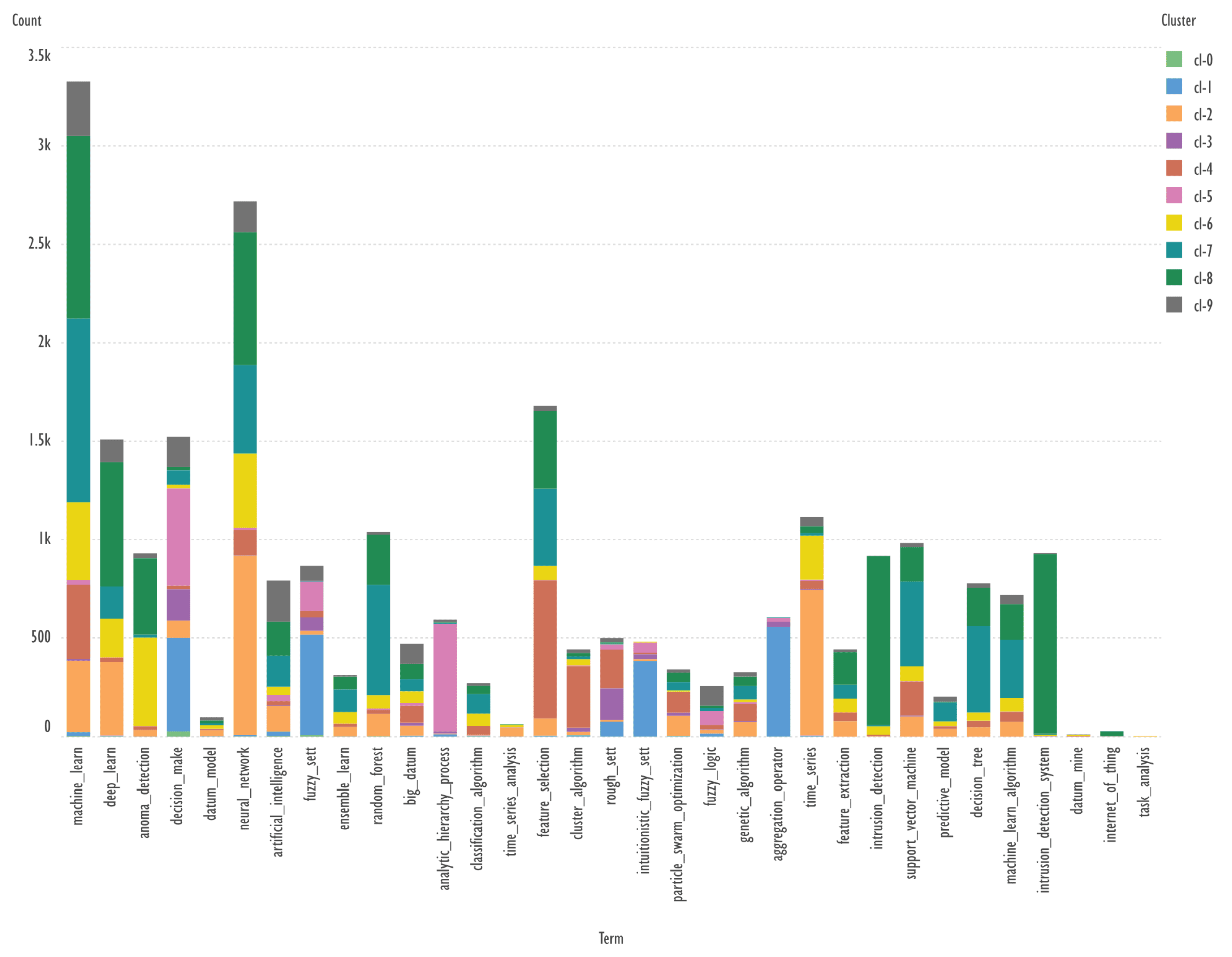
Figure 2.
The graph fragment showing the distribution of keywords in the null cluster.
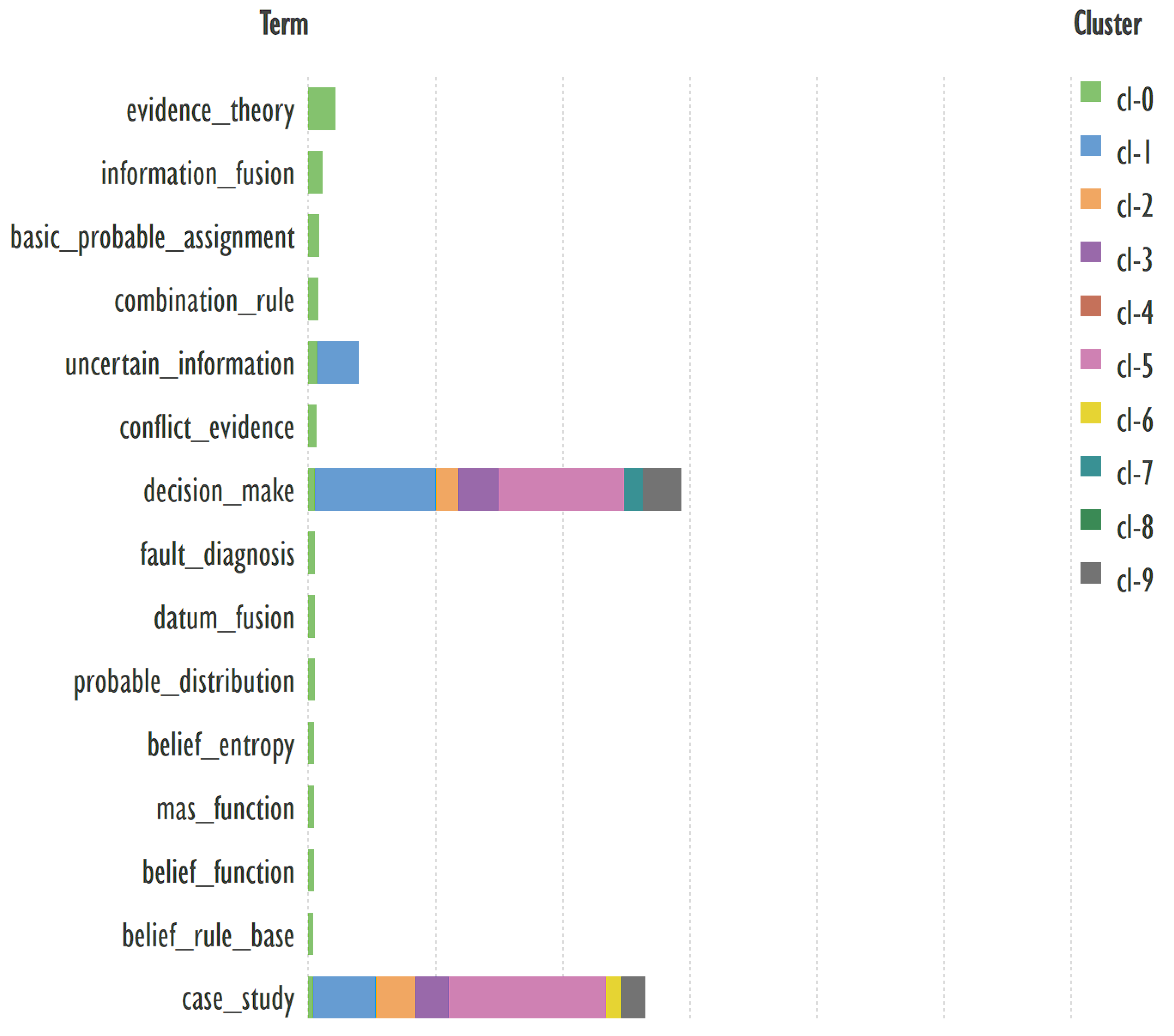
Figure 3.
The graph fragment showing the distribution of keywords in the first cluster.
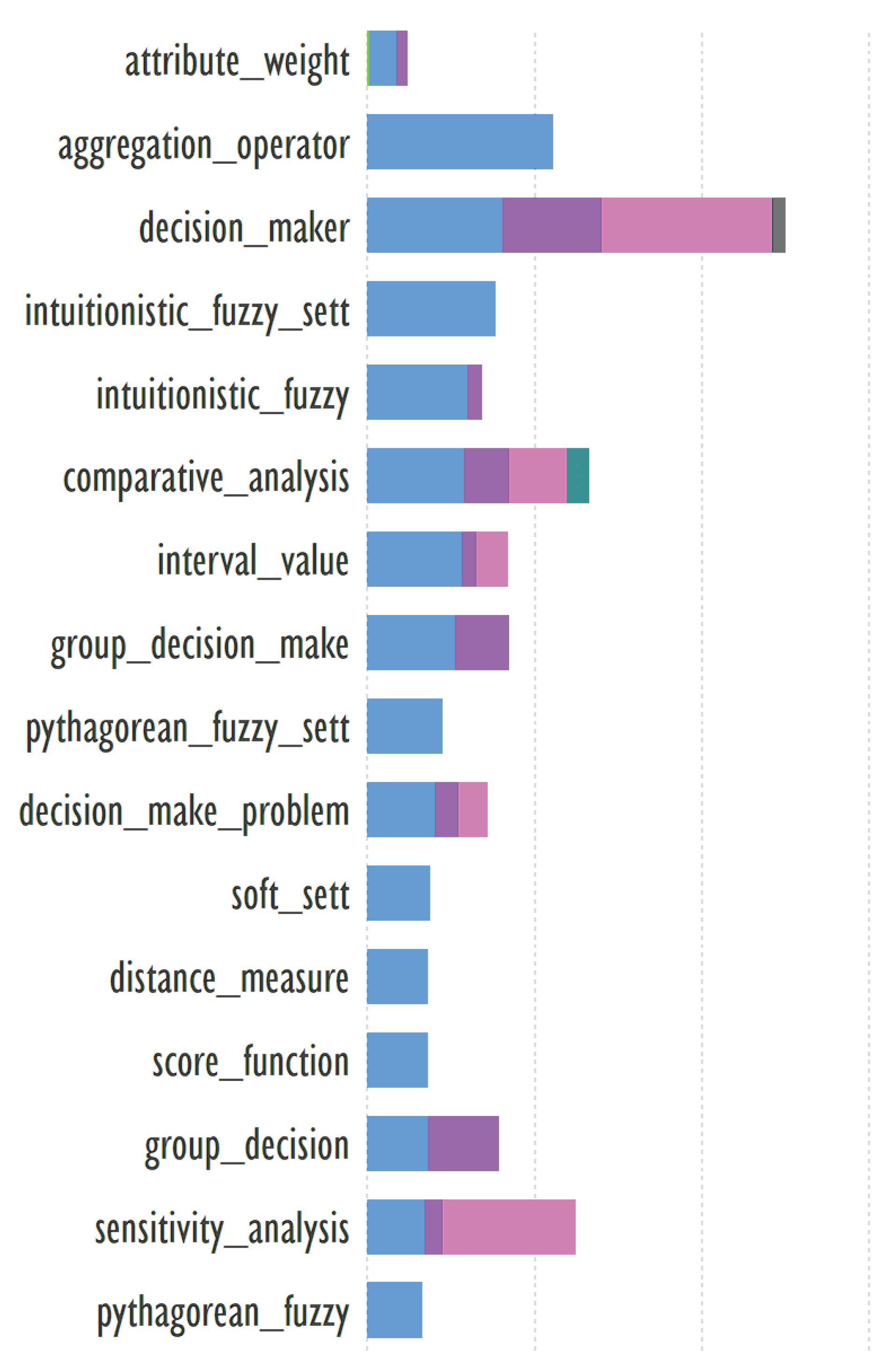
Figure 4.
Visualization of keyword clusters of the zero cluster of bibliometric records, obtained by importing the file KWs_cl-0-JSON.json into the service app.vosviewer.com.
Figure 4.
Visualization of keyword clusters of the zero cluster of bibliometric records, obtained by importing the file KWs_cl-0-JSON.json into the service app.vosviewer.com.
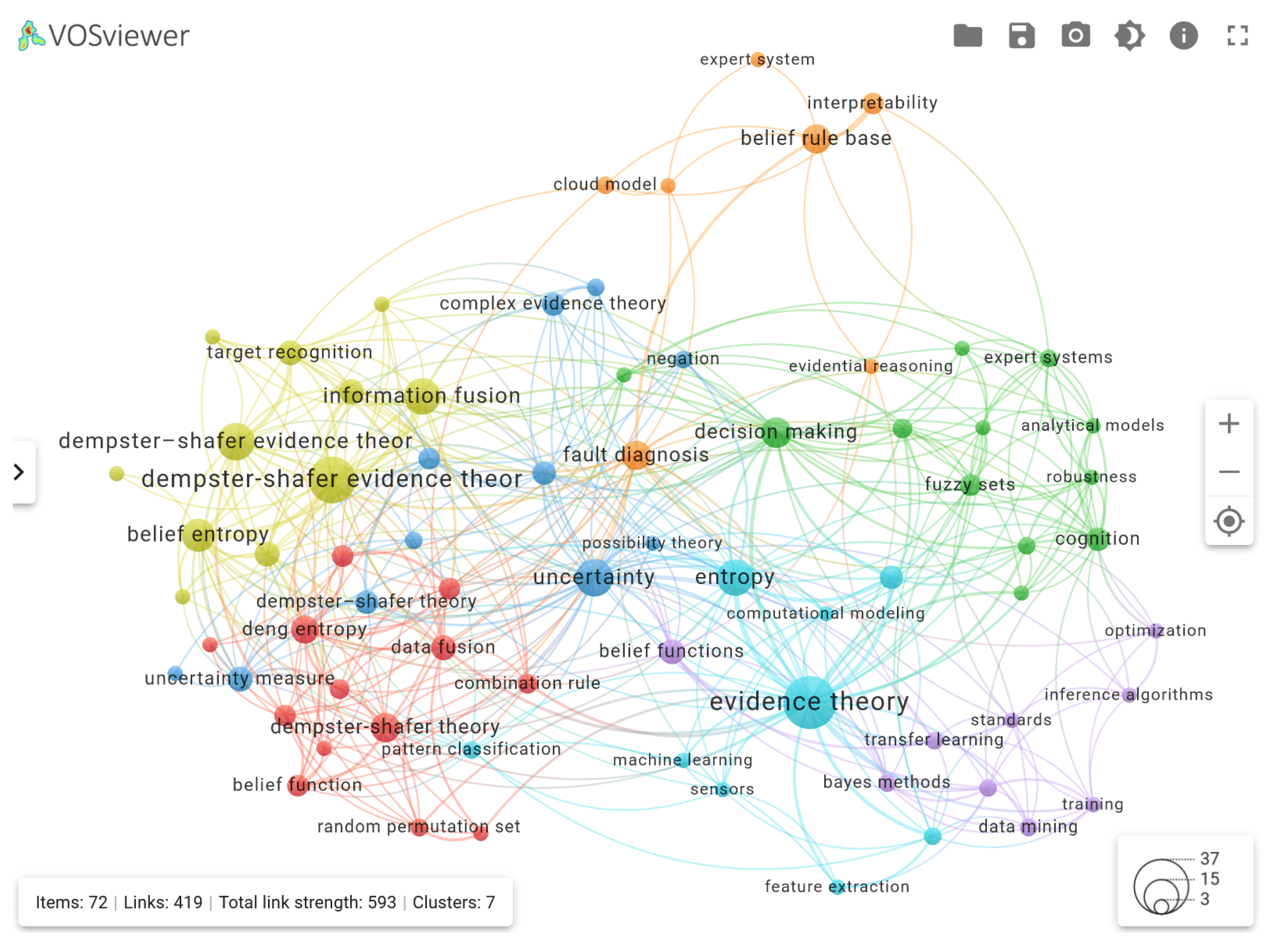
Figure 5.
Visualization of keyword clusters of the zero cluster of bibliometric records, obtained by Scimago Graphica.
Figure 5.
Visualization of keyword clusters of the zero cluster of bibliometric records, obtained by Scimago Graphica.
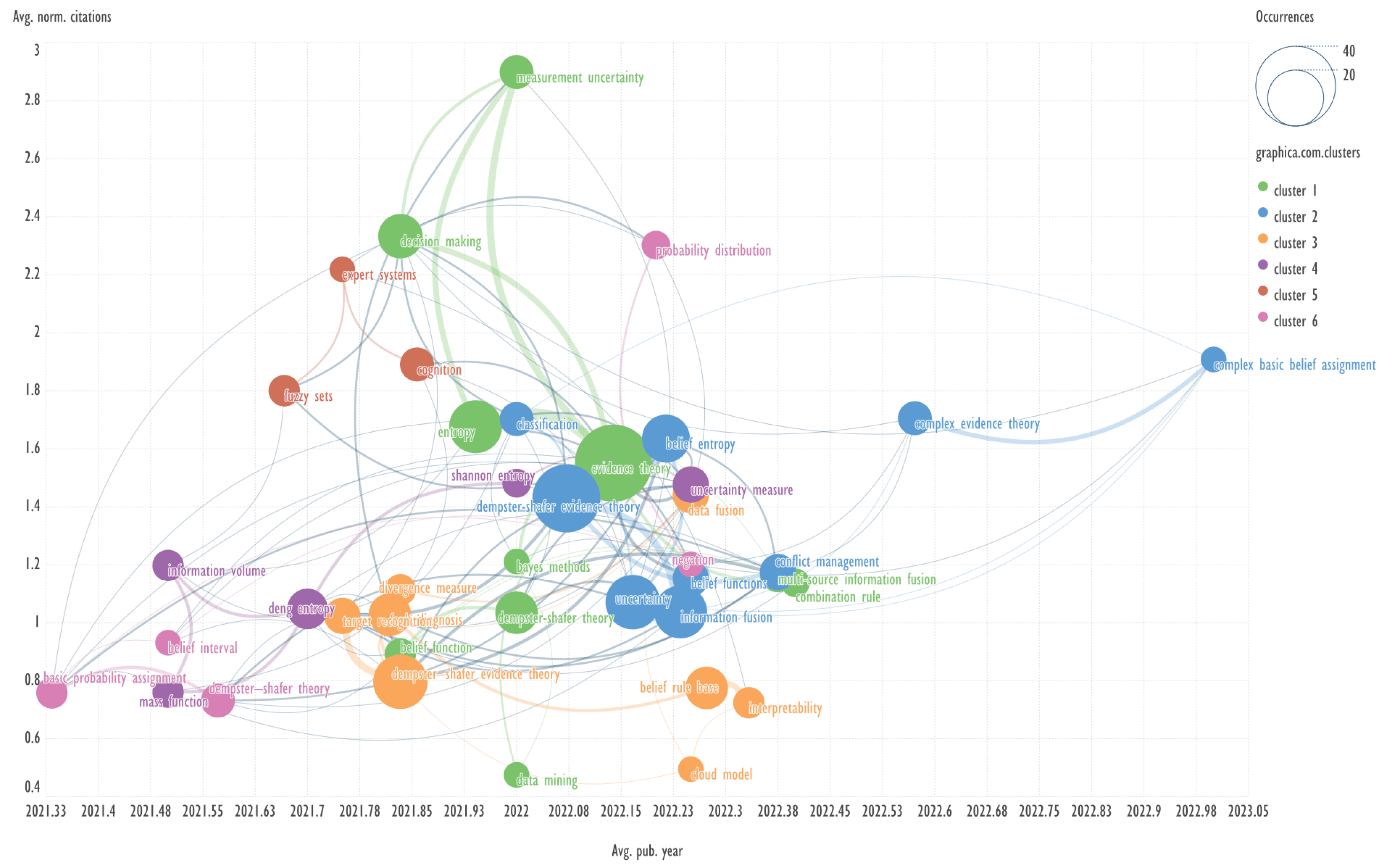
Figure 6.
Visualization of keyword clusters of the first cluster of bibliometric records, obtained by Scimago Graphica.
Figure 6.
Visualization of keyword clusters of the first cluster of bibliometric records, obtained by Scimago Graphica.
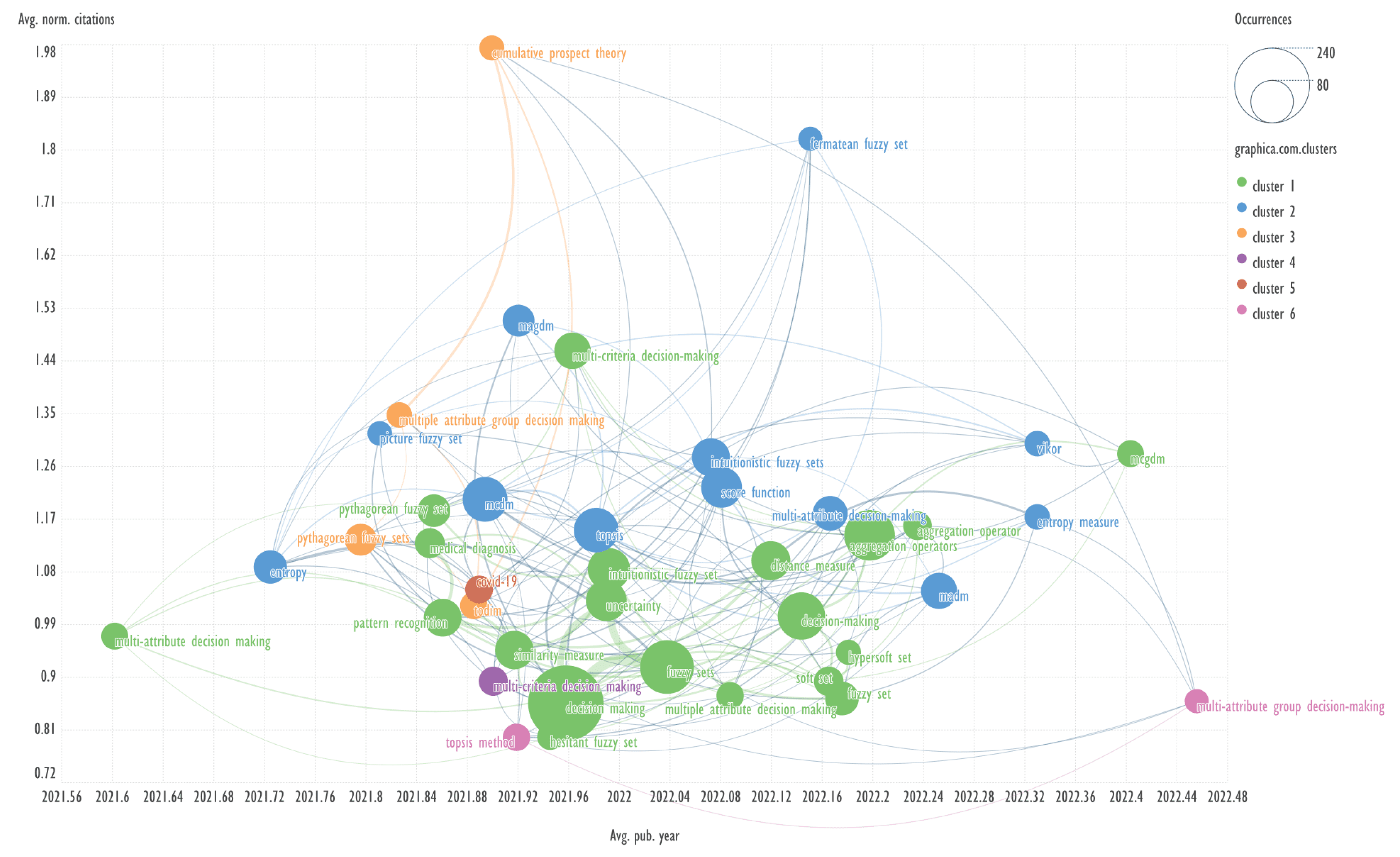
Figure 7.
Visualization of keyword clusters of the second cluster of bibliometric records, obtained by Scimago Graphica.
Figure 7.
Visualization of keyword clusters of the second cluster of bibliometric records, obtained by Scimago Graphica.
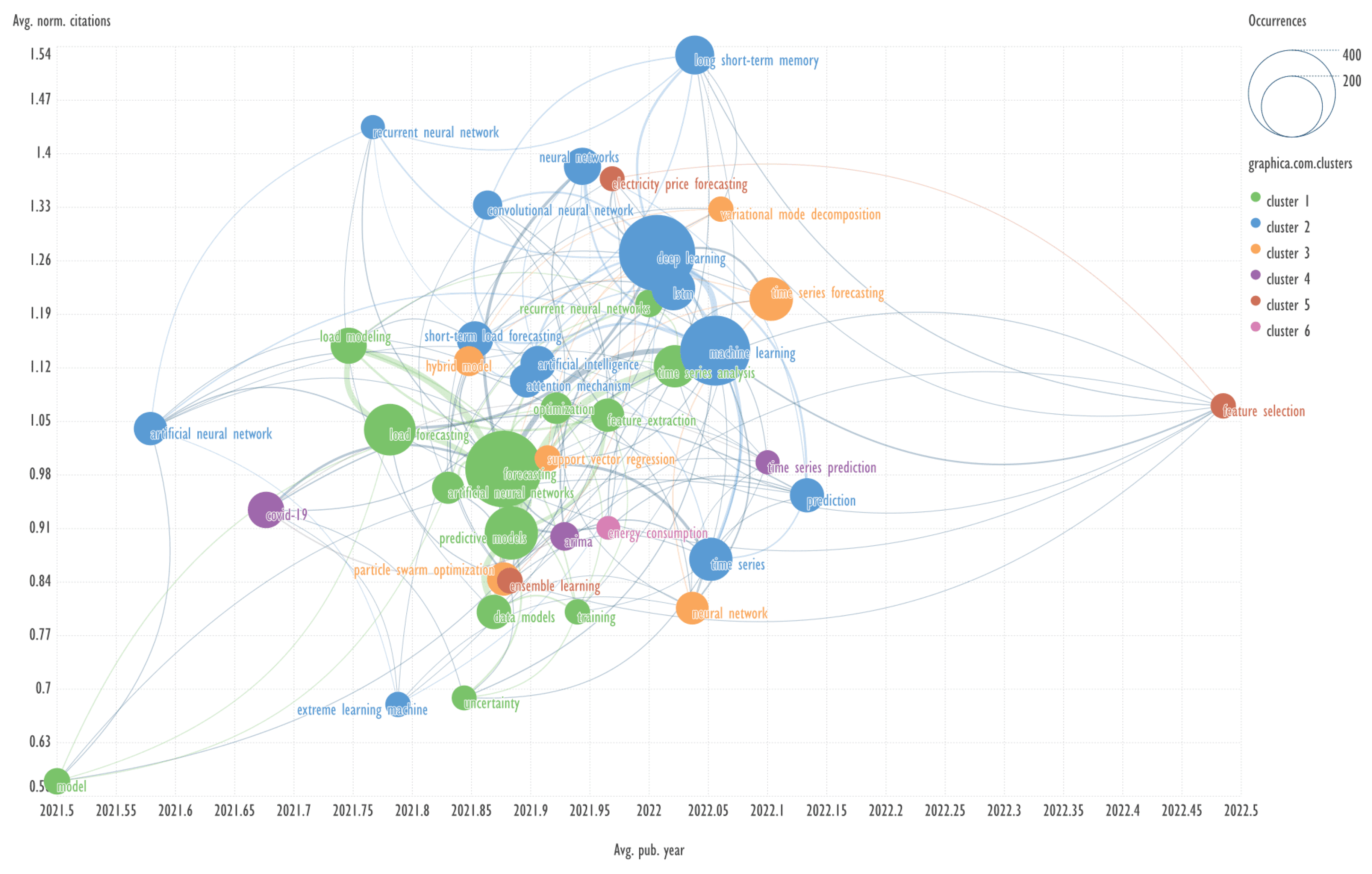
Figure 8.
Visualization of keyword clusters of the third cluster of bibliometric records, obtained by Scimago Graphica.
Figure 8.
Visualization of keyword clusters of the third cluster of bibliometric records, obtained by Scimago Graphica.
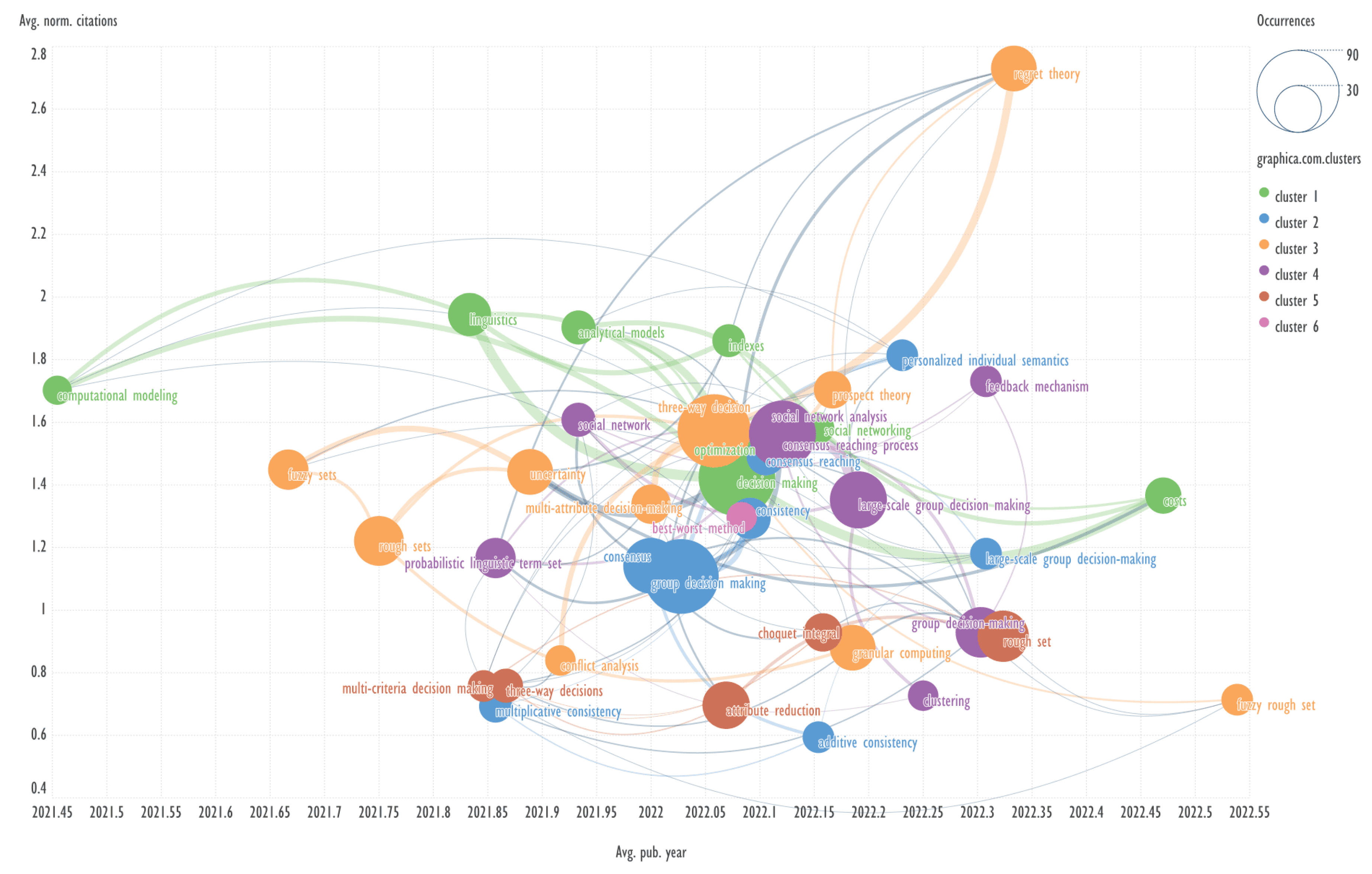
Figure 9.
Visualization of keyword clusters of the fourth cluster of bibliometric records, obtained by Scimago Graphica.
Figure 9.
Visualization of keyword clusters of the fourth cluster of bibliometric records, obtained by Scimago Graphica.
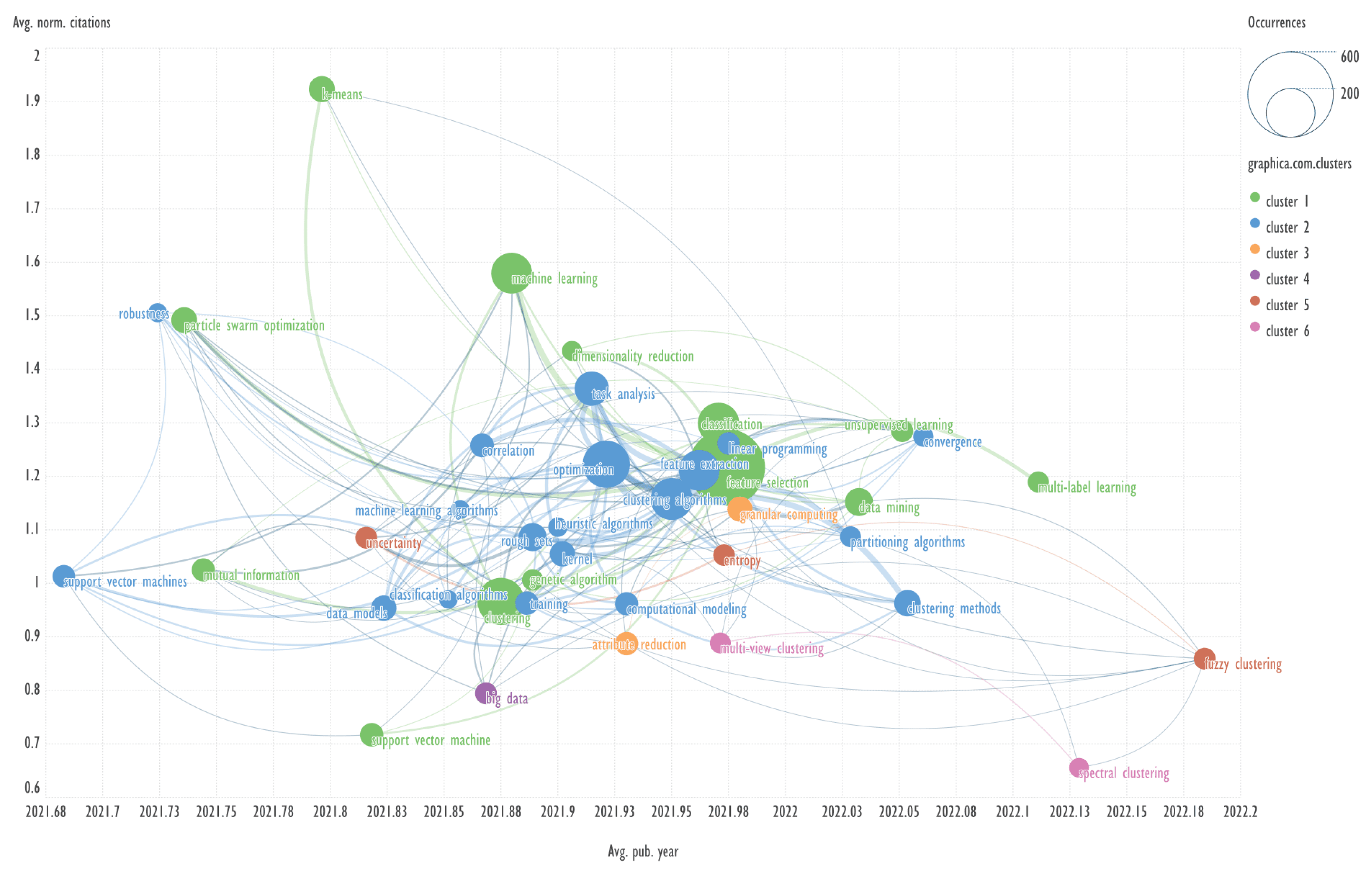
Figure 10.
Visualization of keyword clusters of the fifth cluster of bibliometric records, obtained by Scimago Graphica.
Figure 10.
Visualization of keyword clusters of the fifth cluster of bibliometric records, obtained by Scimago Graphica.
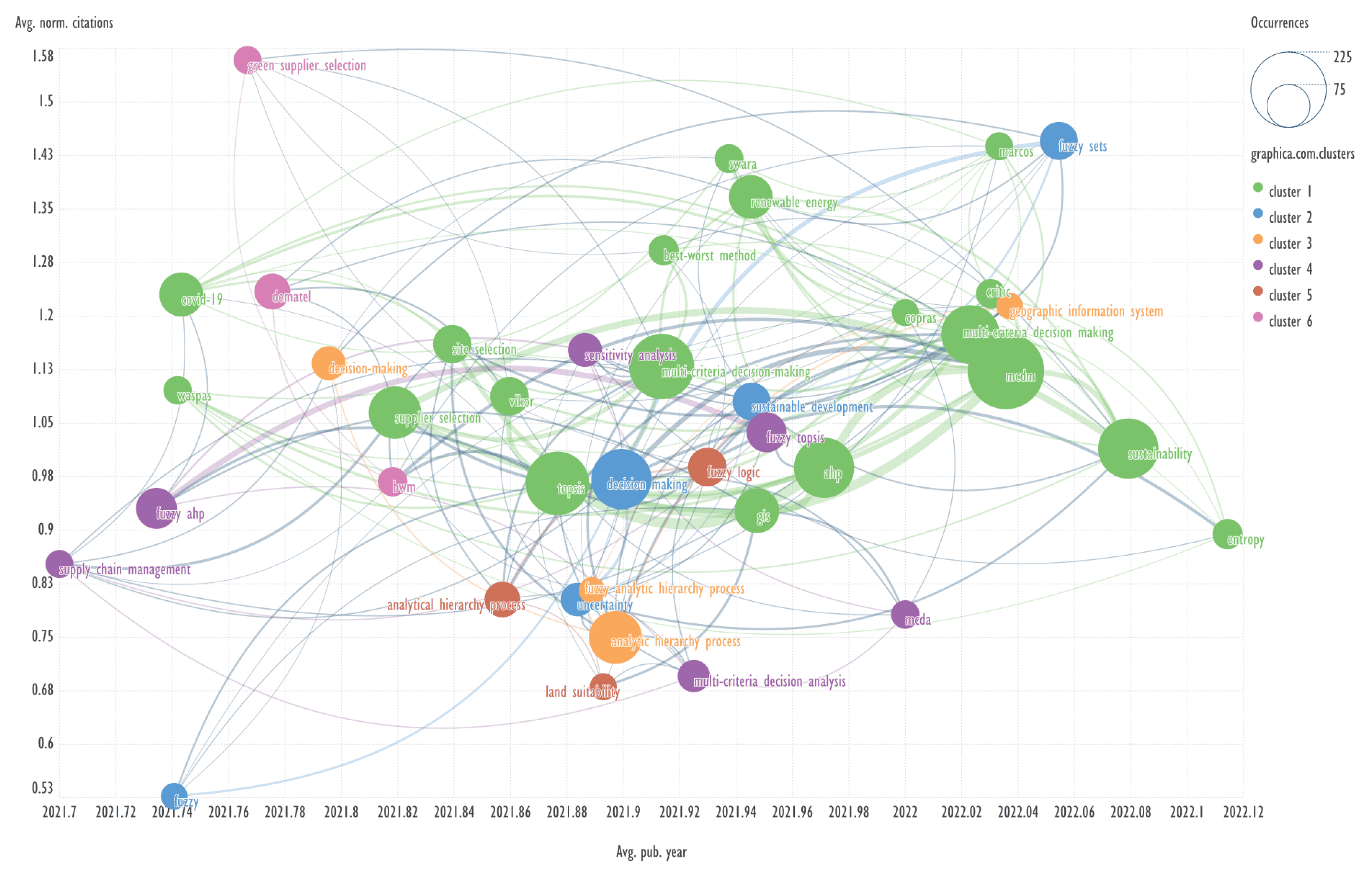
Figure 11.
Visualization of keyword clusters of the sixth cluster of bibliometric records, obtained by Scimago Graphica.
Figure 11.
Visualization of keyword clusters of the sixth cluster of bibliometric records, obtained by Scimago Graphica.
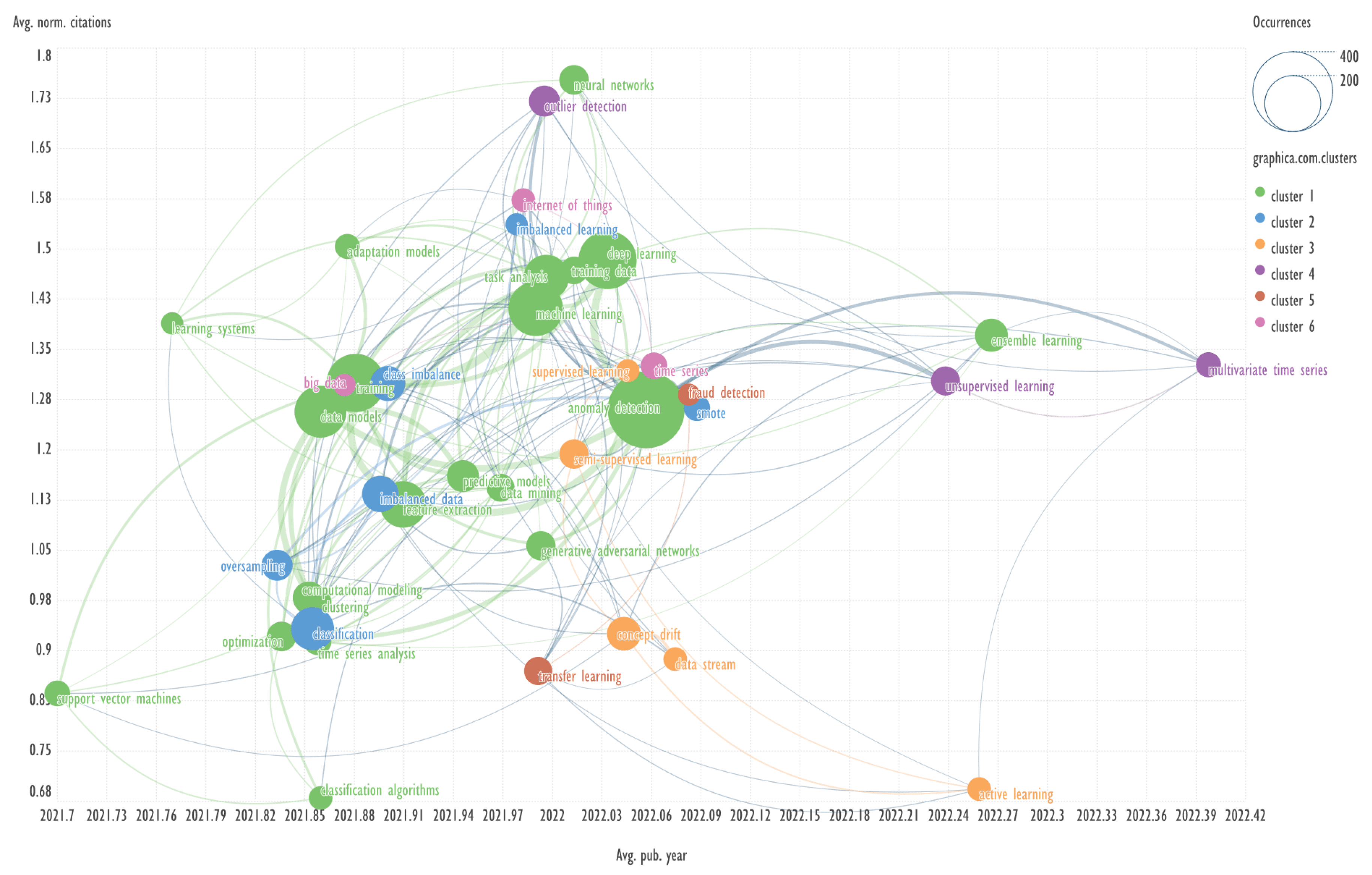
Figure 12.
Visualization of keyword clusters of the seventh cluster of bibliometric records, obtained by Scimago Graphica.
Figure 12.
Visualization of keyword clusters of the seventh cluster of bibliometric records, obtained by Scimago Graphica.
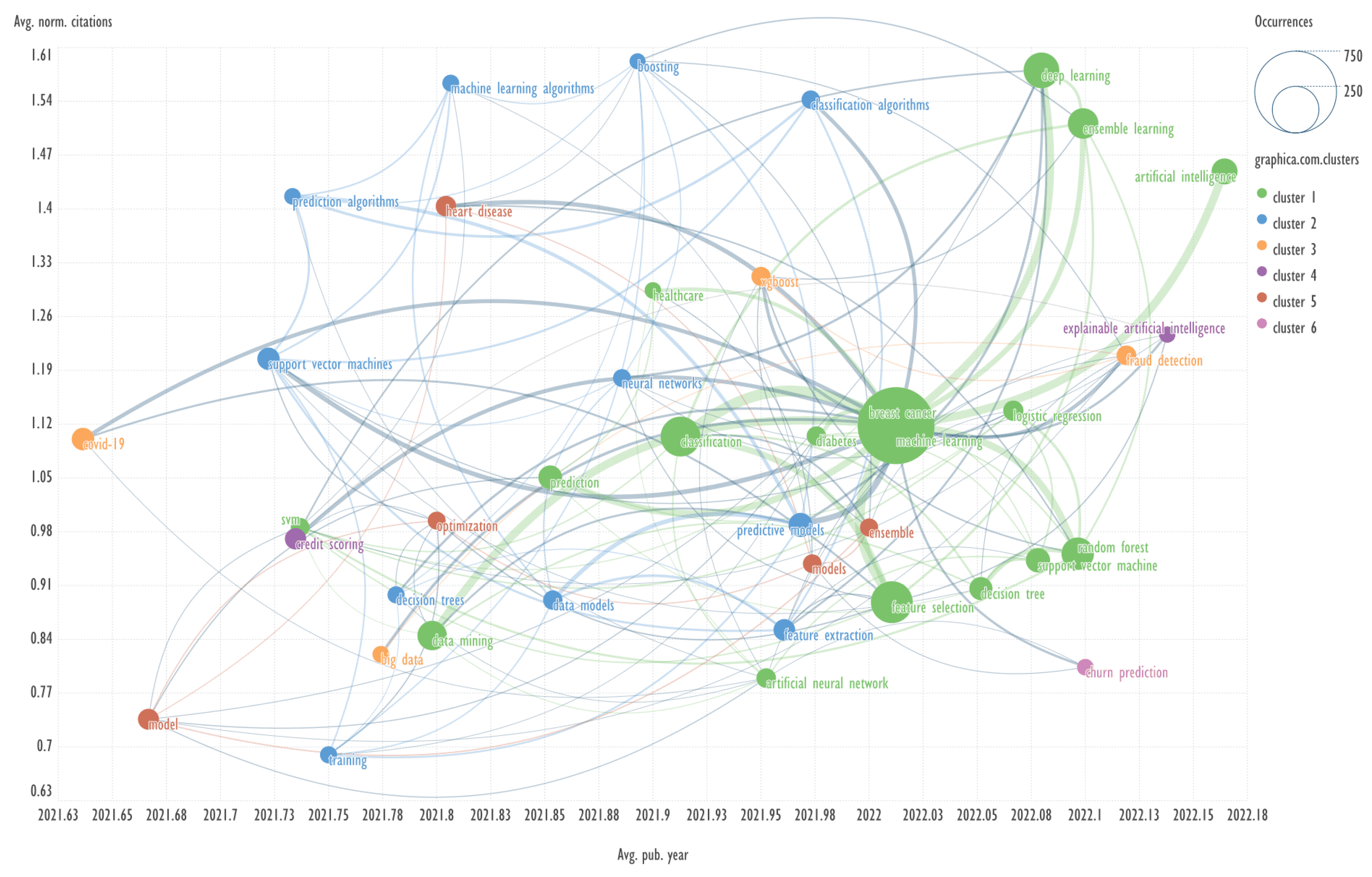
Figure 13.
Visualization of keyword clusters of the eighth cluster of bibliometric records, obtained by Scimago Graphica.
Figure 13.
Visualization of keyword clusters of the eighth cluster of bibliometric records, obtained by Scimago Graphica.
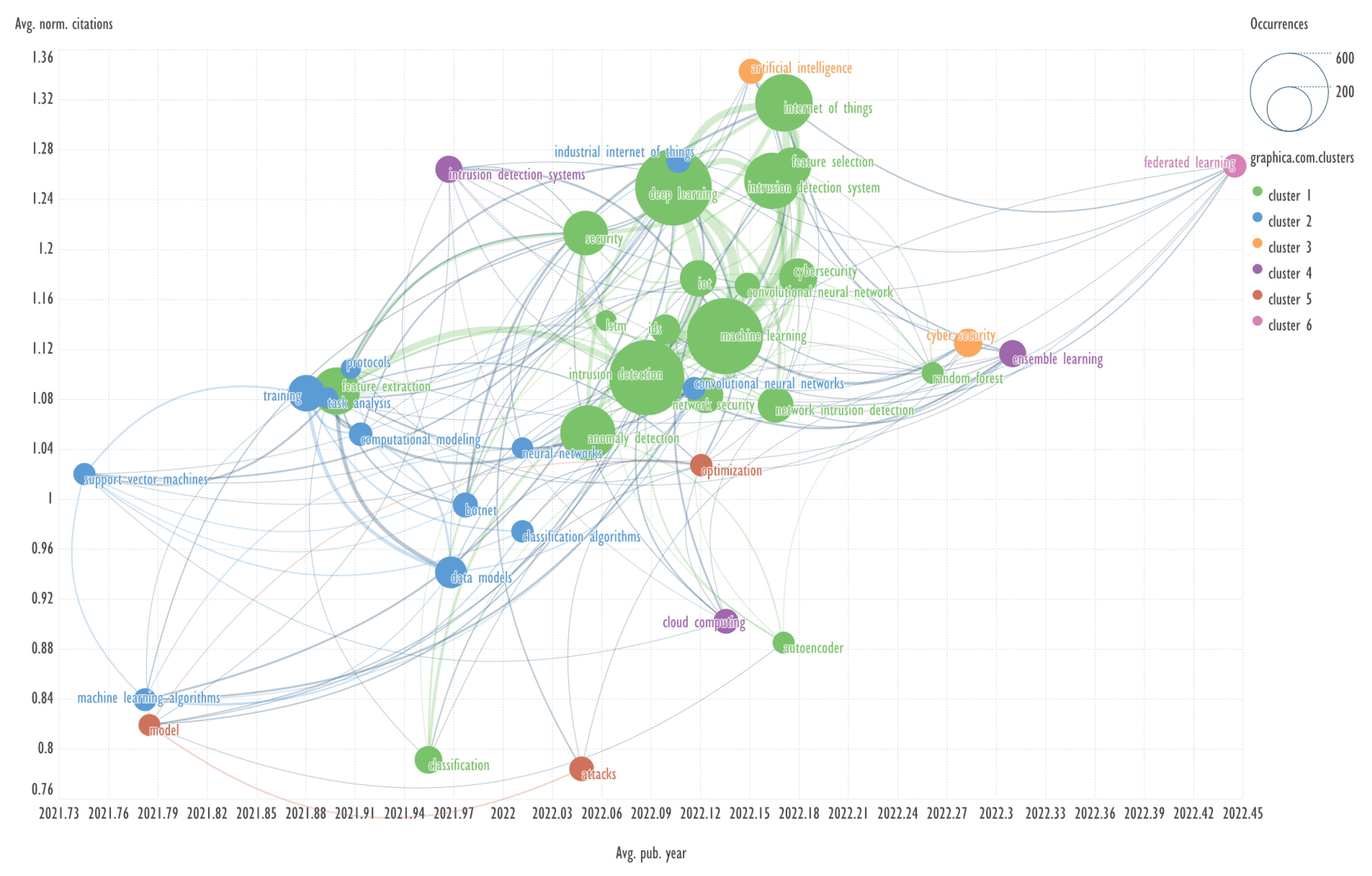
Figure 14.
Visualization of keyword clusters of the ninth cluster of bibliometric records, obtained by Scimago Graphica.
Figure 14.
Visualization of keyword clusters of the ninth cluster of bibliometric records, obtained by Scimago Graphica.
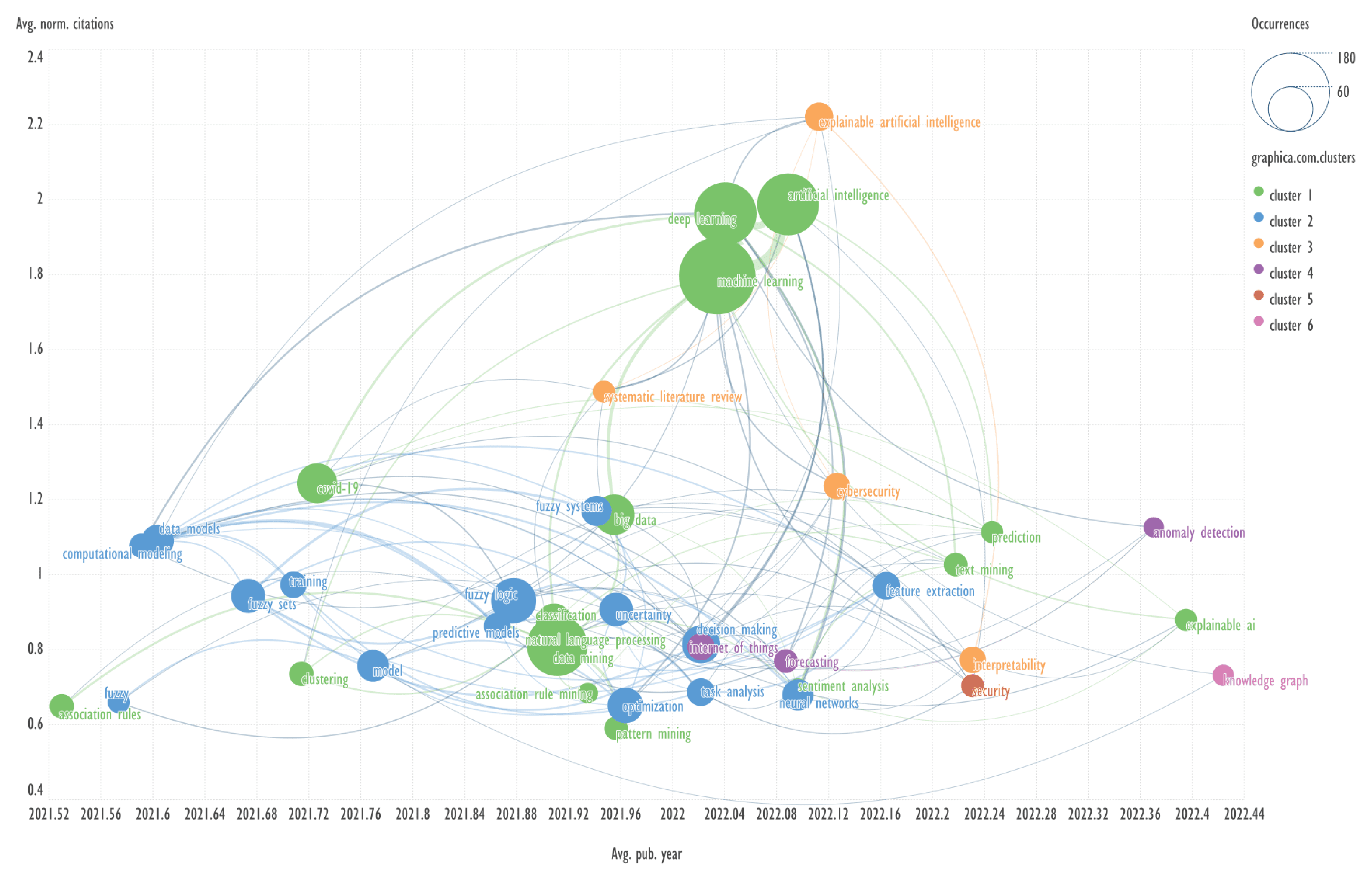
Figure 15.
Alluvial diagram based on the most frequent co-occurrence of three terms from the ‘Publication Keywords’ column.
Figure 15.
Alluvial diagram based on the most frequent co-occurrence of three terms from the ‘Publication Keywords’ column.
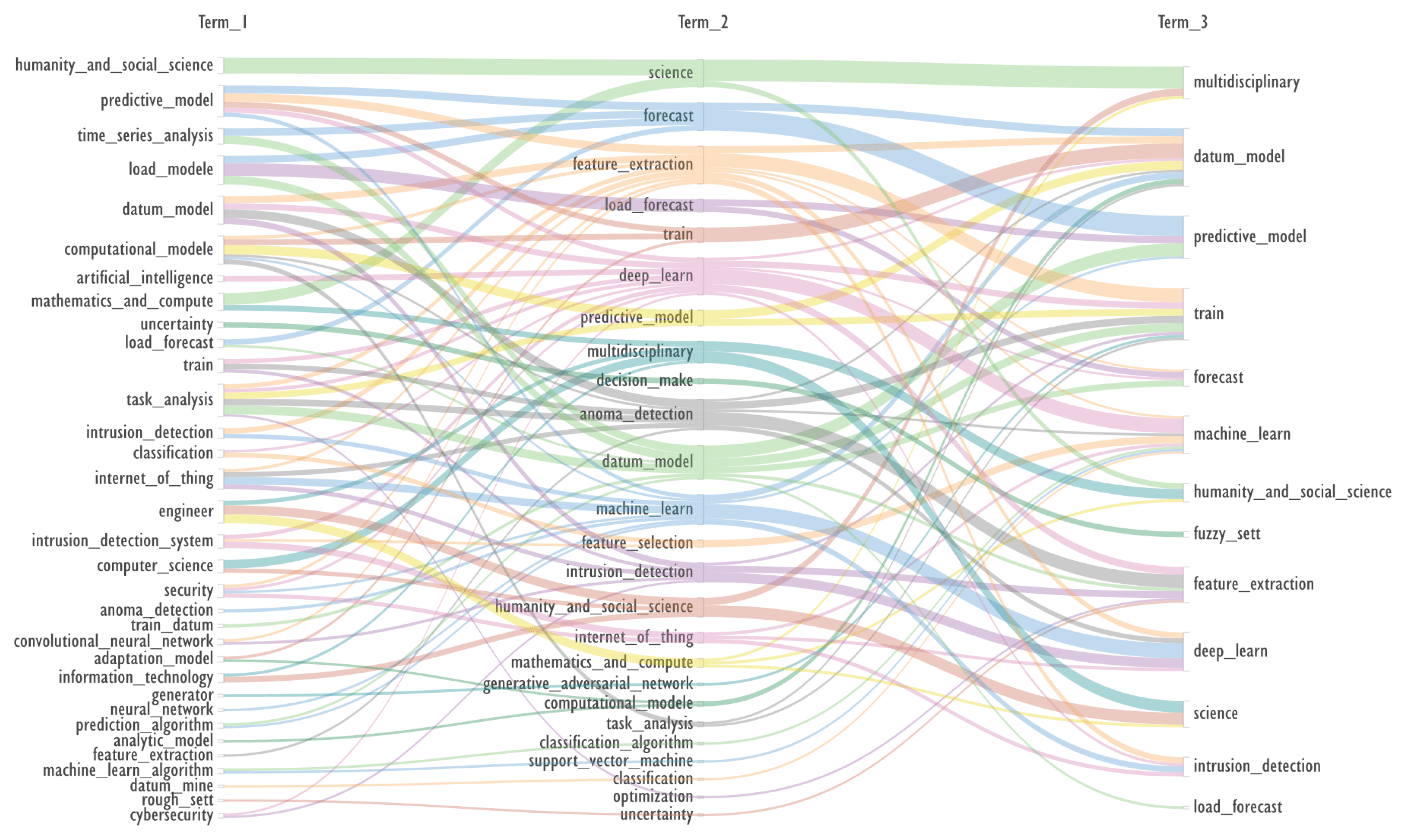
Table 2.
Author Keywords and IEEE Terms for two publications exported from the IEEE Xplore platform.
Table 2.
Author Keywords and IEEE Terms for two publications exported from the IEEE Xplore platform.
| DOI | Author Keywords | IEEE Terms |
| 10.1109/ETCS.2009.373 Ref. 33 |
RSVM;KPCA;intrusion detection;PSVM | Feature extraction;Intrusion detection;Principal component analysis;Data mining;Educational technology;Paper technology;Kernel;Support vector machines;Educational institutions;Support vector machine classification |
| 10.1109/ACCESS.2021.3118361 | Anomaly detection;Bot-IoT;CIC-IDS 2017;intrusion detection;IoT;ISCX-IDS 2012;normalization;NSL KDD;skewness;scaling;transformation;UNSW-NB15 | Intrusion detection;Mathematical models;Feature extraction;Training;Standards;Statistical analysis;Numerical models |
Disclaimer/Publisher’s Note: The statements, opinions and data contained in all publications are solely those of the individual author(s) and contributor(s) and not of MDPI and/or the editor(s). MDPI and/or the editor(s) disclaim responsibility for any injury to people or property resulting from any ideas, methods, instructions or products referred to in the content. |
© 2024 by the authors. Licensee MDPI, Basel, Switzerland. This article is an open access article distributed under the terms and conditions of the Creative Commons Attribution (CC BY) license (http://creativecommons.org/licenses/by/4.0/).
Copyright: This open access article is published under a Creative Commons CC BY 4.0 license, which permit the free download, distribution, and reuse, provided that the author and preprint are cited in any reuse.


