

Submitted:
05 July 2024
Posted:
09 July 2024
You are already at the latest version
Abstract
Background: Peloids are therapeutic agents used in thermal and thalasso centers for curative, preventive, and skin care purposes. Marine peloids are those that include seawater and algae, both macro and/or microalgae. The aim of this study is to investigate the suitability of a marine peloid composed by seawater, clay and microalgae for thalasso-wellness and dermocosmetic uses; Methods: the thermophysical properties of the marine peloid were determined and compared with a non-marine peloid using different techniques as densimetry, conductimetry, calorimetry, and viscometry; skin hydration was also measured by means of Corneometry; Results: marine peloid has been shown to be suitable for thermotherapy and thalaso-wellness treatments as its thermophysical properties were similar to other peloids used for this purpose; marine peloids also showed to improve skin hydration after seven days of treatment; Conclusions: this research provides a comprehensive study of the thermophysical properties of a marine peloid composed by clay, seawater and microalgae for thalasso-wellness and cosmetic uses, as well as its moisturizing properties, highlighting its potential as a valuable natural product for skin care applications as well as for wellness treatments in form of cataplasm, poultices and/or wraps.
Keywords:
marine peloids
; skin care
; thalassotherapy
; wellness
; dermo-cosmetics.
1. Introduction
Skin care products include a very wide range of cosmetics, dermo-cosmetics, and cosmeceuticals, including hygiene cosmetics (facial cleansers, bath gels, etc.), maintenance and protection products such as moisturizers, cosmetics for specific alterations (acne, seborrhea, hyperpigmentation, etc.), and for preventing aging, among others. In addition, different forms of plasters, cataplasm, poultices, and masks are used, the ingredients of which often include plant and/or marine derivatives such as algae and mud. Among the last ones, marine sludge deserves special attention, which sometimes comes from natural sources (for example, marine estuaries), although the current trend is towards its preparation and commercialization within the legal framework of cosmetics or quasi-drugs or over-the-counter (OTC) products.
1.1. Marine Peloids
Peloids, known also as thermal muds, are therapeutic agents used in thermal and thalasso centers since time immemorial, with curative and/or preventive purposes, mainly for the treatment of rheumatic pathologies and dermatological disorders, sports injuries, and generally in rehabilitation programs, and also for dermo-cosmetics and well-being purposes both in thermal spas and thlasso-wellness centers [1]. There are different peloid classifications but the most recent classify them into two categories, related to their origin: natural peloid vs peloid sensu strictu; and related to application: medical peloids and cosmetic peloids [2]. Marine peloids can come, as indicated, from a natural environment, but they are often made ad hoc for use in thalasso centers.
In the wellness and cosmetic fields, mud can improve the activity of glutathione enzyme and superoxide dismutase in the skin, which helps the skin-aging prevention [3,4], and also have the ability to adsorb toxic substances on the surface of the skin [5]. Thermal muds are able to relieve psychological worries and mental stress, as mud baths can regulate neuroendocrine activity associated with elevated cortisol levels throughout the body [6]. Peloids can also increase skin vascular dilation and improve skin permeability [7].
Several studies demonstrated that some substances present in mud can permeate through human full-thickness skin [8], and also ions, that can penetrate via intracellular route, and could repeatedly diffuse through corneocytes [3], and also some lipidic substances, such as glycoglycerolipids, via intercellular route [9].
Marine peloids are applied in many different countries around the world, mainly for therapeutic, but also for cosmetic and wellness purposes. The most studied marine peloids are summarized in Table 1.
1.2. Thalasso-Wellness: The Use of Seawater and Marine Peloids for Well-Being
The seawater or marine cure is defined as follows: “Thalassotherapy is the combined use of marine elements (seawater, algae, mud, and climate), in a marine environment, for healing and well-being purposes” [25]. In 2010, Gutenbrunner et al. [26] (proposed a worldwide definition of health resort medicine, balneology, medical hydrology, and climatology; even though the authors do not mention the word “thalassotherapy”, Climatotherapy (the use of climatic factors) is included as a part of Health Resort Medicine. Later on, Maraver et al. [27] suggested including the use of seawater and its peloids (thalassotherapy), including its modalities, full-body or local baths, showers, inhalations, irrigations, and peloid packs, and its agents, seawater, marine peloids and sand, among others.
ISO 17680/2015 defines thalassotherapy as follows: “treatment using seawater and substances directly extracted from the sea environment, in a marine site, under medical supervision, which is at the same time therapeutic and preventive, promoting wellbeing and healthcare, using simultaneously marine elements, seawater, seaweed, marine mud, sands and any other substance directly extracted from the sea environment” (ISO 17680/2015, reviewed and confirmed in 2020, https://www.iso.org/standard/60244.html; accessed on June 2023). Thus, most thalasso centers include well-being and wellness treatments, which are sometimes the main reason for visiting.
Combined with other techniques, marine mud/sea mud, or more precisely marine peloids, are part of thalasso-wellness treatments, as can be applied to the body in the form of dressings for well-being purposes, so they are used both in general skincare and for specific body treatments, such as body hydration, cellulite, or peripheral circulation problems, as well as a wide range of wellness care. Some examples are post-natal recovery, anti-stress or fatigue treatments, and post-cancer wellness recovery.
1.3. Composition of Marine Peloids, Characterization, and Thermophysical Properties
Marine peloids are composed of a liquid phase which is sea or salt-lake water, a solid phase, which is frequently made of silt or/and sediments or deposits of the seabed and estuaries, and a biological fraction consisting mainly of microalgae and cyanobacteria. The composition of the peloids is decisive in their therapeutic and cosmetic effects, but so is the method of application, especially when they are applied hot/warm, since it is seen that the penetration of the bioactive substances is facilitated.
The liquid phase is usually seawater, whose composition has been studied by numerous authors in the last century [28], but also salt-lake water (e.g., Techirghiol Lake, Romania) [29] and, less frequently, hypersaline waters, as Dead Sea mud, the most studied hypersaline peloid in the world [30]. When seawater, which is rich in sodium and chlorides is topically applied, the ions penetrate the skin and are capable of modifying the cellular osmotic pressure and can stimulate the nerve receptors in the skin through ion channels in the membrane [31]. Additionally, the hypersaline Dead Sea water has proven cutaneous effects such as skin moisturization, anti-inflammation, skin barrier repair, and anti-pollution [32].
The solid phase when comes from a natural environment is composed of a variety of sediment compounds, mostly silt. In addition to marine peloids of natural origin, which are scarce, peloids are increasingly being prepared from clays, such as bentonitic clays, mainly of ancient marine origin, but also others of cosmetic quality with various origins.
Several studies were carried out to study the physicochemical and geochemical characteristics, but also to assess its potential content on toxic elements.
Mihelčić et al. [16] studied the physico-chemical characteristics of the peloid mud from Morinje Bay (eastern Adriatic coast, Croatia) with the aim of assessing its suitability for use in balneotherapy, finding that, despite having different compositions, specific heat, and water saturation are similar than other peloids used in thermal centers. Other authors studied the Makirine Bay peloid, also in Croatia, concluding that geochemical analyses showed the adequate comparability of this peloid with raw materials already successfully used for purposes related to wellness and therapy [15].
Glavas et al. [17] investigated the mineralogical, geochemical, and thermophysical characteristics of Sečovlje Salina peloid, a hypersaline mud from the Sečovlje Salt Pans, the biggest natural park in Slovenia. Results showed that these muds were characterized by very fine, sandy, medium silt in which the mud fraction greatly dominated, and contents of the major and trace elements of saline muds were comparable to their mean concentrations in surface sediment from the Central Adriatic Sea over the sand fraction. Furthermore, the thermophysical properties of the samples were similar to other studied peloids, concluding that all of them were suitable for thermotherapy applications.
The Igalo Bay marine peloid, known for its medical and cosmetics uses, has been investigated and compared with several peloids from the region (Croatia, Italy, Spain), as well as Dead Sea mud. Physicochemical characteristics were determined, with special regard to the metals and non-metals content, finding that there was no potentially toxic element pollution in the sediment or the area from which the sampling was carried out [33].
Romanian salt lakes have also been studied. Recently, Baricz et al. [34] investigated three different types of mud from saline lakes inland brackish Na-Cl-sulfated type (Amara), a coastal moderately saline type (Techirghiol), and an inland hypersaline Na-Cl type (Ursu). After studying the mineral composition, physical properties, and toxic elements, the authors concluded that the composition is similar in all of them (sapropel type, as to say organic carbon-rich sediments), and the physical properties (specific heat, thermal conductivity, and retentivity) and cation exchange capacity are comparable to other peloids used for therapy.
The peloid from the saline lagoon Tuz lake (Tuz Gölü) in Turkey has also been investigated. The composition was a combination of clay minerals (mainly montmorillonite, kaolinite, and muscovite) and non-clay minerals (mainly quartz, calcite, dolomite, and albite); this peloid had a high electrical conductivity compared to other studied peloids from Turkey, but authors concluded that, after determining the physical properties such as pH, density and water retention, among others, results suggested its suitability and potential for use in peloidotherapeutic applications [19].
Determining the possible contamination by toxic elements is of great relevance in the possible therapeutic application of marine peloids. Various studies carried out on marine muds from the coasts of Croatia, Montenegro, Romania, and also in Dead Sea, concluded that toxic elements are within the tolerated limits [15,33,34,35].
When marine peloids are prepared from commercial clays, they must be of high quality so that they should be free of toxic substances; and this type of peloids has the advantage that clays have cosmetic properties by themselves. In the cosmetic field, clays are used for cleansing and moisturization of the skin and to combat compact lipodystrophies, acne, and cellulite [36], and also have anti-inflammatory properties [37].
The biological fraction is also of great interest since microalgae and cyanobacteria found in peloids have been proven to generate biologically active substances (especially during the maturation process), which in turn are responsible for their beneficial effects and actions. Although extensive research has been carried out on characterizing the biological fraction of peloids [38,39,40], there is scarce scientific literature that thoroughly addresses the biological composition of marine peloids. The most studied is Dead Sea mud in which nine extremely halotolerant Bacillus species have been identified, one of them being B. paralicheniformis, which confers a high antimicrobial action [41]; and also, Bacillus persicusi was found to exert antimicrobial activity against different Gram + and Gram – pathogens [42]. In any case, in thalasso-wellness centers the tendency is to prepare the manufactured peloids, mixing the three fractions: seawater, clay and/or sediments, and the biological fraction, mainly marine microalgae or macroalgae [1].
Marine microalgae have been shown to exert beneficial effects on skin improving hydration and cell renewal [43], as well as antioxidant activity [44]. The most studied are Chlorella vulgaris [45,46], Haematococcus pluvialis [47,48], Tetraselmis suecica [49], Dunaliella salina [50], Nannochloropsis sp [51], and Phaeodactylum tricornutum [52], among others.
In summary, when preparing ad hoc marine peloids for thalasso-wellness composition is the basis of their cosmetic effects but physical properties are essential. Determining thermophysical properties of peloids is important to predict their behavior when applied both for therapeutical and cosmetic purposes; the most studied are density, specific heat, thermal conductivity, and diffusivity, among others [53,54]. For thermotherapy, high density, high specific heat, and low thermal conductivity are desirable [55].
Other physical properties as viscosity should also be taken into account as it is important when applied in form of poultices or wrappings, as easy handling is desirable; pH is also of interest to preserve the homeostasis barrier of the skin. Viscosity of peloids has been investigated by several authors, but mainly in thermal peloids or clays for pelotherapy uses [56,57,58,59,60], some of them related to natural or artificial marine peloids [58].
1.4. Methods of Topical Application
As has been mentioned before, peloids can be applied on the skin hot, warm, or cold depending on the illness with the aim of increasing microcirculation and skin permeation, and heat release when applied hot or warm, or reducing inflammation when applied mild cold. For cosmetics and well-being purposes, both methods are used to apply the marine peloid in the form of masks, cataplasms, poultices (thick cataplasm), or wrappings (very thin layer). When applied in the form of cataplasms, the mixture of clays and water produces a cooling of the area under treatment and since the mixture is a good conductor of the heat given off by the inflammation, it acts as an anti-inflammatory agent [37].
Temperature modulations in the skin and the application of local heat both have the potential of enhancing drug diffusion through the skin. A controlled and precise application of heat has the ability to create a cascade of events in the skin and thus aids in facilitating a faster movement of molecules into and across the skin. Possible mechanisms of enhancing compound permeation include: a) an increase in molecule diffusivity in the vehicle and/or in the skin, b) an increase in partitioning and diffusion, c) disturbance in the lipid structure of the stratum corneum, and d) increased local blood flow. These mechanisms may operate individually or concurrently [61].
Different methods have been used to improve transdermal penetration (infrared, diathermy, ultrasound, etc.) whose base is the production of heat and improvement of local blood circulation, and also the creation of micropores or channels [62]. Regardless of blood circulation, skin temperature significantly influences the amount and kinetics of dermal absorption. Substance-dependent, temperature-related changes of the lipid layer order or the porous pathway may facilitate penetration. Additionally, the penetration kinetics suggest a thermal influence on penetration via appendageal pathway in the early stages, with trans-epidermal penetration being the main route later on [63].
Considering the above, it is necessary to study the thermophysical properties of marine peloids in order to assess their ability to promote the penetration of the biologically active substances they contain through the skin.
1.5. Skin Biometrology Studies
For cosmetic uses, the effects on skin can also be evaluated by means of biometrology; among them, stratum corneum hydration, by means of capacitance, skin lipids, by photometric methods [64], and mechanical properties such as skin elasticity are the most used to evaluate the efficacy of cosmetics [65].
As have been mentioned before, despite the lack of studies, marine peloids are used for cosmetic and wellness purposes in many thalasso-wellness centers. In Figure 1, effects and actions of peloids in skin care are summarized [1].
In order to evaluate peloid suitability for therapeutic, wellness, and dermocosmetic use, the thermal properties of a peloid composed of bentonite, Nannochloropsis sp, and seawater compared to the same mixture made of distilled water are investigated. Density, specific heat, thermal conductivity, and thermal diffusivity are studied, as well as other properties related to applicability such as viscosity and pH. Additionally, a preliminary study has been carried out to assess the effects of the marine peloid on skin hydration
2. Materials and Methods
The peloids used were prepared using ternary mixtures of a liquid phase (seawater and distilled water), a solid phase (bentonite clay), and a biological phase (Nannochloropsis sp).
The waters used are: Seawater supplied by the Quinton Laboratory; its chemical composition is described by Casás et al. (2011) [67]. The practical salinity of the Seawater sample was determined from conductivity measurements (obtained with an 8410A Guideline Portasal Salinometer previously calibrated with the IAPSO seawater standard), using the equation proposed by Fofonoff and Millard (1983). Distilled water was obtained using a MilliQ system (Millipore). Both types of water were used without additional purification.
The bentonite clay used in this work was supplied by the company “BENESA” and its mineralogical analysis is described in Casás et al. 2011 [67], finding a percentage of smectite of 56%, 29% sepiolite, and 15% illite. The clay was dried in a laboratory oven, at 383.15 K for 24 h, before use to remove moisture.
The microalgae used is Nannochloropsis sp, is a green alga that grows in the form of simple cells; it belongs to the family Monodopsidaceae, order Eustigmatales, class Eustigmatophyceae. It has been used in the form of a lyophilized powder and was supplied by the Aquaalgae company. Nannochloropsis sp is known for its high content of phenolic compounds and polyunsaturated fatty acids, including eicosapentaenoic acid (EPA), and also pigments such as astaxanthin, zeaxanthin, canthaxanthin and violaxanthin [51]. Table 2 shows the chemical analysis of the microalgae obtained by X-ray fluorescence spectroscopy, and Figure 2 (a,b,c,d,e) shows the electron microscopy images obtained by JEOL JSM-6700 F at the CACTI (Scientific-Technological Support Center for Research) of the University of Vigo.
The mixtures were prepared by weight, using an Acculab ALC-210.4 analytical balance with a precision of 0.0001 g. The relationships of water + bentonite + Nannochloropsis sp are shown in Table 3, choosing a similar texture for each silt and similar to the preparations prepared for use in the thalasso-wellness. The samples were shaken until a homogeneous consistency was reached. The uncertainty associated with the concentrations was less than 0.1.
The physical properties of seawater and distilled water studied at 298.15 K and 308.15 K are shown in Table 4.
The pH was determined with a Basic 20+ pH-meter (Crison) with an uncertainty of 0.1. The density was determined with an Anton Paar DMA-4500 vibrating tube densitometer, with an uncertainty of ±0.2 kg·m−3 in Lago et al. 2009 [68] describe this technique in more detail. The dynamic viscosity was measured with an Anton Paar AMV 200 viscometer [69], for this purpose the density data measured previously was used. The uncertainty of the measurements was approximately ± 0.5%. Thermal conductivity data were measured with a Decagon KD2 Pro Thermal property analyzer [70] and the measurement uncertainty was estimated to be less than 3%. The specific heat was determined by the CALVET microcalorimeter using the method described in Lago et al. (2011) [71], Verdes et al. (2014) [72], and Glavaš et al. 2017 [17]. The calorimeter was equipped with a device that allowed it to operate in the absence of the vapor phase, with a calorimeter cell volume of approximately 10 cm3. Calibration was performed electrically using a Setaram EJP30 stabilized current source. The microcalorimeter was connected to a Philips PM2535 multimeter and a data acquisition system. The estimated uncertainty was 1%. Finally, the thermal diffusivity has been estimated from the density, specific heat, and thermal conductivity using the equation:
where σ is the thermal diffusivity, λ is the thermal conductivity, ρ is the density and cp is the specific heat.
σ = λ/(ρ cp)
The pH was determined with a Hanna HI 8424 pH-meter with an uncertainty of 0.1; The densities were measured by the pycnometer method. The density is calculated from the difference in weight between the full and empty pycnometer and its known volume, following the ISO 3507 standard (uncertainty 0.5%). The viscosity measurements of the mixtures were carried out with a Schott rotational viscometer (Cole Parmer) at the same temperatures [69]; for this a PB spindle and a rotation speed of 12 rpm were used. The estimated measurement uncertainty with this device is guaranteed to be less than ±1%. The thermal conductivity and specific heat have been measured with the same equipment used for water.
In addition, a preliminary study was carried out with 11 volunteers with the aim of testing skin hydration. The age of volunteers was between 25 and 48 years old, and the inclusion and exclusion criteria were: have healthy skin, without lesions (psoriasis, dermatitis, burns, etc.), not be taking corticosteroids, not suffering from diabetes and not being allergic to the studied cosmetic peloid or its ingredients. All participants met the inclusion and none of the exclusion criteria and had given their informed consent to participate.
The study consisted of an application of the microalgal peloid to their forearms, with measurements obtained at baseline, and after daily applications of 20 min a day over 7 days (average time in thalasso-wellness treatments). The microalgae mixtures were applied on the outer part of the forearm, spreading a thin layer of each peloid in both forearms (seawater peloid in the right forearm, and distilled water peloid in the left forearm). Controls were used for both applications in an area close to the testing area. Measurements were recorded after subjects acclimated to the research center environment for 30 minutes (20 °C and 55% air humidity).
Skin hydration tests were carried out with a Corneometer. The water content of the stratum corneum was analyzed by Corneometer CM 825 (Courage & Khazaka, Electronic GmbH, Köln, Germany), which is based on the electrical capacitance measurement principle [73]; and operates at an average frequency of 1 MHz (varying from 1.15 MHz for a very dry medium to 0.95 MHz for a very hydrated medium [74]. Results are given in arbitrary units (AU) where estimates that 1 AU corresponds to 0.2–0.9 mg of water per gram of stratum corneum [75].
3. Results and Discussion
3.1. Thermophysical Properties
Thermophysical properties of peloids are very important in topical application in thalasso-wellness when the main purpose is heating transfer, both for wellness and cosmetic uses.
The peloid M1 is made up of 60% seawater, 20% bentonite, and 20% Nannochloropsis sp microalgae; the so-called M2 is made up of 85% distilled water, 7.5% bentonite and 7.5% Nannochloropsis sp. The proportions have been defined to generate a similar texture and for its superficial application on the skin in the form of wraps. M1 peloid is considered a marine peloid as its ingredients are seawater and algae, and the clay is similar to clayey sediments of marine origin. The M2 peloid is not completely marine since it contains distilled water. The objective is to differentiate the properties and effects of both peloids to compare the marine peloid (M1) with the non-marine peloid (M2). Table 5 shows the thermophysical properties of the mixtures studied at the temperatures of 298.15K and 308.15K.
The pH of the samples is lower in the M1 mixture, both presenting a slight decrease with temperature. For cosmetics uses, a lower pH is desirable, as cutaneous pH is 5.5-5.6, but the contact time for peloids is around 20-30 minutes, which is not enough time to disturb the skin barrier, since the skin has a buffer capacity and is capable of recovering its physiological pH in a short time.
The density of the samples presents normal values for this type of mixture, the marine peloid (M1) is denser than the non-marine peloid (M2) being at 298.15K of 1290 kg/m3 and 1120 Kg/m3 respectively. The density of these peloids decreases as the temperature increases, as is usual in this type of mixture. For applications in thalasso-wellness, high densities are more favorable since we have more mass in the same volume for topical applications. The behavior of density with temperature favors applications at room temperature over higher temperatures.
Specific heat provides information about the amount of energy that is stored in a substance per unit of mass when its temperature varies. These peloids present high values of the same and in this study, the non-marine peloid (M2) (3700 J/kg K), is higher than the marine peloid (M1) (2800 J/kg K) at 298.15K, in both the specific heat increases with temperature. In terms of volumetric specific heat, the values are 3.6 MJ/m3 K for M1 and 4.1 MJ/kg K for M2; this data would provide information about the amount of energy stored per unit of volume when the temperature varies. For topical applications results showed that the peloid M2 presents better values than the peloid M1 since the volumetric specific heat is greater; Therefore, regarding the application temperature, in this case, it is more favorable at elevated temperatures.
The thermal conductivities values are very similar in both peloids, being slightly higher in the marine peloid (M1) (0.66 W/m K) compared to the non-marine peloid (M2) (0.63 W/m K) both at a temperature of 298.15 K. The thermal conductivity increases slightly with increasing temperature. For this type of application, the M2 peloid is slightly better than the M1 since it has a greater slowdown in heat transmission. In this case, the behavior with temperature is very small and could be applied both at room and at high temperatures.
Thermal diffusivity gives information about the speed of thermal flow depending on the amount of energy stored. In this type of investigation, thermal retentivity is also studied, which is the inverse of thermal diffusivity; for pelotherapy applications, low thermal diffusivities and therefore high thermal retentivities are desirable [55]. In the studied peloids, M1 has a value of 1.81 10-7 m2/s at 298.15 K and a value of 1.52 10-7 m2/s for M2 peloid at the same temperature; the values of thermal retentivity at that temperature are 5.5 106 s/m2 for M1 and 6.8 106 s/m2 for M2. Thermal diffusivity increases with increasing temperature. M2 peloid is more suitable for this type of application since it has greater thermal retentivity. In terms of behavior with temperature, they can be applied to both 298.15 K and 308.15 K.
Considering these results, it can be stated that, in terms of thermophysical properties, the M1 marine peloid is similar to others used in thermal centers [16,17,19,21,34].
Viscosity is an important parameter for topical applications, although a rheological study provides more information on viscoelastic behavior, we believe that apparent viscosity data can provide enough information when compared between peloids and a subsequent analysis with other viscosity data from peloids already published [56,57,58,59,60]. The apparent viscosity under the measurement conditions described in the methods section shows a value of 12.1 Pa s for M1 and 14.5 Pa s for M2, both at 298.15K. The values of M1 are lower than those of M2 despite the fact that it has a lower amount of water (in peloids the viscosity is higher with a lower amount of water). This is due to the presence of bentonite which has a greater absorption capacity of water than distilled water, this fact has been revealed in a study carried out with peloids made with water of different salinity [54].
The behavior with temperature is typical for this type of mixture, decreasing with increasing temperature. The viscosity of both peloids is suitable for this type of application, with peloid M1 being the one that is easier to apply, and the results are similar to other peloids used in thermal centers [56,57,58,59,60]. Finally, it is of interest to consider that the increase in temperature also favors the application in terms of spreadability.
3.2. Skin Hydration
There are some experiences with marine microalgal peloids. A study of the skin biometrology of 20 volunteers was carried out on an application of the microalgal peloid on the forearm, with measurements taken before and after daily applications of 15 min a day over two weeks. The moisturizing property was measured by corneometry, and to gauge elasticity and fatigue, a cutometer was employed. The results from this study showed that the microalgal peloid improved skin moisturize and elasticity, and above all, fatigue; therefore, the authors considered that its use in cosmetics and thalassotherapy treatments may be of interest [43,66].
In this preliminary study, all the volunteers successfully completed the study. None of them have shown signs of irritation.
To analyze the hydration of the skin as described in the methodology, the descriptive statistics analysis of Microsoft Office Excell Professional Plus 2013 has been used, and for this one data that was out of range was eliminated; therefore, being a total of 10 data.
Table 6 shows the means of the measurements and their standard error.
The data relating to the measurements of the subjects before treatment and those of the control presented very similar values between 36.1 and 36.6 with errors between 1.2 and 1.9, which allows us to infer significant results. Figure 3 shows the values of skin hydration before and after the peloid application.
For the marine peloid M1 the value of the hydration parameter varies from 36.1±1.9 to 40.9±1.7, while for the non-marine peloid M2 the variation is 36.3±1.2 38, 2±1.8. The t-test for paired two simples for means has also been applied to analyze the results before and after the application with an α=0.05. The results showed a value of p=0.002 for M1, p=0.3 for M2, and p=0.5 for the control group. This result showed that the hydration test of the seawater sample was significantly higher after application (p<0.05), while the results before and after application for sample M2 and the control group were not significant (p>0.05). Therefore, it can be said that hydration improved after the application of the seawater sample and despite the hydration value of sample M2 of distilled water being higher, it is not significantly different.
These results show greater effectiveness of marine peloid M1 for skin hydration in the area studied. Comparing these results with previous studies [43,66], it can be said that, in areas of the body such as the legs and face (the usual areas in thalasso-wellness treatments) with marine peloid M1 would present greater hydration than those made of distilled water.
5. Conclusions and Future Perspectives
The results showed that the formulation of microalgal marine peloid investigated has thermophysical properties similar to other natural marine peloids previously studied [17,21], and demonstrated that is suitable for thalasso-wellness application by increasing microcirculation to promote the penetration of the biologically active substances they may contain through the skin. In terms of viscosity, the results showed that the microalgal marine peloid is suitable for this type of application, and is similar to other peloids used in thermal spa centers [56,57,58,59,60].
According to the test for paired, significant results were obtained with a higher level of hydration after application in the M1 peloid made with seawater, deducing that it is suitable for thalasso-wellness and cosmetic treatments. However, the M2 peloid, made with distilled water, did not present significant results in the level of hydration before and after application.
In conclusion, this research provides a comprehensive study of the thermophysical properties of a marine peloid for thalasso-wellness and cosmetic uses, highlighting its potential as a valuable natural product for skin care applications as well as for wellness treatments in form of cataplasm, poultices and/or wraps. The marine peloid has been shown to have sufficient heat capacity to be used for thermotherapy purposes, also providing an adequate texture to be used in different types of applications such as poultices, cataplasm, and wraps. In addition, it contributes to improving skin hydration, even in short application periods, as is the case with many treatments at thalasso-wellness centers whose average duration is 7 days. So, the study suggests that the marine peloids, whose main composition includes microalgae, are useful in thalasso centers to combat compact lipodystrophies and cellulite due to their heat transfer capacity, to improve microcirculation and skin permeation in wellness and skin care treatments, as well as to improve skin hydration. Further and future studies should focus on specific skincare and thalasso-wellness treatments in order to evaluate their suitability and cosmetic benefits.
This type of studies can provide an easy-handle methodology to investigate the properties and guarantee the quality of the peloids and other cosmetic products used in spa and thalasso centers, and also to contribute to the development of natural “ad hoc” products for thalasso-wellness. The information obtained can also be useful for practitioners in Thalasso centers to select the most suitable marine peloid for wellness purposes.
Author Contributions
Conceptualization, M.L. Mourelle, and J.L. Legido; methodology, J.L. Legido, and C.P. Gómez; software, J.L. Legido, and C.P. Gómez.; validation, J.L. Legido.; formal analysis, J.L. Legido, and M.L. Mourelle.; investigation, M.L. Mourelle, J.L. Legido, A. Kashyap, and C.P. Gómez; resources, M.L. Mourelle, J.L. Legido; data curation, J.L. Legido, and C.P. Gómez; writing—original draft preparation, M.L. Mourelle and J.L. Legido; writing—review and editing, M.L. Mourelle, and J.L. Legido; supervision, J.L. Legido. All authors have read and agreed to the published version of the manuscript.
Acknowledgments
The authors are grateful to Mª Perfecta Salgado González for her collaboration with the experimental measurements. We are also thankful for the technical support of CACTI (Centro de Apoyo Científico y Tecnológico a la Investigación), University of Vigo.
Conflicts of Interest
The authors declare no conflict of interest.
References
- Mourelle, M.L.; Gómez, C.P.; Legido, J.L. Microalgal Peloids for Cosmetic and Wellness Uses. Mar Drugs. 2021, 26, 19–666. [Google Scholar] [CrossRef]
- Gomes, C.; Carretero, M.I.; Pozo, M.; Maraver, F.; Cantista, P.; Armijo, F.; Legido, J.L.; Teixeira, F.; Rautureau, M.; Delgado, R. Peloids and pelotherapy: Historical evolution, classification and glossary. Appl. Clay Sci. 2013, 75, 28–38. [Google Scholar] [CrossRef]
- Tian, X.; Zhang, Y.; Li, H.; Jiao, Y.; Wang, Q.; Zhang, Y.; Ma, N.; Wang, W. Property of mud and its application in cosmetic and medical fields: a review. Environ Geochem Health. 2022, 44, 4235–4251. [Google Scholar] [CrossRef] [PubMed]
- Spilioti, E.; Vargiami, M.; Letsiou, S.; Gardikis, K.; Sygouni, V.; Koutsoukos, P.; Chinou, I.; Kassi, E.; Moutsatsou, P. Biological properties of mud extracts derived from various spa resorts. Environ Geochem Health. 2017, 39, 821–833. [Google Scholar] [CrossRef] [PubMed]
- PA, I.; Kakhetelidze, M.; Gabelaya, M.; Churadze, L. Cosmeceutical masks using therapeutic mud of Akhtala (Georgia) and products from plant materials. World J. Pharm. Res, 2020, 9, 189–194. [Google Scholar]
- Maccarone, M. C.; Magro, G.; Solimene, U.; Masiero, S. (2020). The effects of balneotherapy on human immune function: should baths and mud applications have a role during Covid-19 pandemic? Bulletin of Rehabilitation Medicine 2020, 97, 22–24. [Google Scholar] [CrossRef]
- Behroozian, S.; Svensson, S. L.; Davies, J.; Blaser, M. J. Kisameet clay exhibits potent antibacterial activity against the ESKAPE pathogens. Mbio, 2016, 7, e01842–e01815. [Google Scholar] [CrossRef] [PubMed]
- Fioravanti, A.; Cantarini, L.; Guidelli, G. M.; Galeazzi, M. Mechanisms of action of spa therapies in rheumatic diseases: what scientific evidence is there? Rheumatol Int. 2011, 31, 1–8. [Google Scholar] [CrossRef] [PubMed]
- Carretero, M.I. Clays in pelotherapy. A review. Part II: Organic compounds, microbiology and medical applications. Appl. Clay Sci. 2020, 189, 105531. [Google Scholar] [CrossRef]
- Abu-Shakra M, Mayer A, Friger M, Harari M. Dead Sea mud packs for chronic low back pain. Isr Med Assoc J. 2014, 16, 574–577. [Google Scholar]
- Pestereva, N.M.; Khechumyan, A.F.; Udovenko, I.L.; Bekhterev, V.N. The application of climatic therapy in the health resorts of the Black Sea coast of the Caucasus: the current state-of-the-art and the prospects for the further development. Vopr Kurortol Fizioter Lech Fiz Kult. 2016, 93, 56–61. [Google Scholar] [CrossRef]
- Dokhnadze, T.D. The effect of rehabilitation with therapeutic Akhtala muds and electromagnetic radiation of millimeter range on biochemical indices in patients with post discectomy syndrome. Georgian Med News. 2011, 195, 65–70. (in Russian). [Google Scholar]
- Ionescu, E.V; Tica, I.; Oprea, C.; Iliescu, D.M.; Petcu, L.C.; Iliescu, M.G. ADIPONECTIN CORRELATION WITH BIOCLINICAL BENEFITS OF USING NATURAL THERAPEUTIC FACTORS IN KNEE OSTEOARTHRITIS. Acta Endocrinol (Buchar). 2017, 13, 308–313. [Google Scholar] [CrossRef] [PubMed]
- But’eva, I.V. Climatic resources of the Dagestan shore of the Caspian Sea. Vopr Kurortol Fizioter Lech Fiz Kult. 1968, 33, 538–543. (In Russian) [Google Scholar] [PubMed]
- Komar, D.; Dolenec, T.; Dolenec, M.; Vrhovnik, P.; Lojen, S.; Belak, Ž.L.; Kniewald, G.; Šmuc, N.R. Physico-chemical and geochemical characterization of Makirina Bay peloid mud and its evaluation for potential use in balneotherapy (N Dalmatia, Republic of Croatia). Indian J. Tradit. Knowl. 2015, 14, 5–12. [Google Scholar]
- Mihelčić, G.; Kniewald, G.; Ivanišević, G.; Čepelak, R.; Mihelčić, V.; Vdović, N. Physico-chemical characteristics of the peloid mud from Morinje Bay (eastern Adriatic coast, Croatia): suitability for use in balneotherapy. Environ Geochem Health. 2012, 34, 91–198. [Google Scholar] [CrossRef]
- Glavaš, N.; Mourelle, M.L.; Gómez, C.P.; Legido, J.L.; Šmuc, N.R.; Dolenec, M.; Kovac, N. The mineralogical, geochemical, and thermophysical characterization of healing saline mud for use in pelotherapy. Appl. Clay Sci. 2017, 135, 119–128. [Google Scholar] [CrossRef]
- Bigovic, M.; Pantović, S.; Milašević, I.; Ivanović, L.; Djurović, D.; Slavić, V.; Popovic, M.; Vrvić, M.; Roganovic, M. Organic composition of Igalo Bay peloid (Montenegro). IJTK 2019, 18, 837–848. [Google Scholar]
- Özay, P.; Karagülle, M.; Kardeş, S.; Karagülle, M.Z. Chemical and mineralogical characteristics of peloids in Turkey. Environ Monit Assess. 2020, 192, 805. [Google Scholar] [CrossRef] [PubMed]
- Gomes, C.S.F.; Fernandes, J.V.; Fernandes, F.V.; Silva, J.B.P. Salt Mineral Water and Thalassotherapy. In Minerals Latu Sensu and Human Health, 1st ed.; C. Gomes, C. and M. Rautureau, M., Ed.; Springer: Cham, Switzerland, 2021. [Google Scholar] [CrossRef]
- Pozo, M.; Carretero, M.I.; Maraver, F.; Pozo, E.; Gómez, I.; Armijo, F.; Martín-Rubí, J.A. Composition and physico-chemical properties of peloids used in Spanish spas: A comparative study. Appl. Clay Sci. 2013, 83, 270–279. [Google Scholar] [CrossRef]
- McGlue, M.M. , Ellis, G.S., and Cohen, A.S., 2015, Modern muds of Laguna Mar Chiquita (Argentina): Particle size and organic matter geochemical trends from a large saline lake in the thick-skinned Andean foreland. In: Paying Attention to Mudrocks: Priceless!; Larsen, D., Egenhoff, S.O., and Fishman, N.S., eds.; Geological Society of America Special Paper 515, p. 1–18. [CrossRef]
- da Silva, P. S. C.; Torrecilha, J. K.; Gouvea, P. F. D.; Maduar, M.F.; de Oliveira, S. M. B.; Scapin, M. A. Chemical and radiological characterization of Peruibe Black Mud. Appl. Clay Sci. 2015, 118, 221–230. [Google Scholar] [CrossRef]
- Piña-Leyte-Vidal, J.J.; González-Hernández, P.; Suárez-Muñoz, M.; Aguilar-Carrillo, J.; Cházaro-Ruíz, L.F.; Hernández-Mendoza, H.; Díaz Rizo, O.; Díaz López, C.; Melián-Rodríguez, C.; Martínez-Villegas, N. The sinks of rare earth elements in peloids from hydrothermal, estuarine, coastal, and saline formation environments from Cuba. Appl. Clay Sci. 2023, 242. [Google Scholar] [CrossRef]
- Lucchetta, M.C.; Monaco, G.; I Valenzi, V.; Russo, M.V.; Campanella, J.; Nocchi, S.; Mennuni, G.; Fraioli, A. The historical-scientific foundations of thalassotherapy: State of the art. Clin. Ter. 2008, 158, 533–541. (In Italian) [Google Scholar]
- Gutenbrunner, C.; Bender, T.; Cantista, P.; Karagülle, Z. A proposal for a worldwide definition of health resort medicine, balneology, medical hydrology and climatology. Int. J. Biometeorol. 2010, 54, 495–507. [Google Scholar] [CrossRef] [PubMed]
- Maraver, F.; Michan-Doña, A.; Morer, C.; Aguilera, L. Is thalassotherapy simply a type of climatotherapy? Int. J. Biometeorol. 2010, 55, 107–108. [Google Scholar] [CrossRef] [PubMed]
- Millero, F.J. Sea Water as an Electrolyte. In: Chemistry of Marine Water and Sediments. Environmental Science; Gianguzza, A., Pelizzetti, E., Sammartano, S., eds. 2002. [Google Scholar] [CrossRef]
- Calin, M.R.; Radulescu, I.; Ion, A.C.; Capra, L.; Almasan, E.R. Investigations on chemical composition and natural radioactivity levels from salt water and peloid used in pelotherapy from the Techirghiol Lake, Romania. Environ Geochem Health. 2020, 42, 513–529. [Google Scholar] [CrossRef] [PubMed]
- Hamed, S.; Almalty, A.M.; Alkhatib, H.S. The cutaneous effects of long-term use of Dead Sea mud on healthy skin: a 4-week study. Int J Dermatol. 2021, 60, 332–339. [Google Scholar] [CrossRef] [PubMed]
- Carbajo, J.M.; Maraver, F. Salt water and skin interactions: New lines of evidence. Int. J. Biometeorol. 2018, 62, 1345–1360. [Google Scholar] [CrossRef] [PubMed]
- Dai, D.; Ma, X.; Yan, X.; Bao, X. The Biological Role of Dead Sea Water in Skin Health: A Review. Cosmetics 2023, 10, 21. [Google Scholar] [CrossRef]
- Bigovic, M.; Roganovic, M.; Milasevic, I.; Djurovic, D.; Slavic, V.; Kosovic, M.; Vlahovic, M.; Perovic, S.; Perovic, A.; Kastratovic, V.; Potpara, Z.; Martinovic, M.; Pantovic, S. Physico-chemical characterization of Igalo Bay peloid (Montenegro) and assessment of the pollution of potentially toxic elements in the sampling area. Farmacia, 2020, 68, 560–571. [Google Scholar] [CrossRef]
- Baricz, A.; Levei, E.A.; Șenilă, M.; Pînzaru, S.C.; Aluaş, M.; Vulpoi, A.; Filip, C.; Tripon, C.; Dădârlat, D.; Buda, D.M.; Dulf, F.V.; Pintea, A.; Cristea, A.; Muntean, V.; Keresztes, Z.G.; Alexe, M.; Banciu, H.L. Comprehensive mineralogical and physicochemical characterization of recent sapropels from Romanian saline lakes for potential use in pelotherapy. Sci Rep. 2021, 11, 18633. [Google Scholar] [CrossRef] [PubMed]
- Vreca, P.; Dolenec, T. Geochemical estimation of copper contamination in the healing mud from Makirina Bay, central Adriatic. Environ Int. 2005, 31, 53–61. [Google Scholar] [CrossRef] [PubMed]
- Ghadiri, M. : Chrzanowski,W.; Rohanizadeh, R. Biomedical applications of cationic clay minerals. RSC Advances, 2015, 5, 29467–29481. [Google Scholar] [CrossRef]
- Carretero, M.I. Clay minerals and their beneficial effects upon human health. A review. Appl. Clay Sci, 2002, 21, 155–163. [Google Scholar] [CrossRef]
- Centini, M.; Roberto Tredici, M.; Biondi, N.; Buonocore, A.; Facino, R.M.; Anselmi, C. Bioglea as a Source of Bioactive Ingredients: Chemical and Biological Evaluation. Cosmetics 2020, 7, 81. [Google Scholar] [CrossRef]
- Zampieri, R.M.; Adessi, A.; Caldara, F.; Codato, A.; Furlan, M.; Rampazzo, C.; De Philippis, R.; La Rocca, N.; Dalla Valle, L. Anti-Inflammatory Activity of Exopolysaccharides from Phormidium sp. ETS05, the Most Abundant Cyanobacterium of the Therapeutic Euganean Thermal Muds, Using the Zebrafish Model. Biomolecules 2020, 10, 582. [Google Scholar] [CrossRef] [PubMed]
- Demay, J.; Halary, S.; Knittel-Obrecht, A.; Villa, P.; Duval, C.; Hamlaoui, S.; Roussel, T.; Yéprémian, C.; Reinhardt, A.; Bernard, C.; et al. Anti-Inflammatory, Antioxidant, and Wound-Healing Properties of Cyanobacteria from Thermal Mud of Balaruc-Les-Bains, France: A Multi-Approach Study. Biomolecules 2021, 11, 28. [Google Scholar] [CrossRef] [PubMed]
- Obeidat, M. Isolation and characterization of extremely halotolerant Bacillus species from Dead Sea black mud and determination of their antimicrobial and hydrolytic activities. Afr. J. Microbiol. Res. 2017, 11, 1303–1314. [Google Scholar]
- Al-Karablieh, N. Antimicrobial Activity of Bacillus Persicus 24-DSM Isolated from Dead Sea Mud. Open Microbiol. J.
- Mourelle, M.L.; Gómez, C.P.; Legido, J.L. The Potential Use of Marine Microalgae and Cyanobacteria in Cosmetics and Thalassotherapy. Cosmetics 2017, 4, 46. [Google Scholar] [CrossRef]
- Suh, S.S.; Hwang, J.; Park, M.; Seo, H.H.; Kim, H.S.; Lee, J.H.; Moh, S.H.; Lee, T.K. Anti-inflammation activities of mycosporine-like amino acids (MAAs) in response to UV radiation suggest potential anti-skin aging activity. Mar. Drugs 2014, 12, 5174–5187. [Google Scholar] [CrossRef] [PubMed]
- Kim, J.H.; Lee, J.E.; Kim, K.H.; Kang, N.J. Beneficial Effects of Marine Algae-Derived Carbohydrates for Skin Health. Mar. Drugs 2018, 16, 459. [Google Scholar] [CrossRef] [PubMed]
- Ferreira, M.S.; Resende, D.I.S.P.; Lobo, J.M.S.; Sousa, E.; Almeida, I.F. Marine Ingredients for Sensitive Skin: Market Overview. Mar. Drugs 2021, 19, 464. [Google Scholar] [CrossRef] [PubMed]
- Chou, H.Y.; Lee, C.; Pan, J.L.; Wen, Z.H.; Huang, S.H.; Lan, C.W.; Liu, W.T.; Hour, T.C.; Hseu, Y.C.; Hwang, B.H.; Cheng, K.C.; Wang, H.M. Enriched Astaxanthin Extract from Haematococcus pluvialis Augments Growth Factor Secretions to Increase Cell Proliferation and Induces MMP1 Degradation to Enhance Collagen Production in Human Dermal Fibroblasts. Int J Mol Sci. 2016, 17, 955. [Google Scholar] [CrossRef] [PubMed]
- Oslan, S.N.H.; Tan, J.S.; Oslan, S.N.; Matanjun, P.; Mokhtar, R.A.M.; Shapawi, R.; Huda, N. Haematococcus pluvialis as a Potential Source of Astaxanthin with Diverse Applications in Industrial Sectors: Current Research and Future Directions. Molecules 2021, 26, 6470. [Google Scholar] [CrossRef] [PubMed]
- Sansone, C.; Galasso, C; Orefice, I; Nuzzo, G; Luongo, E; Cutignano, A; Romano, G; Brunet, C; Fontana, A; Esposito, F; Ianora, A. The green microalga Tetraselmis suecica reduces oxidative stress and induces repairing mechanisms in human cells. Sci Rep. 2017, 7. [Google Scholar] [CrossRef] [PubMed]
- Mazzucchi, L.; Xu, Y.; Harvey, P. Stereoisomers of Colourless Carotenoids from the Marine Microalga Dunaliella salina. Molecules 2020, 25, 1880. [Google Scholar] [CrossRef] [PubMed]
- Kim, S.Y.; Kwon, Y.M.; Kim, K.W.; Kim, J.Y.H. Exploring the Potential of Nannochloropsis sp. Extract for Cosmeceutical Applications. Mar. Drugs 2021, 19, 690. [Google Scholar] [CrossRef] [PubMed]
- Smeriglio, A.; Lionti, J.; Ingegneri, M.; Burlando, B.; Cornara,L. ; Grillo, F.; Mastracci, L.; Trombetta,D. Xanthophyll-Rich Extract of Phaeodactylum tricornutum Bohlin as New Photoprotective Cosmeceutical Agent: Safety and Efficacy Assessment on In Vitro Reconstructed Human Epidermis Model. Molecules 2023, 28, 4190. [Google Scholar] [CrossRef] [PubMed]
- Legido, J.; Medina, C.; Mourelle, M.L.; Carretero, M.; Pozo, M. Comparative study of the cooling rates of bentonite, sepiolite and common clays for their use in pelotherapy. Appl. Clay Sci. 2007, 36, 148–160. [Google Scholar] [CrossRef]
- Carretero, M.I. Clays in pelotherapy. A review. Part I: Mineralogy, chemistry, physical and physicochemical properties. Appl. Clay Sci. 2020, 189, 105526. [Google Scholar] [CrossRef]
- Casás, L.; Pozo, M.; Gómez, C.P.; Pozo, E.; Bessières, L.; Plantier, F.; Legido, J.L. Thermal behavior of mixtures of bentonitic clay and saline solutions. Appl Clay Sci 2013, 72, 18–25. [Google Scholar] [CrossRef]
- Rebelo, M.C. , Viseras, C., López-Galindo, A., Rocha, F., Silva, E.F. Rheological and thermal characterization of peloids made of selected Portuguese geological materials. Appl Clay Sci 2011, 52, 219–227. [Google Scholar] [CrossRef]
- Karakaya, M.Ç.; Karakaya, N.; Aydın, S. The physical and physicochemical properties of some Turkish thermal muds and pure clay minerals and their uses in therapy. Turk J Earth Sci 2017, 26, 26–395. [Google Scholar]
- Pozo, M.; Armijo, F.; Maraver, F.; Zuluaga, P.; Ejeda, J.M.; Corvillo, I. Variations in the Texture Profile Analysis (TPA) Properties of Clay/Mineral-Medicinal Water Mixtures for Pelotherapy: Effect of Anion Type. Minerals 2019, 9, 9–144. [Google Scholar] [CrossRef]
- Masiukovichi T, Murtazashvili T, Bakuridze A. DEVELOPMENT OF THE FORMULATION AND TECHNOLOGY OF HYDROGEL, CONTAINING ADJARA REGION SULFIDE SILT PELOID. Georgian Med News.
- Barhoumi, T.; Bekri-Abbes, I.; Srasra, E. Physicochemical characteristics and suitability of curative pastes made of Tunisian clay minerals and thermal waters for use in pelotherapy. C.R. Chimie, 2019, 22, 126e131. [Google Scholar] [CrossRef]
- Shahzad, Y.; Louw, R.; Gerber, M.; du Plessis, J. Breaching the skin barrier through temperature modulations. J Control Release. 2015, 202, 1–13. [Google Scholar] [CrossRef] [PubMed]
- Szunerits, S.; Boukherroub, R. Heat: A Highly Efficient Skin Enhancer for Transdermal Drug Delivery. Front Bioeng Biotechnol. 2018, 6, 15. [Google Scholar] [CrossRef] [PubMed]
- Kilo, S.; Wick, J.; Mini Vijayan, S.; Göen, T.; Horch, R.E.; Ludolph, I.; Drexler, H. Impact of physiologically relevant temperatures on dermal absorption of active substances - an ex-vivo study in human skin. Toxicol In Vitro. 2020, 68, 104954. [Google Scholar] [CrossRef] [PubMed]
- Darlenski, R.; Sassning, S.; Tsankov, N.; Fluhr, J.W. Non-invasive in vivo methods for investigation of the skin barrier physical properties. Eur J Pharm Biopharm. 2009, 72, 295–303. [Google Scholar] [CrossRef] [PubMed]
- Mostafavi Yazdi, S.J.; Baqersad, J. Mechanical modeling and characterization of human skin: A review. J Biomech, 1: 130, 1108. [Google Scholar] [CrossRef]
- Mourelle, M.L.; Gómez, C.P.; Legido, J.L.; Legido, N. Innovación en el uso de microalgas en termalismo. Bol Soc Esp Hidrol Méd, 2016, 31, 53–64. (in Spanish). [Google Scholar] [CrossRef]
- Casás, L.; Legido, J.; Pozo, M.; Mourelle, L.; Plantier, F.; Bessières, D. Specific heat of mixtures of bentonitic clay with sea water or distilled water for their use in thermotherapy. Thermochim. Acta 2011, 524, 68–73. [Google Scholar] [CrossRef]
- Lago, A.; Rivas, M.G.; José Luis Legido, J.L.; Pérez-Iglesias, T. Study of static permittivity and density of the systems {(n-nonane plus monoglyme or diglyme)} at various temperatures. J. Chem. Thermodyn. 2009, 41, 257–264. [Google Scholar] [CrossRef]
- Pastoriza-Gallego, M.; Casanova, C.; Páramo, A.R.; Barbés, B.; Legido, J.L.; Piñeiro, M. A study on stability and thermophysical properties (density and viscosity) of Al2O3 in water nanofluid. J. Appl. Phys. 2009, 106, 064301. [Google Scholar] [CrossRef]
- Pastoriza-Gallego, M.; Lugo, L.; Legido, J.; Piñeiro, M. Thermal conductivity and viscosity measurements of ethylene glycol-based Al2O3 nanofluids. Nanoscale Res Lett 2011, 6, 1–11. [Google Scholar] [CrossRef] [PubMed]
- Lago, N.; Legido, J.L.; Paz Andrade, M.I.; Arias, I.; Casás, L.M. , 2011. Microcalorimetric study on the growth and metabolism of Pseudomonas aeruginosa. J Therm Anal Calorim 2011, 105, 651–655. [Google Scholar] [CrossRef]
- Verdes, P.V.; Mato, M.M.; Paz Andrade, M.I.; Legido, J.L. , Contribution to study of the thermodynamics properties of mixtures containing 2-methoxy-2-methylpropane, alkanol, alkane. J Chem Thermodyn 2014, 73, 224–231. [Google Scholar] [CrossRef]
- de Melo, M.O.; Maia Campos, P.M.B.G. Application of biophysical and skin imaging techniques to evaluate the film-forming effect of cosmetic formulations. Int. J. Cosmet. Sci. 2019, 41, 579–584. [Google Scholar] [CrossRef] [PubMed]
- Bare, A.; Clarys, P. In vitro calibration of the capacitance method (Comeometer CM 825) and conductance method (Skicon-200) for the evaluation of the hydration state of the skin. Skin Res Technol. 1997, 3, 107–113. [Google Scholar] [CrossRef] [PubMed]
- de Melo, M.O.; Maia Campos, P.M.B.G. Characterization of oily mature skin by biophysical and skin imaging techniques. Skin Res Technol. 2018, 24, 386–395. [Google Scholar] [CrossRef] [PubMed]
Figure 1.
Effects and actions of peloids in skin care.

Figure 2.
a,b,c,b,e. Electron microscopy images of Nannochloropsis sp. a) X120; b)X250; c) X500; d) X1000; e) X2500.
Figure 2.
a,b,c,b,e. Electron microscopy images of Nannochloropsis sp. a) X120; b)X250; c) X500; d) X1000; e) X2500.
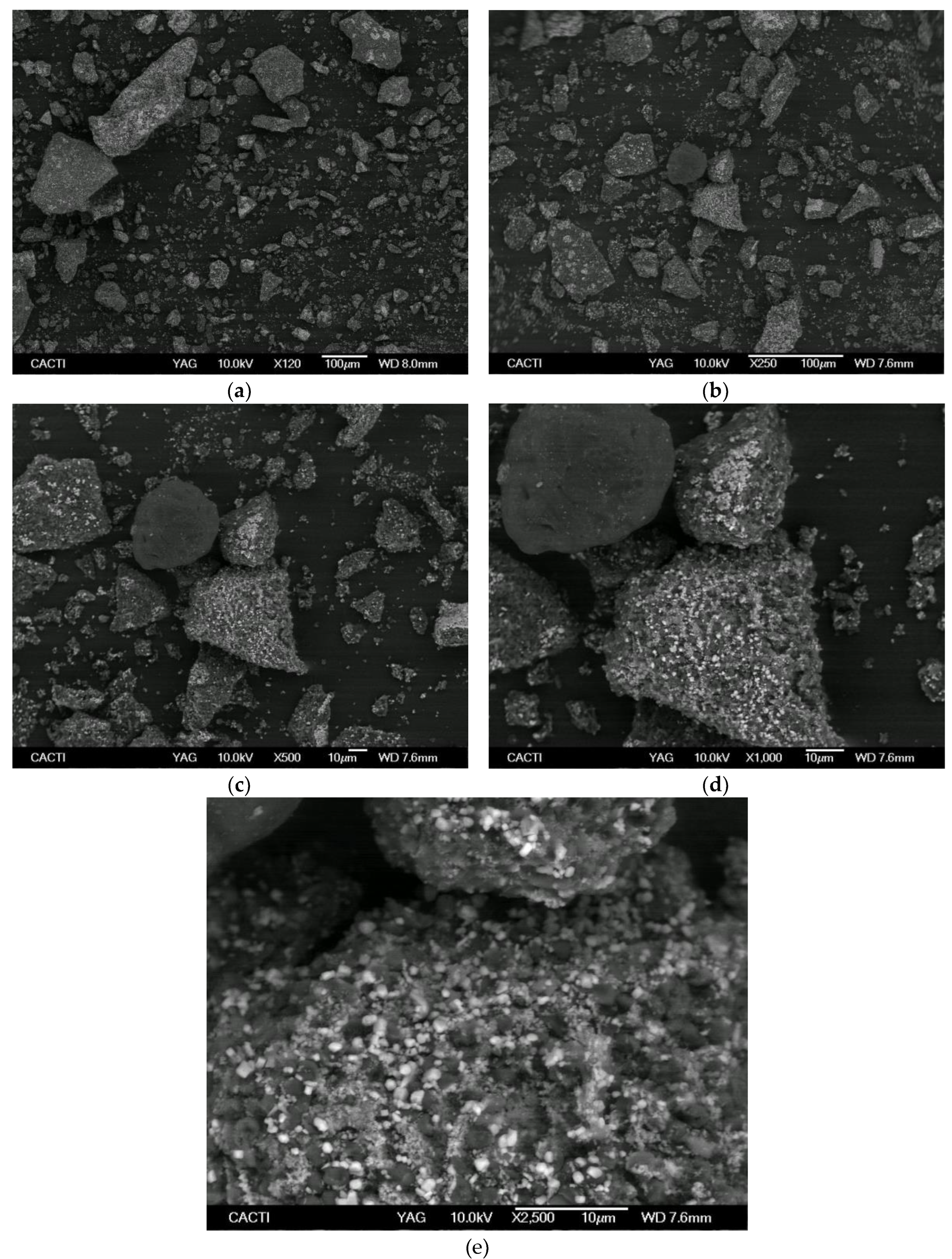
Figure 3.
Skin hydration (Corneometer CM 825), 7 days application; b) before, a) after.
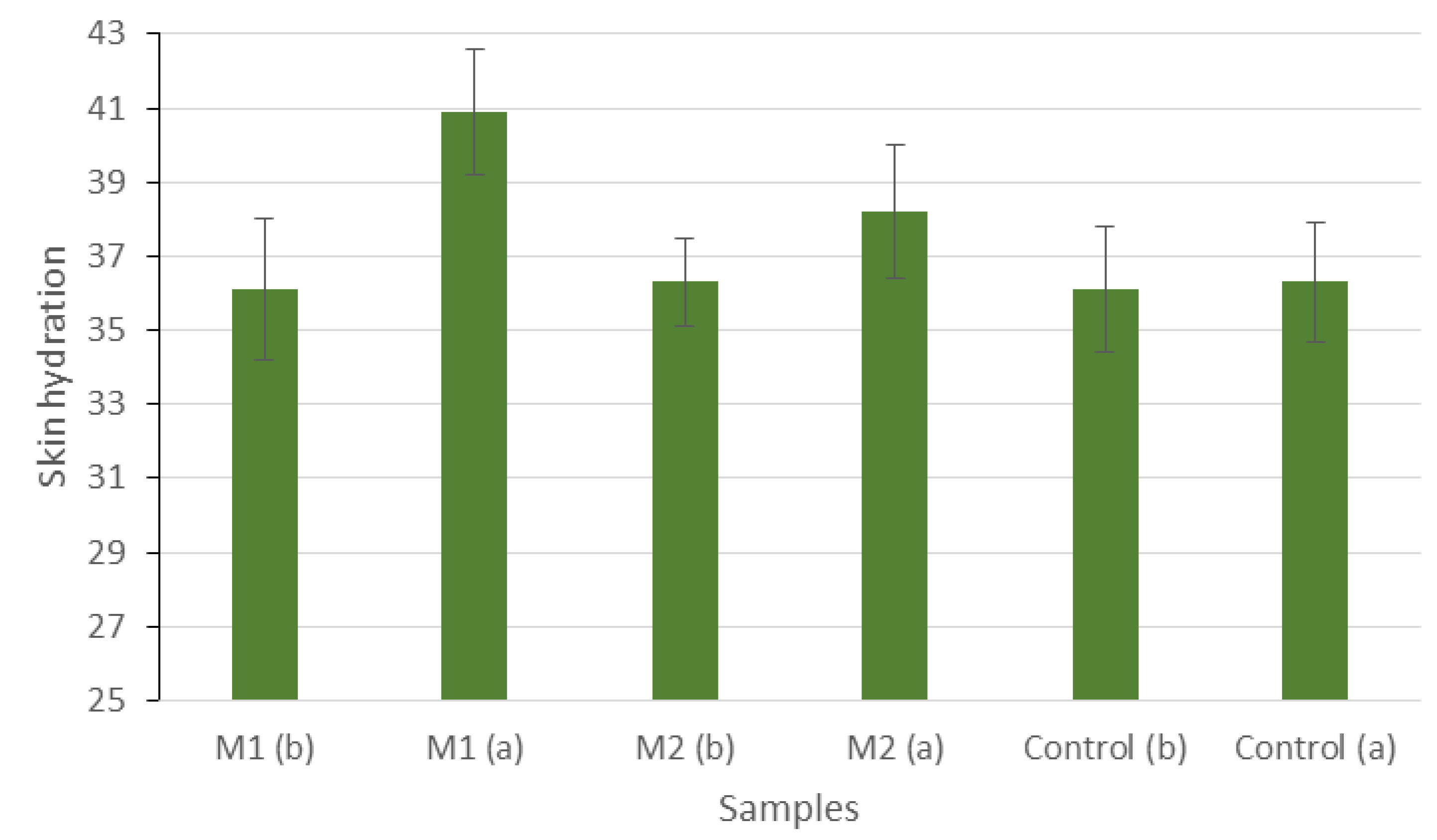

Table 1.
Peloids around the world for therapeutic, wellness, and dermocosmetic uses.
| Area / Country | Peloid | Reference |
|---|---|---|
| Israel, Jordan | Dead Sea | [10] |
| Black Sea | Athala mud | [11,12] |
| Romanian salted lakes | Techirghiol lake | [13] |
| Russian coasts and salted lakes | Bugaz Liman | [14] |
| Adriatic coast | Makirina Bay Morinja Bay Sečovlje Salina Igalo Bay |
[15] [16] [17] [18] |
| Turkey | Tuz Gölü | [19] |
| Portugal | Cale do Oiro Porto Santo |
[20] |
| Spain | Lo Pagán | [21] |
| Argentina | Mar Chiquita | [22] |
| Brazil | Peruíbe | [23] |
| Cuba | Santa Lucia | [24] |
Table 2.
Chemical analysis of Nannochloropsis sp.
| H | C | N | Na | Mg | Al | Si | P | S | Cl | K | Ca | Mn | Fe | Cu | Zn | Br | Sr | Ba | *o.c. | |
|---|---|---|---|---|---|---|---|---|---|---|---|---|---|---|---|---|---|---|---|---|
| % | 5.57 | 34.5 | 5.35 | 2.6 | 0.829 | 0.0075 | 0.017 | 3.06 | 0.25 | 6.31 | 4.48 | 4.36 | 0.0077 | 0.0724 | 0.003 | 0.015 | 0.0046 | 0.394 | 0.016 | 32,15 |
*o.c.: other compounds.
Table 3.
Mixtures of water, bentonite, and Nannochloropsis sp.
| Sample | % Distilled water | % Seawater | % Bentonite | % Nannochloropsis sp |
|---|---|---|---|---|
| M1 | 0 | 60 | 20 | 20 |
| M2 | 85 | 0 | 7.5 | 7.5 |
Table 4.
Physical properties of seawater and distilled water at 298.15 K and 308.15 K.
| Sample | T (K) | pH | ρ kg/m3 | cp J/kg K | λ W/m K | σ m2/s (107) | η mPa s |
|---|---|---|---|---|---|---|---|
| Seawater | 298.15K | 7.8 | 1023.5 | 3980 | 0.60 | 1.47 | 0.932 |
| 308.15K | 7.6 | 1020.2 | 3990 | 0.62 | 1.52 | 0.731 | |
| Distilled water | 298.15K | 7.0 | 997.0 | 4170 | 0.61 | 1.47 | 0.997 |
| 308.15K | 6.8 | 994.0 | 4160 | 0.62 | 1.50 | 0.792 |
Table 5.
Physical properties of marine and non-marine peloids at 298.15 K and 308.15 K.
| Sample | T (K) | pH | ρ kg/m3 | cp J/kg K | λ W/m K | σ m2/s (107) | η Pa s |
|---|---|---|---|---|---|---|---|
| M1 | 298.15K | 8.0 | 1290 | 2800 | 0.66 | 1.83 | 12.9 |
| 308.15K | 7.9 | 1280 | 2810 | 0.67 | 1.86 | 11.5 | |
| M2 | 298.15K | 8.6 | 1120 | 3700 | 0.63 | 1.52 | 14.5 |
| 308.15K | 8.5 | 1110 | 3710 | 0.65 | 1.58 | 13.8 |
Table 6.
Skin hydration (Corneometer CM 825), 7 days application.
| M1 (before) | M1 (after) | M2 (before) | M2 (after) | Control (before) | Control (after) | |
|---|---|---|---|---|---|---|
| Mean | 36.1 | 40.9 | 36.3 | 38.2 | 36.1 | 36.3 |
| Error | 1.9 | 1.7 | 1.2 | 1.8 | 1.7 | 1.6 |
Disclaimer/Publisher’s Note: The statements, opinions and data contained in all publications are solely those of the individual author(s) and contributor(s) and not of MDPI and/or the editor(s). MDPI and/or the editor(s) disclaim responsibility for any injury to people or property resulting from any ideas, methods, instructions or products referred to in the content. |
© 2024 by the authors. Licensee MDPI, Basel, Switzerland. This article is an open access article distributed under the terms and conditions of the Creative Commons Attribution (CC BY) license (http://creativecommons.org/licenses/by/4.0/).
Copyright: This open access article is published under a Creative Commons CC BY 4.0 license, which permit the free download, distribution, and reuse, provided that the author and preprint are cited in any reuse.


