

Submitted:
02 July 2024
Posted:
03 July 2024
You are already at the latest version
Abstract
The energy transition is a complicated process that involves changing production and consumption habits, boosting the use of renewable energy sources, and reducing greenhouse gas emissions. This article examines the management of risks associated with this shift, focusing on investment, commercial, technological, regulatory, and environmental challenges. The paper proposes an effective way for dealing with new difficulties by assessing risks and the management techniques that accompany them. Furthermore, as a critical component of the energy revolution, the concept of Nearly Zero Energy Buildings (NZEB) is given, with a focus on the ambitions of INGV – Irpina Headquarters and the EU regulatory framework. Finally, the actions and methods employed to achieve the NZEB objectives are discussed, including the utilization of cutting-edge technologies and renewable energy sources. Furthermore, the concept of Nearly Zero Energy Buildings (NZEB) is introduced as an important component of the energy transition, with an emphasis on the European regulatory framework and the ambitions of the INGV – Irpina Headquarters. Finally, the interventions and techniques employed to achieve the NZEB targets are highlighted, such as the employment of advanced technologies and renewable energy resources. This study contributes significantly to understanding the processes and issues associated with the energy transition and the implementation of NZEB, hence boosting sustainability in the construction sector.
Keywords:
risk management
; energy efficiency
; NZEB
; green energy
1. INTRODUCTION
The energy transition includes a comprehensive restructuring of many aspects of society, rather than simply replacing energy sources. In addition to boosting the use of renewable energy sources and minimizing greenhouse gas emissions, this strategy calls for a fundamental transformation in economic and lifestyle paradigms. First and foremost, the energy revolution necessitates a rethinking of lifestyles by encouraging more ecologically friendly consumption habits and responsible energy use. This can entail implementing low-energy technologies, encouraging alternate modes of transportation, and spreading the word about the importance of lowering energy waste. Second, in order to shift to an economy powered by clean and renewable energy sources, economic processes must be restructured. This requires substantial investments in new technologies and infrastructure, as well as the creation of new business and employment models in the renewable energy and energy efficiency sectors. Furthermore, energy transition aims to reduce overall energy use by encouraging energy-saving practices and technological innovation. This not only lowers the environmental impact of energy production and consumption, but it also provides for significant cost savings. The goal of INGV – Irpina Headquarters for energy self-sufficiency fits within this framework since it adheres to the Paris Agreement on Climate and is consistent with the notion of Nearly Zero Energy Buildings. These are buildings that have been designed and built with extremely high energy efficiency, requiring little or no energy to function. This indicates that the building is extremely energy efficient, with technology and materials that use less energy for heating, cooling, lighting, and other energy needs.
2. MATERIALS AND METHODS
2.1. Managing Risks during the Energy Transition
The energy transition has numerous benefits, but it also includes some hazards that could prove to be a major impediment. The Association for Project Management defines risk as “an uncertain event or set of circumstances that, if they occur, would have an impact on the achievement of one or more of the project objectives.” [1]. The term “risk” refers to potential events or conditions that could affect the project’s objectives. Establishing a methodical strategy to risk identification, analysis, evaluation, monitoring, and management is critical. The risk management process involves identifying, evaluating, tracking, and controlling the risks associated with a project.
This process’s phases are summarized as follows and it’s illustrated in the figure below (Figure 1):
- Risk Identification: Identify all potential risks to the project’s success. This can be accomplished through group discussions, document analysis, and meetings with industry experts.
- Risk Analysis: Once identified, risks are assessed for their likelihood and impact on the project. This aids in selecting the most important threats that require further investigation
- Risk Assessment: This step classifies risks based on severity and likelihood of occurrence. This helps evaluate which threats need to be addressed immediately and which may be controlled later.
- Continuous risk monitoring is essential throughout the project’s lifespan, following initial identification and appraisal. This includes monitoring conditions that may influence risks and adapting risk management techniques accordingly.
- Risk Management: This phase aims to mitigate or control identified hazards. This may include implementing contingency plans or altering project activities to reduce the likelihood of a risk occurring.
- Continuous assessment: Risk management is a cyclical process that requires ongoing evaluation based on project changes and potential risks. The aforementioned procedure allowed for a full analysis of the hazards encountered during the ongoing project.
Through this approach it is possible to find and estimate the possible risks linked to the project implemented by INGV in terms of energy efficiency and energy transition. For the full success of the project it is crucial to first establish the possible risks which can be summarized as follows:
- Investing in renewable energy and clean technology may involve financial risks, especially if support policies or tax benefits change quickly. This can have an impact on investment profitability and a company’s capacity to make the change.
- Market Risk: Rising commodity prices may hinder renewable energy’s competitiveness against traditional sources.
- Technological Risk: As energy technology advances, new technologies may become unreliable or obsolete due to future breakthroughs. Furthermore, technical or integration issues may arise throughout the transition.
- Regulatory Risk: Legislative changes can severely impact the energy transition. Government policies, such as environmental restrictions and tariff incentives, can have an impact on the profitability and long-term viability of renewable energy and clean technology
- Environmental Risk: While the energy transition intends to reduce environmental effects, there are risks associated with integrating renewable technology, including impacts on natural ecosystems and electronic waste creation.
Effective risk management requires a combination of appropriate public policies, strategic planning, technological innovation, stakeholder participation, and continuous evaluations of implications and developing challenges during the transition phase. To mitigate the discussed risks to the greatest extent feasible, the five major actions [2] outlined below will enable them to implement and structure an effective and efficient risk management plan in their current and future activities. The five main steps are summarized as follows:
- Effective risk management begins with identifying and evaluating potential risks in a NZEB building. Market fluctuations, regulatory modifications, and technological advancements all have the potential to cause dangers.
- Develop a Risk Strategy: After identifying risks, develop a management plan to mitigate them. This entails creating risk-management rules and processes and ensuring that they are successfully implemented.
- Create a Risk Management Strategy: After identifying risks, develop a plan to address them. This includes creating risk-reduction policies and procedures and ensuring their effective implementation. Evaluate existing techniques to ensure their effectiveness, develop new ones, or modify/replace existing ones.
- Training and awareness: Effective risk management involves comprehensive training for all personnel.
To effectively manage risks, it’s important to train personnel in all areas and communicate effectively across departments. This guarantees that everyone is aware of potential hazards and how to manage them.
According to a recent study [5], rising commodity prices and wars are causing widespread uncertainty, threatening to disrupt the global energy transition. According to the World Energy Council’s 14th annual World Energy Challenges Monitor, these challenges represent significant threats to trust in global energy markets.
A number of factors, including public and political support, finance, and economic alignment, have a significant impact on the pace and scope of the energy transition.
Have countries that have done so without the pressure of climate change by using nuclear power (e.g., France and Finland), available hydro potential (e.g., Norway and Brazil), or cheap natural gas (which emits less than coal in the United States). Sweden has the lowest carbon intensity because it extensively uses nuclear, hydroelectric, and wind energy.
As a result, attempts to achieve the energy transition must be bold enough that the obstacles they provide do not outweigh the solutions they offer. We do not fully understand the threats we forecast from climate change, and they are expected to increase after the middle or end of the century. The unintended consequences of a rapid energy transition are also uncertain and highly influenced by a number of complex events, including the current epidemic, an increasingly complex economy, and a threatening international cooperation.
Unfortunately, there is no simple or straightforward recipe for a successful energy transition. Priorities and success are decided by a country’s development criteria, among other factors.
The reality of alternative plans and approaches cannot be appraised in light of the anticipated high costs, especially considering the several worldwide crises. According to the International Energy Agency (IEA), renewable energy will receive $1.4 trillion (1400 billion) in investment by 2021, while fossil fuels will continue to receive $1 trillion. Investments in renewable energy are expected to increase by 2030. The current energy crisis has resulted in energy expenses of ~$10 trillion (twice as much as usual) in 2021, which is about 10% of GDP and more than total taxes, profits, and military spending. The war in Ukraine has increased energy costs even more, as low-cost Russian fossil fuels are being replaced with much more expensive alternatives.
The European Union as a whole aims to pursue very ambitious decarbonisation plans (Figure 2) that include energy efficiency, renewables (40 to 45% by 2030), and changes to market rules. Implementing even more ambitious decarbonisation plans involves a number of challenges, ranging from financial (price and interest) to long-term manpower shortage. The recommendations call for the early closure of coal-fired power plants and, in some situations, nuclear ones. This includes not just a rise in transition expenses, but also societal difficulties like economic change and unemployment. Similar problems shape the status of the global energy transition. In industrialized countries like United States, the issue of economic and political backing results in differing amounts of support for the transition.
The rich are forcing poorer countries to undergo an energy transition that boosts the cost of their energy, jeopardizing their capacity to escape poverty. The current significant increase in new renewable (wind and solar) capacity worldwide is insufficient to match the surge in energy demand. Peak global fossil fuel use may occur this decade, but it could take until around 2040, depending on economic development trends and other factors.
2.2. THE NZEB (NEARLY ZERO ENERGY BUILDINGS)
Nearly Zero Energy Buildings (NZEBs) are characterized by high energy efficiency, designed and constructed to minimize energy consumption for heating, cooling, lighting, and other energy uses. The main goal of NZEBs is to minimize the environmental impact of the building by reducing greenhouse gas emissions and dependence on non-renewable energy sources. These buildings are equipped with advanced technologies and insulation materials to maximize energy efficiency, while any required energy is typically met by renewable sources integrated into the building itself or its immediate surroundings. NZEBs represent a significant step towards sustainability in construction, contributing to the fight against climate change and promoting a more eco-friendly built environment.
2.2.1. European Regulatory Framework on NZEBs
The international regulatory landscape reflects a growing commitment towards building energy efficiency and reducing pollutant emissions [6]. In particular, the European Union has played a fundamental role in the introduction of targeted laws. The EU Directive of 2010 introduced the concept of Nearly Zero Energy Buildings (NZEBs), defining them as buildings with very high energy performance and low energy consumption, largely satisfied by renewable sources [7]. This directive made it mandatory to use the NZEB model for new public buildings by December 31, 2018, and for all new buildings by the end of 2020. Additionally, Directive (EU) 2018/844 extended the NZEB objective to existing buildings as part of long-term renovation strategies [8]. This involves the adoption of advanced building automation and control technologies and the implementation of smart grids for shared energy management. The European Union aims to reduce greenhouse gas emissions by 80-95% by 2050 compared to 1990 levels, while increasing the use of renewable energy. This requires full commitment even from sectors not subject to the emission trading system, such as construction and transportation. Adopting the NZEB model for the renovation of existing buildings represents a significant step towards decarbonization and energy efficiency. [9] However, it is important to note that this is feasible only for a portion of the building stock, requiring careful cost analysis. In summary, Europe is adopting increasingly stringent measures to promote Nearly Zero Energy Buildings, both for new and existing buildings, as part of efforts to achieve decarbonization and energy efficiency goals.
2.3. Characteristics and Objectives on NZEBs
The Nearly Zero Energy Building (NZEB) idea aims to improve energy efficiency and sustainability in the building sector. This analysis focuses on numerous key components of the NZEB model, including design factors, contemporary material breakthroughs to optimize the building envelope, and support systems to meet energy demand. The thresholds or numerical ranges for distinguishing NZEB elements are not clearly established in the Energy Performance of Buildings Directive (EPBD), resulting in varying interpretations among European Union countries. These interpretations vary depending on the climate, local goals, and construction traditions of each country. Directive (EPBD), the thresholds or numerical ranges for determining NZEB traits are not clearly stated, resulting in varying interpretations between European Union countries. These interpretations vary depending on the climate, local goals, and construction traditions of each country. Some general criteria, often derived from bioclimatic architecture, have helped to define NZEB objectives, such as building positioning and orientation to maximize or minimize solar gains and wind exposure, the use of thermal mass to reduce temperature variations, and the use of solar shading to prevent summer overheating. The primary goals of the NZEB model are to reduce energy demand and increase energy efficiency. To achieve these objectives, heating and cooling systems powered primarily by renewable energy are necessary.
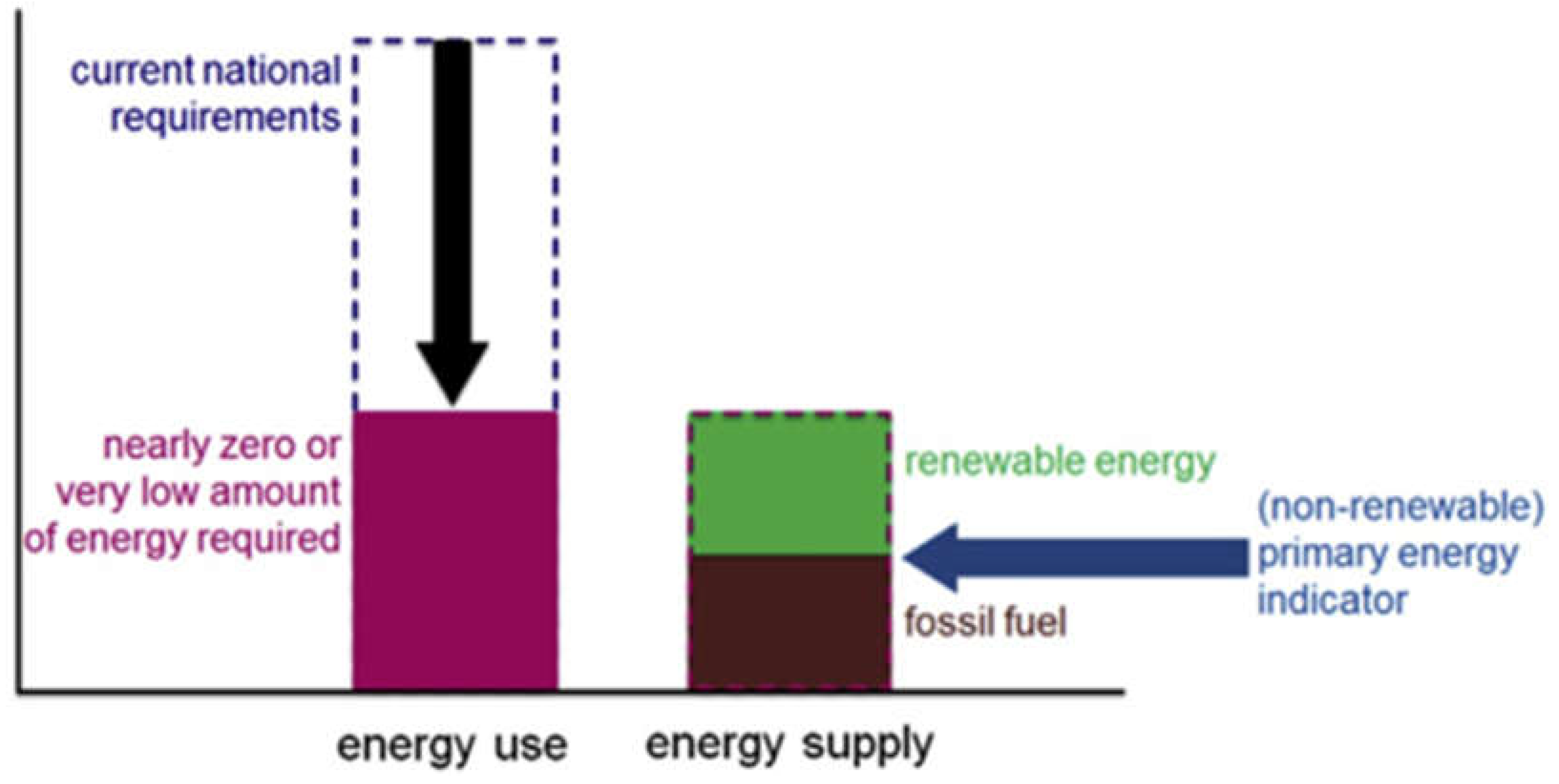
EU building directives, both new and current, encourage the implementation of measures to minimize heating demand through greater thermal insulation and performance. However, climate change is increasing the demand for air conditioning, notably in Central and Southern European countries. The NZEB’s goal for building design is to facilitate a reduction in energy demand and the elimination of fossil fuels. The related literature includes a graphical representation of the NZEB energy balance (Figure 3) [10].
What experts say about nearly zero-energy buildings;
Adrienne Johnson, associate engineer at Point Energy Innovations said “When we talk about electrification, we're talking about shifting our space, water heating and cooking technology from fossil fuel burning options to all-electric to take advantage of our increasingly renewable electricity sources. Electrification of our buildings is actually becoming a much more critical and in many ways an achievable standard via net zero energy on site.” [11]
Cathy Higgins, research director at New Buildings Institute said “Energy needs to be transparent for awareness. Building energy usage has been hidden for a long time, so we need to raise awareness of the relationship between the design, the building systems, and the occupant and operator roles." It is vital that we promote knowledge about the relationship between our behaviors and energy consumption, as well as how this relates to the fuel we use to power our buildings and the larger ecosystem.” [11]
2.4. Objectives of INGV - Irpinia Headquarters Regarding NZEB
Achieving energy efficiency in the real estate portfolio of INGV towards the NZEB (Near Zero Energy Building) target is an activity involving the management of the Institute and the respective offices. The project focuses on implementing NZEB requirements for the Observatory of the central headquarters of Irpinia located in Grottaminarda (Avellino). A set of energy efficiency measures responding to NZEB requirements are identified and evaluated, financed through the Conto Termico (Thermal Account) of the Energy Services Manager (GSE).
Before describing the project and the implemented interventions, it is necessary to preliminarily discuss the study conducted to understand where intervention could be useful or indispensable for the successful implementation of the energy transition. This study is structured as follows based on the predefined objectives and hypothetical actions to be taken:
- Definition of Objectives: Establish a specific goal for the level of energy consumption and the renewable energy sources to be used to cover such consumption.
- Context Analysis: Evaluate local climatic conditions to optimize the orientation and design of the building.Consider building regulations and available financial incentives for low-energy buildings.
- Architectural Design: Maximize energy efficiency through passive design that maximizes solar radiation, natural ventilation, and thermal insulation. Use high-performance building materials for the building envelope.
- Energy Systems: Integrate advanced technologies for renewable energy production, such as photovoltaic solar panels and geothermal systems. Install high-efficiency heating and cooling systems, such as air or water heat pumps.
- System Efficiency: Use high-energy-efficient electrical equipment and devices, including appliances, lighting, and control systems. Implement energy management systems to monitor and optimize the building's energy consumption over time.
- Commissioning and Monitoring: Commission the building to ensure that all systems are functioning properly and optimized to maximize energy efficiency. Monitor the building's energy performance over time and make any necessary improvements or adjustments.
- Training and Awareness: Train staff on the efficient use of building systems and equipment. Raise awareness among occupants about the importance of energy conservation and practices to reduce daily energy consumption.
- Certification and Regulatory Compliance: Obtain NZEB certification or other recognized energy efficiency certifications to demonstrate compliance with current standards and regulations.
Following these objectives and works, it is possible to create a nearly zero-energy building that is efficient, sustainable, and comfortable for occupants. To this end, after careful interpretation of this study of interest, interventions have been predefined as summarized below:
- Installation of a geothermal system in the foundation structures (geothermal pillars). The system harnesses the natural heat from the subsurface for space heating/cooling and domestic hot water production. Being a renewable source it has non climate-changing emissions.
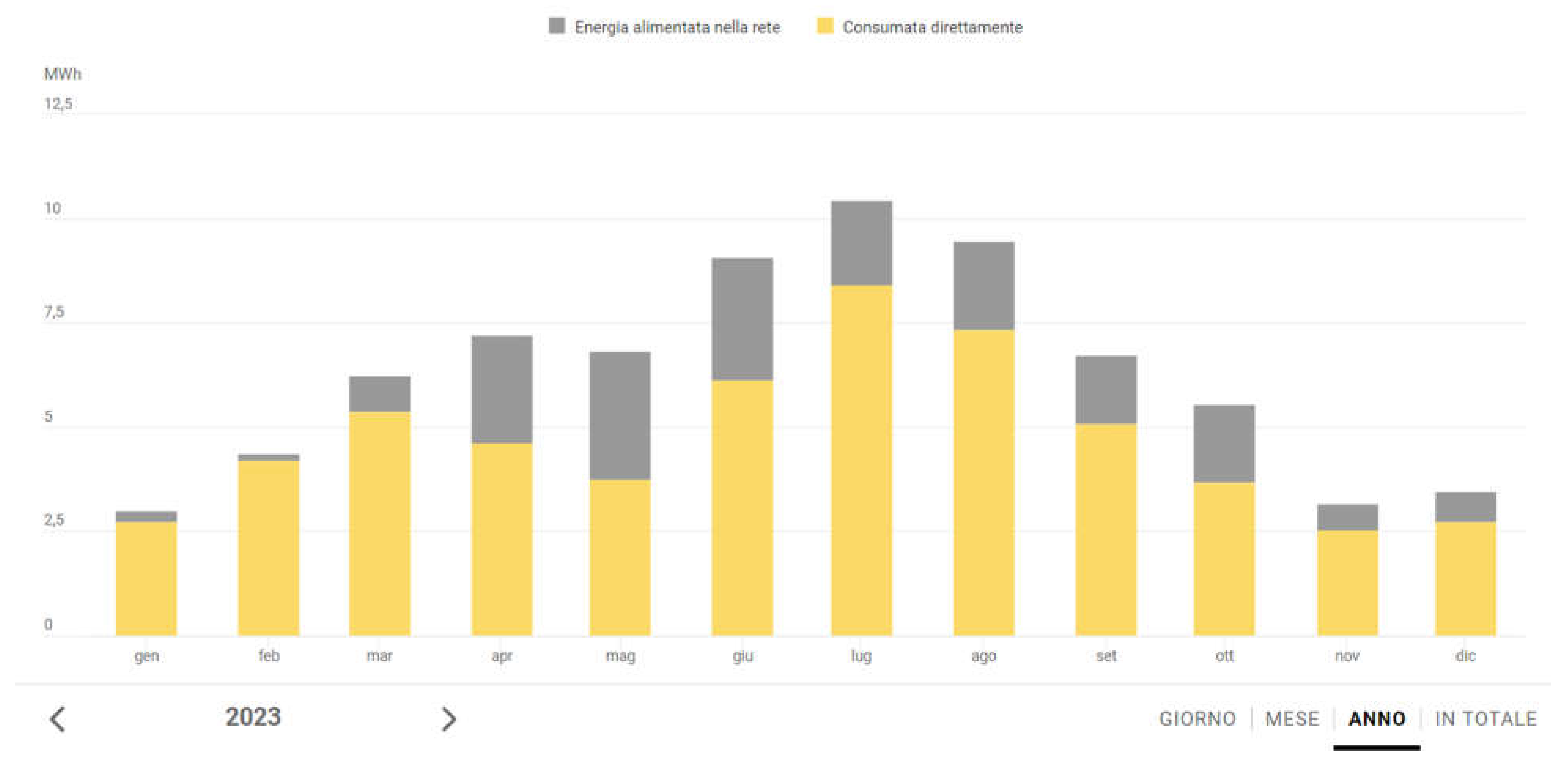
- Installation of photovoltaic system on groundwater with power of 58 KW. The electricity produced by the photovoltaic system is used to power the entire building. Additionally, excess energy is fed into the public grid, generating additional income through government incentives for renewable energy production.
Figure 4.
- Aerial view of the photovoltaic system installation.
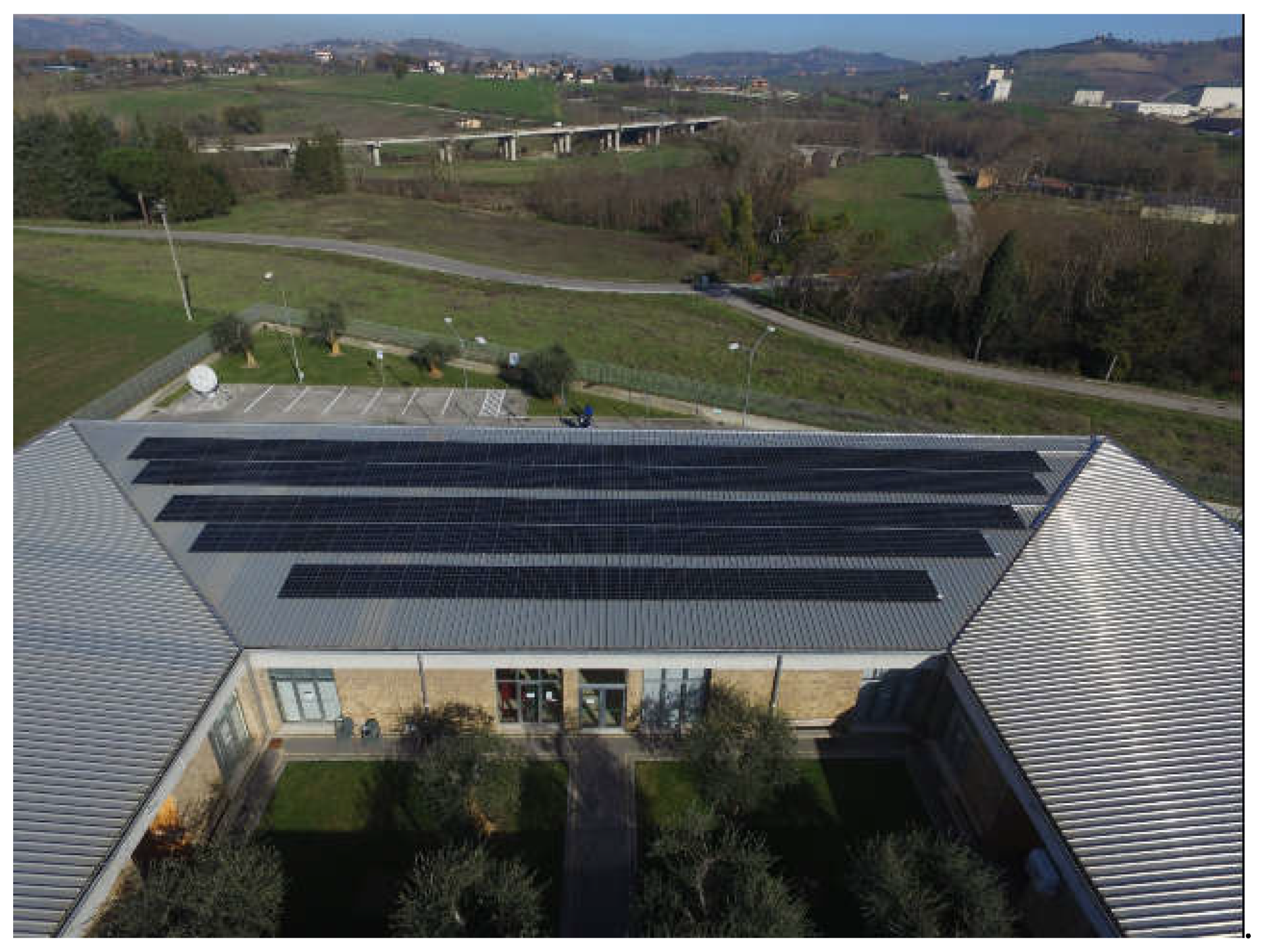
Figure 5.
- Diagram showing energy production with the relative energy consumption for the entire building (in yellow) and the energy fed in the public grid (in grey) for the year 2023..
Figure 5.
- Diagram showing energy production with the relative energy consumption for the entire building (in yellow) and the energy fed in the public grid (in grey) for the year 2023..
- Building automation is achieved through a building automation system (BAS) that by using Machine Learning and artificial intelligence automatically manages the geothermal systems as well as natural ventilation, according to the structure needs and number of guests as well as outdoor weather conditions. [12]
- Replacement of existing winter air conditioning systems with updated air conditioning systems winter, also combined in the production of domestic hot water, equipped with heat pumps, using both aerothermal, and geothermal energy.
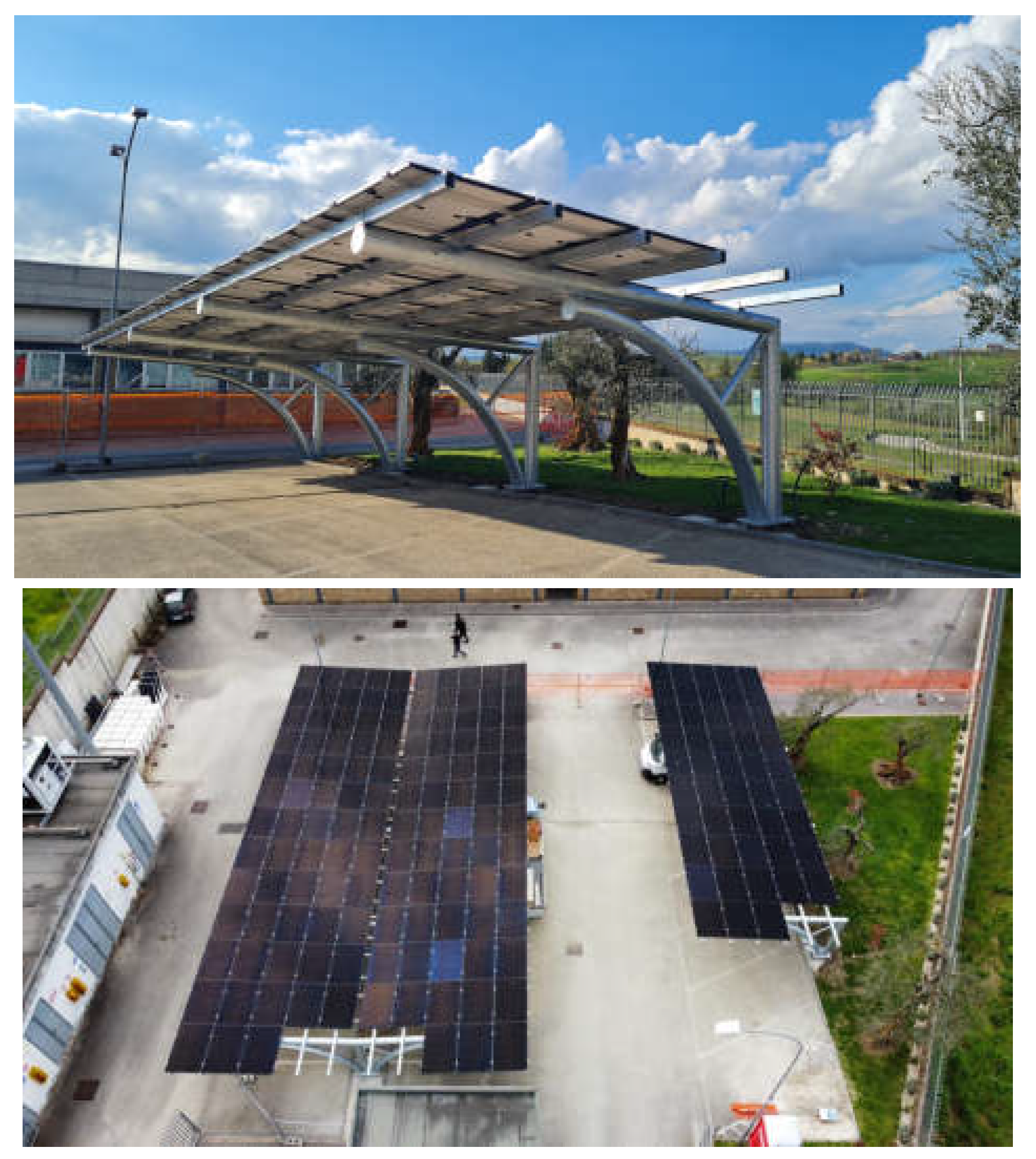
- The installation of steel geothermal canopies equipped with a photovoltaic system (72 KW) connected to the electrical grid and anchored using foundation piles integrated with geothermal probes is underway. This initiative enables the utilization of the canopy surfaces for clean energy production. Additionally, a low enthalpy geothermal system is integrated into the foundation piles of the photovoltaic canopies. These piles, known as "geothermal piles," are connected to a heat pump and a water-to-water conditioning system of the facility, allowing for continuous and natural energy exchange with the surrounding ground.
- Natural ventilation is used to regulate heating and cooling requirements for the whole building as needed. Ventilation is enabled by an automatic system using openings and chimneys that will be fully operable by a manual and automated system able to monitor temperature, humidity and air quality.
- LED lighting is an important part of energy efficiency and user comfort. [13]
Figure 6.
- Energy car parks with solar panels INGV - sede Irpinia.
3. DISCUSSIONS
To recap, the energy transition is a multifaceted process that involves lowering greenhouse gas emissions, developing renewable energy sources, and shifting consumption and production patterns. Managing the risks associated with this change is crucial to its success, and these include investment, market, technological, regulatory, and environmental concerns. We can overcome the challenges of the energy transition by evaluating these risks and using appropriate management approaches. Nearly Zero Energy Buildings (NZEBs) are emerging as a key component of the energy transition, particularly within the European regulatory framework and goals set by groups such as the INGV – Irpina headquarters. NZEBs seek to reduce energy consumption and environmental impact by utilizing cutting-edge technologies and renewable energy sources, while also improving efficiency and occupant comfort.Organisations can contribute to the larger goals of sustainability and decarbonisation by implementing a systematic risk management strategy and following NZEB standards. The construction sector may assist to prevent climate change and create a more sustainable future by implementing energy-efficient practices, using renewable energy sources, and adhering to regulatory requirements. Overall, this study highlights the importance of proactive risk management, strategic planning, and technological innovation in navigating the obstacles of the energy transition. Organizations may create good change and contribute to a more resilient and environmentally conscious society by facing challenges head on and implementing sustainable practices.
Funding
This research received no external funding.
Conflicts of Interest
The authors declare no conflicts of interest.
References
- Micán, Camilo, et al. “Operational risk categorization in project-based organizations: A theoretical perspective from a project portfolio risk lens.” Procedia Manufacturing, vol. 41, Jan. 2019, pp. 771–78. [CrossRef]
- Vranckx, Yannick. “5 Key Steps in Effective Risk Management.” RESPONSUM, 26 Dec. 2023, responsum.eu/articles/5-key-steps-in-effective-risk-management.
- Godfrey, Paul C., and Et All. “Strategic Risk Management: New Tools for Competitive Advantage in an Uncertain Age.” Berrett-Koehler eBooks, 2020, openlibrary.telkomuniversity.ac.id/home/catalog/id/163848/slug/strategic-risk-management-new-tools-for-competitive-advantage-in-an-uncertain-age.html.
- Rost, Mike. “5 Steps to Effective Strategic Risk Management.” Workiva, 21 September 2020, https://www.workiva.com/blog/5-steps-effective-strategic-risk-management.
- Cui, Lianbiao, et al. “Exploring the risk and economic vulnerability of global energy supply chain interruption in the context of Russo-Ukrainian war.” Resources Policy, vol. 81, Mar. 2023, p. 103373. [CrossRef]
- Sands, Philippe, and Paolo Galizzi. “Directive 2002/91/EC of the European Parliament and of the Council of 16 December 2002 on the energy performance of buildings (OJ L 001 04.01.2003 p. 65).” Cambridge University Press eBooks, 2006, pp. 485–97. [CrossRef]
- “Directive - 2010/31 - EN - EUR-Lex.” EUR-Lex, https://eur-lex.europa.eu/eli/dir/2010/31/oj.
- “Directive - 2018/844 - EN - EUR-Lex.” EUR-Lex, 19 June 2018, https://eur-lex.europa.eu/eli/dir/2018/844/oj.
- Economidou, M. , et al. “Review of 50 years of EU energy efficiency policies for buildings.” Energy and Buildings, vol. 225, Oct. 2020, p. 110322. [CrossRef]
- Magrini, Anna, et al. “From nearly zero energy buildings (NZEB) to positive energy buildings (PEB): The next challenge - The most recent European trends with some notes on the energy analysis of a forerunner PEB example.” Developments in the Built Environment, vol. 3, Aug. 2020, p. 100019. [CrossRef]
- “A future of zero-energy building: Is it possible?” REHAU, www.rehau.com/us-en/a-future-of-zero-energy-building-is-it-possible-.
- Singh, Reshma, et al. Transforming State-of-the-Art into Best Practice: A Guide for High-Performance Energy Efficient Buildings in India. 13 Apr. 2018. [CrossRef]
- Minoli, Daniel, et al. “IoT Considerations, Requirements, and Architectures for Smart Buildings—Energy Optimization and Next-Generation Building Management Systems.” IEEE Internet of Things Journal, vol. 4, no. 1, Feb. 2017, pp. 269–83. [CrossRef]
Figure 1.
- The risk management process.
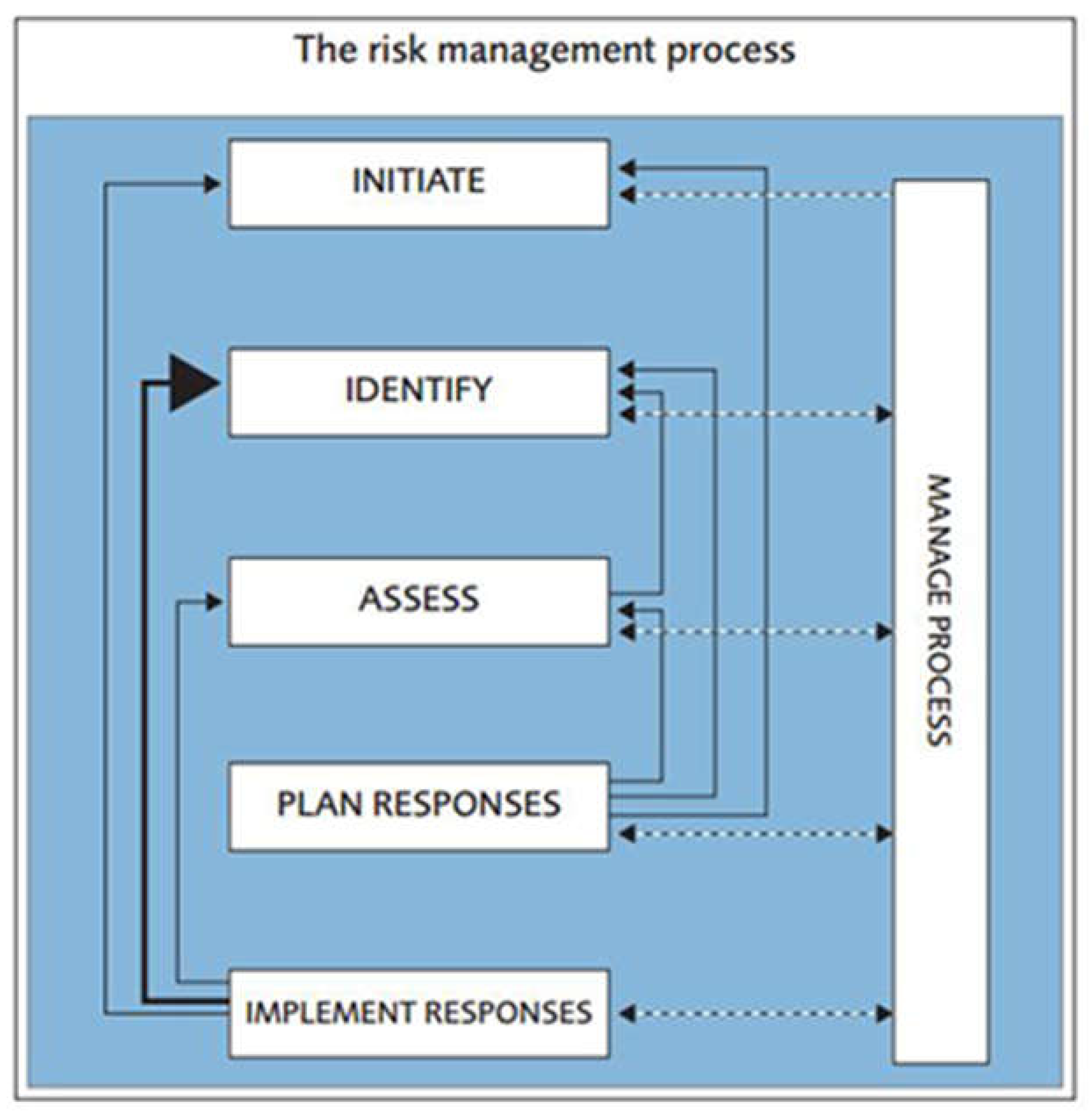
Figure 2.
- The EU plan for 2030.
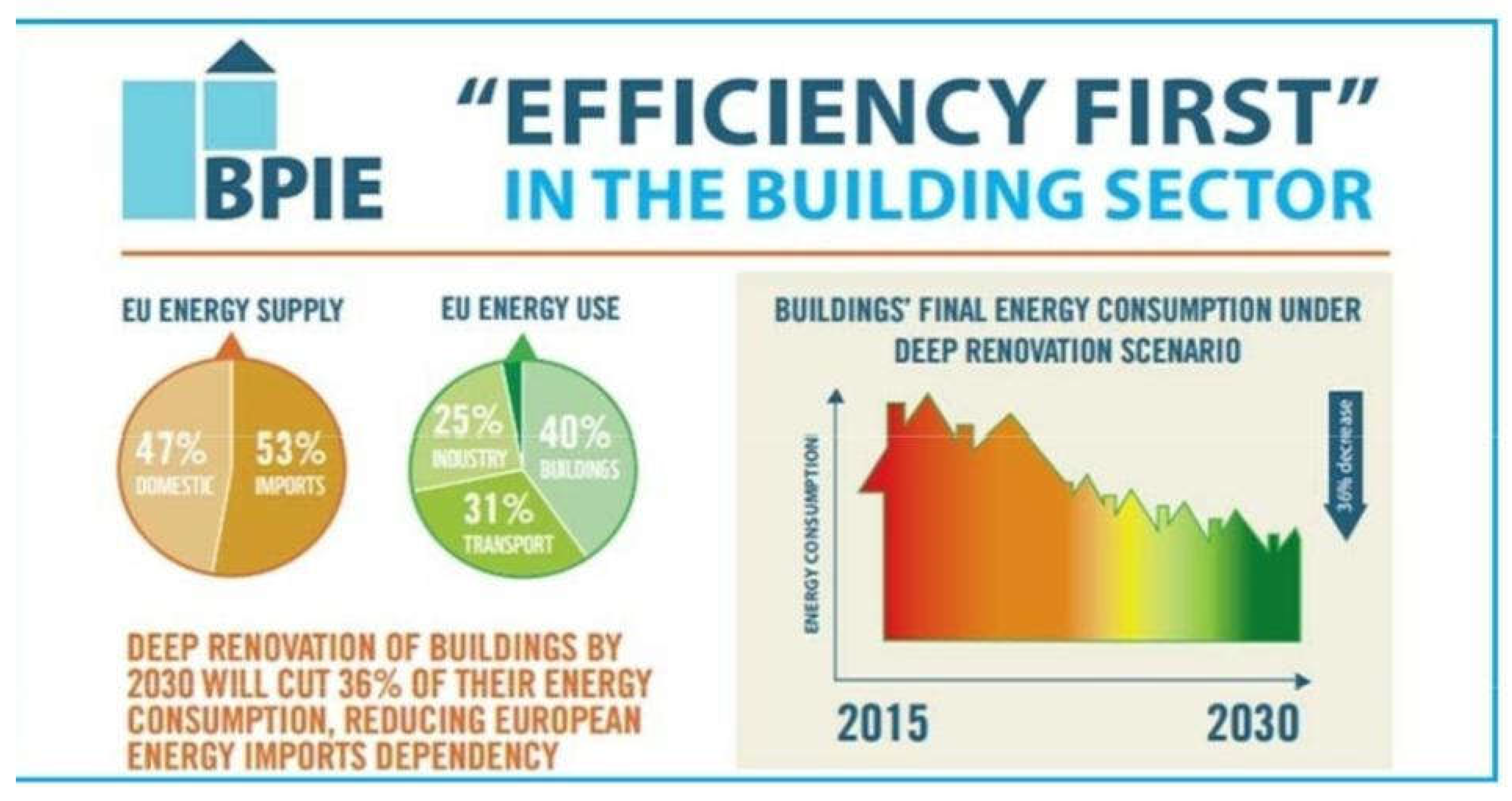
Figure 3.
- The NZEB model according to EPBD indications.
Disclaimer/Publisher’s Note: The statements, opinions and data contained in all publications are solely those of the individual author(s) and contributor(s) and not of MDPI and/or the editor(s). MDPI and/or the editor(s) disclaim responsibility for any injury to people or property resulting from any ideas, methods, instructions or products referred to in the content. |
© 2024 by the authors. Licensee MDPI, Basel, Switzerland. This article is an open access article distributed under the terms and conditions of the Creative Commons Attribution (CC BY) license (https://creativecommons.org/licenses/by/4.0/).
Copyright: This open access article is published under a Creative Commons CC BY 4.0 license, which permit the free download, distribution, and reuse, provided that the author and preprint are cited in any reuse.


