

Submitted:
27 June 2024
Posted:
01 July 2024
You are already at the latest version
Abstract
Digital transformation, organizational resilience, and agility are now becoming one of the keys to meeting the competitive challenges of modern organizations. It is no surprise that digital transformation and digital technologies have also begun to significantly impact the energy industry, moving towards improving the sector's profitability and efficiency. However, to navigate through the difficult process of digital transformation in today's turbulent environment, organizations, including those in the energy sector, need to build organizational resilience. Nevertheless, the nature of the relationship between digital transformation and organizational resilience has not yet been sufficiently clarified. Focusing on the level of digital transformation, and more precisely within the two dimensions of digital maturity, i.e. digital intensity and transformation management intensity, as well as based on the perspective of dynamic capabilities, this study developed a configurational framework and proposed a theoretical model to study the equifinal paths through which digital transformation and dynamic capabilities influence organizational resilience in energy sector companies. Based on a fuzzy set qualitative comparative analysis (fs/QCA) conducted on selected companies in the energy sector, i.e. Polish CHP plants, the relationship between digital transformation, dynamic capabilities and organizational resilience was investigated. The results show that a high level of organizational resilience can be achieved through two main paths based on the dominance of dynamic capabilities and the dominance of digital maturity. The study found that digital maturity can significantly influence CHP resilience. Moreover, the transformation management intensity is strongly related to high organizational resilience. The paper concludes by describing theoretical and practical implications, as well as research limitations and prospects for future research.
Keywords:
digital transformation
; organizational resilience
; fuzzy-set qualitative comparative analysis (fs/QCA)
; dynamic capabilities
; CHP plants
1. Introduction
We are currently witnessing constant changes related to the rapid development of digital technologies, such as cloud computing, Internet of Things (IoT), blockchain, big data, artificial intelligence (AI), industrial internet, transforming the traditional economy into a digital, intelligent and resulting transformation in the way the market and enterprises operate. On the other hand, due to the currently observed unfavorable phenomena that carry a huge risk for the world economy, such as the Russian invasion, the global crisis caused by the COVID-19 pandemic, efficiency improvement, resource allocation, or social coordination caused by digitization, they gain particular importance also for the survival and further development of the organizations. It should be emphasized that one of the best known and consistent views is that digitization is a proven way of achieving organizational resilience by organizations [1]. Organizational resilience can be referred to as a company's ability to effectively assimilate, implement responses according to the situation, and engage in transformational activities to achieve specific benefits from unexpected events [2,3]. However, the definition of resilience is controversial [3] due to its multidimensional and multilevel nature [4,5]. An important aspect of resilience is that organizations adapt to strategic processes to find alternative solutions to this new reality [6].
It is important that companies wishing to maximize their innovative capacity to achieve organizational resilience are also afraid of the effects of digital transformation that could disrupt existing processes and structures. In the energy sector, issues relating to the implementation of innovative solutions and digital transformation are also quite intensively analyzed. Among other things, surveys were carried out on the use of solutions based on the Industry 4.0 paradigm in the energy sector [7], the role of Industry 4.0 in the energy sustainability [8], and the use of modern digital technologies, such as artificial intelligence (AI), big data, Internet of Things (IoT), blockchain in energy industries that facilitate the development of smarter energy grids and offer a more efficient and innovative approach to energy use [9,10,11,12]. However, given the complexity and uncertainty of digital transformation, it remains quite difficult for entrepreneurs to appreciate the consequences of digital transformation. In this context, it is of great importance to address topics related to the digital transformation process, and then the improvement of the organizational resilience of enterprises.
There is a significant gap in the literature in the field of empirical verification of the impact of digital transformation on the resilience of organizations, especially companies from the energy sector. As regards the factors influencing organizational resilience, the conducted research shows that in a crisis caused, for example, by the COVID-19 pandemic, enterprises must be able to reconfigure themselves to minimize the risk [13], and digitization significantly facilitates understanding and adapting to changing environmental contexts. For example, artificial intelligence and other digital technologies help enterprises make intelligent decisions in a crisis, promote supply chain resilience [14] and the resilience of the platform ecosystem [15]. In addition, in the process of digital transformation, enterprises rebuild organizational capabilities and formulate dynamic capabilities as part of an innovative reconstruction of internal and external resources, processes, and structures [16]. Therefore, the possessed resources and capabilities are often effectively used by enterprises to build new opportunities in line with the adopted development paths. Consequently, the dynamic capability theory offer insight into the relationship between digital transformation and organizational resilience.
Dynamic capabilities are the keys to digital transformation, enabling more sustainable development, greater competitiveness, and increasing the organization’s resilience. However, these factors have rarely been considered together from a holistic perspective. Based on existing literature relating to digital business strategies and dynamic capabilities, considering CHP plants in Poland as research objects, this study examines the mechanisms of influence between digital transformation and organizational resilience. This study analyzed data using fuzzy set qualitative comparative analysis (fs/QCA) to determine sets of relationships between digital transformation, dynamic capability, and organizational resilience. The study shows that digital transformation leads to high organizational resilience, which involves high sensing capability or high seizing capability. There is a substitution relationship between sensing capability and seizing capability. Moreover, high dynamic capabilities also lead to high organizational resilience, together with high transformation management intensity. This study deepens the knowledge and understanding of CHP plants that are trying to achieve organizational resilience through digital transformation, and also provides guidance for appropriate management practices of the analyzed enterprises.
The paper is structured as follows: after the introduction, the theoretical background is described, then the research model is developed, the research methods and results are presented, and finally discussions and conclusions.
2. Theoretical Background
Resilience has been studied from the perspective of many disciplines. Pioneering works by Staw et al. [17] and Meyer [18] regarding the organization's response to external threats introduced resilience as a research area in organizational management, creating a space for research on organizational resilience. Despite the lack of consensus on organizational resilience, it can be assumed with most researchers that organizational resilience refers to "the ability of an organization to withstand significant business disruptions caused by unpredictable, unexpected or catastrophic events, driving organizational systems beyond planned service limits without serious losses" [19], p. 383]. Therefore, in a world where the future is uncertain and changes are rapid, the concept of organizational resilience is becoming increasingly important [20]. The literature contains at least three different perspectives on the interpretation of organizational resilience: reactive, adaptive and transformational (Table 1). They highlight the various capabilities of an organization to anticipate, respond to, and adapt to external disruptions.
The nature of these perspectives allows the adoption of a strategic approach defining organizational resilience as a response and ability to a destructive environment. This indicates that organizational resilience can be considered a dynamic capability of an organization that grows and develops over time. Moreover, taking this perspective as a basis, organizational resilience can be considered as a multidimensional organizational attribute that enables a company to effectively absorb, respond to, and potentially exploit destructive surprises [23,24,25]. Therefore, the dynamic capabilities perspective provides a theoretical perspective through which organizational resilience can be adequately examined.
The literature has identified certain factors that have a positive impact on organizational resilience, such as strategic human resource management [26], employee engagement [27], or have a positive impact on the systemic control of organizational resilience, which include the enterprise resource system [28] and managing inter-organizational relationships (e.g. relationships between partners) [29]. However, despite the growing interest in the antecedents of organizational resilience, research to date has focused mainly on human capital and social capital. In the digital era, organizations, including those in the energy sector, investing more in digital transformation will be able to develop the ability to sense changes in the market environment, exploit new opportunities for innovation, and reconfigure new product offerings and value propositions [30]. However, it is important to emphasize that few studies to date have investigated the role of digital transformation in building organizational resilience, especially such a gap exists in relation to companies in the energy sector. It is possible to find publications on the transformation process in this sector, its level and the constraints and challenges that accompany it [31,32], however, there is a cognitive gap on the relationship of digital transformation in energy companies in relation to the creation of organizational resilience. To fill this gap, this study proposes a theoretical link between digital transformation and organizational resilience, which was successively tested on selected energy sector companies.
The concept of digital transformation has been defined in the literature at several levels, namely at the societal level [33], at the meso level [34] and at the enterprise level [35]. Digital transformation refers to the process involving the use of new digital technologies (such as artificial intelligence, mobile Internet, blockchain, cloud technology or the Internet of Things) to expand business opportunities, streamline operational processes, improve customer relationships and develop new, innovative business models [36]. As digital transformation involves a process of transformation of the organization, in order to measure the progress of digital transformation, a construct called digital maturity has been developed in the literature, describing ‘what the company has already achieved in terms of undertaking transformation efforts’ [37], p. 4]. Moreover, digital transformation is a continuous process, so the digital maturity construct should provide managers with a set of specific criteria allowing for comparison of the current state with the results successively achieved through digital transformation.
Among the various scales developed in the literature to determine the digital maturity of an organization, which identify the dimensions and reveal the capabilities necessary to achieve the desired stage of maturity, the two-dimensional scale developed by the MIT Center for Digital Business and Capgemini Consulting stands out. This scale is applicable to a wide range of contexts and consists of two dimensions: digital intensity and transformation management intensity [38]. Digital intensity refers to ‘technology-based initiatives aimed at changing the way a company engages with customers, internal operations, and even business models’ [38], p. 2. Digital intensity increases help companies discover new digital opportunities, greater customer engagement and conducting business using digital technologies. Transformation management intensity, in turn, refers to ‘the leadership capabilities necessary to drive digital transformation in an organization’ [38], p. 2. Enterprises with high transformation management intensity are characterized by having a transformation vision, governance and culture that aims to coordinate digital initiatives to maximize business benefits.
As several previous studies indicate, increasing digital maturity contributes to better organizational performance, employee retention and other significant benefits (e.g. [38,39]). The energy sector is also facing the need to quickly adapt and adjust to the requirements of digital transformation. With increased investment in digital technologies, for example through the use of machine learning models for energy consumption and energy savings combined with the right management strategy and vision, energy companies can more easily and flexibly coordinate internal resources, manage and continue to operate despite adversity. Through strategic investments in digitalization, utilities can also leverage external resources and gain new opportunities to support business operations and build resilience in disruptive situations. Increasing transformation management intensity can contribute to active monitoring and scanning of the environment, developing new, innovative strategies, thereby improving the level of organizational resilience. Moreover, strengthening transformation management intensity can equip the company with a transformational vision based on understanding external changes and the current situation of the organization [40]. Thanks to digital vision and employee engagement, organizations build a digital culture that motivates employees to develop their capabilities and develop creative solutions to deal with crises and build organizational resilience [41]. High digital maturity enables enterprises to better leverage internal and external resources, thereby increasing systemic control over organizational resilience.
It should be emphasized that the enabler of digital transformation is dynamic capabilities [42], which are described in the literature as higher-order organizational capabilities that support companies in adapting their organizational structures, processes and company culture [43,44,45]. Dynamic capabilities have their source in organizational routines and the actions of managers and employees and describe how a company's competencies can be transformed to adapt to new environmental conditions [46]. Unlike mere capabilities, dynamic capabilities represent an organization's ability to transform [47] and positively impact performance [48]. They can be divided into three dimensions: sensing, seizing, and reconfiguring [43]. With sensing capabilities, organizations can excel at finding new markets that fit their existing products, as well as correctly identifying customer needs and identifying opportunities for innovation [43]. Seizing capabilities enable organizations to generate value or innovation in services and products by creating new structures, policies and incentives, while reconfiguring capabilities refer to the adaptation and readjustment of organizational resources to meet new requirements in new circumstances [43]. Moreover, reconfiguring capabilities are extremely important due to the possibility of transforming existing resources to adapt them to new strategies, or building new resources and filling gaps in the company's resource base [49]. This capability becomes particularly important when market conditions change rapidly [50]. Given the challenges associated with digital transformation, many companies may have deficits in existing internal resources, for example related to digital knowledge, hence the development of reconfiguring capabilities is necessary so that these companies can access new resources and build them appropriately [49]. Combined sensing, seizing and reconfiguring capabilities help companies respond to changing market demands faster than their competitors. Dynamic capabilities therefore allow adaptation to technological change and innovation through environmental scanning, sensing and integration capabilities. Therefore, dynamic capabilities form the basis for the ability to capture timely information about digital changes, rapidly integrate digital technologies and business processes, and achieve high levels of digital transformation. Overall, dynamic capabilities enable companies to deliver business outcomes focused on strategic change.
The dynamic capabilities approach allows for the understanding that once identified, opportunities can be used to reconfigure the enterprise when the market and/or technology inevitably transform again [43]. As other studies indicate [51], dynamic capabilities influence performance by reconfiguring operational capabilities into new ones that are better suited to the environment. Organizational performance is also presented as a reflection of resilient organizations [52]. Relationship with a dynamic organization is placed in a continuous process of searching for opportunities and an interest in understanding trends. The goal of both approaches is the same: maintaining sustainable competitiveness in the long term.
In summary, although scholars agree that dynamic capabilities are key to digital transformation, achieving sustainable development, and increasing organizational resilience, research rarely considers these factors together and analyzes them from a holistic perspective. To fill this gap, this study examines the mechanisms influencing organizational resilience from a holistic perspective. Due to the complex combinations of antecedents, there are often multiple pathways available through which companies can build organizational resilience that are difficult to explore using traditional methods [53,54]. This paper introduces a configurational framework by arguing that organizational resilience does not depend on a single condition, but on the interaction between digital transformation and dynamic capabilities. Therefore, on the one hand, two dimensions of digital maturity were taken into account, i.e. digital intensity and transformation management intensity, and on the other hand, three dimensions of dynamic capabilities: sensing, capturing and reconfiguring to enable enterprises to achieve organizational resilience (Figure 1).
On the basis of the theoretical background, the following propositions can be made:
Proposition 1: Digital transformation and dynamic capabilities lead to organizational resilience.
Proposition 2: Different combinations of digital intensity, transformation management intensity, sensing capability, seizing capability and reconfiguring capability lead to high organizational resilience.
Proposition 3: Different combinations of digital intensity, transformation management intensity, sensing capability, seizing capability and reconfiguring capability lead to low organizational resilience.
3. Materials and Methods
3.1. Fuzzy-Set Qualitative Comparative Analysis
This paper uses the fuzzy set qualitative comparative analysis (fs/QCA) as the research method. The fs/QCA overcomes the barriers between qualitative and quantitative research while utilizing the features of both approaches [54]. Because the causes and conditions of social phenomena are often interrelated and require a holistic approach, the use of the fs/QCA method, which allows going beyond the typical dependence of regression studies and a simple linear dependence, is fully justified. The fs/QCA method is outcome oriented, through its use it is possible to determine whether certain conditions are necessary to achieve an outcome [55]. The analysis of pathways to the outcome under investigation deals with complexity by identifying combinations of conditions [56]. Moreover, using the capabilities of fs/QCA, it is possible to examine the causal asymmetry for high and low organizational resilience [53,54,57]. Furthermore, fuzzy set QCA uses membership degree assignment, which improves research quality. Fs/QCA is more case-oriented and allows for detailed explanation of causal factors.
3.2. Sample and Data Collection
First, a pilot study was conducted to review the questionnaire and check the clarity and quality of the questions. To ensure the authenticity and reliability of the obtained research data and due to the convenience of using the Internet, respondents in the actual study were asked to complete electronic questionnaires via chat, mail and other online channels or by direct means, after which online and offline questionnaires were received and sorted. The study took place in the first quarter of 2024. The respondents were employees and managers of six heat and power plants from the Silesian region in Poland who had appropriate knowledge of the area covered by the study, which enabled them to complete the survey correctly. The study included information from 207 surveys. After excluding incomplete surveys, the data for analysis included 153 valid surveys, which constitutes a response rate of 73.9%. Table 2 presents the characteristics of the surveyed companies and respondents.
3.3. Variable and Measurement
Previously validated scales were used for all constructs. The survey items of all variables in the questionnaire are measured by Likert’s 5-level indicator (1= strongly disagree, 5 = strongly agree). The variables used in the study are presented in Table 3.
The outcome is organizational resilience, which was measured as a first-order construct according to Parker and Ameen's scale [58]. The items included in the questionnaire were as follows: "we are able to cope with changes in our operations caused by external crises", "we are able to easily adapt our operations to external crises", "we are able to quickly respond to the negative impact of external crises on our operations" and " we are able to maintain high situational awareness at all times.”
Digital maturity is recognized by academia and industry as the standard for assessing digital transformation outcomes [e.g. 59; 60]. To measure digital maturity, a two-dimensional scale was used, consisting of the digital intensity dimension and the transformation management intensity dimension, both with a 5-item scale [61]. Common entries for the digital intensity dimension include: “technology is allowing us to support customers and to improve operational processes in new ways”, “we use digital channels to provide customer service” while for the transformation management intensity dimension it is: “senior executives and middle managers share a common vision of digital transformation”, “the company is promoting the necessary culture changes for digital transformation”.
After reviewing the literature on dynamic capabilities, the measurements focused on three capabilities proposed by Teece (2007): sensing, seizing and reconfiguring [43]. Due to the theoretical nature of Teece's work, the scales proposed by Pavlou and El Sawy (2011) were used for measurement, consisting of three items on sensing capability (sample item: “we often scan the environment to identify new business opportunities”), four items on seizing (e.g. “we are effective in transforming existing information into new knowledge”) and five items on reconfiguring (e.g. “we have effective routines to identify, value, and import new information and knowledge”) [51].
3.4. Calibration
Before performing the actual fs/QCA analysis, the most important issue is the calibration of the measured constructs in order to translate them appropriately into sets. The calibrated range of set membership ranges from 0 to 1. To calibrate variables in the range 0–1, select calibration anchors (full membership, crossover point, full no-membership) must be selected based on the actual distribution of the condition variables in the cases. Drawing on the work of Ragin (2008) in this paper, the 75%, 50% and 25% quantiles of the sample data were selected as appropriate anchors [54]. Table 4 presents the process of calibration and transformation into fuzzy terms, both of the outcome - organizational resilience, and the conditions – digital transformation/digital maturity and dynamic capabilities.
4. Results
In this study, five conditions were analyzed. The three dynamic capabilities (the sensing capability, the seizing capability and the reconfiguring capability) and two dimensions of digital transformation (digital intensity and transformation management intensity) were used as antecedent conditions, and organizational resilience was used as the outcome (Table 5).
4.1. Necessity Conditions Analysis
In line with the QCA literature, fs/QCA was used to test the 'necessity' of each antecedent condition that affects organizational resilience. The results of the test are presented in Table 6. To determine whether an antecedent condition is necessary, the level of consistency is used as a key benchmark. In order to reduce the likelihood of logical contradictions and to avoid the pitfalls associated with implicit or false necessary conditions, it is required to adopt a high consistency score threshold exceeding 0.9 [54; 55; 57]. In the present study, the consistency scores obtained for the necessity or negation of the four individual conditions (see Table 6) did not allow any of the conditions to be considered individually necessary for high and low organizational resilience.
In both cases, i.e. for high and low organizational resilience, the consistency level falls below 0.9, and therefore the result of organizational resilience is influenced by the simultaneous and coordinated effects of dynamic capabilities and digital transformation.
4.2. Condition Configuration Analysis
The next step in applying fs/QCA, after completing variable calibration and necessity testing, is configuration analysis. In the first stage, a truth table is constructed that presents various configurations of antecedent conditions relating to organizational resilience. The truth table has 2k configurations or rows, where k is the number of conditions [54]. In the present study, there are five antecedent conditions, resulting in 25 = 32 different combinations of antecedent conditions. According to Ragin (2008), the value of 1 for each configuration indicates that the score of the calibrated variable is greater than or equal to 0.5, and a value of 0 indicates that the score of the calibrated variable is less than 0.5 [54]. The consistency of each configuration is shown by the relationship of the subset to the outcome. Because the sample size was relatively small, single-case configurations were eliminated.
The next step was to choose a consistency threshold to distinguish causal combinations that were subsets of the outcome from those that were not. According to Ragin (2008), values below 0.75 generally indicate significant inconsistency. 0.85 was chosen as the consistency threshold [54]. The score was assigned a value of 1 if the consistency of a given configuration exceeded the threshold of 0.85. Otherwise, the value 0 was assigned.
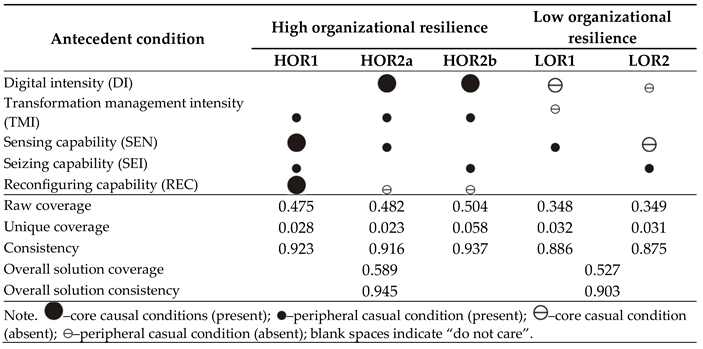
Subsequently, after running the fs/QCA software (version 3.0 was used in this study [62]), a range of complex, parsimonious and intermediate solutions appear. According to Ragin's classification criteria [53], core conditions include those found in both intermediate and parsimonious solutions, while peripheral conditions include those found only in intermediate solutions. This study looked for configurations leading to high and low organizational resilience, respectively. The specific configurations of antecedent condition are presented in Table 7.
Table 4 presents the results of the analysis of equifinal configurations leading to high and low organizational resilience. The results are presented using generally accepted in fs/QCA symbols. In the table, the size of the circle distinguishes between the core condition and the periphery condition. The large full circle symbol represents the existence of the core causal conditions, the small full circle symbol represents the existence of the peripheral casual condition, the symbol of a large crossed-out circle represents the lack of the core casual condition, the symbol of a small crossed-out circle represents the lack of the peripheral casual condition and blank spaces indicate “do not care”, therefore a condition that is irrelevant to achieving the analyzed outcome. Each column in the table represents a distinct configuration of conditions.
In the case of high organizational resilience, there are three configurations HOR1, HOR2a and HOR2b, where HOR2a and HOR2b are a second-order equivalent configuration, i.e. their core conditions are the same. The overall solution consistency is 0.945, exceeding the critical threshold of 0.85 for each configuration, indicating that 94.5% of cases consistent with these three configurations demonstrate a high level of organizational resilience. Moreover, the overall solution coverage was determined to be 0.589, which means that these three configurations possess a robust overall explanatory power, accounting for 58.9% of the observed high organizational resilience in research cases.
It is also worth noting that two configurations have been identified to explain low organizational resilience, namely configuration LOR1 and LOR2 characterized by an overall consistency of 0.903 and coverage of 0.527, meeting the criteria of the adopted analysis.
The final solution regarding high organizational resilience can be written in the following formula (Formula 1):
were the “*” sign represents the logical AND and “+” logical OR.
TMI*SEN*SEI*REC + DI*TMI*SEN*~REC + DI* TMI*SEI*~REC
The final solution for low organizational resilience can be represented by equation 2:
were the “*” sign represents the logical AND and “+” logical OR.
~DI*~TMI*SEN+~DI*~SEN*SEI
4.3. Robustness Test
To ensure the reliability of the configuration analysis, a robustness test was performed. The reliability of the research results was checked by changing the conditions of conducting the research. Inspired by, among others, the works of Du et al. (2021) [63] or Judge et al. (2020) [64], the case frequency thresholds were increased to three, the consistency threshold was adjusted to 0.75, and the grouping of dynamic capabilities and digital transformation in relation to organizational resilience was re-examined. The results showed no significant changes. Therefore, if adjusting the parameters did not result in significant changes in the number, composition, consistency and coverage of configurations, citing the conclusions of the study by Greckhamer et al. (2018) [65], the results obtained in this study can be considered robust.
5. Discussion
This paper uses the fs/QCA approach to examine the configurational effects of digital transformation and dynamic capabilities on the organizational resilience of Polish CHP plants. In terms of the conclusions drawn from this research, it can be stated that neither digital transformation nor dynamic capabilities in themselves provide the necessary conditions to achieve organizational resilience. The results show that both high and low levels of organizational resilience can be achieved through different configurations of antecedents.
Adopting Ragin's logic framework [54] to demonstrate the findings of the research, i.e. the identified configurations leading to high organizational resilience of CHPs, it can be established that there are two, fundamental pathways based on different core conditions: one with the dominance of dynamic capabilities and one with the dominance of digital maturity.
The dynamic capability-oriented configuration HOR1 (transformation management intensity*sensing capability*seizing capability*reconfiguring capability) indicates that sensing capability and reconfiguring capability are core conditions, and seizing capability is a peripheral condition. The existence of high transformation management intensity will lead to organizational resilience. The consistency of this configuration is 0.923, with a raw coverage of 0.475 and a unique coverage of 0.028. It is worth noting that this path explains 47.5% of cases of organizational resilience among CHP plants. Therefore, high dynamic capabilities combined with high leadership skills necessary to carry out digital transformation and a strong transformation vision are the basis for achieving high resilience of the CHP plant.
A high digital maturity orientation indicates that high organizational resilience can be achieved under conditions of high digital intensity and high transformation management intensity. This type of resistance includes two paths, the HOR2a configuration and the HOR2b configuration. The core condition is digital intensity, and transformation management intensity must be present and is a peripheral condition. Therefore, digital maturity is an important motivational factor in achieving high organizational resilience of CHP plants.
The configuration HOR2a (digital intensity*transformation management intensity*sensing capability*~reconfiguring capability) shows that regardless of seizing capability, high organizational resilience can be achieved thanks to high digital maturity and high sensing capability despite however, low reconfiguring capability. The consistency of this configuration is 0.914, with a raw coverage of 0.482 and a unique coverage of 0.023. It is worth noting that this path is responsible for 48.2% of cases of organizational resilience of CHP plants.
In configuration HOR2b (digital intensity*transformation management intensity*seizing capability*~reconfiguring capability), a configuration path characterized by high takeover capabilities with high digital maturity can result in high organizational resilience despite low reconfiguring capability. This means that in the absence of a sensing capability, CHP plants can also achieve high maturity as long as they have strong seizing capability s and high digital maturity. The configuration consistency coefficient is 0.937, with raw coverage 0.504, and unique coverage 0.058, which accounts for 50.4% of the cases of organizational resistance observed among CHP plants.
On both configuration paths in which digital maturity dominates, there is a mutual substitution effect between high sensing capability and high seizing capability. This context of high digital maturity can lead CHPs to achieve a high level of organizational resilience either by correctly identifying customer needs and innovation opportunities or by creating new structures, policies or incentives (Figure 2).
This study also identified two configurations leading to low organizational resilience of CHP plants. In the case of the first configuration LOR1 (~digital intensity*~transformation management intensity*sensing capability), the core condition is the lack of digital intensity, and the peripheral conditions are the lack of transformation management intensity and the presence of sensing capability. The configuration’s consistency stands at 0.886, with a raw coverage of 0.348 and a unique coverage of 0.032. In turn, in the case of the second LOR2 configuration (~transformation management intensity*~sensing capability*~seizing capability) consistency coefficient is 0.875, with raw coverage 0.349, and unique coverage 0.031. Notably, these two pathways each account for almost 35% of the cases observed among CHPs. The LOR2 configuration indicates that the combination of low sensing capability, as a basic condition, with low digital intensity despite the presence of a seizing capability is sufficient to achieve low organizational resilience.
A horizontal comparison was then conducted to examine whether the antecedent conditions influenced each other rather than being independent [66]. A comprehensive comparison of the combination of variables shows that digital intensity and transformation management intensity occur only in configurations with high organizational resilience, while configurations with low organizational resilience have low digital intensity in the case of both configurations (LOR1 and LOR2) and low transformation management intensity in the case of LOR1 configuration. This indicates that digital maturity can significantly impact organizational resilience. Moreover, transformation management intensity is strongly correlated with high organizational resilience, as it is present in all three configurations leading to high organizational resilience. Moreover, companies can achieve a high level of organizational resilience regardless of whether they have a high reconfiguring capability. Therefore, reconfiguring capability must be effectively combined with other conditions to influence organizational resilience.
The theoretical contribution of this work is essentially focused on the following aspects. Firstly, the study identified two configurational pathways leading to high organizational resilience in CHP plants. The study thus extends the knowledge of factors influencing organizational resilience by additionally offering a constructed, comprehensive analytical framework to assess organizational resilience outcomes on the example of Polish CHP plants. Second, using a configurational approach, this paper empirically investigates the simultaneous synergistic alignment of various factors essentially relating to dynamic capabilities and digital transformation. The aim of the study was to check the possibility of achieving satisfactory organizational resilience through the configuration of these factors. The findings show that various configurations centered around dynamic capabilities and digital maturity can lead to high organizational resilience in CHPs through different equifinal pathways. It can therefore be concluded that this study explains certain aspects of high organizational resilience, which previously constituted the so-called "black box".
Third, this study used the fs/QCA methodology while adopting a configuration-based approach. This analysis serves to explain the driving mechanisms that improve organizational resilience while contributing to the applicability of this method. The use of fs/QCA for research on organizational resilience allows for better adaptation to the actual conditions in which entities operate on the market. Through qualitative comparison and fuzzy set analysis, it was found that dynamic capabilities - in the case of the HOR1 configuration, or digital maturity - in the case of the other two configurations HOR2a and HOR2b, are important antecedent conditions leading to high organizational resilience. Therefore, on the one hand, carrying out digital transformation, on the other hand, strong dynamic capabilities constitute a significant guarantee for enterprises to achieve high organizational resilience [50; 60]. In response to previous literature, this study provides new evidence that dynamic capabilities combined with transformation management intensity or high digital maturity combined with sensing capability or seizing capability leads to high organizational resilience. It should also be emphasized that the research results using fuzzy-set QCA confirmed all three propositions: proposition one that digital transformation and dynamic capabilities lead to organizational resilience, proposition two, that different combinations of digital intensity, transformation management intensity, sensing capability, seizing capability and reconfiguring capability lead to high organizational resilience and proposition three, that different combinations of digital intensity, transformation management intensity, sensing capability, seizing capability and reconfiguring capability lead to low organizational resilience. The different combinations identified represent equifinal solutions, which indicates that with different antecedent conditions the desired result can be achieved, i.e. a low or high level of organizational resilience, respectively.
Fourth, the article adds to existing knowledge on organizational resilience. The existing literature lacks empirical research analyzing the simultaneous impact of digital transformation and dynamic capabilities on organizational resilience, especially poor literature on this topic among entities from the energy sector. The paper extends previous research in this area by providing insight into the interior of condition configuration systems.
From the point of view of practical implications, it is worth emphasizing that from the perspective of CHP plant managers, there are many paths to achieving high organizational resilience. Managers can leverage the existing resources and capabilities of energy entities while focusing on the interplay and adaptation of multiple conditions from a "holistic perspective." By adopting a configuration coordination mindset, managers can make informed decisions that foster organizational resilience. However, the importance of individual resources and capabilities should not be blindly emphasized, and instead, more attention should be paid to their synergistic interaction.
Moreover, it is necessary to accelerate the pace of digital transformation to increase the resistance of CHP plants to digitalization. The transformation towards digital technology is essentially an innovative process, which enables entities to be proactive in approaching changes and surviving in a turbulent environment. Managers should therefore demonstrate significant intensity in transformation management, have appropriate digital knowledge and digital thinking skills, and construct an appropriate digital strategy.
There are limitations in this work that require further research. The study analyzed dynamic capabilities and digital maturity, which included five antecedent conditions affecting organizational resilience. Subsequent research should therefore be supplemented with additional conditions, presented from different perspectives and dimensions. Therefore, it is possible to create a more comprehensive research model enabling the assessment of organizational resilience. Moreover, the data used in this study comes from a limited group of entities, so future research should be extended to other industries and types of enterprises, thus increasing the realism of the research. Furthermore, the study only examined the static relationship between antecedent conditions and organizational resilience outcomes, ignoring its dynamic nature. Future research could therefore try to incorporate a time dimension and apply QCA sequentially to capture changes in conditions over time and their effects on the outcome under study.
6. Conclusions
The main goal of this study was to fill a significant gap in the literature regarding the simultaneous impact of dynamic capabilities and digital transformation on organizational resilience. Using two dimensions of digital maturity, i.e. digital intensity and transformation management intensity, and based on the perspective of dynamic capabilities, this study develops a configurational framework and proposes a theoretical model to examine equifinal paths influencing organizational resilience in selected energy sector entities. This study deepens the theoretical understanding of the relationship between digital transformation, dynamic capabilities and organizational resilience, and provides enterprises with appropriate guidance on how to achieve resilience through the configurations of conditions studied.
Funding
The analysis in this publication was made in the course of internal research projects at the Silesian University of Technology.
Informed Consent Statement
Informed consent was obtained from all subjects involved in the study.
Data Availability Statement
Data is contained within the article.
Conflicts of Interest
The author declares no conflict of interests.
References
- Velu, S.R.; Mamun, A.A.; Kanesan, T. Effect of Information System Artifacts on Organizational Resilience: A Study among Malaysian SMEs. Sustainability 2019, 11, 3177. [Google Scholar] [CrossRef]
- Lengnick-Hall, C.A.; Beck, T.E.; Lengnick-Hall, M.L. Developing a Capacity for Organizational Resilience through Strategic Human Resource Management. Hum. Resour. Manag. Rev. 2011, 21, 243–255. [Google Scholar] [CrossRef]
- Williams, T.A.; Gruber, D.A.; Sutcliffe, K.M. Organizational Response to Adversity: Fusing Crisis Management and Resilience Research Streams. Acad. Manag. Ann. 2017, 11, 733–769. [Google Scholar] [CrossRef]
- Kantur, D.; Iseri-Say, A. Organizational resilience: A conceptual integrative framework. J. Manag. Organ. 2012, 18, 762–773. [Google Scholar] [CrossRef]
- Chewning, L.V.; Lai, C.H.; Doerfel, M.L. Organizational resilience and using information and communication technologies to rebuild communication structures. Manag. Commun. Q. 2013, 27, 237–263. [Google Scholar] [CrossRef]
- Khan, A.; Khan, N.; Shafiq, M. The Economic Impact of COVID-19 from a Global Perspective. Contemp. Econ. 2021, 15, 64–76. [Google Scholar] [CrossRef]
- Borowski, P.F. Innovative Processes in Managing an Enterprise from the Energy and Food Sector in the Era of Industry 4.0. Processes 2021, 9, 381. [Google Scholar] [CrossRef]
- Ghobakhloo, M.; Fathi, M. Industry 4. 0 and opportunities for energy sustainability. J. Clean. Prod. 2021, 295, 126427. [Google Scholar]
- Scharl, S.; Praktiknjo, A. The Role of a Digital Industry 4.0 in a Renewable Energy System. Int. J. Energy Res. 2019, 43, 3891–3904. [Google Scholar] [CrossRef]
- Li, M.; Hu, D.; Lal, C.; Conti, M.; Zhang, Z. Blockchain-Enabled Secure Energy Trading With Verifiable Fairness in Industrial Internet of Things. IEEE Trans. Ind. Inform. 2020, 16, 6564–6574. [Google Scholar] [CrossRef]
- Mika, B.; Goudz, A. Blockchain-technology in the energy industry: Blockchain as a driver of the energy revolution? With focus on the situation in Germany. Energy Syst. 2020, 12(2), 285–355. [Google Scholar] [CrossRef]
- Teng, S.Y.; Touš, M.; Leong, W.D.; How, B.S.; Lam, H.L.; Máša, V. Recent advances on industrial data-driven energy savings: Digital twins and infrastructures. Renew. Sustain. Energy Rev. 2021, 135, 110208. [Google Scholar] [CrossRef]
- Ambulkar, S.; Blackhurst, J.; Grawe, S. Firm’s resilience to supply chain disruptions: Scale development and empirical examination. J. Oper. Manag. 2015, 33–34, 111–122. [Google Scholar] [CrossRef]
- Dubey, R.; Gunasekaran, A.; Childe, S.J. Empirical Investigation of Data Analytics Capability and Organizational Flexibility as Complements to Supply Chain Resilience. Int. J. Prod. Res. 2019, 59, 110–128. [Google Scholar] [CrossRef]
- Floetgen, R.J.; Strauss, J.; Weking, J. Introducing Platform Ecosystem Resilience: Leveraging Mobility Platforms and Their Ecosystems for the New Normal during COVID-19. Eur. J. Inform. Syst. 2021, 30, 304–321. [Google Scholar] [CrossRef]
- Warner, K.S.R.; Wäger, M. Building Dynamic Capabilities for Digital Transformation: An Ongoing Process of Strategic Renewal. Long Range Plan. 2019, 52, 326–349. [Google Scholar] [CrossRef]
- Staw, B.; Sandelands, L.; Dutton, J. Threat Rigidity Effects in Organizational Behavior: A Multilevel Analysis. Adm. Sci. Q 1981, 26. [Google Scholar] [CrossRef]
- Meyer, A.D. Adapting to Environmental Jolts. Adm. Sci. Q 1982, 515–537. [Google Scholar] [CrossRef]
- Antunes, P. BPM and exception handling: focus on organizational resilience. IEEE Transactions on Systems, Man, and Cybernetics 2011, 41, 383–392. [Google Scholar] [CrossRef]
- Nauck, F.; Pancaldi, L.; Poppensieker, T.; White, O. The Resilience Imperative: Succeeding in Uncertain Times, McKinsey, New York, 2021.
- Dahles, H.; Susilowati, T.P. Business resilience in times of growth and crisis. Annals of Tourism Research. 2015, 51, 34–50. [Google Scholar] [CrossRef]
- Williams, N.; Vorley, T. Economic resilience and entrepreneurship: lessons from the sheffield city region. Entrepreneurship and Regional Development. 2014, 26, 257–281. [Google Scholar] [CrossRef]
- Hamel, G.; Välikangas, L. The quest for resilience. Harvard Business Review. 2003, 81(9), 52–63. [Google Scholar] [PubMed]
- McCann, J. Organizational effectiveness: changing concepts for changing environments. Human Resource Planning. 2004, 27(1), 42–50. [Google Scholar]
- Lengnick-Hall, C.A.; Beck, T.E. Adaptive fit versus robust transformation: how organizations respond to environmental change. Journal of Management. 2005, 31(5), 738–757. [Google Scholar] [CrossRef]
- Bouaziz, F.; Smaoui Hachicha, Z. Strategic human resource management practices and organizational resilience. Journal of Management Development. 2018, 37(7), 537–551. [Google Scholar] [CrossRef]
- Marchington, M.; Kynighou, A. The dynamics of employee involvement and participation during turbulent times. The International Journal of Human Resource Management. 2012, 23(16), 3336–3354. [Google Scholar] [CrossRef]
- Ignatiadis, I.; Nandhakumar, J. The impact of enterprise systems on organizational resilience. Journal of Information Technology. 2007, 22(1), 36–43. [Google Scholar] [CrossRef]
- Chowdhury, M.; Prayag, G.; Orchiston, C.; Spector, S. Postdisaster social capital, adaptive resilience and business performance of tourism organizations in Christchurch, New Zealand. Journal of Travel Research. 2019, 58(7), 1209–1226. [Google Scholar] [CrossRef]
- Rachinger, M.; Rauter, R.; Muller, C.; Vorraber, W.; Schirgi, E. Digitalization and its influence on business model innovation. Journal of Manufacturing Technology Management 2019, 30, 1143–1160. [Google Scholar] [CrossRef]
- Lyu, W.; Liu, J. Artificial Intelligence and Emerging Digital Technologies in the Energy Sector. Applied Energy 2021, 303, 1–15. [Google Scholar] [CrossRef]
- Pandey, V.; Sircar, A.; Bist, N.; Solanki, K.; Yadav, K. International journal of innovation studies accelerating the renewable energy sector through industry 4.0 : optimization opportunities in the digital revolution. Int. J Innovat. Stud 2023, 7, 171–188. [Google Scholar] [CrossRef]
- Kaplan, A.; Haenlein, M. Digital transformation and disruption: On big data. Business Horizons. 2019, 62(6), 679–681. [Google Scholar] [CrossRef]
- Gurbaxani, V.; Dunkle, D. Gearing up for successful digital transformation. MIS. Quarterly Executive 2019, 18(3), 209–220. [Google Scholar] [CrossRef]
- Guinan, P. J.; Parise, S.; Langowitz, N. Creating an innovative digital project team: Levers to enable digital transformation. Business Horizons 2019, 62(2), 717–727. [Google Scholar] [CrossRef]
- Warner, K. S. R.; W¨ager, M. Building dynamic capabilities for digital transformation: An ongoing process of strategic renewal. Long Range Planning 2019, 52(3), 326–349. [Google Scholar] [CrossRef]
- Chanias, S.; Hess, T. How digital are we? Maturity models for the assessment of a company’s status in the digital transformation. Management Report/Institut für Wirtschaftsinformatik und Neue Medien 2016, 2, 1–14. [Google Scholar]
- Westerman, G.; Tannou, M.; Bonnet, B.; Ferraris, P.; McAfee, A. The digital advantage: how digital leaders outperform their peers in every industry. MITSloan Management and Capgemini Consulting 2012, 2, 2–23. [Google Scholar]
- Kane, G.; Palmer, D.; Phillips, A.; Kiron, D.; Buckley, N. Achieving digital maturity. MIT Sloan Management Review 2017, 1–31. [Google Scholar]
- Westerman, G.; McAfee, A.; Bonnet, D. Leading digital: turning technology into business transformation. Harvard Business Press, 2015.
- Kane, G.; Palmer, D.; Phillips, A.; Kiron, D.; Buckley, N. Achieving digital maturity. MIT Sloan Management Review 2017, 1–31. [Google Scholar]
- Seddon, P.B.; Calvert, C.; Yang, S. A multi-project model of key factors affecting organizational benefits from enterprise systems. MIS Quart. 2010, 34, 305–328. [Google Scholar] [CrossRef]
- Teece, D.J. Explicating dynamic capabilities: the nature and microfoundations of (sustainable) enterprise performance. Strateg. Manage. J. 2007, 28, 1319–1350. [Google Scholar] [CrossRef]
- Eisenhardt, K.M.; Martin, J.A. Dynamic capabilities: what are they? Strateg. Manage. J. 2000, 21, 1105–1121. [Google Scholar] [CrossRef]
- Helfat, C.E.; Finkelstein, S.; Mitchell, W.; Peteraf, M.; Singh, H.; Teece, D.; Winter, S.G. Dynamic capabilities: Understanding strategic change in organizations. Blackwell Publishing, Oxford, UK, 2007.
- Teece, D.J. Technological innovation and the theory of the firm: The role of enterprise-level knowledge, complementarities, and (dynamic) capabilities. In Handbook of the Economics of Innovation, Hall, B.H.; Rosenberg, N. (eds.), Elsevier, Oxford, UK, 2010, 1, 679–730. [Google Scholar]
- Winter, S.G. Understanding dynamic capabilities. Strateg. Manage. J. 2003, 24, 991–995. [Google Scholar] [CrossRef]
- Jantunen, A.; Tarkiainen, A.; Chari, S.; Oghazi, P. Dynamic capabilities, operational changes, and performance outcomes in the media industry. J. Bus. Res. 2018, 89, 251–257. [Google Scholar] [CrossRef]
- Yeow, A.; Soh, C.; Hansen, R. Aligning with new digital strategy: a dynamic capabilities approach. The Journal of Strategic Information Systems 2018, 27(1), 43–58. [Google Scholar] [CrossRef]
- Helfat, C.E.; Raubitschek, R.S. Dynamic and integrative capabilities for profiting from innovation in digital platform-based ecosystems. Res. Policy 2018, 47, 1391–1399. [Google Scholar] [CrossRef]
- Pavlou, P. A.; El Sawy, O. A. Understanding the elusive black box of dynamic capabilities. Decision Sciences 2011, 42(1), 239–273. [Google Scholar] [CrossRef]
- Mathaisel, D. F. X.; Comm, C. L. A strategy for enterprise sustainability. The Business Review 2011, 17. [Google Scholar]
- Fiss, P. C. Building better causal theories: A fuzzy set approach to typologies in organization research. Academy of Management Journal 2011, 54(2), 393–420. [Google Scholar] [CrossRef]
- Ragin, C. C. Redesigning social inquiry: Fuzzy sets and beyond. Chicago: University of Chicago Press. 2008.
- Du, Y. Z.; Kim, P. H. One size does not fit all: Strategy configurations, complex environments, and new venture performance in emerging economies. Journal of Business Research 2021, 124, 272–285. [Google Scholar] [CrossRef]
- Ketchen, D. J.; Thomas, J. B.; Snow, C. C. Organizational configurations and performance: A comparison of theoretical approaches. Academy Management Journal 1993, 36(6), 1278–1313. [Google Scholar]
- Kwiotkowska, A. Organizational capabilities and social entrepreneurship: a fuzzy-set approach. European Research Studies Journal 2022, 25, 272–285. [Google Scholar] [CrossRef]
- Parker, H.; Ameen, K. The Role of Resilience Capabilities in Shaping How Firms Respond to Disruptions. J. Bus. Res. 2018, 88, 535–541. [Google Scholar] [CrossRef]
- Pramanik, H. S.; Kirtania, M.; Pani, A. K. Essence of digital transformation manifestations at large financial institutions from north America. Future Generation Computer Systems 2019, 95(6), 323–343. [Google Scholar] [CrossRef]
- He, Z.; Huang, H.; Choi, H.; Bilgihan, A. Building organizational resilience with digital transformation. Journal of Service Management 2023, 34(1), 147–171. [Google Scholar] [CrossRef]
- Westerman, G.; Tannou, M.; Bonnet, B.; Ferraris, P.; McAfee, A. “The digital advantage: how digital leaders outperform their peers in every industry. MITSloan Management and Capgemini Consulting 2012, 2, 2–23. [Google Scholar]
- Ragin, C. C.; Davey, S. . fs/QCA [Computer Programme], version 3.0. Irvine, CA: University of California, 2016.
- Du, Y.; Li, J.X.; Liu, Q.C.; Chen, K.W. Configurational theory and QCA method from a complex dynamic perspective: research progress and future directions. Journal of Management World 2021, 37(3), 180–197. [Google Scholar]
- Judge, W.Q.; Fainshmidt, S.; Brown, J.L. Institutional Systems for Equitable Wealth Creation: replication and an Update of Judge et al. Manag. Organ. Rev. 2020, 16(1), 5–31. [Google Scholar] [CrossRef]
- Greckhamer, T.; Furnari, S.; Fiss, P.C.; Aguilera, R.V. Studying configurations with qualitative comparative analysis: Best practices in strategy and organization research. Strategic Organization 2018, 16(4), 482–495. [Google Scholar] [CrossRef]
- Chen, M.-J.; Miller, D. Reconceptualizing competitive dynamics: A multidimensional framework. Strategic Management Journal 2015, 36(5), 758–775. [Google Scholar] [CrossRef]
- References must be numbered in order of appearance in the text (including citations in tables and legends) and listed individually at the end of the manuscript. We recommend preparing the references with a bibliography software package, such as EndNote, ReferenceManager or Zotero to avoid typing mistakes and duplicated references. Include the digital object identifier (DOI) for all references where available.
- Citations and references in the Supplementary Materials are permitted provided that they also appear in the reference list here.
- In the text, reference numbers should be placed in square brackets [ ] and placed before the punctuation; for example [1], [1–3] or [1,3]. For embedded citations in the text with pagination, use both parentheses and brackets to indicate the reference number and page numbers; for example [5] (p. 10), or [6] (pp. 101–105).
- Author 1, A.B.; Author 2, C.D. Title of the article. Abbreviated Journal Name.
- Author 1, A.; Author 2, B. Title of the chapter. In Book Title, 2nd ed.; Editor 1, A., Editor 2, B., Eds.; Publisher: Publisher Location, Country, 2007; Volume 3, pp. 154–196. [Google Scholar]
- Author 1, A.; Author 2, B. Book Title, 3rd ed.; Publisher: Publisher Location, Country, 2008; pp. 154–196. [Google Scholar]
- Author 1, A.B.; Author 2, C. Title of Unpublished Work. Abbreviated Journal Name.
- Author 1, A.B. (University, City, State, Country); Author 2, C. (Institute, City, State, Country). Personal communication, 2012.
- Author 1, A.B.; Author 2, C.D.; Author 3, E.F. Title of Presentation. In Proceedings of the Name of the Conference, Location of Conference, Country, Date of Conference (Day Month Year).
- Author 1, A.B. Title of Thesis. Level of Thesis, Degree-Granting University, Location of University, Date of Completion.
- Title of Site. Available online: URL.
Figure 1.
Figure 1. Research model. Source: own study.
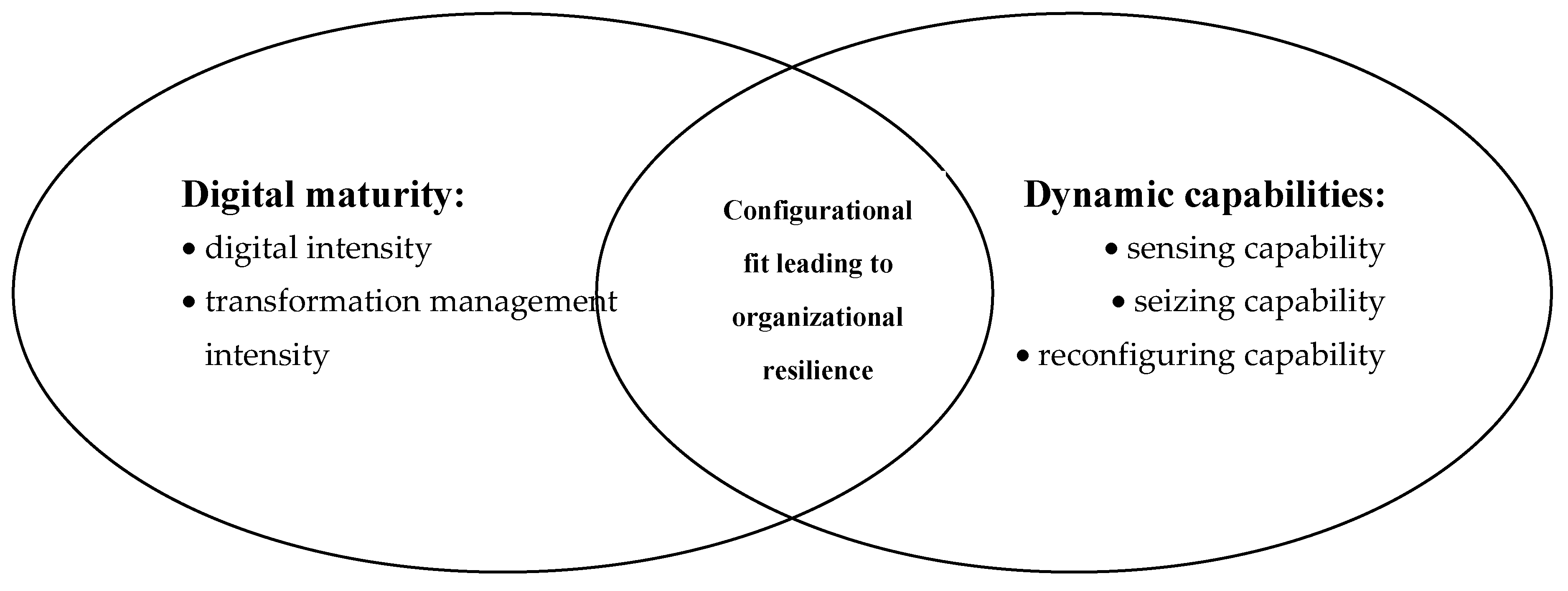
Figure 2.
Substitution between sensing and seizing capabilities. Source: own study.
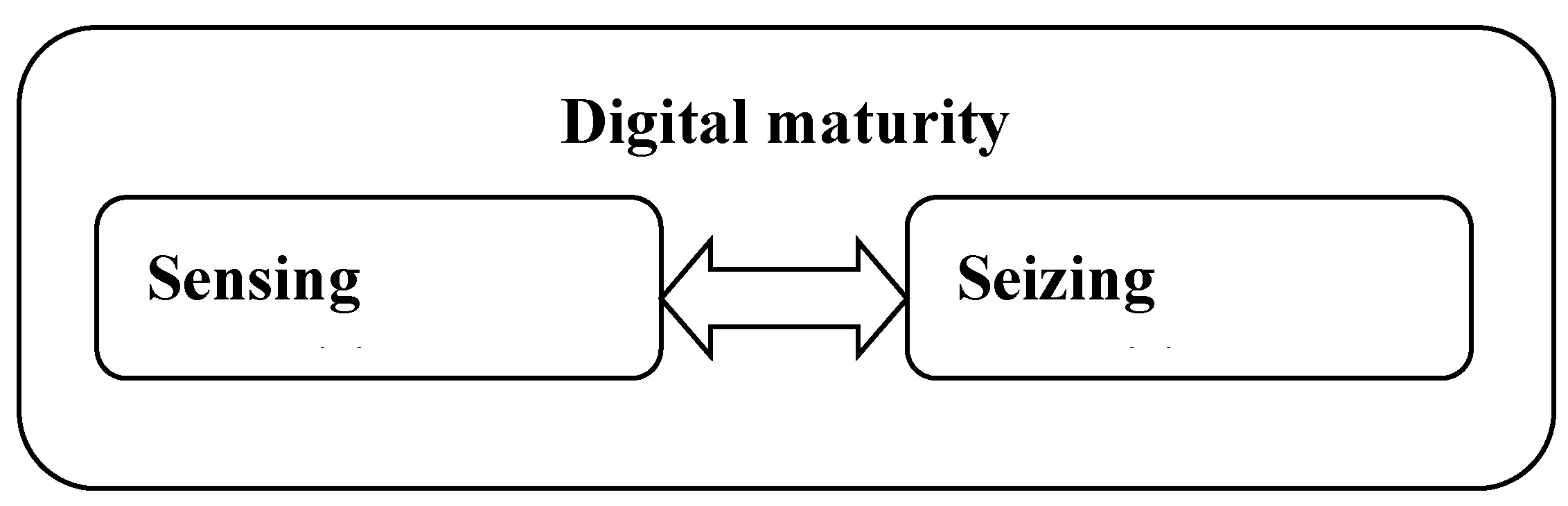

Table 1.
Interpretive perspectives on organizational resilience.
| Perspective | Overview |
|---|---|
| The reactive perspective | Organizational resilience is perceived as the ability of an organization to return to its previous state - a state of "normality", after experiencing unforeseen and unfavorable situations [21] |
| The adaptive perspective | Organizational resilience is the ability not only to survive, but also to emerge from the crisis thanks to various adaptation interventions, such as rescuing enterprises, rebuilding infrastructure or rebuilding the market, leading to the creation of new business models [21] |
| The transformational perspective | Organizational resilience refers to taking preventive steps and pursuing innovation and transformation, while enabling organizations to grow and thrive despite adversity [22] |
Table 2.
Characteristics of the research sample. Source: own study.
| Category | Statistic | |
|---|---|---|
| Enterprise Information | CHP Plant age | ≤ 19 (13,4%) 20-29 (63,5%) ≥ 30 (23,1%) |
| Legal form | Joint-stock company (93,6%) Limited liability company (6,4%) |
|
| Information of Respondents |
Gender | Female (14%) Male (88%) |
| Position | Management team (82,5%) Other employees (17,5%) |
|
| Age | Mean: 53,7 years |
Table 3.
Key variables used in the research. Source: own study.
| Variables | No. of Items | References | Cronbach’s α | |
|---|---|---|---|---|
| Condition | ||||
| Digital maturity | 1. Digital intensity | 5 | Westerman et al. (2012) [61] | 0.91 |
| 2. Transformation management intensity | 5 | Westerman et al. (2012) [61] | 0.83 | |
| Dynamic capabilities | 1. Sensing capability | 3 | Pavlou, El Sawy (2011) [51] | 0.85 |
| 2. Seizing capability | 4 | Pavlou, El Sawy (2011) [51] | 0.79 | |
| 3. Reconfiguring capability | 5 | Pavlou, El Sawy (2011) [51] | 0.84 | |
| Outcome | ||||
| Organizational resilience | 4 | Parker, Ameen (2018) [58] | 0.83 | |
Table 4.
Calibration. Source: own study.
| Condition | Calibration | |||||
|---|---|---|---|---|---|---|
| Fully in | Crossover point |
Fully out | ||||
| Antecedent | Digital maturity | Digital intensity | 4.5 | 4.1 | 3.9 | |
| Transformation management intensity | 4.7 | 4.2 | 3.3 | |||
| Dynamic capabilities | Sensing capability | 4.6 | 4.3 | 3.7 | ||
| Seizing capability | 4.5 | 4.2 | 3.4 | |||
| Reconfiguring capability | 4.5 | 4.1 | 4.0 | |||
| Outcome | Organizational resilience | 4.7 | 4.1 | 3.5 | ||
Table 5.
Definitions of conditions and outcome. Source: own study.
| Condition/Outcome | Code | |
|---|---|---|
| Outcome | Organizational resilience | OR |
| Antecedent condition | Digital intensity | DI |
| Antecedent condition | Transformation management intensity | TMI |
| Antecedent condition | Sensing capability | SEN |
| Antecedent condition | Seizing capability | SEI |
| Antecedent condition | Reconfiguring capability | REC |
Table 6.
Analysis of necessity of conditions. Source: own study.
| Condition | High organizational resilience | |
|---|---|---|
| Consistency | Coverage | |
| Digital intensity (DI) | 0.626 | 0.613 |
| ~ Digital intensity (~DI) | 0.804 | 0.730 |
| Transformation management intensity (TMI) | 0.664 | 0.672 |
| ~ Transformation management intensity (~TMI) | 0.773 | 0.790 |
| The sensing capability (SEN) | 0.637 | 0.602 |
| ~The sensing capability (~SEN) | 0.781 | 0.785 |
| The seizing capability (SEI) | 0.657 | 0.624 |
| ~The seizing capability data (~SEI) | 0.782 | 0.741 |
| The reconfiguring capability (REC) | 0.645 | 0.804 |
| ~The reconfiguring capability (~REC) | 0.753 | 0.646 |
| Low organizational resilience | ||
| Digital intensity (DI) | 0.664 | 0.673 |
| ~ Digital intensity (~DI) | 0.695 | 0.788 |
| Transformation management intensity (TMI) | 0.627 | 0.698 |
| ~ Transformation management intensity (~TMI) | 0.754 | 0.767 |
| The sensing capability (SEN) | 0.615 | 0.682 |
| ~The sensing capability (~SEN) | 0.734 | 0.759 |
| The seizing capability (SEI) | 0.667 | 0.682 |
| ~The seizing capability data (~SEI) | 0.704 | 0.759 |
| The reconfiguring capability (REC) | 0.619 | 0.688 |
| ~The reconfiguring capability (~REC) | 0.715 | 0.790 |
| Note:~ logical negation - the absence of conditions. | ||
Table 7.
Antecedent configurations of high and low organizational resilience. Source: own study.
 |
Disclaimer/Publisher’s Note: The statements, opinions and data contained in all publications are solely those of the individual author(s) and contributor(s) and not of MDPI and/or the editor(s). MDPI and/or the editor(s) disclaim responsibility for any injury to people or property resulting from any ideas, methods, instructions or products referred to in the content. |
© 2024 by the authors. Licensee MDPI, Basel, Switzerland. This article is an open access article distributed under the terms and conditions of the Creative Commons Attribution (CC BY) license (http://creativecommons.org/licenses/by/4.0/).
Copyright: This open access article is published under a Creative Commons CC BY 4.0 license, which permit the free download, distribution, and reuse, provided that the author and preprint are cited in any reuse.


