
Submitted:
27 June 2024
Posted:
29 June 2024
You are already at the latest version
Abstract
Background Gliomas are the most prevalent primary malignant brain tumors worldwide. Recent studies highlight the potential of long non-coding RNAs (lncRNAs) in tumor progression, with LINC01354 being upregulated in various malignancies. This study investigates the role of LINC01354 in glioma prognosis to provide novel insights for early prognosis prediction.Methods This study involved four cohorts of low-grade glioma tissue samples collected from hospitals in Xinjiang, Beijing, and Guangzhou, China. Quantitative Real-Time Polymerase Chain Reaction (qRT-PCR) was used to measure LINC01354 expression levels. Clinical information and survival data were analyzed using Cox regression and ROC analysis to evaluate the association between LINC01354 expression and overall survival. Clinical comparisons were conducted to identify potential discrepancies in clinical parameters across different cohorts.Results Elevated LINC01354 levels were associated with poorer overall survival in the West China cohort (Xinjiang) but not in the North (Beijing) or South China (Guangzhou) cohorts. Clinical parameter comparisons revealed no significant differences among the cohorts that could explain the regional discrepancy. Further analysis within the West China cohort indicated that LINC01354's prognostic value was consistent across Han and non-Han ethnic groups and unaffected by dietary staples. However, LINC01354's prognostic significance was more pronounced in patients born in Xinjiang compared to those born elsewhere. A prognostic model incorporating LINC01354 expression and birth location demonstrated good predictive accuracy with ROC AUC values of 0.777 in the training cohort and 0.757 in the validation cohort.Conclusion LINC01354 is a potential prognostic biomarker for low-grade glioma in the West China population, particularly among patients born in Xinjiang.
Keywords:
LINC01354
; low-grade glioma
; survival
; west Chinese population
; QPCR
1. Introduction
Gliomas are the most common primary malignant brain tumors globally, typically originating in the brain from glial tissue, though they can also form in other parts of the central nervous system[1]. Factors such as aggressive invasiveness and unique anatomical locations contribute to a poor prognosis, with a five-year survival rate being quite low[2]. Epidemiological studies reveal that gliomas have the second-highest mortality rate among central nervous system tumors, with a five-year overall survival (OS) rate of less than 35%, accounting for about 40% of all such tumors[2]. Early detection and treatment are crucial for improving the five-year survival rate of patients[3]. Recently, the standardization of combined surgical, radiotherapy, and chemotherapy treatments has somewhat improved the prognosis for brain glioma patients. However, the disease's aggressive growth and uncontrolled proliferation make complete surgical removal challenging, leading to a high postoperative recurrence rate[4]. Recurrence and distant metastasis post-surgery are major causes of death in brain glioma patients[4]. The WHO tumor grading system is a key clinical predictor of brain glioma prognosis[5,6], but studies show significant variability in outcomes even among patients with the same grade, due to patient heterogeneity. Although a few papers have reported new biomarkers for glioma[7,8] or pan-cancer[9,10,11,12,13], to improve the management of glioma, a biomarker study for glioma is required.
Long non-coding RNAs (lncRNAs) are non-coding RNAs longer than 200 nucleotides that participate in various biological processes, such as chromosomal remodeling, genomic imprinting, transcription activation, post-transcriptional interference, and nuclear transport of nucleic acids[14,15,16]. Abnormal lncRNA expression not only regulates gene expression but also mediates cell proliferation, migration, drug resistance, and angiogenesis, thereby accelerating tumor progression[17]. Recent evidence highlights lncRNAs' critical role in regulating pyroptosis in malignant tumor cells[18,19,20]. Consequently, many studies focus on lncRNA expression in gliomas to identify relevant lncRNAs and elucidate their mechanisms.
Preliminary experiments in our lab found that LINC01354 is upregulated in brain gliomas, and its elevated expression correlates with glioma prognosis. LINC01354, as a member of the lncRNA family, has been recently found to be upregulated in various malignancies[21]. Given the low five-year overall survival rate for glioma patients post-surgery and the urgent need for improvements, this study aims to investigate the expression differences of LINC01354 in gliomas and elucidate its role in glioma prognosis. This research will use clinical cohort studies to determine the expression differences of LINC01354 in gliomas and demonstrate the power of LINC01354 in glioma prognosis. This study will deepen our understanding of the impact of LINC01354 on glioma prognosis and highlight the clinical value of LINC01354 as a new biomarker, providing novel insights for the development of early prognosis prediction.
2. Methods
2.1. Cohort Description
This study included four cohorts of frozen low-grade glioma tissue samples: 1) 567 samples collected from The Second Affiliated Hospital of Xinjiang Medical University from 2010 to 2016. 2) 100 samples collected from The Second Affiliated Hospital of Xinjiang Medical University from 2016 to 2017. 3) 432 samples collected from The Peking University Cancer Hospital from 2014 to 2015. 4) 332 samples collected from The Fifth Affiliated Hospital of Southern Medical University from 2013 to 2016. 5) Samples were collected from patients who underwent either surgical treatment or biopsy. None of the patients had received radiotherapy or chemotherapy prior to surgery. Samples were collected, quickly frozen in liquid nitrogen, and then stored at −80°C for further analysis. Clinical information and survival data were collected and followed up for all patients. The study was approved by the ethical committees of The Second Affiliated Hospital of Xinjiang Medical University, The Peking University Cancer Hospital, and The Fifth Affiliated Hospital of Southern Medical University. Written consent was obtained from all participants before their inclusion in the study.
2.2. Quantitative Real-Time Polymerase Chain Reaction (qRT-PCR)
Total RNA was extracted from cultured cells or tissue samples using TRIzol reagent (Invitrogen) following the manufacturer's instructions. The extracted RNA was converted to cDNA using the M-MLV Reverse Transcriptase kit (Invitrogen). The quantification was performed using SYBR Green PCR Master Mix (Vazyme, Nanjing, China) on an ABI7500 qPCR System. GAPDH served as an internal control for mRNA detection. The 2–ΔΔCt method was used to determine the relative expression levels from three independent experiments.
The primers used were as follows: LINC01354: forward 5′-GCAATGGTTTGGGCAACTGTAT-3′ and reverse 5′-GAAAAAGCAAGCTGCCATGAGA-3′. GAPDH: forward 5′-TGCACCACCAACTGCTTAGC-3′ and reverse 5′-GGCATGGACTGTGGTCATGAG-3′.
2.3. Statistical Analysis
For survival analysis, samples were divided into high and low LINC01354 expression groups based on the median expression level. Survival analysis was performed using R (version 4.2.1) with the following packages: survival (version 3.3.1), survminer (version 0.4.9), and ggplot2 (version 3.3.6). Proportional Hazards Assumption Test and Survival Regression Fitting were conducted using the Cox regression model.ROC analysis was also performed using R (version 4.2.1) with the packages timeROC (version 0.4) and ggplot2 (version 3.3.6). Data Analysis was conducted using the timeROC package. For clinical information comparison, R (version 4.2.1) with the stats package (version 4.2.1) was used. Appropriate statistical methods were selected based on data characteristics. For numeric data comparison, One-way ANOVA with Tukey post-hoc test was applied. For frequency data comparison, the Chi-square Test was applied. Results were visualized using the survminer and ggplot2 packages.
3. Results
3.1. Survival Association of LINC01354 and Low-Grade Glioma Survival in West China Population
This study originated from a single-center investigation in Xinjiang, China, with the objective of examining the survival impact of LINC01354 on patients with low-grade glioma and assessing its potential as a prognostic biomarker. A larger cohort analysis using QPCR was conducted to measure the expression levels of LINC01354 in low-grade glioma tissue samples. We initially collected 567 low-grade glioma samples and observed that elevated LINC01354 levels were associated with poorer overall survival. To validate these findings, we collected an additional 100 low-grade glioma samples and performed the same assay to measure LINC01354 levels. The results from this validation cohort confirmed that LINC01354 expression remained significantly associated with overall survival in low-grade glioma patients. These findings suggest that further investigation into the role of LINC01354 in glioma prognosis is warranted. (Figure 1)
3.2. Survival Association of LINC01354 and Low-Grade Glioma Survival in North and South China Population
Given the remarkable results from the Xinjiang population, we expanded the study to a multicenter investigation in collaboration with our partners in Beijing and Guangzhou. We collected 432 low-grade glioma samples from North China and 332 samples from South China, conducting the same experiments to measure LINC01354 levels and investigate their association with overall survival. Surprisingly, the data indicated that neither the North China cohort nor the South China cohort showed a significant association between LINC01354 expression and overall survival in low-grade glioma patients, unlike the findings from the West China population. (Figure 2)
3.3. Comparison of the Clinical Information of the Three Cohorts
To investigate the potential reasons why LINC01354 is associated with overall survival in the West China cohort but not in the North or South cohorts, we analyzed the differences in clinical parameters between these three cohorts. The clinical parameters of the three cohorts, presented in Table 1, show that they are very similar in most aspects. The sample sizes (n) for the West (the two cohorts from west China were combined for study and analysis for the rest of the study), North, and South cohorts were 667, 432, and 332, respectively.
For WHO grade distribution, G2 was observed in 48% of the West cohort, 53% of the North cohort, and 53% of the South cohort, with a p-value of 0.32. The G3 distribution was 52% for the West, 47% for the North, and 52% for the South. IDH status indicated that the wild-type (WT) was present in 18% of the West, 20% of the North, and 23% of the South cohorts, whereas the mutation (Mut) was found in 82% of the West, 80% of the North, and 79% of the South cohorts, with a p-value of 0.15. Regarding the 1p/19q codeletion status, 68% of the West cohort, 74% of the North cohort, and 79% of the South cohort were non-codel, while 32%, 26%, and 27% were codel, respectively. The p-value here was 0.12. The gender distribution was also comparable across the cohorts, with females constituting 45% of the West, 49% of the North, and 54% of the South cohorts. Males made up 55%, 51%, and 50%, respectively, resulting in a p-value of 0.23. The median age was 41 years for the West, 39 years for the North, and 42 years for the South, with a p-value of 0.06. For histological types, 59% of the West cohort had astrocytoma, 66% of the North cohort, and 72% of the South cohort. Oligoastrocytoma was seen in 41% of the West, 34% of the North, and 35% of the South cohorts, with a p-value of 0.06. Laterality showed that 50% of the West cohort had left-sided tumors, compared to 59% in the North and 66% in the South cohorts. Right-sided tumors were present in 50% of the West, 41% of the North, and 43% of the South cohorts, with a p-value of 0.05.
Lastly, the normalized expression level of LINC01354 was nearly identical across the cohorts, with values of 1, 1.052, and 0.989 for the West, North, and South cohorts, respectively, resulting in a p-value of 0.45. Overall, the clinical parameters among the three cohorts were very similar, making it unclear why LINC01354 is associated with overall survival only in the West China cohort.
3.4. Comparison of Survival Association of LINC01354 and Low-Grade Glioma Survival in West China Population of Han and Non-Han Patients
In this section, we compared the association between LINC01354 expression and overall survival in Han and non-Han patients with low-grade glioma from the West China population. China is a multi-ethnic country, with the Han people being the largest ethnic group and many other groups, including the Uyghurs, residing in Xinjiang. To investigate whether ethnicity impacts the prognosis related to LINC01354, we focused on Han and non-Han populations in this analysis. Our analysis included a detailed examination of survival outcomes in relation to LINC01354 levels across these ethnic groups. The results indicated no distinct variations in the survival association, with both subgroups showing significant associations in this analysis. This suggests that there are no ethnic differences in the prognostic value of LINC01354 for low-grade glioma. This comparison underscores the importance of considering genetic and ethnic diversity in biomarker studies but suggests that LINC01354 may not have differential prognostic implications across diverse populations.(Figure 3)
3.5. Comparison of Survival Association of LINC01354 with Low-Grade Glioma in West China Population Based on Main Dietary Staple: Rice-Based vs. Flour-Based Foods
In this section, we compared the association between LINC01354 expression and overall survival in low-grade glioma patients from the West China population, focusing on their main dietary staples: rice-based foods versus flour-based foods. The dietary habits in different regions of China vary significantly, with some populations primarily consuming rice and others primarily consuming flour-based foods. We hypothesized that the main dietary staple could influence the prognosis related to LINC01354. The North China and South China cohorts did not follow up on this issue, so we have no information about the dietary structures of these two cohorts; therefore, the analysis was conducted only with the West China cohort only.
Our analysis included a detailed examination of survival outcomes in relation to LINC01354 levels among patients with different dietary habits. The results indicated no significant variations in the survival association between the two dietary groups. Most patients fell within either the rice-based or flour-based food categories; 23 patients who were unsure or primarily consumed other foods were excluded from the analysis due to their low number, which was insufficient for statistical significance. The results showed that both rice-based and flour-based food consumers exhibited similar associations between LINC01354 levels and overall survival. This comparison suggests that dietary staple does not influence the prognostic value of LINC01354 in low-grade glioma patients. These findings emphasize that dietary habits do not appear to impact the prognostic relevance of LINC01354 in this context.(Figure 4)
3.6. Comparison of Survival Association of LINC01354 with Low-Grade Glioma in West China Population Based on Birth Locations
We compared the survival association of LINC01354 expression with low-grade glioma survival in patients from the West China population, focusing on those born in Xinjiang versus those born in other parts of China. Specifically, the analysis included patients born in Xinjiang (n=381) and those born in other parts of China (n=153), with 33 patients excluded due to missing birth location information.
This analysis was conducted solely within the West China cohort. We found that among patients born in Xinjiang, LINC01354 expression was significantly associated with low-grade glioma survival. Conversely, in the population born in other parts of China, there was no significant difference in survival between the high and low LINC01354 expression groups. These findings suggest that the prognostic value of LINC01354 may vary depending on the birth location of the patients within the West China population.(Figure 5)
3.7. Clinical Application of LINC01354 as a Prognostic Biomarker for Low-Grade Glioma for West China Population
To demonstrate the clinical applicability of LINC01354 as a prognostic biomarker for low-grade glioma in the West China population, we constructed a prognostic model incorporating commonly used prognostic factors for glioma, as well as two newly discovered factors: LINC01354 expression and birth location. We created a prognostic nomogram for practical clinical application.
We used 70% of the samples for training and 30% for testing the model. The survival nomogram included LINC01354 levels for low-grade glioma patients from the West China population (Xinjiang). The training cohort comprised 373 patients (70%), and the validation cohort comprised 161 patients (30%). We utilized ROC analysis to assess the 3-year survival prediction accuracy of the model. In the training model, the AUC of the ROC curve was 0.777, and in the validation cohort, the AUC of the ROC curve was 0.757, indicating a relatively good prediction value.
These results suggest that LINC01354, in conjunction with birth location and other prognostic factors, can serve as a valuable biomarker for predicting survival outcomes in low-grade glioma patients, thereby enhancing clinical decision-making and patient management in the West China population.(Figure 6)
4. Discussion
TCGA data have been widely used for biomarker discovery in cancer research[22,23,24,25]. However, it is important to note that TCGA data were obtained from predominantly Western countries and primarily involved patients of white ethnicity. This study is a relatively simple designed study but with relatively larger cohorts or patients. We applied QPCR, a stable detection method that has been widely used in many previous studies[26,27,28,29,30,31,32,33] to determine the level of LINC01354. This study aimed to evaluate the prognostic value of LINC01354 expression in low-grade glioma patients across different regions of China. The analysis involved a comprehensive examination of four distinct cohorts: two from West China (Xinjiang), one from North China (Beijing), and one from South China (Guangzhou). The results revealed a significant association between elevated LINC01354 levels and poorer overall survival in the West China cohort but not in the North or South China cohorts. This disparity prompted further investigation into possible underlying factors, such as clinical characteristics, ethnic differences, dietary habits, and birth locations.
The initial finding that high LINC01354 expression correlated with poorer survival outcomes in the Xinjiang cohort but not in the other cohorts highlights a potential regional specificity in the prognostic relevance of LINC01354. This observation was consistent across two separate sub-cohorts from Xinjiang, strengthening the validity of the association within this population. Conversely, the lack of significant association in Beijing and Guangzhou cohorts suggests that LINC01354's prognostic value might be influenced by regional factors. Detailed analysis of clinical parameters across the three cohorts (West, North, and South China) showed no significant differences that could explain the regional variation in LINC01354's prognostic value. Factors such as WHO grade distribution, IDH status, 1p/19q codeletion status, gender distribution, median age, histological type, tumor laterality, and normalized expression levels of LINC01354 were comparable among the cohorts. This similarity underscores the need to explore other variables that might contribute to the observed differences.
To determine if ethnic diversity within the Xinjiang cohort influenced the results, we compared LINC01354's prognostic association in Han and non-Han patients. Both subgroups showed a significant association between high LINC01354 expression and poorer survival, indicating that ethnic background does not alter LINC01354's prognostic relevance in this population. This finding emphasizes the potential of LINC01354 as a broadly applicable biomarker within the multi-ethnic context of Xinjiang. The study also investigated the impact of dietary habits on LINC01354's prognostic value by comparing patients consuming rice-based versus flour-based foods. No significant differences were observed between these dietary groups, suggesting that dietary staples does not influence the prognostic significance of LINC01354 in the West China cohort. This result is important for understanding lifestyle factors that might interact with biomarker efficacy. An intriguing aspect of the study was the analysis based on patients' birth locations. LINC01354 expression was significantly associated with survival in patients born in Xinjiang but not in those born elsewhere in China. This finding suggests that environmental or genetic factors linked to birthplace might interact with LINC01354 expression, influencing its prognostic value.
The study culminated in the development of a prognostic model incorporating LINC01354 expression, birth location, and other established prognostic factors. The model demonstrated good predictive accuracy for 3-year survival in both training and validation cohorts, with AUC values of 0.777 and 0.757, respectively. This model underscores the potential clinical utility of LINC01354 as a prognostic biomarker, particularly for low-grade glioma patients in the West China population. The findings suggest that LINC01354 could serve as a valuable prognostic biomarker for low-grade glioma in specific regional contexts, particularly in West China. However, the regional variability in its prognostic value warrants further investigation. Future studies should explore the molecular mechanisms underlying this variability and consider larger, more diverse cohorts to validate these findings. Additionally, examining environmental, genetic, and lifestyle factors in greater detail could provide insights into the factors influencing LINC01354's prognostic relevance. Overall, this study highlights the importance of context-specific biomarker validation and the potential of LINC01354 in enhancing the prognosis and management of for low grade glioma.
The mechanism behind the prognostic effect of LINC01354 remains largely unknown. This study demonstrated that LINC01354 is upregulated in brain gliomas, and its elevated expression is correlated with glioma prognosis. However, comprehensive studies on how LINC01354 influences glioma prognosis are still lacking. LncRNAs impact patient survival through various mechanisms. They can regulate post-translational modifications by acting as molecular sponges or competitive endogenous RNAs (ceRNAs) that modulate miRNAs. Many lncRNAs influence pyroptosis via the lncRNA-miRNA-mRNA pathways [34,35]. It has been discovered that lncRNA KCNQ1OT1, LINC01278, lncRNA MIRLET7BHG, and lncRNA NEAT1 can target miR-296-5p upstream, affecting glioma progression[36]. LncRNA NEAT1, in particular, can inhibit pyroptosis by regulating GSDMD. Moreover, studies by Su et al. indicate that downregulated lncRNA NEAT1 can modulate GSDME expression in colorectal cancer cells via miR-448 sponging, thereby inhibiting pyroptosis induced by ionizing radiation[37]. Other research shows that knocking out lncRNA PVT1 can simultaneously inhibit GSDMD and caspase-1 expression, significantly reducing inflammatory factor production and release, thus suppressing pyroptosis[38]. LncRNA MALAT1 inhibits miR-141-3p to promote GSDMD expression and induce pyroptosis[39]. LncRNA KCNQ1OT1 reduces pyroptosis by targeting miR-214-3p and caspase-1[40]. In overexpressed lncRNA ADAMTS9-AS2 gastric cancer cells, it activates NLRP3-mediated pyroptosis by sponging miR-223p[41].
Our data revealed that LINC01354 is upregulated in brain gliomas, and its increased expression is associated with glioma prognosis. In fact, LINC01354 has been found to be upregulated in various malignancies. In non-small cell lung cancer, LINC01354's upregulation can promote carcinogenesis through the miR-340-5p/ATF1 axis[42]. In endometrial cancer, its upregulation activates the miR-216b/KRAS axis, promoting tumor development[43]. Overexpression of LINC01354 can also enhance colorectal cancer proliferation and metastasis by activating the hnRNP-D/Wnt/β-catenin signaling pathway[44]. MicroRNAs (miRNAs), approximately 22 nucleotides long, inhibit mRNA transcription or degrade target mRNAs by binding to their 3'UTR regions[45]. miR-214 is closely related to the prognosis and development of malignant tumors, with its upregulation in liver cancer inducing ferroptosis by activating GPX4 expression[46]. In colorectal cancer, miR-214 promotes invasion, migration, and growth[47]. miR-214 also enhances p-ERK levels and activates the MAPK/ERK signaling pathway, increasing PCNA levels while reducing p21, thereby promoting cell proliferation and inhibiting apoptosis[48]. The NLRP3/caspase-1/GSDMD signaling pathway is crucial in activating pyroptosis[49]. The NLRP3 inflammasome, a classic immune-inflammatory activation pathway, recruits caspase-1 multiprotein complexes upon external or internal damage stimuli. Caspase-1 subsequently cleaves proIL-1β and proIL-18, releasing mature IL-1β and IL-18 into the bloodstream, elevating inflammatory responses. During this process, caspase-1 also cleaves GSDMD, creating N-terminal fragments that form pores in the cell membrane, leading to pyroptosis[50]. Activation of the NLRP3/caspase-1/GSDMD pathway promotes pyroptosis and endometrial cancer growth[49]. Cisplatin, an important drug for triple-negative breast cancer, effectively regulates the NLRP3/caspase-1/GSDMD pathway, influencing disease progression[51]. This pathway also mediates pyroptosis in neuroblastoma, promoting disease progression[52]. Importantly, prior research confirmed that the expressions of LINC01354 and miR-214 are closely related to the pyroptosis mechanism. However, whether LINC01354 can target miR-214 to activate the NLRP3/caspase-1/GSDMD pathway and induce pyroptosis in glioma cells, thereby affecting disease prognosis, remains unexplored. All these previous result might account for the prognostic effect of LINC01354 in low grade glioma.
Funding
The province and the ministry jointly established the State Key Laboratory of Causes and Prevention of High Incidence in Central Asia ( No. SKL - HIDCA -2022-NKX5).
Ethical Declaration
The study was approved by the ethical committees of The Second Affiliated Hospital of Xinjiang Medical University, The Peking University Cancer Hospital, and The Fifth Affiliated Hospital of Southern Medical University.
Patient Consent for Publication
Not applicable
Competing Interest
There is no competing interest.
Acknowledgment
None.
Data Availability
The data from this study are held by the corresponding author and are available upon reasonable request.
References
- Jenkins, R.B.; Wrensch, M.R.; Johnson, D.; Fridley, B.L.; Decker, P.A.; Xiao, Y.; Kollmeyer, T.M.; Rynearson, A.L.; Fink, S.; Rice, T.; et al. Distinct germ line polymorphisms underlie glioma morphologic heterogeneity. Cancer Genet 2011, 204, 13–18. [Google Scholar] [CrossRef] [PubMed]
- Yasinjan, F.; Xing, Y.; Geng, H.; Guo, R.; Yang, L.; Liu, Z.; Wang, H. Immunotherapy: a promising approach for glioma treatment. Frontiers in immunology 2023, 14, 1255611. [Google Scholar] [CrossRef] [PubMed]
- Hakar, M.H.; Wood, M.D. Updates in Pediatric Glioma Pathology. Surg Pathol Clin 2020, 13, 801–816. [Google Scholar] [CrossRef] [PubMed]
- Ghantasala, S.; Gollapalli, K.; Epari, S.; Moiyadi, A.; Srivastava, S. Glioma tumor proteomics: clinically useful protein biomarkers and future perspectives. Expert Rev Proteomics 2020, 17, 221–232. [Google Scholar] [CrossRef] [PubMed]
- Perez, A.; Huse, J.T. The Evolving Classification of Diffuse Gliomas: World Health Organization Updates for 2021. Curr Neurol Neurosci Rep 2021, 21, 67. [Google Scholar] [CrossRef]
- Cooley, L.D.; Lansdon, L.A.; Laurence, K.; Herriges, J.C.; Zhang, L.; Repnikova, E.A.; Joyce, J.; Thakor, P.; Warren, L.; Smith, S.C.; et al. Integrated genetic profiling of archival pediatric high-grade glial tumors and reassessment with 2021 WHO classification of paediatric CNS tumours. Cancer Genet 2023, 274-275, 10–20. [Google Scholar] [CrossRef] [PubMed]
- Liu, H.; Tang, T. A bioinformatic study of IGFBPs in glioma regarding their diagnostic, prognostic, and therapeutic prediction value. Am J Transl Res 2023, 15, 2140–2155. [Google Scholar] [PubMed]
- Liu, H.; Weng, J. A Comprehensive Bioinformatic Analysis of Cyclin-dependent Kinase 2 (CDK2) in Glioma. Gene 2022, 146325. [Google Scholar] [CrossRef] [PubMed]
- Liu, H.; Weng, J. A Pan-Cancer Bioinformatic Analysis of RAD51 Regarding the Values for Diagnosis, Prognosis, and Therapeutic Prediction. Frontiers in oncology 2022, 12. [Google Scholar] [CrossRef]
- Liu, H.; Tang, T. Pan-cancer genetic analysis of cuproptosis and copper metabolism-related gene set. Frontiers in oncology 2022, 12, 952290. [Google Scholar] [CrossRef]
- Liu, H.; Tang, T. Pan-cancer genetic analysis of disulfidptosis-related gene set. bioRxiv 2002. [Google Scholar] [CrossRef] [PubMed]
- Liu, H.; Dilger, J.P.; Lin, J. A pan-cancer-bioinformatic-based literature review of TRPM7 in cancers. Pharmacology & Therapeutics 2022, 108302. [Google Scholar] [CrossRef]
- Liu, H. Pan-cancer profiles of the cuproptosis gene set. American journal of cancer research 2022, 12, 4074–4081. [Google Scholar] [PubMed]
- Lin, W.; Zhou, Q.; Wang, C.Q.; Zhu, L.; Bi, C.; Zhang, S.; Wang, X.; Jin, H. LncRNAs regulate metabolism in cancer. International journal of biological sciences 2020, 16, 1194–1206. [Google Scholar] [CrossRef] [PubMed]
- Ghorbani, A.; Hosseinie, F.; Khorshid Sokhangouy, S.; Islampanah, M.; Khojasteh-Leylakoohi, F.; Maftooh, M.; Nassiri, M.; Hassanian, S.M.; Ghayour-Mobarhan, M.; Ferns, G.A.; et al. The prognostic, diagnostic, and therapeutic impact of Long noncoding RNAs in gastric cancer. Cancer Genet 2024, 282-283, 14–26. [Google Scholar] [CrossRef] [PubMed]
- Coonrod, E.; Othoum, G.; Nickless, A.; Zhang, J.; Inkman, M.; Zhao, S.; Dang, H.; Webster, J.; Rozycki, E.; Fontes, S. 67. Long noncoding RNAs encoding peptides in cancer. Cancer Genetics 2022, 268, 22. [Google Scholar] [CrossRef]
- Kciuk, M.; Yahya, E.B.; Mohamed, M.M.I.; Abdulsamad, M.A.; Allaq, A.A.; Gielecińska, A.; Kontek, R. Insights into the Role of LncRNAs and miRNAs in Glioma Progression and Their Potential as Novel Therapeutic Targets. Cancers 2023, 15. [Google Scholar] [CrossRef] [PubMed]
- Peng, W.X.; Koirala, P.; Mo, Y.Y. LncRNA-mediated regulation of cell signaling in cancer. Oncogene 2017, 36, 5661–5667. [Google Scholar] [CrossRef]
- Fonseca Á, Y.G.; González-Giraldo, Y.; Santos, J.G.; Aristizábal-Pachón, A.F. The hsa-miR-516a-5p and hsa-miR-516b-5p microRNAs reduce the migration and invasion on T98G glioblastoma cell line. Cancer Genet 2023, 270-271, 12–21. [Google Scholar] [CrossRef]
- Liu, J.; Zhang, Y.; Wu, J.; Liu, X.; Li, L.; Zhang, J. LncRNA FOXD2-AS1 promotes the growth, invasion and migration of OSCC cells by regulating the MiR-185-5p/PLOD1/Akt/mTOR pathway. Cancer Genet 2024, 284-285, 48–57. [Google Scholar] [CrossRef]
- Chen, Y.; Hu, D.; Wang, F.; Huang, C.; Xie, H.; Jin, L. A systematic framework for identifying prognostic necroptosis-related lncRNAs and verification of lncRNA CRNDE/miR-23b-3p/IDH1 regulatory axis in glioma. Aging 2023, 15, 12296–12313. [Google Scholar] [CrossRef] [PubMed]
- Liu, H.; Tang, T. MAPK signaling pathway-based glioma subtypes, machine-learning risk model, and key hub proteins identification. Scientific Reports 2023, 13, 19055. [Google Scholar] [CrossRef]
- Liu, H. Expression and potential immune involvement of cuproptosis in kidney renal clear cell carcinoma. Cancer Genetics 2023, 274-275, 21–25. [Google Scholar] [CrossRef] [PubMed]
- Liu, H.; Li, Y. Potential roles of Cornichon Family AMPA Receptor Auxiliary Protein 4 (CNIH4) in head and neck squamous cell carcinoma. Cancer biomarkers : section A of Disease markers 2022. [Google Scholar] [CrossRef] [PubMed]
- Li, Y.; Liu, H. Clinical powers of Aminoacyl tRNA Synthetase Complex Interacting Multifunctional Protein 1 (AIMP1) for head-neck squamous cell carcinoma. Cancer biomarkers : section A of Disease markers 2022. [Google Scholar] [CrossRef]
- Chen, G.; Wang, C.; Wang, J.; Yin, S.; Gao, H.; Xiang, L.U.; Liu, H.; Xiong, Y.; Wang, P.; Zhu, X.; et al. Antiosteoporotic effect of icariin in ovariectomized rats is mediated via the Wnt/beta-catenin pathway. Experimental and therapeutic medicine 2016, 12, 279–287. [Google Scholar] [CrossRef]
- Liu, H.; Xiong, Y.; Gao, H.; Yin, S.; Wang, J.; Chen, G.; Wang, C.; Xiang, L.; Wang, P.; Fang, J. Icariin improves osteoporosis, inhibits the expression of PPAR gamma, C/EBP gamma, FABP4 mRNA, N1ICD, and jagged1 proteins and increases Notch2 mRNA in ovariectomized rats. In Proceedings of the International journal of molecular medicine; 2016; p. S77. [Google Scholar]
- Wang, C.; Chen, G.; Wang, J.; Liu, H.; Xiong, Y.; Wang, P.; Yang, L.; Zhu, X.; Zhang, R. Effect of Herba Epimedium Extract on Bone Mineral Density and Microstructure in Ovariectomised Rat. Journal of Pharmaceutical and Biomedical Sciences 2016, 6. [Google Scholar]
- Li, X.; Peng, B.; Zhu, X.; Wang, P.; Xiong, Y.; Liu, H.; Sun, K.; Wang, H.; Ou, L.; Wu, Z.; et al. Changes in related circular RNAs following ERbeta knockdown and the relationship to rBMSC osteogenesis. Biochemical and biophysical research communications 2017, 493, 100–107. [Google Scholar] [CrossRef]
- Liu, H.; Xiong, Y.; Zhu, X.; Gao, H.; Yin, S.; Wang, J.; Chen, G.; Wang, C.; Xiang, L.; Wang, P.; et al. Icariin improves osteoporosis, inhibits the expression of PPARgamma, C/EBPalpha, FABP4 mRNA, N1ICD and jagged1 proteins, and increases Notch2 mRNA in ovariectomized rats. Experimental and therapeutic medicine 2017, 13, 1360–1368. [Google Scholar] [CrossRef]
- Wu, Z.; Ou, L.; Wang, C.; Yang, L.; Wang, P.; Liu, H.; Xiong, Y.; Sun, K.; Zhang, R.; Zhu, X. Icaritin induces MC3T3-E1 subclone14 cell differentiation through estrogen receptor-mediated ERK1/2 and p38 signaling activation. Biomedicine & pharmacotherapy = Biomedecine & pharmacotherapie 2017, 94, 1–9. [Google Scholar] [CrossRef]
- Liu, H.; Xiong, Y.; Wang, H.; Yang, L.; Wang, C.; Liu, X.; Wu, Z.; Li, X.; Ou, L.; Zhang, R.; et al. Effects of water extract from epimedium on neuropeptide signaling in an ovariectomized osteoporosis rat model. Journal of ethnopharmacology 2018, 221, 126–136. [Google Scholar] [CrossRef] [PubMed]
- Liu, X.; Liu, H.; Xiong, Y.; Yang, L.; Wang, C.; Zhang, R.; Zhu, X. Postmenopausal osteoporosis is associated with the regulation of SP, CGRP, VIP, and NPY. Biomedicine & pharmacotherapy = Biomedecine & pharmacotherapie 2018, 104, 742–750. [Google Scholar] [CrossRef]
- Hazra, R.; Utama, R.; Naik, P.; Dobin, A.; Spector, D.L. Identification of glioblastoma stem cell-associated lncRNAs using single-cell RNA sequencing datasets. Stem Cell Reports 2023, 18, 2056–2070. [Google Scholar] [CrossRef] [PubMed]
- Saw, P.E.; Xu, X.; Chen, J.; Song, E.W. Non-coding RNAs: the new central dogma of cancer biology. Sci China Life Sci 2021, 64, 22–50. [Google Scholar] [CrossRef] [PubMed]
- Zi, H.; Tuo, Z.; He, Q.; Meng, J.; Hu, Y.; Li, Y.; Yang, K. Comprehensive Bioinformatics Analysis of Gasdermin Family of Glioma. Comput Intell Neurosci 2022, 2022, 9046507. [Google Scholar] [CrossRef] [PubMed]
- Su, F.; Duan, J.; Zhu, J.; Fu, H.; Zheng, X.; Ge, C. Long non-coding RNA nuclear paraspeckle assembly transcript 1 regulates ionizing radiation-induced pyroptosis via microRNA-448/gasdermin E in colorectal cancer cells. Int J Oncol 2021, 59. [Google Scholar] [CrossRef]
- Li, C.; Song, H.; Chen, C.; Chen, S.; Zhang, Q.; Liu, D.; Li, J.; Dong, H.; Wu, Y.; Liu, Y. LncRNA PVT1 Knockdown Ameliorates Myocardial Ischemia Reperfusion Damage via Suppressing Gasdermin D-Mediated Pyroptosis in Cardiomyocytes. Front Cardiovasc Med 2021, 8, 747802. [Google Scholar] [CrossRef]
- Zhang, Y.; Song, Z.; Li, X.; Xu, S.; Zhou, S.; Jin, X.; Zhang, H. Long noncoding RNA KCNQ1OT1 induces pyroptosis in diabetic corneal endothelial keratopathy. American journal of physiology. Cell physiology 2020, 318, C346–c359. [Google Scholar] [CrossRef] [PubMed]
- Wu, A.; Sun, W.; Mou, F. lncRNA-MALAT1 promotes high glucose-induced H9C2 cardiomyocyte pyroptosis by downregulating miR-141-3p expression. Mol Med Rep 2021, 23. [Google Scholar] [CrossRef]
- Ren, N.; Jiang, T.; Wang, C.; Xie, S.; Xing, Y.; Piao, D.; Zhang, T.; Zhu, Y. LncRNA ADAMTS9-AS2 inhibits gastric cancer (GC) development and sensitizes chemoresistant GC cells to cisplatin by regulating miR-223-3p/NLRP3 axis. Aging 2020, 12, 11025–11041. [Google Scholar] [CrossRef]
- Yang, G.; Yang, C.; She, Y.; Shen, Z.; Gao, P. LINC01354 enhances the proliferation and invasion of lung cancer cells by regulating miR-340-5p/ATF1 signaling pathway. Artificial cells, nanomedicine, and biotechnology 2019, 47, 3737–3744. [Google Scholar] [CrossRef] [PubMed]
- Zhang, Y.; Zhao, W.; Na, F.; Li, M.; Tong, S. LINC01354/microRNA-216b/KRAS Axis Promotes the Occurrence and Metastasis of Endometrial Cancer. Nanoscale Res Lett 2022, 17, 21. [Google Scholar] [CrossRef]
- Li, J.; He, M.; Xu, W.; Huang, S. LINC01354 interacting with hnRNP-D contributes to the proliferation and metastasis in colorectal cancer through activating Wnt/β-catenin signaling pathway. Journal of experimental & clinical cancer research : CR 2019, 38, 161. [Google Scholar] [CrossRef]
- Bayraktar, E.; Bayraktar, R.; Oztatlici, H.; Lopez-Berestein, G.; Amero, P.; Rodriguez-Aguayo, C. Targeting miRNAs and Other Non-Coding RNAs as a Therapeutic Approach: An Update. Noncoding RNA 2023, 9. [Google Scholar] [CrossRef]
- He, G.N.; Bao, N.R.; Wang, S.; Xi, M.; Zhang, T.H.; Chen, F.S. Ketamine Induces Ferroptosis of Liver Cancer Cells by Targeting lncRNA PVT1/miR-214-3p/GPX4. Drug design, development and therapy 2021, 15, 3965–3978. [Google Scholar] [CrossRef]
- Xu, M.; Chen, X.; Lin, K.; Zeng, K.; Liu, X.; Xu, X.; Pan, B.; Xu, T.; Sun, L.; He, B.; et al. lncRNA SNHG6 regulates EZH2 expression by sponging miR-26a/b and miR-214 in colorectal cancer. Journal of hematology & oncology 2019, 12, 3. [Google Scholar] [CrossRef]
- Zhang, H.; Sun, P.; Wang, Y.L.; Yu, X.F.; Tong, J.J. MiR-214 promotes proliferation and inhibits apoptosis of oral cancer cells through MAPK/ERK signaling pathway. European review for medical and pharmacological sciences 2020, 24, 3710–3716. [Google Scholar] [CrossRef] [PubMed]
- Yang, Y.; Liu, P.Y.; Bao, W.; Chen, S.J.; Wu, F.S.; Zhu, P.Y. Hydrogen inhibits endometrial cancer growth via a ROS/NLRP3/caspase-1/GSDMD-mediated pyroptotic pathway. BMC cancer 2020, 20, 28. [Google Scholar] [CrossRef]
- Jiang, S.; Zhang, H.; Li, X.; Yi, B.; Huang, L.; Hu, Z.; Li, A.; Du, J.; Li, Y.; Zhang, W. Vitamin D/VDR attenuate cisplatin-induced AKI by down-regulating NLRP3/Caspase-1/GSDMD pyroptosis pathway. J Steroid Biochem Mol Biol 2021, 206, 105789. [Google Scholar] [CrossRef]
- Yan, H.; Luo, B.; Wu, X.; Guan, F.; Yu, X.; Zhao, L.; Ke, X.; Wu, J.; Yuan, J. Cisplatin Induces Pyroptosis via Activation of MEG3/NLRP3/caspase-1/GSDMD Pathway in Triple-Negative Breast Cancer. International journal of biological sciences 2021, 17, 2606–2621. [Google Scholar] [CrossRef]
- Wang, C.; Wang, L.; Huang, C.; Liu, Y.; Liu, J.; Kuang, H.; Pang, Q.; Han, H.; Fan, R. Involvement of NLRP3/Caspase-1/GSDMD-Dependent pyroptosis in BPA-Induced apoptosis of human neuroblastoma cells. Biochemical pharmacology 2022, 200, 115042. [Google Scholar] [CrossRef] [PubMed]
Figure 1.
Survival association of LINC01354 and low-grade glioma survival in west China population (Xinjiang). Initial cohort n=567, extra validating cohort n=100.
Figure 1.
Survival association of LINC01354 and low-grade glioma survival in west China population (Xinjiang). Initial cohort n=567, extra validating cohort n=100.
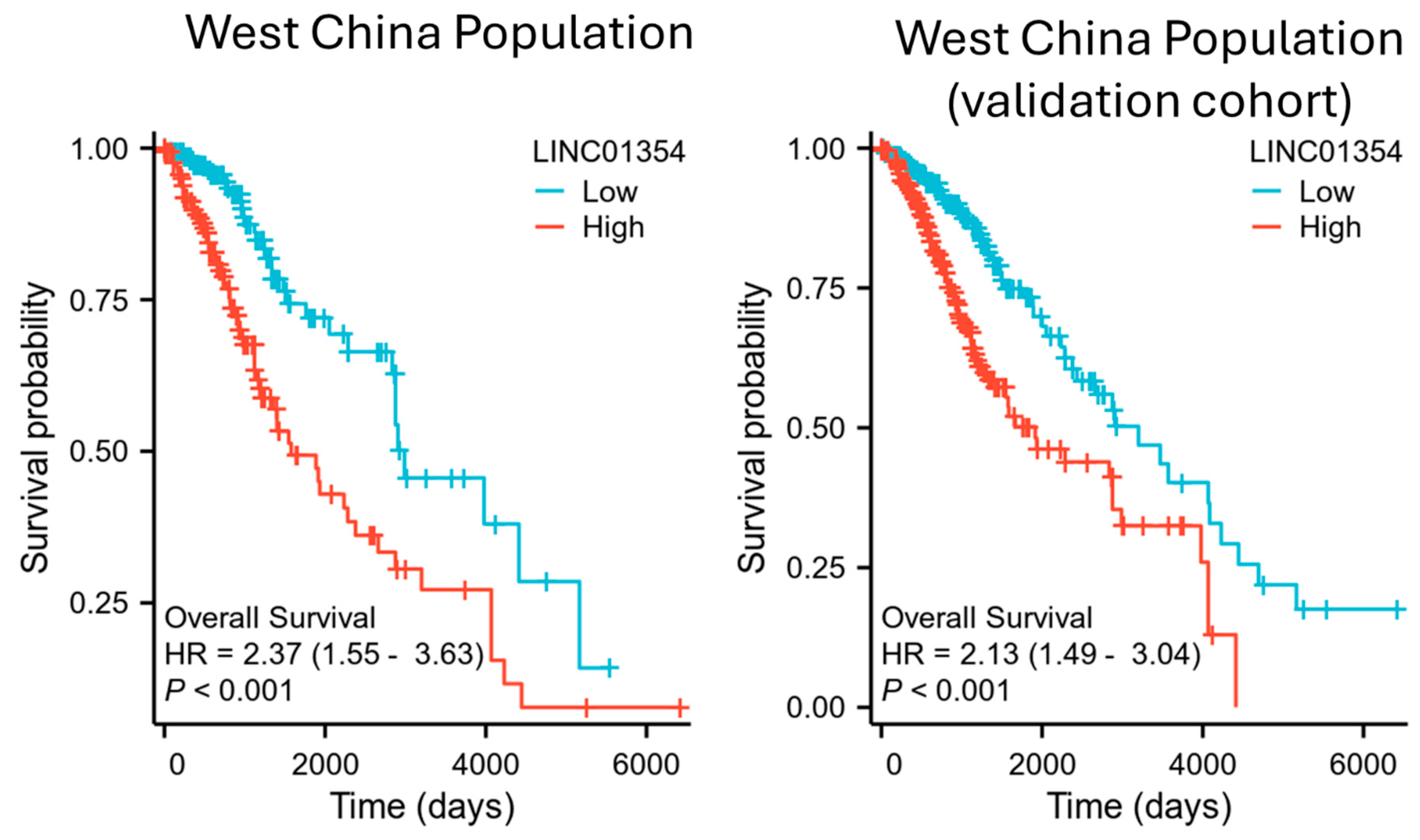
Figure 2.
Survival association of LINC01354 and low-grade glioma survival in North China population (Beijing, n=432) and South China population (Guangzhou, n=332).
Figure 2.
Survival association of LINC01354 and low-grade glioma survival in North China population (Beijing, n=432) and South China population (Guangzhou, n=332).
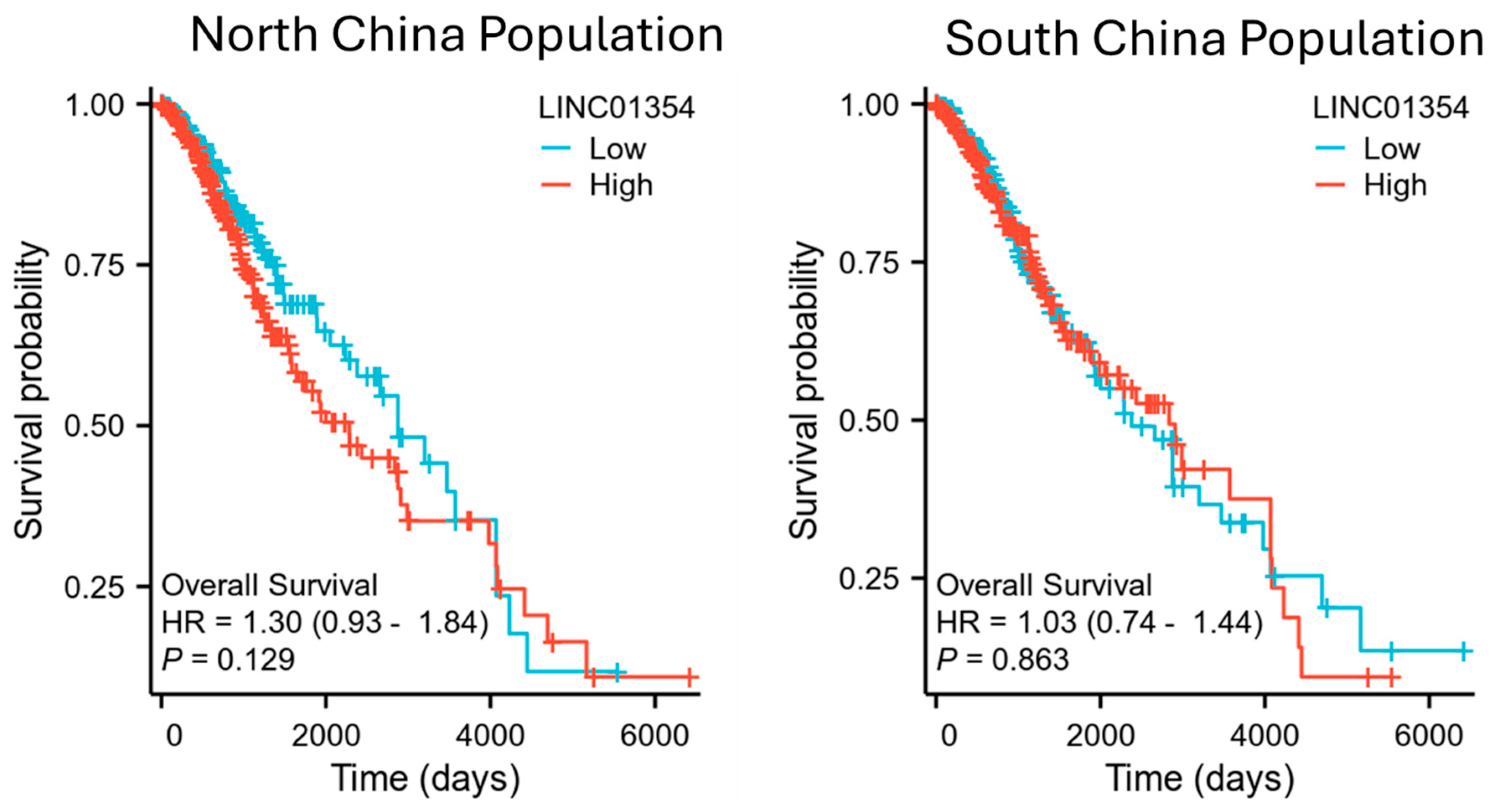
Figure 3.
Survival association of LINC01354 and low-grade glioma survival in Han (n=312)or non-Han (120) patients from the west China population (Xinjiang). 135 patients were lost in this information.
Figure 3.
Survival association of LINC01354 and low-grade glioma survival in Han (n=312)or non-Han (120) patients from the west China population (Xinjiang). 135 patients were lost in this information.
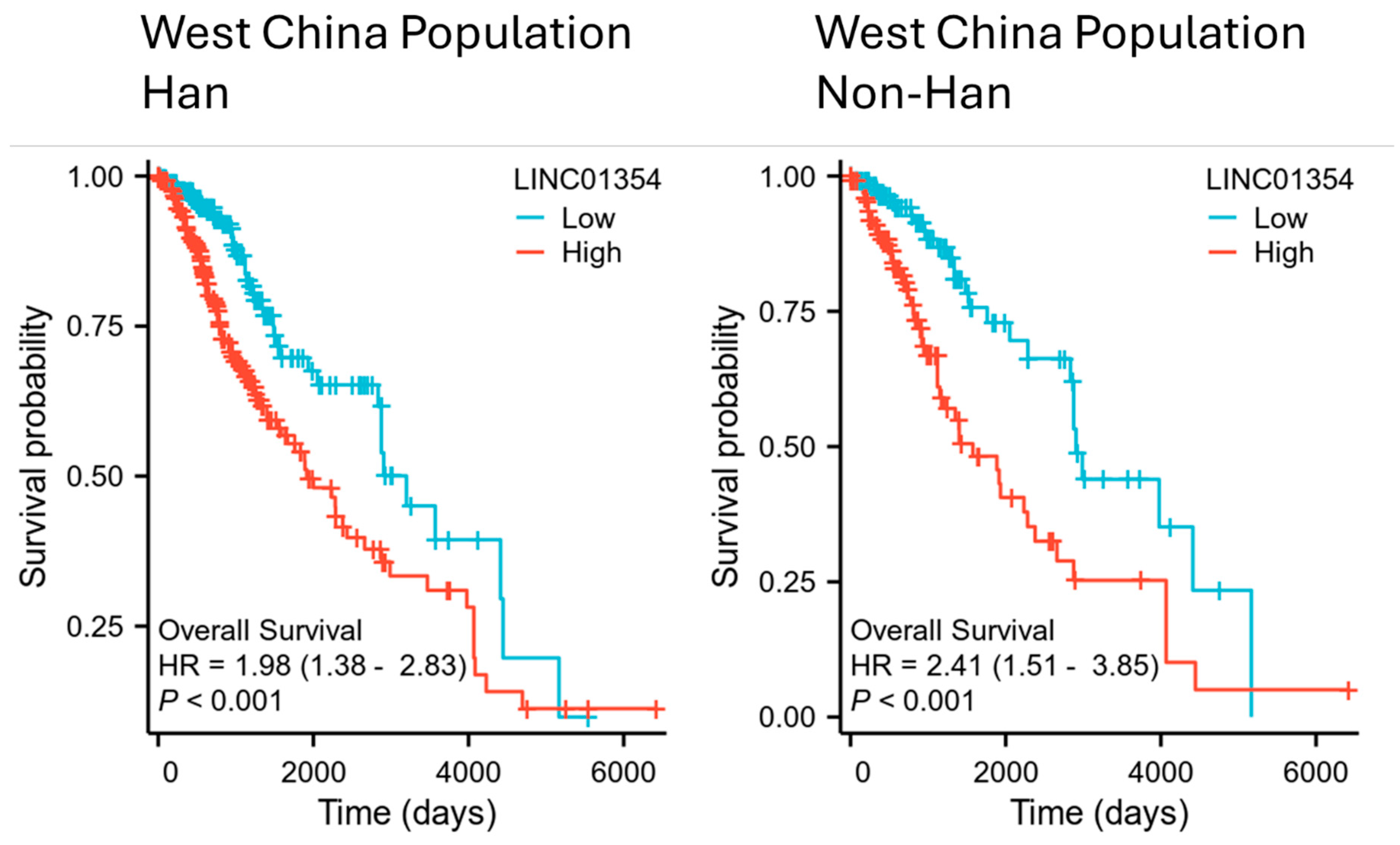
Figure 4.
Survival association of LINC01354 and low-grade glioma survival in patients from the west China population (Xinjiang) that consume Rice-based foods as the main food (n=210) or Flour-based foods as the main food (n=199). 135 patients were lost in this information. 23 patients are not sure or consume other foods as the main food.
Figure 4.
Survival association of LINC01354 and low-grade glioma survival in patients from the west China population (Xinjiang) that consume Rice-based foods as the main food (n=210) or Flour-based foods as the main food (n=199). 135 patients were lost in this information. 23 patients are not sure or consume other foods as the main food.
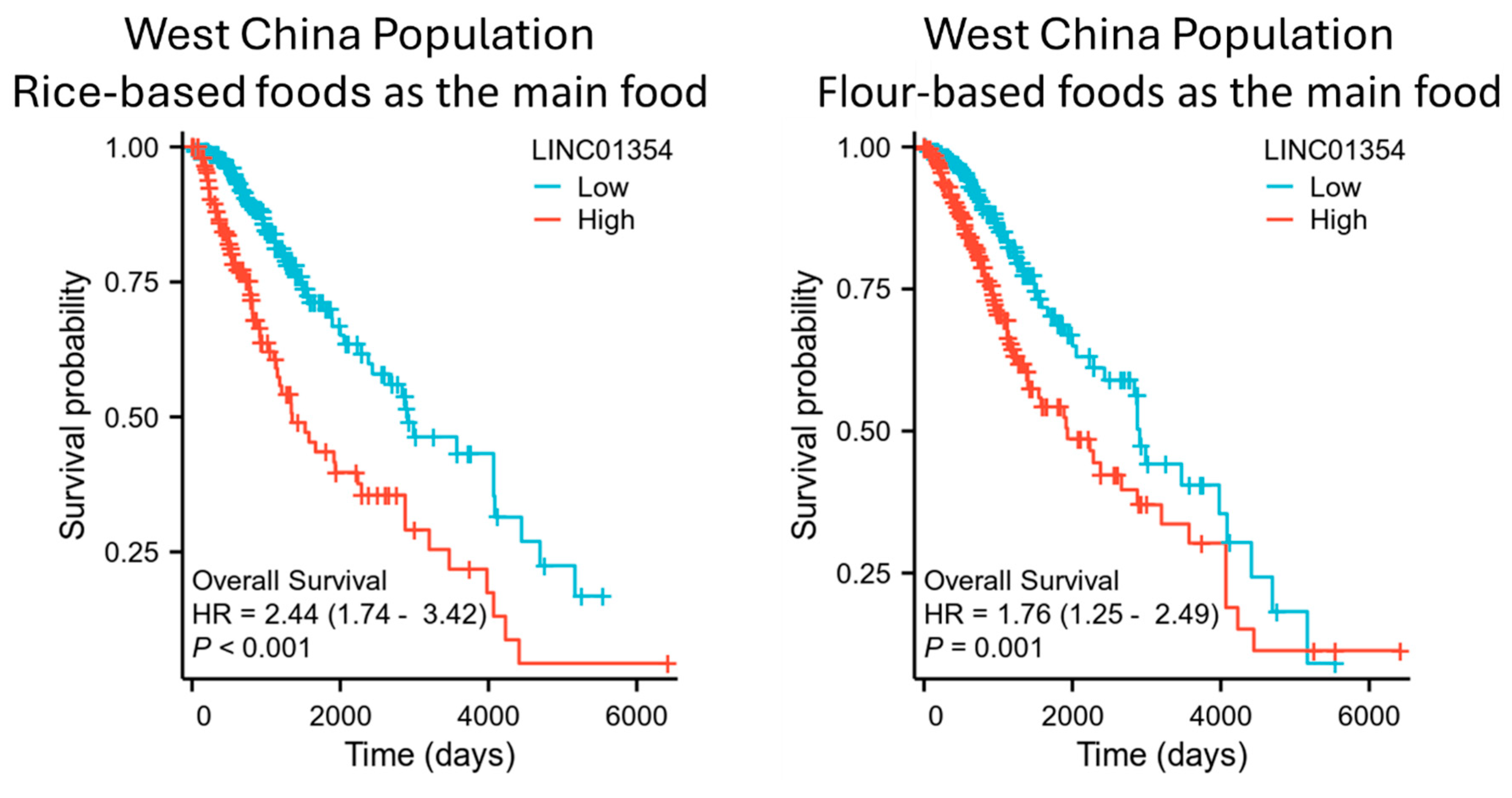
Figure 5.
Survival association of LINC01354 and low-grade glioma survival in patients from the west China population (Xinjiang) that were born in Xinjiang (n=381) or born in other part of China (n=153). 33 patients were lost in this information.
Figure 5.
Survival association of LINC01354 and low-grade glioma survival in patients from the west China population (Xinjiang) that were born in Xinjiang (n=381) or born in other part of China (n=153). 33 patients were lost in this information.
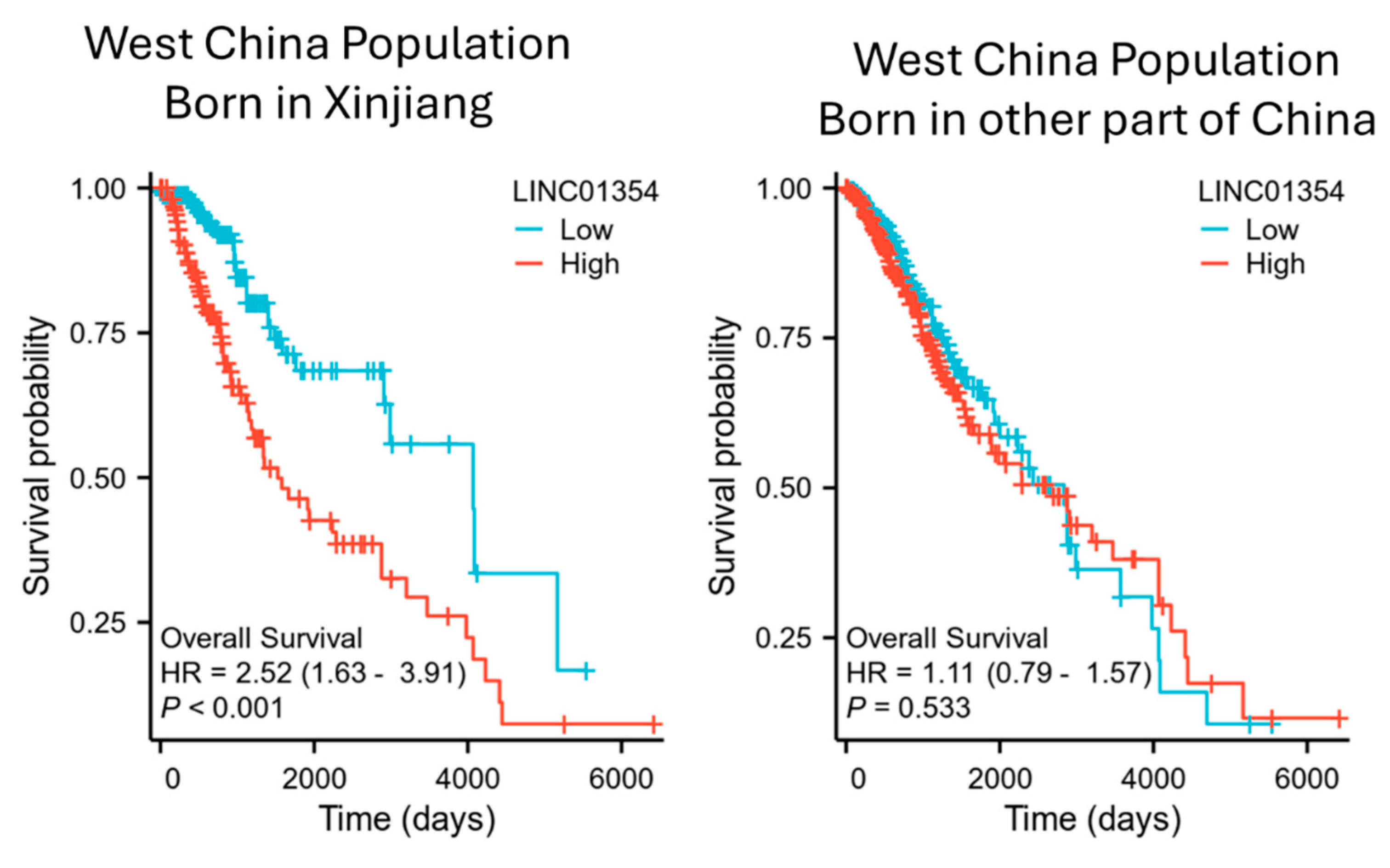
Figure 6.
Survival nomogram including LINC01354 level for low-grade glioma patients from the west China population (Xinjiang). Training cohort n=373 (70%), validation cohort= 161(30%).
Figure 6.
Survival nomogram including LINC01354 level for low-grade glioma patients from the west China population (Xinjiang). Training cohort n=373 (70%), validation cohort= 161(30%).
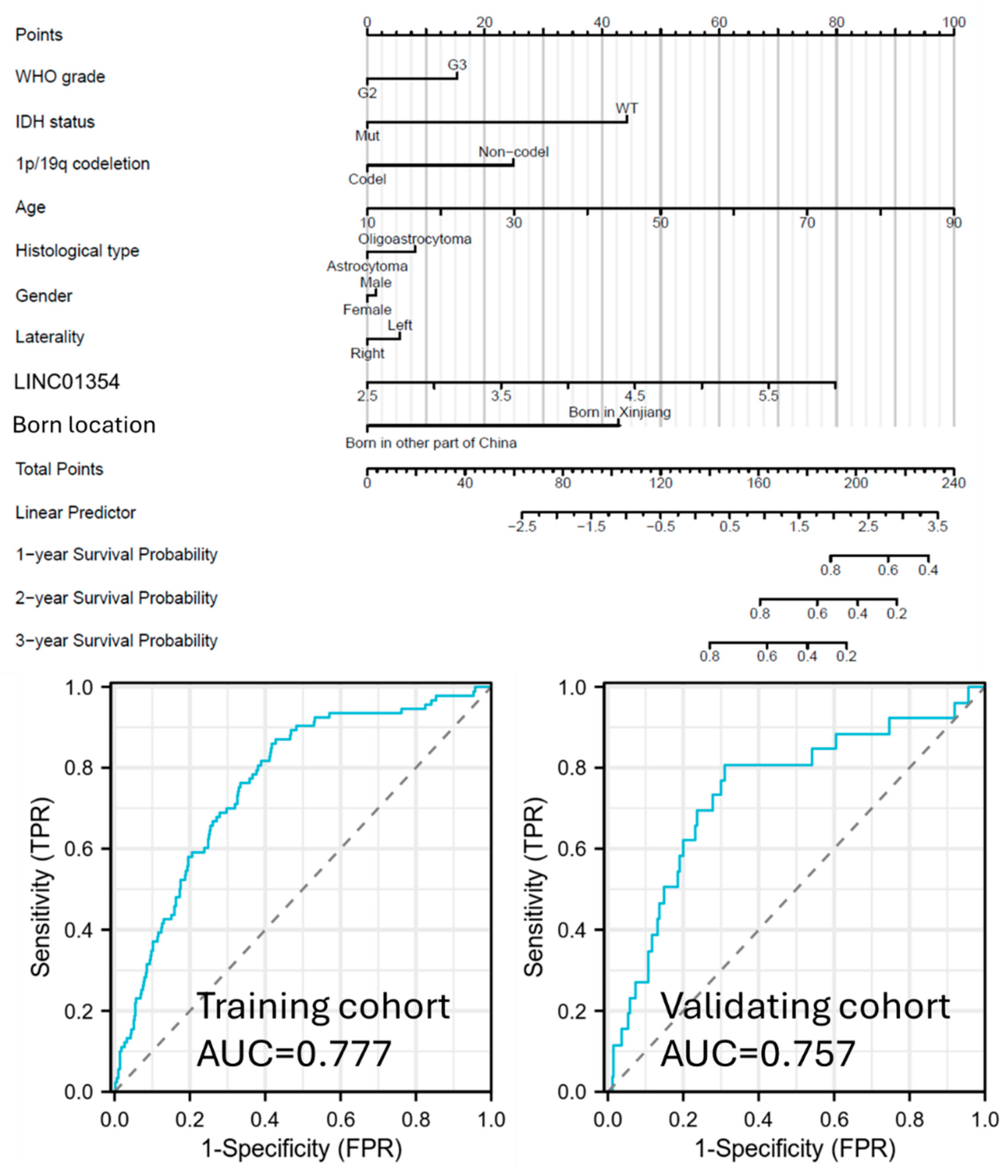

Table 1.
Clinical information of the objects.
| characteristics | West | North | South | p value |
|---|---|---|---|---|
| n | 667 | 432 | 332 | |
| WHO grade, (%) | ||||
| G2 | 48% | 53% | 53% | 0.32 |
| G3 | 52% | 47% | 52% | |
| IDH status, (%) | ||||
| WT | 18% | 20% | 23% | 0.15 |
| Mut | 82% | 80% | 79% | |
| 1p/19q codeletion, (%) | ||||
| Non-codel | 68% | 74% | 79% | 0.12 |
| Codel | 32% | 26% | 27% | |
| Gender, (%) | ||||
| Female | 45% | 49% | 54% | 0.23 |
| Male | 55% | 51% | 50% | |
| Age, median | 41 | 39 | 42 | 0.06 |
| Histological type, (%) | ||||
| Astrocytoma | 59% | 66% | 72% | 0.06 |
| Oligoastrocytoma | 41% | 34% | 35% | |
| Laterality, (%) | ||||
| Left | 50% | 59% | 66% | 0.05 |
| Right | 50% | 41% | 43% | |
| Normalized expression level | ||||
| LINC01354 | 1 | 1.052 | 0.989 | 0.45 |
Disclaimer/Publisher’s Note: The statements, opinions and data contained in all publications are solely those of the individual author(s) and contributor(s) and not of MDPI and/or the editor(s). MDPI and/or the editor(s) disclaim responsibility for any injury to people or property resulting from any ideas, methods, instructions or products referred to in the content. |
© 2024 by the authors. Licensee MDPI, Basel, Switzerland. This article is an open access article distributed under the terms and conditions of the Creative Commons Attribution (CC BY) license (http://creativecommons.org/licenses/by/4.0/).
Copyright: This open access article is published under a Creative Commons CC BY 4.0 license, which permit the free download, distribution, and reuse, provided that the author and preprint are cited in any reuse.


