

Submitted:
27 June 2024
Posted:
29 June 2024
You are already at the latest version
Abstract
Introduction: Most industrialized and developed countries now working to implement more advanced transportation systems. These include autonomous vehicle(AV) systems of various forms, such as delivery vehicles, which eliminate the crashes, injuries, and fatalities associated with human-operated machinery. Self-driving vehicles have the potential to make roads safer, but some safety concerns need to be addressed. Before AV systems become commonplace in developing countries, society needs to determine how safe they truly are.
Objectives: This paper provides brief descriptions and examines the realities for AV in developing countries using results from infrastructure-based assessment of countries worldwide and from a questionnaire-based survey.
Methods: Relevant research papers, articles, reports, and departmental websites were used as the main data sources. Ethiopia was chosen as a representative case. Different aspects of AV infrastructure, its current status in developing countries, and perspectives on AV systems are explored through interviews with approximately 1500 randomly selected individuals. The main variables in the assessment were physical infrastructure, digital infrastructure, and societal perceptions on AV systems.
Results: Surprisingly, the results indicated that 55.82%, 78.58%, 87.78%, and 86.09% of Ethiopian interviewees agreed with statements regarding high ease of use, usefulness, positive attitude, and benefits, respectively, of AV. However, it should be noted that some interviewees did not provide a response to certain questions.
Keywords:
Autonomous vehicle
; Developing countrie
; Impact
; Infrastructure
; Transportation
1. Introduction
In future society autonomous components and operating systems are expected to replace manpower smoothly and efficiently. Among the machine systems needed to support modern society, autonomous vehicles (AVs) are likely to play a significant role. Urban residents worldwide are facing increasing traffic-related safety and environmental issues, such as high levels of babel, air adulteration, traffic-related injuries and deaths, uprising of fuel costs, high fuel consumption, and long commuting time. According to world bank, in 2016 transport accounted for an estimated 23% of global energy-related CO2 emissions, and is likely to, account for 33% of greenhouse gas (GHG) emissions by 2050 (Pournazeri, 2023). There is thus an argued need for innovative solutions to make the transportation sector safer, less polluted, less congested, more fuel efficient and cheaper to use. One such solution is to implement systems involving AV, which are autonomous in the sense that they not require human inputs and operate by sensing and reacting to the surrounding conditions (Ning, 2021). Autonomous vehicles can replace passenger cars and delivery vehicles entirely reducing local environmental pollution. Self-driving vehicle also have the potential to make the roads safer, e.g., they could eliminate the crashes, injuries, and fatalities associated with conventional vehicles by avoiding the causes of traffic accidents, but some safety concerns need to be addressed. Developing countries, with their fast-rising economies, expanding middle classes, and increasing urbanization, are a huge potential market for AVs. However, various hurdles must be overcome before AVs are broadly utilized in developing countries.
The aim of this study was to assess the suitability of AV system’s for developing countries, in particular as regards awareness of such systems and their; reliability, safety, convenience, and comfort in the view of society and specialists. Ethiopia was chosen as the study area, representing a developing country.
1.1. Potential Benefits of AV Systems
Improved traffic efficiency (Zhang, 2020): AVs and connected vehicles (CVs) can interact with one another and with infrastructure to optimise traffic flow, decreasing congestion and trip times.
Reduced Environmental Impact: Electric vehicles (EVs) emit no tailpipe emissions, resulting in cleaner air and better public health.
Economic growth and job creation (Silva Ó., 2022): Development and implementation of these technologies will result in creation of new industries and employment, enhancing economic growth.
Improved mobility for all (Kassens-Noor E., 2021): AVs can transport those with disabilities, the elderly, and those living in underserved regions.
Large and expanding markets: Emerging markets have large and expanding populations, which could result a great demand for AVs. India will have the world’s largest population by 2027, while China currently has the world’s largest middle class (Kharas H, 2020).
Rapid infrastructure development (Bagloee S.A., 2016; Sadaf M., 2023): Many developing countries are investing extensively in infrastructure, such as roads, bridges, and telecommunications networks. This will improve the local environment for development of AVs.
Government backing: Emerging-market governments are increasingly recognizing the potential of AVs to improve transportation efficiency and safety, and are providing cash and regulatory assistance for AV development and testing.
1.2. Challenges in Implementation of AV Systems
In many developing countries, the infrastructure is not yet sufficiently mature to facilitate safe operation of AVs. For example, lane lines, traffic signs, and high-speed internet access may be lacking. Compared with other African countries, Ethiopia has extremely sparse road infrastructure (21km road/1000 km2) and the existing road infrastructure is very congested, leading to high transport costs. These costs are at unaffordable levels for the majority of the disadvantaged population, while also penalizing producers. High transfer costs, mostly owing to high transport costs, act as an important barrier by raising the important parity price (IPP) level (Chalte, 2019). Further investment is infrastructure is needed to address these shortcomings.
Safety concerns (Cui J., 2019; Koné T.F., 2019): There are still some unresolved safeties with AV systems. These need to be addressed at technical and implementation level.
Public acceptance (Rezaei A., 2020): In many emerging countries, public acceptance of AV systems is low because of privacy, job displacement and safety concerns. Education and public outreach program are needed to improve acceptance.
Key user-related concerns and expectations about AVs:
Acceptance factors: Relative norm, perceived behaviour control, attitudes, and trust are important variables influencing the desire to utilize autonomous vehicles.
Challenges in development: Researchers are still trying to solve problems with AVs such as occlusion, prediction, and fleet planning and control (Nastjuk, 2020).
Safety and reliability: Optimistic predictions suggest that AVs will be safe and reliable by 2025 and will be commercially available in many developing countries by 2030. However, there may be situations where human intervention is required (Stone, 2021).
Impact on travel demands: It is uncertain whether AVs will increase or reduce total travel and associated traffic problems (Litman, 2023). Planning requires prediction of future conditions and needs, and evaluating of benefits and costs of AVs.
Workplace changes: AV systems are likely to bring enormous changes to the workplace, as jobs primarily involving driving will become obsolete (Pettigrew, 2018).
Communication with law enforcement: Law enforcement agencies are not expected to address issues with AV use on public roads before 2024. However, it is important for all AVs to follow existing traffic laws and regulations (Goodison, 2021).
Limited personal use: Personal use of vehicles requiring no driver is expected to be very limited within the next five years. Initially, AVs may be more commonly used in ride-share and shuttle programs, and only in a few large cities in developed countries.
2. Methods of the Study
The novel contributions of this paper are to report perceptions and current conditions in developing countries and their AV infrastructure status, compared with that in developed countries. In particular, physical and digital infrastructure and societal perceptions on AV systems were analyzed. Relevant scientific publications were located through searches in Scopus-indexed databases (Frontiers, MDPI, Springer, ResearchGate, SAGE, Elsevier, Google scholar, etc). The selection criteria were relevance and recent journal publications and conference papers. The interview held were based on the respondent’s permission and by considering societies understanding to the system. The rest of this paper is structured as follows: A summary of studies on the state of AVs, mechanisms or approaches evaluated in publications, and platforms for AV implementation applications is given in Section 3. Section 4 describes the current status and societal acceptance rate (perception) of AV systems. Section 5 compares AV infrastructure in developing countries (Ethiopia) with that in developed countries and summarizes the findings made in this study. Conclusions from the work are presented and areas for future research are suggested in Section 6.
3. Expected Platforms for AV Infrastructure
The automated vehicle readiness index (AVRI) describes readiness and openness of various countries to AV technology, which can help public authorities (federal, regional, or local) learn from others and accelerate AV adoption, with potential advantages for society (Chen, 2020). According to previous studies (Consultancy.eu, 2018; KPMG, 2018) and AVRI predictions, the main pillars for implementation of autonomous vehicles are:- Technology & Innovation, Infrastructure, Policy & Legislation and Consumer Acceptance from a societal point of view. At present, the Netherlands is the country in the best position for implementation of driverless vehicles (Consultancy.eu, 2018), due to its good internet and infrastructure systems, well maintained road networks, and current government policies. Based on AV readiness and status in the Netherlands, AV infrastructure, must comprise a good road network, a good road maintenance system, standards for road construction and standardized norms on road lanes, on road telematics, signs, walkway accident barriers and curbs. The expensive changes required before driverless vehicle systems can become a reality. The physical infrastructure required for AV includes paved roads, road furniture, road markings, speed range, traffic signs, and a road shoulder or curb (static infrastructure), plus maintenance of these in a dynamic process discussed in Table 1.
The digital infrastructure required comprises traffic management, information system, fleet supervision, communication, digital twinning of the road network, satellite positioning, and a high definition (HD) map mandatory component (Platform, 30 Dec, 2020; Tengilimoglu O, 2023). General, factors determining the availability and development of AVs include the existence of regulations and policies supporting AVs, the level of investment in AV technology and research, the presence of advanced road infrastructure and connectivity, adoption and implementation of smart city initiatives, and accessibility and availability of charging infrastructure for electric AVs.
3.1. Physical Infrastructure
Physical infrastructure acts as the backbone for the digital environment supporting AV systems, see Table 1.

Table 1.
Physical Infrastructure required for autonomous vehicle (AVs) systems.
| Status (dynamic/static) | Physical infrastructure features | Secondary attributes |
|---|---|---|
| Static | Road | Road types (highways, roads, streets etc.) |
| Separation of AVs | ||
| Special road sections (tunnels, bridges, toll plazas etc.) | ||
| Pavement alongside road (ease of detection of road ways) | ||
| Bearing capacity (lanes, shoulders, bridges-critical for platoons) | ||
| Road furniture | Land marks | |
| Gates and barriers (lanes, roads or areas of concern) | ||
| Gantries for road signs | ||
| Road lighting (for support of AV vision system) | ||
| Game fences (availability and condition) | ||
| Road markings | Visibility, machine-readability (to vehicle sensors) | |
| Existence of lane markings (lateral positioning) | ||
| Markings indicating use by AVs | ||
| Speed range | Speed limit or recommendation | |
| Traffic signs | Signs indicating use by AVs | |
| Visibility, machine-readability | ||
| Shoulder or curb | Wide shoulder | |
| Lay-bys or parking areas | ||
| Passenger pick-up/drop off areas | ||
| Dynamic | Infrastructure maintenance | Inspections of infrastructure |
| Winter maintenance (for visibility of road markings) | ||
| Road maintenance including road marking painting, clearing of vegetation. |
Presence of physical infrastructures is essential for AVs system components such as smart applications for traffic management, maintenance and charging facilities, mobility hubs which help bring together multiple modes of transportation, and smart parking meters with positioning systems, see Figure 1.
3.2. Digital Infrastructure
Software-based infrastructure is necessary to move goods, products and peoples in a modern transportation system. Software for traffic management, information system, fleet supervision, communication, digital twinning of road networks, satellite positioning (GPS) and HD mapping is essential for transportation systems. Attributes of existing software solutions and current gaps are listed in Table 2.
Figure 2 illustrates different components of digital infrastructure that are mandatory for applications. Those components are mostly under development in developing countries which but are essentially safe, promoting wider deployment of AVs.
3.3. Combined Infrastructure Requirement
Highly developed digital infrastructure in the absence of adequate physical infrastructure cannot meet the mobility demands of both manually driven and autonomous vehicles. Investments in physical infrastructure must be made in order to realize the potential of digitization and meet the requirements of future vehicles with varying degrees of automation.
According to 2018 data collated by KPMG, todays digital and physical infrastructures construction were comparatively functional soon and almost complete in many developed countries (Netherlands, Singapore, Japan, Soth Korea, UAE, Sweden, USA, Austria, Australia, UK, Canada, Germany, France, Spain, China, New Zealand, Mexico, India, Brazil, Russia) at that time. Infrastructure was also good in (Denmark, Taiwan, and Hungary) in 2018. By 2020, Norway, USA, Finland, Sweden, Denmark, Israel, were among the top 20 countries in terms of digital and physical infrastructures for AVs (Threlfall, July 2020).
4. Current Status of AV Infrastructure in Developing Countries and Public Acceptance of AVs
Ethiopia has an estimated population of around 100 million, of which around 80% live in rural areas and 20% (21 million) are urban residents (iLibrary, 2020). The population is expected to grow to 122 million by 2030 (Agency, 2019). As Ethiopia’s cities and urban centers grow, they face increasing challenges in serving growing demand for mobility, along with rising levels of traffic congestion, deaths from traffic crashes, and local air pollution. Evidence worldwide shows that street designs focused on vehicle movement rather than mobility for people, undermine quality of life and the character of public spaces (Mandeli, 2019; Guzman, 2021). Greater emphasis on walking, cycling, and public transport in the planning, design, construction, and management of transport systems is needed to achieve more equitable allocation of road space. From an economic point of view, Ethiopia currently has e.g., food security problems, with 20.1 million people facing low food security in various parts of the country for different reasons (cycle, 2023). Therefore, construction of infrastructure for autonomous vehicles similar to that in Netherlands is unachievable in the present conditions in Ethiopia and other developing countries. According to Internet-world-stats 2023, Africa has 11.2% internet coverage and has 17.6% of the global population, while Asia has 54.2% and 54.9% respectively, and Europe has 13.9% and 10.6% respectively (stats, 2023). Internet penetration rates in different continents worldwide are shown in Figure 3.
In emerging nations, societal attitudes to AVs are largely positive, but there is considerable skepticism and anxiety. According to a KMPG poll, 62% of respondents in emerging nations are interested in AVs, but only 20% believe AVs are safe (KPMG, 2018). There are a number of reasons for this, one of which is that many individuals in developing nations have had bad experiences with public transport and may believe that AVs are no safer than conventional vehicles. Another reason is lack of knowledge regarding AV technology, many individuals in developing countries may not understand how autonomous cars function or how they vary from ordinary automobiles. Despite these reservations, there is much enthusiasm for the possibilities of AVs. People in developing countries are eager to reap the benefits of AVs, which include decreased traffic congestion, enhanced safety, and increased accessibility. Considering all those conditions, lets understand the context of one country by picking from developing country, Ethiopia.
5. Context for AV Systems
Ethiopia, like most of the continent of Africa, is currently not technologically advanced and it has no AVs in testing or in use. Thus, short- and long-term training needs to be provided by relevant government bodies in order to familiarize Ethiopian society with the AV concept. A problem is that Ethiopia is a low-income country and its road network, vehicle density, and vehicle systems are all in their infancy. A much larger road network would be required to enable introduction of AVs in Ethiopia, but there are a number of factors that might make a viable market for this technology. These include a huge and increasing population, a rapidly expanding economy, and an innovative administration. Furthermore, inadequate infrastructure for conventional vehicles, may make autonomous vehicle more appealing than ordinary automobiles. The main hurdles that need to be overcome are road conditions and traffic patterns, as AVs must be capable of dealing with the country’s peculiar driving circumstances, such as dirt roads, aggressive driving and unpredictable traffic. Ethiopians are becoming more and more interested in AVs in spite of these obstacles. The government is investing in research and development, and some private companies are working on developing AVs for the Ethiopian market (Sisay D., 2022).
5.1. Road Infrastructure Conditions in Ethiopia
Ethiopia has rather weak road infrastructure. The country has a massive road network, but many of its roads are in poor condition and pose multiple safety risks from potholes, unmarked obstructions, and a lack of safety barriers. The Ethiopian government is investing in road infrastructure improvements, but progress will take time and money. In the interim, driverless cars will need to be able to cope with Ethiopia’s poor road conditions.
Specific Road Infrastructure Problems in Ethiopia
Condition of road surfaces (Demeke F., 2016): The state of Ethiopian road surfaces varies greatly. Some roads are in decent condition, while others have potholes and cracks.
Road markings: On Ethiopian roads, road markings are frequently nonexistent or fading. Drivers may find it difficult to see lanes and make turns because of this.
Signage: On Ethiopian highways, signage is sometimes nonexistent or badly maintained. Drivers may find it difficult to manoeuvre and avoid hazards because of this.
Safety features: On Ethiopian highways, safety elements such as safety barriers and rumble strips are uncommon. This can increase the likelihood of an accident occurring.
Despite these hurdles, there is growing confidence that self-driving cars have the potential to enhance Ethiopian transportation by alleviating traffic congestion, increasing road safety, and expanding mobility alternatives for individuals with impairments.
On the other hand, establishing more physical infrastructure would reduce urban land availability for houses and businesses, fragment and damage the environment and ecosystems, decrease biodiversity, and so on. This creates a risk of impacts on natural rivers, increasing floods and runoff, deteriorating aquifers, and increasing water demand.
5.2. Societal Perceptions of AV Systems in Ethiopia
Perceptions and attitudes of Ethiopian society to AVs were captured in questionnaire-based interviews with approximately 1,500 individuals (Sciencedaily, 2019). Their responses are shown Table 3, while the full questionnaire can be found in an Appendix A to this paper.
All interviewees were located in Adama city and in rural areas located around the city, which is considered the second capital of Ethiopia, i.e., after Addis Ababa. Figure 4 shows the locations in which data were collected and road traffic conditions in the city.
5.3. Evaluation of Ethiopian AV Infrastructure and Comparison with That in Developed Countries
The current status of both physical and digital AV infrastructure readiness, and set-up in Ethiopia was compared with that in different countries around the world (Wang, 2022), to identify the future implications of this technology in developing countries, see Table 4 and Figure 5.
The comparisons and assessments in Figure 5 were based on the basic infrastructure pillars analyzed and reported by (Threlfall, July 2020), which are a compilation of EV charging stations, 4G coverage, technology infrastructure change readiness, mobile connection speed (0.5 weight), and broadband (0.5 weight) for digital infrastructure, and road quality for physical infrastructure. Based on the comparisons, it will clearly be difficult for developing countries to introduce AVs in the near future or even for them to become familiar with the concept in comparison with current conditions in developed countries.
5.4. Perceptions of AV Systems among the Interviewees
Analysis of societal perceptions was based on interviews conducted by researchers. There are many difficulties with conducting research concerning AVs and societal readiness, and also concerning the impact of autonomous technology on developing countries by either providing functions or damaging existing resources. The results indicated that more training is needed in developing countries to improve awareness and perceptions of the system. Previous studies have shown that safety is primary concern as regards AVs. (Alonso, 2022; Useche, 2021; Nordhoff, 2019). Table 5 presents perceptions and rates of acceptance among respondents in this study.
Overall, the results indicated that AVs will be very difficult to implement in Ethiopia without comprehensive public information and training. Many interviewees were in favor of the system, but most were afraid of using it see Table 5.
6. Conclusions and Future Research Needs
Autonomous vehicles are being promoted in developed countries in order to simplify work tasks and reduce human effort, and attention should also be given to their use in developing countries. Based on findings in this study, using Ethiopia as a representative case, road infrastructure in developing countries is currently not sufficient even for regular traffic and effort needs to be devoted to resolving that issue, rather than to construction of autonomous systems. According to the AVRI, Singapore currently has the best AV infrastructure provision (100% physical infrastructure, 63.36% digital infrastructure) among the 30 countries it assesses, while Brazil, the 10th ranked country in terms of GDP according to the International Monetary Fund, is ranked 30th (0% physical infrastructure, 19.76% digital infrastructure). Continents like Africa, which are rich in raw resources but poor in infrastructure, need more attention, because their economic backbone is mainly in agricultural systems. In the present study, 55.82%, 78.58%, 87.78%, and 86.09% of Ethiopian respondents interviewed agreed that AVs are easy to use, useful, viewed positively (Attitude), and provide benefits, respectively. However, there were some questions to which interviewees did not respond. Considering pros and cons of AV systems for the existing lifestyle and people’s perceptions of AVs, 77% gave a largely positive response, while the remaining 23% expressed negative views. In general, developing countries have the potential to be a major market for AVs, but several challenges need to be addressed before AVs can be widely adopted in these countries. These challenges include limited infrastructure, safety concerns, and low public acceptance. Education and public outreach are essential to overcome these challenges and ensure that AVs can be safely and widely adopted in emerging economies.
This study examined the current state of AV systems in a developing country, people’s perception, and infrastructure preparations. Future research should develop training programs to introduce AVs to a wider society and should assess the impacts of AVs on land users in poor nations, e.g., the need to evict people from agricultural land. Better public awareness of the system and providing compensation to those affected by implementation would assist in uptake of AV systems.
Author Contributions
Conceptualization, Teshome Kumsa Kurse and Girma Gebresenbet; Methodology, Teshome Kumsa Kurse; Validation, Girma Gebresenbet and Geleta Fikadu Daba; Formal analysis, Teshome Kumsa Kurse; Investigation, Teshome Kumsa Kurse; Resources, Teshome Kumsa Kurse; Data curation, Teshome Kumsa Kurse, Girma Gebresenbet and Geleta Fikadu Daba; Writing – original draft, Teshome Kumsa Kurse; Writing – review & editing, Girma Gebresenbet and Geleta Fikadu Daba; Visualization, Teshome Kumsa Kurse, Girma Gebresenbet and Geleta Fikadu Daba; Supervision, Girma Gebresenbet and Geleta Fikadu Daba; Project administration, Girma Gebresenbet and Geleta Fikadu Daba.
Data Availability Statement
The original contributions presented in the study are included in the article/supplementary material, further inquiries can be directed to the corresponding author/s.
Conflicts of Interest
The authors declare that there are no conflicts of interest.
Appendix A
Questionnaire used in interviews with local residents in Adama city and surrounding areas, and key workers
The principal objective of this key informant study is to explore the extent to which autonomous vehicles can be implemented in Ethiopia and its implications in the future. The study is being performed purely for academic (research) purposes. All responses will be treated as confidential and cannot be traced back to the individuals who provided them.
RESPONDENT’S PROFILE
AGE:______________ SEX:_______________ MARITAL STATUS________________
LEVEL OF EDUCATION:_____________________ WORK:_____________________________
Thank you for your response. Please read the following statements carefully and indicate whether you agree, disagree or do not know by making a tick (√ ) or cross ( X) in the space provided
| Topic | Statement | Respondents feedback with in different sociodemographic | ||||
| AGREE | DISAGREE | CONCEPTLESS | COMMENT | |||
| Perceived ease of use | Learning how to use AVs would be simpler for me. | |||||
| Using AVs would not need any mental effort. | ||||||
| I found AVs straightforward to grasp. | ||||||
| It’s simple to operate AVs. | ||||||
| Perceived usefulness | My driving would be more comfortable if I used AVs. | |||||
| Transporting people by AVs would be beneficial. | ||||||
| AVs would make my driving easier. | ||||||
| Attitude | Using AVs is | A wise idea. | ||||
| A good idea. | ||||||
| A meaningful. | ||||||
| Advantageous. | ||||||
| Intention | If AVs are available in the future, | I plan to use one | ||||
| I plan to buy one. | ||||||
| Perceived danger | What would worry me would be, | Technical and system malfunctions. | ||||
| Cyber-attacks(hacks). | ||||||
| High initial price. | ||||||
| Whether morally correct and ethical. | ||||||
| My private information being disclosed. | ||||||
| Users’ or owners’ legal responsibility. | ||||||
| Transportation sector jobs would decline as a result of AVs. | ||||||
| Benefit | AVs would increase, | Traffic safety. | ||||
| Fuel efficiency. | ||||||
| The mobility of persons unable to drive (disabled and old). | ||||||
| AVs would reduce, | Vehicle emissions. | |||||
| Transport cost. | ||||||
| Traffic congestion. | ||||||
| It requires less land use. | ||||||
References
- Agency, C. S. (2019). Population projects of Ethiopia. Addis Abeba.
- Alonso, F.F. (2022). Could technology and intelligent transport systems help improve mobility in an emerging country? Challenges, opportunities, gaps and other evidence from the caribbean. Applied Sciences, MDPI, 12(9), 4759.
- Bagloee S.A., T. M. (2016). Autonomous vehicles: challenges, opportunities, and future implications for transportation policies. Journal of modern transportation (Springer), 24, 284-303.
- Chalte, A. (2019, June). Integrating Urban Transport System In Addis Ababa And Its Challenges: A Case Study On Minibus Taxis. Addis Abeba: ADDIS ABABA UNIVERSITY.
- Chen, S. K. (2020). Preparing society for automated vehicles: Perceptions of the importance and urgency of emerging issues of governance, regulations, and wider impacts. Sustainability, MDPI, 12(19), 7844.
- Consultancy.eu. (2018). Why Netherlands is the globe's top location for self driving cars. KPMG.
- Cui J., L. L. (2019). A review on safety failures, security attacks, and available countermeasures for autonomous vehicles. Ad Hoc Networks (Elsevier), 90, 101823.
- cycle, H. p. (2023). Humanitarian Response Plan Ethiopia. https://reliefweb.int/report/ethiopia.
- Demeke F., G. A. (2016). Analysis of gravel road problems in Ethiopia mountainous terrain. Civil Engineering and Architecture, 4(4).
- Duvall T, H. E. (May, 2020). A new look at autonomous-vehicle infrastructure. McKinsey & Company: Washington, DC, USA.
- Goodison, S. (2021, Feb 16). NIJ. Retrieved 2023, from https://nij.ojp.gov/topics/articles/autonomous-vehicles-expert-panel-lists-top-needs-law-enforcement.
- Guzman, L. O.-G. (2021). Buying a car and the street: Transport justice and urban space distribution. Transportation Research Part D: Transport and Environment, 95, 102860.
- iLibrary, O. (2020). Rural Development Strategy Review of Ethiopia : Reaping the Benefits of Urbanisation. Addis Ababa: https://www.oecd-ilibrary.org//sites/8f129f69-en/index.html?itemId=/content/component/8f129f69-en#. Retrieved from https://www.oecd-ilibrary.org//sites/8f129f69-en/index.html?itemId=/content/component/8f129f69-en#.
- Kassens-Noor E., C. M.-K. (2021). Autonomous vehicles and mobility for people with special needs. Transportation research part A: policy and practice (Elsevier), 150, 385-397.
- Kharas H, D. M. (2020). China’s influence on the global middle class. Work. Pap., Brookings Inst., Washington, DC. https://www. brookings. edu/wp-content/uploads/2020/10/FP\_20201012\_ china\_middle\_class\_kharas\_dooley. pdf.
- Koné T.F., B. E. (2019). Challenges for Autonomous Vehicles (AVs) Engineering: Safety Validation of Functional Performance Limitations. INSIGHT (Wiley Online Library), 22(4), 23-25.
- KPMG. (2018). Assessing countries’ openness and preparedness for autonomous vehicles (Autonomous Vehicles Readiness Index). KMPG International.
- Litman, T. (2023). Autonomous Vehicle Implementation Predictions, Implications for transport planning. Victoria Transport Policy Institute.
- Mandeli, K. (2019). Public space and the challenge of urban transformation in cities of emerging economies: Jeddah case study. Cities, Elseiver, 95, 102409.
- Nastjuk, I. H. (2020). What drives the acceptance of autonomous driving? An investigation of acceptance factors from an end-user's perspective. Technological Forecasting and Social Change, Elsevier, 161(161), 120319.
- Ning, H. a. (2021). A survey on hybrid human-artificial intelligence for autonomous driving. IEEE Transactions on Intelligent Transportation Systems, 23(7), 6011-6026.
- Nordhoff, S. M. (2019). A multi-level model on automated vehicle acceptance (MAVA): A review-based study. Theoretical issues in ergonomics science, Tylors and Francis, 20(6), 682-710.
- Pettigrew, S. F. (2018). The potential implications of autonomous vehicles in and around the workplace. International journal of environmental research and public health, MDPI, 15(15), 1876.
- Platform, E. I. (30 Dec, 2020). Physical and digital infrastructure attributes for automated driving. https://www.its-platform.eu.
- Pournazeri, J. A.-O. (2023, March 30). Reducing carbon emissions from transport projects. Retrieved from https://www.icf.com/insights/climate/carbon-reduction-program-reduce-transportation-emissions. [CrossRef]
- Rezaei A., C. B. (2020). Examining public acceptance of autonomous mobility. Travel behaviour and society (Elsevier), 21, 235-246.
- Sadaf M., I. Z. (2023). Connected and Automated Vehicles: Infrastructure, Applications, Security, Critical Challenges, and Future Aspects. Technologies (MDPI), 11(5), 117.
- Sciencedaily. (2019, October 25). Platform for scalable testing of autonomous vehicle safety. Retrieved from http://www.sciencedaily.com/releases/2019/10/191025170813.htm.
- Silva Ó., C. R.-G. (2022). Environmental impacts of autonomous vehicles: A review of the scientific literature. Science of The Total Environment (IEEE), 830, 154615. [CrossRef]
- Simmons, A. (2020, November 23). Autonomous Vehicles, 5G and Digital Infrastructure. Retrieved from dgtl infra, real estate 2.0: https://dgtlinfra.com/autonomous-vehicles-5g-and-digital-infrastructure/.
- Sisay D., S. B. (2022). Private Sector Development in Ethiopia: Trends, Challenges and Policy Issues. https://eea-et.org/.
- Statistics, I. U. (2022). Internet world status (Usage and Population statistics). Retrieved 2023, from https://www.internetworldstats.com/.
- stats, I. w. (2023). World Internet Users and 2023 Population Stats. Retrieved November 15, 2023, from https://www.internetworldstats.com/stats.htm.
- Stone, M. (2021, August 16). CYNGN. Retrieved 2023, from https://www.cyngn.com/blog/three-problems-autonomy-still-trying-to-solve.
- Tengilimoglu O, C. O. (2023). Infrastructure requirements for the safe operation of automated vehicles: Opinions from experts and stakeholders. Transport policy (Elsevier), 209-222.
- Threlfall, R. (July 2020). Autonomous Vehicles Readiness Index (AVRI), Assessing the preparedness of 30 countries and jurisdictions in the race for autonomous vehicles. US: KPMG International corporative.
- Useche, S. A.-O.-M. (2021). Assessing the effect of drivers’ gender on their intention to use fully automated vehicles. Applied Sciences, 12(1), 103. [CrossRef]
- Wang, P. B.-Y. (2022). Automated vehicles industry survey of transportation infrastructure needs. Transportation research record, 2676(7), 554-569.
- Williams Ackaah, V. L. (2022). The adoption of self-driving vehicles in Africa: insight from Ghana. Urban, planning and transport research (Taylor & Francis), 10(1), 333-357.
- Zhang, T. G. (2020). Will autonomous vehicles improve traffic efficiency and safety in urban road bottlenecks? The penetration rate matters. In 2020 IEEE 5th International Conference on Intelligent Transportation Engineering (ICITE) (IEEE).
Figure 1.
Physical infrastructure components required by an autonomous vehicle (AV) system (Duvall T, May, 2020).
Figure 1.
Physical infrastructure components required by an autonomous vehicle (AV) system (Duvall T, May, 2020).
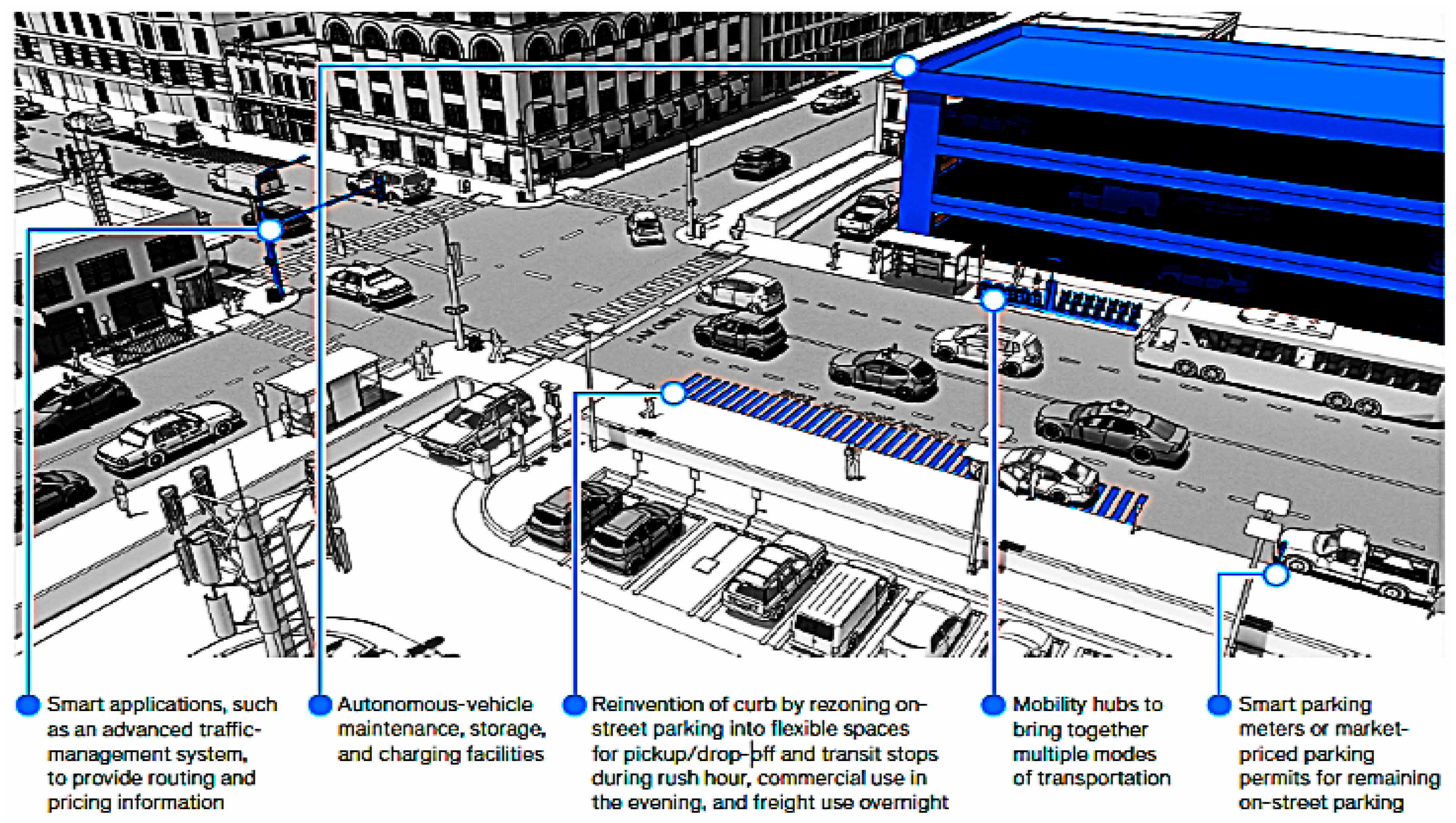
Figure 2.
Digital infrastructure components required by an autonomous vehicle (AV) system.
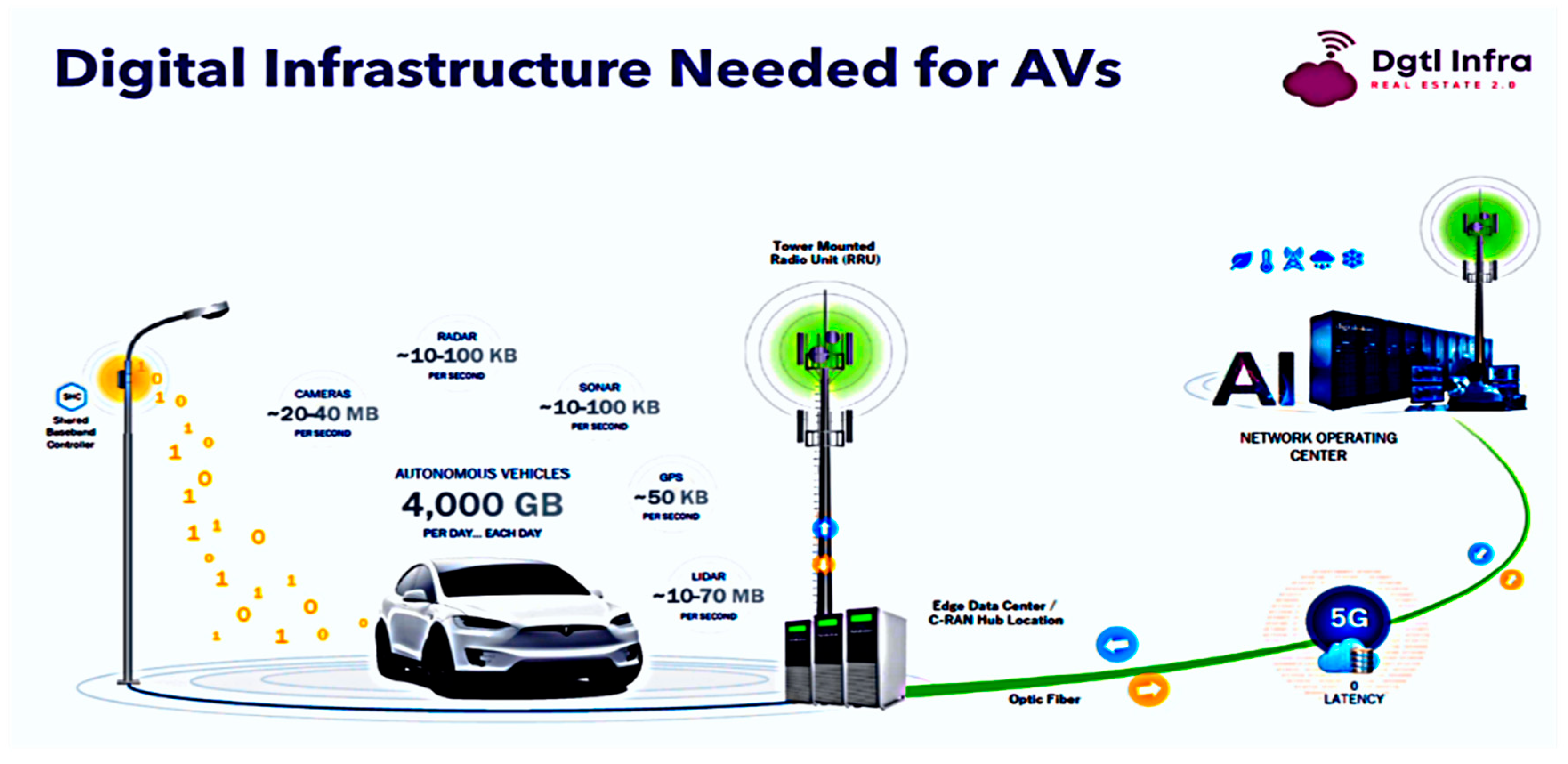
Figure 3.
Internet penetration rates in different continents worldwide (Statistics, 2022).
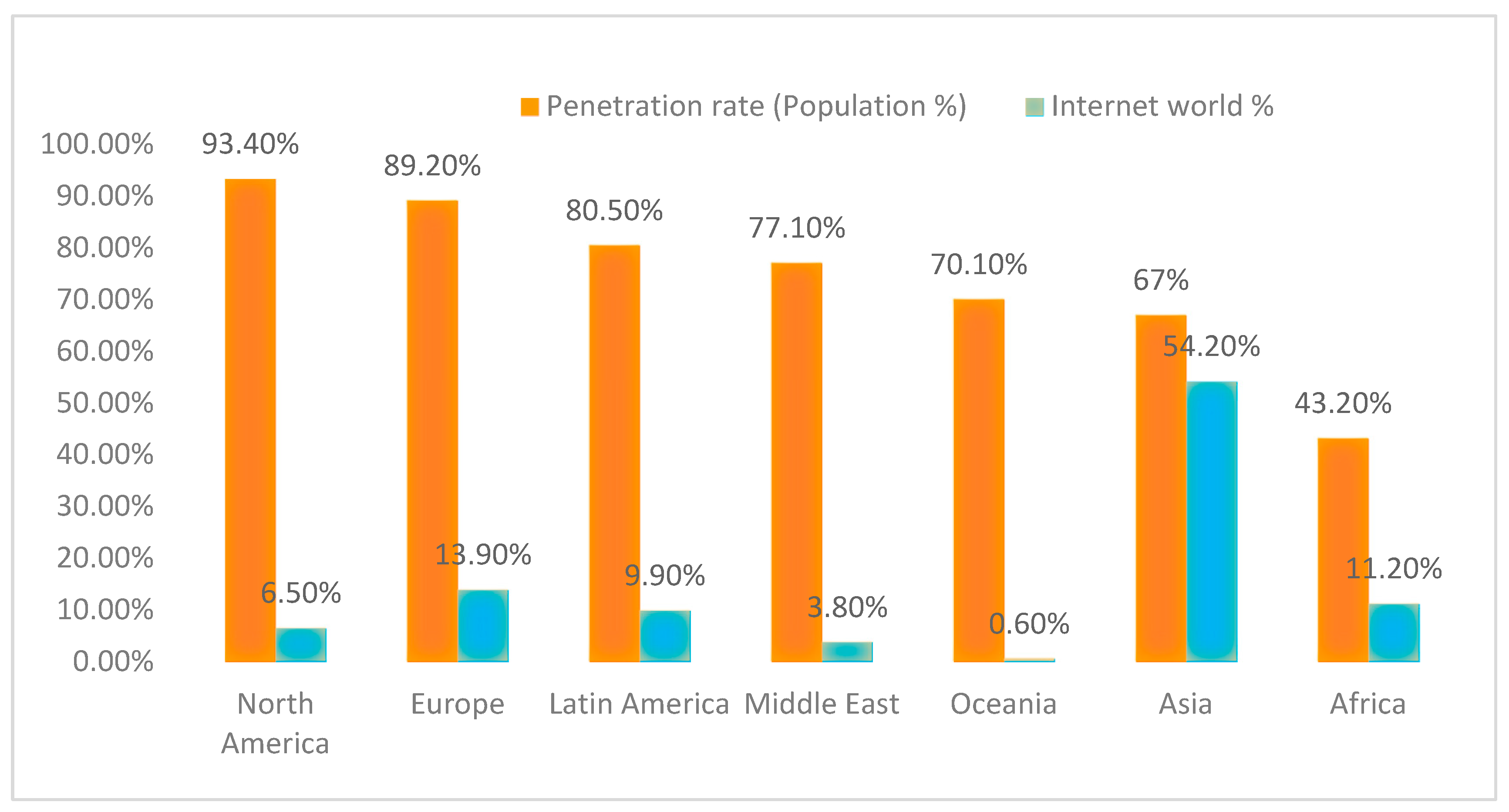
Figure 4.
Locations in Adama city, Ethiopia, in which data were collected, and prevailing traffic conditions.
Figure 4.
Locations in Adama city, Ethiopia, in which data were collected, and prevailing traffic conditions.
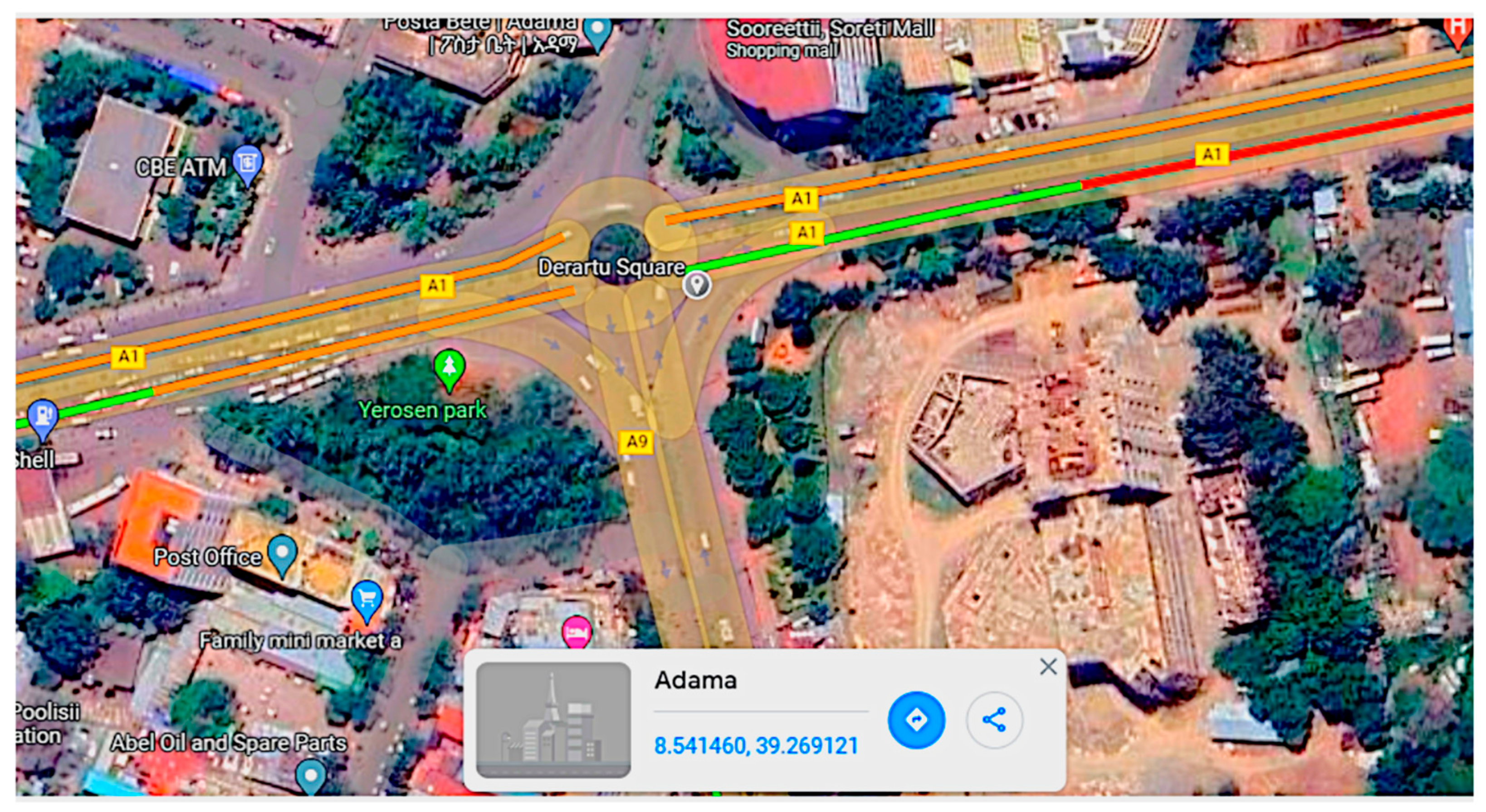
Figure 5.
Comparison of autonomous vehicle (AV) digital and physical infrastructure by country.
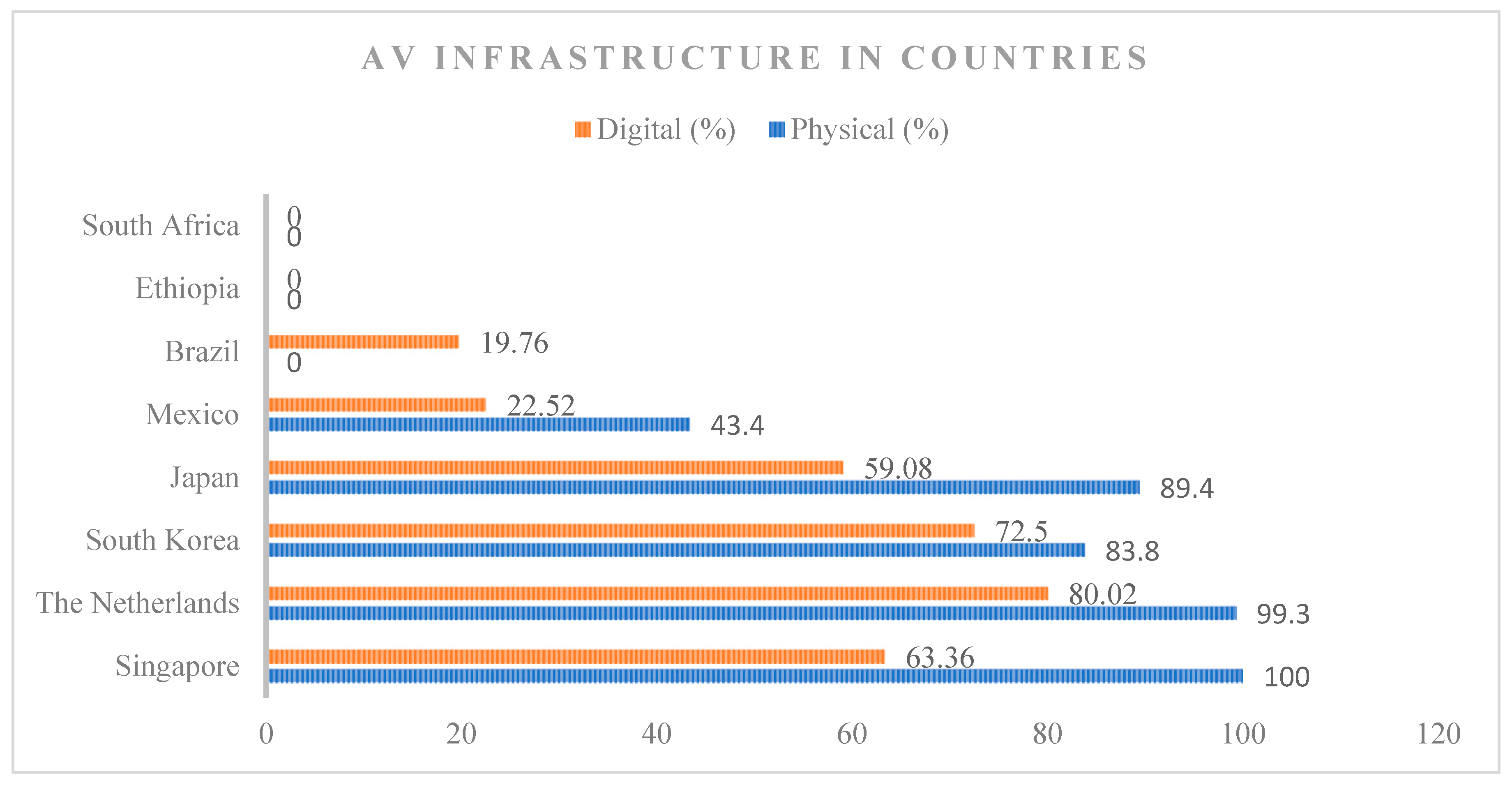
Table 2.
Basic digital infrastructure required for autonomous vehicle(AV) systems.
| Status (dynamic/static) | Digital Infrastructure | Secondary attributes | Gaps |
|---|---|---|---|
| Dynamic | Traffic management | Incident control | Edge/Cloud systems for managing large volumes of connected and automated vehicle (CAV) data require standardized governance, including maximum latency specifications for real-time signal transmission. Road side unit coordinated messaging for advanced CAV movements in junction crossings and lane merging/change operations is not standardized, but falls under Society of Automotive Engineering (SAE’s) Cooperative Driving Automation Committee. Automated driving system (ADS) technology relies on precise geo-location data from GNSS and GPS, but GPS signals have difficulty penetrating into urban canyons, tunnels, and densely vegetated highways. CAVs can compensate with inertial sensors, but these accumulate errors overtime, making them unreliable in areas with GPS signal obscuration. Physical features and road segment ability to adjust need to be assessed. |
| Road works | |||
| Operational Design Domain (ODD) control | |||
| Static | Information system | Digital traffic rules and regulations | |
| Geofencing information | |||
| Realtime event and availability of road infrastructure | |||
| Dynamic | Fleet supervision | Fleet supervision and monitoring centers | |
| Static | Communication | Medium and long-range V2I with low latency and wide bandwidth | |
| Medium and long range V2I | |||
| Short range V2I | |||
| Dynamic | Digital twinning’s of road networks | Traffic status on network | |
| Real-time which management, including traffic flows | |||
| Static | GPS | Land stations | |
| Positioning support in tunnels | |||
| HD map | Maps of road environment (landmarks, camera, radar and Ultrasound sensors) | ||
| Landmarks for LIDAR sensor |
Table 3.
Responses obtained in questionnaire-based interviews (N=1,500) on perceptions and attitudes to autonomous vehicle (AV) systems.
Table 3.
Responses obtained in questionnaire-based interviews (N=1,500) on perceptions and attitudes to autonomous vehicle (AV) systems.
|
Topic (Williams Ackaah, 2022) |
Statement | Percentage of respondents in different sociodemographic | ||||||
| Male | Female | Work | Habitat | |||||
| Agree | Disagree | Agree | Disagree |
|
|
|||
| Perceived ease of use | Learning how to use AVs would be simpler for me. | 29.64% | 37.3% | 5.76% | 27.27% | |||
| Using AVs would not need any mental effort. | 41.78% | 29.17% | 28.7% | 0.33% | ||||
| I found AVs straightforward to grasp. | 49.83% | 17.63% | 5.42% | 27.11% | ||||
| Its simple to operate AVs. | 36.12% | 25.75% | 26% | 12.04% | ||||
| Perceived usefulness | My driving would be more comfortable if I used AVs. | 52.91% | 14.26% | 28.46% | 4.35% | |||
| Transporting people by AVs would be beneficial. | 53.21% | 12.85% | 21.42% | 12.5% | ||||
| AVs would make my driving easier. | 53.21% | 13.35% | 27.4% | 6.88% | ||||
| Attitude | Using AVs is | A wise idea. | 63.97% | 2.49% | 28.28% | 5.25% | ||
| A good idea. | 63.97% | 2.69% | 28.96% | 4.37% | ||||
| A meaningful. | 60.25% | 6.77% | 25.59% | 7.38% | ||||
| Advantageous. | 58.14% | 8.58% | 21.95% | 11.33% | ||||
| Intention | If AVs are available in the future, | I plan to use one | 24.24% | No response | 12.88% | 62.87% | ||
| I plan to buy one. | 10.8% | No response | 14.7% | 74.49% | ||||
| Perceived danger | What would worry me would be, | Technical and system malfunctions. | Almost all considered all these a high risk. |
|
|
|||
| Cyber-attacks(hacks). | ||||||||
| High initial price. | ||||||||
| Whether morally correct and ethical. | ||||||||
| My private information being disclosed. | ||||||||
| Users’ or owners’ legal responsibility. | ||||||||
| Transportation sector jobs would decline as a result of AVs. | ||||||||
| Benefit | AVs would increase, | Traffic safety. | 59.16% | 5.8% | 26.19% | 8.85% |
|
|
| Fuel efficiency. | 56.86% | 9.03% | 32.1% | 2.0% | ||||
| The mobility of persons unable to drive (disabled and old). | 64.85% | 2.05% | 26.67% | 4.44% | ||||
| AVs would reduce, | Vehicle emissions. | 60.72% | 5.73% | 25.91% | 7.62% | |||
| Transport cost. | 52.16% | 13.9% | 27.82% | 6.12% | ||||
| Traffic congestion. | Unknown | Unknown | ||||||
| It requires less land use. | Unknown | Unknown | ||||||
Table 4.
Overview of autonomous vehicle (AV) infrastructure in selected countries on different continents worldwide.
Table 4.
Overview of autonomous vehicle (AV) infrastructure in selected countries on different continents worldwide.
| Continent | Country | Infrastructure (%) | Remark | |
|---|---|---|---|---|
| Digital | Physical | |||
| Europe | The Netherlands | 80.02 | 99.3 | At the forefront of AV infrastructure. The country has a well-developed road network and has actively promoted smart mobility solutions, including AVs. |
| Asia | Singapore | 63.36 | 100 | One of the leading countries in AV infrastructure. The government has been proactive in creating a conducive environment for AV testing and deployment, including dedicated AV testing centers and regulatory frame work. |
| South Korea | 72.1 | 83.8 | Is investing heavily in AV technology and infrastructure. The government has setup a dedicated AV testing site, K-City, and is actively promoting development and deployment of AVs. | |
| Japan | 59.08 | 89.4 | Has been making steady progress in AV infrastructure. The government has been promoting AV technology as part of its Society 5.0 initiative and has conducted several AV trials on public roads. | |
| America (North and South) | Mexico | 22.52 | 43.4 | AV infrastructure is still in the early stages of development. However, the government has shown interest in AV technology and has conducted a few AV trials. |
| Brazil | 19.76 | <5 | AV infrastructure is still in the early stages of development. The country has conducted a few AV trials, but widespread deployment of AV is still a long way off. | |
| Africa | Ethiopia | 0 | <5 | AV infrastructure in Ethiopia is currently very limited. The country is still grappling with basic road infrastructure issues, which makes the deployment of AVs a challenging prospect. |
| South Africa | 0 | 16 | South Africa has shown interest in AV technology, but its AV infrastructure is still in the early stages of development. | |
Table 5.
Rates of acceptance of autonomous vehicle (AV) systems and perceived impacts on existing infrastructure.
Table 5.
Rates of acceptance of autonomous vehicle (AV) systems and perceived impacts on existing infrastructure.
| 1. Perceived advantages | ||
| Advantage | Percentage of interviewees in agreement | Remark |
| Perceived ease of use | 55.82 | All questions raised by interviewers were answered, but to different degrees. |
| Perceived usefulness | 78.58 | |
| Attitude | 87.78 | |
| Benefits | 86.09 | |
| 2. Perceived risks | ||
| Safety | 99.9% viewed AV as risky and would be afraid of using them. | |
Disclaimer/Publisher’s Note: The statements, opinions and data contained in all publications are solely those of the individual author(s) and contributor(s) and not of MDPI and/or the editor(s). MDPI and/or the editor(s) disclaim responsibility for any injury to people or property resulting from any ideas, methods, instructions or products referred to in the content. |
© 2024 by the authors. Licensee MDPI, Basel, Switzerland. This article is an open access article distributed under the terms and conditions of the Creative Commons Attribution (CC BY) license (http://creativecommons.org/licenses/by/4.0/).
Copyright: This open access article is published under a Creative Commons CC BY 4.0 license, which permit the free download, distribution, and reuse, provided that the author and preprint are cited in any reuse.