

Submitted:
27 June 2024
Posted:
27 June 2024
You are already at the latest version
Abstract
The current study evaluated the effect of powder fractions based on particle size on the chemical composition of macronutrients such as proteins and sugars, on phytochemical properties (total content of polyphenolic compounds, vitamin C and antioxidant activity), on preservation capaci-ty (water activity), reconstitutability properties (water absorption capacity and water solubility index) and physicochemical properties (particle size distribution and moisture content) of black-thorn berries (Prunus spinosa) powders. The fruits were separated from the plant material and seeds, dried and then ground using a FRITSCH PULVERISETTE 19 universal mill for hard mate-rials. Eight fractions were obtained after sieving on seven sieves with different mesh sizes, such as: 1 mm, 0.8 mm, 0.630 mm, 0.450 mm, 0.315 mm, 0.200 mm, 0.125 mm. The grinding/sieving pro-cedure was effective in separating Prunus spinosa powder into sufficiently different size classes. The maximal moisture content and water activity were 5.61% and 0.250 respectively, show the good preservation from a microbiological point of view and ensure prevention the oxidation of bi-ologically active compounds of blackthorn berries powders. For samples with reduced particle sizes, reconstitutability was greatly improved. Total phenolic content, protein content, carbohy-drates and antioxidant activity showed significant improvements for some particle size classes compared to the unsieved sample. Vitamin C presented a semnificative content for the fraction with particle large sizes, precisely because they did not undergo intense degradation processes. Therefore, the technique of grinding and successive sieving proved effective in enhancing the physicochemical and functional characteristics of powdered blackthorn berries, particularly for smaller particles.
Keywords:
blackthorn berries
; grinding
; sieving
; separation curves
; active biological compounds
; antioxidant activity
; phenolic content
1. Introduction
Wild plants are becoming more recognized as important sources of naturally occurring bioactive compounds for use in functional food products. The health advantages of wild fruits, including their ability to scavenge free radicals and their antioxidant, anti-inflammatory, antibacterial, and anticancer properties, have been demonstrated by several research studies [1,2,3]. The crucial role of nutrition and food science is highlighted by the transformation of phytotherapeutic products into powders with multiple applications such as improving food quality, extending shelf life and reducing the amounts of synthetic additives used [4]. In this case, the fruits of Prunus spinosa L. appears as a promising candidate, because fruits contain a variety of bioactive compounds, that need further research, despite its inedible character and low industrial use. Prunus spinosa L. is a tree or shrub in the Rosaceae family that is categorized under the Prunus genus. It grows in the Mediterranean, Europe, West Asia, and West Africa and is sometimes known as “wild plum” “blackthorn,” or “sloe” [5,6,7]. P. spinosa L. is found in plain areas of Romania, but it is more common in hilly areas that reach altitudes of 900–1000 m. It is found on the edges of agricultural lands, embellishing the landscape, on pastures that have been abandoned, and on the edge of forests of oak and beech. It is a 2-3 m shrub that grows well in sunny areas. It has dense, stiff, spiky branches and dark blue-violet bark. This shrub does not require care. Is an endless resource of tiny, spherical, blackish fruits, with a diameter of around 10-12 mm, that have both medicinal and functional qualities [4,7,8,9]. Its late ripening and seasonality may have hampered its profound usage. Also, these fruits cannot be eaten directly because of the bitter taste and the information regarding their content in active substances is relatively limited and still unknown to people [5,10,11,12]. In addition to being preserved and utilized to create herbal teas, they are typically used to produce syrups jams, juices, compotes, wine, spirits, pickled like olives, vinegar, and other traditional products [13,14,15]. The fruits of this tree are rich in organic acids (malic, citric and fumaric), fatty acids (oleic, linoleic, arachidonic, linolenic) anthocyanins, polyphenols, tanins, sugars, proteins, pectins, coumarin derivatives, vitamins (C, E) and calcium and magnesium salts [16,17]. Furthermore, several studies have noted fluctuations in P. spinosa L. fruit nutrient content, which have been mostly attributed to environmental conditions [4,18]. It was found after some studies that the powder obtained by grinding the fruits of blackthorn berries can be used as a natural coloring and preservative for obtaining functional drinks, gummy bears, pastry products, ice cream, yogurt as well as in fermented meat products, improving the nutritional, physical-chemical and sensory value of these products [4,12]. In order to use the fruits produced by wild shrubs, they are often processed by traditional techniques (aqueous or dry extracts, powders) and by current extraction techniques made precisely for the extraction of bioactive compounds [5,19]. It has also been possible to isolate polyphenolic chemicals more easily recently by using modern extraction techniques (accelerated solvent extraction, microwave-assisted extraction, and supercritical fluid extraction) [14]. Nevertheless, there are currently a lot of concerns regarding the use of solvents to extract active ingredients. These concerns focus on the dangerousness of many of the solvents used in this process (such as toluene, chloroform, dichloromethane, acetyl acetate, and petroleum ether), their effects on the environment, human health, and atmosphere, the expense of treating the toxic wastes that are produced, and the effects on the quality and safety of the materials that are liable to be extracted [5,20]. Thus, we applied a method that consisted of drying, grinding and sieving to concentrate the bioactive compounds in some granulometric classes of blackthorn berries powders [21,22,23]. The powders from the fruits of wild plants have an advantage over traditional bioactive compounds extracted from fruits using solvent extraction because preserve the bioactive ingredients, particularly their bioactivity, for human consumption [24]. The process of grinding results in a decrease in particle size, a widening of the dispersion of particle sizes, and an increase in specific surface area, all of which enhance the functional properties of the material [21]. Given that one of the key factors influencing extraction is particle size, this can create confusion regarding the extraction of bioactive compounds that can occur either following the extraction processes or from the sample grinding stage [25].
Fruits powders are separated by granulometric differentiation using decreasing mesh sieves during the sieving process, which results in the controlled distribution of bioactive compounds in the various granulometric fractions [24]. The relationship between plant powders’ variety of particle sizes, bioactive ingredient amounts, physicochemical characteristics, and antioxidant activity has been documented in several recent research [21,22,23,24]. From an industrial perspective, powders’ functional qualities, such as their flowability, preservation potential, and reconstitutability are crucial because they dictate how they should be produced, handled, stored, and reconstituted in order to preserve their bioactive components. Particle size and physical structure can have a significant influence on the physicochemical properties of powders [26,27,28]. From the research carried out in the literature, there are no published scientific data regarding the effect of the size of the particles resulting from grinding and sieving on the chemical composition and antioxidant capacity of the blackthorn berries powder. There are a number of articles on the extraction of bioactive compounds and those with antioxidant activity from blackthorn berries fruits, but they all focus on extraction with solvents of different polarity, or with eutectic solvents using techniques such as ultrasound (US) and pulsed electric field (PEF), and the simplex lattice mixture design method [5,29,30,31]. Increased understanding of the impact of particle size on the phytochemical characteristics, reconstitutability, and preservation ability of powdered blackthorn berries was the goal of the current study. There is also research Benković et al. [32]; Ahmed et al. [33]; Bala et al. [34]; Ahmed et al. [35]. showing that the particle size distribution provides a complete description of a powder, and sieving is the operation that can produce a sample with a uniform particle size distribution, facilitating the development of a product with improved functional properties.
The main objective was to identify the particle size fractions that present optimal values of the parameters for their use in food formulations. It was also desired to observe the characteristics regarding the reconstitution of the ground powder with different particle sizes, precisely to evaluate the importance of sieving in order to obtain powders with functional characteristics. The aim was also to evaluate the main parameters reflecting powder quality for storage purposes, such as moisture and water activity for particles with different sizes.
2. Materials and Methods
2.1. Materials
2.1.1. Chemicals
In order to obtain the standard curves and to perform the actual tests, the following chemicals were used: sodium hydroxide (NaOH), sodium carbonate (Na2CO3), potassium sodium tartrate (KNaC4H4O6·4H2O), copper sulfate (CuSO4), Folin-Ciocalteu reagent, bovine serum albumin (BSA), 3,5-Dinitrosalicylic acid (C7H4N2O7), Sodium sulfite (Na2SO3), phenol (C6H6O), hydrochloric acid (HCl), potassium iodate (KIO3), potassium iodide (KI), 2,2-difenil-1-picrilhidrazil (DPPH), 6-hydroxy-2,5,7,8-tetramethylchroman-2-carboxylic acid (Trolox), gallic acid.
2.1.2. Plant Material
The fruits of Prunus spinosa L. were harvested in the Ramnicu Valcea region, located in the central-south area of Romania, in November 2023. Fruits were hand-picked, at optimal ripeness, from several shrubs within the same area. Fruit was carefully cleaned under running water and patted dry with a paper towel. Using a knife, the fruit’s flesh and peel were carefully separated from the kernel, and then they were placed in an oven at a temperature of 40°C, until they reached a moisture content of less than 6%.
2.1.3. Grinding of Dry Plant Material
A quantity of 200 grams of dry plant material was ground using the universal mill for hard materials FRITSCH PULVERISETTE 19 based on the cutting principle between the edges of the rotor and the fixed knives in the grinding chamber, this being equipped with a sieve of 1 mm with trapezoidal perforations. In order to prevent the loss of the bioactive compounds, the grinding process was conducted at a speed of 2800 rpm at room temperature. The resulting powder from the grinding step was then separated into in two equal amounts of 100 g (unsieved powder sample and the sample subjected to sieving), in sealable polyethylene bags. It was then kept at 10 °C until determination of characteristic parameters, and the sieving respectively.
2.1.4. Sieving Plant Powder
One of the two aliquots was sieved for five minutes at a vibration amplitude of 1.5 mm using an Analysette 3 Spartan Vertical Vibrating Laboratory Sieve Shaker (Fritsch, Idar-Oberstein, Germany). To maximize the effectiveness of the sieving process, batch of about 100 g of fruit powder were sieved with seven sieves with different mesh sizes.
The mesh sizes of the sieves were 1 mm, 0.8 mm, 0.630 mm, 0.450 mm, 0.315 mm, 0.200 mmm, 0.125 mm. These were placed one under the other in ascending order of mesh size. The equation used to describe the particle size distribution was Rosin-Rammler. The average size of the material was calculated with the relation:
The specific surface area (Ssm) of a set of particles was calculated using the formula:
The empty sieves and the particle size classes obtained on each sieve were weighed and then the samples were stored under vacuum in sealed bags at 10°C for analysis. The sample obtained from the sieve with a mesh size of 1 mm will not be subjected to analysis as it is an insufficient amount.
2.2. Methods
2.2.1. Moisture Content and Water Activity
Moisture content was determined using a DBS 60-3 halogen lamp moisture analyser based on the thermogravimetric principle at 105°C and water activity was determined using a Rotronic HygroLab2 measurement system, in standard mode using about 10 g powder in a thermostated room.
2.2.2. Hydration Properties
The water absorption capacity (WAC) and water solubility index (WSI) was determined by the methods of Miganeh Waiss et al. [26] and respectively Deli et al. [26] with slight modification. The following procedure was used to calculate water absorption capacity (WAC): 1 g of blackthorn berries powder from each sample and 10 ml of distilled water were placed in stoppered test tubes, then the mixture was vortexed at 300 rpm for 30 minutes and the sample was filtered on filter discs with a cellulose nitrate membrane with a pore size of 0.45 µm, using a vacuum filtration system for 30 minutes. The filter disc was weighed before the sample was poured. At the end of the filtration, the sample together with the disc were weighed, dried in an oven at 103 °C for 6 hours, cooled in a desiccator and weighed again. The WAC was calculated using the following formula (equation 3) [26].
In the above relation the mass of wet and dry material was expressed in grams.
The water solubility index (WSI) of powder samples was determined using the following procedure: 2.5 g of blackthorn berries powder from each sample and 20 ml of distilled water were placed in stoppered test tubes, then the mixture was vortexed at 300 rpm for 30 minutes and the sample was filtered on filter discs with a cellulose nitrate membrane with a pore size of 0.45 µm, using a vacuum filtration system. The filter disc was weighed before the sample was poured. At the end of the filtration, the sample together with the disc were weighed, dried in an oven at 103 °C for 6 hours, cooled in a desiccator and weighed again. The WAC was calculated using the following formula (equation 4) [26].
2.2.3. Preparation of Extracts and Analysis of the Absorption Spectrum
All seven samples (collected from the sieves) were mixed with DL, with a sample-to-DL ratio of 1:10. At the same time a series of seven other samples were mixed with ethanol, with a sample-to-ethanol ratio of 1:10.
2.2.4. Total Phenolic Content
Spectrophotometry was used to determine the total phenolic content (TPC), with gallic acid serving as a standard, in accordance with Singleton and Rossi’s [36] method. In simple terms, 1.0 mL of a 1/10 dilution of Folin-Ciocalteu’s reagent in water was placed in tubes together with 0.2 mL of the diluted sample extract. The sample was treated with 0.8 mL of a 7.5% w/v sodium carbonate solution after a 10-minute waiting period. The absorbance at 743 nm was then measured after the tubes had been let to remain at room temperature for 30 minutes. The gallic acid equivalent (GAE) was used to express the TPC. The polyphenol concentration in the samples was calculated using a standard gallic acid curve with concentrations ranging from 20 to 200 μg/mL. UV–vis analyses were carried out with the T92+ Spectrophotometer. [36,37].
2.2.5. Antioxidant Activity: DPPH Test
The extract was tested with the most used method, based on the substance called DPPH, i.e., 1,1-diphenyl-2-picryl hydrazyl. To obtain the DPPH stock solution, 4 mg of DPPH were weighed and dissolved in 100 ml of ethanol. Also, 400 microliters of each working sample were pipetted into clean test tubes, over which 6 ml of DPPH solution was added, vortexed and left in the dark for 30 minutes. The absorbance was determined at 515 nm [37].
2.2.6. Proteins by the Lowry Method
This method is based on the reduction of phosphormolybdates and phosphotungstates from the Folin-Ciocalteu reagent by the phenolic compounds in the protein.
Alkaline solution A was prepared by dissolving 2 g Na OH, respectively 5 g Na2CO3, 0.1 g potassium sodium tartrate in distilled water and brought to the 0.5 l mark in a volumetric flask. Solution B, namely that of CuSO4 0.5%, was obtained by dissolving 0.125 g of CuSO4 in distilled water and brought to the 50 ml mark in a volumetric flask. The Folin-Ciocalteu reagent was diluted 1:2 with water before use.
To obtain the standard curve, dilutions were made from the standard solution of bovine serum albumin (BSA). For the formation of copper proteinate, 1 ml of protein preparation was mixed with 1 ml of alkaline Cu reagent and allowed to stand for 10 min at room temperature. After that, 3 ml of Folin-Ciocalteu reagent (1:10) were added. The samples were shaken vigorously and incubated for 10 minutes at 50°C, cooled and the absorbance of each tube was measured using a spectrophotometer at 660 nm. Using the findings of many standard solutions, a standard curve for protein was drawn, and the estimated protein content of unknown variables (extracted from samples) was determined [37].
2.2.7. Carbohydrates by Dinitrosalicylic Acid (DNS) Technique
The alkaline solution that successfully absorbs sunlight at 540 nm is used to lower DNSA to 3-Amino, 5-Nitrosalicylic acid. Depending on the amount of reducing sugar present in the sample, the colour changes from yellow to orange and reddish brown. Using the absorbance found in a spectrophotometer, the level was estimated. In order to prepare the 1% DNS solution, 2.5 g of NaOH was used, which was added to 175 ml of deionized water and mixed while 45.4 g of sodium potassium tartrate were added. When the solution dissolved, 2.5 g of 3.5 dinitrosalicylic acid was further added, followed by the addition of 0.125 g of Na2CO3 and 0.5 g of phenol. To prepare the glucose solution, 0.1 g of glucose was dissolved in distilled water and the solution was brought to the mark in a 100 ml volumetric flask. To create the standard curve, 11 test tubes were used in which different volumes of glucose solution and distilled water were added so that the final volume was 10 ml, of which 3 ml were transferred to another clean test tube. Test tubes were labeled with P1, P2, …, P11 appropriately. 3 ml of DNS were added, and the mixture was heated to 90-100º C for the development of the reddish-brown colour. After cooling to room temperature, the absorbance (OD) measurements of every test tube were determined at 540 nm. A calibration curve including carbohydrates was created using the results of the several standard solutions that were thus produced, and the carbohydrate concentration of the samples was evaluated [37].
2.2.8. Amount of Vitamin C by the Iodometric Method
This technique uses a redox titration using potassium iodate in the presence of potassium iodide to measure the content of vitamin C in a sample. Solutions of 2% hydrochloric acid, the KIO3 solution and the aqueous KI solution were prepared. 10 cm3 of filtrate was pipetted into a 100 ml Erlenmeyer flask, 30 ml of distilled water, 5 ml of KI, 5 ml of HCl and 1.5 ml of starch solution were added.
It was titrated with a solution of KIO3 until the blue colour. When potassium iodate was added to the mixture that also contained potassium iodide, iodine was generated that oxidized the vitamin C present. After vitamin C was completely oxidized, the generated iodine formed with the starch present a deep blue coloured inclusion complex. The vitamin C content was generally calculated in mg/100 g of material.
3. Results
3.1. Particle size distribution of samples
There are also parameters that influence the separation of particles by sieving such as: amplitude, frequency, angle of vibration direction, opening and size of the sieving holes, average particle size, properties of the material taken for analysis [38,39]. Grounded powder with different particle sizes, are shown in Figure 1.
The initial step was to confirm that the established grinding/sieving process would produce granulometric fractions with distinct particle sizes. Table 1 shows the results of the particle size distribution by illustrating the masses of the sieves used and the masses of material left on each sieve following the sieving process.
Using data from the particle size distribution table (Table 1), a number of characteristics were determined corresponding to the sieving mesh size (li), such as: the average particle size of fraction (di), the percentage of material with a size between dimensions li and li+1 of the adjacent sieves (ai), the percentage of material smaller than the size of the sieve mesh (Ti), the percentage of material larger than the size of the sieve mesh (Ri).
For a more suggestive illustration of the data in the Table 2, they were represented graphically; T and R(%) were represented on the ordinate on a conveniently chosen scale, and on the abscissa the size li of the mesh sizes. The data obtained above were also used to calculate the average particle size of the initial material.
Furthermore, the results of sieve fractionation process and the powder fractions’ particle size characteristics (Table 2) demonstrated showed that the grinding/sieving procedure was effective in separating Prunus spinosa powder into sufficiently different size classes. Vegetal material was sticky and cohesive during the sieving study, it is crucial to note, so it cannot be claimed that the results of the sieving analysis were accurate in terms of particle size.
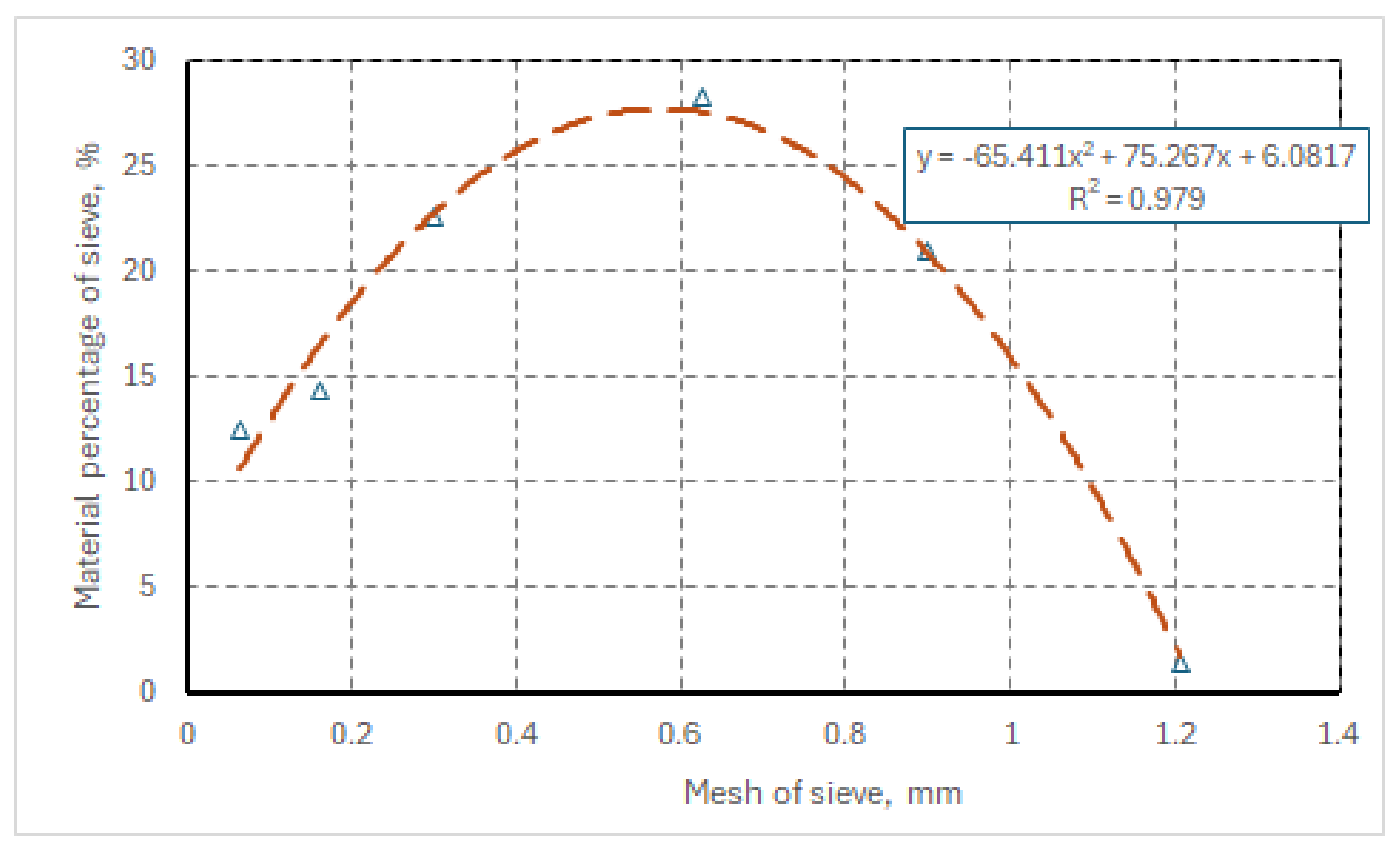
In another organization of the experimental data, based on the same values obtained and presented in Table 2, the graph in Figure 2 was obtained, in which the regression analysis with 2nd degree polynomial equation was also made, the correlation coefficient R2 having a relatively high value.
Figure 2.
This is a figure. Schemes follow the same formatting.
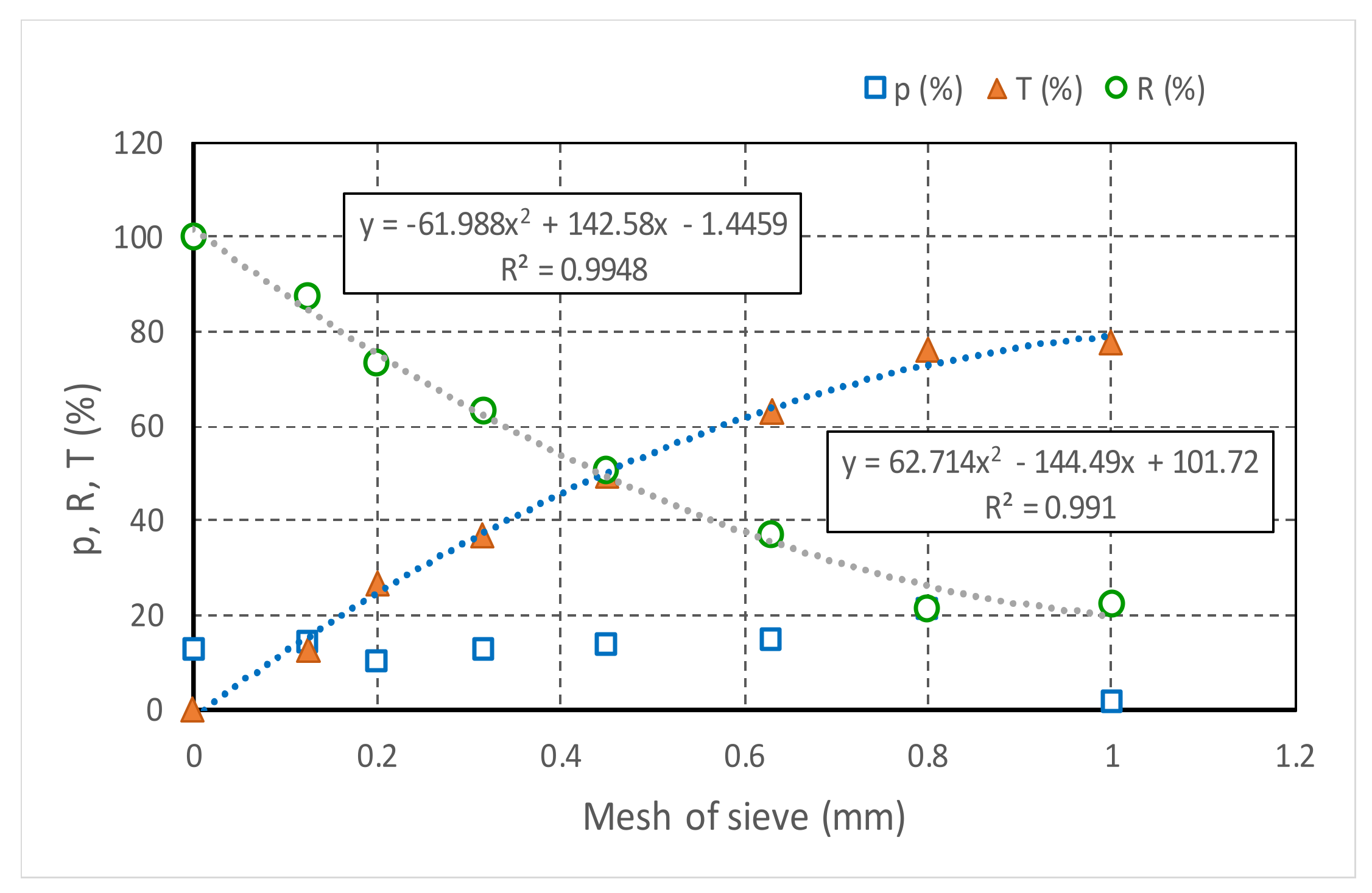
Figure 3.
The particle size distribution and the regression curve of the experimental data with the 2nd degree polynomial equation.
Figure 3.
The particle size distribution and the regression curve of the experimental data with the 2nd degree polynomial equation.
3.2. Analysis of the absorption spectrum of extract
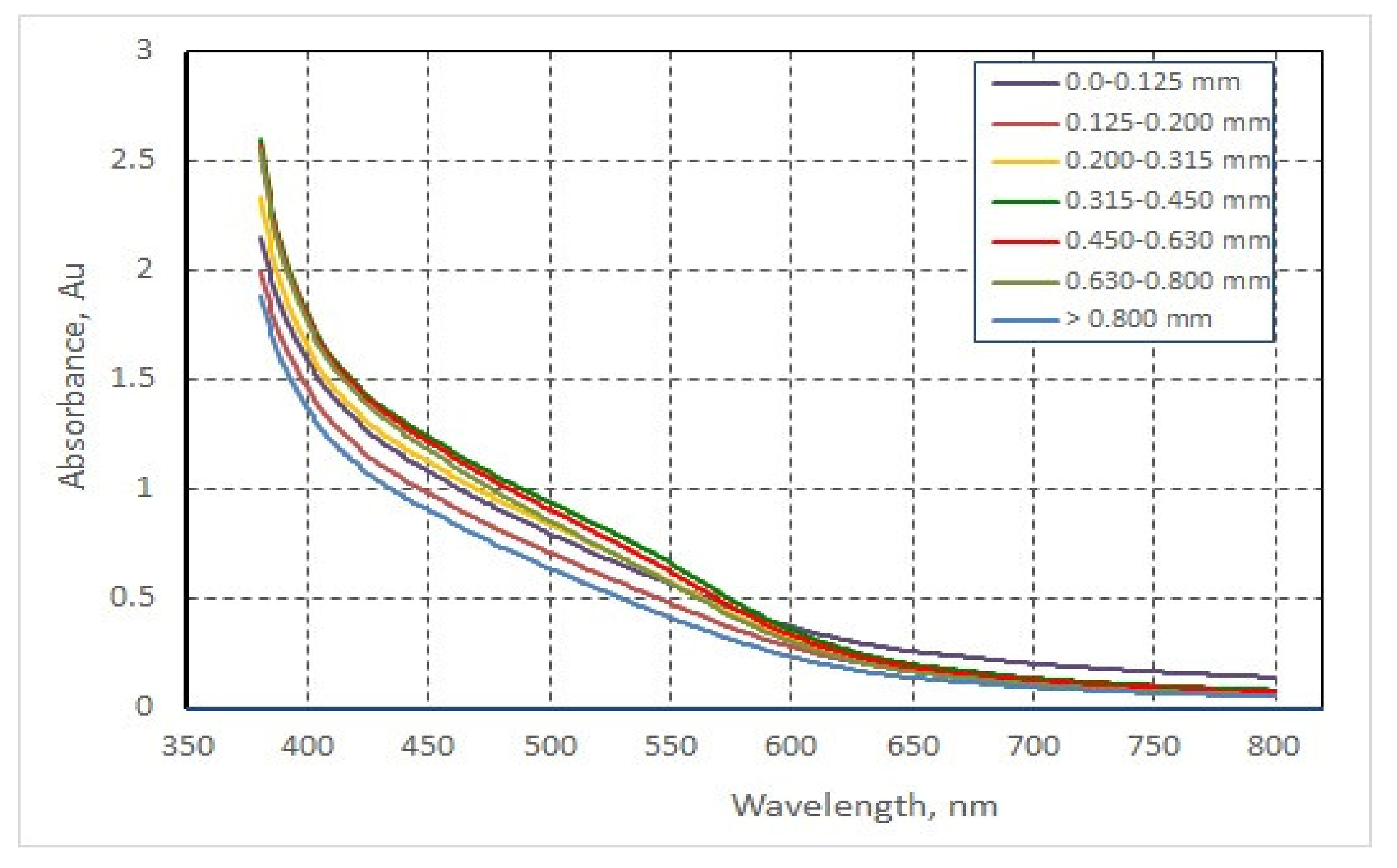
The UV-vis spectra of blackthorn berries powder extracts in the two solvents (ethanol and water) are shown in Figure 4 and Figure 5, respectively.
Firstly, the absorption spectra in ethanol and water differ significantly due to the solubility of the coloured compounds. Due to the weak polar character of ethanol, in this solvent the less polar compounds were extracted. The highest absorbance value for the ethanolic extract, 1.537 was recorded for the powder with a particle size between 0.315-0.450 mm, at the wavelength of 410 nm, which corresponds to a mixture of yellow-orange compounds. For all samples obtained by sieving, the same characteristic maximum, but with different values, was recorded at the wavelength between 411-666 nm. This means that in all the fractions there is a mixture of yellow-orange coloured compounds, probably flavonic compounds, in different amounts. All the recorded spectra also present other lower absorption maxima at the wavelengths of 536 nm, 606 nm, 631 nm, in the specific range of compounds coloured in red, violet and blue. The highest value in this wavelength range was observed for the wavelength between 660-665 nm, specific to the blue colour. The ethanoic extract of the samples had a yellow-green colour, as demonstrated by the two peaks at 410 nm and 665 nm, respectively.
Figure 4.
UV-vis spectra of the extracts of the seven granulometric classes in ethanol.
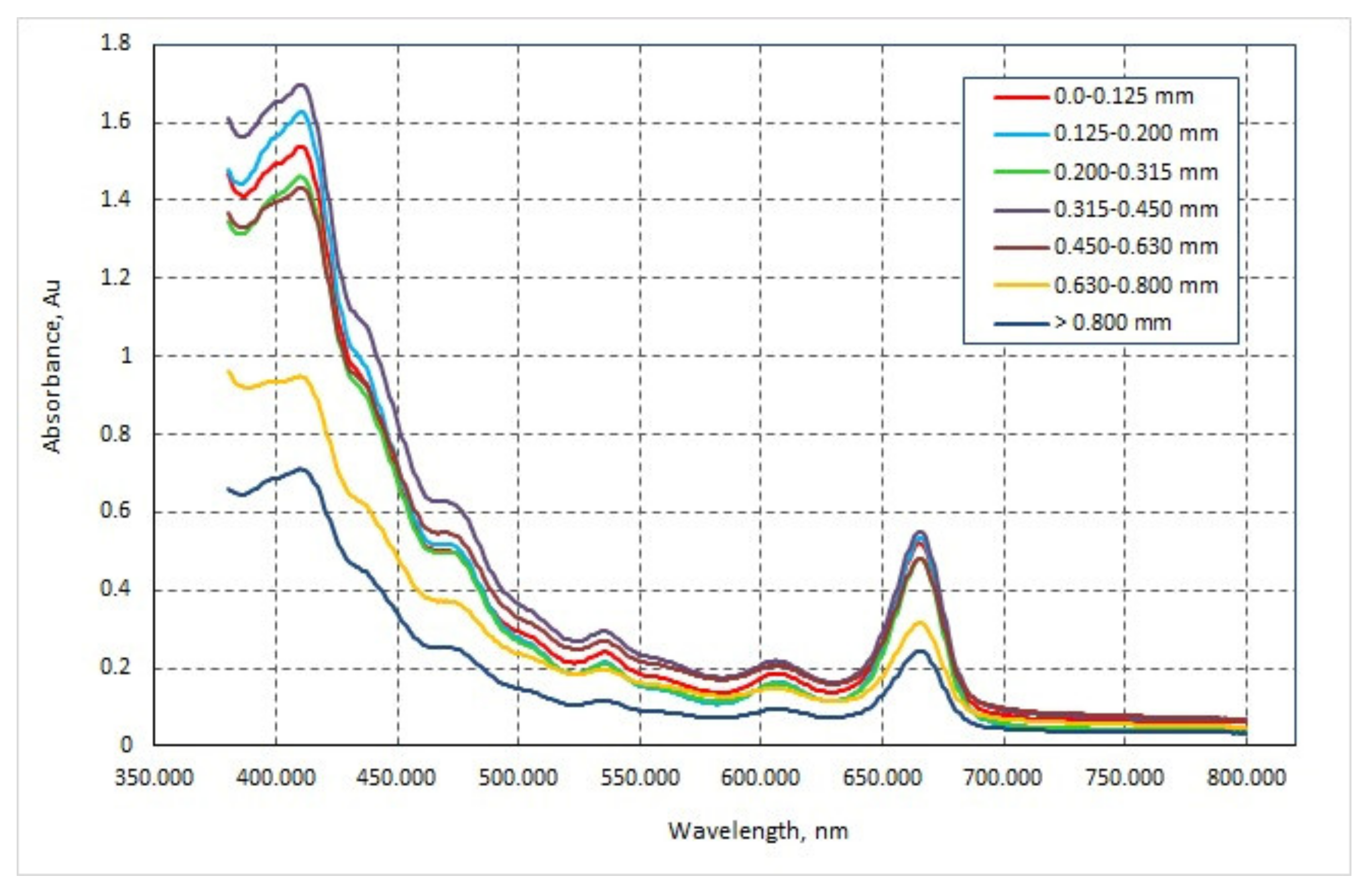
Therefore, in all the sieved samples, a mixture of coloured compounds with characteristic values of the wavelengths corresponding to the maxima was extracted in ethanol. As expected, the lowest absorbance values were recorded in the case of samples with the largest particle sizes due to the smaller extraction surface. Also, the extract from the sample with the smallest particle sizes had lower absorbance values due to the fact that the peel of the dried fruit was more difficult to grind, and was found in the fractions with intermediate sizes.
The extracts in the water even after filtration on filter paper were not perfectly clear, and the absorbance spectra all showed a decrease in absorbance from low wavelengths to higher wavelengths.
The mixture of coloured compounds, and most likely the anthocyanins, gave the extracts an orange colour.
Figure 5.
UV-vis spectra of the extracts of the seven granulometric classes in ethanol.
3.3. Moisture content and water activity
Determining the moisture content of powders is important because it influences a number of factors, including stickiness, flowability, stability, drying effectiveness, oxidation of bioactive agents, and the growth of microbial colonies [37]. Deterioration of the product in powder form and the growth of microorganisms are caused by higher moisture content-typically more than 10% [41]. From the moisture content results a clear trend can be deduced regarding the influence of particle size, i.e., the smaller the particle size, the lower the moisture content, which is due to temperature-induced evaporation, which will be compensated for during the particle size distribution analysis, as smaller particles are more hygroscopic. Also, the results of the moisture content values of granulometric classes and unsieved samples ranged from 3.31 % to 5.61 %. The powder’s structure also contributes to the water supply for microorganisms and degrading reactions; therefore, moisture content alone is insufficient to characterize the powder’s stability during storage [26].
The following factors are significantly impacted by water activity: microbiological safety, glass transition, scent, taste, caking and clumping, and chemical degradation [40].
Results obtained in Table 3 show that water activity of granulometric classes and un-sieved samples of blackthorn berries powders that varied from 0.232 to 0.250, which makes the powder stable during the storage and packaging, being well below the critical value (aw = 0.6) required for the majority of microorganisms to survive and reproduce (moulds, yeasts, and bacteria). As a result, all powders samples under investigation are thought to be microbiologically and biochemically stable. Similar to water content, water activity frequently decreased as particle sizes reduced. This was because the larger surface-to-volume ratio of the particles allowed for greater interactions with moisture of air, which improved water absorption and raised water activity.
Table 3 illustrates the water absorption capacity (WAC) and water solubility index (WSI) of all granulometric classes and unsieved samples of blackthorn berries powders.
3.4. Hydration properties
The amount of water that a food powder it can absorb and retain to the maximum is indicated by the water absorption capacity [42]. A clear influence of particle size on WAC was certainly observed as decreasing particle size resulted in higher absorption capacity. The WAC value for the unsieved sample had an average value of 4.905 g/g. For the samples subjected to particle size distributions, the WAC value varied from 3.837 % g for the particles with the largest size to 5.883 % for the particles with the smallest size. Therefore, all of the components of the dried blackthorn berries’ hydrophilic groups were exposed once the cell walls were broken down by the grinding process. Also, the higher absorption capacity could even be due to the presence of the higher content of sugars in the powder with reduced particle sizes.
One of the most crucial functional characteristics of food powders is their solubility, which demonstrates how the particles respond when they regenerate in water. The quantity of dissolved or undissolved particles is indicated by the solubility index [43]. The WSI values increased for the powders with small particle sizes (cf. Table 3), indicating that the interaction with water was improved in the case of these samples. This can be understood by the fact that milling causes a reduction in particle size, which improves material functions like surface energy and particle surface specific area and improves plant material’s interactions with water [26,34]. The solubility index values ranged from 32.672% for the unsieved sample to 42.272% for the sample with particle size between 200 and 315 μm.
The current study’s findings are in line with those of other authors Miganeh Waiss et al., [26]; Bala et al., [34]; Deli et al., [41], who noted that samples with smaller particle sizes showed improvements in WAC and WSI. Blackthorn berry powders with smaller particles should therefore be more soluble and interact with water more readily, which could help when ingesting them through food, facilitating their intestinal absorption [26].
3.5. Total phenolic content
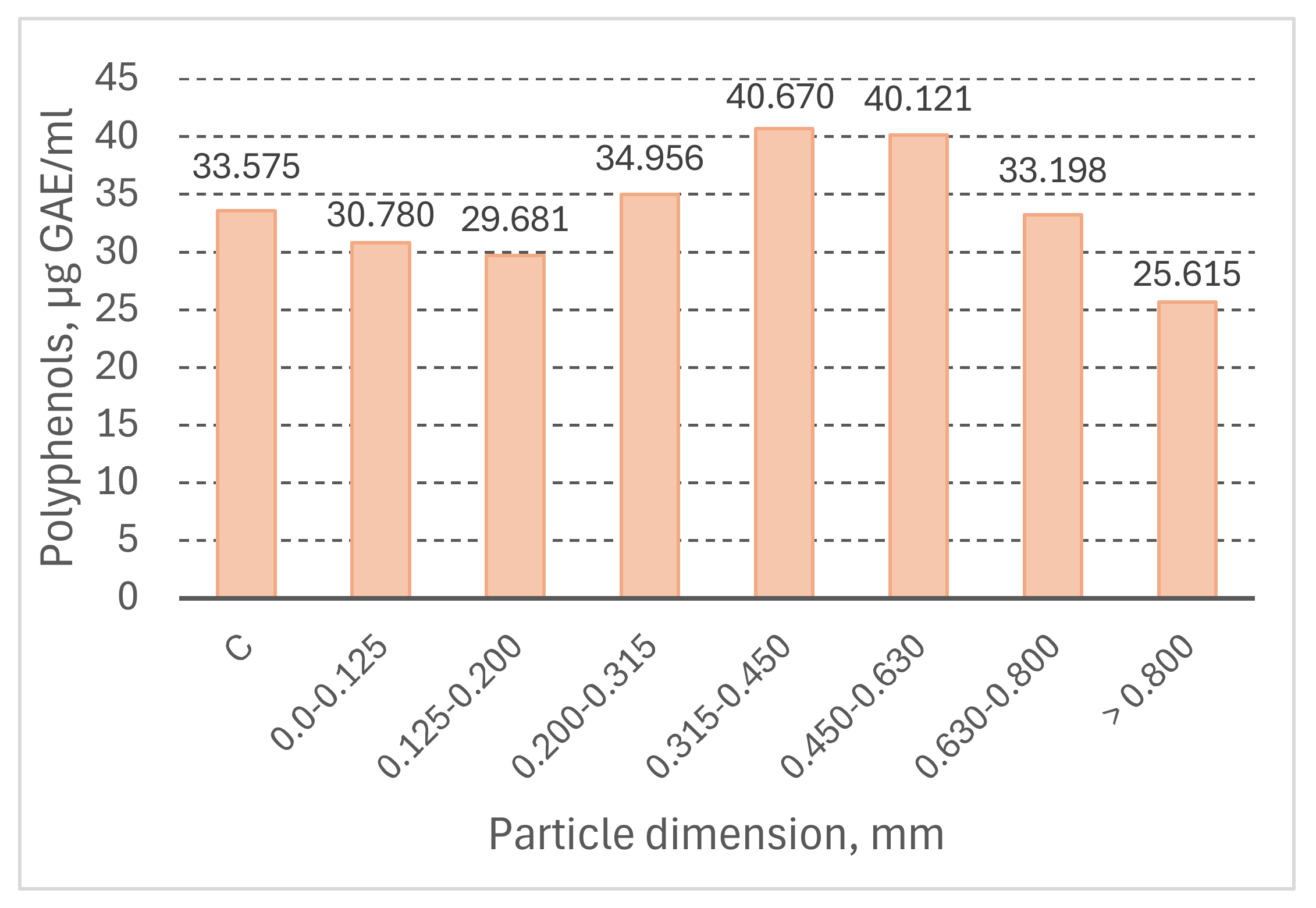
Blackthorn berries powder contains polyphenolic compounds with antioxidant capacity, which is sustained by Negrean et al. [14] in their paper. In addition to preserving color, flavour, and taste, these phenolic chemicals may extend the shelf life of powder and have antibacterial qualities. They function as a barrier against reactive oxygen species (ROS), protecting molecules from damage and avoiding the negative consequences generated by insects and microorganisms [44]. Figure 3 shows the total content of phenolic compounds present in the unsieved sample (C) and respectively in the granulometric classes obtained after sieving. The result was expressed in µg GAE/ml of sample extract. The highest total phenol content was observed for the sample with a particle size between 0.315-0.450 mm, i.e., a phenol content of 40.670 µg GAE/ml. This content is followed by that found in the sample with particle size between 0.450 - 0.630 mm, i.e., 40.121 µg GAE/ml. According to studies, the content of polyphenolic compounds is often associated with the content of protein fractions in the plant extract [21,26,41]. This can also be demonstrated by the current study because the granulometric classes with the highest content of phenolic compounds also have the highest protein content. (cf. Figure 6 and Figure 8). The lowest content of polyphenols was observed in the sample with particle size > 0.800 mm, i.e., 25.615 µg GAE/ml, which proves that this group of chemicals is influenced by the degree of grinding.
Figure 6.
The total content of phenolic compounds presents in the unsieved sample (C) and in the granulometric classes.
Figure 6.
The total content of phenolic compounds presents in the unsieved sample (C) and in the granulometric classes.
3.6. Antioxidant activity
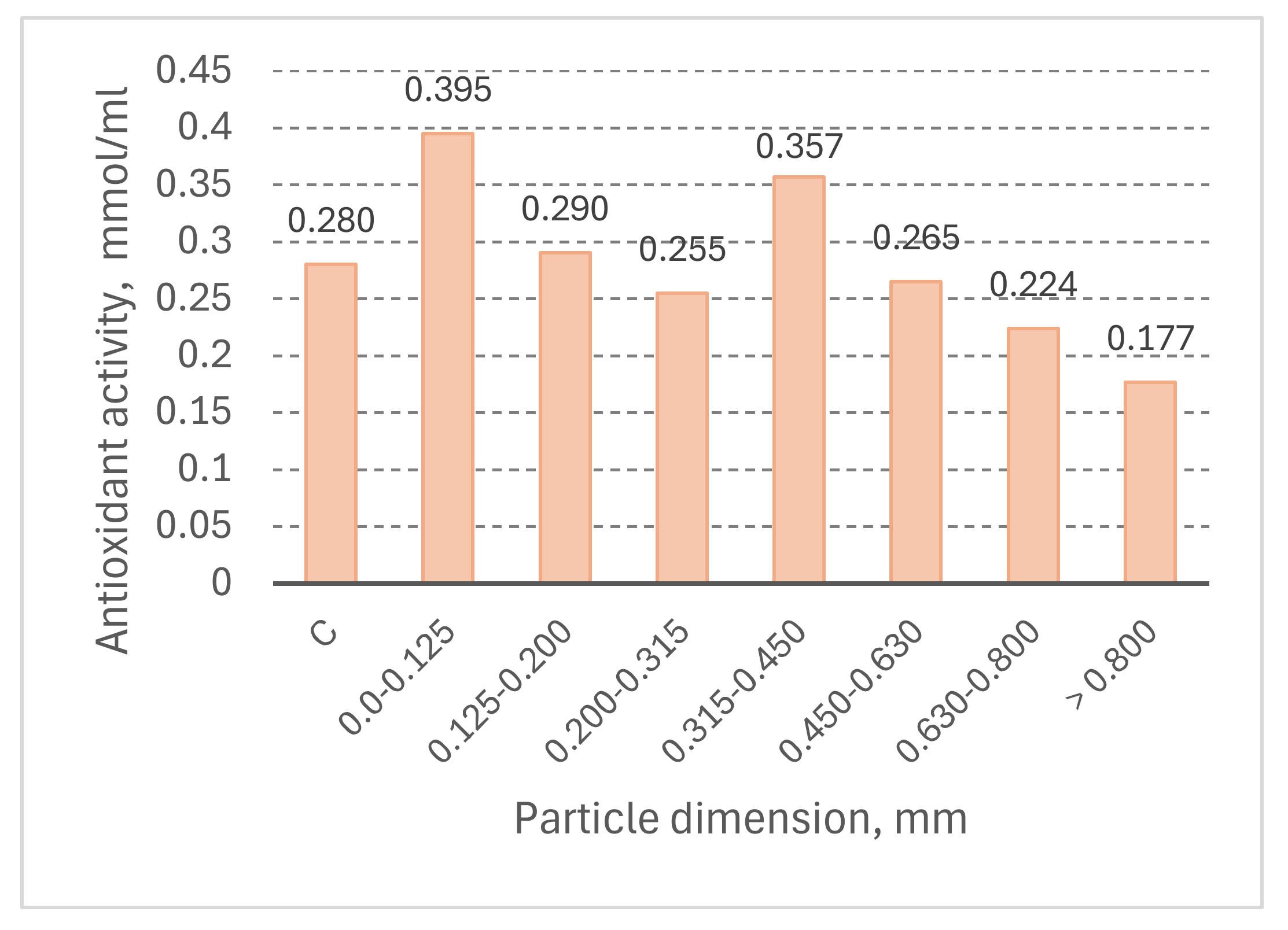
Results of antioxidant activity of blackthorn berries powders obtained by DPPH test are presented in Figure 7. Each of the analysed extracts had the ability to scavenge DPPH radicals. Between 0-0.125 mm and 0.315-0.450 mm, respectively, were the granulometric classes with higher percentages of DPPH inhibition. Also, the particles with the largest dimensions, namely over 0.800 mm, showed the lowest antioxidant activity, which can be demonstrated by the fact that the physical structure of the fruit matrix was not destroyed so that the antioxidant compounds could be released in depth. At the same time, the DPPH scavenging activity was relatively higher for two of the sieved samples, which showed that the sieving process has an important role by decreasing the cohesion of the powder, facilitating the dispersion and release of the antioxidant compounds in ethanol. Even the mixing of the sample with the solvent was an important step leading to an improved antioxidant activity. Phenolic compounds were considered to contribute significantly to the antioxidant activity of the tested fruit powders, which was also observed by [26], in their work. This aspect is in line with the notion that plant products’ antioxidant capacity is primarily ascribed to polyphenols’ capacity to scavenge radicals. The high bioactive compound contents of blackthorn berry powders are probably responsible for their significant antioxidant activity. [41].
Figure 7.
Antioxidant activity of the granulometric fractions and unsieved powders (C) of blackthorn berries.
Figure 7.
Antioxidant activity of the granulometric fractions and unsieved powders (C) of blackthorn berries.
3.7. Proteins
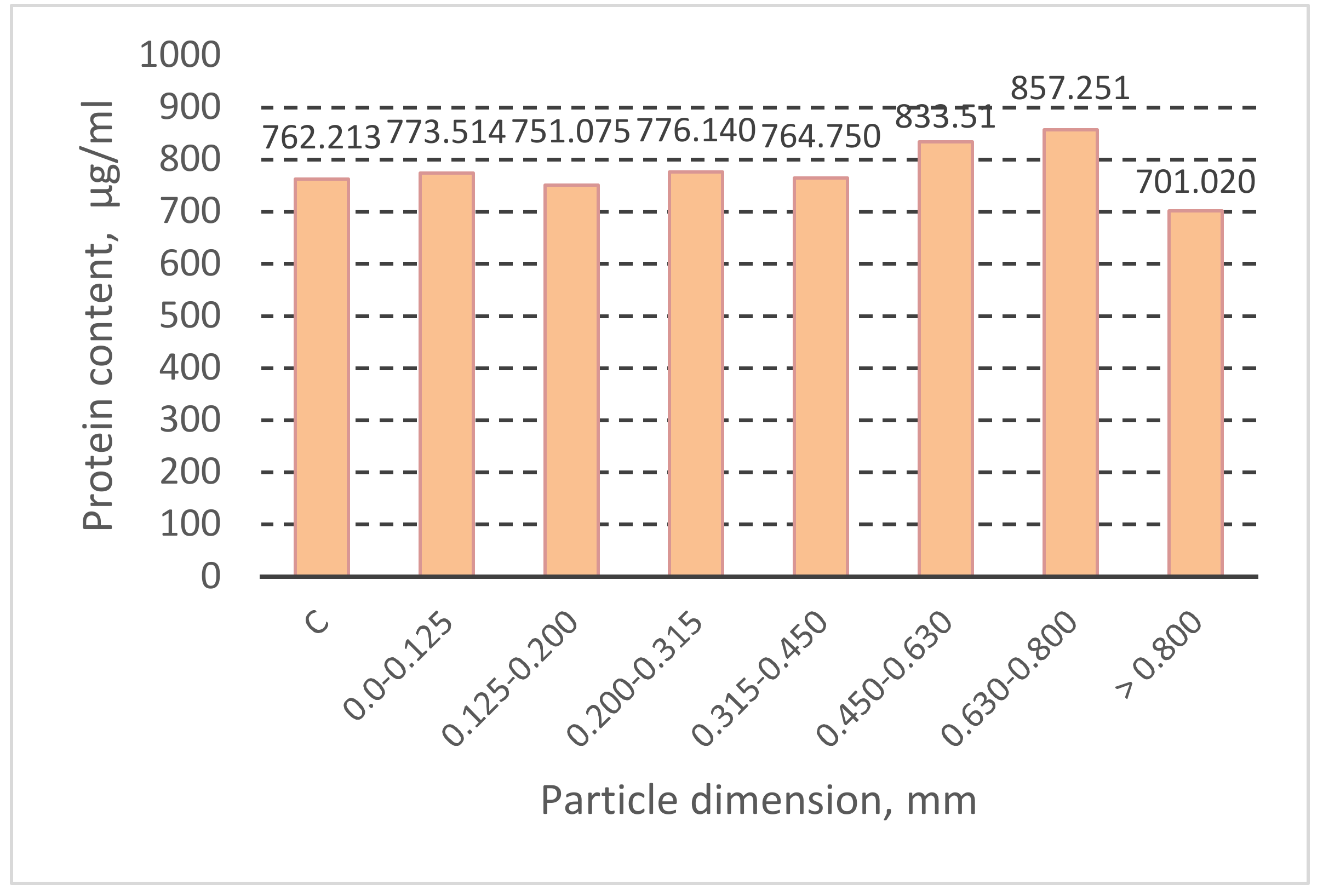
Figure 5 shows that there are no significant differences in the protein content of blackthorn berries powder extracts with different particle sizes. It was observed that the proteins were more concentrated in the fractions with particles <0.800 mm. The protein content values ranged from 701.020 µg/ml for the sample with particle sizes >0,800 mm to 857,251 µg/ml for the sample with particle sizes between 0,630-0,800 mm. It can be seen that the protein content of the sample with particle size > 0.800 varied in contrast to that of the unsieved sample (C), therefore, as many studies (Deli et al. [41]; Becker et al. [14]) claimed this aspect, that the particle size has a particular influence on the chemical composition of plant powders.
Figure 8.
Protein content of the granulometric fractions and unsieved powders (C) of blackthorn berries.
Figure 8.
Protein content of the granulometric fractions and unsieved powders (C) of blackthorn berries.
3.8. Carbohydrates
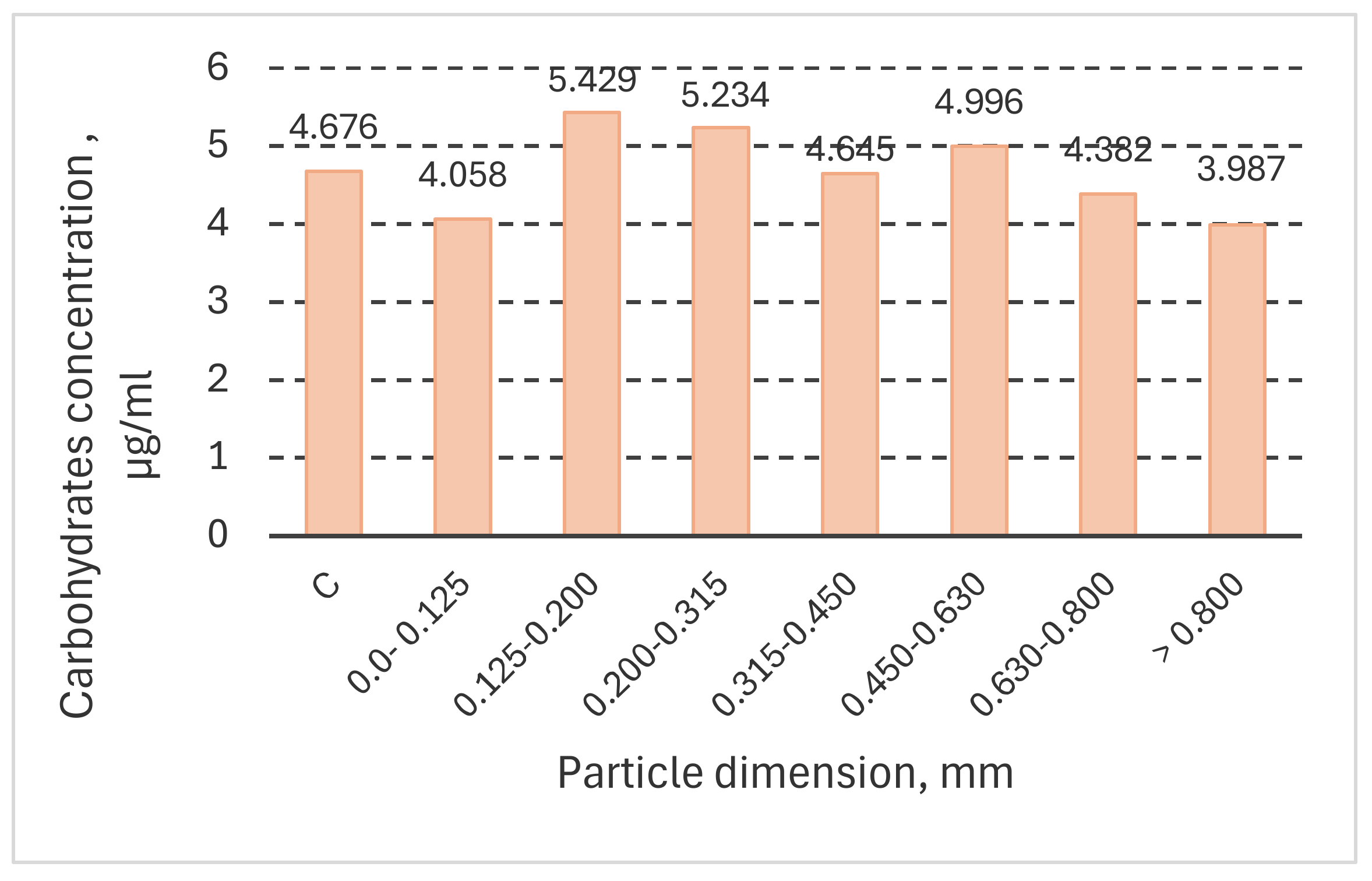
Regarding studies on the composition of blackthorn berries fruits, most attention has been paid to phenolic compounds, however, recently, Capek et al. [12], conducted research on the carbohydrate content of these fruits. According to their research, the carbohydrate content of fresh blackthorn berries is only 8.64g/100g. The current study is in correlation with this, claiming that the highest carbohydrate content was obtained for the sample with particle size between 0.125-0.200 mm, namely 5.429 μg/ml. The lowest carbohydrate content was obtained for the sample extract with a particle size of > 800 mm, a sign that these carbohydrates predominate in the pulp of the fruit and less in the peel.
Figure 9.
Carbohydrates content of the granulometric fractions and unsieved powders (C) of blackthorn berries.
Figure 9.
Carbohydrates content of the granulometric fractions and unsieved powders (C) of blackthorn berries.
3.9. Vitamin C
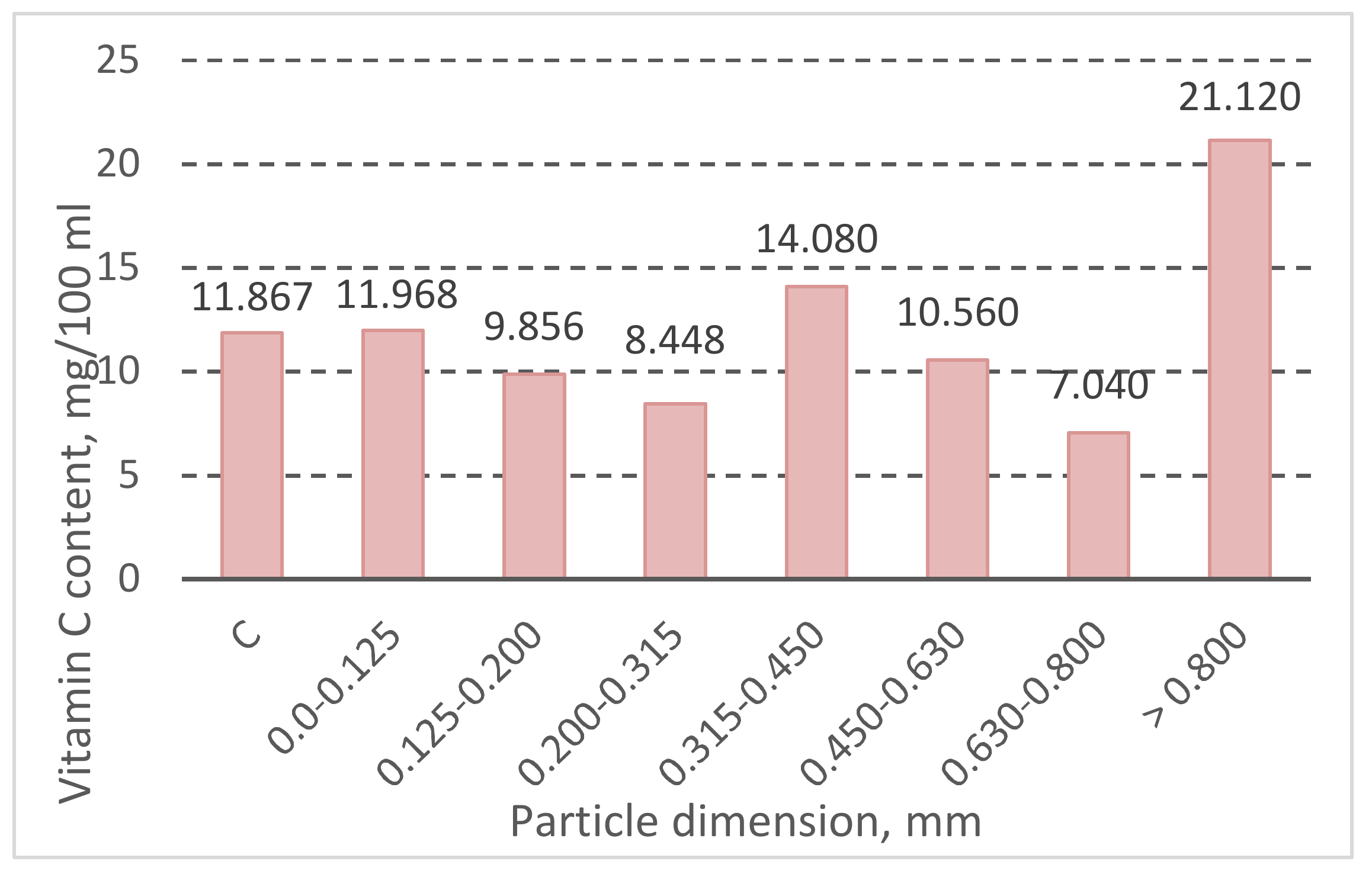
When the vitamin C content of the sieved fractions and the unsieved sample was compared, it was found that it reduced as the degree of grinding has increased. This aspect can be seen in Figure 6. Vitamin C is prone to oxidation and has a low thermal stability, it is lost throughout any procedure involving high temperatures. Depending on several factors such as temperature, processing time, and oxygen exposure, these losses might range from 20% to nearly 90% [45]. Furthermore, breaking the dried fruit’s cells mechanically results in an immediate loss of vitamin C. At the same time, the small-sized particles were prone to the degradation of vitamin C, precisely because of the large specific surface in contact with the air in the laboratory where the grinding and sieving were carried out. Thus, the highest vitamin C content was obtained for the sample with particle size >0,800 mm, precisely because those particles did not undergo intense shearing processes. The results are confirmed with the help of those found in the study by Negrean et al. [14], claiming that blackthorn berries are rich sources of vitamin C, with a content of 11.27 mg/100 g -1 fw, predominating in dehydroascorbic acid.
Figure 10.
Vitamin C content of the granulometric fractions and unsieved powders (C) of blackthorn berries.
Figure 10.
Vitamin C content of the granulometric fractions and unsieved powders (C) of blackthorn berries.
4. Conclusions
Physicochemical, water interaction, and phytochemical characteristics of the granulometric classes were successfully produced by combining the milling and sieving processes. The study demonstrated a significant correlation between particle size of blackthorn berries powder and its total phenolic content, protein content, carbohydrates, antioxidant activity, moisture content, water activity, water absorption capacity and water solubility index. The UV-vis spectra of powder extracts in the two solvents (ethanol and water) showed that the samples with average particle size were rich in chlorophyll, flavonoids and anthocyanins. Sieving proved to be a very important stage in order to obtain fractions with functional characteristics for their use in food products. Improved results were obtained in terms of water activity, moisture content, hydration capacity and water solubility index for samples with reduced particle sizes. Also, the fraction richest in phenolic compounds and showing significant antioxidant activity is the one with a particle size between 0.315-0.450 mm. The protein content was high for the fraction with the particle size between 0.630-0.800 mm, while carbohydrates were found in high concentration in the sample with the particle size between 0.125-0.200 mm. Vitamin C, precisely because it degrades very easily during the grinding process, was found in a significant amount in the fraction with particle sizes >0,800 mm. Moisture content and water activity were low enough for all samples, including the blank, unscreened sample, to prevent food degradation. Therefore, blackthorn berries powder has been shown to be biochemically and microbiologically stable when introduced into food products. The reconstitutability of the blackthorn berries powder was improved, as evidenced by the high levels of water absorption and solubility observed in the water interaction parameters. All of the results point to the possibility of using blackthorn berries powders as functional ingredients in food manufacturing to improve antioxidant activity and water interactions.
Author Contributions
Conceptualization, G.V., A.D.I., and M.F.; methodology, A.D.I., M.F., G.V. and G.I.; software, G.V. and A.D.I.; validation, G.V., G.A.C. and M.B.; formal analysis, E.M.S. and G.I.; investigation, A.D.I., E.M.S. and M.F.; resources, A.D.I., M.F. and E.M.S; data curation, G.V. and M.F.; writing—original draft preparation, A.D.I. and M.F.; writing—review and editing, G.V. and A.D.I.; visualization, M.B. and G.A.C.; supervision, G.V., M.F. and M.B.; project administration, G.V. and A.D.I.; funding acquisition, M.B. All authors have read and agreed to the published version of the manuscript.
Funding
N.A.
Institutional Review Board Statement
Not applicable.
Data Availability Statement
The data presented in this study are available on request from the corresponding author.
Acknowledgments
APC was funded by the POLITEHNICA Bucharest (Romania), within the PubArt Program.
Conflicts of Interest
The authors declare no conflicts of interest.
References
- Magiera, A., Czerwińska, M.E., Owczarek, A., Marchelak, A., Granica, S., Olszewska, M. A. Polyphenol-enriched extracts of Prunus spinosa fruits: Anti-inflammatory and antioxidant effects in human immune cells ex vivo in relation to phytochemical profile, Molecules, 2022, 27(5), 1691.
- Li, Y.; Zhang, J.J.; Xu, D.P.; Zhou, T.; Zhou, Y.; Li, S.; Li, H.B. Bioactivities and health benefits of wild fruits, International journal of molecular sciences, 2016, 17(8), 1258.
- Fernández-Ruiz, V.; Morales, P.; Ruiz-Rodríguez, B.M.; Isasa, E.T. Nutrients and bioactive compounds in wild fruits through different continents, Wild plants, mushrooms and nuts: functional food properties and applications, 2016, 263-314.
- Bei, M.F.; Apahidean, A.I., Budau, R.; Rosan, C.A.; Popovici, R.; Memete, A.R., Domocos, D.; Vicas, S.I., An Overview of the Phytochemical Composition of Different Organs of Prunus spinosa L., Their Health Benefits and Application in Food Industry, Horticulturae, 2023, 10(1), 29.
- Kotsou, K.; Stoikou, M.; Athanasiadis, V.; Chatzimitakos, T.; Mantiniotou, M.; Sfougaris, A.I.; Lalas, S.I. Enhancing Antioxidant Properties of Prunus spinosa Fruit Extracts via Extraction Optimization, Horticulturae, 2023, 9(8), 942.
- Popovic, B.M.; Blagojević, B.; Pavlović, R.Z., Micić, N.; Bijelić, S.; Bogdanović, B.; Misan A.; Duarte C.M.M.; Serra, A.T. Comparison between polyphenol profile and bioactive response in blackthorn (Prunus spinosa L.) genotypes from north Serbia-from raw data to PCA analysis, Food chemistry, 2020, 302, 125373.
- Babalau-Fuss, V.; Becze, A.; Roman, M.; Moldovan, A.; Cadar, O.; Tofana, M. Chemical and technological properties of blackthorn (Prunus spinosa) and rose hip (Rosa canina) fruits grown wild in Cluj-Napoca area, Agricultura, 2020, Vol. 113, No. 1-2. [CrossRef]
- Nistor, O.V.; Milea, S.A.; Pacularu-Burada, B.; Andronoiu, D.G.; Rapeanu, G.; Stanciuc, N. Technologically Driven Approaches for the Integrative Use of Wild Blackthorn (Prunus spinosa L.) Fruits in Foods and Nutraceuticals, Antioxidants, 2023, 12(8), 1637.
- Popescu, I.; Caudullo, G. Prunus spinosa in Europe: distribution, habitat, usage and threats, European Atlas of Forest Tree Species, Prunus Spinosa, 2016, Publ. Off. EU, Luxembourg, pp. e018f4e+.
- Mitroi, C.L.; Gherman, A.; Gociu, M.; Bujanca, G.; Cocan, E.N.; Radulescu, L.; Megyesi, C.I.; Velciov, A. The antioxidant activity of blackthorn fruits (Prunus spinosa L.) review, Journal of Agroalimentary Processes and Technologies, 2022, 28(3), 288-291.
- Veličković, I.; Žižak, Ž.; Rajčević, N.; Ivanov, M.; Soković, M.; Marin, P.D.; Grujić, S. Prunus spinosa L. leaf extracts: Polyphenol profile and bioactivities, Notulae Botanicae Horti Agrobotanici Cluj-Napoca, 2021, 49(1), 12137-12137.
- Capek, P.; Košťálová, Z. Isolation, chemical characterization and antioxidant activity of Prunus spinosa L. fruit phenolic polysaccharide-proteins, Carbohydrate Research, 2022, 515, 108547.
- Gunes, R. A Study on Quality Properties of Blackthorn (Prunus spinosa L.) Fruit Powder Obtained by Different Drying Treatments. In BIO Web of Conferences, EDP Sciences, 2024, Vol. 85, p. 01011.
- Negrean, O.R.; Farcas, A.C.; Pop, O.L.; Socaci; S. A. Blackthorn-A Valuable Source of Phenolic Antioxidants with Potential Health Benefits. Molecules, 2023, 28(8), 3456.
- Magiera, A.; Kołodziejczyk-Czepas, J.; Skrobacz, K.; Czerwińska, M.E.; Rutkowska, M.; Prokop, A.; Michel, P.; Olszewska, M.A. Valorisation of the Inhibitory Potential of Fresh and Dried Fruit Extracts of Prunus spinosa L. towards Carbohydrate Hydrolysing Enzymes, Protein Glycation, Multiple Oxidants and Oxidative Stress-Induced Changes in Human Plasma Constituents, Pharmaceuticals, 2022, 15(10), 1300.
- Balta, I.; Sevastre, B.; Miresan, V.; Taulescu, M.; Raducu, C.; Longodor, A.L.; Maris, C.S.; Coroian, A. Protective effect of blackthorn fruits (Prunus spinosa) against tartrazine toxicity development in albino Wistar rats, BMC Chemistry, 2019, 13, Article ID 104.
- Pinacho, R.; Cavero, R.Y.; Astiasarán, I.; Ansorena, D.; Calvo, M.I. Phenolic compounds of blackthorn (Prunus spinosa L.) and influence of in vitro digestion on their antioxidant capacity. Journal of Functional Foods, 2015, 19, 49-62.
- Sabatini, L.; Fraternale, D.; Di Giacomo, B.; Mari, M.; Albertini, M.C.; Gordillo, B.; Colomba, M. Chemical composition, antioxidant, antimicrobial and anti-inflammatory activity of Prunus spinosa L. fruit ethanol extract. fruit ethanol extract. J. Funct. Foods. 2020, 67, 103885. [Google Scholar] [CrossRef]
- Marchelak, A.; Owczarek, A.; Matczak, M.; Pawlak, A.; Kolodziejczyk-Czepas, J.; Nowak, P.,& Olszewska, M. A. Bioactivity potential of Prunus spinosa L. flower extracts: Phytochemical profiling, cellular safety, pro-inflammatory enzymes inhibition and protective effects against oxidative stress in vitro. Frontiers in pharmacology. 2017, 8, 680.
- Nguyen, T.L.; Ora, A.; Häkkinen, S.T.; Ritala, A.; Räisänen, R.; Kallioinen-Mänttäri, M.; Melin, K. Innovative extraction technologies of bioactive compounds from plant by-products for textile colorants and antimicrobial agents. Biomass Conversion and Biorefinery. 2023, 1-30.
- Becker, L.; Zaiter, A.; Petit, J.; Zimmer, D.; Karam, M.C.; Baudelaire, E.; Dicko, A. Improvement of antioxidant activity and polyphenol content of Hypericum perforatum and Achillea millefolium powders using successive grinding and sieving. Industrial Crops and Products. 2016, 87, 116–123. [Google Scholar] [CrossRef]
- Deli, M.; Baudelaire, E. D.; Nguimbou, R. M.; Njintang Yanou; N. & Scher, J. Micronutrients and in vivo antioxidant properties of powder fractions and ethanolic extract of Dichrostachys glomerata Forssk. fruits. Food Sci. Nutr. 2020, 8(7), 3287-3297.
- Zaiter, A.; Becker, L.; Petit, J.; Zimmer, D.; Karam, M. C., Baudelaire, É.; & Dicko, A. Antioxidant and antiacetylcholinesterase activities of different granulometric classes of Salix alba (L.) bark powders. Powder Technology. 2016, 301, 649–656.
- Becker, L.; Zaiter, A. & Petit, J. How do grinding and sieving impact on physicochemical properties, polyphenol content, and antioxidant activity of Hieracium pilosella L. powders? J Funct Foods. 2017, 35: 666–672.
- Alsaud, N. & Farid, M. Insight into the influence of grinding on the extraction efficiency of selected bioactive compounds from various plant leaves. Applied Sciences. 2020, 10(18), 6362. [Google Scholar]
- Miganeh Waiss, I.; Kimbonguila, A.; Mohamed Abdoul-Latif, F.; Nkeletela, L.B.; Scher, J.; Petit, J. Total phenolic content, antioxidant activity, shelf-life and reconstitutability of okra seeds powder: influence of milling and sieving processes. International Journal of Food Science & Technology. 2021, 56(10), 5139-5149.
- Duguma, H. T.; Zhang, L.; Ofoedu, C. E.; Chacha, J. S. & Agunbiade, A. O. Potentials of superfine grinding in quality modification of food powders. CyTA-Journal of Food. 2023, 21(1), 530-541.
- Deli, M.; Ndjantou, E. B.; Ngatchic Metsagang, J. T.; Petit, J.; Njintang Yanou, N. & Scher, J. Successive grinding and sieving as a new tool to fractionate polyphenols and antioxidants of plants powders: Application to Boscia senegalensis seeds, Dichrostachys glomerata fruits, and Hibiscus sabdariffa calyx powders. Food Science & Nutrition. 2019, 7(5), 1795-1806.
- Koraqi, H.; Aydar, A.Y.; Pandiselvam, R.; Qazimi, B.; Khalid, W.; Petkoska, A.T.; Rustagi, S. Optimization of extraction condition to improve blackthorn (Prunus spinosa L.) polyphenols, anthocyanins and antioxidant activity by natural deep eutectic solvent (NADES) using the simplex lattice mixture design method. Microchem. J. 2024, 110497.
- Damar, I.; Yilmaz, E. Ultrasound-assisted extraction of phenolic compounds in blackthorn (Prunus spinosa L.): characterization, antioxidant activity and optimization by response surface methodologyJ. Food Meas. Charact. 2023, 17(2), 1467-1479.
- Ruiz-Rodríguez, B.M.; De Ancos, B.; Sánchez-Moreno, C.; Fernández-Ruiz, V.; de Cortes Sánchez-Mata, M.; Cámara, M.; Tardío, J. Wild blackthorn (Prunus spinosa L.) and hawthorn (Crataegus monogyna Jacq.) fruits as valuable sources of antioxidants. Fruits. 2014, 69(1), 61-73.
- Benković, M.; Belščak-Cvitanović, A.; Bauman, I.; Komes, D.; Srečec, S. Flow properties and chemical composition of carob (Ceratonia siliqua L.) flours as related to particle size and seed presence. Int. Food Res. 2017, 100, 211-218.
- Ahmed, J.; Taher, A.; Mulla, M.Z.; Al-Hazza, A.; Luciano, G. Effect of sieve particle size on functional, thermal, rheological and pasting properties of Indian and Turkish lentil flour. J. Food Eng. 2016, 186, 34-41.
- Bala, M.; Handa, S.; Mridula, D. & Singh, R. K. Physicochemical, functional and rheological properties of grass pea (Lathyrus sativus L.) flour as influenced by particle size. Heliyon. 2020, 6(11).
- Ahmed, J.; Thomas, L. & Arfat, Y. A. Functional, rheological, microstructural and antioxidant properties of quinoa flour in dispersions as influenced by particle size. Int. Food Res. 2019, 116, 302-311.
- Singleton, V. L. & Rossi, J. A. Colorimetry of total phenolics with phosphomolybdic-phosphotungstic acid reagents. Am. J. Enol. Vitic. 1965, 16(3), 144-158.
- Baliyan, S.; Mukherjee, R.; Priyadarshini, A.; Vibhuti, A.; Gupta, A.; Pandey, R.P. & Chang, C. M. Determination of antioxidants by DPPH radical scavenging activity and quantitative phytochemical analysis of Ficus religiosa. Molecules. 2022, 27(4), 1326. [Google Scholar] [PubMed]
- Voicu, Gh; Stoica, D.; Ungureanu, N. Influence of oscillation frequency of a sieve on the screening process for a conical sieve with oscillatory circular motion. Journal of Agricultural Science and Technology B (ISSN 2161-6264). 2011, vol. 1, no 8B, p. 1224-1231.
- Li, Z.; Tong, X. A study of particles penetration in sieving process on a linear vibration screen. Int. j. coal sci. technol. 2015, 2, 299–305. [Google Scholar] [CrossRef]
- Hadree, J.; Shahidi, F.; Mohebbi, M. & Abbaspour, M. Evaluation of effects of spray drying conditions on physicochemical properties of pomegranate juice powder enriched with pomegranate peel phenolic compounds: modeling and optimization by RSM. Foods. 2023, 12(10), 2066.
- Deli, M.; Petit, J.; Nguimbou, R.M.; Beaudelaire Djantou, E.; Njintang Yanou, N.; Scher, J. Effect of sieved fractionation on the physical, flow and hydration properties of Boscia senegalensis Lam., Dichostachys glomerata Forssk. and Hibiscus sabdariffa L. powders. Food Sci Biotechnol. 2019, 28, 1375–1389. [Google Scholar] [CrossRef] [PubMed]
- Dhillon, B.; Choudhary, G., & Sodhi, N. S. A study on physicochemical, antioxidant and microbial properties of germinated wheat flour and its utilization in breads. J. Food Sci. 2020, 57, 2800-2808.
- Chen, X. D. & Özkan, N. Stickiness, functionality, and microstructure of food powders. Drying Technology. 2007, 25(6), 959-969.
- Mueed, A.; Shibli, S.; Al-Quwaie, D.A.; Ashkan, M.F.; Alharbi, M.; Alanazi, H.; El-Saadony, M.T. Extraction, characterization of polyphenols from certain medicinal plants and evaluation of their antioxidant, antitumor, antidiabetic, antimicrobial properties, and potential use in human nutrition. Front. nutr. 2023, 10, 1125106. [Google Scholar] [CrossRef] [PubMed]
- Mieszczakowska-Frąc, M.; Celejewska, K.; Płocharski, W. Impact of innovative technologies on the content of vitamin C and its bioavailability from processed fruit and vegetable products. Antioxidants. 2021, 10(1), 54. [Google Scholar] [CrossRef] [PubMed]
Figure 1.
Ground blackthorn berries and the different particle sizes resulting from sieving;(a) >1000μm; (b) 800-1000 µm, (c) 630-800 µm, (d) 450-630 µm, (e) 315-450 µm, (f) 200-315 µm, (g) 125-200 µm, (h) 0-125 µm.
Figure 1.
Ground blackthorn berries and the different particle sizes resulting from sieving;(a) >1000μm; (b) 800-1000 µm, (c) 630-800 µm, (d) 450-630 µm, (e) 315-450 µm, (f) 200-315 µm, (g) 125-200 µm, (h) 0-125 µm.
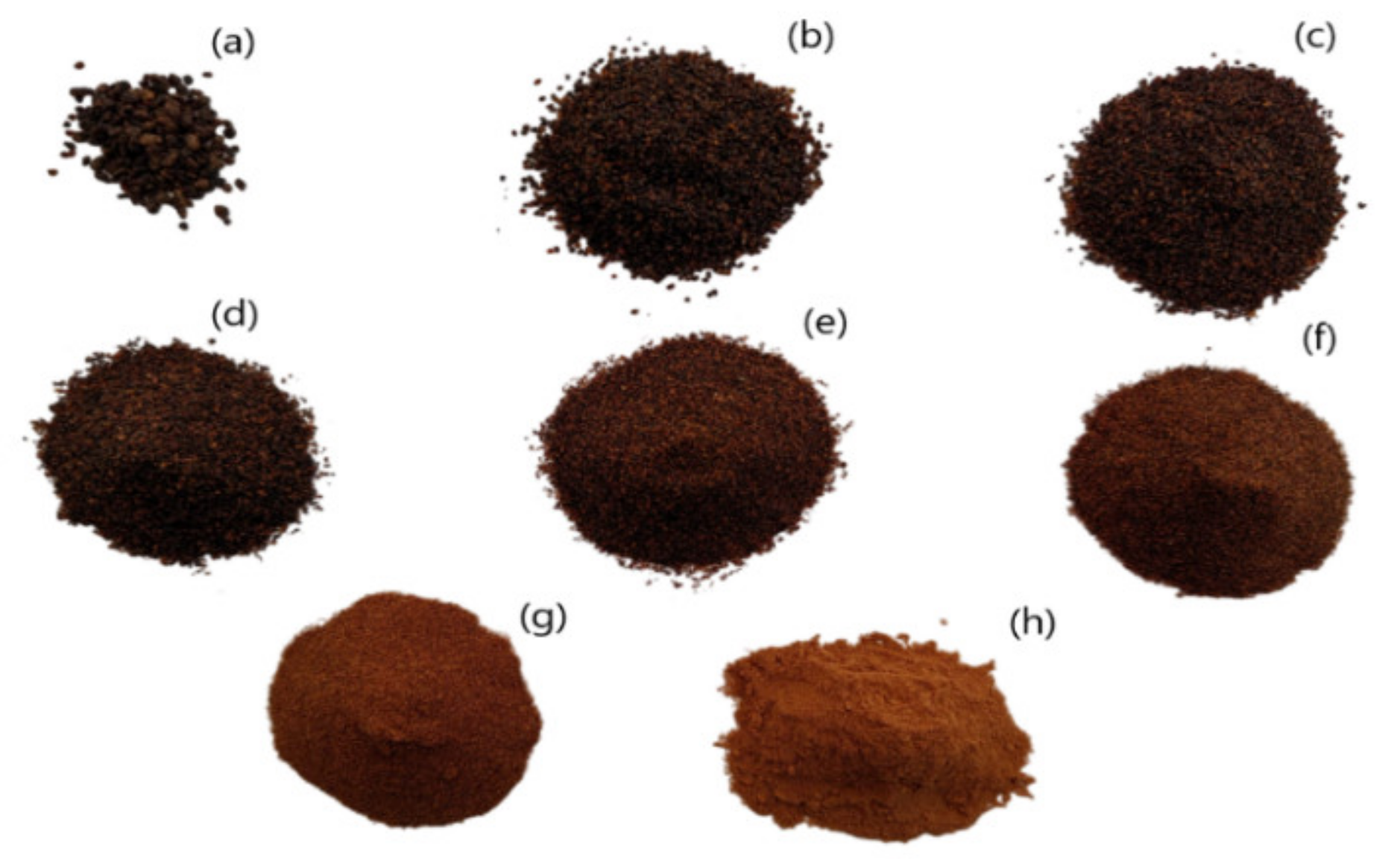

Table 1.
The masses of the sieves used and the masses of material left on each sieve following the particle size distribution.
Table 1.
The masses of the sieves used and the masses of material left on each sieve following the particle size distribution.
| Mesh size of the sieve (mm) | Sieve mass (g) | The sample mass found on the sieve (g) | The mass of the sample taken for analysis (g) |
|---|---|---|---|
| 1.000 | 392.2 | 1.4 | 100 |
| 0.800 | 474.8 | 21.0 | |
| 0.630 | 458.6 | 14.7 | |
| 0.450 | 305.9 | 13.6 | |
| 0.315 | 413.9 | 12.5 | |
| 0.200 | 335.3 | 10.1 | |
| 0.125 | 391.9 | 14.3 | |
| 0 | 342.5 | 12.4 |
Table 2.
Variation of ground material characteristics according to mesh size (li).
| Mesh size of the sieveli (mm) | The average particle size of fraction di (mm) | The percentage of material with a size between dimensions li and li+1 of the adjacent sieves ai (mm) | The percentage of material smaller than the size of the sieve mesh Ti (%) | The percentage of material larger than the size of the sieve mesh Ri (%) |
|---|---|---|---|---|
| 0 | 0.063 | 12.40 | 0.00 | 100.00 |
| 0.125 | 0.163 | 14.30 | 12.40 | 87.60 |
| 0.200 | 0.258 | 10.10 | 26.70 | 73.30 |
| 0.315 | 0.383 | 12.50 | 36.80 | 63.20 |
| 0.450 | 0.540 | 13.60 | 49.30 | 50.70 |
| 0.630 | 0.715 | 14.70 | 62.90 | 37.10 |
| 0.800 | 0.900 | 21.00 | 76.20 | 21.00 |
| 1.000 | 1.207* | 1.40 | 77.60 | 22.40 |
* it was supposed that the mesh sizes of the sieves follow a ratio
Table 3.
Values of moisture content, water activity, water absorption capacity, and water solubility index of the seven granulometric fractions and the un-sieved powder samples.
Table 3.
Values of moisture content, water activity, water absorption capacity, and water solubility index of the seven granulometric fractions and the un-sieved powder samples.
| Mesh size of the sieve li (mm) |
Mean of intervals, (mm) | Moisture content (%) | Water activity (-) |
Water absorption capacity, WAC (g/g) |
Water solubility index, WSI (g/100 g) |
|---|---|---|---|---|---|
| Un-sieved sample | - | 4.52 | 0.241 | 4.905 | 32.672 |
| 0 | 0.063 | 3.31 | 0.232 | 5.883 | 41.284 |
| 0.125 | 0.163 | 3.79 | 0.234 | 5.688 | 40.676 |
| 0.200 | 0.258 | 4.34 | 0.237 | 3.892 | 42.272 |
| 0.315 | 0.383 | 4.71 | 0.242 | 3.958 | 37.920 |
| 0.450 | 0.540 | 5.10 | 0.243 | 3.868 | 35.544 |
| 0.630 | 0.715 | 5.11 | 0.244 | 3.847 | 38.912 |
| 0.800 | 1.131 | 5.61 | 0.250 | 3.837 | 36.828 |
Disclaimer/Publisher’s Note: The statements, opinions and data contained in all publications are solely those of the individual author(s) and contributor(s) and not of MDPI and/or the editor(s). MDPI and/or the editor(s) disclaim responsibility for any injury to people or property resulting from any ideas, methods, instructions or products referred to in the content. |
© 2024 by the authors. Licensee MDPI, Basel, Switzerland. This article is an open access article distributed under the terms and conditions of the Creative Commons Attribution (CC BY) license (http://creativecommons.org/licenses/by/4.0/).
Copyright: This open access article is published under a Creative Commons CC BY 4.0 license, which permit the free download, distribution, and reuse, provided that the author and preprint are cited in any reuse.


