Preprint
Article

This version is not peer-reviewed.

Redesigning Education: A Transformative Approach

Submitted:

09 January 2025

Posted:

10 January 2025

You are already at the latest version

Abstract

Traditional educational systems often emphasize standardized testing over critical thinking, creativity, and emotional intelligence, failing to address the diverse learning needs of students. This study, "Redesigning Education: A Transformative Approach," proposes comprehensive reforms aimed at transforming primary and secondary education to foster holistic student development. The goal is to ensure that all students thrive academically, emotionally, and socially. The study presents innovative approaches such as personalized education through AI, the creation of wellness schools, professional skill development programs, and the integration of social and emotional learning programs. The proposed curriculum overhaul emphasizes critical thinking, creativity, emotional intelligence, and practical life skills. Key reforms include continuous professional development for teachers, enhanced teacher training, comprehensive counseling services, robust student support systems, strengthened school-family collaboration, and the promotion of multiculturalism and inclusion through inclusive policies and cultural events. Additionally, upgrading school infrastructure to create safe and welcoming environments is highlighted as essential for student prosperity and happiness. The proposed reforms aim to create an inclusive, innovative, and supportive learning environment where all students can excel. By integrating these comprehensive changes, the study seeks to develop effective educational systems that promote the well-being and success of all students, equipping future generations for the challenges of a rapidly changing world. The findings suggest that such a holistic approach to education reform can bridge the gap between different socioeconomic groups, foster equity, and prepare students for lifelong success.

Keywords: 
;  ;  ;  ;  ;  ;  ;  ;  ;  ;  ;  ;  ;  ;  
Subject: 
Social Sciences  -   Education

Introduction

In the ever-evolving landscape of education, the need for a transformative approach from primary to secondary levels has never been more pressing. As society progresses, traditional models of education often fall short in addressing the holistic needs of students. The complete reorganization of education from primary to tertiary levels is critical for creating an environment that promotes the well-being and joy of all students. Education reform is necessary to ensure that students develop holistically, acquiring critical thinking skills, creativity, and emotional intelligence.
To cultivate a generation that is not only academically proficient but also emotionally resilient, creative, and socially aware, a comprehensive reorganization of the educational system is imperative. This article explores innovative strategies and practical measures to redesign both primary and secondary education frameworks, aiming to create environments where every student can thrive, feel supported, and develop the skills necessary for lifelong success.

The Need for Education Reform

The complete reorganization of education from primary to tertiary levels is a critical issue for creating an environment that promotes the well-being and joy of all students. As society progresses, traditional models of education often fall short in addressing the holistic needs of students. The current educational system frequently emphasizes standardized testing and rigid curriculums that do not accommodate the diverse learning styles and needs of students. This has led to calls for a significant overhaul to ensure that education fosters critical thinking, creativity, and emotional intelligence (Kohn, 2020).
Educational reform is necessary to bridge the gap between different socioeconomic groups and to address the inequalities that have long plagued the system. For instance, wealthier school districts often receive significantly more funding compared to poorer ones, resulting in disparities in educational quality and opportunities (Kevin A et al., 2023; Ravitch, 2016). These inequalities can have lasting impacts on students' prospects and perpetuate cycles of disadvantage. By reimagining the educational framework, we can create a more equitable system that provides all students with the tools they need to succeed.
To cultivate a generation that is not only academically proficient but also emotionally resilient, creative, and socially aware, a comprehensive reorganization of the educational system is imperative. Innovative strategies and practical measures must be implemented to redesign both primary and secondary education frameworks. This article explores these strategies, drawing from the latest insights and evidence-based practices in education reform. By leveraging contemporary educational theories, empirical data, and real-world case studies, we aim to propose a plan that ensures all students can thrive, feel supported, and develop the necessary skills for lifelong success (hooks, 2003; Kohn, 2020).

Objectives of the Article

The objective of this article is to present a comprehensive plan for the reorganization of education from primary to secondary levels, aiming to create an environment where every student can thrive academically, emotionally, and socially. Considering the numerous challenges faced by the current educational system, this article seeks to address key areas that require reform, drawing on the latest research and best practices in education.
One primary goal is to ensure that students develop holistically by integrating critical thinking, creativity, and emotional intelligence into the curriculum. Traditional education models often focus heavily on standardized testing and rote memorization, which can stifle creativity and fail to address the diverse learning needs of students (Kohn, 2020; hooks, 2003). By proposing a curriculum overhaul, this article aims to foster a more engaging and supportive learning environment that encourages students to think critically and solve problems creatively.
Another critical objective is to bridge the educational disparities between different socioeconomic groups. Inequities in funding and resources often result in significant differences in educational quality and outcomes, disadvantaging students from lower-income backgrounds (Kevin A et al., 2023; Ravitch, 2016). This article advocates for policies and practices that promote equity and inclusivity, ensuring that all students have access to high-quality education and opportunities for success.
Furthermore, the article emphasizes the importance of teacher training and support. Effective education reform requires well-prepared and continuously supported educators who can implement innovative teaching strategies and address the social and emotional needs of their students. By highlighting the need for ongoing professional development, the article aims to equip teachers with the skills and knowledge necessary to create positive and productive classroom environments.
The article also explores the integration of social and emotional learning (SEL) programs, which are essential for developing students' emotional resilience and social skills. Social and emotional learning (SEL) programs can help reduce bullying and promote a culture of respect and cooperation within schools (hooks, 2003). By incorporating these programs into the educational framework, the article seeks to enhance students' overall well-being and interpersonal relationships.
Overall, the objective of this article is to propose a well-rounded and effective plan for educational reform that addresses the current shortcomings of the system and promotes a more equitable, innovative, and supportive learning environment for all students (Kohn, 2020; Kevin A et al., 2023).

Methodology

The methodology for this comprehensive reorganization of education from primary to secondary levels is grounded in the latest insights from books, articles, and research studies. This approach ensures that the strategies and measures proposed are based on the most current and credible information available.

Literature Review

Review of Contemporary Educational Books

The methodology includes a thorough literature review of contemporary educational books, particularly from highly developed European countries such as Sweden, Denmark, and Norway, known for their successful educational systems. Books like "The Nordic Secret: A European Story of Beauty and Freedom" by Lene Rachel Andersen and Tomas Björkman explore educational philosophies and practices that have contributed to the success of the Nordic countries in developing well-rounded and resilient individuals (Andersen & Björkman, 2017). Additionally, "Education Policy Reform Trends in G20 Members" provides comparative analyses of policy reforms, emphasizing inclusive education, teacher training, and curriculum development (Wang Y. 2013).

Analysis of Peer-Reviewed Articles

This section incorporates an analysis of peer-reviewed articles from prestigious journals, focusing on research conducted in Scandinavian countries. For instance, "Comprehensive Education for Life: The Swedish Model" published in the Scandinavian Journal of Educational Research examines Sweden’s integrated approach that combines academic learning with life skills education (Wilson A. et al., 2023). Another critical article, "Educational Reforms and Teacher Training in Denmark," discusses the impact of continuous professional development for teachers in enhancing teaching quality and student outcomes (Egelund et al., 2016). Additionally, "Holistic Education in Norway: A Case Study" investigates Norway’s approach to holistic education, emphasizing outdoor learning and emotional intelligence (Solhaug, 2018).

Examination of Comprehensive Research Studies

The methodology also involves examining comprehensive research studies that have been influential in shaping innovative educational systems in Western Europe and the USA. For example, the RAND Corporation has published extensive reports on educational reform, highlighting key achievements and lessons from various programs aimed at improving educational quality and equity (RAND, 2023). Similarly, the Brookings Institution’s report "Transforming Education Systems: Why, What, and How" provides a robust framework for understanding the necessary steps to build more effective and equitable educational systems (Winthrop, 2022).

Analysis of Specific Case Studies

Finally, the methodology includes analyzing specific case studies from schools and educational systems that have successfully implemented innovative reforms. "Implementing Educational Reform: Cases and Challenges" presents eight case studies from various countries, illustrating the design and implementation choices shaped by national and historical contexts. These case studies provide practical examples of how educational reforms can be successfully enacted and the challenges that policymakers and practitioners face (McLaughlin & Ruby, 2024).

Curriculum Overhaul

Integration of Critical Thinking, Creativity, and Emotional Intelligence

The need for integrating critical thinking, creativity, and emotional intelligence into the curriculum has been widely recognized as essential for preparing students to thrive in the 21st century. Critical thinking involves the ability to analyze information objectively and make reasoned judgments, a skill that is crucial for problem-solving and decision-making in an increasingly complex world. Creativity, on the other hand, allows students to approach problems in novel ways, fostering innovation and adaptability. Emotional intelligence, which includes skills such as self-awareness, self-regulation, and empathy, is vital for personal and professional success, as it enables students to navigate social complexities and build healthy relationships.
Studies have shown that educational systems in Nordic countries, such as Sweden, Denmark, and Norway, have successfully integrated these elements into their curricula. For example, the Swedish education model emphasizes the development of life skills and holistic education, combining academic learning with the cultivation of emotional and social skills (Wilson A. et al., 2023). Similarly, Denmark's educational reforms focus on continuous professional development for teachers to enhance their ability to teach critical thinking and creativity (Egelund et al., 2016).
Incorporating these skills into the curriculum involves not only specific subjects but also teaching methodologies that promote active learning and student engagement. Programs like the Organisation for Economic Co-operation and Development (OECD) initiative on fostering creativity and critical thinking provide frameworks for integrating these skills into various subjects, encouraging a cross-disciplinary approach to education. Furthermore, the implementation of social and emotional learning (SEL) programs has been shown to improve students’ emotional intelligence, leading to better academic and social outcomes (OECD, 2019).

Incorporation of Practical Life Skills

Incorporating practical life skills into the curriculum is equally important for preparing students for real-world challenges. Life skills education focuses on developing abilities that enable individuals to effectively manage the demands and challenges of everyday life. These skills include communication, critical thinking, problem-solving, decision-making, creative thinking, interpersonal relationships, self-awareness, empathy, and coping with stress and emotions.
Research indicates that students who are equipped with these skills are better prepared for personal and professional success. The inclusion of life skills in the curriculum has been championed by various educational frameworks and studies, such as those conducted by the Economic Policy Institute, which emphasize the importance of noncognitive skills like motivation, self-regulation, and social behavior (Bridgeland et al., 2013; Rosen et al., 2010). Additionally, the Organisation for Economic Co-operation and Development (OECD) highlights the role of life skills in enhancing students' engagement and academic performance, suggesting that these skills should be a core component of modern education systems (OECD, 2003).
Programs and resources, such as the Handbook of Activities on Life Skills by the American India Foundation, provide practical guidelines for educators to incorporate life skills into their teaching. These resources outline various activities and strategies that can be used to develop these skills in students, ensuring that they are well-rounded individuals capable of navigating the complexities of modern life (American India Foundation, 2018).
A curriculum overhaul that integrates critical thinking, creativity, emotional intelligence, and practical life skills is essential for fostering well-rounded and resilient students. By drawing on successful models from Nordic countries and leveraging comprehensive research studies and innovative educational practices, educators can create a learning environment that prepares students for the challenges and opportunities of the 21st century (Wilson A. et al., 2023; Egelund et al., 2016; Bridgeland et al., 2013; American India Foundation, 2018).
Figure 1 illustrates the curriculum overhaul focusing on integrating critical thinking, creativity, emotional intelligence, and practical life skills. It highlights the importance of problem-solving, decision-making, innovation, adaptability, self-awareness, self-regulation, empathy, communication, interpersonal relationships, and coping with stress and emotions. The map also references successful models from Nordic countries, such as Sweden's education model and Denmark's educational reforms, and emphasizes active learning, student engagement, and a cross-disciplinary approach through teaching methodologies. Additionally, it includes frameworks like Organisation for Economic Co-operation and Development (OECD) initiatives and the Handbook of Activities on Life Skills.

Teacher Training and Support

Continuous Professional Development

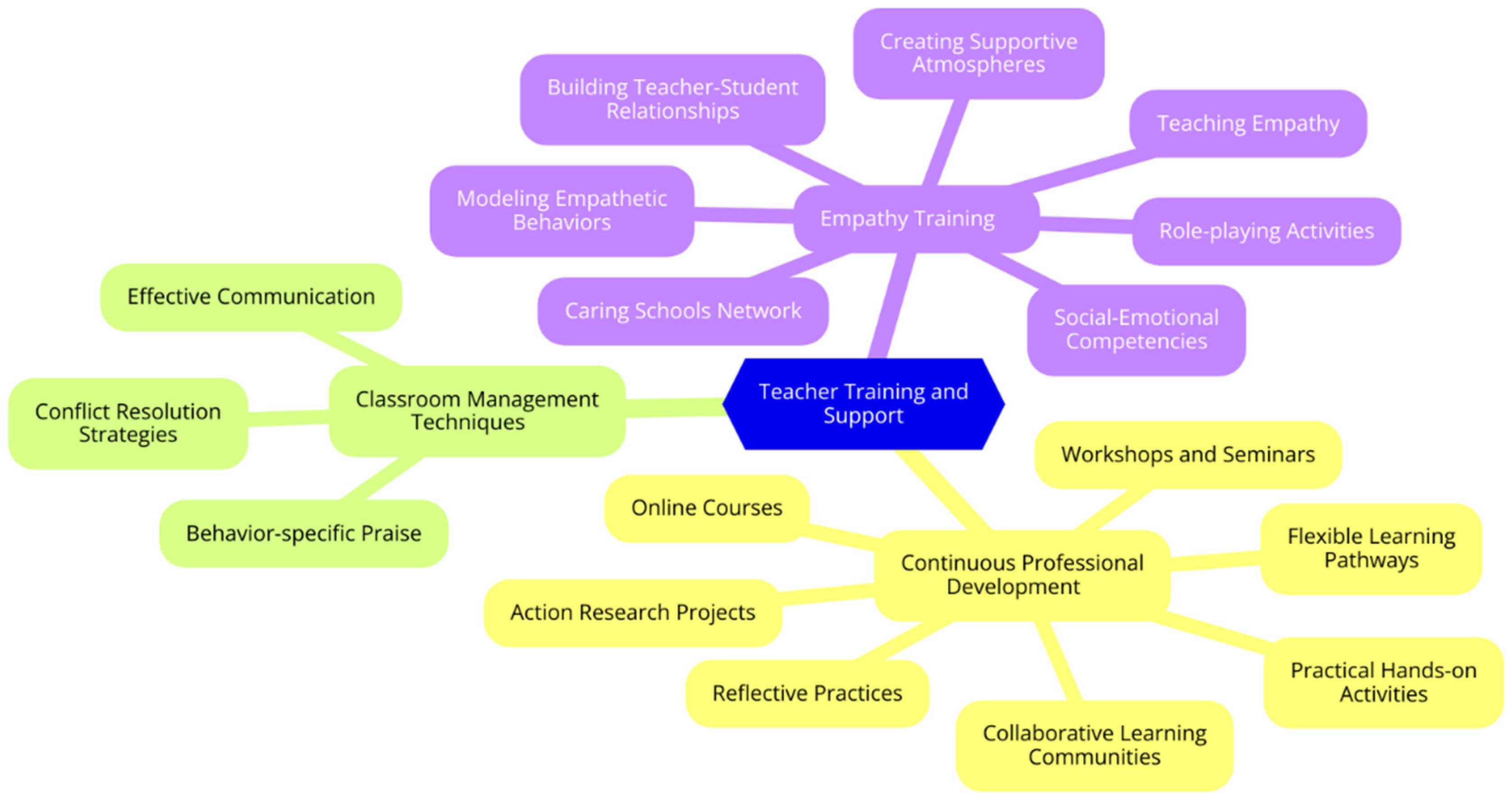
Continuous professional development (CPD) is crucial for teachers to keep up with the evolving educational landscape and improve their instructional techniques. CPD involves a lifelong learning journey where teachers continually update their skills and knowledge to meet the diverse needs of their students. This process includes various forms of learning, such as workshops, seminars, online courses, and collaborative learning communities. Research emphasizes that CPD should be flexible, allowing teachers to choose learning pathways that best suit their needs and teaching contexts (EdSurge, 2023).
Effective CPD programs incorporate practical, hands-on activities that teachers can directly apply in their classrooms. For instance, time-bound learning experiences that blend synchronous and asynchronous activities provide opportunities for teachers to engage in reflective practices and action research projects. These projects help teachers integrate new knowledge into their teaching practices, fostering a culture of continuous improvement and innovation in education (EdSurge, 2023; Sciencedirect, 2023).

Classroom Management Techniques and Empathy Training

Classroom management and empathy training are essential components of effective teaching. Classroom management involves strategies and techniques that teachers use to maintain a positive learning environment, minimize disruptive behavior, and maximize student engagement. Effective classroom management is linked to improved student outcomes and a more conducive learning environment.
Empathy training, on the other hand, focuses on developing teachers' social-emotional competencies, which are crucial for building strong teacher-student relationships and creating a supportive classroom atmosphere. Empathy allows teachers to understand and respond to students' emotional needs, fostering a caring and inclusive school community. Programs like the Caring Schools Network by Harvard University. (2020) provide structured approaches to cultivating empathy among educators and students (Harvard University, 2020).
Professional development in classroom management often includes training in behavior-specific praise, effective communication, and conflict resolution strategies. For example, a study found that teachers who received training in behavior-specific praise were able to significantly reduce disruptive behaviors in their classrooms (Education and Treatment of Children, 2023). Similarly, empathy training encourages teachers to model empathetic behaviors, teach students the importance of empathy, and create opportunities for students to practice empathy through role-playing and other interactive activities (Harvard University, 2020).
Incorporating both CPD and empathy training into teacher professional development programs ensures that teachers are well-equipped to handle the challenges of modern classrooms. By fostering continuous learning and emphasizing the importance of empathy, these programs help create a positive and effective educational environment where all students can thrive (EdSurge, 2023; Harvard University, 2020).
Figure 2 illustrates teacher training and support, focusing on continuous professional development (CPD), classroom management techniques, and empathy training. CPD includes workshops, seminars, online courses, collaborative learning communities, flexible learning pathways, practical hands-on activities, reflective practices, and action research projects. Classroom management techniques involve behavior-specific praise, effective communication, and conflict resolution strategies. Empathy training emphasizes social-emotional competencies, building teacher-student relationships, creating supportive atmospheres, the Caring Schools Network, modeling empathetic behaviors, teaching empathy, and role-playing activities.

Introduction of Social and Emotional Learning (SEL) Programs

Benefits of SEL Programs

Social and Emotional Learning (SEL) programs are increasingly recognized for their significant benefits in fostering both the academic and personal development of students. Research has consistently shown that SEL programs lead to improved social-emotional skills, better attitudes towards self and others, positive social behaviors, and reduced emotional distress and conduct problems. For example, a meta-analysis of school-based SEL programs found that students participating in SEL programs demonstrated improved classroom behavior, better stress management, and higher academic performance (Learning Policy Institute, 2023).
SEL programs also contribute to long-term benefits, including higher graduation rates, college and career readiness, and overall life satisfaction. These programs help students develop critical competencies such as self-awareness, self-management, social awareness, relationship skills, and responsible decision-making. These competencies are essential for success in school, work, and life, as they enhance students' ability to navigate social complexities and build positive relationships (CASEL, 2023).

Implementation Strategies

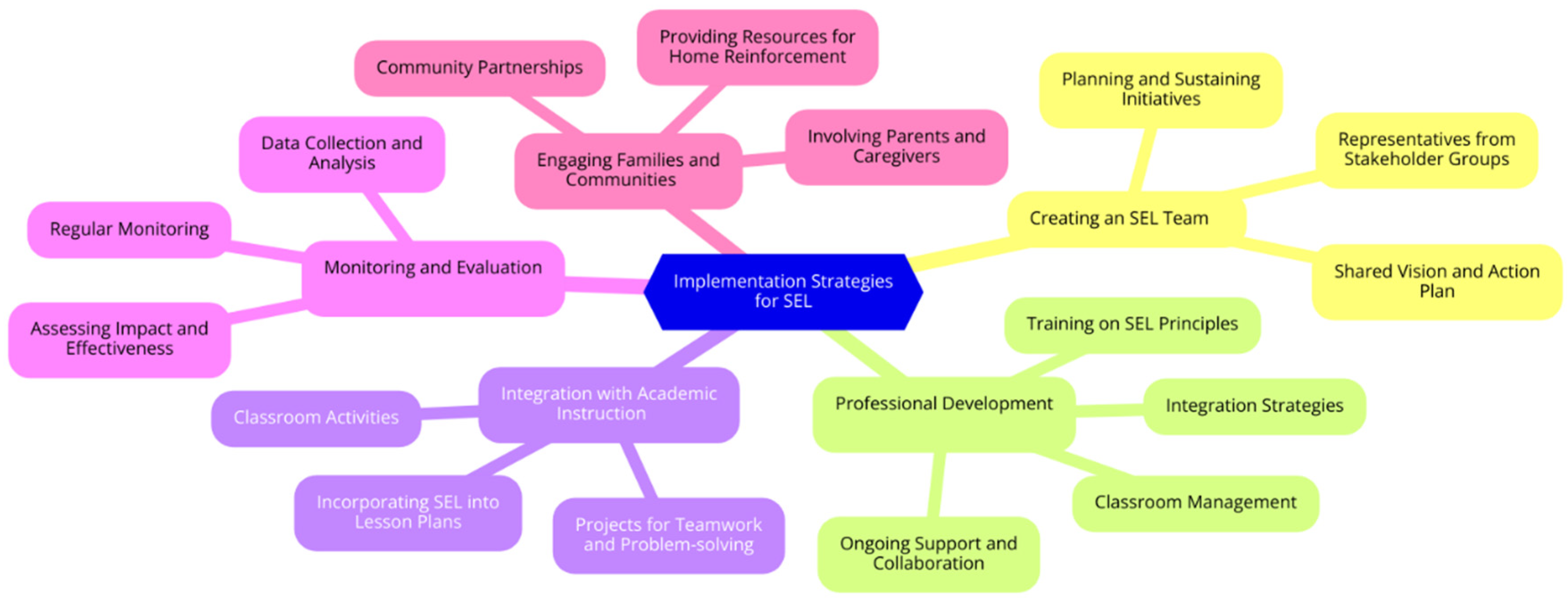
Effective implementation of SEL programs requires a systemic approach that integrates SEL into every aspect of the school environment. This involves explicit instruction in social-emotional skills, integration with academic content, and fostering a supportive school climate. CASEL outlines ten key elements for successful SEL implementation, including dedicated time for SEL instruction, supportive discipline practices, and authentic family and community partnerships (Edutopia, 2023).
  • Creating an SEL Team: Establishing a dedicated SEL team is crucial for planning, implementing, and sustaining SEL initiatives. This team should include representatives from various stakeholder groups, such as administrators, teachers, students, parents, and community members. The team collaborates to develop a shared vision for SEL and to create an action plan that aligns with the school’s goals (Edutopia, 2023).
  • Professional Development: Continuous professional development for educators is essential to equip them with the skills and knowledge needed to effectively implement SEL programs. This includes training on SEL principles, classroom management, and strategies for integrating SEL into academic lessons. Educators also benefit from ongoing support and collaboration opportunities to share best practices and address challenges (CASEL, 2023).
  • Integration with Academic Instruction: SEL should be woven into the fabric of academic instruction. This can be achieved by incorporating SEL competencies into lesson plans and classroom activities. For example, teachers can design projects that require teamwork and problem-solving, helping students practice social-emotional skills in real-world contexts (Learning Policy Institute, 2023).
  • Monitoring and Evaluation: Implementing SEL programs with fidelity involves regular monitoring and evaluation to assess their impact and effectiveness. Schools should collect and analyze data on student outcomes related to SEL competencies, academic performance, and overall school climate. This information can guide continuous improvement efforts and ensure that SEL initiatives are meeting their intended goals (Grant, Meyer, & Strambler, 2023).
  • Engaging Families and Communities: Effective SEL implementation extends beyond the classroom to involve families and communities. Schools should engage parents and caregivers in SEL initiatives, providing them with resources and opportunities to reinforce SEL skills at home. Community partnerships can also support SEL by offering additional resources and programs that complement school-based efforts (CASEL, 2023).
Figure 3 illustrates the implementation strategies for social-emotional learning (SEL), focusing on creating an SEL team, professional development, integration with academic instruction, monitoring and evaluation, and engaging families and communities. The SEL team involves planning and sustaining initiatives with representatives from various stakeholder groups. Professional development includes training on SEL principles, classroom management, integration strategies, and ongoing support. Integration with academic instruction incorporates SEL into lesson plans, classroom activities, and projects for teamwork and problem-solving. Monitoring and evaluation involve regular monitoring, data collection and analysis, and assessing impact and effectiveness. Engaging families and communities involves involving parents and caregivers, providing resources for home reinforcement, and establishing community partnerships.
Schools can create a supportive and inclusive environment that promotes the social, emotional, and academic success of all students. The integration of SEL into the educational framework not only enhances individual student outcomes but also contributes to the overall well-being and cohesion of the school community (Edutopia, 2023; Learning Policy Institute, 2023; CASEL, 2023).

Creation of Supportive Structures and Services

Establishment of Counseling Services

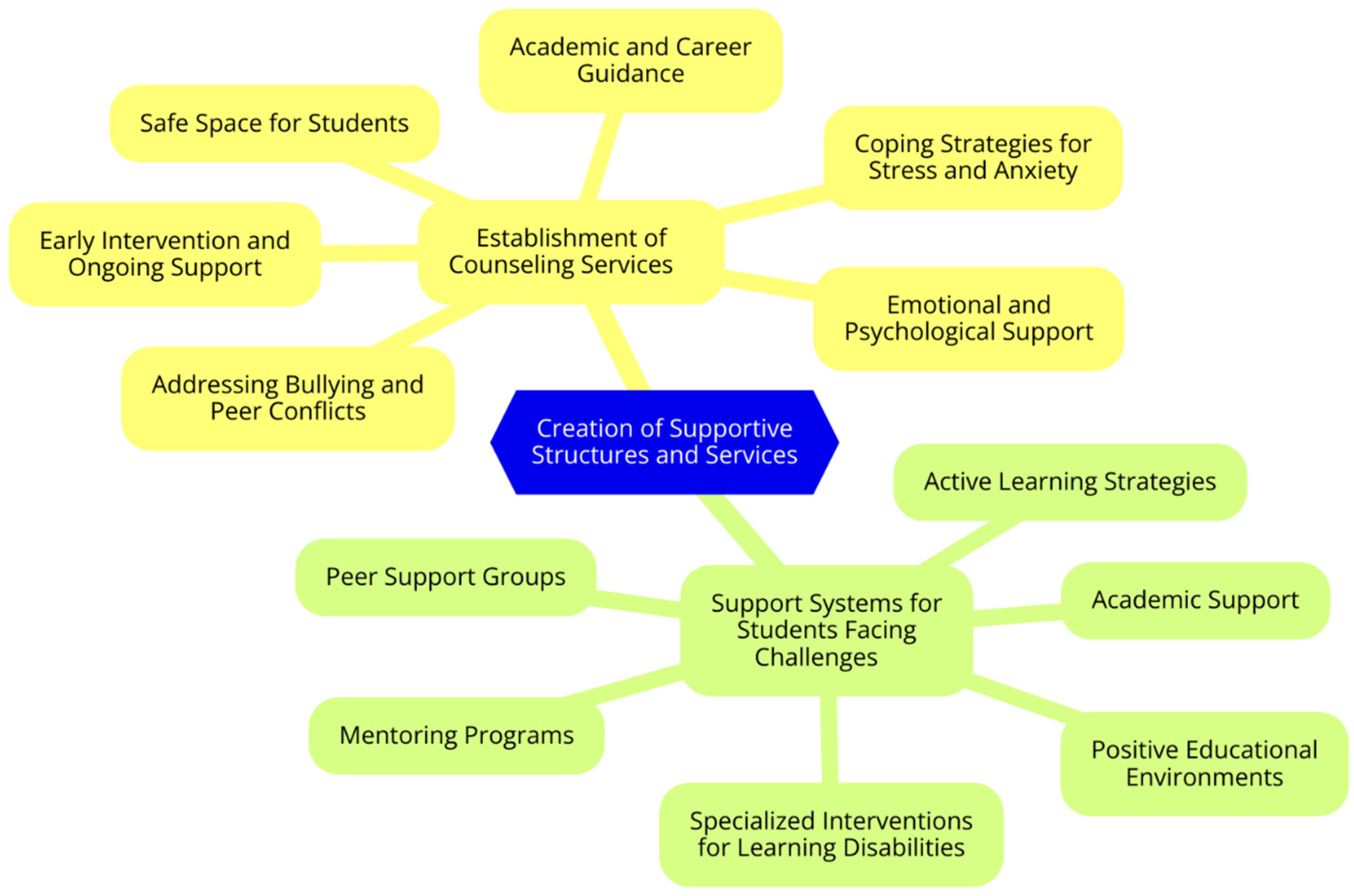
Establishing comprehensive counseling services within schools is critical for fostering student well-being and academic success. Effective counseling programs provide students with the emotional and psychological support they need to navigate the challenges of school life and personal development. Research from the Harvard University, (2020) emphasizes that happy and well-supported students are more engaged and motivated, which directly correlates with higher academic achievement and overall well-being. Counseling services help create a safe space where students can discuss their concerns, receive guidance on academic and career planning, and develop coping strategies for stress and anxiety (Harvard University. 2020).
Counselors also play a pivotal role in addressing issues such as bullying, peer conflicts, and family problems, which can significantly impact a student's academic performance and mental health. By providing early intervention and ongoing support, counseling services help students build resilience and maintain a positive outlook on their education and future.

Support Systems for Students Facing Challenges

Support systems for students facing challenges are essential for ensuring that all students could succeed, regardless of their personal circumstances. These systems include academic support, mentoring programs, peer support groups, and specialized interventions for students with learning disabilities or those experiencing social or emotional difficulties.
Innovative programs such as the Promoting Optimal Support for Everyday Resilience (PROSPER) framework focus on creating positive educational environments that promote well-being and excellence. This framework incorporates elements of positive psychology to enhance students' sense of belonging, safety, and engagement. Schools implementing the Promoting Optimal Support for Everyday Resilience (PROSPER) framework report higher levels of student happiness and lower rates of bullying and disruptive behavior, leading to a more supportive and productive learning environment (NOBLE, T ET AL., 2015).
Additionally, Active learning strategies have demonstrated effectiveness in increasing student engagement and improving academic performance, particularly in STEM education. These strategies emphasize active participation in learning through problem-solving, discussions, and group-based activities. Research highlights that such methods foster critical thinking and problem-solving skills while also addressing challenges such as resistance to active learning. Implementation involves careful planning, such as designing appropriate activities, aligning them with course content, and establishing expectations to ensure student participation and motivation. Schools and educators adopting active learning approaches frequently observe improvements in student learning outcomes, satisfaction, and engagement (Nguyen et al., 2021).
Figure 4 illustrates the creation of supportive structures and services in schools, focusing on the establishment of counseling services and support systems for students facing challenges. Counseling services provide emotional and psychological support, create a safe space for students, offer academic and career guidance, and teach coping strategies for stress and anxiety. They also address bullying, peer conflicts, and provide early intervention and ongoing support. Support systems include academic support, mentoring programs, peer support groups, specialized interventions for learning disabilities, positive educational environments, and active learning strategies. These initiatives aim to foster student well-being, engagement, and academic success.
Schools can create an environment that supports the prosperity, happiness, and excellence of all students. These initiatives ensure that students receive the necessary guidance and support to overcome challenges and achieve their full potential (Harvard University, 2020; Nguyen et al., 2021).

Strengthening School-Family Collaboration

Importance of School-Family Partnerships

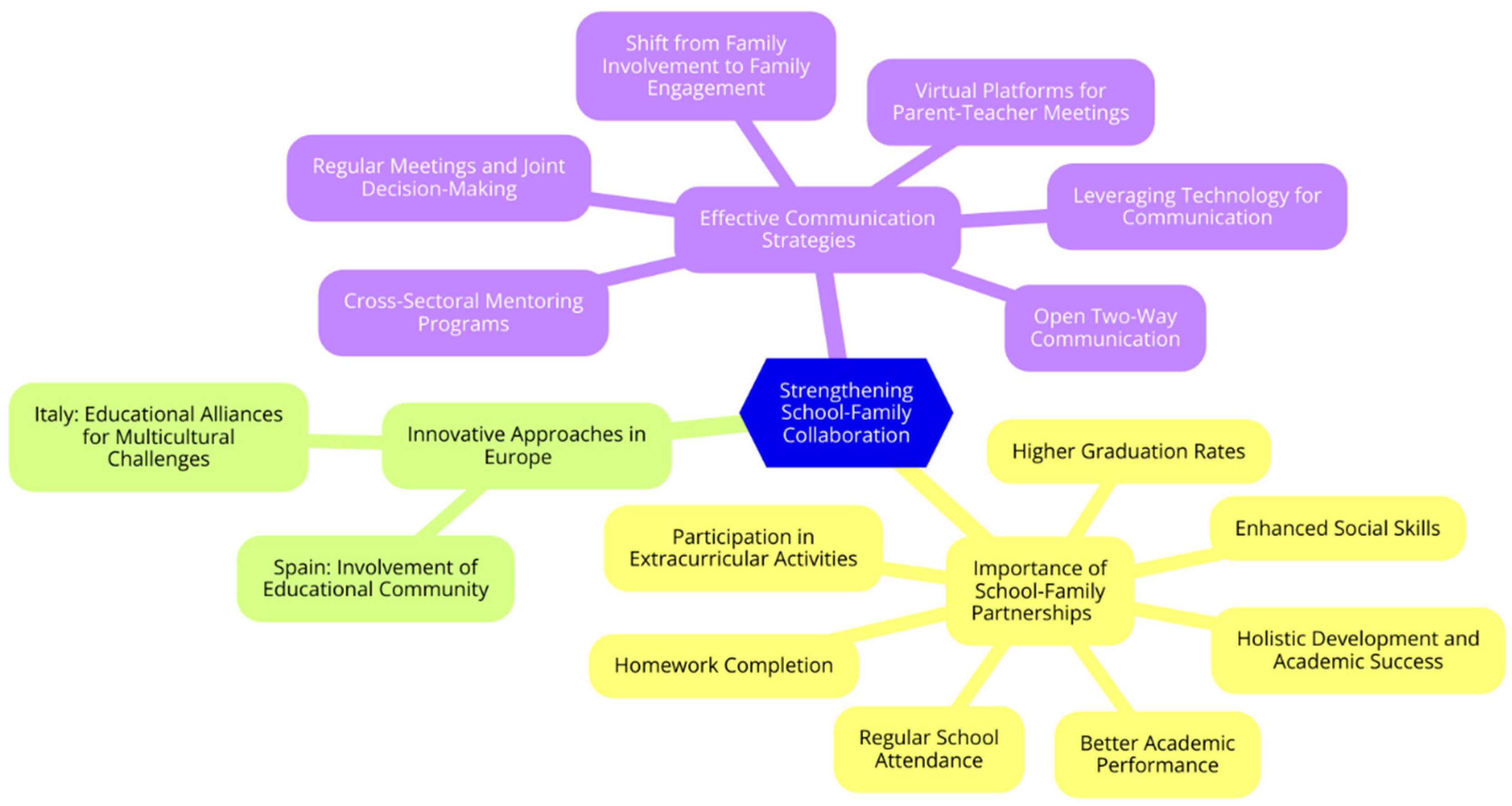
School-family partnerships are essential for the holistic development and academic success of students. Strong relationships between families and schools contribute significantly to students' educational outcomes, including better academic performance, higher graduation rates, and enhanced social skills. Research has shown that when families are engaged in their children’s education, students are more likely to attend school regularly, complete homework, and participate in extracurricular activities, which all contribute to higher achievement levels (Winthrop et al., 2021).
In European contexts (European School Education Platform), innovative approaches have been developed to foster these partnerships. For example, in Spain, the involvement of the broader educational community, including families and local organizations, has been shown to improve student learning experiences and create a supportive environment that benefits both students and staff. Similarly, in Italy, efforts to build educational alliances between schools and families have been crucial in addressing multicultural challenges and enhancing the educational experience (Dusi, 2012).

Effective Communication Strategies

Effective communication between schools and families is pivotal for building and maintaining strong partnerships. Schools need to adopt strategies that encourage open, two-way communication, ensuring that parents feel valued and involved in their children’s education. One key strategy is shifting from a model of family involvement, where parents are expected to support the school's agenda, to one of family engagement, where schools actively seek and incorporate parental input into educational processes (Smith, T.E et al., 2022).
In Denmark, for example, a collaborative approach that includes regular meetings and joint decision-making sessions between parents and teachers has proven effective. This approach helps align the educational goals of the school with the expectations and cultural backgrounds of the families, fostering a more inclusive and supportive educational environment.
In the Netherlands, cross-sectoral mentoring programs that pair school leaders with business leaders have been successful in enhancing leadership skills and fostering innovative solutions to educational challenges. Such programs encourage school leaders to engage with a variety of community stakeholders, thus broadening the scope of family and community involvement in education.
Additionally, leveraging technology to facilitate communication has become increasingly important. During the COVID-19 pandemic, many schools adopted virtual platforms for parent-teacher meetings, which significantly increased parental participation and engagement. In Portugal, for example, the Ministry of Education promoted the use of online tools to maintain and even enhance communication between schools and families, ensuring that educational support continued despite physical distancing measures (Winthrop et al., 2021).
Figure 5 illustrates the strengthening of school-family collaboration, emphasizing the importance of school-family partnerships for students' holistic development and academic success. It highlights how these partnerships lead to better academic performance, higher graduation rates, enhanced social skills, regular school attendance, homework completion, and participation in extracurricular activities. It showcases innovative approaches in Europe, such as Spain's involvement of the broader educational community and Italy's educational alliances to address multicultural challenges. Effective communication strategies are crucial, including open two-way communication, shifting from family involvement to engagement, regular meetings, joint decision-making, leveraging technology for communication, virtual parent-teacher meetings, and cross-sectoral mentoring programs.
Schools can create a collaborative environment that not only supports student achievement but also fosters a sense of community and shared responsibility among all stakeholders. This collaborative approach is essential for nurturing the prosperity, happiness, and excellence of students across Europe (Winthrop et al., 2021).

Anti-Violence and Anti-Bullying Programs

Development of Specialized Programs

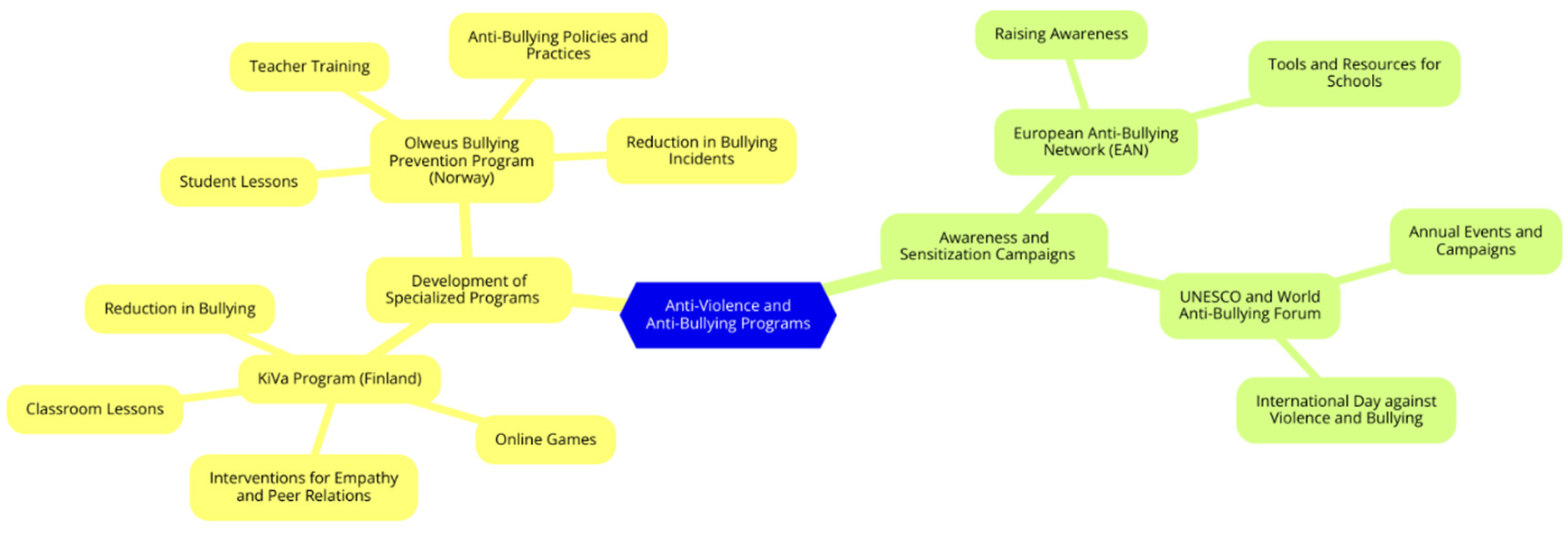
The development of specialized anti-violence and anti-bullying programs is crucial for creating a safe and supportive learning environment for students. One of the most successful programs in Europe is the KiVa program, developed in Finland. KiVa is a research-based anti-bullying program that has been implemented widely across Finnish schools. It includes several components such as classroom lessons, online games, and interventions designed to increase empathy, self-efficacy, and positive peer relations among students. The program has been shown to significantly reduce bullying and improve the overall school climate (Williford et al., 2012).
Another notable initiative is the Olweus Bullying Prevention Program, which has been widely adopted in Norway and other European countries. This program involves comprehensive efforts including teacher training, student lessons, and the establishment of anti-bullying policies and practices. Research indicates that schools implementing the Olweus program see a substantial reduction in bullying incidents and improvements in student well-being (Olweus, 2009).

Awareness and Sensitization Campaigns

Awareness and sensitization campaigns are essential for preventing violence and bullying in schools by educating students, teachers, and the community about the importance of a safe and inclusive environment. The European Anti-Bullying Network (EAN) has been instrumental in promoting such campaigns across Europe. EAN's initiatives focus on raising awareness about the impact of bullying and providing tools and resources for schools to implement effective anti-bullying strategies (European Anti-Bullying Network, 2021).
UNESCO, in collaboration with the World Anti-Bullying Forum, organizes annual events and campaigns to highlight the issue of bullying and promote best practices for its prevention. These campaigns often coincide with the International Day against Violence and Bullying at School, including Cyberbullying, which encourages schools worldwide to take proactive measures against bullying.
The implementation of specialized anti-violence and anti-bullying programs, coupled with robust awareness and sensitization campaigns, is vital for ensuring the prosperity, happiness, and excellence of students. These efforts help create a school environment where all students feel safe, respected, and supported (Williford et al., 2012; Olweus, 2009; European Anti-Bullying Network, 2021).
Figure 6 illustrates anti-violence and anti-bullying programs, focusing on the development of specialized programs and awareness and sensitization campaigns. It highlights the KiVa program in Finland, which includes classroom lessons, online games, and interventions to increase empathy and positive peer relations, resulting in a reduction in bullying. The Olweus Bullying Prevention Program in Norway features teacher training, student lessons, and anti-bullying policies, also leading to reduced bullying incidents. Awareness campaigns by the European Anti-Bullying Network (EAN) raise awareness and provide tools for schools, while UNESCO and the World Anti-Bullying Forum organize annual events, including the International Day against Violence and Bullying, to promote safe and inclusive school environments.

Promoting Multiculturalism and Inclusion

Development of Inclusive Policies

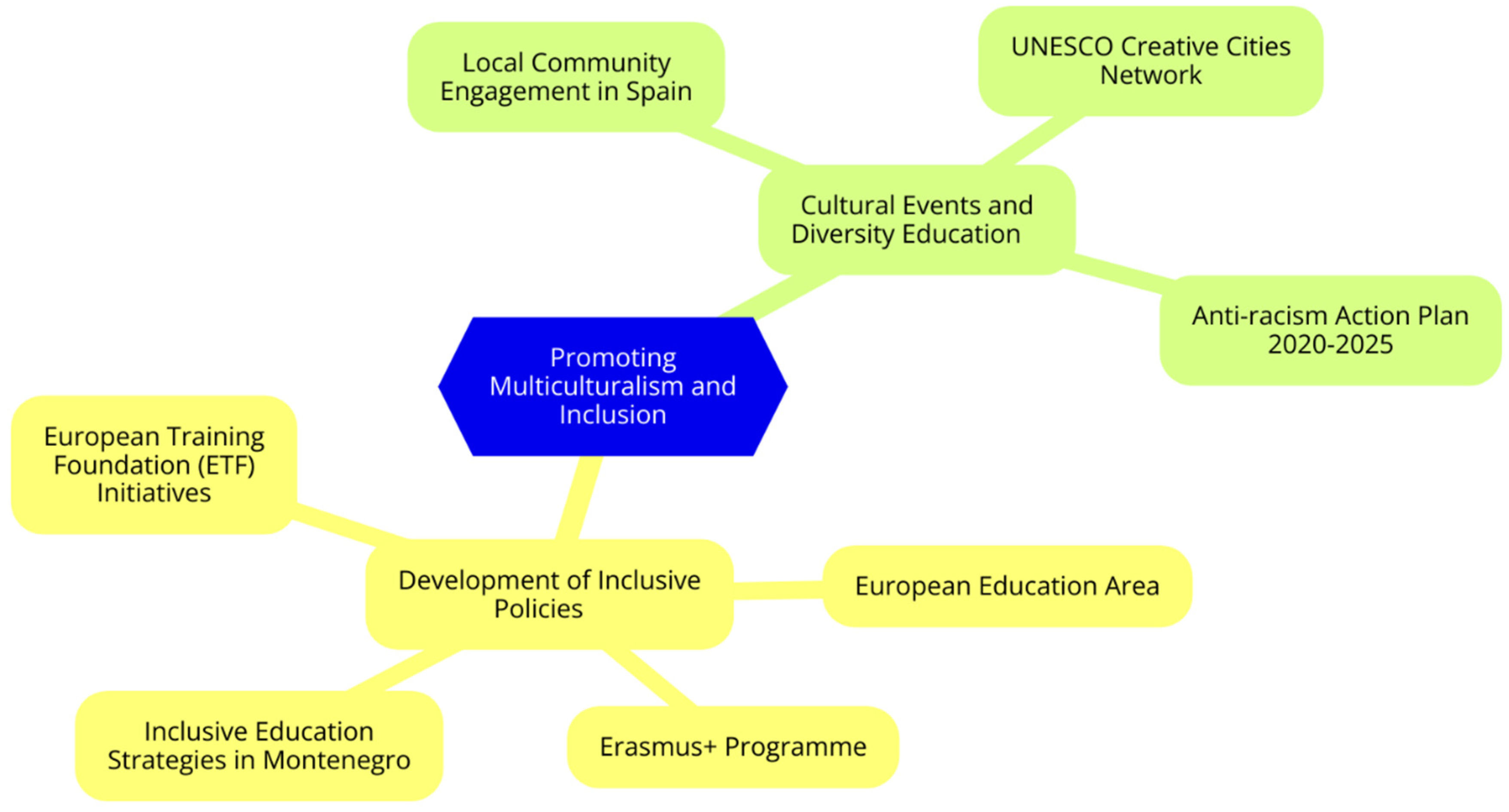
Inclusive policies in education aim to ensure that all students, regardless of their background, have equal opportunities to succeed. In Europe, several initiatives have been launched to promote inclusivity and multiculturalism within educational systems. The European Commission has emphasized inclusive education as a cornerstone for achieving social cohesion and equity. Policies such as the European Education Area and the Erasmus+ program have been instrumental in supporting inclusive practices by providing frameworks and funding for inclusive education projects across member states (European Commission, 2023).
In countries like Montenegro, inclusive education strategies have been developed to provide individualized education plans and accessibility improvements, ensuring that children with disabilities receive the support they need to succeed in mainstream schools. These efforts are part of broader educational reforms that aim to foster inclusive and equitable learning environments (UNICEF, 2019-2025). Similarly, the European Training Foundation (ETF) has been promoting social inclusion through integrated education and skills development policies that cater to the needs of diverse and marginalized groups (ETF, 2023).

Cultural Events and Diversity Education

Cultural events and diversity education play a crucial role in promoting multiculturalism within schools. These initiatives help students appreciate and respect different cultures, fostering a sense of belonging and unity. In Spain, for instance, schools actively engage with local communities to incorporate cultural events and traditions into the curriculum. This approach not only enriches the learning experience but also helps bridge gaps between students of different cultural backgrounds
UNESCO has also highlighted the importance of integrating cultural education into school programs to promote human rights and sustainable development. Initiatives such as the UNESCO Creative Cities Network encourage schools to participate in cultural exchanges and projects that celebrate diversity and creativity. Furthermore, the European Union has adopted the Anti-racism Action Plan 2020-2025, which includes measures to combat racial and ethnic discrimination through education and media campaigns, ensuring that diversity is recognized and valued in all educational contexts (European Commission, 2023).
Overall, promoting multiculturalism and inclusion through the development of inclusive policies and the organization of cultural events and diversity education is essential for creating supportive and equitable educational environments. These efforts not only enhance the learning experience but also contribute to the overall well-being and success of all students, fostering a more inclusive and harmonious society (UNICEF, 2019-2025; European Commission, 2023; ETF, 2023).
Figure 7 illustrates strategies for promoting multiculturalism and inclusion, focusing on the development of inclusive policies and cultural events and diversity education. Inclusive policies include the European Education Area and Erasmus+ program, which support inclusive education projects, as well as Montenegro's inclusive education strategies and the European Training Foundation's initiatives for social inclusion. Cultural events and diversity education emphasize local community engagement in Spain, the UNESCO Creative Cities Network, and the European Union's Anti-racism Action Plan 2020-2025, which combats racial and ethnic discrimination through education and media campaigns. These efforts aim to ensure equal opportunities for all students and foster a sense of belonging and unity in educational environments.

Upgrading School Infrastructure

Renovation and Modernization of Facilities

The renovation and modernization of school facilities are critical components in creating environments that enhance student learning and well-being. Modernizing school infrastructure involves comprehensive updates to buildings, including structural improvements, technological upgrades, and the integration of sustainable practices.
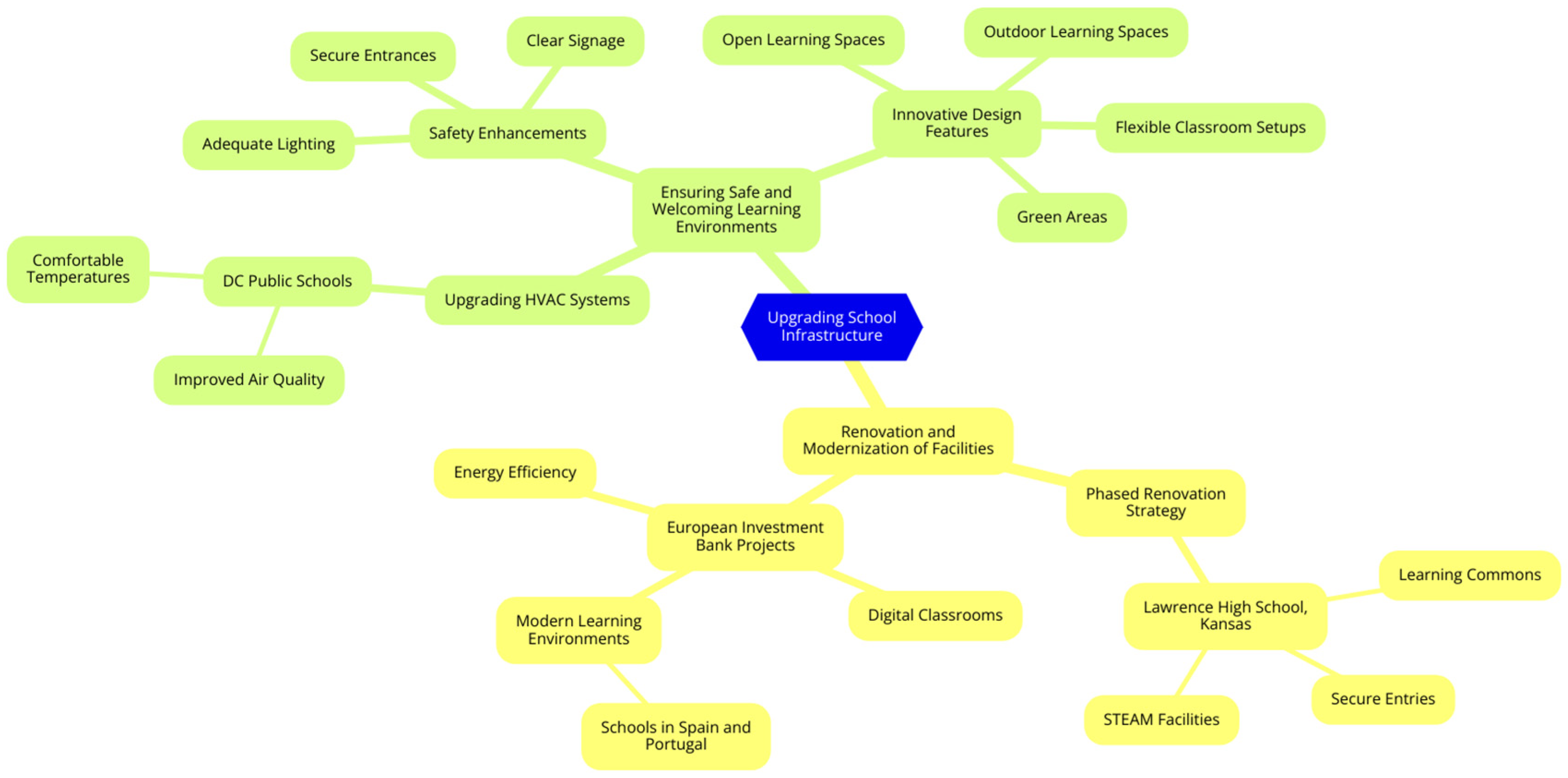
One approach to effective modernization is the phased renovation strategy, which allows schools to remain operational while undergoing significant improvements. This method ensures minimal disruption to students' education while providing new and upgraded facilities. For instance, Lawrence High School in Kansas successfully implemented a phased modernization project that included updates to its learning commons, secure entries, and STEAM (science, technology, engineering, arts, and mathematics) facilities. These renovations not only improved the physical environment but also enhanced the educational experience by providing state-of-the-art learning spaces (School Construction News, 2023).
In Europe, the European Investment Bank has funded various projects aimed at modernizing educational infrastructure. These projects focus on energy efficiency, digital classrooms, and modern learning environments that support innovative teaching methods. For example, several schools in Spain and Portugal have undergone extensive renovations to incorporate energy-efficient systems and improve classroom technology, creating more engaging and sustainable learning environments (European School Education Platform).

Ensuring Safe and Welcoming Learning Environments

Creating safe and welcoming learning environments is essential for student prosperity, happiness, and excellence. This involves not only upgrading physical facilities but also ensuring that schools are inclusive and accessible to all students.
Modernization projects often include improvements to HVAC systems to ensure better air quality and comfortable temperatures, which are crucial for maintaining a conducive learning environment. For example, DC Public Schools have invested in upgrading HVAC systems and improving building accessibility, which has significantly enhanced the learning conditions for students.
Furthermore, ensuring safety through secure entrances, adequate lighting, and clear signage is a priority. Schools that have undergone renovations report increased student engagement and reduced absenteeism, attributed to the improved sense of safety and well-being. In addition, incorporating natural light and using environmentally friendly materials in school buildings contribute to a healthier and more inviting atmosphere (World Bank, 2024).
Innovative design features, such as open learning spaces and flexible classroom setups, play a significant role in creating welcoming environments that support various teaching styles and learning activities. These designs promote collaboration and active learning among students. For instance, the Elizabeth Forward School District in Pennsylvania transformed their learning spaces to enhance curriculum delivery, preparing schools for the future (NSBA, 2021). Additionally, the integration of outdoor learning spaces and green areas can enhance students' connection to their environment, promoting both physical and mental well-being. The Trust for Public Land's Community Schoolyards initiative has converted numerous schoolyards into welcoming oases, incorporating nature to spark imaginative play and provide outdoor classrooms that enhance learning (NSBA, 2022).
The modernization and renovation of school facilities are essential for fostering student success by creating safe and welcoming environments that support academic excellence and overall well-being. Adopting comprehensive and phased approaches to infrastructure upgrades allows educational institutions to enhance functionality while preserving the character of existing buildings. For instance, phased modernization projects can make schools more functional, modern, and safe (School Construction News, 2023). Additionally, integrating outdoor learning areas can provide students with enhanced educational environments. Building exterior courtyard classrooms and adding extended learning area "bump outs" are examples of renovations that create outdoor and extended learning spaces, promoting student engagement and well-being School Construction News, 2018).
Figure 8 illustrates the process of upgrading school infrastructure, focusing on the renovation and modernization of facilities, including phased renovation strategies, European Investment Bank projects, and specific examples from Lawrence High School and schools in Spain and Portugal. It also covers ensuring safe and welcoming learning environments through HVAC system upgrades, safety enhancements, and innovative design features like open learning spaces and outdoor areas.

Introduction of Extracurricular Activities

Benefits of Extracurricular Engagement

Extracurricular activities play a vital role in the holistic development of students, contributing significantly to their academic success, personal growth, and social skills. Engaging in these activities has been shown to enhance students' academic performance, reduce absenteeism, and foster a sense of community and belonging (Honor Society, 2023). By participating in various extracurricular activities, students develop essential life skills such as leadership, teamwork, time management, problem-solving, and resilience. These skills are crucial for their overall well-being and future success (RAND Corporation, 2021).
Moreover, extracurricular activities provide students with opportunities to explore their interests and passions outside the classroom, which can lead to higher educational aspirations and increased college enrollment rates. The exposure to diverse experiences and the development of a broad skill set prepare students for real-world challenges and opportunities (Thies T. & Falk S. 2021).

Types of Activities to Promote Social Skills

Extracurricular activities come in various forms, each offering unique benefits and opportunities for skill development. Here are some of the most effective types of activities that promote social skills:
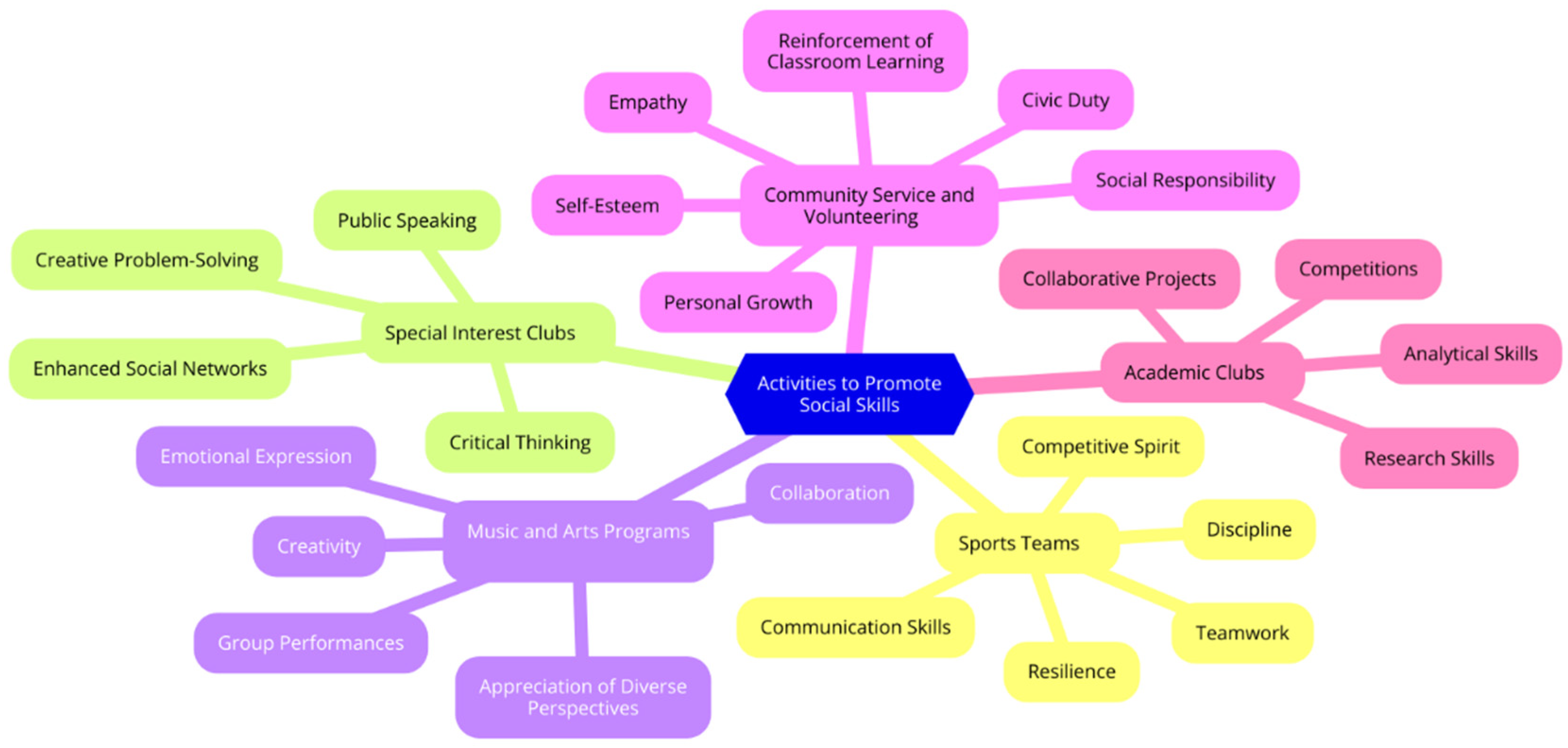
  • Sports Teams: Participating in team sports helps students develop teamwork, discipline, and communication skills. It also teaches them about resilience and the dual aspects of victory and defeat, fostering a healthy competitive spirit and camaraderie among peers (Connections Academy, 2022).
  • Special Interest Clubs: Special interest clubs, such as debate, drama, or chess clubs, provide platforms for students to develop critical thinking, public speaking, and creative problem-solving skills. These clubs also offer opportunities for students to connect with others who share similar passions, enhancing their social networks and interpersonal skills. For instance, at the University of California, Irvine (UCI), special interest clubs like Anteater Gaming and the Ballroom Club allow students to pursue their passions and hobbies outside of the classroom (Admissionsight, 2023). Similarly, at the University of Florida (UF), special interest clubs such as the Gator Chess Club provide students with opportunities to engage in activities they are passionate about, further developing their skills and social connections (Admissionsight, 2023). Engaging in these clubs allows students to explore new interests, develop new skills, and build meaningful connections with their peers, contributing to a well-rounded college experience.
  • Music and Arts Programs: Engaging in music, theater, or visual arts can enhance students' creativity and emotional expression. These activities often involve group performances and collaborations, helping students learn to work together harmoniously and appreciate diverse perspectives (RAND Corporation, 2021).
  • Community Service and Volunteering: Engaging in community service and volunteering offers students numerous benefits, including personal growth, skill development, and enhanced social connections. Participating in community service activities allows students to develop professional skills such as following instructions, cooperating with others, and giving their best effort, which are valuable in the professional world (Honor Society, 2023).
  • Academic Clubs: Clubs that focus on subjects like science, math, or literature allow students to deepen their knowledge in specific areas while developing research and analytical skills. These clubs often involve collaborative projects and competitions, which promote teamwork and intellectual engagement (Connections Academy, 2022).
Figure 9 illustrates various activities that promote social skills, including sports teams, special interest clubs, music and arts programs, community service and volunteering, and academic clubs. Sports teams help develop teamwork, discipline, communication skills, resilience, and a competitive spirit. Special interest clubs, such as debate, drama, and chess, foster critical thinking, public speaking, creative problem-solving, and enhanced social networks. Music and arts programs enhance creativity, emotional expression, group performances, collaboration, and appreciation of diverse perspectives. Community service and volunteering activities promote empathy, social responsibility, civic duty, reinforcement of classroom learning, personal growth, and self-esteem. Academic clubs, focused on subjects like science, math, and literature, help develop research skills, analytical skills, collaborative projects, and participation in competitions.
Incorporating a diverse range of extracurricular activities into their routines, students can develop a well-rounded skill set that enhances their academic and personal lives. These activities not only provide valuable learning experiences but also contribute to students' overall happiness and excellence (AdmissionSight, 2023; Thies T. & Falk S. 2021).

Establishment of Reporting and Complaint Handling Systems

Creating Safe and Anonymous Reporting Channels

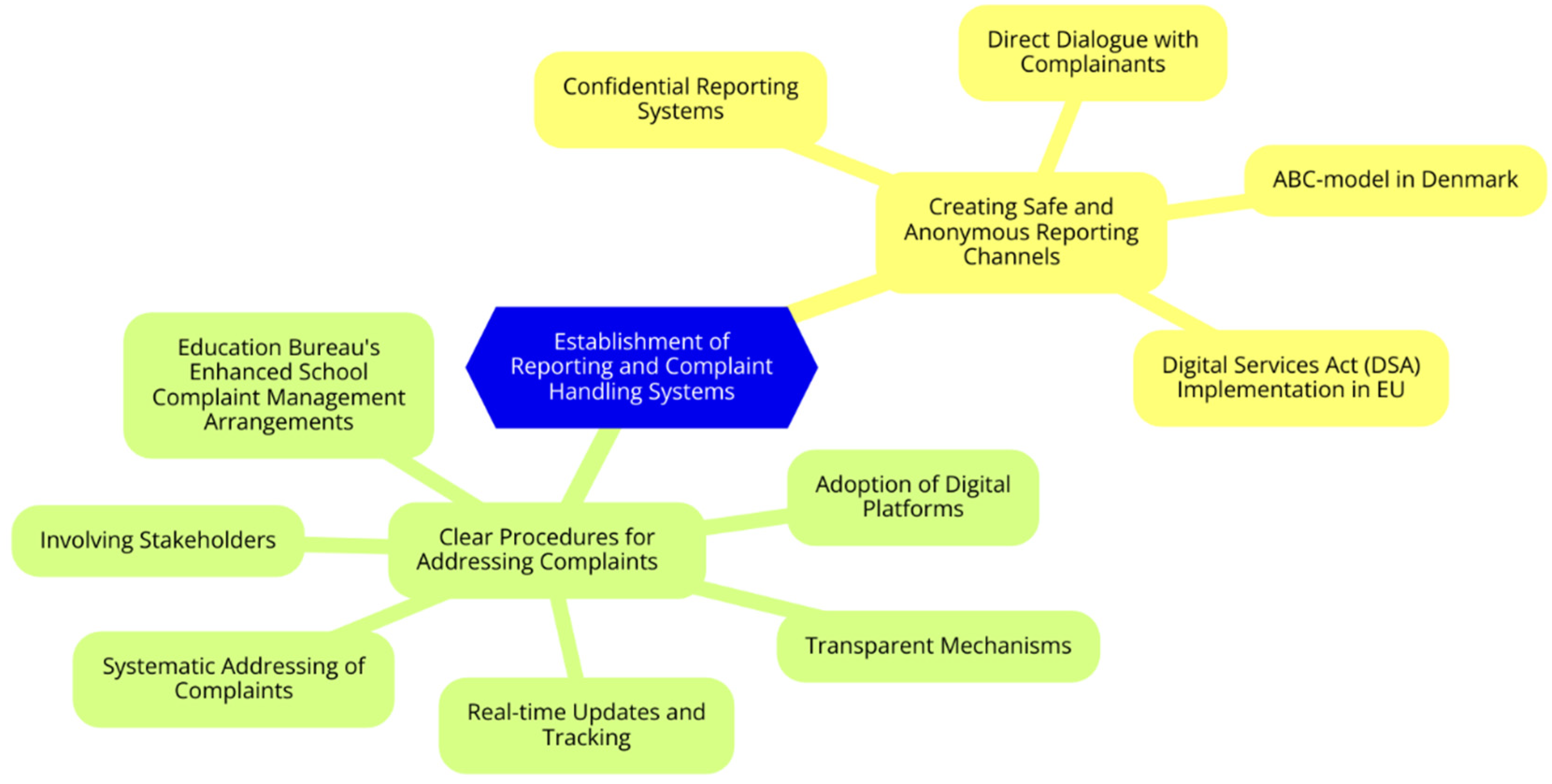
Establishing safe and anonymous reporting channels is essential for students to voice concerns without fear of retribution. In Europe, various initiatives have been implemented to create effective and confidential reporting systems. Platforms like FaceUp provide anonymous reporting channels where students can disclose issues such as bullying or harassment without revealing their identity. This empowers students to speak up safely, fostering a culture of transparency and trust within educational institutions. The European Union's Digital Services Act (DSA) introduces obligations for online platforms to establish internal complaint-handling systems. Article 20 of the DSA mandates that providers of online platforms offer recipients access to an effective internal complaint-handling system. This system enables users to lodge complaints electronically and free of charge against decisions made by the platform, ensuring that issues can be reported and addressed without fear of retribution (European Union, 2022). While the DSA primarily targets online platforms, its principles can inspire educational institutions to adopt similar internal complaint-handling mechanisms, thereby enhancing students' sense of safety and well-being.
In addition, schools in Denmark have adopted the ABC-model for complaint management, which prioritizes direct dialogue with complainants while maintaining confidentiality. This model has been successful in reducing administrative burdens and increasing the resolution of complaints through meaningful interaction rather than formal written responses (OECD, 2022). By adopting similar models, schools can create environments where students feel heard and respected.

Clear Procedures for Addressing Complaints

Clear procedures for addressing complaints are essential for ensuring that issues are resolved efficiently and fairly. Schools must develop transparent mechanisms that outline the steps for lodging, processing, and resolving complaints. The Education Bureau's "Enhanced School Complaint Management Arrangements" in Hong Kong, although not European, serves as an exemplary model. This initiative provides a structured framework that ensures complaints are handled with fairness and transparency and includes independent review arrangements to bolster trust in the process (Education Bureau, 2023).
In Europe, various initiatives emphasize the importance of clear, well-communicated procedures. For example, the implementation of complaint handling systems in schools under the guidelines set by the European Commission ensures that all complaints are systematically addressed, promoting a culture of accountability and responsiveness (IQVIA, 2023). Moreover, involving stakeholders, such as parents and community members, in the development and review of these procedures can enhance their effectiveness and acceptance.
Schools are encouraged to adopt digital platforms for managing complaints, as they can streamline the process and provide real-time updates to complainants. These platforms can offer functionalities such as tracking the status of complaints, providing anonymous submission options, and ensuring timely follow-up actions (OECD, 2022).
Figure 10 illustrates the establishment of reporting and complaint handling systems, focusing on creating safe and anonymous reporting channels and clear procedures for addressing complaints. It highlights the implementation of the Digital Services Act (DSA) in the EU for confidential reporting systems and the ABC-model in Denmark for direct dialogue with complainants. The map also emphasizes the importance of transparent mechanisms, citing the Education Bureau's Enhanced School Complaint Management Arrangements as a model, and outlines the need for systematic addressing of complaints, involving stakeholders, and adopting digital platforms for real-time updates and tracking.
Implementing safe and anonymous reporting channels alongside clear, transparent procedures for addressing complaints, schools can foster environments where students feel protected and supported, thereby promoting their prosperity, happiness, and academic excellence (Google, 2023; OECD, 2022; Education Bureau, 2023).

Innovative Measures for Education Reform

Personalized Education with AI

AI-driven personalized learning paths are becoming an essential tool in education. Research indicates that AI can enhance learning by providing customized content, monitoring student progress, and adapting to each learner's unique preferences and challenges. For instance, AI algorithms analyze student performance data to create adaptive learning paths that optimize study time and target areas where students need additional support. This allows for a more efficient and tailored educational experience, especially in European systems like those in Spain, where AI integration in education is gaining momentum. One study outlines how AI tools in education, such as generative models, can produce multiple versions of learning materials, increasing student engagement and improving outcomes. These tools are also capable of generating quizzes and feedback, automating repetitive tasks, and allowing teachers to focus more on personalized instruction. Furthermore, AI's ability to create real-time, adaptive learning environments enhances students' motivation and long-term retention (Pesovski et al., 2024; Frontiers, 2021).

Creation of Wellness Schools

Wellness schools emphasize holistic education by integrating physical, emotional, and mental health into the curriculum. These schools provide resources like counseling services, mindfulness programs, and physical fitness activities to promote overall student well-being. In Denmark, for example, schools focus on creating environments that support mental health and well-being, contributing to higher student engagement and academic success (OECD, 2022).

Professional Skill Development Programs

Professional skill development programs are designed to equip students with the skills necessary for the modern workforce. These programs often include internships, apprenticeships, and partnerships with local businesses. In Germany, the dual education system effectively combines classroom instruction with on-the-job training, ensuring students are well-prepared for their careers (Pleshakova, A. Yu. (2019)).

Education through Play and Gamification

Education through play and gamification involves using games and interactive activities to make learning more engaging and effective. This method helps develop critical thinking, problem-solving, and teamwork skills. Finland has been a pioneer in this approach, incorporating playful learning into its educational framework to enhance student motivation and learning outcomes (Frontiers, 2023).

Establishment of Student Councils

Student councils provide students with a voice in school governance, fostering leadership and civic engagement. These councils help students develop organizational and communication skills while promoting a sense of responsibility and community. In Norway, student councils are an integral part of the school system, encouraging active student participation in decision-making processes.
Research has shown that student councils contribute to the development of organizational, leadership, and communication skills, promoting a broader sense of community and civic responsibility. These structures are not only a part of secondary education but extend into higher education governance as well, further embedding civic participation in students' educational journey (Gunnulfsen, A.E. et al., 2023)

Continuous Professional Development for Teachers

Continuous professional development (CPD) for teachers is essential for maintaining high educational standards. CPD programs offer ongoing training in new teaching methods, technologies, and subject matter expertise. In the Netherlands, teachers participate in regular CPD activities, which have been shown to improve teaching quality and student outcomes (OECD, 2022).

Development of Multicultural and Inclusive Schools

Multicultural and inclusive schools embrace diversity and ensure all students feel valued and supported. These schools implement inclusive policies, celebrate cultural events, and provide resources for students from diverse backgrounds. Sweden has implemented comprehensive inclusion policies, ensuring that educational practices support multiculturalism and diversity.

Schools as Community Centers

Transforming schools into community centers allows them to serve as hubs for educational, recreational, and social activities. These centers offer resources such as libraries, sports facilities, and meeting spaces for local organizations. In the UK, many schools function as community centers, providing a wide range of services that benefit both students and the broader community (OECD, 2022).
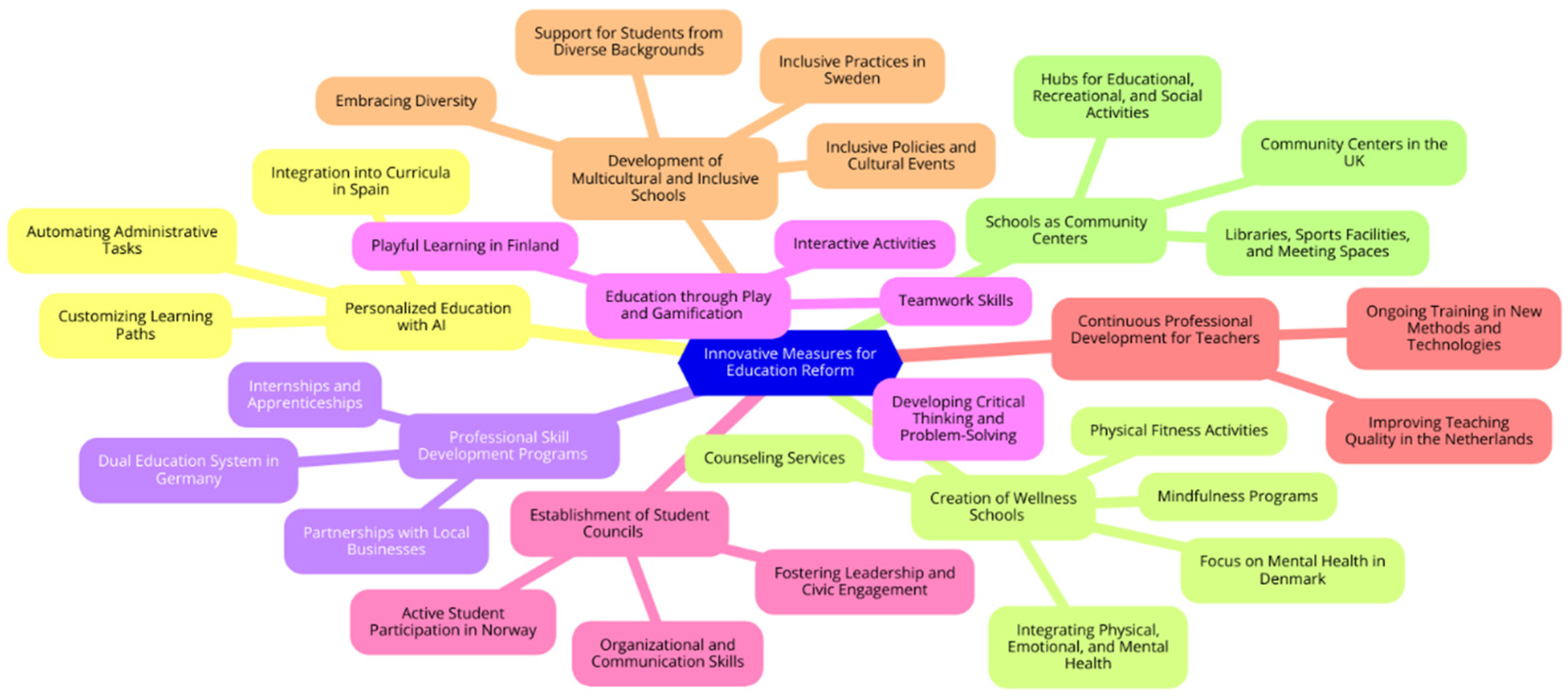
Figure 11 illustrates innovative measures for education reform, focusing on personalized education with AI, creation of wellness schools, professional skill development programs, education through play and gamification, establishment of student councils, continuous professional development for teachers, development of multicultural and inclusive schools, and transforming schools into community centers. Personalized education with AI tailors learning experiences to individual needs, while wellness schools integrate physical, emotional, and mental health into the curriculum. Professional skill development programs offer internships and apprenticeships, and education through play enhances critical thinking and teamwork. Student councils foster leadership and civic engagement, continuous professional development improves teaching quality, and multicultural schools embrace diversity. Lastly, schools as community centers provide educational, recreational, and social resources for the community.
Integrating these innovative measures, educational systems can enhance student prosperity, happiness, and excellence, creating a more inclusive and effective learning environment for all.

Conclusion

The article "Redesigning Education: A Transformative Approach" presents a comprehensive strategy for overhauling the educational system from primary to secondary levels to foster holistic student development. It highlights the necessity of educational reform due to the inadequacies of traditional models in addressing diverse learning needs and promoting critical thinking, creativity, and emotional intelligence. The proposed reforms are grounded in the most current and credible research, leveraging insights from successful educational models in highly developed European countries.

Key Reforms and Their Impacts:

  • Personalized Education with AI: Utilizing AI to tailor learning experiences to individual students’ needs enhances personalized interactions and instructional strategies, ensuring that every student receives the support they need to succeed.
  • Creation of Wellness Schools: These schools integrate physical, emotional, and mental health resources, promoting overall student well-being and engagement. This holistic approach supports higher student engagement and academic success.
  • Professional Skill Development Programs: Implementing programs such as internships, apprenticeships, and partnerships with local businesses equips students with essential skills for the modern workforce, bridging the gap between education and employment.
  • Education through Play and Gamification: Incorporating games and interactive activities into the curriculum makes learning more engaging and effective, fostering critical thinking and teamwork skills.
  • Establishment of Student Councils: Providing students with a voice in school governance fosters leadership, civic engagement, and a sense of responsibility, preparing them for active participation in society.
  • Continuous Professional Development for Teachers: Ongoing training in new teaching methods, technologies, and subject matter expertise ensures high educational standards and improves student outcomes.
  • Development of Multicultural and Inclusive Schools: Embracing diversity through inclusive policies, cultural events, and providing resources for students from diverse backgrounds ensures all students feel valued and supported, creating equitable educational environments.
  • Schools as Community Centers: Transforming schools into hubs for educational, recreational, and social activities benefits both students and the broader community, fostering a sense of shared responsibility and support.
The article also underscores the importance of establishing comprehensive counseling services and robust support systems for students facing challenges. Strengthening school-family collaboration through effective communication strategies and partnerships is crucial for student success. Promoting multiculturalism and inclusion through inclusive policies and cultural events is essential for creating supportive and equitable educational environments. Additionally, upgrading school infrastructure to ensure safe and welcoming learning environments is vital for fostering student prosperity and happiness.
In conclusion, the proposed educational reforms aim to create an inclusive, innovative, and supportive learning environment that ensures all students can thrive academically, emotionally, and socially. These comprehensive reforms are designed to develop effective educational systems that promote the well-being and excellence of all students. By integrating critical thinking, creativity, emotional intelligence, and practical life skills into the curriculum, and by fostering continuous professional development for teachers, the proposed reforms provide a solid foundation for future generations to succeed in a rapidly changing world.

Declarations

Availability of Data and Materials

The paper "Redesigning Education: A Transformative Approach" is an original study conducted by Dimitrios Sargiotis from the National Technical University of Athens, June 2024. All the data and materials referenced and analyzed in this study are derived directly from contemporary educational books, peer-reviewed articles, and case studies specifically focused on educational reforms in highly developed European countries. As the study is entirely original, no external datasets or supplementary materials were used or generated during the research. Consequently, there are no additional data or materials available beyond what is presented within the article itself. The methodologies, analysis, and conclusions drawn are solely based on the author’s comprehensive review and interpretation of the existing literature and educational practices.

Funding

The author declares that no funding was received for the research and authorship of this paper. The study "Redesigning Education: A Transformative Approach" was conducted independently, without financial support from any external organizations, institutions, or sponsors. This ensures that the research is free from any financial influence or bias, maintaining the integrity and objectivity of the findings and conclusions presented in the paper.

Abbreviations

AI Artificial Intelligence
SEL Social and Emotional Learning
CPD Continuous Professional Development
OECD Organisation for Economic Co-operation and Development
EAN European Anti-Bullying Network
DSA Digital Services Act
PROSPER Promoting Optimal Support for Everyday Resilience
ETF European Training Foundation
GSE Graduate School of Education
UNICEF United Nations International Children's Emergency Fund
HVAC Heating, Ventilation, and Air Conditioning
RAND RAND Corporation

References

  1. Admissionsight, (2023). An In-Depth Look at Extracurricular Activities at the University of California-Irvine.
  2. Admissionsight, (2023) Extracurricular Activities at the University of Florida: Opportunities Abound!
  3. American India Foundation. (2018). Handbook of Activities on Life Skills.
  4. Andersen, L. R., & Björkman, T. (2017). The Nordic Secret: A European Story of Beauty and Freedom.
  5. Bridgeland, J. M., Bruce, M., & Hariharan, A. (2013). The Missing Piece: A National Teacher Survey on How Social and Emotional Learning Can Empower Children and Transform Schools. Civic Enterprises.
  6. CASEL. (2023). Collaborative for Academic Social and Emotional Learning.
  7. Connections Academy. (2022). 5 Common Extracurricular Activities and Why They’re Important.
  8. Dusi, P. (2012). The Family-School Relationships in Europe: A Research Review. Center for Educational Policy Studies Journal, 2(1), 13-33. [CrossRef]
  9. EdSurge. (2023). Continuous Professional Development for Educators.
  10. Education Bureau. (2023). Enhanced School Complaint Management Arrangements.
  11. Egelund, N., Haug, P., & Schwab, S. (2016). Educational Reforms and Teacher Training in Denmark. Journal of Education Policy.
  12. Edutopia. (2023). Key elements of SEL implementation: Creating an SEL team for planning and sustainability.
  13. European Anti-Bullying Network. (2021). European Anti-Bullying Network: A policy paper.
  14. European Commission. (2023). Inclusive Education as a Cornerstone for Social Cohesion and Equity.
  15. European Union. (2022) Regulation (EU) 2022/2065 of the European Parliament and of the Council of 19 October 2022 on a Single Market For Digital Services (Digital Services Act) and amending Directive 2000/31/EC. Official Journal of the European Union, L 277.
  16. ETF. (2023). Social Inclusion through Education and Skills Development.
  17. Frontiers (2021). Crafting personalized learning paths with AI for lifelong learning: a systematic literature review.
  18. Frontiers. (2023). Playfulness, games and playful learning to promote good.
  19. Grant, S., Meyer, L., & Strambler, M. J. (2023). Measuring social and emotional learning implementation in a research-practice partnership. Frontiers in Psychology, Volume 14 - 2023 |. [CrossRef]
  20. Gunnulfsen, A.E., Skedsmo, G. (2023). School Leadership in Norway: Key Characteristics and Current Challenges. In: Gunnulfsen, A.E., Ärlestig, H., Storgaard, M. (eds) Education and Democracy in the Nordic Countries. Educational Governance Research, vol 21. Springer, Cham.
  21. Harvard University. (2020). REPORT OF THE TASK FORCE ON MANAGING STUDENT MENTAL HEALTH.
  22. Hooks, b. (2003). Teaching Community: A Pedagogy of Hope.
  23. Honor Society. (2023). The Impact of Extracurricular Activities on Academic Success.
  24. IQVIA. (2023). Environmental, Social, and Governance Report.
  25. Williford, A., Boulton, A., Noland, B. et al. Effects of the KiVa Anti-bullying Program on Adolescents’ Depression, Anxiety, and Perception of Peers. J Abnorm Child Psychol 40, 289–300 (2012).
  26. Kohn, A. (2020). What Does It Mean to Be Well Educated?
  27. Learning Policy Institute. (2023). Evidence for Social and Emotional Learning in Schools.
  28. NSBA, 2021. From Changing Learning Space to Changing Curriculum.
  29. NSBA, 2022, Playground Power.
  30. OECD. (2003). Learning for Tomorrow's World: First Results from PISA 2003,Student Learning,Attitudes, Engagement and Strategies.
  31. Pleshakova, A. Yu. (2019). Germany's Dual Education System: The Assessment by Its Subjects. [CrossRef]
  32. Wang Yan. (2013). Education Policy Reform Trends in G20 Members.Springer 2013.
  33. OECD. (2019). Fostering Creativity and Critical Thinking: What it Means in the Educational Context.
  34. OECD. (2022). Trends Shaping Education 2022.
  35. Olweus, D. (2009). The Olweus Bullying Prevention Program: Implementation and evaluation over two decades.
  36. Pesovski, I., Santos, R., & Henriques, R. (2024). Generative AI for Customizable Learning Experiences. [CrossRef]
  37. Kevin A. Gee, Vigdis Asmundson, Tseng Vang, Educational impacts of the COVID-19 pandemic in the United States: Inequities by race, ethnicity, and socioeconomic status. [CrossRef]
  38. Nguyen, K. A., Borrego, M., Finelli, C. J., DeMonbrun, M., Crockett, C., Tharayil, S., Shekhar, P., Waters, C., & Rosenberg, R. (2021). Instructor strategies to aid implementation of active learning: A systematic literature review. International Journal of STEM Education, 8(1), Article 9. [CrossRef]
  39. Noble, T., McGrath, H. PROSPER: A New Framework for Positive Education. Psych Well-Being 5, 2 (2015). [CrossRef]
  40. RAND Corporation. (2021). Benefits of Extracurricular Activities for Children.
  41. RAND Corporation. (2023). Educational Reform.
  42. Ravitch, D. (2016). The Death and Life of the Great American School System: How Testing and Choice Are Undermining Education.
  43. Rosen, J. A., Glennie, E. J., Dalton, B. W., Lennon, J. M., & Bozick, R. N. (2010). Noncognitive Skills in the Classroom: New Perspectives on Educational Research.
  44. Solhaug, T. (2018). Social science education (samfunnsfag) in Norway: A country report.
  45. School Construction News. (2023). Undertaking Successful Phased Modernizations of K-12 Schools.
  46. School Construction News. (2018). Trendspotting: Creating Outdoor & Extended Learning Areas.
  47. Smith, T. E., Holmes, S. R., Romero, M. E., & Sheridan, S. M. (2022). Evaluating the Effects of Family–School Engagement Interventions on Parent–Teacher Relationships: A Meta-analysis. School Mental Health, 14(2), 278-293. [CrossRef]
  48. Thies T. & Falk S. 2021.International Students in Higher Education: Extracurricular Activities and Social Interactions as Predictors of University Belonging.
  49. UNICEF. (2019-2025). Montenegro Inclusive Education Strategy.
  50. Winthrop, R. (2022). Transforming Education Systems: Why What and How. Brookings Institution.
  51. Winthrop, R., Barton, A., Ershadi, M., & Ziegler, L. (2021). Collaborating to transform and improve education systems: A playbook for family-school engagement. The Brookings Institution.
  52. Wilson A. Shaari A. 2023. A REVIEW ON THE STRUCTURE AND PRIORITIES OF THE SWEDISH EDUCATION SYSTEM. [CrossRef]
  53. World Bank. (2024). Educational Infrastructure and Modern Methods of Construction: Analysis of Off-site Technology for the Construction of School Buildings.
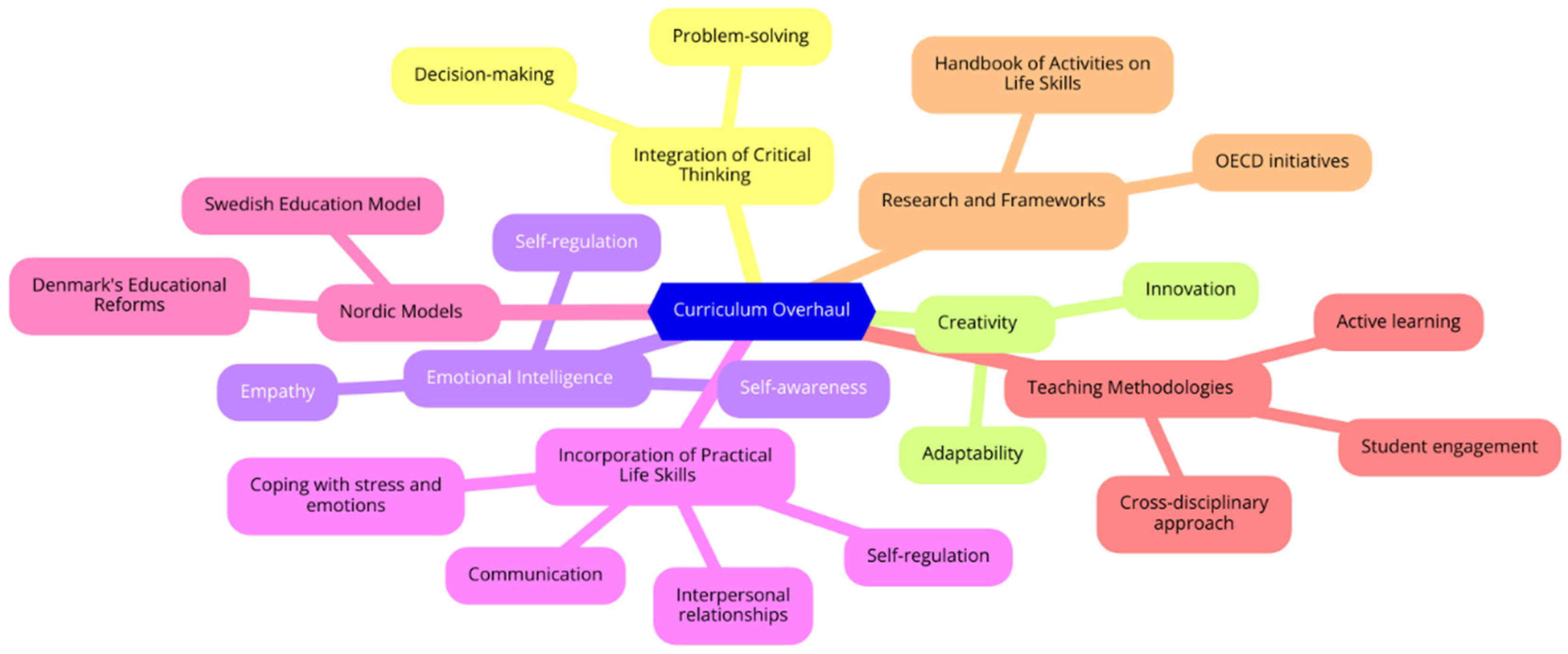
Figure 1. Curriculum overhaul map(created by the author).
Preprints 145680 g001
Figure 2. Teacher training and support (created by the author).
Preprints 145680 g002
Figure 3. Implementation strategies for SEL (created by the author).
Preprints 145680 g003
Figure 4. Creation of Supportive Structures and Services map. (created by the author).
Preprints 145680 g004
Figure 5. Strengthening of school-family collaboration map (created by the author).
Preprints 145680 g005
Figure 6. Anti-violence and anti-bullying programs map (created by the author).
Preprints 145680 g006
Figure 7. Promoting multiculturalism and inclusion map (created by the author).
Preprints 145680 g007
Figure 8. Upgrading School Infrastructure (created by the author).
Preprints 145680 g008
Figure 9. Activities to promote social skills map (created by the author).
Preprints 145680 g009
Figure 10. Establishment of reporting and complaint handling systems map (created by the author).
Preprints 145680 g010
Figure 11. Innovative measures for education reform map (created by the author).
Preprints 145680 g011
Disclaimer/Publisher’s Note: The statements, opinions and data contained in all publications are solely those of the individual author(s) and contributor(s) and not of MDPI and/or the editor(s). MDPI and/or the editor(s) disclaim responsibility for any injury to people or property resulting from any ideas, methods, instructions or products referred to in the content.
Copyright: This open access article is published under a Creative Commons CC BY 4.0 license, which permit the free download, distribution, and reuse, provided that the author and preprint are cited in any reuse.
Prerpints.org logo

Preprints.org is a free preprint server supported by MDPI in Basel, Switzerland.

Subscribe

Disclaimer

Terms of Use

Privacy Policy

Privacy Settings

© 2025 MDPI (Basel, Switzerland) unless otherwise stated