

Submitted:
24 June 2024
Posted:
25 June 2024
You are already at the latest version
Abstract
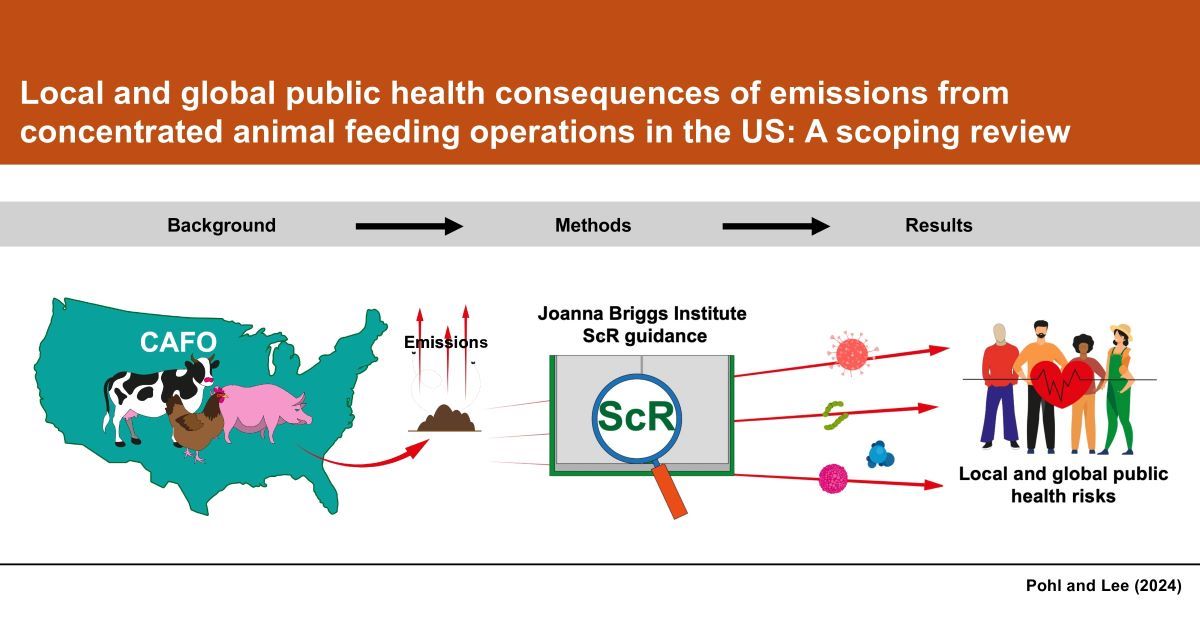
More than 400 million tons of livestock waste are generated annually by approximately 25,000 concentrated animal feeding operations (CAFOs) located in the United States (US). These operations give rise to externalities, including adverse local and global health impacts from CAFO waste emissions, which can potentially outweigh their economic viability. However, a shortage of evidence synthesis research on US-based CAFO emissions may hinder effective policy development. This scoping review (ScR) study, conducted following guidance from the Joanna Briggs Institute, searched databases including Scopus, Web of Science, PubMed and Embase in May 2020, yielding ten publications meeting inclusion criteria. Results suggest possible CAFO worker exposures to multidrug-resistant Staphylococcus aureus (MDRSA), campylobacteriosis and cryptosporidiosis. Communities near CAFOs experienced higher rates of adverse health impacts compared to those in non-CAFO areas, with patterns suggesting proximity may correlate with increased odds of detrimental health effects. Implicit global health threats include Methicillin-resistant Staphylococcus aureus (MRSA), MDRSA, campylobacteriosis, tuberculosis, and cryptosporidiosis. These studies provide foundational insights into CAFO proximity, density patterns, and adverse public health effects, indicating a need for evidence-informed environmental health policies to minimize local and global risks.
Keywords:
air pollution
; industrial livestock production
; global health
; occupational health
; health impacts
1. Introduction
Trends in global food systems provide an excess of low-priced food at the expense of environmental degradation and human health, with industrial livestock production (ILP) being one of the largest [1,2,3]. Several factors facilitated the rising popularity of the ILP industry in the 20th century. These include technological improvements, including animal breeding and formulating feedstock with dually aimed pharmaceuticals to speed-up growth, prevent disease, and contribute to low-cost products for consumers [4,5]. Additionally, in recent decades as incomes worldwide increased and populations urbanized, so too has the per capita consumption of meat and animal products [6,7,8].
This need for low-cost livestock products was met with the subsequent rise of concentrated animal feeding operations (CAFOs) in the United States (US) [3,9,10,11]. In the US, CAFOs are characterized by confining large numbers of livestock within a facility or feedlot to achieve high efficiency and turnover rates [10,12]. For the purposes of this study, we use the US Environmental Protection Agency (EPA) definition of a CAFO, which confines livestock for at least 45 days a year and holds 1,000 beef cattle, 125 thousand chickens, 82 thousand hens, 2,500 swine, or 700 dairy cattle. Additionally, facilities with livestock counts below these are considered CAFOs if they release manure and wastewater into any waterway or ditch [13,14]. Agribusiness corporations and their allied industries argue that intensifying livestock production increases efficiency due to scale economies and is a crucial strategy for ending world hunger [3,15,16,17]. Further, several factors enable these scale economies and low-cost products, including government subsidies, a paucity of environmental legislation, and technical advancements in livestock breeding and feedstock formulation with pharmaceuticals [4,5,10,12].
These shifts in livestock production- from a traditional system of animal husbandry to a concentrated industrial model controlled by a few vertically integrated corporations- have not come without a multitude of externalities [18,19]. Significant costs to environmental and public health exist, primarily due to the challenge of storing and disposing of copious amounts of livestock waste, negating perceived efficiencies [15]. The quantity of livestock waste production depends on the number of livestock and how much they are fed. A large CAFO can produce up to 1.6 million tons of waste annually, equivalent to 1.5 million citizens’ feces [20]. With roughly 25,000 CAFOs, the US produces up to 401 million tons (885 billion pounds) of CAFO waste annually [21,22,23]. Although livestock urine and manure or litter are the main components in CAFO waste, other substances can become waste discretely, such as disinfectants and poultry feathers, or as part of the excretions, including endocrine disruption hormones, heavy metals, pharmaceuticals and pesticides [23,24].
CAFO waste has similar storage and disposal systems across livestock types before being applied to crop fields as fertilizer. For example, in swine and dairy cattle CAFOs, waste is collected and stored in slurry pits beneath slatted floors of the facility before being flushed out into a lagoon that serves as an open-air holding pond [25,26,27]. Similarly, in poultry CAFOs, dry-waste falls to the floor and is shoveled into a storage facility, and in beef cattle, CAFO feedlot's waste is washed into waterways or ditches [24]. CAFO waste emits several gases, especially during decomposition, including ammonia, methane, hydrogen sulfide, nitrous oxide, carbon dioxide, toxic compounds of these gases, volatile organic compounds (VOCs), and bioaerosols [23]. In addition, waste emissions include dust and particulate matter, often from the movement of livestock, which includes dried fecal matter, urine, feed, and dander [23,28]. Evidence suggests airborne and atmospheric emissions from CAFO waste may adversely impact local and global public health [23].
Research has long highlighted the public cost of CAFO pollution, including considerable degradation of the environment, loss of terrestrial and aquatic wildlife and their habitats, and adverse impacts on local population health. Some environmental damage can be ‘cleaned up’: paid for by tax-payers. However, external costs extend to the global public and global economy, with the most vulnerable populations and territories in the Global South experiencing catastrophic effects of climate change for which CAFO waste emissions may play a significant role [15,29].
1.1. Background
Numerous studies have argued the consequences of occupational exposure to emissions from industrial-raised livestock waste, and critical links have been drawn between waste emissions and adverse health impacts. This is supported by Donham et al. [30] who argue that swine CAFO workers exposed to manure pit gasses and particulate matter suffered respiratory ailments, with as many as 70% of exposed workers developing acute bronchitis and 25% developing chronic bronchitis. Further, particulate matter in the air absorbs these gases, VOCs, viruses, and bacteria, eliciting a synergistic effect linked to bronchitis and asthma [30,31,32]. Other related respiratory ailments include acute respiratory distress syndrome (ARDS), chronic sinusitis, occupational asthma, organic dust toxic syndrome (ODTS), and chronic decline in lung function [33,34,35]. Additionally, occupational fatalities have occurred from manure pit gases, especially during agitation of liquid manure pits [25,35,36].
CAFO waste also contributes to ambient air pollution in nearby communities [37]. Detailed examination of hydrogen sulfide near homes near a swine CAFO by Donham et al. [38]showed that measurements surpassed lifetime exposure standards of the US Agency for Toxic Substances and Disease Registry (ATSDR). Additionally, Sneeringer [39] posited that doubling the number of industrially raised swine in an area between 1980 and 2002 was linked to a 6.6% rise in ambient, sulfur-based atmospheric pollution. These studies indicate that residents are exposed to emissions and accompanying odors as they permeate through communities [28,40]. Further evidence suggests these exposures are associated with respiratory conditions of community residents [37,41,42]. To illustrate, studies by Merchant et al. [37], Mirabelli et al. [43,44], and Sigurdarson et al. [45] suggest links between swine CAFO waste emissions and asthma symptoms in adolescents and children. Another study by Sneeringer [46] demonstrated that air pollution in a region with a high concentration of swine CAFOs triggered respiratory disorders in infants, leading to a 7.4 percent rise in infant mortality. Similarly, odors emanating from emissions of CAFO waste may be correlated with symptom patterns, including runny nose and cough, diarrhea, dizziness, headaches, and burning eyes. Additionally, noxious odors were suggested to adversely impact residents' mental health and stress levels [42,47,48].
In addition to local impacts, the Food and Agriculture Organization (FAO) of the United Nations (UN) states that ILP is a leading source of pollution, including greenhouse gas (GHG) emissions that accelerate climate change, increasing prevalence of extreme weather which has important implications for global health, including the elimination of human habitats [49,50]. Furthermore, by fostering new weather patterns, climate change contributes to the spread of infectious, zoonotic and vector-borne disease [51,52,53,54,55]. Although biosecurity measures in CAFOs may decrease the risk of development of zoonotic diseases, Leibler et al. [12](p.59) argue that confinement operations have their own "ecosystems" which promote zoonosis and disease transmission. To illustrate, a gram of avian influenza (AI) infected fecal matter carries up to ten billion virus particles; thus, particles from infected feces on workers' clothing, boots, or equipment may be adequate for transmission, especially if biosecurity and biocontainment measures are neglected [12,56]. Further, air circulation in confinements accelerates particulate movement, driving it into the external environment through exhaust systems. Okamatsu et al. [57] posited that inhaling airborne particulates from contaminated feces is what led to Japan's 2005-2006 AI outbreak [12].
Antimicrobial resistance (AMR) is another consequence associated with CAFO waste. Although feedstock formulations consisting of antimicrobials to enhance livestock growth and prevent disease transmission and spread within crowded spaces, studies indicate that nearly 75 percent of the antibiotics are excreted, furthering the development of AMR in waste and the environment. [58,59,60,61,62]. For example, Chee-Sanford et al. [63,64], Campagnolo et al. [58], and He et al. [65] found that manure application on croplands also adds to the spreading of AMR bacteria which may enter the food chain. Further, He et al. [66] suggest humans may be exposed through inhalation and ingestion of particulates with antibiotic-resistant genes, increasing the risk of AMR-related illnesses. Methicillin-resistant Staphylococcus aureus (S. Aureus) (MRSA) has also been linked to serious infections in surgery sites, blood, skin, respiratory system, and urinary tract. Once considered to be a hospital-acquired (HA) condition, since 2000, there has been an increase in community-acquired (CA) MRSA infections [67,68]. This view is supported by Larsen et al. [68], Carrel et al. [69], and Schinasi et al. [70] as they reported increases in CA-MRSA infections in regions with a higher livestock density, potentially indicating that residents without livestock contact may be at greater risk of MRSA exposure in these regions.
Several studies have argued the public health risks of waste emissions from livestock facilities. However, the lack of policy regarding emissions from CAFO waste may continue to facilitate adverse health impacts to the public [71,72]. To illustrate, the voluntary 2005 Air Compliance Agreement (ACA) made between the EPA under President George W. Bush and agribusiness lobbyists, exempted most CAFOs from regulation under the Clean Air Act (CAA) [23,71]. However, nearly two decades later, the 2005 ACA remains controversial and increasingly generates criticism as local and global health impacts become even more apparent [72]. Additionally, a lack of evidence synthesis of topical literature focused on US-based CAFOs may stymie health policy development.
Databases were searched for relevant evidence synthesis studies to avoid repetition. Preliminary searches were performed in the Cochrane Database of Systematic Reviews, JBI Evidence Synthesis, International Prospective Register of Systematic Reviews (PROSPERO), Systematic Reviews for Animals and Food (SYREAF), and PubMed. Systematic reviews by O'Connor et al. [73,74] and Douglas et al. [75] were identified. Although all papers addressed potential associations between health impacts and pollutants from ILP, a multi-national context approach was taken. Studies included evidence from Europe, Scandinavia, Canada, and the US. However, policies that govern these countries' industrial livestock sectors are not uniform. To demonstrate, ILP emissions are strictly regulated in the Netherlands, creating a significant regulatory policy gap between the Netherlands and the US, where, as noted previously, oversight is limited [49]. Additionally, funding for O'Connor et al. [73,74] includes the National Soybean Council (NSC) and the National Pork Board (NPB), key US agribusiness stakeholders. This evidence synthesis study will fill the knowledge gap by reviewing peer-reviewed literature on CAFOs which are located in the United States with the following aims and questions.
This scoping review aims to synthesize, examine, and map evidence from 2016-2022 on local and global public health impacts of airborne and atmospheric emissions from US-based CAFO waste.
What does the evidence from 2016-2022 indicate about the local (occupational and community levels) and global health impacts from US-based CAFO waste emissions?
What are the main findings in the included evidence?
Where are the gaps in the evidence?
What recommendations can be made for further research?
2. Materials and Methods
This scoping review followed the Joanna Briggs Institute (JBI) methodology guidance and in accordance with the Preferred Reporting Items for Systematic Reviews and Meta-Analysis Extension for Scoping Reviews (PRISMA-ScR) checklist [76,77].
2.1. Inclusion Criteria Using the PCC Framework
The population, concept, and context (PCC) framework for inclusion criteria links the research questions with the evidence screening process [76]. Criteria must be met for a paper to be included in the review.
2.1.1. Population
This review considered studies that included populations at the occupational, community and global levels. At the occupational level, this study included CAFO workers and farmers. At the community level, this study included residents in the community or zip code of the CAFO. At the global level, the global population was included.
2.1.2. Concept
This scoping review considered studies that explored possible health impacts or risks from CAFO emission exposure which may include a medically diagnosed or self-reported health condition, illness, disease, infection, syndrome, symptom, manifestation or exposure.
2.1.3. Context
This review considered studies in which the CAFO is within the states or territories of the United States (US) and is a CAFO as defined by the EPA. CAFO livestock type may include swine, chickens, hens, beef, or dairy cattle.
2.2. Types of Sources
This scoping review considered peer-reviewed sources which were quantitative, qualitative, and mixed methods study designs for inclusion. Additionally, experimental studies involving animals or surrogates were considered for inclusion.
2.3. Exclusion Criteria
Following the JBI [76] guidance, exclusion criteria aids in removing ineligible records during the screening process to narrow to the most relevant literature.
Studies where full-text is unavailable
Studies that have not been peer-reviewed
Systematic review studies
Studies before 2016
CAFOs not located in the US
Studies not examining health impacts
2.4. Search Strategy
The search strategy aimed to locate published peer-review studies. An initial limited search of Scopus and Web of Science was undertaken to identify search terms in relevant articles on the topic. Identified free-text words in titles and abstracts of relevant articles, and index terms describing the articles were used to create the initial comprehensive search strategy. Search strategy (Appendix A) was peer-reviewed by thesis supervisor and an academic health sciences librarian, both at Queen Mary University of London. Search strategy was then adapted for each database’s search operators. Search was conducted in four academic databases: PubMed, Scopus, Web of Science, Embase. Search was narrowed by English language and dates 2016-2022 on May 19-20, 2022.
2.5. Evidence Selection
Following the search, all identified records were collated and imported into EndNote 20.3 (Clarivate Analytics, PA, USA). After duplicates were removed, remaining citations and abstracts were imported into the JBI System for the Unified Management, Assessment, and Review of Information (JBI SUMARI; JBI, Adelaide, Australia) [78]. Evidence screening was conducted in two phases. First, following a pilot test, titles and abstracts were screened for study identification against inclusion criteria. If a paper could not be conclusively eliminated in phase 1, they were kept for phase 2. Potentially relevant full-text papers were obtained for phase 2. Full-text papers that did not meet the inclusion criteria were eliminated. Any uncertainty that evolved regarding inclusion and exclusion was discussed with thesis supervisor.
2.6. Data Extraction
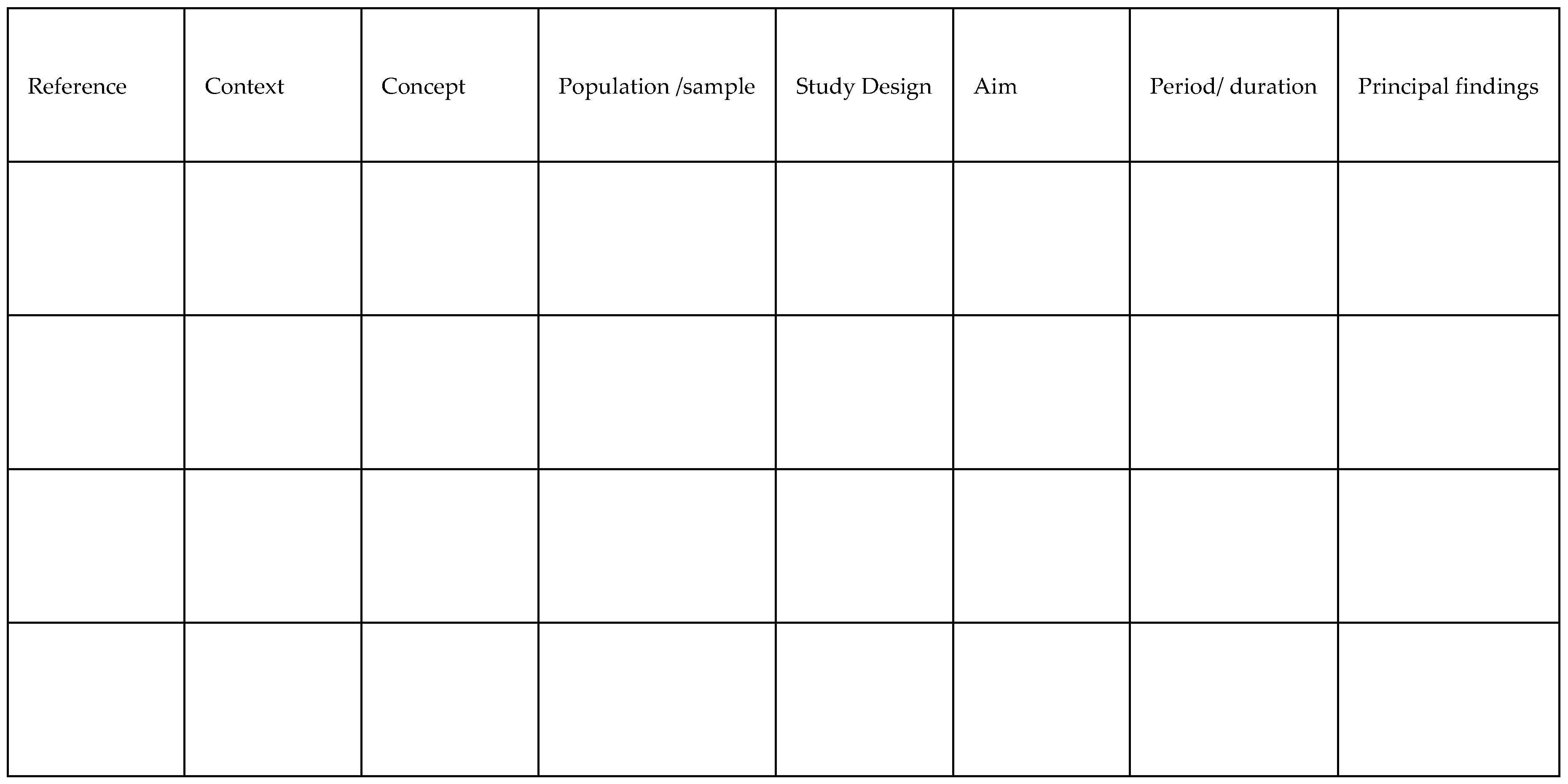
Data were extracted from papers using a data extraction tool modified from the JBI SUMARI extraction tool to allow for charting as it relates to specific research questions and objectives (Appendix B). Data items extracted included seven items for each reference including concept, context, population, study design, aims, period/duration, and principal findings relevant to the review questions. Pilot test on extraction form was conducted to allow for modifications.
2.7. Synthesis of Results
Studies were grouped by population type. This included occupational health studies, community health studies, or global health studies.
3. Results
3.1. Study Identification
Results were reported on PRISMA flow chart (Figure 1) [79]. A total of 341 references were identified from four academic database searches. After 143 duplicates were removed, 198 titles and abstracts were imported into JBI SUMARI (JBI, Adelaide, Australia) and screened. During phase 1, 73 references were eliminated. Full-text of 125 records were sought for retrieval. Of these, 5 were not retrieved because they were conference proceedings. The full-text of 120 remaining records were obtained. In phase 2, 110 articles were excluded. Ten papers were included in this scoping review.
3.2. Characteristics of Included Studies
Studies were conducted in six different states with three types of livestock (Figure 2). Three studies were conducted in North Carolina (NC). Two studies were conducted in laboratories. One study was conducted in each of the following states: Illinois, Missouri, Nebraska, Washington, and Wisconsin. Five papers were occupational health and five were community health studies. Swine CAFOs (n = 7) were the most common type of CAFO in the studies. No chicken or hen CAFO studies were identified. Four occupational health studies examined worker exposures in swine CAFOs, and one study analyzed worker exposure in beef cattle CAFOs. Of the five community health studies, two examined exposures in dairy cattle CAFO regions, and three analysed exposures in swine regions. Study methods include observational study designs (n = 7), mixed methods (n = 1), qualitative (n = 1), and experimental (n = 1).
3.3. Key Findings of Included Studies
3.3.1. Occupational Health
Five occupational health studies were conducted in Missouri (n = 1), Nebraska (n =1), North Carolina (NC) (n =1), and laboratory (n = 2). Study methods included qualitative (n =1), experimental (n = 1), mixed method (n = 1), and observational (n = 2). Five main phenomena of interest were investigated in these five studies (Figure 3). Four studies examined occupational exposures in swine CAFOs.
First, Ramos et al. [80] conducted interviews with 40 Latino immigrant swine CAFO workers in Missouri to collect self-reported data on their health and conditions regarding employment. 42.5% of employees reported poor or fair health and 28.2% reported ongoing symptoms (Figure 4). Most reported symptoms were burning eyes, muscular pain, coughing, headaches, and sneezing, respectively. Additionally, healthcare visits were unaffordable for 30% of workers and they had to postpone healthcare and treatment.
Next, Davis et al. [81] conducted a pilot test in NC comparing Staphylococcus aureus (S. aureus) findings of a swine CAFO which used antibiotics and antibiotic-free farms. Utilizing a One Health approach which tested airborne isolates in surrogate worker ventilators, on animals, and inside and outside air, they observed that surrogate swine CAFO workers were exposed to S. aureus and multi-drug resistant S. aureus (MDRSA) through inhalation of airborne dust in addition to exposure from swine. Airborne isolate samples collected by Davis et al. (2018) at the swine facility were positive for S. aureus (Figure 5). All 24 S. aureus isolates were multi-drug resistant, belonging to spa type t337 and lacked the scn gene. Isolates were 100% resistant to Spectinomycin, Penicillin, and Erythromycin, but only partially resistant to Tetracycline and Clindamycin. Conversely, the antibiotic-free farms under comparison identified no S. aureus in surrogate worker air samplers or in ambient air.
Two laboratory studies were also conducted using swine CAFO dust. Wyatt et al. [82] investigated the influence of alcohol in swine CAFO workers with occupationally induced inflammatory lung disease. They observed alcohol consumption may modify lung inflammatory responses in swine CAFO workers following swine dust exposure. Similarly, Knoell et al. [83] investigated whether zinc deficiency impacts airway inflammatory response to swine CAFO dust. Knoell et al. [83] suggest that zinc deficiency may contribute to the adverse pulmonary function in swine CAFO workers and sufficient zinc intake may counter the incidence and severity of swine CAFO dust-induced lung disease.
Lastly, Su et al. [84] investigated occupational animal exposures of Campylobacteriosis and Cryptosporidiosis in Nebraska using data from the Nebraska Department of Health and Human Services and CDC reviewed case investigation reports. The highest incidence of Campylobacteriosis (n=557) and Cryptosporidiosis (n=93) cases reported had occupational exposures at beef cattle CAFOs with 29.9% and 7.9%, respectively [84].
3.3.2. Community Health Studies
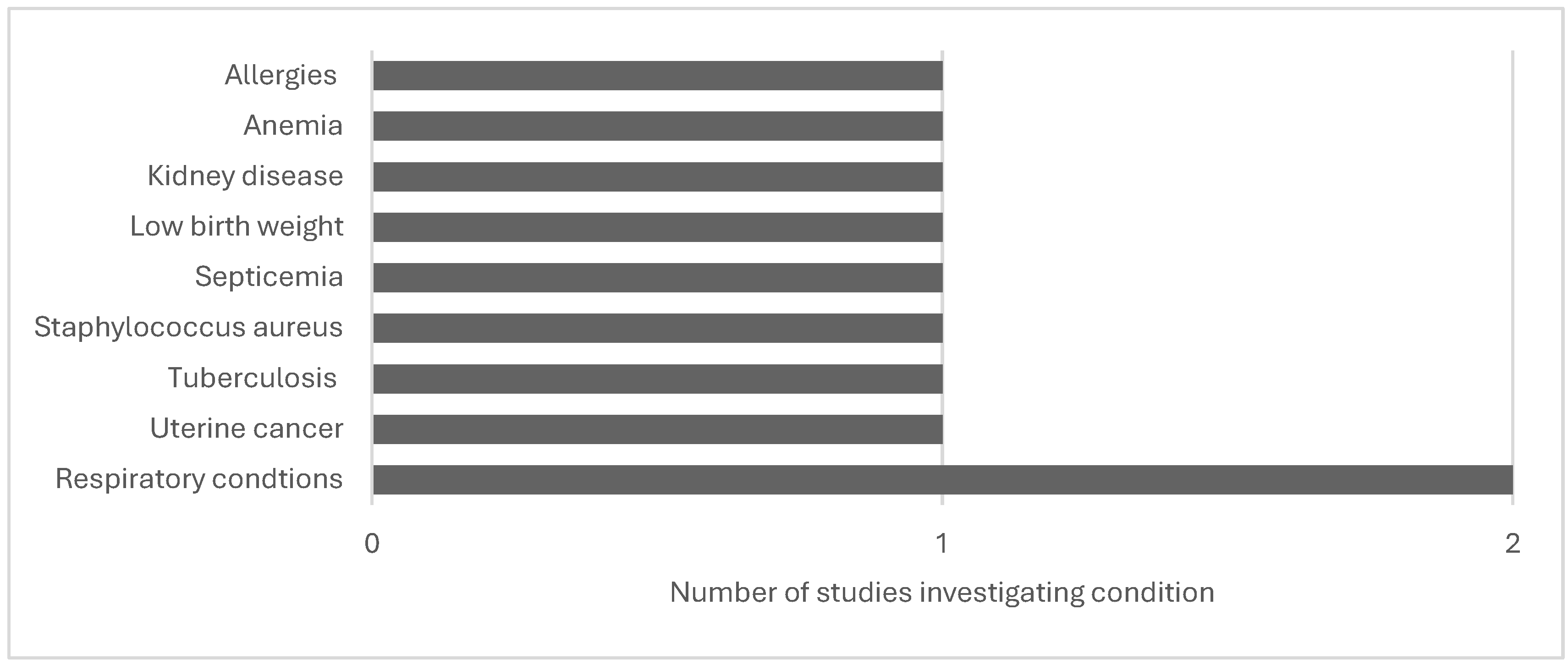
Five community health studies were included in the review. Studies were conducted in Illinois (n = 1), North Carolina (n = 2), Washington (n = 1), and Wisconsin (n =1). All studies were observational (n = 5). Nine main phenomena of interest were investigated in these five studies (Figure 6).
Three community studies examined adverse health impacts and swine CAFOs. First, in Illinois, Beresin et al. [85] conducted a zip-code-level analysis to investigate Methicillin-resistant Staphylococcus aureus (MRSA) in skin and soft tissue infections using inpatient hospitalization records. Their research suggests residents living in zip codes with large farms (>1000 swine) may have higher odds of MRSA infection compared to residents living in zip codes with no CAFOs.
Next, in NC, Kravchenko et al. [86] investigated health outcomes (mortality, hospital admissions, and emergency department visits) of conditions which may be associated with swine CAFOs: kidney disease, anemia, tuberculosis, septicemia, and low birth weight. The investigation compared outcomes in zip codes with swine CAFOs, zip codes with a high-density of swine (>215 swine/km), and zip codes with no CAFOs. Secondly, Kravchenko et al. [86] conducted a Distance from the Source of Potential Contamination (DiSC) analysis to see if odds ratios (OR) changed with proximity to CAFOs. They observed that residents living in areas with zip codes with swine CAFOs and zip codes with high swine density had higher rates of infant mortality, all-cause mortality, multi-morbidity mortality, and mortality from tuberculosis, anemia, kidney disease, and septicemia than residents living in zip codes with no swine CAFOs. Additionally, residents in zip codes with swine CAFOs and high density swine had higher rates for hospital admissions and emergency department visits for low birth weight in comparison to zip codes with no swine. Similarly, Kravchenko et al. [86] observed that residents living within 2 km to swine CAFOs, had higher ORs of mortality, hospital admissions, and emergency department visits for these conditions than residents living 5 km, 10 km, or 20 km from a CAFO.
Kravchenko et al. [87] investigated race-specific mortality and hospital admissions among White and African American women with uterine cancer in zip codes with high-swine density (>215 swine/km) and no swine CAFOs in NC. DiSC analysis was conducted to investigate if the ORs changed with proximity to swine CAFOs. Kravchenko et al. [87] observed higher OR for uterine cancer mortality for White and African American women living within 2 km to a swine CAFO in comparison to 5 km, 10 km, or 20 km. After adjusting for cofactors this was significant for White females but not African American women. Additionally, they observed that rates of uterine cancer mortality and hospital admissions were higher for White and African American women living in zip codes with swine CAFOs than for White and African American females who live in non-CAFO communities.
Another two studies were in dairy cattle CAFO regions. First, Loftus et al. [88] investigated whether exposure of air pollution from clusters of dairy CAFOs in Yakima Valley, Washington are associated with health effects in children with asthma. They observed that children had lower forced expiratory volume in the days following increased emissions, yet no association with asthma symptoms were detected [88]. Schultz et al. [89] investigated asthma, allergies, and lung function in residents and proximity to CAFOs. They observed increased self-reported physician-diagnosed nasal and lung allergies, asthma, increased usage of asthma medication, and uncontrolled asthma in residents living 1.5 miles from a dairy CAFO in comparison to living 5 miles from a dairy CAFO [89].
3.3.4. Global Health
Global health risks were identified as implicit findings in the literature. Health conditions examined at the local level known to be global health threats include tuberculosis, multi-drug resistant S. Aureus (MDRSA), methicillin-resistant S. Aureus (MRSA), Campylobacteriosis and Cryptosporidiosis.
4. Discussion
This review has highlighted important peer-reviewed literature on recent patterns of health impacts from CAFOs in the US. Adverse health conditions, symptoms and outcomes experienced by CAFO workers include respiratory conditions, Campylobacteriosis and Cryptosporidiosis infections, symptoms such as headaches, nausea, muscle pain, burning eyes, and exposures to S. aureus and MDRSA.
Conditions and symptoms examined in community-based studies include asthma, lung function, nasal and lung allergies, and MRSA. Additionally, outcomes for low birth weight, kidney disease, anemia, septicemia, tuberculosis, and uterine cancer were measured and analyzed. Regions with high swine density (>215 swine/km) had higher rates of infant mortality, all-cause mortality, multi-morbidity mortality, and mortality from anemia, kidney disease, tuberculosis and septicemia than in regions with no swine CAFOs [86] Similarly, Beresin et al. [85] suggest that residents living in zip codes with large farms (>1000 swine) may have higher odds of MRSA infection compared to those living in zip codes with no farms.
In addition to density comparisons, another important pattern in the community level evidence suggests that closer proximity to a CAFO may be associated with a higher disease burden. For example, Kravchenko et al. [86,87] and Loftus et al. [88] observed that residential proximity to CAFOs may be a significant factor concerning exposure and health impacts. One important pattern noted by Kravchenko et al. [87] suggest that mortality from uterine cancer increased with a closer proximity to a swine CAFO in White and African American women. This pattern is important because swine manure contains excessive amounts of endocrine-disrupting chemicals (EDCs) may be linked to uterine cancers [90].
An important theme which emerges from the evidence suggests environmental and occupational health disparities. Several studies, including those by Ramos et al. [80], Kravchenko et al. [86,87] Su et al. [84], and Loftus et al. [91] observed disparities which may have impacted vulnerable populations. For example, low-wage and foreign-born populations were impacted by poverty, low education levels, language, and distance or financial barriers to healthcare access, in addition to living in CAFO-clustered regions in southeastern NC and the Yakima Valley, Washington. Occupational health disparities are also highlighted because workers were often not physically shielded from health impacts and lacked access to proper equipment and training. This suggests that protection for CAFOs workers may be insufficient. Furthermore, living in areas with a high density of livestock and CAFOs, as in Kravchenko et al. [86,87] and Loftus et al. [88], can also factor into disparities since a higher density leads to a greater quantity of waste. Although CAFO manure is utilized as a fertilizer on agricultural fields, it is often overapplied within a specific district rather than transported due to the expense [92,93]. Reduced nitrogen in manure volatilizes as ammonia, polluting both the airshed and groundwater [94,95]. Further, contaminants from livestock excrement will gradually accumulate within living organisms and continue up the food chain [96]. This bioaccumulation of contaminants among CAFO workers and nearby community residents may substantially impact disease burdens in these populations.
4.1. Evidence Gaps and Suggestions for Future Research
Several gaps in the literature were identified. A large proportion of the studies excluded from the review focused on local ecological consequences of CAFO pollution, particularly with a focus on water, while human health problems are indicated but not explicitly investigated. Within the US, NC, Iowa, and Minnesota are the states with the greatest number of CAFOs, and although three papers were identified in NC, no Iowa or Minnesota papers were identified. Only one qualitative study with CAFO workers was identified. Studies using surrogates, government data, and experimental studies with animals are important, but a lack of studies directly with CAFO workers may continue to undermine the physical and mental health of CAFO laborers. Primary research, such as participant observation and in-depth qualitative interviews with CAFO workers, can help inform strong labor policy. Longitudinal studies can focus on gathering data regarding the barriers to the use of personal protective equipment, health and safety communication, overall working conditions, and understanding mental and physical health determinants apart from the workplace. Additionally, routine and comprehensive data collection by local health departments can help to assess occupational health and safety. It is clear from the evidence that CAFO workers need immediate protection through safety training and protective equipment to minimize risks for respiratory conditions and exposures to infectious diseases that they could potentially pass on to their families and friends.
At the community level, the use of routinely collected public health data and zip code level analyses were important in understanding patterns as it relates to geographical area. Further epidemiological studies utilizing zip code level analyses and Distance from the Source of Potential Contamination (DiSC) analyses, and supplemented by focus groups at the community level would help to understand adverse health impacts more fully. Longitudinal studies with a cohort of residents could also be considered. At the global health level, this paper identified no studies examining the global health impacts of US-based CAFOs. Modeling the spread of US-based CAFO emissions and infectious and zoonotic diseases could be a focus for further exploration.
4.2. Limitations and Strengths
This study has several limitations. The first limitation is using a single search string to locate academic peer-reviewed research on three levels of public health: occupational, community, and global. This may have been accomplished with more success by employing a less restrictive and more inclusive search string, conducting reference searches, and analyzing grey literature. Many records did not appear in the database searches and thus were overlooked. The identification of CAFOs in line with the EPA's standards was another limitation of this study. Researchers don’t often record livestock counts, CAFO numbers or waste storage and disposal plans, usually because this material is not pertinent to their research, nor is it always publicly accessible. Self-identification of CAFOs in a region is often optional, making them difficult to distinguish. Finally, the findings presented in this study may not be applicable to other countries. As previously stated, national policies enforcing and regulating industrial livestock pollution aren't uniform.
A strength of this study is that it has contributed to the literature of transparent and systematic evidence synthesis with peer-reviewed studies on CAFO waste pollution specifically in the US context. This paper also highlighted important themes that emerged in the evidence. By mapping the recent literature, this paper was able to identify important gaps in the evidence both in terms of context and population. Another key strength of this study was utilizing the methodology guidance of JBI in addition to the PRISMA- ScR.
5. Conclusions
This scoping review examined evidence which was diverse in scope but enhanced our understanding of public health patterns and risks associated with US- based CAFOs. Ten studies were included in the review. Findings in the evidence indicate patterns and recurrent trends of adverse health impacts in the populations working in CAFOs and those living in communities where there are CAFOs, with data suggesting that distance and density may be a contributing factor. Bioaccumulation of pollutants in community ecosystems may also pose significant threats. Besides synthesizing findings of recent literature, a deeper understanding of occupational and environmental health disparities suggested in the evidence offer a lens into understanding important determinants of disease distribution. In addition to local impacts, implicit global health risks in the literature were MDRSA, MRSA, tuberculosis, Campylobacteriosis and Cryptosporidiosis. The patterns identified add to the evidence that emissions may be an important factor– but also one of many environmental determinants influencing the health of residents and workers.
Multiple evidence gaps were offered from this review and recommendations for further research including primary research at the occupational and community level which can supplement epidemiological studies. Bioaccumulation of CAFO waste pollution in the ecosystem, including human and non-human animals, may present opportunities for further studies utilizing the One Health approach as was done in Davis et al. [81]. Further assessment of global health risks from CAFOs should be conducted. Additionally, long-term US public and environmental health policy informed by transparent evidence synthesis studies may aid in mitigating health disparities associated with CAFOs. A step forward was taken by synthesizing important findings that examine links between adverse health impacts and US-based CAFOs.
Author Contributions
Conceptualization, EP; methodology, EP; software, EP; formal analysis, EP, SRL; investigation, EP, SRL; resources, EP, SRL; data curation, EP, SRL.; writing—original draft preparation, EP; writing—review and editing, SRL; visualization, EP; project administration, EP; funding acquisition, EP. All authors have read and agreed to the published version of the manuscript.
Funding
This research received no external funding.
Data Availability Statement
See Appendices.
Acknowledgments
Many thanks to Dr. Jana Fey for your excellent supervision, support, and feedback on the MSc thesis draft of this paper.
Conflicts of Interest
The authors declare no conflicts of interest.
Appendix A
Search Strategy
Search string constructed utilizing the PCC (population, concept, context) framework and guidance from Joanna Briggs Institute (JBI, 2021)
2016- 2022; English language
Population: (human* OR occupation* OR worker* OR farm* OR labor* OR labour* OR employee* OR veterinarian* OR public OR population* OR communit* OR neighbor* OR neighbour* OR resident* OR local OR regional* OR planet* OR global)
AND
Concept: (health OR impact* OR consequence* OR hazard* OR illness* OR disease OR morbid* OR mortal* OR outcome* OR sick* OR risk* OR symptom* OR expos*) AND (manure OR feces OR faeces OR fecal OR excre* OR wast* OR pollut* OR bioaerosol* OR emission* OR contamin* OR dust OR particulate* OR particle* OR “climate change” OR “air pollution” OR “global warming”)
AND
Context: (“concentrated animal feeding operation” OR “confined animal feeding operation” OR “concentrated livestock feeding operation” OR “confined livestock feeding operation” OR CAFO OR AFO) OR ((concentrated OR confine* OR intensive) AND (animal OR livestock) AND (farm* OR feeding OR agricultur* OR production* OR operation* OR facilit* OR factory OR factories) AND “United States”)
Academic database searches: Scopus, Web of Science, PubMed and Embase
Search completed on 19 May- 20 May 2022
Abstract, title and keyword (:ab,ti,kw) (or equivalent title and abstract was used on PubMed database)
Scopus: 157 results
( TITLE-ABS-KEY ( ( {concentrated animal feeding operation} OR {confined animal feeding operation} OR {concentrated livestock feeding operation} OR {confined livestock feeding operation} OR cafo OR afo ) OR ( ( concentrated OR confine* OR intensive ) AND ( animal OR livestock ) AND ( farm* OR feeding OR agricultur* OR production* OR operation* OR facilit* OR factory OR factories ) AND {United States} ) ) AND TITLE-ABS-KEY ( ( health OR impact* OR consequence* OR hazard* OR illness* OR disease OR morbid* OR mortal* OR outcome* OR sick* OR risk* OR symptom* OR expos* ) AND ( manure OR feces OR faeces OR fecal OR excre* OR wast* OR pollut* OR bioaerosol* OR emission* OR contamin* OR dust OR particulate* OR particle* OR {climate change} OR {air pollution} OR {global warming} ) ) AND TITLE-ABS-KEY ( ( human* OR occupation* OR worker* OR farm* OR labor* OR labour* OR employee* OR veterinarian* OR public OR population* OR communit* OR neighbor* OR neighbour* OR resident* OR local OR regional* OR planet* OR global ) ) ) AND PUBYEAR > 2015 AND PUBYEAR > 2015 (Filter English—)
Web of Science: 101 results
(human* OR occupation* OR worker* OR farm* OR labor* OR labour* OR employee* OR veterinarian* OR public OR population* OR communit* OR neighbor* OR neighbour* OR resident* OR local OR regional* OR planet* OR global) (Topic) and (health OR impact* OR consequence* OR hazard* OR illness* OR disease OR morbid* OR mortal* OR outcome* OR sick* OR risk* OR symptom* OR expos*) AND (manure OR feces OR faeces OR fecal OR excre* OR wast* OR pollut* OR bioaerosol* OR emission* OR contamin* OR dust OR particulate* OR particle* OR “climate change” OR “air pollution” OR “global warming”) (Topic) and (“concentrated animal feeding operation” OR “confined animal feeding operation” OR “concentrated livestock feeding operation” OR “confined livestock feeding operation” OR CAFO OR AFO) OR ((concentrated OR confine* OR intensive) AND (animal OR livestock) AND (farm* OR feeding OR agricultur* OR production* OR operation* OR facilit* OR factory OR factories) AND “United States”) (Topic) and 2022 or 2021 or 2020 or 2019 or 2018 or 2017 or 2016 (Publication Years) and English (Languages)
Embase: 43 results
#25(human*:ti,ab,kw OR occupation*:ti,ab,kw OR worker*:ti,ab,kw OR farm*:ti,ab,kw OR labor*:ti,ab,kw OR labour*:ti,ab,kw OR employee*:ti,ab,kw OR veterinarian*:ti,ab,kw OR public:ti,ab,kw OR population*:ti,ab,kw OR communit*:ti,ab,kw OR neighbor*:ti,ab,kw OR neighbour*:ti,ab,kw OR resident*:ti,ab,kw OR local:ti,ab,kw OR regional*:ti,ab,kw OR planet*:ti,ab,kw OR global:ti,ab,kw) AND (health:ti,ab,kw OR impact*:ti,ab,kw OR consequence*:ti,ab,kw OR hazard*:ti,ab,kw OR illness*:ti,ab,kw OR disease:ti,ab,kw OR morbid*:ti,ab,kw OR mortal*:ti,ab,kw OR outcome*:ti,ab,kw OR sick*:ti,ab,kw OR risk*:ti,ab,kw OR symptom*:ti,ab,kw OR expos*:ti,ab,kw) AND (manure:ti,ab,kw OR feces:ti,ab,kw OR faeces:ti,ab,kw OR fecal:ti,ab,kw OR excre*:ti,ab,kw OR wast*:ti,ab,kw OR pollut*:ti,ab,kw OR bioaerosol*:ti,ab,kw OR emission*:ti,ab,kw OR contamin*:ti,ab,kw OR dust:ti,ab,kw OR particulate*:ti,ab,kw OR particle*:ti,ab,kw OR 'climate change':ti,ab,kw OR 'air pollution':ti,ab,kw OR 'global warming':ti,ab,kw) AND ('concentrated animal feeding operation':ti,ab,kw OR 'confined animal feeding operation':ti,ab,kw OR 'concentrated livestock feeding operation':ti,ab,kw OR 'confined livestock feeding operation':ti,ab,kw OR cafo:ti,ab,kw OR afo:ti,ab,kw OR ((concentrated:ti,ab,kw OR confine*:ti,ab,kw OR intensive:ti,ab,kw) AND (animal:ti,ab,kw OR livestock:ti,ab,kw) AND (farm*:ti,ab,kw OR feeding:ti,ab,kw OR agricultur*:ti,ab,kw OR production*:ti,ab,kw OR operation*:ti,ab,kw OR facilit*:ti,ab,kw OR factory:ti,ab,kw OR factories:ti,ab,kw) AND 'united states':ti,ab,kw))
#26. #25 AND [english]/lim AND [2016-2022]/py
PubMed: 40 results
(((human*[Title/Abstract] OR occupation*[Title/Abstract] OR worker*[Title/Abstract] OR farm*[Title/Abstract] OR labor*[Title/Abstract] OR labour*[Title/Abstract] OR employee*[Title/Abstract] OR veterinarian*[Title/Abstract] OR public[Title/Abstract] OR population*[Title/Abstract] OR communit*[Title/Abstract] OR neighbor*[Title/Abstract] OR neighbour*[Title/Abstract] OR resident*[Title/Abstract] OR local[Title/Abstract] OR regional*[Title/Abstract] OR planet*[Title/Abstract] OR global[Title/Abstract])) AND ((health[Title/Abstract] OR impact*[Title/Abstract] OR consequence*[Title/Abstract] OR hazard*[Title/Abstract] OR illness*[Title/Abstract] OR disease[Title/Abstract] OR morbid*[Title/Abstract] OR mortal*[Title/Abstract] OR outcome*[Title/Abstract] OR sick*[Title/Abstract] OR risk*[Title/Abstract] OR symptom*[Title/Abstract] OR expos*[Title/Abstract]) AND (manure[Title/Abstract] OR feces[Title/Abstract] OR faeces[Title/Abstract] OR fecal[Title/Abstract] OR excre*[Title/Abstract] OR wast*[Title/Abstract] OR pollut*[Title/Abstract] OR bioaerosol*[Title/Abstract] OR emission*[Title/Abstract] OR contamin*[Title/Abstract] OR dust[Title/Abstract] OR particulate*[Title/Abstract] OR particle*[Title/Abstract] OR "climate change"[Title/Abstract] OR "air pollution"[Title/Abstract] OR "global warming"[Title/Abstract]))) AND (("concentrated animal feeding operation"[Title/Abstract] OR "confined animal feeding operation"[Title/Abstract] OR "concentrated livestock feeding operation"[Title/Abstract] OR "confined livestock feeding operation"[Title/Abstract] OR CAFO[Title/Abstract] OR AFO[Title/Abstract]) OR ((concentrated[Title/Abstract] OR confine*[Title/Abstract] OR intensive[Title/Abstract]) AND (animal[Title/Abstract] OR livestock[Title/Abstract]) AND (farm*[Title/Abstract] OR feeding[Title/Abstract] OR agricultur*[Title/Abstract] OR production*[Title/Abstract] OR operation*[Title/Abstract] OR facilit*[Title/Abstract] OR factory[Title/Abstract] OR factories[Title/Abstract]) AND "United States"[Title/Abstract])) Filters: English, from 2016/1/1 - 2022/5/20
Appendix B
Figure A1.
Data Extraction Tool Template.
Appendix C
Figure A2.
Data Extraction Table.

| Reference | Context | Concept | Population/ sample |
Study Design | Aim | Period/ duration | Principal findings |
| Beresin et al., 2017 | Illinois, swine, community level | MRSA | Inpatient hospitalizations for SSTI (n=215,218) | Observational | To examine and understand MRSA's swine-to-community linkages | 2008-2011 | Statistically significant link between ZIP code-level swine exposure and C.A. and H.A. MRSA for inpatient admissions suggests indirect swine production may elevate MRSA risk. |
| Davis et al., 2018 | North Carolina, swine, occupational level | Staphylococcus Aureus | Worker surrogates (n=6) | Observational | To Identify worker MRSA exposure pathways | 120 to 150 minutes/2–2.5 hours | Breathing filters indicated presence of S. Aureus (7 and 9 CFU/m3, respectively, and S. Aureus isolates were MDRSA (spa type t337). At the grassland facility, by contrast, none of the worker samplers had a positive S. aureus test. |
| Knoell et al., 2019 | Lab, swine, occupational level | Airway inflammation | Veterans in Iowa and Nebraska with 2 years of agriculture experience (n=123); C57BL mice (n=6) | Experimental | To determine whether zinc affects HDE-induced airway inflammation. | 3 weeks | Veterans with COPD who did not consume sufficient zinc had a worse pulmonary function. Inhaling hog dust extract triggered an increase in neutrophil and total cell influx, mediator hyperresponsiveness, and intensification of tissue disease. Effects were more pronounced in mice that were zinc deficient. |
| Kravchenko et al., 2018 | North Carolina, swine, community level | Outcomes for kidney disease, anemia, tuberculosis, septicemia, low birth weight | Residents with emergency department or hospital admissions; From 221 zip codes with hog CAFO(s): (n≈2,260,000) |
Observational | To determine whether poor health outcomes are associated to swine CAFOs beyond demographic, socioeconomic, behavioral, or medical treatment access inequities | 2007-2013 | All disease-specific mortality rates in regions with > 215 swine/km2, were higher than in N.C. and the U.S. Communities near swine CAFOs had increased rates of all-cause, multi-morbidity, and neonatal mortality. The infant death rate was as high as 495/per 100,000 for infants less than one year. 56 zip codes (n=400,000 inhabitants) with the top quartile of density at >215swine/km rank #4 in the U. S. for all-cause death. #1 in the country for mortality from renal illness, #2 for septicemia, and #3 for T.B. as an underlying cause and secondary cause. |
| Kravchenko et al., 2020 | North Carolina, swine, community level | Uterine cancer | Uterine cancer mortality and hospital admissions in 56 southeastern NC zip codes with (>215hogs/km2); (n=1,393,824 person-years) | Observational | To determine how demographic, socioeconomic, behavioral, and medical care access affect uterine cancer mortality and hospitalization. | 2007-2013 | Higher odds of uterine cancer mortality in White females living in southeastern N.C. in zip codes with swine CAFOS than in White women from areas without swine CAFOS. |
| Loftus et al., 2020 | Washington, dairy cattle, community level | Asthma | Children 6-16 with asthma living in Yakima Valley (n=58) | Observational | To determine whether air pollution may be associated with health impacts in children with asthma. | 2010-2013 | Weakened lung function in children in the days after increased exposure to air pollution. No observed correlation with asthma symptoms. |
| Ramos et al., 2018 | Missouri, swine, occupational level | Occupational health concerns | Latino immigrant CAFO workers, ages 18+, in Audrain, Linn, and Sullivan counties (n=40) |
Qualitative | Examine self-reported workplace injuries and health concerns | June, July, August 2015 | Size of the facilities varied from 2,800 swine to 80,000 swine. 42.5 percent of employees reported poor or fair health; 28.2 percent experienced occupational health issues such as burning eyes, muscular discomfort, headache, coughing, nausea, nasal congestion, and sneezing. Twelve could not afford to visit a doctor in the previous 12 months, forgoing necessary medical visits. Coughing reports rose as job duration increased (r =.80 and p.01). Being a current smoker was shown to be substantially linked with reporting allergies (r =.57 and p.05). |
| Schultz et al., 2019 | Wisconsin, dairy cattle, community level | Respiratory and allergy | 2008-2016 Survey of the Health of Wisconsin respondent, rural resident, aged 18+ (n = 5338) |
Mixed methods | To evaluate respiratory and allergy health of residents near dairy CAFOs | 2008-2016 | Compared to persons who lived 5 miles from a CAFO, those who lived 1.5 miles away had a higher incidence of self-reported nasal allergies, lung allergies, asthma, asthma medication, uncontrolled asthma, and having had an asthma attack in the previous 12 months. |
| Su et al., 2017 | Nebraska, beef cattle, occupational level | Campylobacteriosis, cryptosporidiosis | Confirmed/probable campylobacteriosis or cryptosporidiosis cases; 2005–2015 aged 14+ (n=3,352) | Observational | To estimate animal-related occupational livestock exposures | 2005-2015 | Exposures in occupational settings occurred in 16.6% of 3,352 campylobacteriosis patients and 8.7% of 1,070 cryptosporidiosis cases. Farming and ranching were the most prevalent (68.2 percent and 78.5 percent, respectively), followed by slaughtering and processing (16.3 percent and 5.4 percent, respectively). Cattle/beef was the most prevalent animal occupational exposure, with exposure to feedlots (concentrated animal feeding operations) recorded in 29.9 percent of campylobacteriosis and 7.9 percent of cryptosporidiosis cases. |
| Wyatt et al., 2017 | Lab, swine, occupational level- Nebraska | Inflammatory lung disease | Human bronchial epithelial cells (BEAS-2B); C57BL mice (n=6) | Mixed methods | To determine whether alcohol inhibits HDE-induced TNF, ICAM-1, and neutrophil adhesion by inhibiting TNF converting enzyme (TACE) activity. | 8 weeks | Mice which were fed alcohol exhibited reduced airway epithelium ICAM-1 expression which was triggered by hog dust extract. Lung inflammation induced by hog dust inhalation associated with increases in TNF, IL-6, IL-8, ICAM-1, and neutrophil adhesion. |
References
- Willett, W.; Rockström, J.; Loken, B.; Springmann, M.; Lang, T.; Vermeulen, S.; Garnett, T.; Tilman, D.; DeClerck, F.; Wood, A.; et al. Food in the Anthropocene: The EAT–Lancet Commission on Healthy Diets from Sustainable Food Systems. The Lancet 2019, 393, 447–492. [Google Scholar] [CrossRef] [PubMed]
- Nestle, M. A Call for Food System Change. The Lancet 2020, 395, 1685–1686. [Google Scholar] [CrossRef]
- Machovina, B.; Feeley, K.J.; Ripple, W.J. Biodiversity Conservation: The Key Is Reducing Meat Consumption. Science of the Total Environment 2015, 536, 419–431. [Google Scholar] [CrossRef] [PubMed]
- Jolley, C. Modern Farming Techniques Are Essential to Provide Food to a Fast-Growing World Population. In Factory Farming; Miller, D.A., Ed.; Greenhaven Press: Farmington Hills, MI, 2010; ISBN 9780737749106. [Google Scholar]
- Fetrow, J. Hormone Use in Dairy Cows Increases Milk Production and Is Safe. In Food; Grover, J., Ed.; Greenhaven Press: Farmington Hills, MI, 2008; ISBN 9780737737936. [Google Scholar]
- USDA American Agricultural Exports Shattered Records in 2021 Available online:. Available online: https://www.usda.gov/media/press-releases/2022/02/08/american-agricultural-exports-shattered-records-2021 (accessed on 26 July 2022).
- Roser, M.; Ritchie, H. Meat Consumption vs. GDP per Capita 1990-2017 Available online:. Available online: https://ourworldindata.org/meat-production (accessed on 4 August 2022).
- Brozek, W.; Falkenberg, C. Industrial Animal Farming and Zoonotic Risk: Covid-19 as a Gateway to Sustainable Change? A Scoping Study. Sustainability (Switzerland) 2021, 13, 1–30. [Google Scholar] [CrossRef]
- Delgado, C.L. Rising Consumption of Meat and Milk in Developing Countries Has Created a New Food Revolution. Journal of Nutrition 2003, 133, 3907–3910. [Google Scholar] [CrossRef] [PubMed]
- Thornton, P.K. Livestock Production: Recent Trends, Future Prospects. Philosophical Transactions of the Royal Society B: Biological Sciences 2010, 365, 2853–2867. [Google Scholar] [CrossRef] [PubMed]
- Harun, S.M.R.; Ogneva-Himmelberger, Y. Distribution of Industrial Farms in the United States and Socioeconomic, Health, and Environmental Characteristics of Counties. Geography Journal 2013, 2013, 1–12. [Google Scholar] [CrossRef]
- Leibler, J.H.; Otte, J.; Roland-Holst, D.; Pfeiffer, D.U.; Soares Magalhaes, R.; Rushton, J.; Graham, J.P.; Silbergeld, E.K. Industrial Food Animal Production and Global Health Risks: Exploring the Ecosystems and Economics of Avian Influenza. Ecohealth 2009, 6, 58–70. [Google Scholar] [CrossRef] [PubMed]
- USEPA National Pollution Discharge Elimination System Permit Regulation and Effluent Limitations Guidelines and Standards for Concentrated Animal Feeding Operations (CAFOs) Available online:. Available online: https://www.federalregister.gov/documents/2003/02/12/03-3074/national-pollutant-discharge-elimination-system-permit-regulation-and-effluent-limitation-guidelines (accessed on 17 April 2022).
- USDA Animal Feeding Operations Nutrient Management Plan Available online:. Available online: https://www.nrcs.usda.gov/wps/portal/nrcs/main/national/plantsanimals/livestock/afo/ (accessed on 14 July 2022).
- Gurian-Sherman, D. CAFOs Uncovered: The Untold Costs of Confined Animal Feeding Operations. Union of Concerned Scientists 2008, 1–86. [Google Scholar]
- Lappé, F.M.; Collins, J.; Rosset, P.; Esparz, L. World Hunger 12 Myths; 2nd, *!!! REPLACE !!!* (Eds.) ; Institute for Food and Development Policy: Oakland, Calif., 2014; ISBN 9781315071121.
- Gunderson, R.; Stuart, D.; Petersen, B. Factory Farming:; Miller, D., Ed.; Current controversies; Greenhaven Press, 2017; ISBN 9780737749090.
- Rossi, J.; Garner, S.A. Industrial Farm Animal Production: A Comprehensive Moral Critique. J Agric Environ Ethics 2014, 27, 479–522. [Google Scholar] [CrossRef]
- Donham, K.J.; Wing, S.; Osterberg, D.; Flora, J.L.; Hodne, C.; Thu, K.M.; Thorne, P.S. Community Health and Socioeconomic Issues Surrounding Concentrated Animal Feeding Operations. Environ Health Perspect 2007, 115, 317–320. [Google Scholar] [CrossRef] [PubMed]
- E: GAO Concentrated Animal Feeding Operations, 2011.
- 2: and Water Watch Factory Farm Nation, 2020.
- 2013.
- Hribar, C. 2010.
- Sierra Club Why Are CAFOs Bad? Available online:. Available online: https://www.sierraclub.org/michigan/why-are-cafos-bad#basics (accessed on 23 February 2022).
- Hooser, S.B.; van Alstine, W.; Kiupel, M.; Sojka, J. Acute Pit Gas (Hydrogen Sulfide) Poisoning in Confinement Cattle. J Vet Diagn Invest 2000, 12, 272–275. [Google Scholar] [CrossRef] [PubMed]
- Mallin, M.A.; Cahoon, L.B. Industrialized Animal Production - A Major Source of Nutrient and Microbial Pollution to Aquatic Ecosystems. Popul Environ 2003, 24, 369–385. [Google Scholar] [CrossRef]
- Todd, R.W.; Cole, N.A.; Clark, R.N.; Flesch, T.K.; Harper, L.A.; Baek, B.H. Ammonia Emissions from a Beef Cattle Feedyard on the Southern High Plains. Atmos Environ 2008, 42, 6797–6805. [Google Scholar] [CrossRef]
- Greger, M.; Koneswaran, G. The Public Health Impacts of Concentrated Animal Feeding Operations on Local Communities. Fam Community Health 2010, 33, 11–20. [Google Scholar] [CrossRef] [PubMed]
- Glibert, P.M. From Hogs to HABs: Impacts of Industrial Farming in the US on Nitrogen and Phosphorus and Greenhouse Gas Pollution; Springer International Publishing, 2020; Vol. 150; ISBN 0123456789.
- Donham, K.J. The Concentration of Swine Production. Effects on Swine Health, Productivity, Human Health, and the Environment. Vet Clin North Am Food Anim Pract 2000, 16, 559–597. [Google Scholar] [CrossRef]
- Gerald, C.L.; Pender, R.J.; Watson, C.Y.; Adler, K.B.; Waterman, J.T. Oxidant Stress In Airway Epithelial Cells Following Swine Confinement Facility Dust Exposure. American Thoracic Society International Conference Meetings Abstracts American Thoracic Society International Conference Meetings Abstracts 2010, A4695–A4695. [Google Scholar] [CrossRef]
- O’Shaughnessy, P.; Peters, T.; Donham, K.; Taylor, C.; Altmaier, R.; Kelly, K. Assessment of Swine Worker Exposures to Dust and Endotoxin during Hog Load-out and Power Washing. Annals of Occupational Hygiene 2012, 56, 843–851. [Google Scholar] [CrossRef] [PubMed]
- Donham, K.J. The Concentration of Swine Production: Effects on Swine Health, Productivity, Human Health, and the Environment. Veterinary Clinics of North America: Food Animal Practice 2000, 16, 559–597. [Google Scholar] [CrossRef]
- Von Essen, S.; Romberger, D. The Respiratory Inflammatory Response to the Swine Confinement Building Environment: The Adaptation to Respiratory Exposures in the Chronically Exposed Worker. J Agric Saf Health 2003, 9, 185–196. [Google Scholar] [CrossRef]
- Monson, R.; Gustafson, K. Acute Toxic Exposure to Gases from Liquid Manure. Journal of Occupational Medicine 1982, 24, 142–145. [Google Scholar]
- Donham, K.J.; Rubino, M.; Thedell, T.D.; Kammermeyer, J. Potential Health Hazards to Agricultural Workers in Swine Confinement Buildings. Journal of Occupational Medicine 1977, 19, 383–387. [Google Scholar] [CrossRef] [PubMed]
- Merchant, J.A.; Naleway, A.L.; Svendsen, E.R.; Kelly, K.M.; Burmeister, L.F.; Stromquist, A.M.; Taylor, C.D.; Thorne, P.S.; Reynolds, S.J.; Sanderson, W.T.; et al. Asthma and Farm Exposures in a Cohort of Rural Iowa Children. Environ Health Perspect 2005, 113, 350–356. [Google Scholar] [CrossRef]
- Donham, K.J.; Lee, J.A.; Thu, K.; Reynolds, S.J. Assessment of Air Quality at Neighbor Residences in the Vicinity of Swine Production Facilities. J Agromedicine 2006, 11, 15–24. [Google Scholar] [CrossRef] [PubMed]
- Sneeringer, S. Anational, Longitudinal Study of the Effects of Concentrated Hog Production on Ambient Air Pollution. Am J Agric Econ 2010, 92, 821–835. [Google Scholar] [CrossRef]
- Tajik, M.; Muhammad, N.; Lowman, A.; Thu, K.; Wing, S.; Grant, G.R. Impact of Odor from Industrial Hog Operations on Daily Living Activities. New Solutions 2008, 18, 193–205. [Google Scholar] [CrossRef] [PubMed]
- Pavilonis, B.T.; O’Shaughnessy, P.T.; Altmaier, R.; Metwali, N.; Thorne, P.S. Passive Monitors to Measure Hydrogen Sulfide near Concentrated Animal Feeding Operations. Environmental Sciences: Processes and Impacts 2013, 15, 1271–1278. [Google Scholar] [CrossRef]
- Wing, S.; Wolf, S. Intensive Livestock Operations, Health, and Quality of Life among Eastern North Carolina Residents. Environ Health Perspect 2000, 108, 233–238. [Google Scholar] [CrossRef]
- Mirabelli, M.C.; Wing, S.; Marshall, S.W.; Wilcosky, T.C. Asthma Symptoms among Adolescents Who Attend Public Schools That Are Located near Confined Swine Feeding Operations. Pediatrics 2006, 118, e66–e75. [Google Scholar] [CrossRef]
- Mirabelli, M.C.; Wing, S.; Marshall, S.W.; Wilcosky, T.C. Race, Poverty, and Potential Exposure of Middle-School Students to Air Emissions from Confined Swine Feeding Operations. Environ Health Perspect 2006, 114, 591–596. [Google Scholar] [CrossRef]
- Sigurdarson, S.T.; Kline, J.N. School Proximity to Concentrated Animal Feeding Operations and Prevalence of Asthma in Students. Chest 2006, 129, 1486–1491. [Google Scholar] [CrossRef] [PubMed]
- Sneeringer, S. Does Animal Feeding Operation Pollution Hurt Public Health? A National Longitudinal Study of Health Externalities Identified by Geographic Shifts in Livestock Production. Am J Agric Econ 2009, 91, 124–137. [Google Scholar] [CrossRef]
- Thu, K.; Donham, K.; Ziegenhorn, R.; Reynolds, S.; Thorne, P.S.; Subramanian, P.; Whitten, P.; Stookesberry, J. A Control Study of the Physical and Mental Health of Residents Living Near a Large-Scale Swine Operation. J Agric Saf Health 1997, 3, 13–26. [Google Scholar] [CrossRef]
- Schiffman, S.S.; Sattely Miller, E.A.; Suggs, M.S.; Graham, B.G. The Effect of Environmental Odors Emanating from Commercial Swine Operations on the Mood of Nearby Residents. Brain Res Bull 1995, 37, 369–375. [Google Scholar] [CrossRef]
- Aneja, V.P.; Schlesinger, W.H.; Erisman, J.W. Effects of Agriculture upon the Air Quality and Climate: Research, Policy, and Regulations. Environ Sci Technol 2009, 43, 4234–4240. [Google Scholar] [CrossRef]
- Steinfeld, H.; Gerber, P.; Wassenaar, T.; Castel, V.; Rosales, M.; de Haan, C. Livestock’s Long Shadow 2006.
- Leibler, J.H.; Dalton, K.; Pekosz, A.; Gray, G.C.; Silbergeld, E.K. Epizootics in Industrial Livestock Production: Preventable Gaps in Biosecurity and Biocontainment. Zoonoses Public Health 2017, 64, 137–145. [Google Scholar] [CrossRef]
- Grossi, G.; Goglio, P.; Vitali, A.; Williams, A.G. Livestock and Climate Change: Impact of Livestock on Climate and Mitigation Strategies. Animal Frontiers 2019, 9, 69–76. [Google Scholar] [CrossRef] [PubMed]
- Field, C.B.; Barros, V.R.; Dokken, D.J.; Mach, K.J.; Mastrandrea, M.D.; Bilir, T.E.; Chatterjee, M.; Ebi, K.L.; Estrada, Y.O.; Genova, R.C.; et al. W: Change 2014 Impacts, Adaptation and Vulnerability: Part A: Global and Sectoral Aspects, 2014.
- Bartlow, A.W.; Manore, C.; Xu, C.; Kaufeld, K.A.; Valle, S. Del; Ziemann, A.; Fairchild, G.; Fair, J.M. Forecasting Zoonotic Infectious Disease Response to Climate Change: Mosquito Vectors and a Changing Environment. Vet Sci 2019, 6. [Google Scholar] [CrossRef]
- Mishra, J.; Mishra, P.; Arora, N.K. Linkages between Environmental Issues and Zoonotic Diseases: With Reference to COVID-19 Pandemic. Environmental Sustainability 2021, 4, 455–467. [Google Scholar] [CrossRef] [PubMed]
- Price, L.B.; Roess, A.; Graham, J.P.; Baqar, S.; Vailes, R.; Sheikh, K.A.; Silbergeld, E. Neurologic Symptoms and Neuropathologic Antibodies in Poultry Workers Exposed to Campylobacter Jejuni. J Occup Environ Med 2007, 49, 748–755. [Google Scholar] [CrossRef]
- Okamatsu, M.; Saito, T.; Yamamoto, Y.; Mase, M.; Tsuduku, S.; Nakamura, K.; Tsukamoto, K.; Yamaguchi, S. Low Pathogenicity H5N2 Avian Influenza Outbreak in Japan during the 2005-2006. Vet Microbiol 2007, 124, 35–46. [Google Scholar] [CrossRef] [PubMed]
- Campagnolo, E.R.; Johnson, K.R.; Karpati, A.; Rubin, C.S.; Kolpin, D.W.; Meyer, M.T.; Esteban, J.E.; Currier, R.W.; Smith, K.; Thu, K.M.; et al. Antimicrobial Residues in Animal Waste and Water Resources Proximal to Large-Scale Swine and Poultry Feeding Operations. Science of the Total Environment 2002, 299, 89–95. [Google Scholar] [CrossRef] [PubMed]
- Chee-Sanford, J.C.; Mackie, R.I.; Koike, S.; Krapac, I.G.; Lin, Y.-F.; Yannarell, A.C.; Maxwell, S.; Aminov, R.I. Fate and Transport of Antibiotic Residues and Antibiotic Resistance Genes Following Land Application of Manure Waste. J Environ Qual 2009, 38, 1086–1108. [Google Scholar] [CrossRef] [PubMed]
- Wang, J.; Ben, W.; Yang, M.; Zhang, Y.; Qiang, Z. Dissemination of Veterinary Antibiotics and Corresponding Resistance Genes from a Concentrated Swine Feedlot along the Waste Treatment Paths. Environ Int 2016, 92–93, 317–323. [Google Scholar] [CrossRef] [PubMed]
- Manyi-Loh, C.; Mamphweli, S.; Meyer, E.; Okoh, A. Antibiotic Use in Agriculture and Its Consequential Resistance in Environmental Sources: Potential Public Health Implications. Molecules 2018, 23. [Google Scholar] [CrossRef] [PubMed]
- Rollin, B.E. Antibiotic Use and the Demise of Husbandry. Journal of Ethics 2018, 22, 45–57. [Google Scholar] [CrossRef]
- Chee-Sanford, J.C.; Aminov, R.I.; Krapac, I.J.; Garrigues-Jeanjean, N.; Mackie, R.I. Occurrence and Diversity of Tetracycline Resistance Genes in Lagoons and Groundwater Underlying Two Swine Production Facilities. Appl Environ Microbiol 2001, 67, 1494–1502. [Google Scholar] [CrossRef] [PubMed]
- Chee-Sanford, J.C.; Mackie, R.I.; Koike, S.; Krapac, I.G.; Lin, Y.-F.; Yannarell, A.C.; Maxwell, S.; Aminov, R.I. Fate and Transport of Antibiotic Residues and Antibiotic Resistance Genes Following Land Application of Manure Waste. J Environ Qual 2009, 38, 1086–1108. [Google Scholar] [CrossRef]
- He, L.Y.; Ying, G.G.; Liu, Y.S.; Su, H.C.; Chen, J.; Liu, S.S.; Zhao, J.L. Discharge of Swine Wastes Risks Water Quality and Food Safety: Antibiotics and Antibiotic Resistance Genes from Swine Sources to the Receiving Environments. Environ Int 2016, 92–93, 210–219. [Google Scholar] [CrossRef]
- He, Y.; Yuan, Q.; Mathieu, J.; Stadler, L.; Senehi, N.; Sun, R.; Alvarez, P.J.J. Antibiotic Resistance Genes from Livestock Waste: Occurrence, Dissemination, and Treatment. NPJ Clean Water 2020, 3, 1–11. [Google Scholar] [CrossRef]
- Feingold, B.J.; Silbergeld, E.K.; Curriero, F.C.; van Cleef, B.A.G.L.; Heck, M.E.O.C.; Kluytmans, J.A.J.W. Livestock Density as Risk Factor for Livestock-Associated Methicillin-Resistant Staphylococcus Aureus, the Netherlands. Emerg Infect Dis 2012, 18, 1841–1849. [Google Scholar] [CrossRef]
- Larsen, J.; Petersen, A.; Sørum, M.; Stegger, M.; van Alphen, L.; Valentiner-Branth, P.; Knudsen, L.K.; Larsen, L.S.; Feingold, B.; Price, L.B.; et al. Meticillin-Resistant Staphylococcus Aureus CC398 Is an Increasing Cause of Disease in People with No Livestock Contact in Denmark, 1999 to 2011. Eurosurveillance 2015, 20. [Google Scholar] [CrossRef]
- Carrel, M.; Schweizer, M.L.; Sarrazin, M.V.; Smith, T.C.; Perencevich, E.N. Residential Proximity to Large Numbers of Swine in Feeding Operations Is Associated with Increased Risk of Methicillin-Resistant Staphylococcus Aureus Colonization at Time of Hospital Admission in Rural Iowa Veterans. Infect Control Hosp Epidemiol 2014, 35, 190–192. [Google Scholar] [CrossRef]
- Schinasi, L.; Wing, S.; Augustino, K.L.; Ramsey, K.M.; Nobles, D.L.; Richardson, D.B.; Price, L.B.; Aziz, M.; Macdonald, P.D.M.; Stewart, J.R. A Case Control Study of Environmental and Occupational Exposures Associated with Methicillin Resistant Staphylococcus Aureus Nasal Carriage in Patients Admitted to a Rural Tertiary Care Hospital in a High Density Swine Region. Environ Health 2014, 13, 1–12. [Google Scholar] [CrossRef]
- Hoover, J.N. Can’t You Smell That Smell? Clean Air Act Fixes for Factory Farm Air Pollution. Stanford Journal of Animal Law & Policy 2013, 6. [Google Scholar]
- Stella, C.; Conner, H.; van Saun, A.; Russ, A.; Heinzen, T.; Newell, B. Petition to Rescind the Air Consent Agreement and Enforce Clean Air Laws Against Animal Feeding Operations. 2021.
- O’Connor, A.M.; Auvermann, B.; Bickett-Weddle, D.; Kirkhorn, S.; Sargeant, J.M.; Ramirez, A.; von Essen, S.G. The Association between Proximity to Animal Feeding Operations and Community Health: A Systematic Review. PLoS One 2010, 5. [Google Scholar] [CrossRef]
- O’Connor, A.M.; Auvermann, B.W.; Dzikamunhenga, R.S.; Glanville, J.M.; Higgins, J.P.T.; Kirychuk, S.P.; Sargeant, J.M.; Totton, S.C.; Wood, H.; von Essen, S.G. Updated Systematic Review: Associations between Proximity to Animal Feeding Operations and Health of Individuals in Nearby Communities. Syst Rev 2017, 6. [Google Scholar] [CrossRef]
- Douglas, P.; Robertson, S.; Gay, R.; Hansell, A.L.; Gant, T.W. A Systematic Review of the Public Health Risks of Bioaerosols from Intensive Farming. Int J Hyg Environ Health 2018, 221, 134–173. [Google Scholar] [CrossRef]
- JBI JBI Manual for Evidence Synthesis; Aromataris, E. , Munn, Z., Eds.; Joanna Briggs Institute: Adelaide, 2020; ISBN 9780648848806. [Google Scholar]
- Tricco, A.C.; Lillie, E.; Zarin, W.; O’Brien, K.K.; Colquhoun, H.; Levac, D.; Moher, D.; Peters, M.D.J.; Horsley, T.; Weeks, L.; et al. PRISMA Extension for Scoping Reviews (PRISMA-ScR): Checklist and Explanation. Ann Intern Med 2018, 169, 467–473. [Google Scholar] [CrossRef]
- Munn, Z.; Aromataris, E.; Tufanaru, C.; Stern, C.; Porritt, K.; Farrow, J.; Lockwood, C.; Stephenson, M.; Moola, S.; Lizarondo, L.; et al. The Development of Software to Support Multiple Systematic Review Types: The Joanna Briggs Institute System for the Unified Management, Assessment and Review of Information (JBI SUMARI). Int J Evid Based Healthc 2019, 17, 36–43. [Google Scholar] [CrossRef]
- Page, M.J.; McKenzie, J.E.; Bossuyt, P.M.; Boutron, I.; Hoffmann, T.C.; Mulrow, C.D.; Shamseer, L.; Tetzlaff, J.M.; Akl, E.A.; Brennan, S.E.; et al. The PRISMA 2020 Statement: An Updated Guideline for Reporting Systematic Reviews. The BMJ 2021, 372. [Google Scholar] [CrossRef]
- Ramos, A.K.; Fuentes, A.; Carvajal-Suarez, M. Self-Reported Occupational Injuries and Perceived Occupational Health Problems among Latino Immigrant Swine Confinement Workers in Missouri. J Environ Public Health 2018, 2018. [Google Scholar] [CrossRef]
- Davis, M.F.; Pisanic, N.; Rhodes, S.M.; Brown, A.; Keller, H.; Nadimpalli, M.; Christ, A.; Ludwig, S.; Ordak, C.; Spicer, K.; et al. Occurrence of Staphylococcus Aureus in Swine and Swine Workplace Environments on Industrial and Antibiotic-Free Hog Operations in North Carolina, USA: A One Health Pilot Study. Environ Res 2018, 163, 88–96. [Google Scholar] [CrossRef]
- Wyatt, T.A.; Canady, K.; Heires, A.J.; Poole, J.A.; Bailey, K.L.; Nordgren, T.M.; Romberger, D.J. Alcohol Inhibits Organic Dust-Induced ICAM-1 Expression on Bronchial Epithelial Cells. Safety 2017, 3. [Google Scholar] [CrossRef]
- Knoell, D.L.; Smith, D.A.; Sapkota, M.; Heires, A.J.; Hanson, C.K.; Smith, L.M.; Poole, J.A.; Wyatt, T.A.; Romberger, D.J. Insufficient Zinc Intake Enhances Lung Inflammation in Response to Agricultural Organic Dust Exposure. Journal of Nutritional Biochemistry 2019, 70, 56–64. [Google Scholar] [CrossRef]
- Su, C.; Stover, D.T.; Buss, B.F.; Carlson, A. V.; Luckhaupt, S.E. Occupational Animal Exposure Among Persons with Campylobacteriosis and Cryptosporidiosis — Nebraska, 2005–2015. MMWR Morb Mortal Wkly Rep 2017, 66, 955–958. [Google Scholar] [CrossRef]
- Beresin, G.A.; Wright, J.M.; Rice, G.E.; Jagai, J.S. Swine Exposure and Methicillin-Resistant Staphylococcus Aureus Infection among Hospitalized Patients with Skin and Soft Tissue Infections in Illinois: A ZIP Code-Level Analysis. Environ Res 2017, 159, 46–60. [Google Scholar] [CrossRef]
- Kravchenko, J.; Rhew, S.H.; Akushevich, I.; Agarwal, P.; Lyerly, H.K. Mortality and Health Outcomes in North Carolina Communities Located in Close Proximity to Hog Concentrated Animal Feeding Operations. N C Med J 2018, 79, 278–288. [Google Scholar] [CrossRef]
- Kravchenko, J.; Akushevich, I.; Rhew, S.H.; Agarwal, P.; Lyerly, H.K. Uterine Cancer Mortality in White and African American Females in Southeastern North Carolina. J Environ Public Health 2020, 2020, 9–13. [Google Scholar] [CrossRef]
- Loftus, C.; Afsharinejad, Z.; Sampson, P.; Vedal, S.; Torres, E.; Arias, G.; Tchong-French, M.; Karr, C. Estimated Time-Varying Exposures to Air Emissions from Animal Feeding Operations and Childhood Asthma. Int J Hyg Environ Health 2020, 223, 187–198. [Google Scholar] [CrossRef]
- Schultz, A.A.; Peppard, P.; Gangnon, R.E.; Malecki, K.M.C. Residential Proximity to Concentrated Animal Feeding Operations and Allergic and Respiratory Disease. Environ Int 2019, 130, 104911. [Google Scholar] [CrossRef] [PubMed]
- Mallozzi, M.; Leone, C.; Manurita, F.; Bellati, F.; Caserta, D. Endocrine Disrupting Chemicals and Endometrial Cancer: An Overview of Recent Laboratory Evidence and Epidemiological Studies. Int J Environ Res Public Health 2017, 14. [Google Scholar] [CrossRef] [PubMed]
- Loftus, C.; Afsharinejad, Z.; Sampson, P.; Vedal, S.; Torres, E.; Arias, G.; Tchong-French, M.; Karr, C.; Sciences, O.H.; Farm, V.; et al. Estimated Time-Varying Exposures to Air Emissions from Animal Feeding Operations and Childhood Asthma. Int J Hyg Environ Health 2021, 223, 187–198. [Google Scholar] [CrossRef] [PubMed]
- Kaplan, J.D.; Johansson, R.C.; Peters, M. The Manure Hits the Land: Economic and Environmental Implications When Land Application of Nutrients Is Constrained. Am J Agric Econ 2004, 86, 688–700. [Google Scholar] [CrossRef]
- Ribaudo, M.O.; Gollehon, N.R.; Agapoff, J. Land Application of Manure by Animal Feeding Operations: Is More Land Needed? J Soil Water Conserv 2003, 58, 30–38. [Google Scholar]
- Costanza, J.K.; Marcinko, S.E.; Goewert, A.E.; Mitchell, C.E. Potential Geographic Distribution of Atmospheric Nitrogen Deposition from Intensive Livestock Production in North Carolina, USA. Science of the Total Environment 2008, 398, 76–86. [Google Scholar] [CrossRef]
- Schlesinger, W.H. On the Fate of Anthropogenic Nitrogen. Proc Natl Acad Sci U S A 2009, 106, 203–208. [Google Scholar] [CrossRef]
- Chojnacka, K.; Mikulewicz, M. Bioaccumulation. In Encyclopedia of Toxicology, 3rd ed.; Academic Press: Cambridge, MA, USA, 2014; ISBN 9780123864543. [Google Scholar]
Figure 1.
PRISMA-ScR Flow Diagram.
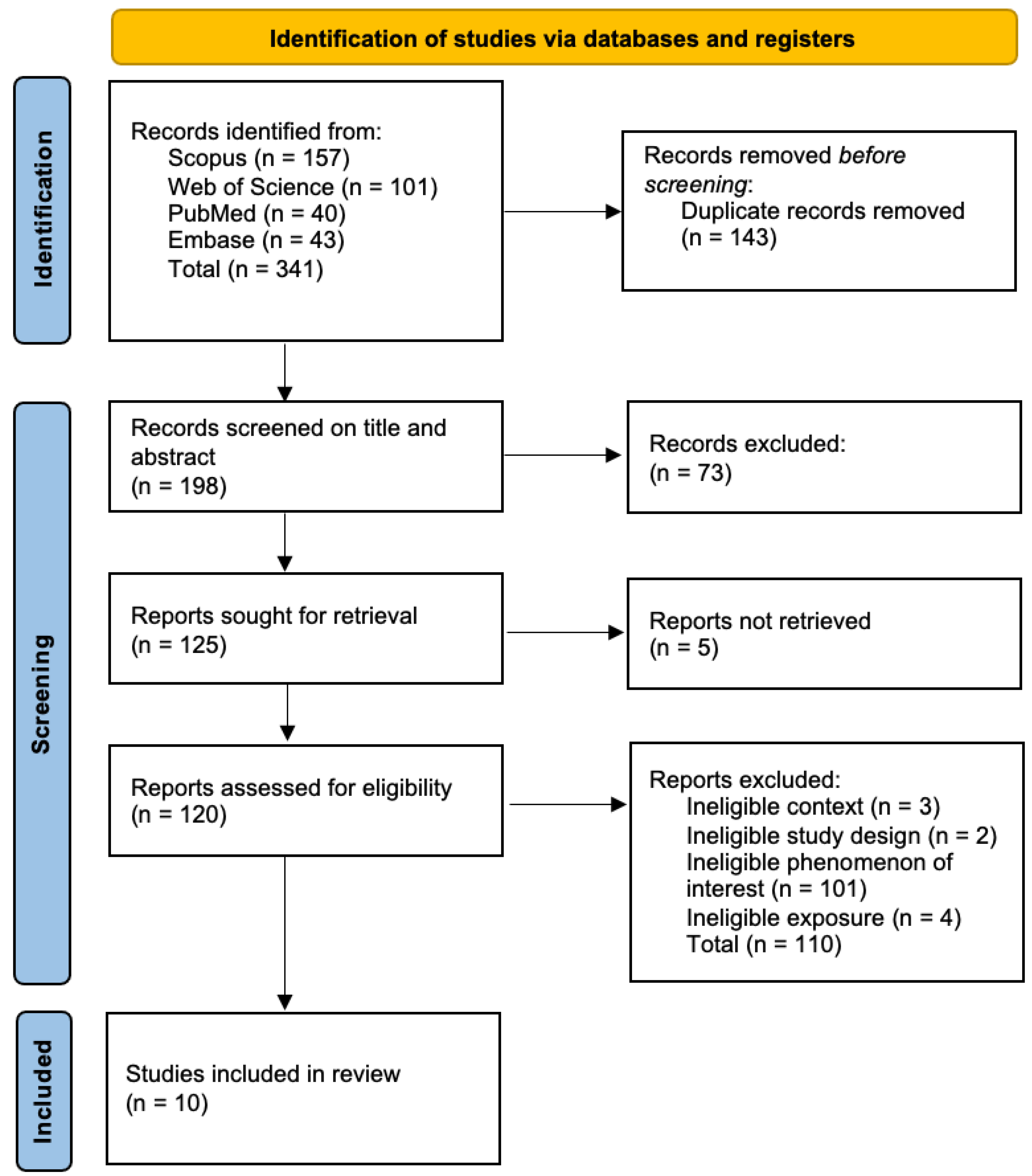
Figure 2.
Number of studies by state and livestock type of included studies.
Figure 3.
Conditions investigated in occupational health studies.
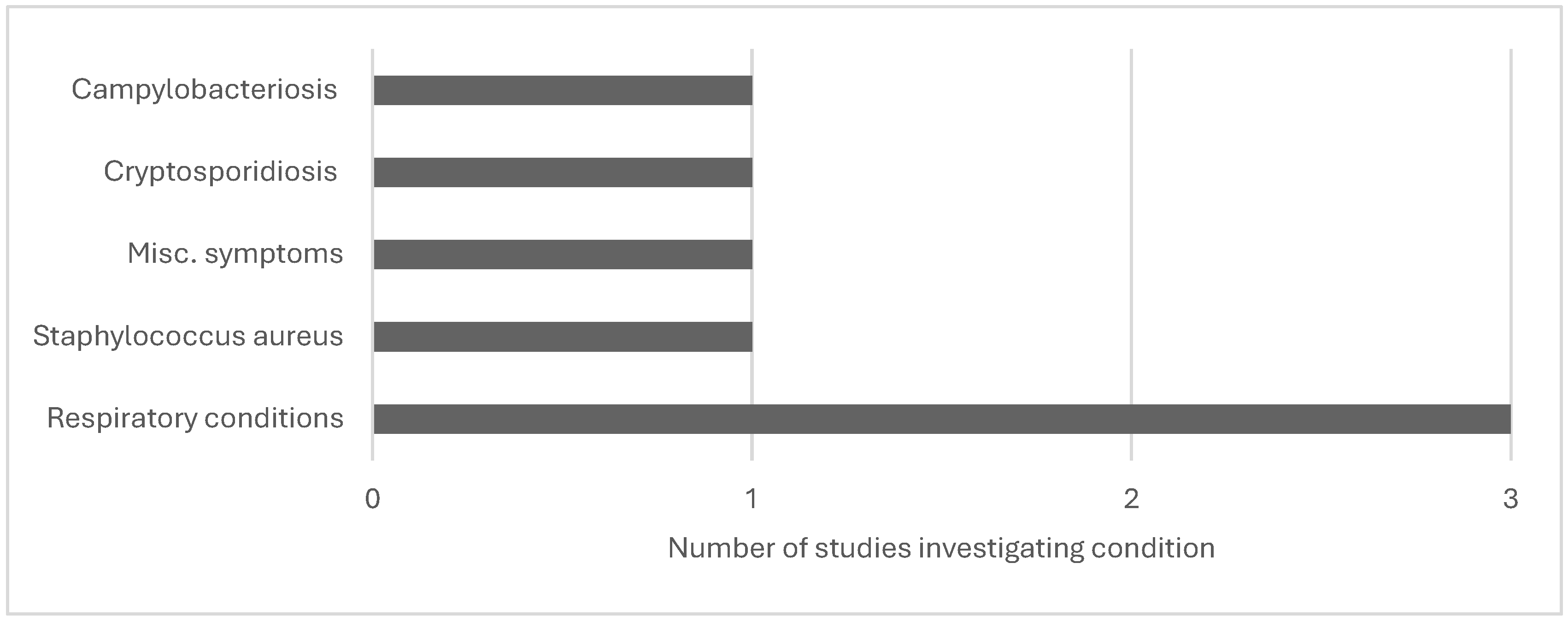
Figure 4.
Self-reported condition and symptom data. Data source: Ramos et al. (2018).
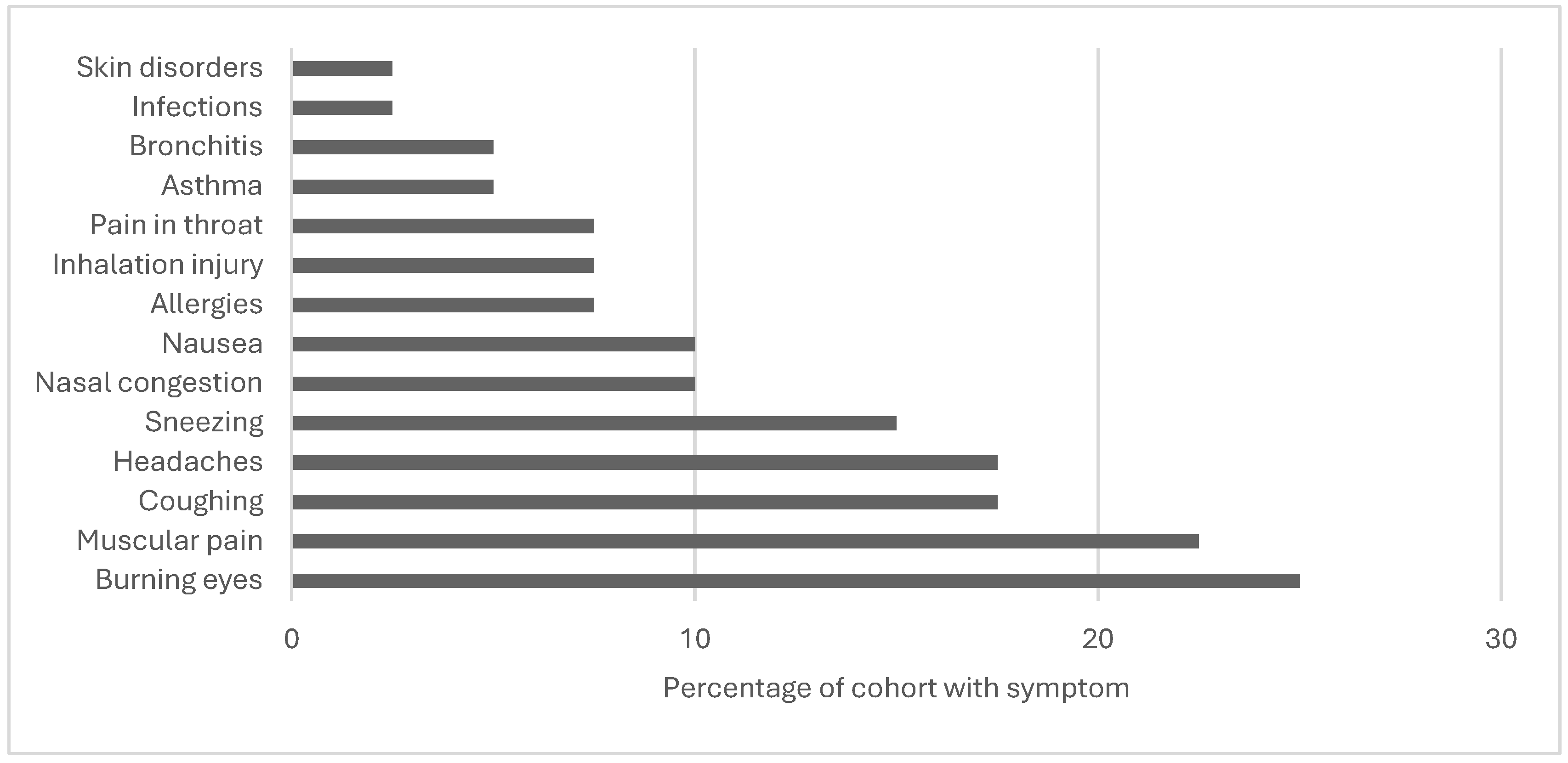
Figure 5.
Percentage of resistance of antibiotics in ambient air at swine facility in NC. Data source: Davis et al. (2018).
Figure 5.
Percentage of resistance of antibiotics in ambient air at swine facility in NC. Data source: Davis et al. (2018).
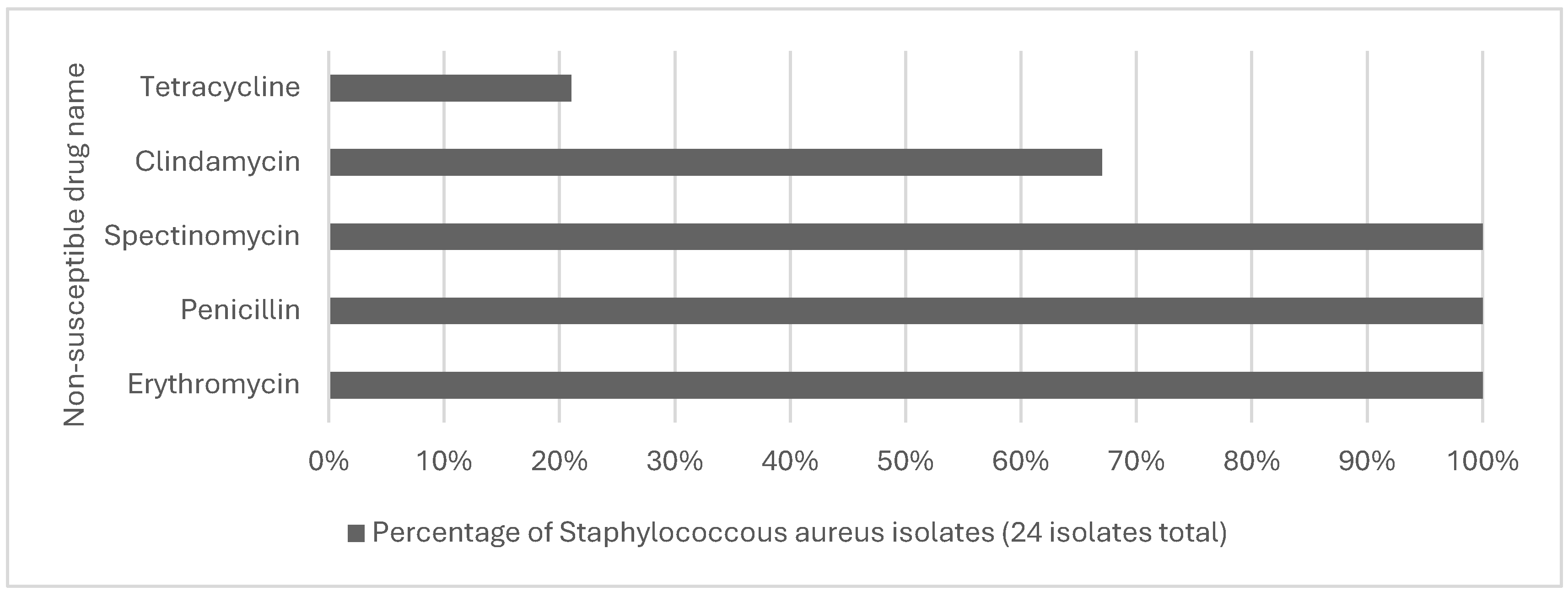
Figure 6.
Conditions investigated by community health studies.
Disclaimer/Publisher’s Note: The statements, opinions and data contained in all publications are solely those of the individual author(s) and contributor(s) and not of MDPI and/or the editor(s). MDPI and/or the editor(s) disclaim responsibility for any injury to people or property resulting from any ideas, methods, instructions or products referred to in the content. |
© 2024 by the authors. Licensee MDPI, Basel, Switzerland. This article is an open access article distributed under the terms and conditions of the Creative Commons Attribution (CC BY) license (https://creativecommons.org/licenses/by/4.0/).
Copyright: This open access article is published under a Creative Commons CC BY 4.0 license, which permit the free download, distribution, and reuse, provided that the author and preprint are cited in any reuse.


