

Submitted:
21 June 2024
Posted:
24 June 2024
You are already at the latest version
Abstract
Currently, one of the main challenges is the mitigation of the effects of climate change on the agricultural sector. Conventional agriculture, with the intensive use of herbicides and pesticides to control weeds and pests, and the improper use of mineral fertilizers, contributes to climate change by causing increased greenhouse gases and groundwater pollution. Therefore, more innovative technologies must be used to overcome these problems. One possible solution is nanotechnology, which has the potential to revolutionize the conventional agricultural system. Active nanoparticles can be used both as a direct source of micronutrients and as a delivery platform for bioactive agrochemicals to improve crop growth, yield and quality. The use of nanoparticle formulations, including nanopesticides, nanoherbicides, nano-fertilizers and nano-emulsions, has been extensively studied to improve crop health and shelf life of agricultural products. Comprehensive knowledge of the interactions between plants and nanoparticles opens up new opportunities to improve cropping practices through the enhancement of properties such as disease resistance, crop yield, and nutrient use. The main objective of this review is to analyze the main effects of climate change on conventional agricultural practices, such as the use of pesticides, herbicides and fertilizers. It also focuses on how the introduction of nanoparticles into conventional practices can improve the efficiency of chemical pest control and crop nutrition. Finally, this review examines in depth the last 10 years (2014-2024) of scientific literature regarding the use of nanoparticles in agriculture to mitigate the effects of climate change.
Keywords:
Climate change
; Land Management
; Land use
; Agricultural management
; Nanoparticles
; Crop physiology
; Crop establishment
; Biotic stress
; Abiotic stress
Highlights
- Climate change by negatively alters crop performance and cultivation areas
- Excessive use of mineral fertilizers and pesticides contribute to climate change
- Nanotechnology may be a solution in climate change mitigation in agriculture
- Nano-fertilizers deliver nutrients more efficiently, reducing negative effects
- Nano pesticides by reducing doses are more efficient in combating pests and weeds
1. Introduction
Nowadays agriculture is facing new challenges that are brought by climate change, the world population steadily needs safe food and high yields to feed all the people (Conti et al., 2021). Although the agricultural sector is one of the first sectors to be affected by climate change, it is also one of the biggest contributors to this phenomenon. It is therefore necessary to modify the entire production process of the agricultural sector so that it can adapt to the inevitable climate change. According to the European Union through the Farm to Fork Strategy, chemical fertilization must be reduced by 20% (Heyl et al., 2023), consequently, new innovative technologies must be applied in agriculture. Climate change affects some parameters (e.g. temperature, area of cultivation, rain patterns) that influence the growth of the main crop for human sustainability (Figure 1).

Table 1.
Main nanoparticles used as nano-fertilizers and their effects on plants.
| Botanical family | Plant involved | Nanoparticle | Function | Reference |
|---|---|---|---|---|
| Asteraceae | Helianthus annuus | Si NPs | Head diameter and grain yield enhanced, greater content of oleic acid and linoleic acid compared to the control | Ernst et al., 2023 |
| ZnO NPs | ||||
| Lactuca sativa | ZnO NPs | Biomass, chlorophyll, phenolics, flavonoids, and vitamin C increase | Garza-Alonso et al., 2023 | |
| Brassicaceae | Brassica napus | CeO2 NPs | Higher biomass and reduced stress conditions in an salinity-affected environment | Rossi et al., 2016 |
| Cucurbitaceae | Cucumis sativus | CeO2 NPs | Root biomass, Vitamin C and soluble sugar content enhanced, biotransformation of the rhizosphere | Xie et al., 2022 |
| Fabaceae | Glycine max | FeNPs | Number of root nodules boosted and nitrogen-fixing activity increased | Kots et al., 2024 |
| GeNPs | ||||
| CoNPs | ||||
| Medicago sativa | TiO2 | Stomata opening, antioxidant system, plant height, fresh weight increased | Chen et al., 2024 | |
| Poaceae | Oryza sativa | ZnO NPs | Shoot lenght, root lenght and amylase activity improved under cadmium stress | Li et al., 2021 |
| Triticum aestivum | CuO NPs | Plant height, spike lenght, grain and straw yield increased, pigments content enhanced, stress due to cadmium reduced | Alhaithloul et al., 2023 | |
| CeO2 NPs | Plant conditions improved under cadmium toxicity | Ayub et al., 2023 |
||
| Fe NPs | Plant growth enhanced, pigments content and micronutrients uptake increased under salinity stress | Zia-ur-Rehman et al., 2023 |
||
| Rosaceae | Fragaria ananassa | CeO2 NPs | Yield increase, greater pollen grain numbers and pollen tube elongation, total phenols, Vitamin C and soluble sugar content enhance | Dai et al., 2022 |
| Solanaceae | Solanum lycopersicum | AgNPs | Resistance to abiotic stress enhanced and stress parameters reduced | Narware et al., 2024 |
| ZnO NPs | Foliar spray increases crop growth and zinc uptake | Sun et al., 2023 |
Global warming can put the crop under severe stressed conditions and consequently, this leads to a significant decrease in crop yield. “Paris Agreement” stipulated in 2015 proposed not to exceed the global average temperature by 2 °C. The risks related to breaching this threshold are demonstrated by (Tijjani et al., 2024) who studied the reduction in yields of some crops, specifically up to -14% for maize (Zea mays) and -20% for soybean (Glycine max). In contrast to winter crops such as wheat (Triticum aestivum), Moriondo et al. (Moriondo et al., 2011) show that sunflower (Helianthus annuus) is more affected by heat stress. A key factor that determines the geographic areas in which crops can be grown and influences their growth rate, development and yield is temperature (Ur Rehman et al., 2015). Each crop is characterized by optimum temperature ranges for each phase of the growth cycle. Therefore, temperature fluctuations during the anthesis phase can cause a reduction in yield and disturb crop development (Luo, 2011). According to the Intergovernmental Panel on Climate Change (IPCC Working Group 1 et al., 2013), temperature change in tropical areas has generally harmed food production. However, the increase in maximum temperatures caused by climate change is beneficial for agricultural production in northern locations due to a longer growing season (Cui, 2020; Zhang et al., 2021). However, the negative effects of high temperatures are associated with and aggravated by other environmental factors, such as the frequency of precipitation, the presence of strong winds and the duration and intensity of sunlight. The consequent increase in temperature is correlated with an increase in water demand from the atmosphere, which leads to a consequent reduction in the availability of water to crops and thus a loss of crop yields (Zhao et al., 2017). On the other hand, the increase in temperature leads to indirect effects such as an increase in the frequency of heat waves, the influence on the presence of pests and the development of weeds and crop diseases (Field et al., 2014). Climate change can lead to the adaptation of invasive species, pathogens and pests, to agroecosystems different from their original one (Aluja et al., 2014). Another factor that has a severe impact on crop development is water availability. Climate change affects soil moisture storage, precipitation patterns, evaporation and runoff (Hakimovich and Alishovich, 2023).
Changes in rainfall patterns are of high relevance because more than 80% of the world’s crop production is supplied by rainfall. An increase in the frequency of drought events increases the probability of desertification occurrence (O’Rourke and Petersen, 2016). The main consequences of global warming that may affect plant tolerance and defense include heat stress and drought stress (Faiz et al., 2024). Corn (Z. mays), pea-barley (Lathyrus oleraceus) and wheat (T. aestivum) yield loss are limited under this condition (Wittwer et al., 2023). Considering that new strategies and sustainable practices must be adopted. For example, chitosan, which is obtained from arthropods or insects, and microbe-based biofertilizers can improve thermal tolerance by increasing plant’s immunity, antioxidants and hormones production, boosting nitrogen fixation, phosphorus dissolution in soil, crop biomass and photosynthesis rate; all of these considerations lead to better crop productivity and a greater yield (Dastogeer et al., 2022; Toaima et al., 2023). An innovative technology that can help in achieving this goal is represented by nanoparticles. The use of nanoparticles (NPs) could be a solution to alleviating situations and stresses caused by climate change. In fact, NPs are widely used in the agri-food chain, they can improve nutrients uptake in plant, they can enhance plant defense against biotic and abiotic stress and they can favor shelf-life products avoiding toxins presence (Mukarram et al., 2022). Indeed, its use has a promising impact on morphological, biochemical and physiological crop traits (Mahmoud et al., 2023), they allow an herbicide precise dose application (Amna et al., 2019) and they guarantee a better food coobservability (Bamisaye et al., 2023). This review aims to analyze the benefits and negative effects of the use of nanoparticles for reducing the influence of climate changes on agricultural chemical inputs, the control of crop pests and pathogens and food health and security. Furthermore, the following review reports the three areas where NPs are mainly employed: fertilization, weed management and food quality.
1.1. Climate Change on Fertilization
Conventional agriculture, over decades, has brought an increase of input inside the agroecosystem, such as heavy machines, fossil fuels and fertilizers compromising the natural fertility of the soil. During the last century, synthetic fertilizers have dramatically increased crop production per cultivated area. Both the production and application of fertilizers have a heavy impact on emissions. Fertilizers are widely used in supporting agricultural production and their high nitrogen and phosphorous content can lead to increased emissions of greenhouse gases (GHGs), including nitrous oxide (N2O) and ammonia (NH3), which can contribute to global warming. The use of the main fertilizers most important, containing nitrogen (N), phosphorus (P) and potassium (K) has increased considerably over the last 40 years, especially for nitrogenous fertilizers. Furthermore, while the use of phosphate and potash fertilizers has stabilized, especially in the last 20 years, the use of N fertilizers continues to increase (FAOSTAT, n.d.). If conventional agriculture is combined with climate change the situation is even more critical. Indeed, temperatures are increasing, and precipitations have become irregular and abundant. These phenomena, changing soil moisture and soil aeration, can result in nitrogen leaching (NO3-) and volatilization (NH3) contributing to eutrophication (Li et al., 2024). In parallel to nitrogen, climate change creates problems in phosphorous management, affecting overall crop production. P availability, uptake and translocation are affected by fluctuations in temperature, pH, drought and CO2 (Short et al., 2016). In fact, extremely low or high soil temperatures reduce P uptake and translocation. Furthermore, alkaline soil pH affects P concentration and decreases its uptake rate by plants. While, an acidic soil pH reduces the activity of soil microorganisms, the transpiration rate and the uptake and utilization fertilizer of P. Finally, increased CO2 concentration reduces the uptake of this macro element from the soil by plants (Maharajan et al., 2021). Regarding the connection between excessive fertilizer use and increased CO2 emissions, Guo et al. (Guo et al., 2022) showed that China’s excessive carbon dioxide emissions are due to the excessive use of chemical fertilizers in agriculture. Since mineral fertilizer application can bring these problems just listed, new technologies are required. Indeed, instead of using common fertilizer, it is possible to apply nano-fertilizer which is more sustainable, requires less quantities and boosts nutrient use efficiency in crops.
1.2. Climate Change on Agrochemicals
It is important to know that 99% of all synthetic chemicals, including pesticides, are derived from fossil fuels (CIEL, 2022). In addition to the production phase, pesticides can also release greenhouse gas emissions after their application. It has been shown that the application of fumigant pesticides can contribute to a significant increase in nitrous oxide production in the soil (EPA, 2012; Spokas and Wang, 2003). However, even if pesticide use is at one of the origins of climate change, studies show that the effects of climate change are likely to lead to an increase in the use of synthetic pesticides (Choudhury and Saha, 2020). This is mainly due to a reduction in the ability of crops to resist abiotic stresses, such as drought conditions that weaken the crops' natural defenses and change their biology, making them more vulnerable to pests (Guo et al., 2017; Taylor et al., 2018). In addition, rising temperatures are likely to stimulate the growth of pest insect populations in some regions, and there will be a change in the geographic regions of some insects and their potential winter survival rate (Jones et al., 2017; Lesk et al., 2017; Skendžić et al., 2021a). Tonnang et al. (2022) predicted that the increase in CO2 and temperature will lead to an acceleration in the metabolism and consumption of insect pests, leading to a decrease in crop yields. Furthermore, Thomson et al. (2010) predicted that the effects of climate change could cause pests to migrate to new areas where their natural enemies are absent, or cause a shift in life cycles, reducing the possibility of natural control. Some studies found that certain climatic changes affect different pests in different ways. For example, Pathak et al. (2012) demonstrate that smaller pests, such as aphids, mites or whiteflies, can be washed away during intense precipitation. Moreover, with the increase of periods of prolonged precipitation, plant fungal and bacterial diseases can become more common (Sutherst et al., 2011).
Therefore, climate impacts will have a significant influence on which pests become more prevalent for each specific region, crop, and pest. In addition, rising CO2 and temperature are likely to increase the pressure of weeds on cultivated crops. Weeds, having a diverse gene pool and greater adaptive capacity are more likely to be resilient and better adapted to the effects of climate change than cultivated crops (Varanasi et al., 2016). Increased carbon dioxide levels can probably increase the size and height of weed seeds, increasing their wind dispersal (Ziska et al., 2011). Moreover, Rodenburg et al. (Rodenburg et al., 2011, 2010) demonstrated that changes in rainfall patterns alter weed seed production and dispersal. Anwar et al. (2021) suggest that weeds will have a greater ability to compete with crops in many regions, leading to decreased yields. Similarly to pathogens, climate change is also capable of introducing weeds into new regions and changing regional species composition, particularly favoring invasive species (Peters et al., 2014). Regarding the durability of pesticides, the expected increase in temperatures will cause greater volatilization of the compounds, reducing their efficacy (Noyes et al., 2009). Bailey (2004) reported that increasing soil temperatures cause shorter duration of herbicides for weed control due to faster degradation. Conversely, low soil moisture has been linked to slower degradation of herbicides. Therefore, climate change will accelerate the degradation of pesticides, reduce their use for a shorter time and farmers will have to increase pesticide application rates (Choudhury and Saha, 2020; Delcour et al., 2015). The introduction of the use of nano-herbicides, with lower and more accurate application, can reduce the use of traditional agrochemicals and improve the effectiveness and efficiency of pest defense.
1.3. Climate Change on Post-Harvest
Climatic factors, such as temperature, precipitation and atmospheric CO2 concentration, influence fungal colonization and mycotoxin production (Magan et al., 2003). Therefore, fluctuations in these factors may lead to an increase/decrease in the relative risk of mycotoxin contamination during both field and post-harvest cultivation. Global warming not only has an impact on host-pathogen interactions but may favor the emergence of new diseases and changes in fungal biodiversity/microbiome and influence the geographic distribution of crops, pathogenic fungi and thus the mycotoxins they produce (Paterson and Lima, 2011, 2010). In addition, due to changes and alterations in the phenology of host plants (Jeger et al., 2007) and changes in the distribution and temporal activities of fungal pathogens (Desprez-Loustau et al., 2007; Shaw et al., 2008) will have both economic and social implications and costs (Bebber et al., 2013; Medina et al., 2015). Climate change not only brings problems during crop cultivation but there are also impacts on the shelf life of harvested products.
High temperatures can accelerate ripening resulting in fruits being less turgid and consequently less durable over time, other most common problems in post-harvest are fruit water loss, tissue fragility and surface browning due to mechanical injuries (Badiee et al., 2023). Moreover, global warming is causing fungal spores spreading which threaten fruit conservation and product quality by becoming dangerous for human health. Indeed, a study conducted by Thole et al. (2021) demonstrated that temperature increases can reduce fruit shelf-life by three to five days while fungal susceptibility is enhanced by 6% to 16%. Moreover, microorganisms can be a risk also for dried fruits, indeed fungi such as Aspergillus spp. can survive the drying process remaining dormant for a long period. Dried fruits more affected are apricots, vine fruits, figs, mulberries and prunes. Mycotoxins which are mostly produced by fungi and found in products are aflatoxins (AFs) and ochratoxin A (OTA). These mycotoxins are a global issue because they are heat-stable hence they survive heating processes (González-Curbelo and Kabak, 2023). Hence it is fundamental to prevent their creation by keeping low seed moisture content (SMC), guaranteeing both food safety and seed nutritional quality. In fact, an experiment conducted by Granado-Rodríguez et al. (2022) showed that when placing quinoa (Chenopodium quinoa) seed at an SMC between 5% and 12% the nutritional status is safeguarded. Spores spreading and high moisture levels can be avoided by using new innovative technologies able to reduce water content in the air, this solution can be found by taking advantage of nanoparticles.
2. Nanoparticles in Agriculture
Nanotechnologies can represent an alternative to synthetic compounds widely used in agriculture, reducing the environmental impact of traditional applications. Nanoparticles (NPs) can be applied at very low concentrations, minimizing the doses and frequency of treatments. NPs are characterized by having small dimensions (range of 1 to 100 nm), with unique surfaces and properties, allowing them to enter and interact with plant cells and tissues compared to the same material in another form (Qazi and Dar, 2020) (Figure 2).
Nanoparticles knowledges about their translocation mechanisms are limited, a study conducted on wheat and reported by (Zhu et al., 2020) found out that ZnO NPs can enter to the leaf epidermis through stomata. After that they pass through apoplastic pathway, lately a fraction of ZnO NPs dissolves in the apoplast releasing Zn cations while the remaining fraction is absorbed by mesophyll cells. Hence, this study demonstrates that stomata play a pivotal role in NPs mechanism of action. Nanoparticles can be applied also as a root application, in fact Iannone et al. (2016) stated that Fe3O4 nanoparticles are absorbed by roots and translocated thanks to apoplastic pathway in root cells. These NPs are not subjected to aerial part uptake but they contribute to enhance antioxidant enzyme activities improving roots defense.
Other nanoparticles, such as silica ones, follow the sap flow using simplastic and apoplastic pathway and finally they reach stem and leaves (Sun et al., 2014). In addition, trace elements such as selenium, in the form of NPs, are able to be absorbed by the roots and be transported to the aerial part leading to biofortification (Lyu et al., 2022). The development of nanoparticles with specific functions can be a possible solution to problems related to the development of crops, and the reduction of the use of fertilizers and pesticides. Vijayakumar et al. (2022) collected the various applications of nanoparticles in agriculture, focusing mainly on their function in stimulating and improving crop growth. In particular, they investigated how applying NPs in the form of nano-fertilizers (NFs) and nano-pesticides (NPs) makes the uptake of nutrients or chemical compounds of pesticides more effective by increasing the production and protection of plants against diseases. It is important to know that the effectiveness and responses of the plant to the presence of nanoparticles depend on their size and concentration. Furthermore, each crop reacts to the presence of NPs in the environment by expressing changes in morphological, physiological but also biochemical characteristics (Tolisano and Del Buono, 2023). Moreover, recent studies have demonstrated that nanoparticles can also influence seed germination, promoting seedling development by increasing cell division and enhancing certain biochemical pathways (Nguyen et al., 2022; Pereira et al., 2021). According to available published literature, the two main methods of NP application in crops are foliar treatment and root exposure (Khan et al., 2022). In the case of in vitro applications, nanoparticles can be added to culture media (Sarkar and Kalita, 2023). In addition to being a solution in nutritional and pathogenic control aspects in field crops, nanoparticles are a useful technology in the conversion of waste material to energy, in food preservation (Zhang et al., 2016).
Even though nanoparticles have many beneficial applications, it is necessary to assess all the risks that their use in the agricultural sector may cause in terms of the environment and the food chain (Qazi and Dar, 2020; Rico et al., 2011). According to Bhattacharjee et al. (2022), negative impacts on crops are generally found when the application of NPs is elevated and unresponsible. However, the available literature on this topic shows that using reasonable concentrations of nanoparticles which are appropriate to the treated crop helps to avoid harmful effects and achieve the desired benefits (El-Moneim et al., 2021; Ghani et al., 2022; Sun et al., 2020; Wang et al., 2022).
2.1. Nanoparticles as Nano-Fertilizers and Biofortificators
The two main problems with traditional phosphorus- and nitrogen-based fertilizers are their low nutrient uptake efficiency and rapid transformation into chemical forms that cannot be used by plants, leading to negative impacts on the soil and the environment, with an increase in hazardous greenhouse gas emissions and eutrophication (Raliya et al., 2018). Therefore, the use of innovative technologies such as nano-fertilizers, which gradually release nutrients, help to significantly reduce nutrient loss while ensuring environmental safety and play a significant role in maintaining soil fertility and improving crop yields (Congreves and Van Eerd, 2015; Ghormade et al., 2011).
Nanoparticles can be used as fertilizer by foliar application leading to a yield and growth improvement, furthermore, their distribution can improve plants' performance in facing pests and diseases. Indeed, nano-fertilizers: (1) provide plants with appropriate nutrients via foliar and soil applications, (2) increase the chlorophyll content in leaves (enhancing photosynthesis) (Thavaseelan and Priyadarshana, 2021), (3) are cost-effective resources, (4) have high efficiency (Zahra et al., 2022), and (5) play a key role in pollution prevention (Guru et al., 2015), (6)enhance the tolerance of plants to cope environmental stresses (salinity,drought) (Al-Mamun et al., 2021).The main ones contain zinc (Zn), calcium (Ca), manganese (Mn), silica (Si) and iron (Fe) oxide (Al-Antary and Ghidan, 2023; Yadav et al., 2023) (Figure 3).
Furthermore, with regard to the supply of macronutrients such as nitrogen, phosphorus and potassium, which is more problematic from an environmental point of view, the use of NFs based on these elements reduces the risks associated with traditional mineral fertilization and allows other important plant growth objectives to be pursued (Basavegowda and Baek, 2021; Sheoran et al., 2021)(Table 2).
Indeed, nitrogen nano-fertilizers not only improve the efficiency of use, but also reduce the leaching of this element thus reducing eutrophication and greenhouse gas emissions (Mejias et al., 2021). A study conducted by Sharaf-Eldin et al. (2022) stated that nano-nitrogen applied in combination through drip irrigation (75%) and foliar application (25%) can lead to a better yield if compared to common nitrogen fertilizers. On the other hand, also zinc is very important in the soil-plant-human system, inside plants it has a pivotal role in metabolism, it is part of many enzymes, it is involved in protein and RNA synthesis, and it contributes to membrane stability by scavenging reactive oxygen species (ROS). Zn deficiency can lead to delayed maturity, reduced grain yield and even high mortality, this is most likely to happen in crop species such as rice, wheat and tomato which are low tolerant to Zn deficiency (Natasha et al., 2022). Manganese is another pivotal microelement for plant development, it is involved in ROS detoxification, it has a main role in the first part of photosynthesis (water-splitting reaction in PSII), it contributes to lignin biosynthesis. Mn deficiency can lead to a decrease in biomass, in chlorophyll content and in the number of chloroplasts; it also causes high susceptibility to plant diseases (Alejandro et al., 2020).
Silica is mainly found as silicic acid Si(OH)4, this element can help plants in improving cell wall resistance thanks to silica bodies called phytoliths, it creates a physical barrier against pathogens and it enhances enzyme activity and endurance against biotic and abiotic stress (Currie and Perry, 2007). Si deficiency may reduce photosynthetic activity and grain yield (Chaiwong et al., 2021). Nano-fertilizer can be a promising approach in agriculture because of their effect on plants: their application can reduce nutrient requirements by plants and nutrient loss by leaching, moreover, they can increase low crop productivity and alleviate abiotic stress (Saraiva et al., 2023). Climate change can induce different kinds of stress inside the plant, for example, drought stress can cause growth slowdown, photosynthesis mitigation and stomatal closure (Lv et al., 2023). This stress can be reduced by using microelements or amino acids such as zinc and proline which can be sprayed on plants. For example, Hanif et al. (2023) demonstrated that proline-coated ZnO (ZnOP) NPs can increase shoot length, dry weight, and reduce flavonoids and phenolics concentrations.
Zinc-oxide nanoparticles (ZnO-NP) have a good response also in up taking nutrients application on seeds can enhance phosphorus uptake, chlorophyll and pigment content; while if applied through foliar spray to maize (Z. mays) plants it can enhance growth even of 11% (Ahmad et al., 2023). Hence nano-fertilizers bring also biofortification to crop physiology, a study conducted by Palacio-Márquez et al. (2021) showed that Zn can be applied also as zinc nitrate complexed with chitosan which can favor biomass accumulation and production, photosynthetic activity, total chlorophyll, amino acids and carotenoids increase; conversely, ZnO can accelerate plants maturation anticipating the harvest in green bean (Phaseolus vulgaris).
Also, magnesium (Mg) can be used as a nanomaterial able to mitigate drought stress, it can be applied as MgO and MgCO3. According to Silva et al. (2023), this nanoparticle treatment can lead to chlorophyll a, b and carotenoid accumulation in lettuce (Lactuca sativa). Another important compound which can prevent abiotic stress is salicylic acid (SA), in fact, due to climate change and abundant precipitation plants can live in anoxia periods. An experiment reported by Errázuriz-Montanares et al. (2023) found that root submersion stress in cherries (Fragaria ananassa) can be alleviated by applying on the leaf SA, this application at preharvest and postharvest can result in improving stomatal conductance and transpiration implying a better leaf gas exchange response and consequently an improved physiological situation. Also, selenium (Se) can be used as a nano-priming agent Setty et al. (2023) reported that soaking rice (Oryza sativa) seeds with different concentrations of Se nanoparticles (SeNPs) can lead to faster germination and imbibition. SeNPs can allow a quick water flow inside the cell, moreover, these nanomaterials enhance alpha-amylase activity bringing higher starch consumption and faster seedling growth.
Cerium oxide (CeO2) is a rare earth element, it shows interesting results in the most cultivated crops, and it has been demonstrated that its application at low concentrations has a positive effect on many crop species. The following studies come into disagreement since in the first case cerium caused phytotoxicity while in the second one, it reported many improvements. A study conducted in the Mediterranean region showed unexpected results: in a seed trial CeO2 reduces total root length while in barley (Hordeum vulgare) life cycle study negatively affects potassium and sulfur uptake (Mattiello et al., 2016). On the other hand, another experiment performed by Rico et al. (2014) on wheat (T. aestivum) reported that CeO2 can improve plant growth, shoot biomass, and grain yield. These studies indicate that sometimes the effectiveness of an application may depend on the species and nanomaterial nature.
Research that concerns wheat resistance to salt stress tested many nanoparticles based on zinc, aluminums, copper, and iron. The study showed that each element gives an effect for a specific parameter: Fe3O4 accelerated germination parameters, shoot length was increased by ZnONPs, CuO increased chlorophyll a, b and carotenoids content (Olatunbosun et al., 2023). However, the application of incorrect quantities of nano-fertilizers may cause negative effects due to nutrient toxicity (Hammok and Saeed, 2024). Before using this technology on a large scale, it is important to know the effects of nano-fertilizer degradation on crop growth and soil fertility. For these reasons, it is important to know how the structure (size, solubility, type of materials) and composition of NFs interact with climatic conditions (drought phenomena, heat waves, flooding) and soil parameters (ionic strength, organic matter content, pH, electrical conductivity and phosphate concentration) (Ameen et al., 2021; Dimkpa, 2018). Read et al. (2016) showed that when the soil pH is acid ZnO NPs change into iones very rapidly, whereas when the pH is alcaline the NP tend to be bounded. Shah et al. (2014) demonstrated that, ZnO and CuO did not play a significant role in the shifting of the microbial community structure. Instead, silver nanoparticles were the cause of the changes in the microbial community. Although, Asadishad et al. (2018) found that nanoparticles of CuO, ZnO, and Ag are toxic to soil microbes at concentrations between 1 and 100 mg/kg, but nanoparticles of titanium oxide (TiO) are not toxic at these levels. One of the most important aspects to consider is the dose of nano-fertilizer in each application. Indeed, improper doses, whether higher or lower, can cause toxic effects on crop health and production (Amirnia et al., 2014) and soil (Suresh et al., 2013). For example, Chai et al. (2015) demonstrated that the application of nano-fertilizers based on ZnO, TiO2 and CeO2 can cause the inhibition and reduction of enzyme activity and abundance of functional bacteria. Furthermore, Morales-Díaz et al. (2017) argue that the use of nano-fertilizers based on ZnO, TiO2, Fe3O4 causes a reduction in microbial biomass in the soil, reducing soil enzyme activities. Similarly, Jośko et al. (2014) showed that high application doses can negatively affect the activity of the dehydrogenase enzyme. Therefore, these studies, by highlighting the critical issues in the application of nano-fertilizers, demonstrate the need to clarify the interaction between the application of NFs and the factors involved in the improvement of crop growth and productivity. Finally, it is important to carry out further studies to identify the optimal dose to eliminate the harmful effects that NFs can cause on crops and soil.
2.2. Nanoparticles as a New Strategy in Weed and Pests’ Management
In modern agriculture, the use of agrochemicals is typically aimed at protecting cultivated plants from pests (pathogens, harmful insects, parasitic weeds) that impair their production and productivity. European Green Deal asks to reduce by 50% pesticide application including herbicides (Triantafyllidis et al., 2023), hence innovative and sustainable products must be studied. It is well-known that herbicide overuse can lead to greenhouse gas emissions, and biodiversity loss and favor herbicide-resistant species (Narayana Rao and Korres, 2024).
A new strategy in weed management, during this climate change era, can be represented by nano-herbicides (NHs), these new nanotechnologies are seen as a promising finding between agrochemicals. Nano-herbicides can guarantee low toxicological implications and just a few residues in soil and environment, since they have a specific target low quantities are required and costs are reduced (Amna et al., 2019)(Table 2). Mainly, NHs are applied as a foliar spray, they enter inside the stomata and then they use the xylem or the apoplast transportation to reach the membrane (Akintelu et al., 2023). They are built with eco-friendly materials, consequently their toxic accumulation is avoided in crops and soil (Dong et al., 2023). This new kind of application has been tested also on seeds, an herbicide called 2-methyl-4-chlorophenoxyacetic acid (MCPA) has been encapsulated in a zinc-layered hydroxide (ZLH) creating a zinc-layered hydroxide-2-methyl-4-chlorophenoxyacetic acid (ZMCPA). This engineered herbicide reduced the chlorophyll of the plant, destroying vascular growth and causing cells to burst (Johari et al., 2023).
MCPA is persistent in the soil just for a month, anyway, it may still be able to damage nontarget organisms, hence, using ZLH as a nanocarrier can be a sustainable solution to avoid environmental risk. This nano-formulation has been tested also on weeds by lowering pigment content, number of leaves and plant height (Hasrin et al., 2023). Also, element-based nano-formulations can result in having an herbicidal effect, in fact, silver nanoparticles (Ag NPs) can be obtained from a botanical biosynthesis. Ag NPs can alter Bidens pilosa development by arresting seed germination and seedling growth (Jiang et al., 2023). An experiment conducted by Khan et al. (2023b) tested two nano-herbicides wrapped by a chitosan matrix, the study reported that both clodinofop propargyl and fenoxaprop-P-ethyl can be used to reduce Avena fatua and Phalaris minor growth in wheat (T. aestivum) field. The same author filled chitosan nanoparticles with mesosulfuron methyl + florasulam + MCPA isooctyl, this nano-herbicide applied at the recommended dose of normal herbicide showed a mortality of 100%, consequently at this treatment plant height, chlorophyll content, fresh and dry biomass are not reported (Khan et al., 2023a). It is important to study this new nanotechnology to assess its potential phytotoxicity, indeed research conducted by Evy Alice Abigail (2019) used biochar (BC) as nano-sorbent creating a nano-formulation with 2,4-dichlorophenoxyacetic acid (2,4-D), this experiment showed that 2,4-D+BC affected weed growth without reducing maize (Z. mays) biomass. NPs can be useful also for insects’ reduction, due to climate change these pests are spreading and they are causing several damages to crop production. Furthermore, because of temperature increase, new habitats are becoming available for allochthonous species putting at risk crop production (Rocchia et al., 2022). Hence new strategies, such as nanoparticles, must be studied to face these problems brought by climate change. Indeed, some preliminary studies conducted in vitro on mealybug (Puto barberi), which cause damage to plants roots, have already reported that a ZnO-NPs 300 ppm suspension can bring a 55% mortality, in fact this type of NPs has the ability to dehydrate the phytophage cuticle (Agredo-Gomez et al., 2024).
ZnO-NPs have been showed to be promising also by Rebora et al. (2023), in fact zinc nanoparticles have the property of binding to attachment structures (Pulvilli, hairy pads, claws), in this way NPs inhibit the attachment mechanism to surfaces in Hemiptera insects such as Nezara viridula. Another inhibition technique is represented by silicon NPs, in fact, if insects feed on plants treated with SiNPs this can result in nanoparticle accumulation inside the gastrointestinal tract and digestion is avoided (Bhatnagar et al., 2024). Furthermore, iron nanoparticles (FeNPs) obtained from Trigonella foenum-graecum extract can increase Helicoverpa armigera and Spodoptera litura mortality by having an antifeedant effect (Muthusamy et al., 2023). S. litura larvae has shown also a 100% mortality at ZnO-NPs application, these NPs make insects unable to develop a physiological defense (Thakur et al., 2022). A larvicidal effect has been reported also by Shahid et al. (2022) silver nanoparticles, AgNPs are able to penetrate through cuticle and then they bind themselves with phosphorous and sulfur proteins causing cell membrane instability.
Hence these new nanotechnologies are important because they can (i) reduce synthetic pesticide application and consequently they mitigate climate change, then (ii) they represent an eco-friendly and cost-effective solution for the environment and for farmers (Shahid et al., 2022). Due to the long-term release of the active ingredient being one of the main purposes for which nano formulates are developed, it is important to understand their capacity and degradation rate in the environment. The incorrect use of this nanotechnology can affect living organisms negatively, as they are characterized by their very small size and can accumulate in the food chain and be transported by air, causing damage to human and animal health. In addition, nano-herbicides can block the flow in the vascular bundle of plants and reduce pollination. Moreover, have negative impacts on soil microbial communities and some algae (Muchhadiya et al., 2022). Despite the reduction in the amount of active ingredient used in nano formulations Kah et al. (2013) through a study suggested that these applications could also be toxic to non-target organisms. However, nano pesticides, like conventional ones, can also be subject to leaching following rainfall events, causing negative environmental effects (Bombo et al., 2019). Despite this, Gao et al. (2018) reported that nano-formulations cause, unlike conventional pesticides, less environmental pollution due to lower application rates and reduced losses. Therefore, investigation is required on the ability of these nanoparticles to produce toxic effects through their bioaccumulation in the soil and their translocation in different environmental sectors up to the food chain (Huang et al., 2018; Hayles et al., 2017).
2.3. Nanoparticles, Pre- and Post-Harvest Preservation, Food Quality and Packaging
Climate change exposes food factories to many challenges, such as food production and its conservation, due to global warming numerous pathogens such as fungi proliferate and produce toxins that threaten food production. Nanoparticles called nano-emulsions (NEs) can be used in the food industry to deal with food quality and packaging, but also as carriers able to incorporate healthy compounds inside the finished product. Moreover, NEs improve texture, nutrient quality, taste and resistance against unwanted microorganisms (Bamisaye et al., 2023). Nano-emulsions can be used in food packaging with coatings and films extending shelf-life products, furthermore, they can be used singularly as edible envelopes capable of bringing flavorings, colorings, useful enzymes and antioxidants (Gupta et al., 2023).
Crop storage and processing can be altered because of mycotoxins, one of these produced by Aspergillus spp. is called aflatoxin: this compound is carcinogenic and teratogenic, it is dangerous for humans and animals' health, moreover, reduces cereal quality production. It has been reported by Loi et al. (2023) that it is possible to use nanomaterials called magnetic nanoparticles which are able, thanks to their metal nature, to bind mycotoxins and spoil them. Climate change challenges are represented also by fruits and vegetable post-harvest durability over time, hence new conservation strategies must be found, in this way, it would be possible to reduce post-harvest losses. A study reported by Hussain et al. (2020) stated that it is impossible to improve fruits and vegetables' shelf-life through a new process called desiccant air-conditioning (DAC) system, this new kind of storage can solve problems brought about by climate change such as high transpiration and respiration in postharvest. DAC consists of two phases, the first one which is called dehumidification uses nanoparticles as a silica gel that can absorb air moisture. The second phase, regeneration, restores starting conditions. Mariadoss et al. (2019) showed that synthesis, through aqueous extract of Punica granatum peel, of zinc oxide nanoparticles can be effective as antibacterial agents against standard strains of Staphylococcus aureus and Escherichia coli (Ghidan et al., 2017). In other hands, nanoparticle application can bring an alleviation from toxicity present in the soil that could interfere with plant growth and production, both in quantity and quality, creating a threat to consumers.
An example of phytotoxicity in the soil is brought by heavy metal, cadmium (Cd) excessive uptake and accumulation are becoming very common in plant tissues, in the environments and the crop fields. The combined foliar application of chitosan and putrescine as nanoparticles (CTS-Put NPs) can increase chlorophyll and carotenoid content in grapevine (Vitis vinifera), they improve chlorophyll fluorescence parameters and reduce Cd content in leaves and roots (Panahirad et al., 2023). Another toxic element is arsenic (As) which is naturally found in the soil, firstly it reduces root growth damaging cell membranes, lowering nitrogen and sulfur assimilation and decreasing plant transpiration and biomass. In plants such as soybean (G. max) As exposure reduces the number of nitrogen-fixing root nodules, this stress can be neutralized thanks to magnesium oxide nanoparticles (MgO-NPs) which can improve plant height, dry weight, net photosynthesis rate and stomatal conductance in stressed plants (Faizan et al., 2022; Finnegan and Chen, 2012). Another element which can interfere with plant growth is aluminum (Al), its high presence can stop elements uptake (phosphorus, calcium, potassium, magnesium) by restricting roots. Carbon loaded with tungsten oxide has proven to remove Al3+ from soil (Shetty et al., 2021). Despite the many advantages of this nanotechnology, however, it is important to understand the importance of the stability of the nano-emulsion formulation used. These are influenced by parameters such as temperature and pH, which can affect the solubilization of the applied substances (Mishra et al. 2014). In addition, characteristics such as input availability, kinetics, acceptability and polarity are also relevant aspects to be taken in consideration when developing NEs. Being that surfactants/surfactants are present in the formulation of NEs, in addition to nanoparticles, it is important to understand their fate in the environment and in the food chain (Bajpai et al. 2018).
In a review, Loira et al. (2020) recommended delaying the use of these new technologies in the food industry because these issues are not fully understood. Smolkova et al. (2015) discussed the effects that bioaccumulation of nanoparticles can cause at the epigenetic level. Gaillet and Rouanet (2015) suggested that Ag NPs can cause inflammation in the intestinal tract. Negative effects have also been observed in NPs based on CuO (Naz et al., 2020) and on ZnO (Czyżowska and Barbasz, 2022). However, the point remains that the toxicity of a metallic nanomaterial may vary depending on the state of oxidation, binders, solubility and morphology, as well as environmental and health conditions (Sengul and Asmatulu, 2020). Moreover, is important to realise that toxicity is given by the dose, exposure time, surface coating characteristic, and especially the size of the nanoparticle (Maynard et al. 2006). Although the use of nanotechnology at the food level does not yet have legislation (Linsinger et al. 2013), EFSA Scientific Committee in 2018 has published a paper assessing the risks and making suggestions in the use of nano-emulsions in the food sector.
3. A bibliometric Analysis of Nano-Particles Used in Agriculture for Cope Climate Change
3.1. Preface
The climate change affect negatively agricultural system, including global warming (Lionello and Scarascia, 2018), change of rainfall pattern (Trenberth, 2011), and weed and pests spread (Skendžić et al., 2021b; Storkey et al., 2021). In the challenge of climate change mitigation, the use of nanotechnology is key to addressing today's increasingly important issues for environmental sustainability. In particular, the use of nanoparticles appears to be of recent interest in solving various problems related to conventional agriculture and climate change. Using nanoparticles as containers, they can be used in the agricultural sector as a means of transporting fertilizers, agrochemicals and post-harvest food durability products. Among other advantages, it is useful to say that through foliar or root applications, nanoparticles deliver nutrients more effectively and efficiently while reducing the amount of fertilizer. This is also important in the application of pathogen and weed control treatments, where there is less input of agrochemicals and better control. A bibliometric analysis was conducted to review the nanoparticles-related studies in the worldwide literature from 2014 to 2024 to provide information on specific aspects over time, to identify current research trends, to highlight the importance and to understand the research progress and future studies regarding these nanotechnologies.
3.2. Methodology
The Scopus database was used in this study to collect the set of published articles on the topic of nanoparticles research. The search query (Figure 4) is selected in the Scopus database as TITLE-ABS-KEY (“nanoparticles” AND “climate change” AND “agriculture”).
The search performance was carried out in March 2024 and resulted in 186 articles. The table of documents is exported in CSV format and the database file is then used as the input data for bibliographic analysis. The search retrieved 186 documents which had studies conducted in 16 different countries from 2014 to 2024. VOS viewer (van Eck and Waltman, 2010) was utilized to construct and visualize the different networks used in this work. In addition, an analysis was conducted to observe how the nanoparticles (NPs) theme is related to other important topics such as: the presence of insects that due to climate change are reproducing very fast causing enormous damage, the proliferation of weed that reduce yields, fertilization that can be improved thanks to NPs, food security that is becoming increasingly important, and plant growth that can be helped thanks to micro- and macro-nutrients in the form of nanoforms. Queries used are respectively TITLE-ABS-KEY ("nanoparticle" AND "insect"), TITLE-ABS-KEY ("nanoparticle" AND "weed"), TITLE-ABS-KEY ("nanoparticle" AND "fertilization"), TITLE-ABS-KEY ("nanoparticle" AND "food security") and TITLE-ABS-KEY ("nanoparticle" AND "plant growth"). Later for each query a bar chart was produced reporting for each related nanoparticle topic the number of documents published over years. All the documents found in the queries (5318 results) were used to create stacked bar charts that report which are the topics related to NPs mainly studied in the last ten years and their percentage frequency of study.
3.3. Results and Discussion
3.3.1. The Geographical Distribution of Publications and Top Contributing Organizations
Figure 5 represents the geographical distribution of publications including the keyword “nanoparticles” in Scopus from 2014 until 2024 showing the top countries in the field of NPs research in terms of the number of publications. India (76 articles) has the highest publication number in the field, followed by China (22 articles) and Egypt (19 articles), United States (18 articles), Pakistan (17 articles) and Italy (11 articles).
Other countries such as Iran, Russian Federation, United Kingdom and Saudi Arabia have almost less than 10 numbers of articles. The study of nanotechnology has the potential to open up new horizons in research and development in various disciplines, ranging from healthcare/medicine, electronics, agriculture, water treatment, food processing and cosmetics. Many of these applications are very relevant to developing countries like India. The development of nanotechnology in this country was conceived and pursued primarily on the premise that this new and emerging technology has the potential to help the population address social challenges such as drinking water supply, healthcare, etc. Therefore, since the early 2000s, the Indian government has played a pioneering role in fostering and promoting nanotechnology research and development in the country (Kumar, 2014). This is the reason why India is the most prolific country in terms of publications on this topic. Instead, the fact that China is one of the most productive countries in nanoparticle research may be because this nation's scientific interest in the development of nanoscience and nanotechnology has been high since its initial stage (Bai, 2006).
3.3.2. Most Influential Publication
Tang et al. (Tang et al., 2017) is the most cited paper with 338 publications, this article explains how cellulose nanocrystals are important in carbon dioxide production by mitigating climate change. The other studies are mainly related to plant stress (Bahrulolum et al., 2021; Zulfiqar and Ashraf, 2021), toxicity (Shetty et al., 2021) and NP uptake (Avellan et al., 2021; Sarkar et al., 2015). Hence this allows to confirm what was reported in Figure 8: publications about NPs and insects are decreasing, while food security research is not in the ranking (Table 3) because it is still growing.
3.3.3. Keywords Analysis
According to Scopus there are almost 896,000 documents found if “nanoparticle” is used as a keyword, by adding the words “climate change” and “agriculture” in the query only 186 publications are resulted (only 0.2% of the total). This means that nanoparticles are still little studied and applied in the world of agriculture despite the many benefits they can provide. The co-occurrence map, using the keywords of the 186 articles in the Scopus database, revealed the most occurrence index keywords (Figure 6).
The size of the circles is determined by the relevance of the words within the network. The bigger the circles, the bigger the occurrence of the keyword within the addressed data set. It can be seen that together with nanotechnology, agriculture and climate change, many words are closely associated, the most important of which are plant growth, abiotic stress and crops. All keywords were ranked from least to most recent. From Figure 6, it can be seen that the keywords 'agriculture', 'climate change' and 'nanotechnology' are present in the articles between 2021 and 2022. The topics associated with these three keywords are correlated by having a color tending towards yellow, so they are recent in the literature. ‘Agriculture’, ‘climate change’ and ‘nanotechnology’ keywords are very close in the bibliometric analysis, this means that they are strongly related to each other.
Moreover, they are surrounded by big circles suggesting that they are very important topics. From this bibliometric analysis is possible to deduce that ‘agriculture’, ‘climate change’ and ‘nanotechnology’ keywords are linked to plant topics (growth, physiology, biotic and abiotic stress, fertilization, drought), environment topics (heavy metals, ecosystem, salinity, lead, cadmium) and food topics (food safety, yield, food supply). According to Figure 7, it is possible to notice that nanoparticle-related topics have over the past 10 years been increasingly the object of study, all the bar charts show a positive trend. The topic that has experienced the greatest surge is food safety, in fact in 2014 only 1 document had been produced while in 2023 160 documents were published (Figure 7.D). Furthermore, thanks to Figure 8, it can be seen that over time the amount of insect studies related to NPs has decreased (just over 15 percent) while research related to plant growth (more than 50 percent) and food security (about 10 percent) have increased. With regard to food safety, the fact that studies related to it have increased would indicate an increase in hazards in food preservation.
4. Final Remarks and Future Challenges
Rising temperatures and changing rainfall patterns are some of the main effects of climate change, these two main factors can bring other several problems such as stressed plants, weed spreading and spores proliferation during food storage. Moreover, the uncontrolled and excessive use of pesticides and fertilizers in modern agriculture is aggravating this situation. Due to global warming, plants are submitted to new stress, hence nutrient uptake, plant defense and biofortification are favored by NPs. All the studies reported show how microelements are essential for plant development. Through the adoption of nanotechnologies such as nanoparticles, the mitigation of the effects of climate change can be achieved. In fact, through the insertion of macronutrients (N, P, K) and microelements (Fe, Zn, Mg) inside the nanoparticle, it is possible to bring nourishment to the plant in a slow and continuous way avoiding environmental problems such as eutrophication of water.
Moreover the amount of nano-fertilizer required is low, this means a reduction in costs for farmers. Conversely, inserting agrochemical compounds inside the nanoparticles, for the control of insects and weeds, it is possible to carry out a more accurate and effective fight using very small doses of chemical compounds. In this way it is possible to significantly reduce the release of pollutants in the agroecosystem. Furthermore, nanoparticles are important in increasing the shelf life of agricultural products in the trade chain and reducing their perishability. In fact the bibliometric analysis and the search of the main topic related to NPs shows that the research in food safety is increasing exponentially. Therefore, nanoparticles adapted for agricultural needs such as nano-fertilizers, nano-pesticides and nano-emulsions can be a solution in reducing the negative impacts of the agricultural sector on climate change. It is therefore necessary to continue studying the benefits and possible problems of these technologies, improving their functioning and developing other nanotechnological solutions.
Acknowledgments
This research is a part of Valentina Quintarelli’s Ph.D. thesis entitled “Impact of sustainable agronomic practices for the improvement of agricultural production”, funded by the University of Ferrara.
References
- Agredo-Gomez, A.D., Molano-Molano, J.A., Portela-Patiño, M.C., Rodríguez-Páez, J.E., 2024. Use of ZnO nanoparticles as a pesticide: In vitro evaluation of their effect on the phytophagous Puto barberi (mealybug). Nano-Structures and Nano-Objects 37, 101095. [CrossRef]
- Ahmad, W., Nepal, J., Xin, X., He, Z., 2023. Agronomic Zn biofortification through nano ZnO application enhanced growth, photosystem efficiency, Zn and P nutrition in maize. Archives of Agronomy and Soil Science 69, 3328–3344. [CrossRef]
- Akintelu, S.A., Olabemiwo, O.M., Ibrahim, A.O., Oyebamiji, J.O., Oyebamiji, A.K., Olugbeko, S.C., 2023. Biosynthesized nanoparticles as a rescue aid for agricultural sustainability and development. International Nano Letters 13, 15–40. [CrossRef]
- Al-Antary, T.M., Ghidan, A.Y., 2023. Strengths and weaknesses of metal oxide nanoparticles in agriculture, in: Nanometal Oxides in Horticulture and Agronomy. pp. 353–376. [CrossRef]
- Al-Mamun, M.R., Hasan, M.R., Ahommed, M.S., Bacchu, M.S., Ali, M.R., Khan, M.Z.H., 2021. Nanofertilizers towards sustainable agriculture and environment. Environmental Technology & Innovation, 23, 101658. [CrossRef]
- Alejandro, S., Höller, S., Meier, B., Peiter, E., 2020. Manganese in Plants: From Acquisition to Subcellular Allocation. Frontiers in Plant Science. [CrossRef]
- Alipour, M., Saharkhiz, M.J., 2016. Phytotoxic activity and variation in essential oil content and composition of Rosemary (Rosmarinus officinalis L.) during different phenological growth stages. Biocatalysis and Agricultural Biotechnology 7, 271–278. [CrossRef]
- Aluja, M., Birke, A., Ceymann, M., Guillén, L., Arrigoni, E., Baumgartner, D., Pascacio-Villafán, C., Samietz, J., 2014. Agroecosystem resilience to an invasive insect species that could expand its geographical range in response to global climate change. Agriculture, Ecosystems and Environment 186, 54–63. [CrossRef]
- Ameen, F., Alsamhary, K., Alabdullatif, J. A., ALNadhari, S. 2021. A review on metal-based nanoparticles and their toxicity to beneficial soil bacteria and fungi. Ecotoxicology and Environmental Safety, 213, 112027. [CrossRef]
- Amirnia, R., Bayat, M., Tajbakhsh, M., 2014. Effects of nano fertilizer application and maternal corm weight on flowering at some saffron (Crocus sativus L.) ecotypes. Turkish Journal of Field Crops, 19(2), 158-168. [CrossRef]
- Amna, Alharby, H.F., Hakeem, K.R., Qureshi, M.I., 2019. Weed Control Through Herbicide-Loaded Nanoparticles, in: Nanomaterials and Plant Potential. pp. 507–527. [CrossRef]
- Anwar, M.P., Islam, A.K.M.M., Yeasmin, S., Rashid, M.H., Juraimi, A.S., Ahmed, S., Shrestha, A., 2021. Weeds and their responses to management efforts in a changing climate. Agronomy. [CrossRef]
- Asadishad, B., Chahal, S., Akbari, A., Cianciarelli, V., Azodi, M., Ghoshal, S., Tufenkji, N. 2018. Amendment of agricultural soil with metal nanoparticles: Effects on soil enzyme activity and microbial community composition. Environmental science & technology, 52(4), 1908-1918. [CrossRef]
- Avellan, A., Yun, J., Morais, B.P., Clement, E.T., Rodrigues, S.M., Lowry, G. V., 2021. Critical Review: Role of Inorganic Nanoparticle Properties on Their Foliar Uptake and in Planta Translocation. Environmental Science and Technology. [CrossRef]
- Badiee, F., Selahvarzi, Y., Abedi, B., Sayyad-Amin, P., 2023. Effect of Deficit Irrigation and Hand Thinning on Post-harvest Quality of Apple Cv. ‘Golab.’ Erwerbs-Obstbau 65, 435–442. [CrossRef]
- Bahrulolum, H., Nooraei, S., Javanshir, N., Tarrahimofrad, H., Mirbagheri, V.S., Easton, A.J., Ahmadian, G., 2021. Green synthesis of metal nanoparticles using microorganisms and their application in the agrifood sector. Journal of Nanobiotechnology. [CrossRef]
- Bajpai, V.K., Kamle, M., Shukla, S., Mahato, D.K., Chandra, P., Hwang, S.K., Kumar, P., Huh, Y.S., Han, Y.K., 2018. Prospects of using nanotechnology for food preservation, safety, and security. J. Food Drug Anal., 26, pp. 1201-1214. [CrossRef]
- Bai, C., 2006. The Advancement of Nanoscience and Nanotechnology in China, in: Science Progress in China. pp. 175–188. [CrossRef]
- Bailey, S.W., 2004. Climate change and decreasing herbicide persistence, in: Pest Management Science. pp. 158–162. [CrossRef]
- Bamisaye, A., Adegoke, K.A., Alli, Y.A., Bamidele, M.O., Idowu, M.A., Ogunjinmi, O.E., 2023. Recent advances in nanoemulsion for sustainable development of farm-to-fork systems. Journal of Cleaner Production. [CrossRef]
- Basavegowda, N., Baek, K.H., 2021. Current and future perspectives on the use of nanofertilizers for sustainable agriculture: The case of phosphorus nanofertilizer. 3 Biotech. [CrossRef]
- Bebber, D.P., Ramotowski, M.A.T., Gurr, S.J., 2013. Crop pests and pathogens move polewards in a warming world. Nature Climate Change 3, 985–988. [CrossRef]
- Bhatnagar, S., Mahanta, D.K., Vyas, V., Samal, I., Komal, J., Bhoi, T.K., 2024. Storage Pest Management with Nanopesticides Incorporating Silicon Nanoparticles: A Novel Approach for Sustainable Crop Preservation and Food Security. Silicon. [CrossRef]
- Bhattacharjee, R., Kumar, L., Mukerjee, N., Anand, U., Dhasmana, A., Preetam, S., Bhaumik, S., Sihi, S., Pal, S., Khare, T., Chattopadhyay, S., El-Zahaby, S.A., Alexiou, A., Koshy, E.P., Kumar, V., Malik, S., Dey, A., Proćków, J., 2022. The emergence of metal oxide nanoparticles (NPs) as a phytomedicine: A two-facet role in plant growth, nano-toxicity and anti-phyto-microbial activity. Biomedicine and Pharmacotherapy. [CrossRef]
- Carvalho, L.B., Godoy, I.S., Preisler, A.C., de Freitas Proença, P.L., Saraiva-Santos, T., Verri, W.A., Oliveira, H.C., Dalazen, G., Fraceto, L.F., 2023. Pre-emergence herbicidal efficiency and uptake of atrazine-loaded zein nanoparticles: A sustainable alternative to weed control. Environmental Science: Nano 10, 1629–1643. [CrossRef]
- Chaiwong, N., Rerkasem, B., Pusadee, T., Prom-u-thai, C., 2021. Silicon application improves caryopsis development and yield in rice. Journal of the Science of Food and Agriculture 101, 220–228. [CrossRef]
- Choudhury, P.P., Saha, S., 2020. Dynamics of pesticides under changing climatic scenario. Environmental Monitoring and Assessment. [CrossRef]
- CIEL, 2022. Fossils, Fertilizers, and False Solutions: How Laundering Fossil Fuels in Agrochemicals Puts the Climate and the Planet at Risk.
- Congreves, K.A., Van Eerd, L.L., 2015. Nitrogen cycling and management in intensive horticultural systems. Nutrient Cycling in Agroecosystems. [CrossRef]
- Conti, M.V., Guzzetti, L., Panzeri, D., De Giuseppe, R., Coccetti, P., Labra, M., Cena, H., 2021. Bioactive compounds in legumes: Implications for sustainable nutrition and health in the elderly population. Trends in Food Science and Technology. [CrossRef]
- Cui, X., 2020. Climate change and adaptation in agriculture: Evidence from US cropping patterns. Journal of Environmental Economics and Management 101, 102306. [CrossRef]
- Currie, H.A., Perry, C.C., 2007. Silica in plants: Biological, biochemical and chemical studies. Annals of Botany 100, 1383–1389. [CrossRef]
- Czyżowska A, Barbasz A. 2022. A review: Zinc oxide nanoparticles - friends or enemies? Int J Environ Health Res. Apr;32(4):885-901. [CrossRef]
- Dastogeer, K.M.G., Zahan, M.I., Rhaman, M.S., Sarker, M.S.A., Chakraborty, A., 2022. Microbe-Mediated Thermotolerance in Plants and Pertinent Mechanisms- A Meta-Analysis and Review. Frontiers in Microbiology. [CrossRef]
- Delcour, I., Spanoghe, P., Uyttendaele, M., 2015. Literature review: Impact of climate change on pesticide use. Food Research International. [CrossRef]
- Desprez-Loustau, M.L., Robin, C., Reynaud, G., Déqué, M., Badeau, V., Piou, D., Husson, C., Marçais, B., 2007. Simulating the effects of a climate-change scenario on the geographical range and activity of forest-pathogenic fungi. Canadian Journal of Plant Pathology 29, 101–120. [CrossRef]
- Dimkpa, C. O. (2018). Soil properties influence the response of terrestrial plants to metallic nanoparticles exposure. Current opinion in environmental science & health, 6, 1-8. [CrossRef]
- Dong, J., Han, A., Zhao, Y., Li, H., Yang, Y., Yuan, B., Wang, Y., Liu, R., Yin, X., Du, X., 2023. Smart, degradable, and eco-friendly carboxymethyl cellulose-CaII hydrogel-like networks gated MIL-101(FeIII) nanoherbicides for paraquat delivery. Science of the Total Environment 903, 166424. [CrossRef]
- El-Moneim, D.A., Dawood, M.F.A., Moursi, Y.S., Farghaly, A.A., Afifi, M., Sallam, A., 2021. Positive and negative effects of nanoparticles on agricultural crops. Nanotechnology for Environmental Engineering. [CrossRef]
- EFSA Scientific Committee; Hardy, A. , Benford, D., Halldorsson, T., Jeger, M.J., Knutsen, H.K., More, S., Naegeli, H., Noteborn, H., Ockleford, C., Ricci, A., Rychen, G., Schlatter, J.R., Silano, V., Solecki, R., Turck, D., Younes, M., Chaudhry, Q., Cubadda, F., Gott, D., Oomen, A., Weigel, S., Karamitrou, M., Schoonjans, R., Mortensen, A, 2018. Guidance on risk assessment of the application of nanoscience and nanotechnologies in the food and feed chain: Part 1, human and animal health. EFSA J. Jul 4;16(7):e05327; 40. EFSA Scientific Committee; Hardy, A., Benford, D., Halldorsson, T., Jeger, M.J., Knutsen, H.K., More, S., Naegeli, H., Noteborn, H., Ockleford, C., Ricci, A., Rychen, G., Schlatter, J.R., Silano, V., Solecki, R., Turck, D., Younes, M., Chaudhry, Q., Cubadda, F., Gott, D., Oomen, A., Weigel, S., Karamitrou, M., Schoonjans, R., Mortensen, A, 2018. Guidance on risk assessment of the application of nanoscience and nanotechnologies in the food and feed chain: Part 1, human and animal health. EFSA J. Jul 4;16(7):e05327. [CrossRef]
- EPA, 2012. Overview of Greenhouse Gases. Epa 1.
- Errázuriz-Montanares, I., Maldonado, F., Cañete-Salinas, P., Espinosa, C., Guajardo, J., Vergara, K., Contreras, S., Acevedo-Opazo, C., 2023. Effect of salicylic acid use on the leaf gas exchange response of cherry plants under root anoxia. New Zealand Journal of Crop and Horticultural Science. [CrossRef]
- Evy Alice Abigail, M., 2019. Biochar-based nanocarriers: Fabrication, characterization, and application as 2,4-dichlorophenoxyacetic acid nanoformulation for sustained release. 3 Biotech 9, 1–9. [CrossRef]
- Faiz, H., Khan, O., Ali, I., Hussain, T., Haider, S.T., Siddique, T., Liaquat, M., Noor, A., Khan, R.W., Ashraf, S., Rashid, S., Noreen, A., Asghar, S., Anjum, Q.S., 2024. Foliar application of triacontanol ameliorates heat stress through regulation of the antioxidant defense system and improves yield of eggplant Title in the second language of the article: Amelioration of heat stress in egg plant through application of tri. Brazilian Journal of Biology 84, 1–10. [CrossRef]
- Faizan, M., Bhat, J.A., El-Serehy, H.A., Moustakas, M., Ahmad, P., 2022. Magnesium Oxide Nanoparticles (MgO-NPs) Alleviate Arsenic Toxicity in Soybean by Modulating Photosynthetic Function, Nutrient Uptake and Antioxidant Potential. Metals 12. [CrossRef]
- FAOSTAT, n.d. "Pesticides Trade,” data for total world value of pesticide exports through 2020, last updated July 15, 2022, accessed, Sept. 18, 2022. https://www. fao.org/faostat/en/#data/RT." [WWW Document].
- Field, C.B., Barros, V.R., Dokken, D.J., Mach, K.J., Mastrandrea, M.D., Bilir, T.E., Chatterjee, M., Ebi, K.L., Estrada, Y.O., Genova, R.C., Girma, B., Kissel, E.S., Levy, A.N., MacCracken, S., Mastrandrea, P.R., White, L.L., 2014. Climate change 2014 impacts, adaptation and vulnerability: Part A: Global and sectoral aspects: Working group II contribution to the fifth assessment report of the intergovernmental panel on climate change, Climate Change 2014 Impacts, Adaptation and Vulnerability: Part A: Global and Sectoral Aspects. Cambridge University Press. [CrossRef]
- Finnegan, P.M., Chen, W., 2012. Arsenic toxicity: The effects on plant metabolism. Frontiers in Physiology 3 JUN, 1–18. [CrossRef]
- Gaillet, S., Rouanet, J.M., 2015. Silver nanoparticles: Their potential toxic effects after oral exposure and underlying mechanisms--a review. Food Chem Toxicol. Mar;77:58-63. [CrossRef]
- Gao, X., Lowry, G.V. 2018. Progress towards the standardized and validated characterizations for measuring physicochemical properties of manufactured nanomaterials relevant to nano health and safety risks. NanoImpact 9: P. 14-30. [CrossRef]
- Ghani, M.I., Saleem, S., Rather, S.A., Rehmani, M.S., Alamri, S., Rajput, V.D., Kalaji, H.M., Saleem, N., Sial, T.A., Liu, M., 2022. Foliar application of zinc oxide nanoparticles: An effective strategy to mitigate drought stress in cucumber seedling by modulating antioxidant defense system and osmolytes accumulation. Chemosphere 289, 133202. [CrossRef]
- Ghidan, A.Y., Al-Antary, T.M., Salem, N.M., Awwad, A.M., 2017. Facile Green Synthetic Route to the Zinc Oxide (ZnONPs) Nanoparticles: Effect on Green Peach Aphid and Antibacterial Activity. Journal of Agricultural Science 9, 131. [CrossRef]
- Ghormade, V., Deshpande, M. V., Paknikar, K.M., 2011. Perspectives for nano-biotechnology enabled protection and nutrition of plants. Biotechnology Advances. [CrossRef]
- Gilbertson, L.M., Pourzahedi, L., Laughton, S., Gao, X., Zimmerman, J.B., Theis, T.L., Westerhoff, P., Lowry, G. V., 2020. Guiding the design space for nanotechnology to advance sustainable crop production. Nature Nanotechnology 15, 801–810. [CrossRef]
- Gong, C., Hasnain, A., Wang, Q., Liu, D., Xu, Z., Zhan, X., Liu, X., Pu, J., Sun, M., Wang, X., 2023. Eco-friendly deacetylated chitosan base siRNA biological-nanopesticide loading cyromazine for efficiently controlling Spodoptera frugiperda. International Journal of Biological Macromolecules 241. [CrossRef]
- González-Curbelo, M.Á., Kabak, B., 2023. Occurrence of Mycotoxins in Dried Fruits Worldwide, with a Focus on Aflatoxins and Ochratoxin A: A Review. Toxins. [CrossRef]
- Granado-Rodríguez, S., Maestro-Gaitán, I., Matías, J., Rodríguez, M.J., Calvo, P., Hernández, L.E., Bolaños, L., Reguera, M., 2022. Changes in nutritional quality-related traits of quinoa seeds under different storage conditions. Frontiers in Nutrition 9, 995250. [CrossRef]
- Guo, H., Wan, S., Ge, F., 2017. Effect of elevated CO2 and O3 on phytohormone-mediated plant resistance to vector insects and insect-borne plant viruses. Science China Life Sciences. [CrossRef]
- Guo, L., Guo, S., Tang, M., Su, M., Li, H., 2022. Financial Support for Agriculture, Chemical Fertilizer Use, and Carbon Emissions from Agricultural Production in China. International Journal of Environmental Research and Public Health 19. [CrossRef]
- Gupta, A.K., Pratiksha, Das, T., Kumar, H., Rastogi, S., Espinosa, E., Rincón, E., Morcillo-Martín, R., Rather, M.A., Kumar, V., Naik, B., Makroo, H.A., Xiao, H.W., Ranjan, R., Mishra, S., 2023. Novel food materials: Fundamentals and applications in sustainable food systems for food processing and safety. Food Bioscience 55, 103013. [CrossRef]
- Guru, T., Thatikunta, R., Reddy, N., 2015. Crop Nutrition Management with Nano fertilizers. International Association of Advances in Research and Development International Journal of Environmental Science and Technology International Journal of Environmental Science and Technology 1, 4–6.
- Hakimovich, H.H., Alishovich, K.B., 2023. View of Assessing the Role of Climate Change in Desertification Processes. Web of Technology: Multidimensional Research Journal 1, 3–10.
- Hammok, N. and Saeed, L.I., 2024. Environmental and Biological Effects of Improper Use of Nano- Fertilizers. The Future of Agriculture 1:62-72. [CrossRef]
- Hanif, S., Sajjad, A., Zia, M., 2023. Proline coated ZnO NPs as nanofertilizer against drought stress: An in vitro study to Coriandrum sativum. Plant Cell, Tissue and Organ Culture 155, 493–504. [CrossRef]
- Hasrin, N.S.A., Shah, N.A., Dzulkifli, N.N., Fatimah, I., Ghazali, S.A.I.S.M., 2023. The Effect of Conventional and Nanoformulation Herbicide on Sphagneticola Trilobata. Trends in Sciences 20, 1–20. [CrossRef]
- Heyl, K., Ekardt, F., Roos, P., Garske, B., 2023. Achieving the nutrient reduction objective of the Farm to Fork Strategy. An assessment of CAP subsidies for precision fertilization and sustainable agricultural practices in Germany. Frontiers in Sustainable Food Systems 7. [CrossRef]
- Hussain, G., Bilal, M., Sultan, M., Miyazaki, T., Mahmood, M.H., Khan, Z.M., 2020. Investigating Applicability of Heat-Driven Desiccant Dehumidification System for Shelf Life Improvement of Fruits and Vegetables, in: International Exchange and Innovation Conference on Engineering and Sciences. Kyushu University, pp. 79–84. [CrossRef]
- Iannone, M.F., Groppa, M.D., de Sousa, M.E., Fernández van Raap, M.B., Benavides, M.P., 2016. Impact of magnetite iron oxide nanoparticles on wheat (Triticum aestivum L.) development: Evaluation of oxidative damage. Environmental and Experimental Botany 131, 77–88. [CrossRef]
- IPCC Working Group 1, I., Stocker, T.F., Qin, D., Plattner, G.-K., Tignor, M., Allen, S.K., Boschung, J., Nauels, A., Xia, Y., Bex, V., Midgley, P.M., 2013. IPCC, 2013: Climate Change 2013: The Physical Science Basis. Contribution of Working Group I to the Fifth Assessment Report of the Intergovernmental Panel on Climate Change. IPCC AR5, 1535.
- Jeger, M.J., Pautasso, M., Holdenrieder, O., Shaw, M.W., 2007. Modelling disease spread and control in networks: Implications for plant sciences. New Phytologist. [CrossRef]
- Jiang, T., Huang, J., Peng, J., Wang, Y., Du, L., 2023. Characterization of Silver Nanoparticles Synthesized by the Aqueous Extract of Zanthoxylum nitidum and Its Herbicidal Activity against Bidens pilosa L. Nanomaterials 13. [CrossRef]
- Johari, N.A., Mahathir, N.F.A., Shah, N.A., Dzulkifli, N.N., Fatimah, I., Adam, N., Kovalenko, V., Ghazali, S.A.I.S.M., 2023. Zinc Layered Hydroxide 2-methyl-4-chlorophenoxyacetate: Synthesis via ZnO, Characterization and Effect on Seed Germination. Trends in Sciences 20, 1–10. [CrossRef]
- Jones, L.M., Koehler, A.K., Trnka, M., Balek, J., Challinor, A.J., Atkinson, H.J., Urwin, P.E., 2017. Climate change is predicted to alter the current pest status of Globodera pallida and G. rostochiensis in the United Kingdom. Global Change Biology 23, 4497–4507. [CrossRef]
- Jośko, I., Oleszczuk, P., Futa, B., 2014. The effect of inorganic nanoparticles (ZnO, Cr2O3, CuO and Ni) and their bulk counterparts on enzyme activities in different soils. Geoderma, 232, 528-537. [CrossRef]
- Khan, B.A., Nadeem, M.A., Iqbal, M., Yaqoob, N., Javaid, M.M., Maqbool, R., Elnaggar, N., Oraby, H., 2023a. Chitosan nanoparticles loaded with mesosulfuron methyl and mesosulfuron methyl + florasulam + MCPA isooctyl to manage weeds of wheat (Triticum aestivum L.). Green Processing and Synthesis 12, 1–12. [CrossRef]
- Khan, B.A., Nadeem, M.A., Najeed Alawadi, H.F., Javaid, M.M., Mahmood, A., Qamar, R., Iqbal, M., Mumtaz, A., Maqbool, R., Oraby, H., Elnaggar, N., 2023b. Synthesis, characterization, and evaluation of nanoparticles of clodinofop propargyl and fenoxaprop-P-ethyl on weed control, growth, and yield of wheat (Triticum aestivum L.). Green Processing and Synthesis 12, 1–10. [CrossRef]
- Khan, I., Awan, S.A., Rizwan, M., Hassan, Z.U., Akram, M.A., Tariq, R., Brestic, M., Xie, W., 2022. Nanoparticle’s uptake and translocation mechanisms in plants via seed priming, foliar treatment, and root exposure: A review. Environmental Science and Pollution Research. [CrossRef]
- Kumar, A., 2014. Nanotechnology development in India: An overview. RIS Discussion Papers 40.
- Lesk, C., Coffel, E., D’Amato, A.W., Dodds, K., Horton, R., 2017. Threats to North American forests from southern pine beetle with warming winters. Nature Climate Change 7, 713–717. [CrossRef]
- Li, Y., Herbst, M., Chen, Z., Chen, X., Xu, X., Xiong, Y., Huang, Q., Huang, G., 2024. Long term response and adaptation of farmland water, carbon and nitrogen balances to climate change in arid to semi-arid regions. Agriculture, Ecosystems and Environment 364, 108882. [CrossRef]
- Li, Z., Wang, H., An, S., Yin, X., 2021. Nanochitin whisker enhances insecticidal activity of chemical pesticide for pest insect control and toxicity. Journal of Nanobiotechnology 19. [CrossRef]
- Lionello, P., Scarascia, L., 2018. The relation between climate change in the Mediterranean region and global warming. Regional Environmental Change 18, 1481–1493. [CrossRef]
- Linsinger, T.P., Chaudhry, Q., Dehalu, V., Delahaut, P., Dudkiewicz, A., Grombe, R., von der Kammer, F., Larsen, E.H., Legros, S., Loeschner, K., Peters, R., Ramsch, R., Roebben, G., Tiede, K., Weigel, S., 2013. Validation of methods for the detection and quantification of engineered nanoparticles in food. Food Chem. Jun 1;138(2-3):1959-66. [CrossRef]
- Loi, M., Logrieco, A.F., Pusztahelyi, T., Leiter, É., Hornok, L., Pócsi, I., 2023. Advanced mycotoxin control and decontamination techniques in view of an increased aflatoxin risk in Europe due to climate change. Frontiers in Microbiology 13, 1–18. [CrossRef]
- Luo, Q., 2011. Temperature thresholds and crop production: A review. Climatic Change. [CrossRef]
- Lv, X., Li, Y., Chen, R., Rui, M., Wang, Y., 2023. Stomatal Responses of Two Drought-Tolerant Barley Varieties with Different ROS Regulation Strategies under Drought Conditions. Antioxidants 12. [CrossRef]
- Lyu, L., Wang, H., Liu, R., Xing, W., Li, J., Man, Y.B., Wu, F., 2022. Size-dependent transformation, uptake, and transportation of SeNPs in a wheat–soil system. Journal of Hazardous Materials 424. [CrossRef]
- Magan, N., Hope, R., Cairns, V., Aldred, D., 2003. Post-harvest fungal ecology: Impact of fungal growth and mycotoxin accumulation in stored grain. European Journal of Plant Pathology. [CrossRef]
- Maharajan, T., Ceasar, S.A., Krishna, T.P.A., Ignacimuthu, S., 2021. Management of phosphorus nutrient amid climate change for sustainable agriculture. Journal of Environmental Quality 50. [CrossRef]
- Mahmoud, A.W.M., Rashad, H.M., Esmail, S.E.A., Alsamadany, H., Abdeldaym, E.A., 2023. Application of Silicon, Zinc, and Zeolite Nanoparticles—A Tool to Enhance Drought Stress Tolerance in Coriander Plants for Better Growth Performance and Productivity. Plants 12. [CrossRef]
- Mariadoss, A.V.A., Ramachandran, V., Shalini, V., Agilan, B., Franklin, J.H., Sanjay, K., Alaa, Y.G., Tawfiq, M.A.A., Ernest, D., 2019. Green synthesis, characterization and antibacterial activity of silver nanoparticles by Malus domestica and its cytotoxic effect on (MCF-7) cell line. Microbial Pathogenesis 135. [CrossRef]
- Mattiello, A., Pošćić, F., Fellet, G., Zavalloni, C., Fontana, M., Piani, B., Vischi, M., Miceli, F., Musetti, R., Marchiol, L., 2016. Engineered nanomaterials and crops: Physiology and growth of barley as affected by nanoscale cerium oxide. Italian Journal of Agronomy 11, 149–157. [CrossRef]
- Medina, A., Rodriguez, A., Magan, N., 2015. Changes in environmental factors driven by climate change: Effects on the ecophysiology of mycotoxigenic fungi, in: Climate Change and Mycotoxins. Walter de Gruyter GmbH, pp. 71–90. [CrossRef]
- Mejias, J.H., Salazar, F., Pérez Amaro, L., Hube, S., Rodriguez, M., Alfaro, M., 2021. Nanofertilizers: A Cutting-Edge Approach to Increase Nitrogen Use Efficiency in Grasslands. Frontiers in Environmental Science. [CrossRef]
- Mishra, S., Keswani, C., Abhilash, P.C., Fraceto, L.F., Singh, H.B., 2017. Integrated approach of Agri-Nanotechnology: Challenges and future trends. Frontiers in Plant Science 8. [CrossRef]
- Mishra, P.C., Mukherjee, S., Nayak, S.K., Panda A., 2014. A brief review on viscosity of nanofluids. Int Nano Lett 4, 109–120. [CrossRef]
- Morales-Díaz, A. B., Ortega-Ortíz, H., Juárez-Maldonado, A., Cadenas-Pliego, G., González-Morales, S., Benavides-Mendoza, A. 2017. Application of nanoelements in plant nutrition and its impact in ecosystems. Advances in Natural Sciences: Nanoscience and Nanotechnology, 8(1), 013001. [CrossRef]
- Moriondo, M., Giannakopoulos, C., Bindi, M., 2011. Climate change impact assessment: The role of climate extremes in crop yield simulation. Climatic Change 104, 679–701. [CrossRef]
- Muchhadiya, R.M., Kumawat, P.D., Sakarvadia, H.L., Muchhadiya, P.M., 2022. Weed management with the use of nano-encapsulated herbicide formulations: A review. J. Pharm. Innov, 11, 2068-2075.
- Mukarram, M., Petrik, P., Mushtaq, Z., Khan, M.M.A., Gulfishan, M., Lux, A., 2022. Silicon nanoparticles in higher plants: Uptake, action, stress tolerance, and crosstalk with phytohormones, antioxidants, and other signalling molecules. Environmental Pollution 310, 119855. [CrossRef]
- Muthusamy, R., Ramkumar, G., Kumarasamy, S., Chi, N.T.L., Al Obaid, S., Alfarraj, S., Karuppusamy, I., 2023. Synergism and toxicity of iron nanoparticles derived from Trigonella foenum-graecum against pyrethriod treatment in S. litura and H. armigera (Lepidoptera: Noctuidae). Environmental Research 231. [CrossRef]
- Narayana Rao, A., Korres, N.E., 2024. Climate Change and Ecologically Based Weed Management, in: Ecologically Based Weed Management: Concepts, Challenges, and Limitations. John Wiley & Sons, Ltd, pp. 23–48. [CrossRef]
- Natasha, N., Shahid, M., Bibi, I., Iqbal, J., Khalid, S., Murtaza, B., Bakhat, H.F., Farooq, A.B.U., Amjad, M., Hammad, H.M., Niazi, N.K., Arshad, M., 2022. Zinc in soil-plant-human system: A data-analysis review. Science of the Total Environment. [CrossRef]
- Nguyen, N.T.T., Nguyen, L.M., Nguyen, T.T.T., Liew, R.K., Nguyen, D.T.C., Tran, T. Van, 2022. Recent advances on botanical biosynthesis of nanoparticles for catalytic, water treatment and agricultural applications: A review. Science of the Total Environment. [CrossRef]
- Noyes, P.D., McElwee, M.K., Miller, H.D., Clark, B.W., Van Tiem, L.A., Walcott, K.C., Erwin, K.N., Levin, E.D., 2009. The toxicology of climate change: Environmental contaminants in a warming world. Environment International. [CrossRef]
- Olatunbosun, A., Nigar, H., Rovshan, K., Nurlan, A., Boyukhanim, J., Narmina, A., Ibrahim, A., 2023. Comparative impact of nanoparticles on salt resistance of wheat plants. MethodsX 11, 102371. [CrossRef]
- Oliveira, C.R., Domingues, C.E.C., de Melo, N.F.S., Roat, T.C., Malaspina, O., Jones-Costa, M., Silva-Zacarin, E.C.M., Fraceto, L.F., 2019. Nanopesticide based on botanical insecticide pyrethrum and its potential effects on honeybees. Chemosphere 236. [CrossRef]
- O’Rourke, M.E., Petersen, J., 2016. Reduced tillage impacts on pumpkin yield, weed pressure, soil moisture, and soil erosion. HortScience 51, 1524–1528. [CrossRef]
- Palacio-Márquez, A., Ramírez-Estrada, C.A., Gutiérrez-Ruelas, N.J., Sánchez, E., Barrios, D.L.O., Chávez-Mendoza, C., Sida-Arreola, J.P., 2021. Efficiency of foliar application of zinc oxide nanoparticles versus zinc nitrate complexed with chitosan on nitrogen assimilation, photosynthetic activity, and production of green beans (Phaseolus vulgaris L.). Scientia Horticulturae 288, 110297. [CrossRef]
- Panahirad, S., Gohari, G., Mahdavinia, G., Jafari, H., Kulak, M., Fotopoulos, V., Alcázar, R., Dadpour, M., 2023. Foliar application of chitosan-putrescine nanoparticles (CTS-Put NPs) alleviates cadmium toxicity in grapevine (Vitis vinifera L.) cv. Sultana: Modulation of antioxidant and photosynthetic status. BMC Plant Biology 23, 1–17. [CrossRef]
- Paterson, R.R.M., Lima, N., 2011. Further mycotoxin effects from climate change. Food Research International. [CrossRef]
- Paterson, R.R.M., Lima, N., 2010. How will climate change affect mycotoxins in food? Food Research International 43, 1902–1914. [CrossRef]
- Pathak, H., Aggarwal, P., Singh, S., 2012. Climate Change Impact, Adaptation and Mitigation in Agriculture: Methodology for Assessment and Applications. Indian Agricultural Research Institute, New Delhi.
- Pereira, A.D.E.S., Oliveira, H.C., Fraceto, L.F., Santaella, C., 2021. Nanotechnology potential in seed priming for sustainable agriculture. Nanomaterials. [CrossRef]
- Peters, K., Breitsameter, L., Gerowitt, B., 2014. Impact of climate change on weeds in agriculture: A review. Agronomy for Sustainable Development. [CrossRef]
- Qazi, G., Dar, F.A., 2020. Nano-agrochemicals: Economic Potential and Future Trends, in: Nanotechnology in the Life Sciences. Springer Science and Business Media B.V., pp. 185–193. [CrossRef]
- Raliya, R., Saharan, V., Dimkpa, C., Biswas, P., 2018. Nanofertilizer for Precision and Sustainable Agriculture: Current State and Future Perspectives. Journal of Agricultural and Food Chemistry. [CrossRef]
- Read, D.S., Matzke, M., Gweon, H.S., Newbold, L.K., Heggelund, L., Ortiz, M.D., Lahive, E., Spurgeon, D., Svendsen, C. 2016. Soil pH effects on the interactions between dissolved zinc, non-nano- and nano-ZnO with soil bacterial communities. Environ Sci Pollut Res 23, 4120–4128. [CrossRef]
- Rebora, M., Del Buono, D., Piersanti, S., Salerno, G., 2023. Reduction in insect attachment ability by biogenic and non-biogenic ZnO nanoparticles. Environmental Science: Nano 10, 3062–3071. [CrossRef]
- Rico, C.M., Lee, S.C., Rubenecia, R., Mukherjee, A., Hong, J., Peralta-Videa, J.R., Gardea-Torresdey, J.L., 2014. Cerium oxide nanoparticles impact yield and modify nutritional parameters in wheat (triticum aestivum L.). Journal of Agricultural and Food Chemistry 62, 9669–9675. [CrossRef]
- Rico, C.M., Majumdar, S., Duarte-Gardea, M., Peralta-Videa, J.R., Gardea-Torresdey, J.L., 2011. Interaction of nanoparticles with edible plants and their possible implications in the food chain. Journal of Agricultural and Food Chemistry. [CrossRef]
- Rocchia, E., Luppi, M., Paradiso, F., Ghidotti, S., Martelli, F., Cerrato, C., Viterbi, R., Bonelli, S., 2022. Distribution Drivers of the Alien Butterfly Geranium Bronze (Cacyreus marshalli) in an Alpine Protected Area and Indications for an Effective Management. Biology 11, 563. [CrossRef]
- Rodenburg, J., Meinke, H., Johnson, D.E., 2011. Challenges for weed management in African rice systems in a changing climate. Journal of Agricultural Science 149, 427–435. [CrossRef]
- Rodenburg, J., Riches, C.R., Kayeke, J.M., 2010. Addressing current and future problems of parasitic weeds in rice. Crop Protection. [CrossRef]
- Saraiva, R., Ferreira, Q., Rodrigues, G.C., Oliveira, M., 2023. Nanofertilizer Use for Adaptation and Mitigation of the Agriculture/Climate Change Dichotomy Effects. Climate 11, 1–21. [CrossRef]
- Sarkar, B., Bhattacharjee, S., Daware, A., Tribedi, P., Krishnani, K.K., Minhas, P.S., 2015. Selenium Nanoparticles for Stress-Resilient Fish and Livestock. Nanoscale Research Letters. [CrossRef]
- Sarkar, R.D., Kalita, M.C., 2023. Alleviation of salt stress complications in plants by nanoparticles and the associated mechanisms: An overview. Plant Stress. [CrossRef]
- Sengul, A.B., Asmatulu, E., 2020. Toxicity of metal and metal oxide nanoparticles: A review. Environ Chem Lett 18, 1659–1683. [CrossRef]
- Setty, J., Samant, S.B., Yadav, M.K., Manjubala, M., Pandurangam, V., 2023. Beneficial effects of bio-fabricated selenium nanoparticles as seed nanopriming agent on seed germination in rice (Oryza sativa L.). Scientific Reports 13, 1–14. [CrossRef]
- Shah, V., Collins, D., Walker, V. K., Shah, S., 2014. The impact of engineered cobalt, iron,nickel and silver nanoparticles on soil bacterial diversity under field conditions. Environ. Res. Lett., 9(2), 024001. [CrossRef]
- Shahid, M., Naeem-Ullah, U., Khan, W.S., Saeed, S., Razzaq, K., 2022. Biocidal activity of green synthesized silver nanoformulation by Azadirachta indica extract a biorational approach against notorious cotton pest whitefly, Bemisia tabaci (Homoptera; Aleyrodidae). International Journal of Tropical Insect Science 42, 2443–2454. [CrossRef]
- Sharaf-Eldin, M.A., Elsawy, M.B., Eisa, M.Y., El-Ramady, H., Usman, M., Zia-Ur-rehman, M., 2022. Application of nano-nitrogen fertilizers to enhance nitrogen efficiency for lettuce growth under different irrigation regimes. Pakistan Journal of Agricultural Sciences 59, 367–379. [CrossRef]
- Sharifi-Rad, J., Sharifi-Rad, M., Teixeira da Silva, J.A., 2016. Morphological, physiological and biochemical responses of crops (Zea mays L., Phaseolus vulgaris L.), medicinal plants (Hyssopus officinalis L., Nigella sativa L.), and weeds (Amaranthus retroflexus L., Taraxacum officinale F. H. Wigg) exposed to SiO2 nan. Journal of Agricultural Science and Technology 18, 1027–1040.
- Shaw, M.W., Bearchell, S.J., Fitt, B.D.L., Fraaije, B.A., 2008. Long-term relationships between environment and abundance in wheat of Phaeosphaeria nodorum and Mycosphaerella graminicola. New Phytologist 177, 229–238. [CrossRef]
- Sheoran, P., Goel, S., Boora, R., Kumari, S., Yashveer, S., Grewal, S., 2021. Biogenic synthesis of potassium nanoparticles and their evaluation as a growth promoter in wheat. Plant Gene 27, 100310. [CrossRef]
- Shetty, R., Vidya, C.S.N., Prakash, N.B., Lux, A., Vaculík, M., 2021. Aluminum toxicity in plants and its possible mitigation in acid soils by biochar: A review. Science of the Total Environment. [CrossRef]
- Short, F.T., Kosten, S., Morgan, P.A., Malone, S., Moore, G.E., 2016. Impacts of climate change on submerged and emergent wetland plants. Aquatic Botany 135, 3–17. [CrossRef]
- Silva, S., Dias, M.C., Silva, A.M.S., 2023. Potential of MgO and MgCO3 nanoparticles in modulating lettuce physiology to drought. Acta Physiologiae Plantarum 45, 1–9. [CrossRef]
- Skendžić, S., Zovko, M., Živković, I.P., Lešić, V., Lemić, D., 2021a. The impact of climate change on agricultural insect pests, Insects. [CrossRef]
- Smolkova ,B., El Yamani, N., Collins, A.R., Gutleb, A.C., Dusinska, M., 2015. Nanoparticles in food. Epigenetic changes induced by nanomaterials and possible impact on health. Food Chem Toxicol. Mar;77:64-73. [CrossRef]
- Spokas, K., Wang, D., 2003. Stimulation of nitrous oxide production resulted from soil fumigation with chloropicrin. Atmospheric Environment 37, 3501–3507. [CrossRef]
- Storkey, J., Mead, A., Addy, J., MacDonald, A.J., 2021. Agricultural intensification and climate change have increased the threat from weeds. Global Change Biology 27, 2416–2425. [CrossRef]
- Sun, D., Hussain, H.I., Yi, Z., Siegele, R., Cresswell, T., Kong, L., Cahill, D.M., 2014. Uptake and cellular distribution, in four plant species, of fluorescently labeled mesoporous silica nanoparticles. Plant Cell Reports 33, 1389–1402. [CrossRef]
- Sun, L., Wang, Y., Wang, Ruling, Wang, Ruting, Zhang, P., Ju, Q., Xu, J., 2020. Physiological, transcriptomic, and metabolomic analyses reveal zinc oxide nanoparticles modulate plant growth in tomato. Environmental Science: Nano 7, 3587–3604. [CrossRef]
- Suresh, Y., Annapurna, S., Bhikshamaiah, G., Singh, A. K. 2013. Characterization of green synthesized copper nanoparticles: A novel approach. In International Conference on Advanced Nanomaterials & Emerging Engineering Technologies, 63-67. IEEE. [CrossRef]
- Sutherst, R.W., Constable, F., Finlay, K.J., Harrington, R., Luck, J., Zalucki, M.P., 2011. Adapting to crop pest and pathogen risks under a changing climate. Wiley Interdisciplinary Reviews: Climate Change. [CrossRef]
- Tang, J., Sisler, J., Grishkewich, N., Tam, K.C., 2017. Functionalization of cellulose nanocrystals for advanced applications. Journal of Colloid and Interface Science 494, 397–409. [CrossRef]
- Taylor, R.A.J., Herms, D.A., Cardina, J., Moore, R.H., 2018. Climate change and pest management: Unanticipated consequences of trophic dislocation. Agronomy 8. [CrossRef]
- Thakur, P., Thakur, S., Kumari, P., Shandilya, M., Sharma, S., Poczai, P., Alarfaj, A.A., Sayyed, R.Z., 2022. Nano-insecticide: Synthesis, characterization, and evaluation of insecticidal activity of ZnO NPs against Spodoptera litura and Macrosiphum euphorbiae. Applied Nanoscience (Switzerland) 12. [CrossRef]
- Thavaseelan, D., Priyadarshana, G., 2021. Nanofertilizer use for sustainable agriculture. J Res Technol Eng, 2(1), 41-59.
- Thole, V., Vain, P., Martin, C., 2021. Properties.
- Thomson, L.J., Macfadyen, S., Hoffmann, A.A., 2010. Predicting the effects of climate change on natural enemies of agricultural pests. Biological Control. [CrossRef]
- Tijjani, S.B., Qi, J., Giri, S., Lathrop, R., 2024. Crop production and water quality under 1.5 °C and 2 °C warming: Plant responses and management options in the mid-Atlantic region. Science of the Total Environment 907, 167874. [CrossRef]
- Toaima, W.I.M., Hamed, E.S., El-Aleem, W.H.A., 2023. Evaluation of Turkish oregano (Origanum onites L.) under organic farming system. Plant Science Today 10. [CrossRef]
- Tolisano, C., Del Buono, D., 2023. Biobased: Biostimulants and biogenic nanoparticles enter the scene. Science of the Total Environment. [CrossRef]
- Tonnang, H.E., Sokame, B.M., Abdel-Rahman, E.M., Dubois, T., 2022. Measuring and modelling crop yield losses due to invasive insect pests under climate change. Current Opinion in Insect Science. [CrossRef]
- Trenberth, K.E., 2011. Changes in precipitation with climate change. Climate Research 47, 123–138. [CrossRef]
- Triantafyllidis, V., Mavroeidis, A., Kosma, C., Karabagias, I.K., Zotos, A., Kehayias, G., Beslemes, D., Roussis, I., Bilalis, D., Economou, G., Kakabouki, I., 2023. Herbicide Use in the Era of Farm to Fork: Strengths, Weaknesses, and Future Implications. Water, Air, and Soil Pollution 234, 1–11. [CrossRef]
- Ur Rehman, M., Rather, G.H., Gull, Y., Mir, M.R., Mir, M.M., Waida, U.I., Hakeem, K.R., 2015. Effect of climate change on horticultural crops, in: Crop Production and Global Environmental Issues. Springer International Publishing, pp. 211–239. [CrossRef]
- van Eck, N.J., Waltman, L., 2010. Software survey: VOSviewer, a computer program for bibliometric mapping. Scientometrics 84, 523–538. [CrossRef]
- Varanasi, A., Prasad, P.V.V., Jugulam, M., 2016. Impact of Climate Change Factors on Weeds and Herbicide Efficacy, in: Advances in Agronomy. Academic Press, pp. 107–146. [CrossRef]
- Vijayakumar, M.D., Surendhar, G.J., Natrayan, L., Patil, P.P., Ram, P.M.B., Paramasivam, P., 2022. Evolution and Recent Scenario of Nanotechnology in Agriculture and Food Industries. Journal of Nanomaterials. [CrossRef]
- Wang, D., Saleh, N.B., Byro, A., Zepp, R., Sahle-Demessie, E., Luxton, T.P., Ho, K.T., Burgess, R.M., Flury, M., White, J.C., Su, C., 2022. Nano-enabled pesticides for sustainable agriculture and global food security. Nature Nanotechnology 17, 347–360. [CrossRef]
- Wittwer, R.A., Klaus, V.H., Miranda Oliveira, E., Sun, Q., Liu, Y., Gilgen, A.K., Buchmann, N., van der Heijden, M.G.A., 2023. Limited capability of organic farming and conservation tillage to enhance agroecosystem resilience to severe drought. Agricultural Systems 211, 103721. [CrossRef]
- Yadav, A., Yadav, K., Abd-Elsalam, K.A., 2023. Nanofertilizers: Types, Delivery and Advantages in Agricultural Sustainability. Agrochemicals 2, 296–336. [CrossRef]
- Zahra, Z., Habib, Z., Hyun, H., Shahzad ,H.M.A., 2022. Overview on Recent Developments in the Design, Application, and Impacts of Nanofertilizers in Agriculture. Sustainability, 14(15), 9397. [CrossRef]
- Zhang, Y., Niu, H., Yu, Q., 2021. Impacts of climate change and increasing carbon dioxide levels on yield changes of major crops in suitable planting areas in China by the 2050s. Ecological Indicators 125, 107588. [CrossRef]
- Zhang, Z., O’Hara, I.M., Mundree, S., Gao, B., Ball, A.S., Zhu, N., Bai, Z., Jin, B., 2016. Biofuels from food processing wastes. Current Opinion in Biotechnology. [CrossRef]
- Zhao, C., Liu, B., Piao, S., Wang, X., Lobell, D.B., Huang, Y., Huang, M., Yao, Y., Bassu, S., Ciais, P., Durand, J.L., Elliott, J., Ewert, F., Janssens, I.A., Li, T., Lin, E., Liu, Q., Martre, P., Müller, C., Peng, S., Peñuelas, J., Ruane, A.C., Wallach, D., Wang, T., Wu, D., Liu, Z., Zhu, Y., Zhu, Z., Asseng, S., 2017. Temperature increase reduces global yields of major crops in four independent estimates. Proceedings of the National Academy of Sciences of the United States of America 114, 9326–9331. [CrossRef]
- Zhu, J., Li, J., Shen, Y., Liu, S., Zeng, N., Zhan, X., White, J.C., Gardea-Torresdey, J., Xing, B., 2020. Mechanism of zinc oxide nanoparticle entry into wheat seedling leaves. Environmental Science: Nano 7, 3901–3913. [CrossRef]
- Zia, R., Nawaz, M.S., Siddique, M.J., Hakim, S., Imran, A., 2021. Plant survival under drought stress: Implications, adaptive responses, and integrated rhizosphere management strategy for stress mitigation. Microbiological Research. [CrossRef]
- Ziska, L.H., Blumenthal, D.M., Runion, G.B., Hunt, E.R., Diaz-Soltero, H., 2011. Invasive species and climate change: An agronomic perspective. Climatic Change. [CrossRef]
- Zulfiqar, F., Ashraf, M., 2021. Nanoparticles potentially mediate salt stress tolerance in plants. Plant Physiology and Biochemistry 160, 257–268. [CrossRef]
Figure 1.
The main impacts of agricultural practices on climate change and, conversely, the effects of climate change on the agricultural system.
Figure 1.
The main impacts of agricultural practices on climate change and, conversely, the effects of climate change on the agricultural system.
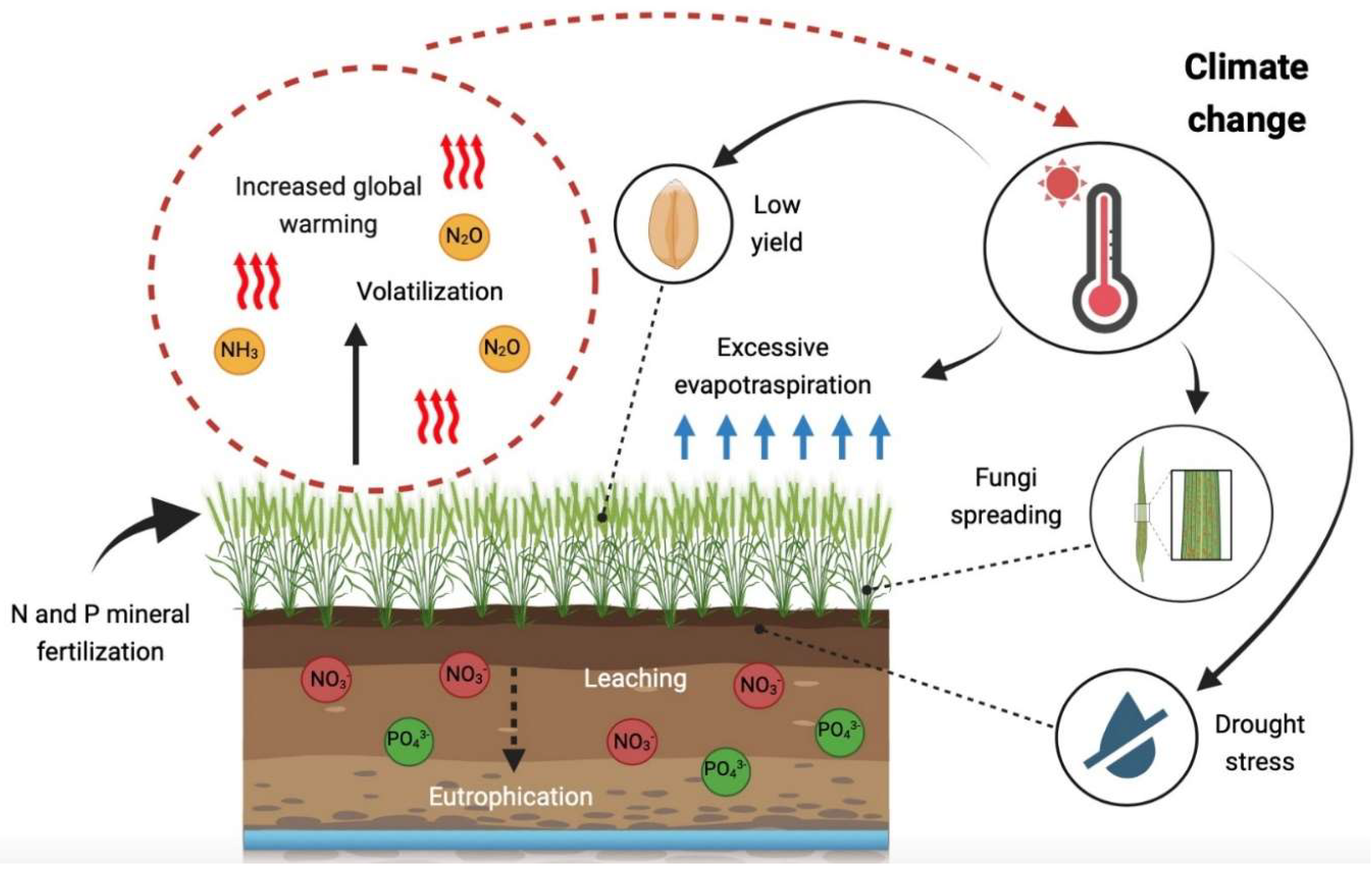
Figure 2.
Schematic diagram explaining the different type of interaction between nanoparticles and plant cells and tissues and their main benefits on crop.
Figure 2.
Schematic diagram explaining the different type of interaction between nanoparticles and plant cells and tissues and their main benefits on crop.
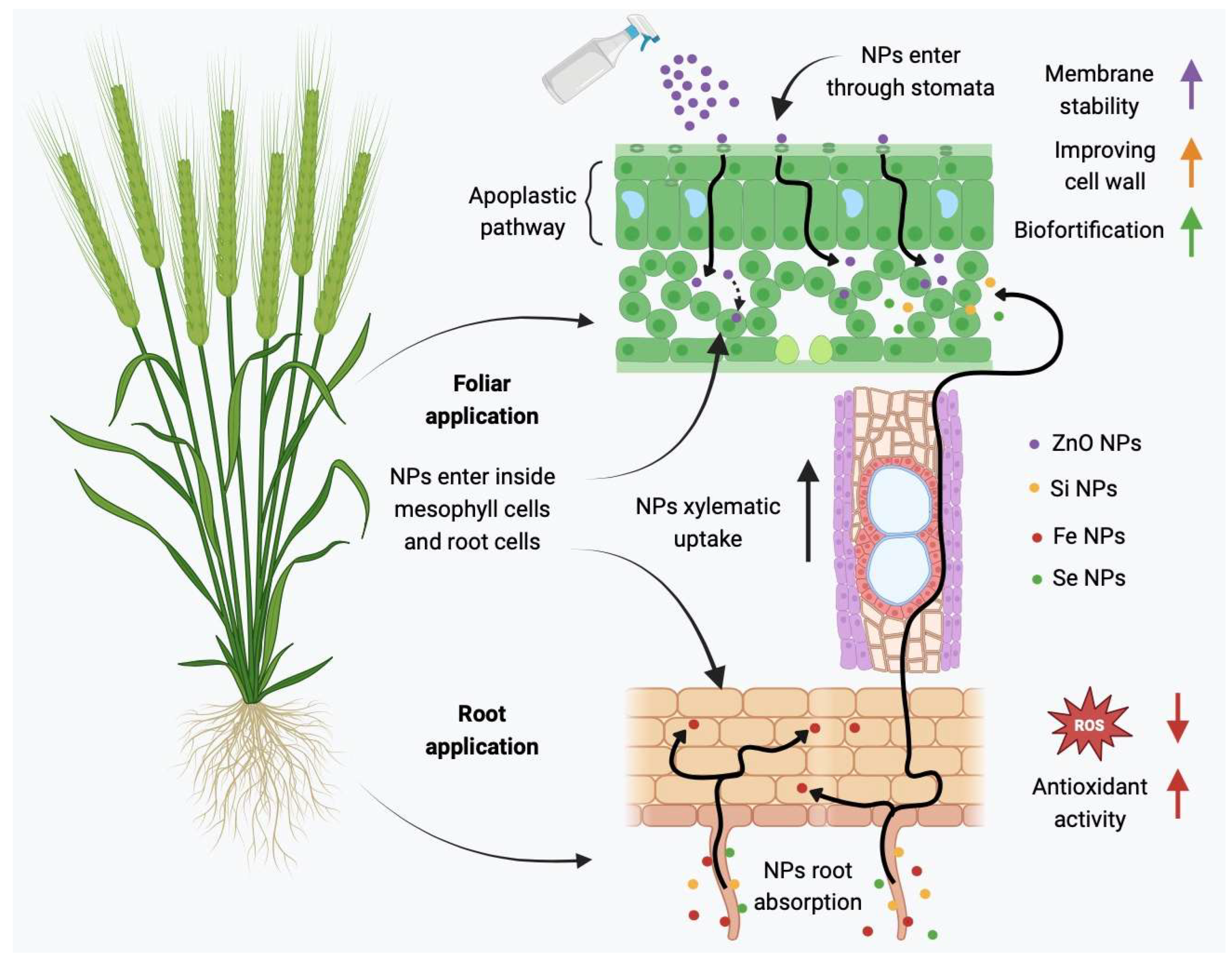
Figure 3.
Schematic diagram of the different benefits of applying nanoparticles composed of different chemical elements to plants.
Figure 3.
Schematic diagram of the different benefits of applying nanoparticles composed of different chemical elements to plants.
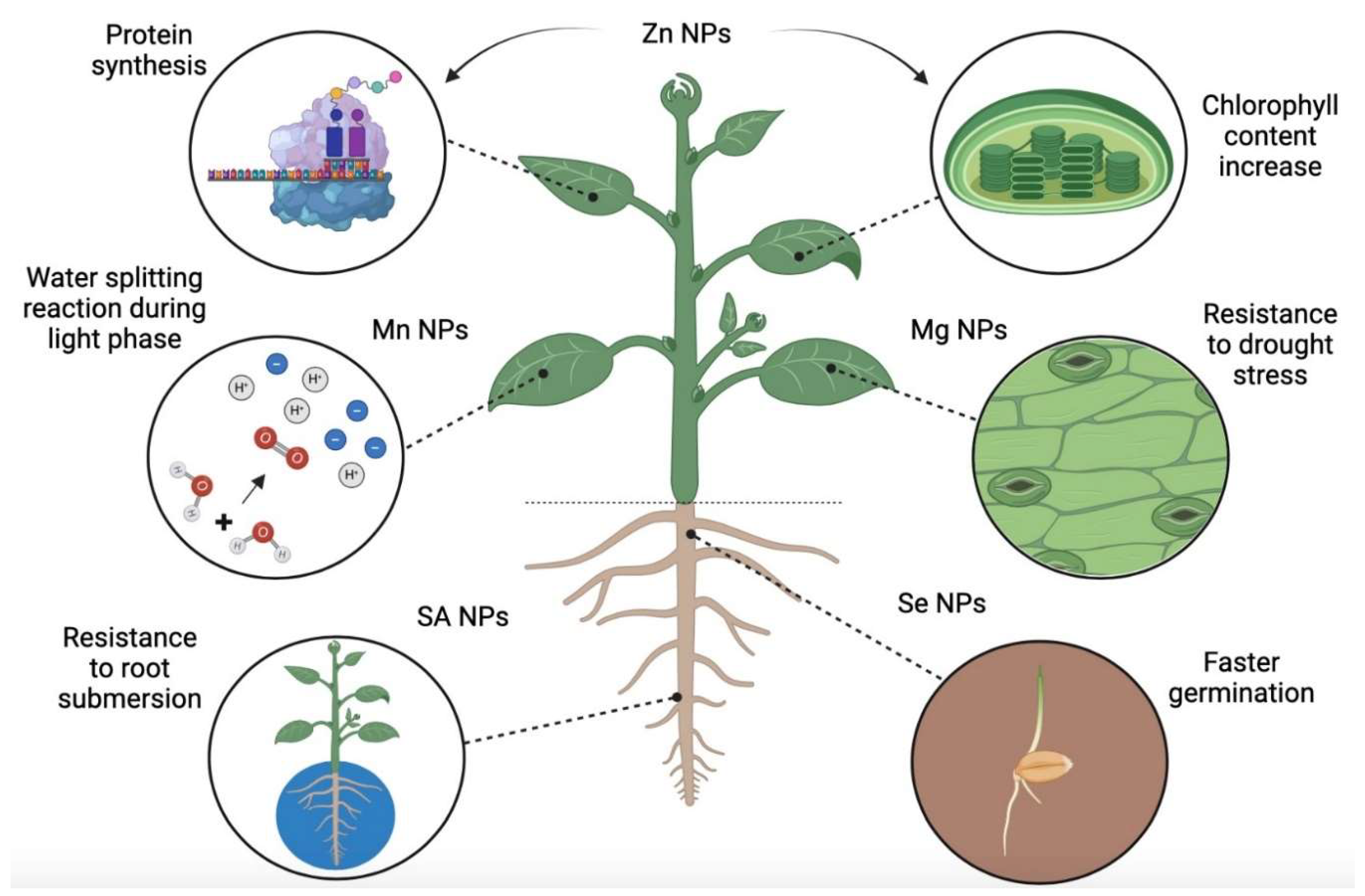
Figure 4.
Search steps using Scopus database and analysis software.
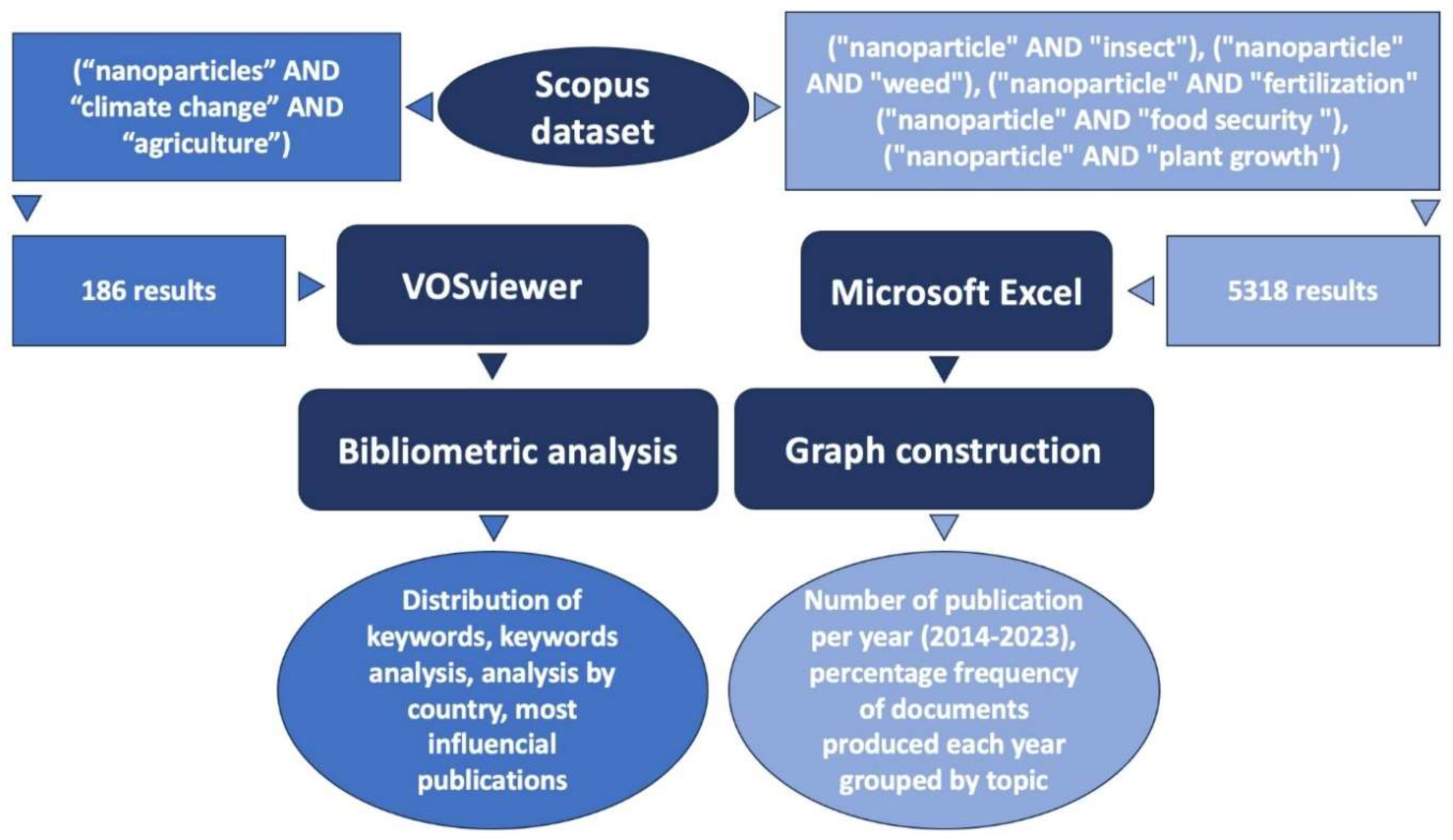
Figure 5.
Classification of papers and reviews (no. 186) published from 2014-2024 present in the database of Scopus by country (Data access till 19 March 2024).
Figure 5.
Classification of papers and reviews (no. 186) published from 2014-2024 present in the database of Scopus by country (Data access till 19 March 2024).
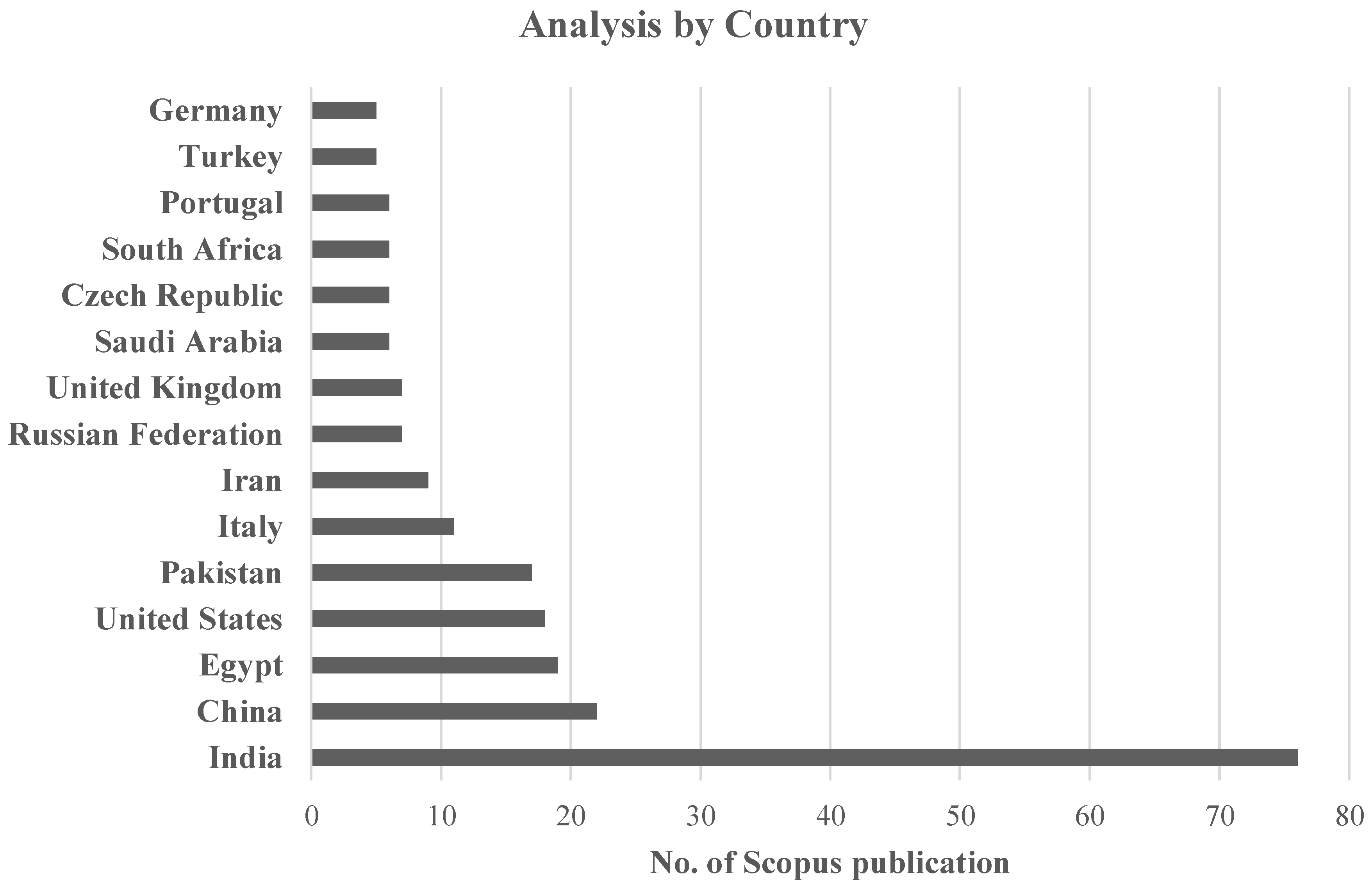
Figure 8.
Stacked bar chart shows how the research related to NPs has changed over years moving toward certain topics rather than others.
Figure 8.
Stacked bar chart shows how the research related to NPs has changed over years moving toward certain topics rather than others.
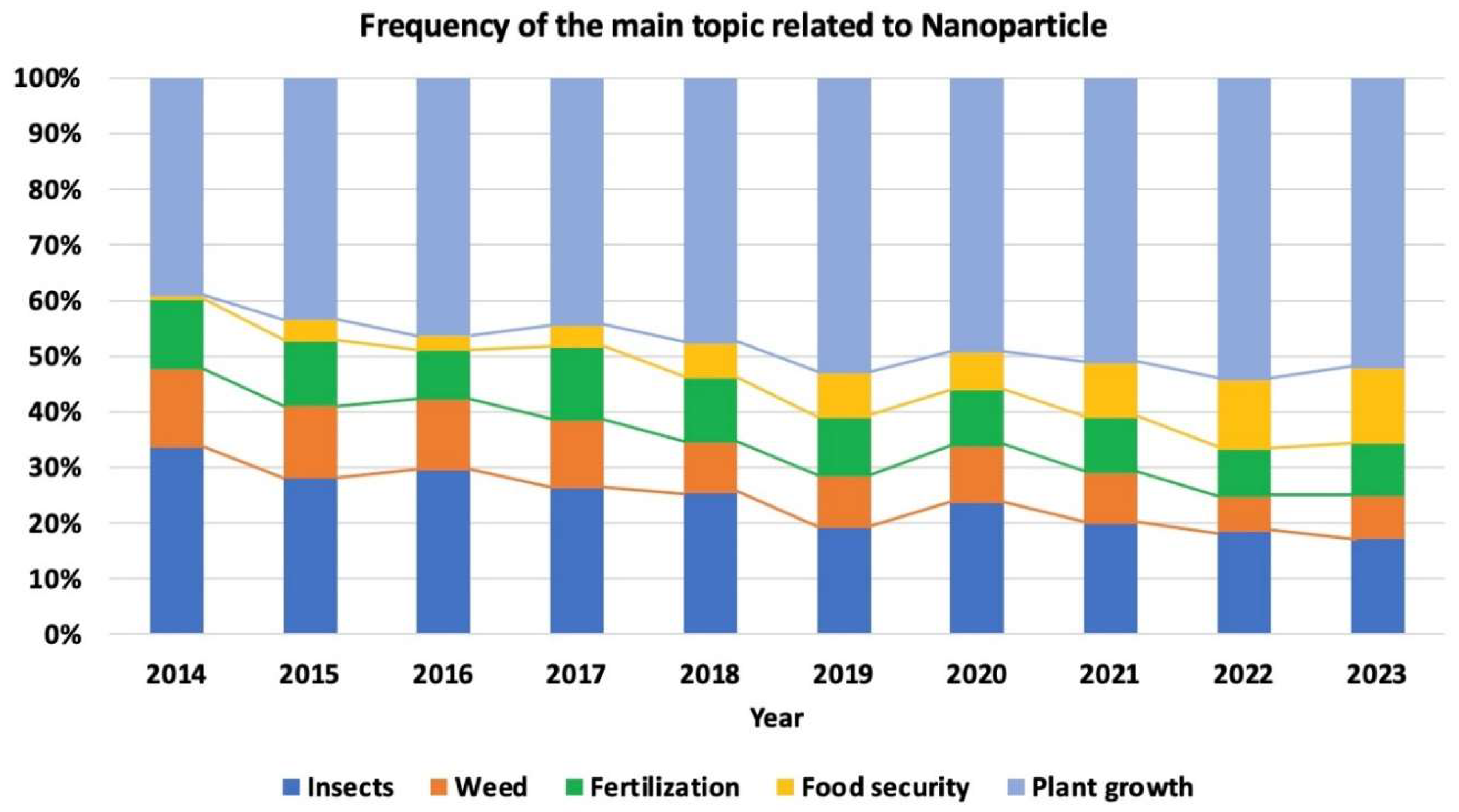
Figure 6.
Visualization of keywords co-occurrence network of publications including “nanoparticles”, “climate change” and “agriculture” in Scopus from 2014 until 2024.
Figure 6.
Visualization of keywords co-occurrence network of publications including “nanoparticles”, “climate change” and “agriculture” in Scopus from 2014 until 2024.
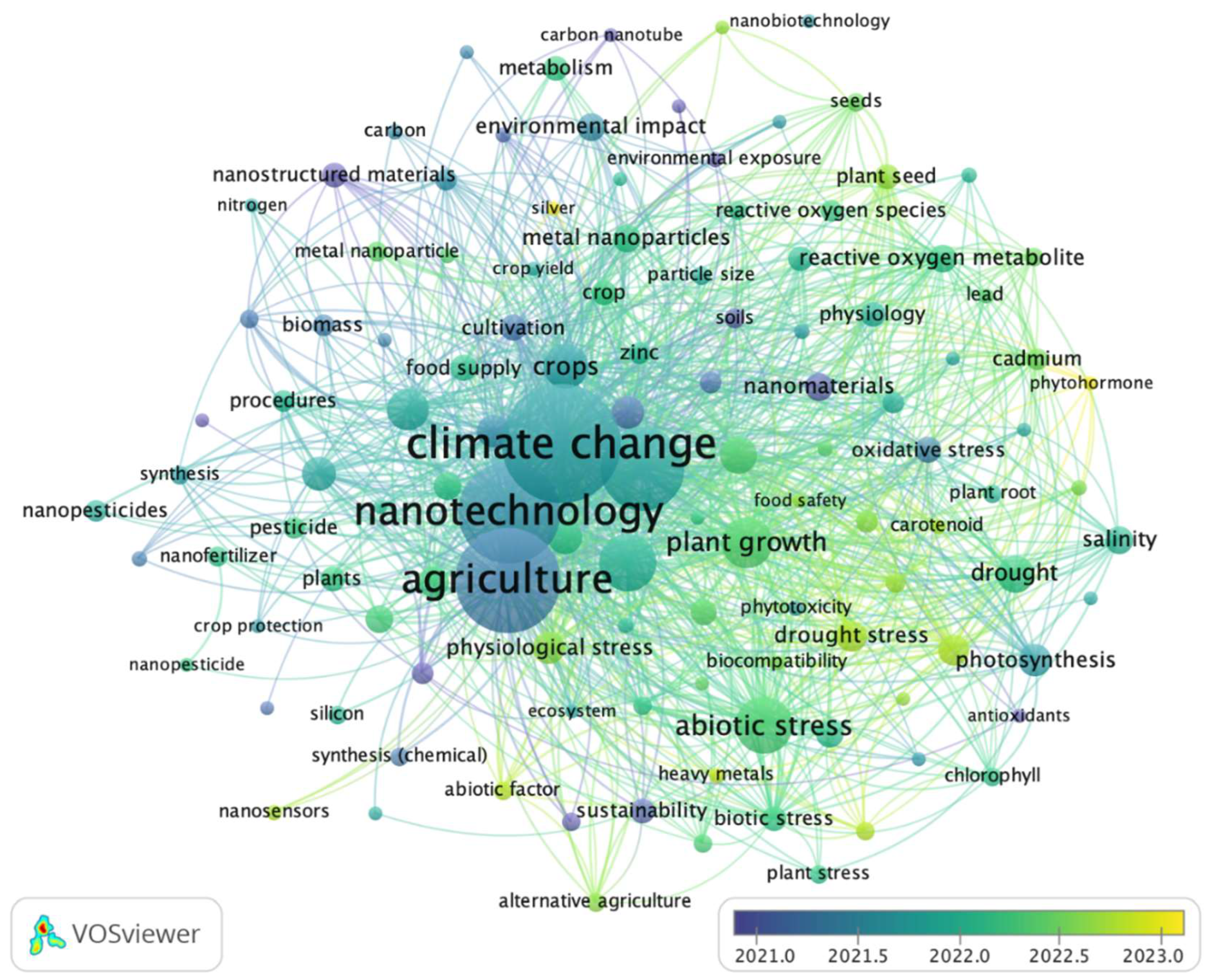
Figure 7.
The following bar charts report the number of documents published over years according to main topic related to nanoparticles (insect - A, weed - B, fertilization - C, food security - D and plant growth - E).
Figure 7.
The following bar charts report the number of documents published over years according to main topic related to nanoparticles (insect - A, weed - B, fertilization - C, food security - D and plant growth - E).
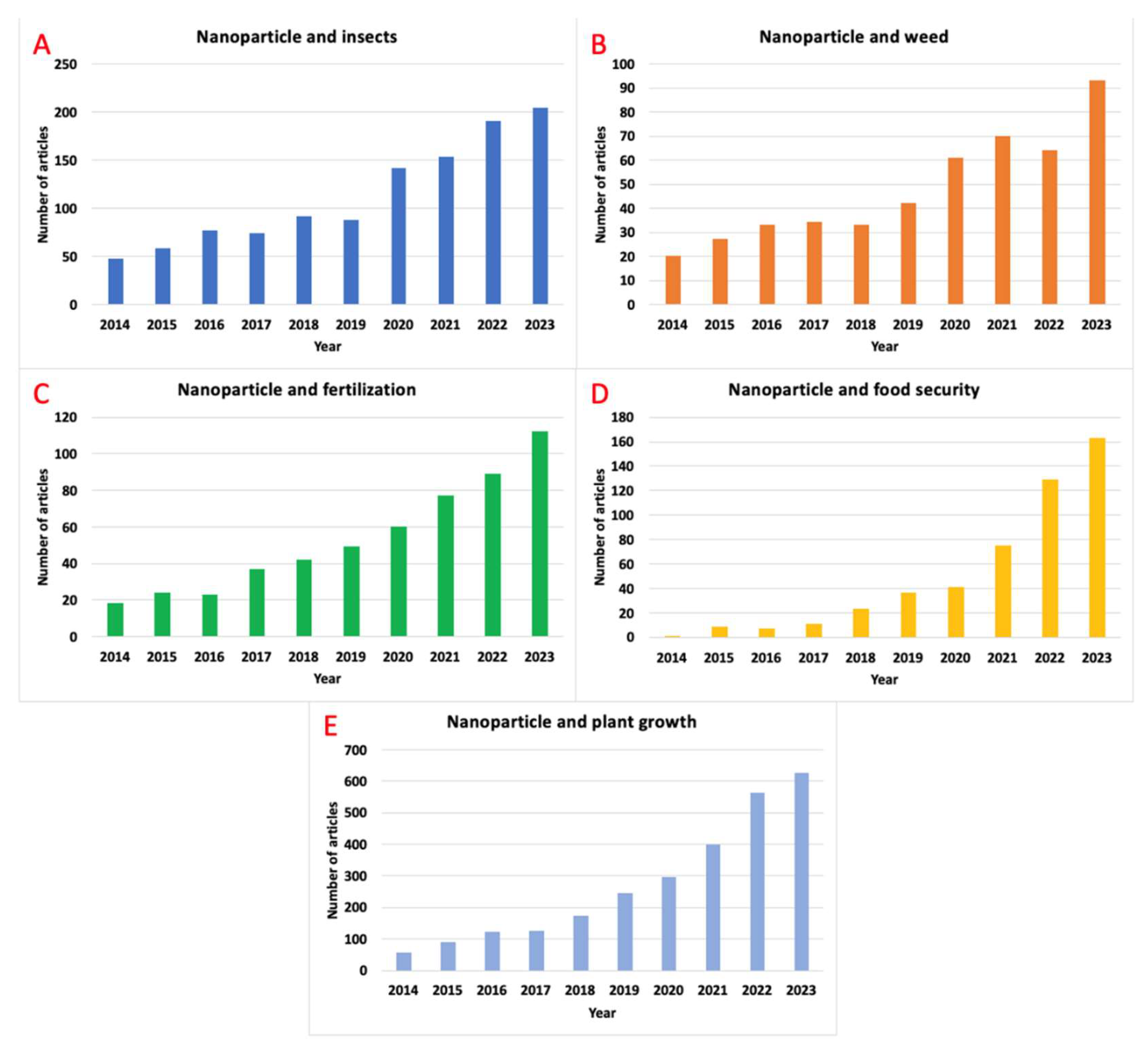
Table 2.
Main nanoparticles used as nano herbicides and nano pesticide and their effects on plants and insects.
Table 2.
Main nanoparticles used as nano herbicides and nano pesticide and their effects on plants and insects.
| Category | Nanoparticle | Plant/insect involved |
Function | Ref. |
|---|---|---|---|---|
| Nano herbicide | ZMCPA |
Phaseolus vulgaris |
Vascular growth destruction and chlorophyll content reduction | Johari et al., 2023 |
| Sphagneticola trilobata | Leaves, pigment content and plant height inhibition | Hasrin et al., 2023 | ||
| Ag NP |
Bidens pilosa |
Seed germination and seedling growth arrest | Jiang et al., 2023 | |
| Chitosan NP + (clodinofop propargyl or fenoxaprop-P-ethyl) | Avena fatua and Phalaris minor | Reduced density per m2 and consequently cash crop yield increase | Khan et al., 2023b | |
| Chitosan NP + (mesosulfuron methyl + florasulam + MCPA isooctyl) |
P. minor, A. fatua, Chenopodium album, Lathyrus aphaca, Angalis arvensis and Melilotus indica |
100% mortality | Khan et al., 2023a | |
| Atrazine NP | Brassica juncea | Elevated herbicidal effect | Carvalho et al., 2023 | |
| 2,4-D+biochar nanoformulation | Brassica sp. weed | Growth and biomass reduction | Evy Alice Abigail, 2019 | |
| Encapsulated essential oil | Rhaphanus sativus | Germination, root length and shoot length reduction | Alipour and Saharkhiz, 2016 | |
| SiO2 NP |
Amaranthus retroflexus and Taraxacum officinale |
Sharifi-Rad et al., 2016 | ||
| Nano pesticide | ZnO NP | Puto barberi | Phytophage cuticle dehydration and mortality increase | Agredo-Gomez et al., 2024 |
| Nezara viridula | Reduced attachment to surfaces by mechanisms inhibition | Rebora et al., 2023 | ||
| Spodoptera litura | 100% mortality | Thakur et al., 2022 | ||
| Si NP | Herbivore insects | NP accumulation and digestion inhibition | Bhatnagar et al., 2024 | |
| Fe NP |
Helicoverpa armigera and S. litura |
Antifeeding effect | Muthusamy et al., 2023 | |
| Ag NP | Insect larvae | Cell membrane instability | Shahid et al., 2022 | |
| Chitosan nanocomplex with siRNA | S. frugiperda | Chitin synthesis inhibition |
Gong et al., 2023 | |
|
Nanochitin with Omethoate, Imidacloprid and Acetamiprid |
Rhopalosiphum padi |
Mortality increase | Li et al., 2021 | |
| Pyrethrum extract NP | Apis mellifera | Low concentrations (1 ng µL-1) don’t affect behavior and health | Oliveira et al., 2019 |
Table 3.
Top 10 highly cited papers presenting reviews and articles regarding nanoparticle with a view to agriculture and climate change .
Table 3.
Top 10 highly cited papers presenting reviews and articles regarding nanoparticle with a view to agriculture and climate change .
| No. | Authors | Title | Source title | Cited by |
|---|---|---|---|---|
| 1 | Tang et al., 2017 | Functionalization of cellulose nanocrystals for advanced applications | Journal of Colloid and Interface Science | 338 |
| 2 | Bahrulolum et al., 2021 | Green synthesis of metal nanoparticles using microorganisms and their application in the agrifood sector | Journal of Nanobiotechnology | 211 |
| 3 | Zia et al., 2021 | Plant survival under drought stress: Implications, adaptive responses, and integrated rhizosphere management strategy for stress mitigation | Microbiological Research | 160 |
| 4 | (Mishra et al., 2017) | Integrated Approach of Agri-nanotechnology: Challenges and Future Trends | Frontiers in Plant Science | 160 |
| 5 | (Pereira et al., 2021) | Nanotechnology Potential in Seed Priming for Sustainable Agriculture | Nanomaterials | 151 |
| 6 | (Avellan et al., 2021) | Critical Review: Role of Inorganic Nanoparticle Properties on Their Foliar Uptake and in Planta Translocation | Environmental Science and Technology | 145 |
| 7 | (Zulfiqar and Ashraf, 2021) | Nanoparticles potentially mediate salt stress tolerance in plants | Plant Physiology and Biochemistry | 128 |
| 8 | (Gilbertson et al., 2020) | Guiding the design space for nanotechnology to advance sustainable crop production | Nature Nanotechnology | 117 |
| 9 | (Shetty et al., 2021) | Aluminum toxicity in plants and its possible mitigation in acid soils by biochar: A review | Science of the Total Environment | 116 |
| 10 | (Sarkar et al., 2015) | Selenium Nanoparticles for Stress-Resilient Fish and Livestock | Nanoscale Research Letters | 116 |
Disclaimer/Publisher’s Note: The statements, opinions and data contained in all publications are solely those of the individual author(s) and contributor(s) and not of MDPI and/or the editor(s). MDPI and/or the editor(s) disclaim responsibility for any injury to people or property resulting from any ideas, methods, instructions or products referred to in the content. |
© 2024 by the authors. Licensee MDPI, Basel, Switzerland. This article is an open access article distributed under the terms and conditions of the Creative Commons Attribution (CC BY) license (http://creativecommons.org/licenses/by/4.0/).
Copyright: This open access article is published under a Creative Commons CC BY 4.0 license, which permit the free download, distribution, and reuse, provided that the author and preprint are cited in any reuse.


