

Submitted:
19 June 2024
Posted:
20 June 2024
You are already at the latest version
Abstract
Background: Physiotherapy and chronic low back pain (CLBP) form a broad and fast developing research area. The aim of the article was to holistically, thematically and chronologically analyze and synthesise literature production and identify most prolific research entities and research themes. Methods: The article quantitatively and quantitatively analyzed research literature production harvested from the Scopus bibliometric database. using a triangulation of bibliometric and thematic analysis. For this, Excell and VOSwiever software were used. Results: In the Scopus database, 2843 data sources were found, which were published between 1974 and February 26, 2024. The growth trend has been linearly positive since the beginning of publication, and after 2018, exponential growth began. A review of the most prolific entities showed that the most literature was published in America, Europe and Australasia. The thematic analysis of the information sources identified six main themes, while the chronological analysis revealed three main areas of developments: assessment tools, CLBP processing and study methodology. Conclusions: The results of the bibliometric study presents a good starting point for further research providing Taxonomy and research landscapes as a holistic framework offering multidisciplinary knowledge about CLBP, while chronological analysis provides a basis for identifying prospective research trends.
Keywords:
physiotherapy
; chronic low back pain
; knowledge synthesis
; bibliometric
; development of studies
1. Introduction
Chronic low back pain (CLBP) is the leading cause of disability globally and the greatest cause of years lived with disability (YLD) in the world, which affects 619 million individuals globally in 2020 [1,2,3]. Physiotherapy has an enormous role in rehabilitation of chronic low back pain (CLBP). Over time, a number of various research topics have emerged that deal with chronic low back pain and its connection with physiotherapy. A multidisciplinary approach to rehabilitation plays an increasingly important role, as other health sciences, such as kinesiology, psychotherapy, psychology, etc., are increasingly joining the physiotherapy treatment of CLBP [4,5,6,7,8,9,10].
Previous bibliometric reviews have also explored the association between physiotherapy (mainly exercise effects) and CLBP [11,12,13,14,15], but socioeconomic and interpersonal aspects (patient-physiotherapist) have not been further explored. The studies primarily show geospatial [12,14] and temporal landscapes [11,12,13,14] and cluster analysis of co-authorships and keywords [13,14,15].
Bibliometrics enables the analysis of a large amount of publications on a macroscopic and microscopic level [16]. Bibliometrics is a popular approach in medical research [17]. Physiotherapy and chronic low back pain represent a broad scientific field and in recent decades there has been a tremendous growth in the production of research literature. Bibliometrics is a very useful method when analysing interesting data on research topics, scientific progress in a specific field, dynamics of literature production, the most prolific institutions, countries, researchers in a research field [17,18,19,20]. Bibliometrics was described firstly by Pritchard [18] as ‘the application of mathematical and statistical methods to books and other media of communication’ and lately by Hawkins [21] as ‘the quantitative analysis of the bibliographic features of a body of literature’. Moreover, with bibliometric studies we can also check the knowledge development of a field, the history and intellectual structure of a field, the trends in the literature production, etc… [19].
Bibliometric mapping describes the use of quantitative methods for the visual presentation of scientific publications originating from bibliographic data [22]. The purpose of bibliometric mapping is the production of various bibliometric maps that enable the review of research publications in a specific research field [23,24]. Our study used an advanced mapping technique called Visualization of Similarity (VOS), used in VOSviewer software (Leiden University, the Netherlands) [25]. VOS provides the production of colouring scientific landscapes (bibliometric maps) in which terms are coloured and their popularity is determined by the size of the font and the size of the rectangle (the more prolific the term, the larger the size of the font and rectangle) [24]. The mentioned offers different aspects of maps [22,23,24].
The original contribution of the article is the use of a mixed-method approach to identify the most popular research topics in the field of Physiotherapy in CLBP. Since these two are basically independent research areas, we analyzed the main clusters, and within them the associations/relations of several research terms (analysed on the basis of the database). With the help of scientific landscapes, we managed to identify overlapping research topics and themes and the chronology of their progress, thus providing an interdisciplinary but holistic view of the research field.
The aim of the current study was to quantitatively and qualitatively analyze literature production within the field of physiotherapy in chronic low back pain using the bibliometric approach. We especially focused on the analysis of trends in the literature production: on the identification of the most prolific source titles, institutions and countries. At the same time, we were interested in the knowledge development of the most prolific research topics and the associations between them. For this purpose, we formulated the following research questions:
1. What is the taxonomy in Physiotherapy in CLBP production?
2. What is the distribution of Physiotherapy in CLBP literature production among the most prolific source titles, institutions, and countries?
3. What are the most prolific Physiotherapy in CLBP research themes, how they involved over time and what is the association between them?
2. Materials and Methods
2.1. Search Procedure
Our search was conducted on 26 February 2024. Data were obtained from Scopus (Scopus, Elsevier). The Scopus database was chosen because it contains peer-reviewed articles, includes the Pubmed database, and offers simultaneous retrieval of a large amount of data. The search (articles, reviews, conference papers, notes, letters, short surveys, book chapters, editorials and errata) was limited to the period between 1974 (when first publication was indexed in Scopus) and 2024. We also included the year 2024 because we wanted to analyze the latest research trends and describe how it impacts on the topic of older research. Sources were limited to literature, written in English. Within the study, following search string was used: ‘chronic low back pain’ AND (physiotherapy OR trust OR ‘quality of life’ OR stress) in the titles, abstracts, and keywords.
2.2. Data Analysis
To analyze the prolific entities, common elements of bibliographical data were extracted: year of a publication, abstract, source title and name of institution. The bibliometric data – the most prolific institutions, countries, author keywords, publication types, abstracts, publishing years and source titles were identified by Scopus services and stored in CSV formatted corpus file, which was exported into an Excell software (Microsoft Office, Microsoft Corporation, USA). The bibliometric data were pre-processed with Excel's built-in functions, which enabled tabulation, data cleansing and the creation of tables and graphs. Only complete abstracts were exported to VOSwiever (Leiden University, The Netherlands) [25]. We used Bibliometric software, with which we determined a descriptive analysis of the number of scientific journals, institutions, countries, etc. Using thematic analysis we created the scientific term maps (cluster and chronological map). All common words (such as baseline, study, country and city names, item, copyright, trend, time stamps and similar) were excluded from the analysis using the VOSviewer thesaurus file. Finally, two scientific landscapes were created, representing a taxonomy of research topics. The first represents the grouping of the most matching prolific terms into individual clusters, while the second shows a chronological overview of the research terms. Synthetic knowledge synthesis (SKS) was made for this purpose.
3. Results and Discussion
3.1. Volume and Prevalence of the Research Literature Production
A search in the Scopus database identified 2843 information sources (among them, there were 2281 articles, 403 reviews, 38 conference papers, 34 notes, 25 letters, 25 short surveys, 16 book chapters, 14 editorials and 7 errata). They were published between 1974 and 2024. All sources of information were included in the analysis with the aim of obtaining the most objective and broad view of the research area.
Literature sources were published in 80 different countries, one of which was not identified. Most publications were issued in the USA (753), followed by the United Kingdom (265), Germany (238), Australia (225) and the Netherlands (188). The most prolific countries come from 5 continents North America, Europe, Australia, South America and Asia), but otherwise were information sources published on all continents, which present the importance of the research area worldwide. All most productive countries have good economies and advanced health systems. We also recognized the most productive institutions of the 860: The University of Sydney (77), Australia, Vrije Universiteit Amsterdam (56), Netherlands, Universiteit van Amsterdam (52), Netherlands, Universiteit Maastricht (52), Netherlands, Harvard Medical School (47), USA, EMGO Institute for Health and Care Research (46), Netherlands and VA Medical Center (46), USA. The analysis showed that 10,692 authors participated in the writing of the bibliography, of which 167 were single-authored docs, while the rest involved at least 2 or more authors (an average of 5.45 co-authors per doc). Almost a fifth of the authors (19.64%) participated in international co-authorship, which indicates a relatively high level of international cooperation in research.
The analysis showed that 937 out of a total of 2843 information sources were sponsored, representing almost one-third of all sources. The most funding institutions, which sponsored the publicated research data are represented in Table 1. These are mostly national funding institutes and organizations.
Information sources in the area Physiotherapy of CLBP were published in 860 source titles. All information sources counted 2846. The most prolific journals, that published the most productive information sources, are presented in Table 2. These represent an one-third of all resources (30,75%). As can be seen from the table, journals are coming mostly from the spine and pain categories.
3.2. The Dynamics of the research Literature Production
The trend of research literature production is presented in Figure 1. For better resolution, information sources are shown every 2 publication years. The year 2024 is also included in graph to show that 28 articles were already accessible in the Scopus database in the first two months alone. First information sources were published in 1974. In the years 1973 to 1992, production was stable, up to 10 sources were released per year on average. After that year, linear growth began with a peak in 2004, when the production reached 68 articles annually. The trend of linear growth continued with a peak of 131 articles in 2016. In the meantime, a slight drop can be seen in 2018, but the number began to increase exponentially after that year (from 179 up). From 2021 onwards, the number of published literature has risen to over 200 articles per year, and the trend of further exponential growth is noticeable. The shown coincides with the growing trend of chronic low back pain [1,3,26] and the development of physiotherapy and other interdisciplinary health sciences [27,28]. Our analysis shows a 6.89% annual growth rate of scientific literature in the research field.
The graph also shows the growth dynamics of individual genres of scientific literature: conference papers, reviews and original articles. As can be seen from the graph, the trend of original articles most closely follows the dynamics of the entire scientific literature. The first increase in publications can be seen after 2014, and the second, larger one, after 2018. After 2020, the number exceeded 200 publications per year.
Conference articles are hardly detectable, which does not mean that they actually do not exist, but that conference proceedings from this research field are not indexed in Scopus. Abstracts of conference papers are published in journals.
The reviews had a steady dynamic trend, the peak can be seen in 2008, and after 2020 their number rose above 22 publications annually (up to 22 publications annually by 2018). Peak in 2008 actually represents an artifact, as this year exceptionally more articles (23) were published than usual (up to a maximum of 16).
3.3. The Thematic Analysis
Six clusters were formed using an approach, based on bibliometric mapping and clustering, which we described in chapter Materials and Methods. Clusters are shown in the scientific landscape on Figure 2. Clusters were named based on the analysis of the most representative research terms and links between terms found in clusters. Due to the complexity of the topics, we divided the topics - clusters into subtopics as shown in Table 3. Based on the most prolific terms, we identified, analyzed and summarized 3 to 5 of the most recent and most cited articles for each subtopic in the cluster.
Based on the analysis, the following 6 topics-clusters with representative cluster terms were extracted:
- Pathophysiology of CLBP and the assessment tools (yellow). This cluster contains terms about Oswestry disability index, pilot studies, single-blind method, exercise therapy, pathophysiology, range of motion, spine mobility, etc.
- Diagnostics and CLBP treatment (red). This cluster scopes terms about MRI, diagnostic imaging, conservative treatment, risk assessment, radiculopathy, herniation, operation, etc.
- Questionnaires and surveys about the CLBP (violet). This cluster include terms, connected to reproducibility, validity, assessment, rating scale, catastrophizing, nerve blockade, etc.
- Quality of life (light blue). This cluster covers terms, related to sleep quality, quality of life, functional status, treatment outcome, neuromodulation, balneotherapy, etc..
- Complementary methods in Physiotherapy (dark blue). This cluster contains terms, connected to physical therapy modalities, clinical protocol, yoga, cognitive behavioural therapy, coping behaviour, interpersonal communication, mindfulness, lifestyle, etc.
- Psychosocioeconomic aspects (green). This cluster include terms, such as cost-benefit analysis, health care costs, sick leave, social aspect, psychotherapy, depression, prognosis, etc..
3.4. The Chronological Analysis
The chronological development of research terms in the literature on chronic low back pain and physiotherapy is illustrated on Figure 3. Early research until 2010 (dark blue) examined CLBP as a chronic disease [53,54,55,56,57,58,59], which was studied with follow-up methodological articles. They developed scoring and rating systems for the numerical identification of pain. In the interim period until 2013 (medium blue), research focused on disease severity [60]. Later, between 2013 and 2014 (blue-green), physiotherapy and its therapeutic modalities, especially exercise and kinesiotherapy [61,62,63,64,65,66], began to appear more prominently in the literature. At the same time, articles began to appear on pain-relieving therapy and analgesia with NSAIDs [67]. It is important to note that in this period younger adults began to be mentioned as the target population [68], with which studies, consistent with the pathophysiology of CLBP, began to recognize other risk factors for CLBP, not just degenerative ones. In the next period between 2015 and 2016 (yellow), studies focused on the duration of CLBP and quality of life [5,69,70,71,72], thus broadening the picture of the causative factors for the occurrence of CLBP. At the same time, the role of the physiotherapist, especially his approach, as a key factor in the rehabilitation of CLBP began to be mentioned more significantly [73,74,75,76]. In addition, anxiety began to be included in the assessment of the functional status of a patient with CLBP [77,78,79,80,81,82], which was a predisposition for further research in the field of psychology and the formation of interdisciplinary links between medicine (CLBP), physiotherapy, psychology and psychotherapy. Between 2016 and 2018 (orange and red), psychology began to play a more prominent role, which influenced the development of a multidisciplinary approach to the treatment of KLBP - in addition to physiotherapy, psychotherapy, behavioural-cognitive therapy and associated branches of treatment began to appear in the rehabilitation of CLBP [7,8,78,83]. Newer research since 2018 mostly refers to cohort analyses using newer clinical assessment tools (such as Numerical Pain Rating System, Oswestry disability index, Rolland-Morris questionnaire) [84,85,86] with the aim of developing the best possible clinical outcome of CLBP rehabilitation and treatment.
Based on a detailed chronological analysis, we analyzed the following chronological developments:
1. Development of pain assessment tools: pain measurement → pain assessment → pain management. Tools that first measured and evaluated pain, in order to ultimately contribute to the most functional treatment possible.
2. Development of CLBP processing: disease severity → disability evaluation → disease duration → treatment duration → clinical outcomes and effectiveness. The evolution of CLBP processing first began with assessing the severity and then the inability to perform normal bodily functions caused by the pain. The latter affected the duration of the disease, which in turn resulted in the duration of the treatment. Research in this area has continued in the field of studying the clinical outcomes and effectiveness of therapeutic methods of treating CLBP.
3. Development of study methodology: follow up studies → comparative studies → randomized control trials → meta-analysis → cohort analysis. The methodological design first started with follow-up studies, followed by comparative studies and later by randomized control trials. Based on the conclusions of these studies, further research authors began to summarize the main findings and suggest further possibilities for the development of physiotherapy for chronic low back pain in meta-analysis. They were followed by cohort analyzes studying causal factors over time.
4. Conclusions
Our bibliometric study has shown that CLBP and physiotherapy form a broad interdisciplinary scientific research field supported by studies from all over the world. A taxonomy, a chronological review and an extract of the most productive entities set the frame to the research field of physiotherapy in CLBP. This could be useful for further research, as well as providing new perspectives on the existing state of the scientific literature in this area. Bibliometric analysis and mapping provide a basis for thematic analysis, which is an effective tool for analyzing research literature production. This study offers six main themes emerging from the interdisciplinary field of physiotherapy and CLBP and provides a basis for further integrative examination of research issues in this field.
Funding
This research received no external funding.
Institutional Review Board Statement
Not applicable.
Informed Consent Statement
Not applicable.
Data Availability Statement
No new data were created or analyzed in this study. Data sharing is not applicable to this article.
Conflicts of Interest
The authors declare no conflicts of interest.
References
- Gedin, F.; Alexanderson, K.; Zethraeus, N.; Karampampa, K. Productivity Losses among People with Back Pain and among Population-Based References: A Register-Based Study in Sweden. BMJ Open. 2020, 10, e036638. [Google Scholar] [CrossRef] [PubMed]
- Stanciu, L.-E.; Petcu, L.C.; Apostol, S.; Ionescu, E.-V.; Oprea, D.; Oprea, C.; Țucmeanu, E.-R.; Iliescu, M.-G.; Popescu, M.-N.; Obada, B. The Influence of Low Back Pain on Health – Related Quality of Life and the Impact of Balneal Treatment. Balneo PRM Res. J. 2021, 433–438. [Google Scholar] [CrossRef]
- Rahman, S.; Kidwai, A.; Rakhamimova, E.; Elias, M.; Caldwell, W.; Bergese, S.D. Clinical Diagnosis and Treatment of Chronic Pain. Diagnostics. 2023, 13, 3689. [Google Scholar] [CrossRef] [PubMed]
- van Middelkoop, M.; Rubinstein, S.M.; Kuijpers, T.; Verhagen, A.P.; Ostelo, R.; Koes, B.W.; van Tulder, M.W. A Systematic Review on the Effectiveness of Physical and Rehabilitation Interventions for Chronic Non-Specific Low Back Pain. Eur. Spine J. 2011, 20, 19–39. [Google Scholar] [CrossRef] [PubMed]
- Kamper, S.J.; Apeldoorn, A.T.; Chiarotto, A.; Smeets, R.J.E.M.; Ostelo, R.W.J.G.; Guzman, J.; van Tulder, M.W. Multidisciplinary Biopsychosocial Rehabilitation for Chronic Low Back Pain: Cochrane Systematic Review and Meta-Analysis. BMJ. 2015, 350, h444. [Google Scholar] [CrossRef] [PubMed]
- Gerdle, B.; Molander, P.; Stenberg, G.; Stalnacke, B.-M.; Enthoven, P. Weak Outcome Predictors of Multimodal Rehabilitation at One-Year Follow-up in Patients with Chronic Pain-a Practice Based Evidence Study from Two SQRP Centres. BMC Musculoskelet. Disord. 2016, 17, 490. [Google Scholar] [CrossRef] [PubMed]
- Kwan-Yee Ho, E.; Chen, L.; Simic, M.; Ashton-James, C.E.; Comachio, J.; Xin Mo Wang, D.; Hayden, J.A.; Loureiro Ferreira, M.; Henrique Ferreira, P. Psychological Interventions for Chronic, Non-Specific Low Back Pain: Systematic Review with Network Meta-Analysis. BMJ. 2022, 376, e067718. [Google Scholar]
- Monticone, M.; Vullo, S.S.; Lecca I, L.; Meloni, F.; Portoghese, I.; Campagna, M. Effectiveness of Multimodal Exercises Integrated with Cognitive-Behavioral Therapy in Working Patients with Chronic Neck Pain: Protocol of a Randomized Controlled Trial with 1-Year Follow-Up. Trials. 2022, 23, 425. [Google Scholar] [CrossRef] [PubMed]
- Mackey, S.; Gilam, G.; Darnall, B.; Goldin, P.; Kong, J.-T.; Law, C.; Heirich, M.; Karayannis, N.; Kao, M.-C.; Lu, T.; et al. Mindfulness-Based Stress Reduction, Cognitive Behavioral Therapy, and Acupuncture in Chronic Low Back Pain: Protocol for Two Linked Randomized Controlled Trials. JMIR Res. Protoc. 2022, 11, e37823. [Google Scholar] [CrossRef]
- Jurak, I.; Delaš, K.; Erjavec, L.; Stare, J.; Locatelli, I. Effects of Multidisciplinary Biopsychosocial Rehabilitation on Short-Term Pain and Disability in Chronic Low Back Pain: A Systematic Review with Network Meta-Analysis. J. Clin. Med. 2023, 12, 7489. [Google Scholar] [CrossRef] [PubMed]
- Moral-Munoz, J.A.; Arroyo-Morales, M.; Herrera-Viedma, E.; Cobo, M.J. An Overview of Thematic Evolution of Physical Therapy Research Area From 1951 to 2013. Front. Res. Metrics Anal. 2018, 3, 13. [Google Scholar] [CrossRef]
- Wang, R.; Weng, L.; Peng, M.; Wang, X. Exercise for Low Back Pain: A Bibliometric Analysis of Global Research from 1980 to 2018. J. Rehabil. Med. 2020, 53, jrm00052. [Google Scholar] [CrossRef] [PubMed]
- Huang, L.; Li, J.; Xiao, B.; Tang, Y.; Huang, J.; Li, Y.; Fang, F. Bibliometric Analysis of Research Trends on Manual Therapy for Low Back Pain Over Past 2 Decades. J. Pain Res. 2023, 16, 3045–3060. [Google Scholar] [CrossRef] [PubMed]
- Zheng, D.; Kawchuk, G.; Bussières, A.E.; Al Zoubi, F.M.; Hartvigsen, J.; Fu, S.N.; de Luca, K.; Weiner, D.; Karppinen, J.; Samartzis, D.; et al. Trends of Low Back Pain Research in Older and Working-Age Adults from 1993 to 2023: A Bibliometric Analysis. J. Pain Res. 2023, 16, 3325–3341. [Google Scholar] [CrossRef] [PubMed]
- Zang, W.; Yan, J. Exercise Interventions for Nonspecific Low Back Pain: A Bibliometric Analysis of Global Research from 2018 to 2023. Front. Med. 2024, 11, 1390920. [Google Scholar] [CrossRef] [PubMed]
- Blažun Vošner, H.; Železnik, D.; Kokol, P.; Vošner, J.; Završnik, J. Trends in Nursing Ethics Research: Mapping the Literature Production. Nurs Ethics. 2017, 24, 892–907. [Google Scholar] [CrossRef] [PubMed]
- Kokol, P.; Blažun Vošner, H.; Završnik, J. Application of Bibliometrics in Medicine: A Historical Bibliometrics Analysis. Heal. Info Libr J. 2021, 38, 125–138. [Google Scholar] [CrossRef] [PubMed]
- Pritchard, A. Statistical Bibliography or Bibliometrics? J. Doc. 1969, 25, 348–349. [Google Scholar]
- Garfield, E. The History and Meaning of the Journal Impact Factor. JAMA. 2006, 295, 90. [Google Scholar] [CrossRef] [PubMed]
- Tejasen, C. Historical Bibliometric Analysis: A Case of the Journal of the Siam Society, 1972-1976. Proc. Assoc. Inf. Sci. Technol. 2016, 53, 1–6. [Google Scholar] [CrossRef]
- Hawkins, D.T. Bibliometrics of Electronic Journals in Information Science. Inf. Res. 2001, 7, 120. [Google Scholar]
- Železnik, U.; Kokol, P.; Starc, J.; Železnik, D.; Završnik, J.; Vošner, H.B. Research Trends in Motivation and Weight Loss: A Bibliometric-Based Review. Healthcare. 2023, 11, 3086. [Google Scholar] [CrossRef] [PubMed]
- Kokol, P.; Blažun Vošner, H.; Završnik, J.; Žlahtič, G. Sleeping Beauties in Health Informatics Research. Scientometrics. 2022, 127, 5073–5081. [Google Scholar] [CrossRef]
- Završnik, J.; Kokol, P.; Žlahtič, B.; Blažun Vošner, H. Artificial Intelligence and Pediatrics: Synthetic Knowledge Synthesis. Electronics. 2024, 13, 512. [Google Scholar] [CrossRef]
- Van Eck, N.J.; Waltman, L. VOSviewer Manual 2013.
- Gore, M.; Sadosky, A.; Stacey, B.R.; Tai, K.-S.; Leslie, D. The Burden of Chronic Low Back Pain. Spine. 2012, 37, E668–E677. [Google Scholar] [CrossRef] [PubMed]
- Fisker, A.; Langberg, H.; Petersen, T.; Mortensen, O.S. Effects of an Early Multidisciplinary Intervention on Sickness Absence in Patients with Persistent Low Back Pain—a Randomized Controlled Trial. BMC Musculoskelet. Disord. 2022, 23, 854. [Google Scholar] [CrossRef] [PubMed]
- Sanabria-Mazo, J.P.; D’Amico, F.; Cardeñosa, E.; Ferrer, M.; Edo, S.; Borràs, X.; McCracken, L.M.; Feliu-Soler, A.; Sanz, A.; Luciano, J.V. Economic Evaluation of Videoconference Group Acceptance and Commitment Therapy and Behavioral Activation Therapy for Depression Versus Usual Care Among Adults With Chronic Low Back Pain Plus Comorbid Depressive Symptoms. J. Pain. 2024. S1526-5900(24)00351-1. [Google Scholar] [CrossRef] [PubMed]
- Kahl, C.; Cleland, J.A. Visual Analogue Scale, Numeric Pain Rating Scale and the McGill Pain Questionnaire: An Overview of Psychometric Properties. Phys. Ther. Rev. 2005, 10, 123–128. [Google Scholar] [CrossRef]
- Hjermstad, M.J.; Fayers, P.M.; Haugen, D.F.; Caraceni, A.; Hanks, G.W.; Loge, J.H.; Fainsinger, R.; Aass, N.; Kaasa, S. Studies Comparing Numerical Rating Scales, Verbal Rating Scales, and Visual Analogue Scales for Assessment of Pain Intensity in Adults: A Systematic Literature Review. J. Pain Symptom Manage. 2011, 41, 1073–1093. [Google Scholar] [CrossRef] [PubMed]
- Ryan, C.G.; Gray, H.G.; Newton, M.; Granat, M.H. Pain Biology Education and Exercise Classes Compared to Pain Biology Education Alone for Individuals with Chronic Low Back Pain: A Pilot Randomised Controlled Trial. Man. Ther. 2010, 15, 382–387. [Google Scholar] [CrossRef] [PubMed]
- Yamada, A.S. Physiotherapeutic Treatment Associated with Neuroscience of Pain Education for Patients with Chronic Non-Specific Low Back Pain - Single-Blind Randomized Pilot Clinical Trial. Ağrı - J. Turkish Soc. Algol. 2023, 35, 153–166. [Google Scholar] [CrossRef] [PubMed]
- Ji, Z.; Li, Y.; Dou, W.; Zhu, Y.; Shi, Y.; Zou, Y. Ultra-Short Echo Time MR Imaging in Assessing Cartilage Endplate Damage and Relationship between Its Lesion and Disc Degeneration for Chronic Low Back Pain Patients. BMC Med. Imaging. 2023, 23, 60. [Google Scholar] [CrossRef] [PubMed]
- Zhu, K.; Chang, J.; Zhang, S.; Li, Y.; Zuo, J.; Ni, H.; Xie, B.; Yao, J.; Xu, Z.; Bian, S.; et al. The Enhanced Connectivity between the Frontoparietal, Somatomotor Network and Thalamus as the Most Significant Network Changes of Chronic Low Back Pain. Neuroimage. 2024, 290, 120558. [Google Scholar] [CrossRef] [PubMed]
- Aaron, R.V.; Mun, C.J.; McGill, L.S.; Finan, P.H.; Campbell, C.M. The Longitudinal Relationship Between Emotion Regulation and Pain-Related Outcomes: Results From a Large, Online Prospective Study. J. Pain. 2022, 23, 981–994. [Google Scholar] [CrossRef] [PubMed]
- Vlaeyen, J.W.S.; Linton, S.J. Fear-Avoidance and Its Consequences in Chronic Musculoskeletal Pain: A State of the Art. Pain. 2000, 85, 317–332. [Google Scholar] [CrossRef]
- Miyagi, M.; Uchida, K.; Takano, S.; Nakawaki, M.; Sekiguchi, H.; Nakazawa, T.; Imura, T.; Saito, W.; Shirasawa, E.; Kawakubo, A.; et al. Role of CD14-positive Cells in Inflammatory Cytokine and Pain-related Molecule Expression in Human Degenerated Intervertebral Discs. J. Orthop. Res. 2021, 39, 1755–1762. [Google Scholar] [CrossRef] [PubMed]
- Chapman, J.R.; Norvell, D.C.; Hermsmeyer, J.T.; Bransford, R.J.; DeVine, J.; McGirt, M.J.; Lee, M.J. Evaluating Common Outcomes for Measuring Treatment Success for Chronic Low Back Pain. Spine. 2011, 36, S54–S68. [Google Scholar] [CrossRef] [PubMed]
- Chiarotto, A.; Maxwell, L.J.; Terwee, C.B.; Wells, G.A.; Tugwell, P.; Ostelo, R.W. Roland-Morris Disability Questionnaire and Oswestry Disability Index: Which Has Better Measurement Properties for Measuring Physical Functioning in Nonspecific Low Back Pain? Systematic Review and Meta-Analysis. Phys. Ther. 2016, 96, 1620–1637. [Google Scholar] [CrossRef] [PubMed]
- Linton, S.J.; Bergbom, S. Understanding the Link between Depression and Pain. Scand. J. Pain. 2011, 2, 47–54. [Google Scholar] [CrossRef] [PubMed]
- Higgins, N.C.; Bailey, S.J.; LaChapelle, D.L.; Harman, K.; Hadjistavropoulos, T. Coping Styles, Pain Expressiveness, and Implicit Theories of Chronic Pain. J. Psychol. 2015, 149, 737–750. [Google Scholar] [CrossRef] [PubMed]
- Hong, J.H.; Kim, H.D.; Shin, H.H.; Huh, B. Assessment of Depression, Anxiety, Sleep Disturbance, and Quality of Life in Patients with Chronic Low Back Pain in Korea. Korean J. Anesthesiol. 2014, 66, 444–450. [Google Scholar] [CrossRef] [PubMed]
- Herrero, P.; Val, P.; Lapuente-Hernández, D.; Cuenca-Zaldívar, J.N.; Calvo, S.; Gómez-Trullén, E.M. Effects of Lifestyle Interventions on the Improvement of Chronic Non-Specific Low Back Pain: A Systematic Review and Network Meta-Analysis. Healthcare. 2024, 12, 505. [Google Scholar] [CrossRef] [PubMed]
- Kamper, S.J.; Apeldoorn, A.; Chiarotto, A.; Smeets, R.; Ostelo, R.; Guzman, J.; van Tulder, M. Multidisciplinary Biopsychosocial Rehabilitation for Chronic Low Back Pain: Cochrane Systematic Review and Meta-Analysis. BMJ. 2015, 350, h444. [Google Scholar] [CrossRef] [PubMed]
- Stanhope, J.; Breed, M.F.; Weinstein, P. Exposure to Greenspaces Could Reduce the High Global Burden of Pain. Environ. Res. 2020, 187, 109641. [Google Scholar] [CrossRef] [PubMed]
- Bemani, S.; Sarrafzadeh, J.; Dehkordi, S.N.; Talebian, S.; Salehi, R.; Zarei, J. Effect of Multidimensional Physiotherapy on Non-Specific Chronic Low Back Pain: A Randomized Controlled Trial. Adv. Rheumatol. 2023, 63, 57. [Google Scholar] [CrossRef] [PubMed]
- Lin, T.-H.; Tam, K.-W.; Yang, Y.-L.; Liou, T.-H.; Hsu, T.-H.; Rau, C.-L. Meditation-Based Therapy for Chronic Low Back Pain Management: A Systematic Review and Meta-Analysis of Randomized Controlled Trials. Pain Med. 2022, 23, 1800–1811. [Google Scholar] [CrossRef] [PubMed]
- Hall, A.M.; Ferreira, P.H.; Maher, C.G.; Latimer, J.; Ferreira, M.L. The Influence of the Therapist-Patient Relationship on Treatment Outcome in Physical Rehabilitation: A Systematic Review. Phys. Ther. 2010, 90, 1099–1110. [Google Scholar] [CrossRef] [PubMed]
- Good, C.H.; Bright, F.A.S.; Mooney, S. The Role and Function of Body Communication in Physiotherapy Practice: A Qualitative Thematic Synthesis. New Zeal. J. Physiother. 2024, 52, 35–51. [Google Scholar] [CrossRef]
- Bushnell, M.C.; Čeko, M.; Low, L.A. Cognitive and Emotional Control of Pain and Its Disruption in Chronic Pain. Nat. Rev. Neurosci. 2013, 14, 502–511. [Google Scholar] [CrossRef] [PubMed]
- Henschke, N.; Kamper, S.J.; Maher, C.G. The Epidemiology and Economic Consequences of Pain. Mayo Clin. Proc. 2015, 90, 139–147. [Google Scholar] [CrossRef] [PubMed]
- GBD 2015 Disease and Injury Incidence and Prevalence Collaborators Global, Regional, and National Incidence, Prevalence, and Years Lived with Disability for 310 Diseases and Injuries, 1990–2015: A Systematic Analysis for the Global Burden of Disease Study 2015. Lancet. 2016, 388, 1545–1602.
- Bingefors, K.; Isacson, D. Epidemiology, Co-Morbidity, and Impact on Health-Related Quality of Life of Self-Reported Headache and Musculoskeletal Pain – a Gender Perspective. Eur. J. Pain. 2004, 8, 435–450. [Google Scholar] [CrossRef] [PubMed]
- Ricci, J.A.; Stewart, W.F.; Chee, E.; Leotta, C.; Foley, K.; Hochberg, M.C. Back Pain Exacerbations and Lost Productive Time Costs in United States Workers. Spine. 2006, 31, 3052–3060. [Google Scholar] [CrossRef] [PubMed]
- Costa, L.O.P.; Maher, C.G.; Latimer, J.; Ferreira, P.H.; Ferreira, M.L.; Pozzi, G.C.; Freitas, L.M.A. Clinimetric Testing of Three Self-Report Outcome Measures for Low Back Pain Patients in Brazil. Spine. 2008, 33, 2459–2463. [Google Scholar] [CrossRef] [PubMed]
- Hall, H.; McIntosh, G. Low Back Pain (Chronic). BMJ Clin Evid. 2008, 10, 1116. [Google Scholar]
- Dagenais, S.; Tricco, A.C.; Haldeman, S. Synthesis of Recommendations for the Assessment and Management of Low Back Pain from Recent Clinical Practice Guidelines. Spine J. 2010, 10, 514–529. [Google Scholar] [CrossRef] [PubMed]
- Canjuga, M.; Läubli, T.; Bauer, G.F. Can the Job Demand Control Model Explain Back and Neck Pain? Cross-Sectional Study in a Representative Sample of Swiss Working Population. Int. J. Ind. Ergon. 2010, 40, 663–668. [Google Scholar] [CrossRef]
- Chou, R. Will This Patient Develop Persistent Disabling Low Back Pain? JAMA. 2010, 303, 1295. [Google Scholar] [CrossRef] [PubMed]
- Edit, V.; Eva, S.; Maria, K.; Istvan, R.; Agnes, C.; Zsolt, N.; Eva, P.; Laszlo, H.; Peter, T.I.; Emese, K.; et al. Psychosocial, Educational, and Somatic Factors in Chronic Nonspecific Low Back Pain. Rheumatol. Int. 2013, 33, 587–592. [Google Scholar] [CrossRef] [PubMed]
- Del Pozo-Cruz, B.; Gusi, N.; Del Pozo-Cruz, J.; Adsuar, J.C.; Hernandez-Mocholí, M.; Parraca, J.A. Clinical Effects of a Nine-Month Web-Based Intervention in Subacute Non-Specific Low Back Pain Patients: A Randomized Controlled Trial. Clin. Rehabil. 2013, 27, 28–39. [Google Scholar] [CrossRef] [PubMed]
- Schaafsma FG, W.K. van der B.A.J. van der E.L.C.O.A.; Verbeek, J.H. Physical Conditioning as Part of a Return to Work Strategy to Reduce Sickness Absence for Workers with Back Pain. Cochrane Database Syst. Rev. 2013, 8, CD001822. [Google Scholar]
- Holtzman, S.; Beggs, T.R. Yoga for Chronic Low Back Pain: A Meta-Analysis of Randomized Controlled Trials/Le Yoga Pour Soulager Les Douleurs Lombaires : Une Méta-Analyse d’essais Aléatoires et Contrôlés. Pain Res. Manag. J. Can. Pain Soc. 2013, 18, 267–272. [Google Scholar] [CrossRef] [PubMed]
- Pomp, S.; Fleig, L.; Schwarzer, R.; Lippke, S. Effects of a Self-Regulation Intervention on Exercise Are Moderated by Depressive Symptoms: A Quasi-Experimental Study. Int. J. Clin. Heal. Psychol. 2013, 13, 1–8. [Google Scholar] [CrossRef]
- Inani, S.B.; Selkar, S.P. Effect of Core Stabilization Exercises versus Conventional Exercises on Pain and Functional Status in Patients with Non-Specific Low Back Pain: A Randomized Clinical Trial. J Back Musculoskelet Rehabil. 2013, 26, 37–43. [Google Scholar] [CrossRef] [PubMed]
- Notarnicola, A.; Fischetti, F.; Maccagnano, G.; Comes, R.; Tafuri, S.; Moretti, B. Daily Pilates Exercise or Inactivity for Patients with Low Back Pain: A Clinical Prospective Observational Study. Eur. J. Phys. Rehabil. Med. 2014, 50, 59–66. [Google Scholar] [PubMed]
- Lee, M.C.; Wanigasekera, V.; Tracey, I. Imaging Opioid Analgesia in the Human Brain and Its Potential Relevance for Understanding Opioid Use in Chronic Pain. Neuropharmacology. 2014, 84, 123–130. [Google Scholar] [CrossRef] [PubMed]
- Corrêa, L.A.; Bittencourt, J.V.; Pagnez, M.A.M.; Mathieson, S.; Saragiotto, B.T.; Telles, G.F.; Meziat-Filho, N.; Nogueira, L.A.C.; Marshall, A.; Joyce, C.T.; et al. Examining What Factors Mediate Treatment Effect in Chronic Low Back Pain: A Mediation Analysis of a Cognitive Functional Therapy Clinical Trial. BMC Musculoskelet. Disord. 2015, 21, 1765–1774. [Google Scholar]
- Roddy, E.; Zwierska, I.; Jordan, K.P.; Dawes, P.; Hider, S.L.; Packham, J.; Stevenson, K.; Hay, E.M.; Ferreira, M.L.S.; Pereira, M.G.; et al. Examining What Factors Mediate Treatment Effect in Chronic Low Back Pain: A Mediation Analysis of a Cognitive Functional Therapy Clinical Trial. BMC Musculoskelet. Disord. 2015, 21, 1197–1207. [Google Scholar]
- Goossens, M.E.J.B.; de Kinderen, R.J.A.; Leeuw, M.; de Jong, J.R.; Ruijgrok, J.; Evers, S.M.A.A.; Vlaeyen, J.W.S. Is Exposure in Vivo Cost-Effective for Chronic Low Back Pain? A Trial-Based Economic Evaluation. BMC Health Serv. Res. 2015, 15, 549. [Google Scholar] [CrossRef] [PubMed]
- Ickmans, K.; Moens, M.; Putman, K.; Buyl, R.; Goudman, L.; Huysmans, E.; Diener, I.; Logghe, T.; Louw, A.; Nijs, J. Back School or Brain School for Patients Undergoing Surgery for Lumbar Radiculopathy? Protocol for a Randomised, Controlled Trial. J. Physiother. 2016, 62, 165. [Google Scholar] [CrossRef] [PubMed]
- Caby, I.; Olivier, N.; Janik, F.; Vanvelcenaher, J.; Pelayo, P. A Controlled and Retrospective Study of 144 Chronic Low Back Pain Patients to Evaluate the Effectiveness of an Intensive Functional Restoration Program in France. Healthc. 2016, 4, 23. [Google Scholar] [CrossRef] [PubMed]
- Cook, C.E.; Moore, T.J.; Learman, K.; Showalter, C.; Snodgrass, S.J. Can Experienced Physiotherapists Identify Which Patients Are Likely to Succeed with Physical Therapy Treatment? Arch. Physiother. 2015, 5, 3. [Google Scholar] [CrossRef] [PubMed]
- Synnott, A.; O’Keeffe, M.; Bunzli, S.; Dankaerts, W.; O’Sullivan, P.; O’Sullivan, K. Physiotherapists May Stigmatise or Feel Unprepared to Treat People with Low Back Pain and Psychosocial Factors That Influence Recovery: A Systematic Review. J. Physiother. 2015, 61, 68–76. [Google Scholar] [CrossRef] [PubMed]
- Murray, A.; Hall, A.M.; Williams, G.C.; McDonough, S.M.; Ntoumanis, N.; Taylor, I.M.; Jackson, B.; Matthews, J.; Hurley, D.A.; Lonsdale, C. Effect of a Self-Determination Theory-Based Communication Skills Training Program on Physiotherapists’ Psychological Support for Their Patients With Chronic Low Back Pain: A Randomized Controlled Trial. Arch. Phys. Med. Rehabil. 2015, 96, 809–816. [Google Scholar] [CrossRef] [PubMed]
- Driver, C.; Kean, B.; Oprescu, F.; Lovell, G.P. Knowledge, Behaviors, Attitudes and Beliefs of Physiotherapists towards the Use of Psychological Interventions in Physiotherapy Practice: A Systematic Review. Disabil Rehabil. 2017, 39, 2237–2249. [Google Scholar] [CrossRef] [PubMed]
- Raheel, H. Depression and Associated Factors among Adolescent Females in Riyadh, Kingdom of Saudi Arabia, a Cross-sectional Study. Int. J. Prev. Med. 2015, 6, 90. [Google Scholar] [CrossRef] [PubMed]
- Borys, C.; Lutz, J.; Strauss, B.; Altmann, U. Effectiveness of a Multimodal Therapy for Patients with Chronic Low Back Pain Regarding Pre-Admission Healthcare Utilization. PLoS ONE 2015, 10, e0143139. [Google Scholar] [CrossRef] [PubMed]
- Hamada, T.; Komatsu, H.; Rosenzweig, M.Q.; Chohnabayashi, N.; Nishimura, N.; Oizumi, S.; Ren, D. Impact of Symptom Clusters on Quality of Life Outcomes in Patients from Japan with Advanced Nonsmall Cell Lung Cancers. Asia-Pacific J. Oncol. Nurs. 2016, 3, 370–381. [Google Scholar] [CrossRef] [PubMed]
- Compare, A.; Marchettini, P.; Zarbo, C. Risk Factors Linked to Psychological Distress, Productivity Losses, and Sick Leave in Low-Back-Pain Employees: A Three-Year Longitudinal Cohort Study. Pain Res. Treat. 2016, 2016, 3797493. [Google Scholar] [CrossRef] [PubMed]
- Borsook, D.; Linnman, C.; Faria, V.; Strassman, A.M.; Becerra, L.; Elman, I. Reward Deficiency and Anti-Reward in Pain Chronification. Neurosci. Biobehav. Rev. 2016, 68, 282–297. [Google Scholar] [CrossRef] [PubMed]
- Mansell, G.; Hill, J.C.; Main, C.; Vowles, K.E.; van der Windt, D. Exploring What Factors Mediate Treatment Effect: Example of the STarT Back Study High-Risk Intervention. J.Pain. 2016, 17, 1237–1245. [Google Scholar] [CrossRef] [PubMed]
- Kamper, S.J.; Apeldoorn, A.T.; Chiarotto, A.; Smeets, R.J.E.M.; Ostelo, R.W.J.G.; Guzman, J.; van Tulder, M.W. Multidisciplinary Biopsychosocial Rehabilitation for Chronic Low Back Pain: Cochrane Systematic Review and Meta-Analysis. BMJ. 2015, 350, h444. [Google Scholar] [CrossRef] [PubMed]
- Alamam, D.M.; Leaver, A.; Moloney, N.; Alsobayel, H.I.; Alashaikh, G.; Mackey, M.G. Pain Behaviour Scale (PaBS): An Exploratory Study of Reliability and Construct Validity in a Chronic Low Back Pain Population. Pain Res. Manag. J. Can. Pain Soc. 2019, 2019, 10. [Google Scholar] [CrossRef] [PubMed]
- Yao, M.; Xu, B.; Li, Z.; Zhu, S.; Tian, Z.; Li, D.; Cen, J.; Cheng, S.; Wang, Y.; Guo, Y.; et al. A Comparison between the Low Back Pain Scales for Patients with Lumbar Disc Herniation: Validity, Reliability, and Responsiveness. Health Qual. Life Outcomes. 2020, 18, 175. [Google Scholar] [CrossRef] [PubMed]
- Benz, T.; Lehmann, S.; Elfering, A.; Sandor, P.S.; Angst, F. Comprehensiveness and Validity of a Multidimensional Assessment in Patients with Chronic Low Back Pain: A Prospective Cohort Study. BMC Musculoskelet. Disord. 2021, 22, 1–13. [Google Scholar] [CrossRef] [PubMed]
- Završnik, J.; Blažun Vošner, H.; Kokol, P.; Pišot, R.; Krečič Javornik, M. Sport Education and Society: Bibliometric Visualization of Taxonomy. J. Phys. Educ. Sport. 2016, 16, 1278–1286. [Google Scholar]
- Vos, T.; Abajobir, A.A.; Abate, K.H.; Abbafati, C.; Abbas, K.M.; Abd-Allah, F.; Abdulkader, R.S.; Abdulle, A.M.; Abebo, T.A.; Abera, S.F.; et al. Global, Regional, and National Incidence, Prevalence, and Years Lived with Disability for 328 Diseases and Injuries for 195 Countries, 1990–2016: A Systematic Analysis for the Global Burden of Disease Study 2016. Lancet. 2017, 390, 1211–1259. [Google Scholar] [CrossRef] [PubMed]
- Souza, I.M.B. de; Merini, L.R.; Vidal Ramos, L.A.; Pássaro, A. de C.; França, J.I.D.; Marques, A.P. Prevalence of Low Back Pain and Associated Factors in Older Adults: Amazonia Brazilian Community Study. Healthcare. 2021, 9, 539. [CrossRef] [PubMed]
- Øverås, C.K.; Johansson, M.S.; de Campos, T.F.; Ferreira, M.L.; Natvig, B.; Mork, P.J.; Hartvigsen, J. Distribution and Prevalence of Musculoskeletal Pain Co-Occurring with Persistent Low Back Pain: A Systematic Review. BMC Musculoskelet Disord. 2021, 22, 91. [Google Scholar] [CrossRef] [PubMed]
- Hartvigsen, J.; Natvig, B.; Ferreira, M. Is It All about a Pain in the Back? Best Pract. Res. Clin. Rheumatol. 2013, 27, 613–623. [Google Scholar] [CrossRef] [PubMed]
- Takasaki, H. Predictors of 1-Year Perceived Recovery, Absenteeism, and Expenses Due to Low Back Pain in Workers Receiving Mechanical Diagnosis and Therapy: A Prospective Cohort Study. Healthcare. 2023, 11, 1293. [Google Scholar] [CrossRef]
- Von der Hoeh, N.H.; Voelker, A.; Gulow, J.; Uhle, U.; Przkora, R.; Heyde, C.-E. Impact of a Multidisciplinary Pain Program for the Management of Chronic Low Back Pain in Patients Undergoing Spine Surgery and Primary Total Hip Replacement: A Retrospective Cohort Study. Patient Saf. Surg. 2014, 8, 34. [Google Scholar] [CrossRef] [PubMed]
- Furunes, H.; Storheim, K.; Brox, J.I.; Johnsen, L.G.; Skouen, J.S.; Franssen, E.; Solberg, T.K.; Sandvik, L.; Hellum, C. Total Disc Replacement versus Multidisciplinary Rehabilitation in Patients with Chronic Low Back Pain and Degenerative Discs: 8-Year Follow-up of a Randomized Controlled Multicenter Trial. Spine J. 2017, 17, 1480–1488. [Google Scholar] [CrossRef] [PubMed]
- Nees, T.A.; Riewe, E.; Waschke, D.; Schiltenwolf, M.; Neubauer, E.; Wang, H. Multidisciplinary Pain Management of Chronic Back Pain: Helpful Treatments from the Patients’ Perspective. J. Clin. Med. 2020, 9, 145. [Google Scholar] [CrossRef] [PubMed]
- Cholewicki, J.; Breen, A.; Popovich, J.M.; Peter Reeves, N.; Sahrmann, S.A.; Van Dillen, L.R.; Vleeming, A.; Hodges, P.W. Can Biomechanics Research Lead to More Effective Treatment of Low Back Pain? A Point-Counterpoint Debate. J. Orthop. Sports Phys. Ther. 2019, 49, 425–436. [Google Scholar] [CrossRef] [PubMed]
- Zhou, Z.; Hui, E.S.; Kranz, G.S.; Chang, J.R.; de Luca, K.; Pinto, S.M.; Chan, W.W.; Yau, S.; Chau, B.K.; Samartzis, D.; et al. Potential Mechanisms Underlying the Accelerated Cognitive Decline in People with Chronic Low Back Pain: A Scoping Review. Ageing Res. Rev. 2022, 82, 101767. [Google Scholar] [CrossRef] [PubMed]
- Rashbaum, I.; Sarno, J. Psychosomatic Concepts in Chronic Pain. Arch Phys Med Rehabil. 2003, 84, 76–80. [Google Scholar] [CrossRef] [PubMed]
- Brunner, E.; De Herdt, A.; Minguet, P.; Baldew, S.S.; Probst, M. Can Cognitive Behavioural Therapy Based Strategies Be Integrated into Physiotherapy for the Prevention of Chronic Low Back Pain? A Systematic Review. Disabil. Rehabil. 2013, 35, 1–10. [Google Scholar] [CrossRef]
- Van Erp, R.M.A.; Huijnen, I.P.J.; Verbunt, J.A.; Smeets, R.J.E.M. A Biopsychosocial Primary Care Intervention (Back on Track) versus Primary Care as Usual in a Subgroup of People with Chronic Low Back Pain: Protocol for a Randomised, Controlled Trial. J. Physiother. 2015, 61, 155. [Google Scholar] [CrossRef] [PubMed]
- Stojmanovska Shukova, D.; Velichkovska, L.A.; Ibrahimi-Kacuri, D. Low Back Pain, Influence of Anxiety in Its Treatment. Res. Phys. Educ. Sport Heal. 2018, 7, 37–43. [Google Scholar]
- Berković-Šubić, M. Povezanost Depresije, Katastrofiziranja i Jačine Boli s Funkcionalnom Onesposobljenošću Bolesnika s Kroničnom Križoboljom Prije i Nakon Terapijskih Vježbi [PhD Thesis]. 2021, p.16-52.
- Shamji, M.F.; Setton, L.A.; Jarvis, W.; So, S.; Chen, J.; Jing, L.; Bullock, R.; Isaacs, R.E.; Brown, C.; Richardson, W.J. Proinflammatory Cytokine Expression Profile in Degenerated and Herniated Human Intervertebral Disc Tissues. Arthritis Rheum. 2010, 62, 1974–1982. [Google Scholar] [CrossRef] [PubMed]
- Licciardone, J.C.; Kearns, C.M.; Hodge, L.M.; Bergamini, M.V.W. Associations of Cytokine Concentrations With Key Osteopathic Lesions and Clinical Outcomes in Patients With Nonspecific Chronic Low Back Pain: Results From the OSTEOPATHIC Trial. J. Osteopath. Med. 2012, 112, 596–605. [Google Scholar] [CrossRef] [PubMed]
- De Queiroz, B.Z.; Pereira, D.S.; Lopes, R.A.; Felício, D.C.; Silva, J.P.; de Britto Rosa, N.M.; Dias, J.M.D.; Dias, R.C.; Lustosa, L.P.; Pereira, L.S.M. Association Between the Plasma Levels of Mediators of Inflammation With Pain and Disability in the Elderly With Acute Low Back Pain. Spine. 2016, 41, 197–203. [Google Scholar] [CrossRef] [PubMed]
- Synnott, A.; O’Keeffe, M.; Bunzli, S.; Dankaerts, W.; O’Sullivan, P.; Robinson, K.; O’Sullivan, K. Physiotherapists Report Improved Understanding of and Attitude toward the Cognitive, Psychological and Social Dimensions of Chronic Low Back Pain after Cognitive Functional Therapy Training: A Qualitative Study. J. Physiother. 2016, 62, 215–221. [Google Scholar] [CrossRef] [PubMed]
- Vukičević, A.; Ogurlić, R.; Lazić, M.; Beqaj, S.; Švraka, E. Patients’ Trust in the Health-Care System and Physiotherapists. J. Heal. Sci. 2021, 11, 84–92. [Google Scholar] [CrossRef]
Figure 1.
The dynamics of research literature production.
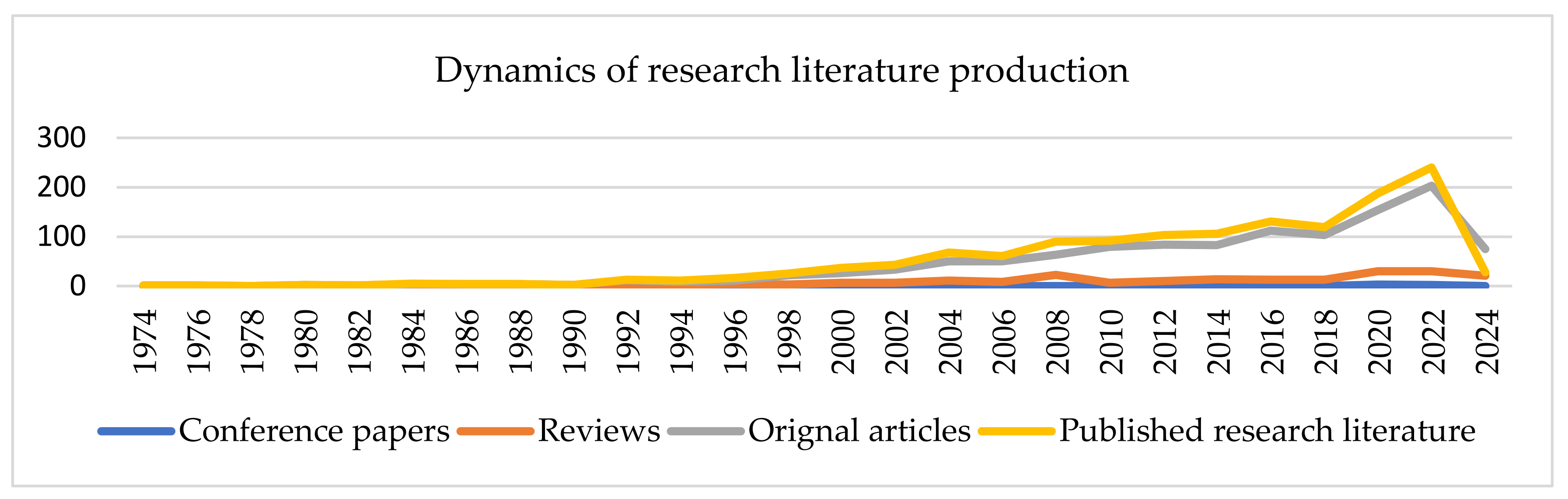
Figure 2.
The term map in the area of physiotherapy, CLBP and bibliometric.
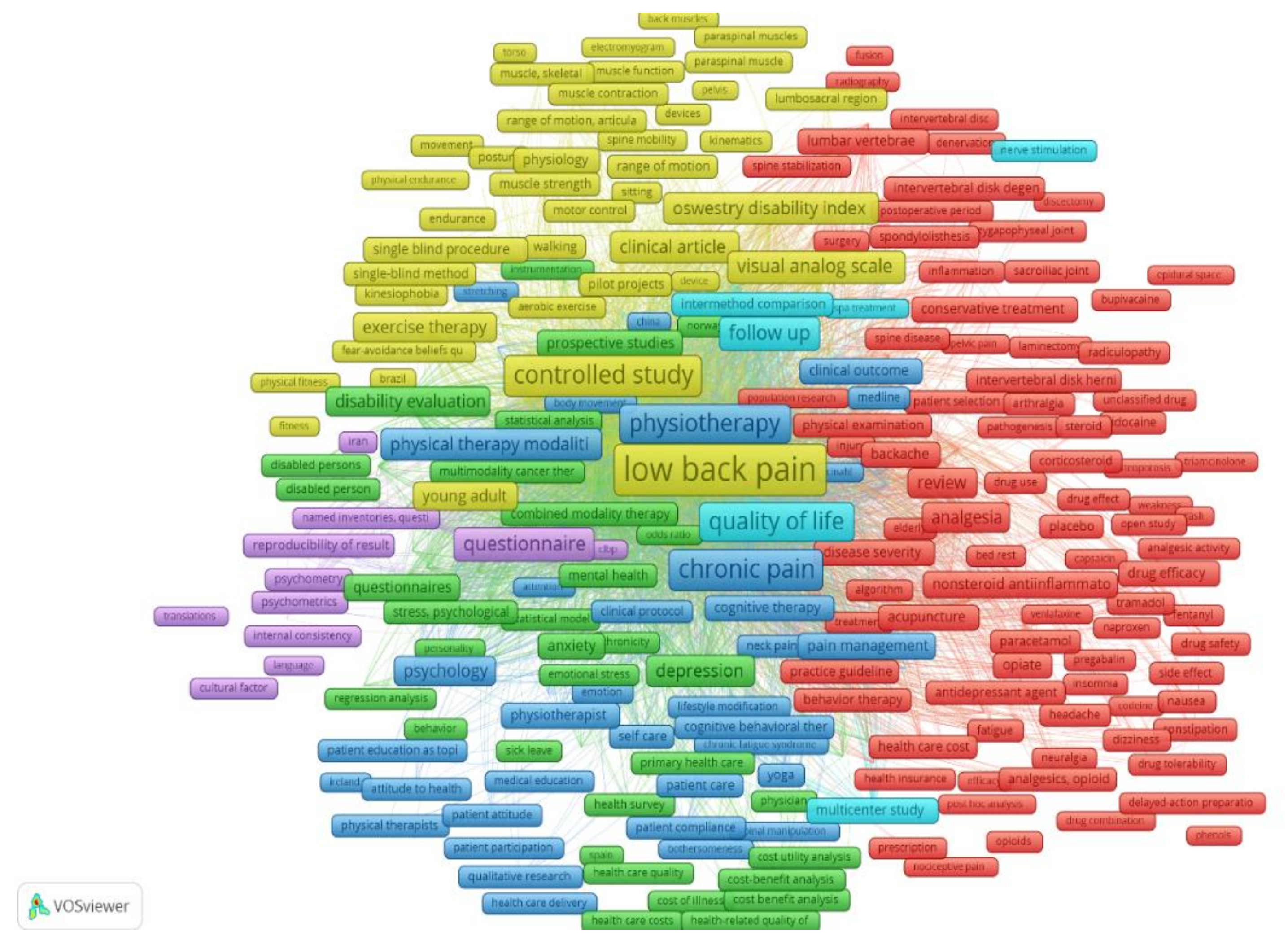
Figure 3.
Chronological diagram of the research topics.
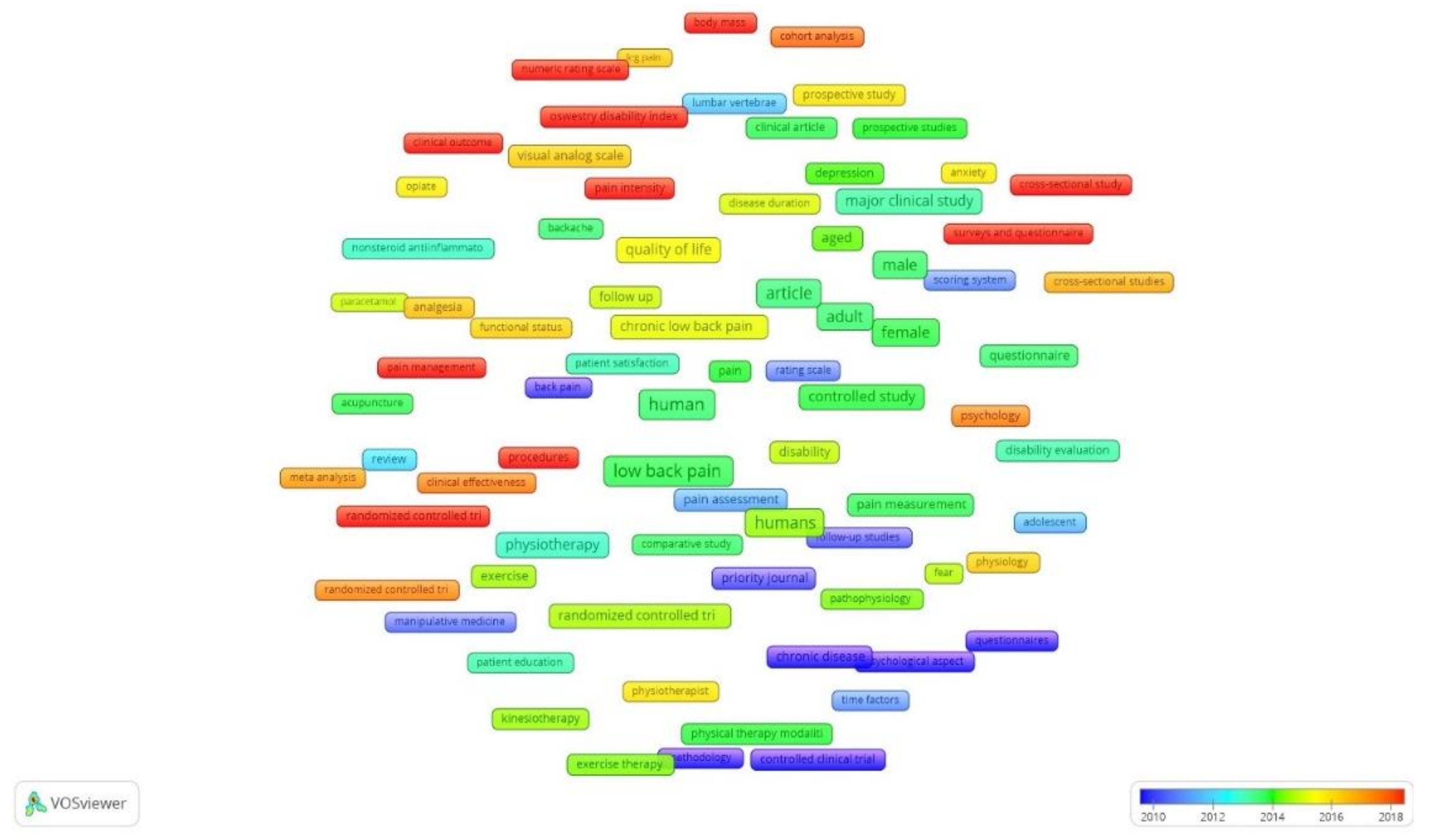

Table 1.
The list of most prolifilic institutions.
| Institution | Number of funded publications | Percentage of funded informations sources (in %) |
|---|---|---|
| National Institutes of Health | 84 | 8,97 |
| National Center for Complementary and Integrative Health | 67 | 7,15 |
| Coordenação de Aperfeiçoamento de Pessoal de Nível Superior | 30 | 3,20 |
| National Health and Medical Research Council | 28 | 2,99 |
| Fundação de Amparo à Pesquisa do Estado de São Paulo | 23 | 2,46 |
| National Natural Science Foundation of China | 23 | 2,46 |
| Pfizer | 18 | 1,92 |
| U.S. Department of Veterans Affairs | 18 | 1,92 |
| National Institute on Aging | 17 | 1,81 |
| National Institute of Child Health and Human Development | 16 | 1,71 |
Table 2.
The list of most prolifilic journals and theirs bibliometric indicators.
| Source title | Number of sources | Percentage of all sources (in %) | IF 20221 | H-index of journal2 | Quartiles (Q)3 |
|---|---|---|---|---|---|
| Spine | 129 | 6,79 | 3.0 | 292 |
|
| BMC Musculoskeletal Disorders | 81 | 4,27 | 2.3 | 122 |
|
| European Spine Journal | 52 | 2,74 | 2.8 | 164 |
|
| Spine Journal | 52 | 2,74 | 4.5 | 136 |
|
| Pain | 51 | 2,69 | 7.4 | 296 |
|
| Journal Of Back and Musculoskeletal Rehabilitation | 48 | 2,53 | 1.6 | 39 |
|
| Clinical Journal of Pain | 47 | 2,48 | 2.9 | 145 |
|
| Pain Medicine United States | 46 | 2,42 | No data | No data |
|
| Journal of Pain Research | 44 | 2,32 | 2.7 | 71 |
|
| BMJ Open | 34 | 1,79 | 2.9 | 160 |
|
Notes: 1. IF according to Bioxbio Journal impact search engine. 2. H-index according to SJR (Scimago Journal and Country Ranks). 3. Quartiles (Q) according to SJR (Scimago Journal and Country Ranks).
Table 3.
Topics / subtopics related to research found in the newest / most cited papers in theirs focuses of research.
Table 3.
Topics / subtopics related to research found in the newest / most cited papers in theirs focuses of research.
| Topic (color) | Subtopics | The newest / most cited papers | Focus of research |
|---|---|---|---|
| Pathophysiology of CLBP and the assessment tools (yellow) | Pain quantification tools, Muscle physiology, Rehabilitation, Kinesiology |
-Visual analogue scale, numeric pain rating scale and the McGill pain Questionnaire: an overview of psychometric properties [29] -Studies Comparing Numerical Rating Scales, Verbal Rating Scales, and Visual Analogue Scales for Assessment of Pain Intensity in Adults: A Systematic Literature Review [30] -Pain biology education and exercise classes compared to pain biology education alone for individuals with chronic low back pain: A pilot randomised controlled trial [31] -Physiotherapeutic treatment associated with neuroscience of pain education for patients with chronic non-specific low back pain - single-blind randomized pilot clinical trial [32] -Biopsychosocial Rehabilitation on Short-Term Pain and Disability in Chronic Low Back Pain: A Systematic Review with Network Meta-Analysis [10] |
The VAS and NPRS are the most commonly used scales of perceived pain intensity, but otherwise there is no established gold standard for pain measurement in the literature. Physiotherapy interventions through behavioural (teaching the patient about the biology of their pain) or instructional modalities demonstrate better treatment outcomes for CLBP. |
| Diagnostics and CLBP treatment (red) | Diagnostics, Analgesia, Risk assessment, Pathology, Other treatment methods |
-Ultra-short echo time MR imaging in assessing cartilage endplate damage and relationship between its lesion and disc degeneration for chronic low back pain patients [33] -The enhanced connectivity between the frontoparietal, somatomotor network and thalamus as the most significant network changes of chronic low back pain [34] -The Longitudinal Relationship Between Emotion Regulation and Pain-Related Outcomes: Results From a Large, Online Prospective Study [35] -Fear-avoidance and its consequences in chronic musculoskeletal pain: a state of the art [36] -Role of CD14-positive cells in inflammatory cytokine and pain-related molecule expression in human degenerated intervertebral discs [37] |
MRI is the most widespread method for researching pain networks in the brain, a newer method is UTE (ultra-short echo time) MRI. Research indirectly suggests a psycho-neuro-immunological connection in CLBP. Pain-related fear and avoidance appear to be essential features for the development of chronic pain. The thalamus plays the most important role in regulation of pain-related emotions. Expression of pain-related molecules is mediated by CD14+ cells via inflammatory cytokines. |
| CLBP Questionnaires and surveys (violet) | Questionnaires and surveys, Pain, Patients’ impact. |
-Evaluating Common Outcomes for Measuring Treatment Success for Chronic Low Back Pain [38] -Roland-Morris Disability Questionnaire and Oswestry Disability Index: Which Has Better Measurement Properties for Measuring Physical Functioning in Nonspecific Low Back Pain? Systematic Review and Meta-Analysis [39] -Understanding the link between depression and pain [40] - Coping Styles, Pain Expressiveness, and Implicit Theories of Chronic Pain [41] |
Studies recommend measuring several outcomes to assess the strength of CLBP and the effectiveness of physiotherapy, namely: functional (Oswestry Disability Index, Rolland Morris Disability Index, etc.), pain (NPRS, Pain Disability Index, etc.), psychosocial (Fear Avoidance Beliefs Questionnaire) and other (return to work, complications or adverse effects, etc.)) outcomes and quality of life assessment (SF-36, etc.). Negative behavioural emotion regulation is reported to result in spiralling negative affect and subsequent CLBP relapse. |
| Quality of life (light blue) | Quality of life, Intermethod comparison, Newer therapeutic methods |
- Assessment of depression, anxiety, sleep disturbance, and quality of life in patients with chronic low back pain in Korea [42] - Effects of Lifestyle Interventions on the Improvement of Chronic Non-Specific Low Back Pain: A Systematic Review and Network Meta-Analysis [43] - Multidisciplinary biopsychosocial rehabilitation for chronic low back pain: Cochrane systematic review and meta-analysis [44] - Exposure to greenspaces could reduce the high global burden of pain [45] |
Depression, anxiety, coping behaviour and catastrophizing are the main components of the quality of life assessment and influence the strength of CLBP and the success of physiotherapy. The concept of a multidisciplinary approach emphasizes the connection between the psychological and physical components of pain. More recent studies are also focused on investigating the effects of the environment and report that a calmer and green living environment should have a positive effect on the expression of CLBP and pain in general. |
| Complementary methods in Physiotherapy (dark blue) | Physiotherapy, Complementary therapies, Personal relationships, Coping behaviour |
- Effect of multidimensional physiotherapy on non-specific chronic low back pain: a randomized controlled trial [46] - Meditation-Based Therapy for Chronic Low Back Pain Management: A Systematic Review and Meta-Analysis of Randomized Controlled Trials [47] - The Influence of the Therapist-Patient Relationship on Treatment Outcome in Physical Rehabilitation: A Systematic Review [48] - The role and function of body communication in physiotherapy practice: A qualitative thematic synthesis [49] - Cognitive and emotional control of pain and its disruption in chronic pain [50] |
The physiotherapist-patient relationship plays an important role in the success of physiotherapy, as it affects the patient's trust. The effectiveness of rehabilitation is also influenced by non-verbal communication, the patient's ability to cope with pain and associated relaxation methods (meditation). |
| Psychosocioeconomic aspects (green) | Economy, Absenteeism, Socioeconomic factors, Disability, Risk factors |
- The Epidemiology and Economic Consequences of Pain [51] - Effects of an early multidisciplinary intervention on sickness absence in patients with persistent low back pain—a randomized controlled trial [27] - Global, regional, and national incidence, prevalence, and years lived with disability for 310 diseases and injuries, 1990–2015: a systematic analysis for the Global Burden of Disease Study 2015 [52] |
Research shows an increasing prevalence of CLBP and associated health care costs. Early multidisciplinary treatment of CLBP is essential to reduce the rate of sick leave and work disability. |
Disclaimer/Publisher’s Note: The statements, opinions and data contained in all publications are solely those of the individual author(s) and contributor(s) and not of MDPI and/or the editor(s). MDPI and/or the editor(s) disclaim responsibility for any injury to people or property resulting from any ideas, methods, instructions or products referred to in the content. |
© 2024 by the authors. Licensee MDPI, Basel, Switzerland. This article is an open access article distributed under the terms and conditions of the Creative Commons Attribution (CC BY) license (http://creativecommons.org/licenses/by/4.0/).
Copyright: This open access article is published under a Creative Commons CC BY 4.0 license, which permit the free download, distribution, and reuse, provided that the author and preprint are cited in any reuse.


