

Submitted:
19 June 2024
Posted:
19 June 2024
You are already at the latest version
Abstract
Ghana, blessed with abundant solar resources and has strategically invested in solar photovoltaic (PV) technologies to diversify its energy mix and reduce the environmental impacts of traditional energy technologies. The 50 MW solar PV installation by the Bui Power Authority exemplifies the nation's dedication to utilizing clean energy for sustainable growth. This study seeks to close the knowledge gap by providing a detailed analysis of the system's performance under different weather conditions, particularly on days with abundant sunshine and those with cloudy skies. The research consists of one-year monitoring data of the climatic and AC energy output fed into the grid. This data was used to analyze PV performance on each month's sunniest and cloudiest days. The results show that the total amount of AC energy output fed into the grid each month on the sunniest day varies between 229.3 MWh in December and 278.0 MWh in November, while the total amount of AC energy output fed into the grid each month on the cloudiest day varies between16.1 MWh in August and 192.8 MWh in February. Also, the percentage variation in energy produced between the sunniest and cloudiest days within a month ranges from 16.9% (December) to 94.1% (August). The reference and system yield analysis showed that the PV plant has a high conversion efficiency of 91.3%; however, only the sunniest and overcast days had an efficiency of 38% and 92%, respectively. The BPA plant's performance can be enhanced by using this analysis to identify erratic power generation on sunny days and schedule timely maintenance to keep the plant's performance from deteriorating. Optimizing a solar PV system's design, installation, and operation can significantly improve its AC energy output, performance ratio, and capacity factor on sunny and cloudy days.
Keywords:
Solar PV System
; Solar Radiation
; AC Energy Output
; Performance Ratio
; System Yield
; Capacity Factor
; Solar PV Performance Analysis
1. Introduction
To reduce reliance on fossil fuels and decarbonize the energy supply sector, there is a growing global demand for sustainable energy solutions, which has accelerated the adoption of renewable energy technologies, presenting a promising avenue for clean and renewable power generation [1], [2]. The incorporation of renewable energy such as solar, wind, hydro, geothermal, and biomass is an essential component in the transition to sustainable and reliable energy systems. Hydroelectric power and solar photovoltaic (PV) systems stand out among renewable energy technologies due to their well-established technologies and potential for significant environmental benefits [3], [4], [5]. The two established technologies have limitations. While PV systems are variable and intermittent and cannot meet the power requirements alone throughout the year, hydropower generation is dependent on the volume and flow rate of water. Droughts or seasonal changes can dramatically reduce water availability, resulting in lower electricity production. Solar PV systems can operate during these dry spells to help meet energy demands [6], [7]. Hybrid renewable energy systems, which combine multiple sources such as wind, solar, hydro, and other renewable energy resources, are increasingly being researched for their ability to provide a more stable and continuous power supply [8], [9], [10].
Several studies have been conducted on hybrid systems worldwide. Cui et al. [11] discussed the hybridization of various ocean energy technologies, including wind, tidal current, and geothermal energy. The authors propose a system that combines various harvesting methods to boost energy production. Awan et al. [12] analyzed the performance of various hybrid systems. The renewable energy systems included solar-diesel battery, hydrogen-based storage, wind-diesel fuel cell, solar-wind-diesel-pumped hydro based storage, and hydro-battery. The solar-wind-diesel-pumped storage-hydro has the highest renewable energy fraction (89.8%) and the largest CO2 emission reduction (89% compared to diesel-only). Also, Aziz et al. [13] addressed the limitations of wind energy as a stand-alone technology. The research proposes combining wind energy with other renewable energy, such as biomass and fuel cells, together with a backup system, to create a more reliable hybrid system. This combination can make up for the intermittent of wind energy. Khare et al. [14] examined the performance of a tidal-solar hybrid renewable energy system. The use of various optimization techniques to assess the viability of the system in India was investigated. The simulation results show that a PV-tidal battery generator is the most economical solution for designing integrated systems.
In many other researched articles, the synergy between solar PV and hydropower systems has been well documented. To reduce the operational load on hydro turbines, and ensure steady power supply during low solar irradiance and reduce operational and maintenance costs, Meshram et al. [7] proposed a system that combines hydropower and solar power. The system is linked to a utility grid. Converters were used to match the voltage of hydroelectric and solar systems to the grid voltage. Both hydroelectric and solar power plants use constant current controllers. The results show that the proposed system can be used to provide continuous power to consumers. Jurasz and Ciapała [15] presented a mathematical simulation and optimization model for achieving a hybrid solar-hydro system. The hydropower's flexibility complements Solar’s variability, resulting in a more reliable and efficient renewable energy source. In the São Francisco River basin, where there have been severe droughts due to climate change, the integration of an optimized floating photovoltaic system (FPV) to a hydroelectric plant resulted in an average energy gain generated by the hydroelectric plant of 76%, with capacity factor increased of 17.3% compared to six other only hydroelectric plants. The PV system also contributes to lowering the levelized cost of electricity, depending on the geographical location of the FPV platform on the reservoir [16].
Africa is widely regarded as the continent most affected by climate change [17], [18]. This is despite Africa contributing the least to global greenhouse gas (GHG) emissions [19]. Climate change has caused erratic rainfall and droughts across most of Africa. This has a direct impact on the water flow in rivers that supply hydropower plants, resulting in lower electricity generation during dry spells [20], [21]. With more than 600 million people in Africa without access to electricity [22], the overall trend indicates the need for a more diverse and resilient power generation system. African countries are capitalizing on their abundant sunshine to implement hybrid hydro-solar PV systems [23], [24], [25]. Ghana, with its plentiful solar resources, has strategically invested in solar PV to diversify its energy portfolio and reduce the environmental impact of conventional energy systems.
The Bui Power Authority in Ghana represents a strategic combination of these two renewable energy technologies, with a 400 MW hydroelectric plant and a 50 MW solar PV system. This hybrid setup aims to improve energy stability, optimize resource utilization, and contribute to the national grid while minimizing environmental impact [26], [27]. The performance of solar PV systems is highly dependent on weather conditions, specifically sunlight availability, solar irradiance, ambient temperature, and system design [28], [29], [30], [31].
Numerous studies have highlighted the variability in PV system output due to changing weather conditions. For instance, Gu et al [32] demonstrated that solar irradiance and temperature have a significant effect on the efficiency and power output of PV systems. Nwoye et al., [33] observed a correlation between the efficiency of a PV system, windspeed, and ambient temperature. According to Padmavathi and Arul [34] variations in solar irradiance, temperature, and system losses impact the performance of a 3 MW grid-connected PV plant in India. In addition, Divya et al., [35] reported that solar PV electricity generation is dependent on solar radiation, module temperature and system losses. Previous performance analyses focus on a PV system's monthly or annual evaluation. The performance variability of a solar PV system comparing two extreme days (sunny and overcast) is yet to be evaluated. Detailed performance analysis on sunny and overcast days can provide a comprehensive understanding of the system's behavior, leading to more accurate predictions, optimization, reliability, financial planning, and better planning for energy production throughout the year.
This study examines the operational performance of the Bui Power Authority's 50 MW solar PV system on two separate days: one with maximum sunlight (most sunny days) and one with minimal sunlight (overcast days) in each month. By examining these opposing scenarios, the paper hopes to shed light on the performance metrics and dependability of the solar PV system in various weather conditions, as well as also offer practical recommendations for optimizing performance in diverse weather scenarios.
2. Materials and Methods
The methods and materials used in the analysis are explained in detail in this section. It gives details on the examined Solar PV systems, the technical parameters, and the performance-related indices considered.
2.1. Location and Photovoltaic Plant
In northwestern Ghana, along the Black Volta River, sits the Bui Dam with latitude 8.28, -2.24 as shown in Figure 1. This hydroelectric facility boasts a 404-megawatt (MW) capacity and utilizes four generating units. Three of these units are powerful Francis turbines, each generating 133.33 megawatts (MW), while the remaining unit is a smaller 4-megawatt (MW) Turbinette [36].
To boost the Bui dam's overall electricity generation without affecting the water reservoir, a 50-megawatt (MW) solar power plant was built on land 3km from the dam, as shown in Figure 2. The Solar Plant was commissioned in November 2020. This solar PV plant uses mono-crystalline PERC solar panels that capture sunlight only from the front and connect directly to the power grid.
2.2. Technical Design
The installed capacity of the grid-connected solar PV plant is 50.76 MWp. The solar plant's total net generating capacity is divided into sub-arrays of solar power capacity that feed into power conditioning units (PCUs). The plant is a fixed-tilt ground-mounted system built downstream from the hydroelectric power plant. Table 1 shows the technical specifications of the PV system. The solar PV plant consists of 119,724 monocrystalline PV modules. This project is connected to the grid at 34.5kV and includes 8 transformers with capacities of 6.3 MVA each and 250 inverters. A single inverter has a capacity of 185 kW and 16/17/18 strings of 28/29/30 PV modules connected with capacities of 380W/385W/440W [36].
Solar irradiance is crucial in evaluating solar PV systems, indicating the amount of power a surface receives per unit area. Solar irradiance comprises global horizontal irradiance (GHI), direct normal irradiance (DNI), and diffuse horizontal irradiance (DHI). DNI irradiance refers to the portion of solar irradiance directly reaching a surface. On the other hand, DHI is the portion scattered by the atmosphere. GHI is the combined diffuse and direct irradiance that reaches the same surface [37], [38], [39]. GHI and DHI represent a horizontal surface parallel to the ground, whereas DNI represents a perpendicular surface to the Sun. Higher values of the DHI/GHI ratio indicate an increased presence of clouds, greater air pollution, or higher levels of water vapor. GHI is strongly correlated with the Sun's location and, together with DNI, plays a crucial role in the functioning of solar systems. Practitioners utilize GHI forecasting, as stated by Law et al. [38], to evaluate the effectiveness of solar PV and thermal systems. Forecasting the use of both the GHI and DNI is crucial for assessing the performance of infrastructures in concentrating solar systems. Our system is a traditional solar PV system, so we considered the GHI values for the performance analysis.
The daily measured meteorological data consisting of GHI, ambient temperature, wind speed, sunshine time, power, and energy generated for the year 2022 was obtained from the Bui Power Authority (BPA). Tracking energy production and consumption is essential for plant management. The electric meter panel monitors and records this critical information. For the current study, the inverter monitoring system measured the hourly peak and average power and energy EAC generated. The inverter measurements are sent to the supervisory control and data acquisition (SCADA) system, which is installed in a high-performance workstation. The Automatic Generation Control (AGC) and Automatic Voltage Control (AVC) panels regulate power generation and voltage levels to ensure grid stability and peak plant performance. EAC stands for energy attribute certificate, usually issued for each MWh of electricity produced from renewable electricity produced and added to the grid [40]. Performance-related indices
The International Energy Agency (IEA) developed performance parameters to analyze solar PV grid interconnected systems. This study used reference yield, system yield, final yield, performance ratio, and capacity factor based on available data and literature [41]. It’s important to note that when analyzing the output of the system, Tanima et al., [42] stated that the ambient temperature should have a linear relationship with the PV module output performance and efficiency.
2.3. Performance Related-Indices
The International Energy Agency (IEA) developed performance parameters to analyze solar PV grid interconnected systems. This study used reference yield, system yield, final yield, performance ratio, and capacity factor based on available data and literature [41], [41].
2.3.1. Reference Yield
The reference yield can be referred to as the ratio of daily total in-plane insolation to reference irradiance at standard test conditions (STC). It represents the available energy under ideal conditions. It is a function of the location, PV system design, and weather variability [4]. The equation is depicted as:
2.3.2. System or Array Yield
Array yield (Ya) is defined as the PV array's direct current (DC) energy output over a given period, normalized by the PV-rated power at STC. It represents the number of hours the PV array operates at its rated capacity. The Ya can be determined using:
The comparison between the system yield and the reference yield is a crucial set of performance parameters for a grid-connected solar system. This link represents the overall effectiveness of converting energy. The primary variables that require monitoring are the power transmitted to the electric grid and the level of irradiance within the plane. If the PV system is considered linear, then the system's output will be assumed to be directly linked to the reference output. The relationship between the measurements of system yield and reference yield can be estimated using a linear function that intersects the origin. The linear line can be determined by applying linear regression to all data samples. The slope of the line indicates the mean performance ratio across all data [41].
2.3.3. Final Yield
The final yield shows how close the actual electricity generated is to the ideal output. The final yield is calculated by dividing the total alternating current ( energy produced by the PV system over a specified period (a day, a month, or a year) by the installed PV array's peak power at a solar irradiance of 1000 W/m2 and a cell temperature of 25 ֯C. This energy is the energy fed into the grid after inverter and transformer losses have been accounted [43].
2.3.4. Performance Ratio (PR)
Performance ratio (PR) is the ratio of energy injected into the grid to the nominal power of the PV array installed, i.e. the ratio of final yield to reference yield. It allows for comparison of performance results across different PV systems, regardless of geographical location or installed peak power [4], [36]. The equation for the performance ratio is given as:
2.3.5. Capacity Factor
The capacity factor is a method of presenting the energy delivered by an electric power generation system. It is defined as the ratio of , the energy produced by the PV system over a given period, to the energy output that would have been generated if the system had been operated at nominal capacity throughout the period [44]. The PV system's daily capacity factor is calculated using the following equation:
3. Results
This section covers the results of the analysis based on the performance parameters. These parameters include reference yield, system yield, final yield, performance ratio, and capacity factor.
3.1. Daily Solar Radiation Data Analysis
The meteorological and energy-generated data collected between January 2022 and December 2022 were analyzed to determine the most sunny and cloudy day of each month. Figure 3 depicts the daily variation in solar radiation for the overcast and most sunny days of each month. On cloudy days, the global horizontal irradiation (GHI) varies from 0.33 kWh/m2 (August) to 4.02 kWh/m2 (February) while sunny days experienced a global horizontal irradiation ranging between 5.24 (September) and 6.94 kWh/m2 (June). The graph shows that September has the lowest GHI, while June has the highest. The performance of a solar PV system is highly dependent on solar radiation and the ambient temperature [45], [46].
Figure 4a, 4b, and 4c depict the relationship between the reference and system yields throughout the year, sunniest and cloudiest days. In Figures 4a and 4c, the reference and system yields are strongly correlated, indicating that the PV plant has a high conversion efficiency [41]. The correlation value is 0.955, and the coefficient of determination is 0.913, indicating that the reference yield accounts for 91.3% of the total system yield throughout the year. The correlation and coefficient of determination values for the cloudiest days are 0.963 and 0.927, respectively. Figure 4b shows less predictability between the reference yield and system yield. The correlation and coefficient values are 0.616 and 0.382, respectively. Solar PV systems tend to be less efficient at higher temperatures, which are more prevalent on sunny days [47]. This non-linear relationship between temperature and efficiency can cause variations that a linear regression model may not accurately capture. Furthermore, the performance of solar panels can degrade under intense sunlight due to overheating, leading to less predictable variations in output and a lower coefficient of determination [48]. These results align with the analytical grid-connected PV system performance study conducted by Woyte et al. [49] reported in the IEA PVPS 2014 report.
3.2. Daily Ambient Temperature and AC Energy Fed into the Grid (Sunny and Overcast Days)
Figure 5a and 5b show the average ambient temperature and total AC energy generated per day on the most sunny and cloudy days of the year. The ambient temperature ranged from 22.6 ⁰C (August) to 32.5 ⁰C (February) during overcast days. On sunny days, the ambient temperature ranged from 27.1 ⁰C (September) to 33.5 ⁰C (February). It is worth noting that February has the highest average ambient temperature throughout the year which makes the month the hottest month for this location. The amount of AC energy fed into the grid on the sunniest day of the month varies between 229.3 MWh (December) and 278.0 MWh (November). While the cloudiest day of the month ranges between 16.1 MWh (August) and 192.8 MWh (February). In November and December, a high energy output of 128.4 and 190.6 MWh was also observed. The percentage increase in energy generated on the sunniest day versus the cloudiest days ranges from 16.9 (December) to 94.1% (August). The results show a correlation between total AC energy and available solar radiation, as increased irradiation leads to increased total energy. Nouar Aoun [45] reported a similar correlation between solar radiation and energy generated.
3.3. Performance Ratio
The quality of the solar PV plant on these two opposing days (sunniest and cloudiest) was examined through the evaluation of the performance ratio. As shown in Figure 6, the performance ratio of the solar PV system during the sunniest days fluctuates between 76.9 to 92.3% while the performance ratio of the solar PV system for the overcast days is higher, ranging between 90.9 to 110.6%. A high-performance ratio indicates that the PV system efficiently converts available solar radiation to electrical energy [50]. According to [51], while a performance ratio (PR) exceeding 100% for a solar PV system seems illogical, it can happen in certain circumstances, especially on cloudy days due to the combined effects of diffuse light, cooler temperatures, and potential measurement anomalies.
3.4. Daily Capacity Factor of the Solar PV Plant (Sunniest and Cloudiest)
The capacity factor was used to calculate how much energy the solar PV plant produces on sunny and overcast days versus the maximum amount of energy it could theoretically produce if it operated at full capacity on that same day. The value of capacity factor in Figure 7 for the overcast days ranged between 1.3% to 16.1% while the sunny days have a higher capacity factor ranging between 19.1% to 23.2%. The capacity factor was lower during the overcast days because the location had lower insulation during those days. Climatic conditions such rain, cloudy sky, and storm have been found to lower the capacity factor of a solar PV plant [43].
4. Conclusions
The current study examines a 50 MW solar PV utility scale integrated with hydro power plant owned by the Bui Power Authority in Ghana. This article aims to add to the growing body of knowledge on hybrid renewable energy systems by conducting a detailed performance analysis. By examining the system's output on the sunniest and overcast days, the study provides valuable insights into operational dynamics and potential improvements for such seasonal variation. This analysis is critical for improving the integration and performance of renewable energy systems, thereby promoting sustainable energy development in Ghana and beyond.
The research work consists of a one-year monitoring period with measurements of climatic data and AC energy output fed into the grid. Using this data, the PV performance was analyzed for each month's sunniest and most overcast days. The outcome of the research is summarized as follows:
- The amount of AC energy fed into the grid on the sunniest day of the month ranges from 229.3 MWh (December) to 278.0 MWh (November). The cloudiest day of the month averages 16.1 MWh (August) and 192.8 MWh (February).
- The percentage increase in energy generated between the sunniest and cloudiest days ranges from 16.9 (December) to 94.1% (August).
- During the sunniest days, the solar PV system's performance ratio ranges from 76.9 to 92.3%, while on overcast days, it ranges from 90.9 to 110.6%.
- The capacity factor values for overcast days ranged from 1.34 to 16.07%, whereas sunny days had a higher capacity factor ranging from 19.11 to 23.17%.
This analysis of the Bui solar plant's performance on sunny and cloudy days helps the BPA optimize hydropower usage through:
- Hydro Support; by knowing how much solar power the plant produces on a sunny day enables BPA to use hydropower strategically. During peak solar hours, they may be able to reduce hydropower output, saving water in the reservoir for times when solar is limited.
- A hydro backup is needed during cloudy days, and the data provides information on the minimum solar power generation. BPA can use this data to calculate the amount of hydropower required to maintain a consistent grid supply during periods of low solar output.
- Understanding the variability of the solar plant allows BPA to optimize dispatch strategies, determining the most efficient mix of solar and hydropower to deliver to the grid at various times.
Epileptic power generation on a sunny day, compared to predictions, could signal trouble with solar panels or inverters. By catching these issues early with data analysis, maintenance can be done quickly to prevent the plant's performance from worsening.
Implementing strategies such as optimizing the panel orientation and tilt, use of high-efficiency panels, power optimizers, appropriate ground cover ratio, ensuring proper cooling and regular maintenance, and optimal site locations can improve the AC energy output, performance ratio, and capacity factor of a solar PV system during both sunny and overcast days.
Author Contributions
Conceptualization, ROY. MWI. and PA.; methodology, ROY, MWI.; software, ROY, MWI; validation, MCD; formal analysis, ROK, MWI; investigation, ROY, MWI.; resources, MCD; data curation, PA, ROY.; writing—original draft preparation, ROY, MWI.; writing—review and editing, MCD, HY, AAA.; visualization, ROK, MWI.; supervision, MCD.; project administration, MWI. All authors have read and agreed to the published version of the manuscript.
Funding
This research received no external funding.
Data Availability Statement
Data will be made available upon request.
Acknowledgments
We would like to thank the management of the BUI power plant for providing the data used for this analysis.
Conflicts of Interest
The authors declare no conflicts of interest.
References
- Kougias, I.; Szabó, S.; Monforti-Ferrario, F.; Huld, T.; Bódis, K. , “A methodology for optimization of the complementarity between small-hydropower plants and solar PV systems,” Renew Energy, vol. 87, pp. 1023–1030, 2016. [CrossRef]
- Syahputra, R.; Soesanti, I. , “Renewable energy systems based on micro-hydro and solar photovoltaic for rural areas: A case study in Yogyakarta, Indonesia,” Energy Reports, vol. 7, pp. 472–490, 2021. [CrossRef]
- Lee, N.; et al. , “Hybrid floating solar photovoltaics-hydropower systems: Benefits and global assessment of technical potential,” Renew Energy, vol. 162, pp. 1415–1427, 2020. [CrossRef]
- Fuster-Palop, E.; Vargas-Salgado, C.; Ferri-Revert, J.C.; Payá, J. , “Performance analysis and modelling of a 50 MW grid-connected photovoltaic plant in Spain after 12 years of operation,” Renewable and Sustainable Energy Reviews, vol. 170, no. September, 2022. [CrossRef]
- Piancó, F.; et al. , “Hydroelectric operation for hybridization with a floating photovoltaic plant: A case of study,” Renew Energy, vol. 201, no. October, pp. 85–95, 2022. [CrossRef]
- Farfan, J.; Breyer, C. , “Combining floating solar photovoltaic power plants and hydropower reservoirs: A virtual battery of great global potential,” Energy Procedia, vol. 155, pp. 403–411, 2018. [CrossRef]
- Meshram, S.; Agnihotri, G.; Gupta, S. , “Performance analysis of grid integrated hydro and solar based hybrid systems,” Advances in Power Electronics, vol. 2013, 2013. [CrossRef]
- Stiubiener, U.; da Silva, T.C.; Trigoso, F.B.M.; da S, R.; Teixeira, J.C. , “PV power generation on hydro dam’s reservoirs in Brazil: A way to improve operational flexibility,” Renew Energy, vol. 150, pp. 765–776, 2020. [CrossRef]
- Zhou, Y.; et al. , “An advanced complementary scheme of floating photovoltaic and hydropower generation flourishing water-food-energy nexus synergies,” Appl Energy, vol. 275, no. March, p. 115389, 2020. [CrossRef]
- Zhang, Y.; Ma, C.; Lian, J.; Pang, X.; Qiao, Y.; Chaima, E. , “Optimal photovoltaic capacity of large-scale hydro-photovoltaic complementary systems considering electricity delivery demand and reservoir characteristics,” Energy Convers Manag, vol. 195, no. January, pp. 597–608, 2019. [CrossRef]
- Cui, L.; et al. , “Synergistic Hybrid Marine Renewable Energy Harvest System,” Energies (Basel), vol. 17, no. 5, 2024. [CrossRef]
- Awan, A.B.; Zubair, M.; Sidhu, G.A.S.; Bhatti, A.R.; Abo-Khalil, A.G. , “Performance analysis of various hybrid renewable energy systems using battery, hydrogen, and pumped hydro-based storage units,” Int J Energy Res, vol. 43, no. 12, pp. 6296–6321, 2019. [CrossRef]
- Aziz, M.S.; Ahmed, S.; Saleem, U.; Mufti, G.M. , “Wind-hybrid power generation systems using renewable energy sources-A review,” International Journal of Renewable Energy Research, vol. 7, no. 1, pp. 111–127, 2017. [CrossRef]
- Khare, V. , “Prediction, investigation, and assessment of novel tidal–solar hybrid renewable energy system in India by different techniques,” International Journal of Sustainable Energy, vol. 38, no. 5, pp. 447–468, 2019. [CrossRef]
- Jurasz, J.; Ciapała, B. , “Solar–hydro hybrid power station as a way to smooth power output and increase water retention,” Solar Energy, vol. 173, no. April, pp. 675–690, 2018. [CrossRef]
- Silvério, N.M.; Barros, R.M.; Filho, G.L.T.; Redón-Santafé, M.; Santos, I.F.S.D.; de M, V.E. , “Use of floating PV plants for coordinated operation with hydropower plants: Case study of the hydroelectric plants of the São Francisco River basin,” Energy Convers Manag, vol. 171, no. May, pp. 339–349, 2018. [CrossRef]
- “Africa worst hit by climate change impacts, COP26 told.” Accessed: Jun. 06, 2024. [Online]. Available: https://www.nature.com/articles/d44148-021-00107-z.
- “17 out of the 20 countries most threatened by climate change are in Africa, but there are still solutions to this crisis | United Nations Economic Commission for Africa.” Accessed: Jun. 06, 2024. [Online]. Available: https://www.uneca.org/stories/17-out-of-the-20-countries-most-threatened-by-climate-change-are-in-africa%2C-but-there-are.
- Weber, T.; Haensler, A.; Rechid, D.; Pfeifer, S.; Eggert, B.; Jacob, D. , “Analyzing Regional Climate Change in Africa in a 1.5, 2, and 3°C Global Warming World,” Earths Future, vol. 6, no. 4, pp. 643–655, 2018. [CrossRef]
- Niang, I.; et al. , Africa. Cambridge University Press, Cambridge, United Kingdom and New York, NY, USA, 2014. [CrossRef]
- Sissoko, K.; van Keulen, H.; Verhagen, J.; Tekken, V.; Battaglini, A. , “Agriculture, livelihoods and climate change in the West African Sahel,” Reg Environ Change, vol. 11, no. SUPPL. 1, pp. 119–125, 2011. [CrossRef]
- Ijeoma, M.W.; Lewis, C.G.; Chen, H.; Chukwu, B.N.; Carbajales-Dale, M. , “Technical, economic, and environmental feasibility assessment of solar-battery-generator hybrid energy systems: a case study in Nigeria,” Front Energy Res, vol. 12, May 2024. [CrossRef]
- IEA, “Access to electricity – SDG7: Data and Projections – Analysis - IEA.” Accessed: Apr. 04, 2022. [Online]. Available: https://www.iea.org/reports/sdg7-data-and-projections/access-to-electricity.
- Sanchez, R.G.; Kougias, I.; Moner-Girona, M.; Fahl, F.; Jäger-Waldau, A. , “Assessment of floating solar photovoltaics potential in existing hydropower reservoirs in Africa,” Renew Energy, vol. 169, pp. 687–699, 2021. [CrossRef]
- Thomas, Reindl; et al. , “Where Sun Meets Water,” Where Sun Meets Water, 2019. [CrossRef]
- 2019 Energy Commission, “Ghana Renewable Energy Master Plan,” Ghana Renewable Energy Master Plan, pp. 1–83, 2019.
- GWÉNAËLLE DEBOUTTE, “First unit of 250 MW floating PV project comes online in Ghana – pv magazine International,” PV Magazine. Accessed: Jan. 01, 2023. [Online]. Available: https://www.pv-magazine.com/2020/12/15/first-unit-of-250-mw-floating-pv-project-comes-online-in-ghana/.
- MD. M. Hasan, “Design 50MW large scale PV power plant considering Bangladeshi climate,” Uppsala Universitet, 2021.
- Yakubu, R.O.; Mensah, L.D.; Quansah, D.A. , “Improving solar photovoltaic installation energy yield using bifacial modules and tracking systems : An analytical approach,” vol. 14, no. 12, pp. 1–12, 2022. [CrossRef]
- Yakubu, R.O.; Ankoh, M.T.; Mensah, L.D.; Quansah, D.A.; Adaramola, M.S. , “Predicting the Potential Energy Yield of Bifacial Solar PV Systems in Low-Latitude Region,” Energies (Basel), vol. 15, no. 22, pp. 1–17, 2022. [CrossRef]
- Ijeoma, M.W.; Chen, H.; Carbajales-Dale, M.; Yakubu, R.O. , “Techno-Economic Assessment of the Viability of Commercial Solar PV System in Port Harcourt, Rivers State, Nigeria,” Energies (Basel), vol. 16, no. 19, p. 6803, Sep. 2023. [CrossRef]
- Gu, W.; Ma, T.; Li, M.; Shen, L.; Zhang, Y. , “A coupled optical-electrical-thermal model of the bifacial photovoltaic module,” Appl Energy, vol. 258, no. 19, p. 114075, 2020. [CrossRef]
- Nwoye, C.I.; Emelue, H.U.; Bamidele, F.A.; Owadara, A.B. , “Empirical Analysis of Performance Efficiency of Monocrystalline Silicon Solar Photovoltaic Module Based on Ambient Temperature and Wind Speed,” International Journal of Physics, vol. 1, no. May, pp. 0–5, 2020. [CrossRef]
- Padmavathi, K.; Daniel, S.A. , “Performance analysis of a 3MWp grid connected solar photovoltaic power plant in India,” Energy for Sustainable Development, vol. 17, no. 6, pp. 615–625, 2013. [CrossRef]
- Mittal, D.; Saxena, B.K.; Rao, K.V.S. , “Comparison of floating photovoltaic plant with solar photovoltaic plant for energy generation at Jodhpur in India,” Proceedings of 2017 IEEE International Conference on Technological Advancements in Power and Energy: Exploring Energy Solutions for an Intelligent Power Grid, TAP Energy 2017, pp. 1–6, 2018. [CrossRef]
- Yakubu, R.O.; Quansah, D.A.; Mensah, L.D.; Ahiataku-togobo, W.; Acheampong, P.; Adaramola, M.S. , “Comparison of ground-based and floating solar photovoltaic systems performance based on monofacial and bifacial modules in Ghana,” Energy Nexus, vol. 12, no. June, p. 100245, 2023. [CrossRef]
- Lujano-Rojas, J.; Dufo-López, R.; Domínguez-Navarro, J.A. , “Forecasting of electricity prices, demand, and renewable resources,” in Genetic Optimization Techniques for Sizing and Management of Modern Power Systems, Elsevier, 2023, pp. 201–246. [CrossRef]
- Law, E.W.; Prasad, A.A.; Kay, M.; Taylor, R.A. , “Direct normal irradiance forecasting and its application to concentrated solar thermal output forecasting - A review,” Solar Energy, vol. 108, pp. 287–307, 2014. [CrossRef]
- Forster, P.; et al. , “3. Meehl, G. A. et al. in Climate Change,” Cambridge Univ. Press, 2007. [Online]. Available: www.nature.com/reports/climatechange.
- “Energy Attribute Certificates (EACs) | US EPA.” Accessed: Jun. 06, 2024. [Online]. Available: https://www.epa.gov/green-power-markets/energy-attribute-certificates-eacs.
- Woyte, A.; et al. , Analytical Monitoring of Grid-connected Photovoltaic Systems, Report IEA-PVPS T13-03. 2014.
- Bhattacharya, T.; Chakraborty, A.K.; Pal, K. , “Effects of Ambient Temperature and Wind Speed on Performance of Monocrystalline Solar Photovoltaic Module in Tripura, India,” Journal of Solar Energy, vol. 2014, no. April, pp. 1–5, 2014. [CrossRef]
- Kumar, D.J.V.; et al. , “Performance Evaluation of 1.1 MW Grid-Connected Solar Photovoltaic Power Plant in Louisiana,” Energies (Basel), vol. 15, no. 9, 2022. [CrossRef]
- Bolinger, M.; Seel, J.; Wu, M. , “Maximizing MWh: A statistical analysis of the performance of utility-scale photovoltaic projects in the United States,” 2017 IEEE 44th Photovoltaic Specialist Conference, PVSC 2017, pp. 467–471, 2017. [CrossRef]
- Aoun, N. , “Energy and exergy analysis of a 20-MW grid-connected PV plant operating under harsh climatic conditions,” Clean Energy, vol. 8, no. 1, pp. 281–296, 2024. [CrossRef]
- Meyer, E.L.; Buma, C.L.; Taziwa, R.T. , “Performance parameters of an off-grid building integrated photovoltaic system in South Africa,” 33rd European Photovoltaic Solar Energy Conference and Exhibition, no. November, pp. 2450–2455, 2017.
- Dhimish, M. , “Thermal impact on the performance ratio of photovoltaic systems: A case study of 8000 photovoltaic installations,” Case Studies in Thermal Engineering, vol. 21, no. June, p. 100693, 2020. [CrossRef]
- Dubey, S.; Sarvaiya, J.N.; Seshadri, B. , “Temperature dependent photovoltaic (PV) efficiency and its effect on PV production in the world - A review,” Energy Procedia, vol. 33, pp. 311–321, 2013. [CrossRef]
- Woyte, A.; et al. , Analytical monitoring of grid-connected photovoltaic systems good practices for monitoring and performance analysis : IEA PVPS task 13, subtask 2 : report IEA PVPS T13-03: 2014.
- Supapo, K.R.M.; Lozano, L.; Querikiol, E.M. , “Performance Evaluation of an Existing Renewable Energy System at Gilutongan Island, Cebu, Philippines,” Journal of Engineering, vol. 2024, pp. 1–19, 2024. [CrossRef]
- AG, S.S.T. , “Performance ratio-Quality factor for the PV plant,” Energy Systems, pp. 1–9, 2016.
Figure 1.
Location of Bui Hydro Dam.
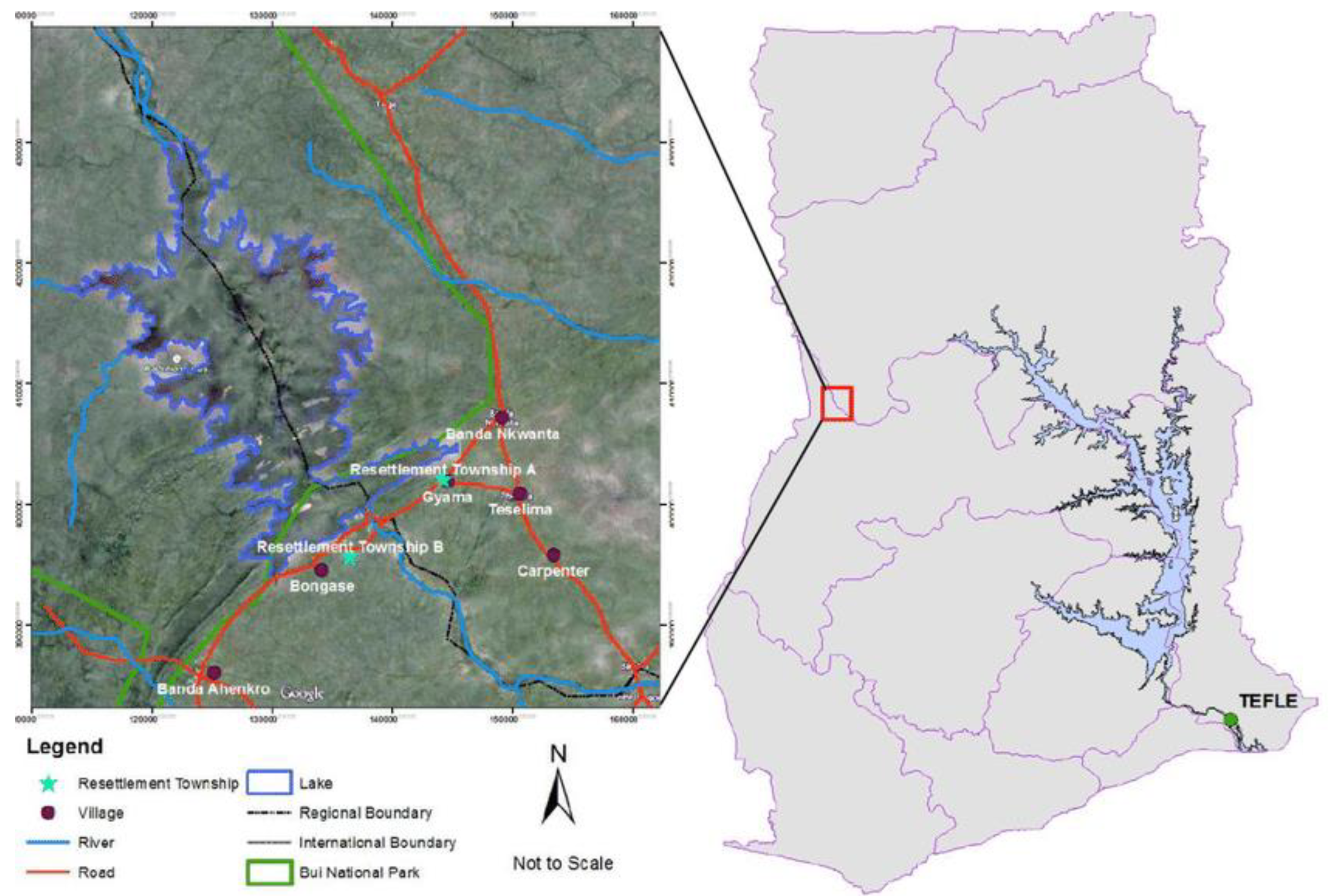
Figure 2.
The 50 MW Solar PV Plant at Bui.
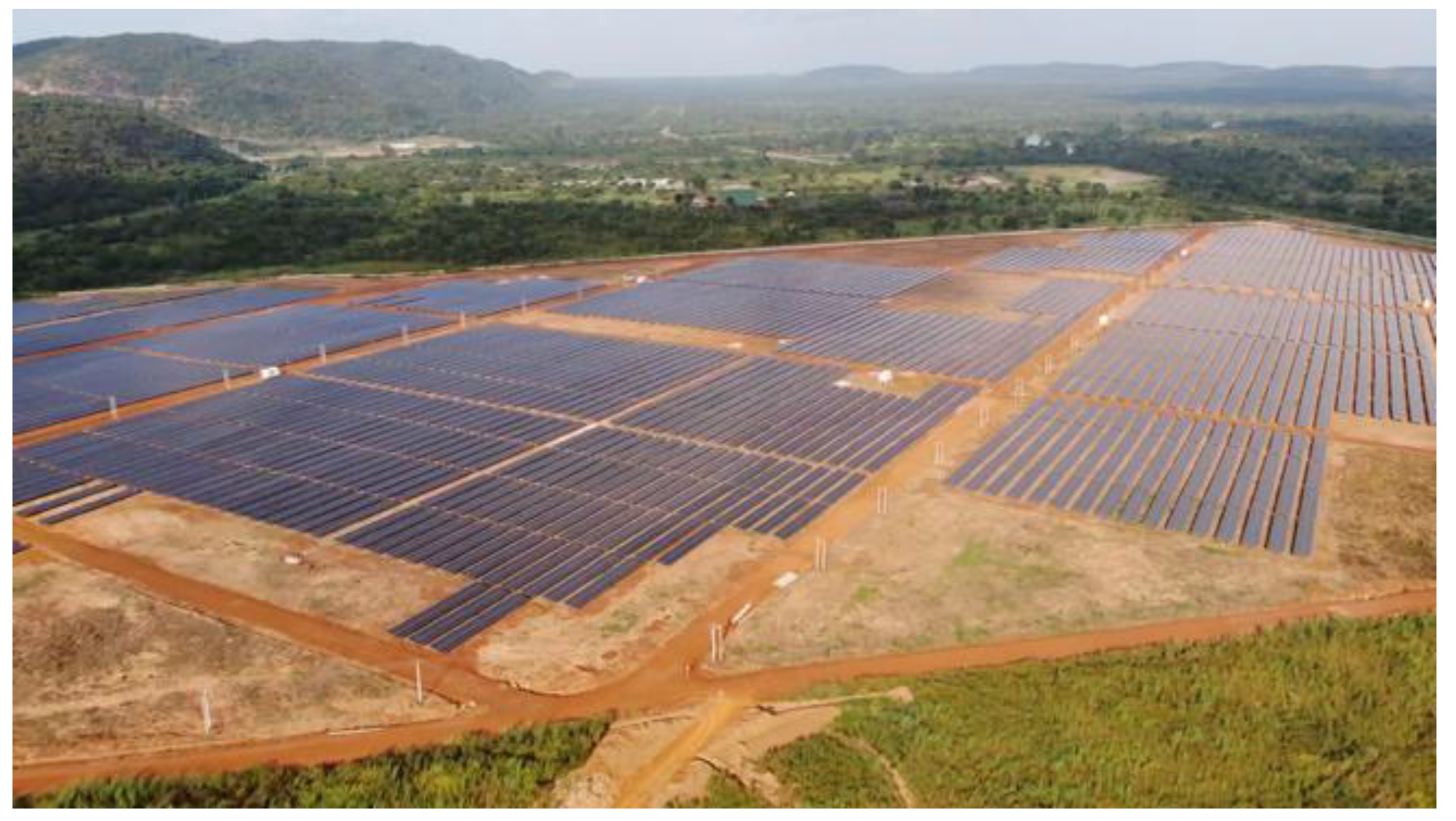
Figure 3.
Daily global horizontal irradiation of the solar PV system.
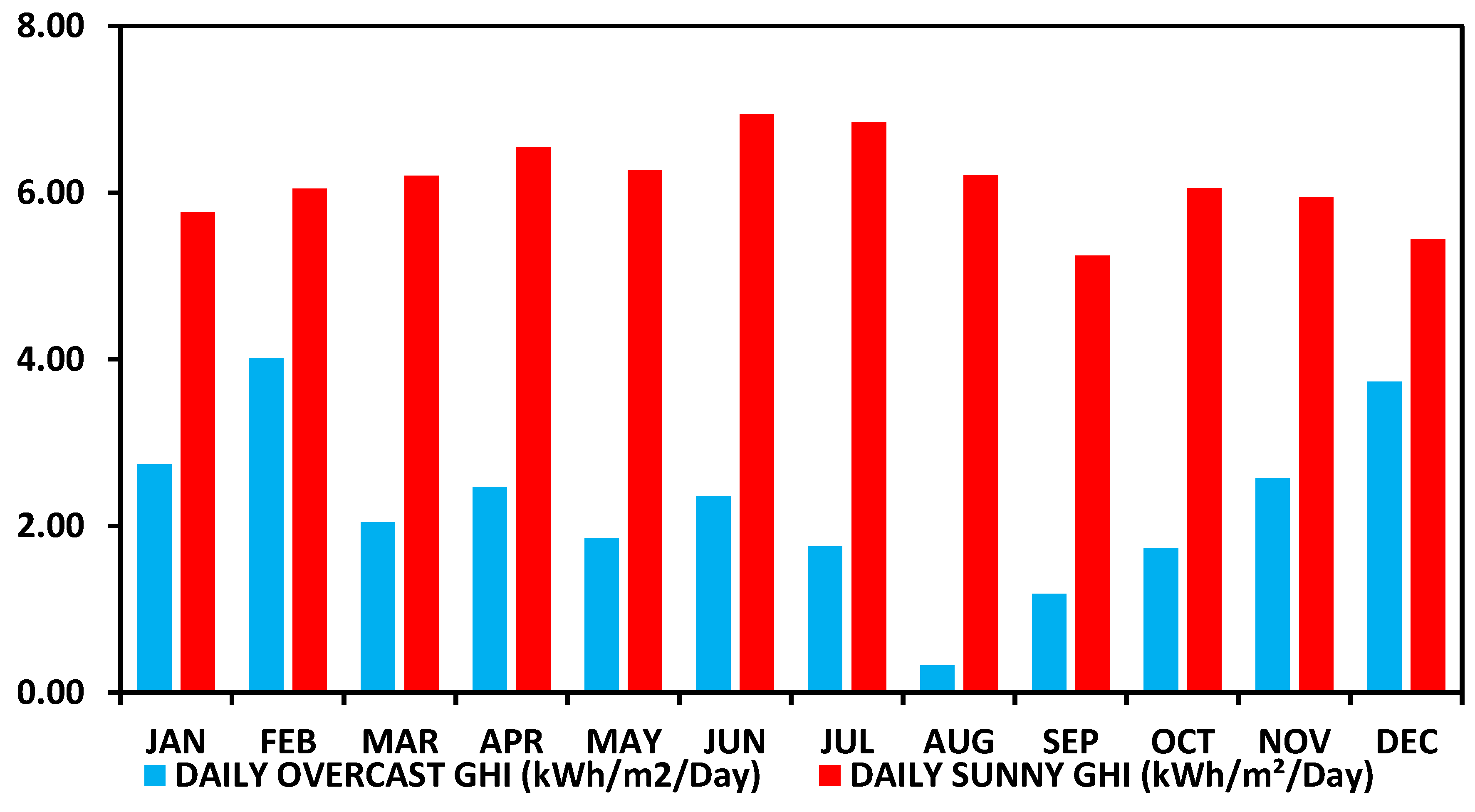
Figure 4.
(a) Daily system yield versus reference yield throughout the year. (b) Daily system yield versus reference yield. (c) Daily system versus reference yield.
Figure 4.
(a) Daily system yield versus reference yield throughout the year. (b) Daily system yield versus reference yield. (c) Daily system versus reference yield.
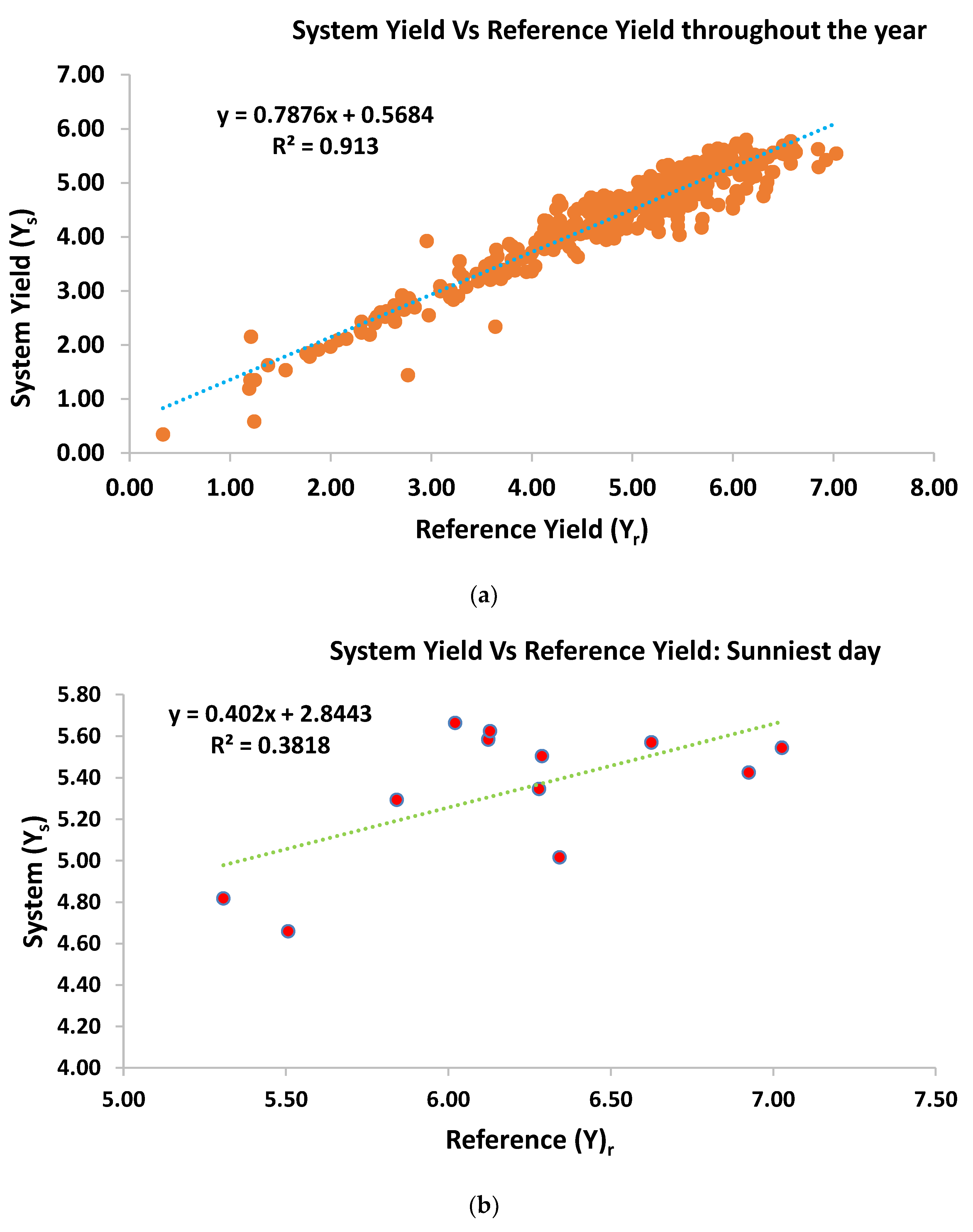
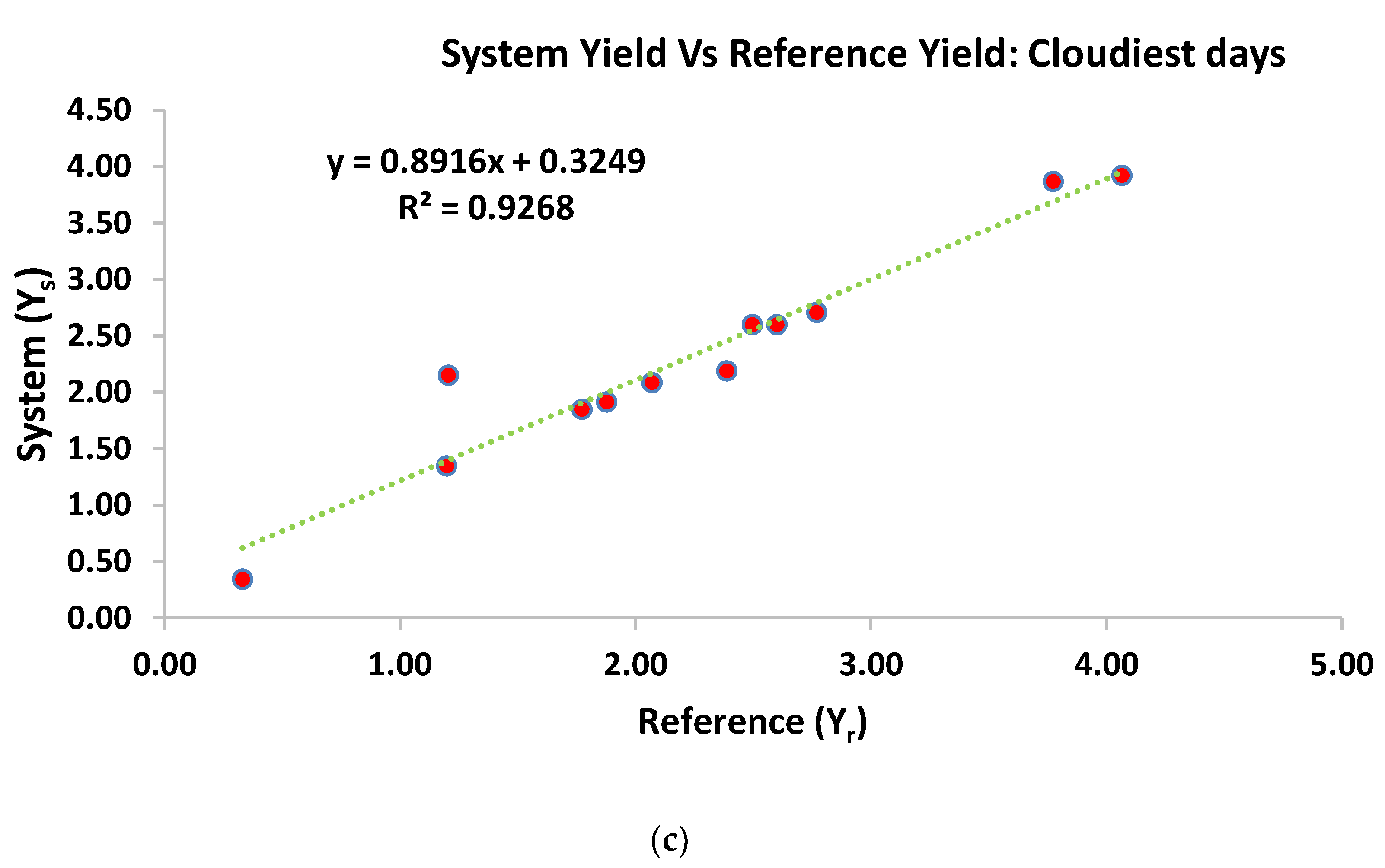
Figure 5.
(a) The average ambient temperature and total AC energy generated per day on the Sunniest days of the year. (b) The average ambient temperature and total AC energy generated per day on the cloudiest (overcast) days of the year.
Figure 5.
(a) The average ambient temperature and total AC energy generated per day on the Sunniest days of the year. (b) The average ambient temperature and total AC energy generated per day on the cloudiest (overcast) days of the year.
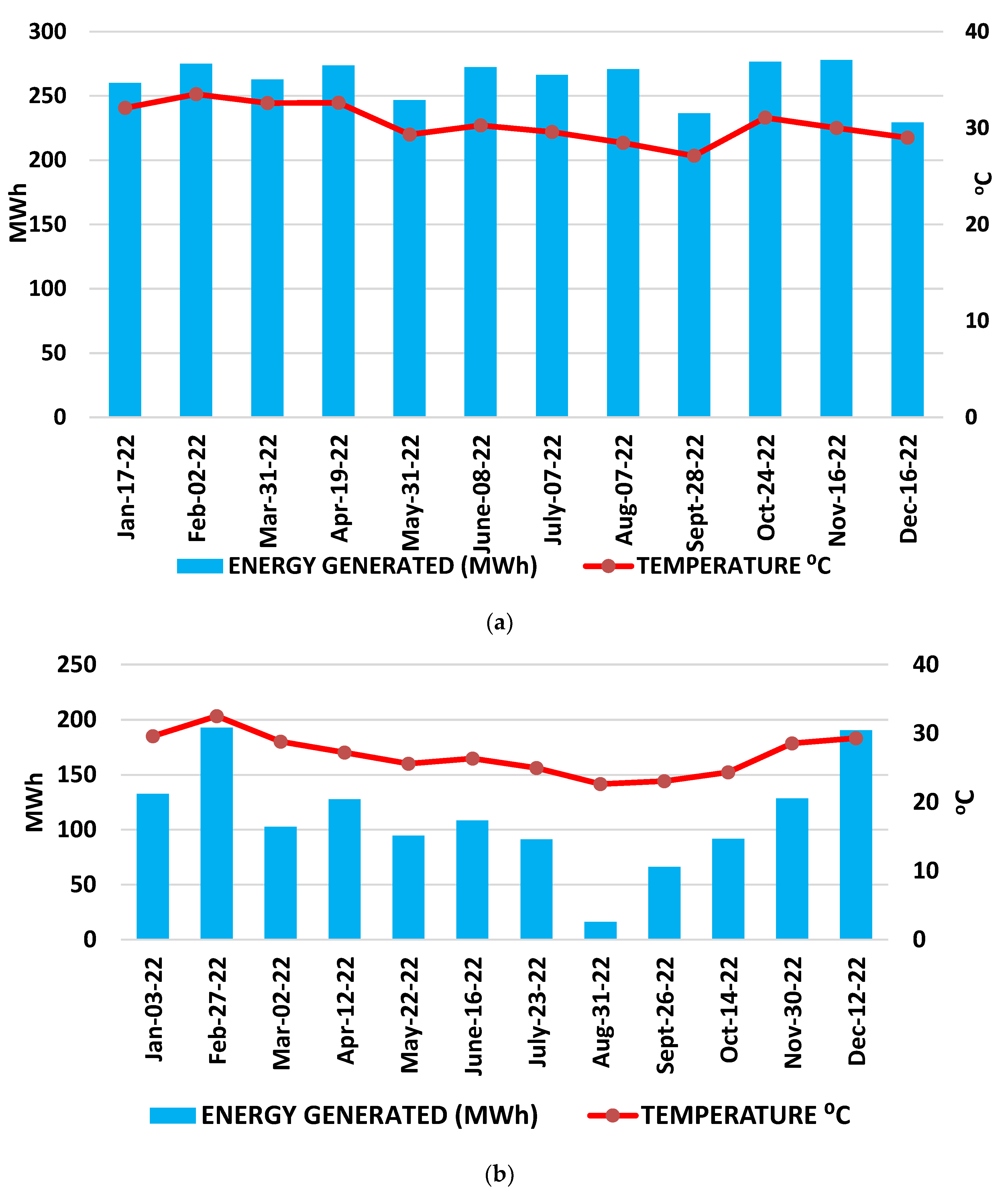
Figure 6.
Daily Performance ratio of the Solar PV Plant (Sunniest and Cloudiest).
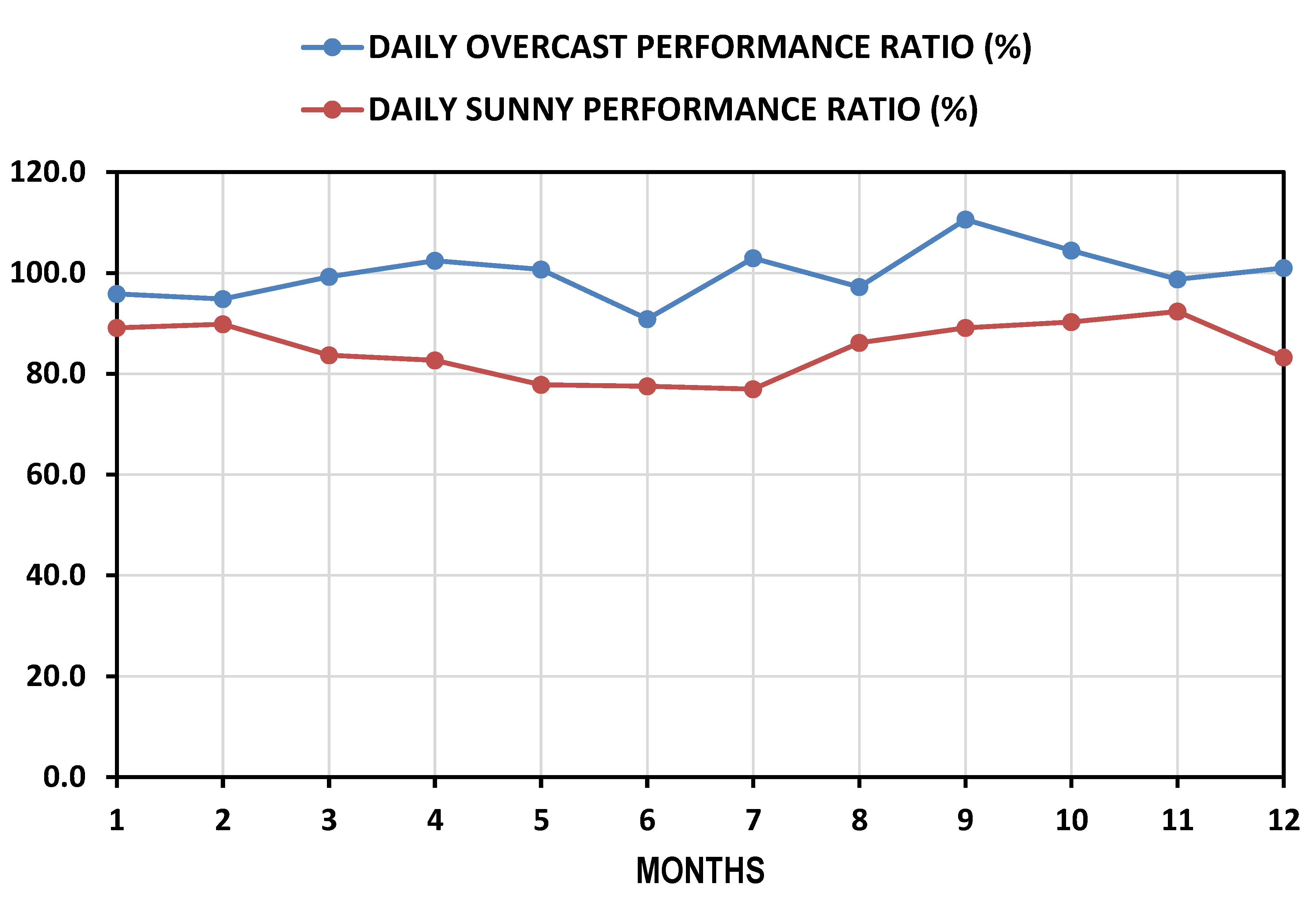
Figure 7.
Daily Capacity Factor of the Solar PV Plant (Sunniest and Cloudiest).
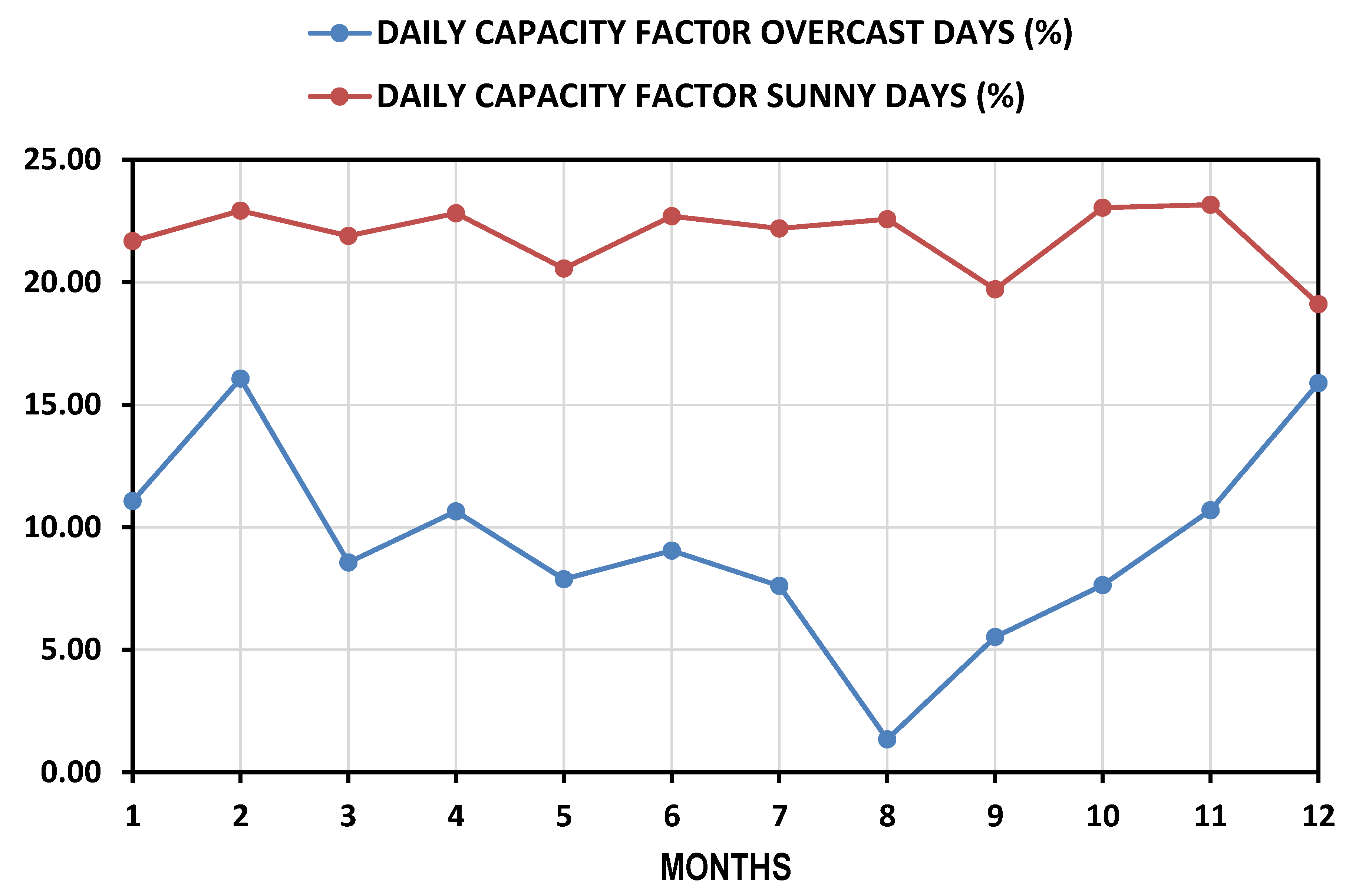

Table 1.
The 50 MW PV Plant system parameters.
| Parameter | Values |
|---|---|
| Location’s geographical coordinates | 8.26 ֯ N, -2.25 ֯ W |
| Maximum DC power capacity | 50.768 MW |
| Inverter capacity | 185 kW |
| Number of PV module | 34,093/6480/79,016 |
| PV module's power rating | 380/385/440 Wp |
| Maximum AC power capacity | 50 MW |
| Number of inverters | 250 |
| Number of PV modules per string | 28/29/30 |
| Maximum DC input voltage | 34.5 kV |
| Number of strings per inverter | 16/17/18 |
| Transformer capacity | 6.3 MVA |
| Number of Transformer | 8 |
| Ground clearance height | 0.8− 1.0 m |
| Tilt angle | 5 ֯ – 8 ֯ |
| Orientation | South |
| DC/AC ratio | 1.1 |
1 N stands for North, W stands for West, DC stands for Direct Current, AC stands for Alternating Current, MW stands for Megawatt, Wp stands for Watt peak, and kV stands for kilovolts.
Disclaimer/Publisher’s Note: The statements, opinions and data contained in all publications are solely those of the individual author(s) and contributor(s) and not of MDPI and/or the editor(s). MDPI and/or the editor(s) disclaim responsibility for any injury to people or property resulting from any ideas, methods, instructions or products referred to in the content. |
© 2024 by the authors. Licensee MDPI, Basel, Switzerland. This article is an open access article distributed under the terms and conditions of the Creative Commons Attribution (CC BY) license (http://creativecommons.org/licenses/by/4.0/).
Copyright: This open access article is published under a Creative Commons CC BY 4.0 license, which permit the free download, distribution, and reuse, provided that the author and preprint are cited in any reuse.