

Submitted:
12 June 2024
Posted:
13 June 2024
You are already at the latest version
Abstract
This study introduces a robust methodology utilizing Multi-Criteria Decision Analysis (MCDA) combined with the Analytic Hierarchy Process (AHP) to repurpose abandoned hydrocarbon fields for energy storage, supporting the transition to renewable energy sources. We use a geostatistical approach integrated with Python scripting to analyze reservoir parameters—including porosity, permeability, thickness, lithology, temperature, heat capacity, and thermal conductivity—from a decommissioned hydrocarbon field in Southeast Hungary. Our workflow leverages stochastic simulation data to identify potential zones for energy storage, categorizing them into high, moderate, and low suitability scenarios. This innovative approach provides rapid and precise analysis, enabling effective decision-making for energy storage implementation in depleted fields.
Keywords:
geothermal energy
; Aquifer Thermal Energy Storage (ATES)
; underground heat storage
; hydrocarbon fields
; Multi-Criteria Decision Analysis (MCDA)
; data modeling
1. Introduction
Revitalizing abandoned hydrocarbon fields for sustainable energy utilization presents a promising pathway to address the intermittent nature of renewable resources and the global challenge of carbon emissions reduction [1,2]. This initiative aligns with the urgent call for innovative energy solutions underscored in pivotal studies and reports [3,4,5,6], aiming to bridge the seasonal supply-demand mismatch and enhance energy security [7,8]. It embodies the drive towards energy decentralization and independence, highlighting the critical need for adaptable and reliable energy systems in the face of fluctuating renewable outputs [9,10].
Various initiatives have explored converting depleted hydrocarbon reservoirs for different pore utilization, encompassing CO2 storage [11], electricity generation [1], hydrogen storage [12], and Aquifer Thermal Energy Storage [13,14], further underscoring the versatility and potential of these underground spaces. Utilizing depleted hydrocarbon reservoirs for Aquifer Thermal Energy Storage (ATES) signifies a pivotal move toward sustainable energy practices. This approach leverages existing geological insights and infrastructure for renewable energy storage and adeptly meets fluctuating energy demands across seasons. ATES, a proven technology, boasts over 2,800 sites globally, particularly in the Netherlands, evidencing its efficacy and adoption [10,15,16,17,18].
ATES systems underscore a pivotal advancement in renewable energy utilization, offering a strategic solution to the energy mismatch challenge by enabling the seasonal storage and retrieval of heat. This enhances energy security by stabilizing the supply-demand continuum and fosters the integration of renewable sources into the energy grid. Critically, ATES's contribution extends to environmental conservation, showcasing a potential pathway for substantial reductions in CO2 emissions. The proven operational success in regions like the Netherlands is a testament to ATES's role in promoting sustainable energy solutions and advancing environmental preservation goals, marking it as a cornerstone technology in the quest for a greener future [19].
As the lifespan of many hydrocarbon fields approaches its end, stakeholders face a critical decision: undertake the expensive decommissioning process or pivot towards repurposing these sites for renewable energy projects [20,21]. With their inherent geological characteristics, depleted hydrocarbon reservoirs offer a promising avenue for such energy storage solutions. Their permeability, porosity, and extensive historical data availability position them as ideal candidates for geothermal battery energy storage applications [22]. The operational efficiency of High Temperature-ATES (HT-ATES) systems, particularly in deeper reservoirs that do not affect near-surface groundwater horizons, coupled with the favorable geothermal conditions in regions like the Upper Rhine Graben, underscores the potential of depleted hydrocarbon reservoirs as ideal candidates for geothermal energy storage solutions [23]. The study by [24] on Advanced Geothermal Energy Storage systems, which investigates field-scale implementation in the low-temperature Illinois basin by utilizing an oil well, complements the operational efficiency of HT-ATES systems in deeper reservoirs, making it a promising solution for sustainable geothermal energy storage (Holstenkamp et al., 2017). Numerous hydrocarbon fields, once bustling with oil and gas production, now stand depleted. We have selected one of the potential formations in the southeast, renowned for its extensive gas production history and substantial water volume, to emerge as a potential site for different pore utilizations, including ATES exploration. To effectively harness these reservoirs for ATES, either for low-temperature (LT) or high-temperature (HT) applications, a detailed methodology is essential for pinpointing the optimal locations within these reservoirs, ensuring their successful transformation into viable energy storage solutions.
The robustness of Multi-Criteria Decision Analysis (MCDA) as a methodological approach for this research is affirmed through its broad application across diverse geoscience and environmental management domains. Its efficacy is evidenced in the selection of sites for compressed air energy storage systems [25], where MCDA facilitated the integration of spatial and non-spatial criteria to discern optimal locations, and in water resource management [26], where it enabled the balancing of economic, social, and environmental objectives among multiple stakeholders. Furthermore, using MCDA in reservoir system operational planning through a two-stage procedure combining multi-objective optimization and MCDA techniques underscores its versatility in handling quantitative and qualitative objectives [27]. These varied applications illustrate MCDA's comprehensive capacity to navigate complex decision-making landscapes, making it a fitting choice for evaluating the Depleted Hydrocarbon field's potential for HT-ATES and other pore utilization strategies.
This study proposes a comprehensive methodology for evaluating abandoned hydrocarbon fields for various pore utilization purposes. It utilizes a real hydrocarbon field in Hungary as a case study to assess its suitability for HT-ATES, among other applications. Leveraging MCDA and extensive reservoir data, we aim to pinpoint optimal zones for ATES deployment. The goal is to deliver a lucid, systematic analysis to inform future ATES projects or other energy pore utilizations, thereby enhancing energy sustainability and independence amid escalating environmental and demand-driven challenges.
2. Materials and Methods
2.1. Methodological Framework
In our study, we adopted the MCDA with an emphasis on the Analytic Hierarchy Process (AHP) for our geostatistical modeled data due to its robust framework for handling complex decision-making scenarios [28]. AHP facilitates the breakdown of the decision problem into a hierarchy of more easily comprehended sub-problems, each of which can be analyzed independently (Figure 1). This method is particularly suited to our study's goal of evaluating the suitability of different blocks within the study area for heat storage, as it allows for incorporating both quantitative data and qualitative expert judgments.
The criteria were weighted based on the literature review and expert feedback, reflecting the relative importance of each parameter in the context of ATES systems and high-temperature applications similar to electricity generation. This participatory approach ensures that the weighting scheme accurately captures the priorities and insights of professionals in geothermal energy and heat storage fields. By engaging experts in the weighting process, we aimed to ground our analysis in practical, field-informed perspectives, enhancing the relevance and applicability of our findings to real-world ATES implementations (Figure 2).
2.2. Data Collection
For the Data Collection segment of our study, we utilized data from 67 wells in the study area which is located in the Southern Part of the Bekes Basin, Hungary, a site previously explored for hydrocarbon but now considered for its geothermal potential [29]. This field encompasses two potential formations, the shallow Szolnok Formation as an aquifer [30] and the deeper Bekes Formation [29], offering a unique lens to examine heat storage capabilities. The selection of 3.88 km as the side length for our analysis squares derives from the optimal area typically utilized for injection and production processes within such formations. Though the range for these dimensions could vary between 3 to 4 km, we chose 3.88 km to maximize coverage and efficiency across the study area. Implementing a quarter-overlapping array was used to mitigate potential spatial biases, thereby enhancing the probability of identifying the most suitable locations for our geothermal applications. This overlapping design ensures comprehensive coverage and uniformity in data analysis and is essential for accurately evaluating the site's potential. The integration of different types of data, including core data, density logs, resistivity logs, and gamma-ray measures, was conducted through a stochastic simulation process detailed further in the Data Modelling Chapter. This integration, crucial for converting well data into a comprehensive spatial model, facilitated the mapping of average reservoir properties. We applied SGeMS for geostatistical simulation, while RockWorks was used to integrate the different simulation results obtained for gross thickness, effective porosity, and permeability. Heat capacity, thermal conductivity, and temperature were modeled using Python scripts.
The Python script utilized for further data processing employed libraries such as NumPy, pandas, and matplotlib for advanced computational tasks. This script, executed on the Google Colab platform [31], generated cumulative histograms that enhanced our understanding of reservoir properties with significant data variability. The analysis of uncertainty must come from the geostatistical simulations. The histograms by themself are not appropriate for this purpose. All processed data were systematically organized into Google Sheets, preparing for the MCDA.
2.3. Data Modeling
Data modeling was based on 67 wells in the study area. Porosity and permeability data predominantly came from quantitative log interpretations, but core measurements were also used to validate log data. The main purpose of data modeling was to produce 2D stochastic models of gross thickness and 3D stochastic models of porosity, permeability, and lithology distributions for geothermal modeling. The dimensions of each 3D model were 100 x 100 x 2m (Figure 3).
2.3.1. Modeling of Stratigraphy
The top of the Bekes Formation showed a significant north-south trend (Figure 4). Therefore, a non-stationary geostatistical model was the most appropriate choice. The applied Universal Kriging [32] decomposed the variable into its trend and a stationary residual. A variogram was fitted to the residuals. In this approach, the trend residuals were kriged, and the estimated residuals were added to the trend model.
The thickness data were transformed into normal space; then, declustering weights were applied to obtain a representative probability distribution. Finally, the declustered normal values were extended into the plan using Sequential Gaussian Simulation [33,34]. We generated 100 independent and equally probable stochastic realizations from which the following grids were calculated: (1) an E-type grid showing the most probable lateral thickness distribution; (2) a grid of the coefficient of variation calculated at each grid point from the simulated 100 values to show the uncertainty of the model; (3) three quantile grids showing the P10, P50, and P90 quantiles at each grid point (Figure 5).
The base of the formation was estimated by subtracting the E-type thickness grid from the previously estimated top grid ((Figure 6)).
2.3.2. Modeling Porosity and Permeability
During the exploratory analysis phase, we decided to transform all log-derived porosity and permeability data to the scale of the core measurements. We applied a q-q transformation [34] of the log scale porosity and permeability distributions to the core scale distributions. To simulate the 3D spatial distributions of these two variables, the SGS approach was applied to the data sets transformed into normal space using 3D declustering weights.
Again, 100 independent equally likely 3D realizations were generated, from which the 3D distribution of the P10, P50, and P90 quantiles was calculated in addition to the 3D array of expectation and the coefficient of variation. The means of these 3D models per grid column were fitted to a 2D grid system (Figure 7 and Figure 8).
2.3.3. Lithology Model
The lithology model of the study area was created using the 3D gamma model. In this approach, we first defined the electro-lithologies using the gamma log in the available boreholes. The next step was to build a 3D gamma model. Finally, we transformed the voxel values of the 3D gamma model into electro-lithology types using the minimum and maximum gamma values of the previously defined electro-lithologies.
There were 28 boreholes from which gamma logs were available. At the EDA phase of the gamma data analysis, the main purpose was to identify some electro-lithological types based on the gamma values. We used EM clustering [35] to segment the original histogram of gamma values into different groups. We were then able to compare the EM clusters to the real (geological) rock types of the borehole columns by regressing the gamma values of each cluster to the real stratigraphic positions. These comparisons calculated for different numbers of clusters were used to identify the optimal number of groups in the EM clustering. As a result, we defined six electro-lithological types (Figure 9).
To increase the stability of the 3D estimation of the gamma values, we added 12 virtual (auxiliary) locations to the 3D input. First, we generated an initial, very coarse 3D gamma model with a resolution of 500x500x2 m using a simple inverse distance estimation with a high-fidelity constraint. From this model, we back-estimated the gamma values to each vertical voxel of the 12 auxiliary wells and added these back-estimated values to the original 3D gamma input set. This extended input set generated the final high-resolution 3D gamma model (Figure 10A). The corresponding 3D lithology model (Figure 10B) was obtained by converting the voxel values of the 3D gamma model into electro-lithological categories using the minimum and maximum gamma values of the EM clusters (Figure 9B).
Figure 11 shows the 2D map of the most frequent electro-lithological category in the voxel columns of the 3D electro-lithological model (Figure 10B).
The temperature parameter was modeled using data from Drilling Steam Tests and bottom hole temperatures from the MOL database. There was an acceptable strong linear regression describing the temperature change with increasing depth (Figure 12).
2.3.4. Heat Capacity
Heat capacity for each block was calculated based on porosity, rock type, density, and estimated specific heat capacity. The formula used for this calculation was (Density (kg/m3)×Specific Heat Capacity (J/kg\cdotpK))/(1−Porosity)×10−6 to derive the heat capacity in megajoules per cubic meter (MJ/m³). This method was applied across different scenarios—P10, P50, and P90—to assess the heat capacity variability in each block. (Figure 14).
2.3.5. Thermal Conductivity
In our study, we referenced the findings of [36], who reported an average thermal conductivity of 2.03 W/m·K for the Bekes formation, corrected for temperature effects. This average served as a benchmark for comparing our calculated values. Given the variability in lithological characteristics discerned from total Gamma Ray modeling, it was imperative to evaluate how thermal conductivity changes in response to lithology, temperature, and porosity within the formation [37]. To this end, we established base thermal conductivity values specific to each identified rock type within the formation—Conglomerate, Breccia, Sandy Conglomerate, and Pebbly Sandstone. These values reflect the inherent thermal properties influenced by the geological composition. The thermal conductivity for each geological scenario—P10, P50, and P90—was then adjusted by a factor that accounts for the porosity, reducing conductivity by 10% per unit porosity to model the impact of increased pore space on heat transfer capabilities. Furthermore, we incorporated a temperature correction, decreasing conductivity by 0.2% for every degree Celsius increase above a baseline temperature of 25°C (Figure 15). With this methodology, we remained within the average thermal conductivity range of the Bekes Formation. However, we generated local changes in the function of the thermal conductivity equation to estimate the variation of thermal conductivity across the formation, providing a nuanced understanding of how specific geological conditions affect thermal properties.
2.3.6. Criteria Selection
A comprehensive literature review was conducted to select criteria for the transition of hydrocarbon reservoirs to ATES systems. [6,15,19,23,38,39,40]. This review identified key factors critical to the assessment of potential sites: Porosity, Permeability, Reservoir Temperature, and Thickness, along with Heat Capacity and Thermal Conductivity. Additionally, the presence and availability of wells within the reservoir were considered essential due to their direct impact on the feasibility of converting the hydrocarbon reservoir for ATES use. Python script was used for the visualisation of the modelled data (Appendix A. 5).
2.3.7. Case Study Selection
The selection of this study area for MCDA application is underscored by its distinct geological features, notably within the Bekes Formation, known for its conducive geothermal attributes [41,42]. The Lower Pannonian Békés Conglomerate, with an average thickness of 30-40 meters and a maximum of 50 meters (Figure 16). The reservoir thickness decreases towards the top of the basement high. The reservoir has an average porosity of 25% and a permeability of 400 milli Darcy, with a maximum of 2.5 D. The reservoir pressure is hydrostatic, and the geothermal gradient is 57°C/km. Oil production from this reservoir is limited to a few wells, with water cut more significantly than 95%. However, the reservoir's proximity to a potential heat market and the dense well network of over 70 wells make it a potential candidate for geothermal completion. However, no water injection exists, and significant oilfield water production occurs, estimated at 1000-1200 cubic meters per day. The Paleozoic granite-quartz porphyry contains porous rock inclusions resulting from the surface and near-surface corrosion, fracturing, and crack network caused by tectonic movements. Fluid movement is upward; maximum oil production occurred between 1961 and 63 at 25,000 m3/year.
2.4. MCDA Application Process
The MCDA process for assessing the suitability of locations for heat storage involves a rigorous and methodical application, incorporating various tools and data sources. Temperature, permeability, and thickness data were critical in filtering potential sites based on predefined criteria tailored to the purpose of HT-ATES or Direct High-Temperature Utilization (Appendex A. 3). This selection process was further refined by applying weights and thresholds to evaluate each site's compatibility with the project goals. The MCDA analysis harnessed Python's analytical capabilities, particularly its pandas, numpy, and matplotlib libraries, to process and visualize the data, thus providing a comprehensive and clear depiction of the most viable locations for heat storage.
2.5. Sensitivity Analysis
The sensitivity analysis conducted on various criteria, such as porosity, permeability, temperature, thickness, heat capacity, and thermal conductivity, reveals crucial insights into the stability and robustness of these parameters under weight adjustments. This analysis was essential in determining the resilience of the heat storage site selection process to changes in evaluation criteria weights. As illustrated by the color-coded maps, areas exhibiting more intense colors indicate regions where slight changes in weights could significantly impact the overall scores of potential sites. These results underscore the importance of each criterion's assigned weight and highlight the need to carefully calibrate these weights to ensure a balanced and accurate site assessment (Figure 17).
3. Results
In the Results section of our MCDA study on heat storage, we focused on evaluating potential locations based on a set of criteria critical for heat storage capabilities. Our analysis revealed that permeability and reservoir temperature are paramount, with acceptable permeability not nearing zero and temperatures set for specific purposes at the outset. The MCDA analysis assigned scores, setting a threshold at 6.5 to distinguish optimal sites. Scores above 6.5 indicated prime locations, while those below 6.4, if not filtered out, appeared as NaN, demonstrating a method to assess potentiality against established criteria rapidly (Appendex B. Results).
3.1. HT-ATES
Setting the focus on HT-ATES, we defined critical parameters, including a temperature range of 50 to 70°C, a minimum thickness of 10 m, and a minimum permeability threshold of 0.1 milli Darcy. Our MCDA framework identified the Bekes Formation as an exemplary candidate for HT-ATES in all scenarios, scoring an outstanding above threshold repeating in the same area, reflective of its favorable conditions for heat storage (Figure 18).
3.1.1. Probability Distribution of the Lowest Values P10
The assessment of potential heat storage sites delineated by a dashed line reveals varied reservoir attributes within the P10 probability range. The parameters observed include well densities from 1.0 to 9.0, porosity values between 0.22 and 0.26, and permeability levels from 0.41 to 60.34 milli Darcy. These sites exhibit thickness measurements ranging narrowly from 0.32 to 1.84 meters and temperatures from 66.14°C to 82.0°C. Heat capacities are consistently moderate, ranging from 2.43 to 2.70 MJ/m³·K, with thermal conductivity values between 1.88 and 2.23.
Probability Distribution of the Medium Values P50
In the P50 Scenario, marked by a dashed line, two areas have been identified based on their moderate values and potential for heat storage:
Upper Region:
This region, defined by a high thermal profile and variable geological characteristics, presents a promising environment for heat storage. Well density in this zone ranges from 1 to 3, suitable for targeted energy applications. The porosity consistently hovers around 0.3, providing optimal fluid transmission properties. Permeability varies significantly between 132.125 and 511.407 milli Darcy, indicating diverse subsurface conditions. The temperature remains high, between 83.8°C and 102.5°C, ideal for heat retention. Thicknesses are moderately consistent, spanning 7.14 to 10.75 meters, while heat capacities are robust, around 3.14 to 3.17 MJ/m³·K, enhancing the region's potential for efficient energy storage.
Lower Right Region:
Characterized by its cooler temperatures and higher well densities, this region offers varied potential for heat storage operations. Well densities extend up to 12, indicating areas of intensive drilling history. Porosity maintains a steady rate of about 0.31, while permeability shows a wide range from 173.412 to 596.357 milli Darcy, suggesting varied pore connectivity across the region. Temperatures are comparatively lower, ranging from 66.7°C to 74.6°C, which may influence the operational dynamics of heat storage systems. The geological thickness varies from 5.4 to 11.8 meters, paired with high heat capacities between 2.86 and 3.19 MJ/m³·K, pointing towards a complex but capable environment for thermal energy applications.
3.1.2. Probability Disturbution of High Values P90
In the P90 scenario, the D3 tile alone nearly meets the acceptance threshold with a score of 6.1. Unfortunately, all other candidates fall below this threshold, predominantly due to temperatures outside the optimal range for heat storage. Here are the scores observed for the remaining locations: Several tiles scored between 5.8 and 5.2, indicating proximity but insufficient for acceptance. Lower scores ranged from 5.0 down to 4.3, reflecting significant deficiencies in meeting the required criteria for heat storage. Due to stringent temperature requirements, this distribution underscores the challenge of finding suitable candidates in the P90 probability range.
3.2. High-Temperature Direct Application
Our study established criteria for high-temperature direct applications, with a temperature range set between 100 and 150°C and a minimum permeability of 0.1 milli Darcy. The MCDA AHP analysis particularly highlighted the northern part of the Bekes reservoir as showing promising results for high-temperature applications. These findings are detailed in Table X, which presents the P50 scenario results, demonstrating the reservoir's suitability for high-temperature energy projects.
4. Discussion
Operators accumulate extensive datasets in hydrocarbon extraction, including well data, seismic records, reservoir characteristics, core analyses, and fluid testing results, alongside comprehensive stochastic simulations. These legacy data, crucial for repurposing initiatives, underpin our methodology to strategize the conversion of existing wells, which can be costly to decommission. Our approach leverages stochastic simulation data when available, which is a common asset among hydrocarbon companies. However, even without such data, well data can still facilitate the modeling process, albeit with increased uncertainty in the predictions.
Permeability and reservoir temperature critically influence the viability of HT-ATES systems. The strict threshold for permeability (>0.1 milli Darcy) serves as a fundamental criterion, immediately disqualifying blocks that do not meet this requirement. This is crucial for ensuring fluid can effectively circulate through the reservoir, which is non-negotiable for the operational success of HT-ATES [44]. Similarly, the temperature criteria, tailored to high-temperature applications, ensure only those blocks capable of providing the necessary thermal conditions are considered [45]. These parameters ensure a focused selection of potential sites, aligning closely with HT-ATES's technical demands.
However, the analysis's current scope primarily centers on subsurface characteristics, omitting surface factors that could significantly influence site feasibility. Integrating geographic and environmental considerations through GIS-based methodologies could enrich the MCDA framework. This addition would enable a more comprehensive assessment, accounting for potential land use conflicts, proximity to infrastructure, and environmental protection areas, strengthening the decision-making process for HT-ATES site selection.
Our study's exploration into heat storage capabilities through the MCDA aligns with and diverges from existing literature. Drawing parallels with Jello et al. (2022) and Stricker et al. (2020), we reaffirm the crucial role of subsurface characteristics like permeability and temperature in site viability for heat storage. However, unlike Stricker et al.’s regional analysis within the Upper Rhine Graben, our approach applies a broader, criteria-based MCDA framework. This difference showcases our method's adaptability, bridging the gap between overarching selection frameworks and specific geological assessments.
The differentiation between the Bekes Formation’s wide range of results, as highlighted in our P10, P50, and P90 results, underscores the subtle understanding our MCDA framework brings to evaluating potential HT-ATES sites. Bekes Formation, with its consistently high scores and high contrast in the results, emerges as a prime candidate, notably in the P10 scenario, due to its favorable well characteristics. The contrast aligns with the broader criteria emphasized by Jello et al. and also diverges by providing a clear, quantifiable assessment of site suitability across a national landscape.
The MCDA-AHP approach significantly enhances the speed and accuracy of simultaneously evaluating multiple oil fields for various heat storage purposes, setting it apart from traditional methods. Traditionally, potential zone detection relies on time-consuming expert evaluations. However, while efficient, the grid-based analysis used in MCDA-AHP could be further refined. Currently utilizing equidimensional rectangles for grid creation, adopting a grid method that mirrors the reservoir's structural nuances would yield a more precise evaluation. Implementing such an overlapping grid requires accessible structural data, acknowledging the need for detailed geological insights to optimize the MCDA framework's efficacy.
The enhanced MCDA-AHP methodology significantly advances the evaluation of oil fields for various applications, including HT-ATES, LT-ATES, electricity generation, and CO2 storage. This approach outperforms traditional methods reliant on expert analysis by streamlining the process, enabling swift, precise identification of viable zones across various fields.
Moving forward, a detailed examination of these potential locations through advanced modeling and simulation, particularly transient modeling, is crucial. This step is vital for assessing the practical viability of these sites for diverse pore utilization purposes. Improving the gridding process to reflect the intricate structure of reservoirs better will further refine the accuracy of site evaluations. These advancements are poised to inform strategic decisions in energy storage development and policy, setting a foundation for future research and practical applications in the energy sector.
Future research should explore integrating machine learning and artificial intelligence to refine the site selection process for pore utilization. By harnessing these technologies, future studies can overcome current MCDA limitations, enabling predictive analytics and adaptive learning from vast datasets. This approach promises to significantly enhance decision-making accuracy, tailor solutions to specific environmental and economic contexts, and revolutionize how we approach sustainable energy storage and utilization strategies.
5. Conclusion
This methodology paves the way to empower decision-making regarding the repurposing of abandoned hydrocarbon fields, facilitating the transition to renewable energy storage. The study showcases the feasibility and efficiency of employing Multi-Criteria Decision Analysis (MCDA) combined with the Analytic Hierarchy Process (AHP) and geostatistics to identify optimal underground heat storage locations. By leveraging comprehensive data analysis and expert evaluations on parameters like porosity, permeability, and reservoir temperature, this research outlines a strategic pathway for the sustainable utilization of former hydrocarbon sites. Future efforts will focus on refining the MCDA-AHP framework through advanced modeling and integrating artificial intelligence to enhance the precision of sustainable energy storage solutions, marking a significant advancement in renewable energy.
Supplementary Materials
The following supporting information can be downloaded at the website of this paper posted on Preprints.org.
Acknowledgments
I acknowledge the invaluable data contribution from the MOL database, which has been essential for this research. I also thank all co-authors for their significant contributions and collaborative efforts throughout this project.
References
- Duggal, R.; Rayudu, R.; Hinkley, J.; Burnell, J.; Wieland, C.; Keim, M. A Comprehensive Review of Energy Extraction from Low-Temperature Geothermal Resources in Hydrocarbon Fields. Renew. Sustain. Energy Rev. 2022, 154, 111865. [Google Scholar] [CrossRef]
- Gayayev, I. Conversion of Abandoned Hydrocarbon Structures into Geothermal Wells for Sustainable Energy Production in Sedimentary Basins. laurea, Politecnico di Torino, 2023.
- WEF 5 Green Energy Milestones from around the World. Available online: https://www.weforum.org/agenda/2021/04/renewables-record-capacity-solar-wind-nuclear/ (accessed on 18 April 2023).
- IEA Energy Technology Perspectives 2017 – Analysis. Available online: https://www.iea.org/reports/energy-technology-perspectives-2017 (accessed on 18 April 2023).
- REN21 RENEWABLES 2019 GLOBAL STATUS REPORT. Available online: https://www.ren21.net/gsr-2019 (accessed on 18 April 2023).
- Paksoy, H.O.; Andersson, O.; Abaci, S.; Evliya, H.; Turgut, B. Heating and Cooling of a Hospital Using Solar Energy Coupled with Seasonal Thermal Energy Storage in an Aquifer. Renew. Energy 2000, 19, 117–122. [Google Scholar] [CrossRef]
- Dincer, I.; Rosen, M.A. Thermal Energy Storage: Systems and Applications, 2nd ed.; Wiley: Chichester, 2011; ISBN 978-0-470-97073-7. [Google Scholar]
- Van Der Roest, E.; Beernink, S.; Hartog, N.; Van Der Hoek, J.P.; Bloemendal, M. Towards Sustainable Heat Supply with Decentralized Multi-Energy Systems by Integration of Subsurface Seasonal Heat Storage. Energies 2021, 14, 7958. [Google Scholar] [CrossRef]
- Lee, K.S. Underground Thermal Energy Storage; Green energy and technology; Springer: London ; New York, 2013; ISBN 978-1-4471-4273-7.
- Li, G. Sensible Heat Thermal Storage Energy and Exergy Performance Evaluations. Renew. Sustain. Energy Rev. 2016, 53, 897–923. [Google Scholar] [CrossRef]
- Qin, J.; Song, J.; Tang, Y.; Rui, Z.; Wang, Y.; He, Y. Well Applicability Assessment Based on Fuzzy Theory for CO2 Sequestration in Depleted Gas Reservoirs. Renew. Energy 2023, 206, 239–250. [Google Scholar] [CrossRef]
- Zhu, S.; Shi, X.; Yang, C.; Bai, W.; Wei, X.; Yang, K.; Li, P.; Li, H.; Li, Y.; Wang, G. Site Selection Evaluation for Salt Cavern Hydrogen Storage in China. Renew. Energy 2024, 120143. [Google Scholar] [CrossRef]
- Matos, C.R.; Carneiro, J.F.; Silva, P.P. Overview of Large-Scale Underground Energy Storage Technologies for Integration of Renewable Energies and Criteria for Reservoir Identification. J. Energy Storage 2019, 21, 241–258. [Google Scholar] [CrossRef]
- Stricker, K.; Grimmer, J.C.; Egert, R.; Bremer, J.; Korzani, M.G.; Schill, E.; Kohl, T. The Potential of Depleted Oil Reservoirs for High-Temperature Storage Systems. Energies 2020, 13, 6510. [Google Scholar] [CrossRef]
- Dickinson, J.S.; Buik, N.; Matthews, M.C.; Snijders, A. Aquifer Thermal Energy Storage: Theoretical and Operational Analysis. Géotechnique 2009, 59, 249–260. [Google Scholar] [CrossRef]
- Kastner, O.; Norden, B.; Klapperer, S.; Park, S.; Urpi, L.; Cacace, M.; Blöcher, G. Thermal Solar Energy Storage in Jurassic Aquifers in Northeastern Germany: A Simulation Study. Renew. Energy 2017, 104, 290–306. [Google Scholar] [CrossRef]
- Fleuchaus, P.; Godschalk, B.; Stober, I.; Blum, P. Worldwide Application of Aquifer Thermal Energy Storage – A Review. Renew. Sustain. Energy Rev. 2018, 94, 861–876. [Google Scholar] [CrossRef]
- van Heekeren, V.; Bakema, G. The Netherlands Country Update on Geothermal Energy.
- Fleuchaus, P.; Schüppler, S.; Bloemendal, M.; Guglielmetti, L.; Opel, O.; Blum, P. Risk Analysis of High-Temperature Aquifer Thermal Energy Storage (HT-ATES). Renew. Sustain. Energy Rev. 2020, 133, 110153. [Google Scholar] [CrossRef]
- Mehmood, A.; Yao, J.; Fan, D.; Bongole, K.; Liu, J.; Zhang, X. Potential for Heat Production by Retrofitting Abandoned Gas Wells into Geothermal Wells. PLOS ONE 2019, 14, e0220128. [Google Scholar] [CrossRef]
- Soldo, E.; Alimonti, C.; Scrocca, D. Geothermal Repurposing of Depleted Oil and Gas Wells in Italy. Proceedings 2020, 58, 9. [Google Scholar] [CrossRef]
- Green, S.; McLennan, J.; Panja, P.; Kitz, K.; Allis, R.; Moore, J. Geothermal Battery Energy Storage. Renew. Energy 2021, 164, 777–790. [Google Scholar] [CrossRef]
- Holstenkamp, L.; Meisel, M.; Neidig, P.; Opel, O.; Steffahn, J.; Strodel, N.; Lauer, J.J.; Vogel, M.; Degenhart, H.; Michalzik, D.; et al. Interdisciplinary Review of Medium-Deep Aquifer Thermal Energy Storage in North Germany. Energy Procedia 2017, 135, 327–336. [Google Scholar] [CrossRef]
- Jello, J.; Khan, M.; Malkewicz, N.; Whittaker, S.; Baser, T. Advanced Geothermal Energy Storage Systems by Repurposing Existing Oil and Gas Wells: A Full-Scale Experimental and Numerical Investigation. Renew. Energy 2022, 199, 852–865. [Google Scholar] [CrossRef]
- Matos, C.R.; Carneiro, J.F.; Pereira da Silva, P.; Henriques, C.O. A GIS-MCDA Approach Addressing Economic-Social-Environmental Concerns for Selecting the Most Suitable Compressed Air Energy Storage Reservoirs. Energies 2021, 14, 6793. [Google Scholar] [CrossRef]
- Manikkuwahandi, T.D.S.; Hornberger, G.M.; Baroud, H. Decision Analysis for Expansion of Mahaweli Multipurpose Reservoir System in Sri Lanka. J. Water Resour. Plan. Manag. 2019, 145, 05019013. [Google Scholar] [CrossRef]
- Ko, S.-K.; Fontane, D.G.; Margeta, J. Multiple Reservoir System Operational Planning Using Multi-Criterion Decision Analysis. Eur. J. Oper. Res. 1994, 76, 428–439. [Google Scholar] [CrossRef]
- Yalcin, M.; Kilic Gul, F. A GIS-Based Multi Criteria Decision Analysis Approach for Exploring Geothermal Resources: Akarcay Basin (Afyonkarahisar). Geothermics 2017, 67, 18–28. [Google Scholar] [CrossRef]
- Kovács, A.; Teleki, P.G. History of Oil and Natural Gas Production in the Békés Basin. In Basin Analysis in Petroleum Exploration; Teleki, P.G., Mattick, R.E., Kókai, J., Eds.; Springer Netherlands: Dordrecht, 1994; ISBN 978-94-010-4412-7. [Google Scholar]
- Varga, A.; Bozsó, G.; Garaguly, I.; Raucsik, B.; Bencsik, A.; Kóbor, B. Cements, Waters, and Scales: An Integrated Study of the Szeged Geothermal Systems (SE Hungary) to Characterize Natural Environmental Conditions of the Thermal Aquifer. Geofluids 2019, 2019, 1–21. [Google Scholar] [CrossRef]
- Elabd, M.A.; González-Guzmán, R.; Weber, B.; Solís, C.; Bernard-Romero, R.; Velasco-Tapia, F.; Marín-Camacho, P. Determination of Permeability Data and 3-D Modelling of the Host Rock and Sinters from a Geothermal Field: Los Geysers, Northern Trans-Mexican Volcanic Field. Data Brief 2022, 45, 108637. [Google Scholar] [CrossRef] [PubMed]
- Wackernagel, H. Multivariate Geostatistics; Springer Berlin Heidelberg: Berlin, Heidelberg, 1995; ISBN 978-3-662-03100-1. [Google Scholar]
- Az SGS a világ vezető minőségellenőrző, ellenőrző, vizsgáló és tanúsító cége. Available online: https://www.sgs.com/hu-hu/ (accessed on 5 June 2024).
- Swan, A. DEUTSCH, C. V. & JOURNEL, A. G. 1998. GSLIB. Geostatistical Software Library and User’s Guide, 2nd Ed. x + 369 Pp. + CD-ROM. Oxford, New York: Oxford University Press. Price £45.00 (Hard Covers). ISBN 0 19 510015 8. Geol. Mag. 1999, 136, 83–108. [Google Scholar] [CrossRef]
- Dempster, A.P.; Laird, N.M.; Rubin, D.B. Maximum Likelihood from Incomplete Data Via the EM Algorithm. J. R. Stat. Soc. Ser. B Methodol. 1977, 39, 1–22. [Google Scholar] [CrossRef]
- Vass, I.; Tóth, T.M.; Szanyi, J.; Kovács, B. Hybrid Numerical Modelling of Fluid and Heat Transport between the Overpressured and Gravitational Flow Systems of the Pannonian Basin. Geothermics 2018, 72, 268–276. [Google Scholar] [CrossRef]
- Haffen, S.; Géraud, Y.; Rosener, M.; Diraison, M. Thermal Conductivity and Porosity Maps for Different Materials: A Combined Case Study of Granite and Sandstone. Geothermics 2017, 66, 143–150. [Google Scholar] [CrossRef]
- Collignon, M.; Klemetsdal, Ø.S.; Møyner, O.; Alcanié, M.; Rinaldi, A.P.; Nilsen, H.; Lupi, M. Evaluating Thermal Losses and Storage Capacity in High-Temperature Aquifer Thermal Energy Storage (HT-ATES) Systems with Well Operating Limits: Insights from a Study-Case in the Greater Geneva Basin, Switzerland. Geothermics 2020, 85, 101773. [Google Scholar] [CrossRef]
- Réveillère, A.; Hamm, V.; Lesueur, H.; Cordier, E.; Goblet, P. Geothermal Contribution to the Energy Mix of a Heating Network When Using Aquifer Thermal Energy Storage: Modeling and Application to the Paris Basin. Geothermics 2013, 47, 69–79. [Google Scholar] [CrossRef]
- Todorov, O.; Alanne, K.; Virtanen, M.; Kosonen, R. A Method and Analysis of Aquifer Thermal Energy Storage (ATES) System for District Heating and Cooling: A Case Study in Finland. Sustain. Cities Soc. 2020, 53, 101977. [Google Scholar] [CrossRef]
- Czauner, B.; Mádl-Szőnyi, J. Regional Hydraulic Behavior of Structural Zones and Sedimentological Heterogeneities in an Overpressured Sedimentary Basin. Mar. Pet. Geol. 2013, 48, 260–274. [Google Scholar] [CrossRef]
- Kun, É.; Zilahi-Sebess, L.; Szanyi, J. Battonya–Pusztaföldvári-hát térségének nagy entalpiájú geotermikusenergia-vagyona (I. rész): hidrodinamikai és hőtranszportmodell. Földt. Közlöny 2022, 152, 53–75. [Google Scholar] [CrossRef]
- Tóth, J.; Almási, I. Interpretation of Observed Fluid Potential Patterns in a Deep Sedimentary Basin under Tectonic Compression: Hungarian Great Plain, Pannonian Basin. Geofluids 2001, 1, 11–36. [Google Scholar] [CrossRef]
- Tas, L.; Simpson, D.; Hermans, T. Assessing the Potential of Low Transmissivity Aquifers for ATES Systems: A Case Study in Flanders (Belgium) Geology, 2023.
- Zeghici, R.M.; Oude Essink, G.H.P.; Hartog, N.; Sommer, W. Integrated Assessment of Variable Density–Viscosity Groundwater Flow for a High Temperature Mono-Well Aquifer Thermal Energy Storage (HT-ATES) System in a Geothermal Reservoir. Geothermics 2015, 55, 58–68. [Google Scholar] [CrossRef]
Figure 1.
Data Processing Methodological Framework.

Figure 2.
Criteria Scoring Distribution for Each Parameter and Their Weights (Visualized by Python: Appendix A. 7).
Figure 2.
Criteria Scoring Distribution for Each Parameter and Their Weights (Visualized by Python: Appendix A. 7).
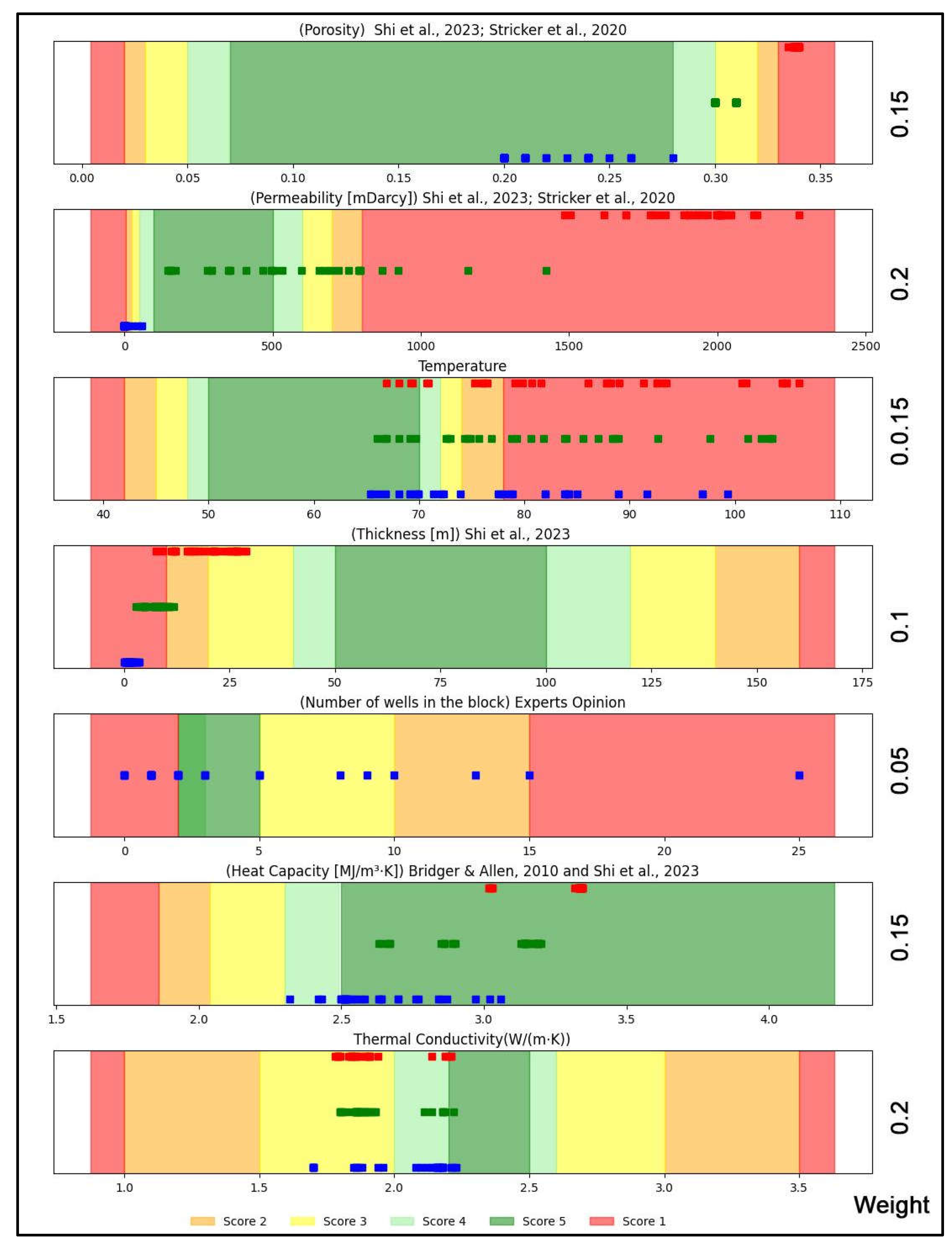
Figure 3.
Modelled Values Prepared for Spatial Tiling Process.
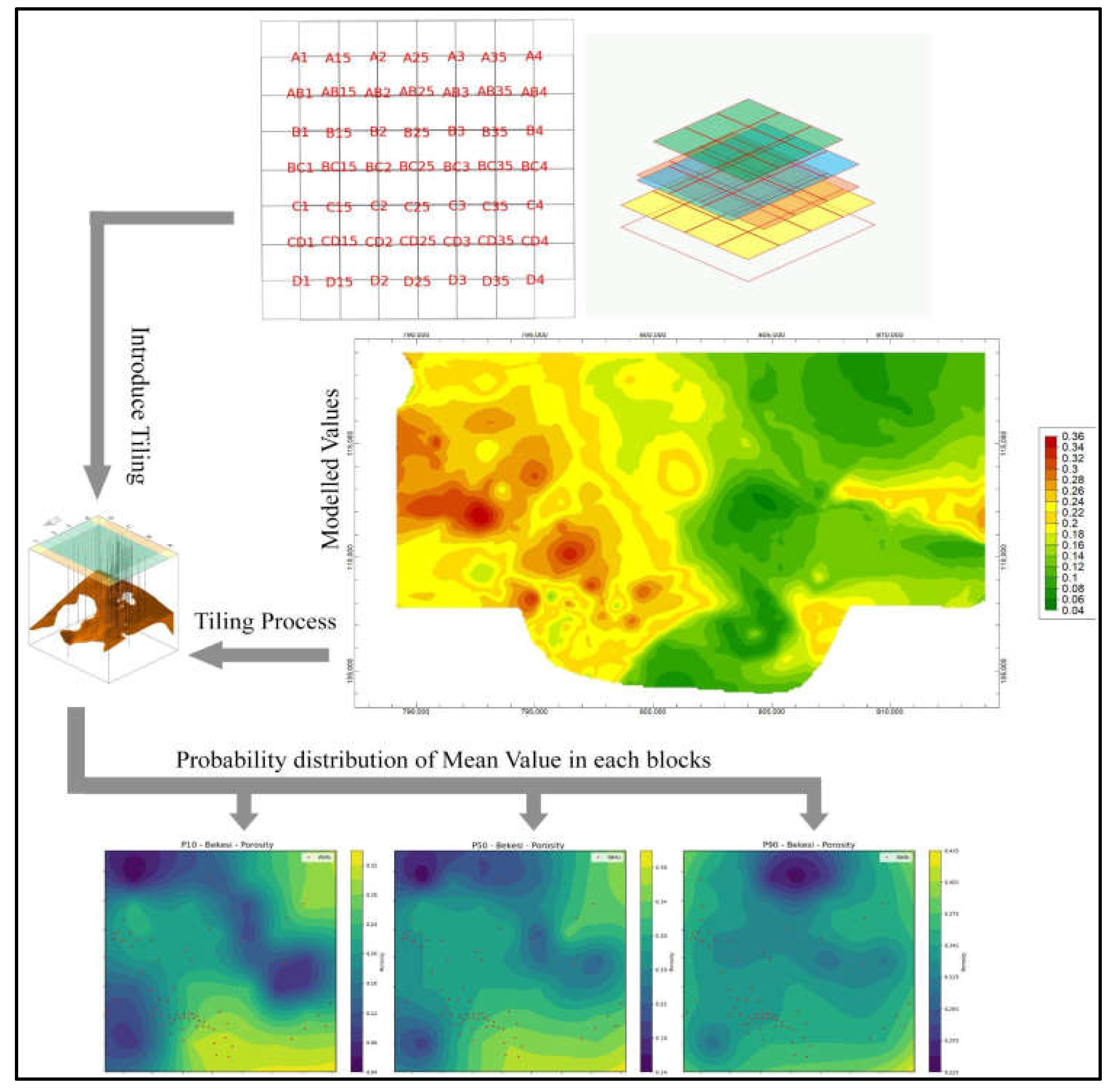
Figure 4.
The top of the Bekes Formation obtained using Universal Kriging.
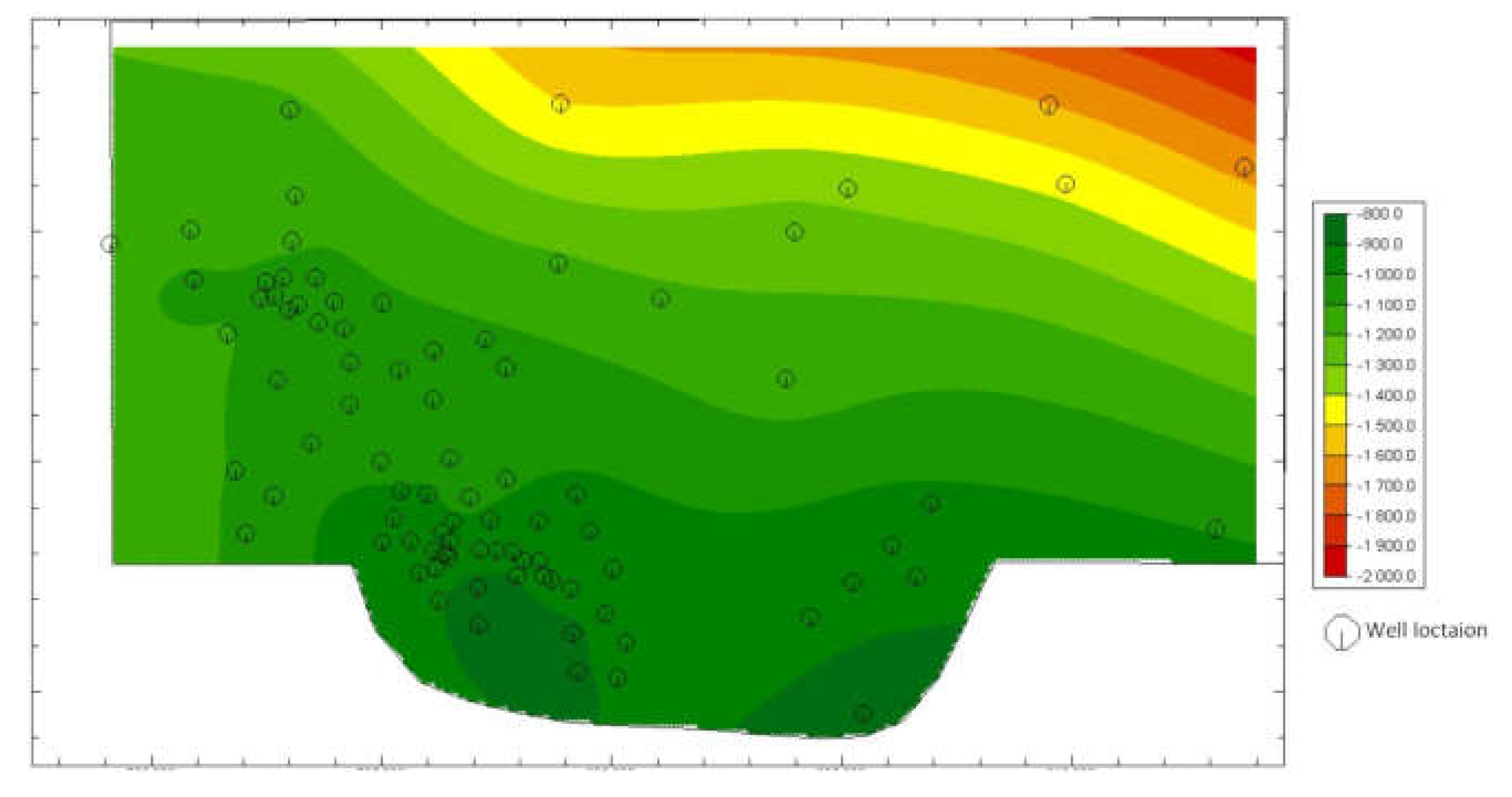
Figure 5.
The results of the thickness simulation. A= E-type estimation; B= coefficient of variation (uncertainty of the simulation model); C= P10; D=P50; E=P90.
Figure 5.
The results of the thickness simulation. A= E-type estimation; B= coefficient of variation (uncertainty of the simulation model); C= P10; D=P50; E=P90.
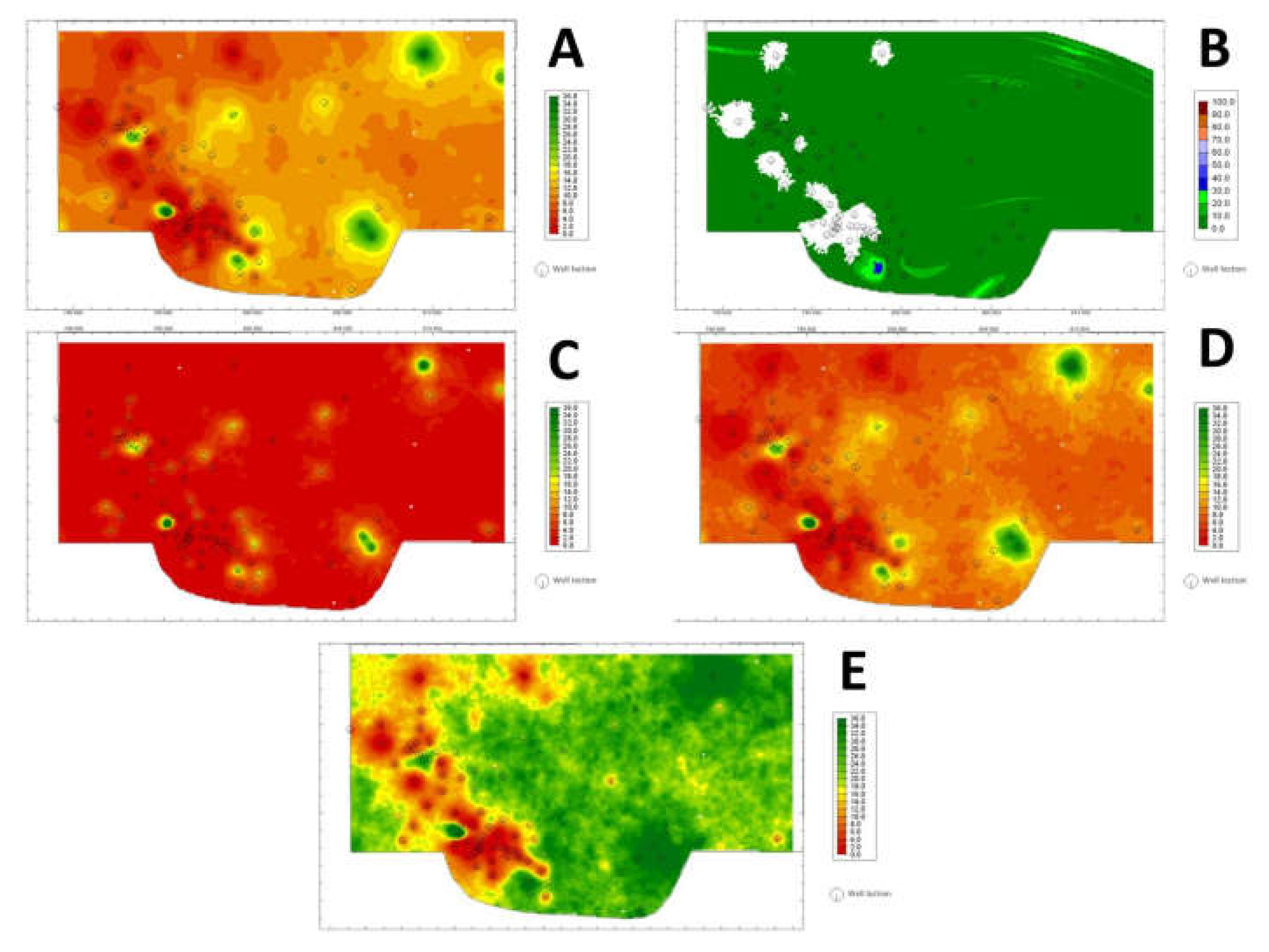
Figure 6.
The base of the Bekes Formation is obtained by subtracting the thickness grid from the top grid.
Figure 6.
The base of the Bekes Formation is obtained by subtracting the thickness grid from the top grid.
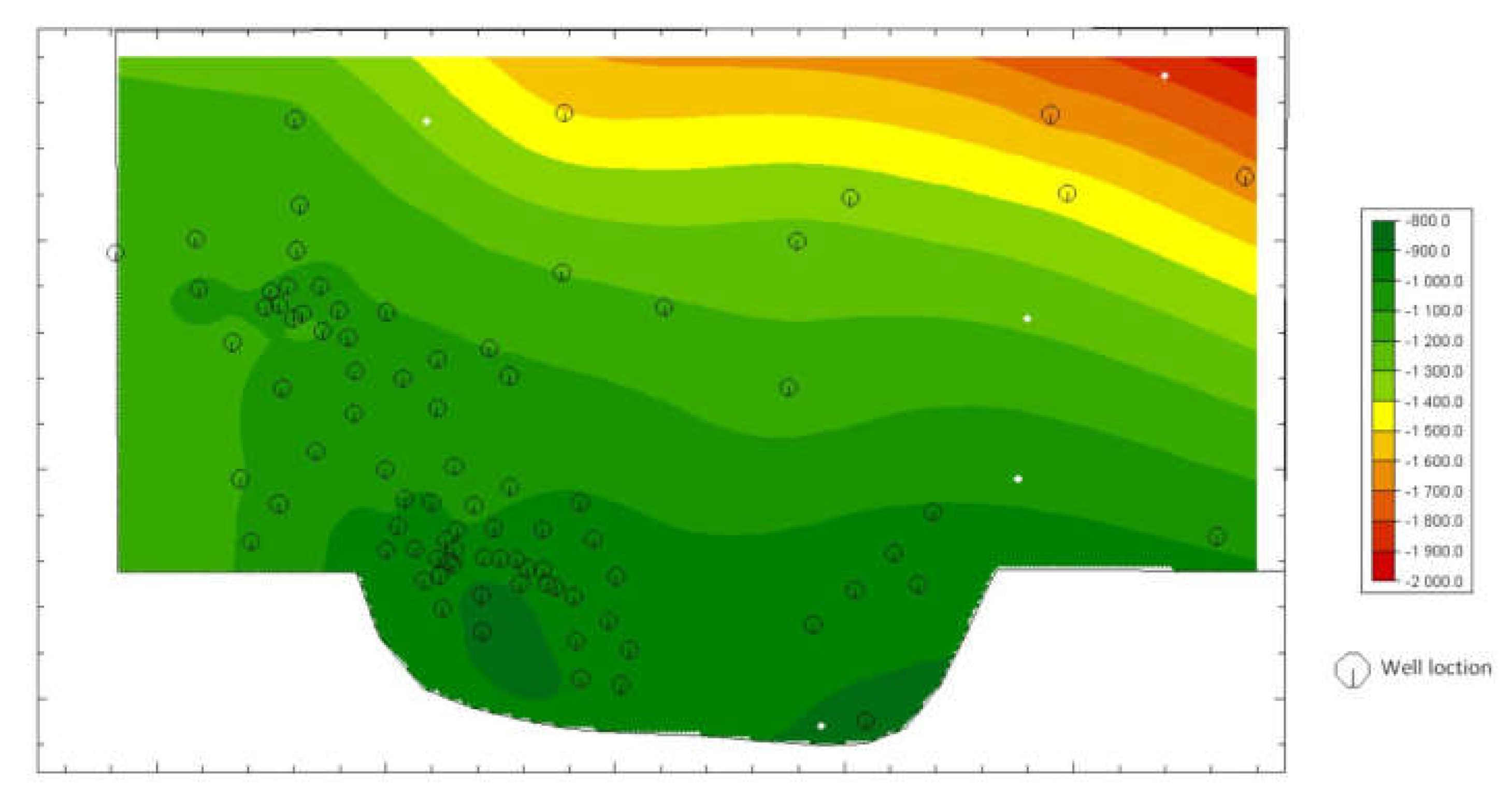
Figure 7.
The results of the porosity simulation. A= E-type estimation; B= coefficient of variation (uncertainty of the simulation model); C= P10; D=P50; E=P90.
Figure 7.
The results of the porosity simulation. A= E-type estimation; B= coefficient of variation (uncertainty of the simulation model); C= P10; D=P50; E=P90.
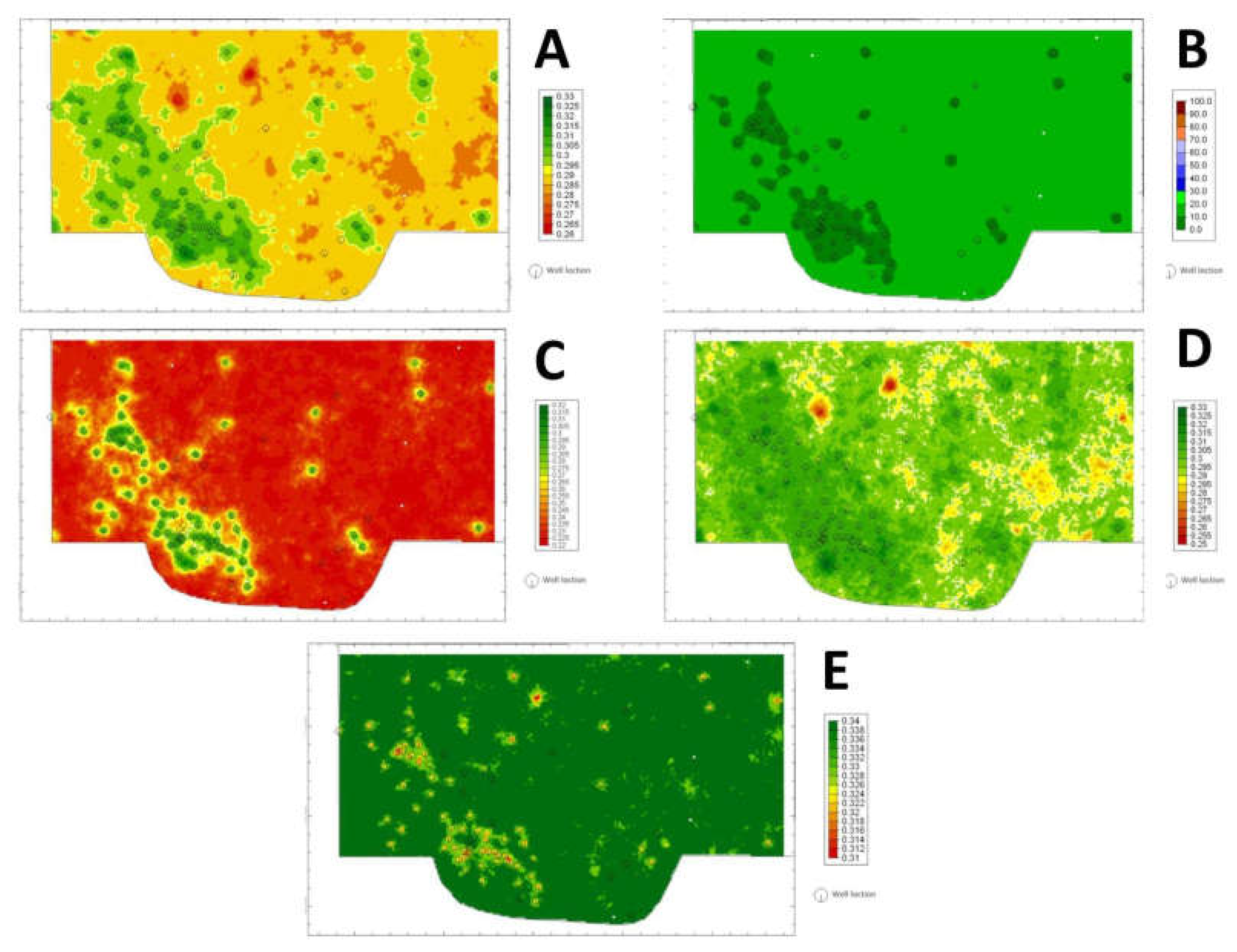
Figure 8.
The results of the permeability simulation (all scales are mD). A= E-type estimation; B= coefficient of variation (uncertainty of the simulation model); C= P10; D=P50; E=P90.
Figure 8.
The results of the permeability simulation (all scales are mD). A= E-type estimation; B= coefficient of variation (uncertainty of the simulation model); C= P10; D=P50; E=P90.
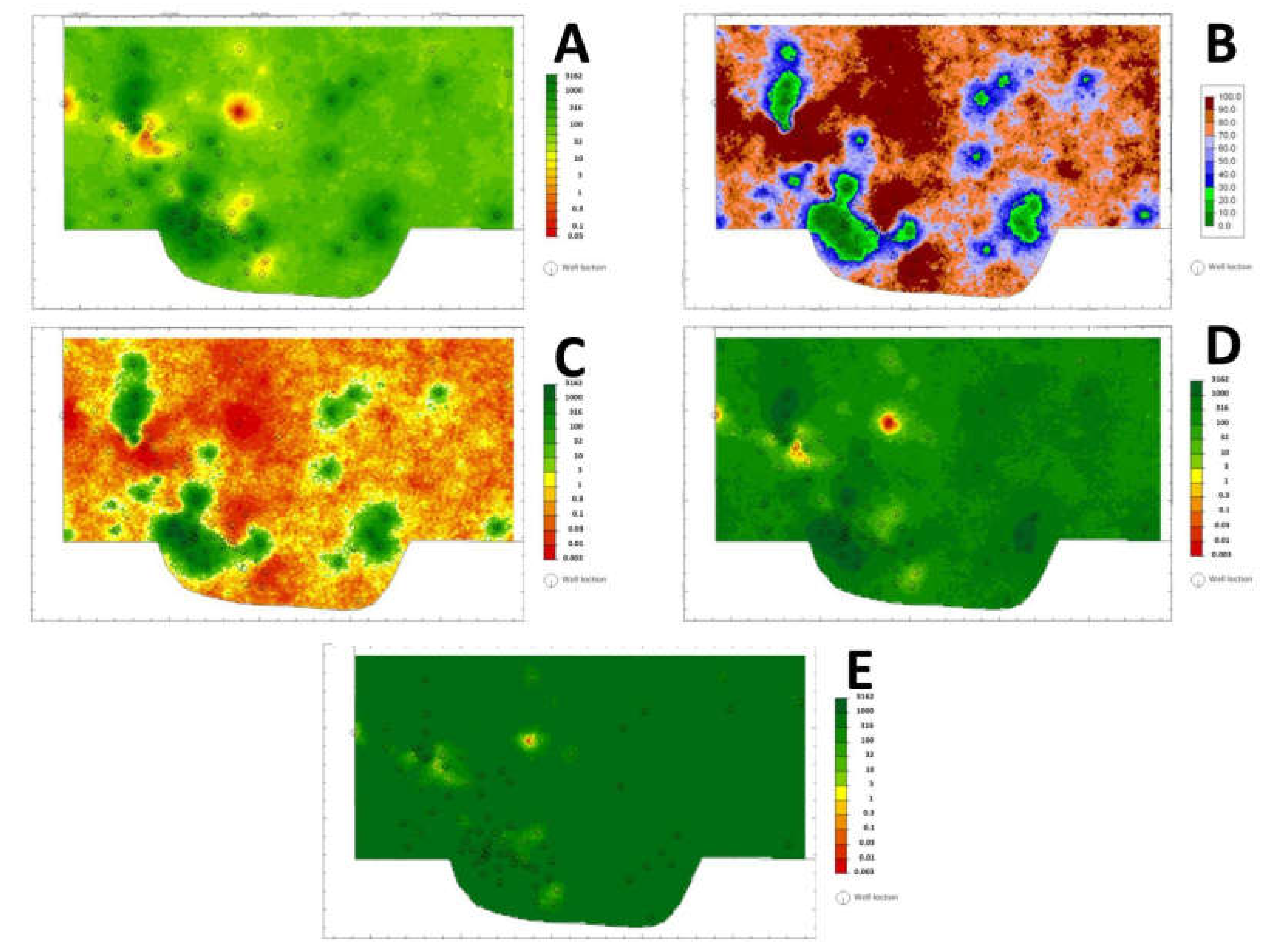
Figure 9.
The electro-lithological types are defined using EM clustering. “A”: the final result of the EM clustering; “B”: the defined electro-lithologies with the corresponding smallest and largest gamma values.
Figure 9.
The electro-lithological types are defined using EM clustering. “A”: the final result of the EM clustering; “B”: the defined electro-lithologies with the corresponding smallest and largest gamma values.
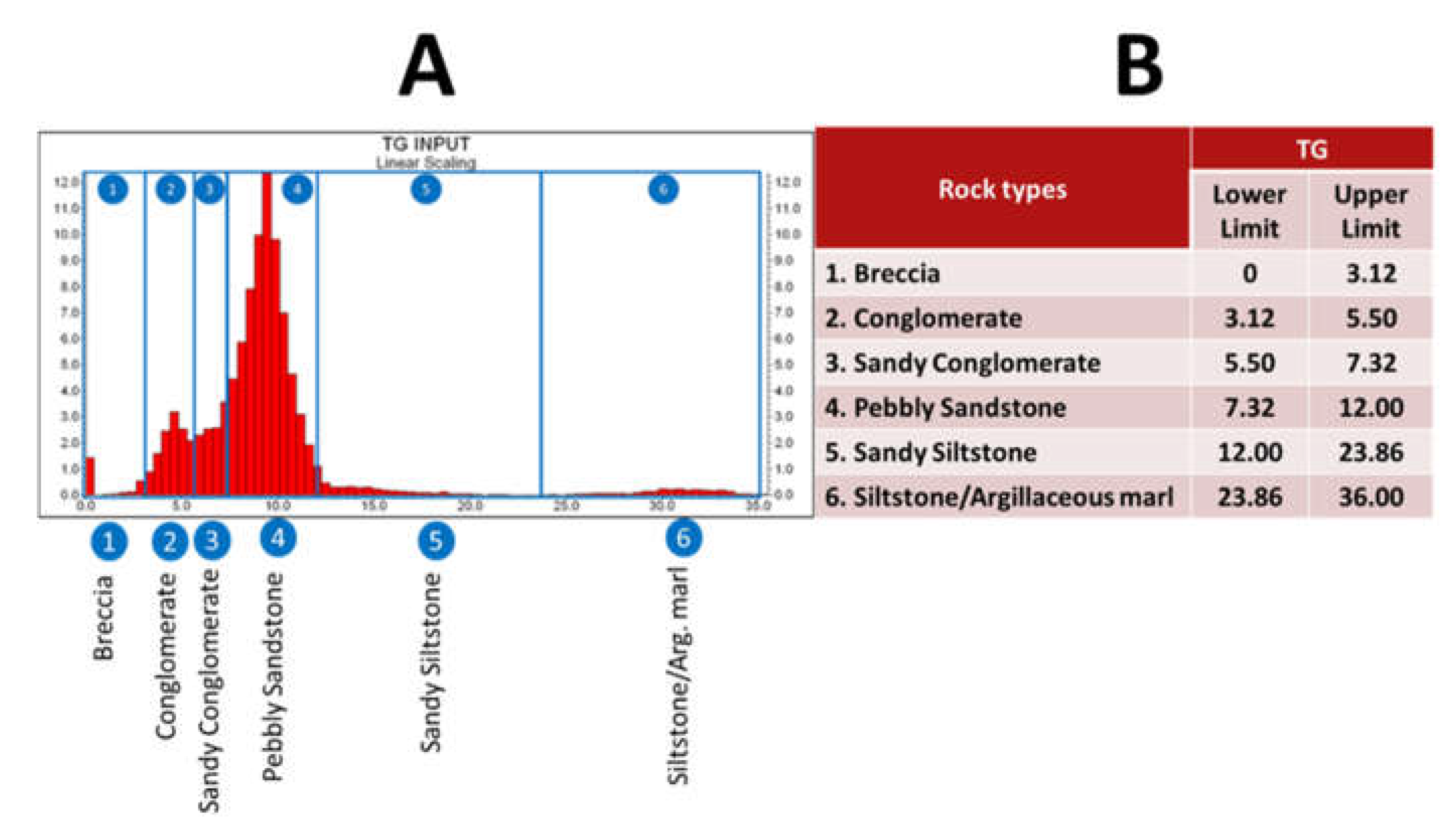
Figure 10.
The 3D Gamma model (A) and the corresponding 3D lithology model (B).
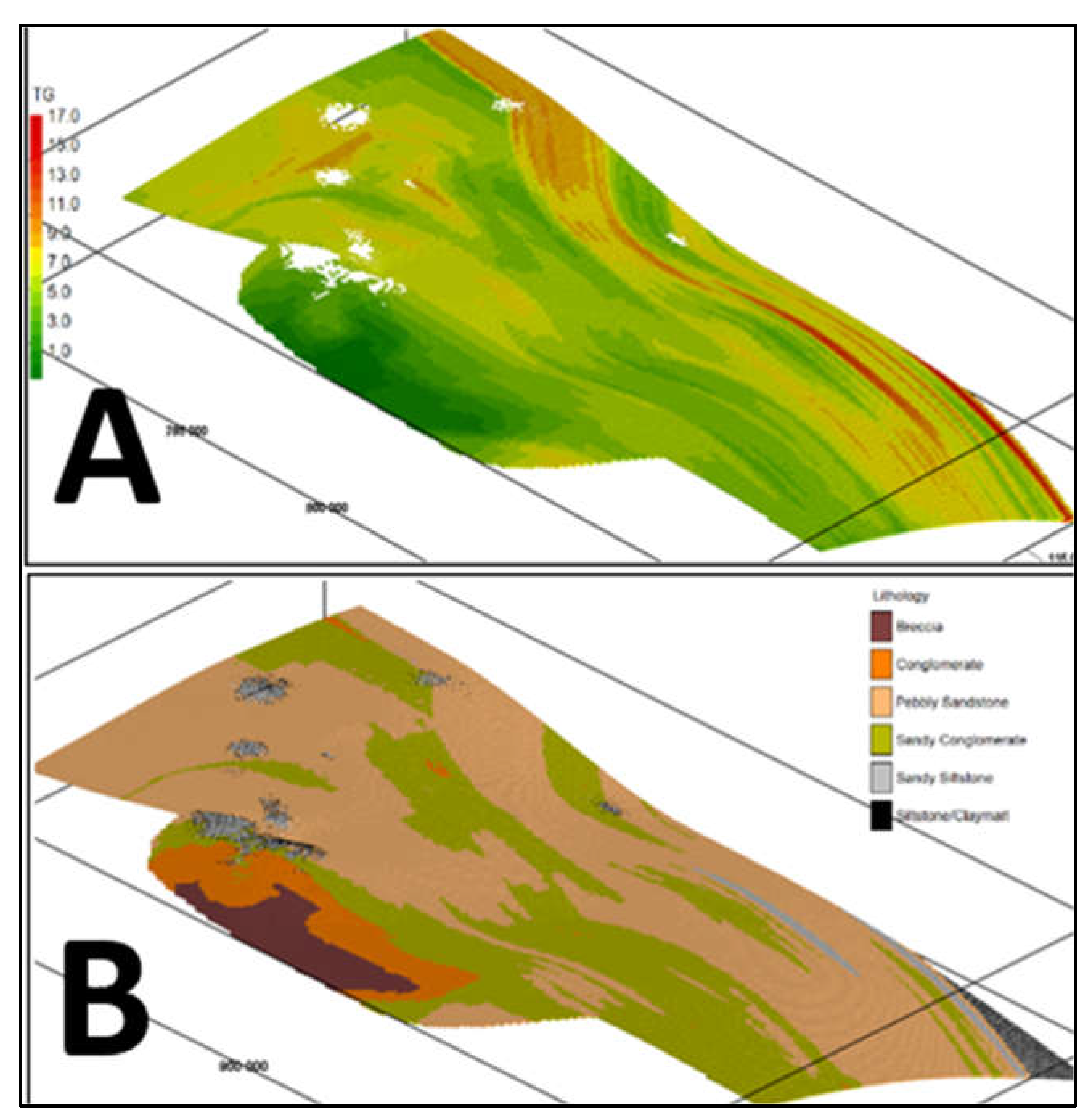
Figure 11.
Map of the dominant electro-lithologies.
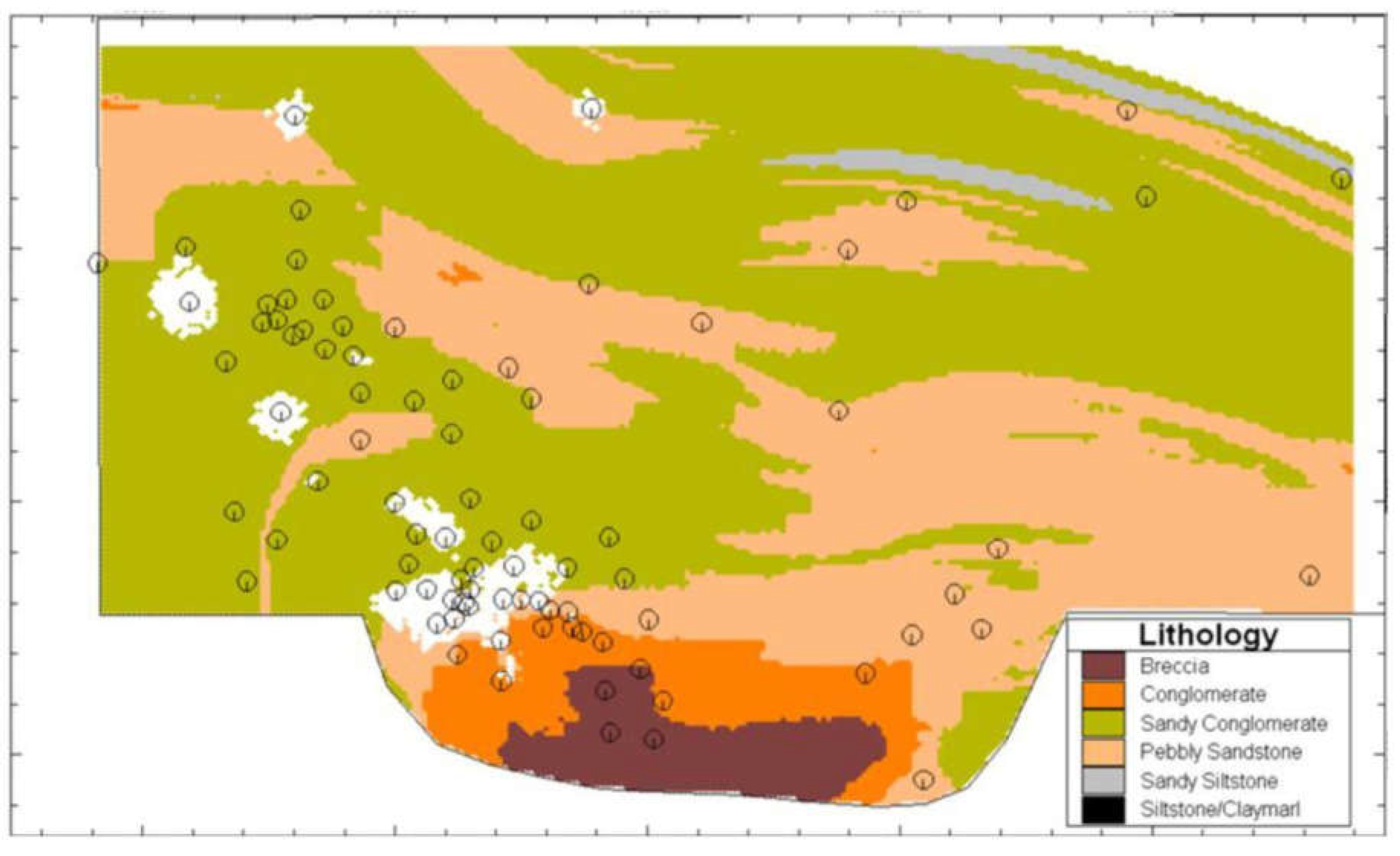
Figure 12.
shows the applied linear regression describing the change in temperature with increasing depth. This regression was applied to both the top and bottom grid to obtain the temperature distribution at the top and bottom of the Bekes Formation (Figure 13A,B).
Figure 12.
shows the applied linear regression describing the change in temperature with increasing depth. This regression was applied to both the top and bottom grid to obtain the temperature distribution at the top and bottom of the Bekes Formation (Figure 13A,B).
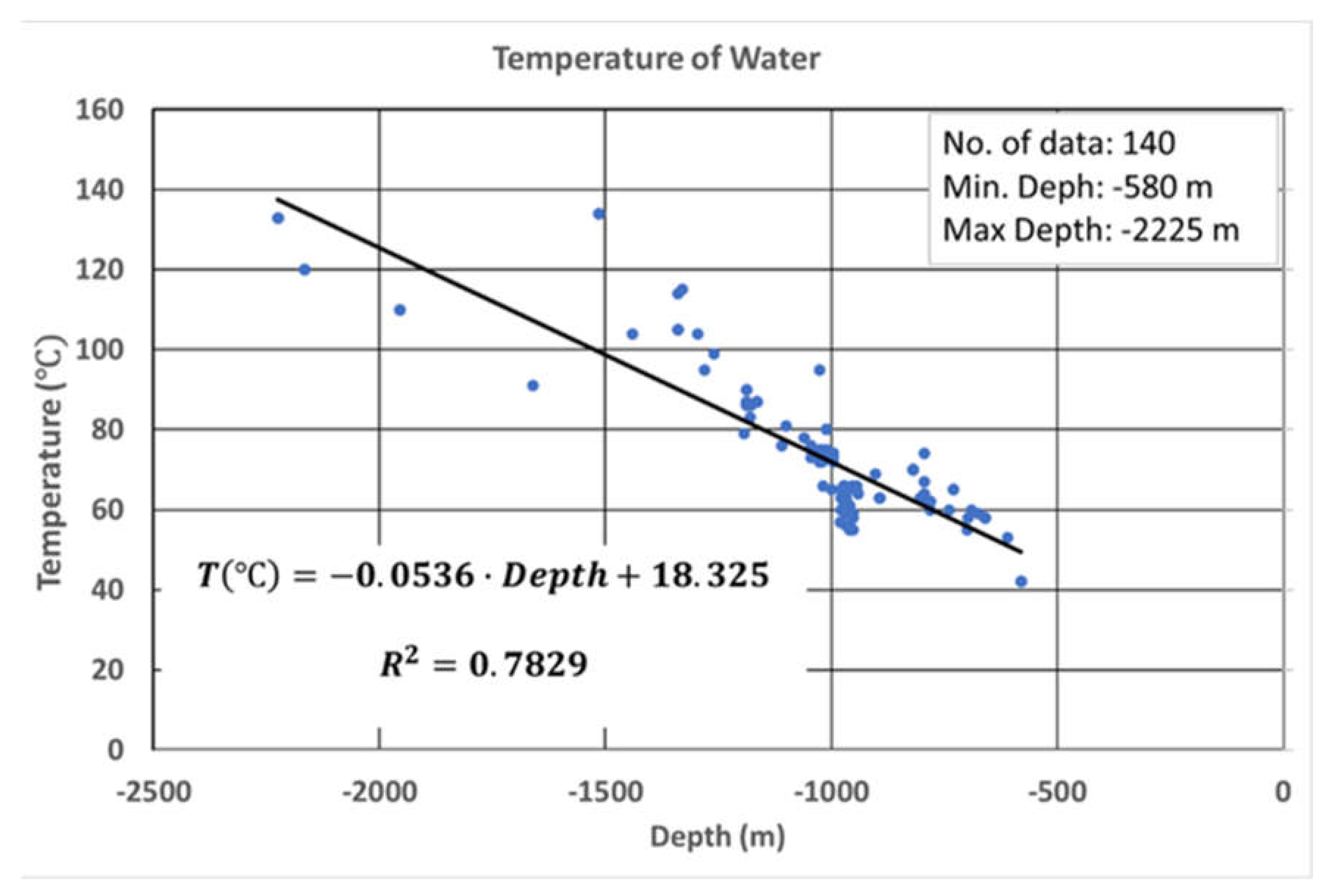
Figure 13.
Maps of the temperature distributions at the top (A) and base (B) of the Bekes Formation.
Figure 13.
Maps of the temperature distributions at the top (A) and base (B) of the Bekes Formation.
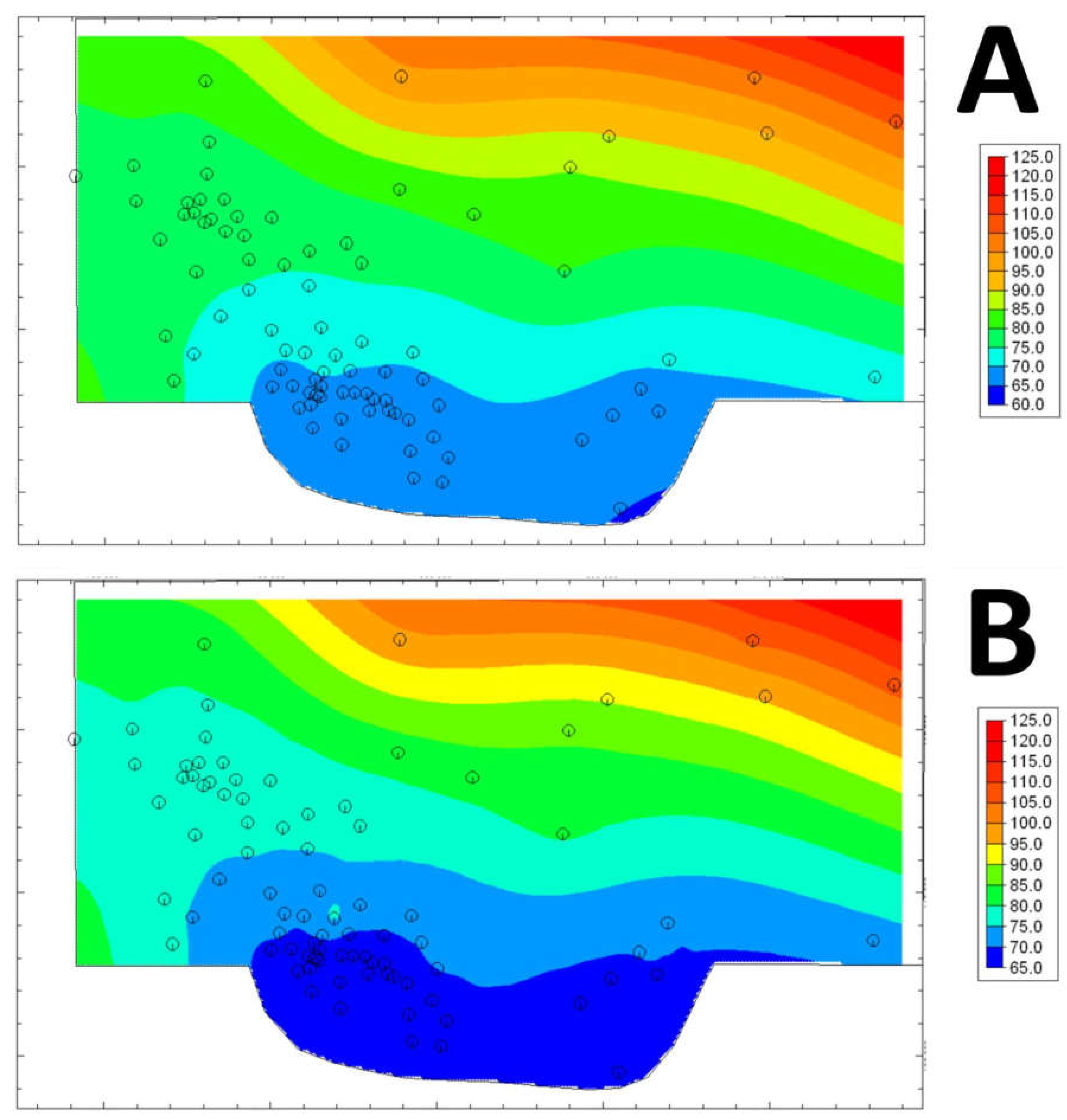
Figure 14.
Heat Capacity in MJ/kg·K.
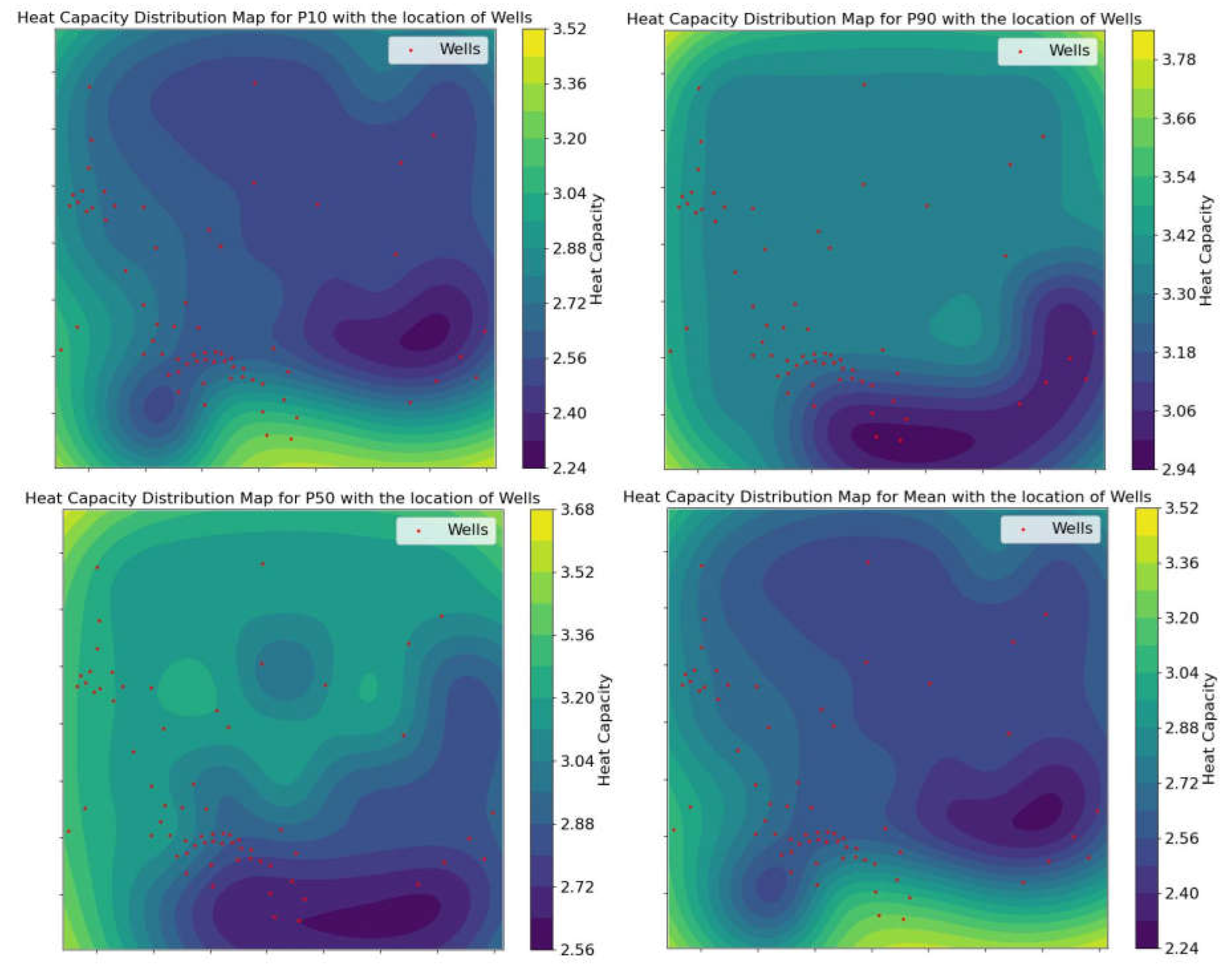
Figure 15.
Thermal Conductivity.
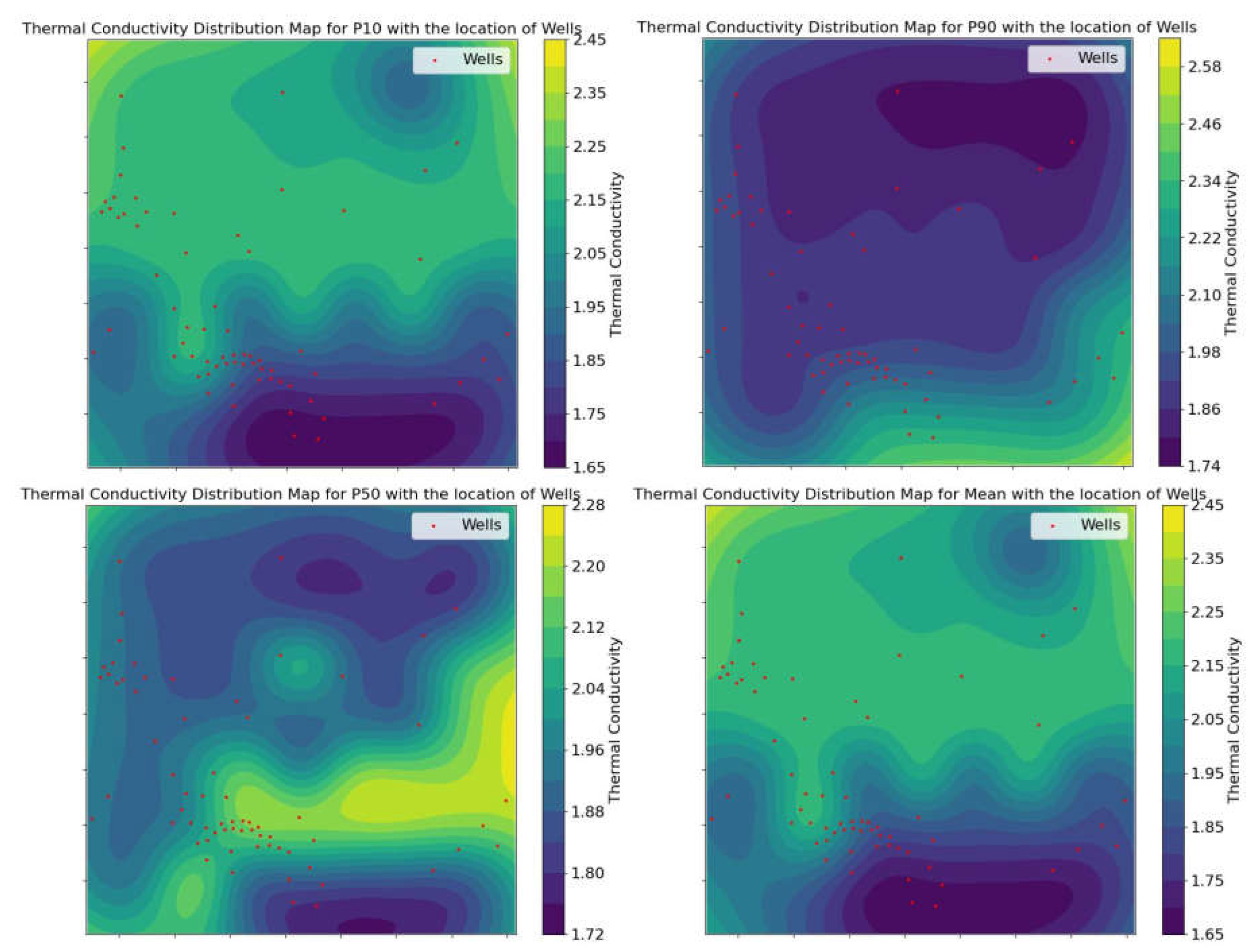
Figure 16.
Overview of the Study Area in Hungary: Bottom Left - Lithological Section [43]; Bottom Right - Position of Bekes Formations in the Study Grid with Vertical Exaggeration (13.33X); Above - MCDA Grids with Well Locations Indicated by Black Dots.
Figure 16.
Overview of the Study Area in Hungary: Bottom Left - Lithological Section [43]; Bottom Right - Position of Bekes Formations in the Study Grid with Vertical Exaggeration (13.33X); Above - MCDA Grids with Well Locations Indicated by Black Dots.
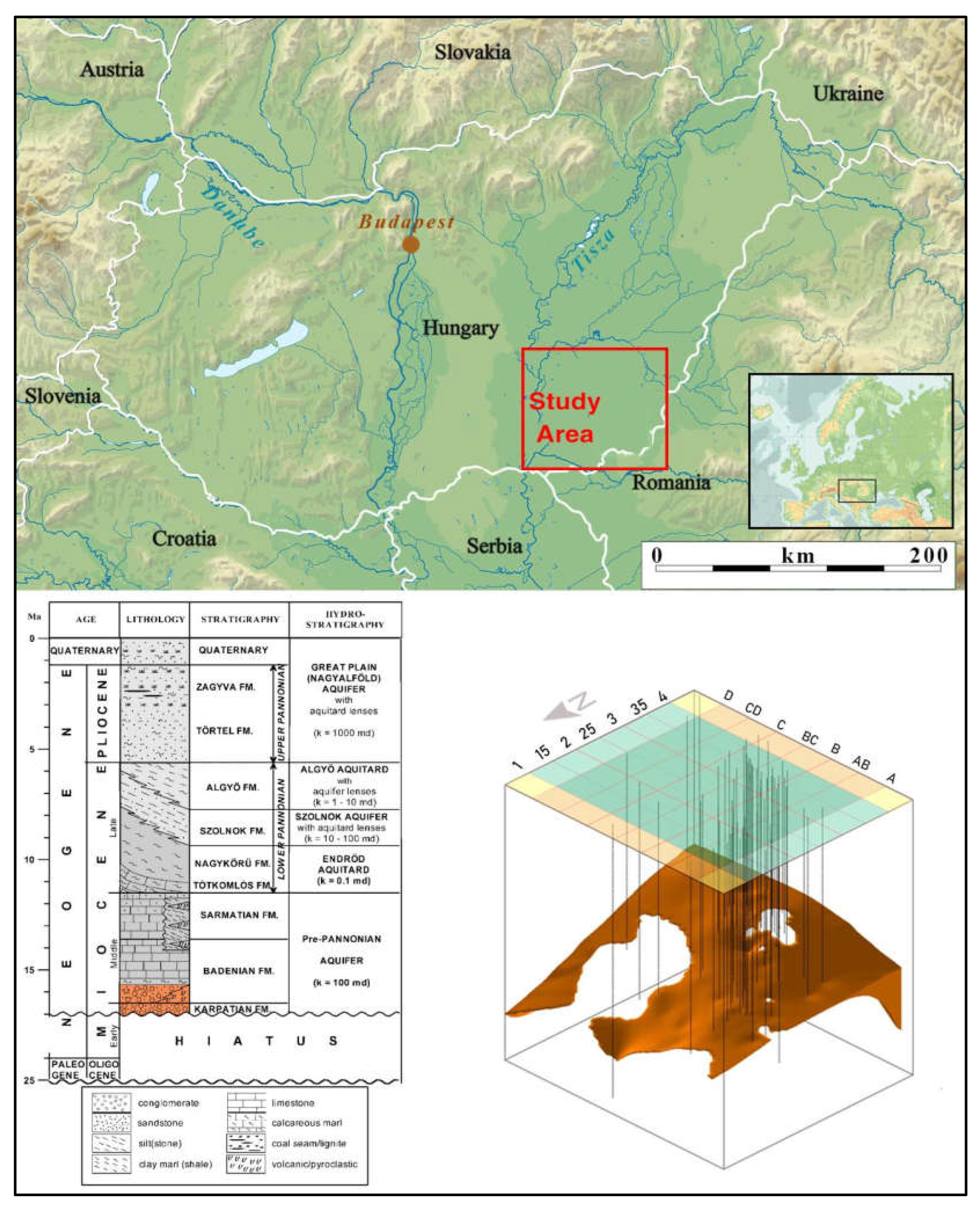
Figure 17.
Sensitivity Analysis for modeled criteria.
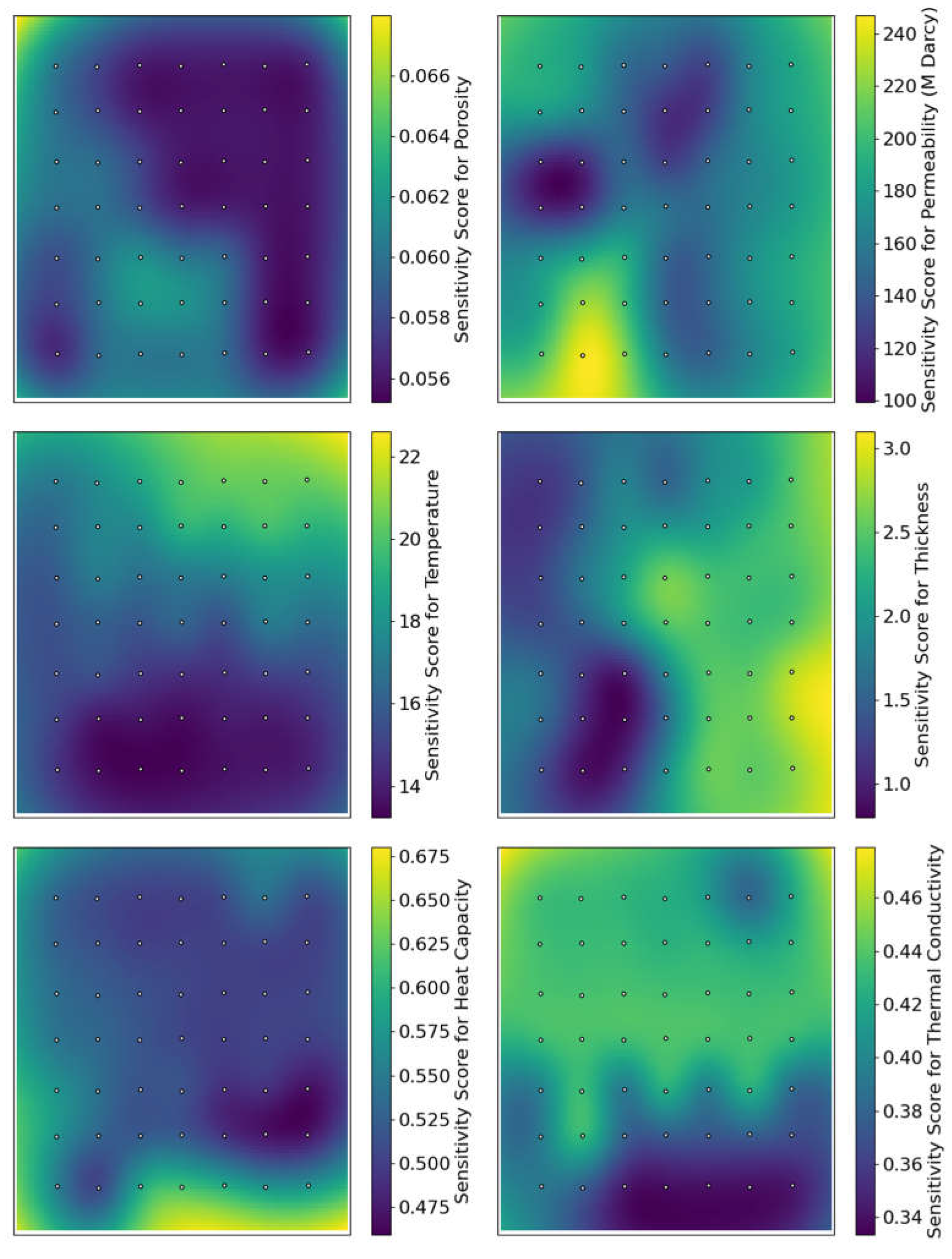
Figure 18.
Results for HT-ATES Suitability.
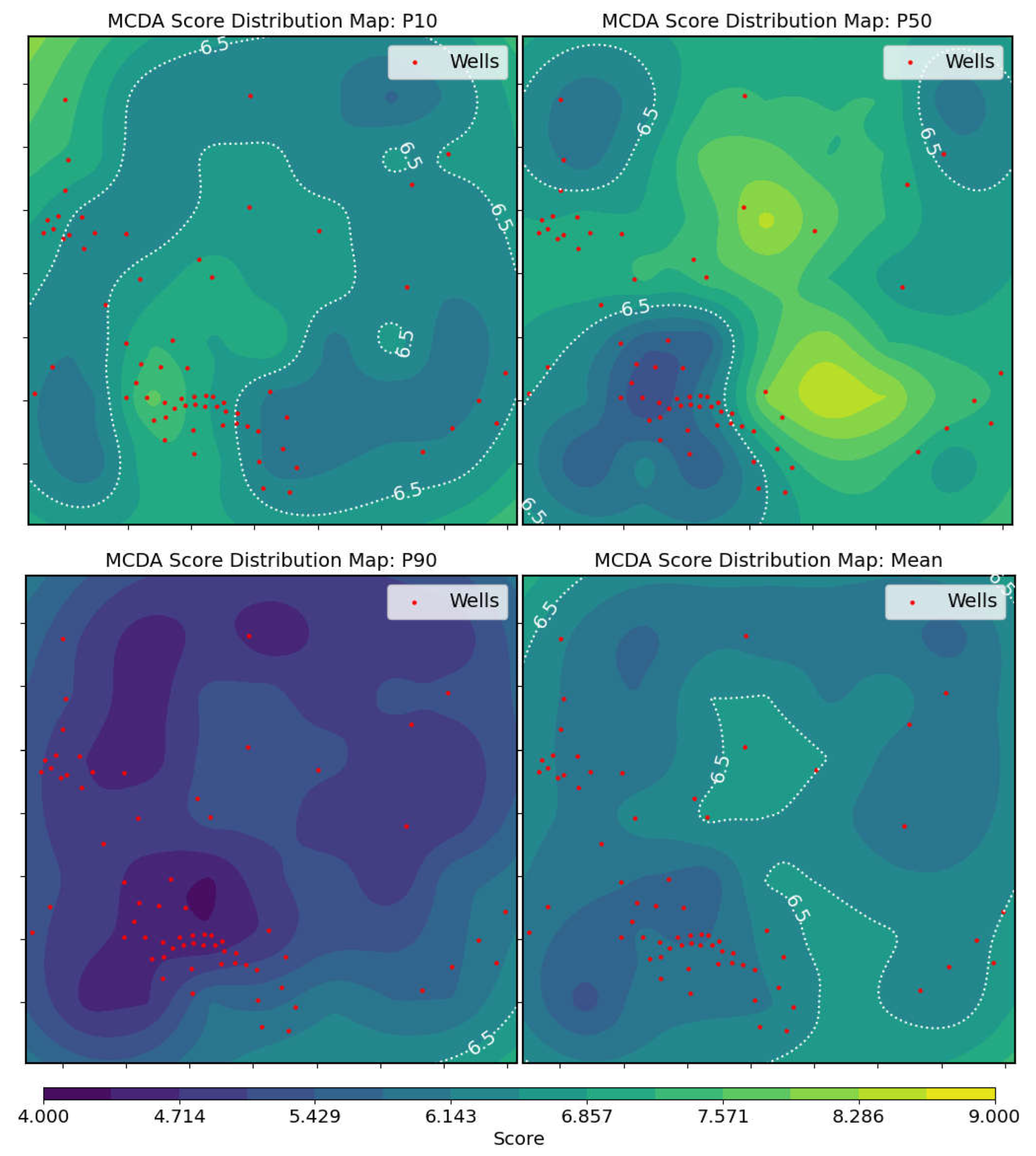

Table 1.
Accepted Locations for High-Temperature Applications.
| Block | Score | (°C) | Detailed Description |
|---|---|---|---|
| AB25 | 7.8 | 101.2 | This block contains 2 wells, moderate porosity of 0.3, and low to moderate permeability of 132.125 milli Darcy.Thickness at 7.81 meters, excellent heat capacity of 3.15 MJ/m³·K, and lower thermal conductivity at 1.81, indicating good thermal retention capabilities. |
| AB35 | 7.3 | 102.5 | Featuring 2 wells, a consistent porosity of 0.3, and higher permeability of 511.407 milli Darcy. This block maintains a thickness of 8.47 meters, and similar heat capacity and thermal conductivity values, supporting its high-temperature applications. |
| A25 | 7.3 | 101.2 | With one well, this block has a moderate permeability of 278.835 milli Darcy, and it’s characterized by a thinner geological profile at 4.83 meters but maintains high heat capacity and suitable thermal conductivity for effective heat storage. |
| A35 | 7.3 | 102.5 | This block also has one well and shares similar characteristics with AB35, but with a thickness of 7.1 meters and slightly lower heat capacity, emphasizing its potential for sustained high-temperature storage. |
| A3 | 7.3 | 103.5 | It exhibits the highest temperature among the blocks, with one well, a porosity of 0.3, and a permeability of 156.122 milli Darcy. It offers a balanced profile with a thickness of 7.52 meters and a very high heat capacity, ideal for high-temperature energy projects. |
Disclaimer/Publisher’s Note: The statements, opinions and data contained in all publications are solely those of the individual author(s) and contributor(s) and not of MDPI and/or the editor(s). MDPI and/or the editor(s) disclaim responsibility for any injury to people or property resulting from any ideas, methods, instructions or products referred to in the content. |
© 2024 by the authors. Licensee MDPI, Basel, Switzerland. This article is an open access article distributed under the terms and conditions of the Creative Commons Attribution (CC BY) license (http://creativecommons.org/licenses/by/4.0/).
Copyright: This open access article is published under a Creative Commons CC BY 4.0 license, which permit the free download, distribution, and reuse, provided that the author and preprint are cited in any reuse.