
Submitted:
08 June 2024
Posted:
11 June 2024
You are already at the latest version
Abstract
There has been debate recently on how the population in traditional mining areas of Central and Eastern Europe face precarity and marginalization. A spatial approach was employed in a Romanian context using available statistical data on a south Carpathian area (i.e Gorj County), surveys and in-depth interviews with residents in one of the rural communities of Gorj. Our findings highlight that a large number of rural localities in this county are technically, economically, and socially underdeveloped. Many inhabitants face a lack of financial resources and employment opportunities, which has led to the emigration of young people to larger Romanian cities or to other countries. We conclude that in order to avoid a much deeper social and spatial marginalization of local inhabitants, an integrated strategy is needed to target economic and social development, investment in infrastructure and public services, the promotion of employment and training opportunities, and to better integrate local culture and traditions into tourism.
Keywords:
neglected and peripheral spaces
; spatial marginalization
; precarity
; unemployment
; Gorj County
; Romania.
1. Introduction
Marginalization is a phenomenon that has received a lot of attention in recent years, both at national and regional level [1,2,3,4]. Marginalization, an effect of economic [5] institutional and cultural dynamics, is closely linked to phenomena such as poverty, social exclusion, segregation and resilience [6,7,8]. Marginalization in mining areas is typical in post-mining societies, where the process of mine closures gives rise to unemployment among local people as well as ecological problems related to the mine neighborhood [9].
The aim of this study is to analyze how the lives of citizens in a Romanian traditional mining area are affected by the process of mine closure as well as by other issues of infrastructure and economic transition. As it is important for each community to identify and analyze the problems faced by its members, we aim to diagnose the existing problems in the area of Gorj County (southwestern Romania) and offer the most appropriate solutions in order to create a safe environment which is favorable to development.
We followed three research objectives in order to fulfill the aim in this paper. The first objective is to identify marginalized rural areas in Gorj County. Therefore, the main marginalized areas of the area will be identified, based on several indicators such as the unemployment rate, the proportion of young people, the proportion of elderly people in each commune and the level of accessibility to various facilities such as water and central heating. Using this target, we will also be able to identify the problems faced by the inhabitants of the respective communities. After analyzing and interpreting the data, a top list of the most marginalized communes in Gorj County will be drawn up.
The second objective is to identify the main factors of spatial marginalization in Stejari (a marginal commune in Gorj County). In order to know whether this community is experiencing a high degree of marginalization, it is necessary to identify its spatial characteristics. Subsequently, we will establish the problems existing in the area, which are triggered by a series of factors related to some spatial indicators. Determining these factors can lead to the future adoption of optimal solutions that will contribute to the improvement of living conditions in Stejari.
The third objective is to identify the main factors of social marginalization in the Stejari commune. Thus, along with the problems caused by the spatial indicator, the community tends to face social problems which are often triggered by spatial elements, but which can also be caused by other factors. Therefore, in order to address or minimize the effects of social marginalization, it is necessary to understand the risk factors underlying this phenomenon.
Our study contributes not only to the international literature on marginalized people at regional and local levels [1,6,7], but also to the specific literature on (post-)mining areas [9,10] by bringing new insights into how the closure of mines brought a plethora of challenges to the local people.
The paper is structured as follows. The first part includes an analysis of the term marginalization and other concepts such as social segregation, exclusion, inclusion, resilience, and vulnerability that contribute to a better understanding of the whole study. In the second part, the methods and tools used to achieve the proposed aims are presented. The third section of the paper is the analysis of the study area in terms of spatial, demographic, and economic aspects. Then we present the results section in which we show how the phenomenon of social and spatial marginalization unfolds in Gorj County. Finally, some discussion is provided and conclusions are drawn.
2. Theoretical Background
The existing literature on marginalization presents this concept as a process of social exclusion, following the experience of individual or collective depravation, both in terms of resources for a decent living [11] and social connections [6]. Another important aspect of marginalization is the economic, religious, social and political empowerment that a person can exercise in a society [12], seen as worthless in the eyes of society [13]. Therefore, marginal areas and marginalized people are usually seen as neglected and peripheral. Furthermore, people from these backgrounds are at risk of being targeted by the bullying and threatening attitudes of the majority [14] and are disempowered by the continuous erosion of any form of freedom. There are also debates about the link between marginalization and social isolation, the latter being seen as an aspect of marginalization that refers to a lack of social networks and limited access to various services and reduced social support [6,15].
Dhavaleshwar and Swadi [7] speak of marginalized people as being similar to the idea of societal separation, as a phenomenon whereby a minority or group is excluded and its needs and desires are ignored. In his book Personality and Ideology, Peter Leonard [16] defines social marginalization as that process by which an individual or group is outside the mainstream of social activity. He also divides social marginalization into two categories, namely voluntary marginalization, which includes members of certain religious sects or certain artists, and involuntary marginalization, which he characterizes as individuals who are outside the mainstream of capitalist productive and reproductive activity. In this respect, marginalization is treated as a dual phenomenon—on the one hand, it can be up to an individual’s free choice whether they want to live marginalized and isolated, and on the other there is the situation of those who struggle with society to break out of the confines of marginalization [1].
The spatial dimension of marginalization cannot be separated from its other dimensions [17]. Consequently, socially, economically, and culturally marginalized groups are those living in physically disadvantaged spaces [18]. It is often observed that economically and politically important activities are concentrated in urban centers or areas of local interest, which benefit from a constant influx of new material, financial, and human resources from the periphery. This results in the phenomenon of spatial inequality, which is defined as the remoteness of a location that makes it physically difficult for its inhabitants to participate in wider socioeconomic processes [19,20].
The concept of social exclusion is in tight connection to social marginalization and is not easily defined. The principal theoretical difficulty is that exclusion is closely related to other concepts and is frequently used to refer to phenomena that are similar in nature (e.g., poverty, inequality, inaccessibility). The meaning of one in relation to the other is context-dependent and frequently a matter of debate [21,22]. Social exclusion has been broadly defined as the lack or denial of resources, rights, goods and services and the inability to participate in the relationships and activities available to the majority of people in a society [23]. It is an ongoing process involving the denial to certain individuals or groups of the resources necessary for participation in certain social, economic and political activities of society [24,25]. Social exclusion is defined by Razer [26] as a state in which individuals or groups lack effective participation in the key activities or benefits of the society in which they live. It is also important to recognize that there is a distinction between marginalization and exclusion, with marginalization also encompassing feelings associated with that state [27]. To be marginalized is to experience a sense of alienation and exclusion, which can result in feelings of being an unvalued member of a community and a lack of perceived capacity to contribute to that community [28].
A substantial body of research has demonstrated a robust correlation between social exclusion and poverty [29,30,31]. The distinction between poverty and exclusion is not always clear, and there is a debate as to whether one term is more appropriate than the other. Consequently, Fischer [32] posits that the term “exclusion” may offer a more comprehensive framework for examining the underlying dynamics that give rise to a state of disadvantage. He notes that different forms of exclusion may or may not be related to actual lack of means (usually described as poverty), as people can be excluded on the basis of race, age and gender.
In contrast, Sen [33] asserts that the distinction between poverty and exclusion is not clear-cut and that the concept of social exclusion is essentially redundant. Consequently, exclusion and poverty are mutually reinforcing, with each influencing the other. However, it is important to note that exclusion is a consequence of poverty. A significant finding of this analysis is that the process of social segregation is not equivalent to social marginalization [17]. Consequently, social segregation represents an outcome or, alternatively, an element of marginalization. In the latter case, marginalization encompasses a broader process that encompasses an active form of socioeconomic segregation. Those living in marginalized areas are frequently excluded from the labor market, unable to find work, often dependent on social assistance, and living in substandard housing [34].
On the other hand, the concept of social inclusion is also related to marginalization. It encompasses a process of improving the conditions under which individuals and groups participate in society. This process aims to enhance the capacity, opportunities and dignity of the disadvantaged, thereby facilitating their integration into society [35]. In addition to social inclusion, which is an important aspect in the detailed understanding of the term marginalization, an equally important related factor is economic inclusion [36,37]. This refers to the equality of opportunity that all members of society must have so that they can participate in the economic life of their country as employers, entrepreneurs, consumers and citizens [38].
Following the phenomenon of marginalization, resilience and vulnerability emerge as other key concepts. Resilience can be defined as the ability of individuals to restore their emotional balance, overcome external barriers, adapt and develop personally in a harmonious way, despite unfavorable circumstances and stress [39,40,41]. In the context of human systems, the intrinsic vulnerability resulting from people’s internal characteristics is referred to as social vulnerability. This type of vulnerability is determined by a number of factors, including the lack of access to resources, dependence on resources, access to infrastructure, the quality of housing, and so forth [42]. Social vulnerability can be divided into two distinct categories: individual vulnerability and collective vulnerability [43]. Individual vulnerability is contingent upon an individual’s social status within society, in addition to their access to resources, their lifestyle, and their place of work. The collective vulnerability of a geographical area or community is contingent upon the institutional structures with which that group interacts [1,26].
Messiou [44] questions the distinction between the experience of marginalization and its recognition, noting that there is a subjective aspect to defining this term. Nevertheless, the author poses an important question: if an individual does not recognize their own marginalization, how can they be considered by others to be marginalized? Consequently, we may conclude that the status of marginalization is often a matter of individual choice, with the individual themselves being solely responsible for their social and economic well-being.
Marginalization and the other processes it includes are frequently observed in rural areas, where individuals confront a multitude of challenges that are not as prevalent in urban areas [45,46]. Rural marginalization is most often associated with a number of factors, including geographical remoteness, the predominance of the primary sector, insufficient infrastructure in terms of roads and public services, population decline that often leads to the emigration of active groups, and an ageing population. It is frequently the case that marginalized groups are located in border regions, mountainous areas, areas situated a considerable distance from urban centers, or other disadvantaged geographical regions. Such disadvantaged locations can give rise to economic and sociocultural backwardness, characterized by low levels of education and culture [47,48].
In light of the aforementioned considerations, it has been demonstrated that the historical trajectory of geographical discussions on marginalization has been markedly distinct. It is perhaps not surprising that scholars in the discipline have long struggled and continue to do so with developing a definition of marginalization that can cover phenomena at different socio-spatial scales. Consequently, in many geographical definitions, there is a certain tension between a definition of marginalized areas and descriptions of the phenomenon that refer to the insufficient integration and vulnerability of people in these areas.
Given the numerous discussions surrounding the long-term sustainability of mining sites in Eastern Europe [10] it is recommended that environmental sustainability and innovation practices be implemented in post-mining areas [9]. Marginalization in mining areas is a pervasive phenomenon in every region of Romania. However, there is a notable disparity between the regions in the east and south of the country and those in the west. Furthermore, environmentalism could potentially give rise to issues of nativism and protection for natural resources [49], although mono-industrial towns could become ghost towns [50]. However, local populations are susceptible to displacement and poverty, particularly in mining areas. Internal migration is observed in instances where individuals relocate from economically disadvantaged regions to more affluent areas [51].
The Background Study for the National Strategy on Social Inclusion and Poverty Reduction [52] indicates that the southern regions of Romania, specifically the counties of southern Muntenia and Oltenia (Gorj and Mehedinți), are characterized by social exclusion, rural marginalization and a relatively low degree of urbanization. The Bucharest-Ilfov region has the lowest incidence of marginalization, with only 3% of the population living in relative poverty. In contrast, the Northeast, Southeast and Southwest regions have the highest proportion of individuals at risk of poverty. Another noteworthy observation is that Gorj County is situated within an area with a high risk of poverty. The study confirm that the regions with the highest rural populations also exhibit the highest risk of poverty.
As part of the study to substantiate the Gorj County Development Strategy [53], a questionnaire was distributed to citizens to ascertain their views on reducing social exclusion. The respondents expressed their opinions on the necessity of reducing the risk of social exclusion. A total of 95% of respondents indicated that measures to combat marginalization were necessary, while the remaining respondents believed that combating marginalization was not necessary. A similar proportion of respondents expressed their opinion on the development of social services for people at risk of social and spatial marginalization and exclusion. The questionnaire enabled the socioeconomic needs of the population to be identified, including prioritization of the problems faced by the community that should be addressed in the coming years. Furthermore, it was discovered that not all of the population subject to this research are aware of the problems they face, nor are they willing to participate in the changes that have occurred to improve their standard of living and reduce their level of marginalization.
The Development Strategy of Gorj County indicates that combating social marginalization resulted in expenses of over 65,000 lei (about 5500 euros) in 2014. By 2019, these expenses had decreased to 30,100 lei. The education, health, and road systems were the main sectors that required interventions to improve living conditions [53]. Consequently, the education infrastructure is confronted with outdated school utilities that are inadequate to the current system (heating mode, sewage, waste collection and hygiene conditions), a lack of modern facilities, and a dearth of digital devices among students, particularly in rural and marginalized communities.
In conclusion, marginalization has received scant attention in existing Romanian literature, particularly in the southwest of Romania. In Gorj County, there are several written sources that attest to the presence of a high level of marginalization. Some of the problems faced by the population are mentioned, but no studies have been carried out yet to identify the source of these problems or, more importantly, the consequences that these problems have on the lives of those in the areas concerned.
3. Materials and Methods
As the objectives of this paper are to identify marginalized rural areas in Gorj County and to analyze the degree of social and spatial marginalization in Stejari (a peripheral commune in Gorj County), our methodological focus is on identifying the factors and social indicators influencing marginalization in Gorj and the Stejari community.
The initial methodological step was achieved by means of statistical data analysis and cartographic analysis, which was derived from the creation of several maps. These maps incorporated both spatial data and statistical data obtained from official statistics bodies [54,55]. The latter was accessed in 2011, which represented the last important census to provide data on the living conditions of the population. We also took into consideration the atlas “Marginalised communities and the degree of poverty in the South-East region” [56] which analyzes marginalization through the following criteria: human capital, declared employment, and housing conditions. In order to determine and identify the most marginalized communes in Gorj County, we will refer to the three criteria mentioned above and analyze the following indicators: the percentage of the population considered elderly (over 65 years old) in each commune, the percentage of the young population (under 20 years old) in each locality, and the unemployment rate in each locality, as well as the proportion of dwellings that do not have a water supply, those that do not have a central heating system and those that do not have a bathroom. The data was sourced from official sources, namely the Romanian Institute for Statistics (INSSE). It was then exported to Microsoft Excel for organization and importation into ArcMap, which was used to create all the requisite maps for the analysis.
In order to obtain information related to social and spatial marginalization in the Stejari commune, a questionnaire was administered to a target group of 104 respondents. The questionnaire focused on discussions related to the problems faced by the inhabitants of the Stejari commune in their daily lives, comprising 25 questions pertaining to their way of life (see Appendix A). The initial section of the questionnaire encompassed inquiries pertaining to the degree of satisfaction of the residents with regard to various facets of the commune, including public services, educational and health services. The subsequent section of the questionnaire pertained to the challenges confronting the commune and their interrelations with neighboring localities. The concluding section of the questionnaire encompassed demographic inquiries. Full consent and anonymization of survey participants was provided. Once the data had been collected, the next step was to process and select the valid answers in Microsoft Excel. This involved analyzing the various types of responses and including them into thematic categories.
In order to obtain further insight into the spatial and social marginalization in the Stejari commune, an interview was conducted. The interview primarily focused on the social life of the commune, the way of life of the inhabitants, development projects in the commune and future perspectives (see Appendix B). The interview was conducted with 12 individuals, primarily municipal staff, including the deputy mayor, secretary, and local councilor; teachers at the Stejari Secondary School; priests; and entrepreneurs. All survey participants and interviewees provided their full consent and have been anonymized. The interviews were analyzed using Braun and Clark’s [57] method. This involved first faithfully transcribing the interviews, then classifying them by themes and thematic codes, and finally translating them into English.
4. Study Area
Gorj County is situated in the southwestern region of Romania and encompasses nine cities, of which two municipalities, Tg Jiu (population 78,553) and Motru (population 18,142), are of particular note. It also comprises 61 communes and 411 villages, according to INSE (see Figure 1).
The 2021 census indicates that the population of Gorj County is 313,023 inhabitants, with a density of approximately 60 inhabitants per square kilometer. In terms of spatial distribution, 136,877 individuals, representing 43.72% of the population, reside in urban areas, while 176,146 individuals, or 56.28%, reside in rural areas. It is also noteworthy that over a 10-year period (2012–2022), the county’s population decreased by 8%, or 27,007 people.
One crucial indicator for the analysis of human capital is the proportion of elderly individuals (aged 65 and above) in each locality of Gorj County. In order to ensure the analysis is as comprehensive as possible and to observe in detail how each commune has evolved, a map has been produced for both 1992 and 2022. Consequently, in 1992, over half of all localities had over 11% of elderly population of. In 30 years’ time, in the year 2022, the situation will have changed radically. The number of communes with an elderly population exceeding 11% will be 70, with only two towns having less than 11% of elderly people (Figure 2).
The phenomenon of demographic ageing has increased in the last 30 years, not only in Gorj County, but throughout the country. A number of factors, including the increase in life expectancy and the decline in the birth rate, have contributed to this phenomenon. The migration of the elderly population to rural areas in proximity to urban centers has been a significant contributing factor to the observed increase in the elderly population in rural areas. For instance, the city of Târgu-Jiu has a lower proportion of elderly individuals than its neighboring municipalities. A high proportion of the elderly population in a locality can result in marginalization and social exclusion, due to the limitations imposed on this group and other members of the community with regard to their access to various social and cultural activities.
A comparison of the population under the age of 20 with the total population (see Figure 3) indicates that in 2011, the southern localities of the county had the highest proportion of the population under the age of 20, despite the total population ranging from 1,331 to 3,715 inhabitants. Conversely, the northern region of the county exhibits the lowest proportion of young people, despite a higher overall population.
Gorj County’s economy is characterized by two main sectors: agriculture and industry. The extractive industry (coal, oil, natural gas), metal processing, machine building and food industry represent the focus of the industrial sector. The economic development of Gorj County is inextricably linked to the mining and energy sectors. Gorj County’s industry produces a number of finished products, including electricity generated by two thermal power stations, one hydropower station and one hydropower complex. Additionally, the county manufactures machinery, pressing and forging tools, technical articles, and building materials. It is also home to various mining machinery factories in Târgu Jiu, Motru, Rovinari, and Bâlteni. In the rural economy, traditional crafts play an important role, particularly in woodworking and textile processing, contributing to the diversification of economic activities in the area [58].
A significant concern is the low proportion of municipal roads that have been upgraded, with only 28.38% of such roads having undergone this process. Indeed, the infrastructure in Gorj County is currently lacking a network of highways and expressways. Nevertheless, in 2020 work commenced on the Craiova-Pitești expressway, which has the potential to confer significant advantages upon the region [53].
5. Results
Our results are framed around three elements. First, the focus of our research was on analyzing the quantitative data and the social indicators for the Gorj county in order to identify specific marginalized spaces. Second, we selected major lines of marginalization from the survey applied to Stejari community. Finally, some insights selected from the opinions of interviewees in Stejari lead us to diagnoze the major social problems that this community has encountered in the last decades.
5.1. Identifying Marginalized Spaces Based on Social Indicators in Gorj County
The primary objective of this paper is to identify the municipalities in Gorj County that are most marginalized. In order to achieve this objective, we have approached the issue of marginalization from two distinct perspectives: employment and the economy, and living conditions. This is in keeping with the demographic context presented above.
Unemployment is a highly representative indicator of the degree of marginalization of a locality. By analyzing it, we can identify which municipalities in Gorj County have the highest proportion of people declared as not having a job. At the county level, unemployment rates are relatively low, with the national unemployment rate at the end of 2022 being 5.6%. Consequently, in Gorj County, more than half of the localities have an unemployment rate of less than 2.6%. With the exception of Polovragi, which has the highest unemployment rate of 8.7%, the municipalities in the south of the county have an unemployment rate of over 3.6%. The municipalities in the southeast of the county exhibit the highest unemployment rates, which are influenced by the lack of a strongly developed urban pole in the area that would generate jobs. This is illustrated in Figure 4.
The development strategy of Gorj County [53] indicates that in 2019, the number of economic agents in the county was 22,487, representing 1.1% of all economic agents in Romania. Consequently, the majority of economic agents in the county are located in the cities of Târgu-Jiu, Motru, Rovinari, Târgu-Cărbunești, Novaci and Bumbești-Jiu. However, in the northern region of the county, there is a relatively large number of economic agents. The number of firms and the turnover per capita decrease from north to south. With the exception of a few localities, the south of the county is relatively underdeveloped in terms of the local economy. The turnover per capita allows for the identification of the most economically disadvantaged and most affluent territorial administrative units (TAU) within the county. The lowest turnover per capita is observed in the southeast of the county (Figure 5).
The majority of construction activity in Gorj County is concentrated in the city of Târgu Jiu, the county seat, and in neighboring towns (see Figure 6). The period between 2002 and 2021 saw considerable investment and construction activity in Gorj County. However, given the county’s potential, which is based on its natural resources and skilled labor force, this activity has not been fully exploited. The majority of building permits were issued in the city of Târgu-Jiu. The localities in the vicinity of the residence have registered a number of 16–29 building permits issued in 2022. Analysis of the average habitable area per capita allows the identification of areas with large houses and/or more depopulated areas. Consequently, the TAUs with a relatively small number of permits and a considerable living area per capita are experiencing depopulation. Conversely, we observe that the local authorities have a considerable number of authorized persons in 2022, yet a relatively small average surface area per capita.
In order to ascertain the living conditions in Gorj County, an analysis was conducted of the rate of dwellings with water supply and central heating and those with bathrooms.
In Gorj County, more than half of the communes are experiencing a lack of water supply. The municipalities with a rate of households benefiting from this infrastructure of less than 22% are primarily situated in the southeastern region of the county. A more favorable situation in terms of access to the water network can be observed in the communes situated in proximity to the towns. Some of these communes are situated at relatively short distances from the county seat, Târgu-Jiu, which has influenced the level of development of the commune.
Although Gorj County has significant coal resources, the proportion of households with central heating is alarmingly low: in most communes, only 4.6% or even less of all households have central heating. While there are communes throughout Gorj County with a low rate of dwellings with this heating system, the most marginalized communes in this respect are located mainly in the southern part of the county.
The indicator pertaining to the proportion of dwellings with a bathroom is a useful proxy for analyzing living conditions in a given area. Consequently, at the county level, it can be observed that for this indicator, higher values are recorded in the northern region than in the southern region. The lowest percentages for this indicator are once again observed in the southeast of the county, where less than 16% of all dwellings have a bathroom. Conversely, the communes situated in close proximity to urban areas (see Figure 7) exhibit the lowest rates of compliance with this indicator.
Analysis of the various indicators pertaining to housing conditions reveals a complex interdependent relationship between them. The analysis reveals that the same municipalities are consistently identified in the three indicators as having low values for the rate of dwellings with these facilities. Consequently, a commune where the rate of dwellings with water supply, central heating, and bathroom facilities is low can be considered to be marginalized in this regard. The absence of access to these facilities can be attributed to the lack of material resources available to the inhabitants and a lack of interest on the part of the institutions responsible, and can have significant implications for the future development of the community.
The indicators analyzed above indicate that several municipalities in Gorj County are facing social and spatial marginalization. The remoteness of these areas from urban centers was a significant contributing factor to the poor conditions observed. Consequently, localities in proximity to the cities of Târgu-Jiu, Motru, and Rovinari exhibit a higher prevalence of dwellings with water supply, central heating, and bathroom facilities. Furthermore, the unemployment rate is higher in localities with more challenging living conditions. Notably, the eastern region of the county has a higher unemployment rate than the western region. Conversely, with regard to human capital, it can be observed that localities with a high proportion of elderly individuals also exhibit the lowest percentage of young people. The majority of these localities are situated in the vicinity of the cities of Târgu-Jiu, Târgu-Cărbunești, and Rovinari. This indicates that the younger population is drawn to the urban environment, where there are greater development opportunities, and thus migrates to neighboring urban areas. In contrast, the elderly population tends to migrate from urban to rural areas, which is reflected in the high values observed in the communes in the areas surrounding cities.
In addition to the aforementioned analysis, a matrix of the top 20 municipalities was constructed based on six criteria: the highest percentage of elderly population, the lowest percentage of population under 20, the unemployment rate, the water supply, the availability of central heating, and the presence of bathroom facilities in the homes of residents. A municipality was awarded one point if it was included in a ranking. This resulted in the identification of the municipalities that were most marginalized in Gorj County (Figure 8).
5.2. Surveying Local People in Stejari
The following section presents a case study of the Stejari commune, one of the most marginalized communes of the county, also located on the outskirts of the county. This section presents the results of a questionnaire administered to 104 inhabitants.
In terms of citizens’ satisfaction with the quality of life in the village, the highest scores were given to shops, the church and cultural events in the area. Aspects such as public transport, safety, sanitation, and street lighting received scores ranging from 2.43 to 2.31. The respondents indicated the greatest degree of dissatisfaction with parking, pedestrian space, and the roadway (Figure 9).
With regard to the trust of citizens in the various institutions of the municipality, it can be observed that they place a considerable degree of trust in the churches, a finding that was also highlighted in the previous question. The average scores for the school/kindergarten and the municipal dispensary were 2.72 and 2.70, respectively, indicating that the citizens of Stejari have a high level of trust in these institutions. The lowest level of trust among citizens is directed towards the town hall, which obtained an average score of 1.79. Conversely, respondents indicated a relatively low level of trust in the police and private economic agents (Figure 10).
In response to the question of which of the following problems should be addressed in the emergency system, respondents highlighted the issue of unemployment, given the high number of unemployed individuals in the municipality. This response is particularly pertinent, given the current economic situation. In addition, respondents identified maintenance and reconstruction of roads and connections to utilities as other pressing concerns. In this regard, the optimal solution is the establishment of a communal dispensary, which respondents indicated does not require repair or equipment due to its existing state. From the responses received, it can be inferred that the commune has access to internet and telephone services, as well as a satisfactory sanitation system. Furthermore, there is no apparent necessity for emergency repairs or equipment in educational institutions (Figure 11).
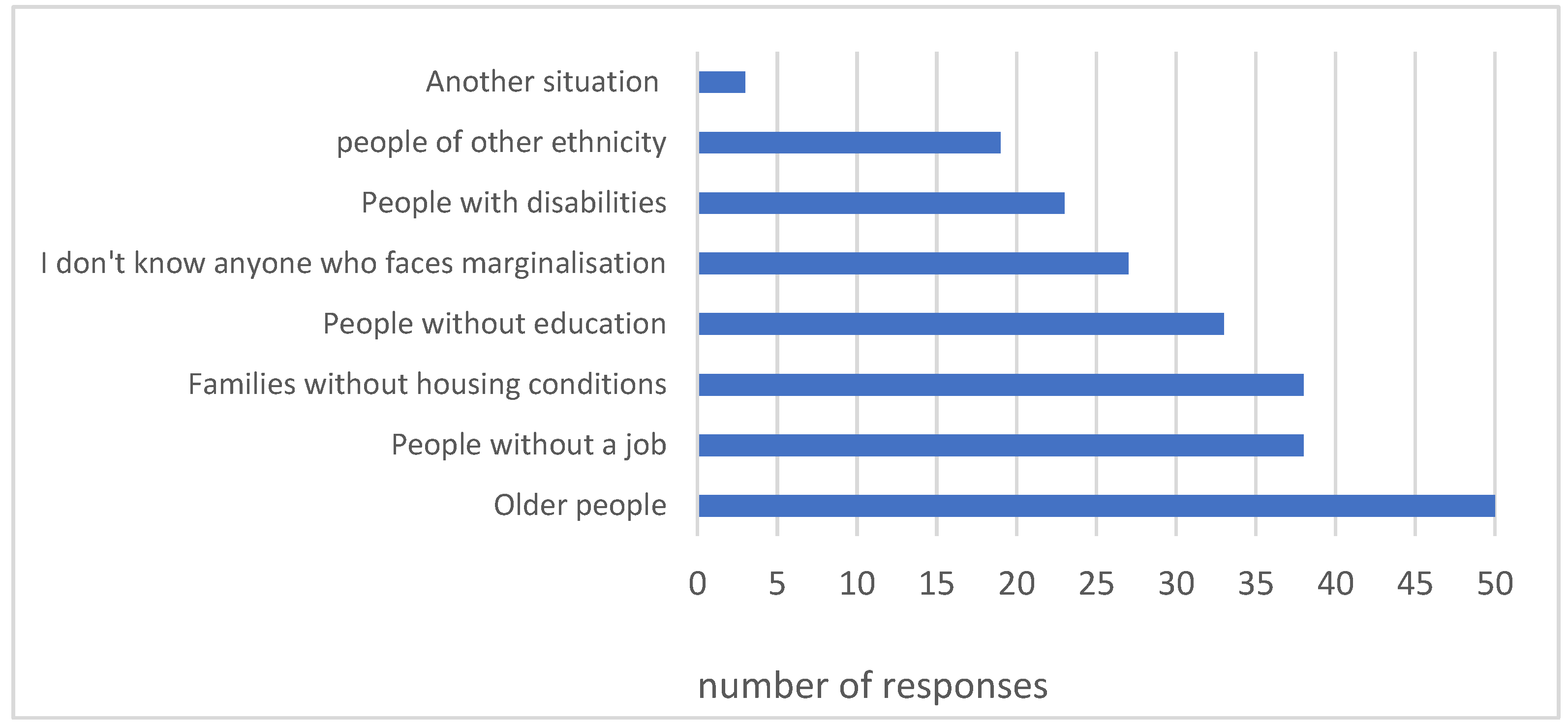
In order to identify the most vulnerable social class, we formulated the question “Which category of people faces marginalization in the Stejari commune?” Consequently, the majority of respondents indicated that elderly individuals, followed by those without employment and those lacking adequate housing, are the most vulnerable to marginalization. A total of 33 respondents indicated that they were unaware of any individuals in their social circle who were experiencing marginalization. The responses indicate that marginalization is present in the case of people with disabilities and those of other ethnicities. In another situation, the problem of children whose parents are abroad was mentioned three times (Figure 12).
Following the analysis of the responses to the open-ended question “What is the most significant challenge facing Stejari?” the majority of respondents identified a lack of essential facilities as the primary concern. Specifically, 23 respondents highlighted the need for improved utilities (gas, sewage), while 21 respondents emphasized the urgent need to address the condition of the roads. Once more, the lack of employment opportunities was identified as the primary concern. For some respondents, the population of the commune is a problem. This encompasses both the attitude of the local people and the local management. In addition to the aforementioned issues, the lack of shops, the degradation of the commune, corruption, and the considerable distance from urban centers represent further challenges confronting the citizens of the Stejari commune.
For the inhabitants of Stejari, the natural environment appears to be the area’s most significant asset. The presence of the natural environment confers a number of advantages, including peace and quiet, the absence of pollution, and the opportunity to engage in agricultural activities. Additionally, the area is home to oil reserves. A significant proportion of respondents (15%) perceive no benefits in the area, while others identify positive aspects, including cultural events organized in the area, the school as an institution, and the modern medical services.
In relation to the services that are lacking in the Stejari commune, respondents once again expressed their opinions regarding the lack of a sewage system and gas heating system, and the desire to upgrade the roads. In addition to the aforementioned services, respondents expressed a desire for the modernization of cleaning services, the establishment of a communal market, the construction of a gas station, the installation of an ATM, the creation of more green spaces, and the addition of various types of shops, all of which they believe would enhance the quality of life in the Stejari commune.
5.3. Stejari as a Typical Example of Socioeconomic Marginalization
5.3.1. An Ageing Community
Analysis of the interview data led to several conclusions. One of the conclusions is that “Stejari is an ageing commune,” a problem that was also noted in the statistical analysis, and that represents a real impediment in establishing social relations for the inhabitants of Stejari: “Here…within a radius of three kilometers, you cannot find two people with whom you can talk” (M., 64 years old).
One of the factors that has a long-term effect on the ageing population is the lack of a quality education system. Therefore, in order to offer a better education to their children, many parents have opted to move them to schools in urban areas, to attend secondary education there: “there is also a problem with teachers in rural areas who are not so well trained and naturally parents decide to move them to the city” (F., 43 years old). Most of the time school children aged 10–14 attend school in the urban environment, although they live in the Stejari commune, being accompanied by one of their parents or grandparents “children who come from good families do not attend school in our commune”(F., 43 years old).
Another reason for the ageing population is migration. Given the long distance from the cities of Targu-Jiu and Craiova, people working in these cities cannot commute to work every day and have to move to the city. Another situation we encountered is that of people who work seasonally abroad, and who, as they get older, retire to their home environment, i.e., to Stejari. The lack of jobs and the desire to create a good financial situation for their families have led most of the inhabitants to leave the country. Therefore, according to one of the teachers “children in the commune come from poor families; one of the members is working abroad and the children stay at home with the other parent or with grandparents” (M., 51 years old).
Another reason for the young population to leave for other areas with greater development potential is the aspiration to a better life: “there is nothing you can do in a place like this” (F., 66 years old). The lack of dynamism in terms of modernization of the commune has led most young people to leave their place of origin: “I have known the commune for 25 years, nothing has changed, and I don’t think much could change” (M., 64 years old).
In conclusions, local citizens are skeptical about the emergence of positive aspects in the commune and are more inclined to leave the commune than to contribute to its transformation.
5.3.2. A Pessimistic View of the Future of the Commune
The interviewees’ vision of the commune is a very important element in the analysis of future development prospects. Therefore, the way in which certain aspects of the commune are seen gives us information not only about the way of life of the citizens but also about the way in which they are involved in the development of the commune. The interviews revealed a lack of involvement and interest on the part of the governing authorities, their lack of cooperation with the citizens, and their ignorance of their problems. In these regards, most dissatisfaction appeared in relation to infrastructure issues “for us old people, this is not a problem, we are used to living a hard life, but the young people don’t know how it is; they see and want something else” (F., 66 years old), which affects both the old population, which is the most vulnerable and needs support, and the young population.
Therefore, marginalization is present in the Stejari commune not only because of its geographical distance from urban centers, but also because of the lack of infrastructure elements that are reflected in the population in the long term, causing changes in the way it relates and communicates. Therefore, in the central area of the commune, the population has better living conditions, while in the peripheral areas, access to these facilities is limited “if you don’t have a car it is quite difficult to manage, especially if you live far from the center. I know old people who don’t have a car to get from home to the dispensary or pharmacy” (F., 39 years old).
Moreover, the lack of transport infrastructure, gas heating, and sewage systems influenced the population not only in their decision to move out of the commune, but was also an impediment in attracting the population to live in the commune: “I commute daily from Craiova to Stejari, and it is difficult for me because my family and I live in Craiova, but I never thought of moving here... I would not see my children in an environment like this” (F., 39 years old).
5.3.3. The Way the Commune Evolves Is Not a Matter of Inhabitants
Also, another aspect identified in the interviews is the high proportion of people on social assistance, but also of people without a job. From the interviewees’ point of view, the people of Stejari have other values, which do not concern their contribution to the development of the commune: “they are people who sit in the bar from morning till night, I don’t think they could do something for the good of the commune” (F., 66 years old). Another aspect that influences the commune is the presence of bureaucracy “you can’t succeed here in getting a job if you don’t have someone with influence” (F., 34 years old) this answer comes from one of the interview respondents who opened a small business in the commune. Also, the inhabitants of the commune were described as communicative and as having good sense “I didn’t expect to be so successful with the bakery... I grew up in Crușeț commune, and when I moved here people seemed so friendly and respectful. So far I haven’t had any unpleasant experiences” (F. 39 years old).
On the other hand, the term “dehumanization” was used by one of the interviewees to describe the relationship he has with the inhabitants of the commune: “The commune is not to blame because here we have a certain type of people... the world we live in is changing and it is normal to change ourselves” (M., 51 years old). Another aspect noticed is the loss of rural identity. Although the commune is made up of a fairly large elderly population, who know and can pass on the traditions and customs of the area, a good part of these have disappeared: “people have lost their charm” (M., 64 years old).
5.3.4. Farming, Less and Less Practiced in Rural Areas
Agriculture is one of the most important activities in the countryside and is an important source of income and food for communities in this area. Ten to twenty years ago, subsistence farming was widely practiced in the Stejari commune and was an essential activity for rural communities, even contributing to economic development and providing food for the population of the area. But nowadays agriculture is no longer seen as the main activity in the area, and the factor that has led to this change is urbanization, which has led to a change in people’s food preferences and an increased demand for processed and packaged food.
Thus, the modern lifestyle has also pushed rural dwellers to focus on other areas of activity, and to find a job in the secondary or tertiary sector: “In principle only old people who have retired still work the land... I for example gave it to someone who has many animals, to cultivate it” (M., 53 years old). In the view of several interviewees, agriculture and land cultivation was often the reason for quarrels between people. In the past, there was a lot of conflict between neighbors for various reasons: “now if they still live off the land they have nothing to argue about...there is no one to take care of it anyway” (F., 34 years old). Hence migration or an ageing population can be identified as factors that have led to a decrease in agricultural production.
To sum up, the Gorj county and the Stejari community are neglected and peripheral areas. Even if Gorj county is placed in a mountain area with coal and forest resources, social indicators reveal very low degrees of standards of living and infrastracture. This is mainly due to closing the coal mines in the last decades. Moreover, although not a traditional mining area, Stejari community strives hard to face ageing, unemployment, and precarity of local infrastructure.
4. Discussion and Conclusions
Spatial marginalization is the process by which certain geographical areas or communities are excluded or disadvantaged in terms of access to resources and opportunities compared to other areas or communities [1,6,7]. Spatial marginalization in mining areas can be caused by several factors, such as poorly developed infrastructure, limited public services, inadequate urban planning policies, social or economic discrimination, de-industrialization, migration, or poverty [9]. Social marginalization in post-mining sites [10], on the other hand, refers to the process by which individuals or social groups are excluded or pushed out of society by various means, such as discrimination, segregation, poverty, and exclusion from education, employment, or other aspects of social and economic life.
Both social and spatial marginalization in mining areas can have significant negative consequences for the affected communities, such as poverty, unemployment, depopulation, poor health, increased crime and a lower quality of life. Gorj County is affected by social and spatial marginalization, especially in rural areas. Analysis of marginalization indicators identified the top 20 marginalized municipalities and the factors behind this phenomenon. Thus, factors such as the low level of economic development and the migration of young people to more developed urban areas, as well as the lack of investment in infrastructure and economic development, have negatively contributed to the emergence of marginalization, exclusion or segregation.
In most of the areas surveyed, there is a lack of access to health, education, and cultural services, and many inhabitants face a lack of financial resources and employment opportunities, which has led to the emigration of young people to larger cities or other countries, further aggravating the situation. Therefore, many local authorities in Gorj County are faced with a lack of water supply, central heating and a lack of bathroom facilities, which not only makes life difficult for the inhabitants but also leads them to move to areas with better living conditions. Out of a total of 70 local authorities in Gorj County, 20 of them face serious problems in terms of housing conditions, human capital and unemployment. Following the analysis of the statistical data, it was noted that the Godinești commune is the most marginalized, followed by the Bălănești, Berlești, Licurici, Stejari, and Văgiulești communes, ranking among the first positions according to the six indicators analyzed. Thus, spatial and social marginalization are two phenomena that are common in Gorj County and have created an area with limited development possibilities.
Following the analysis of the data obtained through the questionnaire and the interviews with the inhabitants of the Stejari commune, we also found information on the evolution of the commune in terms of infrastructure, the main activities that take place in the area and most importantly the vision of the inhabitants on how the commune will evolve in the future. Given the position of Stejari in the ranking of the most marginalized communes in Gorj County, the detailed analysis of this TAU is representative not only for the commune in question but also for the rest of the marginalized communes, thus providing details about the living conditions in a marginalized area. Therefore, in addition to the information related to the degree of satisfaction of the citizens regarding various aspects of the commune, the place where they work, relax, and do their shopping, the questionnaire also aimed to find out the most vulnerable categories of people in the face of the phenomenon of marginalization. Both through the questionnaire and the interviews, it emerged that the population is dissatisfied with the infrastructure of the commune, the way of life it offers, and the interhuman relations that are established within the commune. The Stejari commune is therefore subject to a major risk of social and spatial marginalization, a risk which is increasing day by day and which, without the intervention of the local authorities, could lead to the degradation of the commune.
In order to combat social and spatial marginalization in Gorj County, an integrated strategy is needed that targets economic and social development, investment in infrastructure and public services, and the promotion of employment and training opportunities. At the same time, it is important to promote local culture and traditions so as to encourage tourism and economic development in the cultural sector. It is also necessary to involve local and regional authorities and civil society in promoting sustainable and inclusive development in Gorj County. In this respect, it is important to promote partnerships between the public, private and civil society sectors in order to create synergies and maximize the impact of development efforts.
In conclusion, the paper was based on three major objectives, which were validated through statistical and cartographic analysis, as well as questionnaires and interviews analysis. Therefore, a large number of rural localities in Gorj County are technically, economically and socially underdeveloped, and in the Stejari commune the geographical distance from urban centers has led to the phenomenon of spatial marginalization, which over time has also led to social marginalization.
Certainly, there are some limitations and future directions of this research. First, we made an analysis of the Gorj County based on statistical indicators. A large survey applied to people in many of these county could be further implemented. Second, we choose to make a deep understanding of socioeconomic marginalization only in the peripheral community of Stejari as a case study. Future studies could apply our methodology to other peripheral communities in the Gorj County and in other southern Carpathian areas including core mining and less developed areas in order to see if the outcomes of our study could be complemented with other specific elements.
Author Contributions
Conceptualization, A.D., R.C.; Methodology, A.D.; formal analysis A.L.; Investigation, A.L and A.D., Writing—original draft preparation, A.D., A.L and R.C.; Writing —review and editing, A.D., R.C. Supervisor: A.D. All authors have read and agreed to the published version of the manuscript and contributed equally to this work.
Funding
This work was financially supported by a grant of the Romanian Ministry of Education and Research: CNCS/CCCDI-UEFISCDI, project number PN-III-P1-1.1-PD-2019-0274.
Data Availability Statement
The data presented in this study are available on request from the corresponding author.
Acknowledgments
The authors thank the anonymous respondents for their full consent and contributions to this study.
Conflicts of Interest
The authors declare no conflicts of interest.
Appendix A. Questionnaire questions in Stejari
- How satisfied are you with the following aspects of Stejari?
- Which of the following problems should be solved in the emergency system?
- How much confidence do you have in the following institutions in the Stejari commune?
- How often do you shop in the commune?
- What kind of shopping do you do in the commune?
- What kind of shopping do you NOT do in the commune?
- What stops you from shopping in the commune?
- Where else do you shop?
- Where do you relax in the commune?
- What prevents you from relaxing in the commune?
- What kind of public order problems are there in the commune?
- If you had the opportunity, where else would you move to?
- What is your main reason for moving?
- In what field of activity do you work?
- If you do not work in the commune, in which locality do you work?
- Which categories of people face marginalization in the Stejari commune?
- What is the biggest benefit for the inhabitants of this commune?
- What is Stejari’s biggest problem?
- What services are missing in the area?
- Age:
- Sex:
- Occupation:
- Education level:
- Marital status:
- The village where you live:
Appendix B. Interview questions
- How would you characterize the social life of the commune? What do you think should be improved? Are there programs on the agenda of the Town Hall to support social projects?
- What do you think is the socioeconomic situation of the citizens of the Stejari commune? Are there any examples of good practice that you have carried out in recent years and through which you have contributed to the well-being of the inhabitants of the commune?
- Do you think that the great distance from an urban center has a negative influence on the life of the citizens of the commune? What solutions would you suggest to implement so that the inhabitants of the Stejari commune do not face marginalization created by this geographical distance?
- Do you consider that a better standard of living in Stejari is conditioned by the lack of access to various facilities such as gas supply for heating or lack of a sewage system?
- How do you plan to manage the situation of schoolchildren who attend secondary school but outside the commune, although they live in the commune? In this case, what do you think will be the situation of the educational institutions?
- What will happen to the project that involves the rehabilitation of the building where the old Băcești General School used to be, in order to create new jobs? Is there any possibility of its restoration?
- What changes do you see in all areas of activity?
- What do you think you need to invest in during this period? What decisions would be appropriate to take at the local level?
- How would you describe the relationship with the other public institutions of the commune?
- What is the charm of this space? What about the problems?
- What do you think would be the main projects leading to the development of the commune?
- How do you think this municipality will develop in the next 25 years?
- What are the main difficulties you have faced since you have been living here?
- Describe the commune and its inhabitants in a few words.
References
- Creţan, R.; Turnock, D. Romania's Roma Population: From Marginality to Social Integration. Scott. Geogr. J. 2008, 124, 274–299. [Google Scholar] [CrossRef]
- van Draanen, J.; Tsang, C.; Mitra, S.; Karamouzian, M.; Richardson, L. Socioeconomic marginalization and opioid-related overdose: A systematic review. Drug Alcohol Depend. 2020, 214, 108127–108127. [Google Scholar] [CrossRef] [PubMed]
- Tenza-Peral, A. , Pérez-Ibarra, I. , Breceda, A., Martínez-Fernández, J., Giménez, A. Can local policy options reverse the decline process of small and marginalized rural areas influenced by global change? Environmental Science & Policy 2022, 127, 57–65. [Google Scholar]
- Thilo, L. Socio-economic and political responses to regional polarisation and socio-spatial peripheralisation in Central and Eastern Europe: a research agenda. Hungarian Geographical Bulletin 2015, 64.3, 171–185. [Google Scholar]
- Pidduck, R.J.; Clark, D.R. Transitional entrepreneurship: Elevating research into marginalized entrepreneurs. J. Small Bus. Manag. 2021, 59, 1081–1096. [Google Scholar] [CrossRef]
- Maslen, S. Marginalised and Isolated Women in the Australian Capital Territory: Risk, Prevalence, and Service Provision. Women’s Centre for Health Matters, 2008, Canberra, 41 p.
- Dhavaleshwar, C. U. , Swadi, S. Y. CSR and Empowerment of Marginalised Sections, International research journal of social sciences 2016, 5, 32–34. [Google Scholar]
- Suharyanto, A.; Hartono, B.; Irwansyah, I.; Tuwu, D.; Umanailo, M.C.B. Marginalization socio farm laborers due to conversion of agriculture land. Cogent Soc. Sci. 2021, 7. [Google Scholar] [CrossRef]
- Gligor, V, Nicula E.A., Creţan R. The Roles Played by Environmental Sustainability and Innovation in the Rehabilitation of Abandoned Mining Sites 2024 https://www.preprints.org/manuscript/202404.1253/v1.
- Risteiu Toader, N. , Creţan, R, O’Brien, T. Contesting post-communist development: gold extraction, local community, and rural decline. Eurasian Geography and Economics 2022, 63, 491–513. [Google Scholar]
- Kenny, M.E. , Blustein, D.L., Gutowski, E., Meerkins, T. Combatting Marginalization and Fostering Critical Consciousness for Decent Work. In: Cohen-Scali, V., et al. Interventions in Career Design and Education. Lifelong Learning Book Series, Springer, vol 23, 2018, pp. 55–73.
- van de Wetering, S. Facilitating citizen participation in marginalised neighbourhoods: selective empowerment in between vulnerability and active citizenship. Local Government Studies, 2023, 50, 498–520. [Google Scholar] [CrossRef]
- Filipczak, I. Marginalization of South Asians Based on Race and Skin Color in Bharati Mukherjee’s Jasmine and Chitra B. Divakaruni’s The Mistress of Spices. Respectus Philologicus 2016, vol. 29, no.
- Søndergaard, D.M.; Hansen, H.R. Bullying, social exclusion anxiety and longing for belonging. Nord. Stud. Educ. 2018, 38, 319–336. [Google Scholar] [CrossRef]
- Pascaru, M. Community, identity and marginalization (Comunitate, identitate și marginalizare). Limes, Cluj-Napoca, 2019, 130 p.
- Schwalbe, M.L.; Leonard, P. Personality and Ideology: Towards a Materialist Understanding of the Individual. Contemp. Sociol. A J. Rev. 1986, 15, 309. [Google Scholar] [CrossRef]
- Kühn, M. Peripheralization: Theoretical Concepts Explaining Socio-Spatial Inequalities. Eur. Plan. Stud. 2014, 23, 367–378. [Google Scholar] [CrossRef]
- Dragan, A.; Creţan, R.; Bulzan, R.D. The spatial development of peripheralisation: The case of smart city projects in Romania. Area 2023, 56. [Google Scholar] [CrossRef]
- Vincze, E. Socio-spatial marginality of Romas form of intersectional injustice, Studia Universitatis Babes-Bolyai Sociologia 2013, 2, 217–242.
- Israel, E. , Frenkel, A. Social justice and spatial inequality: Toward a conceptual framework. Progress in Human Geography 2018, 42, 647–665. [Google Scholar]
- Mowat, J.G. Towards a new conceptualisation of marginalisation. Eur. Educ. Res. J. 2015, 14, 454–476. [Google Scholar] [CrossRef]
- Courtin, E.; Knapp, M. Social isolation, loneliness and health in old age: a scoping review. Health Soc. Care Community 2017, 25, 799–812. [Google Scholar] [CrossRef]
- Room, G. Social quality of Europe: perspectives on social exclusion. In: Beck W, Van der Maesen L, editors. The social quality of Europe. The Hague: Kluwer Law International; 1997. pp.
- Levitas, R.A. , Pantazis, C., Fahmy, E., Gordon, D., Lloyd, E., Patsios, D. The Multi-dimensional Analysis of Social Exclusion, 2007, Department for Communities and Local Government, 246 p.
- Dragan, A.; Popa, N. Social Economy in Post-communist Romania: What Kind of Volunteering for What Type of NGOs? J. Balk. Near East. Stud. 2017, 19, 330–350. [Google Scholar] [CrossRef]
- Razer, M.; Friedman, V.J.; Warshofsky, B. Schools as agents of social exclusion and inclusion. Int. J. Incl. Educ. 2013, 17, 1152–1170. [Google Scholar] [CrossRef]
- Dwivedi, O.P.; Khator, R.; Nef, J. Managing Development in a Global Context; Springer Science and Business Media LLC: Dordrecht, GX, Netherlands, 2007. [Google Scholar]
- Paskaleva-Yankova, A. Interpersonal and Intersubjective Alienation in Social Stigmatization and Depression. Psychopathology 2021, 55, 201–210. [Google Scholar] [CrossRef] [PubMed]
- Brown, M.A.; Soni, A.; Doshi, A.D.; King, C. The persistence of high energy burdens: A bibliometric analysis of vulnerability, poverty, and exclusion in the United States. Energy Res. Soc. Sci. 2020, 70, 101756–101756. [Google Scholar] [CrossRef]
- Fernández-Olit, B.; Paredes-Gázquez, J.D.; de la Cuesta-González, M. Are Social and Financial Exclusion Two Sides of the Same Coin? An Analysis of the Financial Integration of Vulnerable People. Soc. Indic. Res. 2016, 135, 245–268. [Google Scholar] [CrossRef]
- Chakravarty, S.R. , Lugo, M.A. Multidimensional Indicators of Inequality and Poverty. In Chakravarty, S. (eds) Poverty, Social Exclusion and Stochastic Dominance. Themes in Economics. Springer, 2019, Singapore.
- Fischer, A. M. , Reconceiving social exclusion. University of Manchester. Brooks World Poverty Institute, 2011.
- Sen, A. Social exclusion: concept, application, and scrutiny. Office of Environment and Social Development, 2000, Asian Development Bank.
- Faber, J.W.; Drummond, J.P. Still Victimized in a Thousand Ways: Segregation as a Tool for Exploitation in the Twenty-First Century. Annu. Rev. Sociol. 2024, 50. [Google Scholar] [CrossRef]
- Dangschat, J. S. Space matters - Marginalization and its places. International Journal of Urban and Regional Research 2009, 33, 835–840. [Google Scholar] [CrossRef]
- Lal, A.; Moodie, M.; Peeters, A.; Carter, R. Inclusion of equity in economic analyses of public health policies: systematic review and future directions. Aust. New Zealand J. Public Heal. 2018, 42, 207–213. [Google Scholar] [CrossRef] [PubMed]
- Ahmad, A.H.; Green, C.; Jiang, F. MOBILE MONEY, FINANCIAL INCLUSION AND DEVELOPMENT: A REVIEW WITH REFERENCE TO AFRICAN EXPERIENCE. J. Econ. Surv. 2020, 34, 753–792. [Google Scholar] [CrossRef]
- Arpinte, D. , Baboi, A., Cace, S., Tomescu, C., Stănescu, I. Politici de incluziune sociala (Social inclusion policies), Calitatea Vietii, 2008, XIX, 3–4, 339–364.
- Bănică, A. , Muntele, I. Resilience and territory: conceptual operationalization and methodological perspectives. Terra Nostra, 2015, Iasi, 248 p.
- Siller, H.; Aydin, N. Using an Intersectional Lens on Vulnerability and Resilience in Minority and/or Marginalized Groups During the COVID-19 Pandemic: A Narrative Review. Front. Psychol. 2022, 13, 894103. [Google Scholar] [CrossRef] [PubMed]
- Meltem, I. LGBTQIs in Turkey: The challenges and resilience of this marginalized group, Sexuality Research and Social Policy 2021, 18.2, 440-449.
- Adger, N. Social and ecological resilience: are they related?, Progress in Human Geography, 2000, 24-3.
- Barbosa, K. , Fernandes, T. , Rodrigues Lopes de Oliveira, F., Melo Fernandes, M. Vulnerability of the elderly: a conceptual analysis, Revista brasileira de enfermagem 2019, 72, 337–344. [Google Scholar]
- Messiou, K. Collaborating with children in exploring marginalisation: an approach to inclusive education. Int. J. Incl. Educ. 2012, 16, 1311–1322. [Google Scholar] [CrossRef]
- Marin, C. , Sima, I., Ruxanda, M. Sustainable development of the South-West Oltenia Region under the current economic crisis (Issue 1), Craiova [in Romanian], 2012.
- Glemain, P. , Bioteau, E. , Dragan, A. Les finances solidaires et l’économie sociale en Roumanie: une réponse de «proximités» à la régionalisation d’une économie en transition?, Annals of Public and Cooperative Economics 2013, 84, 195–217. [Google Scholar]
- Shucksmith, M. Social exclusion in rural places in Routledge international handbook of rural studies, 2016, 433-449.
- Williams, C. C. , Horodnic, I. A. Rethinking the marginalisation thesis an evaluation of the socio-spatial variations in undeclared work in the European Union. Employee Relations 2015, 37, 48–65. [Google Scholar]
- Doiciar, C.; Creţan, R. Pandemic populism: COVID-19 and the rise of the Nationalist AUR party in Romania. Geogr. Pannonica 2021, 25, 243–259. [Google Scholar] [CrossRef]
- Vesalon, L. ,Creţan, R. Tijdschrift voor economische en social geografie (TESG) 2013, 104(5), 539–555. [Google Scholar] [CrossRef]
- O’brien, T.; Creţan, R.; Jucu, I.S.; Covaci, R.N. Internal migration and stigmatization in the rural Banat region of Romania. Identities 2023, 30, 704–724. [Google Scholar] [CrossRef]
- Teșliuc, E. , Grigoraș, V., Stănculescu, M., Background Study for the National Strategy on Social Inclusion and Poverty Reduction 2015-2020, Worldbanck Report, 2015, Bucharest, 424 p.
- Gorj County Development Strategy 2021–2027 (Strategia de dezvoltare a județului Gorj), 2021, public document, 408 p., available at https://www.cjgorj.
- http://statistici.insse.ro/ The site of Romanian National Institute for Statistics [accessed ]. 12 June.
- Recensamantul populatiei Romaniei din 2011, Romanian Institute of National Statistics, 2011, Bucharest https://www.recensamantromania.ro/rpl-2011/rezultate-2011/ accessed on 22.03.2024.
- Agenția pentru Dezvoltare Regională Sud-Est, Marginalised communities and the degree of poverty in the South-East region (Comunitățile marginalizate și gradul de sărăcie din Regiunea Sud-Est), public document, 2019, 279 p.
- Braun, V. , Clarke, V. Using thematic analysis in psychology, Qualitative Research In Psychology 2006, 3, 77–101. [Google Scholar] [CrossRef]
- Agenția de Dezvoltare Regională Oltenia, Planul de Dezvoltare Regională (PDR) al regiunii Sud-Vest Oltenia 2021-2027 (Regional Development Plan (RDP) of the South-West Oltenia region 2021-2027), public document, 2022, 531 p.
Figure 1.
Administrative-territorial framework and organization of Gorj County.
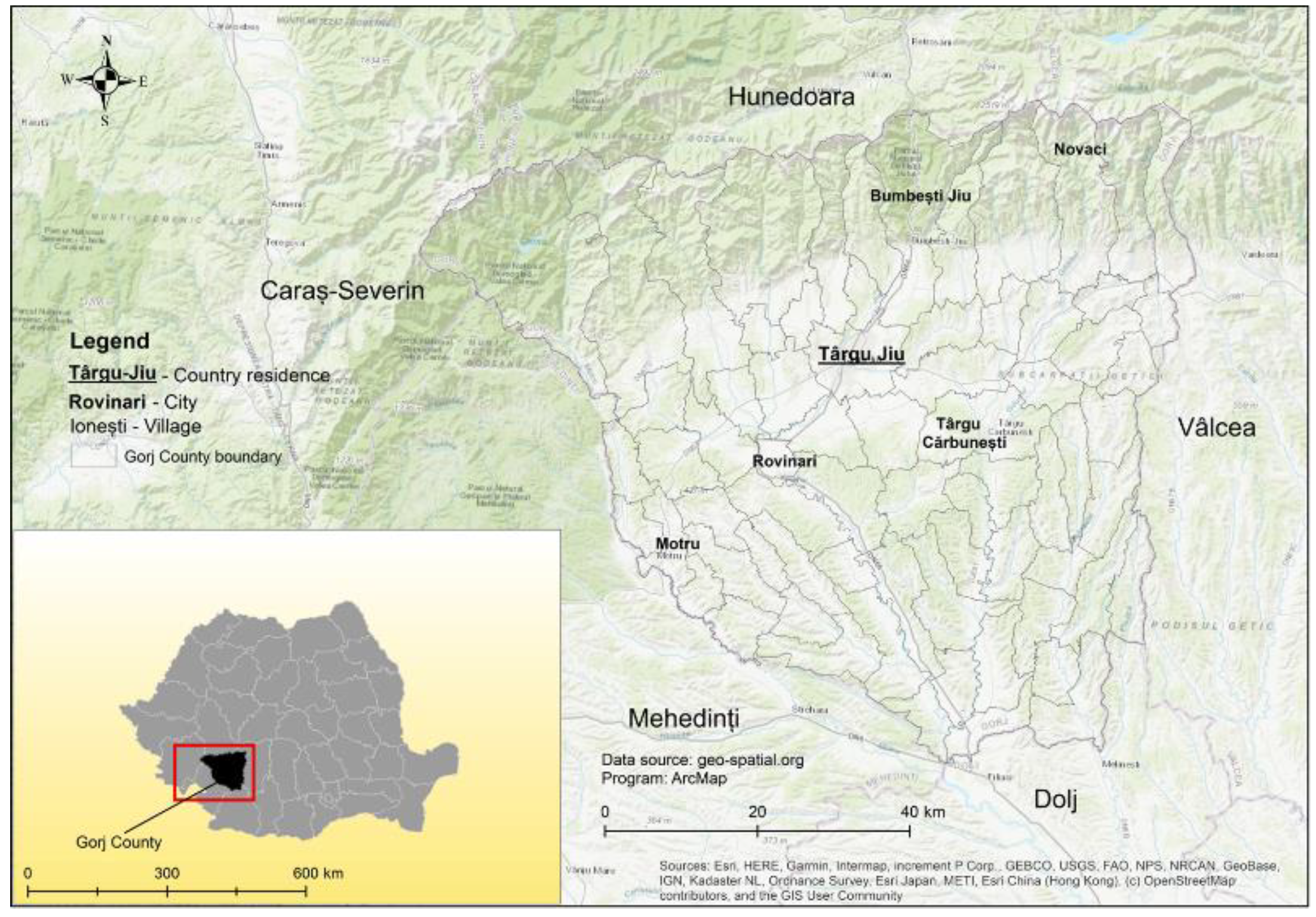
Figure 2.
Share of the population over 65 years old, at the level of each locality in Gorj County, 1992 and 2022.
Figure 2.
Share of the population over 65 years old, at the level of each locality in Gorj County, 1992 and 2022.
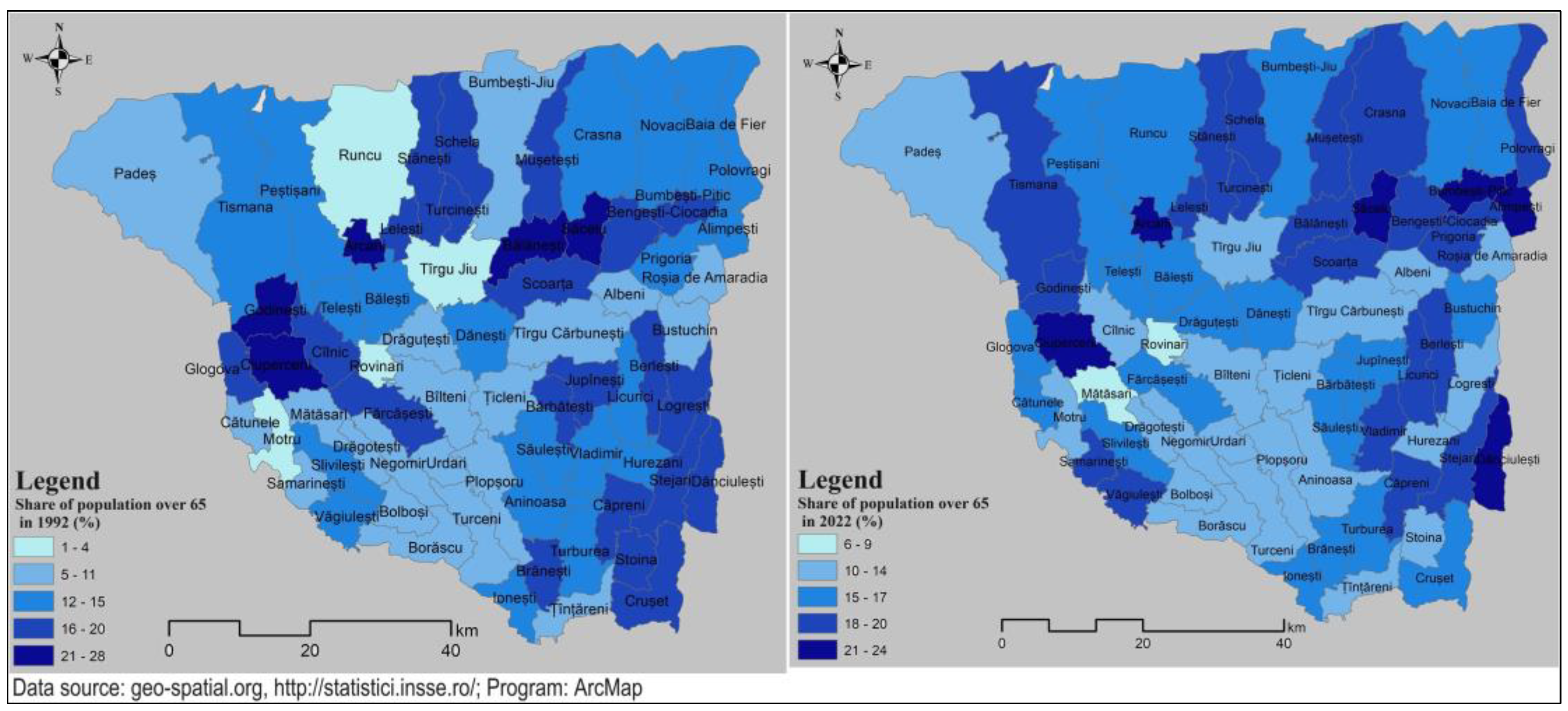
Figure 3.
Number of inhabitants and share of population under 20 years of age in the autonomous communities of Gorj County in 2011.
Figure 3.
Number of inhabitants and share of population under 20 years of age in the autonomous communities of Gorj County in 2011.
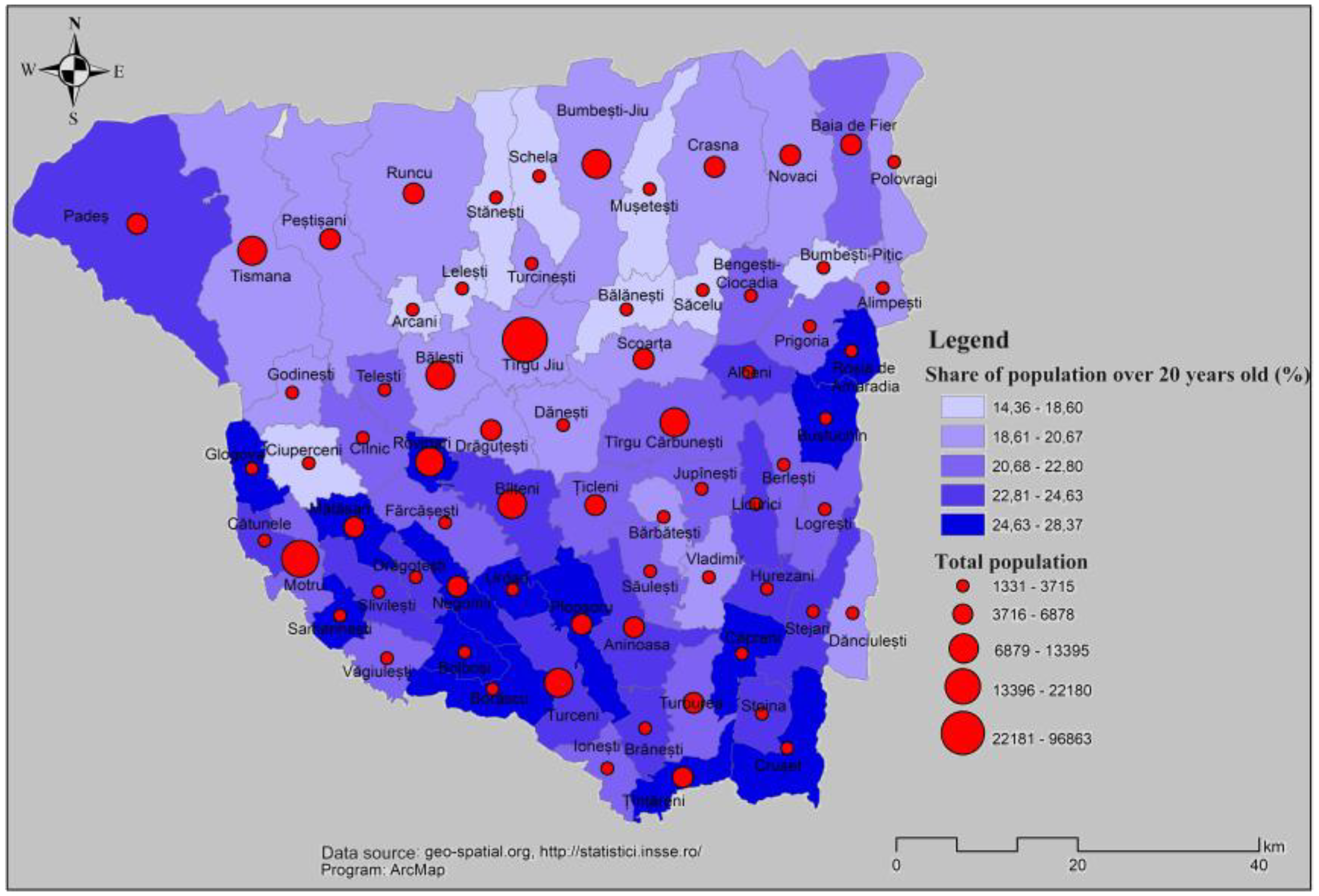
Figure 4.
Unemployment rate and the number of unemployed people, at the level of each autonomous unit of Gorj County, in 2022 (data source: http://statistici.insse.ro).
Figure 4.
Unemployment rate and the number of unemployed people, at the level of each autonomous unit of Gorj County, in 2022 (data source: http://statistici.insse.ro).
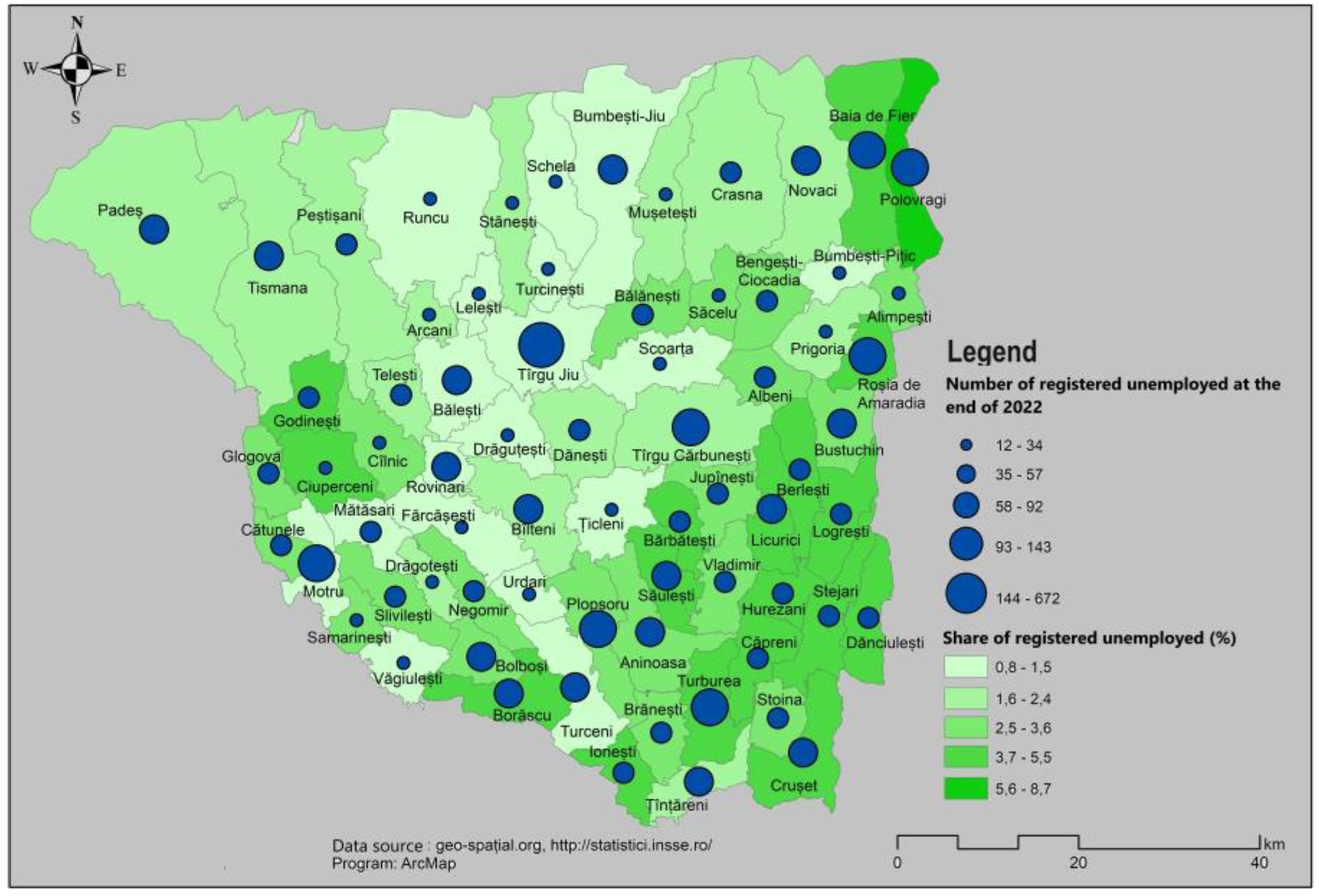
Figure 5.
Map of the number of firms and turnover for each TAU in Gorj County.
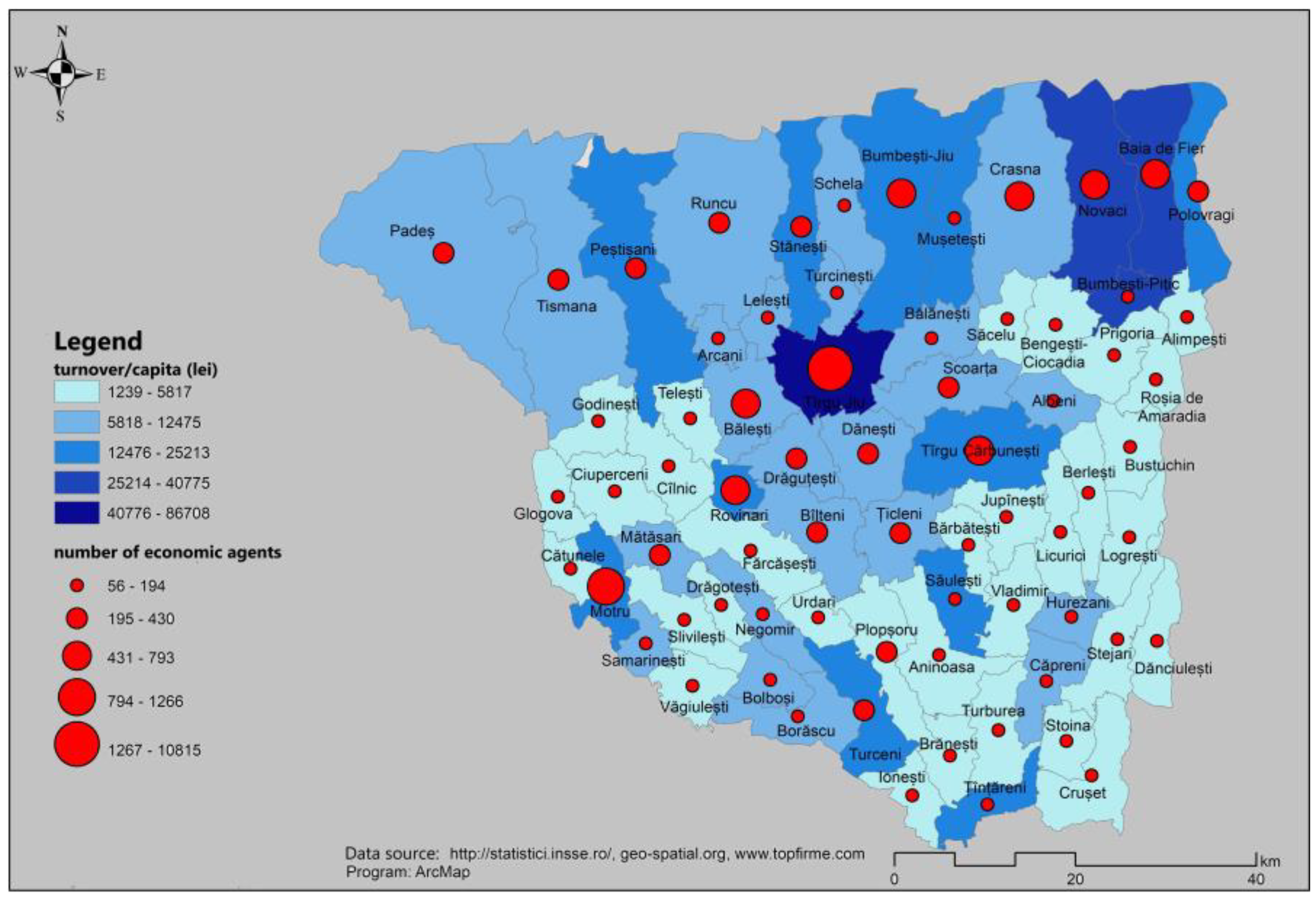
Figure 6.
Map of the average habitable area/capita and the number of building permits issued by each locality in 2022.
Figure 6.
Map of the average habitable area/capita and the number of building permits issued by each locality in 2022.
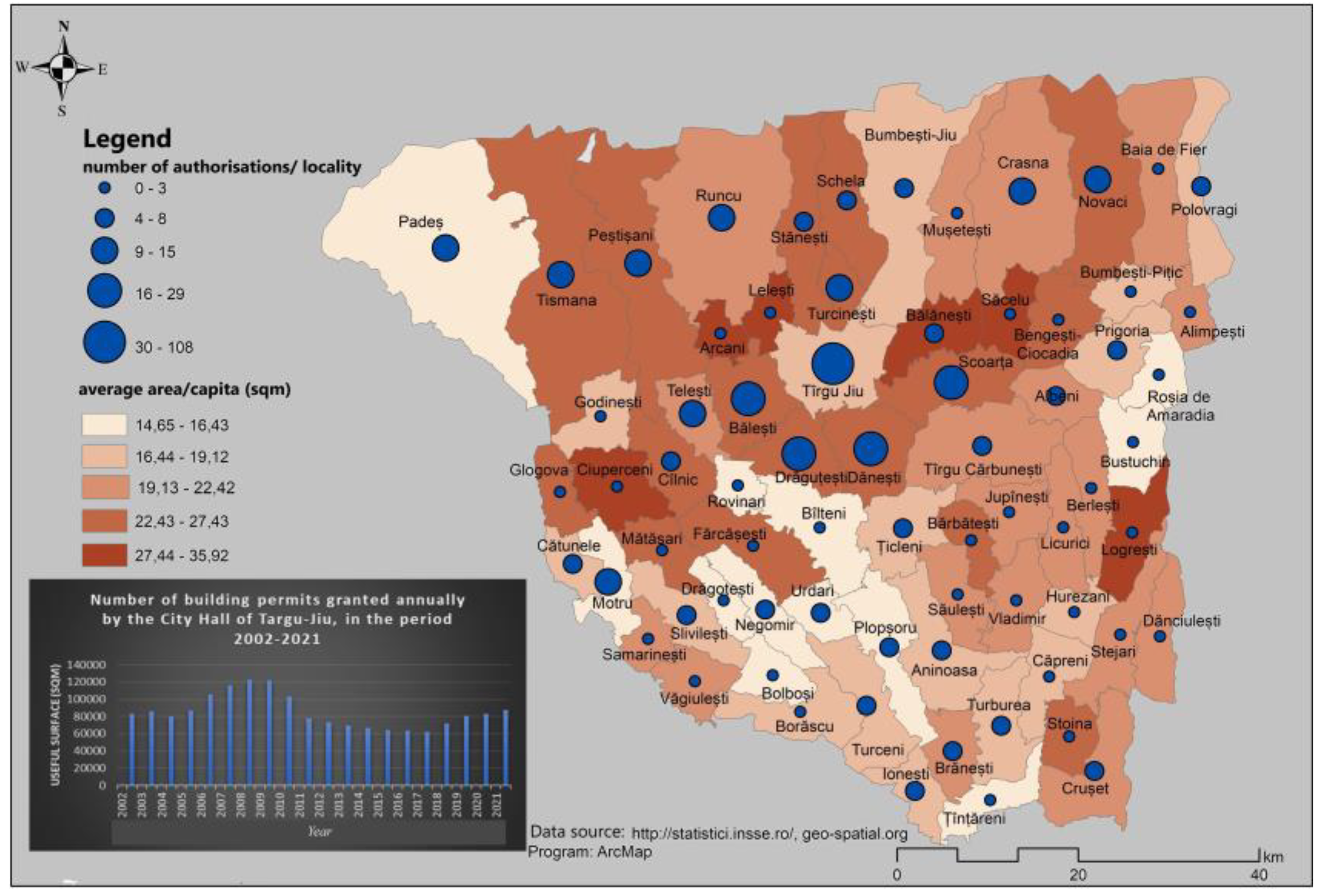
Figure 7.
Percentage of dwellings with water supply, central heating and bathroom, at the level of each of Gorj county, 2011 (data source: https://www.recensamantromania.ro/).
Figure 7.
Percentage of dwellings with water supply, central heating and bathroom, at the level of each of Gorj county, 2011 (data source: https://www.recensamantromania.ro/).
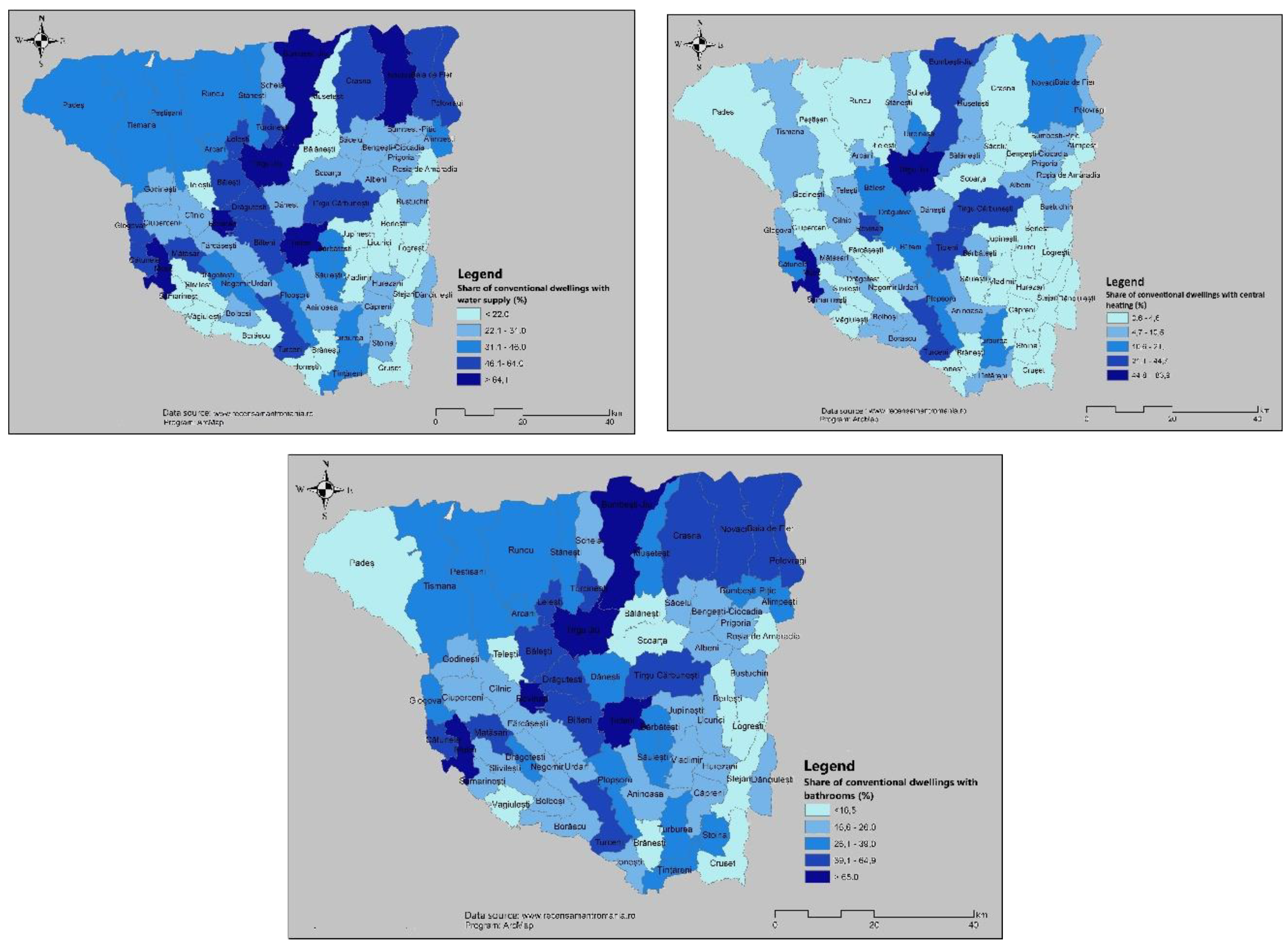
Figure 8.
Spatial distribution of the most marginalized communes in Gorj County.
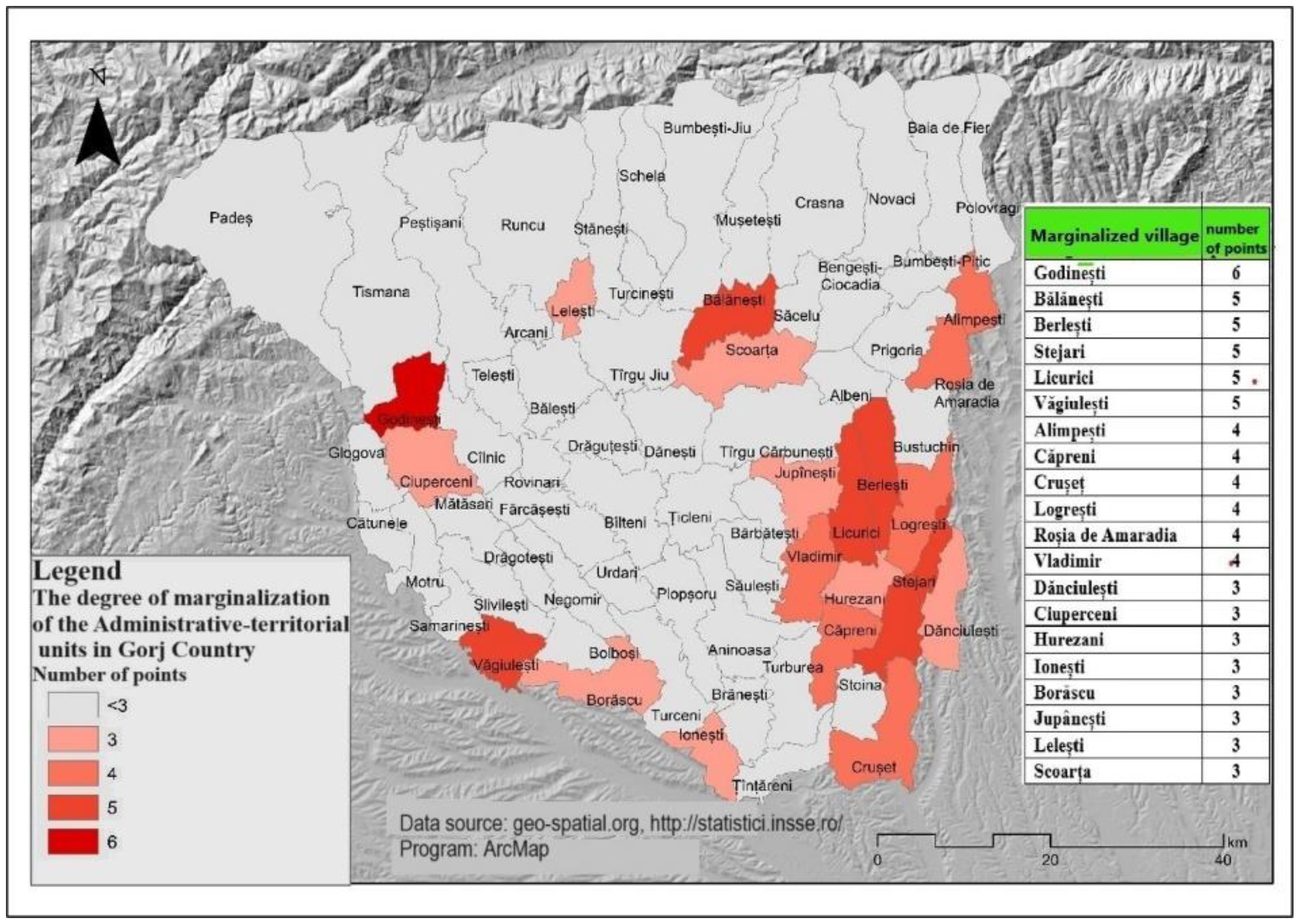
Figure 9.
Average level of satisfaction with various aspects of the Stejari commune.
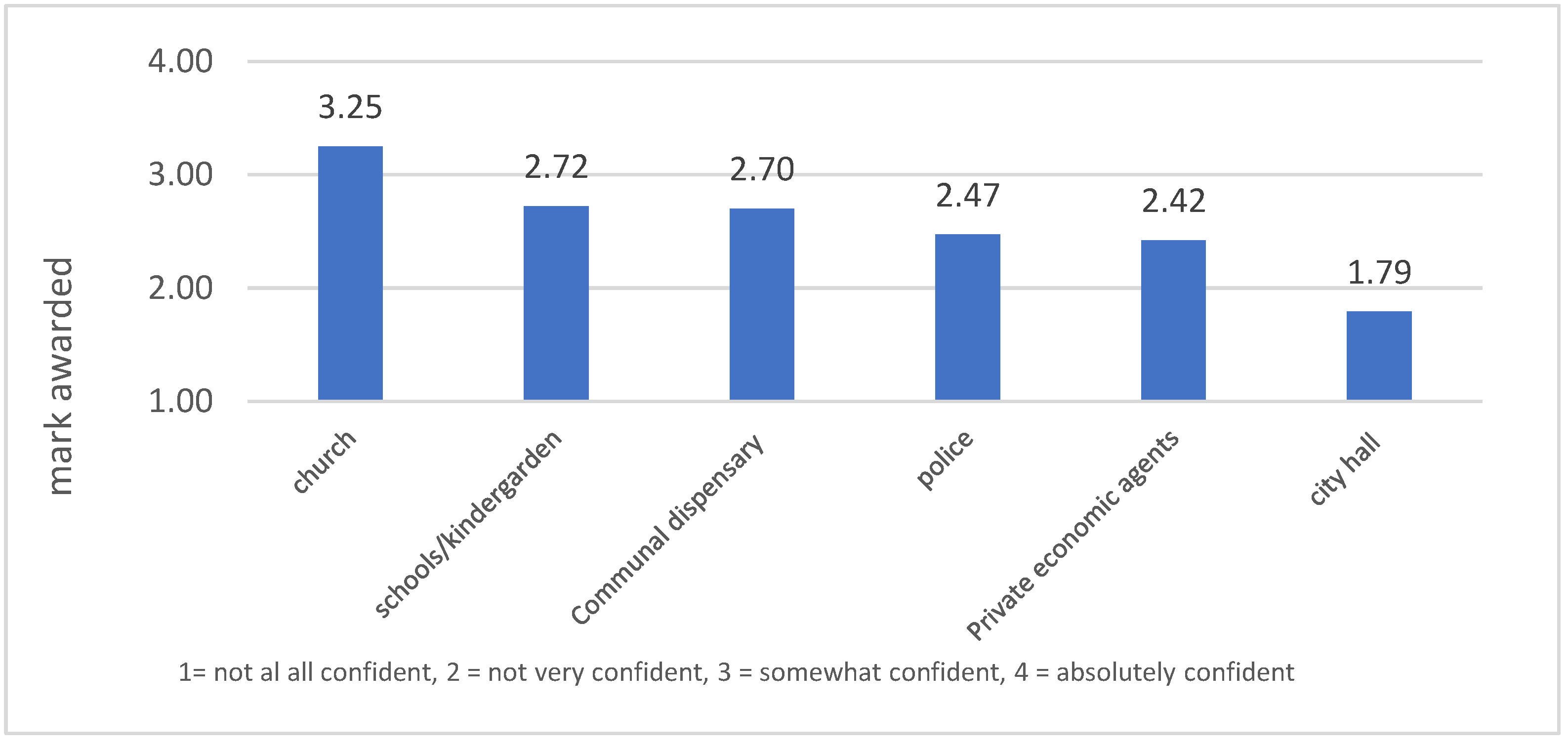
Figure 10.
Average level of citizens’ trust in various institutions.
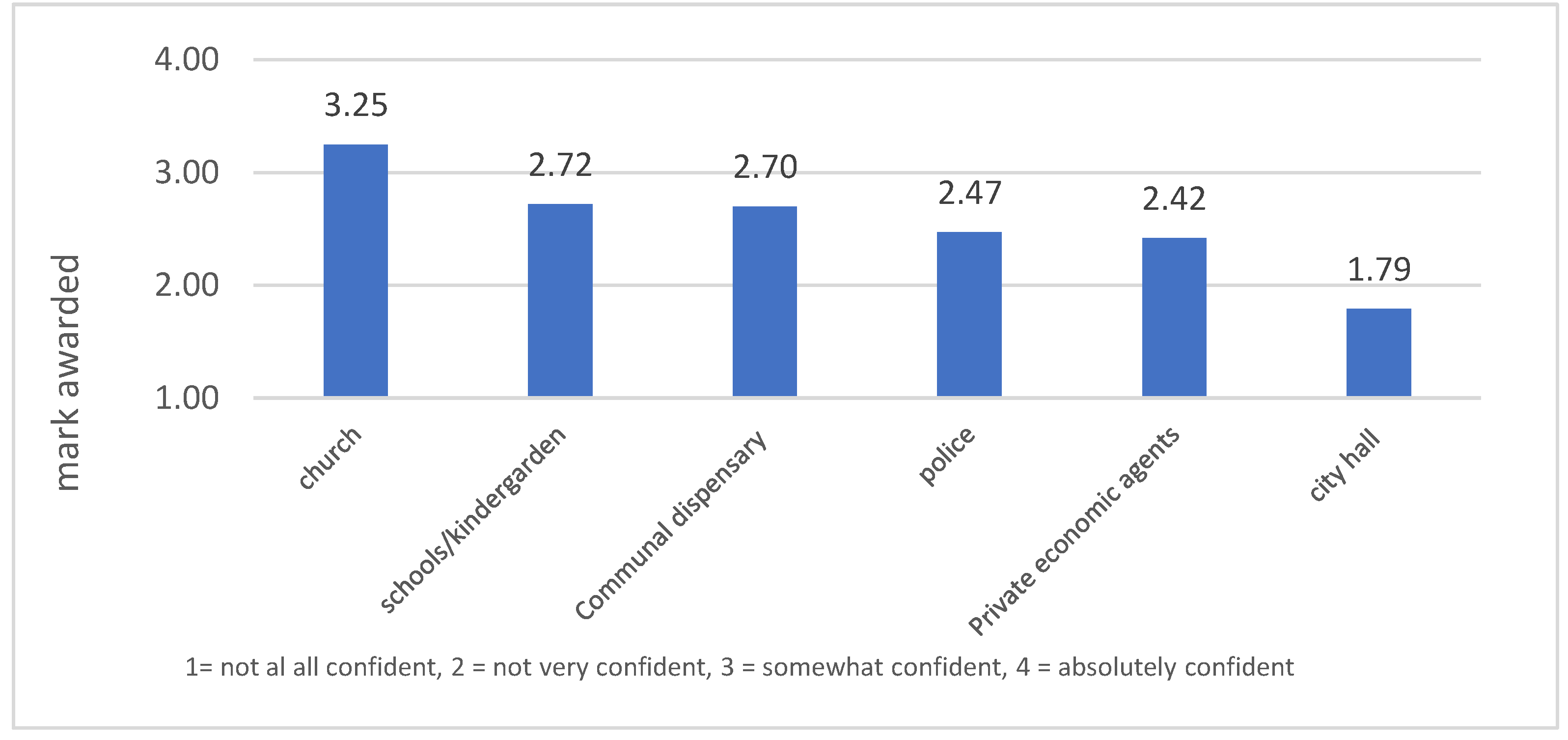
Figure 11.
Average degree of need to solve the various aspects of the municipality.
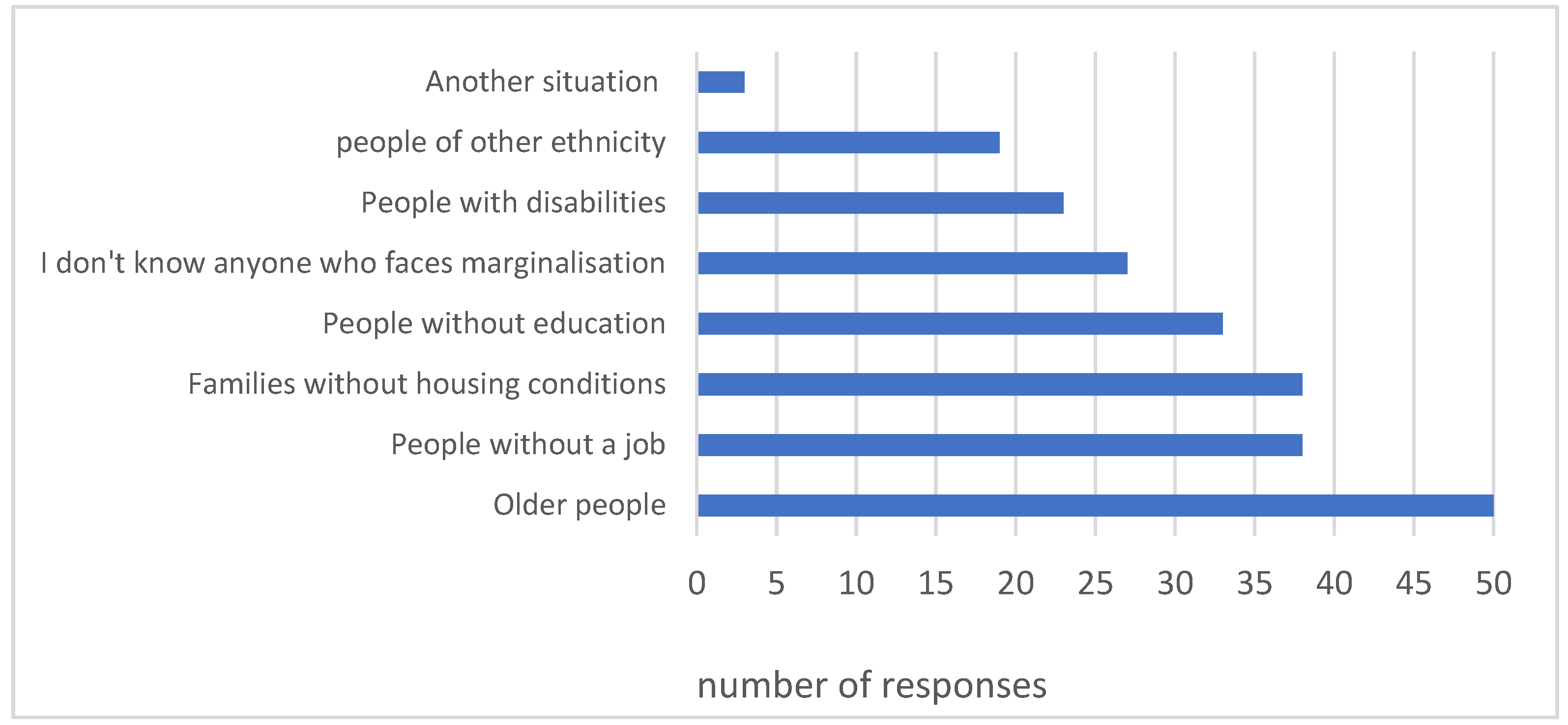
Figure 12.
Categories of people facing marginalization.
Disclaimer/Publisher’s Note: The statements, opinions and data contained in all publications are solely those of the individual author(s) and contributor(s) and not of MDPI and/or the editor(s). MDPI and/or the editor(s) disclaim responsibility for any injury to people or property resulting from any ideas, methods, instructions or products referred to in the content. |
© 2024 by the authors. Licensee MDPI, Basel, Switzerland. This article is an open access article distributed under the terms and conditions of the Creative Commons Attribution (CC BY) license (https://creativecommons.org/licenses/by/4.0/).
Copyright: This open access article is published under a Creative Commons CC BY 4.0 license, which permit the free download, distribution, and reuse, provided that the author and preprint are cited in any reuse.