

Submitted:
28 May 2024
Posted:
29 May 2024
You are already at the latest version
Abstract
Porcine pleuropneumonia (PPP) is one of the main causes leading to massive losses in the pig industry, with high economic impacts. Among different etiological agents, Actinobacillus pleuropneumoniae (APP) is responsible for severe fibrinous-necrotizing pleuropneumonia. A total of 19 different APP serotypes are currently recognized. This study aimed to identify APP serotypes isolated from pneumonic lesions in naturally infected and dead pigs in the Piedmont Region and to describe lesions. A total of 107 dead pigs with a suspected PPP diagnosis were included in this study. Lungs were evaluated using gross pathology scoring systems, APP isolation and serotypes identification by multiplex PCR were conducted. Gross lung lesions were mainly represented by fibrinous pneumonia and pleuropneumonia. APP was isolated in 21/107 (19.6%) samples. On the contrary, PCR indicated APP DNA presence in 53/107 (49.5%) of lung samples. The most observed serotypes were serotype 2 in 24/53 (45.3%) and serotype 6 in 13/53 (24.5%) samples. Moreover, multiplex PCR results suggested a coinfection of different serotypes in 5 samples. This study highlights the relevance of the different techniques application (i.e. bacteriological culture, PCR, gross and histopathology) for improving the identification of APP infections.
Keywords:
Actinobacillus pleuropneumoniae
; porcine pleuropneumonia
; swine
; respiratory diseases
; serotyping
; multiplex PCR
1. Introduction
Porcine pleuropneumonia (PPP) is a respiratory infectious disease affecting pigs, caused by Actinobacillus pleuropneumoniae (APP) [1,2]. The economic impact is not only limited to the mortality rate (which can be as high as 10%) but also to treatment costs (elevated costs associated with antimicrobial treatments and vaccination plans). Average Daily Profit can be reduced by up to 34% while the deterioration of the feed conversion rate can reach 26% [3,4]. APP, a Gram-negative facultative anaerobic bacterium [5], is categorized into two biovars based on NAD metabolism: NAD-dependent biovar 1 and NAD-independent biovar 2 [6]. Serotyping, conversely, is predicated on the differential expression of capsular polysaccharide and lipopolysaccharide antigens [7,8], with 19 distinct serotypes identified thus far within biovar 1 or 2 [9]. PPP manifests in various clinical presentations: peracute, acute, and chronic [10]. In peracute cases, pigs succumb suddenly to systemic shock symptoms [8], while the acute presentation is characterized by respiratory distress, fever, and anorexia [8,10]. Chronic infections often lack clinical signs, with APP typically confined to tonsil crypts [7,10]. Necropsies commonly reveal hemorrhagic and/or fibrinous pleuropneumonia with areas of pulmonary consolidation in APP-infected pigs [11]. The presentation and severity of the disease depend on host factors, pathogen strain-related pathogenicity, and environmental and management factors [8]. However, limited information exists regarding gross lesion presentation among different serotypes and potential variations therein. Etiological diagnosis typically involves isolation using a blood agar medium in microaerophilic conditions, co-cultured with Staphylococcus aureus [1,5]. Yet, APP isolation can be challenging due to its unique culture conditions, and confirmation is sometimes elusive [12]. Confirmation methods include end-point PCR with specific primers for the apxIV gene, distinguishing APP from other Actinobacillus species [13], or matrix-assisted laser desorption/ionization-time of flight mass spectrometry (MALDI-TOF) [2,14]. While MALDI-TOF technology expedites pathogen identification, challenges persist in bacteriological growth, necessitating a faster and more cost-effective alternative for APP detection. Stringer and colleagues have proposed a culture-free APP detection method through PCR without bacteriological isolation, representing a valuable attempt to streamline etiological and serotype identification [12]. At the farm level, APP is routinely monitored through vaccination plans [8,15]. Commercial vaccines, comprising inactivated bacteria, purified toxoids, or a combination thereof [15], exhibit appropriate safety and efficacy. However, cross-protection against various serotypes is not consistently guaranteed and depends on the specific commercial product [15]. In Italy, historical control of APP outbreaks involves vaccination plans. Nevertheless, recent observations by veterinary practitioners indicate an increased mortality in pleuropneumonia syndromes attributed to APP. Notably, the circulation of APP serotypes in Italy has never been investigated, representing a gap in evaluating the efficacy of vaccination plans.
Therefore, the primary objective of this study was to assess the circulation of APP serotypes in Piedmont swine farms, collecting samples from deceased pigs with suspected APP diagnoses, and to characterize the macroscopic and microscopic lesions associated with APP infections.
2. Materials and Methods
2.1. Gross Evaluation and Sample Collection
A total of 107 lungs belonging to dead pigs from 40 different farms of Piedmont (Italy) were collected from October 2020 to July 2023 (2 samples from each farm as minimum and 9 as maximum). The farms were located in different areas of the Piedmont provinces of Cuneo (CN), Asti (AT), Turin (TO), and Biella (BI). This area is of great importance for the pig farming system, representing one of the main and biggest in the Italian pork meat industry scenario. Their locations have been reported on a map (Figure 1). All farms were final stage production site for pigs fattening, therefore without any connections between them. Moreover, biosecurity measures were regularly adopted in all these farms.
Dead pigs with a differential diagnosis of PPP were selected by veterinary practitioners and their lungs were sent to the Department of Veterinary Science in Turin for gross pathological evaluation and further investigations. Lungs were examined and sampled within a maximum of 6 hours from the death (n= 87). When this time could not be respected, the lungs (n= 20) were collected from the pigs by the farm veterinarians and frozen at -20° C.
Lung lesions were classified according to the list presented in Table 1, describing the main pulmonary lesion observed. The anatomo-pathological lesion categories used in the diagnostic protocol are catarrhal bronchopneumonia (CBP), purulent bronchopneumonia (PBP), interstitial pneumonia (IP), bronchopneumonia associated with interstitial pneumonia (BP + IP), fibrinous pneumonia or pleuropneumonia (FP or PP), interstitial pneumonia with oedema or polilobular pneumonia (IPP), pleuritis (PL) and pericarditis (PE). The lesion types were defined using the scheme proposed by Sørensen [16].
In addition, for each pulmonary lobe (left cranial/medium/caudal lobes and right cranial/medium/accessory/caudal lobes) a score was assigned for the area of the lobe involved by the lesions, as described in Table 1. The lung score was applied according to the modified methods of Madec and Derrien, and Madec and Kobish [17,18]. These methods involve analyzing each lobe with the assignment of a score between 0 - 4 and an overall evaluation of the lung between 0 - 28.
Finally, pleurisy lesions were also evaluated according to SPES system (Slaughterhouse pleuritis evaluation system) considering a 0–4 scale depending on the extension and the location of the pleuritis, according to the method devised by Dottori and colleagues (2007) [19]. Briefly, the different scores were assigned according to the following observed lesions: 0: absence of pleural lesions; 1: cranioventral pleuritis and/or pleural adherence between lobes or at the ventral border of lobes; 2: dorsocaudal unilateral focal pleuritis; 3: bilateral pleuritis of type 2 or extended unilateral pleuritis (at least 1/3 of one diaphragmatic lobe); 4: severely extended bilateral pleuritis (at least 1/3 of both diaphragmatic lobes).
After gross evaluation, sample collection for the microbiological and molecular investigations was performed. Briefly, the surface of the most representative lesion was disinfected with 70% ethanol before aseptically incising the area to collect a sample using a sterile swab. In particular, for microbiological investigation swab samples were collected in the sub-pleural region after the dissection of the pleura from the parenchyma with a sterile blade. Moreover, on 59 examined lung samples a piece of pulmonary parenchyma was collected and sent to an external laboratory for microbiological investigations. Finally, samples lung, collected near the lesion were fixed in 4% neutral buffered formalin for histological investigations..
2.2. APP Bacterial Isolation
Samples collected with sterile swabs were co-cultured with Staphylococcus aureus strain SS697 (ATCC no. 33862) on BD Columbia blood agar with 5% sheep blood (Becton Dickinson GmbH, Heidelberg, DE). The agar plates were incubated at 37°C for 24 h in microaerophilic conditions with the addition of carbon dioxide using Gaspak ez CO2 pouch system (Becton Dickinson GmbH, Heidelberg, DE). The colonies of APP clustered around S. aureus and produced a well-defined haemolysis zone. Isolated colonies were cultured in Brain Heart Infusion Broth (BHI, Merk, KGaA, Darmstadt, DE), added of 0.01% of NAD (Merk) at 37°C for 24 h in microaerophilic conditions as described above. The isolated APP strains were stored at −80°C with 30% glycerol solution. In addition, a total of 2 ml of inoculated BHI broth after 24 h was collected and centrifuged 14,000 x g for 5 min. After removing the supernatant solution, the obtained pellet was further processed for APP species and serotype confirmation.
2.3. DNA Extraction and Multiplex PCR
DNA was extracted from samples collected with sterile swabs and from bacteria BHI cultured using QIAamp® UCP Pathogen Mini kit (Qiagen, Hilden, DE), following manufacturer’s instructions. DNA was quantified using a Nanodrop spectrophotometer (Thermo Fisher Scientific, Waltham, MA, USA). Two multiplex PCRs (APP-mPCR1 and APP-mPCR2) were performed as described in Stringer et al. [9]. In brief, Qiagen multiplex PCR kit (Qiagen, Hilde, DE) was used for the APP-mPCRs consisting of 12.5 μL of 2x Multiplex PCR Master Mix, 0.2 μM of each primer, 2.5 μL 10x CoralLoad gel tracking dye and 2 μL DNA template in a final volume of 25 µl. The cycling conditions were 10 min at 95°C, followed by 30 cycles of 95°C for 15 s, 60°C for 90 s, and 72°C for 150 s. PCR products were visualized with 1.5% agarose gel, stained by MIDORI Green Advance DNA stain (Nippon Genetics Europe, Düren, DE) and visualized under UV. Genomic DNA of APP serotypes were courtesy of Dr G. Alborali (Istituto Zooprofilattico Sperimentale della Lombardia e dell'Emilia Romagna "Bruno Ubertini", Italy) and included as positive controls. Nuclease-free water as negative control was added in each PCR batch testing. The strains used as positive controls for the multiplex PCR have also been tested to validate the obtained results (Figure S1). APP DNA presence was confirmed by apxIV (423 bp) gene amplification, and specific products amplified by APP-mPCR1 and APP-mPCR2 were detected to identify serotypes of APP isolated or found in lung lesions [9]. APP biovar 2 was identified through a full-length functional nadV gene presence confirmed by a specific product at 1339 bp that is absent in biovar 1.
2.4. Histopathological Evaluation
Formalin-fixed lung samples were paraffin embedded according to routine histological procedures. Representative sections of each sample were stained with hematoxylin and eosin (HE) stain for histological examination. All slides were observed with a Nikon Eclipse E600 light microscope (Nikon Corporation, Tokyo, Japan). The histological evaluation was conducted examining a total of 5 HPF with 200x magnification for each sample.
2.5. Microbiological Investigations
To further characterize the presence of porcine respiratory pathogens, microbiological investigations were conducted on 59 lung samples by an external laboratory. In particular, the presence of Porcine Respiratory and Reproductive Syndrome Virus (PRRSV), Circovirus, Swine Influenza Virus (SIV) and Mycoplasma hyopneumoniae were investigated by PCR according to the external laboratory routine methods. Moreover, bacteriological culture was performed through non-selective conditions and isolated bacterial colonies were identified by MALDI-TOF mass spectrometry according to the external laboratory routine methods.
3. Results
3.1. Gross Evaluation
Gross pulmonary lesions were mainly characterized by CBP in 43/107 (40.2%) samples, by PL in 42/107 (39.3%) samples and by FP or PP in 38/107 (35.5%) samples (Figure 2). The remaining lesions were also observed, and their distributions can be visualized in Figure 3.
Average scores (mean ± sd) for each lobe are presented in Table 2. The highest average score was recorded for the right medium lobe (2.64 ± 1.32), followed by the right accessory lobe (2.42 ± 1.52). An explanation for the scoring classification is shown in Figure 2 reporting illustrative examples for each assigned score.
Finally, according to the SPES system lung samples were classified with score 0 in 54/107 (50.5 %) samples, score 1 in 1/107 (0.9 %) sample, score 2 in 4/107 (3.8 %) samples, score 3 in 15/107 (14 %) samples and score 4 in 33/107 (30.8 %). Scores distribution in pig lungs can be observed in Figure 4. The average SPES score of this study was 1.74 ± 1.83.
3.2. APP Bacterial Isolation and Serotypes Assignment by Multiplex PCR
APP was isolated in 20/107 (18.7%) samples after detecting colonies clustered around S. aureus with a well-defined haemolysis zone. After morphological confirmation, APP-isolated strains were confirmed by PCR with the amplification of specific fragments consistent with the apxIVA gene (423 bp). Concerning serotyping results, the observed serotypes in cultured APP strains were serotype 2 with a specific fragment consistent with cps2E gene (247 bp) in 12/20 (60%), serotype 6 with a specific fragment consistent with cps6F gene (718 bp) in 6/20 (30%) and serotype 9/11 with a specific fragment consistent with cps9/11E and cps9/11F genes (2105 bp) in 2/20 (10%) samples. Serotype distribution in cultured APP strains can be observed in Figure 5.
3.3. Serotypes Assignment by Multiplex PCR without Bacterial Culture
APP-mPCR1 and APP-mPCR2 were applied on DNA extracted from lung swabs. In particular, a specific fragment consistent with apxIVA gene (423 bp) was observed in 53/107 (49.5%) lung swab samples confirming the presence of APP in collected lungs. Regarding serotype assignment by the two multiplex PCR, the most observed serotypes were serotype 2 in 24/53 (45.3%) APP positive samples, and serotype 6 in 13/53 (24.5%) APP positive samples. Furthermore, serotype 9/11 was observed in 4/53 (7.6%) APP positive samples, and serotype 5 with a specific fragment consistent with cps5B gene (825 bp) in 3/53 (5.7%) APP positive samples. Moreover, in 4/53 (7.6%) samples, the fragment relative to apxIVA gene was only amplified, without observing any other serotype-specific fragment. Specific fragments belonging to more than 1 serotype were also observed in addition to the specific fragment consistent with apxIVA gene in the remaining 5 positive samples. In particular, in 2/53 (3.8%) samples specific fragments consistent with cps9/11E and cps9/11F genes were observed, but also a specific fragment consistent with cps2E gene; in 2/53 (3.8%) samples a specific fragment consistent with cps6F gene was observed, but also a specific fragment consistent with cps2E gene; and in 1/53 (1.9%) sample a specific fragment consistent with cps7E gene (601 bp) was observed, but also a specific fragment consistent with cps2E gene. Finally, serotype distribution in our collected samples can be observed in Figure 6.
In addition, results on nadV gene amplification allow us to distinguish between biovar 1 and 2. More specifically, 4/53 (7.6%) samples resulted in a specific fragment consistent with nadV gene (1339 bp) belonging to APP biovar 2. Moreover, two of the biovar 2 samples were assigned to serotype 2; in the other two samples, apxIVA gene fragment was only detected, and any specific serotype was assigned to it.
3.4. Histopathological Evaluation
HE-stained lung sections collected from pigs dead with a suspected diagnosis of PPP were evaluated, and each observed microscopic lesion was recorded. In particular, histopathological lesions of collected lungs were mainly described as inflammatory infiltrate of mixed leucocytes population in 64/107 (59.8%) samples, congestion in 54/107 (50.5%) samples, pleural thickening in 53/107 (49.5%), hemorrhages in 53/107 (49.5%), exudate in the bronchiolar lumen in 43/107 (40.2%), and subpleural lymphocytic infiltrate in 43/107 (40.2%). Figure 7 shows a severe inflammatory infiltrate consisting of a leucocytes mixture (Fig. 7A), diffuse congestion and severe hemorrhages (Fig. 7B), severe pleural thickening with subpleural lymphocytic infiltrate (Fig. 7C), and exudate in the bronchiolar lumen (Fig. 7D). However, in 30/106 (28.3%) samples other lesions were also observed, and their distributions were reported in Table S1.
3.5. Microbiological Investigations
Results of the microbiological investigations revealed the presence of at least one porcine respiratory pathogen in 68/107 (63.6%) lungs analysed. Moreover, in 3/107 (2.8%) samples only APP was identified, and in 16/107 (15%) no pathogens were identified (Table 3). In particular, APP serotypes were mainly found associated with PRRSV (31/107, 29%) and M. hyopneumoniae (11/107, 10.3%).
4. Discussion
This study aimed to investigate the dissemination of Actinobacillus pleuropneumoniae (APP) serotypes in Piedmontese pig farms (Italy). Specifically, the identification of APP infection was carried out on lungs collected from deceased pigs with a suspected diagnosis of Porcine Pleuropneumonia (PPP). To date, there has been no exploration of APP prevalence and serotype distribution in Italy, and limited published information exists regarding the circulating APP serotypes. Monitoring lung lesions in pigs is an essential tool for assessing risk factors on farms and implementing prevention or control measures. However, abattoir examinations can be challenging due to the difficulties in record-keeping, execution speed, and the difficulties in obtaining an accurate etiological diagnosis. Contrary, an often underestimated control point for the surveillance of the pathologies and consequently of the dead, is the farm itself. Farm veterinarians routinely have the opportunity and the skills to perform numerous field necropsy, observe macroscopic lesions, and collect samples for further investigation. This approach promotes a rapid response to farmers by identifying problems that could cause economic losses. Veterinarians rarely know the exact time of death of pigs, but routinely can perform macroscopic diagnosis, collect photographic material, collect samples, and refrigerate viscera and tissues. In this study, we subjected the lungs collected by veterinarian practitioners in field conditions to different scoring systems. There are several scoring systems for assessing respiratory lesions in pigs. Among these, the slaughterhouse pleurisy evaluation system (SPES) is extensively employed to quantify pleurisy. In this study, SPES evaluation reported most samples with a score 0 (56/107 samples - 52.3%). However, samples with a score 0 according to SPES, may have lesions other than pleurisy (i.e. catarrhal bronchopneumonia or interstitial pneumonia), as observed in this study by the second score method applied. Our study shows an underestimation of APP infections by the SPES system considering the high number of samples with a score 0, but on the contrary with positive APP identification. This study reported a different situation in pig farms caused by APP infections, in comparison with other Italian studies investigating pulmonary lesions at slaughterhouses [23,24]. Literature shows lower SPES scores (from a minimum of 0.79 to a maximum of 0.97) for the investigated carcasses, than our study reporting an average SPES value of 1.74. The in-field investigation reported in this study highlights a strongly different situation with a higher prevalence of APP infection and more severe lesions than the slaughterhouse scenario. For a comprehensive pathological understanding, hematoxylin and eosin (HE) histopathology was conducted. Microscopic lesions observed included mixed inflammatory infiltrates, congestion, hemorrhages, and pleural thickening, consistent with both macroscopic results and histopathological descriptions in the literature [21,25].
Further, two methods have been used to characterize the serotypes APP circulating in Italy and to improve our understanding of the severity of the related respiratory lesions: a culture-dependent approach and a culture-free APP DNA identification method. The two approaches yielded notable differences in results, with APP isolated by bacteriological culture in 20/107 (18.7%) samples, while the apxIVA gene was identified in 53/107 (49.5%) lung swab samples. The difficulty in culturing APP likely contributes to this marked difference. Although the identification of APP DNA without isolation should not rule out the presence of an end-phase infection, the histological evaluation confirmed the presence of bacteria in some samples. In general, other studies already demonstrated the possibility of detecting APP without culturing [12]. Nevertheless, according to the Italian consuetude, the routine veterinary diagnostic laboratories still require only the culture method approach to isolate APP with further species and serotypes identification respectively by MALDI-TOF MS and PCR. The data obtained from the present study, instead emphasizes the necessity of a multi-method approach for identifying APP in pigs, mainly in field conditions. Although the culture-based methods are low-cost, easy to operate, and highly standardized the main limitation of these methods is the inability to detect non-culturable cells, often underestimating the prevalence of pathogens. In this study, subsequent application of two multiplex PCR protocols facilitated the identification of APP serotypes and biovars. The predominant serotypes were identified as serotypes 2 and 6, followed by serotypes 9/11 and 5. Notably, no official or published data on APP serotypes in Italy were available before this study. However, similar epidemiological investigations have been conducted in European countries: Hungary [26,27], Spain [28], Germany [29], Czech Republic [30,31] and UK [32]. Serotype 2 was the most prevalent in this study, aligning with findings from Hungary and Germany [27,29], while serotype 6 was more predominant in the UK and to a lesser extent in Germany [29,32]. A comparison with European countries revealed variation in serotype distribution, with serotype 2 being predominant in Germany, Belgium, Hungary, Netherlands, and Denmark. In contrast, serotypes 8 and 7 are the main circulating serotypes in the UK and Spain. Beyond Europe, epidemiological surveys in Canada identified serotype 5 as one of the most frequent [33,34], but only 3 samples were positive for serotype 5 in this study. Although only five of the 19 described APP serotypes were identified in this initial Italian study, a similar reduction in serotype diversity was observed in the later years of the German study [29].
Additionally, this study reported the first-ever putative co-infection by three different APP serotypes, a novel insight facilitated by the application of a culture-free APP DNA-targeting approach. In all the other mentioned studies, only a culture-dependent method was adopted, and serotype identification was conducted only on isolated strains. In addition, in this study, four non-typable APP serotypes have been observed. Similarly, non-typable APP serotypes have been detected in previous studies [29,32,33], and potentially may represent new serotypes different from the ones already known. This finding can be supported by the continuing evolution and diversification of APP during time, and the proposal of new serotypes year after year [9,35]. In particular, the main causes of non-typable APP strain finding have been demonstrated to be either the results of insertion phenomena on the cps locus coding for the surface carbohydrates [36], or the identification of serotypes never characterized before [35,37]. Moreover, it is not possible to exclude the possibility about a lack of amplification during PCR due to sequence modification at primer sites [9,38]. Furthermore, four samples were positive for APP biovar 2 in Piedmont, similar to Germany but different from Spain where biovar 2 is predominant [28,29]. Generally considered less virulent than biovar 1 due to the absence of specific apx toxins production [8], the presence of biovar 2 in Piedmont aligns with findings in Germany. However, very limited information is available on the prevalence of APP biovars.
5. Conclusions
In this study, the circulation of Actinobacillus pleuropneumoniae (APP) serotypes was explored for the first time in Italy. Furthermore, serotyping was correlated with both macroscopic and histopathological approaches to assess lung lesions induced by various APP serotypes. The most frequently identified serotypes were serotypes 2 and 6. According to the macroscopic evaluation results, this study highlights the difference in the detection of lung lesions in APP-infected animals between infield and slaughterhouse scenarios. Moreover, the identification of APP is mainly conducted at slaughterhouses and maybe its prevalence is underestimated since this study shows the limitation of the SPES application in field pig farms. The identification of APP serotypes is rarely conducted for diagnostic purposes. This first Italian identification of circulating serotypes may help in the evaluation of the efficacy of APP vaccine plans and the development of new vaccine formulations. Moreover, the real condition of veterinarians, who collect viscera for diagnostic purposes, can strongly affect the identification of microorganisms by cultural methods. For example, often the exact time of death of the pig is not known, or the carcass has been stored in the fridge for hours or days. Notably, the implementation of a culture-free multiplex PCR approach for APP serotype identification demonstrated enhanced isolation efficacy compared to the conventional cultural method and may be regularly applied for diagnostic purposes. Particularly noteworthy was the detection of putative APP co-infections involving two distinct serotypes, suggesting a potential new perspective on APP infection dynamics. Further studies are planned to comprehensively assess differences among serotypes by identifying the principal virulence factors produced by APP strains.
The novelty of this study was to use the pig farms as an observation and sampling center for lung diseases, initiating the process to close the gap regarding the circulation of APP serotypes in Italy, and underscoring the significance of employing several diagnostic techniques such as bacteriology, PCR, and histopathology in the assessment of APP infection in pigs.
Supplementary Materials
The following supporting information can be downloaded at the website of this paper posted on Preprints.org, Additional file 1: Table S1: Additional histopathological lesions of 107 examined lungs.
Author Contributions
Conceptualization, EB, BB and FTC; methodology, MC, SD, AS, PGB, EB, BB and FTC; formal analysis, CW and CC; investigation, MC, SD, SC, and EB; resources, DC, FM and PGB; data curation, MC and SD; writing—original draft preparation, MC and SD; writing—review and editing, SC, DC, PGB, BB, FM, EB and FTC; visualization, MC and SD; supervision, EB and FTC; project administration, EB; funding acquisition, EB and FTC All authors have read and agreed to the published version of the manuscript.
Funding
This research was funded by Fatro SpA (Ozzano nell’Emilia, Bologna).
Institutional Review Board Statement
Ethical approval was not required for the study involving animals in accordance with the local legislation and institutional requirements because pigs were submitted to necropsy after their death in farms. This action did not require an ethical approval. All procedures were performed in accordance with the relevant guidelines and regulations.
Informed Consent Statement
Not applicable.
Data Availability Statement
All data presented in this study are available directly in the article or in the supplementary files. All other relevant information can be available from the corresponding author upon request.
Acknowledgments
We would like to thank Dr. Marco Faccenda, Dr. Emilio Bosio and Dr. Danilo Chiappello (private veterinarian practitioners) for providing samples to conduct this research project. Authors would also like to thank Dr. Rachele Vada (Department of Veterinary Sciences – Turin) for the help in the farm map preparation.
Conflicts of Interest
We disclose that DC and FM are employees of Fatro SpA. They provided technical support, but they did not participate in the data analysis and interpretation. The private company did not interfere with co-authors’ access to all of the study’s data, analysing and interpreting the data, preparing and publishing manuscripts independently. The other authors declare no conflict of interest.
References
- Konze, S.A.; Abraham, W.R.; Goethe, E.; Surges, E.; Kuypers, M.M.M.; Hoeltig, D.; Meens, J.; Vogel, C.; Stiesch, M.; Valentin-Weigand, P.; et al. Link between Heterotrophic Carbon Fixation and Virulence in the Porcine Lung Pathogen Actinobacillus Pleuropneumoniae. Infection and Immunity 2019, 87. [Google Scholar] [CrossRef]
- Holmer, I.; Salomonsen, C.M.; Jorsal, S.E.; Astrup, L.B.; Jensen, V.F.; Høg, B.B.; Pedersen, K. Antibiotic Resistance in Porcine Pathogenic Bacteria and Relation to Antibiotic Usage. BMC Veterinary Research 2019, 15, 449. [Google Scholar] [CrossRef] [PubMed]
- Giacominelli-Stuffler, R.; Marruchella, G.; Storelli, M.M.; Sabatucci, A.; Angelucci, C.B.; Maccarrone, M. 5-Lipoxygenase and Cyclooxygenase-2 in the Lungs of Pigs Naturally Affected by Enzootic Pneumonia and Porcine Pleuropneumonia. Research in veterinary science 2012, 93, 898–903. [Google Scholar] [CrossRef] [PubMed]
- Srijuntongsiri, G.; Mhoowai, A.; Samngamnim, S.; Assavacheep, P.; Bossé, J.T.; Langford, P.R.; Posayapisit, N.; Leartsakulpanich, U.; Songsungthong, W. <italic>Novel DNA Markers for Identification of Actinobacillus Pleuropneumoniae</italic>; 2022;
- Stringer, O.W.; Li, Y.; Bossé, J.T.; Langford, P.R. JMM Profile: Actinobacillus Pleuropneumoniae: A Major Cause of Lung Disease in Pigs but Difficult to Control and Eradicate. Journal of Medical Microbiology 2022, 71. [Google Scholar] [CrossRef] [PubMed]
- Sárközi, R.; Makrai, L.; Fodor, L. Isolation of Biotype 1 Serotype 12 and Detection of Actinobacillus Pleuropneumoniae from Wild Boars. Pathogens (Basel, Switzerland) 2022, 11. [Google Scholar] [CrossRef] [PubMed]
- Li, R.; Wang, J.; Liu, L.; Zhang, R.; Hao, X.; Han, Q.; Wang, J.; Yuan, W. Direct Detection of Actinobacillus Pleuropneumoniae in Swine Lungs and Tonsils by Real-Time Recombinase Polymerase Amplification Assay. Molecular and Cellular Probes 2019, 45, 14–18. [Google Scholar] [CrossRef] [PubMed]
- Sassu, E.L.; Bossé, J.T.; Tobias, T.J.; Gottschalk, M.; Langford, P.R.; Hennig-Pauka, I. Update on Actinobacillus Pleuropneumoniae—Knowledge, Gaps and Challenges. Transboundary and Emerging Diseases 2018, 65, 72–90. [Google Scholar] [CrossRef] [PubMed]
- Stringer, O.W.; Bossé, J.T.; Lacouture, S.; Gottschalk, M.; Fodor, L.; Angen, Ø.; Velazquez, E.; Penny, P.; Lei, L.; Langford, P.R.; et al. Proposal of Actinobacillus Pleuropneumoniae Serovar 19, and Reformulation of Previous Multiplex PCRs for Capsule-Specific Typing of All Known Serovars. Veterinary Microbiology 2021, 255. [Google Scholar] [CrossRef]
- Sipos, W.; Cvjetković, V.; Dobrokes, B.; Sipos, S. Evaluation of the Efficacy of a Vaccination Program against Actinobacillus Pleuropneumoniae Based on Lung-scoring at Slaughter. Animals 2021, 11. [Google Scholar] [CrossRef]
- Baraldi, T.G.; Cruz, N.R.N.; Pereira, D.A.; Galdeano, J.V.B.; Gatto, I.R.H.; Silva, A.F.D.; Panzardi, A.; Linhares, D.C.L.; Mathias, L.A.; De Oliveira, L.G. Antibodies against Actinobacillus Pleuropneumoniae, Mycoplasma Hyopneumoniae and Influenza Virus and Their Relationships with Risk Factors, Clinical Signs and Lung Lesions in Pig Farms with One-Site Production Systems in Brazil. Preventive Veterinary Medicine 2019, 171. [Google Scholar] [CrossRef]
- Stringer, O.W.; Bossé, J.T.; Lacouture, S.; Gottschalk, M.; Fodor, L.; Angen, Ø.; Velazquez, E.; Penny, P.; Lei, L.; Langford, P.R.; et al. Rapid Detection and Typing of Actinobacillus Pleuropneumoniae Serovars Directly From Clinical Samples: Combining FTA® Card Technology With Multiplex PCR. Frontiers in Veterinary Science 2021, 8. [Google Scholar] [CrossRef] [PubMed]
- Sarkar, R.; Roychoudhury, P.; Kumar, S.; Dutta, S.; Konwar, N.; Subudhi, P.K.; Dutta, T.K. Rapid Detection of Actinobacillus Pleuropneumoniae Targeting the apxIVA Gene for Diagnosis of Contagious Porcine Pleuropneumonia in Pigs by Polymerase Spiral Reaction. Letters in applied microbiology 2022, 75, 442–449. [Google Scholar] [CrossRef] [PubMed]
- Monteiro, M.S.; Matias, D.N.; Poor, A.P.; Dutra, M.C.; Moreno, L.Z.; Parra, B.M.; Silva, A.P.S.; Matajira, C.E.C.; de Moura Gomes, V.T.; Barbosa, M.R.F.; et al. Causes of Sow Mortality and Risks to Post-Mortem Findings in a Brazilian Intensive Swine Production System. Animals : an open access journal from MDPI 2022, 12. [Google Scholar] [CrossRef] [PubMed]
- Jung, M.; Won, H.; Shin, M.K.; Oh, M.W.; Shim, S.; Yoon, I.; Yoo, H.S. Development of Actinobacillus Pleuropneumoniae ApxI, ApxII, and ApxIII-Specific ELISA Methods for Evaluation of Vaccine Efficiency. Journal of Veterinary Science 2019, 20, e2. [Google Scholar] [CrossRef] [PubMed]
- Sørenson, V.; Jorsal, S.E.; Mousing, J. Diseases of the Respiratory System. In Diseases of Swine; Blackwell Publishing Professional: 2121 State Avenue, Ames, Iowa 50014, USA, 2006; pp. 149–178. ISBN 978-0-8138-1703-3. [Google Scholar]
- Madec, F.; Derrien, H. Frequency, Intensity and Localization of Pulmonary Lesions in Bacon Pigs : Results of a First Series of Observations at the Slaughter-House. Annales de zootechnie 1981, 30, 380–380. [Google Scholar] [CrossRef]
- Madec, F.; Kobish, M. A Survey of Pulmonary Lesions in Bacon Pigs (Observations Made at the Slaughterhouse). Annales de zootechnie 1982, 31, 341–341. [Google Scholar] [CrossRef]
- Dottori, M.; Nigrelli, A.D.; Bonilauri, P.; Merialdi, G.; Gozio, S.; Cominotti, F. Proposta di un nuovo sistema di punteggiatura delle pleuriti suine in sede di macellazione. La griglia S.P.E.S. (Slaughterhouse Pleuritis Evaluation System). Large Animal Review 2007, 13, 161–165. [Google Scholar]
- Maes, D.; Sibila, M.; Pieters, M.; Haesebrouck, F.; Segalés, J.; de Oliveira, L.G. Review on the Methodology to Assess Respiratory Tract Lesions in Pigs and Their Production Impact. Veterinary Research 2023, 54, 8. [Google Scholar] [CrossRef] [PubMed]
- To, H.; Konnai, M.; Teshima, K.; Tsutsumi, N.; Ito, S.; Sato, M.; Shibuya, K.; Nagai, S. Pulmonary Lesions with Asteroid Bodies in a Pig Experimentally Infected with Actinobacillus Pleuropneumoniae Serovar 15. J Vet Med Sci 2023, 85, 1131–1135. [Google Scholar] [CrossRef]
- Sibila, M.; Aragón, V.; Fraile, L.; Segalés, J. Comparison of Four Lung Scoring Systems for the Assessment of the Pathological Outcomes Derived from Actinobacillus Pleuropneumoniae Experimental Infections. BMC Vet Res 2014, 10, 165. [Google Scholar] [CrossRef]
- Scollo, A.; Abbas, M.; Contiero, B.; Gottardo, F. Undocked Tails, Mycoplasma-like Lesions and Gastric Ulcers in Slaughtering Pigs: What Connection? Animals 2023, 13, 305. [Google Scholar] [CrossRef] [PubMed]
- Amatucci, L.; Luise, D.; Luppi, A.; Virdis, S.; Prosperi, A.; Cirelli, A.; Bosco, C.; Trevisi, P. Evaluation of Carcass Quality, Body and Pulmonary Lesions Detected at the Abattoir in Heavy Pigs Subjected or Not to Tail Docking. Porcine Health Management 2023, 9, 4. [Google Scholar] [CrossRef]
- Papatsiros, V.G.; Stylianaki, I.; Tsokana, C.N.; Papakonstantinou, G.; Christophorou, M.; Papaioannou, N.; Athanasiou, L.V. Histopathological Lesions of Actinobacillus Pleuropneumoniae Serotype 8 in Infected Pigs. Vet Res Forum 2023, 14, 401–404. [Google Scholar] [CrossRef]
- Kardos, G.; Sárközi, R.; Laczkó, L.; Marton, S.; Makrai, L.; Bányai, K.; Fodor, L. Genetic Diversity of Actinobacillus Pleuropneumoniae Serovars in Hungary. Veterinary Sciences 2022, 9. [Google Scholar] [CrossRef] [PubMed]
- Sárközi, R.; Makrai, L.; Fodor, L. Actinobacillus Pleuropneumoniae Serotypes in Hungary. Acta Veterinaria Hungarica 2018, 66, 343–349. [Google Scholar] [CrossRef]
- Maldonado, J.; Valls, L.; Martínez, E.; Riera, P. Isolation Rates, Serovars, and Toxin Genotypes of Nicotinamide Adenine Dinucleotide-Independent Actinobacillus Pleuropneumoniae among Pigs Suffering from Pleuropneumonia in Spain. J VET Diagn Invest 2009, 21, 854–857. [Google Scholar] [CrossRef] [PubMed]
- Schuwerk, L.; Hoeltig, D.; Waldmann, K.-H.; Valentin-Weigand, P.; Rohde, J. Sero- and Apx-Typing of German Actinobacillus Pleuropneumoniae Field Isolates from 2010 to 2019 Reveals a Predominance of Serovar 2 with Regular Apx-Profile. Veterinary Research 2021, 52, 10. [Google Scholar] [CrossRef] [PubMed]
- Šatrán, P.; Nedbalcová, K. Prevalence of Serotypes, Production of Apx Toxins, and Antibiotic Resistance in Strains of Actinobacillus Pleuropneumoniae Isolated in the Czech Republic. Veterinární medicína 2002, 47, 92–98. [Google Scholar] [CrossRef]
- Kucerova, Z.; Jaglic, Z.; Ondriasova, R.; Nedbalcova, K. Serotype Distribution of Actinobacillus Pleuropneumoniae Isolated from Porcine Pleuropneumonia in the Czech Republicduring Period 2003-2004. Veterinární medicína 2005, 50, 355–360. [Google Scholar] [CrossRef]
- Li, Y.; Bossé, J.T.; Williamson, S.M.; Maskell, D.J.; Tucker, A.W.; Wren, B.W.; Rycroft, A.N.; Langford, P.R. Actinobacillus Pleuropneumoniae Serovar 8 Predominates in England and Wales. Veterinary Record 2016, 179, 276–276. [Google Scholar] [CrossRef]
- Lacouture, S.; Gottschalk, M. Distribution of Actinobacillus Pleuropneumoniae (from 2015 to June 2020) and Glaesserella Parasuis (from 2017 to June 2020) Serotypes Isolated from Diseased Pigs in Quebec. Can Vet J 2020, 61, 1261–1263. [Google Scholar] [PubMed]
- Gottschalk, M.; Lacouture, S. Canada: Distribution of Streptococcus Suis (from 2012 to 2014) and Actinobacillus Pleuropneumoniae (from 2011 to 2014) Serotypes Isolated from Diseased Pigs. Can Vet J 2015, 56, 1093–1094. [Google Scholar] [PubMed]
- Bossé, J.T.; Li, Y.; Sárközi, R.; Fodor, L.; Lacouture, S.; Gottschalk, M.; Casas Amoribieta, M.; Angen, Ø.; Nedbalcova, K.; Holden, M.T.G.; et al. Proposal of Serovars 17 and 18 of Actinobacillus Pleuropneumoniae Based on Serological and Genotypic Analysis. Veterinary Microbiology 2018, 217, 1–6. [Google Scholar] [CrossRef] [PubMed]
- Ito, H.; Ogawa, T.; Fukamizu, D.; Morinaga, Y.; Kusumoto, M. Nucleotide Sequence Analysis of a DNA Region Involved in Capsular Polysaccharide Biosynthesis Reveals the Molecular Basis of the Nontypeability of Two Actinobacillus Pleuropneumoniae Isolates. J VET Diagn Invest 2016, 28, 632–637. [Google Scholar] [CrossRef] [PubMed]
- Blackall, P.J.; Klaasen, H.L.B.M.; Van Den Bosch, H.; Kuhnert, P.; Frey, J. Proposal of a New Serovar of Actinobacillus Pleuropneumoniae: Serovar 15. Veterinary Microbiology 2002, 84, 47–52. [Google Scholar] [CrossRef]
- Li, Y.; Bossé, J.T.; Stringer, O.W.; Hennig-Pauka, I.; Mortensen, P.; Langford, P.R. Detection of Novel Actinobacillus Pleuropneumoniae Serovars by Multiplex PCR: A Cautionary Tale. Microbiol Spectr 2023, 11, e04461–22. [Google Scholar] [CrossRef]
Figure 1.
Pig farms distribution in Piedmont. Dead pigs were collected from a total of 40 pig farms, distributed in the provinces of Cuneo (CN), Asti (AT), Turin (TO) and Biella (BI). The other provinces are Alessandria (AL), Vercelli (VC), Novara (NO) and Verbania-Cusio-Ossola (VCO).
Figure 1.
Pig farms distribution in Piedmont. Dead pigs were collected from a total of 40 pig farms, distributed in the provinces of Cuneo (CN), Asti (AT), Turin (TO) and Biella (BI). The other provinces are Alessandria (AL), Vercelli (VC), Novara (NO) and Verbania-Cusio-Ossola (VCO).
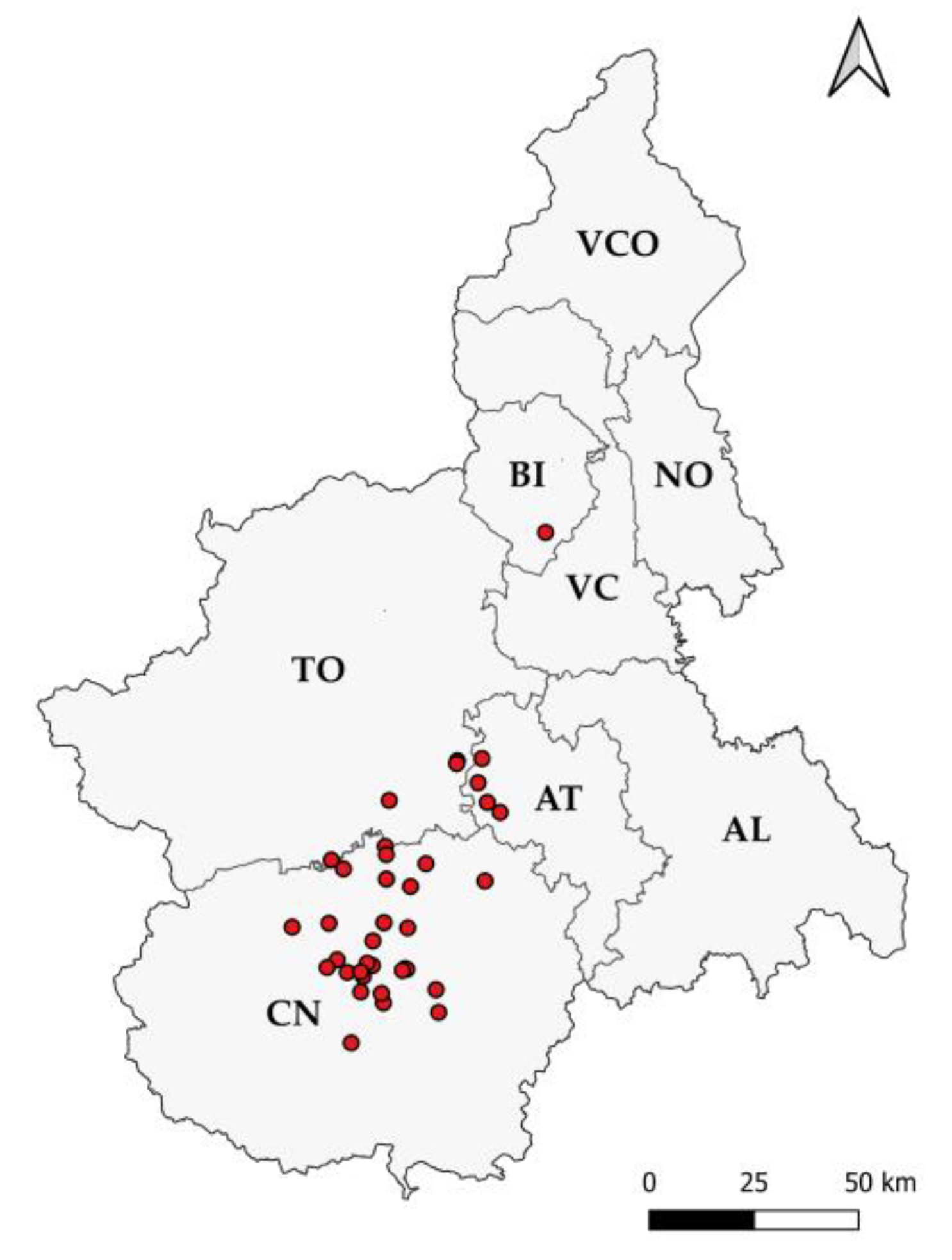
Figure 2.
Pig, lungs. Fibrinous pleuropneumonia (A). Bronchopneumonia associated with interstitial pneumonia (B).
Figure 2.
Pig, lungs. Fibrinous pleuropneumonia (A). Bronchopneumonia associated with interstitial pneumonia (B).
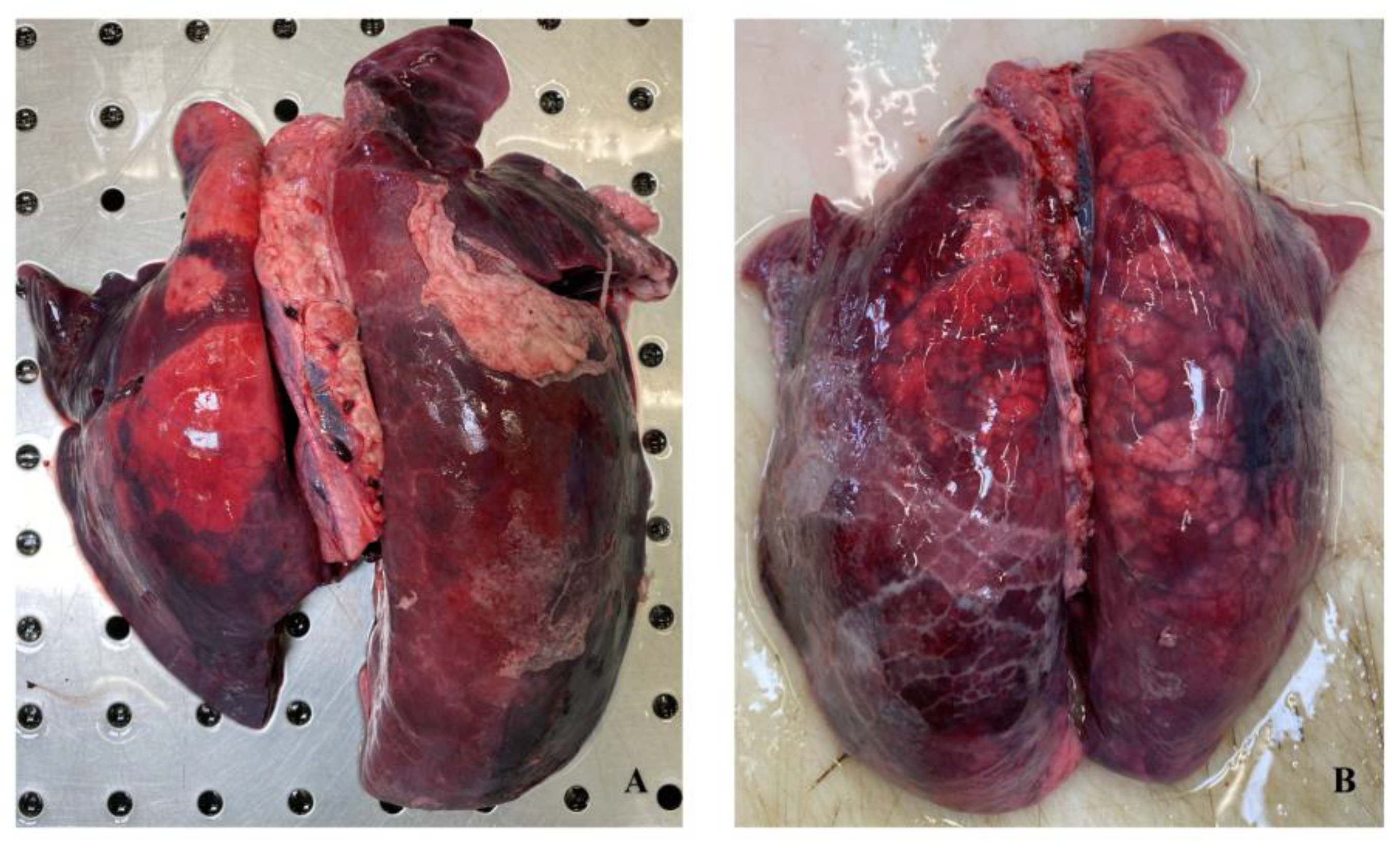
Figure 3.
Pulmonary gross lesions distribution in lungs. Gross lesions legend: catarrhal pneumonia (CBP), purulent bronchopneumonia (PBP), interstitial pneumonia (IP), bronchopneumonia associated with interstitial pneumonia (BP + IP), fibrinous pneumonia or pleuropneumonia (FP or PP), interstitial pneumonia with oedema or polilobular pneumonia (IPP), pleuritis (PL) and pericarditis (PE).
Figure 3.
Pulmonary gross lesions distribution in lungs. Gross lesions legend: catarrhal pneumonia (CBP), purulent bronchopneumonia (PBP), interstitial pneumonia (IP), bronchopneumonia associated with interstitial pneumonia (BP + IP), fibrinous pneumonia or pleuropneumonia (FP or PP), interstitial pneumonia with oedema or polilobular pneumonia (IPP), pleuritis (PL) and pericarditis (PE).
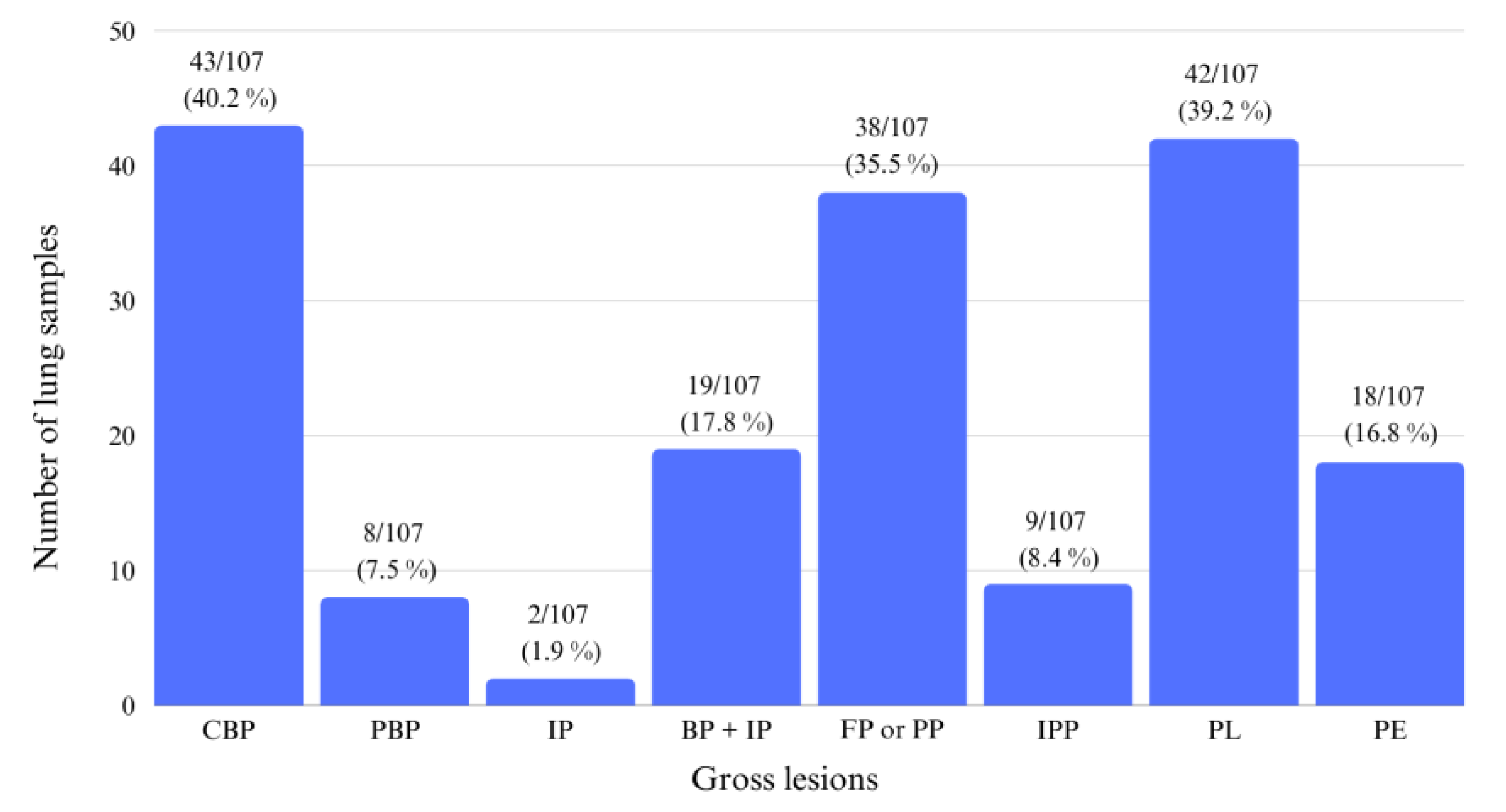
Figure 4.
Pleurisy lesions distribution in the lungs according to the SPES system. Scores legend: 0: absence of pleural lesions; 1: cranioventral pleuritis and/or pleural adherence between lobes or at ventral border of lobes; 2: dorsocaudal unilateral focal pleuritis; 3: bilateral pleuritis of type 2 or extended unilateral pleuritis (at least 1/3 of one diaphragmatic lobe); 4: severely extended bilateral pleuritis (at least 1/3 of both diaphragmatic lobes).
Figure 4.
Pleurisy lesions distribution in the lungs according to the SPES system. Scores legend: 0: absence of pleural lesions; 1: cranioventral pleuritis and/or pleural adherence between lobes or at ventral border of lobes; 2: dorsocaudal unilateral focal pleuritis; 3: bilateral pleuritis of type 2 or extended unilateral pleuritis (at least 1/3 of one diaphragmatic lobe); 4: severely extended bilateral pleuritis (at least 1/3 of both diaphragmatic lobes).
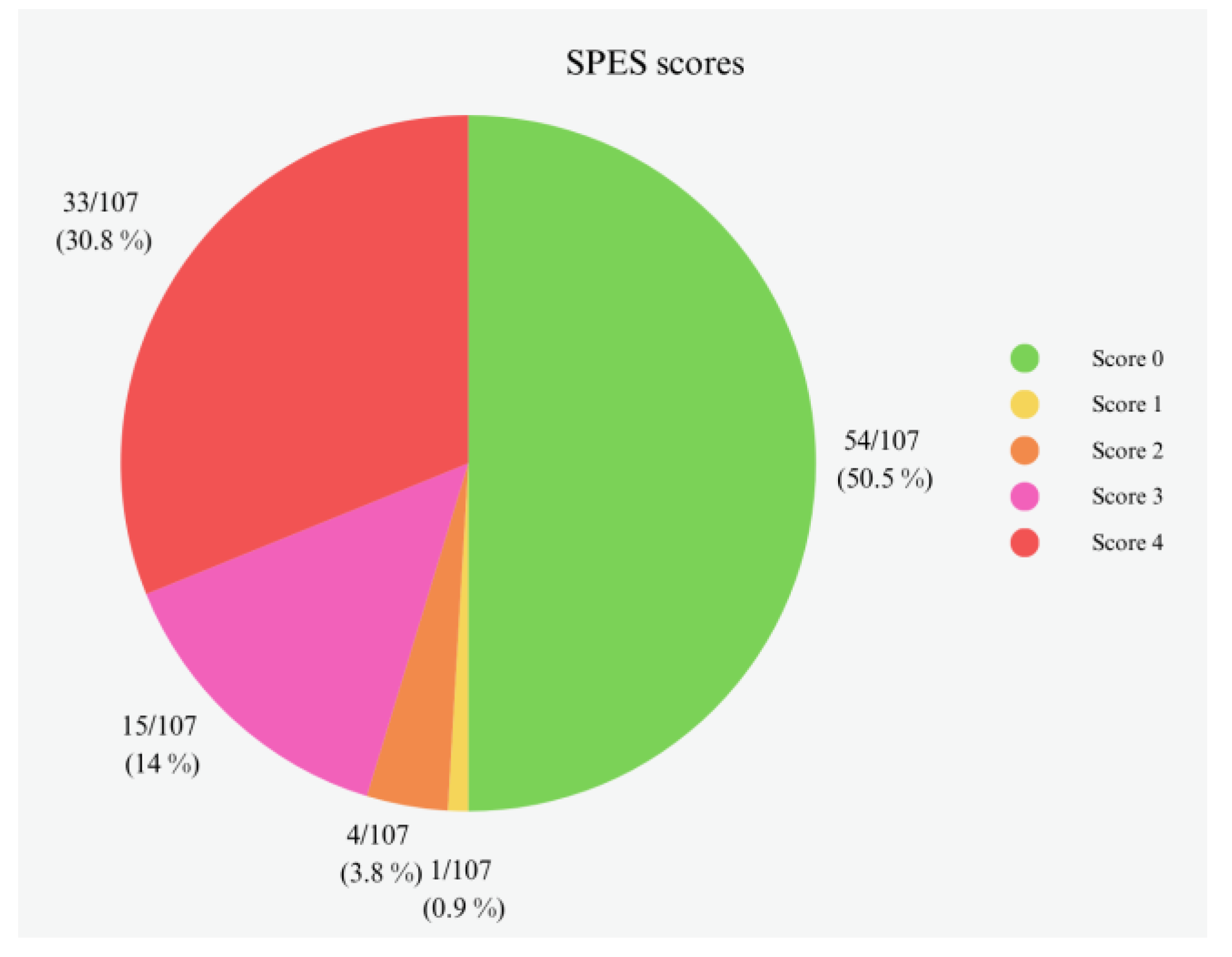
Figure 5.
APP cultured strains and serotypes distribution. Serotypes of APP cultured from 20/107 (18.7%) lung swab samples.
Figure 5.
APP cultured strains and serotypes distribution. Serotypes of APP cultured from 20/107 (18.7%) lung swab samples.
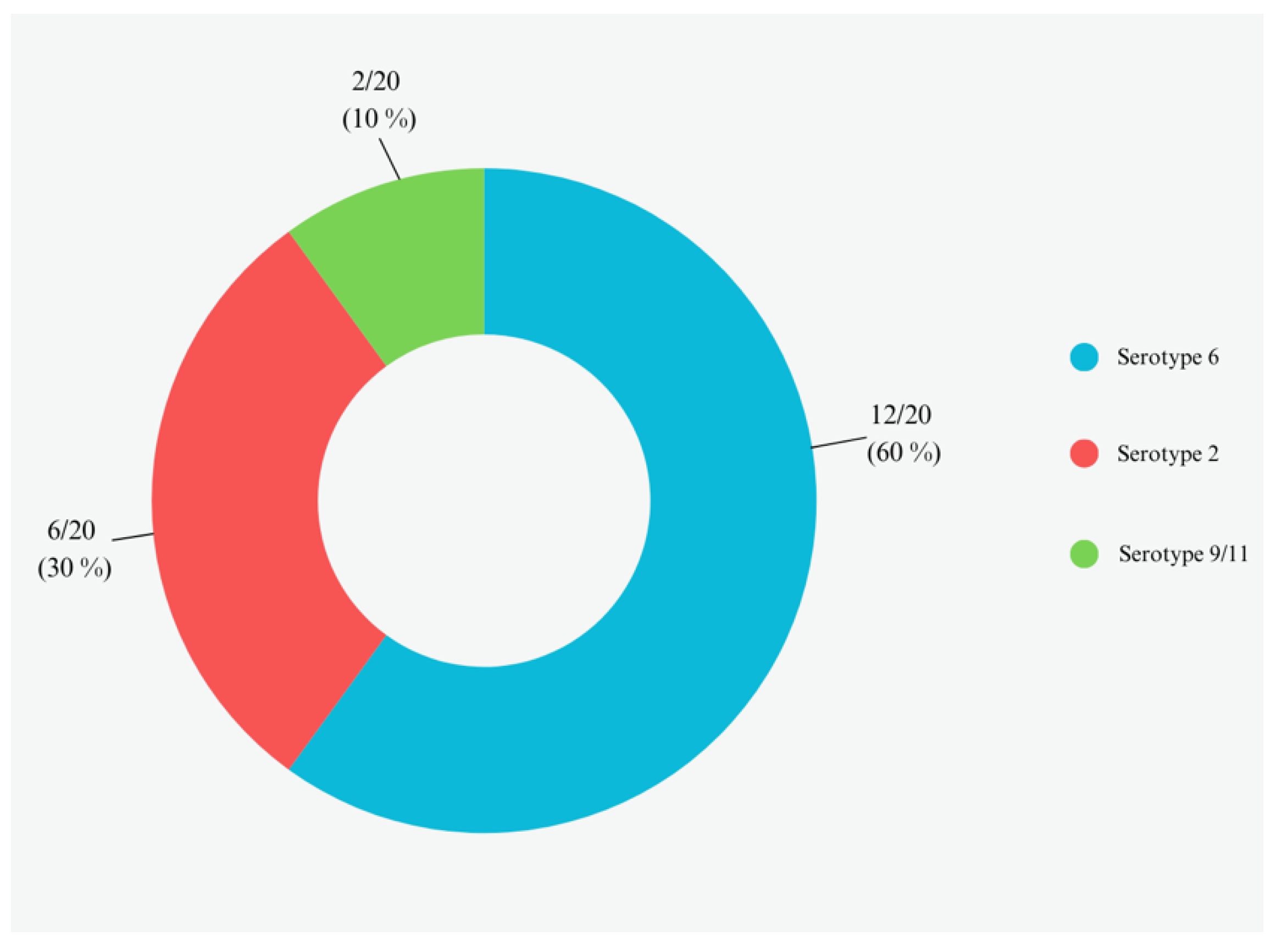
Figure 6.
APP positive samples and serotypes distribution. Serotypes of APP detected in 53/107 (49.5%) lung swab samples.
Figure 6.
APP positive samples and serotypes distribution. Serotypes of APP detected in 53/107 (49.5%) lung swab samples.
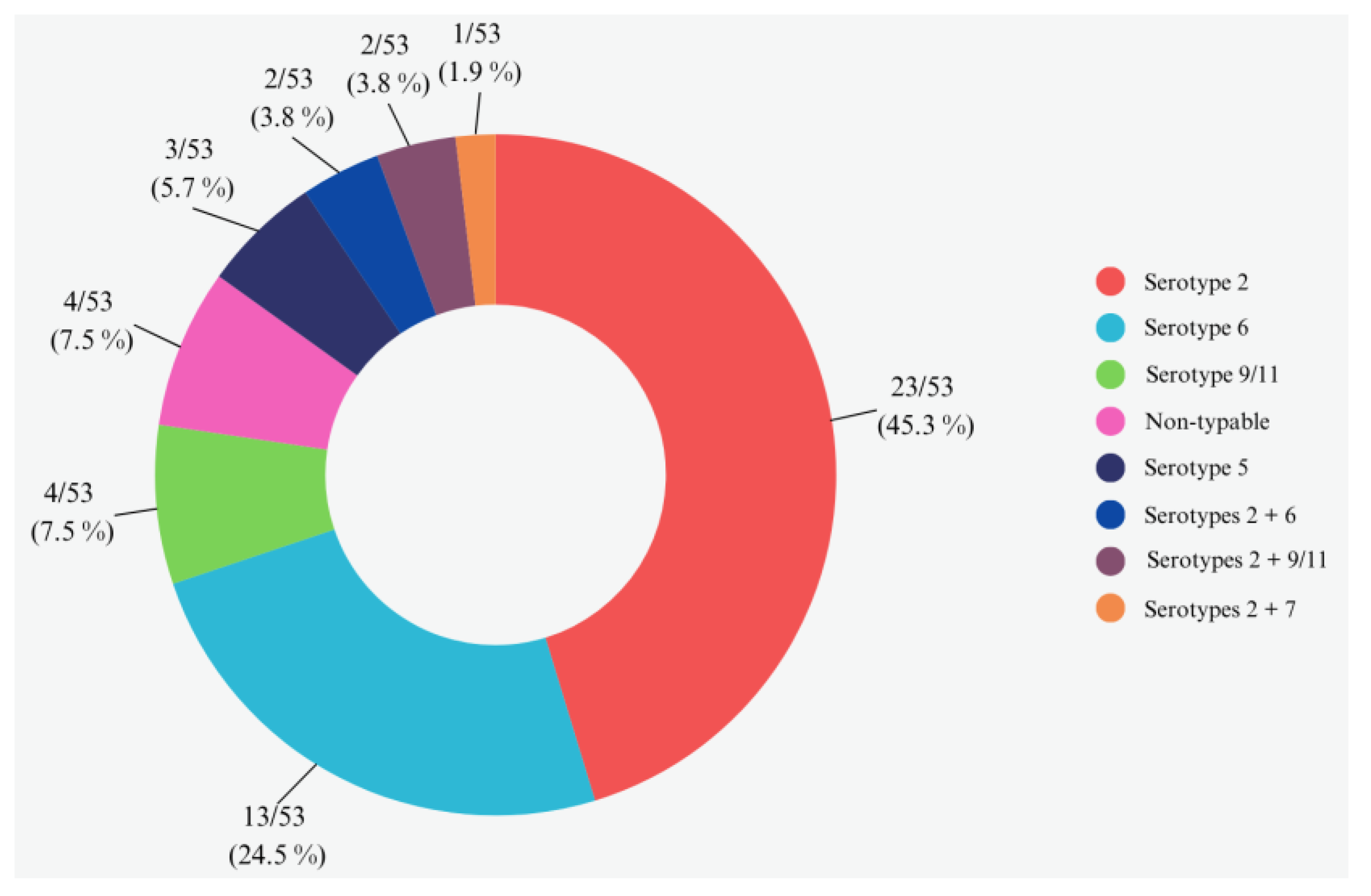
Figure 7.
Pig, lungs, histopathology. Severe inflammatory infiltrate (A, HE, 200x): lymphocytes and neutrophils [insert of the inflammatory infiltrate (HE, 400x)]; diffuse congestion and severe hemorrhages with multifocal lymphocytic inflammatory infiltrate (B, HE, 200x); severe pleural thickening with subpleural lymphocytic infiltrate and diffuse alveolar oedema (C, HE, 200x); severe congestion with lymphocytic inflammatory infiltrate and exudate in the bronchiolar lumen (D, HE, 200x).
Figure 7.
Pig, lungs, histopathology. Severe inflammatory infiltrate (A, HE, 200x): lymphocytes and neutrophils [insert of the inflammatory infiltrate (HE, 400x)]; diffuse congestion and severe hemorrhages with multifocal lymphocytic inflammatory infiltrate (B, HE, 200x); severe pleural thickening with subpleural lymphocytic infiltrate and diffuse alveolar oedema (C, HE, 200x); severe congestion with lymphocytic inflammatory infiltrate and exudate in the bronchiolar lumen (D, HE, 200x).
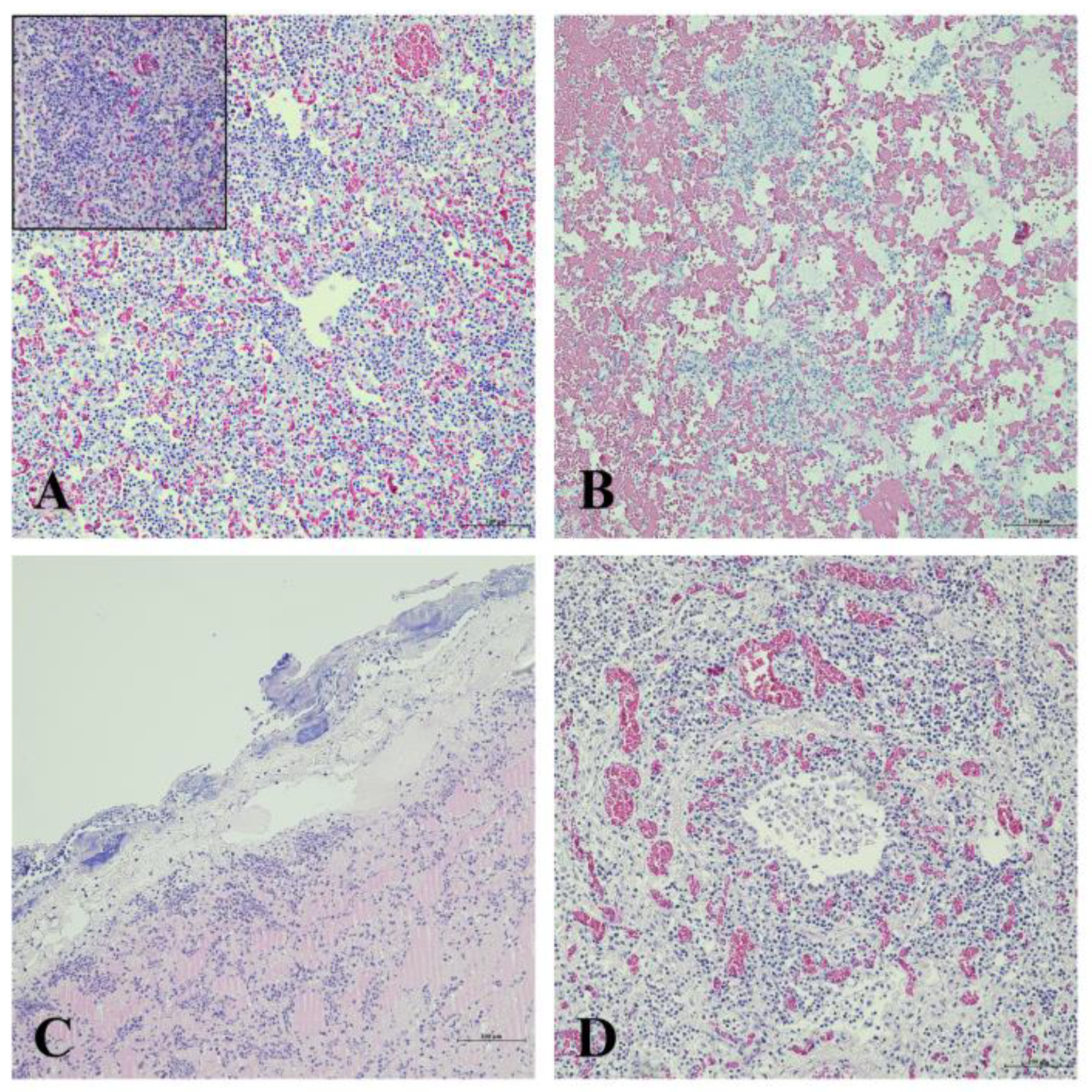

Table 1.
Gross scoring system for lobe involvement evaluation.
| Score | Lobe involvement |
|---|---|
| 0 | Absence of lesions |
| 1 | Damaged area <25% |
| 2 | Damaged area 26-50% |
| 3 | Damaged area 51-75% |
| 4 | Damaged area 76-100% |
Table 2.
Gross scoring system results for lobe involvement evaluation. Results are expressed as mean value ± standard deviation (sd).
Table 2.
Gross scoring system results for lobe involvement evaluation. Results are expressed as mean value ± standard deviation (sd).
| Pulmonary lobe | Score (mean ± sd) |
|---|---|
| Left cranial | 1.99 ± 1.41 |
| Left medium | 2.38 ± 1.4 |
| Left caudal | 2.17 ± 1.2 |
| Right cranial | 2.2 ± 1.32 |
| Right medium | 2.64 ± 1.32 |
| Right accessory | 2.42 ± 1.52 |
| Right caudal | 2.26 ± 1.22 |
Table 3.
Microbiological results were obtained in 59/107 samples of lungs collected in the present study.
Table 3.
Microbiological results were obtained in 59/107 samples of lungs collected in the present study.
| Microorganisms | Number of infected individuals (%) |
|---|---|
| PRRSV | 31 (29 %) |
| Mycoplasma hyopneumoniae | 11 (10.3 %) |
| Escherichia coli | 10 (9.3 %) |
| Streptococcus suis | 10 (9.3 %) |
| Pasteurella multocida | 9 (8.4 %) |
| Actinobacillus lignieresii | 5 (4,7 %) |
| Trueperella pyogenes | 4 (3.7 %) |
| Bordetella bronchiseptica | 3 (2.8 %) |
| Staphylococcus aureus | 3 (2.8 %) |
| Bordetella bronchiseptica | 1 (1.7 %) |
| Staphylococcus sp. | 1 (1.7 %) |
| Escherichia sp. | 1 (1.7 %) |
| SIV | 1 (1.7 %) |
Disclaimer/Publisher’s Note: The statements, opinions and data contained in all publications are solely those of the individual author(s) and contributor(s) and not of MDPI and/or the editor(s). MDPI and/or the editor(s) disclaim responsibility for any injury to people or property resulting from any ideas, methods, instructions or products referred to in the content. |
© 2024 by the authors. Licensee MDPI, Basel, Switzerland. This article is an open access article distributed under the terms and conditions of the Creative Commons Attribution (CC BY) license (http://creativecommons.org/licenses/by/4.0/).
Copyright: This open access article is published under a Creative Commons CC BY 4.0 license, which permit the free download, distribution, and reuse, provided that the author and preprint are cited in any reuse.