
Submitted:
27 May 2024
Posted:
27 May 2024
You are already at the latest version
Abstract
Successful translation of biofortified orange maize (BOM) to a household staple food is dependent on farmers’ ability to cultivate the maize and it subsequent utilization. In this study, we assessed farmers ‘allocation of their land to cultivation of BOM and con-ventional white maize (CWM) varieties in districts where AFI-KEPO Nutrition Program is implemented in Malawi. Results show farmers were skeptical of allocating more land to cultivation of BOM. CWM was allocated significantly more land (1.75 ± 0.51 acres) than BOM (1.12 ± 0.32 acres) (p
Keywords:
biofortified orange maize (BOM)
; weevil
; land allocation
; AFIKEPO
1. Introduction
In the last two decades, bio-fortification of staple crops has increasingly become relevant especially in developing countries of Sub-Saharan Africa, South America and Middle East where micronutrient deficiency is high. More crops are targeted for bio fortification with iron, zinc and provitamin A carotenoids (pVAC). Maize and sweet potatoes are main staples targeted for vitamin A bio fortification. The choice of these crops is dependent not only on their widespread consumption in targeted countries but also their inherent ability to accumulate vitamin A biosynthetically [1]. Bio fortification has, therefore, been touted as the most cost effective hence preferred strategy to alleviate vitamin A deficiency (VAD) compared to nutrient supplementation and food fortification [1]
VAD prevalence in Africa is estimated at approximately 48% [2]. To date, 11 countries have implemented maize bio-fortification, including Malawi, Zambia, Nigeria, Cameroon, DR Congo, Ghana, Mali, Rwanda, Tanzania, Zimbabwe in Africa and Brazil in South America, and a total of 63 varieties have thus far been released (https://www.harvestplus.org/home/crops/). The bio fortification of maize is considered an economical strategy to reduce VAD in countries where maize is consumed as a staple food by the majority [3]. In general, maize alone provides 30% of the total calories in SSA, with some countries having a high daily per capita consumption of 330 g [4,5]. This level of consumption is adequate to effect vitamin A status among consuming households. HarvestPlus set a target for pro-vitamin A content in biofortified maize cultivars at 15 µg/g to meet 50% of the recommended dietary requirement, which has already been surpassed by several varieties that have been released in those countries [6,7]. Therefore, widespread consumption of bio-fortified maize grains has the potential to reduce national, regional and global VAD. Several benefits have been reported in several efficacy and effectiveness trials to assess the effects of regular consumption of biofortified staple foods on improving human vitamin A status [8].
Despite many countries implementing the bio-fortification of maize the cultivation and adoption of biofortified maize still remains very low [9] to significantly influencing the national or regional vitamin A status of the population. This is because the adoption and retention decisions of biofortified crops are influenced by farmers’ socioeconomic characteristics such as gender, nutrition knowledge, education, access to planting material, taste, dry matter content, yield per hectare, early maturity and drought tolerant traits [9]. To date CWM varieties remain the dominant type of maize in many households, and farmers have to make decisions to forgo some land to accommodate BOM. Farmers must reduce acreage of their existing crops to accommodate new crops. The size of land they could reserve for growing new biofortified crops could be determined by factors such as expected yield and income relative to other known crops. Majority of rural farmers are smallholder farmers owning less than 2ha of land [10] making them less likely to portion their already limited land to growing of new crop.
The current approach focusing on high yield, nutrition and sensory properties of BOM may not increase adoption among some households because of limited availability of farm land. For instance, families with more land are most likely to practice crop diversification [11].
Various stakeholders, including governments, research institutions, seed companies, and non-governmental organizations (NGOs) are actively promoting the cultivation and consumption of biofortified maize through developing and disseminating maize varieties that are adapted to agroecological conditions [12]. However, cultivation of these crops may be limited by inadequate land to grow preferred crops. Therefore, this study was carried out to understand the farmer’s preference of BOM and CWM in terms of land allocation, cost and main sources of seeds, the number of bags harvested and comparable resistance to storage weevil (Sitophilus zeamais).
2. Methodology
2.1. Study Site
The study was carried out in 10 districts where the AFIKEPO Nutrition Program is currently being implemented in Malawi. In these districts, farmers had grown both BOM and CWM two seasons preceding the study. FAO and UNICEF in collaboration with the Government of Malawi implement AFIKEPO Nutrition program. The AFIKEPO program promotes the production and utilization of bio-fortified BOM through the provision of seeds and fertilizers.
2.2. Sampling Frame and Sample Size
Due to the limited numbers of farmers who had grown both BOM and CWM in the two seasons preceding the study, approximately 20 farmers from each district were purposively selected by agricultural frontline staff. A total of 224 farmers (n = 224) across the ten districts participated in the survey.
2.3. Survey Data Collection
A semi-structured questionnaire in Chichewa or Tumbuka language was administered to farmers. Where farmers were not clear, enumerators rephrased and clarified the questions. Farmers were asked diverse questions related to production, storage, utilization and services related to orange maize and white maize. Informed consent was sought from all participating farmers before starting to respond to the survey questionnaire.
2.4. The Comparable Susceptibility of BOM and CWM to Weevil Attach
During the survey, farmers observed that BOM varieties are less susceptible to weevils than CWM varieties. Therefore, a study was carried out to compare the susceptibility of BOM and CWM. Briefly, four varieties, two white (dent and flint) and two BOM (dent and flint), were evaluated for weevil susceptibility. The experiment was laid out in a completely randomized design. The four treatments (varieties) were performed in triplicate at 4 testing intervals (0, 3, 6 and 9 weeks). Therefore, 48 bottles, each containing 250 maize grains for each maize variety, were placed and stored in perforated bottles infested with 20 weevils (Sitophillus zeamis). The grains were stored for nine weeks in a well-ventilated room, and sampling was performed every three weeks.
2.5. Data Analysis
Data was analyzed quantitatively using SPSS to generate means and standard deviations. Statistical comparisons were made among districts and between white and BOM on size of land allocation, the cost of seeds, the number of bags harvested and other parameters. The number of damaged grains, the visible weevils, grain weight loss, visualizing part of maize grain mostly attacked, and changes in protein content were used to determine maize grains’ susceptibility to weevils. Significant differences between means were determined using Tukey’s test at α = 0.05.
3. Results
3.1. Farmer Demographic Characteristics
A total of 224 farmers who had grown both BOM and CWM during two years preceding the survey were purposively interviewed. The majority (70%) of respondents were female farmers. Fifty-eight percent (58%) of the respondents attained primary education, while 41% had gone up to secondary education. Approximately 85% of the households had a family membership greater than 4.
3.2. Land Allocation to Maize Cultivation
The average land allocated to maize cultivation was approximately 1.89 ± 0.47 acres. CWM was allocated significantly more land (1.75 ± 0.51 acres) than BOM (1.12 ± 0.32 acres) (Table 1). Similarly, the median land allocation was higher for CWM (2 acres) than BOM (1 acre), and this was consistent in all districts (Table 2; Supplementary Table 1). The average land allocated to maize during the previous growing season was significantly higher (p < 0.001) in males (2.04 ± 0.42 acres) than in females (1.82 ± 0.46 acres). The majority of respondents (87.9%) who had grown BOM allocated less than 1 acre of their land (Table 1). Only 11.6% had allocated 1-3 acres of land to cultivation of BOM compared to 68.3% who had allocated the same land size to cultivation of CWM.
3.3. Number of Bags Harvested
The average number of bags harvested were significantly lower in BOM (6.48 ± 8.27 bags; median = 4 bags) than in CWM (23.11 ± 20.54 bags; median = 17 bags) (p < 0.000) (Table 3). There were significant variations in the average and median number of the bags harvested across 10 districts, with BOM having fewer bags (Supplementary Table 2).
3.4. The Cost of Seeds
The average cost of seeds for CWM was not significantly different from the cost of seeds for BOM (p = 0.742) (Table 4). However, there were significant variations in the cost of BOM seeds (p = 0.025), but not CWM seeds (p = 0.103) among districts (Supplementary Table 3). More farmers (72.8%) were more willing to purchase CWM seeds compared to BOM seed (10.3%) (Table 5). Most farmers (50%) who had grown BOM obtained their seeds from NGOs for demonstration plots (Table 5).
3.5. Storage of Maize and Storage Period
Maize was predominantly stored in ordinary woven propylene bags (Table 6). The average storage time for CWM was significantly higher than the storage time for BOM (p < 0.000) (Table 6). CWM was stored for about 8 months compared to BOM which was stored for only 6 months (Table 6). Approximately 83.4% of respondents indicated that their CWM was more prone to weevil attack compared to only 16.6% who indicated that their BOM was more prone to weevil (Table 7).
3.6. Farmers’ Preference and Form of Utilization of Maize
For those who tasted both CWM flour and BOM flour, 81.3% preferred BOM flour, and only 18.8% preferred CWM flour (Table 7). Approximately 82.6% of households indicated that BOM flour is more expensive (Table 7). About 83.5% and 13.4% consumed maize as flesh and flour, and flour only, respectively, and further 1.8% consumed as fresh only. The whole maize flour (mgaiwa) was a dominant form of consumption by 60.3% and only 20.5% and 16.1% consume it as granmeal and refined flour (mphale), respectively (Table 8).
3.7. Resistance of BOM and CWM to Weevil (Sitophilus zeamais)
During the verification laboratory storage experiment of farmers’ earlier observation, weevils disproportionately attacked CWM more than BOM (Figure 1). There was increase in the numbers of damaged grains and visible weevils with storage (Figure 1 and Figure 2). After 9 weeks, CWM grains had significantly higher numbers of damaged grains than BOM (Figure 1). The CWM dent variety had more damaged grains than the CWM flint variety (Figure 1, Supplementary Figure 1). Consistent with the high number of damaged grains in CWM dent variety, there were significantly high numbers of visible weevils in bottles with CWM dent (Figure 2). Regardless of variety, dent grains were more damaged by weevils than the flint grains and had higher numbers of visible weevils compared to flint varieties (Figure 1 and Figure 2).
3.8. Protein Content of Maize Grains During the Study Period
The initial protein content of the grains for all maize varieties was similar and ranged from 8.3-9.1% (Figure 3). However, during storage, a disproportionate increase in protein content was observed in all maize grains (Figure 3). The BOM dent had a significantly higher increase in protein content than all the grains.
4. Discussion
Many households allocated disproportionately more land to CWM than to BOM (Table 1) suggesting that farmers prefer growing CWM. The lower land allocation to BOM explains the lower average and the median number of bags harvested for BOM (Table 3). Most smallholder farmers have limited land to grow their crops and would be unwilling to accommodate new crops at the expense of their conventional crops. Moreover, it has been reported that BOM varieties have comparatively lower yields than CWM varieties [3] which may justify farmers’ reserved approach toward allocating more land to BOM. Over two decades, households that grew BOM in Mozambique were associated with low income because consumers were buying biofortified maize at lower prices [13,14,15,16]. Recent breeding programs have produced biofortified maize varieties with high yields [17] which is expected to increase adoption of these elite maize.
There are several reasons that could influence farmers’ choice of maize to cultivate. Therefore, the study explored whether the cost of seeds could partly explain the disproportionate land allocation to cultivation of CWM versus BOM varieties. The cost of seeds for CWM and BOM was not significantly different (Table 4), which suggests the cost of seeds did not influence the preference to grow CWM. More respondents were aware of the cost of CWM than the cost of BOM. This was expected because the majority of respondents who had grown BOM received seeds from organizations such as AFIKEPO and might not have information on the exact cost of the seeds.
Furthermore, only 10.3%of farmers were willing to buy BOM seeds compared to 72.8% of farmers willing to buy CWM seeds (Table 5). This further confirms farmers’ skepticism towards the cultivation of BOM. Most farmers who grew BOM obtained their seeds from NGOs for demonstration plots (Table 5). Organizations working in the areas provided seeds and other inputs to majority of farmers and, therefore, influenced them to grow BOM. This puts in doubt the sustainability of cultivating these elite maize beyond project support.
Maize is harvested and stored for months using different facilities. The common storage facilities include silos, sacs, PICS bags, and traditional granaries (nkhokwe). Studies have shown that the pro-vitamin A carotenoids in BOM degrade during storage [18,19], and these studies found that storage in PICS bags slowed carotenoid degradation. In this study, majority of farmers stored their maize in ordinary bags (Table 6) in which carotenoids degrade significantly thereby reducing nutritional quality [18,19]. Although households might consume the stored maize, it has already lost between 50-65% of the pro-vitamin A carotenoids during 8 months of storage [18].
During the study, respondents reported that BOM varieties were more resistant to weevil than CWM varieties (Table 6). The higher numbers of damaged grains and visible live weevils in CWM varieties confirmed the farmers’ observation (Figure 1 and Figure 2). Dent maize grains were more susceptibility to weevil (Figure 1). This is consistent with previous studies that have demonstrated that flint maize grains were less susceptible to weevils due to higher phenolic content [20,21]. Phenolic acids affect grain hardness which make them more resistant to weevil [5,21]. Comparatively, BOM has a higher phenolic acid content than CWM [22], which might partly explain the observed resistance to weevils. This has positive food security implications because households that would grow BOM would be less likely to lose grains to weevils, the most common storage pest in Sub-Saharan Africa.
There was an increase in protein content in all the maize grains (Figure 3). Increase in the protein content might be due to availability of laid eggs and dead weevils [23]. Figure 2 demonstrates that some weevils died during storage of BOM, as there was a drop in the number of weevils registered in week 3. A previous study reported a high death rate for weevils in more resistant maize grains [21], which may explain the increased protein content in BOM grains. In addition, the variation in protein content might be explained by the differential accumulation of protein in different fractions of the grains. Generally, the endosperm contains a high protein content compared to the germ and pericarp. In this study, white flint and white dent maize endosperms were the mostly attached parts of the grains (Supplementary Figure 1). The relatively higher protein content of BOM might be due to the concentration effect, as the weevils attacked mostly the lipid-rich germ, leaving out the protein-rich endosperm. Therefore, the loss of the germ and tip concentrated the protein content in the endosperm fractions
5. Conclusions
Land allocated to cultivation of BOM is comparatively smaller compared to that allocated to CWM. Farmers are still skeptical to allocate more land to cultivation of BOM as demonstrated by their unwillingness to purchase their own orange maize seeds. Though BOM taste better and is more resistant to weevils, the limited cultivation has potential to hamper biofortification as strategy to alleviate VAD. Awareness and nutrition education should be intensified among farming families so that vitamin A maize could be equally embraced and cultivated as a food and nutrition security staple crop.
Supplementary Materials
The following supporting information can be downloaded at the website of this paper posted on Preprints.org.
Author Contributions
SGN designed the survey, developed survey questionnaire, conducted the experiment, sourced funds, collected and analyzed data, wrote the manuscript; FW conducted the experiment; MC collected data, developed survey questionnaire; SN collected data, developed survey questionnaire, entered data; KK collected data, developed survey questionnaire; GC collected data, developed survey questionnaire; TN collected data, developed survey questionnaire; MCh collected data, developed survey questionnaire; LM reviewed the manuscript. All authors read and approved the final manuscript.
Funding
This research received no external funding.
Institutional Review Board Statement
Not applicable.
Informed Consent Statement
Informed consent was obtained from all subjects involved in the study.
Data Availability Statement
The raw data supporting the conclusions of this article will be made available by the authors on request.
Acknowledgments
Not applicable.
Conflicts of Interest
The authors declare no conflicts of interest.
References
- Maqbool, M.A.; Aslam, M.; Beshir, A.; Khan, M.S. Breeding for provitamin A biofortification of maize (Zea mays L.). Plant Breed 2018, 137, 451–469. [Google Scholar] [CrossRef]
- Stevens, G.A.; Bennett, J.E.; Hennocq, Q.; Lu, Y.; De-Regil, L.M.; Rogers, L.; Danaei, G.; Li, G.; White, R.A.; Flaxman, S.R.; et al. Trends and mortality effects of vitamin A deficiency in children in 138 low-income and middle-income countries between 1991 and 2013: A pooled analysis of population-based surveys. Lancet Global Health 2015, 3, e528–e536. [Google Scholar] [CrossRef]
- Nestel, P.; Bouis, H.E.; Meenakshi, J.V.; Pfeiffer, W. Biofortification of staple food crops. J. Nutr. 2006, 136, 1064–1067. [Google Scholar] [CrossRef] [PubMed]
- Ekpa, O.; Palacios-Rojas, N.; Kruseman, G.; Fogliano, V.; Linnemann, A. Sub-Saharan African maize-based foods: Technological perspectives to increase the food and nutrition security impacts of maize breeding programmes. Glob. Food Sec. 2019, 17, 48–56. [Google Scholar] [CrossRef]
- Giga, D.P.; Mazarura, U.W. Levels of Resistance to the Maize Weevil, Sitophilus Zeamais (Motsch.) in Exotic, Local Open-Pollinated and Hybrid Maize Germplasm. InteR. J Trop Insect Sci 1991, 12, 159–169. [Google Scholar] [CrossRef]
- Manjeru, P.; van Biljon, A.; Labuschagne, M. The development and release of maize fortified with provitamin A carotenoids in developing countries. Crit. Rev. Food Sci. Nutr. 2019, 59, 1284–1293. [Google Scholar] [CrossRef]
- Palmer, A.C.; Craft, N.E.; Schulze, K.J.; Barffour, M.; Chileshe, J.; Siamusantu, W.; West, K.P. Impact of biofortified maize consumption on serum carotenoid concentrations in Zambian children. Eur J Clin Nutr 2018, 72, 301–303. [Google Scholar] [CrossRef] [PubMed]
- De Moura, F.F.; Palmer, A.C.; Finkelstein, J.L.; Haas, J.D.; Murray-Kolb, L.E.; Wenger, M.J.; Birol, E.; Boy, E.; Pena-Rosas, J.P. Are Biofortified Staple Food Crops Improving Vitamin A and Iron Status in Women and Children? New Evidence from Efficacy Trials. Advances in Nutrition: An Inter Rev Journal 2014, 5, 568–570. [Google Scholar] [CrossRef]
- Jogo, W.; Bocher, T.; Grant, F. Factors influencing farmers’ dis-adoption and retention decisions for biofortified crops: the case of orange-fleshed sweetpotato in Mozambique. Agrekon 2021, 1–15. [Google Scholar] [CrossRef]
- Ren, C.; Liu, S.; Van Grinsven, H.; Reis, S.; Jin, S.; Liu, H.; Gu, B. The impact of farm size on agricultural sustainability. Journal of Cleaner Production 2019, 220, 357–367. [Google Scholar] [CrossRef]
- Kassie, M.; Teklewold, H.; Jaleta, M.; Marenya, P.; Erenstein, O. Understanding the adoption of a portfolio of sustainable intensification practices in eastern and southern Africa. Land Use Policy 2015, 42, 400–411. [Google Scholar] [CrossRef]
- Virk, P.S.; Andersson, M.S.; Arcos, J.; Govindaraj, M.; Pfeiffer, W.H. Transition from targeted breeding to mainstreaming of biofortification traits in crop improvement programs. Front in Plant Sci 2021, 12, 703990. [Google Scholar] [CrossRef] [PubMed]
- De Groote, H.; Kimenju, S.C.; Morawetz, U.B. Estimating consumer willingness to pay for food quality with experimental auctions: the case of yellow versus fortified maize meal in Kenya. Agric. Econ. 2011, 42, 1–16. [Google Scholar] [CrossRef]
- De Groote, H.; Kimenju, S.C. Comparing consumer preferences for color and nutritional quality in maize: application of a semi-double-bound logistic model on urban consumers in Kenya. Food Pol. 2008, 33, 362–370. [Google Scholar] [CrossRef]
- Rubey, L.; Lupi, F. Predicting the effects of market reform in Zimbabwe: a stated preference approach. J. Agric. Econ. 1997, 79, 89–99. [Google Scholar] [CrossRef]
- Tschirley, D.L.; Santos, A.P. Who Eats Yellow Maize? Preliminary Results of a Survey of Consumer Maize Preferences East Lansing. Michigan State University: MI, USA, 1995. [Google Scholar]
- Prasanna, B.M.; Palacios-Rojas, N.; Hossain, F.; Muthusamy, V.; Menkir, A.; Dhliwayo, T.; Ndhlela, T.; San Vicente, F.; Nair, S.K.; Vivek, B.S.; et al. Molecular breeding for nutritionally enriched maize: Status and prospects. Front. Gen. 2020, 10, 1392. [Google Scholar] [CrossRef] [PubMed]
- Nkhata, S.G.; Ortiz, D.; Baributsa, D.; Hamaker, B.; Rocheford, T.; Ferruzzi, M.G. Assessment of oxygen sequestration on effectiveness of Purdue Improved Crop Storage (PICS) bags in reducing carotenoid degradation during post-harvest storage of two biofortified orange maize genotypes. J. Cereal Sci. 2019, 87, 68–77. [Google Scholar] [CrossRef]
- Taleon, V.; Mugode, L.; Cabrera-Soto, L.; Palacios-Rojas, N. Carotenoid retention in biofortified maize using different post-harvest storage and packaging methods. Journal of Food Chemistry 2017, 232, 60–66. [Google Scholar] [CrossRef] [PubMed]
- Nwosu, L.C. Maize and the maize weevil: advances and innovations in postharvest control of the pest. Food Quality and Safety 2018, 3, 145–152. [Google Scholar] [CrossRef]
- Suleiman, R.; Williams, D.; Nissen, A.; Bern, C.J.; Rosentrater, K.A. Is flint corn naturally resistant to Sitophilus zeamais infestation? J Stored Prod Res 2015, 60, 19–24. [Google Scholar] [CrossRef]
- Nkhata, S.G.; Liceaga, A.M.; Rocheford, T.; Hamaker, B.R.; Ferruzzi, M.G. Storage of biofortified maize in Purdue Improved Crop Storage (PICS) bags reduces disulfide linkage-driven decrease in porridge viscosity. LWT Food Sci Technol 2021, 136, 110262. [Google Scholar] [CrossRef]
- Stathers, T.E.; Arnold, S.E.J.; Rumney, C.J.; et al. Measuring the nutritional cost of insect infestation of stored maize and cowpea. Food Sec. 2020, 12, 285–308. [Google Scholar] [CrossRef]
Figure 1.
Changes in number of damaged grains in the two white maize (CWM) and two biofortified orange maize (BOM) varieties.
Figure 1.
Changes in number of damaged grains in the two white maize (CWM) and two biofortified orange maize (BOM) varieties.
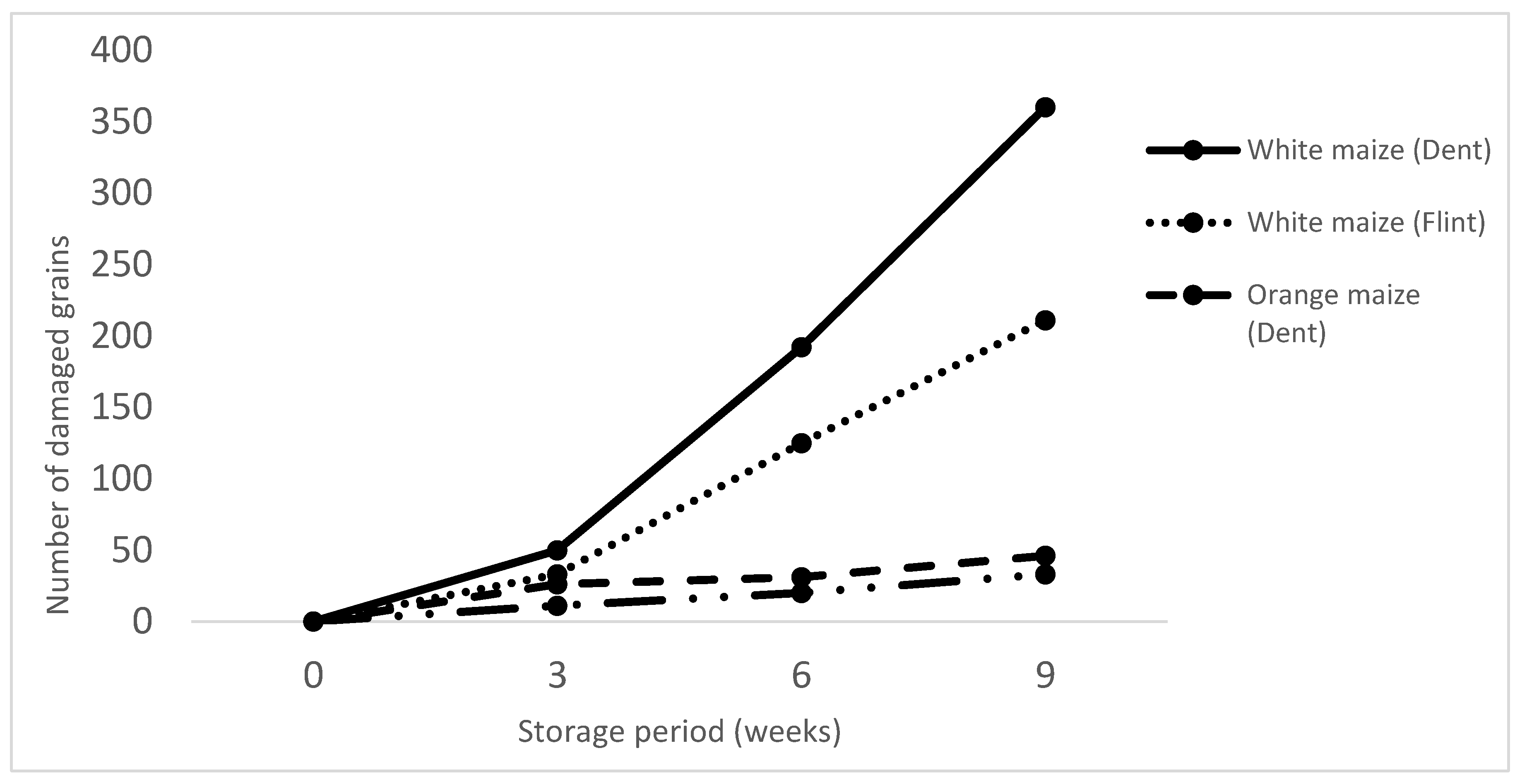
Figure 2.
Number of live visible weevils inside storage bottles of two white maize (CWM) and two biofortified orange maize (BOM) varieties.
Figure 2.
Number of live visible weevils inside storage bottles of two white maize (CWM) and two biofortified orange maize (BOM) varieties.
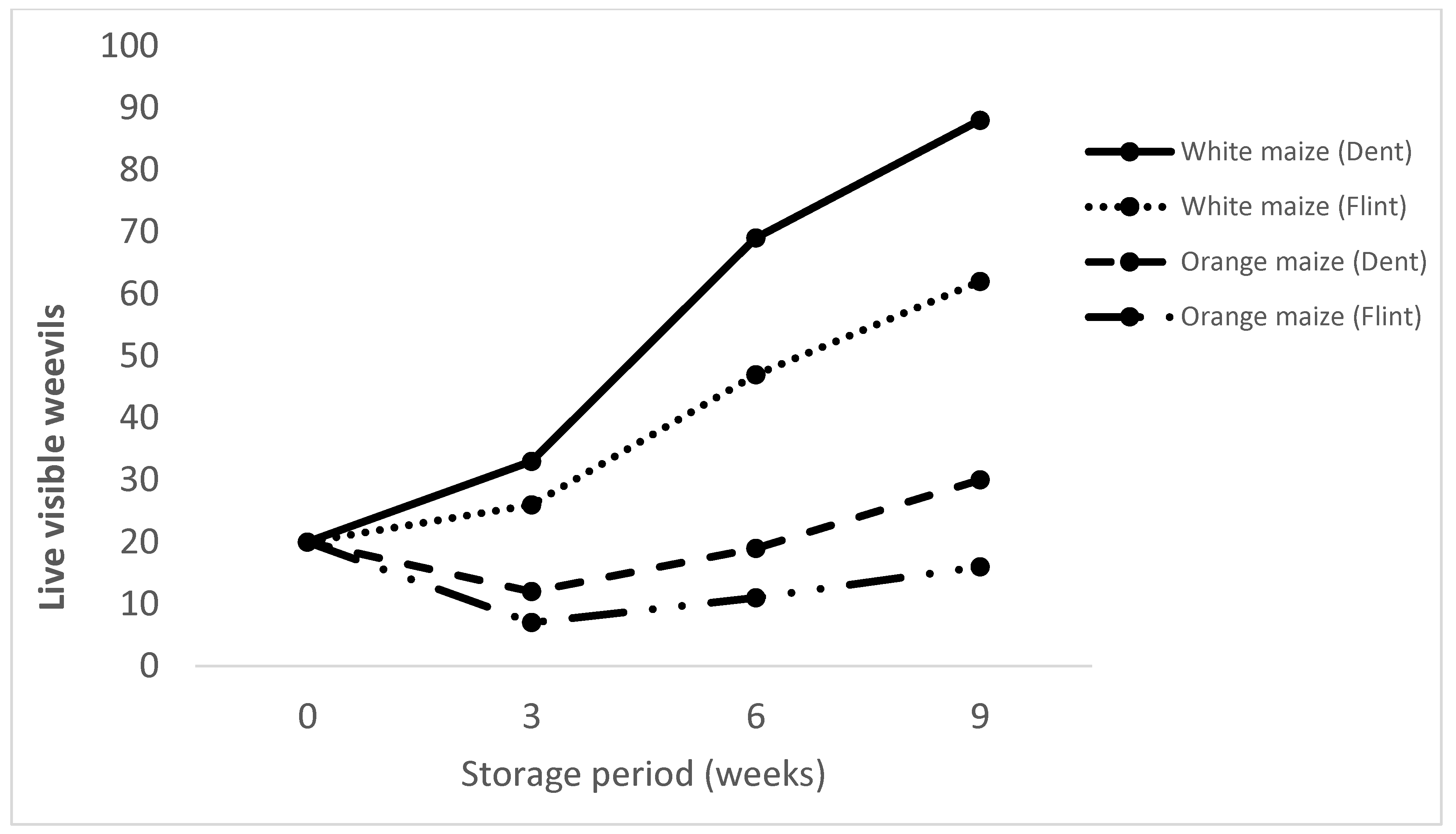
Figure 3.
Changes in protein content of maize grains during nine week storage of two white maize (CWM) and two biofortified orange maize (BOM) varieties.
Figure 3.
Changes in protein content of maize grains during nine week storage of two white maize (CWM) and two biofortified orange maize (BOM) varieties.
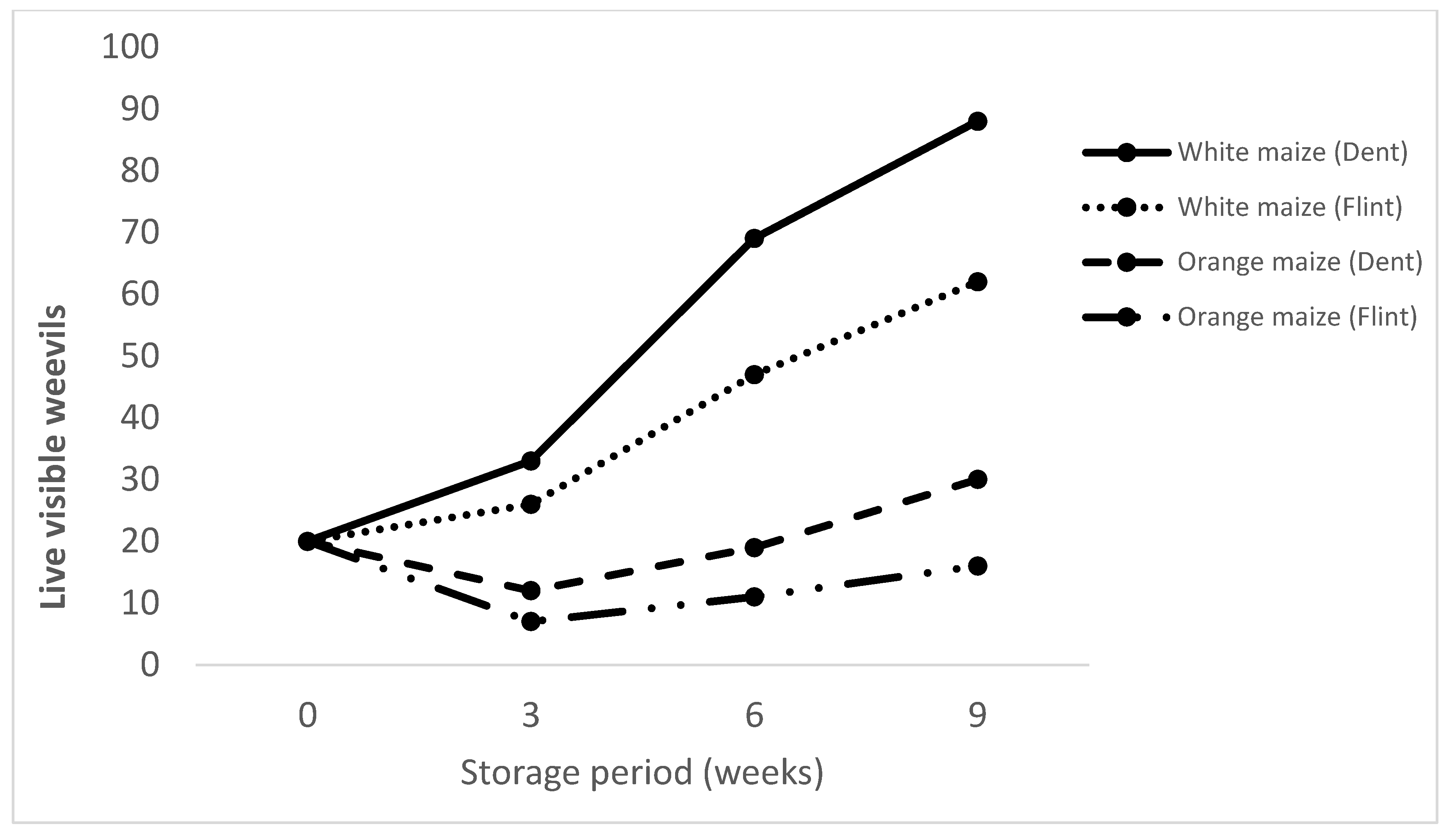

Table 1.
Land allocation for maize, conventional white maize (CWM) and biofortified orange maize (BOM) cultivation by farmers.
Table 1.
Land allocation for maize, conventional white maize (CWM) and biofortified orange maize (BOM) cultivation by farmers.
| Land allocation | Parameter | All maize | CWM | BOM |
|---|---|---|---|---|
| Land (acres) | Mean | 1.89 ± 0.47 | 1.75 ± 0.51 | 1.12 ± 0.32 |
| Median | 2.00 | 2.00 | 1.00 | |
| Proportion of farmers (%) allocated land to maize | Proportion of farmers (%) allocated land to CWM | Proportion of farmers (%) allocated land to BOM | ||
| Less 1 acre | 17.0 | 28.1 | 87.9 | |
| 1-3 acres | 76.8 | 68.3 | 11.6 | |
| More than 4 acres | 6.3 | 3.6 | 0.4 | |
| n | 224 | 224 | 224 |
Table 2.
Allocation of land for cultivation of different maize varieties in 10 districts where AFIKEPO program is implemented.
Table 2.
Allocation of land for cultivation of different maize varieties in 10 districts where AFIKEPO program is implemented.
| ANOVA Table a | |||||||
|---|---|---|---|---|---|---|---|
| Sum of Squares | df | Mean Square | F | Sig. | |||
| Acres allocated for BOM * district | Between Groups | 1.496 | 9 | .166 | 1.642 | .105 | |
| Within Groups | 21.459 | 212 | .101 | ||||
| Total | 22.955 | 221 | |||||
| Acres allocated to all maize * district | Between Groups | 11.006 | 9 | 1.223 | 6.781 | <.001 | |
| Within Groups | 38.411 | 213 | .180 | ||||
| Total | 49.417 | 222 | |||||
| Acres allocated for CWM * district | Between Groups | 12.557 | 9 | 1.395 | 6.622 | <.001 | |
| Within Groups | 44.878 | 213 | .211 | ||||
| Total | 57.435 | 222 | |||||
Table 3.
Average number of bags harvested for each maize white maize (CWM) and biofortified orange maize (BOM) varieties.
Table 3.
Average number of bags harvested for each maize white maize (CWM) and biofortified orange maize (BOM) varieties.
| Statistics | ||
|---|---|---|
| Bags harvested for CWM | Bags harvested for BOM | |
| N | 221 | 220 |
| Mean | 23.11 | 6.48 |
| Median | 17.00 | 4.00 |
| Std. Error of Mean | 1.38 | .56 |
| Std. Deviation | 20.54 | 8.27 |
Table 4.
Cost of conventional white maize (CWM) and biofortified orange maize (BOM) seeds.
| Statistics | ||||
|---|---|---|---|---|
| Cost of CWM seed/kg pack | Cost of BOM seeds/kg pack | P-value | ||
| N | Valid | 146 | 23 | |
| Missing | 78 | 201 | ||
| Mean | 1112.78 | 1178.26 | 0.742 | |
| Median | 1000.00 | 1000.00 | ||
| Std. Deviation | 748.24 | 1336.53 | ||
| Range | 3650.00 | 5000.00 | ||
| Minimum | .00 | .00 | ||
| Maximum | 3650.00 | 5000.00 | ||
Table 5.
Main sources of conventional white maize (CWM) and biofortified orange maize (BOM) seeds for farmers.
Table 5.
Main sources of conventional white maize (CWM) and biofortified orange maize (BOM) seeds for farmers.
| Source of seeds | CWM | BOM |
|---|---|---|
| From NGO for Agriculture demonstration | 7.6 (n = 17) | 50.0 (n = 112) |
| From Ministry of Agriculture | 6.3 (n = 14) | 25.1 (n = 56) |
| Bought | 72.8 (n = 163) | 10.3 (n = 23) |
| Given by somebody | 3.6 (n = 8) | 12.1 (n = 27) |
| Saved from previous harvest | 8.9 (n = 20) | 2.2 (n = 5) |
Table 6.
Main storage structures and storage periods for conventional white maize (CWM) and biofortified orange maize (BOM).
Table 6.
Main storage structures and storage periods for conventional white maize (CWM) and biofortified orange maize (BOM).
| Types of storage material | Proportions (%) of responded storing CWM using the structure | Proportions (%) of responded storing BOM using the structure |
|---|---|---|
| Ordinary bags | 74.1 (n =166) | 77.7 (n = 174) |
| PICS bags | 20.1 (n = 45) | 17.0 (n = 38) |
| Granaries | 3.1 (n = 7) | 0 |
| others | 2.2 (n = 5) | 3.1 (n = 7) |
| Statistics | Storage Period of CWM | Storage Period of BOM |
| N Valid | 221 | 217 |
| Missing | 3 | 7 |
| Mean | 8.113 | 6.102 |
| Median | 8.000 | 7.000 |
| Std. Deviation | 2.714 | 3.194 |
| Range | 13.00 | 11.80 |
| Minimum | 1.00 | .20 |
| Maximum | 14.00 | 12.00 |
Table 7.
Comparative susceptibility of maize, farmers’ preference and cheapness of conventional white maize (CWM) and biofortified orange maize (BOM).
Table 7.
Comparative susceptibility of maize, farmers’ preference and cheapness of conventional white maize (CWM) and biofortified orange maize (BOM).
| Parameter | BOM | CWM | |
|---|---|---|---|
| Maize more prone to insect attach | 16.1 (n = 36) | 83.9 (n = 188) | |
| Maize farmers prefer eating | 81.3(n = 182) | 18.8 (n = 42) | |
| Maize which is cheaper | 17.4 (n = 39) | 75.9 (n = 170) |
Table 8.
Form of consumption of maize products by farmers.
| Maize product and form of consumption | Proportion (%) |
|---|---|
| Fresh (cooked or roasted) and flour | 83.5 |
| Flour only (porridge or nsima) | 13.4 |
| Fresh only | 1.8 |
| Whole maize flour (mgaiwa) | 60.3 |
| Gran meal | 20.5 |
| Refined Flour (Mphale) | 16.1 |
Disclaimer/Publisher’s Note: The statements, opinions and data contained in all publications are solely those of the individual author(s) and contributor(s) and not of MDPI and/or the editor(s). MDPI and/or the editor(s) disclaim responsibility for any injury to people or property resulting from any ideas, methods, instructions or products referred to in the content. |
© 2024 by the authors. Licensee MDPI, Basel, Switzerland. This article is an open access article distributed under the terms and conditions of the Creative Commons Attribution (CC BY) license (http://creativecommons.org/licenses/by/4.0/).
Copyright: This open access article is published under a Creative Commons CC BY 4.0 license, which permit the free download, distribution, and reuse, provided that the author and preprint are cited in any reuse.