
Submitted:
27 May 2024
Posted:
27 May 2024
You are already at the latest version
Abstract
This study presents a comprehensive comparative analysis of retrofitting techniques aimed at enhancing the seismic resilience of seismically vulnerable historical buildings. Recognizing the dual objectives of structural safety and architectural preservation, this research evaluates and compares several advanced retrofitting methods, including base isolation, strengthening of masonry, steel bracing systems, Fiber-Reinforced Polymer (FRP) wrapping, and damping devices. Each technique is critically assessed based on its effectiveness in mitigating seismic risks, its compatibility with historical architectural features, and its applicability to various building types. Base isolation is highlighted for its ability to decouple buildings from ground motion, thereby significantly reducing seismic forces and protecting architectural integrity. Strengthening of masonry through the use of fiber-reinforced polymers and steel elements enhances the ductility and strength of masonry walls, making them more resilient to seismic forces. Steel bracing systems are shown to provide essential lateral support, particularly in timber-framed structures, improving overall stability and reducing deformation during earthquakes. FRP wrapping is identified as a versatile technique that strengthens structural elements without compromising aesthetic value, making it suitable for reinforcing concrete and masonry components. Damping devices, including viscous dampers and tuned mass dampers, are discussed for their ability to dissipate seismic energy and control structural vibrations, offering a minimally invasive solution that preserves historical aesthetics. The study also addresses several challenges and research gaps associated with these retrofitting techniques, such as ensuring architectural compatibility, assessing long-term material performance, optimizing cost-effectiveness, and navigating complex regulatory frameworks. By advancing knowledge in these areas, the research aims to foster interdisciplinary collaboration and innovation in the development of retrofitting solutions. Ultimately, this study contributes to the ongoing efforts to safeguard historical buildings against seismic hazards. By leveraging cutting-edge technologies and best practices in structural engineering and architectural conservation, stakeholders can develop sustainable, cost-effective, and culturally sensitive retrofitting strategies that protect valuable cultural heritage for future generations.
Keywords:
Retrofitting
; Seismic Resilience
; Historical Buildings
; Base Isolation
; Strengthening of Masonry
; Steel Bracing Systems
; FRP Wrapping
; Damping Devices
1. Introduction
The preservation of historical buildings, especially those located in seismically active regions, presents a complex challenge at the intersection of architectural conservation and structural engineering [2]. Seismically vulnerable historical buildings are valuable cultural assets that require specialized retrofitting techniques to enhance their structural integrity and mitigate earthquake-induced damage [4]. Retrofitting techniques for such buildings involve a nuanced approach that balances structural reinforcement with the preservation of historical authenticity [7].
Retrofitting techniques encompass a range of methodologies aimed at upgrading existing structures to withstand seismic forces. These techniques are designed to enhance the overall structural performance of buildings by improving load-bearing capacities, ductility, and energy dissipation characteristics [1]. Key elements of retrofitting include the addition of supplemental structural elements, modification of existing structural elements, and the application of advanced materials to enhance seismic resistance [3].
In the context of seismically vulnerable historical buildings, retrofitting techniques must be carefully tailored to address unique challenges such as architectural constraints, material compatibility, and preservation ethics [5]. Historical buildings often possess architectural significance and embody cultural heritage, necessitating retrofitting approaches that respect their intrinsic value while ensuring structural safety.
The importance of preserving historical buildings extends beyond cultural and aesthetic considerations. These structures serve as tangible links to the past, embodying architectural styles, craftsmanship, and societal values of previous eras. Preserving historical buildings through effective retrofitting not only safeguards cultural heritage but also contributes to the socio-economic fabric of communities by promoting tourism, enhancing property values, and fostering a sense of identity [10].
This comparative analysis explores various retrofitting techniques employed in the preservation of seismically vulnerable historical buildings. By examining the efficacy, practicality, and sustainability of different retrofitting strategies, this study aims to provide insights that can inform best practices in the field of architectural conservation and seismic retrofitting. Through a rigorous comparative analysis, this paper seeks to elucidate the complexities inherent in retrofitting historical buildings and highlight the importance of adopting context-sensitive approaches to ensure the longevity and resilience of these invaluable cultural assets.
2. Theory and Methods
The theory underpinning the seismic retrofitting of historical buildings is grounded in principles of structural dynamics, material science, and architectural conservation. The primary objective is to enhance the seismic resilience of these structures while preserving their historical and aesthetic integrity. This involves understanding the behavior of buildings under seismic loads, identifying vulnerabilities, and applying appropriate retrofitting techniques to mitigate potential damage.
2.1. Seismic Behavior of Structures
The seismic behavior of buildings is characterized by their response to ground motion, which includes horizontal and vertical displacements, accelerations, and internal forces. Historical buildings, often constructed with materials and techniques that predate modern engineering standards, tend to have inherent vulnerabilities such as weak connections, brittle materials, and lack of lateral load resistance [8]. Unreinforced masonry (URM), timber frames, and other traditional construction methods are particularly susceptible to seismic damage due to their limited ductility and tensile strength [5]. Understanding these vulnerabilities is crucial for developing effective retrofitting strategies.
2.2. Retrofitting Techniques
The retrofitting techniques examined in this study include base isolation, strengthening of masonry, steel bracing systems, Fiber-Reinforced Polymer (FRP) wrapping, and damping devices. Each technique offers distinct mechanisms for improving seismic performance:
- Base Isolation: This technique involves decoupling the building from ground motion through the use of flexible bearings or isolators. By allowing the building to move independently of the ground, base isolation reduces the transmission of seismic forces to the structure, thereby minimizing damage [2]. The theory behind base isolation is rooted in the concept of period elongation, which shifts the building’s natural frequency away from the dominant frequencies of ground motion, reducing the resonant response.
- Strengthening of Masonry: Strengthening involves enhancing the load-bearing capacity and ductility of masonry walls using materials such as FRPs or steel elements. The application of FRPs, which are high-strength fibers embedded in a polymer matrix, provides additional tensile strength and confinement to the masonry [11]. Steel elements, such as braces or ties, improve the lateral stiffness and integrity of the walls. The theory is based on increasing the ductility and strength of the masonry to better withstand seismic forces.
- Steel Bracing Systems: Steel bracing systems introduce additional lateral stiffness and resistance to seismic loads by incorporating diagonal braces into the building’s framework. These braces are designed to absorb and dissipate seismic energy, reducing structural deformations and enhancing stability [18]. The theoretical foundation of this method lies in improving the building's lateral load path and distributing seismic forces more evenly throughout the structure.
- FRP Wrapping: FRP wrapping involves applying composite materials around structural elements to enhance their strength and ductility. The high tensile strength of the fibers in the FRP materials provides reinforcement, while the polymer matrix ensures adhesion and durability [22]. The theory behind FRP wrapping is based on the composite action between the FRP and the existing structure, which improves the seismic performance by confining and reinforcing the structural elements.
- Damping Devices: Damping devices, including viscous dampers, tuned mass dampers (TMDs), and friction dampers, are designed to dissipate seismic energy and reduce structural vibrations. Viscous dampers convert kinetic energy into heat through fluid flow, TMDs use a secondary mass to counteract the building’s movements, and friction dampers dissipate energy through controlled sliding friction [17]. The theoretical basis for these devices is the enhancement of energy dissipation capacity, which reduces the amplitude of vibrations and the resulting structural displacements.
Methodology
The methodology for this study involves a systematic review of existing literature, case studies, and technical reports on seismic retrofitting techniques for historical buildings. The following steps outline the research approach:
- Literature Review: A comprehensive review of academic journals, conference proceedings, and technical standards was conducted to gather information on the principles, applications, and effectiveness of various retrofitting techniques [22]. This included an analysis of the theoretical foundations of each technique and their practical implementations in historical buildings.
- Case Study Analysis: Selected case studies of historical buildings that have undergone seismic retrofitting were analyzed to understand the application and outcomes of different techniques [3]. These case studies provided insights into the challenges and successes associated with each method, as well as the impact on the buildings' structural integrity and architectural aesthetics.
- Comparative Analysis: A comparative analysis of the retrofitting techniques was conducted to evaluate their relative advantages, limitations, and suitability for different types of historical buildings [4]. Criteria for comparison included effectiveness in reducing seismic vulnerability, ease of implementation, impact on historical integrity, and cost considerations.
- Expert Consultation: Consultations with structural engineers, conservationists, and architects specializing in historical buildings were carried out to validate the findings and gain expert perspectives on best practices and emerging trends in seismic retrofitting [2].
- Synthesis and Recommendations: The findings from the literature review, case studies, and expert consultations were synthesized to develop comprehensive recommendations for the seismic retrofitting of historical buildings [11]. These recommendations aim to guide practitioners in selecting and implementing appropriate retrofitting techniques that balance structural safety with historical preservation.
In conclusion, the theory and methods section outlines the scientific and practical framework for evaluating and applying seismic retrofitting techniques to historical buildings. By integrating structural dynamics principles with material science and conservation strategies, this study provides a robust foundation for enhancing the seismic resilience of heritage structures while preserving their cultural and historical significance.
3. Retrofitting Techniques

| Retrofitting Technique | Proponent and Year | Characteristics | Use Cases |
|---|---|---|---|
| Base Isolation | Kelly and Kausel, 1982 | Uses flexible bearings or isolators to decouple the building from ground motion, reducing seismic forces transmitted to the structure. | Historic structures with significant architectural value in high seismic zones. |
| Strengthening of Masonry | Priestley et al., 2007 | Involves reinforcing masonry walls with additional materials (e.g., fiber-reinforced polymers, steel elements) to improve ductility and strength. | Historic buildings with unreinforced masonry walls prone to seismic damage. |
| Steel Bracing Systems | Filiatrault and Bennett, 1994 | Installs steel braces or trusses to enhance lateral stiffness and resistance against seismic forces. | Timber-framed historical buildings requiring lateral support in seismic areas. |
| FRP Wrapping | Chaallal et al., 2001 | Utilizes Fiber-Reinforced Polymer (FRP) wraps around structural elements (columns, beams) to enhance strength and ductility. | Reinforcement of vulnerable concrete or masonry elements in historic buildings. |
| Damping Devices | Kelly et al., 1998 | Incorporates damping systems (e.g., viscous dampers, tuned mass dampers) to dissipate energy and reduce seismic vibrations. | Historical structures requiring minimally invasive seismic retrofitting solutions. |
3.1. Base Isolation
Base isolation is a sophisticated seismic retrofitting technique that entails the strategic installation of flexible bearings or isolators beneath a building's foundation to mitigate the effects of ground motion during earthquakes [16]. The primary objective of base isolation is to decouple the superstructure from the ground, thereby reducing the transfer of seismic forces to the building. This technique is particularly effective for seismically vulnerable historical buildings, where preserving architectural integrity is paramount while ensuring structural safety against seismic events [27].
The design and implementation of base isolation systems involve careful consideration of structural dynamics and material properties [28]. Various types of base isolators are utilized, including high-damping rubber bearings, lead-rubber bearings, and sliding bearings [29]. These isolators are selected based on factors such as load capacity, damping characteristics, and compatibility with the building's structural system.
One key characteristic of base isolation is its ability to significantly reduce the acceleration and displacement demands experienced by a building during an earthquake. By introducing flexible elements at the building's base, base isolation systems allow the structure to effectively "float" or move independently of the ground motion [30]. This dynamic response dissipates seismic energy and minimizes structural deformation, thereby enhancing the building's overall seismic performance.
The use of base isolation in historical buildings requires a nuanced approach that considers architectural constraints and preservation objectives. Engineers must carefully assess the building's structural system, foundation conditions, and expected seismic loads to design appropriate base isolation systems that optimize both structural safety and heritage preservation [31]. Special attention is given to ensuring that the retrofitting does not compromise the building's historical significance or aesthetic value.
Base isolation has been successfully implemented in numerous historical buildings worldwide, demonstrating its effectiveness in protecting valuable cultural assets against seismic hazards. Case studies have shown that base isolation can significantly reduce damage and downtime following earthquakes, thereby prolonging the lifespan of historical structures and preserving their cultural heritage for future generations [19,31,32].
Base isolation is a sophisticated retrofitting technique that offers an effective solution for enhancing the seismic resilience of seismically vulnerable historical buildings. Through careful design, implementation, and monitoring, base isolation systems can mitigate seismic risks while respecting the unique architectural and historical attributes of these invaluable cultural assets [11].
3.2. Strengthening of Masonry
The strengthening of masonry is a fundamental retrofitting technique aimed at improving the seismic performance of historical buildings constructed with masonry walls, which are particularly vulnerable to earthquake-induced damage. This technique involves reinforcing existing masonry elements to enhance their ductility, strength, and energy dissipation capacity, thereby reducing the risk of structural failure during seismic events [33].
To strengthen masonry, engineers employ various strategies that typically involve the addition of supplementary materials and structural interventions. Fiber-reinforced polymers (FRPs) and steel elements are commonly used to augment the strength and stiffness of masonry walls. FRP materials, such as carbon or glass fibers embedded in a polymer matrix, are applied externally to masonry surfaces to provide additional tensile strength and confinement, thereby improving the overall structural performance of the walls [35].
Steel elements, such as anchors, ties, or plates, can be strategically embedded within masonry walls to enhance their load-bearing capacity and resistance to lateral forces [34]. These elements help redistribute loads more efficiently during seismic events, reducing stress concentrations and preventing brittle failure modes like shear or flexural cracking.
The selection of strengthening techniques for masonry depends on several factors, including the type and condition of existing masonry, structural configuration, seismicity of the region, and preservation goals. Engineers must carefully assess the compatibility of strengthening materials with historical masonry constructions to ensure that the interventions do not compromise the architectural integrity or aesthetics of the building [36].
One of the primary objectives of strengthening masonry is to improve the seismic resilience of historical buildings while minimizing invasive structural modifications. By reinforcing vulnerable masonry elements, engineers can mitigate the risk of collapse or extensive damage during earthquakes, thus preserving the structural integrity and cultural significance of historical masonry buildings [37].
Case studies and experimental research have demonstrated the effectiveness of masonry strengthening techniques in enhancing the seismic performance of historical buildings [2,17,38]. Properly executed strengthening interventions can extend the lifespan of masonry structures and contribute to the long-term preservation of cultural heritage.
The strengthening of masonry is a critical retrofitting strategy employed to mitigate seismic risks in historical buildings with masonry construction. Through innovative materials and careful design considerations, engineers can enhance the structural resilience of these buildings while honoring their architectural heritage and cultural value.
3.3. Steel Bracing Systems
Steel bracing systems represent a robust retrofitting technique used to enhance the seismic performance of historical buildings, particularly those with timber-framed structures or other vulnerable lateral load-resisting systems. This method involves the strategic installation of steel braces or trusses within the building's framework to improve lateral stiffness, increase resistance against seismic forces, and reduce structural deformation during earthquakes [39].
The design and implementation of steel bracing systems require a comprehensive understanding of structural dynamics and the behavior of historical buildings under seismic loading. Bracing elements are strategically placed to form a robust lateral load path, allowing them to absorb and dissipate seismic energy while minimizing deformations and preventing progressive collapse [40].
Various types of steel bracing systems can be utilized, including X-bracing, chevron bracing, concentric diagonal bracing, and eccentrically braced frames (EBFs). The selection of bracing configuration depends on factors such as building geometry, architectural constraints, and seismic design considerations [33]. Engineers must carefully evaluate the structural capacity of existing components and design bracing systems that integrate seamlessly with the historical building's architectural fabric.
Steel bracing systems offer several advantages for retrofitting historical buildings. They provide a cost-effective solution compared to more invasive structural interventions, allowing for targeted reinforcement of critical building components [21]. Additionally, steel bracing can be implemented with minimal disruption to the building's interior spaces, making it suitable for retrofitting projects where preservation of historical aesthetics is paramount.
The effectiveness of steel bracing systems in enhancing seismic resilience has been demonstrated through both analytical studies and real-world applications. Case studies of historical buildings retrofitted with steel bracing have shown significant improvements in structural performance and resilience against seismic events, thereby safeguarding valuable cultural assets for future generations [1,17,40].
Steel bracing systems represent a versatile and efficient retrofitting technique for historical buildings vulnerable to seismic hazards. By leveraging the strength and ductility of steel, engineers can enhance the lateral stability and overall seismic performance of historical structures while preserving their architectural integrity and cultural significance [4,8].
3.4. FRP Wrapping
Fiber-Reinforced Polymer (FRP) wrapping is a sophisticated retrofitting technique used to strengthen and enhance the seismic performance of structural elements in historical buildings, particularly concrete or masonry components that exhibit vulnerability to seismic loading. This method involves applying layers of composite materials consisting of high-strength fibers embedded in a polymer resin matrix to existing structural elements such as columns, beams, and walls [17,22].
The primary objective of FRP wrapping is to improve the strength, ductility, and confinement of structural elements, thereby enhancing their ability to resist lateral forces and deformations during seismic events [24]. FRP materials, such as carbon or glass fibers, offer excellent tensile strength and durability, making them ideal for reinforcing vulnerable building components without adding significant weight or mass [19].
The application of FRP wrapping begins with surface preparation, where the substrate (e.g., concrete or masonry surface) is cleaned, repaired, and roughened to promote adhesion between the substrate and the FRP material. Layers of FRP sheets or wraps are then applied to the surface using epoxy-based adhesives or resins, creating a bonded composite system that effectively enhances the structural capacity of the element [29].
One of the key advantages of FRP wrapping is its versatility and adaptability to various structural configurations and geometries. FRP materials can be tailored to conform to complex shapes and contours, allowing for targeted reinforcement of critical areas within historical buildings while minimizing disruption to architectural aesthetics [31].
The effectiveness of FRP wrapping in seismic retrofitting has been validated through extensive research, laboratory testing, and field applications. Studies have demonstrated that FRP-wrapped structural elements exhibit improved flexural and shear capacities, enhanced ductility, and superior resistance against seismic forces compared to untreated elements [33,35].
FRP wrapping represents a state-of-the-art retrofitting technique for historical buildings seeking to enhance seismic resilience without compromising architectural integrity. By leveraging the mechanical properties of advanced composite materials, engineers can effectively strengthen vulnerable structural elements and prolong the lifespan of valuable cultural assets, ensuring their preservation for future generations [21].
3.5. Damping Devices
Damping devices are advanced seismic retrofitting components designed to mitigate the effects of earthquake-induced vibrations and reduce structural response in historical buildings. These devices function by dissipating energy through various damping mechanisms, thereby controlling the dynamic behavior of structures during seismic events [8]. Damping devices are particularly valuable for historical buildings where traditional retrofitting methods may not be feasible due to architectural constraints or preservation considerations [10].
There are several types of damping devices used in seismic retrofitting, including viscous dampers, tuned mass dampers (TMDs), and friction dampers. Viscous dampers consist of hydraulic cylinders filled with viscous fluid that provide resistance against motion, effectively dissipating seismic energy and reducing structural vibrations [22]. Tuned mass dampers utilize a secondary mass attached to a spring-damper system, tuned to the building's natural frequency to counteract excessive motions induced by earthquakes [24]. Friction dampers rely on the frictional resistance between sliding surfaces to dissipate energy and control structural displacements.
The selection and design of damping devices for historical buildings depend on factors such as building geometry, structural characteristics, and seismic performance objectives. Engineers must carefully evaluate the dynamic properties of the building and optimize the damping system to achieve the desired level of performance while minimizing adverse effects on architectural aesthetics [19].
One of the primary advantages of damping devices is their ability to provide targeted and localized energy dissipation, allowing for precise control over structural response during seismic events. Unlike traditional retrofitting methods that may require extensive modifications to building components, damping devices can be installed discreetly within the building's structure, making them suitable for retrofitting projects where preservation of historical aesthetics is paramount [23].
The effectiveness of damping devices in seismic retrofitting has been demonstrated through laboratory testing, analytical studies, and real-world applications. Case studies of historical buildings retrofitted with damping devices have shown significant reductions in structural displacements, accelerations, and overall damage during earthquakes, highlighting the potential of these devices to enhance the seismic resilience of valuable cultural assets [23,27,31].
Damping devices represent a cutting-edge retrofitting technology for historical buildings vulnerable to seismic hazards. By leveraging innovative damping mechanisms, engineers can effectively control structural vibrations and enhance the overall seismic performance of historical structures while preserving their architectural integrity and cultural significance [21].
The comparative analysis of retrofitting techniques for seismically vulnerable historical buildings explores several key methods used to bolster the structural resilience of these culturally significant assets against seismic events. Each retrofitting technique offers distinct advantages and considerations tailored to address the specific challenges posed by historical buildings in earthquake-prone regions.
Base Isolation, introduced by Kelly and Kausel in 1982, involves the installation of flexible bearings or isolators beneath a building's foundation [6]. This technique effectively decouples the structure from ground motion, reducing the seismic forces transmitted to the building [8]. Base isolation is particularly valuable for protecting historic structures with significant architectural value located in regions prone to high seismic activity.
Strengthening of Masonry, as advocated by Priestley et al. in 2007, entails reinforcing masonry walls in historical buildings to improve their ductility and strength [18]. This technique typically involves adding supplementary materials such as fiber-reinforced polymers or steel elements to masonry, enhancing its resistance to seismic forces and reducing the risk of collapse during earthquakes [19].
Steel Bracing Systems, promoted by Filiatrault and Bennett in 1994, involve the use of steel braces or trusses to enhance lateral stiffness and resistance in historical buildings against seismic loads [20]. This approach is particularly beneficial for timber-framed structures, providing essential lateral support to mitigate structural damage risks in areas prone to earthquakes [22].
FRP Wrapping, introduced by Chaallal et al. in 2001, utilizes Fiber-Reinforced Polymer (FRP) wraps around structural elements like columns and beams to improve their strength and ductility [23]. FRP wrapping is a versatile retrofitting technique suitable for reinforcing vulnerable concrete or masonry elements in historical buildings without compromising their architectural integrity [24].
Damping Devices, as proposed by Kelly et al. in 1998, involve the use of damping systems such as viscous dampers or tuned mass dampers to dissipate seismic energy and reduce vibrations in historical structures [25]. Damping devices offer a minimally invasive retrofitting solution ideal for preserving the aesthetics and authenticity of historical buildings while enhancing their seismic performance [26].
Each identified retrofitting technique represents a specialized approach to improving the seismic resilience of seismically vulnerable historical buildings [29]. By understanding the characteristics and applications of these techniques, stakeholders can make informed decisions regarding the preservation and protection of valuable cultural heritage in earthquake-prone regions.
4. Comparative Analysis
The comparative analysis of retrofitting techniques for seismically vulnerable historical buildings encompasses a comprehensive evaluation of several advanced methods aimed at enhancing structural resilience against seismic events while preserving architectural heritage [8]. Each retrofitting technique offers unique advantages and considerations, making them suitable for different scenarios based on building characteristics, seismic risk, and preservation objectives.
4.1. Base Isolation
Base isolation stands out as a highly effective technique for protecting historical buildings against seismic forces by decoupling the structure from ground motion. This method involves placing flexible bearings or isolators, typically made of elastomeric or sliding materials, between the building's foundation and its superstructure [5]. These isolators absorb and dissipate seismic energy, allowing the structure to move independently of ground motion. The primary advantage of base isolation lies in its ability to significantly reduce the transmission of seismic forces to the building, thereby minimizing the risk of structural damage.
This technique is particularly beneficial for buildings with significant architectural value in high seismic zones. Historical buildings often possess intricate architectural details, delicate materials, and unique construction methods that can be easily damaged by seismic forces. By implementing base isolation, these buildings can be effectively protected without altering their original design or compromising their historical integrity [7]. The isolators accommodate ground movements and prevent these movements from being directly transmitted to the building's structure, thereby preserving both structural and non-structural components such as facades, ornaments, and interior finishes. .
Base isolation is advantageous in regions prone to frequent and severe earthquakes, as it provides a robust and reliable means of safeguarding heritage structures. The technique has been successfully applied in various historical buildings worldwide, demonstrating its effectiveness in preserving architectural heritage while enhancing seismic resilience [11]. For example, the implementation of base isolation in the retrofitting of iconic structures, such as the Los Angeles City Hall and the Utah State Capitol, has proven to protect these buildings during significant seismic events, thereby extending their lifespan and maintaining their cultural significance.
Despite its numerous advantages, base isolation requires meticulous planning, precise engineering, and significant investment. The installation process can be complex, necessitating careful consideration of the building's existing foundation and structural system [15]. However, the long-term benefits of enhanced seismic protection and preservation of historical aesthetics often justify the initial costs and efforts involved.
4.2. Strengthening of Masonry
Strengthening masonry through the use of fiber-reinforced polymers (FRPs) or steel elements significantly enhances the ductility and load-bearing capacity of masonry walls, thereby reducing the risk of collapse during earthquakes. This retrofitting technique addresses the inherent weaknesses of unreinforced masonry (URM) walls, which are common in many historical buildings [15]. URM walls are particularly vulnerable to seismic forces due to their brittle nature and lack of tensile strength, making them prone to cracking and collapse under lateral loads.
The use of FRPs involves applying composite materials, typically consisting of high-strength fibers embedded in a polymer matrix, to the surface of masonry walls. These fibers, which can be made of carbon, glass, or aramid, provide additional tensile strength and flexibility to the masonry, thereby improving its overall seismic performance. FRP sheets or wraps are bonded to the masonry surface using epoxy resins, creating a composite action that enhances the wall's ability to withstand seismic forces [12]. The application of FRPs is relatively straightforward and can conform to the existing geometry of the building, making it a versatile solution for strengthening historical structures without significant alterations to their appearance. .
Steel elements, such as braces, ties, and anchors, can also be used to reinforce masonry walls. Steel braces provide lateral support and increase the stiffness of the wall, reducing its susceptibility to seismic-induced deformations. Steel ties and anchors can be embedded within the masonry to improve the connection between individual units, enhancing the wall's overall integrity and load-bearing capacity [7]. The use of steel elements is particularly effective in providing localized reinforcement to areas of the wall that are most vulnerable to seismic forces, such as corners and intersections.
This technique is well-suited for historical buildings with unreinforced masonry walls that are prone to seismic damage. The application of FRPs or steel elements can be tailored to the specific needs of the building, providing targeted reinforcement to critical areas while preserving the original materials and architectural features [11]. Moreover, the non-invasive nature of these retrofitting methods ensures that the historical and aesthetic value of the building is maintained, making them ideal for heritage conservation projects.
The effectiveness of strengthening masonry using FRPs or steel elements has been demonstrated in numerous case studies and research projects. These studies have shown significant improvements in the seismic performance of retrofitted masonry walls, including increased load-bearing capacity, enhanced ductility, and reduced risk of collapse [5]. For example, the retrofitting of historical buildings such as the Basilica of St. Francis of Assisi in Italy and the Mission San Miguel Arcángel in California has successfully utilized FRP and steel reinforcements to protect these structures from seismic damage while preserving their cultural significance [22].
4.3. Steel Bracing Systems
Steel bracing systems provide crucial lateral stiffness and resistance against seismic loads, making them particularly well-suited for timber-framed historical buildings that require additional lateral support. Timber-framed structures, while often resilient in other respects, can be vulnerable to the lateral forces generated during seismic events, which can cause significant structural deformations and potential failure [11]. Steel bracing systems address this vulnerability by introducing a robust and ductile reinforcement that enhances the building's overall seismic performance.
Steel bracing systems work by creating a rigid framework that restricts lateral movements and distributes seismic forces more evenly throughout the structure. This is achieved through the installation of diagonal steel braces, which can be configured in various patterns such as X-bracing, K-bracing, or chevron bracing [7]. These braces are strategically placed within the timber frame to provide maximum support and to absorb and dissipate seismic energy, thereby reducing the stress on the timber components and preventing excessive deformation. .
One of the key advantages of steel bracing systems is their ability to significantly improve the overall stability of historical buildings under seismic conditions. By increasing the lateral stiffness of the structure, these systems help to maintain the building's shape and alignment during an earthquake, preventing distortions that could lead to structural damage or collapse [5]. The increased stiffness also enhances the building's load-bearing capacity, allowing it to better withstand both vertical and horizontal loads.
Furthermore, steel bracing systems offer a high degree of flexibility in their design and installation. They can be tailored to fit within the existing structural framework of historical buildings without extensive alterations to the original architecture [2]. This adaptability is particularly important for preserving the aesthetic and historical integrity of heritage structures. Steel braces can be concealed within walls or integrated into the building's design in a way that minimizes their visual impact, ensuring that the historical character of the building is maintained [5].
The implementation of steel bracing systems has been successfully demonstrated in numerous retrofitting projects worldwide. For example, the retrofit of the California State Capitol involved the installation of steel bracing to enhance the building's seismic performance while preserving its historic features [2]. Similarly, the retrofitting of traditional Japanese timber structures, known for their cultural significance and intricate craftsmanship, has utilized steel bracing to provide necessary seismic reinforcement without compromising the buildings' historical authenticity.
However, the installation of steel bracing systems does require careful planning and engineering expertise. The integration of steel braces into existing timber frames must be executed with precision to ensure that the braces effectively contribute to the building's seismic resistance [7]. Additionally, considerations must be made regarding the potential impact on the building's load paths and connections, as well as the need for regular maintenance to ensure the long-term effectiveness of the bracing system.
4.4. FRP Wrapping
Fiber-Reinforced Polymer (FRP) wrapping offers a versatile and effective retrofitting solution for reinforcing concrete or masonry structural elements without compromising architectural integrity. FRP materials, typically composed of high-strength fibers such as carbon, glass, or aramid embedded in a polymer matrix, are used to wrap or laminate around existing structural elements [11]. This method significantly enhances the strength, ductility, and overall seismic performance of these components, making them more resilient to earthquake-induced stresses.
The primary advantage of FRP wrapping is its ability to improve the load-bearing capacity and ductility of structural elements. The fibers in the FRP materials provide high tensile strength, which is crucial for withstanding the tensile forces that occur during seismic events. When applied to concrete or masonry elements, FRP wraps confine and reinforce these components, thereby increasing their ability to resist cracking and deformation [18]. This confinement effect is particularly beneficial for columns and beams, which are critical to the structural integrity of buildings. By enhancing the ductility of these elements, FRP wrapping allows them to undergo larger deformations without failing, thereby improving their seismic performance and reducing the risk of collapse. .
Another significant benefit of FRP wrapping is its minimal impact on the architectural integrity of historical buildings. Unlike more intrusive retrofitting methods that may alter or damage the original materials and appearance of heritage structures, FRP wraps can be applied in a manner that preserves the existing aesthetics [15]. The thin and flexible nature of FRP materials allows them to conform closely to the contours of the structural elements, making them virtually invisible when applied correctly. This non-invasive approach is particularly important for preserving the historical and cultural value of heritage buildings, where maintaining original appearances is paramount.
The application process of FRP wrapping is relatively straightforward and can be carried out without extensive disruption to the building's occupants or operations. The process typically involves surface preparation to ensure proper adhesion, application of a primer and adhesive, and then wrapping the FRP material around the structural element [17]. This method allows for rapid strengthening of vulnerable components, providing an efficient solution for urgent retrofitting needs. Additionally, FRP materials are lightweight, which means they do not add significant mass to the structure, thereby avoiding additional loads that could compromise structural stability.
FRP wrapping has been successfully implemented in various retrofitting projects around the world, demonstrating its effectiveness and versatility. For instance, the seismic retrofitting of the Roman Colosseum, one of the most iconic historical structures, involved the use of FRP materials to reinforce its ancient masonry walls [19]. Similarly, the retrofitting of the San Salvatore Church in Italy used FRP wraps to strengthen its structural components without altering its historic facade. These examples highlight the capability of FRP wrapping to enhance seismic resilience while preserving the cultural and historical essence of heritage buildings.
However, the long-term durability and performance of FRP materials under varying environmental conditions require ongoing research. Factors such as exposure to moisture, UV radiation, and temperature fluctuations can affect the integrity of the polymer matrix and the bond between the FRP material and the substrate [31]. Therefore, careful consideration of the environmental conditions and appropriate protective measures are essential to ensure the longevity of FRP retrofitting solutions.
Fiber-Reinforced Polymer (FRP) wrapping offers a highly effective and minimally invasive solution for reinforcing concrete and masonry structural elements in historical buildings. By enhancing the strength and ductility of these components, FRP wraps significantly improve their seismic performance and longevity, while preserving the architectural integrity of heritage structures [17]. The straightforward application process, combined with the ability to conform to complex shapes, makes FRP wrapping a versatile and practical choice for seismic retrofitting in a variety of contexts. With ongoing research and careful implementation, FRP wrapping can play a crucial role in safeguarding historical buildings against seismic hazards, ensuring their preservation for future generations.
4.5. Damping Devices
Damping devices such as viscous dampers, tuned mass dampers (TMDs), and friction dampers provide controlled energy dissipation and significantly reduce structural vibrations during earthquakes. These devices play a critical role in enhancing the seismic resilience of buildings by absorbing and dissipating seismic energy, thereby reducing the amplitude of structural vibrations and preventing damage [19]. This technology is particularly valuable for historical buildings where minimizing structural displacements is crucial to preserving architectural aesthetics and integrity.
Viscous dampers, also known as fluid dampers, function by converting the kinetic energy of moving structural elements into heat through the flow of a viscous fluid. These dampers consist of a cylinder filled with a viscous fluid and a piston that moves through the fluid. When an earthquake induces movement in the building, the piston moves through the fluid, generating resistance and dissipating energy as heat [20]. The main advantage of viscous dampers is their ability to provide energy dissipation across a wide range of frequencies and amplitudes, making them effective in reducing both small and large seismic vibrations. Additionally, viscous dampers can be incorporated into various structural elements such as braces or shear walls, making them versatile for retrofitting applications in historical buildings without altering their appearance. .
Tuned mass dampers (TMDs) are another effective damping device used to reduce structural vibrations. A TMD consists of a mass attached to the building structure via a spring and damper system. The mass is "tuned" to a specific frequency that matches the building's natural frequency. During an earthquake, the TMD moves out of phase with the building's vibrations, thereby reducing the overall motion through destructive interference [4]. TMDs are particularly effective in tall buildings or structures with significant sway, such as towers and spires commonly found in historical buildings. The installation of a TMD can be designed to be minimally invasive, often placed in attics, basements, or other inconspicuous locations, thus preserving the building's historical and architectural features.
Friction dampers work by converting kinetic energy into heat through the friction between moving surfaces. These dampers typically consist of steel plates that slide against each other with a controlled friction force. When an earthquake causes the building to move, the relative motion between the plates dissipates energy through friction, thereby reducing the vibrations. Friction dampers are advantageous due to their simplicity, reliability, and effectiveness in providing energy dissipation [5]. They can be installed in various configurations, such as between beams and columns or within bracing systems, making them suitable for reinforcing historical buildings with minimal impact on their original structures.
The use of damping devices in historical buildings offers several benefits beyond seismic performance enhancement. By reducing structural displacements, these devices help maintain the alignment and stability of architectural elements, such as walls, columns, and decorative features, which are often sensitive to movement [11]. This preservation of structural integrity is crucial for maintaining the aesthetic and historical value of heritage buildings. Moreover, the installation of damping devices can be carried out with minimal disruption to the building's occupants and functions, ensuring that the retrofitting process is efficient and does not detract from the building's use and significance.
However, the design and implementation of damping devices in historical buildings require careful consideration of several factors. These include the building's structural characteristics, the type and intensity of seismic activity, and the need for regular maintenance to ensure long-term performance [2]. Additionally, the integration of damping devices should be planned in a way that respects the building's historical significance and complies with preservation guidelines.
Damping devices such as viscous dampers, tuned mass dampers (TMDs), and friction dampers provide a highly effective solution for reducing structural vibrations and enhancing the seismic resilience of historical buildings. By dissipating seismic energy and minimizing structural displacements, these devices help preserve the architectural aesthetics and integrity of heritage structures [4]. The versatility, effectiveness, and minimal invasiveness of damping devices make them an invaluable tool in the seismic retrofitting of historical buildings, ensuring their protection and preservation for future generations.
5. Discussion and Conclusions
Base isolation emerges as a highly effective method for decoupling historical buildings from ground motion, thereby significantly reducing seismic forces transmitted to the structure. This technique is particularly advantageous for buildings with high architectural value in seismically active regions, as it minimizes structural damage while preserving the building's historical integrity [13]. However, its implementation is complex and costly, requiring meticulous planning and precision engineering.
Strengthening masonry using FRPs or steel elements enhances the ductility and load-bearing capacity of masonry walls, reducing the risk of collapse during earthquakes. This method is particularly well-suited for historical buildings with unreinforced masonry walls prone to seismic damage [17]. The application of these materials can be tailored to specific areas of weakness, providing targeted reinforcement while preserving the building's aesthetic and historical value.
Steel bracing systems provide essential lateral stiffness and resistance against seismic loads, making them ideal for timber-framed historical buildings that require additional lateral support. These systems effectively reduce structural deformations and improve overall stability under seismic conditions [13]. The primary challenge with steel bracing is its potential visual impact on the building's historical aesthetics, which can be mitigated through careful design and placement.
FRP wrapping offers a versatile and minimally invasive solution for reinforcing concrete or masonry structural elements. This technique enhances the strength and ductility of vulnerable components, significantly improving their seismic performance and longevity [18]. The non-intrusive nature of FRP materials makes them particularly suitable for historical buildings, where maintaining architectural integrity is crucial [6]. However, long-term durability and environmental compatibility of FRP materials require further research.
Damping devices, including viscous dampers, tuned mass dampers (TMDs), and friction dampers, provide controlled energy dissipation and reduce structural vibrations during earthquakes. These devices are valuable for historical buildings where minimizing structural displacements is essential to preserving architectural aesthetics [12]. The primary challenges with damping devices include ensuring their maintenance and performance over time and integrating them into the existing structural framework without compromising the building's historical value.
6. Recommendations
The findings of this study underscore the importance of a tailored approach to the seismic retrofitting of historical buildings. Future research and development should focus on the following areas:
Interdisciplinary Collaboration: Enhanced collaboration between structural engineers, architects, and conservationists is crucial to developing retrofitting solutions that balance structural safety and preservation of historical aesthetics [1]. Interdisciplinary teams can ensure that retrofitting methods are compatible with the unique characteristics of historical buildings.
Material Innovation: Ongoing research into new materials and technologies is essential to improving the performance and durability of retrofitting techniques [15]. Innovations in FRP materials, for instance, could address concerns related to long-term durability and environmental compatibility.
Cost-Effectiveness: Developing cost-effective retrofitting solutions is vital to making seismic upgrades accessible for a broader range of historical buildings [18]. Future studies should explore ways to optimize the cost-benefit ratio of retrofitting techniques, making them feasible for widespread application.
Regulatory Frameworks: Policymakers should work towards establishing comprehensive guidelines and standards for the seismic retrofitting of historical buildings [11]. These frameworks should balance the need for structural safety with the preservation of cultural heritage, providing clear directives for practitioners.
Performance Monitoring: Implementing advanced monitoring systems to assess the performance of retrofitted buildings during and after seismic events can provide valuable data for refining and improving retrofitting techniques [20]. Continuous monitoring ensures that the applied solutions perform as intended and helps identify areas for further improvement.
Acknowledgement:
The author fully acknowledges and thanks the Polytechnic University of the Philippines for their support and guidance in the conduct of this study.
Author Contributions
Writing – original and draft preparation, author; writing – review and editing, author; consent to publish, author.
Funding
No funding support was rendered to this research
Institutional Review Board Statement
Not applicable
Informed Consent Statement
Not applicable
Data Availability Statement
Not applicable
Conflicts of Interest
The author declares no conflict of interest.
References
- Aghabeigi, P.; Farahmand-Tabar, S. Seismic vulnerability assessment and retrofitting of historic masonry building of Malek Timche in Tabriz grand bazaar. Engineering Structures 2021, 240, 112418. [Google Scholar] [CrossRef]
- Aghabeigi, P.; Mahmoudi, R.; Ahani, E.; Hosseinian Ahangarnazhad, B. Seismic assessment and retrofitting of the masonry building of Mozaffarieh Timche in Tabriz historic bazaar. International Journal of Architectural Heritage 2020, 15, 1816–1841. [Google Scholar] [CrossRef]
- Ahani, E.; Ahani, A. Evaluating the damage content of Karbandi using frequency domain analysis (Case study: Timche Haj-Mohammad-Qoli of Tabriz historic bazaar). 2021. [CrossRef]
- Amploriman, G.A. Seismic behaviour of open ground storey reinforced concrete buildings. International Journal of Research in Engineering and Technology 2021, 04, 162–167. [Google Scholar] [CrossRef]
- Binda, L.; Cardani, G. Seismic vulnerability of historic centers. Handbook of Research on Seismic Assessment and Rehabilitation of Historic Structures 2021, 1–29. [Google Scholar] [CrossRef]
- Carofilis Gallo, W.W.; Clemett, N.; Gabbianelli, G.; O’Reilly, G.; Monteiro, R. Seismic resilience assessment in optimally integrated retrofitting of existing school buildings in Italy. Buildings 2022, 12, 845. [Google Scholar] [CrossRef]
- Caruso, M.; Couto, R.; Pinho, R.; Monteiro, R. Decision-making approaches for optimal seismic/energy integrated retrofitting of existing buildings. Frontiers in Built Environment 2023, 9. [Google Scholar] [CrossRef]
- Caruso, M.; Pinho, R.; Bianchi, F.; Cavalieri, F.; Lemmo, M.T. Integrated economic and environmental building classification and optimal seismic vulnerability/energy efficiency retrofitting. Bulletin of Earthquake Engineering 2021, 19, 3627–3670. [Google Scholar] [CrossRef]
- De Matteis, G.; Corlito, V.; Guadagnuolo, M.; Tafuro, A. Seismic vulnerability assessment and retrofitting strategies of Italian masonry churches of the Alife-Caiazzo diocese in Caserta. International Journal of Architectural Heritage 2019, 14, 1180–1195. [Google Scholar] [CrossRef]
- Flora, A.; Cardone, D.; Vona, M.; Perrone, G. A simplified approach for the seismic loss assessment of RC buildings at urban scale: The case study of Potenza (Italy). Buildings 2021, 11, 142. [Google Scholar] [CrossRef]
- Formisano, A.; Marzo, A. Simplified and refined methods for seismic vulnerability assessment and retrofitting of an Italian cultural heritage masonry building. Computers & Structures 2021, 180, 13–26. [Google Scholar] [CrossRef]
- Foti, D.; Ruggiero, F.; Sabbà, M.F.; Lerna, M. A dissipating frames for seismic retrofitting and building energy-efficiency. Infrastructures 2020, 5, 74. [Google Scholar] [CrossRef]
- Fratila, L.C. Building information modeling for energy retrofitting. Retrofitting for Optimal Energy Performance 2019, 176–194. [Google Scholar] [CrossRef]
- Furtado, A.F. Strengthening strategies to improve the seismic behaviour of infill masonry walls. Springer Theses 2023, 45–81. [Google Scholar] [CrossRef] [PubMed]
- Furtado, A.F. Seismic vulnerability assessment and retrofitting strategies for masonry infilled frame building. Springer Theses. 2023. [CrossRef]
- Furtado, A.F. Experimental characterization of the as-built masonry infill components’ properties. Springer Theses 2023, 83–157. [Google Scholar] [CrossRef]
- Furtado, A.F. Out−of−Plane behaviour of masonry infill walls experimental tests: A systematic review. Springer Theses 2023, 9–43. [Google Scholar] [CrossRef]
- Furtado, A.F. Final conclusions and future works. Springer Theses 2023, 347–352. [Google Scholar] [CrossRef] [PubMed]
- Gentile, R.; Galasso, C. Simplified seismic loss assessment for optimal structural retrofit of RC buildings. Earthquake Spectra 2020, 37, 346–365. [Google Scholar] [CrossRef]
- Gentile, R.; Galasso, C. Simplified seismic loss assessment for optimal structural retrofit of RC buildings. Earthquake Spectra 2020, 37, 346–365. [Google Scholar] [CrossRef]
- Gentile, R.; Galasso, C. Optimal retrofit selection for seismically-deficient rc buildings based on simplified performance assessment. Proceedings of the 7th International Conference on Computational Methods in Structural Dynamics and Earthquake Engineering (COMPDYN 2015), 2021. [Google Scholar] [CrossRef]
- Jara-Guerrero, J.M.; Hernández-Mazariegos, E.J.; Olmos-Navarrete, B.A.; Martínez-Ruiz, G.; Roa-García, M.I. Seismic vulnerability and retrofit alternatives for typical soft-story buildings in earthquake prone areas. Structural Engineering International 2019, 30, 33–42. [Google Scholar] [CrossRef]
- Liel, A.B.; Deierlein, G.G. Preliminary results of a cost-benefit assessment of replacing Seismically vulnerable non-ductile reinforced concrete frame structures. Improving the Seismic Performance of Existing Buildings and Other Structures. 2019, https://doi.org/10.1061/41084(364)20.
- Madheswaran, C.; Rama Rao, G. Development of retrofitting technique for Seismically vulnerable open ground storey reinforced concrete buildings. Experimental Techniques 2021, 46, 43–65. [Google Scholar] [CrossRef]
- Mitrica, E. Financing the green building retrofitting investments. Retrofitting for Optimal Energy Performance 2019, 50–72. [Google Scholar] [CrossRef]
- Natale, A.; Vecchio, C.D.; Zordan, T.; Ludovico, M.D. Simplified framework for economic convenience of base isolation as seismic retrofit solution for existing RC buildings. Procedia Structural Integrity 2023, 44, 1768–1775. [Google Scholar] [CrossRef]
- Nettis, A.; Saponaro, M.; Nanna, M. RPAS-based framework for simplified seismic risk assessment of Italian RC-bridges. Buildings 2020, 10, 150. [Google Scholar] [CrossRef]
- Philip, P.M.; Madheswaran, C.K.; Skaria, E. Retrofitting of Seismically damaged open ground storey RCC framed building with geopolymer concrete. Advances in Structural Engineering 2022, 463–481. [Google Scholar] [CrossRef] [PubMed]
- Singh, S.; Kamar, W.G.; Gruthi, A. Seismic performance and retrofitting of open ground storey buildings with floating columns. International Journal of Civil Engineering 2016, 3, 23–26. [Google Scholar] [CrossRef]
- Staiger, R. Green retrofit energy efficiency potential on existing building envelope for residential and non-residential building. Retrofitting for Optimal Energy Performance 2019, 219–249. [Google Scholar] [CrossRef]
- T. Sharaf, O.M. Ramadan, & S. Elshazly. Utilizing steel brace for seismic retrofitting of old school buildings with open ground storey. Electronic Journal of Structural Engineering 2019, 19, 60–70. [Google Scholar] [CrossRef]
- Takabatake, H.; Kitada, Y.; Takewaki, I.; Kishida, A. Structural properties of high-rise buildings. Simplified Dynamic Analysis of High-Rise Buildings, 2019; 1–14. [Google Scholar] [CrossRef]
- Tian, J.; Symans, M.D. High-performance seismic retrofit of soft-story wood-framed buildings using energy dissipation systems. Structures Congress 2019. [CrossRef]
- Tiwari, K. Experience on seismic vulnerability assessment and retrofitting of Supreme Court building. 2nd Croatian Conference on Earthquake Engineering ‒ 2CroCEE, 2023. [Google Scholar] [CrossRef]
- Tiwari, K. Experience on seismic vulnerability assessment and retrofitting of Supreme Court building. 2nd Croatian Conference on Earthquake Engineering ‒ 2CroCEE, 2023. [Google Scholar] [CrossRef]
- 36. Towards an integrated approach to seismic and energy retrofitting of existing RC frame buildings. SP-326: Durability and Sustainability of Concrete Structures (DSCS-2021), 2021. [CrossRef]
- Vona, M.; Flora, A.; Carlucci, E.; Foscolo, E. Seismic retrofitting resilience-based for strategic RC buildings. Buildings 2021, 11, 111. [Google Scholar] [CrossRef]
- Wang, B.; Xia, X. Optimal maintenance planning for building energy efficiency retrofitting from optimization and control system perspectives. Energy and Buildings 2022, 96, 299–308. [Google Scholar] [CrossRef]
- Yang, C.; Xie, L.; Li, A.; Zeng, D.; Jia, J.; Chen, X.; Chen, M. Resilience-based retrofitting of existing urban RC-frame buildings using seismic isolation. Earthquake Engineering and Engineering Vibration 2020, 19, 839–853. [Google Scholar] [CrossRef]
- Zhang, Y.; Fung, J.F.; Johnson, K.J.; Sattar, S. Motivators and impediments to seismic retrofit implementation for wood-frame soft-story buildings: A case study in California. Earthquake Spectra 2022, 38, 2788–2812. [Google Scholar] [CrossRef] [PubMed]
Figure 1.
(A, B) Prospective views of the case study, (C) foundation beams plan and (D) transverse section in the “as built” condition [2].
Figure 1.
(A, B) Prospective views of the case study, (C) foundation beams plan and (D) transverse section in the “as built” condition [2].
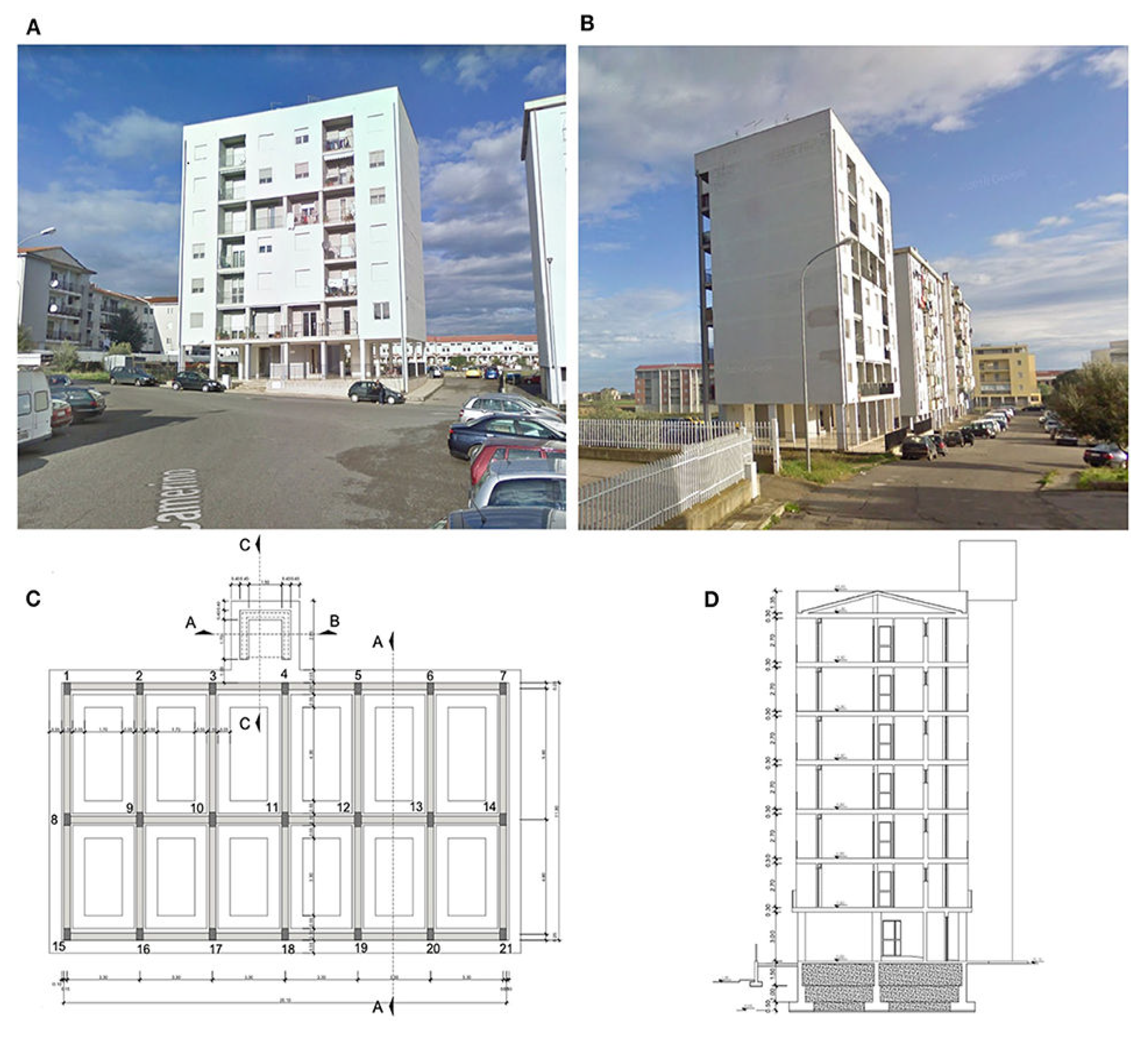
Figure 2.
Strengthening of Masonry Cross-diagram [37].
Figure 2.
Strengthening of Masonry Cross-diagram [37].
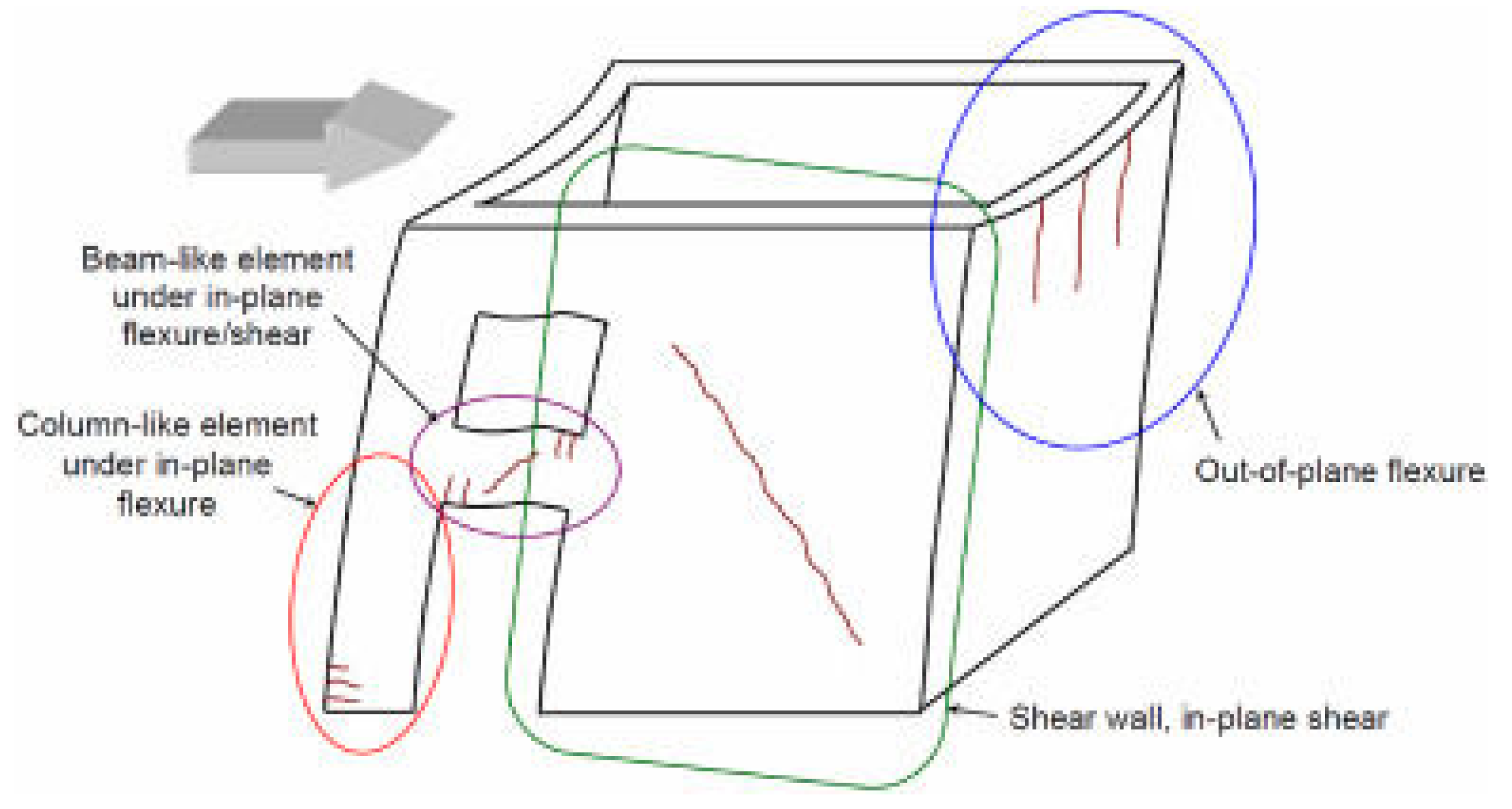
Figure 3.
Various types of eccentrically braced steel frames [40].
Figure 3.
Various types of eccentrically braced steel frames [40].
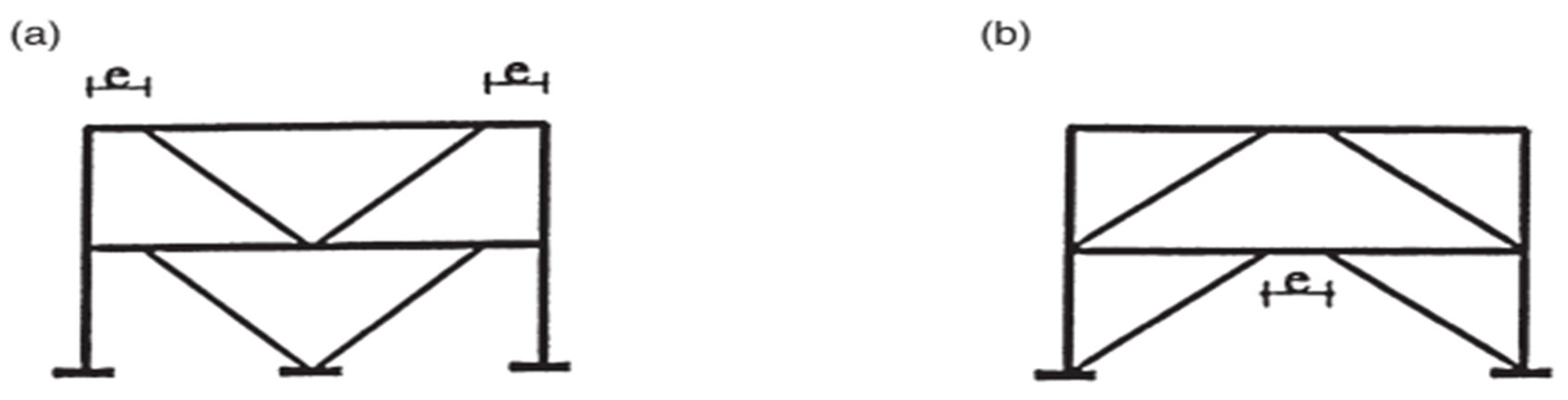
Figure 4.
Methods of FRP strengthening for RC columns [3].
Figure 4.
Methods of FRP strengthening for RC columns [3].
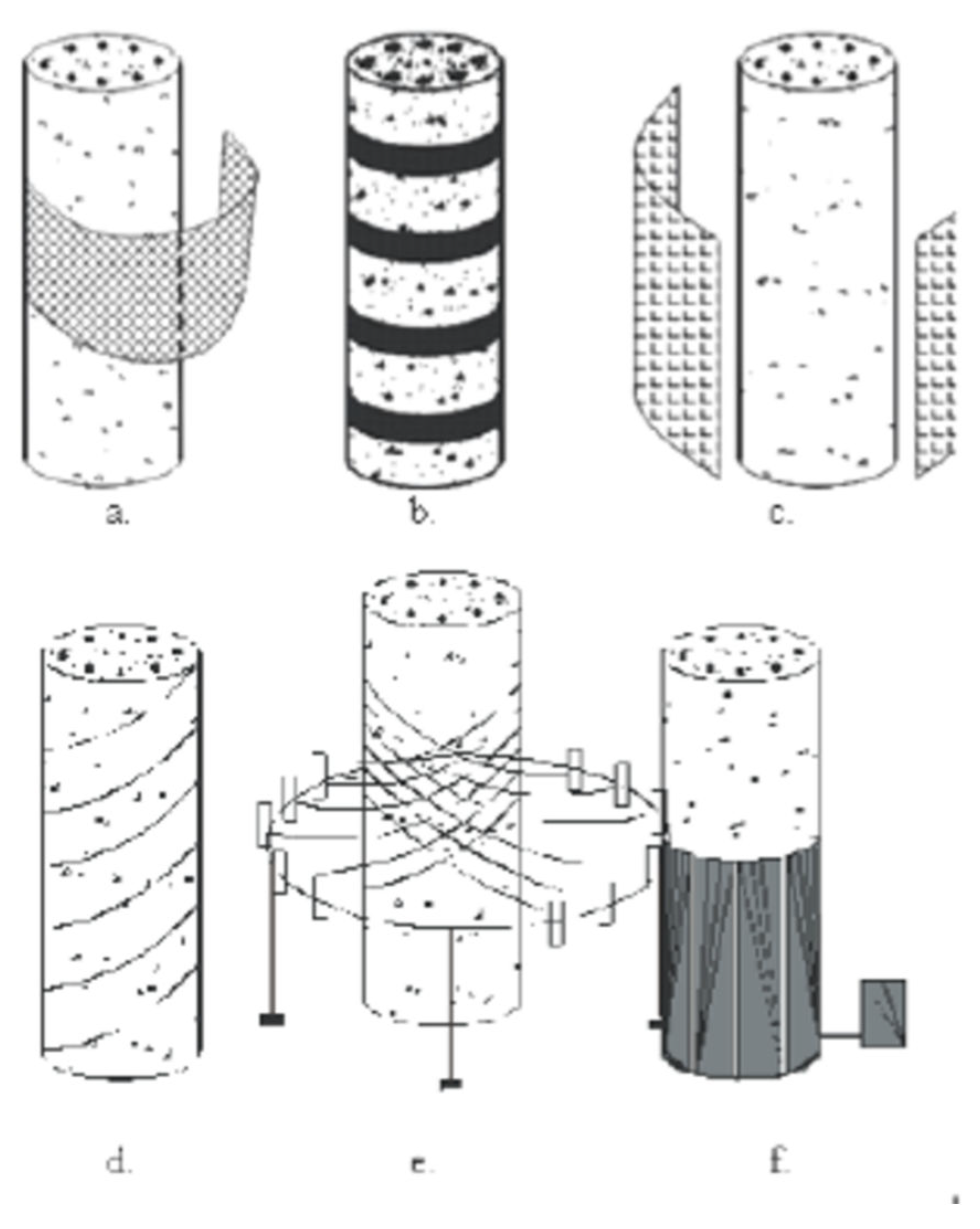
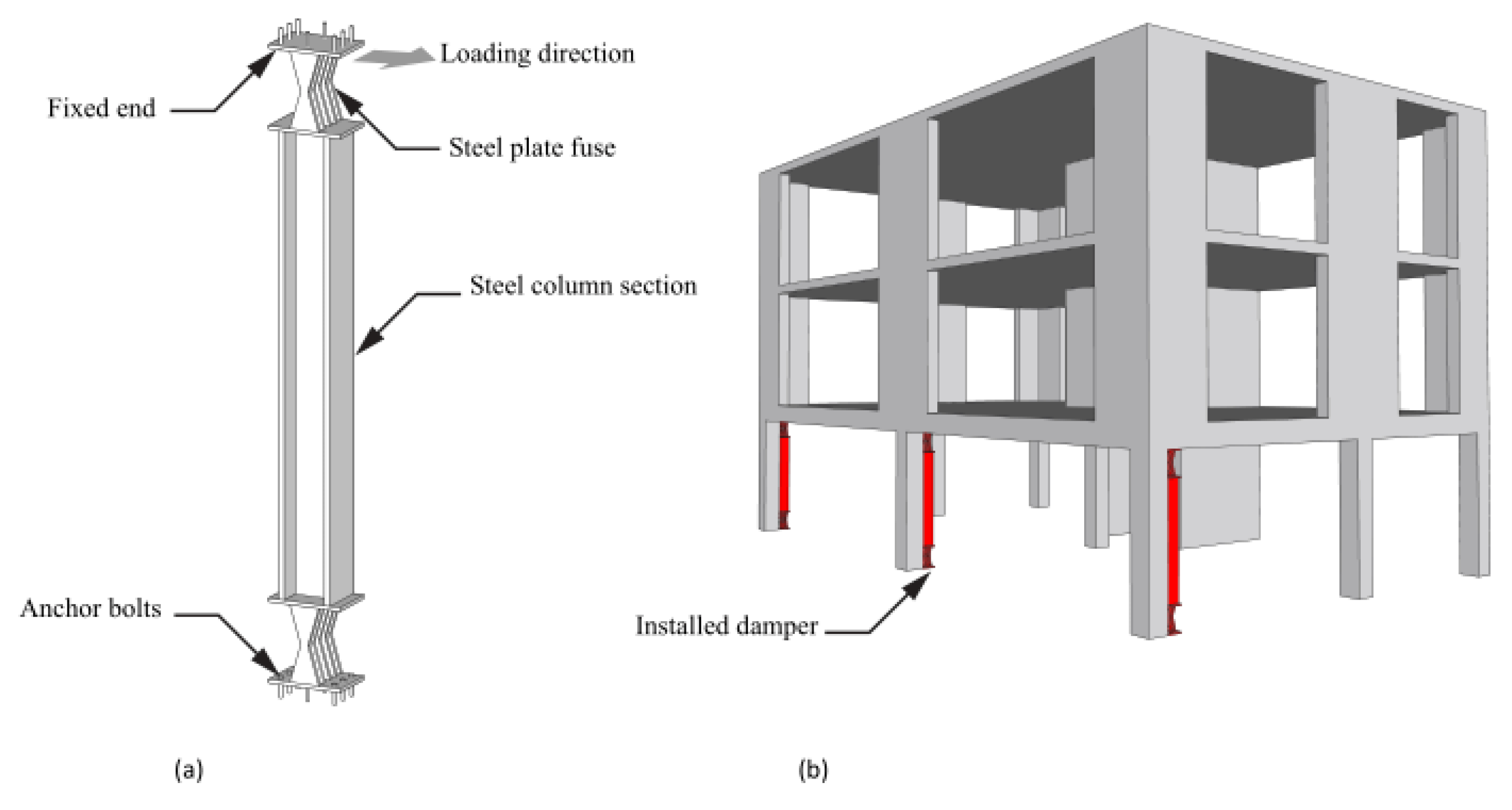
Figure 5.
Damping Retrofit Scheme [4].
Figure 5.
Damping Retrofit Scheme [4].
Disclaimer/Publisher’s Note: The statements, opinions and data contained in all publications are solely those of the individual author(s) and contributor(s) and not of MDPI and/or the editor(s). MDPI and/or the editor(s) disclaim responsibility for any injury to people or property resulting from any ideas, methods, instructions or products referred to in the content. |
© 2024 by the authors. Licensee MDPI, Basel, Switzerland. This article is an open access article distributed under the terms and conditions of the Creative Commons Attribution (CC BY) license (http://creativecommons.org/licenses/by/4.0/).
Copyright: This open access article is published under a Creative Commons CC BY 4.0 license, which permit the free download, distribution, and reuse, provided that the author and preprint are cited in any reuse.