

Submitted:
23 May 2024
Posted:
24 May 2024
You are already at the latest version
Abstract
Digitalization have force emerging markets (EMs) firms operating in resource-constrained environment to adopt market-driven strategies, particularly frugal innovation, to provide affordable, optimize processes and high-value solutions. However, understanding the mechanisms behind developing frugal innovation capability (FIC) at the firm level in diverse EMs remains limited. From the perspective of the Resource-based View, this study added to the existing body of knowledge by exploring how strategic orientation (entrepreneurial orientation (EO) and market orientation (MO)) and organizational ambidexterity (OA) impact the development of FIC in EMs. The study utilized a cross-sectional survey in data collection with 386 valid respondents from Tanzanian manufacturing firms to empirically validate our theoretical predictions. The results show that both EO and MO have strong and positive association with OA and the development of FIC in EMs. In addition, OA partially mediate the relationship of both EO and MO with the development of FIC. Furthermore, our results indicate that MO exerts a more significant impact on the development of FIC than EO in EMs. Managers of manufacturing firms in EMs can use these findings to review their strategic decisions and their exploitative and exploratory approaches to enhance supply chains, develop cost-effective technologies, and produce affordable offerings that cater to the preferences of price-conscious consumers in the digitalization age.
Keywords:
Digitalization
; Entrepreneurial orientation
; Market orientation
; Organizational ambidexterity
; Frugal innovation capability
; Emerging Markets
1. Introduction
Emerging markets (EMs) in developing countries have traditionally been seen as either adopting or imitating innovations that have already been established in the industrialized world. A new school of thought holds that developing countries can serve as catalysts for original innovation [1,2,3]. Due to the remarkably rapid economic growth of sub-Saharan African nations, India and China have made EMs a very appealing investment option over the past 20 years. Products from the industrialized world may have satisfied the relatively affluent market in these nations, but there is still an unmet need in the "bottom of the pyramid" market. This is because the offerings provided by firms from industrialized nations frequently exceed the price range of EMs customers, despite being altered and cheaper copies of the original offerings [4]. In contemporary times, filled with era of digitalization has brought new challenges for firms in these markets. The era of digitalization has resulted in a surge of e-commerce actions, leading to the modernization of conventional business practices, techniques, and products [5]. To adapt to the growing demands of digitalization and e-commerce, businesses are implementing innovative approaches to discover new processes and methods [6]. In response to the challenges posed by digitalization era and e-commerce businesses are heavily reliant on their innovation activities [7]. However, EMs firms are faced with highly volatile environment, weak institutional frameworks, bureaucratic structures, insufficient intellectual property rights, uncertain customer credit assessment, and infrastructure constraints [8,9,10].
EMs firms are exploring new approaches to product innovation in this digital era to meet market demands in terms of lower costs, profitability, reduced features, and ease of usage or delivery across geographically fragmented markets. The unique items in this innovative category are referred to as ‘frugal innovations’ [11,12]. Firms perceive the adoption of frugal innovation (FI) as either a means to enhance efficiency and gain a competitive edge [13] or a way to achieve advantages through frugality [14]. According to the work of Bernardes et al. [15], the adoption of FI requires firms to cultivate new capabilities due to its distinct approach compared to the traditional innovation approach. FI acknowledges constraints imposed on an individual's resource availability, such as input prices, insufficient resources, and poor infrastructure. It can be directed toward a nascent industry or a market that is underserved [14], as well as untapped or novel markets, while maintaining fundamental functionality, minimizing costs, and ensuring long-term measures [3,16]. In cases of scarce resources in EMs, firms must reaffirm their innovation strategy based on FI principles to avoid starting over with their innovation process [17,18]. To successfully develop FI products, firms need to develop and manage specific capabilities and reaffirm their innovation strategy based on FI principles. This approach requires firms to develop and manage specific capabilities to successfully develop frugality products [19,20]. Research on FI, which focuses on resources and capabilities, lacks guidance on developing these capabilities at the firm level [17]. It is unclear how to create innovative offerings that meet local consumer demands in EMs by being affordable, having fewer or different features, and being easy to use, maintain, and deliver across diverse geographic markets.
According to the resource-based view (RBV), organizations are composed of a combination of tangible and intangible assets and capabilities [21,22]. The RBV serves as a framework for this study. This framework uses strategic orientation (SO) and organizational ambidexterity (OA) as intangible resources to assess firms' innovation capacity in EMs; this framework is referred to as frugal innovation capability (FIC). For firms to thrive in competitive and dynamic markets, they must develop market-oriented SO [23,24]. Such market-oriented SO helps firms develop dynamic capabilities (DCs), which are essential for survival and expansion in volatile emerging markets [25]. Prior studies argue that DCs are organizational processes that are developed and integrated within a firm to facilitate changes in its resource base [26]. Thus, firms should focus on internal processes and efforts in addition to acquiring DCs through market transactions. To achieve and maintain a competitive advantage, an organization can leverage these capabilities [27]. Due to the turbulent and unprecedented environment found in EMs, it is crucial for companies to prioritize the development of DCs [28]. Therefore, SO is essential for businesses operating in quickly evolving environments, as it helps them develop DCs [28]. Several studies emphasize the importance of strategic marketing in achieving exceptional performance in developing economies [29]. The concept of SO pertains to the guidance provided to organizations in their interactions with external elements such as technology, rivals, and consumers to facilitate the successful execution of their operations [30,31].
On the other hand, DC is internally focused, emphasizing the integration and revitalization of an organization’s resources [28]. Raisch & Birkinshaw [32] propose defining ambidexterity as a dynamic capability requiring the reconfiguration of resources. It describes an organization's capacity and ability to successfully handle two conflicting activities simultaneously, including exploitative and explorative, alignment and adaptability and efficiency and flexibility [33,34]. Ambidexterity is generally thought to enhance firms' long-term success and survival [33,35,36]. However, Wu et al. [34] argue that ambidexterity does not always lead to improved firm innovation performance. Furthermore, Popadiuk et al. [37] suggest that ambidexterity does not directly result in a competitive advantage for firms; instead, it enables the formation of new resource configurations that ultimately lead to a competitive advantage. Although existing studies have provided important insights, significant deficiencies persist in the ambidexterity literature, necessitating additional studies to understand how ambidexterity facilitates firms' innovation performance in turbulent and challenging environmental conditions such as EMs. Therefore, SO, as a deliberate decision, should guide how firms obtain, distribute, and utilize resources to develop DCs. Scholars [26,38,39] argue that innovation capability, i.e., FIC, in the case of EMs is regarded as a constituent of DC. Scholars [29,31,40] argue that SO positively impacts both innovation and organizational performance. Despite this, the contribution of SO in building innovation capabilities remains largely unexplored in current literature.
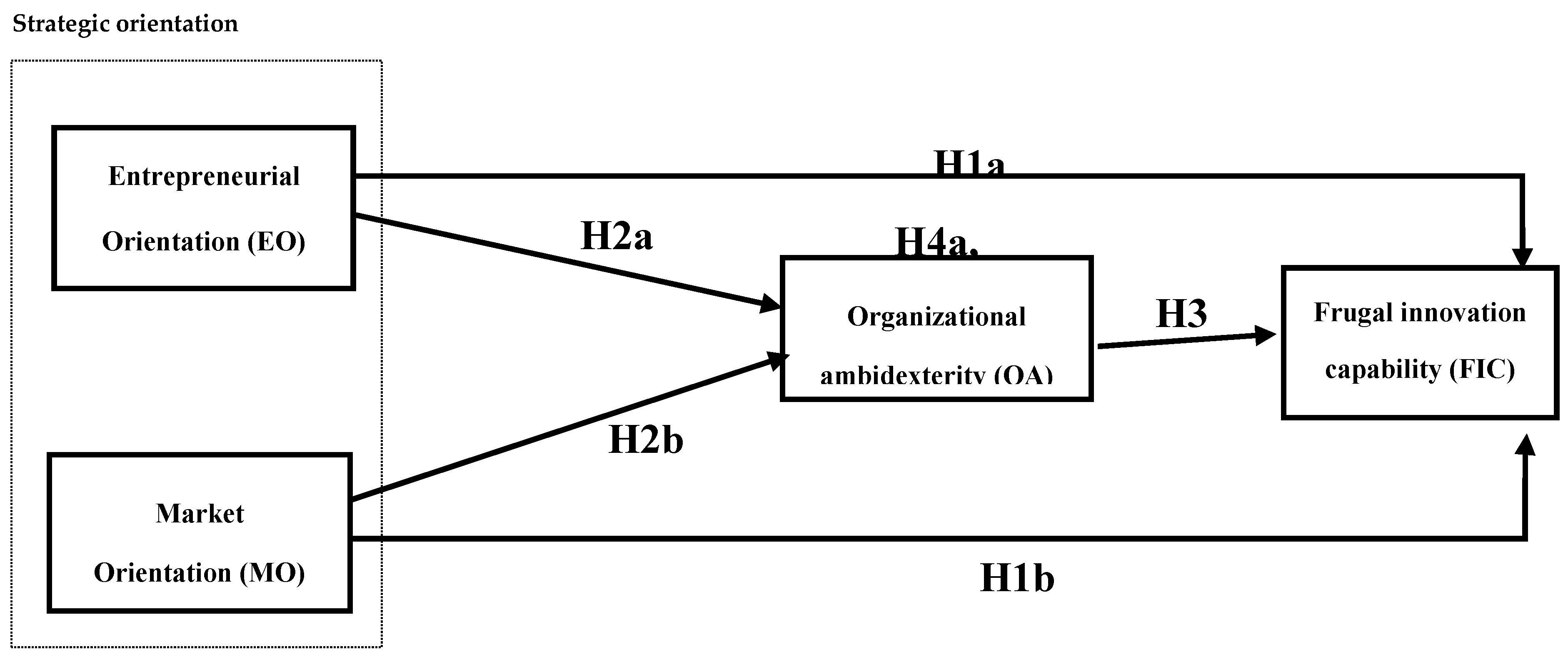
From the RBV perspective, we suggest that organizations exhibiting greater levels of SO and organizational ambidexterity (OA are better positioned to drive innovation [41,42,43]. According to Benitez et al. [41] and Ferreira et al. [44], firms that exhibit organizational ambidexterity are able to accomplish two primary goals: becoming more efficient in their current operations by making the most of their current knowledge and being adaptable in their pursuit of new information to capitalize on future opportunities. To that end, we contend that firms’ innovation capability in EMs is best fostered by SO and organizational ambidexterity (OA). Additionally, upon careful consideration of the distinctive attributes of EMs, we contend that SO and OA enable more effective fulfillment of innovation needs in EMs and facilitate the alignment of diverse product development with cost-effective innovation strategies [20,45,46]. Although there have been numerous studies examining the effects of SO on innovation capabilities [47,48], the literature on the link between SO, OA, and innovation capability is still scarce, particularly in EMs within this digital era. There is scarcity of empirical and quantitative studies in the literature exploring how SO and OA contribute to the development of FIC in EMs. This study aims to address gaps in knowledge by analyzing how EMs firms develop FIC, using RBV, DC theory, and FI theory as a framework. Furthermore, a conceptual model is developed and tested in this study using data gathered from Tanzanian manufacturing firms (see Figure 1). The authors chose Tanzania as a research focus due to the necessity for increased attention on underserved BOP markets in developing nations, specifically those within sub-Saharan Africa, which have been categorized as peripheral markets. These markets have not been deemed significant enough to attract foreign firms' investments in developing innovative products [17].
Our study makes a valuable contribution to the existing literature in multiple ways. First, it sheds light on the significance of SO (EO and MO) and OA in fostering FIC in today's digital age in EMs. Several previous studies [20,49,50,51,52,53] have prioritized exploring several models and theories in order to forecast FI and its associated results, while neglecting factors such as EO, MO, and OA. Therefore, examining SO and OA as firms’ strategic resources and OA as an internal catalyst for fostering innovation capabilities in EMs to meet the challenges of digitalization and e-commerce. Second, based on our understanding, this study represents a unique examination of the role of OA in mediating the association between the two elements of SO and FIC. Our results highlight the critical impact of OA as a contributing factor to FIC in EMs. This study will expand upon the current literature by presenting evidence of the links between multiple factors and their collaborative role in enhancing innovation capabilities. The findings will support managers in enhancing a market-oriented mindset and an entrepreneurial mindset as valuable assets in EMs in this digital era. Third, by choosing Tanzania as the research setting, the results will enrich the existing literature by moving beyond studies carried out in developed countries. This is crucial because EO, MO, and OA may exhibit notable variations in EMs like Tanzania, impacted by several factors including entrepreneurs' psychological characteristics, company resources, economic circumstances, and market attributes."
2. Literature Framework and Hypothesis Development
2.1. Frugal Innovation
FIs are still a relatively new concept and area of study with various interpretations and definitions. Hossain [13] and Dost et al. [54] observed that FI can be understood in various ways, with most definitions highlighting product or service innovation, lowering costs, enhanced usability, and improved efficiency [55,56]. A more detailed definition of FI was provided in the work of Weyrauch and Herstatt [56] and Khan [57], emphasizing the significance of reducing the amounts of resources needed while creating user-friendly, easily manageable products that are durable, top-notch, and scalable. The concept of FI, as introduced by Pisoni et al. [58], involves generating novel ideas while limiting resource use. It first emerged as an innovative approach to creating solutions catering to unexplored or neglected market segments [56,59,60]. Some scholars propose characteristics such as creating products and services at significantly reduced expenses, providing limited functionality, ensuring user friendliness, and delivering excellent value for the price, especially for serving customers in EMs [3,61,62,63]. According to Mourtzis [64], it is common for companies operating in emerging economies to frequently adopt regionalization and customization strategies after implementing FI. Weyrauch and Herstatt [56] outlined a trio of specific characteristics that differentiate frugal innovation from other forms of innovation. These features include significant cost savings, an emphasis on fundamental functionality, and optimal performance. Innovation capacity may be characterized as a subset of dynamic capabilities [65]. The validity of this argument is provided by Teece et al. [66], who describe dynamic capacities as “the firms’ ability to incorporate, create and adopt to the changing environment”. Additionally, innovation capability, as outlined by Greeven [67], is a dynamic ability that enables firms to adapt resources to changing environments, create new products, and seize opportunities in EMs, regardless of the challenges these markets present. EMs demand affordable and good-quality products. To harness the considerable potential of these markets, firms need to cultivate a unique set of capabilities and overhaul their innovation processes accordingly [11]. Throughout this study, FIC is defined as the ability to dynamically innovate for the creation of distinctive products tailored for EMs.
2.2. Strategic Orientation
According to Covin & Wales [68], SO is an essential component of strategic management. SOs denote the future trajectory of an organization, embodying a steadfast alignment of thought, interest, or inclination [69,70]. It is determined by how a company analyses its operations to maximize profitability, financial performance, and competitive advantage [71]. Franczak et al. [72] revealed that firms prioritize SO based on their intended outcomes. The main importance of SO lies in its ability to guide organizations in effectively integrating and using resources to explore new market opportunities and maximize the potential of current ones [73]. “From the RBV standpoint, the entrepreneurial orientation (EO)” of a firm enhances “market orientation (MO), and when both are integrated as SO”, they are expected to positively affect the firm's ability to innovate and its overall performance [48,74,75,76,77]. Prior studies corroborate the notion that these orientations provide significantly more potent synergistic impacts [77].
2.2.1. Entrepreneurial Orientation
EO refers to the strategic decision-making procedure utilized by organization management to align their organizational goals, build a competitive edge and sustain their vision [78]. It encompasses not only the purpose but also the action of the organization’s top management decision related to the entrepreneurial process focused on new market entry, encompassing practices, methods and decision-making approaches. Several studies have noted that it acts as the "driver" of entrepreneurial endeavors within an organizational context [79]. Miller and Friesen [80] established three well-known traits of entrepreneurially oriented firms, namely, (1) fostering innovation to identify novel opportunities, (2) adopting proactive measures to gain a competitive advantage in the market, and (3) accepting risk in order to introduce new offerings. Firms that possess a stronger sense of EO are more inclined to act independently, foster innovation, support corporate risk-taking, engage aggressively with competitors, and actively seek market opportunities than are those firms lacking these characteristics [81,82]. According to the RBV, EO assumes a pivotal role in fostering the innovation capability of a firm due to its strong foundation and ability to align with organizational elements to generate new value [74,83,84,85].
2.2.2. Market Orientation
MO represents the overall initiative of an organization that demonstrates its level of emphasis on meeting the demands, needs and satisfaction of its current and future customers, along with its ability to adapt to market shifts guided by competitors and customer dynamics [86]. Jaworski and Kohli [87], define MO as the process of producing market intelligence on a company-wide scale, distributing it to all divisions, and addressing it collectively as a whole organization. In essence, MO emphasizes the importance of firms in comprehending the market and consistently utilizing their skills and expertise to enable them to deliver more value to customers. By consistently introducing new ideas and improving its offerings, a firm may satisfy the needs of its existing and prospective consumers and successfully adjust to changes in the market caused by its main rivals [88]. As a result, companies adopting a market-driven approach must develop an organizational culture that is responsive to customer and competitor actions, allowing for both exploitation and exploration strategies [82].
2.3. Organizational Ambidexterity
The concept of OA encompasses company’s ability to utilize existing market strengths and pursue new opportunities while simultaneously embracing radical innovations [89,90]. A comparable definition is provided by Patel et al. [91] as the simultaneous focus on both exploitation and exploration within functional business divisions, which assists in effectively managing dynamic shifts in the environment [92]. According to March [93], exploitative comprises a unique array of activities, including but not limited to decision, refining, producing, selecting, executing, and implementing. Conversely, exploration is concerned with generating knowledge and identifying future opportunities. Firms must consider a trade-off between leveraging existing competencies and exploring new ones [94]. Due to strategic directions and limited resources, firms often choose between these two capabilities, even though both are essential [93]. These options are embedded in the norms, customs, assumptions, routines and decisions of the organization. According to Tortorella et al. [94], it is crucial for enterprises to prioritize both explorative and exploitative innovations in order to sustain a competitive edge in dynamic marketplaces. Ghantous and Alnawas [95] describe exploitative innovations as incremental innovations allow companies to continuously modify their products and operational procedures in order to meet the demands of existing customers. As a result, exploitative innovations primarily aim to enhance the effectiveness of current services with minimal novelty, resulting in reduced resource usage, investment and business risk [96]. On the other hand, exploratory innovations are considered revolutionary (also known as adaptive from DC theory) because they involve thorough market research and the ability to sense new opportunities to generate novel ideas, services, and business models. The goal is to significantly transform current business practices and offerings by creating new innovations for the purpose of meeting emerging customer needs [97]. The above explanations indicate that OA integrates two fundamental elements – adaptability and alignment - with the goal of revolutionizing the business process. This transformation is designed to facilitate changes in business operations in order to align with the current and future demands, anticipations, and preferences of consumers [98]. In order to succeed in competition, businesses need to adopt both forms of innovation, as they work together synergistically rather than being at odds with each other [95].
Figure 1.
The Conceptual Model.
2.4. Strategic Orientation and Frugal Innovation Capability
The existence of strategic orientation (SO) is essential for companies to efficiently strategize for the future, as its absence can lead to a detrimental absence of advantage over rivals [99]. The main benefit of SO lies in its ability to guide organizations in effectively integrating and using resources to explore new market opportunities and maximize the potential of current ones [73]. Additionally, it is essential to demonstrate an organization's operational, commercial, and entrepreneurial position, focusing on risk-taking, allocating resources to innovation, adopting a proactive approach, and anticipating future events [69]. According to Sahi et al. [77], the presence of SO is a crucial element inside an organization and significantly influences its overall performance. Additionally, RBVs consider SO to be an intangible resource of an organization that enhances performance and gives it a competitive advantage [21]. Often, in regard to gaining a competitive advantage, intangible resources are more valuable, as they are not easily imitated like physical resources [100]. Previous studies have argued that the quality of various SOs, such as EO and MO, plays a crucial role in achieving superior performance [100,101]. The core traits of EO include innovativeness, risk-taking attitudes and proactive approaches. The core traits of EO include innovation, willingness to take risk, and proactive behavior, all of which contribute to a company's ability to learn valuable knowledge and identify potential business prospects [102,103].Entrepreneur-oriented firms are trailblazers for change, embracing risk and fostering innovation. Proactively seizing new opportunities and adapting to the implementation of innovation strategies are essential facets of EO. Strategic goals for entrepreneur-oriented firms extend beyond producing superior goods and services to surpass customer expectations [104]. Alegre & Chiva [105], Jayawarna et al. [106] and Otero-Neira et al. [107] suggest the use of innovation as an indicator of EO, as it enhances a firm's proactive decision-making, transforms risk-taking into opportunities, and creatively implements innovative concepts and practices [108,109]. As a result of these three pillars of EO, an organization can maximize its advantage in innovation capabilities while increasing its core competitiveness.
Lumpkin and Dess [110] proposed that companies that prioritize entrepreneurship have greater potential for success than their non-entrepreneurial counterparts, as they possess the ability to continuously pursue market opportunities. Therefore, EO has been identified as a prospective remedy for the obstacles encountered by entrepreneurial enterprises in volatile markets [81]. Montoya-Weiss & Calantone [111] suggest that the main factors contributing to the failure of new offerings are a lack of understanding of customer needs and an inability to provide superior value to competitors to customers. Customer-oriented firms offer exceptional customer value and respond effectively to competitors’ actions [101]. Firms must cultivate a customer-oriented culture that prioritizes product innovation based on the unique needs of their target market. To do so, firms require innovation capabilities [112]. Firms that prioritize customer satisfaction exhibit higher levels of innovation compared to firms that do not prioritize customer satisfaction [113], and they aim to address customer needs, including having a positive impact on their innovation capability [112]. In emerging markets, customer preferences are dynamic, and demand levels are highly unpredictable. Firms operating in these environments must engage in extensive market scanning and user networking to identify and assess customer needs, which is critical for developing product innovation capability and ultimately leading to product success. Research has shown that MO plays a significant role in the development of firms’ innovation capability [48,104,114,115,116], firm performance [48,86,115] and product innovation [117,118]. Building on the arguments presented above, we propose the following hypothesis:
H1a.
Entrepreneurial orientation positively and significantly influences the development of frugal innovation capability
H1b.
Market orientation positively and significantly influences the development of frugal innovation capability
2.5. Strategic Orientation and Organizational Ambidexterity
Firms operating within the same industry or environment face similar business challenges, but their responses to those challenges differ based on their strategic orientation [71]. According to Posch and Garaus [119], lack of understanding of SO may lead firms to deviate from their goals and participate in undesirable conduct, potentially hindering the identification of new market opportunities. EO, as a strategic methodology, can urge businesses to proactively pursue innovation and take risks to improve existing ideas or create new ideas. This enables firms to prioritize both exploitation and exploration strategies, resulting in the creation of new ideas, products, services, and market opportunities [120]. According to Sahi et al. [77], EO represents the style of decision-making, practices and processes used by entrepreneurial companies to enhance their offerings and meet the demands of their customers [77]. Furthermore, EO serves as a catalyst for entrepreneurial enterprises to explore new market opportunities beyond their existing scope, thus requiring a proactive approach to anticipate potential challenges and avoid adverse outcomes while serving their current markets [95]. According to Posch & Garaus [119], a greater emphasis on EO leads to improved innovation and performance by utilizing information more effectively. Zhang et al. [121] also suggested that a strong EO enhances the performance of firms through innovation ambidexterity. Therefore, it is suggested that EO is likely to play a crucial role in promoting innovation ambidexterity by empowering firms to strategically allocate and redirect their internal resources toward both exploratory and exploitative innovation endeavors [122].
MO is characterized by firms' responsiveness and a market-driven strategy emphasizing the ability to understand customer demands and keep close eye on competitors' moves, resulting in the firm's ability to enhance existing capabilities and pursue new opportunities in response to customer demands [123,124]. In relation to this, market-focused organizations prioritize acquiring knowledge to effectively address current demands using their established competencies and offerings, with the goal of exploiting opportunities [77]. Often, companies with this particular mindset frequently prioritize exploitation innovations which necessitate the possession of an dynamic capability in order to effectively respond to evolving market trends [17]. In addition, MO requires companies to monitor external factors, examine their industry's competitive landscape, and engage in product comparisons with prominent competitors [95]. As a result of such activities, firms become aware of new trends and market opportunities, which in turn results in the transition from existing offerings and markets to new ones, leading to a more customer-focused culture [97]. In addition to driving firms to continually refine and improve their products, a market-oriented approach also enables firms to maintain a competitive advantage over larger competitors [125]. Therefore, MO serves as a means of generating knowledge about the external environment, distributing it, and interpreting it internally to respond to consumer needs [30]. Companies that leverage this external knowledge can develop original innovations or modify existing products and processes [126]. Thus, MO can influence both exploration and exploitation innovation strategies [127]. As a consequence, the following hypothesis may be proposed:
H2a.
Entrepreneurial orientation positively and significantly influences organizational ambidexterity.
H2b.
Market orientation positively and significantly influences organizational ambidexterity.
2.6. Organizational Ambidexterity and Frugal Innovation Capability
According to Gibson and Birkinshaw [96], a significant level of AO is considered to be a crucial determinant in enhancing both innovation capabilities and company performance. According to several studies [32,41,128,129,130,131,132], it has been found that possessing ambidexterity allows organizations to attain a competitive advantage by adeptly managing and guiding both incremental and disruptive changes. Using ambidexterity, a firm strives to maintain competitiveness by implementing both exploitative or incremental innovation in the short-term, as well as exploratory, radical or disruptive innovation in the long run [132]. Often, exploitative innovations draw upon the existing area of knowledge and experience that are aligned with the interpretation of current customer requirements, ultimately prioritizing organizational learning within conventional confines. As a result of such learning, companies enhance their existing offerings, which havepositive reception and hold value for customers [93]. In contrast to exploitation, exploration innovation prioritizes the ability to adapt to change and gain a thorough understanding of customers' underlying needs through the application of new knowledge, resources, and proficiency in market research. As a result of exploratory innovation, new technologies, services and products are created that offer increased value to customers and are more appealing to the market [132]. Finding a balance between these two practices can lead firms to cost savings and improved utilization of limited resources, ultimately helping them achieve a competitive edge [77]. Considering only exploitation strategies may result in a firm lacking innovation in the long term and leaving it out of the market. Similarly, the financial viability of a firm may also be compromised if it solely concentrates on exploration strategies. Within this particular context, recent studies has provided support for the proposition that companies exhibiting ambidexterity are more inclined to attain higher levels of innovation over an extended period of time [44]. However, further empirical data is still required in this specific domain of investigation [133]. Therefore, we propose the following hypothesis:
H3.
Organizational ambidexterity positively and significantly influences frugal innovation capability
2.7. Mediating Effect of Organizational Ambidexterity
We also propose that OA acts as a mediator in the development of FIC in EMs within this digital era by influencing SO, namely EO and MO. Hence, OA plays a crucial role in linking EO and MO with FIC. Prior studies have shown the substantial impact of EO on improving company performance through OA [121,122,134,135]. EO promotes the inclination of organizations to undertake risks and explore novel prospects by means of innovation [110]. Consequently, EO will drive changes within firms by requiring a transformation from normal practices to take advantage of new prospects [136,137]. Similarly, prior studies highlighted the association between OA and MO and firm performance [77,95,97,138]. (Enkel et al. [139] view market orientation as a dynamic capability that directly and positively influences both exploitative and explorative innovation strategies. Therefore, OA firms can effectively develop differentiated products with cost-effective innovation [140]. A firm's exploitation strategies focus on improving its understanding of its operations and refining its available knowledge. Through this strategy, firms can achieve their goals with greater efficiency; minimize customer complaints, rework, faulty merchandise, and excess waste; and ultimately reduce production expenses [141]. Exploration strategies can also lead to the discovery of ways to enhance new products and processes, resulting in cost reduction [142]. Therefore, we propose the following hypothesis:
H4a.
Organizational ambidexterity mediates the relationship between entrepreneurial orientation and frugal innovation capability.
H4b.
Organizational ambidexterity mediates the relationship between entrepreneurial orientation and frugal innovation capability.
3. Methods
3.1. Research Design and Data Collection Method
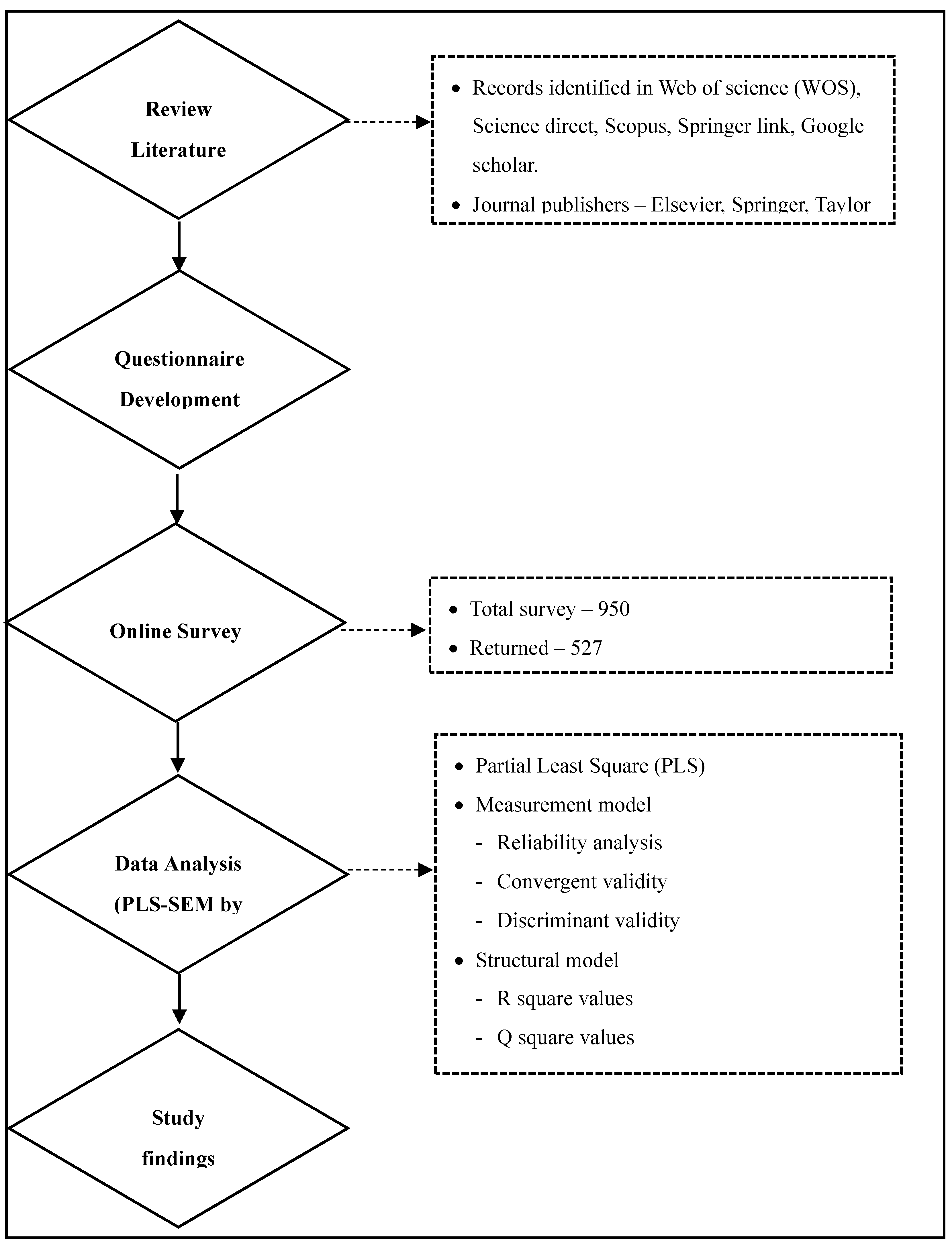
The application of FI in the manufacturing sector within EMs is approximately 20% [143]. The Tanzania market is considered EM in the Sub-Saharan region, and its manufacturing sector accounts for 53% of the nation’s industrial structure and 23.2% of its GDP [144]. The majority of manufacturing activities in Tanzania involve simple consumer products, such as food, textiles, beverages, tobacco, wood, chemicals, plastic, and steel allied products, targeting consumers with low purchasing power. As our study aimed to examine how manufacturing firms in EMs develop FIC to meet the needs of consumers with low purchasing power by developing frugal products, it was justifiable to concentrate on gathering data from manufacturing firms in EMs such as Tanzania. A multilayered approach using an online survey was used to explore in greater detail how SO and OA contribute to the development of FIC within the EMs. A flowchart in Figure 2 illustrates the study method. We collected data through self-administered questionnaires by surveying manufacturing firms in the cities of Arusha and Dar es Salaam, Tanzania, which are industrialized regions that have high potential for manufacturing outputs [145]. The firms under study included both large-scale industries and small and medium enterprises (SMEs) [146] operating in three subsectors, namely, fashion (e.g., textile and apparel, leather goods, footwear, cosmetics and soap, jewelry); food (e.g., food processing, both alcoholic and nonalcoholic beverages, dairy products, Tobacco); and furniture, fittings, plastic and metals (e.g., lighting articles and appliances, chemicals, rubber products, plastics products and fabricated metals). We identified manufacturing firms with an industrial license since 2010 from the Business Registration and Licensing Agency (BRELA) and the Confederation of Tanzania Industries (CTI). We administered a five-point Likert scale questionnaire for all variables. The data were collected from May 2023 to August 2023.
3.2. Sampling Method and Sample Size Determination
This study employs judgmental sampling method since it is time-saving and cost-effective and allows direct contact with the target population [147]. This sampling method was deemed appropriate because the study required individuals with specific qualities to provide relevant information [148]. Key personnel responsible for operations/production, finance, human resources, marketing, and owners/CEOs/general managers from selected manufacturing firms were approached for data collection. We contacted the administration departments of the respective manufacturing firms in the targeted cities by phone calls, personal visits or email. Our interactions with the administration department helped us clarify the study's goals and secure collaboration in distributing the online questionnaires to targeted participants within their firms. In the process of data collection, 386 valid responses were collected after screening all invalid responses, which is a size that has been considered appropriate based on previous studies [149,150]. The dataset should ideally be at least ten times the number of parameters/items, and due to the inclusion of 35 items in this study, a minimum sample size of 350 was necessary [149,151]. To ensure that there were no carryover effects, the questionnaire was modified with a randomization element [152]. Additionally, to assess common method bias, we employed the full collinearity test within partial least squares structural equation modeling (PLS-SEM) [153]. The results of the full collinearity test show that the VIF values for all latent constructs are less than 3.3, indicating that common method bias is not a significant issue in this study. A brief description of the respondents' sociodemographic characteristics is presented in Table 1.
3.3. Measurement of Constructs
In this study, we utilized a questionnaire that was divided into two sections and administered in the English language. The first section gathered background information, while the second section comprised 38 items related to latent variables. Each item in the questionnaire was evaluated on a 5-point Likert scale ranging from 5 (strongly agree) to 1 (strongly disagree). The measures employed for the constructs in the model were adapted from previous research.
3.3.1. Strategic Orientation
Instead of treating SO as a single construct, we focused on its individual components, EO and MO. To assess EO as a reflective construct, we adopted the scale from [81], which used three dimensions related to innovation (for example, new product development), risk taking (for example, willingness to take on high-risk projects), and proactive behavior in initiating action. Similarly, Narver & Slater [86] developed the MO scales (customer and competitor orientation), which have since been rigorously tested and validated by numerous researchers [154,155,156]. We adopted the scales of customer orientation with six items and competitor orientation with four items directly from Narver & Slater [86] because they meet the requirements for measuring market orientation in our study.
3.3.2. Organizational Ambidexterity
OA was measured using six items (three items for alignment (AL) and three items for adaptability (AD)) adopted from [89]. The OA is measured by the degree to which the operational unit engages in both exploration and exploitation simultaneously. This was based on the recommendation of Sahi et al. [77] that, in a developing economy, learning-based operational ambidexterity is the best option for SMEs because such firms are capable of incremental innovation at best. Accordingly, companies that possess contextual ambidexterity are able to balance both exploration (adaptability) and exploitation (alignment) [96].
3.3.3. Frugal Innovation Capability
Three dimensions, as developed by Rossetto et al. [157], were utilized to measure FIC, a second-order construct. These dimensions include substantial cost reduction (SCR), core functionality (CF) and sustainable shared engagement (SSE). We directly adopted this scale because it aligns with the requirements for measuring FIC in our study and addresses the necessary aspects of assessment.
3.4. Model Specification and Data Analysis
Smart-PLS4 software [158] was used to perform two-step structural modeling [159]. For the purpose of assessing the underlying theoretical model and test hypotheses, we used the PLS-SEM approach [160]. In this particular study, PLS-SEM was chosen since it is a nonparametric technique that is appropriate for data that do not necessarily adhere to a normal distribution [161,162,163]. Given our study objectives of investigating the influence of SO and OA on the development of FIC, the utilization of PLS-SEM is appropriate for this purpose. To test our hypotheses, we utilized a bootstrapping method that involved 10,000 subsamples and incorporated bias-corrected and accelerated (BCA) confidence intervals. Two-tailed significance analysis was performed at the 95% confidence level [164]. We used the methodological procedures of Hair et al. [161,163] for both measurement and structural modeling.
4. Results
4.1. Measurement Model
The psychometric characteristics of the measurement scales (reliability, convergent validity and discriminant validity) indicate that all the items effectively reflect the latent variables (see Table 2). The internal consistency reliability of the construct was assessed using Cronbach's alpha (Cα) and rho-A. Convergent validity was analyzed utilizing composite reliability (CR), factor loading (λ) and average variance extracted (AVE) [165]. The Cronbach’s α and rho-A of all the constructs exceeded the above threshold of 0.7, which confirmed that the internal consistency and reliability of the measures were adequate [165]. Furthermore, for each dimension, CR is expected to have a value > 0.7, factor loading and AVE > 0.5 [150,165]. Based on Table 2, the CR, factor loading and AVE of all the dimensions achieved the above threshold indices, indicating satisfactory convergent validity [150,165]. The final step in SEM analysis for measurement model evaluation involves the discriminant validation of all the constructs. To achieve this goal, the Fornell & Larcker [166] approach was selected to evaluate the distinctiveness and independence of the model's indicators. “The discriminant validity of the constructs was confirmed by comparing the square root of the AVE of each construct with its correlations with other constructs included in the model. As shown in Table 3, the square root of the AVE of each construct exceeded the correlation with other constructs, hence establishing discriminant validity” [166]. In addition, the variance inflation factor (VIF) was examined, and all the indicators and constructs had values less than the ceiling value of 0.5, as indicated in Table 2. This confirms that the study does not suffer from multicollinearity issues [167]. Hence, as per the results obtained earlier, it can be concluded that the study construct met the necessary requirements for conducting SEM analysis.
4.2. Structural Model
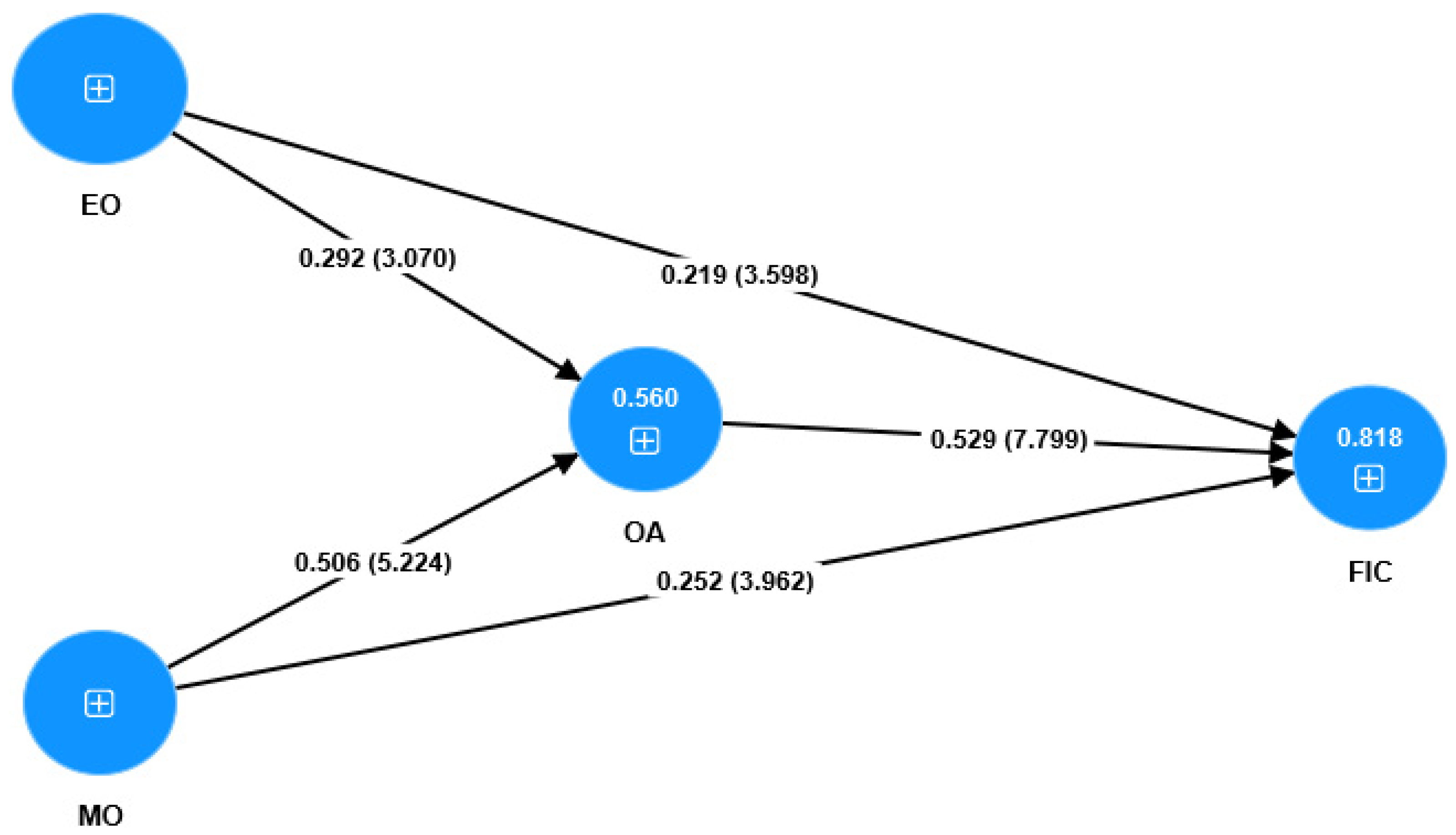
The evaluation of the structural model [167,168] represents the second step in the PLS-SEM process, whereby it is used to assess the model and test hypotheses. This stage involved the evaluation of R-square, Q-square, and path coefficients (β value), together with their related t value bootstraps, as assessment criteria for PLS-SEM outcomes. Determination of the significance threshold for the t value bootstrap method involves the use of 10,000 subsamples, as indicated by Hair et al. [167]. The results pertaining to the effects of path relationships are shown in Table 5 and Figure 3. To assess the consistency of the model, R-square values were evaluated. The results, presented in Table 4, indicate that the independent variables in the model (EO and MO) explained a substantial amount of the variance in OA (R-square 56%). Furthermore, EO, MO and OA explained a substantial amount of the variance in FIC (R-square 81.8%). All R-square values surpass the threshold value of 26%, indicating a high level of dependence between an independent variable and the dependent variable(s) [169]. Additionally, the predictive ability of the model was assessed using PLSpredict. Table 4 shows the Q2 values; notably, all of these values are above zero, suggesting satisfactory levels of predictive relevance [170]. Therefore, these results demonstrated that the model exhibited satisfactory predictive validity, suggesting the robustness of our model and the reliability of our results [171].
The study examined the relationships between the constructs, and the results are presented in Table 5 which shows the values of the beta coefficients (β), p values, and t values. When evaluating the significance of the model, the first examination consisted of analyzing the t value and p value. According to Hair et al. [165], t values are considered to be significant when they are above the threshold of 1.96. All the t values were equal to or greater than 1.96, and the matching p values were less than 0.05. The findings of this study confirm the acceptance of all five proposed hypotheses. The results confirmed the positive and significant influence of both EO (H1a: β = 0.219; t value ≥ 1.96) and MO on FIC (H1b: β = 0.252; t value ≥ 1.96). Hence, H1a and H1b are supported. Furthermore, the results indicate a statistically significant and positive relationship between both EO (H2a: β = 0.292; t value ≥ 1.96) and MO (H2b: β = 0.506; t value ≥ 1.96) on OA. Hence, H2a and H2b are supported. Additionally, the results confirmed the positive and significant influence of OA (H3: β = 0.529; t value ≥ 1.96) on the FIC. Hence, H3 is supported. Furthermore, based on the findings presented in Table 5, it can be argued that the second-order construct of FIC establishes validity in relation to its first-order variables: CF (β value = 0.833), SCR (β value = 0.861) and SSE (β value = 0.890).
Figure 2.
The Flow Chart of Research Methodology (Source: Author explanation).
4.3. Mediation Role of Organizational Ambidexterity
Table 6 provides a detailed overview of the mediation analysis conducted in this study. This analysis follows the mediation guidelines outlined by Zhao et al. [172] and the methodology developed by Hair et al. [165]. As shown in Figure 3, this study assumes that the transmission of the impact of SO (i.e., EO and MO) to FIC follows these paths: H4a. EO → OA → FIC; and H5b. MO → OA→ FIC. The three-factor method suggested by Zhao et al. [172] was used to assess the magnitude of the mediation effect, measuring the extent to which the indirect effect mitigates the direct effect. In this regard, the variance accounted for (VAF) metric is utilized to determine the extent to which the direct pathway is mediated. According to Hair et al. [150], the mediation effect conditions are established based on the VAF value: “no mediation, 0 < VAF < 0.20; partial mediation, 0.20 < VAF < 0.80; and full mediation, VAF > 0.80”. Based on the data shown in Table 6, the VAF value of EO → OA → FIC = indirect effect/total effect (0.181/0.421) = 0.430, suggesting that the mediating effect of OA accounts for 43% of the EO effect on FIC. With a VAF between 20% and 80%, it can be concluded that OA plays a partial mediating role in this relationship; hence, H4a is supported. Similarly, the mediation hypothesis (H4b) is supported, as the VAF of the MO → OA → FIC has a value of 0.186/0.480 = 0.388. This result indicates that OA partially mediates the relationship between EO and FIC. Furthermore, in terms of indirect effects, the MO had the most significant indirect impact on FIC, with a beta coefficient of 0.186 (t value = 5.063), while the EO had a beta coefficient of 0.181 (t value = 4.726). The total indirect effect of the exogenous variables through the mediating variables (organizational ambidexterity) on the FIC was 0.367.
5. Discussion and Conclusion
5.1. Discussion
In line with the RBV perspective, this study examined and expanded upon the RBV theory by proposing a rationale for the essential role of SO (i.e., EO and MO) and OA in enhancing the development of FIC in EMs within this digital era. The results revealed that SO (i.e., EO and MO) is a significant determinant of FIC in EMs. Based on the findings of the present study, EO has a positive impact on FIC; hence, H1a was supported. In other words, EO demonstrated a strong commitment to developing innovation capability [105]. Entrepreneurially driven firms recognize innovation as a crucial strategic approach for entering high-risk markets and launching new products [173]. As EO is a proactive and risk-taking approach aimed at capitalizing on business opportunities, innovation stands out as the essential foundation on which EO must rely. This results in enhancing the capabilities of firms, entering new markets, and expanding their market presence. In addition, with EO, firms in resource-constrained environments can enhance their FIC to address the available entrepreneurship opportunities. These results align with those of other studies highlighting EO as a primary driver for enhancing firms’ innovation capabilities [83,84,174,175]. This discovery is significant given the limited literature on the establishment of this correlation in EMs, specifically in the context of sub-Saharan African countries. These findings are also consistent with those of Berndt et al. [49] and with the findings of Cuevas-Vargas and Parga-Montoya [176] that EO fosters FI in EMs, which proves the existence of FIC to produce frugal products/services in those EMs.
Moreover, the results confirming the positive and significant role of MO in fostering manufacturing SMEs’ FIC in EMs are confirmed by the results; hence, H1b is supported. These results support the notion that market-oriented firms understand customer needs and expectations, leading to the generation of new product concepts, the creation of innovative products, and ultimately the success of product innovation [177]. Scholars confirm that SMEs with a market-oriented focus are more likely to innovate [178]. In addition, these results accord with studies confirming that by gaining a deeper understanding of customer demands in EMs, SMEs can seize the chance to differentiate themselves from commodity-centric roles in global value chains and minimize reliance on pricing strategies through product innovation [179]. Furthermore, the findings of this study are consistent with those of studies on the role of MO in enhancing product innovation and innovation capabilities [48,177,180].
The results provide evidence of the role of SO (i.e., EO and MO) in influencing OA in EMs. Hence, H2a and H2b are supported. These results validate the argument that firms should capitalize on the operational environment and develop new “products and services, exploring and exploiting opportunities provided by the environment” [181]. Within this complex environment, EO plays a crucial role, as it guides strategic decision-making and resource distribution to foster both exploration and exploitation of opportunities [181]. The findings further reinforced the conclusions of Lisboa et al.'s [182] study, which highlighted the importance of EO in promoting the exploitation and exploration of new product-market potentials. Furthermore, these results contradict the claim made by Wiklund and Shepherd [183] that EO is more closely linked to exploratory innovation than exploitation. The notion that exploration is a more suitable fit for EO than exploitation may not hold true because, if EO leans more toward exploration, it could lead to a failure trap because exploratory innovation is experimental and self-reinforcing in nature [184]. Additionally, the results confirm the role of MO in fostering OA, which agrees with the findings of Ed-Dafali et al. [89]. They also concur with the view that the key driver of exploitative innovations is that firms concentrate on implementing a market-driven strategy that centers on recognizing customer and market requirements that specifically support incremental innovations [185]. Additionally, market-oriented firms prioritize acquiring knowledge to address current needs using established skills and offerings with a focus on exploitation [77]. Consequently, these results are consistent with those of studies showing that MO, as a single construct, is related to both exploitation and exploration innovation [139,186].
These findings support the positive and significant role of OA in fostering FIC in EMs; hence, H3 is supported. These findings align with O’Reilly and Tushman [187] claims that OA is a dynamic capability enabling companies to rearrange, modify, and integrate their organizational skills and resources to adapt to constantly changing environments. These findings also, accord with the findings of studies confirming that an organization's ability to innovate is shaped by performance management and social support, which create a conducive environment for employees to engage in both exploitative and exploratory innovative activities [188]. Furthermore, although the findings suggest that there is a connection between ambidexterity (the ability of an organization to explore and exploit simultaneously) and innovation capability, there is still a lack of empirical studies that have specifically examined and provided evidence for this relationship [41,133].
Finally, the results showed that OA mediates the relationship between both elements of SO, i.e., EO and MO, and FIC in EMs; hence, H4a and H4b are supported. These findings are consistent with previous studies on the mediating role of OA in which contextual ambidexterity, the ability to balance aligned and adaptable behaviors simultaneously, acts as a mediator between organizational factors promoting such behaviors and the resulting performance outcomes [96]. The findings also support the claim that OA significantly mediates the connection between green manufacturing, green marketing, and competitive advantage [189]. Ambidextrous capability also serves as a mediator that channels the advantages of a learning orientation toward enhancing new product performance [190].
Figure 3.
Structural Model (Path Coefficient, t-value and R2 values).
5.2. Conclusion
Currently, the available literature offers limited insight into the development of FIC and FI approaches in EMs within this digital era. Resource scarcity continues to hit the globe, presenting additional hurdles for the survival of firms in these markets with the current challenges of digitalization and e-commerce. The presence of these limited resource environments in EMs and their impact on SMEs survival urge scholars and professionals to utilize the lessons learned to improve firms’ response to digital demands and to ensure their survival in resource-constrained environments. This study highlights the importance of OA as a beneficial and critical mechanism for fostering EO and MO [135,191] to facilitate FIC in EMs. The need for FI approaches has expanded beyond just EMs in impoverished nations and has become prevalent in countries worldwide facing resource limitations. The current transformative and disruptive landscapes have heightened the necessity for SMEs to understand how to create strategic approaches using their internal resources and capabilities. They must then share these approaches with their business stakeholders while integrating various best practices and lessons learned to enhance their survival prospects and maintain their business operations in digitalization era. OA has been traditionally viewed as a way to monitor, absorb, and adapt to both internal and external changes through exploitation and exploration innovation strategies, enabling firms to effectively respond to unpredictable technological changes and constantly shifting uncertainties and disruptions.
6. Implications and Avenues for Future Research
6.1. Theoretical Implications
This study contributes to the scientific literature in several ways on the relationship between SO (i.e., EO and MO) and OA or FIC in EMs. First, we add to the body of knowledge by demonstrating the beneficial impact of both elements of SO, that is, EO and MO, in fostering FIC in EMs within digitalization era. Various perspectives and methodologies have been utilized to discuss and examine the impact of SO on various outcome parameters in EMs. The primary focus of many studies in the context of EMs has been on exploring the link between SO, EO or MO and firm performance from multiple perspectives [192,193,194,195]. Therefore, this study fills this gap by empirically testing this hypothesis and advancing the understanding of the SO as an organizational resource based on the RBV within the literature. In addition, this study contributes new insights to the literature on EO, MO and OA in EMs contexts as opposed to developed nations contexts, where sources, conditions, and cultures vary. This approach enhances the understanding of the significance of EO, MO and OA in driving innovation capability outcomes through the use of results and generalizable ideas and arguments.
Second, we explored the use of OA in combination with SO as an intangible resource for developing FICs in EMs. This study responds to the calls of Iqbal et al. [196], D’Angelo and Magnusson, [197] and Reinhardt et al. [45] for further examination of organizational resources and capabilities that can increase the ability of a firm to develop FI in EMs. Through this approach, businesses are better positioned to meet the needs of the growing population of low-income and poverty-stricken consumers in EMs within this digitalization era, specifically in sub-Saharan African countries, which are seeking innovative products and services at affordable prices [49]. Third, our study responds to calls in the OA literature [96] for studies on the mediating role of OA. By employing OA as a mediator between SO and FIC in EMs, this study suggests that firms in EMs should adapt and switch between exploration and exploitation activities based on the unique challenges and opportunities present in EMs. By leveraging contextual ambidexterity through aligning themselves around adaptability, firms can tailor their innovation strategies to the specific needs and constraints of EMs, fostering the development of FIC that are both cost-effective and impactful to meet the demand of digitalization.
Last, our study offers valuable insights and constructive contributions to the current theories and literature on EO, MO, FI, OA and EMs. This study offers significant theoretical insights into the factors influencing FI in resource-constrained environments such as EMs. The results reveal novel prospects for examining the role of EO [49] and MO in enabling EMs firms to cope with resource-constrained environments and digitalization challenges. Moreover, this study offers valuable insights to the literature on crisis management by introducing an FI approach that integrates new ideas and strategies to tackle supply chain disruptions and uphold the success of SMEs within a resource-constrained environment.
6.2. Practical Implications
The findings of our study offer practical and managerial contributions for firms operating in EMs within a resource-constrained environment within this digitalization era. Firms need to enhance their EO and MO by promoting and supporting activities related to those two orientations to boost their proactive strategies across their business strategies to observe opportunities available in EMs within this digitalization era. EO and MO are proactive strategies that seek to address opportunities [48,107] innovatively. The study posited that the innovation capabilities of a firm are closely linked to both exploitative and exploratory innovation. This may result in firms facilitating proactive behavior in EO and MO to optimize their current resources while also exploring new avenues for growth. This balanced approach to innovation can help firms in EMs stay competitive, adapt to changing market conditions, and capitalize on evolving business opportunities to meet the demand of low-income consumers through frugal offerings. The findings of this study contribute to firms' ability to effectively manage EO and MO in EMs. Firms in EMs need to enhance their organizational ambidexterity by balancing both exploration-adaptability and exploitation-alignment by actively extracting insights from unfamiliar areas beyond their expertise. These insights can then be translated into actions such as developing FICs to strengthen their success in EMs. Frugality will serve as the primary foundation for future innovation in EMs, extracting greater value from limited resources. The study's findings reveal the significant impact of FIC on addressing resource constraints for firms’ managers and policymakers in digitalization era. This study aimed to increase the knowledge and understanding of FIC among firms’ managers, government officials, and stakeholders at EMs with weak cultural backgrounds and less familiarity with the importance of EO and MO as crucial drivers for predicting innovative solutions.
The findings of this study demonstrate that firms can boost their innovation capabilities in EMs with limited resources by implementing and managing EO, MO and OA (through balancing both exploitation or alignment and exploration or adaptability) effectively. The results have the potential to motivate firms’ managers to launch substantial changes and completely reevaluate their methods for cultivating a better learning culture, ultimately building a more powerful and dynamic culture for the future. Furthermore, the results of this study indicate that policymakers should place greater emphasis on creating and providing easy access to sources of knowledge (data) for all stakeholders. Policymakers must create a conducive environment within the firms as a training platform that facilitates innovation and empowers cognitive skills for both EO and MO. The study highlights the importance of cultivating a market-driven mindset and utilizing entrepreneurial drivers, such as knowledge generation and interpersonal abilities, to promote innovative results in EMs and cope with the demand of digitalization.
6.3. Limitations and Avenues for Future Research
This study is subject to several limitations. First, the sample in the study includes only three subsectors within the manufacturing SMEs operating in Tanzania. Furthermore, the study is limited to two major cities, namely, Dar es Salaam and Arusha. As a result, future research efforts should aim to broaden the scope of the study to include other manufacturing subsectors and the service sector in different socioeconomic contexts, such as other EMs, to identify additional relevant findings that can be generalized beyond the current research context. Second, the present study used a cross-sectional approach to examine the proposed theoretical framework. It is recommended that future researchers adopt a longitudinal design to obtain a more comprehensive understanding of the influence of SO and OA on the development of FIC in EMs over time. Moreover, future studies should employ a mixed-methods approach, integrating both quantitative and qualitative methods to enhance the triangulation of the results and contribute more comprehensively to the research findings. Additionally, future scholars should explore the integration of other dimensions of organizational capabilities, such as learning capabilities and agility, to broaden the theoretical framework. Furthermore, future research could look into the role of organizational constraints and other constraints facing firms in EMs to provide a more comprehensive understanding of the application of FI.
Author Contributions
Conceptualization, M.R., J.D.S and JZ.; methodology, J.D.S and JZ.; software, M.R., J.D.S and JZ.; validation, M.R., J.D.S and JZ.; formal analysis, J.D.S and JZ.; investigation, J. D.S and JZ.; resources, M.R..; data curation, J.D.S.; writing—original draft preparation, J.D.S and JZ.; writing—review and editing, M.R., J.D.S and JZ.; visualization, M.R.; supervision, M.R. All authors have read and agreed to the published version of the manuscript.
Funding
This research received no external funding.
Institutional Review Board Statement
Not applicable
Informed Consent Statement
Not applicable.
Data Availability Statement
Not applicable.
Conflicts of Interest
The authors declare no conflicts of interest.
Appendix A
| Variables | Code | Items | Sources |
| Indicate to which extent you agree with the following statements about your company | |||
| Entrepreneurial Orientation | INN1 | In the past three years, our company introduced and encouraged novel ideas, products or services. | [81] |
| INN2 | In general, our company favor a strong emphasis on R&D, technological leadership, and innovations. | ||
| INN3 | in our company changes in product or service lines have usually been quite dramatic. | ||
| RISK1 | Our company tends to strongly favor high-risk projects (with chances of very high returns). | ||
| RISK2 | Owing to the nature of the environment, our company favors bold and wide-ranging actions to achieve its fixed objectives. | ||
| RISK3 | When confronted with decisions involving uncertainty, our company typically adopts a bold posture in order to maximize the probability of exploiting opportunities. | ||
| PRO1 | In general, our company have a strong tendency to be ahead of others in introducing novel ideas or products. | ||
| PRO2 | In dealing with competitors, our company is very often the first business to introduce new products/services, administrative techniques or operating technologies. | ||
| PRO3 | In dealing with competitors, our company typically initiate actions that competitors respond to. | ||
| Indicate to which extent you agree with the following statements about your company | |||
| Marketorientation | CUSTO1 | Our company objectives are driven primarily by customer satisfaction | [86,154,155] |
| CUSTO2 | We constantly monitor our level of commitment and orientation to serving customers’ needs | ||
| CUSTO3 | Our strategy for competitive advantage is based on our understanding of customers’ needs | ||
| CUSTO4 | Our company strategies are driven by our beliefs about how we can create greater value for customers | ||
| CUSTO5 | We measure customer satisfaction systematically and frequently | ||
| CUSTO6 | We give close attention to after-sales service | ||
| COMPO1 | Our salespeople regularly share information within our company concerning competitors’ strategies | ||
| COMPO2 | We rapidly respond to competitive actions that threaten us | ||
| COMPO3 | We regularly discuss competitors’ strengths and strategies | ||
| COMPO4 | We target customers where we have an opportunity for competitive advantage | ||
| Indicate to which extent you agree with the following statements about your company | |||
| Organizational ambidexterity | AL1 | The management systems of our company work coherently to support the overall objectives of the company. | [89] |
| AL2 | Employees of our company work toward the same goals because our management systems avoid conflicting objectives | ||
| AL3 | The management systems of our company prevent wastage of resources on unproductive activities. | ||
| AD1 | The management systems of our company encourage employees to challenge outmoded traditions/practices | ||
| AD2 | The management systems of our company are flexible enough to allow quick response to changes in our market. | ||
| AD3 | The management systems of our company evolve rapidly in response to shifts in our business priorities. | ||
| Indicate to which extent did your company assigned great important in the development of products/services | |||
| FrugalInnovationcapability | CF1 | Core functionality of the product rather than additional functionality | [157] |
| CF2 | Ease of product use | ||
| CF3 | The question of the durability of the product (does not spoil easily) the durability of the product | ||
| SCR1 | Solutions that offer “good-value” products | ||
| SCR2 | Cost reduction in the operational process | ||
| SCR3 | Savings of organizational resources in the operational process | ||
| SCR4 | Rearrangement of organizational resources in the operational process | ||
| SSE1 | Efficient and effective solutions to customers’ social/environmental needs | ||
| SSE2 | Environmental sustainability in the operational process | ||
| SSE3 | Partnerships with local companies in the operational process | ||
References
- Immelt, J.R.; Govindarajan, V.; Trimble, C. How GE is disrupting itself. Harv. Bus. Rev. 2009, 87, 56–65.
- Prahalad, C.K. The fortune at the bottom of the pyramid: eradicating poverty through profits; Revised and updated 5th anniversary ed.; Wharton School Pub: Upper Saddle River, N.J, 2010; ISBN 978-0-13-700927-5.
- Zeschky, M.; Widenmayer, B.; Gassmann, O. Frugal Innovation in Emerging Markets. Res.-Technol. Manag. 2011, 54, 38–45. [CrossRef]
- London, T.; Hart, S.L. Reinventing strategies for emerging markets: beyond the transnational model. J. Int. Bus. Stud. 2004, 35, 350–370. [CrossRef]
- Ranta, V.; Aarikka-Stenroos, L.; Väisänen, J.-M. Digital technologies catalyzing business model innovation for circular economy—Multiple case study. Resour. Conserv. Recycl. 2021, 164, 105155. [CrossRef]
- LESTARI, S.D.; LEON, F.M.; WIDYASTUTI, S.; BRABO, N.A.; PUTRA, A.H.P.K. Antecedents and Consequences of Innovation and Business Strategy on Performance and Competitive Advantage of SMEs. J. Asian Finance Econ. Bus. 2020, 7, 365–378. [CrossRef]
- Nie, P.; Yang, Y. Innovation and competition with human capital input. Manag. Decis. Econ. 2023, 44, 1779–1785. [CrossRef]
- Khanna, T.; Palepu, K.G. Winning in Emerging Markets: A Road Map for Strategy and Execution; Harvard Business Press, 2010; ISBN 978-1-4221-5786-2.
- Peng, M.W.; Luo, Y.; Sun, L. Firm growth via mergers and acquisitions in China. Fish. Coll. Bus. Ohio State Univ. 1999.
- Peng, M.W.; Khoury, T.A. Unbundling the Institution-Based View of International Business Strategy. In The Oxford Handbook of International Business; Rugman, A.M., Ed.; Oxford University Press, 2008; pp. 256–268 ISBN 978-0-19-923425-7.
- Winterhoff, M.; Boehler, C. Simple, Simpler, Best: Frugal innovation in the engineered products and high tech industry. Roland Berg. Strategy Consult. 2014.
- Wooldridge, A. The world turned upside down: A special report on innovation in emerging markets; The Economist: London, 2010.
- Hossain, M. Frugal innovation: A review and research agenda. J. Clean. Prod. 2018, 182, 926–936. [CrossRef]
- Asakawa, K.; Cuervo-Cazurra, A.; Un, C. Frugality-based advantage. Long Range Plann. 2019, 52. [CrossRef]
- Bernardes, R.; Borini, F.; Figueiredo, P.N. Innovation in emerging economy organizations. Cad. EBAPE BR 2019, 17, 886–894. [CrossRef]
- Weyrauch, T.; Herstatt, C. What is frugal innovation? Three defining criteria. J. Frugal Innov. 2016, 2, 1. [CrossRef]
- Lim, C.; Han, S.; Ito, H. Capability building through innovation for unserved lower end mega markets. Technovation 2013, 33, 391–404. [CrossRef]
- Rao, B.C. How disruptive is frugal? Technol. Soc. 2013, 35, 65–73. [CrossRef]
- Bhatti, Y.; Ramaswami Basu, R.; Barron, D.; Ventresca, M.J. 1st ed.; Cambridge University Press, 2018; ISBN 978-1-316-98678-3.
- Hossain, M. Frugal innovation: Conception, development, diffusion, and outcome. J. Clean. Prod. 2020, 262, 121456. [CrossRef]
- Barney, J.B. Gaining and sustaining competitive advantage; 2. ed.; Prentice Hall: Upper Saddle River, NJ, 2002; ISBN 978-0-13-030794-1.
- Penrose, E.T. The Theory of the Growth of the Firm; Oxford University Press, 1959; ISBN 978-0-19-957384-4.
- Peng, M.W. Institutional Transitions and Strategic Choices. Acad. Manage. Rev. 2003, 28, 275–296. [CrossRef]
- Zhou, K.Z.; Yim, C.K. (Bennett); Tse, D.K. The Effects of Strategic Orientations on Technology- and Market-Based Breakthrough Innovations. J. Mark. 2005, 69, 42–60. [CrossRef]
- Shivdas, A.; Barpanda, S.; Sivakumar, S.; Bishu, R. Frugal innovation capabilities: conceptualization and measurement. Prometheus 2021, 37. [CrossRef]
- Helfat, C.E.; Finkelstein, S.; Mitchell, W.; Peteraf, M.; Singh, H.; Teece, D.; Winter, S.G. Dynamic Capabilities: Understanding Strategic Change in Organizations; John Wiley & Sons, 2007; ISBN 978-1-4051-8206-5.
- Griffith, D.A.; Harvey, M.G. A Resource Perspective of Global Dynamic Capabilities. J. Int. Bus. Stud. 2001, 32, 597–606. [CrossRef]
- Zhou, K.Z.; Li, C.B. How strategic orientations influence the building of dynamic capability in emerging economies. J. Bus. Res. 2010, 63, 224–231. [CrossRef]
- Zhou, K.Z.; Li, C.B. How does strategic orientation matter in Chinese firms? Asia Pac. J. Manag. 2007, 24, 447–466. [CrossRef]
- Day, G.S. The Capabilities of Market-Driven Organizations. J. Mark. 1994, 58, 37–52. [CrossRef]
- Gatignon, H.; Xuereb, J.-M. Strategic Orientation of the Firm and New Product Performance. J. Mark. Res. 1997, 34, 77–90. [CrossRef]
- Raisch, S.; Birkinshaw, J. Organizational Ambidexterity: Antecedents, Outcomes, and Moderators. J. Manag. 2008, 34, 375–409. [CrossRef]
- Khan, Z.; Amankwah-Amoah, J.; Lew, Y.K.; Puthusserry, P.; Czinkota, M. Strategic ambidexterity and its performance implications for emerging economies multinationals. Int. Bus. Rev. 2022, 31, 101762. [CrossRef]
- Wu, J.; Wood, G.; Chen, X.; Meyer, M.; Liu, Z. Strategic ambidexterity and innovation in Chinese multinational vs. indigenous firms: The role of managerial capability. Int. Bus. Rev. 2020, 29, 101652. [CrossRef]
- Birkinshaw, J.; Zimmermann, A.; Raisch, S. How Do Firms Adapt to Discontinuous Change? Bridging the Dynamic Capabilities and Ambidexterity Perspectives. Calif. Manage. Rev. 2016, 58, 36–58. [CrossRef]
- Vahlne, J.-E.; Jonsson, A. Ambidexterity as a dynamic capability in the globalization of the multinational business enterprise (MBE): Case studies of AB Volvo and IKEA. Int. Bus. Rev. 2017, 26, 57–70. [CrossRef]
- Popadiuk, S.; Luz, A.R.S.; Kretschmer, C. Dynamic Capabilities and Ambidexterity: How are These Concepts Related? Rev. Adm. Contemp. 2018, 22, 639–660. [CrossRef]
- Tidd, J.; Bessant, J.R. Managing Innovation: Integrating Technological, Market and Organizational Change; John Wiley & Sons, 2009; ISBN 978-1-119-71330-2.
- Wang, C.L.; Ahmed, P.K. Dynamic capabilities: A review and research agenda. Int. J. Manag. Rev. 2007, 9, 31–51. [CrossRef]
- Voss, G.B.; Voss, Z.G. Strategic Orientation and Firm Performance in an Artistic Environment. J. Mark. 2000, 64, 67–83. [CrossRef]
- Benitez, J.; Castillo, A.; Llorens, J.; Braojos, J. IT-enabled knowledge ambidexterity and innovation performance in small U.S. firms: The moderator role of social media capability. Inf. Manage. 2018, 55, 131–143. [CrossRef]
- Han, W.; Zhou, Y.; Lu, R. Strategic orientation, business model innovation and corporate performance—Evidence from construction industry. Front. Psychol. 2022, 13. [CrossRef]
- Hult, G.T.M.; Hurley, R.F.; Knight, G.A. Innovativeness: Its antecedents and impact on business performance. Ind. Mark. Manag. 2004, 33, 429–438. [CrossRef]
- Ferreira, J.; Coelho, A.; Moutinho, L. Dynamic capabilities, creativity and innovation capability and their impact on competitive advantage and firm performance: The moderating role of entrepreneurial orientation. Technovation 2020, 92–93, 102061. [CrossRef]
- Reinhardt, R.; Gurtner, S.; Griffin, A. Towards an adaptive framework of low-end innovation capability – A systematic review and multiple case study analysis. Long Range Plann. 2018, 51, 770–796. [CrossRef]
- Rosca, E.; Arnold, M.; Bendul, J.C. Business models for sustainable innovation – an empirical analysis of frugal products and services. J. Clean. Prod. 2017, 162, S133–S145. [CrossRef]
- Grawe, S.J.; Chen, H.; Daugherty, P.J. The relationship between strategic orientation, service innovation, and performance. Int. J. Phys. Distrib. Logist. Manag. 2009, 39, 282–300. [CrossRef]
- Tutar, H.; Nart, S.; Bingöl, D. The Effects of Strategic Orientations on Innovation Capabilities and Market Performance: The Case of ASEM. Procedia - Soc. Behav. Sci. 2015, 207, 709–719. [CrossRef]
- Berndt, A.C.; Gomes, G.; Borini, F.M. Exploring the antecedents of frugal innovation and operational performance: the role of organizational learning capability and entrepreneurial orientation. Eur. J. Innov. Manag. 2023. [CrossRef]
- Berndt, A.C.; Gomes, G.; Borini, F.M.; Bernardes, R.C. Frugal innovation and operational performance: the role of organizational learning capability. RAUSP Manag. J. 2023, 58, 233–248. [CrossRef]
- Cai, Q.; Ying, Y.; Liu, Y.; Wu, W. Innovating with Limited Resources: The Antecedents and Consequences of Frugal Innovation. Sustainability 2019, 11, 5789. [CrossRef]
- Santos, L.L.; Borini, F.M.; Oliveira, M. de M.; Rossetto, D.E.; Bernardes, R.C. Bricolage as capability for frugal innovation in emerging markets in times of crisis. Eur. J. Innov. Manag. 2020, 25, 413–432. [CrossRef]
- Winterhalter, S.; Zeschky, M.B.; Neumann, L.; Gassmann, O. Business Models for Frugal Innovation in Emerging Markets: The Case of the Medical Device and Laboratory Equipment Industry. Technovation 2017, 66–67, 3–13. [CrossRef]
- Dost, M.; Pahi, M.H.; Magsi, H.B.; Umrani, W.A. Effects of sources of knowledge on frugal innovation: moderating role of environmental turbulence. J. Knowl. Manag. 2019, 23, 1245–1259. [CrossRef]
- Rao, B.C. The science underlying frugal innovations should not be frugal. R. Soc. Open Sci. 2019, 6, 180421. [CrossRef]
- Weyrauch, T.; Herstatt, C. What is frugal innovation? Three defining criteria. J. Frugal Innov. 2017, 2, 1. [CrossRef]
- Khan, R. How Frugal Innovation Promotes Social Sustainability. Sustainability 2016, 8, 1034. [CrossRef]
- Pisoni, A.; Michelini, L.; Martignoni, G. Frugal approach to innovation: State of the art and future perspectives. J. Clean. Prod. 2018, 171, 107–126. [CrossRef]
- Farooq, R. A conceptual model of frugal innovation: is environmental munificence a missing link? Int. J. Innov. Sci. 2017, 9, 320–334. [CrossRef]
- Tiwari, R.; Kalogerakis, K.; Herstatt, C. Frugal innovations in the mirror of scholarly discourse: Tracing theoretical basis and antecedents. In R&D Management Conference, Cambridge, UK. Available online: https://scholar.google.com/scholar_lookup?title=Frugal%20Innovations%20in%20the%20Mirror%20of%20Scholarly%20Discourse%3A%20Tracing%20Theoretical%20Basis%20and%20Antecedents&author=R.%20Tiwari&publication_year=2016 (accessed on Oct 26, 2023).
- Agarwal, N.; Brem, A. Frugal and reverse innovation - Literature overview and case study insights from a German MNC in India and China. In Proceedings of the Technology and Innovation 2012 18th International ICE Conference on Engineering; 2012; pp. 1–11.
- Brem, A.; Ivens, B. Do Frugal and Reverse Innovation Foster Sustainability? Introduction of a Conceptual Framework. J. Technol. Manag. Grow. Econ. 2013, 4, 31–50. [CrossRef]
- Yasser Ahmad Bhatti What is Frugal, What is Innovation? Towards a Theory of Frugal Innovation. SSRN Electron. J. 2012. [CrossRef]
- Mourtzis, D. Design of customised products and manufacturing networks: towards frugal innovation. Int. J. Comput. Integr. Manuf. 2018, 31, 1161–1173. [CrossRef]
- Parashar, M.; Singh, S.K. Innovation capability. IIMB Manag. Rev. 2005, 17, 115–123.
- Teece, D.J.; Pisano, G.; Shuen, A. Dynamic capabilities and strategic management. Strateg. Manag. J. 1997, 18, 509–533. [CrossRef]
- Greeven, M. Innovation in an Uncertain Institutional Environment: Private Software Entrepreneurs in Hangzhou, China; 2009; ISBN 978-90-5892-202-1.
- Covin, J.G.; Wales, W.J. Crafting High-Impact Entrepreneurial Orientation Research: Some Suggested Guidelines. Entrep. Theory Pract. 2019, 43, 3–18. [CrossRef]
- Hakala, H. Strategic Orientations in Management Literature: Three Approaches to Understanding the Interaction between Market, Technology, Entrepreneurial and Learning Orientations: Orientations in Management Literature. Int. J. Manag. Rev. 2011, 13, 199–217. [CrossRef]
- Johnson, G.; Whittington, R.; Angwin, D.; Regnèr, P.; Scholes, K. Exploring Strategy; Pearson, 2014; ISBN 978-1-292-00701-4.
- O’Regan, N.; Ghobadian, A. Innovation in SMEs: the impact of strategic orientation and environmental perceptions. Int. J. Product. Perform. Manag. 2005, 54, 81–97. [CrossRef]
- Franczak, J.; Weinzimmer, L.; Michel, E. An empirical examination of strategic orientation and SME performance. Small Bus. Inst. Natl. Proc. 2009, 33.
- Storey, C.; Hughes, M. The relative impact of culture, strategic orientation and capability on new service development performance. Eur. J. Mark. 2013, 47, 833–856. [CrossRef]
- Baker, W.; Sinkula, J. The Complementary Effect of Market Orientation and Entrepreneurial Orientation on Innovation Success and Profitability. J. Small Bus. Manag. 2006, 47, 443–464. [CrossRef]
- Indriyani, R.; Suprapto, W.; Calista, J. Market Orientation and Innovation: The Impact of Entrepreneurial Orientation among Traditional Snack Entrepreneurs in Sanan, Malang, Indonesia: In Proceedings of the Proceedings of the 2nd International Conference on Inclusive Business in the Changing World; SCITEPRESS - Science and Technology Publications: Jakarta, Indonesia, 2019; pp. 246–253.
- Lin, C.-W.; Cheng, L.K.; Wu, L.-Y. Roles of strategic orientations in radical product innovation. Mark. Intell. Plan. 2020, 39, 33–47. [CrossRef]
- Sahi, G.K.; Gupta, M.C.; Cheng, T.C.E. The effects of strategic orientation on operational ambidexterity: A study of indian SMEs in the industry 4.0 era. Int. J. Prod. Econ. 2020, 220, 107395. [CrossRef]
- Rauch, A.; Wiklund, J.; Lumpkin, G.T.; Frese, M. Entrepreneurial Orientation and Business Performance: An Assessment of past Research and Suggestions for the Future. Entrep. Theory Pract. 2009, 33, 761–787. [CrossRef]
- Covin, J.G.; Wales, W.J. The Measurement of Entrepreneurial Orientation. Entrep. Theory Pract. 2012, 36, 677–702. [CrossRef]
- Miller, D.; Friesen, P.H. Archetypes of Strategy Formulation. Manag. Sci. 1978, 24, 921–933. [CrossRef]
- Anderson, B.S.; Kreiser, P.M.; Kuratko, D.F.; Hornsby, J.S.; Eshima, Y. Reconceptualizing entrepreneurial orientation. Strateg. Manag. J. 2015, 36, 1579–1596. [CrossRef]
- Di Zhang, D.; Bruning, E. Personal characteristics and strategic orientation: entrepreneurs in Canadian manufacturing companies. Int. J. Entrep. Behav. Res. 2011, 17, 82–103. [CrossRef]
- Aljanabi, A.R.A. The mediating role of absorptive capacity on the relationship between entrepreneurial orientation and technological innovation capabilities. Int. J. Entrep. Behav. Res. 2017, 24, 818–841. [CrossRef]
- Makhloufi, L.; Laghouag, A.A.; Ali Sahli, A.; Belaid, F. Impact of Entrepreneurial Orientation on Innovation Capability: The Mediating Role of Absorptive Capability and Organizational Learning Capabilities. Sustainability 2021, 13, 5399. [CrossRef]
- Sulistyo, H.; Ayuni, S. Competitive advantages of SMEs: The roles of innovation capability, entrepreneurial orientation, and social capital. Contad. Adm. 2019, 65, 156. [CrossRef]
- Narver, J.C.; Slater, S.F. The Effect of a Market Orientation on Business Profitability. J. Mark. 1990, 54, 20–35. [CrossRef]
- Jaworski, B.J.; Kohli, A.K. Market Orientation: Antecedents and Consequences. J. Mark. 1993, 57, 53–70. [CrossRef]
- Song, L.; Jing, L. Strategic orientation and performance of new ventures: empirical studies based on entrepreneurial activities in China. Int. Entrep. Manag. J. 2017, 13, 989–1012. [CrossRef]
- Ed-Dafali, S.; Al-Azad, Md.S.; Mohiuddin, M.; Reza, M.N.H. Strategic orientations, organizational ambidexterity, and sustainable competitive advantage: Mediating role of industry 4.0 readiness in emerging markets. J. Clean. Prod. 2023, 401, 136765. [CrossRef]
- Raisch, S.; Birkinshaw, J.; Probst, G.; Tushman, M.L. Organizational Ambidexterity: Balancing Exploitation and Exploration for Sustained Performance. Organ. Sci. 2009, 20, 685–695. [CrossRef]
- Patel, P.C.; Terjesen, S.; Li, D. Enhancing effects of manufacturing flexibility through operational absorptive capacity and operational ambidexterity. J. Oper. Manag. 2012, 30, 201–220. [CrossRef]
- Jurksiene, L.; Pundziene, A. The relationship between dynamic capabilities and firm competitive advantage: The mediating role of organizational ambidexterity. Eur. Bus. Rev. 2016, 28, 431–448. [CrossRef]
- March, J.G. Exploration and Exploitation in Organizational Learning. Organ. Sci. 1991, 2, 71–87. [CrossRef]
- Tortorella, G.; Miorando, R.; Caiado, R.; Nascimento, D.; Portioli Staudacher, A. The mediating effect of employees’ involvement on the relationship between Industry 4.0 and operational performance improvement. Total Qual. Manag. Bus. Excell. 2021, 32, 119–133. [CrossRef]
- Ghantous, N.; Alnawas, I. The differential and synergistic effects of market orientation and entrepreneurial orientation on hotel ambidexterity. J. Retail. Consum. Serv. 2020, 55, 102072. [CrossRef]
- Gibson, C.B.; Birkinshaw, J. The Antecedents, Consequences, and Mediating Role of Organizational Ambidexterity. Acad. Manage. J. 2004, 47, 209–226. [CrossRef]
- Alpkan, L. ütfihak; Şanal, M.; Ayden, Y. üksel Market Orientation, Ambidexterity and Performance Outcomes. Procedia - Soc. Behav. Sci. 2012, 41, 461–468. [CrossRef]
- Belhadi, A.; Kamble, S.; Gunasekaran, A.; Mani, V. Analyzing the mediating role of organizational ambidexterity and digital business transformation on industry 4.0 capabilities and sustainable supply chain performance. Supply Chain Manag. Int. J. 2021, 27, 696–711. [CrossRef]
- Wales, W.J.; Kraus, S.; Filser, M.; Stöckmann, C.; Covin, J.G. The status quo of research on entrepreneurial orientation: Conversational landmarks and theoretical scaffolding. J. Bus. Res. 2021, 128, 564–577. [CrossRef]
- Kiyabo, K.; Isaga, N. Entrepreneurial orientation, competitive advantage, and SMEs’ performance: application of firm growth and personal wealth measures. J. Innov. Entrep. 2020, 9, 12. [CrossRef]
- Khedhaouria, A.; Nakara, W.A.; Gharbi, S.; Bahri, C. The Relationship between Organizational Culture and Small-firm Performance: Entrepreneurial Orientation as Mediator. Eur. Manag. Rev. 2020, 17, 515–528. [CrossRef]
- Covin, J.G.; Miller, D. International Entrepreneurial Orientation: Conceptual Considerations, Research Themes, Measurement Issues, and Future Research Directions. Entrep. Theory Pract. 2014, 38, 11–44. [CrossRef]
- Wales, W.J.; Gupta, V.K.; Mousa, F.-T. Empirical research on entrepreneurial orientation: An assessment and suggestions for future research. Int. Small Bus. J. 2013, 31, 357–383. [CrossRef]
- Slater, S.F.; Narver, J.C. Market Orientation and the Learning Organization. J. Mark. 1995, 59, 63–74. [CrossRef]
- Alegre, J.; Chiva, R. Linking Entrepreneurial Orientation and Firm Performance: The Role of Organizational Learning Capability and Innovation Performance. J. Small Bus. Manag. 2013, 51, 491–507. [CrossRef]
- Jayawarna, D.; Rouse, J.; Kitching, J. Entrepreneur motivations and life course. Int. Small Bus. J. 2013, 31, 34–56. [CrossRef]
- Otero-Neira, C.; Arias, M.J.F.; Lindman, M.T. Market Orientation and Entrepreneurial Proclivity: Antecedents of Innovation. Glob. Bus. Rev. 2013, 14, 385–395. [CrossRef]
- Anderson, A.R.; Drakopoulou Dodd, S.; Jack, S.L. Entrepreneurship as connecting: some implications for theorising and practice. Manag. Decis. 2012, 50, 958–971. [CrossRef]
- Hughes, M.; Morgan, R.E. Deconstructing the relationship between entrepreneurial orientation and business performance at the embryonic stage of firm growth. Ind. Mark. Manag. 2007, 36, 651–661. [CrossRef]
- Lumpkin, G.T.; Dess, G.G. Clarifying the Entrepreneurial Orientation Construct and Linking It to Performance. Acad. Manage. Rev. 1996, 21, 135. [CrossRef]
- Montoya-Weiss, M.M.; Calantone, R. Determinants of new product performance: A review and meta-analysis. J. Prod. Innov. Manag. 1994, 11, 397–417. [CrossRef]
- Akman, G.; Yilmaz, C. Innovative capability, innovation strategy and market orientation: an empirical analysis in turkish software industry. Int. J. Innov. Manag. 2008, 12, 69–111. [CrossRef]
- Han, J.K.; Kim, N.; Srivastava, R.K. Market Orientation and Organizational Performance: Is Innovation a Missing Link? J. Mark. 1998, 62, 30–45. [CrossRef]
- Atuahene-Gima, K.; Ko, A. An Empirical Investigation of the Effect of Market Orientation and Entrepreneurship Orientation Alignment on Product Innovation. Organ. Sci. 2001, 12, 54–74. [CrossRef]
- Aziz, N.A.; Omar, N.A. Exploring the effect of Internet marketing orientation, Learning Orientation and Market Orientation on innovativeness and performance: SME (exporters) perspectives. J. Bus. Econ. Manag. 2013, 14, S257–S278. [CrossRef]
- Kim, J.-H.; Kim, S.; Kim, K. The role of learning capability in market-oriented firms in the context of open innovation-based technology acquisition: empirical evidence from the Korean manufacturing sector. Int. J. Technol. Manag. 2016, 70, 135–156. [CrossRef]
- Atuahene-Gima, K. An Exploratory Analysis of the Impact of Market Orientation on New Product Performance. J. Prod. Innov. Manag. 1995, 12, 275–293. [CrossRef]
- Liu, J.; Su, J. How does market orientation affect product innovation in China’s manufacturing industry: The contingent value of dynamic capabilities. In Proceedings of the Proceedings of the 2013 Conference on Education Technology and Management Science; Atlantis Press: Nanjing, China, 2013.
- Posch, A.; Garaus, C. Boon or curse? A contingent view on the relationship between strategic planning and organizational ambidexterity. Long Range Plann. 2020, 53, 101878. [CrossRef]
- Tuan, L.T. Organizational Ambidexterity, Entrepreneurial Orientation, and I-Deals: The Moderating Role of CSR. J. Bus. Ethics 2016, 135, 145–159. [CrossRef]
- Zhang, J.A.; Edgar, F.; Geare, A.; O’Kane, C. The interactive effects of entrepreneurial orientation and capability-based HRM on firm performance: The mediating role of innovation ambidexterity. Ind. Mark. Manag. 2016, 59, 131–143. [CrossRef]
- Sirmon, D.G.; Barney, J.B.; Ketchen, D.J.; Wright, M.; Hitt, M.A.; Ireland, R.D.; Gilbert, B.A. Resource Orchestration to Create Competitive Advantage: Breadth, Depth, and Life Cycle Effects. J. Manag. 2011, 37, 1390–1412. [CrossRef]
- Agarwal, S.; Krishna Erramilli, M.; Dev, C.S. Market orientation and performance in service firms: role of innovation. J. Serv. Mark. 2003, 17, 68–82. [CrossRef]
- Cheng, C.C.; Krumwiede, D. The role of service innovation in the market orientation—new service performance linkage. Technovation 2012, 32, 487–497. [CrossRef]
- Gotteland, D.; Shock, J.; Sarin, S. Strategic orientations, marketing proactivity and firm market performance. Ind. Mark. Manag. 2020, 91, 610–620. [CrossRef]
- Atuahene-Gima, K. Resolving the Capability–Rigidity Paradox in New Product Innovation. J. Mark. 2005, 69, 61–83. [CrossRef]
- He, Z.-L.; Wong, P.-K. Exploration vs. Exploitation: An Empirical Test of the Ambidexterity Hypothesis. Organ. Sci. 2004, 15, 481–494. [CrossRef]
- Clauss, T.; Kraus, S.; Kallinger, F.L.; Bican, P.M.; Brem, A.; Kailer, N. Organizational ambidexterity and competitive advantage: The role of strategic agility in the exploration-exploitation paradox. J. Innov. Knowl. 2021, 6, 203–213. [CrossRef]
- Preda, G. ORGANIZATIONAL AMBIDEXTERITY AND COMPETITIVE ADVANTAGE: TOWARD A RESEARCH MODEL. Manag. Amp Mark. - Craiova 2014, 67–74.
- van Lieshout, J.W.F.C.; van der Velden, J.M.; Blomme, R.J.; Peters, P. The interrelatedness of organizational ambidexterity, dynamic capabilities and open innovation: a conceptual model towards a competitive advantage. Eur. J. Manag. Stud. 2021, 26, 39–62. [CrossRef]
- Venugopal, A.; Krishnan, T.N.; Upadhyayula, R.S.; Kumar, M. Finding the microfoundations of organizational ambidexterity - Demystifying the role of top management behavioural integration. J. Bus. Res. 2020, 106, 1–11. [CrossRef]
- Wu, H.; Chen, J. International ambidexterity in firms’ innovation of multinational enterprises from emerging economies: an investigation of TMT attributes. Balt. J. Manag. 2020, 15, 431–451. [CrossRef]
- Fu, X.; Luan, R.; Wu, H.-H.; Zhu, W.; Pang, J. Ambidextrous balance and channel innovation ability in Chinese business circles: The mediating effect of knowledge inertia and guanxi inertia. Ind. Mark. Manag. 2021, 93, 63–75. [CrossRef]
- Huang, S.; Pickernell, D.; Battisti, M.; Soetanto, D.; Huang, Q. When is entrepreneurial orientation beneficial for new product performance? The roles of ambidexterity and market turbulence. Int. J. Entrep. Behav. Res. 2020, 27, 79–98. [CrossRef]
- Nofiani, D.; Indarti, N.; Lukito-Budi, A.S.; Manik, H.F.G.G. The dynamics between balanced and combined ambidextrous strategies: a paradoxical affair about the effect of entrepreneurial orientation on SMEs’ performance. J. Entrep. Emerg. Econ. 2021, 13, 1262–1286. [CrossRef]
- Patel, P.C.; Kohtamäki, M.; Parida, V.; Wincent, J. Entrepreneurial orientation-as-experimentation and firm performance: The enabling role of absorptive capacity. Strateg. Manag. J. 2015, 36, 1739–1749. [CrossRef]
- Wiklund, J.; Shepherd, D. Knowledge-based resources, entrepreneurial orientation, and the performance of small and medium-sized businesses. Strateg. Manag. J. 2003, 24, 1307–1314. [CrossRef]
- Aren, S.; Şanal, M.; Alpkan, L.; Sezen, B.; Ayden, Y. Linking Market Orientation and Ambidexterity to Financial Returns with the Mediation of Innovative Performance. J. Econ. Soc. Res. 2013, 15, 31–54.
- Enkel, E.; Heil, S.; Hengstler, M.; Wirth, H. Exploratory and exploitative innovation: To what extent do the dimensions of individual level absorptive capacity contribute? Technovation 2017, 60–61, 29–38. [CrossRef]
- van Welie, M.J.; Truffer, B.; Gebauer, H. Innovation challenges of utilities in informal settlements: Combining a capabilities and regime perspective. Environ. Innov. Soc. Transit. 2019, 33, 84–101. [CrossRef]
- Lapersonne, A.; Sanghavi, N.; De Mattos, C. Hybrid Strategy, ambidexterity and environment: toward an integrated typology. Univers. J. Manag. 2015, 3, 497–508. [CrossRef]
- Herzallah, A.; Gutierrez-Gutierrez, L.J.; Munoz Rosas, J.F. Quality ambidexterity, competitive strategies, and financial performance: An empirical study in industrial firms. Int. J. Oper. Prod. Manag. 2017, 37, 1496–1519. [CrossRef]
- Morelos Gómez, J.; Vargas Franco, D.; Romero Sánchez, G. The outstanding relevance of frugal innovation in the manufacturing sector of emerging economies. | Revista Electrónica Gestión de las Personas y Tecnologías | EBSCOhost Available online: https://openurl.ebsco.com/contentitem/doi:10.35588%2Fgpt.v16i48.6507?sid=ebsco:plink:crawler&id=ebsco:doi:10.35588%2Fgpt.v16i48.6507 (accessed on Mar 18, 2024).
- ITA Tanzania - Manufacturing Available online: https://www.trade.gov/country-commercial-guides/tanzania-manufacturing (accessed on Mar 19, 2024).
- Nyello, R.M.; Kalufya, N. Entrepreneurial Orientations and Business Financial Performance: The Case of Micro Businesses in Tanzania. Open J. Bus. Manag. 2021, 9, 1263–1290. [CrossRef]
- URT Small and Medium Enterprise Development Policy 2003.
- Fielding, N.; M.Lee, R.; Blank, G. The SAGE Handbook of Online Research Methods; SAGE Publications, Ltd, 2008; ISBN 978-0-85702-005-5.
- Etikan, I.; Musa, S.A.; Alkassim, R.S. Comparison of convenience sampling and purposive sampling. Am. J. Theor. Appl. Stat. 2016, 5, 1–4.
- F. Hair Jr, J.; Sarstedt, M.; Hopkins, L.; G. Kuppelwieser, V. Partial least squares structural equation modeling (PLS-SEM): An emerging tool in business research. Eur. Bus. Rev. 2014, 26, 106–121. [CrossRef]
- Hair, J.F.; Black, W.C.; Babin, B.J. Multivariate Data Analysis: A Global Perspective; Pearson Education, 2010; ISBN 978-0-13-515309-3.
- Kline, R.B. Software Review: Software Programs for Structural Equation Modeling: Amos, EQS, and LISREL. J. Psychoeduc. Assess. 1998, 16, 343–364. [CrossRef]
- Macfie, H.J.; Bratchell, Nicholas.; Greenhoff, Keith.; Vallis, L.V. DESIGNS TO BALANCE THE EFFECT OF ORDER OF PRESENTATION AND FIRST-ORDER CARRY-OVER EFFECTS IN HALL TESTS. J. Sens. Stud. 1989, 4, 129–148. [CrossRef]
- Kock, N. Common Method Bias in PLS-SEM: A Full Collinearity Assessment Approach. Int. J. E-Collab. IJeC 2015, 11, 1–10. [CrossRef]
- Farooq, R.; Vij, S. Toward the measurement of market orientation: scale development and validation. Manag. Res. Rev. 2021, 45, 1275–1295. [CrossRef]
- Siguaw, J.; A, J.; Diamantopoulos, A. Measuring Market Orientation: Some Evidence on Narver and Slater’s Three-Component Scale. J. Strateg. Mark. 1995, 3, 77–88. [CrossRef]
- Ward, S.; Girardi, A.; Lewandowska, A. A Cross-National Validation of the Narver and Slater Market Orientation Scale. J. Mark. Theory Pract. 2006, 14, 155–167. [CrossRef]
- Rossetto, D.E.; Borini, F.M.; Bernardes, R.C.; Frankwick, G.L. Measuring frugal innovation capabilities: An initial scale proposition. Technovation 2023, 121, 102674. [CrossRef]
- Ringle, C.; Wende, S.; Becker, J.-M. “SmartPLS 4.” Oststeinbek: SmartPLS GmbH, Available online: https://www.smartpls.com/ (accessed on Nov 3, 2023).
- Anderson, J.C.; Gerbing, D.W. Structural equation modeling in practice: A review and recommended two-step approach. Psychol. Bull. 1988, 103, 411–423. [CrossRef]
- Lohmöller, J.-B. Predictive vs. Structural Modeling: PLS vs. ML. In Latent Variable Path Modeling with Partial Least Squares; Physica-Verlag HD: Heidelberg, 1989; pp. 199–226 ISBN 978-3-642-52514-8.
- Hair, J.F.; Hult, G.T.M.; Ringle, C.M.; Sarstedt, M. A Primer on Partial Least Squares Structural Equation Modeling (PLS-SEM); 2nd ed.; SAGE Publications, Incorporated: Thousand Oaks, 2016; ISBN 978-1-4833-7743-8.
- Hair, J.F.; Hult, G.T.M.; Ringle, C.M.; Sarstedt, M.; Danks, N.P.; Ray, S. Partial Least Squares Structural Equation Modeling (PLS-SEM) Using R: A Workbook; Classroom Companion: Business; Springer International Publishing: Cham, 2021; ISBN 978-3-030-80518-0.
- Jr, J.F.H.; Sarstedt, M.; Ringle, C.M.; Gudergan, S.P. Advanced Issues in Partial Least Squares Structural Equation Modeling; SAGE Publications, 2017; ISBN 978-1-4833-7739-1.
- Aguirre-Urreta, M.; Rönkkö, M. Statistical Inference with PLSc Using Bootstrap Confidence Intervals. MIS Q. 2018, 42. [CrossRef]
- Hair, J.F.; Hult, G.T.M.; Ringle, C.M.; Sarstedt, M.; Thiele, K.O. Mirror, mirror on the wall: A comparative evaluation of composite-based structural equation modeling methods. J. Acad. Mark. Sci. 2017, 45, 616–632. [CrossRef]
- Fornell, C.; Larcker, D.F. Evaluating Structural Equation Models with Unobservable Variables and Measurement Error. J. Mark. Res. 1981, 18, 39. [CrossRef]
- Hair, J.F.; Sarstedt, M.; Ringle, C.M. Partial Least Squares Structural Equation Modeling. In Handbook of Market Research; Homburg, C., Klarmann, M., Vomberg, A., Eds.; Springer International Publishing: Cham, 2022; pp. 587–632 ISBN 978-3-319-57411-0.
- Hair, J.; Hult, G.T.M.; Ringle, C.M.; Sarstedt, M. A Primer on Partial Least Squares Structural Equation Modeling; Third edition.; SAGE Publications, Inc: Los Angeles London New Delhi Singapore Washington DC Melbourne, 2021; ISBN 978-1-5443-9640-8.
- Cohen, J. Statistical Power Analysis for the Behavioral Sciences; 0 ed.; Routledge, 1988; ISBN 978-1-134-74270-7.
- Chin, W.W. The Partial Least Squares Approach to Structural Equation Modeling. In Modern methods for business research; Lawrence Erlbaum Associates Publishers: Hillsdale, NJ, 1998; pp. 295–336.
- Tenenhaus, M.; Vinzi, V.E.; Chatelin, Y.-M.; Lauro, C. PLS path modeling. Comput. Stat. Data Anal. 2005, 48, 159–205. [CrossRef]
- Zhao, X.; Lynch, J.G.; Chen, Q. Reconsidering Baron and Kenny: Myths and Truths about Mediation Analysis. J. Consum. Res. 2010, 37, 197–206. [CrossRef]
- Hong, J.; Song, T.H.; Yoo, S. Paths to Success: How Do Market Orientation and Entrepreneurship Orientation Produce New Product Success? J. Prod. Innov. Manag. 2013, 30, 44–55. [CrossRef]
- Mohammad, I.N.; Massie, J.D.D.; Tumewu, F.J. THE EFFECT OF ENTREPRENEURIAL ORIENTATION AND INNOVATION CAPABILITY TOWARDS FIRM PERFORMANCE IN SMALL AND MEDIUM ENTERPRISES (Case Study: Grilled Restaurants in Manado). J. EMBA J. Ris. Ekon. Manaj. Bisnis Dan Akunt. 2019, 7. [CrossRef]
- Ribau, C.P.; Moreira, A.C.; Raposo, M. The role of exploitative and exploratory innovation in export performance: an analysis of plastics industry SMEs. Eur. J Int. Manag. 2019, 13, 224. [CrossRef]
- Cuevas-Vargas, H.; Parga-Montoya, N. How ICT usage affect frugal innovation in Mexican small firms. The mediating role of entrepreneurial orientation. Procedia Comput. Sci. 2022, 199, 223–230. [CrossRef]
- Aydin, H. Market orientation and product innovation: the mediating role of technological capability. Eur. J. Innov. Manag. 2020, 24, 1233–1267. [CrossRef]
- Didonet, S.R.; Simmons, G.; Díaz-Villavicencio, G.; Palmer, M. Market Orientation’s Boundary-Spanning Role to Support Innovation in SMEs. J. Small Bus. Manag. 2016, 54, 216–233. [CrossRef]
- Cuervo-Cazurra, A.; Carneiro, J.; Finchelstein, D.; Duran, P.; Gonzalez-Perez, M.A.; Montoya, M.A.; Borda Reyes, A.; Fleury, M.T.L.; Newburry, W. Uncommoditizing strategies by emerging market firms. Multinatl. Bus. Rev. 2018, 27, 141–177. [CrossRef]
- Kolbe, D.; Frasquet, M.; Calderon, H. The role of market orientation and innovation capability in export performance of small- and medium-sized enterprises: a Latin American perspective. Multinatl. Bus. Rev. 2022, 30, 289–312. [CrossRef]
- Rosenbusch, N.; Rauch, A.; Bausch, A. The Mediating Role of Entrepreneurial Orientation in the Task Environment–Performance Relationship: A Meta-Analysis. J. Manag. 2013, 39, 633–659. [CrossRef]
- Lisboa, A.; Skarmeas, D.; Saridakis, C. Entrepreneurial orientation pathways to performance: A fuzzy-set analysis. J. Bus. Res. 2016, 69, 1319–1324. [CrossRef]
- Wiklund, J.; Shepherd, D.A. Where to from Here? EO-as-Experimentation, Failure, and Distribution of Outcomes. Entrep. Theory Pract. 2011, 35, 925–946. [CrossRef]
- Luger, J.; Raisch, S.; Schimmer, M. Dynamic Balancing of Exploration and Exploitation: The Contingent Benefits of Ambidexterity. Organ. Sci. 2018, 29, 449–470. [CrossRef]
- S. Kraft, P.; Bausch, A. How Do Transformational Leaders Promote Exploratory and Exploitative Innovation? Examining the Black Box through MASEM. J. Prod. Innov. Manag. 2016, 33, 687–707. [CrossRef]
- Tan, M.; Liu, Z. Paths to success: an ambidexterity perspective on how responsive and proactive market orientations affect SMEs’ business performance. J. Strateg. Mark. 2014, 22, 420–441. [CrossRef]
- O’Reilly, C.A.; Tushman, M.L. Organizational Ambidexterity in Action: How Managers Explore and Exploit. Calif. Manage. Rev. 2011, 53, 5–22. [CrossRef]
- Kusumastuti, R.; Safitri, N.; Khafian, N. Developing Innovation Capability of SME through Contextual Ambidexterity. Bisnis Birokrasi J. 2016, 22, 51–59. [CrossRef]
- Al-khawaldah, R.A.; Al-zoubi, W.K.; Alshaer, S.A.; Almarshad, M.N.; ALShalabi, F.S.; Altahrawi, M.H.; Al-hawary, S.I. Green supply chain management and competitive advantage: The mediating role of organizational ambidexterity. Uncertain Supply Chain Manag. 2022, 10, 961–972. [CrossRef]
- Huang, J.-W.; Li, Y.-H. The mediating role of ambidextrous capability in learning orientation and new product performance. J. Bus. Ind. Mark. 2017, 32, 613–624. [CrossRef]
- Wei, Z.; Zhao, J.; Zhang, C. Organizational ambidexterity, market orientation, and firm performance. J. Eng. Technol. Manag. 2014, 33, 134–153. [CrossRef]
- Masa’deh, R.; Al-Henzab, J.; Tarhini, A.; Obeidat, B.Y. The associations among market orientation, technology orientation, entrepreneurial orientation and organizational performance. Benchmarking Int. J. 2018, 25, 3117–3142. [CrossRef]
- Nugroho, A.; Prijadi, R.; Kusumastuti, R.D. Strategic orientations and firm performance: the role of information technology adoption capability. J. Strategy Manag. 2022, 15, 691–717. [CrossRef]
- Prifti, R.; Alimehmeti, G. Market orientation, innovation, and firm performance—an analysis of Albanian firms. J. Innov. Entrep. 2017, 6, 8. [CrossRef]
- Soares, M. do C.; Perin, M.G. Entrepreneurial orientation and firm performance: an updated meta-analysis. RAUSP Manag. J. 2020, 55, 143–159. [CrossRef]
- Iqbal, Q.; Ahmad, N.H.; Li, Z. Frugal-based innovation model for sustainable development: technological and market turbulence. Leadersh. Organ. Dev. J. 2021, 42, 396–407. [CrossRef]
- D’Angelo, V.; Magnusson, M. A bibliometric map of intellectual communities in frugal innovation literature. IEEE Trans. Eng. Manag. 2020, 68, 653–666. [CrossRef]

Table 1.
Social-demographic characteristics of Respondents.
| Characteristics | Frequency | Percentage |
|---|---|---|
| Gender | ||
| Male | 243 | 62.95 |
| Female | 143 | 37.05 |
| Total | 386 | 100 |
| Years of services in the current organization | ||
| 1 to 3 years | 113 | 29.27 |
| 4 to 6 years | 205 | 53.11 |
| more than 6 years | 68 | 17.62 |
| Total | 386 | 100 |
| Designation | ||
| Owner/CEO/General Manager | 158 | 40.93 |
| Production/ Operations Manager | 80 | 20.73 |
| Marketing Manager | 74 | 19.17 |
| Finance Manager | 39 | 10.1 |
| HR Manager | 35 | 9.07 |
| Total | 386 | 100 |
| Firm sub-sector in Manufacturing industry | ||
| Fashion (Textile, footwear and apparel) | 125 | 32.38 |
| Food (Food processing, alcoholic & non-alcoholic beverage, dairy products) | 133 | 34.46 |
| Furniture and fittings, plastic, chemical and metal products | 128 | 33.16 |
| Total | 386 | 100 |
| Number of years since establishment | ||
| Below 5 | 110 | 28.5 |
| Between 5 to 10 | 176 | 45.6 |
| Above10 | 100 | 25.91 |
| Total | 386 | 100 |
| Firm location | ||
| Dar es Salaam city | 248 | 64.25 |
| Arusha city | 138 | 35.75 |
| Total | 386 | 100 |
Table 2.
Measurement model results (factor loading, reliability, validity, and VIF).
| Constructs | Items | Loading | Cronbach’s Alpha (α) | rho_A | Composite reliability (CR) | (AVE) | VIF |
| Entrepreneurial orientation | EO1 | 0.835 | 0.942 | 0.944 | 0.951 | 0.684 | 2.703 |
| EO2 | 0.830 | 2.576 | |||||
| EO3 | 0.832 | 2.743 | |||||
| EO4 | 0.855 | 2.931 | |||||
| EO5 | 0.825 | 2.604 | |||||
| EO6 | 0.804 | 2.457 | |||||
| EO7 | 0.815 | 2.485 | |||||
| EO8 | 0.842 | 2.804 | |||||
| EO9 | 0.804 | 2.371 | |||||
| Market orientation | MO1 | 0.761 | 0.936 | 0.936 | 0.946 | 0.636 | 2.040 |
| MO2 | 0.803 | 2.347 | |||||
| MO3 | 0.811 | 2.460 | |||||
| MO4 | 0.840 | 2.805 | |||||
| MO5 | 0.793 | 2.333 | |||||
| MO6 | 0.822 | 2.700 | |||||
| MO7 | 0.836 | 2.814 | |||||
| MO8 | 0.794 | 2.469 | |||||
| MO9 | 0.805 | 2.476 | |||||
| MO10 | 0.704 | 1.691 | |||||
| Organizational ambidexterity | AD1 | 0.803 | 0.881 | 0.881 | 0.910 | 0.626 | 2.117 |
| AD2 | 0.772 | 1.855 | |||||
| AD3 | 0.786 | 1.982 | |||||
| AL1 | 0.798 | 2.138 | |||||
| AL2 | 0.809 | 2.142 | |||||
| AL3 | 0.780 | 1.947 | |||||
| Core functionality | CF1 | 0.891 | 0.866 | 0.866 | 0.918 | 0.788 | 2.258 |
| CF2 | 0.884 | 2.204 | |||||
| CF3 | 0.888 | 2.260 | |||||
| Substantial cost reduction | SCR1 | 0.878 | 0.881 | 0.881 | 0.910 | 0.626 | 2.249 |
| SCR2 | 0.894 | 2.316 | |||||
| SCR3 | 0.852 | 1.786 | |||||
| Sustainable shared engagement | SSE1 | 0.893 | 0.907 | 0.909 | 0.935 | 0.781 | 2.869 |
| SSE2 | 0.856 | 2.313 | |||||
| SSE3 | 0.906 | 3.044 | |||||
| SSE4 | 0.880 | 2.610 |
Table 3.
The discriminant validity measures (Fornell-Lacker criterion).
| CF | EO | MO | OA | SCR | SSE | |
| CF | 0.815 | |||||
| EO | 0.673 | 0.804 | ||||
| MO | 0.694 | 0.565 | 0.766 | |||
| OA | 0.699 | 0.636 | 0.579 | 0.81 | ||
| SCR | 0.618 | 0.523 | 0.689 | 0.525 | 0.863 | |
| SSE | 0.675 | 0.689 | 0.587 | 0.571 | 0.652 | 0.794 |
Note: CF: Core functionality; EO: Entrepreneurial Orientation; MO: Market orientation; OA: Organizational ambidexterity; SCR: Substantial cost reduction; SSE: Sustainable shared engagement.
Table 4.
Coefficient of determination (R2) and Stone-Geisser criterion (Q2) measures.
| Construct | R-square | Q-square | R-square adjusted |
| Frugal innovation capability | 0.818 | 0.660 | 0.817 |
| Organizational ambidexterity | 0.560 | 0.466 | 0.557 |
Table 5.
Results of Direct Relationship and Hypotheses Testing.
| Hypothesis | Path | Beta Coefficients (β) | T statistics (t-value) | p-values | Results |
| H1a | EO → FIC | 0.219 | 3.598 | 0.000*** | Supported |
| H1b | MO → FIC | 0.252 | 3.962 | 0.000*** | Supported |
| H2a | EO → OA | 0.292 | 3.070 | 0.002*** | Supported |
| H2b | MO → OA | 0.506 | 5.224 | 0.000*** | Supported |
| H3 | OA → FIC | 0.529 | 7.799 | 0.000*** | Supported |
| Second Order Construct (Frugal innovation capability) | |||||
| CF → FIC | 0.833 | 24.922 | 0.000*** | ||
| SCR → FIC | 0.861 | 36.918 | 0.000*** | ||
| SSE → FIC | 0.890 | 24.675 | 0.000*** | ||
Note: Significant level (p) ≤ 0.05; *** stands for strong level of significance; → stands for direction of the path; Second-order construct represents standardized factor loadings of the indicators on their respective latent variables.
Table 6.
Mediation results.
| Hypothesis | Path | Beta Coefficients (β) | T statistics (t-value) | p-values | Confidence interval | Decision | |
| 0.025 | 0.975 | ||||||
| H4a | EO → OA → FIC | 0.155 | 2.944 | 0.003 | 0.052 | 0.258 | Supported |
| H4b | MO → OA → FIC | 0.268 | 4.204 | 0.000 | 0.151 | 0.403 | Supported |
| Variance Accounted for (VAF) of the Mediator Variable for OA | |||||||
| IVs | Mediator | DV | Indirect effect | Total effect | VAF (%) | Type of mediation | |
| EO | OA | FIC | 0.155 | 0.373 | 41.6 | Partial complementary | |
| MO | OA | FIC | 0.268 | 0.520 | 51.5 | Partial complementary | |
Note: IVs: Independent variables; DV: Dependent variable; EO: Entrepreneurial orientation, MO: Market orientation; OA: Organizational ambidexterity; FIC: Frugal innovation capability; p ≤ 0.05; *** stands for strong level of significance.
Disclaimer/Publisher’s Note: The statements, opinions and data contained in all publications are solely those of the individual author(s) and contributor(s) and not of MDPI and/or the editor(s). MDPI and/or the editor(s) disclaim responsibility for any injury to people or property resulting from any ideas, methods, instructions or products referred to in the content. |
© 2024 by the authors. Licensee MDPI, Basel, Switzerland. This article is an open access article distributed under the terms and conditions of the Creative Commons Attribution (CC BY) license (http://creativecommons.org/licenses/by/4.0/).
Copyright: This open access article is published under a Creative Commons CC BY 4.0 license, which permit the free download, distribution, and reuse, provided that the author and preprint are cited in any reuse.


