
Submitted:
09 May 2024
Posted:
24 May 2024
You are already at the latest version
Abstract
The application of adaptive antennas in wireless communication systems is examined in this review of the literature, with particular attention to how well they can transmit and receive signals by dynamically adjusting radiation patterns. The review covers a range of artificial intelligence (AI) approaches that have been used to enhance adaptive antenna performance in beamforming, channel estimation, interference mitigation, and spectrum utilization. Although adaptive antennas have the potential to improve wireless communication systems, the paper also discusses their limitations, including computational complexity, interference sensitivity, and the significance of precise channel state information (CSI) estimates.
Keywords:
Artificial Intelligence
; wireless communication
; spectrum
; interference
; beamforming
Introduction
Mobile networks have become an integral part of modern life, shaping how we communicate, work, and interact with the world around us. These networks, commonly referred to as cellular networks, enable wireless communication between mobile devices such as smartphones, tablets, and laptops. Since their inception, mobile networks have undergone significant advancements, evolving through different generations to meet the increasing demands of users and technological innovations. Each generation of mobile networks has introduced new capabilities, improved performance, and enhanced user experiences, leading to transformative changes in how we connect and access information.
Fifth generation (5G) mobile networks, which use New Radio (NR) technology, are the most recent developments in cellular technology. Fundamentally, it is based on Orthogonal Frequency Division Multiple Access (OFDMA), an advanced modulation technology that improves spectral efficiency and allows for continuous communication. Because of its unmatched efficiency, 5G can support a large number of linked devices at once, which makes it easier to modernize many industries. It can work on a wide range of frequencies, from low to high frequencies. Because of its flexibility, 5G can meet a wide range of requirements, including expanding connectivity to remote rural areas and offering strong coverage in heavily crowded urban areas (Kishore and Senapati, 2022). Additionally, a 5G Smart Antenna represents a cutting-edge technology harnessing the power of multiple antennas to revolutionize the performance and coverage of 5G networks. Unlike traditional antennas, these innovative systems boast dynamic capabilities, allowing them to adaptively adjust their beamforming and beam steering mechanisms in real-time. By intelligently focusing transmission and reception towards specific users or areas, 5G Smart Antennas significantly enhance signal strength, quality, and overall connectivity in diverse environments. As the demand for high-speed, low-latency, and reliable wireless communication continues to soar, the future of the 5G Smart Antenna market appears exceedingly promising. This surge in demand is driven by various factors, including the proliferation of bandwidth-hungry applications, the exponential growth of Internet of Things (IoT) devices, and the increasing reliance on mobile connectivity for critical services and industries. (Prodmaze, 2024)
Two types of 5G Smart Antennas, known for their advanced functionalities in enhancing wireless communication systems, include Multi-beam Antennas, which dynamically partition the available spectrum into multiple narrow beams to serve multiple users concurrently with improved efficiency and reduced interference, and Adaptive Array Antennas, which intelligently adjust their radiation patterns and beamforming characteristics in real-time based on environmental changes and user demand, ensuring optimal signal reception and transmission quality in diverse operating conditions.
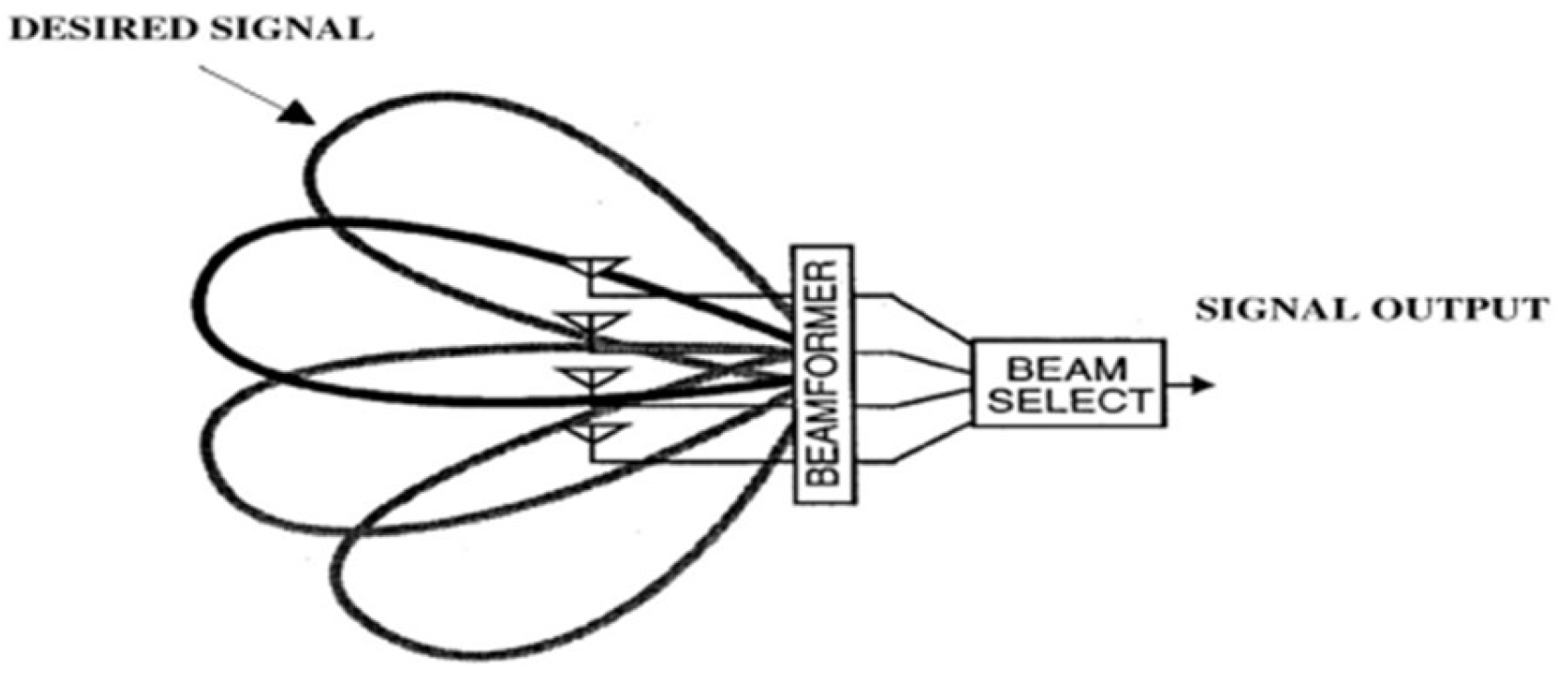
Multi-beam Antenna, a phased array antenna system has many fixed beams, one of which is directed or selectively engaged to focus on the required signal. The antenna elements' phases are precisely adjusted to provide this dynamic beam guiding capabilities. The beam can be dynamically steered to follow the movement of the target signal as it changes, resulting in the best possible signal reception. This flexibility is essential for preserving a dependable and steady connection, particularly in settings where mobility may play a role or where signal conditions may fluctuate. Effective communication in a variety of settings is made possible by the phased array antenna structure, which provides flexibility and agility in signal reception. A phased array antenna's intricate and adaptable structure is depicted schematically below (Prasanthi, 2022).
Figure 1.
Multi-beam Antenna (Prasanthi, 2022).
Adaptive Array Antenna
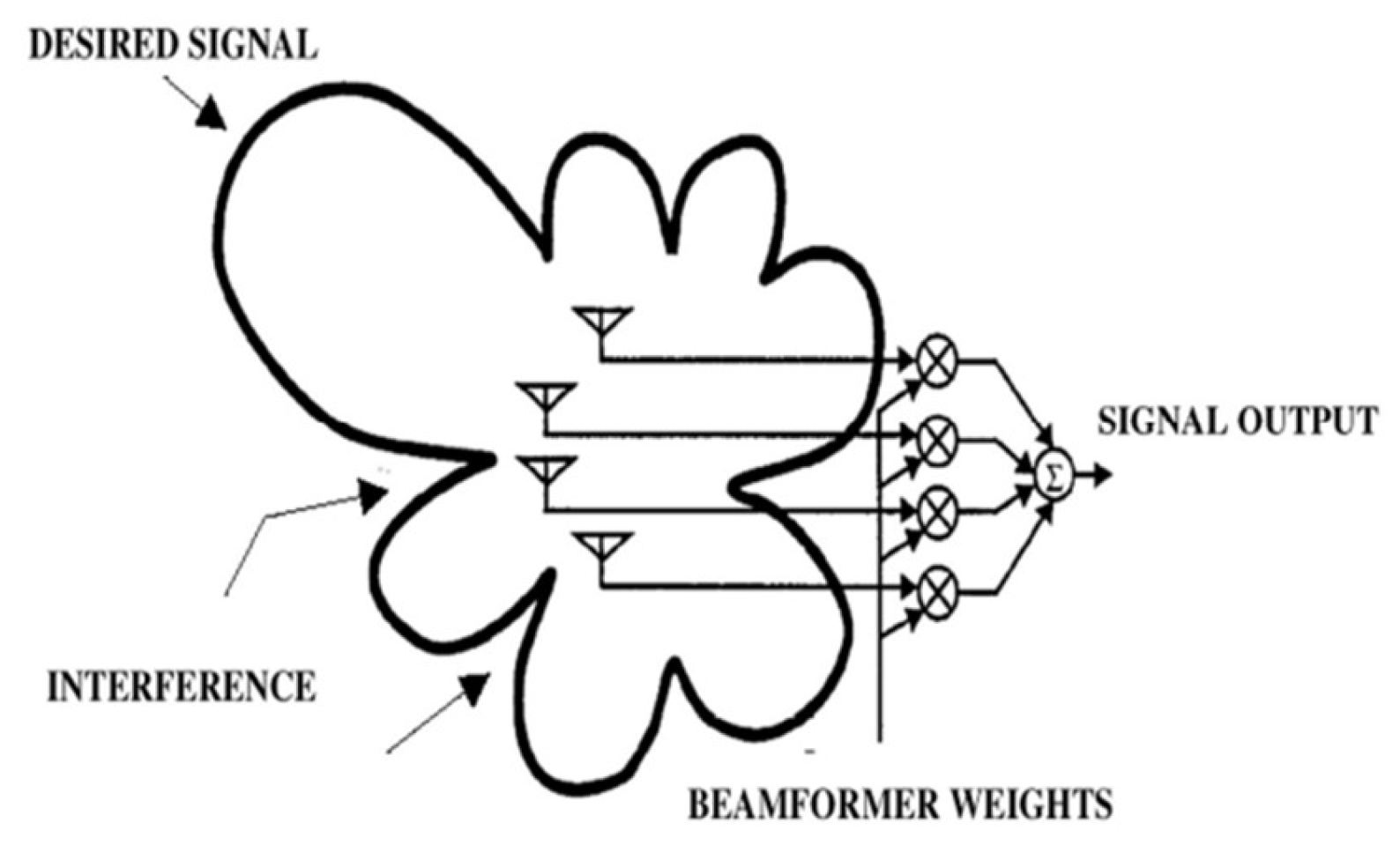
In an adaptive array antenna, the beam pattern dynamically adjusts in response to the movements of both the desired user and interfering signals. Received signals are weighted and combined to enhance the desired signal-to-interference-plus-noise ratio (SINR), thereby mitigating interference and improving overall signal quality. By strategically adjusting the weights of received signals, the antenna effectively nullifies interference while steering the main beam towards the desired signal direction. This adaptive capability enables the antenna to track and maintain alignment with the desired signal, even in the presence of interference. The direction of the main beam can be precisely calculated using methods such as Direction of Arrival (DOA), allowing for accurate beam steering to optimize signal reception. The diagram below illustrates the configuration of an adaptive array antenna, showcasing its ability to dynamically adjust beam direction for optimal signal reception while attenuating interference (Prasanthi, 2022).
Figure 2.
Adaptive Array Antenna (Prasanthi, 2022).
Moreover, adaptive antenna arrays are different from standard arrays in that they possess the ability to adapt or autonomously change their weights so that it may regulate its own pattern. An adaptive antenna can offer the user's ideal radiation pattern. Second, to lessen or perhaps completely stop the undesired signal's influence on the desired one and provide guidance in harsh interference environment, adaptable antennas have been developed for a variety of uses, including military radar and commercial mobile communication systems or satellite communication systems with strict standards for dependability.In communication systems that are susceptible to interference, adaptive antennas are widely utilized. They modify their style.adapt the signal environment automatically in order to minimize interference and enhance signal reception. Third, the increasing demand for communication services without an equivalent expansion of radio frequency spectrum. The demand for new techniques to increase spectrum use is driven by allocation. Among the several options chosen, the adaptive antenna technique has significant potential in enhancing spectrum efficiency.Fourth, co-channel interference can be reduced and even eliminated by using adaptive antenna arrays in mobile phones.interfering multiple access, among other issues. These antennas may emit energy in the direction of a chosen angular sector, preventing interference from unwanted devices (Banarjee & Dwivedi, 2013).Fifth, one more option for regaining desired signals is to use an adaptable or smart antenna. An adaptive antenna modifies its broadcast and/or receive pattern properties to enhance the antenna's functionality ( Balanis,2005).
Objectives
This comparative literature review aims to thoroughly examine two types of 5G Smart Antennas, namely Multi-beam and Adaptive Array. Specifically, the objective is to:
- Compile comprehensive literature reviews on Multi-beam and Adaptive Array antennas sourced from reputable academic databases like Google Scholar.
-
Systematically compare gathered data across various parameters including:
-
Antenna design specifications
- Number of elements
- Geometry configuration
- Frequency band(s) of operation
- Array configuration
- Employed beamforming technique
-
Performance metrics
- Gain
- Beamwidth
- Radiation pattern characteristics
- Directivity
-
- Explore their respective applications and potential use cases.
- Identify and analyze limitations associated with each antenna type.
Methodology
The methodology for this comparative literature review of Multi-beam and Adaptive Array antennas involves a structured approach to data collection, analysis, and synthesis. Firstly, an extensive search will be conducted on reputable academic databases such as Google Scholar to gather relevant literature on both antenna types. The collected literature will then be systematically reviewed, focusing on antenna design specifications including the number of elements, geometry configuration, frequency band(s) of operation, array configuration, and employed beamforming technique, as well as performance metrics such as gain, beamwidth, radiation pattern characteristics, and directivity. Following this, a comparative analysis will be performed to highlight differences and similarities between Multi-beam and Adaptive Array antennas across these parameters. Additionally, the review will explore the applications and potential use cases of each antenna type, aiming to provide insights into their practical implementations. Furthermore, the review will identify and analyze limitations associated with both antenna types to offer a comprehensive understanding of their strengths and weaknesses in 5G communication systems.
Data and Analysis
I. Antenna Design Parameterss
| Antenna Design Parameters | Antenna | |
| Multi-beam | Adaptive Array | |
| Number of elements | Use numerous beams for heightened capacity, surrounding a vast array of elements, ranging from tens to thousands | Utilize a large number of elements, ranging from tens to thousands, depending on the application and complexity. |
| Geometry configuration | Phased arrays, including flat arrays (rectangular and circular), curved arrays (on curved surfaces), and arrays that can move electronically, allow making multiple beam | Employ planar arrays or conformal arrays, similar to Multi-beam antennas. |
| Frequency band(s) of operation | Designed to operate across a wide frequency range, from radio frequencies (RF) to microwave and millimeter-wave frequencies, depending on the specific application requirements. | Designed to operate across a wide frequency range, similar to Multi-beam antennas. |
| Beamforming technique | Achieved through both analog and digital techniques. Analog beamforming utilizes phase shifters to steer the beams electronically, while digital beamforming employs signal processing algorithms to adjust the phase and amplitude of each element's signal digitally. | Primarily relies on digital signal processing techniques, where the phase and amplitude of each element's signal are dynamically adjusted to steer the beams and adapt to changing environmental conditions. |
II. Performance Metrics
Gain
Multi-beam and Adaptive Array antennas achieve high gains by means of pointing signals in specific directions. This enhances the signal strength and covers more area while maintaining the signal-to-noise ratio for receivers. When employing multibeam antenna systems to achieve better gain, it entails making signals stronger. With a higher gain, multibeam antennas can send signals more powerfully and pick up weaker signals more easily (Amyotte et al., 2014). The enhancement in gain achieved by the array antennas compared to regular ones improves signal strength and reception quality; these antennas work well for wireless communication. They maintain proper impedance matching and give good gain and directivity. Since these are small and work efficiently, these antennas are suitable for different networks and fast internet connections including Wi-Fi and LTE (Kumar, P., P., S., & Kumari, H., 2021).
Beamwidth
Multi-beam antennas and adaptive array antennas both control how wide their signals spread, but they differ in their approach and capabilities. Multi-beam antennas send out narrow beams, so they aim accurately and avoid messing with other signals (Muhsin et al., 2024). On the one hand, adaptive array antennas can also create thin beams, although they can change beamwidth as necessary. This flexibility lets them cover a bigger area, even though they might not be as precise in aiming (Singh & Jha, 2012).
Radiation Pattern Characteristics
Multi-beam antennas feature multiple narrow radiation lobes, each pointing to a beam, allowing coverage of multiple directions simultaneously (Guan et al., 2019). On the one hand, adaptive array antennas can change how they send signals based on what's around them, providing pliability in coverage and interference mitigation (Kodgirwar, Joshi, & Deosarkar, 2024). For these reasons, multi-beam antennas cover many directions at once, while adaptive array antennas adjust to the situation for better signal quality and less interference.
Directivity
Multi-beam and adaptive array antennas can send and receive signals in certain directions, which helps focus signal transmission and reception in specific directions. They can do this by concentrating the signal's beamforming capabilities toward the people who need them, enabling things to perform better overall. Multi-beam antennas use multiple radiating elements to make several beams at once, covering more space (Ma et al., 2023). Adaptive array antennas can change how they send signals to changing environmental conditions, allowing them to function as best as possible. This enhances signal strength where needed and reduces problems from other directions (Zhao et al., 2022).
III. Applications
Adaptive Antennas in Radio Communications
A rapidly developing field of radio communications is mobile radiocommunication. Enabling access to the fixed telecommunications network and facilitating communication amongst mobile customers are its primary responsibilities. Mobile users move inside cells, which are suitably tiny sub-areas that are part of the wireless network's coverage area. A base station is installed in each cell, which is in charge of gathering and updating user data as well as mediating the user's connection with a designated subscriber of either the same network or a different network or fixed-line network (Series,2015). By dividing the space into cells, you may use the same frequency range for different uses while lowering the transmitter power.
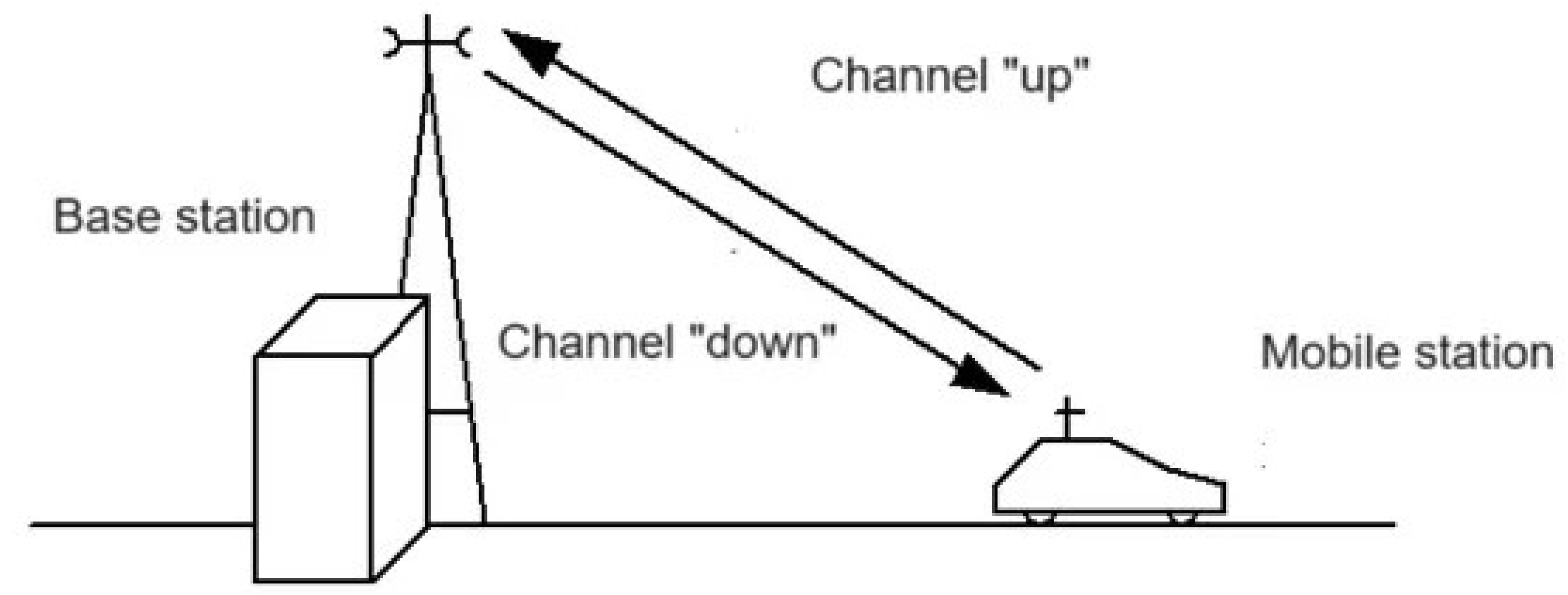
The radiocommunication system,mobile telephony, where the examined adaptive antenna control method can be used is subject to the following presumptions (Gupta,2015):
- Two frequency ranges are used by the system;
- channels upstream (from base station to mobile station)
- channels that go down (from mobile station to base station).
This is a two-way communication that occurs in the frequency domain; the bandwidth utilized varies based on the operating frequency ( Kelner & Ziółkowski,2020). The issue of radio interference caused by base stations and mobile stations becomes increasingly significant as mobile radio communication systems expand and the number of users of these systems rises
This relates to the base station antenna's radiation pattern in terms of the antenna aspect. The detrimental effects of co-channel and adjacent-channel interference caused by the assumed evenly distributed electromagnetic field from the base station antennas and the fields generated by mobile stations should be taken into consideration when evaluating base stations with traditional antennas with omnidirectional radiation characteristics or sector characteristics. ( Valiente,2022).
Figure 3.
Diagram showing how the mobile station and base station communicate.
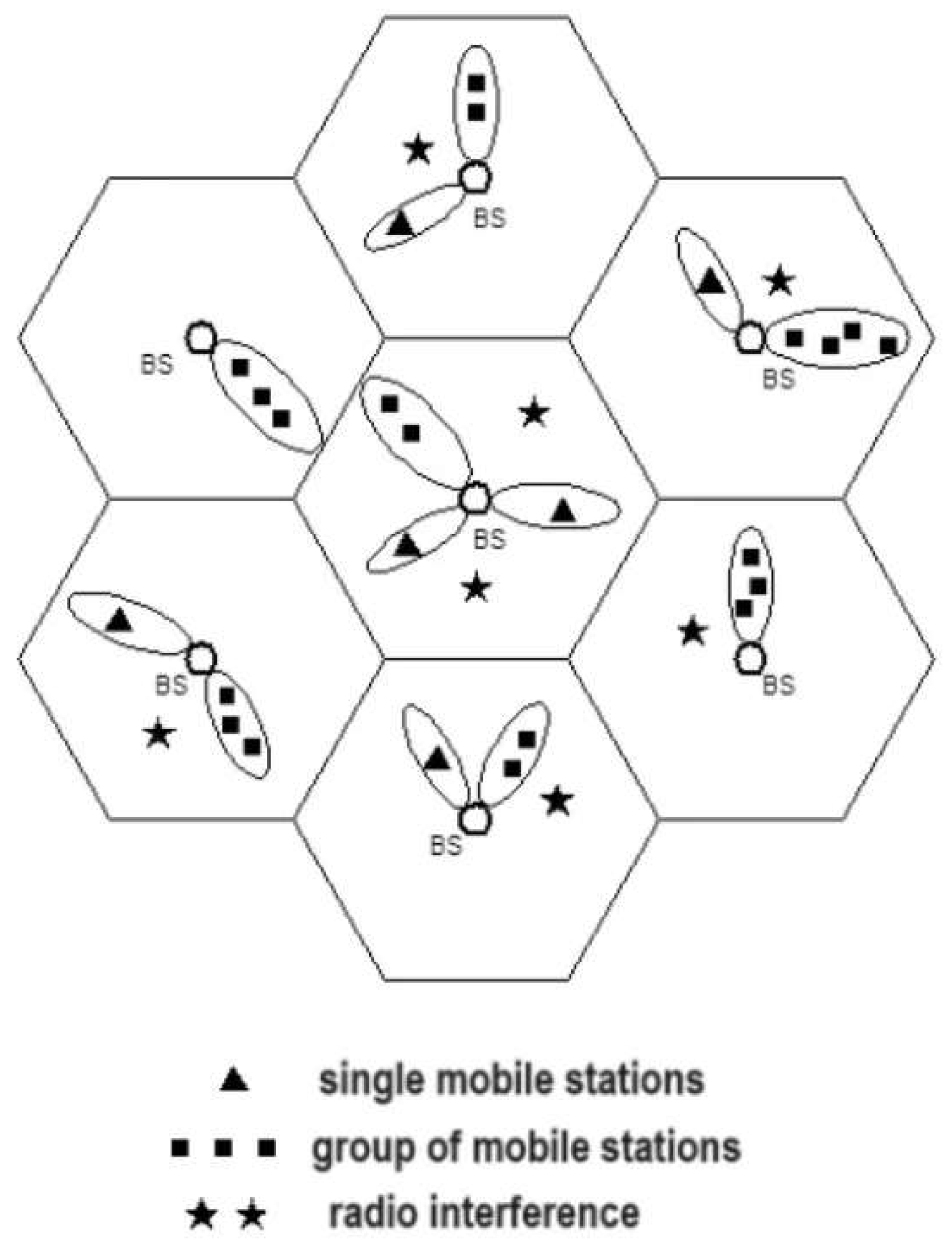
Moreover, adaptive antennas can regulate the receiving antenna's zeroing band. This zeroing band was replaced by a method of forming the base station antenna's multi-beam radiation pattern, in which each of the lobes that are created individually is in charge of preserving communication and tracking a particular mobile station or group of mobile stations (beam forming) ( Hawro,et.al., 2019).
Figure 4.
Using base stations with adaptable antennas, a land mobile radio communication network is established.
Figure 4.
Using base stations with adaptable antennas, a land mobile radio communication network is established.
Adaptive Antenna System Application to Web Radio System
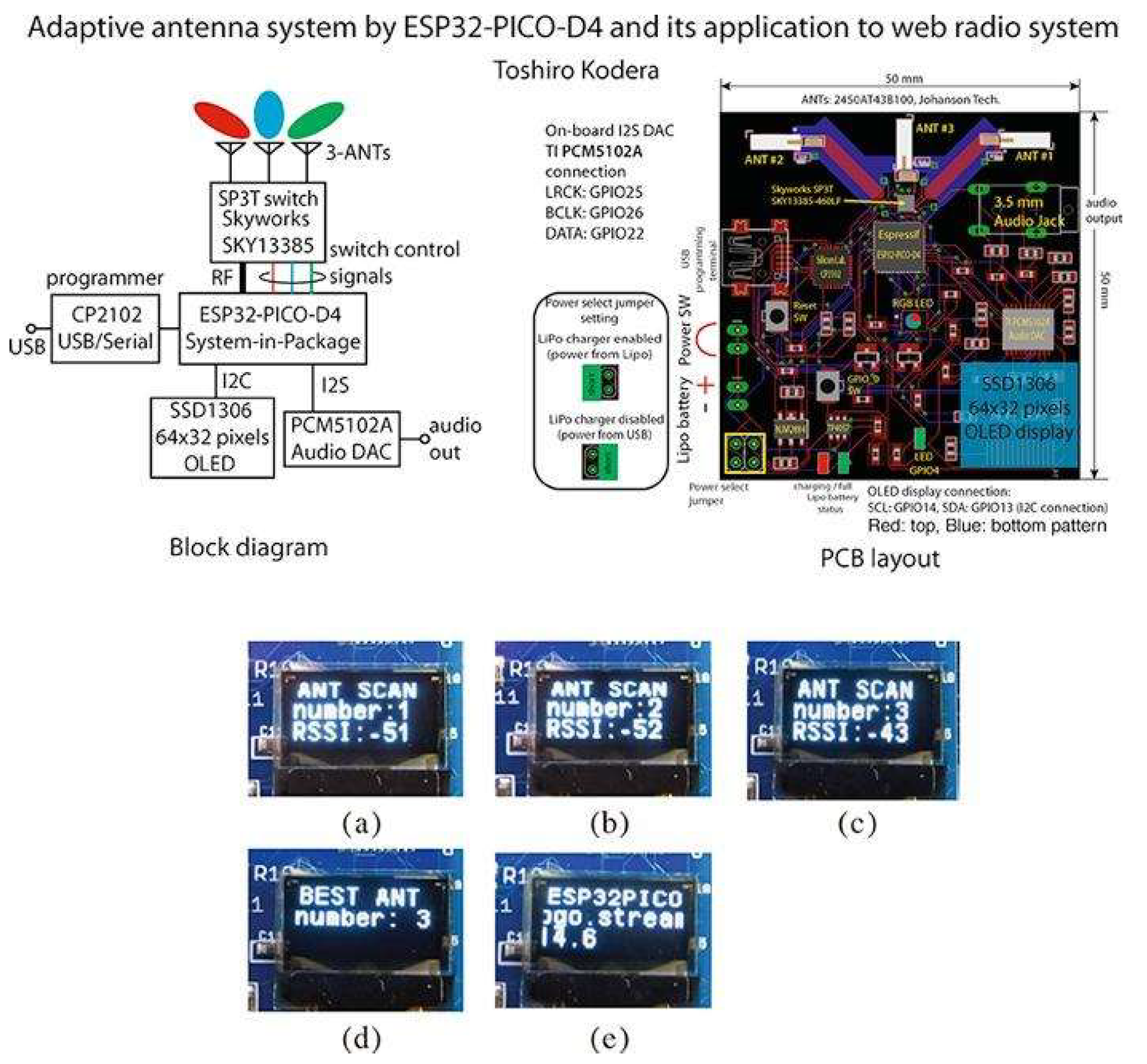
Adaptive antenna technique has a significant function in the IoT environment in order to create a stable and reliable wireless communication in high congestion situations. Electromagnetic wave propagation in non-line-of-sight environments is extremely complicated and unpredictable, even with knowledge of the antenna parameters beforehand. For this reason, optimizing the antenna radiation to maximize signal reception is crucial for a better wireless link. The answer to this is a straightforward but efficient Wi-Fi adaptive antenna system that makes use of the ESP32-PICO-D4's highly integrated function. All of the parts needed for Wi-Fi and Bluetooth applications are included in this system-on-chip, with the exception of the antenna. Completed web radio system, measuring 50 x 50 mm, including dielectric antennas, high-resolution audio DAC, and SP3T RF switch (Kodera,2018).
Figure 5.
Figures (a), (b), and (c) display the RSSI of an access point that is identified by its SSID for antenna number "n." Figures (d) and (e) demonstrate the selection of the optimal antenna for communication and the initiation of the web radio process.
Figure 5.
Figures (a), (b), and (c) display the RSSI of an access point that is identified by its SSID for antenna number "n." Figures (d) and (e) demonstrate the selection of the optimal antenna for communication and the initiation of the web radio process.
Adaptive Antenna in Worldwide Interoperability for Microwave Access
Figure 4.
Block diagram of Adaptive Antenna in Worldwide Interoperability for Microwave Access.
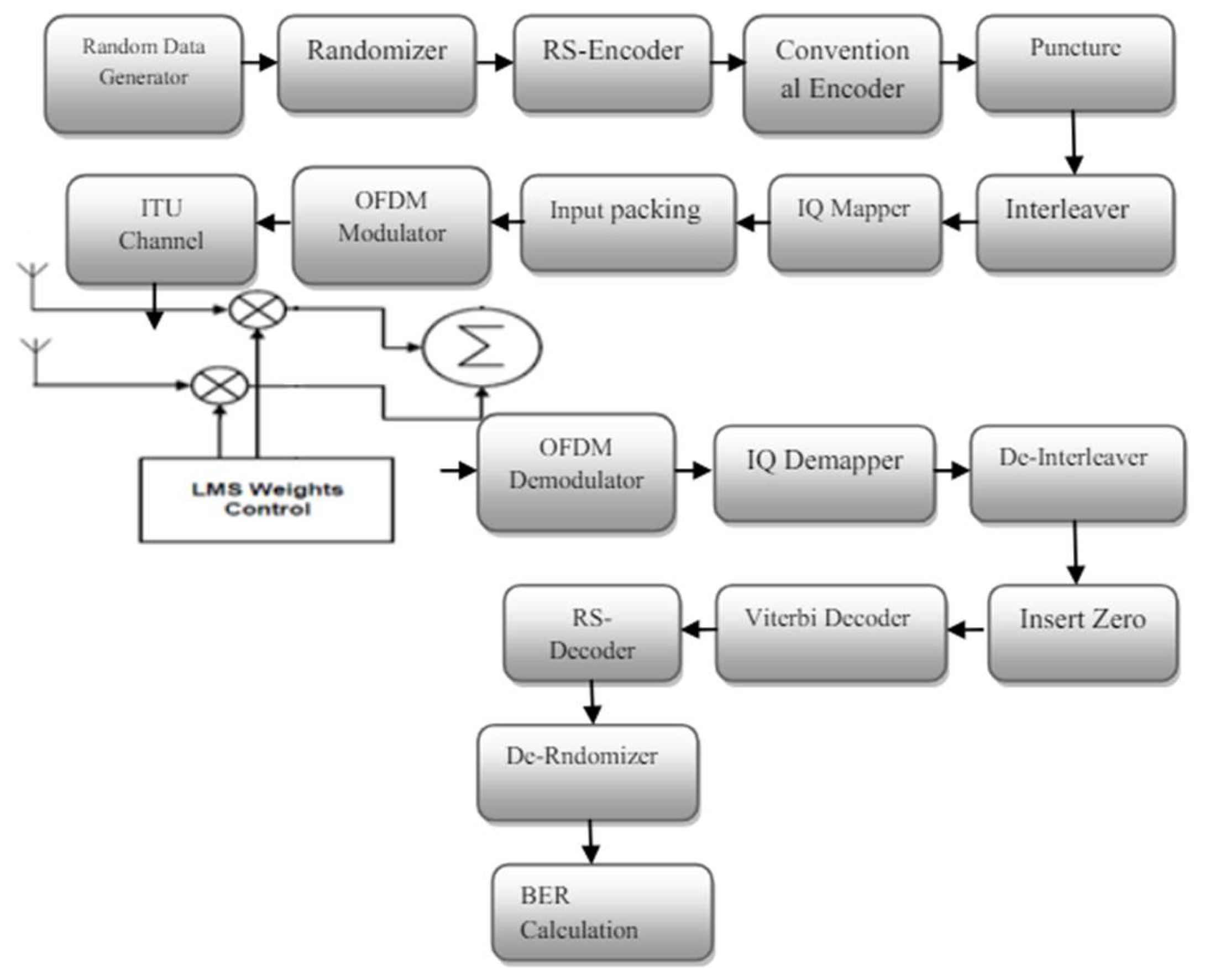
At the receiver module, an adaptive antenna system has been installed to lessen the fading effects brought on by the suggested channel model. Beam shaping techniques are employed by Adaptive Antenna Systems (AAS) to concentrate the wireless beam between the base station and the subscriber station. The transmitter (SS) and receiver (BS) in this work are fixed, and the main beam is directed toward the intended LOS signal and nulls toward the multipath signals using an AAS mounted at the reception. The Least Mean Square (LMS) algorithm-based FFT beamformer is employed. Using MATLAB simulations, it has been demonstrated that AAS, which implements beam formation in the intended user's direction, greatly improves system performance. By increasing the number of antennas at the receiver, the system's performance further improved ( Abboud,2015).
Application of Artificial Intelligence Method in Adaptive Antenna System
Adaptive antenna systems (AAS) are using more and more artificial intelligence (AI) techniques to improve wireless communication performance. Through the use of deep learning, particle swarm optimization, or evolutionary algorithms, these techniques improve beamforming weights to increase coverage area and signal-to-noise ratio (SNR). AAS can adjust to shifting channel circumstances thanks to artificial intelligence (AI) techniques including machine learning algorithms (e.g., SVM, RNN) that estimate channel parameters. By utilizing reinforcement learning to locate and reduce interference sources, AI also helps with interference mitigation. AI also creates synthetic radiation patterns to meet certain needs, such enhancing signal strength and reducing interference.AI-based AAS enhances dynamic spectrum access, maximizing spectrum use. AI also helps with resource allocation, diagnostics, problem detection, and general efficiency gains, which increases AAS's adaptability to changing communication contexts (Rozhnovskyi & Rozhnovska).
IV. Limitations
The computational complexity of adaptive antennas is one of its limitations, particularly in situations when a lot of antennas are used or when sophisticated algorithms are being used for beamforming and optimization. The considerable processing power and memory requirements may prevent adaptive antennas from being used practically in some applications (Balanis,2016). Adaptive antennas' susceptibility to some forms of interference, such as powerful narrowband signals or sources of spatially correlated interference, is another drawback. By distorting the beamforming process or impairing the adaptive antennas' capacity to adjust to shifting channel circumstances, these kinds of interference might deteriorate their performance. Furthermore, the accuracy of the channel state information (CSI) estimate, which is essential for beamforming and interference mitigation, might have an impact on the performance of adaptive antennas (Rappaport,et.al., 2017).Furthermore, adaptive antennas' susceptibility to mistakes in the estimate of channel state information (CSI), which is necessary for beamforming and interference reduction, is another drawback. Inaccurate CSI can result in less-than-ideal beamforming, which lessens the ability of adaptive antennas to reduce interference and enhance signal quality. Additionally, the effectiveness of adaptive antennas may be hampered by their inability to keep antenna elements in synchronization, particularly in dynamic situations with rapidly changing channel circumstances (Liu,et.al.,2013).
V. Conclusions
Adaptive antennas have been significant in the advancement of wireless communication systems by dynamically modifying radiation patterns for best signal reception and transmission. This has been highlighted by the literature study on adaptive antennas. Beamforming, channel prediction, interference mitigation, and spectrum utilization are only a few of the adaptive antenna features that have improved with the assistance of the AI techniques. Regardless of their enormous potential, adaptive antennas face difficulties such as computational complexity, exposure to specific interference types, and the criticality of precise CSI estimation. The full potential of adaptive antennas in next-generation wireless communication systems will need to be unlocked through more research and technology breakthroughs, since doing so will promise improved performance, efficiency, and flexibility.
V.I. Recommendations
A number of recommendations are made for further study on adaptive antennas based on the indicated literature review. First, in order to improve adaptive antenna performance in areas like beamforming and interference mitigation, sophisticated AI approaches like deep learning and metaheuristic algorithms need to be investigated. Secondly, by creating robust beamforming algorithms and error-resilient CSI estimate approaches, efforts should be directed on enhancing the resilience and dependability of adaptive antennas, especially in dynamic settings. Further research is also required to validate adaptive antennas in practical settings while taking scalability and technology limitations into account. To enhance performance in congested spectrum conditions, new methods of mitigating interference, such combined beamforming and interference cancellation, should be explored.Standardization efforts are also crucial to ensure compatibility with existing wireless communication standards. Furthermore, studies on adaptive antenna designs and algorithms that use less energy can greatly increase energy efficiency as a whole. To concurrently maximize many performance indicators, multi-objective optimization techniques should be taken into consideration.
References
- Prodmaze. (2024, April 16). 5G Smart Antenna Market Report Reveals the Latest Trends And Growth Opportunities of this Market. Retrieved from https://www.linkedin.com/pulse/5g-smart-antenna-market-report-reveals-latest-trends-growth-opportunities-yoeaf.
- Kishore, N., & Senapati, A. (2022b). 5G smart antenna for IoT application: A review. International Journal of Communication Systems, 35(13). Retrieved from. [CrossRef]
- Prasanthi,D.(2022). Adaptive Array Antennas.International Journal of Multidisciplinary Educational Research,India. Retrieved from https://s3-ap-southeast-1.amazonaws.com/ijmer/pdf/volume11/volume11-issue1(4)/17.pdf.
- Banarjee S. & Dwivedi,V.,(February 2013). Review of Adaptive Linear Antenna Array Pattern Optimization. International Academy of Science, Engineering, and Technology,India. Retrieved fromhttps://www.researchgate.net/profile/Smita-Banerjee-4/publication/235009339_Review_of_adaptive_linear_antenna_array_pattern_optimization/links/59003822aca2725bd71e8826/Review-of-adaptive-linear-antenna-array-pattern-optimization.pdf.
- Balanis,C.(2005). Antenna Theory: Analysis and Design, 3rd edition. John Willy & Sons Inc,New York.
- Series, M. Recommendation ITU-R M.2083-0: IMT Vision—Framework and Overall Objectives of the Future Development of IMT for 2020 and Beyond; International Telecommunication Union (ITU): Geneva, Switzerland, 2015.
- Gupta, A.; Jha, R.K. A survey of 5G network: Architecture and emerging technologies. IEEE Access 2015, 3, 1206–1232.
- Kelner, J.M.; Ziółkowski, C. Impact of multi-beam antenna system on interference level in subscriber channel. Int. J. Electron. Telecommun. 2020, 66, 17–23.
- Valiente, G. Adjacency: Maps and Efficient Graph Algorithms. Algorithms 2022, 15, 67.
- Hawro, P.; Kwater, T.; Pękala, R.; Twaróg, B. Soft Sensor with Adaptive Algorithm for Filter Gain Correction in the Online Monitoring System of a Polluted River. Appl. Sci. 2019, 9, 1883.
- Hawro, P.; Kwater, T.; Pękala, R.; Twaróg, B. Soft Sensor with Adaptive Algorithm for Filter Gain Correction in the Online Monitoring System of a Polluted River. Appl. Sci. 2019, 9, 1883.
- Kodera, T. (2018). Adaptive antenna system by ESP32-PICO-D4 and its application to web radio system. HardwareX, 3, 91–99. [CrossRef]
- Abboud, I. K. (2015). Design and Implementation Adaptive Antenna system in WiMAX (IEEE 802.16D). Maǧallaẗ Al-handasaẗ Wa-al-tiknūlūǧiyā, 33(1A), 165–174. [CrossRef]
- Rozhnovskyi, M., & Rozhnovska, I. (2023). Application of artificial intelligence method in adaptive antenna system. Radiotekhnika, 215, 77–85. [CrossRef]
- Amyotte, E., Demers, Y., Hildebrand, L., Richard, S., & Mousseau, S. (2014). A review of multibeam antenna solutions and their applications. In 2014 8th European Conference on Antennas and Propagation (EuCAP) (pp. 191-195). [CrossRef]
- Kumar, P., P., S., & Kumari, H. K. (2021). Design of Adaptive Array Antenna for Wireless Communications. [CrossRef]
- Muhsin, M., Kamardin, K., Yamada, Y., Sugimoto, Y., & Sakakibara, K. (2024). Best Feed Positions and Radiation Patterns of Typical Multibeam Dielectric Lens Antenna. IEEE Access, PP, 1-1. [CrossRef]
- Singh, H., & Jha, R. M. (2012). Trends in Adaptive Array Processing. International Journal of Antennas and Propagation, 2012. [CrossRef]
- Guan, M., Wu, Z., Cui, Y., Cao, X., Wang, L., Ye, J., & Peng, B. (2019). Multi-beam coverage and beamforming technology for high altitude platform station communication system. EURASIP Journal on Wireless Communications and Networking, 2019(1). [CrossRef]
- Kodgirwar, V. P., Joshi, K. R., & Deosarkar, S. B. (2024). Design of adaptive array using least mean square beamformer. Indonesian Journal of Electrical Engineering and Computer Science, 33(2), 932-941. [CrossRef]
- Ma, H., Wang, J., Sun, X., & Jin, W. (2023). Multi-Beam Radar Communication Integrated System Design. Information, 14(10), 566. [CrossRef]
- Zhao, J., Ma, Y., Pan, Z., & Zhang, H. (2022). Research on image signal identification based on adaptive array stochastic resonance. Journal of Systems Science and Complexity, 35(1), 179-193. [CrossRef]
Disclaimer/Publisher’s Note: The statements, opinions and data contained in all publications are solely those of the individual author(s) and contributor(s) and not of MDPI and/or the editor(s). MDPI and/or the editor(s) disclaim responsibility for any injury to people or property resulting from any ideas, methods, instructions or products referred to in the content. |
© 2024 by the authors. Licensee MDPI, Basel, Switzerland. This article is an open access article distributed under the terms and conditions of the Creative Commons Attribution (CC BY) license (http://creativecommons.org/licenses/by/4.0/).
Copyright: This open access article is published under a Creative Commons CC BY 4.0 license, which permit the free download, distribution, and reuse, provided that the author and preprint are cited in any reuse.


