

Submitted:
23 May 2024
Posted:
24 May 2024
You are already at the latest version
Abstract
Rural landscapes are acknowledged for their potential to restore human health due to their natural characteristics. However, few studies have systematically analysed the impact of naturalness, landscape types, and combinations of landscape elements on restorativeness using both subjective and objective measurements. This study investigated the restorative effects of various rural landscapes in Guangzhou, employing electroencephalography and eye-tracking technologies to record physiological responses and using the Restorative Components Scale and the Perceived Restorativeness and Naturalness Scale to evaluate psychological responses. The results indicated the following: (1) There was a significant positive correlation between perceived naturalness and restorativeness, surpassing the impact of actual naturalness. (2) Different landscape types had a varying impact on mental health at the equal perceived naturalness. Natural forest landscapes and artificial forest landscapes exhibited the most substantial restorative effects among the natural and semi-natural landscapes examined, respectively, while settlement landscapes showed the highest restorative potential among the artificial landscapes. (3) Restorative properties varied across landscape elements, with identical elements yielding different benefits in different environments. Trees and water significantly enhanced restorativeness, whereas constructed elements such as roads and infrastructure reduced it. This study provides a scientific basis for restorative rural landscape design to enhance mental health and well-being.
Keywords:
rural landscape
; mental restoration
; naturalness
; landscape type
; landscape element
1. Introduction
1.1. Background
Rapid and intensive urbanization on a globally scale not only leads to a monotonous, fast-paced lifestyle but also exacerbates the degradation of natural and human habitats, adversely affecting public health [1,2]. Numerous studies have indicated that exposure to natural environments, such as urban green spaces [3] and blue spaces [4], can reduce stress [5,6], increase happiness [7] and improve attention recovery [8], thereby offering psychological restorative benefits. These psychological benefits further improve human physiological health, such as by reducing blood pressure [9], lowering heart rate [10], and decreasing mortality from cardiovascular disease [11].
The Permanent European Conference for the Study of the Rural Landscape (PECSRL) identified that globalization, urbanization, and agricultural intensification are transforming our rural environment [12]. Rural areas not only serve as vital habitats for humans but also provide other functions, including cultural tourism, industrial development, and health restoration [13,14]. Consequently, it is crucial to conduct fundamental and applied research on current rural landscapes to provide new perspectives and strategies for managing landscapes to conserve ecosystems and sustain human health. Under the impetus of China’s National Rural Revitalisation Strategy and Healthy China Strategy, the characteristics, main functions, and service targets of rural landscapes in China have undergone significant changes [15]. Modern rural areas are no longer expected simply to produce crops; instead, their resource advantages must be fully leveraged to develop functions such as ecotourism, ecological agriculture, wellness agriculture, and health-oriented care [16]. Thus, exploring the health benefits of rural landscapes is crucial for promoting public health. However, despite the backdrop of rapid urbanisation, research on the potential of rural landscapes to alleviate stress, restore attention, and enhance well-being remains scarce.
1.2. Restorative Quality of Natural Environments and Naturalness
A restorative landscape is a critical health-promoting landscape within the natural environment. Stress reduction theory (SRT) and attention restoration theory (ART) both emphasise the positive impact of natural environments on psychological health [17]. ART posits that the unique environmental characteristics of nature help restore attention and relieve mental fatigue. In contrast, contact with artificial environments may deplete directed attention, leading to fatigue and irritability [18]. ART suggests that restorative environments contain four key elements: being away, extent, compatibility, and fascination [19]. SRT asserts that nature holds healing potential and that contact with nature reduces stress, thereby facilitating physiological recovery and providing psychological solace [20].
Naturalness is defined as the extent to which a landscape approximates its perceived natural state [21], and this concept is closely linked to the perceived quality of restorativeness [22]. For instance, a recent study indicated that parks with a high level of naturalness more effectively facilitate psychological recovery among visitors [20]. Another study investigating green and blue spaces revealed that more natural environments were correlated with increased positive emotions and thus had greater restorative qualities, whereas more artificial environments led to heightened anxiety and were considered less restorative [23]. Knez emphasised that urban green spaces with a higher level of naturalness promote stronger attachment emotions and cognitive engagement, resulting in enhanced well-being and therapeutic outcomes [24].
Naturalness can be further divided into perceived naturalness and actual naturalness [21]. Perceived naturalness is a subjective assessment based on an individual’s response to the natural elements within a landscape [25]. Actual naturalness, on the other hand, is based on the intrinsic properties of a landscape and can be measured using scientific and quantitative methods [26]. The academic community has begun to quantify actual naturalness levels based on natural forms and structural integrity using landscape pattern metrics (such as patch size, edge effects, and connectivity) [27]; remote sensing technologies, biotic indices, and landscape pattern indices [28]; or more broadly in terms of vegetation cover and extent of aquatic elements [21]. Although there is currently no unified standard for measuring them, the concepts of actual and perceived naturalness provide a basis for the measurement standards used in this study.
1.3. Landscape Types and Elements of Perceived Restorativeness
Rural landscapes, which are distinguished by their unique ecological attributes and substantial restorative potential [29], are considered highly conducive to the restoration of physical and mental health in the modern world [30]. Studies have indicated that living in rural environments helps alleviate physiological stress such as tension and fatigue [31], improves emotional states, and facilitates psychological recovery [32]. However, current research on how different types of rural landscapes promote psychological health is relatively limited. For example, one study categorised rural landscapes into three types based on the level of human intervention, namely natural landscapes, productive landscapes, and artificial landscapes, and analysed their effects on stress reduction [15]. Another study examined the effects of rural natural landscapes, agricultural landscapes, and cultural features landscapes on place attachment and well-being [33]. These classifications demonstrate the diversity of research methods used, but they also reveal a lack of uniformity in the categorisation of rural landscapes. Moreover, few attempts have been made to develop a comprehensive classification system for rural landscapes that methodically investigates their restorative impacts from the perspective of matching naturalness with landscape type.
Some studies have examined the impact of certain landscape elements on restorativeness. For example, a recent study found that rural landscapes rich in natural elements significantly enhanced people’s perception of healing [29]. Nordh noted that water, terrain, and vegetation are the most restorative elements in a landscape [34]. Another study analysing the proportions of natural elements in scenes revealed that images with lower proportions of tree and higher proportions of sky and leaves helped to relieve stress [35]. Although the aforementioned studies compared the restorativeness of elements, research exploring the impact of rural landscape element combinations on perceived restorativeness, particularly across rural landscapes with varying degrees of naturalness, remains limited.
1.4. Objective, and Reliable Measurement Tools
Most studies investigating the relationship between landscapes and perceived restorativeness have used psychological questionnaires [36,37]. However, some scholars have employed physiological measurement techniques such as heart rate variability (HRV)[38], blood pressure (BP) [39], skin conductance response (SCR)[3], electroencephalography (EEG) [40], and eye-tracking [41] to more scientifically and objectively verify the relationship between landscapes and perceived restorativeness. Among these measures, EEG most effectively reflects the degree of stimulation experienced by individuals, thus indicating their emotional changes in different landscape settings [42]. Brainwaves are typically classified into alpha (8-13 Hz), beta (14–30 Hz), theta (4–7 Hz), and delta (<4 Hz) waves. Alpha and beta waves are considered the most suitable indicators for stress assessment [43]. Alpha waves are associated with alertness, calmness, learning, and mental coordination; an increase in alpha waves values reflects a more relaxed, happy, and positive psychological state [44,45]. Depending on the frequency, alpha waves can be further divided into α1 (low frequency: 8–10 Hz) and α2 (high frequency: 10–13 Hz), with α1 waves associated with deep relaxation and a static psychological state, and α2 waves associated with a relaxed yet alert state [46]. Beta waves are usually associated with alertness, and a reduction in beta waves values indicates an increase in fatigue [47]. At 18 Hz, beta waves can be subdivided into β1 (low frequency: 13–18 Hz) and β2 (high frequency: 18–30 Hz), where β1 waves represent a relaxed, focused, and coordinated mental state, and β2 waves represent an alert and excited state of tension [48]. Studies have used EEG to analyse the beneficial effects of blue spaces on mental health [4], to examine perceived fear in different types of nocturnal environments [49], and to confirm the restorative effects of various types of immersion in nature on youths experiencing stress [1].
Eye-tracking technology can record visual exploration patterns while observing a scene, and it can be used to capture various physiological data, such as heatmaps, average fixation duration, gaze path, pupil diameter, and blink rate [50]. In landscape research, these data are commonly used to assess the perceived restorative quality of and preferences for landscape scenes [51]. For instance, a recent study evaluated the restorative quality of various urban and rural scenes and conducted a detailed analysis of the differences in restorativeness among landscape elements in areas of interest (AOI), finding that restorative scores for landscape scenes were positively correlated with average fixation duration and negatively correlated with the number of fixations [32]. Another study analysed public spaces in rural landscapes and identified areas in different types of public space landscapes that attracted visual attention through an analysis of heatmap views generated by eye movements [52]. However, although studies of landscape restorativeness have increasingly adopted these objective measurement methods, research that conducts in-depth analysis of multiple physiological data alongside psychological scales, and particularly research that integrates qualitative and quantitative approaches, remains rare. Consequently, there is considerable scope for methodological innovation and comprehensive analysis in this field.
1.5. Study Aims
This study aimed to fill these research gaps and achieve the following objectives: (1) evaluate the restorative differences in rural landscapes of three levels of naturalness and explore the impact of perceived and actual naturalness on physical and mental health; (2) investigate the restorativeness of different types of landscapes with the same level of naturalness; and (3) analyse the relative restorative impact of various landscape elements in rural landscapes. Through this study, we aimed to provide sustainable development strategies for increasing the restorativeness of rural landscapes and strategically optimising landscape configurations to enhance the restorative efficiency of existing rural landscapes.
2. Materials and Methods
2.1. Classification of Rural Landscapes
We employed a multi-tiered method of classifying rural landscapes based on international land use standards and relevant research [53] that has categorised rural landscapes by level of ecological naturalness (visual indicators: greenness, water bodies) into natural, semi-natural, and artificial landscapes. Different regions display a diversity of rural landscape types due to variations in topography and cultural impacts [54]. Villages in the Guangzhou area have undergone a high degree of urbanization and serve as a model for modern rural construction. Consequently, this study focused on rural landscapes in Guangzhou in Guangdong Province. After conducting a detailed survey of rural landscapes in Guangzhou according to their level of naturalness [55], landscapes were categorised according to their functional and morphological characteristics as follows (Figure 1):
- Natural Landscapes (NL): Pristine and minimally disturbed landscapes featuring a variety of animal species, colours, and vegetation [18]. In rural areas of Guangzhou, these primarily include natural water landscapes (NWL), natural forest landscapes (NFL), and natural grassland landscapes (NGL) [15,32,56].
2.2. Selection of Experimental Images
In this study, photographs were used to represent each rural landscape type. Multiple studies have confirmed that photographs can effectively substitute for on-site environmental surveys [3,41,60]. The selection of images for the experiment was completed through focus group interviews and expert evaluations [61]. Initially, three libraries of rural landscape photographs, each containing 200 images representing varying degrees of naturalness, were created. These photographs were taken on-site by two researchers in rural areas of Guangzhou, China during clear weather conditions in December 2023, using a Sony A7M4 digital camera. Subsequently, based on the objectives of the study, a focus group established the criteria for image selection and chose 12 photographs for each category of landscape. Nine experts, each with over 10 years of experience in environmental psychology and rural landscape design, were invited to rate the images based on the following criteria: (1) how accurately they reflected typical rural landscape scenes; (2) how prominently they displayed specific features of the landscape type; and (3) inclusion of one image each of a large, medium, and small size for each landscape type. After aggregating the scores, the nine highest-scoring images for each landscape type, giving a total of 81 images, were selected as the original stimuli for the study (Figure 2). Each image was adjusted to 1280×720 pixels with a resolution set at 300 DPI using Adobe Photoshop 2024.
2.3. Segmentation of Major Landscape Elements
Image datasets such as Cityscapes, ADE20K, and SUN Database include detailed pixel-level annotations, and they are thus widely used for the detection, classification, and segmentation of scenes to accurately determine the specific categories of each element in the images. In this study, we chose the ADE20K dataset for the semantic segmentation of the images. ADE20K offers 150 detailed categories of scene images [62], providing a broader selection of landscape element types than datasets such as Cityscapes. This enhances a model’s accuracy and generalisation capabilities, enabling high-quality image segmentation and analysis of diverse and complex scenes [63,64]. To meet the requirements of this study, we adjusted the categorisation model and finalised 10 landscape element categories: sky, waterscape, trees, grass, farmland, mountain, building, path, infrastructure, and structure.
After the images had been segmented, Python 2.7 was used to calculate the pixel proportion of each landscape element in the images and then to compute the quantitative landscape element index (Figure 3), which represents the percentage area of each landscape element in an image [32]. The equation is as follows:
2.4. Participants
We used G*Power 3.1.9.4 to conduct a statistical power analysis to ensure an appropriate sample size [65]. For our comparative studies, we calculated using the F-test (analysis of variance [ANOVA]: repeated measures, within factors). The results indicated that a minimum sample size of 29 was required to achieve a power of 0.80. To ensure satisfactory power, we adjusted the sample size to 40, achieving a power of 0.91.
We recruited participants from Guangzhou, China using flyers and posters in university campuses, and via email and the social media platforms WeChat and Tencent QQ. The participants were required to be individuals aged 18–35, with no physical or mental illnesses, who were not taking any medication. The participants were instructed to avoid smoking, alcohol consumption, and intense physical activity throughout the study period and to ensure sufficient sleep the night before the experiments, as these factors might affect the brainwave measurements [66]. Background information on the participants, including their gender, age, educational level, and permanent residence, was collected via a questionnaire. Our final sample consisted of 40 university students (20 male and 20 female) aged between 19 and 34 years (M = 23, SD = 3.51). The background information of the participants is shown in Table 1.
2.5. Measurements
We collected data on the differences in visual stimuli effects across three levels of naturalness, nine landscape types, and 10 landscape elements using physiological measurements (EEG, eye-tracking) and psychological assessments (RCS, PRNS).
2.5.1. Psychological Measurements
RCS
We used the Restorative Components Scale (RCS), proposed by Laumann [68], to assess the extent to which contact with specific environments facilitated psychological health recovery. The RCS is based on ART and includes 22 items divided into four theoretical dimensions: being away, extent, fascination, and compatibility [67]. All of the items have been accurately translated from English into Chinese in previous studies and are rated using a 5-point Likert scale ranging from 1 to 5 [4,29]. In this study, the participants rated each type of landscape. The overall perceived restorativeness score for each landscape was then determined by calculating the average scores across the four dimensions for all participants. The higher the score, the more significant the landscape’s role in promoting psychological health.
PRNS
The Perceived Restorativeness and Naturalness Scale (PRNS) was designed to separately assess potential restorativeness using a rating system that ranges from 1 to 7. Raters score each image based on personal experience, where a score of 1 represents the lowest evaluation (e.g., an extremely low restorative quality) and a score of 7 indicates the highest evaluation (e.g., an extremely high restorative quality). The PRNS can also be used to assess perceived naturalness, with 1 representing an extremely low level of naturalness and 7 representing a extremely high level of naturalness. This evaluation system effectively quantifies individuals’ subjective perceptions of images and analyses the relationship between image characteristics and perceptions [47].
Given the large number of image samples involved in this study, to avoid the complexity of using the RCS for individual image restorativeness scoring, the participants were only required to give ratings based on their overall impression of the nine types of landscapes using the RCS, and to use the PRNS to score the 81 specific images for restorativeness.
2.5.2. Physiological Measurements
EEG
We used a wireless EEG system (model NE Enobio 8, from Neuroelectrics) and its accompanying software to collect the EEG data. An electrode cap was worn by the participants according to the international standard 10–20 system, recording brainwaves from the forehead above the eyes (at the FP1 and FP2 positions). The FP1 and FP2 positions are located in the frontal lobe area, which plays a key role in processing emotions and stress responses. Before the participants viewed the scene images, we recorded 1 minute of EEG data from a blank scene as a baseline [68]. When switching between scenes, we input event markers to segment the subsequent EEG data. The EEG data were recorded in real time (at a rate of 512Hz). The outputted raw EEG signals were pre-processed using the Matlab-based EEGLAB toolbox (version 14.0.0). EEGLAB is widely used by researchers for processing continuous EEG recordings [69,70]. In this process, the EEG signals were referenced to the average value for the bilateral mastoids and artifacts such as electrooculographic and electromyographic interferences were removed through independent component analysis [71]. The EEG signals were then segmented for each participant in the corresponding scenes. To quantify the EEG signals, we used the Letswave toolbox to extract the frequency domain features. The logarithmic power values of the α1, α2, β1, and β2 waves were extracted as defined in the EEG power spectrum [72] to obtain the quantified EEG metrics required.
Eye-Tracking
The aSee Glasses eye-tracking analysis system (provided by 7Invensun) was used to collect eye movement data from an infrared pupil camera at a rate of 120 Hz. Post-experiment, the accompanying software, aSee Studio, was used for AOI segmentation and data analysis, and the data were subsequently exported as average fixation duration and visual attention heatmaps.
2.6. Experimental Procedure
The experiments were conducted between 18 and 27 December 2023 in a laboratory at the South China University of Technology. All of the participants undertook the experiments under the same conditions, including room setup, temperature, and lighting. Three research members conducted the experiments on each participant during the periods 9:30 to 11:30 AM and 2:00 to 5:30 PM (Figure 4).
The researchers first described the standard procedures of the experiment to the participants, acquainted them with the experimental equipment, and informed them of their rights before asking them to sign the informed consent form. After giving their consent to participate, the participants reported their age, gender, educational level, and permanent residence in the background survey questionnaire (Table 1). We then explained the RCS and PRNS questionnaires and helped the participants to properly put on and test the EEG and eye-tracking devices. The participants were then led to a computer displaying images and were informed that they could freely view the scenes during the experiment but must avoid significant head movements. After a five-minute break, each participant was randomly assigned a sequence of images of equal naturalness and three different landscape types. The image slideshow included a minute of blank screen followed by nine minutes of images (each image lasted 15 seconds, with each landscape type displayed for 3 minutes). The EEG and eye movement data were continuously recorded during the experiment. After viewing the slides, the participants filled out the RCS questionnaire, took a five-minute break, and then repeated the process twice more with slides of two other levels of naturalness. After the final round of slides, the participants completed the PRNS questionnaire. The entire experiment lasted approximately 60 minutes per participant (Figure 5).
2.7. Statistical Analysis
Initially, repeated measures ANOVA was used to calculate the averages of the EEG (α1, α2, β1, β2), RCS, and eye-tracking data (average fixation duration on different elements). If significant correlations were identified, further pairwise comparisons were conducted using the least significant difference (LSD) post-hoc test. Subsequently, the Friedman test was employed to analyse the PRNS data, and the Wilcoxon signed-rank test was used to analyse the differences in correlations between perceived naturalness and actual naturalness. Next, general linear regression analysis was applied to explore the relationship between the landscape element indices and restorativeness. Lastly, linear regression analysis was used to compare the impact of perceived and actual naturalness on restorativeness to identify which types of naturalness played the most important roles. All of the statistical analyses were conducted using IBM SPSS Statistics 27 and Microsoft Excel 2021, with statistical significance set at p < 0.05.
3. Results
The analysis of the results for the psychological and physiological dimensions is presented in four parts. First, the results of the repeated measures ANOVA for restorativeness using the RCS across different levels of naturalness and types of landscapes are reported. Second, we report simple linear regression analysis conducted on the PRNS data to reveal the impact of different factors and levels of naturalness on restorativeness. Third, the consistency of the link between the EEG data on restorativeness across different levels of naturalness using repeated measures ANOVA is reported. Finally, a detailed assessment of restorativeness from both a quantitative perspective and a qualitative perspective using the eye-tracking data (average fixation duration and visual attention heatmaps) is conducted.
3.1. RCS Results
3.1.1. Internal Consistency and Correlation
Cronbach’s alpha coefficient is used to assess the internal consistency of a scale [29], and a value above 0.800 indicates good internal reliability [73]. In this study, the overall Cronbach’s alpha value for the RCS was 0.934, with the scores being 0.894 for the being away dimension, 0.882 for the extent dimension, 0.937 for the fascination dimension, and 0.857 for the compatibility dimension. These results indicate high consistency among the four dimensions of the RCS. Further correlational analysis (Table 2) revealed that the four dimensions were closely correlated with the total score (Pearson = 0.628–0.879) and highly correlated with each other (Pearson = 0.315–0.711), with all correlations being statistically significant (p < 0.001).
3.1.2. Impact of Naturalness on Perceived Restorativeness
The RCS results indicated significant differences in perceived restorativeness among the three levels of naturalness of the landscapes (Figure 6), with natural landscapes (3.679 ± 0.524) having the highest perceived restorativeness, followed by semi-natural landscapes (3.455 ± 0.490) and then artificial landscapes (3.027 ± 0.564), F (1.526, 59.522) = 39.971, p < 0.001. Further LSD post-hoc tests revealed that the restorativeness of the natural landscapes was significantly greater than that of the semi-natural landscapes (MNL-MSNL = 0.223, p < 0.001) and the artificial landscapes (MNL-MAL = 0.652, p < 0.001); likewise, the restorativeness of the semi-natural landscapes was significantly greater than that of the artificial landscapes (MSNL-MAL = 0.428, p < 0.001).
3.1.3. Impact of Landscape Type on Perceived Restorativeness
The results of analysing the RCS scores for the rural landscape types with different levels of naturalness are shown in Figure 7. Significant differences were observed in the RCS scores among the three natural landscape types, with restorativeness scores ranked from highest to lowest as follows: natural forest landscapes (3.834 ± 0.657), natural water landscapes (3.767 ± 0.599), and natural grassland landscapes (3.435 ± 0.671), F (2,78) = 8.714, p < 0.001. The LSD post-hoc tests showed no significant difference between natural forest and natural water landscapes, but forest landscapes had significantly higher scores than grassland landscapes (MNFL-MNGL = 0.399, p < 0.001) and water landscapes had significantly higher scores than grassland landscapes (MNWL-MNGL = 0.332, p = 0.003 < 0.01).
Significant differences were also observed among the semi-natural landscapes, F (2,78) = 7.669, p < 0.001, with artificial forest landscapes (3.709 ± 0.641) having a significantly higher restorative potential than farm landscapes (3.412 ± 0.616) and artificial water landscapes (3.244 ± 0.712). The LSD post-hoc tests revealed a significant difference between planted forest and artificial water landscapes (MAFL-MAWL = 0.465, p < 0.001), with the restorative potential of farm landscapes being lower than that of planted forests (MFL-MAFL = -0.297, p = 0.017 < 0.05).
For artificial landscapes, the RCS results showed significant differences among the three types, F (2,78) = 17.267, p < 0.001. Settlement landscapes (3.415 ± 0.717) were considered the most restorative among the artificial types, followed by road landscapes (2.978 ± 0.733) and engineered landscapes (2.689 ± 0.723). Pairwise comparisons indicated that settlement landscapes had significantly higher scores than road landscapes (MSL-MRL = 0.436, p < 0.001) and engineered landscapes (MSL-MEL = 0.726, p < 0.001), with a moderately significant difference between road and engineered landscapes (MRL-MEL = 0.290, p = 0.024 < 0.05).
3.1.4. Impact of Permanent Residence on Perceived Restorativeness
To observe whether there were differences in perceived restorativeness among the participants from rural and urban locations, we conducted an independent samples t-test on the participants’ permanent residences. The results showed a significant correlation between permanent residence and perceived restorativeness (p < 0.05). For both the overall scores and the scores for different naturalness levels of rural landscapes, the participants from urban areas generally gave higher perceived restorativeness scores than the participants from rural areas (Table 3).
3.2. PRNS Results
The PRNS was used to evaluate the rural landscape images along two dimensions: perceived restorativeness and perceived naturalness. The scale demonstrated high internal consistency in both dimensions, with stable reliability indicated by Cronbach’s alpha coefficients of 0.850 for the perceived restorativeness dimension and 0.841 for the perceived naturalness dimension. The restorativeness assessment results from the PRNS were also consistent with those from the RCS, suggesting that the two scales complement each other in conducting an in-depth exploration of the impact of landscape elements and perceived naturalness on perceived restorativeness.
3.2.1. Impact of Perceived and Actual Naturalness on Perceived Restorativeness
Naturalness can be divided into perceived naturalness and actual naturalness. In this study, the naturalness results from the PRNS were used as the indicator of perceived naturalness, and the sum of the indices for landscape elements such as trees, mountains, farmland, waterscapes, and glass in the semantic segmented images was used to determine actual naturalness. A Wilcoxon signed-rank test revealed significant consistency between the perceived naturalness and actual naturalness results (p < 0.001). On this basis, a simple linear regression model was constructed to explore the extent to which both factors influenced perceived restorativeness. The results showed that the score for perceived restorativeness was 1.949 + 0.624 (perceived naturalness), indicating a significant positive correlation with perceived naturalness (p < 0.001). In summary, although there was some correlation between perceived and actual naturalness, the main factor affecting perceived restorativeness was the level of perceived naturalness (Table 4).
3.2.2. Impact of Different Landscape Elements on Perceived Restorativeness
We used semantic segmentation to classify the images in the study into 10 landscape element indices (N = 81) and employed simple regression analysis to determine the correlation between different landscape elements and perceived restorativeness. For rural landscapes overall, the perceived restorativeness score was 4.567 + 0.009 (tree) - 0.007 (building) - 0.026 (path) - 0.028 - (structure), indicating that an increase in the proportion of trees or a decrease in the proportion of buildings, paths, and structures enhanced the perceived restorativeness of the rural landscape type (Table 5). Increasing the proportion of sky, water bodies, and farmland or reducing the proportion of mountains and infrastructure elements also helped to enhance restorativeness, although these effects did not reach statistical significance.
Simple regression analysis of each level of naturalness showed that for the natural landscapes (n = 27), a decrease in the proportion of grass increased the restorativeness, whereas for the semi-natural landscapes (n = 27), a decrease in the proportion of mountains, water, and fields increased the restorativeness (Table 6).
3.3. EEG Results
The EEG data (α1, α2, β1, β2) under exposure to rural landscapes with different levels of naturalness levels were compared, and the relationship between naturalness and restorativeness on a physiological level was explored using one-way repeated measures ANOVA. The results showed significant differences in the values of α1, α2, β1, and β2 under the three categories of naturalness after 9 minutes of exposure to landscapes of varying naturalness.
3.3.1. Alpha Wave Response to Restorativeness
Exposure to the three levels of naturalness resulted in significant differences in α1 values (Figure 8), F (1.662, 64.813) = 4.737, p = 0.017 < 0.05. The results indicated that viewing natural landscapes (0.015 ± 0.523) led to higher α1 values than viewing semi-natural (-0.134 ± 0.435) and artificial landscapes (-0.148 ± 0.477), and thus natural landscapes possessed greater restorative potential. Pairwise comparisons revealed significant differences between natural and semi-natural landscapes (MNL-MNSL = 0.149, p = 0.042 < 0.05), with natural landscapes generating significantly higher α1 values than artificial landscapes (MNL-MAL = 0.163, p = 0.004 < 0.01). Although the difference in α1 values between the semi-natural and artificial landscapes was not significant, the comparative means showed that the semi-natural landscapes had a higher restorativeness than the artificial landscapes.
Significant differences in α2 values were also found across different levels of naturalness, F (2, 78) = 5.107, p = 0.008 < 0.01. Viewing natural landscapes resulted in the highest α2 values (-0.258 ± 0.519), and these were significantly higher than the values when viewing semi-natural landscapes (-0.420 ± 0.461, MNL-MNSL = 0.162, p = 0.026 < 0.05) and artificial landscapes (-0.436 ± 0.454, MNL-MAL = 0.177, p = 0.002 < 0.01).
3.3.2. Beta Wave Responses to Restorativeness
Significant differences were observed in the β1 waves across the different levels of naturalness (Figure 9), F (1.736, 67.709) = 5.991, p = 0.006 < 0.01. Post-hoc LSD comparisons revealed the following rankings for the β1 data: natural landscapes (-0.444 ± 0.509), semi-natural landscapes (-0.590 ± 0.483), and artificial landscapes (-0.638 ± 0.440). No significant difference was found between the semi-natural and artificial landscapes, but moderate significant differences were identified for the β1 wave values between the natural and semi-natural landscapes (MNL-MSNL = 0.146, p = 0.035 < 0.05), and the natural landscapes resulted in significantly higher β1 wave values than the artificial landscapes (MNL-MAL = 0.194, p < 0.001).
In terms of β2 waves, different levels of naturalness in rural landscapes had different impacts, F (1.642, 64.030) = 4.338, p = 0.023 < 0.05. Compared with the natural (-0.558 ± 0.522) and semi-natural landscapes (-0.678 ± 0.481), the artificial landscapes (-0.709 ± 0.482) generated the lowest β2 values, with a moderately significant difference from the natural landscapes (MNL-MAL = 0.151, p = 0.001 < 0.01).
3.4. Eye-Tracking Results
3.4.1. Average Fixation Duration Responses to Perceived Restorativeness
Eye movement analysis was conducted to provide deeper insights into perceived restorativeness [74], with an increase in average fixation duration associated with a higher perceived restorative quality [75]. To further substantiate the previously reported perceived restorativeness results, we measured the average fixation durations within AOI in the images across varying levels of naturalness, landscape types, and landscape elements.
Average fixation durations were calculated for each participant and averaged across images for each level of naturalness and landscape type. Although the differences in average fixation duration were not statistically significant, comparing the means still allowed a rough assessment of the differences in restorativeness based on this measure (Table 7). The average fixation durations rankings from highest to lowest were as follows: natural landscapes (0.493 ± 0.152), semi-natural landscapes (0.482 ± 0.138), and artificial landscapes (0.477 ± 0.130). Differences were also evident between the different types of landscapes: within the natural landscapes, the longest average fixation duration was seen in natural forest landscapes (0.517 ± 0.201), followed by natural water landscapes (0.483 ± 0.165) and then natural grassland landscapes (0.479 ± 0.127); within the semi-natural landscapes, the artificial water landscapes (0.473 ± 0.144) elicited shorter average fixation durations than the farm landscapes (0.482 ± 0.149) and artificial forest landscapes (0.491 ± 0.159); and among the artificial landscapes, the average fixation durations were higher for settlement landscapes (0.485 ± 0.133) than for road landscapes (0.479 ± 0.134) or engineered landscapes (0.466 ± 0.142).
Using image data processed with semantic segmentation technology, we subdivided the images into different landscape element AOI and calculated the average fixation duration for each landscape element. After verifying the numerical signs and normality of these data, we conducted one-way repeated measures ANOVA and post-hoc LSD tests. The results showed significant differences in average fixation durations among the different landscape elements, F (6.034, 235.330) = 13.924, p < 0.001, with average values ranked in descending order as follows (Figure 10): tree (0.503 ± 0.144), grass (0.498 ± 0.129), farmland (0.488 ± 0.112), waterscape (0.487 ± 0.140), building (0.471 ± 0.100), path (0.469 ± 0.120), infrastructure (0.456 ± 0.096), structure (0.427 ± 0.077), mountain (0.402 ± 0.113), and sky (0.349 ± 0.007). Comparisons of the average fixation durations further revealed differences in restorativeness among the different landscape elements.
The pairwise comparison results for the different landscape elements are shown in Table 8. Overall, trees elicited the highest average fixation duration, and the result was significantly different from those for farmland (p < 0.001) and infrastructure (p < 0.001). Sky elicited the lowest average fixation duration, possibly due to receiving less attention than the other elements. Natural landscape elements elicited higher average fixation durations than the artificial elements, as exemplified by waterscapes eliciting higher durations than infrastructure (p = 0.004 < 0.01).
Among the natural landscape elements, trees had a significantly higher average fixation duration than grass, which is consistent with the previous finding that natural forest landscapes are more restorative than natural grassland landscapes [47]. In addition, nearer natural elements had higher average fixation durations than distant ones; for example, farmland had higher durations than mountains (p < 0.001).
Among the artificial landscape elements, buildings attracted the highest average fixation duration. Structures had the lowest average fixation duration, and roads had a significantly greater average fixation duration than infrastructure (p < 0.001).
3.4.2. Heatmap Responses to Perceived Restorativeness
Heatmaps can efficiently and directly display the visual attention areas of multiple subjects. After aggregating and overlaying the experimental results from the 81 images, we generated visual attention areas for each type of landscape (Figure 11). Red indicates a key area of visual attention in terms of average fixation duration, yellow and green denote areas with a moderate average fixation duration, and green represents areas with the lowest average fixation duration (the intensity decreases from red to yellow to green) [52].
Overall, natural landscapes attracted longer average fixation durations, less eye movement, and more focused attention (Figure 12). From the perspective of perceptual fluency, this means that the participants’ visual systems continuously processed natural landscape visuals, requiring less cognitive effort to perceive these landscapes. Semi-natural landscapes had similar average fixation durations and eye movements to natural landscapes but were influenced by certain artificial elements. The artificial landscapes had higher numbers of fixations, eye movements of greater distance, and shorter fixation durations for specific landscape elements (bridge, street light, pavilion) than the natural landscapes. The numerous areas of fixation indicate that more cognitive effort was required to process the artificial landscapes, and related research has suggested that less cognitive effort is one of the factors contributing to psychological restoration [74].
Among the natural landscapes, natural forest landscapes generally attracted longer visual fixation durations with a more concentrated area of gaze distribution that was primarily focused on the centre of the scene or the paths within the forest, and more attention was paid to distant views and broader vistas. In natural water landscapes, attention was mainly concentrated around the water’s edge and the vanishing point of the view, spreading to the terrain near the water and reflections of the terrain. This result indicates that in the open water landscapes, the distant and background views more strongly attracted the participants’ attention. Natural grassland landscapes have a wide field of view with relatively simple landscape elements in which the participants’ visual range was broad and they could focus more easily on the centre of the scene and the horizon. However, if there were elements such as trees or pavilions, these became focus of attention for the participants. Overall, the distribution of gaze points in the natural landscapes was relatively concentrated and uniformly dispersed, with the primary landscape elements of focus being trees, grass, and water.
In terms of the semi-natural landscapes, vegetable plots and distant mountains in the farmland landscape received the most attention from the participants; fixation points were not concentrated on a specific element, as the participants tended to look towards fields and mountains. In the artificial water landscapes, the fixation points were primarily structures along the shore and their reflections, possibly because the complexity of the reflections in the water and the sky was too low to easily attract attention. In the artificial forest landscapes, the fixation points were generally concentrated in the centre of the scene, likely because the evenly spaced trees lacked distinctive elements to attract attention.
In the artificial landscapes, when the participants observed settlement landscapes, their attention was concentrated mainly on distinctive landscape elements (couplets, eaves, decorative paintings) and the intersections of main buildings or landscape elements, spreading to surrounding green landscapes and architectural features. The primary focus for road landscapes was the vanishing point of the view, which then spread to architectural structures (doors, windows, roofs) and green landscapes on both sides of the road. In the engineered landscapes, the fixation points were dispersed, but the main focus was on buildings, roads, and structures.
4. Discussion
4.1. Relationship between Actual Naturalness, Perceived Naturalness, and Restorative Quality
This study revealed a significant correlation between perceived naturalness and perceived restorativeness (p < 0.001) that sometimes even surpassed the objective physical properties of the landscape. Objective and subjective data indicated that as the naturalness of the rural landscapes decreased, there was a significant decrease in the participants’ alpha values (p < 0.05), beta values (p < 0.05), and RCS scores (p < 0.001), resulting in lower levels of restorativeness, consistent with previous research [76]. Why does a higher level of naturalness promote psychological health? There are several possible explanations. First, humans have an innate tendency to focus on and engage with natural environments, and elements such as bodies of water and flora and fauna can stimulate positive emotions and thus have a therapeutic effect [77]. Second, wilder or more natural environments often provide a refuge from the tensions of daily life, helping to alleviate psychological and physiological stress [78]. This phenomenon may be due to the deep connection between humans and nature and the emotional dependence on the natural environment that shapes people’s perceptions of it, which in turn affects the perceived restorative value of the natural environment [79]. Although early studies indicated a correlation between perceived naturalness and restorativeness, these studies lacked empirical support [76,80]. This study confirms this relationship with empirical evidence.
The results showed a significant positive correlation (p < 0.001) between the perceived naturalness and actual naturalness of rural landscapes, with discrepancies primarily being due to differences in their definitions. Typically, the addition of natural elements to a landscape (such as green spaces and bodies of water) enhances people’s perception of its naturalness [81]. In natural environments, the perceived naturalness level is usually slightly lower than the actual naturalness level, whereas in artificial environments, the perceived naturalness level tends to be higher than the actual naturalness level. This phenomenon arises because the complex and varied features of purely natural environments are difficult to fully perceive and evaluate [82], whereas any natural elements in artificial environments exceed expectations and may thus be seen as prominent natural features [52]. This contrast effect leads to higher perceived naturalness, even in landscapes with a lower level of actual naturalness [29]. In summary, our findings highlight the complex relationship between perceived and actual naturalness and suggest that when assessing and designing rural landscapes, consideration should be given to the potential discrepancies between people’s perceptions of naturalness and the actual natural state to more effectively construct landscapes with restorative potential.
Interestingly, we found that the urban participants gave significantly higher scores for the perceived restorativeness of rural landscapes than the rural participants. This difference may be due to the faster-paced lives and greater stress faced by urban than rural residents. For urban residents, rural landscapes present a sense of novelty that can significantly enhance their psychologically restorative experience. Conversely, rural residents, who live in rural settings on a daily basis, have gradually adapted to the tranquil lifestyle of these landscapes and therefore may not experience the same restorative effects [18].
4.2. Relationship between Landscape Type and Restorative Quality
Our findings showed significant differences in emotional states among the participants when observing different types of rural landscapes with the same level of naturalness, leading to varied restorative effects. These findings are consistent with previous research [83,84] and further confirm the critical importance of certain spatial qualities and landscape types for restorativeness.
Within the natural landscapes, the impact of natural forest landscapes on psychological restorativeness was most significant, followed by natural water landscapes and natural grassland landscapes. According to SRT, natural environments significantly facilitate recovery from psychological stress [20]. The diverse vegetation layers in forests create a landscape that balances openness and enclosure, enhancing feelings of freedom while maintaining a sense of privacy and mystery. ART posits that effective restorative environments should support unconscious attention restoration [18]. The rich natural elements of natural forests spontaneously engage people’s interest and attention, facilitating an involuntary attention shift that alleviates mental fatigue. In contrast, although water landscapes are generally favoured [85], natural water landscapes suffer from significant weather and water flow variations, leading to lower environmental stability and consequently weaker restorative potential [86]. Moreover, untended rural natural grassland landscapes are less restorative because they may generate feelings of unfamiliarity and insecurity [87].
In the semi-natural landscapes, artificial forest landscapes had a more significant restorative impact than farm landscapes and artificial water landscapes. Artificial forest landscapes possess restorative properties that are similar to those of natural forests, and due to their greater familiarity, offer a strong sense of ease and shelter, significantly enhancing feelings of comfort and relaxation [88]. However, the restorative effects of artificial forest landscapes in this study were weaker than those of natural forests. This may be due to the dense planting in artificial forests to ensure yield, which results in a more enclosed environment, whose visual monotony and sense of enclosure may impair an individual’s stress recovery capability [6,89]. Previous studies have shown a stronger preference for natural water landscapes than highly managed artificial water landscapes [85]. The reasons for this result may be related to rapid development activities that have damaged original water landscapes, altered the flow paths of natural water systems, and deteriorated the water quality of rivers and lakes. Moreover, the extensive use of hard materials in artificial water landscapes and the noisy background in these environments often exacerbate perceived stress [18].
In the artificial landscapes, settlement landscapes were ranked highest for restorativeness, followed by road landscapes and then engineered landscapes. We offer two possible explanations for the high restorativeness of settlement landscapes among artificial landscapes. First, the cultural (e.g., poem walls, pavilions) and artistic (e.g., floral windows, landscape statues) elements within settlement architecture, which are decorative features with significant aesthetic value, positively affect psychological and physiological recovery [47]. Second, people have a strong preference for landscape archetypal elements that are similar to those in their hometowns, as this fosters place attachment, thereby positively affecting perceptions of restorativeness and psychological recovery [90]. Additionally, although road landscapes and engineered landscapes benefit rural areas to some extent, their restorative potential is relatively weak. This may be due to rapid urbanisation impairing the rich cultural, scientific, and aesthetic features of rural areas [91], leading to a loss of local characteristics [92], homogenisation, and the imitation of urban features in rural engineered landscapes [93].
4.3. Relationship between Landscape Elements and Restorative Quality
In this study, trees proved to be the most restorative elements in rural landscapes, followed by waterscapes and farmland. Trees not only reduce air pollution and enhance carbon sequestration but also decrease levels of anxiety, depression, anger, and fatigue through contact with them, thereby promoting public health and producing environmental benefits [83]. Waterscapes are another element with great restorative potential; in this study, we found that waterscapes provided significantly greater restorativeness than farmland (p < 0.001). This phenomenon may be due to the varied ecological functions of waterscapes, which not only support critical activities such as agricultural production and irrigation, but also provide people with abundant natural resources and space [94]. Additionally, waterscapes form typical rural landscapes such as streams, ponds, and channels, which serve not as places for recreation, social activities, and mental fulfilment [18]. However, unfamiliar water areas also present certain dangers that potentially reduce their restorativeness [67]. Finally, because farmlands preserve the original natural environment while adding productive attributes, they evoke a stronger sense of familiarity than other landscape elements, thus reducing stress and enhancing restorativeness [95].
Our research findings revealed that artificial landscapes such as buildings, roads, structures, and infrastructure have relatively weak restorative potential for mental health, supporting previous studies that have suggested that artificial elements have a lower restorative quality [53]. Additionally, different artificial landscape elements have varying impacts on restorativeness. For example, buildings, as a form of cultural heritage, can to some extent stimulate positivity, thus mitigating the negative effects of hard landscapes generally, and therefore possess certain restorative properties [96]. However, roads, structures, and other hard landscape elements (such as ground surfaces, guardrails, retaining walls, and street lamps) typically carry lower restorativeness scores, which may be due to several reasons. First, hard landscapes often lack vegetation cover, which reduces their naturalness and thus diminishes their restorativeness [97,98]. Second, hard structures such as roads and infrastructure may enhance the perception of human intervention, reducing the attractiveness of and affinity with the landscape. Poor management and a lack of comfortable experiences can further diminish the restorativeness of these elements [67].
The overall relationship between the landscape element indices and perceived restorativeness indicated that higher proportions of natural landscape elements such as trees and lower proportions of hard landscape elements such as buildings, roads, and structures typically lead to longer average gaze durations, which is beneficial for mental health. However, the same elements may yield different restorative outcomes in different landscapes. In the natural landscapes in this study, an increased proportion of grass led to reduced restorativeness scores, which is consistent with previous studies that found grassland landscapes to be less restorative than natural forest landscapes and water landscapes. This may be due to the uncontrolled growth and lack of maintenance of grasslands in rural areas, which elicits fear of ‘wildness’, leading to perceptual barriers and a loss of a sense of security [99,100].
Although natural elements are generally considered to have positive restorative effects, we found that increasing the presence of elements such as mountains and water in semi-natural landscapes actually leads to a decrease in restorativeness. We propose three possible explanations. First, the disharmony between natural elements and man-made structures may indirectly weaken the restorative effect of the natural elements, disrupting the sense of environmental harmony [97]. Second, insufficient management and maintenance of semi-natural landscapes are also key factors. Increased natural elements may create greater demands for management and maintenance; if these demands are not adequately met, then the overall landscape quality may decline, which can cause disappointment or discomfort, reducing environmental restorativeness [101]. In summary, from the perspective of perceived restorativeness, landscape designers need to cautiously add artificial elements to rural landscapes and improve the maintenance of natural environments to maintain their restorative potential.
4.4. Implications of the Major Findings
In this study, we employed a psychophysiological approach to understand the impacts of different rural landscapes on human mental health from both the macro (landscape types) and micro (landscape elements) perspectives, based on varying degrees of naturalness. First, the results revealed significant differences between perceived and actual naturalness in the natural landscapes, which may affect the psychological restoration benefits people derive from these environments. Thus, rural managers, environmental scientists, and landscape designers should prioritise the natural elements of rural landscapes and their vast restorative potential. Second, this study demonstrated that different types of rural landscapes provide varying benefits in terms of restoring mental health, even at the same level of naturalness. Therefore, simply considering the degree of naturalness is insufficient. Landscape designers must select or combine different types of landscapes according to specific needs. Our research affirms the positive impact of certain landscape elements within rural landscapes in promoting health. In organising modern rural landscape spaces, it is essential to preserve the original texture of the natural landscape and prevent chaos through new buildings and landscaping. Finally, while certain landscape elements may enhance physical and mental health, the restorativeness of a single landscape element cannot fully represent the restorativeness of the entire space, and also varies across different types of landscapes. Therefore, we suggest that the selection and arrangement of landscape elements in constructed rural landscapes are crucial for maximising a landscape’s restorative effects. Incorporating various types of design elements, such as forest paths and waterfront walkways, would create a richer environment. At the same time, uncovering and protecting local landscape cultural features also has significant restorative potential. Respecting and integrating local historical and cultural elements, such as couplets, window patterns, and stone carvings, prevents the loss of cultural content in rural landscapes to the blind pursuit of modernisation.
4.5. Limitations and Research Opportunities
Although this study uncovers important results, it also has limitations that provide new opportunities for future in-depth research. First, the geographical scope of this study is confined to the rural areas of Guangzhou, which may limit the wider applicability of the results. Given the distinct regional characteristics of rural landscapes, the Guangzhou rural areas selected for this study, with their relatively high level of development and unique cultural environment, can be considered a typical sample of modernised rural China. However, future research should consider expanding the scope to diverse geographical areas with different natural conditions and cultural backgrounds to more comprehensively assess the applicability of our findings. Second, the sample size selected for this study was relatively small and focused only on the young population, without considering differences in restoration preferences among other age groups. Although the experiment assessed restorativeness along both physiological and psychological dimensions using four measures and conducted a detailed analysis of the participants’ characteristics to minimise problems resulting from the limited sample, future studies should aim to increase both the size and the diversity of the sample to improve the scientific rigor and precision of the results. Finally, the processed images used in this study may not have fully accurately reflected the participants’ perceptions of the landscapes. Although studies show that photographs can simulate the restorative effects of real environments to some extent, multisensory experiences in the actual environment (such as visual, auditory, and olfactory) are also crucial for assessing restorative potential. Therefore, future research should consider conducting field measurements to obtain more accurate data on landscape perceptions.
5. Conclusions
Rural landscapes, which are distinguished by their unique ecological properties and notable therapeutic potential, are widely regarded as ideal environments for psychological restoration. This study found that perceived naturalness, rather than actual naturalness, is a key determinant of perceived restorativeness, with higher levels of perceived naturalness significantly enhancing the restorative benefits of a landscape. Different landscape types and elements were found to provide different levels of restorative benefits for mental health. Forests and waterscapes within natural settings demonstrated exceptionally high restorative potential. In semi-natural landscapes, the perceived restorativeness of artificial forests significantly exceeded that of farmland and artificial water landscapes, while within the artificial landscapes, settlements exhibited notable psychologically restorative effects. The restorativeness of rural landscapes significantly increased with the addition of natural elements such as trees and water bodies. Conversely, it diminished when the proportion of hardscape elements, such as roads and structures, increased. Additionally, we found that the perceived restorativeness of identical elements can vary across different settings. Consequently, we suggest that the restorative impact of rural landscapes could be enhanced by optimising landscape element configuration, appropriately protecting and managing the landscape, enriching cultural values, and minimising artificialness. The quantitative and qualitative findings of this study complement each other, providing scientifically robust empirical support for the restorative effects of rural landscapes. The findings will help to maximise the health and therapeutic potential of modern rural environments, thereby enhancing human psychological health and well-being.
Author Contributions
Conceptualization, H.S. and X.H.; methodology, H.S. and X.H.; formal analysis, H.S. and X.H.; software, H.S., X.H. and J.H.; investigation, H.S., X.H. and J.H. validation, H.S., X.H. and J.H. writing—original draft preparation, H.S., X.H. and D.L.; Data curation, H.S. and X.H.; writing—review and editing, H.S., X.H. and D.L.; visualization, H.S. and X.H.; supervision, M.L. and X.X.; funding acquisition, M.L. All authors have read and agreed to the published version of the manuscript.
Funding
This research was funded by GUANGZHOU FEDERATION OF SOCIAL SCIENCE ASSOCIATIONS (GZFSSA), grant number 2023GZYB27.
Data Availability Statement
The data that support the findings of this study are available from H. S. and X.H. on request.
Acknowledgments
In this section, you can acknowledge any support given which is not covered by the author contribution or funding sections. This may include administrative and technical support, or donations in kind (e.g., materials used for experiments).
Conflicts of Interest
The authors declare no conflict of interest.
References
- Li, Y.; Zhang, J.; Jiang, B.; Li, H.; Zhao, B. Do All Types of Restorative Environments in the Urban Park Provide the Same Level of Benefits for Young Adults? A Field Experiment in Nanjing, China. Forests 2023, 14. [Google Scholar] [CrossRef]
- Kjellgren, A.; Buhrkall, H. A comparison of the restorative effect of a natural environment with that of a simulated natural environment. Journal of Environmental Psychology 2010, 30, 464–472. [Google Scholar] [CrossRef]
- Zhao, W.; Li, X.; Zhu, X.; Ye, H.; Xu, H. Restorative properties of green sheltered spaces and their morphological characteristics in urban parks. Urban Forestry & Urban Greening 2023, 86. [Google Scholar] [CrossRef]
- Luo, L.; Yu, P.; Jiang, B. Differentiating mental health promotion effects of various bluespaces: An electroencephalography study. Journal of Environmental Psychology 2023, 88, 102010. [Google Scholar] [CrossRef]
- Beil, K.; Hanes, D. The influence of urban natural and built environments on physiological and psychological measures of stress—A pilot study. International journal of environmental research and public health 2013, 10, 1250–1267. [Google Scholar] [CrossRef] [PubMed]
- Jiang, B.; Chang, C.-Y.; Sullivan, W.C. A dose of nature: Tree cover, stress reduction, and gender differences. Landscape and Urban Planning 2014, 132, 26–36. [Google Scholar] [CrossRef]
- Van Herzele, A.; De Vries, S.J.P.; environment. Linking green space to health: A comparative study of two urban neighbourhoods in Ghent, Belgium. 2012, 34, 171–193. [Google Scholar]
- Berto, R.; Massaccesi, S.; Pasini, M. Do eye movements measured across high and low fascination photographs differ? Addressing Kaplan’s fascination hypothesis. Journal of environmental psychology 2008, 28, 185–191. [Google Scholar]
- Liu, Q.; Wang, X.; Liu, J.; Zhang, G.; An, C.; Liu, Y.; Fan, X.; Hu, Y.; Zhang, H.J.I.j.o.e.r.; health, p. The relationship between the restorative perception of the environment and the physiological and psychological effects of different types of forests on university students. 2021, 18, 12224.
- Yu, C.-P.; Lin, C.-M.; Tsai, M.-J.; Tsai, Y.-C.; Chen, C.-Y.J.I.j.o.e.r.; health, p. Effects of short forest bathing program on autonomic nervous system activity and mood states in middle-aged and elderly individuals. 2017, 14, 897.
- Donovan, G.H.; Butry, D.T.; Michael, Y.L.; Prestemon, J.P.; Liebhold, A.M.; Gatziolis, D.; Mao, M.Y.J.A.j.o.p.m. The relationship between trees and human health: evidence from the spread of the emerald ash borer. 2013, 44, 139-145.
- Renes, H.; Centeri, C.; Kruse, A.; Kučera, Z. The future of traditional landscapes: discussions and visions. 2019.
- van Zanten, B.T.; Verburg, P.H.; Koetse, M.J.; van Beukering, P.J.H. Preferences for European agrarian landscapes: A meta-analysis of case studies. Landscape and Urban Planning 2014, 132, 89–101. [Google Scholar] [CrossRef]
- Li, Y.; Xie, L.; Zhang, L.; Huang, L.; Lin, Y.; Su, Y.; AmirReza, S.; He, S.; Zhu, C.; Li, S.; et al. Understanding different cultural ecosystem services: An exploration of rural landscape preferences based on geographic and social media data. J Environ Manage 2022, 317, 115487. [Google Scholar] [CrossRef] [PubMed]
- Wang, X.; Zhu, H.; Shang, Z.; Chiang, Y. The Influence of Viewing Photos of Different Types of Rural Landscapes on Stress in Beijing. Sustainability 2019, 11. [Google Scholar] [CrossRef]
- Carrus, G.; Scopelliti, M.; Lafortezza, R.; Colangelo, G.; Ferrini, F.; Salbitano, F.; Agrimi, M.; Portoghesi, L.; Semenzato, P.; Sanesi, G. Go greener, feel better? The positive effects of biodiversity on the well-being of individuals visiting urban and peri-urban green areas. Landscape and Urban Planning 2015, 134, 221–228. [Google Scholar] [CrossRef]
- Chang, C.-Y.; Hammitt, W.E.; Chen, P.-K.; Machnik, L.; Su, W.-C. Psychophysiological responses and restorative values of natural environments in Taiwan. Landscape and Urban Planning 2008, 85, 79–84. [Google Scholar] [CrossRef]
- Kaplan, R.; Kaplan, S. The experience of nature: A psychological perspective; Cambridge university press: 1989.
- Sullivan, W.C.; Kaplan, R. Nature! Small steps that can make a big difference. 2016, 9, 6–10. [Google Scholar]
- Ulrich, R.S.; Biophilia, B. Natural Landscapes. The Biophilia Hypothesis; Kellert, SE, Wilson, E., Eds 1993, 73-137.
- Ode, A.; Fry, G.; Tveit, M.S.; Messager, P.; Miller, D. Indicators of perceived naturalness as drivers of landscape preference. J Environ Manage 2009, 90, 375–383. [Google Scholar] [CrossRef] [PubMed]
- Kuo, F.E.; Sullivan, W.C. Aggression and violence in the inner city: Effects of environment via mental fatigue. Environment and behavior 2001, 33, 543–571. [Google Scholar] [CrossRef]
- Fisher, J.C.; Irvine, K.N.; Bicknell, J.E.; Hayes, W.M.; Fernandes, D.; Mistry, J.; Davies, Z.G. Perceived biodiversity, sound, naturalness and safety enhance the restorative quality and wellbeing benefits of green and blue space in a neotropical city. Science of The Total Environment 2021, 755, 143095. [Google Scholar] [CrossRef] [PubMed]
- Knez, I.; Sang, Å.; Gunnarsson, B.; Hedblom, M. Wellbeing in Urban Greenery: The Role of Naturalness and Place Identity. Frontiers in Psychology 2018, 9. [Google Scholar] [CrossRef] [PubMed]
- Kaplan, R.; Kaplan, S.; Brown, T.J.E.; behavior. Environmental preference: A comparison of four domains of predictors. 1989, 21, 509–530. [Google Scholar]
- Hobbs, R.J.; Norton, D.A.J.R.e. Towards a conceptual framework for restoration ecology. 1996, 4, 93-110.
- McGarigal, K. FRAGSTATS: spatial pattern analysis program for quantifying landscape structure; US Department of Agriculture, Forest Service, Pacific Northwest Research Station: 1995; Volume 351.
- Dauber, J.; Hirsch, M.; Simmering, D.; Waldhardt, R.; Otte, A.; Wolters, V.J.A.; Ecosystems; Environment. Landscape structure as an indicator of biodiversity: matrix effects on species richness. 2003, 98, 321–329. [Google Scholar]
- Fu, E.; Ren, Y.; Li, X.; Zhang, L. Research on the Healing Potential of Rural Community Streets From the Perspective of Audiovisual Integration: A Case Study of Four Rural Communities in China. Front Public Health 2022, 10, 861072. [Google Scholar] [CrossRef] [PubMed]
- Huang, Z.; Lu, L.; Su, Q.; Zhang, J.; Sun, J.; Wan, X.; Jin, C.J.G.R. Research and development of rural tourism under the background of new urbanization: Theoretical reflection and breakthrough of predicament. 2015, 34, 1409-1421.
- Hung, S.-H.; Wu, C.-C.; Yeh, Y.-C.; Yeh, A.; Chang, C.-Y.; Tang, H.-F. A Study on Measuring Ecosystem Service and Physical and Psychological Health Benefits in Agricultural Landscape. HortScience 2022, 57, 708–714. [Google Scholar] [CrossRef]
- Li, C.; Yuan, Y.; Sun, C.; Sun, M. The Perceived Restorative Quality of Viewing Various Types of Urban and Rural Scenes: Based on Psychological and Physiological Responses. Sustainability 2022, 14. [Google Scholar] [CrossRef]
- Lokocz, E.; Ryan, R.L.; Sadler, A.J.J.L.; planning, u. Motivations for land protection and stewardship: Exploring place attachment and rural landscape character in Massachusetts. 2011, 99, 65-76.
- Nordh, H.; Alalouch, C.; Hartig, T.J.U.f.; greening, u. Assessing restorative components of small urban parks using conjoint methodology. 2011, 10, 95-103.
- Lin, W.; Zeng, C.; Bao, Z.; Jin, H. The therapeutic look up: Stress reduction and attention restoration vary according to the sky-leaf-trunk (SLT) ratio in canopy landscapes. Landscape and Urban Planning 2023, 234. [Google Scholar] [CrossRef]
- Yan, T.; Leng, H.; Yuan, Q.J.L. The Role of “Nostalgia” in Environmental Restorative Effects from the Perspective of Healthy Aging: Taking Changchun Parks as an Example. 2023, 12, 1817.
- Lindal, P.J.; Hartig, T. Effects of urban street vegetation on judgments of restoration likelihood. Urban Forestry & Urban Greening 2015, 14, 200–209. [Google Scholar] [CrossRef]
- Stigsdotter, U.K.; Corazon, S.S.; Sidenius, U.; Kristiansen, J.; Grahn, P.J.H.; place. It is not all bad for the grey city–A crossover study on physiological and psychological restoration in a forest and an urban environment. 2017, 46, 145–154. [Google Scholar] [PubMed]
- Wu, L.; Dong, Q.; Luo, S.; Jiang, W.; Hao, M.; Chen, Q.J.L. Effects of spatial elements of urban landscape forests on the restoration potential and preference of adolescents. 2021, 10, 1349.
- Soler, A.; Muñoz-Gutiérrez, P.A.; Bueno-López, M.; Giraldo, E.; Molinas, M.J.F.i.n. Low-density EEG for neural activity reconstruction using multivariate empirical mode decomposition. 2020, 14, 493950.
- Wu, Y.; Zhuo, Z.; Liu, Q.; Yu, K.; Huang, Q.; Liu, J.J.I.J.o.E.R.; Health, P. The relationships between perceived design intensity, preference, restorativeness and eye movements in designed urban green space. 2021, 18, 10944.
- Zhu, H.; Yang, F.; Bao, Z.; Nan, X. A study on the impact of Visible Green Index and vegetation structures on brain wave change in residential landscape. Urban Forestry & Urban Greening 2021, 64, 127299. [Google Scholar] [CrossRef]
- Park, R.E.; Burgess, E.W. The city; University of Chicago Press: 2019.
- Ward, L.M. Synchronous neural oscillations and cognitive processes. Trends Cogn Sci 2003, 7, 553–559. [Google Scholar] [CrossRef] [PubMed]
- Kim, S.C.; Lee, M.H.; Jang, C.; Kwon, J.W.; Park, J.W. The effect of alpha rhythm sleep on EEG activity and individuals’ attention. J Phys Ther Sci 2013, 25, 1515–1518. [Google Scholar] [CrossRef] [PubMed]
- Mennella, R.; Patron, E.; Palomba, D. Frontal alpha asymmetry neurofeedback for the reduction of negative affect and anxiety. Behav Res Ther 2017, 92, 32–40. [Google Scholar] [CrossRef] [PubMed]
- Deng, L.; Li, X.; Luo, H.; Fu, E.-K.; Ma, J.; Sun, L.-X.; Huang, Z.; Cai, S.-Z.; Jia, Y. Empirical study of landscape types, landscape elements and landscape components of the urban park promoting physiological and psychological restoration. Urban Forestry & Urban Greening 2020, 48, 126488. [Google Scholar] [CrossRef]
- Nuwer, M. Assessment of digital EEG, quantitative EEG, and EEG brain mapping: Report of the American Academy of Neurology and the American Clinical Neurophysiology Society*[RETIRED]. Neurology 1997, 49, 277–292. [Google Scholar] [CrossRef] [PubMed]
- Kim, M.; Cheon, S.; Kang, Y.J.S. Use of electroencephalography (EEG) for the analysis of emotional perception and fear to nightscapes. 2019, 11, 233.
- De Lucio, J.; Mohamadian, M.; Ruiz, J.; Banayas, J.; Bernaldez, F.J.L.; planning, u. Visual landscape exploration as revealed by eye movement tracking. 1996, 34, 135-142.
- Nordh, H.; Hagerhall, C.M.; Holmqvist, K.J.L.r. Tracking restorative components: patterns in eye movements as a consequence of a restorative rating task. 2013, 38, 101-116.
- Su, T.; Wang, K.; Li, S.; Wang, X.; Li, H.; Ding, H.; Chen, Y.; Liu, C.; Liu, M.; Zhang, Y. Analysis and Optimization of Landscape Preference Characteristics of Rural Public Space Based on Eye-Tracking Technology: The Case of Huangshandian Village, China. Sustainability 2022, 15. [Google Scholar] [CrossRef]
- Arriaza, M.; Cañas-Ortega, J.F.; Cañas-Madueño, J.A.; Ruiz-Aviles, P. Assessing the visual quality of rural landscapes. Landscape and Urban Planning 2004, 69, 115–125. [Google Scholar] [CrossRef]
- Tao, J.; Chen, H.; Xiao, D.J.J.o.A.A.; Engineering, B. Influences of the natural environment on traditional settlement patterns: A case study of Hakka traditional settlements in Eastern Guangdong Province. 2017, 16, 9-14.
- Xie, H.; Liu, L.; Li, L. Discussion of issues related to rural landscape planning and design. Chinese Landscape Architecture 2003, 39–41. [Google Scholar]
- Li, Z. Study on the Method of Rural Landscape Classification. 2004.
- Liang, F.; Liu, L.; Qu, Y. Methodology of agricultural landscape classification with rural scale and its application in.
- planning of new rural construction. Transactions of the CSAE 2011, 27, 330–336.
- Chiang, Y.-C.; Li, D.; Jane, H.-A. Wild or tended nature? The effects of landscape location and vegetation density on physiological and psychological responses. Landscape and Urban Planning 2017, 167, 72–83. [Google Scholar] [CrossRef]
- Sowinska-Swierkosz, B.; Soszynski, D. The index of the Prognosis Rural Landscape Preferences (IPRLP) as a tool of generalizing peoples' preferences on rural landscape. J Environ Manage 2019, 248, 109272. [Google Scholar] [CrossRef] [PubMed]
- Browning, M.H.; Saeidi-Rizi, F.; McAnirlin, O.; Yoon, H.; Pei, Y. The role of methodological choices in the effects of experimental exposure to simulated natural landscapes on human health and cognitive performance: A systematic review. Environment and Behavior 2021, 53, 687–731. [Google Scholar] [CrossRef]
- Kitzinger, J. Qualitative research. Introducing focus groups. BMJ 1995, 311, 299–302. [Google Scholar] [CrossRef] [PubMed]
- Zhang, X.; Han, H.; Qiao, L.; Zhuang, J.; Ren, Z.; Su, Y.; Xia, Y. Emotional-Health-Oriented Urban Design: A Novel Collaborative Deep Learning Framework for Real-Time Landscape Assessment by Integrating Facial Expression Recognition and Pixel-Level Semantic Segmentation. International Journal of Environmental Research and Public Health 2022, 19. [Google Scholar] [CrossRef] [PubMed]
- Zhou, B.; Zhao, H.; Puig, X.; Fidler, S.; Barriuso, A.; Torralba, A. Scene Parsing through ADE20K Dataset. In Proceedings of the 2017 IEEE Conference on Computer Vision and Pattern Recognition (CVPR); 2017; pp. 5122–5130. [Google Scholar]
- Zhou, B.; Zhao, H.; Puig, X.; Xiao, T.; Fidler, S.; Barriuso, A.; Torralba, A. Semantic Understanding of Scenes Through the ADE20K Dataset. International Journal of Computer Vision 2018, 127, 302–321. [Google Scholar] [CrossRef]
- Lakens, D. Calculating and reporting effect sizes to facilitate cumulative science: a practical primer for t-tests and ANOVAs. Front Psychol 2013, 4, 863. [Google Scholar] [CrossRef] [PubMed]
- Swingle, M. i-Minds: How cell phones, computers, gaming, and social media are changing our brains, our behavior, and the evolution of our species; New Society Publishers: 2016.
- Kaplan, S. The restorative benefits of nature: Toward an integrative framework. Journal of environmental psychology 1995, 15, 169–182. [Google Scholar] [CrossRef]
- Robbins, R.; Stonehill, M. Investigating the neuroSky mindwave™ EEG headset. Transport Research Foundation 2014, 1, 14–20. [Google Scholar]
- Delorme, A.; Makeig, S. EEGLAB: an open source toolbox for analysis of single-trial EEG dynamics including independent component analysis. J Neurosci Methods 2004, 134, 9–21. [Google Scholar] [CrossRef] [PubMed]
- Makeig, S.; Bell, A.; Jung, T.-P.; Sejnowski, T.J. Independent component analysis of electroencephalographic data. Advances in neural information processing systems 1995, 8. [Google Scholar]
- Keil, A.; Debener, S.; Gratton, G.; Junghofer, M.; Kappenman, E.S.; Luck, S.J.; Luu, P.; Miller, G.A.; Yee, C.M. Committee report: publication guidelines and recommendations for studies using electroencephalography and magnetoencephalography. Psychophysiology 2014, 51, 1–21. [Google Scholar] [CrossRef] [PubMed]
- Buzsaki, G.; Draguhn, A. Neuronal oscillations in cortical networks. Science 2004, 304, 1926–1929. [Google Scholar] [CrossRef] [PubMed]
- Landis, J.R.; Koch, G.G. The measurement of observer agreement for categorical data. Biometrics 1977, 33, 159–174. [Google Scholar] [CrossRef] [PubMed]
- Franěk, M.; Šefara, D.; Petružálek, J.; Cabal, J.; Myška, K. Differences in eye movements while viewing images with various levels of restorativeness. Journal of Environmental Psychology 2018, 57, 10–16. [Google Scholar] [CrossRef]
- Van den Berg, A.E.; Joye, Y.; Koole, S.L. Why viewing nature is more fascinating and restorative than viewing buildings: A closer look at perceived complexity. Urban Forestry & Urban Greening 2016, 20, 397–401. [Google Scholar] [CrossRef]
- Carrus, G.; Lafortezza, R.; Colangelo, G.; Dentamaro, I.; Scopelliti, M.; Sanesi, G. Relations between naturalness and perceived restorativeness of different urban green spaces. Psyecology 2014, 4, 227–244. [Google Scholar] [CrossRef]
- Kellert, S.R.; Wilson, E.O. The biophilia hypothesis. 1995.
- Sheridan, D. Disordering public space: Urban wildscape processes in practice. In Urban wildscapes; Routledge: 2012; pp. 201-220.
- Kaplan, S.; Talbot, J.F. Psychological benefits of a wilderness experience. In Behavior and the natural environment; Springer: 1983; pp. 163-203.
- Hartig, T.; Mang, M.; Evans, G.W.J.E. ; behavior. Restorative effects of natural environment experiences. 1991, 23, 3–26. [Google Scholar]
- Schebella, M.F.; Weber, D.; Schultz, L.; Weinstein, P.J.S. The wellbeing benefits associated with perceived and measured biodiversity in Australian urban green spaces. 2019, 11, 802.
- Liu, Q.; Zhu, Z.; Zeng, X.; Zhuo, Z.; Ye, B.; Fang, L.; Huang, Q.; Lai, P.J.U.F.; Greening, U. The impact of landscape complexity on preference ratings and eye fixation of various urban green space settings. 2021, 66, 127411.
- Park, B.-J.; Furuya, K.; Kasetani, T.; Takayama, N.; Kagawa, T.; Miyazaki, Y. Relationship between psychological responses and physical environments in forest settings. Landscape and Urban Planning 2011, 102, 24–32. [Google Scholar] [CrossRef]
- Song, C.; Ikei, H.; Lee, J.; Park, B.J.; Kagawa, T.; Miyazaki, Y. Individual differences in the physiological effects of forest therapy based on Type A and Type B behavior patterns. J Physiol Anthropol 2013, 32, 14. [Google Scholar] [CrossRef] [PubMed]
- Korpela, K.M.; Ylen, M.; Tyrvainen, L.; Silvennoinen, H. Favorite green, waterside and urban environments, restorative experiences and perceived health in Finland. Health Promot Int 2010, 25, 200–209. [Google Scholar] [CrossRef] [PubMed]
- Verpoorter, C.; Kutser, T.; Seekell, D.A.; Tranvik, L.J. A global inventory of lakes based on high-resolution satellite imagery. Geophysical Research Letters 2014, 41, 6396–6402. [Google Scholar] [CrossRef]
- Jansson, M.; Fors, H.; Lindgren, T.; Wiström, B.J.U.f.; greening, u. Perceived personal safety in relation to urban woodland vegetation–A review. 2013, 12, 127-133.
- Igarashi, M.; Miwa, M.; Ikei, H.; Song, C.; Takagaki, M.; Miyazaki, Y. Physiological and Psychological Effects of Viewing a Kiwifruit (Actinidia deliciosa 'Hayward') Orchard Landscape in Summer in Japan. Int J Environ Res Public Health 2015, 12, 6657–6668. [Google Scholar] [CrossRef] [PubMed]
- Jiang, B.; Larsen, L.; Deal, B.; Sullivan, W.C. A dose–response curve describing the relationship between tree cover density and landscape preference. Landscape and Urban Planning 2015, 139, 16–25. [Google Scholar] [CrossRef]
- Wang, Y.; Zhang, Q.; Li, J. Effect of plantscape preference on the psychological recovery of university students: Based on the mediating effect of prototype landscape consciousness. Urban Forestry & Urban Greening 2023, 88. [Google Scholar] [CrossRef]
- Li, W. Research on the localization method of protecting traditional village landscape: a case study on tangyin. The International Archives of the Photogrammetry, Remote Sensing and Spatial Information Sciences 2015, 40, 289–294. [Google Scholar] [CrossRef]
- Li, L.; Lantao, W. Research on rural public space reconstruction for the aged from the perspective of community endowment—taking jinqiao village in fengyang as an example. In Proceedings of the IOP Conference Series: Earth and Environmental Science; 2020; p. 012076. [Google Scholar]
- Yifeng, Z. Solutions to the Construction of Rural Spaces in China Based on Its Problems. Journal of Landscape Research 2014, 6. [Google Scholar]
- Ulrich, R.S.; Simons, R.F.; Losito, B.D.; Fiorito, E.; Miles, M.A.; Zelson, M.J.J.o.e.p. Stress recovery during exposure to natural and urban environments. 1991, 11, 201-230.
- Lee, J.; Park, B.J.; Ohira, T.; Kagawa, T.; Miyazaki, Y. Acute effects of exposure to a traditional rural environment on urban dwellers: a crossover field study in terraced farmland. Int J Environ Res Public Health 2015, 12, 1874–1893. [Google Scholar] [CrossRef] [PubMed]
- Acar, C.; Kurdoglu, B.C.; Kurdoglu, O.; Acar, H.J.I.J.o.S.D.; Ecology, W. Public preferences for visual quality and management in the Kackar Mountains National Park (Turkey). 2006, 13, 499-512.
- Nordh, H.; Østby, K. Pocket parks for people–A study of park design and use. Urban For. Urban Green. 12 (1), 12–17. 2013.
- Nordh, H.; Hartig, T.; Hagerhall, C.; Fry, G.J.U.f.; greening, u. Components of small urban parks that predict the possibility for restoration. 2009, 8, 225-235.
- Jorgensen, A.; Hitchmough, J.; Calvert, T.J.L.; planning, u. Woodland spaces and edges: their impact on perception of safety and preference. 2002, 60, 135-150.
- Herzog, T.R.; Bryce, A.G.J.E. ; Behavior. Mystery and preference in within-forest settings. 2007, 39, 779–796. [Google Scholar]
- Herzog, T.R.; Maguire, P.; Nebel, M.B.J.J.o.e.p. Assessing the restorative components of environments. 2003, 23, 159-170.
Figure 1.
Classification of rural landscapes.
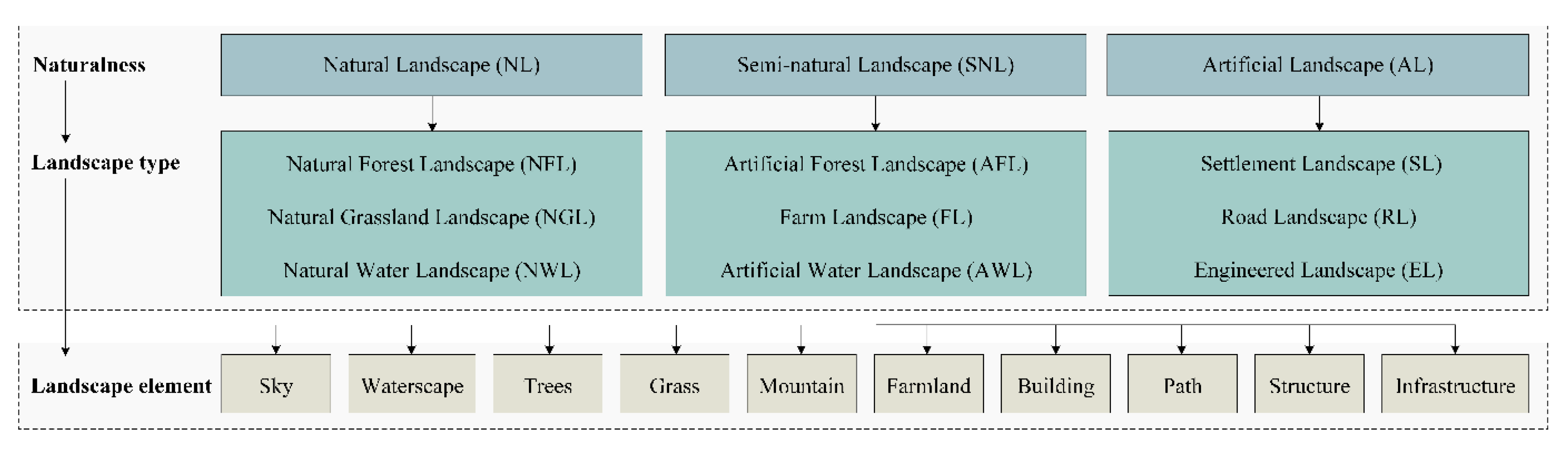
Figure 2.
Examples of the experimental images of the different landscape types.
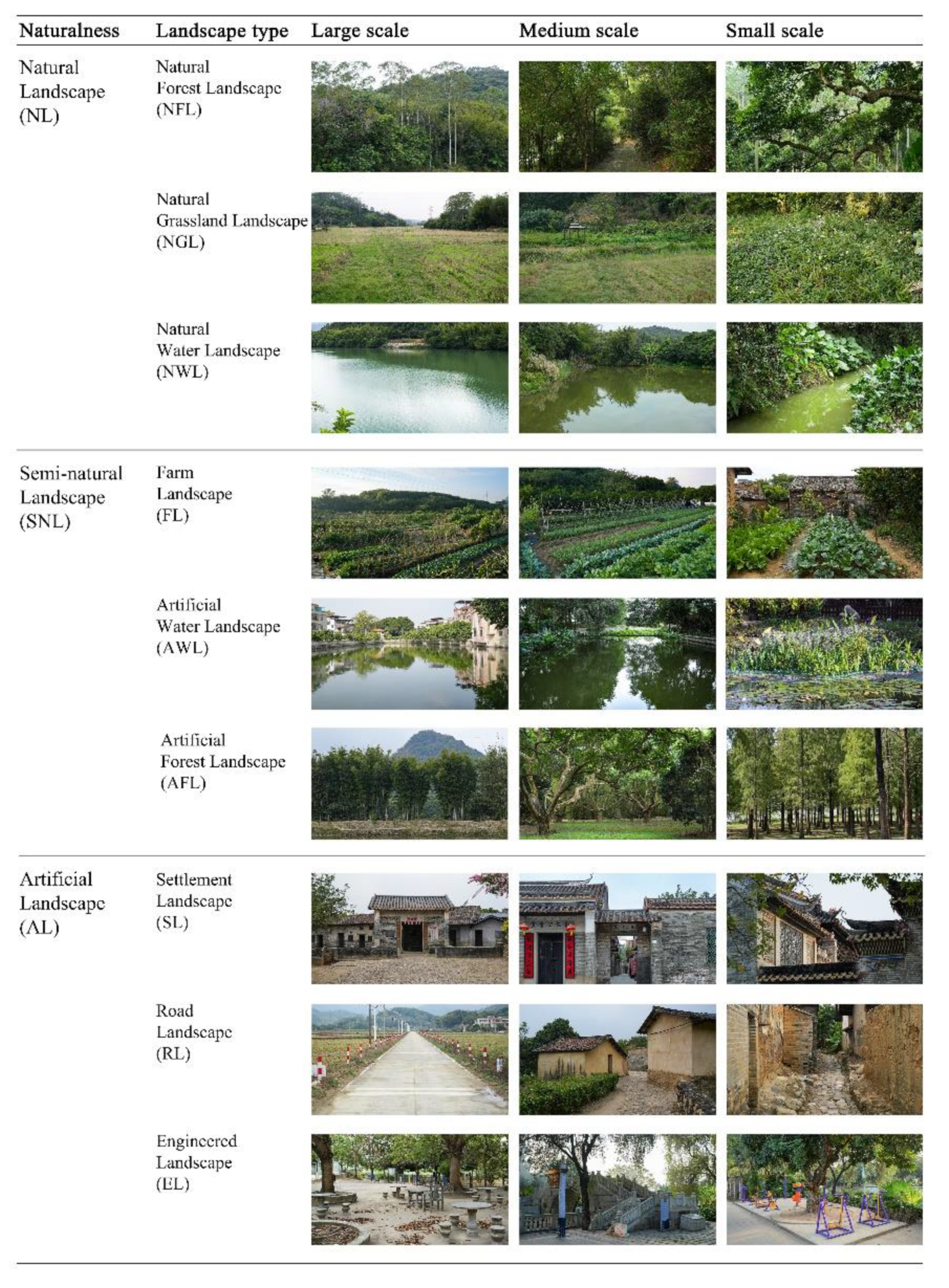
Figure 3.
Semantic segmentation image and landscape element index. (a) Original photograph; (b) semantic segmentation image; (c) percentage of typical landscape elements in each photograph of the different landscape types.
Figure 3.
Semantic segmentation image and landscape element index. (a) Original photograph; (b) semantic segmentation image; (c) percentage of typical landscape elements in each photograph of the different landscape types.
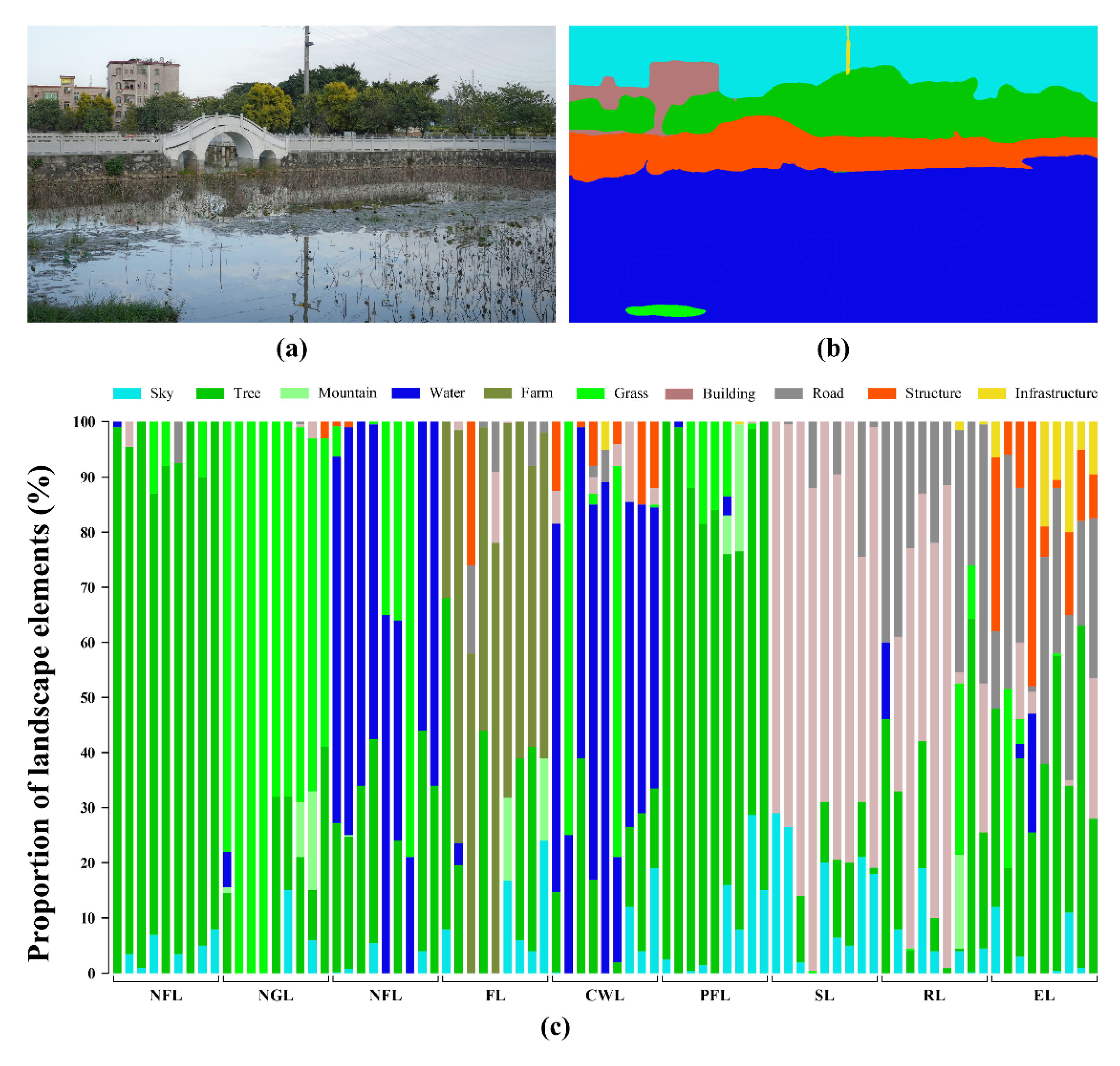
Figure 4.
Environment and arrangement of the experiment. (a) Field experimental environment; (b) laboratory floor plan.
Figure 4.
Environment and arrangement of the experiment. (a) Field experimental environment; (b) laboratory floor plan.
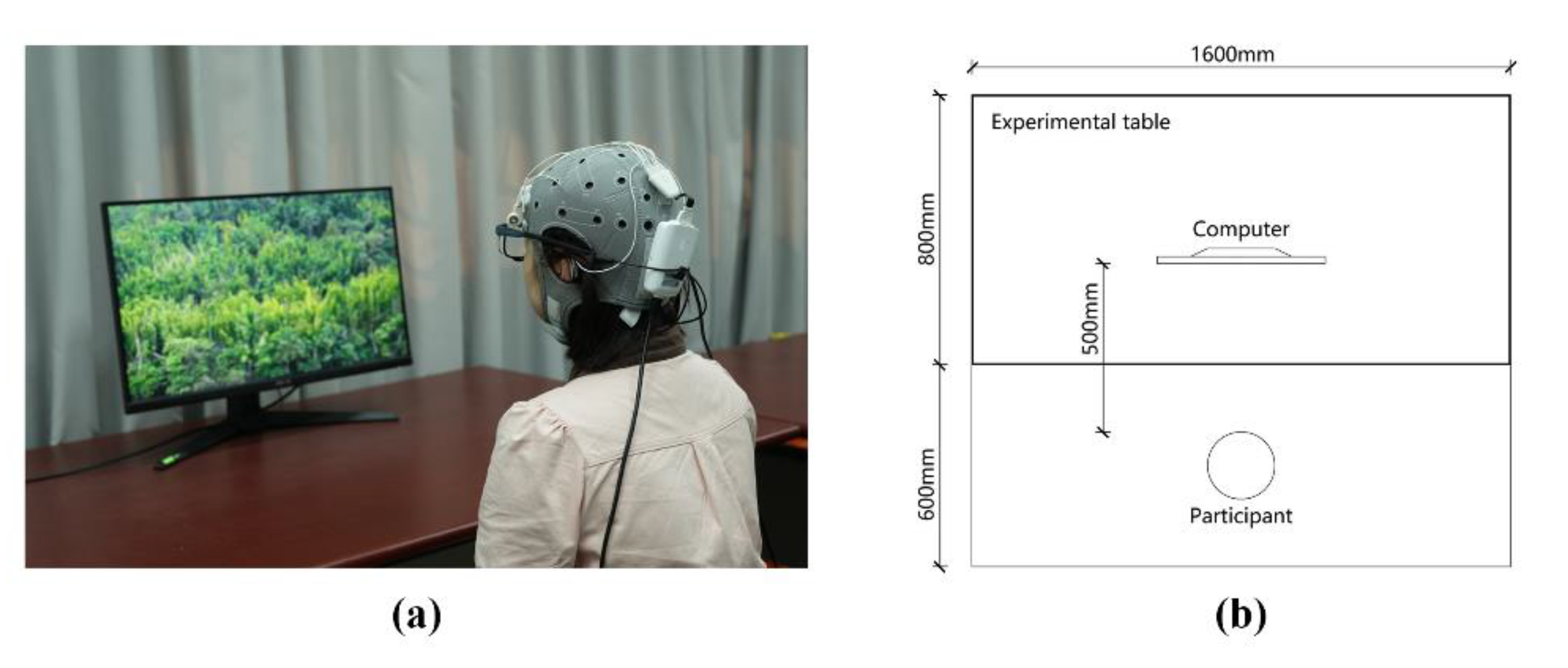
Figure 5.
Experimental procedure.
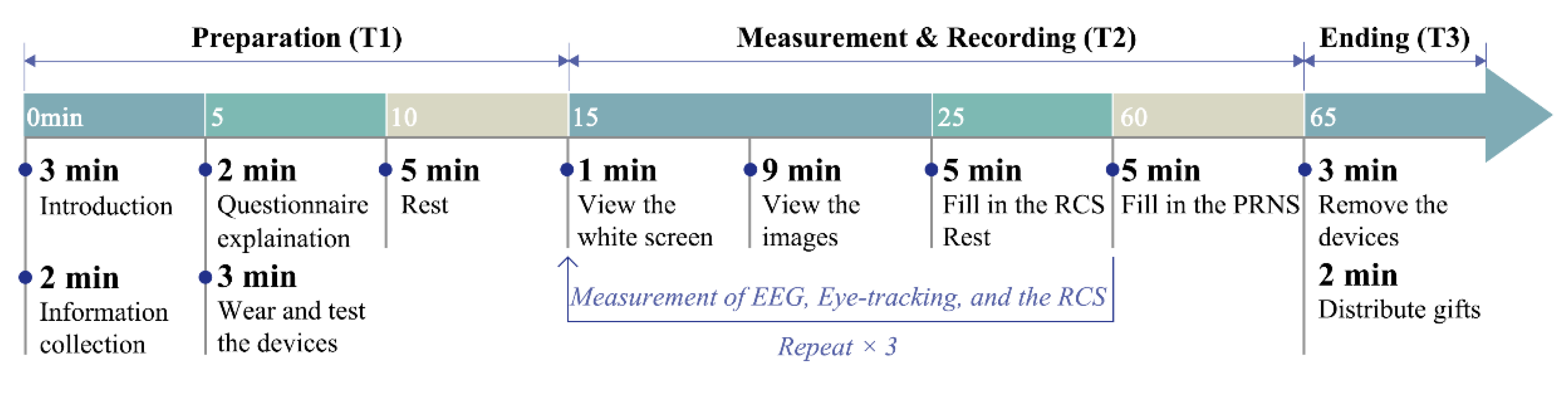
Figure 6.
One-way repeated measures ANOVA and post-hoc (LSD) pairwise comparisons of the overall RCS scores across three degrees of naturalness; N = 40; Mean ± SD; *p < 0.05; **p < 0.01; ***p < 0.001.
Figure 6.
One-way repeated measures ANOVA and post-hoc (LSD) pairwise comparisons of the overall RCS scores across three degrees of naturalness; N = 40; Mean ± SD; *p < 0.05; **p < 0.01; ***p < 0.001.
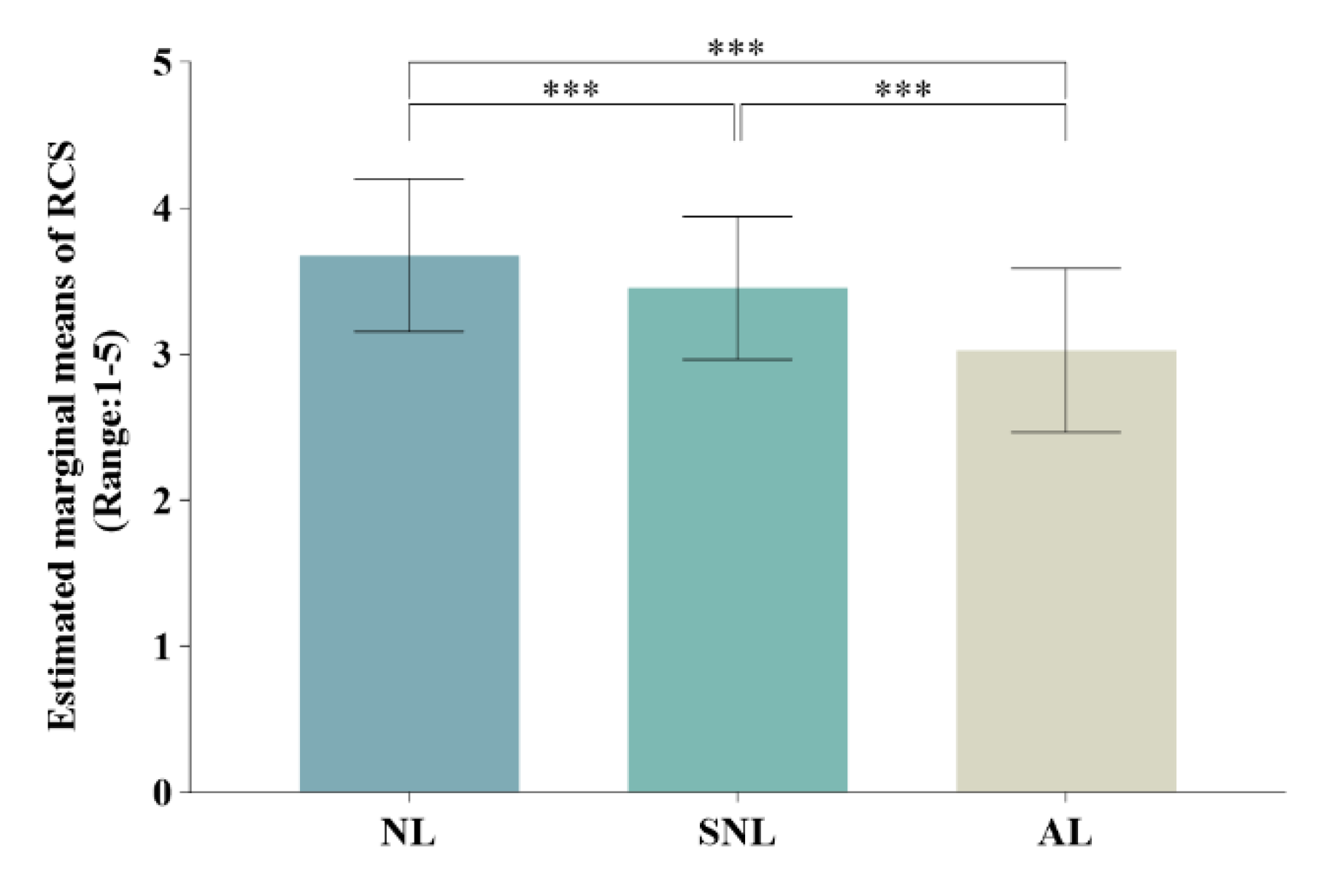
Figure 7.
One-way repeated measures ANOVA and post-hoc (LSD) pairwise comparisons of the RCS scores; N = 40; Mean ± SD; *p < 0.05; **p < 0.01; ***p < 0.001. (a) Natural landscape. (b) Semi-natural landscape. (c) Artificial landscape.
Figure 7.
One-way repeated measures ANOVA and post-hoc (LSD) pairwise comparisons of the RCS scores; N = 40; Mean ± SD; *p < 0.05; **p < 0.01; ***p < 0.001. (a) Natural landscape. (b) Semi-natural landscape. (c) Artificial landscape.
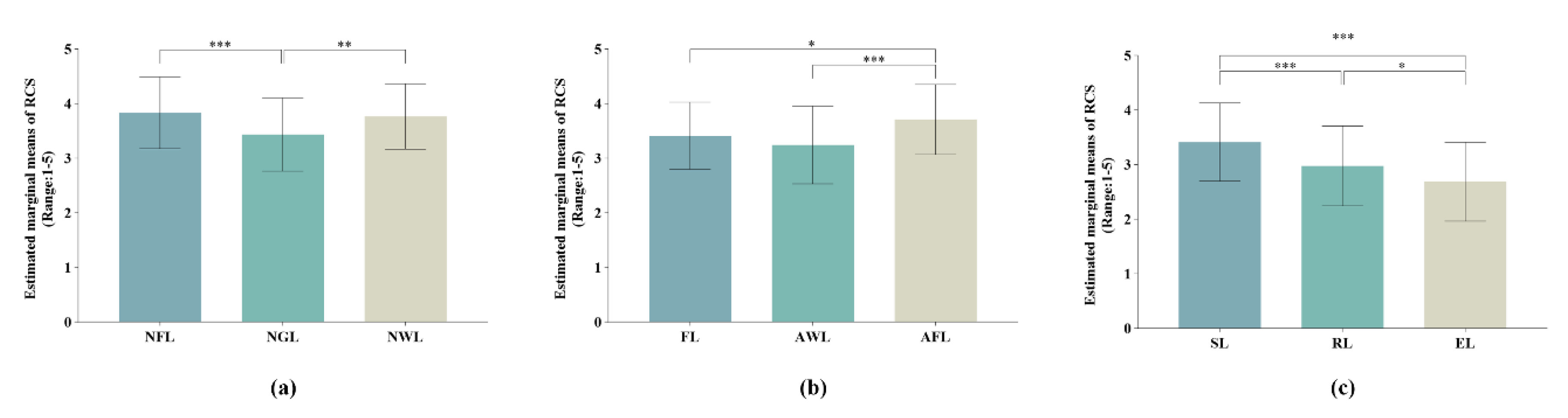
Figure 8.
One-way repeated measures ANOVA and post-hoc (LSD) pairwise comparisons of α waves in response to landscapes with different levels of naturalness; N = 40; Mean ± SD; *p < 0.05; **p < 0.01; ***p < 0.001. (a) α1. (b) α2.
Figure 8.
One-way repeated measures ANOVA and post-hoc (LSD) pairwise comparisons of α waves in response to landscapes with different levels of naturalness; N = 40; Mean ± SD; *p < 0.05; **p < 0.01; ***p < 0.001. (a) α1. (b) α2.
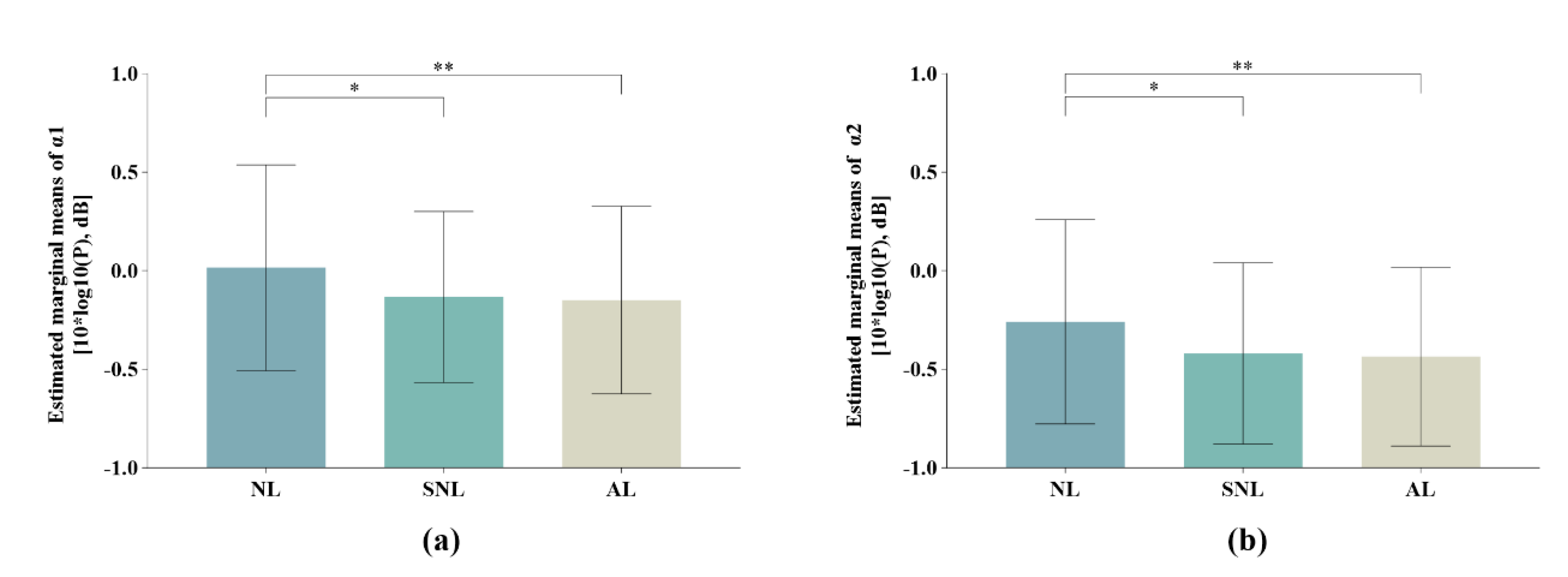
Figure 9.
One-way repeated measures ANOVA and post-hoc (LSD) pairwise comparisons of β1 waves in response to landscapes with different levels naturalness; N = 40; Mean ± SD; *p < 0.05; **p < 0.01; ***p < 0.001. (a) β1. (b) β2.
Figure 9.
One-way repeated measures ANOVA and post-hoc (LSD) pairwise comparisons of β1 waves in response to landscapes with different levels naturalness; N = 40; Mean ± SD; *p < 0.05; **p < 0.01; ***p < 0.001. (a) β1. (b) β2.
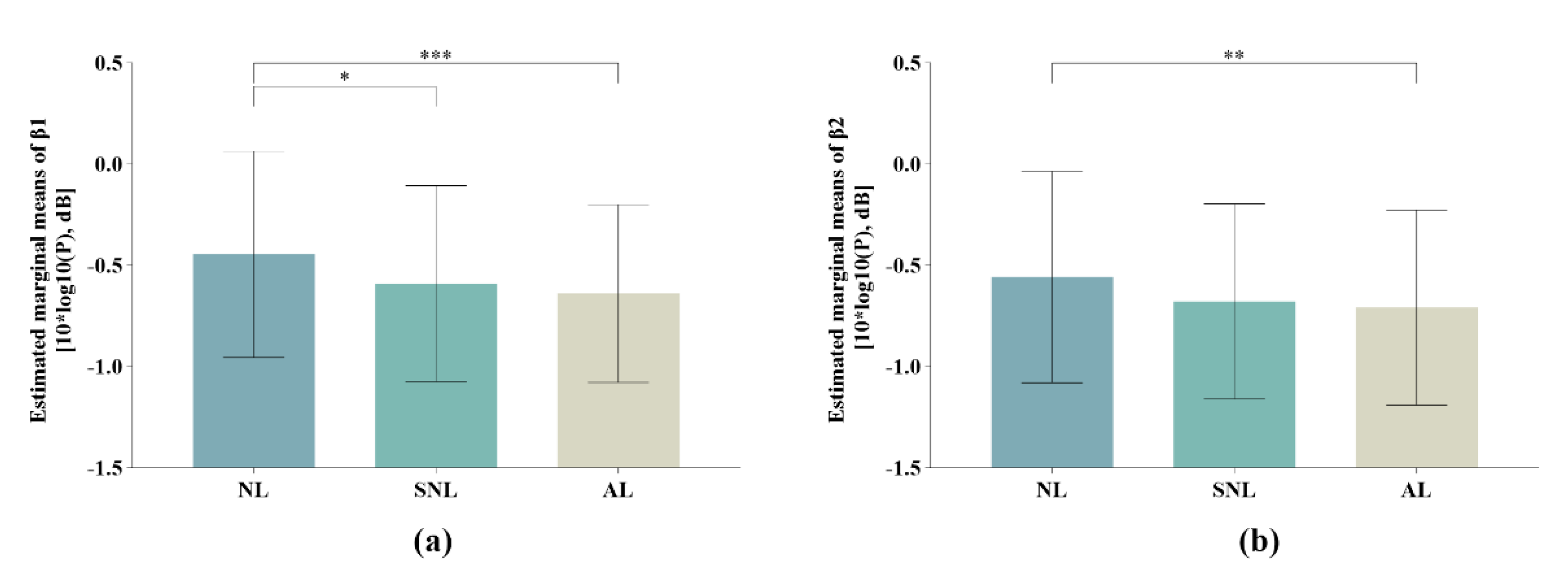
Figure 10.
One-way repeated measures ANOVA comparisons of average fixation durations for different landscape elements. N = 40; Mean ± SD.
Figure 10.
One-way repeated measures ANOVA comparisons of average fixation durations for different landscape elements. N = 40; Mean ± SD.
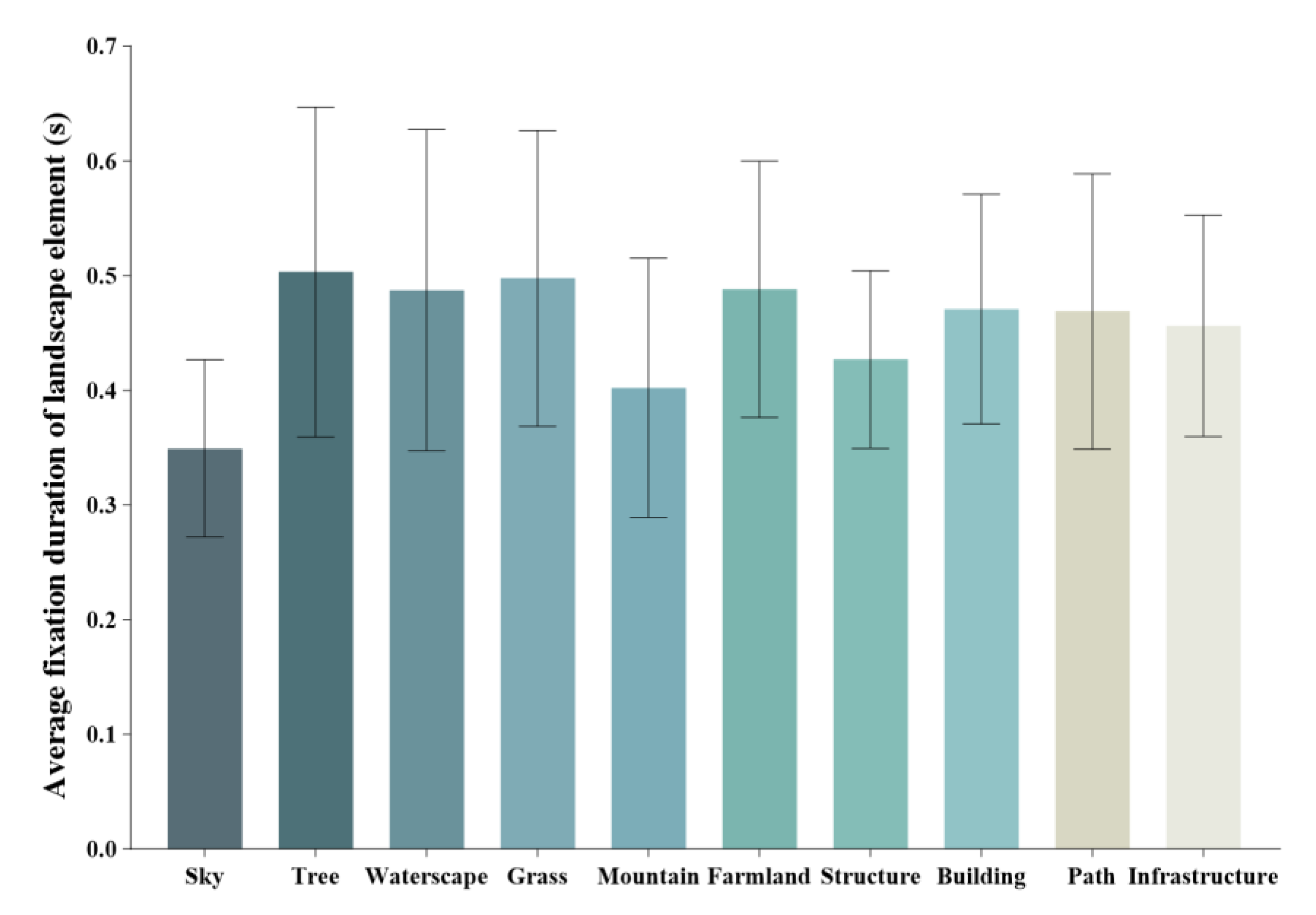
Figure 11.
Heatmap views. (a) Heatmap over original photograph. (b) semantic segmentation picture. (c) semantic segmentation picture with a heatmap overlay.
Figure 11.
Heatmap views. (a) Heatmap over original photograph. (b) semantic segmentation picture. (c) semantic segmentation picture with a heatmap overlay.
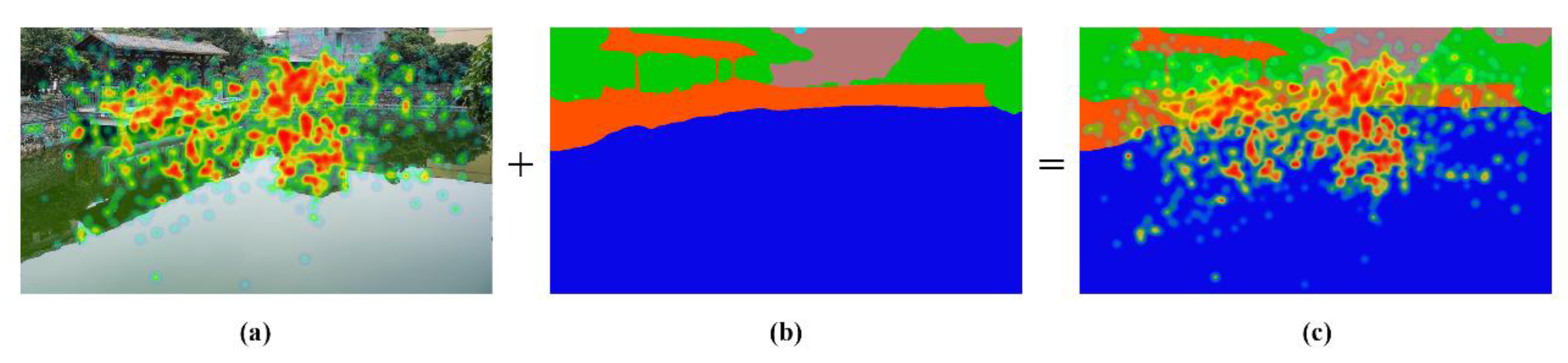
Figure 12.
Semantic segmentation heatmaps of different naturalness and landscape types.
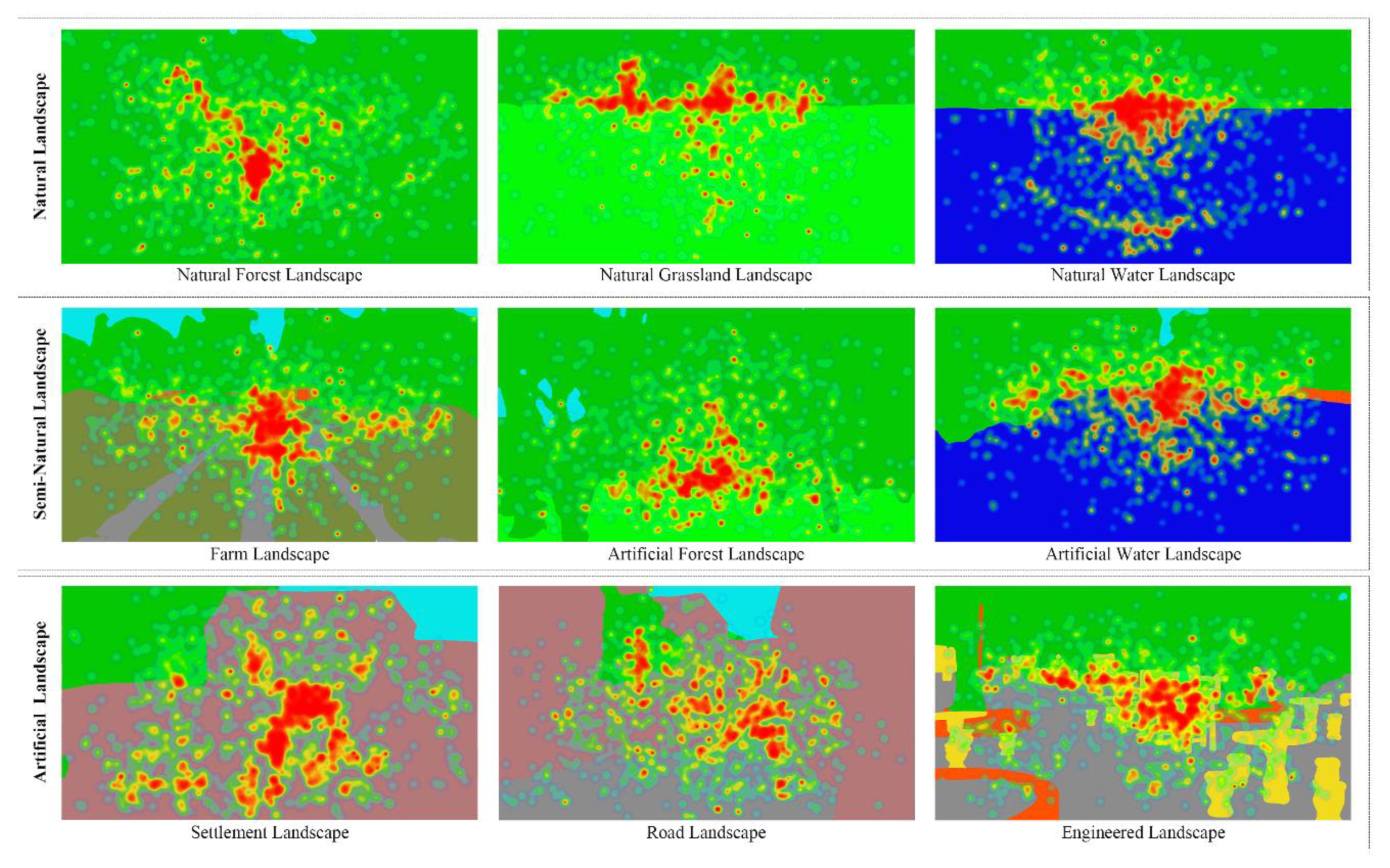

Table 1.
Descriptive statistics of the socio-demographic backgrounds of the participants.
| Measures | Measure types | N | % |
|---|---|---|---|
| Gender | Male | 20 | 50 |
| Female | 20 | 50 | |
| Age | 18–23 | 20 | 50 |
| 24–29 | 18 | 45 | |
| 30–35 | 2 | 5 | |
| Education | Undergraduate | 13 | 32.5 |
| Master student | 25 | 62.5 | |
| Doctoral student | 2 | 5 | |
| Permanent residence | City | 25 | 62.5 |
| Village | 15 | 37.5 |
Table 2.
Pearson correlation matrix for the RCS data.
| 1 | 2 | 3 | 4 | 5 | |
|---|---|---|---|---|---|
| 1 Being Away | 1 | ||||
| 2 Extent | 0.500*** | 1 | |||
| 3 Fascination | 0.576*** | 0.711*** | 1 | ||
| 4 Compatibility | 0.315*** | 0.329*** | 0.420*** | 1 | |
| 5 Overall restorative quality | 0.812*** | 0.782*** | 0.879*** | 0.628*** | 1 |
1 *p < 0.05; **p < 0.01; ***p < 0.001.
Table 3.
Effects of the participants’ permanent residences on perceived restorativeness.
| Naturalness | City (Mean ± SD) | Rural (Mean ± SD) | t | P | CI |
|---|---|---|---|---|---|
| Whole | 3.523±0.373 | 3.160±0.492 | 2.646 | 0.012* | 0.085; 0.642 |
| NL | 3.804±0.454 | 3.470±0.578 | 2.034 | 0.049* | 0.002; 0.668 |
| SNL | 3.595±0.395 | 3.222±0.554 | 2.482 | 0.018* | 0.069; 0.677 |
| AL | 3.171±0.520 | 2.788±0.570 | 2.177 | 0.036* | 0.027; 0.739 |
1 *p < 0.05; **p < 0.01; ***p < 0.001.
Table 4.
Effects of perceived and actual naturalness on perceived restorativeness.
| Naturalness | Constant | R | R2 | B | P | CI | VIF |
|---|---|---|---|---|---|---|---|
| Perceived | 1.949 | 0.845 | 0.714 | 0.624 | <0.001*** | 0.493; 0.754 | 2.504 |
| Actual | -0.228 | 0.367 | -0.728; 0.272 | 2.504 |
1 *p < 0.05; **p < 0.01; ***p < 0.001.
Table 5.
Relationship between different landscape elements and the overall PRNS perceived restorativeness scores.
Table 5.
Relationship between different landscape elements and the overall PRNS perceived restorativeness scores.
| Element | Constant | R | R2 | B | P | CI | VIF |
|---|---|---|---|---|---|---|---|
| Tree | 4.567 | 0.782 | 0.612 | 0.009 | 0.001** | 0.004; 0.015 | 1.909 |
| Building | -0.007 | 0.039* | -0.014; 0.000 | 1.997 | |||
| Path | -0.026 | 0.000*** | -0.039; -0.014 | 1.503 | |||
| Structure | -0.028 | 0.004** | -0.047; -0.010 | 1.150 | |||
| Sky | 0.005 | 0.642 | -0.015; 0.024 | 1.228 | |||
| Mountain | -0.024 | 0.157 | -0.057; 0.009 | 1.251 | |||
| Waterscape | 0.005 | 0.132 | -0.002; 0.012 | 1.711 | |||
| Farmland | 0.001 | 0.837 | -0.007; 0.009 | 1.326 | |||
| Infrastructure | -0.027 | 0.230 | -0.072; 0.018 | 1.378 | |||
| Grass | N | ||||||
1 *p < 0.05; **p < 0.01; ***p < 0.001.
Table 6.
Relationship between landscape elements and the PRNS perceived restorativeness scores across different levels of naturalness.
Table 6.
Relationship between landscape elements and the PRNS perceived restorativeness scores across different levels of naturalness.
| Naturalness | Element | Constant | R | R2 | B | P | CI | VIF |
|---|---|---|---|---|---|---|---|---|
| NL | Grass | 5.640 | 0.720 | 0.519 | -0.011 | 0.001** | -0.018; 0.005 | 1.461 |
| SNL | Mountain | 5.746 | 0.803 | 0.644 | -0.044 | 0.042* | -0.087; -0.002 | 1.352 |
| Waterscape | -0.025 | 0.002** | -0.039; -0.010 | 3.799 | ||||
| Farmland | -0.016 | 0.003** | -0.026; -0.006 | 1.919 | ||||
| AL | N | |||||||
1 *p < 0.05; **p < 0.01; ***p < 0.001.
Table 7.
Comparison of average fixation duration (s) in different landscapes.
| NL | SNL | AL | NFL | NGL | NWL | FL | AWL | AFL | SL | EL | RL | |
|---|---|---|---|---|---|---|---|---|---|---|---|---|
| M | 0.493 | 0.482 | 0.477 | 0.517 | 0.479 | 0.483 | 0.482 | 0.473 | 0.491 | 0.485 | 0.466 | 0.479 |
| SD | 0.152 | 0.138 | 0.130 | 0.201 | 0.127 | 0.165 | 0.149 | 0.144 | 0.159 | 0.133 | 0.142 | 0.134 |
1 *p < 0.05; **p < 0.01; ***p < 0.001.
Table 8.
Post-hoc (LSD) pairwise comparisons of the average fixation duration for different landscape elements.
Table 8.
Post-hoc (LSD) pairwise comparisons of the average fixation duration for different landscape elements.
| 1 | 2 | 3 | 4 | 5 | 6 | 7 | 8 | 9 | 10 | |
|---|---|---|---|---|---|---|---|---|---|---|
| 1 Sky | 1 | |||||||||
| 2 Trees | <0.001*** | 1 | ||||||||
| 3 Mountain | <0.001*** | 0.753 | 1 | |||||||
| 4 Waterscape | <0.001*** | 0.413 | 0.436 | 1 | ||||||
| 5 Farmland | 0.003** | <0.001*** | <0.001*** | <0.001*** | 1 | |||||
| 6 Grass | <0.001*** | 0.431 | 0.568 | 0.966 | <0.001*** | 1 | ||||
| 7 Building | <0.001*** | 0.069 | 0.138 | 0.386 | 0.003** | 0.271 | 1 | |||
| 8 Path | <0.001*** | 0.044* | 0.118 | 0.394 | <0.001*** | 0.297 | 0.874 | 1 | ||
| 9 Structure | <0.001*** | 0.021* | 0.022* | 0.143 | 0.010** | 0.112 | 0.469 | 0.262 | 1 | |
| 10 Infrastructure | <0.001*** | <0.001*** | <0.001*** | 0.004** | 0.163 | <0.001*** | 0.018* | <0.001*** | 0.023* | 1 |
1 *p < 0.05; **p < 0.01; ***p < 0.001.
Disclaimer/Publisher’s Note: The statements, opinions and data contained in all publications are solely those of the individual author(s) and contributor(s) and not of MDPI and/or the editor(s). MDPI and/or the editor(s) disclaim responsibility for any injury to people or property resulting from any ideas, methods, instructions or products referred to in the content. |
© 2024 by the authors. Licensee MDPI, Basel, Switzerland. This article is an open access article distributed under the terms and conditions of the Creative Commons Attribution (CC BY) license (http://creativecommons.org/licenses/by/4.0/).
Copyright: This open access article is published under a Creative Commons CC BY 4.0 license, which permit the free download, distribution, and reuse, provided that the author and preprint are cited in any reuse.


