
Submitted:
09 May 2024
Posted:
09 May 2024
You are already at the latest version
Abstract
Wearable antennas are increasingly vital in modern healthcare, facilitating continuous monitoring and communication for medical purposes. These antennas are integrated into wearable devices, allowing for the transmission and reception of vital health data, such as heart rate, body temperature, and blood pressure, to medical professionals or monitoring systems in real time. This instantaneous data transmission enables timely interventions, thus improving the quality of healthcare services. This review aims to comprehensively synthesize recent research from reputable databases, focusing on the functionality and effectiveness of wearable antennas in medical applications. The primary objectives of each study were categorized, including antenna design and integration, the performance of medical wearable antenna technology, safety considerations in wearable antenna biomedicine, and the use of antennas in clinical applications and their impact. This synthesis provides valuable insights for researchers and practitioners aiming to develop and deploy wearable antennas in medical settings, ultimately enhancing healthcare delivery and patient outcomes.
Keywords:
Wearable antennas
; medical applications
; healthcare monitoring
; vital health data
; clinical impact
; healthcare antenna design
1. Introduction
Wearable technology refers to electronic devices worn on the body, integrated into clothing or jewelry, or implanted inside the body. These devices serve various purposes such as fitness tracking, health monitoring, communication, and entertainment. They are compact, lightweight, and comfortable to wear, with examples including fitness trackers, smartwatches, and smart glasses [1]. These devices can monitor physical activity and vital signs like heart rate and provide notifications for calls and messages. Smart clothing embedded with sensors can also monitor health metrics and provide feedback to improve movements. Implantable wearable technology includes devices like heart pacemakers and cochlear implants, which treat medical conditions and can be controlled wirelessly [2].
Wearable antennas have emerged as a transformative technology in the field of medical applications, offering a diverse array of possibilities for monitoring and treatment. These antennas, when integrated into wearable devices, enable the seamless collection and transmission of vital health information, facilitating real-time monitoring and personalized healthcare solutions [3]. The increasing demand for remote healthcare services has propelled wearable antennas into the spotlight due to their potential to significantly improve patient care, enhance medical diagnostics, and enable early intervention [4]. Wearable antennas can provide healthcare professionals with valuable insights into a patient's health status, allowing for timely and proactive interventions. Moreover, these antennas can enhance the effectiveness of telemedicine and remote patient monitoring, enabling healthcare providers to deliver high-quality care to patients in remote or underserved areas [5].
Body Centric Wireless Communication (BCWC) has become a crucial element of fourth generation (4G) mobile communication systems and is set to play an even more significant role in fifth-generation (5G) technologies. 5G is expected not only to meet the growing demand for high data rates in mobile phones and similar devices but also to enable the integration of various high-value services [6]. To address these needs, the IEEE 802.15 standardization group has been established to standardize applications for on-body, off-body, and in-body communication. This reflects the increasing interest in antennas and wave propagation for body-centric communication systems, emphasizing the significance of this field in advancing wireless communication capabilities [7].
Body-Centric Wireless Communication (BCWC) is a form of communication used to link devices worn on or within the body, or between individuals in close proximity. It is classified into three categories based on the mode of communication: on-body, in-body, and off-body communication. On-body communication refers to wireless communication between devices mounted on the body. In-body communication occurs between base units or mobile devices in close proximity to body-worn gadgets. Additionally, communication between on-body devices and medical implants is known as in-body communication. This technology is crucial in various applications, including healthcare, sports, and human-computer interaction, where seamless and secure communication between devices is essential for monitoring, control, and data exchange [8].
Body-worn wearable technologies have garnered substantial research interest in the past decade due to their multifunctionality. These devices are now being extensively utilized in specialized fields that employ body-centric communication systems, particularly in the healthcare industry. Wearables serve as valuable tools for detecting vital health problems in patients, making them indispensable in settings such as recovery rooms, clinics, operating theatres, homes, and even while on the move. Their ability to monitor various health parameters in real time contributes significantly to improving patient outcomes and overall healthcare delivery. Additionally, these technologies offer the potential for continuous health monitoring, early disease detection, and personalized healthcare solutions, showing their transformative impact on the healthcare landscape [9].
1.1. Types of Wearable Antenna
Textile Antenna Design
In a recent study [10], researchers introduced a novel textile antenna capable of circular polarization, a crucial feature for ensuring reliable performance in mobile applications where the wearer's body orientation changes frequently. Circular polarization enables the antenna to radiate energy in multiple planes, ensuring signal reception regardless of body position. The antenna was constructed using a polyamide spacer fabric substrate, 6 mm thick, with a permittivity of 1.5. The antenna patch and ground plane were made of a nickel-plated woven textile with a sheet resistance of less than 1Ω/square to minimize losses. A 50 Ω impedance line on a printed circuit board (PCB) was used to connect the textile antenna to an SMA connector. Additionally, a textile antenna for protective clothing was designed with circular polarization to enhance reception in real-world applications [11].
The rising popularity of wearable smart textile systems has led to a growing interest in body-worn antennas. This interest stems from the increasing use of wireless applications in smart interactive textile systems. Clothing offers ample space to accommodate antennas, which typically require a large area, and textile antennas offer comfort due to their flexibility, conformability, and lightweight. Consequently, research on smart textile systems has predominantly focused on wearable textile antennas. These antennas have a wide range of potential applications, including medical, health, sports, military, and space applications [12].
Conventional Wearable Design
Recent research in wearable antenna design has utilized conventional antenna designs such as planar dipoles, monopoles, planar inverted-Fs (PIFAs), and microstrip patches. Microstrip antennas have gained popularity due to their planar nature, allowing for easy integration onto printed circuit boards (PCBs) at a low cost. The planar inverted-F antenna (PIFA) is a type of wearable antenna designed to be placed on the sleeve of clothing. PIFAs are like quarter-wave monopole antennas but feature a folded structure parallel to the ground plane, enhancing their performance in wearable applications [13].
Conventional antenna designs encompass a wide range of antenna types used in various applications. These antennas are typically classified based on their physical structure, such as wire antennas (like dipoles and loops), aperture antennas (like horns and reflectors), and microstrip antennas. Each design has its own set of advantages and disadvantages, making them suitable for different applications. For example, wire antennas are simple and cost-effective but may have limited bandwidth, while aperture antennas offer high gain but are more complex to manufacture. Microstrip antennas are compact and can be integrated into electronic circuits, making them ideal for modern communication systems [14].
1.2.. Aims
This systematic review aims to comprehensively analyze recent research on wearable antennas in medical applications. The review focuses on antenna design and integration, performance metrics, safety considerations, and clinical applications. It evaluates the functionality and effectiveness of wearable antennas, including materials, designs, and results from clinical trials. By synthesizing existing research, this review provides insights into the advancements, challenges, and potential future directions of wearable antennas in medical settings. This research aims to enhance healthcare delivery and improve patient outcomes using wearable antenna technology.
2. Research Methodology
This research work has been done by means of a Systematic Literature Review (SLR). A Systematic Literature Review (SLR) is a rigorous and methodical approach to reviewing existing research literature on a specific topic or research question. The primary goal of an SLR is to provide an unbiased and comprehensive summary of the available evidence on a particular topic, enabling researchers to make informed decisions, identify gaps in knowledge, and guide future research directions [15]. The research process was followed stages and is explained in subsequent sections:
- Creating a review protocol
- Establishing criteria for inclusion and exclusion
- Outlining a systematic search process to identify pertinent studies
2.1. Review Protocol
In accordance with the systematic literature review (SLR) guidelines and protocols, we formulated a comprehensive review protocol to guide our research endeavor. This protocol serves as a roadmap, outlining the parameters and methodologies for conducting the SLR within a defined context or field of study. At its core, the protocol is designed to articulate the research questions that underpin our investigation, effectively serving as the focal point for our inquiry. These research questions function as pivotal problem statements, guiding our exploration and shaping the direction of our study [16].
Moreover, the review protocol delineates the search strategy employed to identify relevant studies, ensuring a systematic and comprehensive approach to data collection. It establishes clear criteria for the selection of studies, delineating the parameters for inclusion and exclusion based on predefined criteria. Additionally, the protocol outlines the procedures for data extraction from the selected studies and subsequent analysis of the accumulated data.
By adhering to the guidelines set forth in the review protocol, we ensure a methodical and rigorous approach to our SLR, fostering transparency, reproducibility, and reliability in our research process. The protocol serves as a foundational document, guiding our efforts and providing a structured framework for the systematic exploration of the existing literature.
2.2. Inclusion and Exclusion
The primary objective behind establishing this selection criterion for studies is to ensure the comprehensive inclusion of all relevant research in this investigation. Research papers sourced from reputable databases such as IEEE Explore, Taylor & Francis, and Springer journals, as well as materials from workshops and conferences held between 2015 and 2024, are taken into consideration. We opted to set the lower boundary for the search at the year 2015 to encompass the most recent studies pertinent to our topic available in the database. Figure 1 illustrates the exclusion and inclusion criteria utilized for the systematic review. Any selected study must meet at least one of the inclusion criteria, while studies meeting any of the exclusion criteria are to be omitted from the list of primary studies.
2.3. Search Process
We limited our search to scientific databases, as most of the relevant material found in books is typically referenced or discussed in electronic publications stored in databases. Our primary focus was on searching within prominent databases such as IEEE, Springer, and Taylor & Francis. The search terms utilized in our research to identify related studies include:
S1: Antenna Design and Integration: Literature focusing on the design principles, fabrication techniques, and integration strategies of wearable antennas into medical devices.
S2: Medical wearable antenna technology performance: Research assessing the performance metrics, including efficiency, reliability, and optimization techniques of wearable antennas for medical applications.
S3: Wearable antenna biomedicine safety considerations: Research assessing the performance metrics, including efficiency, reliability, and optimization techniques of wearable antennas for medical applications.
S4: Antennas for clinical applications and impact: Literature exploring the clinical applications, effectiveness, and impact of wearable antennas in healthcare settings, including case studies and examples of successful deployments for health monitoring and treatment.
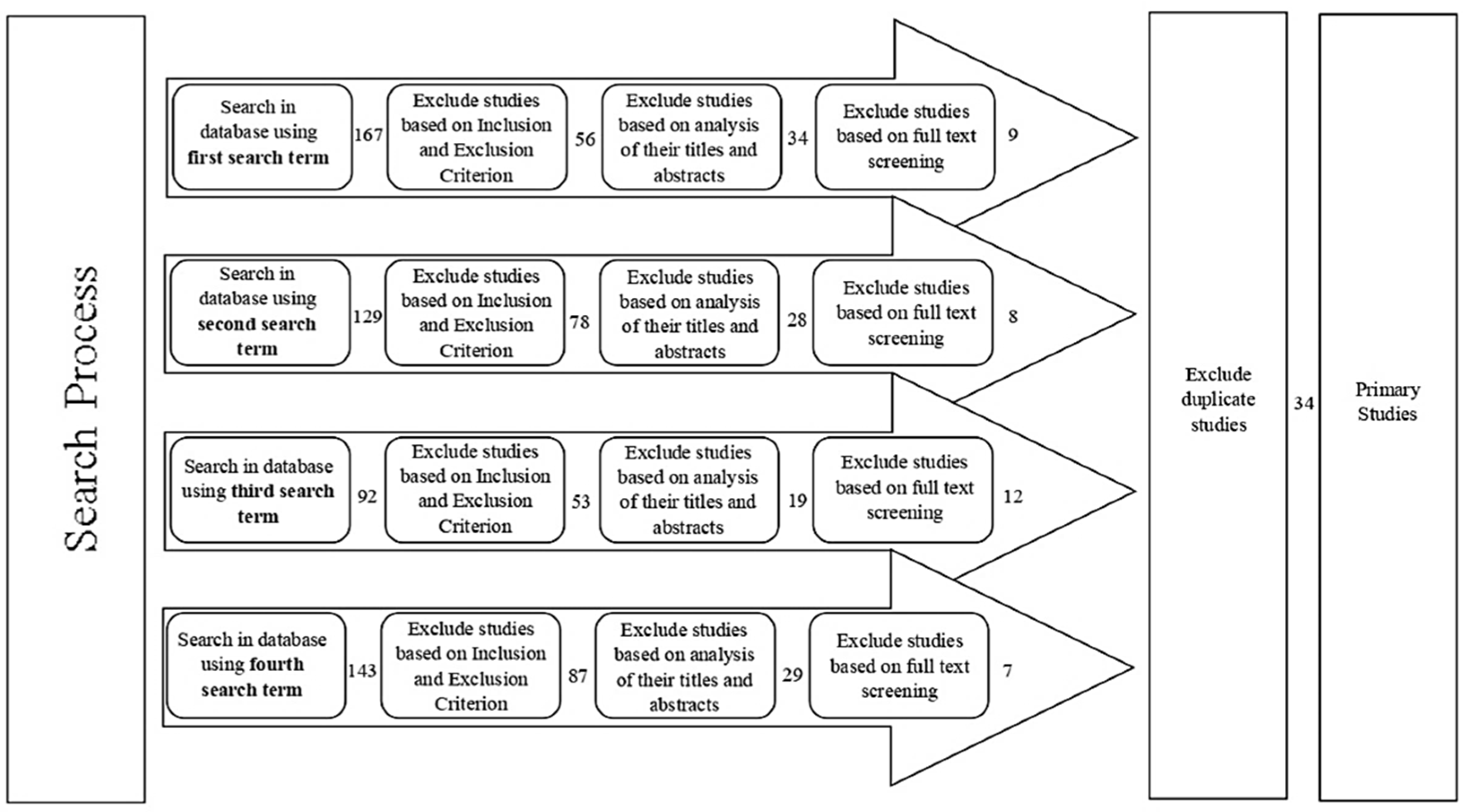
The study selection process involved several sequential steps:
Step 1: Conducting individual searches in the database using each search term.
Step 2: Applying inclusion and exclusion criteria to filter out irrelevant studies.
Step 3: Screening based on scrutiny of titles and abstracts to exclude studies that did not meet the criteria.
Step 4: Full text screening to further exclude studies.
The results of the search conducted across the databases are illustrated in Figure 2. Utilizing the search term S1, an initial total of 167 publications were identified. Following the application of inclusion and exclusion criteria, this number was reduced to 56 publications. Subsequently, 34 publications were chosen based on the relevance of their abstracts, and an additional nine were selected following a thorough review of their full texts.
For the search term S2, an initial count of 129 publications was recorded. After the application of inclusion and exclusion criteria, 78 publications remained. Of these, 28 publications were deemed relevant based on their abstracts, and eight were selected after reviewing their full texts.
In the case of search term S3, a total of 92 publications were identified initially. Following the application of inclusion and exclusion criteria, 53 publications remained. Among these, 19 publications were selected based on the relevance of their abstracts, and a further 12 were chosen after reviewing their full texts.
Finally, with search term S4, 143 publications were initially identified. After applying the inclusion and exclusion criteria, 87 publications remained. From these, 29 publications were considered relevant based on their abstracts, and seven were selected following a thorough review of their full texts.
After reviewing each study for duplications, a total of 34 primary studies were identified. These studies will serve as the basis for the literature review on wearable antennas in medical applications.
3. Data Analysis
The review meticulously analyzed 34 research studies to gain insights into the functionality and effectiveness of wearable antennas in medical applications. The findings from these studies have been organized into four distinct groups, each focusing on specific aspects of wearable antenna technology within the medical domain. These categories are delineated by the primary objectives of each investigation, which include antenna design and integration, medical wearable antenna technology performance, wearable antenna biomedicine safety considerations, and antennas for clinical applications and impact.
In the first category, Antenna Design and Integration, researchers focus on the intricacies of crafting antennas specifically tailored for integration into medical devices. This involves studying design principles, fabrication techniques, and integration strategies to ensure optimal performance, reliability, and compatibility with diverse medical applications. Understanding these aspects is essential for the seamless incorporation of antennas into various medical tools and equipment.
In second category, within the domain of Medical Wearable Antenna Technology Performance, it assesses the efficacy of wearable antennas within medical settings by evaluating performance metrics such as efficiency, reliability, signal strength, and transmission range to gauge how effectively the antennas operate in conjunction with medical devices and wearables.
Wearable Antenna Biomedicine Safety Considerations, third category, ensures the safety and regulatory compliance of antennas in biomedical contexts. This entails a comprehensive examination of materials used, electromagnetic radiation exposure levels, and adherence to safety standards to mitigate potential risks. By addressing biocompatibility and safety concerns, researchers aim to ensure the safe and effective utilization of antennas in healthcare environments.
Lastly, within the fourth category, Antennas for Clinical Applications, and Impact, explores the practical implications of wearable antennas in clinical settings. Through real-world applications, case studies, and clinical trials, they assess how antennas contribute to improving patient care, enhancing medical diagnosis and treatment, and advancing healthcare delivery. By examining their impact on clinical practice, researchers gain insights into the tangible benefits of wearable antenna technology in enhancing healthcare outcomes.
By organizing the literature review into these four categories, we can systematically analyze and synthesize the diverse body of research on wearable antennas in medical applications. Each category provides valuable insights into different facets of wearable antenna technology, helping to identify trends, challenges, and opportunities for further research and development in the field of medical wearables.
3.1. Antenna Design and Integration
Wearable antennas have emerged as a pivotal component in the field of medical applications, facilitating wireless communication and data transfer in various healthcare scenarios. Among these applications, their integration in medical wearables presents a promising avenue for monitoring, diagnosis, and treatment. Antenna design and integration in such wearables require careful consideration of factors like size, efficiency, and biocompatibility to ensure seamless integration with the human body and optimal performance in diverse medical environments [17].
The design process for wearable antennas in medical applications involves balancing several key considerations. Miniaturization is critical to ensure the antenna's compatibility with small form factors of wearable devices while maintaining efficient radiation characteristics [18]. Additionally, biocompatibility is paramount to prevent adverse reactions when in contact with the human body, necessitating the use of materials and fabrication techniques that are safe for prolonged skin contact [18].
Frequency selection plays a crucial role in wearable antenna design for medical applications. Depending on the specific use case, antennas may operate in various frequency bands, including ISM bands, Wi-Fi, Bluetooth, or medical body area network (MBAN) frequencies. The choice of frequency impacts the antenna's performance, power consumption, and interference susceptibility. Moreover, bandwidth requirements must be carefully addressed to accommodate the transmission of diverse medical data types efficiently [19].
Integrating antennas seamlessly into wearable medical devices presents several challenges. The placement of the antenna on the body affects its radiation pattern, efficiency, and susceptibility to external interference. Moreover, the presence of the human body can significantly alter the antenna's performance, leading to issues such as detuning and signal attenuation [20]. Addressing these challenges requires careful electromagnetic modeling, simulation, and validation in realistic operating conditions.
To maximize the performance of wearable antennas in medical applications, optimization techniques are employed. These may include antenna tuning, impedance matching, and radiation pattern shaping to improve efficiency and signal coverage [21]. Furthermore, advanced materials and fabrication methods, such as flexible substrates and additive manufacturing, enable the realization of antennas with tailored properties suited for wearable integration [21].
The deployment of wearable antennas in medical contexts necessitates adherence to stringent regulatory and safety standards. Compliance with standards such as FCC regulations, IEC medical device standards, and specific electromagnetic exposure limits ensures the safe and reliable operation of medical wearables [22]. Furthermore, rigorous testing and certification processes are essential to validate the electromagnetic compatibility and safety of wearable antenna systems.
Numerous medical applications leverage wearable antennas for diverse purposes. Examples include wireless vital signs monitoring, electrocardiogram (ECG) telemetry, glucose monitoring, and drug delivery systems. Each application imposes unique requirements on antenna design and integration, highlighting the versatility and importance of wearable antennas in modern healthcare [23].
Despite significant progress, several challenges persist in the design and integration of wearable antennas for medical applications. These include achieving robust performance in dynamic body environments, minimizing power consumption for prolonged battery life, and ensuring interoperability with existing healthcare infrastructure. Addressing these challenges presents exciting opportunities for interdisciplinary research at the intersection of electromagnetics, materials science, and healthcare engineering [24].
In conclusion, wearable antennas hold immense potential in advancing medical diagnostics, monitoring, and treatment modalities. Their design and integration in medical wearables require careful consideration of size, efficiency, biocompatibility, and regulatory compliance. By addressing these challenges and leveraging emerging technologies, wearable antennas are poised to play an increasingly pivotal role in shaping the future of healthcare delivery and patient well-being.

Table 1.
Antenna Design and Integration.
| Author | Year | Aspect | Description |
|---|---|---|---|
| D. Rajesh Kumar, G. Venkat Babu, and N. Raju | 2020 | Design Considerations | Considerations like size, efficiency, and biocompatibility are crucial for seamless integration of wearable antennas in medical devices. Miniaturization ensures compatibility, while biocompatibility prevents adverse reactions. |
| N. Sneka, and K. R. Kashwan | 2016 | Frequency Selection | The suggested system has the capability to function within the 2.4 GHz band. It has been specifically engineered to provide JC cross frequency coverage, catering to the requirements of novel evaluator applications. |
| E. Topsakal | 2019 | Integration Challenges | Enhancing patient care requires dependable wireless data telemetry. While progress has been made in implantable RF systems for medical use. Current antenna design for medical applications is primarily simulated. This talk will discuss ongoing research and future challenges in this area. |
| Adel Y. I. Ashyap et al. | 2018 | Optimization Techniques | The proposed antenna, formed by loading a rectangular slot/notch with a strip line to create an inverted E-shaped design. Each slot/notch and strip line are translated into an equivalent circuit, showing satisfactory agreement with simulation results. |
| M. Osman et al. | 2016 | This work explores the use of flannel fabric, comprising 100% cotton material, as a substrate for small antennas and sensors, facilitating wearable applications by enabling flexible and comfortable integration. | |
| N. Singh, Ashutosh Kumar Singh, and V. Singh | 2015 | Regulatory Compliance | Adherence to regulatory standards ensures safe deployment. Compliance is crucial for reliable operation and electromagnetic compatibility, requiring rigorous testing and certification processes. |
| B. Prudhvi Nadh, B. T. P. Madhav, M. Siva Kumar | 2019 | Applications and Examples | Wearable antennas find diverse applications in vital signs monitoring, ECG telemetry, glucose monitoring, and drug delivery. Each application emphasizes the importance of antenna design and integration. |
| G. Christina, A. et al. | 2016 | Trends | This paper introduces a flexible wearable antenna for cotton, jeans, and silk. Fabricated with HFSS simulation, it achieves -15dB return loss, 16MHz bandwidth for cotton, 23 MHz for jeans, and 5dB gain. |
3.2. Medical Wearable Antenna Technology Performance
Medical wearable antenna technology has witnessed significant advancements, revolutionizing healthcare delivery by enabling wireless communication, monitoring, and data transmission in various medical applications [25]. These antennas are designed to be seamlessly integrated into wearable devices, offering clinicians real-time access to patient data, and enhancing the efficiency of medical diagnostics and treatment. This data analysis aims to delve into the performance aspects of medical wearable antenna technology, examining key parameters, challenges, and trends shaping its implementation in medical applications [25].
The performance of medical wearable antennas is evaluated based on several key metrics and parameters. These include antenna efficiency, radiation pattern, bandwidth, gain, and impedance matching. Antenna efficiency reflects the ratio of radiated power to the total input power, indicating the antenna's ability to convert electrical energy into electromagnetic waves efficiently [26]. Radiation pattern describes the spatial distribution of radiated power, influencing signal coverage and reception quality. Bandwidth determines the range of frequencies over which the antenna can operate effectively, while gain quantifies the antenna's ability to amplify signals in a specific direction [27]. Impedance matching ensures maximum power transfer between the antenna and the transmitter or receiver, optimizing signal transmission.
Optimizing the performance of medical wearable antennas poses several challenges. The constrained size of wearable devices necessitates miniaturization of antennas while maintaining adequate performance metrics. Achieving efficient radiation patterns near the human body, which can significantly affect antenna performance, is another challenge [28]. Moreover, operating in dynamic medical environments with varying body positions and movements requires robust antenna designs capable of maintaining consistent performance. Addressing these challenges requires innovative design approaches, advanced materials, and simulation techniques tailored to the specific requirements of medical wearable applications [28].
The presence of the human body poses unique challenges to the performance of wearable antennas in medical applications. The body's dielectric properties and varying anatomical structures can alter the antenna's resonance frequency, impedance, and radiation pattern. This phenomenon, known as detuning, can result in signal distortion and reduced communication range [29]. Additionally, signal attenuation caused by the absorption and scattering of electromagnetic waves within the body affects the overall link budget and reliability of wireless communication. Mitigating these effects through careful antenna design and placement optimization is crucial to ensure reliable performance in medical wearables [29].
Medical wearable antennas are often integrated with sensing and monitoring systems to enable comprehensive healthcare solutions. This integration involves synchronizing antenna performance with sensor data acquisition and processing, ensuring seamless communication between wearable devices and medical infrastructure [30]. Co-designing antennas with sensors allows for synergistic optimization of both systems, enhancing overall device functionality and performance. Furthermore, interoperability with existing healthcare platforms and standards facilitates seamless data exchange and integration into clinical workflows, enhancing the utility of medical wearable technologies.
Validating the performance of medical wearable antennas requires comprehensive testing procedures conducted in realistic operating environments. This includes characterizing antenna parameters such as efficiency, radiation pattern, and impedance matching under simulated body conditions to assess performance robustness [31]. Real-world testing in clinical settings allows for the evaluation of antenna reliability, interoperability, and performance consistency across different patient populations and usage scenarios. Additionally, compliance with regulatory standards and safety requirements ensures the safe and reliable operation of medical wearable antennas in healthcare environments.
The scalability and customization of medical wearable antenna technology play a crucial role in addressing the diverse needs of healthcare applications. Scalable antenna designs accommodate variations in device form factors, patient demographics, and medical requirements, ensuring compatibility with different wearable platforms and use cases [31]. Customization allows for tailoring antenna parameters to specific medical applications, optimizing performance for targeted functionalities such as vital signs monitoring, telemedicine, or therapeutic interventions. This flexibility enables the adaptation of medical wearable antennas to evolve healthcare needs and technological advancements [32].
Overall, medical wearable antenna technology plays a vital role in advancing healthcare delivery by enabling wireless communication, monitoring, and data transmission in wearable medical devices. The performance of these antennas is influenced by various factors, including efficiency, radiation pattern, human body effects, and integration with sensing systems. Addressing challenges related to performance optimization, human body effects, and interoperability is crucial to realizing the full potential of medical wearable antennas in improving patient care and clinical outcomes. Emerging trends and innovations, along with comprehensive testing and validation procedures, further contribute to the evolution of this transformative technology in medical applications.
Table 2.
Medical wearable antenna technology performance.
| Author | Year | Aspect | Description |
|---|---|---|---|
| Abdulrahman S. M. Alqadami, Mohd Faizal Jamlos, M. A. Jamlos | 2019 | Antenna Efficiency | The antenna achieves 60% radiation efficiency and 9.8 dB realized gain. SAR is evaluated on a realistic human phantom's right arm, suitable for on-body wireless communication. |
| Sanjit Varma et al. | 2021 | Radiation Pattern | Radiation patterns in free space and on-body scenarios show increased front-to-back ratio and directionality due to the human body. Fabricated embroidered textile antennas perform well for indoor wearable applications. |
| Z. Abidin, S. et al. | 2017 | Bandwidth | The integrated EBG reduces radiation by 13 dB and minimizes detuning. The compact antenna has 8.5% bandwidth, 6.79 dBi gain, and is SAR validated near the human body. |
| A. Al-Sehemi et al. | 2018 | Gain | The antenna covers 2.2-3.5 GHz and 2.8-4.2 GHz bands with 41% and 28% bandwidths. It provides firm dipole and omnidirectional patterns, with peak gains at 2.5 GHz and 3.2 GHz , and radiation efficiencies of 81% and 88%. |
| Farzad Khajeh-Khalili, A. Shahriari, Fatemeh Haghshenas | 2020 | This paper presents a method to enhance gain and bandwidth of wearable antennas for medical/communication systems using triple transmission lines (TTLs). It achieves dual-band responses covering frequency ranges of 1.7–2.5 GHz and 5.4–5.95 GHz. | |
| S. López-Soriano, J. Parrón | 2015 | Application in Healthcare | The study proposes a UHF European band (865-868 MHz) tag for patient tracking, intended to be integrated into a wristband. It needs a 2m read range to function effectively, as the reader will be situated in door frames. |
| S. Bhavani, T. Shanmuganantham | 2022 | Wearable antennas find diverse applications in vital signs monitoring, ECG telemetry, glucose monitoring, and drug delivery. Each application emphasizes the importance of antenna design and integration. | |
| G. Conway, W. Scanlon | 2022 | This paper presents a UWB antenna for microwave imaging to detect tumors, utilizing a jeans fabric design with patch slots, tested on various body phantoms. |
3.3. Wearable Antenna Biomedicine Safety Considerations
Safety considerations play a critical role in the design and deployment of wearable antennas in biomedical applications. As these antennas come into direct contact with the human body, ensuring their biocompatibility and mitigating potential health risks are paramount [33]. This data analysis explores the safety considerations associated with wearable antenna technology in biomedicine, examining key factors, regulatory frameworks, and emerging trends shaping safety practices in this domain [33].
Biocompatibility is a fundamental aspect of wearable antenna design for biomedical applications. The materials used in antenna construction must be biocompatible, non-toxic, and non-irritating to ensure compatibility with human tissue and minimize the risk of adverse reactions. Commonly used materials include medical-grade polymers, biocompatible metals such as gold or titanium, and flexible substrates like silicone or polyimide. Rigorous biocompatibility testing, including cytotoxicity, genotoxicity, and irritation assessments, is essential to validate the safety of wearable antennas for prolonged skin contact [34].
Another critical safety consideration is adherence to electromagnetic exposure limits to mitigate potential health risks associated with radiofrequency (RF) radiation. Regulatory bodies such as the Federal Communications Commission (FCC) and the International Commission on Non-Ionizing Radiation Protection (ICNIRP) establish guidelines and safety limits for human exposure to RF electromagnetic fields [35]. Wearable antenna designs must comply with these exposure limits to ensure the safety of users, particularly in close proximity to sensitive anatomical regions or implanted medical devices.
Thermal effects resulting from RF exposure pose potential safety concerns in wearable antenna biomedicine. High power densities generated by antennas operating at close range to the body can lead to tissue heating and thermal damage [36]. Mitigating these effects requires careful antenna design and power management strategies to minimize RF power absorption and distribute heat effectively. Thermal modeling and simulation techniques enable designers to evaluate the temperature rise in tissue and ensure compliance with safety thresholds [37].
Specific Absorption Rate (SAR) is a key metric used to quantify the rate at which RF energy is absorbed by the human body. SAR compliance testing is essential for assessing the safety of wearable antennas and ensuring that RF exposure levels remain within acceptable limits. Comprehensive SAR risk assessments consider factors such as antenna geometry, operating frequency, tissue properties, and exposure duration to evaluate potential health risks accurately. Design modifications may be necessary to reduce SAR levels and enhance the safety profile of wearable antenna systems [37].
Wearable antennas near medical devices, such as pacemakers, implantable defibrillators, or neurostimulators, raise concerns regarding electromagnetic interference (EMI) and potential device malfunction [38]. Designing antennas with low EMI emissions and conducting compatibility testing with medical devices are crucial steps to mitigate interference risks. Shielding techniques, frequency selection, and distance optimization help minimize the likelihood of EMI-induced disruptions and ensure the safe coexistence of wearable antennas with medical implants or devices.
Compliance with regulatory standards and certification requirements is essential to ensure the safety and reliability of wearable antennas in biomedical applications. Regulatory bodies such as the FDA in the United States and the European Medicines Agency (EMA) in Europe establish guidelines and approval processes for medical devices, including wearable antennas [39]. Manufacturers must demonstrate adherence to safety standards, conduct thorough risk assessments, and obtain regulatory approvals before commercializing wearable antenna products for medical use [40].
Assessing the long-term safety and durability of wearable antennas is crucial for ensuring their continued performance and reliability over extended usage periods. Factors such as material degradation, mechanical wear, and environmental exposure can impact antenna integrity and safety over time [39,40]. Accelerated aging tests, reliability assessments, and in-field monitoring are employed to evaluate the long-term performance and safety of wearable antenna systems in real-world biomedical applications [41].
Effective user education and risk communication are essential for promoting safety awareness and mitigating potential risks associated with wearable antenna use in biomedicine [42]. Healthcare providers and device manufacturers play a vital role in educating users about proper device usage, potential hazards, and safety precautions. Clear labeling, user manuals, and warning notifications help users make informed decisions and mitigate risks related to wearable antenna deployment in medical settings [43].
In conclusion, safety considerations are of utmost importance in the design, deployment, and usage of wearable antennas in biomedical applications. Biocompatibility, electromagnetic exposure limits, thermal effects, SAR compliance, interference with medical devices, regulatory compliance, long-term safety, user education, and risk communication are critical aspects that must be addressed to ensure the safe and effective integration of wearable antennas in medical devices and systems. By adhering to stringent safety standards, conducting thorough risk assessments, and fostering user awareness, the potential of wearable antenna technology in biomedicine can be realized while ensuring patient safety and well-being.
Table 3.
Wearable antenna biomedicine safety considerations.
| Author | Year | Aspect | Description |
|---|---|---|---|
| Rui Pei, J. Wang, M. Leach, Zhao Wang, Sanghyuk Lee, E. Lim | 2016 | Biocompatibility | The paper discusses compact tunable antennas for wearable biomedical systems, focusing on high-efficiency wideband printed antennas on the human body at UHF frequencies, with potential Medicare application. |
| A. Sabban and I. Member | 2015 | The paper presents design considerations, computed and measured results of wideband printed antennas with high efficiency on the human body at UHF frequencies. The proposed antenna offers potential use in Medicare systems. | |
| Imtiaz Nasim and Seungmo Kim | 2019 | Electromagnetic Exposure Limits | The study examines human EMF exposure from on-body wearable, highlighting the potential health impact of technology evolution to higher frequencies. Results indicate that at 60 GHz surpasses regulatory guidelines. |
| E. Moradi, K. Koski, M. Hasani, Y. Rahmat-Samii, L. Ukkonen | 2015 | The paper discusses wearable and implantable antennas for wireless body-centric systems, utilizing electro-textiles for wearables and mm-sized loop antennas for implants, enabling power transmission to devices through near field inductive links. | |
| S. Gallucci et al. | 2022 | This study aims to assess human EMF exposure from two wearable antennas operating on different 5G bands: one around 3.5 GHz and the other around 26.5 GHz. | |
| R. Sowmiya, G. Surya, S. Umamaheswari, K. Sabeha | 2018 | Specific Absorption Rate (SAR) | This paper introduces a textile wearable antenna for medical wireless body networks (MBANs). It incorporates an electromagnetic band-gap (EBG) structure, reducing radiation into human tissues by 13 dB. SAR evaluation confirms its performance near the body, making it suitable for integration into wearable and biomedical devices. |
| F.A. Suryanata et al. | 2023 | Electromagnetic Interference (EMI) | Electromagnetic wave will have an effect when the passive antennas is being closed to the human body because it will act as lossy medium. This study looks at how human tissue properties affect antennas in various conditions. |
| N. Rishani, R. Shubair, G. Aldabbagh | 2017 | Regulatory Compliance | This paper reviews recent progress in wearable and epidermal antennas for medical applications, emphasizing the role of flexible materials, miniaturization, electromagnetic wave protection. |
| P. Lemaître-Auger, S. Tedjini, Tsitoha Andriamiharivolarnena | 2018 | Long-term Safety and Durability | Antennas are vital for wireless systems, but integrating them into devices poses challenges, especially concerning safety near the human body. Ensuring long-term safety and durability is crucial. |
| M. Hasan et al. | 2022 | User Education and Risk Communication | Wearable antennas, prized for their lightweight and adaptable wireless communication, face challenges in conforming to the human body while maintaining performance, especially with textile substrates and high conductivity materials. |
| R. Jacob, R. Salama, S. M. Abbas, R. Liyanapathirana | 2021 | This paper reviews a range of wearable antennas across applications, sizes, and technologies, exploring challenges in systematic selection and discussing miniaturization and polarization techniques. |
3.4. Antennas for Clinical Applications and Impact
Antennas designed for clinical applications have become integral components in modern healthcare systems, facilitating wireless communication, data transmission, and remote monitoring in clinical settings [43]. This data analysis explores the significance of antennas in clinical applications and their impact on the development and adoption of wearable antenna technology in medical applications. By examining key factors, trends, and challenges, we can better understand the evolving role of antennas in advancing clinical care and wearable technology integration.
Wireless connectivity has revolutionized clinical workflows by enabling seamless communication between medical devices, healthcare professionals, and patient monitoring systems [44]. Antennas serve as the conduits for wireless data transmission, providing reliable connectivity in diverse clinical environments such as hospitals, clinics, and ambulatory care settings. Whether deployed in medical equipment, patient monitoring devices, or infrastructure components, antennas play a pivotal role in establishing robust wireless networks that support real-time data exchange and telemedicine applications [45].
The integration of wearable antennas in clinical practice represents a significant advancement in healthcare delivery, offering new opportunities for remote patient monitoring, telehealth consultations, and personalized medicine [46,47,48]. Wearable antennas embedded in medical devices, smart garments, and sensor networks enable continuous monitoring of vital signs, medication adherence, and disease progression outside traditional clinical settings. This paradigm shift towards remote monitoring and ambulatory care has the potential to improve patient outcomes, reduce healthcare costs, and enhance the quality-of-care delivery [49].
Designing antennas for clinical applications requires careful consideration of factors such as size, efficiency, frequency band, and interference mitigation [50]. Clinical environments often impose constraints on antenna form factor and placement, necessitating compact designs that can operate effectively near medical equipment and human tissue. Moreover, antennas must be optimized for specific frequency bands to minimize interference with existing wireless infrastructure and medical devices while ensuring reliable communication and data transfer [50].
To sum it up, antennas play a vital role in clinical applications, enabling wireless connectivity, data transmission, and remote monitoring in healthcare settings. The integration of wearable antennas in clinical practice extends the reach of healthcare services, enhances patient care and monitoring, and facilitates telemedicine solutions. By addressing design challenges, leveraging emerging technologies, and ensuring regulatory compliance, antennas have the potential to transform clinical workflows, improve patient outcomes, and drive innovation in healthcare delivery.
Table 4.
Antennas for clinical applications and impact.
| Author | Year | Aspect | Description |
|---|---|---|---|
| Kavita Upreti | 2021 | Wireless Connectivity | This paper introduces a flexible antenna for wireless body area network applications, operating in the ISM band. Fabricated using Polyethylene Terephthalate substrate, it demonstrates good performance in both free space and near the human body. |
| A. Haj-Omar, Willie L. Thompson, Yun-Soung Kim, Todd P. Coleman | 2016 | Integration of Wearable Antennas | Flexible antennas in FDA-approved skin adhesives enable robust wireless medical monitoring. Tunable for different materials and curvatures, they achieve a 175ft communication range with a smartphone. |
| S. Dahlan et al. | 2020 | Flexible antennas in FDA-approved skin adhesives enable robust wireless medical monitoring. Tunable for different materials and curvatures, they achieve a 175ft communication range with a smartphone. | |
| V. Reji and C. Manimegalai | 2019 | Design Considerations | This project aims to design a dual-band wearable antenna for medical applications. Wearability tests across tissue structures assess performance, with small size allowing direct placement on the body. The design includes two antennas: one for external interrogation and one internally for reception. |
| U. Ali, S. Ullah, Babar Kamal, L. Matekovits, Amir Altaf | 2023 | This paper reviews recent developments in wearable antennas integrated with metamaterial structures on flexible substrates, focusing on single and dual-band designs, and discusses critical design issues and fabrication techniques. | |
| Shreema Manna, Tanushree Bose, Rabindranath Bera | 2017 | Impact on Healthcare Delivery | The article explores the development of wearable antennas for biomedical applications using textile substrates to mitigate human body effects, addressing various antenna structures across different frequency bands. |
| V. Ubale and O. S. Lamba | 2020 | Human body presence alters antenna radiation pattern, increasing front-to-back ratio and directionality. Fabricated embroidered textile antennas perform well for diverse indoor wearable applications. |
4. Discussion
In the field of medical applications, antennas play a pivotal role in enabling wireless communication and data transfer. Wearable antennas have emerged as a crucial component, offering a promising avenue for monitoring, diagnosis, and treatment. Their integration into medical wearables requires meticulous attention to detail, considering factors such as size, efficiency, and biocompatibility to ensure seamless integration with the human body and optimal performance in various medical environments. Miniaturization is a critical aspect, ensuring compatibility with the small form factors of wearable devices while maintaining efficient radiation characteristics. Moreover, biocompatibility is paramount to prevent adverse reactions, necessitating the use of safe materials for prolonged skin contact.
Frequency selection is another crucial consideration in wearable antenna design for medical applications. Antennas may operate in various frequency bands, each impacting performance, power consumption, and interference susceptibility differently. The choice of frequency must align with the specific use case, accommodating the transmission of diverse medical data types efficiently. However, integrating antennas seamlessly into wearable medical devices presents challenges, particularly concerning antenna placement on the body. The human body's presence significantly affects performance, leading to issues such as detuning and signal attenuation. Overcoming these challenges demands rigorous electromagnetic modeling, simulation, and validation in realistic conditions.
Optimization techniques are employed to maximize the performance of wearable antennas in medical applications. These may include antenna tuning, impedance matching, and radiation pattern shaping to enhance efficiency and signal coverage. Advanced materials and fabrication methods enable the realization of antennas with tailored properties suited for wearable integration. However, ensuring regulatory compliance and safety standards is paramount in the deployment of wearable antennas in medical contexts. Compliance with FCC regulations, IEC medical device standards, and specific electromagnetic exposure limits ensures the safe and reliable operation of medical wearables. Thorough testing and certification processes validate electromagnetic compatibility and safety.
Numerous medical applications leverage wearable antennas for diverse purposes, including wireless vital signs monitoring, ECG telemetry, glucose monitoring, and drug delivery systems. Each application imposes unique requirements on antenna design and integration, highlighting the versatility and importance of wearable antennas in modern healthcare. Despite significant progress, challenges persist in the design and integration of wearable antennas for medical applications. Achieving robust performance in dynamic body environments, minimizing power consumption, and ensuring interoperability with existing healthcare infrastructure remain ongoing concerns. Addressing these challenges presents exciting opportunities for interdisciplinary research and innovation at the intersection of electromagnetics, materials science, and healthcare engineering.
To summarize, wearable antennas hold immense potential in advancing medical diagnostics, monitoring, and treatment modalities. Their design and integration in medical wearables require meticulous attention to size, efficiency, biocompatibility, and regulatory compliance. By addressing these challenges and leveraging emerging technologies, wearable antennas are poised to play an increasingly pivotal role in shaping the future of healthcare delivery and patient well-being.
5. Conclusions
This systematic literature review offers a comprehensive examination of wearable antennas in medical applications, exploring their design, performance, safety considerations, and impact on clinical practice. Structured around four interlinked categories, each offering a unique perspective, the review provides a detailed understanding of the various aspects of wearable antenna technology in the medical field. Through a thorough analysis, this review aims to provide insights into the complex landscape of wearable antennas and their role in advancing medical technologies and practices.
The first category, focusing on antenna design and integration, examines the meticulous process of creating antennas tailored for integration into medical devices. This includes exploring design principles, fabrication techniques, and integration strategies to ensure optimal performance, reliability, and compatibility with various medical applications. Emphasis is placed on the need for precise antenna design, considering factors like size, efficiency, and biocompatibility for effective integration into the human body and optimal performance in diverse medical settings.
Moving to the second category, which evaluates the performance metrics of medical wearable antennas, there is a detailed assessment of their effectiveness within medical environments. Performance metrics such as efficiency, reliability, signal strength, and transmission range are analyzed to determine how well these antennas operate with medical devices and wearables. This segment provides a comprehensive overview of the technical aspects of wearable antenna technology, showing its functionality and effectiveness in real-world medical applications.
The third category, focusing on safety considerations in wearable antenna biomedicine, addresses the critical need to ensure the safety and regulatory compliance of antennas in biomedical settings. An in-depth examination of materials, electromagnetic radiation exposure levels, and adherence to safety standards is conducted to mitigate potential risks. This segment underscores the importance of addressing biocompatibility and safety concerns to ensure the safe and effective use of antennas in healthcare settings.
Lastly, the fourth category explores the practical implications of wearable antennas in clinical settings, highlighting their impact on patient care, medical diagnosis, and treatment. Through real-world applications, case studies, and clinical trials, this segment assesses how antennas contribute to enhancing patient care, improving medical diagnosis and treatment, and advancing healthcare delivery. This analysis offers a comprehensive view of the tangible benefits of wearable antenna technology in improving healthcare outcomes, demonstrating its potential to transform clinical practice.
In conclusion, this comprehensive review provides a detailed analysis of wearable antennas in medical applications, covering aspects such as their design, performance measures, safety implications, and impact on clinical practices. Through a thorough review of various research studies, it identifies key trends, challenges, and opportunities for further research and development in the field of medical wearables. This review not only offers a current overview of wearable antenna technology but also provides valuable insights for improving healthcare outcomes through continued research and development.
References
- H. Li, B. Wang, L. Guo, and J. Xiong. Efficient and Wideband Implantable Antenna Based on Magnetic Structures. IEEE Trans. Antennas Propagat. 2019, 67, 7242–7251. [CrossRef]
- S. Bhatti et al.. A Survey on Wireless Wearable Body Area Networks: A Perspective of Technology and Economy. Sensors 22, 7722, 2022. [CrossRef]
- S. Manna, T. S. Manna, T. Bose, and R. Bera. Wearable Antennas for Medical Application: A Review. in Advances in Electronics, Communication and Computing, vol. 443, A. Kalam, S. Das, and K. Sharma, Eds., in Lecture Notes in Electrical Engineering, vol. 443., Singapore: Springer Singapore, 2018, pp. 115–130. [CrossRef]
- Kaur, A. Kaur, G. K. Toor, B.S. Dhaliwal, and S. S. Pattnaik. Antennas for biomedical applications. Biomed. Eng. Lett. 2015, 5, 203–212. [Google Scholar] [CrossRef]
- Sabban, Wearable Communication Systems and Antennas for Commercial, Sport and Medical Applications: IOP Publishing, 2018. [CrossRef]
- M. Agiwal, A. Roy, and N. Saxena. Next Generation 5G Wireless Networks: A Comprehensive Survey. IEEE Commun. Surv. Tutorials 2016, 18, 1617–1655. [CrossRef]
- N. H. M. Rais, P.J. N. H. M. Rais, P.J. Soh, F. Malek, S. Ahmad, N.B.M. Hashim, and P. S. Hall. A review of wearable antenna. in 2009 Loughborough Antennas & Propagation Conference, Loughborough, UK: IEEE, 2009, pp. 225–228. [CrossRef]
- U. Ali, S. Ullah, B. Kamal, L. Matekovits, and A. Altaf. Design, Analysis and Applications of Wearable Antennas: A Review. IEEE Access, 2023, 11, 14458–14486. [CrossRef]
- S. Burmaoglu, V. Trajkovik, T.L. Tutukalo, H. Yalcin, and B. Caulfield. Evolution Map of Wearable. Technology Patents for Healthcare Field. in Wearable Technology in Medicine and Health Care, Elsevier, 2018, pp. [CrossRef]
- European Microwave Association (Ed.) , 34th European Microwave Conference 2004: conference proceedings: Tuesday 12th, Wednesday 13th and Thursday 14th October. London: Horizon House, 2004.
- C. Hertleer, H. Rogier, and L. Van Langenhove. A textile antenna for protective clothing. in IET Seminar on Antennas and Propagation for Body-Centric Wireless Communications, London, UK: IEE, 2007, pp. 44–46. [CrossRef]
- J. -S. Roh, Y.-S. Chi, and T. J. Kang. Wearable textile antennas. International Journal of Fashion Design, Technology and Education 2010, 3, 135–153. [CrossRef]
- P. Salonen, L. P. Salonen, L. Sydanheimo, M. Keskilammi, and M. Kivikoski. A small planar inverted-F antenna for wearable applications. in Digest of Papers. Third International Symposium on Wearable Computers, San Francisco, CA, USA: IEEE Comput. Soc, 1999, pp. 95–100. [CrossRef]
- Azam, S.I.H. Shah, S. Bashir, and S. Koziel. Review of Recent Advancement on Nature/Bio-Inspired Antenna Designs. IEEE Access 2024, 12, 37493–37512. [Google Scholar] [CrossRef]
- C. Manterola, P. Astudillo, E. Arias, and N. Claros. Systematic Reviews of the Literature: What Should be Known About Them. Cirugía Española (English Edition) 2013, 91, 149–155. [CrossRef]
- Pati and L., N. Lorusso. How to Write a Systematic Review of the Literature. HERD: Health Environments Research & Design Journal 2018, 11, 15–30. [Google Scholar]
- D. Rajesh Kumar, G. Venkat Babu, and N. Raju. Intelligent Antenna System for Medical Applications. SN Computer Science 1, 2020. [CrossRef]
- N. Sneka and K. R. Kashwan. Design and implementation of a metasurface patch antenna array for medical applications. May 2016. [CrossRef]
- Erdem Topsakal. Antennas for medical applications: Ongoing research and future challenges. 2019. [CrossRef]
- Y. I. Ashyap et al. Inverted E-Shaped Wearable Textile Antenna for Medical Applications. IEEE Access 2018, 6, 35214–35222. [CrossRef]
- M. A. R. Osman, M.K. Abd Rahim, N.A. Samsuri, H.A.M. Salim, and M. F. Ali. EMBROIDERED FULLY TEXTILE WEARABLE ANTENNA FOR MEDICAL MONITORING APPLICATIONS. Progress In Electromagnetics Research 2016, 117, 321–337. [CrossRef]
- N. Singh, A.K. Singh, and V. K. Singh. Design & Performance of Wearable Ultra Wide Band Textile Antenna for Medical Applications. Open Engineering 5, 2015. [CrossRef]
- B. P. Nadh, B.T.P. Madhav, and M. S. Kumar. Design and analysis of dual band implantable DGS antenna for medical applications. Sādhanā 44, 2019. [CrossRef]
- Christina, A. Rajeswari, M. Lavanya, J. Keerthana, K. Ilamathi, and V. Manoranjitha. Design and development of wearable antennas for tele-medicine applications. 2016. [CrossRef]
- S. M. Alqadami, M.F. Jamlos, and M. A. Jamlos. Efficacy of a wideband flexible antenna on a multilayer polymeric nanocomposites Fe3O4-PDMS substrate for wearable applications. Current Applied Physics 2019, 19, 1259–1265. [CrossRef]
- S. Varma, S. Sharma, M. John, R. Bharadwaj, A. Dhawan, and S. K. Koul. Design and Performance Analysis of Compact Wearable Textile Antennas for IoT and Body-Centric Communication Applications. International Journal of Antennas and Propagation 2021, 2021, 1–12. [CrossRef]
- Zuhairiah Zainal Abidin, Samsul Haimi Dahlan, H.A. Majid, Muhammad Ramlee Kamarudin, and R. A. Abd-Alhameed. Robust low-profile electromagnetic band-gap-based on textile wearable antennas for medical application. 2017. [CrossRef]
- Al-Sehemi, A. Al-Ghamdi, N. Dishovsky, N. Atanasov, and G. Atanasova. Design and performance analysis of dual-band wearable compact low-profile antenna for body-centric wireless communications. International Journal of Microwave and Wireless Technologies 2018, 10, 1175–1185. [Google Scholar] [CrossRef]
- Khajeh-Khalili, A. Shahriari, and F. Haghshenas. A simple method to simultaneously increase the gain and bandwidth of wearable antennas for application in medical/communications systems. International Journal of Microwave and Wireless Technologies 2020, 13, 374–380. [Google Scholar] [CrossRef]
- S. Parron. Wearable RFID tag antenna for healthcare applications. 2015. [CrossRef]
- S. Bhavani and T. Shanmuganantham. Wearable Antenna for Bio Medical Applications. 2022 IEEE Delhi Section Conference (DELCON), 2022. [CrossRef]
- A. Conway and W.G. Scanlon. Wearable inkjet-printed antenna performance for medical applications at 868/915 MHz. Research Portal (Queen’s University Belfast), 2022. [CrossRef]
- R. Pei, J. Wang, M. Leach, Z. Wang, S. Lee, and Eng Gee Lim. Wearable antenna design for bioinformation. 2016. [CrossRef]
- Sabban and Ieee Senior Member. Compact Wearable Tunable Printed Antennas for Medical Applications. 3, 2015.
- Nasim and S. Kim. Human EMF Exposure in Wearable Networks for Internet of Battlefield Things. arXiv (Cornell University), 2019. [CrossRef]
- E. Moradi, K. Koski, M. Hasani, Y. Rahmat-Samii, and L. Ukkonen. Antenna design considerations for far field and near field wireless body-centric systems. 2015. [CrossRef]
- S. Gallucci et al. Assessment of EMF Human Exposure Levels Due to Wearable Antennas at 5G Frequency Band. Sensors 2022, 23, 104–104. [CrossRef] [PubMed]
- R. Sowmiya, G. Surya, S. Umamaheswari, and K. Sabeha. Robust Textile Wearable Antennas for Medical Application. 2018, 10, 78–80.
- Faishal Adilah Suryanata, Naufal Fikri Muhammad, N. Amyra, R. Dewan, and B. Roy. Performance Analysis of Wearable Antenna Worn in Close Proximity with Human Body. Deleted Journal 2023, 2, 43–49. [CrossRef]
- Nadeen Rishani, R.M. Shubair, and Ghadah Aldabbagh. On the design of wearable and epidermal antennas for emerging medical applications. 2017. [CrossRef]
- P. Lemaitre-Auger, Smail Tedjini, and Tsitoha Andriamiharivolarnena. Wearable Antennas on Flexible Substrate. 2018 2nd URSI Atlantic Radio Science Meeting (AT-RASC), 2018. [CrossRef]
- M. Hasan et al. Wearable Textile Patch Antenna: Challenges and Future Directions. IEEE Access 2022, 10, 38406–38427. [CrossRef]
- Reenu Tresa Jacob, R. Salama, Syed Muzahir Abbas, and Ranjith Liyanapathirana. Review of Antenna Technologies and Designs for Various Wearable and Integrated Applications. 2021. [CrossRef]
- Kavita Upreti. A Flexible Wearable Antenna for Wireless Body Area Network Application. 2021 IEEE Indian Conference on Antennas and Propagation (InCAP), 2021. [CrossRef]
- Amr Haj-Omar, W.L. Thompson, Y. P. Coleman. Adaptive flexible antennas for wireless biomedical applications. 2016. [CrossRef]
- S. H. B. Dahlan et al. An Overview of Electromagnetic Band-Gap Integrated Wearable Antennas. IEEE Access 2020, 8, 7641–7658. [CrossRef]
- V. Reji and C. Manimegalai. Dual Band Wearable Antenna for Medical Applications. International Journal of Recent Technology and Engineering 2019, 8, 1440–1442. [CrossRef]
- U. Ali, S. Ullah, B. Kamal, L. Matekovits, and A. Altaf. Design, Analysis and Applications of Wearable Antennas: A Review. IEEE Access 2023, 11, 14458–14486. [CrossRef]
- S. Manna, T. Bose, and R. Bera. Wearable Antennas for Medical Application: A Review. 115–130, 2017. [CrossRef]
- V. Ubale and O. S. Lamba. Flexible Wearable Antennas for Body Area Network. International Journal of Recent Technology and Engineering 2020, 8, 1561–1565. [CrossRef]
Figure 1.
Figure 1. Inclusion and Exclusion Criteria
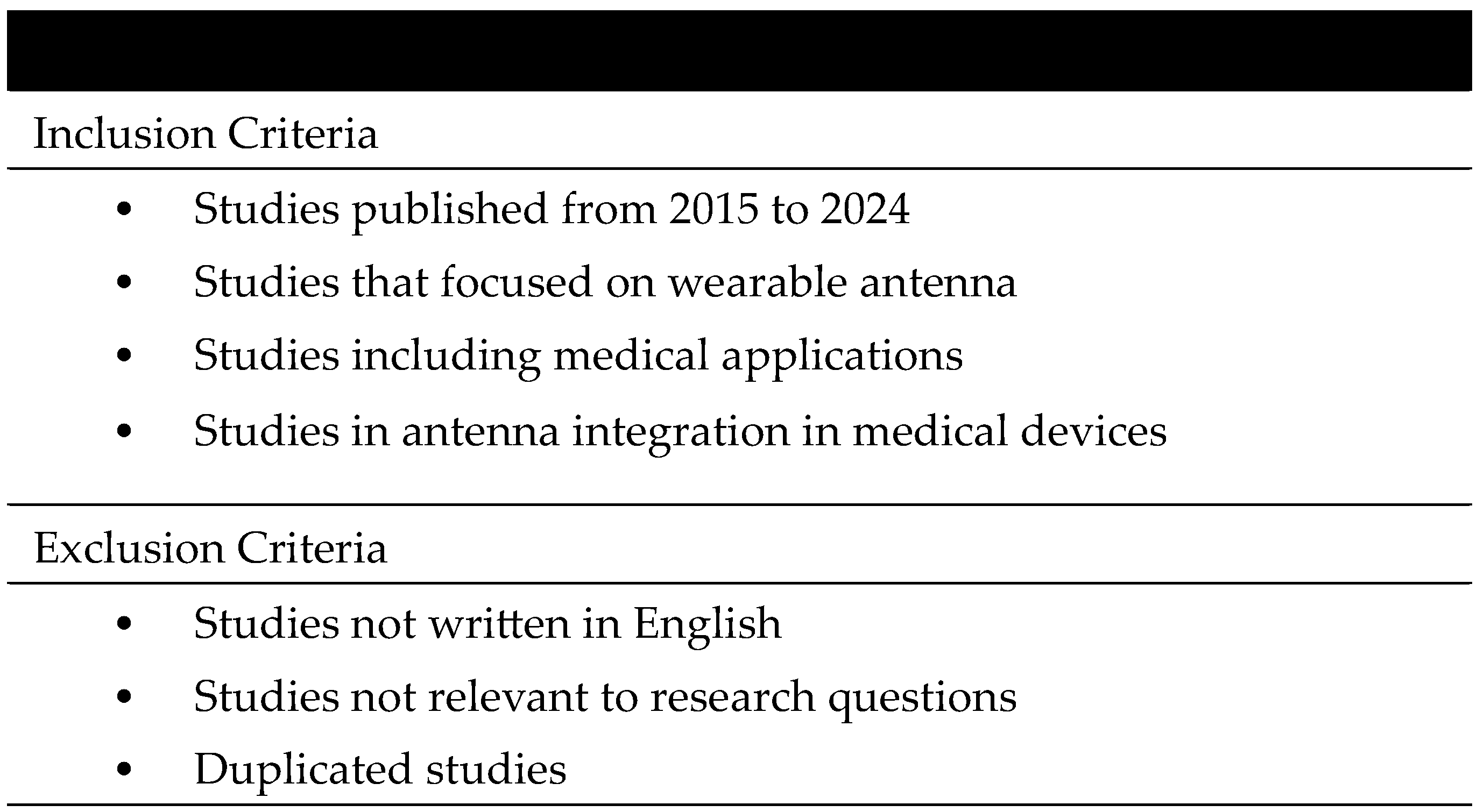
Figure 2.
Search process cycle.
Disclaimer/Publisher’s Note: The statements, opinions and data contained in all publications are solely those of the individual author(s) and contributor(s) and not of MDPI and/or the editor(s). MDPI and/or the editor(s) disclaim responsibility for any injury to people or property resulting from any ideas, methods, instructions or products referred to in the content. |
© 2024 by the authors. Licensee MDPI, Basel, Switzerland. This article is an open access article distributed under the terms and conditions of the Creative Commons Attribution (CC BY) license (https://creativecommons.org/licenses/by/4.0/).
Copyright: This open access article is published under a Creative Commons CC BY 4.0 license, which permit the free download, distribution, and reuse, provided that the author and preprint are cited in any reuse.


