

Submitted:
06 May 2024
Posted:
08 May 2024
You are already at the latest version
Abstract
Invasive species are non-native organisms that are introduced to a particular environment with a potential to spread from the place of introduction and cause biodiversity loss. This research was done in Gullele Botanical Garden with the objective of advancing management strategies for invasive and potentially invasive species by examining their abundance, distribution, impacts. Proportional number of plots with a size of 10m by 10m was laid at each land use types to collect vegetation and environmental data. The impact rank was analysed as a data frame using the R-statics packages, which shows the lower and higher impact rate ranges for the sampled land use types. ArcGIS was used to map the spatial distributions of each species. A total of 2550 individuals from 12 families comprising 16 invasive and potentially invasive species have been recorded in 40 sample plots across all sampled land use types. The highest species abundance appeared near the roadside among the sampled plots. Acacia decurrens, Cyathula uncinulata, and Acacia melanoxylon were the three most predominant species, had a substantial contribution to the high impact on the native species. Either intentionally by planting for their advantageous qualities or unintentionally associated with other seeds or other vectors, invasive and potentially invasive species were introduced into the garden. Although there are various techniques to control invasive species, mechanical controlling mechanisms like hand-weeding, uprooting, cutting, and rehabilitation with native species, along with regular monitoring, are highly recommended for the current challenge in the garden.
Keywords:
Gullele
; impacts
; Indigenous species
; invasive plants
; rehabilitation
1. Introduction
Although the high diversity of plant species found in tropical regions and African countries, these regions are host to the fewest and youngest botanical gardens [1]. Ethiopia is one of a tropical country endowed with high biodiversity accompanied by endemism Kelbessa and Demissew [2]. Variable physiographic and climatic variables are the primary factor contributing to diversity. However, the diversified flora and fauna are gradually dwindling as a result of anthropogenic activity and climate change [3]. To overcome these challenges, it is essential to thoroughly examine and preserve these resources in a given place, such as a botanical garden [4,5].
The majority of botanical gardens employ an ex-situ method of conservation. This might results the introduction of new invasive and alien species that could harm native plant species [6,7]. The main contributors to the current reduction in biodiversity are invasive plant species (IPS), which also cause overexploitation, habitat modification, extinction of species, and climate change. Currently the invasive species are becoming a global concern, due to their potential to spread rapidly, highly competitive, and can quickly occupy new areas. The global concern also stems from the type and intensity of these species' effects on national heritage, economic life, society, and health [8,9].
The increasing worldwide trade, transportation, and travel are all contributing factors to the exponential rise in the threat posed by invasive plant species. According to Goldberg and Reed [10], the amount of threat varies from one place to another and is interrelated to differences in management, awareness, and other factors. Majority of introduced species will go undetected, especially in the developing world where lack of awareness, knowledge, and capacity hampers our ability to effectively manage the problem. According to the study by McGeoch et al. [11], though research efforts and information availability play a major role in managing the expansion of invasive plant species, the number of documented studies on invasive plant species in many countries is considerably underestimated. Researchers such as Pyšek et al. [12] as well as [13] stated that, the correlation of between environment, economy and biodiversity and invasive species in developing countries are noticeably not presented intensively.
Gullele Botanic Garden (GBG) is the Ethiopia's premier botanical garden which was founded with the main goals of promoting ecotourism, plant conservation, research, and education. The garden has so far used both in-situ and ex-situ conservation strategies to protect a variety of species that are found at varying threat levels [14]. Though the primary focus of the conservation strategy is on the indigenous plant species, whether on intentionally or not, certain invasive plant species are visible in the garden. These species' abundance, distribution, and impacts are unknown and have not yet been thoroughly investigated. Therefore, this study it is essential in order to implement apt management strategies to minimize the adverse impacts of invasive plant species on nearby indigenous species of the study garden. This study was conducted to; i) determine the abundance and spatial distribution of invasive/potentially invasive species, ii) analyze the impacts of invasive and potential invasive species on other plant species and iii) forward the management practices of invasive and potentially invasive.
2. Materials and Method
2.1. Materials Used
Data collection sheet, GPS, plant press, digital camera, rope/meter, pencil/pen, stapler and stapler pins, 1 x 15 cm paper stripes and Notebook was used in data collection. Photographs of plants with details of habits, flowers, leaves, fruits and any other feature relevant to identification was photographed. Identification was done based on the Flora of Ethiopia and Eritrea, consisting of eight volumes.
2.2. Study Area Description
Gullele botanic garden (GBG) is located on the outskirt North West Addis Ababa at an altitude of 2,540 – 3,000 m.a.s.l. The area falls in 705 hectares with coordinates between latitudes 90 1' 30'' N and 90 5' 35'' N and longitudes 380 41'30''E and 380 44'20''E. It is a portion of Ethiopia's central plateau. In the area, it can get hot and cold at the same time. The warmest month is February (20.7 oC), which is followed by March and May with 20.2 and 20 oC, respectively. The coldest month is December (7.5 OC). The dry season lasts from March to May, and the average annual precipitation is 1,215.4 mm [7,15].
The garden’s vegetation type is characterized by dry afro-montane (majority) and some extent afro-alpine dominated with Juniperus procera. Alongside with Juniperus procera, species including Rosa abyssinica, Olinia rochetiana, Jasminum abyssinicum, Myrsine africana, Sideroxylon oxyacanthum, Maesa lanceolata, Maytenus species, Jasminum stans, and Vernonia Leopoldi were also codomain species. Entoto (North of Addis Abeba) where Gullele Botanical Garden lay is dominated by Silicics rocks [16]. This rock structure is named after a 21.5 million-year-old heal that borders the northern section of Addis Abeba. Trachyte and Rhyolite are the best characterize this type of rock.
2.3. Data Collection
2.3.1. Field Survey
In the survey, three major types of data were collected: i) species data including name, habit, abundance ii) geo-location (special data) and iii) relative abundance and relative frequency of the IPS. The data were collected from three land use types of the garden. The three land use types were natural vegetation, plantation areas and roadsides.
The diversity and abundance of the invasive plant species was thoroughly assessed in each land use types by laying a total of 40 sample plots with 10 m × 10 m size where the invasive and potentially invasive plants were displayed. Subsequently, the number of individual species per plot was recorded in order to evaluate their impacts on the other native species.
In this instance, the field survey was carried out to:
- i)
- Compile taxonomic data, which includes species identification, morphological traits, growth habit and abundance.
- ii)
- Analyze the ecological effects of the invasive species, and conduct diligent observation within and around the species' range.
- iii)
- Take GPS readings of the species occurrences' geolocations. Each GPS samples were include a note of the ecological characteristics where the species is situated.
2.3.2. Identification and Description of Invasive Species
The term invasive plant species are defined as a non-native species that, upon introduction to the specified habitat, spreads and becomes numerous outside of the normal range of the native plant population [17]. Notably, invading traits may exist in certain native species. According to other research, invasive species are biological invaders that are typically brought by humans, either purposefully or unintentionally, and then settle and spread into other places, sometimes quite distant from their original home range [7,18]. Thompson [19] and Strayer et al. [20] provided the basis for the description and identification of the traits of the invasive species. They defined as a plant species that have become a weed pest, a plant which grows aggressively spreads and displaces other plants by invading existing ecosystems. Majority of the invasive species in Ethiopia are exotic, but not all exotic species are necessarily invasive [7].
2.4. Data Analysis
The collected data was analyzed using descriptive and inferential statistics. The species abundance, range cover and impact rank was computed using descriptive statistics whereas the remaining data including, invasive species diversity, relative frequency, relative abundance and spatial distribution was analyzed using respective inferential statistics. In each plot, all species of vascular plants were recorded and their covers abundance (%) was visually estimated.
The proportion of individual species (cover and abundance of the plant species) encountered in each of the quadrats was recorded using the protocol outlined by Wittenberg et al. [21] as indicated in Table 1 below.
The impact rank (IR) of the invasive species on the other plant species was determined and computed following the Morse et al. [22] protocol. The protocol is used to classify its detrimental effects on natural biodiversity within the ecosystem by assigning a level from insignificant to high impact rate.
Based on the protocol, the following condition was taken into account while classifying the species impact ranks:
1). Current distribution & abundance (invasive: native species/sampled plots)
2. Ecological impact (favor for the growth of other species)
3. Trend in distribution and abundance (boosting/declining scenario)
4). Management difficulty (how much it is easily managed).
Accordingly the Invasive Species Impact Rank Calculation is described here in the below Table 2.
Accordingly, the impact ranks was rated as: ‘high’ for the ∑IR > 4, ‘Moderate’ for the ∑IR = 2.1 - 4, ‘Low’ for the ∑IR = 1–2 and ‘insignificant’ for the ∑IR = 0 (if the sampled area has an invasive species but the impact at that moment is not known). The impacts of invasive plant species was determined by comparing the final calculated results (summation of impact rank (∑IR)) within/ among each land use category.
Additionally, the impact rank was computed and fed into the R- statics packages as a data frame to produce a bar plot showing the sampled land use types' lower and higher impact rank ranges.
Furthermore, ArcGIS was used to map the distribution of invasive species. Similarly, each land use type was compared to the abundance of invasive species in the mapping. This was crucial for managing invasive species in the future.
3. Result
3.1. Invasive Species in Gullele Botaic Garden
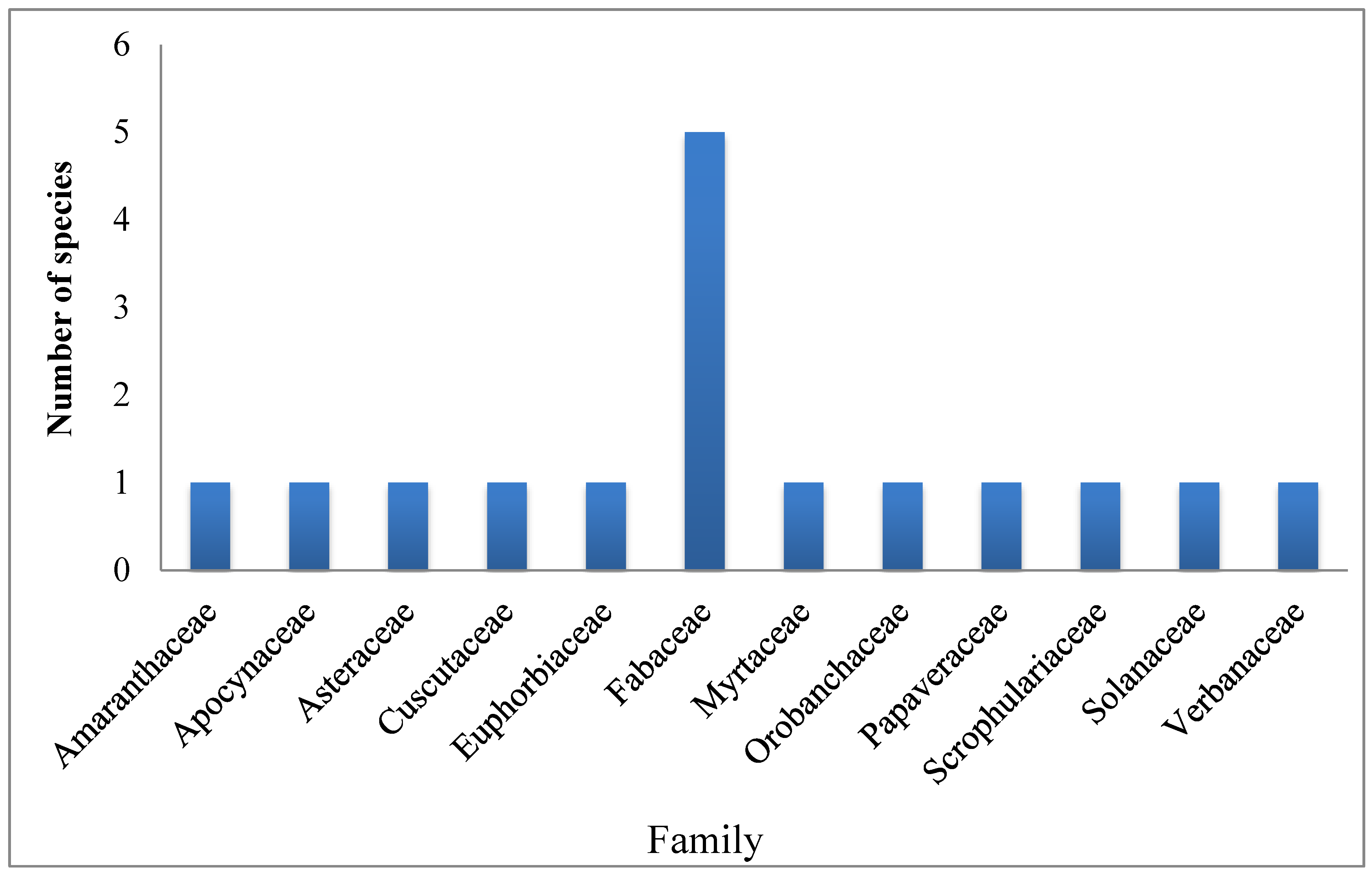
About 16 invasive and potential invasive species that belongs to 12 families were recorded in the study garden. The family fabaceae has the highest number of species. The remaining families including Papaveraceae Cuscutaceae, Amaranthaceae, Asteraceae, Verbanaceae, Apocynaceae, Solanaceae, Myrtaceae, Euphorbiaceae, Scrophulariaceae and Orobanchaceae are represented by a single species each.
Figure 1.
list of invasive species and their corresponding families.
3.2. Habit of Invasive Species
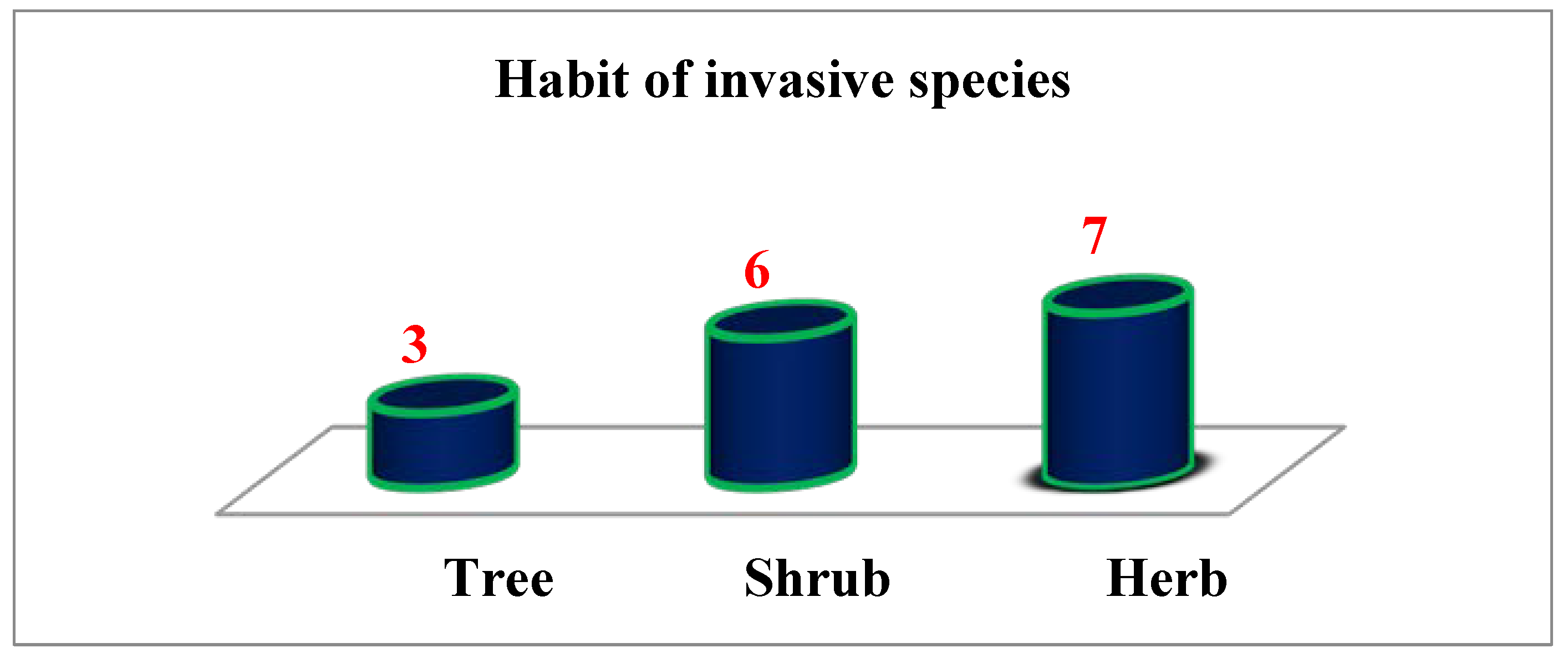
Herbaceous species were the most dominant (7) invasive plant habits followed by shrubs (6) and trees (3). Species including Argemone mexicana, Cuscuta campestris, Cyathula uncinulata, Ageratum conyzoides, Ricinus communis, Striga gesnerioides, and Orobanche crenata were among the herbaceous invasive species whereas Acacia saligna, Lantana camara, Nerium oleander, Nicotiana glauca, Psidium guajava, and Senna didymobotrya invasive shrubs in the garden. Acacia decurrens, Acacia mearnsii and Acacia melanoxylon were the only tree invasive species found in the study garden.
Figure 2.
Habit of invasive species in Gullele Botanic Garden.
3.3. Abundance and Relative Frequencies of of Invasive and Potentially Invasive Species in Gullele Botanic Garden
About 1255 species Acacia decurrens were were found in 17 of the total 40 plots that were sampled. On the other hand 320 species of Cyathula uncinulata were recorded only in two plots. Ageratum conyzoides, Acacia melanoxylon were also among the species with high abundance in the garden (Table 3). Species including Cuscuta campestris, Acacia mearnsii and Nicotiana glauca were found less abundant in the garden. There was a direct correlation between the relative frequency of spices and their abundances.
3.4. Invasive Species Distribution in Different Land Use Types
The distribution of invasive species in the garden’s land use types revealed that (Figure 3) roadside has the highest number of species (14). No invasive species that is only restricted to natural forests. But just two and four invasive species, respectively, were only restricted in plantation and roadside land use types. On the other hand 10 invasive species found in the roadside were also found in other land use types whereas 7 invasive species in natural forest and 6 invasive species in plantation were shared with other land use types.
3.5. Invasive Species Abundance and Density in the Land Use Types
The density of invasive species in the sampled land use types revealed that (Table 4) about 2550 individual invasive species were recorded in the 40 sample plots of the three land use types. Of that, roadside has the highest density (7040 species/ha) followed by natural forest (6341.7 species/ha) and plantation (4762.5 species/ha).
3.6. Rate of Invasive Species
Following the Morse et al. (2004) protocol used to categorize the rate of impact of invasive species, the recorded 16 invasive species were rated their impact (Table 5). Accordingly, Acacia decurrens, Acacia melanoxylon and Cyathula uncinulata has high rate of impact on the natives species and the gardens ecosystem whereas species such as Nicotiana glauca, Ageratum conyzoide and Senna didymobotrya was categorized as moderate rate of impacts. Species such as Acacia mearnsii, Acacia saligna, Argemone Mexicana, Cuscuta campestris, Lantana camara, Nerium oleander, Psidium guajava, Ricinus communis, Striga gesnerioides and Orobanche crenata has less distribution and impact rate.
3.7. Distribution and Impact Rate of Invasive Species
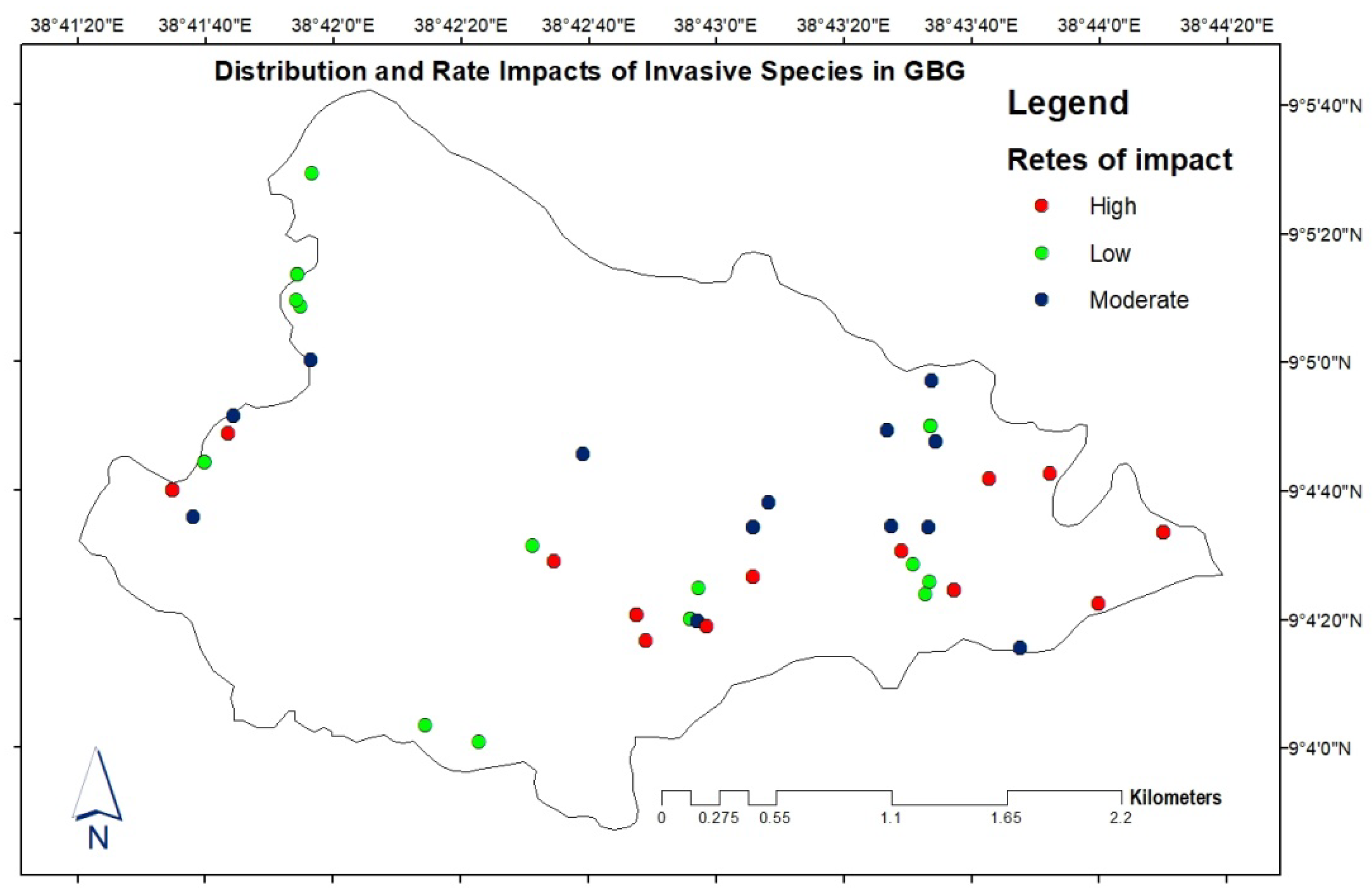
The distribution and impact rank of invasive species showed that the 13 sample plot has high impact rank whereas the 12 plots and 14 plots has moderate and low impacts rank respectively. Of these plots with high impact rate, 10 of them were sampled from roadside land use type of the garden. The remaining 3 plots with high impact rate were sampled from natural forest. Majority of the samples taken from plantation has low impact rate.
Figure 4.
Distribution and impact rate of invasive species.
Generally, the roadside has the highest impact rate among the three land use types that were studied (Figure 5), while the natural forest has the lowest impact rate. The impact rank of invasive species in natural forests ranged from no (insignificant) to low impact rank, whereas in plantation land use type, it ranged from low to moderate impact (1-4), according to the results of the Morse et al. (2004) protocol. Invasive plants typically have a high impact score (>4) when it comes to their effects along roadsides.
3.8. Top 3 Abundant Invasive Species in GBG
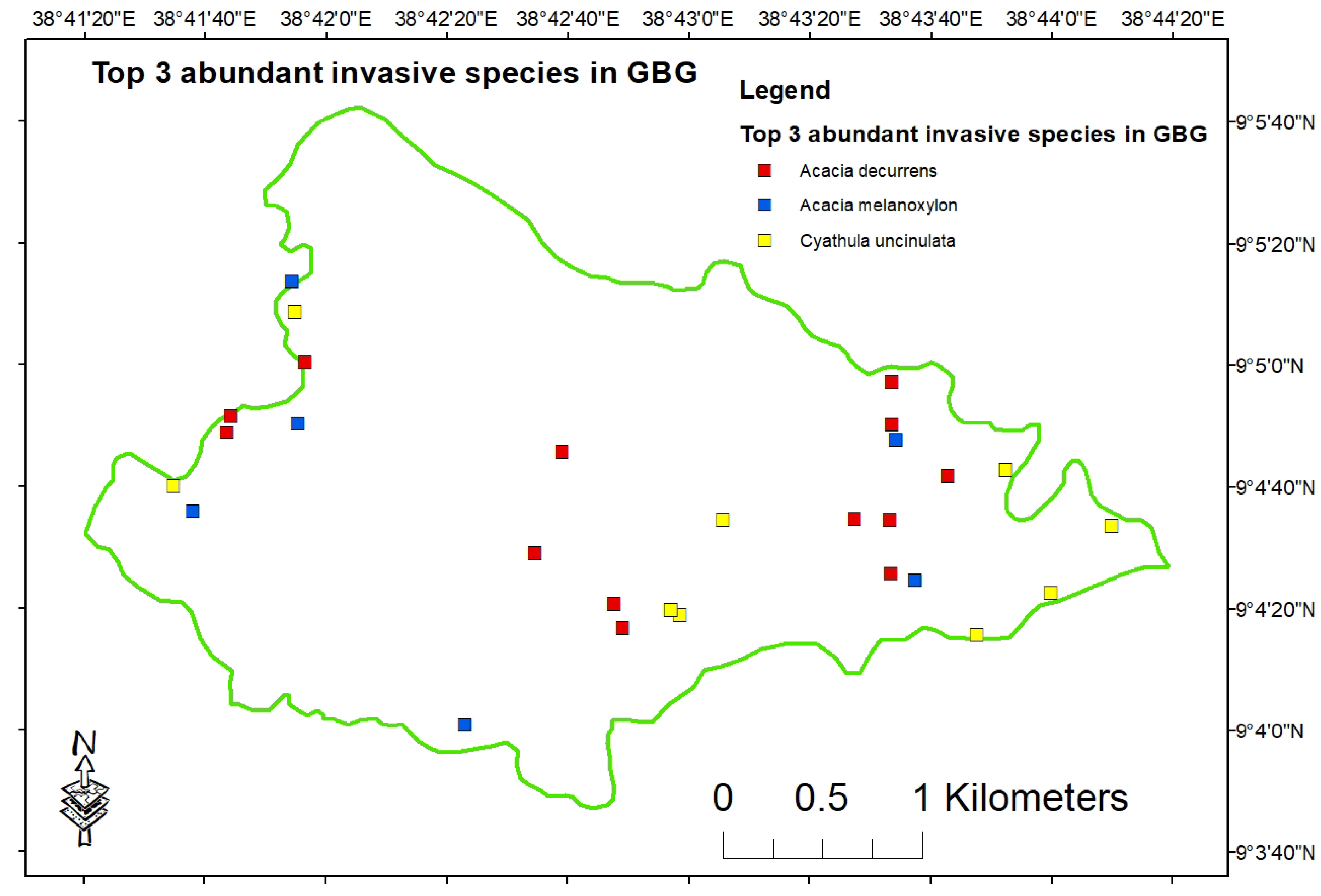
Acacia decurrens, Cyathula uncinulata and Acacia melanoxylon has the most abundant potentially invasive species in the garden. Out of the 40 sampled plots, Acacia decurrens was found in 13, Cyathula uncinulata in 9, and Acacia melanoxylon in 6.
4. Discussion
4.1. Invasive and Potentially Invasive Species in Gullele Botanic Garden
This research study discovered that 16 of the invasive and potentially invasive species in the garden belong to the 12 families. This suggests that Gullele Botanic Garden has a significant diversity of invasive and potentially invasive plant species. The presence of these species can be associated with the introduction of these species either accidently through seeds, vehicles and other vectors/pathways or deliberately through plantation for their beneficial properties [7]. According to Perrings [23], once the invasive species introduced into an ecosystem, they becomes abundant through exerting pressure and dominating to the native species by vying for resources like light, water, and nutrients as well as through releasing toxins that inhibit the growth of other plant species.
About 95.9% of the total recorded invasive and potentially invasive species in the study garden were accounted by species of Acacia decurrens, Ageratum conyzoides, Cyathula uncinulata and Acacia melanoxylon. This is due to the fact that certain area of the garden was once bare ground, making it subject to various forms of degradation. In order to address these ecological degradations and erosions, numerous conservation measurements have since been made. Subsequently, these plants, which now found abundantly in certain portions of the garden were purposefully introduced to reverse the existed degradations [7].
4.2. Distribution of Invasive and Potentially Invasive Species in the Garden
There were invasive and potentially invasive plant species in all land use types of the garden [7], despite their abundance, type, and distribution varied among the corresponding study plots. These species' ability to generate a lot of seeds and spread quickly within a certain ecosystem may be the reason for their presence in the study garden's various land uses [24]. Similar report by Hobbs [25] demonstrated that invasive species have the potential to overwhelm native species in a given habitat and are tricky to control once they are introduced.
Variations in the distribution of land use types are possibly associated with plantations, degradations, and human accessibility [26,27]. According to a study by Girmay et al. [7], there was a clear correlation between anthropogenic involvement and an abundance of invasive and potentially invasive species in the roadside garden. On the other hand, invasive and possibly invasive species are less common in land use types with natural vegetation that receive less human intervention. This was also consistent with studies reported by Witt et al. [26] and Fessehaie and Tessema [28].
4.3. Impact Rank Invasive and Potentially Invasive Species in the Garden
The result reveal that the invasive and potentially invasive species with high impact rate, moderate impact rate and less impact rate was categorized based on the current distribution & abundance, ecological impact, trend in distribution and abundance, and management difficulty [22]. Species such as Acacia decurrens, Acacia melanoxylon and Cyathula uncinulata, have a high impact rate in gardens. This may be because they can produce a substantial amount of seeds and seedlings, adapt successfully to new environments, and be challenging to manage once established [29]. On the other hand, species that has in contrast these features such as Acacia mearnsii, Acacia saligna, Argemone Mexicana, Cuscuta campestris, Lantana camara, Nerium oleander, Psidium guajava, Ricinus communis, Striga gesnerioides, and Orobanche crenata exhibit a lower rate of impact [30].
The samples collected from roadside sites comprised high rates of impact of invasive and potentially invasive species, while the plots taken from plantation land use types had lower rates of impact. This implies roadside has the highest degree human and animal interruption. Conversely, even the nature of a plantation is determined by human interference; the plantation may be purposefully implemented by taking these species' invasiveness into account [7,31]. The impacts of invasive species on species diversity and richness generally results in biotic homogeneity through diminishing the distinctiveness of biological communities [32].
4.4. Management Mechanisms of Invasive
Based on the IUCN [33] guidelines for invasive species planning and management, there are three mechanisms to control an invasive species introduced to the given vegetation ecosystems. These are:
- Biological method: by bringing in a natural adversary, like a fungus or insect that objects the target species solely and spares native or economically significant species.
- Mechanical Methods: techniques including mowing, hoeing, tilling, chopping, and constructing barriers using tools or machines to harvest invasive plants by removing and collecting them, and transporting elsewhere and allowing them to decompose in place. This mechanism could be complement herbicide (chemical) control
- Chemical Control Methods: implemented through using of pesticides, herbicides, fungicides, and insecticides. Although chemical use can be very effective, they can be dangerous to other species or to the ecosystem in general. Chemical control may be difficult, expensive, and create concerns about environmental health.
Despite the fact that the methods mentioned above are applied worldwide in order to inhibit, avoid and mitigate the spread of invasive species [34], management strategies vary depending on the characteristics of invasive and potentially invasive species [35]. Most of the invasive species in Gullele Botanic Garden are found with low impact rank of expansion and impacts. Therefore, the most effective technique to control the majority of these species is to employ mechanical controlling mechanisms, such as hand-weeding (manual weeding removal), uprooting, cutting, and rehabilitations with native species, in conjunction with frequent monitoring. Compared to other mechanisms, this one is less coasty and has less adverse effects. Yet, species with a high impact rating, such as Acacia decurrens, Acacia uncinulata, and Acacia melanoxylon, requires prompt and extensive regulatory action. Massive seeds and seedlings produced by these species probably overwhelm the ecology by either suppressing or displacing native species [7,34]. Uprooting seedlings, cutting before fruiting, creating pits that could collect seeds and then burning them, as well as continually monitoring for changes are essential measures for woody species [33]. Herbaceous species with a high impact rate should be hand-weeded frequently before to flowering (during the rainy season). Dried weeds should be burned along with the excavations, and the area should be covered with another layer of soil. Other regulating strategies include spraying herbicides [34].
5. Conclusion
The outcome of this study revealed that, about 16 potentially invasive and invasive plant species were recorded in the study garden. The introduction of these is doubtable. Certain species are purposefully introducing new elements through plantations for their ecological or economic significance, or inadvertently through accidental cross-pollination with other seeds or from adjacent residential and agricultural areas. Some species are not known their way and time of deliverance. Of these the recorded plants, these plots taken from the roadside has abundant species. This was due to the fact that the roadside is exposed for anthropogenic impacts and introduction for these species. Besides, plantations of these potentially invasive species were mainly done in the roadsides and edges of the garden. The other major finding of this study was analyzing the impact ranks of the recorded invasive and potentially invasive species. Accordingly, majority of the species (10 out of the total 16 species or 62.5%) exerts less impact rate. The remaining species, which accounted for 18.8% of the total, were ranked as having moderate and high impacts, respectively. Specie such as Acacia decurrens, Acacia melanoxylon and Cyathula uncinulata were among the species high impact rank which requires urgent management mechanisms. Although there are various management mechanisms to reverse the impacts of the invasive and potentially invasive species, mechanical techniques such as hand-weeding, uprooting, cutting with periodical monitoring is required. The abandoned area shall rehabilitate using native plant species by taking the garden's goal into consideration.
Reference
Author Contributions
Conceptualization, methodology, validation, M.G.; software, M.G.; Formal analysis, investigation, M.G.; resources, MG, D.A., M.B.; data curation, M.G.; writing—original draft preparation, M.G.; writing—review and editing, M.G.,M.B.; visualization, M.G. All authors have read and agreed to the published version of the manuscript.
Funding
This research received no external funding.
Institutional Review Board Statement
Not applicable.
Data Availability Statement
Data are contained within the article.
Acknowledgments
The authors acknowledge the Gullele Botanic Garden and staffs who allowed this research and cooperate whilst they were requested a support.
Conflicts of Interest
The authors declare no conflict of interest.
References
- Jackson, P.S.W. & Sutherland, L.A. International Agenda for Botanic Gardens in Conservation. Botanic Gardens Conservation International, U.K, 2000.
- Kelbessa, E.; Demissew, S. Diversity of vascular plant taxa of the flora of Ethiopia and Eritrea. Ethiopian. J. Biol. Sci. 2014, 13, 37–45. [Google Scholar]
- Girmay, M.; Bekele, T.; Demissew, S.; Lulekal, E. Ecological and floristic study of Hirmi woodland vegetation in Tigray Region, Northern Ethiopia. Ecol. Process. 2020, 9, 1–19. [Google Scholar] [CrossRef]
- Mittermeier, R. A.; Turner, W. R.; Larsen, F. W.; Brooks, T. M.; Gascon, C. Global biodiversity conservation: the critical role of hotspots. Biodiv. hotspo. Springer, Berlin, Heidelberg, 2011; pp. 3–22.
- Girmay, M. Roles of Botanical Gardens for Conservation and Requirements for their Establishment. DAAGU INTERN. J. BASIC and APPL. RES. 2023, 5, 182–192. [Google Scholar]
- Kumar, K. P. A Study of Invasive Alien Plant Species of Kuttadan Kole Wetlands of Thrissur District, Kerala. Intern. J. Envir., Agri. and Biot. 2018, 3, 2198–2200. [Google Scholar] [CrossRef]
- Girmay, M.; Gebrehiwot, K.; Atinafe, E.; Tareke, Y.; Belay, B. The Study of Exotic and Invasive Plant Species in Gullele Botanic Garden, Addis Ababa, Ethiopia. J Zool. Botanic. Gard. 2024, 5, 36–50. [Google Scholar] [CrossRef]
- Sonwa, D. J.; Dieye, A.; El Mzouri, E. H.; Majule, A.; Mugabe, F. T.; Omolo, N.; Brooks, N. Drivers of climate risk in African agriculture. Clim. Devel. 2017, 9, 383–398. [Google Scholar] [CrossRef]
- Kumar, N. H.; Murali, M.; Girish, H. V.; Chandrashekar, S.; Amruthesh, K. N.; Sreenivasa, M. Y.; Jagannath, S. Impact of climate change on biodiversity and shift in major biomes. Glob. Clim. Chan. 2021, 33–44. [Google Scholar]
- Goldberg, P. K.; Reed, T. Growing Threats to Global Trade. FINAN. DEVELOP. 2023. [Google Scholar]
- McGeoch, M.A.; Butchart, S.H.M.; Spear, D. , Marais, E.; Kleynhans, E.J.; Symes, A.; Chanson, J.; Hoffmann, M. Global indicators of biological invasion: species numbers, biodiversity impact and policy responses. Diver. Distrib. 2010, 16, 95–108. [Google Scholar] [CrossRef]
- Pyšek, P.; Richardson, D. M.; Pergl, J. , Jarošík, V.; Sixtová, Z.; Weber, E. Geographical and taxonomic biases in invasion ecology. Trend. ecol evol. 2008, 23, 237–244. [Google Scholar] [CrossRef]
- Pauchard, A.; Kueffer, C.; Dietz, H.; Daehler, C. C.; Alexander, J.; Edwards, P. J.; Seipel, T. Ain't no mountain high enough: plant invasions reaching new elevations. Front. Ecol. Envir. 2009, 7, 479–486. [Google Scholar] [CrossRef]
- GBG (Gullele Botanic Garden). Organization’s website accessed on October 2022 (https://gullelebotanicgarden.yolasite.com/more-info.php#!).
- Seta, T.; Belay, B. BOTANIC GARDEN PROFILE Gullele Botanic Garden, Addis Ababa (Ethiopia): Current status, Challenges and Opportunities. Sibbaldia Inter. J. Bot. Gard. Horti. 2022, 21, 13–34. [Google Scholar] [CrossRef]
- Morton, W. H. Geological Map of Addis Ababa. Addis Ababa University. Geology Department, Addis Ababa, Ethiopia, 1974.
- Kolar, C. S.; Lodge, D. M. Progress in invasion biology: predicting invaders. Trend.ecol. & evol, 2001, 16, 199–204. [Google Scholar]
- Ascensão, F.; Capinha, C. Aliens on the move: Transportation networks and non-native species. Railway ecol. 2017, 65–80. [Google Scholar]
- Thompson, J. D. The biology of an invasive plant. BioSci. 1991, 41, 393–401. [Google Scholar] [CrossRef]
- Strayer, D. L.; Eviner, V. T.; Jeschke, J. M.; Pace, M. L. Understanding the long-term effects of species invasions. Trend. ecol. evol. 2006, 21, 645–651. [Google Scholar] [CrossRef]
- Wittenberg, R.; Simons, S. A.; Mauremootoo, J. R. Instrument and tools for assessing the impact of invasive alien species in Africa. Report Procedures under the PDF-B phase of UNEP GEF Project-Removing Barriers to invasive plant Management in Africa. CAB. International. Nairobi, Kenya, 2004.
- Morse, L. E.; Randall, J. M.; Benton, N.; Hiebert, R.; Lu, S. An invasive species assessment protocol: Evaluating non-native plants for their impact on biodiversity, 2004.
- Perrings, C. Mitigation and adaptation strategies for the control of biological invasions. Ecol. econ. 2005, 52, 315–325. [Google Scholar] [CrossRef]
- Richardson, D.M.; Pyšek, P.; Rejmanek, M.; Barbour, M.G.; Panetta, F.D.; West, C.J. Naturalization and invasion of alien plants: Concepts and definitions. Diver. Distrib. 2006, 93–107. [Google Scholar] [CrossRef]
- Hobbs, H.A. Invasive Species in a Changing World; Island Press: Washington, DC, USA, 2000. Washington, DC, USA.
- Witt, A.; Beale, T.; Van Wilgen, B. W. An assessment of the distribution and potential ecological impacts of invasive alien plant species in eastern Africa. Transactions of the Royal Society of South Africa 2018, 73, 217–236. [Google Scholar] [CrossRef]
- Balogh, M. B.; Kertész, M.; Török, K.; Visztra, G. V.; Szilassi, P. Changes in the Occurrence of Five Invasive Plant Species in Different Ecosystem Types between 2009–2018 in Hungary. Land. 2023, 12, 1784. [Google Scholar] [CrossRef]
- Fessehaie, R.; Tessema, T. Alien Plant Species Invasions in Ethiopia: Challenges and Responses. In Proceedings of the International Workshop on Parthenium Weed in Ethiopia, Ethiopia. Available online: https://ipmil.cired.vt.edu/wp-content/uploads/2014/07/10-Fessehaie.pdf (accessed on 23 April 2023).
- Huebner, C. D. Effects of global climate change on regeneration of invasive plant species from seeds. In Plant Regeneration from Seeds. Acad. Pres. 2022; pp. 243–257.
- Mathakutha, R.; Steyn, C.; le Roux, P. C.; Blom, I. J.; Chown, S. L.; Daru, B. H.; Greve, M. Invasive species differ in key functional traits from native and non-invasive alien plant species. J. Veg. Sci. 2019, 30, 994–1006. [Google Scholar] [CrossRef]
- Omeer, A. A.; Deshmukh, R. R. Improving the classification of invasive plant species by using continuous wavelet analysis and feature reduction techniques. Ecol. Informat. 2021, 61, 101181. [Google Scholar] [CrossRef]
- McKinney, M.L. Species introduced from nearby sources have a more homogenizing effect than species from distant sources: evidence from plants and fishes in the USA. Divers. Distrib. 2005, 11, 367–74. [Google Scholar] [CrossRef]
- IUCN. Guidelines for invasive species planning and management on islands. Cambridge, UK and Gland, Switzerland: IUCN. 2018; pp. 40.
- Flory, S. L.; Clay, K. Invasive plant removal method determines native plant community responses. J. Appl. Ecol. 2009, 46, 434–442. [Google Scholar] [CrossRef]
- Crowley, S. L.; Hinchliffe, S.; McDonald, R. A. Invasive species management will benefit from social impact assessment. J. Appl. Ecol. 2017, 351–357. [Google Scholar] [CrossRef]
Figure 3.
Invasive species distribution in different land use types.
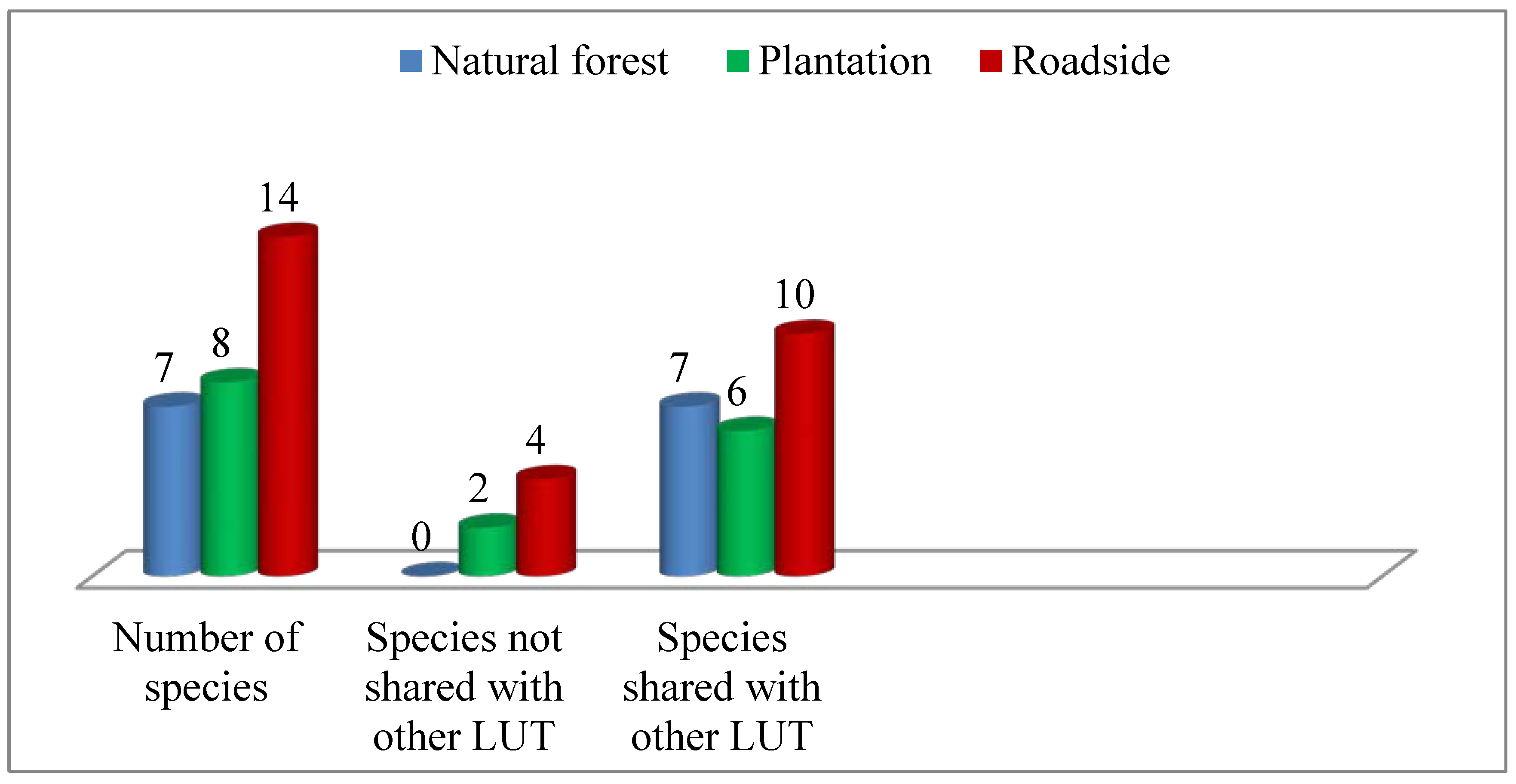
Figure 5.
Invasive species impact rank in the sampled land use types of the garden.
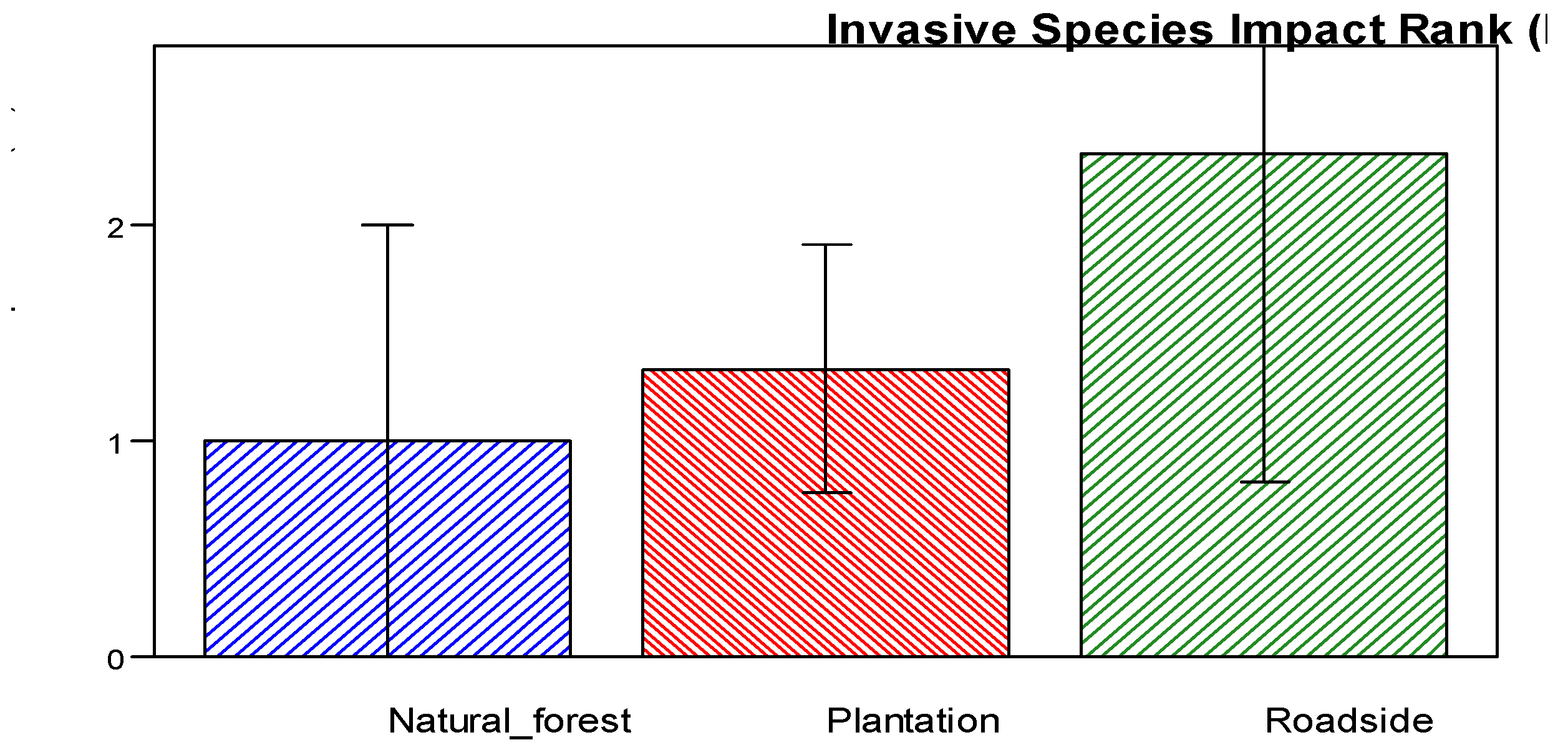

Table 1.
Abundance and scale coverage of the invasive plants in each sample plots.
| Scale | Abundances | Descriptions |
|---|---|---|
| 0 | Absent | No invasive alien weeds is found |
| 1 | Present | Individuals plentiful, but coverage small |
| 2 | Rare | Individuals very numerous; covering at least 5% of the area |
| 3 | Occasional | Individuals few or many; collectively covering 6–25% of the area |
| 4 | Frequent | Individuals few or many; collectively covering 26–50% of the area |
| 5 | Abundant | Weeds cover 51–75 % of the area |
| 6 | Very Abundant | Weeds cover 76–100% of the area |
Table 2.
Invasive Species Impact Rank (IR) Calculation.
| Section | Sub-rank values | ∑ Impact rank interval | Impact rank | |||
| High | Moderate | Low | Insignificant | |||
| Current distribution & abundance | 3 | 2 | 1 | 0 | > 4 2.1 - 4 1 -2 0 |
High Moderate Low Insignificant |
| Ecological impact | 3 | 2 | 1 | 0 | ||
| Trend in distribution and abundance | 3 | 2 | 1 | 0 | ||
| Management difficulty | 3 | 2 | 1 | 0 | ||
Table 3.
abundance & relative frequency of invasive & potentially invasive species.
| No. | Name of the species | Abundance | Plot occurred | Scale of abundance | Relative frequency |
| 1 | Acacia decurrens | 1255 | 17 | Very abundant | 42.5 |
| 2 | Ageratum conyzoides | 780 | 9 | Very abundant | 22.5 |
| 4 | Acacia melanoxylon | 90 | 8 | Very abundant | 20 |
| 5 | Orobanche crenata | 29 | 4 | Frequent | 10 |
| 7 | Nerium oleander | 11 | 3 | Occasional | 7.5 |
| 3 | Cyathula uncinulata | 320 | 2 | Rare | 5 |
| 6 | Senna didymobotrya | 22 | 2 | Rare | 5 |
| 8 | Acacia saligna | 8 | 2 | Rare | 5 |
| 9 | Lantana camara | 7 | 2 | Rare | 5 |
| 10 | Ricinus communis | 7 | 2 | Rare | 5 |
| 12 | Psidium guajava | 4 | 2 | Rare | 5 |
| 11 | Striga gesnerioides | 7 | 1 | Rare | 2.5 |
| 13 | Argemone mexicana | 3 | 1 | Rare | 2.5 |
| 14 | Cuscuta campestris | 3 | 1 | Rare | 2.5 |
| 15 | Acacia mearnsii | 2 | 1 | Present | 2.5 |
| 16 | Nicotiana glauca | 2 | 1 | Present | 2.5 |
Table 4.
Invasive species abundance and density in the land use types in the garden.
| Land Use Types | Abundance | Sampled plots | Sample area in hectare | Density (number of species/hectare) |
| Natural Forest | 761 | 12 | 0.12 | 6341.7 |
| Plantation | 381 | 8 | 0.08 | 4762.5 |
| Roadside | 1408 | 20 | 0.2 | 7040 |
| Total | 2550 | 40 | 0.4 | 6,375 |
Table 5.
Rate of impacts of the invasive species.
| SN | Species Name | Rate of impact | Distribution and description |
| 1 | Acacia decurrens | High | High distribution and high rate of impacts |
| 2 | Acacia mearnsii | Low | Due to less abundance and distribution and easily manageable |
| 3 | Acacia melanoxylon | High | High distribution and high rate of impacts |
| 4 | Acacia saligna | Low | The distribution and impact is less |
| 5 | Argemone mexicana | Low | Due to less abundance and distribution and easily manageable |
| 6 | Cuscuta campestris | Low | The distribution and impact is less |
| 7 | Cyathula uncinulata | High | High distribution and high rate of impacts |
| 8 | Ageratum conyzoide | Moderate | High distribution and dominance, but they annual species |
| 9 | Lantana camara | Low | Due to less abundance and distribution and easily manageable |
| 10 | Nerium oleander | Low | The distribution and impact is less |
| 11 | Nicotiana glauca | Moderate | Has moderate distribution and impact |
| 12 | Psidium guajava | Low | The distribution and impact is less |
| 13 | Ricinus communis | Low | The distribution and impact is less |
| 14 | Senna didymobotrya | Moderate | Moderate distribution and impact |
| 15 | Striga gesnerioides | Low | The distribution and impact is less |
| 16 | Orobanche crenata | Low | The distribution and impact is less |
Disclaimer/Publisher’s Note: The statements, opinions and data contained in all publications are solely those of the individual author(s) and contributor(s) and not of MDPI and/or the editor(s). MDPI and/or the editor(s) disclaim responsibility for any injury to people or property resulting from any ideas, methods, instructions or products referred to in the content. |
© 2024 by the authors. Licensee MDPI, Basel, Switzerland. This article is an open access article distributed under the terms and conditions of the Creative Commons Attribution (CC BY) license (http://creativecommons.org/licenses/by/4.0/).
Copyright: This open access article is published under a Creative Commons CC BY 4.0 license, which permit the free download, distribution, and reuse, provided that the author and preprint are cited in any reuse.