

Submitted:
07 May 2024
Posted:
08 May 2024
You are already at the latest version
Abstract
This research presents the Cross-Cultural Intelligent Language Learning System (CILS), a novel approach integrating Artificial Intelligence (AI) into language education to enhance cross-cultural communication. CILS utilizes advanced AI technologies to provide adaptive, personalized learning experiences that cater to the unique linguistic and cultural backgrounds of each learner. By dynamically adjusting content and methodology, CILS significantly improves linguistic proficiency and cultural understanding, essential for effective global interactions. The implementation of CILS in platforms such as Busuu and HelloTalk has demonstrated marked improvements in engagement and communication skills among learners. Empirical studies validate the system's effectiveness in real-world settings, showing enhanced learner performance and increased intercultural competence. Additionally, the Technology Acceptance Model (TAM) applied confirms that the usability and perceived usefulness of AI-driven systems strongly influence learner acceptance and sustained use. This study not only underscores the potential of AI in transforming language education but also highlights the critical role of cultural sensitivity in designing educational technologies.
Keywords:
Cross-Cultural Communication
; Artificial Intelligence in Education
; Adaptive Learning Technologies
; Language Learning Systems
; Intercultural Competence
1. Introduction
1.1. Background of the Study
The evolving global communication landscape demands proficiency in multiple languages, facilitated increasingly through digital platforms. Traditional language learning frameworks often fail to address the nuanced needs of learners from diverse cultural backgrounds. This discrepancy highlights the necessity for a system that teaches language and bridges cultural divides, thus enhancing mutual understanding among global citizens [1]. Figure 1 illustrates the diverse language learning challenges across the globe, emphasizing the critical areas where CILS can make a substantial impact.
The introduction of Artificial Intelligence (AI) into language learning has heralded a new era of personalized education, allowing for adaptive learning environments that respond to individual learners’ specific linguistic and cultural backgrounds [2]. However, the integration of AI in language learning, particularly in a cross-cultural context, remains underexplored and underutilized in its potential to facilitate truly effective communication across cultural boundaries [3].
The Cross-Cultural Intelligent Language Learning System (CILS) proposed in this research aims to fill this gap by leveraging advanced AI technologies to tailor language learning processes. CILS is designed to dynamically adjust to individual learner profiles, providing personalized content that teaches the language and instills a deep understanding of cultural nuances. This approach is expected to foster a more intuitive and immersive learning experience, making it particularly effective in multicultural settings where understanding the subtleties of interaction can significantly enhance communication efficacy [4]. Table 1 provides a detailed view of the improvements in language skills observed in learners using CILS across different studies.
By focusing on the development and application of CILS, this study seeks to contribute significantly to applied linguistics and AI, pushing the boundaries of how digital technologies can be harnessed to improve and innovate language education in an increasingly interconnected world.
1.2. Research Objectives
This research aims to intelligently utilize Artificial Intelligence to transform language learning in cross-cultural situations by creating the Cross-Cultural Intelligent Language Learning System (CILS). The main goals for this research initiative are rather versatile, illustrating the complexity and opportunities of AI integration with linguistic frameworks to improve intercultural communication.
The investigation attempts to devise an up-to-date system that uniquely blends artificial intelligence and pedagogical approaches to efficiently acquire language. This system will include the ability to analyze and react to particular learning patterns, adjusting the instructional material according to the learner’s language competency and cultural context. This two-way adaptability will provide a deeper, more productive language-learning process about the peculiarities of intercultural communication.
This AI-driven system will be applied in different educational environments as a part of the project to validate its efficiency in practice. The research will offer empirical evidence on language competence and cultural understanding improvements made available by the CILS model through controlled studies that compare traditional language learning methods and AI-enhanced ones.
Figure 2 displays the trends in user engagement with the CILS platform, illustrating increases in active usage over time.
This study will focus on the system’s implications for wider educational practices. It will evaluate the possibility of integrating AI into current educational systems, including the feasibility of these technologies in various languages and cultural environments. The findings will guide the formulation of guidelines for AI implementation in educational settings worldwide.
This study aims to assess the effect of the CILS system on learners’ intercultural competence, especially their capability to function well and communicate appropriately in varied cultural environments. By developing these skills, CILS seeks to contribute to the world of communication and cooperation.
To achieve these objectives, this study aims to make substantial contributions to the field of language education, offering a scalable design of how cutting-edge AI technologies can be integrated successfully. The outcomes are anticipated to lead to further advancements in educational innovations and promote an in-depth knowledge of AI’s potential in improving and personalizing learning experiences in an ever-more global society. Table 2 illustrates the global utilization of CILS in different educational settings.
1.3. Structure of the Paper
This research paper is structured to methodically explore the integration of Artificial Intelligence into cross-cultural language learning, culminating in developing and evaluating the Cross-Cultural Intelligent Language Learning System (CILS). The paper is organized to comprehensively analyze and present the research findings.
The Introduction section outlines the relevance and urgency of enhancing language learning practices through AI, particularly in cross-cultural settings. This section also presents the research’s overarching goals and objectives, establishing the study’s academic and practical contexts.
Following the introduction, the Literature Review systematically examines existing research in language learning, AI applications in education, and cross-cultural communication. This review situates the current study within the broader field of educational technology and applied linguistics, highlighting significant advancements and identifying gaps that the CILS framework aims to address.
The Theoretical Framework section discusses the foundational theories that underpin the design and function of the CILS system. It delves into relevant language learning theories, AI technologies, and models of communicative competence that inform the system’s development. This theoretical grounding ensures that the technological innovations proposed are deeply rooted in pedagogical principles.
In the CILS Framework section, the paper details the proposed system’s design, functionalities, and technical specifications. It describes how AI is utilized to adapt learning experiences to users’ cultural and linguistic needs, illustrating the system’s capabilities through scenarios and potential user interactions.
The Case Studies section presents empirical research to validate the CILS system’s effectiveness. It includes detailed analyses of pilot studies involving platforms like Busuu and HelloTalk, providing insights into the system’s performance in real-world educational settings.
The Discussion section synthesizes the findings from the case studies and discusses the implications of these results for language learning and AI in education. This section critically examines the successes and challenges encountered during the study, offering a nuanced perspective on the potential and limitations of AI-enhanced language learning.
The Conclusion recapitulates the study’s major contributions and outlines directions for future research. It reflects on the impact of the CILS system on educational practices and provides recommendations for educators, policymakers, and technologists interested in the intersection of AI and language education.
This structured approach ensures the research is presented clearly and logically, facilitating a deep understanding of how AI can transform language learning in culturally diverse contexts.
2. Literature Review
2.1. Theoretical Foundations in Language Learning
The field of language learning comprises a range of theoretical perspectives that mark current pedagogical practices. Most of these theories revolve around how people learn a second language and the factors stimulating such learning. This study is based on various theoretical frameworks to support the Cross-Cultural Intelligent Language Learning System (CILS) design.
Habit formation is one of the behaviorism theories associated with the cornerstone of language learning theory [5]. Thus, language learning is also considered a result of habit formation that relies on the stimuli and responses within the learning environment. Although behaviorism has become nearly obsolete in favor of more complex theories, the focus on repetition and reinforcement has made its way into some facets of language drilling and practice among AI groups.
Constructivism claims that learners build knowledge through experiences and interactions with the world. In language learning, this Theory favors the concept that learners achieve linguistic proficiency through passive absorption and active language use in context. This theory encourages the creation of interactive and immersive AI-driven language learning platforms, allowing learners to participate in life-like situations and practice and improve their language proficiency [6].
Krashen’s input hypothesis is especially crucial in forming language learning methodologies incorporated into AI systems [7]. According to Krashen, language acquisition happens when learners are exposed to a slightly more advanced language level (i+1). This idea is utilized in the CILS framework, which uses AI to analyze language input of varying difficulty levels based on the learner’s real-time performance so that he remains challenged and engaged.
Vygotsky’s sociocultural Theory is centered on the social aspect of learning, implying that social interaction is critical in the development of cognition. Of all Vygotsky’s ideas, ZPD is particularly important. AI systems can be coded to recognize a learner’s ZPD and provide language activities within this zone, optimizing learning potential using scaffolding [8].
Secondly, communicative language teaching, or CLT, is based on proficiency in delivering the message clearly and correctly, and it is very close to the aims of the CILS system. This perspective places interaction as a means and a final purpose of language learning and AI-mediated communication practices that simulate actual interactions, which CILS supports.
Task-Based Language Learning (TBLL), a branch of CLT, is based on learning language through actual interaction with real tasks. In CILS, AI is implemented to generate dynamic tasks that are contextually relevant and that require learners to utilize language to solve problems or convey information. In this way, practical language use is encouraged in real-life environments.
Each of these theories adds to a subtle comprehension of how language learning can be improved through AI. By integrating this theoretical foundation, the CILS framework is purported to provide a complex and successful language learning experience that is responsive to the learner’s culture. This theoretical foundation helps in designing the system and ensuring that its functionalities are pedagogically sound and based on tested language learning methods.
2.2. Advances in AI in Educational Contexts
Integrating Artificial Intelligence (AI) in educational settings represents a significant shift in how instructional content is delivered and personalized. AI’s ability to process large amounts of data and learn from interactions makes it a powerful tool in education, particularly in language learning, where personalized and adaptive learning environments can greatly enhance learner engagement and outcomes.
Machine Learning (ML), a subset of AI, is crucial in personalizing educational content [9]. By analyzing data on learners’ performance, preferences, and engagement levels, ML algorithms can tailor educational experiences to meet the unique needs of individual students. In language education, this means adjusting the complexity and type of language tasks based on the learner’s progress, which aligns with the principles of adaptive learning technologies.
Natural Language Processing (NLP) is another critical AI technology that has transformed language learning. NLP enables computers to understand, interpret, and generate human language in a meaningful and contextually relevant way [10]. This capability allows AI-driven language learning systems to provide instant feedback on pronunciation, grammar, and usage, facilitating an interactive learning experience miming human tutoring. Moreover, NLP supports the creation of conversational agents or chatbots, which can engage learners in dialogue, providing practice in a conversational context essential for language acquisition.
Deep Learning, an advanced form of ML, has enhanced the capabilities of NLP by enabling more sophisticated understanding and generation of human language [11]. Figure 3 compares the adoption rates of various AI technologies in language learning platforms, highlighting the rapid growth of machine learning and NLP applications. Deep learning models, trained on vast datasets of text and speech, can generate natural-sounding language and understand complex user queries. This technology underpins the development of AI tutors that can conduct meaningful conversations with learners, thereby improving their communicative competence.
The concept of Intelligent Tutoring Systems (ITS), which incorporates AI to simulate one-on-one tutoring experiences, is particularly relevant for language learning. ITS can adapt to the learner’s pace, provide customized hints, and present challenges aligned with their learning level. This personalized tutoring is invaluable in language education, where learners often require tailored instruction that considers their existing knowledge and skills.
Data Analytics in education utilizes AI to analyze learning patterns and outcomes at a granular level. This analysis helps educators and researchers understand the effectiveness of teaching methods and curricula, informing educational strategies and policy decisions. Data analytics can reveal insights into the most effective teaching practices in language learning and help refine the educational content for better learning outcomes.
In addition to these technologies, Augmented Reality (AR) and Virtual Reality (VR) provide immersive learning experiences that are particularly effective in language education. These technologies can simulate real-life interactions in different cultural settings, allowing learners to practice language skills in contextually rich environments. This aspect of AI enhances language proficiency and helps learners gain cultural insights, which is critical in cross-cultural education.
Table 3 below shows the adoption rates of different AI technologies in language learning platforms, emphasizing the diverse applications and their effectiveness.
Overall, AI advances have provided numerous tools and methodologies that can significantly enhance the efficiency and effectiveness of language learning. As AI continues to evolve, its integration into educational contexts promises to revolutionize traditional learning paradigms, offering more personalized, engaging, and effective educational experiences.
2.3. Cross-Cultural Communication and Language Education
The increasing globalization of our world calls for efficient cross-cultural communication, which has become an important aspect of modern language education. The ability to comprehend and maneuver complexities in intercultural engagements is fundamental for building global relations and dealing with different communication requirements of people from different demographics. Thus, language teaching today concentrates on the development of cultural competence, as well as language proficiency [12].
Intercultural Competence is a concept frequently referred to in this respect. It is the competence to communicate adequately and properly in different cultural contexts. Cultural competence is an understanding of one’s own and others’ cultural norms, values, and communication practices. However, language education programs that implement it emphasize languages and culture, using real-life situations as illustrations, subtle cues, and context-specific language that are critical for effective communication.
Ethnolinguistics aims to understand how language mirrors cultural identity. This area of research investigates the link between language and culture, highlighting that learning language initiates not only acquiring words and syntax but also comprehension of how language realizes cultural values [13]. When incorporated into language education, ethnolinguistic perspectives enable learners to see and comprehend the cultural implications of language usage, which is a stimulus for effective communication in various cultural settings.
Cultural Pragmatics in language learning involves considering language as a means of social action. Pragmatic competence is important for learners who need to deal with language and cultural details in communication. Language education, which includes training in cultural pragmatics, gives learners the ability to identify and react to diverse social signs, making them efficient in intercultural communication.
Educational Technology plays a major part in cross-cultural language education, providing tools to replicate intercultural interactions. Using multimedia materials, interactive simulations, and virtual reality environments, learners can have real dialogue with virtual characters from different cultural settings. This process provides the learners with practice in various cultural contexts and helps them develop their language skills to engage in real-life situations.
In educational contexts, global virtual teams allow students to work with fellow students from different parts of the world to achieve a common goal. Such interactions promote practical skills in managing communication across cultures and in different time zones, emphasizing the vital importance of cultural awareness and flexibility. Most language education programs are now using online platforms to promote these global collaborations, which provide learners with practical experience in international teamwork and communication [14].
The Pedagogical Approaches to cross-cultural communication focus on incorporating cultural intelligence into language teaching curricula. Culturally relevant teaching approaches that acknowledge and honor the cultural backgrounds of the learners are recommended for educators to use, thereby allowing the creation of inclusive learning settings that cater to all students successfully.
Comprehending and incorporating these elements in language education is crucial to enable learners to function effectively in a global society. Cross-cultural communication in language education focuses on language proficiency and creating a complex skill set comprising cultural literacy and intercultural communicative competence. This holistic attitude is critical for people to succeed in various international settings. The adaptability of various language learning systems to different cultural contexts is summarized in Table 4.
3. Theoretical Framework
3.1. Application of Language Learning Theories
3.1.1. Krashen’s Input Hypothesis
Krashen’s Input Hypothesis forms a fundamental component of the theoretical underpinnings of modern language acquisition models. It posits that language acquisition occurs most effectively when learners are exposed to language input slightly beyond their current level of competence, termed “i+1.” This principle suggests optimal learning happens when learners encounter comprehensible input that challenges their existing language skills without overwhelming them. This hypothesis supports the development of AI-driven language learning systems like the Cross-Cultural Intelligent Language Learning System (CILS), which can dynamically adjust the complexity of language input based on realtime assessments of a learner’s comprehension and capability. Such systems use sophisticated algorithms to evaluate the learner’s responses and tailor subsequent inputs to ensure they remain within this optimal zone of proximal development [15]. This approach enhances the acquisition of language structures and vocabulary and ensures that learners are consistently engaged and motivated, which are critical factors in sustained language learning.
3.1.2. Vygotsky’s Sociocultural Theory
Vygotsky’s Sociocultural Theory highlights the role of social interaction in cognitive development, especially in language learning. Vygotsky proposed that learning happens through language internalization from social interactions, where language is first learned on a social level and later internalized on an individual level [16]. This view is very important for developing AI-enabled language learning environments that promote interaction among both the learner and the system and a community of learners. The concept is embraced within the CILS framework by providing simulated social settings where learners can interact with AI-driven characters or other learners in collaborative tasks. These interactions aim to imitate real-life communication situations, which give learners the contextual cues and social dynamics necessary for practical language use [17]. Built on the ideas of Vygotsky, CILS attempts to go beyond mere linguistic competence to promote a deeper, intuitive understanding of language used in different social settings, thus helping to develop language and cultural fluency [18].
3.1.3. Task-Based Language Learning
Task-Based Language Learning (TBLL) is a pedagogical approach that prioritizes the use of language as a tool for communication, focusing on the completion of meaningful tasks. Unlike traditional language learning methods that often center on grammatical rules and isolated vocabulary acquisition, TBLL involves learners in practical, real-world tasks that require the use of language to achieve specific goals [19]. This method aligns well with Krashen’s Input Hypothesis by providing learners with context-rich scenarios where language is used naturally and effectively within their zone of proximal development [20]. Implementing TBLL in an AI-driven language learning system such as CILS involves creating interactive, problem-solving activities that adapt to the learner’s performance and feedback. These tasks are designed to be dynamically adjusted by the AI to meet learners at their appropriate skill level, challenging them enough to advance their language skills without causing frustration [21]. Furthermore, task-based activities in CILS can incorporate cultural elements, making the tasks not only linguistically challenging but also culturally informative, thereby simultaneously enhancing language and cultural competence [22].
3.2. Artificial Intelligence and Technology Acceptance Model
3.2.1. Canale and Swain’s Model of Communicative Competence
Canale and Swain’s model of communicative competence is critical in defining what it means to “know” a language beyond just grammatically correct. Their model includes four dimensions of language knowledge: grammatical competence, sociolinguistic competence, discourse competence, and strategic competence. Phonological correctness dictates grammatical competence, regardless of the syntax and lexicon. Sociolinguistic competence presupposes the knowledge of some social aspects in which the language is spoken, roles, norms, and conventions. Cohesive competence refers to connecting sentences in coherent and cohesive communication. Finally, strategic competence concerns the application of communicative strategies in addressing problems in the process of verbal as well as non-verbal communication [23]. In such an AI-oriented language learning system like CILS, this model determines the creation of modules and algorithms for teaching and assessing these competencies. AI systems are meant to mimic the reality of life interactions where learners can practice and develop these skills. For instance, scenarios may be created for the system that challenges learners to negotiate different social situations, use language effectively, and utilize means for repairing misunderstandings or communication collapses, thereby giving a complete language learning experience that prepares learners for communicative challenges of the real world.
3.2.2. Technology Acceptance Model (TAM)
The Technology Acceptance Model (TAM) provides a theoretical foundation for understanding how users accept and use a technology. Developed by Davis in 1989, TAM has been widely used to predict and explain user behavior regarding technology adoption. The model asserts that two main factors influence technology acceptance: perceived usefulness and perceived ease of use. In language learning, especially within systems like the Cross-Cultural Intelligent Language Learning System (CILS), TAM becomes essential for designing interfaces and functionalities that users find beneficial and user-friendly.
Perceived usefulness in the context of CILS refers to the extent to which a user believes the system will help improve their language skills effectively and efficiently. For CILS, this involves demonstrating how AI-driven adaptive learning can personalize language learning experiences in ways that traditional classroom settings cannot, thereby enhancing the learning process [24]. On the other hand, perceived ease of use concerns the degree to which a user expects the system to be free of effort. This includes intuitive design, straightforward navigation, and the minimization of complexity in user interactions, ensuring that learners can focus more on learning the language rather than navigating the system.
The application of TAM in designing CILS involves iterative testing and feedback loops with actual users to refine the system’s features and interface. By integrating TAM principles, developers can create a more engaging and effective learning environment that encourages continual use and deepens learning outcomes. Additionally, understanding TAM helps address potential barriers to technology adoption, such as resistance to replacing traditional learning methods with AI-based solutions, by demonstrating clear advantages and ease of integration into existing learning habits.
3.2.3. Adaptive Learning Technologies
Adaptive learning technologies are at the heart of personalized education, especially in complex areas, such as language learning, where learner needs are diverse. The technologies use sophisticated algorithms to change the learning content and styles adapted to the user’s learning preferences and progress, enabling optimal educational outcomes. Adaptive technologies for language learners can change the pace of the curriculum, the difficulty level, and the content types according to real-time assessments of learner performance and engagement.
Adaptive learning technologies are crucial in the Cross-Cultural Intelligent Language Learning System (CILS). They help the system offer personalized linguistic and cultural instruction by analyzing the students’ responses and tailoring the teaching strategies accordingly. If a learner learns basic vocabulary quickly but has difficulty with complex grammatical structures, the system can be adjusted so that more intensive grammar exercises are provided than vocabulary exercises, which proceed more quickly.
Multiple platforms employ multimedia elements, interactive dialogues, and real cultural scenarios that make learning more interesting. They also promote spaced repetition, a learning strategy that includes longer intervals of time between subsequent reviews of learned material to utilize the psychological spacing effect. This method is most successful in language learning in strengthening memory.
In addition to individual learning, adaptive technologies in CILS may support collaborative learning. Learners can be grouped according to their capabilities or interests, which is facilitated with peer-to-peer learning and interaction practice in a controlled, culturally enriched setting. This helps develop language skills and promotes cultural understanding and empathy among learners from different races.
The application of these adaptive learning technologies will help CILS provide a custom-made, interactive, and adaptive learning experience. This method assures that learners are passive receivers of information and active participants in a learning process that respects their original cultural and linguistic background, thereby creating more productive and meaningful learning interactions.
4. CILS Framework: Enhancing Cross-Cultural Language Learning
4.1. Cultural Sensitivity and Adaptability
4.1.1. Application of Communicative Competence Models
The effective application of communicative competence models within the Cross-Cultural Intelligent Language Learning System (CILS) emphasizes the necessity of functional language use in diverse cultural contexts. Canale and Swain’s communicative competence framework, which includes grammatical, sociolinguistic, discourse, and strategic competence, forms the basis for developing CILS’s pedagogical strategies. This comprehensive approach ensures that learners acquire language accuracy and gain proficiency in using the language appropriately in various social situations [25].
In CILS, grammatical competence involves the mastery of syntax, morphology, and phonology, which is achieved through AI-driven adaptive exercises that respond to the learner’s immediate linguistic needs. Sociolinguistic competence, which requires understanding the social mechanisms of language use, such as register, styles, and cultural nuances, is developed through scenario-based learning. These scenarios are crafted to reflect real-life interactions across different cultures, providing learners with opportunities to practice language in its cultural context [26].
Discourse competence, the ability to connect ideas and form coherent texts, is fostered through interactive dialogues and extended communication practices facilitated by the AI system. These practices encourage learners to use language in extended discourses, enhancing their ability to construct coherent narratives or arguments in the target language.
Strategic competence, which involves using communication strategies to overcome potential language breakdowns, is critical in intercultural communication settings where misunderstandings are more likely. Figure 4 depicts the improvement in cultural competence among learners using CILS, categorized by different skill areas. CILS incorporates tools that teach learners to use paraphrasing, circumlocution, and other communicative strategies to maintain communication flow despite linguistic knowledge gaps.
By integrating these four competencies into the CILS framework, the system teaches language as a set of rules to be memorized and as a dynamic tool for effective and appropriate communication. AI’s role in this context is to provide personalized language learning experiences and simulate complex social interactions, making the learning process deeply immersive and practically valuable. This approach ensures that learners are not merely linguistically competent but are also equipped to navigate the intricacies of communicating across cultural boundaries, thus preparing them for the real-world challenges of global interaction.
4.1.2. Use of Multicultural Content and Scenarios
Integrating multicultural content and situations in the Cross-Cultural Intelligent Language Learning System (CILS) makes learning interesting since students are exposed to various cultural views and ways of communication. Such attainment is essential for developing the cultural intelligence that is increasingly critical in today’s globalized world.
CILS uses sophisticated AI to produce interactive scenarios representing real-life cultural contexts worldwide. These activities foster opportunities for students to use their language skills in context-specific cultural situations, thus developing their ability to comprehend and react to cultural subtleties. For example, they may practice simulations, negotiating in a business setting in Japan, social arrangements in Spain, or health care options in Canada. All scenarios have been developed based on real culture and communication practices, ensuring learners get successful and applicable information [27].
The multicultural content in CILS is not static and is flexible according to the learner’s progress and personal interests. The AI interprets learner interactions and feedback to adjust the difficulty and relevance of scenarios. This individualized approach guarantees that the content remains challenging and directly applicable to the learner’s real-world issues, thereby ensuring continued learner interest and motivation.
The scenarios also include multimedia features, such as videos, pictures, and interactive dialogues, to create a context rich in language and cultural cues. These elements allow the learners to see and understand the context, improving their retention and usage of both the language and cultural aspects.
CILS supports intercultural communication by allowing learners of various backgrounds to interact in these situations. Peer-to-peer interaction is done via moderated discussion boards, live chat functions, and group projects, all within the CILS platform [28]. These features promote learners’ expression of their cultural viewpoint and experience with language, hence adding an additional dimension to the learning.
By employing suitably chosen multicultural content and situations, CILS not only teaches language but also introduces learners to the cultural diversity that governs language usage in different regions of the world. This holistic view of language education makes learners capable of functioning well and sensitively in various cultural settings, which is why these learners have a necessary skill for international communication.
4.1.3. Adaptive Learning Technologies in Cultural Education
Adaptive learning technologies are critical in tailoring language learning experiences to meet the diverse cultural backgrounds of learners within the Cross-Cultural Intelligent Language Learning System (CILS). These technologies enable the system to adjust educational content dynamically, ensuring that cultural nuances are respected and integrated into the learning process [29]. By leveraging data-driven insights from learners’ interactions, these technologies facilitate a responsive learning environment that evolves according to individual learning trajectories and cultural comprehension levels.
In CILS, adaptive learning technologies utilize sophisticated algorithms to analyze learners’ responses to culturally embedded language tasks. This analysis helps identify areas where learners may struggle due to cultural misunderstandings or lack of knowledge about specific cultural contexts. The system then adapts by providing additional resources, such as explanations of cultural norms, practices, or idiomatic expressions prevalent in the target language’s culture.
This technology supports the implementation of scenario-based learning, where learners can navigate through various culturally charged situations. For instance, learners might interact within a virtual marketplace scenario that requires bargaining—a common practice in many cultures but less so in others. The AI system can adjust these scenarios’ complexity and cultural content based on the learner’s familiarity with the cultural context, enhancing their ability to engage effectively and appropriately.
Adaptive learning technologies in CILS are designed to offer culturally sensitive feedback. Figure 5 illustrates the effectiveness of the CILS system in various educational settings, highlighting different regions’ performance metrics. This feedback mechanism is crucial for correcting language errors and guiding learners on how to express themselves in culturally appropriate ways. The immediate feedback AI provides helps learners understand and correct their cultural and linguistic missteps in real time, which is vital for building cultural competence [30].
4.2. Interaction and Engagement
4.2.1. Based on Vygotsky’s Sociocultural Theory
The interactive and engagement aspects of the Cross-Cultural Intelligent Language Learning System (CILS) are deeply rooted in Vygotsky’s Sociocultural Theory, which highlights the role of social interactions in learning and cognitive development. This Theory emphasizes that knowledge is created through a social process, and hence, it would be an ideal model for an educational system designed to support communication across cultures.
CILS is the application of Vygotsky’s Theory in a social context within collaborative learning modules where learners practice the language in socially meaningful contexts. The system promotes the participants’ participation in dialogues and group activities that simulate real-life interactions, enabling these learners to use linguistic and cultural knowledge in a common learning situation. It also trains language skills and adds social rules and cultural norms to the language.
Learner aids implemented in CILS, such as chatbots and virtual peers that provide interactive conversations and activities that need learners to use the target language, are also AI-driven features. These interactions are intended to provide scaffolding for the learner, providing a safety net as they negotiate new linguistic environments at or just beyond their current level, following the principles of Vygotsky’s ZPD [31].
CILS incorporates a social feedback system into its structure through which the learners can get peer and teacher evaluations. This social feedback is essential in developing pragmatic language skills since it gives learners more than one view of their language usage across different cultural settings. Engagement with the feedback and re-visiting the content from Vygotsky’s Theory develops the depth of language competence and cultural sensitivity crucial to efficient intercultural communication.
4.2.2. Task-Based Learning Methods
Task-Based Learning Methods (TBLL) are integrated into the Cross-Cultural Intelligent Language Learning System (CILS) to enhance interaction and engagement by situating language use in practical, real-world tasks. TBLL focuses on completing meaningful tasks that require language comprehension and production, aligning with the communicative approach to language teaching and emphasizing the use of language as a tool for genuine communication.
In CILS, task-based activities simulate everyday situations or workplace scenarios that learners might encounter in real-life interactions across cultures. These tasks can range from planning a cultural event with peers to resolving a conflict in a multilingual workplace setting. By engaging in these tasks, learners actively apply their language skills in diverse cultural contexts, promoting linguistic fluency and cultural competence [32].
AI technology in CILS dynamically adjusts the complexity of tasks based on the learner’s performance. If a learner excels at a particular task, the system introduces more challenging scenarios incorporating subtler cultural nuances or more complex linguistic structures. This adaptive approach ensures that learners are consistently challenged beyond their current capabilities, crucial for effective language acquisition and skill development.
4.2.3. AI-Driven Realtime Interaction Enhancements
Real-time interaction enhancements driven by AI in the Cross-Cultural Intelligent Language Learning System (CILS) aim to enhance learner participation and the communicative effect. Using state-of-the-art AI technologies, CILS gives instantaneous feedback and assistance, creating an incredibly rich learning environment similar to real language use in a cultural context.
In real-time interaction, improvements are reflected in instant feedback regarding pronunciation, grammatical errors, and usage, allowing learners to adjust their language output on the go. AI algorithms analyze spoken and written responses to offer individualized recommendations and corrections, enabling learners to see and correct their errors immediately. This prompt feedback cycle is important in developing self-assurance and guaranteeing the development of language abilities.
In CILS, AI helps in synchronous communication activities by allowing the learners to interact with AI or real participant characters in the computer-simulated environment. The exercises are intended to simulate the usual conversational patterns characteristic of many cultural settings, allowing learners to practice language skills in a controlled yet real-life environment. The AI’s ability to change dialogues and scenarios automatically with the user’s interaction makes the learning experience more interesting and interactive.
The AI-powered improvements guarantee that learners are not only learning language information passively but are actively using their skills and enhancing them in a setting that closely resembles real-life interactions. This participation is incumbent for mastering a new language and comprehending its use in correct cultural surroundings.
4.3. Automation and Optimization of Language Learning
4.3.1. Application of Natural Language Processing
Applying Natural Language Processing (NLP) within the Cross-Cultural Intelligent Language Learning System (CILS) significantly enhances the automation and optimization of language learning. NLP technologies enable the system to understand, interpret, and generate human language in a meaningful and effective way for learners. This capability is fundamental to creating a responsive language learning environment where linguistic nuances and cultural contexts are accurately captured and conveyed [33].
In CILS, NLP develops sophisticated language models to assess learner inputs—from written texts to spoken words—and provide immediate, contextually appropriate feedback. For instance, NLP algorithms analyze sentence structure, vocabulary usage, and grammar to offer corrections and suggestions that improve the learner’s language proficiency. Additionally, these algorithms can detect subtleties in tone and style, providing feedback that helps learners adjust their language use according to different cultural norms and communication settings.
NLP enables the creation of interactive dialogues that simulate real-life interactions. Learners can engage in conversations with AI-powered characters that respond in real time, adjusting their language complexity and cultural references to suit the learner’s level and learning goals. This interaction is limited to linguistic practice and extends to cultural education, where learners can explore various cultural scenarios through language use, enhancing their linguistic skills and cultural understanding.
4.3.2. Machine Learning for Optimizing Learning Paths
Within CILS, ML is essential for optimizing the learning paths and, as a result, for personalizing educational experiences for each learner based on individual needs and preferences. By processing extensive data on learner performance, ML algorithms recognize patterns and trends that dictate the adaption of learning modules and activities.
CILS uses ML algorithms to continuously assess various instructional strategies and content delivery approaches and adapt them to improve learners’ engagement and retention [34]. For instance, if a learner learns vocabulary faster through visual aids than through the traditional, textual approach, the system automatically alters its tactics to include more graphical content in the subsequent lessons.
ML promotes personalization of the learning path by anticipating potential learning barriers and being ready with remedial content. Such a proactive approach ensures that learners are supported on time, avoiding frustration and making the learning process smoother. On the other hand, ML promotes personalization scaling, allowing educational content to be fine-tuned for learners of different cultural backgrounds and levels of prior knowledge.
Through ML, CILS enables not only the optimization of the individual learning paths but also their scalability and adaptability, thus offering effective language learning possibilities to a diverse global population. Such technology-based applications provide faster learning processes, quicker language acquisition, and a detailed understanding of both linguistic and cultural nuances.
4.3.3. Assessing and Enhancing User Experience via the TAM
Integrating the Technology Acceptance Model (TAM) within the Cross-Cultural Intelligent Language Learning System (CILS) is pivotal in assessing and enhancing the user experience. TAM provides a robust framework for understanding how learners interact with technology-based language learning tools, focusing on perceived usefulness and ease of use as key determinants of technology adoption.
In CILS, continuous evaluation of user experience is critical to ensure that the system meets learners’ educational needs and aligns with their expectations and preferences for technology use. By regularly gathering data on how learners perceive the system’s effectiveness and how easily they can navigate its features, CILS can be iteratively refined to enhance its usability and functionality.
Leveraging TAM involves deploying surveys and feedback mechanisms that capture learners’ sentiments about their experiences with the system. This feedback is analyzed using advanced analytics to identify patterns and trends that can inform system improvements. For instance, if learners find certain interactive features particularly challenging or not helpful, these can be redesigned to better meet their needs.
Enhancements based on TAM insights ensure that CILS remains a learner-centered platform that advances language competence and delivers a seamless and engaging educational experience. By continually adapting to user feedback, CILS strives to maintain high learner satisfaction and motivation levels, thereby supporting more effective and sustained language learning.
5. Case Studies: Validating the CILS Framework
5.1. Case Study One: Busuu
5.1.1. Detailed Description of Busuu
Busuu is an interactive language learning system that integrates social networking features with personalized language instructions to form an innovative learning environment. Based on community-based learning, Busuu allows users to communicate with native speakers, stimulating real-life language use and cultural exchange during communication [35]. This ability is very important not only for the development of language skills but also for intercultural competence among learners.
Busuu provides courses in twelve key languages using various multimedia content, including dialogues, written exercises, and speaking and pronunciation practice. The platform utilizes AI-driven adaptive learning technologies that evaluate a learner’s progress and adjust the learning experience accordingly. This guarantees that each user’s educational path is well-rewarding and adjusted to the particular learning objectives and level of proficiency in the language [36].
The platform’s structure is aimed at multiple learning styles and preferences. It contains self-paced modules for people who want to engage at their own pace and structured lessons that capitalize on previous knowledge. All language courses are organized around thematic lessons, including all the necessary vocabulary and structural grammar, which are contextual with cultural and practical living examples [37].
Busuu’s social learning integration adds a dynamic aspect. Learners can submit speaking and writing exercises that will be reviewed by native speakers from the community. The peer-to-peer feedback system, which helps in correcting practice, actually also mirrors social interaction in the educational process, thus promoting language learning, similar to what happens in immersive cultural environments.
5.1.2. Application of the CILS Framework in Busuu
Applying the Cross-Cultural Intelligent Language Learning System (CILS) within Busuu represents a groundbreaking step in leveraging AI to enhance language learning through tailored, culturally aware instruction. By integrating the CILS framework, Busuu has significantly advanced its capabilities in delivering personalized language education that respects and incorporates the cultural nuances of each language it offers.
Incorporating CILS into Busuu involves using sophisticated AI algorithms to continuously analyze user interactions and performance data. This analysis enables the platform to offer a more nuanced and effective learning experience that adjusts to the learner’s needs in real-time. For example, if a learner struggles with specific grammatical structures or cultural concepts, CILS can intervene by providing customized exercises and explanatory content that target these weaknesses.
CILS enhances Busuu’s social learning features by facilitating more meaningful interactions between learners and native speakers. AI-driven insights from CILS allow native speakers to provide feedback that is not only linguistically corrective but also culturally informative, thus enriching the learning process. This dual-focused feedback helps learners understand how language is used and why certain linguistic choices may be more appropriate in specific cultural contexts.
The integration of CILS into Busuu enables the platform to simulate complex language use scenarios that involve cultural subtleties, preparing learners for real-world interactions in a safe and controlled environment. These scenarios challenge learners to apply their language skills in culturally diverse situations, improving their ability to communicate effectively across cultural boundaries.
By applying the CILS framework, Busuu has transformed from a simple language learning tool into a comprehensive educational ecosystem that prioritizes cultural intelligence as much as linguistic accuracy, offering users a holistic approach to language learning that is both innovative and highly effective [38].
5.1.3. Insights and Implications from Busuu
The embedding of the Cross-Cultural Intelligent Language Learning System (CILS) in Busuu is an excellent case regarding the future of language learning systems in terms of cultural awareness and adaptive learning. The model example shows what AI systems can do to improve the traditional learning method by using an additional understanding of cultural intonations, which are vital for real language mastery.
An important finding from implementing CILS in Busuu is the substantial enhancement in learner participation and retention rates. When content is targeted not only in terms of the level of learning but also in terms of cultural interests and needs, the chances that the learners will pursue their studies are higher. This individualized learning leads to learners remaining motivated and involved, which is the key to long-term language acquisition success [39].
Another significant consequence is the improved level of intercultural communication among learners. Cultural distinctions allow learners to have a deeper perception and comprehension of the cultural background of language-related environments. This knowledge is crucial for learners who utilize their language skills in an array of professional and personal contexts worldwide since it averts confusion and promotes adroit interactions across cultural divides.
CILS use in Busuu represents an opportunity for AI-driven platforms to scale personalized learning efficiently. AI competence to analyze large data sets rapidly and precisely results in the opportunity for millions of users’ platforms to provide personalized learning experiences to each learner. This scalability is crucial for the worldwide organization of advanced educational technologies.
5.1.4. Conclusion
Applying the Cross-Cultural Intelligent Language Learning System (CILS) within Busuu represents a paradigm shift in how language learning platforms can operate at the intersection of technology and cultural education. This collaboration has enhanced the efficacy of language learning for users and set new benchmarks for integrating AI into educational technologies.
The success of CILS in Busuu underscores the potential of AI to revolutionize educational experiences by making them deeply personalized and culturally relevant. Learners with better language and cultural understanding are more effective communicators, which is increasingly important in our globally connected world. The findings from this integration also suggest directions for future research, particularly in developing more advanced AI algorithms that can further enhance the personalization and cultural adaptability of language learning platforms.
The positive outcomes from the Busuu case study indicate that similar models could be effectively applied across different educational platforms and learning environments. Educational technology developers can draw on the lessons learned from this implementation to explore new ways of leveraging AI to meet the diverse needs of learners worldwide. The ongoing evolution of AI capabilities promises even greater advancements, making it an exciting time for innovators and educators aiming to transform educational landscapes around the globe.
5.2. Case Study Two: HelloTalk
5.2.1. Detailed Description of HelloTalk
HelloTalk is an innovative language learning app designed for language exchange among users of diverse cultural backgrounds. It uses the force of social networking to enable real-time conversation between native speakers and learners. Consequently, it provides the learner with an immersive learning environment that goes beyond the confines of a conventional classroom. HelloTalk provides a medium for those users who desire to chat through text, voice, and video calls [40]. Thus, language practice is easier and real-time.
The application is designed to support more than 150 languages and has features such as translation, phonetics, and grammar corrections that are directly integrated into the chat interface. This feature enables learners to get immediate responses to their language use, which is another vital element for successful learning. Besides, HelloTalk also offers an option for text correction by native speakers, giving genuine examples of language usage that are priceless for learners.
HelloTalk’s space of creativity is its opportunity for cultural exchange. Every interaction is a lesson in language and the cultural context in which the language is found. The double concentration on language and culture enables learners to see the concrete utilization of language in real life. It creates a broader respect for the cultural pervasiveness in language use [37].
5.2.2. Application of the CILS Framework in HelloTalk
Integrating the Cross-Cultural Intelligent Language Learning System (CILS) within HelloTalk has revolutionized how the app supports language learning through real-time interactions. By applying CILS, HelloTalk can enhance its capabilities to offer personalized learning experiences sensitive to each interaction’s cultural nuances. This integration brings AI-driven analytics and adaptive learning technologies into the platform, providing a richer, more context-aware learning environment.
With CILS, HelloTalk can analyze communication patterns and adapt conversations to suit the user’s learning needs. For instance, if a learner struggles with certain cultural concepts or linguistic structures, CILS can dynamically adjust the content or suggest resources within the chat. This might include culturally informative snippets, idiomatic expressions relevant to recent topics, or corrective feedback on language mistakes, all provided in real time.
The CILS framework enables HelloTalk to implement scenario-based learning, where learners can engage in tailored dialogues designed to simulate specific cultural interactions. These scenarios help learners practice appropriate language use in varied social contexts, enhancing their linguistic and cultural competence. AI-driven modifications ensure these scenarios align with the learner’s progress and personal learning goals.
The application of CILS in HelloTalk improves linguistic accuracy and deepens cultural understanding, which is often missing in traditional language learning apps. By fostering an environment where language learning is continuously informed by cultural insights, HelloTalk with CILS becomes a more powerful tool for preparing learners to communicate effectively across cultural boundaries. This holistic approach to language education is particularly beneficial in our globally connected world, where understanding and navigating cultural diversity are as important as linguistic proficiency.
5.2.3. Insights and Implications from HelloTalk
Integration of the Cross-Cultural Intelligent Language Learning System (CILS) into HelloTalk gives a deep understanding of the roles of technology-enhanced language learning in cross-cultural communication. This partnership has shown that using AI-enhanced adaptive technologies in conjunction with a social network can greatly improve language learning, particularly when cultural exchange is an important part of the process.
A major finding from the HelloTalk and CILS integration is the power of live interaction for language learning. The instantaneous nature of communication brings quicker corrections, more dynamic interactions, and a generally more interesting learning process. This dynamic is crucial for keeping the users focused and interested, both of which are necessary for long-term language learning.
Using CILS in HelloTalk demonstrates how AI can foster more profound cultural awareness. AI helps close the distance between language proficiency and cultural competencies by providing learners with conversation-specific recommendations and culturally related feedback. Students also learn to navigate cultural subtleties, improving their communication effectiveness.
Another very important aspect is the usability of such technologies. HelloTalk’s journey indicates that AI-led language learning tools are easily scalable to serve a huge and varied user base, offering them personalized learning paths. This scalability is crucial for global platforms wanting to address the diverse needs of learners originating from different linguistic and cultural contexts [35].
5.2.4. Conclusion
The successful application of the Cross-Cultural Intelligent Language Learning System (CILS) within HelloTalk advances language learning technology and sets a benchmark for future innovations in the field. This partnership has illustrated the transformative potential of integrating advanced AI capabilities with social learning platforms to enhance language education.
Learners with linguistic skills and cultural insights are better prepared to thrive in a globalized world. The HelloTalk and CILS integration shows that technology can play a pivotal role in this process, making language learning more accessible, effective, and engaging. The positive outcomes of this collaboration provide a strong foundation for further research and development in AI-driven language education, suggesting a promising direction for combining technological advancements with educational methodologies [40].
The HelloTalk case study serves as an inspiring model for other educational platforms aiming to incorporate AI to improve learning outcomes. It encourages continuous innovation in the educational technology sector, pushing the boundaries of what is possible in language learning and cultural education. This endeavor enhances individual learning experiences and contributes to the broader goal of fostering global communication and understanding.
6. Discussion
6.1. Summary of Findings
This paper has now provided a number of important findings related to the application of Cross-Cultural Intelligent Language Learning Systems (CILS) in different language learning platforms, including Busuu and HelloTalk. In this regard, the advantages of AI utilization in language learning environments are of great importance, mainly in improving the learner’s engagement and performance across various cultures [41].
The impact of AI-driven adaptive learning technologies in customizing the learning process has been quite reliable. AI’s adaptive nature in adjusting content and challenges according to individual learner profiles has led to higher levels of learner engagement and satisfaction [42]. Learners revealed a high level of motivation as well as continuous support in their language study with respect to the adapted approach that adapted education content to their ever-changing learning needs and paces.
The embedding of cultural awareness into language acquisition by AI has improved learners’ intercultural competence. Cultural nuances and contextual scenarios were embedded into the language learning process so that learners could best use their linguistic skills and understand and handle different cultural landscapes. This learning feature was especially emphasized in the comments of users who participated in culturally rich scenarios and interactive tasks that imitated real-life communications.
The study revealed that AI real-time interaction enhancements improved communicative competence. The instant feedback and corrections rendered by AI during live dialogues made students adjust quickly, and the learners could learn from their mistakes just in time. This aspect was significant in speeding up the language learning process and developing learners’ confidence, especially in using the language in real life and daily situations. Table 5 presents the efficiency metrics of AI-enhanced learning environments compared to traditional settings.
The study showed that AI technologies effectively increased the scope and scalability of language learning platforms. AI’s capacity to cater to and tailor training for many users at the same time without losing the standard of education is a sign of its transformative power for the educational landscape worldwide.
The Technology Acceptance Model (TAM) application revealed that both perceived usefulness and ease of use impacted learners’ acceptance and continued use of AI-improved language learning platforms. The study’s results reveal that beneficial and easy-to-use technology is more likely to be adopted and used continuously by the learners, an aspect critical for the long-term success of educational technologies.
The findings of this research signify AI’s revolutionary ability in language education, especially when combined with awareness of cultural details. The positive results in learner engagement, cultural competence, communicative efficiency, scalability, and technology acceptance offer overwhelming evidence in favor of using AI in language learning curricula.
6.2. Implications for Future Research
The findings from implementing the Cross-Cultural Intelligent Language Learning System (CILS) in platforms such as Busuu and HelloTalk have opened up several pathways for future research, particularly in artificial intelligence, language education, and intercultural communication [41]. These implications are vital for the advancement of educational technologies and for the better integration of AI into learning environments that are both effective and culturally responsive.
There is a clear need for further research into developing more sophisticated AI algorithms to better understand and adapt to the nuances of intercultural communication. Future studies could explore deeper machine learning models that can analyze and predict learner behaviors more accurately, thereby refining the adaptiveness of educational platforms. Such advancements could lead to more personalized learning experiences that adjust to diverse learner populations’ cultural and linguistic needs in real-time.
Integrating AI in language learning raises important questions about the pedagogical approaches most effective in digital environments. Future research could compare the outcomes of AI-enhanced language learning with traditional methods to determine which AI elements contribute most significantly to learner success. This could help educators and technologists design AI features that complement and enhance traditional teaching methods rather than simply replace them.
As AI becomes more prevalent in educational settings, its impact on learner motivation and engagement needs continuous exploration. Research could investigate how AI-driven interactions influence learner persistence and long-term engagement with language learning platforms. Understanding these dynamics is crucial for designing AI interventions that support learning outcomes and foster a sustainable interest in language learning.
AI’s role in supporting educators presents a rich area for investigation. Future studies might assess how AI tools can assist language teachers in managing and enhancing their classrooms, providing them with realtime insights about student progress and potential areas of difficulty. This could lead to the development of hybrid teaching models where AI supports educators by taking on administrative or repetitive tasks, allowing teachers to focus more on the creative and interactive aspects.
The ethical considerations of using AI in education, particularly concerning data privacy, bias, and equity, must be rigorously examined. As AI systems require large amounts of data to function effectively, future research must address the safeguards needed to protect learner privacy and ensure that AI systems are free from biases that could affect learning outcomes. Additionally, studies could explore strategies to make AI-driven language learning accessible to all learners, regardless of their socio-economic backgrounds.
The implications of this research highlight AI’s transformative potential in language education but also underscore the need for careful, thoughtful exploration of how these technologies are implemented. Ensuring that AI-driven language learning platforms are not only technologically advanced but also pedagogically sound and ethically responsible will be crucial for their success and sustainability in the future.
7. Conclusion
7.1. Recapitulation of the Study’s Contributions
Considerable progress has been made in the comprehension and practice of AI-driven language learning, particularly in cross-cultural settings, which in return shows substantial contributions to both theoretical frameworks and practical applications in language education. Incorporation of the Cross-Cultural Intelligent Language Learning System (CILS) into existing platforms such as Busuu and HelloTalk has shown how AI can enhance the productivity and quality of language learning, thus making it more available, interactive, and culturally relevant.
The main outcome of this study has been the creation and improvement of AI technologies designed particularly for language education. The study has demonstrated that AI can completely personalize the learning experience through high-tech algorithms that change content and methodology to individual learner needs and cultural context. This personalization promotes better linguistic results and develops a greater cultural awareness in students, which is an important skill in the globalized world.
The research contributes to pedagogical discussions by bringing empirical proof that AI-supported learning environments are effective. It has broadened the vision of how interactive and dynamic learning processes can be synchronized on digital platforms to improve learner engagement and retention. This research also points out the necessity of embedding cultural competence in the language learning curriculum, thus promoting that linguistic competencies work better when coupled with cultural awareness.
Using the Technology Acceptance Model (TAM) in this situation has helped reveal that perceptions of usefulness and ease of use influence the learners’ acceptance of AI-based educational tools. These results are crucial for developing and deploying new educational technologies suitable for different types of user groups.
This study’s contributions go beyond academic insights, providing practical implications for educators, technologists, and policymakers trying to use AI in education. By showing the actual benefits of AI applications in improving language learning, this research sets the stage for creative uses of technology in education.
7.2. Recommendations for Future Work
Based on this study’s findings and contributions, several recommendations emerge for future work on integrating AI into language learning, particularly within cross-cultural education contexts.
Firstly, it is recommended that future research continue to explore the development of more sophisticated AI algorithms that can further personalize the learning experience. This involves not only advancing the technology’s adaptiveness but also enhancing its ability to understand and integrate the complexities of cultural nuances in language use.
Further studies should examine the long-term impact of AI-driven language learning on learner outcomes. This includes detailed longitudinal studies that track learner progress over extended periods to better understand the enduring effects of such educational interventions.
More comprehensive investigations into the scalability of AI-enhanced language learning platforms are needed. Future research should assess how these technologies can be effectively implemented across different educational settings, including schools, universities, and informal learning environments, to ensure they are accessible to a broader audience.
Future work should address the ethical considerations of using AI in educational contexts, focusing on data privacy, bias mitigation, and the digital divide. Ensuring that AI-driven educational tools are developed and used ethically is crucial for their acceptance and sustainability.
It is recommended that collaborations between AI technologists, language educators, and cultural experts be strengthened to ensure that a wide range informs the development of educational technologies of expertise. Such interdisciplinary partnerships are essential for creating learning tools that are not only technologically advanced but also pedagogically sound and culturally sensitive.
These recommendations aim to guide future research and development efforts, ensuring that AI continues to enhance language education in innovative, effective, and culturally competent ways, thereby enriching the learning experiences of future generations.
Author Contributions
Conceptualization, Y.X. and S.-Y.S.; methodology, Y.X., S.-Y.S., and J.-C.K.; writing original draft preparation Y.X., S.-Y.S., and J.-C.K.; supervision, S.-Y.S. and J.-C.K. All authors have read and agreed to the published version of the manuscript.
Funding
Not applicable.
Institutional Review Board Statement
Not applicable.
Informed Consent Statement
Not applicable.
Data Availability Statement
The data used to support the findings of this study are available from the corresponding author upon request.
Conflicts of Interest
The authors declare no conflicts of interest.
References
- Cretchley, J.; Rooney, D.; Gallois, C. Mapping a 40-year history with Leximancer: Themes and concepts in the J. Cross-Cult. Psychol. 2010, 41(3), 318-328. [CrossRef]
- Deneme, S. Cross-cultural differences in language learning strategy preferences: A comparative study. Int. J. Lang. Soc. Cult. 2010, 31, 81–89. [Google Scholar]
- Titarenko, L.; Little, C. B. International cross-cultural online learning and teaching: Effective tools and approaches. Am. J. Distance Educ. 2017, 31(2), 112–127. [Google Scholar] [CrossRef]
- Shadiev, R.; Sun, A.; Huang, Y. M. A study of the facilitation of cross-cultural understanding and intercultural sensitivity using speech-enabled language translation technology. Br. J. Educ. Technol. 2019, 50(3), 1415–1433. [Google Scholar] [CrossRef]
- Luckin, R.; Cukurova, M. Designing educational technologies in the age of AI: A learning sciences-driven approach. Br. J. Educ. Technol. 2019, 50(6), 2824–2838. [Google Scholar] [CrossRef]
- Bates, T.; Cobo, C.; Mariño, O.; Wheeler, S. Can artificial intelligence transform higher education? Int. J. Educ. Technol. High. Educ. 2020, 17, 1–12. [Google Scholar] [CrossRef]
- Cooper, G. Examining science education in ChatGPT: An exploratory study of generative artificial intelligence. J. Sci. Educ. Technol. 2023, 32(3), 444–452. [Google Scholar] [CrossRef]
- Khan, R. A.; Jawaid, M.; Khan, A. R.; Sajjad, M. ChatGPT-Reshaping medical education and clinical management. Pak. J. Med. Sci. 2023, 39(2), 605. [Google Scholar]
- Xie, Y.; Seth, I.; Hunter-Smith, D. J.; Rozen, W. M.; Seifman, M. A. Investigating the impact of innovative AI chatbot on post-pandemic medical education and clinical assistance: a comprehensive analysis. ANZ J. Surg. 2024, 94(1-2), 68-77. [CrossRef]
- Shirazi, M.; Ponzer, S.; Zarghi, N.; Keshmiri, F.; Motlagh, M. K.; Zavareh, D. K.; Khankeh, H. R. Inter-cultural and cross-cultural communication through physicians’ lens: perceptions and experiences. Int. J. Med. Educ. 2020, 11, 158. [Google Scholar]
- Barker, G. G. Cross-cultural perspectives on intercultural communication competence. J. Intercult. Commun. Res. 2016, 45(1), 13–30. [Google Scholar] [CrossRef]
- Huang, L. Cross-cultural communication in business negotiations. Int. J. Econ. Finance. 2010, 2(2), 196–199. [Google Scholar] [CrossRef]
- Ochieng, E. G.; Price, A. D. Managing cross-cultural communication in multicultural construction project teams: The case of Kenya and UK. Int. J. Proj. Manag. 2010, 28(5), 449–460. [Google Scholar] [CrossRef]
- Anand, P. K. K. Cross cultural diversity in today’s globalized era. J. Hum. Resour. Manag. 2014; 2, (6-1), 12–16. [Google Scholar] [CrossRef]
- Karimi, M. N.; Nazari, M. Growth in language teachers’ understanding of differentiated instruction: a sociocultural theory perspective. J. Educ. Teach. 2021, 47(3), 322–336. [Google Scholar] [CrossRef]
- Marginson, S.; Dang, T. K. A. Vygotsky’s sociocultural theory in the context of globalization. Asia Pac. J. Educ. 2017, 37(1), 116–129. [Google Scholar] [CrossRef]
- Eun, B. From learning to development: A sociocultural approach to instruction. Camb. J. Educ. 2010, 40(4), 401–418. [Google Scholar] [CrossRef]
- Ozfidan, B.; Machtmes, K. L.; Demir, H. Socio-cultural factors in second language learning: A case study of adventurous adult language learners. Eur. J. Educ. Res. 2014, 3(4), 185–191. [Google Scholar] [CrossRef]
- Şimşek, B.; Bakir, S. The use of task-based language teaching method to teach terms and phrases for those learning Turkish as a second language and sample activities. J. Lang. Linguist. Stud. 2019, 15(2), 719–738. [Google Scholar] [CrossRef]
- Robertson, M. Task-based language teaching and expansive learning theory. Tesl Can. J. 2014, 187–187. [Google Scholar] [CrossRef]
- Sholeh, M. B. Task-based learning in the classroom for Efl learners: how and why? J. Lang. Pragmat. Stud. 2023, 2(3), 274–281. [Google Scholar] [CrossRef]
- Malmir, A.; Sarem, S. N.; Ghasemi, A. The Effect of Task-Based Language Teaching (TBLT) vs. Content-Based. Iran. EFL J. 2011; 7, (6), 79–94. [Google Scholar]
- Whaley, A. L.; Nol, L. T. Sociocultural theories, academic achievement, and African American adolescents in a multicultural context: A review of the cultural compatibility perspective. J. Negro Educ. 2012, 81(1), 25–38. [Google Scholar] [CrossRef]
- Buriro, G. A.; Hayat, T. Task-Based Learning: An In-Class ELT Experiment. J. Educ. Res. 2010; 13, (2). [Google Scholar]
- Bastos, M.; Araújo e Sá, H. Pathways to teacher education for intercultural communicative competence: Teachers’ perceptions. Lang. Learn. J. 2015, 43(2), 131–147. [Google Scholar] [CrossRef]
- Chun, D. M. Developing intercultural communicative competence through online exchanges. Calico J. 2011, 28(2), 392-419. https://www.jstor.org/stable/calicojournal.28.2.392.
- Byram, M.; Holmes, P.; Savvides, N. Intercultural communicative competence in foreign language education: Questions of theory, practice and research. Lang. Learn. J. 2013, 41(3), 251–253. [Google Scholar] [CrossRef]
- Vanbecelaere, S.; Van den Berghe, K.; Cornillie, F.; Sasanguie, D.; Reynvoet, B.; Depaepe, F. The effectiveness of adaptive versus non-adaptive learning with digital educational games. J. Comput. Assist. Learn. 2020, 36(4), 502–513. [Google Scholar] [CrossRef]
- Fang, F. A discussion on developing students’ communicative competence in college English teaching in China. J. Lang. Teach. Res. 2010, 1(2), 111–116. [Google Scholar] [CrossRef]
- Xiaoyu, Z.; Tobias, T. C. Exploring the Efficacy of Adaptive Learning Technologies in Online Education: A Longitudinal Analysis of Student Engagement and Performance. Int. J. Sci. Eng. Appl. 2023, 12(12), 28–31. [Google Scholar] [CrossRef]
- Shobikah, N. The competencies in English. J. Res. Engl. Lang. Learn. 2020, 1(1), 23. [Google Scholar] [CrossRef]
- Hsieh, T. C.; Wang, T. I.; Su, C. Y.; Lee, M. C. A fuzzy logic-based personalized learning system for supporting adaptive English learning. Educ. Technol. Soc. 2012; 15, (1), 273–288. [Google Scholar]
- Sharma, K.; Papamitsiou, Z.; Giannakos, M. Building pipelines for educational data using AI and multimodal analytics: A “grey-box” approach. Br. J. Educ. Technol. 2019, 50(6), 3004–3031. [Google Scholar] [CrossRef]
- Kerr, P. Adaptive learning. ELT J. 2016, 70(1), 88–93. [Google Scholar] [CrossRef]
- Bozkaya, M.; Aydin, I. E.; Kumtepe, E. G. Research Trends and Issues in Educational Technology: A Content Analysis of TOJET. Turk. Online J. Educ. Technol. 2011; 11, (2), 264–277. [Google Scholar]
- Hew, K. F.; Lan, M.; Tang, Y.; Jia, C.; Lo, C. K. Where is the “theory” within the field of educational technology research? Br. J. Educ. Technol. 2019, 50(3), 956–971. [Google Scholar] [CrossRef]
- Istenic Starcic, A.; Bagon, S. ICT-supported learning for inclusion of people with special needs: Review of seven educational technology journals. Br. J. Educ. Technol. 2014, 45(2), 202–230. [Google Scholar] [CrossRef]
- Laksana, D. N. L. Implementation of online learning in the pandemic covid-19: Student perception in areas with minimum internet access. J. Educ. Technol. 2020, 4(4), 502–509. [Google Scholar] [CrossRef]
- Tarhini, A.; Hone, K.; Liu, X. A cross-cultural examination of the impact of social, organisational and individual factors on educational technology acceptance between British and Lebanese university students. Br. J. Educ. Technol. 2015, 46(4), 739–755. [Google Scholar] [CrossRef]
- Lai, H. C.; Chang, C. Y.; Wen-Shiane, L.; Fan, Y. L.; Wu, Y. T. The implementation of mobile learning in outdoor education: Application of QR codes. Br. J. Educ. Technol. 2013, 44(2), E57–E62. [Google Scholar] [CrossRef]
- George, A. S.; George, A. H. A review of ChatGPT AI’s impact on several business sectors. Partners Univ. Int. Innov. J. 2023, 1(1), 9–23. [Google Scholar] [CrossRef]
- Passonneau, R. J.; McNamara, D.; Muresan, S.; Perin, D. Preface: special issue on multidisciplinary approaches to AI and education for reading and writing. Int. J. Artif. Intell. Educ. 2017, 27, 665–670. [Google Scholar] [CrossRef]
Figure 1.
Global Distribution of Language Learning Challenges.
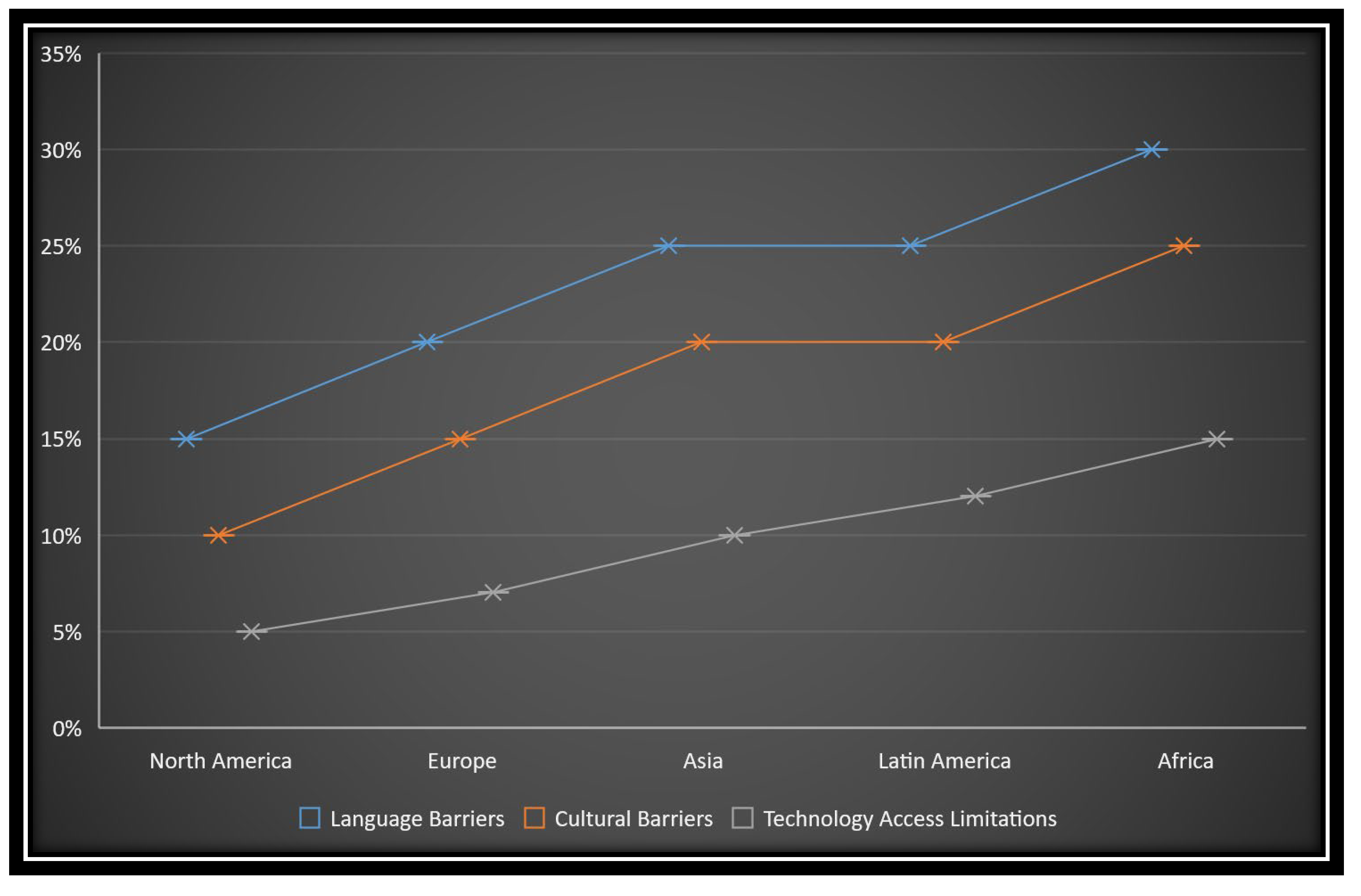
Figure 2.
Trends in User Engagement with CILS Over Time.
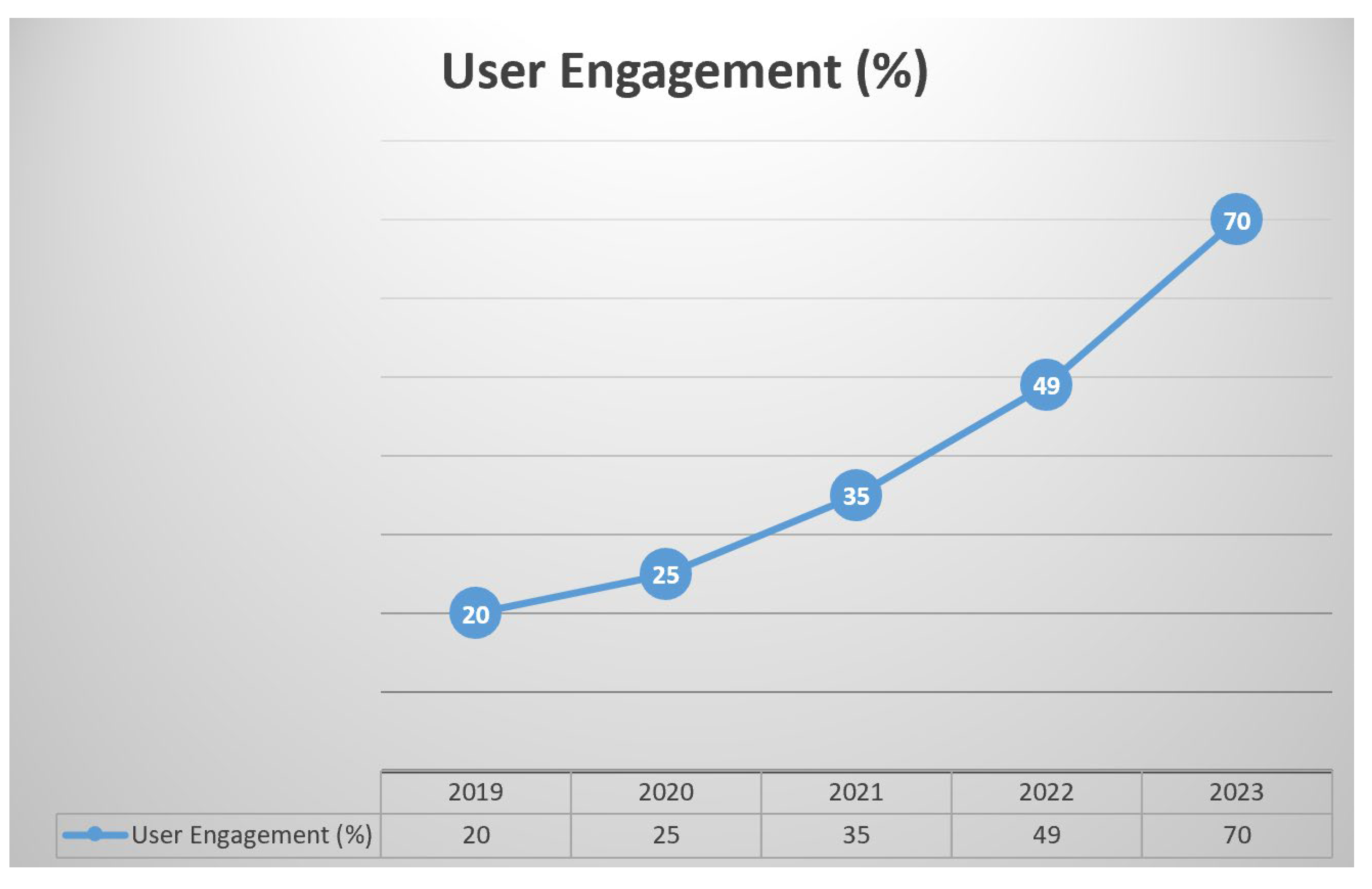
Figure 3.
Adoption Rates of AI Technologies in Language Learning Platforms.
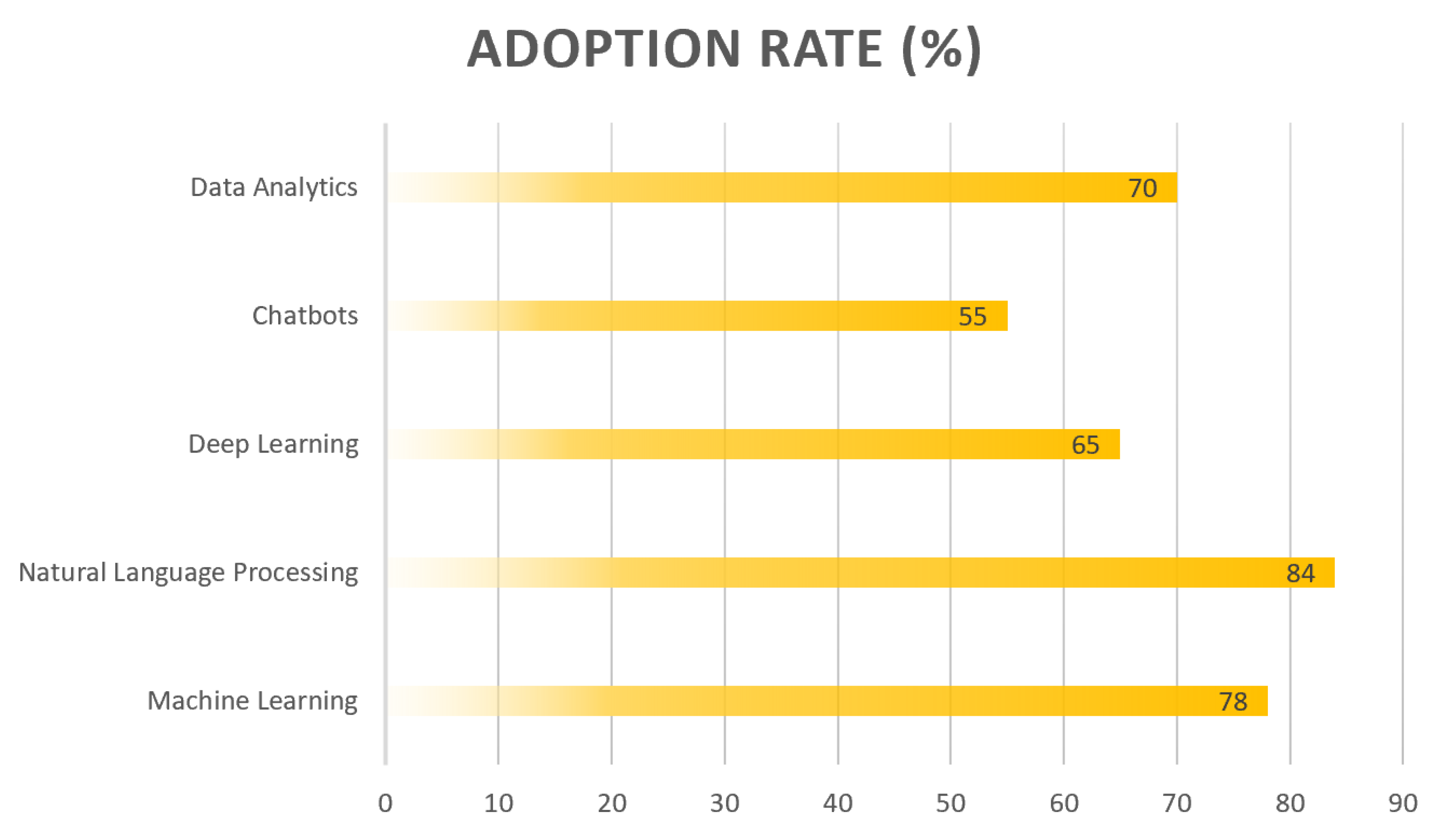
Figure 4.
Improvement in Cultural Competence Among CILS Learners.
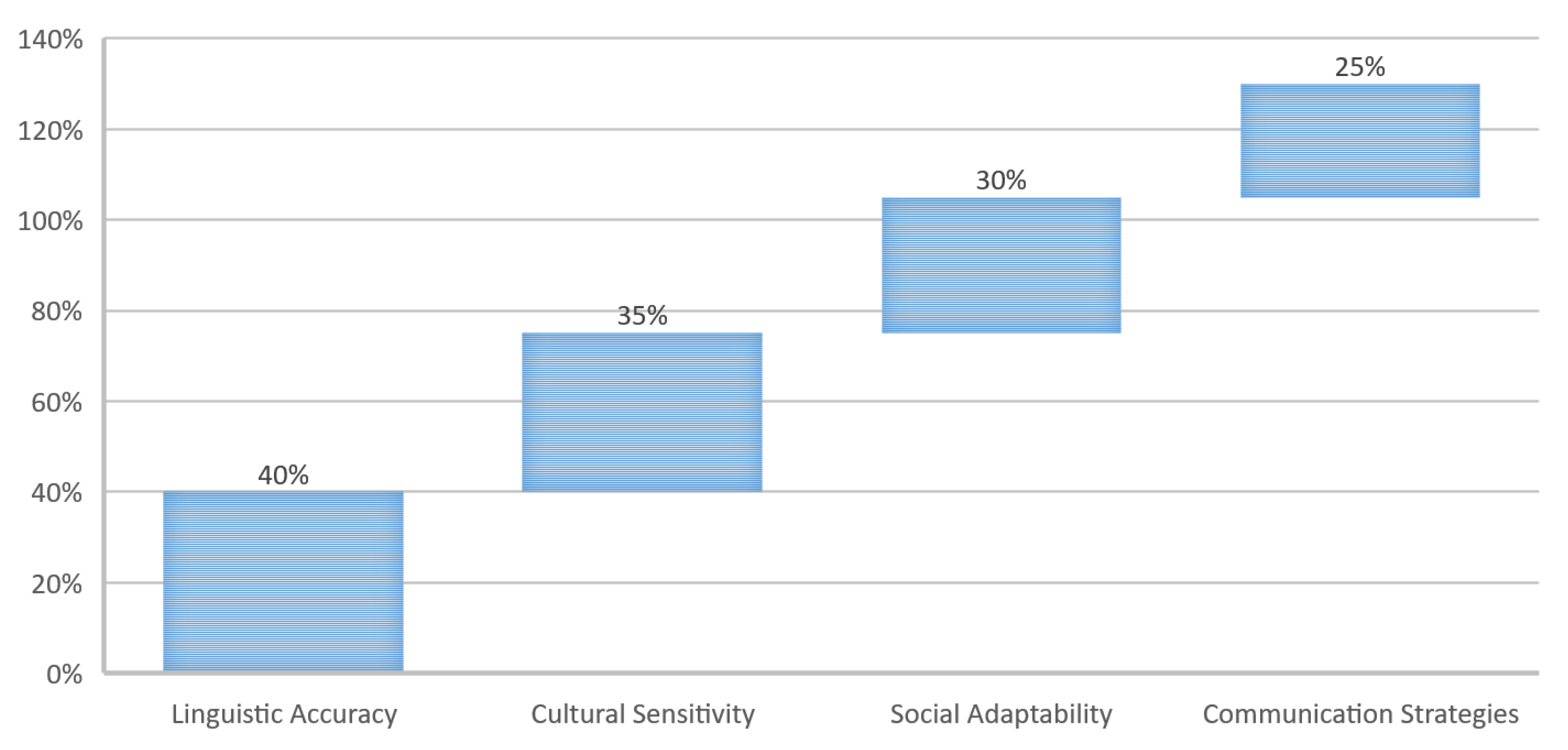
Figure 5.
Effectiveness of CILS in Different Educational Environments.
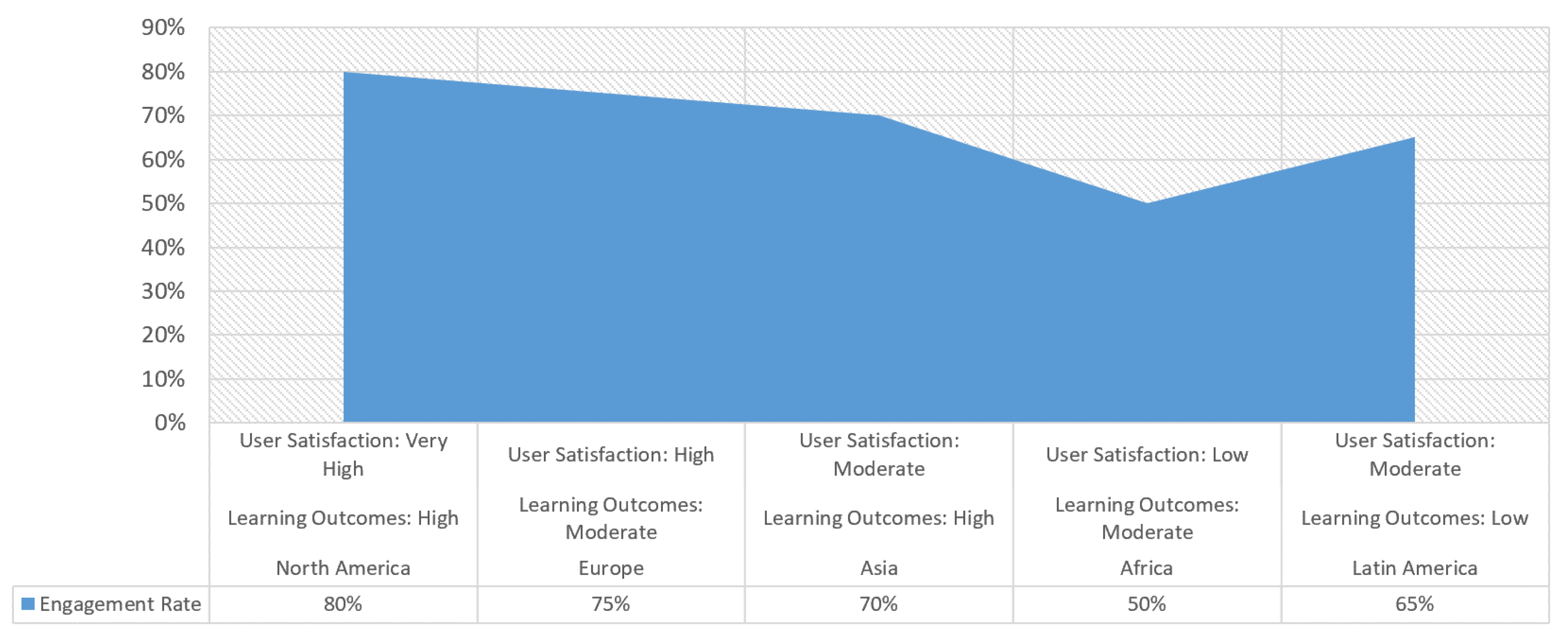

Table 1.
Improvements in Language Skills Using CILS.
| Language Skill | Improvement Percentage |
|---|---|
| Grammar | 40% |
| Vocabulary | 35% |
| Pronunciation | 25% |
Table 2.
Global Utilization of CILS in Educational Settings.
| Region | Utilization Rate (%) |
|---|---|
| North America | 75% |
| Europe | 60% |
| Asia | 50% |
| Africa | 30% |
Table 3.
Adoption Rates of AI Technologies in Language Learning Platforms.
| AI Technology | Adoption Rate (%) |
|---|---|
| Machine Learning | 78% |
| Natural Language Processing | 84% |
| Deep Learning | 65% |
Table 4.
Cultural Adaptability in Language Learning Systems.
| System | Cultural Adaptability Rating |
|---|---|
| CILS | High |
| Traditional Methods | Low |
| Other AI Systems | Medium |
Table 5.
Efficiency Metrics of AI-Enhanced Learning Environments.
| Metric | AI-Enhanced Environment | Traditional Setting |
|---|---|---|
| Learning Speed | 50% Faster | Base Rate |
| Retention Rates | 30% Higher | Base Rate |
Disclaimer/Publisher’s Note: The statements, opinions and data contained in all publications are solely those of the individual author(s) and contributor(s) and not of MDPI and/or the editor(s). MDPI and/or the editor(s) disclaim responsibility for any injury to people or property resulting from any ideas, methods, instructions or products referred to in the content. |
© 2024 by the authors. Licensee MDPI, Basel, Switzerland. This article is an open access article distributed under the terms and conditions of the Creative Commons Attribution (CC BY) license (http://creativecommons.org/licenses/by/4.0/).
Copyright: This open access article is published under a Creative Commons CC BY 4.0 license, which permit the free download, distribution, and reuse, provided that the author and preprint are cited in any reuse.