
Submitted:
26 April 2024
Posted:
28 April 2024
You are already at the latest version
Abstract
This study examines the environmental challenges faced by Malaysian industries in adhering to industrial effluent regulations with the research question, what are the challenges in complying with environmental legislations from industries? It investigates the primary factors contributing to non-compliance and the perspectives, knowledge, and needs of Malaysian industries regarding environmental compliance. This study recommends the best strategy for promoting self-compliance. Thirteen stakeholders from various industries with environmental management experience were interviewed. Over the past seven years, these industries have shown low com-pliance with the Industrial Effluent Regulation 2009, prompting an exploration of their adaptability to regulations. Challenges identified include cost, employee attitudes, technology, management support, public complaints, and jurisdictional issues. Responses varied from divergent to unified viewpoints, highlighting the complexity of compliance issues. Respondents suggested enhancing compliance through behavioral changes, including incentives, enforcement, awareness, guidance, industry ratings, management commitment, and public disclosure of emissions. Suggestions for improvement and innovative solutions emerged based on participants' experiences, emphasizing the importance of continuous improvement. The study emphasizes the government's crucial role in ensuring regulation adherence but underscores the need for analyzing barriers and exploring alternative approaches. Understanding industry perspectives and strategies is essential for progress. Compliance, however, requires an analysis of the current challenges and adopting adaptive measures. It is important to understand industries' perspectives and strategies to move forward.
Keywords:
Industry challenge
; environmental compliance
; continuous improvement
; behavioral change
; adaption of regulation
1. Introduction
Approximately 97% of the raw water Malaysia uses for domestic, agricultural, and industrial purposes comes from surface water sources, primarily rivers. The country has 189 river basins, of which 89 are in Peninsular Malaysia, 78 are in Sabah, and 22 are in Sarawak [1]. Industrialization, urbanization [2], and sewage water from domestic use [3] are the three main sources of river pollution in Malaysia which cause pollution of water resources and poses a threat to sustainable water supplies through the release of harmful substances into rivers.
Although industry manufacturing is important to society’s needs, it also contributes significantly to environmental pollution[4]. This requires further improvement in environmental governance. Policies that promote policy coherence, integrity, and stakeholder engagement are among the most important actions that can be taken in Southeast Asia to improve governance[5].
The global impact of industrial effluent discharges on the environment, including degradation of water quality[6] and environmental stress in aquatic ecosystems, may cause eutrophication in receiving water bodies and provide a favorable environment for pathogens that produce toxins in water [7]. This results in health concerns and demands for regulation tightening [8].
Water pollution also raises concerns about its potential impacts on drinking water [9]. To design effective regulations and enforcement strategies, it is necessary to understand the factors that influence motivations and abilities to comply [10]. Compliance with environmental regulations is the strongest predictor of environmental performance [11].
Additionally, the regulations are backed by a solid legal basis that include legitimate enforceable penalties associated with them. Non-compliance shall thus be expressly and legally penalized. When firms are confronted with a credible threat of regulation, they are more likely to adhere to environmental regulations because they may face harsh punishments if they violate them [12].
However, literature does not adequately discuss the environmental challenges that industrial sector face in complying with the law [13]. Rita Padawangi examined the difficulties associated with incorporating environmental concerns into urban planning [14] but did not discuss the challenges industries face in ensuring compliance with environmental laws. The focus of several studies has been on the specific environmental changes encountered by each type of industry, such as Kurniawan et al. focussed on water-related environmental changes experienced by the fisheries industry [15] and Abdul Hamid et al. discussed the challenges associated with the palm oil mill industry in implementing circular economies to gain social, economic, and environmental benefits[16]. No studies have addressed the challenges faced by Malaysian industries in complying with environmental legislation and their adaptation to the regulation.
Beneficial uses of water or ecosystem functioning are negatively affected [17]. Currently, there are few adequate solutions to address river pollution. Modelling that involves stakeholders has been recommended as a possible solution to water resource management challenges [18].
Several studies (Étienne & Wendeln [19]; Markowitz & Gerardo[20]; Winter & May, [21]) have expressed concern about compliance with environmental regulations, but little is known about the industry’s views on this issue. The primary cause of non-compliance with industrial effluent regulations must be identified by examining compliance with industrial effluent regulations [22]. Considering the lack of input from industries in Malaysia regarding the difficulties they face in complying with environmental legislation and regulations, the objective of this study is to investigate industries’ perspectives on environmental legislation and compliance challenges to fill this gap in the literature.
Consequently, this study aims to understand the industry’s perspective as one of the key stakeholders in managing river pollution with the research question, what are the challenges in complying with environmental legislations from industries? Insights from several industries with low compliance with environmental legislation are gathered from a semi-structured interview. This interview aimed to understand the main contributor factor to non-compliance, to find the relativity of experiences, knowledge, and perceived needs with environmental compliance of industries in Malaysia, and to investigate how much non-compliance impacted water quality and what are the best ways to promote self-compliance.
This case study is helpful, particularly in exploring novel emerging explanations for challenges in complying to the industrial effluent regulations in Malaysia, with a particular focus on industries as one of the stakeholders for water pollution governance. Ultimately, this study will provide insights into practical enforcement practices, policies, and negative environmental impacts.
2. Materials and Methods
The collection of non-numerical data was accomplished using qualitative research methods. Participants or subjects are interviewed to determine their underlying motivations, opinions, or meanings. In qualitative research, empirical studies investigate conventional notions of validity and truth while adhering to the fundamental principles of recognizing the subjects studied as empirical [23].
In engaging with stakeholders, this study intended to identify and target the industry type with the lowest compliance towards Industrial Effluent Regulation 2009 for a span of time. Mokhtar published eight types of industries with the lowest compliance rate from 2016 to 2022 [13], which were metal manufacturing except for machinery type of industry, manufacture of base metal, manufacture of rubber and plastic and manufacture of other non-metallic mineral products, manufacture of paper and paper products, food products manufacturing, manufacture of chemicals and chemical products with and lastly manufacture of coke and refine petroleum product. The participant from each industry is then contacted.
The identity of the participants was undisclosed, and they were invited to participate in the semi-structured interview. Interview guides were developed, which include open-ended questions subjected to the main theme of the study [24], which is understanding the challenges they faced in managing river pollution. Interviews are a useful methodology for research because of their ability to facilitate probing discussions with individuals that would allow the researcher access to relevant, practical, and honest information that is generally unavailable in published sources [25]. The protocol refinement for the interview is further detailed and explained in Figure 1. Semi-structured interviews were conducted, and the interviews were recorded with prior consent from the participants to facilitate transcription for analysis.
A reflexive thematic analysis approach was adopted to analyze the qualitative data obtained from interviews with eight types of industries to accomplish the research objectives. An interpretive approach to qualitative data analysis that is easily accessible and theoretically flexible is reflexive thematic analysis [26]. Using this approach, we can facilitate specific themes within each dataset and the detection and analysis of patterns.
Interview data were analyzed using a mixed method approach by combining coding, thematic analysis and deductive analysis using NVivo 12 Plus software as a logical approach to progress from general ideas to specific conclusions. This was done by identifying patterns, categories, and recurring themes in the interview data [27]. The identification of major themes was carried out by conducting a thematic analysis of the coded information. Subsequently, deductive analysis is carried out on pre-defined hypotheses or theories related to the management of industrial river pollution. Finally, based on insights gained from the interviews and analysis, the findings were synthesized. An outline of the challenges associated with managing river pollution from industries and recommendations for addressing these challenges were prepared.
3. Results and Discussion
3.1. Experience and Perceived need of Participants
This section provides a summary of expert responses of the type of industry to which they belong to. In accordance with the responses from each type of industry, opinions vary based on the level of knowledge and practical experience of the respondents. Table 1 summarizes the individuals who participated in this study (while maintaining their anonymity). Most industries have been operating for at least 20 years, except for paper manufacturing (10 years) and other non-metallic mineral manufacturing (9 years).
Notably, within each industry, there were individuals who had a comprehensive understanding of environmental issues and waste management. However, fewer participants had insight into the main factors contributing to non-compliance in their respective industries. They feel that the challenges they face also contribute towards non-compliance. Using the matrix coding query in Figure 2, it is evident that each type of industry has contributed significantly to the analysis of industry challenges and suggestions for improving compliance with the Industrial Effluent Regulation 2009. Nevertheless, only the manufacturing of food products, chemicals and chemical products, and rubber and plastics have provided insight into the factors contributing to non-compliance.
In Table 2, we can observe that the highest percentage of innovative solutions developed by the industry to address river pollution comes from a paper and paper products industry that has been in operation for ten years; with six references and 20.41 percent coverage, followed by a food products manufacturing company operating for 40 years; with six references and 15.50 percent coverage. According to this analysis, innovative solutions are not affected by the number of years or how short the industry has been in operation.
Additionally, according to the participants, determining factors of success are dependent upon the technical expertise of the engineer. Innovative solutions in the form of technical expertise include minimizing the effluent discharged by using technology that uses less water and reducing the cost of disposing of chemicals, as well as recycling water and improving the deionized water system by extending the life of the resins. Furthermore, the participants speak about an internal evaporator machine with an electric heater which helps reduce sludge waste six to eight drums daily and supervisory control and data acquisition (SCADA) should be used to eliminate human errors.
There were several innovative solutions shared that involved the public relations of the industry in the handling of public complaints. Some industries engage with local communities. In addition, they installed an airbox monitoring system to monitor the air surrounding their factory and establish stations in the local area. They provide live feeds of direct current readings and ambient, and wastewater treatment plant information on their Facebook page.
3.2. Contributing Factors to Non-Compliance
3.2.1. Challenges Faced by Industries
The responses regarding challenges indicated that industry participants have a wide range of opinions. Prevalent opinion themes that participants from various industries frequently mention cost, employees’ attitude, treatment technology, top management support, public complaints, and the distinction between federal and state jurisdictions.
Participants identified costs as the most prevalent topic in identifying the challenges they face in managing river pollution. There were costs associated with the operation, waste disposal, investment, maintenance, and treatment of facilities and equipment. Cost is a crucial source of financing for controlling pollution [28], demonstrating the economic feasibility of addressing river pollution [29].
Employees’ attitudes were found to commonly refer to concerns about compliance as one of the challenges- namely, a lack of awareness is the underlying barrier. Education will play a major role in tackling the lack of awareness and employees’ attitudes. The sentiments expressed here are in accordance with the literature. In their study, J.Wilkinson et al. concluded that education and awareness could reduce pollution in rivers [30]. Education and awareness must be conducted to identify and understand the causal pathways [31]. Waqar Ahmad Khan et al. reached a similar conclusion, concluding that environmental education can reduce industrial water pollution [32].
The third most common issue raised was that of treatment technology. Developing the most appropriate treatment technology for each industry's specific wastewater characteristics has proven challenging. A variety of treatment technologies, such as advanced oxidation processes, biological methods, and continuous monitoring, have been found to reduce industrial pollutants in rivers [33,34,35,36]. To address this challenge, the best available environmentally friendly technologies should be utilized to treat industrial effluent discharges.
While interview respondents cited cost as their greatest challenge, they also pointed out that top management support is sometimes lacking. According to one participant, it is quite challenging to change the mindset of the top management with respect to the management of industrial effluent systems. This is because the industrial effluent system has a - 0 return on investment. Top management can support in several ways, including improving industrial effluent treatment infrastructure, increasing waste management budgets [30] and developing environmentally friendly key strategies [37].
There was general agreement among interview respondents that public complaints are also a prevalent challenge. The interview participants stated that engaging with government authorities, non-government agencies, and environmentalists to investigate public complaints is time-consuming, and requires much effort, such as transparency in discharge quality and engagement with corporate social responsibility. Nevertheless, studies have shown that public complaints can help reduce river pollution from industry by raising awareness of health and environmental threats [30], advocating for cost-effective management practices [38], promoting sustainable business planning [39] and enhancing cooperation in pollution treatment projects [40], as well as prompting government action [41].
Few respondents indicated that the distinction between federal and state jurisdictions is one of the challenges, due to the state government of Sarawak passing their laws pursuance to Article 77 of the Federal Constitution. Most respondents agreed that they see no overlapping jurisdictions between the authorities, however, they noted that the water governance in Malaysia is a complex system. In addressing river water management, Malaysia has Federal lists, State Lists and Concurrent Lists. According to Hasan et al., too many authorities involved in water pollution governance [42] with its own water-based legislation. Abdul Rahman mentioned that these authorities have conflicting and competing objectives [43]. Yet, effective regulatory frameworks for water pollution require strong legal principles, stringent regulatory requirements, and appropriate institutional framework [44].
Opinions regarding challenges are also centered on behavioral changes. Educating and informing employees can enhance their attitude towards improvement as well as motivating them and provide them with support from top management. It is also necessary to ensure communications are delivered precisely to handle public complaints effectively. Additionally, it is essential that treatment technology be managed appropriately to ensure its effectiveness, which requires certain behavioral standards. An overview of all the challenges is presented in Figure 2.
3.3. Difficulties Complying with the Industrial Effluent Regulation
In this study, two key areas were identified within the interview responses regarding the difficulties the industrial sector is experiencing in complying with the Industrial Effluent Regulation 2009. The first is effluent characterization. Individuals from the food and plastic product manufacturing industries have stated that because their products vary, the primary difficulty is the change in effluent characterization from production lines over time. It is necessary to adjust the industrial effluent treatment system, which is one of the main reasons for noncompliance. This is because quick adjustments may be difficult, and adjustments to treatment may be non-smooth impacting environmental protection policies. In some cases, engineers or operators of treatment plants lack the technical knowledge to make the appropriate adjustments. It may result in effluent discharges that do not comply with the concentration limits set forth in the Industrial Effluent Regulation 2009. It is difficult to treat industrial effluents sustainably due to ineffective treatment solutions and a lack of technical expertise [45].
The second factor is the cost of treatment. Small and medium-sized businesses (SMEs) have limited budgets for waste management. However, installing an industrial effluent treatment system requires a considerable number of financial resources to have a specific treatment unit of operation. This is required to comply with the Technical Guidance Document on Industrial Effluent Treatment Systems specified in regulation 5, Industrial Effluent Regulations 2009. This is not a major concern for large international companies with substantial environmental management budgets. A substantial amount of solid residuals from industrial effluent treatment systems [46] classified as scheduled waste must also be disposed of at a significant cost. Increasing costs of industrial effluent treatment have contributed to non-compliance [47].
3.4. Suggestion to Increase Compliance
3.4.1. Improvement and Adaptation of Industrial Effluent Regulation 2009
In Figure 3 some interview respondents recommended a few amendments to the Industrial Effluent Regulations 2009 to increase compliance. Most respondents believed centralized treatment systems for certain homogeneous industries could reduce river pollution problems. However, they also pointed out that this adaptation is only feasible in new industrial development areas, due to all the infrastructure and facilities that must be considered.
Respondents noted that regulation 12, Industrial Effluent Regulations 2009 stipulated the Chemical Oxidation Demand (COD) discharge limit standard. According to the regulation, three types of industries have designated more lenient discharge limits than others, such as pulp and paper, textiles, and refineries. Hence, some respondents indicated that their specific type of industry required a dedicated discharge standard for COD and more lenient discharged standard for Ammoniacal Nitrogen (AN).
Due to the high disposal costs for scheduled waste sludge generated by industrial effluent treatment systems, some participants suggested that the Department of Environment should increase the number of licensed facilities to provide a competitive price for the disposal of scheduled waste sludge. The participants may not know, pursuant to Section 19 of the Environmental Quality Act 1974, the intention to construct must be submitted by the company itself, not by the Department of the Environment.
Several interview respondents suggested that the Industrial Effluent Regulation 2009 be amended to adapt sustainability approaches. This includes the adaptation of net carbon-zero, and zero discharges. Other than that, some respondents want a more lenient standard, particularly for the ammoniacal nitrogen parameter. Most reasonable reason for this is because the neighboring country, Singapore has a more lenient standard towards ammoniacal nitrogen (20mg/l for controlled watercourse and 50 mg/l for water course) while Malaysia's standard is 10 mg/l for standard A and 20 mg/l for standard B.
However, none of the respondents mentioned that Singapore has a more stringent standard for the Suspended Solid parameter (30 mg/l for controlled watercourses and 50 mg/l for watercourses) than Malaysia (50 mg/l for standard A and 100 mg/l for standard B). A greater variety of treatment technologies may be available in the market for suspended solids than for ammoniacal nitrogen may result to this.
Respondents provided suggestions for improving the regulation, including the automation provision. By adapting automating in the treatment process, time can be saved, and human error can be reduced. Automating the process can assist in increasing compliance by enabling the elimination of organic contaminants and heavy metals from effluents as soon as they are generated [48].
3.4.2. Industry-Specific Sustainable Strategies in Promoting Self-Regulation and Increasing Compliance
This section discusses the recommendations that have emerged from the interviews that have taken place regarding the best sustainable solutions and strategies to cultivate self-compliance among industries. Among the participants, there is some consensus that government incentives, such as lower optimal taxes for industries that implement effluent recycling technologies, or that focus on zero discharges, are likely to assist industries in striving toward self-regulation. The industry will take more pollution prevention measures that will significantly reduce pollution [49].
Figure 4.
Hierarchy chart on industry-specific sustainable strategies to promote self-regulation.
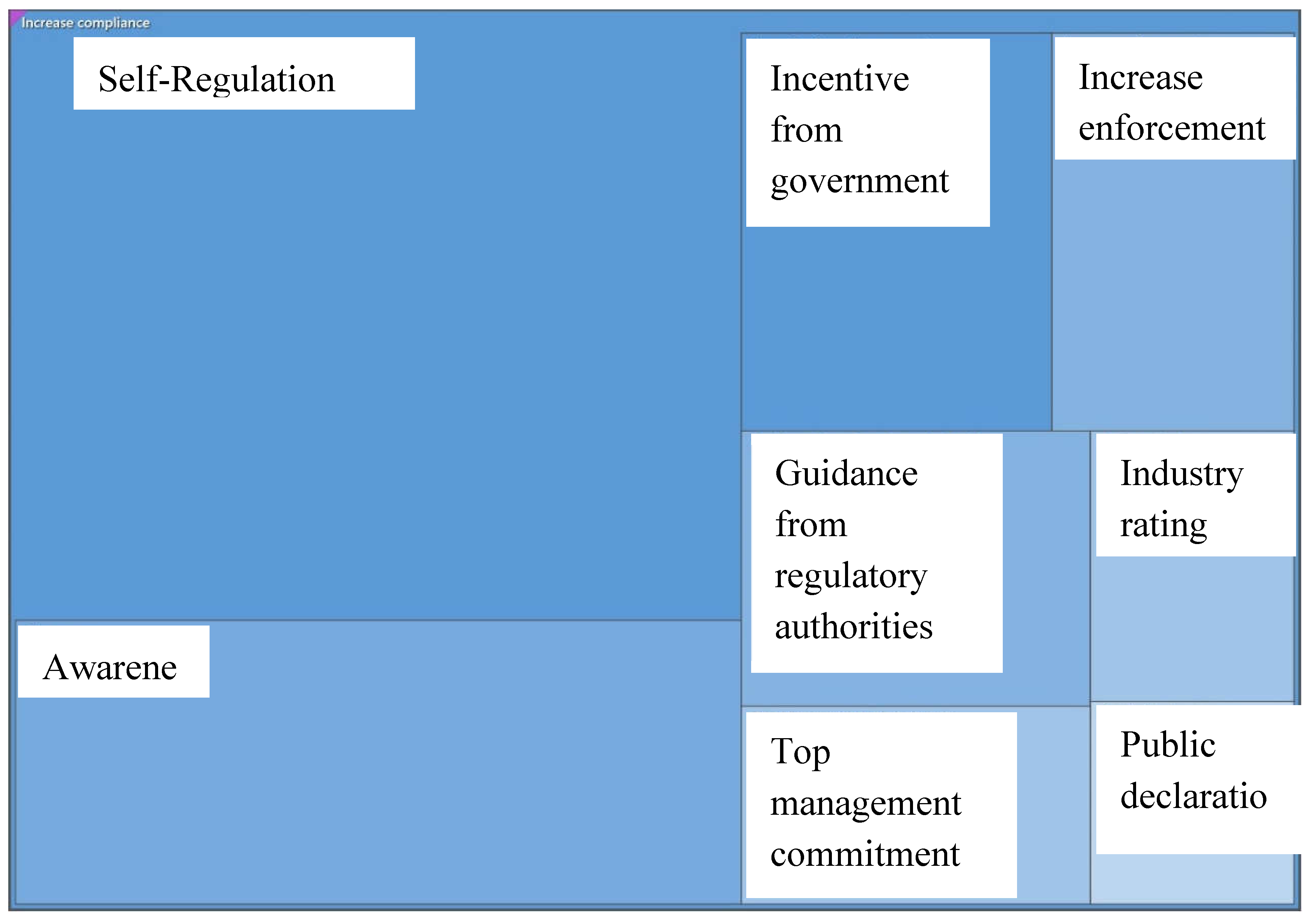
Despite acknowledging that enforcement visits from regulatory agencies could lead to penalties if they were unable to comply with the regulations, respondents agree that frequent visits from enforcement agencies will result in greater compliance. There is still a need for command-and-control in Malaysia. By enforcing environmental regulations, regulators can improve compliance rates by enticing regulated entities to comply [50]. Moreover, regular visits by enforcement agencies will provide an opportunity to identify areas that need improvement and provide guidance regarding compliance with the regulations.
In addition to the formal enforcement visit, interview respondents noted that industries also required guidance from regulators. Ideally, this would take the form of open discussions, town hall meetings, seminars, and knowledge sharing between the two parties. As regulators benefit shareholders by minimizing environmental impact, a better understanding and collaboration between regulatory authorities and industry can be achieved through open discussions, town hall sessions, seminars, and information sharing. A sense of partnership and mutual trust is fostered through the exchange of ideas, concerns, and expertise. By taking this proactive approach, more effective regulations and strategies can be developed, ultimately enhancing compliance, and achieving sustainable results [51].
Some respondents indicated that awareness in education can help cultivate self-regulation. The awareness program can be increased by having a technical visit among industries with noteworthy environmental problems to learn about treatment technologies. In addition, this will focus on environmental education in schools on the primary and secondary levels. The importance of environmental education lies in its ability to demonstrate the importance of forming resilient and sustainable communities [52]. On the other hand, environmental education aims to increase knowledge and empower individuals to actively participate in addressing of environmental issues [51]. Considering these issues, it plays a critical role in resolving them.
According to some respondents, top management involvement in waste management will lead to self-regulation of waste management. With the decision maker's knowledge of how the process works, and the penalties attached to non-compliance, the budget for waste management in industrial effluent treatment facilities can be increased. This could lead to more effective waste management, improving water quality and reducing water pollution [53]. It could also lead to cost savings for businesses, as they could be held liable for any pollution caused by their waste.
Respondents raised the issue of a public declaration by the industries regarding discharge limits as a means of increasing self-regulation. The industries must submit their effluent reports online to a dedicated website monthly. However, they are only available to Department of Environment officers, and the public cannot access them. Providing public access to this system will encourage industries to improve their treatment system and comply with the standard set limit to increase compliance [54].
4. Conclusions and Recommendations
In this study, eight industries with the least compliance are examined in terms of the challenges they face regarding complying with the Industrial Effluent Regulation 2009 in Malaysia. Based on the interview result (n=13), it was found that innovative solutions developed by industries do not reflect their years of experience, but rather the engineer's understanding of the system. According to the industries, several challenges contribute to noncompliance including costs, employee attitudes, treatment technology, support from top management, and the jurisdiction between federal and state jurisdictions.
A few challenges are associated with the Industrial Effluent Regulation 2009 itself, which is difficult to comply with. First, there is the issue of effluent characterization, and second, there is the issue of the applicable treatment costs. The cost of disposing of scheduled waste sludge generated from the industrial effluent system also contributes to treatment costs.
There have been some suggestions from industries for improving the Industrial Effluent Regulations 2009. Among those is the construction of centralized industrial effluent treatment systems, the establishment of specific discharges based on the type of industry, the expansion of the number of licensed facilities, lenient discharge standards, and the incorporation of sustainability in regulation. Seven industry-specific suggestions can be used to improve self-regulation and increase compliance, including government incentives, enforcement, awareness, guidance, industry rating, top management commitment, and public disclosure. As a result of these suggestions, the government will be able to implement its enforcement duties better and improve compliance with the regulation. This will enable the government to focus on more serious offenses, and to enforce stricter penalties. Additionally, this will also ensure that more time and resources are devoted to addressing environmental violations.
This study concludes that the challenges faced by industry should be addressed as they serve as ongoing barriers to progress and improve compliance. A key component of addressing the challenges facing the industry is ensuring that all stakeholders play a vital role in ensuring industry compliance and that regulations are followed. The government should provide incentives for developing and adopting cost-effective treatment technologies, while industries should prioritize self-regulation, increase awareness and compliance, and invest in research to find innovative solutions for effluent treatment and sludge management.
Efforts should be made to develop more cost-effective treatments for ammoniacal nitrogen. Identifying other options for treatment or recycling other than final disposal of sludge may be possible by analyzing the cost-benefit of disposing of sludge generated by industrial effluent treatment systems. This can be done by researching new technologies that reduce sludge generated. Additionally, research should be conducted to better understand the efficacy of existing technologies for treating ammoniacal nitrogen. Finally, governments should incentivize these technologies.
By actively engaging with industry stakeholders and seeking their perspectives and insights, we can gain a deeper understanding of the challenges faced by industries in complying with effluent regulations. Hence, effective solutions and strategies that address the specific needs of different industries can be developed, ultimately fostering collaboration and driving progress in industrial effluent treatment and sludge management.
Author Contributions
Conceptualization, Zulaikha Mokhtar.; methodology Zulaikha Mokhtar and Irdayanti Mat Nashir.; software, Zulaikha Mokhtar; validation, Zulaikha Mokhtar, Steven Kenway, Ilje Pikaar and Irdayanti Mat Nashir.; formal analysis, Zulaikha Mokhtar.; investigation, Zulaikha Mokhtar; resources, Zulaikha Mokhtar.; data curation, Zulaikha Mokhtar and Irdayanti Mat Nashir.; writing—original draft preparation, Zulaikha Mokhtar.; writing—review and editing, Zulaikha Mokhtar, Steven Kenway, Ilje Pikaar and Irdayanti Mat Nashir.; visualization, Zulaikha Mokhtar; supervision, Steven Kenway and Ilje Pikaar.; project administration, Zulaikha Mokhtar and Steven Kenway.
Funding
This research received no external funding.
Institutional Review Board Statement
The study was conducted in accordance with the Declaration of Helsinki and approved by the Research Ethics and Integrity Committee of THE UNIVERSITY OF QUEENSLAND under the National Statement of Ethical Conduct in Human Research and relevant University of Queensland policy (PPL 4.20.07) on 25 November 2022 for studies involving humans.
Informed Consent Statement
Informed consent was obtained from all subjects involved in the study.
Data Availability Statement
Supplementary materials related to this study can be downloaded from https://doi.org/10.48610/93daabf.
Acknowledgments
The authors would like to express their gratitude to the Almighty and to those individuals and organizations contributing their expertise and time to this project. The authors would also like to thank the reviewers for their valuable feedback.
Conflicts of Interest
The authors declare no conflicts of interest.
References
- Abdul Ghani, “FRESHWATER | WWF Malaysia.” Accessed: May 23, 2023. [Online]. Available: https://www.wwf.org.my/our_work/freshwater/.
- M. S. Adnan, H. Roslen, and S. Samsuri, “The Application of Total Maximum Daily Load (TMDL) Approach in Water Quality Assessment for the Batu Pahat River,” in IOP Conference Series: Earth and Environmental Science, Institute of Physics, May 2022. [CrossRef]
- A. Fitri, K. N. Abdul Maulud, D. Pratiwi, A. Phelia, F. Rossi, and N. Z. Zuhairi, “Trend Of Water Quality Status In Kelantan River Downstream, Peninsular Malaysia,” Jurnal Rekayasa Sipil (JRS-Unand), vol. 16, no. 3, p. 178, Dec. 2020. [CrossRef]
- M. Mahmoud, A. Yasseen, M. El Morsi, and S. El Haggar, “SUSTAINABLE INDUSTRIAL NEIGHBORHOODS,” Journal of Environmental Science, vol. 49, no. 12, 2020. [CrossRef]
- “Asian Water Development Outlook 2020:,” Manila, Philippines, Dec. 2020. [CrossRef]
- M. Ilyas, W. Ahmad, H. Khan, S. Yousaf, M. Yasir, and A. Khan, “Environmental and health impacts of industrial wastewater effluents in Pakistan: a review,” Rev Environ Health, vol. 34, no. 2, pp. 171–186, Jun. 2019. [CrossRef]
- K. Saravanakumar et al., “Impact of industrial effluents on the environment and human health and their remediation using MOFs-based hybrid membrane filtration techniques,” Chemosphere, vol. 307, no. Pt 1, Nov. 2022. [CrossRef]
- A. Rahman Mahmud, “THE NEED FOR IMPROVEMENT ON ENVIRONMENTAL LAW IN MALAYSIA,” International Journal of Business, Economics and Law, vol. 24.
- M. Hou, Q. Jin, G. Na, Y. Cai, and Y. Shi, “Emissions, Isomer-Specific Environmental Behavior, and Transformation of OBS from One Major Fluorochemical Manufacturing Facility in China,” Environ Sci Technol, vol. 56, no. 12, pp. 8103–8113, 2022. [CrossRef]
- P. Nguyen-Van, A. Stenger, and T. Tiet, “Social incentive factors in interventions promoting sustainable behaviors: A meta-analysis,” PLoS One, vol. 16, no. 12 December, 2021. [CrossRef]
- Y. Fernando and W. X. Wah, “The impact of eco-innovation drivers on environmental performance: Empirical results from the green technology sector in Malaysia,” Sustain Prod Consum, vol. 12, pp. 27–43, Oct. 2017. [CrossRef]
- Y. Ma, J. Wang, and Y. Bai, “Macro-Institutional Pressures and Firms’ Environmental Management Behavior: The Moderating Effect of Micro-Institutional Pressures,” Sustainability (Switzerland), vol. 15, no. 4, 2023. [CrossRef]
- Z. Mokhtar, “REVIEW OF MALAYSIA’S ENVIRONMENTAL WATERWAY COMPLIANCES WITH INDUSTRIAL EFFLUENT DISCHARGE,” International Journal of Business, Economics and Law, vol. 30, p. 1, Accessed: Mar. 11, 2024. [Online]. Available: https://ijbel.com/wp-content/uploads/2023/12/IJBEL30.ISU1_326.pdf.
- “Routledge Handbook of Urbanization in Southeast Asia | Rita Padawangi.” Accessed: May 10, 2023. [Online]. Available: https://www.taylorfrancis.com/pdfviewer/.
- S. B. Kurniawan et al., “Aquaculture in Malaysia: Water-related environmental challenges and opportunities for cleaner production,” Environ Technol Innov, vol. 24, p. 101913, Nov. 2021. [CrossRef]
- A. Q. Abdul-Hamid, M. H. Ali, M. L. Tseng, S. Lan, and M. Kumar, “Impeding challenges on industry 4.0 in circular economy: Palm oil industry in Malaysia,” Comput Oper Res, vol. 123, p. 105052, Nov. 2020. [CrossRef]
- J. Thorslund et al., “Wetlands as large-scale nature-based solutions: Status and challenges for research, engineering and management,” Ecol Eng, vol. 108, pp. 489–497, Nov. 2017. [CrossRef]
- A. Syafiuddin, R. Boopathy, and T. Hadibarata, “Challenges and Solutions for Sustainable Groundwater Usage: Pollution Control and Integrated Management,” Curr Pollut Rep, vol. 6, no. 4, pp. 310–327, Dec. 2020. [CrossRef]
- J. Étienne and M. Wendeln, “Compliance theories,” Revue française de science politique (English), vol. 60, no. 2, p. 139, 2010. [CrossRef]
- K. J. Markowitz and J. J. A. Gerardu, “The Importance of the Judiciary in Environmental Compliance The Importance of the Judiciary in Environmental Compliance and Enforcement and Enforcement Recommended Citation Recommended Citation The Importance of the Judiciary in Environmental Compliance and Enforcement,” 2012. [Online]. Available: https://digitalcommons.pace.edu/pelr.
- S. C. Winter and P. J. May, “Motivation for compliance with environmental regulations,” Journal of Policy Analysis and Management, vol. 20, no. 4, pp. 675–698, Sep. 2001. [CrossRef]
- Z. Mokhtar, S. H. Idris, S. Kenway, and I. Pikaar, “ANALYSING THE REGULATORY MECHANISMS OF RIVER POLLUTION IN MALAYSIA,” International Journal of Business, Economics and Law, vol. 31, p. 1, Accessed: Mar. 11, 2024. [Online]. Available: https://ijbel.com/wp-content/uploads/2024/03/IJBEL31.ISU-1_214.pdf.
- E. ARSLAN, “Validity and Reliability in Qualitative Research,” Pamukkale University Journal of Social Sciences Institute, 2022. [CrossRef]
- W. C. Coates, J. Jordan, and S. O. Clarke, “A practical guide for conducting qualitative research in medical education: Part 2—Coding and thematic analysis,” AEM Education and Training, vol. 5, no. 4. John Wiley and Sons Inc, Oct. 01, 2021. [CrossRef]
- P. Zittoun, “Interviewing in Public Administration,” in Oxford Research Encyclopedia of Politics, 2021. [CrossRef]
- V. Braun and V. Clarke, “Conceptual and Design Thinking for Thematic Analysis,” Qualitative Psychology, vol. 9, no. 1, pp. 3–26, May 2021. [CrossRef]
- C. R. Lochmiller, “Conducting thematic analysis with qualitative data,” Qualitative Report, vol. 26, no. 6, pp. 2029–2044, Jun. 2021. [CrossRef]
- D. Zhang, Z. Tong, and Y. Li, “The role of cash holding towards cleaner production in China’s manufacturing sectors: A financial constraint perspective,” J Clean Prod, vol. 245, Feb. 2020. [CrossRef]
- A. W. Mumbi and T. Watanabe, “Cost Estimations of Water Pollution for the Adoption of Suitable Water Treatment Technology,” Sustainability (Switzerland), vol. 14, no. 2, 2022. [CrossRef]
- J. L. Wilkinson et al., “Pharmaceutical pollution of the world’s rivers,” Proc Natl Acad Sci U S A, vol. 119, no. 8, 2022. [CrossRef]
- Q. Wang, D. Hao, F. Li, X. Guan, and P. Chen, “Development of a new framework to identify pathways from socioeconomic development to environmental pollution,” J Clean Prod, vol. 253, 2020. [CrossRef]
- W. A. Khan, S. Ali, and S. A. Shah, “Water Pollution: Sources and Its Impact on Human Health, Control and Managing,” Journal of International Cooperation and Development, vol. 5, no. 1, 2022. [CrossRef]
- H. Wang, J. Wang, G. Bo, S. Wu, and L. Luo, “Degradation of pollutants in polluted river water using Ti/IrO2–Ta2O5 coating electrode and evaluation of electrode characteristics,” J Clean Prod, vol. 273, 2020. [CrossRef]
- A. Singh et al., “Biological remediation technologies for dyes and heavy metals in wastewater treatment: New insight,” Bioresource Technology, vol. 343. 2022. [CrossRef]
- D. Barceló, B. Žonja, and A. Ginebreda, “Toxicity tests in wastewater and drinking water treatment processes: A complementary assessment tool to be on your radar,” J Environ Chem Eng, vol. 8, no. 5, 2020. [CrossRef]
- E. Iloms, O. O. Ololade, H. J. O. Ogola, and R. Selvarajan, “Investigating Industrial Effluent Impact on Municipal Wastewater Treatment Plant in Vaal, South Africa,” Int J Environ Res Public Health, vol. 17, no. 3, Feb. 2020. [CrossRef]
- Q. Lu, J. Bai, G. Zhang, and J. Wu, “Effects of coastal reclamation history on heavy metals in different types of wetland soils in the Pearl River Delta: Levels, sources and ecological risks,” J Clean Prod, vol. 272, 2020. [CrossRef]
- M. Strokal et al., “Cost-effective management of coastal eutrophication: A case study for the yangtze river basin,” Resour Conserv Recycl, vol. 154, 2020. [CrossRef]
- M. Mukherjee et al., “Ecosystem-centric business continuity planning (eco-centric BCP): A post COVID19 new normal,” Progress in Disaster Science, vol. 7, 2020. [CrossRef]
- Y. Xue and G. Wang, “Analyzing the evolution of cooperation among different parties in river water environment comprehensive treatment public-private partnership projects of China,” J Clean Prod, vol. 270, 2020. [CrossRef]
- Y. Wang, H. Wei, Y. Wang, C. Peng, and J. Dai, “Chinese industrial water pollution and the prevention trends: An assessment based on environmental complaint reporting system (ECRS),” Alexandria Engineering Journal, vol. 60, no. 6, 2021. [CrossRef]
- H. Hasan, A. Parker, and S. J. T. Pollard, “Whither regulation, risk and water safety plans? Case studies from Malaysia and from England and Wales,” Science of the Total Environment, vol. 755, 2021. [CrossRef]
- H. Abdul Rahman, “Water Issues in Malaysia,” International Journal of Academic Research in Business and Social Sciences, vol. 11, no. 8, Aug. 2021. [CrossRef]
- A. Gani and F. Scrimgeour, “Modeling governance and water pollution using the institutional ecological economic framework,” Econ Model, vol. 42, pp. 363–372, 2014. [CrossRef]
- S. Malik, S. Kishore, S. Prasad, and M. P. Shah, “A comprehensive review on emerging trends in industrial wastewater research,” Journal of Basic Microbiology, vol. 62, no. 3–4. 2022. [CrossRef]
- S. Singh and M. K. Tiwari, “A case study on pulp and paper industry effluent treatment,” WEENTECH Proceedings in Energy, 2021. [CrossRef]
- C. H. A. I. Raju, K. V.D. Pratyusha, N. V. R. Naga Lakshmi, P. Ratna Raju, G. Prasad, and N. M. Yugandhar, “Studies on development of microbial fuel cell for waste water treatment using bakers yeast,” in Materials Today: Proceedings, 2021. [CrossRef]
- T. O. Ajiboye, O. A. Oyewo, and D. C. Onwudiwe, “Simultaneous removal of organics and heavy metals from industrial wastewater: A review,” Chemosphere, vol. 262. 2021. [CrossRef]
- D. T. Hill, M. Petroni, and M. B. Collins, “United States federal contracting and pollution prevention: how award type and facility characteristics affect adoption of source reduction techniques in four manufacturing sectors,” Environmental Research: Infrastructure and Sustainability, vol. 1, no. 2, 2021. [CrossRef]
- W. Gray and R. Shadbegian, “Economics of Environmental Compliance and Enforcement,” in Oxford Research Encyclopedia of Environmental Science, 2021. [CrossRef]
- L. Yue, M. Ye, and Q. Chen, “The Impact of Partnerships and Information Sharing on Corporate Sustainable Performance: A Mediation Model Moderated by Government Support,” Front Psychol, vol. 13, 2022. [CrossRef]
- M. J. Ketlhoilwe, “Building Community Resilience Through Environmental Education: A Local Response to Climate Change,” in Research Anthology on Environmental and Societal Impacts of Climate Change, vol. 1, 2021. [CrossRef]
- M. N. Bin Nawawi, H. Bin Samsudin, J. Saputra, K. Szczepańska-Woszczyna, and S. Kot, “The Effect of Formal and Informal Regulations on Industrial Effluents and Firm Compliance Behavior in Malaysia,” Production Engineering Archives, vol. 28, no. 2, pp. 193–200, Jun. 2022. [CrossRef]
- M. Zhang, R. Sun, and W. Wang, “Study on the effect of public participation on air pollution control based on China’s Provincial level data,” Environ Dev Sustain, vol. 23, no. 9, 2021. [CrossRef]
Figure 1.
Protocol refinement for interviews.
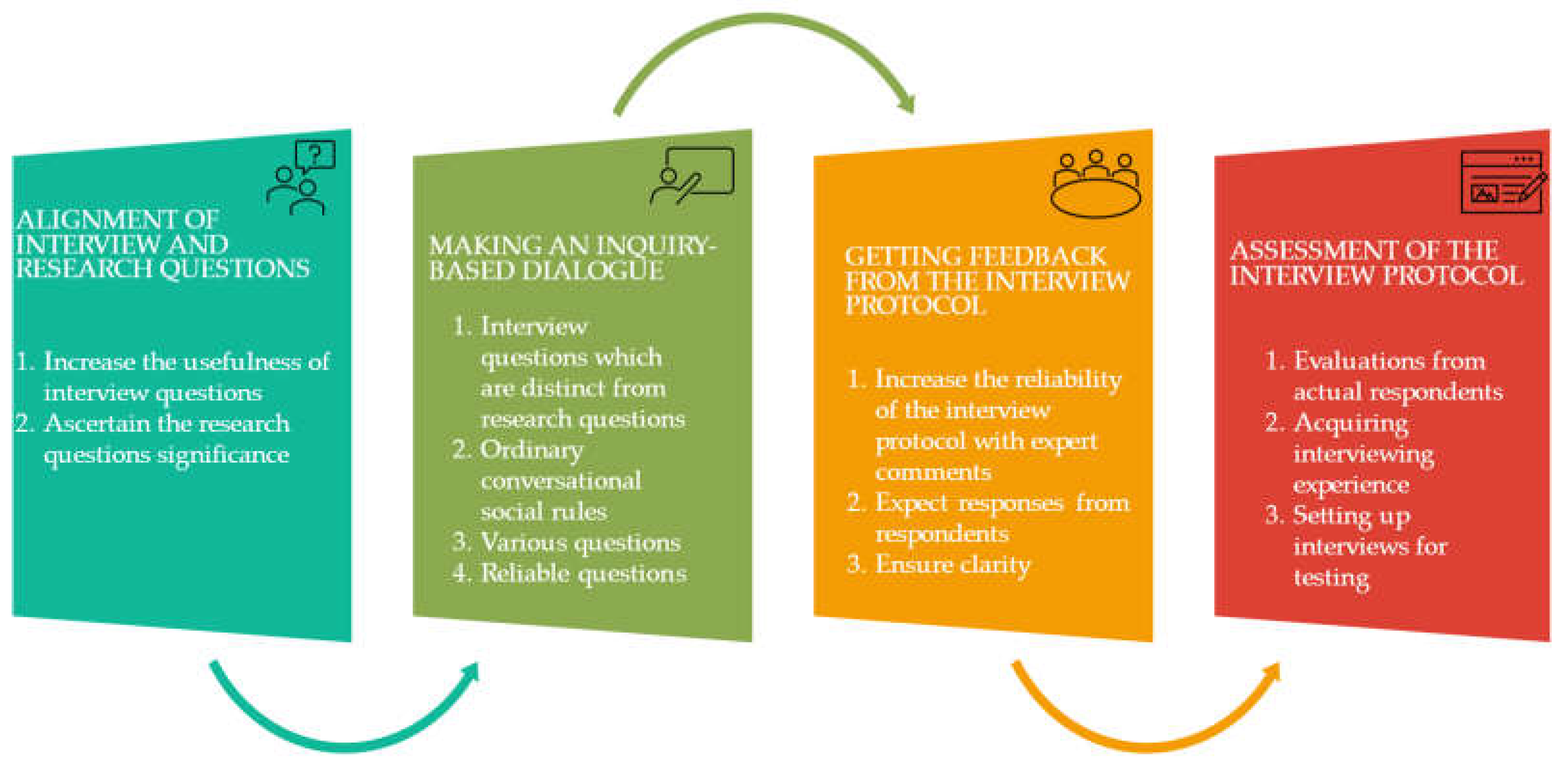
Figure 2.
Overview of challenges that are faced by the industries associated with industrial effluent compliance extracted from NVivo Software indicated the challenges raised by the participants with the type of industry.
Figure 2.
Overview of challenges that are faced by the industries associated with industrial effluent compliance extracted from NVivo Software indicated the challenges raised by the participants with the type of industry.
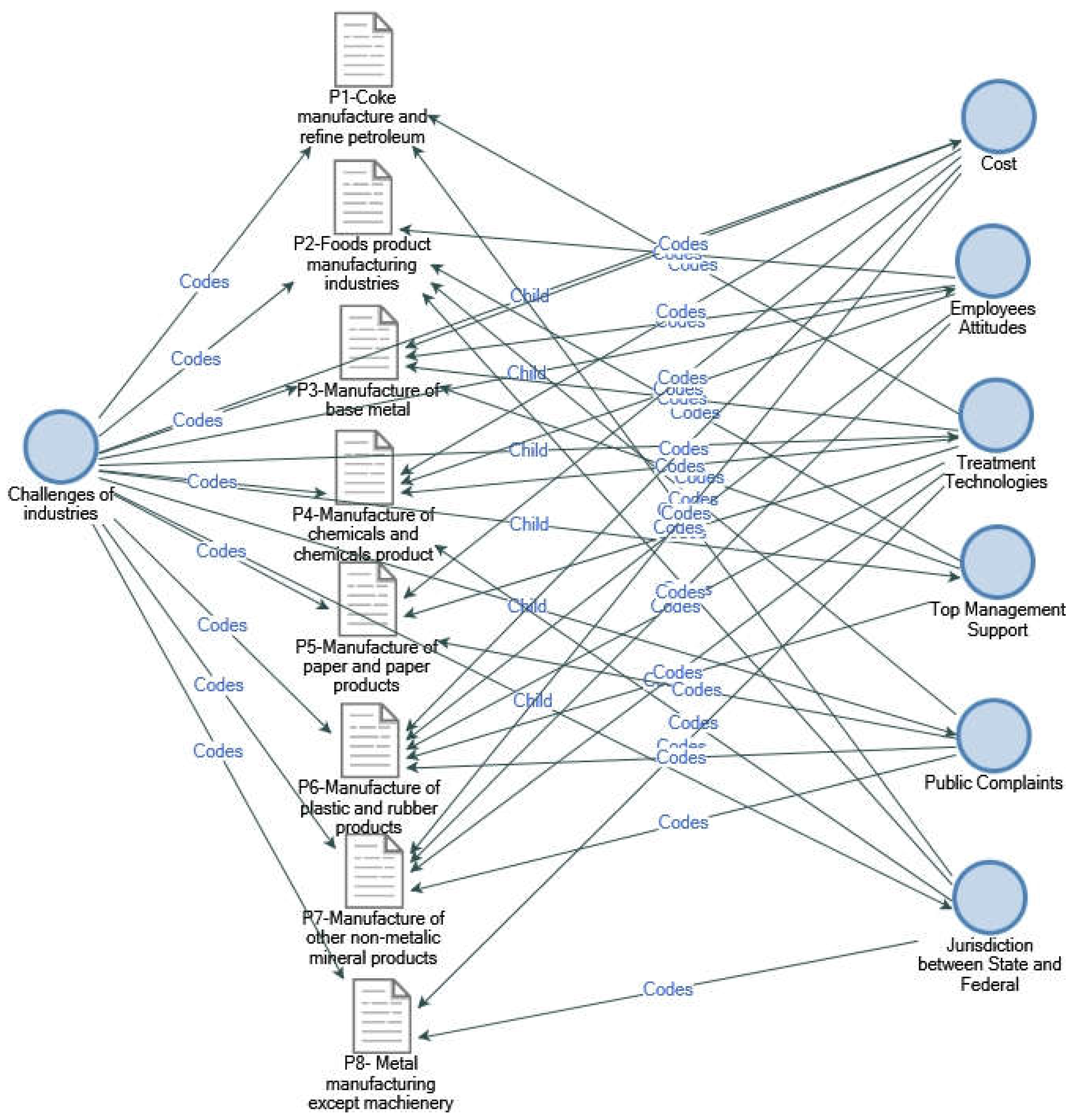
Figure 3.
Sunburst chart on Industrial Effluent Regulation 2009 improvement suggestion from industries stated the main three consideration are centralized industrial effluent treatment system (IETS), dedicated discharge standard for industries and increments of licensed facilities.
Figure 3.
Sunburst chart on Industrial Effluent Regulation 2009 improvement suggestion from industries stated the main three consideration are centralized industrial effluent treatment system (IETS), dedicated discharge standard for industries and increments of licensed facilities.
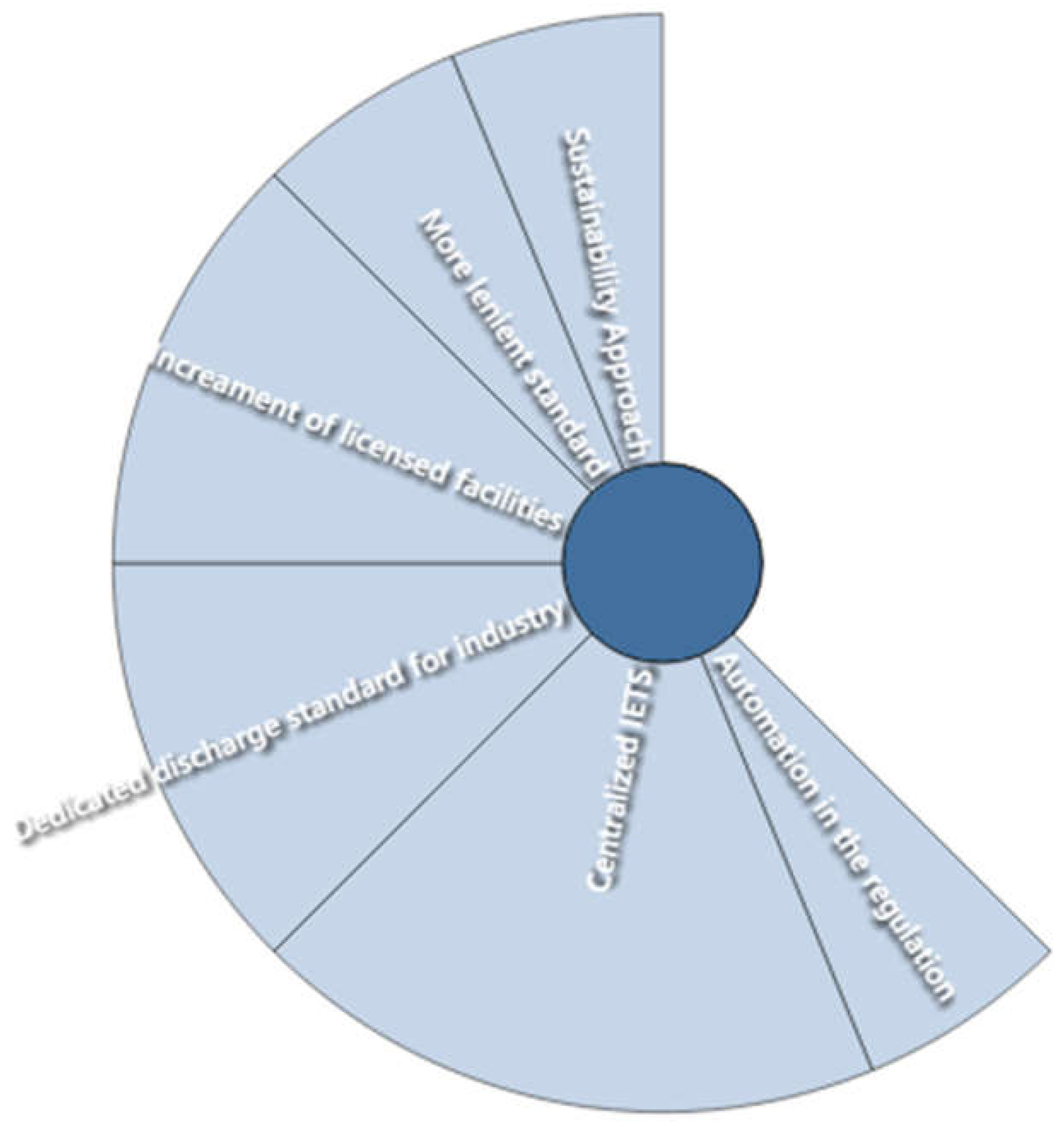

Table 1.
Overview of the length of time industries have been in operation and the positions of their participants.
Table 1.
Overview of the length of time industries have been in operation and the positions of their participants.
| Type of Industry | Participants | Years of operations |
| Manufacture of coke and refine petroleum product | P1 (Senior engineer) | 25 |
| Food products manufacturing | P2 (Chief production manager) P3 (Manager) P4 (Engineer) |
40 |
| Manufacture of base metal | P5 (General manager of operation) P6 (Engineer) |
32 |
| Manufacture of chemicals and chemical product | P7 (General manager) | 20 |
| Manufacture of paper and paper products | P8 (Manager) | 10 |
| Manufacture of rubber and plastic | P9 (Senior manager) P10 (Senior engineer) P11 (Senior executive) |
32 |
| Manufacturing of other non-metallic mineral products | P12 (Group industry ecology manager) | 9 |
| Metal manufacturing except Machinery | P13 (Senior engineer for the plant and facilities department) | 35 |
Table 2.
Content analysis of innovative solutions provided by type of industries showed that the manufacture of paper and paper products and foods products with the highest innovative solution.
Table 2.
Content analysis of innovative solutions provided by type of industries showed that the manufacture of paper and paper products and foods products with the highest innovative solution.
| Type of Industry | References | Percentage coverage on themes innovative solution |
| Manufacture of coke and refine petroleum product | 1 | 5.24% |
| Food products manufacturing | 6 | 14.50% |
| Manufacture of base metal | 3 | 11.07% |
| Manufacture of chemicals and chemical product | 1 | 3.85% |
| Manufacture of paper and paper products | 6 | 20.41% |
| Manufacture of rubber and plastic | 3 | 10.43% |
| Manufacturing of other non-metallic mineral products | 4 | 8.22% |
| Metal manufacturing except Machinery | 1 | 5.72% |
Disclaimer/Publisher’s Note: The statements, opinions and data contained in all publications are solely those of the individual author(s) and contributor(s) and not of MDPI and/or the editor(s). MDPI and/or the editor(s) disclaim responsibility for any injury to people or property resulting from any ideas, methods, instructions or products referred to in the content. |
© 2024 by the authors. Licensee MDPI, Basel, Switzerland. This article is an open access article distributed under the terms and conditions of the Creative Commons Attribution (CC BY) license (http://creativecommons.org/licenses/by/4.0/).
Copyright: This open access article is published under a Creative Commons CC BY 4.0 license, which permit the free download, distribution, and reuse, provided that the author and preprint are cited in any reuse.