

Submitted:
19 April 2024
Posted:
22 April 2024
You are already at the latest version
Abstract
Resveratrol is a natural polyphenol found in various plants and fruits such as blackberries, blueberries, currants, strawberries, peanuts, and most especially in grapes. It is also present in red wine, although its content varies greatly depending on its origin. It is a phytoalexin produced by plants in response to stress, aggression from pathogens such as bacteria or fungi, or physical damage such as injury. In addition to its involvement in plant defence responses, resveratrol has been the subject of research interest due to its potential health benefits, including antioxidant properties and potential positive effects on the cardiovascular system, among others. Initial interest in its research stemmed from the so-called 'French paradox', in certain regions of France, where despite high intakes of saturated fats there was a relatively low incidence of coronary heart disease. Science wondered the factor that might be protecting the French from inflammation, vascular damage and playing a role in their longer lifespan. Thus, in the 1990s, it was hypothesized that a component of wine could be the key element. Epidemiological studies began to suggest that moderate consumption of wine, especially red wine, was associated with a reduced risk of cardiovascular disease and mortality. In vitro laboratory research supported this idea, demonstrating that resveratrol could inhibit processes involved in the development of atherosclerosis or the formation of arterial plaques, such as platelet aggregation in blood vessels and oxidative damage to LDL cholesterol. A plausible mechanism for heart protection thus emerged. Since then, an increasing number of in vitro and in vivo studies have been carried out to unravel the mechanism by which resveratrol can slow down the aging process.
Keywords:
Resveratrol
; Polyphenol
; Antioxidant
; Disease
; Oxidative stress
1. Introduction
The highest concentrations of resveratrol, a polyphenol, are found in the roots of an Asian plant called Polygonum japonicum, a Japanese knotweed used in oriental medicine and in various tea products (Yousef et al., 2017). Grapes, peanuts, and red wine also have a high content of this natural polyphenol (Guthrie et al., 2017). The actions of this important natural phytonutrient include various biological effects such as antioxidant, anti-inflammatory, cardioprotective, neuroprotective, anti-diabetic, hepatoprotective, cytotoxic effects on numerous tumour cells and anti-ageing (Zhou et al., 2021). During the 20th century, it was observed that it was possible to extend the lifespan of cells in certain organisms by calorie restriction. However, a simple low-calorie diet was not enough to achieve the same results in humans (Ozonas and Angosto, 2016). In response to this, researchers began to investigate a family of enzymes known as Sirtuins (Guarente, 2011), aiming to find alternatives capable of replicating the effects of calorie restriction to extend human lifespan. Human SIRT1 was found to be essential for regulating the health and longevity of human cells, supporting the body's natural defences and increasing the body's reparative functions, and consequently its natural survival capacity (Bridger et al., 2016). Resveratrol in high concentrations can activate human SIRT1 and extend cell life. Among the three enzymes tested (yeast Sir2, human SIRT1 and human SIRT2), only SIRT1 showed significant enzyme activation (Side et al., 2011). Sirtuins are able to decrease oxidative stress in cells while supporting their survival under adverse conditions, promoting DNA repair and increasing their energy efficiency (López-Otin et al., 2013; Fontana and Partridge, 2015). Plant foods rich in antioxidants are the ones that predominantly activate SIRT1. They do not contain Sirtuins, rather, they contain compounds, such as resveratrol, quercetin, curcumin and catechins, that can activate its production (LLacuna and Mach, 2012). Therefore, foods not only have energetic and plastic functions, but may also have the ability to protect us against free radicals, preventing cellular oxidation, a process that would lead to general physiological ageing and the onset of cardiovascular and degenerative diseases, as well as different types of cancer (Tomás-Barberan, 2003). Antioxidants in food can help to prevent some of these processes, but also to alleviate or slow down some of these diseases (Mishra et al., 2019; Pradhan et al., 2020; Serra Bisbal et al., 2020). Since the initial approach in the 1990s following the French paradox of high saturated fat consumption and low incidence of coronary heart disease, an increasing number of studies, both in vitro and in vivo, have been conducted with the aim of discovering the mechanism by which resveratrol can slow the ageing process (Raederstorff et al., 2013). The antioxidant capacities of resveratrol (Bai et al., 2013; Raederstorff et al., 2013) protect the DNA of cells by increasing the activity of telomerase (Liu et al., 2013), an enzyme in cells that helps them stay alive by adding DNA to telomeres (the ends of chromosomes). Each time a cell multiplies, telomeres lose a small amount of DNA and shorten. Over time, the chromosomes become damaged, and the cells die. Telomerase helps prevent this from happening (Liu et al., 2013). Cancer cells typically have more telomerase than most normal cells. Moreover, resveratrol also protects mitochondria, in addition to its anti-inflammatory action (Olesen et al., 2013) and its ability to affect the expression of certain longevity-related genes, crucial to its protective and anti-aging mechanism (Das et al., 2011).
2. Materials and Methods
2.1. Methodological Design
A literature review was conducted on scientific studies indexed in the main scientific databases: PubMed, Google Scholar, SciELO, Academia.edu, Springerlink, Dialnet and Medline.
2.2. Information Search Strategy
The literature search was limited, preferably to the last few years, including papers written in Spanish or English. The keywords "resveratrol", "polyphenol", "antioxidant", "oxidative stress", "resveratrol diseases", including their Spanish translations, were used.
2.3. Inclusion and Exclusion Criteria
In the literature review process, a number of papers from various scientific sources were considered, all related to the topic in question. For the scientific articles, the inclusion criterion was the presentation of conclusive studies on the use and effects of resveratrol on human health. For the inclusion and exclusion of articles, the title and abstract of the published document were initially reviewed, selecting those publications relevant to the research. The selected articles were read in their entirety to determine the relevant aspects for the literature review.
3. Resveratrol: Chemical Structure and Main Sources
Resveratrol, a naturally occurring polyphenol member of the stilbene family, exhibits a wide variety of biological activities. Although this compound was found in medicinal preparations such as darakchasava or manakka more than 2000 years ago (Paul et al., 199), its chemical structure was not identified until 1940, when Japanese researcher Takaoka succeeded in isolating it from the roots of Veratrum grandiflorum (Takaoka, 1940), a plant that grows in mountain meadows, a year earlier. The active ingredient was identified in the 1960s in the Japanese knotweed Polygonum japonicum (Yousef et al., 2017) a plant used in traditional Asian medicine to combat various pathologies, including inflammatory and cardiovascular diseases (Guthrie et al., 2017). In Europe, the benefits of resveratrol became famous, as mentioned above, because of the so-called "French paradox" (Sun et al., 2004; Yilmaz and Toledo, 2004). In the 1960s and 1970s, British epidemiologists observed that their fellow citizens had more cardiovascular complications than their French neighbours. However, traditional French cuisine was recognised at the time as being very rich in fat and therefore not without risk to the cardiovascular system. It was in 1992 that a first explanation was given for the "French paradox": regular and moderate wine consumption associated with a specific lifestyle would be at the origin of protective effects on the cardiovascular system (Sun et al., 2004). Further studies showed that these cardioprotective effects were more likely to be attributable to the antioxidant and anti-inflammatory potential of resveratrol present in large quantities in grape skin and seeds polyphenol (Guthrie et al., 2017). In the WHO MONICA study, cardiovascular mortality in men and women in Toulouse (South of France) was 78 and 10 per 100,000 inhabitants, five to ten times lower than in Stanford (USA) Belfast or Glasgow (UK), despite equivalent fat intake (15% of energy) and similar cholesterolaemia, blood pressure, and smoking in the four populations studied polyphenol (Frankel et al., 1993; Rayo and Marín, 1998).
3.1. Chemical Characteristics and Biosynthesis
Resveratrol (3,4',5-Trihydroxystilbene) is a polyphenolic phytoalexin. It is produced in plants with the help of the enzyme stilbene synthase. It exists as cis-(Z) and trans-(E) isomers polyphenol (Henz et al., 2020). The trans- form can undergo isomerisation to the cis- form when heated or exposed to ultraviolet irradiation (Figure 1). Resveratrol is not an easy molecule to protect from oxidation. It is readily degraded by exposure to light, heat, and oxygen polyphenol (Rigon et al., 2019). However, studies find that Trans-resveratrol undergoes negligible oxidation in normal atmosphere at room temperature (Trela and Waterhouse, 1996). Resveratrol is a stilbenol that is stilbene in which the phenyl groups are substituted at positions 3, 4', and 5 by hydroxy groups (Carradori et al., 2022). It has a role as an antioxidant, a glioma-associated oncogene inhibitor and a geroprotector. It is a stilbenol, a polyphenol and a member of resorcinols (Yang et al., 2020).
Its base structure consists of two phenolic rings joined by a styrene double bond to form 3,4',5-Trihydroxystilbene, with a molecular weight of 228.25 g/mol. This double bond is responsible for the cis- and trans-isomeric forms of resveratrol (Figure 1), with the trans isomer being the most sterically stable (Gambini et al., 2013). The biosynthesis of trans-resveratrol begins with the transformation of phenylalanine (essential amino acid), leading to the condensation of a coumaryl-CoA molecule, which plays a role in several biosynthetic pathways, especially in the production of phenolic compounds, such as flavonoids and stilbenes. It is a derivative of coenzyme A (CoA), a key molecule in cellular metabolism and three of malonyl-CoA. This reaction is facilitated by resveratrol synthetase, an enzyme classified within the stilbene synthetase family (Figure 2) (Gambini et al., 2013; Hasan and Baek, 2013).
3.2. Main Plant Sources
Resveratrol is considered one of the most effective substances from plant extracts. But this substance, like most natural extracts, can vary in quality, depending on where it is grown, the time of harvest, the agricultural techniques used. Within the same plant species, it also varies according to the variety, as in viticulture, and also the form of extraction (Cortiñas et al., 2020; Cortiñas et al., 2022); Jang et al., 2022). Resveratrol is not routinely included in food composition analyses. Various scientific studies have been carried out to analyse the composition of this phytochemical in different types of vegetables (Di et al., 2004; Jang et al., 2022) (Table 1) (Figure 3).
The foods with the highest content of this phytonutrient are blueberries, currants, strawberries and black grapes. The global area of blueberries is approximately 235,000 ha, currants 139,089 ha and strawberries around 384,668 ha (FAO, 2023). The largest cultivated area is undoubtedly vineyards, some 7.3 million ha (OIV, 2023).
3.3. Bioavailability
In nature, resveratrol exists in cis and trans forms. These terms refer to the spatial relationships of the atoms in the molecular structure. In the trans form, the functional groups are on opposite sides. We know that trans-resveratrol is the more biologically active of the two isomers, being the more widely available and believed to have the greatest therapeutic value (Orallo, 2006). The bioavailability of resveratrol is limited; however, it can be synthesised into various derivatives to promote better absorption and greater therapeutic potential. In this regard, to increase the bioavailability of this compound, the pterostilbene (3,5-dimethoxy-4′-hydroxy-trans-stilbene), a trans stilbene compound with bioactivity, was extracted and isolated from the heartwood of Pterocarpus marsupium for the first time in 1940 (Kosuru et al., 2016) Pterostilbene has been found to have a higher affinity for fats, which implies a greater ability to dissolve in oils, fats and other lipids. Taking advantage of these findings, researchers have been able to modify resveratrol to increase its bioavailability and absorbability by up to 3.5-fold, cementing resveratrol's position as a potent nutraceutical (Liu et al., 2020). Resveratrol and pterostilbene have similar structures. Although many biological similarities exist between pterostilbene and resveratrol, pterostilbene shows better bioactivity and bioavailability, hence, the properties of pterostilbene are used to improve the bioavailability of resveratrol. A pharmacokinetic study showed that with a single oral dose (pterostilbene 56 mg/kg versus resveratrol 50 mg/kg), peak plasma concentration values of pterostilbene were up to 36 times higher than those of resveratrol, and peak plasma concentration was also reached twice as fast in pterostilbene as in resveratrol (Figure 4) (Liu et al., 2020). The oral bioavailability of pterostilbene was 66.9%, while that of resveratrol was 29.8% (Kapetanovic et al., 2011). Resveratrol bioavailability is also known to be influenced by the role of gut microbiota in the resveratrol metabolization process, specifically the intestinal bacteria Bifidobacterium infantis and Lactobacillus acidophilus, thus increasing its bioavailability, making the resveratrol/microbiota interaction a key element in the effectiveness of any treatment. From the above, we deduce that the main problem with resveratrol is related to its bioavailability, so there is a wide field of work in the search for activators to improve this property (Chaplin et al., 2018).
4. Physiological Functions of Resveratrol
The remarkable research interest in resveratrol has been significantly driven by its powerful antioxidant and anti-aging effects (Filgueira and González, 2022). Resveratrol has been shown to have beneficial effects in many respects, with substantial evidence supporting its impact on the circulatory, skeletal and nervous systems. It is also being widely investigated for its ability to prevent and treat cancer (Table 2) (Stanevičienė et al., 2016). Among the leading causes of death worldwide, according to the World Health Organisation, are cardiovascular disease, cancer, neurodegenerative diseases and diabetes.
4.1. Effect of Resveratrol in Cardiovascular Health
Among the effects of resveratrol is the inhibition of low-density lipoprotein (LDL) oxidation, which in turn delays the onset of atherosclerosis. This effect is due to the close association between LDL-cholesterol oxidation and the development of cardiovascular disease (Wada-Hiraike, 2021). In addition, it exhibits an antithrombotic (platelet aggregation) effect through its vasodilatory capacity, while reducing serum levels of total cholesterol and triglycerides, as revealed by several studies on lipid metabolism. These compounds are also associated with an increase in high-density lipoproteins (HDL) and inhibition of low-density lipoproteins (LDL) (Wada-Hiraike, 2021; Parraguez and Andrés, 2022). Extensive research has focused on Resveratrol due to its positive effects on cardiovascular protection, primarily attributed to its ability to increase nitric oxide (NO) production in endothelial cells. The compound demonstrates the ability to upregulate the expression of endothelial NO synthase (eNOS), stimulates eNOS activity, and prevents eNOS uncoupling, as supported by various studies (Man et al., 2020). Another aspect to consider is the gut microbiota, due to its involvement in the production of a number of bioactive substances, known as gut microbiota-derived metabolites, which contribute to normal physiological function and cause diseases (Wang et al., 2018). In recent years, several studies have suggested an association between cardiovascular disease and gut microbiota-derived metabolites (Wang et al., 2011; Wang et al., 2018). Although identification and modulation of a specific gut microbiota population may be challenging, a treatment that interferes with the derived metabolites is possible. One of the richest sources of resveratrol are red grapes and red wine. The physicochemical constituents of grapes, Vitis vinifera, are minerals and phenolic compounds such as resveratrol, flavonoids and tannins. The resveratrol present in the red grape Vitis vinifera was identified using the HPLC (High Performance Liquid Chromatography) method. The consumption of grapes contributes to several pharmacological activities, including cardioprotective properties (Cortiñas et al., 2020; Sabra et al., 2021).
4.2. Effect of Resveratrol on Cancer
One of the strategies in combating cancer involves identifying anticancer agents that induce cancer cell death (Ghirdani et al., 2005). Among the most extensively studied substances in this endeavour is resveratrol. This polyphenol exhibits the ability to inhibit the activation of several factors that regulate the expression of genes associated with inflammation, cytoprotection and carcinogenesis (Aggarwal et al., 2004). It also shows the ability to suppress several proteins, including those involved in the different phases of the cell cycle (Yu et al., 2003). It was in the late 1990s that topical resveratrol was reported to show activity against tumorigenesis in a mouse model of skin cancer, thus highlighting its potential use as a new anticancer drug (Jang et al., 1997). Resveratrol is involved in slowing down cellular aging and strengthening the immune system and has anti-obesity effects by limiting calorie restriction. It also plays an important role in preventing or mitigating diseases such as diabetes, neurodegenerative and cardiovascular diseases, as we saw earlier (Wahab et al., 2017). With regard to its cancer-suppressive action, resveratrol acts as a chemo preventive agent during the four stages of carcinogenesis, from initiation to metastasis through promotion and progression (Jang et al., 1997; Rivera-Aguilar et al., 2023), demonstrating its effectiveness in both in vitro and in vivo studies in the treatment of cancer (Ren et al., 2021). Due to its multiple properties, it is presented as an important complementary molecule to conventional chemotherapy, demonstrating effectiveness against different types of cancer related to obesity, pancreatic, liver, breast, prostate and colorectal cancer, as well as haematological, lung and skin malignancies (Vázquez, 2021; Cruz-Rosales, 2023; Hernández and Marina, 2003). Resveratrol targets several important mechanisms and signalling pathways as new therapeutic strategies in cancer treatment, through which the molecule exerts its effects. (Ashrafizadeh et al., 2020; Ren et al., 2021). The anti-tumour effect of resveratrol is well established, as evidenced by numerous studies. Its effect on cancer occurs at all four stages of carcinogenesis, thus preventing the proliferation of tumour cells (Jang et al., 1997; Hsieh and Wu, 1999).
4.3. Effect of Resveratrol on Neurodegenerative Diseases
Neurodegenerative diseases are diseases in which cells of the central nervous system stop functioning or die. Neurodegenerative disorders usually worsen over time and cannot be cured. They may be genetic or caused by a tumour or stroke. Examples of neurodegenerative disorders include Alzheimer's disease and Parkinson's disease (Tovar, 2022). Resveratrol is a compound that has been shown to have some biological activity in slowing the progression of neurodegenerative diseases. Its antioxidant power contributes to the reduction of oxidative stress, which is responsible for several neurodegenerative diseases such as Alzheimer's and Parkinson's (Sienes Bailo et al., 2022). This antioxidant also inhibits nuclear factor kB (NFKB), which is involved in the toxicity of β-amyloid plaques that is associated with neurodegenerative diseases such as Alzheimer's. The molecule also expresses neuroprotective effects due to its antioxidant capabilities, providing protection to mitochondria. It has the ability to modulate crucial genes involved in the regulation of antioxidant enzymes, mitochondrial dynamics and cell survival. In addition, this molecule also positively regulates mitophagy through multiple pathways, including the SIRT-1 pathway (Bastianeto et al., 2015; Wu et al., 2023). Further clinical research is needed to establish the efficacy of resveratrol in clinical settings (Kung et al., 2021) (Figure 5).
4.4. Effect of Resveratrol on Diabetes
Diabetes mellitus is a health challenge caused by chronic hyperglycaemia due to the lack of adequate insulin production or its inability to function effectively. Recently, various techniques, both medical and alternative, have been introduced to improve pancreatic insulin production and insulin resistance (Hoca et al., 2023). Polyphenols, present in grapes and therefore in wine as well as other foods, are beneficial in preventing and fighting diabetes due to their anti-inflammatory, antioxidant and vasodilatory effects (Cáceres et al., 2020). Resveratrol has shown potential in the treatment of diabetes. Studies in animals and people with diabetes have shown beneficial effects, as well as an increased ability to improve insulin sensitivity by regulating levels of visceral fat-derived adipokines. Combining resveratrol with anti-diabetic treatments or alone may represent a valuable option for addressing diabetes mellitus. Resveratrol is the most studied polyphenolic compound and has been shown to lower blood glucose, preserve pancreatic β-cells and improve insulin action in patients with type 2 diabetes (T2DM), a chronic degenerative disorder that occurs when the pancreas does not produce enough insulin or when the body does not use insulin properly (Öztürk et al., 2017; Diaz Costilla, 2021). Numerous animal studies have demonstrated its benefits and thus its potential to act as an anti-diabetic, cardioprotective, neuroprotective, antioxidant, renoprotective agent and mechanisms such as apoptosis (Gowd et al., 2020) (Figure 6). In humans, the most prevalent effects of resveratrol supplementation in patients with T2DM were found to be related to improved insulin sensitivity, glycaemic control, as well as a possible reduction in oxidative stress. There is still controversy in the literature about its actual effectiveness in diabetic patients. However, the use of resveratrol as an adjunct to hypoglycaemic therapy is not ruled out (de Lima et al., 2020). Positive effects of resveratrol have also been observed on other diseases which, although they do not affect such a high percentage of the population as those described above, are nevertheless less relevant (Figure 7).
5. Conclusions
Available evidence suggests that resveratrol, a polyphenolic antioxidant compound found in certain foods such as grapes and red wine, and other foods, may have a number of beneficial effects on human health. In vitro and animal studies have demonstrated its potential to improve cardiovascular health, modulate the immune system, reduce inflammation and provide neuroprotective effects. In addition, it has been observed that resveratrol may have anti-cancer, anti-aging, and anti-diabetic properties. However, more research is needed to fully understand resveratrol's mechanisms of action and its efficacy in different health conditions as its evidence in humans is still limited. Despite promising research, it is important to note that more studies are needed to confirm previous results and to determine the optimal dose for each individual. Some small clinical trials have shown promising results in areas such as cardiovascular health, cognitive function, and metabolism. In cardiovascular disease, it induces the reduction of inflammation, improves endothelial function and protects against blood clot formation. In cancer, it inhibits growth and promotes apoptosis of cancer cell. In neurodegenerative diseases such as Alzheimer's, it induces protection against cognitive decline and neurodegeneration. It also improves insulin sensitivity and reduces blood sugar levels in type 2 diabetics (T2DM). Anti-aging effects include increased protection against cell damage and improved mitochondrial function. In terms of safety and tolerability, it is considered a safe compound for most people, with mild side effects. The optimal dose has not yet been established, as the doses used in different studies vary widely. We can conclude that resveratrol has the potential to improve human health in a number of areas, such as those described above. Further research in humans is needed before this polyphenol can be used to its full potential.
Author Contributions
All authors have contributed equally to the different parts of the text and the writing of the manucript.
Competing Interests
Authors have declared that no competing interests exist.
References
- Agarwal, B.; Baur, J.A. Resveratrol and life extension. Ann. New York Acad. Sci. 2011, 1215, 138–143. [CrossRef]
- Aggarwal, B.B.; Bhardwaj, A.; Aggarwal, R.S.; Seeram, N.P.; Shishodia, S.; Takada, Y. Role of resveratrol in prevention and therapy of cancer: preclinical and clinical studies. Anticancer Res. 2004, 24, 2783–2840.
- Ashrafizadeh, M.; Ahmadi, Z.; Farkhondeh, T.; Samarghandian, S. Resveratrol targeting the Wnt signaling pathway: A focus on therapeutic activities. J. Cell. Physiol. 2019, 235, 4135–4145. [CrossRef]
- Bai, T.; Dong, D.-S.; Pei, L. Resveratrol mitigates isoflurane-induced neuroapoptosis by inhibiting the activation of the Akt-regulated mitochondrial apoptotic signaling pathway. Int. J. Mol. Med. 2013, 32, 819–826. [CrossRef]
- Bastianetto, S.; Ménard, C.; Quirion, R. Neuroprotective action of resveratrol. Biochim. et Biophys. Acta (BBA) - Mol. Basis Dis. 2015, 1852, 1195–1201. [CrossRef]
- Baur, J.A.; Sinclair, D.A. Therapeutic potential of resveratrol: The in vivo evidence. Nat. Rev. Drug Discov. 2006, 5, 493–506. [CrossRef]
- Gillespie, Z.E.; Pickering, J.; Eskiw, C.H. Better Living through Chemistry: Caloric Restriction (CR) and CR Mimetics Alter Genome Function to Promote Increased Health and Lifespan. Front. Genet. 2016, 7, 142. [CrossRef]
- Bryl, A.; Falkowski, M.; Zorena, K.; Mrugacz, M. The Role of Resveratrol in Eye Diseases—A Review of the Literature. Nutrients 2022, 14, 2974. [CrossRef]
- Cáceres, M. I. R., Vasco, M. P., Sánchez, M. B. and Botello, M. D. R. P. 2020. Revisión de los efectos beneficiosos/perjudiciales que aporta la ingesta de vino a los pacientes con diabetes. In XLI Jornadas de Viticultura y Enología de la Tierra de Barros (pp. 143-191). C.C. Santa Ana.
- Carradori, S., Fantacuzzi, M., Ammazzalorso, A., Angeli, A., De Filippis, B., Galati, S., Petzer, A., Petzer, J.P., Poli, G. and Tuccinardi, T. 2022. Resveratrol Analogues as Dual Inhibitors of Monoamine Oxidase B and Carbonic Anhydrase VII: A New Multi-Target Combination for Neurodegenerative Diseases? Molecules 27: 7816. [CrossRef]
- Chaplin, A., Carpéné, C. and Mercader, J. 2018. Resveratrol, Metabolic Syndrome, and Gut Microbiota. Nutrients 10 (11):1651.
- Cheong, H.; Ryu, S.-Y.; Kim, K.-M. Anti-Allergic Action of Resveratrol and Related Hydroxystilbenes. Planta Medica 1999, 65, 266–268. [CrossRef]
- Cortiñas, J.A.; Fernández-González, M.; González-Fernández, E.; Vázquez-Ruiz, R.A.; Rodríguez-Rajo, F.J.; Aira, M.J. Phenological behaviour of the autochthonous godello and mencía grapevine varieties in two designation origin areas of the NW Spain. Sci. Hortic. 2020, 265, 109221. [CrossRef]
- Rodríguez, J.A.C.; Fernández-González, M.; González-Fernández, E.; Vázquez-Ruiz, R.A.; Rodríguez-Rajo, F.J.; Aira, M.J. Potential Fertilization Capacity of Two Grapevine Varieties: Effects on Agricultural Production in Designation of Origin Areas in the Northwestern Iberian Peninsula. Agronomy 2020, 10, 961. [CrossRef]
- Cortiñas, J.A.; Fernández-González, M.; Vázquez-Ruiz, R.A.; Aira, M.J.; Rodríguez-Rajo, F.J. The understanding of phytopathogens as a tool in the conservation of heroic viticulture areas. Aerobiologia 2022, 38, 177–193. [CrossRef]
- Coveñas-Vilchez, C. L. 2023. Evaluación del efecto del resveratrol en la criopreservación de células madre espermatogoniales de Vicugna pacos (Linnaeus, 1758) “alpaca”. Facultad de Ciencias. Universidad de Perú.
- Cruz-Rosales, E. S. 2023. Efecto del resveratrol sobre la regulación de LIN28A en la línea celular de cáncer de mama T47D (Master's thesis, Tesis (MC)--Centro de Investigación y de Estudios Avanzados del IPN Departamento de Genética y Biología Molecular).
- Cvejic, J.M.; Djekic, S.V.; Petrovic, A.V.; Atanackovic, M.T.; Jovic, S.M.; Brceski, I.D.; Gojkovic-Bukarica, L.C. Determination of trans- and cis-resveratrol in Serbian commercial wines.. J. Chromatogr. Sci. 2010, 48, 229–234. [CrossRef]
- Das, D.K.; Mukherjee, S.; Ray, D. Erratum to: Resveratrol and red wine, healthy heart and longevity. Hear. Fail. Rev. 2011, 16, 425–435. [CrossRef]
- de Lima, V. S., Bezerra, A. N., Albuquerque, N. V., Pereira, C. P., da Costa Alencar, C. M., Lima, A. T. A. and de Assis Ferreira, K. C. 2020. Efeitos da suplementação com polifenol resveratrol em pacientes com diabetes mellitus tipo 2: Uma revisão sistemática. Research, Society and Development 9(10), e3639108659-e3639108659.
- Di, S.; Zhang, Z.; Wang, Y.; Shi, W. [Analysis for four isomers of resveratrol in red wine by high performance liquid chromatography].. 2004, 22, 424–7.
- Diaz-Costilla, K. S. 2021. Revisión crítica: Efecto de la suplementación con resveratrol en pacientes diagnosticados con diabetes mellitus tipo II. Revista Facultad de Ciencias. Universidad Norbert Wiener.
- Figueira, L. and González, J. C. 2022. Efecto antiinflamatorio y antioxidante del resveratrol en la aterosclerosis. Papel de la molécula de adhesión celular endotelial plaquetaria 1. Revista de la Facultad de Farmacia 85(1 and 2).
- Fontana, L.; Partridge, L. Promoting Health and Longevity through Diet: From Model Organisms to Humans. Cell 2015, 161, 106–118. [CrossRef]
- Food and Agriculture Organization of the United Nations (FAO). FAOSTAT. 2023. Food and agriculture data. https://www.fao.org/food-agriculture-statistics/en/.
- Frankel, E.; Waterhouse, A.; Kinsella, J. Inhibition of human LDL oxidation by resveratrol. Lancet 1993, 341, 1103–1104. [CrossRef]
- Gambini, J., López-Grueso, R., Olaso-González, G., Inglés, M., Abdelazid, K., El Alami, M., Bonet-Costa, V., Borrás, C. and Viña, J. 2013. Resveratrol: Distribución, propiedades y perspectivas. Revista española de geriatría y gerontología 48 (2): 79-88.
- Mishra, K.; Girdhani, S.; Bhosle, S.; Thulsidas, S.; Kumar, A. Potential of radiosensitizing agents in cancer chemo-radiotherapy. J. Cancer Res. Ther. 2005, 1, 129–31. [CrossRef]
- Gómez, J. E. 2009. Efectos de los isómeros del resveratrol sobre la homeostasis del calcio y del óxido nítrico en células vasculares. Universidade Santiago de Compostela. http://hdl.handle.net/10347/2583.
- González-Pérez, J. 2023. Evaluación in vitro de una formulación de resveratrol como posible tratamiento de la retinopatía diabética. Universidad EIA.
- Gowd, V.; Kanika; Jori, C.; Chaudhary, A.A.; Rudayni, H.A.; Rashid, S.; Khan, R. Resveratrol and resveratrol nano-delivery systems in the treatment of inflammatory bowel disease. J. Nutr. Biochem. 2022, 109, 109101. [CrossRef]
- Gowd, V.; Kang, Q.; Wang, Q.; Wang, Q.; Chen, F.; Cheng, K.-W. Resveratrol: Evidence for Its Nephroprotective Effect in Diabetic Nephropathy. Adv. Nutr. Int. Rev. J. 2020, 11, 1555–1568. [CrossRef]
- Guarente, L. Sirtuins, Aging, and Metabolism. Cold Spring Harb. Symp. Quant. Biol. 2011, 76, 81–90. [CrossRef]
- Guthrie, A.R.; Chow, H.-H.S.; Martinez, J.A. Effects of resveratrol on drug- and carcinogen-metabolizing enzymes, implications for cancer prevention. Pharmacol. Res. Perspect. 2017, 5, e00294. [CrossRef]
- Hasan, M.; Baek, K.-H. Induction of Resveratrol Biosynthesis in Grape Skins and Leaves by Ultrasonication Treatment. Korean J. Hortic. Sci. Technol. 2013, 31, 496–502. [CrossRef]
- Hecker, A.; Schellnegger, M.; Hofmann, E.; Luze, H.; Nischwitz, S.P.; Kamolz, L.; Kotzbeck, P. The impact of resveratrol on skin wound healing, scarring, and aging. Int. Wound J. 2021, 19, 9–28. [CrossRef]
- Henz, T., Tres, L., Pagotto, P. and Carminatti, B. 2020. Nanotecnologias aplicadas a cosméticos e síntese do resveratrol: Uma revisão. Revista CIATEC-UPF, [S. I.], 12 (2): 29-40.
- Hernández, A. and Marina, A. 2023. Análisis del efecto del resveratrol como quimiosensibilizador en líneas celulares de cáncer cervicouterino a través de la inhibición de la vía de reparación NHEJ (Master's thesis, Tesis (MC)--Centro de Investigación y de Estudios Avanzados del IPN Departamento de Genética y Biología Molecular.
- Hoca, M.; Becer, E.; Vatansever, H.S. The role of resveratrol in diabetes and obesity associated with insulin resistance. Arch. Physiol. Biochem. 2021, 129, 555–561. [CrossRef]
- Hsieh, T.-C.; Wu, J.M. Differential Effects on Growth, Cell Cycle Arrest, and Induction of Apoptosis by Resveratrol in Human Prostate Cancer Cell Lines. Exp. Cell Res. 1999, 249, 109–115. [CrossRef]
- International Organisation of Vine and Wine (OIV). 2023. https://www.oiv.int/what-we-do/statistics. Dijon (France).
- Jang, M.; Cai, L.; Udeani, G.O.; Slowing, K.V.; Thomas, C.F.; Beecher, C.W.W.; Fong, H.H.S.; Farnsworth, N.R.; Kinghorn, A.D.; Mehta, R.G.; et al. Cancer Chemopreventive Activity of Resveratrol, a Natural Product Derived from Grapes. Science 1997, 275, 218–220. [CrossRef]
- Jang, J.Y.; Im, E.; Kim, N.D. Mechanism of Resveratrol-Induced Programmed Cell Death and New Drug Discovery against Cancer: A Review. Int. J. Mol. Sci. 2022, 23, 13689. [CrossRef]
- Kapetanovic, I.M., Muzzio, M., Huang, Z., Thompson, T. and McCormick, D.L. 2011. Farmacocinética, biodisponibilidad oral y perfil metabólico del resveratrol y su análogo dimetiléter, pterostilbeno, en ratas. Quimioterapia contra el cáncer. Farmacéutico. 68: 593–601.
- Kosuru, R.; Rai, U.; Prakash, S.; Singh, A.; Singh, S. Promising therapeutic potential of pterostilbene and its mechanistic insight based on preclinical evidence. Eur. J. Pharmacol. 2016, 789, 229–243. [CrossRef]
- Kung, H.-C.; Lin, K.-J.; Kung, C.-T.; Lin, T.-K. Oxidative Stress, Mitochondrial Dysfunction, and Neuroprotection of Polyphenols with Respect to Resveratrol in Parkinson’s Disease. Biomedicines 2021, 9, 918. [CrossRef]
- Lasa, A.; Schweiger, M.; Kotzbeck, P.; Churruca, I.; Simón, E.; Zechner, R.; Portillo, M.d.P. Resveratrol regulates lipolysis via adipose triglyceride lipase. J. Nutr. Biochem. 2012, 23, 379–384. [CrossRef]
- Liu, M.; Yin, Y.; Ye, X.; Zeng, M.; Zhao, Q.; Keefe, D.L.; Liu, L. Resveratrol protects against age-associated infertility in mice. Hum. Reprod. 2013, 28, 707–717. [CrossRef]
- Liu, Y.; You, Y.; Lu, J.; Chen, X.; Yang, Z. Recent Advances in Synthesis, Bioactivity, and Pharmacokinetics of Pterostilbene, an Important Analog of Resveratrol. Molecules 2020, 25, 5166. [CrossRef]
- Llacuna, L. and Mach, N. 2012. Papel de los antioxidantes en la prevención del cáncer. Revista Española de Nutrición Humana y Dietética 16: 16-24.
- Londoño-David, L. M. and Torres Rivas, S. L. 2021. Ácido docosahexaenoico (DHA) y el resveratrol en el manejo de la angiogénesis a nivel ocular. Universidad Antonio Nariño. http://repositorio.uan.edu.co/handle/123456789/2667.
- López-Otín, C.; Blasco, M.A.; Partridge, L.; Serrano, M.; Kroemer, G. The Hallmarks of Aging. Cell 2013, 153, 1194–1217. [CrossRef]
- Man, A.W.; Li, H.; Xia, N. Resveratrol and the Interaction between Gut Microbiota and Arterial Remodelling. Nutrients 2020, 12, 119. [CrossRef]
- Meng, T.; Xiao, D.; Muhammed, A.; Deng, J.; Chen, L.; He, J. Anti-Inflammatory Action and Mechanisms of Resveratrol. Molecules 2021, 26, 229. [CrossRef]
- Mishra, R.C.; Goel, M.; Barrow, C.J.; Deshmukh, S.K. Endophytic Fungi - An Untapped Source of Potential Antioxidants. Curr. Bioact. Compd. 2020, 16, 944–964. [CrossRef]
- Olesen, J.; Ringholm, S.; Nielsen, M.M.; Brandt, C.T.; Pedersen, J.T.; Halling, J.F.; Goodyear, L.J.; Pilegaard, H. Role of PGC-1α in exercise training- and resveratrol-induced prevention of age-associated inflammation. Exp. Gerontol. 2013, 48, 1274–1284. [CrossRef]
- Orallo, F. Comparative Studies of the Antioxidant Effects of Cis- and Trans- Resveratrol. Curr. Med. Chem. 2006, 13, 87–98. [CrossRef]
- Ozonas, R. and Angosto, M. C. 2016. Restricción calórica y longevidad. Anales de la Real Academia Nacional de Farmacia, 82: 76-86.
- https://www.analesranf.com/index.php/aranf/article/view/1770/1738.
- Öztürk, E.; Arslan, A.K.K.; Yerer, M.B.; Bishayee, A. Resveratrol and diabetes: A critical review of clinical studies. Biomed. Pharmacother. 2017, 95, 230–234. [CrossRef]
- Parraguez, J. and Andrés, S. 2022. Actividad antiagregante plaquetaria de inhibidores mitocondriales. Diss. Universidad de Talca (Chile). Escuela de Tecnología Médica.
- Paul, B.; Masih, I.; Deopujari, J.; Charpentier, C. Occurrence of resveratrol and pterostilbene in age-old darakchasava, an ayurvedic medicine from India. J. Ethnopharmacol. 1999, 68, 71–76. [CrossRef]
- Pradhan, B.; Nayak, R.; Patra, S.; Jit, B.P.; Ragusa, A.; Jena, M. Bioactive Metabolites from Marine Algae as Potent Pharmacophores against Oxidative Stress-Associated Human Diseases: A Comprehensive Review. Molecules 2020, 26, 37. [CrossRef]
- Raederstorff, D.; Kunz, I.; Schwager, J. Resveratrol, from experimental data to nutritional evidence: the emergence of a new food ingredient. Ann. New York Acad. Sci. 2013, 1290, 136–141. [CrossRef]
- Rafiee, S.; Mohammadi, H.; Ghavami, A.; Sadeghi, E.; Safari, Z.; Askari, G. Efficacy of resveratrol supplementation in patients with nonalcoholic fatty liver disease: A systematic review and meta-analysis of clinical trials. Complement. Ther. Clin. Pr. 2020, 42, 101281. [CrossRef]
- Rayo Llenera, I. and Marín, E. 1998. Huerta Vino y corazón. Rev. Esp. Cardiol. 51: 435-449.
- Ren, B.; Kwah, M.X.-Y.; Liu, C.; Ma, Z.; Shanmugam, M.K.; Ding, L.; Xiang, X.; Ho, P.C.-L.; Wang, L.; Ong, P.S.; et al. Resveratrol for cancer therapy: Challenges and future perspectives. Cancer Lett. 2021, 515, 63–72. [CrossRef]
- Rigon, R.B.; Fachinetti, N.; Severino, P.; Durazzo, A.; Lucarini, M.; Atanasov, A.G.; El Mamouni, S.; Chorilli, M.; Santini, A.; Souto, E.B. Quantification of Trans-Resveratrol-Loaded Solid Lipid Nanoparticles by a Validated Reverse-Phase HPLC Photodiode Array. Appl. Sci. 2019, 9, 4961. [CrossRef]
- Rivera-Aguilar, J.O.; Calderón-Santoyo, M.; Barros-Castillo, J.C.; Ragazzo-Sanchez, J.A. High-value biological compounds in jackfruit (Artocarpus heterophyllus Lam.) and their relationship with carcinogenesis. Rev. Bio Cienc. 2023, 10. [CrossRef]
- Revilla, N.R.; Martínez-Cué, C. Antioxidants in Down Syndrome: From Preclinical Studies to Clinical Trials. Antioxidants 2020, 9, 692. [CrossRef]
- Sabra, A.; Netticadan, T.; Wijekoon, C. Grape bioactive molecules, and the potential health benefits in reducing the risk of heart diseases. Food Chem. X 2021, 12, 100149. [CrossRef]
- Sánchez-Nieto, J. M., Itzel Sierra-Zurita, D., Ruiz-Ramos Mirna, M. and Mendoza-Núñez, V. M. 2023. Efecto del resveratrol sobre las funciones cognitivas en adultos mayores: Una revisión sistemática y metaanálisis. Nutrición Hospitalaria 40(6): 1253-1261.
- Santos, P. B. D. 2010. Efeito imunomodulatório do resveratrol em células do sistema imune in vitro e na administração via oral de ovalbumina em camundongos (Doctoral dissertation, Universidade de São Paulo).
- Bisbal, J.J.S.; Lloret, J.M.; Lozano, G.M.; Fagoaga, C. Especies vegetales como antioxidantes de alimentos. Nereis. Interdiscip. Ibero-American J. Methods, Model. Simulation. 2020, 71–90. [CrossRef]
- Iside, C.; Scafuro, M.; Nebbioso, A.; Altucci, L. SIRT1 Activation by Natural Phytochemicals: An Overview. Front. Pharmacol. 2020, 11, 1225. [CrossRef]
- Bailo, P.S.; Martín, E.L.; Calmarza, P.; Breva, S.M.; Gómez, A.B.; Giráldez, A.P.; Callau, J.J.S.-P.; Santamaría, J.M.V.; Khialani, A.D.; Micó, C.C.; et al. Implicación del estrés oxidativo en las enfermedades neurodegenerativas y posibles terapias antioxidantes. Adv. Lab. Med. / Av. en Med. de Lab. 2022, 3, 351–360. [CrossRef]
- Kuršvietienė, L.; Stanevičienė, I.; Mongirdienė, A.; Bernatonienė, J. Multiplicity of effects and health benefits of resveratrol. Medicina 2016, 52, 148–155. [CrossRef]
- Su, M.; Zhao, W.; Xu, S.; Weng, J. Resveratrol in Treating Diabetes and Its Cardiovascular Complications: A Review of Its Mechanisms of Action. Antioxidants 2022, 11, 1085. [CrossRef]
- Hester, R.K. Naltrexone reduces heavy drinking in problem drinkers across the spectrum of dependence.. 2015, 76, e226–7. [CrossRef]
- Sung, B.; Chung, H.Y.; Kim, N.D. Role of Apigenin in Cancer Prevention via the Induction of Apoptosis and Autophagy. J. Cancer Prev. 2016, 21, 216–226. [CrossRef]
- Takaoka, M.J. 1940. Of the phenolic substances of white hellebore (Veratrum grandiflorum Loes.fil.). J Fac Sci Hokkaido Imp Univ. 3: 1-16.
- Tomás-Barberan, F. A. 2003. Los polifenoles de los alimentos y la salud. Alimentación, Nutrición y Salud. 10 (2): 41-53.
- Tovar, L. B. 2022. La muerte de las neuronas y las enfermedades de Alzheimer y Parkinson. Instituto de Geriatría. Gobierno Federal.
- Trela, B.C.; Waterhouse, A.L. Resveratrol: Isomeric Molar Absorptivities and Stability. J. Agric. Food Chem. 1996, 44, 1253–1257. [CrossRef]
- Vázquez, A. P. 2021. Estrategias terapéuticas en un modelo experimental de caquexia cancerosa: Efectos de los polifenoles curcumina y resveratrol (Doctoral dissertation, Universitat Pompeu Fabra).
- Wada-Hiraike, O. Benefits of the Phytoestrogen Resveratrol for Perimenopausal Women. Endocrines 2021, 2, 457–471. [CrossRef]
- Wahab, A.; Gao, K.; Jia, C.; Zhang, F.; Tian, G.; Murtaza, G.; Chen, J. Significance of Resveratrol in Clinical Management of Chronic Diseases. Molecules 2017, 22, 1329. [CrossRef]
- Wang, Q.; Xu, J.; Rottinghaus, G.E.; Simonyi, A.; Lubahn, D.; Sun, G.Y.; Sun, A.Y. Resveratrol protects against global cerebral ischemic injury in gerbils. Brain Res. 2002, 958, 439–447. [CrossRef]
- Wang, Z.; Klipfell, E.; Bennett, B.J.; Koeth, R.; Levison, B.S.; DuGar, B.; Feldstein, A.E.; Britt, E.B.; Fu, X.; Chung, Y.-M.; et al. Gut Flora Metabolism of Phosphatidylcholine Promotes Cardiovascular Disease. Nature 2011, 472, 57–63. [CrossRef]
- Wang, Z.; Zhao, Y. Gut microbiota derived metabolites in cardiovascular health and disease. Protein Cell 2018, 9, 416–431. [CrossRef]
- Weiskirchen, S. and Weiskirchen, R. 2016. Resveratrol: How much wine do you have to drink to stay healthy? Adv. Nutr. 7: 706–718. [CrossRef]
- Witte, A.V.; Kerti, L.; Margulies, D.S.; Flöel, A. Effects of Resveratrol on Memory Performance, Hippocampal Functional Connectivity, and Glucose Metabolism in Healthy Older Adults. J. Neurosci. 2014, 34, 7862–7870. [CrossRef]
- Wu, L., Chen, Q., Dong, B., Geng, H., Wang, Y., Han, D. and Jin, J. 2023. Resveratrol alleviates lipopolysaccharide-induced liver injury by inducing SIRT1/P62-mediated mitophagy in gibel carp (Carassius gibelio). Frontiers in Immunology 14: 1177140.
- Yang, J.; Peng, S.; Zhang, B.; Houten, S.; Schadt, E.; Zhu, J.; Suh, Y.; Tu, Z. Human geroprotector discovery by targeting the converging subnetworks of aging and age-related diseases. GeroScience 2019, 42, 353–372. [CrossRef]
- Alves, R.C.; Barroso, M.F.; González-García, M.B.; Oliveira, M.B.P.; Delerue-Matos, C. New Trends in Food Allergens Detection: Toward Biosensing Strategies. Crit. Rev. Food Sci. Nutr. 2015, 56, 2304–2319. [CrossRef]
- Yousef, M.; Vlachogiannis, I.A.; Tsiani, E. Effects of Resveratrol against Lung Cancer: In Vitro and In Vivo Studies. Nutrients 2017, 9, 1231. [CrossRef]
- Yu, L.; Sun, Z.-J.; Wu, S.-L.; Pan, C.-E. Effect of resveratrol on cell cycle proteins in murine transplantable liver cancer. World J. Gastroenterol. 2003, 9, 2341–2343. [CrossRef]
- Zhou, D.-D.; Luo, M.; Huang, S.-Y.; Saimaiti, A.; Shang, A.; Gan, R.-Y.; Li, H.-B. Effects and Mechanisms of Resveratrol on Aging and Age-Related Diseases. Oxidative Med. Cell. Longev. 2021, 2021, 1–15. [CrossRef]
Figure 1.
Trans to cis form of resveratrol by heat or exposure to ultraviolet irradiation.
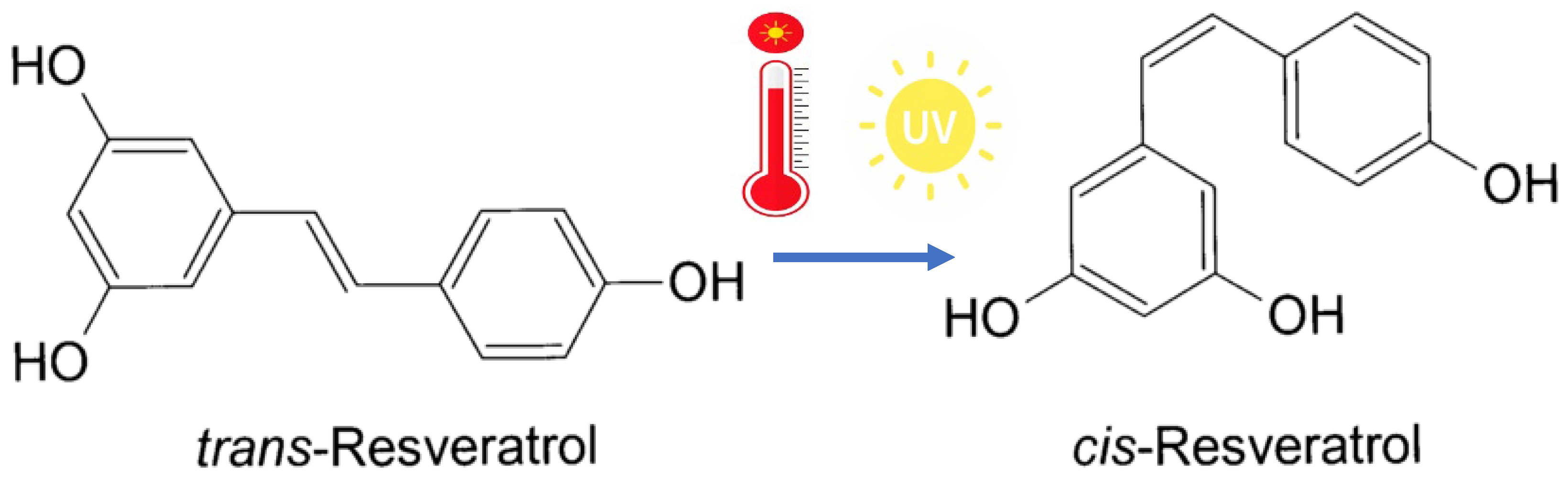
Figure 2.
Biosynthesis of resveratrol. Resveratrol synthesised from phenylalanine. PAL, Phenylalanine Ammonia Lyase; C4H, Cinnamic Acid 4-Hydroxylase; 4CL, 4-Coumarate: CoA Ligase; STS, Stilbene Synthase/Resveratrol Synthase; CHS, Chalcone Synthase.
Figure 2.
Biosynthesis of resveratrol. Resveratrol synthesised from phenylalanine. PAL, Phenylalanine Ammonia Lyase; C4H, Cinnamic Acid 4-Hydroxylase; 4CL, 4-Coumarate: CoA Ligase; STS, Stilbene Synthase/Resveratrol Synthase; CHS, Chalcone Synthase.
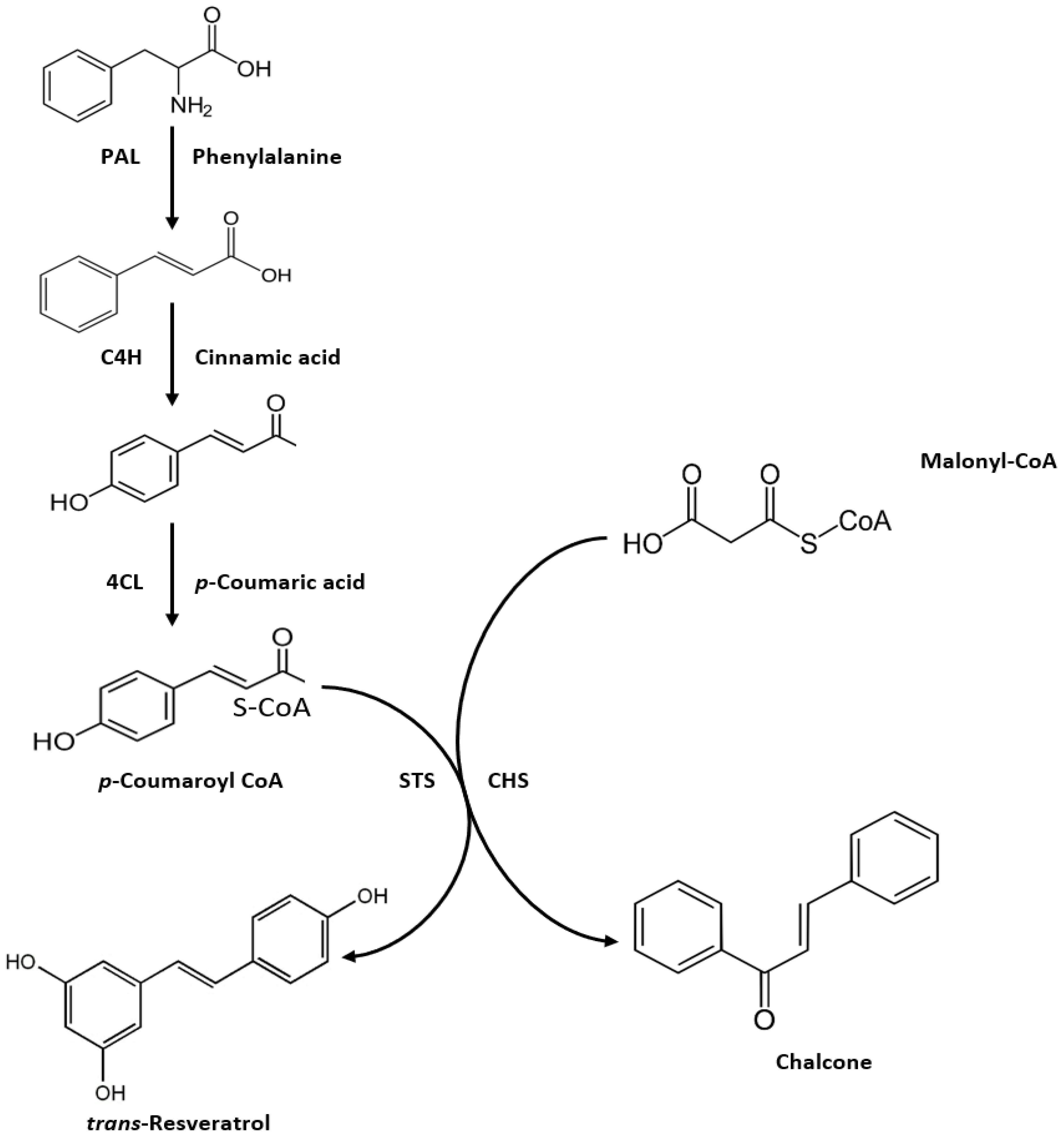
Figure 3.
Main Resveratrol-rich foods.
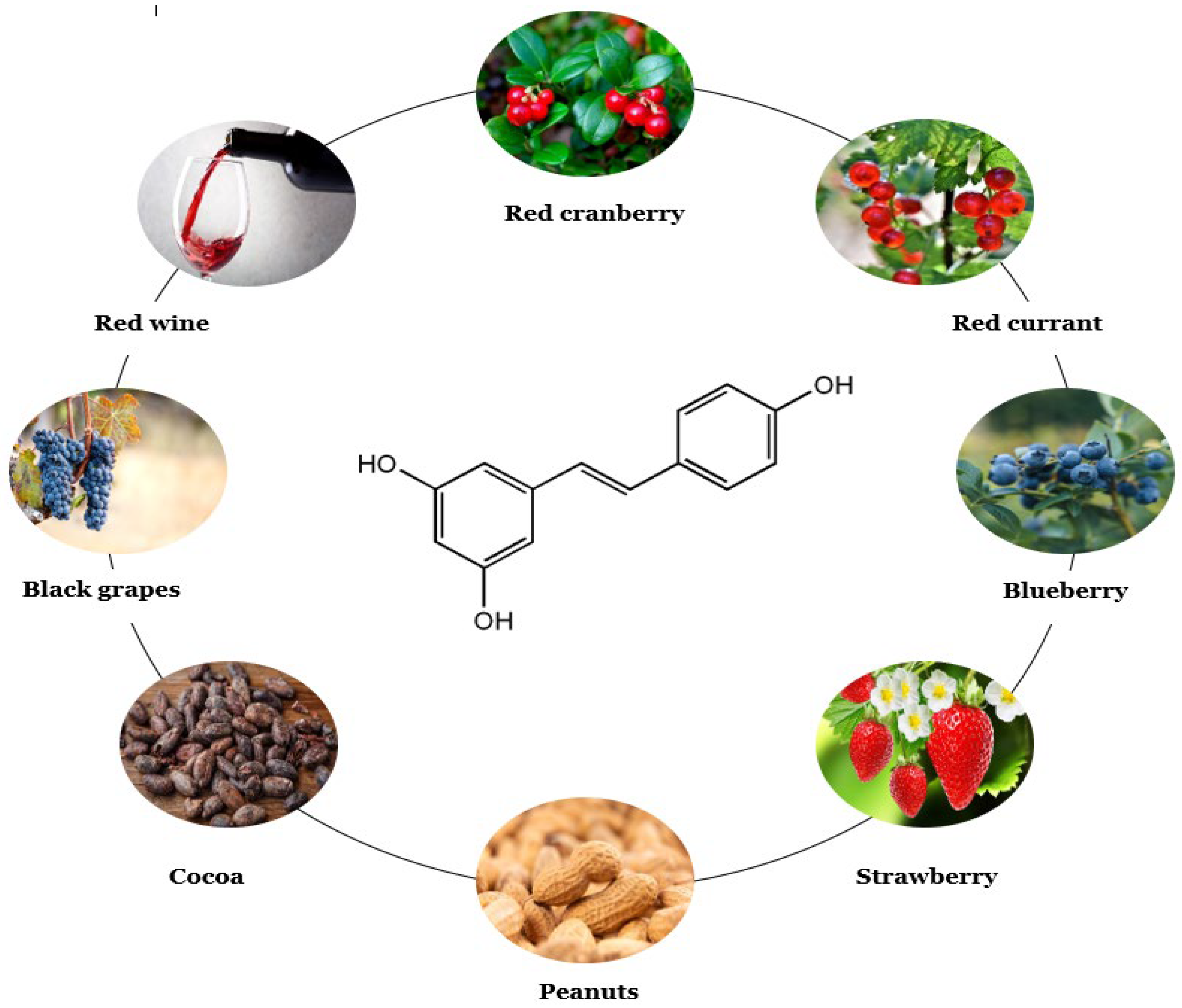
Figure 4.
Structure of the Resveratrol and Pterostilbene molecule.
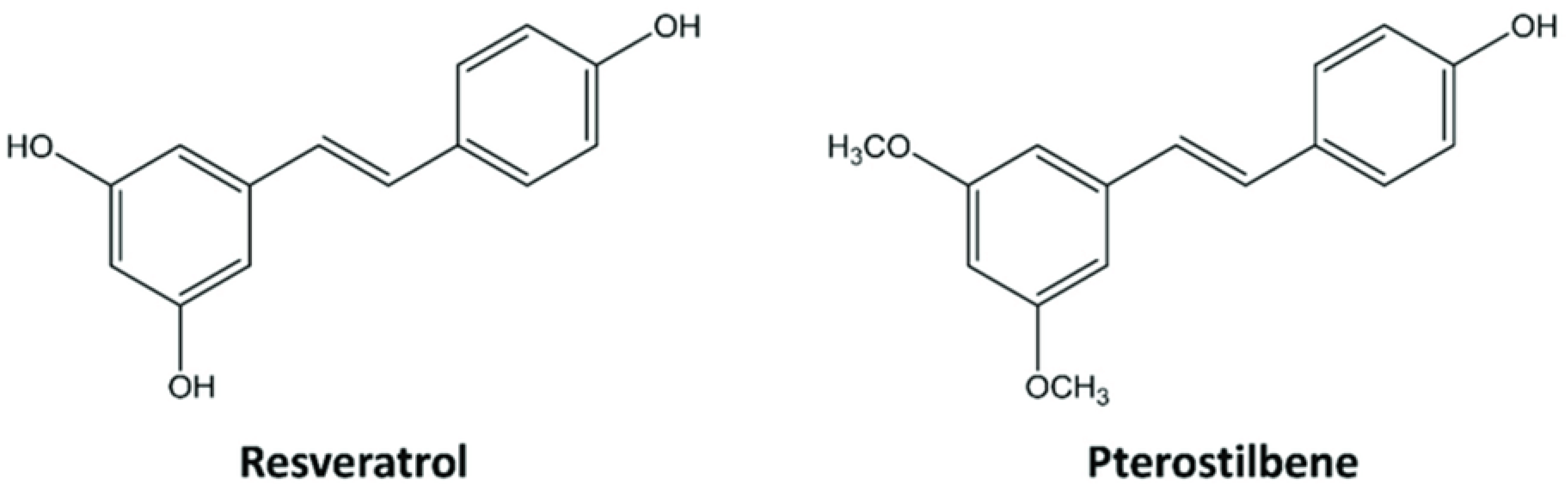
Figure 5.
Neuroprotective mechanisms of resveratrol.
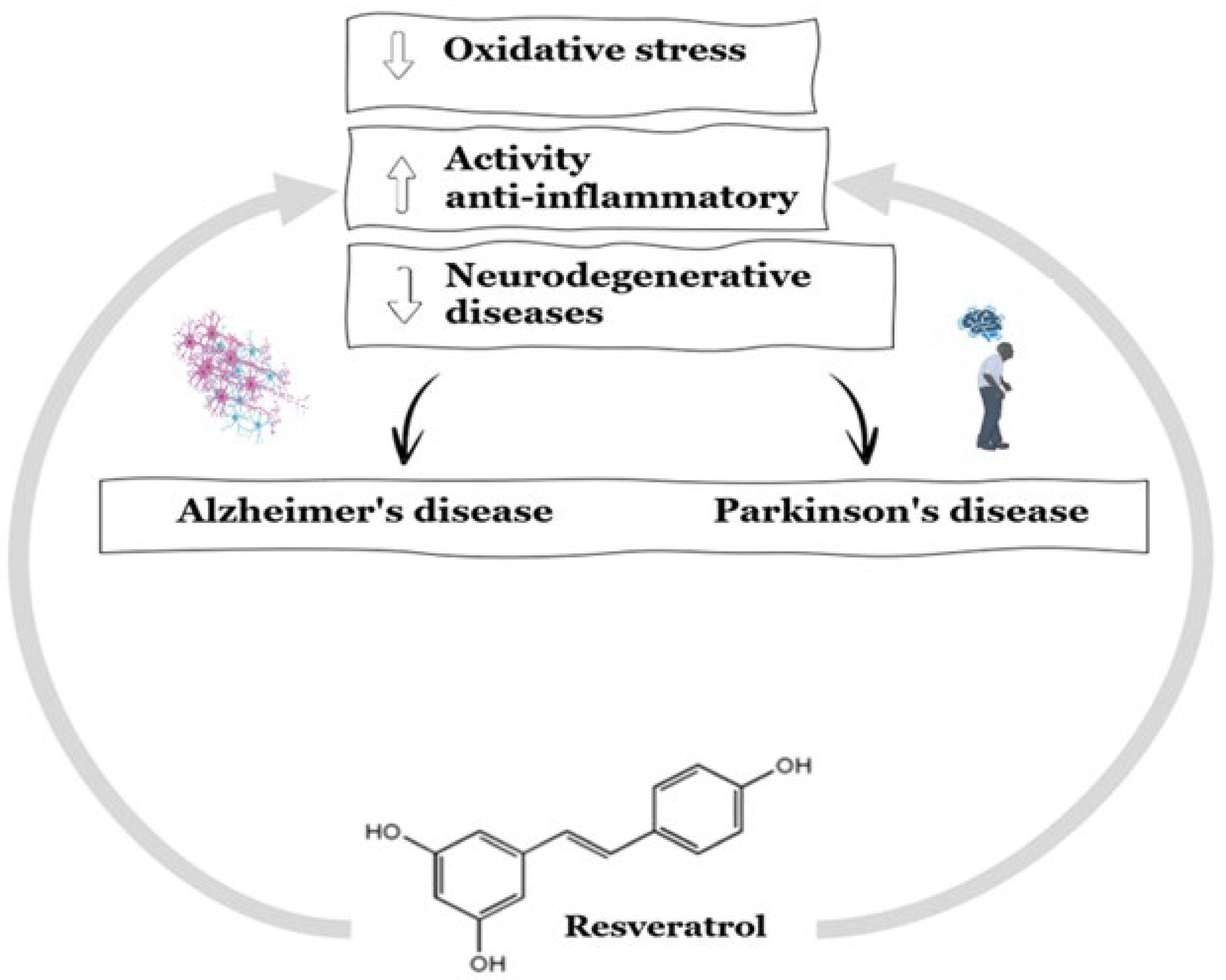
Figure 6.
Apoptosis as a mechanism of programmed cell death (PCD).
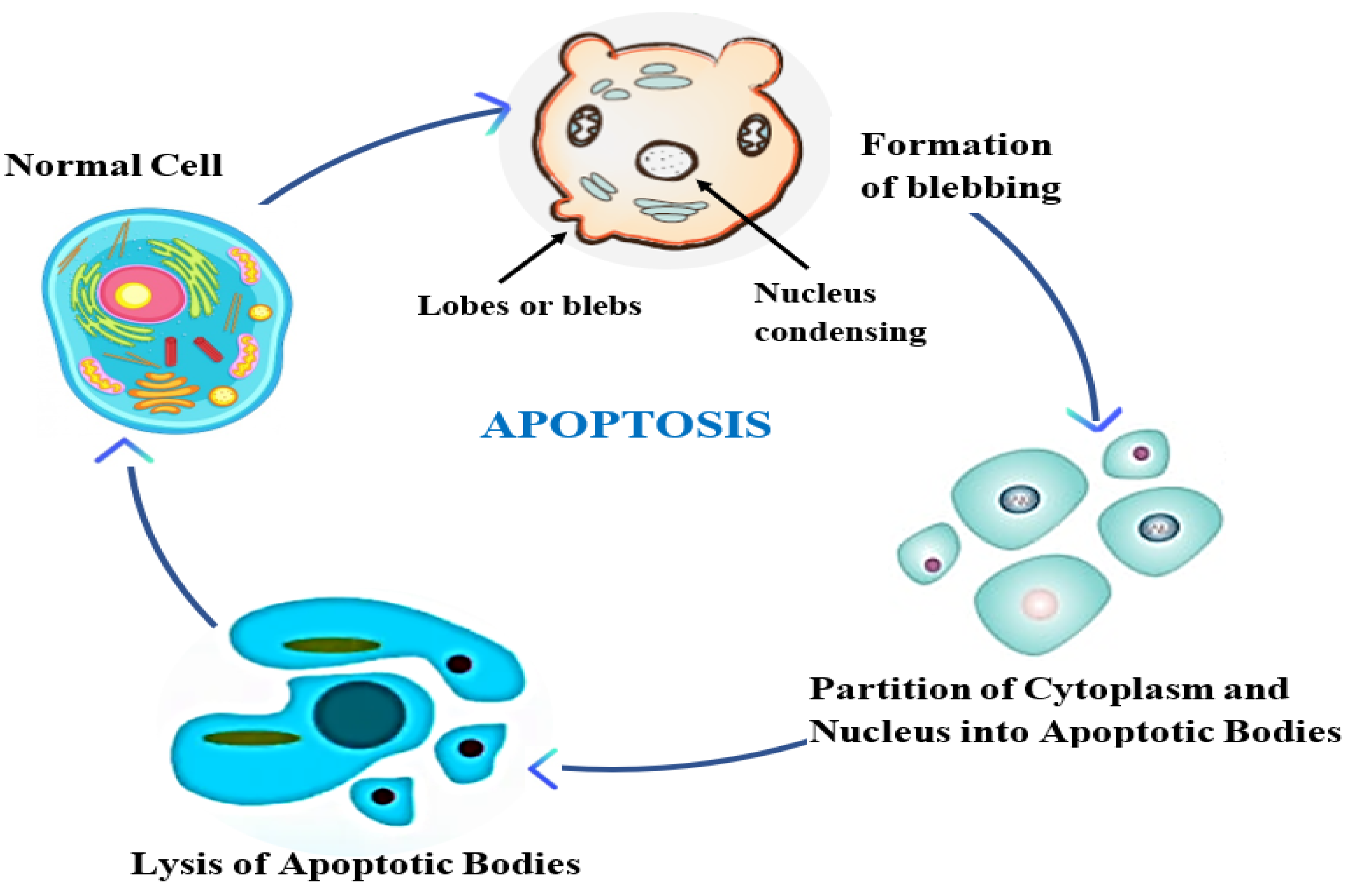
Figure 7.
Effects of resveratrol on different types of pathologies.
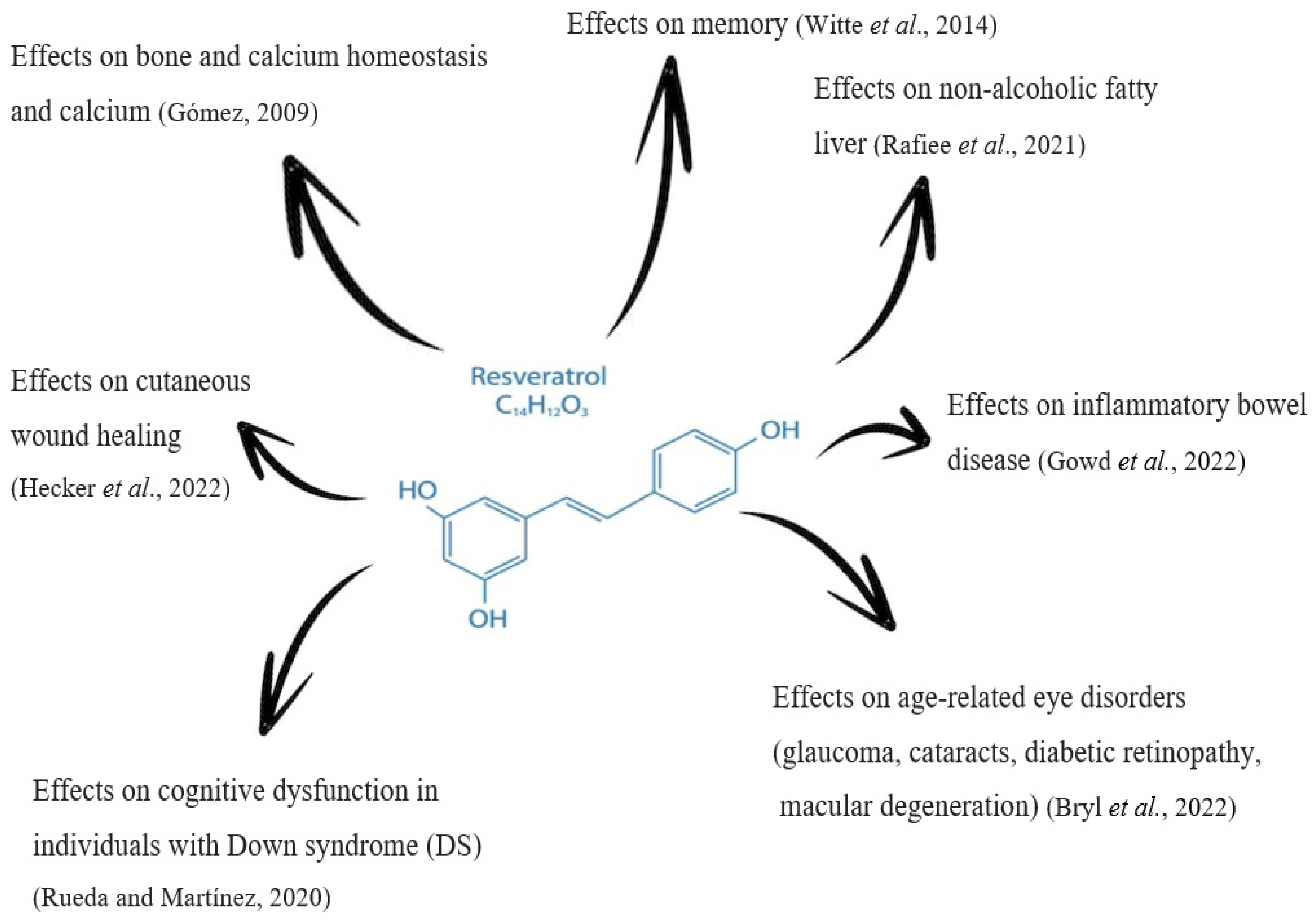

Table 1.
Resveratrol content in different foods and content in different types of wine and wine varieties (Cvejic et al., 2010; Weiskirchen et al., 2016).
Table 1.
Resveratrol content in different foods and content in different types of wine and wine varieties (Cvejic et al., 2010; Weiskirchen et al., 2016).
| Food | Resveratrol | Wine | Resveratrol |
|---|---|---|---|
| Red cranberry | 3.00 mg/100 g | Red wine | 0.84-7.33 mg/1000 ml |
| Red currant | 1.57 mg/ 100 g | Rosé wine | 0.29 mg/1000 ml |
| Blueberry | 0.67 mg/ 100 g | White wine | 0-1.089 mg/ 1000 ml |
| Strawberry | 0.35 mg/ 100 g | Pinot noir | 6.25 mg/ 1000 ml |
| Peanuts | 0.07 mg/ 100 g | Merlot | 5.05 mg/1000 ml |
| Pure cocoa | 0.04 mg/ 100 g | Cabernet sauvignon | 1.71 mg/1000 ml |
| Peanut butter | 0.04 mg/ 100 g | Garnacha | 2.86 mg/1000 ml |
| Apple | 400 µg / 1000 g | Tempranillo | 4.14 mg/1000 ml |
| Tomato skins | 19 µg / 1 g | trans-Resveratrol | 3.06 mg/1000 ml |
| Beer | 1.34-77.0 µg / 1000 ml | cis-Resveratrol | 1.08 mg/1000 ml |
| Dark chocolate | 350 µg/ 1000 g | Wines with carbonic | 4.96 mg/1000 ml |
| Milk chocolate | 100 µg/ 1000 g | ||
| Itadori tea | 68 µg/ 100 ml | Wines aged in oak | 1.98 mg/1000 ml |
| Black grapes | 0.15 mg/ 100 g | ||
| White grapes | 0.03 mg/ 100 g |
Table 2.
Main biological effects of resveratrol (Gambini et al., 2013).
| Biological actions of resveratrol to be highlighted | Ref. |
|---|---|
| In vitro studies | |
| Actions against cancer at different stages (initiation, promotion and progression of tumour cells). | Rivera-Aguilar et al., 2023 |
| Antithrombotic effect (platelet aggregator). | Wada-Hiraike, 2021 |
| Action on lipid metabolism, regulating lipolysis by increasing the mobilisation of fats in adipocytes. | Lasa et al.,2011 Parraguez and Andrés, 2022 |
| Has anti-allergic effects. | Cheong et al., 1999 Santos, 2010 |
| Osteogenesis and prevention of adipogenesis in stem cells | Coveñas Vilchez, 2023 |
| Elimination of human cancer cells through programmed cell death (PCD) mechanisms such as apoptosis, autophagy, and necroptosis. | Sung et al., 2016 |
| Treatment of diabetic retinopathy. | González-Pérez, 2023 |
| Anti-inflammatory action, regulatory mechanisms and immunomodulatory function. | Meng et al., 2021 |
| In vivo studies | |
| Chemoprotective agent against different diseases such as retinal degeneration. | Baur and Sinclair, 2006 Londoño and Torres, 2021 |
| Diabetes in mechanisms related to insulin secretion and obesity related to insulin resistance. | Su et al., 2022 Hoca et al., 2023 |
| Platelet anti-aggregant. | Wang et al., 2002 Wada-Hiraike, 2021 |
| Mechanism of human SIRT1 activation by resveratrol. | Agarwal and Baur, 2011 |
| Mimetic effects of calorie restriction. | Agarwal and Baur, 2011 |
| Anti-inflammatory action, regulatory mechanisms and immunomodulatory role. | Meng et al., 2021 |
| Action on cognitive functions. | Sánhez-Nieto et al., 2023 |
Disclaimer/Publisher’s Note: The statements, opinions and data contained in all publications are solely those of the individual author(s) and contributor(s) and not of MDPI and/or the editor(s). MDPI and/or the editor(s) disclaim responsibility for any injury to people or property resulting from any ideas, methods, instructions or products referred to in the content. |
© 2024 by the authors. Licensee MDPI, Basel, Switzerland. This article is an open access article distributed under the terms and conditions of the Creative Commons Attribution (CC BY) license (http://creativecommons.org/licenses/by/4.0/).
Copyright: This open access article is published under a Creative Commons CC BY 4.0 license, which permit the free download, distribution, and reuse, provided that the author and preprint are cited in any reuse.


