

Submitted:
16 April 2024
Posted:
16 April 2024
You are already at the latest version
Abstract
Raw earth bricks made from the soil of the Chalky Champagne region (France) have been used for at least two millennia in construction, a promising heritage in the context of reducing the carbon emissions of buildings. The present experimental study aims at measuring the physical, mechanical, thermal, and hydric properties of adobes collected from a local village barn. Results show a high chalk content estimated at 71%, and a clay content, acting as binder, at 14%. Despite limited load-bearing capacity, these lightweight adobes are suitable for current single-story constructions, while their hydrothermal properties classify them as excellent moisture regulators for occupants. In association with other bio-sourced materials such as starch-beet pulp bricks, Chalky Champagne adobes yield promising insulating properties, and meet the criteria defined by current energy standards.
Keywords:
Adobe bricks
; Building materials
; Earth construction
; Compressive strength
; Hygrothermal performance.
1. Introduction
Since the 1970s and the first oil crisis, the construction sector has undergone a series of changes that have had an impact on the way in which buildings are built, moving towards a more environmentally friendly approach. But the reality shows that fifty years later, the target is far from being achieved. At a global scale, the Building and Construction sector emissions are still rising, and represent 37 % of global operational energy and process related CO2 emission, demanding a fundamental shift in this sector to create credible path to tackle climate change [1]. In France, these changes primarily concern energy consumption for building use, through various thermal standards. Since then, improvements have been made to reduce the operational energy, and embodied carbon emission is a new deal. From January 1st, 2022, the 2020 French Environmental Regulations [2] will require buildings to reduce their carbon footprint, while continuing to improve their energy performance and comfort. One way of achieving this goal is through taking into account the Life Cycle Assessment (LCA) of construction materials. To achieve these objectives, professionals in the construction sector are seeking to relocate the resources used in building [3]. This is part of a wider trend that seeks to establish ethical values behind the notion of living [4], while reinterpreting ancient know-how and the notion of the vernacular [5]. It is within these various movements that raw earth has seen a resurgence of interest in recent years and is the subject of a growing number of studies in the scientific world. The advantages of this material are many: low environmental impact [6], excellent regulation of indoor hygrothermal comfort [7], regulation of indoor air quality [8], acoustic qualities [9], and recyclability [10]. Moreover, raw earth is considered a waste product by construction sites and therefore constitutes a resource already available. While the inner consumption of building materials represents more than the half of global consumption of the country, reaching 394 million tons, the waste of the building sector is about 213 million tons, and more than half is earth [11]. The very presence of earthen heritage in a given area demonstrates its ability to last over time and to meet the resource needs of local construction [12,13]. This heritage is therefore a source of inspiration for future construction [14,15]. The soil used in construction can vary considerably depending on its location and is dependent on geology. Studying this allows us to highlight specific skills and also to gain a better understanding of the characteristics associated with a given soil in a given geographical area. Different types of barriers slow the development of earth construction [16]. Lack of knowledge and cultural beliefs are one of them [17]. Developing that knowledge from the earth heritage local architecture could help tackle some of those barriers. Adobe construction in the Champagne region has been little studied, often alongside stone heritage [18] or for earlier periods [19]. These raw earth bricks, known locally as "carreaux de terre", have been frequently used in the area for at least two thousand years [20,21] and cover a vast area, mainly characterized by limestone elements corresponding to the soil and sub-soil of the Champagne chalk region [22]. Our study aims to reveal the physical and mechanical characteristics of bricks taken from the heritage of the Chalky Champagne region, to demonstrate both that it is a quality material for existing buildings, and that it has major advantages for new local construction under the new French environmental regulations as an ecological building material with a high comfort value.
2. Materials and Methods
1. Survey Location Specificity and Origin of Samples
The research presented in this paper is based on adobe bricks sourced from the demolition of a small old barn in a village called Brugny-Vaudancourt, Marne north-eastern France (see Figure 1). The village is located at the bottom of the Île-de-France cuesta slope and at the start of the Chalky Champagne plain, characterized by its Upper Cretaceous chalk substratum. The dominant soil types are calcosols and rendosols, corresponding to soils developed from limestone, frequently clayey and rich in carbonates.
2. General Characteristics of Adobes
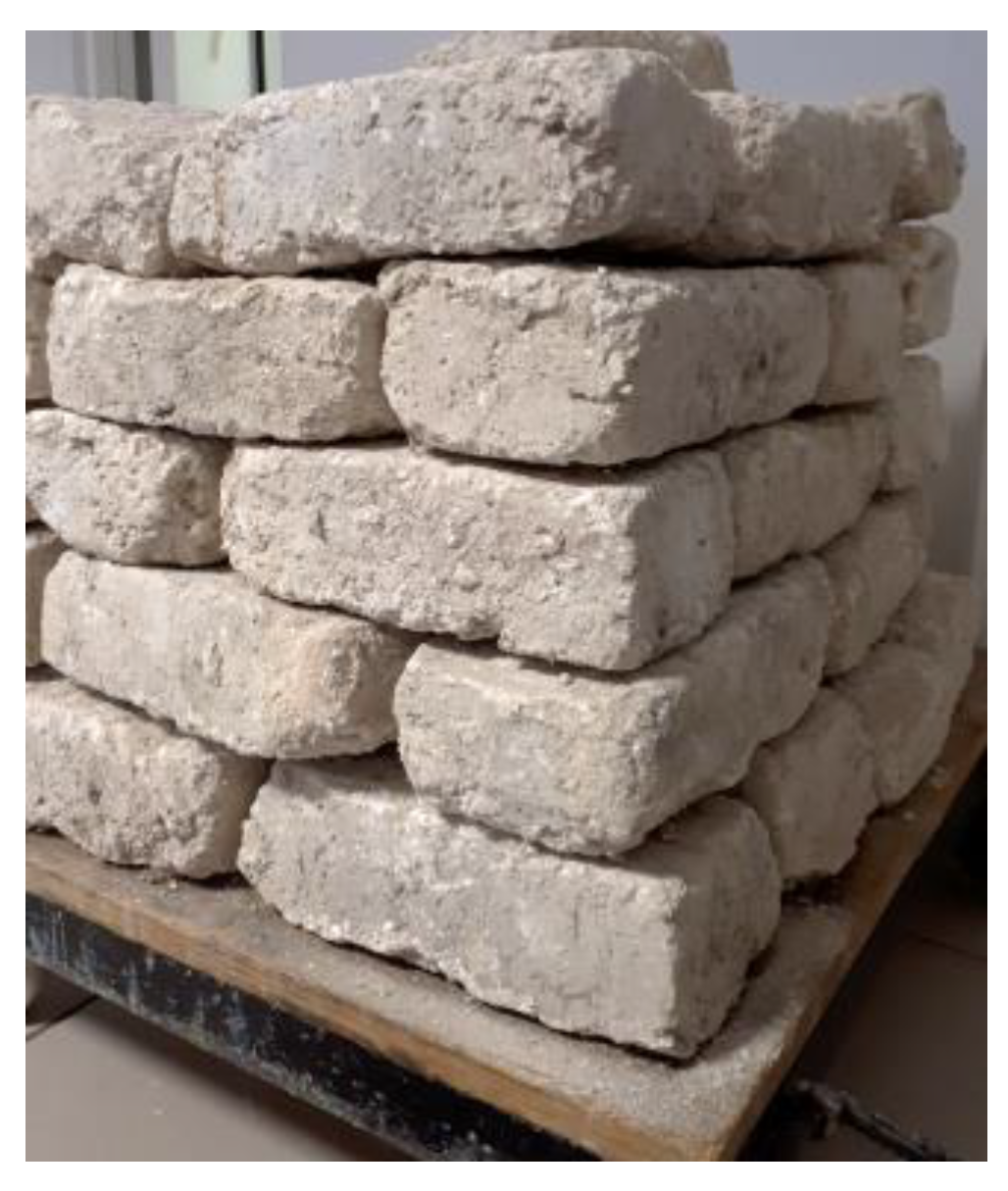
Approximately fifty adobes were obtained for analysis. Their light ochre hue indicates their origin from cretaceous chalky soil. Following local literature [23] they appear to have been manually shaped on-site using rectangular molds of varying yet closely similar sizes. Measurements conducted on a representative sample revealed the following dimensions (expressed as mean values ± standard deviations): width (W) = 139.2 mm (±8.4 mm); height (h) = 85.1 mm (±6.2 mm); length (L) = 264.5 mm (±12.6 mm). Based on a mass of M = 4556.2 g (±418.2 g), an average apparent density of = 1464 kg/m³. Within construction and masonry, the adobe bricks tested can be classified as lightweight, which may limit their load-bearing capacities. However, this characteristic also suggests quite interesting thermal properties. The latter is supported by the average absolute density measurement (= 2240 kg/m³), which indicates a porosity of 34.6%. All tests were conducted on adobe bricks with a measured % moisture content of 2% (dry density 1435 kg/m³). Additionally, the pH value was determined to be 8.5, while the soluble organic matter content was measured at 0.5% by mass (evaporation of supernatant obtained after wet sieving and centrifugation).
Figure 2.
Adobes from the Champagne region (France).
Particle Size Distribution
After a preliminary visual examination of fractured bricks and sliced pieces cut with a circular saw, granulometric analysis was conducted on five randomly selected samples to gain further insight into the adobe composition. Particle distribution analysis for sizes between 63 µm and 20 mm was achieved by wet sieving, while sedimentometry analysis was used for smaller sizes in adherence with standard NF EN ISO 17892-4 [24].
3. Methylene Blue Value (MBV1)
The Methylene Blue Value (MBV1, distinct from the Moisture Buffer Value to be discussed later, denoted as MBV2) represents a commonly utilized technique for detecting the presence of clay minerals within soils. Our investigation enables the characterization of clay content in the soil from which the examined raw clay bricks are derived, as well as their susceptibility to water, a critical parameter in construction applications. While various methodological variations exist for conducting the methylene blue test [25], we adhered to the specifications outlined in the French standard NF P 94-068 [26]. This procedure involves incrementally introducing methylene blue into a soil suspension while agitating it. Periodically, a drop of the suspension is extracted and deposited onto chromatographic paper. The completion of methylene blue adsorption onto clay particles is indicated by the development of a bluish halo around the initial blue spot formed after drop deposition, signifying the presence of excess methylene blue in the halo. MBV measurements, expressed in grams of blue per 100 grams of soil, were conducted on approximately a dozen randomly selected samples from different bricks.
4. Compression Tests
The compression tests were conducted using a Zwick Roell Z050 testing machine, which was fitted with a 50 kN load cell. These tests took place under controlled indoor conditions, with a room temperature of 23°C and 50% relative humidity. The compression rate adhered to the standard specifications of NF XP P 13 901 [27], set at 8 mm/min, which caused fracture of the specimens after a duration comprised between 1 and 2 minutes.
For statistical robustness, compressive strength analysis typically involves averaging results from 5 to 10 samples [28]. In this study, seven adobe specimens were subjected to testing. Various standards about earthen construction emphasize mechanical testing of bricks; however, there is limited consensus regarding specimen geometry [29]. To maintain consistency with the in-situ load conditions of adobes in walls, the thickness of the specimens remained unaltered. Only the compressed surface area of 10x10 cm² necessitated manual trimming of the adobe. To ensure optimal contact between the specimen faces and compression platens and to minimize the effects of any extraneous loading, the faces were manually smoothed using sandpaper.
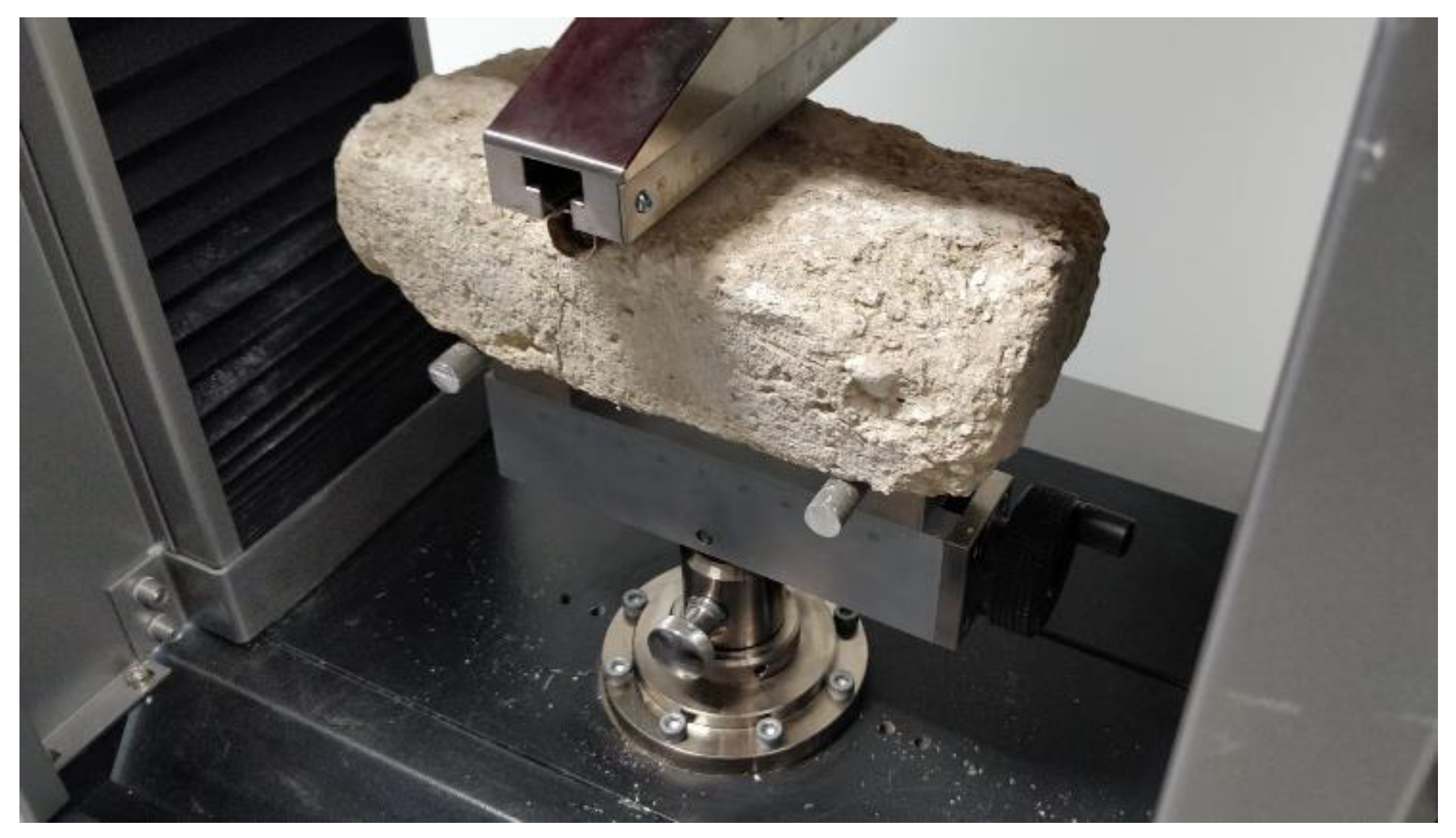
5. Three-Point Flexural Tests
The Zwick Roell Z050 testing machine, equipped with a 50 kN load cell, was also used for 3-point bend tests. To avoid edge effects, the ratio of support-to-edge distance/adobe length is selected to be greater than 1/8. The support span was = 165 mm. Assuming pure bending and linear elastic material behavior, the three-point bending test enables the evaluation of the flexural tensile strength , commonly referred to as ‘modulus of rupture’, and the flexural strain . Flexural tests were conducted on 7 specimens.
6. Thermal Analysis
Thermal properties were assessed using the thermal characteristics analyzer device ISOMET 2114 (Applied Precision, Ltd., Bratislava, Slovakia) based on heat flux pulses applied at the material surface. Five specimens were analyzed to determine the thermal conductivity, specific heat, and diffusivity of the adobes.
7. Moisture Buffer Value (MBV2)
The moisture-buffering value assesses a material's capacity to moderate fluctuations in relative humidity within an enclosed space. Essentially, the MBV2 value reflects whether a material effectively regulates moisture, impacting user comfort and other factors. Measurement follows the protocol outlined in the Nordtest Project [30], allowing the classification of moisture-buffering values from negligible to excellent. Initially, samples are stabilized at 23°C and 50% relative humidity (RH) for 14 days, then subjected to daily RH cycles: 8 hours at high RH (75%) followed by 16 hours at low RH (33%) within a climatic chamber (Binder MKF 720). Cycles continue until the difference in measured mass variations across the last three cycles is below 5%. The MBV2 value is determined using the equation:
Where MBV2 represents the moisture buffer value in units of grams per square meter per percent relative humidity (g/(m².%RH)), denotes the mass variation during absorption or desorption in grams, denotes the sample surface area in contact with air in square meters (m²), and and denote the upper (75%) and lower (33%) relative humidity levels, respectively.
Four parallelepiped samples measuring 10x10x4 cm³ were utilized as test specimens and sealed on the side and bottom surfaces with waterproof adhesive tape.
3.Results
1. Particle Size Distribution
A preliminary visual examination of fractured or cut bricks indicates a heterogeneous grain size distribution, characterized by the presence of numerous chalk gravels and pebbles (Figure 3a). The adobe composition is exclusively mineral, devoid of any plant fibers. On occasion, fragments of pottery (Figure 3b) or tree branches (Figure 3c) can be discerned within the adobe structure, suggesting that the material was sourced directly from on-site soil.
Although minimal, the presence of these constituents suggests potential dispersion in the reproducibility of these brick properties potentially resulting in localized mechanical weaknesses or diminished particle cohesion. Figure 4 illustrates the mean granulometric curve. The distinctive nature of this adobe type stems from the highly chalky soil from which it originates. The elevated material levels at low % passing can be attributed to the abundant presence of chalk micrograins (such as coccoliths with sizes below 12 µm) and fine loam [31,32], alongside clay. The Particle Size Distribution reveals that particles less than 2 µm are estimated at around 20% by mass. Nevertheless, chalk-based earth adobes are particular in that not only fine clay particles are present in this range but also chalk micro and nanoparticles, and small coccoliths. Applying a decarbonization process to the smallest particles yields an estimation of clay content close to 14%.
2. Methylene Blue Value (MBV1)
The measured MBV1 value was 0.97 ± 0.16, which can be approximated as unity. This value is depicted in the diagram presented in Figure 5, which schematically outlines the soil characterization and classification ranges based on water sensitivity.
The soil extracted for the earthen bricks can be categorized as loamy and water-sensitive, following the guidelines outlined in the technical manual for road earthworks published by the French Ministry of Transport, known as the "Guide des Terrassements Routiers" [33]. As per the Particle Size Distribution studied (Figure 4), the percentage passing through the 80 μm sieve is approximately 37%. By combining this value with the Methylene Blue Value (MBV), as proposed by Rojat et al. [34], the earth material can be classified. According to the GTR A1 classification, it falls under fine soil with low plasticity, exhibiting the ability to undergo rapid changes in consistency with slight fluctuations in water content. This classification denotes fine soils with low plasticity that can exhibit abrupt changes in consistency due to minor variations in water content. The response time to changes in the moisture and climatic conditions is relatively short.
Decarbonization was conducted using a lab-built single-unit Scheibler apparatus following the NF EN ISO 10693:1995 [35] standard methods, yielding a carbonate content of 71% in the samples. This is in good agreement with the clay content obtained by sedimentometry and found at around 14%. The overall clay content, serving as the binding agent in the material, must strike a balance between providing adequate mechanical strength and preventing cracking and shrinkage. Literature suggests that clay content ranging from 5% to 29% in adobe is considered acceptable [28,36,37].
3. Compression Tests
Uniaxial compression tests were conducted on all seven specimens, resulting in stress-strain curves depicted in Figure 6, highlighting notable variability in compression behavior, attributable to varying clay contents among the bricks. In all tested samples, failure occurred along sub-vertical planes intersecting the top and bottom surfaces of the specimens (Figure 7). Table 1 summarizes the mechanical properties observed, including peak compressive strength and axial strain at peak compressive strength .
Compressive strength is one of the pivotal mechanical parameters influencing material selection in building construction. In this investigation, the mean peak stress is determined to be = 1.03 MPa, aligning with values reported in prior studies [38,39,40,41]. This finding is consistent with certain literature recommendations; for instance, standard XP P13-901:2022 [27] stipulates that the compressive strength of dry earth bricks typically falls within the range of 0.6 to 2.0 MPa. Notably, Doat et al. [42] proposed a compressive strength of 2 kg/cm² for single-story construction. In our investigation, an average compressive strength of 10.3 kg/cm² was observed, surpassing this recommendation by fivefold.
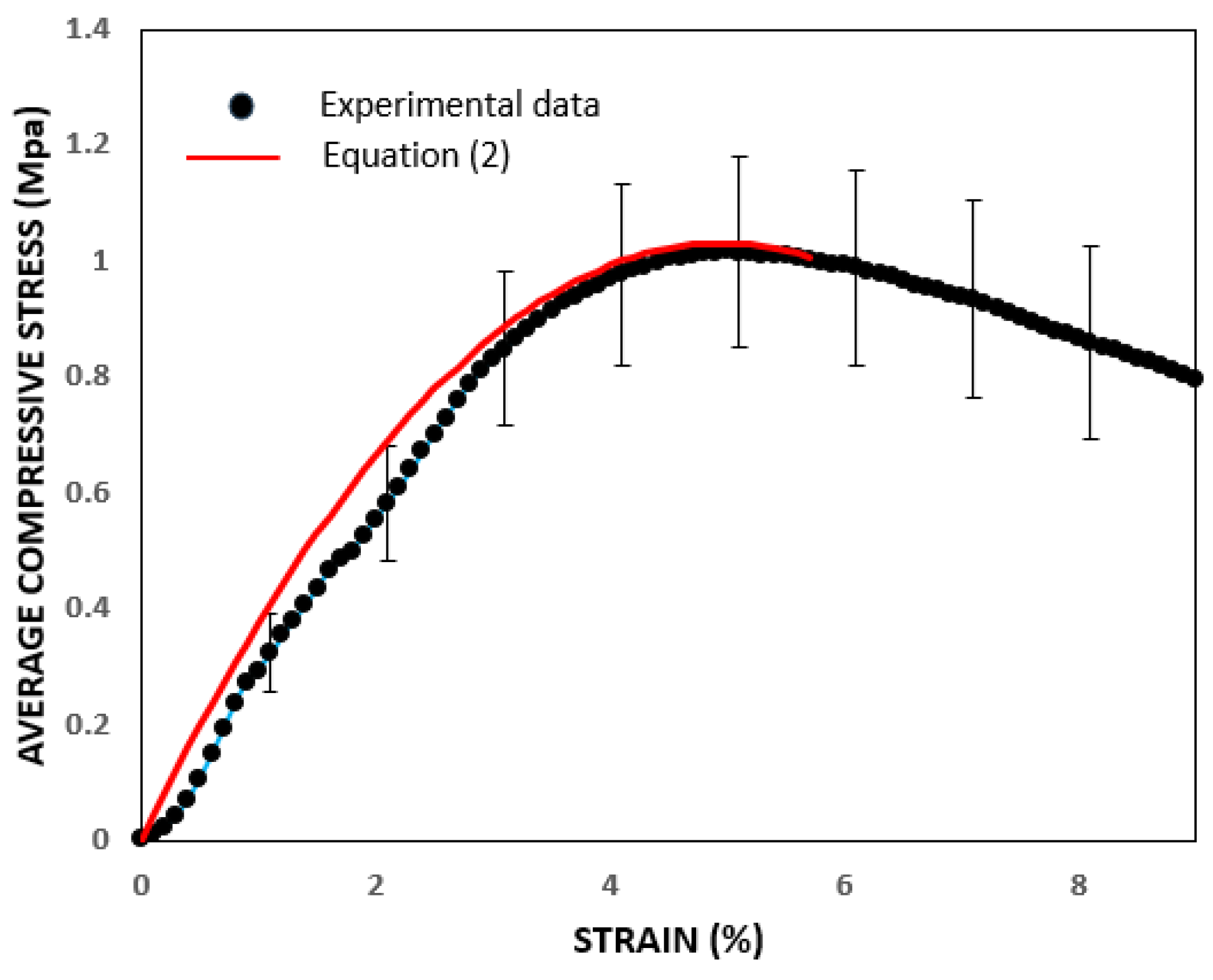
To determine the Young's modulus (initial tangent modulus), the mean stress-strain curve is illustrated in Figure 9. It is evident that the experimental curve closely conforms to the theoretical model proposed by Adorni et al. [29], which can be expressed as:
The observation of quasi-linear behavior up to 0.8 f enables us to infer an estimate of Young's modulus, approximately E=32 MPa.
Figure 8.
Comparison between the average experimental curve and the proposed model.
The initial tangent modulus values seem widely dispersed in the literature, stemming from the diversity in soil composition within adobes and the lack of standardization in the manufacturing process. Nonetheless, the value of 32 MPa aligns closely with findings reported by Illampas et al. [43] and Fratini et al. [44].
4. Three-Point Flexural Tests
Figure 9.
Experimental setup for 3-point bending.
In our experiments, due to the brick dimensions, the specimens exhibited a span-to-depth ratio L/h = 1.8–2, significantly lower than the theoretical value necessary for pure bending (L/h > 4). However, none of the samples exhibited an arched crack, suggesting that the assumption of linear elastic behavior of the material is substantiated by the linear trend observed in the force-displacement curves. Consequently, the flexural stress can be approximated as follows:
The stress-strain curves derived are depicted in Figure 10, revealing notably reduced dispersion in comparison to the compression curves. Linear interpolation yields excellent outcomes, with a correlation coefficient R² = 0.996 and a calculated flexural modulus of 28.2 MPa, closely resembling Young's modulus obtained in the compression test. Relative to the mean values of peak stress (1.03 MPa) and flexural stress (0.48 MPa), corresponding standard deviations (i.e. dispersion of the experimental results), namely 0.17 and 0.06 MPa, highlight comparable orders of magnitude.
5. Thermal Analysis
Table 3 presents mean values, and standard deviations and provides the thermal properties of common load-bearing materials such as oak wood, solid brick, and conventional concrete for comparison purposes.
A material is typically deemed an excellent insulator if its thermal conductivity is below 0.03 W/(m.K) according to standard DIN 4108 [48]. The thermal conductivity of adobe was measured at 0.67, indicating satisfactory insulating properties, albeit less efficient at conducting heat compared to other commonly used geo-sourced load-bearing materials such as fired brick or concrete. This value aligns with the typical thermal conductivity range of adobes, 0.5 – 1.2 W/(m.K), as suggested by Rempel and Rempel [49]. To achieve a specified thermal resistance, adobe would need to be 1.6 times thinner than conventional brick and 3.1 times thinner than plain concrete, underscoring its eco-friendly nature by minimizing the volume of construction materials required.
In the realm of building construction, thermal diffusivity manifests itself through temperature fluctuations in the outdoor environment and represents a material's capacity to store thermal energy. Essentially, it quantifies thermal inertia, a pivotal factor in the thermal comfort of a building regardless of the season. A lower thermal diffusivity value implies a longer duration for the heat front to penetrate the material's thickness, thereby enhancing thermal comfort. The thermal diffusivity of adobe, as indicated in Table 3, suggests that a structure made of adobe would dampen outdoor conditions better than concrete but less than wood.
The specific heat capacity [J/(kg.K)] delineates the amount of energy needed to raise the temperature of 1 kg of adobe by 1 K (=1°C). Accurate determination of heat capacity is crucial as it serves as a significant parameter for predicting heat transfer capability. A higher mass thermal capacity of a building material translates to a greater heat requirement for temperature elevation. The obtained average value of 1.0 kJ/(kg.K) is in very good agreement with the one reported by Yan et al. [51] of 0.902 kJ/(kg.K) and by Eben Saleh [52] of 1.0 kJ/(kg.K) for rammed earth and adobe respectively. Relative to other load-bearing materials, adobe exhibits a specific heat about 11-23% higher than mineral-based materials but 31% lower than organic ones.
6. Moisture Buffer Value (MBV2)
The samples underwent weighing five times during the absorption phase and twice during the desorption phase. Variations in the weight of the samples during absorption/desorption dynamics are depicted in Figure 11. Mass changes stabilized for the last three cycles, facilitating the calculation of the MBV2 value using Equation (1). The calculated MBV2 value is 2.54 (0.40).
Materials exhibiting a high MBV2 value possess the capability to mitigate indoor humidity variations, thereby enhancing air quality, reducing microbial growth phenomena, and potentially lowering respiratory health risks. The Nordtest project [30] has established a classification of moisture buffer values ranging from negligible to excellent. Figure 12 illustrates this classification, with the current measured value for adobe positioned accordingly.
Following the Nordtest protocol, the examined adobe samples are categorized as excellent moisture regulators, indicative of values surpassing 2 g/(m².%RH).
7. Simulation of Adobe Integration within a Practical Eco-Friendly Vertical Wall
An examination of the thermal characteristics of adobe naturally prompts consideration of its application in residential walls. Let us envision a feasible and environmentally conscious composite wall configuration, comprising load-bearing adobe as the structural core, bio-sourced insulation nestled within, and interior and exterior finishes crafted from earth and hemp concrete with hydraulic lime as binder, respectively, to ensure effective weatherproofing. Insulation would be from the outside, as adobe improves summer comfort by preventing overheating in summer and regulating humidity. Naturally, such a structure would be single-story and designed to accommodate minimal permanent (ceiling and roof) and operational loads. This composite wall assembly could adopt a design and composition akin to those depicted in Figure 13 and detailed in Table 4.
It could be postulated that the mortar joints between the adobe bricks share the same composition as the adobe material itself, as does the interior plaster. Similarly, the insulation bricks, sourced entirely from biodegradable materials such as beet pulp and starch (both originating from the same French region as the adobe), could be vertically arranged in the walls, with joints filled using the same biodegradable material [53]. The exterior cladding may consist of hemp concrete, a locally sourced product currently under experimentation [54]. To ensure perfect adhesion and capillary continuity through the wall, no air layer is considered. Under this configuration, which is pragmatically feasible in construction terms, the pertinent question arises regarding the required thickness of the load-bearing structure (i.e., the adobe wall) to comply with prevailing French ecological transition standards. The new energy and environmental regulations, RE2020, for newly constructed buildings, as stipulated by the French public authorities, mandate that the thermal resistance (R-value) of a wall falls within the range of 2.2 ≤ R [m²K/W] ≤ 2.9. This criterion aims to reduce energy consumption during both winter (heating) and summer (air conditioning) seasons. While higher R-values indicate superior thermal insulation, they must be balanced with wall thickness considerations.
Take, for instance, the maximum value from the previous context, specifically R=2.9 m²K/W. What thickness of the adobe wall would be necessary to achieve this threshold? Is the thickness mentioned above feasible in practice? The thickness of the adobe within the composite wall is determined by the following equation, derived from the expression of the thermal resistance of the composite wall:
Where and represent the internal and external surface resistances, respectively, denoting the heat transfer from or to the surface of a building component from its surrounding environment. These values are considered constant and are specified as 0.13 m²K/W and 0.04 m²K/W, respectively [55].
A thickness value of adobe greater than or equal to 27 cm is determined, which approximately corresponds to doubling the thickness of a row of adobe bricks studied. This aligns with contemporary construction methods for load-bearing structures. Indeed, utilizing earth-based materials, best practices recommend constructing load-bearing walls with a thickness of 30 cm. This involves alternating a row of bricks laid lengthwise (i.e., along the length of the brick, perpendicular to the wall face) with a row of bricks laid widthwise (in this case, two bricks side by side are required to achieve the desired thickness), as illustrated in Figure 14.
4. Conclusions and Perspectives
This study focused on traditional manufactured raw earth bricks from the Chalky Champagne region. Numerous chalk pebbles are present, confirmed by a high carbonate content representative of the local geology. These bricks are considered to be fine soils with low plasticity according to the French technical manual for road earthworks “Guide des Terrassements Routiers” [33], and are therefore subject to abrupt changes due to minor variations in water content, confirming that those materials need protection from the weathering and capillary rise, which is not always the case according to field observations [22]. Mechanical tests (compression and 3-point flexure) and thermal analysis of the bricks are in line with the literature on adobe bricks which do not contain carbonate. The mechanical behavior exceeds the recommendation for single-story construction by a factor of five and confirms what the presence of adobe heritage shows, that local earth resources are sufficient for building. Thermal analysis shows that this earth material is good for dampening outdoor conditions, ensuring the comfort of inhabitants during the summer heat. According to The Nordtest project [30], adobe samples are considered excellent moisture regulators, a feature that could be taken into account while designing new projects or renovating earth heritage in the region, to improve air quality and mitigate indoor humidity without energy dependency. A simulation of adobe integration within a practical eco-friendly vertical wall composed of biodegradable materials from the same region has opened good perspectives for complying with French energy and environmental regulations. This first study on the physical and mechanical characteristics of these bricks from the chalky champagne heritage demonstrates that the local earth resource can lead to major advantages for new local construction in line with the shift needed in the construction sector [1], whereas in the three departments concerned by this adobe construction, around 1 million tons of earth have been produced and considered as waste by the construction sector in 2021 [56]. Nevertheless, chalky soils are not the only resource used to produce adobe in this heritage area [22], and further studies should be carried out on different specimens from other geological bedrocks, in order to be able to characterize more precisely a greater diversity of local earth resource. Finally, earth can be used as a binder for natural and local insulation, as studied in the CobBauge project [57,58]. As small quantity of raw earth is needed to produce light earth, an investigation on the possibility of producing an insulating material based on local chalky earth could demonstrate new possibility for renovating local heritage and designing low-carbon buildings with a high-quality comfort.
Author Contributions
Conceptualization, G.P.; methodology, A.A.G; investigation, F. Be., C.B. and S.M.; resources, M.L., C.M. and T.M.; data curation, F. Bo. and C.B.; writing—original draft preparation, G.P.; writing—review and editing, A.A.G., G.F. and E.H. All authors have read and agreed to the published version of the manuscript.
Funding
This research received no external funding.
Acknowledgments
The authors gratefully acknowledge Mrs Annick L’Alloret from Université Gustave Eiffel for her assistance in the Particle Size Distribution analyses. The authors also acknowledge the use of ChatGPT 3.5 (Open AI, https://chat.openai.com) for language improvement purposes only. The prompt used was “Rephrase to scientific English”.
References
- United Nations Environment Programme. 2022 Global Status Report for Buildings and Construction: Towards a Zero-emission, Efficient and Resilient Buildings and Construction Sector [Internet]. Vol. 224, United Nations Environment Programme. 2022. Available from: https://globalabc.org/sites/default/files/2022-11/FULL REPORT_2022 Buildings-GSR_1.pdf.
- Cerema. Guide RE2020. 2024.
- Rollot M. L’architecture localement bio- et géo-sourcée de Christophe Aubertin : régionaliste, biorégionaliste ? Cah la Rech Archit urbaine paysagère. 2021;(11):0–27.
- Rollot M. Éléments vers une éthique de l ’ habitation. Université Paris VIII; 2018.
- Hallauer E. Du vernaculaire à la déprise d’oeuvre : Urbanisme, architecture, design. Université Paris-Est; 2017.
- Ventura A, Ouellet-Plamondon C, Röck M, Hecht T, Roy V, Higuera P, et al. Environmental Potential of Earth-Based Building Materials: Key Facts and Issues from a Life Cycle Assessment Perspective. RILEM State-of-the-Art Reports [Internet]. 2022 [cited 2024 Apr 3];35:261–96. Available from: https://link.springer.com/chapter/10.1007/978-3-030-83297-1_8.
- Mcgregor F, Heath A, Shea A, Lawrence M. The moisture buffering capacity of unfired clay masonry. 2014 [cited 2024 Apr 3]; Available from: http://dx. [CrossRef]
- Roucan S, McGregor F, Fabbri A, Perlot-Bascoulès C, Morel JC. Indoor CO2 buffering potential of clay-based building materials. IOP Conf Ser Earth Environ Sci [Internet]. 2022 Sep 1 [cited 2024 Apr 3];1078(1):012135. Available from: https://iopscience.iop.org/article/10.1088/1755-1315/1078/1/012135.
- Fabbri A, Aubert JE, Bras AA, Faria P, Gallipoli D, Goffart J, et al. Hygrothermal and Acoustic Assessment of Earthen Materials. RILEM State-of-the-Art Reports [Internet]. 2022 [cited 2024 Apr 3];35:83–126. Available from: https://novaresearch.unl.pt/en/publications/hygrothermal-and-acoustic-assessment-of-earthen-materials.
- Walter A, Blake B, Yann D’ S, Perlot OMC. Recyclability, durability and water vapour adsorption of unstabilised and stabilised compressed earth bricks. Mater Struct [Internet]. [cited 2024 Apr 3];53. Available from: https://. [CrossRef]
- ADEME. Déchets Chiffres-clés - Edition 2023 [Internet]. 2023 [cited 2024 Apr 4]. Available from: https://librairie.ademe.fr/dechets-economie-circulaire/6108-dechets-chiffres-cles-edition-2023.html.
- Hamard E, Lemercier B, Cazacliu B, Razakamanantsoa A, Morel JC. A new methodology to identify and quantify material resource at a large scale for earth construction – Application to cob in Brittany. Constr Build Mater. 2018 May 10;170:485–97.
- Verron L, Hamard E, Cazacliu B, Razakamanantsoa A, Duc M, Vinceslas T, et al. Estimating and mapping the availability of earth resource for light earth building using a soil geodatabase in Brittany (France). Resour Conserv Recycl. 2022 Sep 1;184:106409.
- Santos MM, Hilton A, Poullain P, Hamard E, Mouraud C. Rediscovered earth heritage becomes motor for local change - The Guérande Peninsula (France). In: HERITAGE2022 International Conference on Vernacular Heritage: Culture, People and Sustainability [Internet]. Universitat Politecnica de Valencia; 2022 [cited 2024 Apr 3]. p. 149–56. Available from: https://shs.hal.science/halshs-03844005.
- Mileto C, Vegas F, Correia M, Carlos G, Dipasquale L, Mecca S, et al. THE EUROPEAN PROJECT “VERSUS+ / HERITAGE FOR PEOPLE”. OBJECTIVES AND METHODOLOGY. Int Arch Photogramm Remote Sens Spat Inf Sci [Internet]. 2020 Jul 24 [cited 2024 Apr 3];XLIV-M-1–2020(M–1):645–9. Available from: https://. [CrossRef]
- Pelé-Peltier A, Charef R, Morel JC. Factors affecting the use of earth material in mainstream construction: a critical review. Build Res Inf [Internet]. 2023 Feb 17 [cited 2024 Apr 3];51(2):119–37. Available from: https://www.tandfonline.com/. [CrossRef]
- Morel JC, Charef R, Hamard E, Fabbri A, Beckett C, Bui QB. Earth as construction material in the circular economy context: practitioner perspectives on barriers to overcome. Philos Trans R Soc B [Internet]. 2021 Sep 27 [cited 2024 Apr 3];376(1834). Available from: https://royalsocietypublishing.org/. [CrossRef]
- Turmel A. Répartition et utilisation des pierres et géomatériaux de construction dans le bâti du Pays rémois - analyse spatiale et propriétés pétrophysiques - | Theses.fr. Reims; 2014.
- Fronteau G, Laratte S, Devos A, Pichard C. L’emploi antique des géomatériaux à Reims/Durocortorum. http://journals.openedition.org/gallia [Internet]. 2022 Nov 1 [cited 2024 Apr 3];79(79–1):47–59. Available from: http://journals.openedition.org/gallia/6583.
- Delencre F. Terres et pierres pour matières de cultures : l’apparition et la diffusion de nouveaux modes et matériaux de construction dans le Nord-Est de la Gaule romaine (IIème siècle avant J.-C. - IIème siècle après J.-C.) | Theses.fr. 2017;
- Turmel A, Fronteau G, Chalumeau L, Deroin JP, Essautier-Chuine S, Thomachot-Schneider C, et al. GIS-based variability of building materials towards the Île-de-France cuesta (Paris Basin, France): Inventory, distribution, uses and relationship with the environment. Geol Soc London Spec Publ. 2015;416.
- Aras-Gaudry A, Fronteau G, Hamard E. Rediscovering raw earth heritage of Champagne area (France): Cartography and typology of a specific adobe vernacular architecture. Mater Today Proc. 2023 Sep 14;
- Royer C. Champagne Ardenne : L’architecture rurale française [Internet]. Die A, editor. 2001. Available from: https://www.eyrolles.com/BTP/Livre/champagne-ardenne-9782908730449/.
- Norme NF EN ISO 17892-4 [Internet]. 2018 [cited 2024 Apr 11]. Available from: https://www.boutique.afnor.org/fr-fr/norme/nf-en-iso-178924/reconnaissance-et-essais-geotechniques-essais-de-laboratoire-sur-les-sols-p/fa166662/80069.
- Beixing L, Mingkai Z, Jiliang W. Effect of the Methylene Blue Value of Manufactured Sand on Performances of Concrete. J Adv Concr Technol. 2011;9(2):127–32.
- AFNOR. NF P94-068 :1993, Mesure de la quantité et de l’activité de la fraction argileuse. 1993.
- AFNOR. XP P13-901:2022 Blocs de terre comprimée pour murs et cloisons : définitions - Spécifications - Méthodes d’essais - Conditions de réception. 2022.
- Abhilash HN, Hamard E, Beckett CTS, Morel JC, Varum H, Silveira D, et al. Mechanical Behaviour of Earth Building Materials. In: Fabbri A, Morel JC, Aubert JE, Bui QB, Gallipoli D, Reddy BVV, editors. Testing and Characterisation of Earth-based Building Materials and Elements: State-of-the-Art Report of the RILEM TC 274-TCE [Internet]. Cham: Springer International Publishing; 2022. p. 127–80. Available from: https://. [CrossRef]
- Adorni E, Coïsson E, Ferretti D. In situ characterization of archaeological adobe bricks. [cited 2024 Mar 18]; Available from: http://dx. [CrossRef]
- Rode C;, Peuhkuri RH, Hansen KK, Time B;, Svennberg K;, Arfvidsson J;, et al. NORDTEST Project on Moisture Buffer Value of Materials. In: AIVC 26th conference: Ventilation in relation to the energy performance of buildings Air Infiltration and Ventilation. APA; 2005. p. 47–52.
- Saïag J, Collin PY, Sizun JP, Herbst F, Faÿ-Gomord O, Chateau Smith C, et al. Classifying chalk microtextures: Sedimentary versus diagenetic origin (Cenomanian–Santonian, Paris Basin, France). Sedimentology [Internet]. 2019 Dec 1 [cited 2024 Apr 4];66(7):2976–3007. Available from: https://onlinelibrary.wiley.com/. [CrossRef]
- Faÿ-Gomord O, Descamps F, Tshibangu JP, Vandycke S, Swennen R. Unraveling chalk microtextural properties from indentation tests. Eng Geol. 2016 Jul 15;209:30–43.
- LCPC-SETRA. Réalisation des remblais et des couches de forme (GTR) - Fascicule 1 - principes généraux : Guide technique - Fascicule 2 : Annexes techniques. Bagneux, France; 1992.
- Rojat F, Hamard E, Fabbri A, Carnus B, Mcgregor F. Towards an easy decision tool to assess soil suitability for earth building. 2020 [cited 2024 Mar 18]; Available from: https://. [CrossRef]
- AFNOR. NF EN ISO 10693 :1995. Qualité du sol - Détermination de la teneur en carbonate - Méthode volumétrique. 1995.
- Jiménez Delgado MC, Guerrero IC. The selection of soils for unstabilised earth building: A normative review. Constr Build Mater. 2007 Feb 1;21(2):237–51.
- Houben H, Guillaud H. Earth Construction—A Comprehensive Guide (second ed.) [Internet]. London: Intermediate Technology Publications; 1996 [cited 2024 Apr 4]. Available from: https://www.scirp.org/reference/referencespapers?referenceid=3129844.
- Silveira D, Varum H, Costa A, Martins T, Pereira H, Almeida J. Mechanical properties of adobe bricks in ancient constructions. 2011;
- Wu F, Li G, Li HN, Jia JQ. Strength and stress-strain characteristics of traditional adobe block and masonry. Mater Struct Constr [Internet]. 2013 Sep 27 [cited 2024 Apr 4];46(9):1449–57. Available from: https://link.springer.com/article/10.1617/s11527-012-9987-y.
- Illampas R, Ioannou I, Charmpis DC. Experimental assessment of adobe masonry assemblages under monotonic and loading-unloading compression. Mater Struct [Internet]. 2016 [cited 2024 Mar 18];50. Available from: http://www.ucy.ac.cy/dir/.
- Sánchez A, Varum H, Martins T, Fernández J. Mechanical properties of adobe masonry for the rehabilitation of buildings. 2022 [cited 2024 Mar 18]; Available from: https://. [CrossRef]
- CRAterre, Doat P, Hays A, Houben H, Matuk S, Vitoux F. Construire en terre. AnArchitec. 1979.
- Illampas R, Ioannou I, Charmpis DC. Adobe bricks under compression: Experimental investigation and derivation of stress–strain equation. Constr Build Mater. 2014 Feb 28;53:83–90.
- Fratini F, Pecchioni E, Rovero L, Tonietti U. The earth in the architecture of the historical centre of Lamezia Terme (Italy): Characterization for restoration. Appl Clay Sci. 2011 Sep 1;53(3):509–16.
- Standards New Zealand. NZS 4298:2020 - Materials and construction for earth buildings [Internet]. 2020 [cited 2024 Apr 4]. Available from: https://www.standards.govt.nz/shop/nzs-42982020/.
- Pima County Development Services (PCDS). Standard for earthen IRC structures. Tucson; 2012.
- Construction Industries Division of the Regulation and Licensing Department (RLD). New Mexico earthen building materials code. New Mexico; 2015.
- Standard DIN 4108 - Thermal insulation and energy economy in buildings [Internet]. Berlin; 2024 Jan [cited 2024 Apr 4]. Available from: https://www.boutique.afnor.org/en-gb/standard/din-41084/thermal-insulation-and-energy-economy-in-buildings-part-4-hygrothermal-desi/eu167388/261822.
- Rempel AR, Rempel AW. Rocks, clays, water, and salts: Highly durable, infinitely rechargeable, eminently controllable thermal batteries for buildings. Geosci. 2013 Mar;3(1):63–101.
- ASHRAE American Society of Heating Refrigerating and Air-Conditioning Engineers. ASHRAE Handbook - Fundamentals. Atlanta, GA: ASHRAE; 2021.
- Yuan ZM, Li M, Ji CY, Li L, Jia L, Incecik A. Steady hydrodynamic interaction between human swimmers. J R Soc Interface [Internet]. 2019 Jan 1 [cited 2023 Sep 19];16(150). Available from: https://pubmed.ncbi.nlm.nih.gov/30958151/.
- Saleh MAE. Adobe as a thermal regulating material. Sol Wind Technol. 1990 Jan 1;7(4):407–16.
- Harb E, Maalouf C, Bliard C, Tenpierik M, Lachi M, Bogard F, et al. Thermal performance of starch/beet-pulp composite bricks for building insulation at a wall scale. Case Stud Constr Mater. 2023 Jul 1;18:e01851.
- Costantine G, Maalouf C, Moussa T, Polidori G. Experimental and numerical investigations of thermal performance of a Hemp Lime external building insulation. 2018 [cited 2024 Mar 18]; Available from: https://. [CrossRef]
- ISO 6946:2017 - Composants et parois de bâtiments — Résistance thermique et coefficient de transmission thermique — Méthodes de calcul [Internet]. 2017 [cited 2024 Apr 4]. Available from: https://www.iso.org/fr/standard/65708.html.
- Observatoire régional de la prévention et de la gestion des déchets et de l’économie circulaire. Observation des Déchets issus de Chantiers du Bâtiment et des Travaux Publics. 2023.
- Goodhew S, Carfrae J, Hood-Cree K, Fox M, Boutouil M, Streiff F. Building with earth: How we are working to revive an ancient, sustainable building technique. Constr Res Innov [Internet]. 2019 Oct 2 [cited 2024 Apr 4];10(4):105–8. Available from: https://www.tandfonline.com/. [CrossRef]
- Streiff F, Goodhew S, Morton T, Boutouil M, Guern M Le, Touati K, et al. CobBauge – A hybrid walling technique combining mechanical and thermal performance. In: LEHM 2020. 2020. p. 1–10.
Figure 1.
Sampling site in red dot (left); building before demolition (right).
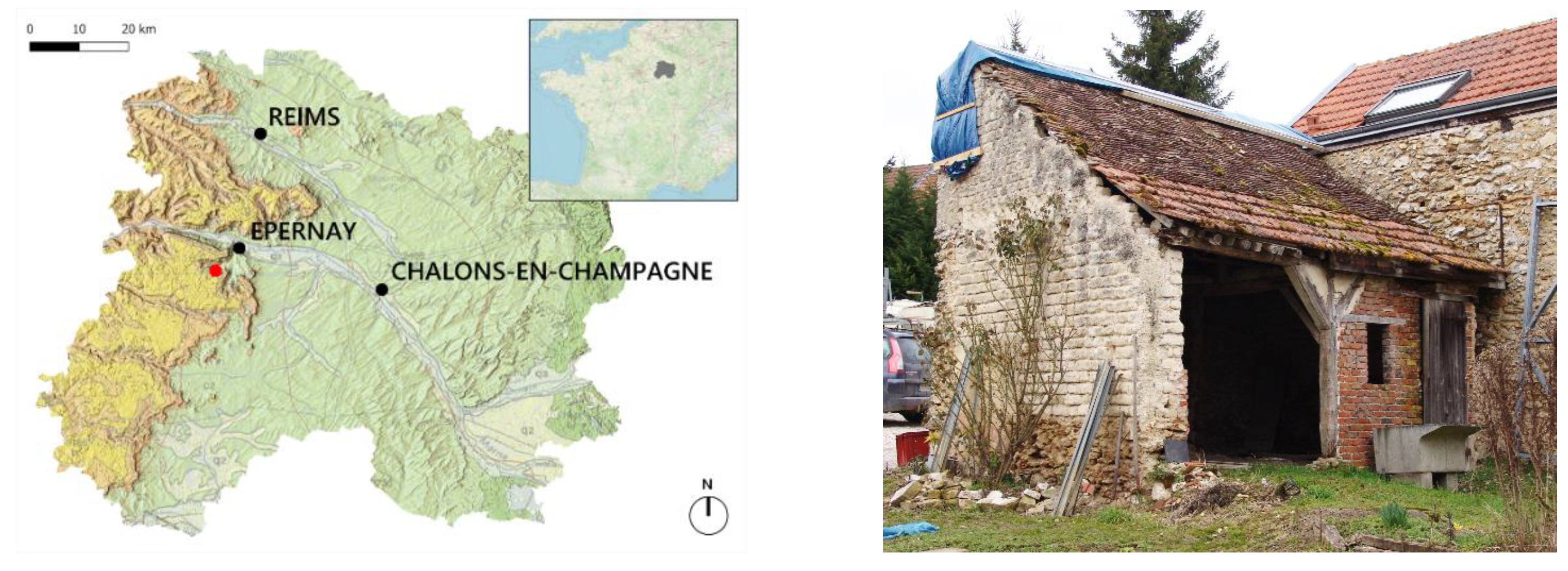
Figure 3.
a) Details on adobe constitution; (b) pottery piece; (c) tree branch.
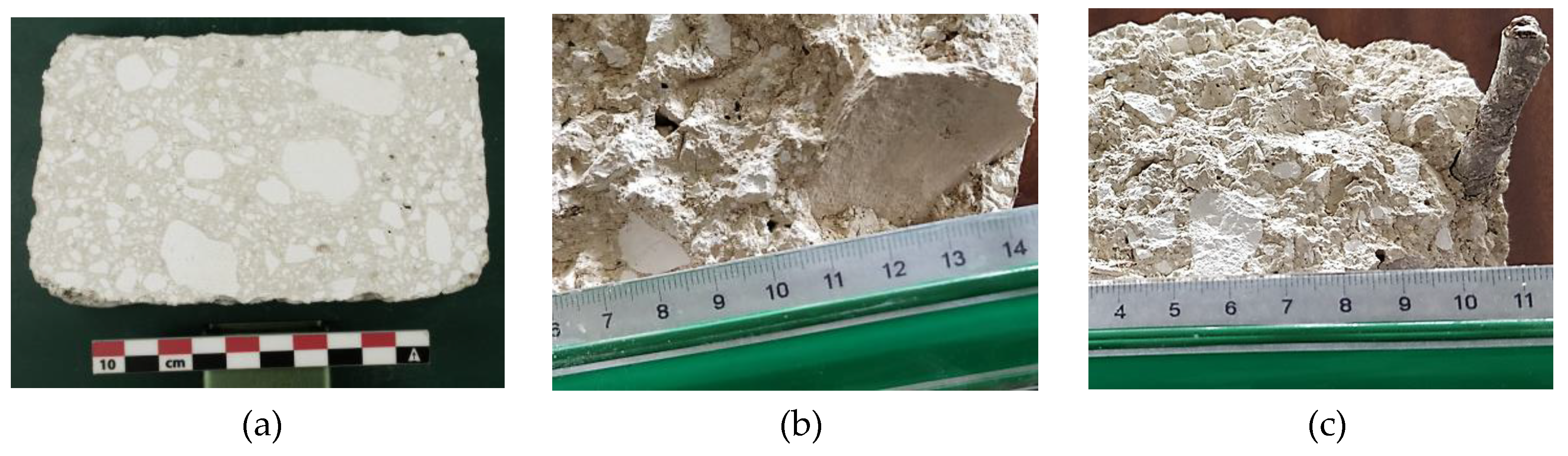
Figure 4.
Particle Size Distribution of the earth bricks.
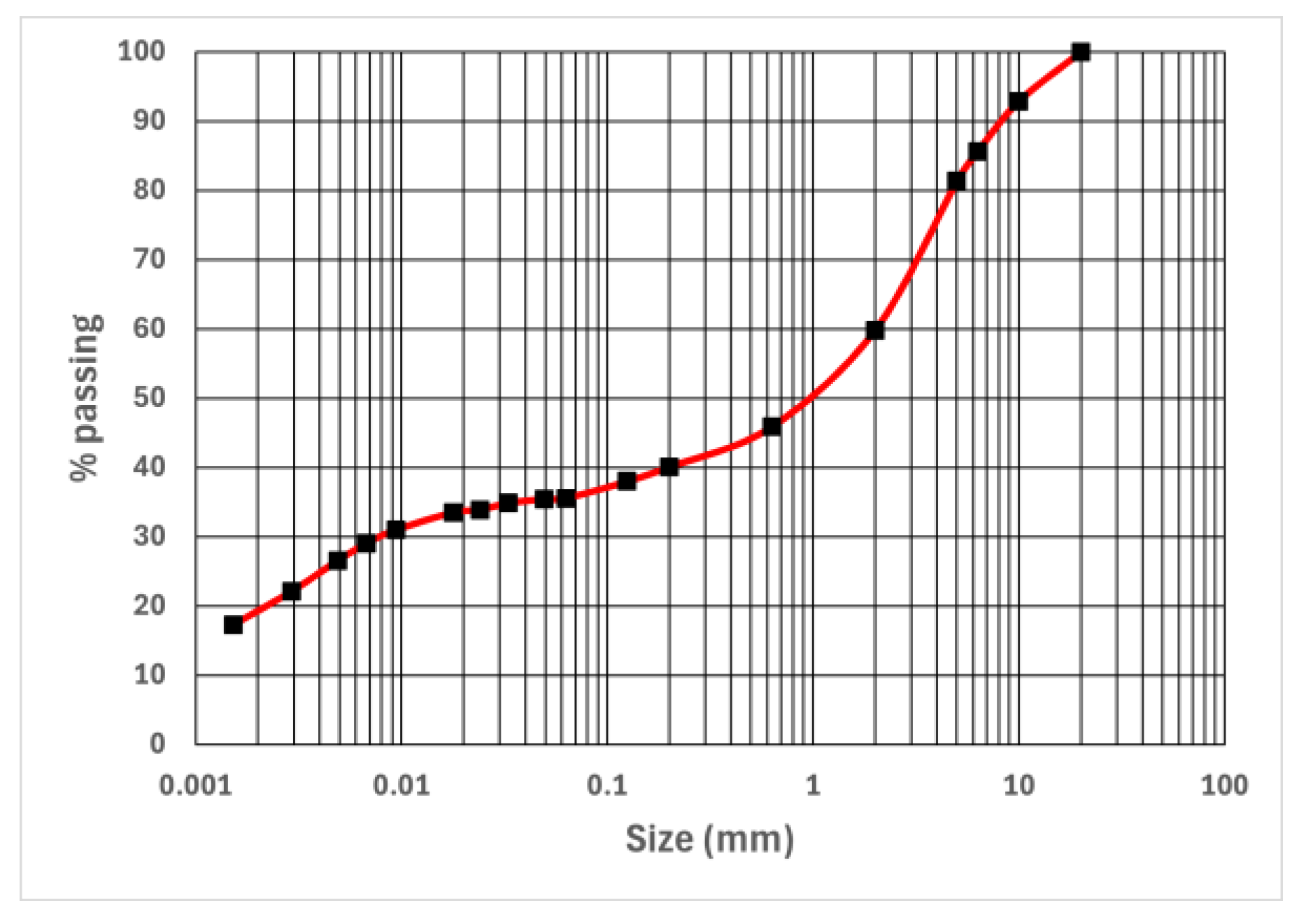
Figure 5.
Schematic soil characterization and classification according to water sensitivity, from [33].
Figure 5.
Schematic soil characterization and classification according to water sensitivity, from [33].

Figure 6.
Stress-strain experimental curves from compression tests.
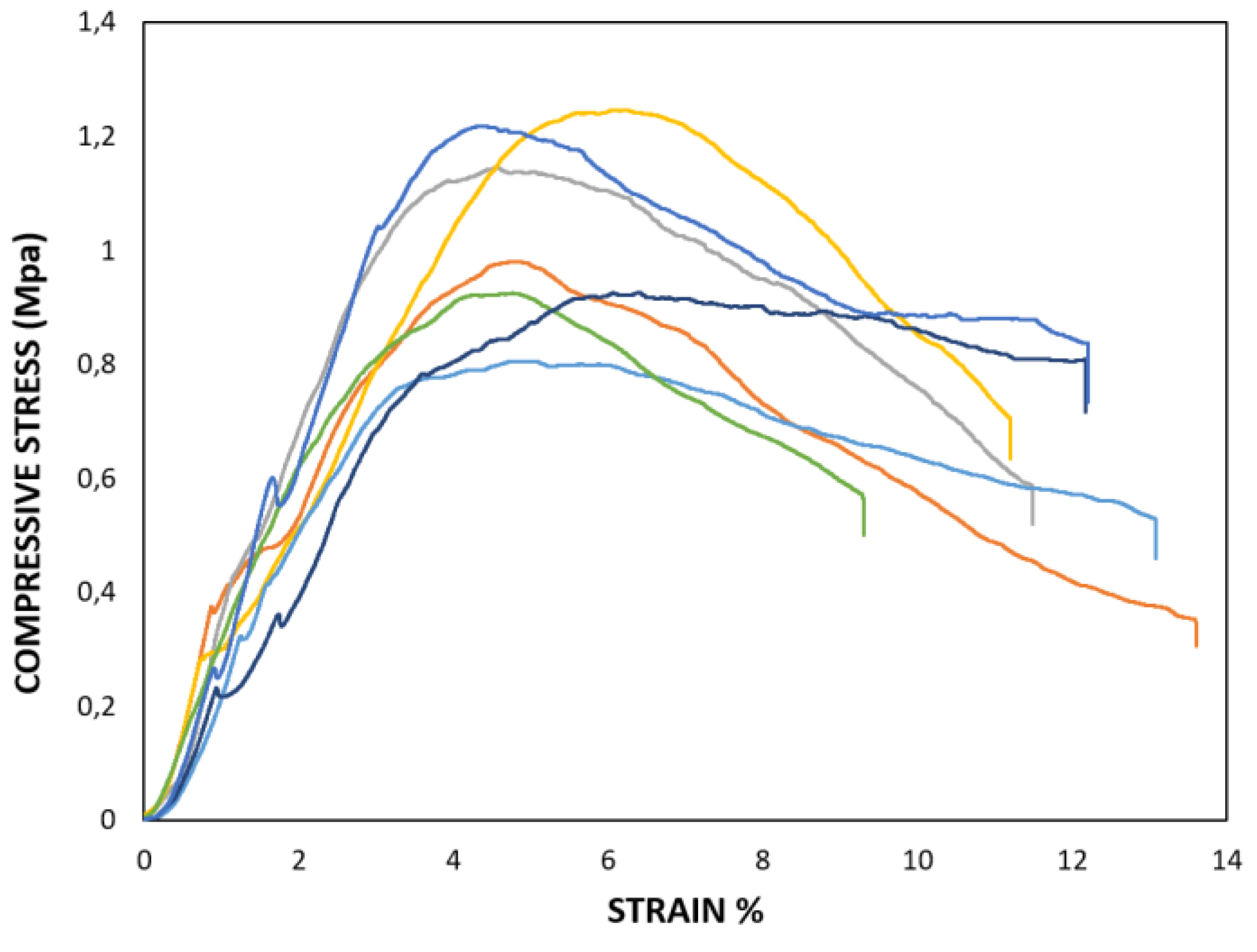
Figure 7.
Presence of vertical cracks.
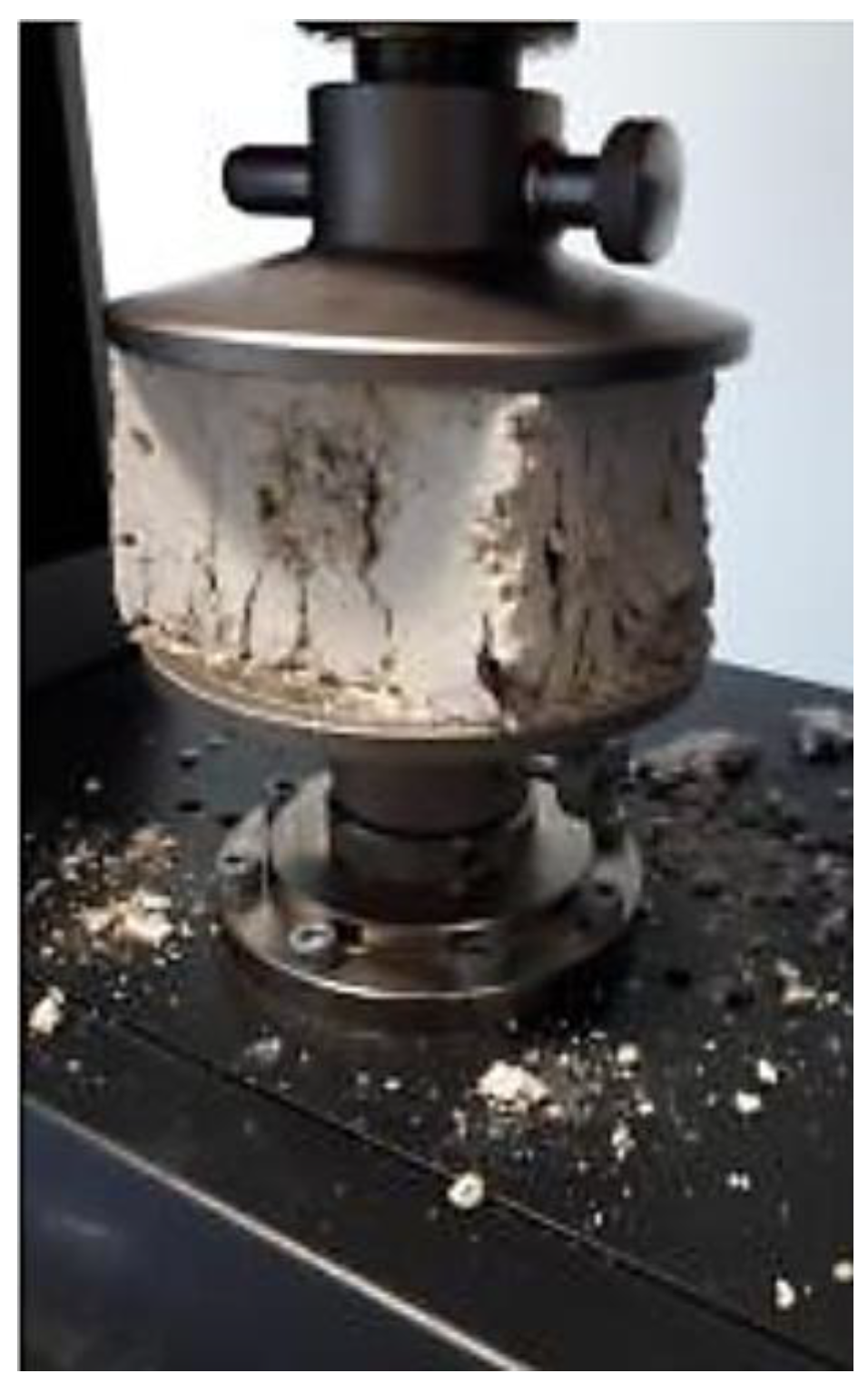
Figure 10.
Stress-strain curves for 3-point bending tests (vertical fracture drop not displayed).
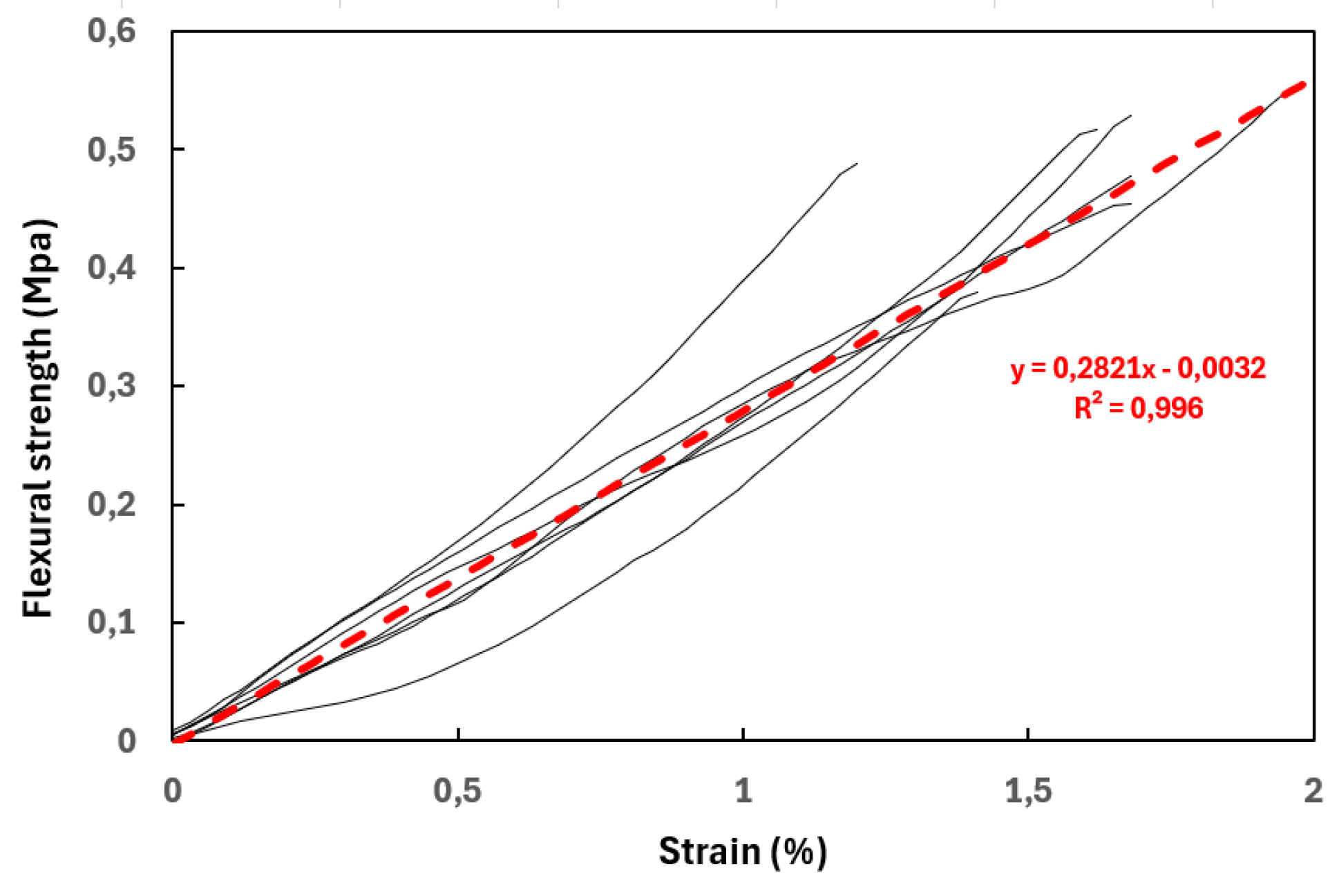
Figure 11.
Average moisture absorption-desorption cycles of adobes.
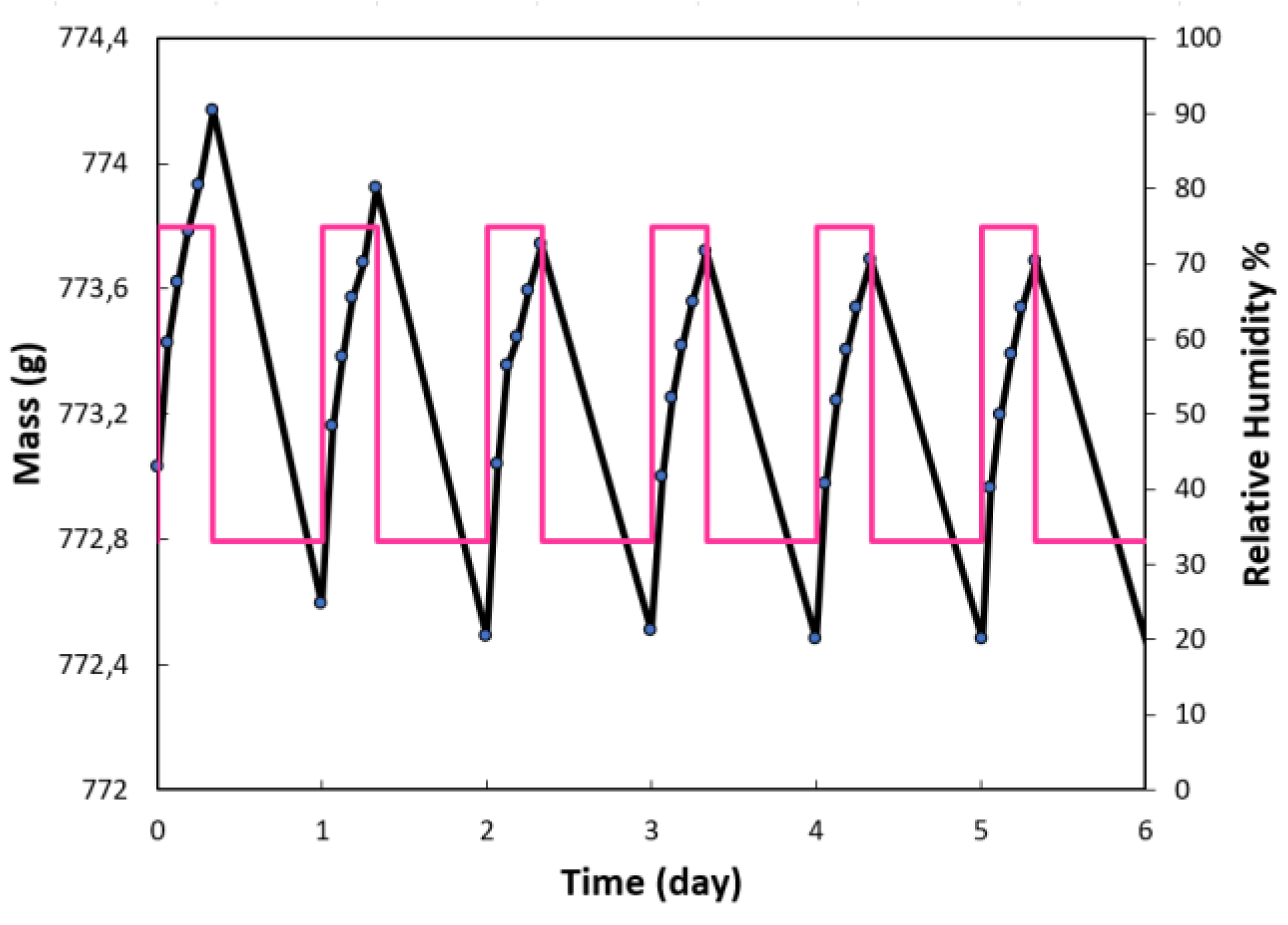
Figure 12.
Nordtest project classification [30].
Figure 12.
Nordtest project classification [30].
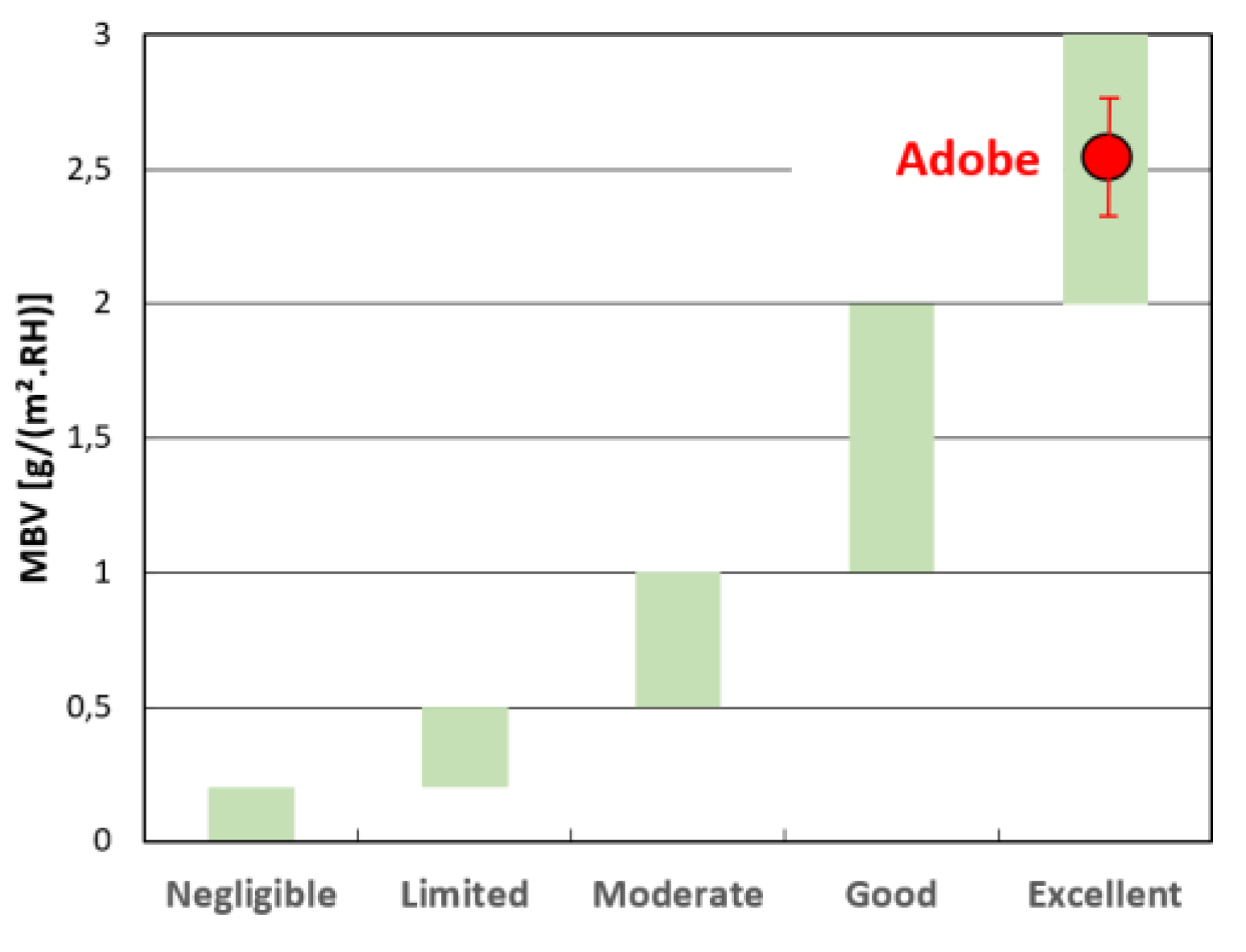
Figure 13.
Example of wall configuration.
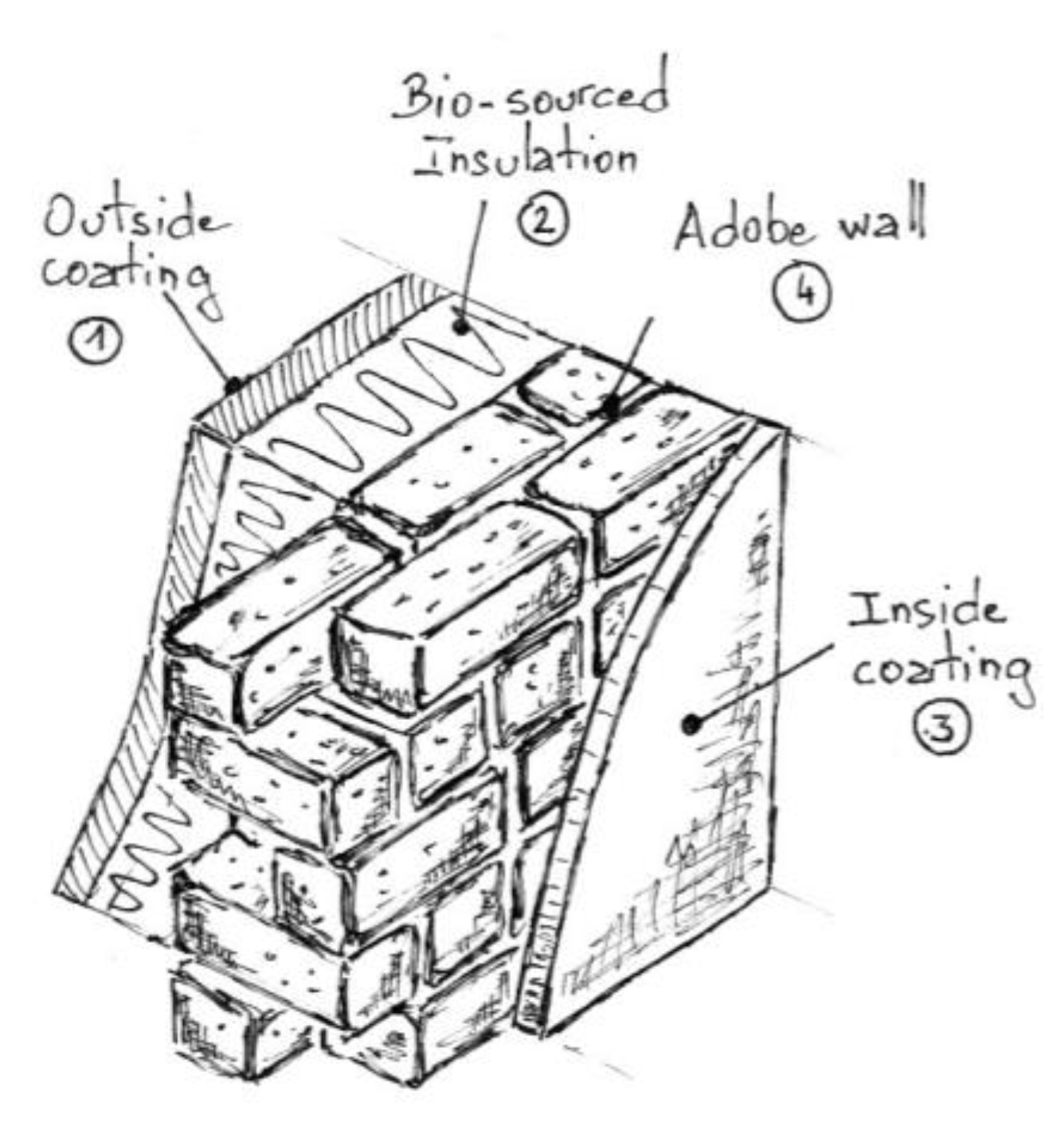
Figure 14.
Laboratory reconstruction of load-bearing adobe wall and insulating bio-sourced wall (external and internal coatings, as well as joint mortars not depicted).
Figure 14.
Laboratory reconstruction of load-bearing adobe wall and insulating bio-sourced wall (external and internal coatings, as well as joint mortars not depicted).
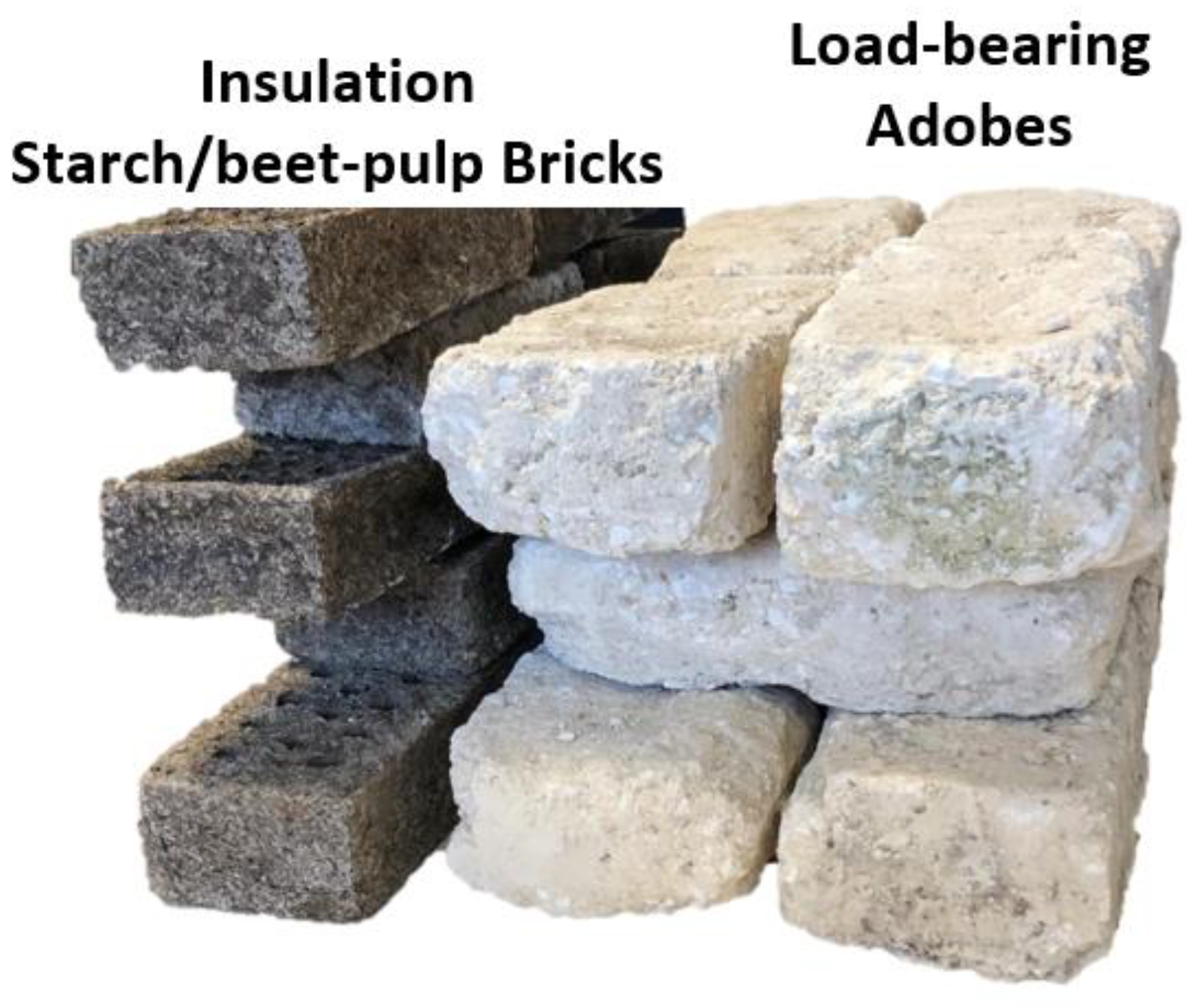

Table 1.
Mechanical properties of adobe bricks in compression.
| Sample | 1 | 2 | 3 | 4 | 5 | 6 | 7 | Average (SD) |
| (MPa) | 0.98 | 1.14 | 1.25 | 0.79 | 0.92 | 0.92 | 1.21 | 1.03 (0.17) |
| (%) | 4.85 | 4.57 | 6.08 | 4.21 | 4.27 | 6.40 | 4.25 | 4.95 (0.91) |
Table 2.
Geometric and mechanical properties of adobe bricks in flexure.
| Sample | 1 | 2 | 3 | 4 | 5 | 6 | 7 | Average (SD) |
| Width b (mm) |
145 | 138 | 145 | 129 | 138 | 134 | 152 | 140.1 (7.7) |
| Thickness h (mm) |
80 | 84 | 86 | 81 | 81 | 82 | 83 | 82.4 (2.1) |
| F (N) | 1832 | 1786 | 2242 | 1808 | 1390 | 1990 | 1749 | 1828 (258) |
| Flexural stress (MPa) |
0.49 | 0.45 | 0.52 | 0.53 | 0.38 | 0.55 | 0.41 | 0.48 (0.06) |
| Flexural strain (%) |
1.19 | 1.66 | 1.61 | 1.67 | 1.40 | 1.96 | 1.68 | 1.60 (0.24) |
Table 3.
Thermal properties of adobe and other conventional load-bearing materials [50].
Table 3.
Thermal properties of adobe and other conventional load-bearing materials [50].
| Thermal Conductivity (W/(m.K)) | Specific heat capacity (kJ/(kg.K)) | Diffusivity (10-6 m²/s) |
|
| Adobe (present study) |
0.669 (0.033) |
1.109 (0.004) |
0.414 (0.019) |
| Wood oak | 0.17 | 1.6 | 0.15 |
| Plain brick | 1.10 | 0.9 | 0.61 |
| Plain concrete | 2.1 | 1.0 | 0.83 |
| Designation | Thickness e (m) | Thermal conductivity λ (W/m.K) | |
| ① | Hemp concrete Outside coating | 0.05 | 0.095 (*) |
| ② | Fully bio-sourced Insulation |
0.16 | 0.09 (**) |
| ③ | Earth-based Inside Coating | 0.015 | 0.67 |
| ④ | Adobe (present study) |
TBD, | 0.67 |
Disclaimer/Publisher’s Note: The statements, opinions and data contained in all publications are solely those of the individual author(s) and contributor(s) and not of MDPI and/or the editor(s). MDPI and/or the editor(s) disclaim responsibility for any injury to people or property resulting from any ideas, methods, instructions or products referred to in the content. |
© 2024 by the authors. Licensee MDPI, Basel, Switzerland. This article is an open access article distributed under the terms and conditions of the Creative Commons Attribution (CC BY) license (http://creativecommons.org/licenses/by/4.0/).
Copyright: This open access article is published under a Creative Commons CC BY 4.0 license, which permit the free download, distribution, and reuse, provided that the author and preprint are cited in any reuse.


