

Submitted:
01 April 2024
Posted:
02 April 2024
You are already at the latest version
Abstract
The growing adoption of electric propulsion systems in Maritime Autonomous Surface Ships (MASS) necessitates advancements in shipboard electronics for safe, efficient, and reliable operation. These advancements are crucial for tasks like real-time sensor data processing, control algorithms for autonomous navigation, and robust decision-making capabilities. This study investigates research trends in MASS using bibliographic analysis to inform policy and future research directions in this evolving field. We analyze 3,363 MASS-related articles from the Web of Science database, employing co-occurrence word analysis and latent Dirichlet allocation (LDA) topic modeling. Findings reveal a rapidly growing field dominated by image recognition research. Keywords like "datum," "image," and "detection" suggest a focus on collecting and analyzing marine data, particularly with deep learning for synthetic aperture radar imagery. LDA confirms this, with "Image analysis and classification research" as the leading topic. The study also identifies national and organizational leaders in MASS research. However, research on Arctic routes lags behind other areas. This work provides valuable insights for policymakers and researchers, promoting a deeper understanding of MASS and informing future policy and research agendas for the integration of electric propulsion systems in the maritime industry.
Keywords:
Maritime Autonomous Surface Ships (MASS)
; Research trends
; Text Mining
; Latent Dirichlet allocation (LDA) topic modeling
; Shipboard Electronics
; Shipping industry
1.
1.1. Backgrounds
The advancement of automation systems and the integration of IoT technology are ushering in a transformative era for maritime operations [1]. This paradigm shift has given rise to innovative ship operations, including smart ships, remote operating vessels, and digital twin ships [2,3]. Recognizing the potential of these technological strides, the International Maritime Organization (IMO) has actively engaged in discussions around the safe operation of Maritime Autonomous Surface Ships (MASS).
Therefore, with the advancement of the ship intelligence industry and the desire to ensure that human factors do not compromise ship navigation safety, the research and development of collision avoidance technology for intelligent ships/unmanned surface vehicles (USVs) has become a common trend. In 2017–2018, the International Maritime Organization (IMO) proposed a new action plan on Maritime Autonomous Surface Ships (MASS) and drafted relevant conventions and regulations to address several problems, such as safety and environmental protection. The IMO refers to MASSs as ships that, to varying degrees, can operate independently of human involvement [2,3]. MASS research has emerged as a hotspot in the international maritime field. The research, development, and adoption of MASS are becoming the shipbuilding industry’s development trend. The shipping industry and relevant scientific research institutions have invested in research on autonomous ships with varying degrees of autonomy and intelligence levels [4,5].
Unmanned ships are essential because they have a variety of commercial [6,7] and military [8,9] applications, and they are very attractive in that they can improve safe navigation [12], especially because most ship accidents arise from human errors [10,11]. According to Wrobel et al., boarding crews have an advantage in responding to a ship accident, but unmanned ships can significantly reduce the risk of an accident occurring in advance [13]. Because the goal of MASS is to be capable of self-decision-making, AI-based embedded software is the core of MASS and is projected to eventually replace human sailors.
Examining the research conducted in any field can highlight the critical topics in that field, the concepts with increasing or decreasing trends, or current and obsolete areas of research. A careful search of the relevant literature is largely what makes such a study possible. As seen in (Figure 1), studies on Maritime Autonomous Surface Ships are increasing exponentially from year to year [14]. Given the massive growth in MASS literature, a systematic approach to reviewing these articles is required. However, it is not practical to manually review so many publications; many problems may arise. The biggest problem is unstructured textual information that multiplies over a short time.
Complex systematic reviews can take more than a year to complete, with half of that time spent searching and ensuring proper scanning. This poses a major problem because policymakers and practitioners frequently require research results on a much shorter time scale than manual methods would allow [15]. In this study, a systematic review with text mining is proposed for the current literature review—an operation that is almost impossible to perform manually—to determine the critical topics and trends in the field of MASS. This allows for the identification of topics, frameworks, future challenges, and expectations that are of worldwide importance.
Data mining for information discovery from structured data has recently attracted the interest of a considerable number of researchers and industry professionals [16]. The main reason for the increasing usage of data mining techniques is that data can be easily stored and processed in a digital medium; manually processing and interpreting highly derived data is expensive and time-consuming. Although structured and numerical data are commonly used in data mining studies, various research articles, comments, and discussions may contain unstructured textual data about a specific field. Text mining, a data exploration method, is a trending tool for eliminating errors, saving time, and providing more precise information from unstructured texts. It uses words indexing methods to exploit the enormous amount of information available in text documents [17]. Many text-mining techniques established in the literature are frequently used for information discovery in both academia and industry [18].
The objective of this study is to identify important and trending topics by examining academic articles on “MASS” using the text mining method. The findings are expected to guide the selection of new research topics. Absences and major topics in the literature were provided by mining the enormous and increasing number of articles in a fast, systematic, and subjective manner. Consequently, it will be possible to allocate funds correctly by giving priority to more important and trending issues.
1.2. Previous Research on Maritime Autonomous Surface Ships and Bibliometrics
The literature on MASS is divided into two categories: engineering and maritime law. First, there are articles in maritime law that deal with the application of international maritime conventions to autonomous ships with navigational and structural characteristics different from those existing ships and normative responses to them. Second, there are engineering articles on the development of autonomous systems and related technologies such as AI. Under these two categories, previous studies on the technical and normative aspects of autonomous ships published in prominent journals were outlined. Furthermore, previous studies analyzing promising future technologies such as autonomous ships using scientific metrics such as text mining and networking analysis were also outlined.
According to Rodseth and Burmeisterl (2012), the development and introduction of unmanned ships could provide new career opportunities for highly qualified and maritime-experienced sailors. Through unmanned science and technology, in particular, the ability to supervise and control ship operations from land without being aboard the vessel is worthy of consideration as a new high-value occupation in the maritime industry [19].
T Kim et al.(2022) stated that despite the introduction of autonomous ships, there will naturally continue to be manned (conventional) ships for the foreseeable future, and not all ships will be autonomous. Consequently, the number of jobs for sailors is not expected to decrease dramatically in the future, but described the decrease in the number of sailors from a macro perspective rather than providing specific numbers or quantified data [20].
Eric Van Hooydonk (2014) argued that contractual issues, such as maritime law, the presence of sailors, establishing the relationship between an autonomous ship and its flag state, and whether autonomous ships can have the status of a ship, apply to autonomous ships in the era of unmanned or autonomous ships. This paper was written at a time when autonomous ships were becoming increasingly recognized by the international community, so rather than focusing on one area, it provides a comprehensive discussion of the general issues and challenges facing autonomous ships in the future [21].
Robert Veal et al. (2017) conducted an interpretative review of the appropriateness of applying the international maritime conventions applicable to conventional ships in the context of the introduction of autonomous ships, specifically the UN Convention on the Law of the Sea, the International Convention for the Safety of Life at Sea, the International Convention for the Training, Credentialing, and Standards of Watchkeeping of Sailors, and the International Rules for the Prevention of Collisions at Sea. They concluded that the current norms can be applied to autonomous ships in the same category as conventional ships, provided that navigational safety and airworthiness are ensured [22].
The paper by Kuntao Cui et al. (2019) proposes an optimized offloading mechanism to minimize computation task offloading delays for unmanned surface vehicles (USVs) in rapidly changing marine environments. They developed the Adaptive Upper Confidence Boundary (AUCB) algorithm based on multi-armed bandit (MAB) theory. This algorithm aids USV clusters in effectively adapting to maritime vehicular fog computing networks. Simulation results demonstrate that the AUCB algorithm quickly converges to the optimal computation task offloading strategy under varying data load conditions [23].
Kim et al. (2022) investigated the legal concerns arising in the shipping and shipbuilding industries using MASS. This transition to highly autonomous software-centric structures necessitates a new legal framework. The study anticipates legal concerns in MASS commercial operation by comparing the Republic of Korea and the United Kingdom. The results contribute to defining the manufacturing responsibility for autonomous ship-embedded software and proposing legal policy changes. Identified legal concerns include software product liability and broader legal policy directions. This study proposes practical solutions for balancing damage relief and technological progress for maritime safety [24].
Santha Kumar and Kallyaperumal (2015) conducted a bibliometric analysis using the Web of Science database, focusing on mobile technology research. They quantitatively assessed publication trends, growth rates, and collaboration patterns to identify numerical trends in the field [25].
Xiao et al. (2017) used the Web of Science database to analyze trends in the development of organic photovoltaic technology, creating search expressions to include related technologies such as polymer solar cells and organic solar cells, and analyzing research patterns from various perspectives such as keyword trends, citation relationships, and collaborative research [26].
Yilong Hao (2020) quantitatively analyzed 513 articles on aquaponics from 2000 to 2019 in the Web of Science database. The findings emphasize system components, wastewater treatment, nutrient management, and production. Regional differences in research fields are evident, with China, the United States, and Europe emphasizing technology application, system optimization, and role exploration [27].
Eunhye Park (2021) investigated the factors influencing citation counts in academic publications in the tourism and hospitality literature. This study used unsupervised topic modeling on 9910 articles from first-tier journals on the Web of Science for over a decade. The findings reveal that articles on online media and the sharing economy receive high citations, whereas recently published articles on specific topics such as rural tourism and ecotourism are frequently cited. This study contributes significantly to the hospitality and tourism literature by examining the impact of topic structure and originality, identified through text mining, on citation counts [28].
1.3. Theoretical Background on of Maritime Autonomous Surface Ships
1.3.1. Definition of Maritime Autonomous Surface Ships
Before 2017, the name and concept of autonomous ships were used in various meanings and terms within the International Maritime Organization (IMO), a specialized agency of the United Nations (UN) with a strong influence on the shipbuilding and shipping industry, such as smart ship, digital ship, unmanned ship, remote ship, and automated ship. In 2017, eight countries, including Korea, proposed a new review of IMO laws governing the operation of autonomous ships at sea in the 20th agenda of the 98th session of the IMO MSC [29]. The term MASS was used for the first time in this study. Since then, numerous terminologies have been used interchangeably to define and describe MASS, although the implied meaning of the term may be the same, and disputes have continued without being clearly defined. Because of discussions at the IMO MSC’s 99th meeting in 2018, it was decided that “MASS definitions and concepts of different types and levels of autonomy, automation, operation, and manning should be provisional, neutral in terms of technology, and developed for exercise only. The definition has been agreed upon as “a vessel capable of operating independently without human interference at various levels of automation” [29]. Even now, the names and concepts of autonomous ships differ slightly depending on the industry and research groups, but in the end, autonomous ships, no matter what form they take, are characterized by the fact that their operators refer to the exclusion of human factors, unlike conventional ships, and in the end, they have the commonality of being ships that operate independently without any interference from human factors [30]. In summary, it is as follows: Table 1.
1.3.2. Stages of Autonomy for Autonomous Ships
The IMO MSC’s 99th meeting, which agreed on the definition of autonomous ships, classified ship autonomy into four stages, as shown in Table 2. The four stages of autonomy are based on the ship’s operator and the system (automated, unmanned, and fully autonomous), but given the current level of technological development for AI systems, the stages of autonomy of autonomous ships could change at any time as related technologies develop. However, because such a conceptual distinction may be helpful in future Code application and technological development, it is considered reasonable to follow the IMO’s four-stage distinction based on a comprehensive consideration of the international impact and potential future use of the autonomy stages, rather than a technically overly granular distinction.
1.4. The Need to Develop Maritime Autonomous Surface Ships
The benefits of constructing of Maritime Autonomous Surface Ships for the shipbuilding and shipping industries include the ability to build eco-friendly ships depending on how they are built. The air environment is protected using technologies such as electric propulsion, and since there is no crew on board, little waste such as sewage and gray water is generated, contributing to the protection of the maritime environment [31]. Second, it can significantly reduce ship operating costs by reducing crew costs [32]. Crew costs account for a significant number of ship operating costs, and autonomous ship operations can reduce crew costs for ship owners. Furthermore, it is not necessary to carry survival supplies or design a separate living area for the crew, which can contribute to cost savings in securing space, as well as significant savings in fuel oil [33]. Third, autonomous ships can contribute significantly to maritime safety and the reduction and prevention of marine pollution. Many maritime accidents are directly or indirectly caused by sailors’ inattention, intentional negligence, and breach of duty of care; hence, eliminating the human factor can help prevent maritime accidents from occurring in the first place [34]. Finally, autonomous ships can significantly contribute to improving sailors’ working conditions. If autonomous ships are commercialized, a new working environment will arise in which sailors can live with their families while monitoring the ship’s operational status from an onshore control center and being guaranteed a set commute time [35].
2. Materials and Methods
2.1. Research Subjects
2.1.1. Collecting Research Data
Clarivate’s Web of Science database was used to construct the analysis data for this study. Web of Science is a scholarly citation indexing database first developed in the 1950s and provides full-text access to SCI(E) research publications (Yoon et al., 2023). To extract data from research papers on autonomous ships, we used the search expression “‘Maritime Autonomous surface ship’ (All Fields) or ‘Smart ship’ (All Fields) or ‘Unmanned Ship’ (All Fields) or ‘Automated Ship’ (All Fields) or ‘Remote Ship’ (All fields),” which includes all common terms in Table 1, given that the names and concepts of Maritime Autonomous surface ships differ slightly across industries and research groups. The search period was set to five years from 2018, the year of the IMO MSC 99th meeting, when the concept of autonomous ships was agreed upon, to 2022, resulting in an analysis database of 3,363 cases.
2.1.2. Refining Research Data
Before analysis, the generated database was subjected to the following data pretreatment procedures. Because the keyword data of articles are calculated as entered by the authors, they are often entered differently in the data even though they mean the same word due to case distinctions and subscripts (-) [36]. Therefore, if the data is used as it is, errors will occur in the analysis results, hence the errors were minimized by refining the keyword data as shown in Table 1. Next, Clarivate’s Incites was used to analyze the number of articles published by major countries and research institutes researching autonomous ships to derive trends and identify domestic and international institutions with strengths in autonomous ships. Furthermore, the keywords of the articles were analyzed periodically to scientifically analyze the research trends. NetMiner 4, a Python-based analytic program was used, and co-occurrence word analysis was conducted on the abstracts of the bibliographic information to derive the main keywords. Furthermore, topic modeling was conducted to analyze eight major topics.
2.2. Research Methods
A research model was designed for this study as shown in Figure 2. First, the concept and characteristics of autonomous ships were analyzed based on previous studies, and then bibliographic data on autonomous ships were collected from the Web of Science database. The collected data was refined by unifying terms, removing unused terms, and filtering with a dictionary.
2.2.1. Co-occurrence Analysis
Co-occurrence word analysis is a way of visually representing topics in a set of documents by using the co-occurrence frequency of major keywords or classification codes, and it is used to identify topic trends and temporal changes in various fields [37]. In the case of n-gram analysis, which is often used in text mining, it has the advantage of being useful for identifying the relationship between adjacent keywords but has a disadvantage that the correlation between the keywords cannot be confirmed if the keywords that co-occur frequently in the same document do not appear one after another. Therefore, in this study, co-occurrence network analysis was conducted to check the correlation between co-occurring keywords in a document.
A network in co-occurrence network analysis comprises nodes and connections (links) between nodes, with each node representing a keyword and each link representing a relationship between keywords. To visually represent the relationship between keywords, each keyword is represented by a dot, and the link between keywords is represented by a line, and the thickness of the line varies depending on how often the two keywords are used together [38]. If a network analysis is conducted for all keywords, it becomes difficult to grasp the meaning due to too many nodes and connections, hence the range of nodes to be included in the analysis must be determined [39]. In this study, the top 20 keywords were subjected to a pathfinder network (PFNet), and the complex network represented by the input matrix was reduced by leaving only important links for each node so that the overall structure could be grasped at a glance [40].
2.2.2. LDA Topic Modeling
Depending on the calculation method used, various types of algorithms, including individual analysis techniques, can be used for topic modeling. In this study, the latent Dirichlet allocation (LDA) technique was used. LDA is commonly used when subject areas across articles have a strong tendency to be reduced to a single contact point; it is also used to derive topic modeling results for information technology articles containing specific domain information such as papers, news, and patents [41,42]. To derive analysis results using topic modeling, the parameter values of alpha, beta, and the number of topics must be arbitrarily specified in the topic modeling analysis settings. However, both alpha and beta range from 0.01 to 0.99 and can be divided into thousands of digits [43]. Furthermore, determining the number of cases, calculating the number of topics, and finding the best topic organization can be challenging. These challenges can be overcome by using the coherence coefficient to determine the appropriate number of topics and keywords within topics [44].
The coherence coefficient is a virtual proxy for the number of cases with the above-mentioned alpha, beta, and number of topic settings, and it uses the number of cas-es with coherence values close to 1. To assess the best number of topics and parameters for topic modeling results, the number of cases for alpha and beta values in this study was set to 0.01 - 0.99. Considering the total number of articles, the number of topics ranged from two to ten, and the consistency index was calculated for the number of all cases. Therefore, by comparing the topic composition according to the number of topics, core topics that show a high density of keyword composition in any set-ting and variable topics that indicate changes depending on the setting were derived, and the meaning and implications of the subject area implied by each topic were proposed. Figure 3 shows the conceptual model of LDA topic modeling used in this study.
The most challenging and trial-and-error aspect of LDA topic analysis is determining the number of topics [45]. Therefore, the coherence score is often used as a reference index for determining the number of topics. In this study, topic cohesion is used to determine the number of topics, and the ‘Cv’ metric is applied, which is rated as having excellent performance among several similar indices. Topic cohesion is a technique for determining the interpretability of an extracted topic from the words comprising that topic, reflecting the way humans interpret text, and assumes that the higher the average of the pairwise similarity between words in an extracted topic’s word set, the higher the topic’s cohesion [46]. ‘Cv’ is a method proposed by Röder et al. [47] that depicts a keyword as a context vector expressing its co-occurrence frequency with surrounding terms, and arithmetic averages pairwise similarity between keywords by calculating cosine similarity [47]. It is a more accurate measure of similarity because it takes into account the relationship with neighboring words rather than calculating the similarity between direct words [47].

3. Results
3.1. Descriptive Statistics Analysis Results
3.1.1. Status by Country
Looking at the status of publications by country, most countries are seeing an increase in the number of autonomous ship research articles. As shown in Table 3, China has the highest proportion (560 articles as of 2022), followed by the United States (95 articles) and Korea (76 papers). In particular, in 2018, the number of articles from China, which ranked first, and the United States, which ranked second, was only approximately 1.4 times, but in 2022, the difference increased substantially to 5.9 times. China is rapidly increasing Maritime Autonomous Surface Ships research with an average annual growth rate of 47%.
3.1.2. Status by Institution
The institutional analysis, as detailed in Table 6, reveals a consistent upward trend in research activity across various organizations. Notably, in China, prominent entities like the Chinese Academy of Sciences and the University of Chinese Academy of Sciences, both governmental institutions, lead in this domain. This trend indicates a government-driven expansion in autonomous ship research, emphasizing the significant role of state-led research and development efforts.

Table 4.
Status by Institution.
| Status | 2018 | 2019 | 2020 | 2021 | 2022 | 2018~2022) |
|---|---|---|---|---|---|---|
| 1 | CHINESE ACADEMY OF SCIENCES (19 case) |
CHINESE ACADEMY OF SCIENCES (33 case) |
CHINESE ACADEMY OF SCIENCES (38 case) |
CHINESE ACADEMY OF SCIENCES (50 case) |
CHINESE ACADEMY OF SCIENCES (65 case) |
CHINESE ACADEMY OF SCIENCES (205 case) |
| 2 | UNIVERSITY OF CHINESE ACADEMY OF SCIENCE (14 case) |
UNIVERSITY OF CALIFORNIA SYSTEM (25 case) |
WUHAN UNIVERSITY (30 case) |
DALIAN MARITIME UNIVERSITY (46 case) |
DALIAN MARITIME UNIVERSITY (47 case) |
DALIAN MARITIME UNIVERSITY (132 case) |
| 3 | HELMHOLTZ ASSOCIATIO (13 case) |
HELMHOLTZ ASSOCIATIO (24 case) |
DALIAN MARITIME UNIVERSITY (21 case) |
WUHAN UNIVERSITY (29 case) |
UNIVERSITY OF CHINESE ACADEMY OF SCIENCE (40 case) |
UNIVERSITY OF CHINESE ACADEMY OF SCIENCE (115 case) |
| 4 | CENTRE NATIONAL DE LA RECHERCHE SCIENTIFIQUE (11 case) |
UNIVERSITY OF CHINESE ACADEMY OF SCIENCE (16 case) |
UNIVERSITY OF CHINESE ACADEMY OF SCIENCES (20 case) |
XIDAN UNIVERSITY (26 case) |
WUHAN UNIVERSITY (38 case) |
WUHAN UNIVERSITY (111 case) |
| 5 | NATIONAL UNIVERSITY OF DEFENSE TECHNOLOGY CHINA (11 case) |
WUHAN UNIVERSITY (16 case) |
SEOUL NATIONAL UNIVERSITY (13 case) |
UNIVERSITY OF CHINESE ACADEMY OF SCIENCE (25 case) |
XIDAN UNIVERSITY (33 case) |
XIDAN UNIVERSITY (86 case) |
3.2. Results of Co-Occurrence Analysis
A word network was created to convert the bimodal network between words and articles into an unimodal network between words and words to analyze the relationship between the main keywords. The top 20 main keywords were selected based on the number of articles and converted into a network structure with a co-occurrence of words and words, resulting in 19 links.
Table 5.
Results of Co-occurrence Analysis.
| Status | Main keywords (frequency of occurrence) | Status | Main keywords (frequency of occurrence) |
| 1 | detection (3,428) | 11 | time (1,178) |
| 2 | datum (2,991) | 12 | water (1,166) |
| 3 | image (2,876) | 13 | area (1,101) |
| 4 | system (2,590) | 14 | surface (1,096) |
| 5 | SAR (1,901) | 15 | control (991) |
| 6 | target (1,708) | 16 | accuracy (976) |
| 7 | network (1,653) | 17 | radar (950) |
| 8 | algorithm (1,625) | 18 | dataset (944) |
| 9 | sea (1,430) | 19 | object (929) |
| 10 | performance (1,383) | 20 | sensing (882) |
Because converting the binary mode between thesis and word to unimodal mode between word and n-word may result in too many links, Path-Finer Network Scaling (PFnet) was used to visually represent the network between words by leaving only highly relevant relationships between words, as Im et al. [48] had done previously. The result of reducing the network to 19 links with a high correlation between words is shown in Figure 4. The wider the circle, the more frequently the keywords are used based on the number of articles, and the thicker the connection line, the stronger the link strength [37].
Looking at the network structure of the top highly relevant keywords, it can be seen that there is a high concentration of keywords related to situational awareness, which is a key technology for autonomous ships, such as ‘datum,’ ‘image,’ and ‘detection’. ‘Datum’ is connected to ‘sea,’ ‘condition,’ ‘surface,’ ‘area,’ etc., and can be seen as including all types of data such as sea currents and areas. Furthermore, in the case of ‘image,’ it seems that deep learning algorithms such as CNN (Convolutional Neural Network) are used based on SAR (Synthetic Aperture Radar) images to train the computer with various image data situation recognition technologies. In the case of ‘detection,’ it is clear that researchers mainly conducted ‘performance’ tests about detecting and locating all the various objects that already exist in the water. Conversely, deep learning technology is being used by researchers in the field of autonomous ships, to learn SAR images while collecting various marine data.
3.3. Results of LDA Topic Modeling
3.3.1. Coherence Score Measurement Results
To determine the ideal number of topics, α was set to 0.1, β to 0.01, and Iteration to 1,000, according to W. Zhao et al. [49]. The number of topics was then increased from 2 to 10 to simulate the coherence score, and the eight topics with the highest score (0.629) were determined as shown in Figure 5.
Following that, the top 10 keywords with the highest frequency for each topic were summarized, as shown in Table 6, and a comprehensive topic name was assigned by reviewing the topic’s keywords and the abstracts from research bibliographies. We received assistance in determining the topic names through collaboration with researchers who have worked in maritime public institutions for more than five years and professors who have conducted text mining research.
Table 6.
Summary of Topic Modelling Analysis Results.
| Topic 1 (11.98%) | Topic 2 (9.28%) | Topic 3 (7.94%) | Topic 4 (13.83%) | ||||||||
|---|---|---|---|---|---|---|---|---|---|---|---|
| Rank | Keyword | Prob | Rank | Keyword | Prob | Rank | Keyword | Prob | Rank | Keyword | Prob |
| 1 | detection | 0.035 | 1 | datum | 0.037 | 1 | ice | 0.031 | 1 | system | 0.033 |
| 2 | target | 0.034 | 2 | measurement | 0.019 | 2 | concentration | 0.02 | 2 | control | 0.026 |
| 3 | image | 0.03 | 3 | satellite | 0.018 | 3 | water | 0.015 | 3 | navigation | 0.015 |
| 4 | SAR | 0.028 | 4 | wave | 0.017 | 4 | sea | 0.014 | 4 | algorithm | 0.015 |
| 5 | radar | 0.027 | 5 | surface | 0.016 | 5 | Arctic | 0.012 | 5 | collision | 0.013 |
| 6 | sea | 0.02 | 6 | water | 0.016 | 6 | region | 0.011 | 6 | datum | 0.012 |
| 7 | datum | 0.018 | 7 | ocean | 0.015 | 7 | emission | 0.01 | 7 | motion | 0.008 |
| 8 | algorithm | 0.015 | 8 | wind | 0.014 | 8 | cloud | 0.009 | 8 | simulation | 0.008 |
| 9 | wake | 0.011 | 9 | observation | 0.012 | 9 | surface | 0.009 | 9 | surface | 0.008 |
| 10 | clutter | 0.011 | 10 | sensing | 0.011 | 10 | particle | 0.009 | 10 | path | 0.008 |
| Situational awareness technology research | Ocean observation and sensing research | Arctic navigation research | Navigation decision-making and control technology research | ||||||||
| Topic 5 (14.87%) | Topic 6 (8.15%) | Topic 7 (19.60%) | Topic 8 (14.36%) | ||||||||
| Rank | Keyword | Prob | Rank | Keyword | Prob | Rank | Keyword | Prob | Rank | Keyword | Prob |
| 1 | system | 0.022 | 1 | area | 0.021 | 1 | detection | 0.059 | 1 | system | 0.014 |
| 2 | energy | 0.017 | 2 | oil | 0.018 | 2 | image | 0.049 | 2 | technology | 0.012 |
| 3 | design | 0.013 | 3 | datum | 0.013 | 3 | network | 0.031 | 3 | shipping | 0.011 |
| 4 | power | 0.013 | 4 | water | 0.012 | 4 | SAR | 0.028 | 4 | datum | 0.01 |
| 5 | structure | 0.01 | 5 | marine | 0.01 | 5 | object | 0.02 | 5 | service | 0.008 |
| 6 | condition | 0.009 | 6 | activity | 0.009 | 6 | dataset | 0.02 | 6 | port | 0.007 |
| 7 | performance | 0.008 | 7 | monitoring | 0.008 | 7 | target | 0.018 | 7 | development | 0.007 |
| 8 | process | 0.008 | 8 | fishing | 0.007 | 8 | performance | 0.015 | 8 | industry | 0.007 |
| 9 | fuel | 0.008 | 9 | spill | 0.007 | 9 | classification | 0.015 | 9 | management | 0.007 |
| 10 | load | 0.008 | 10 | island | 0.007 | 10 | accuracy | 0.014 | 10 | time | 0.006 |
| Research on energy and high-efficiency navigation technology | Research on the derivation of autonomous ships |
Research on image analysis and classification | Research on port connectivity | ||||||||
The topics are ① Situational awareness technology research (11.98%), ② Ocean observation and sensing research (9.28%), ③ Arctic route research (7.94%), ④ Route decision and control technology research (13.83%), ⑤ Energy and high-efficiency navigation technology research (14.87%), ⑥ Autonomous ship derivation research (8.17%), ⑦ Image analysis and classification research (19.6%), and ⑧ Port connectivity research (14.36%). Similar to the results of the co-occurrence analysis, ⑦ image analysis and classification research (19.6%) were found to have the highest proportion.
3.3.1. Topic Classification Results
To interpret the results of the topic classification results, we organized the paragraphs as follows. First, the main keywords for each topic were presented and the reason for the topic name was explained. Next, we introduced the main articles on the topic.
The first topic, titled ‘Situational Awareness Technology Research’ contains the keywords ‘detection,’ ‘target,’ ‘image,’ ‘SAR,’ and ‘radar’. Situational awareness technology is a system that detects and recognizes maritime fixtures and floating objects by fusing onboard data such as AIS, radar, and SAR images to provide risk warnings, and is a core technology for autonomous ship operation [30], and it is estimated that research has been conducted on it. Lee et al. (2018) is the representative study, and if you look at the details, ship monitoring using satellite SAR imagery is classified into three stages: ship detection, ship discrimination, and ship identification. However, because there are many studies on ship detection and identification worldwide, but only a few studies on ship identification, this study applies recent identification concepts that have shown high performance in existing airborne SAR target identification to OpenSARShip database to perform ship identification, and then analyze the performance to investigate the utility of OpenSARShip database [50].
The main keywords of the second topic are ‘datum,’ ‘measurement,’ ‘wave,’ ‘water,’ ‘ocean,’ and ‘wind’ and is titled ‘Ocean Observation and Sensing Research’. The process of observing and predicting the state of the marine environment is essential for the operation of autonomous ships. Furthermore, considering ship communication, it is necessary to produce marine environment information so that decisions can be made by analyzing only the information onboard the ship [51], and it appears that research has been conducted on this. Yucheng Zhou et al. (2021) is an example of a representative study. In general, the authors point out that in existing studies, external factors such as wind, waves, and currents are not considered in the route planning of autonomous ships, which affects navigation safety, and propose a PSO optimization algorithm that considers external factors such as wind, waves, and currents [52].
The third topic titled ‘Arctic Route Research’ has the following main keywords: ‘ice,’ ‘concentration,’ and ‘Arctic’. The Arctic Ocean Route emerged as a game-changer in the Fourth Industrial Revolution because of its high economic efficiency when used as a regular route for logistics transport, as it reduces the distance by 4,000 to 7,000 km and shortens the voyage by approximately 13 days compared to the existing Southern Sea Route via the Suez Canal [53]. However, unlike other oceans, the Arctic Ocean is characterized by a high probability of ship accidents and casualties because of iceberg collisions and difficulty in rescuing people because of the harsh climate, so many shipping companies currently tend to avoid Arctic routes. However, autonomous ships are expected to use the Arctic route in the future because they can ensure crew safety and use optimized routes that can be traveled with minimal energy. Ziaul Haque Munim et al. (2022) proposed that the three most important criteria for deploying autonomous ships on Arctic routes are operating costs, operational aspects, and environmental protection. Later, the International Maritime Organization’s (IMO’s) Polar Code states that “autonomous ships are not included in the category of ships that can operate in polar waters, hence they cannot yet operate, and further discussion is needed [54].
The fourth topic is titled ‘Research on Navigation Decision-making and Control Technology’ and contains the following keywords: ‘system,’ ‘control,’ ‘navigation,’ and ‘collision’. Route decision-making and control technology research is a key indicator for determining the autonomy level of autonomous ships, as it enables autonomous ships to find autonomous and economical routes in consideration of various situations (traffic conditions, weather, routes, etc.) and determine the best route that can be operated autonomously [30], and it can be inferred that research has been conducted on it. Xinyu Zhang et al. (2021) is a representative article that reviews the main trends in the MASS R&D industry and collision avoidance navigation technology from academia to industry. It also analyzed the composition of collision avoidance navigation, cognitive navigation using the brain, and e-navigation technologies to systematically reveal the mechanisms and principles of their efficient operation in a typical maritime environment, thereby analyzing the trend of maritime collision avoidance navigation systems [55].
The fifth topic, titled ‘Research on Energy and High-Efficiency Navigation Technology’ has the following keywords: ‘system.’ ‘energy,’ ‘power,’ and ‘condition’. Autonomous ships not only use optimized routes that can be navigated with minimum energy, but also have the advantage of integrated on-board data management which allows for energy optimization by managing all energy systems (fuel storage, fuel supply, power generation, energy storage, and energy consumption systems) installed on the ship in an integrated manner for their efficient use [30]. Konstantinos et al. (2018), propose a system that automates the energy management of propulsion engines, the largest energy producer on ships [56].
The sixth topic titled ‘Autonomous Ship Derivative Research’ has ‘area,’ ‘oil,’ ‘fishing,’ and ‘monitoring’. Deep learning, the basic technology of autonomous ships, can be applied not only to ships but also to many other marine fields. For example, FNN (Fully-connected Neural Network), and CNN (Convolutional Neural Network), etc. are used to identify red tides, oil spills, and illegal fishing boats, etc. that are deadly to fisheries and aquaculture, and Linear Regression, RNN (Recurrent Neural Network)/LSTM, etc. are used to estimate seaweed, sea water temperature, and salinity in the sea surface. Choi (2021) proposes a deep learning-based methodology to predict the occurrence of anomalous high-temperature phenomena using LSTM models [57].
The seventh topic is titled ‘Image Analysis and Classification Research’ with the following keywords ‘detection,’ ‘image,’ ‘network,’ and ‘SAR’. Perception of the surrounding environment, including detection and classification of objects is one of the essential skills required for autonomous ships [58]. Although computer vision research for ship image classification has been steadily progressing, it suffers from the lack of properly labeled databases for ship classification, which seems to have been improved. José (2022) is a sample article that uses Mask-CNN and OMRCNN-SHD techniques for small vessel detection in autonomous ship technology. Data augmentation was conducted to solve the problem of a limited number of real image samples of small ships [59].
The eighth topic is titled ‘Research related to Port Connectivity’ and contains the following keywords: ‘system,’ ‘technology,’ ‘shipping,’ ‘service,’ and ‘port’. When autonomous ships are unmanned, advanced port infrastructure that can be linked to port management, fueling, optimal loading and unloading, etc. is required, and it seems that research has been conducted on this. Anastasia Tsvetkova (2022) is a sample article that analyzes how autonomous ships will create value and for whom, and how various actors in the maritime logistics ecosystem can monetize or otherwise benefit from the innovation. Interviews were conducted with port logistics experts and relevant innovation leaders to analyze different aspects of value creation in autonomous ships [60].
3.3.2. Topic Analysis by Year
The number of articles in all eight topics increased at a compound annual growth rate (CAGR) of 33.2% from 2018 to 2022. In particular, ⑦ image analysis and classification research increased the most at 65.4%, followed by ④ route decision and control technology research at 52.4%, and ⑤ energy and high-efficiency navigation technology research at 35.1%. On the other hand, ③ research on Arctic routes increased the least at 3.3%. For Arctic routes, reliable sea ice information detection technology is needed to analyze the size, thickness, and ice concentration of drift ice during navigation [61]. However, data collection in this area is relatively difficult compared to other areas of the world, which is why research has stagnated.
4. Discussion
Autonomous ship research articles have grown at a CAGR of 30%. Maritime autonomous surface ships (MASS) research is expected to grow as policy paradigms change and related industries grow.
The analysis shows that China has the highest quality of MASS research, followed by the United States and South Korea, which are actively conducting autonomous ship research. The network structure between the most relevant keywords was found to be centered on keywords related to situational awareness technology, which is the basic technology of autonomous ships, such as ‘datum,’ ‘image,’ and ‘detection’. Similarly, research on autonomous ships is mainly conducted using deep learning technology to learn SAR images while collecting various marine data. Before conducting LDA topic modeling, the optimal number of topics, 8, was derived through Cv measurement, and finally, ① Situational awareness technology research (11.98%), ② Ocean observation and sensing research (9.28%), ③ Arctic route research (7. 94%), ④ Route decision and control technology research (13.83%), ⑤ Energy and high-efficiency navigation technology research (14.87%), ⑥ Autonomous ship derivation research (8.17%), ⑦ Image analysis and classification research (19.6%), and ⑦ Port linkage related research (14.36%). Similar to the results of the co-occurrence analysis, ⑦ Image analysis and classification research (19.6%) had the highest share, indicating that research on this topic is the most active. However, ③ Arctic route research increased the least. This is because Arctic routes require reliable sea ice information detection technology that can analyze the size, thickness, and density of ice floes during navigation [61]. However, data collection in this area is difficult compared with other areas of the world, halting further research.
5. Conclusions
This study is significant academically because it is the first to analyze the bibliography of papers related to autonomous ships and explore implications. It is difficult to predict how the introduction of autonomous ships will affect policy, society, and international security. However, it is necessary to discuss what research should be conducted in anticipation of these modifications. It is hoped that this study can be used as a preliminary study to research autonomous ships.
The limitations and recommendations of this study are as follows. First, this study was limited to the bibliography of autonomous ships in the Web of Science. Although the search expression “‘Maritime Autonomous surface ships’ (All Fields) or ‘Smart ship’ (All Fields) or ‘Unmanned Ship’ (All Fields) or ‘Automated Ship’(All Fields) or ‘Remote Ship’(All fields)” was used in previous studies, there may be some articles in other fields that are not included. Furthermore, the words frequently expressed in autonomous ships-related studies were pretreated after drafting a list of unused words using keyword frequency analysis and topic modeling, however, the researcher’s views may be included.
Second, this study analyzed only the bibliographic data of autonomous ships. It is hoped that future studies on autonomous ships will be conducted using patent data, as well as studies on various change issues using various data.
Third, this study exploratively analyzed the initial challenges of autonomous ships by collecting bibliographic data over five years from 2018 to 2022, when autonomous operation was discussed in earnest at the IMO. As the number of published papers is increasing at an average annual rate of 30%, a more advanced analysis of research trends would be possible by extending the analysis period in the next study.
Author Contributions
Data curation, H.L. and S.H.; methodology, M.N.; project administration, J.L.; resources, B.K.; software, K.K.; supervision, M.C.; writing—original draft, K.J.; writing—review and editing, J.K. All authors have read and agreed to the published version of the manuscript.
Funding
This research was funded by Science and Technology Policy Expert Development and Support Program through the Ministry of Science and ICT of Korean government, grant number S2022A066700001. The funder was not involved in the study design, collection, analysis, interpretation of data, the writing of this article or the decision to submit it for publication.
Institutional Review Board Statement
Not applicable.
Informed Consent Statement
Not applicable.
Data Availability Statement
The data presented in this study are available on request from the corresponding author.
Acknowledgments
The authors would like to express their gratitude to all the participants who generously devoted their time and effort to contribute to this research.
Conflicts of Interest
All authors declare that the research was conducted in the absence of any commercial or financial relationships that could be construed as a potential conflict of interest.
References
- Aslam, S.; Michaelides, M.P.; Herodotou, H. Internet of Ships: A Survey on Architectures, Emerging Applications, and Challenges. IEEE Internet Things J. 2020, 7, 9714–9727. [Google Scholar] [CrossRef]
- Wróbel, K.; Gil, M.; Montewka, J. Identifying research directions of a remotely-controlled merchant ship by revisiting her system-theoretic safety control structure. Saf. Sci. 2020, 129, 104797. [Google Scholar] [CrossRef]
- Mauro, F.; Kana, A. Digital twin for ship life-cycle: A critical systematic review. Ocean Eng. 2023, 269, 113479. [Google Scholar] [CrossRef]
- Hwang, H.; Joe, I. Enhancing IoT Connectivity and Services for Worldwide Ships through Multi-Region Fog Cloud Architecture Platforms. Electronics 2023, 12, 4250. [Google Scholar] [CrossRef]
- Ganchev, I.; Ji, Z.; O’droma, M. Horizontal IoT Platform EMULSION. Electronics 2023, 12, 1864. [Google Scholar] [CrossRef]
- Ramos, M.A.; Utne, I.B.; Vinnem, J.E.; Mosleh, A. Accounting for Human Failure in Autonomous Ship Operations. In Safety and Reliability—Safe Societies in a Changing World; Haugen, S., Barros, A., van Gulijk, C., Kongsvik, T., Vinnem, J.E., Eds.; CRC Press: London, UK, 2018; pp. 1–10. [Google Scholar]
- Rodseth, O.J. From Concept to Reality: Unmanned Merchant Ship Research in Norway. In Proceedings of the Underwater Technology (UT), Busan, Korea, 21–24 February 2017; p. 10. [Google Scholar]
- Chang, Y.; Zhang, C.; Wang, N. The International Legal Status of Unmanned Maritime Vehicles. Marine Policy 2020, 113, 103830. [Google Scholar] [CrossRef]
- Schmitt, M.N.; Goddard, D.S. International Law and the Military Use of Unmanned Maritime Systems. Int. Rev. Red Cross 2016, 98, 567–592. [Google Scholar] [CrossRef]
- Kim, D.; Lee, C.; Park, S.; Lim, S. Potential Liability Issues of AI-Based Embedded Software in Maritime Autonomous Surface Ships for Maritime Safety in the Korean Maritime Industry. J. Mar. Sci. Eng. 2022, 10, 498. [Google Scholar] [CrossRef]
- Utne, I.B.; Sorensen, A.J.; Schjolberg, I. Risk Management of Autonomous Marine Systems and Operations. In Proceedings of the International Conference on Offshore Mechanics and Arctic Engineering, Hamburg, Germany, 5–10 June 2017; pp. 1–10. [Google Scholar]
- Fan, C.; Wróbel, K.; Montewka, J.; Gil, M.; Wan, C.; Zhang, D. A Framework to Identify Factors Influencing Navigational Risk for Maritime Autonomous Surface Ships. Ocean Eng. 2020, 202, 107188. [Google Scholar] [CrossRef]
- Wrobel, K.; Montewka, J.; Kujala, P. Towards the Assessment of Potential Impact of Unmanned Vessels on Maritime Transportation Safety. Reliab. Eng. Syst. Saf. 2017, 165, 155–169. [Google Scholar] [CrossRef]
- Web of Science. Available online: https://www.webofscience.com (accessed on 22 November 2023).
- Ananiadou, S.; Rea, B.; Okazaki, N.; Procter, R.; Thomas, J. Supporting Systematic Reviews Using Text Mining. Soc. Sci. Comput. Rev. 2009, 27, 509–523. [Google Scholar] [CrossRef]
- Babić, D.; Kalić, M. Modeling the Selection of Airline Network Structure in a Competitive Environment. J. Air Transp. Manag. 2018, 66, 42–52. [Google Scholar] [CrossRef]
- Jun, S.; Park, S.S.; Jang, D.S. Document Clustering Method Using Dimension Reduction and Support Vector Clustering to Overcome Sparseness. Expert Syst. Appl. 2014, 41, 3204–3212. [Google Scholar] [CrossRef]
- Eroglu, Y. Text Mining Approach for Trend Tracking in Scientific Research: A Case Study on Forest Fire. Fire 2023, 6, 33. [Google Scholar] [CrossRef]
- Rødseth, Ø.J.; Burmeister, H.C. Developments Toward the Unmanned Ship. Proceedings of International Symposium Information on Ships–ISIS 2012, August 2012; Vol. 201; pp. 30–31. [Google Scholar]
- Kim, Tae-eun; Perera, Lokukaluge Prasad; Sollid, Magne-Petter; Batalden, Bjørn-Morten; Sydnes, Are Kristoffer. Safety Challenges Related to Autonomous Ships in Mixed Navigational Environments. WMU Journal of Maritime Affairs 2022, 21, 141–159. [Google Scholar] [CrossRef]
- Arnsdorf, I. Roll-Royce Drone Ships Challenge $375 Billion Industry: Freight. Bloomberg Online, 2014. Available online: Bloomberg Website (accessed on 2014. 2).
- Lim, Y.; Lee, Y.C. Issues of Autonomous Ships and Implications for Maritime Legislation under IMO Agreements. Legal Studies 2018, 18, 155–181. [Google Scholar]
- Cui, K.; Lin, B.; Sun, W.; Sun, W. Learning-Based Task Offloading for Marine Fog-Cloud Computing Networks of USV Cluster. Electronics 2019, 8, 1287. [Google Scholar] [CrossRef]
- Pritchett, P.W. Ghost Ships: Why the Law Should Embrace Unmanned Vessel Technology. Tulane Maritime Law Journal 2015, 40, 197. [Google Scholar]
- Choi, J.; Lee, S.I. An Analytical Review on the Seaworthiness of Unmanned Ships. Maritime Policy Research 2018, 33, 171–191. [Google Scholar]
- Yoon, H. Y.; Kim, J. H.; Choi, H. C. Analysis of Research Trends on Secondary Batteries Using Bibliographic. Information. Journal of Technology Innovation 2023, 26, 463–478. [Google Scholar]
- Jin, S. A.; Heo, G. E.; Jung, Y. K.; Song, M. A Study on Tracking Topic Changes Using Network Analysis Based on Twitter Data. Journal of the Korean Society for Information Management 2013, 30, 285–302. [Google Scholar] [CrossRef]
- Kim, N. G.; Lee, D. H.; Choi, H. C. Trends in Text Analysis Technology and Its Applications. Journal of the Korean Institute of Communications and Information Sciences 2017, 42, 471–492. [Google Scholar] [CrossRef]
- Park, C. S.; Jeong, J. W. Text Network Analysis: A Case of Understanding Shared Meanings Among Policy Stakeholders through Socio-Cognitive Network Analysis. In Proceedings of the Summer Annual Conference of the Korean Association for Policy Studies; 2013; pp. 828–849. [Google Scholar]
- Park, H.S.; Park, H.R. A Study on the Policy Directions related to the Introduction of Smart Maritime Autonomous Surface Ship (MASS). In Proceedings of the Spring Conference of the Korean Institute of Navigation and Port Research; 2019. [Google Scholar]
- Munim, Z. H. Autonomous ships: A review, innovative applications and future maritime business models. In Proceedings of the Supply Chain Forum: An International Journal, Vol. 20, No. 4; 2019; pp. 266–279. [Google Scholar]
- Lim, Y.; Lee, Y. C. Issues of Autonomous Ships and Implications for Maritime Legislation under IMO Agreements. Legal Studies 2018, 18, 155–181. [Google Scholar]
- Ortiz de Rozas, J. M. The Production of Unmanned Vessels and its Legal Implications in the Maritime Industry. Master’s Thesis, [University of Oslo], [Oslo], 2014. [Google Scholar]
- Pritchett, P. W. Ghost Ships: Why the Law Should Embrace Unmanned Vessel Technology. Tulane Maritime Law Journal 2015, 40, 197. [Google Scholar]
- Choi, J.; Lee, S. I. An Analytical Review on the Seaworthiness of Unmanned Ships. Maritime Policy Research 2018, 33, 171–191. [Google Scholar]
- Yoon, H. Y.; Kim, J. H.; Choi, H. C. Analysis of Research Trends on Secondary Batteries Using Bibliographic Information. Journal of Technology Innovation 2023, 26, 463–478. [Google Scholar]
- Jin, S. A.; Heo, G. E.; Jung, Y. K.; Song, M. A Study on Tracking Topic Changes Using Network Analysis Based on Twitter Data. Journal of the Korean Society for Information Management 2013, 30, 285–302. [Google Scholar] [CrossRef]
- Kim, N. G.; Lee, D. H.; Choi, H. C. Trends in Text Analysis Technology and Its Applications. Journal of the Korean Institute of Communications and Information Sciences 2017, 42, 471–492. [Google Scholar] [CrossRef]
- Park, C. S.; Jeong, J. W. Text Network Analysis: A Case of Understanding Shared Meanings Among Policy Stakeholders through Socio-Cognitive Network Analysis. In Proceedings of the Summer Annual Conference of the Korean Association for Policy Studies; 2013; pp. 828–849. [Google Scholar]
- Schvaneveldt, Roger W. Pathfinder Associative Networks: Studies in Knowledge Organization. Ablex Publishing.
- Jelodar, H.; Wang, Y.; Yuan, C.; Feng, X. Latent Dirichlet Allocation (LDA) and Topic Modeling: Models, Applications, a Survey. Multimed. Tools Appl. 2019, 78, 15169–15211. [Google Scholar] [CrossRef]
- Tian, C.; Zhang, J.; Liu, D.; Wang, Q.; Lin, S. Technological Topic Analysis of Standard-Essential Patents Based on the Improved Latent Dirichlet Allocation (LDA) Model. Technol. Anal. Strat. Manag. 2022, pp. 1–16.
- Vorontsov, K.; Potapenko, A.; Plavin, A. Additive Regularization of Topic Models for Topic Selection and Sparse Factorization. In Proceedings of the Statistical Learning and Data Sciences: Third International Symposium, SLDS 2015, Egham, UK, 20–23 April 2015; pp. 193–202. [Google Scholar]
- O’Callaghan, D.; Greene, D.; Carthy, J.; Cunningham, P. An Analysis of the Coherence of Descriptors in Topic Modeling. Expert Syst. Appl. 2015, 42, 5645–5657. [Google Scholar] [CrossRef]
- Durbin, J.; Watson, G.S. Testing for Serial Correlation in Least Squares Regression. III. Biometrika 1971, 58, 1–9. [Google Scholar] [CrossRef]
- Seo, Y.; Kim, K.; Kim, J.-S. Trends of Nursing Research on Accidental Falls: A Topic Modeling Analysis. Int. J. Environ. Res. Public Health 2021, 18, 3963. [Google Scholar] [CrossRef]
- Röder, Michael; Hinneburg, Alexander. Exploring the Space of Topic Coherence Measures. In Proceedings of the Eighth ACM International Conference on Web Search and Data Mining, 2015, pp. 399–408.
- Im, Jeong-Yeon; Yoon, Ji-Young. Analysis of Trends in Domestic Workplace Women Research through Network Analysis. Asian Women 2018, 57, 201–236. [Google Scholar] [CrossRef]
- Zhao, W.; Chen, J.; Zen, W. Best Practices in Building Topic Models with LDA for Mining Regulatory Textual Documents. CDER, 9th 15. 20 November.
- Lee, Seung-Jae; Chae, Tae-Byeong; Kim, Kyung-Tae. Analysis of Ship Classification Performances Using Open-SARShip DB. Korean Journal of Remote Sensing 2018, 34, 801–810. [Google Scholar]
- Um, Dae-Yong; Park, Bo-Seul; Lee, Bang-Hee. Real-time Observation-based AI Prediction Technology Verification for Autonomous Navigation Ship Support. Proceedings of the Korean Institute of Navigation and Port Research Academic Conference, 2022, 2022, 172–173.
- Zhou, Yucheng, et al. An Algorithm for Path Planning of Autonomous Ships Considering the Influence of Wind and Wave. Journal of Physics: Conference Series, IOP Publishing, 2021.
- Shin, Jae-Ha. Legal Study on the Commercialization of Autonomous Transport Vehicles - Prospects and Legal Challenges of Autonomous Shipping Operations. Legal Studies 2020, 20, 43–70. [Google Scholar]
- Munim, Ziaul Haque. Autonomous Ships for Container Shipping in the Arctic Routes. Journal of Marine Science and Technology 2022, 27, 320–334. [Google Scholar] [CrossRef]
- Zhang, Xinyu, et al. Collision-avoidance Navigation Systems for Maritime Autonomous Surface Ships: A State of the Art Survey. Ocean Engineering 2021, 235, 109380. [Google Scholar] [CrossRef]
- 56. Konstantinos, Noutsos S. Performance Indicators and Competition Ranking in Women’s and Men’s World Handball Championship 2017. J Phys Educ Sport, 1766.
- Choi HM; Kim MK; Yang H. Deep-learning Model for Sea Surface Temperature Prediction Near the Korean Peninsula. Deep Sea Research Part II: Topical Studies in Oceanography, April 1, 2023, 208, 105262.
- Nam, Kwon-Woo; Noh, Myung-Il; Lee, Hye-Won; Lee, Won-Jae. Deep Learning-Based Ship Image Classification Method for Autonomous Navigation Ships. Journal of the Korean Society for Computer Engineering and Information Technology 2021, 26, 144–153. [Google Scholar]
- Escorcia-Gutierrez, J.; Gamarra, M.; Beleño, K.; Soto, C.; Mansour, R.F. Intelligent Deep Learning-Enabled Autonomous Small Ship Detection and Classification Model. Computers and Electrical Engineering 2022, 100, 107871. [Google Scholar] [CrossRef]
- Tsvetkova, Anastasia; Hellström, Magnus. Creating Value through Autonomous Shipping: An Ecosystem Perspective. Maritime Economics & Logistics 2022, 24, 255–277. [Google Scholar]
- Yoo, Jin-Ho. Implementation of the International Maritime Organization Polar Code in Response to Global Warming and Future Challenges: Initiating Open Regulations in the Arctic and Antarctic and Expanding the Agenda of Eco-friendly Policy.
Figure 1.
Increase in the number of MASS-related research articles searched on Web Of Science.
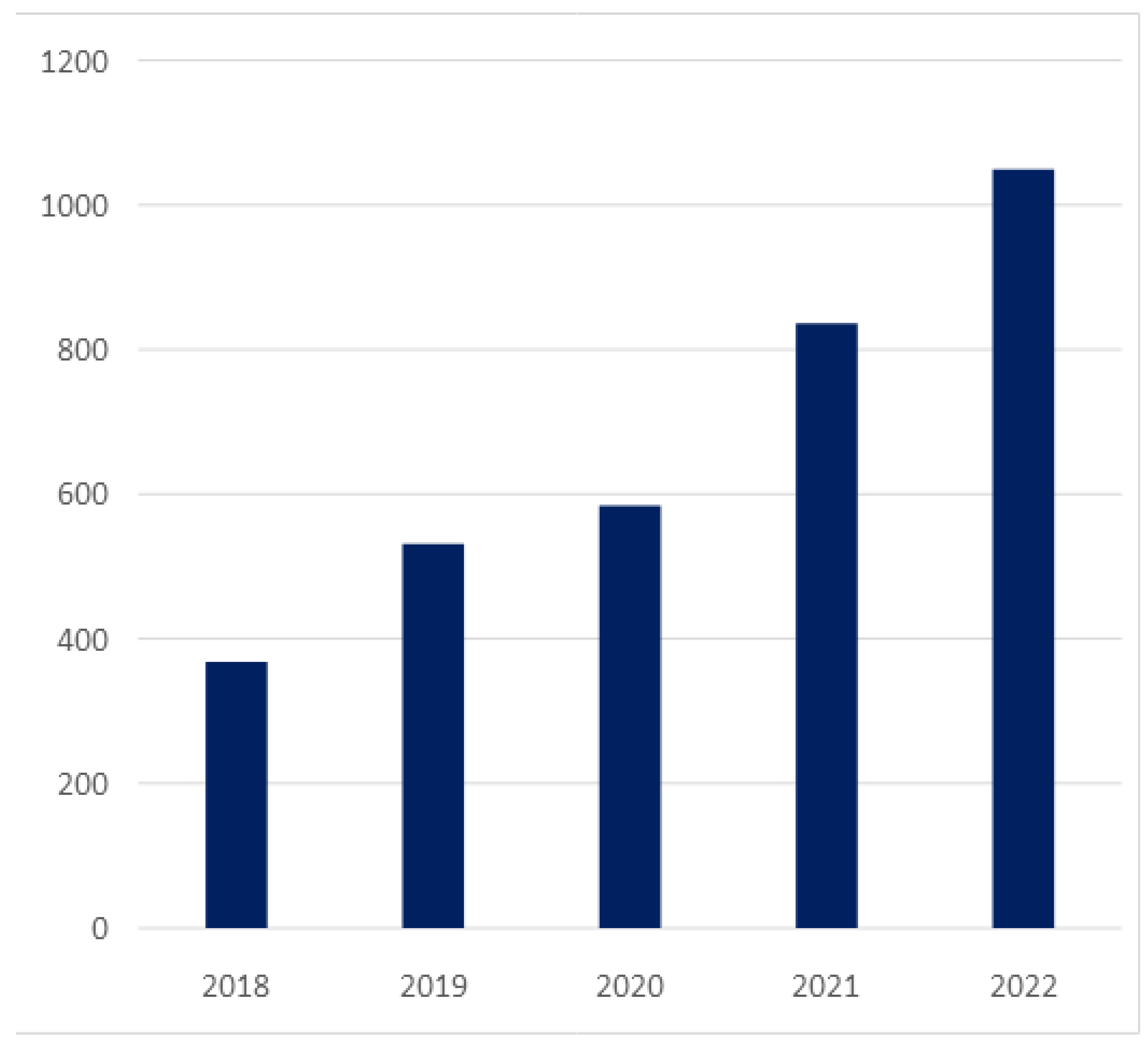
Figure 2.
Overview of the research process.
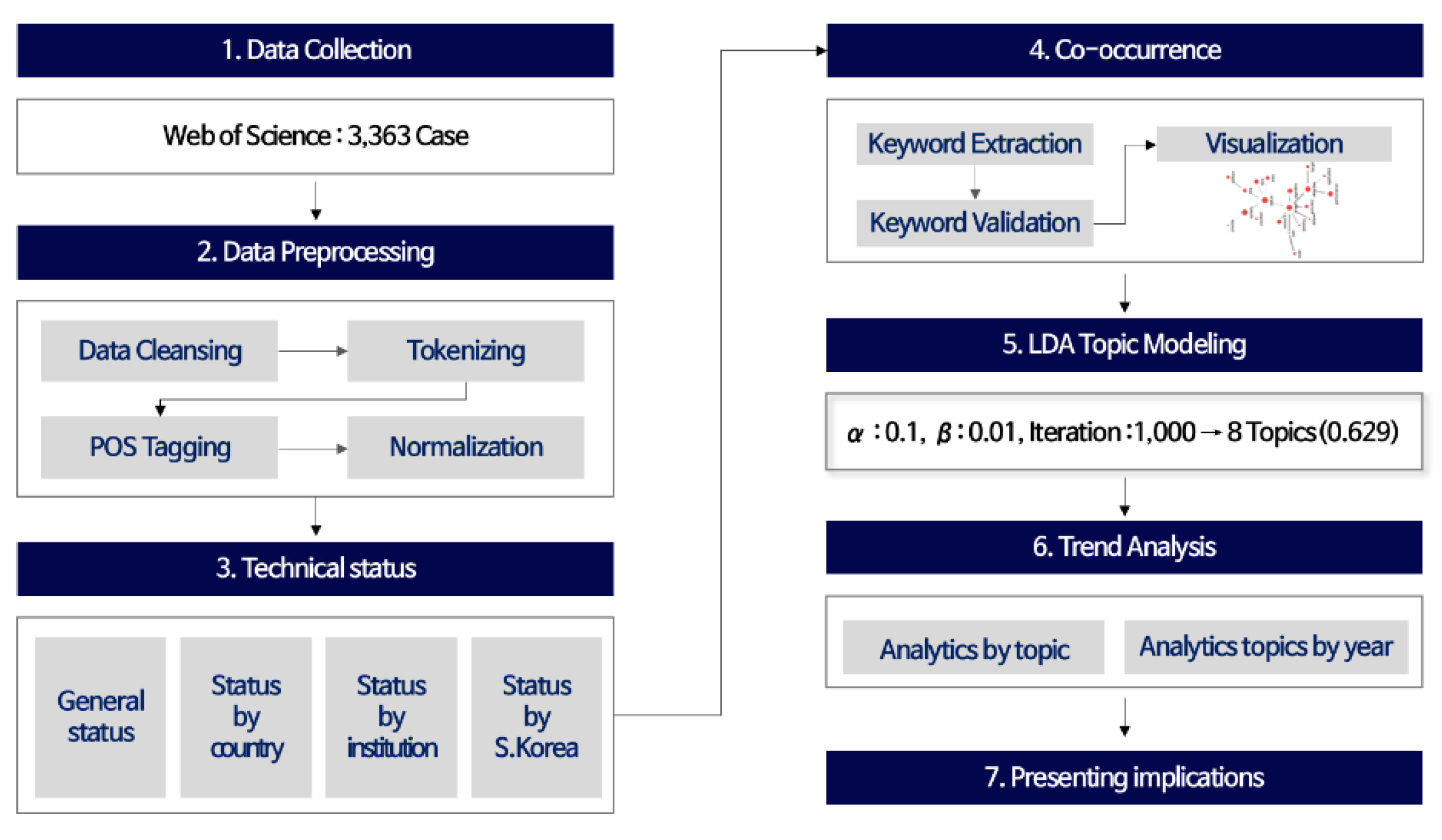
Figure 3.
the conceptual model of LDA topic modeling.
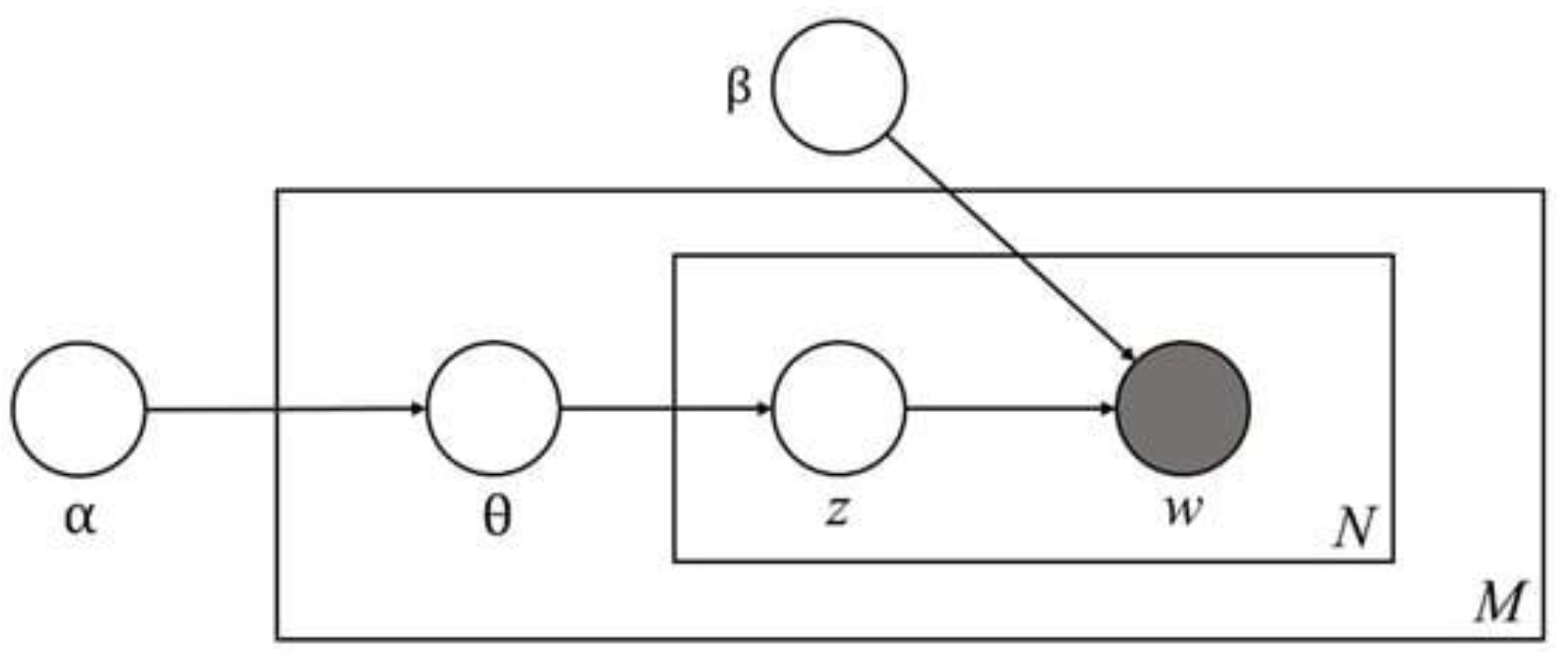
Figure 4.
Visualise co-occurrence analysis results.
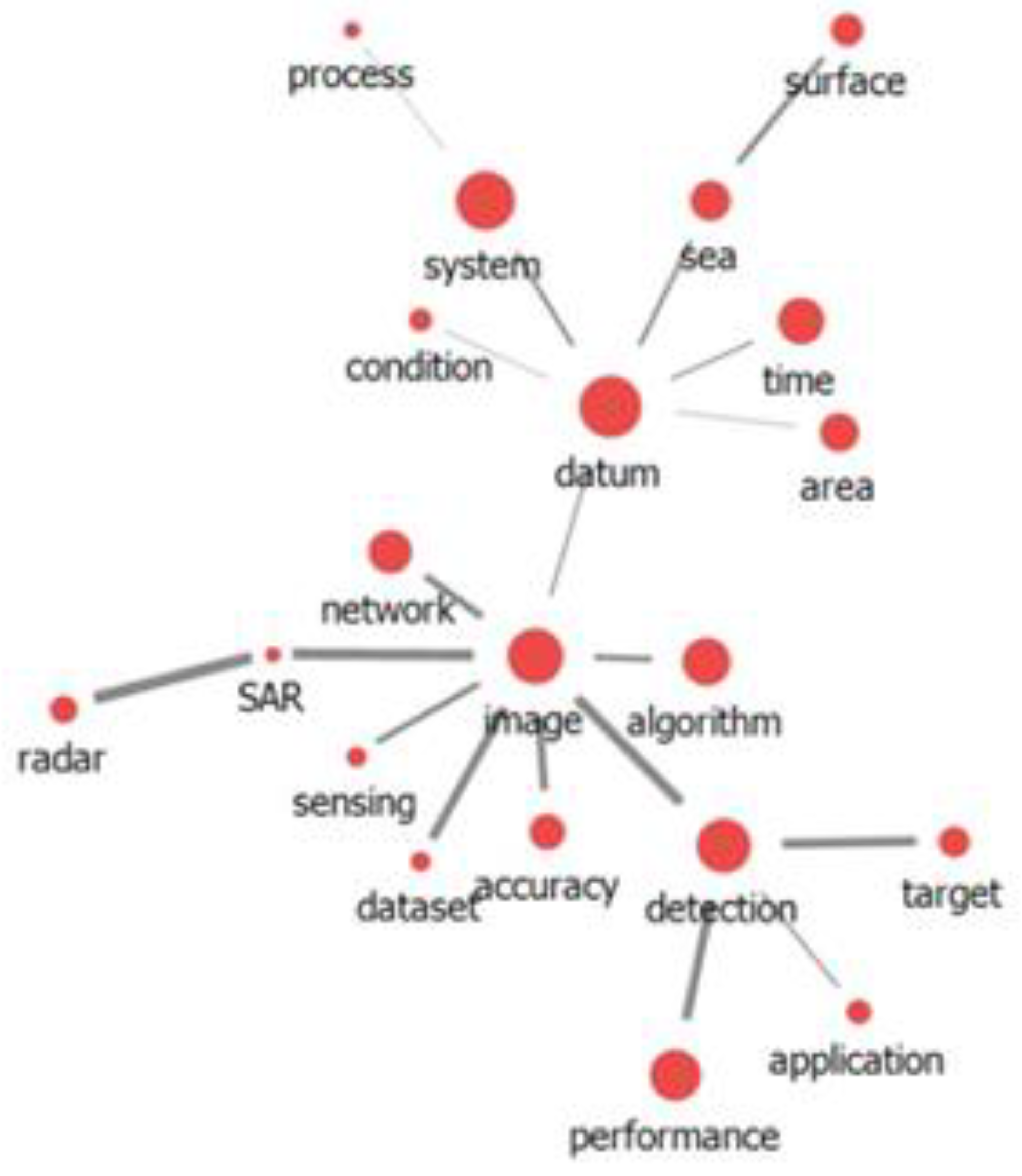
Figure 5.
Coherence Score Measurement Results.
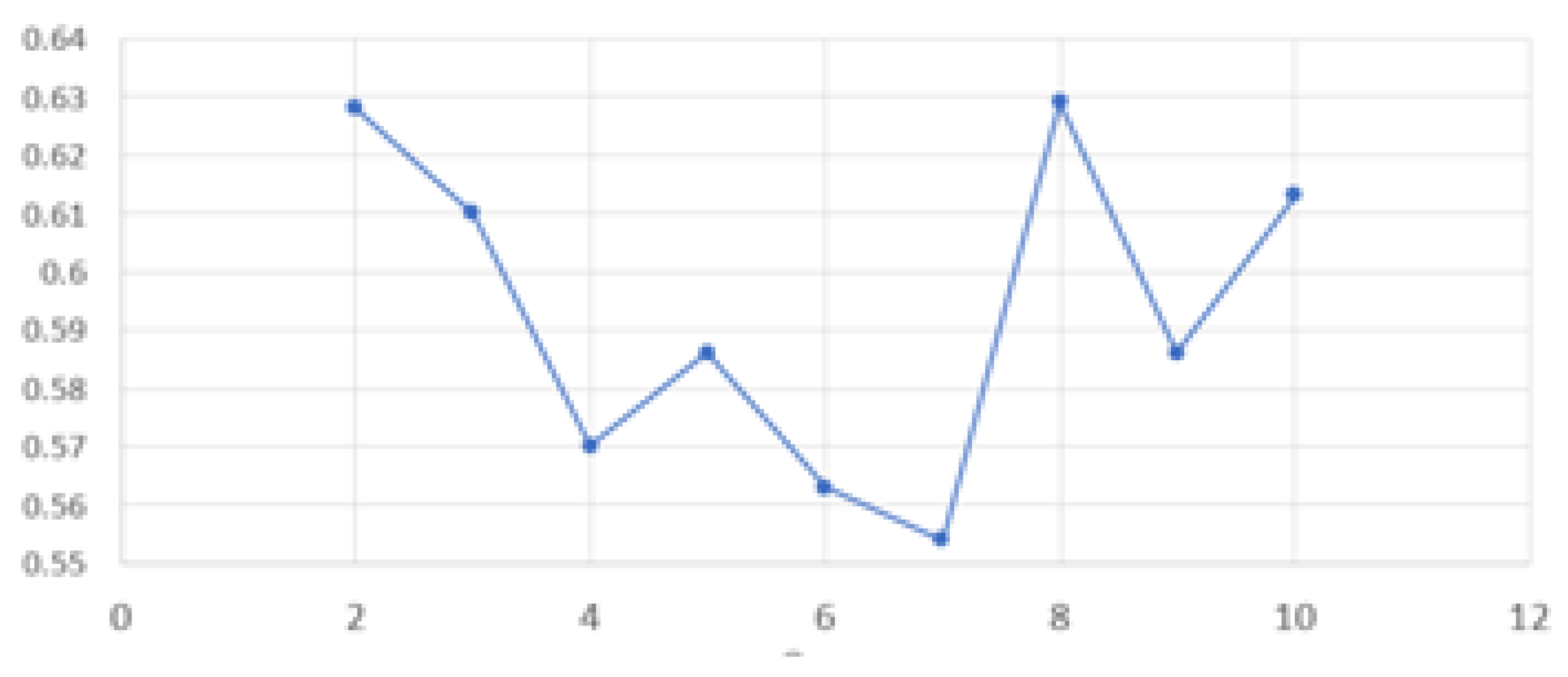
Figure 6.
Changes in topics over the years.
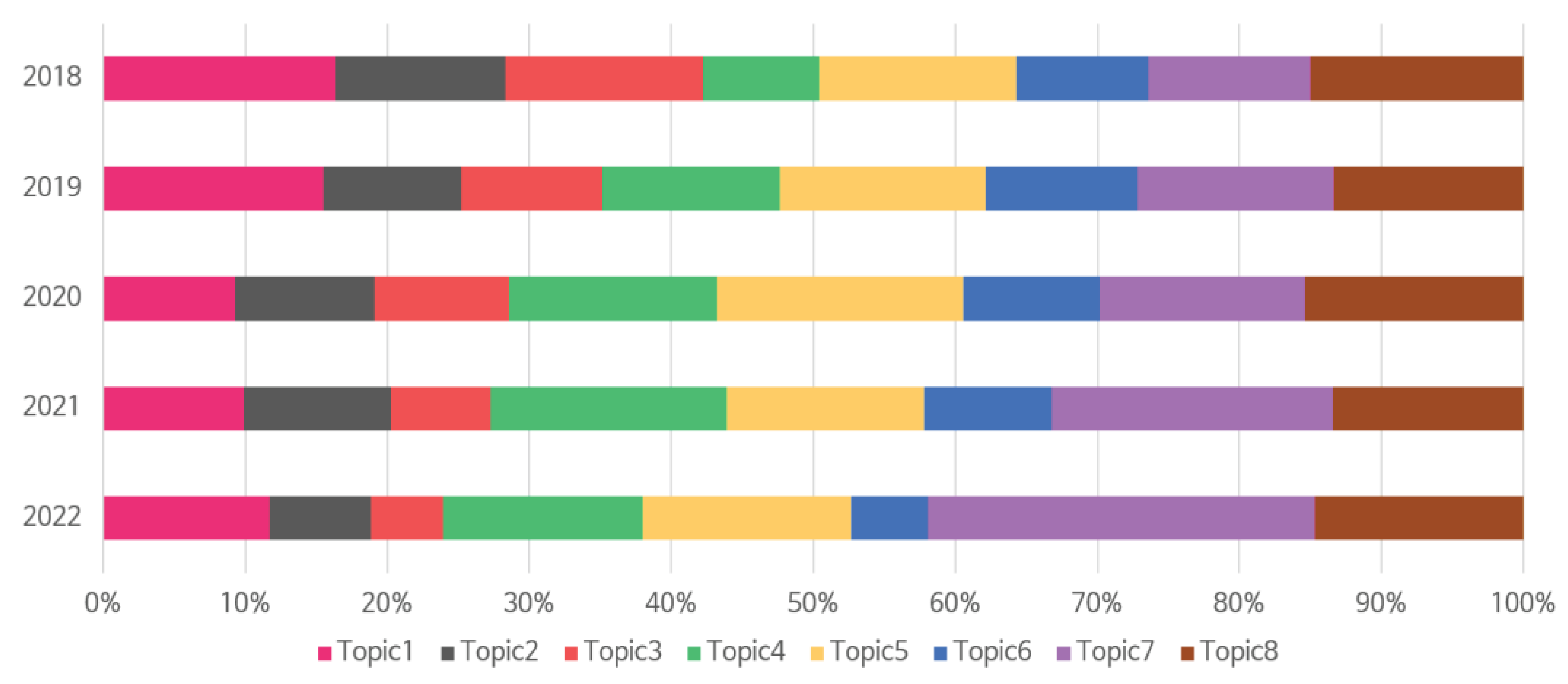
Table 1.
Glossary of Maritime Autonomous Surface Ships terminology.
| Name | Description |
| Maritime Autonomous Surface Ship |
Vessels operating with autonomous decision systems, whether manned or not. |
| Smart Ship | Ships that operate safely and with optimal energy efficiency by connecting with stakeholders to provide information and services, diagnose and manage autonomously or remotely, and the ICT infrastructure to support them. |
| Digital Ship | Ships that can operate safely and efficiently based on digital and IT-based information processing |
| Unmanned Ship | A vessel is operated by an integrated control system with radio equipment installed on board and land, without separate control by the vessel operator. |
| Autonomous Ship | A vessel that operates in response to motion signals input by a ship’s operator on land or by a computer. |
| Remote Ship | Vessels operating under the direct control of a vessel operator onshore. |
Table 2.
Content based on the level of the Maritime Autonomous Surface Ships.
| Level | Description |
| 1 | Ship with automated processes and decision support: Seafarers are on board to operate and control shipboard systems and functions. Some operations may be automated |
| 2 | Remotely controlled ship without seafarers on board: The ship is controlled and operated from another location. |
| 3 | Remotely controlled ship without seafarers on board: The ship is controlled and operated from another location. |
| 4 | Fully autonomous ship: The operating system of the ship can make decisions and determine actions by itself. |
Table 3.
Status by Country.
| Status | 2018 | 2019 | 2020 | 2021 | 2022 | 2018~2022 |
|---|---|---|---|---|---|---|
| 1 | CHINA (120case) |
CHINA (204case) |
CHINA (246case) |
CHINA (381case) |
CHINA (560case) |
CHINA (1,511case) |
| 2 | USA (85case) |
USA (104case) |
USA (90case) |
USA (91case) |
USA (95case) |
USA (465case) |
| 3 | S.KOREA (29case) |
GERMANY (45case) |
S.KOREA (56case) |
S.KOREA (67case) |
S.KOREA (76case) |
S.KOREA (255case) |
| 4 | GERMANY (25case) |
CANADA (32case) |
ENGLAND (34case) |
ENGLAND (43case) |
NORWAY (50case) |
GERMANY (185case) |
| 5 | CANADA (24case) |
ITALY (28case) |
ITALY (32case) |
GERMANY (41case) |
GERMANY (47case) |
CANADA (162case) |
Disclaimer/Publisher’s Note: The statements, opinions and data contained in all publications are solely those of the individual author(s) and contributor(s) and not of MDPI and/or the editor(s). MDPI and/or the editor(s) disclaim responsibility for any injury to people or property resulting from any ideas, methods, instructions or products referred to in the content. |
© 2024 by the authors. Licensee MDPI, Basel, Switzerland. This article is an open access article distributed under the terms and conditions of the Creative Commons Attribution (CC BY) license (http://creativecommons.org/licenses/by/4.0/).
Copyright: This open access article is published under a Creative Commons CC BY 4.0 license, which permit the free download, distribution, and reuse, provided that the author and preprint are cited in any reuse.