

Submitted:
30 March 2024
Posted:
02 April 2024
You are already at the latest version
Abstract
Buildings consume 30% of the total energy consumption around the globe and 29% of the energy consumption in Egypt which in 2022 had a total population of 102 million, out of which 43 % live in urban areas . The operation of buildings contributes to around 30% of global CO2 emissions due to their high energy consumption (IEA, 2022a). Among the efforts made towards improving the energy efficiency of buildings are Advanced Energy Design Guides (AEDGs), building rating systems, codes, and standards. Furthermore, numerous research studies that are either literature review studies, experimental studies, or computational studies addressed the topic of energy efficiency in buildings. These are all examined in this literature review with the purpose of identifying the research gap in available research with a focus on Egypt. The identified gap is the development of a prescriptive path for the GPRS energy efficiency category based on whole building energy simulations.
Keywords:
buildings
; energy efficiency
; design guides
; rating systems
; Egypt
; review
1. Introduction
Building’s energy consumption contributes to around 30% of total global final energy consumption where the energy consumption of the building sector only accounted for 132 EJ in 2021(IEA, 2022b). This energy consumption was reflected by an equally significant carbon footprint of 28% of global energy sector related emissions (IEA, 2022a). The energy consumption and CO2 emissions of the building sector in comparison to other sectors are demonstrated in Figure 1 and Figure 2 below. According to IEA forecast, the total built area of the building sector is expected to grow by 20% by 2030 . This will be reflected on both the energy consumption and carbon footprint of buildings and thus, efforts must be made to improve the energy efficiency of buildings and ensure sustainability of the building sector by reducing its energy consumption and consequently its carbon footprint.
In 2021, the global mean average temperatures were about 1.1 °C above pre-industrial levels. The seven years up to and including 2021 recorded the hottest temperatures historically around the world. As climate change and urbanization push temperatures higher, the need for space cooling increases. And those with the most cooling needs have the least access to air conditioning. On Average, countries with developing economies experience 2150 cooling degree days (CDDs) per year as opposed to 700 CDDs experienced by countries with advanced economies. Yet, only 30% of households in developing countries have air conditioning and as low as 7% in Africa compared to 50% in advanced economies (IEA, 2022b). Recent data published by Sustainable Energy for All (SEforALL) shows that at least 1.17 billion people worldwide lack access to cooling services (SEforALL, 2023). This means that not only the efficiency of cooling appliances is of major importance to reduce energy demand, carbon emissions and household bills, but also the efficiency of the building envelope is even more critical specially to those with no access no air conditioning.
Temperature rise followed a similar yet more extreme trend in Egypt. In the years between 1901 and 2013, the average temperature increase per decade was 0.1°C which then accelerated to 0.38°C per decade between 2000 and 2020. This temperature increase was higher than the world average by 0.07°C and resulted in 300 CDDs increase during that period in Egypt (IEA, 2023a). According to IEA, the total number of CDDs reached 1461 in 2020(IEA, 2023b). In 2022, the population growth rate in Egypt was projected by the United Nations to be 1.55% (United Nations, 2022) . Heat waves, together with population growth and urbanization is expected to significantly increase the cooling demand for electricity which is already estimated by UNDP to be 50% of all electricity consumption during peak summer months in Cairo (IEA, 2023a).
According to the Egyptian Electricity Holding Company (EEHC) annual report, the highest energy consumption is attributed to households which represent 40.5% of total energy sold in the financial year 2020/2021(EEHC, 2021). The percentage of households energy consumption compared to other sectors is shown in Figure 3 below. In 2022, Egypt published its first updated Nationally Determined Contribution (NDC) highlighting its efforts and ambitions goals to combat climate change. Among those efforts is promoting green buildings through the activation of the energy efficiency code for residential and commercial buildings established by the Housing and Building Research Center (HBRC) and developing 16,960 residential units according to green building standards by 2030 (Egypt ’ s First Updated Nationally Determined Contributions, 2022). Therefore, although this review will include energy efficiency building related studies for different types of buildings, it will be mainly focused on residential buildings due to the significance of their energy consumption.
This Literature review explores trends in the field of energy efficient buildings globally, regionally, and locally in Egypt. Egypt is identified as one of the high-impact nations, which is expected to experience prolonged elevated temperatures putting is significant population at increased risk from a lack of access to cooling, primarily due to poverty and gaps in electricity access (SEforALL, 2023). Literature addressing energy efficient buildings design guidelines is examined in terms of strategies and measures recommended to improve building energy performance, evaluation parameters and criteria upon which these recommendations were made, and methods and software tools used in the process of developing these guidelines. The purpose of this literature review is to examine international best practices, benchmark existing literature focused on Egypt (local) up against global and regional literature and identify the gap in the available guidelines for energy efficient buildings in Egypt.
2. building Energy Efficiency Guides and Rating Systems
2.1. Ashrae Advanced Energy Design Guides
The solution of zero energy buildings is faced with many challenges including high initial cost, limited incentives, and lack of social awareness (Manzoor et al., 2022). One of the solutions to address these challenges are the American Society for Heating Ventilation and Air Conditioning Engineers (ASHRAE) AEDG achieving 30% and 50% Energy Savings towards a Net Zero Energy Building in addition to their guidelines on achieving zero energy buildings. The AEDGs are developed in collaboration with the American Institute of Architects (AIA), the Illuminating Engineering Society (IES), the U.S. Green Building Council (USGBC) and the Department of Energy (DOE) in the US.
ASHRAE advanced energy design guides are a series of publications that provide energy saving recommendations beyond the minimum requirements of ASHRAE standard 90.1-2004, Bonnema et al., (2012). These design guides are building type specific depending on occupancy classification and building size including a guide for small to medium size offices, a guide for small hospitals and healthcare facilities, another one for large hospitals and others. Table 1 provides a summary for ASHRAE AEDGs to date.
There are three categories of the ASHRAE advanced energy design guides which are 30% energy savings, 50% energy savings and zero energy guides. The energy saving strategies presented in these design guides are improved building envelope insulation and better glazing with overhangs, reduced lighting power intensity and plug and process load and better controls as well as integrating daylighting, higher efficiency HVAC equipment and Service Water Heating (SWH) systems. The guidelines provide specific energy saving design strategies for each of the 8 climate zones in the US, which can be further used as surrogate for other climates globally. The energy savings from these measures were assessed and quantified through building energy simulations using EnergyPlus software (Bonnema et al., 2013).
For Example, the recommendations presented in (Bonnema, Pless and Doebber, 2010) to achieve 30% energy savings in small hospitals and healthcare facilities included some minimum and maximum values of a set of design parameters. These values are different for each climate zone. Taking building envelop in climate zone 5 as an example, the minimum R-values recommended in the guide for insulation of roofs, walls and floors are 30 ft².°F.hr/Btu, 13 ft².°F.hr/Btu, and 16.7 ft².°F.hr/Btu respectively. Meanwhile maximum values were recommended for vertical fenestration thermal transmittance (U-value) and solar heat gain coefficient (SHGC), and window to wall ratio (WWR). These maximum values are 0.29 Btu/ ft².°F.hr, 0.34, and 40% respectively (Bonnema, Pless and Doebber, 2010). These parameters can be used to quantify and evaluate the energy efficiency of prospective design strategies.
2.2. Buiding Rating Systems
Many building rating systems are developed around the world with the aim of making buildings more sustainable. In this section of the literature review, we look at nine (9) building rating systems: Building Research Establishment Environmental Assessment Method (BREEAM), Leadership in Energy and Environmental Design (LEED), Comprehensive Assessment System for Built Environment Efficiency (CASBEE), GREEN STAR, The German Sustainable Building Council rating system (DGNB: Deutsche Gesellschaft für Nachhaltiges Bauen), ESTIDAMA Pear Rating System (PRS), MOSTADAM, Green Pyramid Rating System (GPRS), and TARSHEED. These are the most widely known rating systems, and they are chosen to be representative of best practices from different continents around the world. Table 2 provides a summary to compare the different building rating schemes.
When comparing the LEED rating system to BREEAM rating system, it is observed that there is a difference in the adoption of local priorities. LEED dedicates a specific category to reflect the local priorities of each region and add the credits earned in this category as bonus to the total score while BREEAM does not allocate credit to local priorities (Rezaallah and Khoraskani, 2012). Furthermore, rating systems like GREEN STAR, PRS, MOSTADAM and GPRS which were developed based on LEED do not include the regional priority category. However, they reflect the adoption of their own regional priorities through changing the given weight of each category of the LEED categories to allocate more credits for more valuable resources such as fresh water in a country such as Saudi Arabia.
The two rating systems that stand out in terms of categories weights are CASBEE due to the complexity if its calculation method allocated different weights to each category based on the specifics of each project. DGNB stands out due to the categories weights is which allocates equal weights to environmental, social, and economic quality and is the only rating system that focuses on the economic aspects of sustainable buildings (Ferreira et al., 2023). Another significant difference among these rating systems is their level of implementation. All of the aforementioned are implemented on a voluntary basis except PRS which is mandatory in all buildings in UAE (Ramani and García De Soto, 2021).
Shifting the focus towards Egypt, in 2005 the first Energy Efficiency Building Code (ECP 306-2005) for residential building was developed by the Egyptian government. The code included minimum and maximum values for the following design elements: building envelope, ventilation and thermal comfort, HVAC and SWH systems, lighting, and electric loads. In 2008, the unified building law (LAW 119 for 2008) was issued, and as a result compliance with BEEC became mandatory to obtain a construction license (Edeisy and Cecere, 2018). In alignment with the government efforts for sustainable building development in Egypt, the Green Pyramid Rating system (GPRS) was presented by the Housing and Building National Research center (HBRC) in 2011 to serve as baseline for green building assessment. The GPRS was based on the LEED rating system developed by the U.S. Green Building Council. Another green building rating system developed in Egypt is TARSHEED, which was developed by the Egypt Green Building Council based on the Excellence in Design for Greater Efficiencies (EDGE) rating system developed by the international finance corporation (Harb, 2019).
2.3. Building Energy Efficiency Studies
In addition to building rating systems, numerous studies addressed the issue of energy efficiency in buildings. In our review, we categorize the studies into three groups based on their methodology: literature review studies, experimental studies, and computational studies. In analyzing these studies, we will start with studies on global level, then narrow it down to studies within the Middle East and Northern Africa (MENA) region and finish with local studies in Egypt. In addition to their methodology, we are interested in their suggested energy efficiency measure, their evaluation parameters and if their recommendation is directed towards a certain building use (residential, commercial, etc.) or addresses buildings in general regardless of their function.
2.4. Global Studies on Energy Efficient Building Design
2.4.1. Global Literature Review
In 2019, Tennakoon et al. researched strategies to reduce not only the operational energy of the building but the embodied energy as well. The results of this study were extracted through extensive literature review in addition to interviews with professional experts. The strategies recommended for achieving simultaneous operational and embodied energy savings are categorized into five categories. The first category is Material selection, which includes selecting natural materials that are locally sourced and evaluated based on life cycle assessment. The second category is Design approach, which recommends reuse of existing structures and designing for future expansions. The third category is Building morphology, which includes natural lighting and ventilation and reduction of roof height in air-conditioned spaces. The fourth category is Procurement process, which recommends adoption of Building Information Modeling (BIM) technologies, Sustainable Public Procurement (SPP) guidelines and Life Cycle Cost (LCC) assessments. And the last category is Other, which includes following energy efficiency guidelines and adopting sustainable concepts early in the project (Tennakoon et al., 2019). These strategies can be applied to all building types and are not building function specific. Similarly, Machairas, Tsangrassoulis and Axarli as well as Østergård, Jensen and Maagaard (2014; 2016) addressed the general building stock in their literature where Østergård, Jensen and Maagaard (2016) focused on building simulations, while Machairas, Tsangrassoulis and Axarli (2014) focused on algorithms for optimizations, both with the purpose of supporting the decision-making process in building design.
Other recent literature reviews studies include (Erebor et al., 2021; Mostafavi, Tahsildoost and Zomorodian, 2021). Mostafavi, Tahsildoost and Zomorodian (2021) examined 48 studies on the energy consumption and carbon footprint of high-rise buildings, including commercial and residential use, during the period 2005-2020. The study concluded that energy savings up to 78.9% can be achieved through enhancing building envelope, 17% through optimizing floorplan layout, and 45 % through utilization of natural ventilation. The review also demonstrated that up to 25% of operational energy and 60% of embodied carbon emissions of high-rise buildings can be reduced mainly by improving the envelope heat transfer coefficient and increasing the utilization of recycled materials. Among their findings, was that 53% of the reviewed literature used simulation methods in their investigation, while 6% used analytical methods and the remaining 41% followed a hybrid approach. It was also observed that most of the building energy simulations conducted in these studies used EnergyPlus (EnergyPlus™, 2017). Erebor et al. (2021) focused on energy efficiency design strategies implemented only in office buildings and examined 36 articles published between 2007 and 2019. Their review concluded that the most implemented energy efficiency measures in office buildings are enhancing building envelope, optimizing building orientation and integration of daylighting techniques as well as renewable energy systems.
Similar to Mostafavi, Tahsildoost and Zomorodian (2021), Kheiri and Shah, Pandit and Gaur (2018; 2021) also addressed both commercial and residential buildings in their literature review study. However, Kheiri and Shah (2018) also explored trends in educational and other types of buildings. Both studies analyzed different methodologies to optimize buildings design and they both came up with consistent results. Out of 49 studies reviewed by Shah, Pandit and Gaur (2021), the most used optimization technique is parametric analysis covering a percentage of 71% with the rest 29% of the studies utilizing genetic algorithm for optimization. The authors also concluded that parametric analysis is typically coupled with EnergyPlus being the most widely used simulation software followed by TRNSYS (University of Wisconsin-Madison Solar Energy Laboratory, 1975). Meanwhile Kheiri and Shah (2018) also concluded that EnergyPlus is the most used energy performance assessment software and genetic algorithm is the most widely utilized optimization algorithm using MATLAB (The MathWorks Inc., 2022) to optimize the efficiency of building geometry and envelope.
2.4.2. Global Experimental Studies
Fang et al. and Zhang et al. (2014; 2018) experimentally investigated the potential of optimizing building envelope to reduce the cooling load of the building. Given the nature of experimental studies and unlike computational or literature review studies, the author can only focus on one design parameter. Fang et al. (2014) focused on wall insulation while Zhang et al. (2018) focused on windows glazing. Fang et al. (2014) concluded that thermal insulation can save up to 23.5% of the energy consumption of air conditioning in the summer. And Zhang et al. (2018) concluded that using triple glazed windows with built-in venetian blinds can reduce the head gain through the window by up to 42.3% in the cooling season.
2.4.3. Global Modeling Studies
During our literature review, we were mainly interested in the software used for whole building simulation, suggested design strategies, optimization method if any, economic considerations, and building occupation category (commercial, residential, etc.). Li and Wong, Palmero-Marrero and Oliveira, Aldawoud, and Carreras et al.(2007; 2010;2013;2016) investigated buildings in general regardless of their occupancy. They all performed whole building energy simulations using different software tools namely EnergyPlus (Li and Wong, 2007; Carreras et al., 2016), TRNSYS ( Palmero-Marrero and Oliveira, 2010) and DOE-2 (Aldawoud, 2013). Among those, the study conducted by Carreras et al. (2016) was the only one that did not stop at whole building energy simulation but went ahead and also performed optimization and cost analysis on his proposed design recommendations which included replacing polyurethane by mineral wool and improving thermal insulation. Li and Wong and Palmero-Marrero and Oliveira (2007; 2010) explored the effect of shading on building energy consumption. Li and Wong (2007) focused on shading due to nearby obstructions while Palmero-Marrero and Oliveira (2007) focused on the effect louver shading devices. These two studies concluded that shading could reduce building energy consumption by 30% due to external obstructions and up to 59% using louvers (Li and Wong, 2007; Palmero-Marrero and Oliveira, 2010).
There are studies that address specific types of buildings such as institutional buildings. Among those are the studies conducted by Tavares and Martins, Kini et al., and Sim, Suh and Otto (2007; 2021; 2021). Tavares and Martins (2007) evaluated different energy efficient design strategies using VisualDOE™ (VisualDOE 3.0 Program Documentation, 2001) simulations. They concluded that compared to the Portugal legislation for building energy efficiency, energy savings of up to 78% of heating needs, 46% of cooling needs, 31% of electricity consumption, 34% of maximum heating power, 33% of maximum cooling power, and 30% of electrical power maximum demand can be reached through whole building energy simulation research. Kini et al. (2021) performed energy simulations using EnergyPlus on a small school building and concluded that not only energy saving can be achieved through efficient design, but also heat balance, ventilation, thermal comfort, daylighting, and overall occupants’ wellbeing can be improved. Sim, Suh and Otto (2021) on the other hand utilized energy simulation using Design Builder (DesignBuilder 2.1, 2009) to optimize the integration of a PV system on a campus building while considering lifecycle costs .
Other studies focused on commercial buildings use. Sailor, Roetzel and Tsangrassoulis, Susorova et al., Huang, Niu and Chung, (2008; 2012; 2013;2014) all used EnergyPlus in their simulations. Sailor (2008) used energy simulation to evaluate the impact of a green roof model and observed that a thicker soil layer of the green roof resulted in lower heating and cooling loads due to increased roof insulation. While Roetzel and Tsangrassoulis (2012) used building energy simulation to quantify the impact of climate change on thermal comfort and building energy consumption. Their research concluded that climate change can affect thermal comfort by 25-30% and peak heating loads by 40-100% depending on building design and occupants behavior. Susorova et al. (2013) proved that geometric factors such as room dimensions and window size can save up to 14% of total energy consumption in hot climates. Huang, Niu and Chung (2014) Coupled EnergyPlus with Daysim (Reinhart, 2005) to evaluate both thermal and daylighting performance of glazing and shading designs. They concluded that low-e glazing achieves best performance in cooling dominant climates while double layer glazing performs worst. They also observed that the thermal and daylighting performance of blind louvers is reduced when the reflectivity of the louvers decreases. .
In addition to simulation-based studies focused on optimizing the design efficiency of commercial buildings, there are also numerous studies that investigated the design of residential buildings through whole building energy simulations. Among those studies, Yik and Bojić, Griego, Krarti and Hernández-Guerrero, Ascione et al., Chen and Yang, and Gou et al. (2006;2012;2015; 2016, 2017; 2018, 2019). What these studies have in common in addition to utilizing EnergyPlus in their Simulation, is that they have coupled building energy simulation with optimization techniques to achieve the highest energy efficient design. Some of these studies focused on high-rise residential buildings such as Chen and Yang (2016, 2017) while others such as Ascione et al. and Gou et al. (2015;2018, 2019) directed their investigation towards mid-rise residential buildings. Yıldız and Arsan and Yao et al. (2011;2018) also focused on mid-rise residential buildings in their investigation. However instead of searching for an optimum design solution, they were more concerned with the impact of different design parameters and thus, they performed a sensitivity analysis. Yıldız and Arsan (2011) concluded that north-oriented room with large windows and south-oriented rooms with small windows have the best energy performance in hot and temperate climates. Following in Table 3 is a summary of reviewed modeling studies on a global level highlighting the studied building type, utilized simulation software and if any cost/financial analysis has been performed to verify the economic feasibility of suggested energy efficiency measures.
2.5. Regional Studies on Energy Efficienct Building Design
Having explored trends in sustainable building design in literature on a global level, we now look at studies conducted within the MENA region. In this section we will analyze studies originating from United Arab of Emirates (UAE), Saudi Arabia (SA), Tunisia, and Jordan. The first thing to be noted is that out of seven (7) papers studied on the regional level, four (4) were conducted in UAE. The four studies are all simulation based except the study conducted by Friess and Rakhshan (2017) which was a literature review. In their review, Friess and Rakhshan explored passive building envelope measures that improves the energy performance of the building. Among their findings was that thermal insulation and natural ventilation can save up to 20% and 30 % respectively in residential buildings. Friess et al. and Watfa at al. (2012;2021) also studied residential building energy efficiency using whole building energy simulation. Watfa at al. (2021) explored the potential of Building Information modeling (BIM) in designing energy efficient buildings and utilized AECOsim (Bentley, 2012) for evaluation of energy performance. They focused on building orientation and window to wall ration while Friess et al. (2012) focused on thermal insulation and used EnergyPlus for energy performance evaluation. Salameh et al. (2020) on the other hand studied the integration of photovoltaic façade system in commercial buildings and concluded that they can reduce around 30% of the annual electricity consumption.
Other simulation-based studies conducted within the MENA region include Ihm and Krarti, Bataineh and Alrabee, and Alhuwayil at al. (2012; 2018; 2019). All three studies used building energy simulation to improve the energy efficiency of residential buildings. Both studies conducted by Bataineh and Alrabee and Alhuwayil at al. (2018; 2019) utilized EnergyPlus for energy simulations and both of them also conducted cost analysis as part of their investigation. Ihm and Krarti (2012) on the other hand utilized DOE-2 coupled with optimization techniques to achieve the optimum design solution for energy efficient residential buildings. The design strategies recommended based on their investigation are adding roof insulation, reducing air infiltration, installation energy efficient appliances, lighting fixtures, and heating and cooling equipment. They concluded that these design strategies can reduce the energy consumption of the building by 50% (Ihm and Krarti, 2012).
2.6. Local Studies on Energy Efficienct Building Design
In a similar fashion to how we examined global literature, this local literature will also analyze literature review studies as well as computational studies that focused on the local context in Egypt. However, none of the local literature examined here followed an experimental approach towards building energy efficiency.
Some of the literature review studies that analyzed literature specific to Egypt included building energy efficiency research in general without focusing on a particular building type, examples of those studies are Tuominen et al., Edeisy and Cecere and Abd El Aal (2015;2018;2020). Other literature review studies focused on a specific building type such as the studies conducted by Harb, Rasmy and Alaa et al. (2019; 2011; 2021) which focused on educational buildings. Harb (2019) evaluated different building rating systems and provided sustainable design guidelines for new and existing schools. These guidelines are based on literature review and data collected from surveying an existing school building through multiple visits. However, no evaluation of the impact of these guidelines on the building performance was conducted. Similarly, Alaa et al. (2021) analyzed the impact of applying the Green Pyramid Rating system based on published literature without any further verification.
In addition to literature review studies, local studies also included computational studies to evaluate the energy efficiency of different design strategies. These computational studies can be divided based on the type of building use being analyzed into institutional, commercial, and residential buildings focused studies. Starting with institutional buildings energy simulation studies, Radwan et al. and William et al. (2016; 2019; 2020) evaluated energy efficient retrofitting strategies in hospitals using HAP 4.9 (Carrier, 2014) and EnergyPlus respectively. Both studies focused on enhancing three design aspects which are insulation, glazing and lighting. William et al. a dedicated outside air system (DOAS) was added to the advanced energy model which improved its energy efficiency by 67%. Other institutional buildings simulation studies analyzed different types of institutional buildings such as airports in (Shafei, Tawfik and Khalil, 2019) which recommends LED lighting and renewable energy implementation and government buildings in (Hegazy, 2019) which evaluates the impact of nano aerogel glazing on energy performance.
The majority of local institutional simulation studies, however, focused their investigation on educational buildings. Among these studies are the studies conducted by El-Darwish and Gomaa, Samaan et al. and Ahmed (2017; 2018; 2019), all of which analyzed energy efficiency measures in existing school buildings using EnergyPlus. Actually, all educational buildings focused simulation studies analyzed in this literature review on a local level utilized EnergyPlus with the exception of the study conducted by (Omar, Khattab and Abdel Aleem, 2022a) which used HOMER (UL Solutions, 2018) for energy simulation. This study was also unique in the fact that it did not only evaluate the retrofitted model based on energy performance but also based on environmental and economic performance. Similarly, (Eman, 2022a) evaluated the use of double facades in educational buildings based on energy consumption and emissions. Meanwhile (Ragab and Abdelrady, 2020; Emil and Diab, 2021a) evaluated their advanced energy models for educational buildings based the results of both energy and cost analysis. Another evaluation criterion that was used in this category of simulation studies is thermal comfort in (Anber, 2022a).
The second type of local simulation studies are the ones focused on the energy efficiency of commercial buildings. Similar to the institutional buildings' simulation studies, the majority of commercial buildings simulation studies reviewed utilized EnergyPlus. Among those studies are the studies conducted by (Abd, Monem and Gindi, 2020; Osama El-Sherif, Mohamed and Fatouh, 2020; Hamza, Alsaadani and Fahmy, 2022) which in addition to analyzing the impact of energy efficiency measures in office buildings, also evaluated the potential of renewable energy application in the form of PV installation. The three studies achieved a reduction in annual energy consumption by 60%, 65% and 42% respectively. Some of the commercial buildings' simulation studies using EnergyPlus focused on high-rise buildings such as the study conducted by (El-Agami, Hanafy and Osman, 2021) while other studies focused on mid-rise buildings such as those in (Mahmoud and Elkhiary, 2019; Ramadan, 2022). Other simulation software utilized in commercial buildings energy efficiency studies include e-Quest (Hirsch, 2010) in (Fahmy et al., 2019; Abdelraouf, Atef El-Desouky and Moustafa, 2022) and IES-VE (IES, 2004) by (Ahmad and Reffat, 2018) which reduced energy consumption by 40% using different daylighting systems.
The third category of simulation reviewed relates to residential buildings. These studies could be divided based on the topology of the building. Some of the studies focus their recommendations on either single family, or multi-family low-rise, mid-rise, or high-rise buildings. Other studies, however, investigate residential buildings in general regardless of their topology. Examples of these studies are found in (Michel and Hend Elsayed, 2006; Dabaieh et al., 2015; Fahmy et al., 2018; Hegazy, 2020a; Ghamri and Anglani, 2022; Mahdy et al., 2022).
The rest of the residential simulation studies can be further categorized into two categories single-family and multi-family focused studies. (Nabih et al., 2011a; Mourad et al., 2014; Elhadad, Baranyai and Gyergyák, 2018) all investigated energy efficiency measures in single-family residential buildings while the studies in (Aldali and Moustafa, 2016; Abouaiana and Mendonça, 2022) investigated energy efficiency measures in low-rise multi-family residential buildings. Although slightly different in scope, both (Nabih et al., 2011a; Aldali and Moustafa, 2016) both used Ecotect (Autodesk, 2011) and performed a sensitivity analysis to optimize the effectiveness of their recommendations. The benefit of using Ecotect according to (Nabih et al., 2011a) is that it performs thermal and lighting analysis simultaneously.
Out of twenty-two (22) residential simulation studies analyzed in this review on a local level, fourteen studies focus on mid-rise residential buildings. The majority of these studies performed simulations using EnergyPlus either in combination with OpenStudio (Guglielmetti, Macumber and Long, 2011) such as in (Nafeaa, Mohamed and Fatouha, 2020) or in combination with DesignBuilder which is more common. The study conducted by (Nafeaa, Mohamed and Fatouha, 2020) concluded that reducing the heat transfer coefficient of walls, adding shading, using double glazing and installing LED lighting can reduced the cooling demand by 7%, 13%, 14%, and 17% respectively. Examples of mid-rise buildings simulation studies using DesignBuilder and EnergyPlus can be found in (Edeisy and Cecere, 2017; Khalil, Fikry and Abdeaal, 2018; Ahmad et al., 2021; GamalEldine and Corvacho, 2022) which all evaluated the energy model performance based on energy consumption and thermal comfort. In addition, (Khalil, Fikry and Abdeaal, 2018; Ahmad et al., 2021) performed cost analysis on their recommended design strategies, (Edeisy and Cecere, 2017) measured building emissions and (GamalEldine and Corvacho, 2022) applied PV system to reach nearly zero energy building.

Table 5.
Local Studies Using Energy Modeling and Simulation.
| Reference | Building Type | Simulation Software | Cost analysis |
|---|---|---|---|
| (Hamza, Alsaadani and Fahmy, 2022) | Commercial | EnergyPlus | No |
| (Mahdy et al., 2022) | Residential | EnergyPlus | No |
| (GamalEldine and Corvacho, 2022) | Residential | EnergyPlus | No |
| (Abdelraouf, Atef El-Desouky and Moustafa, 2022) | Commercial | e-Quest | Yes |
| (Anber, 2022b) | Institutional | EnergyPlus | No |
| (Ramadan, 2022) | Commercial | EnergyPlus | No |
| (Anber and Khalifa, 2022) | Residential | EnergyPlus | No |
| (Eman, 2022b) | Institutional | EnergyPlus | No |
| (Omar, Khattab and Abdel Aleem, 2022b) | Institutional | HOMER | Yes |
| (Emil and Diab, 2021b) | Institutional | EnergyPlus | Yes |
| (El-Agami, Hanafy and Osman, 2021) | Commercial | EnergyPlus | No |
| (Ahmad et al., 2021) | Residential | EnergyPlus | Yes |
| (Nafeaa, Mohamed and Fatouha, 2020) | Residential | EnergyPlus | No |
| (Osama El-Sherif, Mohamed and Fatouh, 2020) | Commercial | EnergyPlus | No |
| (Mohamed Abdelsalam, Mohamed EL Razzaz and Elnekhaily, 2020) | Residential | EnergyPlus | No |
| (Abd, Monem and Gindi, 2020) | Commercial | EnergyPlus | No |
| (Ragab and Abdelrady, 2020) | Institutional | EnergyPlus | Yes |
| (Hegazy, 2020b) | Residential | EnergyPlus | No |
| (Hegazy, 2019) | Institutional | Ecotect | Yes |
| (William et al., 2020b) | Institutional | EnergyPlus | Yes |
| (William et al., 2019) | Institutional | EnergyPlus | No |
| (Ahmed, 2019b) | Institutional | EnergyPlus | No |
| (Shafei, Tawfik and Khalil, 2019) | Institutional | EnergyPlus | No |
| (Elhadad et al., 2019) | Residential | IDA ICE | No |
| (Mahmoud and Elkhiary, 2019) | Commercial | EnergyPlus | No |
| (Fahmy et al., 2019) | Commercial (Heritage) | e-Quest | No |
| (Samaan, Farag and Khalil, 2018b) | Institutional | EnergyPlus | No |
| (Fahmy et al., 2018) | Residential | EnergyPlus | No |
| (Elhadad, Baranyai and Gyergyák, 2018) | Residential | IDA ICE | No |
| (Khalil, Fikry and Abdeaal, 2018) | Residential | EnergyPlus | Yes |
| (Ahmad and Reffat, 2018) | Commercial | IES-VE | No |
| (Albadry, Tarabieh and Sewilam, 2017) | Residential | EnergyPlus | Yes |
| (Attia, Hamdy and Ezzeldin, 2017a) | Residential | EnergyPlus | No |
| (El-Darwish and Gomaa, 2017b) | Institutional | EnergyPlus | No |
| (Edeisy and Cecere, 2017) | Residential | EnergyPlus | No |
| (Aldali and Moustafa, 2016) | Residential | Ecotect | No |
| (Radwan et al., 2016b) | Commercial and Institutional | HAP | No |
| (Reda et al., 2015) | Residential | TRNSYS | No |
| (Dabaieh et al., 2015) | Residential | EnergyPlus | Yes |
| (Mourad et al., 2014) | Residential | ENER-WIN (ENER-WIN, n.d.) |
No |
| (Fahmy, Mahdy and Nikolopoulou, 2014) | Residential | EnergyPlus | No |
| (Attia et al., 2012) | Residential | EnergyPlus | No |
| (Nabih et al., 2011b) | Residential | Ecotect | No |
| (Hanna, 2011) | Residential | Overall Thermal Transfer Value (OTTV) equations programmed into Excel | No |
| (Michel and Elsayed, 2006) | Residential | DOE-2 | No |
3. Discussion
Rating systems, helpful as they are, do not always accommodate for the social and economic context of the building. They also do not provide specific design strategies with their direct impact on the building performance. Furthermore, and most important to our research is that when examining one of the most prominent rating systems used around the globe which is LEED and Egypt’s local rating system which is GPRS, one difference is observed in the implementation of the energy efficiency category. In LEED, there are two paths for achieving credits in the energy efficiency category; the whole building simulation path and the prescriptive path which refer to ASHRAE 30% and 50% AEDGs. Meanwhile in the GPRS, only the building energy simulation path is found, and no prescriptive path is available for each percentage of energy savings. GPRS refers to the Egyptian Energy Efficiency Building Code (ECP 306-2005) (HBRC, 2015) for energy efficient design recommendations. However, the impact of those recommendations is not quantified as an energy saving percentage and has to be verified using whole building simulations.
In addition to AEDGs and rating systems, 114 studies were analyzed in this review. This includes 51 global studies, 7 regional studies, and 56 local studies. These studies followed different approaches towards buildings energy efficiency. Out of the 51 global studies examined, 8 are literature review studies, 2 are experimental and 42 are simulation-based studies. The distribution of global simulation-based studies based on building type is shown in Figure 4, while their distribution based on simulation software is shown in Figure 5. Figure 6 shows that only 26% of the literature performed cost analysis.
On the other hand, none of the regional or the local literature examined here followed an experimental approach towards building energy efficiency. Out of 7 regional studies examined in this review, 1 is a literature review and the remaining are simulation-based studies whose share of cost analysis performance is 50%. All of the regional studies were focused on residential buildings with the exception of the study conducted by (Salameh et al., 2020). As for local studies examined in this review, out of 56 local studies, 10 are literature review studies, 46 are simulation-based studies. However, 40% of the literature review papers were concerned with residential buildings. Among those are the studies conducted by Alsaadani, Attia et al., and Hanna (2022; 2017; 2013). Alsaadani concluded that EnergyPlus is the most widely used simulation engine in residential building energy efficiency research in Egypt.
Simulation-based studies on a local level followed a similar trend to what has been observed earlier in global studies. A majority of 51% of the studies focused on residential buildings, and 69% of the studies used EnergyPlus as the simulation engine as demonstrated in Figure 7 and Figure 8 below. Out of twenty-two (22) residential simulation studies analyzed in this review on a local level, fourteen studies focus on mid-rise residential buildings, and none include recommendations for high-rise residential buildings. This could be due to the fact that residential buildings represent 91.2% of total buildings in Egypt. In addition, mid-rise apartment buildings represent 92% of residential buildings in urban cities and 89% of residential buildings in rural areas (CAPMAS, 2017). However, when compared to global studies, more simulation-studies focused on Egypt should include economic evaluation of the proposed design measures. Figure 9 shows the distribution of local simulation-based studies based on whether or not a cost analysis was performed.
4. Conclusions
In this literature review, we examined sustainable building rating systems, design guides and state of the art research related to energy efficient building design. ASHRAE AEDGs were examined in terms of their purpose, methodology of development and recommendations. These design guidelines are referred to by the LEED rating system as a method to satisfy the requirements of the prescriptive path of the energy efficiency category. Furthermore, various national, regional, and international sustainable building rating systems were reviewed and compared based on their development basis, categories and weights, and scope. In the case of Egypt, there are no AEDGs developed specifically for Egypt, but there are two main green building rating systems which are Tarsheed and GPRS. GPRS does not provide a prescriptive path for satisfying the energy efficiency category, however, it refers to the Egyptian Energy Efficiency Building Code (ECP 306-2015) which does not quantify the energy savings to be achieved following its recommendations. While Tarsheed has the advantage of providing simple, practical and straightforward recommendations in terms of applications, the energy savings resulting from those recommendations are also not quantified.
This literature review also included buildings energy efficiency studies based on literature review, experimental, or computational work. A common trend that was observed on a global, regional, and local level is that the majority of the energy simulation studies focused on residential buildings. As for simulation engines, Energyplus is found to be the most widely used.
In addition to energy efficiency measures, the application of renewable energy to achieve net-zero buildings was investigated in 15 out of 124 articles reviewed. It was observed that none of the literature reviewed related to Egypt and the MENA region followed an experimental approach. Furthermore, only 26% of global simulation studies and 22% of local simulation studies verified the economic feasibility of their recommendations through the performance of a cost analysis. Performing an economic analysis is a key enabler for the decarbonization of the built environment.
Therefore, we recommend that future research focus on:
- Developing a prescriptive path for the GPRS energy efficiency category.
- Quantifying energy savings and verifying economic feasibility of energy efficiency recommendation.
- Performing regional and local experimental work related to energy efficient building design.
Supplementary Materials
The following supporting information can be downloaded at: www.mdpi.com/xxx/s1, Figure S1: Total Final Global Energy Consumption in 2021; Figure S2: Global Energy and Process CO2 Emissions in 2021; Figure S3: Quantities of Sold Energy by Purpose in 2020-2021; Figure S4: Global Simulation Studies by Building Type; Figure S5: Global Simulation Studies by Simulation Software; Figure S6: Global Simulation Studies based on Cost Analysis Performance; Figure S7: Local Simulation Studies by Building Type; Figure S8: Local Simulation Studies by Simulation Software; Figure S9: Local Simulation Studies based on Cost Analysis Performance; Table S1: Summary of ASHRAE Existing AEDGs; Table S2: Sustainable Building Rating System Comparison; Table S3: Global Studies Using Energy Modeling and Simulation; Table S4: Regional Studie Using Energy Modeling and Simulation; Table S5: Local Studies Using Energy Modeling and Simulation.
Author Contributions
Conceptualization, O.A. and H.A.; investigation, H.A.; resources, H.A.; data curation, H.A.; writing—original draft preparation, H.A.; writing—review and editing, O.A.; visualization, H.A.; supervision, O.A. All authors have read and agreed to the published version of the manuscript.
Funding
This research received no external funding.
Conflicts of Interest
The authors declare no conflicts of interest.
References
- Abd El Aal, H.M.A. (2020) ‘Energy Efficiency as a tool to improve buildings behavior In Egypt. A framework to achieve low energy buildings locally.’, The Academic Research Community publication, 4, p. 114. [CrossRef]
- Abd, S., Monem, E. and Gindi, E. (2020) Integration of Energy Efficiency measures and Renewable Energy technologies as an Approach to Sustainable development in Egypt, Journal of Urban Research.
- Abdelraouf, Y.A., Atef El-Desouky, A. and Moustafa, A.M. (2022) Passive House (PH) Standards for Achieving Energy-efficient Office Buildings in Egypt, ENGINEERING RESEARCH JOURNAL (ERJ).
- Abouaiana, A. and Mendonça, P. (2022) ‘Retrofitting Dwellings in Traditional Coastal Settlements in Egypt and Portugal Using Nature-Based Solutions and Conventional Thermal Insulation Materials: Technical and Economic Assessment’, Journal of Architectural Engineering, 28. [CrossRef]
- Bentley, 2012. AECOsim Energy Simulator.
- Ahmad, R.M. et al. (2021) ‘An approach to select an energy-efficient shading device for the south-oriented façades in heritage buildings in Alexandria, Egypt’, Energy Reports, 7, pp. 133–137. [CrossRef]
- Ahmad, R.M. and Reffat, R.M. (2018) ‘A comparative study of various daylighting systems in office buildings for improving energy efficiency in Egypt’, Journal of Building Engineering, 18, pp. 360–376. [CrossRef]
- Ahmed, E.B. (2019) ‘The effect of thermal insulation on building energy efficiency in northern upper Egypt’, Int J Innov Res Sci Eng Technol, 8(6).
- Alaa, H. et al. (2021) ‘Zero Energy Educational Building: A Case Study of the Energy and Environmental Engineering Building in the British University in Egypt’, in Conference Record of the IEEE Photovoltaic Specialists Conference. Institute of Electrical and Electronics Engineers Inc., pp. 1913–1915. [CrossRef]
- Albadry, S., Tarabieh, K. and Sewilam, H. (2017) ‘Achieving Net Zero-Energy Buildings through Retrofitting Existing Residential Buildings Using PV Panels’, Energy Procedia, 115, pp. 195–204. [CrossRef]
- Aldali, K.M. and Moustafa, W.S. (2016) ‘An attempt to achieve efficient energy design for High-Income Houses in Egypt’, International Journal of Sustainable Built Environment, 5, pp. 334–344. [CrossRef]
- Aldawoud, A. (2013) ‘The influence of the atrium geometry on the building energy performance’, Energy and Buildings, 57, pp. 1–5. [CrossRef]
- Alhuwayil, W.K., Abdul Mujeebu, M. and Algarny, A.M.M. (2019) ‘Impact of external shading strategy on energy performance of multi-story hotel building in hot-humid climate’, Energy, 169, pp. 1166–1174. [CrossRef]
- Alsaadani, S. (2022) ‘A statistical review of a decade of residential energy research in Egypt’, Energy Reports, 8, pp. 95–102. [CrossRef]
- Anber, M. (2022) ‘Thermal Retrofitting of Primary School Buildings in Egypt Optimizing Energy Efficiency and Thermal Comfort’, International Design Journal, 12, pp. 325–337. [CrossRef]
- Anber, M.F. and Khalifa, R. (2022) ‘Thermal Performance of Building Envelope In Residential Buildings In New Administrative Capital In Egypt’, International Design Journal, 12(6), pp. 21–28.
- Aparicio Ruiz, P. et al. (2016) ‘Applying the HVAC systems in an integrated optimization method for residential building’s design. A case study in Spain’, Energy and Buildings, 119, pp. 74–84. [CrossRef]
- Ascione, F. et al. (2015) ‘A new methodology for cost-optimal analysis by means of the multi-objective optimization of building energy performance’, Energy and Buildings, 88, pp. 78–90. [CrossRef]
- Ascione, F. et al. (2016) ‘Simulation-based model predictive control by the multi-objective optimization of building energy performance and thermal comfort’, Energy and Buildings, 111, pp. 131–144. [CrossRef]
- Ascione, F. et al. (2019) ‘Building envelope design: Multi-objective optimization to minimize energy consumption, global cost and thermal discomfort. Application to different Italian climatic zones’, Energy, 174, pp. 359–374. [CrossRef]
- Attia, S. et al. (2012) ‘Simulation-based decision support tool for early stages of zero-energy building design’, Energy and Buildings, 49, pp. 2–15. [CrossRef]
- Attia, S., Hamdy, M. and Ezzeldin, S. (2017) ‘Twenty-year tracking of lighting savings and power density in the residential sector’, Energy and Buildings, 154, pp. 113–126. [CrossRef]
- Autodesk. (2011). Ecotect Analysis Software v1.0.
- Bambrook, S.M., Sproul, A.B. and Jacob, D. (2011) ‘Design optimisation for a low energy home in Sydney’, Energy and Buildings, 43(7), pp. 1702–1711. [CrossRef]
- Bataineh, K. and Alrabee, A. (2018) ‘Improving the energy efficiency of the residential buildings in Jordan’, Buildings, 8(7). [CrossRef]
- Bichiou, Y. and Krarti, M. (2011) ‘Optimization of envelope and HVAC systems selection for residential buildings’, Energy and Buildings, 43, pp. 3373–3382. [CrossRef]
- Bonnema, E. et al. (2012) 50% Advanced Energy Design Guides: Preprint. Available at: http://www.osti.gov/bridge.
- Bonnema, E. et al. (2013) Development of the Advanced Energy Design Guide for K-12 Schools-50% Energy Savings. Available at: http://www.osti.gov/bridge.
- Bonnema, E., Pless, S. and Doebber, I. (2010) Advanced Energy Design Guide for Small Hospitals and Healthcare Facilities a, Journal of Healthcare Engineering ·. Available at: http://www.ashrae.org/aedg.
- BREEAM-SE New Construction v6.0 Technical Manual 1.1 (2023). Available at: www.breeam.comwww.sgbc.se.
- Sakr, D.(2019) BUILD ME Project-Phase II Status of Energy Efficiency in the Egyptian Building Sector.
- Calleja Rodríguez, G. et al. (2013) ‘Uncertainties and sensitivity analysis in building energy simulation using macro parameters’, Energy and Buildings, 67, pp. 79–87. [CrossRef]
- CAPMAS (2017). Distribution of Regular Buildings by Type, Egypt - Public Knoema Data Hub. [online] public.knoema.com. Available at: https://public.knoema.com/jivxej/distribution-of-regular-buildings-by-type-egypt?governorates=1000000-total-egypt [Accessed 2 Aug. 2023].
- Carreras, J. et al. (2016) ‘Eco-costs evaluation for the optimal design of buildings with lower environmental impact’, Energy and Buildings, 119, pp. 189–199. [CrossRef]
- Carrier (2014). CARRIER HOURLY ANALYSIS PROGRAM v4.90. [online] Available at: https://www.carrier.com/commercial/en/us/software/hvac-system-design/hourly-analysis-program/ [Accessed 5 Feb. 2024].
- Chen, X. et al. (2019) ‘Exploring the optimization potential of thermal and power performance for a low-energy high-rise building’, Energy Procedia, 158, pp. 2469–2474. [CrossRef]
- Chen, X. and Yang, H. (2016) ‘An exhaustive parametric study on major passive design strategies of a typical high-rise residential building in Hong Kong’, in Energy Procedia. Elsevier Ltd, pp. 748–753. [CrossRef]
- Chen, X. and Yang, H. (2017) ‘A multi-stage optimization of passively designed high-rise residential buildings in multiple building operation scenarios’, Applied Energy, 206, pp. 541–557. [CrossRef]
- Chen, X. and Yang, H. (2018) ‘Integrated energy performance optimization of a passively designed high-rise residential building in different climatic zones of China’, Applied Energy, 215, pp. 145–158. [CrossRef]
- Cheung, C.K., Fuller, R.J. and Luther, M.B. (2005) ‘Energy-efficient envelope design for high-rise apartments’, Energy and Buildings, 37, pp. 37–48. [CrossRef]
- Dabaieh, M. et al. (2015) ‘Reducing cooling demands in a hot dry climate: A simulation study for non-insulated passive cool roof thermal performance in residential buildings’, Energy and Buildings, 89, pp. 142–152. [CrossRef]
- Dahal, P. (2017) ‘Casbee final presentation 2070 batch’. Available at: https://www.slideshare.net/prabaldahal/casbee-final-presentation-2070-batch?from_action=save.
- ‘Design & As Built | Green Building Council of Australia’ (2017). Available at: https://new.gbca.org.au/green-star/rating-system/design-and-built/.
- DesignBuilder 2.1. (2009). Available at: https://www.designbuildersoftware.com/docs/designbuilder/DesignBuilder_2.1_Users-Manual_Ltr.pdf [Accessed 8 Feb. 2024].
- ‘DGNB System – Sustainable and green building’ (2020). Available at: https://www.dgnb-system.de/en/.
- DGNB SYSTEM KRITERIENKATALOG GEBAUDE NEUBAU (2023).
- Edeisy, M. and Cecere, C. (2017) ‘Envelope Retrofit in Hot Arid Climates’, Procedia Environmental Sciences, 38, pp. 264–273. [CrossRef]
- Edeisy, M. and Cecere, C. (2018) ‘Energy Efficiency for Egyptian Housing: Code Compliance and Enforcement’, The International Journal of the Constructed Environment, 9(3), pp. 1–15. [CrossRef]
- Egypt ’ s First Updated Nationally Determined Contributions (2022).
- Egypt Electricity Holding Company (EEHC) (2021) ‘Egypt Electricity Holding company Annual Report’, pp. 1–90.
- EIA (2022). Country Analysis Brief: Egypt. [online] Available at: https://www.eia.gov/international/content/analysis/countries_long/Egypt/egypt.pdf.
- El-Agami, M., Hanafy, G. and Osman, M. (2021) ‘Investigating the Effect of High-Rise Buildings’ Mass Geometry on Energy Efficiency within the Climatic Variation of Egypt’, Sustainability, 13(19), p. 10529. [CrossRef]
- El-Darwish, I. and Gomaa, M. (2017) ‘Retrofitting strategy for building envelopes to achieve energy efficiency’, Alex. Eng. J., 56(4), pp. 579–589.
- Elhadad, S. et al. (2019) ‘Passive design strategies for residential buildings in a hot desert climate in upper egypt’, in International Multidisciplinary Scientific GeoConference Surveying Geology and Mining Ecology Management, SGEM, pp. 495–501. [CrossRef]
- Elhadad, S., Baranyai, B. and Gyergyák, J. (2018) ‘The impact of building orientation on energy performance: A case study in new Minia, Egypt’, Pollack Periodica, 13, pp. 31–40. [CrossRef]
- Eman, B. (2022) ‘Utilization of double skin facades to reduce carbon emissions and energy efficiency in Egypt’, The Journal of Architecture, Art and Social Science, 7, pp. 156–167.
- Emil, F. and Diab, A. (2021) ‘Energy rationalization for an educational building in Egypt: Towards a zero energy building’, J. Build. Eng., 44(103247), p. 103247.
- EnergyPlus™. 2017. "EnergyPlus™, Version 00." [Online] Available at: https://www.osti.gov//servlets/purl/1395882 [Accessed 8 Feb. 2024].
- ENER-WIN. (n.d.) 'ENER-WIN: Energy Simulation Software - MS-Windows Version'. Available at: http://enerwin.com or http://enerwin.org.
- Erebor, E.M. et al. (2021) ‘Energy Efficiency Design Strategies in Office Buildings: A Literature Review’, in IOP Conference Series: Earth and Environmental Science. IOP Publishing Ltd. [CrossRef]
- Fahmy, M. et al. (2018) ‘Estimating the future energy efficiency and CO2 emissions of passive country housing applying domestic biogas reactor: A case study in Egypt’, Ain Shams Engineering Journal, 9, pp. 2599–2607. [CrossRef]
- Fahmy, M. et al. (2019) ‘Generic Energy Efficiency Assessment for heritage buildings; Wekalat El-Ghouri as a case study, Cairo, Egypt’, Energy Procedia, 156, pp. 166–171. [CrossRef]
- Fahmy, M., Mahdy, M.M. and Nikolopoulou, M. (2014) ‘Prediction of future energy consumption reduction using GRC envelope optimization for residential buildings in Egypt’, Energy and Buildings, 70, pp. 186–193. [CrossRef]
- Fang, Z. et al. (2014) ‘The effect of building envelope insulation on cooling energy consumption in summer’, Energy and Buildings, 77, pp. 197–205. [CrossRef]
- Ferreira, A. et al. (2023) ‘A critical analysis of LEED, BREEAM and DGNB as sustainability assessment methods for retail buildings’, Journal of Building Engineering, 66. [CrossRef]
- Fowler, K.M. and Rauch, E.M. (2006) Sustainable Building Rating Systems Summary.
- Friess, W.A., Rakhshan, K., Hendawi, Tamer A, et al. (2012) ‘Wall insulation measures for residential villas in Dubai: A case study in energy efficiency’, Energy and Buildings, 44, pp. 26–32. [CrossRef]
- Friess, W.A. and Rakhshan, K. (2017) ‘A review of passive envelope measures for improved building energy efficiency in the UAE’, Renewable and Sustainable Energy Reviews, 72, pp. 485–496. [CrossRef]
- GamalEldine, M. and Corvacho, H. (2022) ‘Compliance with Building Energy Code for the Residential Sector in Egyptian Hot-Arid Climate: Potential Impact, Difficulties, and Further Improvements’, Sustainability, 14, p. 3936. [CrossRef]
- Ghamri, M. El and Anglani, N. (2022) ‘Modeling the Egyptian Path to Energy Efficiency towards 2035’, 2022 IEEE PES/IAS PowerAfrica, pp. 1–5. [CrossRef]
- Giouri, E.D., Tenpierik, M. and Turrin, M. (2020) ‘Zero energy potential of a high-rise office building in a Mediterranean climate: Using multi-objective optimization to understand the impact of design decisions towards zero-energy high-rise buildings’, Energy and Buildings, 209, p. 109666. [CrossRef]
- Gou, S. et al. (2018) ‘Passive design optimization of newly-built residential buildings in Shanghai for improving indoor thermal comfort while reducing building energy demand’, Energy and Buildings, 169, pp. 484–506. [CrossRef]
- Gratia, E., Bruyère, I. and De Herde, A. (2004) ‘How to use natural ventilation to cool narrow office buildings’, Building and Environment, 39, pp. 1157–1170. [CrossRef]
- Gratia, E. and De Herde, A. (2007) ‘The most efficient position of shading devices in a double-skin facade’, Energy and Buildings, 39, pp. 364–373. [CrossRef]
- Griego, D., Krarti, M. and Hernández-Guerrero, A. (2012) ‘Optimization of energy efficiency and thermal comfort measures for residential buildings in Salamanca, Mexico’, Energy and Buildings, 54, pp. 540–549. [CrossRef]
- Guglielmetti, R., Macumber, D. and Long, N. (2011). OpenStudio: An Open Source Integrated Analysis Platform Preprint. [online] Available at: https://www.nrel.gov/docs/fy12osti/51836.pdf [Accessed 8 Feb. 2024].
- Hamza, M., Alsaadani, S. and Fahmy, M. (2022) ‘Exploring the potential of nearly zero energy retrofitting for generic office buildings in Cairo, Egypt’, Energy Reports, 8, pp. 116–122. [CrossRef]
- Hanna (2011) ‘Building Energy Code for New Residential Buildings in Egypt’, 5, pp. 596–602.
- Hanna, G.B. (2013) ‘Sustainable Energy Potential in the Egyptian Residential Sector’, Formerly part of Journal of Environmental Science and Engineering.
- Harb, S. (2019) ‘Sustainable design guidelines for new and existing schools in Sustainable design guidelines for new and existing schools in Egypt’. Available at: https://fount.aucegypt.edu/etds.
- HBRC. (2005). Energy Efficiency Building Code, ECP 306. Cairo: Dar El Abd.
- HBRC. (2019). Green Pyramid Rating system-GPRS for New Buildings and Major Renovations. Cairo: Dar Akhbar El Yom.
- Hegazy, I.R. (2019) ‘Toward energy-efficient governmental buildings in Egypt: Investigating the impact of nano aerogel glazing on energy performance’, International Journal of Low-Carbon Technologies, 15(1), pp. 17–24. [CrossRef]
- Hegazy, I.R. (2020) ‘Toward efficient energy consumption in middle income housing buildings in Egypt’, International Journal of Low-Carbon Technologies, 15(2), pp. 180–189. [CrossRef]
- Hirsch, J. (2010). eQUEST Introductory Tutorial, version 3.64. [online] Available at: https://doe2.com/Download/equest/eQ-v3-64_Introductory-Tutorial.pdf.
- Huang, Y., Niu, J. lei and Chung, T. ming (2014) ‘Comprehensive analysis on thermal and daylighting performance of glazing and shading designs on office building envelope in cooling-dominant climates’, Applied Energy, 134, pp. 215–228. [CrossRef]
- IEA (2022a) ‘Buildings – Analysis’. Available at: https://www.iea.org/reports/buildings.
- IEA (2022b) ‘World Energy Outlook 2022’. Available at: https://iea.blob.core.windows.net/assets/830fe099-5530-48f2-a7c1-11f35d510983/WorldEnergyOutlook2022.pdf.
- IEA (2023a) ‘Climate Resilience for Energy Transition in Egypt – Analysis’. Available at: https://www.iea.org/reports/climate-resilience-for-energy-transition-in-egypt (Accessed: 26 July 2023).
- IEA (2023b) ‘Cooling degree days in Egypt, 2000-2020 – Charts – Data & Statistics’. Available at: https://www.iea.org/data-and-statistics/charts/cooling-degree-days-in-egypt-2000-2020 (Accessed: 31 July 2023).
- IES (Integrated Environmental Solutions). (2004) 'IES Virtual Environment (VE) Version 5.2'. Available at: www.iesve.com.
- Ihm, P. and Krarti, M. (2012) ‘Design optimization of energy efficient residential buildings in Tunisia’, Building and Environment, 58, pp. 81–90. [CrossRef]
- Ioannou, A. and Itard, L.C.M. (2015) ‘Energy performance and comfort in residential buildings: Sensitivity for building parameters and occupancy’, Energy and Buildings, 92, pp. 216–233. [CrossRef]
- IRENA (2023). Egypt Energy Profile. [online] Available at: https://www.irena.org/-/media/Files/IRENA/Agency/Statistics/Statistical_Profiles/Africa/Egypt_Africa_RE_SP.pdf [Accessed 6 Nov. 2023].
- Jaber, S. and Ajib, S. (2011) ‘Thermal and economic windows design for different climate zones’, Energy and Buildings, 43, pp. 3208–3215. [CrossRef]
- Jones, A.M. (2000), 'EDSL Ltd., TAS, Software package for the thermal analysis of buildings', Stony Stratford, Milton Keynes, UK.
- Kalamees, T., 2004. IDA ICE: the simulation tool for making the whole building energy and HAM analysis. Annex, 41, pp.12-14.
- Khalil, A.-A., Fikry, M. and Abdeaal, W. (2018) ‘High technology or low technology for buildings envelopes in residential buildings in Egypt’, Alexandria Engineering Journal, 57, pp. 3779–3792. [CrossRef]
- Kheiri, F. (2018) ‘A review on optimization methods applied in energy-efficient building geometry and envelope design’, Renewable and Sustainable Energy Reviews. Elsevier Ltd, pp. 897–920. [CrossRef]
- Kim, H., Kim, K., Baltazar, J.C., Haberl, J.S. and Yazdani, B., 2012. Recommendations for 15% Above ASHRAE 90.1-2007 Code-Compliant Building Energy Efficiency Measures for Small Retail Buildings.
- Kini, P.G. et al. (2021) ‘Importance of Developing Guidelines for Built Environment of Anganwadis and Its Influence Towards Meeting Sustainable Development Goals’, Sustainability in the Built Environment in the 21st Century: Lessons Learned from India and the Region, pp. 103–117. [CrossRef]
- Lawrence Berkeley National Laboratory (2019). WINDOW 7 User Manual. [online] Available at: https://windows.lbl.gov/sites/default/files/software/WINDOW/WINDOW7UserManual.pdf.
- ‘LEED_v4_for_Homes_Design_and_Construction_Checklist’ (2014).
- Li, D.H.W. and Wong, S.L. (2007) ‘Daylighting and energy implications due to shading effects from nearby buildings’, Applied Energy, 84, pp. 1199–1209. [CrossRef]
- Li, H., Wang, S. and Cheung, H. (2018) ‘Sensitivity analysis of design parameters and optimal design for zero/low energy buildings in subtropical regions’, Applied Energy, 228, pp. 1280–1291. [CrossRef]
- Machairas, V., Tsangrassoulis, A. and Axarli, K. (2014) ‘Algorithms for optimization of building design: A review’, Renewable and Sustainable Energy Reviews, 31, pp. 101–112. [CrossRef]
- Mahdy, M. et al. (2022) ‘The impact of using different weather datasets for predicting current and future energy performance of residential buildings in Egypt’, Energy Reports, 8, pp. 372–378. [CrossRef]
- Mahmoud, A. and Elkhiary, A. (2019) ‘Simulation Analysis for evaluating Smart technique of Energy Performance in Egypt’, in IOP Conference Series: Earth and Environmental Science. Institute of Physics Publishing. [CrossRef]
- Manfren, M., Nastasi, B., Tronchin, L., Groppi, D. and Garcia, D.A. (2021). Techno-economic analysis and energy modelling as a key enablers for smart energy services and technologies in buildings. Renewable and Sustainable Energy Reviews, 150, p.111490. [CrossRef]
- Manzoor, B. et al. (2022) ‘Zero-Energy Buildings and Energy Efficiency towards Sustainability: A Bibliometric Review and a Case Study’, Applied Sciences (Switzerland), 12(4). [CrossRef]
- Michel, S. and Elsayed, H. (2006) ‘Examples of low energy design at urban scale in Egypt’, PLEA, Switzerland, Geneva [Preprint].
- Mohamed Abdelsalam, G., Mohamed EL Razzaz, Z. and Elnekhaily, F. (2020) ‘Effectiveness of High Energy Efficiency to Minimize Energy Consumption for Residential Buildings in Egypt’, Engineering Research Journal, 165, pp. 78–95. [CrossRef]
- Mohamed, R.A., Alwan, Z. and Marzouk, M.M. (2018) ‘INCORPORATING ENVIRONMENTAL ASSESSMENTS IN DIGITAL PLAN OF WORK FOR GREEN BUILDING PROJECT DELIVERY’. [CrossRef]
- Mostadam Rating System Residential Buildings D+C Manual (2019).
- Mostafavi, F., Tahsildoost, M. and Zomorodian, Z.S. (2021) ‘Energy efficiency and carbon emission in high-rise buildings: A review (2005-2020)’, Building and Environment. Elsevier Ltd. [CrossRef]
- Mourad, M.M. et al. (2014) ‘An energy-efficient smart home for new cities in Egypt’, in WIT Transactions on the Built Environment. WITPress, pp. 115–126. [CrossRef]
- Nabih, A. et al. (2011) ‘Using simulation tools for enhancing residential buildings energy code in Egypt’, in Building Simulation 2011, pp. 1141–1148.
- Nafeaa, S., Mohamed, A. and Fatouha, M. (2020) ‘Assessment of energy saving in residential buildings using energy efficiency measures under Cairo climatic conditions’, Engineering Research Journal, 166, pp. 320–349. [CrossRef]
- Nguyen, B.K. and Altan, H. (2011) ‘Comparative review of five sustainable rating systems’, in Procedia Engineering. Elsevier Ltd, pp. 376–386. [CrossRef]
- Omar, A.I., Khattab, N.M. and Abdel Aleem, S.H.E. (2022) ‘Optimal strategy for transition into net-zero energy in educational buildings: A case study in El-Shorouk City, Egypt’, Sustainable Energy Technologies and Assessments, 49, p. 101701. [CrossRef]
- Osama El-Sherif, M., Mohamed, A. and Fatouh, M. (2020) ‘Implementing the Net Zero Energy Building “nZEB” Strategies on an Existing Administration Building in Egypt’, Engineering Research Journal, 168, pp. 146–171. [CrossRef]
- Østergård, T., Jensen, R.L. and Maagaard, S.E. (2016) ‘Building simulations supporting decision making in early design – A review’, Renewable and Sustainable Energy Reviews, 61, pp. 187–201. [CrossRef]
- Palmero-Marrero, A.I. and Oliveira, A.C. (2010) ‘Effect of louver shading devices on building energy requirements’, Applied Energy, 87, pp. 2040–2049. [CrossRef]
- Pikas, E., Thalfeldt, M. and Kurnitski, J. (2014) ‘Cost optimal and nearly zero energy building solutions for office buildings’, Energy and Buildings, 74, pp. 30–42. [CrossRef]
- Radwan, A.F. et al. (2016) ‘Retrofitting of existing buildings to achieve better energy-efficiency in commercial building case study: Hospital in Egypt’, Alexandria Engineering Journal, 55, pp. 3061–3071. [CrossRef]
- Ragab, A. and Abdelrady, A. (2020) ‘Impact of green roofs on energy demand for cooling in egyptian buildings’, Sustainability (Switzerland), 12(14), pp. 1–13. [CrossRef]
- Ramadan, A.M. (2022) ‘Building envelope optimization technique to increase energy efficiency of office building in Egypt’, in IOP Conference Series: Earth and Environmental Science. Institute of Physics. [CrossRef]
- Ramani, A. and García De Soto, B. (2021) ‘Estidama and the pearl rating system: A comprehensive review and alignment with LCA’, Sustainability (Switzerland), 13(9). [CrossRef]
- Rasmy, M.O. (2011) Transformation of Traditional Secondary Schools to Sustainable Educational Building.
- Reda, F. et al. (2015) ‘Low-energy residential buildings in New Borg El Arab: Simulation and survey based energy assessment’, Energy and Buildings, 93, pp. 65–82. [CrossRef]
- Reinhart, C. 2005, 'DAYSIM Version 2.1'.
- Rezaallah, A. and Khoraskani, R.A. (2012) LEED and BREEAM; Comparison between policies, assessment criteria and calculation methods Building Sustainability Assessment Tools View project Stiffeners in the Iranian Double-shell domes View project. Available at: https://www.researchgate.net/publication/261079555.
- Rodrigues, E. et al. (2019) ‘Performance-based design of multi-story buildings for a sustainable urban environment: A case study’, Renewable and Sustainable Energy Reviews, 113. [CrossRef]
- Roetzel, A. and Tsangrassoulis, A. (2012) ‘Impact of climate change on comfort and energy performance in offices’, Building and Environment, 57, pp. 349–361. [CrossRef]
- Sailor, D.J. (2008) ‘A green roof model for building energy simulation programs’, Energy and Buildings, 40, pp. 1466–1478. [CrossRef]
- Salameh, T. et al. (2020) ‘Analysis of cooling load on commercial building in UAE climate using building integrated photovoltaic façade system’, Solar Energy, 199, pp. 617–629. [CrossRef]
- Samaan, M.M., Farag, O. and Khalil, M. (2018) ‘Using simulation tools for optimizing cooling loads and daylighting levels in Egyptian campus buildings’, HBRC J., 14(1), pp. 79–92.
- Shafei, M., Tawfik, M. and Khalil, D. (2019) ‘Improving energy efficiency in Egyptian airports: A case study of sharm-elshiekh airport’, in 2019 21st International Middle East Power Systems Conference (MEPCON). IEEE.
- Shah, R., Pandit, R.K. and Gaur, M.K. (2021) ‘Role of Building Design in Sustainable Green Development: A Review’, Sustainability in the Built Environment in the 21st Century: Lessons Learned from India and the Region, pp. 55–74. [CrossRef]
- Sim, M., Suh, D. and Otto, M.O. (2021) ‘Multi-objective particle swarm optimization-based decision support model for integrating renewable energy systems in a korean campus building’, Sustainability (Switzerland), 13(15). [CrossRef]
- Song, X. et al. (2017) ‘Field study on energy economic assessment of office buildings envelope retrofitting in southern China’, Sustainable Cities and Society, 28, pp. 154–161. [CrossRef]
- Susorova, I. et al. (2013) ‘The effect of geometry factors on fenestration energy performance and energy savings in office buildings’, Energy and Buildings, 57, pp. 6–13. [CrossRef]
- Sustainable Energy for All | SEforALL. (2023). Chilling Prospects Special: Gender and Access to Cooling. [online] Available at: https://www.seforall.org/our-work/research-analysis/chilling-prospects-series/chilling-prospects-special-gender#1 [Accessed 2 Dec. 2023].
- Tavares, P.F. de A.F. and Martins, A.M. de O.G. (2007) ‘Energy efficient building design using sensitivity analysis—A case study’, Energy and Buildings, 39, pp. 23–31. [CrossRef]
- Tennakoon, G.A. et al. (2019) ‘Strategies for Simultaneous Embodied Energy and Operational Energy Reductions in Buildings during the Design Stage’, in IOP Conference Series: Earth and Environmental Science. Institute of Physics Publishingtute of Physics Publishing. [CrossRef]
- The MathWorks Inc. 2022, MATLAB version: 9.13.0 (R2022b), The MathWorks Inc., Natick, Massachusetts, United States. [Online] Available at: https://www.mathworks.com [Accessed 8 Feb. 2024].
- The Pearl Rating System for Estidama Building Rating System Design & Construction (2010). Available at: www.upc.gov.ae.
- The World Bank (2022). ‘Egypt, Arab Rep. | Data’.
- Tuominen, P. et al. (2015) ‘Economic Appraisal of Energy Efficiency in Buildings Using Cost-effectiveness Assessment’, Procedia Economics and Finance, 21, pp. 422–430. [CrossRef]
- UL Solutions (2018). HOMER Grid Software. [online] homerenergy.com. Available at: https://homerenergy.com/products/grid/index.html [Accessed 5 Feb. 2024].
- UNEP (2022). 2022 Global Status Report for Buildings and Construction. [online] UNEP - UN Environment Programme. Available at: https://www.unep.org/resources/publication/2022-global-status-report-buildings-and-construction.
- United Nations (2022). World Population Prospects - Population Division - United Nations. [online] Un.org. Available at: https://population.un.org/wpp/Download/.
- University of Wisconsin--Madison. Solar Energy Laboratory. 1975, TRNSYS, a transient simulation program, Madison, Wis.: The Laboratory.
- VisualDOE 3.0 Program Documentation. (2001). Available at: https://labeee.ufsc.br/sites/default/files/apostilas/manual_visdoe3-1.pdf [Accessed 8 Feb. 2024].
- Wang, L., Gwilliam, J. and Jones, P. (2009) ‘Case study of zero energy house design in UK’, Energy and Buildings, 41, pp. 1215–1222. [CrossRef]
- Watfa, M.K., Hawash, A.E. and Jaafar, K. (2021) ‘Using building information & energy modelling for energy efficient designs’, Journal of Information Technology in Construction, 26, pp. 427–440. [CrossRef]
- William, M.A. et al. (2019) Assessing the Energy Efficiency improvement for hospitals in Egypt using building simulation modeling.
- William, M.A. et al. (2020) ‘Energy-efficient retrofitting strategies for healthcare facilities in hot-humid climate: Parametric and economical analysis’, Alexandria Engineering Journal, 59, pp. 4549–4562. [CrossRef]
- Yao, R. et al. (2018) ‘The effect of passive measures on thermal comfort and energy conservation. A case study of the hot summer and cold winter climate in the Yangtze River region’, Journal of Building Engineering, 15, pp. 298–310. [CrossRef]
- Yik, F. and Bojić, M. (2006) ‘Application of switchable glazing to high-rise residential buildings in Hong Kong’, Energy and Buildings, 38, pp. 463–471. [CrossRef]
- Yıldız, Y. and Arsan, Z.D. (2011) ‘Identification of the building parameters that influence heating and cooling energy loads for apartment buildings in hot-humid climates’, Energy, 36, pp. 4287–4296. [CrossRef]
- York, D.A. and Cappiello, C.C., 1981. DOE-2 engineers manual (Version 2. 1A) (No. LBL-11353; LA-8520-M). Lawrence Berkeley Lab., CA (USA); Los Alamos National Lab., NM (USA).
- Zemella, G. et al. (2011) ‘Optimised design of energy efficient building façades via Evolutionary Neural Networks’, Energy and Buildings, 43, pp. 3297–3302. [CrossRef]
- hang, C. et al. (2018) ‘Experimental investigation and dynamic modeling of a triple-glazed exhaust air window with built-in venetian blinds in the cooling season’, Applied Thermal Engineering, 140, pp. 73–85. [CrossRef]
| [1] | The weights presented are for multi-family residential buildings if available |
| [2] | The weight of each category varies depending on the project. |
| [3] | Author’s observation |
Figure 1.
Total Final Global Energy Consumption in 2021 (UNEP, 2022).
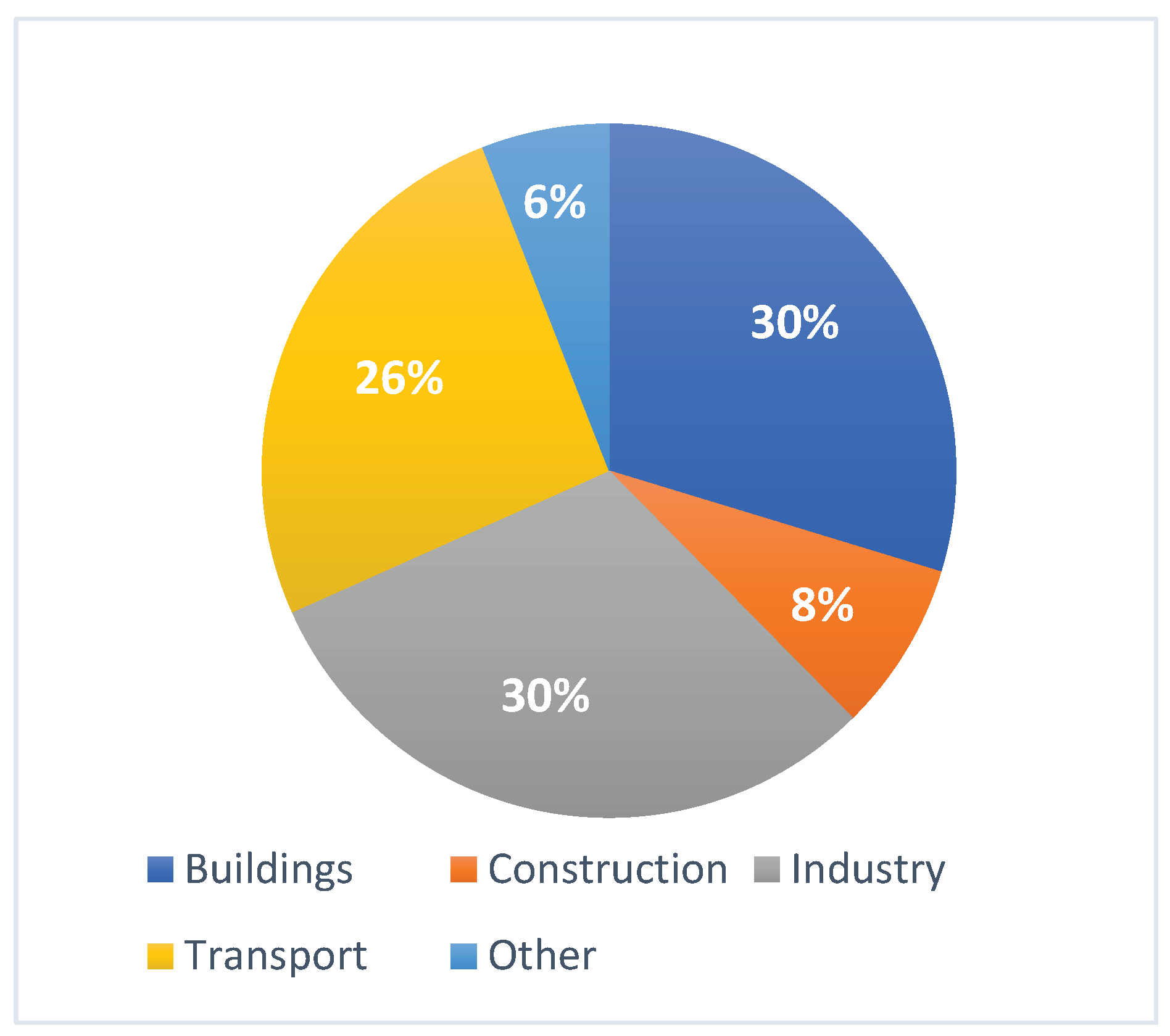
Figure 2.
Global Energy and Process CO2 Emissions in 2021 (UNEP, 2022).
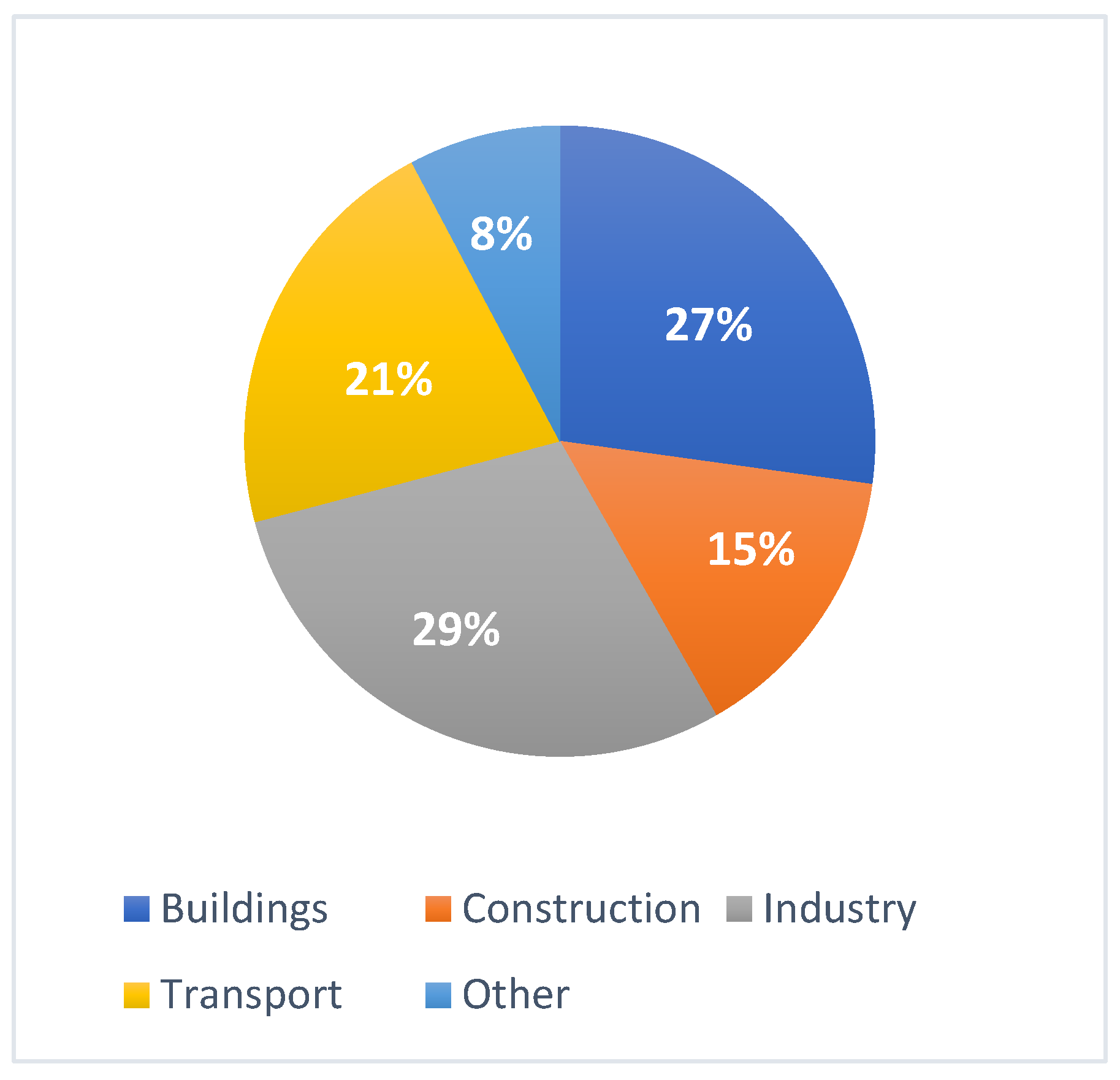
Figure 3.
Quantities of Sold Energy by Purpose in 2020/2021 (EEHC, 2021).
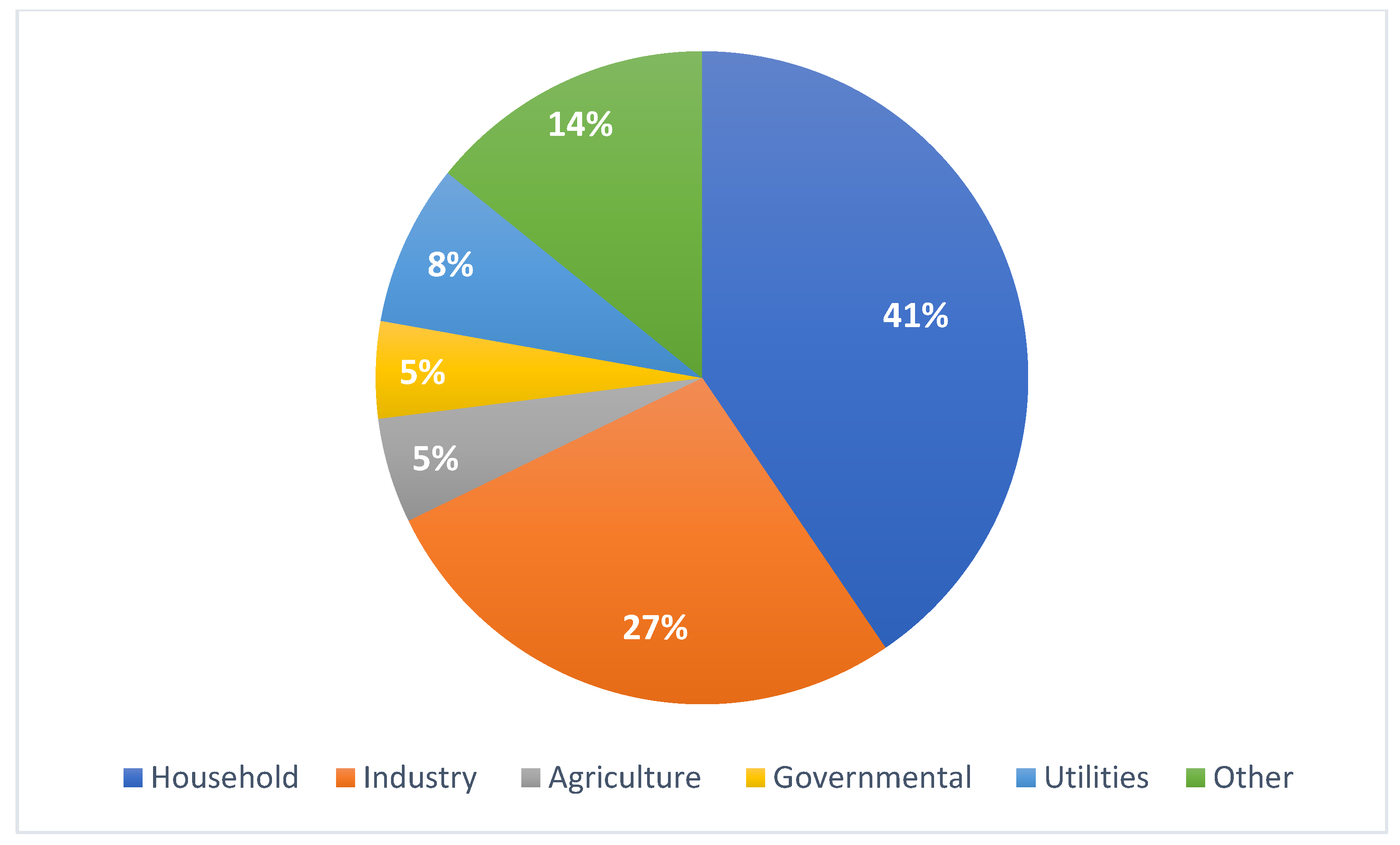
Figure 4.
Global Simulation Studies by Building Type.
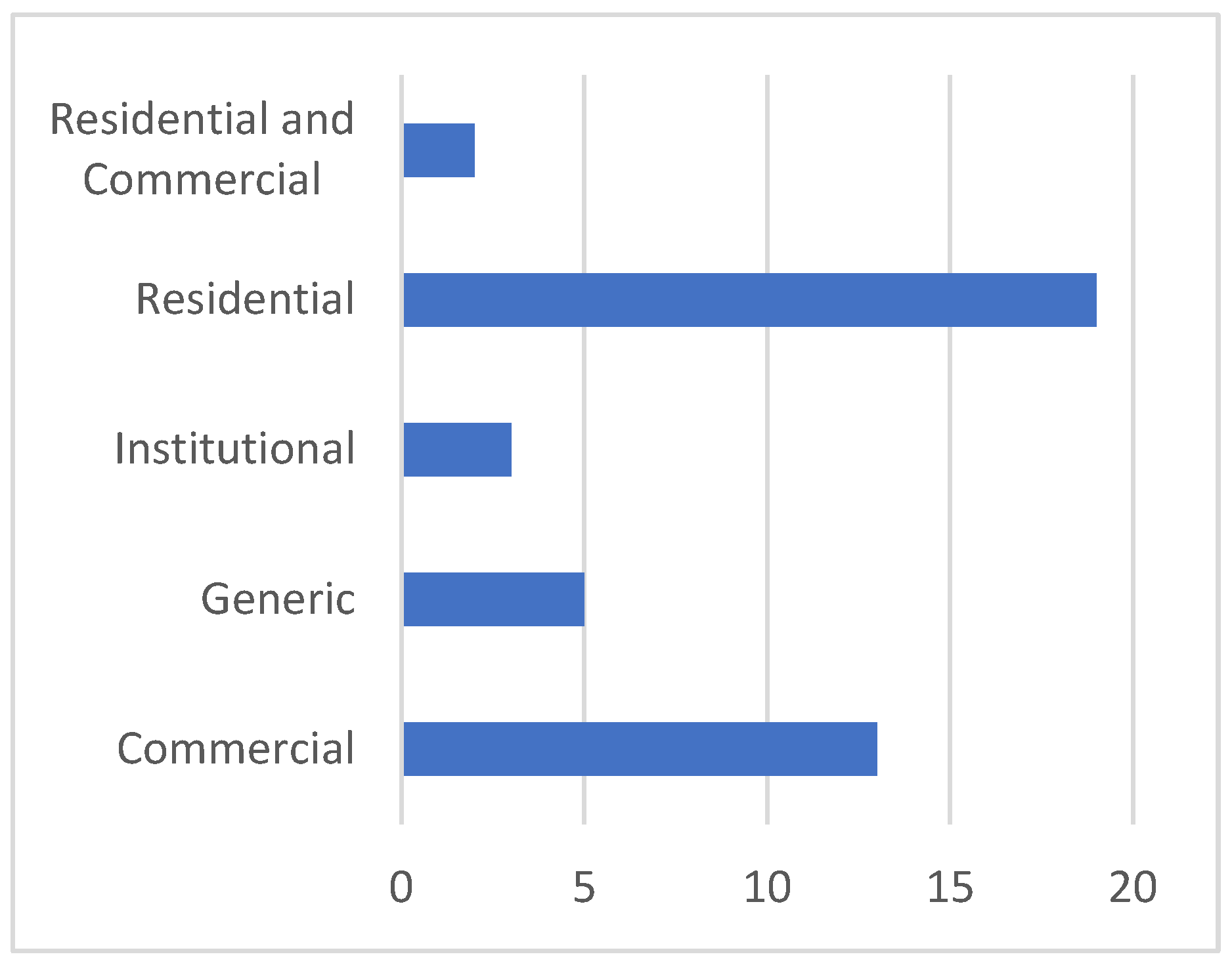
Figure 5.
Global Simulation Studies by Simulation Software.
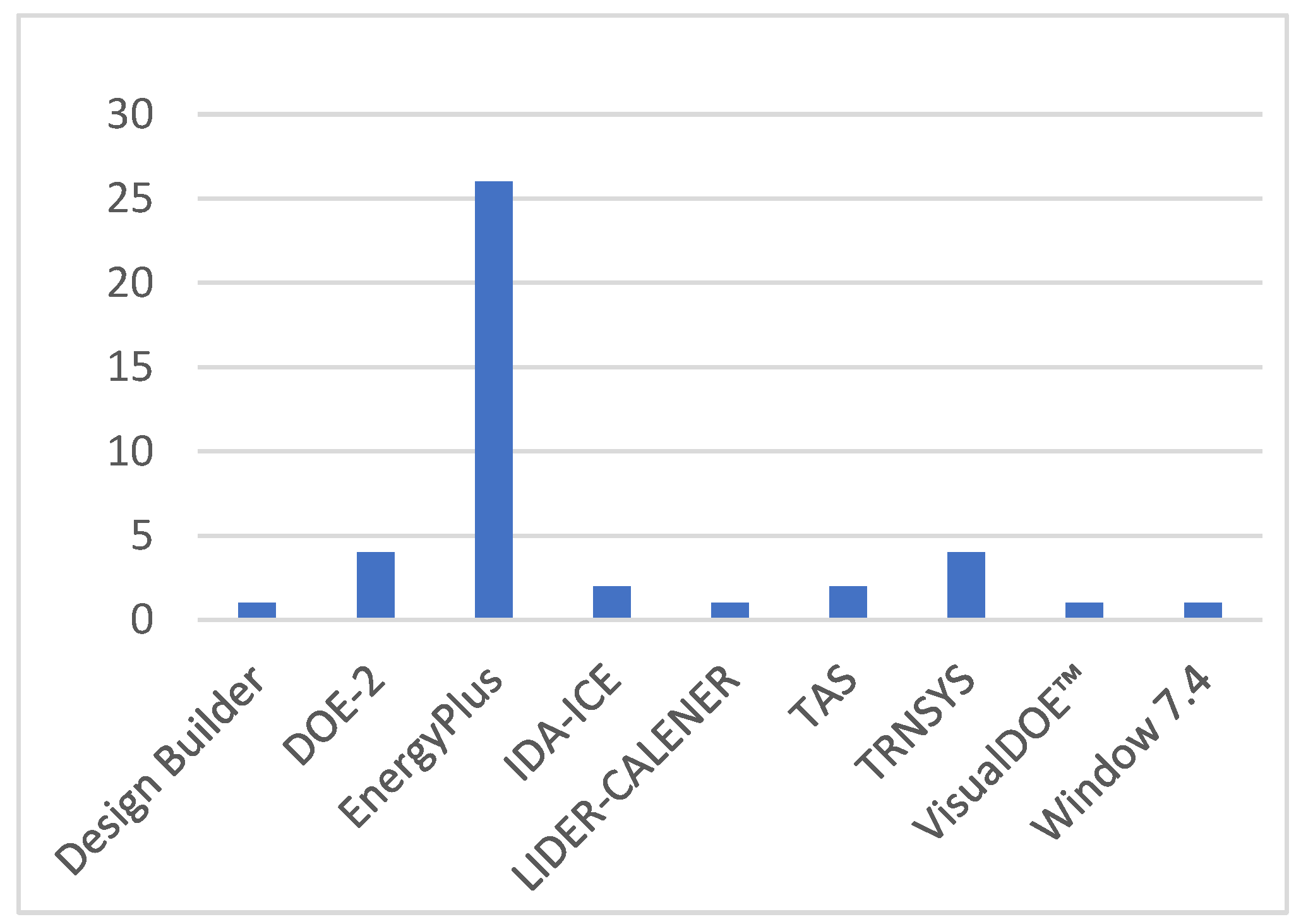
Figure 6.
Global Simulation Studies based on Cost Analysis Performance.
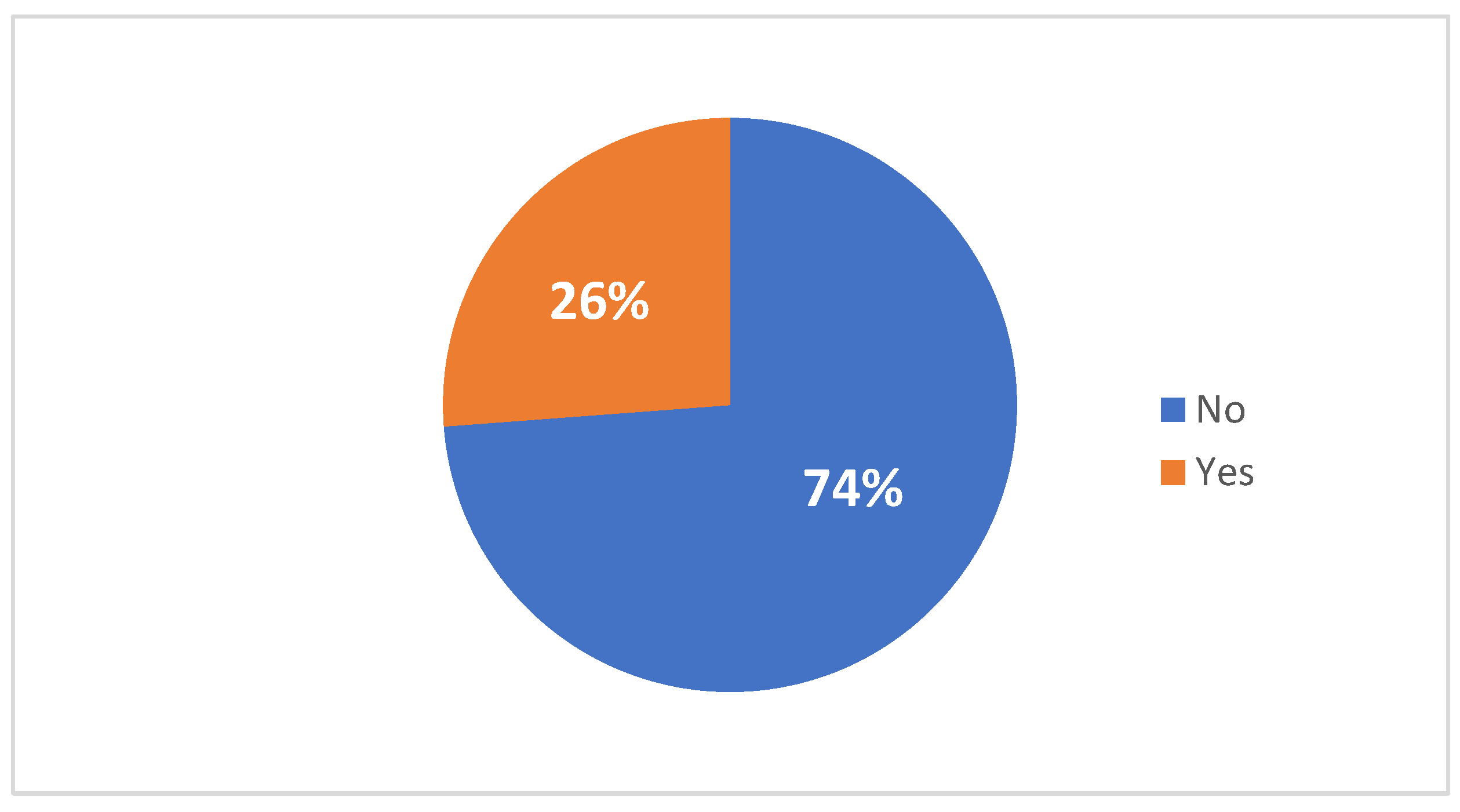
Figure 7.
Local Simulation Studies by Building Type.
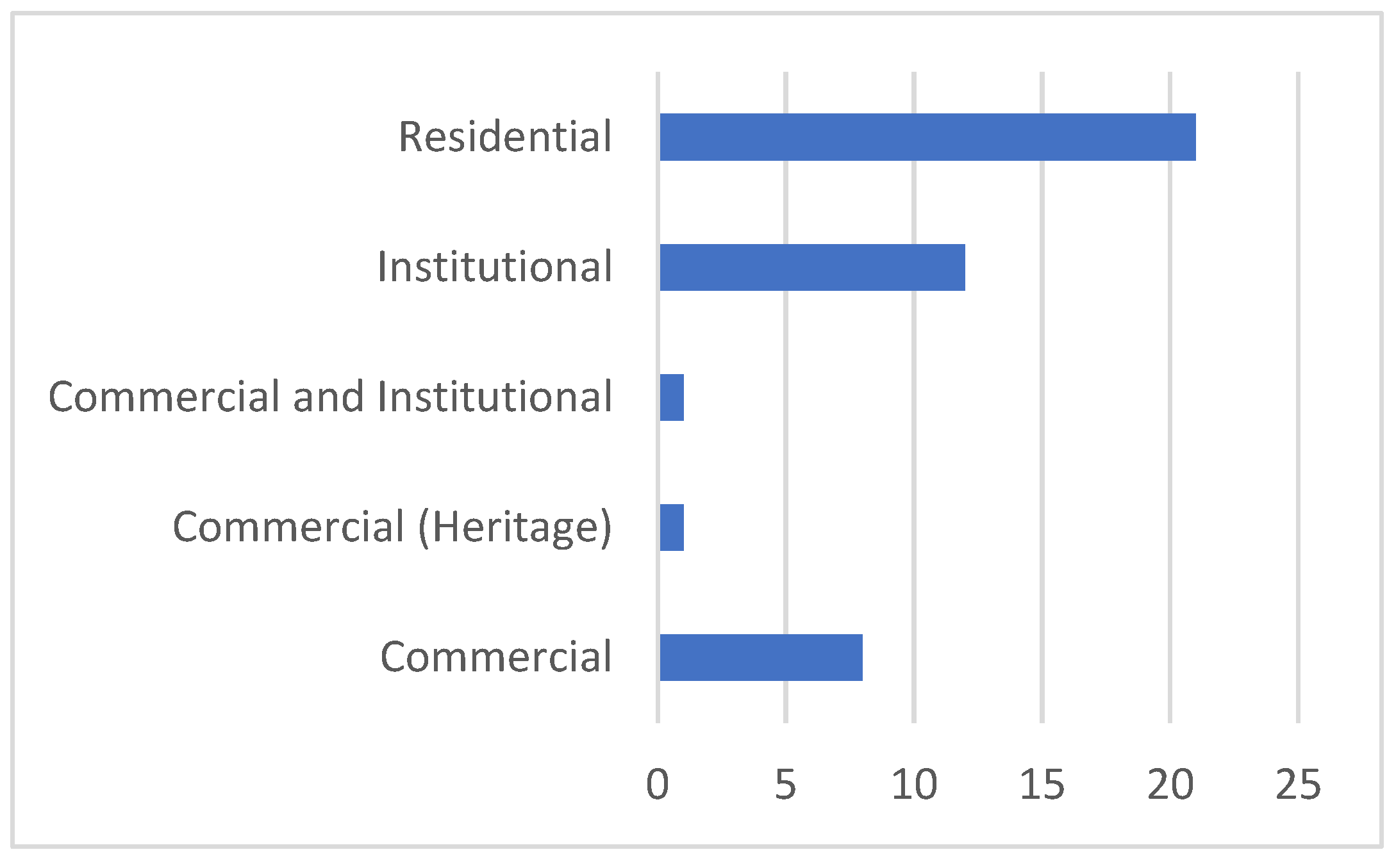
Figure 8.
Local Simulation Studies by Simulation Software.
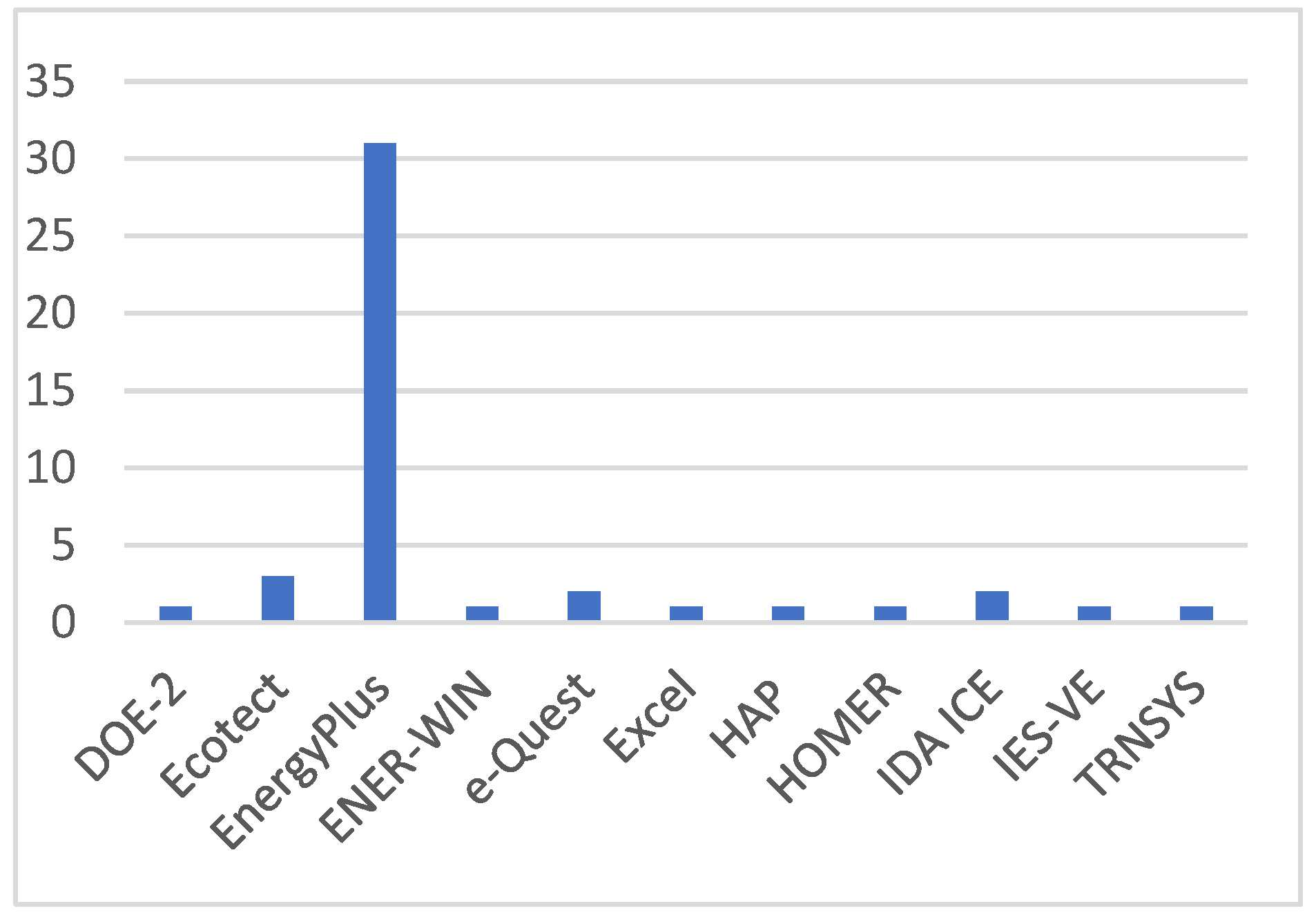
Figure 9.
Local Simulation Studies based on Cost Analysis Performance.
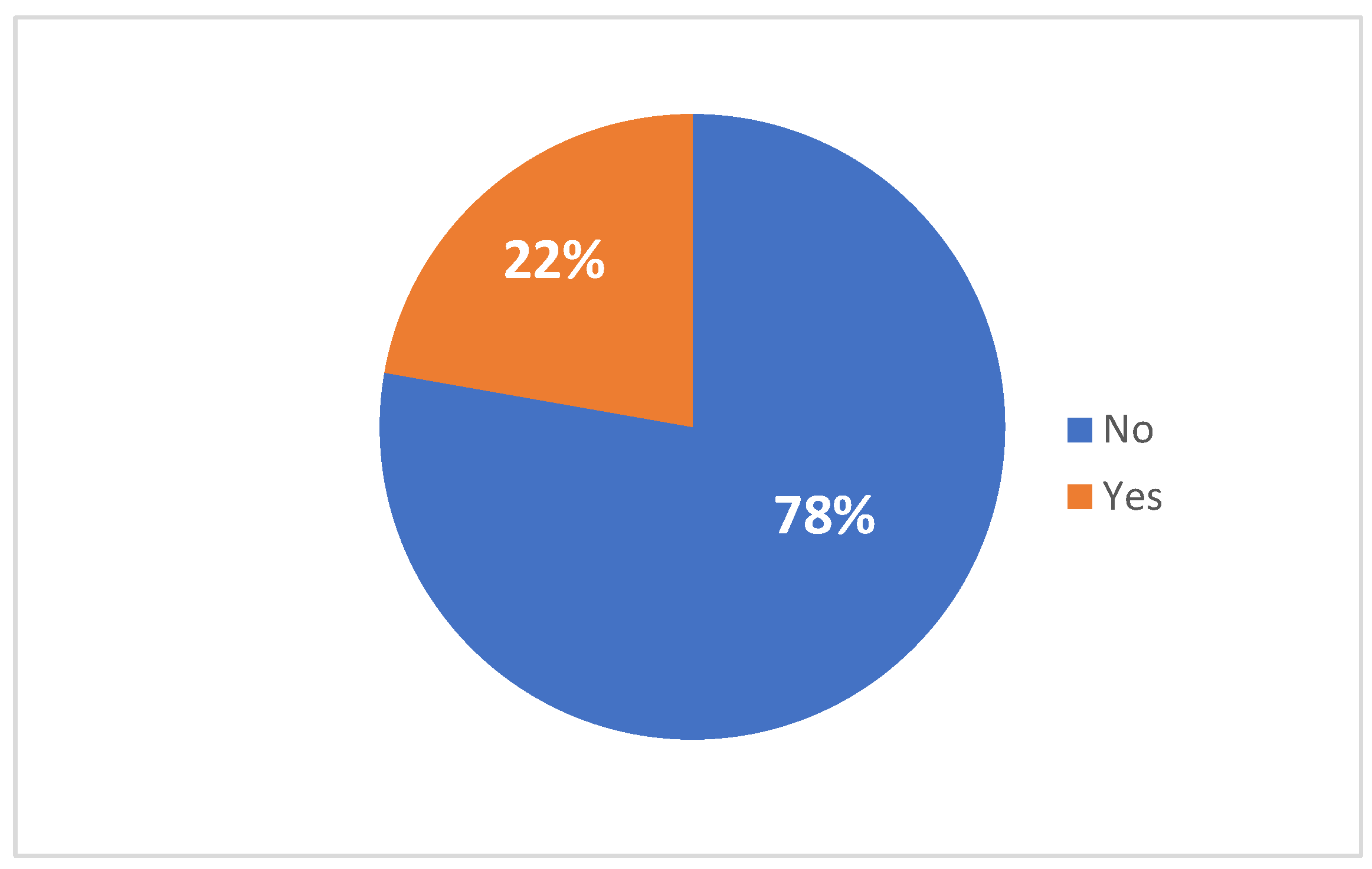
Table 1.
Summary of ASHRAE Existing AEDGs.
| AEDG | Building Category | Guide Scope | Date Published |
|---|---|---|---|
| 30% Energy savings | Small Office Buildings | This guide is intended for office buildings that have a total area of up to 20,000 ft² and uses unitary heating, ventilation, and air conditioning (HVAC) equipment. | 14/8/2008 |
| Small Retail Buildings | This guide is intended for small retail buildings that have a total area of up to 20,000 ft² and uses unitary HVAC equipment. | 14/8/2008 | |
| K-12 School Buildings | This guide is intended for elementary, middle, and high schools’ buildings. Its guidelines only apply to classrooms, administrative spaces, assembly spaces, gymnasiums, hallways, kitchens, media centers and science labs. It does not apply to wet labs, dry labs, indoor pools or any other area with special HVAC or contamination control requirements. | 14/8/2008 | |
| Small Warehouses and Self-Storage Buildings | This guide is intended for warehouse with an area of up to 50,000 ft² and self-storage buildings with unitary HVAC equipment. It excludes special warehouses such as refrigerated warehouses and unheated ones. | 14/8/2008 | |
| Highway Lodging | This guide is intended for hotels found along highways, consisting of up to 80 rooms and going up for four stories or less. It excludes hotels with significant commercial cooking or refrigeration equipment. | 9/6/2009 | |
| Small Hospital and Healthcare Facilities | This guide is intended for small healthcare facilities of area up to 90,000 ft². It includes critical access hospitals with 25 beds or less and medical office buildings of area greater than 20,000 ft². The guidelines in this guide does not address steam heat and sewage disposal. | 5/11/2009 | |
| 50% Energy Savings | Small to Medium Office Buildings | This guide is intended for office buildings with a total area up to 100,000 ft². It applies to all types of offices including medical offices without medical examination equipment. The guidelines exclude specialty areas such as data centers. | 28/4/2011 |
| K-12 School Buildings | This guide is intended for elementary, middle, and high school buildings of all sizes. Like the 30% Energy Savings Guide for K-12 schools, the guidelines of this guide exclude wet labs, dry labs, indoor pools or any other area with special HVAC or contamination control requirements. | 28/9/2011 | |
| Medium to Big Box Retail Buildings | This guide is intended for retail stores with a total area 20,000 ft²-100,000 ft². The guide also covers smaller or larger stores with similar space types. It, however, excludes areas with special HVAC and contamination control requirements such as commercial kitchens. It also excludes centralized refrigeration systems. | 30/12/2011 | |
| Large Hospitals | This guide is intended for medium and large hospitals which are typically at least 100,000 ft². | 1/5/2012 | |
| Grocery Stores | This guide is intended for grocery stores of area 25,000-65,000 ft² and have medium or low temperature refrigerated cases and walk-ins. This guide applies to smaller or larger stores with similar space types. It covers administrative places, dining facilities, medical spaces, sterilization area, storage areas, equipment spaces, pharmacies, and labs. | 18/3/2015 | |
| Zero Energy | K-12 School Buildings | This guide is intended for elementary, middle, and high school buildings of all sizes. Like the 30% and 50% Energy Savings Guides for K-12 schools, the guidelines of this guide exclude wet labs, dry labs, indoor pools or any other area with special HVAC or contamination control requirements. | 11/1/2018 |
| Small to Medium Office Buildings | This guide is intended for offices with total area 10,000 ft²-100,000ft² and building height less than 75 ft. The guide also applies to large office buildings that are made up of sections of the same size range. The recommendations of this guide exclude food service or labs or any other areas with special HVAC or contamination control requirements. | 14/6/2019 | |
| Multifamily Buildings | This guide is intended for residential buildings covered by ANSI/ASHRAE/IES Standard 90.1 which go up to 20 floors. The guidelines exclude indoor pools, food service and domestic water well pumping and sewerage disposal areas. | 14/4/2022 |
Table 2.
Sustainable Building Rating System Comparison.
| Rating System, Country of Origin, & Source | Development Basis | Categories & Weights[1] | Scope |
|---|---|---|---|
| BREEAM v6.0 (UK) (Fowler and Rauch, 2006; Rezaallah and Khoraskani, 2012; Ferreira et al., 2023; BREEAM-SE New Construction v6.0 Technical Manual 1.1, 2023) |
Original | Management – 10.82% Health and Wellbeing – 17.53% Energy – 18.4% Transport – 7.65% Water – 3.94% Materials – 16.73% Waste – 7.87% Land Use and Ecology – 9.84% Pollution – 7.22% Innovation (Bonus) – 10% |
Communities Infrastructure New Construction (residential and commercial) In-Use (commercial) Refurbishment and Fit Out (residential and commercial) |
| LEED v4 (US) ('LEED v4 BDC Reference Guide', 2013; ‘LEED v4 for Homes Design and Construction Checklist’, 2014; Mohamed, Alwan and Marzouk, 2018) |
Original | Integrative Process – 2% Location & Transportation – 15% Sustainable Sites – 7% Water Efficiency – 12% Energy & Atmosphere – 37% Materials & Resources – 9% Indoor Environmental Quality – 18% Innovation (Bonus) – 6% Regional Priority (Bonus) – 4% |
Building Design and Construction (core and shell, schools, healthcare, retail, data centers, hospitality, warehouses, and distribution centers) Interior Design and Construction (commercial, retail & hospitality) Operation and Maintenance (existing buildings, existing interiors, schools, retail, data centers, hospitality, warehouses, and distribution centers) Residential (single family & low to mid rise multifamily) Neighborhood Development Cities and Communities |
| CASBEE[2] (Japan) (Fowler and Rauch, 2006; Dahal, 2017) |
Original | Indoor Environment Quality of Service On-site Environment Energy Resources and Materials Off-site Environment |
New Construction (buildings, detached houses & dwelling units) Existing Buildings Renovation (buildings & housing) Temporary Construction Urban Development Cities |
| GREEN STAR v1.3 (Australia) (Fowler and Rauch, 2006; Nguyen and Altan, 2011; ‘Design & As Built | Green Building Council of Australia’, 2017) |
BREEAM LEED |
Management – 14% Indoor Environmental Quality – 17% Energy – 22% Transport – 10% Water – 12% Materials – 14% Land Use and Ecology – 6% Emissions – 5% Innovation (Bonus) – 10% |
Communities Buildings – Design & As Built Interiors Performance – Existing Buildings |
| DGNB version 2023 (Germany) (‘DGNB System – Sustainable and green building’, 2020; DGNB SYSTEM KRITERIENKATALOG GEBAUDE NEUBAU, 2023; Ferreira et al., 2023) |
Original | Process Quality – 12.5% Site Quality – 5% Environmental Quality – 22.5% Social and Functional Quality – 22.5% Technical Quality – 15% Economic Quality – 22.5% |
Districts Construction Sites New Construction (office, residential, educational, hotel, consumer market, shopping center, department store, logistics, production, and assembly buildings) Renovated and Existing Buildings Interiors Buildings in Use Deconstruction of Buildings |
| PRS v1.0 (UAE) (The Pearl Rating System for Estidama Building Rating System Design & Construction, 2010; Ramani and García De Soto, 2021) |
BREEAM LEED [3] |
Integrated Development Process – 7% Natural Systems – 7% Livable Buildings – 21% Precious Water – 24% Resourceful Energy – 25% Stewarding Materials – 16% Innovating Practice (Bonus) – 2% |
Design and Construction (villa, building, community) Public Realm |
| MOSTADAM V1.1 (Saudi Arabia) (Mostadam Rating System Residential Buildings D+C Manual, 2019) |
BREEAM LEED |
Site Sustainability – 9% Transportation and Connectivity – 7% Region and Culture – 7% Energy – 27% Water – 24% Health and Comfort – 14% Materials and Waste – 4% Education and Innovation – 4% Policies, Management and Maintenance – 4% |
Design and Construction (communities, residential & commercial) Operation and Existing (communities, residential & commercial) |
| GPRS v2 (Egypt) (Harb, 2019; HBRC, 2019) |
LEED | Sustainable Site – 10% Energy Efficiency – 28% Water Efficiency – 30% Materials & Resources – 12% Indoor Environmental Quality – 12% Management Protocols – 8% Innovation and Added Value (Bonus) – 5% |
New Construction |
| TARSHEED (Egypt) (Harb, 2019; BUILD ME Project-Phase II Status of Energy Efficiency in the Egyptian Building Sector Dr. Dalia Sakr, Egypt Green Building Council, 2020) |
The Excellence in Design for Greater Efficiencies (EDGE) rating system | Energy – 46% Water – 19% Habitat – 35% |
Residential Commercial Communities School Healthcare |
Table 3.
Global Studies Using Energy Modeling and Simulation.
| Reference | Building Type | Simulation Software | Cost analysis |
|---|---|---|---|
| (Abouaiana and Mendonça, 2022) | Residential | EnergyPlus | Yes |
| (Kini et al., 2021) | Institutional | EnergyPlus | No |
| (Sim, Suh and Otto, 2021) | Institutional | Design Builder | Yes |
| (Giouri, Tenpierik and Turrin, 2020) | Commercial | EnergyPlus | No |
| (Rodrigues et al., 2019) | Residential and Commercial | EnergyPlus | No |
| (Ascione et al., 2019) | Residential | EnergyPlus | Yes |
| (Chen et al., 2019) | Commercial | EnergyPlus | No |
| (Chen and Yang, 2018) | Residential | EnergyPlus | No |
| (Li, Wang and Cheung, 2018) | Commercial | EnergyPlus | No |
| (Yao et al., 2018) | Residential | EnergyPlus | No |
| (Zhang et al., 2018) | Generic | Window 7.4(Lawrence Berkeley National Laboratory, 2019) | No |
| (Gou et al., 2018) | Residential | EnergyPlus | No |
| (Song et al., 2017) | Commercial | TRNSYS | Yes |
| (Chen and Yang, 2017) | Residential | EnergyPlus | No |
| (Chen and Yang, 2016) | Residential and Commercial | DOE-2(York and Cappiello, 1981) | No |
| (Aparicio Ruiz et al., 2016) | Residential | LIDER-CALENER | No |
| (Ascione et al., 2016) | Residential | EnergyPlus | No |
| (Carreras et al., 2016) | Generic | EnergyPlus | Yes |
| (Ascione et al., 2015) | Residential | EnergyPlus | Yes |
| (Ioannou and Itard, 2015) | Residential | EnergyPlus | No |
| (Huang, Niu and Chung, 2014) | Commercial | EnergyPlus | No |
| (Pikas, Thalfeldt and Kurnitski, 2014) | Commercial | IDA-ICE (Kalamees,2004) | Yes |
| (Susorova et al., 2013) | Commercial | EnergyPlus | No |
| (Calleja Rodríguez et al., 2013) | Residential | EnergyPlus | No |
| (Aldawoud, 2013) | Generic | DOE-2 | No |
| (Kim et al., 2012) | Commercial | DOE-2 | Yes |
| (Griego, Krarti and Hernández-Guerrero, 2012) | Residential | EnergyPlus | Yes |
| (Roetzel and Tsangrassoulis, 2012) | Commercial | EnergyPlus | No |
| (Bambrook, Sproul and Jacob, 2011) | Residential | IDA-ICE | Yes |
| (Bichiou and Krarti, 2011) | Residential | DOE-2 | No |
| (Jaber and Ajib, 2011) | Residential | TRNSYS | Yes |
| (Yıldız and Arsan, 2011) | Residential | EnergyPlus | No |
| (Zemella et al., 2011) | Commercial | EnergyPlus | No |
| (Palmero-Marrero and Oliveira, 2010) | Generic | TRNSYS | No |
| (Wang, Gwilliam and Jones, 2009) | Residential | EnergyPlus | No |
| (Sailor, 2008) | Commercial | EnergyPlus | No |
| (Gratia and De Herde, 2007) | Commercial | TAS(Jones, 2000) | No |
| (Li and Wong, 2007) | Generic | EnergyPlus | No |
| (Tavares and Martins, 2007) | Institutional | VisualDOE™ | No |
| (Yik and Bojić, 2006b) | Residential | EnergyPlus | No |
| (Cheung, Fuller and Luther, 2005) | Residential | TRNSYS | No |
| (Gratia, Bruyère and De Herde, 2004) | Commercial | TAS | No |
Table 4.
Regional Studie Using Energy Modeling and Simulation.
| Reference | Building Type | Simulation Software | Cost analysis |
|---|---|---|---|
| (Watfa, Hawash and Jaafar, 2021) | Residential | AECOsim | Yes |
| (Salameh et al., 2020) | Commercial | DOE-2 | No |
| (Alhuwayil, Abdul Mujeebu and Algarny, 2019) | Residential | EnergyPlus | Yes |
| (Bataineh and Alrabee, 2018) | Residential | EnergyPlus | Yes |
| (Friess, Rakhshan, Tamer A. Hendawi, et al., 2012) | Residential | EnergyPlus | No |
| (Ihm and Krarti, 2012) | Residential | DOE-2 | No |
Disclaimer/Publisher’s Note: The statements, opinions and data contained in all publications are solely those of the individual author(s) and contributor(s) and not of MDPI and/or the editor(s). MDPI and/or the editor(s) disclaim responsibility for any injury to people or property resulting from any ideas, methods, instructions or products referred to in the content. |
© 2024 by the authors. Licensee MDPI, Basel, Switzerland. This article is an open access article distributed under the terms and conditions of the Creative Commons Attribution (CC BY) license (http://creativecommons.org/licenses/by/4.0/).
Copyright: This open access article is published under a Creative Commons CC BY 4.0 license, which permit the free download, distribution, and reuse, provided that the author and preprint are cited in any reuse.


