

Submitted:
29 March 2024
Posted:
29 March 2024
You are already at the latest version
Abstract
The company strategic procurement function makes a significant contribution to overall corporate success, and yet remains under-researched in terms of digitalisation and digital maturity. This research adopts an inductive case study approach, using qualitative data from in-depth inter-views with industry practitioners, to develop and apply a digital maturity model for the deployment of strategic procurement analytics. The research presents a snapshot of the digital maturity of the strategic procurement function of a global aircraft manufacturer, and finds that current exploitation of analytics remains constrained by a range of factors, including the need for close compliance with regulatory norms. Thematic analysis of the interview material provides the basis for the development of the maturity model, which - although geared to a specific industry context - is nevertheless of relevance in other business environments. The research thus con-tributes to the existing literature in this field, and will also be of interest to procurement professionals. However, the research clearly has its limitations, not least in that it is based on just one industry case, and cross-industry generalisations from the findings must therefore be treated with caution.
Keywords:
data analytics
; strategic procurement
; big data
; maturity model
; aviation industry
; aircraft manufacturer
1. Introduction
This article investigates the digital maturity of the strategic procurement function in an aircraft manufacturer. The procurement function is acknowledged within organisations for its crucial contribution to business success. Both literature and practice praise the value and the pivotal position of the function, being the central node in a network of internal and external stakeholders. Contemporary academic literature covers a number of aspects of the procurement function, including its definition (Joesbury, 2016), significance (Paulraj et al., 2006), and development of the function over recent decades (Hughes & Ertel, 2016) in managing the manifold and complex relationships with suppliers. However, as Guinipero and Eltantawy (2022, p.48) observe “little formal research has been produced to examine theories used to underpin contemporary PSM [Purchasing and Supply-chain Management]”.
The aviation industry is comprised of the air transport sector, including airlines and airports, and the aircraft manufacturing sector. Prior to the Covid-19 pandemic, the air transport industry accounted for $961.3 billion directly and $816.4 billion indirectly of the world’s gross domestic product (GDP) and supported 11.3 million jobs directly and 18.1 million jobs indirectly worldwide (ATAG, 2024). In terms of GDP, the industry is larger than the automobile manufacturing and the pharmaceutical manufacturing sectors. The International Civil Aviation Organization (ICAO) projects pre-Covid-19 volumes in terms of passenger figures will be reached in 2024 (ICAO, 2023).
Research of the application of advanced data analytics in the area of strategic procurement has been given little consideration in the academic literature. Handfield et al. (2019), explored the current and future state of procurement analytics, and identified the need for future research in this field and the development of an appropriate analytical culture within organisations. This article contributes to the academic discourse regarding the status of digital maturity of strategic procurement with a focus on the role of advanced data analytics implementation. It builds upon early results from the project (Altundag, 2021), the findings being derived from empirical evidence in the form of a case study from the aviation industry. The resultant maturity model is thus specific to the context and challenges in an aircraft manufacturer, although future application and development of the model in other industry sectors is a possible future avenue of research. The developed digital maturity model is one of the few currently available that is designed to explore and provide guidance for the strategic procurement function.
Many organisations still struggle to gain value from the introduction of supply chain analytics, and in this context, Davenport and Bean (2023) concluded that the transformation into a data-driven organisation is not related, in the main, to technology, but rather to people, process, culture, and organisational issues. Here, however, the focus is on the use of advanced analytics in strategic procurement, and thus the term “strategic procurement analytics” (SPA) will be used. This is taken to mean the process of applying advanced analytics techniques in combination with strategic procurement theory to leverage procurement data to derive accurate, timely and meaningful business insights, apply data-driven decision making and manage procurement-related business processes with enhanced effectiveness and efficiency. Within this context, this article addresses the following research questions (RQs):
RQ1. How are SPA being used, focusing on the type of applications deployed and their operational implications?
RQ2. Can a new maturity model be developed and validated to assess the deployment of SPA in the aviation industry?
The article comprises five sections. Following this introduction, the key aspects of the research method are outlined and discussed. Then, in section 3, relevant literature is reviewed and a provisional conceptual framework for the primary research is set out, drawing upon concepts in the extant literature. In section 4, the two research questions noted above are addressed and findings are discussed. Finally, section 5 provides an overall conclusion and discusses the contribution and limitations of the research project.
2. Materials and Methods
Flick et al. (2013) highlight the attraction and the topicality of qualitative research, linked to its open approach which allows the researchers to be much closer to the subject matter, compared with numerical and standardized quantitative inquiries, and this is central to the method adopted here. The involvement of humans in an organisation makes the research process complex and highly contextual, for which a qualitative research approach is well-suited (Holliday, 2016). The research design was aligned with the overall interpretivist philosophical standpoint, and an inductive approach to concept development was adopted. Thomas (2006, p.238) notes that the inductive approach “is a systematic procedure for analysing qualitative data in which the analysis is likely to be guided by specific evaluation objectives”.
Saunders et al. (2023) classify the purpose of a research project as exploratory, descriptive, explanatory or evaluative, but a combination of research purposes over time is possible. Here, the research is exploratory in the sense that it explores what is happening as regards digital transformation in the strategic procurement function, but is also descriptive as it aims to establish an accurate profile of the deployment of data analytics in the strategic procurement function. It is also explanatory in that it identifies causal relationships between variables such as how the implementation of advanced data analytics changes other dimensions such as processes, people and structure.
The use of a case study was a central methodological choice. Yin (2018, p.15) defines case study as “an empirical method that investigates a contemporary phenomenon (the “case“) in depth and within its real-world context, especially when the boundaries between phenomenon and context may not be clearly evident”. Here, a single-case design was pursued, with one organisation (the strategic procurement function in an aircraft manufacturer) being the centre of the research and the main source of information. The strategic procurement function (sometimes also termed the “contracting domain”) is structured by product (or “commodity”) such as Aerostructure (e.g., airframe, fuselage), Material and Parts (e.g., aluminium, detail parts, standard parts), Propulsion and Cabin (e.g., lavatory, monuments, seats). An additional axis in the organisational structure are functional-related archetypes (e.g., strategy and services per commodity across various hierarchical levels). The overall external sourcing volume across the case study company was approximately €49.6 billion in 2023, with almost 80% of the company’s activities being sourced externally.
Relevant roles within the strategic procurement organisation are multifunctional team (MFT) leader, lead buyer, category manager, sub-commodity leader, buyer and project manager. The MFT is a regular forum comprising representatives from various functions such as Procurement, Quality, Engineering, Finance, Operations and Customer Support, dedicated to performing activities along the procurement process, in particular call-for-tenders, de-risking, production ramp-up initiatives or cost reduction projects.
In-depth interviews were the primary data gathering procedure, but data collection was done via an analysis of secondary material and an online survey for validation purposes. Interviewees were selected based on their role and experience in the organisation their accessibility, and their willingness to support the research. The following sub-groups were approached for interviews: procurement executives and line managers (MFT leaders); sub-commodity leaders; (lead-)buyers; and members from the strategic procurement community that had been participants in digital procurement projects. To facilitate a distinction of views and perceptions, members from different hierarchical levels, including procurement senior management were approached. The role profiles and interviewee codes are shown Table 1.
Out of 17 contacted candidates, two declined due to time constraints. At least one week in advance of the scheduled date (in the period April to August 2021), an interview brief, consent form, and the questionnaire were sent to the interviewees. The participants were offered a pre-interview phone call to clarify questions, raise concerns or provide any other comments. In the questionnaire, in addition to open questions, several closing statements were included using a five-point Likert scale as response options. The interviews were performed via Google Meet, and were recorded, each interview lasting approximately 90 minutes.
Following interview transcription, thematic analysis was used to analyse the collected data. This was undertaken systematically, yet in a flexible and engaged manner, to explore the data content, and identify themes and patterns, and take account of the contextual nature of the phenomenon (Clarke & Braun, 2017; Saunders et al., 2023). Coding enabled the reduction and classification of the collected data. A code can be seen as “a word or short phrase that symbolically assigns a summative, salient, essence-capturing, and/or evocative attribute for a portion of language-based or visual data” (Saldaña, 2015, p.3). Coding aims at the categorisation of data by analysis of the transcripts, labelling relevant information to form units of data. Here, clusters (which corresponded loosely to the sub-headings within the questionnaire) were used for structuring the data. They included: general information, strategy, data, technology, process, people, structure, culture, and success factors. To achieve a higher level of granularity of results, labels detailing aspects of each cluster were allocated, to which data was allocated accordingly. In total, 78 labels were distributed between the ten clusters (Figure 1). Through re-reading the interview transcripts, data segments including words, passages and sentences, interesting and seemingly relevant for the research, were marked in a different colour and allocated to a corresponding label. In addition to the analysis of the transcripts, the responses to the multiple-choice Likert scale questions were transferred into a consolidating Excel sheet for analysis.
For the final model validation, an online survey based on Google Forms, - as a simple, familiar and readily available technology - was used. A sub-set of six of the interviewees was requested to participate in the online survey, which included an introduction with guidance on how to complete the survey, an illustration of the developed maturity model and seven statements relating to the model. A five-point Likert scale (ranging from Strongly Agree to Strongly Disagree) provided the possible responses. In addition, respondents were asked to repeat the rating of the digital maturity of the strategic procurement function (they had previously been asked this in the interview). The survey was launched in August 2022 and left online for 14 days. All six of the interviewees responded.
3. Relevant Literature and Provisional Conceptual Framework
In sub-sections 3.1 – 3.3 below, the technology and information systems literature and existing models and frameworks of relevance to the overall research aim are reviewed. Then, in sub-section 3.4, key concepts from the literature are identified and adopted in the provisional conceptual framework for the primary research.
3.1. Digitalisation and Data Analytics
Digitalisation is a “megatrend”, which fundamentally and irreversibly has changed the nature of business (Wynn & Felser, 2023). The term “digitalisation” is an omnipresent phenomenon covering a very broad spectrum of sectors and fields. Organisations face a rapidly changing business environment including emerging competition due to worldwide interconnectivity and real-time exchange of data and information, and are required to respond by re-thinking business models and organisational structures (Bienhaus & Haddud, 2018). Some authors emphasise the radical nature of change brought about by digitalisation in products and services, processes or business models (Nambisan et al. 2017). Further definitions embrace the broad impact of digitalisation as “the way many domains of social life are restructured around digital communication and media infrastructures” (Brennen & Kreiss, 2016, p.1). To date, however, a clear and widely accepted definition of the term “digitalisation” is yet to be established.
Nevertheless, most authors agree on the range of technologies that collectively underpin and facilitate digitalization. Perry (2022) (para.8), for example, identifies 8 main technologies: IoT, Artificial Intelligence, Machine Learning, Advanced Data Analytics, Augmented Reality, Additive Manufacturing and 3-D Printing, Cybersecurity, Cloud Technology and Digital Twin. Wynn (2022), suggests a slightly broader spectrum of 13 technologies (Figure 2), but Big Data and Analytics are recognised universally as key elements of digitalisation. The rise and deployment of these technologies heralded an era where massive volumes of real-time data, both structured and unstructured, became widely available (Handfield & Linton, 2017), resulting in rapid change and evolution of business models, operations, processes, and organisational structures.
The digitalisation of the industrial sector is encompassed within the term “Industry 4.0”, through the convergence of the physical and virtual worlds and the universal interconnection of people and things (Kagermann, 2015). Big data and advanced analytics play a major role in Industry 4.0 and are considered key “game changers” for operating successfully and enduring in an increasingly volatile business environment, as well as for supply chain management (Bienhaus & Haddud, 2018). Additional technologies, such as 3D printing, robotics, and autonomous vehicles, are expected to complement Industry 4.0-enabled supply chain systems (Yin et al., 2018).
More specifically, as regards analytics, a distinction can be made between descriptive, predictive and prescriptive analytics (Arya et al., 2017; Anitha & Malini, 2018). Descriptive analytics are used to analyse historical data patterns and relate to the identification of issues and opportunities within the extant processual and functional environment, answering the question: “what happened”? Predictive analytics, which use mathematical algorithms and programming to detect and explore data patterns, aim at forecasting future developments and providing answers to the question: “why will these things happen”? Prescriptive analytics, which determine, assess and re-assess alternative events that involve objectives and requirements characterised by high volume and complexity, target the improvement of prediction accuracy in order to enable an advanced decision making and thus improve business performance. Prescriptive analytics are considered the most advanced and valuable form of analytics, yet most difficult to apply. By developing analytical capabilities, organisations target an increase in performance and measure it, ultimately to achieve a competitive advantage (Fosso Wamba et al., 2015; Arya et al., 2017).
Nevertheless, to focus solely on the adoption of state-of-the-art technologies would be misplaced. Westerman (2017) affirms that technology does not add value to a business except for technology in products. The value stems more from technology’s role as the enabler to do things differently, such as the implementation of analytics to enhance understanding and thereby derive improved decision-making. The standpoint that digital transformation is not about technology, but rather about formulating new ways of doing business and new ways of constructing corporate models, is widely accepted (Turchi, 2018). The development of what Bieda (2020, para.2) calls “analytical agility” is key in responding in a highly volatile environment and data reliability is also found to be of fundament importance (Bean, 2020). Academic research postulates the compulsory requirement to transform processes, policies, structures, and roles in order to exploit the benefits of analytics capabilities established by an organisation (Roßmann et al., 2018).
3.2. Procurement
Joesbury (2016) defines strategic sourcing/strategic procurement as “the fundamental integration of purchasing and supply chain into the strategy, decision making and operation of the enterprise” (p.33). Nevertheless, outside of the procurement community, the procurement organisation may be viewed as complex, based upon processes that are overly bureaucratic and too slow. Batran et al. (2017) concluded that “procurement has never been seen as a cutting- edge function” (p.121). On the other hand, Baltran et al. (2017) point to the significance of the function within the wider business context, with the procurement function managing on average 70-80% of the external value add. In similar vein, Schweiger (2016) asserts that an average value of 60% share spent on external sourcing in relation to a company’s total revenue has a major impact on operating results.
In general terms, the strategic procurement function covers: definition of procurement strategy and policy; market assessment; identification and assessment of potential suppliers; supplier selection and contracting; and supplier relationship management (SRM). The level of connectivity between the supply chain partners and the ability to make use of abundant data are understood as a key success factor. Setting up collaborative long-term relationships with the right set of competitive suppliers, not only on 1st tier level, and maintaining them is, and will remain, a key priority among procurement objectives. The trend to manage only 1st tier suppliers is reversed and n-tier management continues to grow in significance (Hughes & Ertel, 2016). This is partly explained by the enhanced visibility throughout the value chain and the need for close supplier surveillance to anticipate and mitigate delivery and thus production risks. One of the industries where this development is witnessed is the aviation industry.
One of the core competencies of the future procurement, beyond a strategic orientation, is “business acumen”, meaning applied analytical skills to fully comprehend the various business models among suppliers and to determine the best-fit to strategic sourcing needs. There is consensus among academic research (Batran et al., 2017) and practitioners (Accenture, 2017) that the development of relevant hard and soft skills, sometimes termed “workforce adaptability” (Wynn & Lam, 2023) is fundamental to successful digitalisation.
Procurement 4.0 focuses on the impacts of digitalisation on procurement and support for Industry 4.0. Nicoletti (2018) sees Procurement 4.0 as the deployment of advanced digitalisation and automation both internally in the organisation and externally with actors in the value chain. Fundamental elements are a high level of connectivity which thereby enhances the integration of suppliers in the value chain network, many-to-many communication via platforms, access to real-time data and analytic capabilities through machine learning and artificial intelligence (Bag et al., 2019, Accenture, 2017). Here, the term “digital procurement” is adopted, being synonymous with the concept of procurement 4.0. Digital procurement can also be viewed as within the umbrella concept of supply chain management, noted above, which Christopher (2023, p. 3) defines as the “management of upstream and downstream relationships with suppliers and customers in order to deliver superior customer value at less cost to the supply chain as a whole implies”.
Batran et al. (2017) highlight the value of real-time information in the formulation of relevant sourcing strategies. Applying analytics is understood to be particularly beneficial in category management, for example, by managing the tail-end spend category by helping to understand structure and drivers, automate operational processes and if possible, consolidate them (Sanders, 2016). Oelcer et al. (2019) suggests there is a 5% to 10% average cost reduction when using digital technology in tail end spend management. The management of risk exposure including supplier risk, risk of fraud, bribery, or corruption is considered a further potential field of the application of analytics (Fosso Wamba & Akter, 2015; Sanders, 2016). Contract analytics used to monitor and ensure the compliance to agreed terms such as payment terms and this is another field for the application of advanced analytics in strategic procurement (Handfield et al., 2019).
Overall, the application of data analytics in strategic procurement is assumed to increase speed of procurement processes and to free up capacity that is used for tactical and manual activities at present, allowing a shift in focus to more strategic tasks.
3.3. Relevant Models and Frameworks
More than a decade ago, Murray (2013) concluded that procurement had not engaged sufficiently in the digital revolution. Today, the status of digital maturity within strategic procurement organisations remains unclear. Successful exploitation of advanced data analytics is understood as a key enabler to enhance digital maturity and ultimately transform successfully into a digitally mature organisation.
A variety of digital maturity models exist. Haryanti et al. (2023) identified, in a systematic review of relevant academic and practitioners’ literature, 44 digital maturity models and thus confirmed the existence of numerous digital maturity models, which were reviewed in previous studies such as those of Teichert (2019) or Barry et al. (2022). Generic and domain-specific models such as for manufacturing, banking, education or health amongst others were distinguished by Barry et al. (2022). Other digital maturity models focused the size of the company, whether the model was designed for an application in small-and medium-sized or large companies. Teichert (2019) found that existing models give an incomplete picture of digital maturity, and that there is a research gap of digital transformation maturity as a comprehensive phenomenon. While existing models provide a general understanding and structure for orientation, a limitation is their generic design, and hence the applicability to a specific industry context. In the area of strategic procurement, a single digital maturity model could be identified. Kleeman and Glas (2020) designed, for the purpose of “4.0 Readiness”, a digital maturity model for procurement (Figure 3); however, the model falls short in the development of recommendations on how to advance towards digital maturity, and in its design regarding the role of advanced data analytics in strategic procurement.
The model comprises five stages of change, moving from a broadly manual transaction-oriented function into a fully integrated procurement 4.0 operation, characterised by real-time data utilisation, application of AI-based systems and high connectivity within and between supply chain parties. The positioning of a procurement organisation within the model is indicated by answering a questionnaire that covers certain aspects from each of the eight dimensions shown in Figure 3. Kleemann and Glas (2020) hypothesise that most assessments tend to indicate a position in an early phase in the evolution to procurement 4.0. The assessment of the status-quo can serve as an orientation in the development and execution of a purposeful procurement 4.0 strategy.
Gartner’s analytics ascendancy model (GAAM) (de Jong, 2018) assesses the maturity of analytics implementation in an organisation, using the descriptive, predictive, prescriptive classification of analytics noted above, but the model includes another stage of analytics in between descriptive and predictive analytics, namely diagnostic analytics. Diagnostic analytics refer to a form of analytics in which the focus lies in the exploration of reasons for problems and occurrences. This type of analytics aims at responding to why things happen. The model underlines the evolutionary maturing of applied analytics and prescriptive analytics as the most advanced, thus most mature, and valuable, analytical capabilities. Furthermore, the model associates an advanced level of analytical maturity with the achievement of a competitive advantage (Eriksson et al., 2020). Both Kleeman and Glas’s model and the GAAM are of relevance for this research, and are drawn upon in developing the model for application in strategic procurement.
In a wider context, Heeks (2002) identified four interrelated dimensions of change that are vital in the transition to new information systems, namely people, structure, technology, and processes. Heeks’ “Design-Actuality Gap” model (see Figure 4) is grounded on an assessment of the fit or discrepancy between local actuality - the current status quo - and the intended future system design (Heeks, 2002, p.104). While the model was developed for the failure analysis of information system in developing countries, it has been applied in various business change environments (e.g., Wynn & Rezaeian, 2015), and the four dimensions of Heeks’ model are applied to build the maturity model in this research.
For the successful management of the digital transformation process, an assessment of digital maturity is fundamental. It plays a vital role in determining the main axes of a digital strategy and to establish the organisation’s capability to change (Barry et al., 2023). Zaoui and Souissi (2020) suggest that the evaluation of the existing state of an organisation as an indispensable step in a digital transformation journey. Digital maturity is coined as the “state of the company’s digital transformation”, reflecting the company’s success in their ambitions to transform, as well as future actions to progress and continuously adapt to a technologically-accelerating environment (Teichert, 2019). Rossmann (2019) includes in this definition the consideration of acceptance and deployment of digital technologies into the business model. Beyond a technological aspect, digital maturity incorporates a managerial aspect - meaning the achievements in performing “digital transformation efforts including changes in products, services, processes, skills, culture and abilities regarding the mastery of changes processes” (Teichert, 2019, p.1675), thus justifying the holistic notion of digital maturity.
Berghaus and Back (2016) find that a maturity model can help to understand the current state of the organisation including the identification of strengths and weaknesses. In addition, maturity models support the determination of gaps between an initial, current, and a desired, future, state. They assist in determining how to approach the transformation and set out possible paths and a course of actions. Teichert (2019) underlines the significance of a maturity model for providing guidance in the development of a clear roadmap in transformation activities towards an advanced digital maturity. Dimensions and criteria are often used as measures in digital maturity models (Berghaus & Back, 2016). Digital maturity models comprise dimensions as indicators for areas of assessment and action (Barry et al., 2022). Teichert (2019, p.1675) reasons that a “dimension is a specific, measurable and independent component which reflects a major, fundamental and distinct aspect of digital maturity and describes an area of action”, and allows the development of a thorough comprehension of aspects for which the maturity is to be measured.
Maturity “stages” are considered a typical model design feature to allow identifying the position on the trajectory towards maturity, and these are used synonymously with the term maturity “level”. A widely accepted way of describing the status of maturity is the utilisation of a four or five-point scale with “1” indicating a low and “5” a high level of maturity. Teichert (2019, p.1675) defines a maturity level as an “evolutionary plateau for organisational maturity improvement”.
Despite the widely acknowledged benefits of digital maturity models, the plurality and multiple designs including diverse and/or ambiguously labelled maturity dimensions and stages, pose a notable challenge to their application in practice. In addition, Alsufyani and Gill (2022) concluded, from a systematic review of 30 maturity models, that there was a lack of a holistic approach in most existing maturity models.
3.4. Provisional Conceptual Framework
Miles and Huberman (1994) emphasise the value of a provisional conceptual framework (PCF), as it “explains, either graphically or in narrative form, the main things to be studied-the key factors, constructs or variables-and the presumed relationships among them” (p.18). Research studies are often founded on a conceptual framework, summarising a set of the researcher’s key assumptions, beliefs and concepts of the phenomenon investigated (Maxwell, 2008). Part of the PCF is the formulation of the research problem, including the formulation of a road map of how the research problem will be examined. Different from a theoretical framework, the PCF is constructed by the researchers proposing an answer to the identified research problem (Adom & Hussein, 2018).
Here, the PCF builds upon Heeks’ (2002) “Design-Actuality gap” noted above, which allows the investigation of digital transformation as a holistic phenomenon. Heeks identified technology, process, people, and structure as four key interrelated dimensions of change, which were incorporated into the design of the PCF (Figure 5).
Even though this research investigates all four change dimensions, it is recognised that the analysis of structural impacts and organisational restructuring may be limited, as they are yet to take place in the organisation studied. However, the PCF provides a platform from which the potential limits of the current strategic procurement structure can be assessed.
The key areas of activity within strategic procurement are the development of a procurement commodity strategy, the selection and contracting of suppliers, and supplier relationship management, including performance and contract management. The implementation of advanced data analytics technology is assumed to act as an enabler that triggers process, people and structural change in a business environment that can adapt quickly and effectively to gain competitive advantage for the long-term survival of the organisation. By advancing all four dimensions, the strategic procurement function matures digitally, and eventually transform into a truly digital function. It can be assumed that this evolution of the individual elements of the PCF is neither homogenous in speed nor extent, but nevertheless highly interrelated.
In addition to the four change dimensions, stages of maturity are indicated in the PCF by the incorporation of four concentric circles. Maturity stages allow the measurement of the existing state of maturity per change dimension. They reflect the organisation’s performance in terms of achievement along the transformation path and can be used for formulating specific milestones and action plans. Even though not labelled and numbered explicitly in the graphical presentation of the PCF, the circles, arranged around the centre, represent maturity stages ranging from 1” (low) to “4” (high). The circle closest to the centre indicates a low level of maturity, while the outer ring implies a digitally advanced organisation. The maturity is understood to advance by moving from the centre to the outer edge of the PCF. The further away the circle is located from the centre, the more digitally mature is the specific change domain and the organisation as a whole. During the interviews, this was explained to the participants. The four change dimensions of the PCF are briefly outlined below.
The technology dimension focuses on the utilisation of advanced data analytics, which have been described as “the heart of digital transformation, the lifeblood of this digitization process” (Reinsel et al., 2018, p.3). It also entails an examination of the desire by organisations to benefit from the exploitation of data and the respective engagement in data-related projects. It aims at the clarification of which type of analytics is used, for what purpose and the business need that is supported.
The re-configuration of processes triggered by the utilisation of advanced analytics can acquire a dynamic capability and thereby formulate a new value proposition which contributes to the achievement of company objectives. However, in the aviation industry, the adherence to processes to fulfil the company’s governance requirements is of the utmost, and essential to the proof of airworthiness of products. To comprehend the processual dimension of the PCF in the context of strategic procurement, a mapping of relevant processes and sub-processes was undertaken, based on the case study company’s internal documentation. This identifies processes and sub-process central to the strategic procurement business operation and helps to assess the deployment of advanced analytics in each of them. Key processes and sub-level process of strategic procurement with particular focus on an aircraft manufacturer are depicted in Figure 6.
The people dimension is a key element in digital transformation. Advancements in digital maturity call for new ways of working, managing, and leading, and thus a revision of tasks, roles, and responsibilities is often required. The acquisition of relevant data analytics skills and the development of “digital thinking” are of importance. The acquisition of analytics skills is advanced by Hughes and Ertel (2016) in the context of establishing “business acumen”. Business acumen is understood to be the capability to apply advanced analytics while understanding “the very different business models of different suppliers and how they make money (even when those suppliers operate in the same industry), and based on that, to determine how best to design an engagement model with a given supplier and construct contract terms as well as informal incentives to motivate that supplier to deliver maximum value” (p.23). This view is supported by Ancarani and Di Mauro (2018), who suggest that the most valuable future employees are the ones with a digital mindset, capable of drawing relevant conclusions and engaging in critical thinking. A digital mindset is receptive to increased human-machine collaboration.
Structure represents the fourth dimension in the PCF and is arguably the least mature and the most challenging to move forward. There is consensus in academic research and practice that organisations struggle with the necessary design adjustments to fully exploit the potential of digitalisation (Mirković, 2019; Haldipur, 2023). The organisational structure must allow the free flow of information across the organisation, both intra- and cross-functional, and thus allow a high level of transparency to deliver the potential benefits from the data and its utilization. Such change is hampered by the well-formalised hierarchies that are still widespread, “silo thinking”, and alleged protection of information which inhibits organisational evolution. As in many other traditional companies, the case study organisation studied here, including the strategic procurement function, is characterised by rigid and hierarchical structures with a high degree of division of work. Choices in structural re-arrangements need to consider the appropriate balance between level of flexibility (to allow swift adjustments) and stability. In addition to structural adjustments, new ways of organising work - such as self-organising teams and cross-team coordination, fostered by the implementation of data analytics - are yet to be fully explored and applied.
In summary, the PCF allowed an assessment of overall digital maturity, focusing on the role and impact, at individual and organisational level, of advanced data analytics in strategic procurement in the case study organisation.
4. Results and Discussion
This section sets out responses to the two RQs noted in the Introduction. Although the focus here is on the strategic procurement function, there was also a group-wide digital transformation initiative, launched in 2015, which has remained one of the top company objectives since then. This has centred on digital design, manufacture, and operation of aerospace products, which is generally referred to as the DDMS programme. Strategic procurement benefits from this technical-focused programme through the availability of enhanced technical data quality, e.g., bill of materials and drawings used in call-for tenders. The group-wide deployment of Skywise – developed by the company in liaison with a third-party analytics provider - as a data platform for collection and applied analytics throughout the aircraft lifecycle in 2017, marked a milestone in the understanding of the value of data for the entire company. The main systems used by strategic procurement, linked to the corporate SAP Enterprise Resource Planning (ERP) system, are shown in Figure 7.
4.1. RQ1. How Are SPA Being Used, Focusing on the Type of Applications Deployed and Their Op-Erational Implications?
Many interviewees commented on the range of applications which are available in strategic procurement. R06 commented “there are a lot of tools available and a lot of different solutions” but both R01 and R06 noted that there is a lack of interconnection and harmonisation between the applications. R01 pointed out “a typical situation is that it’s a bit here and there… (there are) a lot of things already available, (that) are not automatically linked”. Partly because of this lack of integration, several respondents, coming from different commodities (R05, R06, R15), reported the utilisation of manually maintained databases, e.g., for annual supplier performance reviews or contract overviews. In one commodity, a central database was required to be updated by members with predefined information, e.g., received or sent claims, value, aircraft programme, components and expected settle date. Usually, these databases are used for management reporting purposes.
Respondents described their individual experiences and knowledge about the specific applications. Qlik Sense, an analytics tool which visualizes data from Skywise and other sources, was known by several interview partners and actively used by some of them (R02, R06, R15). R02 informed that Qlik Sense is used for visualisation of “actual supplier performance, to have an overview of all our suppliers’ capabilities and current capacity at any time”. In addition, a recent transition from SAP Business Warehouse (an application used for price and spend analytics) to Qlik Sense for spend analysis was witnessed. In the past, it was extremely difficult to determine the spend per supplier for a specific product group, e.g., simple aluminium sheet metal. The identification of the supplier is relatively simple, but the allocation to a specific procurement commodity and thus the determination of business volume with a certain supplier for a specific group of products has, to date, often been inaccurate and out-of-date. The source of this problem was identified as the error prone process of allocating material groups to new parts in the SAP ERP system. This is based on people’s knowledge and experience, and determines the classification of a material and, thus, its belonging to a particular strategic procurement commodity.
R15 concluded that Qlik Sense is used heavily as a visualisation tool including several interactive dashboards. A few interview partners (R01, R02, R03) mentioned corporate business intelligence, where published information about suppliers, customers, competitors, and the aviation industry as a whole, are received in a consolidated form. The P360 system was described as an application platform consolidating data from different internal procurement systems, such as SAP and the company-wide sourcing tool ePROC, while also including external web-based data.
The application P360 provides an overview of all procurement end-to-end (E2E) activities, and enriches it with external data, e.g., for proactive risk management (R01, R04, R05, R06). It enables the creation of individual dashboards (self-service analytics) containing all data of interest, e.g., supplier spend, performance, contractual documentation and external alerts. Drill-down menus allow a high level of granularity up to the part level, e.g., to indicate which suppliers have delivered a specific part in the past. As for Qlik Sense, most interview partners knew the name of the platform or at least were aware of it, but only a few respondents actively used it. R06 acknowledged that the “data is somewhere available centrally (i.e., stored in the ERP system) where you had in the past to request many different departments … … to provide spend reports”. However, R06 mentioned noticeable master data integrity issues and the absence of simple user manuals. The frustration about unreliable data entry (R07, R13) was shared by other respondents.
Some general reference was made to Skywise, an open data platform developed for the aviation industry (R04, R06, R07, R08). More specifically, R11 and R15 were aware that the platform was used for the extraction of data for strategic procurement KPI building, but not for further data analysis for procurement commodity management. A few respondents reported the use of Google Data Studio (R04, R14), where the application connects data from Google Sheets and visualises data into a picture or report. In one commodity, Google Data Studio was implemented to create an easy-to-understand picture of low performing suppliers that were managed by this specific strategic procurement function, and thereby avoid the manual creation of several Microsoft PowerPoint presentations. R15 summarised today’s application of SPA. It “serves for the creation of dashboards to facilitate visualisation and reporting of past transactional data”. Ideally, SPA would be used for forecasting purposes, but at present this is performed on a limited basis via forecast methods built into the SAP system.
Overall, there was a perception among interview participants that they were aware of the existence of the specific applications and could name the applications, but they could not operate them (R05, R06, R09, R11, R12, R13, R14). “There are a lot of tools, but I think most of us are not in contact with the tools” (R06). One respondent mentioned that the introduction of a technology is left to the individual commodity management to decide upon (R15). R01 consistently emphasised that he/she was not aware of a strategic procurement technology strategy. The responses to the question concerning the type of information provided by presently available SPA revealed different understandings of data analytics applications by the interview participants (see Figure 8). The applications implemented to date are generally of a descriptive character, providing insights on historical data.
The full potential of advanced data analytics has not yet been exploited. R1 found that good progress has been made applying the Skywise platform, but “the power of analytics really leveraging information from, for example our suppliers, our supply chain, maybe Engineering, I would say we’re not really there yet” (R01). R01 envisaged the utilisation of SPA for strategy development by leveraging all available internal and external data, for example, market views or new possible entrants, suppliers, or technologies. Participants evidenced that currently this knowledge is put together manually. Furthermore, the introduction of contract analytics or applications that simulate different negotiation strategies was estimated to be of particular interest (R01). R07 reflected on the positive progress made by deploying Skywise for procurement data, but still sees the case study organisation being on the “starting blocks” of digital transformation, and that there is “a long way to go” in terms of applying data analytics, such as automating, managing, and accessing contractual and commercial data, as well as finding new ways to collaborate with suppliers. However, positive feelings about the future were expressed.
The perception as to whether the existing data analytics applications are well integrated within the technology and process landscape ranges from “partially” to “poorly” or “almost zero” (R02, R04, R05). R02 noticed a partial integration but observed the lack of a systematic approach to allow “the backflow of this data into the technology, especially technology or process landscape of other functions” (R02). The respondent criticised the current separation of data storage and extractions and applications for analysis (i.e., there is no end-to-end visibility in one function), suggesting that they might be available in another department. Insights are predominately shared in rather traditional ways such as discussions, emails, and Excel files. The landscape of used applications is neither harmonised nor integrated between functions, e.g., between the engineering and strategic procurement departments. Overall, insights from one function are not considered or do not trigger technological or procedural change in another function. Problematic issues are the complexity, the vast amount of data, and difficulties in technology operation by staff members, even after training. The long lifetime cycle of the product, and thus the requirement to maintain data over a long period of time is a peculiarity of the aviation industry, which was identified as another obstacle to establishing proper data integrity. R04 reported that a project involving the replacement of the current sourcing tool ePROC had to be stopped due to the lack of adequate fit between the proposed new tool and existing procurement processes. Furthermore, the view was expressed that the high number of different data pools leads to a lack of clarity regarding where the master data sits and which functions maintains it. The integration of different technologies was poor, and some are not connected, e.g., the sourcing tool and SAP ERP systems (R06).
In summary, a large number of relevant tools are available in strategic procurement, but their effectiveness is hampered by a lack of knowledge and awareness and poor technology integration. Overall, data integrity was perceived as poor and a transition of mindset to consider data an asset has seemingly just started. This is despite the deployment of the Skywise platform in 2017, and the overall recognition of the value of data at corporate level. Data used for reporting, monitoring, or decision making requires consultation of different sources (systems and stakeholders) to retrieve it, followed by manual checks, updates, and/or cleansing before being able to use it for the desired purpose. This results in an inherent lack of trust in the data quality which consequently influences the way data is used and impacts confidence in data-driven decision making.
4.2. RQ2. Can a New Maturity Model Be Developed and Validated to Assess the Deployment of SPA in the Aviation Industry?
In the interview process, each of the respondents was presented with the PCF, and asked to indicate the current maturity level for each change dimension in strategic procurement, according to his/her personal perception. In the PCF, the concentric circles (from the centre to the outside) represent the levels of digital maturity, to which are assigned numerical values 1 (low) to 4 (high) as perceived by the 15 interviewees, with the positions furthest from the centre indicating greater maturity of the change dimension. This understanding was shared with the respondents before asking them to identify the present digital maturity of each change dimension in the strategic procurement function. The assessments of the 15 interviewees is shown in Figure 9. The greatest variation in the assessment by the respondents concerns the technology and process change dimensions. While one respondent (R03) considered the technology dimension relatively mature in the organisation, some (R05/ R12/R13/R14) perceive it to be in an early stage of maturity. R06 sees process maturity as being relatively high, whereas others consider it a lot less developed. The assessment of the people dimension is more homogeneous and balanced between respondents except one rating (R13). The structure dimension displays the lowest level of diversified perceptions.
It is noticeable that, except for the responses from R03 and R12, the maturity rating of the individual change dimensions per respondent is coherent. At individual level, there are no wide gaps between the dimensions, which suggests the change dimensions are interlinked in a multi-dimensional phenomenon. Furthermore, it presents a consistent presentation of the overall maturity of the strategic procurement function in the case study company. While the people dimension seems to be slightly more advanced, the maturity level in the technology, process and structure change dimensions are positioned on average inside the second ring, indicating a lower level of perceived digital maturity. The consolidation of individual ratings by the respondents provides an illustrative synthesis of opinions expressed during the in-depth interviews.
The graphical positioning of the individually perceived maturity per change dimension, shared by each of the respondents during the interview and presented in Figure 9, can be aggregated to provide an average value of the current level of digital maturity per change dimension (Table 2). Overall, the strategic procurement function in the case study organisation was perceived by interview participants to be in the early stages of development of digital maturity.
To advance the framework and identify key characteristics of different digital maturity levels, the model was progressed through the inclusion of maturity stages that were loosely aligned with the concentric rings in the PCF. In accordance with Berghaus and Back (2016), the maturity stages reflect the evolutionary path towards maturity. Following this principle, four maturity stages were identified, namely basic, intermediate, standardised and transformed. Building upon some of the concepts identified in the literature review, the analysis of interview responses and the authors’ reasoning, key characteristics for each maturity stage per change dimension were specified. These are set out in detail in Appendix A, and shown in consolidated form in Figure 10.
To validate the model, an online survey involving six participants, randomly chosen from the in-depth interviewees, was conducted. The survey comprised seven statements and a five-point Likert scale from Strongly Agree (SA) through Neutral (N) to Strongly Disagree (SD) (Table 3). In case of disagreement or strong disagreement with a statement, the respondents were requested to provide a brief explanatory comment. After confirming their participation, each contributor was invited to a brief preparation session via video-conference of approximately 15 minutes where the purpose of the online survey was explained, the initially introduced PCF was revisited, and the adjusted model was presented. In addition, a further item (no.8) asked for the re-assessment of the perceived level of digital maturity of strategic procurement, using the grid structure of the digital maturity model, this being approximately 12 months after the initial assessment was given in the in-depth interviews.
Overall, the developed model was considered by five respondents as appropriate to assess the status of actual digital maturity (statement no.1). The design of the model framework encompassing the four maturity dimensions (technology-process-people-structure) and the maturity stages was similarly endorsed by five respondents (statement no.2). The indicators per change dimension and maturity stage were judged as meaningful and sophisticated for the evaluation of the present digital “footprint” of strategic procurement (statement no.3). The model addresses the deployment of SPA in strategic procurement and the experts from the function taking part in the survey acknowledged the practical utility of such, and the guidance the model could provide for the implementation of SPA (statement no.4). Broad consensus was expressed that the model could be used repeatedly over time to re-assess the level of maturity. It was also suggested that the model allows the development of action plans per change dimension and could potentially be used as a support tool for determining and detailing the objectives and actions of a digital transformation programme in strategic procurement (statement no.7).
While two respondents expressed strong agreement with statement no.5 (support for the development of data-driven decision making), half of the participants could not form an opinion as to whether the model had the capability to engender data-driven decision-making (DDD). An underlying issue is the limited acceptance and consequential application of DDD across all hierarchy levels. The general perception was stated that decision making in the case study organisation varies between intuitive and data-driven, both at individual and managerial levels. One reason is the distrust in the accuracy of data. While it was expressed that decision making in strategic procurement was to some extent naturally based on facts and figures, it still highly relies on personal experience and subjective opinion, and that the true incorporation of data-driven working practices is yet to be achieved.
Divided feedback was also provided for statement no.6, regarding whether the model could trigger and help to boost data quality. Half of the participants agreed or strongly agreed, while the other half disagreed or even strongly disagreed. R01, in signaling his strong disagreement, recommended: “PMT (Processes Methods Technology) architecture with core (and limited amount of) tools to be defined and clear accountability for data lakes to be added. Dashboards to drive attention of leadership to improve data quality. Clear priority as top company objective is to drive data maturity”. The enhancement of data integrity was considered a management task, or at least it would require management focus to cascade top-down and develop a sensitivity for data integrity across the organisation. R03 commented on his/her disagreement thus: “we can implement high-tech tools and still struggle with (maintaining) master data maintenance. I do not think that it depends on the model used, but more on the willingness of the organisation in general”.
There was one respondent (R04) who disagreed or strongly disagreed consistently with the statements, pointing out the short-comings of the model, and commenting, for example, in response to statement no.1, that the model “could be a first point of orientation but especially process and technology should be somehow amalgamated”. The dimensions of change were perceived to be too distinct and would hamper an integrative approach for the assessment of digital maturity in the strategic procurement function. Because of the respondents concerns, a follow-up interview was scheduled to further discuss these issues. A high degree of discontent and frustration of how the company progressed with process modernisation to respond to technological change was shared: there is a strong tendency to only focus on the implementation of the technology; the lack of willingness, resources, and capability to truly simplify and adapt processes can result in the deployment of state-of-the-art technology in a legacy process environment; this would then inhibit the successful application and exploitation of state-of-the-art technology, that would impact assessment against the model.
In summary, the respondent perceived the developed model as a matrix as not holistic enough. However, there is broad consensus amongst the academic and practitioner communities that using several interrelated change dimensions as points of reference for the construction and operation of digital maturity models is appropriate, and the respondents’ views were thus taken on board, but were not deemed to undermine the validity of the model. The developed model highlights the importance of, and the high dependences between, the dimensions. It explicitly emphasises the necessity to encompass all dimensions and progress them at a similar pace to successfully transform to a digital organisation.
As noted above, respondents were also requested to repeat the assessment of the current digital maturity of the strategic procurement function in the case study company, applying the adapted model, per change dimension and maturity stage (Figure 11). The technology change dimension was judged to be at the intermediate stage by five of the six respondents (R01/R02/R03/R04/R05). Even though the SPA are predominately of a descriptive nature, the introduction of diagnostic analytics is an objective. The deployment of the P360 application is an example of how external supplier data can be used for enhanced risk management. Applications for the visualisation of supplier spend and supplier performance with interactive and customised dashboards are widely used. Data integrity is still one of the key issues in the case study organisation. R06 was alone in suggesting technology had advanced to the standardised stage. This respondent has a deep understanding of, and is predominately working with, the Skywise data-platform, with real-time updates, in the role of a data analyst. In a discussion that was held following the online survey, it was mentioned that data integrity, foremost for new data updates (e.g., materials) is improving.
The positioning in terms of process maturity was less homogeneous. R01/R05/R06 concurred in their perception of the process change dimension as being at the standardised stage, which could be interpreted as a reflection of the rigid procurement process applied in the organisation, and emerging RPA applications. However, other respondents gave basic (R03), intermediate (R04), and transformed (R02) assessments of process maturity.
Three participants (R01/R02/R06) assessed the people change dimension to be at the intermediate stage, reflecting the level of digital competencies that the staff of strategic procurement possess. SPA capabilities are still limited to few trained experts. A comprehensive appreciation of the value of data and the importance of maintaining it has not yet been achieved. R04 perceived the level of skills and working practices, as components of the people dimension, as basic. On the other hand, R03 and R05 saw this dimension to be more mature, at the standardised stage.
Structure was assessed to be at the intermediate stage by the majority of respondents (R03/R04/R05/R06), acknowledging the strong commodity focus and perceived silo mentality. The organisation is characterised by a hierarchical structure and a strong line of command. Meanwhile, R02 perceived structure to be at the basic stage, and R01 at the standardised stage.
In summary, the reassessment of the level of maturity by the 6 respondents confirms the value of the model in assessing maturity as regards the deployment of analytics. The collective view is largely in line with the original assessments (Figure 9), although this sub-set of the interviewees suggest the process dimension is more advanced than the other three dimensions, being at the standardized stage (on average), with the other three dimensions mainly viewed as being at the intermediate stage.
5. Conclusions
The research study provides a digital maturity model for the deployment of SPA in the aviation industry, which faces a number of challenges, including meeting the requirements to become a “green” and innovative industry. Digitally transforming by enhancing digital maturity is recognised to be vital in coping with these challenges. The new maturity model is a contribution to both theory and practice.
No model for the assessment and development of strategic procurement into a digitally mature function was identified in the literature. Only Kleeman and Glas (2020) provided an initial assessment of the subject area, with their Procurement 4.0-readiness model (Figure 3). The maturity model presented here addresses the implications of deployed SPA at both the individual and organisational levels, and can act as the basis for developing plans of action to advance the different change dimensions. It can act as a framework for establishing a desired digital target state, the identification of the gap between present and future status, and appropriate action plans: the model can be applied to develop paths per change dimension towards an enhanced maturity. The model could also be used to support wider benchmarking and harmonisation initiatives with suppliers and other third parties. The model also highlights the significance of data as a strategic asset, and the need to have trust in the data to support improving decision making. Despite these benefits, this research clearly has its limitations. This study focused on one organisation only, meaning a single-case study was undertaken. Results are built-upon a relatively small sample of 15 interviewees, and generalisability of results is limited due to uniqueness of setting and its focus on theoretical/analytical rather than statistical generalisation. However, as Yin (2018, p. 38) notes “the aim of analytical generalization is still to generalize to these other concrete situations and not just to contribute to abstract theory building”. Future research could thus respond to Yin’s call through wider application and further development of the model. It could be applied in procurement functions in other industries, and the stage/dimension descriptors could be amended as necessary. The interrelationship between the change dimensions could also be explored to determine critical paths for advancing overall digital maturity in procurement. A further aspect worthy of investigation is the relationship between digital maturity and enhanced business performance, a weakness of existing digital maturity models identified by Berghaus and Back (2016). At the same time, the role of a data-affine culture and the development of a data-driven organisation remains under-researched, despite the fact that “there is evidence that culture is the number one hurdle to digital transformation” (Teichert, 2019, p.1674).
In summary, this research has attempted to address two specific questions related to the use of advanced analytics in an aircraft industry case study; but in so doing, it has highlighted a range of related issues that warrant further investigation. Nevertheless, the article can be seen as a small contribution to progressing our understanding of certain aspects of digitalisation in industry, for which there remains as yet no clear theory or widely agreed paradigm.
Author Contributions
Conceptualization, A.A. and M.W.; methodology, A.A. and M.W.; software, A.A.; validation, A.A.; formal analysis, A.A.; investigation, A.A.; data curation, A.A. and M.W.; writing—original draft preparation, A.A. and M.W.; writing—review and editing, A.A. and M.W.; visualization, A.A. and M.W.; supervision, M.W.; project administration, A.A. All authors have read and agreed to the published version of the manuscript.”
Funding
This research received no external funding.
Data Availability Statement
The data presented in the article derives from confidential interview transcripts, an online survey and observation notes. Further inquiries can be directed to the corresponding author.
Conflicts of Interest
The authors declare no conflicts of interest.
Appendix A. Maturity Model Stage Descriptions by Technology Dimension
Technology Dimension
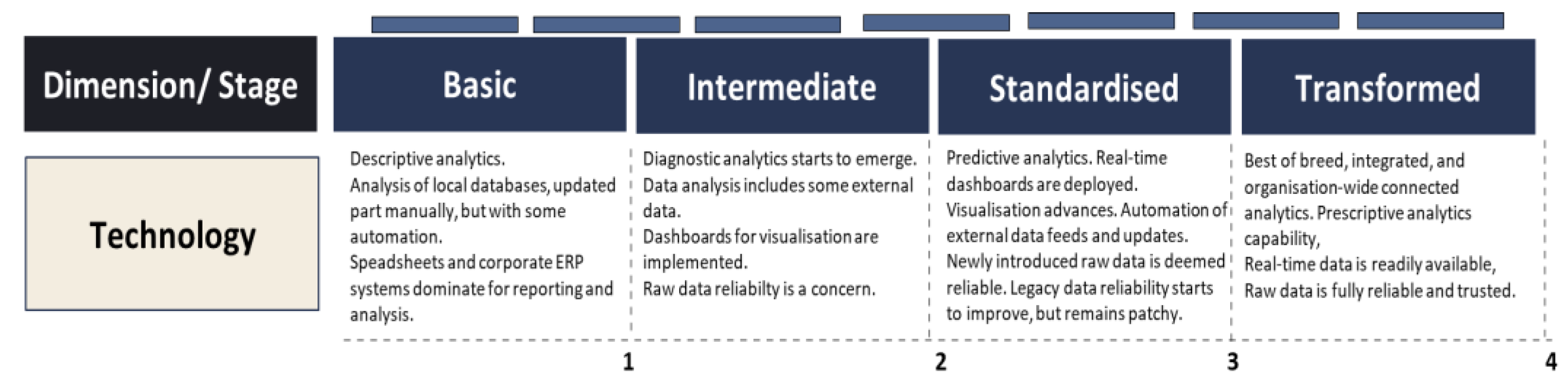
Basic stage: SPA utilisation is limited to applications that respond to the question “What has happened”? Descriptive analytics are applied to gain insights from the analysis of past transactions. Data is mostly stored in purpose- or commodity- specific databases which are updated and maintained manually. Spreadsheet applications and local ERP systems are accessed to retrieve data that requires manual processing before using it for analysis and reporting.
Intermediate stage: Diagnostic analytics are more in evidence, answering the question “Why has it happened?”. The incorporation of external (web-based) data in analytics tools is in evidence. Individually customised dashboards are used for enhanced visualisation of data. Awareness that data integrity is a fundamental prerequisite for meaningful analysis exists. Nevertheless, limited data accuracy and consistency hinders the exploitation of analytics potential.
Standardised stage: Organisations use predictive analytics to identify patterns and trends which are then applied for the development of future scenarios (“What will happen?”), including simulations. Visualisation has advanced by deploying real-time automated dashboards. External data is updated automatically. Data integrity practices result in improved data quality for new data entry. Legacy data reliability remains an issue.
Transformed stage: Organisations use integrated and connected best of breed analytics. Prescriptive analytics (“How can we make it happen?”) capabilities are applied to support contracts management and supplier relationship management (SRM). They are used for the development of business recommendations and for the strategic procurement process. Both new and legacy data demonstrate a mature level of integrity.
Process Dimension
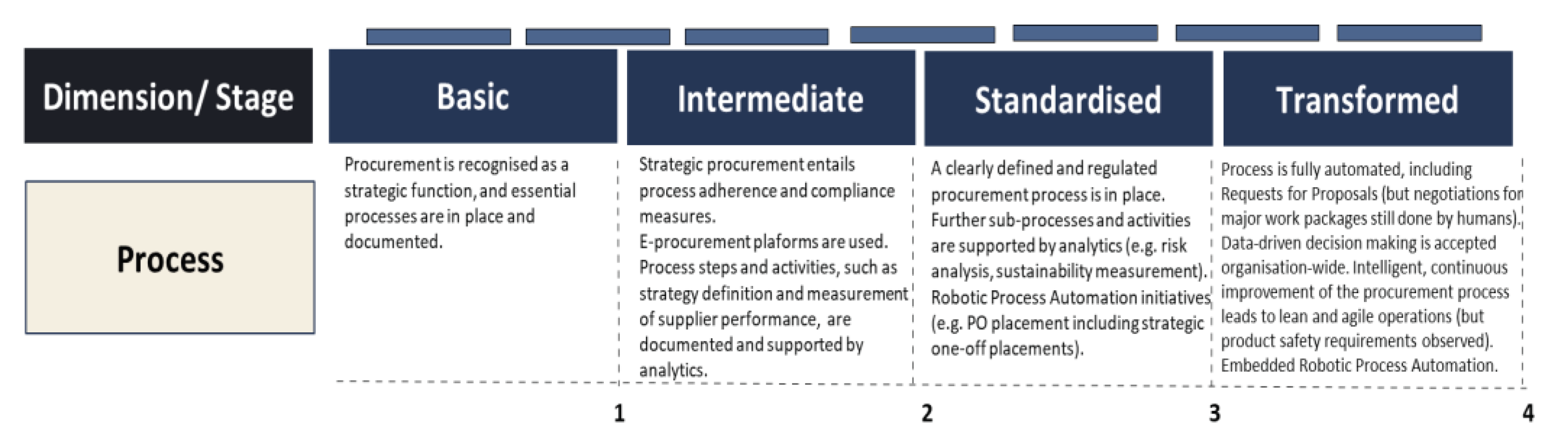
Basic stage: Procurement is recognised as a corporate function and the majority of procurement activities follow documented processes. However, maverick buying still exists within the organisation. Process adherence is patchy because of limited compliance monitoring.
Intermediate stage: Process adherence and compliance to procedures are widely embedded in working practices, measured and audited. E-procurement platforms are deployed for the performance of call-for-tenders with interfaces to the bidding suppliers and to awarded suppliers for contract management activities. However, upload and downloads (e.g., of contract and validation templates) are performed manually. Supplier performance KPIs are in place and assessment of such is supported by SPA.
Standardised stage: Processes are clearly defined in an end-to-end approach and strictly adhered it by all members and audited. The scope of analytics-assisted processes has been expanded, with Robotic Process Automation (RPA) being utilised for such acticities as demand management and one-off order placement, including validation loops. SPA supports contract management and supplier life cycle management, and is used to support risk management along the procurement process.
Transformed stage: The organisation relies on a fully automated procurement process including the management of call for tender, selection and contracting. Data-driven decision making is implemented according to business needs and adhered to by all strategic procurement members with no subjective interference. The process passes through iterative reviews to identify process weaknesses and is improved continuously, supported by SPA.
People Dimension
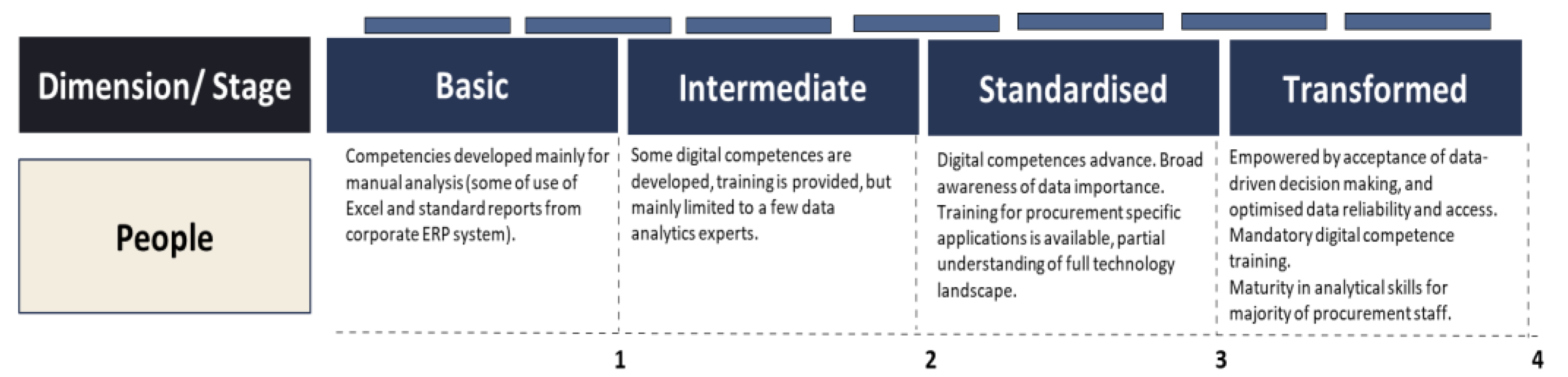
Basic stage: Analytics competences in the strategic procurement organisation relate to the operation of software programmes that allow predominately manual collection, manipulation and analysis of data such as table calculation programmes.
Intermediate stage: The standard capability profile in procurement includes some digital competences. Access to the technology and respective training on SPA is restricted to key users or analytics experts in central procurement functions.
Standardised stage: Access to, and training for, SPA become available to a broader set of staff. In consequence, digital competences are developed by a larger proportion of the strategic procurement function. The understanding of data as an asset, and requirement for accurate data entries and maintenance practices, improve.
Transformed stage: The development of digital capabilities is key and related training becomes mandatory for all staff. Most people possess mature analytics skills. Empowerment is enabled by process automation and full acceptance of data-driven decisions making. Data is understood as an organisational asset and data integrity requirements are embedded into working practices.
Structure Dimension
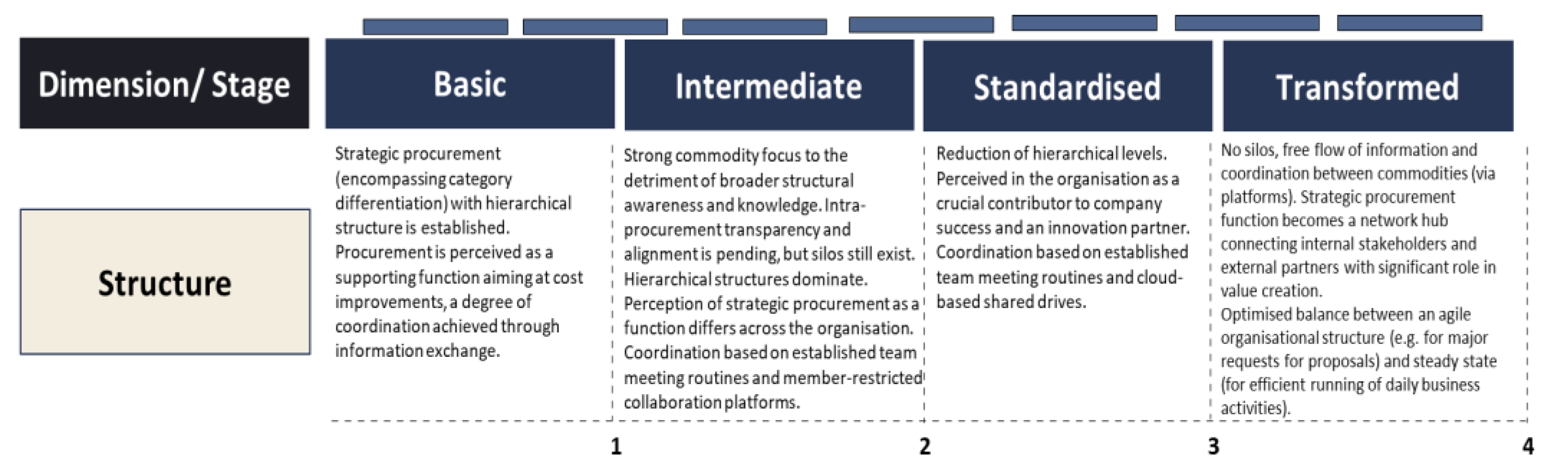
Basic stage: The strategic procurement function is organised around objectives relating to purchasing lines (commodity/category-focused), and structured with strong hierarchical levels. The predominate focus is cost optimisation. Information with other functions is shared in an informal and uncoordinated manner. Procurement is considered a support function, often perceived as tactical. Coordination with other functions is predominately organised in bilateral exchanges.
Intermediate stage: A commodity-centric management principle prevails. Company-wide procurement objectives are aligned and well communicated, but a “my commodity first” mentality exist, and organisational silos exist. Hierarchical structures are the typical form of organisational structure. The perception of strategic procurement within the company ranges from “value contributor” in the achievement of company objectives to “tactical enabler for business continuity”. The coordination between strategic procurement and other company stakeholders has improved following the introduction of a dedicated multi-functional forum and communication platform.
Standardised stage: Organisations witness a reduction of hierarchical levels, eliminating, in particular, the middle management layer. Strategic procurement is appreciated within the company as contributor in the achievement of corporate objectives and innovation partner (innovative sourcing from suppliers). Coordination in the multi-functional teams is supported by cloud-based communication platforms and enhanced accessibility to commonly available and updated data.
Transformed stage: There are no longer functional silos, and information, stored in data-lakes or on data platforms, are accessible by all members. Strategic procurement has attained a new value proposition within the company, having evolved into a network hub which connects internal and external partners. An optimised balance between an agile organisation consisting of purpose-driven self-organised network nodes and steady state teams, allowing an optimum resource allocation, prevails as the organisational structure.
References
- Accenture (2017). Next Generation Digital Procurement Upgrade your thinking. Retrieved October 28, 2020, from https://www.accenture.com/_acnmedia/PDF-129/Accenture-Next-Generation-Digital-Procurement.pdf. /.
- Adom, D.; Hussein, E.K. Theoretical and conceptual framework: mandatory ingredients of a quality research. International Journal of Scientific Research 2018, 7, 438–441. [Google Scholar]
- Air Transport Action Group (ATAG). (2020). Aviation beyond borders. Retrieved November 18, 2020, from https://aviationbenefits.org/media/167186/abbb2020_full.pdf.
- Alsufyani, N.; Gill, A.Q. Digitalisation performance assessment: A systematic review. Technology in Society 2022, 68. [Google Scholar] [CrossRef]
- Altundag, A. A New Model for the Digital Transformation of the Strategic Procurement Function: A Case Study from the Aviation Industry. In Handbook of Research on Digital Transformation, Industry Use Cases, and the Impact of Disruptive Technologies; Wynn, M., Ed.; IGI-Global: Hershey, PA, USA, 2021; pp. 92–116. [Google Scholar] [CrossRef]
- Ancarani, A.; Di Mauro, C. (2018). Successful digital transformations need a focus on the individual. In Digitalisierung im Einkauf (pp. 11-26). Springer Gabler.
- Anitha, P.; Malini, M.P. A Review on Data Analytics for Supply Chain Management: A Case study, International Journal of Information Engineering and Electronic Business (IJIEEB) 2018, 10, 30–39. [CrossRef]
- Arya. V., Sharma, P., Singh, A., & De Silva, P.T.M. An exploratory study on supply chain analytics applied to spare parts supply chain. Benchmarking: An International Journal 2017, 24, 1571–1580. [Google Scholar] [CrossRef]
- Azhari, P.; Faraby, N.; Rossmann, A.; Steimel, B.; Wichmann, K.S. Digital transformation report. Retrieved November 2014, 15, 2020, from https://www.wiwo.de/downloads/10773004/1/DTA_Report_neu.pdf.. [Google Scholar]
- Bag, S.; Wood, L.C.; Mangla, S.K.; Luthrad, S. Procurement 4.0 and its implications on business process performance in a circular economy. Resources, Conservation & Recycling 2019, 152. [Google Scholar] [CrossRef]
- Barry, A.S.; Assoul, S.; Souissi, N. Strengths and Weaknesses of Digital Maturity Models. Journal of Computer Science 2023, 19, 727–738. [Google Scholar] [CrossRef]
- Batran, A.; Erben, A.; Schulz, R.; Sperl, F. Procurement 4.0 A survival guide in a digital, disruptive world. Campus Verlag GmbH. 2017. [Google Scholar]
- Berghaus, S.; Back, A. Stages in Digital Business Transformation: Results of an Empirical Maturity Study. MCIS 2016 Proceedings 2016, 22. https://aisel.aisnet.org/mcis2016/22. [Google Scholar]
- Bean, R. (2020, September 30). Why Culture Is the Greatest Barrier to Data Success. MIT Sloan Management Review. Retrieved October 14, 2020, from https://sloanreview.mit.edu/article/why-culture-is-the-greatest-barrier-to-data-success/.
- Bieda, L.C. (2020, October 13). How Organizations Can Build Analytics Agility. MIT Sloan Management Review. Retrieved October 14, 2020, from https://sloanreview.mit.edu/article/how-organizations-can-build-analytics-agility/?utm_source=newsletter&utm_medium=email&utm_content=Read%20the%20Article%20Now%20%C2%BB&utm_campaign=AWS%20DA%20ExecGuide%20Waller%20Bieda%2010/14/2020%20Version%20B. October.
- Bienhaus, F.; Haddud, A. Procurement 4.0: factors influencing the digitisation of procurement and supply chains. Business Process Management Journal 2018, 24, 965–984. [Google Scholar] [CrossRef]
- Brennen, S.J.; Kreiss, D. Digitalization. In K.B. Jensen, R.T. Craig, J.D. Pooley & E.W. Rothenbuhler (Eds.). The International Encyclopedia of Communication Theory and Philosophy (pp.1-11). John Wiley & Sons. 2016. [CrossRef]
- Bryman, A.; Bell, E. Business Research Methods (3rd ed.). Oxford University Press. 2011. [Google Scholar]
- Clarke, V.; Braun, V. Thematic analysis, The Journal of Positive Psychology 2017, 12, 297–298. [CrossRef]
- Christopher, M. (2023) Logistics and Supply Chain Management (5th ed.). Pearson Education Limited.
- Davenport, T.H.; Bean, R. (2020). Data-Driven Business Transformation Connecting Data/AI Investment to Business Outcomes. NewVenture Partners. Retrieved November 27, 2020, from http://newvantage.com/wp-content/uploads/2020/01/NewVantage-Partners-Big-Data-and-AI-Executive-Survey-2020-1.pdf.
- de Yong, Y. (2018). Defining The Differences In Analytics. Available online: https://www.ithappens.nu/defining-the-differences-in-analytics/ (accessed on 25 March 2024).
- Eriksson, T.; Alessandro, B.; Bonera, M. Think with me, or think for me? On the future role of artificial intelligence in marketing strategy formulation. The TQM Journal 2020, 32, 795–814. [Google Scholar] [CrossRef]
- Flick, U.; von Kardorff, E.; Steinke, I. (2013). Qualitative Forschung. Ein Handbuch [Qualitative Research. A handbook]. rowohlts enzyklopädie.
- Fosso Wamba, S., S. , Edwards, A., Chopin, G., & Gnanzou, D. How ‘big data’ can make big impact: Findings from a systematic review and a longitudinal case study. International Journal of Production Economics 2015, 160, 234–246. [Google Scholar] [CrossRef]
- Giunipero, L.C.; Eltantawy, R. (2022). Theories relevant to purchasing and supply management research: status quo and future suggestions. In Tate, W., Ellram, L., & Bals, L. (Eds.), Handbook of Theories for Purchasing, Supply Chain and Management Research (pp.48-62). Edward Elgar Publishing. [CrossRef]
- Haldipur, P. (2023, August 7). Organizational Structures That Drive Digital Success. Infosys. Retrieved October 13, 2023 from https://www.infosys.com/iki/perspectives/organizational-structures-drive-digital-success.html.
- Handfield, R.; Linton, T. (2017). The Living Supply Chain: The Evolving Imperative of Operating in Real Time. [CrossRef]
- Handfield, R.; Jeong, S.; Choi, T. Emerging procurement technology: data analytics and cognitive analytics. International Journal of Physical Distribution & Logistics Management 2019, 49, 972–1002. [Google Scholar] [CrossRef]
- Haryanti, T.; Rakhmawati, N.A.; Subriadi, A.P. The Extended Digital Maturity Model. Big Data and Cognitive Computing 2023, 7. [Google Scholar] [CrossRef]
- Heeks, R. Information systems and developing countries: failure, success, and local improvisations. Journal of Information Society 2002, 18, 101–112. [Google Scholar] [CrossRef]
- Holliday, A. (2016). Doing & Writing (3e)-Qualitative Research. SAGE Publications.
- Hughes, J.; Ertel, D. (2016). The reinvention of procurement, Supply Chain Management Review, May/June 2016, 18-23, Retrieved August 2, 2019, from https://www.logisticsmgmt.com/wp_content/vantage_wp_reinvention_procurement_062716.pdf.
- International Civil Aviation Organization (ICAO). (2023, January 27).
- Effects of Novel Coronavirus (COVID-19) on Civil Aviation: Economic Impact Analysis.
- Retrieved February 20, 2023 from https://www.icao.int/sustainability/Documents/Covid-19/ICAO_coronavirus_Econ_Impact.pdf.
- Joesbury, P. (2016). Improving the effectiveness of procurement Identification and improvement of key.
- 38. determinant factors – The PEPPS Project. 3038; http://publications.aston.ac.uk/id/eprint/30386/1/Joesbury_P_2017.pdf.
- Kagermann, H. (2015). Change Through Digitization-Value Creation in the Age of Industry 4.0. In H. Albach, H. Meffert, A. Pinkwart & R. Reichwald (Eds.), Management of permanent change (pp.23-45). Springer. [CrossRef]
- Kleemann, F.C.; Glas, A.H. (2020). Einkauf 4.0 Digitale Transformation der Beschaffung. [CrossRef]
- Maxwell, J. (2008). The SAGE Handbook of Applied Social Research Methods (2nd ed., L. Bickmann & D.J. Rog, Eds.). SAGE Publications.(2nd ed.).
- Miles, M.B.; Huberman, M.; Saldana, J. (2014). Qualitative Data Analysis: A Methods Sourcebook (4th ed.). SAGE Publications.
- Mirković, V.; Lukić, J.; Lazarević, S.; Vojinović, Ž. (2019). Key characteristics of organizational structure that supports digital transformation. In International Scientific Conference Strategic Management and Decision Support Systems in Strategic Management.
- Murray, G. (2013). TATA Consultancy Services. Procurement needs a Digital Strategy. Retrieved February 25, 2019, from https://www.slideshare.net/DrGordonMurray/digital-procurement-strategy05131.
- Nicoletti, B. Agile Procurement Volume II: Designing and Implementing a Digital Transformation. Palgrave. Macmillan. 2018. [Google Scholar] [CrossRef]
- Oelcer, E.; Schnellbächer, W.; Weise, D.; Sidopoulos, B. (2019, July 3). Taming Tail Spend. Boston Consulting Group, Retrieved August 2, 2020 from https://www.bcg.com/publications/2019/taming-tail-spend.
- Paulraj, A.; Chen, I.J.; Flynn, J. Levels of strategic purchasing: Impact on supply integration and performance. Journal of Purchasing & Supply Management 2006, 12, 107–122. [Google Scholar] [CrossRef]
- Perry, 2022 “8 Digital Transformation Technologies and Their Business Impact” (para.8), by Perry 2022 (https://bluexp.netapp.com/blog/cvo-blg-8-digital-transformation-technologies-and-their-business-impact).
- Reinsel, D.; Gantz, J.; Rydning, J. (2018). The Digitization of the World from Edge to Core. IDC. Retrieved August 8, 2021, from https://resources.moredirect.com/white-papers/idc-report-the-digitization-of-the-world-from-edge-to-core.
- Roßmann, B.; Canzaniello, A.; von der Gracht, H.; Hartmann, E. The future and social impact of Big Data Analytics in Supply Chain Management: Results from a Delphi study. Technological Forecasting and Social Change 2018, 130, 135–149. [Google Scholar] [CrossRef]
- Saldaña, J. (2015). The coding manual for qualitative researchers (3rd ed.). SAGE Publications.
- Sanders, N.R. How to Use Big Data to Drive Your Supply Chain. California Management Review 2016, 58, 26–48. [Google Scholar] [CrossRef]
- Saunders, M.N.K.; Lewis, P.; Thornhill, A. Research Methods for Business Students (9th ed.). Pearson Education Limited.
- Tan, M.C.; Lee, W.L. Evaluation and Improvement of Procurement Process with Data Analytics. International Journal of Advanced Computer Science and Applications 2015, 6, 70–80. [Google Scholar] [CrossRef]
- Teichert, R. Digital Transformation Maturity: A Systematic Review of Literature. Acta Universitatis Agriculturae et Silviculturae Mendelianae Brunensis 2019, 67, 1673–1687. [Google Scholar] [CrossRef]
- Schweiger, J. (2016), Concept of a Purchasing and Supply Management Maturity Framework. In R. Bogaschewsky, M. Eßig, R. Lasch & W. Stölze (Eds.), Advanced Studies in Supply Chain Supply Management Research (pp.153-176). [CrossRef]
- Thomas, D.R. A General Inductive Approach for Analyzing Qualitative Evaluation Data. American Journal of Evaluation 2006, 27, 237–246. [Google Scholar] [CrossRef]
- Turchi, P. (2018, February 1). The Digital Transformation Pyramid: A Business-driven Approach for Corporate Initiatives. Retrieved April 17, 2020 from https://www.thedigitaltransformationpeople.com/channels/the-case-for-digital-transformation/digital-transformation-pyramid-business-driven-approach-corporate-initiatives/.
- Westerman, G. (2017, October 25). Your Company Doesn’t Need a Digital Strategy, MIT Sloan Management Review, 59, 1-5. Retrieved May 6, 2021, from https://sloanreview.mit.edu/article/your-company-doesnt-need-a-digital-strategy/.
- Wynn, M. E-business, Information Systems Management and Sustainable Strategy Development in the Digital Era. Sustainability 2022, 14, 10918. [Google Scholar] [CrossRef]
- Wynn, M.; Lam, C. Digitalisation and IT strategy in the hospitality industry. Systems 2023, 11, Art 501. [Google Scholar] [CrossRef]
- Wynn, M.; Felser, K. Digitalisation and Change in the Management of IT. Computers 2023, 12, Art 251. [Google Scholar] [CrossRef]
- Wynn, M.; Rezaeian, M. ERP implementation in manufacturing SMEs: Lessons from the Knowledge Transfer Partnership scheme. InImpact: The Journal of Innovation Impact 2015, 8, 75–92. [Google Scholar]
- Yin, R.K. (2018). Case study research and applications: Design and methods (6th ed.). SAGE Publications.
- Yin, Y.; Stecke, K.E.; Li, D. The evolution of production systems from Industry 2.0 through Industry 4.0. International Journal of Production Research 2018, 56, 848–861. [Google Scholar] [CrossRef]
- Zaoui, F.; Souissi, N. Roadmap for digital transformation: A literature review. Procedia Computer Science 2020, 175, 621–628. [Google Scholar] [CrossRef]
Figure 1.
Extract of labels mapped to the technology, process and people clusters.
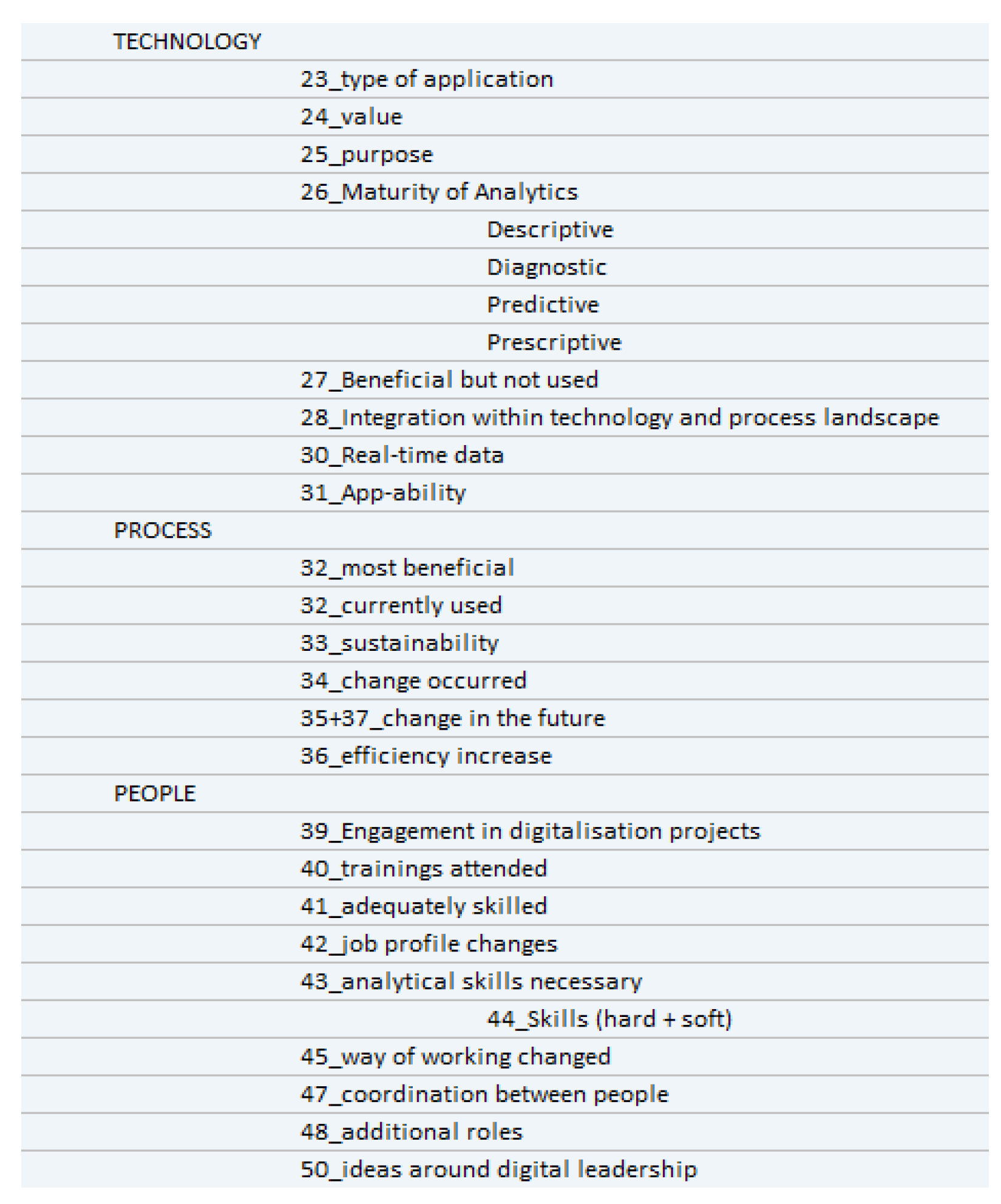
Figure 2.
The digital technologies (Wynn, 2022).
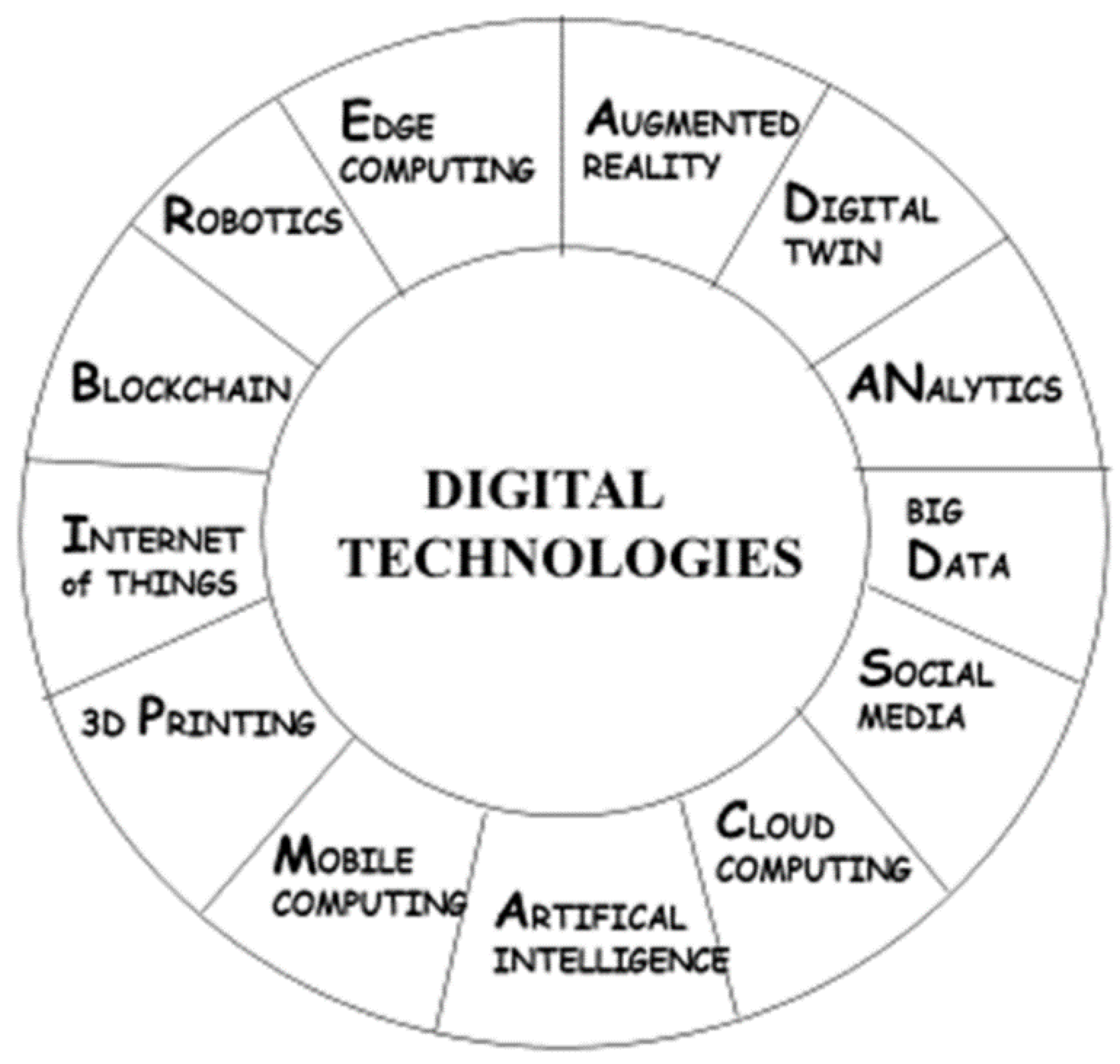
Figure 3.
Procurement 4.0-Readiness model. Based on Kleemann and Glas (2020).
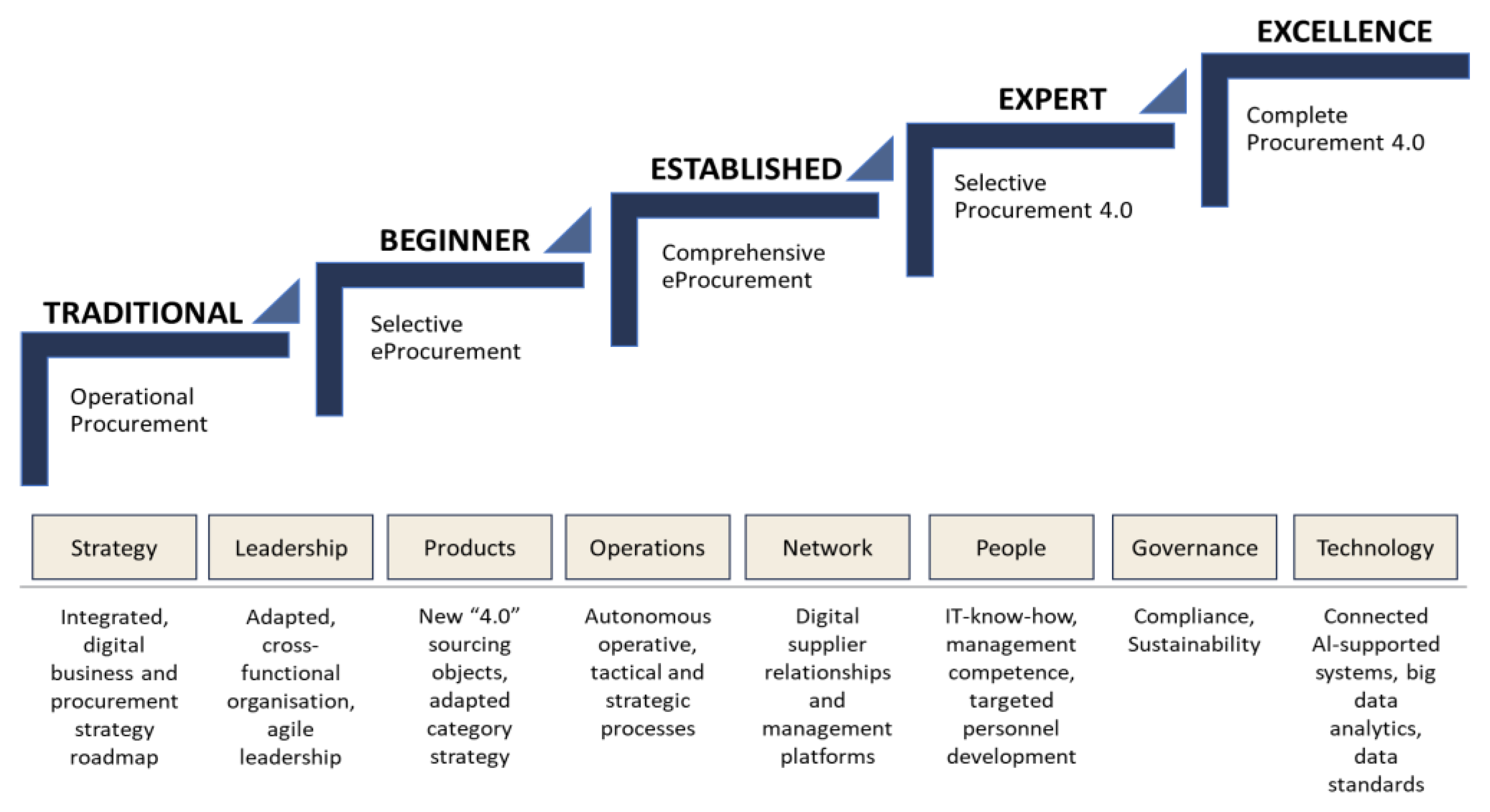
Figure 4.
The Design-Actuality gap model (Source: Based on Heeks, 2002, p.104).
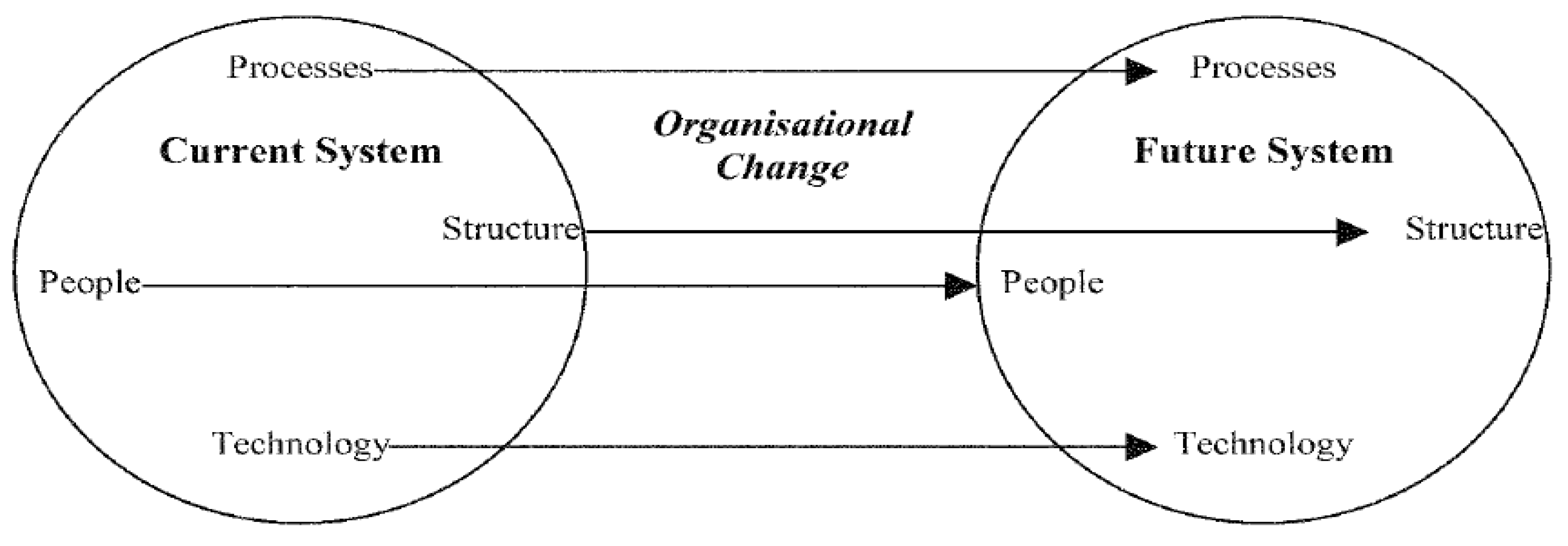
Figure 5.
Provisional Conceptual Framework (PCF).
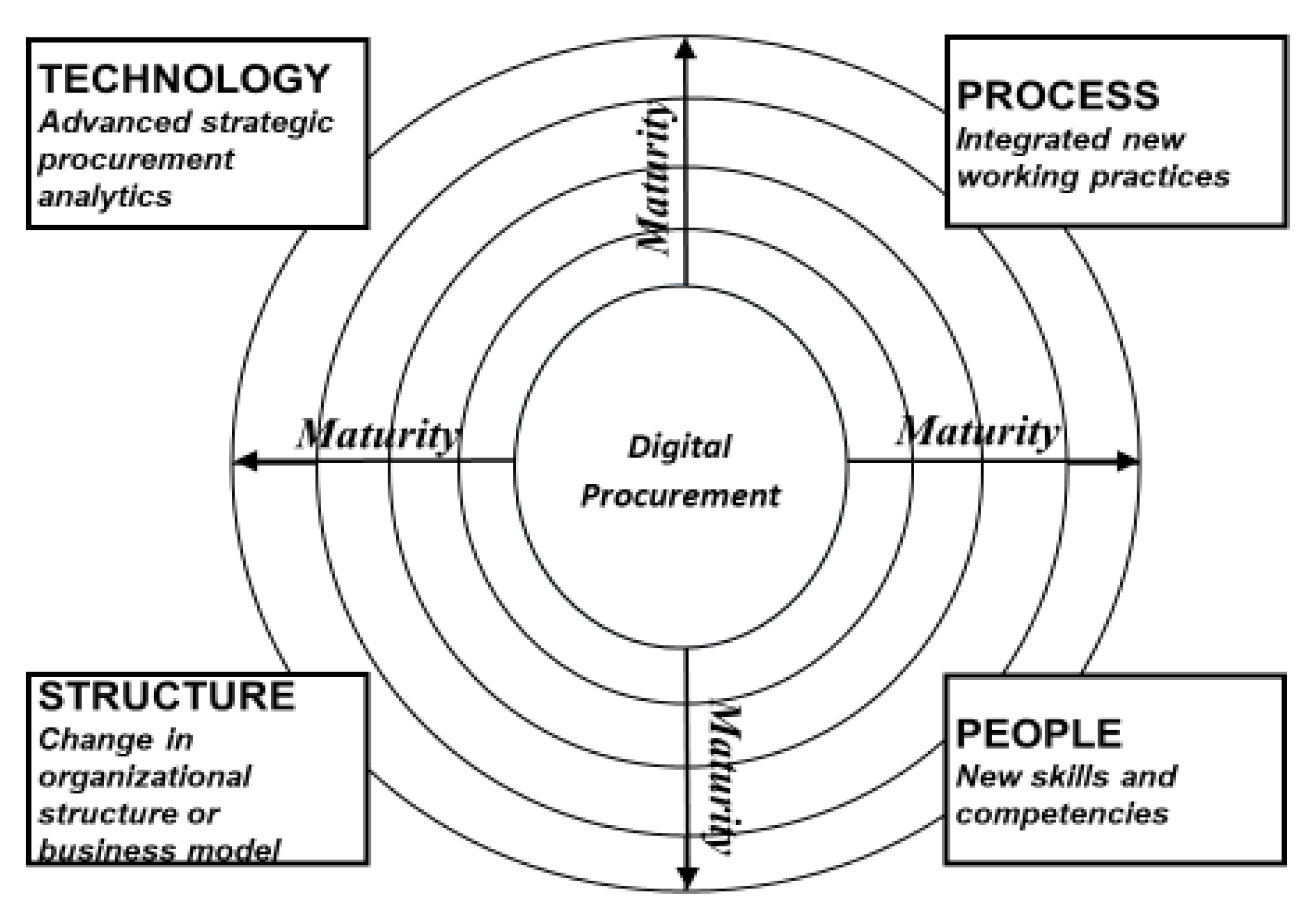
Figure 6.
Key processes, sub-processes and activities of strategic procurement. Source: Authors, based on in-company documentation.
Figure 6.
Key processes, sub-processes and activities of strategic procurement. Source: Authors, based on in-company documentation.
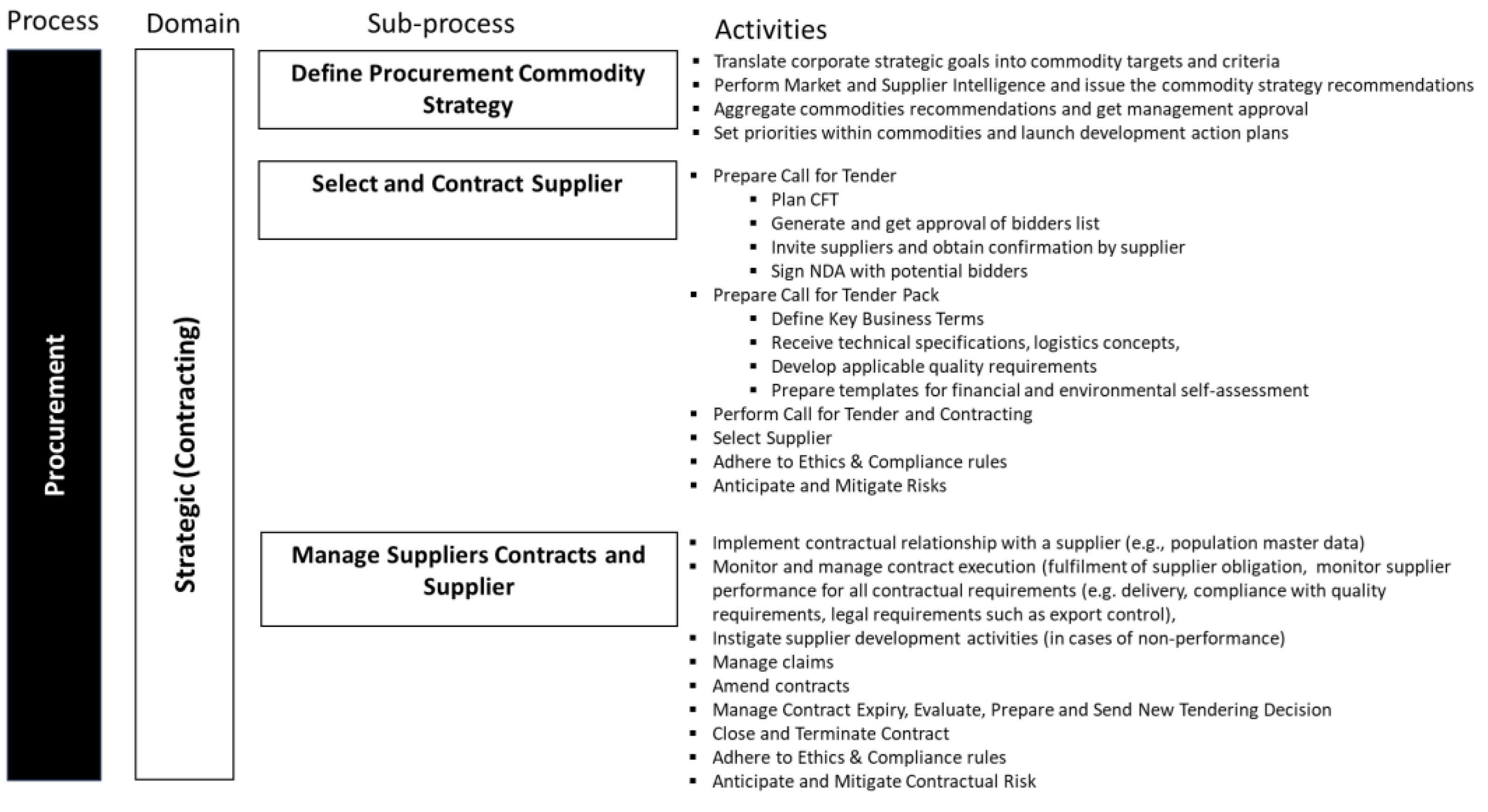
Figure 7.
Application landscape for strategic procurement at the case study company.
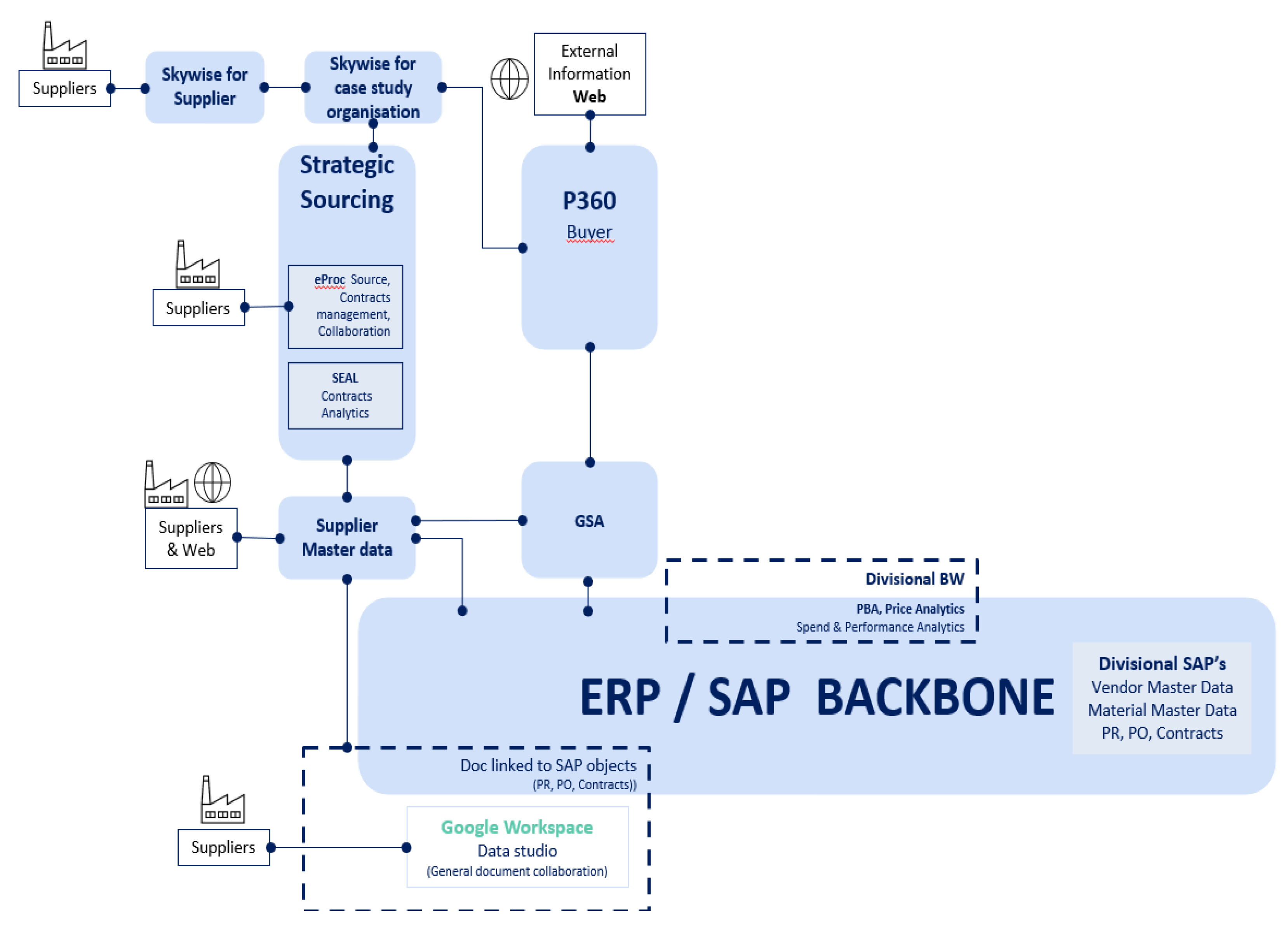
Figure 8.
Perception on the type of information delivered by contemporarily used SPA.
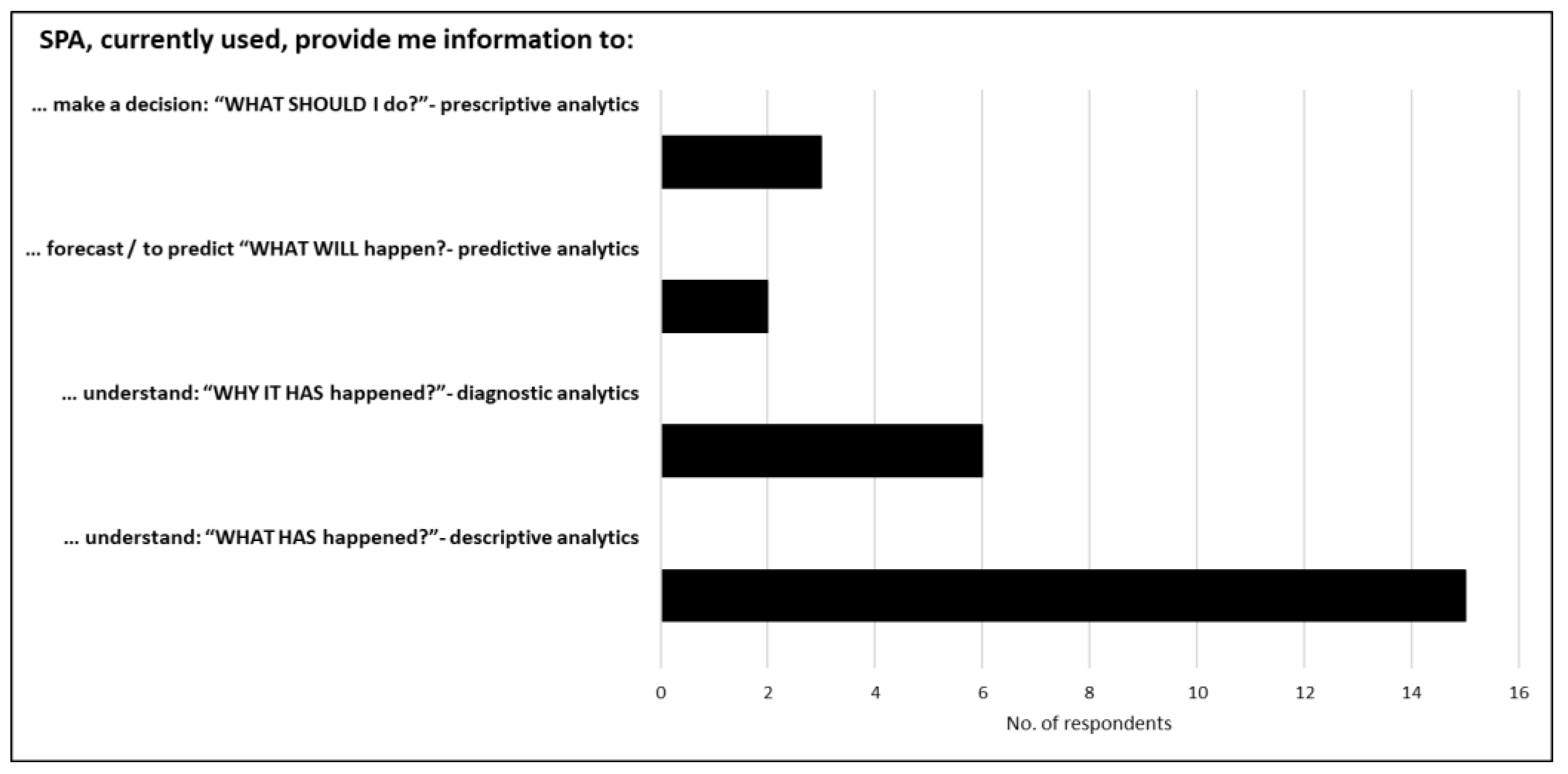
Figure 9.
Perceived digital maturity per change dimension by the 15 interviewees.
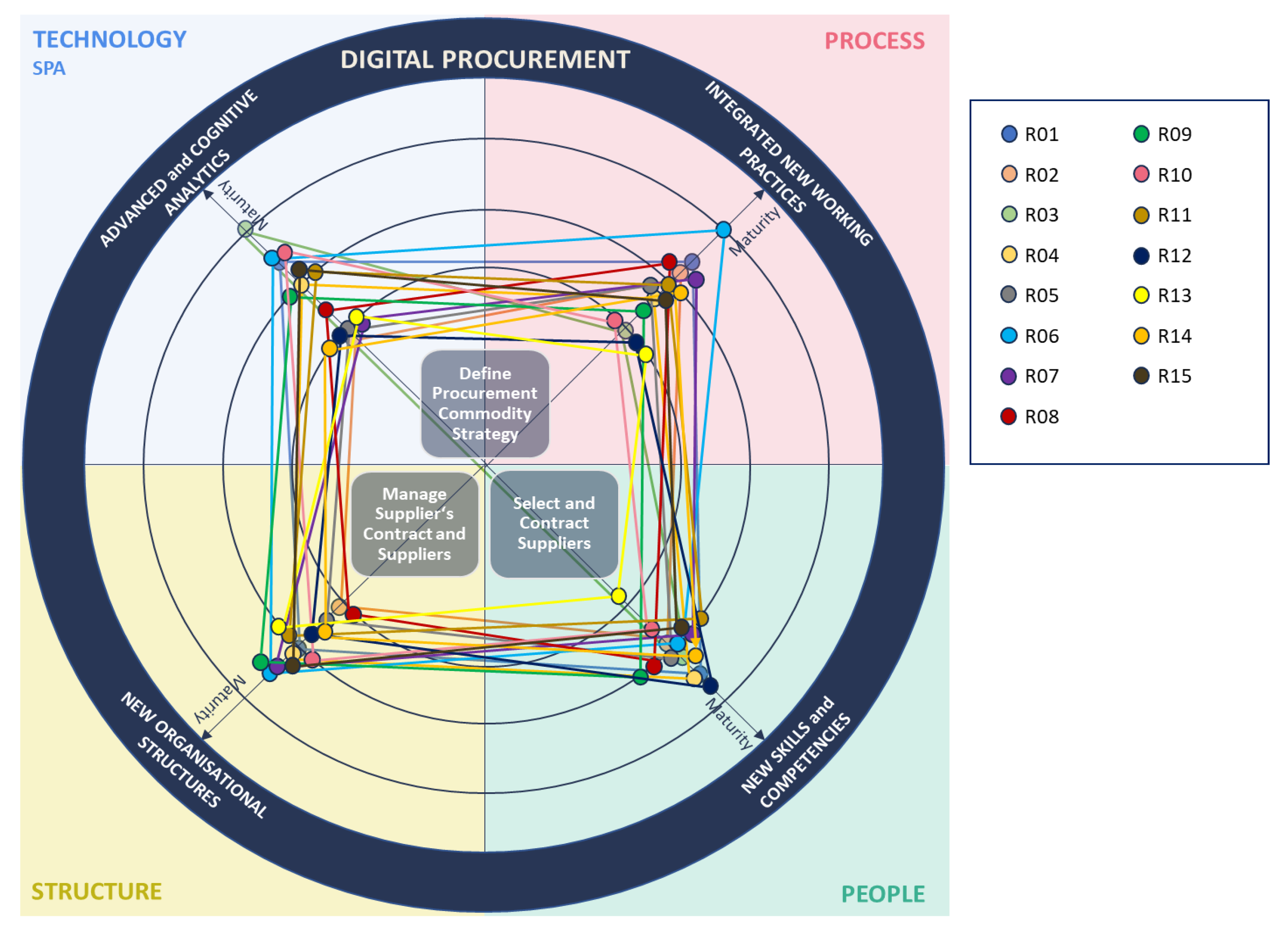
Figure 10.
Top-line digital maturity model for the deployment of SPA.
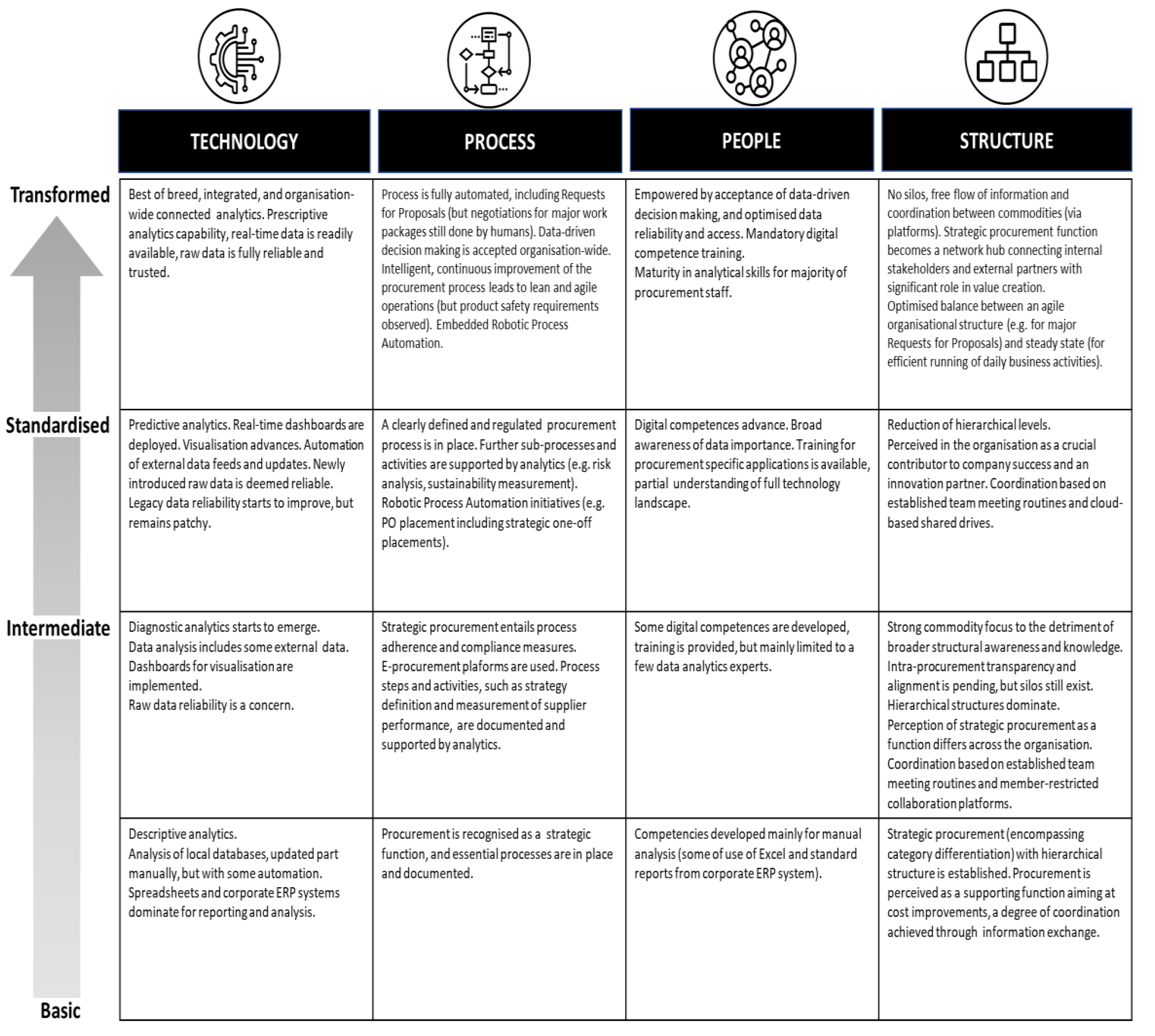
Figure 11.
Positioning of digital maturity per change dimension, as indicated in the online survey.
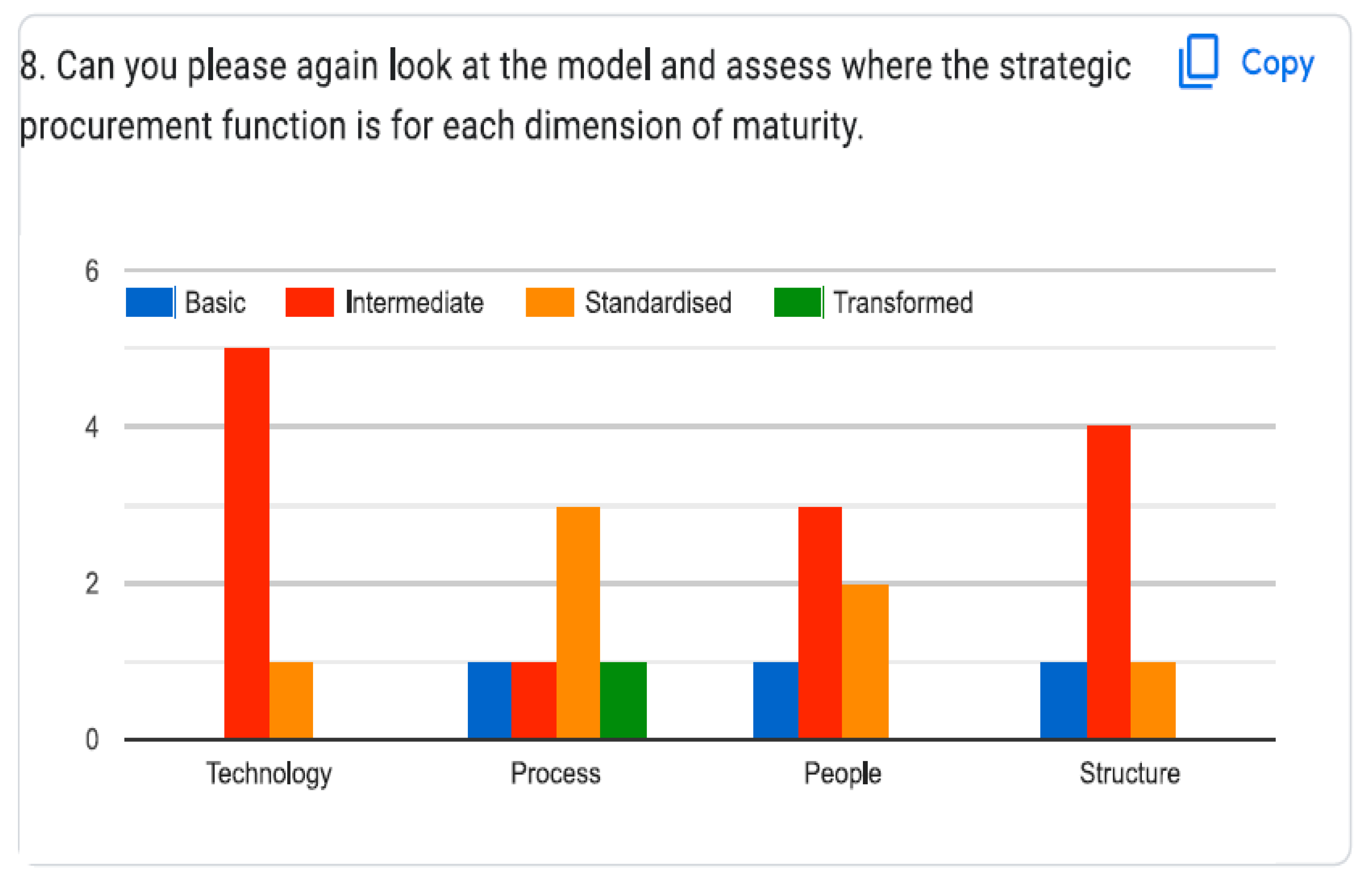

Table 1.
Interviewee profiles.
| Code | Procurement Commodity | Role | Strategic Procurement Experience (years) |
|---|---|---|---|
| R01 | Strategy and Processes (Procurement Governance) | Project manager | 12 |
| R02 | Material and Parts | MFT leader | 25 |
| R03 | Equipment and Systems | Vice president | 30 |
| R04 | Equipment and Systems | Project manager | 5 |
| R05 | Aerostructure | Lead buyer | 10 |
| R06 | Cabin and Cargo | Executive assistant | 2.5 |
| R07 | Aerostructure | Vice president | 16 |
| R08 | Material and Parts | Vice president | 2 |
| R09 | Equipment and Systems | Sub-commodity leader | 12 |
| R10 | Material and Parts | Buyer | 5 |
| R11 | Cabin and Cargo | Commodity leader | 8 |
| R12 | Aerostructure | Buyer | 8 |
| R13 | Aerostructure | Sub-commodity leader | 8 |
| R14 | Aerostructure | Project support | 16 |
| R15 | Cabin and Cargo | Project manager | 7 |
Table 2.
Results of perceived maturity per change dimension by the interview partners.
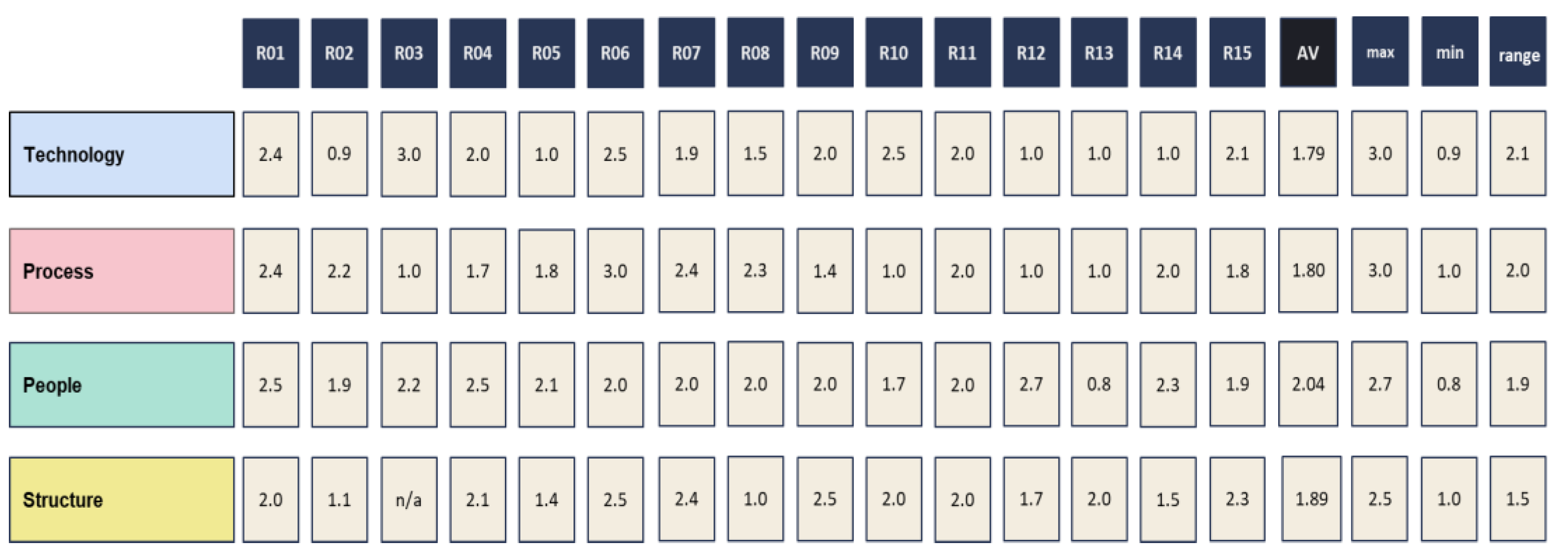 |
Table 3.
Summary of results to statement no.1-7 of the online survey.
| No. | Statement | SA | A | N | D | SD |
|---|---|---|---|---|---|---|
| 1. | Overall, the model supports the realistic assessment of the current level of digital maturity in strategic procurement | 3 | 2 | 1 | ||
| 2. | The four dimensions of maturity (technology-process-people-structure) are appropriate for the model and allow for a comprehensive assessment of the level of maturity. | 3 | 2 | 1 | ||
| 3. | The descriptors for the four stages of maturity in the model are appropriate, balanced, and allow a realistic assessment of the different dimensions of change. | 3 | 2 | 1 | ||
| 4. | The model can be used in practice as a guide to progress the deployment of advanced analytics in strategic procurement. | 2 | 3 | 1 | ||
| 5. | The model supports the development of data-driven decision making. | 2 | 3 | 1 | ||
| 6. | The model, if used effectively, can trigger and support an improvement in data quality. | 2 | 1 | 2 | 1 | |
| 7. | The model can be used periodically to assess the level of digital maturity and act as the basis for action planning in the different change dimension. | 3 | 2 | 1 |
Disclaimer/Publisher’s Note: The statements, opinions and data contained in all publications are solely those of the individual author(s) and contributor(s) and not of MDPI and/or the editor(s). MDPI and/or the editor(s) disclaim responsibility for any injury to people or property resulting from any ideas, methods, instructions or products referred to in the content. |
© 2024 by the authors. Licensee MDPI, Basel, Switzerland. This article is an open access article distributed under the terms and conditions of the Creative Commons Attribution (CC BY) license (http://creativecommons.org/licenses/by/4.0/).
Copyright: This open access article is published under a Creative Commons CC BY 4.0 license, which permit the free download, distribution, and reuse, provided that the author and preprint are cited in any reuse.


