

Submitted:
25 March 2024
Posted:
26 March 2024
You are already at the latest version
Abstract
The aim of this study was to identify factors, that influence satisfaction and dissatisfaction in the use of public e-procurement. The use of IT solutions promotes sustainable development. Hence, there is a need to conduct research that will allow for the best possible adjustment of e-procurement solutions in order to implement them as widely as possible in business practice. This study used a quantitative exploratory survey-based approach. The obtained research results were analyzed using statistical methods, including factor analysis PCA. Factor analysis identified three main satisfaction factors and two dissatisfaction factors in e-procurement use, highlighting the importance of support, intuitiveness, and security in user satisfaction. This study contributes to the existing literature by providing a nuanced understanding of the factors influencing user satisfaction and dissatisfaction within e-procurement systems, specifically highlighting the role of intuitive design and technical support. It offers a unique perspective by integrating these insights with the specific requirements of public procurement, thereby filling a gap in research on enhancing user experience in the context of sustainable purchasing practices.
Keywords:
sustainability procurement
; procurement digitalization
; public procurement
; user experience
; e-procurement
1. Introduction
In contemporary times, dynamically developing digital technologies play a key role in the functioning of organizations. Digital transformation is defined as the use of new digital technologies to achieve significant improvements in business operations [1]. Moreover, the digitization of many areas of activity within a company presents an opportunity that allows various entities to streamline their operations and find new markets that were previously beyond their reach, for instance, due to a lack of resources [2,3,4,5,6,7].
Furthermore, increasing attention is being paid to sustainable development [7,8,9], defined in ISO as “the state of the global system, including environmental, social, and economic aspects, in which the needs of the present are met without compromising the ability of future generations to meet their own needs” [10]. In the area of procurement, a dedicated ISO standard has also emerged, where sustainable procurement is described as those that “have the most positive impact on the environment, society, and economy throughout the entire lifecycle” [11]. Sustainable procurement refers to the aspects of sustainable development related to goods or services and suppliers in supply chains. The standard emphasizes the fact that sustainable orders contribute to the achievement of an organization's sustainable development goals and to sustainable development in general [11].
One of the solutions responding to the trends of digitalization and sustainability are e-service portals dedicated to public procurement [12,13]. They have become a commonly used tool in procurement processes, due to the EU's requirement for the digitalization of procedures in the area of public procurement [14] and the digitalization of an increasing number of activity areas in organizations.
The implementation of new digital technologies is associated with infrastructure and software, the use of which requires proper skills and attitudes of employees, which the organization should take care of [15,16]. From the perspective of digital transformation, research described in the literature focused on change initiatives, referring to employee training [17], informing employees [18], and creating a digital mindset [19] as key factors in sustainable digital transformation.
On the other hand, the adaptation of digital solutions in business is linked to the need to ensure high-quality User Experience (UX). This means designing systems in an intuitive and user-friendly way to facilitate adaptation and increase the efficiency of using new technologies [20]. Identifying factors affecting UX, especially in the B2C segment, has been undertaken in many publications[20,21,22,23,24,25]. However, research and analysis concerning UX for the B2B market are significantly less common [26,27]. In the context of public procurement (G2B segment), such studies are even scarcer, as demonstrated by Hashim, Yusof, Hussain, and Ibrahim [28] in their systematic review.
The above considerations indicate that there is a research gap concerning the factors affecting the work with e-procurement solutions for public procurement, especially in the context of the impact of UX on the efficiency and satisfaction with procurement processes in the public sector. The results of research and analysis can provide valuable guidelines on how to better design and implement digital tools dedicated to e-procurement, taking into account the aspect of sustainable development.
The main goal of the study, the results of which are presented below, is to develop a model of key factors and the relationships between them that affect the efficiency of work in public e-procurement. Understanding the factors that influence satisfaction and dissatisfaction with the use of e-procurement is crucial for improving procurement processes, work efficiency, which further impacts the sustainable development of the organization and its environment. In the application area, the research findings can be helpful for creators and providers of e-procurement solutions, enabling them to tailor their solutions to user expectations and care for sustainable development.
Considering the exploratory nature of the research questions, an inductive theory approach was applied [29]. To investigate the factors of satisfaction and dissatisfaction with the use of public e-procurement, a survey was conducted among contractors submitting bids in public procurement procedures. Moreover, the article addresses the topics of procurement digitalization, user experience, and sustainable procurement. Then, the methodology and research results are presented. The discussion section, including future research directions and implications for business practice, concludes the article.
2. Literature Review
2.1. Procurement Digitalization
Public procurement, the government process of purchasing goods and services from private suppliers, has significantly evolved over the past few decades. This process encompasses the entire lifecycle, starting from the initial concept and definition of business needs, to the end of the asset's useful life or the conclusion of the service contract [30]. In the procedure for awarding public contracts, two types of entities usually participate: public organizations (procuring entities), which publish the intention to purchase goods and services according to certain rules and restrictions imposed by the government of each country, and suppliers (private enterprises, usually SMEs), who respond to invitations to submit offers, indicating the intention to sell [30].
Traditional public procurement faces many problems, especially in developing countries, which are characterized by bureaucratic procedures or corruption [31]. However, emerging information technologies offer governments the opportunity to transform the area of public procurement [30,32].
Recent years have enabled the digitization of the public procurement area, and IT solutions have emerged on the market to streamline the execution of this process. An e-procurement solution is an integrated, online system that carries out all purchasing processes and related activities, such as sending and receiving information regarding quotes, tenders, awarding of contracts, payments, and others [33,34]. Some of these solutions are adapted to the B2B segment, some were created solely for the public procurement market, and there are also solutions provided by the EU or the government. The aim of using these tools is to ensure that all public procedures improve accountability and transparency [35].
Among the problems associated with the implementation of public e-procurement on the ordering side, the complexity of solutions, lack of flexibility, high cost of internet services, and time consumption are pointed out. On the other hand, those submitting offers indicate the low intuitiveness and difficulty of using the applications [28,36].
One of the solutions that can address the lack of satisfaction (or even dissatisfaction) with the use of IT solutions is the need to consider user experience (UX) in the design of IT solutions. Companies often focus on the technological aspects of digitization, neglecting ease of use and intuitiveness of interfaces, which is key to the effective implementation and acceptance of new technologies by employees [37].
User Experience (UX) encompasses all forms of user engagement with an organization's services and products [38]. UX refers to the emotions and feelings users experience during individual interactions with the system [28]. Moreover, user experience covers many research disciplines, including human-computer interaction (HCI), product design and development, psychology, and the physical state resulting from previous experiences, attitudes, skills, and personality [39].
In ISO standard 9241-210, UX is defined as: “a person’s perceptions and responses resulting from the use and/or anticipated use of a product, system, or service” [40]. Currently, UX is becoming an increasingly important parameter for achieving success of a product, system, or service in the market. This also applies to solutions dedicated to public e-procurement [22].
2.2. Sustainability Procurement
Sustainable procurement involves making purchasing decisions that have a positive impact on environmental protection, improve social conditions, and contribute to sustainable economic development [41,42]. The United Nations Development Programme defines sustainable procurement as “ensuring that the products and services we buy are as sustainable as possible, with the minimum environmental impact and the most positive social outcomes” [43].
Sustainable procurement is based on 12 main principles outlined in ISO 20400:2017 [11], which are as follows:
- accountability for actions taken in the supply chain, taking into account the life cycle of goods and services,
- transparency in decisions and actions that affect the environment, society, and economy, and encouraging suppliers to be transparent,
- ethical behavior undertaken by the organization and promoted throughout the supply chain,
- full and fair opportunity, the organization should avoid bias and prejudice in all procurement decisions,
- respect for stakeholder interests ,
- respect for the rule of law and international norms of behavior,
- respect for human rights,
- innovative solutions – the organization should seek solutions to meet its sustainable development goals and encourage innovative procurement practices,
- focus on needs – the organization should purchase only what is needed and seek more sustainable alternatives,
- integration of the organization's sustainability goals with all its procurement practices,
- analysis of all costs incurred throughout the entire life cycle of a product or service, considering the costs and benefits to society, the environment, and the economy,
- continual improvement of practices and outcomes in sustainable development and encouraging organizations in their supply chains to do the same.
In summary, according to Thai [44], public procurement and its management are fundamental functions of public financial management and service delivery. Effective and efficient public procurement systems are essential for achieving sustainable development goals.
3. Materials and Methods
The aim of the study was to evaluate IT solutions supporting the submission of offers electronically in public procurement tenders. The research methodology is presented on Figure 1. The study asked the following research questions:
- RQ0. What are the satisfaction factors for e-services indicated in the literature?
- RQ1. Is there a statistically significant relationship between the level of competence of e-procurement users and the size of the enterprise?
- RQ2. Is there a statistically significant relationship between the level of competence of e-procurement users and the industry represented by the enterprises?
- RQ3. What are the key factors influencing satisfaction with the use of public e-procurement?
- RQ4. What are the key factors influencing dissatisfaction with the use of public e-procurement?
The survey method (CAWI technique) was chosen as the research method and the online survey technique was used. The selection of respondents was purposeful due to their place of employment – an employee as a contractor submitting offers in public procurement procedures. A request to participate in the study was sent by e-mail to over 10,000 business entities, 406 correctly completed questionnaires were received. The obtained research results were analyzed using statistical methods – factor analysis PCA (principal component analysis) [45]. Due to the selected type of IT solution – e-procurement for public area, satisfaction and dissatisfaction factors were initially formulated on the basis of previous experience, user opinions and analysis of selected solutions available on the market. Factors were rated on a scale from 1 – unimportant to 6 – crucial. Moreover, there was also place to add your own factor.
In order to answer the formulated research questions, the obtained results were subjected to statistical analysis. Spearman's rho correlation analysis was used to determine the relationship between variables. In order to compare more than 2 groups in terms of ordinal variables, analysis was performed using the Kruskal Wallis H test. For both difference tests, the Dunn pairwise comparison test with Bonferroni correction for the significance level was used as post hoc analysis. In order to characterize the factors of satisfaction and dissatisfaction in the use of e-procurement, a factor analysis using the PCA (principal component analysis) method with oblimin rotation was performed [45]. The number of factors was determined based on the Kaiser criterion (eigenvalues > 1) and Catell's criterion (scree plot). The level of significance was α = 0.05.
3. Results
A systematic literature review allowed for the identification of satisfaction and dissatisfaction factors associated with the use of e-service portals (Step 1, RQ0). The authors' own analysis aligns with the findings of Hashim et al. [28] and Angeles & Nath [46]. The issue of user experience for e-procurement or related electronic administration systems can be divided into two groups. The first relates to satisfaction, transparency, efficiency, and reliability, while the second includes the following UX-related features: fairness, usability, compatibility, visibility, efficiency, attractiveness, and operational effectiveness. These features of e-service systems were overlaid with the specifics of public procurement, and a research questionnaire was prepared, which was verified by experts.
Based on the results obtained during step 1, a survey questionnaire was prepared. Subsequently, research was conducted using the CAWI method. The number of responses received is statistically reliable for the population of enterprises in Poland (the minimum sample size is 384). The analysis of the results allowed for the formulation of the following conclusions.
Respondents rated (on a scale from 1 – lowest rating to 6 – highest rating) their own competencies in submitting offers using e-procurement solutions. The average rating in the sample was M = 4.84 (SD = 0.94). The vast majority of respondents rated their competencies highly – the mode was 5, which confirms that the study covered individuals with suitably high competencies.
The analysis of the relationships between the level of competencies and the size of the organization (Step 2, RQ1) revealed a weak and positive correlation, rs=0.10; p=0.041 (Spearman's rho test). To determine the differences in the level of competencies according to the size of the enterprise, an analysis was conducted using the Kruskal-Wallis H test. The analysis showed no significant differences between the level of competencies and the size of the organization, H(3)=4.93; p=0.177; η^2 < 0.01. Descriptive statistics of self-assessment of competencies depending on the size of the organization are included in Table 1.
To determine the differences in the level of competencies according to the type of industry (Step 3, RQ2), an analysis was conducted using the Kruskal-Wallis H test. The analysis showed no significant differences between the compared groups, H(8)=11.89; p=0.156; η^2=0.01. This means that regardless of the type of industry, respondents assessed the level of competencies in a similar manner. Descriptive statistics for competency ratings according to the distinguished industry are presented in Table 2.
To identify groups of satisfaction and dissatisfaction factors in the use of e-procurement portals, factor analyses were conducted using the Principal Component Analysis (PCA) method with oblimin rotation (assuming that there are correlations between variables). The decision on the number of factors was based on Kaiser's criterion (eigenvalue>1) and Cattell's scree plot.
For the assessment of satisfaction factors, the KMO measure was 0.66, and Bartlett's test of sphericity was statistically significant (χ2(36)=754.26; p<0.001), confirming the appropriateness of conducting a factor analysis. Based on the eigenvalue and the scree plot (Figure 2), three factors can be distinguished, which together explain 58.5% of the variance in satisfaction with the use of e-procurement portals. The factor loadings are presented in Table 3.
The first factor (G1: support and intuitiveness of e-procurement) includes four variables: intuitive instructions, technical support for bidders and intuitive e-procurement portal usability. The second factor (G2: improvements to the e-procurement process) included: submitting bids in the form of an electronic catalog and ability to sign electronically directly in the system. The third satisfaction factor (G3: simplicity and security of e-procurement) was related to no registration required, ease of searching for announcements and automatic encryption of bids.
The authors propose a model for creating satisfaction using e-procurement, presented in Figure 3 (Step 4, RQ3). The factors included in G1 are particularly important in building satisfaction. This is the group whose share in shaping satisfaction with the use of e-procurement is the highest. Therefore, when designing and implementing solutions in this area, you should primarily take care of intuitive instructions, technical support for bidders, intuitive e-procurement portal usability and availability of training for bidders.
For the dissatisfaction factors, the KMO measure was 0.76, and Bartlett's test of sphericity was statistically significant (χ2(36)=988.26; p<0.001), confirming the appropriateness of conducting a factor analysis. Based on the scree plot (Figure 4), two factors can be distinguished, which together explained 51.19% of the dissatisfaction with the use of e-procurement. The factor loadings are presented in Table 4.
The factors that are crucial in the emergence of dissatisfaction while using e-procurement fall into Group 1 and are (Step 5, RQ4):
- lack of intuitive instructions,
- low intuitiveness,
- no technical support,
- no automatic encryption of bids,
- need to install additional software,
- no training available.
4. Discussion
In our research, statistical analysis showed no significant (strong) relationships between the level of respondents' competencies in submitting offers using e-procurement and the size of the organization they work for, or the industry to which the organization belongs. Such a result proves that the advancing level of digitalization of procurement processes invariably forces an increase in competencies to a level that allows for effective (in terms of the requirements set by software and legal regulations) submission of offers electronically [47,48].
In the analyzed model of influence on satisfaction with the use of e-procurement systems, three categories of variables can be distinguished (see Figure 3). Comparing them with the factors of dissatisfaction, it can be noticed that the obtained results complement each other.
The first group of variables (G1), encompassing support and intuitiveness of use, is often emphasized in the literature on user experience (UX). Researchers point out important aspects such as the ease of learning the system, functionality, protection against user errors, interface aesthetics, and accessibility [28]. Users may feel discouraged by a system that is unfriendly to use, which is associated with the need to put additional effort into its daily operation [49], and this may limit their ability to make more informed and sustainable purchasing decisions. The aspect of intuitiveness in operation allows users to easily perform tasks in e-procurement and efficiently accomplish tasks and achieve goals, including those related to sustainable development [50]. According to Alnuaimi and co-authors [51], having the right skills is key to the effective use of e-procurement, thus appropriate competencies are essential for the effective utilization of the system. Therefore, the G1 group of variables, identified in our study, plays a significant role in building user satisfaction with the use of solutions in the e-procurement area.
Improvements the e-procurement process – the second group identified in our model (G2) – contributes to increased transparency in the public procurement area, as well as becomes a key element supporting sustainable development. Full transparency of the e-procurement system is a necessary condition for its acceptance by government institutions and bidders, which simultaneously limits the possibility of unauthorized interventions [51] and enables the implementation of sustainable practices through more accurate selection of suppliers according to environmental, social, and economic criteria. In the context of this issue, researchers such as Wang et al. [53], Charpin et al. [54], Oluka et al. [55], and Koggalage et al. [56] emphasize the need to increase the transparency of e-procurement procedures to encourage wider use of these systems. Moreover, well-functioning and user-expectation meeting e-procurement solutions support sustainable development, for example, by promoting responsible purchasing practices [57,58].
The simplicity and security of e-procurement solutions (G3) are linked to the ability for conscious use of the system. These two aspects significantly influence the adoption of sustainable purchasing practices. These issues can be broadly viewed from the perspective of system compatibility and interoperability [59]. Aduwo et al. [60] highlight the aspect of interoperability in the context of tools or applications of e-procurement systems, which facilitates information exchange between different entities and promotes transparency, a key element of sustainable development. Imamoglu and Rehana [61] point out the need to consider interoperability using information and communication technologies (ICT) in public procurement, which should facilitate communication between suppliers and government bodies, and this can contribute to better and more sustainable management of available resources. Security, understood as the system's ability to protect the privacy of users and stakeholders and secure data against unauthorized access, is not only a guarantee of data protection but also an element that builds trust in e-procurement systems. As noted by Choi et al. [59], this dimension of security is a key factor in the implementation of e-procurement in organizations and, in our opinion, can support sustainable purchasing practices by ensuring transparency and accountability. Research by Afolabi et al. [62] shows that transaction security in e-procurement significantly impacts purchasing decisions, encouraging users to use the system thanks to existing security features, which directly translates into promoting sustainable purchasing choices.
5. Conclusions
In this study, a deliberate decision was made to limit the scope of analysis to assessing the factors of satisfaction and dissatisfaction with the use of e-service portals, omitting a detailed evaluation of individual e-procurement solutions available on the market. This decision stemmed from the research assumptions, which did not anticipate an individual analysis of each of the systems (which is significant, considering their diversity), as the authors indicate. The literature on user satisfaction with e-service portals has been extensively discussed in the works of Crescenzi et al. [63], Ramkumar et al. [64], Seo et al. [65], and Sunmola & Shehu [66]. However, it should be noted that users' experiences from previous interactions with such systems could have had a significant impact on the assessment of factors influencing satisfaction or dissatisfaction, which were presented in the article.
Furthermore, the study did not undertake an analysis of the efficiency of using e-procurement systems in the context of users' ability to maintain high productivity while reducing the time needed to complete tasks, which has been discussed in the works of Ibem et al. [34] and van Staden et al. [67]. These issues have been more broadly considered in the publications of Charpin et al. [54] and Wang et al. [53]. Also, the reliability of systems, understood as the availability of devices and the stability of the internet connection, was not the subject of this analysis. Discussions on this topic can be found in the works of Afolabi et al. [62] and Alnuaimi et al. [51].
In our opinion, the categories of satisfaction factors defined by Hashim's team [28] appear too universal, making their direct contribution to filling the existing knowledge gap, especially in a practical context, difficult to identify. Therefore, the division of variables we propose (see Figure 3) seems to better meet both practical and research needs, providing a more precise look at the analysis of user experience with e-procurement solutions. The model we present can significantly contribute to a deeper understanding and improvement of user interactions with e-procurement solutions, which is particularly important in the context of promoting sustainable purchasing. Through a more detailed analysis of UX, it becomes possible not only to improve overall user satisfaction but also to encourage them to make more informed and responsible purchasing decisions, which directly aligns with the goals of sustainable development.
Future research should also address the aspect related to artificial intelligence and its potential for use in e-procurement. Potential application areas for these solutions include intelligent search algorithms, supplier risk identification, compliance monitoring throughout the supply chain, real-time supplier evaluation, and automated negotiation agents [55,68,69].
Author Contributions
Conceptualization, K.R.-S. and Ł.H.; methodology, K.R.-S. and Ł.H.; software, K.R.-S. and Ł.H.; validation, K.R.-S. and Ł.H.; formal analysis, K.R.-S. and Ł.H.; investigation, K.R.-S. and Ł.H.; resources, K.R.-S. and Ł.H.; data curation, K.R.-S. and Ł.H.; writing—original draft preparation, K.R.-S.; writing—review and editing, Ł.H.; visualization, K.R.-S.; supervision, Ł.H.; project administration, K.R.-S.; funding acquisition, K.R.-S. and Ł.H. All authors have read and agreed to the published version of the manuscript.
Funding
This research was funded by Poznan University of Technology, Faculty of Engineering Management (project number: 0812/SBAD/4218).
Institutional Review Board Statement
Not applicable
Informed Consent Statement
Informed consent was obtained from all subjects involved in the study.
Data Availability Statement
Data are contained within this article.
Conflicts of Interest
The authors declare no conflicts of interest.
References
- Begnini, S.; Oro, I.M.; Tonial, G.; Dalbosco, I.B. The relationship between the use of technologies and digitalization strategies for digital transformation in family businesses. Journal of Family Business Management 2023. [Google Scholar] [CrossRef]
- Bresciani, S.; Huarng, K.-H.; Malhotra, A.; Ferraris, A. Digital transformation as a springboard for product, process and business model innovation. Journal of Business Research 2021, 128, 204–210. [Google Scholar] [CrossRef]
- Mitrega, M.; Spacil, V.; Pfajfar, G. Co-creating value in post-communists contexts: Capability perspective. Journal of Services Marketing 2021, 35, 169–181. [Google Scholar] [CrossRef]
- Pfajfar, G.; Małecka, A. Evaluating the role of Confucian virtues in Chinese negotiation strategies using a Yin Yang cultural perspective. European Journal of International Management 2022, 17, 290–323. [Google Scholar] [CrossRef]
- Vial, S. Being and the Screen: How the Digital Changes Perception. In Being and the Screen: How the Digital Changes Perception; MIT Press: Cambridge, MA, USA, 2019. [Google Scholar]
- Vuchkovski, D.; Zalaznik, M.; Mitręga, M.; Pfajfar, G. A look at the future of work: The digital transformation of teams from conventional to virtual. Journal of Business Research 2023, 163, 113912. [Google Scholar] [CrossRef]
- Schneider, L.; Wallenburg, C. Implementing sustainable sourcing - Does purchasing need to change? Journal of Purchasing and Supply Management 2012, 18, 243–257. [Google Scholar] [CrossRef]
- Wahid, F. The antecedents and impacts of green eProcurement infrastructure: Evidence from the Indonesian public sector. International Journal of Internet Protocol Technology 2013, 7, 210. [Google Scholar] [CrossRef]
- Yu, A.; Yevu, S.; Nani, G. Towards an integration framework for promoting electronic procurement and sustainable procurement in the construction industry: A systematic literature review. Journal of Cleaner Production 2020, 250, 119493. [Google Scholar] [CrossRef]
- ISO Guide 82:2014. Guidelines for addressing sustainability in standards.
- ISO 20400:2017. Sustainable procurement — Guidance.
- Harju, A.; Hallikas, J.; Immonen, M.; Lintukangas, K. The impact of procurement digitalization on supply chain resilience: Empirical evidence from Finland. Supply Chain Management 2023, 28, 62–76. [Google Scholar] [CrossRef]
- Panayiotou, N.; Gayialis, S.; Tatsiopoulos, I. An e-procurement system for governmental purchasing. International Journal of Production Economics 2004, 90, 79–102. [Google Scholar] [CrossRef]
- ProcurCompEU. European competence framework for public procurement specialists. Publications Office of the European Union. 2020. https://single-market-economy.ec.europa.eu/news/european-commission-unveils-procurcompeu-european-competency-framework-public-procurement-2020-12-16_en. 2020.
- Kodama, M. Digitally transforming work styles in an era of infectious disease. International Journal of Information Management 2020, 55, 102172. [Google Scholar] [CrossRef]
- Reuschl, A.J.; Deist, M.K.; Maalaoui, A. Digital transformation during a pandemic: Stretching the organizational elasticity. Journal of Business Research 2022, 144, 1320–1332. [Google Scholar] [CrossRef]
- Ribeiro-Navarrete, S.; Botella-Carrubi, D.; Palacios-Marqués, D.; Orero-Blat, M. The effect of digitalization on business performance: An applied study of KIBS. Journal of Business Research 2021, 126, 319–326. [Google Scholar] [CrossRef]
- van den Heuvel, S.; Schalk, R.; van Assen, M.A.L.M. Does a well-informed employee have a more positive attitude toward change? The mediating role of psychological contract fulfillment, trust, and perceived need for change. Journal of Applied Behavioral Science 2015, 51, 401–422. [Google Scholar] [CrossRef]
- Solberg, E.; Traavik, L.E.M.; Wong, S.I. Digital mindsets: Recognizing and leveraging individual beliefs for digital transformation. California Management Review 2020, 62, 105–124. [Google Scholar] [CrossRef]
- Croom, S.R.; Brandon-Jones, A. Key issues in e-procurement: procurement implementation and operation in the public sector. Journal of Public Procurement 2005, 5, 367–387. [Google Scholar] [CrossRef]
- Cullen, A.J.; Taylor, M. Critical success factors for B2B e-commerce use within the UK NHS pharmaceutical supply chain. International Journal of Operations & Production Management 2009, 29, 1156–1185. [Google Scholar]
- Eid, R.; Trueman, M.; Moneim Ahmed, A. A cross-industry review of B2B critical success factors. Internet Research 2002, 12, 110–123. [Google Scholar] [CrossRef]
- Jennex, M.E.; Amoroso, D.; Adelakun, O. E-commerce infrastructure success factors for small companies in developing economies. Electronic Commerce Research 2004, 4, 263–286. [Google Scholar] [CrossRef]
- Lee, S.M.; Cata, T. Critical success factors of Web-based e-service: The case of e-insurance. International Journal of E-Business Research. (IJEBR) 2005, 1, 21–40. [Google Scholar] [CrossRef]
- Puspasari, M.A.; Sari, T.; Pratama, F.S.; Fadillah, M.F. User Experience Evaluation on Use of Cosmetic Business To Consumer (B2C) E-Commerce Sites. International Journal of E-Business Research 2019, 7, 69–76. [Google Scholar] [CrossRef]
- Khan, V.J.; Kalligas, K.; Dumi Sigalas, D.; Sintoris, C. A B2C Bias for the B2B World: A Case Study of Employees’ and Customers’ UX of a B2B e-commerce Site. In CHI Conference on Human Factors in Computing Systems Extended Abstracts, 2022; pp. 1–7.
- Syahrina, A.; Kusumasari, T.F. Designing user experience and user interface of a b2b textile e-commerce using five planes framework. Int. J. Innov. Enterp. Syst. 2020, 4, 44–55. [Google Scholar] [CrossRef]
- Hashim, N.L.; Yusof, N.; Hussain, A.; Ibrahim, M. User Experience Dimensions for E-procurement: A Systematic Review. Journal of Information and Communication Technology 2022, 21, 465–494. [Google Scholar] [CrossRef]
- Strauss, A.; Corbin, Journal Basics of Qualitative Research. Sage Publications, 1990.
- Carayannis, E.G.; Popescu, D. Profiling a methodology for economic growth and convergence: Learning from the EU e-procurement experience for central and eastern European countries. Technovation 2005, 25, 1–14. [Google Scholar] [CrossRef]
- Yap, C.M.; Souder, W.E. Factors Influencing New Product Success and Failure in Small Entrepreneurial High-Technology Electronics Firms. Journal of Product Innovation Management 1994, 11, 418–432. [Google Scholar] [CrossRef]
- Mavidis, A.; Folinas, D. From public E-procurement 3.0 to E-procurement 4.0; a critical literature review. Sustainability 2022, 14, 11252. [Google Scholar] [CrossRef]
- Aminah, S.; Ditari, Y.; Kumaralalita, L.; Hidayanto, A.N.; Phusavat, K.; Anussornnitisarn, P. E-procurement system success factors and their impact on transparency perceptions: Perspectives from the supplier side. Electronic Government 2018, 14, 177–199. [Google Scholar] [CrossRef]
- Ibem, E.O.; Aduwo, E.B.; Afolabi, A.O.; Adedamola, O.; TunjiOlayeni, P.F.; Ayo-Vaughan, E.A.; Uwakonye, U.O. Electronic (e-) procurement adoption and users’ experience in the Nigerian construction sector. International Journal of Construction Education and Research 2020, 17, 258–276. [Google Scholar] [CrossRef]
- Nawi, M.N.M.; Deraman, R.; Bamgbade, J.A.; Zulhumadi, F.; Riazi, S.R.M. E-procurement in Malaysian construction industry: Benefits and challenges in implementation. Int. J. Supply Chain Manag. 2017, 6, 209–213. [Google Scholar]
- Belisari, S.; Binci, D.; Appolloni, A. E-Procurement Adoption: A Case Study about the Role of Two Italian Advisory Services. Sustainability 2020, 12, 7476. [Google Scholar] [CrossRef]
- Ren, T.; Liu, X.; Ding, J. Intergenerational dynamics of digital transformation in family firms. Technology and Society 2023, 74, 102261. [Google Scholar] [CrossRef]
- Norman, D.; Nielsen, J. The definition of user experience (UX). Nielsen Norman Group Publication. 2020. https://www.nngroup.com/articles/definition-user-experience/.
- Díaz-Oreiro, I.; López, G.; Quesada, L.; Guerrero, L.A. Standardized questionnaires for user experience evaluation: A systematic literature review. In 13th International Conference on Ubiquitous Computing and Ambient Intelligence (UCAmI 2019), 2019; pp. 1–12. [CrossRef]
- Morales, J.; Rusu, C.; Botella, F.; Quiñones, D. Programmer eXperience: A systematic literature review. IEEE Access 2019, 7, 71079–71094. [Google Scholar] [CrossRef]
- Ramkumar, M.; Jenamani, M. Sustainability in Supply Chain Through E-Procurement—An Assessment Framework Based on DANP and Liberatore Score. IEEE Systems Journal 2015, 9, 1554–1564. [Google Scholar] [CrossRef]
- Walker, H.; Brammer, S. The relationship between sustainable procurement and e-procurement in the public sector. International Journal of Production Economics 2012, 140, 256–268. [Google Scholar] [CrossRef]
- Singh, P.; Chan, S. The Impact of Electronic Procurement Adoption on Green Procurement towards Sustainable Supply Chain Performance-Evidence from Malaysian ISO Organizations. Journal of Open Innovation: Technology, Market, and Complexity 2022. [Google Scholar] [CrossRef]
- Thai, K.V., Ed. International Handbook of Public Procurement. Routledge, 2017.
- Greenacre, M.; Groenen, P.J.; Hastie, T.; d’Enza, A.I.; Markos, A.; Tuzhilina, E. Principal component analysis. Nature Reviews Methods Primers 2022, 2, 100. [Google Scholar] [CrossRef]
- Angeles, R.; Nath, R. Business-to-business e-procurement: Success factors and challenges to implementation. Supply Chain Management: An International Journal 2007, 12, 104–115. [Google Scholar] [CrossRef]
- Karttunen, E.; Lintukangas, K.; Hallikas, J. Digital transformation of the purchasing and supply management process. International Journal of Physical Distribution & Logistics Management 2023, 53, 685–706. [Google Scholar] [CrossRef]
- Krause, D.; Vachon, S.; Klassen, R. Special topic forum on sustainable supply chain management: Introduction and reflections on the role of purchasing management. Journal Supply Chain Management 2009, 45, 18–25. [Google Scholar] [CrossRef]
- Sharabati, M.M.N.; Sulaiman, A.; Mohd Salleh, N.A. End user satisfaction and individual performance assessments in e-procurement systems. International Journal of Computer Theory and Engineering 2015, 7, 503–509. [Google Scholar] [CrossRef]
- Kamau, G.; Njihia, M.; Wausi, A.; Njihia, J.; Wausi, A. E-government websites user experience from public value perspective: Case study of iTax website in Kenya. In 2016 IST-Africa Week Conference, 2016; pp. 1–8. [CrossRef]
- Alnuaimi, B.K.; Khan, M.; Ajmal, M.M. The role of big data analytics capabilities in greening e-procurement: A higher order PLS-SEM analysis. Technology Forecasting and Social Change 2021, 169, 120808. [Google Scholar] [CrossRef]
- Azmi, K.S.A.; Rahman, A.A.L.A. E-procurement: A tool to mitigate public procurement fraud in Malaysia? Electronic Journal of e-Government 2015, 13, 150–160. [Google Scholar]
- Wang, Q.; Zhang, R.; Liu, J. Price/time/intellectual efficiency of procurement: Uncovering the related factors in Chinese public authorities. Journal of Purchasing and Supply Management 2020, 26, 100622. [Google Scholar] [CrossRef]
- Charpin, R.; Kyung Lee, M.; Wu, T. Mobile procurement platforms: Bridging the online and offline worlds in China’s restaurant industry. International Journal of Production Economics 2021, 241, 108256. [Google Scholar] [CrossRef]
- Oluka, P.; Mugurusi, G.; Adoko, P.; Awuor, E. Human-centered artificial intelligence for the public sector: The gatekeeping role of the public procurement professional. Procedia Computer Science 2022, 200, 1084–1092. [Google Scholar] [CrossRef]
- Koggalage, P.D.; Lanka, S.; Dassanayake, K.M.D.; Kulasuriya, P.K.S.S. Implementation of e-procurement for pharmaceuticals: Perspectives of the staff of the State Pharmaceuticals Corporation of Sri Lanka. International Journal of Procurement Management 2022, 15, 113–131. [Google Scholar] [CrossRef]
- Adebanjo, D. E-procurement in digitally clustered organisations: An analysis of sustainability. International Journal of Logistics: Research and Applications 2010, 13, 441–458. [Google Scholar] [CrossRef]
- Adjei-Bamfo, P.; Maloreh-Nyamekye, T.; Ahenkan, A. The role of e-government in sustainable public procurement in developing countries: A systematic literature review. Resources, Conservation & Recycling, 2019. [Google Scholar] [CrossRef]
- Choi, H.; Parl, M.J.; Rho, J.J.; Zo, H. Rethinking the assessment of e-government implementation in developing countries from the perspective of the design–reality gap: Applications in the Indonesian e-procurement system. Telecommunication Policy 2016, 40, 644–660. [Google Scholar] [CrossRef]
- Aduwo, E.B.; Ibem, E.O.; Ayo-Vaughan, E.A.; Afolabi, A.O.; Uwakonye, U.O.; Oluwunmi, A.A. Determinants of e-procurement implementation in construction in Nigeria. International Journal of Emerging Technologies 2020, 11, 746–755. [Google Scholar]
- Imamoglu, M.Y.; Rehan, M. Cost analysis of interoperable based e-procurement system in the Republic of Turkey. In Proceedings of the International Conference on Engineering & MIS 2015, 2015; pp. 1–7. [CrossRef]
- Afolabi, A.; Ibem, E.; Aduwo, E.; Tunji-olayeni, P.; Oluwunmi, O.; Ayo-vaughan, E. Gauging parameters for e-procurement acquisition in construction businesses in Nigeria. International Journal of Construction Management 2019. [Google Scholar] [CrossRef]
- Crescenzi, A.; Kelly, D.; Azzopardi, L. Impacts of time constraints and system delays on user experience. In Proceedings of the 2016 ACM on Conference on Human Information Interaction and Retrieval. ACM Journal 2016; pp. 141–150.
- Ramkumar, M.; Schoenherr, T.; Wagner, S.M.; Jenamani, M. Q-TAM: A quality technology acceptance model for predicting organizational buyers’ continuance intentions for e-procurement services. International Journal of Production Economics 2019, 216, 333–348. [Google Scholar] [CrossRef]
- Seo, D.B.; Tan, C.W.; Warman, G. Vendor satisfaction of e-government procurement systems in developing countries: An empirical research in Indonesia. Information Technology for Development 2018, 24, 554–581. [Google Scholar] [CrossRef]
- Sunmola, F.T.; Shehu, Y.U. A case study on performance features of electronic tendering systems. Procedia Manufacturing 2020, 51, 1586–1591. [Google Scholar] [CrossRef]
- van Staden, C.J.; van Biljon, J.A.; Kroeze, J.H. eModeration: Towards a user experience evaluation framework. In Proceedings of the 2015 Annual Research Conference on South African Institute of Computer Scientists and Information Technologists; 2015; pp. 1–11. [Google Scholar]
- Majchráková, J.; Kremenova, I. Status and outlook of electronic procurement. Pošta, telekomunikácie a elektronický obchod 2020, 15, 70–73. [Google Scholar] [CrossRef]
- Huang, J.; Wang, X. User experience evaluation of B2C E-commerce websites based on fuzzy information. Wireless Communications and Mobile Computing 2022. [Google Scholar] [CrossRef]
Figure 1.
Research methodology. Source: own study
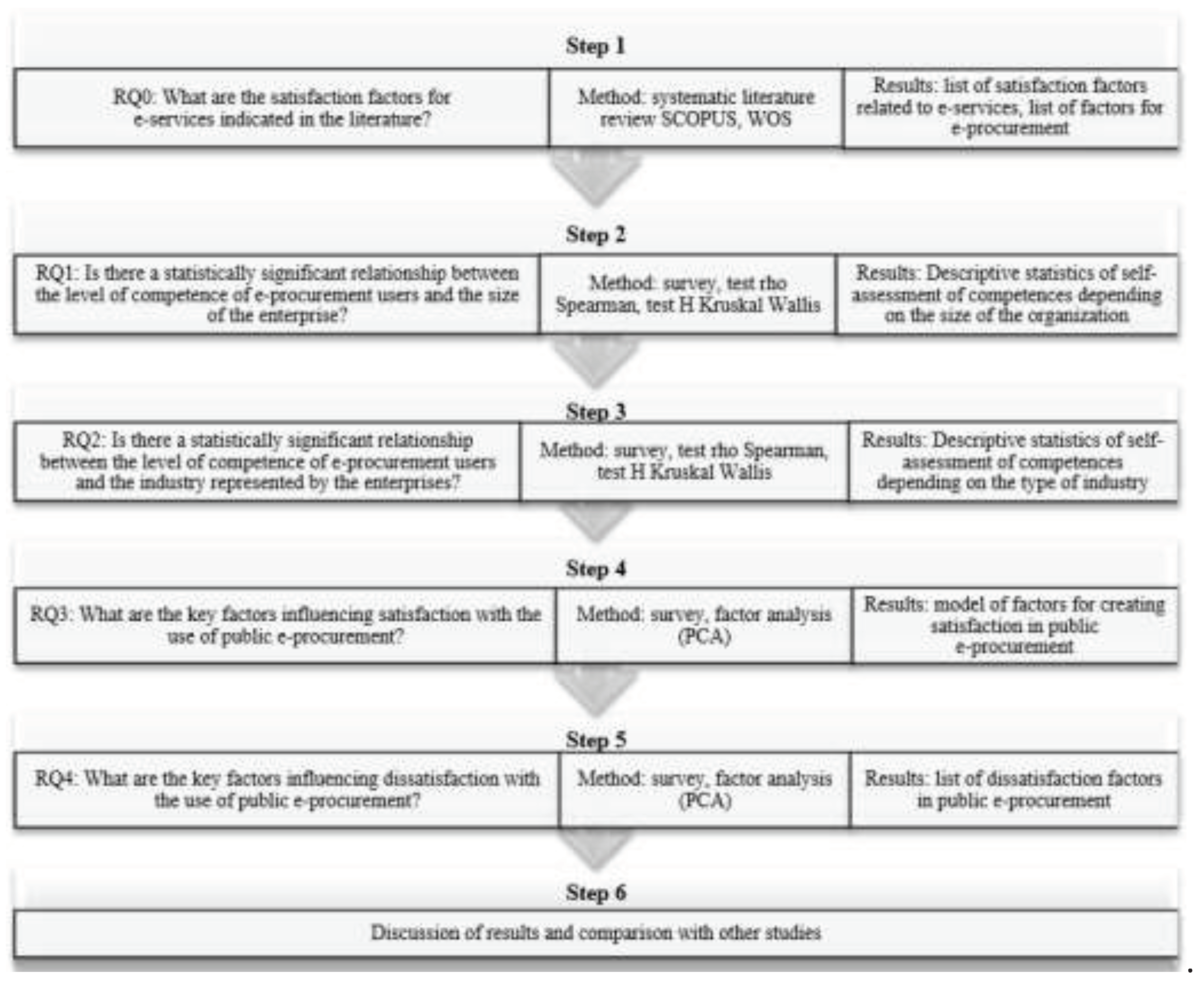
Figure 2.
Scree plot for factors of satisfaction with the use of e-procurement. Source: own study.
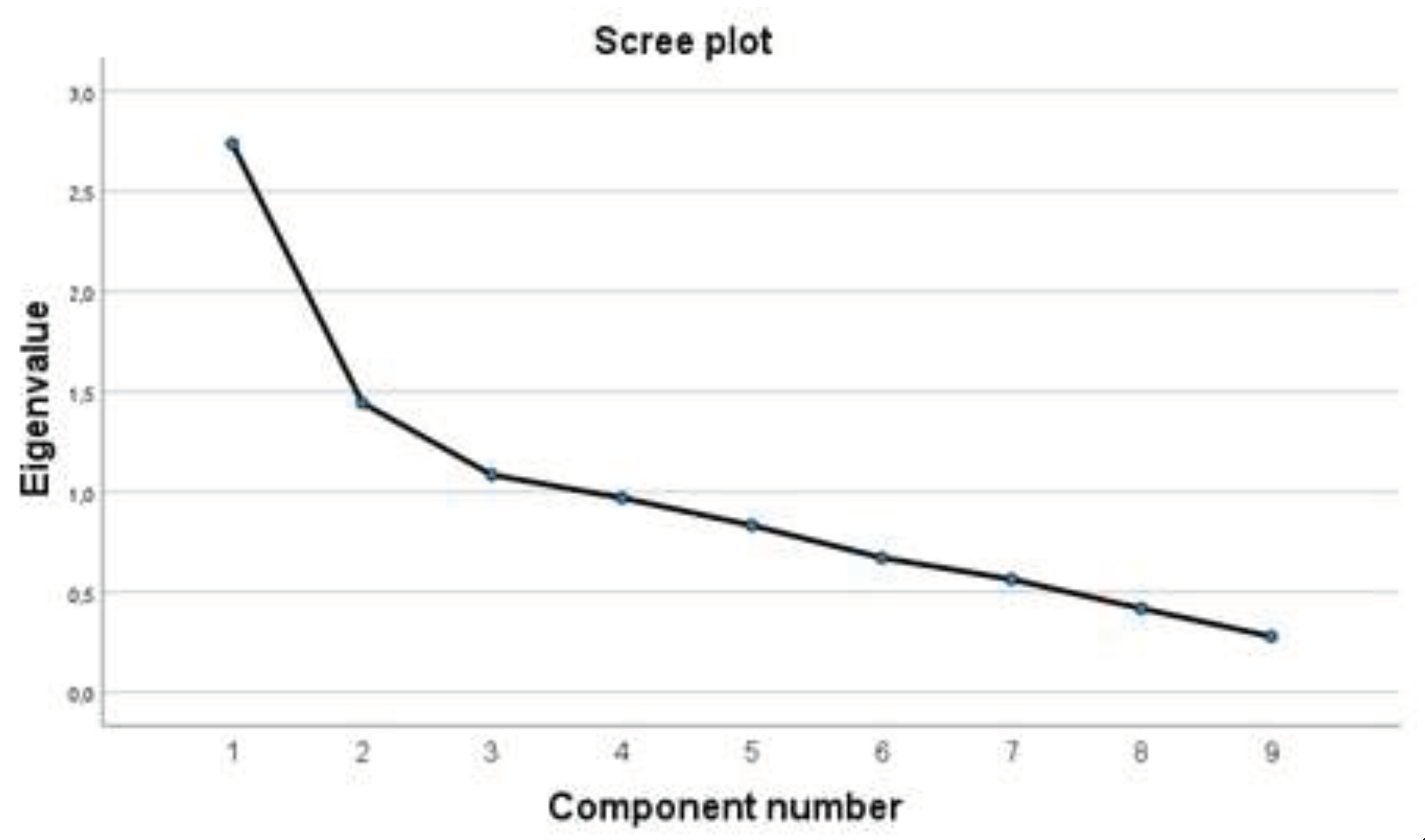
Figure 3.
A model for creating satisfaction with the use of public e-procurement for enterprises submitting offers in proceedings. Source: own study.
Figure 3.
A model for creating satisfaction with the use of public e-procurement for enterprises submitting offers in proceedings. Source: own study.
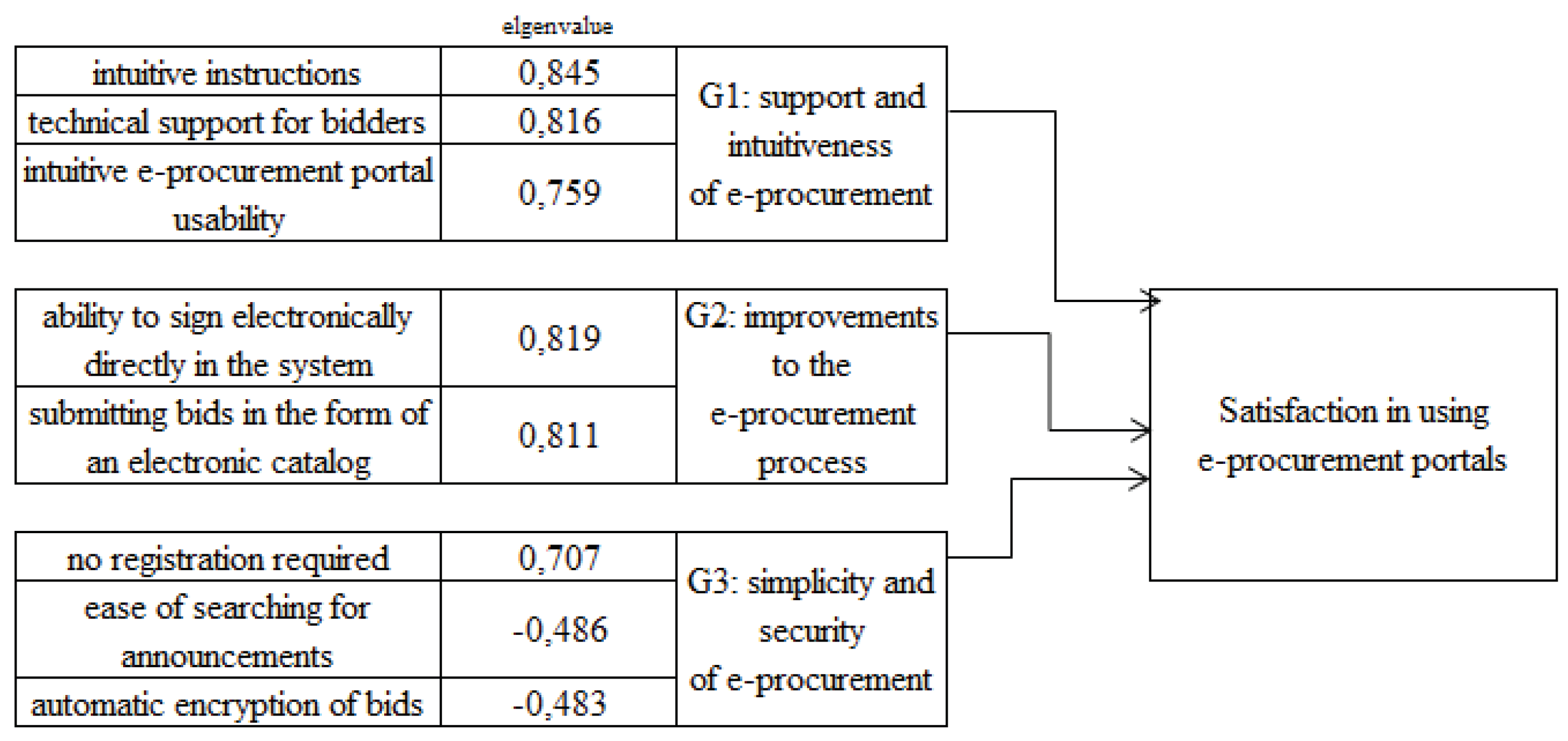
Figure 4.
Scree plot for factors of dissatisfaction with the use of e-procurement. Source: own study
Figure 4.
Scree plot for factors of dissatisfaction with the use of e-procurement. Source: own study
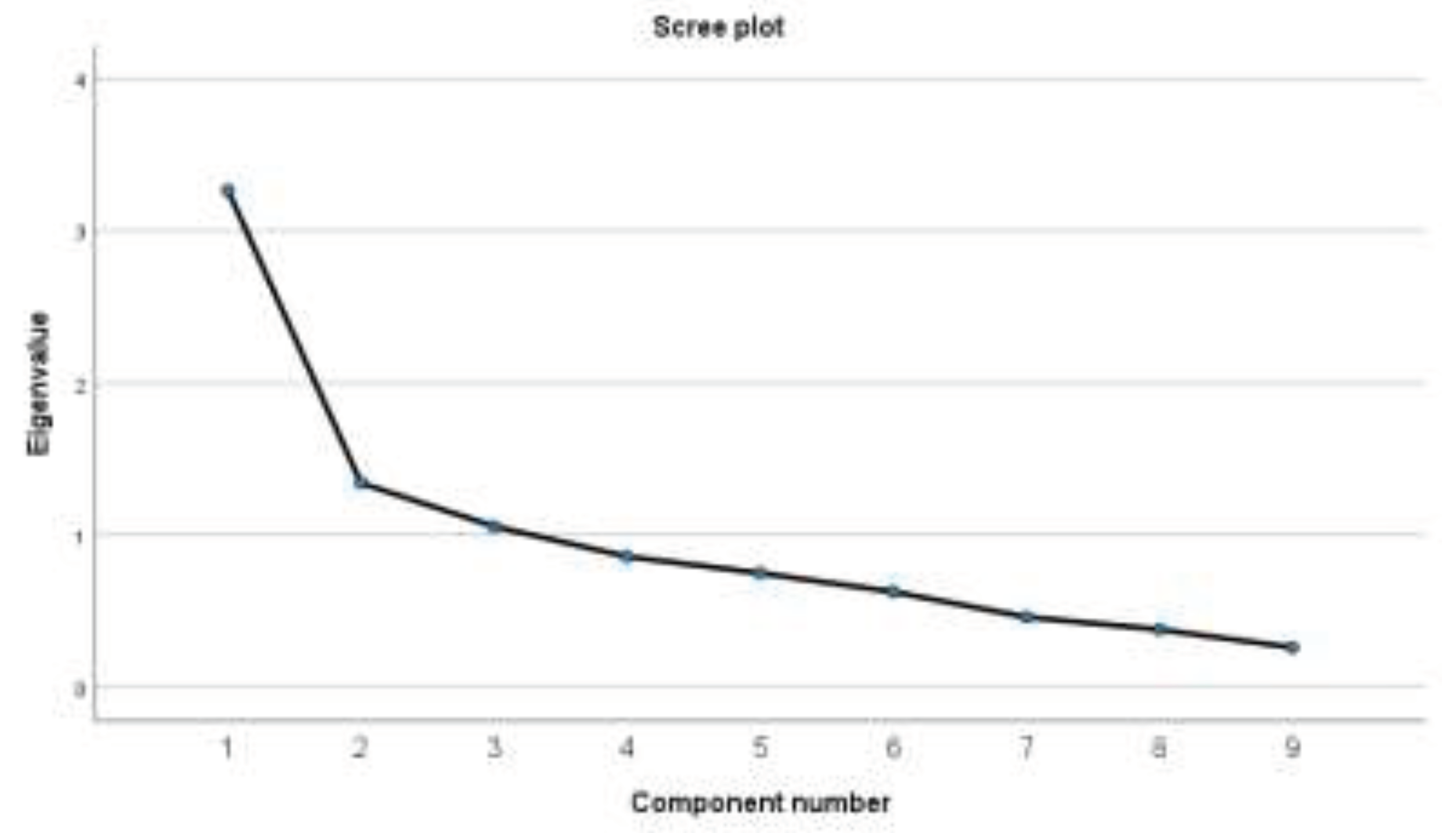

Table 1.
Descriptive statistics of self-assessment of competences depending on the size of the organization.
Table 1.
Descriptive statistics of self-assessment of competences depending on the size of the organization.
| The size of the organization | N | M | SD | Me | Min | Maks |
| Micro | 149 | 4,74 | 0,95 | 5,0 | 2 | 6 |
| Small | 126 | 4,86 | 0,92 | 5,0 | 1 | 6 |
| Medium | 86 | 4,91 | 0,83 | 5,0 | 3 | 6 |
| Large | 45 | 5,00 | 1,13 | 5,0 | 1 | 6 |
Source: own study (N=406)
Table 2.
Descriptive statistics of self-assessment of competences depending on the type of industry
| Industry | N | M | SD | Me | Min | Maks |
|---|---|---|---|---|---|---|
| Research and consulting | 37 | 4,81 | 1,13 | 5 | 1 | 6 |
| Construction | 117 | 4,85 | 0,92 | 5 | 2 | 6 |
| Trade | 28 | 4,46 | 1,14 | 5 | 2 | 6 |
| ICT | 58 | 5,12 | 0,97 | 5 | 3 | 6 |
| Machine industry | 15 | 4,87 | 0,64 | 5 | 3 | 6 |
| Furniture | 14 | 4,93 | 0,92 | 5 | 3 | 6 |
| Medical | 58 | 4,79 | 0,79 | 5 | 3 | 6 |
| Cleaning services | 35 | 4,74 | 0,95 | 5 | 3 | 6 |
| Others | 44 | 4,84 | 0,86 | 5 | 3 | 6 |
Source: own study (N=406)
Table 3.
Factor loading matrix of satisfaction in using e-procurement.
| Group | |||
|---|---|---|---|
| G1 | G2 | G3 | |
| intuitive instructions | 0,845 | -0,043 | 0,038 |
| technical support for bidders | 0,816 | -0,014 | 0,239 |
| intuitive e-procurement portal usability | 0,759 | -0,136 | -0,287 |
| submitting bids in the form of an electronic catalog | -0,061 | 0,819 | 0,035 |
| ability to sign electronically directly in the system | -0,159 | 0,811 | -0,013 |
| availability of training for bidders | 0,348 | 0,360 | 0,046 |
| no registration required | 0,374 | 0,205 | 0,707 |
| ease of searching for announcements | 0,413 | 0,090 | -0,486 |
| automatic encryption of bids | 0,251 | 0,369 | -0,483 |
Source: own study (N=406)
Table 4.
Factor loading matrix of dissatisfaction in using e-procurement.
| Group | ||
|---|---|---|
| 1 | 2 | |
| lack of intuitive instructions | 0,878 | -0,054 |
| low intuitiveness | 0,796 | 0,001 |
| no technical support | 0,767 | 0,026 |
| no automatic encryption of bids | 0,627 | -0,125 |
| need to install additional software | 0,517 | 0,343 |
| no training available | 0,280 | 0,151 |
| necessity to sign electronically directly in the system | -0,073 | 0,857 |
| submitting bids in the form of an electronic catalog | -0,072 | 0,826 |
| registration required | 0,157 | 0,469 |
Source: own study (N=406)
Disclaimer/Publisher’s Note: The statements, opinions and data contained in all publications are solely those of the individual author(s) and contributor(s) and not of MDPI and/or the editor(s). MDPI and/or the editor(s) disclaim responsibility for any injury to people or property resulting from any ideas, methods, instructions or products referred to in the content. |
© 2024 by the authors. Licensee MDPI, Basel, Switzerland. This article is an open access article distributed under the terms and conditions of the Creative Commons Attribution (CC BY) license (http://creativecommons.org/licenses/by/4.0/).
Copyright: This open access article is published under a Creative Commons CC BY 4.0 license, which permit the free download, distribution, and reuse, provided that the author and preprint are cited in any reuse.


