

Submitted:
08 May 2024
Posted:
10 May 2024
You are already at the latest version
Abstract
The extent of access to energy of displaced populations in settlements and camps in Africa is largely 14 unknown. A multitude of contextual factors, such as the location and the characteristics of housing, 15 the legal status, the socio-cultural background, and the availability of humanitarian and public ser- 16 vices impact the living conditions and the needed energy services. Limitations in accessing energy 17 services have direct, multilayered, and far-reaching implications, including impacts on health, nu- 18 trition, education, protection, and livelihood. The objective of this article is to contribute to a more 19 comprehensive overview of the current state of energy access in displacement contexts on the Afri- 20 can continent by identifying and utilizing existing data. After a screening of the vast and various 21 available information, setting up of a database, consolidating the gathered data as well as assessing 22 the quality through a quality assessment method, the currently available information is visualized 23 and discussed. Considerable differences in the access to electricity for displaced persons across the 24 countries are found. For both electricity and clean cooking, the availability for displaced persons 25 ranges from nearly no access at all up to an access rate of 100%. More strikingly, the results also 26 show that besides South Africa and countries in the Maghreb region, the access to both clean cook- 27 ing and electricity for displaced persons is very low. At the same time, the fragmented data availa- 28 bility, the poor data quality, and the questionable expediency of available data allows neither solid 29 theoretical conclusions nor planning of effective practical implementation measures. Novel inter- 30 disciplinary research, conceptual frameworks and indicators are needed for the purpose of compa- 31 rability and consistency. Future research has the potential to more comprehensively capture the 32 current state of access to energy in displacements contexts and in a next step to examine how energy 33 is interwoven in the lives of displaced people to derive a set of more detailed context-sensitive en- 34 ergy indicators. It is essential that the concerned persons, the displaced persons themselves are in- 35 cluded in the research in a meaningful way.
Keywords:
humanitarian settings
; humanitarian energy
; electricity
; clean cooking
; data assessmen
1. Introduction
1.1. The Context of Displacement and Access to Energy
Global crises such as climate change, conflict and natural disasters have resulted in a growing number of persons who were forced to leave their home. UNHCR, the UN refugee agency, estimated that in 2024 there will be 130.8 million displaced persons in the word [1]. Displaced persons are “persons or groups of persons who have been forced or obliged to flee or to leave their homes or places of habitual residence, either across an international border or within a State […]” [2]. The term displaced persons includes but is not limited to refugees, asylum seekers and internally displaced persons (IDPs), for which relevant definitions can be found in [2,3,4]. Displacement has implications not only for displaced persons themselves, but also for those hosting them, which are often referred to as the host country and host community. With 134 countries currently accommodating displaced persons [5], active engagement with the displacement context is a global matter and it is a matter that is growing in scale. The number of displaced persons has continuously increased as it is shown in Figure 1.
While cumulative global statistics are relevant to highlight the increasing relevance of the subject matter, it is essential to acknowledge that the lived experiences of displaced persons vary greatly between different host countries and contexts. A multitude of contextual factors, such as the location and the characteristics of housing (settlement, camp-like, urban, rural, etc.) [6], the legal status of displaced persons [7], the socio-cultural background and the availability of humanitarian and public services have a major impact on the conditions of living. In this study we focus on displaced persons residing in settlements and camps. While in the humanitarian space there is no universally agreed upon definition for the term settlement, we recognize that the terms settlement and camp are in many cases used to describe settings with different attributes (e.g., [4,6,8,9,10,11]) and we agree that the differentiation adds a valuable dimension to the discourse.
One key factor determining the conditions of living is access to energy [12]. A variety of energy needs coexist in displacement contexts. First, energy is needed to enable the operation of humanitarian actors, such as electricity in the offices of humanitarian organization and fuel for transportation [6,12]. Second, displaced persons have a wide range of energy needs that are embedded in basic areas of life [13], characterized by energy needs on a household level, such as for electricity and cooking, energy needs for income generating activities or for businesses and energy needs on the community level, such as streetlights and the operation of public facilities such as schools and hospitals [13]. In this article, we focus on energy needs of displaced persons on an individual, household and community level as opposed to generalized energy needs that are associated with humanitarian operations.
The critical importance of the availability of clean, reliable, and affordable energy services for a qualitive life is reflected in Target 7.1 of the Sustainable Development Goals (SDGs) [14], which explicitly includes displaced persons [15]. Nevertheless, despite this critical importance, there are fundamental shortcomings in the data of the majority of displacement contexts. The Global Platform for Action, a working group hosted by the United Nations Institute for Training and Research (UNITAR), estimated that in 2022, 94 percent of displaced persons living in settlements and camps did not have access to electricity, and 81 percent of displaced persons living in settlements and camps relied on biomass for cooking [16]. The limitations in accessing clean energy services have direct, multilayered, and far-reaching implications, including impacts on health, nutrition, education, protection, and livelihood [6,17,18,19]. For example, food security is directly linked to a reliable fuel source [17], the use of firewood for cooking is linked to health risks [20] - especially respiratory and eye diseases [7] - and the lack of lighting in public spaces is associated with conflicts, and sexual and gender-based violence [21,22].
Besides the direct impact on wellbeing of displaced persons, there is a multitude of downstream impacts associated with the limitations in access to energy. A significant challenge is the high dependency on biomass for cooking leading to environmental degradation [6]. In some locations this has caused camps being cleared of vegetation in a radius of several kilometers [23]. The resulting scarcity of resources in turn can fuel conflicts between the displaced and host populations, the consequences of which are especially severe for vulnerable members of the respective communities [23].
International development organisations emphasize and recent publications underline that settlements have the lowest levels of access to energy in displacement settings [16], [24]. The majority of the displacement settings in African countries are not connected to an electricity grid whereas grid connection can frequently be found in other parts of the world, such as West and South Asia where large numbers of displaced persons are located [16]. The low rates of access to electricity should be viewed in the context of the overall low rates of access to electricity on the African continent. In 2021, approximately 43 percent of the population on the African continent lacked access to electricity [25]. At the same time, the African continent is hosting by far the highest number of displaced persons [1]. The contextual considerations underpin the extent of the challenge to work towards higher energy access rates, let alone, universal access to clean energy in displacement settings. While we acknowledge that research on energy access in displacement contexts is critical in all regions of the world, this study focuses on the African continent to handle the various information sources and the vast array of data.
While global energy access indicators regarding electricity and clean cooking are relevant to showcase the overall scale of the challenge, it is important to note that access to energy is not a binary condition – grid connected vs. not, cooking with firewood vs. not - but appears on a spectrum [26]. The Multi-Tier Framework (MTF) of energy access introduces a multidimensional framework that assigns energy access conditions to different tiers, in which Tier 0 constitutes no access at all and Tier 5 constitutes the highest level of access [26]. In addition, access to energy in itself is not a value in isolation determining which energy services and to what degree they reach displaced persons, but rather a precondition to satisfy multiple energy service needs [27].
A further essential consideration regarding access to energy is the diversity of energy services demand [18]. The contextual diversity of displacement settings is mirrored by the contextual diversity of the energy service demands, the challenges that are associated with limitations in the provision of energy services and preferences of displaced persons. In the case of cooking, the associated challenges may be influenced by “culture, geography, season, fuel type, local practices and general awareness” [28]. Consequently, energy service needs are not only determined by the descriptive characteristics of a settlement, but also by individual circumstances and individual preferences. The growing recognition and the increased emphasis of the diversity of energy service needs (e.g., [18,28,29,30]) is not addressable by the predominantly technology-focused and top-down energy interventions in settlements and camps.
1.2. The Levels of Data and the Current State of Affairs
In contrast to other sectors of the humanitarian response system, such as water, health and shelter, the provision of energy services is not operationalized by established institutional actors [17,18,31] and energy has historically not been a priority in humanitarian response [19]. Mirroring the increased recognition of the central importance of access to energy on a global level, efforts to further this challenge in displacement settings have increased in the last decade. Thomas et al. [19] provided an overview of the most relevant institutional initiatives, including the UNCHR’s commitment in 2019 to enable Tier 2 electricity access by 2030 to all refugees as part of the so called Clean Energy Challenge. The increased recognition of the essential importance of energy in humanitarian settings is also reflected in the growing number of scientific publications [24]. However, the overall scientific engagement with the subject remains limited. The reasons for the limited scientific discourse are not apparent, but it is likely that the challenges associated with accessing displacement settings is a contributing factor. Typically, settlements and camps are not freely accessible and permission needs to be granted. Another contributing factor may be that in the humanitarian response historically energy was not viewed as a priority. Rosenberg-Jansen [24] identified a total of 115 relevant scientific documents in a literature review in 2022. The limitations in scientific publications accompany limitations in available data. For a small number of host countries case studies were conducted and published in scientific journals that allow basic insights into the contextual conditions of energy access in selected settlements and camps [17,32,33,34,35,36,37,38], while case studies documented in grey literature provide additional selective insights [24].
Both in the research and in the humanitarian response field, the critical role of data has repeatedly been highlighted [32,39,40,41]. In a consolidating report on the state of energy access in displacement settings, the GPA highlighted the need for evidence and data to inform systemic change as one of their key messages [16], which picks up on the Working Area Data, Evidence, Monitoring and Reporting (Working Area V) outlined in the Framework for Action in 2018 [41]. Establishing a realistic and comprehensive overview of the energy access situation is key to inform action on multiple levels. It is essential for policy making to foster integration of displaced persons in national energy access plans [42], for humanitarian assistance to inform planning and daily operation and for research to further novel concepts and approaches [24] and for donors to establish relevant funding programs. Therefore, accurate and purpose fitting data is essential to establish a comprehensive understanding of the diversity of energy-related lived realities of displaced persons, a precondition for impactful action and interventions on all levels.
Several initiatives have contributed to further the systematic collection and sharing of data. One of the first initiative to systematically assess the multifaceted role of energy in displacement settings was the Moving Energy Initiative, introduced in 2015 by a consortium of organizations and hosted by Chatham House [43]. In 2017 UNHCR initiated the Integrated Refugee and Forcibly Displaced Energy Information System, which monitors the progress of improved access to energy [44]. In 2018 the GPA was founded, which has taken up coordination activities, highlighted pathways to efficiently improve energy access and has published contextual insights as part of the READS program [45]. The Humanitarian Data Exchange platform, which is hosted by OCHA, includes data sets on energy access in settlements and camps [46].
Despite these recent efforts to improve the information base on energy access in displacement settings, the insights, and the currently available data on energy access in settlements and camps remains fragmented and unfit for the purpose. Numerous scientific articles state the lack [16,40,47] and the poor quality [24,40,48] of available data. In addition, the available data is rarely harmonized, neither between different data sources nor across the different reference levels. The reference levels encompass the granularity of the of presented data on an individual, communal, regional, and international level. The lack of harmonization results in highly diverse insights, and significantly limits the potential for comparative analyses. The general lack of data, and the restriction in the applicability of the available has the consequence that the state of access to clean energy in settlements and camps is in large parts unknown.
The objective of this article is to contribute to a more comprehensive understanding of the current state of energy access in displacement contexts by identifying and utilizing existing data. After a screening of the vast and various available information, setting up of a database, consolidating the gathered data as well as assessing the quality through a quality assessment method, the currently available information is visualised and discussed. As far as the overview allows, conclusions are drawn, as well as current content and structure to the initial and pressing issue of improving access to energy for displaced persons are mirrored. Three research questions are addressed:
What insights can be gained from the available data on access to energy in displacement contexts in several countries on the African continent?
What are the limitations of utilizing the available data?
What are the differences between multiple countries regarding the state of access to energy?
We address the stated research questions and by conduction a comprehensive review of relevant data sets. For the characterization of the informational value of the various data sources, we utilize a tailored data quality assessment (DQA). We visualize, describe, and critically reflect on the data that the desk research uncovers and highlight fields of interest for future research.
2. Materials and Methods
The aim of this article is to put the claim of limited data availability to the test and identify the analytical potential of existing data. We conduct a comprehensive desk research exercise, in which we consolidate existing data to map the energy situation in displacement contexts on the African continent. We review online databases, project reports, scientific publications as well as web resources of implementing organizations. Because of the lack of an established quality procedure for this use case, we develop a tailored DQA, based on existing frameworks. The DQA supports the characterization and evaluation of the consolidated data. In the following we first describe the data research exercise and subsequently present the development of the DQA.
2.1. Screening for Materials and Information
The character of the issue at hand and the fragmented state of the current affairs motivates to map and investigate differences between multiple countries and therefore include transnational data sets. In the screening for materials and information we exclude data from case studies given their small percentage share of total available data as well as their more extended differences in the type and composition of numbers.
In the initial step of selecting the countries to be covered in our study, we consider all countries on the African continent. The number of displaced persons hosted by the different countries on the African continent varies significantly [49]. The scope of the data and insights that are available for the characterization of the respective displacement settings reflects the number of displaced persons hosted. For countries hosting a small number of displaced persons significantly less data on energy access is available [24]. This fact directs this research to countries with available data and thereby to those with more than 20,000 displaced persons, resulting in 30 African countries, jointly accounting for 99.8% of displaced persons across all African countries [49]. The countries covered by our study are listed in alphabetical order in Table 1. A list of countries excluded from the data mapping exercise based on the information available regarding the number of displaced persons hosted by the country is provided in appendix (Table A1).

Table 1.
List of countries with more than 20, 000 displaced persons in January 2024 [49], countries considered in this study.
Table 1.
List of countries with more than 20, 000 displaced persons in January 2024 [49], countries considered in this study.
| Countries | Number of displaced persons |
|---|---|
| Algeria | 102,753 |
| Angola | 55,981 |
| Burkina Faso | 1,917,317 |
| Burundi | 99,251 |
| Cameroon | 1,473,294 |
| Central African Republic | 527,348 |
| Chad | 1,080,557 |
| Congo | 97,074 |
| Cote d’Ivoire | 937,027 |
| Democratic Republic of the Congo | 6,063,761 |
| Djibouti | 30,197 |
| Egypt | 358,523 |
| Ethiopia | 4,208,422 |
| Kenya | 1,078,815 |
| Libya | 206,330 |
| Malawi | 56,560 |
| Mali | 441,449 |
| Mauritania | 106,370 |
| Mozambique | 1,060,234 |
| Niger | 716,412 |
| Nigeria | 3,379,779 |
| Rwanda | 149,218 |
| Somalia | 3,002,276 |
| South Africa | 150,912 |
| South Sudan | 2,167,672 |
| Sudan | 4,685,356 |
| Tanzania | 247,196 |
| Uganda | 4,144,589 |
| Zambia | 81,090 |
| Zimbabwe | 23,063 |
The mapping of available data focuses on the general energy situation on two reference levels, namely the country level and at the settlement and camp level. The aim of the mapping exercise is to comprehend the state of energy access, however, in addition to indicators that explicitly characterize the state of access to energy, we also include contextual indicators in the mapping exercise. We use contextual indicators to describe what is commonly referred to as the enabling environment (e.g., [6]). The enabling environment examines how supportive the local regulatory and policy framework for energy standard improvements is, while the energy situation focuses on the local possibilities for electricity and cooking. Applicable sources were consulted, and available data was extracted in order to understand:
- − The share of renewables in the electricity mix
- − The extent of access to electricity
- − The number of displaced persons connected to the electricity grid
- − The national electricity prices and the price estimations in displacement settings
- − The number of displaced persons using biomass for cooking.
- − The possibilities for type of cooking and lighting as well as the dominant types
- − The level of maturity of the policy framework for access to cooking and electricity as well as for renewable energies
To investigate the two stated reference levels, the data acquisition and consolidation related to country-wide and settlement specificities where data was available and possible to distinguish accordingly.
2.2. Development and Application of a Data Quality Assessment
The description of the state of energy access in displacement settings inevitably raises the question of assessing the quality of the data that we identify. We therefore include a systematic quality assessment in our study and tailor a DQA to the needs of our study.
A DQA is a procedure to characterize data by its intention, view it in its composition and assess both intention and composition based on previously established quality criteria. The DQA differentiates the data amongst data sources and assesses through a scoring system. The resulting scores describe the quality rating of the concerned data and give an overall statement on its meaningfulness and significance.
The quality of data within a DQA is measured according to quality dimensions. The quality dimensions consist of a set of indicators with a scoring range for the evaluation. The data quality information, which is expressed by the set of indicators, constitutes additional information to guide decision making processes [50].
The quality of data within a DQA is measured on the basis of quality dimensions. The quality dimension consist of a set of indicators with a scoring range for the evaluation. The data quality information, which is expressed by the set of indicators, constitutes additional information to guide decision making processes [50].
Depending on the field of application and focus of the DQA, the quality dimensions differ. the most common quality dimensions are completeness, timeliness and accuracy. DQA frameworks were developed for different objectives [51]. For example, the World Health Organization (WHO) has published a detailed approach on how to review and improve the quality of health-facility data [52]. Other sources describe methodologies and guidelines for DQA [53,54,54] or give an overview of existing frameworks [51]. While the existing methodologies can be used as guideline for the data analysis, none of the existing frameworks meets the needs of the presented study. For this reason, a novel DQA framework based on existing methods and guidelines was developed. This DQA framework included the definition of a comprehensive set of quality indicators and the definition of the respective scoring system, quality dimensions and indicators. For the developing the DQA we followed the overall outline proposed by Cameron [55]. We utilized additional literature to specify relevant data quality dimensions and respective indicators.
2.2.1. Quality Dimensions and Indicators
The data quality dimensions are the basic building blocks for characterizing the quality of data within a DQA [50]. Each dimension consists of a set of indicators, which represent the evaluation criteria for the DQA. The indicators are used to determine the extent to which a dataset fulfills the requirements of a quality dimension.
For the purpose of this study, a DQA framework was tailored to fulfill the requirements of this study. We identified five relevant dimensions to comprehensively characterize the data quality for the purpose of our study. The dimensions are Timeliness, Completeness, Accuracy, Coherence, and Interpretability. For each dimensions relevant indicators were defined. It is important to note that because of the nature of the data mapped in this study, not all indicators constitute objective measurements. The development of the DQA framework was guided by recommendations in [55].
- A.
- Timeliness
Timeliness is defined as the extent to which the age of data is appropriate for the task at hand [54]. The situation for displaced persons can change rapidly [40] and outdated data poses a significant decline in the data quality. The indicator used to determine the timeliness of each dataset is the number of years elapsed since the data was collected. For the study we did not specify a specific timeframe and prioritize more recent data. If a dataset was based on several sources, the source with the oldest data was used as reference.
- B.
- Completeness
Completeness represents the most prominent dimension for DQA [51] and is defined as the degree to which all relevant data is included in a data collection exercise [54]. Data on energy access in displacement contexts often show a lack of completeness since the data collection is associated with a specific purpose of analysis [40]. The evaluation criterion for completeness is the number of countries considered in the specific dataset compared to the number of countries considered in this analysis. Therefore, the evaluation of completeness only refers to the specific purpose of this study and does not evaluate the completeness of the data with regard to the initial purpose for which it was initially collected. Some data sources do not have the same selection of countries for each indicator. For example, the data for electricity access is available for more countries than the data on clean cooking. In that case, the indicator with lowest number of countries is considered in this work as reference.
- C.
- Accuracy
Accuracy is the degree to which statistical data measures what it was intended to measure [55]. The limited sources of quantitative data [40,47] often lead to simplified methodologies, such as generalizations that are based on a small number of data pointy, and undetailed analysis of the access energy situation [56] causing a low level of accuracy. In contrast to other DQA frameworks, where accuracy is mostly evaluated through statistical analysis (see [51]), in the scope of this study, the accuracy of data is determined by the following indicators:
- -
- Availability of additional information: Additional information can give further explanation to the dataset and thus makes it possible to determine its accuracy.
- -
- Accuracy of the methodology: Depending on the used methods for the data collection and analysis, the accuracy will decrease or increase. For example, a detailed field survey will lead to a higher accuracy than a dataset based on a simplified model.
- -
- Real-world data or synthetic data: Real-world data is more accurate than synthetic data that is based on assumptions and approximative information, e.g., as the outcome of models and simulations.
- D.
- Coherence
In accordance with Cameron [55], for the purpose of our study, coherence is defined as the degree to which data can be combined with other information within an analytical framework. To evaluate the coherence of data, we use the following indicators:
- -
- Use of common methods: The utilization of known methods facilitates the analysis of data and reduces the risk of incoherencies.
- -
- Incoherence within the dataset or with other sources: If possible, the dataset will be cross-checked with other sources for the detection of incoherent data.
- E.
- Interpretability
Interpretability is defined as the degree to which additional information is necessary to interpret and utilize the data correctly [55]. Without a thorough description of the methodology the information value and the interpretability are limited.
The first indicator to describe the interpretability is the availability of additional information. The second indicator is the suitability of the sources and used methods. This indicator expresses whether the data is based on appropriate sources and relevant methods have been applied to obtain the data.
2.2.2. Evaluation and the Scoring System
In order to evaluate and compare different datasets, a scoring system was developed based on [55]. Each dataset is analyzed by assessing its ability to fulfil the conditions set by the indicators and for every indicator a score between zero and two is assigned.
Table 2 shows the indicators of each dimension with the respective scoring system. A data source can be assigned up to two points per dimension and ten points in total.
Table 2.
Evaluation matrix which comprises the quality dimensions, indicators and evaluation criteria for the characterization of data quality for the purpose of this study.
Table 2.
Evaluation matrix which comprises the quality dimensions, indicators and evaluation criteria for the characterization of data quality for the purpose of this study.
| Dimension | Indicator | Points | ||
|---|---|---|---|---|
| Timeliness | Number of years elapsed since the data was collected/created. | More than four years or the number of years cannot be calculated | 0 | |
| Between two and four years | 1 | |||
| Less than two years | 2 | |||
| Completeness | Does the data include countries considered in our analysis? | No | 0 | |
| Yes | Coverage error is greater than 20 % | 0 | ||
| Coverage error is between 10 and 20 % | 1 | |||
| Coverage error is less than 10 % | 2 | |||
| Accuracy | Does the reporting source give additional information (e.g., metadata, description of the collection and analysis of data) that help to determine the accuracy of the dataset? | No | 0 | |
| Yes | The data is based on a methodology that leads to inaccurate results (e.g., models with insufficient information, assumptions). | 0 | ||
| The dataset is based on an appropriate methodology that leads to synthetic data (e.g., models with sufficient information). | 1 | |||
| The dataset is based on an appropriate methodology that leads to real-world data (e.g., detailed surveys). | 2 | |||
| Coherence | Does the dataset use a common methodology that allows to compare and use the data with datasets from other sources? | No | 0 | |
| Yes | The dataset is incoherent. | 1 | ||
| The dataset is coherent. | 2 | |||
| Interpretability | Is a detailed description of the methodology and relevant background information (objective of the analysis, used sources and contributors) available? | No | 0 | |
| Yes | The information used for the creation of the dataset are not suitable for the considered analysis. | 1 | ||
| The information used for the creation of the dataset are suitable for the considered analysis. | 2 | |||
2.2.3. Data Search, Visualization and Interpretation
The data search exercise focused on two reference levels, namely the country level, and the settlement and camp level. On the country level both data that is not specific to the displacement context is included to characterize the general context and the enabling environment. Energy access data on country level is included in the Energy Progress Report [57]. Data on the country level that explicitly characterizes displacement contexts includes the Moving Energy Initiative (MEI) [58], the Humanitarian Energy Data Platform [56] and the database on the Refugee Settlements Energy Access (RSEA) [59].
Since displaced persons are rarely considered in the development of national energy policies [60], the analysis of regulations and policies on energy access is limited to data that is non-specific to displacement contexts. Accordingly, the regulatory indicators for sustainable energy (RISE) [61] do not specifically account for the displacement context but nevertheless provide valuable guidance and insights into the enabling environment. Table 3 summarizes the available sources and distinguishes by the data categories of level, information and kind of indicator.
3. Results
The characterization and the utilization of the data that we mapped during the data search exercise necessitates a data quality assessment. We therefore first provide an overview of the results of the DQA, and subsequent present and visualize relevant data for the characterization of the state of access to energy in displacement settings on the African continent.
3.1. Data Quality Assessment
The results of the DQA show a considerable range in terms of quality and composition of the data. The UNHCR database [62] for displaced persons received the highest score with 10 points, while the dataset of the Moving Energy Initiative [58] and the Humanitarian Energy Data Platform [56] share the lowest score with three points each. The latter two represent two sources with information specifically on access to energy in displacement contexts. The remaining sources were assigned a score of seven or more points. This creates significant discrepancies between the data characterizing the host country contexts to the data characterizing the displacement contexts. The discrepancies in the quality of the data are primarily a result of low scores for in the data quality dimensions timeliness, completeness and accuracy. The results of the DQA are summarized in Table 4. A comprehensive overview of the evaluation results, including a justification for the individual scores are in included in the appendix (Table A2).
Table 4. Results of the DQA per source and dimension
Table 4.
Results of the DQA per source and dimension.
| Source | Score per dimension | Total score | ||||
|---|---|---|---|---|---|---|
| Timeliness | Completeness | Accuracy | Coherence | Interpretability | ||
| ESMAP [57] | 1 | 2 | 1 | 2 | 2 | 8 |
| GPA [56] | 0 | 0 | 1 | 1 | 1 | 3 |
| EU [59] | 1 | 0 | 2 | 2 | 2 | 7 |
| UNHCR [49] | 2 | 2 | 2 | 2 | 2 | 10 |
| World Bank [61] | 1 | 1 | 1 | 2 | 2 | 7 |
| UN OCHA [58] | 0 | 0 | 0 | 1 | 2 | 3 |
A detailed description of the results of the DQA can be found in the annex.
3.2. Visualisations
3.2.1. Displaced Populations
The visualizations in this section are based on the data sets from [49] and [63]. The visualization capture all 30 countries covered by this study
The Democratic Republic of Congo (DRC) with 6.1 million displaced persons emerges as the country with the highest number followed by Sudan with 4.7 million, while Ethiopia and Uganda host 4.2 million each. Together, these four countries host nearly half of the total number of displaced persons of all selected countries (49.4%). The countries hosting the smallest numbers of displaced persons are Zimbabwe (23,063 persons), Djibouti (30,197 persons) and Angola (55,891 persons). Figure 2 shows the total number of displaced persons for all countries covered in this study. Large regional differences exist between the different regions with most displaced persons hosted by countries in East Africa, particularly in and around the horn of Africa.
To characterize the scale of displacement it is relevant to look at both the total and the relative number o displaced persons hosted by a country. Figure 3 shows the number of displaced persons hosted by a country in relation to the total population of the country. The percentage share of displaced persons is highest in South Sudan with 19,9%, followed by Somalia with 17,1%, and Sudan with 10,0%. A particularly high share of displaced persons compared to the total population of the host country is discernible in the countries of the Eastern Sahel region as well as their bordering countries to the south. Looking at the Western, Northern and Southern region of Africa, a different picture emerges as the percentages are relatively low with only Cameroon and Burkina Faso having a share of more than 5%. Overall, the shares in the selected countries differ considerably and they range from 0,1% in Zimbabwe to 19,9% in South Sudan.
To provide an indication of trends, Figure 4 shows the percentage change of the total number of displaced persons hosted per country between 2020 and 2022. In a total of twelve countries there was a decrease in the total number of displaced persons hosted between 2020 and 2022, and in eighteen witnessing there was an increase. In the DRC there was the most significant decrease, as the number of displaced persons almost halved with a decrease of 48,1%. In South Africa and Libya, the number of displaced persons hosted also declined significantly with a decrease of39,7% and 36% respectively. In contrast, in Kenya the number of displaced persons almost doubled with an increase of 96%. The second and third highest increases were recorded in Burkina Faso and Mozambique with an increase of 75.1% and 52.5% respectively.
3.2.2. Regulations and Policies
In this subsection relies on data from the Regulatory Indicators for Sustainable Energy (RISE) assessment [61]. The RISE score encompasses the multi-dimensional aspects of policies and regulations and allows to compare national policy and regulatory frameworks for sustainable energy implementations on a global scale covering 140 countries. The RISE scores allow for basic insights into the local enabling environment. It assesses countries’ policy and regulatory support based on four pillars , namely (1) access to electricity, (2) access to clean cooking , (3) energy efficiency, and (4) renewable energy [61]. The RISE assessment provides a country score on a scale between 0 (lowest possible score) and 100 (highest possible score) for each pillar. The scores for each pillar are derived from a number of tailored indicators. An overview of all indicators, as well as a description of the applied methodology is provided in [61]. In addition to the scores for each pillar, an overall score is calculated by averaging the score of the four pillars. RISE dataset does not cover all countries that are included in our study. The RISE data set includes no data on Libya and Djibouti and only partially includes data on Algeria and Egypt, for which no data on electricity access and clean cooking is available.
Figure 5 shows the overall RISE score of the countries. The overall RISE score covers all pillars and therefore encompasses multi-dimensional aspects of policies and regulations supporting access to energy activities.. There is a large spread in the overall scores between the countries considered in our study. With a score of eight, South Sudan has the lowest score and with a score of 78 Rwanda has the highest score. The data showcases regional discrepancies with predominantly high scores in the Maghreb region, Southern Africa, and East Africa. Conversely, the Sahel region showcases predominantly low overall scores, with only Nigeria surpassing a score of 50.
The RISE overall country scores are derived from the four RISE pillars. The scores for the individual pillars provide more granular insights into regulatory conditions for the four thematic fields. Three out of the four pillars are directly linked to access to clean energy and are included as visualization in this study (Figure 6-8). We consider the indicators related to energy efficiency of secondary relevance to this study and therefore do not include the respective visualization.
Figure 6 depicts the score for the pillar renewable energy in which Rwanda emerges as the country with the highest score of 91, followed by Egypt and South Africa with a score of 85 each. With a score of eight South Sudan showcases the lowest score, followed by. Burundi and Congo, which both have scores below 20. Regional discrepancies are visible, with countries in Southern Africa showcasing comparatively high scores, with the exception of Angola (42). In Western Africa, comparatively low scores prevail. With a score of 65 Nigeria is the only country in Western Africa with a score above 50
Figure 7 depicts the RISE scores for the pillar electricity access. Rwanda has the highest score (90), and South Sudan has the lowest score (8).
The scores for clean cooking scores in Figure 8 are visibly lower, with an average score of 37, compared to the average score of 48 for renewable energy in Figure 6 and of 56 for electricity access in Figure 7. Nevertheless, several countries in East Africa exhibit comparatively high scores. Kenya showcases the highest score among the countries considered with a score of 83. Within East Africa Somalia stands out with a comparatively low score of 10. Conversely, the Eastern Sahel region and their bordering countries to the south showcase low values, including Chad (17), Sudan (20), the Central African Republic (23= and South Sudan (8). Southern Africa also reveals lower clean cooking scores, inducing South Africa (27), Zimbabwe (26), and Mozambique (29). The low score of South Africa is a stark contrast to the high scores for the other pillars.
3.2.3. Access to Electricity
Host country population
For the characterization of the electricity access on the country level, we rely on data from the Energy Progress Report [57]. The Energy Progress Report allows for a differentiation between the overall electricity access rate (Figure 9), the electricity access rate of the rural population (Figure 10) and the electricity rate for the urban population (Figure 11). We consider all three indicators relevant for addressing the stated research matter. The Energy Progress Report contains data on the total energy access rate and the electricity rate of the urban population for all countries that were selected for this study (see Subsection 2.1). The data on energy access rates of the rural population in the Energy Progress Report does not cover Angola, Burkina Faso, Libya and Mauritania.
Figure 9 shows the share of the total population with access to electricity. Access rates vary greatly among the countries considered in this study and range from eight percent in South Sudan to 100 percent in both Algeria and Egypt. The majority of countries with low access rates are in Central Africa. The spectrum of electricity access rates of the rural populations, as depicted in Figure 10, showcases a strong polarization. Among the countries included in this study, only three countries have a rural electrification rate above 90%, namely Algeria, Egypt and South Africa. With only one percent of the rural population having access to electricity, Chad and DRC showcase the lowest electricity access rates among the countries considered in this study.
In contrast to the low electricity access rates in rural areas, the urban electrification in most countries is well advanced as 13 out of the 30 countries have access rates higher than 90%. Overall only four countries have an urban electrification rate below 50%, namely Central African Republic (CAR), the DRC, Chad and South Sudan.
Displaced persons
The data for the visualization in Figure 12 stems from the Moving Energy Initiative[58] and covers all concerned countries of this study. The highest shares of displaced persons with electricity grid access are in Egypt (100%), Libya (98%) and South Africa (85%). Sudan (2%), Tanzania (2%) and Malawi (0%) exhibit very low electricity access rates amongst the displaced persons. The data reveals a prevailing trend of relatively low access in most countries, with 14 nations recording less than 30% grid connectivity for displaced persons. Comparing the share of the total population of the host country with access to electricity with the share of displaced persons with access to electricity), suggests that there is a correlation. The percentage shares of the host population with access to eectrcity and the percentage share of displaced persons with access to electricity are of the same magnitude in the majority of countries (e.g., Egypt, South Africa, Côte d’Ivoire, Nigeria, and ). However, this tendency is not true for all countries. In Algeria and Kenya significant discrepancies exist between the two rates of electricity access.
Settlement and camp level
The description of electricity access on a displacement camp or settlement level as depicted in Figure 13 and Figure 14 is based on data from the Humanitarian Energy Data Platform [56]. The data details in which camps and settlements access to electricity is the residents have in principle access to electricity. . It is important to note that characterizing electricity access is more complex than what the visualizations suggests. First, electricity access is not a binary condition. Describing energy access in relation to the tier of access is more relevant. A low tier of electricity access means that only basic appliances can be operated for a limited time per day. Second, high electricity access rates of settlements do not automatically translate to all displaced persons having access to electricity. A number of barriers, such as financial barriers may prevent persons accessing electricity, even though in principle electricity is available in a settlement or camp. This source encompasses a total of 74 camps, situated across 16 out of the 30 selected countries It is important to note that the camps and settlement covered by the data base only represent a minority of overall camps and settlements within the studied countries. A review of the data in [58,59] suggests that 219 camps and settlements exist in the countries selected for this study., According to the available data, the majority of the camps and settlements (70%) lack any form of access to electricity. In turn, 26% of the camps and settlements report partial access to electricity and only4% have access to electricity (see Figure 13).
Figure 14 provides country-specific insights and shows significant disparities between the countries. Only in three camps and settlements among the locations for which data is available access to electricity is available (locations in Algeria, Congo, and Sudan). A lack of electricity access is revealed in all considered camps and settlements situated in Djibouti, Democratic Republic of Congo (DRC), Ethiopia, Rwanda, South Sudan and Tanzania.
3.2.4. Access to Clean Cooking and Lighting
Country population
For the characterization of the state of energy for cooking on a country level we rely on data from the Energy Progress Report [57]. The available data cover all considered countries, except for Libya. The available data is visualized in Figure 15, which reveals considerable differences regarding the access to clean cooking across the selected countries. Similar to the trends observed for the electricity access in Figure 9, countries within the Maghreb and South Africa exhibit high percentage shared of access to clean cooking, with Algeria and Egypt achieving full coverage (100%). There is no clear correlation between the data insights on access to electricity (Subsection 3.2.3) and access to clean cooking.
The available data allows to further distinguish between the rural population (Figure 16), and the urban population (Figure 17). When considering the clean cooking access rate of the rural population, is can be noted that among the selected countries, only four countries (Algeria, Egypt, Sudan, and South Africa) showcase clean cooking access rates exceeding 50%. In contrast, 24 out of the 29 selected countries exhibit clean cooking access rates of the rural population below 10%. Moreover, 10 countries within the dataset report an absence of any clean cooking access in rural regions.
With regard to access to clean cooking in urban environments, the Maghreb region and South Africa showcase high rates with rates of at least 96%. The countries in the Sahel region showcase a significant discrepancy between urban and rural environments, with considerably higher rates of clean cooking access rates among the urban population
Displaced persons
The state of access to clean cooking of displaced persons is visualized in Figure 17, and is based on data from [58]. The available data differs from the data that is used to characterization of the state of clean cooking in the host countries (Figure 15-17), which is why a different indicator is used, namely the usage of cooking fuels other than biomass. The usage of non-biomass fuels for cooking is therefore used as an alternative description of clean cooking. The dependency on biomass among displaced persons differs significantly between the host countries included in this study. Algeria has the highest share of non-biomass usage with 99%, whereas South Sudan and Malawi do not have any displaced persons using cooking fuels other than biomass. Overall, significant differences between exist between the countries included in this study. In the Sahel region displaced persons are predominantly dependent on biomass. The Maghreb region and South Africa stand out with high shares of displaced persons with access to clean cooking. The high shares of access to clean cooking is mirroring the percentage share of the host population with access to clean cooking. Other countries, such as such as South Sudan, Uganda, the Central African Republic (CAR), Chad, and Mozambique, also show similar access rates amongst the host population and the displaced persons hosted.
Settlement and camp level
The characterization of the state of access to clean cooking relies on data from [56,58] The available data cover 146 camps in 20 out of the 30 selected countries, which poses a significant limitation in the coverage of the data. As shown in Figure 19, firewood is the primary source of cooking fuel in camps and settlements (61 %).In total 35 percent of the camps and settlements, for which data is available, are characterized as using a combination of firewood and other higher-tier fuels. Only 4% of setlltments and camps do not depend on firewood and employ exclusively alternative cooking fuels such as gas, biomass or briquettes.
In addition to the overall statistic, the available data allows for a country-specific characterization of the array of cooking fuels used per camp. A country-specfic examination of the type of cooking fuel used within camps and settlements reveals that firewood emerges as an exclusive cooking fuel in several countries. Notably, the camps and settlements in Cameroon, the Central African Republic (CAR), Djibouti, the Democratic Republic of Congo (DRC), and Somalia depend solely on firewood for their cooking needs. There are however examples of countries with a relatively diverse use of cooking fuel. For example, Chad, Ethiopia, and Rwanda have at least four different types of cooking fuels used in camps and settlements.
Lighting access at the settlement and level
In addition to data on clean cooking on a settlement and camo level, we present data on lighting in settlements and camps. The characterization of dominant types of lighting in settlements and camps is based on data from the Moving Energy Initiative [58]. The data is visualized in Figure 20 and cover a total of 115 camps from 18 out of the 30 considered countries. Figure 20 shows that overall, in the majority of settlements and camps the displaced persons primarily dependent on torches for lighting. Only in 23 percent of settlements and camps are the majority of displaced persons use liquid fuel as source for lighting and only in10 % of the settlements and camps the majority of displaced persons used solar lighting.
The comparison of dominant types of lighting in the camps and settlements between the different countries for which data is available reveals differences. . Out of the 18 countries for which data is available, in 13 countries in the camps and settlements displaced persons are primarily dependent on torches for lighting. Sudan is the only country covered by the dataset, in which displaced persons in all settlements and camps are primarily dependent on liquified fuels. Ethiopia stands out as the only country among the considered nations with settlements and camps in which the displace persons primarily utilize solar energy for lighting.
3.2.5. Livelihood Possibility - Right to Work and to Move in and out of the Camp/Settlement
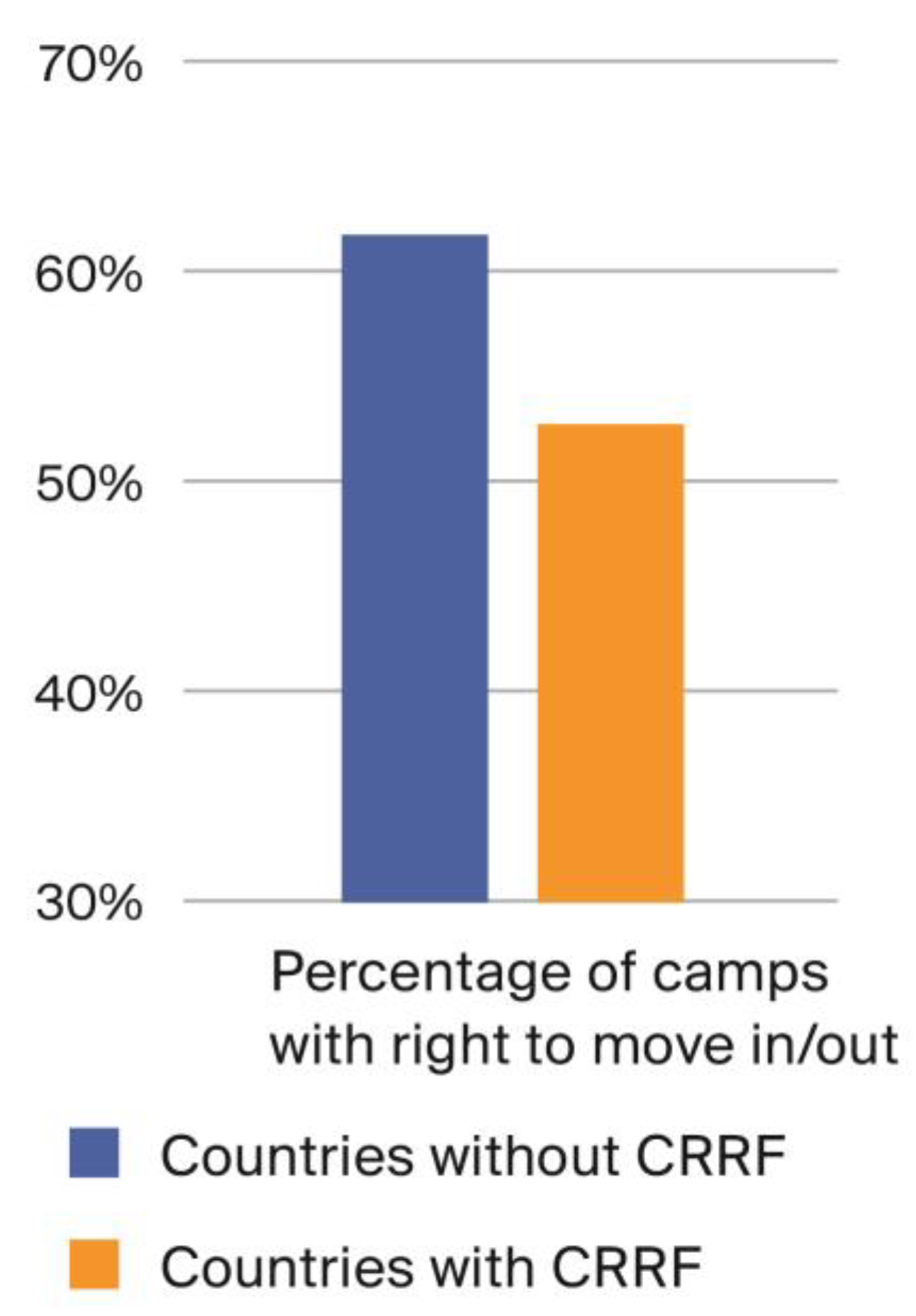
The right to work as well as the possibility to move in and out of the camp or settlement are for the overall legal status of displaced persons in a country and are prerequisites for most livelihood generating activities. We include visualization of the data on the right to work and the right move freely from Humanitarian Energy Data Platform [58]. Figure 23 shows the percentage of settlements and camps in which the residents have the right to work and distinguishes between countries that have signed the Comprehensive Refugee Response Framework (CRRF) and countries that have not signed the CRRF. The CRRF is a United Nations framework designed to make the response to displacement more just and sustainable [64].
Mirroring the structure of Figure 23, Figure 24 shows the percentage of settlements and camps in which the residents have the right to move freely in and out of the settlement or camp and distinguishes between countries that have signed the and countries that have not signed the framework. The right to work exists in 55% to 57% of camps and settlements of the considered countries with only a slight variation depending on the country being a signatory to the CRRF. The freedom to move varies between 53% and 62% for countries having signed the CRRF versus not.
Figure 22.
Type of lighting in displacement camps and settlements by country. Own compilation based on data in [58], accessed in January 2024.
Figure 22.
Type of lighting in displacement camps and settlements by country. Own compilation based on data in [58], accessed in January 2024.
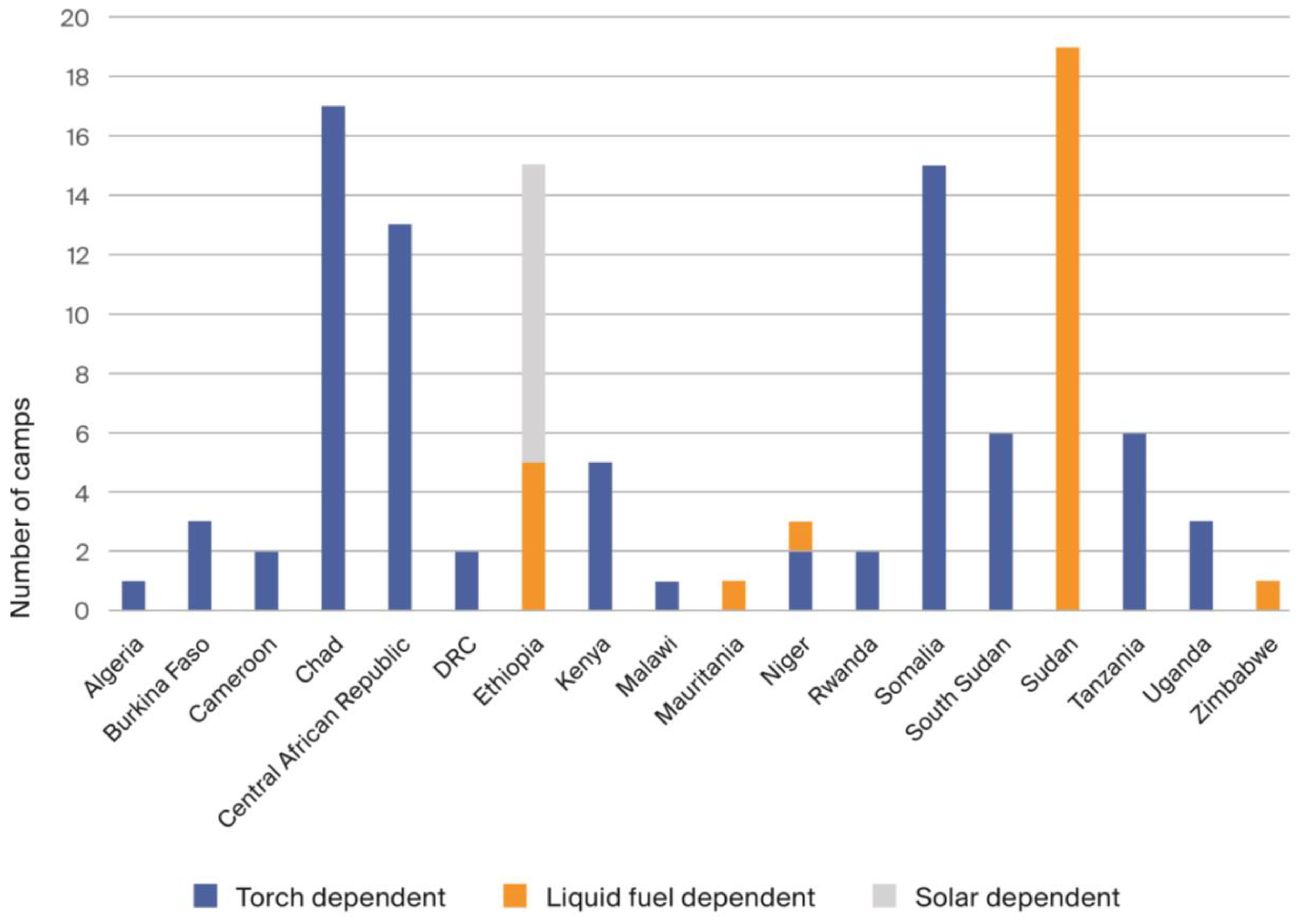
Figure 23.
Percentage camps and settlements in which residents have right to work and percentage of countries that are signatories of the Comprehensive Refugee Response Framework (CRRF). Own compilation based on data in [58], accessed in January 2024.
Figure 23.
Percentage camps and settlements in which residents have right to work and percentage of countries that are signatories of the Comprehensive Refugee Response Framework (CRRF). Own compilation based on data in [58], accessed in January 2024.
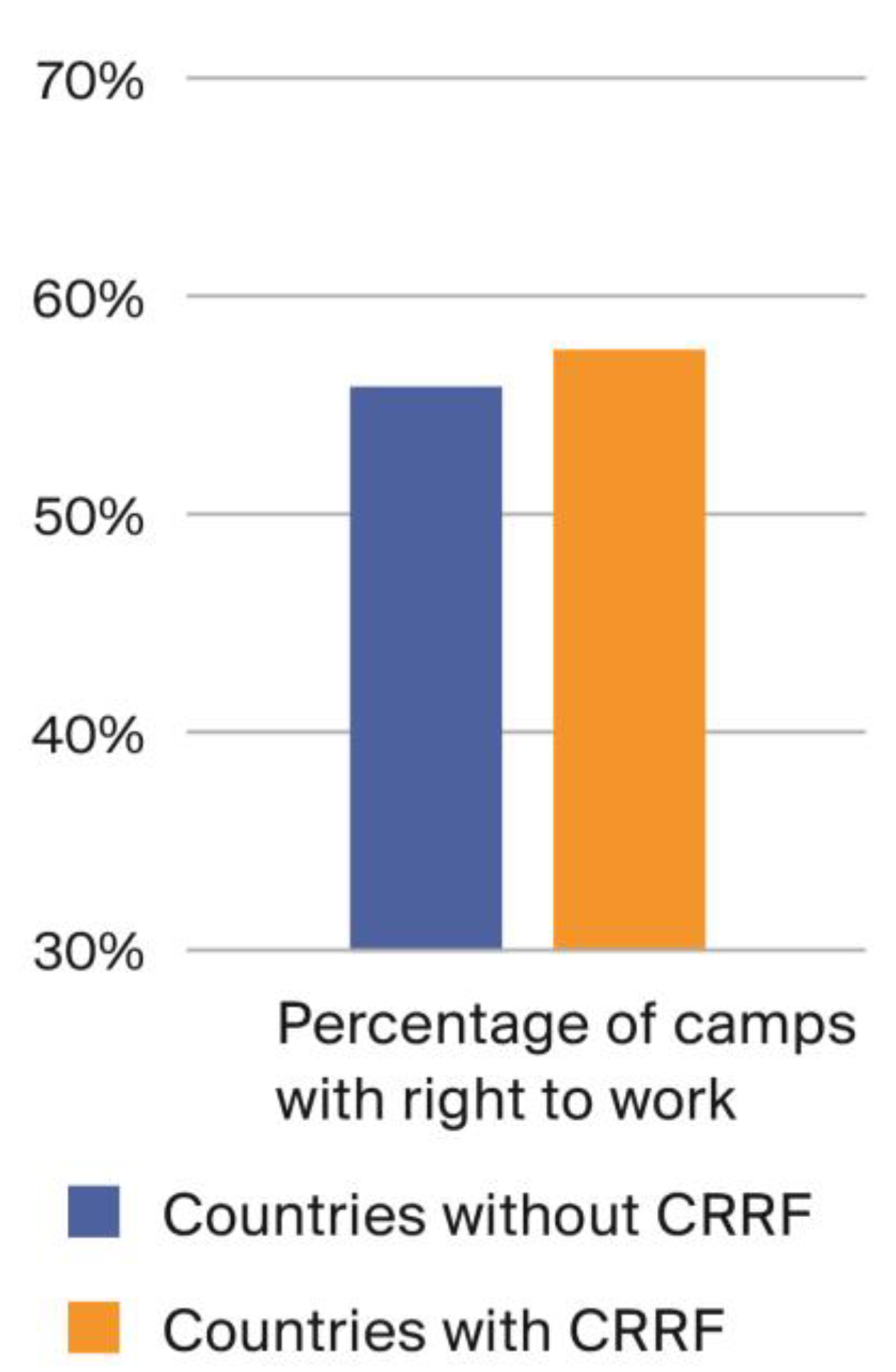
Figure 24.
Percentage camps and settlements in which residents have right to move in and out of camp and percentage of countries that are signatories of the Comprehensive Refugee Response Framework (CRRF). Own compilation based on data in [58], accessed in January 2024.
Figure 24.
Percentage camps and settlements in which residents have right to move in and out of camp and percentage of countries that are signatories of the Comprehensive Refugee Response Framework (CRRF). Own compilation based on data in [58], accessed in January 2024.
3.2.6. Project Activities on Access to Energy in Displacement Contexts
Figure 25 visualizes data from the Humanitarian Energy Data Platform which covers 27 out of the 30 countries selected. Algeria, Egypt and the CAR and not included in the data set. The number of projects on energy access in displacement contexts differs considerably across countries. East Sahel and East Africa, notably Ethiopia and Kenya with 136 projects each, represent the regions with the highest number of energy-related projects. Ethiopia, Kenya, Chad, and Sudan collectively account for nearly half of all the projects with 49% of the 27 countries. Consequently, there are several countries which exhibit a very limited number with South Africa, Congo and Mali representing the lowest values at only one project each. Overall, it can be noted that the number of projects per country remains quite modest, with nine countries having fewer than 10 projects.
4. Discussion
4.1. Critical Reflection of the Study
In the context of our study, it is essential to acknowledge the backgrounds of the authors involved. The authors of this study are from the Global North and self-identify as individuals of white ethnicity. Notably, while the authors have experience working in the field of humanitarian assistance, none have experienced displacement themselves. This aspect of our identity poses a key limitation in our research, particularly when addressing issues pertinent to lived experiences of displaced persons. Although our collective experience in humanitarian work provides valuable insights, we recognize the importance of lived experiences and firsthand perspectives in understanding the complexities of displacement. It is crucial to acknowledge that our backgrounds may influence our interpretations and discussions, underscoring the need for sensitivity and inclusivity in our research endeavors. We recognize the importance of diversity and representation in scholarly discourse and highlight both the need to advance institutional structures of the scientific system to further inclusivity, and the need to incorporate participatory research methodologies in future research.
The scope of selected countries in this study is an additional limitation of this study. In an initial step of specifying the research scope, the African continent was identified as a relevant context, based on comparative global characterization of the energy environments and the number of displaced persons hosted. Subsequently, the set of countries on the African continent, which were covered by this study were selected based on the number of displaced persons hosted by the countries. Both the decision to focus on the African continent and the decision to further narrow down the list of countries in the study were guided by the intention to focus on contexts in which the scope of the challenge of working towards universal access to clean energy in displacement contexts is comparatively large. While we consider these research choices relevant to define a feasible research space, and to provide meaningful insights into the current state energy access in displacement contexts, the research design choices pose the risk of contributing to existing inequities in humanitarian assistance [65]. Dong et al. [66] have shown that there is a correlation between energy vulnerability and energy-related financial assistance in development cooperation. Basing financial assistance decisions on energy vulnerability necessities the possibility of assessing the energy vulnerability and therefore the availability of data. It is important that future research activities ensure that data gathering, and data sharing covers all contexts in which displaced persons reside. Researchers and practitioners need to reflect on the risks that are associated with (1) focusing on contexts in which large numbers of displaced persons are hosted, and (2) contexts for which more data is available.
4.2. Available Data on Energy Access in Displacement Contexts
We conducted a comprehensive data search exercise to map and visualize relevant data for the characterization of the state of access to energy in displacement settings. Overall, the number of transnational data sets that comply with minimum quality standards and that are of relevance for the research objective s small. In total we identified six data sources that are relevant for the characterization of the state of energy access. Based on the six data sources we specified eleven indicators covering both the country reference level and the settlement and camp reference level. All identified data sources rely on quantitative data. Further, a DQA was tailored to the specific needs of this study and utilized to assess the quality of the identified data sets.. The DQA revealed significant shortcomings in the quality of the data, which is in line with previous assessment (e.g., [13,16,24]). The overall poor results of the DQA can be attributed to several factors.
First, in many cases the data does not cover all countries, which are included in this study. For example, the data on clean cooking access included in [56] covers 53% of the studied countries. The coverage is incomplete on both the country reference level and the settlements and camp reference level. The shortcomings of data becomes also visible when looking at the number of camps and settlements that were considered in the dataset of [56]. The description of access to electricity on the settlement and camp levels on the basis of data from [56] is possible for 74 camps and settlements across 16 countries. The data available in [58] and [59] reveals that the countries coved by this study encompass a minimum of 216 settlements or camps. This means, that at least 66% of the existing camps are not included in the dataset of [56]. We therefore highlight that the picture painted by the visualized data is incomplete, but may still be of value as a first point of reference.
The second main factor contributing to the overall poor results of the DGA is the timeliness of the data. Covering the research space outlined in this article necessitated including references that relied on data that was up to ten years old. It is apparent that dependency on outdated data distorts the results of our analysis, as the displacement context is dynamic by nature. While indicators such as the number of displaced persons hosted is highly dynamic, it can be assumed that the energy infrastructure and to a certain degree also the enabling environment evolve less rapidly. The data derived from [33] presents the lowest DQA score with regard to timeliness and we recommend carefully considering the implications of utilizing these data.
The third main factor contributing to the overall poor the quality of the data is its accuracy. The models employed to produce the information are often oversimplified leading to inaccurate results. This is not considering the general state of data availability. The MEI (data available in [58]) was among the first larger-scale research initiatives to focus on energy access in displacement settings. Consequentially, the utilized information base was restricted to basic data. Although some of the data is derived from interviews, which is the case in for example [56], an extensive survey in order to improve data accuracy, as it was sought in the development of the Energy Progress Report [57], is yet to be realized in a similar manner.
The fourth main factor contributing to the poor results of the DQA is the data coherence. Two data sets cover the description of access to clean cooking on a settlement and camp level, namely the MEI data set [58] and the Humanitarian Energy Data Platform data set [56]. The data in the two data sets overlap, and 45 settlements or camps are covered by both. Comparing the information provided reveals inconsistencies with a matching description for only 40 out of the 45 locations.. . To some degree the inconsistencies may be explained by the varying reference year of two data sets.
The limited data quality poses challenges in the handling of the identified data sources. . The currently available information on energy access in displacement contexts provide valuable insights but at the same time offers merely estimates and indications that do not suffices as guidance for further development and expansion of the sector, but rather serve as a broad overview. Further research is needed that is based on overarching criteria to enable comparability across settings and the evaluation of individual contextual situations. In addition, existing data collection designs, which are predominantly top-down and high-level rather than needs-based, individual and community-oriented, need to be complemented to enable insights into energy-related experiences and the contextual implications of limited access to clean energy.
4.3. Data Insights from a Country Perspective
Number of displaced persons
There is a large spectrum of the number of displaced persons hosted by a country. The number of displaced persons hosted can have implications for the state of energy access. The research design choices of this study (see Subsection 2.1) showcase that countries hosting larger numbers of displaced persons may receive increased attention by the research and humanitarian community. The small number of larger-scale implementation projects that directly contributed increasing energy access in displacement settings were set in countries that host comparatively large numbers of displaced persons. These include the RE4R project, which was implemented in Rwanda and Jordan [67], and the ESDS project, which was implemented in Ethiopia, Kenya, Uganda [68]. In addition, with an increasing number of displaced persons hosted by a country, the available resources may need to be shared by in increasing number of persons. An example of this is Uganda, where refugees are provided with a pot of land to support self-reliance. Over time size of the plots of lands given to refugees decrease as less land in the settlement areas is available [69]. Contextual limitations, such as the available amount of biomass for cooking, can also lead to distributional challenges with increasing numbers of displaced persons hosted.
Policies and regulations
The evaluation of RISE has shown that there are considerable differences in terms of current regulation and policy environment for the integration of electricity access and clean cooking between the selected countries. For electricity access, the scores range from as low as 8 in the case of South Sudan to 90 in Rwanda. The data of RISE further revealed that most of the selected countries had relatively low scores, particularly for the pillar clean cooking, raising the question of how these results might translate into access to clean cooking for displaced persons. As the objective of RISE is to demonstrate the extent to which a countries regulatory framework contributes to achieving Sustainable Development Goal 7 [61], the assumption could be made that displaced persons who live in countries with a relatively high score might have better chances to obtain electricity and clean cooking access than displaced persons hosted by countries with low scores. With the currently available data, it is however impossible to prove this assumption. In fact, a high correlation between the RISE scores and the electrification rate or clean cooking access for displaced persons was not found. This is not surprising as the RISE indicators are not designed to cover the displacement context specifically.
In many cases displaced persons are insufficiently included in national socio-political strategies and consequently the enabling environment regarding settlements and camps significantly differs from the enabling environment of the host country [7]. This may have implications for both the energy-related investment in displacement settings by the private second, and the funding made available by international development actors. There is an ongoing debate regarding the role of private investment in enhancing access to energy in displacement settings. Several institutional funding actor work towards increasing private sector investment in displacement contexts, an example of which is the EnDev project coordinated by the GIZ [70]. Investment in energy infrastructure in displacement settings may increase with improved regulatory support by the host country [19].
Electricity
Based on the data in this study, a significant correlation between the general electrification rate of a country and the electricity access for displaced persons could not be observed. Nevertheless, it is justifiable to assume that the state of energy access in settlements and camps is likely to either match or be of a lower tier than the tier of energy access among the host population in most countries. Therefore, the characterization of the rate of energy access in the host population is a useful indication for state of energy access in the respective displacement setting. This is likely the case for both access to electricity and access to clean cooking.
The data analysis revealed wide spectrum of electricity access rates in the host countries. In particularly the electricity access rate in rural areas varied greatly and ranged from full access (e.g., Egypt) to almost no access to electricity (e.g., 1 % in Chad), The comparison of data quantifying the electricity access rates of the general population and the electricity rates of displaced persons hosted in the country revealed that there are in fact some countries that show similar rates, such as South Sudan and Chad, and others showcase a significantly higher access rate for the general population, such as Algeria, where the entire host population has access to electricity, but only 10 percent of the displaced persons. It is not apparent what factors lead to similar rates of access between the host population and displaced persons. Further studying the this relation may prove helpful in enhancing access to electricity for displaced persons In countries, in which the host population has access to electricity, but the electricity access rate of displaced persons is low, barriers to increasing access among displaced persons may be primarily of political and regulatory nature, as opposed to limitations in the electricity infrastructure.
When characterizing the state of energy access in the host population it is important to note that the access rate is insufficient to reveal comprehensive insights. Energy access should not be viewed as a binary condition, but rather as a spectrum (see [26]). More comprehensive insights in the state of electricity access amongst the host population may also reveal more insights into the state of electricity access amongst displaced persons or at least the potential to make use of existing infrastructure to enhance access to electricity. A high tier of electricity access in the host country indicates a certain level of energy market development, and the existence of hard and soft energy infrastructure. This infrastructure may potentials that can be utilized to further access to energy in displacement settings in the country.
It is important to note that in the humanitarian space, both researchers and practitioners are increasingly recognizing the importance of developing programs that include and benefit both the displaced and the host community (see for example [6,19,21]). In countries, where progressive displacement related regulations are implemented, it is likely that the state of electricity access amongst the host population and displaced persons will further converge. .
Clean cooking
As was the case for access to electricity, no correlation was observed between access to clean cooking for the general population and for displaced persons. For example, the amount of the population of Sudan that has clean cooking solutions at hand is at 61% but only 1% of the displaced persons in Sudan benefit from access to clean cooking devices. However, the overall low rates of access to clean cooking for the majority of the countries highlights that the access to clean cooking represents not only a challenge for displaced persons but also for the general population.
Compared to the electrification rate, the results of the MEI study on access to clean cooking demonstrate an even more pronounced disparity between the selected countries. While the proportion of population in the Maghreb region and South Africa that have access to clean cooking is very high - at least 90%,12 of the remaining 26 countries have an access rate of less than 10%. The data therefore clearly indicates that the differences in the living conditions of displaced people become even more apparent when access to clean cooking is analyzed. While this study has revealed a fundamental need for more comprehensive research on the state of energy access in displacement setting, access to clean energy may be considered a priority in future research.
4.4. Data Insights from a Camp Perspective
Displacement context
Describing contextual factors that directly or indirectly impact energy access in settlements and camps is important not only for an enhanced understanding of the state of energy access, but also its implications on daily life. In the previous subsection we highlighted the potential implications of the state of energy access in the host country for the state of energy access in displacement settings. In this study we presented additional contextual factors, namely insights into the rights of displaced persons to work and to move freely. These insights are valuable as a first indication of the opportunity spaces that exists in settlements and camps, but a more thorough set of indicators needs to be developed to describe the complex contextual factors, some of which are unique to the displacement context. In many ways the contextual factors determine not only the access to energy resources, but also the ability to make use of this access. The contextual indicators included in this study are insufficient to comprehensively describe the energy environment in displacement settings. We highlight that future research is needed to better understand what indicators are relevant to gain a thorough understanding of the local contextual conditions.
Electricity
The analysis of access to electricity from the camp perspective underlines the conclusions drawn in the previous subsection. Particularly, the low rate of access to electricity is notable as more than two thirds of the 74 considered camps do not have any access to electricity. This finding underpins the statements found in other scientific articles (see for example [60,71]). The camp perspective also reveals that the energy-related lived realities do not only differ between countries but also within a country. Seven out of the considered 16 countries in the data of [56] show camps with different accesses to electricity.
The available data allows for a basic understanding of level of access to electricity in settlements and camps, which is an important contribution to characterizing the overall state of access to energy in displacement contexts. However, a thorough understanding of access to electricity on a settlement and camp level that would enable strategic decision making, program development, and a characterization of the implications of the local energy environment for the lives of displaced persons cannot be derive form the data mapped in this study. . The data utilized for the description of electricity access differentiated between three categories of access – access, partial access, and no access. The source does not specify what “partial access” exactly means. This underpins the shortcoming of describing electricity access as a one-dimensional condition. In addition to the availability of access, a multitude of factors, including affordability, availability of relevant appliances, and reliability of the connection, determine if the general availability of electricity is translated into benefits for displace persons. For a relevant representation of the electricity access of displaced persons, more sophisticated indicators and frameworks are needed, which may be based on the MTF (see [26]).
Clean cooking
From the camp perspective, the high dependency on firewood for cooking is a key finding. The majority (96 percent) of the considered settlements and camps included in the data for the characterization of the type of cooking are either completely or partially dependent on firewood, emphasizing the previously discussed low development state in clean cooking access. The settlement and camp perspective also illustrates considerable differences between and within the countries. While five out of the 20 selected countries only host firewood dependent camps, three countries have at least four different types of cooking fuels used in their respective camps, indicating that clean cooking access differs also considerably within the same country. While the type of cooking fuel used provides a general indication of the local conditions are needed to understand the implications of the local conditions for the wellbeing of displaced persons. More a more comprehensive framework may be based on the MTF (see [26]).
4.5. Limitations and Considerations of the Available Data
In the previous subsections of this article, we discussed insights that available data reveals about the state of energy access in displacement contests. This study confirms that already today an information basis exits that goes beyond the global cumulative indicators for energy access. It is evident that the relevant transnational data identified is limited in its scope. Nevertheless, the data gives some important indications that may be utilized to efficiently progress towards universal access to clean energy in displacement settings.
Although the scope of data is limited and our quality assessment has revealed fundamental shortcomings, it is essential that stakeholders use all available data to improve the relevance of decision-making, especially considering the urgent need and urgency highlighted in this study. However, the overall lack of data and evidence also risks overestimating the informational value of the evidence. The existing data contains fundamental simplifications and assumptions that need to be critically reflected upon for each application of the data. A comprehensive understanding of the degree of uncertainty is essential.
Another risk associated with the utilization of the data is the oversimplification of the subject matter. The presented data is predominantly quantitative. While the data enables a high-level evaluation of the state of energy access and may inform the overall scope of the challenges at hand, it does not provide a sense of context. The inability to describe the relevant local contexts of settlements and camps contains the risks of neglecting the context in decision making. This is in stark contrast to the growing body if scientific literature calling for an acknowledgement of the fundamental implications of the diversity in contexts (e.g., [18,29,30,72]). In simple terms, this suggests that the less contextual insights are required, the more relevant the existing data is. The data may therefore be more relevant to inform high-level policy decisions than to support the design of energy programs or interventions on settlement and camp level.
Activities that necessitate a comprehensive contextual understanding of energy-related lived realities require a more through information base than what is available to enable meaningful decision making. For example, knowledge of the dominant type of cooking fuel in a settlement or a camp may give the impression that the relevance of higher-tier cooking intervention can be assessed for a settlement or camp. However, assessing the relevance of energy intervention necessitates much for detail understanding of the context. In the case of cooking this understanding may include on a household level e.g., individual cooking preferences [28], energy priorities [19], aspirational energy needs [6], and the household’s income [21], on a settlement of camp level the availability of alternative cooking fuels [19] and the type of environment (emergency vs. protracted situation) [24]. In addition, the type of fuel alone is also insufficient to determine the tier of energy access of displaced persons. The stated indicators are only exemplary for the energy-related lived realities of displaced persons and more insights are needed to inform systemic change processes.
The need for more updated, more comprehensive, and granular data is apparent. It is up to international organizations and the scientific community to facilitate processes to further develop approaches to systematically collect, share, and evaluate data. Novel conceptual framework and indicators are needed to capture the state of access to energy in displacement contexts. Future research holds promise to enhance the field if it first focuses on a more comprehensive understanding of how energy is intertwined with the lives of displaced people before deriving a set of energy indicators. It is important that IDPs are meaningfully included in the research.
5. Conclusions
The importance of access to clean energy for the wellbeing of displaced persons in settlements in camps is increasingly recognized by the scientific and humanitarian community. At the same time the evidence base for the characterization of the state of access to energy in displacement settings is weak. The overall limited understanding of the state of access to energy is attributed to both a lack of a conceptual foundation, and a lack of relevant data. In this study we challenged the claim of limited data availability, by mapping and visualizing available transnational data sets that are relevant for the characterization of the state of energy access in displacement contexts on the African continent. We identified a total of six data sources that contribute to improving the understanding of the state of energy access in the countries that were covered by this study. We complimented the data mapping with a DQA that was specifically tailored to the purpose of this study. The DQA revealed significant limitations in the quality of the data available. Nevertheless, the available data allow a descriptive characterization of the energy environment in settlements and camps.
The results of our study have shown remarkable differences in the access to electricity for displaced persons across countries on the African continent. For both access to electricity and access to clean cooking, the access rates range from no access in some countries to almost full access in other countries. The results show that besides South Africa, and countries in the Maghreb region, the access to both clean cooking and electricity for displaced persons is generally very low. From a country perspective, it can be concluded that the access to energy for displaced persons does not only depend greatly on the energy situation in the host country but is still at a very low level in general.
The research revealed that insights exist that go beyond approximated and cumulative global statistics. This study contributes to enhancing the overall understanding go the state of access to energy in displacement contexts and may inform future research and the development of energy access programs. However, the existing data poses a dilemma. While it is important that the available data is utilized by researchers and practitioners to enhance access efficiently and effectively further to clean energy in displacement settings, the poor quality of the data poses risks of false assumptions, misinterpretation and overestimating the information value. There is an apparent need for more comprehensive research on multiple levels. We highlight the central importance for further strengthening the coordination within the sector. Coordinated efforts are required to develop a conceptual frameworks and methodologies for data acquisition. This includes developing frameworks for improving the quality of data. Considering the complexities of data acquisition in emergency situations, balance must be found between level of detail in the data and the effort of collecting the respective data. The data primarily allows insights that can inform high-level decision making. Insights that enable an understanding of the energy-related lived experiences of displaced persons at the implications for the wellbeing of displaced persons requires qualitative contextual data. Systematically integrating contextual considerations in future data acquisition will improve the relevance of future initiatives. Participatory approaches may provide a valuable platform to engage stakeholders beyond the research space, including persons with lived experiences of displacement, to develop relevant frameworks and identify relevant indicators.
Author Contributions
Conceptualization, T.B., L.S., B.H.; methodology, T.B., P.B., B.H; software, T.B., P.B.; validation, T.B., L.S., B.H.; formal analysis, T.B., P.B.; investigation, T.B., B.H.; resources, T.B., P.B.; data curation, T.B., P.B.; writing—original draft preparation, T.B., P.B., B.H.; writing—review and editing, T.B., L.S., B.H.; visualization, T.B., P.B.; supervision, L.S., B.H.; project administration, L.S., B.H.; funding acquisition, L.S., B.H.. All authors have read and agreed to the published version of the manuscript.
Data Availability Statement
Not applicable.
Acknowledgments
We acknowledge support by the German Research Foundation and the Open Access Publication Fund of Technische Universität Berlin.
Conflicts of Interest
The authors declare no conflict of interest.
Appendix A
Table 1.
Overview of countries that were excluded from the data mapping exercise based on the information available regarding the total number of displaced persons hosted in the country.
Table 1.
Overview of countries that were excluded from the data mapping exercise based on the information available regarding the total number of displaced persons hosted in the country.
| Countries without data or a displaced population below 20000, and not in this study |
Number of displaced persons |
|---|---|
| Equatorial Guinea | no data |
| Mauritius | no data |
| Sao Tome and Principe | no data |
| Seychelles | no data |
| Cape Verde | 115 |
| Sierra Leone | 324 |
| Benin | 2639 |
| Gabon | 280 |
| Gambia | 3883 |
| Ghana | 11048 |
| Guinea | 2252 |
| Guinea-Bissau | 54 |
| Liberia | 1441 |
| Namibia | 7268 |
| Senegal | 12062 |
| Togo | 9876 |
| Tunisia | 8929 |
| Botswana | 900 |
| Comoros | 17 |
| Eritrea | 136 |
| Lesotho | 545 |
| Madagascar | 245 |
| Eswatini | 2161 |
| Morocco | 18066 |
Table 2.
Evaluation results of the data quality assessment.
| Tracking SDG 7 – The Energy Progress Report | ||
|---|---|---|
| Dimension | Assessment | Score |
| Timeliness | The latest publication of the Energy Progress Report is from 2022 and represents the results for the year 2021. | 1 |
| Completeness | 29 from the 30 countries that have been selected for our work have also been considered in the Energy Progress Report. | 2 |
| Accuracy | The Energy Progress Report is based on the collection of census and survey data. However, the data sources lack of information for some regions and some surveys are not updated regularly. The missing data is therefore estimated by using modelling tools (for example the nonparametric modelling). | 1 |
| Coherence | The methodology used for the creation of the data is common. The data collection is done by desk research while several modelling tools are used to fill the missing data for the creation of the dataset. The report is updated on a regular basis, allowing the resulting dataset to be compared to other sources. | 2 |
| Interpretability | The reporting source gives access to a detailed description of the methodology as well as further background information on the work. The additional information allows to interpret and use the data correctly. | 2 |
| Total score | 8 | |
| Humanitarian Energy Data Platform | ||
| Dimension | Assessment | Score |
| Timeliness | The source only mentions when the dataset was published (2020). It is not possible to calculate the number of years elapsed since the data was collected. | 0 |
| Completeness | The country coverage varies depending on the considered subject. For instance, the section “Country Market Analysis” covers 21 countries whereas the section “National Energy Data” covers 51 countries. The minimum coverage corresponds to 16 out of 30 countries that are considered in our analysis. | 0 |
| Accuracy | The dataset was created by using different sources with different levels of accuracy and methodologies (data survey and models). The reporting source states that the work does not represent a complete picture of the humanitarian energy situation but rather an overview of factors that influence the current trends of the humanitarian energy environment. | 1 |
| Coherence | The dataset is based on common methods (e.g., surveys, interviews). A comparison with sources however shows that the data is incoherent. Any interpretation deriving from the analysis of the data and any use with other sources should be done with the knowledge that the dataset is not coherent. |
1 |
| Interpretability | A description of the methodology is available. The objective of the analysis as well as the used sources and contributors are mentioned. However, the link to the data is missing which makes it difficult to find the exact data source. | 1 |
| Total score | 3 | |
| Refugee Settlements Electricity Access (RSEA) | ||
| Dimension | Assessment | Score |
| Timeliness | The dataset was published in 2021 and shows data collected in 2020. | 1 |
| Completeness | The analysis includes 21 out of the 30 countries considered in our analysis. | 0 |
| Accuracy | The dataset is based on data from existing literature (academic articles, white papers) as well as field research (surveys, interviews). The collected data was cross-referenced for consistency. | 2 |
| Coherence | The dataset was created by using common methods including desk research, field data collection and interviews with stakeholders. The reporting source has published a paper which explains the work and its purpose in detail. We have not found any incoherence in the data and therefore conclude that this source can be used in combination with other sources. | 2 |
| Interpretability | The work is described in detail in a research paper allowing a clear view on the used methodology. The purpose as well as the limitations of the work are explained so that the data can be interpreted correctly. | 2 |
| Total score | 7 | |
| UNHCR refugee data finder | ||
| Dimension | Assessment | Score |
| Timeliness | The data was published in 2023 and shows the results of the analysis for the year 2022. The dataset is updated every six months. | 2 |
| Completeness | All the countries selected for our analysis are covered by the dataset. | 2 |
| Accuracy | The work is based on different data sources which all represent real world data, including population censuses, surveys and administrative records. Statistical frameworks specifically developed for the analysis of forcibly displaced persons are used to complement the data analysis. | 2 |
| Coherence | The source uses methodologies that are common for a population count (statistical analysis based on population censuses, surveys, administrative data records, etc.). There has not been found any incoherence during our analysis of the data. | 2 |
| Interpretability | A detailed description of the used methodology is available and allows to interpret and use the data correctly. The source also gives access to further documents with detailed descriptions of the analysis that lead to the creation of the dataset. | 2 |
| Total score | 10 | |
| Regulatory Indicators for Sustainable Energy (RISE) | ||
| Dimension | Assessment | Score |
| Timeliness | The dataset was published in 2022 and represents the results for the year 2021. | 1 |
| Completeness | The source does not have the same country coverage for each section. The minimum coverage is 26 out of 30 countries considered in our analysis. | 1 |
| Accuracy | The dataset is based on desk research and field data (surveys). The reporting sources gives access to the used data sources and additional information related to the analysis. It should be noted that the results are not representing any real-world data but rather a score which is based on the specific framework that was developed for this analysis (RISE framework). A certain subjectiveness should therefore be attributed to the work which also influences its accuracy. | 1 |
| Coherence | The used methodology is explained in detail. Any incoherence in the dataset was not found. | 2 |
| Interpretability | The reporting source gives access to the methodology and further information that allows a clear understanding of what the dataset can be used for. The sources that were used for the creation of the dataset are also shared on the web page of the reporting source. | 2 |
| Total score | 7 | |
| Moving Energy Initiative | ||
| Dimension | Assessment | Score |
| Timeliness | The information was obtained from different sources with the oldest dating back to 2014. | 0 |
| Completeness | The source does not have the same country coverage for each section. The lowest coverage is 18 out of 30 countries considered in our analysis. | 0 |
| Accuracy | A scientific article was published which describes the methodology of the work in detail. It is stated that the dataset is based on a simple model which does not lead to accurate results. | 0 |
| Coherence | The dataset was created with common methods and can be used with other datasets if it is understood that the data represents more an indication than a detailed picture. The dataset shows some incoherencies (e.g., description for type of cooking fuel, see section 2 GPA UNITAR). | 1 |
| Interpretability | A detailed description of the methodology used in this work is presented in the scientific article. It is clear what the work is intended to show and how the data should be interpreted. | 2 |
| Total score | 3 | |
References
- Global Appeal 2024; UNHCR, 2024;
- Glossary on Migration; IOM;
- EMN Asylum and Migration Glossary Available online: https://home-affairs.ec.europa.eu/networks/european-migration-network-emn/emn-asylum-and-migration-glossary_en (accessed on 22 August 2023).
- UNHCR Master Glossary of Terms | UNHCR Available online: https://www.unhcr.org/glossary (accessed on 22 August 2023).
- Global Appeal 2023; UNHCR, 2023;
- Matthey-Junod, A. Leaving No Aspect of Sustainability behind: A Framework for Designing Sustainable Energy Interventions Applied to Refugee Camps. Social Science 2022.
- Bisaga, I.; To, L.S. Funding and Delivery Models for Modern Energy Cooking Services in Displacement Settings: A Review. Energies 2021, 14, 4176. [CrossRef]
- Jacobsen, K. The Forgotten Solution: Local Integration for Refugees in Developing Countries; UN High Commissioner for Refugees (UNHCR), 2001; p. 43.
- Brause, U. Analysis of Empowerment of Refugee Women in Camps and Settlements. The Journal Internal Displacement 2013.
- Moore, B. Refugee Settlements and Sustainable Planning. 2017.
- Damme, W.V. How Liberian and Sierra Leonean Refugees Settled in the Forest Region of Guinea (1990-96). Journal of Refugee Studies 1999, 12, 36–53. [CrossRef]
- Thomas, P.J.M.; Rosenberg-Jansen, S.; Jenks, A. Moving beyond Informal Action: Sustainable Energy and the Humanitarian Response System. Int J Humanitarian Action 2021, 6, 21. [CrossRef]
- Rosenberg-Jansen, S. The Secret Life of Energy in Refugee Camps: Invisible Objects, Technologies, and Energy Systems in Humanitarianism. Journal of Refugee Studies 2022, 35, 1270–1291. [CrossRef]
- Home | Sustainable Development Available online: https://sdgs.un.org/ (accessed on 21 March 2024).
- Accelerating SDG7 Achievement: Policy Briefs in Support of the First SDG7 Review at the UN High-Level Political Forum; United Nations, 2018.
- Dr Sarah Rosenberg-Jansen and Dr Hajar Al-Kaddo.; Contributing authors: Joelle Hangi, Thomas Fohgrub, Elif Demir, Owen; Grafham, Eva Mach, Luc Severi, Mark Gibson, Mattia Vianello, Laura Clarke,; Cathleen Seeger, Aimee Jenks, Lama Gharaibeh, Cecilia Ragazzi, Iwona; Bisaga, Jonathan Archimi, Philip Sandwell, Stephen Gitonga, David Kinzuzi,; Arielle Ben-Hur, Vahid Jahangiri, Surabhi Rajagopal, Ziad Ayad, and Sadiq; Zafrullah. The State of the Humanitarian Energy Sector: Challenges, Progress and Issues in 2022; UNITAR Publishing: Geneva, Switzerland, 2022.
- Barbieri, J.; Leonforte, F.; Colombo, E. Towards an Holistic Approach to Energy Access in Humanitarian Settings: The SET4food Project from Technology Transfer to Knowledge Sharing. Int J Humanitarian Action 2018, 3, 11. [CrossRef]
- Rosenberg-Jansen, S. Inclusive Energy Solutions in Refugee Camps. Nature Energy 2019, 4.
- Thomas, P.J.M.; Sandwell, P.; Williamson, S.J.; Harper, P.W. A PESTLE Analysis of Solar Home Systems in Refugee Camps in Rwanda. Renewable and Sustainable Energy Reviews 2021, 143, 110872. [CrossRef]
- Robinson, B.L.; Halford, A.; Gaura, E. From Theory to Practice: A Review of Co-Design Methods for Humanitarian Energy Ecosystems. Energy Research & Social Science 2022, 89, 102545n Methods for Humanitarian Energy Ecosystems. [CrossRef]
- Baldi, D.; Moner-Girona, M.; Fumagalli, E.; Fahl, F. Planning Sustainable Electricity Solutions for Refugee Settlements in Sub-Saharan Africa. Nat Energy 2022, 7, 369–379. [CrossRef]
- How Night-Time Street Lighting Affects Refugee Communities; UNHCR, 2017.
- Renewables for Refugee Settlements: Sustainable Energy Access in Humanitarian Situations.
- Rosenberg-Jansen, S. The Emerging World of Humanitarian Energy: A Conceptual Research Review. Energy Research & Social Science 2022, 92, 102779. [CrossRef]
- Africa Energy Outlook 2022.
- Bhatia, M., A., N. Beyond Connections: Energy Access Redefined; Energy Sector Management Assistance Program (ESMAP): Washington, D.C., 2015.
- Pelz, S.; Pachauri, S.; Groh, S. A Critical Review of Modern Approaches for Multidimensional Energy Poverty Measurement. WIREs Energy & Environment 2018, 7, e304. [CrossRef]
- Abdelnour, S.; Pemberton-Pigott, C.; Deichmann, D. Clean Cooking Interventions: Towards User-Centred Contexts of Use Design. Energy Research & Social Science 2020, 70, 101758. [CrossRef]
- Neves, D.; Baptista, P.; Pires, J.M. Sustainable and Inclusive Energy Solutions in Refugee Camps: Developing a Modelling Approach for Energy Demand and Alternative Renewable Power Supply. Journal of Cleaner Production 2021, 298, 126745. [CrossRef]
- Robinson, B.L.; Clifford, M.J.; Jewitt, S. TIME to Change: Rethinking Humanitarian Energy Access. Energy Research & Social Science 2022, 86, 102453. [CrossRef]
- Bellanca, R. Sustainable Energy Provision Among Displaced Populations: Policy and Practice. Policy and Practice.
- Baranda Alonso, J.; Sandwell, P.; Nelson, J. The Potential for Solar-Diesel Hybrid Mini-Grids in Refugee Camps: A Case Study of Nyabiheke Camp, Rwanda. Sustainable Energy Technologies and Assessments 2021, 44, 101095. [CrossRef]
- Lehne, J.; Blyth, W.; Lahn, G.; Bazilian, M.; Grafham, O. Energy Services for Refugees and Displaced People. Energy Strategy Reviews 2016, 13–14, 134–146. [CrossRef]
- Fuentes, M.; Vivar, M.; Hosein, H.; Aguilera, J.; Muñoz-Cerón, E. Lessons Learned from the Field Analysis of PV Installations in the Saharawi Refugee Camps after 10 Years of Operation. Renewable and Sustainable Energy Reviews 2018, 93, 100–109. [CrossRef]
- Van Hove, E.; Johnson, N.G. Refugee Settlements in Transition: Energy Access and Development Challenges in Northern Uganda. Energy Research & Social Science 2021, 78, 102103. [CrossRef]
- Maalim, S.A.; Adwek, G.; Arowo, M. Shared Energy Parks as a Solution to Energy Challenges for Dadaab Refugee Camps in Kenya. Scientific African 2021, 13, e00901. [CrossRef]
- Thomas, P.J.M.; Williamson, S.J.; Harper, P.W. The Diffusion of Solar Home Systems in Rwandan Refugee Camps. Energy for Sustainable Development 2021, 63, 119–132. [CrossRef]
- Rafa, N.; To, T.T.V.; Gupta, M.; Uddin, S.M.N. The Pursuit of Energy in Refugee Contexts: Discrimination, Displacement, and Humanitarian Energy Access for the Rohingya Refugees Displaced to Bangladesh. Energy Research & Social Science 2022, 83, 102334. [CrossRef]
- Owen Grafham Energy Access and Forced Migration; 2020.
- Grafham, O.; Sandwell, P. Harness Better Data to Improve Provision of Humanitarian Energy. Nat Energy 2019, 4, 993–996. [CrossRef]
- The Global Plan of Action for Sustainable Energy Solutions in Situations of Displacement: Framework for Action; UNITAR, 2019.
- Frercksen, N. Inclusion of Displaced Persons in National Systems.
- Yaron Cohen, L.P. Innovative Financing for Humanitarian Energy Interventions; Chatham House, 2019.
- UNHCR Energy Information System Available online: https://eis.unhcr.org/home (accessed on 22 March 2024).
- READS Programme | Global Platform for Action Available online: https://www.humanitarianenergy.org/thematic-working-areas/reads-programme/ (accessed on 22 March 2024).
- Humanitarian Data Exchange Available online: https://data.humdata.org/ (accessed on 22 March 2024).
- Rosenberg-Jansen, D.S. Critical Concepts and Research Needs in Humanitarian Energy. 2021.
- Halford, A.; Gaura, E.; Bhargava, K.; Verba, N.; Brusey, J.; Nixon, J. Off the Boil? The Challenges of Monitoring Cooking Behaviour in Refugee Settlements. Energy Research & Social Science 2022, 90, 102603. [CrossRef]
- UNHCR Refugee Data Finder 2023.
- Watts, S.; Shankaranarayanan, G.; Even, A. Data Quality Assessment in Context: A Cognitive Perspective. Decision Support Systems 2009, 48, 202–211. [CrossRef]
- Cichy, C.; Rass, S. An Overview of Data Quality Frameworks. IEEE Access 2019, 7, 24634–24648. [CrossRef]
- World Health Organization Data Quality Review: Module 1: Framework and Metrics; World Health Organization: Geneva, 2017; ISBN 978-92-4-151272-5.
- Mumbere, O.; Kopi, L. How to Conduct a Data Quality Assessment (DQA): An Aif Memoir for a COR/AOR; USAID, 2012.
- Batini, C.; Cappiello, C.; Francalanci, C.; Maurino, A. Methodologies for Data Quality Assessment and Improvement. ACM Comput. Surv. 2009, 41, 1–52. [CrossRef]
- Cameron, Laurie Methodology for Evaluating Data Quality. Working Paper WP-07-02. 2005.
- Introduction to Humanitarian Energy Data Platform 1.0 | Global Platform for Action Available online: https://www.humanitarianenergy.org/news/latest/introduction-to-humanitarian-energy-data-platform-1.0 (accessed on 23 March 2024).
- Tracking SDG 7 | Progress Towards Sustainable Energy Available online: https://trackingsdg7.esmap.org/ (accessed on 23 March 2024).
- Moving Energy Initiative - Humanitarian Data Exchange Available online: https://data.humdata.org/organization/moving-energy-initiative (accessed on 23 March 2024).
- Joint Research Centre Data Catalogue - Refugee Settlements Electricity Access (RSEA) - European Commission Available online: https://data.jrc.ec.europa.eu/dataset/4261bf3c-7e8e-4b16-925b-68cfd4eade37 (accessed on 23 March 2024).
- Grafham, O.; Lahn, G.; Haselip, J. Scaling Sustainable Energy Services for Displaced People and Their Hosts: How Policy and Governance Make a Difference; Royal Institute of International Affairs, 2022.
- RISE Available online: https://rise.esmap.org/ (accessed on 23 March 2024).
- UNHCR Refugee Data Finder Available online: https://www.unhcr.org/refugee-statistics/ (accessed on 22 March 2024).
- World Population Prospects - Population Division - United Nations Available online: https://population.un.org/wpp/ (accessed on 23 March 2024).
- From Commitment to Action - Highlight Os Progress towards Comprehensive Refugee Response; UNHCR, 2018.
- Binder, A.; Koddenbrock, K.; Horváth, A. Reflections on the Inequities of Humanitarian Assistance.
- Dong, K.; Jiang, Q.; Liu, Y.; Shen, Z.; Vardanyan, M. Is Energy Aid Allocated Fairly? A Global Energy Vulnerability Perspective. World Development 2024, 173, 106409. [CrossRef]
- Renewable Energy for Refugees; Practical Action, 2021.
- Energy Solutions for Displacement Settings (ESDS); Deutsche Gesellschaft für Internationale Zusammenarbeit, 2022.
- Berke, T.; Larsen, L. Using Land to Promote Refugee Self-Reliance in Uganda. Land 2022, 11, 410. [CrossRef]
- Humanitarian Energy: Energy for Micro-Enterprises in Displacement Settings; Deutsche Gesellschaft für Internationale Zusammenarbeit, 2020.
- Gunning, R. The Current State of Sustainable Energy Provision for Displaced Populations: An Analysis.
- Rosenberg-Jansen 1, S.; Barlow, M.; Peisch, S.; Ponnan, N.; Rathi 2, P. Sustainable Humanitarian Energy Services: Inclusive Participation, Lessons Learnt, and Paths Forward; Practical Action Publishing Ltd.: The Schumacher Centre, Bourton on Dunsmore, Rugby, Warwickshire CV23 9QZ, UK, 2018; ISBN 978-1-85339-982-4.
Figure 1.
Evolution of the number of refugees, asylum-seekers, IDPs and other persons of concern. Own compilation based on data from UNHCR [1].
Figure 1.
Evolution of the number of refugees, asylum-seekers, IDPs and other persons of concern. Own compilation based on data from UNHCR [1].
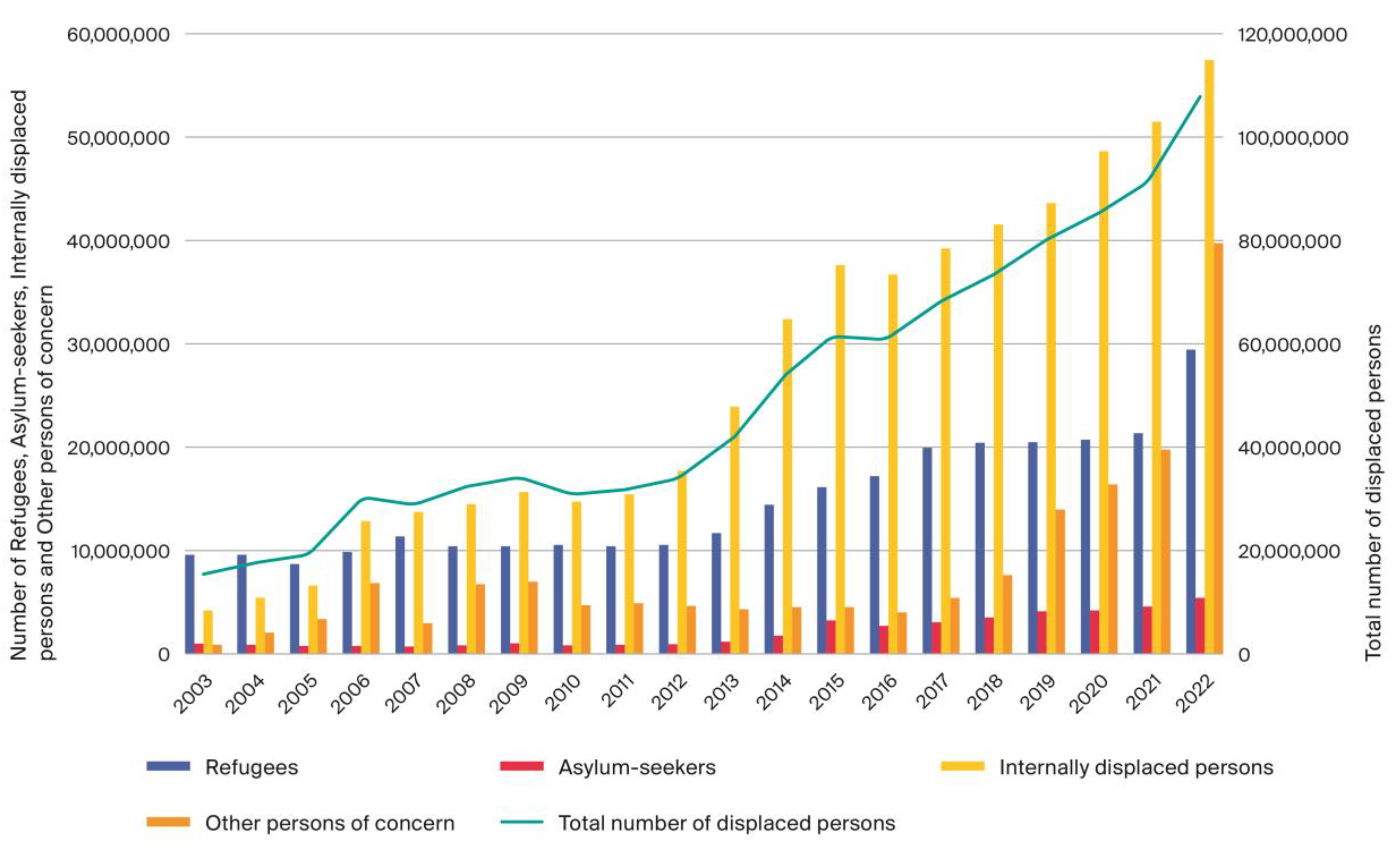
Figure 2.
Number of displaced persons by country in third quarter of 2023, in thousands. Own compilation based on data in [49], accessed in January 2024.
Figure 2.
Number of displaced persons by country in third quarter of 2023, in thousands. Own compilation based on data in [49], accessed in January 2024.
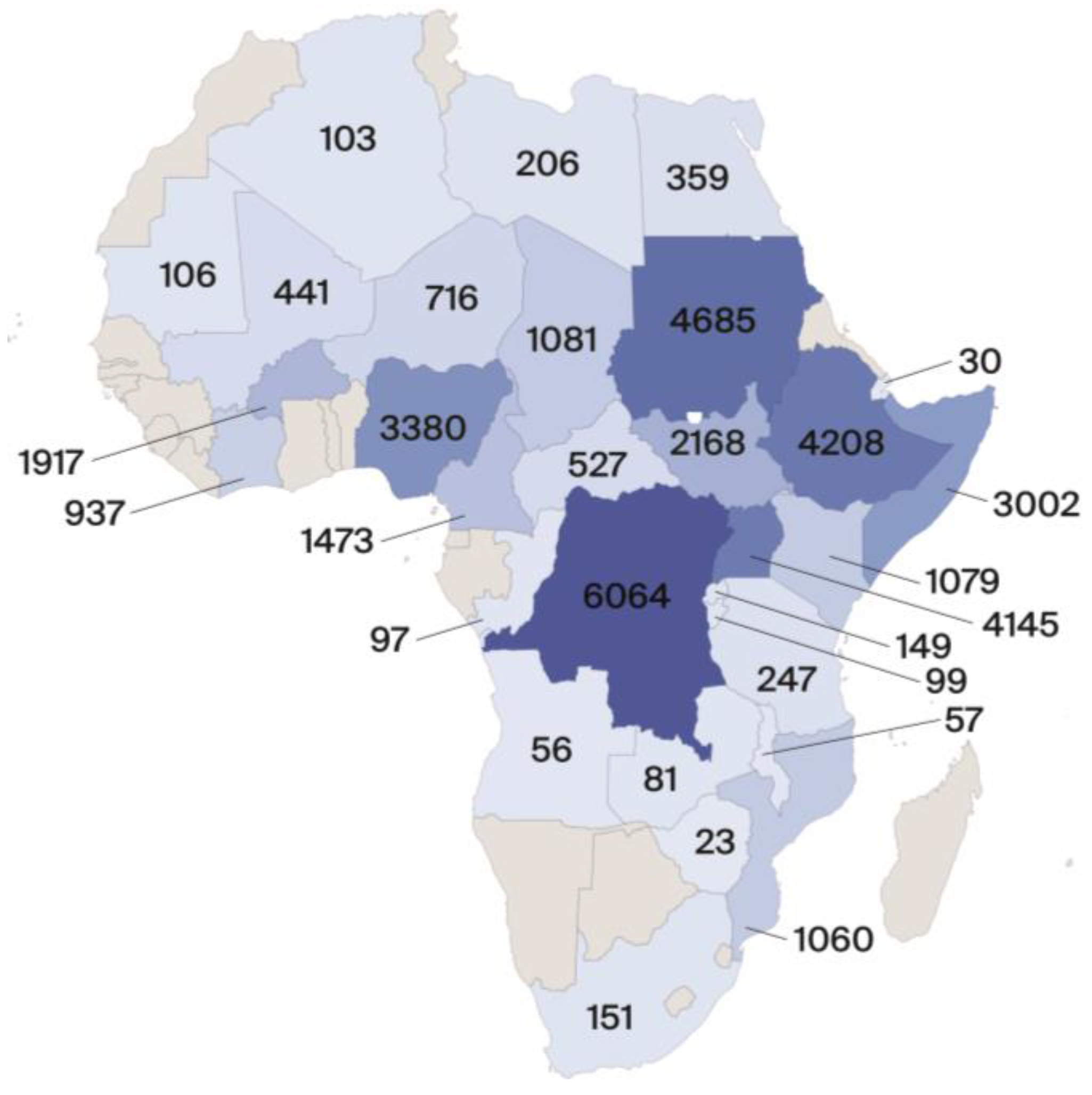
Figure 3.
Share of displaced persons in the total population of the host country. Own compilation based on data in [49], [63], accessed in January 2024.
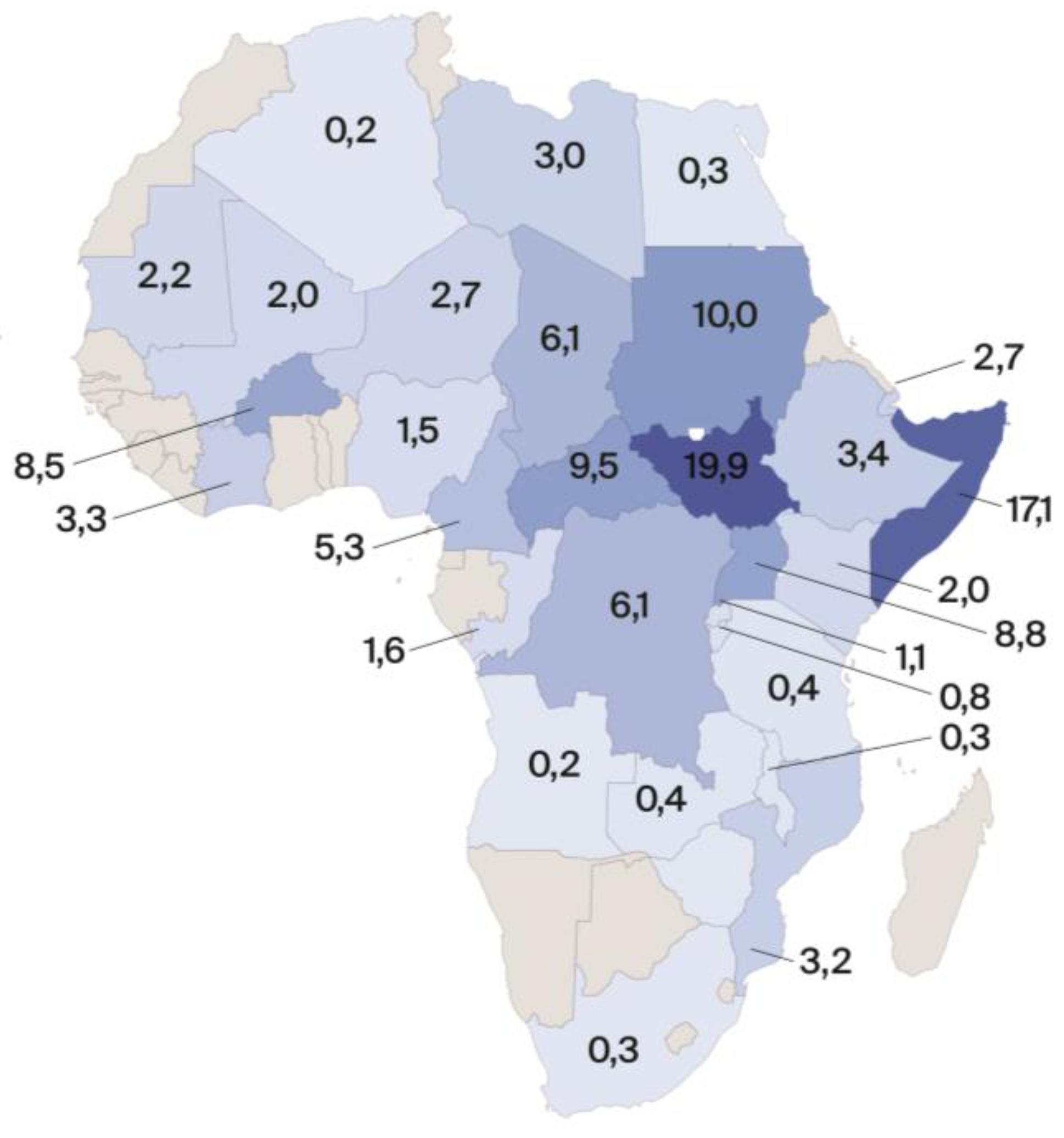
Figure 4.
Percentage change in the total number of displaced persons hosted in the country between 2020 to 2022. Own compilation based on data in [49], [63], accessed in January 2024.
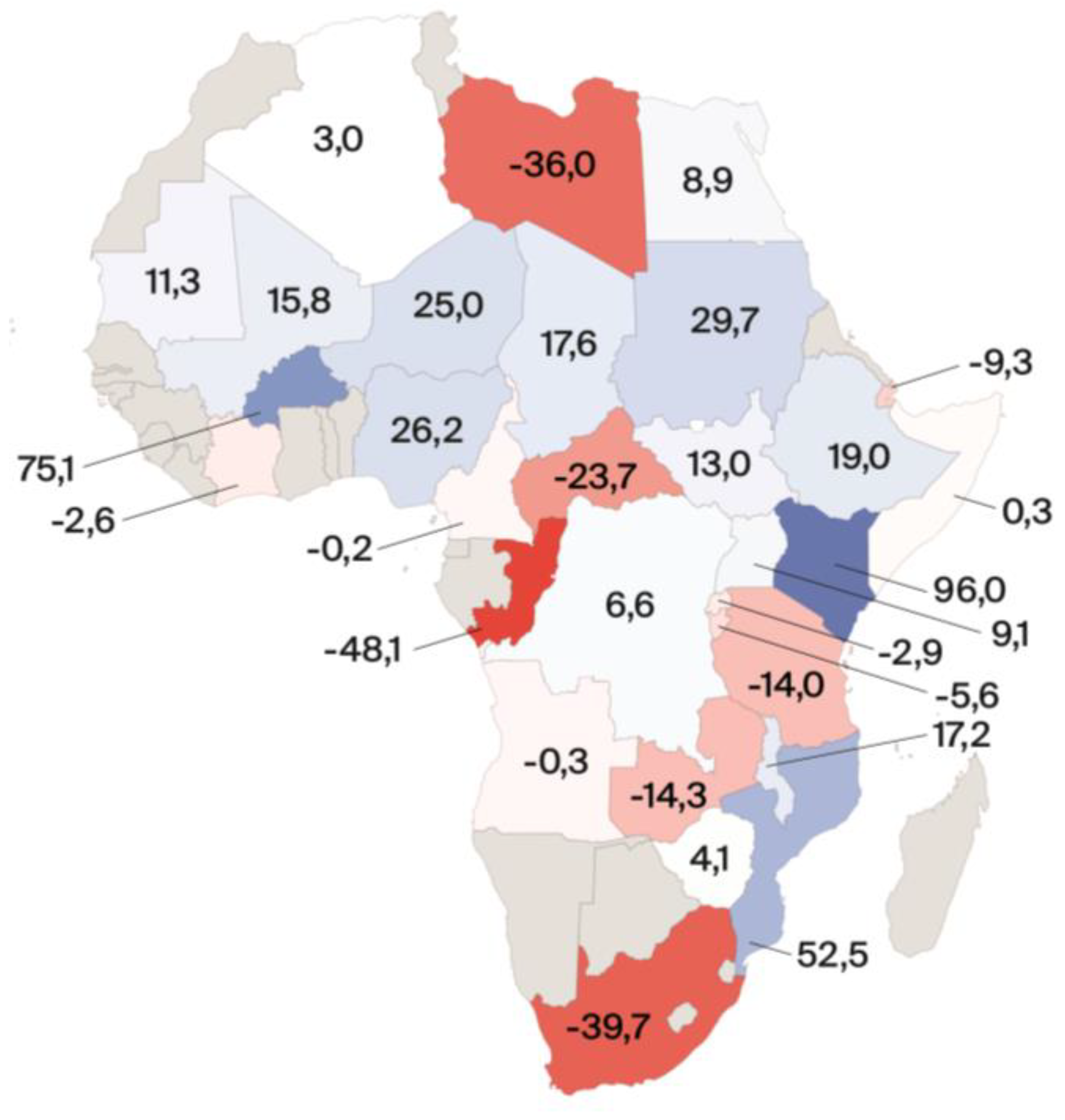
Figure 5.
RISE overall score on the country regulatory and policy environment in 2021. Own compilation based on data in [61], accessed in January 2024.
Figure 5.
RISE overall score on the country regulatory and policy environment in 2021. Own compilation based on data in [61], accessed in January 2024.
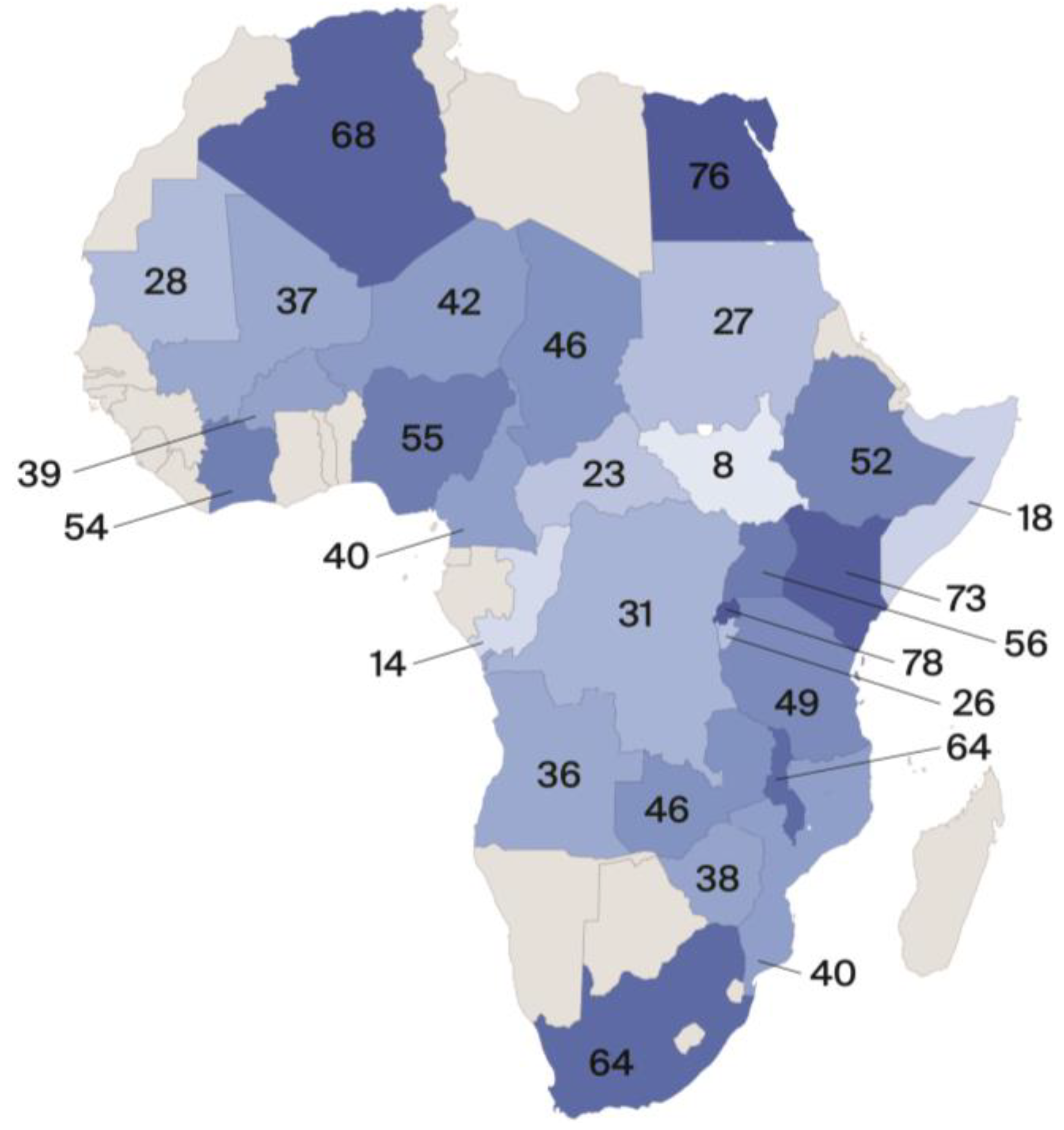
Figure 6.
RISE score for the pillar renewable energy in 2021. Own compilation based on data in [61], accessed in January 2024.
Figure 6.
RISE score for the pillar renewable energy in 2021. Own compilation based on data in [61], accessed in January 2024.
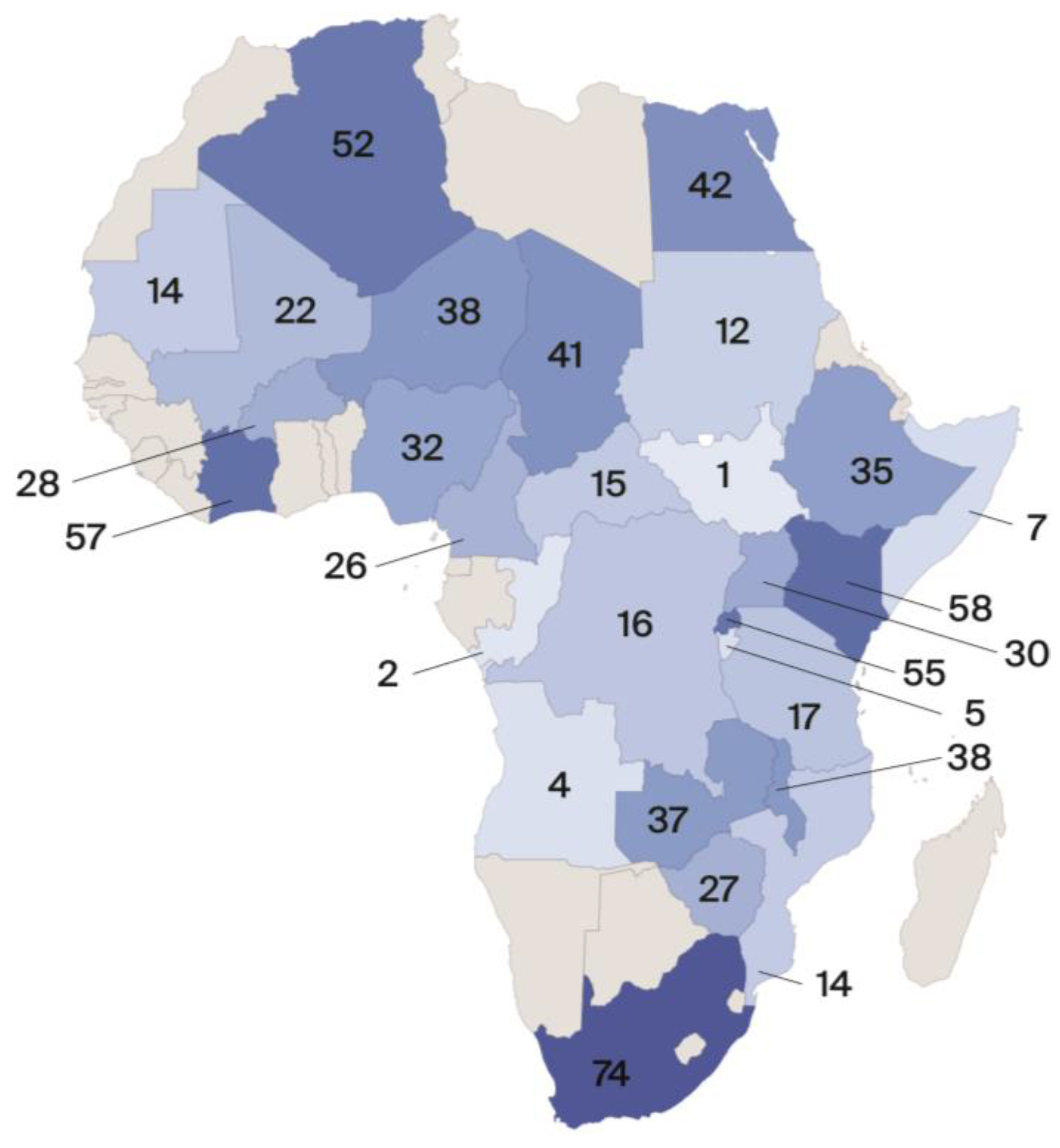
Figure 7.
RISE score for the pillar electricity access in 2021. Own compilation based on data in [61], accessed in January 2024.
Figure 7.
RISE score for the pillar electricity access in 2021. Own compilation based on data in [61], accessed in January 2024.
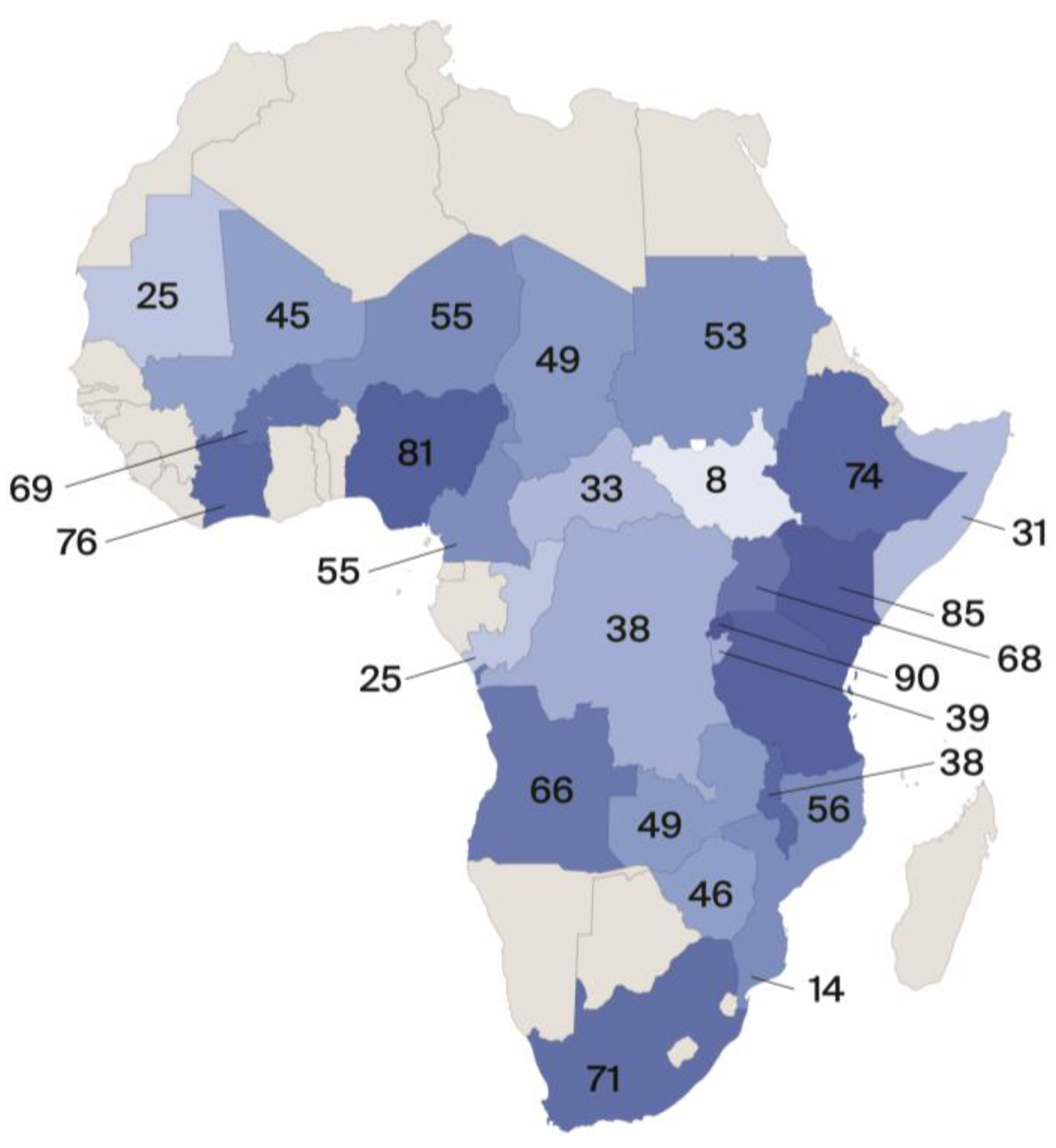
Figure 8.
RISE score for the pillar clean cooking in 2021. Own compilation based on data in [61], accessed in January 2024.
Figure 8.
RISE score for the pillar clean cooking in 2021. Own compilation based on data in [61], accessed in January 2024.
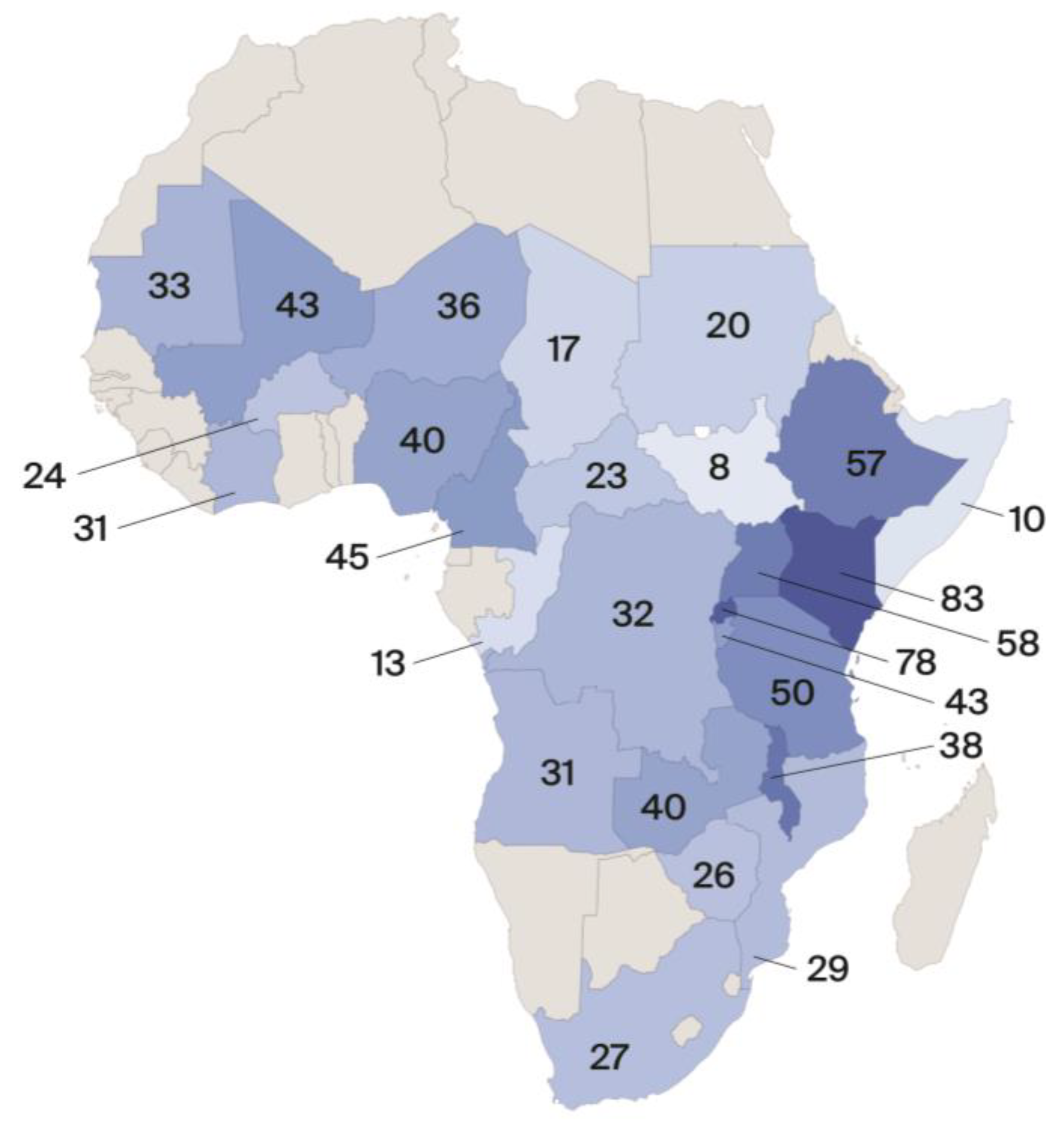
Figure 9.
Share of the total population in the country with access to electricity in 2021, in percent. Own compilation based on data in [57], accessed in January 2024.
Figure 9.
Share of the total population in the country with access to electricity in 2021, in percent. Own compilation based on data in [57], accessed in January 2024.
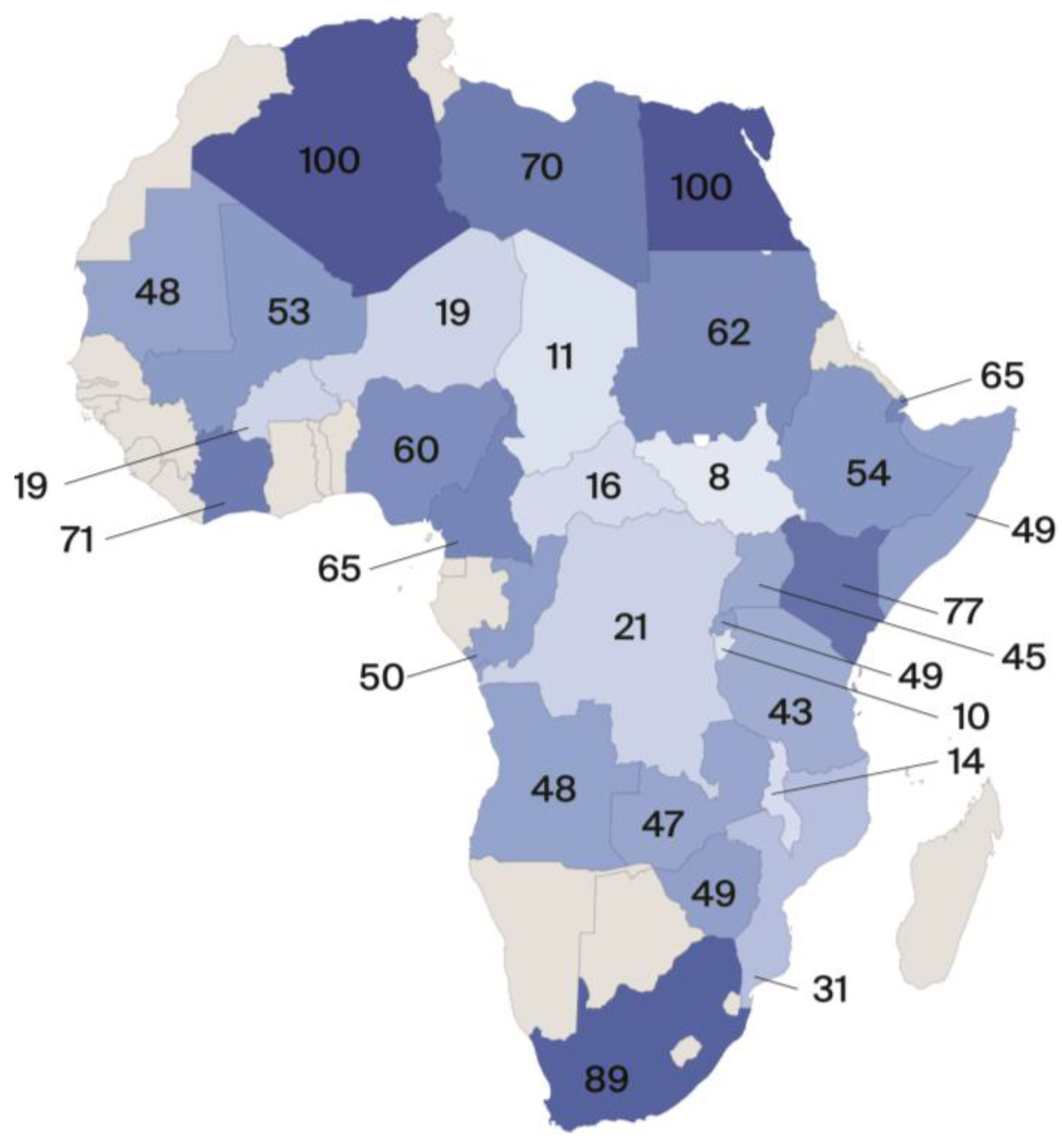
Figure 10.
Share of the rural population in the country with access to electricity in 2021, in percent. Own compilation based on data in [57], accessed in January 2024.
Figure 10.
Share of the rural population in the country with access to electricity in 2021, in percent. Own compilation based on data in [57], accessed in January 2024.
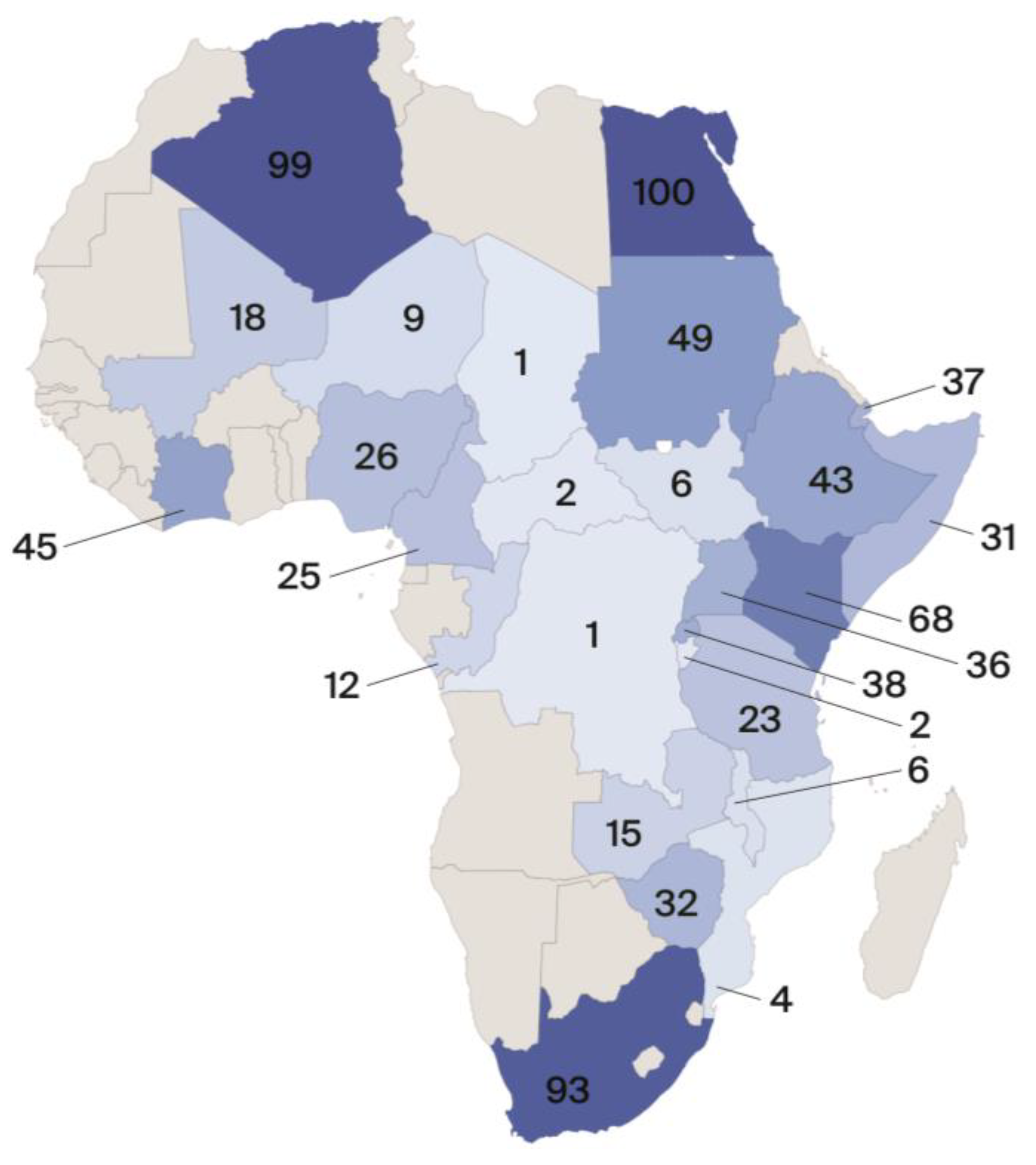
Figure 11.
Share of population in the country with access to electricity in the urban area in 2021, in percent. Own compilation based on data in [57], accessed in January 2024.
Figure 11.
Share of population in the country with access to electricity in the urban area in 2021, in percent. Own compilation based on data in [57], accessed in January 2024.
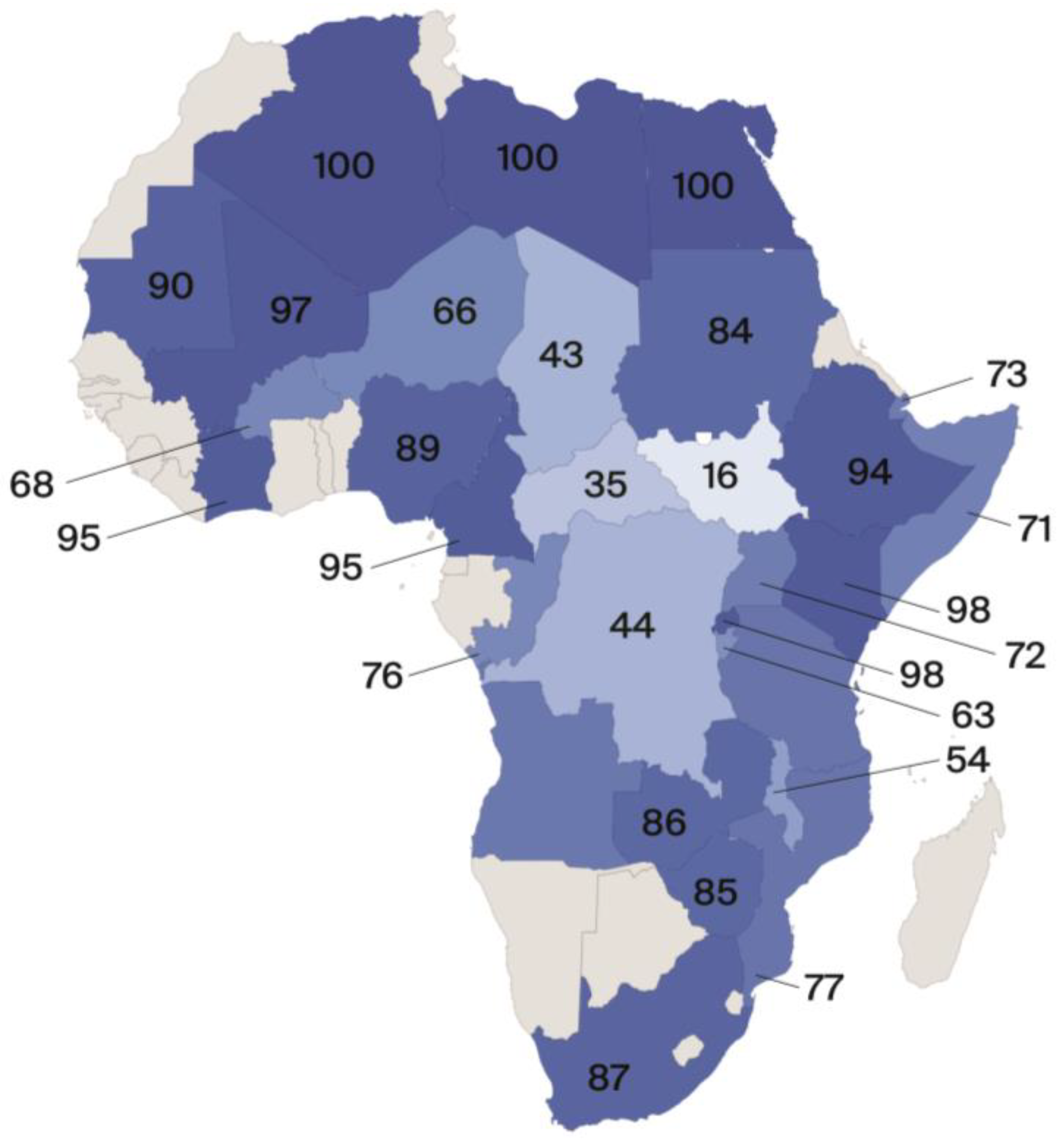
Figure 12.
Share of displaced persons with access to the national grid in 2018, in percent. Own compilation based on data in [58], accessed in January 2024.
Figure 12.
Share of displaced persons with access to the national grid in 2018, in percent. Own compilation based on data in [58], accessed in January 2024.
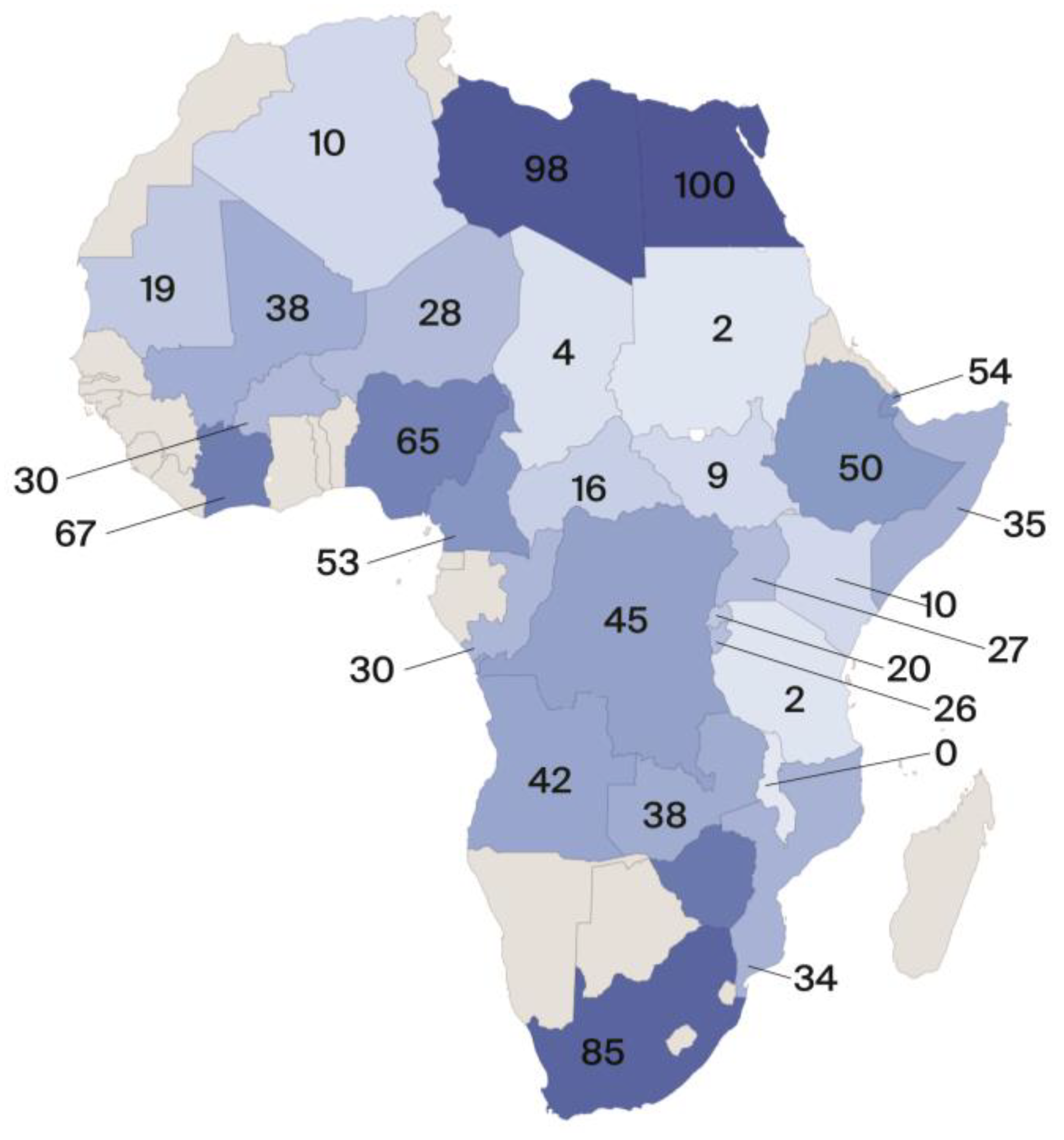
Figure 13.
Percentage of camps and settlements in which residents have access to electricity in 2022, in percent. Own compilation based on data in [56], accessed in January 2024.
Figure 13.
Percentage of camps and settlements in which residents have access to electricity in 2022, in percent. Own compilation based on data in [56], accessed in January 2024.
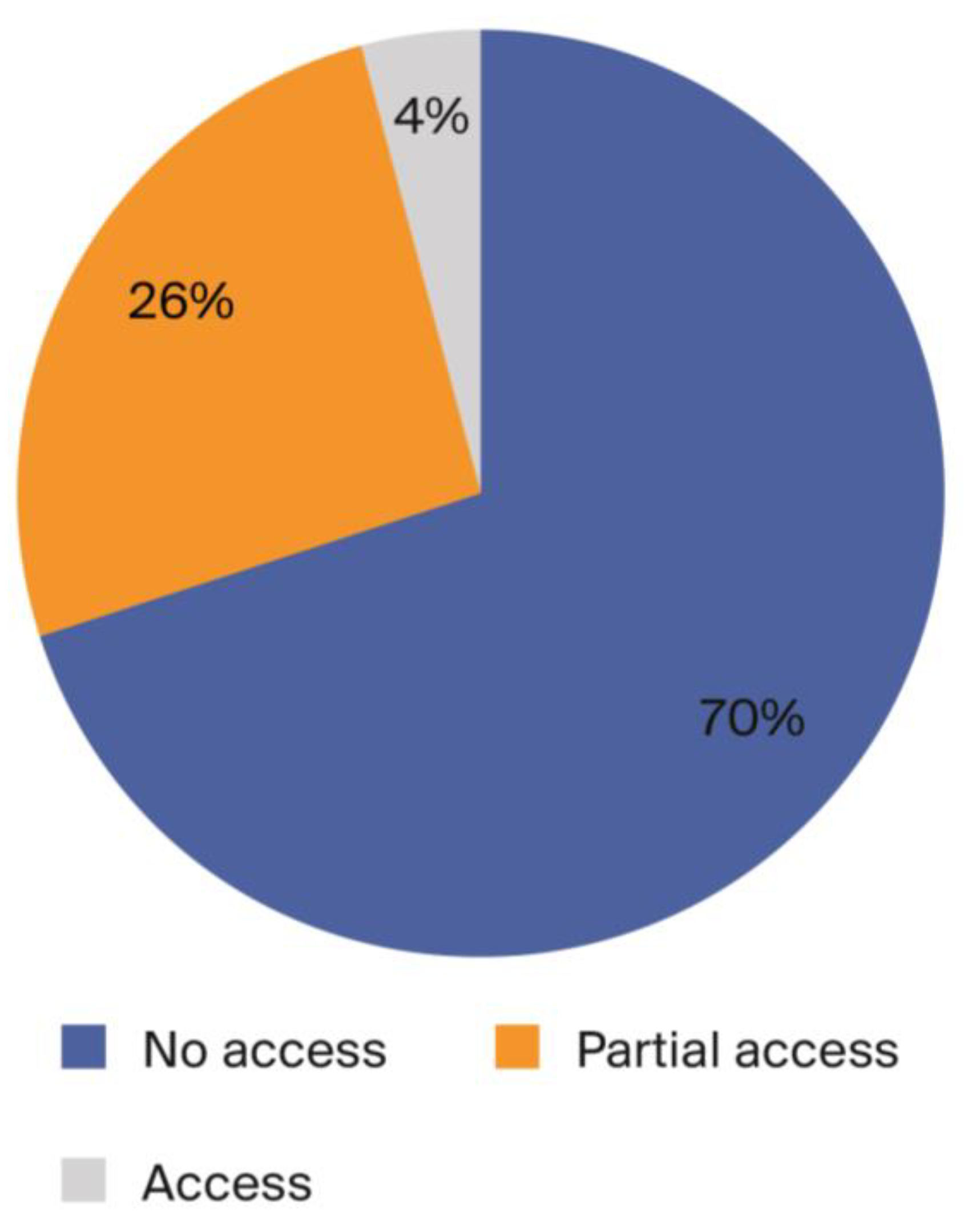
Figure 14.
Number of camps and access to electricity across countries. Own compilation based on data in [56], accessed in January 2024.
Figure 14.
Number of camps and access to electricity across countries. Own compilation based on data in [56], accessed in January 2024.
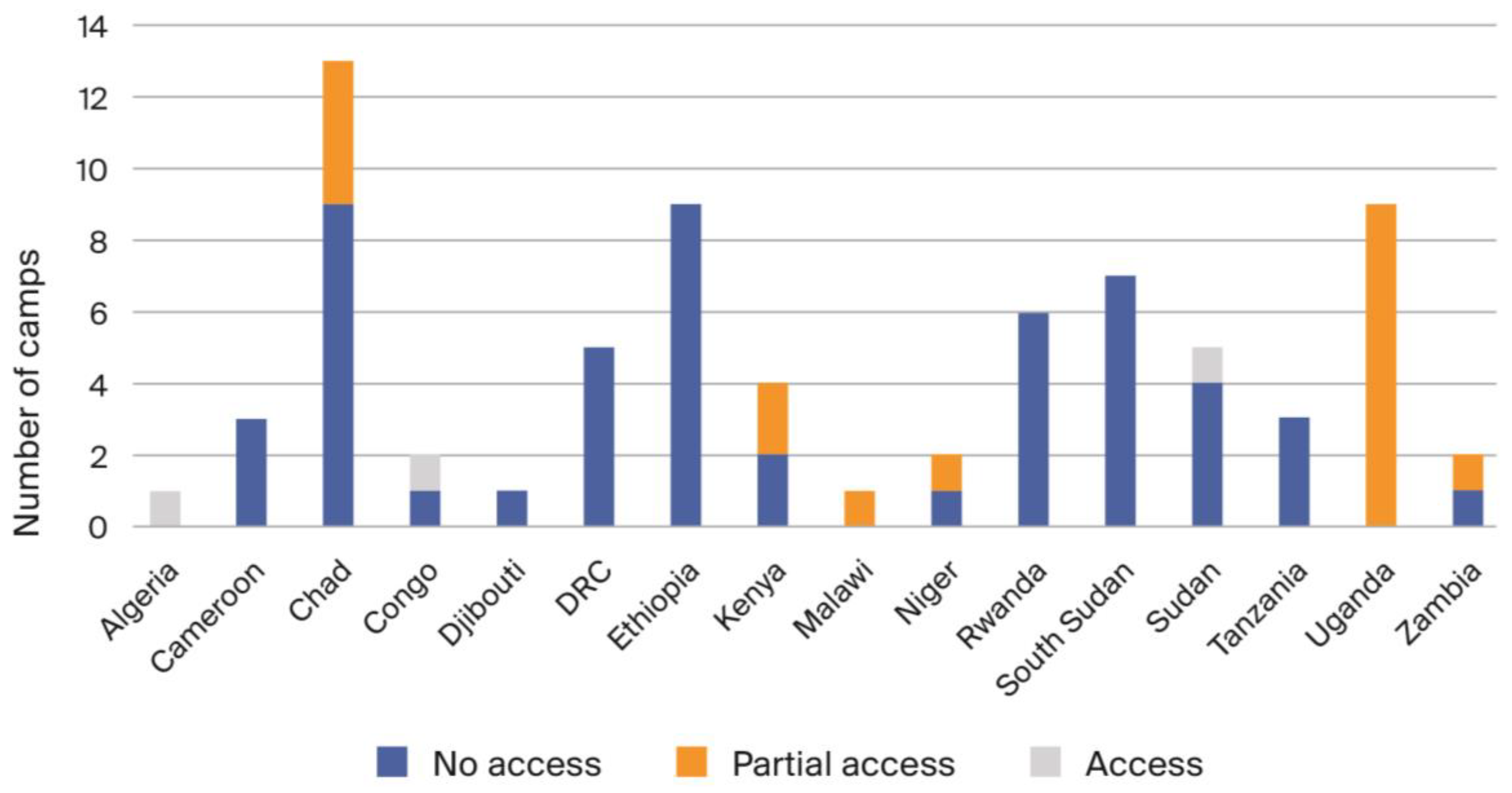
Figure 15.
Clean cooking access rate of the total population in the countries in 2021, in percent. Own compilation based on data in [57], accessed in January 2024.
Figure 15.
Clean cooking access rate of the total population in the countries in 2021, in percent. Own compilation based on data in [57], accessed in January 2024.
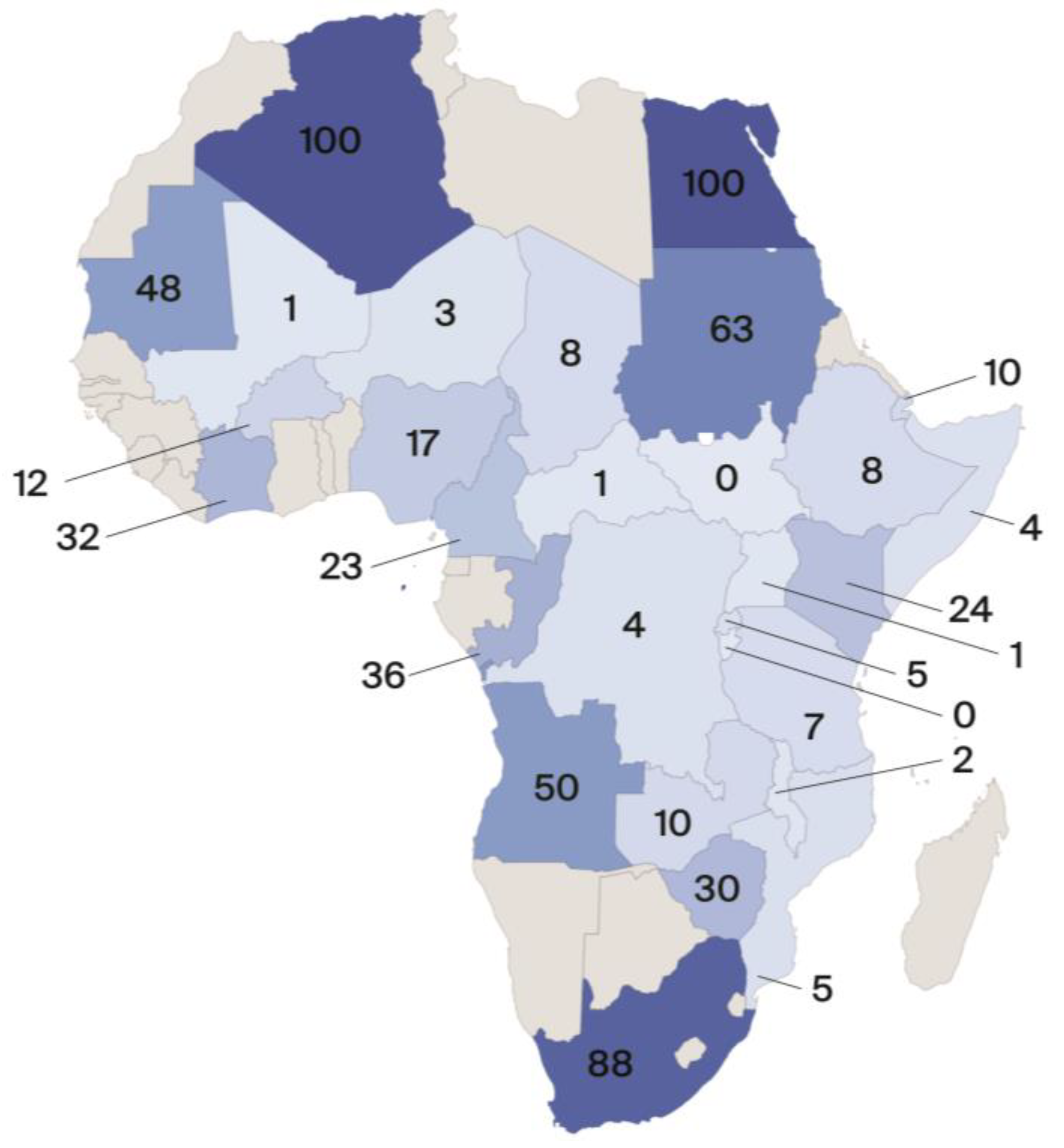
Figure 16.
Clean cooking access rate of the population in rural areas, in percent. Own compilation based on data in [57], accessed in January 2024.
Figure 16.
Clean cooking access rate of the population in rural areas, in percent. Own compilation based on data in [57], accessed in January 2024.
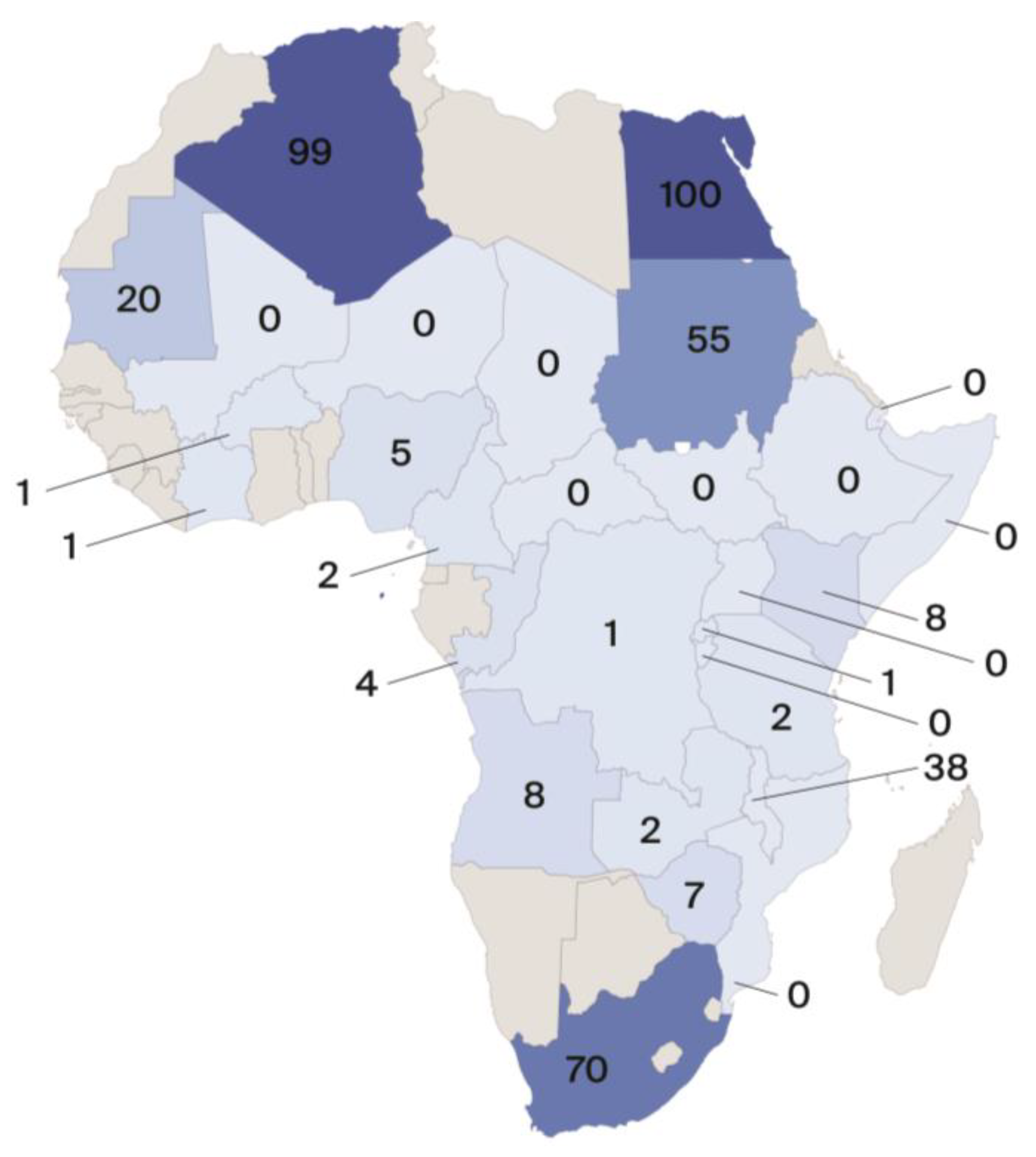
Figure 17.
Clean cooking access rate of the population in urban areas, in percent. Own compilation based on data in [57], accessed in January 2024.
Figure 17.
Clean cooking access rate of the population in urban areas, in percent. Own compilation based on data in [57], accessed in January 2024.
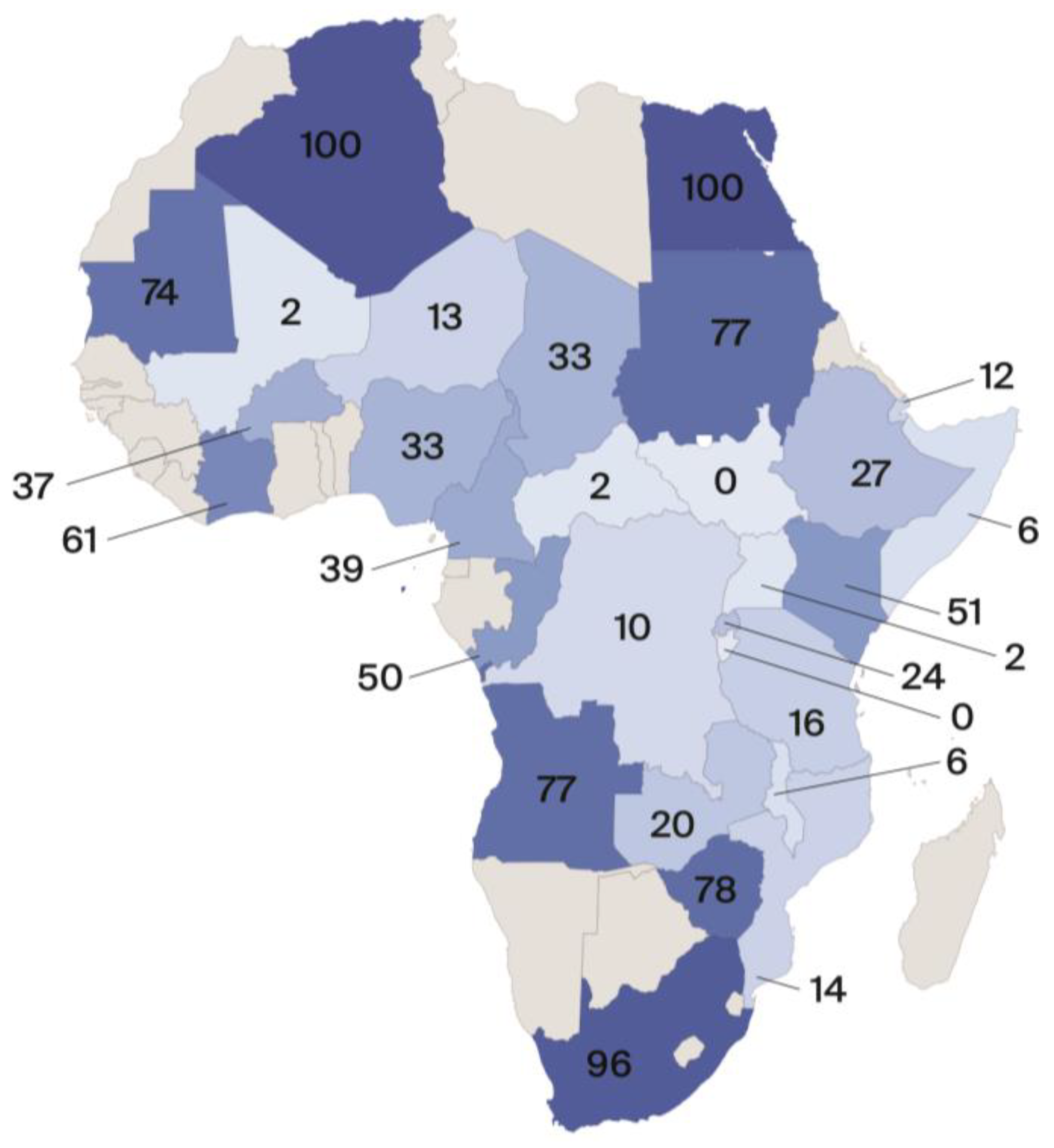
Figure 18.
Share of displaced persons in the countries that are not using biomass for cooking, in percent. Own compilation based on data in [58], accessed in January 2024.
Figure 18.
Share of displaced persons in the countries that are not using biomass for cooking, in percent. Own compilation based on data in [58], accessed in January 2024.
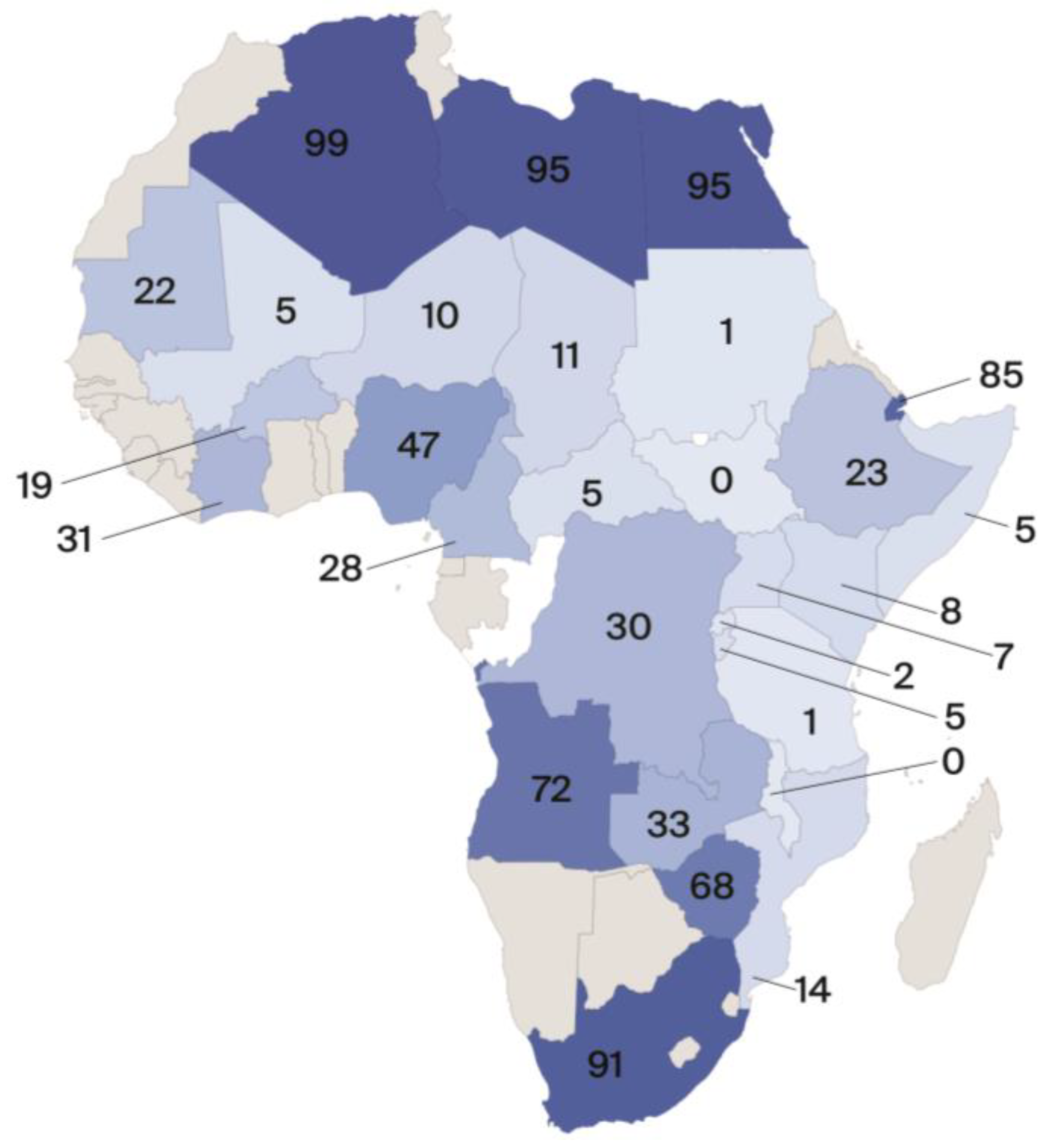
Figure 19.
Type of cooking fuel in displacement camps and settlements for considered countries, in percent. Own compilation based on data in [56,58], accessed in January 2024.
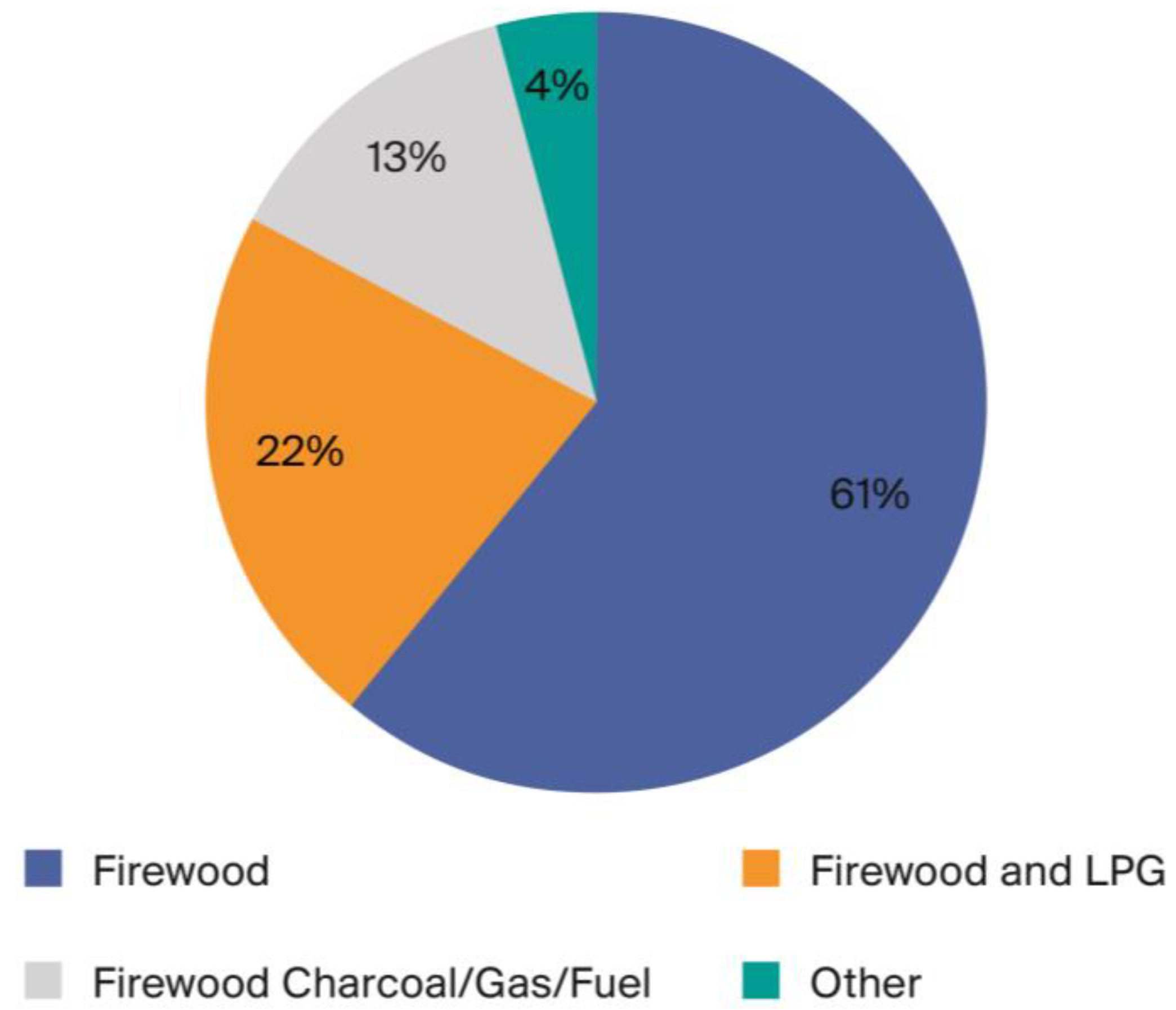
Figure 20.
Type of lighting in displacement camps and settlements for considered countries, in percent. Own compilation based on data in [56,58], accessed in January 2024.
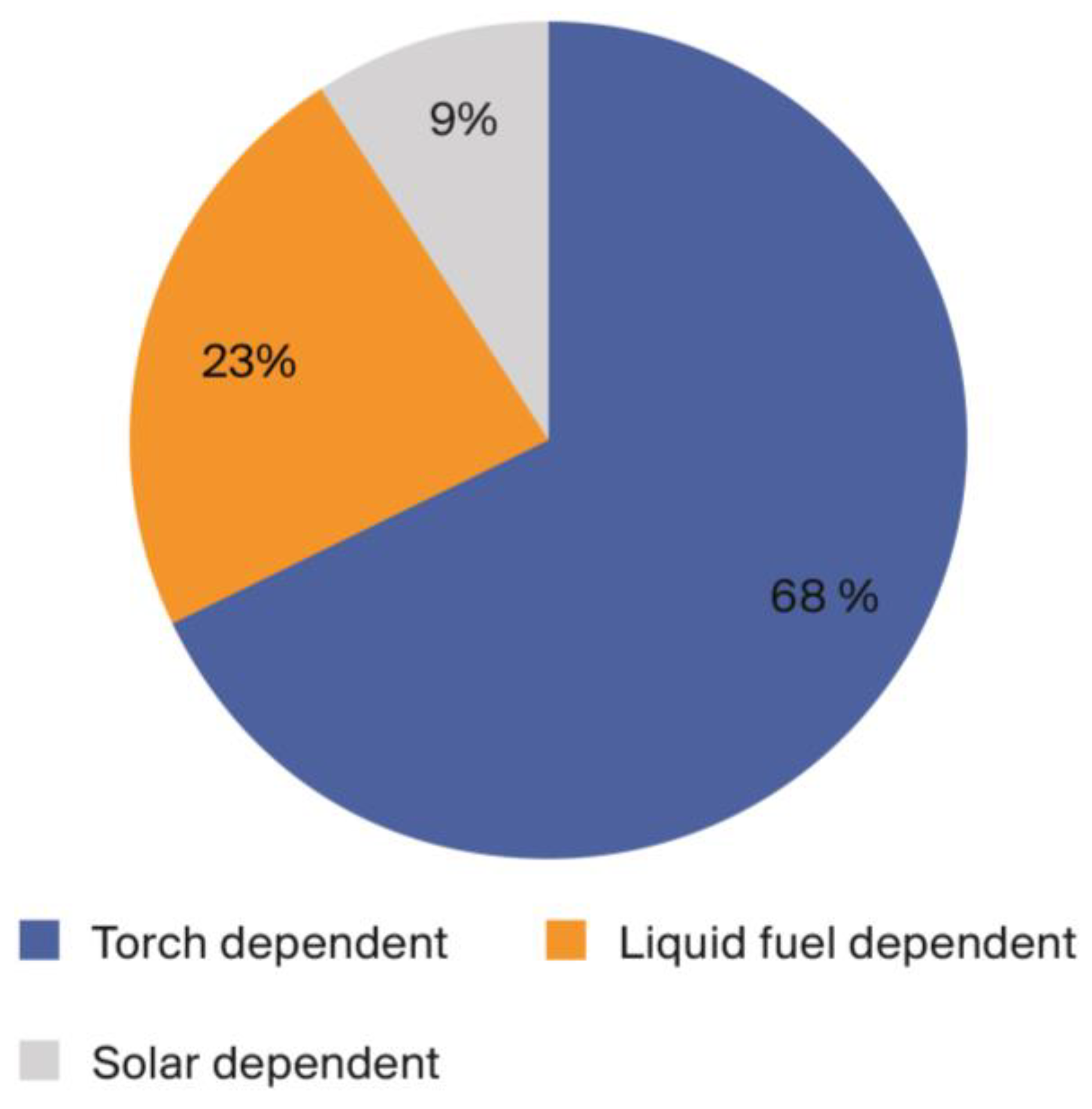
Figure 21.
Type of cooking fuel in displacement camps and settlements by country. Own compilation based on data in [56,58], accessed in January 2024.
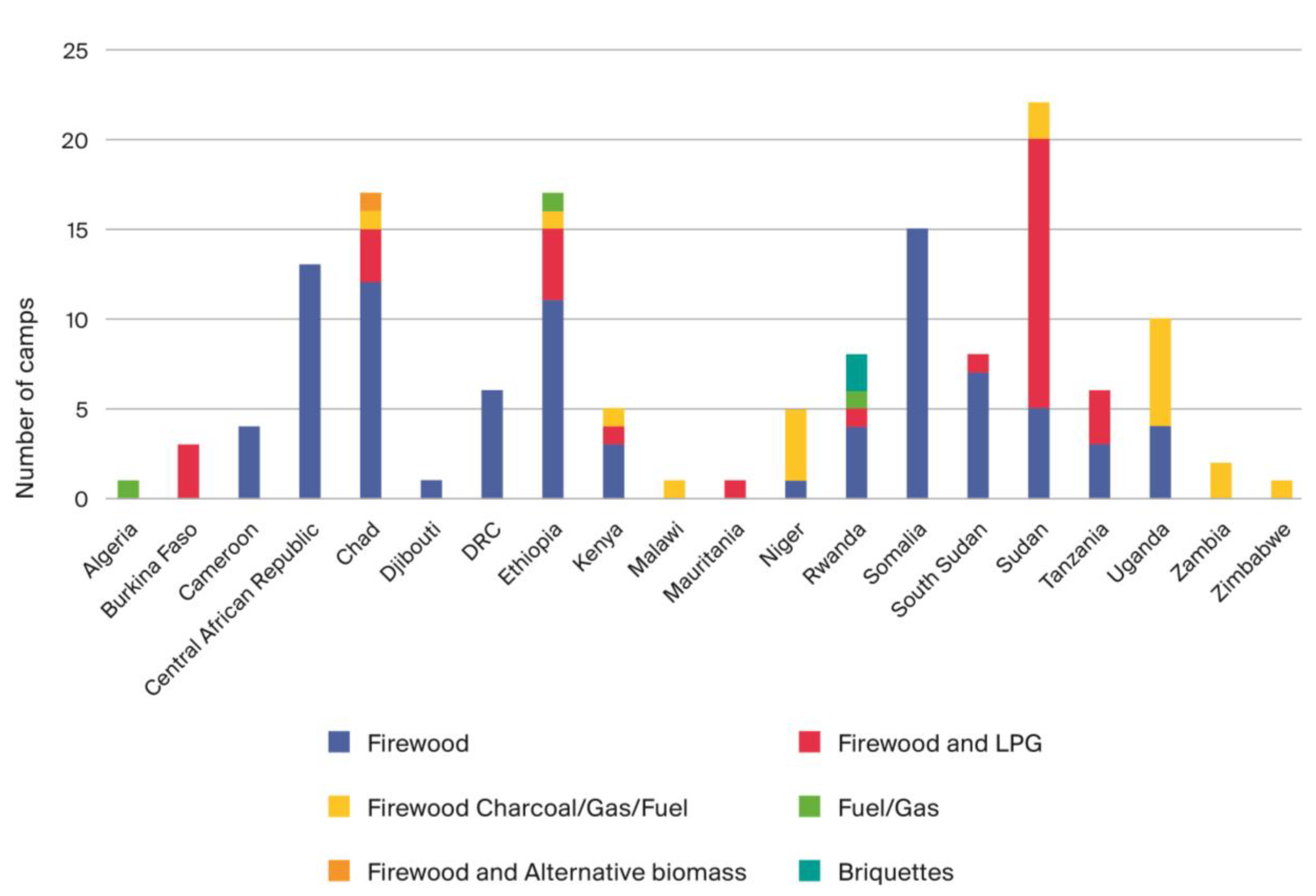
Figure 25.
Number of energy-related projects in the displacement context per country in 2021. Own compilations based on data in [56], accessed in January 2024.
Figure 25.
Number of energy-related projects in the displacement context per country in 2021. Own compilations based on data in [56], accessed in January 2024.
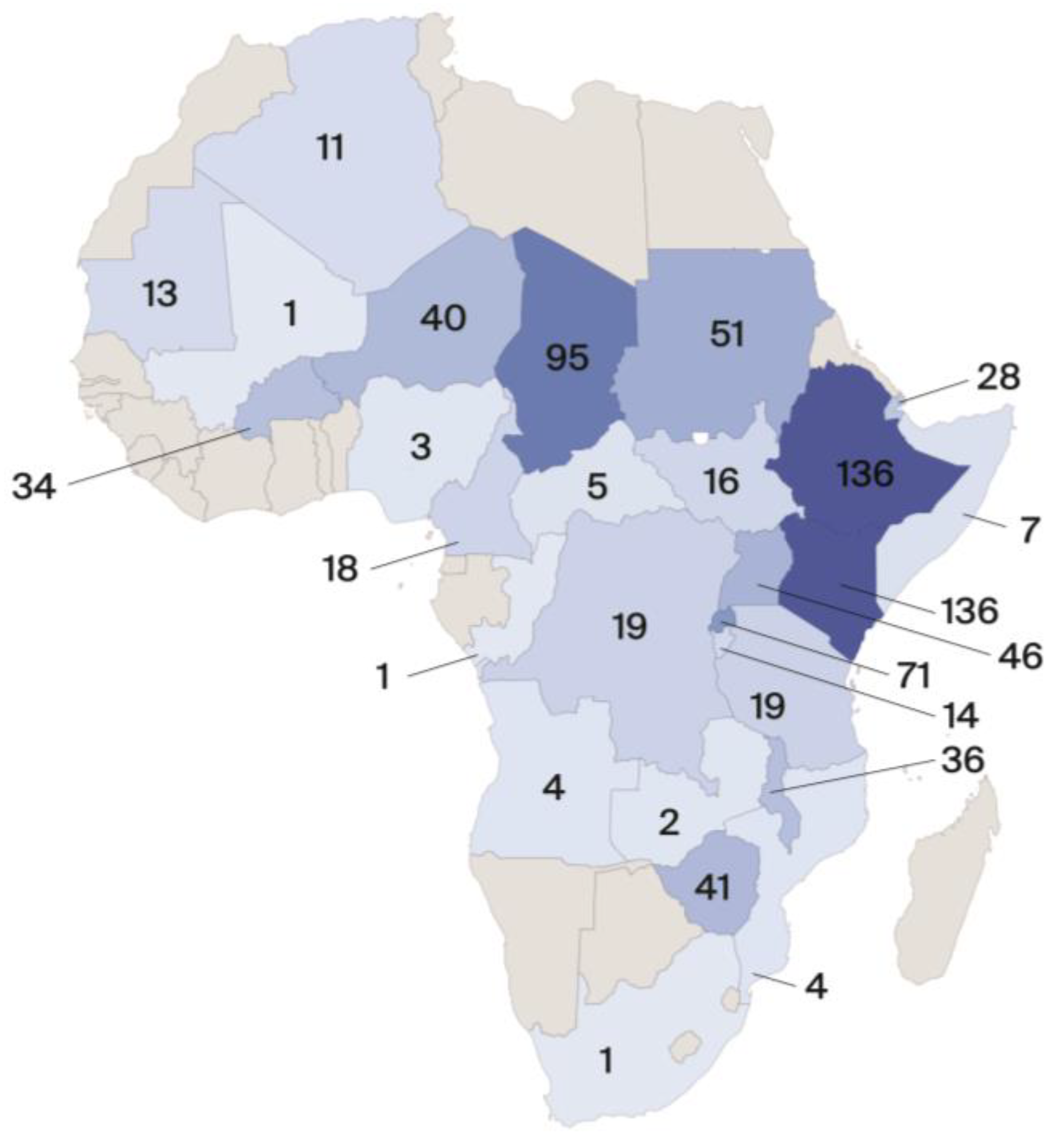
Table 3.
Selected Available sources for the visualization of current data on energy access in displacement contexts.
Table 3.
Selected Available sources for the visualization of current data on energy access in displacement contexts.
| Reference level | Information | Indicator | Source |
|---|---|---|---|
| Country | General | Energy access in rural and urban areas | [57] |
| Regulations and policies for energy access | [61] | ||
| Specific to the displacement context | Electricity access for displaced persons | [58] | |
| Access to clean cooking for displaced persons | |||
| Access to lighting for displaced persons | |||
| Number of projects | [56] | ||
| Settlement or camp | Specific to the displacement context | Camp population | [56,58,59] |
| Electricity access for displaced persons | [56] | ||
| Access to clean cooking for displaced persons | [56,58] | ||
| Access to lighting for displaced persons | [58] | ||
| Livelihood | [56] |
Disclaimer/Publisher’s Note: The statements, opinions and data contained in all publications are solely those of the individual author(s) and contributor(s) and not of MDPI and/or the editor(s). MDPI and/or the editor(s) disclaim responsibility for any injury to people or property resulting from any ideas, methods, instructions or products referred to in the content. |
© 2024 by the authors. Licensee MDPI, Basel, Switzerland. This article is an open access article distributed under the terms and conditions of the Creative Commons Attribution (CC BY) license (http://creativecommons.org/licenses/by/4.0/).
Copyright: This open access article is published under a Creative Commons CC BY 4.0 license, which permit the free download, distribution, and reuse, provided that the author and preprint are cited in any reuse.


