
Submitted:
18 March 2024
Posted:
19 March 2024
You are already at the latest version
Abstract
Currently, many manufacturing industries use machine learning, artificial intelligence, robotics, and blockchain technologies as process-streamlining instruments of industry 4.0. Before implementing industry 4.0 tools in any process of a manufacturing industry's supply chain, it is essential to evaluate their adaptability. In this paper, the adaptability of industry 4.0 procurement tools to an oil and gas-related manufacturing company's procurement process is evaluated to determine the company's level of maturity. The active participation of participants is evaluated to determine the level of maturity of the main procurement process areas. The results identified the areas of the procurement process that can be improved by implementing the suggested industry 4.0 tools and techniques.
Keywords:
Procurement
; Industry 4.0
; Maturity testing
; Manufacturing
; Supply Chain Performance
1. Introduction:
Organizational performance measurement is becoming one of the key process for understanding the level of activity of a company and it got flexed by so many parameters in recent years for different public and private sector. Performance measurement helps organizations in different parts of their straucture such as human resources,finance, traininig and development, quality control research, communication and overall culture of operations.(Becker & Gerhart, 1996),(Yaghoobi & Haddadi, 2016), (Chenhall 1997). As performance measurement systems begin to take on a way of sophisticated path, technological involvement becoming more complex. Challenges of measuring and improving performance are increasing with full swing. Since the procurement process of a supply chain is a vital echelon due to the impact it has on profitability, quality, and commitment, testing the procurement process's level of maturity through the performance measurement of the activity that is related to it is also important.
1.1. Objective:
Maturity score of a procurement process function that can be upgraded by the blockchain technology is the key objective of this study. Contract management is one of the most potential procurement function which can be modernized by the blockchain technology. The key procurement process areas are the subset for measuring the score for level of performance they belong. And finally a survey based feasibility study is done on the potentiality of blockchain technology in procurement process.
1.2. Research Question:
- ■
- What are the levels of maturity best fit to the sprcific organization? (Case Company)
- ■
- What are the key process areas and related practice activities allow the organization to focus on specific areas and activities involved in procurement?
- ■
- How to measure procurement process maturity through a performance measurement tool?
2. Literature Review:
However, knowing how to make the purchasing process more efficient is crucial for every business. Its maturity level is one of the factors that influences its performance (Batenburg and Versendaal, 2008). Shiele (2007) found a highly substantial correlation between cost-reduction outcomes and purchasing maturity level. In this regard, Foerstl et al. (2013) describe how various supply management and procurement techniques affect purchasing performance and, indirectly, financial performance. According to Paulraj et al. (2006), Schiele (2007), and Batenburg & Versendaal (2008), an organization's performance is positively impacted by its maturity level.
Contract management maturity model helps an organization to evolve its contract management process from unstructured(immatute) to optimized (mature). Procurement managers can continuously succed with mature contract management practices. According to Garret &Rendon, (2005), CMMM framework is useful to improve the performance of contracting.
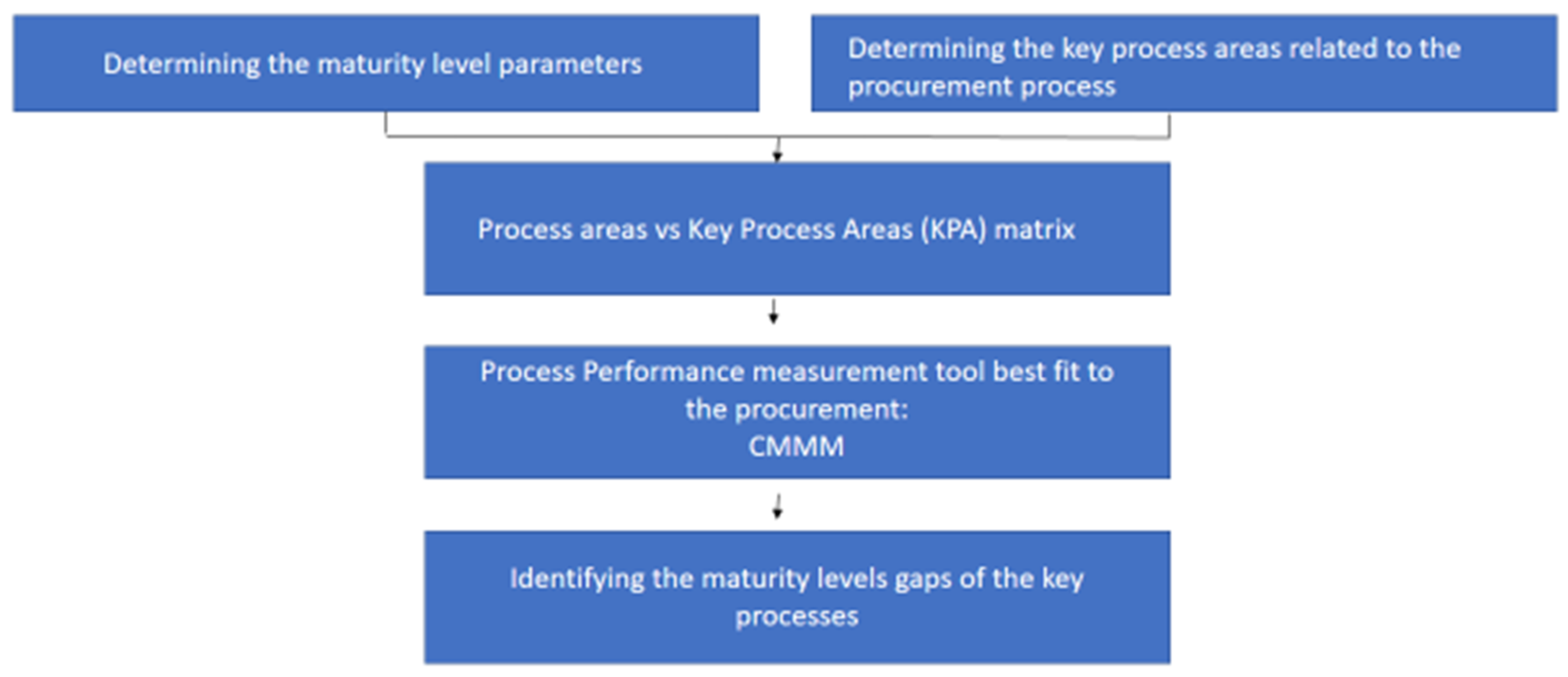
Figure 1.
Conceptual framework.
3. Methodology:
Contract management of the relevant stakeholders in the procurement process is the main objective of the process function. The level of maturity in contract management can be seen of as an indicator of how well an organization handles contracts. In this article, "contract management" refers to the process of awarding and administering contracts (Sherman, 1987), which is also known as "purchasing" in private enterprises and "procurement" or "acquisition" in government.
3.1. CMMM:
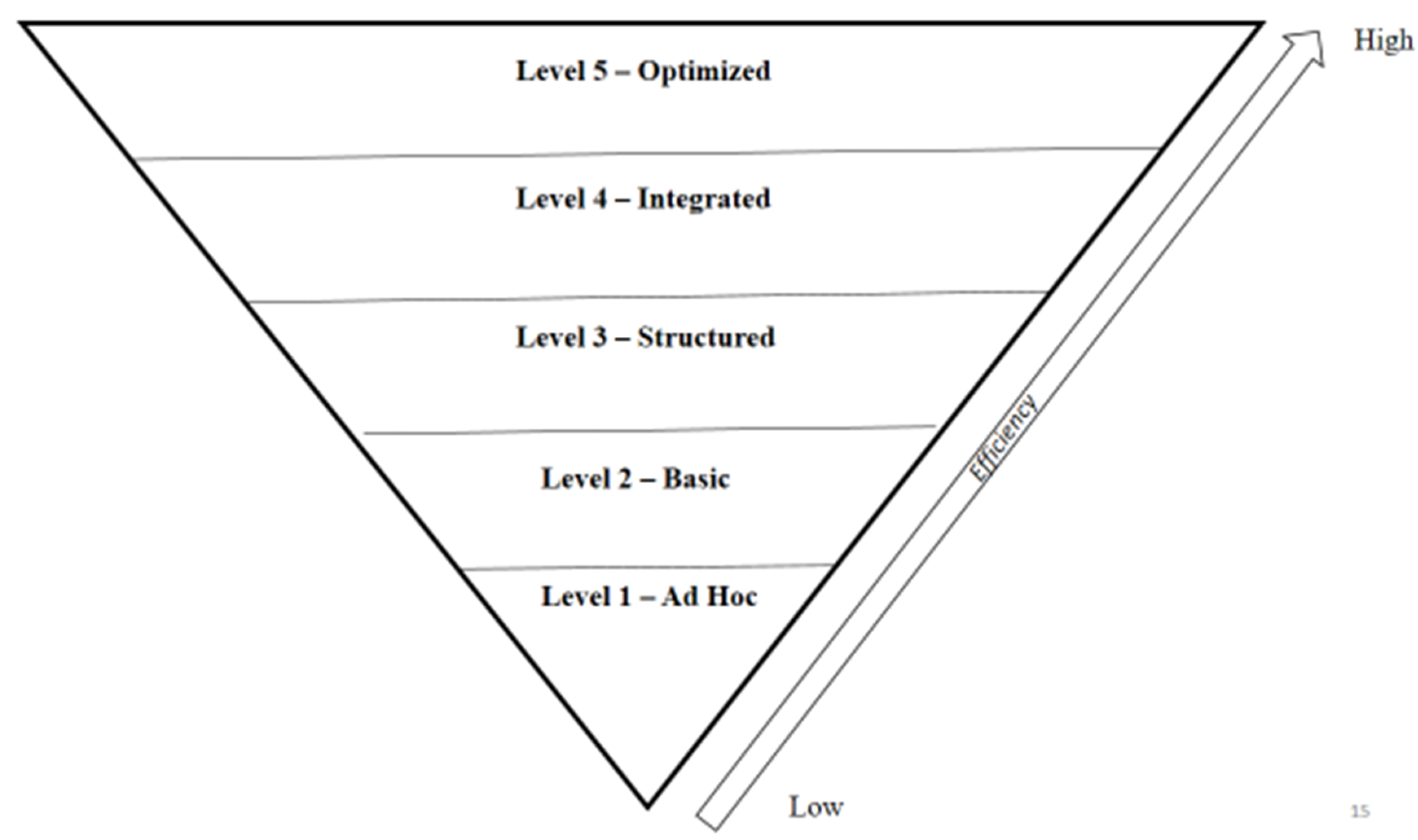
The Contract Management Maturity Model (CMMM) is a visual tool designed to assist the procurement organizations in assessing the steps they need to take when procuring supplies, services, or integrated solutions. It consists of five levels of maturity applied to six key process areas and related practice activities of the contract management process. The five levels of maturity range from an “ad hoc” level (Level 1) to a fully “optimized” level (Level 5).
Figure 2.
Levels of Contract Management Maturity Model.
Level – 1:
the organization acknowledges the existence of contract management processes but only uses them on an ad hoc and sporadic basis on various contracts, without any formal documentation or adherence to basic standards.
Level – 2:
the organization has established some basic contract management processes and standards, but they are only required on selected complex, critical, or high-visibility contracts.
Level – 3:
contract management processes and standards are fully established, institutionalized, and mandated throughout the entire organization. Formal documentation has been developed for these processes and standards, and some processes may even be automated.
Level – 4:
contract management processes are fully integrated with other organizational core processes, and the contract’s end-user customer is also an integral member of the buying or selling contracts team.
Level – 5:
the organization systematically uses performance metrics to measure the quality and evaluate the efficiency and effectiveness of the contract management processes. Continuous process improvement efforts are also implemented to improve the contract management processes.
3.2. Key Process Activities:
Key process activities varies from industry to industry. In this study we showcased the key process activities of an oil and gas related manufacturing company. Our case company is JMI Cylinders, a well know LPG cylinder manufactuing company in Bangladesh. The proposed CMMM allows organization to assess its level of capability and effectiveness for their critical contract management process by dissecting the process into six key process areas. These areas include planning and strategy, requisition assessment, acquisition planning, tendering, contract award, and contract administration. By assessing each of these areas, the organization can identify their strengths and weaknesses, and take steps to improve their procurement process.
Planning and Strategy:
- ■
- Defining the business needs and objectives
- ■
- Developing a procurement plan
- ■
- Identifying potential risks and mitigation strategies
- ■
- Developing a contract management plan
- ■
- Allocating resources and responsibilities
Requisition Assessment:
- ■
- Conducting market research
- ■
- Identifying requirements and specifications
- ■
- Developing a statement of work
- ■
- Identifying evaluation criteria
Acquisition Planning:
- ■
- Developing a solicitation package
- ■
- Identifying potential sources
- ■
- Developing a source selection plan
- ■
- Preparing for negotiations
Trade tender:
- ■
- Issuing a solicitation
- ■
- Conducting a pre-proposal conference
- ■
- Receiving and evaluating proposals
- ■
- Conducting negotiations
Awarding Contract:
- ■
- Selecting a contractor
- ■
- Preparing the contract
- ■
- Executing the contract
- ■
- Providing contract briefings to relevant parties
Contract Administration:
- ■
- Monitoring contractor performance
- ■
- Managing contract changes
- ■
- Resolving disputes and claims
- ■
- Closing out the contract
By systematically assessing each of these process areas, organizations can evaluate their contract management capabilities and take steps to improve their procurement process.
4. Research Design:
JMI Cylinders is the world class LPG cylinder manufacturing plant in Barobkunda, Sitakunda, Chittagong. The facility has a maximum capacity of production 01(One) Million Pcs LPG cylinders yearly with comply all the safety measures. JMI Cylinders now Supply cylinders to the LPG Marketing Companies Home and Abroad. This gives Bangladesh a unique position in the international energy industry. Nozzles is the product to procure in each month in bulk amount for JMI. There a number of local and international suppliers who supplies that product to the similar industries. Cost, quality, commitment, lead time, etc are the main factor to choose a supplier to procure the product. However, JMI usually award the contract to multiple supplier, what makes the problem complex. In this case study, maturity to adopt state-of-the-art technologies for different key activities has been assessed. According to the level of maturity of technological adoption, managers can find the gaps to work on prior to bring any technology for that particular key process. Such circumstances favor the use of exploratory research approaches. According to Amin (2005, p. 201), exploratory research may take the form (1) review of available literature, (2) expert surveys, (3) analysis of case studies and (4) pilot studies. In my study expert interviews was used as described above.
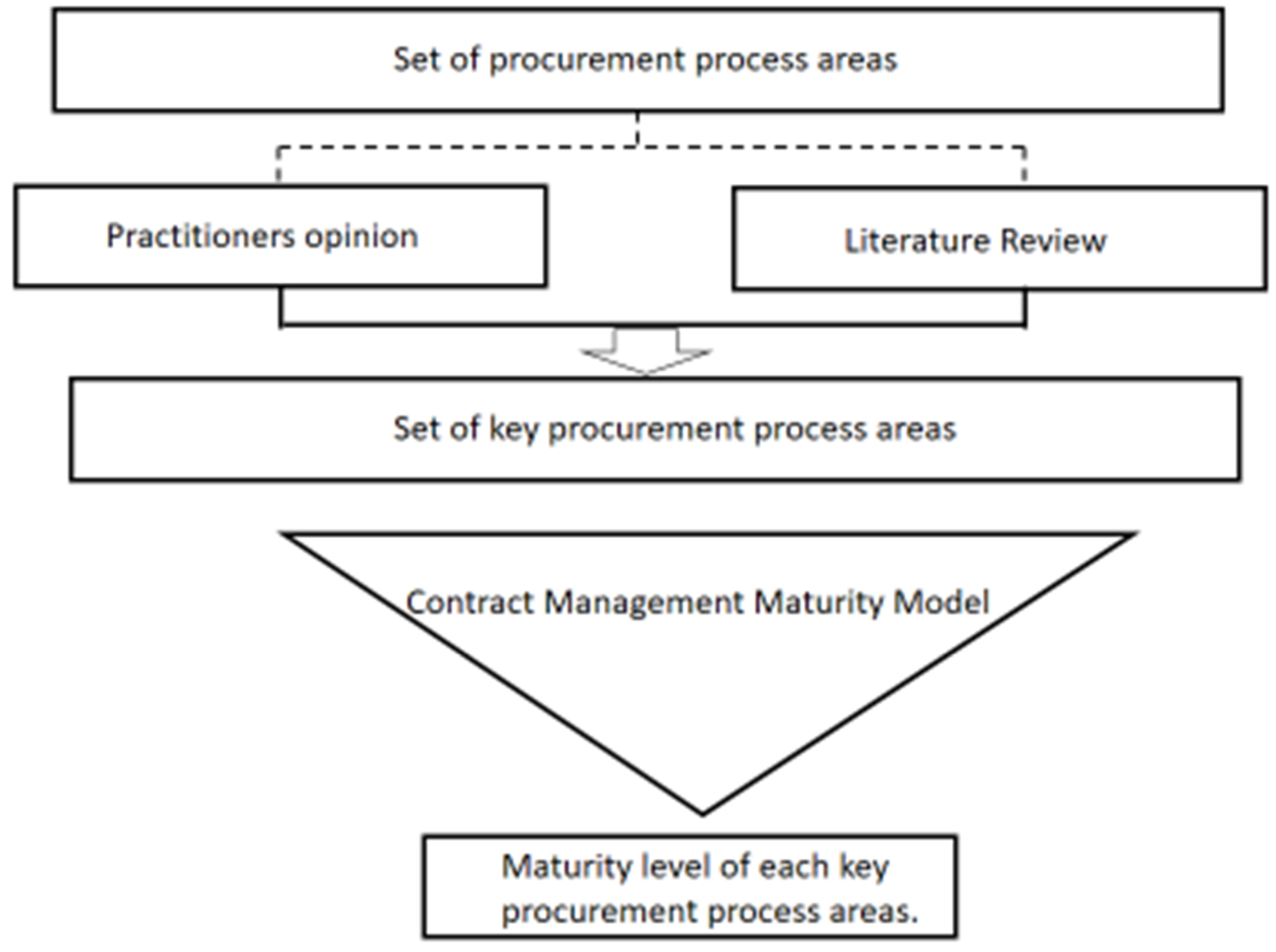
Figure 3.
Steps of the maturity testing.
4.1. Target Population:
The target population of the study was procurement practitioners involved in procurement activities. A set of decision-makers related to the procurement process has been provided a questionere to asses the maturity. The questionnaire has been designed to extract decision-makers opinion scores.
4.2. Sampling Method:
This survey's sample of respondents was chosen because of the connection each respondent had to the primary focus and primary aim of the study. The participants in the study were chosen on the basis of their prior experience, level of technological expertise, and level of involvement in procurement. The number of people in the sample was 20, and the selection process relied on using judgment as a criterion.
4.3. Data Collection Instrument:
In light of the fact that this topic is still in its infancy within the realm of technological advancement in procurement, I went through a lot of the available international literature and case studies on procurement management. An technique that was primarily descriptive and quantitative in nature was adopted, and it relied on responses from participants. The objective was to develop a theory concerning the management of procurement in Bangladesh. As the data collection component of the survey, a questionnaire that respondents were free to administer on their own was employed. A questionnaire, which was constructed using the variables that were selected as being significant for the purpose of satisfying the research objectives, was the instrument that was used to gather the data for the study. The questionnaire that was given to the respondents was of the semi-structured variety.
4.4. Data Analysis:
Data analysis is done on two phases. On the first phase responded put their agreement on selecting best six key process areas of procurement out ten. The contract management maturity level is tested on those six areas. Second phase includes the opinions of respondent on the feasibility study of the blockchain technology in procurement process.
Findings and Analysis:
4.5. Background Information of Respondent:
Figure 4 is showing the designation of the respondents. Among the 20 respondents 70% was 2+ years of work experience. This indicates that, majority the respondents were highly experienced. These levels of distribution of experienced respondents indicate that the respondents could give responses that are factual.
Figure 5 is the depiction of the working experiences of the respondents.
Participants training experience is shown in Figure 6.
Knowledge on the use and application of the state-of-the-art technologies in procurement process is shown in Figure 7.
4.6. Key Process Areas and Related Practice Activities:
Key process areas are selected from the questionnaire survey of the practitioner’s opinion. Procurement people came to an agreement that there are six key procurement process areas that require development for a seamless and holistic procurement. Table 1 is showing the vote number of the respondents in each areas.
5. Results and Discussion:
Six key procurement process areas out of ten have the most vote of the practitioners. They believe that, those areas have the capability to adopt blockchain technology. Figure 8 is showing the levels of practitioners votes in each of the ten process areas.
From the above analysis, the six key process areas of procurement in JMI cylinders is identified on Table 2.
5.1. Results on CMMM Model:
The Contract Management Maturity Model was implemented to the contracting procedures of the department procurement of JMI Cylinders in the month of April 2023. This department is responsible for awarding and administering online contracts for the nozzles of gas cylinders, hence they are in charge of managing the online contracts. The responders are actively observing the process and giving their feedback on how the levels should be scored. The Contract Management Maturity Assessment Tool (CMMAT) was given to experienced contracting officers who were properly trained as part of a cross-sectional survey that was based on a purposive sample. These contracting officers were chosen to represent the contracting and bidding program.
Each of the six core process areas and practice activities in contract management is covered in the survey questions. The adoption level of blockchain technology in six different procurement processes was then determined by analyzing the results of the contract management assessment tool. The overall results of the contract management maturity assessment are shown in Figure 9.
The outcome of the maturity test is shown in Table 3. The performance gaps and the process specific recommendation of each key areas are also shown.
6. Conclusion:
This study can conclude with following recommendation.
- Multiple parties need the views of common information. Visibility of procurement data needs to be available for related parties.
- There are various participants that make changes to the data and execute actions that need to be recorded. The procurement process needs to be holistic as the participant can update the data.
- It is necessary for participants to have faith in the accuracy of the actions that are recorded. Verification is required in every change of data.
- Intermediaries increase the cost in any procurement process. Involvement of intermedieries need to limit in the process.
- Lead time of procurement need to be reduced. reducing delays has business benefits (e.g., reduced settlement risk and enhanced liquidity)
Supplementary Materials
The following supporting information can be downloaded at the website of this paper posted on Preprints.org.
References
- Abduh, M., Sukardi, S. N., Wirahadikusumah, R. D., Oktaviani, C. Z., & Bahagia, S. N. (2022). Maturity of procurement units for public construction projects in Indonesia. International Journal of Construction Management, 1-14. [CrossRef]
- Afolabi, A. O., Oyeyipo, O., Ojelabi, R. A., & Tunji-Olayeni, P. F. (2017). E-maturity of construction stakeholders for a web-based e-procurement platform in the construction industry. International Journal of Civil Engineering and Technology (IJCIET), 8(12), 465-482.
- Axelsson, B., Rozemeijer, F., and Wynstra, F. (2005). Developing sourcing capabilities: Creating strategic change in purchasing and supply management. New York: John Wiley & Sons.
- Batenburg, Ronald; Versendaal, Johan. (2008), “Maturity Matters: Performance Determinants of the Procurement Business Function," In: ECIS, pp. 563-574.
- Belvedere, V., Grando, A., & Legenvre, H. (2018). Testing the EFQM model as a framework to measure a company’s procurement performance. Total Quality Management & Business Excellence, 29(5-6), 633-651. [CrossRef]
- Coşkun, S. S., & Kazan, H. (2023). Bayesian analysis of the relationship between process improvement practices and procurement maturity. Computers & Industrial Engineering, 181, 109297. [CrossRef]
- Becker, B., & Gerhart, B. (1996). The impact of human resource management on organizational performance: Progress and prospects. Academy of management journal, 39(4), 779-801.
- Yaghoobi, T., & Haddadi, F. (2016). Organizational performance measurement by a framework integrating BSC and AHP. International journal of productivity and performance management. [CrossRef]
- Chenhall, R. H. (1997). Reliance on manufacturing performance measures, total quality management and organizational performance. Management accounting research, 8(2), 187-206. [CrossRef]
- Foerstl, K., Hartmann, E., Wynstra, F., and Moser, R. (2013). ”Cross-functional integration and functional coordination in purchasing and supply management: Antecedents and effects on purchasing and firm performance.” International Journal of Operations & Production Management, Vol. 33 No.6, pp. 689-721.
- Gani, A. B. D., & Fernando, Y. (2021). The cybersecurity governance in changing the security psychology and security posture: insights into e-procurement. International Journal of Procurement Management, 14(3), 308-327. [CrossRef]
- Garrett, G. A., & Rendon, R. G. (2005). Contract Management: Organizational Assessment Tools. Ashburn, VA: National Contract Management Association.
- Harju, A., Hallikas, J., Immonen, M., & Lintukangas, K. (2023). The impact of procurement digitalization on supply chain resilience: empirical evidence from Finland. Supply Chain Management: An International Journal, 28(7), 62-76. [CrossRef]
- Hochstetter, J., Díaz, J., Dieguez, M., Espinosa, R., Arango-López, J., & Cares, C. (2021). Assessing transparency in eGovernment electronic processes. IEEE Access, 10, 3074-3087. [CrossRef]
- Hochstetter, J., Vairetti, C., Cares, C., Ojeda, M. G., & Maldonado, S. (2021). A transparency maturity model for government software tenders. IEEE Access, 9, 45668-45682.Knudsen, D. (1999). Procurement Performance Measurement System. Lund: Lund University. [CrossRef]
- Liu, K., Su, Y., & Zhang, S. (2018). Evaluating supplier management maturity in prefabricated construction project-survey analysis in China. Sustainability, 10(9), 3046. [CrossRef]
- Mogilko, D., Ilyashenko, O., Lukyanchenko, E., & Anselm, R. (2022). The Maturity Evaluation of Procurement and Logistics Processes in the Value Chain. In XIV International Scientific Conference “INTERAGROMASH 2021" Precision Agriculture and Agricultural Machinery Industry, Volume 1 (pp. 484-492). Springer International Publishing.
- Panayiotou, N. A., & Stavrou, V. P. (2021). Government to business e-services–A systematic literature review. Government Information Quarterly, 38(2), 101576. [CrossRef]
- Paulraj, A., Chen, I. J., and Flynn, J. (2006). Levels of strategic purchasing: impact on supply integration and performance. Journal of Purchasing and Supply Management, Vol. 12 No. 3, pp. 107-122. [CrossRef]
- Renault, S., Cortina, S., & Valoggia, P. (2018, August). Designing a process assessment model based on multiple sources-a procurement case. In European Conference on Software Process Improvement (pp. 136-146). Cham: Springer International Publishing.
- Seyedghorban, Z., Samson, D., & Tahernejad, H. (2020). Digitalization opportunities for the procurement function: pathways to maturity. International Journal of Operations & Production Management, 40(11), 1685-1693. [CrossRef]
- Scheper, W.J. (2002). Business IT Alignment: solution for the productivity paradox (In Dutch). Netherlands: Deloitte & Touche.
- Schiele, H. (2007), “Supply-management maturity, cost savings and purchasing absorptive capacity: Testing the procurement–performance link.” Journal of Purchasing and Supply Management, Vol 13, No. 4, pp. 274-293.
- Suliantoro, H., Utomo, A. S., Handayani, N. U., Puspitasari, N. B., & Pujotomo, D. Strategic Role of Procurement Function on Private Hospital.
- Trautmann, L. (2021). MAP 4.0–Proposal for a Prescriptive Maturity Model to Assess the Digitalization of Procurement. In Logistics Management: Contributions of the Section Logistics of the German Academic Association for Business Research, 2021, Dresden, Germany (pp. 90-104). Springer International Publishing.
- United Nations. (2020). United Nations Procurement Manual.
- van Hoek, R., Gorm Larsen, J., & Lacity, M. (2022). Robotic process automation in Maersk procurement–applicability of action principles and research opportunities. International Journal of Physical Distribution & Logistics Management, 52(3), 285-298. [CrossRef]
Figure 4.
Designation of respondents.
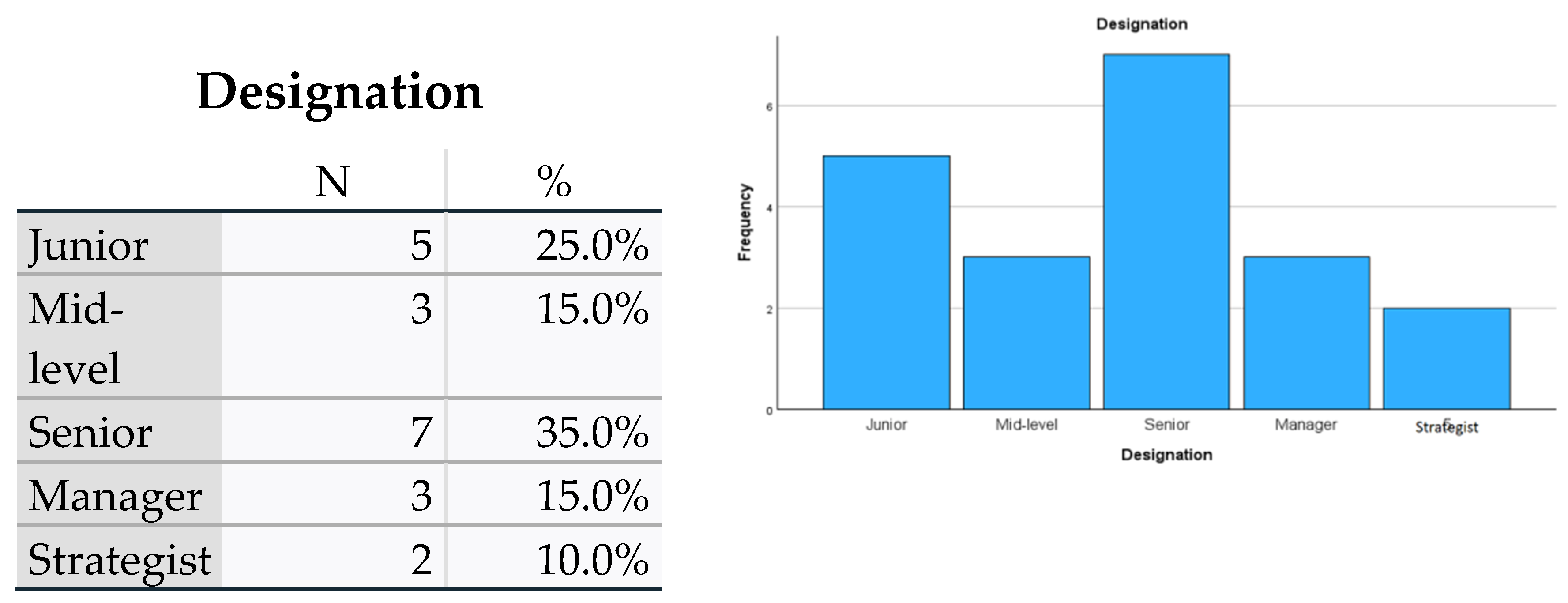
Figure 5.
Working experience of the respondents.
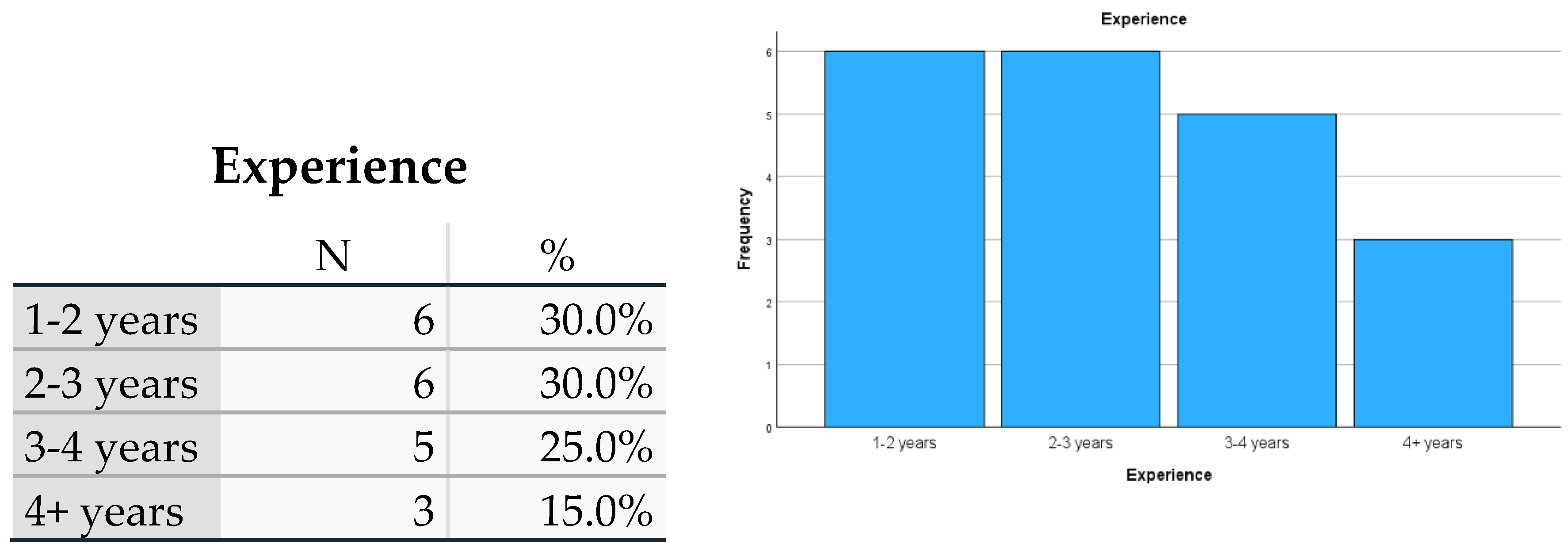
Figure 6.
Training experience of the respondents.
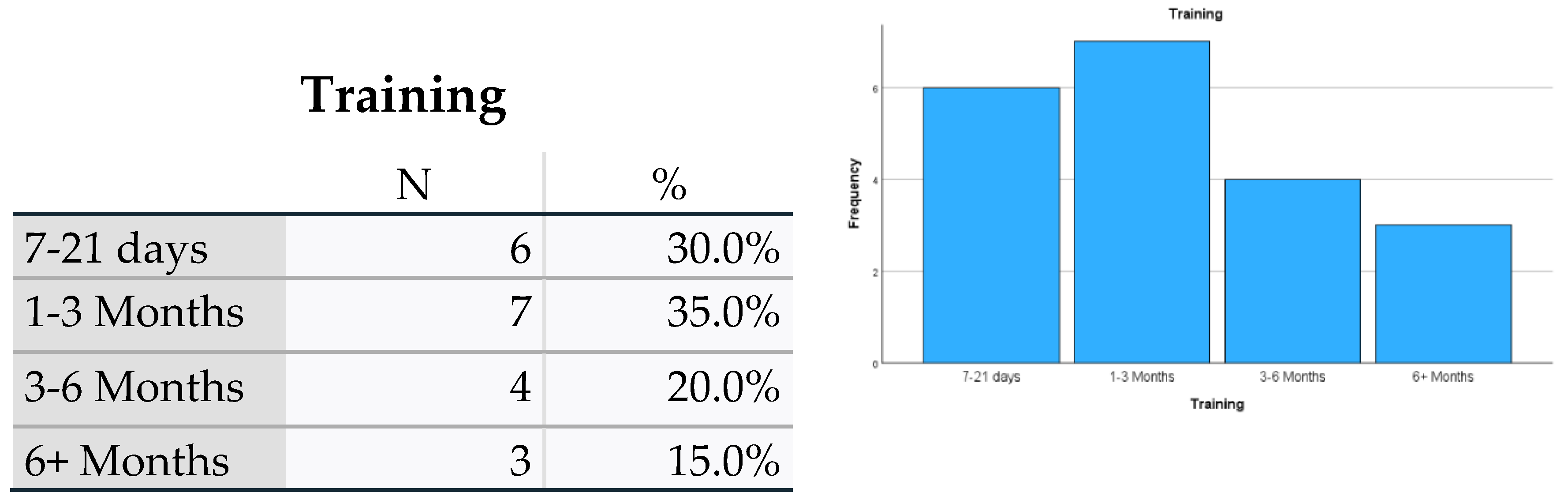
Figure 7.
Technological advancement of the respondents.
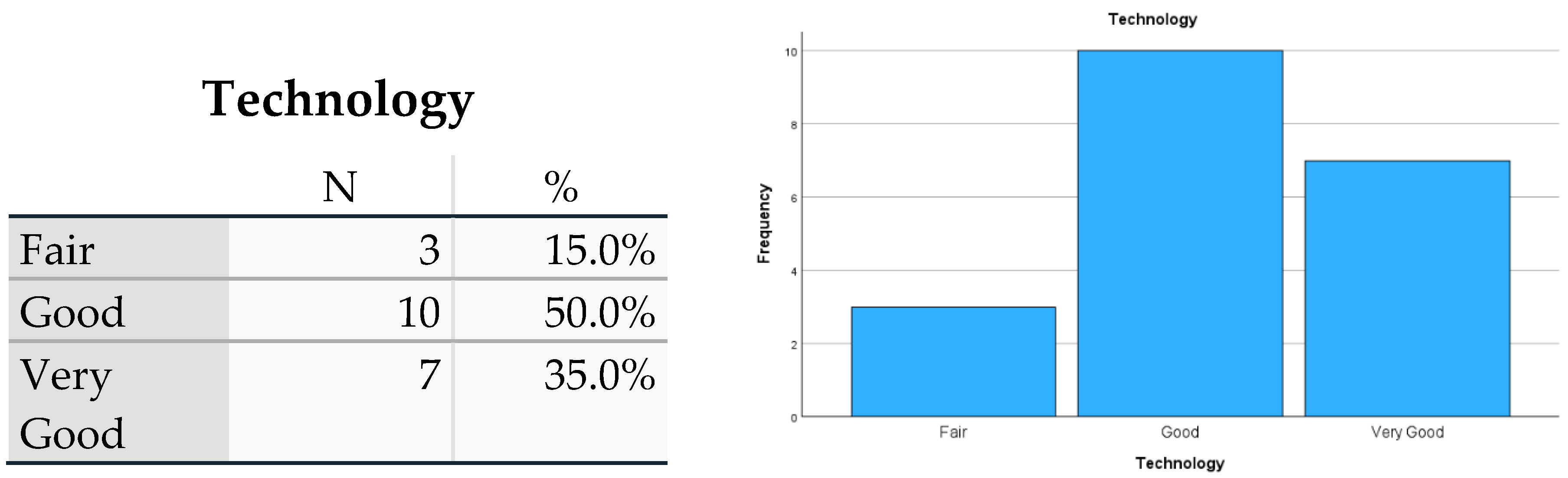
Figure 8.
Selection of key procurement process areas.
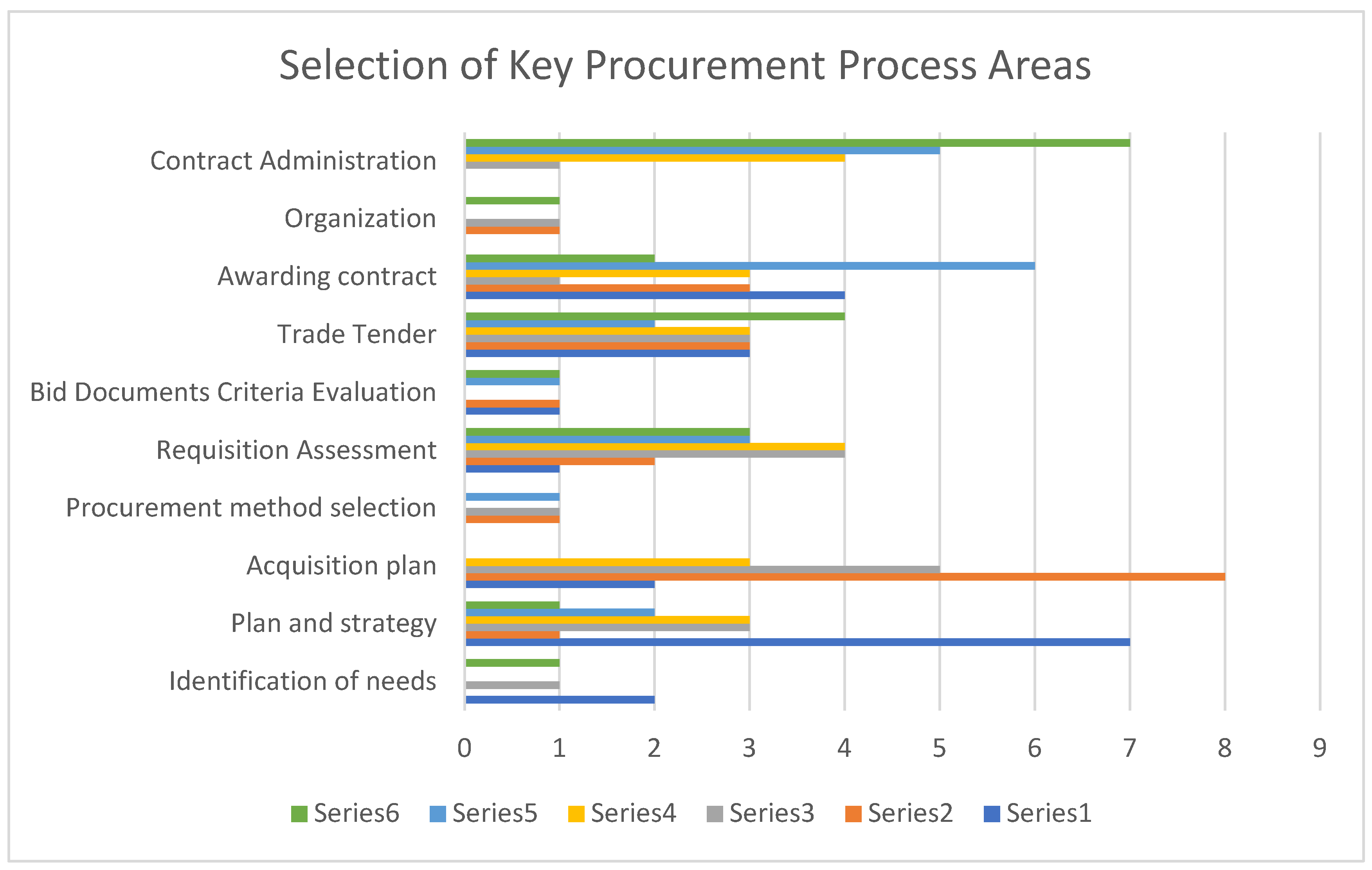
Figure 9.
Maturity level of the key procurement process areas.
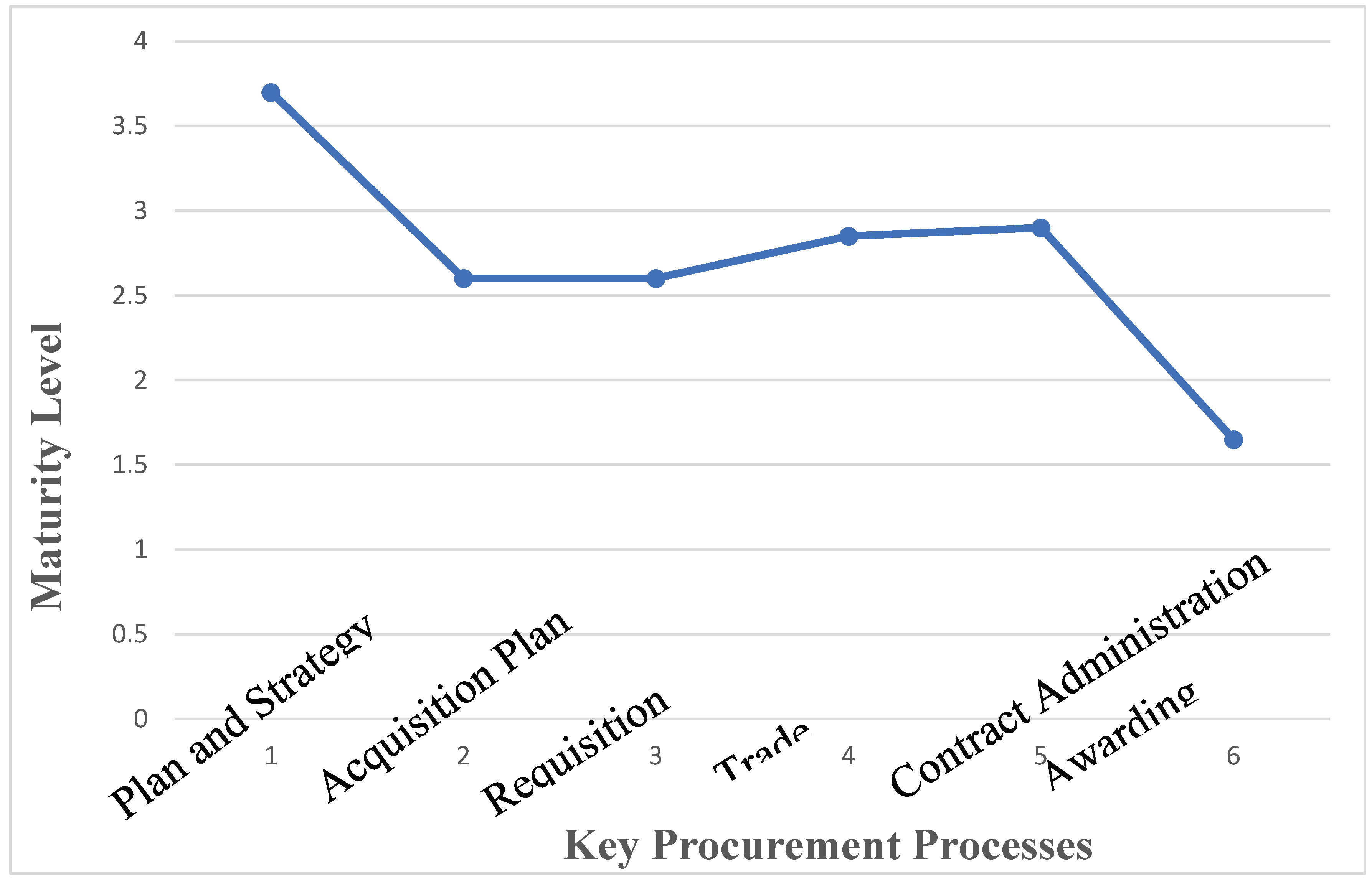

Table 1.
Numerical count of the votes of the respondents.
| Best Six process areas | |||||||
|---|---|---|---|---|---|---|---|
| Procurement process areas | 1 | 2 | 3 | 4 | 5 | 6 | Total |
| Identification of needs | 2 | 0 | 1 | 0 | 0 | 1 | 4 |
| Plan and strategy | 7 | 1 | 3 | 3 | 2 | 1 | 17 |
| Acquisition plan | 2 | 8 | 5 | 3 | 0 | 0 | 18 |
| Procurement method selection | 0 | 1 | 1 | 0 | 1 | 0 | 3 |
| Requisition Assessment | 1 | 2 | 4 | 4 | 3 | 3 | 17 |
| Bid Documents Criteria Evaluation | 1 | 1 | 0 | 0 | 1 | 1 | 4 |
| Trade Tender | 3 | 3 | 3 | 3 | 2 | 4 | 18 |
| Awarding contract | 4 | 3 | 1 | 3 | 6 | 2 | 19 |
| Organization | 0 | 1 | 1 | 0 | 0 | 1 | 3 |
| Contract Administration | 0 | 0 | 1 | 4 | 5 | 7 | 17 |
| 20 | 20 | 20 | 20 | 20 | 20 | 120 | |
Table 2.
Selected key procurement process areas.
| 1 | Plan and Strategy |
| 2 | Acquisition Plan |
| 3 | Requisition Assessment |
| 4 | Trade Tender |
| 5 | Awarding Contract |
| 6 | Contract Administration |
Table 3.
Process specific level description and recommendations.
| Key Process Areas | Level of the maturity | Recommendation |
| Plan and Strategy | Plan and strategy is fall under the maturity domain 3. Procurement plan and strategies are well communicated throughout the department. Formal documentation are maintained for the procurement planning. | Integration of the processes involved in contract management with the other fundamental operations of the business is required. |
| Acquisition Plan | The maturity level of acquisition planning process is 2. The organization has established some basic contract management processes and standards in acquisition planning, but they are only required on selected complex, critical, or high-visibility contracts. | For acquisition planning, transparent communication need to be established throughout the team that will make them aware about any transaction plan. |
| Requisition Assessment | Assessment of requisition in the procurement process JMI cylinders fall under the maturity level of 2. Not all the supply require the contract management so far, that makes the process difficult to track the history of any purchase planning and assessment. | This is important to integrate the other department such as inventory management and finance in the requisition assessment process. |
| Trade tender | Maturity level of the tendering process is in level 2. The process is still following the traditional online calls for tender. Some supplies are still using quotation offer submission by paper. Not so useful process for following up the quotation. | Tendering is required to digitalized for all supply quotation acceptance and analysis. |
| Contract Administration | Maturity level of the contract administration is in level 2. Email based communication among the stakeholder limits the visibility for all the departments of the supply chain. | Transparency in contract administration is required for a seamless procurement process. |
| Awarding Contract | The organization is performing the least on the contract awarding process. Involvement of limited number of practitioners in this process makes the procurement of a supply questioned. | The involvement of multi-sectoral practitioners that enables to verify a awarding process is required. |
Disclaimer/Publisher’s Note: The statements, opinions and data contained in all publications are solely those of the individual author(s) and contributor(s) and not of MDPI and/or the editor(s). MDPI and/or the editor(s) disclaim responsibility for any injury to people or property resulting from any ideas, methods, instructions or products referred to in the content. |
© 2024 by the authors. Licensee MDPI, Basel, Switzerland. This article is an open access article distributed under the terms and conditions of the Creative Commons Attribution (CC BY) license (http://creativecommons.org/licenses/by/4.0/).
Copyright: This open access article is published under a Creative Commons CC BY 4.0 license, which permit the free download, distribution, and reuse, provided that the author and preprint are cited in any reuse.


