
Submitted:
28 February 2024
Posted:
28 February 2024
You are already at the latest version
Abstract
While providing safe water for the rural poor is considered a basic human right, there are numerous issues associated with existing technologies with shortcomings. Performance issues have continued to fail to meet the needs of impoverished families due to issues including high cost, difficulties with performance, and continuing needs for maintenance. These issues have severely interfered the safe water accessibility. Key aspects of the Guelph Water Filter (GWF) system can avoid/minimize many of these issues. The GWF as described herein enables delivery of low cost, long-term performance at 3Log removal of E.coli and can deliver 1 to 3 L of treated water per hour. The GWF is simple to operate, has an ability to provide sufficient water for a family, maintains longevity of performance, is easy to maintain and has protection against breakage during the cleaning process, is repairable at village level, and operates using a sizable reservoir of water to supply raw water, meaning the technology does not need to be refilled frequently. Hence, the capability of the novel GWF technology is shown to bypass many of the troublesome features of alternative low-tech water treatment technologies. The potential for the GWF to function for 2 days continuously avoids the need for young girls to fetch raw water frequently during a day, thereby enabling them to attend school. Hence, the GWF enhances the potential to result in ‘safe water and full schools’, providing the opportunity for girls to receive education and capture socio-economic benefits for the community.
Keywords:
Low-tech
; ceramic filter
; safe water
; full schools
; long term performance
; easy to use
; robust performance
; girl’s education
1. Introduction
The quality of water bears silent witness to its many uses and pathways, resulting in deterioration of water quality and yet, water is essential for life. In 2022, 2.2 billion people still lack safe drinking water (WHO, 2022). Safe drinking (potable) water is generally considered as water that is safe for drinking and food preparation at the point of consumption. Safe drinking water as defined by the WHO (2022), is defined as water which does not represent any significant risk to health over a lifetime of consumption, including different sensitivities that may occur between life stages.
On 28 July 2010, the United Nations General Assembly adopted an historical resolution recognizing “the right to safe and clean drinking water and sanitation to be a human right that is essential for the full enjoyment of life and all human rights” (A/RES/64/292). (UN, 2010). This ‘right to safe water’ entitles everyone to have access to sufficient, safe, acceptable, physically accessible, and affordable, for personal and domestic use (UN, 2002); however, availability of safe water is not even close to a reality in many locations/cities in the world.
As a demonstrative example, consider the need for access to safe water in Kathmandu, Nepal. Even wealthy people do not have safe water delivered to their homes by water distribution pipes; instead, they must plan to have a person available for specific days of the week coinciding when there is water available in the water distribution system. Hence, during periods of essentially zero pressure in the distribution system for days-on-end each week, means infiltration into the water distribution pipes will be frequent and potentially influenced by ambient groundwater (with whatever microorganisms the groundwater contains) being introduced to the water distribution system and into people’s homes and hence, is not safe for consumption.
Given that access to safe drinking water is a basic human right and approximately 25% of the world’s population lack this access. The consequence of this situation is eighty-eight percent of the estimated four billion cases of diarrhea that occur annually, worldwide, are attributed to water pollution. (WHO/UNICEF, 2022 & 2023).
Further, 1 million people are estimated to die each year from diarrhea due to unsafe drinking water, sanitation, and hand hygiene, even given that diarrhea is largely preventable, and the deaths of 395,000 children aged under 5 years could be avoided each year if these risk factors were fully addressed. Diarrhea is the most widely known disease linked to contaminated food and water and is a significant contributor to malnutrition due to the loss of nutrients in the stool as well as causing degeneration of the intestinal gut wall. Diarrhea is typically caused by microorganisms entering the intestinal tract, which opens up the potential for contact with food or water that has been contaminated by fecal matter (WHO, 2017 &2020). Given the extensive situations where open defecation occurs, the availability of safe water for human consumption of water supplies from rivers/lakes translates to major challenges for families in many countries.
Causative impacts to water deterioration for rural populations are becoming increasingly widespread as population growth continues and poverty increases, plus the impacts due to climate change (e.g. due to increasing drought/desertification and flooding). All are intensifying the challenges to provide access/availability of safe water for human consumption.
There are 546 million children in the world where schools are without drinking water, and one-third of these students live in Low Development Countries, and more than half live in fragile contexts (WHO/UNICEF, 2022). The relevance of this is the challenge to provide improved opportunities for children to attend school arises; as a forward-looking example, the UNDP wants to trial the GWF technology in China where the children will be able to manage water for a school’s operations, so the teachers can ‘focus on teaching’ (Huang, 2023).
For the rural poor, the preceding dialogue indicates the need for Point-of-Use (POU) treatment such that individual households would be enabled to treat their own drinking water and for food preparation. Given these circumstances, the POU must be simple to operate, inexpensive, socially acceptable, and sufficiently effective that it provides safe water and, by extension, reduces diarrheal illness. Hence, POU as a decentralized approach aligns with the principles of community empowerment and sustainable development, as they allow communities to take control of their water quality and health.
Another important dimension is that women and girls are responsible for fetching water in 7 out of 10 households for homes that do not have home water delivery, according to the first in-depth analysis of gender inequalities in drinking water, sanitation, and hygiene (WASH) in households (WHO/UNICEF, 2023a). In fact, in two out of three households, women are primarily responsible for water collection, and 25% of the world’s population do not have save drinking water available (WHO/UNICEF, 2023b). However, ensuring clean drinking water in schools is not only a matter of health and well-being but also a fundamental right for students. Safe water supports the students’ overall development and helps create a conducive environment for learning. Governments, educational institutions, and communities need to work together to ensure that schools have reliable access to safe drinking water.
Since fetching water is a common task for many girls, particularly in rural areas, the burden of water collection often falls disproportionately on women and girls. The time spent on fetching water varies depending on the distance to water sources, the availability of infrastructure, and the local conditions. In many cases, girls may need to travel substantial distances and do so, many times in the day (Seghal, 2023). This may have a direct impact on their education, as the time spent on water collection reduces the time available for schooling. Safe water is essential for maintaining proper hygiene, which is particularly important for girls as they go through puberty. Access to safe water ensures that girls can manage their menstrual hygiene effectively and reduce the risk of infections. As well, the availability of safe water in schools has the potential to create a more supportive environment, encouraging girls to attend classes regularly. Moreover, when girls have access to safe water, they are more likely to be present in school, attentive in class, and able to focus on their studies. This would contribute to improved educational outcomes for girls, enabling them to participate more fully in school activities and develop skills that contribute to their personal and community development.
Apparent from the above is there are multi-dimensions and challenges in providing safe water to large segments of the world’s population and providing opportunities for young girls to get an education is a critical dimension of the problem. The needs are profound, and multi-faceted.
2. Literature Review of Low-Tech POU Water Treatment Options
2.1. Some of the Basic Issues of Failure of Available Low-tech Water Treatment Options
As the preceding indicates, the needs for safe water are readily apparent. As a result, attention must be given to the features needed to ensure that POU treatment technology is available, consistently provides safe drinking water, and improves the potential for education of young girls to be improved.
Efforts to provide safe water to the rural poor have been extended for decades, resulting in numerous alternative POU systems having been described in the technical literature (Pooi & Ng, 2018). Historically, one of the most important methods to provide safe water involved boiling the water, effectively eliminating various water-borne pathogens such as protozoa, bacteria, viruses, and fecal coliforms. However, in many low-income countries the burning of wood and coal for boiling contributes to air pollution and is becoming increasingly difficult to collect. Alternatively, 2500 years ago Hippocrates invented the first cloth bag filter to remove turbidity (see Figure 1). Later, starting about 150 years ago, employing chlorine, and chlorine-containing granules or tablets, became another POU system accessible at the household level, significantly improving the microbiological quality of drinking water but this approach risks the creation of ingestion-related carcinogenicity of the drinking water from disinfection byproducts and trihalomethanes (e.g. see Zhu et al., 2014; McBean et al., 2008).
Solar disinfection (SODIS) is another POU system utilizing sunlight's ultraviolet light and heat to deactivate microorganisms, offering a cost-effective and easily implemented method with advantages such as low cost, minimal consumables, surpassing both chlorination and boiling. However, this requires copious sunshine and appropriate bottles and exposure to accomplish the disinfection.
There exist as well, many other POU technologies, some of which are much more sophisticated. As an example, ‘LifeStraw’ has good credential but is very expensive (for a family of five costs ~$175US) and thus is far beyond financial feasibility for use by poor, rural families unless there is an agency or private source that can provide the needed funding).
One of the most important dimensions, the need to develop alternatives that are affordable to the rural poor while being effective, had as a first step, an invention in 1990 by Fernando Mazariengas of Guatemala. This involved the mixing of clay and rice husk into a pot-shape, followed by firing the resulting pot to burn off the rice rusk, providing a filtration effect that allows water to pass through the ceramic filter via small pores. This method prevents migration of bacteria and protozoa through the walls of the ceramic pot (see Figure 2(a) showing clay pot filters in a container vessel that collects the filtered water and Figure 2(b) showing clay pots air-drying at RDI manufacturing facility in Phnom Penh, Cambodia). This original concept has been subsequently investigated in many respects, many of which have improved the basics of the technologies.
Ultimately, many of the POU technologies for rural populations have ended up based on the clay pot filter (CPU) concept. The ceramic filter initially was formed into a desired shape and fired at temperatures of 750 °C to 800 °C. Use of CPF for water treatment has blossomed out to be used in many countries. Venis and Basu (2021) indicated that CPFs were used at ~ 700,000 locations in 2014 and serving 4 million people (van der Lann et al., 2014). Numerous others (e.g. Bulta &Michael, 2019; Kallman, 2013; Bloem et al., 2009; Pérez-Vidal et al., 2021; Annan et al., 2018; Venis and Basu, 2021; Shepard et al. 2020; Venis and Basu, 2021). Many research articles exist indicating adjustments such as use of different raw material ratios as sacrificial inputs in the making of the ceramic filter (e.g. rice husk, coffee grounds, sawdust). Less frequently, other materials have also been used (e.g. peanut husk (Chaukara et al., 2020a), coconut husk (Rivera-Sanchez, 2020)) on the performance of CPFs. These studies collectively show that when the proportion of sacrificial materials such as sawdust or rice husk content increases in the ceramic water filter composition, the filter's porosity also increases. This occurs because combustible elements burn out during firing, leaving behind voids or pores in the ceramic matrix. As a result, while the flowthrough rates increase (both larger pores and numbers of pores), microbial contamination removal decreases (Bloem et al., 2009; Bulta & Micheal, 2019; Kallman et al., 2013). Further, while Bloem et al. (2009) suggested that increasing the initial flow rate up to 10 L/h by increasing rice husk or laterite would not compromise E. coli removal within 6 months, this has not been shown nor is this consistent with the experience at Guelph.
Based on the above examples of findings, various approaches/types of ceramic filters have been designed using the general range of 80% clay and 20 % as a sacrificial material. While these various concepts have basically worked, many problems continue, including ‘too slow’ a rate of water treatment, and the devices are heavy and difficult to clean, and suffer from breakage.
While widely used, there are numerous challenges associated with use of the ceramic filter in the shape as a CPF. These challenges include:
- (i)
- Making Ceramic Filters in the Form of a CPF -The CPF structure can be a major deterrent for use since there exists an ongoing concern about allowing the outside of the CPF becoming contaminated by an individual touching the outside portion of the pot during the cleaning process to remove sediments; this contaminates the treated water.
- (ii)
- Lifespan of the Ceramic Filter - Ceramic filter systems generally are reported to have a lifespan varying from 6 months to 3 years, although raw water quality, water usage, and maintenance issues all impact the lifespan of the CPF. More specifically, examples include that during a 27-month monitoring study by Venis& Basu (2021) on ceramic water filters, 14% of the filters broke by the 3-month interviews, escalating to 18% at the 6-month mark, 22% at 12 months, and 24% at 15 months.
While the lifespan of ceramic filters varies based on factors such as breakage and reduced filtration rates, the average replacement period appears to be 1-2 years. Some studies, such as in Cambodia, Brown and Sobsey (2009) found no correlation between time in use and microbiological effectiveness, suggesting filters can remain effective for up to four years or longer. Other researchers have reported much briefer periods of functionality. Campbell (2005) found filters tests after five years still removed 100% of E. coli, a magnitude which is very suspect. Akosile et al. (2020) suggested replacement of the ceramic filter every 1 to 2 years.
Further complicating the issue of duration of performance of CPF technologies are issues of maintenance. The lifespans of CPFs vary based on several different factors, such as breakage or reduced filtration. The lifespan depends on the care and maintenance such as regular cleaning and the influent water quality and water usage (e.g. Rayner et al., 2013; Venis and Basu, 2021; Chaukura et al., 2020a). There is frequent cleaning needed to retain the original water throughput, requiring brushing the filter surface twice with a stiff brush and subsequently rinsing with demineralized water (Chaukura et al., 2020a).
- (iii)
- Lifespans of Alternative Low Tech Water Treatment Technologies Vary - Many alternative water treatment technologies have short lifespans in the developing world even when they are relatively expensive. As an example, the costs of an Arsenic Iron Removal Plants (AIRP) are ~60$US/unit), an example of which is shown in Figure 3. Although pertinent to a different water treatment technology, McBean (2012) and Sorenson and McBean (2014, 2015) reported fewer than 40 of 135 originally installed Arsenic Iron Removal Plants (AIRPs) in Bangladesh were still in use in 2012 after three years of operation. Hence, this finding is important because many social considerations stopped continuing use of the AIRP technology. These considerations include (a) functional issues including the presence of insects entering the tanks, and broken parts; (b) the difficulties of cleaning the technology because parts of the technology are particularly heavy) (Sorensen & McBean, 2014 & 2015); and (c) the most important dimension which ends up causing dis-continued use of AIRPs is because while arsenic contamination causes cancer, the illness is not evident for a number of years. Hence, users tend to reach the conclusion ‘why bother to maintain the technology’ as they forget the long-term objective (Brennan and McBean, 2011a, b).
- (iv)
- Repair Options for Many CPFs Don’t Exist - Generally, CPFs have been made in sizable factories such as at RDI in Cambodia (as per Figure 2(b)). It is noted that there is now increasing manufacturing being done in villages (see ‘youtube making clay pots for water treatment e.g. see https://www.youtube.com/watch?v=VB1Sg6JjFos)). Regardless, non-functional CPFs must be replaced, not repaired.
- (v)
- Removal of the Sediments -The flow rates of ceramic filters decrease over time, particularly when surface water is used (e.g. Brown and Sobsey, 2009; Farrow et al., 2018). Consequently, periodic cleaning of the CPF’s internal surface is essential to restore the flow throughput. Further, CPF factories recommend employing a stiff laundry brush for scraping the filter surface, and this is sometimes advised to be done once every 4 weeks (Brown and Sobsey, 2010). By others, with a primary focus on restoring water flow, McBean et al. (2019) and Farrow et al. (2018) suggest that ceramic filters should be brushed regularly every 2-3 days using a soft brush, to maintain optimal flow rates and extend the filter's lifespan. It is noted that brushing a CPF is challenging for both old and young individuals due to the weight (about 7 kg) so heavy to remove the CPF from the receptacle tank while also avoid touching the outside of the CPF to avoid contaminating the treated water, underscores both the importance of, and need for, careful maintenance to ensure performance of CPFs.
2.2. Summary Dimensions of Features concerning CPFs as a Low-Tech Water Treatment Option
In summary, the specific features, and rationale that describe the various shortfalls include:
- (i)
- Cost of a CPF – Cost is a key factor since many rural poor have incomes of just a few dollars/day. The cost of the RDI CPF has historically been ~8$US for CPF plus the remaining parts (receptacle tank, spigot etc.) represent additional costs. Farrow et al. (2018) used the RDI CPF in southern China and it was very enthusiastically acclaimed by the residents (e.g. when the field trials were completed, the residents asked to keep the technology rather than return it and hence, was not a deterrent).
- (ii)
- Failure to Maintain the Necessary Minimum Flow Rate – For a family, the need is typically characterized to have flows of 1-3 L/hr which provides sufficient water supply for drinking water and for basic food preparations to a household. If the CPF flow is low, many users abandon the technology. Without proper maintenance, the flow rate of ceramic disk filters will decline significantly. Slow rates of water throughput are a common cause for abandonment of use of the filter were mainly caused by flowthrough rate being too slow (e.g. 31% reported by Clasen et al. (2006)).
In Pakistan, Ensink et al. (2008) reported a more rapid decline in filter usage of 10% of households were not using the technology after the first 3 months, and 65% were reported to have stopped using the filter between 3-5 months. In Sri Lanka, Casanova et al. (2012) found that 76% of beneficiaries were still using the filter approximately 2 years post implementation.
- (iii)
- Need for Frequent Re-filling of the CPF for All Days – The CPF has a maximum volume of ~9 L which means that someone (which typically falls upon a young child) must carry out frequent refilling during the day, thus preventing the child from attending school.
- (iv)
- Failure of the Design to Provide Safe Water – Failure of the ceramic filter apparatus to provide safe water has been widely identified (e.g. in Ethiopia where they didn’t reach the desired 3Log removal of E. coli. (Bulta & Michael, 2019)). Many of the CPFs described in the literature have not been properly evaluated to determine whether delivery of safe water is provided although Bulta and Micheal (2019) claim elimination of approximately 99.88% of waterborne disease agents for rural point-of-use water.
- (v)
- Breakage of the CPF Frequently Occurs Since the Technology is Heavy – Breakage of the CPF is a continuing issue. The pot is heavy and requires the CPF to be removed from the holding apparatus, to allow removal of the accumulated sediments within the CPF. The removal of the sediments is only attained if the CPF is scraped/brushed, to enable removal of the sediments. Either of two options put the quality of the treated water in jeopardy: (a) if the CPF is cradled in the arms, the outside of the CPF is touched by the individual and/or the CPF is placed on the ground why doing the cleaning, resulting in the exterior of the CPF being contaminated, and/or (b) the CPF is heavy and dropped, breaking the CPF. As examples of these concerns, in Bolivia, after 9 months, 67% of the households regularly continued to use the filter, 13% in occasional use and 21% not using the filter or the filter broke (25%) (Clasen et al. 2006). Further, Brown et al. (2009) reported that in Cambodia reported breakage at 42% of the households. Since the CPF is heavy, users of the CFU drop the device; there is no repair option available which would refurbish the CPF.
- (vi)
- Additives to Enhance Effectiveness of a CPF ‐ An option which is available to many types of CPFs is to add ‘silver’ using a brush after firing. Venis and Basu (2021) reviewed a series of options for potentially improving the CPF using silver (dipping/painting or co‐firing). Silver nitrate is indicated to have the effect of killing and disabling the reproduction of the smallest bacteria able to pass through the pores as well as help to prevent mold from growing on the filter surface over time and continued use the pores of the filter diminish in size due to clogging. Silver has also been utilized where the silver nanoparticles interact and disrupt the cell wall of bacteria thus acting as an effective micro‐biocide to prevent mold from growing on the filter. Application of silver nitrate involves a cost of ~3$/application (Venis and Basu, 2021).
Numerous studies have been conducted (e.g. Wafy et al., 2023; Dung et al., 2019; van Halem et al., 2014; WHO, 2017) focusing on the use of silver to enhance the efficacy of CPFs in purification of water. Brown et al. (2009) investigated the impact of adding ‘iron’ on water quality but their findings indicate that the use of iron does not significantly contribute to the removal of E. coli or the reduction of turbidity as compared to filters without iron.
Use of silver to improve effectiveness of microbiology (Kallman et al., 2013; van Halem et al., 2017); Bielefeldt et al., 2009; and Bloem et al., 2009.) examined the impact of silver on CPFs. Kallman et al. (2013) reported that silver nanoparticles significantly improved E. coli removal. Halem et al. (2007) reported limitations in virus removal despite silver's success against E. coli. Bielefeldt et al. (2009) noted mixed results in silver's effectiveness during prolonged use, while Bloem et al. (2009) highlighted silver's role in reducing biofilm formation and maintaining flow rates. These studies collectively suggest silver enhances bacterial removal, but the efficacy varies, including the degree to which the additive is impactful against viruses over the long term.
- (vii)
- Removal of Metals in CPFs -Some research has been done to consider the removal of water-borne toxic metals, organics and pathogens in the CPF, aimed primarily at chemical pollutants (e.g. Chaukura et al., 2020b) and such as the average removal efficiencies for Hg, Pb, and As are 91.5, 92.1 and 50.2 percent respectively (Pérez-Vidal et al., 2021). While important, trying to remove chemicals is an expanded purview of concerns and is beyond microbial issues, so not dealt with herein.
- (viii)
- Evaluation of Effectiveness of CPF on Removal of Viruses – Removal of viruses has seen only limited attempts to assess the removal of viruses in CPFs or some equivalent thereof. It is acknowledged that lab testing for viruses generally requires access to a Tier 3 lab which is not generally available. To some extent, viruses tend to infect larger microorganisms (bacteria and protozoa) and hence, a virus is removed when the larger microorganisms are removed, and/or by the biofilm that develops on the interior of the ceramic filter (Farrow and McBean, 2014; Brunsting & McBean, 2011).
As apparent from the above, there are demonstrated concerns regarding CPFs having serious drawbacks and some issues needing further investigation.
3. Safe Water and Full Schools
Of great importance are the implications of the widespread reliance on young children, particularly girls, who are tasked to participate in the collection of raw water from lakes, rivers, wells, etc., and to fetch wood to boil water. If there is a water treatment technology that is reliable, the need would decrease to fetch wood since it is only for food preparation.
An important consequence of requiring a continuation of fetching water and wood is that many children, and particularly young girls, the result is failure of the young girls to get an education. It has been shown that getting an education allows females to participate at the decision table, get a job, marry, and have fewer children. The time is now to stop looking at girl’s education as something to be ‘solved’, but instead, needs to be considered as a solution to some of the major issues of the world. Research shows that when educated women work, the majority of their income goes back into children’s education, health, and the communities in which they live. Since girls with an education are more likely to run a business, educate their children and give back to their communities, the benefits are evident. Hence, the philosophy that this author supports is to encourage ‘safe water and full schools.’
4. Performance of Technology Opportunities Obtained by the Guelph Water Filter (GWF) as a Low-Tech Water Filter
In response to alleviate many of the needs, an important modification of the low-tech water treatment technology is the GWF, as described below.
4.1. Background to Features of GWF
Consider now the Guelph Water Filter (GWF) which has a unique design that protects the integrity of the means of delivering safe water in numerous dimensions. Specifically, instead of the CPF, the basis of the GWF is reliant upon two ceramic filters which are each 20 cm in diameter and 1 cm thickness, (and for assessment at Guelph, using Newman’s Red Clay), and mixing with rice husk ground from between 425 and 850 um. This method involves firing porous ceramic disks to create a filtration medium that eliminates bacteria and protozoa through filtration and biofilm development. These ceramic water filters have been specifically designed to target waterborne pathogens and have shown significant efficacy, achieving the 3-log removal (i.e. 99.9 % removal) of bacteria and protozoa.
The GWF relies upon a 9 cm segment of PVC pipe as pictured in Figure 4. The GWF has a ceramic filter at both ends of the PVC pipe, allowing the GWF to be placed in a large tank of raw source water, enabling the raw water tank to have a large hydraulic head and provide a high rate of production of water. Assuming the raw source water to be used is in reasonable proximity, then the children can fetch the water early in the day, and then attend school.
McBean and Farrow (2021) conducted research focused on enhancing the GWF by evaluating the advantages of a disk-shaped configuration (as opposed to the CPFs). This innovative approach was aimed at addressing several challenges, including affordability, sufficient water supply for households, ease of operation and maintenance, durability against breakage, prevention of recontamination, and long-term functionality. The system's unique vertical placement of ceramic filters considerably prolongs their lifespan, minimizes clogging, and provides substantial surface area to be available for filtration. Additionally, the inclusion of a large reservoir reduces the necessity for frequent refills, renders the GWF well-suited for assembly of the GWF at village-level, thus generating local employment opportunities (McBean & Farrow, 2021).
With this configuration, there is the opportunity to easily clean the ceramic filter with a soft brush on the vertical configuration of the disks, to remove particulates (where the removed particulates fall to the base of the raw tank, easily able to be cleaned out periodically from the large tank), while the ceramic filters can then continue to demonstrate a high rate of hydraulic throughput.
As a result of the abovementioned issues, many shortfalls of the existing technologies were able to evolve to improvements over the CPF and improve the longevity and functionality of the technology:
- (i)
- The two-sided ceramic disc filter technology is as depicted in Figure 4 and Figure 5 where the depth of raw water in the large reservoir provides the hydraulic energy to move water through the ceramic disk filter and housing, into the interior of the technology, followed by capture between the two disks and exiting via a flexible tube to an exterior drinking water vessel.
- (ii)
- With the GWF there are two ceramic disc filters, each with a 20cm diameter disc. The housing of the disc has been utilized within the short PVC length, sealed around the perimeter of the disc using silicone, and an outlet to deliver the water to an exterior vessel.
As shown in the following, some of the most important aspects of the GWF design are fundamental changes that are used to protect the integrity of performance of the ceramic filter, involving adjustments and improve the performance over the low-tech water treatment systems.
4.2. Specific Attributes of the GWF
The GWF is depicted in Figure 4, as the GWF is at the bottom of the raw water tank, and Figure 5 shows the GWF where the PVC section has one of the ceramic filters on the visible end of the section, and one ceramic filter on the other side. Hence, the water passing through the two ceramic filters then exits through the tube showing on the side of the GWF, then delivering that water through to the exterior of the raw water tank, into a holding vessel as treated water. An important feature then, is that the ‘clean’ sides of the filters are interior to the GWF and not able to be contaminated by being touched by the hands of the person operating/cleaning the GWF.
The resulting attributes of the GWF are described in the following points:
- (i)
- Large raw water reservoir – The large tank can be filled when convenient. Clearly, the proximity of the raw water to the GWF will influence the time required to fill the raw water tank, allowing the filling tasks not interfering with the children being able to attend school. The effort of refilling is necessary to be completed only every two days, to enable treated water to be available, and thus sufficient to meet the needs of the family.
- (ii)
- Accessibility to Safe Water -Access to the treated water is immediately available from the exterior, filtered water vessel.
- (iii)
- Cost of the GWF - The major costs of the GWF are related to the 20 cm diameter segment of PVC pipe, and 8.8 cm long. It is noted that recycled PVC pipe may be available and, if thoroughly cleaned, could enable use that would greatly reduce the price for manufacture of the GWF.
- (iv)
- Ease of Repair of the GWF -If there is failure of one or perhaps both ceramic filters, local (village level) replacement of the ceramic filter(s) could be easily accomplished, requiring no need to send the GWF to a distant location. The PVC pipe serves as protection against breakage, making the GWF robust.
The opportunity to make the ceramic filters at village level using the same firing ovens as used to make plates/cups, etc. provides a business opportunity in the village, and thereby at an affordable price. This allows the filter pieces to be replaced, thereby facilitating easy repair as well as jobs in the villages.
The assembly of ceramic filters utilizes a silicone sealant to make 1 filter (both sides) and plumbing and fittings costing ~5 to 8 $.
- (v)
- Vertical Orientation of the Ceramic Filters in GWF - The GWF is best utilized vertically so that entrained sediments from the raw water are less prone to become entrained in the ceramic filters. Hence, the sediments that would otherwise tend to clog the ceramic filter(s) will fall harmlessly to the bottom of the raw water tank. The sediments on the bottom of the large reservoir can be washed out via a small drain at the bottom of the raw water tank. Gentle brushing of the surface of the ceramic filters dislodges the sediments and particulates that break off within the filter (something which happens in all ceramic filters), restoring the flowthrough rate of the filters.
- (vi)
- Placement of GWF Vertically, as opposed to Horizontally - By placing the ceramic filter technology vertically, there are two filters providing a total area of 626 cm2 x 1 cm thickness and hence, greater filter availability, thereby doubling the filtering surface.
- (vii)
- Implication of Placement of GWF at Bottom of Large Raw Water Vessel - By placement of the GWF at the bottom of the raw water tank, the GWF stays in position at the bottom, not having to be removed, preventing the dropping/breaking of the technology. A handle is provided (see Figure 6) so that the GWF can be lifted (if required, although not necessary for most purposes required such as needed for clay pots, for example).
- (viii)
- GWF is easily maintained and managed at the local level - The simplicity means that even school children can maintain them. Thus, this filter reduces the workload, freeing up the child’s time to pursue other activities, including getting an education. Facilitating the education of young women has important societal benefits. According to the World Bank, educated women are more informed about nutrition and healthcare, have fewer and healthier children, marry later, have higher economic security, and are more likely to participate in the labor market (Caruso, 2021).
- (ix)
- Hydraulic Throughput the GWF -The hydraulic transmissivity through the ceramic filters is evident in Figure 7. Of most importance, when functioning as intended, the filters provide substantial quantities of water varying from 0.5 to 3 L/hr/ceramic disk (and even more, if desired since there are two disks).
If/when the situation arises that over a lengthy duration (e.g. over a holiday period), the hydraulic throughput may decrease due to ‘slime’ build-up, such that the hydraulic throughput of the GWF drops substantially, a ‘shock’ treatment using bleach has virtually immediate effect by removing any slime buildup, returning the desired hydraulic throughput very rapidly (within an hour). Clearly, this is good although the shock treatment must be followed up by again using fresh raw water to remove any of the effects of bleach, before the water is again used for drinking/food preparation.
- (x)
- Protection Against Breakage of the Ceramic Filters - The PVC housing helps to protect the integrity of the ceramic filters. Since there is minimal need to remove the ceramic filter technology, the PVC protects the integrity of the filters from cracking/breakage.
- (xi)
- Cleaning out the Sediments from the Filters -Advantages compared to the other low-tech water treatment technologies. including ease of maintenance (simple brushing to remove sediments and particulates from the filter, all the while with the filter providing no access to the ‘clean’ side of the filter being touched, reducing the needed frequency of refilling the raw water reservoir, with no possibility of contamination of the treated water by users.
The vertical alignment results in minimal settlement of solids in the filter which can be easily brushed off, and let the sediments collect on the bottom of the raw water tank. Periodically, the raw water tank can be cleaned out by opening a small tap on the bottom of the raw water tank and flushing out any accumulated sediments. There should be no need to remove the ceramic filter technology.
- (xii)
- Longevity of Life of GWF - Since ceramic filters raw water effectively for up to (at least) two years (no situation trialed at present beyond several months) and has not deteriorated sufficiently that it had to be replaced.
- (xiii)
- Raw Material Sourcing - This approach is cost-effective, environmentally friendly, and the ceramic filters can be manufactured using locally sourced materials and labor in the village.
- (xiv)
- Retains Healthy Minerals: Ceramic filters may be able to remove some minerals while not removing healthy minerals such as calcium and magnesium.
- (xv)
- Removal of Various Harmful Contaminants: Ceramic water filters are highly effective at removing contaminants from water, namely turbidity, sediments, and micro-organisms. Coupled with other filters such as activated carbon filters, the list could be expanded to include other treatment options. Hence, removal of harmful contaminants can be accomplished by combining the GWF with an additional, external filter. However, this doesn’t preclude use of additional dimensions being added to the GWF to enable reliable removal of chemicals through sorption, for example.
- (xvi)
- Use of Natural Materials in the Filter Ceramic water filters are natural and don’t contain any chemicals, metals, or plastics.
- (xvii)
- Testing in the Lab Prior to Dispersal - Hydraulic testing of the GWF must be completed using submerged water to ensure there are no leaks around the edges of the filters and then put in oven at 50 oC for 1 day. This procedure will avoid biological growth within the ceramic disk, returning to the useful hydraulic throughput.
- (xviii)
- The youtube video guiding the procedure to make the GWF is shown in https://youtu.be/_fAGcGGLM60 for the GWF).
4.3. Hydraulic Performance of the GWF
4.3.1. Performance of GWF over Time
With the types of issues raised in the preceding, the design of GWF has been ongoing over the last six years with evidence as demonstrated in this paper results in treatment technology that has three log removal of bacteria and protozoa, and the ability to provide sufficient safe water for a family.
Specifically, the ceramic disks are strategically positioned as part of a filtration system which allows easy maintenance using a soft brush to remove accumulated sediments. The disks are virtually indestructible and cannot be contaminated during cleaning since the ‘clean surface’ of each of the two filters are within the enclosed space between the two filters.
To evaluate the effectiveness of E. coli removal, E. coli measurements were made in both the raw and treated water, Escherichia coli (E. coli) in water by Membrane Filtration Using Modified membrane-/thermotolerant Escherichia coli Agar (Modified mTEC) utilized in the characterization.
The technology foregoes the need to boil water or add chemicals and instead, relied upon filtration and biofilm growth to deliver safe water. Removal of micro-organisms is accomplished at efficiencies greater than 99.9% and extensive virus removal occurs because viruses infect natural bacteria and are removed when the bacteria are removed by the filter.
4.3.2. Hydraulic Performance of GWF Components
Lengthy and diverse trials have been completed, to ensure performance of the GWF. As a representative example of the performance, the flows and removal percentages through four of the ceramic disks are depicted in Figure 7. The results demonstrate:
- (i)
- Flow throughput for single ceramic disks over time shows brushing effects at ~13 days between successive brushings. Characterized in Table 1 are the E. coli removals (all tested by themselves as single filters, not in combination with other filters). Since there are two filters, deteriorated performance of one of the filters may occur but still have a combined production rate from the two filters to deliver 1 L/hr.
The four filters showing the hydraulic throughput in Figure 7 were constructed using the following criteria – same composition for each with a combination of rice husk and clay, formed into a ceramic disk measuring 20 cm in diameter and 1 cm thick (to fit within the PVC pipe. The flow-through rates shown in Figure 7 are for a single disk (313 cm2 where ultimately, there is a disk on both faces of the treatment technology, providing surface areas of ‘313 cm2’ for each side and, hence, entailing continued operation until the hydraulic throughput amounts to 0.5 L/hr so that the combination of the two disks provides approximately twice the 0.5 or, in other words, 1.0 L/hr given the two disks.
The significant increases in flow rates are the result of periodic light brushing of the exterior of the disks, demonstrating the speed at which the flow rate can be preserved.
- (ii)
- The influent E. coli concentration during the removal percentages of E. coli : 3.8 x 10⁶ CFU/100 mL. The removal percentages for each of the four ceramic filters are listed in Table 1.
4.4. Social Implications of the GWF
The importance of education is an important element of the pursuit of development of an improved water treatment technology. A key feature of the importance of young girls attending school providing the opportunity for at least partial freedom from spending significant parts of the day fetching water for the family, is incredibly important to the world. With more education, females have increased opportunity to get a job, have a ‘seat’ at the discussion table, and have fewer children. Hence, to be successful, features are essential – affordable, repairability at local levels, easy to operate and provides broad social benefits including inclusion of women by lessening their role providing the opportunity to participate more extensively in school.
Safe and full schools is a major reason for undertaking this work since overpopulation is a major challenge world-wide which will arise from young girls being able to attend school, get a job and have fewer children.
5. Conclusions
The needs for provision of safe water are intensifying. While the capability of a family to easily rely on ceramic filters to deliver safe water have enormous merit, the potential for continued functionality of their ceramic is greatly hampered by the challenges/shortfalls that arise (breakage, slow production of safe water, efforts in maintaining the technologies, etc.) are rampant. Without sustainable and safe water supplies, there is no escape from poverty.
Further, in the absence of opportunities for young girls to be relieved from the need to frequently fetch water for the family, the potential is limited for girls to attend school and, as they mature, to participate at the decision table, get a job, marry, and have fewer children. Hence, the needs for production of safe water via the format to facilitate girls to attend school is critical to the theme to produce ‘safe water and full schools.’
For the reasons indicated above, the basis for the Guelph Water Filter is elegantly simple. The most important dimension of the GWF is the ’system’ of design components that provides the means of consistently delivering safe water.
The GWF is able to provide many years of safe water delivery, at an affordable price and in an easy-to-operate system, that is able to able to be repaired at local levels and provides the potential for broader social benefits via inclusion of girls attending school.
The recipe for production of safe water has been successful at attaining 3log removal (or 99.9%), and delivery of 1 to 3 L/hr which is sufficient for a family for purposes of drinking and food preparation. A light brushing only requires a few minutes on the outer faces of the ceramic disks, and the overall maintenance of the technology are elegantly simple, meaning that children can operate the technology and allow teachers to focus on ‘teaching’. ‘Simple production’ and ‘simple operation’ are the keys to success.
Acknowledgments
The development and testing of the GWF has been evolving for more than a decade. Many trials and adjustments have been made to protect users of the GWF, although there can be no assurance that users utilizing the GWF concept are guaranteed. The funding sources to pursue this research have been many, including Res’Eau WaterNET NETGP 434849-13, NSERC Discovery 9224, NSERC Discovery Grant (RGPIN-2018-04623) and Royal Bank of Canada (Wastewater Research Indigenous Perspectives), NSERC Create, and University of Guelph Leadership Chair Grant. Individuals who participated in some of the testing are many, and in particular, include Cameron Farrow and Md Hasan Tashnimul are acknowledged for their participation in some of the testing of the technology, and for many undergrads who assisted with the rice grinding (e.g. Alyssa Leonard, Connor Maxwell and Elaheh Koukhahi) and the many who have been contributing authors in the published papers referred to in the paper itself.
References
- Akosile, S., Ajibade, F., Lasisi, K.H., Ajibbade, T., Adewumie, J., and Babatola, J., 2020. Scientifici African, Vol. 7, Mar.
- Annan, E., Agyei-Tuffour, B., Bensah, Y., et al., 2018. “Application of Clay Ceramics and Nanotechnology in Water Treatment: A Review”, Cogent Engineering, Volume 5, Issue 1. [CrossRef]
- Bielefeldt, A.R., Kowalski, K., Schilling, C., Schreier, S., Kohler, A., Scott Summers, R., 2010. Removal of virus to protozoan sized particles in point-of-use ceramic water filters. Water Research. 44, 1482–1488. [CrossRef]
- Bloem, M. W., Semba, R. D., Kraemer, K. et al. 2009. An Introduction to the Impact of Climate Change, the Economic Crisis, and the Increase in the Food Prices on Malnutrition. The Journal of Nutrition, 140, 132-135. [CrossRef]
- Brennan, R., and McBean, E., 2011. "A Performance Assessment of Arsenic-Iron Removal Plants in the Manikganj District of Bangladesh", Journal of Water and Health, 09.2, pp. 317-329. [CrossRef]
- Brennan, R., and McBean, E., 2011. "The Role of Orthophosphate and Dissolved Oxygen in the Performance of Arsenic-Iron Removal Plants Installed by SPACE in the Manikganj District of Bangladesh", Journal of Environmental Science and Health, Part A, 46, pp. 1-10. [CrossRef]
- Brown, J., Proun, S., Sobsey, M., 2009. Sustained use of a household-scale water filtration device in rural Cambodia, Journal of Water and Health, 7(3):404-12. [CrossRef]
- Brown, J., Sobsey, M.D., 2010. Microbiological effectiveness of locally produced ceramic filters for drinking water treatment in Cambodia. 2009. J. Water Health 8, 1–10. [CrossRef]
- Brown, J., Proun, S., Sobsey, M., 2009. Sustained use of a household-scale water filtration device in rural Cambodia. Journal of Water and Health, 2009 7(3):404-12. [CrossRef]
- Brunsting, J., and McBean, E, 2011. "Virus Removal Efficiency of Cambodian Ceramic Pot Water Purifiers", Journal of Water and Health, 09.2, pp. 306-311. IF 1.660. [CrossRef]
- Bulta, A.L., and Micheal, G.A. W., 2019. “Evaluation of the Efficiency of Ceramic Filters for Water Treatment in Kambata Tabaro zone, southern Ethiopia”, Environmental Systems Research. [CrossRef]
- Caruso, B., “Women still carry most of the world’s water” where Caruso refers to a report by UNICEF, accessed Jan 21, 2021, https://theconversation.com/women-still-carry-most-of-the-worlds-water-81054.
- Casanova, LM., Walters A., Naghawatte, A., Sobsey, MD. 2012. A post-implementation evaluation of ceramic water filters distributed to tsunami-affected communities in Sri Lanka. Journal of Water and Health, 2012:10(2):209-20,. [CrossRef]
- Chaukura, N., Katengeza, G., Chiedza I. M., Thabo TI. Nkambule, M. M., Kuvarega, A. 2020b. Development and evaluation of a low-cost ceramic filter for the removal of methyl orange, hexavalent chromium, and Escherichia coli from water. Materials Chemistry and Physics, 249. [CrossRef]
- Chaukura, N., Chiworeso, R., Gwenzi, W., Motsa, M., Munzeiwa, W., et al. 2020. “A new generation low-cost biochar-clay composite ‘biscuit’ ceramic filter for point-of-use water treatment”, Applied Clay Science, 185 (105409a). [CrossRef]
- Clasen, T., Brown,J., Collin S., Preventing diarrhoea with household ceramic water filters: Assessment of a pilot project in Bolivia. International Journal of Environmental Health Research, 2006: 16(3):231-9. [CrossRef]
- Dinka, M., 2018. Safe Drinking Water: Concepts, Benefits, Principles and Standards: in Glavan M., Water Challenges of an Urbanizing World, IntechOpen London, 163-181. [CrossRef]
- Dung, T.T.N., Thi, L.P., Nam, V.N., Nhan, T.T., Quang, D.V., 2019. “Preparation of silver nanoparticle-containing ceramic filter by in-situ reduction and application for water disinfection”. J. Environ. Chem Eng. 7, 103176. [CrossRef]
- Ensink, JHJ, Bastable A., Cairncross S. Assessment of a membrane drinking water filter in an emergency setting”. Journal of Water and Health 2008;79(5):696-701. [CrossRef]
- Farrow, C., McBean, E., Huang, G., Yang, A., Wu, Y.C., Liu, Z., Dai, Z, Cawte, T., 2018. “Ceramic Water Filters: A Point-of-Use Water Treatment Technology to Remove Bacteria from Drinking Water in Longhai City, Fujian Province, China”, Journal of Environmental Informatics, 32(2), pp 63-68. [CrossRef]
- Farrow, C., and McBean, E., 2014. “Virus Removal Efficiency of Ceramic Water Filters: Effects of Bentonite Turbidity”, Water Science and Technology, Water Supply, 14.2, pp. 304-311. [CrossRef]
- Huang, G., personal communication, 2023.
- Kallman, E. N., Oyanedel-Craver, V. A., & Smith, J. A..2013. Ceramic filters impregnated with silver nanoparticles for point-of-use water treatment in rural Guatemala. Journal of Environmental Engineering, 139(September), 1152–1161. [CrossRef]
- McBean, E., 2010. "Risk Management of Arsenic in Drinking Water for the Rural Poor in a Climate Changing World", Plenary presentation at the International Conference on Environmental Health and Technology, Kanpur, India, March 15-17.
- McBean, E., Zhu, Z., and Zeng, W., 2008. "Systems Analysis Models for Disinfection By-Product Formation in Chlorinated Drinking Water in Ontario ", Journal of Civil Engineering and Environmental Systems, 25:2, pp. 127-138. [CrossRef]
- McBean, E., Farrow, C., Preston, T., Yang, A., Huiyan, C., Yichen, U., Zhen, L., Zhineng, D., Fu, H, Beauchamp, J., Beutel, R., Huang, G., 2019. “Investigation of Maintenance Impacts on Flow Rates in Ceramic Disc Water Filters”, Journal of Environmental Informatics Letters, 1(2), pp 81-86. [CrossRef]
- McBean, E., 2022. “Novel but Simple: A Low-Tech Water Treatment Technology for Producing Safe Water”, presented at Canadian Society of Civil Engineers 2022 Annual Conference, Whistler, B.C., May 25-28.
- McBean, E., and Farrow, C., 2021. “Design and Performance for a Novel Low-Tech Water Filter System”, Journal of Environmental Informatics, ISSN: 2663-6859 print/2663-6867. [CrossRef]
- McBean, E.,” Improved Human Health Risk Characterization for Regions with Arsenic-Contaminated Groundwater”, Keynote Presentation, Fifth International Groundwater Conference, Maharashtra, India, Dec 18-21, 2012.
- Pérez-Vidal, A., Silva-Leal, J., et al. 2021. Performance Evaluation of Ceramic Pot Filters Combined with Adsorption Processes for the Removal of Heavy Metals and Phenolic Compounds”, Journal of Water Health 19(5): 750-761. [CrossRef]
- Pooi, C.K., & Ng, H.Y., 2018. Review of Low-Cost Point-of-use Water Treatment Systems for Developing Countries”, www.nature.com/npjcleanwater.
- Rayner, J., 2013 Rayner. J., Skinner, B., Lantagne, D., 2013. Current practices in manufacturing locally made ceramic pot filters for water treatment in developing countries. J. Water Sanitation Hyg. Dev. 3 (2013) pp252-261. [CrossRef]
- Rivera-Sanchez, S.P., Ocampo-Ibanez, et al. 2020. “A Novel Filtration System Based on Ceramic Silver-Impregnated Pot Filter Combined with Adsorption Processes to Remove Waterborne Bacteria”, Scientific Reports, 10, Article Number 11198. [CrossRef]
- Seghal web page (https://www.smsfoundation.org/). Accessed 6/10/2023.
- Shepard Z J, Zhang Y, Anaya N M, Cardac.e D and Oyanedel-Craver V. 2020. Development of ceramic water filter clay selection criteria. Water, 12(6): 1657. [CrossRef]
- Sorensen, I., and McBean, E., 2015. “Beyond Appropriate Technology: Social Considerations for the Sustainable Use of Arsenic-Iron Removal Plants in Rural Bangladesh”, Technology in Society, 41, pp. 1-9. [CrossRef]
- Sorensen, I., and McBean, E., and Rahman, M., 2014. “Retrofitting Arsenic-Iron Removal Plants for Performance Change in Rural Bangladesh”, Journal of Water, Sanitation and Hygiene for Development, 0.4/3, pp 401-409. [CrossRef]
- Tashnimal, H., Farrow, C., and McBean, E., 2012. “Performance of a Novel, Low-Tech Water Treatment System for Surface Water”, presented at One Health- One World Conference, University of Guelph, May 11.
- UN, 2002, General Comment No. 15. “The right to water. UN Committee on Economic, Social and Cultural Rights”, November 2002.
- UN, 2010, Resolution adopted by the General Assembly on 28 July 2010, 64/292. The human right to water and sanitation, General Assembly, United Nations A/RES/64/292, 3 August 2010.
- van Halem, D., van der Laan, H., Soppe, A. I. A., & Heijman, S., G. J. (2017). High flow ceramic pot filters. Water Research, 124, 398–406. [CrossRef]
- van der Lann, H., van Halem, D. Smeets, P., Soppe, A., Kroesbergen, J., Wubbels, G., Nederstigt, J., Genrburger, I, and Heijman, S., 2014. Bacteria and virus removal effectiveness of ceramic pot filters with different silver applications in a long term experiment”, Water Research, 51, 47-54, Vol. [CrossRef]
- Venis, R., and Basu, O.D., “Mechanisms and Efficacy of Disinfection in Ceramic Water Filters: A Critical Review”, Critical Reviews in Environmental Science and Technology, 2021, Vol. 51, No. 24, pp 2934-2974. [CrossRef]
- Wafy, K., El-Aswer, E., Salah,W., El-Sabbagh, S., 2023. Water DisinfectionUsing Durable Ceramic Filter Coated with Silver Nanoparticles Synthesized using Actinomycetes, Applied Water Science 13(6):140. [CrossRef]
- WHO, 2017, Diarrhoeal disease, Key facts¸ May 2017 https://www.who.int/news-room/fact-sheets/detail/diarrhoeal-disease#:~:text=Infection%3A%20Diarrhoea%20is%20a%20symptom,for%20drinking%2C%20cooking%20and%20cleaning.
- WHO, 2023. Schistosomiasis, Key facts, 1 February 2023, https://www.who.int/news-room/fact-sheets/detail/schistosomiasis#:~:text=Schistosomiasis%20is%20an%20acute%20and%20chronic%20parasitic%20disease%20caused%20by,will%20reduce%20and%20prevent%20morbidity.
- WHO/UNICEF, 2022 Progress on drinking water, sanitation and hygiene in schools: 2000-2021 data update. New York: United Nations Children’s Fund (UNICEF) and World Health Organization (WHO), 2022.
- WHO/UNICEF, 2023a. “Lack of sanitation for 2.4 billion people is undermining health improvements”, Final MDG progress report on water and sanitation released. Geneva/New York, USA.
- WHO/UNICEF, 2023b. Progress on household drinking water, sanitation and hygiene 2000–2022: special focus on gender. New York: United Nations Children’s Fund (UNICEF) and World Health Organization (WHO), 2023.
- World Health Organization (WHO) and UNICEF, 2017., Water and Sanitation for Health Facility Improvement Tool (WASH EIT), World Health Organization.
- World Health Organization (WHO). Burden of Disease from Inadequate Water in Low- and Middle-income Countries. http://apps.who.int/gho/data/view.main.INADEQUATEWATERv?lang=en (2018).
- WHO. (2017a). 21 billion people lack safe drinking water at home, more than twice as many lack safe sanitation. Geneva: World Health Organization.
- World Health Organization (WHO). The top 10 causes of death. http://www.who.int/news-room/fact-sheets/detail/the-top-10-causes-of-death (2020).
- World Health Organization (WHO) and UNICEF (2917), 2022., Water and Sanitation for Health Facility Improvement Tool (WASH EIT), World Health Organization., 25 April 2022.
- Zhu, Z., McBean, E. and B. Harper, 2014. “Assessment of Mitigation Strategies for Disinfection By-Product Formation through Bayesian Network Modeling”, Journal of Water Management Modeling, USSB 2292.6062, pages 1-8. [CrossRef]
Figure 1.
Hippocrates Cloth Bag.
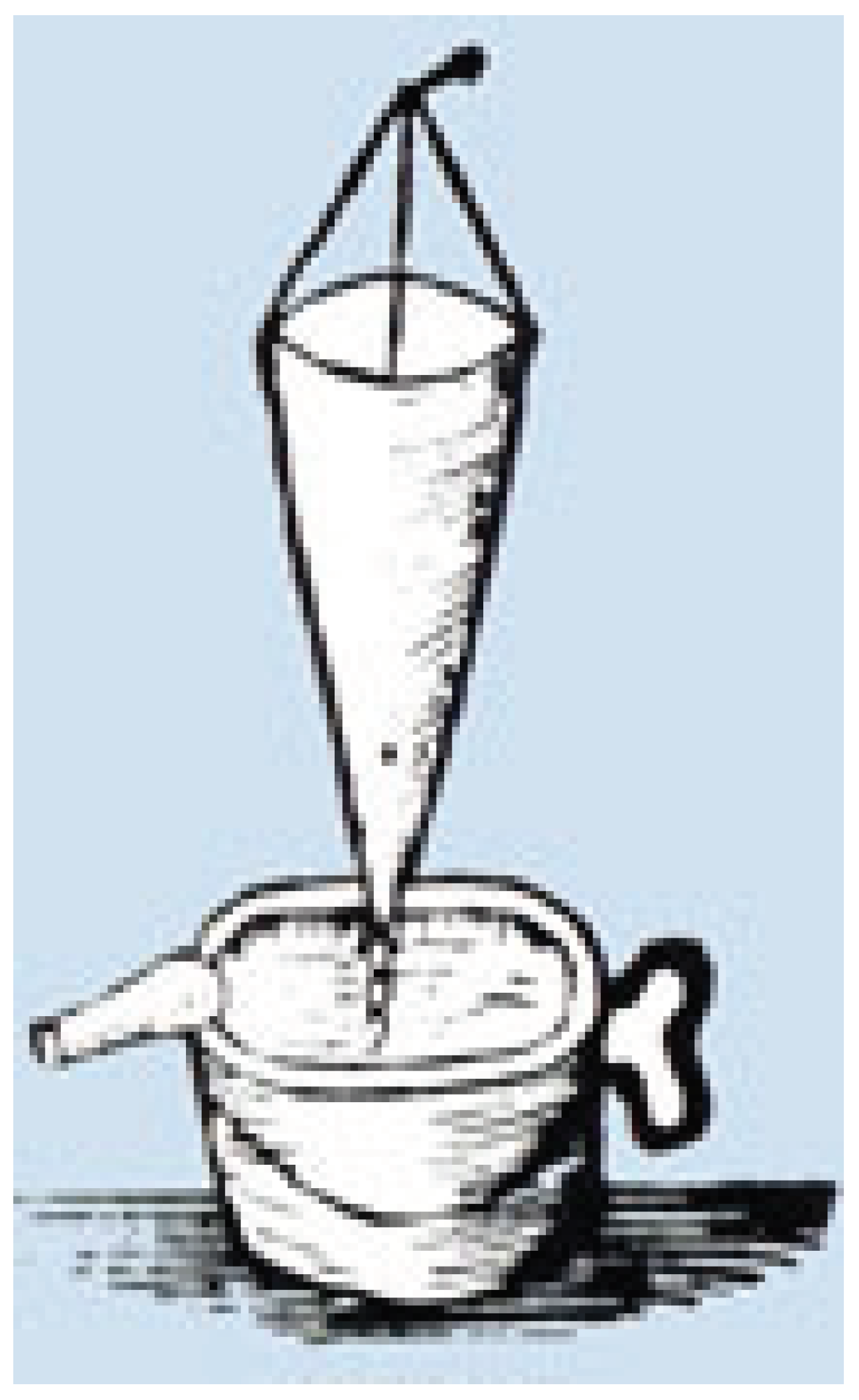
Figure 2.
(a) CPF in Receptacle Tank;(b) Air-Drying After Firing of CPF (at RDI, Cambodia).
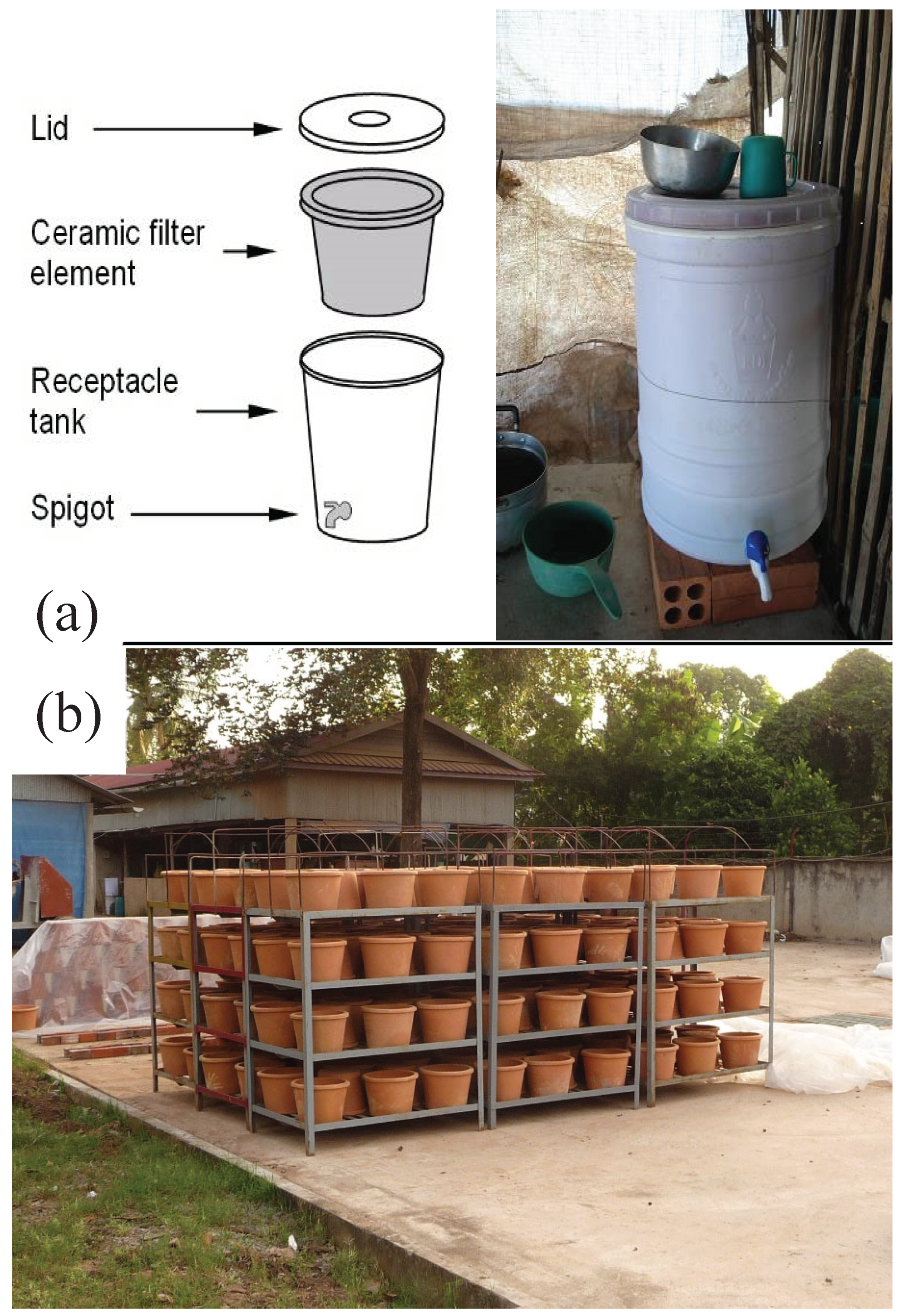
Figure 3.
Photo of an Arsenic Iron Removal Plant in Bangladesh (Brennan & McBean, 2010a).
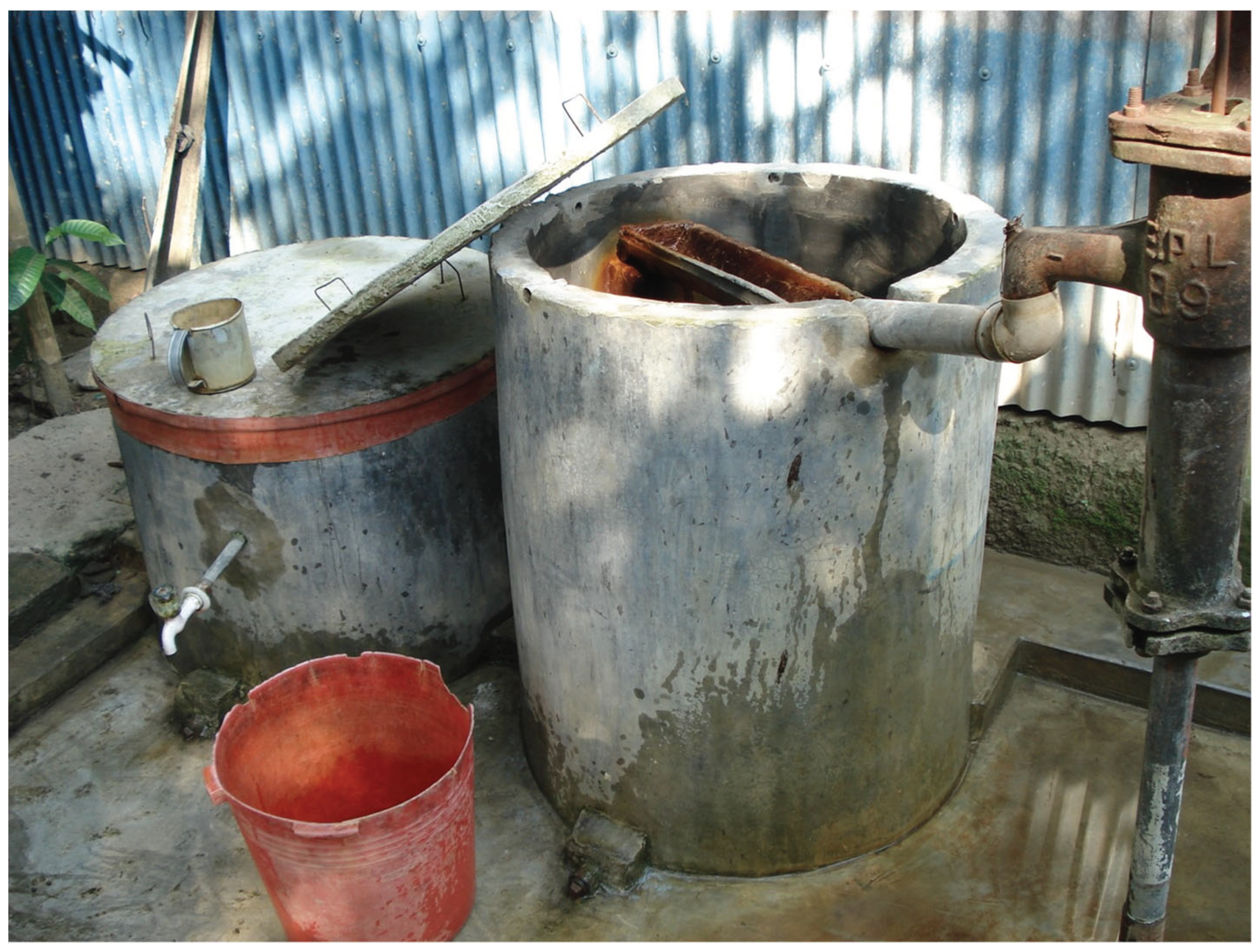
Figure 4.
Raw Water Tank with GWF at Base of Tank.
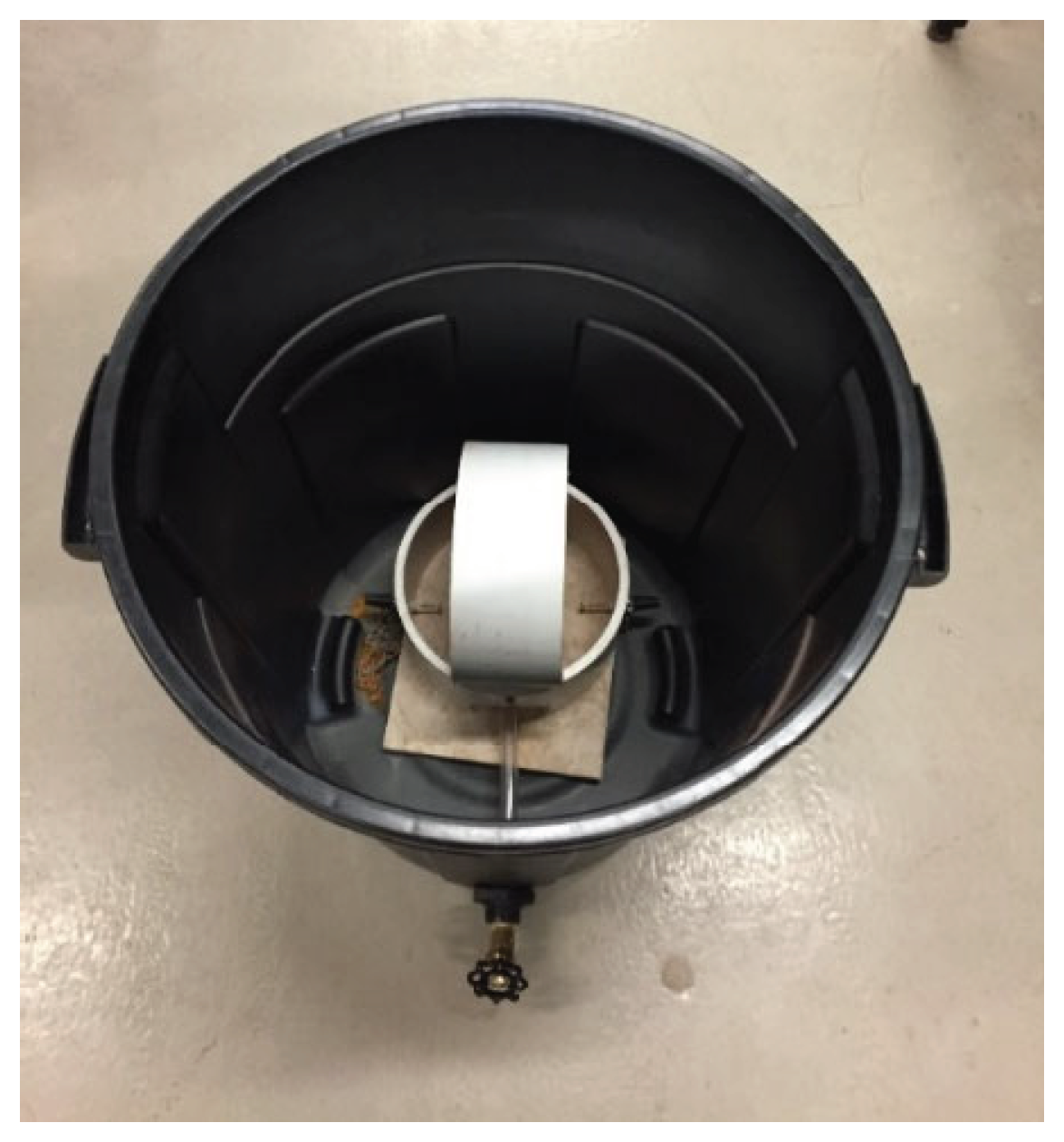
Figure 5.
Schematic of Large Raw Water Pail, with GWF Treating the Water and Delivery of Water to the Filtered Water Retainer.
Figure 5.
Schematic of Large Raw Water Pail, with GWF Treating the Water and Delivery of Water to the Filtered Water Retainer.
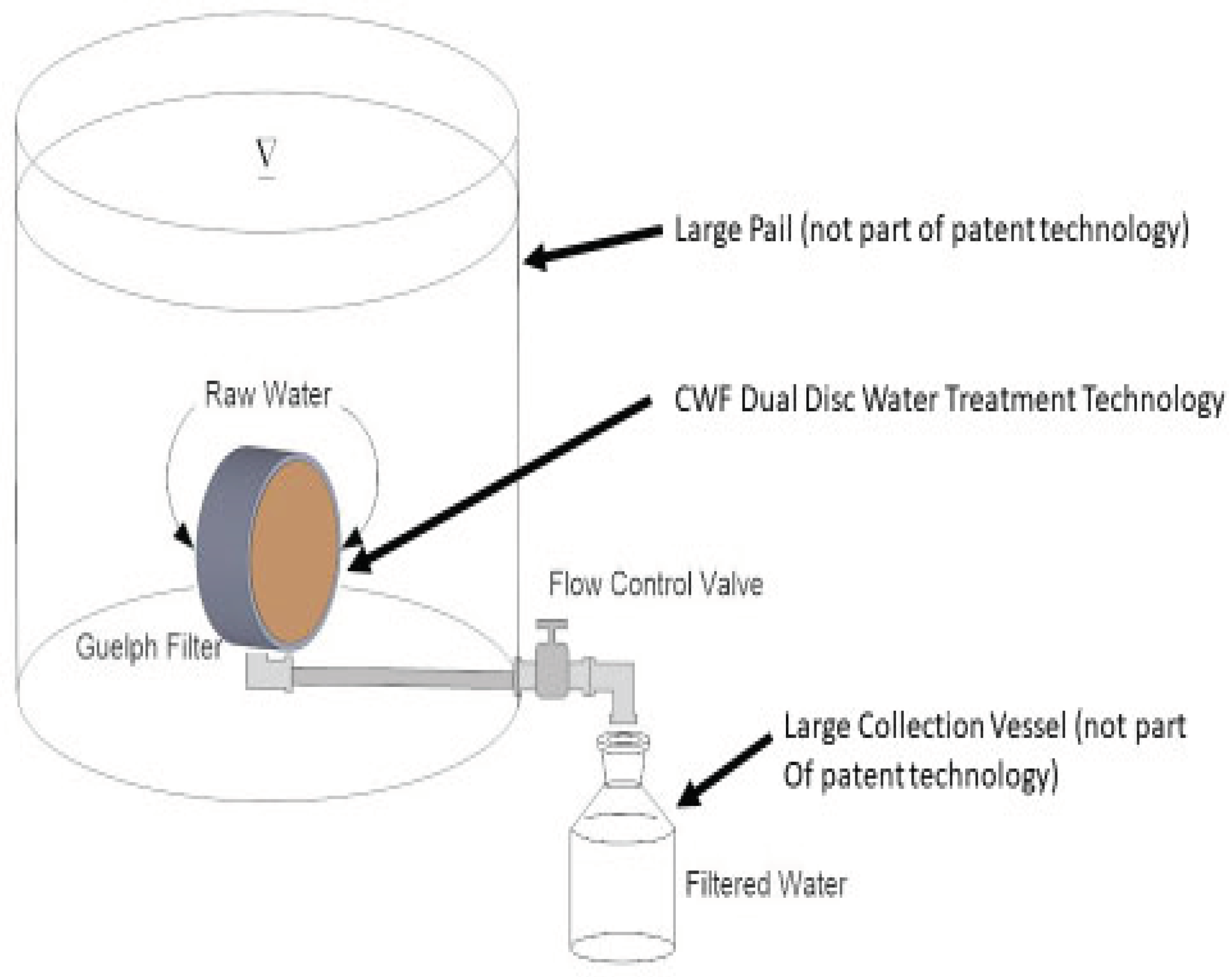
Figure 6.
Photo of GWF of Ceramic Filter showing the Stand, the Handle (on top), and the Exit Tube which Carries the Treated Water to the Filtered Water Container.
Figure 6.
Photo of GWF of Ceramic Filter showing the Stand, the Handle (on top), and the Exit Tube which Carries the Treated Water to the Filtered Water Container.
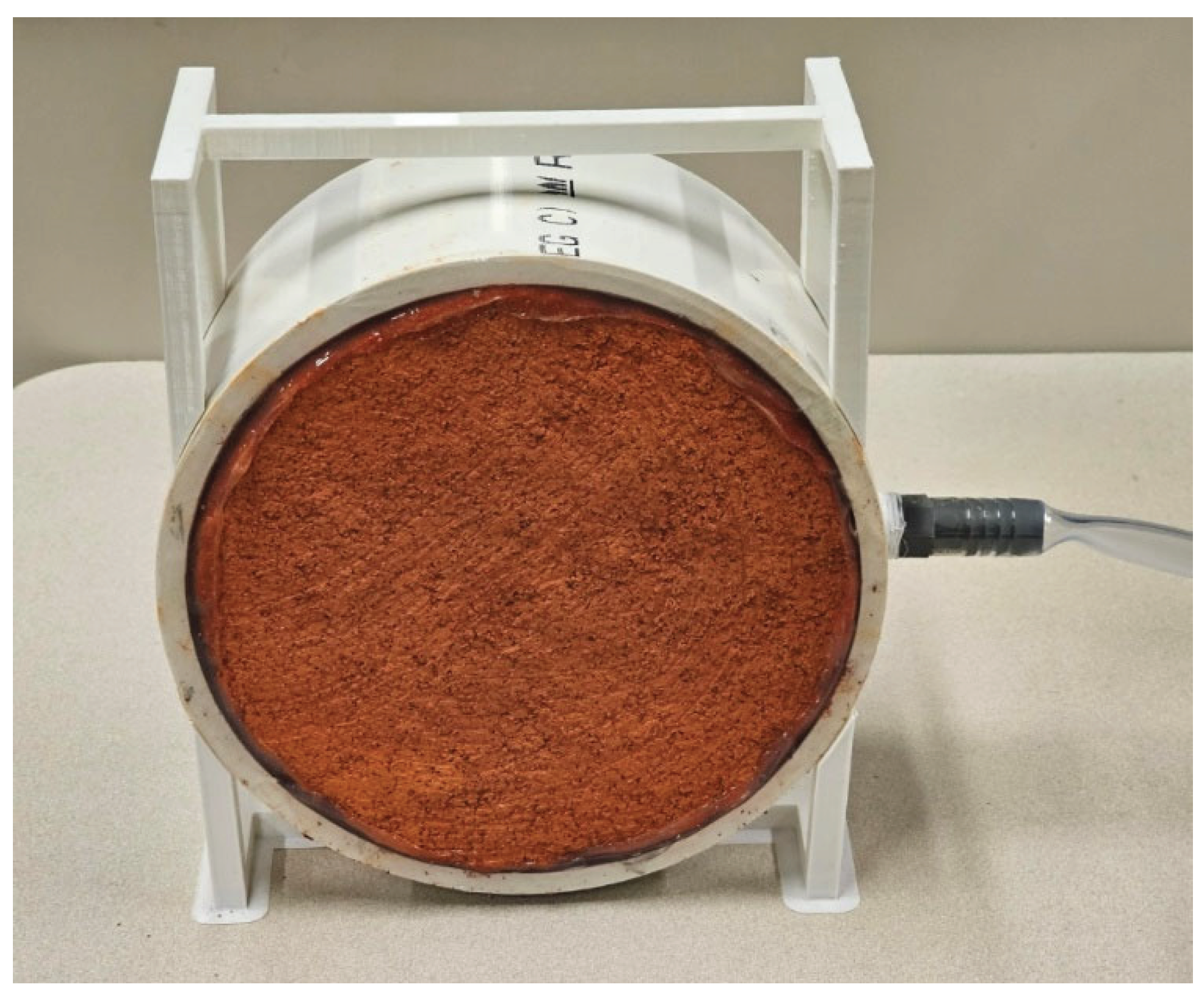
Figure 7.
Flow Rates Through Four Ceramic Disks Versus Time.
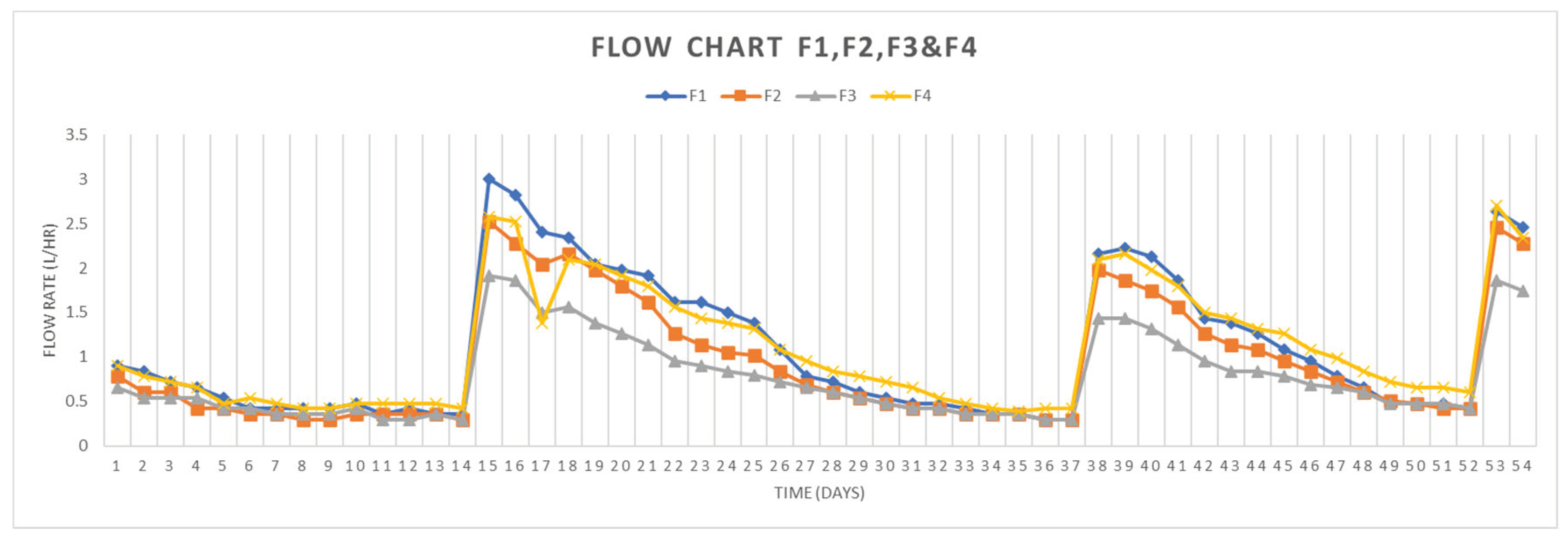

Table 1.
Removal Effectiveness of E. coli.
| Filter Number | Log removal of E. coli | E. coli Removal (%) |
|---|---|---|
| F1 | 4.52 | >99.99% reduction |
| F2 | 4.63 | >99.99% reduction |
| F3 | 3.78 | >99.9% reduction |
| F4 | 4.49 | >99.99% reduction |
Disclaimer/Publisher’s Note: The statements, opinions and data contained in all publications are solely those of the individual author(s) and contributor(s) and not of MDPI and/or the editor(s). MDPI and/or the editor(s) disclaim responsibility for any injury to people or property resulting from any ideas, methods, instructions or products referred to in the content. |
© 2024 by the authors. Licensee MDPI, Basel, Switzerland. This article is an open access article distributed under the terms and conditions of the Creative Commons Attribution (CC BY) license (http://creativecommons.org/licenses/by/4.0/).
Copyright: This open access article is published under a Creative Commons CC BY 4.0 license, which permit the free download, distribution, and reuse, provided that the author and preprint are cited in any reuse.


