

Submitted:
23 February 2024
Posted:
23 February 2024
You are already at the latest version
Abstract
Bettelmatt cheese, a cherished Italian culinary gem hailing from the picturesque Val d'Ossola region, is deeply intertwined with its natural environment. This article explores the intricate relationship between the organoleptic attributes of Bettelmatt cheese and the challenges posed by climate change. The sensory qualities of this cheese, including its flavor profile, texture, and aroma, are profoundly influenced by the alpine pastures where the cows graze, the unique terroir, and the traditional production methods. However, as climate change continues to impact ecosystems and weather patterns, it raises questions about the resilience and adaptability of this traditional cheese. In addition to these challenges, the article would like to explore the complexities of regulation and protection of this cheese, crucial for food and gastronomic sciences.
Keywords:
Ossola products
; Climate change
; Bettelmatt cheese.
1. Introduction
The impact of climate change on food production is increasingly widespread, altering the environmental conditions of many different ecosystems, and among the most fragile are mountain pastures. The survival of entire communities depends on these places, economically but also in terms of historical and cultural heritage. This vulnerability and strategies to readapt the dairy sector, particularly artisanal and quality cheeses, were discussed at the conference "Chronicles of a Changing Climate, Even on Pastures", during Cheese 2023, Slow Food's international cheese event [1]. Moreover, a sustainable use of biological diversity, preserved through the access and benefit-sharing mechanism, is fundamental to cope with climate change and achieve food security [2].
A paradigmatic example might be the Bettelman cheese. Bettelmatt cheese, originating from the picturesque Val d'Ossola region in Northern Italy, is a culinary treasure with deep historical and cultural roots. This unique cheese variety has played a significant role in the local heritage of the Val d'Ossola, where it is meticulously crafted and cherished by both producers and consumers. In this context Bettelmatt cheese can be considered a “super food”, foods being naturally beneficial in terms of nutrition and produced with very minimal or no technological intervention [3]. This paper delves into the rich history, production methods, culinary traditions, and legal protections surrounding Bettelmatt cheese, shedding light on the flavors and stories that make it a gastronomic delight [4,5]. The Val d'Ossola region, nestled in the northern reaches of Italy, boasts a landscape of pristine alpine pastures, lush meadows, and centuries-old traditions. It is an example of Italian inner areas that need to be promoted to preserve their authenticity and sustainability [6]. It is within this picturesque setting that Bettelmatt cheese has been crafted for generations. Its history traces back to a time when cheese production was not merely an industry but an integral part of local life and identity. Over the years, this cheese has adapted to changing tastes and production methods [7] while preserving its unique character. Local agri-food products are ever more linked to the tourism and may have e positive impact for the local communities and its economy. Moreover, being part of the local culture they are increasingly appreciated by the tourists [8]. On the other side, new tools are today available to promote local development maintaining the economic activities in mountain areas [9].
In this paper we investigate the influence and the impact of climate change on the Bettelmatt cheese. As a matter of fact, the change in the atmospheric variable such as temperature, humidity and rain, may threaten the characteristics and quality of the agriculture and shepherding product [10]. To this aim, a sample of Bettelmatt cheese producers from the Ossola valley was interviewed and climate date are analysed. The study aim to be an example of the transdisciplinary approach which can be adopted in gastronomic and food sciences [11].
2. Climate Change in the Mountains
There are areas more affected by global warming, where the effects are more serious and visible, not only at an environmental level but with repercussions on many human activities linked to the mountains. Drought-ridden springs, increasingly torrid summers and rare, more intense and concentrated rainfall, but also dry winters with almost no snow: shepherds and farmers are forced to come to terms with these events, rethinking their choices and the reality of their territories.
It is well known that the mountains are a climate hotspot, both because they are experiencing a much greater increase in temperature, even double the global average, and because the effects that this warming is generating are particularly visible in the mountains. We notice this amplification because we measure it, but even if we did not have all the data we have on the increase in temperature in these areas, we would still notice it, because the mountains are also an incredible natural sensor, which makes us feel the effects of this overheating. The most easily perceptible indicator for anyone is the melting of the glaciers, the decrease in the volume of ice on our mountains, accompanied by a sharp decrease in snowfall. Not only is it snowing less in favour of rain, even at higher altitudes, but there is also less snow on the ground, because it is melting faster than in the past. In addition, an intensification of hydrological and climatic extremes (i.e. extreme events such as heavy snowfall and torrential rain) is clearly visible, which are further amplified in mountainous areas. In the mountains, so-called flash floods are now common, causing torrents to swell in a short time. Also periods of drought which, when prolonged, can favour the spread of fires, given that mountain regions are home to most of Italy's forests. Finally, another indicator is the accelerated decrease in biodiversity, which is perhaps a less obvious effect to most of us, but no less tangible or less dangerous: the proper functioning of an ecosystem is intrinsically linked to the maintenance of its biodiversity.
One might think that this does not apply to cities, but what happens in the mountains is not confined to the mountains. Everything is interconnected by a network that unites all the systems on earth, and what acts, for good or ill, on mountain ecosystems inevitably has repercussions elsewhere. Thus, if the ice and snow in the mountains, which have always been referred to as the water reserves of the lowland regions, continue to diminish, there is a risk that water reservoir will no longer be sufficient to support the needs for agricultural, drinking and energy use in the mountain and lowland areas. In fact, lowland regions are the first to benefit from many services that the mountains provide free of charge. Some are essential services such as water, clean air and certain raw materials (for example timber). Others are regulatory services, such as the protection that mountain forests, where they are well maintained, provide in the face of a landslide or heavy rainfall event. Finally, there are wide varieties of recreational services that the mountain landscape offers, such as skiing in winter or hiking in summer.
All this is at risk of being compromised by overheating and loss of biodiversity. The mountain ecosystem only works when the species that inhabit it are not forced to move to the summits by the increase in temperature, colliding with those that are already at the summit, which can do nothing but become extinct because they have nowhere else to go. We must therefore be careful not to ruin these ecosystems so that they continue to give us these services and do us good.
Individual citizens, but also institutions and communities should act on mitigation and address the climate crisis from the causes that generated it. That is, to act on the global average temperature increase, amplified in the mountains, which is essentially due to the increase in the concentration of the greenhouse gasses in the atmosphere. These derive for the most part from human activities, first and foremost the energy production from fossil fuels, followed by significant changes in land use, including deforestation. Therefore, it is first of all essential to decarbonise our societies, seeking to produce energy from sustainable sources and increasing energy efficiency. Technology, which is inevitably evolving in a more sustainable and efficient direction, will be of essential help in this process of decarbonisation against climate change.
In short, attention to mitigation and the new possibilities that technologies offer us, but never forgetting curiosity, knowledge and an empathetic connection with the environment around us, which is what ultimately sustains us in life. Knowledge is the first step to action: climate change is fought first and foremost by knowing the mountain environment and its changes.
3. The Bettelmatt Cheese: A Local Gastronomic Excellence
The name of the well-known cheese dates back to the Walser period in which it was already considered a delicacy and used as a means of payment for rents, mountain pasture concessions and taxes. The name is derived from “battel”, which means questua and “matt”, which means pasture in German. The quality and authenticity of the Bettelmatt cheese depends on the particular type of grazing [12] [9]. For example, at Alpe Forno, the dairy cows are fed on Mutellina (Artemisia umbelliformis) grass - commonly called “Ossola muttolina” - which gives the milk a typical aroma and flavour that no other grass at a lower altitude can provide. The grass is essential because in the pasture the cattle live only on it and water. They cannot be nourished differently because Bettelmatt is an entirely pasture-fed cheese.
Bettelmatt comes in cylindrical wheels weighing between 4 and 6 kg, with a diameter generally between 25 and 35 cm and a heel (the height of the wheel) of 7 to 8 cm. The surface is completely covered by a rind whose colour can vary from yellow ochre to brown-orange, to grey, depending on various factors, including the degree of maturation. The rind itself is stamped with both the product name and the producer's mark. Inside, it reveals a straw-yellow paste, compact and smooth, apart from a few holes. Soft and unctuous when cut in the younger pieces, it tends to become harder and more compact as ripening progresses. Time is also a determining factor in defining its taste. In the meantime, we are talking about a cheese made from the raw milk of cows grazing freely, feeding on what the nature of the mountains at high altitude has to offer.
This results in a very complex aromatic profile: the intense lactic note is the common trait, but if immediately after the minimum ripening period a sweet scent with hints of dried fruit may prevail, as the cheese matures the herbaceous accents gain ground, offering increasingly intriguing sensations. In fact, what the cows eat defines the “identity card” of Bettelmatt: even with the same ripening period, two cheeses produced at the same time in different alpine pastures can reveal appreciable differences on the palate. This is what contributes to the uniqueness of a cheese that is only produced in the summer months, in the alpine pastures above 1800 m above sea level, and for this very reason can only be found on the market for a short period of the year and in limited quantities.
We have already emphasised how delicate it is to process raw whole milk, i.e. without filtering, skimming, or pasteurising it. In the case of Bettelmatt, this is compounded by the direct processing in alpine pastures. In typical buildings scattered at high altitudes, among the meadows where the Brown Swiss cows graze freely, the milk from the daily milking is collected and curdled at room temperature, with only natural calf rennet added. The resulting curd is then coarsely broken up and semi-cooked at 45-48 °C. It is then taken out with moulds, which, in addition to determining its shape, serve to facilitate its draining. During this phase, which lasts up to a maximum of twelve hours, the cheese is also pressed through a press and branded, which stamps the date of production and the name of the dairy on the heel. This is followed by salting, either dry or in brine, and after fifteen days the cheese is moved to the maturing rooms: cellars or rooms with walls, floors and ceilings suitable for maintaining a correct level of humidity and temperature. Placed on wooden boards, the cheeses then begin their maturing process, which can last from a minimum of sixty days to a year or more. All these stages are defined by a decalogue signed in 1998 by the seven producers of Bettelmatt together with the Chamber of Commerce of the Mountain Community of the Ossola Valleys [13].
3. Production in the Ossola Mountain Pastures: Bettelmatt and Its Regulation
The Ossola Valley is located in the northernmost part of the Piedmont Region on the border with Switzerland. In fact, it is wedged between the Valais (West) and Canton Ticino (East). It is a reality in itself, rich in history, traditions and unique places. The Ossola is made up of several valleys, each represented by its own mountain: the Anzasca Valley with the peaks of Monte Rosa; the Antrona Valley with Pizzo d'Andolla (3654 m); the Vigezzo Valley with the Scheggia (2466 m); the Valgrande Valley with the Laurasca peak (2195 m); the Bognanco Valley with the Strasciugo (2713 m.); the Divedro Valley with the Monte Leone; the Antigorio Valley with the Cervandone; the Formazza Valley with the Blinnenhorn (3375 m).
The aforementioned valleys are representative of the high environmental value of the Ossola Valleys, for this reason their territory is subjected to special protection thanks to national park institution, such as the Alpe Veglia-Alpe Devero Nature Park and the Alta Valle Antrona Nature Park, as well as the Val Grande National Park, and through the designation of areas of European Community Interest, such as the Alte Valli Anzasca, Antrona and Bognanco Special Protection Area and the Veglia and Devero-Monte Giove Alps Special Conservation and Protection Area.
Regarding agriculture in the areas mentioned, it must be emphasised that the obstacles encountered in the exercise of this activity are numerous as the terrain is rather difficult to work in. The impervious terrain requires either work by hand or more efficient methods, but without departing from the area's agricultural tradition. Hence the importance of the territory and, consequently, the need to protect and enhance it so that the valley can continue to be considered a biodiversity hotspot and to maintain among its appellations that of Garden of the Alps, thanks to the typical alpine flowers that can still be found in the Alta Val Formazza and in the Alpe Devero-Alpe Veglia Nature Park. The valley is cut lengthwise by the Toce River, which has its source in Val Formazza and flows down into the lower valley, creating one of the highest waterfalls in Europe (143 m water jump).
Beyond its natural and environmental beauty, Ossola has an interesting history, the most significant moments and aspects of which should be reported. An important part of Ossola's history is represented by the Walser community [6,14]: the Walser are an Alemannic population who brought new ways of life, agricultural knowledge and skills in high-altitude farming from the moment they settled. It is precisely from agricultural activity and the practice of mountain pasture that Ossola's gastronomic excellences originate, first and foremost the Bettelmatt cheese [7,15]. Ossola, as a border area, is often perceived as a remote and pure environment, but it is precisely in this characteristic that its strength and beauty lie. Moreover, alpine pasture is not only an economic activity, i.e. the production unit of rural businesses, but also a culture and a human pattern that characterises the territory above the stationary villages. It consists in moving animals to pasture for a certain period of time to make dairy products; it is, therefore, a seasonal activity. Alpine pasture has its roots in the past and reaches the present day, as history is decisive for the present and cannot be overlooked.
At its beginnings, the rural farm has a predominantly family dimension and is divided into three stages: winter period in the stables with a feed consisting of hay harvested in the summer period; spring and autumn displacement; pasture establishment in the summer period.
Alpine pasture is characterised by five elements: the man; the livestock, mostly consisting of brown cattle, but also goats; rustics, made of stones and a stone slab roof and formed by the place where the products are processed, the place where the animals spend the night and the cellar; pastureland, obtained by man's shaping of nature with the removal of boulders and the containment of woods, which, however, are important as they provide shelter from the sun for the livestock; connections between mountain pastures, between mountain pastures and the valley floor and connections for water conduction. The mountainous conformation of Ossola has led to the diffusion of different models of mountain pasture, including the slope mountain pasture, which is the most widespread and is characterised by cottages located in the centre of the pasture, while the stables and processing rooms are located on the slopes to guarantee resistance to avalanches.
Therefore, the alpine pasture established at the “Alpe” (i.e. complex of pastures where mountain grazing is practiced, with attached shelters for shepherds and for the production of cheese) during the climatic improvement (so called climatic optimum) between the 13th and 14th centuries: temperatures rise, glaciers recede, settlements rise in altitude, there is an increase in the population. Livestock breeding thus begins to characterise and become the exclusive activity at a certain altitude (above 800 m), while below it, agriculture continues to prevail. It should be noted that today we no longer identify the phenomenon of rising temperatures as positive because, if in the past a few more degrees could determine a greater well-being for human life and livestock breeding, today higher temperatures are a problem because temperatures continue to rise.
Two elements particularly characterise the mountain landscape where Bettelmatt is produced: grass and terracing. Grass is the food for livestock all year round, for example the grass for summer grazing and the grass processed to make hay, which is indispensable in winter. There are numerous agreements, rulings and appeals concerning grass, the conflicts revolving mainly around boundaries and use; the situation changed towards the 19th century with the changes in society. The terraces are rows of dry-stone walls filled with soil used to form planes for cultivation and to prevent erosion; today, only what remains of them can be seen in mountain villages, although the recognition of their high historical and cultural value has led to the launch of conservation projects [8,16].
Despite the fact that the alpine pastures have been progressively abandoned over the years, a large number still remain in Valle Antigorio and Val Formazza, where they differ from one another, but are united by having gone through the three transformations: abandonment, rebirth of places, introduction of innovation in farms. Currently the Piedmont Region establishes the legal procedures for the rental and concession of the use of publicly owned pastures and mountain pastures, as well as the aspects relating to their management and conservation. The Regional Council also has the task of adopting general guidelines for the conservation and improvement of agro-ecosystems and mountain pastures. It seems important to emphasise that the Ossola Valley, with its affluent tourism and its strong protection through the Nature Park institution and the designation of Natura 2000 Areas, does not forget its tradition.
Farms are still dedicated to the practice of alpine pasturing with both traditional and modern tools, and they also benefit from new designations for certain products.
In addition, given the widespread focus on food safety, farms are subjected to extensive European legislation to ensure food hygiene at all stages of the supply chain (production, processing, distribution, marketing). This legislation was adopted starting in 2004 with Regulations (EU) Nos. 852, 853 and 854 (in OJEU - Official Journal of the European Union - 30 April 2004, L. 139), which introduce transparent and unique food safety regulations that: identify the primary responsibility in the farm operator; provide for the registration of certain food establishments; guarantee flexibility in the sense that derogations, disapplications or adaptations of the so-called hygiene package are foreseen. Reg. (EU) No. 854 was repealed by Reg. (EU) No. 625 of 2017 (in OJEU, 7 April 2017, L. 95) concerning official controls and laying down a framework completed by a series of subsequent regulations. In order to facilitate the understanding of the regulations, guidebooks have been produced that are also relevant to the sector we are interested in, i.e. the artisanal production of cheese and cheese products. As mentioned above, unique products, representative of a specific territory, are created in the mountain pastures. In particular, between Devero and Formazza, only eight producers, exclusively in seven mountain pastures, are dedicated to the production of the cheese known as the 'King of Ossola cheeses' or as the 'white gold' of the Ossola mountain pastures, namely Bettelmatt cheese.
The eight producers come together in the Bettelmatt Cheese Producers' Association, which was founded in 2013 to protect this exclusive production and to ensure the joint promotion of the product. Although it does not have a Protected Designation of Origin (PDO), but only a production specification, Bettelmatt is guaranteed by strict standards certified by a consortium of local breeders for the protection of the brand and deposited with the Unione Montana Alta Ossola in 2003 [3,5,6,14]. Not all the cheeses are branded, as several factors can influence the correct maturing process, first and foremost the excessively hot cellar. The problem has arisen especially in recent years as temperatures have risen: a cellar that is too hot leads to the bacteria in the cheese rising. Heat also affects the animals because the heat leads the cows to produce less milk as they feed less, concentrating on finding shady shelters; cold weather is also disadvantageous, but preferable, if it is not excessive, because it does not compromise the maturing of dairy products.
Once the minimum ripening period is over, the cheeses are inspected by the commission from Consortium AgenForm (Training Services Agency of the Cuneo Province), appointed by the Unione Montana Alta Ossola. It is ascertained that the cheese wheel is between 25 and 35 cm in diameter, weighs between 4 and 6 kg, that the surface has no marks and that the sound emitted by the wheel after being struck is listened to. Once the cheese has passed the test, it is branded. About 500 cheeses are produced each season.
Each year, the Association determines the price at which the wheels will be sold, and this price increases as the cheese ages. It should be noted that as the ripening period increases, the weight of each wheel decreases. In relation to the selling price, there is a tendency to consider this cheese rather expensive. In general, the remark seems well-founded, although it should not be overlooked that each wheel is the result of long and laborious work: each wheel requires daily attention that is indispensable to guarantee its quality. In fact, if one actually added up all the hours of artisanal work, the physical effort involved and the difficulties of life in the high mountains, the price would be higher.
4. Materials and Methods
The method used in this study is twofold. On the one hand, we analysed climatic data in order to understand and verify climate changes over the last twenty years in the Bettelmatt cheese production area. It is well known that these changes are felt much more strongly in the mountains due to various factors linked to the complex interrelations between the atmosphere and the earth's surface. All this can have an impact on the mountain environment and, consequently, on the characteristics of the products of these lands, as well as on the customs and techniques used by producers. However, these climatic variations can be perceived differently by the very people who live and work in these areas. We therefore asked questions to the main producers of the cheese we are interested in to understand the impact of the climatic variations and, above all, how they are perceived and which adaptation actions they have implemented as a result.
5. Results
This section may be divided by subheadings. In the first one climatological data are shown in order to verify the degree of changes in the atmospheric variable that characterize the climate. We consider two sites, Alpe Devero and Val Formazza (see Figure 1) and the measurements of temperature, precipitation and snow.
5.1. Climate Characteristics of the Bettelmatt Production Area
Climate data were collected from two meteorological stations of ARPA Piemonte [10,17] the first one located in Alpe Devero and the second one in Val Formazza. They were monthly data that we average over the years. Alpe Devero is located at the altitude of 1634 m above sea level in the area where there are Alpe Sangiatto, Poiala and Forno, while Formazza is at an altitude of 2453 m a.s.l. close to Alpe Regina, Toggia and Kastel. As for the temperatures, from the monthly average, we averaged them over the year. As for precipitation, we added up the monthly precipitation for each year. The reference period is 2000-2005, 2013-2022. No data were available between 2006 and 2012 and some data was missing in the records.
In Figure 2 the trend of the average annual temperature at the Alpe Devero station is shown. Even taking into account that data from 2006 to 2012 are not present, it can be observed the interannual variability with two peaks of more than 5 °C in 2004 and 2014. After this year the annual mean temperature decreases regularly reaching about the value of the year 2000 and then increases again in 2022. However, the general trend, indicated by the dotted line, clearly shows that the temperature is rising.
In order to better understand the influence of climate change on the pasture we account only for the months in which the cows are grazing, from July to September. The results in terms of annual mean are shown in Figure 3. Also, in this case the trend of the annual mean temperature is positive but, while in Figure 2 the increase in the considered period is less than 1°C, in Figure 3 it is about 2°C. This result indicates that not only the increase in the mean temperature in the mountain is greater with respect to the global data (about 0.2 °C every ten years), but when the grazing period is considered it is much higher.
The total annual precipitation trend at Alpe Devero is shown in Figure 4. It can be observed that there are large variations from one year to the other but the trend increases slightly. It is well known that the effect of the climate change is not on the total amount of precipitation per year but on the regime: along the year long periods of drought alternating very intense events of strong precipitations in which a large part of the total annual rain falls.
It is interesting to notice that at the higher altitudes of the Formazza stations the mean annual temperature was less than or equal to zero until 2013, while starting from 2014 it is greater than zero except for the year 2021 (Figure 5). This result clearly demonstrates the effect of climate change. If we consider the months during the pasture (Figure 6) only the mean annual temperatures are obviously always much higher than zero. However, the increase in the whole period is about 2°C.
Total annual precipitation at the Formazza station is depicted in Figure 7. Also in this case the variability from one year to the other is height. Differently from the case of the Alpe Devero station, at the Formazza station the trend of the total annual precipitation is slightly negative. This confirms the fact that climate change does not affect the total annual precipitation trend.
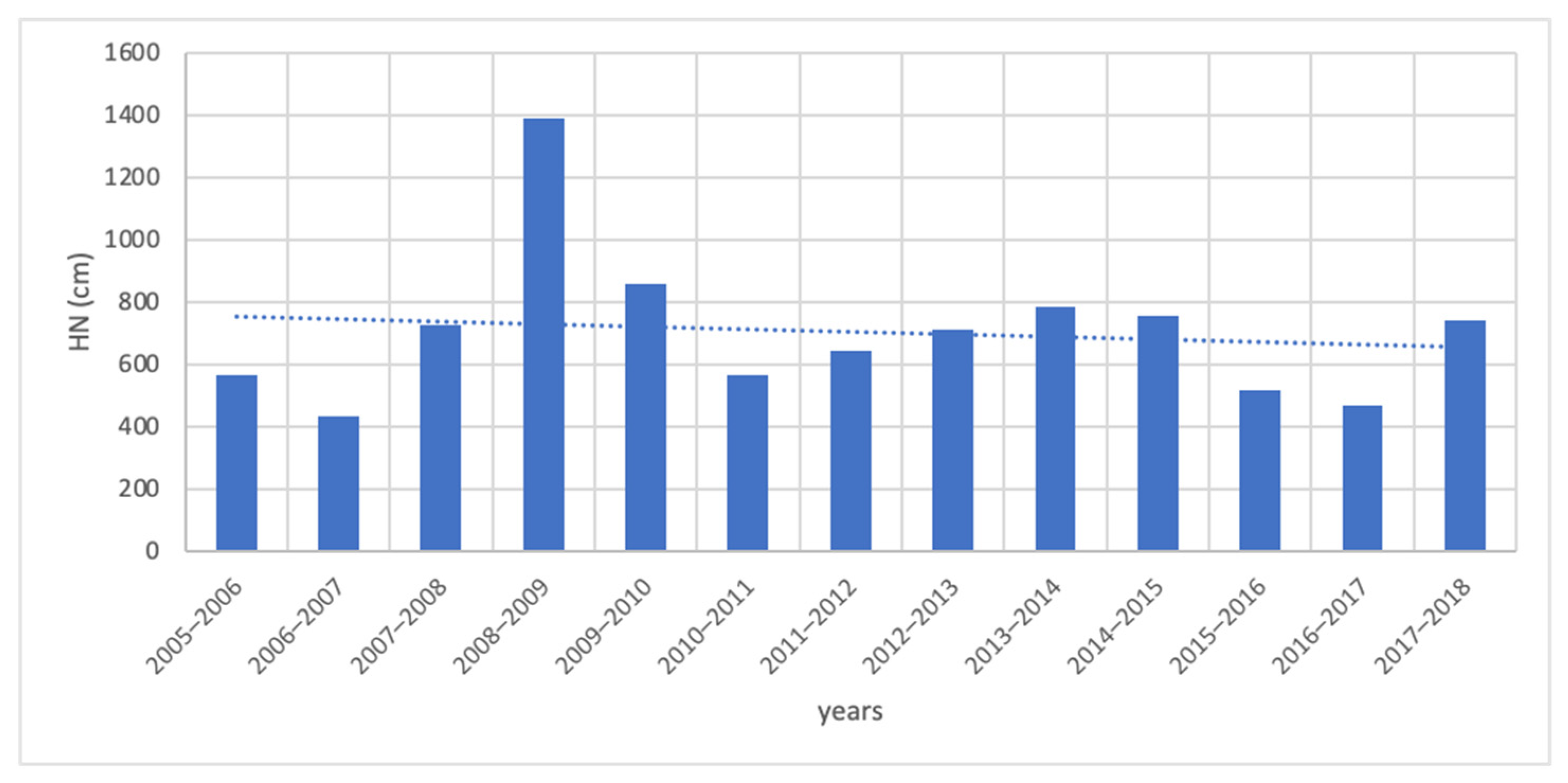
At the Formazza station the total snowfall HN (cm) in the year is available (Figure 8). In this case the record is complete for all the years from 2005 to 2019. It can be observed that, except for the winter between 2008 and 2009 the variability of the snowfall is limited. The trend slightly decreases along the years as the one of the total annual precipitations.
The results of this analysis are in substantial agreement with other recent studies [11,18]. Based on the analysis of the meteorological data from 2000 to 2022 we can conclude that the effect of climate change is observed on the mean annual temperature trend. On the other hand, the effect on the total precipitation is very small.
5.2. Case Studies Producers' Testimonies
We asked the following questions to the producers of the seven “Alpi” shown in Figure 1:
1-Has the cheese production changed in the last decade due to climate change?
2-Has the Alpine landscape in which alpine grazing is practised undergone significant changes in the last decade, such as an anticipation of pasture growth?
3-What repercussions does climate change have, or already had in the last decade, on the various aspects affecting production (maturing, haymaking, milking, milk quality)?
4-Do climatic conditions will significantly affect cheese production in the future and, if so, what techniques could be used to address the problem or which techniques have already been adopted?
5-Can elements of the current regulations governing the production of Bettelmatt cheese be revised to ensure greater protection and enhancement of the product and of the territory, so as to support producers?
In the following the answers of six producers are described.
5.2.1. Alpe Forno Producer
The seasons are warmer and earlier, so the ascent to the mountain pastures is delayed. In relation to the maturing of the cheese, there are some problems, especially when the heat becomes intense, because the temperature of the cellars rises. About 10-15 years ago, in August, there was already 20-30 cm of snow on the mountain pastures.
In the last season, there was a noticeable anticipation in the growth of the pasture, but at the same time it was very dry. Seasons in which the grass is as mature in early August as it should be in September are not positive for the cheese production.
Rainfall is an obstacle for haymaking, but it can be compensated by machinery that makes the work in three days instead of a week. Certainly, the seasons will still change and the breeders can only adapt.
The regulations for Bettelmatt cheese are owned by the Unione Montana Alta Ossola and are more than 20 years old, which is why that some elements should be revised. The most significant aspect to be reviewed concerns animal welfare: in the past, cattle were more rustic, less productive and tolerated more stress. Today, cows produce richer milk and they have a different diet. For the health of the cattle, the introduction of external feeds/cereals, at least to a small extent, is being considered. The cattle can no longer live on grass alone because grass is no longer sufficient; furthermore, during the alpine pasture period, each cattle loses a lot of weight because it is subjected to a different diet and a greater stress, consequently towards the end of the period it produces less.
For the product's valorisation, minimal promotional events are organised. Every year the product is more and more in demand. There is the possibility of accessing the various subsidies provided within the EU as individual farms and not as the Bettelmatt Cheese Producers’ Association.
5.2.2. Alpe Vannino Producer
Climate change is believed to be more recent than ten years, in fact, it has been noticed in the last five years. As a consequence, the ascent to the alpine pasture has been delayed by about ten days - previously it was customary to start around mid-July - and they return early, around the beginning of September, because the pasture is rather dry. The seasons are warmer and the vegetation grows earlier. Production has not been affected in relation to the quantity of milk, so there is no significant drop. The only way to cope with the changes is to adapt.
Extreme weather events are a big problem: sudden violent rainfalls can cause dangerous landslides. During this summer season, snow fell twice above an altitude of 2000 m. Basically, climate change is noticeable and will certainly worsen. There are no longer any real defined seasons because we go from rainy to hot temperatures to colder ones very abruptly. All this has an impact on the vegetation, in fact also in autumn, there are many green plants. As a matter of fact, in recent years the winter has been too mild.
About the Regulation, there are some elements of the product specification that need to be reviewed, especially for animal welfare because cows cannot live on grass alone. Changing the cattle's diet would mean having healthier animals. The continuous climate change and dry grass may create problem and suffering to the animals. Therefore, it would be useful to support their diet that is deficient with some small integration.
It must also be taken into account that today, compared to the past, animals are more and more productive and driven towards quality and quantity production.
It is recognised that Bettelmatt cheese producers can be considered elite producers but, nevertheless, the producer has to continuously improve and keep up with the times.
To have a quality product, it needs to have healthy animals. It is necessary to keep up with progress and abandon the “fable of the shepherd who stays in the mountain pasture with two cows living on grass alone”.
There are various aids for breeders, particularly for young people; however, for a young person who does not already have a family tradition behind him that passes on his passion, it is more difficult to start their activity because the costs are very high. However, there is a very good return to agriculture.
5.2.3. Alpe Kastel Producer
There have been much warmer seasons since 2003. For their alpine pasture, being one of the highest, this is a positive effect because the optimal temperature for cattle is between -5°C and +15°C; certainly, too high temperature has negative effects in relation to the quantity of milk produced. Generally, around mid-August the first frost would appear in the alpine pastures, which today it is difficult to be observed.
On the whole, the amount of milk produced by the cows has decreased because these animals are subjected to a great stress on the mountain pastures, as a consequence they only produce from 8 to 10 l of milk per day.
The seasons are moved forward by about ten days and the producers should adapt year by year to this anticipation. The biggest problem for mountain pastures would be drought that brings poor and dry grazing, but it is not relevant for this producer.
About the regulation, the desire to introduce new techniques risks leading the product to lose its typicality. The continued valorisation of traditional practices is considered necessary. As a matter of fact, typicality has already been lost over the course of time due to the need to adapt to the various regulations. Moreover, “too clean milk” decreases the original aroma and scent of Bettelmatt.
Another problem lies on an economic level because there are high costs to which the consumer often does not think about. First of all, the price of the product is believed to be high but, in reality, it is not even proportionate to the effort required to produce a cheese at high mountain pasture. However, mountain pasture production is not comparable in cost, effort and tools to lowland production.
5.2.4. Alpe Pojala Producer
No significant changes have been noted in their grazing, in fact perhaps the more favorable temperatures help the work and greater wellbeing of both animal and man.
There have been changes every year since 1973 (when the activity began) because every year the seasons and temperatures are different. The only possibility is to adapt to the conditions year by year. Although last season was hot, it has not created a problem for this area.
About the regulation, there are problems caused by the fact that the product specification dates back several years and it is therefore no longer adequate to current needs.
5.2.5. Alpe Sangiatto Producer
The pastureland has changed in the last 10-15 years due to higher temperatures: intrusive tree species have grown, that invade the pastureland. Another problem affecting the pasture is drought; on the contrary, rainfall results in an evergreen pasture.
High temperatures are a problem for maturing because the cellars are getting hotter and hotter. For this reason, some producers are thinking to adopt refrigeration systems. The possibility of using water basins in the driest areas is also being considered.
About the regulation, the Bettelmatt cheese product specification certainly needs a complete overhaul as it is already 20 years old, so it could be better adapted to the new conditions/needs.
As individual companies, producers do enjoy some aid, including the Premio d'Alpe, but compared to other mountain producers working in the rest of Italy and Switzerland, they are still at a disadvantage because they are very much anchored in tradition. Backwardness does not allow for evolution and, consequently, does not allow for progress in work with new techniques.
5.2.6. Alpe Toggia and Alpe Regina Producer
Climate change exists and it is noticeable both positively and negatively, in any case the only solution is to adapt.
In recent seasons the average temperature is warmer, certainly 15 years ago it was much colder. For the past 3-4 seasons, the milder temperature has resulted in greater well-being for both humans and animals. At the same time, however, it snows much less and, therefore, there is a drought problem: the springs are increasingly dry, particularly towards the end of August when they almost dry up.
The higher temperatures cause the cellars to heat up by a few degrees (even up to 16 degrees, whereas previously they reached a maximum of 12 degrees), which negatively affects the maturing of the cheese. To cope with this problem, the producers are planning to refrigerate the cellars. It should be noted that the cellars used for the minimum maturing of Bettelmatt cheese are located at an altitude of around 2000 m.
The less frequent and less abundant snowfalls allow longer production seasons, in fact, from the previous 60 days of production period, this has now increased to around 80 days of production.
As far as the regulation is concerned, a partial revision of the Bettelmatt cheese regulations is being considered to ensure greater animal welfare. The cattle's diet in the alpine pastures is deficient, therefore it is considered appropriate to allow a minimum supplement with cereals. It should be noted that this supplement is only to ensure greater support for the animals, i.e. to guarantee their health and not to make the animals even more productive.
6. Conclusions
Climate and animal agriculture are interrelated processes and related foods may be threatened through changes in temperature, rainfall and extreme weather events. The present study is aimed at investigating the impact of the climate change over the production area of Bettelmatt cheese. The area where this cheese is produced is in the North of Italy, and it is highly suited for agricultural and livestock productions, although these activities are difficult due to the harshness of the terrain.
A twofold approach is adopted. On the one hand the trend of climate variables is analasysed over about twenty years. It results that the mean annual temperature increases more than the global value and the increment is greater during the pasture period. The mean annual precipitation does not show a specific trend but a large variability among the different years. Concerning the total annual snow, except for a high value in the winter 2008-2009, a decreasing trend is found. On the other hand, we interviewed the producers of the Bettelman cheese to understand their awareness of the climate changes and how they have modified their habits to mitigate their effect on the Bettelmatt production. All the producers underline as the temperatures in the last years have increased and the drought periods are more than in the past. Consequently, the grazing season is anticipated. Furthermore, cellars are getting hotter and hotter, which negatively affects the maturing of the cheese, so much that some producers are thinking to adopt refrigeration systems.
It is worth noting that, while it is well known that climate change has a great impact on agriculture production [19], it could be less obvious that it influences not only the production of the cheese but also its quality [10]. In particular, the climate changes highlighted in this essay, both from the analysis of meteorological data and through the testimonies of Bettelmatt producers, may threaten the maintenance of local culinary traditions. Indeed, they are crucial to our gastronomic heritage [20] and clearly form the basis of gastronomic science to be preserved for future generations.
Moreover, the findings of this study may be helpful to animate the debate - even at an intergenerational level [21] - on climate change-related impacts on regional agrifood systems and support policymakers in developing regulations and adaptation strategies for the production system of the Bettelmatt cheese, a cherished Italian culinary gem, that is to be enhanced.
Author Contributions
Conceptualization, R.P.; methodology, R.P. and E.F.; investigation, R.P. and E.F.; resources, A.R.; data curation, A.R..; writing—original draft preparation, R.P., E.F., A.R.; writing—review and editing, R.P., E.F.; supervision, R.P. All authors have read and agreed to the published version of the manuscript.
Informed Consent Statement
Informed consent was obtained from all subjects involved in the study.
Data Availability Statement
no new data were created.
Acknowledgments
The authors are grateful to the Bettelmatt producers for their valuable contribution to the case studies’ testimonies.
Conflicts of Interest
The authors declare no conflict of interest.
References
- Garuti, M. Formaggi e crisi climatica: come cambiano i pascoli e cosa fare per preservare l’ambiente e la produzione?. Il giornale del cibo. [Online]. Available: https://www.ilgiornaledelcibo.it/formaggi-e-crisi-climatica/.
- Pennazio, R. Access to genetic resources between biodiversity protection and intra-generational solidarity. BioLaw J. - Riv. BioDiritto 2022, 67–83. [Google Scholar] [CrossRef]
- Rombach, M.; Botero, J.; Dean, D.L. Kelp Wanted?! Understanding the Drivers of US Consumers’ Willingness to Buy and Their Willingness to Pay a Price Premium for Sea Vegetables. Gastronomy 2023, 1, 44–56. [Google Scholar] [CrossRef]
- Bonadonna, A.; Duglio, S. A mountain niche production: The case of Bettelmatt cheese in the Antigorio and Formazza valleys (Piedmont-Italy. Qual—Access Success 2016, 17, 90–96. [Google Scholar]
- Paleari, M.A.; Beretta, G.; Vanoni, L. An old traditional mountain cheese: The ‘Bettelmatt®’: Microbiological and chemical characteristics. Ind Aliment 2010, 49, 23–31. [Google Scholar]
- Basile, G.; Cavallo, A. Rural Identity, Authenticity, and Sustainability in Italian Inner Areas. Sustainability 2020, 12, 1272. [Google Scholar] [CrossRef]
- Fontefrancesco, M.F.; Zocchi, D.M.; Pieroni, A. The Intersections between Food and Cultural Landscape: Insights from Three Mountain Case Studies. Land 2023, 12, 676. [Google Scholar] [CrossRef]
- Vlachou, C.; Koukousolatou, O.; Siamagka, N.T. Ready for the «Check-In» of Local Products on Hotel Menus? Gastronomy 2024, 2, 1–17. [Google Scholar] [CrossRef]
- Bonadonna, A.; Peira, G.; Giachino, C.; Molinaro, L. Traditional Cheese Production and an EU Labeling Scheme: The Alpine Cheese Producers’ Opinion. Agriculture 2017, 7, 65. [Google Scholar] [CrossRef]
- Vitali, A.; Segnalini, M.; Esposito, S.; Lacetera, N.; Nardone, A.; Bernabuccia, U. The changes of climate may threat the production of Grana Padano cheese: past, recent and future scenarios. Ital. J. Anim. Sci. 2019, 18, 922–933. [Google Scholar] [CrossRef]
- Parasecoli, F.; Rodriguez-Garcia, G. Politics beyond the Plate: Embracing Transdisciplinarity in Addressing the Gastronomic Heritage of Spain. Gastronomy 2023, 1, 18–31. [Google Scholar] [CrossRef]
- Atkinson, E. , The Science of Nutrition. Boston: Damrell & Umpham, 1892.
- Caravaggi, R. BETTELMATT, IL FORMAGGIO EROICO DELLE MONTAGNE OSSOLANE. Il G. Cibo, /: Available: https.
- Lucarno, G. Il formaggio bettelmatt: rapporti tra cibo e territorio nella tradizione walser della Valle Antigorio-Formazza (Piemonte. in Geografia e cibo: ricerche, riflessioni e discipline a confronto, Società Studi Geografici, C. Spadaro, A. Toldo, E. Dansero, and A. T. E. D, Eds., Firenze, 2022; pp. 55–61.
- Aa, V. Il formaggio Ossolano. vol. Supplement to n. 31. Apr. 2002.
- Pomatto, E.; Gullino, P.; Novelli, S.; Devecchi, M.; Larcher, F. Landscape Strategies for Terraced Landscapes in the European Alpine Region Using a Mixed-Method Analysis Tool. Land 2023, 12. [Google Scholar] [CrossRef]
- “ARPA PIEMONTE.” [Online]. Available: https://www.arpa.piemonte.it/rischi_naturali/snippets_arpa_graphs/map_meteoweb/?
- Stucchi, L.; Dresti, C.; Bocchiola, D. Centenary (1930–2023) climate, and snow cover changes in the Western Alps of Italy. The Ossola valley. Clim. Change 1930, 176, 78. [Google Scholar] [CrossRef]
- Meshram, S.G.; Kahya, E.; Meshram, C.; Ghorbani, M.A.; Ambade, B.; Mirabbasi, R. Long-term temperature trend analysis associated with agriculture crops. Theor. Appl. Climatol. 2020, 140, 1139–1159. [Google Scholar] [CrossRef]
- Brillant-Savarin, A. Fisiologia del gusto.” Rizzoli, Milano, 1997.
- Weiss, E.B. In Fairness To Future Generations and Sustainable Development. Am. Univ. Int. Law Rev. 1992, 8, 19–26. [Google Scholar]
Figure 1.
Locations of the Alpe where Bettelmatt cheese is produced: Alpe Sangiatto (2.010 m a.s.l.) (1); Alpe Poiala (2.150 m a.s.l.) (2); Alpe Forno (2.220 m a.s.l.) (3); Alpe Vannino (2.200 m a.s.l.) (4); Alpe Regina (2.300 m a.s.l.) (5); Alpe Toggia (2.210 m a.s.l.) (6); Alpe Kastel (2.220 m a.s.l.) (7). (Map data ©2023 Google).
Figure 1.
Locations of the Alpe where Bettelmatt cheese is produced: Alpe Sangiatto (2.010 m a.s.l.) (1); Alpe Poiala (2.150 m a.s.l.) (2); Alpe Forno (2.220 m a.s.l.) (3); Alpe Vannino (2.200 m a.s.l.) (4); Alpe Regina (2.300 m a.s.l.) (5); Alpe Toggia (2.210 m a.s.l.) (6); Alpe Kastel (2.220 m a.s.l.) (7). (Map data ©2023 Google).
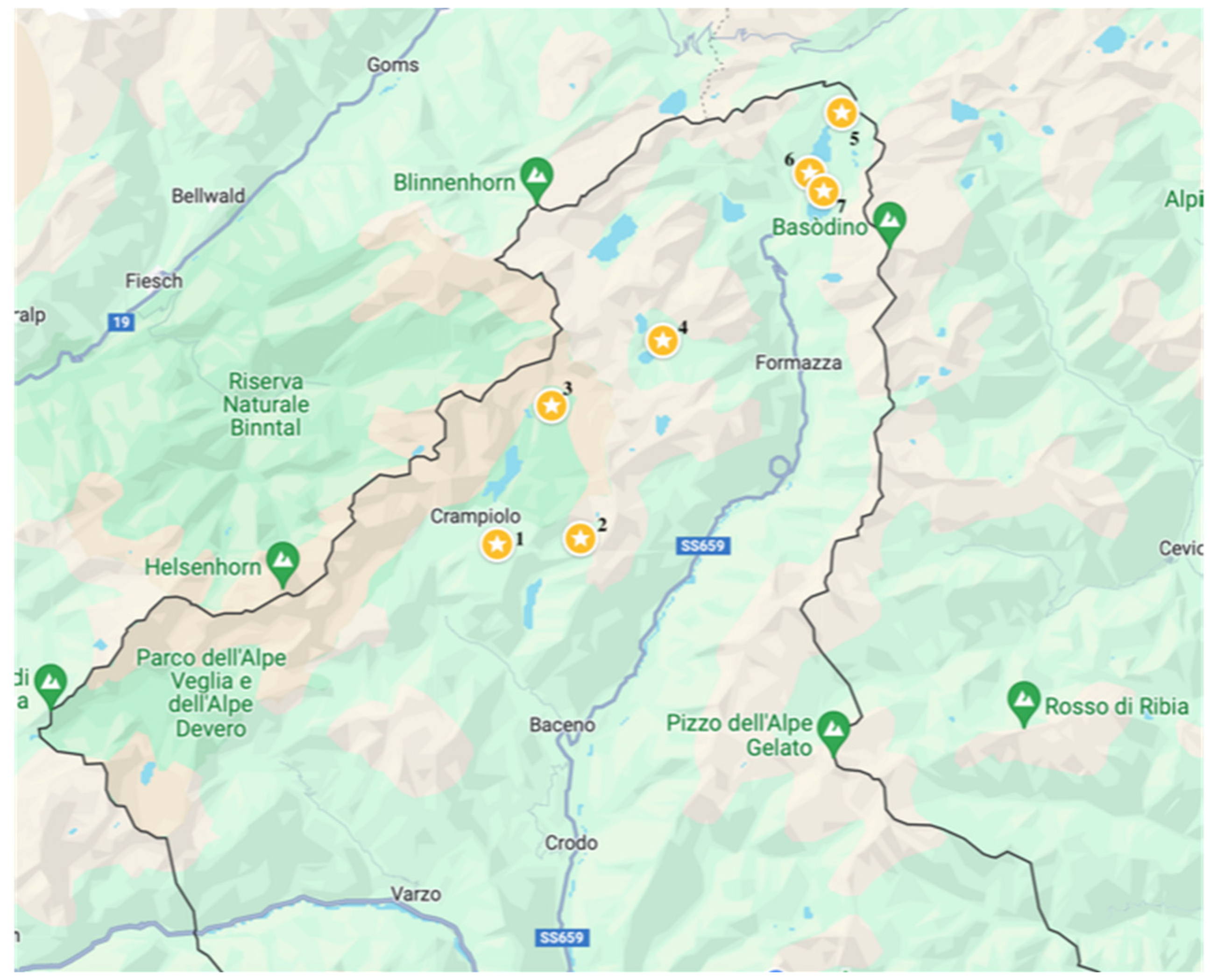
Figure 2.
Mean annual temperature at Alpe Devero station.
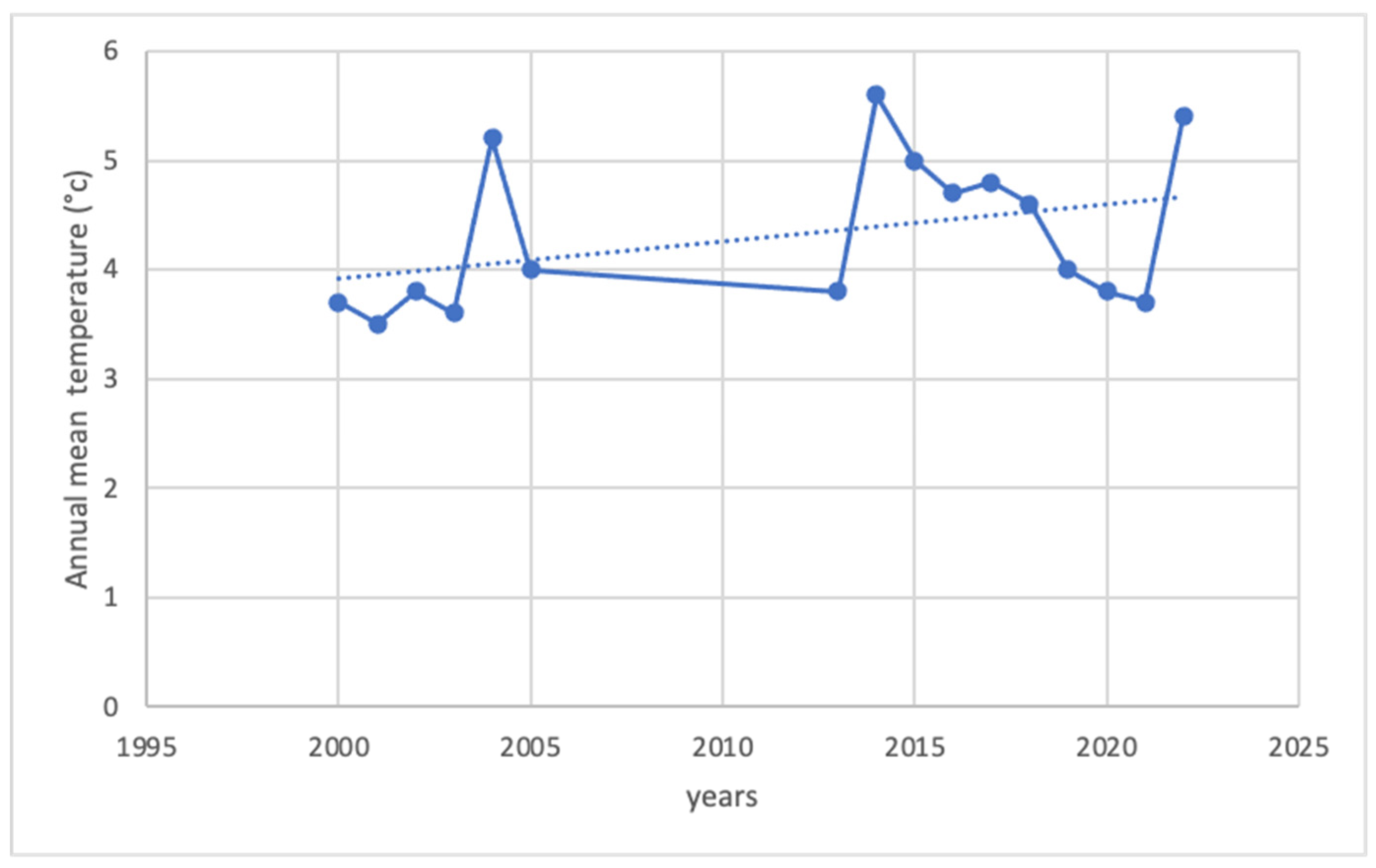
Figure 3.
Mean annual temperature at Alpe Devero station limited to the months in which cattles are on the alpine pastures.
Figure 3.
Mean annual temperature at Alpe Devero station limited to the months in which cattles are on the alpine pastures.
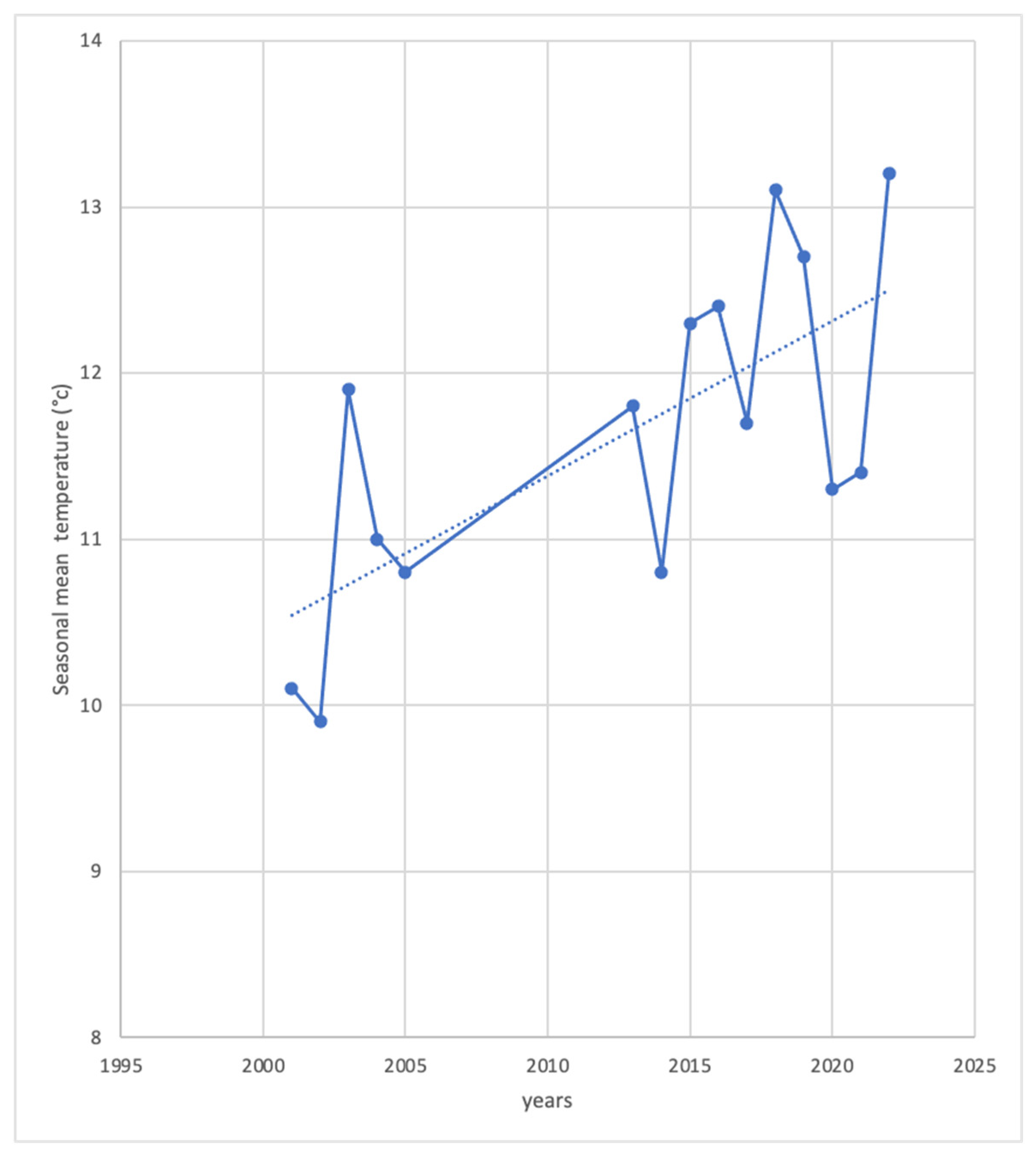
Figure 4.
Total annual precipitation (mm) at Alpe Devero station.
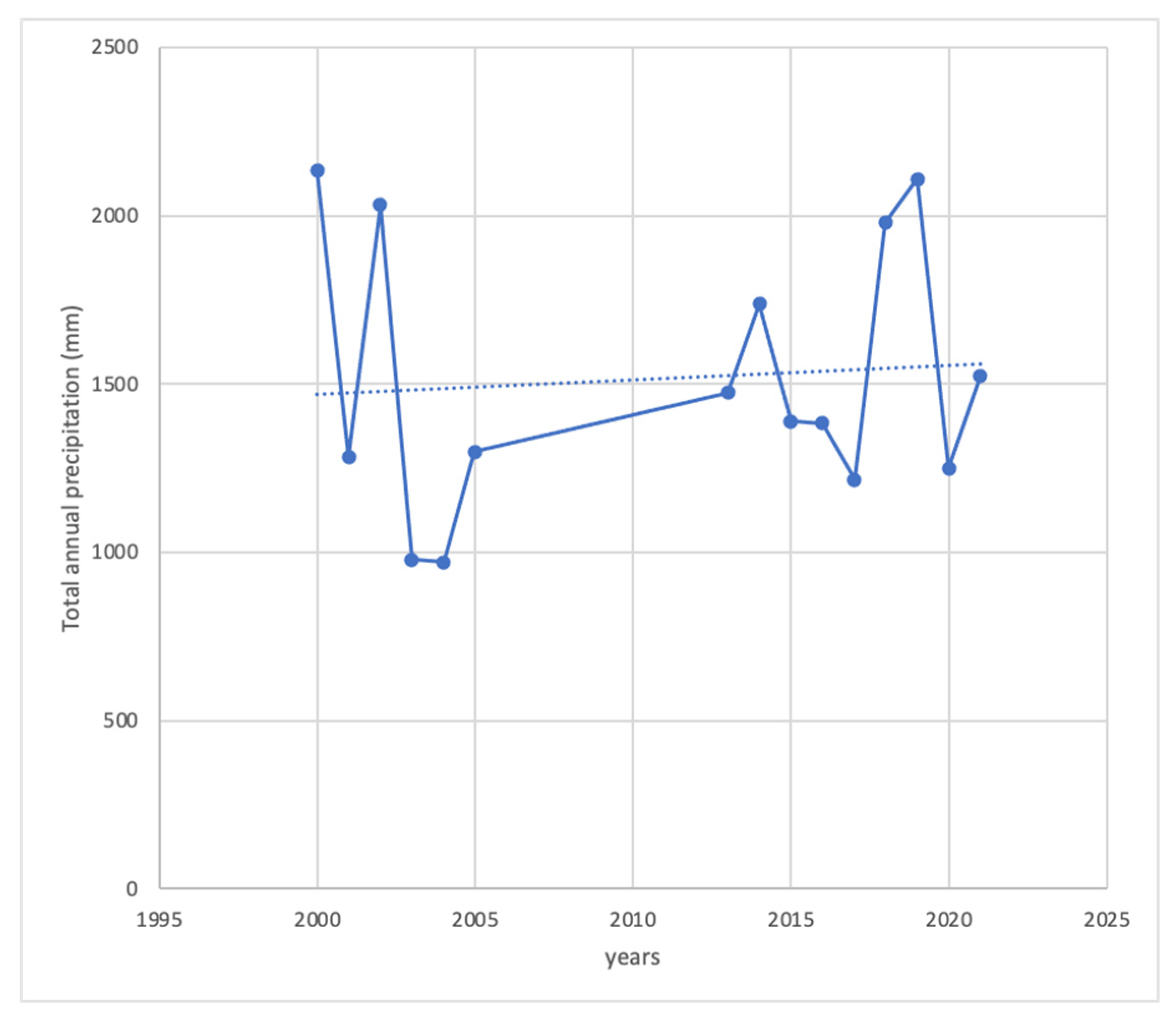
Figure 5.
Annual mean temperature at Formazza station.
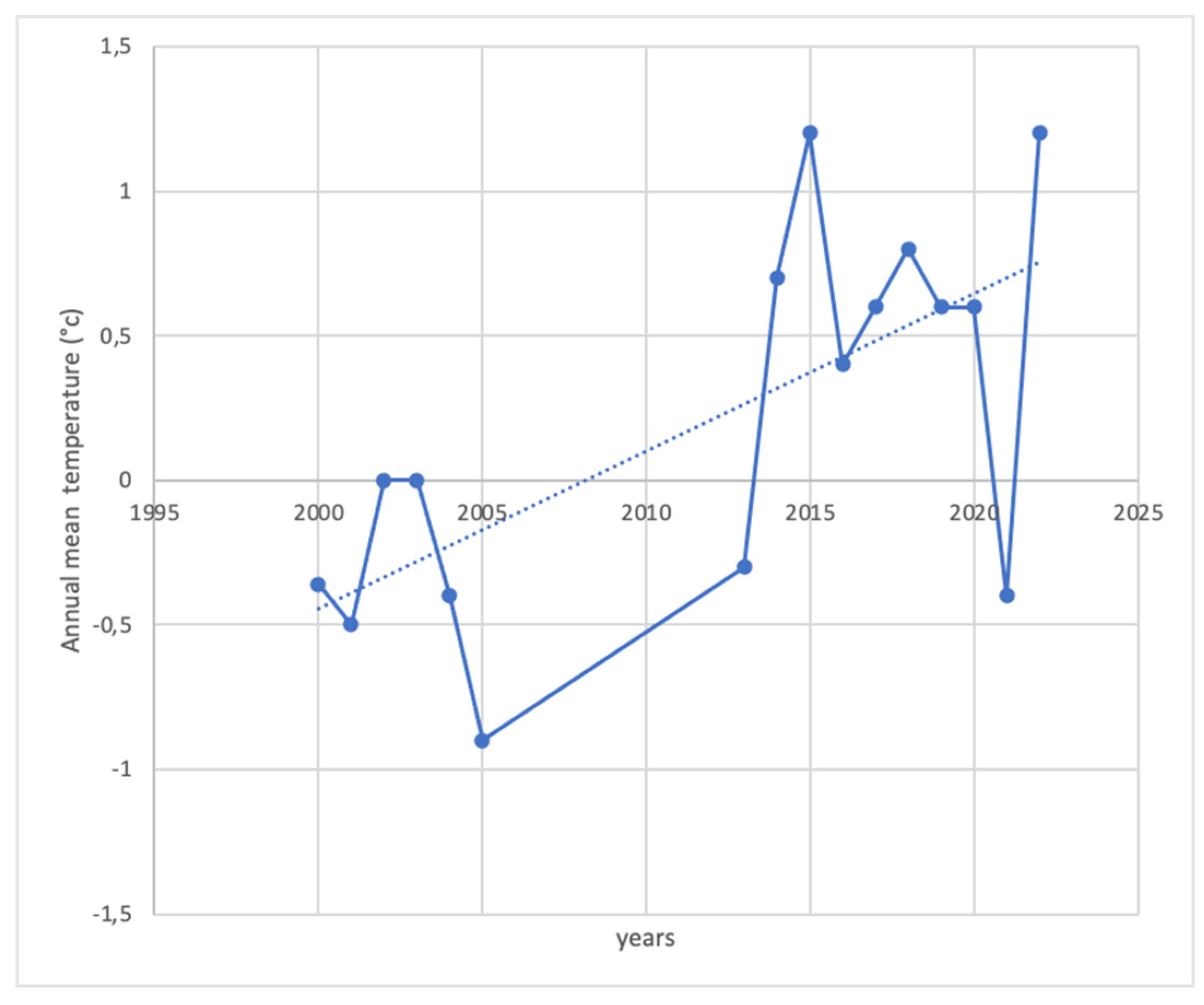
Figure 6.
Mean annual temperature at Formazza station limited to the months in which cattles are on the alpine pastures.
Figure 6.
Mean annual temperature at Formazza station limited to the months in which cattles are on the alpine pastures.
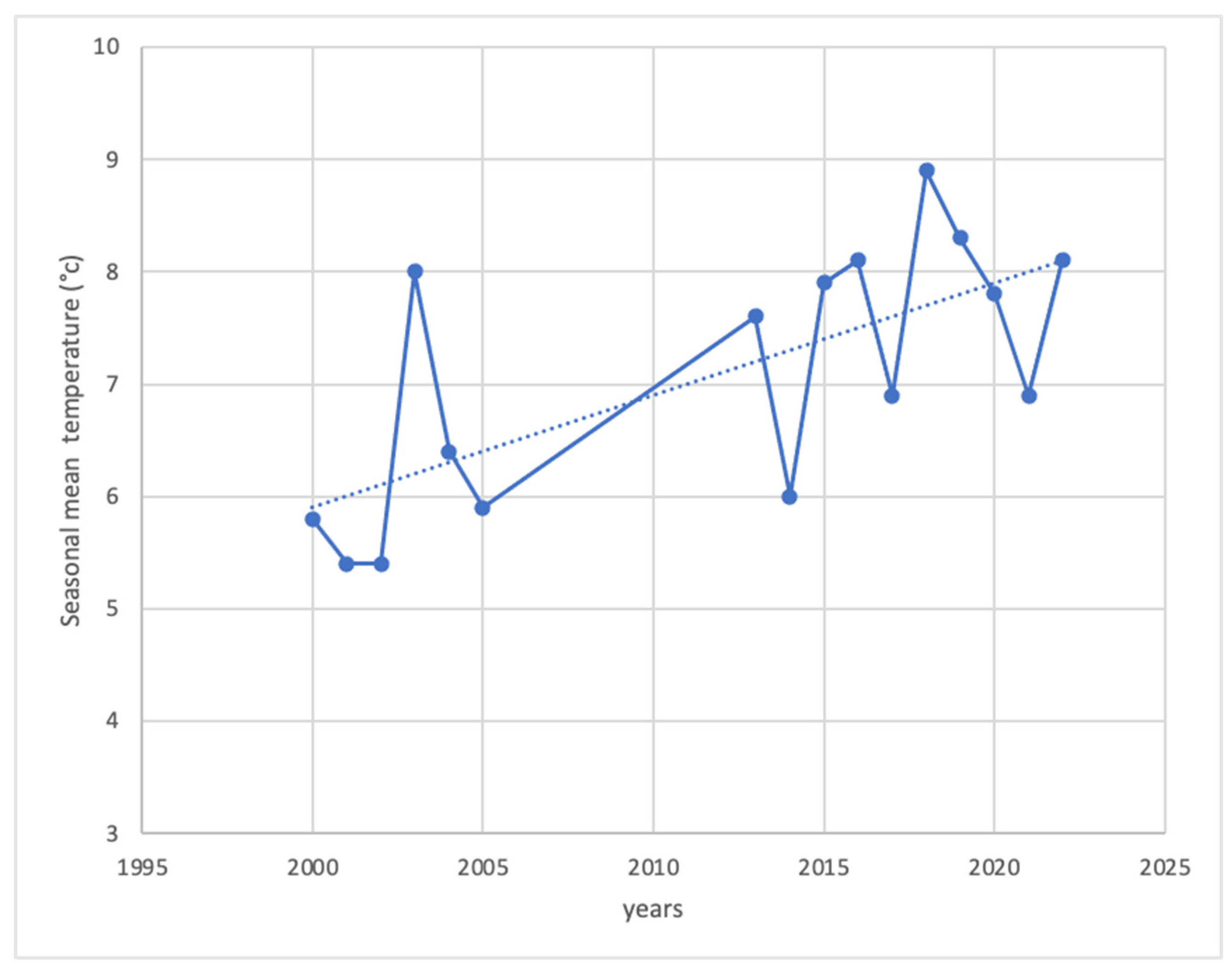
Figure 7.
Total annual precipitation at Formazza station.
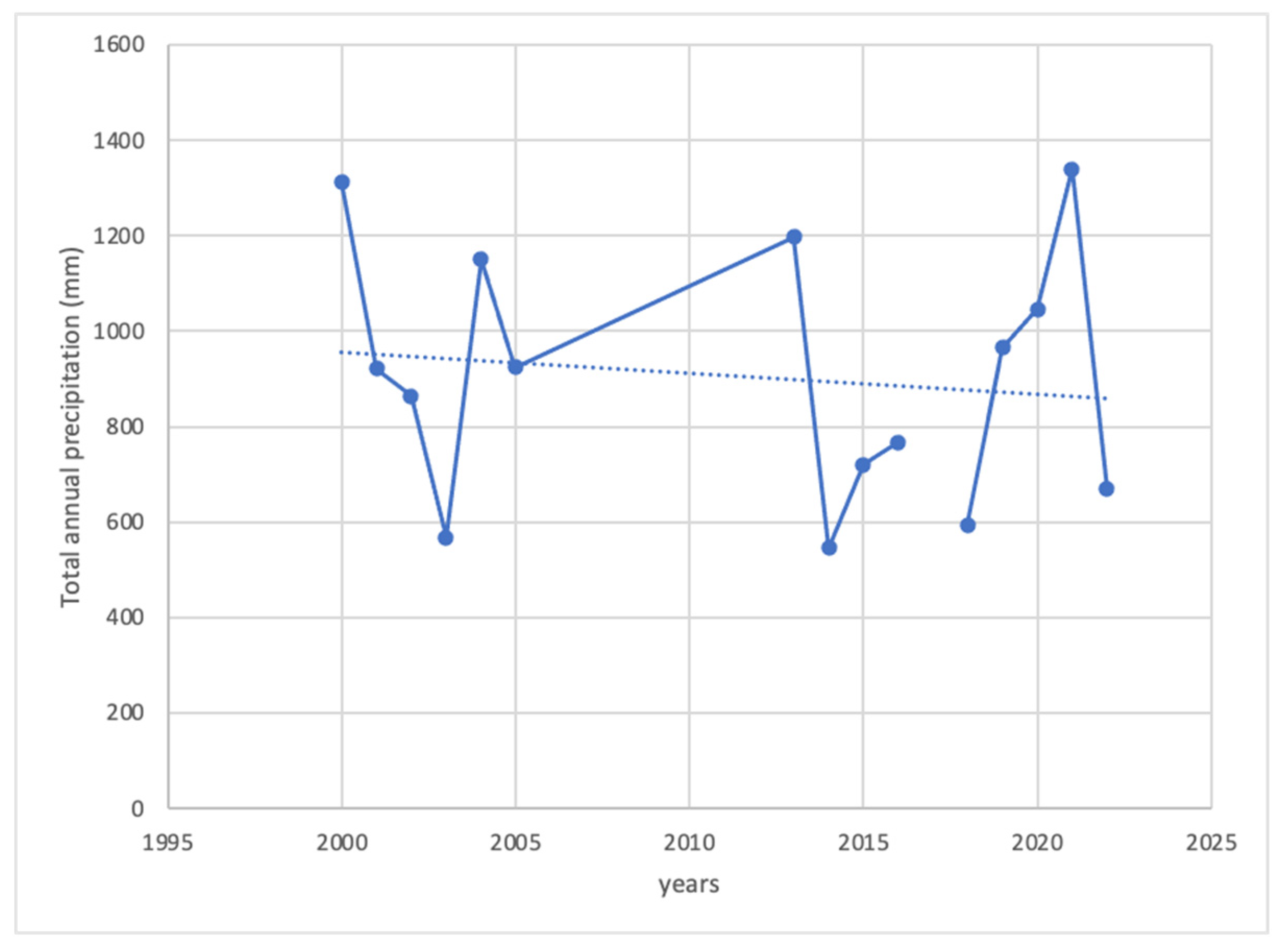
Figure 8.
Total snowfall HN (cm) at the Formazza station.
Disclaimer/Publisher’s Note: The statements, opinions and data contained in all publications are solely those of the individual author(s) and contributor(s) and not of MDPI and/or the editor(s). MDPI and/or the editor(s) disclaim responsibility for any injury to people or property resulting from any ideas, methods, instructions or products referred to in the content. |
© 2024 by the authors. Licensee MDPI, Basel, Switzerland. This article is an open access article distributed under the terms and conditions of the Creative Commons Attribution (CC BY) license (http://creativecommons.org/licenses/by/4.0/).
Copyright: This open access article is published under a Creative Commons CC BY 4.0 license, which permit the free download, distribution, and reuse, provided that the author and preprint are cited in any reuse.