

Submitted:
19 February 2024
Posted:
20 February 2024
You are already at the latest version
Abstract
This paper explores the imminent threat posed by climate change to the unique platypus species. It delves into the ecological repercussions of global temperature rise and altered climate patterns on platypus habitats. The study emphasises the multifaceted impacts, including changes in aquatic habitat quality, food sources, and breeding rituals. Climate-induced shifts in phytoplankton spring blooms and anthropogenic pressures further endanger the platypus's habitat. The article stresses the importance of understanding these effects for both species conservation and anticipating broader ecological and socio-economic consequences. Mitigating climate change impacts requires a multidimensional approach, involving habitat manipulation and restoration strategies.
Keywords:
climate change
; platypus
; global warming
1. Introduction
Climate change is an imminent threat that has the potential to significantly impact the world's ecosystems and biodiversity. The increasing global temperatures and changing climate patterns are not only affecting the environment but also posing a threat to various species, including the unique platypus. In recent years, concerns about the impact of climate change on platypus populations have grown, prompting the need for a deeper understanding of how these populations have responded to past climate changes. Additionally, connectivity across the species range has become a vital area of study in order to assess the potential implications of climate change on the platypus.
In order to better comprehend the effects of climate change on the platypus, it is important to consider the broader context of climate-related changes in species distributions and biodiversity patterns [1]. These changes have already been observed in benthic systems, highlighting the urgency of predicting future species distributions and biodiversity patterns in a changing climate [2]. The potential impacts of climate change on the platypus are multi-faceted and can manifest in various ways. For instance, warmer temperatures can lead to changes in the availability and quality of aquatic habitats that platypuses rely on. Furthermore, shifts in precipitation patterns can affect the flow of rivers and streams, potentially altering the platypus's ability to access food sources and create suitable burrows.
The implications of climate change on the platypus extend beyond the immediate habitat alterations. As the global temperatures continue to rise, the phytoplankton spring bloom, which signifies the end of winter in aquatic systems, is shifting in timing. Such changes are likely to disrupt the natural ecological cues that the platypus relies on for food availability and mating rituals. Additionally, the combination of climate change and anthropogenic pressures poses a serious risk to the habitat distribution of the platypus.
Understanding the potential effects of climate change on the platypus is not only essential for the conservation of this unique species but also for anticipating the broader ecological and socio-economic impacts of these changes. By incorporating the insights from current research on how climate change affects aquatic ecosystems and species distributions, we can better prepare for the challenges that lie ahead. The intricate link between climate change and the well-being of the platypus serves as a poignant example of the far-reaching consequences of global environmental shifts.Mitigating the effects of climate change on platypus populations requires a multidimensional approach [3]. This includes implementing habitat manipulation or artificial habitat restoration strategies to maintain suitable microhabitats in areas that are climatically suitable .
2. Materials and Methods
This paper is structured as a literature review. The discourse within this academic framework encompasses a comprehensive exploration of diverse themes integral to marine environmental science and biogeochemistry. The primary focus is on unravelling the intricate interplay of factors influencing marine organisms and ecosystems. Key aspects include a scrutiny of the biochemical, physiological, and ecological repercussions of contaminants on marine life, delineating the ramifications of both naturally occurring and anthropogenic substances. The discourse extends to the development and application of models, elucidating processes and making predictions pertaining to the aforementioned impacts. Emphasis is placed on monitoring studies that yield novel insights into functional processes. The academic discourse also incorporates methodological papers elucidating enhanced quantitative techniques for marine sciences. Furthermore, the investigation encompasses the complex dynamics of the ocean carbon cycle and biogeochemical processes, employing diverse approaches such as direct observations, remote sensing, and modelling and simulation methodologies. Lastly, the discourse delves into the perturbations caused by rapid climate change, specifically focusing on ocean acidification, deoxygenation, and eutrophication, contributing to a holistic understanding of the multifaceted challenges faced by marine ecosystems in the contemporary environmental context.
3. The Platypus
The platypus is a unique and fascinating mammal that has captivated researchers for centuries [4]. Its elusive and peculiar combination of traits, such as laying eggs, having a duck-like bill, and being equipped with venomous spurs, has made it a subject of intense curiosity and research. Scientists from around the world have been studying the platypus to unlock the mysteries of its evolutionary history, genetic makeup, and its extraordinary adaptations to various environments. [5]
One of the key areas of research has been focused on understanding the platypus's unique reproductive system. The fact that it lays eggs like a reptile or bird, yet produces milk to feed its young like a mammal, challenges our traditional understanding of mammalian reproduction. This has led to extensive studies on the platypus's genome to uncover the genetic mechanisms that govern these remarkable reproductive traits. [6,7,8,9]
In addition to reproductive biology, researchers have also delved into the platypus's venomous spurs. The composition of the venom, its delivery system, and the purpose it serves in the platypus's ecology have been the focal points of numerous investigations. Understanding the evolutionary origin and ecological significance of the platypus's venom has implications not only for evolutionary biology but also for potential biomedical applications.[6,10]
Moreover, the platypus's electroreception abilities, which allow it to detect electric fields generated by its prey, have sparked extensive research in neurobiology and sensory perception. Unravelling the neural mechanisms behind the platypus's electroreception could provide valuable insights into the evolution of sensory systems in vertebrates and offer inspiration for the development of novel technologies, such as bio-inspired sensors and detectors.[6,11].
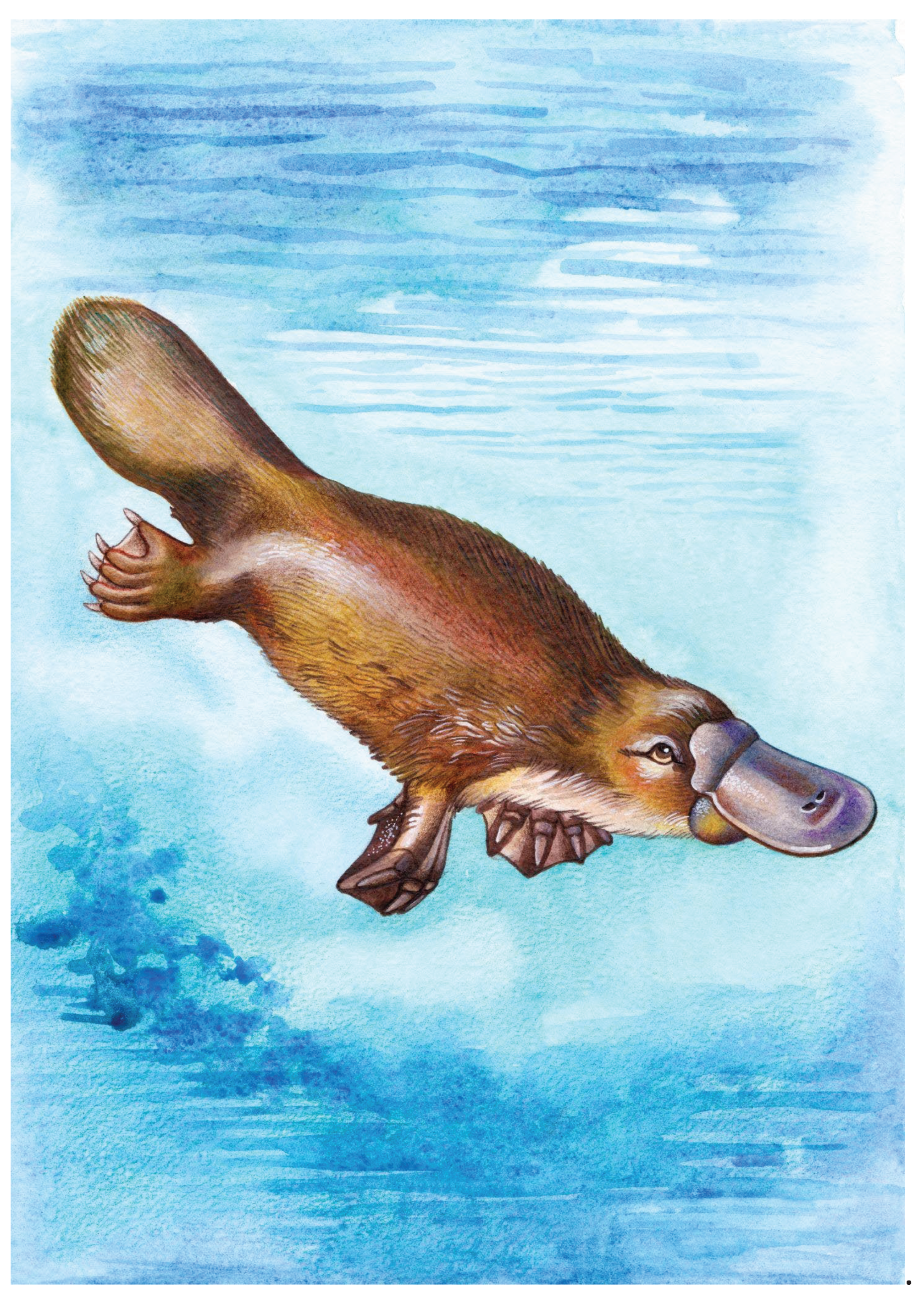
Figure 1.
A scientific drawing of the platypus, made by the author, following the 1847 rules of Hermann Schlegel Hermann Schlegel.
Figure 1.
A scientific drawing of the platypus, made by the author, following the 1847 rules of Hermann Schlegel Hermann Schlegel.
4. Biochemical, Physiological, and Ecological Consequences of Contaminants to Marine Organisms and Ecosystems
The presence of pollutants exacerbates the complex interplay of biochemical, physiological, and ecological implications resulting from climate change-induced modifications in platypus habitats. The platypus, which inhabits the transitional zone between aquatic and terrestrial ecosystems, encounters both direct and indirect consequences. Water bodies are subject to the infiltration of contaminants, which can originate from both natural and human sources. This infiltration sets off a series of consequences that impact the platypus and its surrounding habitat.
Contaminants have the potential to interfere with the endocrine systems of platypuses at a biochemical level, hence causing disruptions in hormonal equilibrium and subsequently impacting their reproductive outcomes. Research has indicated that the presence of contaminants, including as pesticides and industrial chemicals, can disrupt the typical reproductive physiology of platypuses, potentially resulting in diminished fertility rates and compromised offspring development. Moreover, it is important to note that pollutants have the potential to persist within the tissues of aquatic creatures. This process can result in an amplification of pollutant concentrations as they move up the food chain, ultimately leading to increased exposure of platypuses to elevated levels of toxins via their prey.
The platypus encounters physiological difficulties in maintaining homeostasis due to the disruption of conventional environmental circumstances caused by climate change. The metabolic processes of semi-aquatic mammals are directly affected by elevated temperatures, modified precipitation patterns, and alterations in water chemistry. The exposure to contaminants has the potential to worsen these physiological stressors, resulting in a decline in immune system function, heightened vulnerability to illnesses, and decreased general well-being.
From an ecological standpoint, the repercussions of these events have implications that go beyond the individual platypus and have an impact on the entire ecosystem. The introduction of contaminants into aquatic ecosystems has the potential to disturb the equilibrium of predator-prey interactions, hence causing population imbalances within the food web of the platypus. Moreover, the deposition of pollutants in sediment can lead to modifications in the benthic ecosystem, thereby impacting the accessibility of crucial resources for the platypus, including prey species and nesting materials.
The complex network of interrelationships among pollutants, climate change, and the ecology of platypuses underscores the need for a comprehensive strategy in investigating and addressing these impacts. The comprehension of the biochemical processes by which toxins affect the platypus enables scientists to evaluate the probable ramifications on the health of individuals, their reproductive achievements, and the dynamics of the population in the long run. Understanding this information is crucial for informing conservation policies that are designed to protect the biological integrity of platypus habitats in the context of a fast-evolving climate and human-induced stresses [12], (pp. 140-149).
5. Biogeochemistry of Naturally Occurring and Anthropogenic Substances
The interconnections between the biogeochemical landscape of platypus habitats and the consequences of climate change are highly complex. The biogeochemistry of aquatic habitats, in which platypuses thrive, is significantly influenced by both naturally occurring and man made elements. The platypus's survival can be greatly impacted by climate-induced changes, including differences in precipitation patterns and temperature. These changes can have profound effects on nutrient cycling, water chemistry, and the availability of key elements necessary for the platypus's well-being.
The biogeochemical processes in platypus habitats are influenced by naturally occurring chemicals, such as minerals and organic debris. These compounds have an impact on the availability of nutrients, pH levels, and the overall chemical composition of water bodies, consequently affecting the distribution and quantity of aquatic creatures that comprise the food of the platypus. Climate change has the potential to disturb these natural cycles, thus exerting an influence on the accessibility of crucial nutrients and modifying the ecological equilibrium of the platypus' habitat.
In conjunction with natural elements, anthropogenic compounds contribute an additional facet to the biogeochemical processes. Water bodies are subject to contamination from various sources, including agricultural runoff, industrial discharges, and urban growth. These activities introduce pollutants such as pesticides, fertilizers, heavy metals, and medications into the water. The presence of these pollutants has the potential to accumulate within sediment and water systems, thereby exerting adverse effects on the well-being of aquatic organisms and, consequently, the platypus population. Anthropogenic activities can induce modifications in biogeochemical processes, which in turn can give rise to detrimental consequences such as habitat degradation, biodiversity loss, and degraded water quality.
A comprehensive comprehension of biogeochemical processes necessitates the adoption of a multidisciplinary methodology that effectively amalgamates the fields of ecology, hydrology, and chemistry. Advanced analytical techniques are utilized by researchers to investigate the fate and movement of chemicals in aquatic settings, thereby providing insights into the intricate interplay between natural processes and those influenced by human activities. Understanding this information is crucial for making predictions about the possible effects of biogeochemical changes on platypus habitats, including changes in prey availability and potential repercussions on reproductive success.
The biogeochemical intricacies of platypus ecosystems are accentuated as climate change escalates. In order to address the consequences of modified biogeochemistry, it is essential to implement comprehensive conservation strategies that encompass both natural and human-induced factors. These efforts should be designed to safeguard the intricate equilibrium of elements that support the distinctive ecology of platypus habitats [13], (pp. 841.860).
6. Models Describing and Predicting Processes
Sophisticated models play a crucial role in comprehending and forecasting the biochemical ramifications of climate change on platypus populations. These models, which frequently use an interdisciplinary approach, incorporate climate factors, pollutant dynamics, and biological processes in order to simulate feasible scenarios and predict potential repercussions. The intricate relationship between climate variables and the physiological characteristics of platypuses requires the development of models that accurately represent the complexities of their semi-aquatic behavior.
Climate change models serve as a fundamental framework for forecasting the future progression of environmental factors, encompassing variables such as temperature, precipitation, and occurrences of extreme weather phenomena. The integration of climate models with species-specific physiological models pertaining to platypuses enables researchers to simulate the potential ramifications on their metabolic processes, reproductive behaviors, and general well-being. These models play a crucial role in predicting the potential impact of climate change on the distribution and abundance of platypus populations.
Contaminant fate and transport models serve to augment our comprehension by replicating the dynamics of pollutant dispersion and concentration within aquatic ecosystems. These models take into account several elements, including the sources of contaminants, the mechanisms by which they are transported, and the paths via which they accumulate in biological organisms. Through the integration of contaminant models with ecological models, scholars are able to evaluate the likelihood of biomagnification within the platypus food web and anticipate the potential impact of contaminants on the well-being of individual platypuses as well as the broader ecosystem.
In order to attain accurate and comprehensive predictions, it is imperative to employ integrated models that incorporate both climate change and pollutant dynamics. These models provide the examination of the combined impacts of several stressors on platypus populations, offering significant insights that might inform conservation strategies. In addition, the utilization of scenario-based modeling facilitates the assessment of diverse conservation methods, thereby aiding in the identification of measures that exhibit the highest efficacy in reducing the adverse effects of climate change and pollution on platypus habitats.
The validation and refinement of these models are contingent upon the ongoing monitoring and collection of empirical data. The use of empirical observations from the real world throughout the process of model construction serves to enhance the accuracy of predictions, so ensuring congruence between projected outcomes and the observed reactions of platypus populations to fluctuations in their surrounding environmental circumstances. With the continuous progress in computer capabilities and the ongoing research endeavors, these models are poised to evolve into more intricate instruments for comprehending and effectively addressing the complex interrelationships among climate change, pollutants, and platypus ecology [14].
7. Monitoring Studies and Functional Processes
Monitoring studies play a pivotal role in facilitating a thorough understanding of the functional processes that are impacted by climate change in platypus habitats. These investigations entail methodical and ongoing monitoring, frequently utilizing several scientific methodologies, to monitor alterations in environmental variables, platypus conduct, and population dynamics. By engaging in rigorous observation, scientists are able to identify recurring patterns and emerging tendencies, thereby illuminating the complexities surrounding the effects of climate-induced changes on the essential functional mechanisms crucial for the survival of the platypus species.
The fundamental objective of monitoring studies is to elucidate the impact of climate change on the physiological characteristics of platypuses. The rigorous documentation of temperature, precipitation, and water quality changes is conducted to evaluate the impact of these variables on metabolic rates, reproductive behaviors, and general health. Through the systematic collection of physiological data over a period of time, researchers are able to acquire valuable insights into the adaptive responses and stress indicators exhibited by platypus populations. This serves as a fundamental framework for comprehending the resilience or susceptibility of these populations to fluctuations in their surrounding environmental conditions.
Monitoring activities also examine functional processes associated with the platypus environment, including prey availability and habitat structure. The comprehensive comprehension of the platypus' environmental navigation is facilitated by the meticulous examination of its food sources, nesting patterns, and interactions with other species. The implementation of monitoring studies allows scientists to identify variations in the population and spatial dispersion of prey species. This information is crucial in making accurate forecasts regarding potential alterations in the feeding patterns and reproductive achievements of platypus.
In addition to direct observations, monitoring studies aim to investigate the wider ecological context, which includes examining interactions with contaminants. The monitoring of contaminant concentrations in water, sediments, and platypus tissues serves to measure the amounts of exposure and further our comprehension of the mechanisms by which these contaminants disseminate throughout the food chain. The amalgamation of pollutant surveillance with functional processes offers a holistic perspective on the potential ramifications on the platypus population, encompassing both individual well-being and ecosystem-wide consequences.
Monitoring studies play a dual role in advancing scientific knowledge and providing a fundamental basis for the development of conservation plans that are grounded in empirical facts. Researchers have the ability to create early warning systems by continuously observing and detecting significant indicators and thresholds. This enables them to detect environmental stressors and adopt adaptive management solutions. Monitoring studies play a crucial role in the continuous endeavour to comprehend the intricate connections among climate change, pollutants, and the vital functional processes that are essential for the long-term survival of platypus populations [15], (pp. 308-327).
8. Methodological Papers for Improved Techniques
The progress made in comprehending the biochemical mechanisms associated with climate change and pollutants in platypus habitats is significantly contingent upon the refinement and widespread adoption of enhanced quantitative methodologies. Methodological papers play a crucial role in this context, as they provide detailed descriptions of innovative methodologies and improved tools that enhance the accuracy, dependability, and breadth of scientific inquiries in the field of marine sciences.
Within the realm of platypus research, scholarly articles frequently centre their attention on methodological advancements pertaining to the gathering and examination of environmental samples. The implementation of advanced sampling technologies, such as enhanced protocols for water quality sampling or innovative techniques for sediment collection, plays a pivotal role in acquiring comprehensive and accurate data that effectively depict the environmental conditions inside platypus habitats. These technological innovations enhance the resilience of research endeavours focused on the examination of the occurrence, dispersion, and consequences of contaminants.
The development of analytical methods for the identification and quantification of pollutants in water, soil, and biological tissues is a significant field of methodological advancement. High-resolution mass spectrometry enables researchers to effectively discern and measure a wider array of pollutants present at reduced quantities, hence facilitating a more comprehensive comprehension of contaminant profiles. Furthermore, the utilisation of molecular techniques, specifically environmental DNA (eDNA) analysis, offers non-invasive methodologies to monitor platypus populations and evaluate their susceptibility to pollutants.
Methodological publications frequently focus on the integration of various datasets, which are commonly acquired by remote sensing and geospatial technologies, with the aim of improving the spatial and temporal resolution of environmental monitoring. Remote sensing technologies, such as satellites and unmanned aerial vehicles (UAVs), provide significant contributions in understanding extensive environmental transformations. These platforms enable researchers to establish connections between climate factors and modifications in platypus habitats. The aforementioned technical breakthroughs provide a comprehensive comprehension of the many dynamics that impact platypus environments.
In addition, the cultivation of quantitative methodologies frequently facilitates interdisciplinary interactions among ecologists, chemists, and data scientists. Methodological articles that prioritise collaborative approaches play a crucial role in bridging the gaps that exist between diverse scientific fields. By doing so, they contribute to the development of a more comprehensive understanding of the biochemical implications of climate change on the habitats of platypus species.
In summary, the ongoing enhancement of quantitative methodologies through methodological innovation is crucial for the progression of scientific understanding in the realm of platypus ecology. As these methodologies advance, they provide researchers with the means to elucidate the complexities of biochemical processes, pollutants, and climate-induced alterations. Consequently, this enhances our capacity to formulate well-informed conservation policies aimed at safeguarding the distinctive and susceptible platypus populations [16].
9. Ocean Carbon Cycle and Biogeochemical Processes
The complex interaction between the carbon cycle in the ocean and biogeochemical processes holds significant significance in comprehending the wider implications of climate change on the habitats of platypuses. Various methodologies, like as observations, remote sensing, models, and simulations, are utilised to analyse the intricate dynamics that regulate the presence and movement of carbon across marine ecosystems, particularly in areas where platypus habitats frequently overlap.
Observations play a fundamental role in establishing a comprehensive understanding of the present state of maritime conditions. Scientists collect data on carbon concentrations, sea surface temperatures, and nutrient levels, among various other characteristics, in order to identify and analyse patterns and trends. The inclusion of observational research is crucial in providing fundamental foundational data, enabling scientists to detect departures from established historical patterns and ascertain the impact of climate change on the carbon cycle within the ocean.
Remote sensing technologies provide a broader viewpoint, allowing scientists to see and track significant alterations in oceanic characteristics on a vast scale over time. Satellites, which are outfitted with various sensors, are utilised to collect data pertaining to sea surface temperatures, chlorophyll levels, and carbon dioxide concentrations. The utilisation of a bird's-eye perspective improves our capacity to observe patterns and irregularities, so aiding in the recognition of areas undergoing notable changes in biogeochemical processes that could potentially impact the habitats of platypuses.
Models and simulations play a crucial role in forecasting future scenarios and evaluating the possible consequences of climate change on the ocean carbon cycle. Climate models use several datasets pertaining to greenhouse gas emissions, oceanic currents, and temperature trends in order to simulate the potential impact of these factors on the process of carbon cycling in the future. When combined with biogeochemical models that are tailored to the habitats of platypuses, these simulations offer valuable insights on future changes in nutrient availability, primary productivity, and the general composition of the marine ecosystem.
The oceanic carbon cycle is not impervious to the influences of anthropogenic activities. The emissions of carbon dioxide resulting from human activities are a significant contributor to the phenomenon of ocean acidification. This process represents a substantial peril to several forms of marine life, including platypuses and the ecosystems they inhabit. The process of excess carbon dioxide dissolving in saltwater results in a reduction in pH levels, which has implications for the accessibility of calcium carbonate, a crucial constituent for the development of shells and skeletons in several marine creatures.
In essence, the examination of the ocean carbon cycle and biogeochemical processes using diverse research methodologies offers a complete framework for comprehending the impacts of climate change on platypus ecosystems. The integration of observations, remote sensing data, and modern modelling approaches is crucial in order to comprehend the intricate interplay between evolving oceanic conditions, carbon cycling, and the delicate equilibrium of marine life that plays a vital role in the survival of the platypus [17], (pp. 481-499).
10. Ocean Acidification, Deoxygenation, and Eutrophication
The accelerated rate of climate change has resulted in substantial modifications in maritime ecosystems, presenting considerable obstacles for the habitats of platypuses. Within the realm of concerns impacting the biological dynamics of the platypus' aquatic environment, ocean acidification, deoxygenation, and eutrophication stand out as significant challenges.
The process of ocean acidification, which is primarily caused by the uptake of excessive atmospheric carbon dioxide by seawater, presents a significant peril to marine ecosystems, including the habitats of platypuses. The dissolution of carbon dioxide in seawater results in the formation of carbonic acid, which subsequently causes a reduction in pH. The process of acidification can have significant repercussions on marine species, especially those with shells or skeletons composed of calcium carbonate, hence perturbing the intricate equilibrium of the platypus' ecology. The availability of prey for the platypus may be reduced due to probable obstacles in shell development faced by molluscs and crustaceans, which are important components of its diet [18], (pp. 3-15).
Deoxygenation, a subsequent outcome of climate change, entails a decline in the oxygen concentration inside saltwater. As the temperature increases, the ability of warmer water to retain dissolved oxygen diminishes. The process of deoxygenation presents a direct and immediate peril to marine species, with the potential to result in hypoxic circumstances characterised by insufficient quantities of oxygen necessary for the maintenance of life. Platypuses, as semi-aquatic creatures, depend on adequate amounts of oxygen in aquatic environments to obtain their food. Consequently, they may have challenges in their foraging activities when confronted with the progression of deoxygenation [19], (pp. 97-106).
The phenomenon of eutrophication, which is expedited by heightened nutrient influx, has a range of complex consequences for the habitats of platypus. Algal blooms can be induced by an overabundance of nutrients, frequently derived from agricultural runoff and anthropogenic activity. Although the presence of these flowers may initially enhance the accessibility of food for platypuses, they frequently give rise to adverse repercussions. The process of algal biomass decomposition results in the consumption of oxygen, leading to localised deoxygenation. Additionally, certain species of algae have the capability to create toxins, which can directly affect the health of platypuses. Additionally, the ensuing decline of algal blooms can intensify hypoxic conditions, placing additional strain on the aquatic ecology [20], (pp. 155-166).
The interrelated phenomena of ocean acidification, deoxygenation, and eutrophication serve to emphasise the pressing need to comprehend and alleviate the effects of climate change on the habitats of platypus species. The implementation of monitoring studies, which utilise sophisticated techniques, is of utmost importance in order to effectively monitor the advancement of these processes and accurately identify their distinct impacts on platypus physiology and ecosystem dynamics. In order to effectively address the issues faced by the platypus and its aquatic environment, conservation efforts must take into account the multiple nature of these challenges, which involve the intricate linkages between climate-induced changes and the susceptibility of the species.
Conflicts of Interest
The author declares no conflicts of interest.
References
- Martin, H. C., Batty, E. M., Hussin, J., Westall, P., Daish, T., Kolomyjec, S., Piazza, P., Bowden, R., Hawkins, M., Grant, T., Moritz, C., Grutzner, F., Gongora, J., & Donnelly, P. (2018). Insights into Platypus Population Structure and History from Whole-Genome Sequencing. Molecular Biology and Evolution, 35(5), 1238–1252. [CrossRef]
- =, *!!! REPLACE !!!*. Chapperon, C., Volkenborn, N., Clavier, J., Séité, S., Seabra, R., & Lima, F. P. (2016). Exposure to solar radiation drives organismal vulnerability to climate: Evidence from an intertidal limpet. Journal of Thermal Biology, 57, 92–100. [CrossRef]
- Klamt, M., Thompson, R. M., & Davis, J. (2011). Early response of the platypus to climate warming. [CrossRef]
- Bino, G., Kingsford, R. T., Archer, M., Connolly, J. H., Day, J., Dias, K., Goldney, D., Gongora, J., Grant, T., Griffiths, J., Hawke, T., Klamt, M., Lunney, D., Mijangos, L., Munks, S., Sherwin, W., Serena, M., Temple-Smith, P., Thomas, J., … Whittington, C. (2019). The platypus: evolutionary history, biology, and an uncertain future. Journal of Mammalogy, 100(2), 308–327. [CrossRef]
- Tsend-Ayush, E., Dodge, N., Mohr, J., Casey, A., Himmelbauer, H., Kremitzki, C. L., Schatzkamer, K., Graves, T., Warren, W. C., & Grützner, F. (2009). Higher-order genome organization in platypus and chicken sperm and repositioning of sex chromosomes during mammalian evolution. Chromosoma, 118(1), 53–69. [CrossRef]
- Warren, W. C., Hillier, L. D. W., Marshall Graves, J. A., Birney, E., Ponting, C. P., Grützner, F., Belov, K., Miller, W., Clarke, L., Chinwalla, A. T., Yang, S. P., Heger, A., Locke, D. P., Miethke, P., Waters, P. D., Veyrunes, F., Fulton, L., Fulton, B., Graves, T., … Wilson, R. K. (2008). Genome analysis of the platypus reveals unique signatures of evolution. Nature, 453(7192), 175–183. [CrossRef]
- El-Mogharbel, N., Wakefield, M., Deakin, J. E., Tsend-Ayush, E., Grützner, F., Alsop, A., Ezaz, T., & Marshall Graves, J. A. (2007). DMRT gene cluster analysis in the platypus: New insights into genomic organization and regulatory regions. Genomics, 89(1), 10–21. [CrossRef]
- Veyrunes, F., Waters, P. D., Miethke, P., Rens, W., McMillan, D., Alsop, A. E., Grützner, F., Deakin, J. E., Whittington, C. M., Schatzkamer, K., Kremitzki, C. L., Graves, T., Ferguson-Smith, M. A., Warren, W., & Marshall Graves, J. A. (2008). Bird-like sex chromosomes of platypus imply recent origin of mammal sex chromosomes. Genome Research, 18(6), 965–973. [CrossRef]
- Grützner, F., & Graves, J. A. M. (2004). A platypus’ eye view of the mammalian genome. Current Opinion in Genetics & Development, 14(6), 642–649. [CrossRef]
- Whittington, C. M., Koh, J. M. S., Warren, W. C., Papenfuss, A. T., Torres, A. M., Kuchel, P. W., & Belov, K. (2009). Understanding and utilising mammalian venom via a platypus venom transcriptome. Journal of Proteomics, 72(2), 155–164. [CrossRef]
- Griffiths, M. (n.d.). manger-et-al-1998-preface-to-platypus-biology-recent-advances-and-reviews-a-theme-published-by-the-royal-society-of.
- Johnston, E. L., Mayer-Pinto, M., & Crowe, T. P. (2015). REVIEW: Chemical contaminant effects on marine ecosystem functioning. Journal of Applied Ecology, 52(1), 140–149. [CrossRef]
- Moiseenko, T. I. (2017). Evolution of biogeochemical cycles under anthropogenic loads: Limits impacts. Geochemistry International, 55(10), 841–860. [CrossRef]
- Park, S.-Y., Moon, H.-T., Kim, J.-S., & Lee, J.-H. (2023). Assessing the Impact of Human-Induced and Climate Change-Driven Streamflow Alterations on Freshwater Ecosystems. Ecohydrology & Hydrobiology. [CrossRef]
- Bino, G., Kingsford, R. T., Archer, M., Connolly, J. H., Day, J., Dias, K., Goldney, D., Gongora, J., Grant, T., Griffiths, J., Hawke, T., Klamt, M., Lunney, D., Mijangos, L., Munks, S., Sherwin, W., Serena, M., Temple-Smith, P., Thomas, J., … Whittington, C. (2019). The platypus: evolutionary history, biology, and an uncertain future. Journal of Mammalogy, 100(2), 308–327. [CrossRef]
- Rankin, T. L., Frens, K., Morrison, W. E., Gaichas, S. K., Zador, S. G., Greene, C., Aydin, K., Reum, J. C., & Holsman, K. K. (2023). Applications of Ecosystem Risk Assessment in Federal Fisheries to Advance Ecosystem-Based Fisheries Management.
- Zhang, C., Dang, H., Azam, F., Benner, R., Legendre, L., Passow, U., Polimene, L., Robinson, C., Suttle, C. A., & Jiao, N. (2018). Evolving paradigms in biological carbon cycling in the ocean. National Science Review, 5(4), 481–499. [CrossRef]
- Gaylord, B., Kroeker, K. J., Sunday, J. M., Anderson, K. M., Barry, J. P., Brown, N. E., Connell, S. D., Dupont, S., Fabricius, K. E., Hall-Spencer, J. M., Klinger, T., Milazzo, M., Munday, P. L., Russell, B. D., Sanford, E., Schreiber, S. J., Thiyagarajan, V., Vaughan, M. L. H., Widdicombe, S., & Harley, C. D. G. (2015). Ocean acidification through the lens of ecological theory. Ecology, 96(1), 3–15. [CrossRef]
- Martin, D., McKenna, H., & Livina, V. (2017). The human physiological impact of global deoxygenation. In Journal of Physiological Sciences (Vol. 67, Issue 1, pp. 97–106). Springer Tokyo. [CrossRef]
- Bhagowati, B., & Ahamad, K. U. (2019). A review on lake eutrophication dynamics and recent developments in lake modeling. Ecohydrology & Hydrobiology, 19(1), 155–166. [CrossRef]
Disclaimer/Publisher’s Note: The statements, opinions and data contained in all publications are solely those of the individual author(s) and contributor(s) and not of MDPI and/or the editor(s). MDPI and/or the editor(s) disclaim responsibility for any injury to people or property resulting from any ideas, methods, instructions or products referred to in the content. |
© 2024 by the authors. Licensee MDPI, Basel, Switzerland. This article is an open access article distributed under the terms and conditions of the Creative Commons Attribution (CC BY) license (http://creativecommons.org/licenses/by/4.0/).
Copyright: This open access article is published under a Creative Commons CC BY 4.0 license, which permit the free download, distribution, and reuse, provided that the author and preprint are cited in any reuse.