

Submitted:
08 February 2024
Posted:
09 February 2024
You are already at the latest version
Abstract
Occupational accidents, despite continuous safety updates, are still a scourge in the occupational and forensic spheres, constituting, among other things, the subject of a large share of litigation. Demographic data can help to understand the areas where the application of health surveillance is lacking. This meta-analysis sets out to analyze data from studies on accidents at work, focusing on the correlation between the areas in which accidents occur and whether or not personal safety equipment is used, about the different regulations in force. For the selection of the data, a systematic review was carried out according to the PRISMA guidelines, with the primary objective of identifying the trend of occupational accidents in specific geographical areas, which differ in terms of the attention paid to preventive aspects. The data we highlighted showed, regarding the type of accident, substantial differences between low-income countries and industrialized countries (stratified according to the Human Development Index) and, an overall indifference as to whether or not individual safety devices were used, revealing that, despite the continuous normative evolution in the field of safety at work, even today, the investigative data on the actual application of the regulations, during accidents at work, is underestimated and little researched.
Keywords:
Work health
; Health Surveillance
; Safety equipment
; Work accidents
1. Introduction
The Accidents at work account for an important share of the disabling and unfortunate outcomes of the overall accidental caseload. These can result from different factors related to the work environment, inadequate use of safety equipment, unsafe working conditions, and the individual, fatigue, and stress, inadequate training and education, lack of attention, or disobedience to safety rules. Even today, despite the present deluge of legislation and implementation, they still represent a major public health problem, being responsible for a considerable number of cases of morbidity and mortality worldwide, especially in low- and middle-developed countries [1,27].
According to the International Labour Organisation (ILO), every year about 2.3 million women and men worldwide succumb to work-related injuries or illnesses; this corresponds to more than 6,000 deaths per day. Worldwide, there are approximately 340 million work-related injuries and 160 million victims of occupational diseases each year [1,30].
To shed light on the causes and manner of death, a careful analysis of whether or not personal protective equipment was used is essential, together with the subject’s work history, evidence at the scene, and forensic investigation. The investigation of occupational fatalities requires a standardized methodology, the collaboration of experts in several forensic sciences, cross-examination, and dialogue between occupational safety experts and laboratory pathologists. However, forensic trauma diagnosis is extremely diverse, with significant differences in work skills and technical developments in different countries.
The socio-cultural context and legislation inevitably influence the rates and methods of occurrence of occupational accidents. Therefore, significant differences can be observed between countries. In industrialized countries, accidents related to work equipment and falls are the most frequent, while in developing countries pesticide poisoning and electrocutions are more common. A common factor is the existence of large-scale industries and smaller factories; between these two, not only the implementation of health surveillance, but the history collection itself is different [1].
Research on the accident patterns and risk factors involved is still inadequate. Moreover, the studies in the literature are often not homogeneous, which leads to inconsistent and unrepresentative socio-demographic and public health analyses. This consideration often stems from the time lapse between injury and recovery, or injury and death, especially when the latter does not occur in the immediate vicinity and is determined by the possible contribution of supervening causes attributable to lengthy hospitalization [2].
Although there is no globally uniform standard, it is self-evident that the use of personal protective equipment, in a controlled work environment, is a decisive factor in reducing adverse events.
In addition, the role played by the misuse of different substances with psychotropic action including, alcohol, cannabinoids, and opiates, rather than the common drugs used for the treatment of neuropsychological disorders is underestimated [3].
To raise awareness in the community and for future political and health strategies, this study aimed, on the one hand, to analyze works on scientific databases (PubMed, NLM, Cochrane) to bring out the importance of the ‘secure and safe’ pairing in ascertaining the mode of occurrence of an accident, whether lethal or not.
2. Materials and Methods
2.1. Protocol
The authors conducted a systematic search of studies published between 2014 and 2020. The protocol of this study was designed following the Preferred Reporting Items for Systematic Reviews and Meta-Analyses (PRISMA) guidelines [4] and using the methodology described in the Cochrane Collaboration Handbook on Systematic Reviews of Health Promotion and Public Health Program [5].
2.2. Data Sources and Search Strategy
Records were identified using the PubMed search engine. For the search, MeSH terms and free text words were combined through Boolean operations as follows: (WORK) AND (DEATH) OR (INJURY/INJURIES) OR (P.P.E.) OR (ILLICIT DRUGS) OR (TOXICOLOGY). The search was completed in September 2023.
2.3. Inclusion and Exclusion Criteria
Studies on a series of fatal and non-fatal occupational accidents focused on a specific country with data on occupational, anamnestic, and social information were included.
The inclusion criteria for the studies were as follows:
- The article was in English.
- The article was original.
- The study covered both fatal and non-fatal occupational accidents, also in the context of a general case study.
- The study included at least 20 patients;
- The study contained data on fatal and non-fatal work-related injuries;
- The study contained data on P.P.E. use and/or alcohol/drug consumption;
- The studies belonged to different groups according to the HDI.
The following were excluded: psycho-sociological studies, case reports, posters, abstracts,s and conference communications, non-English articles, in vivo and in vitro studies, articles that did not relate to a specific country, and articles on occupational diseases and chronic/neoplastic diseases and COVID 19. A detailed flow chart of the selection process is provided in Figure 1.
2.4. Study Selection and Data Collection Process
Initially, articles were selected based on title and abstract. Subsequently, a full-text evaluation of the selected studies was performed. Based on the literature search, 18 (eighteen) studies were identified that met three, or more, inclusion criteria.
To begin with, from 1237 articles, 152 duplicates were removed and 1084 records were screened. Then, 967 records were excluded according to the exclusion criteria. After full-text evaluation, a further 110 records were excluded as non-specific. The quality of each study was assessed independently of GM and SF. If there was a conflict of opinion on the articles, they were submitted to EC. Finally, 17 articles were included in this review. A detailed flow chart of the selection process is shown in Figure 1.
For each study, two authors (GM, SF) extracted the data using a pre-prepared Excel spreadsheet according to the following variables: year of the study, reference period, country, type of sample (general, workers of specific activity of interest for the selected country), severity of the injury (fatal, non-fatal), no. of work-related injuries, gender (male, female), average age, assessment on the use of personal protective equipment, toxicological investigations.
2.5. Study Stratification
The countries in the selected studies were stratified according to the Human Development Index (HDI), a macroeconomic development indicator that is a different way of assessing the well-being of a nation, because it takes into account not only the gross domestic product (GDP) per capita but also other societal factors, including life expectancy at birth, the amount of food calories available per capita, the availability of drinking water, the literacy rate and schooling rate of the population, access to health services and the degree of political freedom.
HDI is defined as the geometric mean of three basic indices, linked respectively to life expectancy, education level, and income, which in turn are calculated as follows [6]
Specifically, the three indices reflect:
- the health dimension which is assessed by life expectancy at birth,
- the educational dimension as measured by years of schooling for adults aged 25 and over and expected years of schooling for school-age children,
- the size of the standard of living, which is measured by gross national income per capita.
Since the last HDR report, countries are divided into four groups according to the quartile they fall into [6]:
- top 25% of countries: very high human development countries
- 25% to 50% of countries: high human development countries
- 50% to 75% of countries: medium human development countries
- last 25% of countries: low human development countries
3. Results
All selected studies are summarised in Table 1.
3.1. Characteristics of Articles Included in the Systematic Review
3.1.1. Subsubsection
A total of 17 articles that met the selected inclusion criteria were selected.
The countries were then grouped according to their Human Development Index into:
- -
- Group 1: countries with very high HDI: Western Europe, i.e., Italy (no. 2 articles), Portugal (no. 1 article), USA (no. 3 articles), Turkey (no. 1 article), Poland (no. 1 article);
- -
- Group 2: countries with high HDI: China (no. 2 articles), Brazil (no. 1 article), Jordan (no. 1 article), Iran (no. 3 articles);
- -
- Group 3: countries with medium HDI: India (no. 1 article);
- -
- Group 4: countries with low HDI: Tanzania (no. 1 article).
Eleven articles were retrospective studies conducted on at least five-year case histories; one study was prospective; one a review; the remainder were classified as original articles. The overall period covered by the studies was 1980-2019. The global case series of the studies included 6,704,622 injuries, of which fatal 6,464,917, non-fatal 241,118, fatal work-related 2,726,397; the estimated global mean age was 34.32 years, with a prevalence of the male gender (1,990,711 men, 951,597 women). Calculating the mean age by gender was not possible as it was not specified in each selected article (Figure 2).
From the studies reported, a binary code database was created to obtain an overall estimate of the occupational sector most involved in accidental events. It was found that the sectors primarily involved are industry and agriculture, followed by construction, transport, and finally services. (Figure 3)
3.2. Statistical Analysis
To understand the differences that exist in terms of incidence by age, a comparative analysis was conducted for all selected countries using data from studies that sectoralised work-related deaths by age.
In detail, within the sample analyzed, a higher number of deaths (84.4%) + in the age group 30-39 (170; CI 15.42 - 125.1) was highlighted. No differences in the number of deaths were highlighted in the 40-49 age group, although a positive trend was found within the 50-59 age group.
A comparative analysis of the studies containing the age groups by no. of deaths was carried out, which revealed that the age group most involved in work-related fatal accidents is in the 30-49 age range, compared with the under 30 and over 50 age groups. (Figure 4)
To understand the incidence of deaths in individual countries by age group (divided into ten-year periods from 18 to 60 years), the chi-square test was performed, which revealed a significant difference within the sample analyzed (p-value < 0.05).
In demographic terms, there was a certain homogeneity in the distribution of fatalities by age group, with a higher prevalence of the involvement of young people in Turkey, Poland (ISU Group 1), China, and Jordan (ISU Group 2). In the countries belonging to ISU Group 1, the incidence of fatal accidents in individuals aged between 30 and 49 was statistically significant. (Figure 5)
3.1.1. Group 1 - very high HDI (Italy, USA, Portugal, Turkey, Poland)
3.1.1. Italy
The analysis of the retrospective study conducted by Errico S. et al. (2022), which analyzed 47 fatal accidents at work, of which only one case was female, showed that the average age of the deceased was 54.5 years and that 87.2% of the cases the death was attributable to mechanical trauma related to industrial activities, while in 42.5% of the cases, it was precipitation trauma. Regarding the use of PPE, in 97.2% of the cases, this was not specified, in 6.4% correct use was reported, and in 4.2% incorrect use [7].
In the study conducted by Petrotti et al. (2018) out of 426 cases of fatalities ascribed to work-related injuries, 36.62% of the cases occurred within the construction industry, 19.25% due to the use of industrial machinery, 13.5% within agriculture, 5.16% occurred among transporters and, only 0.94% within the chemical industry.
Of the total number of cases, 422 were men and 4 women, with an average age of 27.93% involving subjects under the age of 35. The study, however, did not specify any observations regarding the use of PPE [8].
3.1.1.2. USA
In the United States, Ramirez et al. (2013) analyzed occupational deaths and selected the cases in which toxicological investigations had been conducted. Of a total of 427 cases, only 280 had been investigated and 61 cases were found to be positive for substances of abuse of recent use. Although the occupational subcategories were analyzed, there were no observations in the study regarding the use of PPE [9].
Obeid et al. (2016) carried out a prospective study of 423 fall-related deaths, of which 54 were work-related, or 12.76% of the total. The victims consisted of 324 men and 99 women, with an average age of 43.5 years. The 54 work-related cases were all men and the ultimate cause of death was attributed to the polytrauma suffered. About the use of PPE, the authors report, as an indication for preventive purposes, that 4% of work-related deaths were attributable to the improper use of PPE [10].
The retrospective study conducted by Anh Hoang et al. (2021) on a total of 6674 accident cases, of which 85 were work-related (1.28% of the total) and, specifically, 75 were male, 10 female, with an average age of about 35 years. The accidents were related to the use of chemical agents in the context of design. In 31 cases the use of PPE was not specified; in 36 it was reported as correct, in 16 as not being used, and in 2 cases as being used inappropriately [11].
3.1.1.3. Portugal
In the Portuguese territory, the most frequently studied work-related accidents are related to agricultural activities. The study conducted by Antunes et al. (2018), examined 3508 cases of fatalities of which 57 (1.62%) were attributable to the driving of tractors by male workers with an average age of 60 years. This study investigated both the use of personal safety equipment, which was not used in any case and the toxicological profiles of the victims, which showed that traces of pesticides were present in 1.7 percent of the subjects. No data on the use of PPE [12].
3.1.1.4. Turkey
Following the typical work activities in the area, Ozer et al. (2014) analyzed the deaths of mine workers that occurred during the period 2005-2008 and found 42 fatal cases, in which the average age of the subjects (all male) was 32.9 years. Their study showed the need to implement prevention and safety systems in working environments, especially in private industries, in the absence, however, of precise data on the use of PPE [13].
3.1.1.5. Poland
Jurek et al. (2017) conducted a 20-year retrospective study focusing on the sub-population of agricultural workers who suffered fatal accidents and in whom ethyl alcohol intoxication was detected at the same time. The choice was dictated by risk assessment in the work environment. Of a total of 18935 autopsies, 98 cases of agricultural-related accidents with ethyl alcohol intoxication ranging from 50 mg/dl to > 250 mg/dl were selected. However, the use of personal safety equipment was not investigated [14].
3.1.2. Group 2 - High ISU (China, Brazil, Iran, Jordan)
3.1.2.1. China
The study conducted by Wang L. et al. (2019), analyzed 1968 cases of deaths of which 140 were ascribed to poisoning. Of these, 66.43% (56 cases) were accidental, and (40%) were work-related, with a male predominance (78 men, 62 women). In 27.1%, the poisoning was related to the use of agrochemicals, in 55.2% to pesticides, and, in the remaining cases, accidental inhalation of insecticides, herbicides, rodenticides, carbon monoxide and cyanogenic gases and other solvents. The use of appropriate PPE was never investigated [15].
Another type of fatal injury that has been particularly highlighted in China is low-voltage electrocution (Shuiping et al., 2014). Of 3370 cases that occurred, 0.89% were work-related injuries, suffered by males, with an average age of 33.08 years. The use of appropriate safety equipment to prevent this type of injury was not investigated in detail [16].
3.1.2.1. Brazil
Constituting a current problem in the area of injuries and deaths in the workplace, Cordeiro R. et al. (2017), using special criteria to select the definition of injury/death in the workplace, identified 82 cases, out of 415, work-related deaths (i.e., 19.76%); 74 subjects were men, 8 women; the average age was 42.5 years in the absence of any specification of the individual age groups involved. Of the 82 cases selected, 62 were regularly employed; 12 were not formally employed; and 8 were in unknown employment. When assessing the use of licit and illicit drugs among the deceased workers, 50 tested positive for alcohol use in the month before death, 28 were smokers, 13 tested positive for drug use and 14 had a known history of problematic alcohol and illicit drug use. Out of the total number of cases, 35 (42.7%) were classified as traffic accidents and were caused by collisions and run-offs on urban roads and motorways. The three (3.7%) work-related injuries classified as other types of work-related injuries were suicides, all committed in the workplace during working hours. In one case, a handyman, chronically exposed to organophosphates, hanged himself while cutting grass in a public garden. In another, an industrial painter, chronically exposed to organophosphate solvents, deliberately threw himself against a bus passing the industry gate as he was leaving work. The third worker was the owner of a small carpenter’s shop who hanged himself in his office during working hours, leaving a letter stating that he could no longer cope with the pressure of his factory’s creditors demanding back payments. Also in this study, the use of PPE was not investigated [17].
3.1.2.3. Jordan
The review conducted by AL-Abdallat et al. (2014) examined 88 cases of fatalities occurring at work in which only one person was female, which is compatible with the culture of the area. The average age was 32.5 years, in the absence of details on the individual age groups involved. Most of the events were related to falls from height (44.3%), electrocution (17%), and minor events. Toxicological investigations revealed that only one of the cases investigated was positive for alcohol consumption. The possible use of preventive measures was not investigated [18].
3.1.2.4. Iran
A macro-case history of work-related injuries in Iran was analyzed by Vahabi et al. (2017) in which, of 21484 injuries, 96 were fatal. The sample, consisting of cases that occurred between 2012 and 2013, consisted of 2113 male and 371 female subjects; the overall average age was 33.2 years. The authors found that most of the injuries occurred in agricultural, food, and tobacco industrial, chemical, metal, electronic, and non-electrical work environments. Concerning the use of safety equipment this aspect was not specified; the toxicological analyses were only focused on cases of gas poisoning [19].
The retrospective study conducted by Nazanin et al. (2019) focuses on ten years of occupational accidents, with a total of 207604 cases, of which 1079 were fatal (0.52%), with a predominance of the male gender and a prevalence of fatalities in agriculture and industry, within the work environment, compared to accidents outside it. The authors also noted that in 26.7% of the cases, the workers were not wearing personal safety equipment [20].
Pouradeli et al. (2022), in a cross-selective study, analyzed a case history of 2228 accidents, of which 263 were fatal. 2181 subjects were male, and 47 were female, with an overall average age of 34.5 years. The toxicological analyses conducted revealed that poisoning by unspecified toxic substances occurred in six cases [21].
3.1.3. Group 3 - average HDI (India)
3.1.3.1. India
As far as South-East Asia is concerned, the authors selected the study conducted by Chittaranjanet al. (2019) in India, reporting a singular category of work-related injuries, occurring due to electrocution, taking into account that most studies already mention chemical poisonings and that the actual number of injuries due to mechanical trauma is to be considered underestimated. The study cited analysed 428 cases of which 90 were work-related (21.03%) and in which 376 were men, and 52 women, with an average age of 19.8 years. In no case was the use of PPE investigated [22].
3.1.4. Group 4 - low ISU (Tanzania)
3.1.4.1. Tanzania
The retrospective study conducted by Shewijo et al. (2021) found that, in a sample of 4578 cases of occupational accidents, 460 of which were fatal, the main cause was polytrauma occurring in the context of public and private industrial environments, where there was no information on the correct use of safety equipment and where the workers were predominantly men (3703). In their study, of interest for preventive purposes, the work shift was also taken into account. Most of the adverse events occurred in the manufacturing sector, followed by the agricultural and forestry sectors, and the construction sector without, however, going into the application of PPE [23].
3.1.5. Personal Protective Equipment (P.P.E.) legislation
As mentioned above, for each group selected based on the HDI, the use of personal protective equipment for safety at work was investigated. The sources analyzed by the authors were the NIOSH, ILO, OSHA, and local government websites of the countries involved in the study.
As enacted in Article 16 - Convention on Safety and Health at Work, enacted in Geneva in 1981 [24,25], employers have duties regarding the provision and use of personal protective equipment (PPE) at work. PPE is equipment that will protect the user from the risk of accidents or adverse health effects. It can include items such as safety helmets, gloves, eye protection, high visibility clothing, safety footwear, safety harnesses, and respiratory protective equipment (RPE). By 2023, the convention had been ratified by 78 states, 17 of which had also ratified the 2002 Additional Protocol. Analyzing the current member states, about the studies selected in the study, it can be seen that of the Groups selected based on the HDI, in Italy the principles of the 1981 Convention and subsequent acts issued by the ILO are reflected in the Safety Consolidation Act (D.L. 81/08), in the USA it has been implemented since 2002 (i.e., after the corrigendum drafted with NIOSH), in Portugal it has been active since 1985, in Turkey since 2005, in Poland it is not active. Among the Group 2 countries, China implemented the Convention in 2007, Brazil in 1992, in Jordan it is not active, in Iran since 1995. In India, a country with a medium HDI (Group 3), the Occupational Safety and Health Convention has not yet been implemented and this may account for the large number of accidents observed; in Tanzania (Group 4 - low HDI), it was found that OSHA has concluded agreements on the correct use of PPE with each of the local ministries of the countries selected in the study, including Tanzania, a country classified as low HDI [26].
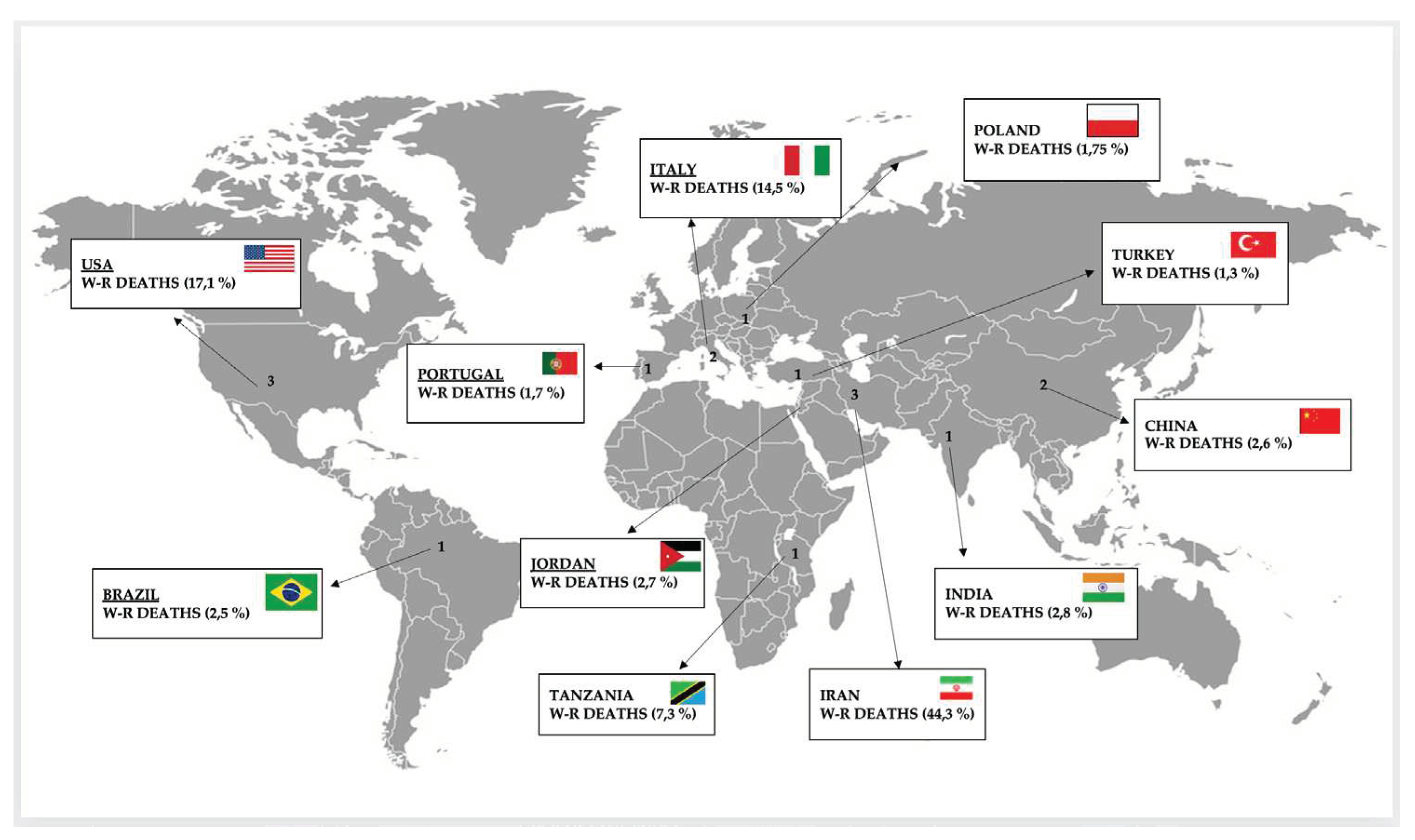
Figure 6.
Representative figure illustrating the percentage of work-related (W-R) deaths according to the articles included in this review.
Figure 6.
Representative figure illustrating the percentage of work-related (W-R) deaths according to the articles included in this review.
4. Discussion
Accidents at work are an inherent problem in the performance of work itself. Over the years, efforts have been made to deal with such events by investing, in terms of research into the evolution of work activities and any new emerging risks, in the design and application of new individual safety devices, together with increasingly specific prevention measures for each work activity [27].
However, as these events are related to ergonomic factors, it is indeed important to emphasize the distinction between correct behavior and unintentional error; such conditions can also occur, for example, due to an imbalance between the progress of mechanization and the operator’s understanding of procedures; This can lead to the well-known error categories according to Rasmussen, i.e., errors due to practical oversights carried out in a way that is different from what was planned (slip), environmental distractions that occur when a task is frequently performed but is not due to habit, errors due to established habit or memory (lapse), failure in the judgment process of planning the action (rule-based mistakes) due to correct identification of the situation but the incorrect application of the rule, errors related to incomplete or incorrect knowledge and incorrect assessment of the situation (knowledge-based mistakes) [28].
The review work carried out by the authors analyzed the cases of fatal and non-fatal occupational accidents under the demographic aspect, stratifying the selected studies according to the group to which the individual countries belong in terms of the human development index, confirming, from a comparative statistical point of view, the previous studies carried out on individual countries, which, form the basis for continued study and growth based on the reactive analyses conducted.
From a bibliographical point of view, the screening phase carried out to select the studies, depending on the inclusion criteria chosen, made it possible to find that, beyond what was then analyzed, there are innumerable causes of accidents that also lead to actual occupational diseases, especially cardiovascular and pulmonary, especially in jobs that are common to domestic life, such as cooking and maintenance work, which, from an occupational point of view, are subject to health surveillance [29].
Once the selection had been made, the analysis focused on assessing the number of accidents, especially fatal ones, the geographical areas and how they occurred, and whether the use of personal safety equipment and the consumption of alcohol and drugs of abuse by workers had been addressed.
The Organisation for Occupational Safety and Health (OSHA) defines personal protective equipment, commonly known as ‘PPE’, as equipment worn to minimize exposure to a variety of hazards and recommends a battery of protective clothing for construction workers. It includes eye and face protection (safety glasses, goggles, or face shields), foot protection (safety shoes), hand protection (gloves), head protection (helmets), and hearing protection (ear/arm covers) [30].
First of all, it emerged that the focus on IPRs has increased in the aftermath of the COVID-19 pandemic; in fact, it is since around 2020 numerous authors from a variety of disciplines have been focusing on IPRs both in terms of testing and prevention and terms of economic impact [30]. Of the studies examined, only two out of seventeen, on the same subject, go into the merits of IPR use. This was discouraging, bearing in mind the importance of these devices, both in terms of individual prevention and in terms of findings for future studies, which would improve the community.
It should be pointed out that the collection of data did not take into account work-related deaths during Covid 19. This last aspect, however, allowed us to further confirm, as mentioned above, that investigations into the use of PPE were lacking and that the alarm bells went off in this regard in the face of a high-profile emergency, fortunately, limited in time, in contrast to the circumstance under study [31].
The gender and age distribution of the subjects is heterogeneous, although not all studies have investigated these aspects in depth. The studies examined showed a clear majority of male subjects; however, the mode of injury or the percentage of subjects who died in the context of a general case history was not clear in all cases, at least in terms of gender.
Regarding the sectors mainly involved in occupational accidents, it has been found that industries are still the main accident location; this could be linked to both environmental and individual factors. While on the one hand, there is a progressive automation of work processes, on the other hand, there is likely a lack of staff training or inappropriate staff behavior that leads to errors and thus accidents.
Demographically, the data in the scientific literature are in line with the author’s findings in the systematic review procedure, noting that, in percentage terms, Iran is the country with the highest work-related fatality rate (44.3%), followed by the USA (17.1%), Italy (14.57%), Tanzania (7.27%) and, with percentages of less than 3%, the other countries examined.
In line with what has been observed, what is lacking in the study of most of the reviews carried out on occupational injury cases is an in-depth assessment of the clinical and medical history of the subjects as well as compliance with the regulations concerning safety in the workplace or the consumption of alcohol and drugs - to be understood as acute consumption during, or near, working hours. More specifically, regarding the type of sector most involved in fatal and non-fatal occupational accidents, it was observed that in low-income countries (India) or developed countries with significant agricultural areas (China), most accidents are attributable to the performance of agricultural activity, both in terms of mechanical trauma and poisoning, mainly through the use of pesticides such as organophosphates and carbamates, substances with muscarinic, nicotinic and neurotoxic action. The joint observation of a lack of analysis of the actual use of personal safety equipment supports the hypothesis that in post-event investigations, this is a data point to be investigated for preventive purposes.
In terms of health surveillance and the use of individual safety equipment, in fact, in only two out of sixteen studies was attention paid to the correct use of PPE, a discouraging fact, bearing in mind that the sample, in terms of causes and methods of occurrence of accidents, was fairly homogeneous and that the legislation in force in the individual countries provides for the application of similar measures country by country, with specific coding nomenclature (for example, in India the IS (Indian Standard) Codes for PPEs and Safety Equipment is in use, which include, as an example IS code of Safety Belt and Full body Harness - IS 3521: 1999. IS Code for Industrial safety helmet - IS 2925: 1984).
In terms of time, over the last 20 years, there is no doubt that the phenomenon of occupational accidents has been decreasing. However, more than two million people worldwide still die as a result of environmental and behavioral factors during work, accounting for 1.2 percent of global deaths. To this must be added the figures for deaths occurring as a result of prolonged hospitalization, which are often the subject of litigation [32] involving the company as the site of the cause, and hospitals as the site of supervening causes.
Certainly, the spread of occupational safety regulations, greater industrialization, and mechanization, including in agriculture, are elements that have contributed to reducing the number of fatalities but not disabling accidents [33]. The industrial and agricultural sectors still account for the highest number of fatalities per year. These data correspond to those discussed in this systematic review and underline that work-related injuries and deaths are still a major global public health problem.
From the above, it emerges that a uniform protocol analyzing, for each accident, all the addendums that characterize it is not in place; such a hypothetical format would most likely help in both preventive and reactive analysis to further reduce the phenomenon of accidents at work.
5. Conclusions
The correct use of appropriate PPE is vital for worker safety and can be a determining factor between accidents and safety. Indeed, several studies have indicated a significant association between the lack of PPE use and occupational accidents. The low level of awareness of their use, inadequate use or not using them at all, are elements that have, over time, significantly contributed to increasing the risk of occupational accidents. Studies also reveal that many workers, although they use PPE, remove it during their work activity, arbitrarily and with little knowledge of the potential consequences related to the ‘violent cause’ element that characterizes workplace accidents.
The selected studies offer a snapshot of the severity of the problem, of the failure to investigate the use of IPR, to which must be added the case histories of survivors.
Significant differences between the types of accidents in low-income and Western countries confirmed the data from previous literature. In rural areas and Asian countries, most work-related deaths occur mainly due to problems with toxic substances, to a lesser extent with machinery and electrical equipment, and, where reported, due to a lack of safety devices. In Western countries, as expected, industrial machinery and construction play a major role.
In conclusion, the bibliographical screening carried out during the selection of the articles to be included in the study showed that information relating to socio-demographic, anamnestic, and psychopathological factors was often lacking; furthermore, taking into account the inclusion and exclusion criteria, not all geographical areas were investigated, making the results not fully representative of the epidemiological scenario. The articles included in the study were deficient in the in-depth study of the use of individual safety devices, also about the specific task, not providing fundamental information in terms of their correct and constant use, and their effectiveness.
It is to be hoped that future research will pay greater attention both to the correlation between the socio-demographic and anamnestic characteristics of workers and to the careful verification of the correct and constant use of personal protective equipment, a pivotal element in better highlighting their effectiveness about risk factors, favoring the implementation of specific prevention programs.
All this would give greater emphasis to appropriate information and training campaigns, to combat the phenomenon of accidents at work, reducing the gap between existing regulations and their application, which is also attributable, at least in part, to workers’ lack of awareness.
Author Contributions
Conceptualisation, (GM) and (EC); methodology, (GM). and (FP); validation, (SF), (GM) and (FP); formal analysis, (GM), (SF) and (EC); investigation, (GM), (SF) and (FP); resources (GM) and (SF); data curation, (FP), (EC), and (AA); writing-original draft preparation, (GM) and (EC); writing-review and editing, (GM), (EC) and (SF); visualization, (AA, EC); supervision, (AA). All authors have read and agreed to the published version of the manuscript.
Funding
This research received no external funding.
Institutional Review Board Statement
Not applicable.
Informed Consent Statement
Not applicable.
Data Availability Statement
Data sharing is not applicable; no new data were created or analyzed in this study.
Conflicts of Interest
The authors declare no conflicts of interest.
References
- Hulshof CTJ, Pega F, Neupane S, et al. The prevalence of occupational exposure to ergonomic risk factors: A systematic review and meta-analysis from the WHO/ILO Joint Estimates of the Work-related Burden of Disease and Injury. Environ Int. 2021, 146, 106157. [Google Scholar] [CrossRef]
- Huang Z, Friedman LS. Work-Related Burn Injuries Hospitalized in US Burn Centers: 2002 to 2011. J Occup Environ Med. 2017, 59, 282–288. [Google Scholar] [CrossRef]
- Mehmood A, Maung Z, Consunji RJ, et al. Work-related injuries in Qatar: a framework for prevention and control. J Occup Med Toxicol. 2018, 13, 29. [Google Scholar] [CrossRef]
- Stewart, L.A.; Clarke, M.; Rovers, M.; Richard, D.R.; Simmonds, M.; Stewart, G.; Tierney, J.F. ; Prisma-IPD Development Group. Preferred Reporting Items for Systematic Review and Meta-Analysis of individual participant data: The PRISMA-IPD State- ment. JAMA 2015, 313, 1657–1665. [Google Scholar] [CrossRef]
- Armstrong, R.; Jackson, N.; Doyle, J.; Waters, E.; Howes, F. It’s in your hands: The value of hand-searching in conducting systematic reviews of public health interventions. Am. J. Public Health 2005, 27, 388–391. [Google Scholar] [CrossRef]
- https://hdr.undp.org/data-center/human-development-index#/indicies/HDI.
- Errico S, Drommi M, Calamano V, Barranco R, Molinari G, Ventura F. Fatal work-related injuries in the Genoa district (North-Western Italy): Forensic analysis of the 10-year period between 2011 and 2020. J Forensic Leg Med. 2022, 85, 102294. [Google Scholar] [CrossRef] [PubMed]
- Perotti S, Russo MC. Work-related fatal injuries in Brescia County (Northern Italy), 1982 to 2015: A forensic analysis. J Forensic Leg Med. 2018, 58, 122–125. [Google Scholar] [CrossRef] [PubMed]
- Ramirez M, Bedford R, Sullivan R, et al. Toxicology testing in fatally injured workers: a review of five years of Iowa FACE cases. Int J Environ Res Public Health. 2013, 10, 6154–6168. [Google Scholar] [CrossRef] [PubMed]
- Obeid NR, Bryk DJ, Lee T, et al. Fatal Falls in New York City: An Autopsy Analysis of Injury Patterns. Am J Forensic Med Pathol. 2016, 37, 80–85. [Google Scholar] [CrossRef]
- Hoang A, Fagan K, Cannon DL, et al. Assessment of Methylene Chloride-Related Fatalities in the United States, 1980-2018. JAMA Intern Med. 2021, 181, 797–805. [Google Scholar] [CrossRef] [PubMed]
- Antunes SM, Cordeiro C, Teixeira HM. Analysis of fatal accidents with tractors in the Centre of Portugal: Ten years analysis. Forensic Sci Int. 2018, 287, 74–80. [Google Scholar] [CrossRef] [PubMed]
- Ozer E, Yilmaz R, Evcuman D, et al. Autopsy evaluation of coal mining deaths in the city of Zonguldak, Turkey. Med Sci Monit. 2014, 20, 438–443. [Google Scholar] [CrossRef] [PubMed]
- Jurek T, Rorat M. Fatal accidents at work in agriculture associated with alcohol intoxication in Lower Silesia in Poland. Śmiertelne wypadki przy pracy w rolnictwie na Dolnym Śląsku w Polsce związane z upojeniem alkoholowym. Med Pr. 2017, 68, 23–30. [Google Scholar] [CrossRef] [PubMed]
- Wang LL, Zhang M, Zhang W, et al. A retrospective study of poisoning deaths from forensic autopsy cases in northeast China (Liaoning). J Forensic Leg Med. 2019, 63, 7–10. [Google Scholar] [CrossRef] [PubMed]
- Liu S, Yu Y, Huang Q, Luo B, Liao X. Electrocution-related mortality: a review of 71 deaths by low-voltage electrical current in Guangdong, China, 2001-2010. Am J Forensic Med Pathol. 2014, 35, 193–196. [Google Scholar] [CrossRef] [PubMed]
- Cordeiro R, Luz VG, Hennington ÉA, Martins ACA, Tófoli LF. Urban violence is the biggest cause of fatal work-related accidents in Brazil. Rev Saude Publica. 2017, 51, 123. [Google Scholar] [CrossRef]
- Al-Abdallat EM, Oqailan AM, Al Ali R, Hudaib AA, Salameh GA. Occupational fatalities in Jordan. J Forensic Leg Med. 2015, 29, 25–29. [Google Scholar] [CrossRef]
- Vahabi N, Kazemnejad A, Datta S. Empirical Bayesian Geographical Mapping of Occupational Accidents among Iranian Workers. Arch Iran Med. 2017, 20, 302–307. [Google Scholar]
- Izadi N, Aminian O, Esmaeili B. Occupational Accidents in Iran: Risk Factors and Long Term Trend (2007-2016). J Res Health Sci. 2019, 19, e00448. [Google Scholar]
- Pouradeli S, Rezaeian M, Rahmanian V. Epidemiology of occupational injuries in Kerman province during 2012-2016. J Inj Violence Res. 2022, 14, 65–73. [Google Scholar] [CrossRef]
- Behera C, Sikary AK, Rautji R, Gupta SK. Electrocution deaths reported in South Delhi, India: A retrospective analysis of 16 years of data from 2002 to 2017. Med Sci Law. 2019, 59, 240–246. [Google Scholar] [CrossRef]
- Shewiyo BS, Mwanga HH, Mrema EJ, Mamuya SH. Work-Related Injuries Reported to Workers Compensation Fund in Tanzania from 2016 to 2019. Int J Environ Res Public Health. 2021, 18, 9152. [Google Scholar] [CrossRef]
- https://www.ilo.org/dyn/normlex/en/f?p=NORMLEXPUB:12100:0::NO::P12100_ILO_CODE:C155.
- https://www.ilo.org/dyn/normlex/en/f?p=NORMLEXPUB:12100:0::NO::P12100_ILO_CODE:R164.
- https://www.osha.go.tz/laws-and-regulations.
- 27. Institute of Medicine (US) Committee on Quality of Health Care in America, Kohn LT, Corrigan JM, Donaldson MS, eds. To Err is Human: Building a Safer Health System, Washington (DC): National Academies Press (US); 2000.
- Lachowicz JI, Milia S, Jaremko M, Oddone E, Cannizzaro E, Cirrincione L, Malta G, Campagna M, Lecca LI. Cooking Particulate Matter: A Systematic Review on Nanoparticle Exposure in the Indoor Cooking Environment. Atmosphere. 2023, 14, 12. [Google Scholar] [CrossRef]
- Occupational Safety and Health Administration (OSHA): OSHA Quick Card. Protect yourself, construction personal protective equipment (PPE). OSHA 3289; 2005.
- Cirrincione L, Plescia F, Ledda C, Rapisarda V, Martorana D, Lacca G, Argo A, Zerbo S, Vitale E, Vinnikov D, et al. COVID-19 Pandemic: New Prevention and Protection Measures. Sustainability. 2022, 14, 4766. [Google Scholar] [CrossRef]
- Albano GD, Rifiorito A, Malta G, et al. The Impact on Healthcare Workers of Italian Law n. 24/2017 ‘Gelli-Bianco’ on Patient Safety and Medical Liability: A National Survey. Int J Environ Res Public Health. 2022, 19, 8448. [Google Scholar] [CrossRef]
- Sehsah R, El-Gilany AH, Ibrahim AM. Personal protective equipment (PPE) use and its relation to accidents among construction workers. Med Lav. 2020, 111, 285–295. [Google Scholar] [CrossRef]
Figure 1.
Flow diagram illustrating the search strategy and included and excluded studies in this systematic review.
Figure 1.
Flow diagram illustrating the search strategy and included and excluded studies in this systematic review.
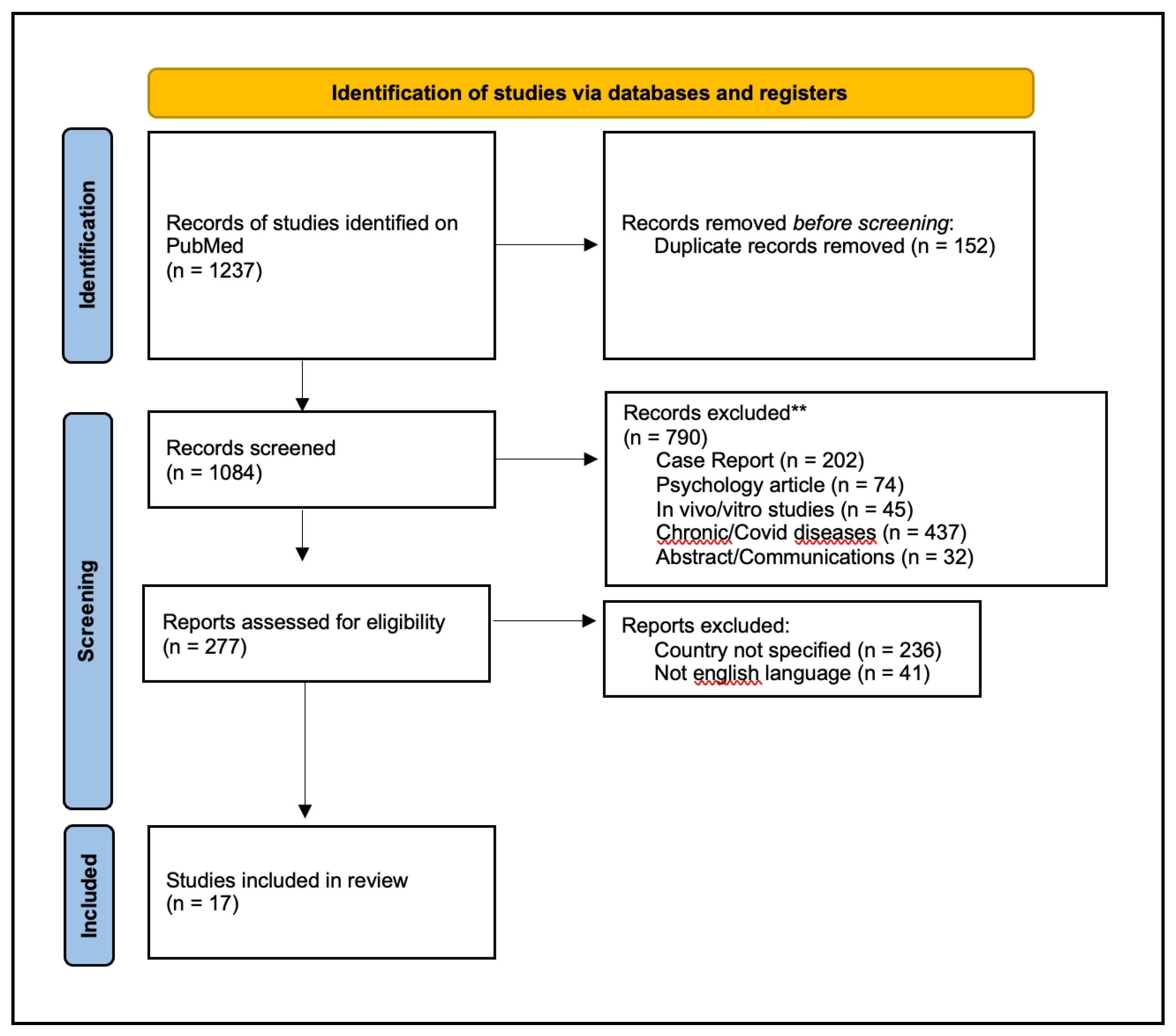
Figure 2.
The proportion of work-related deaths in the general population (A) and about gender (B). All data relating to the case studies were analyzed in this study.
Figure 2.
The proportion of work-related deaths in the general population (A) and about gender (B). All data relating to the case studies were analyzed in this study.
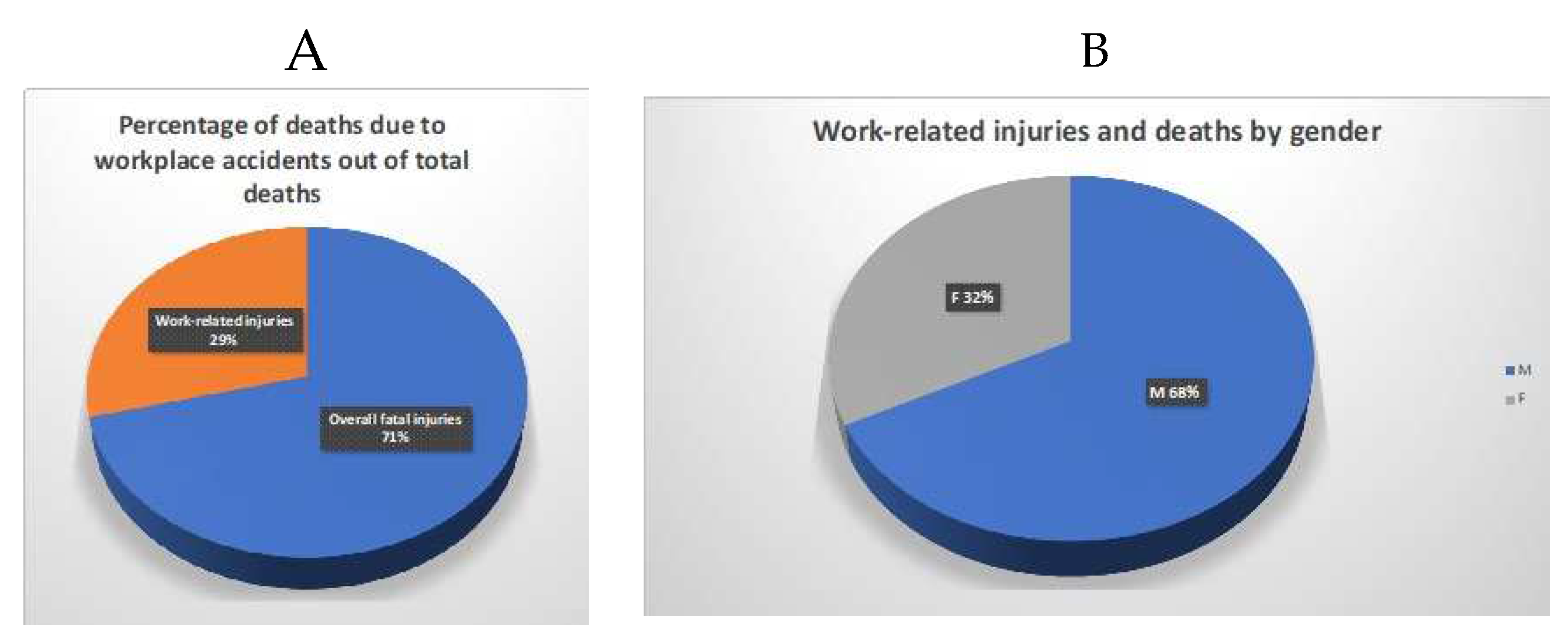
Figure 3.
The graph shows the work sectors most affected by work-related fatalities.
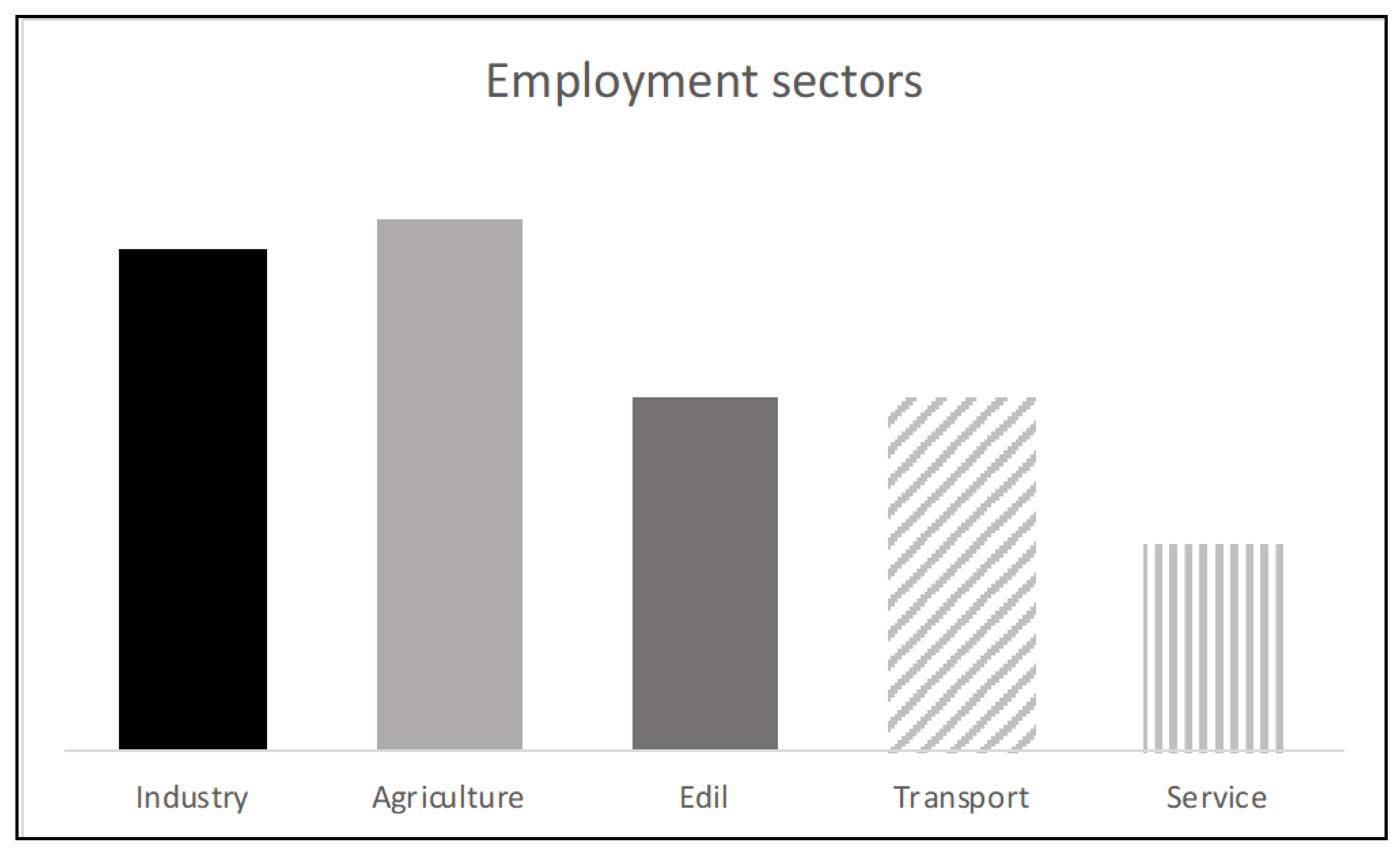
Figure 4.
Data on the prevalence of work-related fatalities by age. Age groups are representative of a sample of 1662 subjects whose gender was numerically specified in the selected studies.
Figure 4.
Data on the prevalence of work-related fatalities by age. Age groups are representative of a sample of 1662 subjects whose gender was numerically specified in the selected studies.
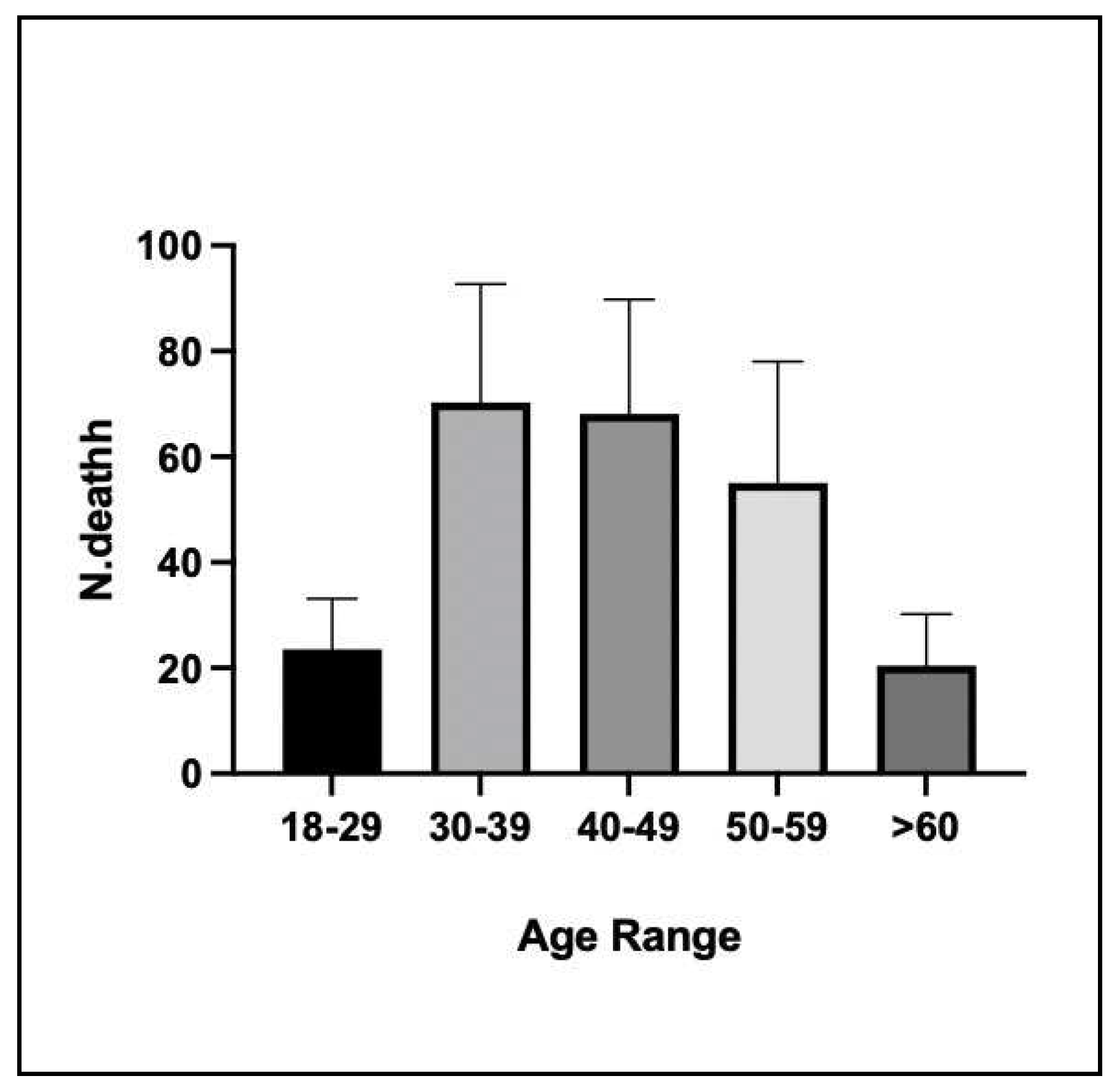
Figure 5.
Data on the prevalence of work-related fatalities by age and country from the studies containing the population stratification of the subjects included in the sample.
Figure 5.
Data on the prevalence of work-related fatalities by age and country from the studies containing the population stratification of the subjects included in the sample.
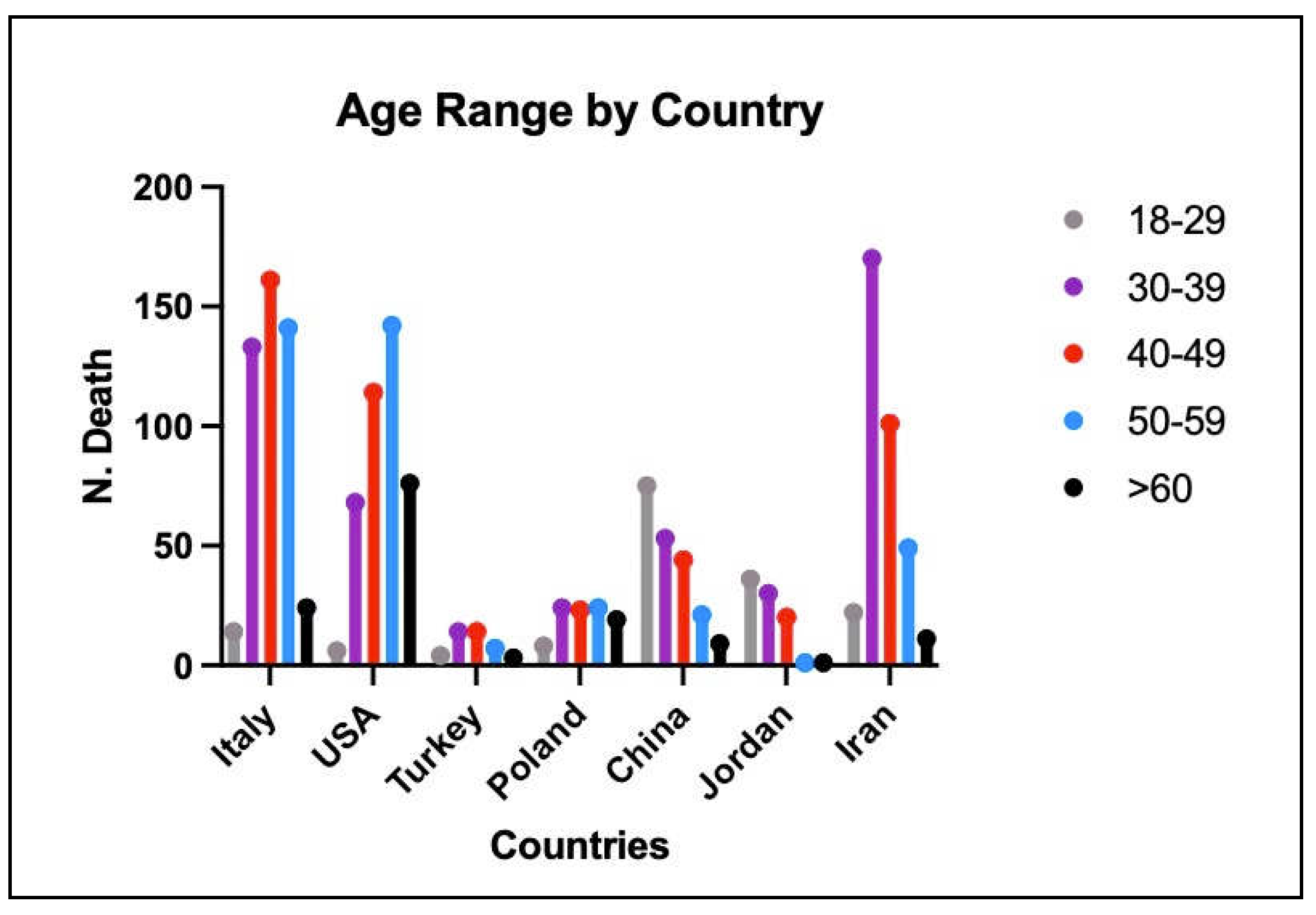

Table 1.
Summary of the systematic review (W-RD: work-related death; PPE: personal protective equipment),.
Table 1.
Summary of the systematic review (W-RD: work-related death; PPE: personal protective equipment),.
| Group by HDI | Authors/Year | Group of study | Country | Study design | Workers’ Population | Outcome | N. W-RD | % W-RD | Gender | Mean Age | Analysis about Use of PPE | Toxicological Analyses | |||
|---|---|---|---|---|---|---|---|---|---|---|---|---|---|---|---|
| Fatal | Nonfatal | Total | M | F | |||||||||||
| 1 | Errico S. et al. (2022) |
General | Italy | Retrospective (2011 - 2020) |
Construction and steel manufacturing industries | 47 | 0 | 47 | 47 | 100 | 46 | 1 | 49,5 | Yes | No |
| 1 | Perotti S. Russo M.C. (2018) |
General | Italy | Retrospective (1982 - 2015) |
Construction, mechanical factory, agriculture, transport, mining, firework manufacturies, chemical industry, and healthcare workers | 426 | 0 | 426 | 426 | 100 | 422 | 4 | 41 | No | Yes |
| 1 | Anh Hoang B.S. et al. (2021) |
Industry (paint) | USA | Retrospective (1980 - 2018) |
Workers use paint strippers, cleaners, adhesives, and sealants (methylene chloride-containing products) | 85 | 37201 | 37286 | 74 | 0,2 | 67 | 4 | 35 | Yes | Yes |
| 1 | Obeid N.R. et al. (2016) |
Falls | USA | Prospective (2000-2010) |
Industries and edil workers | 423 | 0 | 423 | 54 | 12,7 | 324 | 99 | 43,5 | No | No |
| 1 | Ramirez et al. (2013) |
General | USA (Iowa) | Retrospective (2005-2009) |
Agriculture, transport, public safety, industry and mining workers | 427 | 0 | 427 | 427 | 100 | 384 | 22 | 51 | No | Yes |
| 1 | Antunes et al. (2018) |
Tractors drivers | Portugal | Retrospective (2005-2014) |
Agriculture workers | 3508 | 0 | 3508 | 57 | 1,62 | 57 | 0 | 60 | No | Yes |
| 1 | Ozer et al. (2014) |
Coal mine workers | Turkey | Retrospective (2005-2008) |
Coal mine workers | 42 | 0 | 42 | 42 | 100 | 42 | 0 | 32,9 | No | Yes |
| 1 | Jurek et al. (2017) |
Agriculture | Poland | Retrospective (1991-2014) |
Agriculture workers | 18935 | 0 | 18935 | 98 | 0,52 | 96 | 2 | 47,5 | No | Yes |
| 2 | Wang L. et al. (2019) |
Poisoning | China | Retrospective | Agriculture workers | 1968 | 0 | 140 | 56 | 40 | 64 | 29 | 0 | No | Yes |
| 2 | Shuiping L. et al. (2014) |
Electrocution | China | Retrospective (2008 - 2017) |
Welders, builders, decoration automobile repairmen, machinists, electricians, and polish workers | 3370 | 0 | 3370 | 30 |
0,9 | 30 | 0 | 33,08 | No | No |
| 2 | Cordeiro R. et al. (2017) |
General | Brazil | Retrospective (2015) |
Workers in the production of industrial goods and services, except machine operators, and military. Strict labor accidents. Work-related accidents in traffic. Others | 415 | 0 | 415 | 82 | 19,75 | 74 | 8 | 42,5 | No | No |
| 2 | AL-Abdallat et al. (2014) |
General | Jordan | Review (2008-2012) |
Construction workers in addition to governmental, military, security, and police force workers | 88 | 0 | 88 | 88 | 100 | 87 | 1 | 32,5 | No | Yes |
| 2 | Vahabi et al. (2017) |
General |
Iran | Original Article (2012-2013) |
Agriculture, food and tobacco industries, chemical products, electronic and non-electric workers | 96 | 21388 | 21484 | 96 | 0,44 | 2113 | 371 | 33,2 | No | Yes |
| 2 | Nazanin et al. (2019) |
General | Iran | Retrospective (2007-2016) |
Agricultural sector (farming, fishing, and forestry), industrial sector (mining, manufacturing, energy production, and construction), and service sector (office workers, public service, transfer, business) | 1079 | 206525 | 207604 | 1079 | 0,52 | 203322 | 4281 | 0 | No | No |
| 2 | Pouradeli et al. (2022) |
General | Iran (Kerman) | Cross-selectional study (2012-2016) |
Construction simple workers, technical service and officeMining, transportation, agricultural, others | 263 | 1965 | 2228 | 263 | 11,8 | 2181 | 47 | 34,5 | No | Yes |
| 3 | Chittaranjan B. (2019) |
Electrocution | India | Retrospective (2002-2017) |
Electric and Grinding machine workers | 428 | 0 | 428 | 90 | 21,03 | 376 | 52 | 30,5 | No | No |
| 4 | Shewijo et al. (2021) |
General | Tanzania | Article (2016-2019) |
Workers of the transportation and storage sector; information and technology; construction and building; and electricity, gas, and steam sectors, teachers, drivers, office workers, and security guards | 236 | 4342 | 4578 | 236 | 51,5 | 217 | 19 | 34 | No | No |
Disclaimer/Publisher’s Note: The statements, opinions and data contained in all publications are solely those of the individual author(s) and contributor(s) and not of MDPI and/or the editor(s). MDPI and/or the editor(s) disclaim responsibility for any injury to people or property resulting from any ideas, methods, instructions or products referred to in the content. |
© 2024 by the authors. Licensee MDPI, Basel, Switzerland. This article is an open access article distributed under the terms and conditions of the Creative Commons Attribution (CC BY) license (http://creativecommons.org/licenses/by/4.0/).
Copyright: This open access article is published under a Creative Commons CC BY 4.0 license, which permit the free download, distribution, and reuse, provided that the author and preprint are cited in any reuse.


