
Submitted:
06 February 2024
Posted:
06 February 2024
You are already at the latest version
Abstract
Synthetic cathinones, derived from cathinone found in the plant Catha edulis, represent the second-largest and most frequently seized group of new psychoactive substances. They are considered as β-keto analogs of amphetamine, sharing pharmacological effects with amphetamine and cocaine. This review describes the neurotoxic properties of synthetic cathinones, encompassing their capacity to induce neuroinflammation, dysregulate neurotransmitter systems, and alter in monoamine transporters and receptors. Additionally, it discusses the rewarding and abuse potential of synthetic cathinones drawing from findings obtained through various preclinical animal models, contextualized with other classical psychostimulants. The review also offers an overview of current abuse trends of synthetic cathinones on the illicit drug market, specifying the aspects covered, and underscores the risks they pose to public health.
Keywords:
Synthetic cathinones
; Neurotoxicity
; Abuse
; Adverse effects
; new psychoactive substances
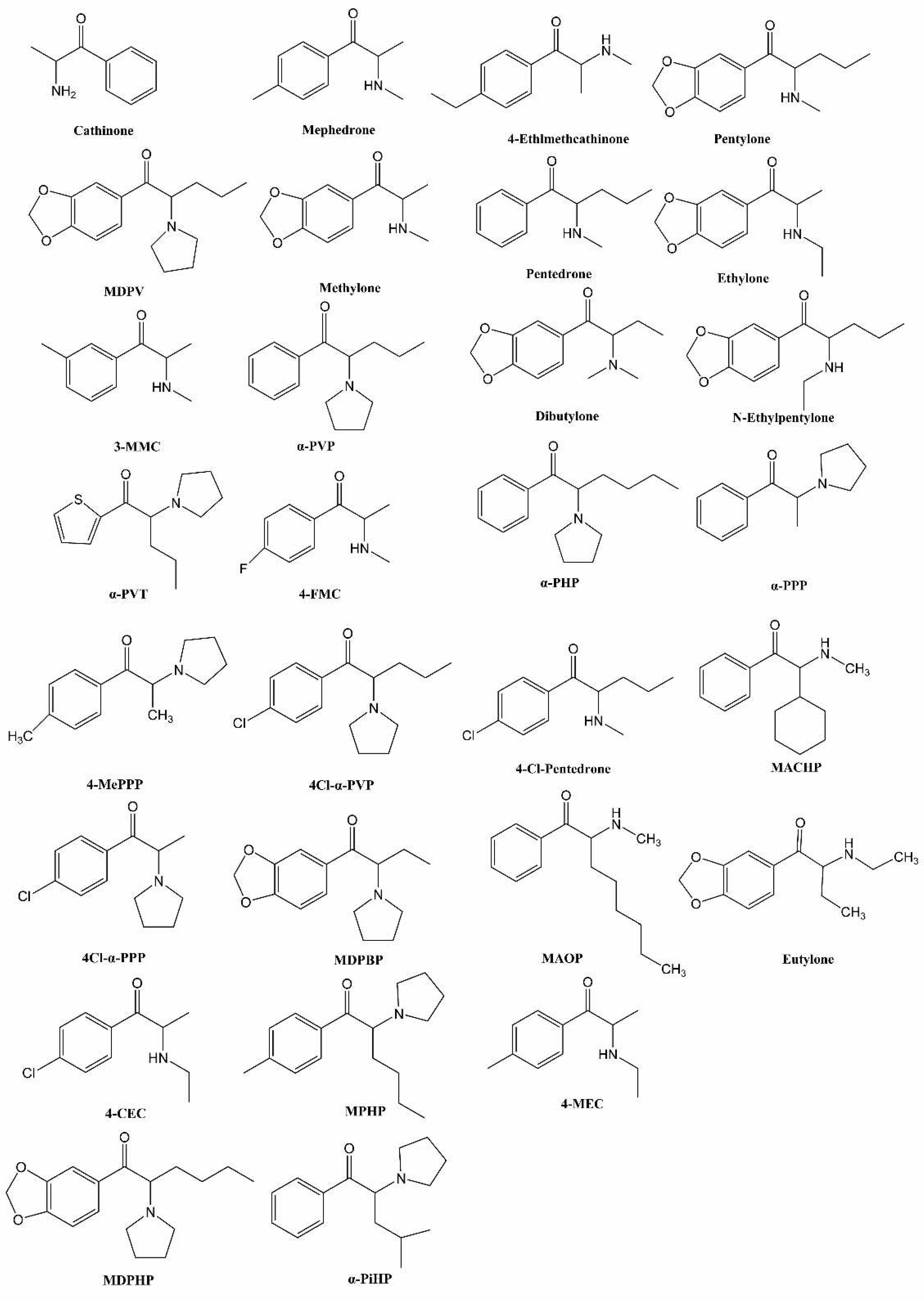
Cathinone, a β-keto analog of amphetamine, is a monoamine alkaloid found in the Catha edulis (khat), producing psychostimulant effects akin to substances like amphetamine [1]. Synthetic cathinones (SCs) are β-keto analogues of cathinone, with cathinone backbone structure having four modification positions: the aromatic ring (R1), alkyl side chain (R2), and amino group (R3 and R4), allowing for the synthesis of a wide range of derivatives [2,3]. SCs can be classified into four sub-classes based on their structural modifications [3,4]: (1) N-alkyl cathinones; (2) N-pyrrolidine cathinones; (3) 3,4-methylenedioxy-N-pyrrolidine cathinones; and (4) 3,4-methylenedioxy-N-alkyl cathinones. Notably, 4-methylmethcathinone (mephedrone), 3,4-methylenedioxypyrovalerone (MDPV), and 3,4-methylenedioxy-N-methylcathinone (methylone) are the most commonly used SCs.
This work comprehensively reviews the epidemic, toxicity, and abuse potential of SCs. SCs exhibit a dual nature, being both rewarding and aversive effects, highlighting their complex effects on the brain’s reward circuitry. Additionally, these substances possess abuse liability and potential for toxicity and lethality. Thoroughly evaluating the current public health perspective regarding the threat posed by SCs is crucial.
History
In the late 1920s, methcathinone and mephedrone, two synthetic derivatives of cathinone, were synthesized for medicinal purposes, leading to the development of numerous other molecules [5]. Initially, SCs were developed as antidepressants and appetite suppressants, but their potential for abuse and dependence limited their therapeutic use [6,7,8]. Over time, SCs gained popularity as “legal highs” and started appearing in European markets through online platforms in the early 2000s [9]. They were commonly sold under names like “plant food”, “bath salts”, or “research chemicals”, usually in the form of crystals, white powder, or capsules [10]. Due to their stimulant effects, easy availability, and former legal status, SCs quickly became widely used worldwide [11].
The popularity of SCs had severe consequences, with reports of their misuse, particularly with mephedrone in 2009-2010, being associated with toxicity and deaths [12,13,14]. In response, mephedrone was classified as a Class B under the UK Misuse of Drugs Act 1971 in 2010, and the Council of the European Union decided to control it in European countries [15,16]. However, this did not stop the emergence of other substances. In fact, 26 new derivatives replaced mephedrone, which were first reported in the EU Early Warning System [17,18,19]. Between 2012 and 2015, the market saw a staggering influx of 69 new derivatives, reaching a peak of 31 new derivatives in 2014 alone [20,21,22,23].
While regulatory controls on SCs exist in many countries [24], the continuous development of novel synthetic cathinone analogues through chemical structure modifications remains a significant public health challenge.
2. Toxicity
SCs are commonly taken orally as capsules or tablets, as well as nasally by dipping a key into powder and inhaling it. They can also be administered through intravenous or intramuscular injections, and in some cases, used as enemas [25]. Due to their high-water solubility, the way of SCs administered can affect their pharmacokinetics. The typical single oral dose of SCs ranges from 25-75 mg, with low doses usually ranging from 5-15 mg, while high doses are typically above 90 mg. After oral administration, SCs demonstrate a rapid onset of action within a few minutes, reaching peak concentration around 30 minutes, followed by a rapid decreases in concentration [26].
Due to its central nervous system (CNS) stimulating properties, khat is commonly chewed daily. Similarly, because SCs have psychoactive effects similar to amphetamines and cocaine, they are often abused for the purpose of enhancing energy levels and sensory experiences. Abusing these substances can result in various side effects, including euphoria, high energy, mania, and other symptoms in the early stages. In later stages, individuals may experience drowsiness, nosebleeds, delusions, anxiety, hallucinations, insomnia, sweating, nausea, vomiting, and general pain. Prolonged abuse of SCs can result in addiction, as well as a range of physical and psychological damage, including the possibility of fatalities [27].
In comparison to substances like methamphetamine (METH) and 3,4-methylenedioxymethapmphetamine (MDMA), SCs generally exhibit a lower level of neurotoxicity. However, SCs pose a higher risk of overdose compared to their non-beta-ketone relatives. Overdose cases involving SCs often initially present signs of increased agitation, violent behavior, aggression, and psychosis [28], and can progress to multiple organ failure, similar to other psychostimulant drugs [29]. Renal symptoms, such as elevated blood urea nitrogen levels, dehydration, and hyponatremia, may indicate peripheral toxicity as a major cause of death from cathinone. Cardiac injury, characterized by reduced cardiac output, sinus tachycardia, and cardiac arrest has been observed with SCs such as MDPV [30], methylone [31], 3-methylmethcathinone (3-MMC) [32] and mephedrone [13]. Additionally, SCs overdose cases have been associated with hepatoxicity, indicated by elevated level of aspartate and alanine aminotransferase levels [33], and specifically, hepatic portal and lobular inflammation in methylone overdose victims [34]. It is challenging to determine the precise risks of individual cathinones based solely on available data due to the use of combinations of SCs with each other and/or various other illicit drugs.
Toxicological studies have employed various benchmarks to evaluate SCs-induced neurotoxicity, including inflammation, disruption of monoaminergic properties of monoaminergic neurotransmitters, and their transporters and receptors. SCs interact with monoamine transporters, including noradrenaline (NA), dopamine (DA), and serotonin (5-HT) transporters (NET, DAT, and SERT, respectively), as well as receptors in the brain, similar to classical amphetamine. The primary mechanism of action for most SCs is through inhibition of synaptic vesicles reuptake, resulting in elevated levels of monoamine in the synaptic gap and subsequent hyper-stimulation of postsynaptic receptors [35]. In addition, SCs can directly interact with presynaptic and/or postsynaptic monoamine receptors, leading to the stimulation of monoamine release. For example, mephedrone can markedly elevate the extracellular concentrations of 5-HT and DA in the striatal region of the nucleus accumbens[36]. Experiments in vitro have shown that the mechanism of action involves inhibiting the reuptake of DAT proteins, leading to extracellular DA accumulation [37]. Although SCs share the phenethylamine core, their potency and affinity at the monoamine membrane transporters and receptors differ significantly. These differences are critical since stimulation of different monoamine systems results in specific clinical and toxic effects.
For example, dopaminergic effects can lead to psychostimulant effects and reinforcing properties; noradrenergic effects can cause sympathomimetic stimulation, and serotonergic effects can lead to hyperthermia, seizures, paranoia and hallucinations [38]. Indeed, the toxicological profile of SCs is mainly related to their pharmacological action rather than to their chemical structures. Research has demonstrated that SCs with similar chemical structures can produce different pharmacological effects. Therefore, it is the specific pharmacological action of SCs that primarily determines their toxicological properties and outcomes.
2.1. Neuroinflammation
The main neurotoxicity of non-keto amphetamines is the ability to trigger inflammatory processes in terminally degenerated brain regions [39]. Amphetamine neurotoxicity involves the inhibition of biosynthetic enzymes responsible for monoamines production and the inactivation of tyrosine hydroxylase. Additionally, the use of amphetamines can lead to a decrease in the functioning of vesicular monoamine transporter-2 (VMAT2). In unmyelinated axons at nerve endings, it can also cause degeneration and apoptosis [40]. Research has shown that chronic neuroinflammation results in elevated levels of cytokines derived from glial cells. These cytokines exert neurotoxic effects on vulnerable neurons, thereby implicating glial activation as a contributing factor in the events leading to neuronal damage [41].
The neurotoxicity studies of SCs primarily focus on the toxicity of mephedrone. However, the exact mechanisms underlying mephedrone-induced neurotoxicity have not been fully elucidated. Despite this, there is overwhelming evidence of its potential danger. Interestingly, mephedrone does not cause DA neurotoxicity but instead amplifies the neurotoxic effects of METH, amphetamine, and MDMA on these nerve endings [42]. In adolescent rats, mephedrone was founded to reduce the densities of DAT and SERT in the frontal cortex. Importantly, this effect did not involve microgliosis, an inflammatory response in brain tissue [43]. In vivo studies have indicated that the administration of mephedrone dose not activate astroglia or microglial cells in the striatum [44]. However, Maetinez-Clemente reported that mephedrone induces a dose and time-dependent neurotoxicity in both dopaminergic and serotoninergic systems in mice [45]. Marszalek-Grabska reported that binge-like mephedrone treatment results in memory deficits and a significant reduction in kynurenic acid levels in the brain of mice. Additionally, in vitro studies demonstrated that mephedrone causes a minor decline in cell viability and proliferation [46]. Studies showed that rats received mephedrone in adolescence display deficits in spatial memory and reversal learning during adulthood. These effects are found to be associated with alterations in the level of matrix metalloproteinase-9 [47]. In addition to its effects on brain tissue, mephedrone has been shown to induce oxidative stress in the heart, kidneys, spleen, and liver of mice [48].
The neurotoxicity of various SCs have also been investigated. For instance, self-administration of α-pyrrolidinopentiophenone (α-PVP) or mephedrone in male rats have been shown to elevate levels of inflammatory cytokines, including interleukin-1 alpha (IL-1α), IL-1 beta, IL-6 , and tumor necrosis factor-alpha (TNF-α) in the brains. Conversely, the administration of SCs is more likely to increase the levels of inflammatory cytokines in the plasma of female rats [49]. A dose of 20 mg/kg of α-PVP has been observed to significantly impact affect spatial learning and memory, as well as brain mitochondrial protein yield and mitochondrial function. In contrast, a lower dose of α-PVP (5 mg/kg) did not produce any noticeable effects on spatial learning and memory or brain mitochondrial function [50]. Repeated administration of alpha-pyrrolidinopentiothiophenone (α-PVT) may activate Toll-like receptor 4 (TLR4), leading to neuroinflammation through TLR-mediated NF-κB and MAPK signaling pathways. This activation may result in the production of TNF-α and IL-6 in the striatum in the mice [51]. Methylone and MDPV were found to decrease cell viability in both differentiated and undifferentiated DA cells in a dose-dependent manner [52]. When combined with each other or with mephedrone, these substances did not result in changes in glial fibrillary acidic protein (GFAP) levels in the striatum of mice. Acute MDPV binge fails to cause striatal dopaminergic-terminal damage and to alter glial activity [53]. However, repeated binge-like intake of MDPV causes the changes of cytokine levels in the prefrontal cortex that persist into the abstinence period [54]. Methylone can enhance the expression of GFAP induced by METH by approximately 50% [55].
2.2. Neurotransmitters
METH, amphetamine, and MDMA are known to induce neurotoxic effects on monoaminergic systems, partly attributed to alterations in DA and 5-HT transporters and receptors [56]. METH increases the release of both DA and 5-HT by directly and indirectly affecting on the DAT and SERT, resulting in significant toxicity to DA nerve terminals in the striatum [57]. Amphetamine can disrupt the function of VMAT-2 and the vesicle proton gradient, leading to an increase in cytoplasmic levels of DA and 5-HT by releasing them from vesicular compartments [58]. Similarly, MDMA increases 5-HT release and exhibits a stronger affinity for SERT than DAT [59].
Similar to METH and amphetamine, methcathinone exhibits high inhibitory potency at the DAT and low potency at the SERT [60]. Repeated administration of methcathinone in animals induced significant decreases in the levels of DA and 5-HT in the striatum, as well as the activity of serotoninergic enzyme [61]. Methcathinone users also display a reduction in DAT density [62]. The deficits in DAT and SERT induced by methcathinone are believed to contribute to the persistence of damage to the DA and 5-HT systems.
In mice, it has been discovered that mephedrone reduces the quantity of D2 receptors in the striatum, as well as the quantity of 5-HT2A receptors in the prefrontal cortex and hippocampus. Mephedrone induces long-term damage to the dopaminergic and serotoninergic systems in mice, resulting in the loss of DAT and SERT [45]. However, following exposure to mephedrone, there is an increase in D3 receptors in the striatum [63]. In terms of selectivity ratios, mephedrone has DAT/SERT ratios and NET/DAT ratios close to unity, comparable to those seen with MDMA [37].
Methylone is also known to inhibit NET and DAT but is slightly less potent against SERT. Methylone exhibits selectivity profiles similar to mephedrone but is approximately half as potent. Similar to mephedrone, methylone acts as a partial agonist at 5-HT1A receptors with low potency and weekly antagonizes 5-HT2A receptors.
MDPV has a very high affinity for both DAT and NET, being at least ten times more potent for DAT than cocaine and METH [60]. However, MDPV has a weak inhibitory effect on SERT, with DAT/SERT inhibition ratios greater than 100. Unlike mephedrone, MDPV exerts high potency in inhibition of both NET and DAT, while exhibiting slight activation of 5-HT receptors, leading to high DAT/SERT inhibition ratios.
The potency of SCs that inhibit monoamine transporters may be related to their chemical structures. Methcathinone with Para-(4) substitution, including mephedrone, 4-fluoromethcathinone (4-FMC), and 4-ethylmethcathinone, were relatively more serotonergic neurotoxicity compared with methcathinone [64]. The carbonyl and extended alpha-alkyl groups in MDPV contribute more significantly to the drug’s affinity for DAT than the methylenedioxy group. Research on N-ethyl-hexedrone analogues has demonstrated that the potency of DA uptake inhibitors increases as the aliphatic side chain extends from methyl to propyl. However, as the chain length increases from butyl to pentyl, the potency decreases [65]. On the other hand, longer α-carbon side chains of SCs result in increased cytotoxic properties in PC12 cells, probably due to their enhanced membrane penetration [65].
3. Abuse potential
As mentioned above, SCs share common pharmacological effects with amphetamine, leading to an increased release of monoamines such as DA, NE, and 5-HT. These neurotransmitters are believed to play a role in the euphoric and rewarding effects of various drugs of abuse. The fact that SCs act on reward-related neurotransmitter substrates and are self-administered by humans suggests that they have the potential for abuse [66]. Due to the limitations associated with human experiments and the wide variety of SCs compounds present in the illicit drug market, it becomes imperative to depend on preclinical animal behavioral models for a more comprehensive understanding of their abuse potential. The three predominant animal models commonly employed for evaluating substance abuse potential include self-administration, discriminative stimulation, and conditioned place preference.
3.1. Self-administration and self-stimulation
The intravenous self-administration (IVSA) model in animals is widely recognized for its face validity for simulating human drug administration behavior. This model allows for the assessment of reinforcing effects through various procedures, including dose-response analyses to determine the specificity and strength of these effects; drug substitution assessments to compare similarities and differences between drugs; progressive ratio schedule or economic demand curves to measure motivation to use the drug and effectiveness of drugs. Additionally, it facilitates the investigation of the reinstatement of drug-taking behavior induced by drugs, stress and drug-associated cues after self-administration [70].
The selectivity and sensitivity of intracranial self-stimulation (ICSS) in identifying the potential of drug abuse are comparable to those of IVSA procedures [71]. In ICSS experiments, the manipulation of frequency or amplitude of stimulation is employed to elicit probabilities or a wide range of baseline response rates. The well-established ability of several SCs to influence the brain stimulation rewarded (BSR) thresholds for ICSS further underscores their potential for abuse.
The initial studies primarily focused on investigating the abuse potential of cathinone and its first-generation synthetic derivatives. The confirmation of abuse liability of these substances stems from reliable self-administration observed in animal models. Early assessments of mephedrone revealed that rats readily acquired responses to it, displaying higher response rates to the same dose of METH [72]. Aaede et al. reported self-administration of mephedrone at doses of 0.5 and 1 mg/kg/infusion in Sprague-Dawley and Wistar rats [73]. Progressive ratio assessments and dose-response substitution demonstrated that mephedrone exhibits an equal reinforcing efficacy to METH and effectively substitutes for METH in METH self-administered animals [74]. Notably, mephedrone has a greater reinforcing efficacy than methylone, leading to overall higher response rates in female Sprague-Dawley rats [75] and male Wistar rats [74]. Research exploring the impact of mephedrone on ICSS reward thresholds in mice observed a dose-dependent reduction in BSR thresholds, indicating a high potential for abuse [76]. Additionally, the R(+) isomer of mephedrone may possess a higher abuse potential than the S(-) isomer, as it exhibited greater facilitation of ICSS in male rats [77].
Watterson et al. were the first to demonstrate methylone’s dose-dependent reinforcing properties in male rats, suggesting a potential for addiction comparable to or even greater than MDMA [78]. Accumulating evidence have shown that the second-generation cathinones, like pentylone and pentedrone, have a higher potential for abuse and addiction compared to methylone [79]. In a study by Lai et al., the abuse potential of ethylone, dibutylone, and N-ethylpentylone was compared with METH using two self-administration schedules: a fix-ratio procedure and a behavioral economic protocol. Results showed all three cathinones acted as reinforcers, but their reinforcing potency and efficacy were lower than that of METH [80]. The effects of methylone may be attributed to its substantial release of 5-HT, which leads to a lower DAT/SERT affinity ratio, potentially impacting its overall reinforcing effects [81,82].
The initial evaluation of IVSA of MDPV demonstrated its support for self-administration to a similar degree as METH. In dose-response and progressive ratio assessments, MDPV induced higher levels of responding compared to METH, indicating its stronger reinforcing properties [83]. However, a study by Watterson et al. reported that MDPV and METH produced comparable level of responding when administered at a dose of 0.05 mg/kg/infusion in progressive ratio assessments. This suggested that at this dosage, the reinforcing effects of MDPV and METH were similar [84]. Schindler et al. conducted a study showing that MDPV exhibited higher efficacy compared to cocaine, and both MDPV and cocaine being more potent than methylone in terms of their reinforcing effects [82]. Subsequent assessments confirmed that MDPV has a higher effectiveness and potency compared to cocaine and METH [85]. Additionally, in the ICSS experiments, methcathinone, MDPV, methylone, and mephedrone were found to induce facilitation of ICSS in a dose- and time-dependent manner, with the order of effects being methcathinone ≥ MDPV ≥ methylone > mephedrone [86]. MDPV specifically led to reductions in ICSS thresholds, whereas methylone only exhibited trends towards this effect [78,84]. When cannabidiol was administered concurrently with MDPV (0.075 mg/kg/infusion) during self-administration, it resulted in an increase in drug-seeking and taking behaviors, albeit this effect was observed only in the high-responder group of mice. Furthermore, cannabidiol demonstrated anxiolytic-like effects specifically in MDPV-treated mice [87]. The selective dopamine D1 receptor antagonist Sch-23390 and haloperidol attenuated the discrimination of low MDPV doses and essentially shifted the dose-response curve to the right, but they were unable to block discrimination of the training dose [88].
Following the initial investigations, the second generation of SCs has undergone scrutiny, including compounds such as α-PVP, α-PVT, α-pyrrolidinohexiophenone (α-PHP), and α-pyrrolidinopropiophenone (α-PPP), and others. Notably, α-PVP has been the subject of extensive study. Recent studies indicates that α-PVP exhibits comparable potency and efficacy to MDPV in terms of reinforcing effects [89]. Moreover, both the racemate and the S and R enantiomers of α-PVP induce self-administration in a dose-dependent manner, with the order of potency being S enantiomer > racemate >> R enantiomer [90]. Compounds such as α-PVP, α-PHP, and α-PPP have been shown to increase spontaneous activity and decrease brain reward thresholds in a dose-dependent manner in female rats [91]. In terms of reinforcing potential, α-PVP is equivalent to 4-methyl-alpha-pyrrolidinopropiophenone (4-MePPP). Both α-PVP and 4-MePPP were found to be more effective reinforcers compared to METH when assessed using the behavioral-economics procedure [68]. Xu et al. demonstrated that the reinforcing potency of α-PVP surpassed that of 4-chloro-α-pyrrolidinopentiophenone (4cl-α-PVP), 4-chloro-α-pyrrolidinopropiophenone (4cl-α-PPP), and METH [69]. Additionally, Cheong et al. reported that α-PVT exhibited self-administration in rats, and an inverted U-shaped dose-response curve was observed [92].
The behavioral economic procedure is utilized to evaluate the relative reinforcing efficacy of SCs compared to other illicit drugs in the self-administration model. This approach is chosen because differences in reinforcing potency among drugs may not necessarily predict their relative reinforcing efficacy. In a study by Huskinson et al., a behavioral economics evaluation was conducted to assess the reinforcing efficacy of α-PVP and 4-MePPP in comparison to METH. The results indicated that both α-PVP and 4-MePPP were more effective reinforcers than METH [68]. Similarly, in the economic demand procedure, the rank order of reinforcing effectiveness was determined to be METH ≈ dibutylone > N-ethylpentylone ≈ ethylone, based on the demand elasticity of the economic demand curve [80]. Experiments conducted in rhesus monkeys, designed to examine the demand elasticity, revealed the rank order of reinforcing efficacy as follows: cocaine > MCAT = methylone > α-PVP = MDMA [93].
3.2. Drug discrimination learning
Drug discrimination is a research method employed to compare the subjective effects of a compound with other drugs known for their abuse potential. This procedure has revealed that methylone, mephedrone, and MDPV can fully substitute for the discriminative stimulus effects of both cocaine and METH, indicating shared interoceptive effects [94,95,96]. Conversely, METH and MDMA also substituted for the effects of MDPV, but they decreased response rates at varying doses [97]. Similarly, under comparable training conditions, α-PBP, α-PVP, α-PHP, α-PPP, 4cl-α-PVP, 4cl-α-PPP, and ethylone demonstrate dose-dependent substitution for the discriminative stimulus effects of both cocaine and METH. On the other hand, 4’-MePPP, α-PVT, and 3',4'-Methylenedioxy-alpha-pyrrolidinobutyrophenone (MDPBP) exclusively replicate the discriminative stimulus effects of METH [69,98,99]. Dipentylone, N-ethylhexedrone, 4-chloroethcathinone (4-CEC), and 4-methyl-α-phrrolidinohexiophenone (MPHP) fully substituted for the discriminative stimulus effects of METH and cocaine, although only 4-CEC fully substituted for MDMA [100]. In a study by Shetty et al., the drug discrimination effects of 3,4-methylenedioxy-alpha-pyrrolidinohexanophenone (MDPHP), 4-Cl-α-PPP, alpha-pyrrolidinoisohexiophenone (α-PiHP) and 4-chloro-pentedrone (4-Cl-pentedrone) were compared to METH and cocaine. They found that all test compounds fully substituted for the discriminative stimulus effects of cocaine, but only 3,4-MD-α-PHP, α-PiHP, or 4-Cl-α-PPP fully substituted for the discriminative stimulus effects of METH [101].
Drug discrimination studies have expanded their focus to explore the discriminative stimulus effects of drug mixtures, particularly in the context of “bath salt” products that are often intentionally mixed or adulterated with another compound. Collins et al. examined the discriminative stimulus effects of cocaine, caffeine, and MDPV both individually and in binary mixtures (specifically, cocaine:caffeine, caffeine: MDPV and MDPV:cocaine at fixed-dose ratios of 3:1, 1:1, and 3:1). The findings revealed that METH and MDPV had higher potency compared to cocaine and caffeine in inducing dose-dependent cocaine-appropriate responding. Additionally, the binary mixtures generally exhibited additive effects [102]. In squirrel monkeys, Alison et al. founded that MDPV, α-PVP, and MCAT fully substituted for METH but only partially substituted for MDMA. In contrast, mephedrone and methylone fully substitute for MDMA but failed to fully substitute for METH [103].
3.3. Conditioned place preference
The conditioned place preference (CPP) model is a widely used paradigm for studying the rewarding effects of drugs and evaluating the abuse potential of new psychoactive substances. Lisek et al. were the pioneers in employing the CPP model to assess the rewarding effects of SCs. They reported that rats injected with 30 mg/kg of mephedrone demonstrated a significant preference for the drug-associated chamber compared to the saline group [104]. Likewise, mice that were conditioned with mephedrone also displayed a significant place preference in the CPP model [77]. Wronikowska et al. confirmed that mephedrone produced rewarding effects in the CPP paradigm and further revealed that memantine could reverse the expression of this effect [105]. In a study comparing the rewarding effects of mephedrone, MDPV, and methylone using the CPP model in mice, Kaelsson et al. demonstrated that all compounds produced CPP in a dose-dependent manner. Notably, MDPV exhibited a higher potential for CPP compared to mephedrone and methylone [106]. Additionally, several other SCs have been reported to induce CPP, including α-PVP [107], α-PVT [92], α-PHP [99], and 4-MePPP [99]. These drugs could induce CPP, indicating their potential for addiction, although it does not definitively indicate their ability to support self-administration. For instance, both 2-cyclohexyl-2-(methylamino)-1-phenylethanone (MACHP) and 2-(methylamino)-1-phenyloctan-1-one (MAOP) produced CPP, but only MACHP was found to be self-administered [108]. Eutylone, one of the third-generation SCs produced dose-dependent CPP in male mice [109] and female rats [110]. Interestingly, pre-exposure to cocaine and MDMA did not have any effects on the development of eutylone-induced CPP[109].
4. Current public health perspective
Over the past decade, the illicit drug market has undergone significant transformations, marked with the introduction of new and previously unknown psychoactive substances annually. Despite the implementation of regulatory measures and early warning systems, NPS, including SCs, continue to be easily accessible and widely utilized[111]. Following a rapid expansion from 2009 to 2018, the number of NPS available on the market has stabilized at around 550 per year. In 2020, 548 NPS were reported, with 77 identified for the first time. However, this figure decreased to 50 in 2021. According to the World Drug Report 2023, the cumulative number of NPS reached 1165 substances in 2021 and is anticipated to reach 1184 substances in 2022 [112]. SCs, as the second-largest and second-most frequently seized group of NPS, have generally maintained stable numbers, with some reported declines for 2020. In 2021, the UNODC reported a total of 201 synthetic cathinone substances [113]. Furthermore, the quantity of seized SCs in 2020 was 98 percent lower than its peak in 2015. Compared to plant-based drugs, synthetic drugs offer criminal actors a means of reducing risk and operational costs. These drugs can be manufactured with higher purity owing to advancements in synthesis and refinement processes. Additionally, synthetic compounds often exhibit much higher potency than their naturally occurring counterparts. The Commission on Narcotic Drugs, mandated by three International Drug Control Conventions, holds authority to assess and determine the global control and scheduling of substances. Currently, there are a total of 17 synthetic cathinones scheduled worldwide, with the majority added since 2015 [24]. Despite these efforts, drug designers consistently outpace law enforcement, leading to a continual influx of new derivatives in the drug market, often serving as substitutes for previously illicit substances. SCs have shown a significant prevalence in specific marginalized rural populations in Hungary, where polysubstance use is prevalent. Nevertheless, there has been an overall decrease in the use of NPS in the United States and certain Western and Central Europe countries, following an initially surge in usage.
A survey conducted in the European region involved nearly 100,000 high school students aged 15-16 years old, revealing a stable or slightly decreasing trend in NPS use. The 2019 survey found that the average prevalence of NPS use in Europe was nearly equal for boys and girls across the 23 participating countries. Approximately 3.4% of boys and 3.3% of girls reported having used NPS at least once in their lifetime [114]. However, the European Drug Report 2023 indicates a diversification of the drug market in the European region. Furthermore, there are signs that METH and SCs are exerting a more substantial impact on stimulant-related issues in Europe than in the previous year [115].
Numerous studies have delved into the phenomenon of “chemsex”, which involves the use of drugs before or during planned sexual events, primarily among men who have sex with men (MSM) [116,117]. The substances most commonly associated with chemsex are METH, mephedrone, gamma-hydroxybutyrate (GHB)/gamma-butyrolactone (GBL), and ketamine. According to survey findings, mephedrone was reported to be used always or most of the time for sexual activities in the past 12 months among sexualized users, with a prevalence rate of 75.4% [118]. An online survey conducted in Spain, involving 185 MSM aged between 18 and 78 years old, revealed that participants who frequently engaged in sexualized drug use (SDU) were significantly more likely to use mephedrone, METH, and GHB/GBL than those who engaged in SDU less frequently [119]. Amundsen et al. found that 17% of the 518 MSM respondents in Norway reported engaging in sexualized use of GHB/GBL, METH, mepedrone or ketamine in the last year, revealing significant positive associations between chemsex and self-reported HIV diagnoses [120]. In the Netherlands, approximately 15-30% of the MSM population has practiced chemsex, with the most common injected substances being 3-MMC, METH, ketamine, 4-methylethcathinone (4-MEC), and mephedrone. Three-quarters of respondents experienced psychological symptoms such as insomnia, sadness, depressed mood, anxiety, and suicidal tendencies, while about half reported some degree of loss of control or concerns about their drug use behavior [121].Consumers often perceive various stimulants as interchangeable and may be inclined to experimenting with new products based on their availability in the market. This trend raises concerns, as synthetic stimulants often share a similar appearance, whether in the form of powders or tablets. This similarity makes it challenging for consumers to discern the specific substance or mixture they are consuming. Moreover, these substances can be deceptively labeled as MDMA tablets, posing a significant risk to unsuspecting individuals. The potential consequences of engaging in such high-risk behaviors include exposure to more potent and unfamiliar substances, leading to adverse health outcomes such as acute and chronic mental health issues, intoxication, infectious disease, and even fatalities. It is crucial to raise awareness about this risk and implement preventive measures to safeguard public health.
Figure 1.
Chemical structures of cathinone and synthetic cathinones.
Acknowledgments
This work supported by National Natural Science Foundation of China (82071499), Ningbo Top Medical and Health Research Program (2022030410), and National Key Research and Development Program of China (2022YFC3300905, 2023YFC3304202).
Abbreviations
| SCs | synthetic cathinones |
| mephedrone | 4-methylmethcathinone |
| MDPV | 3,4-methylenedioxypyrovalerone |
| methylone | 3,4-methylenedioxy-N-methylcathinone |
| CNS | central nervous system |
| METH | methamphetamine |
| MDMA | 3,4-methylenedioxymethapmphetamine |
| 3-MMC | 3-methylmethcathinone |
| NA | noradrenaline |
| DA | dopamine |
| 5-HT | serotonin |
| NET | noradrenaline transporter |
| DAT | dopamine transporter |
| SERT | serotonin transporter |
| VMAT2 | vesicular monoamine transporter 2 |
| α-PVP | α-pyrrolidinopentiophenone |
| IL-1α | interleukin-1 alpha |
| TNF-α | tumor necrosis factor-alpha |
| α-PVT | alpha-pyrrolidinopentiothiophenone |
| TLR4 | Toll-like receptor 4 |
| GFAP | glial fibrillary acidic protein |
| 4-FMC | 4-fluoromethcathinone |
| IVSA | intravenous self-administration |
| ICSS | intracranial self-stimulation |
| BSR | brain stimulation reward |
| α-PHP | α-pyrrolidinohexiophenone |
| α-PPP | α-pyrrolidinopropiophenone |
| 4-MePPP | 4-methyl-alpha-pyrrolidinopropiophenone |
| 4cl-α-PVP | 4-chloro-α-pyrrolidinopentiophenone |
| 4cl-α-PPP | 4-chloro-α-pyrrolidinopropiophenone |
| MDPBP | 3,4-Methylenedioxy-alpha-pyrrolidinobutyrophenone |
| 4-CEC | 4-chloroethcathinone |
| MPHP | 4-methyl-α-phrrolidinohexiophenone |
| MDPHP | 3,4-methylenedioxy-alpha-pyrrolidinohexanophenone |
| α-PiHP | alpha-pyrrolidinoisohexiophenone |
| 4-Cl-pentedrone | 4-chloro-pentedrone |
| CPP | conditioned place preference |
| MACHP | 2-cyclohexyl-2-(methylamino)-1-phenylethanone |
| MAOP | 2-(methylamino)-1-phenyloctan-1-one |
| MSM | men who have sex with men |
| GHB | gamma-hydroxybutyrate |
| GBL | gamma-butyrolactone |
| SDU | sexualized drug use |
| 4-MEC | 4-methylethcathinone |
References
- Patel, N.B. Mechanism of action of cathinone: the active ingredient of khat (Catha edulis). East Afr Med J 2000, 77, 329–332. [Google Scholar] [CrossRef]
- Paillet-Loilier, M.; Cesbron, A.; Le Boisselier, R.; et al. Emerging drugs of abuse: current perspectives on substituted cathinones. Subst Abuse Rehabil 2014, 5, 37–52. [Google Scholar]
- Valente, M.J.; Guedes de Pinho, P.; de Lourdes Bastos, M.; et al. Khat and synthetic cathinones: a review. Arch Toxicol 2014, 88, 15–45. [Google Scholar] [CrossRef]
- Kelly, J.P. Cathinone derivatives: a review of their chemistry, pharmacology and toxicology. Drug Test Anal 2011, 3, 439–453. [Google Scholar] [CrossRef]
- Hyde, J.F.B.E.; Adams, R. Synthetic homologues of d,l-ephedrine. J Am Chem Soc 1928, 50, 2287–2292. [Google Scholar] [CrossRef]
- Cunningham, G.L. Diethylpropion in the treatment of obesity. J Coll Gen Pract 1963, 6, 347–349. [Google Scholar]
- Gardos, G.; Cole, J.O. Evaluation of pyrovalerone in chronically fatigued volunteers. Curr Ther Res Clin Exp 1971, 13, 631–635. [Google Scholar]
- Soroko, F.E.; Mehta, N.B.; Maxwell, R.A.; et al. Bupropion hydrochloride ((+/-) alpha-t-butylamino-3-chloropropiophenone HCl): a novel antidepressant agent. J Pharm Pharmacol 1977, 29, 767–770. [Google Scholar] [CrossRef]
- Bossong, M.G.; Van Dijk, J.P.; Niesink, R.J. Methylone and mCPP, two new drugs of abuse? . Addict Biol 2005, 10, 321–323. [Google Scholar] [CrossRef]
- Karila, L.; Billieux, J.; Benyamina, A.; et al. The effects and risks associated to mephedrone and methylone in humans: A review of the preliminary evidences. Brain Res Bull 2016, 126 Pt 1, 61–67. [Google Scholar] [CrossRef]
- Ashrafioun, L.; Bonadio, F.A.; Baik, K.D.; et al. Patterns of Use, Acute Subjective Experiences, and Motivations for Using Synthetic Cathinones ("Bath Salts") in Recreational Users. J Psychoactive Drugs 2016, 48, 336–343. [Google Scholar] [CrossRef]
- Dickson, A.J.; Vorce, S.P.; Levine, B.; et al. Multiple-drug toxicity caused by the coadministration of 4-methylmethcathinone (mephedrone) and heroin. J Anal Toxicol 2010, 34, 162–168. [Google Scholar] [CrossRef]
- Wood, D.M.; Davies, S.; Puchnarewicz, M.; et al. Recreational use of mephedrone (4-methylmethcathinone, 4-MMC) with associated sympathomimetic toxicity. J Med Toxicol 2010, 6, 327–330. [Google Scholar] [CrossRef]
- Wood, D.M.; Greene, S.L.; Dargan, P.I. Clinical pattern of toxicity associated with the novel synthetic cathinone mephedrone. Emerg Med J 2011, 28, 280–282. [Google Scholar] [CrossRef]
- Council CotEU. Council Decision of 2 December 2010 on submitting 4-methylmethcathinone (mephedrone) to control measures. Offcial Journal of the European Union 2010, 44–45.
- Morris, K. UK places generic ban on mephedrone drug family. Lancet 2010, 375, 1333–1334. [Google Scholar] [CrossRef]
- EMCDDA-Europol. EMCDDA-Europol 2009 annual report on the implementation of Council Decision 2005/387/JHA. 2009.
- EMCDDA-Europol. EMCDDA-Europol 2010 annual report on the implementation of Council Decision 2005/387/JHA. 2010.
- EMCDDA-Europol. EMCDDA-Europol (2011) EMCDDA-Europol 2011 annual report on the implementation of Council Decision 2005/387/JHA. 2011.
- EMCDDA-Europol. EMCDDA-Europol (2012) EMCDDA-Europol 2012 annual report on the implementation of Council Decision 2005/387/JHA. 2012.
- EMCDDA-Europol. EMCDDA-Europol (2013) EMCDDA-Europol 2013 annual report on the implementation of Council Decision 2005/387/JHA. 2013.
- EMCDDA-Europol. EMCDDA-Europol 2014 annual report on the implementation of Council Decision 2005/387/JHA. 2014.
- EMCDDA-Europol. EMCDDA-Europol 2015 annual report on the implementation of Council Decision 2005/387/JHA. 2015.
- Bonson, K.R.; Dalton, T.; Chiapperino, D. Scheduling synthetic cathinone substances under the Controlled Substances Act. Psychopharmacology (Berl) 2019, 236, 845–860. [Google Scholar] [CrossRef]
- Injection of synthetic cathinones (Perspectives on drugs)[N]. Available online: https://www.emcdda.europa.eu/publications/pods/synthetic-cathinones-injection_en.
- Goncalves, J.L.; Alves, V.L.; Aguiar, J.; et al. Synthetic cathinones: an evolving class of new psychoactive substances. Crit Rev Toxicol 2019, 49, 549–566. [Google Scholar] [CrossRef]
- Prosser, J.M.; Nelson, L.S. The toxicology of bath salts: a review of synthetic cathinones. J Med Toxicol 2012, 8, 33–42. [Google Scholar] [CrossRef]
- Imam, S.F.; Patel, H.; Mahmoud, M.; et al. Bath salts intoxication: a case series. J Emerg Med 2013, 45, 361–365. [Google Scholar] [CrossRef]
- Retamal, M.A.; Garcia, I.E.; Pinto, B.I.; et al. Extracellular Cysteine in Connexins: Role as Redox Sensors. Front Physiol 2016, 7. [Google Scholar] [CrossRef]
- Borek, H.A.; Holstege, C.P. Hyperthermia and multiorgan failure after abuse of "bath salts" containing 3,4-methylenedioxypyrovalerone. Ann Emerg Med 2012, 60, 103–105. [Google Scholar] [CrossRef]
- Barrios, L.; Grison-Hernando, H.; Boels, D.; et al. Death following ingestion of methylone. Int J Legal Med 2016, 130, 381–385. [Google Scholar] [CrossRef]
- Adamowicz, P.; Zuba, D.; Byrska, B. Fatal intoxication with 3-methyl-N-methylcathinone (3-MMC) and 5-(2-aminopropyl)benzofuran (5-APB). Forensic Sci Int 2014, 245, 126–132. [Google Scholar] [CrossRef]
- Thirakul, P.; L, S.H.; K, L.B.; et al. Clinical Presentation, Autopsy Results and Toxicology Findings in an Acute N-Ethylpentylone Fatality. J Anal Toxicol 2017, 41, 342–346. [Google Scholar]
- Benzer, T.I.; Nejad, S.H.; Flood, J.G. Case records of the Massachusetts General Hospital. Case 40-2013. A 36-year-old man with agitation and paranoia. N Engl J Med 2013, 369, 2536–2545. [Google Scholar] [CrossRef]
- De Felice, L.J.; Glennon, R.A.; Negus, S.S. Synthetic cathinones: chemical phylogeny, physiology, and neuropharmacology. Life Sci 2014, 97, 20–26. [Google Scholar] [CrossRef]
- Kehr, J.; Ichinose, F.; Yoshitake, S.; et al. Mephedrone, compared with MDMA (ecstasy) and amphetamine, rapidly increases both dopamine and 5-HT levels in nucleus accumbens of awake rats. Br J Pharmacol 2011, 164, 1949–1958. [Google Scholar] [CrossRef]
- Baumann, M.H.; Ayestas, M.A.; Jr Partilla, J.S.; et al. The designer methcathinone analogs, mephedrone and methylone, are substrates for monoamine transporters in brain tissue. Neuropsychopharmacology 2012, 37, 1192–1203. [Google Scholar] [CrossRef]
- Liechti, M. Novel psychoactive substances (designer drugs): overview and pharmacology of modulators of monoamine signaling. Swiss Med Wkly 2015, 145, w14043. [Google Scholar] [CrossRef]
- Yamamoto, B.K.; Moszczynska, A.; Gudelsky, G.A. Amphetamine toxicities: classical and emerging mechanisms. Ann N Y Acad Sci 2010, 1187, 101–121. [Google Scholar] [CrossRef]
- Thomas, D.M.; Walker, P.D.; Benjamins, J.A.; et al. Methamphetamine neurotoxicity in dopamine nerve endings of the striatum is associated with microglial activation. J Pharmacol Exp Ther 2004, 311, 1–7. [Google Scholar] [CrossRef]
- Moratalla, R.; Khairnar, A.; Simola, N.; et al. Amphetamine-related drugs neurotoxicity in humans and in experimental animals: Main mechanisms. Prog Neurobiol 2017, 155, 149–170. [Google Scholar] [CrossRef]
- Angoa-Perez, M.; Kane, M.J.; Briggs, D.I.; et al. Mephedrone does not damage dopamine nerve endings of the striatum, but enhances the neurotoxicity of methamphetamine, amphetamine, and MDMA. J Neurochem 2013, 125, 102–110. [Google Scholar] [CrossRef]
- Lopez-Arnau, R.; Martinez-Clemente, J.; Rodrigo, T.; et al. Neuronal changes and oxidative stress in adolescent rats after repeated exposure to mephedrone. Toxicol Appl Pharmacol 2015, 286, 27–35. [Google Scholar] [CrossRef]
- Angoa-Perez, M.; Kane, M.J.; Francescutti, D.M.; et al. Mephedrone, an abused psychoactive component of 'bath salts' and methamphetamine congener, does not cause neurotoxicity to dopamine nerve endings of the striatum. J Neurochem 2012, 120, 1097–1107. [Google Scholar] [CrossRef]
- Martinez-Clemente, J.; Lopez-Arnau, R.; Abad, S.; et al. Dose and time-dependent selective neurotoxicity induced by mephedrone in mice. PLoS One 2014, 9, e99002. [Google Scholar] [CrossRef]
- Marszalek-Grabska, M.; Zakrocka, I.; Budzynska, B.; et al. Binge-like mephedrone treatment induces memory impairment concomitant with brain kynurenic acid reduction in mice. Toxicol Appl Pharmacol 2022, 454, 116216. [Google Scholar] [CrossRef]
- Grochecki, P.; Smaga, I.; Lopatynska-Mazurek, M.; et al. Effects of Mephedrone and Amphetamine Exposure during Adolescence on Spatial Memory in Adulthood: Behavioral and Neurochemical Analysis. Int J Mol Sci 2021, 22. [Google Scholar] [CrossRef]
- Tarkowski, P.; Jankowski, K.; Budzynska, B.; et al. Potential pro-oxidative effects of single dose of mephedrone in vital organs of mice. Pharmacol Rep 2018, 70, 1097–1104. [Google Scholar] [CrossRef]
- Marusich, J.A.; Gay, E.A.; Stewart, D.A.; et al. Sex differences in inflammatory cytokine levels following synthetic cathinone self-administration in rats. Neurotoxicology 2022, 88, 65–78. [Google Scholar] [CrossRef]
- Noruzi, M.; Behmadi, H.; Halvaei Khankahdani, Z.; et al. Alpha pyrrolidinovalerophenone (alpha-PVP) administration impairs spatial learning and memory in rats through brain mitochondrial dysfunction. Toxicol Appl Pharmacol 2023, 467, 116497. [Google Scholar] [CrossRef]
- Kim, O.H.; Jeon, K.O.; Jang, E.Y. Alpha-pyrrolidinopentiothiophenone (alpha-PVT) activates the TLR-NF-kappaB-MAPK signaling pathway and proinflammatory cytokine production and induces behavioral sensitization in mice. Pharmacol Biochem Behav 2022, 221, 173484. [Google Scholar] [CrossRef]
- Valente, M.J.; Bastos, M.L.; Fernandes, E.; et al. Neurotoxicity of beta-Keto Amphetamines: Deathly Mechanisms Elicited by Methylone and MDPV in Human Dopaminergic SH-SY5Y Cells. ACS Chem Neurosci 2017, 8, 850–859. [Google Scholar] [CrossRef] [PubMed]
- Campeao, M.; Fernandes, L.; Pita, I.R.; et al. Acute MDPV Binge Paradigm on Mice Emotional Behavior and Glial Signature. Pharmaceuticals (Basel) 2021, 14. [Google Scholar] [CrossRef] [PubMed]
- Nagy, E.K.; Leyrer-Jackson, J.M.; Hood, L.E.; et al. Effects of repeated binge intake of the pyrovalerone cathinone derivative 3,4-methylenedioxypyrovalerone on prefrontal cytokine levels in rats - a preliminary study. Front Behav Neurosci 2023, 17, 1275968. [Google Scholar] [CrossRef] [PubMed]
- Anneken JH, Angoa-Perez M, Kuhn DM. 3,4-Methylenedioxypyrovalerone prevents while methylone enhances methamphetamine-induced damage to dopamine nerve endings: beta-ketoamphetamine modulation of neurotoxicity by the dopamine transporter. J Neurochem 2015, 133, 211–222. [Google Scholar] [CrossRef]
- Cadet, J.L.; Krasnova, I.N.; Jayanthi, S.; et al. Neurotoxicity of substituted amphetamines: molecular and cellular mechanisms. Neurotox Res 2007, 11, 183–202. [Google Scholar] [CrossRef] [PubMed]
- Kita, T.; Wagner, G.C.; Nakashima, T. Current research on methamphetamine-induced neurotoxicity: animal models of monoamine disruption. J Pharmacol Sci 2003, 92, 178–195. [Google Scholar] [CrossRef] [PubMed]
- Baumann MH, Wang X, Rothman RB. 3,4-Methylenedioxymethamphetamine (MDMA) neurotoxicity in rats: a reappraisal of past and present findings. Psychopharmacology (Berl) 2007, 189, 407–424. [Google Scholar] [CrossRef]
- Halpin, L.E.; Collins, S.A.; Yamamoto, B.K. Neurotoxicity of methamphetamine and 3,4-methylenedioxymethamphetamine. Life Sci 2014, 97, 37–44. [Google Scholar] [CrossRef] [PubMed]
- Simmler, L.D.; Buser, T.A.; Donzelli, M.; et al. Pharmacological characterization of designer cathinones in vitro. Br J Pharmacol 2013, 168, 458–470. [Google Scholar] [CrossRef] [PubMed]
- Gygi, M.P.; Gibb, J.W.; Hanson, G.R. Methcathinone: an initial study of its effects on monoaminergic systems. J Pharmacol Exp Ther 1996, 276, 1066–1072. [Google Scholar] [PubMed]
- McCann, U.D.; Wong, D.F.; Yokoi, F.; et al. Reduced striatal dopamine transporter density in abstinent methamphetamine and methcathinone users: evidence from positron emission tomography studies with [11C]WIN-35,428. J Neurosci 1998, 18, 8417–8422. [Google Scholar] [CrossRef]
- Ciudad-Roberts, A.; Camarasa, J.; Ciudad, C.J.; et al. Alcohol enhances the psychostimulant and conditioning effects of mephedrone in adolescent mice; postulation of unique roles of D3 receptors and BDNF in place preference acquisition. Br J Pharmacol 2015, 172, 4970–4984. [Google Scholar] [CrossRef] [PubMed]
- Rickli, A.; Hoener, M.C.; Liechti, M.E. Monoamine transporter and receptor interaction profiles of novel psychoactive substances: para-halogenated amphetamines and pyrovalerone cathinones. Eur Neuropsychopharmacol 2015, 25, 365–376. [Google Scholar] [CrossRef]
- Nadal-Gratacos, N.; Rios-Rodriguez, E.; Pubill, D.; et al. Structure-Activity Relationship of N-Ethyl-Hexedrone Analogues: Role of the alpha-Carbon Side-Chain Length in the Mechanism of Action, Cytotoxicity, and Behavioral Effects in Mice. ACS Chem Neurosci 2023, 14, 787–799. [Google Scholar] [CrossRef]
- Capriola, M. Synthetic cathinone abuse. Clin Pharmacol 2013, 5, 109–115. [Google Scholar] [CrossRef]
- Hursh, S.R.; Silberberg, A. Economic demand and essential value. Psychol Rev 2008, 115, 186–198. [Google Scholar] [CrossRef]
- Huskinson, S.L.; Naylor, J.E.; Townsend, E.A.; et al. Self-administration and behavioral economics of second-generation synthetic cathinones in male rats. Psychopharmacology (Berl) 2017, 234, 589–598. [Google Scholar] [CrossRef]
- Xu, P.; Lai, M.; Fu, D.; et al. Reinforcing and discriminative-stimulus effects of two pyrrolidine-containing synthetic cathinone derivatives in rats. Pharmacol Biochem Behav 2021, 203, 173128. [Google Scholar] [CrossRef]
- Lai, M.; Chen, W.; Zhu, H.; et al. Low dose risperidone attenuates cue-induced but not heroin-induced reinstatement of heroin seeking in an animal model of relapse. Int J Neuropsychopharmacol 2013, 16, 1569–1575. [Google Scholar] [CrossRef]
- Negus, S.S.; Miller, L.L. Intracranial self-stimulation to evaluate abuse potential of drugs. Pharmacol Rev 2014, 66, 869–917. [Google Scholar] [CrossRef]
- Hadlock, G.C.; Webb, K.M.; McFadden, L.M.; et al. 4-Methylmethcathinone (mephedrone): neuropharmacological effects of a designer stimulant of abuse. J Pharmacol Exp Ther 2011, 339, 530–536. [Google Scholar] [CrossRef] [PubMed]
- Aarde, S.M.; Angrish, D.; Barlow, D.J.; et al. Mephedrone (4-methylmethcathinone) supports intravenous self-administration in Sprague-Dawley and Wistar rats. Addict Biol 2013, 18, 786–799. [Google Scholar] [CrossRef] [PubMed]
- Nguyen, J.D.; Grant, Y.; Creehan, K.M.; et al. Escalation of intravenous self-administration of methylone and mephedrone under extended access conditions. Addict Biol 2017, 22, 1160–1168. [Google Scholar] [CrossRef] [PubMed]
- Creehan, K.M.; Vandewater, S.A.; Taffe, M.A. Intravenous self-administration of mephedrone, methylone and MDMA in female rats. Neuropharmacology 2015, 92, 90–97. [Google Scholar] [CrossRef] [PubMed]
- Robinson, J.E.; Agoglia, A.E.; Fish, E.W.; et al. Mephedrone (4-methylmethcathinone) and intracranial self-stimulation in C57BL/6J mice: comparison to cocaine. Behav Brain Res 2012, 234, 76–81. [Google Scholar] [CrossRef] [PubMed]
- Gregg, R.A.; Baumann, M.H.; Partilla, J.S.; et al. Stereochemistry of mephedrone neuropharmacology: enantiomer-specific behavioural and neurochemical effects in rats. Br J Pharmacol 2015, 172, 883–894. [Google Scholar] [CrossRef]
- Watterson, L.R.; Hood, L.; Sewalia, K.; et al. The Reinforcing and Rewarding Effects of Methylone, a Synthetic Cathinone Commonly Found in "Bath Salts". J Addict Res Ther 2012. Suppl 9. [Google Scholar] [CrossRef]
- Javadi-Paydar, M.; Nguyen, J.D.; Vandewater, S.A.; et al. Locomotor and reinforcing effects of pentedrone, pentylone and methylone in rats. Neuropharmacology 2018, 134 Pt A, 57–64. [Google Scholar] [CrossRef]
- Lai, M.; Fu, D.; Xu, Z.; et al. Relative reinforcing effects of dibutylone, ethylone, and N-ethylpentylone: self-administration and behavioral economics analysis in rats. Psychopharmacology (Berl) 2022, 239, 2875–2884. [Google Scholar] [CrossRef] [PubMed]
- Baumann, M.H.; Solis, E.; Jr Watterson, L.R.; et al. Baths salts, spice, and related designer drugs: the science behind the headlines. J Neurosci 2014, 34, 15150–15158. [Google Scholar] [CrossRef] [PubMed]
- Schindler, C.W.; Thorndike, E.B.; Goldberg, S.R.; et al. Reinforcing and neurochemical effects of the "bath salts" constituents 3,4-methylenedioxypyrovalerone (MDPV) and 3,4-methylenedioxy-N-methylcathinone (methylone) in male rats. Psychopharmacology (Berl) 2016, 233, 1981–1990. [Google Scholar] [CrossRef]
- Aarde, S.M.; Huang, P.K.; Creehan, K.M.; et al. The novel recreational drug 3,4-methylenedioxypyrovalerone (MDPV) is a potent psychomotor stimulant: self-administration and locomotor activity in rats. Neuropharmacology 2013, 71, 130–140. [Google Scholar] [CrossRef] [PubMed]
- Watterson, L.R.; Kufahl, P.R.; Nemirovsky, N.E.; et al. Potent rewarding and reinforcing effects of the synthetic cathinone 3,4-methylenedioxypyrovalerone (MDPV). Addict Biol 2014, 19, 165–174. [Google Scholar] [CrossRef] [PubMed]
- Gannon, B.M.; Galindo, K.I.; Rice, K.C.; et al. Individual Differences in the Relative Reinforcing Effects of 3,4-Methylenedioxypyrovalerone under Fixed and Progressive Ratio Schedules of Reinforcement in Rats. J Pharmacol Exp Ther 2017, 361, 181–189. [Google Scholar] [CrossRef]
- Bonano, J.S.; Glennon, R.A.; De Felice, L.J.; et al. Abuse-related and abuse-limiting effects of methcathinone and the synthetic "bath salts" cathinone analogs methylenedioxypyrovalerone (MDPV), methylone and mephedrone on intracranial self-stimulation in rats. Psychopharmacology (Berl) 2014, 231, 199–207. [Google Scholar] [CrossRef]
- Alegre-Zurano, L.; Lopez-Arnau, R.; Lujan, M.A.; et al. Cannabidiol Modulates the Motivational and Anxiety-Like Effects of 3,4-Methylenedioxypyrovalerone (MDPV) in Mice. Int J Mol Sci 2021, 22. [Google Scholar] [CrossRef]
- Thomas, A.M.; Cargile, K.J.; Lunn, J.A.; et al. Characterization of 3,4-methylenedioxypyrovalerone discrimination in female Sprague-Dawley rats. Behav Pharmacol 2021, 32, 524–532. [Google Scholar] [CrossRef]
- Aarde, S.M.; Creehan, K.M.; Vandewater, S.A.; et al. In vivo potency and efficacy of the novel cathinone alpha-pyrrolidinopentiophenone and 3,4-methylenedioxypyrovalerone: self-administration and locomotor stimulation in male rats. Psychopharmacology (Berl) 2015, 232, 3045–3055. [Google Scholar] [CrossRef]
- Gannon, B.M.; Rice, K.C.; Collins, G.T. Reinforcing effects of abused 'bath salts' constituents 3,4-methylenedioxypyrovalerone and alpha-pyrrolidinopentiophenone and their enantiomers. Behav Pharmacol 2017, 28, 578–581. [Google Scholar] [CrossRef]
- Taffe, M.A.; Nguyen, J.D.; Vandewater, S.A.; et al. Effects of alpha-pyrrolidino-phenone cathinone stimulants on locomotor behavior in female rats. Drug Alcohol Depend 2021, 227, 108910. [Google Scholar] [CrossRef] [PubMed]
- Cheong, J.H.; Choi, M.J.; Jang, C.G.; et al. Behavioral evidence for the abuse potential of the novel synthetic cathinone alpha-pyrrolidinopentiothiophenone (PVT) in rodents. Psychopharmacology (Berl) 2017, 234, 857–867. [Google Scholar] [CrossRef] [PubMed]
- de Moura, F.B.; Sherwood, A.; Prisinzano, T.E.; et al. Reinforcing effects of synthetic cathinones in rhesus monkeys: Dose-response and behavioral economic analyses. Pharmacol Biochem Behav 2021, 202, 173112. [Google Scholar] [CrossRef]
- Berquist, M.D., 2nd; Baker, L.E. Characterization of the discriminative stimulus effects of 3,4-methylenedioxypyrovalerone in male Sprague-Dawley rats. Behav Pharmacol 2017, 28, 394–400. [Google Scholar] [CrossRef] [PubMed]
- Dolan, S.B.; Chen, Z.; Huang, R.; et al. "Ecstasy" to addiction: Mechanisms and reinforcing effects of three synthetic cathinone analogs of MDMA. Neuropharmacology 2018, 133, 171–180. [Google Scholar] [CrossRef] [PubMed]
- Harvey, E.L.; Burroughs, R.L.; Baker, L.E. Effects of D1 and D2 receptor antagonists on the discriminative stimulus effects of methylendioxypyrovalerone and mephedrone in male Sprague-Dawley rats trained to discriminate D-amphetamine. Behav Pharmacol 2017, 28, 586–589. [Google Scholar] [CrossRef]
- Fantegrossi, W.E.; Gannon, B.M.; Zimmerman, S.M.; et al. In vivo effects of abused 'bath salt' constituent 3,4-methylenedioxypyrovalerone (MDPV) in mice: drug discrimination, thermoregulation, and locomotor activity. Neuropsychopharmacology 2013, 38, 563–573. [Google Scholar] [CrossRef] [PubMed]
- Gatch, M.B.; Dolan, S.B.; Forster, M.J. Comparative Behavioral Pharmacology of Three Pyrrolidine-Containing Synthetic Cathinone Derivatives. J Pharmacol Exp Ther 2015, 354, 103–110. [Google Scholar] [CrossRef]
- Gatch, M.B.; Dolan, S.B.; Forster, M.J. Locomotor activity and discriminative stimulus effects of a novel series of synthetic cathinone analogs in mice and rats. Psychopharmacology (Berl) 2017, 234, 1237–1245. [Google Scholar] [CrossRef] [PubMed]
- Gatch, M.B.; Shetty, R.A.; Sumien, N.; et al. Behavioral effects of four novel synthetic cathinone analogs in rodents. Addict Biol 2021, 26, e12987. [Google Scholar] [CrossRef] [PubMed]
- Shetty, R.A.; Hoch, A.C.; Sumien, N.; et al. Comparison of locomotor stimulant and drug discrimination effects of four synthetic cathinones to commonly abused psychostimulants. J Psychopharmacol 2023, 37, 520–528. [Google Scholar] [CrossRef]
- Collins, G.T.; Abbott, M.; Galindo, K.; et al. Discriminative Stimulus Effects of Binary Drug Mixtures: Studies with Cocaine, MDPV, and Caffeine. J Pharmacol Exp Ther 2016, 359, 1–10. [Google Scholar] [CrossRef]
- Wakeford, A.G.P.; Sherwood, A.M.; Prisinzano, T.E.; et al. Discriminative-Stimulus Effects of Synthetic Cathinones in Squirrel Monkeys. Int J Neuropsychopharmacol 2021, 24, 656–665. [Google Scholar] [CrossRef]
- Lisek, R.; Xu, W.; Yuvasheva, E.; et al. Mephedrone ('bath salt') elicits conditioned place preference and dopamine-sensitive motor activation. Drug Alcohol Depend 2012, 126, 257–262. [Google Scholar] [CrossRef]
- Wronikowska, O.; Zykubek, M.; Michalak, A.; et al. Insight into Glutamatergic Involvement in Rewarding Effects of Mephedrone in Rats: In Vivo and Ex Vivo Study. Mol Neurobiol 2021, 58, 4413–4424. [Google Scholar] [CrossRef]
- Karlsson, L.; Andersson, M.; Kronstrand, R.; et al. Mephedrone, methylone and 3,4-methylenedioxypyrovalerone (MDPV) induce conditioned place preference in mice. Basic Clin Pharmacol Toxicol 2014, 115, 411–416. [Google Scholar] [CrossRef]
- Nelson, K.H.; Hempel, B.J.; Clasen, M.M.; et al. Conditioned taste avoidance, conditioned place preference and hyperthermia induced by the second generation 'bath salt' alpha-pyrrolidinopentiophenone (alpha-PVP). Pharmacol Biochem Behav 2017, 156, 48–55. [Google Scholar] [CrossRef] [PubMed]
- Botanas, C.J.; Yoon, S.S.; de la Pena, J.B.; et al. The abuse potential of two novel synthetic cathinones with modification on the alpha-carbon position, 2-cyclohexyl-2-(methylamino)-1-phenylethanone (MACHP) and 2-(methylamino)-1-phenyloctan-1-one (MAOP), and their effects on dopaminergic activity. Pharmacol Biochem Behav 2017, 153, 160–167. [Google Scholar] [CrossRef] [PubMed]
- Manke, H.N.; Nunn, S.S.; Sulima, A.; et al. Effects of Serial Polydrug Use on the Rewarding and Aversive Effects of the Novel Synthetic Cathinone Eutylone. Brain Sci 2023, 13. [Google Scholar] [CrossRef]
- Jones, R.A.; Huang, S.; Manke, H.N.; et al. Conditioned taste avoidance and conditioned place preference induced by the third-generation synthetic cathinone eutylone in female sprague-dawley rats. Exp Clin Psychopharmacol 2023, 31, 1069–1079. [Google Scholar] [CrossRef]
- Vari, M.R.; Mannocchi, G.; Tittarelli, R.; et al. New Psychoactive Substances: Evolution in the Exchange of Information and Innovative Legal Responses in the European Union. Int J Environ Res Public Health 2020, 17. [Google Scholar] [CrossRef]
- World Drug Report 2023[N].
- World Drug Report 2022[N].
- Autho.: ESPAD Report 2019: Results from the European School Survey Project on Alcohol and Other Drugs.; 2020.
- The drug situation in Europe up to 2023[N]. Available online: https://www.emcdda.europa.eu/publications/european-drug-report/2023/drug-situation-in-europe-up-to-2023_en#level-5-section4.
- Hibbert, M.P.; Hillis, A.; Brett, C.E.; et al. A narrative systematic review of sexualised drug use and sexual health outcomes among LGBT people. Int J Drug Policy 2021, 93, 103187. [Google Scholar] [CrossRef]
- Maxwell, S.; Shahmanesh, M.; Gafos, M. Chemsex behaviours among men who have sex with men: A systematic review of the literature. Int J Drug Policy 2019, 63, 74–89. [Google Scholar] [CrossRef]
- Guerras, J.M.; Hoyos, J.; Donat, M.; et al. Sexualized drug use among men who have sex with men in Madrid and Barcelona: The gateway to new drug use? Front Public Health 2022, 10, 997730. [Google Scholar] [CrossRef]
- Incera-Fernandez, D.; Roman, F.J.; Moreno-Guillen, S.; et al. Understanding Sexualized Drug Use: Substances, Reasons, Consequences, and Self-Perceptions among Men Who Have Sex with Other Men in Spain. Int J Environ Res Public Health 2023, 20. [Google Scholar] [CrossRef] [PubMed]
- Amundsen, E.; Haugstvedt, A.; Skogen, V.; et al. Health characteristics associated with chemsex among men who have sex with men: Results from a cross-sectional clinic survey in Norway. PLoS One 2022, 17, e0275618. [Google Scholar] [CrossRef] [PubMed]
- Knoops, L.; van Amsterdam, J.; Albers, T.; et al. Slamsex in The Netherlands among men who have sex with men (MSM): use patterns, motives, and adverse effects. Sex Health 2022, 19, 566–573. [Google Scholar] [CrossRef] [PubMed]
Disclaimer/Publisher’s Note: The statements, opinions and data contained in all publications are solely those of the individual author(s) and contributor(s) and not of MDPI and/or the editor(s). MDPI and/or the editor(s) disclaim responsibility for any injury to people or property resulting from any ideas, methods, instructions or products referred to in the content. |
© 2024 by the authors. Licensee MDPI, Basel, Switzerland. This article is an open access article distributed under the terms and conditions of the Creative Commons Attribution (CC BY) license (http://creativecommons.org/licenses/by/4.0/).
Copyright: This open access article is published under a Creative Commons CC BY 4.0 license, which permit the free download, distribution, and reuse, provided that the author and preprint are cited in any reuse.


