

Submitted:
05 February 2024
Posted:
06 February 2024
You are already at the latest version
Abstract
This study delves into the dynamic field of medical education research, emphasizing the integration of research training within medical curricula. It seeks to understand the impact of such integration on the competencies of future medical professionals. The primary aim is to systematically categorize and analyze the current trends and future directions in medical education research. This involves assessing the influence of research training on medical students' skills and the methodologies used in such research. Methods: The research employs an extensive bibliographic literature review across multiple databases. It classifies studies into categories like experiential or case studies, editorials, and original research articles. This classification is based on criteria such as geographical location, research objectives, theoretical frameworks, and methodologies. Results: Findings reveal a diverse landscape in medical education research, with a significant emphasis on research training. The research showcases varying methodologies and approaches used globally, highlighting the thematic focus and geographical distribution of these studies. Conclusion: Medical education research is a globally expansive and evolving field. It underscores the importance of continuous investigation, particularly focusing on integrating research elements at curricular levels and exploring innovative educational strategies. The study also points out potential gaps in research, especially in underrepresented regions, indicating directions for future research efforts.
Keywords:
research
; training
; medical
; curriculum
1. Introduction
The landscape of medical education is continually evolving, influenced by a myriad of factors ranging from technological advancements to shifts in healthcare needs and educational paradigms. This dynamic nature necessitates a periodic and comprehensive analysis of current trends and future directions in medical education research (1,2). Such an analysis not only provides insights into the prevailing themes and methodologies but also identifies gaps and opportunities for future exploration. a significant aspect of this evolution in medical education is the increasing emphasis on research training. The integration of research skills into medical curricula is becoming a pivotal component, aiming to equip future medical professionals with the ability to contribute to the scientific community effectively(3). This shift towards a more research-intensive education model addresses the growing need for evidence-based practice and continuous medical innovation. Studies focusing on research training in medical education have revealed diverse approaches and methodologies, reflecting the complexity and interdisciplinary nature of medical education (4). These studies often explore how research training influences the development of clinical skills, critical thinking, and the ability to synthesize and apply scientific knowledge. Furthermore, they examine the challenges and barriers faced by medical students in engaging with research, including curricular constraints, resource limitations, and varying levels of institutional support (5,6). In response to this need, this study employs a bibliographic review to delve deeply into the extant literature. This approach surpasses a conventional literature review by systematically categorizing theories, concepts, methodological aspects, and their interrelations specific to the field of medical education research (7). Our research aims to map the current landscape of medical education research comprehensively. We focus on identifying the primary themes, methodologies, and geographical distribution of research efforts in this domain. By doing so, we endeavor to provide a nuanced understanding of the field's current state and offer informed suggestions for future research trajectories.
2. Materials and Methods
To identify the scope of research conducted on research training in medical education and to categorize these investigations we used this bibliographic review. This method involves an extensive literature review and analysis of scientific material available in databases worldwide. The method goes beyond a typical literature review by including categorizations of theories, concepts, methodological aspects, and their relationships to the research object.
The initial step in developing a bibliographic review involves defining the theme to be analysed, which in our case, refers to research training in medical education. Thus, it was possible to identify specific descriptors – or keywords – that referenced the aforementioned subject.
We used two groups of descriptors, which were crossed using the Boolean operator AND, with the first group pertaining to research terms ("monograph", " final course project ", "scientific research", and "educational research") and the second related to medical terms ("Medical curriculum", "Medical students", and "Medical faculty/teachers"). With our 21 descriptors, we could perform a total of 63 search combinations.
Once the descriptors were defined, we looked on a search for suitable databases in which to conduct our research. Our selection criteria prioritized databases that provided access to 1) dissertations and theses (ProQuest Dissertations and Theses Global), and 2) articles in scientific journals, available through Medline and PubMed. These databases were chosen for their esteemed reputation and comprehensive coverage, both at national and international levels
The initial screening involved examining the titles of the studies, which served as the primary filter. We promptly excluded studies that did not concern our research object. In instances where the relevance to our research was not immediately discernible from the title alone, we proceeded to a more in-depth examination, involving a thorough review of the abstracts. This step allowed us to further refine our search by eliminating studies that did not directly align with the thematic focus of our analysis. It is important to note that the lack of direct relation to the theme under investigation was the sole criterion for exclusion.
Each study was carefully catalogued using a data collection instrument specifically designed for this research. This tool was instrumental in identifying key elements such as: 1) the geographical location of the study or the origin of the researchers in cases where the study location was not specified; 2) the objectives of the study; 3) the theoretical framework and concepts addressed; 4) the methodology employed; and 5) the principal outcomes of the research.
Upon a detailed examination of our compiled collection, we were able to categorize the studies into three major groups: 1) experiential or case studies (n = 7); 2) editorials (n = 4); and 3) original research articles (n = 22). The findings and analyses will be presented through both macroscopic and microscopic delineations of experiential reports and empirical research studies.
3. Results
In this section, we present more general information or a Macro-level overview of the results: frequency of studies; the most recurrent type of scholarly output; the geographical origins and publication locations of the works. This review found 33 publications that met the proposed eligibility criteria. In Table 1 it is possible to identify the final number of articles from each analysed database.
Table 2 indicates that 21 articles were published in journals exclusively dedicated to medical education (highlighted in bold), while the remaining 12 appeared in non-exclusive medical education venues.
Figure 1 reveals that our theme was highlighted by researchers from five continents. It is noteworthy that one work, although one of its two authors is affiliated with an African institution, did not primarily focus on education in Africa, but rather addressed it as a secondary aspect.
Table 3 provides a distribution of the locations of publication for the findings by the countries of their origin. This table illustrates the geographical spread of the research included in the study, highlighting which countries or regions have contributed to the field of medical education research.
4. Discussion
The initial finding is that the studied theme was only identified in articles published in journals (Table 1). The absence of dissertations and theses on the analysed theme does not necessarily imply a total lack of research on this topic in these types of academic works. Instead, it may indicate that they were not identified in our search due discrepancies in the descriptors used, or because the theme of the study was not the central focus of the work but rather secondary. This could also suggest a knowledge gap & a potential underrepresentation of the theme in postgraduate programs. It is evident that studies focusing on elements of education and training of medical faculty are still in their infancy compared to biomedical research (8–10).
The distribution of publications among journals (Table2) suggests a thematic alignment and correct channelling within the field of knowledge. The existence of journals exclusively focused on educational areas also strongly signifies the importance of a dedicated space for the production in this field, as a crucial criterion for the acceptance of manuscripts in scientific journals is the presence of a thematic area.
The Geographic distribution of articles mapped and analysed (Table 3 and Figure 1), underscores the global interest in the topic, yet it also brings to light the uneven geographic distribution of research, particularly the underrepresentation of research focusing on education in Africa. Here, we highlight and regret the scarcity of works focused on this continent, a region whose countries have long suffered from economic, social, environmental, and notably, health disparities
This gap signifies a critical area for future research endeavours, especially considering the unique challenges and contexts faced by countries on the African continent. Such research could provide valuable insights and contribute significantly to the field, considering the diverse educational, healthcare, and societal contexts within Africa.
MICRO DETAILING OF THE WORKS FOUND THROUGH THE BIBLIOGRAPHIC REVIEW
Upon reviewing our mapped collection, it was possible to categorize the works into three major group: 1. Experience or case studies (n = 7); 2. editorials (n = 4); 3. Articles resulting from original research (n = 22). In the following subtopics, we present elements of the mapped articles, excluding the group of editorials, which will not be addressed in this work.
What the Case Studies Say
All the works in this subtopic commonly share experiences of success and outline the developmental paths taken. The importance of depicting such studies in the bibliographic review in the ability to identify the work plan developed by the constituents of the researched courses and to seek evidence corroborating the influence, or lack thereof, of research in medical education. The following is a synthesis table of the mapped studies.
In Table 4, we note that, with the exception of the Chilean study by Díaz(11), all the experiences identified originate from the United States. Given that medical education in the U.S. takes place at the postgraduate level, research training is integral to it. Hence, through the successful experiences detailed in the mapped articles, it was possible to ascertain how advanced they are in terms of research education.
Two articles mapped (Table 4) focused exclusively on the student body(11,15) and highlighted the qualitative gains achieved by students who experienced research in a processual manner during their undergraduate studies
The remaining five articles mapped focused solely on the faculty. All the studies highlighted that the success of their experiences was fundamentally attributed to collaborative work among research professors,, in-house faculty development, and the integration between medical researchers and those from the humanities and social sciences (8,12–14,16).
What the original research Articles Say
In this section, given the highest frequency of retrieved articles, we analyse them in general terms, without delving into the specifics of the findings. We used classifications based on characteristics observed in the proposals of the works as references, aiming to provide an expanded view of their outputs. Table 5 presents the distribution of these articles. It shows that most of the research produced in articles focused on understanding the factors that influenced students to engage in research during their undergraduate studies, as well as the challenges encountered.
We can categorize the research within this thematic focus into two groups: those that correlated personal characteristics of students with the pursuit of research, and those that explored motivations and challenges encountered in the act of researching during undergraduate studies(17–25).
These studies opted for a quantitative approach in their investigations. We characterize such research from a post-positivist perspective. This research paradigm or worldview conceives reality as unique and objective, meaning it does not change under the researcher's intervention. The researcher, in turn, describes, explains, and predicts phenomena that can be empirically refuted or validated. The studies are neutral concerning the issue; their choices and foundations were based on theories validated and recognized in the field, and their results - scrutinized through statistical analysis - demonstrated the distancing of personal interests of the researchers from interfering with their finding.
In contrast to the mentioned model, we understand that research delving into complex realities, such as the educational ones, can also be interpreted holistically while simultaneously being situated within a specific temporal and social context. Therefore, we believe that phenomena originating from the humanities and social sciences cannot be interpreted in a manner akin to those of the physical/natural sciences.
Subsequently, the second most frequent category comprises research aiming to evaluate strategies and innovations - curricular or otherwise - within their own realities. Such a result is significant as it underscores faculty members researching their own educational practices in pursuit of motivation for learning in research teaching. Reflection on actions constitutes an important tool for self-development, and both faculty and students stand to benefit from the advantages of this practice.
Among the related articles, one by Spratt et al.(26) particularly drew our attention due to its unique design compared to the others, as the vast majority (18 out of the total 22 in this section) employed a quantitative approach, positioned within a post-positivist science perspective The mixed-methods research was the outcome of a collaborative and processual evaluation that spanned a year, involving students and teachers during 2001-2002.
Among the data collection techniques of this study, a survey was conducted to gather information to support other data collection methods. Researchers from the field of education – not the authors of the study – carried out the qualitative data collection (focus groups and observations) (26), highlighting the fruitful partnerships possible between various fields of knowledge.
The other studies we analysed, focusing on the evaluation of strategies and innovations, can be grouped into two themes. The first theme includes those analysing the effectiveness of educational research insertion in funding policies. Hunskaar et al. (27) discussed a working group established by Norwegian institution rectors to evaluate the national effectiveness of a research stimulus program. Love et al. (28) assessed the effectiveness of a medical education research training course offered by their department. The immediate goal of the course was to provide an opportunity to acquire basic knowledge and skills in educational research and to develop a collaborative community of individuals dedicated to conducting educational research.
The second group of research we identified in this theme turned towards evaluating experiences within the curricular scope. Devi et al. (29) evaluated a program implemented in the curriculum in 2007 aiming at student-led research, similar to a graduation project. Prediger et al. (30) assessed the course of medical education research activities at a medical faculty as part of their study. Their analysis was predicated on the understanding that establishing the status quo in medical education research and researchers is a crucial initial step for any medical faculty considering the integration of educational research into its program.
In a more recent study, Möller et al. (31) analysed a program where scientific education permeates the entire course – the triad of professionalism, primary care, and scientific education is addressed in basic and clinical science disciplines. The course lasts 11 semesters, and in the seventh semester, students were required to develop and execute a research project and finally produce a research report (31).
The third most frequent category of articles relates to research focused on analysing the scientific production of students or faculty. Beyond the three studies mentioned, this practice was very common in other works, indicating that scientific productivity is viewed as a means to evaluate the effectiveness of educational practices involving research. Since many variables influence scientific productivity, merely identifying the quantity of published works offers a limited view of the phenomenon.
The three highlighted studies in this group have in common their origin in the Latin American context. Cardoso et al. (32) aimed to evaluate the effectiveness of an optional research project program. The main objective was to assess the growth in numbers of products developed by students (and their advisors) after the experience. A quantitative increase in scientific productions was observed, and despite the program being optional, 50% of the student body and 12% of the faculty participated in the program.
Mayta-Tristán et al. (33) evaluated the scientific production of participants in a scientific event. A significant finding from this study was the students' perception that the training received in universities, while satisfactory in teaching systematic search techniques and methodologies, falls short in preparing them for writing and assisting in the submission of work. This issue is likely due to a lack of emphasis on practical writing workshops. In our context, at the Uece School of Medicine, an experience adopted with students involves the preparation of literature review articles as a requirement for assessment in courses. Such activities bring students closer to knowledge production and encourage them to write.
The study by Fronteira et al. (34) assessed the participation and scientific production of students in the medical course. The results showed a high frequency of undergraduate participation in research activities, mainly concentrated in clinical research and database research. Of the analysed group, 52.8% (96 out of 180) had already participated in some research activity during their undergraduate studies. Dissemination in the scientific community for these students occurred more frequently in the form of presentations at scientific events, especially posters, and less frequently in journal publications.
The articles less frequently focused on our mapping exercise concentrated on analysing research conceptions and evaluations of final graduation projects, a theme that appears to be less explored in research-mediated medical education. Two studies focused in on the research conceptions of subjects. The first study, authored by Cvek et al. (35), examined whether the duration of teaching exerted an influence on faculty members' research conceptions and attitudes. Despite a consensus on the importance of research in medicine, some countries have seen a decline in the number of clinically active academic researchers. The study showed that completing research and publishing during medical school were associated with a higher likelihood of pursuing an academic medical career after graduation. Integrating research activities into medical curricula could be a practical strategy to increase students' motivation to engage in science and pursue an academic career.
In a seminal study, Imafuku et al. (36) conducted phenomenographic research to analyse the perceptions derived from practical experiences of collaborative research and its implications on individuals. This study focused on engagement in a collective research project, employing interviews and observations for data collection. Among the cohort of participants (n = 14), a mere two possessed prior research experience. Structured interviews were conducted with participants both pre- and post-engagement in the collective research initiative. Notably, ten participants acknowledged a transformation in their study methodologies subsequent to this experience, gaining insights into how research integrates with the learning paradigms within their medical education context.
The authors (36) reveal that initially, students perceived research as a laborious endeavor, seemingly disconnected from their educational journey. Contrastingly, at the culmination of the practical course designed around this experience, a palpable shift was observed in their study techniques, markedly enhancing their academic pursuits. Participation in research fostered not only interpersonal and intrapersonal growth but also underscored the importance of collaborative academic efforts. The final thematic segment of the analysed work relates to research evaluating the process involved in preparing the final graduation project. The foremost study referenced under this theme adopted mixed methodologies to analyse the perspectives of faculty and students at a private academic institution. The quantitative component of this research entailed disseminating questionnaires to 42 students and 32 faculty advisors concurrent with the final graduation project submission phase. Complementing this, qualitative data were collected through open-ended questionnaires administered to eight students (37).
According to the authors (36), initially, the students viewed research as laborious and unrelated to their learning. However, by the end of the practical course dedicated to the experience, they recognized changes in their study methods positively impacting their academic life. Students noticed that engaging in research led to inter- and intrapersonal changes and reiterated the focus on collaborative work.
The last thematic block of analysed work relates to research evaluating the process of final graduation project preparation. The first referenced study in this group used mixed methods to analyse faculty and students at a private institution. Quantitative data were collected through questionnaires sent to 42 students and 32 faculty advisors during the submission period. Qualitative data collection involved open-ended questionnaires for eight students (37).
In the second study, Möller et al. (38) aimed to identify medical students' perceptions of their learning environment during a mandatory research project. These perceptions were correlated with the research area of the project, categorized into basic science, epidemiological, and clinical research.
Students engaged in basic science or epidemiological projects rated their learning environments more favorably than those involved in clinical projects. The authors suggest that in these subareas, research is typically conducted in groups where members collaborate physically and temporally, potentially leading to enhanced learning opportunities. In contrast, clinical projects tend to involve less interaction, and further studies are necessary to elucidate this reality (38). This study underscores the importance of guidance in the teaching and learning process, aiming to achieve meaningful education.
| Article Focus | Faculty or Student Body | Approach |
| Experiences in research education | Faculty | Collaborative work, in-house development |
| Student engagement in research | Student | Processual experience during studies |
| Evaluation of strategies and innovations | Faculty | Curricular assessment, motivation for research teaching |
| Scientific production | Students and Faculty | Effectiveness of educational practices |
Limitations One limitation mentioned is the potential discrepancy in the descriptors used during the search. This could have led to certain relevant dissertations and theses not being identified, as the descriptors might not have fully aligned with the themes of these works. The study's theme may not have been the primary focus of the dissertations and theses, but rather a secondary aspect. This could result in these works not being captured in the search, leading to underrepresentation in the findings. This implies that the theme, while important, may not be as extensively researched or emphasized in academic programs as other topics, such as biomedical research. It is noted that studies focusing on elements of education and training of medical faculty are still in their infancy compared to more established fields like biomedical research. This indicates that the field of medical education, particularly in the context of faculty development and training, is still developing and evolving.
5. Conclusions
This comprehensive analysis of research training in medical education has revealed a multifaceted landscape, characterized by diverse research foci and methodologies. The predominant presence of this theme in scientific journals, as evidenced by 63% of the analysed articles, underscores the medical field's dedication to expanding its research reach within the academic community. The global distribution of this research theme across five continents indicates its international significance and the widespread interest in medical education research.
Our categorization of the pdemonstrateinto experience or case studies, editorials, and original research articles demonstrates the varied approaches to understanding and enhancing research training in medical education. Most of our sample comprised original research, reflecting a dynamic approach to investigating the factors influencing students' engagement in research and the effectiveness of educational innovations.
The quantitative approach, dominant in 86% of the original research, highlights a post-positivist paradigm prevalent in medical education research. However, the presence of mixed methods and qualitative approaches suggests a growing recognition of the need for diverse research methodologies to capture the complexity of educational phenomena.
The disparities in the geographic representation of research, particularly the underrepresentation in African contexts, signal a critical area for future research efforts. Addressing these gaps can provide valuable insights and contribute significantly to the field, considering the diverse educational, healthcare, and societal contexts within different regions.
This study's findings point to the importance of continued and expanded investigation in medical education research, particularly to address identified gaps. The field presents itself as a fertile ground for further research developments, especially regarding the integration of research elements at curricular and disciplinary levels, and the exploration of innovative educational strategies. As the landscape of medical education continuously evolves, so too must our understanding and approach to research training, ensuring that it remains relevant, effective, and aligned with the changing needs of the medical community and society at large.
We conclude this bibliographic review by pointing out that this theme has scientific, educational, and social relevance at an international level, and presents itself as a field open for further research developments, especially regarding the gaps pointed out here.
Author Contributions
Conceptualization, Y.A.; writing—original draft preparation, Y.A. and S.H; writing—review and editing, Y.A. and S.H. All authors have read and agreed to the published version of the manuscript.
Funding
This research received no external funding
Institutional Review Board Statement
Not applicable
Informed Consent Statement
Not applicable
Conflicts of Interest
The authors declare no conflicts of interest.
References
- Taylor D, Gibbs T: Programmatic research: building and sustaining capacity. In: Researching Medical Education [Internet]. John Wiley & Sons, Ltd, 20152023262818.
- Taha MH, Abdalla MEH, Gaffar AM, Ahmed Y: Evaluation of an Internal Medicine Residency Curriculum from Trainees’ Perspective: A Qualitative Study from a Developing Country. Current Medical Issues. 2022, 20:10. [CrossRef]
- Ahmed Y, Taha MH, Khayal S: Integrating Research and Teaching in Medical Education: Challenges, Strategies, and Implications for Healthcare. Journal of Advances in Medical Education & Professionalism. 20241, 12:1-7. [CrossRef]
- Albert M, Rowland P, Friesen F, Laberge S: Interdisciplinarity in medical education research: myth and reality. Adv Health Sci Educ Theory Pract. 2020, 25:1243-53. [CrossRef]
- Riiser K, Kalleson R, Holmen H, Torbjørnsen A: Integrating research in health professions education: a scoping review. BMC Medical Education. 2023, 8:653. [CrossRef]
- Gros B, Viader M, Cornet A, Martínez M, Palés J, Sancho M: The Research-Teaching Nexus and its influence on Student Learning.. International Journal of Higher Education. 2020, 9:3.
- Lee LM: Research integrity and the regulatory-industrial complex. Accountability in Research. 2023, 0:1-11. [CrossRef]
- Cataldi ML, Kelly-Hedrick M, Nanavati J, Chisolm MS, Anne L W: Post-residency medical education fellowships: a scoping review. Med Educ Online. 2021, 26:1920084. [CrossRef]
- Reader S, Fornari A, Simon S, Townsend J: Promoting Faculty Scholarship - An evaluation of a program for busy clinician-educators. Can Med Educ J. 2015, 6:43-60.
- Hope D, Dewar A, Hay C: Is There a Replication Crisis in Medical Education Research?. Academic Medicine. 2021, 96:958. [CrossRef]
- Diaz VP: Relationship between knowledge society, research methodology, and student scientific production in medical students in Chile. Colombia Medica. 20111, 388:99.
- Thomas PA, Wright SM, Kern DE: Educational research at Johns Hopkins University School of Medicine: a grassroots development. Acad Med. 2004, 79:975-80.
- Gruppen LD: The Department of Medical Education at the University of Michigan Medical School: A Case Study in Medical Education Research Productivity. Academic Medicine. 2004, 79:997.
- Nierenberg DW, Carney PA: Nurturing educational research at Dartmouth Medical School: the synergy among innovative ideas, support faculty, and administrative structures. Acad Med. 2004, 79:969-74.
- Clark IE, Romero-Calderón R, Olson JM, Jaworski L, Lopatto D, Banerjee U. “Deconstructing: Scientific Research: A Practical and Scalable Pedagogical Tool to Provide Evidence-Based Science Instruction. PLOS Biology. 2009, 22:1000264. [CrossRef]
- Perry M, Hopson L, House JB, et al.: Model for Developing Educational Research Productivity: The Medical Education Research Group. West J Emerg Med. 2015, 16:947-51. [CrossRef]
- Alsuhaibani M, Alharbi A, Inam SNB, Alamro A, Saqr M: Research education in an undergraduate curriculum: Students perspective. Int J Health Sci :30-4.
- Huang Q, Yue Z, Lin J, et al.: The effect and influence of undergraduate research on medical undergraduates in China. Biochemistry and Molecular Biology Education. 2019, 47:41-50. [CrossRef]
- Klowak J, Elsharawi R, Whyte R, Costa A, Riva J: Predictors of medical student interest and confidence in research during medical school. Can Med Educ J. 2018, 27:4-13.
- Mina S, Mostafa S, Albarqawi HT, et al.: Perceived influential factors toward participation in undergraduate research activities among medical students at Alfaisal University-College of Medicine: A Saudi Arabian perspective. Med Teach. 2016, 38:31-36. [CrossRef]
- Ribeiro L, Severo M, Ferreira MA: Performance of a core of transversal skills: self-perceptions of undergraduate medical students. BMC Medical Education. 2016, 15:18. [CrossRef]
- Moraes DW, Jotz M, Menegazzo WR, et al.: Interest in research among medical students: Challenges for the undergraduate education. Rev Assoc Med Bras (1992. 2016, 62:652-8. [CrossRef]
- Salgueira A, Costa P, Gonçalves M, Magalhães E, Costa MJ: Individual characteristics and student’s engagement in scientific research: a cross-sectional study. BMC Medical Education. 2012, 15:95. [CrossRef]
- Vodopivec I, Vujaklija A, Hrabak M, Lukić IK, Marusić A, Marusić M: Knowledge about and attitude towards science of first year medical students. Croat Med J. 2002, 43:58-62.
- Mokry J, Mokra D: Opinions of medical students on the pre-graduate scientific activities--how to improve the situation?. Biomed Pap Med Fac Univ Palacky Olomouc Czech Repub. 2007, 151:147-9. [CrossRef]
- Spratt C, Walls J: Reflective critique and collaborative practice in evaluation: promoting change in medical education. Med Teach. 2003, 25:82-8. [CrossRef]
- Hunskaar S, Breivik J, Siebke M, Tømmerås K, Figenschau K, Hansen JB: Evaluation of the medical student research programme in Norwegian medical schools. A survey of students and supervisors. BMC Med Educ. 2009, 14:43. [CrossRef]
- Love JN, Yarris LM, Santen SA, et al.: A Novel Specialty-Specific, Collaborative Faculty Development Opportunity in Education Research: Program Evaluation at Five Years. Acad Med. 2016, 91:548-55. [CrossRef]
- Devi V, Ramnarayan K, Abraham RR, Pallath V, Kamath A, Kodidela S: Short-term outcomes of a program developed to inculcate research essentials in undergraduate medical students. J Postgrad Med. 2015, 61:163-8. [CrossRef]
- Prediger S, Harendza S: Analysis of educational research at a medical faculty in Germany and suggestions for strategic development - a case study. GMS J Med Educ. 2016, 15:71. [CrossRef]
- Möller R, Shoshan M: Medical students’ research productivity and career preferences; a 2-year prospective follow-up study. BMC Med Educ. 2017, 3:51. [CrossRef]
- Cardoso GP, Silva Junior CT da.: Influence of a scientific program for undergraduated medical students upon the published scientific production of professors. Rev Port Pneumol. 2005, 11:367-79. [CrossRef]
- Mayta-Tristán P, Cartagena-Klein R, Pereyra-Elías R, et al.: Apreciación de estudiantes de Medicina latinoamericanos sobre la capacitación universitaria en investigación científica. Revista médica de Chile. 2013, 141:716-22. [CrossRef]
- Fronteira I, Freitas H, Guimarães N, Fresta M, Ferrinho P: Medical faculty profile is an important determinant of student profile and future practice expectations of medical students in Angola. BMC Medical Education. 2021, 1:465. [CrossRef]
- Cvek M, Hren D, Sambunjak D, et al.: Medical teachers’ attitudes towards science and motivational orientation for medical research. Wien Klin Wochenschr. 2009, 121:256-61. [CrossRef]
- Imafuku R, Saiki T, Kawakami C, Suzuki Y: How do students’ perceptions of research and approaches to learning change in undergraduate research?. Int J Med Educ. 2015, 12:47-55. [CrossRef]
- Holloway R, Nesbit K, Bordley D: Teaching and evaluating first and second year medical students’ practice of evidence-based medicine. Medical education. 2004, 1:868-78. [CrossRef]
- Möller R, Ponzer S, Shoshan M: Medical students’ perceptions of their learning environment during a mandatory research project. Int J Med Educ. 201720, 8:375-81. [CrossRef]
Figure 1.
Distribution of the location of publication.
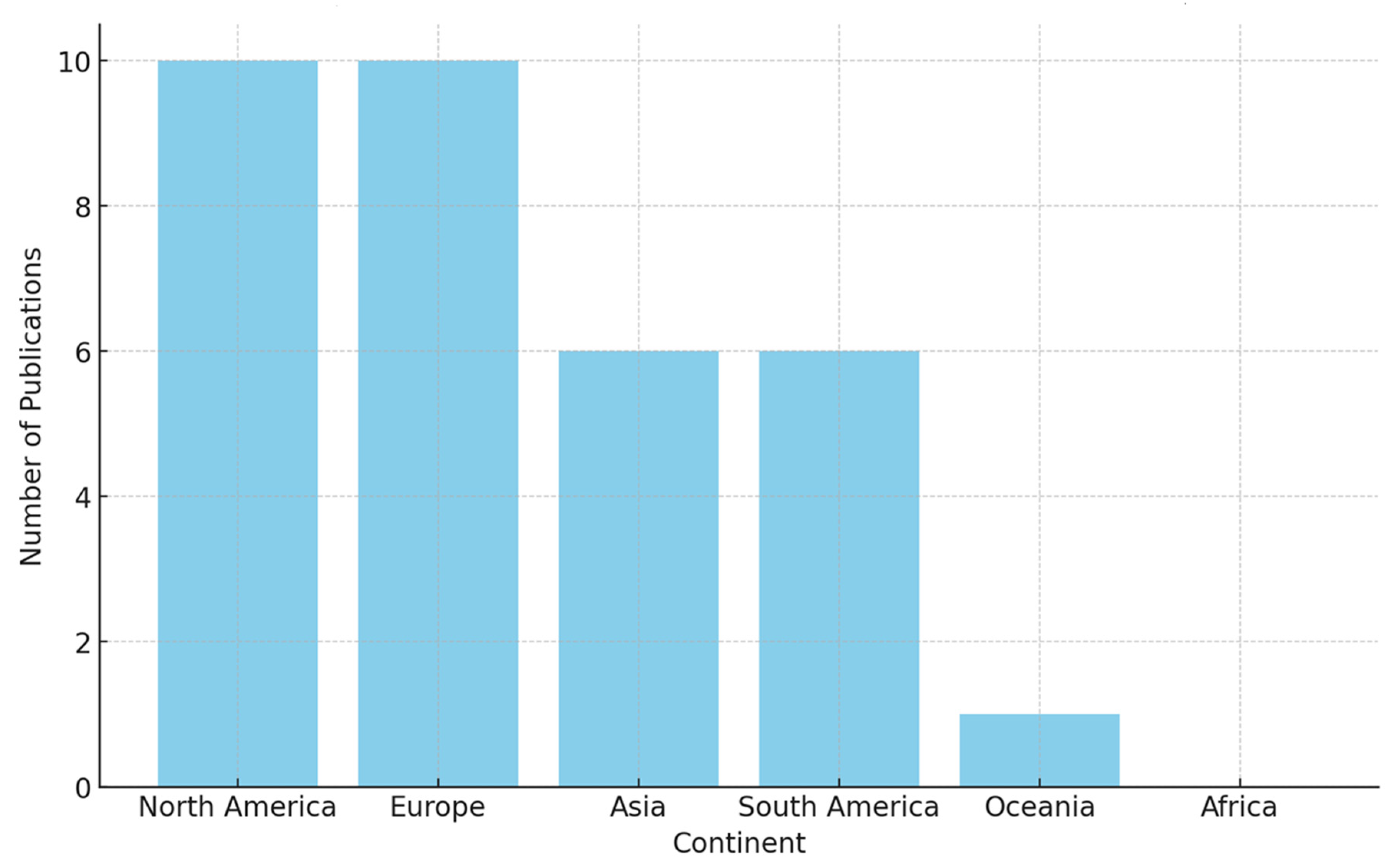

Table 1.
Summary of the database search results, showing the number of articles found.
| Data base | Number of Articles |
|---|---|
| ProQuest Dissertations and Theses Global | - |
| Medline | 11 |
| PubMed | 22 |
| TOTAL | 33 |
Table 2.
Distribution of the analysed articles across medical journals.
| Scientific journal | No |
|---|---|
| Academic Medicine | 5 |
| BMC Medical Education | 4 |
| International Journal of Medical Education | 2 |
| Medical Teacher | 3 |
| GMS Journal for Medical Education | 1 |
| Journal of Postgraduate Medicine | 1 |
| Medical Education Online | 1 |
| Brazilian Journal of Medical Education | 1 |
| Canadian Medical Education Journal | 1 |
| Medical Education | 1 |
| Croatian Medical Journal | 1 |
| Biomedical Papers - Olomouc | 1 |
| PLoS Biology | 1 |
| Portuguese Journal of Pulmonology | 1 |
| Vienna Clinical Weekly | 1 |
| Magazine of the Brazilian Medical Association | 1 |
| Biochemistry and Molecular Biology Education | 1 |
| Scientia Medica | 1 |
| Western Journal of Emergency Medicine | 1 |
| Chilean Medical Magazine | 1 |
| International Journal of Health Sciences | 1 |
| Colombia Medical | 1 |
| Annals of Family Medicine | 1 |
| TOTAL | 33 |
Table 3.
Distribution of the location of publication of these findings by the countries of their origin.
Table 3.
Distribution of the location of publication of these findings by the countries of their origin.
| Continent | Total | Countries | |||
|---|---|---|---|---|---|
| North America | 10 | United States (n=9) | Canada (n=1) | - | - |
| Europe | 10 | Sweden (n=2) | Germany (n=1) | Croatia (n=2) | Slovakia (n=1) |
| - | Italy (n=1) | Norway (n=1) | Portugal (n=2) | - | |
| Asia | 6 | Saudi (n=3) | India (n=1) | Japan (n=1) | China (n=1) |
| South America | 6 | Brazil (n=4) | Chile (n=1) | Peru (n=1) | - |
| Oceania | 1 | Australia (n=1) | |||
| Africa | 0 | - | |||
Table 4.
Synthesis of Case Studies on Research Education Strategies in Medical Programs.
| Authors | Work plan |
|---|---|
| Thomas et al.(12) | Confluence of several factors: 1. growing faculty specializing in medical education who had protected time for academic activities; 2. constant training of the teaching staff; 3. culture of valuing knowledge in education and collaboration between peers. |
| Gruppen(13) | The key to the department's success - excluding other financial and administrative spheres - lies in collaboration and teacher training. In terms of collaboration, when researchers from basic sciences and clinical medicine were combined with educational and social researchers, there were gains in the course as a whole. In terms of training, there was investment in reflecting on their own teaching experiences. |
| Nierenberg et al.(14) | There was investment in support structures for grants and manuscript development, financial support for pilot projects and salary support for researchers and key staff. |
| Hope et al.(10) | The main ingredients of the renaissance of in-course educational research are attributed to the following factors: 1. in-course research funding programs; 2. teacher training, located in the workplace and carried out through collaboration between peers; 3. medical educational research internship program; 4. collaborative research between teachers. |
| Clark et al.(15) | The deconstruction in research course was taught in two five-week modules. The course analysed real data from current and cutting-edge research, presented in the form of a high-level research seminar. After the lecture, the subject teacher worked on concepts covered during his regular classes, and at the end the guest researcher returned. There was a cycle of conversation and scrutiny of the presentation by the students. |
| Diaz(11) | Continuous research education system that consisted of three annual programs called Research Methodology I, II and III that were included in the curriculum of the first three years of graduation. |
| Perry et al.(16) | The successful experience reported came from the formation of a research group formed by the teaching staff. The environment was characterized as a collective work space for sharing ideas, projects, scientific support and encouraging the completion of projects. |
Table 5.
Orginal research articles Results obtained from database searches.
| Research objective | n | % |
|---|---|---|
| Factors that influence the search for and participation in research. | 9 | 41% |
| Assessment of research strategies and innovations. | 6 | 27% |
| Assessment of scientific production. | 3 | 14% |
| Analysis of research concepts and their influences. | 2 | 9% |
| Assessment of course completion work. | 2 | 9% |
| TOTAL | 22 | 100% |
Disclaimer/Publisher’s Note: The statements, opinions and data contained in all publications are solely those of the individual author(s) and contributor(s) and not of MDPI and/or the editor(s). MDPI and/or the editor(s) disclaim responsibility for any injury to people or property resulting from any ideas, methods, instructions or products referred to in the content. |
© 2024 by the authors. Licensee MDPI, Basel, Switzerland. This article is an open access article distributed under the terms and conditions of the Creative Commons Attribution (CC BY) license (http://creativecommons.org/licenses/by/4.0/).
Copyright: This open access article is published under a Creative Commons CC BY 4.0 license, which permit the free download, distribution, and reuse, provided that the author and preprint are cited in any reuse.


