

Submitted:
01 February 2024
Posted:
01 February 2024
You are already at the latest version
Abstract
Social, environmental and economic problems are the concern in the agroecological communities. To address these issues, it is important to understand how communities think and act towards existing sustainable practices. There are various agriculture practices which are aboriginal to particular region, and have the knowledge of environment in deep sense thus, locals utilize it for coexisting with nature, by preserving environment and fulfilling the human needs for food alongside protecting the disappearing practices. At present, India has only three designated GIAHS sites and no proposed sites at present, despite having a diverse physical environment and area. Therefore, this paper acknowledges the need to recognize potential indigenous agricultural heritage site as GIAHS and its multidimensional Sustainability and vulnerability by climate change, Traditional value, ecological value, socio cultural values and value-added behavior which can increase the economic value and appeal towards agricultural commodities in later phase. Therefore, this paper aims to investigate the potential AHS site in the north east region of India, which is known as Zabö or Ruza and changes in the LULC of the area. Alongside assessing the present agricultural Heritage systems and changes GIAHS recognition brought to it.
Keywords:
GIAHS
; LULC change
; Zabö
; Sustainability and Conservation
1. Introduction
Humanity will need new models of agriculture in the immediate future: more sustainable, biodiverse, local, resilient, and socially just. – FAO
Millennium Development Goals emphasize on the need for sustainable development for world, natural heritage site and steps needed for achieving the global sustainability. To achieve the goal firstly outlook towards the agriculture system needs to change in the rapidly changing physical and economic environment. Since outlook towards agriculture can bring sustainability and economic growth in the region. Therefore, agriculture system which are unique identity of a physical environment in certain regions are designated as Globally Important Agriculture Heritage System (GIAHS) by the Food and Agriculture Organisation (FAO).
GIAHS and its goals
"Remarkable land use systems and landscapes which are rich in globally significant biological diversity evolving from the co-adaptation of a community with its environment and its needs and aspirations for sustainable development"(FAO, 2002). GIAHS is much more than a traditional Heritage site, protected region and landscape. It’s a system of human communities that is always changing and existing in a complex interaction with its culture, social, physical and agricultural surroundings. Humans and their means of subsistence have continuously adjusted to the opportunities and limitations of the environment. They have altered the landscape and the biological environment to varying degrees resulting into built up experience of intricately intertwined livelihood activities.
In order to provide food and livelihood security and reduce risk, many AHS sites have built and modified their resilience to deal with climate variability and changes resulting dynamic conservation techniques and processes enable conserving biodiversity and crucial ecosystem services. The depth and breadth of collected expertise in resource management and usage represents a priceless global treasure that must be encouraged, preserved, and given room to grow at the same time.
The inclusive objective of the GIAHS Programme is to identify and protect globally significant agricultural heritage systems and the landscapes, agricultural biodiversity, and knowledge systems that are associated with these systems. This can be done by establishing a long-term programme to support these systems and increase the benefits that come from their dynamic conservation, sustainable management, and increased viability on a global, national, and local scale. According to the development plan proposed by FAO, terms start from short-term, mid- term and later on extensive programs.
Three main objectives to achieve the goals are as follows. Firstly, to give enough attention at national and international level along with institutional support for its preservation (Jacob, 2015). Global recognition can be achieved through the recognition of unique agriculture heritage by government at all the levels. Which can bring the awareness towards the understanding of culture and climate led threats. Secondly, capacity building for the local farming communities, local and national institutions need to work to conserve and manage the unique agricultural ecosystem and increase in the economic value. For the sustainability and conservation identification for the ways to mitigate risks of biodiversity erosion and conservation and utilisation of the traditional knowledge is required. Since it can enhance sustainable agriculture and rural development and results into contributing towards food security and poverty alleviation. To elevate the benefits labelling is helpful way for the promotion of indigenous system i.e., Eco tourism, Environment service and Eco labelling. Lastly, to promote regulatory policies and incentive environments to support the conservation, evolutionary adaptation and viability of GIAHS (FAO, 2017a). Assessing the existing policies in the region and to provide the incentives on the basis of new regulations, in order to improve it economically and ecologically.
Need of dynamic conservation in the midst of globalization and how?
Traditional agriculture systems provide food for some two billion people today (FAO, 2017b,유학열, 2016.) It sustains biodiversity, livelihoods, practical knowledge and culture so it can sustainably continue to be able to provide for the present and future generations.
These complex adaptive systems emerges when natural ecological processes and human interactions are combined to create complex adaptive systems which produces a mutually supportive agro-ecological system(Fuller et al., 2015) and AHS around the world represents this complex adaptive system. However traditional agroecosystems have been consequently adversely affected since agricultural paradigm has detracted from prioritizes agricultural intensification(Arnés García et al., 2020). Moreover, Agriculture cannot be considered sustainable unless it is lucrative and able to provide farmers with a good standard of living and income (Mishra & Das, 2022). Since it is the only resource which can contribute economically into the livelihood of indigenous practicing societies at the primary level. Therefore, to provide systematic support for the conservation and adaptive management of agricultural heritage systems, the GIAHS Program promotes intervention strategies at global, national and local level.
- Global level - It makes it easier for the idea of globally significant agrobiodiversity to be recognized internationally. Alongside compile and share best practices and lessons gained from AHS around the globe. Within the framework of the United Nations Collaborative Program on Reducing Emissions from Deforestation and Forest Degradation (UN-REDD), through this conservation of AHS forestry can be effectively addressed.
- National level - In countries which have recognized agricultural heritage system, their project activities will guarantee that national sectoral and inter-sectoral plans and policies embrace the GIAHS concept at mainstream level. Action plans like Nationally Appropriate Mitigation Actions (NAMAs) can actively be part of the plan for Agriculture, Forestry and other land Use (AFOLU) since it aims to reduce carbon emission in developing nations and AFOLU accounts for 24% of emission (IPCC, 2014). This could impact on the development of NAMAs which are linked to measurable emission reductions, and could therefore induce political and economic policy changes that better support traditional agriculture. (Altieri & Nicholls, 2017).
- Local level - Acknowledges community-level adaptive management and conservation along with the increase in economic support. Organizations or committees, needs to establish an understanding for small farmers to ensure traditional agriculture and food security(Altieri & Nicholls, 2017).
However, globalization and organization have changed the trajectories of landscape(Min & Zhang, 2019). Therefore, to halt the rapid degradation of AHS, their dynamic nature must be recognized first. Their resilience depends on their ability to adapt to new challenges without losing their biological and cultural wealth and their productive capacity (Bridgewater & Rotherham, 2019). Attempting to preserve AHS by stopping in the time would undoubtedly cause them to deteriorate and plunge the populations into poverty (Dela-Cruz & Koohafkan, 2009). Since, the AHS approach is centered on human management and knowledge systems, including their resilience, sustainability, and integrity while maintaining the socio-organizational, economic, and cultural elements that support the conservation and adaptation processes in GIAHS (Barnes, 2010; Lun et al., 2021).
To bring change in the GIAHS, countries like China, Japan, and Korea established national level schemes. In 2016, MAFF (Ministry of Agriculture, Forestry and Fisheries) established the Japanese Nationally Important Agricultural Heritage Systems (J-NIAHS) and it was effectively successful in the conservation of designated sites along with contributing to watch global goals of sustainable development(Akira & Evonne, 2021). In 2012 MOA (Ministry of Agriculture and Rural Affairs of the People’s Republic of China), designated China NIAHS (Jiao & Min, 2017). Not only formation of the organization but the adaptation in the Agri-tourism is a great fit for the conservation of agricultural heritage(Jiao et al., 2016; Kajihara et al., 2018). In China, Agritourism has played an important role in generating sustainable income(Yang et al., 2018). In Korea, introduction of the theme parks and trails for the JBAS (Jeju Batdam Agricultural System) has been constructed for the environmental improvement in the short-term plan (Province, 2013). Along with it, these nations provide compensations and participation schemes for maintaining sustainability and the local social structure, where China provides GIAHS-compensation(Liu et al., 2018), Korea has incentives for the well managed AHS sites (Province, 2013) and Japan does not have separate fund for GIAHS sites However it does have committees at municipal level to represent and for lookout(Akira & Evonne, 2021). Moreover, if SLF (Sustainable Livelihood Framework) applied on the AHS, it can comprehensively integrate the SD under the UNDP framework(Elizondo et al., 2017), identify suitable strategies to enhance community engagement and improve community livelihood sustainability (Su et al., 2018). Hence these regions effectively promoted and protected the AHS, therefore their approach can be opted for conservation of AHS in India.
2. Existing Agricultural Heritage system in India
The FAO sees the chances for the global community to fulfill the Millennium Development Goals (MDGs). The sites that have been chosen are anticipated to have a high level of agricultural productivity as well as related biological biodiversity, however both criteria are currently experiencing unique management challenges(Koohafk & Altieri, 2010). In this section, we will look at the existing Agriculture Heritage System in India and their importance and changes in the socio-environmental status.
Figure 1.
GIAHS sites in India (Exiting and potential site).
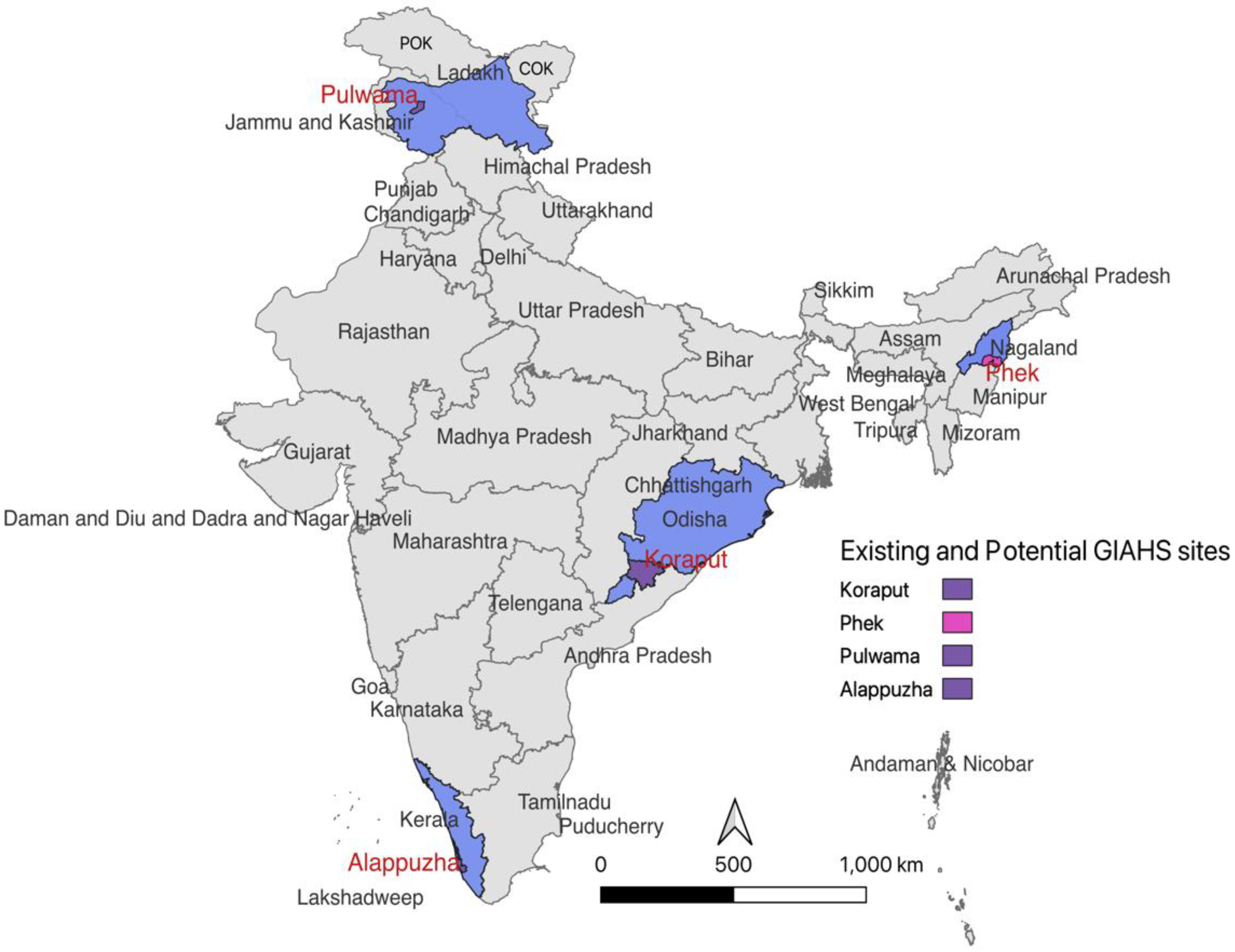
2.1. Saffron Heritage of Kashmir
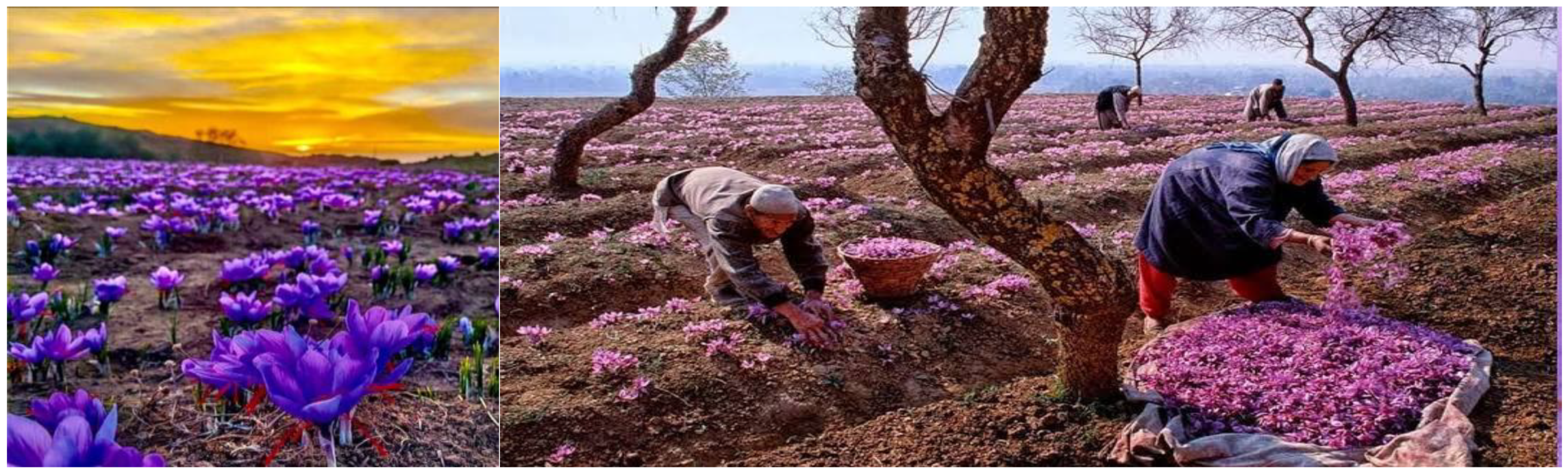
In 2011, Saffron (Crocus sativus) cultivation in Pampore District of Kashmir was recognized as the India’s first GIAHS. Situated at an average elevation of 1550 meters on the eastern periphery of the Jhelum River. It has long history of cultivation and mention in the ancient records of the region and is one of the major parts of the Agri economy of the region. Around 3,000 acres of land is under saffron cultivation in Pampore or Pampur. It is a cash crop yet having a traditional heritage. Fertile land with tropical conditions is best suited for the saffron cultivation. Majority of yield comes from Pampore. It has remarkable landscapes, land and water resources management features. Pampore Karewa soil are specially made as square beds, measures l.5m in order to prevent the accumulation of water.
The cultivation of saffron, however, has been confronted with significant obstacles to sustainability and livelihood security. According to the 2011 Census of India, 16,000 families are engaged in the cultivation of saffron. It is the primary and only occupation of Kashmiri farmers, merely 1% of saffron growers rely on any other kind of farming(Saffron Heritage of Kashmir | GIAHS | Food and Agriculture Organization of the United Nations, n.d.). Therefore, appropriate technologies must be adopted immediately to address water scarcity, productivity loss, and market volatility. Traditionally cultivated in September, hoed twice in June and September and During the vegetative phase (November to May), saffron fields are maintained to keep rodents at bay. In May, the dry foliage is harvested and used as cattle feed. (SAFFRON HERITAGE SITE OF KASHMIR IN INDIA GIAHS Saffron Site Report, 2012).
After the implementation of National Agricultural Innovation (NAIP) project the cultivation of the saffron has been increased and supply became consistence. Later on, National Saffron Mission (2010-2020) was initiated to boost saffron productivity under Rastriya Krishi Vikas Yojana (RKVY) by enhancing soil quality, irrigation System and by adapting to weather changes. RKVY offers farmers incentives with the goal of attaining and maintaining inclusive growth during the 12th plan period by guaranteeing the comprehensive development of agriculture and related industries. Also, Production to consumption system (PCS) value is added and only guaranteed when the saffron supply is steady enough to be processed into useful, reasonably priced goods (Ali & Yasmin, 2014; Nehvi, 2010). On the other hand, it attracts the tourists during the blooming season, and created an extra source of income for the region.
Figure 2.
Saffron cultivation in Pampore District, Kashmir.
In the assessment of different geographical locations and soil types is particularly necessary to encourage saffron production and its qualitative traits. Based on current findings, saffron can be grown successfully in some non-traditional locations of the western Himalayan regions (Kothari et al., 2021). On the other hand, Ecological Niche Modelling was assessed to find suitable regions for saffron production in unconventional areas of Himalayas displayed the high productivity yield in the northwestern region of Himalayas (Kumar et al., 2022). In order to support the faster and common trading place right after the harvest, a saffron park has been constructed in Pampore by National Horticulture Board (NHB). It provides platform for Post-Harvest Management, E-trading, spot exchange, quality testing and ISO certification. Moreover, it has collected the 4.07, 4.86, 4.04 kgs/ha in 2019-20, 2020-21, 2021-22 respectively (Jha, 2022). Recently GOI (Government of India) aiming to encourage the saffron cultivation in lower belt of Himalayas with suitable conditions. Need for the conservation
2.2. Kuttanad Below Sea Level Farming System, Kerala
Kuttanad lies in the southwest part of Kerala. It encourages rice-fish rotation farming below sea level in the land created by draining delta swamps in brackish waters (A. Singh et al., 2017) with humid tropical conditions (Figure 1). In 2013 it got recognised as GIAHS. The area has a vast variety of physical geography i.e., landscape patches, coastal rivers, garden lands, backwaters, wide areas of paddy fields, marshes, ponds, edges, and corridors and above are remarkably networked water ways (Figure A1). For the water management, a crucial regulating service is played in managing the hydrology of the whole area, regulating floods during the monsoon and droughts during the summer. It’s an approach to cope with the imminent climate impacts in coastal areas and evolve efficient methods to deal with soil and pest-related issues in agriculture. Agriculture and Inland Fisheries are the major land/water use practices of the system, which considered as the largest wetland use system on the west coast of Indian peninsula.
Contribution towards biodiversity and ecosystem functions, shaping different kind of landscapes, this system forms habitats for Agri and wild biodiversity. Due to mixed Agri-systems, different species of cultivated plants such as rice, coconut palm, vegetables, along with local shells and fishes are found. Besides, local duck breeding is part of the system. Kuttanad rice production share about 25% of the State’s total rice production and is the stable food of the farmers.
Figure 3.
Kuttanad below sea level farming.
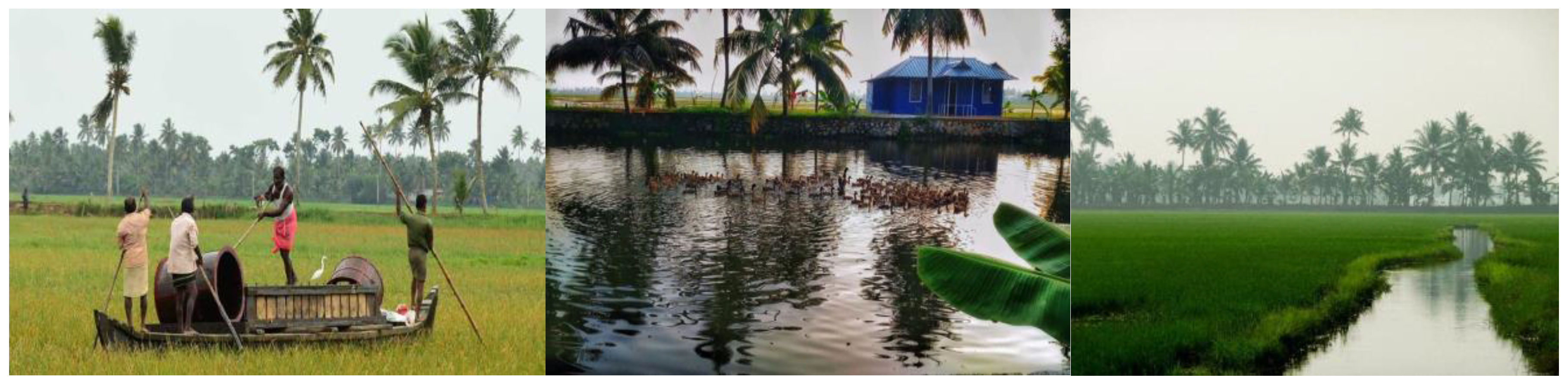
The region is a large repository of migratory endemic fish species and birds. However, it has been found that in last 30 years, the Fish diversity in the area has decreased from 150 species to 36, with many of them being classified as critically endangered or possibly extinct(Portal, 2016). Therefore, due to the lack of conservation planning, there is a degradation in the diversity of the species in water bodies. The Kuttanad system is a complex mosaic of fragmented agricultural landscapes divided in three structures: wetlands used for paddy activities and fish catching, garden lands used for coconut, tubers and food crops plantation and water areas used as inland fishing and shells. Water sources needs to be reoriented by the construction of polders to create cultivable lands. These bunds are often strengthened in accordance with the level and force of floodwaters. After constructing the bund, the polder area is dewatered. The water is generally pumped out by oil engines or electric motors (Figure 3). Once the dewatering is completed rice cultivation process starts. Moreover, farmers prefer a rice-fish rotation when the paddy turns to be less lucrative. It also helps reducing diseases and weeds pressure. Immediately after harvesting the rice, ducks are brought to the fields to ensuring a direct food and manure supply for the farmers but also as a source of income.
However, at present the scenario is changing and there has been constant degradation of the ecology of the Kuttanad. The Kuttanad region was heavily altered by humans in the past in order to get around environmental restrictions. Deep land reclamation spread from the lake's shallow to its deep-water zones and became a regular practise foe the dykes building. Population growth, rising paddy demand, and the disappearance of shallow backwaters were the main causes of this. Therefore, Concerning the social organization due to a fast-fading tradition, the padasekhara (field) committees are made responsible for the annual maintenance of bunds. Individual farmers of each padasekharam(Rice Development – Karshika Keralam, n.d.), on the basis of the area they own, share the cost of the maintenance work of the bunds. However, analyses and survey (Jacob et al., 2018) came to the conclusion that organic farming is becoming less of an option for the netizens. Moreover, another study (Sreeja et al., 2015) presents the shift in the paddy cultivation of 48 years, from 1966-2014. The production of staple foods from the wetland ecosystem is more negatively impacted by direct anthropogenic changes in land use than by the effects of climate change. Therefore, mission is “to develop and promote sustainable farming systems in coastal wetlands that reduces vulnerability to climate change, sea water intrusion, tidal and riverine floods, pests, pathogens and such other problems through innovations that safeguard, stabilize, and enhance natural resource capital, soil health, biological systems diversity and value by engaging partner” International Research and Training Centre for below Sea Level Farming, Therefore, mission is “to develop and promote sustainable farming systems in coastal wetlands that reduces vulnerability to climate change, sea water intrusion tidal and riverine floods, pests, pathogens and such other problems through innovations that safeguard, stabilize, and enhance natural resource capital, soil health, biological systems diversity and value by engaging partner” International Research and Training Centre for below Sea Level Farming, Kuttanad (IRTCBSF) (SCC Kerala, 2017).
2.3. Koraput Traditional Agriculture, Odisha
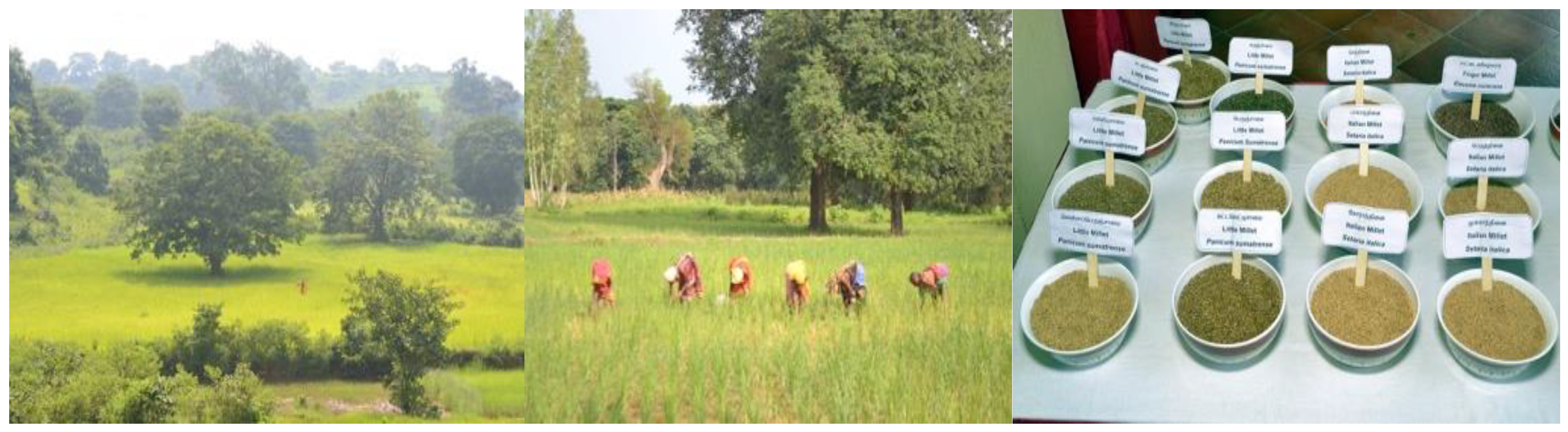
Customs kept the biodiversity alive: In 2012, Koraput was recognized as the GIAHS by FAO. This region lies in the east of India and strongly linked to the traditional systems. This region has fertile land with tropical conditions and home to 52 tribal communities. The main occupation of these communities is agriculture. This region is rich in rice diversity and practices multi-cropping system for mallets and pulses.
Figure 4.
Region of Koraput during harvesting and its millets production.
Tribal have rich traditional knowledge, regional knowledge and water resources management. Tribal farmers had a significant role in maintaining the agrobiodiversity, which includes both cultivated and wild plants, as well as their traditional knowledge. That is why, forest preservation is a result of the human management. To understand the Argo-tradition (Mishra & Das, 2022), Studied the association between the sustainable agriculture and socioeconomic traits of farmers. Farmers from this region have basic education, however, understood the need for sustainable traditional farming and also kept using the complete organic pesticides and fertilizers and supports platforms like Community seed grain bank. Since, traditional community practices promote biodiversity conservation and sustainable management. The biodiversity here has cultural and public value and should be acknowledged as the custodians' heritage. Knowledge systems and beliefs in local communities are related to the fields and forest management. Plant genetic resources can be effectively preserved through the use of sacred groves (Asokan et al., 2015). The sacred grove has religious significance since it is believed that the vegetation is under the protection of their local deities (FAO). And refuge for various plant and animal species, they are usually areas of natural They are mainly regions of natural flora resembling tiny forests, and significant locations for prayer and community gatherings. They also provide as refuge for a variety of plant and animal species (Wadhwa, 2023).
Figure 5.
Land use of Koraput District analysed through satellite imageries (IRS P6 LISS-III) during (a) 2004 and (b) 2013 (Source: Adhikary et al., 2019).
Figure 5.
Land use of Koraput District analysed through satellite imageries (IRS P6 LISS-III) during (a) 2004 and (b) 2013 (Source: Adhikary et al., 2019).
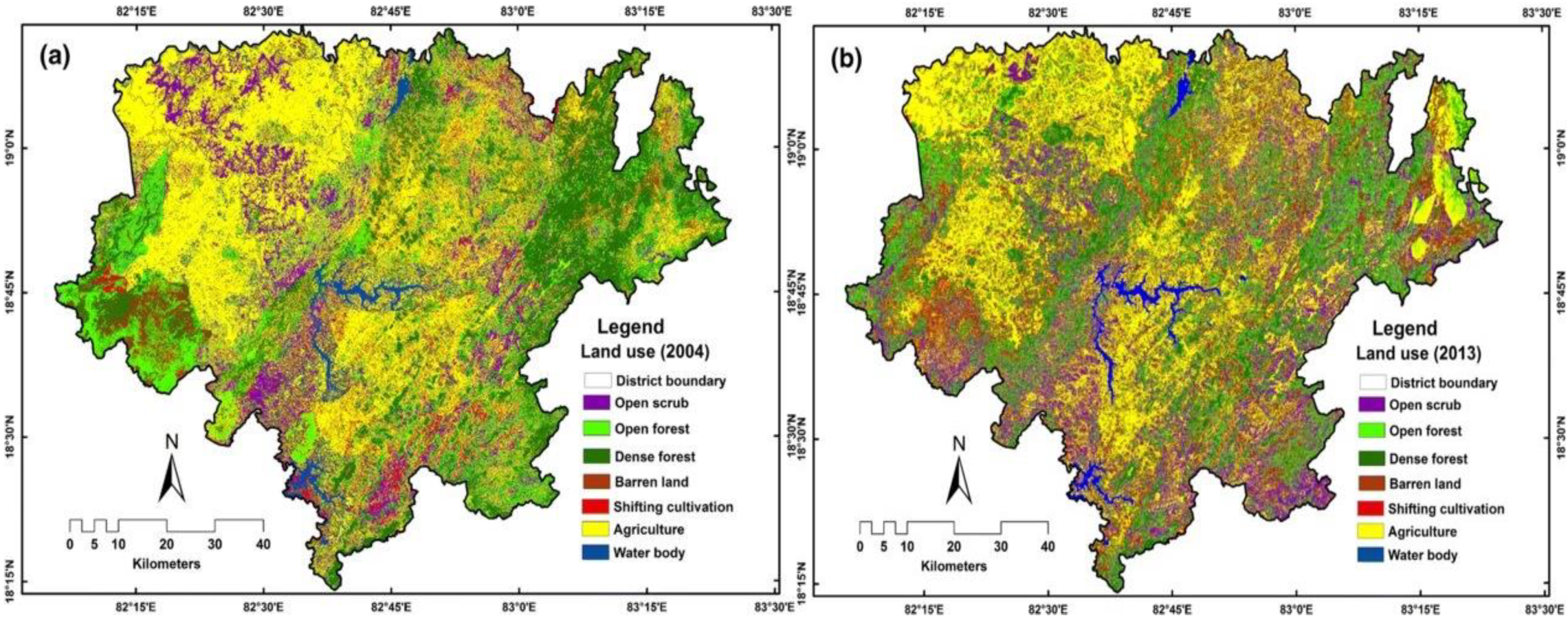
However, In the land use analysis of the Koraput by Adhikary (Figure 2), it is evident there has been a decadal shift in the cultivation pattern and cash crop gained the popularity. There has been prominent temporal and spatial change has been seen. Immense decrease in the dense forest and agriculture took over the barren land.
2.4. Vulnerability to climate change
Unfavorable weather patterns pose a growing threat on marginalized section of society which is changing their way of life(Leary, 2008; UNDP, 2007; Wolf et al., 2010). Since this section is largely dependent on the informal livelihood. Moreover, Developing and developed countries will face new poor between present and 2100 lead by climate change poverty resulting from climate change, compromising sustainable development (Olsson et al., 2014). Therefore, recognition and acknowledgement is the first step towards sustainability. Since AHS serve as archives for important resources for coping with climate change, such as traditional knowledge, genetic resources, and natural resource management techniques(Koohafk & Altieri, 2010). Obtaining the related traditional knowledge is crucial for sustainable forest management as well as for their multipurpose role(Santoro et al., 2020). On the other hand, change in the climate are also capable of causing multidimensional vulnerability such as structural inequalities, power imbalance (Olsson et al., 2014) and climate migrants. Moreover, it determine the distribution of output over geographic regions and different latitudes, and the composition and geographical allocation over crops and types of livestock(Tubiello et al., 2008). Leading to higher rate of extreme occurrences, such as the Mediterranean region's heat waves and droughts, or increased heavy precipitation and flooding in temperate zones(Arnell, 2004). Which can lead to the substantially lower production and productivity which can ultimately lead to livestock mortality(Tubiello et al., 2008) along with reduction in food and water security (Romero et al., 2023). Therefore, climate action for agroecological strategies is needed, in order to enhance the ecological resiliency of farming systems are a necessary but not sufficient condition to achieve sustainability. The ability of groups or communities to adapt in the face of external social, political, or environmental stresses must go hand in hand with ecological resiliency.
Likewise, AHS in India will face the pressure of change in the upcoming future (Table 1). Traditionally AHS has its own ways to cope with extreme climate However with the climate change challenge for AHS will be able to manage the traditional heritage in the near future. Existing GIAHS in India are extremely vulnerable to climate change. Such as saffron farming is highly dependent on the suitable temperature, Kuttanad is vulnerable to the sea level changes and Koraput is vulnerable to climate change losing its genetic resources and biodiversity.
3. Role of GIAHS tag in transformation of Social, Economical and Ecological Sustainability
Biodiversity conservation is given top priority by several agricultural heritage systems. These systems frequently entail the raising of a variety of crops and livestock varieties. In addition to preserving genetic diversity, this promotes the health of the ecosystem by fostering the overall growth. Therefore, in this section, will look into the changes GIAHS recognition has brought to these regions in totality.
The changes it conveyed and the changes it is capable to convey:
- In the case of Kashmir's saffron cultivation, the follow-up action plan has now been launched accordingly and is underway with oversight role and responsibility of SKUAST-K (Sher-e-Kashmir University of Agricultural Sciences and Technology) collaborators for ensuring that the GIAHS pilot site is safeguarded sustainably, scientifically and technically with due participation of and support to saffron family farmers. There has been changes in the production of saffron cultivation, it has declined from about 5707 ha in 1996 to just 3715 ha in the recent past according to the study done (Afroza & Khan, 2018), however in past 3 years yield has improved. Moreover, succession of understanding and promoting this unique agriculture, which is only exclusive to the Kashmir region, GOI planned to extend the cultivation in the northeast regions of India and provide incentives to the cultivators.
- AHS evolved over many generations to accommodate specific local environmental circumstances; many agricultural heritage systems are innately resistant to climate change. These systems can aid in the mitigation of climate change and act as role models for agriculture that is climate resilient (Shamas & Amanda, 2019). However, anthropogenic activities were no less in harming the biodiversity. According to the Centre for Earth Science Studies identifies the socio- environmental threat by the beach sand mining(Sekhar & Jayadev S, 2003). Also trend in decreasing number of species in Kuttanad wetland. This ecological degradation led to the Padasekharam committee, which was made to ensure the vigilance over the maintained of the bunds after looking at the falling traditions.
- Ensuring equitable opportunities for smallholder farmers and women, by creating value added behaviour. Since the key to agricultural development is value-added behaviour that enhances farm earnings, generates rural jobs, meets customer needs, minimizes waste, and supports sustainable practices. Despite obstacles, chances can be taken advantage of via innovation, teamwork, and wise policy. Therefore, collaboration between all stakeholders and a systems approach are necessary for sustainable value chains. Small scale groups came into existence in Koraput and Kuttanad region such as Sai tribal traditions, which aims to sell the Koraput products across the whole nation.
- As seen in the section 2.3, despite having a unique agriculture heritage and along with the tag of GIHS the Koraput region is significantly poorer, and it needs to be promoted under Agri-tourism. However, there is lack of attention towards Agri-tourism, on the hand for rural economies and sustainable agriculture, agritourism is essential. It helps farmers diversify their sources of revenue and lessens their reliance on a single crop's production. By buying farm products, tourists that participate in agritourism learn about farming methods and support the local economy. Additionally, it promotes linkages between urban and rural areas and raises awareness of the significance of agriculture. A vital part of contemporary agriculture, agritourism fosters rural development, protects cultural heritage, and promotes ethical and environmentally responsible farming methods. In Koraput, even with in situ conservation, impact of economic sustainability through Agri-tourism is slower, however recognition lead the introduction of courses related to adequate Logistics and Supply Chain Management in Central University of Orissa. Since VC of the CUO believes “In spite of mass production, it lacks adequate management and supply chain system for marketing these products at the national and international level. The new programme of two-year PG/MBA in Logistics and Supply Chain Management will fulfil these demands” (Central University of Odisha, n.d.)
4. Zabo integrated farming system, a potential GIAHS site
Despite having a huge land mass under agriculture practices along with immense variation in the geomorphological and climatic distribution in the nation, there are only three GIAHS in India. However, there are more agricultural practices which are not well known on a larger scale and have the potential to be the future GIAHS. One of these unique systems is Zabö or Ruza.
Location, geography and climate
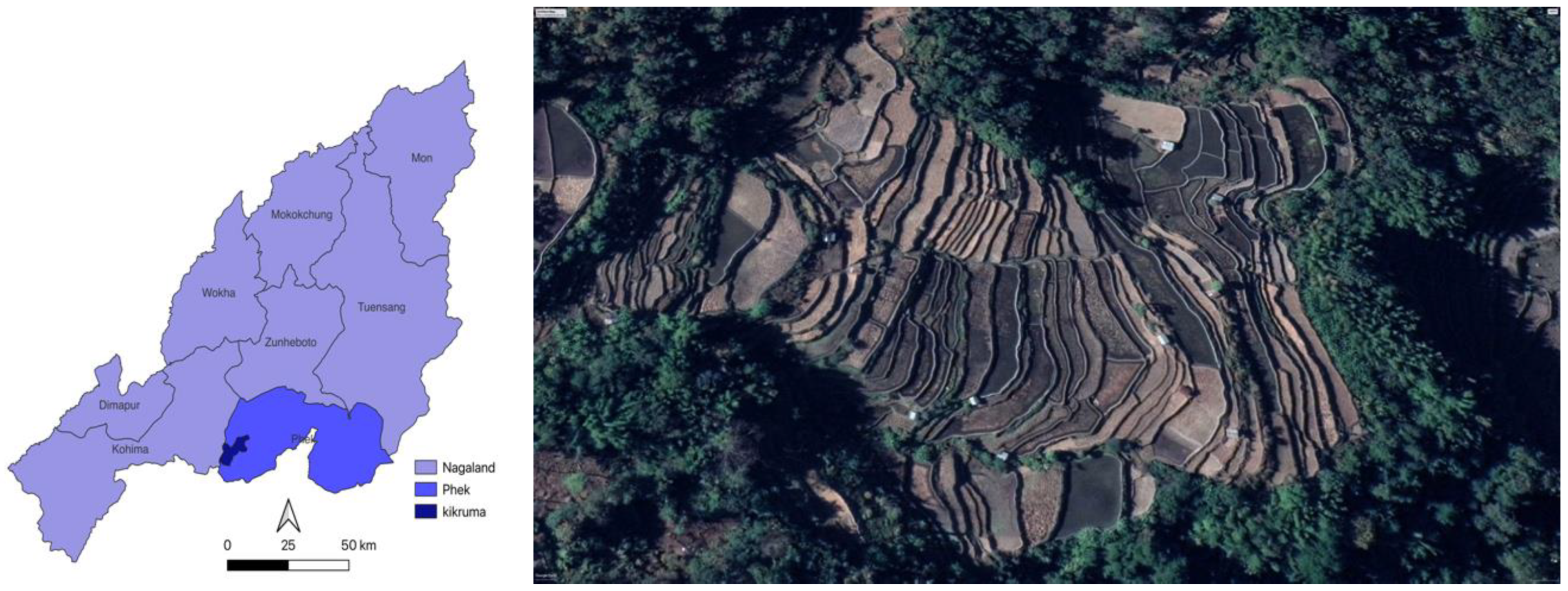
Kikruma is the representative of Zabo or Ruza integrated farming system which is located in the Phek district of the Nagaland state. Nagaland is mostly covered by hilly terrains having slope more than 20% (CGWB, 2011a). Phek is a mountainous region with 70% of its land covered in evergreen forest (TRI, 2018) situated in the east most part of north India. Kikruma is located at an elevation of 1270 above mean sea level (AMLS) meters. highest elevation is 2400m AMSL, which is of Zainbu mountain.
In terms of climate, summers are warm but not oppressively so; the average temperature hovers about 27 °C, rarely rising above 32 °C. The monsoon season lasts from the end of May until the end of September. During January and February, the coldest months of the year, when the temperature drops below 0 °C, Assamese plains nearby experience milder winters. There is 1,527 mm of rain on average every year (India Meteorological Department, n.d.).
Figure 6.
a: Kikruma Location. 6b: Arial view of a patch of Zabo farming in Kikruma region (Source: Google earth image Imagery, updated on 1/2/2022 and accessed on 12/11/2023. Location coordinated are 25°35°06.86" N, 94•12'37.81"E).
Figure 6.
a: Kikruma Location. 6b: Arial view of a patch of Zabo farming in Kikruma region (Source: Google earth image Imagery, updated on 1/2/2022 and accessed on 12/11/2023. Location coordinated are 25°35°06.86" N, 94•12'37.81"E).
Farming system and its functioning
Practices unique and sustainable practice, known as “Zabo” which means impounding of water(Singh et al., 2012; Moudgil, 2014;D. U. Das, 2014; Zabo Farming System, 2023).
The whole ecosystem of sustainability is a combination of integrated farming of Agriculture, fishery and animal husbandry. The zabö farming system is made up of the complete continuum. The sequence of the Zabo farming is as follows: on the highest elevation permanent forest exists, along with the human settlement (Figure 6b. and Figure 7a.) Situated around the 1600 and above. Right after that on lower elevation, catchment is constructed in order directly collect the most amount of water with a shallow depth of 1.5-2.5 meters for the lean period (Figure 7c). Moreover, the bottom surface of the pond is properly rammed to minimize the loss of water through seepage (FOCUS-IFAD, n.d.). Catchments are constructed in such a way that the distribution of water is uniform. During summer water from the catchment area let into the rice fields located in the lower region, along with it carries waste and excrement of the animals on the way in order to increase the nutrient value of the field (Figure 7e and Figure 7f). After which the water ultimately reaches the river basin or to the lowest level of the system.
Water sharing and pond and channel repairs: Water harvested is shared across several families or clans through mutual agreements. Water travels via tunnels from one plot to the next until it reaches the last plot. They drain the extra water. Terrace culture sows from April to May, and transplants are done in June and July (Singh et al., 2012). Water is left in the fields for the duration of the plant's growth and then drained out right before harvest. By March or April, the ponds usually dry up, and repairs are made at this time. As the desilted material has a good amount of organic matter and nutrients, it is delivered to the terrace fields below the pond. All of the households who have terrace fields in the irrigation command area take part in cleaning the siltation tank (Zabo Farming System, 2023).
Community and livelihood
The Naga community in Phek district lives at high elevations (figure 8), and fields exist at lower elevations. Agriculture is the main occupation, including Terrace Rice Cultivation (TRC) and shifting cultivation (Jhum Cultivation). Since water scarcity is a challenge during the lean period in hilly areas, leading to the necessity of water management practices. Therefore, community works closely with nature, sharing water resources through mutual agreements. Terrace culture is prevalent, with water shared through tunnels, and repairs made to ponds before the harvest season. Though Kikruma has 915 hectares of total agricultural land, only 26 hectares are farmed using the Ruza technique. People that live at lower elevations and have access to enough water sources don't rely upon the catchment (B. Das, 2023).
Biodiversity
Being a hilly region, it's rich in flora and fauna. Therefore, it has diverse vegetation including evergreen forest. As per the (Singh et al., 2018) in the zabö farming system the variety of the fruits are 9, vegetables are 14, sticky rice of 6 different kinds, non-sticky rice of 6 different varieties, livestock is 3, water species are 3, and 6 types of cereals and pulses. Moreover, there are three Geographical indicators vegetables are from this region which are Capsicum spp. (chili), Cucumis Sativus (Cucumber) and Sechium Edule (Chow Chow). Farming of large variety of wild fishes and prawns is also a micro part of the seasonal biodiversity(D. N. Das, 2018).
Sustainability of the system
There is decrease in the recharge and availability of the water in past one decade(CGWB, 2011a; CGWD, 2022), during monsoon season recharge from rainfall was 1727, and during other seasons recharge from rain follows 784cm end that ground water availability for future irrigation was 2186Mcm in 2011 however, this number dropped drastically within one decade to 539.16, 163.86, 590.36Mcm in 2022 respectively. On the other hand, soil erosion in the Phek district is one third of the total area exposed to severe soil erosion (Lohe & Rawat, 2015). There are contributing factors to this phenomenon are as follows edaphologies factors, slope and high rainfall. Due to the small, elongated hills and other factors in the lean period acute scarcity of drinking water occur (CGWB, 2011). Since perennial source of water are minimal and run of water is in abundance (Moudgil, 2014); Das, 2014). Therefore, the Naga community of this region works closely with nature in order to use the natural resources to its fullest. They use the tree litter and common salt as fertilizer in minimal quantities, only when the paddy saplings are small (B. Das, 2023).
Within the past 5 years there has been massive change in the Kikruma region, Majority of the changes took place in the built area and the rangeland. The built-up area took over the permanent vegetation and along with the changes in the extent of the cultivation land. (Figure 9) Primary changes took place in the high elevation region along with the human settlement belt. Major changes can be noted in the buildup area and increasing multi crop agriculture.
Note* Boundary location has been marked through google earth pro as base layer due to unavailability of the defined borders of Kikruma village on Survey of India website.
5. Discussion
Sustainable Development Goals of the United Nations is in the chase of issues related to food security, biodiversity conservation, and poverty alleviation. AHS Sites has been one of the ways in which FAO initiated the plan towards sustainable conservation. Therefore, in order to ensure that these agricultural heritage systems continue to contribute to India's journey towards sustainable development, it is crucial that policymakers, researchers, and local communities work together to identify and protect AHS. Sites in India that highlight the rich diversity and potential of indigenous practises include the saffron heritage of Kashmir, the Kuttanad farming system in Kerala, and traditional agriculture in Koraput, Odisha. Understanding these systems can result in constructive change in the similar regions.
Saffron Cultivation: With the GIAHS designation, the decline in saffron cultivation has been reversed, ensuring its sustainability and the financial security of nearby farmers. Kuttanad Wetland: Preservation of this distinctive system, conservation of biodiversity, and improvement of livelihoods for communities that depend on it has been aided by recognition of degradation. Koraput Traditional Agriculture: By promoting agritourism and giving local farmers more opportunities for income, the GIAHS tag started to get the help that ensures economic sustainability of the region.
Zabö is unique due to its approach towards sustainable agriculture, wildlife preservation, and effective water management by using an integrated method, agroforestry may effectively gather rainwater and foster biodiversity along with the preservation of knowledge transmission throughout generations and community cooperation (Govil & Kanchan, 2023). It gives the higher yield and needs less natural and economical resources, includes efficient use of water, conventional way of sustainable farming, low cost and eco-friendly. However, its yield can be affected by various such as soil type, rain, anthropogenic changes, soil erosion and climate change.
It also demonstrates an agrarian community driven approach through water sharing and pond/channel repairs. However, this area still lacks awareness and capacity building towards the marketing of GI tagged products in creating value chain reaction. Along with the validation of genetic resources. Therefore, it needs policy dialogue and dissemination towards the arising threats and challenges while keeping the economic benefits in check. Moreover, this practice is limited to the lower elevation regions due to the abundance of water, which is concerning in terms of exhaust of run-off water in a rain fed area.
Land Shaping is the major part of the management in the mountain region, During the land shaping project by the management Nagaland Environment Protection and Economic Development Project (NEPED) farmers propose to use the natural resources due to the labor extensiveness for trapping the top soil in the Phek district. However, found out that Indigenous approaches are more beneficial(IDRC, 1999). Being a rainfed region with the high percentage of slope due to hilly spread in the region, the ultimate use of the catchments in holistic way is the most sustainable way. Therefore, this practice demands to be protected since this region depends on both Surface and Ground Water.
Indigenous knowledge of the agrarian society on farm conservation needs to be taken into the consideration in the similar climatic or terrain conditions. Since the aim of the AHS is to conserve and spread the knowledge at the larger level towards global impact in the hilly terrain use of utmost natural resource while maintaining sustainability.
6. Conclusion
In conclusion, it is crucial to recognize and promote indigenous farming traditions in India in order to address the numerous social, environmental, and economic issues that rural populations face. The FAO established GIAHS to raise public awareness and protect the world’s agricultural heritage sites. India can benefit in a number of ways by recognizing and maintaining these systems. Preservation of Traditional Wisdom: Indigenous farming methods reveal a profound awareness of the regional ecosystems and habitats. For farming methods that are sustainable and appropriate to certain places. Conservation of Biodiversity: Many traditional practices put conservation of biodiversity first, promoting the development of different breeds of livestock and crops while assisting regional ecosystems. Food security: By diversifying crops, indigenous methods reduce the likelihood of crop failures in communities. Cultural Identity: These customs are frequently fundamental to rural communities' cultural identities. Recognizing them promotes social cohesiveness and aids with the preservation of cultural traditions. Economic Benefits: By lowering dependency on expensive inputs and boosting local economies, sustainable agriculture can improve economic conditions in rural regions. Indigenous systems are frequently climate-resilient and serve as role models for climate-resilient agriculture. Support for Policy and Research: Recognition may result in financing for policy and research that will help agricultural practices and infrastructure. India's agricultural environment is incredibly diverse, but there are currently only few GIAHS-recognized sites there. The highlights the urgent need to find, safeguard, and support more indigenous agricultural practises throughout the nation. Other Asian countries like China, Japan, and Korea have taken significant measures to safeguard their agricultural heritage, which has benefited their local economies.
Additionally, acknowledging and recognising the AHS as GIAHS in India can act as a role model for sustainable agriculture, fostering climate change resilience, preserving biodiversity, and fostering inclusive economic growth. This acknowledgment shouldn't be interpreted as a method of preserving these systems in the past, but rather as a way to encourage their adaptability to fresh problems while preserving their cultural and environmental diversity. Acknowledging and promoting indigenous agricultural practises in India is a crucial step towards constructing a more sustainable and financially stable future for rural communities.
7. Limitations
Although it acts as a comprehensive approach, however it has its own limitations. It does not have potential to use AHS farming approach of a specific region in a random region, it is restricted to specific regions until or unless these practices are identified and promoted according to the similar geomorphology of the region through pilot testing.
Author Contributions
This research has been reviewed by the corresponding author.
Funding
This research received no external funding.
Acknowledgments
To analyze the changes in the LULC of the Kikruma region, data has been provided by the ISRO NRSC.
Conflicts of Interest
The authors declare no conflicts of interest.
Appendix A
Figure A1.
Whole ecosystem of the Kuttanad, from the earlier time and stages of the preparation (Source: Below Zero | CEPT Portfolio, n.d.).
Figure A1.
Whole ecosystem of the Kuttanad, from the earlier time and stages of the preparation (Source: Below Zero | CEPT Portfolio, n.d.).
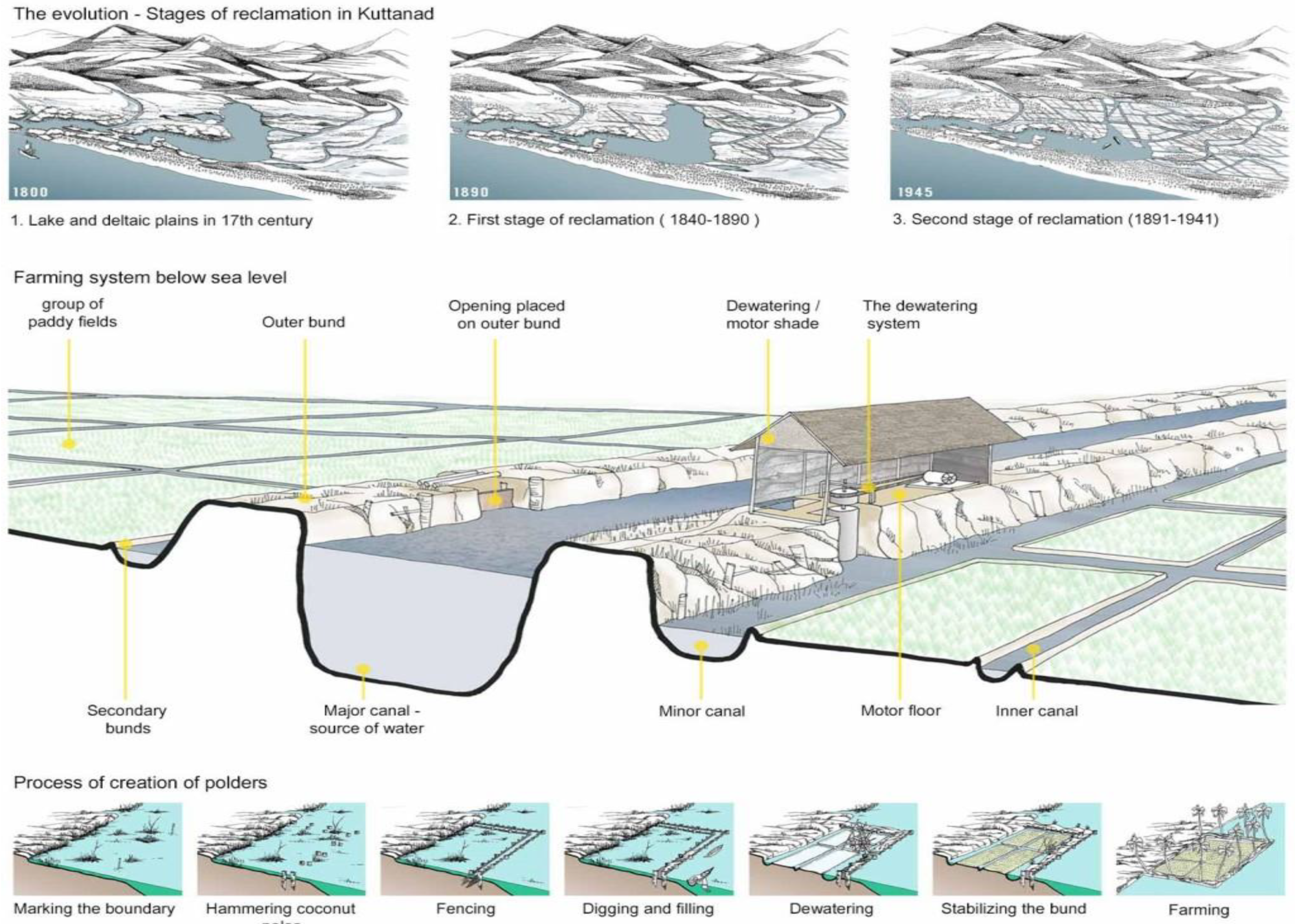

Table A2.
Selection Criteria for the GIAHS.
| Food and Livelihood Security | Contributes to food and/or livelihood security of local communities. Includes a wide variety of agricultural types such as self-sufficient and semi- subsistence agriculture where provisioning and exchanges among local communities contributes to rural economy. |
| Agro-biodiversity | Endowed with globally significant biodiversity and genetic resources for food and agriculture (e.g., endemic, domesticated, rare, endangered species of crops and animals). |
| Local and Traditional Knowledge systems | Maintains local and invaluable traditional knowledge and practices, ingenious adaptive technology and management systems of natural resources, including biota, land, water which have supported agricultural, forestry and/or fishery activities. |
| Cultures, Value systems and Social Organizations | Social organizations, value systems and cultural practices associated with resource management and food production may ensure conservation of and promote equity in the use and access to natural resources (social organizations, customary laws, ceremonial, religious and/or spiritual experiences). |
| Landscapes and Seascapes Features | Represent landscapes or seascapes that have been developed over time through the interaction between humans and the environment, and appear to have stabilized or to evolve very slowly. Their form, shape and interlinkages are characterized by long historical persistence and a strong connection with the local socio-economic systems that produced them. |
Source: Food and Agriculture Organisation of the United Nation.
References
- GIAHS | FAO of the United Nations . (n.d.). Retrieved December 28, 2023. Available online: https://www.fao.org/giahs/en/.
- Nagaland State Portal. (n.d.). Retrieved December 28, 2023. Available online: https://nagaland.gov.in/pages/nagaland-profile.
- Adhikary, P. P., Barman, D., Madhu, M., Dash, C. J., Jakhar, P., Hombegowda, H. C., Naik, B. S., Sahoo, D. C., & Beer, K. (2019). Land use and land cover dynamics with special emphasis on shifting cultivation in Eastern Ghats Highlands of India using remote sensing data and GIS. Environmental Monitoring and Assessment, 191(5). [CrossRef]
- Akira, N., & Evonne, Y. (2021). Ten Years of GIAHS Development in Japan. Journal of Resources and Ecology, 12(4). [CrossRef]
- Ali, G., & Yasmin, S. (2014). National Agricultural Innovation Project : A VALUE CHAIN ON KASHMIR SAFFRON.
- Altieri, M. A., & Nicholls, C. I. (2017). The adaptation and mitigation potential of traditional agriculture in a changing climate. Climatic Change, 140(1), 33–45. [CrossRef]
- Arnell, N. W. (2004). Climate change and global water resources: SRES emissions and socio-economic scenarios. Global Environmental Change, 14(1), 31–52. [CrossRef]
- Arnés García, M., Yagüe, J. L., de Nicolás, V. L., & Díaz-Puente, J. M. (2020). Characterization of Globally Important Agricultural Heritage Systems (GIAHS) in Europe. Sustainability, 12(4), 1611. [CrossRef]
- Asokan, A., Chouhan, S., & Singh, V. (2015). Sacred Grove—A Nature’s Gift—as a Remedy for Human Ailments, a Biodiversity Reservoir for Restoring Indigenous Traits for Endangered Listed Plants—A Review. OALib, 02(07), 1–13. [CrossRef]
- Barnes, J. C. (2010). The Fiction of Globally Important Biodiversity: The Production of Scale through the Global Environment Facility’s Biodiversity Policy and Programming. Available online: https://tspace.library.utoronto.ca/handle/1807/25420.
- Below zero | CEPT Portfolio. (n.d.). Retrieved November 14, 2023. Available online: https://portfolio.cept.ac.in/archive/below-zero/.
- Bridgewater, P., & Rotherham, I. D. (2019). A critical perspective on the concept of biocultural diversity and its emerging role in nature and heritage conservation. People and Nature, 1(3), 291–304. [CrossRef]
- Central University of Odisha. (n.d.). Prospectus(2023-24). Retrieved December 3, 2023. Available online: https://cuo.ac.in/downloads/Prospectus-2023-24.pdf.
- CGWB. (2011a). DYNAMIC GROUND WATER RESOURCES OF INDIA. In Central Ground Water Board Ministry of Water Resources, GOI. Available online: http://cgwb.gov.in/cgwbpnm/public/uploads/documents/16872573081930471301file.pdf.
- CGWB. (2011b). RAIN WATER HARVESTING and ARTIFICIAL RECHARGE Central Ground Water Board Ministry of Water Resources. Available online: www.cgwb.gov.in.
- CGWD. (2022). National Compilation on DYNAMIC GROUND WATER RESOURCES OF INDIA.
- Das, B. (2023, August 11). Ruza, a traditional water harvesting system for the water-scarce mountains. Available online: https://india.mongabay.com/2023/08/ruza-a-traditional-water-harvesting-system-for-the-water-scarce-mountains/.
- Das, D. N. (2018). Farming of fishes in ricefields of Northeast India: A review. Coldwater Fisheries Society of India, 1(1), 27–41.
- Das, D. U. (2014). Zabo: The art of water management . The Third Pole. Available online: https://www.thethirdpole.net/en/uncategorized/zabo-the-art-of-water-management/.
- Dela-Cruz, M. J., & Koohafkan, P. (2009). Globally Important Agricultural Heritage Systems: A shared vision of agricultural, ecological and traditional societal sustainability. Resour. Sci, 31, 905–913.
- Elizondo, D., Mordt, M., Munoz-Blanco, J., Paz, C., Gonzalez, C., & Iftikhar, U. (2017). Guid-ance notes: Application of the Sustainable Livelihoods Framework in Development Projects. Panama City: UNDP.
- FAO. (2017a). LandsCapes for Life approaches to landscape management for sustainable food and agriculture. Available online: https://www.fao.org/3/i8324en/i8324en.pdf.
- FAO. (2017b). The future of food and agriculture and challenges.
- Fuller, A. M., Min, Q., Jiao, W., & Bai, Y. (2015). Globally important agricultural heritage systems (giahs) of china: the challenge of complexity in research. Ecosystem Health and Sustainability, 1(2), 1–10. [CrossRef]
- Govil, A., & Kanchan, M. R. (2023). TRADITIONAL & INDIGENOUS PRACTICES FOR CLIMATE RESILIENCE IN INDIA. Available online: https://niua.in/waterandenvironment/.
- IDRC. (1999). Nagaland Environmental Protection and Economic Development Project: A Self-Assessment Using Outcome Mapping.
- India Meteorological Department. (n.d.). Retrieved December 9, 2023. Available online: https://mausam.imd.gov.in/.
- IPCC, 2014. (2014). Climate Change 2014: Synthesis Report. Available online: https://www.ipcc.ch/report/ar5/syr/.
- Jacob, J. M. (2015). Climate-Smart Agriculture: Farmer’s Bane Or Boon? Available online: https://academicworks.cuny.edu/gc_etds/988Discoveradditionalworksat:https://academicworks.cuny.edu.
- Jha, M. K. (2022). IMPLEMENTATION OF NATIONAL SAFFRON MISSION. Available online: https://sansad.in/getFile/loksabhaquestions/annex/173/AU2008.pdf?source=pqals.
- Jiao, W., Fuller, A., Xu, S., Min, Q., & Wu, M. (2016). Socio-Ecological Adaptation of Agricultural Heritage Systems in Modern China: Three Cases in Qingtian County, Zhejiang Province. Sustainability, 8(12), 1260. [CrossRef]
- Jiao, W., & Min, Q. (2017). Reviewing the Progress in the Identification, Conservation and Management of China-Nationally Important Agricultural Heritage Systems (China-NIAHS). Sustainability , 9(10), 1698. [CrossRef]
- Kajihara, H., Zhang, S., You, W., & Min, Q. (2018). Concerns and Opportunities around Cultural Heritage in East Asian Globally Important Agricultural Heritage Systems (GIAHS). Sustainability, 10(4), 1235. [CrossRef]
- Koohafk, P., & Altieri, M. A. (2010). Globally Important Agricultural Heritage Systems A Legacy for the Future.
- Kothari, D., Thakur, M., Joshi, R., Kumar, A., & Kumar, R. (2021). Agro-Climatic Suitability Evaluation for Saffron Production in Areas of Western Himalaya. Frontiers in Plant Science, 12. [CrossRef]
- Kumar, A., Devi, M., Kumar, R., & Kumar, S. (2022). Introduction of high-value Crocus sativus (saffron) cultivation in non-traditional regions of India through ecological modelling. Scientific Reports, 12(1), 11925. [CrossRef]
- Land use/land cover database on 1: 25,000 scale. (n.d.). NRSC, ISRO, GOI.
- Leary, N. (2008). Climate change and adaptation. Routledge.
- Liu, M., Yang, L., Bai, Y., & Min, Q. (2018). The impacts of farmers’ livelihood endowments on their participation in eco-compensation policies: Globally important agricultural heritage systems case studies from China. Land Use Policy, 77, 231–239. [CrossRef]
- Lohe, S., & Rawat, M. S. (2015). Land and water resources degradation in Phek District, Nagaland. 37, 213–221.
- Lun, Y., Jianhui, Y., Wenjun, J., Moucheng, L., & Wenhua, L. (2021). The Evaluation of Food and Livelihood Security in a Globally Important Agricultural Heritage Systems (GIAHS) Site. Journal of Resources and Ecology, 12(4). [CrossRef]
- Min, Q., & Zhang, B. (2019). Research Progress in the Conservation and Development of China-Nationally Important Agricultural Heritage Systems (China-NIAHS). Sustainability , 12(1), 126. [CrossRef]
- Mishra, A., & Das, T. K. (2022). Farmers’ perception towards sustainable agriculture in Malkangiri district of Odisha: Implication for the rural economy. Asian Journal of Multidimensional Research, 11(10), 261–271. [CrossRef]
- Moudgil, M. (2014). Restoring water supply to Nagaland’s hills. India Water Portal. Available online: https://www.indiawaterportal.org/articles/restoring-water-supply-nagalands-hills.
- Nehvi, F. A. (2010). FORTHCOMING CHALLENGES FOR IMPROVING SAFFRON FARMING SYSTEMS IN KASHMIR. Acta Horticulturae, 850, 281–286. [CrossRef]
- Olsson, L., Opondo, M., Tschakert, P., Agrawal, A., Eriksen, S., Ma, S., Perch, L., & Zakieldeen, S. (2014). Livelihoods and poverty. In Climate Change 2014 Impacts, Adaptation and Vulnerability: Part A: Global and Sectoral Aspects (pp. 793–832). Cambridge University Press.
- Portal, I. W. (2016). Met-Data.
- Province, J. S. S.-G. (2013). Jeju Batdam Agricultural System.
- Rice Development – Karshika Keralam. (n.d.). Government of Kerala . Retrieved December 3, 2023. Available online: https://keralaagriculture.gov.in/en/2021/05/05/rice-development-2/.
- Romero, J., Geden ; Bronwyn Hayward, O., & Otto, F. E. L. (2023). IPCC, 2023: Sections. In: Climate Change 2023: Synthesis Report. Contribution of Working Groups I, II and III to the Sixth Assessment Report of the Intergovernmental Panel on Climate Change [Core Writing Team, H. Lee and J. Romero (eds.)]. [CrossRef]
- Saffron Heritage of Kashmir | GIAHS | Food and Agriculture Organization of the United Nations. (n.d.). Retrieved November 16, 2023. Available online: https://www.fao.org/giahs/giahsaroundtheworld/designated-sites/asia-and-the-pacific/saffron-heritage-of-kashmir/es/.
- SAFFRON HERITAGE SITE OF KASHMIR IN INDIA GIAHS Saffron Site Report . (2012).
- Santoro, A., Venturi, M., Bertani, R., & Agnoletti, M. (2020). A Review of the Role of Forests and Agroforestry Systems in the FAO Globally Important Agricultural Heritage Systems (GIAHS) Programme. Forests, 11(8), 860. [CrossRef]
- Sekhar, L., & Jayadev S. (2003). KARIMANAL (MINERAL BEACH-SAND) MINING IN THE ALAPPUZHA COAST OF KERALA – A PEOPLE’S PERSPECTIVE. 15–17.
- Singh, R. K., Krujia, H., Bharali, R., & Borkotoky, D. (2018). Zabo: A Time-tested Integrated Farming System Practiced by Chakhesang Tribe of Nagaland. Indian Journal of Hill Farming, 31, 188–192.
- Singh, R. K., Singh, V., & Rajkhowa, C. (2012). Zabo: A Traditional Way of Integrated Farming (1st ed.). ICAR Research Complex for NEH Region, Nagaland Centre, Medziphema, Nagaland.
- Su, M., Sun, Y., Min, Q., & Jiao, W. (2018). A Community Livelihood Approach to Agricultural Heritage System Conservation and Tourism Development: Xuanhua Grape Garden Urban Agricultural Heritage Site, Hebei Province of China. Sustainability, 10(2), 361. [CrossRef]
- TRI. (2018). Oral History . Available online: https://repository.tribal.gov.in/bitstream/123456789/75173/1/oral_history.pdf.
- Tubiello, F., Schmidhuber, J., Howden, M., Neofotis, P. G., Park, S., Fernandes, E., & Thapa, D. (2008). Climate change response strategies for agriculture: challenges and opportunities for the 21st century. Agriculture and Rural Development Discussion Paper, 42.
- UNDP. (2007). Human Development Report 2007/2008-Fighting climate change: Human solidarity in a divided world.
- Wadhwa, A. (2023, August 28). Sacred Groves, the secret wizards of conservation. IUCN. Available online: https://www.iucn.org/blog/202308/sacred-groves-secret-wizards-conservation#.
- Wolf, J., Adger, W. N., Lorenzoni, I., Abrahamson, V., & Raine, R. (2010). Social capital, individual responses to heat waves and climate change adaptation: An empirical study of two UK cities. Global Environmental Change, 20(1), 44–52. [CrossRef]
- Yang, L., Liu, M., Min, Q., & Li, W. (2018). Specialization or diversification? The situation and transition of households’ livelihood in agricultural heritage systems. International Journal of Agricultural Sustainability, 16(6), 455–471. [CrossRef]
- Zabo Farming System. (2023, August 29). C.P.R. Environmental Education Centre, Chennai. Available online: https://cpreecenvis.nic.in/Database/ZaboFarmingSystem_3769.aspx.
- 유학열. (n.d.). 제3회 동북아농업유산학회(ERAHS) 국제컨퍼런스. 충남연구원. Available online: https://www.cni.re.kr/main/search/down.do?gcd=AC0000037032&seq=1.
Disclaimer/Publisher’s Note: The statements, opinions and data contained in all publications are solely those of the individual author (Keerti Yadav) not of MDPI and/or the editor(s). MDPI and/or the editor(s) disclaim responsibility for any injury to people or property resulting from any ideas, methods, instructions or products referred to in the content. |
Figure 7.
(a.) Water flowing down from the high altitude to the lower altitude in a catchment, (b.) Bamboo to control and check the soil erosion, (c.) Evenly stamped land (d.) Water from the pond to the paddy field flowing through cattle shed (e.) Cattle shed (f.) Carrying the manure to the paddy field (g. & h.) Bunds to divert water (i.)Extra water drained from the upper pond to the fishery and paddy field.
Figure 7.
(a.) Water flowing down from the high altitude to the lower altitude in a catchment, (b.) Bamboo to control and check the soil erosion, (c.) Evenly stamped land (d.) Water from the pond to the paddy field flowing through cattle shed (e.) Cattle shed (f.) Carrying the manure to the paddy field (g. & h.) Bunds to divert water (i.)Extra water drained from the upper pond to the fishery and paddy field.
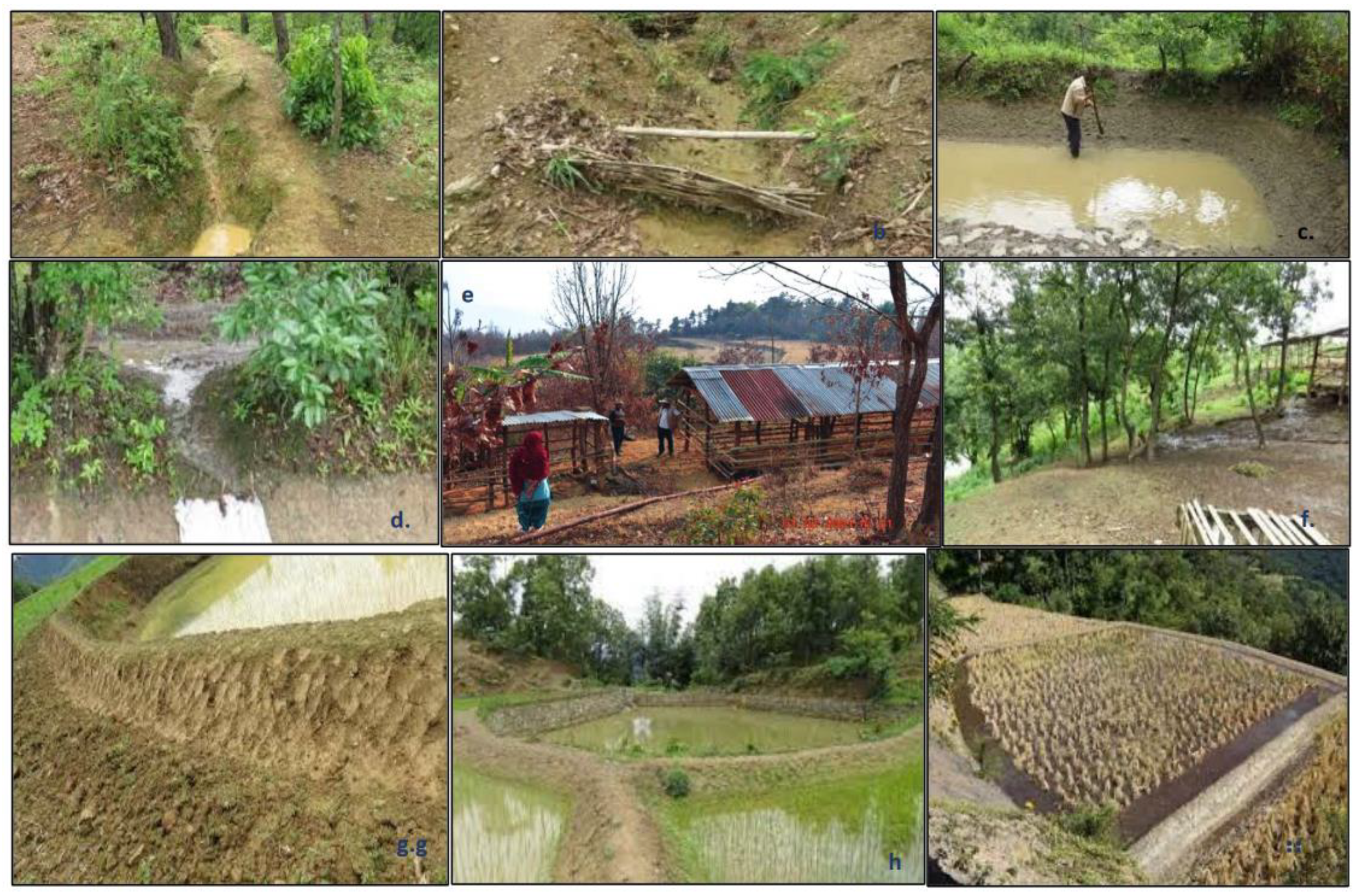
Figure 8.
Distribution of zabö ponds and settlement in the Kikruma (Visualized by Surfer & Quick grid).
Figure 8.
Distribution of zabö ponds and settlement in the Kikruma (Visualized by Surfer & Quick grid).
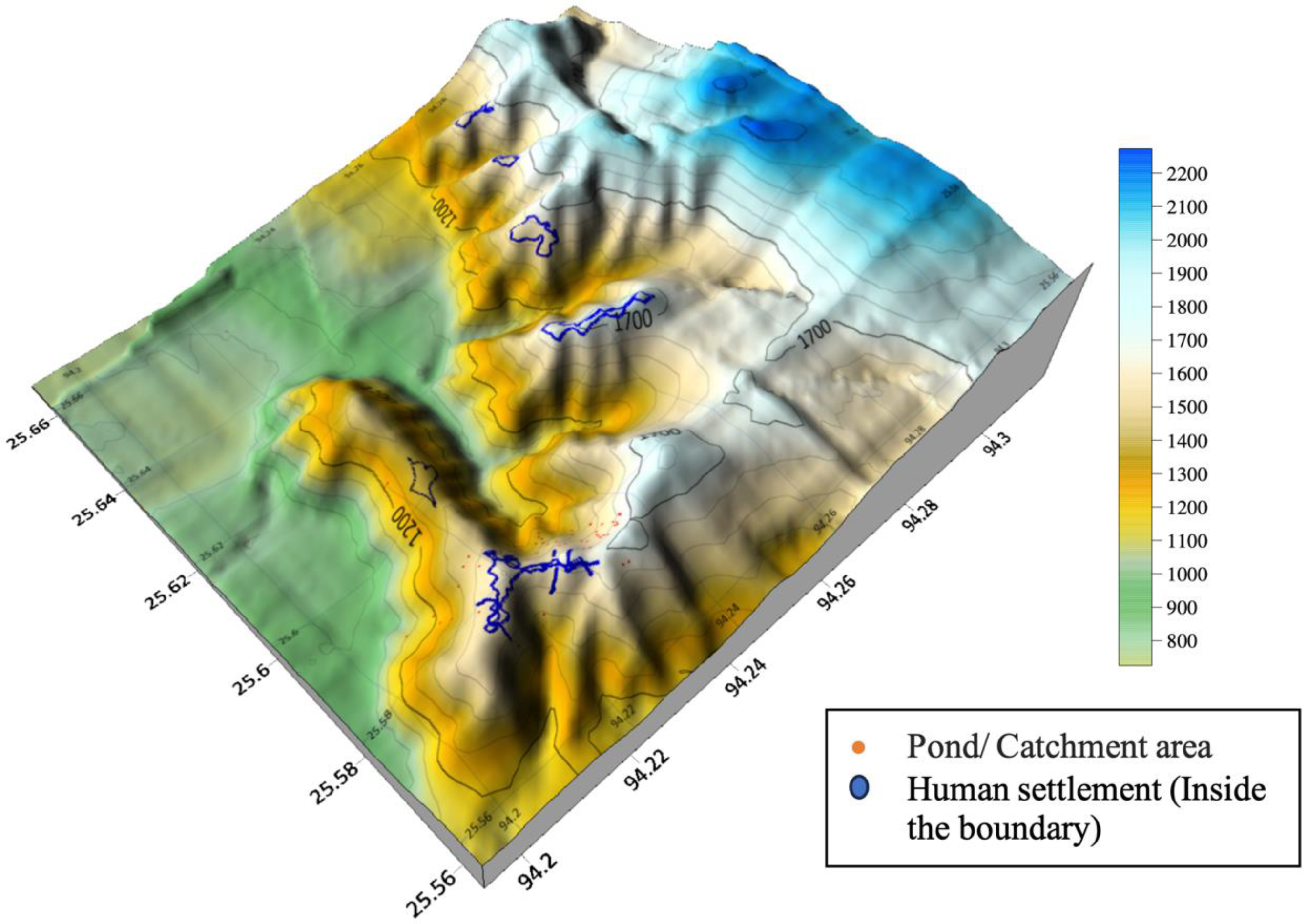
Figure 9.
Land Use Land Cover change from 2005-2020, Kikruma (Land Use/Land Cover Database on 1: 25,000 Scale, n.d.).
Figure 9.
Land Use Land Cover change from 2005-2020, Kikruma (Land Use/Land Cover Database on 1: 25,000 Scale, n.d.).
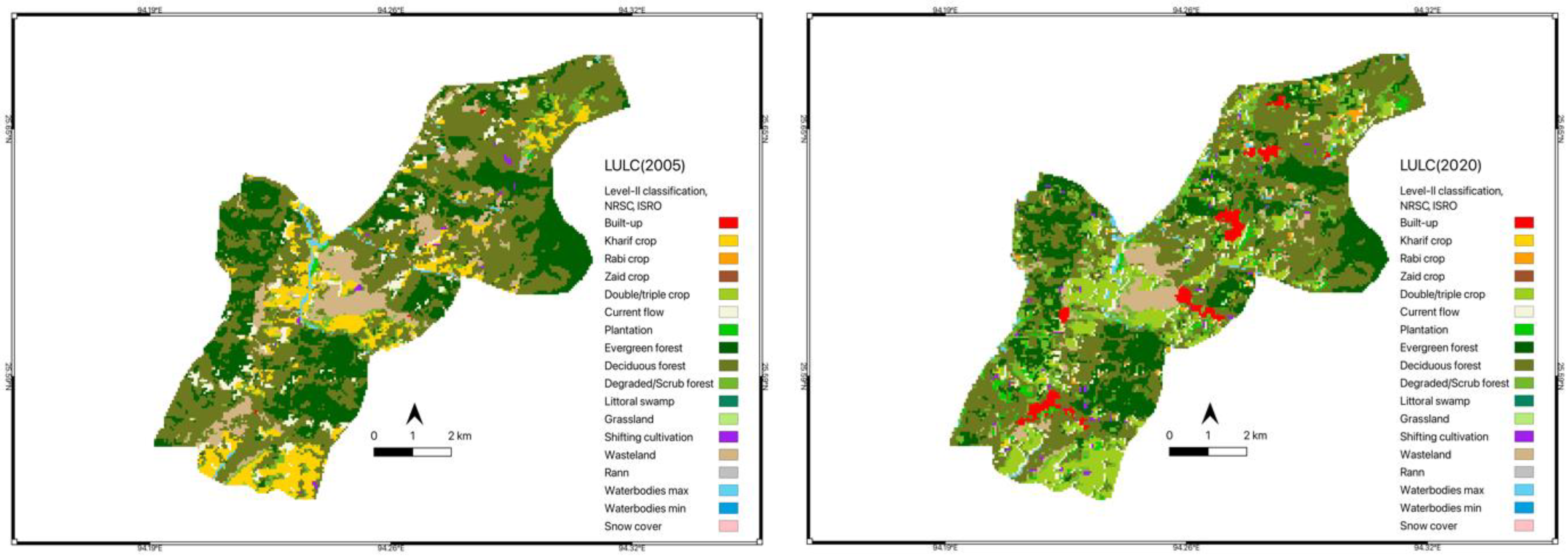
Table 1.
-Overview of existing and potential GIAHS in India. .
| Site location & designation year | Saffron Heritage (Pampore) Kashmir (2011) | Koraput region, Odisha (2012) |
Below Sea Level Farming, Kuttanad Kerala (2013) | Zabö farming, Nagaland(section 4) |
|---|---|---|---|---|
| Area of GIAHS | 32sq km | 500 | ca 900sq km | 65sq km |
| Population working for this system | 17,000 farm families | - | - | 1664 families |
| Topological Characteristics | Fertile lands | Fertile lands | Wet lands | Fertile lands |
| Climatic Classification | Tropical conditions | Tropical conditions | Humid tropical conditions | Moderate conditions |
| Ethnic Groups/Indigenous People | - | 52 tribal groups | - | Chakhesang tribe |
| Primary Income Sources | Agriculture | Agriculture | Agriculture, fisheries | Agriculture |
Source: ( GIAHS | FAO of the United Nations , n.d. and Nagaland State Portal, n.d.).
Disclaimer/Publisher’s Note: The statements, opinions and data contained in all publications are solely those of the individual author(s) and contributor(s) and not of MDPI and/or the editor(s). MDPI and/or the editor(s) disclaim responsibility for any injury to people or property resulting from any ideas, methods, instructions or products referred to in the content. |
© 2024 by the authors. Licensee MDPI, Basel, Switzerland. This article is an open access article distributed under the terms and conditions of the Creative Commons Attribution (CC BY) license (http://creativecommons.org/licenses/by/4.0/).
Copyright: This open access article is published under a Creative Commons CC BY 4.0 license, which permit the free download, distribution, and reuse, provided that the author and preprint are cited in any reuse.


