
Submitted:
31 January 2024
Posted:
01 February 2024
You are already at the latest version
Abstract
Infrastructure and urban network operators, city users and industrialists are faced with complex issues to ensure the sustainability of the service, maintain, operate and develop their urban sys-tems, while integrating environmental, economic and societal impacts and being resilient to un-expected geopolitical and climatic upheavals. Urban Digital Twins (UDTs), i.e., digital twins for smart cities and territories are considered as promising tools that can enable all stakeholders to collaborate across disciplinary silos and foster digital transformation in urban and territorial pro-jects to ensure sustainability, resilience and increased inventiveness. However, a widely acknowledged challenge to address in the application of UDTs is the lack of interoperability. One significant barrier is the difficulty that stakeholders have in understanding the level of complexity hidden behind this challenge, and thus the adoption of an adequate interoperability technique. This paper proposes a conceptual framework, which is unique for understanding the various lev-els of interoperability required in deploying and using the full potentials of UDTs. We show how such a high-level modeling approach supports the symbolic manipulation of UDTs interoperabil-ity notions and requirements, and thus eases the design of appropriate solutions for large-scale in-teroperable UDTs.
Keywords:
Urban Digital Twin
; Smart City
; Smart Territory
; Interoperability
; High-Level Model
1. Introduction
The urban landscape is undergoing a transformative shift, with nearly 70 percent of the global population expected to reside in urban areas by 2050 [1]. This urbanization surge, marking a defining trend of the 21st century, exerts substantial pressure on urban production and service systems. This encompasses the expansion of public transport networks, the energy supply chain, waste management circuits, mechanisms for ensuring security, and measures to combat disease spread and preserve air quality.
In addition, several events (such as fire in public places [2], flooding of urban areas [3], or disruptions in public services following health/geopolitical crises [4]), serve as stark examples of the vulnerability of urban territories. These vulnerabilities not only impact economic strength but also jeopardize the well-being of citizens. As urban areas face escalating challenges leading to cascading disasters, it becomes imperative for urban territories to proactively mitigate the associated risks.
This underscores the necessity of adopting model-based approaches [5] to analyze and anticipate geopolitical, natural, and health crises. This is particularly crucial in the context of the escalating climate change challenge [6], demanding a drastic reduction of carbon footprint in major urban activities like mobility, logistics, and energy. However, existing model-based approaches for analyzing and evaluating decisions in urban management are proving inadequate. These tools, while occasionally offering accurate diagnoses, often remain sector-specific and overlook multiple systemic interactions at various spatial scales (building, district, city and larger territories) and temporal scales (minutes and seconds, hours, days, months, years, etc.).
In recent years, the concept of smart cities [7] has evolved into that of smart territories [8]. Smart territories are connected areas leveraging digital and technological innovations to address longstanding urban issues. The term Urban Digital Twin (UDT) is used for the Digital Twin (DT) of a smart territory, where a DT is seen as “a virtual representation of a physical system (and its associated environment and processes) that is updated through the exchange of information between the physical and virtual systems” [9]. In this context, as a model-based approach, the UDT concept offers a promising solution to navigate system complexity, providing rapid analysis of multidisciplinary data and delivering easily understood outputs.
In the scientific debate of urbanism, the use of UDT for urban policy development and governance is currently one of the most discussed topics. However, a snapshot of state-of-the-art initiatives shows that most of the focus is on the use of the Internet of Things (IoT) in an urban planning context across a large spectrum of applications [10], and less projects scale to the building of a complete UDT [11,12,13,14,15]. Recently, the European Union funded some UDT projects, more notably the low-emission urban logistics networks (H2020 LEAD project) [17], and the LIVING-IN.EU community [18] where the term LDT (Local Digital Twin) is used for UDT.
It is widely recognized that interoperability is one of the major challenges in deploying UDTs [19,20,21,22,23]. However, this challenge is understood from different perspectives: (1) at one hand, as huge amounts of heterogeneous data are produced in a smart territory, there is a need for data integration and interoperability; (2) at the other side, as several interrelated processes are involved in a territory (including mobility, energy, safety, health, etc.), there is a need to integrate various levels of abstraction, various temporal scales, and various objectives (such as optimizing the mobility, while reducing the carbon footprint due to energy consumption and production, and ensuring at the same time human well-being, air quality, etc.); (3) moreover, as a UDT serves as a comprehensive repository for urban data and knowledge, the interoperability among urban services (such as predictions of peaks, optimization of routes, monitoring of trends, etc.) is necessary to facilitate informed decision-making and improved operational outcomes.
Overall, there is a need for a holistic approach to UDT interoperability, which currently lacks of standard. Motivated by this need, this paper proposes a conceptual framework to lower the barrier of understanding the level of complexity hidden behind UDT interoperability. Thanks to the high-level model it proposes to formalize UDTs, it captures the various levels of interoperability required in deploying and using the full potentials of UDTs. A high-level model is a simple model with the primary goal to support intuitive understanding, communication and symbolic analysis, which a detailed specification doesn’t allow easily. The UDT high-level model supports the symbolic manipulation of UDTs interoperability notions and requirements, and thus eases the design of appropriate solutions for large-scale interoperable UDTs within and between smart territories. As such, it doesn’t define a standard, but can guide the efforts of standardizing both the key components of a UDT and their interactions scheme. It says what to build and not how this has to be built. We discuss how the implementation of such a technology-agnostic model relates to existing standards, and how this can provide a middleware for digital enterprises involved in multiple supply chains (energy, transport, health, etc.) of a smart territory.
The remainder of this paper is organized as follows: Section 2 discusses related work. In Section 3, we briefly revisit the notion of Digital Twin, as many interpretations still co-exist, and we give our own definition. We then present the concept of Urban Digital Twin and we introduce the concept of CityVerse. Finally, we show the need for integrated Urban Digital Twins and the underlying interoperability challenge. Section 4 presents the high-level model that underpins our conceptual interoperability framework. We show how this model enables the analysis of various levels of interoperability, and we discuss state-of-the-art approaches that can be leveraged at these levels. Conclusions are given in Section 6, discussing the advantages of our framework, and the limitations of this work as well. Perspectives for future work are also given.
2. Related Work
The interoperability challenge has been addressed by the well-recognized Levels of Conceptual Interoperability Model (LCIM) introduced by [24] in the context of military application data interoperability and later improved and generalized to other domains [25]. It provides a sound background for understanding how systems can interoperate and at which of the following levels this has to be realized: (i) Technical level, where systems have technical connections and can exchange data; (ii) Syntactic level, where systems agree on the protocol to exchange the right forms of data in the right order, but the meaning of data elements is not established; (iii) Semantic level, where systems exchange terms that they can semantically parse; (iv) Pragmatic level, where systems are aware of the context and meaning of information being exchanged; and (v) Conceptual level, where systems are completely aware of each other’s information, processes, contexts, and modeling assumptions.
Like any general interoperability framework, the application of the LCIM framework to UDTs requires the specificities of UDTs’ architectures be considered. However, so far, there is no reference UDT architecture, for which a general interoperability methodology can be built. The idea of applying to UDTs existing reference architectures that has been defined for general digital twin architecture falls short [26,27,28,29]. Indeed, these reference architectures, mostly based on a layered approach, address the structural organization of a digital twin as well as communication between its components, but they overlook specifics of UDTs, more precisely the multiplicity and heterogeneity of models (including mobility, energy, waste, urban logistics, etc.) that need to be built at different temporal and spatial scales, and seamlessly integrated to capture the systemic interactions existing between them.
Notably, IBM proposed a Digital Twin reference architecture for products across the entire product life cycle [30], consisting of seven layers of information management and manipulation and three columns that ensure security, governance and integration. However, the challenge of interoperability that this integration entails is not clearly addressed.
Digital Twin applications with different capabilities can be represented by the reference architecture model proposed in [31], where several state-of-the-art architectures and reference models are discussed and compared. This work shows that none of the existing solutions that involve the Digital Twin integration dimension proposes a well-defined framework to explicitly address the interoperability challenges. They rather implicitly embed them in one of the layers proposed.
State-of-the-art surveys are given in [19,20,21,22,23], showing that despite numerous efforts, the concept of UDT lacks of standards for heterogeneous integration of data, models and services, and the deployment of interoperable end-to-end UDT infrastructures.
To better understand UDTs specifics, there is a first-level requirement for intuitive understanding of the UDT’s key components and symbolic analysis of its interoperability needs. This paper proposes a high-level model to achieve this goal.
3. From Digital Twins to Interoperable Urban Digital Twins
3.1. From Digital Twins
The term Digital Twin first appeared in [32], and the underlying principle of a digital informational construct created as a separate entity and related to a physical system of interest was foreseen in [33]. In the context of product life cycle management, the model of a conceptual ideal was proposed and called Mirrored Spaces Model [34], and later Information Mirroring Model [35], and actually Digital Twin [36]. It has been defined as: “a set of virtual information constructs that fully describe a potential or actual physical manufactured product, from the micro atomic to the macro geometric level” [37]. This data-centric definition contrasts with the behavior-centric one given in [38], where a Digital Twin is “an integrated multi-physics, multiscale, probabilistic simulation of an as-built vehicle or system that uses the best available physical models, sensor updates, fleet history, etc., to mirror the life of its corresponding flying twin”.
Despite the variety of Digital Twin applications (including aerospace [38], manufacturing [39], automotive [40], avionics [41], energy [42], healthcare [43] and services [44]), and numerous Digital Twin viewpoints [30,31,32,33,34,35,36,37,38,39,40,41,42,43,44,45,46,47,48,49,50,51,52,53,54,55], they all share some common characteristics [58,59]. The core characteristic that we retain in the Digital Twin approach is the idea that a model which is used in different ways in place of a system of interest, is continuously synchronized with that system in order to reflect any real event happening to the system on the model, such that any management initiative can be assessed on this ever-updated artifact before transferring it to the system. Therefore, the model is more than a simple representation of the system, but a digital counterpart which is specifically bound to the system, rather than representing a family of systems of the same kind.
From a simulation perspective, such a concept is a disruptive approach, as simulation experiments are based on current information provided by the system, rather than assumptions [39]. Used in this way, the Digital Twin serves both for representational purposes, and prediction-making on system behavior [46], which often appear as a set of integrated sub-models that reflect different system characteristics [47]. Some additional aspects have also emerged, such as Digital Twin-based prognostic and diagnostic activities [48,49], as well as Digital Twin-based real-time optimization [50].
In our research efforts and in this paper, we define a Digital Twin (DT) as a digital model (or a set of digital models) synchronized with a system of interest, which we call Twin of Interest (TOI), through data collected on the TOI and reflected on the DT or its results. The synchronization between the TOI and the DT can be a one-way/two-way process. When data flow only from the TOI to the DT, a human third party derives decision from the DT and reflect it on the TOI (some refer to this case of DT as a Digital Thread [60]). When data also flow from the DT to the TOI without any tiers involved, then the DT acts as a control system of the TOI [61]. In this context, there is a critical need for the DT to access appropriate data pertaining to its real-world counterpart at the appropriate moment. Obtaining initial data and preparing it in a timely manner for DT may need additional requirements (e.g., unified data modeling) to be met [62].
3.2. To Urban Digital Twins
The Digital Twin of a smart territory is called an Urban Digital Twin (UDT). Figure 1 summarizes the value chain of a UDT. Smart territories increasingly operate on large, time-varying, heterogeneous data, including raw data, information models and business knowledge. Such systems are referenced under the umbrella of Cyber Physical and Human Systems (CPHS) [63]. Their proper instrumentation, through distributed sensors and actuators connected in real environments via the IoT, produce Big Data in records of processes and human interventions, which can be saved in large repositories referred to as Data Lake. The data-driven knowledge is used to reflect on the structure and behavior of the system under consideration, through the mining of digital models that are amenable to simulation-based prediction and the exploration of what-if scenarios, as well as multi-objective/criteria optimizations, analytics-based system diagnosis, and real-time monitoring and control. Integrating these models and regularly updating them with new data collected result in the UDT. Such an infrastructure is often distributed across a cluster of computational nodes, therefore calling for High Performance Computation support.
Since the purpose of the UDT is to support the decision-making process of all the smart territory’s stakeholders (including urban planner, as well as private operators, and citizen), enhanced visualization capabilities and human-digital interactions through a Metaverse-like technology (i.e., a collective, virtual, open space developed by integrating virtually enhanced digital, as well as physical, reality, known for offering immersive experiences to users) allow human-centric immersive experience, improved engagement and better perception and understanding of the smart territory and its issues. This implies, not only focusing on the technological solution, but also engaging researchers in social and human sciences, as well as business players, with willingness to consider the multi-sectoral effects of public policies on the territory and populations. In such a context, we introduce the concept of CityVerse (a contraction of Smart City and Metaverse), as a UDT immersed in the Metaverse (with interacting avatars).
3.3. Towards Systems of Urban Digital Twins: the Challenge of Interoperability
The technological ambition of a UDT is to realize an effective vision of Digital Enterprises within Digital Supply Chains, as shown by Figure 2. Indeed, the Information Technology environments within industrial companies, ranging from embedded systems on shop floor level to operations and manufacturing execution systems or resource planning systems, form a basis for the vision of a digital management of the production plants. Each profile is a digital enterprise with Digital Twins that can be coupled with the Digital Twins of other profiles, leading to the digital supply chain of the network of enterprises then created. In that way, geographically distributed enterprises can form larger Digital Twin-driven consortia, abolishing spatial constraints on the monitoring and control actions, and the overall management of operations.
For example, a garment retailer, using its fleet of trucks to support its logistics operations, will plug its digital twin to the UDT of the smart territory where it is located, and will consequently be part of several supply chains, including the one allowing the fleet of trucks to get fuel, the one allowing the company to receive goods from wholesalers and to deliver them to customers, etc. These supply chains will commission models within the UDT, such as the transport model, the energy model, etc.
For this to materialize, three types of Digital Twin composition are necessary: (1) the vertical hierarchical composition of Digital Twins, where a set of component Digital Twins are hierarchically integrated into an asset Digital Twin, a set of assets Digital Twins are hierarchically integrated into a production line Digital Twin, etc.; (2) the associative composition of Digital Twins (including peer-to-peer compositions), where Digital Twins of different enterprises are coupled together in a large-scale supply chain, and several such digital supply chains (possibly overlapping) are built and concurrently managed; and (3) the seamless integration of the underlying UDTs that has been built to support those supply chains, and which holistically capture all urban activities (mobility, energy, waste, etc.). This will give rise to the concept of “Digital Industrial Territories” (DITs), which is to be foreseen as the next step in the on-going industrial revolution (Industry 4.0, Society 5.0, and beyond). Current physical industrial territories (made of industrial companies in a given territory) will be mirrored in their digital counterparts, and management, control, monitoring and innovation will be carried out in the digital space before reflecting on the physical areas. Moreover, experimentations and explorations are more efficiently and less costly driven in the digital space. DITs will be composed of Digital Twins of industrial enterprises all plugged to the same holistic UDT, and all the competitiveness initiatives and public/private decision-making processes will be rooted there.
4. High-level Abstraction to Model Urban Digital Twins
4.1. Abstract Model for UDT-Based Urban Management
Figure 3 captures a high-level view of this value chain, while highlighting in blue what has to be designed for deploying an effective UDT. Three main stakeholders form this triangle: The Physical (i.e., the smart territory), the Digital (i.e., the core UDT), and the Human (i.e., users and managers of the smart territory).
At the Physical side, which in reality is necessarily a cyber-physical system, i.e., an integration of cyber and physical components where system’s operations may be partly or entirely executed by actuators, and data related to these operations are collected by sensors and transmitted through a network.
At the Digital side is the Digital Twin of the system, where data are received, translated to models, which in turn allow making decisions to be either directly sent back to the system, or used by the governance body of the system to elaborate further management decisions.
At the Human side, major stakeholders, like citizens, specialized bodies (e.g., students, healthcare workers, disable persons, etc.), communities, enterprises, and governmental agencies, are allowed to use the Digital Twin and explore their own use case scenarios in order to build their own economic/social strategies.
The Physical-Digital interactions focus on the symbiotic relation between the smart territory and the UDT infrastructure, and thus address related scientific and technological issues and challenges, including: (1) the design of the end-to-end data circuit, from the conceptualization and assessment of data needs to the integration of heterogeneous data sources, and the requirements for IoT liability and efficiency; and (2) the use of edge computing for faster computations related to the real-time data streams, e.g., algorithms to transform raw data for use by the UDT.
The Human-Digital interactions focus on the application of advanced technologies such as Virtual/Augmented Reality and Web/Mobile approaches to bridge the reality gap in interfacing human with the UDT, and addresses related scientific and technological issues, including: (1) the use of Metaverse-type technologies as the UDT last miles to end-users for better and more informed decision-making; and (2) social interactions to formalize the so-called “cognitive interoperability” in the Metaverse.
The Digital-based Human-Physical interactions focus on how the UDT models and services impact on the relation between the smart territory and its decision-makers (such as holistic urban decision-making) or its users (such as change of behavior).
4.2. Abstract Model for the Core UDT
Figure 4 presents the high-level model we propose for the core UDT, as a 3-nodes graph that translates our definition of a UDT, i.e., as a symbiotic association of data, models and services.
Data in the UDT are not only those collected in real-time from sensors deployed on ground, but legacy data sources can also be aggregated to provide what is necessary for feeding and updating the UDT, including historical data, users’ equipment (such as smartphones, embedded/fixed cameras, etc.), open data and Internet-based APIS (e.g., Google map).
Models in the UDT are related to modules, each focusing on specific objectives and therefore designed to answer to specific questions (such as, how will the city evolve in its environment under given circumstances? What is the impact of adding/modifying given infrastructures? What are the upcoming on-site security holes? Etc.). Modules are developed in transport, energy, waste, health, security, education, communication and governance domains, and not all modules are present in each UDT.
Services provided in the UDT are considered in each of these domains. They broadly fall in the following three categories: (1) predictive maintenance, e.g., continuous diagnostic of infrastructures (material fatigue, wear of covers, etc.), and savings on regular maintenance costs (through diagnostic-based maintenance and anticipation of pre-maintenance failures); (2) safety, e.g., monitoring of the condition and operation of infrastructures if there is a risk of intentional or natural damage, on-site intrusion detection, disaster forecasting (flood, fire, etc.), and automated alert (air quality, noise pollution, well-being at work, traffic congestion, smart bins, etc.); and (3) optimization, e.g., remote control of the shutdown or operation of equipment (lighting, barriers, heating, traffic lights, etc.), simulation-based exploration of the best use case scenarios (buildings, traffic, roads, rental vehicles, eco-circular circuits, etc.), improvement of the installation or configuration of new infrastructures (solar panels, 4G/5G coverage, buildings, etc.), and à la carte treatment (digital patient, administrative procedures, academic monitoring, employment, etc.).
Data-Model integration addresses what is referred to as probably the most outstanding challenge for the Digital Twin technology, i.e., how data can be dynamically assimilated to detect changes of the real system and reflect them by updating on-the-fly the corresponding models. Model-Service integration focuses on how models are used and possibly combined to provide the expected services. Data-Service integration focuses on services that can provided directly from data (i.e., without the need for a model), such as the organized access to historical data for monitoring purposes.
4.3. Levels of Urban Digital Twins Interoperability
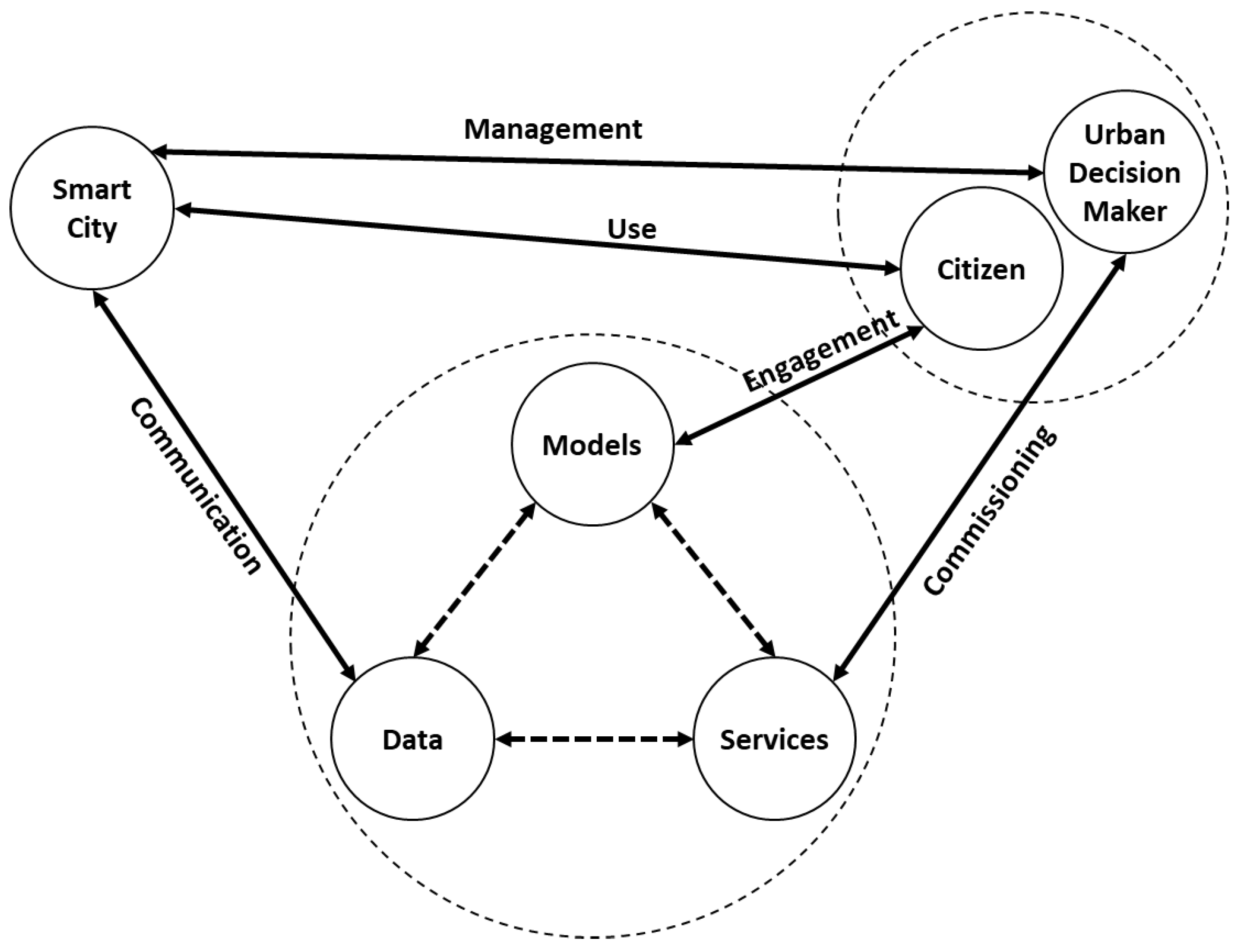
Figure 5 is a synthesis from combining Figure 3 and Figure 4, where a distinction is made at the Human side between the urban decision-maker (i.e., the smart territory manager) and the citizen (i.e., all other users of the smart territory). It conceptually captures the various dimensions of interoperations between the key stakeholders identified in the value chain of the UDT. While the Data node of the Digital Twin is the communication gate with the Physical (i.e., the smart territory) is realized, the Services node is the gate enabling the commissioning of the UDT by the urban decision maker, and citizen engagement is done through the Models node.
The molecular structure of the high-level model enables larger molecular constructions towards the integration of UDTs as System of Systems (SoS). The strength of the model is that it describes what has to be done and not how this has to be done, therefore giving flexibility in the choice of the technologies to be used and the way they will be. As several matured technologies already exist, they can be leveraged to serve this purpose.
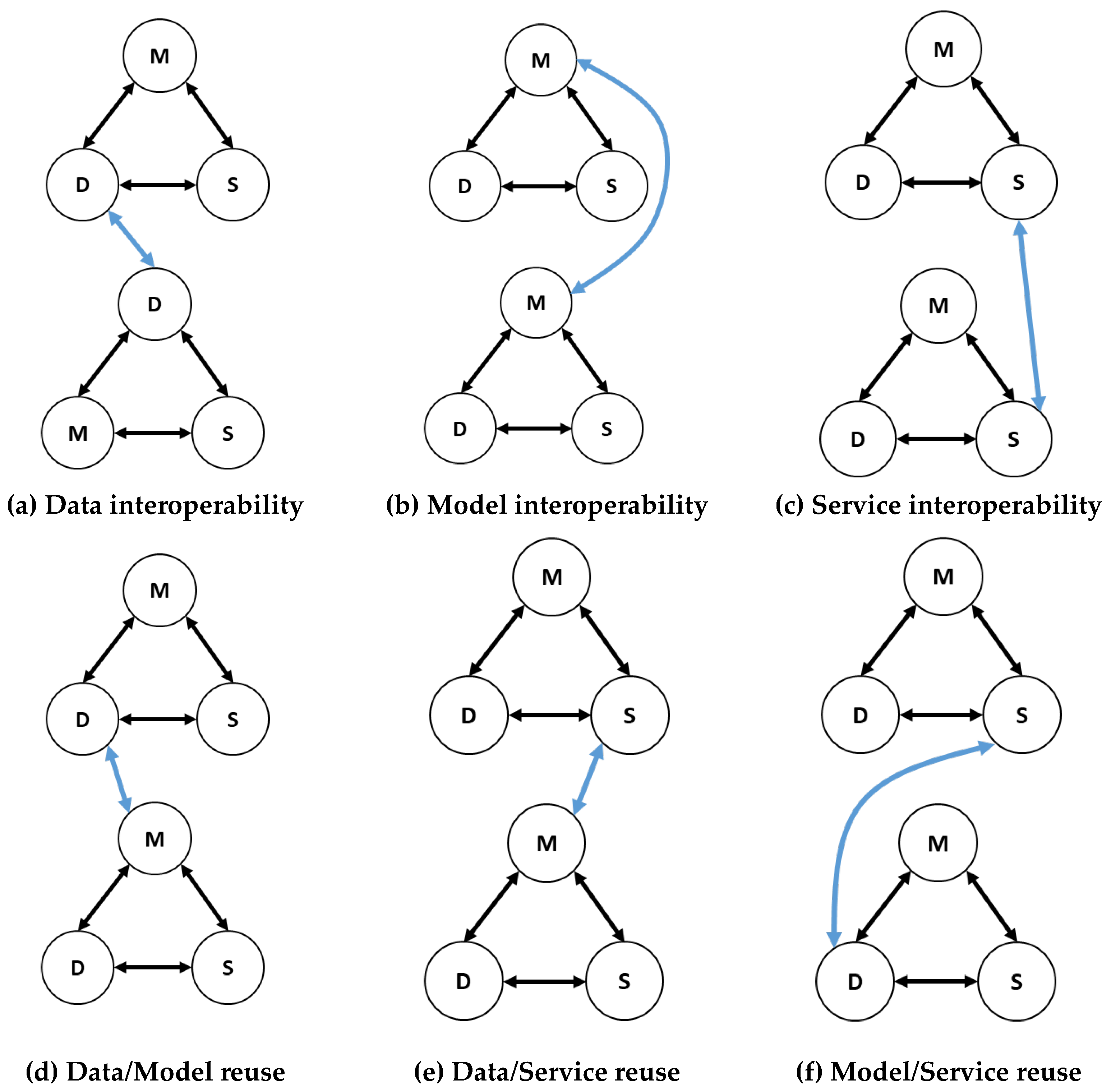
Figure 6 gives the various categories of such larger molecular constructions, which we call levels of UDT interoperability, each of which refers to UDT composition by an adapted mechanism of interoperability between two nodes of the model:
- (a)
- Data interoperability only involves Data nodes, thus dealing with data format conformance as well as semantic alignment; the LCIM framework fully applies, at technical, semantic and pragmatic levels;
- (b)
- Model interoperability only involves Models nodes, thus dealing with multi-paradigm integration (i.e., multi-formalism, multiple temporal/spatial scales, multiple abstractions); an adequate way to address this is the hybridization strategies in computational frameworks introduced in [62]. They address model interoperability at the following three levels: (1) at the concepts level, fundamental modeling notions (such as state, transition, concurrency…) and their relationships are defined and formally captured by appropriate methods and formalisms; (2) at the specification level, real-world systems/problems under study are expressed as models, using the concepts adopted; and (3) at the operations levels, virtual and physical engines execute the instructions abstractly expressed at the immediate upper level. The heterogeneity of engines (respectively models and formalisms) dictates that interoperability be achieved by heterogeneous composition of entities and concepts of interest. Obviously, the composition of heterogeneous abstractions (such as discrete/continuous simulation models) is stronger than the one realized at the engines level, while the strongest level of composition is realized with the integration of heterogeneous concepts and analysis approaches. While real systems realize heterogeneous compositions at the operations level, their sound analysis requires frameworks that can support heterogeneous compositions at upper levels;
- (c)
- Service interoperability only involves Services nodes, thus dealing with interoperability strategies such as service orchestration (where one of the services takes on the role of the orchestrator and coordinates the communication between all services involved) and service choreography (where services participate asynchronously and autonomously to a defined scenario); Standards exist [63,64] that can be leveraged to address this level of UDT interoperability;
- (d)
- Data/Model reuse involves the Data node at one side and the Models node at the other side, thus addressing the questions of data reuse (i.e., the use of data for models that are not the ones for which the data were initially collected and consolidated) and model reuse (i.e., the use of a model with other datasets than the ones the model use to be fed with); in the case of data reuse, this level of interoperability cannot be achieved in the absence of metadata, which will provide a way to check not only the understandability of data, but also contextual information that refers to the set of interrelated environmental conditions in which data have been produced for the initial model; in the case of model reuse, a meta model is needed to provide the same kind of knowledge about the initial model; a potential way to address this level of interoperability is the experimental/validity frame approach [65,66,67];
- (e)
- Data/Service reuse involves the Data node at one side and the Services node at the other side, thus addressing similarly the questions of data reuse and service reuse; service reusability has been discussed in [68] in the context of Service Oriented Architecture [69], which is still valid for other interoperability technologies;
- (f)
- Model/Service reuse involves the Models node at one side and the Services node at the other side, thus addressing similarly the questions of model reuse and service reuse.
Figure 6.
Levels of Urban Digital Twins interoperability: (a) Data interoperability: composition by data-to-data interoperability; (b) Model interoperability: composition by model-to-model interoperability; (c) Service interoperability: composition by service-to-service interoperability; (d) Data/Model reuse: composition by reuse of one’s data and the other’s model; (e) Data/Service reuse: composition by reuse of one’s data and the other’s service; (f) Model/Service reuse: composition by reuse of one’s model and the other’s service.
Figure 6.
Levels of Urban Digital Twins interoperability: (a) Data interoperability: composition by data-to-data interoperability; (b) Model interoperability: composition by model-to-model interoperability; (c) Service interoperability: composition by service-to-service interoperability; (d) Data/Model reuse: composition by reuse of one’s data and the other’s model; (e) Data/Service reuse: composition by reuse of one’s data and the other’s service; (f) Model/Service reuse: composition by reuse of one’s model and the other’s service.
5. Conclusion
At the heart of our contribution is a high-level model of UDTs that enables the analysis of their interoperability needs, both between UDTs and with physical and human stakeholders. This is a contribution to lower the significant barrier that potential adopters have in understanding the level of complexity hidden behind this challenge. This technology-agnostic model shows what has to be implemented and not how this should be done. We emphasize on the potential of the UDT to be a middleware for large-scale interoperability of enterprises, towards the concept of Digital Industrial Territory. That way, multiple supply chains can be integrated, allowing a given enterprise to be involved in various supply chains (e.g., energy supply chain, health supply chain, or education supply chain).
Compared to state-of-the-art reference models and architectures proposed at the general Digital Twin level, our framework doesn’t focus on the software (and hardware) organization of the solution. It is expressed at a higher level of abstraction, in order to allow a way of reasoning (symbolic manipulation) on UDTs as one can do with algebraic entities. This is due to the molecular form of the model, which can easily be subject to formal specification (e.g., as a mathematical structure <D, M, S>, where D is for the data node, M for the models node and S for the services node). Also, this provides a separation of concerns in the interoperability issue, isolating different interoperability requirements for UDTs (at data, models and services levels), each of which can be addressed leveraging well-indicated state-of-the-art integration/composition approaches.
As a major limitation of our work, at this stage there is no empirical evaluation of the proposed framework. Our current research efforts focus on the development of the UDT of the campus of the University of Bordeaux, with a special interest for mobility and energy. This is part of a seven-year program called ACT (Augmented University for Campus and World Transition), which aims to turn the university into a living laboratory and incubator for developing, testing, validating and disseminating new ways to address major environmental, social and economic transition issues. User groups that will use this UDT include the following:
- The decision-makers of the university, who need to predict the state of daily mobility of students according to university timetables, in order to explore various “what-if” scenarios of general scheduling of the academic activities and their impact on the reduction of the carbon footprint due to mobility;
- The policy-makers of the metropole of Bordeaux, who need immersive interactions with decor elements, to test the effects of closing, opening or modifying a bus/tram line, restaurant, building, service, etc.;
- The students and university staff, who need to anticipate traffic conditions on campus in case of natural disruptions (weather, pandemic, etc.) and scheduled events (sporting, political, academic, etc.).
The ACT UDT needs to interoperate with data repositories, models, and Digital Twins already existing in its ecosystem. The high-level model proposed is used to understand all interoperability requirements and the way to go forward. The program is also a testbed for our framework, which results will be reported as part of our next work.
References
- Goldstone, J.A. The new population bomb: the four megatrends that will change the world. Foreign Aff. 2010, 89, 31. [Google Scholar] [CrossRef]
- MacLeod, G. The Grenfell Tower atrocity: Exposing urban worlds of inequality, injustice, and an impaired democracy. City 2018, 22, 460–489. [Google Scholar] [CrossRef]
- Dong, B.; Xia, J.; Li, Q.; Zhou, M. Risk assessment for people and vehicles in an extreme urban flood: Case study of the “7.20” flood event in Zhengzhou, China. Int. J. Disaster Risk Reduct. 2022, 80, 103205. [Google Scholar] [CrossRef]
- Allam, Z.; Bibri, S.E.; Sharpe, S.A. The rising impacts of the COVID-19 pandemic and the Russia–Ukraine war: energy transition, climate justice, global inequality, and supply chain disruption. Resources 2022, 11, 99. [Google Scholar] [CrossRef]
- Zeigler, B.; Mittal, S.; Traoré, M. MBSE with/out simulation: state of the art and way forward. Systems 2018, 6, 40. [Google Scholar] [CrossRef]
- Hallegatte, S., Rogelj, J., Allen, M., Clarke, L., Edenhofer, O., Field, C.B., Friedlingstein, P., Van Kesteren, L., Knutti, R., Mach, K.J., et al. Mapping the climate change challenge. Nat. Clim. Change 2016, 6, 663–668. [CrossRef]
- Yin, C.; Xiong, Z.; Chen, H.; Wang, J.; Cooper, D.; David, B. A literature survey on smart cities. Sci. China Inf. Sci. 2015, 58, 1–18. [Google Scholar] [CrossRef]
- Navío-Marco, J.; Rodrigo-Moya, B.; Gerli, P. The rising importance of the” Smart territory” concept: definition and implications. Land Use Policy 2020, 99, 105003. [Google Scholar] [CrossRef]
- VanDerHorn, E.; Mahadevan, S. Digital Twin: Generalization, characterization and implementation. Decis. Support Syst. 2021, 145, 113524. [Google Scholar] [CrossRef]
- NOMINET. List of Smart City projects. https://www.nominet.
- Deren, L.; Wenbo, Y.; Zhenfeng, S. Smart city based on digital twins. Comput. Urban Sci. 2021, 1, 1–11. [Google Scholar] [CrossRef]
- Ruohomäki, T. , Airaksinen, E., Huuska, P., Kesäniemi, O., Martikka, M., & Suomisto, J. (2018, September). Smart city platform enabling digital twin. In 2018 International Conference on Intelligent Systems (IS) (pp. 155-161). IEEE. [CrossRef]
- Farsi, M., Daneshkhah, A., Hosseinian-Far, A., & Jahankhani, H. (Eds.). (2020). Digital twin technologies and smart cities. Berlin/Heidelberg, Germany: Springer.
- Hämäläinen, M. (2020). Smart city development with digital twin technology. In 33rd Bled eConference-Enabling Technology for a Sustainable Society: June 28–29, 2020, Online Conference Proceedings. University of Maribor. 28 June.
- McGrath, J. 2018. Becoming a Smart City Takes more than Sensors and Buzzwords. Digital.
- M. Hung ed. 2017. Leading the IoT – Gartner Insights on How to Lead in a Connected World.
- Digital Twins for low emission last miles logistics. https://www.leadproject.eu/.
- Living in EU. https://living-in.eu/.
- Deng, T.; Zhang, K.; Shen, Z.J.M. A systematic review of a digital twin city: A new pattern of urban governance toward smart cities. J. Manag. Sci. Eng. 2021, 6, 125–134. [Google Scholar] [CrossRef]
- Xia, H.; Liu, Z.; Efremochkina, M.; Liu, X.; Lin, C. Study on city digital twin technologies for sustainable smart city design: A review and bibliometric analysis of geographic information system and building information modeling integration. Sustain. Cities Soc. 2022, 84, 104009. [Google Scholar] [CrossRef]
- Caprari, G.; Castelli, G.; Montuori, M.; Camardelli, M.; Malvezzi, R. Digital twin for urban planning in the green deal era: A state of the art and future perspectives. Sustain. 2022, 14, 6263. [Google Scholar] [CrossRef]
- Jafari, M.; Kavousi-Fard, A.; Chen, T.; Karimi, M. A review on digital twin technology in smart grid, transportation system and smart city: Challenges and future. IEEE Access 2023, 11, 17471–17484. [Google Scholar] [CrossRef]
- Weil, C.; Bibri, S.E.; Longchamp, R.; Golay, F.; Alahi, A. Urban digital twin challenges: A systematic review and perspectives for sustainable smart cities. Sustain. Cities Soc. 2023, 99, 104862. [Google Scholar] [CrossRef]
- Tolk, A., and J. A. Muguira. 2003. The Levels of Conceptual Interoperability Model (LCIM). In Proceedings of the IEEE Fall Simulation Interoperability Workshop, 03F-SIW-007, San Diego, California.
- Tolk, A., S.Y. Diallo, R.D. King, and C. D. Turnitsa. 2009. “A Layered Approach to Composition and Interoperation in Complex Systems”. In Complex Systems in Knowledge-based Environments: Theory, Models and Applications, edited by A. Tolk and L. C. Jain, 41-74. Berlin: Springer.
- Harper, K.E., Malakuti, S., & Ganz, C. (2019). Digital twin architecture and standards.
- Wang, K.; Wang, Y.; Li, Y.; Fan, X.; Xiao, S.; Hu, L. A review of the technology standards for enabling digital twin. Digit. Twin 2022, 2, 4. [Google Scholar] [CrossRef]
- Aheleroff, S.; Xu, X.; Zhong, R.Y.; Lu, Y. Digital twin as a service (DTaaS) in industry 4.0: An architecture reference model. Adv. Eng. Inform. 2021, 47, 101225. [Google Scholar] [CrossRef]
- Alam, K.M.; El Saddik, A. C2PS: A digital twin architecture reference model for the cloud-based cyber-physical systems. IEEE Access 2017, 5, 2050–2062. [Google Scholar] [CrossRef]
- https://developer.ibm.com/articles/what-are-digital-twins/.
- Newrzella, S.R., Franklin, D.W., & Haider, S. Three-dimension digital twin reference architecture model for functionality, dependability, and life cycle development across industries. IEEE Access 2022, 10, 95390–95410. [CrossRef]
- Piascik, R., et al., Technology Area 12: Materials, Structures, Mechanical Systems, and Manufacturing Road Map. 2010, NASA Office of Chief Technologist.
- Gelernter, David Hillel (1991). Mirror Worlds: or the Day Software Puts the Universe in a Shoebox—How It Will Happen and What It Will Mean. Oxford University Press.
- Grieves, M. Product Lifecycle Management: the new paradigm for enterprises. Int. J. Prod. Dev. 2005, 2, 71–84. [Google Scholar] [CrossRef]
- Grieves, M. Product Lifecycle Management: Driving the Next Generation of Lean Thinking; McGraw-Hill: New York, NY, USA, 2006. [Google Scholar]
- Grieves, M. Virtually Perfect: Driving Innovative and Lean Products through Product Lifecycle Management; Space Coast Press: Cocoa Beach, FL, USA, 2011. [Google Scholar]
- Grieves, M.; Vickers, J. Digital Twin: Mitigating Unpredictable, Undesirable Emergent Behavior in Complex Systems. In Trans-Disciplinary Perspectives on System Complexity; Kahlen, F.-J., Flumerfelt, S., and Alves, A.; Ed. Springer: Switzerland. p. 85-114.
- Glaessgen, E., Stargel, D. 2012. “The digital twin paradigm for future NASA and US Air Force vehicles.” 53rd AIAA/ASME/ASCE/AHS/ASC.
- Rosen, R.; von Wichert, G.; Lo, G. Bettenhausen, K.D. About the Importance of Autonomy and Digital Twins for the Future of Manufacturing. IFAC 2015, 48, 567–572. [Google Scholar] [CrossRef]
- Damjanovic-Behrendt, V. A digital twin-based privacy enhancement mechanism for the automotive industry. Int. Conf. on Intell. Syst. 2018, pp. 272–279. [CrossRef]
- Tuegal, E.J., Ingraffea, A.R., Eason, T.G., Spottswood, S.M. 2011. ‘Reengineering Aircraft Structural Life Prediction Using a Digital Twin’, Int. J. of Aerospace Eng., Vol 2011. [CrossRef]
- Zhang, M., Zuo, Y., Tao, F. 2018. Equipment energy consumption management in digital twin shop-floor: A framework and potential applications. IEEE 15th Int. Conf. on Net., Sensing and Control (ICNSC), pp. 1–5. [CrossRef]
- Bramlet, M.; Wang, K.; Clemons, A.; Speidel, N.C.; Lavalle, S.M.; Kesavadas, T. Virtual reality visualization of patient specific heart model. J. Cardiovasc. Mag-Netic Reson. 2016, 18, T13. [Google Scholar] [CrossRef]
- Bolton, R.N.; McColl-Kennedy, J.R.; Cheung, L.; Gallan, A.; Orsingher, C.; Witell, L.; Zaki, M. “Customer experience challenges: Bringing together digital, physical and social realms”. J. Serv. Manag. 2018, 29, 776–808. [Google Scholar] [CrossRef]
- Grieves, M. Virtually Intelligent Product Systems: Digital and Physical Twins, in Complex Systems Engineering: Theory and Practice, S. Flumerfelt, et al., Editors. 2019, American Institute of Aeronautics and Astronautics 2019. p. 175-200.
- Schluse, M., Rossmann, J. 2016. From simulation to experimentable digital twins: simulation-based development and operation of complex technical systems. IEEE ISSE, pp. 1–6. [CrossRef]
- Negri, E.; Fumagalli, L.; Macchi, M. A Review of the Roles of Digital Twin in CPS-based Production Systems. Procedia Manuf. 2017, 11, 939–948. [Google Scholar] [CrossRef]
- Reifsnider, K., P. Majumdar, Multiphysics Stimulated Simulation Digital Twin Methods for Fleet Management, in: 54th AIAA/ASME/ASCE/AHS/ASC, 2013: p. 1578.
- Tao, F.; Cheng, J.; Qi, Q.; Zhang, M.; Zhang, H.; Sui, F. Digital twin-driven product de-sign, manufacturing and service with big data. Int. J. Adv. Manu-Facturing Technol. 2017, 10, 2233. [Google Scholar]
- Zhang, H.; Liu, Q.; Chen, X.; Zhang, D.; Leng, J. A digital twin-based approach for designing and multi-objective optimization of hollow glass production line. IEEE Access 2017, 5, 26901–26911. [Google Scholar] [CrossRef]
- Bailenson, J.N., Segovia, K.Y. 2010. “Virtual doppelgangers: psychological effects of avatars who ignore their owners,” in Online Worlds: Convergence of the Real and the Virtual, ed. W. S. Bainbridge (London: Springer), 175–186.
- Bauernhansl, T. , Hartleif, S., Felix, T. 2018. “The Digital Shadow of production – A concept for the effective and efficient information supply in dynamic industrial environments”. 51st CIRP Conf. on Manuf. Syst., 69-74.
- Ben Miled, Z. , and French, M.O. 2017. “Towards a reasoning framework for digital clones using the digital thread”. 55th AIAA Aerospace Sciences Meeting, 0873.
- Bramlet, M.; Wang, K.; Clemons, A.; Speidel, N.C.; Lavalle, S.M.; Kesavadas, T. Virtual reality visualization of patient specific heart model. J. Cardiovasc. Magn. Reson. 2016, 18, T13. [Google Scholar] [CrossRef]
- El Saddik, A. “Digital Twins: The Convergence of Multimedia Technologies”. IEEE MultiMedia 2018, 25, 87–92. [Google Scholar] [CrossRef]
- Park, H. , Easwaran, A., Andalam, S. 2019. Challenges in Digital Twin Development for Cyber-Physical Production Systems. In: Chamberlain, R., Taha, W., Törngren, M. (eds) Cyber Physical Systems. Model-Based Design. LN in CS, vol 11615. Springer, Cham.
- Rios, J., et al. 2015. “Product Avatar as Digital Counterpart of a Physical Individual Product: Literature Review and Implications in an Aircraft System.” Proc. of ISPE CE 2015, 2, 657–666. [CrossRef]
- Traoré, M.K. 2021. Unifying Digital Twin Framework: Simulation-Based Proof-of-Concept. In Proceedings of the 17th IFAC Symposium on Information Control Problems in Manufacturing (INCOM) – June 7-9, Budapest, Hungary, In Press. IFAC – PapersOnLine, pp 886-893.
- Traoré, M.K. and Ducq, Y. 2022. Digital Twin for Smart Cities: An Enabler for Large-Scale Enterprise Interoperability. In Proceedings of the 11th International Conference on Interoperability for Enterprise Systems and Applications (IESA) – Enterprise Interoperability Through Connected Digital Twins. March 23-25, Valencia, Spain.
- Kritzinger, W.; Karner, M.; Traar, G.; Henjes, J.; Sihn, W. Digital Twin in manufacturing: A categorical literature review and classification. Ifac-Pap. 2018, 51, 1016–1022. [Google Scholar] [CrossRef]
- Gehrmann, C. , & Gunnarsson, M. A digital twin based industrial automation and control system security architecture. IEEE Trans. Ind. Inform. 2019, 16, 669–680. [Google Scholar] [CrossRef]
- ITU-TY.3090 - Digital twin network – Requirements and architecture - Y Series. International Telecommunication Union, 2022.
- Poursoltan, M., Traoré, M.K., Pinède, N., VallespirB. 2020. A Digital Twin Model Driven Architecture for Cyber-Physical and Human Systems. In Proceedings of IESA. November 17-20, Tarbes, France. [CrossRef]
- Tolk, A., F. Barros, A. D’Ambrogio, A. Rajhans, P. Mosterman, S.S. Shetty, M.K. Traoré, H. Vangheluwe, and L. Yilmaz. 2018. “Hybrid Simulation for Cyber Physical Systems – A Panel on Where Are We Going Regarding Complexity, Intelligence, and Adaptability of CPS Using Simulation”. In Proceedings of the SCS/ACM Spring Simulation Multi-Conference – Symposium on Modeling and Simulation of Complexity in Intelligent, Adaptive and Autonomous Systems (MCIAAS), Article No. 3, Baltimore, Maryland.
- A. Barros, M. Dumas, and A. H.M. ter Hofstede. Service Interactions Patterns. In Proceedings of the 3rd International Conference on Business Process Management (BPM), Nancy, France, September 2005. Springer Verlag, pp. 302–218.
- Dijkman, R.; Dumas, M. Service-oriented Design: A Multi-Viewpoint Approach. Int. J. Coop. Inf. Syst. 2004, 13, 337–378. [Google Scholar] [CrossRef]
- Traoré, M.K.; Muzy, A. Capturing the dual relationship between simulation models and their context. Simul. Model. Pract. Theory 2006, 14, 126–142. [Google Scholar] [CrossRef]
- Van Acker, B., De Meulenaere, P., Denil, J., Durodie, Y., Van Bellinghen, A., & Vanstechelman, K. (2019). Valid (re-) use of models-of-the-physics in cyber-physical systems using validity frames. In 2019 Spring Simulation Conference (SpringSim). IEEE, pp. 1–12.
- Eslampanah, R., Denil, J., & Vangheluwe, H. (2020, October). Exploring Validity Frames in Practice. In Systems Modelling and Management: First International Conference, ICSMM 2020, Bergen, Norway, June 25–26, 2020, Proceedings (Vol. 1262, p. 131). Springer Nature. 25 June.
- Dan, A., Johnson, R.D., & Carrato, T. (2008, May). SOA service reuse by design. In Proceedings of the 2nd international workshop on Systems development in SOA environments (pp. 25-28).
- Papazoglou, M.P.; Van Den Heuvel, W.J. Service oriented architectures: approaches, technologies and research issues. VLDB J. 2007, 16, 389–415. [Google Scholar] [CrossRef]
Figure 1.
Value chain of an Urban Digital Twin.
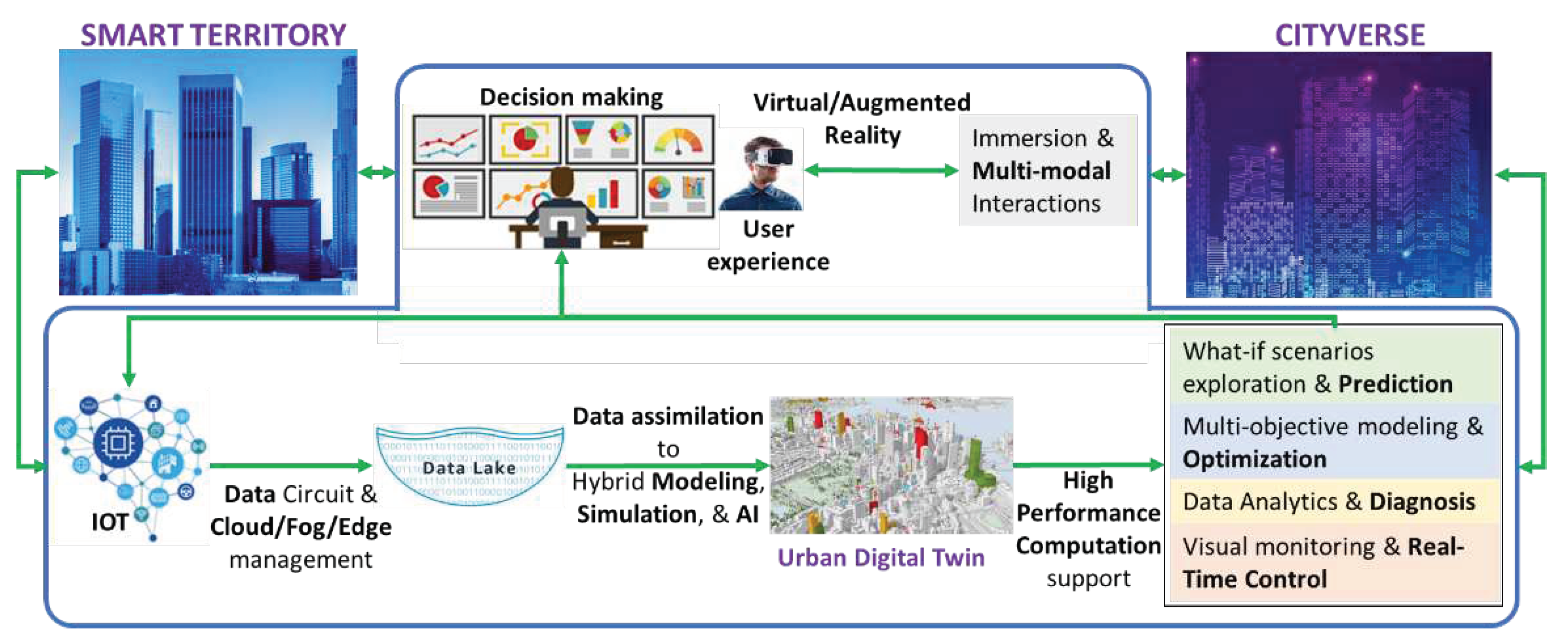
Figure 2.
UDT-based large-scale interoperability.
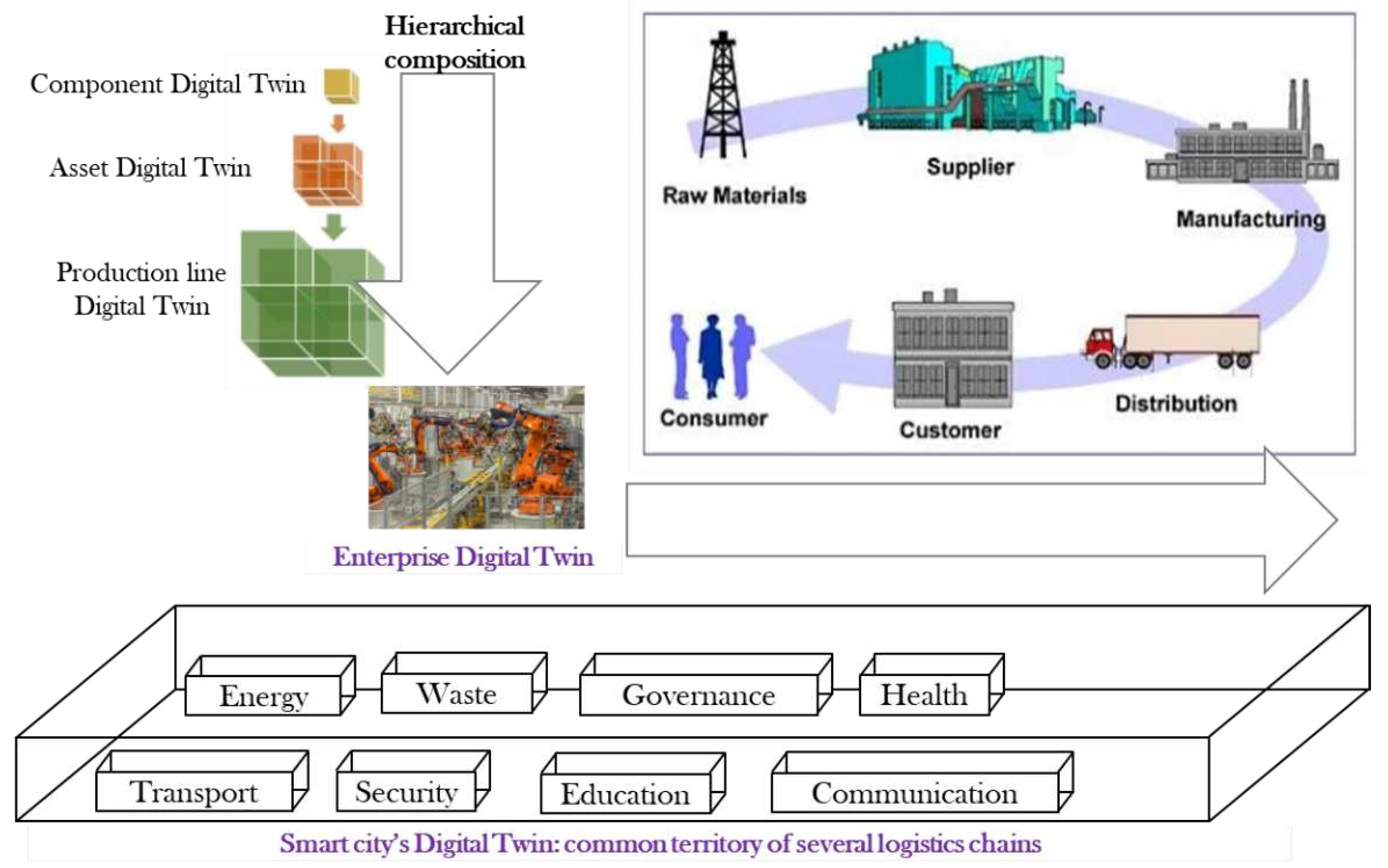
Figure 3.
High-level view of UDT-based urban management.
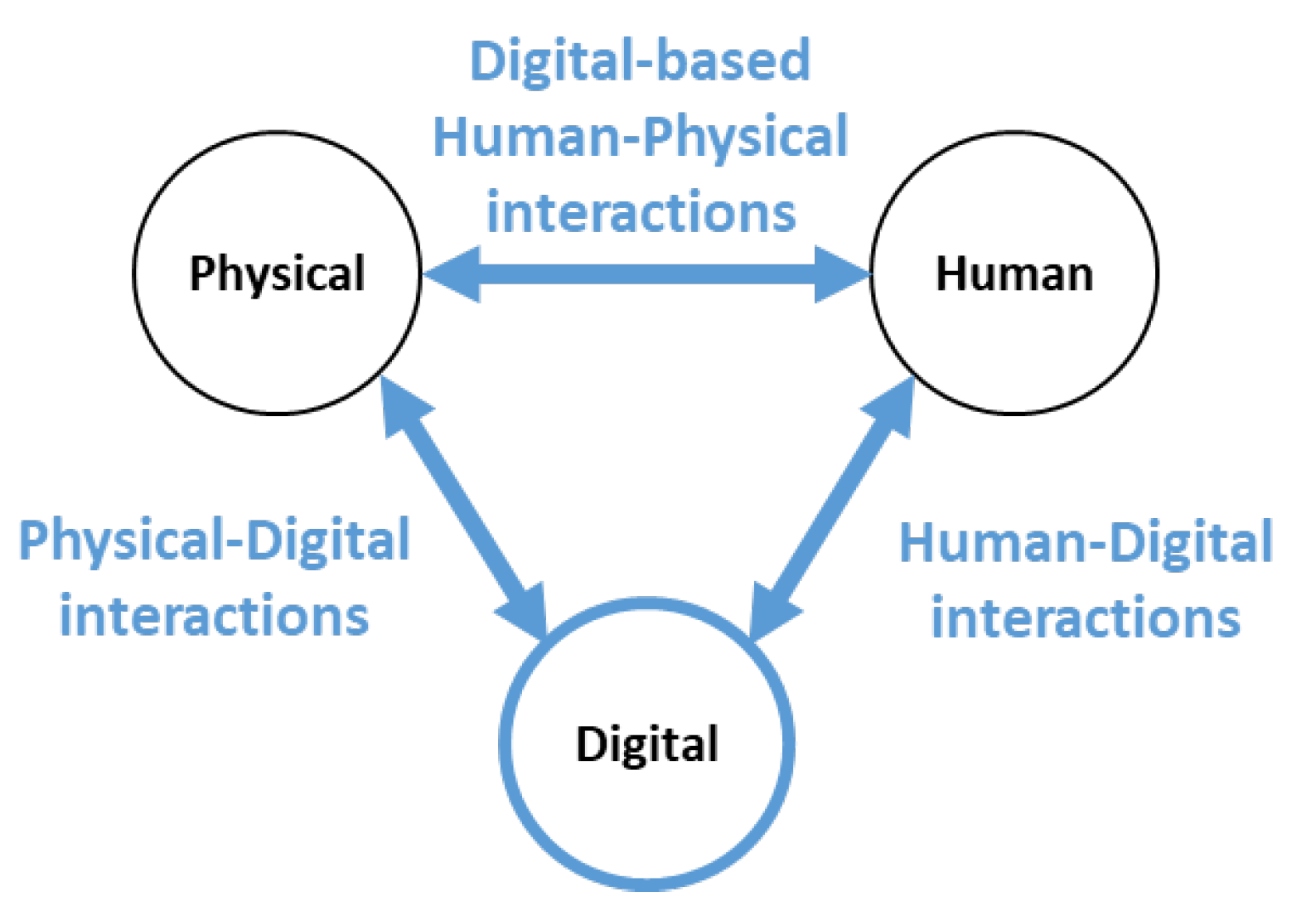
Figure 4.
High-level architecture for Digital Twin.
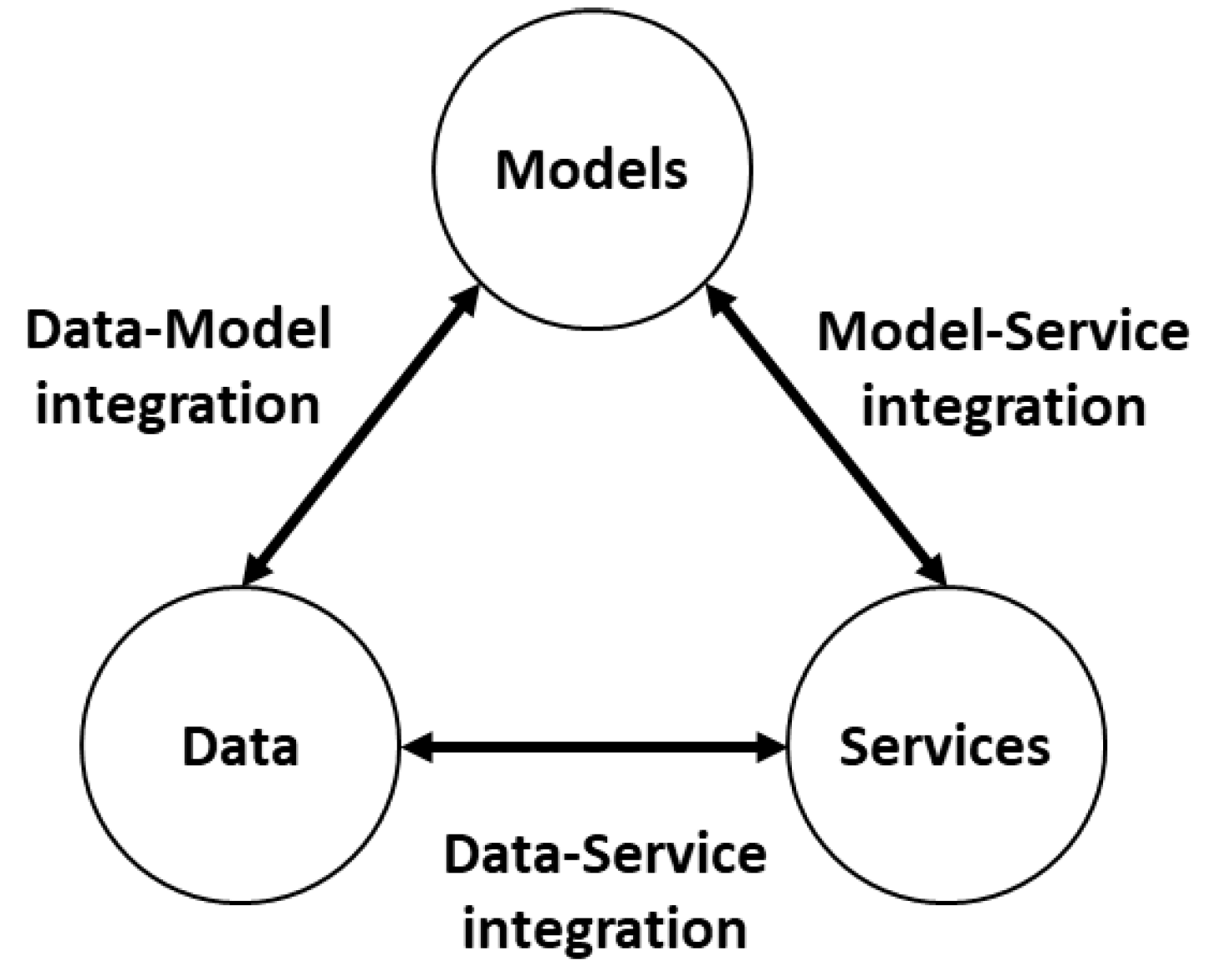
Figure 5.
Digital, Physical and Human interoperations.
Disclaimer/Publisher’s Note: The statements, opinions and data contained in all publications are solely those of the individual author(s) and contributor(s) and not of MDPI and/or the editor(s). MDPI and/or the editor(s) disclaim responsibility for any injury to people or property resulting from any ideas, methods, instructions or products referred to in the content. |
© 2024 by the authors. Licensee MDPI, Basel, Switzerland. This article is an open access article distributed under the terms and conditions of the Creative Commons Attribution (CC BY) license (http://creativecommons.org/licenses/by/4.0/).
Copyright: This open access article is published under a Creative Commons CC BY 4.0 license, which permit the free download, distribution, and reuse, provided that the author and preprint are cited in any reuse.


