
Submitted:
29 December 2023
Posted:
04 January 2024
You are already at the latest version
Abstract
The study explores the value of indigenous knowledge in mitigating and adapting to the effects of climate change in rural communities of Uganda. It provides an overview of how rural farmers use traditional and indigenous knowledge to predict weather changes to inform their adaptation and mitigation plans. The study intended to investigate how climate change effects were managed by the rural communities of Bakiga using indigenous knowledge and practices. Specifically, it sought to establish how local farmers’ innovations and practices were used to mitigate the effects of climate change and enhance food security. A case study research design with triangulation of data sources was employed. The study was conducted in Rukiga District, southwestern Uganda, where rural farmers were interviewed to explore their practices for reducing the effects of climate change to enhance food security. Thematic data analysis was used to get participants’ experiences and views regarding indigenous knowledge and effects of climate change mitigation. The findings indicate that rural farmers have indigenous practices of mitigating the effects climate change and contributing to the Sustainable Development Goals (SDGs).
Keywords:
Climate change
; Effects of climate change
; Adaptation
; Mitigation
; Indigenous knowledge
; Indigenous practices
; Uganda
1. Introduction
Climate change is becoming a global threat due to its impact on poor rural communities' ecosystems and socioeconomic systems, especially in sub-Saharan Africa. It is one of humanity's most devastating problems in the 21st century [1]. Climate is a concern for everyone because it touches all aspects of life, notably health, food security, and biodiversity, which make up the natural world. Climate change means, over time, whether disparities are due to natural or human activities [1,2,3]. Climate change is a significant threat to the livelihoods of rural communities that depend on subsistence agriculture [1,4,5]. The earth is becoming polluted, and the survival of humanity is threatened by silent emergencies like desertification and degradation of arable land due to industrial emissions [6]. Climate change affects the ecosystem and biodiversity in numerous ways [1]. The IPCC reports that in Sub-Saharan Africa, agricultural productivity will continue to decline due to unpredictable and inadequate rains and prolonged drought (2,3). Climate change presents high risks to food security for developing countries, notably among the poor rural farmers who depend on rain-fed agriculture [1,2].
Even though smallholder farmers in rural areas are considered victims of the impact of climate change, they have a long history of indigenous knowledge and practices of managing and adapting to the effects of climate change [7]. Indigenous knowledge practices refer to the understandings, skills, and philosophies developed by societies with a long history of interacting with natural surroundings [8]. The know-how, unique to a given society or culture, encompasses "the traditions, values, beliefs and views about a given occurrence" [9,10]. Local farmers have ecological knowledge about their region and know which plant species are most important for their communities [7]. Rural communities view indigenous knowledge as a core contributing to sustainable and equitable development [6,10,12]. It is knowledge and practices used by local farmers to stop soil erosion, identify drought-resistant crops, conserve soil nutrients and maintain soil moisture. It also refers to understanding signals for weather forecasts, knowledge of controlling pests and crop diseases, and water management practices. Although modern technologies enhance the mass production of food, they have exacerbated food insecurity by polluting the environment, causing deforestation and displacing the indigenous and small-scale farming communities [13].
In rural Uganda, more than 75% of the population depends on rain-fed agriculture for their livelihoods using indigenous farming practices [7]. Indigenous farming practices help to conserve the environment and limit the constraints of climate change [14,15,16]. These practices, for quite a long, have been instrumental in responding to unprecedented variations in climatic patterns, making rural farmers resilient to the effects of climate change [17,18]. Indigenous peoples’ knowledge respects the environment and balances their actions with the surrounding environment [2]. Nevertheless, indigenous knowledge and practices still need to be utilised to mitigate the effects of climate change [19]. They must be well documented and taped; the young generation must know most of them. As a result, Indigenous knowledge and practices are gradually disappearing [17]. Whether indigenous knowledge implies backwardness and, if not, what interventions are needed to make indigenous knowledge is vital in fighting climate change and enhancing food security [20]. In Rukiga District, landslides and floods have become rampant, severely devastating food crops and livestock, resulting in food security due to inappropriate farming practices. Despite many government actions and interventions, there are gaps between policy and practice [21,22]
Whereas there have been several interventions for mitigating the impact of climate change and improving food security regionally and globally, more success has yet to be achieved [11,17,22]. Instead, some interventions, like fertilisers and mechanising agriculture, are causing more vulnerabilities in poor rural communities [23]. There are rampant landslides in mountainous areas of Uganda like Bugisu and Kigezi sub-regions; severe storms, floods, prolonged droughts and rising temperatures have devasted most parts of Uganda. Farmers face enormous challenges; crops become less resistant to pests and diseases, water levels rise, soils are degraded, and bananas are eaten up by incurable bacterial wilt [24]. Conflicts resulting from community disagreements and fights over the use of already limited natural resources like water and fertile land are becoming common [11,25,26].
Climate change effects continue to rise and adversely impact rural communities whose livelihoods entirely depend on agriculture, which has exacerbated poverty levels and food insecurity [25]. The interventions available only emphasize modern technologies with less consideration of the indigenous practices of local communities. Consequently, indigenous knowledge is steadily disappearing [17,22]. With increased food shortages due to the effects of climate change, especially in the Kigezi sub-region [24,26], appropriate interventions should consider the livelihoods of vulnerable people and smallholder farmers to enhance their food security [24,27].
The central question this research intended to address was; “what indigenous practices are essential in mitigating the effects of climate change? How can they be conserved and adopted in policy and program interventions for mitigating the effects of climate change? This study proposed that indigenous practices form a solid social capital for poor rural farmers to fight the effects of climate change.
The general objective was to examine the best indigenous knowledge and practices used by rural farmers to adapt to the effects of climate change, which could be incorporated into intervention policies for managing climate change. Specifically, the study sought to identify and document indigenous practices of rural farmers to mitigate the effects of climate change, establish challenges and seek views of rural farmers regarding best ways of improving indigenous practices to manage the effects of climate change. The study contributes to Sustainable Development Goals (SDGs) 2, 5, and 13, which focus on zero hunger, gender-inclusive development, and action on climate change, respectively.
2. Materials and Methods
A case study research design with triangulation of data collection methods was adopted [28,29,30,31]. Qualitative methods were used to capture participants' views, experiences, traditions, practices and other cultural aspects crucial in mitigating the effects of climate change and enhancing food security. We used qualitative approach to gain an in-depth understanding of farmers' indigenous practices for conserving the environment [29,32,33].
This research was conducted in Rukiga District, southwestern Uganda. Rukiga District is a mountainous area located in the Kigezi Region, and the community there is very vulnerable to climate change and variability impacts. Agriculture is the main livelihood and backborn activity of the population and economy of Uganda. The District was chosen because of reports of recent extreme climate changes leading to landslides, rising temperatures, severe storms and increasing reports of food shortages [4]. Two sub-counties, Rwamucucu and Kashambya, were selected, and one parish from each sub-county was chosen. From each parish, one village was purposively chosen for the study.
The primary data collection methods were in-depth interviews, focus group discussions, and observations. Participants were engaged in interviews with systematic probing to understand local practices. Key informants’ interviews were conducted with extension workers, sub-county agriculture and environment officers, local leaders and community development workers to get their expert views. In addition, two focus group discussions (twelve participants each) were conducted in two different villages, comprising both women and men of forty years and above [34] to get deeper insights into selected discussion topics. Efforts were made to observe farmers' practices and actions regarding conservation and mitigating the effects of climate change.
Thematic data analysis was used to analyse data from in-depth interviews and focus group discussions. Data were continuously adjusted according to emerging themes from the field. Narratives of local farmers regarding their experiences, practices and opinions were captured using a digital recorder in the data collection process. This helped in developing significant themes for systematic explanations and drawing conclusions.
This research largely contributes to the theoretical understanding of practical strategies for reducing the effects of climate change and achieving sustainable food security through the regeneration of indigenous practices. The study also expounds on the decision-making processes of rural farmers to manage the environment and enhance food security using locally available resources.
Challenges were expected in getting the required data, but this was overcome by triangulation of data collection methods and sources.
3. Results
Indigenous practices to mitigate the effects of climate change in Rukiga
Study participants were asked whether they had heard about and had been affected by climate change. The responses indicate that climate change is widespread and impacts every individual, family, community, and country. The study found that each of the communities/farmers from the two parishes experienced the impact of climate change in more or less similar ways. Almost all the participants interviewed exhibited knowledge about climate change and its effects on their livelihoods. They could tell signs of climate change as extreme sunshine, too much rain with a storm when it is not expected, prolonged drought than expected, invasion of army worms that destroy crops in gardens, strange crop diseases, low yields, flooding and landslides, among others. Research participants expressed the need for robust approaches that supported their local initiatives for addressing the effects of climate change. The District Community Development Officer (DCDO) Rukiga District Local Government explained;
"Climate change has far-reaching effects that adversely impact every household, community, and District differently. We have a task of mobilising and sensitising all the community members to participate in the local activities for mitigating the effects of climate change...”
The study found that the impact of climate change is already evident across the District and beyond, and it is becoming an issue of concern. In an interview with Rwamucucu Sub County Agriculture Officer, he remarked;
“People have lost lives and crops due to landslides and flooding of lowlands. Roads have been washed away and bridges destroyed, which has affected the marketing of produce and the movement of people. On the other hand, strong sunshine and prolonged dry spells have worsened the situation as crops and livestock suffer the consequences. Crops dry up before maturity, and animals starve, exacerbating household food insecurity. The dry season comes when rain is expected and vice versa”.
The environment officer at the district, who was one of the key informants explained;
“The increased intensity and frequency of storms, drought, flooding and landslides are a result of climate change and have far-reaching implications on household food security, pasture and watersheds in this area and beyond."
The research findings demonstrate ways local farmers mitigate the effects of climate change using indigenous practices [35,36,37,38]. These practices range from planting certain species of local trees like “omumba” botanically known as prunus Africana, black wattle (burikooti), elephant grass planted along terraces and boundaries, and other local trees planted along hillslopes to prevent water from washing the soils away and also to contribute to the formation of rainfall for favourable climate resilience. One of the elders interviewed in Kitunga Parish had this to say;
“To stop rainwater from washing-away my soil, I plant “Kati kankingo” elephant grass planted along the terraces, which in turn is used to feed my cows and goats you see in the shed and also to stop soil erosion and hence enhance my land productivity. We also Plant black wattle (burikoti), a traditional type of tree that throws leaves and seeds on the ground, which forms a layer that covers the soil, hence preventing soil erosion” (translated from Rukiga to English)
It was clearly explained by one of the participants that,
“Prunus Africana is a tree that grows tall with many leafy branches and allows shrubs to grow under it forms a soil cover that helps to stop soil erosion. Besides preventing soil erosion, prunus Africana is a medicinal tree believed to be treating many diseases such as ulcers, asthma, high blood pressure and many others. It is a tree that cannot be cut anyhow by those who know it. Cutting it is considered taboo, and therefore, people fear cutting it, believing that cutting it is associated with many problems. Unlike prunus Africana, other trees, like eucalyptus, cause soil erosion because they do not allow other vegetation to grow under them. As a result, the soil remains bare henceforth, prone to soil erosion whenever it rains. In eucalyptus plantations, other vegetation cannot grow to cover the soil. Whenever it rains, water slopes down the tree stems, causing much water runoff that causes landslides down slopes”.
Furthermore, participants mentioned other indigenous trees that allow natural vegetation to grow under them and stop soil erosion, like “omusavu” and “omurengyere", which are usually planted along the steep slopes of hills and valleys as a measure to stop soil erosion. These indigenous trees throw down leaves that cover the soil and have roots that hold the soil together, which helps prevent soil erosion. Smith et al. [38] argued that afforestation helps to address land degradation. Trees trap water in the soil, preventing runoff on hill slopes.
Figure 1 shows a black wattle (Burikooti) planted on hillslopes. This tree throws dry leaves and seeds, forming a canopy that covers the soil. This prevents soil erosion and improves soil fertility. It was observed that these indigenous tree species allow other types of grass to grow under and form a canopy of vegetation that further protects soil from being washed away by running rainwater. Smith et al. [38] echoed that local trees preserve water in the soil, reduce runoff, trap sediments and nutrients, and improve groundwater recharge. This is one of the best indigenous practices for mitigating the effects of climate change among the study area's local people.
Another practice for mitigating the effects of climate change is the growing of elephant grass along the terraces and water runways in the valleys. Elephant grass and other plants planted along the terraces to prevent soil erosion are eventually cut when they grow old and used as animal feeds (cows, goats and pigs). The cow dung and droppings from goats and pigs are collected and used as organic manure, which is put in gardens to enhance food productivity. Besides, planting elephant grass on terraces and boundaries increases soil carbon and ecosystem quality, further enhancing food security (Figure 2). This practice aligns with what Smith et al. [38] said: increasing soil organic stocks enhances the soil's water-holding capacity, thereby presenting resilience to climate change and enhancing adaptation capacity.
Farmers feed their animals with elephant grass and calliandra cut from the "kati-kankingo", and in turn, they get manure from cows and goats to put in their gardens and enhance food productivity (Figure 2 & Figure 3). This manure is purely organic and is considered suitable for sustainable soil productivity instead of inorganic fertilisers. Organic manure application increases soil nutrient stocks and water-holding capacity, thereby preventing soil erosion and enhancing food productivity (Figure 3).
Another interesting practice that farmers used to mitigate the effects of climate change was crop rotation (hinga raza). This is a practice of rotational cropping of a piece of land in different seasons and rotating different crops. It helps rejuvenate soil fertility and is also a measure to manage environmental degradation. When planted rotationally, legumes like beans and peas help fix nitrogen in the soil and enhance food productivity.
Another indigenous practice that was considered best in mitigating the effects of climate change was the use of trenches commonly known as "Fanya-kini" and "Fanya ju" (see Figure 4 & Figure 5). These two types of trenches were seen as measures and approaches to mitigate the effects of climate change. Fanya ju is dug facing upward and helps running water flow into the trench, reducing its moving force. Fanya-kini is dug facing downwards and helps to reduce the speed at which running water is moving downwards in the gullies. This practice has helped to reduce soil erosion and wash crops down the valleys.
The study participants also mentioned using terraces as a practice to mitigate the effects of climate change. Terraces help prevent soil erosion in gardens and stop washing away the manure in the gardens.
Furthermore, organic manure was mentioned among the many practices for mitigating the effects of climate change. Organic manure from domestic rubbish, animals and crop residues was reported as one of the essential measures for sustainably restoring soil fertility without adverse repercussions. One of the participants in a focus group discussion in Kitunga remarked;
"To maintain the fertility of our soil, we prepare and put locally made manure like cow dung, kitchen rubbish, chicken droppings, goat's urine and droppings, among others, to our gardens for enhanced productivity. Our locally made manure is cheaper and works for us better than fertilisers bought in shops. We do not spray weed with chemicals; we uproot with our hands."
This narrative shows how local people are determined to keep their land productive by using indigenous methods of manure application, weed management and integration of crops and animals.
Participants further mentioned using noise and drumming as a measure usually practised to counteract the adverse effects of tornadoes, locally known as "Eshato".
“Tornado (eshato) is a hazardous cloud that falls, bursts with water and causes terrible landslides that can sweep away the entire village. It is detected through strange clouds forming and creating darkness around a scaring area. People usually make noise and drumming as a local measure to neutralise its impact. It is believed that when people make too much noise, the cloud disintegrates and its impact becomes less …” (an elderly female interviewee in Kabumbiro village Mparo parish)
Furthermore, participants reported using traditional and indigenous knowledge as early warning systems about weather changes. For instance, the behaviour and activities of some insects, birds, and animals predict weather changes, informing them of the adjustments in farming activities. Monitoring swarms of some species of white birds, the movement of insects like butterflies, the direction of moving clouds, the sound of flogs, the noise of some types of birds, the movement of earthworms and the flowering of some plants were used to predict the change of weather and to prepare for the effects in time.
Challenges rural farmers face in utilising indigenous practices.
The study found that farmers were facing several challenges regarding utilising indigenous knowledge and practices in mitigating the effects of climate change. Among the mentioned challenges were limited support from the government, undocumented practices, and tedious manual work of executing the practices, which took much time. Participants also reported that some of the extension workers needed to be made aware of indigenous crop production practices, and they usually discourage people from incorporating them within their agricultural and climate mitigation measures. As a result, awareness of indigenous practices is limited among the contemporary population, and they are on the verge of disappearing. Farmers who use indigenous knowledge practices were often associated with backwardness and were brand-named old-fashioned.
Furthermore, the increase in population has made land inadequate, and it is no longer possible to practice crop rotation and land fallowing. During the in-depth interviews with one of the male household heads, they had this to say;
"With our children growing up and getting their own families, the land is subdivided into small pieces and distributed to different children, leading to land fragmentation. This has made it difficult to practice crop rotation as these young families own only one or two pieces of land. The consequence is continued degradation and exhausted land."
The researchers also observed during the data collection that population density in the Kigezi region had made land more fragmented and scarcer, putting more pressure on the environment. This has led to the continued cutting of trees for firewood and construction, thus degrading the environment and causing more soil erosion.
Lack of sensitisation and awareness creation to the population by the local authorities on the importance of terracing and organic manure-making was seen as another challenge hindering indigenous practices for mitigating the effects of climate change. One of the participants in a focus group discussion in Kabumbiro village remarked;
“Many of our extension workers do not know these old practices, and they are not sensitising and educating the community about them. For instance, people are demolishing terraces (kati-kankingo) in their gardens because that part is considered fertile for crops. This is done without putting fresh terraces and has caused landslides and soil erosion".
The District and lower levels of local government planning do not consider indigenous practices to be incorporated into the programs for enhancing agricultural productivity. This is rendering indigenous practices less familiar, especially with the young generation. Less attention given to indigenous practices renders them forgotten, thereby facing extinction.
The burning of hills and swamps by ill-intentioned people was jeopardizing the community's efforts to embark on the hillslopes' afforestation and mitigate the effects of climate change.
"We plant trees along the hillslopes to stop soil erosion and landslides, but bad-hearted people sometimes burn them. We need vigilant leaders to enforce regulations on the burning of hills and swamps. Our local leaders do not care to arrest people who burn hills and our trees. This is one of the reasons why we have landslides and floods whenever heavy rains come."
Uncontrolled burning was reported to be a big problem and a deterrence to addressing the effects of climate change in Rukiga because of the terrain. Being a mountainous area, the mountains were bare due to burning, and there was nothing to stop running water from uphill. Landslides were common in almost all villages.
Rural farmers’ views regarding best practices for managing the effects of climate change
The study sought farmers' views regarding the farming practices they thought were best for managing and mitigating the effects of climate use. Among the responses, “Kati-kankingo", a practice involving planting grass and trees along the terraces to prevent soil erosion, was the most prevalent. When planted along the terraces, elephant grass, Calliandra, and omugorora prevent soil erosion and feed livestock. Kati-kankingo contains soil erosion and keeps nutrients in the soil.
Another indigenous practice considered best in mitigating climate change's effects was using trenches commonly known as “Fanya-kini” and “Fanya ju”. These two types of trenches were seen as one of the measures and approaches to mitigate the effects of climate change. Fanya ju is dug facing upward and helps running water flow into the trenches, reducing its moving force. Fanya-kini is dug facing downwards and helps to reduce the speed at which running water is moving downwards in the gullies. This practice has helped to reduce soil erosion and wash crops down the valleys (Figures 4&5).
A farmer from kabumbiro village explained;
“Plating grass and shrubs in gullies and water runways helps to stop soil erosion. Elephant grass and bamboo trees offer soil cover and protection as well as providing feedstuff for domestic animals”.
Practicing agroforestry helps to preserve soil fertility. Trees like “Grevillea robusta” or “Grevillea umbractical” and Calliandra help restore soil fertility and prevent soil erosion. Calliandra is also used as feed to animals when cut and chopped (Figure 6).
One of the key informants said,
“encouraging farmers to practice agroforestry would help reduce the effects of climate change. Trees like "Grevillea" and "calliandra" help restore the soil's fertility and prevent soil erosion. He added that agroecological zoning is necessary so that each area grows what can grow well there other than trying things which cannot do well."
It was established that the trenches dug uphill (fanya-kiini & fanya-ju) prevent rainwaters from causing havoc by trapping them in the trenches and, therefore, reducing their kinetic force and speed. By the time rain running water reaches the lowlands, it will be less destructive to soil and crops because of the reduction in speed and force. The villages visited had trenches dug for this purpose, and participants reported that local authorities enforced it.
Hinga-raaza (crop rotation) was another practice mentioned as a good measure and an adaptation to the effects of climate change. However, this was becoming difficult to implement because of land fragmentation and scarcity. The population in the Kigezi region is increasing; land is further divided among family members, making it challenging to practice crop rotation.
4. Discussion and Conclusions
This study expounds on the importance of engaging local communities in solving problems that affect them. It informs decision-makers about the significance of incorporating peoples' views and indigenous knowledge into national climate change mitigation and response plans. Indigenous knowledge could inform mitigation policies and programs. It is, however, essential to know that while modern technologies may boost food production, they may significantly affect soil health, including depletion of soil organic matter, resulting in adverse effects on land degradation. As Eriksen et al. [23] argued, local farmers have ecological knowledge about their regions and which species are most important for survival. The study highlights the widespread impact of climate change on communities in Rukiga, both in terms of individual experiences and broader consequences for agriculture, infrastructure, and livelihoods. The findings underscore the urgency of addressing climate change and integrating local perspectives into mitigation strategies. The responses from study participants indicate a high level of awareness and knowledge about climate change. As argued by [35,36,37], the study disclosed that local farmers are not solely victims of climate change. They have substantial contribution to the battle against the effects of climate change. Participants identified various signs, such as extreme weather events, invasion of pests, and disruptions to the agricultural cycle. This awareness is a crucial foundation for successfully implementing climate change mitigation strategies [11,23,39,40,41].
The study reveals that local communities in Rukiga are already engaged in mitigating the effects of climate change through indigenous practices. Planting indigenous trees, creating terraces, and utilising trenches demonstrate a rich reservoir of indigenous knowledge. These practices prevent soil erosion and contribute to biodiversity and sustainable land management [38,39,40,41]. The significance of agroforestry in preserving soil fertility and preventing erosion is emphasised in the results. Trees such as "Grevillea" and "calliandra" are recognised for restoring soil fertility. The practice of growing specific trees along terraces, as depicted in Figure 1, is vital in maintaining soil structure and preventing runoff. The study highlights the interconnectedness of farming and animal husbandry in mitigating the effects of climate change [40,41,42]. Using organic manure from animal waste and crop residues contributes to sustainable soil productivity and hence food security. Additionally, integrating livestock, such as cows and goats, into the farming system creates a closed-loop system that enhances soil fertility and supports sustainable agriculture.
Despite the positive aspects of indigenous practices, the study identifies several challenges farmers face. These include limited support from the government, lack of awareness among extension workers, and the perception of indigenous practices by some people as outdated. Land fragmentation due to population growth poses a significant hurdle to traditional practices like crop rotation. The uncontrolled burning emerges as a severe threat to afforestation efforts. Participants expressed concern about hills and trees being deliberately set on fire, undermining community attempts to address climate change. This issue requires attention from local authorities to enforce regulations and protect environmental conservation initiatives.
The study demonstrates the importance of indigenous practices in mitigating the effects of climate change in Rukiga District, Western Uganda. The knowledge and initiatives of local communities, as showcased in planting practices, agroforestry, and organic farming, offer valuable lessons for sustainable climate change adaptation. However, challenges such as government support, awareness, and uncontrolled burning need to be addressed to ensure the continuity and effectiveness of these practices.
Integrating indigenous knowledge into broader climate change mitigation strategies is imperative for fostering resilience and sustainability in the face of on-going environmental challenges.
As the way forward, we must distinguish, respect, and reserve the indigenous wisdom embedded in these local practices to benefit current and future generations.
Author Contributions
“Conceptualization, R.T., M.K. and D.B.; methodology, R.T. and M.K; validation, R.T., M.K. and D.B.; formal analysis, R.T., M.K. and D.B.; investigation, R.T., M.K. and D.B.; resources, R.T., M.K. and D.B.; data curation, R.T., M.K. and D.B.; writing—original draft preparation, R.T.; writing—review and editing, R.T., M.K. and D.B.; visualization, R.T., M.K. and D.B.; supervision, R.T.; project administration, R.T.; funding acquisition, R.T. All authors have read and agreed to the published version of the manuscript.”
Funding
This research was funded by Kyambogo Universty, grant number
Data Availability Statement
Available upon request.
Acknowledgments
The study is grateful to Kyambogo University for financial support.
Conflicts of Interest
The authors declare no conflicts of interest.
References
- Safdar U., Shahbaz B., Ali T., Khan A. I & Luqman M. (2014). Role of Agriculture Extension Services in Adaptation to Climate Change in Highlands of Kaghan Valley, Pakstan. Pak. J. Agri. Sci., Vol. 5)4); 2014. http//www.pakjas.com.pk.
- IPCC. (2020). Climate Change: Impacts, Adaptation and Vulnerability: Working Group II contributions to the Fourth Assessment Report of Intergovernmental Panel on Climate Change. Cambridge. Cambridge University Press.
- 3. IPCC. (2007). Impacts, Adaptation and Vulnerability: Working Group II contributions to the Fourth Assessment Report of Intergovernmental Panel on Climate Change. Cambridge. Cambridge University Press.
- Kitutu K., M., G. (2017). A Climate Smart Uganda, A proud Ugandan: Climate change Symposium and expo. Sustainable Development Goal 13 (Climate Action) on 26th October 2017 at Kampala Serena Hotel.
- Khan S. K., Hasan M. & Khan M.K. (2018). Adaptation to Climate Change and Mitigation of its Effects in the Arid Region of Pakistan (1961-2015). International Journal of Economic Environmental Geology Vol.9(1) 07-15,2018. www.ecn-environ-geol.org.
- Eyong, C. T., (2007). Indigenous Knowledge and Sustainable Development in Africa: Case study on central Africa. Germany: Center for Development Research.
- Nyadzi, E., Ajayi, O. C., & Ludwig, F. (2021). Indigenous knowledge and climate change adaptation in Africa: A systematic review. CABI Reviews, (2021).
- UNESCO (2020). Mobilising Indigenous and Local Knowledge Solutions: Addressing Climate Impacts and Vulnerabilities, a Perspective from the Caribbean Region, Georgetown, Nairobi, SC-SII/2020/ME/ILKCC/CBN.
- UNESCO (2016). Global Education Monitoring report. Indigenous knowledge and implications for sustainable development agenda.
- UNESCO (2019). Indigenous peoples and UNESCO 2018: outcomes of questionnaire for the UN Permanent Forum on Indigenous Issues IPTF/UNESCO-PFII QUESTIONNAIRE/2018.
- Awuor, P. (2013). Integrating Indigenous Knowledge for Food Security: Perspectives from Millennium Village Project at Bar-Sauri in Nyanza Province in Kenya. Paper presented to the African Research and Resource Forum (ARRF) held in Kampala Uganda, on 16 – 17 November 2011.
- Kamwendo, G. & Kamwendo, J. (2014). Indigenous Knowledge Systems and Food Security: Some examples from Malawi. J Hum Ecol 48 (1): pp. 97-101. [CrossRef]
- Antonelli A. (2023). Indigenous knowledge is key to sustainable food systems. Nature, 613(7943), 239–242. [CrossRef]
- Adger, W.N., S., Agrawala, M.M.Q., Mirza, C., Conde, K., O’Brien, J., Pulhin, R., & Takahashi, K. (2007). Assessment of adaptation practices, options, constraints and capacity. Cambridge University Press, Cambridge, UK.
- Zurba M, Berkes F. Caring for country through participatory art: creating a boundary object for communicating Indigenous knowledge and values. Local Environment. 2014 Sep 14;19(8):821-36. [CrossRef]
- Boillat S, Berkes F. Perception and interpretation of climate change among Quechua farmers of Bolivia: indigenous knowledge as a resource for adaptive capacity. Ecology and society. 2013 Dec 1;18(4). [CrossRef]
- Ajayi, O., Muhammed, Y., Yusuf, L., & Ajijola, R. (2020). Climate change adaptation strategies among groundnut farmers in Suleja ocal Government Area of Niger State, Nigeria. Ethiopian Journal of Environmental Studies & Management, 13(4), 414-424.
- Hulme M. Climatic perspectives on Sahelian desiccation: 1973–1998. Global Environmental Change. 2001 Apr 1;11(1):19-29. [CrossRef]
- Mwantimwa, Kelefa. "The relationship of indigenous knowledge and technological innovation to poverty alleviation in Tanzania." (2008). https://www.researchgate.net/profile/Kelefa-Mwantimwa/publication/48267731_The_relationship_of_indigenous_knowledge_and_technological_innovation_to_poverty_alleviation_in_Tanzania/links/569c8bd408ae748dfb1069a3/The-relationship-of-indigenous-knowledge-and-technological-innovation-to-poverty-alleviation-in-Tanzania.pdf (Accessed at 26/12/2023).
- Cloete, P.C. and Idsardi, E (2012). Indigenous and Traditional Food Crops: Perceptions and Realities. Paper Presented at the 22nd Annual Symposium of the International Food and Agribusiness Management Association (IFAMA). June 11 – 14, Shanghai, China.
- Hansen, J., Hellin, J., Rosenstock, T., Fisher, E., Cairns, J., …, Campbell, B. (2019). Climate Risk Management and Rural Poverty Reduction. Agricultural Systems, 172, 28-46. [CrossRef]
- Mafongoya,P.L. and Ajayi,O.C (2017).Indigenous Knowledge systems and Climate change management in Africa, CTA, Wageningen, the Netherlands.
- Eriksen, S., Lisa F Schipper, E.L.F., Scoville-Simonds, M., Vincent, K., Adam, H., Brooks, N., …, West, J.J. (2021). Adaptation interventions and their effect on vulnerability in developing countries: Help, hindrance or irrelevance? World Development, 141. [CrossRef]
- HLPE. (2022). The impacts on global food security and nutrition of the military conflict in Ukraine. Rome.
- Muggaga C, Ongeng D, Mugonola B, Okello-Uma I, Kaaya NA, Taylor D. Influence of sociocultural practices on food and nutrition security in Karamoja subregion of Uganda. Ecology of food and nutrition. 2017 Sep 3;56(5):424-47. [CrossRef]
- Tugume (2017). Starving people in Kanungu resort eating spear grass. Chimp reports, 6th June 2017. www.chimpreprts.com.
- Mbowe, C. , Smath, P., David,S., Duguma,L.,and Bustamante, M (2013). Mitigation and adaptation to climate change through sustainable agroforestry practices in Africa.
- Creswell, J.W. (2008), Educational Research: Planning, Conducting and Evaluating Quantitative and Qualitative Research (3rd ed), Upper Saddle River, N.J; Pearson Education.
- Creswell, J.W. (2003), RESEARCH Design; Qualitative and Quantitative Approaches; Sage publications.
- Morse,J.M. & Niehaus,L. (2009). Mixed Methods Design: Principles and Procedures; Walnut Creek, CA: Left coast press.
- Denzin, N. K. & Lincoln, Y.S. (1994). Handbook of qualitative Research; Thousand Oaks, Sage Publications, New Delhi.
- Sabina, Y. & Rahman, K. F (2012). “Triangulation” Research Method as the Tool of Social Science Research. BUP Journal, volume1, Issue1, September 2012, ISSN: 2219-4851.
- Smith, J. A. (2015). Qualitative Psychology: A Practical Guide to Research Methods. SAGE.
- Morgan, D. L. (2002). Focus group interviewing. In J. F. Gubrium, & J. A. Holstein (Eds.), Handbook of interviewing research: Context & Method (pp. 141– 159). Thousand Oaks, CA: Sage Publications Inc.
- Asogwa I. S., Okoye J.J, & Oni K. (2017). “Promotion of Indigenous Food Preservation and Processing Knowledge and the Challenge of Food Security in Africa.” Journal of Food Security, Vol. 5, no.3 (2017):75-87. [CrossRef]
- Awuor, P. (2013). Integrating Indigenous Knowledge for Food Security: Perspectives from Millennium Village Project at Bar-Sauri in Nyanza Province in Kenya. Paper presented to the African Research and Resource Forum (ARRF) held in Kampala Uganda, on 16 – 17 November 2011.
- Castillo, A.R., Castellanos, E.J. & McLean, K.G. (2017). Indigenous peoples, local communities and climate change mitigation. 140: 1- 4. [CrossRef]
- Smith, L.G., Kirk, G.J.D., Jones, P.J., & Williams, A.G. (2019). The Green House Gas Impacts of Converting Food Production in England and Wales to Organic Methods. Nature Communications. [CrossRef]
- ATPS (2013). Farmers’ Response and their Adaptation Strategies to Climate Change in Mafeteng District, Lesotho; African Technology Policy Studies Network, pp 26.
- IPCC. (2022). Climate Change: Impacts, Adaptation and Vulnerability: Working Group II contributions of the Working Group II to the Sixth Assessment Report of Intergovernmental Panel on Climate Change. Cambridge. Cambridge University Press.
- International Indigenous Peoples’ Forum on Climate Change (2020). Indigenous Peoples’ Knowledge on Climate Change Adaptation. Climate Advise to the United Nations High Commissioner for Refugees (UNHCR). Fact Sheet, August 2020, The UN Refugee Agency, Geneva.
- Rupan R., Saravanan R., & Suchiradipta B. (2018). Climate Smart Agriculture and Advisory Services. Approaches and implications for future MANAGE. Discussion paper. Center for Agricultural extension innovations, reforms & agri-prenuership (CAEIRA), India.
Figure 1.
The black wattle tree (Buriikoti) throws leaves and seeds which cover the ground, hence preventing running water from causing soil erosion.
Figure 1.
The black wattle tree (Buriikoti) throws leaves and seeds which cover the ground, hence preventing running water from causing soil erosion.
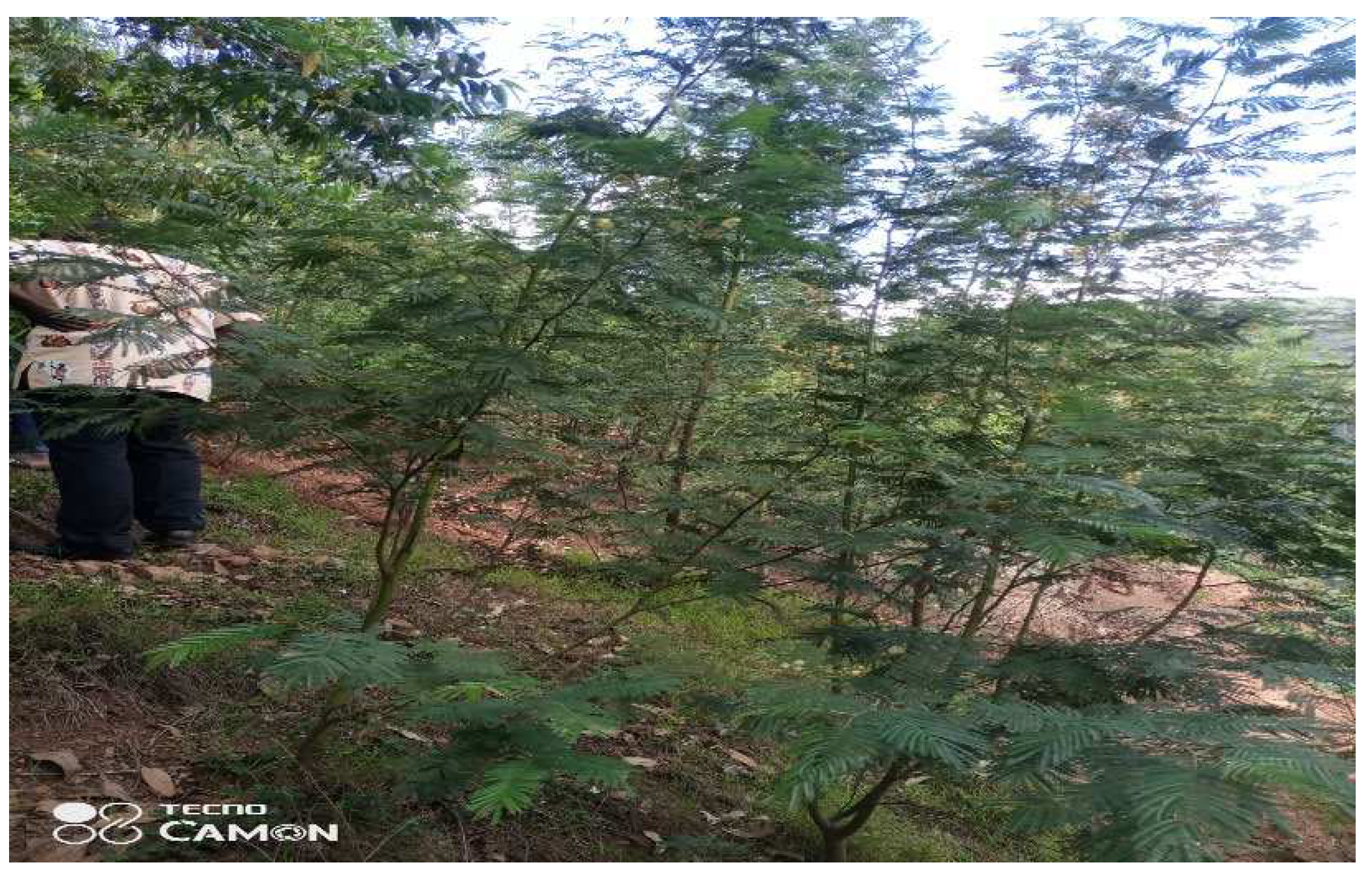
Figure 2.
Cows in a wooden shade. They feed on elephant grass and calliandra harvested from “kati kankigo”.
Figure 2.
Cows in a wooden shade. They feed on elephant grass and calliandra harvested from “kati kankigo”.
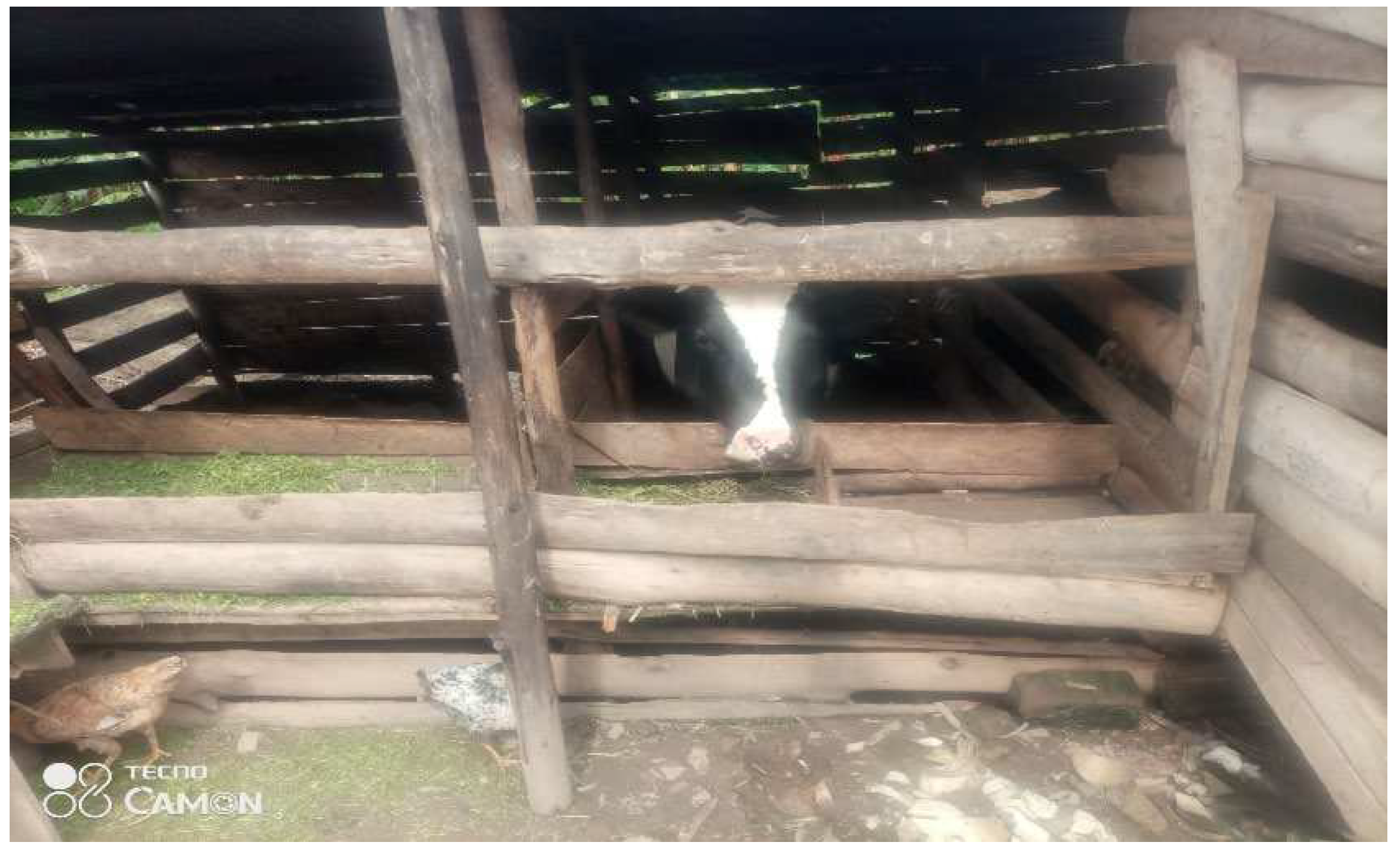
Figure 3.
Organic manure (goat and cow dung put in the garden prepared for Irish potato before planting.
Figure 3.
Organic manure (goat and cow dung put in the garden prepared for Irish potato before planting.
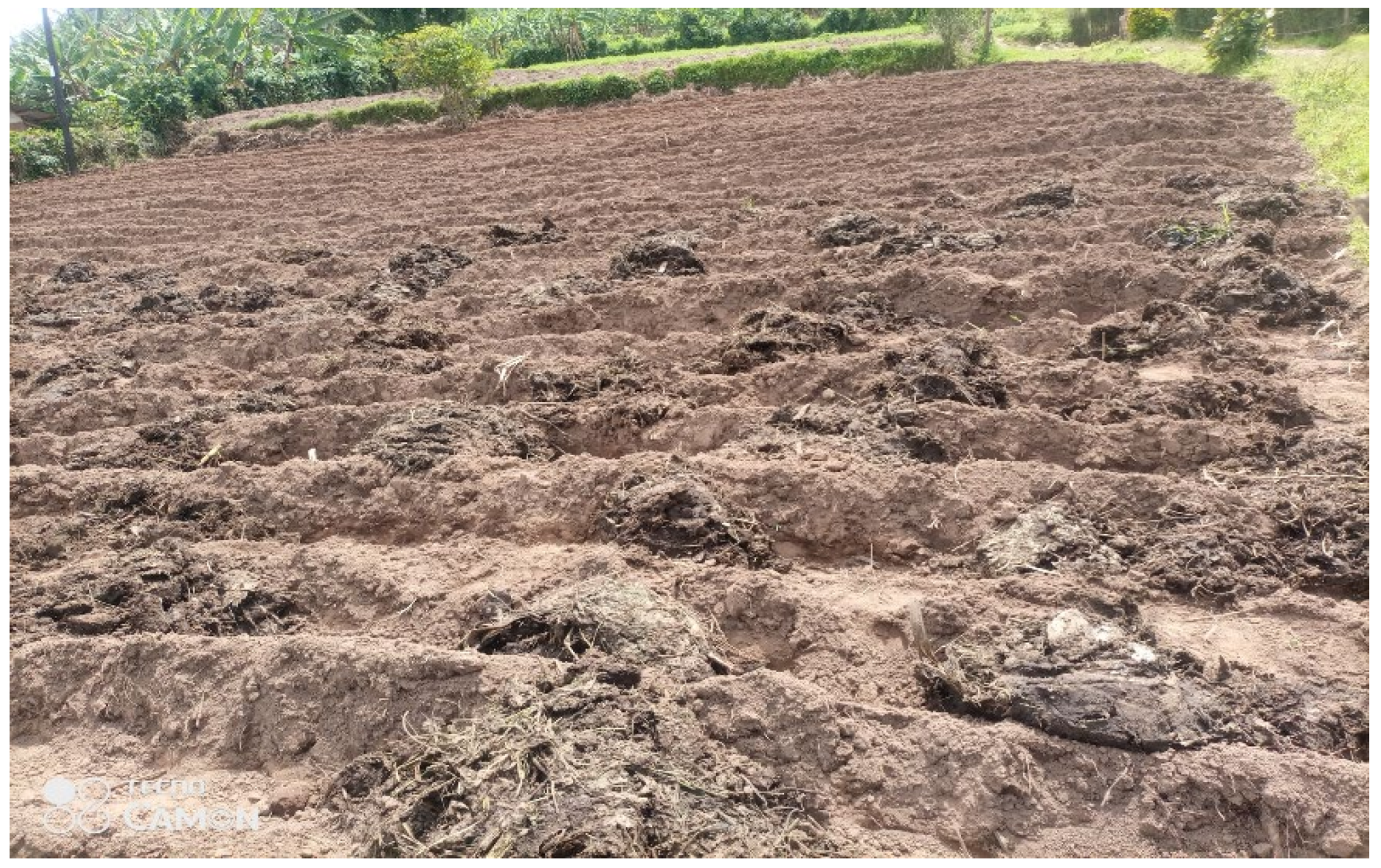
Figure 4.
Fanya-kiini for preventing soil erosion.
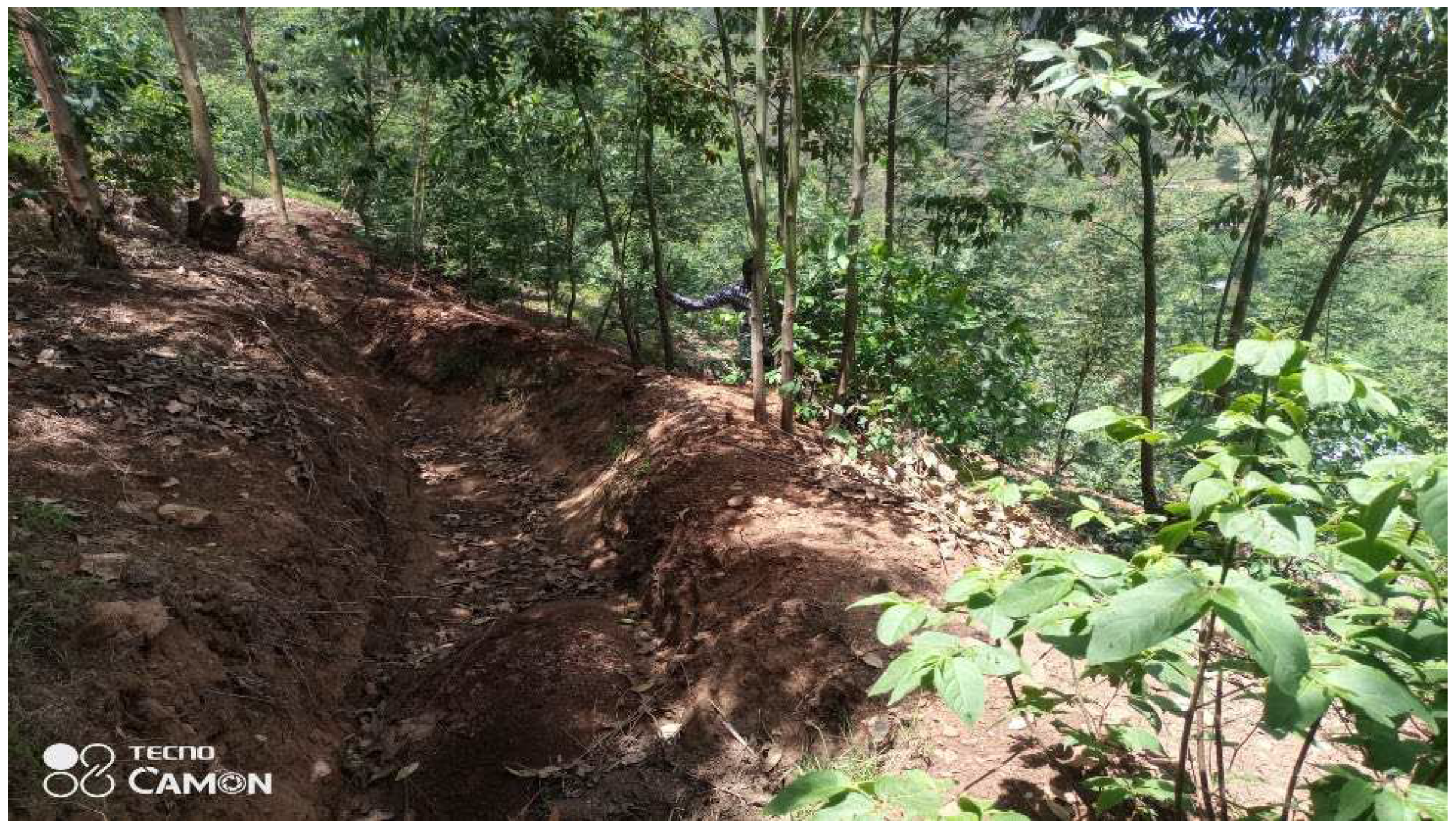
Figure 5.
Fanya-juu" for trapping rainwater and reducing its speed.
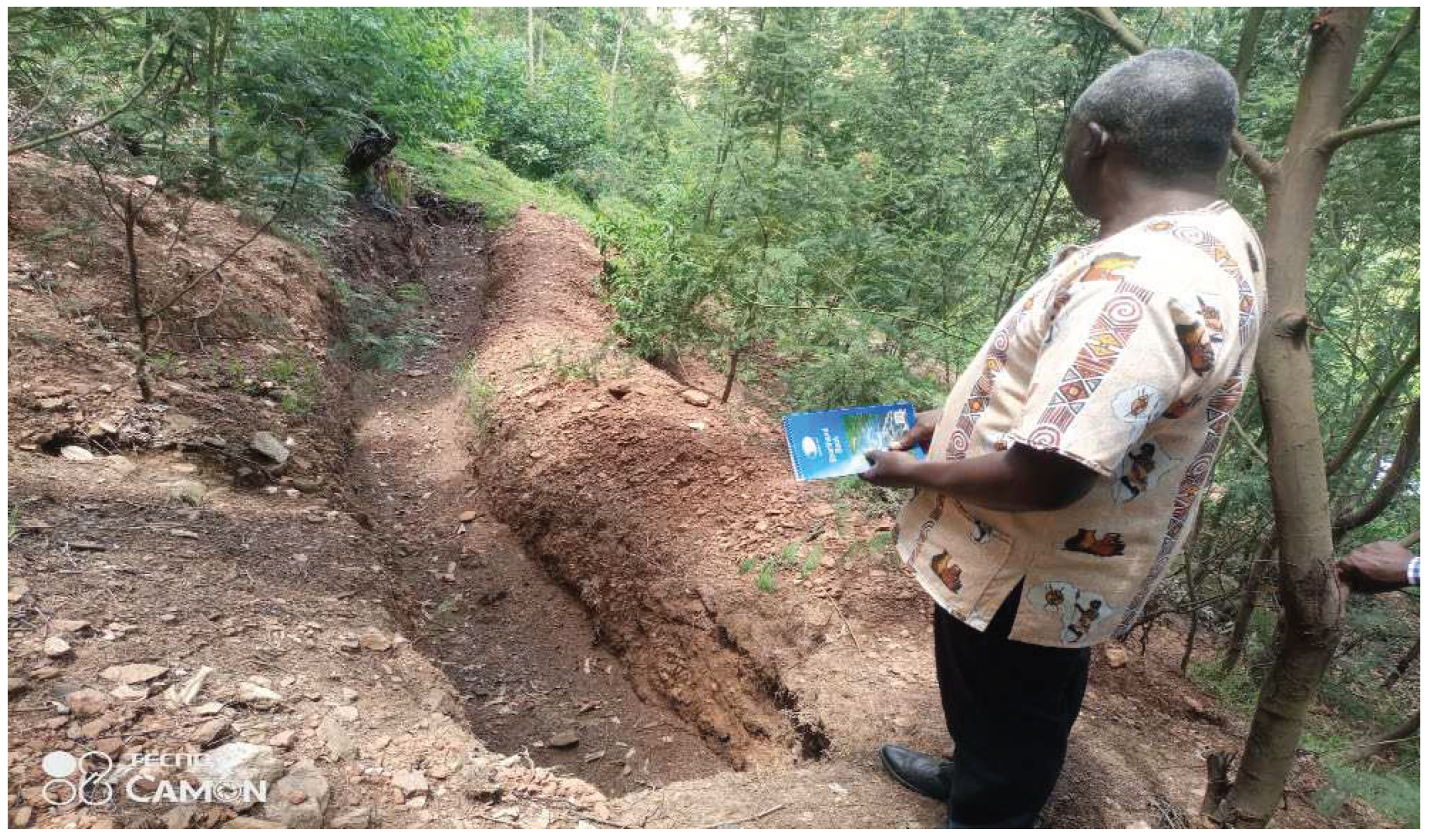
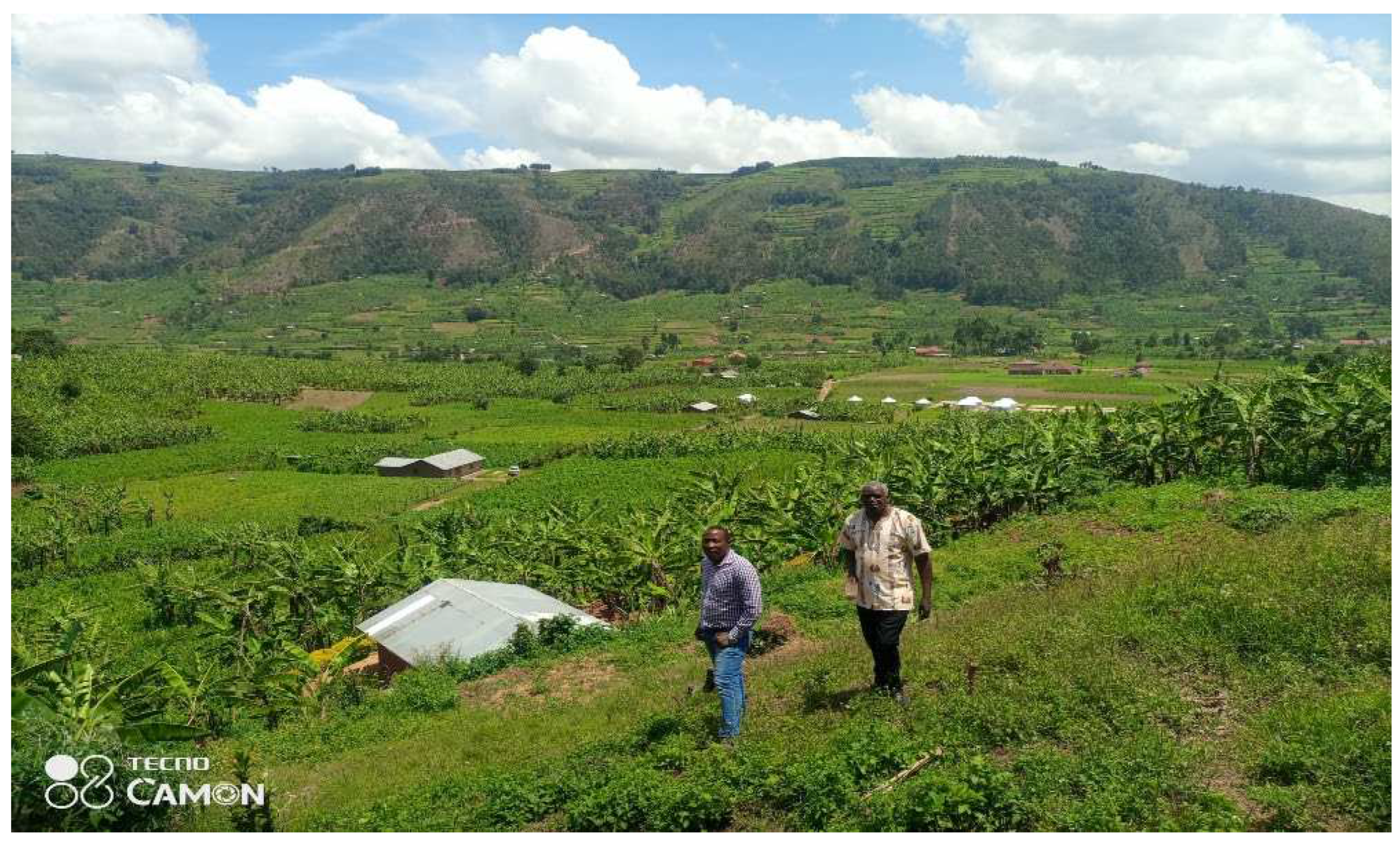
Figure 6.
Agriculture officer Rwamucucu Sub County takes the researcher through the village of Kabumbiro village, inspecting indigenous farming practices.
Figure 6.
Agriculture officer Rwamucucu Sub County takes the researcher through the village of Kabumbiro village, inspecting indigenous farming practices.
Disclaimer/Publisher’s Note: The statements, opinions and data contained in all publications are solely those of the individual author(s) and contributor(s) and not of MDPI and/or the editor(s). MDPI and/or the editor(s) disclaim responsibility for any injury to people or property resulting from any ideas, methods, instructions or products referred to in the content. |
© 2024 by the authors. Licensee MDPI, Basel, Switzerland. This article is an open access article distributed under the terms and conditions of the Creative Commons Attribution (CC BY) license (http://creativecommons.org/licenses/by/4.0/).
Copyright: This open access article is published under a Creative Commons CC BY 4.0 license, which permit the free download, distribution, and reuse, provided that the author and preprint are cited in any reuse.