

Submitted:
02 January 2024
Posted:
03 January 2024
You are already at the latest version
Abstract
The construction business environment is becoming competitive and intense, and Business Models (BMs) are receiving considerable attention as potential sources of sustainable survival and growth. Converse to the linear economy model that industry follows, the Circular Economy (CE) has the potential to create a sustainable construction industry, while creating a sustainable business environment in construction organisations. Nevertheless, in traditional BMs, value is often concentrated on the financial value for the stakeholders; in Circular Economy Business Models (CEBMs), value is seen more broadly by considering a comprehensive range of value chain partners, the environment, and the society. Hence, implementing CE in the construction industry requires reforms in each value chain. Thus, the aim of this paper is to develop a conceptual model for construction organisations' adoption of CEBMs for their organisations. To accomplish the aim, the objectives of this paper are twofold: (i) to define the concept of CEBMs, and (ii) to map the Conceptual CEBMC (Circular Economy Business Model Canvas) as applicable in the construction organisational context. This research adopted a systematic document review, including a content analysis of selected papers. The study contributes significantly by proposing a CEBMC, in which construction organisations could successfully transform their businesses from linear to circular environments.
Keywords:
Circular Economy
; Business Models
; Construction
; Value Chains
1. Introduction
A Business Model (BM) is a sustainable way of doing business [1]. BM concepts build upon central ideas in business strategy and its associated theoretical traditions [2,3]. However, while the strategy emphasises competition, BMs are built more on creating value for customers [3]. Current BM literature sees the concept as an essential part of successful organisations, as its primary purpose is to separate an organisation from others and give it an advantage over its competitors [3,4]. One of the first authors to discuss the concept of BMs was [5], and he identified multiple emerging internet-based BMs and mapped them along two dimensions: their degree of innovation and extent of functional integration [6]. Further to the authors, BMs have often been used in generating and articulating plans to make money through innovations or specific technologies.
In addition to its ties with strategy, BMs relate to the value chain concept [7] and the extended notions of value systems, such as the choice of value configuration [6]. According to Ahmed and Zhang [8], value is the additional financial advantages offered to customers, such as lowering costs or enhancing productivity over a specific period. There exist cases where some businesses are more profitable than others in the same industry, even though they apply the same strategy [1]. This implies that the BM differs from a competitive strategy and the reason could be the additional focus on value. The BMs are always discussed as utilising the value chain concept and the ultimate goal of BMs is to generate value for the value chain partners. Foss and Saebi [9] defined a BM as a system of interconnected and interdependent activities that determines the way the company does business with its customers, partners, and vendors. However, there is no generally agreed-upon definition. Many contributors to the literature define BMs in terms of the organisation’s value proposition and market segments; the structure of the value chain required for realising the value proposition; the mechanisms of value capture that the organisation deploys; and, how these elements are linked together in an architecture.
As the construction business environment becomes increasingly competitive and intense, BMs are receiving considerable attention as potential sources of sustainable survival and growth [10]. The construction industry’s traditional linear BMs of ‘take, make, and dispose’ are being challenged in practice due to the increased market demands and the political agenda that points towards sustainable and circular practices [11]. In the construction industry context, its value chain rigidly adheres to the linear model. This entails the extraction of materials without consideration for regeneration; the processing of these materials into construction products; and, their subsequent assembly at the construction site in a manner that does not promote regenerative or restorative practices [12]. This process often results in the generation of significant waste [13] and the emission of pollutants throughout the entirety of the value chain [14]. Jansen, van Stijn [15] opined that the Circular Economy (CE) model provides a step change towards a sustainable built environment by enhancing resource efficacy and efficiency; cutting waste and resource consumption; and lessening environmental impact. CE is a regenerative system that minimises resource inputs, waste generation, emissions, and energy leakage by decelerating, closing, and refining material and energy cycles [16]. While this notion is new to construction industry which often follow conventional linear economies, ‘circular value' should be understood more comprehensively by encompassing a broader array of stakeholders participating in the value chain and particularly concerning environmental and social aspects [17]. Successful implementation of CE in the construction industry requires reforms in each value chain, starting from design of BMs to developing new customer values and habits [18].
In construction, the main contractors manage one or several phases of a construction project, while handling complex supply chain processes and directly engaging with multiple stakeholders. Hence, construction organisations have a significant role in implementing circularity in the industry by implementing appropriate BMs in their organisations. Further, the BMs applicable to construction organisations differ from organisations in other sectors as the construction industry is unique due to its project-based nature. Therefore, adopting CE in construction organisations takes a different perspective from that of other organisations. This necessitates defining Circular Economy Business Models (CEBMs) and mapping a conceptual model for applicable in the construction organisational context. Hence, this study aims to develop a conceptual model for construction organisations' adoption of CEBMs for their organisations, by first defining the concept of CEBMs in construction and, next, by developing a Conceptual Circular Economy Business Model Canvas (CEBMC) applicable in the construction organisational context. However, the studies have yet to identify the CEBMs in the construction organisational perspective to transform organisations from linear to circular, while achieving circularity value to gain a competitive advantage. Therefore, this study defines CEBMs and identifies them from a construction organisational perspective. This paper consists of a few sections: introduction to CEBMs, materials and methods, analysis and discussion, and two sections, defining CEBMs and mapping the CEBMC for construction organisations, conclusion, and references.
2. Materials and Methods
This paper focuses on defining CEBMs for construction organisations and mapping CEBMC for construction organisations. To fulfil this, a broad review of the existing studies on the subject area is required, which suits a systematic literature review for the study. A Systematic Literature Review is a research methodology to collect, identify, and critically analyse the available research studies (e.g., articles, conference proceedings, books, dissertations) through a systematic procedure [19]. Further, a systematic literature review updates the reader with current literature about a subject. Systematic reviews and meta-analyses are rigorous studies used to collate all available empirical evidence that conforms to a predefined set of eligibility criteria to address a specific hypothesis [20]. A systematic literature review requires following a protocol that comprehensively achieves the aim of the systematic literature review. Defining the protocol is the first step of a systematic literature review, since it describes the procedures involved in the review and acts as a log of the activities to be performed [21]. The Preferred Reporting Items for Systematic Reviews and Meta-Analyses (PRISMA) 2020 protocol was followed to conduct the systematic reviews. The overall goal of the PRISMA statement is to improve the transparency and the scientific merit of a reported systematic review or meta-analysis [20]. The PRISMA 2020 statement has been designed primarily for systematic reviews of studies that evaluate the effects of health interventions, irrespective of the design of the included studies [22].
For the systematic literature review, the main search string used was “circular economy” OR “circularity” AND “Business Models” AND “construction”. CE and circularity were identified as synonyms through the literature findings, and for the BMs, synonyms were not identified. Even though the value chain could be considered as a synonym, some studies have denied the similarity between the two concepts. When searching the articles, it was not limited to the ‘construction organisations’. It used the word construction as most studies have not explicitly focused on the organisational context, when defining the BMs.
An initial search using Scopus and Web of Science databases was done for titles, abstracts and keywords from articles (Journal papers, conference proceedings, book chapters and books) published from 2004 to 2023. The first comprehensive paper on CE was identified in 2004, which was the reason for limiting the duration to start from 2004. After removing the duplications, 186 studies were identified. Subsequently, after initial screening processes (excluding irrelevant articles after abstract reading, review articles and articles published not in English), 88 articles were considered for bibliometric analysis. Subsequently, after applying screening criteria, 46 articles were considered for content analysis. Six out of these 46 articles were considered to develop the conceptual CEBMC for construction organisations. Since these were based on other industries, modifications were proposed based on construction-based BM literature. The step-by-step process of this systematic literature review is depicted in Figure 1.
3. Results and Discussion
This section comprises of two sections: bibliometric analysis and content analysis.
3.1. Bibliometric Analysis
3.1.1. Keyword Analysis
The network of co-occurrence keywords illustrates the connections between research subjects and connection frames. In VOSviewer, the minimum number of occurrences of a keyword was set to 3, and out of 524 keywords, 47 met the threshold with 5 clusters, 542 links, and a total link strength of 1125. Figure 2 illustrates the clusters of keywords. The strength of the link connecting two keywords indicates the number of articles in which the keywords appear together, showing the connection of their corresponding research focuses. The main occurring keywords identified from the network are “circular economy, construction industry, circular business models, sustainable development, recycling, lifecycle, industrial economics, and supply chain”. It was further identified that the ‘circular business models’ keyword is strongly linked with the circular economy, construction industry, construction companies, lifecycle, recycling, construction and demolition waste, supply chain management, product design, digitalisation, environment impact, life cycle assessment and buildings.
3.1.2. Analysis of Publication (By Country)
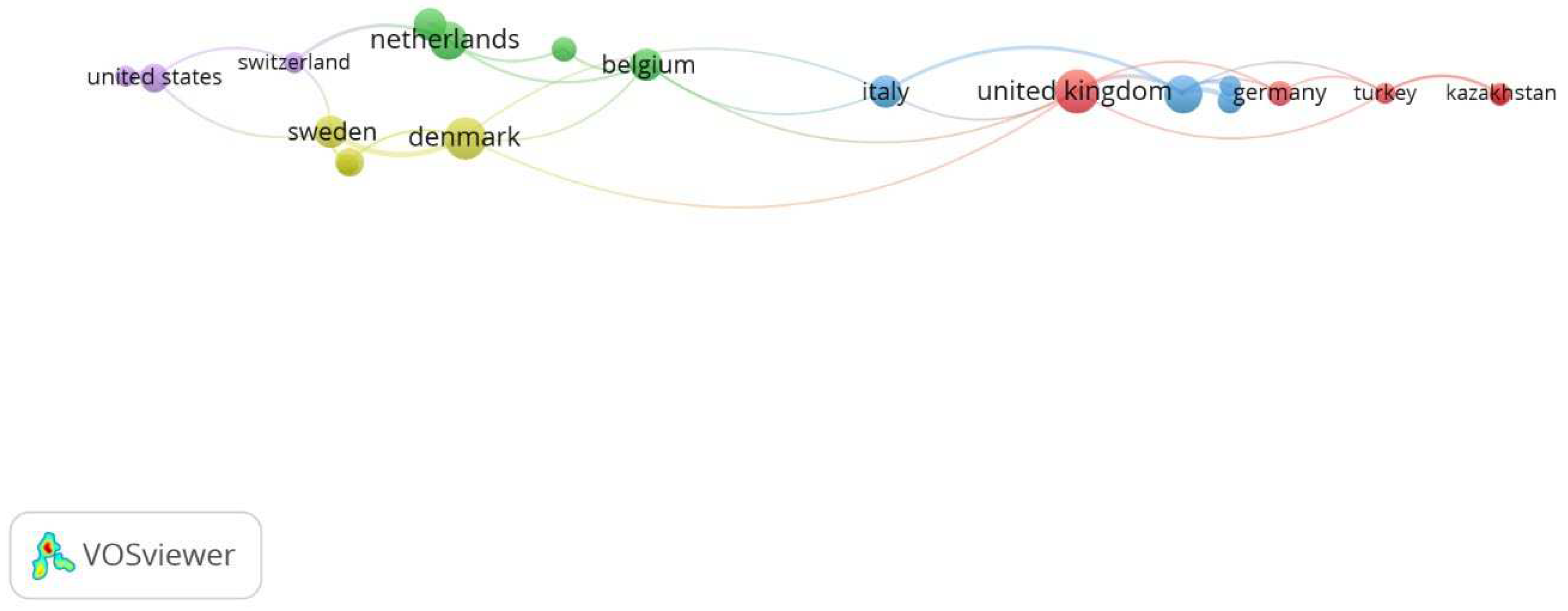
The minimum threshold for the number of documents and citations required for a country was set at '2' and '2', respectively. Out of the 63 countries, only 23 (36.5%) met these criteria. Among these 23 countries, only 20 were found to be connected, as depicted in Figure 3. In Figure 3, the size of the nodes corresponds to the number of publications, with larger nodes indicating a more significant contribution from that country. Six distinct scientific clusters are identified and represented by different colours. Countries such as the United Kingdom (UK), Denmark, Spain, Netherlands, Belgium, Italy and Australia have shown a relatively higher number of publications (more than 5). Regarding co-authorship, the UK, Spain, Turkey, Italy, Belgium, Denmark, Netherlands, Switzerland, Austria, Sweden, and Australia exhibit some level of collaboration. The UK and Denmark emerge as the most active countries in publication output and collaboration.
3.1.3. Evolution of the Number of Publications (Per Year)
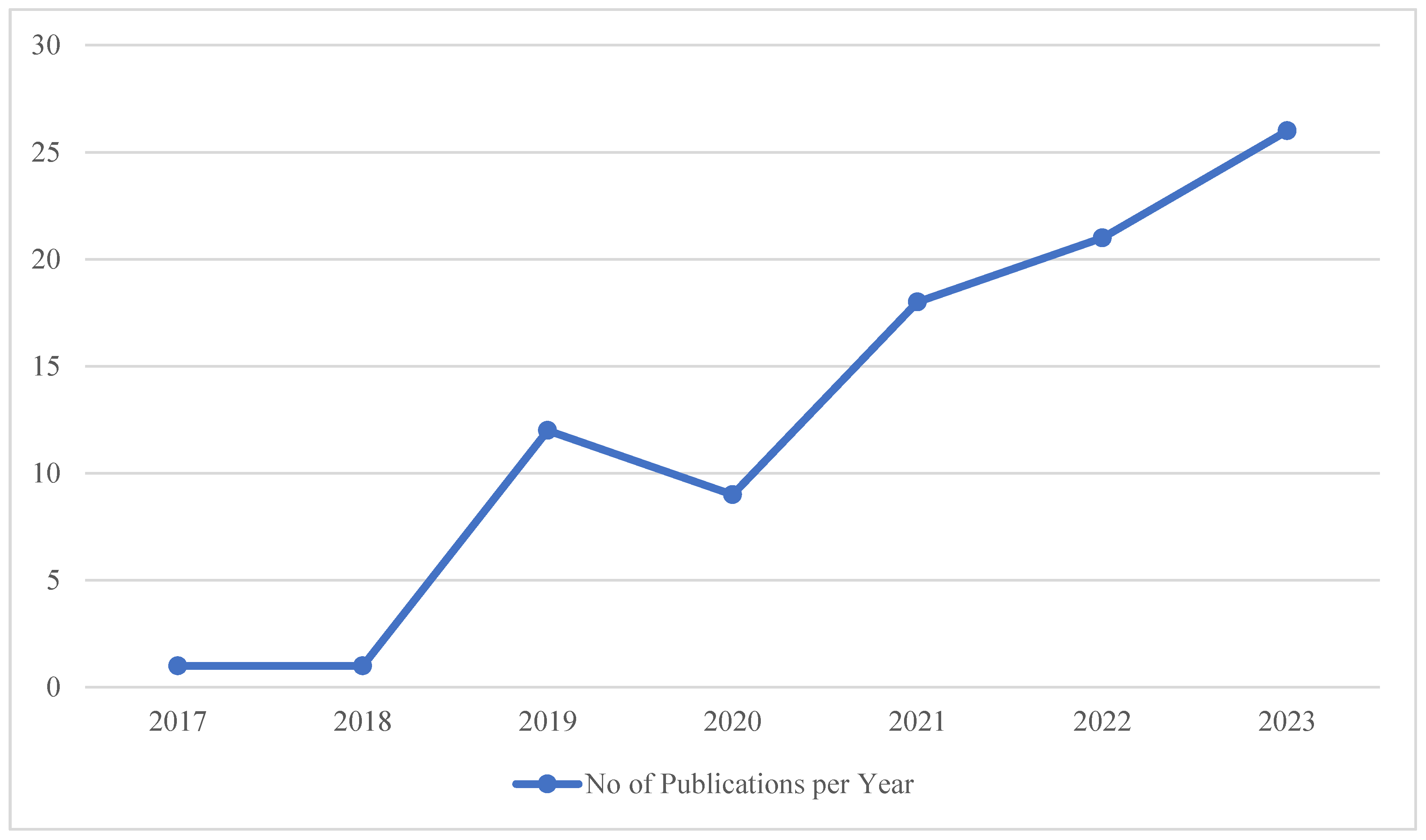
This study considered the articles published from 2004 to 2023. However, the articles relevant to CEBMs in the construction context were only evident in 2017. During the period considered, the total number of articles published was 88, with one article per year published in 2017 and 2018. Nevertheless, 12 articles were published in 2019. It was evident that nine articles were published in 2020. In 2021 and 2022, 18 and 21 articles were found, respectively. The number has been spotted to peak in 2023 with 26 articles. Until 2020, there was little progress in articles published on CEBMs in construction and the trend reflects that the number of published articles has dramatically increased after 2020.
Figure 4.
No of Publications per Year.
3.2. Content Analysis
3.2.1. Defining the Concept of CEBMs in Construction
By completing resource loops, CEBM offer a solution to achieve sustainability on the social, economic, and environmental fronts [23]. In traditional BMs, value is often concentrated on the financial value for the investor and customers in CEBMs. In current context, value is seen more broadly considering a more comprehensive range of value chain partners, the environment, and the society [24]. Hence, the transition to the CE requires new CEBMs, a more circular design, improved reverse cycles, and an enabling system [25]. Despite the construction industry's high levels of value creation and employment, the environmental impact must be minimised by applying the CE model at every stage, from planning and design through construction, to ensure better construction practises that result in fewer pollution issues [26].
In addition to defining BMs, several authors have attempted to determine and classify the elements constituting a BM. For instance, Shafer, Smith [27] studied 12 different definitions and identified 42 different components that they classified as strategic choices, creating and capturing value, and value networks. Hamel [28] has developed a framework that includes a customer interface, core strategy, strategic resources, and value network. Guerra, Shahi [29] have classified existing circular BMs into nine categories: product as a service, product life extension, circular supplies, waste as a resource, resource recovery, resell, sharing platforms, remanufacture, and repair. Mackenbach, Zeller [30] identified four circular BMs: repair and maintenance, refurbishment and reuse, product as a service, and upcycling, considering their applicability, adaptability, and usability in modular construction. It is necessary, for instance, to reconsider ownership by embracing novel ideas like product leasing or product-as-a-service [31,32] and to support supply-chain models that encourage stakeholder collaboration and value co-creation [33,34]. A circular value chain requires all stakeholders to contribute towards an outcome that achieves the best value for all parties, using components that retain the highest value throughout the lifecycle and minimise losses from the system [35].
Given the increasing emphasis on the value-centric approach of CE, there has been a persistent discourse regarding the imperative of integrating a value chain perspective into the implementation of CE, notwithstanding the perception of some distortion in this regard [14]. For example, the circular value chain is “a set of primary and support practices implemented by companies to enhance the regeneration and circularity of supply chain resources by developing resource value retention options” [36]. In the CE context, CEBM combines value propositions, interrelationships between elements, and strategies to find circular solutions based on intensification, dematerialisation, and closing, narrowing or slowing resource flows [37]. Similarly, a CEBM emanates from creating, diversifying, acquiring, or transforming BMs that deliver value proposition, creation, and capture solutions, while aligning to the CE principles [16,38]. [39] referred to the requirement of new CEBMs that support material prolonged life through maintenance. It has been established that the development and implementation of a CEBM is most successful, when conducted collaboratively with the value chain to optimise opportunities for value proposition and creation [40]. In line with the three-value concept proposed by [41], a CEBM aims to identify opportunities for circular value proposition, seize opportunities for circular value creation and maximise opportunities for value capture [42]. John, Adekunle [43] argued that adopting CE can be meaningful to organisations only if they perceive that the transition to CEBM can visibly result in organisations’ growth and value-driven competitiveness.
Pekuri, Pekuri [6] suggest that BMs in the construction industry should be studied and developed at the level of field of operation. Further, this would aid in understanding value creation in different construction projects and developing BMs that would better meet the needs of specific customers or market segments, while also providing a competitive edge for construction organisations. According to Carra and Magdani [35], the construction industry requires a focus on systemic thinking, which allows for understanding the whole life cycle of buildings and the construction value chain. As such, an integrated policy strategy to promote CE in the construction industry can benefit from a model explaining the multiple possible interlinkages, push effects and chain reactions among the multidimensional drivers and enablers [44]. According to Kjerulf [45], the future CEBM of larger contractor firms will probably include elements of the BMs ‘orchestrator’ and ‘inclusive value creation’ due to the increased need for coordination and early project involvement with multiple stakeholders in the value chain for the co-creation of long-term and valuable partnering agreements as well as par ticipation in new types of procurements. The study conducted by Munaro, Tavares [39] introduced a proposal of a CEBM framework that contributes to the CE theory by proposing different BMs according to building life cycle stages for different stakeholders. Carra and Magdani [35] have elaborated that maximising value in CEBMs of the construction industry should consider design requirements, information, and collaboration among stakeholders. Further, authors have explored CEBMs by relating their benefits to the construction value chain and grouped them according to the stages of a building’s life cycle. The articulation of the construct of CEBMs, innovation, resource recovery and value generation for businesses is precisely in line with the logic of circular transition via systematic transformation of production and consumption, in which value is created for businesses by changing the way resources are used [46]. However, BMs are innovative and evolve from time to time. Thus, The literature has often noted the need for innovative CEBMs in light of the BMs used in the construction industry [13,39].
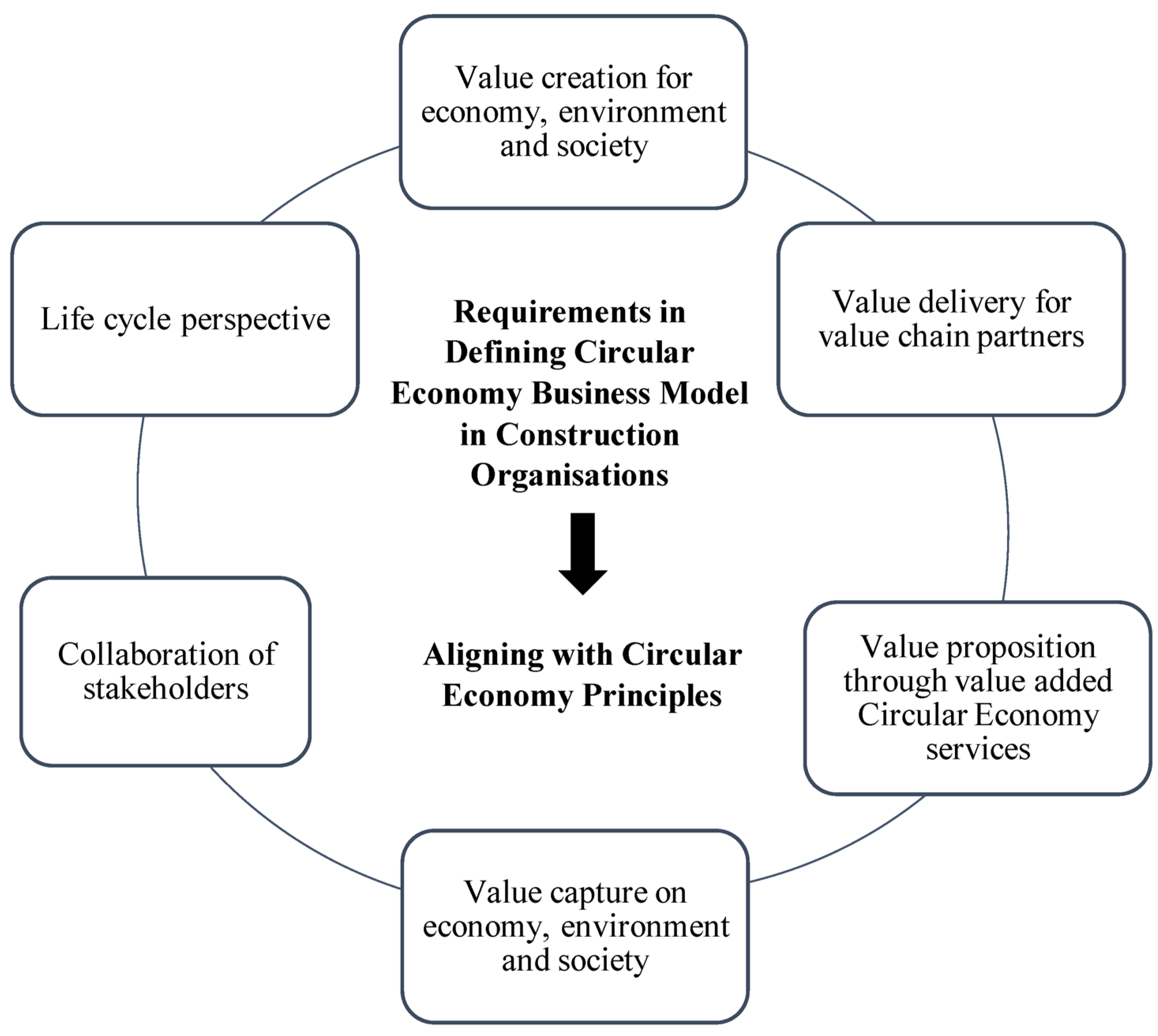
Johnson, Christensen [47] stated that a BM consists of four interlocking elements: value delivery, value capture, value proposition and value creation. Considering the preceding definitions and explanations, it was observed that none of the explanations have broadly explained the CEBMs in the construction context utilising the value chain concept, as some definitions define one or few elements of it. This creates a gap in defining the CEBMs in the construction context by emphasising the requirements of a BM. Based on the preceding discussions, Figure 1 depicts the elements of defining CEBM in the construction context.
Figure 5.
Requirements in Defining Circular Economy Business Model in Construction Organisations.
- Value Creation
Nowadays, in other sectors, BMs are widely used in managerial practice for designing, comparing and analysing an organisation’s value creation logic; it is a less discussed and researched concept in the construction field [48]. Current BM literature sees the concept as an essential part of a successful business, as its main purpose is to separate a company from others and to give it an advantage over its competitors [3,4]. The value creation of construction organisations mainly focuses on the value creation of the economy, environment, and society through construction projects. The construction organisations are mainly involved in construction projects' design and construction phases. Therefore, designing for circularity and utilising novel circular construction technologies create value for the organisation.
- Value proposition
Value proposition defines how items of value, such as products and services and complementary value-added services, are packaged and offered to fulfil customer needs [49]. Ibáñez-Forés, Alejandrino [50] have identified that circular services provided for the organisation, for instance, reverse logistics, promote/offer shared facilities or equipment as organisational indicators to assess CE. End of Life (EoL) strategies, after-sale services strategies in the design stage and after-handing and product as a service are key performance indicators to assess the CE in a construction project [51].
- Value delivery
Value delivery refers to outlines of the architecture of revenue costs and profit associated with the business enterprise delivering that value. The value delivery in the construction industry differs in terms of customer segments compared to the industry, as they typically represent the role of an order or investor and are, therefore, cost-intensive, few, and repeatable [45]. Therefore, value delivery is considered not only on financial value, but also economic and environmental value for the value chain partners involved in value chain processes.
- Value capture
The ability to capture value lies at the heart of BM design [52]. Although both value creation and value capture are required for achieving circular competitive advantage, value capture is never guaranteed. The source that creates a value increment from a given task, product, service, or activity may not necessarily succeed in capturing a majority of it in the long run or indeed much of the value creation potential may be destroyed or lost by lack of integration with the other building blocks of the BM [52]. Adopting CE in construction organisations gains financial, economic, and social value. Hence, several techniques need to be adapted to capture the value.
- Collaboration of stakeholders
Stakeholder collaboration is essential from the outset of a construction project. According to the explanation of Huovila and Westerholm [24], when designing for disassembly, cooperation between the designer and other value chain partners is crucial to ensure that the value of the materials will be retained, and this needs to be assessed. The collaboration will lead to effectively implementing the CEBM in an organisational context to gain maximum output.
- Life cycle perspective
Construction organisations are not involved in the whole life cycle of a building or infrastructure development. In the construction industry, among diversified organisations, main contractors manage one or several phases of the life cycle of construction projects [53]. However, the design and construction stages are crucial for the other lifecycle stages of the construction development. Therefore, BMs should consider the construction development life cycle, when adhering to the BMs.
All in all, CEBM in organisations can be defined as creating economic, social and environmental value for the whole life cycle of a construction development by collaborating with construction stakeholders, while delivering for value chain partners, rendering value-added services for clients and capturing value utilising suitable techniques.
3.2.2. Mapping the Conceptual Circular Economy Business Model Canvas for Construction Organisation
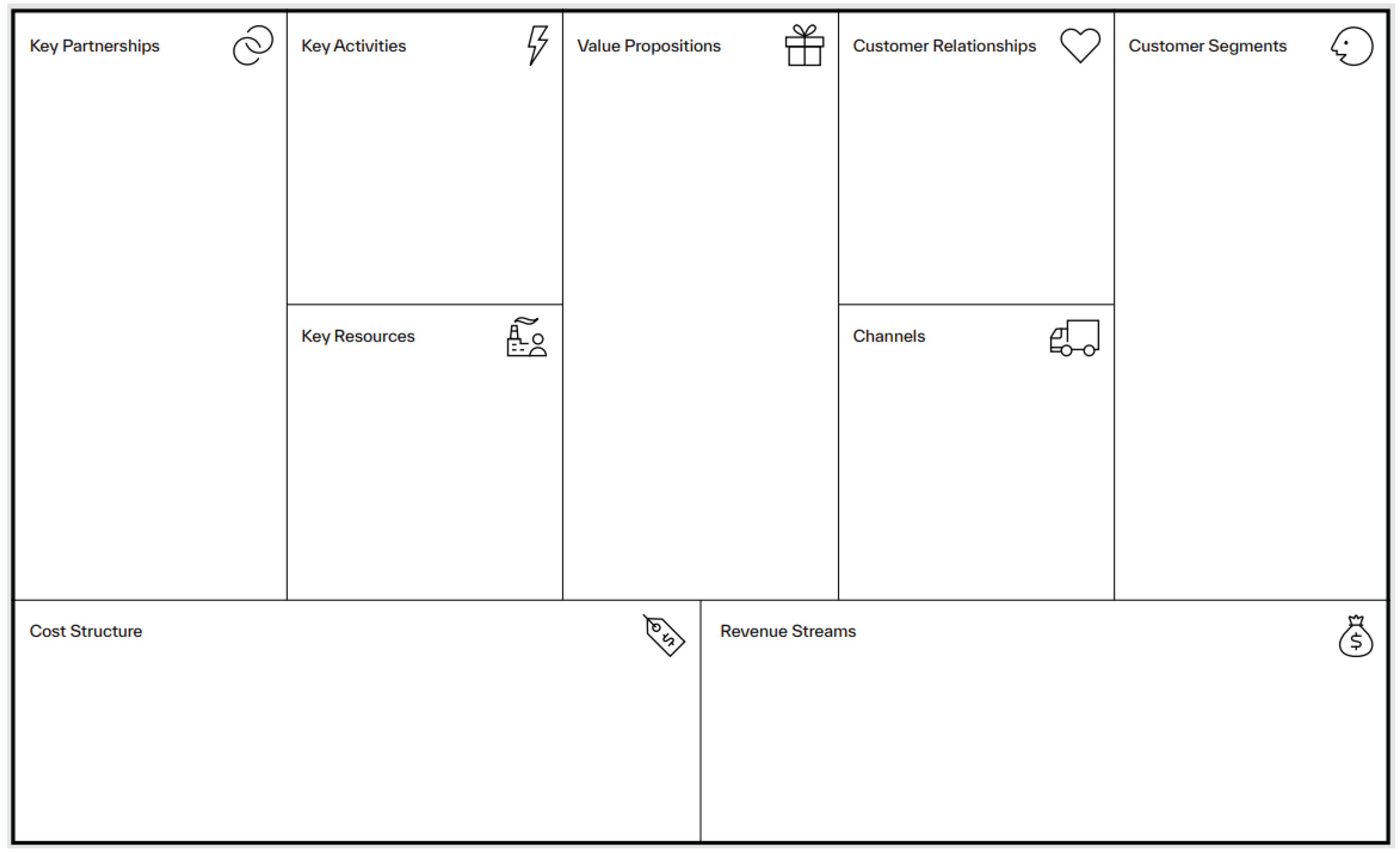
Researchers and practitioners have explored and illustrated the architecture of CEBMs from different perspectives [54]. The most commonly used classification approaches are the ReSOLVE framework [55], CEBM strategies [42] CEBM scan [56]. While the theoretical importance of CEBMs to the CE transition is well recognised, more understanding of their application is required [40]. Further, various alternative frameworks could have been chosen to define the value chain of CE, such as McKinsey's 7S framework, the Business Model Canvas (BMC), or the Strategy Diamond [57,58,59]. Among the BMs, the researchers have widely used the BM canvas as a tool developed by Osterwalder and Pigneur [60]. BMC makes the BM simple and easily understood, while capturing the complexities of how enterprises function. Therefore, it makes a valuable tool for understanding an enterprise's BM and conducting BM innovation [61]. The BMC can help users visually represent the elements of a BM and the potential interconnections and impacts on value creation. As a visual tool, the BMC can facilitate discussion, debate, and exploration of potential innovations to the underlying BM. Users develop a more systemic perspective of an organisation and highlight its value-creating impacts [62]. Authors have further explained that the BMC developed by [58], has been widely adopted by practitioners, as depicted in Figure 10. This BMC includes nine building blocks: key partners, key activities, value proposition, customer relationships, customer segments, essential resources, channels, cost structure, and revenue stream.
Figure 6.
Traditional BM Canvas. Source: Osterwalder and Pigneur [58].
Figure 6.
Traditional BM Canvas. Source: Osterwalder and Pigneur [58].
While the BMC gives an architecture of what the business is expected to do at a given point in time, it is often reduced to a checklist and does not build a story of ‘how’ an organisation can transform their operations, processes and capabilities [63,64]. Coes [63] stated that the BMC did not aid in understanding organisational capabilities, which is a significant aspect of business transformation. While the BMC effectively understands the transformation of BMs, it cannot guide the organisation to transform from an initial state to the desired state.
It was argued that the structure of a traditional BMC needs to have the ability to address the systemic context of a CEBM sufficiently by being organisation-centric [65]. Despite its limitations, several authors have proposed modifications to the BMC structure and its core components, resulting in multiple representations of the CEBMC. Lewandowski [66] adapted its components and extended it by adding two further elements: ‘take-back-system’ and ‘adoption factor’. Hina, Chauhan [67] developed an actor-network theory-based framework for the transition to CEBM implementation by highlighting the importance of value proposition. Equally, Braun, Schöllhammer [68] explored the notion of value creation from the cascading hierarchy of resource loops by incorporating a cycle of recovery into their CEBMC and offering new components linked to recovery and value. Daou, Mallat [69] proposed new components to the BMC structure to account for foresight into external factors that may influence a business's operating environment and future scenarios. Relatedly, Pollard, Osmani [70] positioned the development of a CEBMC for product manufacturers in the electrical and electronic sector as a layer in a larger framework connected to internal and external factors, including CEBM opportunities and barriers. Islam and Iyer-Raniga [60] have developed a CEBM value dimensions canvas. To understand and redesign the core elements and structure of a CEBM, such canvas must be modified by including the CEBM and sustainability concepts, strategies, archetypes, and value dimensions [60]. For example, the reverse logistics perspective needs to be more present in the traditional BMC, as it only focuses on the forward supply chain rather than recovery sides under the building block of the (distribution) channels.
According to [71], the conventional BMC was designed for something other than CEBM visualisation. The study’s authors argued that there is a need to develop a framework for Business Modelling that could influence CE strategies in business as opposed to traditional BMC, as it mainly depicts the linear BM. To understand and redesign the core elements and structure of a CEBM, such canvas must be modified by including the CEBM and sustainability concepts, strategies, archetypes, and value dimensions [60]. Further to the authors, in this connection, using value dimensions as part of BM innovation. The transformation can affect the entire BM or individual or a combination of its value proposition, value creation and delivery, value capture elements, the interrelations between the elements, and the value network”.
By comparing and contrasting the developed CEBMC in the existing studies, this study has mapped the conceptual CEBMC for construction organisations, including 15 building blocks as offered in Figure 6. In the figure, the legend indicates the unchanged building blocks, modified building blocks and newly added building blocks compared to Osterwalder and Pigneur [58]. The explanation on each building block of the CEBMC for construction organisations is explained in the below points.
Figure 7.
Conceptual Circular Economy Business Model Canvas for Construction Organisations.
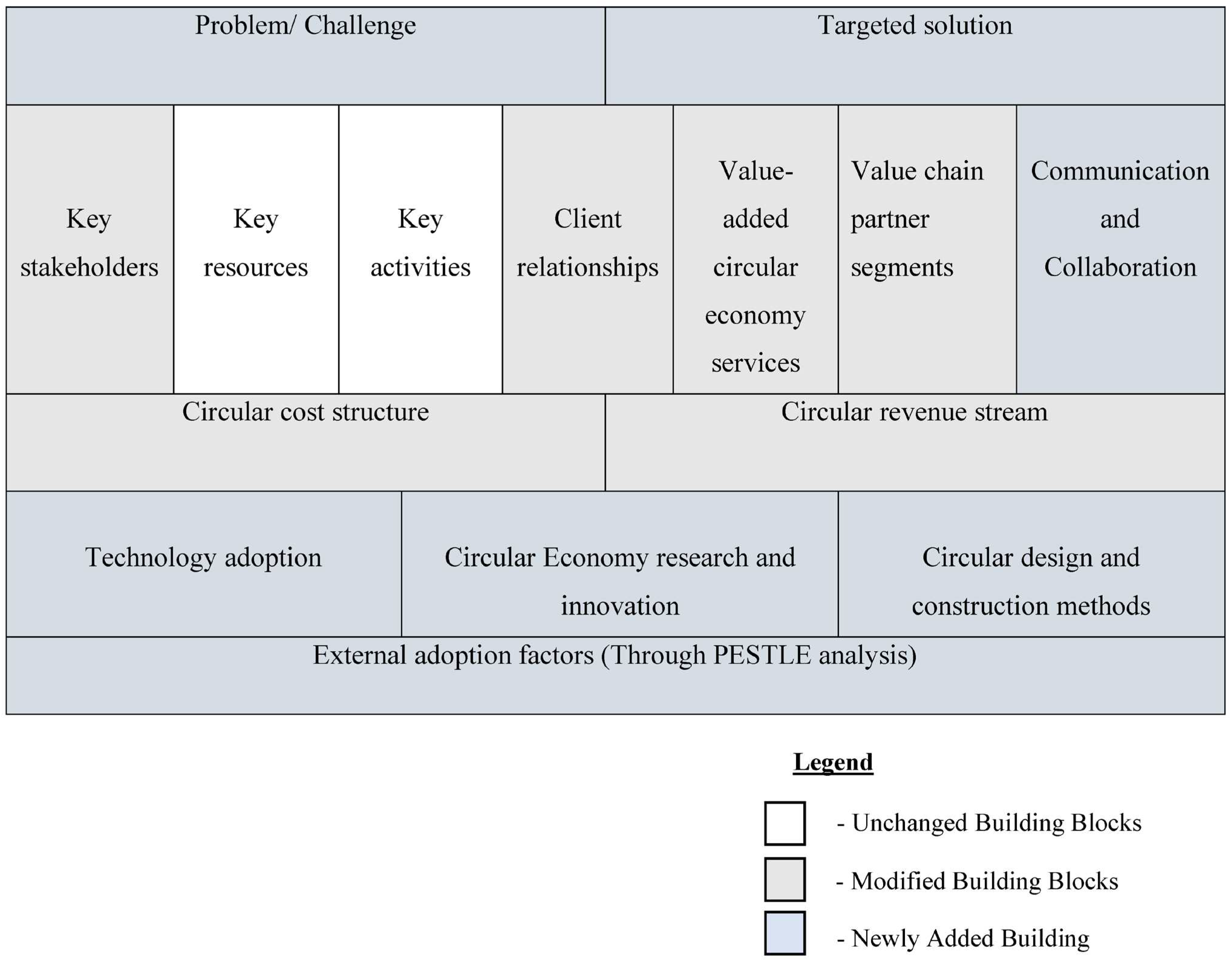
- Problem/Challenge: The problem that organisation is currently facing on due to the adoption of linear economy practices.
- Targeted Solution: The level of circularity that organisations is expected to achieve.
- Value chain partner segments: The different value chain partners expects different values from the organisations. Hence segmentation need to be properly done the value delivering.
- Client relationship: Client acceptability, interest, and complaints to the circularity
- Communication and collaboration: Communication and collaboration covers community of circularity adoption of society and community engagement to the organisational CE activities.
- Value added CE services: Value added services constitute the value-added services for instance, reverse logistics, sharing economy, dematerialisation, product as a service and product life extension.
- Key stakeholders: Key stakeholders covers the different parties involved in the construction process and their collaboration to achieve the circularity.
- Key resources: Key resources covers the supply chain process including the eco-supplier and material selection and utilisation to the construction process.
- Key activities: Key activities covers value chain process mapping for instance the main, supportive and management activities of the organisations towards the CE.
- Circular cost structure: The circularity cost covers the economic, social, and economic costs in the organisations.
- Circular revenue stream: The circularity revenue streams cover the economic, social and economic costs in the organisation.
- Technology adoption: Technology adoption comprises adopted technologies to achieve the circularity in the organisation.
- CE research and innovation: CE research and innovation organisational research and innovation to achieve the higher circularity.
- Circular design and construction: Circular design and construction covers the adoption of novel techniques building/ infrastructure design or construction achieve a higher circularity.
- External adoption factors (Through PESTLE analysis): External adoption factors covers the political, economic social, technology, legal and environment forces impacting on the CE adoption process of the organisation.
4. Conclusion
Construction organisations are unique due to their project-based nature compared to organisations in other sectors. Further BMs in the organisations adhere to the linear economy models. To achieve the aim of this study, the objectives accomplished for the study were: (i) to define the concept of CEBMs in construction organisational context, and (ii) to map the Conceptual CEBMC applicable in the construction organisational context through a systematic literature review. As the first step, a bibliometric analysis was conducted comparing key word analysis, analysis of publications (by country) and publication trend per year. The keyword analysis identified that circular BMs are strongly connected with the circular economy, construction industry, construction companies, lifecycle, recycling, construction and demolition waste, supply chain management, product design, digitalisation, environment impact, life cycle assessment and buildings. The publication analysis by country shows that the UK and Denmark are the most published articles in the world. Considering the publication trend, 26 articles were spotted in 2023, which is the peak year compared to the other years.
As the subsequent step, a content analysis was carried out to define the concept of CEBMs in the construction organisational context and to map the CEBMC for construction organisations. Value creation for economy, environment, and society; Value delivery for value chain partners; Value proposition through value-added Circular Economy services; Value capture on economy, environment and society; Collaboration of stakeholders; and, Life cycle perspective were identified as the requirements in defining the CEBMs in construction organisational context. Based on the requirements, the study has proposed a comprehensive definition. Finally, a conceptual CEBMC was developed for construction organisations comprising of 15 building blocks. This was developed based on the CEBMCs developed for other industries originating from the traditional BM and, also by linking existing literature findings on CEBMs in the construction context.
Overall, this study provides significant knowledge for construction industry practitioners to adapt CEBMC for their organisations to transform from a linear to a circular model. The next stage of this research will be to confirm the developed CEBMC with industry experts to build a comprehensive CEBMC for construction organisations. This research will contribute to transforming the construction industry into a circular economy and minimising its adverse effects on society, economy and environment while reaching several of the United Nations Sustainability Goals (UNSDGs).
Author Contributions
"Conceptualization, Shashini Jayakodi. and Sepani Senaratne; Methodology, Shashini Jayakodi; Software, Shashini Jayakodi; Validation, Sepani Senaratne, and Srinath Perera; Formal Analysis, Shashini Jayakodi, and Sepani Senaratne; Investigation, Shashini Jayakodi; Resources, Sepani Senaratne, and Srinath Perera; Data Curation, Shashini Jayakodi, and Sepani Senaratne; Writing – Shashini Jayakodi; Writing – Review & Editing, Sepani Senaratne; Visualization, Shashini Jayakodi; Supervision, Sepani Senaratne, and Srinath Perera; Project Administration, Sepani Senaratne; Funding Acquisition, Sepani Senaratne”.
Conflicts of Interest
"The authors declare no conflict of interest.".
References
- Nielsen, C. and M. Lund, An introduction to business models, in The basics of business models. 2014, Ventus. p. 8-20.
- Hedman, J. Hedman, J. and T. Kalling, The business model concept: theoretical underpinnings and empirical illustrations. European journal of information systems, 2003. 12(1): p. 49-59. [CrossRef]
- Morris, M., M. Schindehutte, and J. Allen, The entrepreneur's business model: toward a unified perspective. Journal of business research, 2005. 58(6): p. 726-735. [CrossRef]
- Teece, D.J., Business models, business strategy and innovation. Long range planning, 2010. 43(2-3): p. 172-194.
- Timmers, P., Business models for electronic markets. Electronic markets, 1998. 8(2): p. 3-8. [CrossRef]
- Pekuri, A., L. Pekuri, and H. Haapasalo, The role of business models in Finnish construction companies. Australasian Journal of Construction Economics and Building, The, 2013. 13(3): p. 13-23. [CrossRef]
- Porter, M.E., Competitive advantage of nations: creating and sustaining superior performance. 1985: simon and schuster.
- Ahmed, R.R. and X. Zhang, Multi-layer value stream assessment of the reverse logistics network for inert construction waste management. Resources, Conservation and Recycling, 2021. 170: p. 105574. [CrossRef]
- Foss, N.J. and T. Saebi, Fifteen years of research on business model innovation: How far have we come, and where should we go? Journal of management, 2017. 43(1): p. 200-227. [CrossRef]
- Jang, Y., et al., Business models and performance of international construction companies. Sustainability, 2019. 11(9): p. 2575. [CrossRef]
- Kjerulf, L. and K. Haugbølle. Theoretical Framework of Circular Business Model Innovation for Building Contractors. in Nordic Conference on Construction Economics and Organization. 2022. Springer.
- Bocken, N.M. , et al., Taking the circularity to the next level: a special issue on the circular economy. 2017, Wiley Online Library. p. 476-482. [CrossRef]
- Benachio, G.L.F., M.d.C.D. Freitas, and S.F. Tavares, Circular economy in the construction industry: A systematic literature review. Journal of cleaner production, 2020. 260: p. 121046. [CrossRef]
- Dewagoda, S.T. Ng, and J. Chen, Driving systematic circular economy implementation in the construction industry: A construction value chain perspective. Journal of Cleaner Production, 2022. 381: p. 135197. [CrossRef]
- Jansen, B.W., et al., A circular economy life cycle costing model (CE-LCC) for building components. Resources Conservation and Recycling, 2020. 161. [CrossRef]
- Geissdoerfer, M., et al., The Circular Economy–A new sustainability paradigm? Journal of cleaner production, 2017. 143: p. 757-768. [CrossRef]
- Nußholz, J.L. , et al., Material reuse in buildings: Implications of a circular business model for sustainable value creation. Journal of Cleaner Production, 2020. 245: p. 118546. [CrossRef]
- Tomaszewska, J. , Polish transition towards circular economy: Materials management and implications for the construction sector. Materials, 2020. 13(22): p. 5228. [CrossRef]
- Carrera-Rivera, A. , et al., How-to conduct a systematic literature review: A quick guide for computer science research. MethodsX, 2022. 9: p. 101895. [CrossRef]
- Sohrabi, C. , et al., PRISMA 2020 statement: What's new and the importance of reporting guidelines. 2021, Elsevier. p. 105918. [CrossRef]
- Kitchenham, B. , et al., Systematic literature reviews in software engineering–a systematic literature review. Information and software technology, 2009. 51(1): p. 7-15. [CrossRef]
- Page, M.J. , et al., The PRISMA 2020 statement: an updated guideline for reporting systematic reviews. International journal of surgery, 2021. 88: p. 105906.
- Piispanen, V.-V. , et al., Sustainable Circular Economy in the Wood Construction Industry: A Business Opportunity Perspective. South Asian Journal of Business and Management Cases, 2022. 11(1): p. 27-34. [CrossRef]
- Huovila, P. and N. Westerholm. Circularity and sustainability in the construction value chain. in IOP Conference Series: Earth and Environmental Science. 2022. IOP Publishing. [CrossRef]
- Pollard, J. , et al., Implementing a circular economy business model canvas in the electrical and electronic manufacturing sector: A case study approach. Sustainable Production and Consumption, 2023. 36: p. 17-31. [CrossRef]
- Poolsawad, N. , et al., Material circularity indicator for accelerating low-carbon circular economy in Thailand's building and construction sector. Environmental Progress & Sustainable Energy, 2023. 42(4). [CrossRef]
- Shafer, S.M., H. J. Smith, and J.C. Linder, The power of business models. Business horizons, 2005. 48(3): p. 199-207. [CrossRef]
- Hamel, G. , Leading the revolution: An interview with Gary Hamel. Strategy & Leadership, 2001. 29(1): p. 4-10. [CrossRef]
- Guerra, B.C. , et al., Circular economy applications in the construction industry: A global scan of trends and opportunities. Journal of cleaner production, 2021. 324: p. 129125. [CrossRef]
- Mackenbach, S., J. Zeller, and R. Osebold. A roadmap towards circularity-modular construction as a tool for circular economy in the built environment. in IOP Conference Series: Earth and Environmental Science. 2020. IOP Publishing. [CrossRef]
- Hartwell, R., S. Macmillan, and M. Overend, Circular economy of façades: real-world challenges and opportunities. Resources, Conservation and Recycling, 2021. 175: p. 105827. [CrossRef]
- Çimen, Ö. , Construction and built environment in circular economy: A comprehensive literature review. Journal of cleaner production, 2021. 305: p. 127180. [CrossRef]
- Hossain, M.U. , et al., Circular economy and the construction industry: Existing trends, challenges and prospective framework for sustainable construction. Renewable and Sustainable Energy Reviews, 2020. 130: p. 109948. [CrossRef]
- Machado, N. and S.N. Morioka, Contributions of modularity to the circular economy: A systematic review of literature. Journal of Building Engineering, 2021. 44: p. 103322. [CrossRef]
- Carra, G. and N. Magdani, Circular business models for the built environment. Arup BAM, 2017: p. 1-44.
- Muller, L.N.P.e.S., I. Delai, and R.L.C. Alcantara, Circular value chain practices for developing resource value retention options. Journal of Cleaner Production, 2022. 359: p. 131925. [CrossRef]
- Geissdoerfer, M., D. Vladimirova, and S. Evans, Sustainable business model innovation: A review. Journal of cleaner production, 2018. 198: p. 401-416. [CrossRef]
- Linder, M. and M. Williander, Circular business model innovation: inherent uncertainties. Business strategy and the environment, 2017. 26(2): p. 182-196. [CrossRef]
- Munaro, M.R., S. F. Tavares, and L. Bragança, Towards circular and more sustainable buildings: A systematic literature review on the circular economy in the built environment. Journal of cleaner production, 2020. 260: p. 121134. [CrossRef]
- Urbinati, A. , et al., Circular business models in the European manufacturing industry: A multiple case study analysis. Journal of cleaner production, 2020. 274: p. 122964. [CrossRef]
- Richardson, J.E. , The business model: an integrative framework for strategy execution. Available at SSRN 932998, 2005.
- Bocken, N.M. , et al., Product design and business model strategies for a circular economy. Journal of industrial and production engineering, 2016. 33(5): p. 308-320. [CrossRef]
- John, I.B., S. A. Adekunle, and C.O. Aigbavboa, Adoption of Circular Economy by Construction Industry SMEs: Organisational Growth Transition Study. Sustainability, 2023. 15(7): p. 5929. [CrossRef]
- Wuni, I.Y. , Drivers of circular economy adoption in the construction industry: a systematic review and conceptual model. Building Research & Information, 2023: p. 1-18. [CrossRef]
- Kjerulf, L. Theoretical Framework of Circular Business Model Innovation for Building Contractors Lin Kjerulf and Kim Haugbølle. in SDGs in Construction Economics and Organization: The 11th Nordic Conference on Construction Economics and Organisation (CREON), May 18-20, 2022. 2023. Springer Nature. 18 May. [CrossRef]
- Kuzma, E. and S. Sehnem, Validation of the Measurement Scale for the Circular Economy: a proposal based on the precepts of innovation. Kuzma, E., & Sehnem, S.(2022). Validation of the Measurement Scale for the Circular Economy: a proposal based on the precepts of innovation. International Journal of Professional Business Review, 2021. 7(1): p. e0278.
- Johnson, M.W., C. M. Christensen, and H. Kagermann, Reinventing your business model. Harvard business review, 2008. 86(12): p. 50-59.
- Pekuri, A., L. Pekuri, and H. Haapasalo. Business models in construction companies–construction managers’ viewpoint. in Conference: TIIM2013, Thailand. 2013.
- Osterwalder, A. and Y. Pigneur. Modeling value propositions in e-Business. in Proceedings of the 5th international conference on Electronic commerce. 2003.
- Ibáñez-Forés, V. , et al., Prioritising organisational circular economy strategies by applying the partial order set theory: Tool and case study. Journal of Cleaner Production, 2023. 406. [CrossRef]
- Antwi-Afari, P. , et al., Enhancing life cycle assessment for circular economy measurement of different case scenarios of modular steel slab. Building and Environment, 2023. 239: p. 110411. [CrossRef]
- Hopkinson, P., R. De Angelis, and M. Zils, Systemic building blocks for creating and capturing value from circular economy. Resources, Conservation and Recycling, 2020. 155: p. 104672. [CrossRef]
- Núñez-Cacho, U.P., J. Górecki, and J.M. Maqueira, Simulation-Based Management of Construction Companies under the Circular Economy Concept—Case Study. Buildings, 2020. 10(5). [CrossRef]
- Woldeyes, T.D., M. Muffatto, and F. Ferrati. Archetypes of Business Models for Circular Economy: A Classification Approach and Value Perspective. in International Conference on Sustainable Design and Manufacturing. 2022. Springer.
- Foundation, E.M. , Delivering the circular economy: A toolkit for policymakers. 2015: Ellen MacArthur Foundation.
- Renswoude, K.v., A.t. Woldeyes, and D.J. Joustra, Circular Business Models – Part 1: An introduction to IMSA’s circular business model scan. 2015.
- Hambrick, D.C. and J.W. Fredrickson, Are you sure you have a strategy? Academy of Management Perspectives, 2005. 19(4): p. 51-62.
- Osterwalder, A. and Y. Pigneur, Business model generation: a handbook for visionaries, game changers, and challengers. Vol. 1. 2010: John Wiley & Sons.
- Peters, T.J. and R.H. Waterman, In search of excellence. Nursing Administration Quarterly, 1984. 8(3): p. 85-86.
- Islam, M.T. and U. Iyer-Raniga, Circular Business Model Value Dimension Canvas: Tool Redesign for Innovation and Validation through an Australian Case Study. Sustainability, 2023. 15(15): p. 11553. [CrossRef]
- Qastharin, A.R. , Business model canvas for social enterprise. Journal of Business and Economics, 2016. 7(4): p. 627-637.
- Joyce, A. and R.L. Paquin, The triple layered business model canvas: A tool to design more sustainable business models. Journal of cleaner production, 2016. 135: p. 1474-1486. [CrossRef]
- Coes, D. , Critically assessing the strengths and limitations of the Business Model Canvas. 2014, University of Twente.
- Widmer, T., Assessing the strengths and limitations of Business Model Frameworks for Product Service Systems in the Circular Economy: Why Canvas and co. are not enough. 2016.
- Fehrer, J.A. and H. Wieland, A systemic logic for circular business models. Journal of Business Research, 2021. 125: p. 609-620. [CrossRef]
- Lewandowski, M. , Designing the business models for circular economy—Towards the conceptual framework. Sustainability, 2016. 8(1): p. 43. [CrossRef]
- Hina, M. , et al., Drivers and barriers of circular economy business models: Where we are now, and where we are heading. Journal of Cleaner Production, 2022. 333: p. 130049. [CrossRef]
- Braun, A.-T., O. Schöllhammer, and B. Rosenkranz, Adaptation of the business model canvas template to develop business models for the circular economy. Procedia Cirp, 2021. 99: p. 698-702. [CrossRef]
- Daou, A. , et al., The Ecocanvas as a business model canvas for a circular economy. Journal of Cleaner Production, 2020. 258: p. 120938. [CrossRef]
- Pollard, J. , et al., A circular economy business model innovation process for the electrical and electronic equipment sector. Journal of Cleaner Production, 2021. 305: p. 127211. [CrossRef]
- Salvador, R. , et al., Explaining sustainability performance and maturity in SMEs–Learnings from a 100-participant sustainability innovation project. Journal of Cleaner Production, 2023. 419: p. 138248. [CrossRef]
Figure 1.
Systematic Literature Review Process.
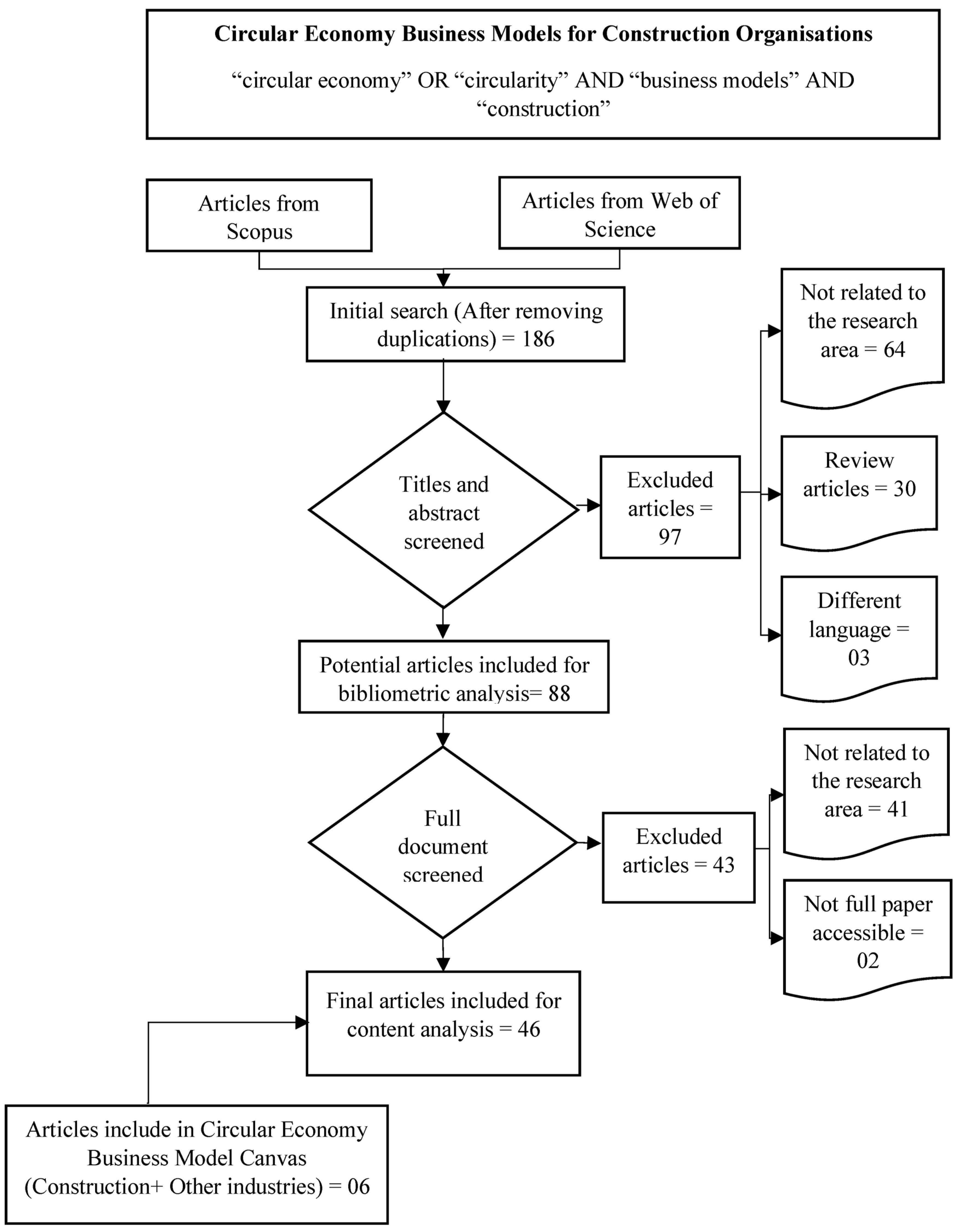
Figure 2.
Key Word Analysis.
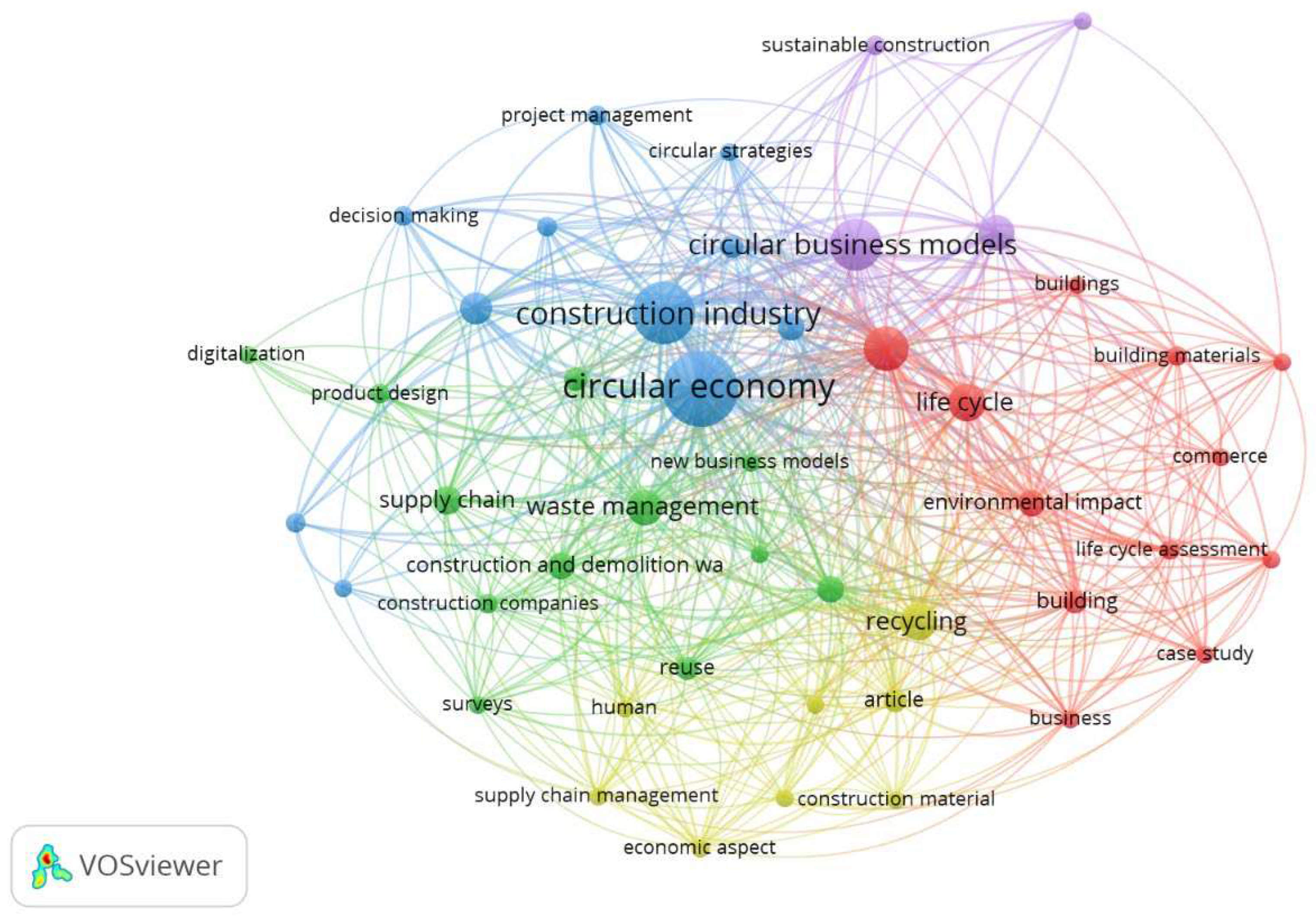
Figure 3.
Analysis of Publication (By Country).
Disclaimer/Publisher’s Note: The statements, opinions and data contained in all publications are solely those of the individual author(s) and contributor(s) and not of MDPI and/or the editor(s). MDPI and/or the editor(s) disclaim responsibility for any injury to people or property resulting from any ideas, methods, instructions or products referred to in the content. |
© 2024 by the authors. Licensee MDPI, Basel, Switzerland. This article is an open access article distributed under the terms and conditions of the Creative Commons Attribution (CC BY) license (http://creativecommons.org/licenses/by/4.0/).
Copyright: This open access article is published under a Creative Commons CC BY 4.0 license, which permit the free download, distribution, and reuse, provided that the author and preprint are cited in any reuse.