
Submitted:
29 December 2023
Posted:
04 January 2024
You are already at the latest version
Abstract
This review explores the multifaceted role of multimillets in promoting a healthy lifestyle, focusing on their processing challenges, nutritional values, nutraceutical properties, antinutritional factors, and the emergence of biofortified varieties in India. Millets, known for their resilience and adaptability, present both opportunities and challenges in processing, demanding innovative solutions. Their rich nutritional profile, including high fiber, essential minerals, and antioxidants, contributes significantly to a balanced diet. The nutraceutical potential of millets further underscores their therapeutic properties, offering preventive measures against lifestyle-related health issues. However, the presence of antinutritional factors necessitates careful consideration. Biofortified millet varieties in India have emerged as a promising solution to enhance micronutrient content, addressing malnutrition concerns. This review synthesizes current knowledge, providing insights into the diverse aspects of multimillets and their pivotal role in fostering a healthier lifestyle in India.
Keywords:
millet processing challenges
; nutritional values
; nutraceutical properties
; antinutritional factors
; biofortified varieties
Introduction:
Millets are small-seeded grasses belonging to the botanical family Poaceae (Hassan et al., 2021). These crops were grown in a variety of climate and soil and moisture conditions. Dryland/rainfed agriculture refers to the scientific management of soil and crops in arid terrain without irrigation. Drylands are defined as areas with an annual rainfall of 750 mm or less and no irrigation facilities for agricultural cultivation. Millets are the most feasible alternative in dryland situations since they require little water and can resist bad weather conditions (Chapke et al.,2018). The most important millets cultivated in Asian and African countries include Bajra (pearl millet), Ragi (finger millet), Foxtail millet, Little millet, Kodo millet, Proso millet, Barnyard millet. Fonio and tef are specific to Nigeria and Ethiopia, respectively (Jaybhaye et al., 2014). Millets are an excellent source of fibre, protein, vitamins, and minerals. All millets have three to five times the nutritional value. Millets have three to five times the nutritious richness of frequently used rice and wheat. Wheat and rice offer food security, but millets supply multiple securities such as food, health, nutrition, livelihood, animal feed, and numerous other benefits, making millets a produce of agricultural security (Ambati and Sucharitha 2019). Millets have been linked to a variety of health benefits, including, lowering the risk of cardiovascular disease and stroke, keeping blood sugar levels under control, loss of weight promotion, enhancing digestion, improving immunity, defending against cancer, inflammation reduction. Millets are a versatile grain that may be consumed in several ways. They can be cooked in the same way as rice is, crushed into flour, or popped like popcorn. Millets are an excellent complement to any diet and can benefit your general health. Millets production in India (2021–22) includes sorghum (4.15 MT), pearl millet (9.78 MT), finger millet (1.70 MT), and small millets (0.36 MT). Millets production (2021-22) in India state wise in percentage is as shown in Figure 1.
Figure 1.
(Source: apeda.gov.in/milletportal/Production.html).
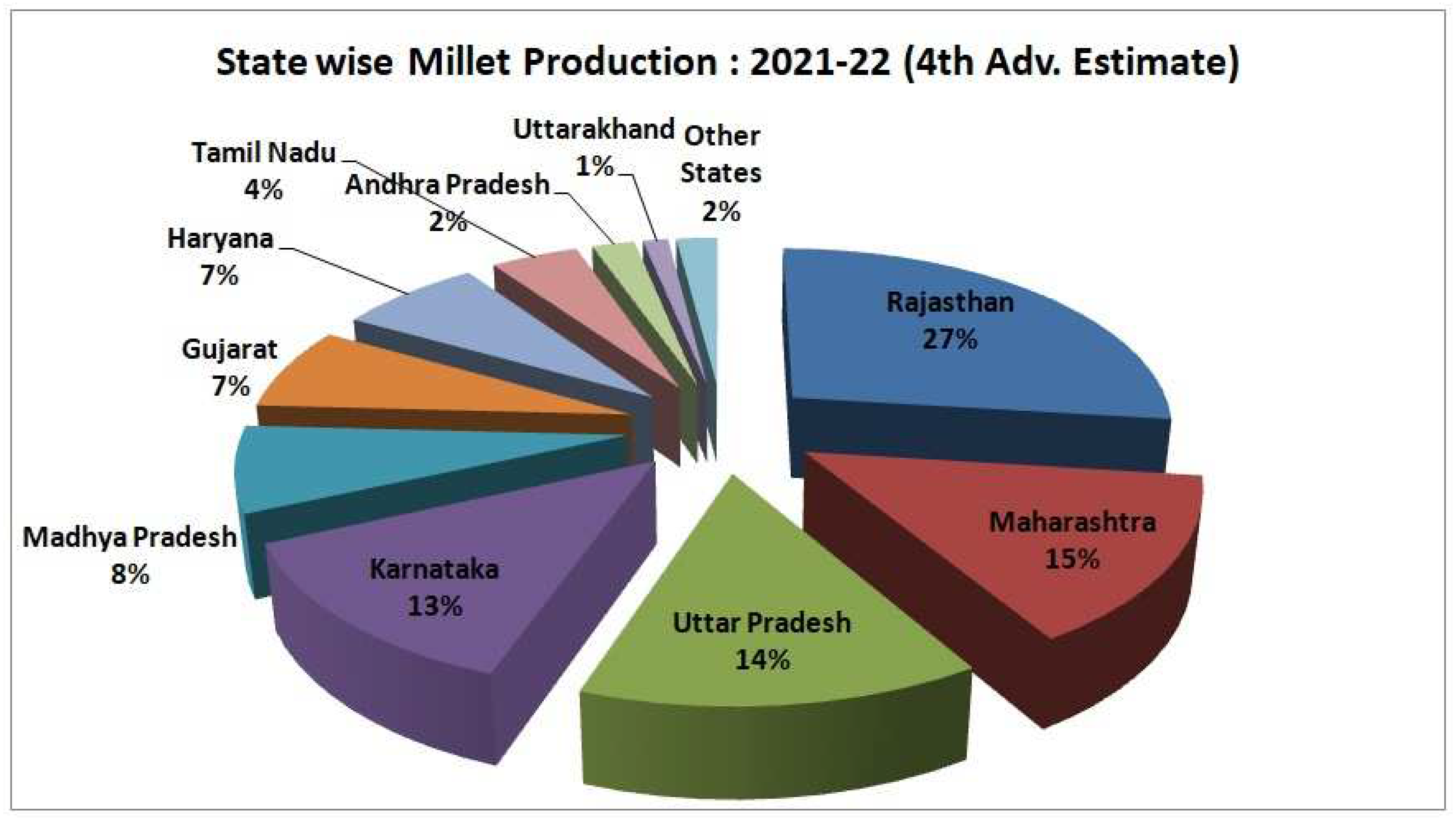
Figure 2.
(Challenges in popularizing millets).
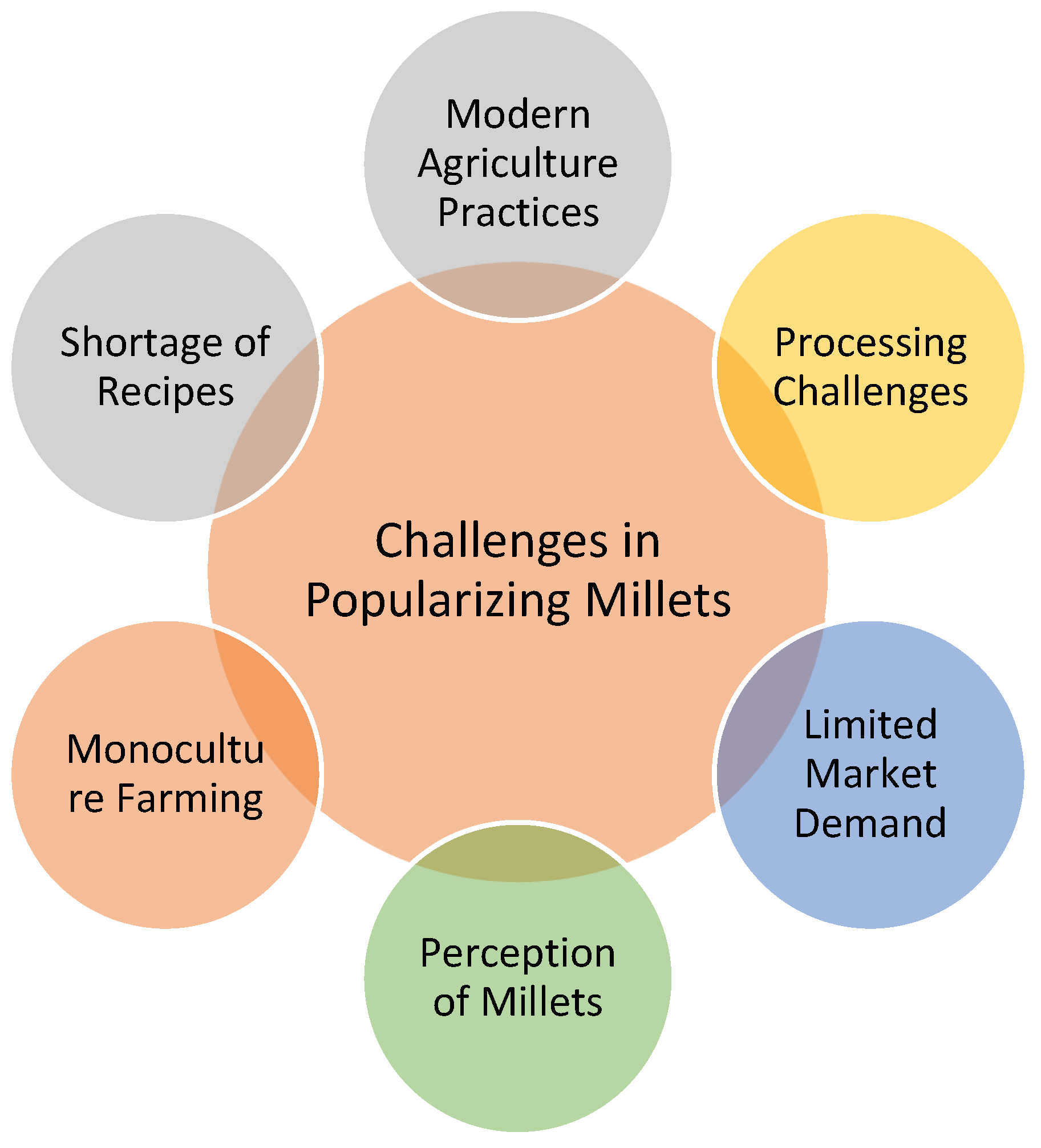
Figure 3.
(Source: Shobana et al., 2013; Maitra, 2020).
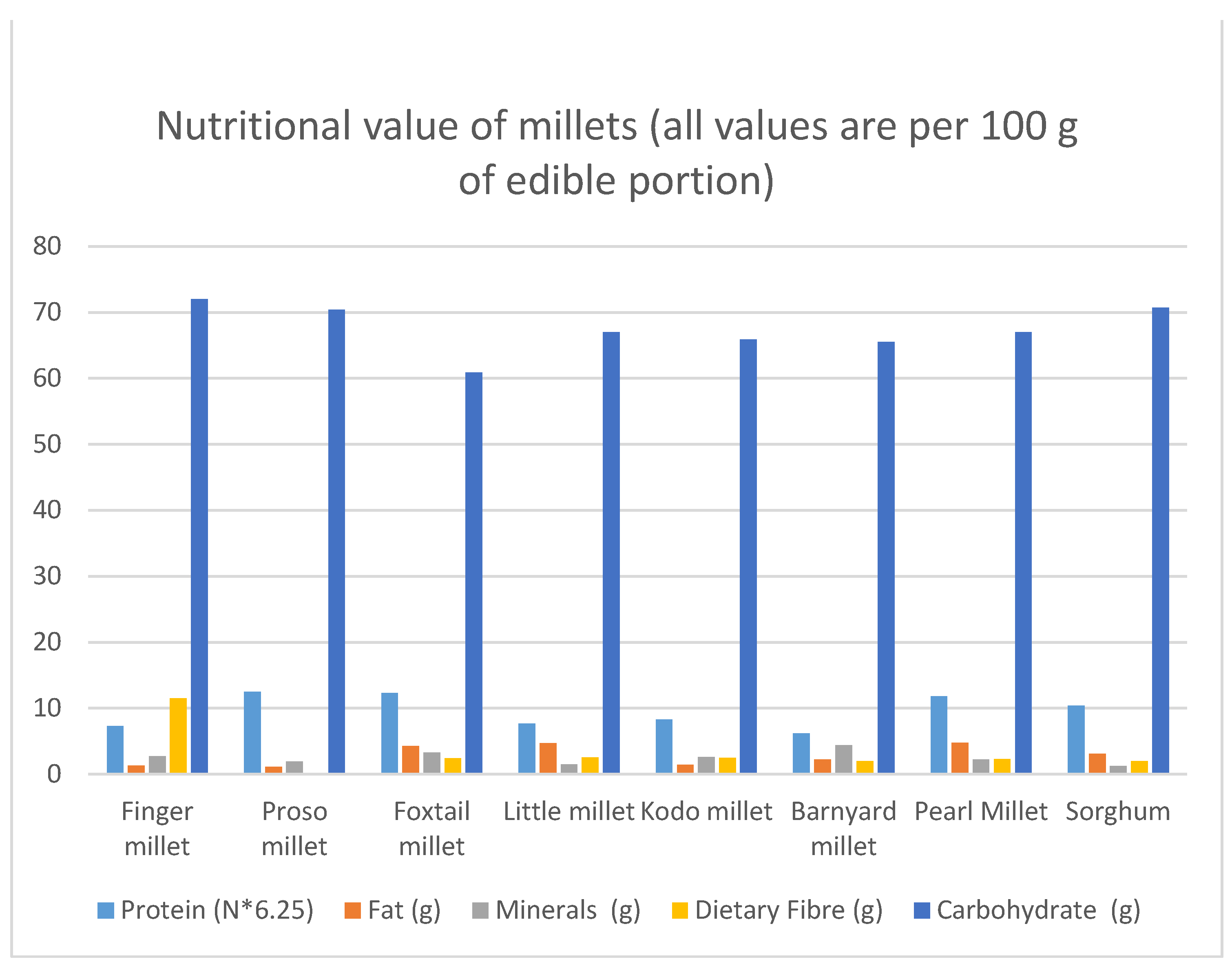

Table 1.
Amino acid profile of different millets.
| Amino acid (g/100g) | Sorghum | Pearl Millet | Finger Millet | Foxtail Millet | Proso Millet | Little Millet | BarnyardMillet | Kodo Millet |
| Isoleucine | 2.45 | 5.1 | 4.3 | 4.59 | 4.1 | 4.16 | 2.88 | 1.88 |
| Leusine | 8.32 | 14.1 | 10.8 | 13.60 | 12.2 | 6.79 | 7.25 | 4.19 |
| Lysine | 1.26 | 0.5 | 2.2 | 1.59 | 1.5 | 1.14 | 1.06 | 1.88 |
| Methionine | 0.87 | 1.0 | 2.9 | 3.06 | 2.2 | 1.42 | 1.33 | 0.94 |
| Phenylalanine | 3.06 | 7.6 | 6.0 | 6.27 | 5.5 | 2.97 | 3.62 | 3.75 |
| Threonine | 1.89 | 3.3 | 4.3 | 3.68 | 3.0 | 2.12 | 2.31 | 1.94 |
| Valine | 3.13 | 4.2 | 6.3 | 5.81 | 5.4 | 3.79 | 3.88 | 2.38 |
Source: (a) Kamara, et al. (2009); (b) Bagdi et al., 2011; (c) Saldivar (2003); (d) Devi et al. (2011); (e) FAO (2008).
Millets face several challenges in gaining popularity among both growers and consumers. One key issue is the lack of awareness regarding the nutritional benefits and versatility of millets, leading to their underutilization as a staple food. Additionally, the limited market demand for millets in many regions discourages farmers from cultivating them due to uncertainty in selling their produce. Traditional farming practices associated with millets often result in lower yields and reduced profitability compared to more commonly grown crops using modern agricultural methods. Moreover, the need for specialized processing techniques and infrastructure for millets presents obstacles to their adoption. Negative perceptions of millets as "poor man's food" or livestock feed need to be addressed to encourage wider consumption. Monoculture farming, commonly practiced in modern agriculture, focuses on large-scale cultivation of a single crop for efficiency and uniformity. However, this approach may not align with millet cultivation due to millets' specific growth requirements. Millets, characterized by diverse species such as pearl millet, foxtail millet, and finger millet, thrive in varied environmental conditions and exhibit resilience to pests and diseases. Unlike the intensive inputs often associated with monoculture, millets benefit from agroecological diversity, making them better suited to mixed cropping systems. Therefore, the specialized needs of millet cultivation necessitate a departure from the conventional monoculture model in order to optimize yield and sustainability in agricultural practices. Furthermore, the scarcity of accessible and enticing millet-based recipes hinders consumer adoption. The trend towards urbanization and convenience foods, often based on refined grains, poses a challenge, as millet-based products are less readily available and convenient. Government policies and subsidies that favor other crops over millets can also impact the economic viability of millet production. Overcoming these obstacles requires comprehensive efforts to raise awareness, modernize cultivation practices, invest in processing infrastructure, and change perceptions to make millets a more popular and sustainable dietary choice for growers and consumers alike.
Nutritional Composition of Millets:
Nutritionally, millets offer comparable, and at times even superior, energy value, protein, and macro nutrient contents in comparison to traditional cereals. They play a significant role in both human and animal diets due to their elevated levels of energy, calcium, iron, zinc, lipids, and high-quality proteins. Furthermore, millets serve as abundant sources of dietary fiber and micronutrients (Hassan et al.,2021).
The composition of sorghum grain is similar to that of corn, except for lower oil content. The grain contains 8 to 12% protein, 65 to 76% starch, and approximately 2% fiber. The germ, a rich source of oil (28% of the germ), also has high levels of protein (19%) and ash (10%) (Gyan-Chand et al., 2017). Sorghum is also good source of minerals such as calcium (11-586 mg/100), phosphorus (167-751 mg/kg), iron (0.90-20 mg/100 gm) (Makokha et al., 2002). Vitamins present in sorghum per 100 gms are 0.09 mg Vit B1, 0.14 mg Vit B2, 2.8 mg Vit B3 (Widowati & Luna, 2022).
Pearl millet, also known as Bajra, is an important millet grown in tropical and semi-arid regions of the world. Its amino acid composition has a significant impact on the nutritional quality of its protein. It is high in energy, low in starch, has a low glycemic index, and is gluten-free (Shruthi et.al., 2018). 100 grams of Bajra contains 360 calories, 12 grams of protein, 5 grams of fat, 1 gram of fiber, 67 grams of carbohydrates, 42 milligrams of calcium, 242 milligrams of phosphorus, and 8 milligrams of iron (Malik, 2015).
Finger millet is a nutrient-rich grain that is high in carbohydrates, protein, and fiber. It contains 1.04% free sugars, 65.5% starch, 11.5% non-starchy polysaccharides, and 11.5% dietary fiber. Finger millet also has a higher protein content than sorghum and pearl millet, at 52%. It is also a good source of the sulfur-containing amino acids methionine and cystine, which are not as abundant in other grains (Vagdevi et al.,2022.). Finger millet has a high calcium content (344 mg %) is eight times more iron and phosphorus-rich than pearl millet (3.9 mg %), and contains a range of trace minerals and vitamins (Gopalan et al., 2009).
Proximate composition (%) of foxtail millet contains moisture content (10.8 ± 0.02), ash (2.3 ±0.06), crude fibre (6.2 ±0.01), crude carbohydrate (65 ±0.02), crude fat (4.5 ±0.01), crude protein (11.2 ±0.05) (Patangare et al.,2019). Foxtail millet has a good amount of calcium (31 mg/100 g) and phosphorus (290 mg/100 g). Also, it contains essential amino acid (mg/g of N) Arginine (220), Histidine (130), Lysine (140), Tryptophan (60), Phenyl Alanine (420), Methionine (180), Cystine (100), Threonine (190), Leucine (1040), Isoleucine (480), Valine (430). It is also good source of Vitamins (mg/100 g) Thiamin (0.59), Niacin (3.2), Riboflavin (0.11),Vit A (carotene) (32), Folic Acid (15), Vit B5 (0.82), Vit B6 (31) (NIN, 2007).
Nutritional composition of proso millet per 100 gms contains protein (12.5 gm), carbohydrates (70.4 gm), fat (3.1 gm), dietary fibre (14.2 gm), mineral matter (1.9 gm), calcium (14 mg), phosphorus (206 mg), iron (10 mg) (saha et al., 2016). Proso millet protein is 80% digestible in vitro and consists mostly of prolamine. In terms of fatty acids, this proso comprises around 60% linoleic acid and 14% oleic acid. Methanolic extracts of proso exhibited good antioxidant properties, with polyphenol content of 29 g/100 g and carotenoids level of 74 g/100 g. In terms of anti-nutrient action, proso millet appears to lack protease inhibitory activity when compared to pearl millet, foxtail millet, and finger millet; however, chymotrypsin inhibitors have been found out (Mathanghi et al.,2020).
Kodo millet has a higher percentage of crude fibre (9%) than wheat (1.2%). It gives 353 Kcal energy per 100 gms of grain. Kodo millet contains 66.6% carbohydrate, 2.4% minerals, 1.4% fat, and 2% ash. Iron content of Kodo millet ranges from 25.86 ppm to 39.60 ppm (Chandel et al., 2014). Kodo millets include vitamins B3, B6, and folic acid, along with minerals which includes calcium, potassium, magnesium, and zinc. It is also high in essential amino acids such as lysine, threonine, valine, and sulfur-containing amino acids, with a leucine-to-isoleucine ratio of roughly 2.0 (Bunkar et al.,2021).
Barnyard millet is a versatile crop. It is a good source of protein that is easily absorbed, as well as an excellent source of dietary fibre. The carbohydrate content of barnyard millet is low and slowly digested, making it a natural gift for humans. It comprises protein (6-13 g), carbs (55-65.5 g), fat (2-4 g), crude fibre (9.5-14 g), mineral matter (3.8-4.5 g), calcium (11-27.1 mg), phosphorous (280-340 mg), iron (15-19.5 mg), starch (51-62%) and 398 kcal/100 g energy. Total dietary fibre content in barnyard millet is high (12.5%) (Kaur & Sharma,2020).
The proximate composition of the little millet grains is that the protein content ranged from 6.87+0.09 to 7.26 + 0.1 g/100 g, fat from 4.64+0.03 to 4.70 +0.03 to 78.53+0.12 g/100g, carbohydrates from 69.70+4.22 to 78 g, and ash from 4.74+0.45 to 5.75+ 0.17,indicating there is no significant difference between the nutritional composition among the different coloured hulled grains. Mineral content in little millet include iron (3.09 mg/100 gm), calcium (24.99 mg/100 gm) and zinc (2.69 mg/100 gm) (Kamatar et al.,2013; Hymavathi et al.,2020). 351.65 kcal were determined to be present in 100 grams of little millet flour (Shrilekha et al.,2019).
Nutraceutical Properties of Millets:
Millets are widely acknowledged for their rich content of bioactive compounds and potential functional properties (Okwudili et al., 2017). A significant group of key phenolic compounds, including gallic acid, tannins, gentisic acid, protocatechuic acid, caffeineic acid, vanillic acid, syringic acid, ferulic acid, paracoumaric acid, transcinnamic acid, and 5 n-alkyl-resorcinols, can be found in various millet grain types (Pradeep & Sreerama, 2018; Nithiyanantham et al., 2019).
Sorghum is a rich source of various phytochemicals, with the exception of white sorghum, including tannins, phenolic acids, anthocyanins, phytosterols, and policosanols. These phytochemicals have a significant impact on human health. Sorghum fractions exhibit potent antioxidant activity, particularly in vitro, when compared to other cereals or fruits. Ferulic acid is the predominant bound phenolic acid in sorghum, along with other beneficial phenolic acids like syringic, protocatechuic, caffeic, p-coumaric, and sinapic acids (Shen et al., 2018). The unique phenolic composition of sorghum offers potential health benefits, including oxidative stress management and potential anti-tumor properties (González-Montilla et al., 2012).
Pearl millet offers numerous health benefits, including its anti-allergic properties as a gluten-free option suitable for individuals with celiac disease. It also shows promise in anti-cancer potential and diabetes management due to its low glycemic index. The presence of lactic acid bacteria makes it a source of probiotic therapy, and it has a positive impact on various health aspects, including heart health, asthma, migraine prevention, weight management, and gallstone reduction (Malik, 2015).
Finger millet is rich in phenolic compounds, particularly benzoic acid derivatives, known for their antioxidant properties (Rao & Muralikrishna, 2002). It contains a wide range of phytochemicals with various benefits, including antioxidants, anti-fungal properties, immunomodulation, detoxification, and protection against degenerative disorders (Rao & Muralikrishna, 2002; Rao et al., 2011; Saleh et al., 2013).
Kodo millets are rich in polyphenolic compounds, such as gallic acid, tannins, and various phenolic acids (Bunkar et al., 2021). They exhibit significant antioxidant activity, protecting against oxidative stress and aiding in maintaining normal glucose levels for type 2 diabetics (Hegde and Chandra, 2005). Foods rich in phenolic acids show antimutagenic, antiglycemic, and antioxidant properties, suggesting potential for health-related products (Friedman, 1997; Shobana et al., 2007).
Foxtail millets are abundant in phytochemicals like phytic acid and phenolic acids (chlorogenic acid, syringic acid, caffeic acid, ferulic acid, and p-coumaric acid) (Sharma et al., 2018). They offer diuretic properties, support gall bladder function, regulate blood sugar, and cholesterol levels, reduce inflammation, and promote overall digestive well-being, particularly for those with gluten sensitivities (Mansur et al., 1996; Verma et al., 2020).
Barnyard millet is recognized for its positive impact on human health due to its phytochemical content, including phenolic acids, flavonoids, and tannins (Panwar et al., 2016). Regular consumption of barnyard millet has been associated with reduced glycemic index in type 2 diabetic individuals. It offers potential benefits for allergic conditions, biliousness, constipation, and anemia (Ugare et al., 2014; Srinivasan et al., 2019).
Proso millet protein (PMP) has been linked to cholesterol metabolism, increasing adiponectin and high-density lipoprotein (HDL) cholesterol levels without affecting low-density lipoprotein (LDL) cholesterol (Nigro et al., 2014). Proso millet's antioxidant benefits are attributed to polyphenols, lignin, phytic acids, and condensed tannins, which provide antioxidant protection. It also contains compounds like -linolenic acid, policosanol, melatonin, phytosterols, and para-amino benzoic acid, which hold potential nutraceutical properties (Mathanghi et al., 2020). Methanolic extracts from proso millet and Japanese millet exhibit anti-tumor properties, making them valuable for potential cancer prevention (Aburai et al., 2007).
Little millets are rich in beneficial antioxidants like polyphenols, phenolic compounds, tannins, and flavonoids. Their low glycemic index and high fiber content contribute to stable blood sugar levels and weight management. They also contain significant magnesium, aiding in regulating blood pressure and potentially offering benefits against depression, especially among the elderly (Indirani & Devasena, 2021; Bhat et al., 2017).
Antinutritional Factors:
Certain compounds found in millet are recognized as antinutritional factors, potentially hindering the body's absorption of essential nutrients. Common antinutritional elements in millet include phytates, tannins, and oxalates, which can be minimized through appropriate processing and cooking methods. Anti-nutrients can be especially detrimental to individuals with high cereals and grains consumption. Several studies suggest that some anti-nutrients may, when consumed in moderation, reduce the risk of diseases like inflammation, coronary heart disease, and breast cancer (Patterson Carol Ann et al., 2016; López Ana et al.,2013). The following are the antinutritional factors found in millets:
Phytic acid, a primary phosphorous storage compound, makes minerals less bioavailable in cereals, legumes, nuts, and seeds. It negatively affects the absorption of essential minerals like Zn2+, Fe2+/3+, Ca2+, and Mg2+, with levels varying based on growth and processing conditions phytate's impact on mineral bioavailability (Fekdu & Ratta, 2014). Some biofortified varieties like Dhanashakti, ICMH 1201, and ICTP-8203 have been developed to counteract this effect (Samtiya et al., 2021).
Polyphenols in millet, with a content ranging from 502.78 to 767.54 mg/100g, are essential for health, exhibiting antioxidant properties and potential benefits against diseases such as obesity, cancer, and heart diseases. However, excessive polyphenol intake can inhibit iron absorption and negatively affect gut microbiota. Furthermore, certain polyphenols have been associated with potential carcinogenic or genotoxic effects at high concentrations (Cory et al., 2018; Duda-Chodak A. 2012).
Tannins, abundant polyphenols in food and beverages, have multifunctional properties but can reduce the nutritional value of food. Excessive tannin consumption can harm the gastrointestinal tract and hinder iron absorption. In India, daily tannin intake of 1.5 to 2.5g is safe, but higher amounts may lead to anemia, osteoporosis, and cancer. Tannins find industrial use due to their antioxidant and antibacterial properties, with various types like gallotannins and ellagitannins present in different foods and beverages. They are advantageous for some industries but can reduce the palatability of food products due to their astringency (Sharma et al., 2019; Narasinga Rao & Prabhavathi, 1982)
Various enzyme inhibitors, such as protease inhibitors, alpha-amylase inhibitors, and trypsin inhibitors, are crucial components in plants, protecting them against pests and microbes. These inhibitors, mainly found in seeds and tubers, play essential roles in regulating protein function and herbivore defense. They impact protein digestion in the small intestine, affecting the bioavailability of sulfur-containing amino acids. Furthermore, protease inhibitors can interfere with various biological processes in mammals, including apoptosis, blood clotting, and inflammation. While there is a need to reduce protease inhibitor content in foods, they hold biotechnological potential as insecticides, anticancer agents, and anti-bacterial substances. Alpha-amylase inhibitors also have industrial applications, such as in brewing, baking, and potentially managing diabetes (Samtiya et al., 2021; Mehrabadi et al., 2012)
Various processing methods, such as decortication (removing outer layers), heating, soaking, germination (sprouting), and fermentation, have been traditionally employed to mitigate the presence of antinutritional factors in millets. These techniques are effective in reducing compounds like phytates, tannins, and oxalates that can hinder nutrient absorption. Decortication removes outer layers rich in antinutrients, while soaking, germination, and fermentation activate enzymes that break down these compounds, making the nutrients more bioavailable. These strategies are essential for enhancing the nutritional quality of millets and other plant-based foods (Samtiya et al., 2021).
Biofortification of Millets
Over 850 million people worldwide are adversely affected by undernourishment, with low-income nations like Africa facing a significant risk of micronutrient deficiencies, including Ca (54%), Zn (40%), Se (28%), I (19%), and Fe (5%). This particularly impacts mothers and young children in impoverished regions. A pivotal strategy to combat global malnutrition is the biofortification of various crop varieties, offering a sustainable and long-term solution by providing micronutrient-rich crops. Biofortification involves enhancing nutrient content in food crops through biotechnology and traditional breeding, making these crops more accessible to undernourished and low-income families with limited access to diverse diets, supplements, and fortified foods. Additionally, biofortified crops possess increased bioavailability, benefiting the population's nutritional health (UN 2006; Joy et al., 2014).
In India, biofortification efforts have yielded several nutrient-rich millet varieties. Among them, in the Pearl Millet category, there are hybrids like HHB 299 (rich in iron - 73.0 ppm, zinc - 41.0 ppm), AHB 1200Fe (rich in iron - 73.0 ppm), AHB 1269Fe (rich in iron - 91.0 ppm, zinc - 43.0 ppm), ABV 04 (open-pollinated variety, rich in iron - 70.0 ppm, zinc - 63.0 ppm), Phule Mahashakti (rich in iron - 87.0 ppm, zinc - 41.0 ppm), RHB 233 (rich in iron - 83.0 ppm, zinc - 46.0 ppm), and RHB 234 (rich in iron - 84.0 ppm, zinc - 46.0 ppm). These varieties were developed through collaborative efforts by various agricultural universities and research institutions and offer higher nutrient content compared to popular varieties. In the Finger Millet category, varieties like VR 929 (Vegavathi, rich in iron - 131.8 ppm) and CFMV1 (Indravati, rich in calcium - 428 mg/100g, iron - 58.0 ppm, zinc - 44.0 ppm) provide increased nutritional value compared to conventional options. Additionally, CFMV 2 (rich in calcium - 454 mg/100g, iron - 39.0 ppm, zinc - 25.0 ppm) in the same category was developed. Little Millet is represented by CLMV1 (pure line variety, rich in iron - 59.0 ppm, zinc - 35.0 ppm). These biofortified millet varieties aim to address nutrient deficiencies and enhance the nutritional quality of diets, particularly in regions where millets are a staple food (Yadava et al.,2020).
Conclusion
This diverse group of grains, which includes sorghum, pearl millet, finger millet, foxtail millet, proso millet, kodo millet, and barnyard millet, carries unique nutritional profiles brimming with bioactive compounds, essential minerals, and beneficial phenolic compounds that extend their role beyond basic nutrition. Consuming multimillets offers a practical strategy to proactively address lifestyle diseases. These grains exhibit a lower glycemic index compared to refined grains, promoting better blood sugar control and aiding in weight management through improved satiety and digestive health. The vitamins and minerals they contain, such as magnesium and potassium, can positively impact cardiovascular health by regulating blood pressure and reducing the risk of heart disease. While millets may have antinutritional factors, innovative processing methods like decortication, soaking, germination, and fermentation effectively address these challenges, enhancing their nutritional value. Additionally, biofortification initiatives have yielded nutrient-rich millet varieties, providing a sustainable solution to combat global malnutrition and alleviate nutrient deficiencies in underprivileged populations. Embracing multimillets as a dietary staple represents a practical and promising approach to enhancing overall health, particularly in regions where these grains are traditionally consumed. It lays the foundation for a healthier and more nourished future, underscoring their potential in the fight against lifestyle diseases.
Acknowledgements
The work was executed/carried out under the financial assistance for international training provided by the Indian Council of Agricultural Research (ICAR) through the National Agricultural Higher Education Project (NAHEP) VNMKV, Parbhani.
References
- Aburai N, Esumi Y, Koshino H, Nishizawa N & Kimura K (2007) Inhibitory activity of linoleic acid isolated from proso and Japanese millet toward histone deacetylase. Bioscience, Biotechnology, and Biochemistry 71: 2061–2064.
- apeda.gov.in/milletportal/Production.html.
- Bagdi, A., G. Balázs, J. Schmidt, M. Szatmári, R. Schoenlechner, E. Berghofer and S. Tö mö skö zia. 2011. Protein characterization and nutrient composition of Hungarian proso millet varieties and the effect of decortication. Acta Alimentaria 40:128–141.
- Bhat S, Nandini C, Tippeswamy V, et al. Significance of small millets in nutrition and health: A review. Asian Journal of Diary and Food Research. 2017;36:1-6.
- Chandel, U. , and Mankotia, B. S. (2014). Combining Ability in Local and Cimmyt In Bred Lines of Maize (Zea mays L.) for Grain Yield and Yield Components Using Line x Tester Analysis. SABRAO Journal of Breeding and Genetics, 46(2).
- Chapke RR, Prabhakar, Shyamprasad G, Das IK and Tonapi VA. 2018. Improved millets production technologies and their impact. Technology Bulletin, ICAR-Indian Institute of Millets Research, Hyderabad 500 030, India: 84p. ISBN 81-89335-69-3.
- Devendra Kumar Yadava, Partha Ray Choudhury, Firoz Hossain, Dinesh Kumar and Trilochan Mohapatra 2020. Biofortified Varieties: Sustainable Way to Alleviate Malnutrition (Third Edition). Indian Council of Agricultural Research, New Delhi. 86p.
- Devi, P. B., R. Vijayabharathi, S. Sathyabama, N. G. Malleshi and V. B. Priyadarisini. 2011. Health benefits of finger millet (Eleusine coracana L.) polyphenols and dietary fiber: a review. J. Food Sci. Technol. [CrossRef]
- Duda-Chodak, A. “The inhibitory effect of polyphenols on human gut microbiota”. Journal of Physiology and Pharmacology 63.5 (2012): 497-503.
- Durga Shankar Bunkar, S K Goyal, Kamalesh Kumar Meena and Virendra Kamalvanshi. 2021. Nutritional, Functional Role of Kodo Millet and its Processing: A Review. International Journal of Current Microbiology 10(01): 1972-1985. [CrossRef]
- FAO. Sorghum and Millets in Human Nutrition. Available online: http://www.fao.org/docrep/t0818e/ T0818E0d.htm (accessed on 11 December 2018).
- Friedman, M. (1997). Chemistry, biochemistry, and dietary role of potato polyphenols. A review. Journal of agricultural and food chemistry, 45(5), 1523-1540.
- Gemede Habtamu Fekdu and Negussie Ratta. “Antinutritional factors in plant foods: Potential health benefits and adverse effects”. International Journal of Nutrition and Food Sciences 3.4 (2014): 284-289.
- González-Montilla, F. M. , Chávez-Santoscoy, R. A., Gutiérrez-Uribe, J. A., Serna-Saldivar, S. O. (2012). Isolation and identification of phase II enzyme inductors obtained from black shawaya sorghum [Sorghum bicolor (L.) moench] bran. Journal of Cereal Science, 55(2), 126–131. DOI 10.1016/j.jcs.2011.10.009.
- Gopalan, C. , Rama Sastri, B. V., & Balasubramanian, S. C. (2009). Nutritive value of Indian foods. Hyderabad, India: National Institute of Nutrition, Indian Council of Medical Research.
- Hannah Cory, Simone Passarelli, John Szeto, Martha Tamez, Josiemer Mattei “The role of polyphenols in human health and food systems: A mini-review”. Frontiers in nutrition 5 (2018): 87.
- Hardeep Kaur and Shilpa Sharma An overview of Barnyard millet (Echinochloa frumentacea) Journal of Pharmacognosy and Phytochemistry 2020; 9(4): 819-822.
- Hassan, Z. M. , Sebola, N. A., & Mabelebele, M. (2021). The nutritional use of millet grain for food and feed: A review. Agriculture & Food Security, 10(1), 16. [CrossRef]
- Hegde, P. S. and Chandra, T. S. (2005). ESR spectroscopic study reveals higher free radical quenching potential in kodo millet (Paspalum scrobiculatum) compared to other millets. Food Chemistry, 92(1), 177-182.
- Hymavathi TV, Roberts TPP, Jyothsna E, et al. Proximate and mineral content of ready to use minor millets. International Journal of Chemical Studies. 2020;8:2120-2123.
- Indirani, K. , and Devasena, M. (2021). Review on nutritional profiles and health benefits of little millets –India. Int. J. Res. Eng. Sci. (IJRES) 9, 7.
- Jaybhaye, R. V. , Pardeshi, I. L., Vengaiah, P. C., & Srivastav, P. P. (2014). Processing and Technology for Millet Based Food Products: A Review. JOURNAL OF READY TO EAT 1 (2), 32-48.
- Joy EJM, Ander EL, Young SD, Black CR, Watts MJ, Chilimba ADC, et al. Dietary mineral supplies in Africa. Physiologia Plantarum. 2014;151:208-229.
- Kadapa, S. , Gunturi, A., Gundreddy, R., Reddy Kalwala, S., & Bhaskar Mogallapu, U. (2023). Agronomic Biofortification of Millets: New Way to Alleviate Malnutrition. IntechOpen. [CrossRef]
- Kamara, M. T., H. M. Zhou, K. X. Zhu, I. Amadou and F. Tarawalie. 2009. Comparative study of chemical composition and physicochemical properties of two varieties of defatted foxtail millet flour grown in China. Am. J. Food Technol. 4(3):255–267.
- Kamatar MY, Hemalatha S, Meghana DR, Talawar S, Naik RK. Evaluation of little millet (Panicum sumatrense) land races for cooking and nutritional composition. Current Research in Biological and Pharmaceutical Sciences. 2013;2(1):7-11.
- Kimeera Ambati and Sucharitha K., V. (2019). Millets-Review on Nutritional Profiles and Health Benefits. International Journal of Recent Scientific Research Vol. 10. 33943–33948. [CrossRef]
- Kuldip Chandra Verma, Nidhi Joshi, Amit Singh Rana and Dheeraj Bhatt Quality parameters and medicinal uses of foxtail millet (Setaria italica L.): A review. Journal of Pharmacognosy and Phytochemistry 2020; 9(4): 1036‐1038.
- López, A. , El-Naggar, T., Dueñas, M., Ortega, T., Estrella, I., Hernández, T., Gómez-Serranillos, M. P., Palomino, O. M., & Carretero, M. E. (2013). Effect of cooking and germination on phenolic composition and biological properties of dark beans (Phaseolus vulgaris L.). Food chemistry, 138(1), 547–555. [CrossRef]
- Mansur LM, Orf JH, Chase K, Jarvik T, Cregan PB, Lark KG. Genetic mapping of agronomic traits using recombinant inbred lines of soybean. Crop Science. 1996; 36(5):1327-1336.
- Mathanghi, S. K., Kanchana, S. and Perasiriyanl, V. Pinnacles of Proso millet (Panicum miliaceum L.): A nutri millet The Journal of the Society for Tropical Plant Research 7(.1): 238–244, 2020.
- Mehrabadi, M. , Franco, O.L., & Bandani, A.R. (2012). Plant Proteinaceous Alpha-Amylase and Proteinase Inhibitors and Their Use in Insect Pest Control.
- Morya, Gyan Chand & Vinita, Vinita & Mishra, Hari & S., Shakya & Bahadur, Raj & K.N., Yadav. (2017). Millets: The Indigenous Food Grains. International Journal of Advanced Ayurveda, Yoga, Unani, Siddha and Homeopathy. 6. 447-452. 10.23953/cloud.ijaayush.328.
- Narasinga Rao, B. S. , & Prabhavathi, T. (1982). Tannin content of foods commonly consumed in India and its influence on ionisable iron. Journal of the science of food and agriculture. 33(1), 89–96. [CrossRef]
- Nigro E, Scudiero O, Monaco ML, Palmieri A, Mazzarella G, Costagliola C, Bianco A & Daniele A (2014) New Insight into Adiponectin Role in Obesity & Obesity–Related Diseases. BioMed Research International 2014: 1–14.
- NIN (2007). Nutritive value of Indian Foods, National Institute of Nutrition, Hyderabad.
- Nithiyanantham, S, Kalaiselvi, P., Mahomoodally, M. F., Gokhan, Z., Abirami, A. and Gopalakrishnan, S. (2019). Nutritional and functional roles of millets—A review. Journal of Food Biochemistry, pp, 1-10.
- Okwudili, U. H. , Gyebi, D. K., and Obiefuna, J. A. I. (2017). Finger millet bioactive compounds, bioaccessibility, and potential health effects–a review. Czech Journal of Food Sciences, 35(1), 7-17.
- Panwar, P.; Dubey, A.; Verma, A.K. Evaluation of nutraceutical and antinutritional properties in barnyard and finger millet varieties grown in Himalayan region. J. Food Sci. Technol. 53, 2779e2787. [CrossRef] [PubMed]
- Patangare, S.S. , Pawar, V.S., Syed, H.M. & Shinde, S.T. (2019). Studies on physical properties and nutritional profile of foxtail millet. The Pharma Innovation Journal; 8(3): 286-288.
- Patterson, Carol Ann & Curran, Julianne & Der, Tanya. (2016). Effect of Processing on Antinutrient Compounds in Pulses. Cereal Chemistry Journal. 94. 10.1094/CCHEM-05-16-0144-FI.
- Pradeep, P. M. , and Sreerama, Y. N. (2018). Phenolic antioxidants of foxtail and little millet cultivars and their inhibitory effects on α-amylase and α-glucosidase activities. Food Chemistry, 247, 46-55.
- R.V. Jaybhaye, I.L. Pardeshi, P.C. Vengaiah, P.P. Srivastav 2014 Processing and Technology for Millet Based Food Products: A ReviewJournal of Ready to Eat Food | Vol 1 | Issue 2 | Pages 32-48 © 2014 Jakraya Publications (P) Ltd.
- Rao, B. R. , Nagasampige, M. H., and Ravikiran, M. (2011). Evaluation of nutraceutical properties of selected small millets. J. Pharm. Bioallied Sci. 3, 277–279. [CrossRef]
- Saha D, Channabyre Gowda MV, Arya L, Verma M & Bansal KC (2016) Genetic & Genomic Resources of Small Millets. Critical Reviews in Plant Sciences 35(1): 56–79.
- Saldivar, S. 2003. Cereals: dietary importance. In: B. Caballero, L. Trugo and P. Finglas (Eds.). pp. 1027–1033. Encyclopedia of Food Sciences and Nutrition, Reino Unido: Academic Press, Agosto, London.
- Saleh AS, Zhang Q, Chen J, Shen Q. Millet grains: nutritional quality, processing, and potential health benefits. Comprehensive reviews in Food Science and Food Safety. 2013; 12:281-295.
- Samtiya, Mrinal & Soni, Komal & Chawla, Shashi & Poonia, Amrita & Sehgal, Shalini & Dhewa, Tejpal (2021). Key Anti-nutrients of Millet and their Reduction Strategies: An Overview. Acta Scientifci Nutritional Health. 68-80. 10.31080/ASNH.2020.05.0963.
- Sharma, N. , Niranjan K. Foxtail millet: Properties, processing, health benefits and uses. Food Rev. Int. 2018;34:329–363. [CrossRef]
- Sharma, Kartik & Kumar, Vikas & Kaur, Jaspreet & Tanwar, Beenu & Goyal, Ankit & Sharma, Rakesh & Gat, Yogesh & Kumar, Ashwani. (2019). Health effects, sources, utilization and safety of tannins: a critical review. Toxin Reviews. 40. 1-13. 10.1080/15569543.2019.1662813.
- Shen, S. , Huang, R., Li, C., Wu, W., Chen, H. et al. (2018). Phenolic compositions and antioxidant activities differ significantly among sorghum grains with different applications. Molecules, 23(5), E1203. DOI 10.3390/ molecules23051203.
- Shobana S, Krishnaswamy K, Sudha V, Malleshi N G, Anjana R M, Palaniappan L, Mohan V. 2013. Finger Millet (Ragi, Eleusine coracana L.): A Review of Its Nutritional Properties, Processing and Plausible Health Benefits. Advances in Food and Nutrition Research, Elsevier Inc., USA, 69: 1-39. http://dx.doi.org/10.1016.
- Shobana S, Singh, R. U., Malleshi, N. G. and Ali, S. Z. (2007). Glycemic response of rice, wheat and finger millet based diabetic food formulations in normoglycemic subjects. International Journal Food Science Nutrition, 58(5): 363-372.
- Shweta Malik, (2015). PEARL Millet-Nutritional Value And Medicinal Uses (Food & Nutrition) Dept. of Home Science, B.P.SWomen’s University KhanpurKalan (Hry) www.ijariie.com, Vol-1 Issue-3.
- Srinivasan A, Ekambaram PS, Perumal SS, et al. Chemical characterization and immunostimulatory activity of phenolic acid bound arabinoxylans derived from foxtail and barnyard millets. Journal of Food Biochemistry. 2019;44:1-9.
- Subba Rao MV, Muralikrishna G. Evaluation of the antioxidant properties of free and bound phenolic acids from native and malted finger millet (Ragi, Eleusine coracana Indaf-15). Journal of Agricultural and Food Chemistry. 2002 Feb 13;50(4):889-892.
- Ugare, R. Chimmad, B., Naik, R., Bharati, P., and Itagi, S. (2014). Glycemic index and significance of barnyard millet (Echinochloa frumentacae) in type II diabetics. J. Food Sci. Technol. 51. 392–395. [CrossRef]
- United Nations Millennium Development Goals Report. 2006. Available online: https://www.un.org/zh/millenniumgoals/pdf/MDGReport2006.
- Vagdevi, A., Trupthi, S., Pandey, M., Reddy, N. B., & Singh, M. (2022). Nutritional qualities, processing and health benefits of finger millet (Eleusine coracana L.). The Pharma Innovation Journal 2023; 12(1): 1291-1297.
- Widowati, S. , & Luna, P. (2022). Nutritional and Functional Properties of Sorghum (Sorghum bicolor (L.) Moench)-based Products and Potential Valorisation of Sorghum Bran. IOP Conference Series: Earth and Environmental Science, 1024(1), 012031. [CrossRef]
Disclaimer/Publisher’s Note: The statements, opinions and data contained in all publications are solely those of the individual author(s) and contributor(s) and not of MDPI and/or the editor(s). MDPI and/or the editor(s) disclaim responsibility for any injury to people or property resulting from any ideas, methods, instructions or products referred to in the content. |
© 2024 by the authors. Licensee MDPI, Basel, Switzerland. This article is an open access article distributed under the terms and conditions of the Creative Commons Attribution (CC BY) license (http://creativecommons.org/licenses/by/4.0/).
Copyright: This open access article is published under a Creative Commons CC BY 4.0 license, which permit the free download, distribution, and reuse, provided that the author and preprint are cited in any reuse.


